

翻訳
過去
過去分詞
三人称単数
動名詞
意味
例文
例文の翻訳
同義語
対義語
コロケーション
ニーモニック
Swipe left or right, or use the buttons. Tap image to zoom.
例文の翻訳
単語
Lesson 355Lesson 355 - マスクトグル
|
絵文字
|
単語 | Images | 翻訳 | 過去 | 過去分詞 | 三人称単数 | 動名詞 | 意味 | 例文 | 例文の翻訳 | 表現例 | 表現例の意味 | 表現例の翻訳 | 同義語 | 対義語 | コロケーション | ニーモニック |
|---|---|---|---|---|---|---|---|---|---|---|---|---|---|---|---|---|---|
|
#10615
📌
|
/ˈsɜːrkəmstæns/
noun
(サーカムスタンス)
••••••
|
- •••••• |
状況
joukyou
••••••
|
- •••••• | - •••••• | - •••••• | - •••••• |
a fact or condition connected with an event or action
••••••
|
She handled the difficult circumstances bravely. |
彼女は困難な状況に勇敢に対処しました。
Kanojo wa konnan na joukyou ni yuukan ni taisho shimashita.
••••••
|
under the circumstances |
considering the current situation
••••••
|
その状況下で
sono joukyou ka de
••••••
|
situation, condition, context, factor, state
••••••
|
certainty, plan
••••••
|
in difficult circumstances, under the circumstances, favorable circumstances
••••••
|
Circumstance は状況を意味します - 状況を囲んでcircumstanceを覚える。
••••••
|
|
#10616
🔍
|
/ˈkloʊsli/
adverb
(ˈhæpinəs)
••••••
|
- •••••• |
幸せ
shiawase
••••••
|
- •••••• | - •••••• | - •••••• | - •••••• |
in a way that is very near in space, time, or relationship; carefully and attentively
••••••
|
The detective examined the evidence closely. |
彼女は賞を受け取ったとき、自分の幸せを隠すことができなかった。
Kanojo wa shō o uketotta toki, jibun no shiawase o kakusu koto ga dekinakatta.
••••••
|
watch closely |
to observe with great attention
••••••
|
幸せの追求
shiawase no tsuikyū
••••••
|
carefully, attentively, nearly, intently, minutely
••••••
|
carelessly, distantly
••••••
|
closely related, watch closely, follow closely, work closely
••••••
|
幸せは‘しあわせ’のように、すべてを喜ばせるものです!
••••••
|
|
#10617
⏰
|
/klɒk/
noun
(kurokku)
••••••
|
- •••••• |
時計
tokei
••••••
|
- •••••• | - •••••• | - •••••• | - •••••• |
An instrument used to measure and show time.
••••••
|
The clock on the wall shows the correct time. |
壁の時計は正しい時間を示しています。
Kabe no tokei wa tadashī jikan o shimeshiteimasu.
••••••
|
around the clock |
All day and all night without stopping.
••••••
|
24時間
24 jikan
••••••
|
timepiece, watch, timer, chronometer
••••••
|
timelessness
••••••
|
alarm clock, wall clock, digital clock, clock tower, clock face
••••••
|
時計は時間を知らせる。忘れずにいつも見て!
••••••
|
|
#10618
🩺
|
/ˈklɪn.ɪ.kəl/
adjective
(クリニカル)
••••••
|
- •••••• |
臨床的
rinshōteki
••••••
|
- •••••• | - •••••• | - •••••• | - •••••• |
Related to the observation and treatment of patients rather than theoretical study.
••••••
|
The doctor conducted a clinical examination. |
医師は臨床検査を行った。
Ishi wa rinshō kensa o okonatta.
••••••
|
clinical trial |
A research study to test new medical treatments on patients.
••••••
|
臨床試験
rinshō shiken
••••••
|
medical, diagnostic, therapeutic, scientific
••••••
|
theoretical, emotional
••••••
|
clinical examination, clinical trial, clinical diagnosis, clinical practice
••••••
|
臨床は病院で行われる診療に関連、臨床試験で新治療法を試す。
••••••
|
|
#10619
🏥
|
/ˈklɪn.ɪk/
noun
(クリニック)
••••••
|
- •••••• |
クリニック
kurinikku
••••••
|
- •••••• | - •••••• | - •••••• | - •••••• |
A place where people receive medical treatment without staying overnight.
••••••
|
She went to the clinic for a health check-up.
彼女は健康診断のためにクリニックに行った。
••••••
|
彼女は健康診断のためにクリニックに行った。
Kanojo wa kenkō shindan no tame ni kurinikku ni itta.
••••••
|
- •••••• | - •••••• | - •••••• |
hospital, infirmary, dispensary, medical center
••••••
|
home, outdoors
••••••
|
health clinic, dental clinic, free clinic, community clinic
••••••
|
クリニックで健康診断を受けるけれど、泊まる必要はない。
••••••
|
|
#10620
🧗
|
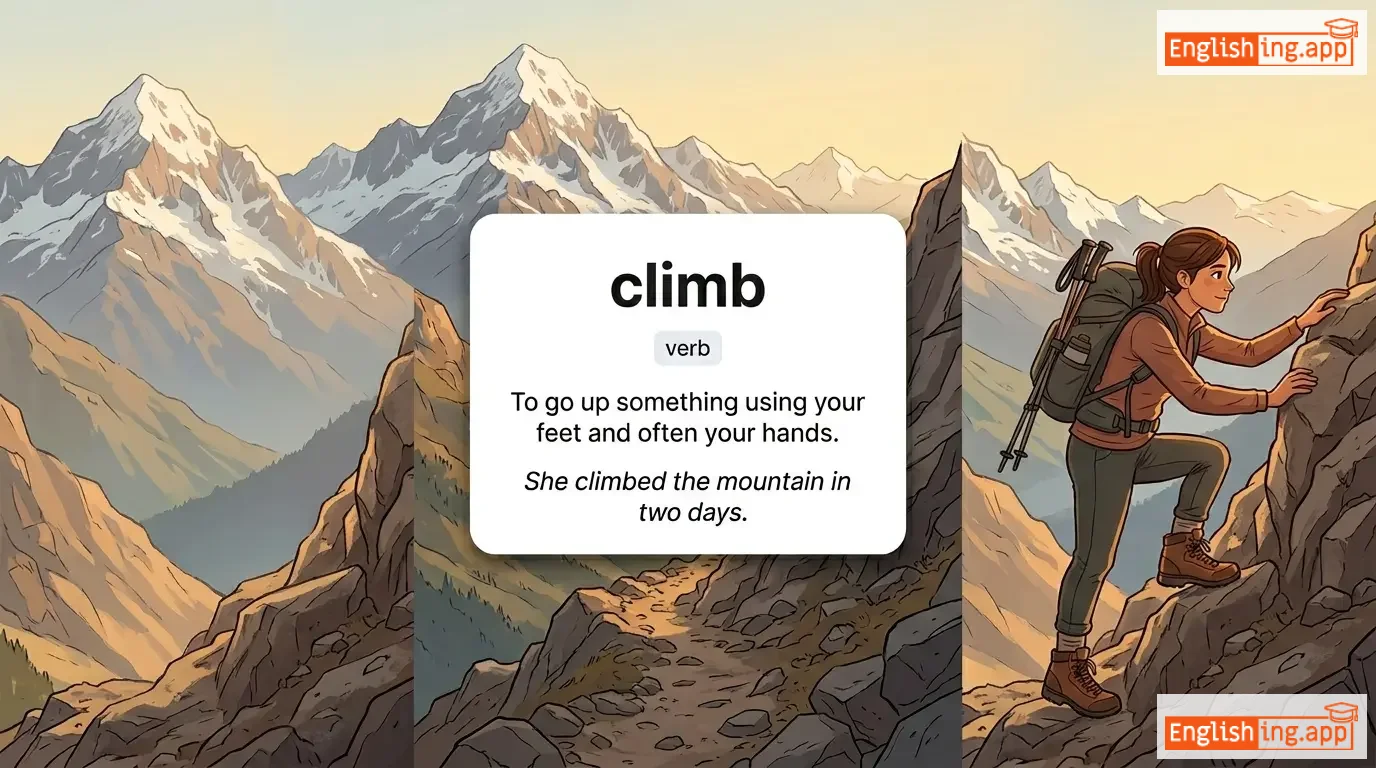
/klaɪm/
verb
(クライム)
••••••
|
|
登る
noboru
••••••
|
climbed
クライムド
••••••
|
climbed
クライムド
••••••
|
climbs
クライムス
••••••
|
climbing
クライミング
••••••
|
To go up something using your feet and often your hands.
••••••
|
She climbed the mountain in two days.
彼女は二日で山を登った。
••••••
|
彼女は二日で山を登った。
Kanojo wa futsuka de yama o nobotta.
••••••
|
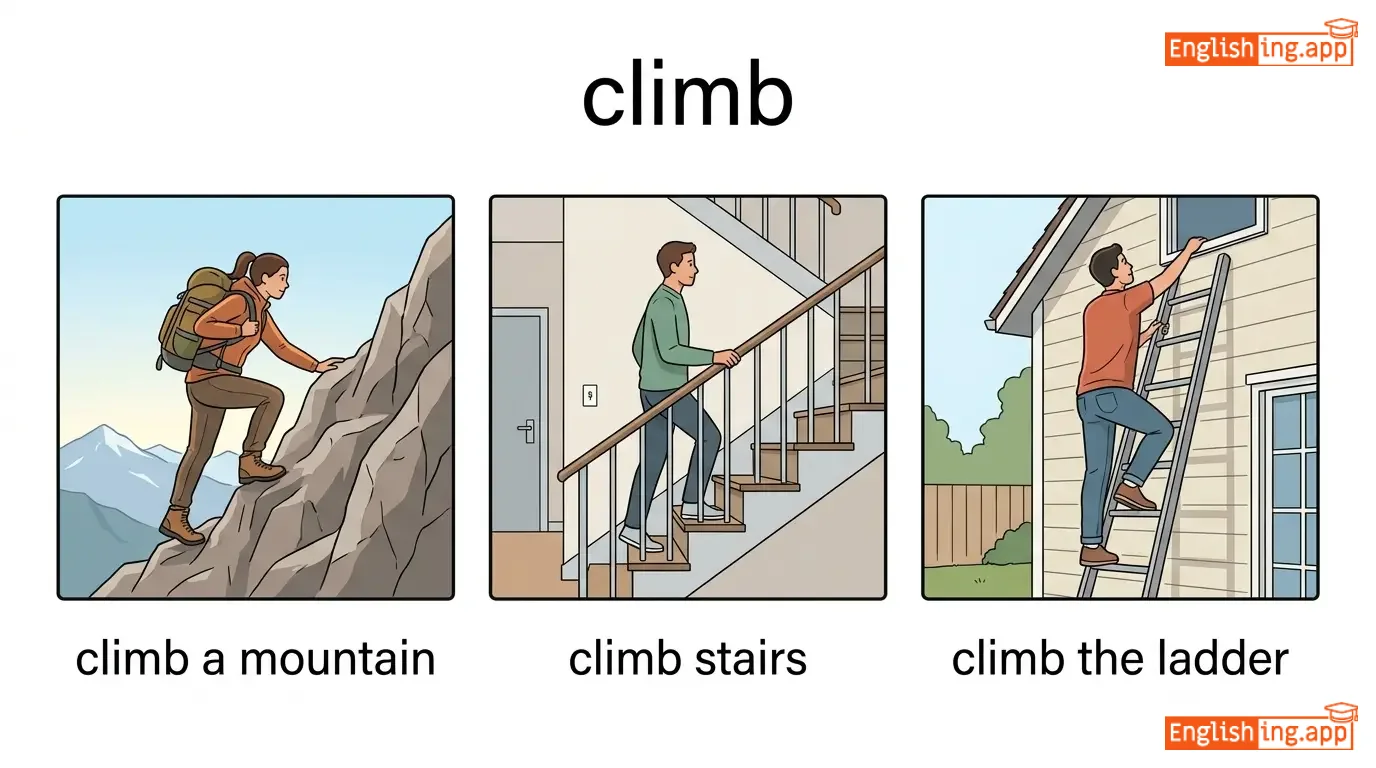
climb the ladder
梯子を登る
••••••
|
To make progress in a career or social hierarchy.
••••••
|
梯子を登る
Hashigo o noboru
••••••
|
ascend, scale, mount, rise, go up
••••••
|
descend, fall, drop
••••••
|
climb a mountain, climb stairs, climb the ladder, climb high, climb up
••••••
|
登るは上へ行くこと、梯子を登るのは成功への一歩だ!
••••••
|
|
#10621
🌦️
|
/ˈklaɪ.mət/
noun
(くらいめっと)
••••••
|
|
気候
kikou
••••••
|
- •••••• | - •••••• | - •••••• | - •••••• |
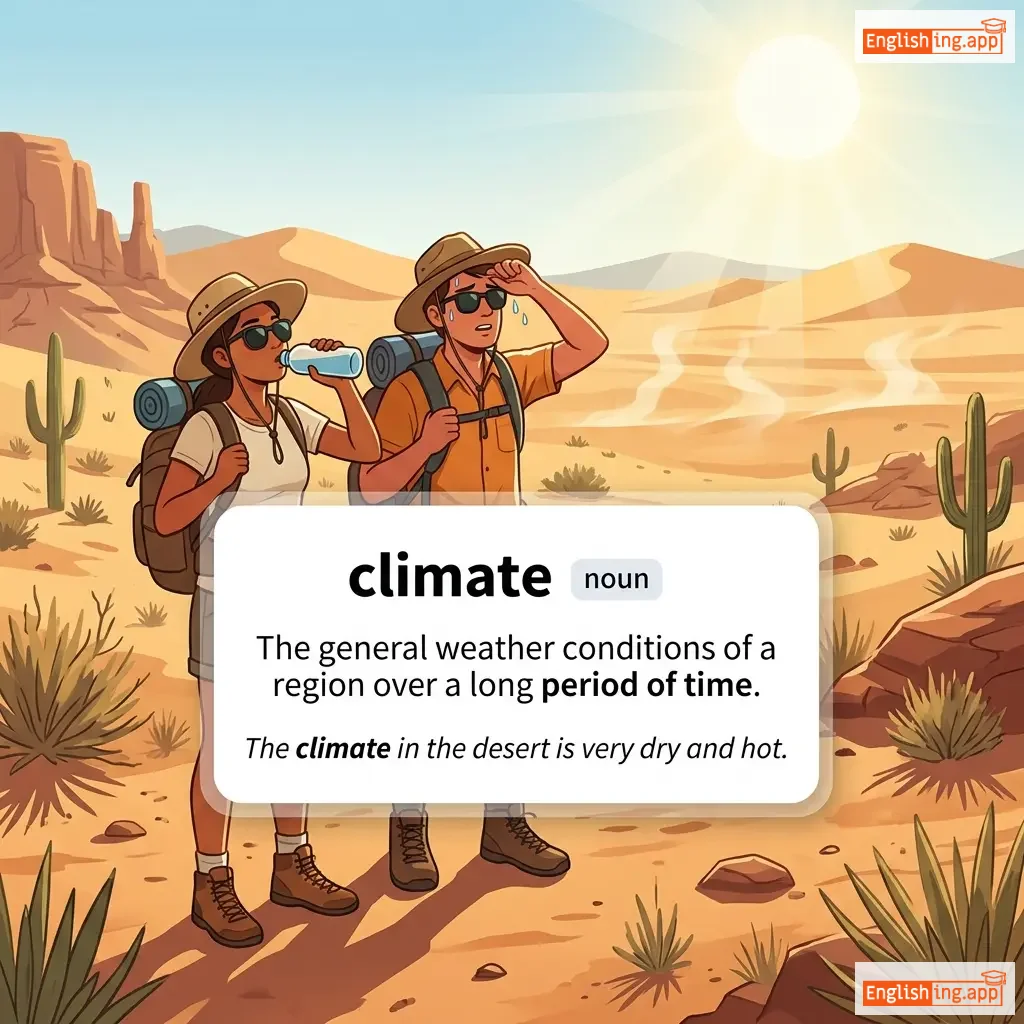
The general weather conditions of a region over a long period of time.
••••••
|
The climate in the desert is very dry and hot. |
砂漠の気候は非常に乾燥していて、暑いです。
Sabaku no kikou wa hijō ni kansō shite ite, atsui desu.
••••••
|
climate change |
Long-term alteration of temperature and typical weather patterns in a place.
••••••
|
気候変動
kikou hendou
••••••
|
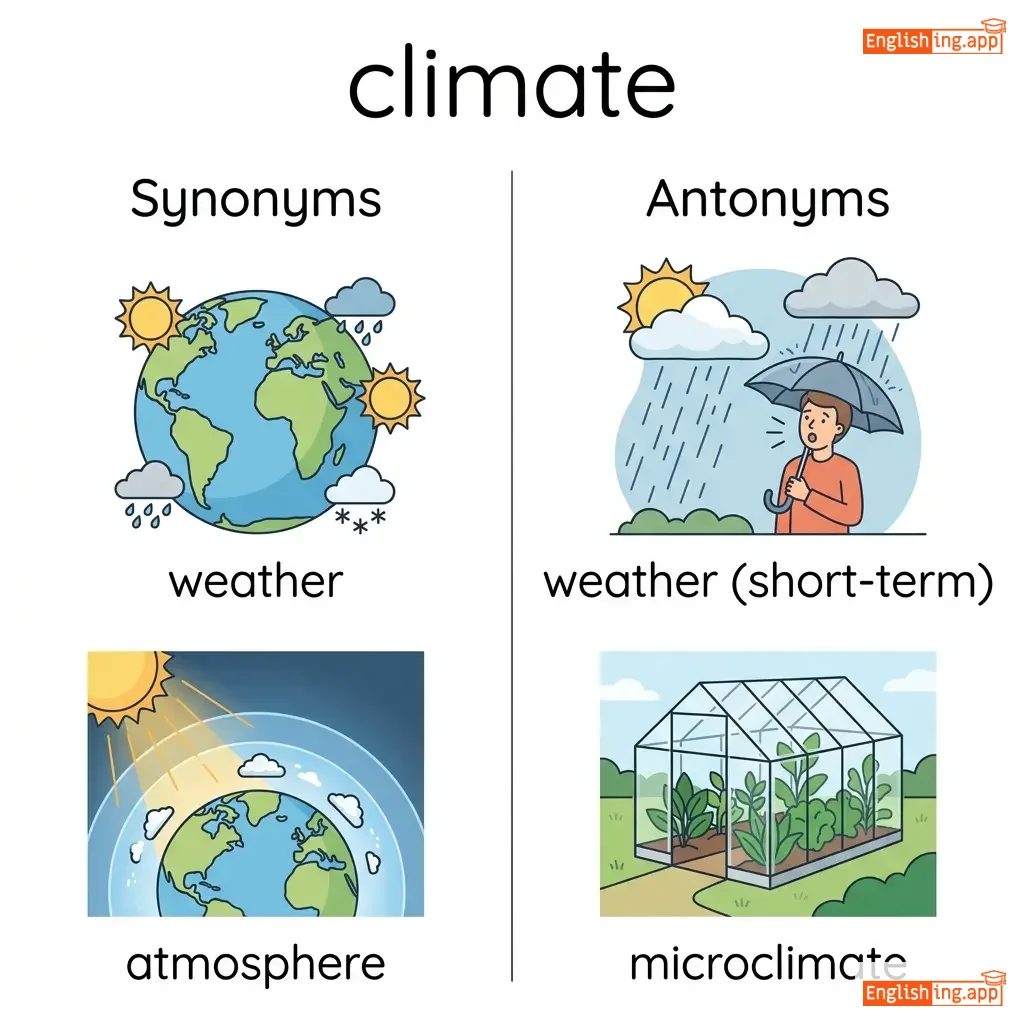
weather, atmosphere, environment, conditions, surroundings
••••••
|
weather (short-term), microclimate
••••••
|
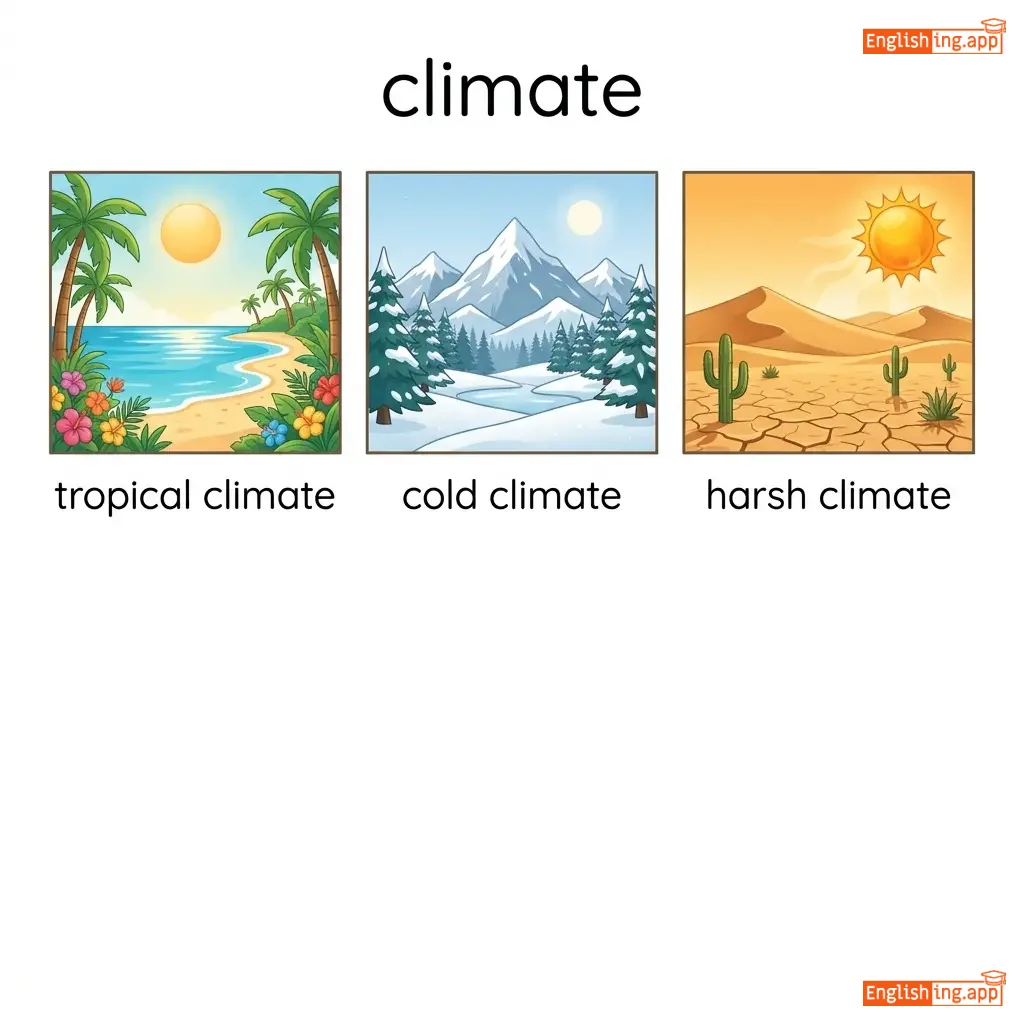
tropical climate, cold climate, harsh climate, political climate, climate change
••••••
|
気候 = 地球の変化を感じる。
••••••
|
|
#10622
👤
|
/ˈklaɪənt/
noun
(クライアント)
••••••
|
- •••••• |
クライアント
kuraianto
••••••
|
- •••••• | - •••••• | - •••••• | - •••••• |
A person or organization using the services of a professional or company.
••••••
|
The lawyer met with her client to discuss the case. |
弁護士はクライアントと会ってケースを話し合った
bengoshi wa kuraianto to atte kēsu o hanashiatta
••••••
|
client base |
The group of clients a company serves.
••••••
|
クライアントベース
kuraianto bēsu
••••••
|
customer, patron, consumer, buyer
••••••
|
seller, provider
••••••
|
client meeting, client relationship, client support, client base
••••••
|
クライアント = いつもサービスを受ける人
••••••
|
|
#10623
🔍
|
/ˈklɪrli/
adverb
(kurirī)
••••••
|
- •••••• |
はっきりと
hakkiri to
••••••
|
- •••••• | - •••••• | - •••••• | - •••••• |
In a way that is easy to perceive, understand, or see.
••••••
|
She spoke clearly so that everyone could understand. |
彼女はみんなが理解できるように、はっきりと話した。
Kanojo wa minna ga rikai dekiru yō ni, hakkiri to hanashita.
••••••
|
- •••••• | - •••••• | - •••••• |
plainly, distinctly, obviously, transparently
••••••
|
vaguely, unclearly
••••••
|
speak clearly, see clearly, think clearly, explain clearly
••••••
|
Clearly はっきりと 🔍 — 'はっきりと話すと、皆がはっきりと理解します。'
••••••
|
|
#10624
✨
|
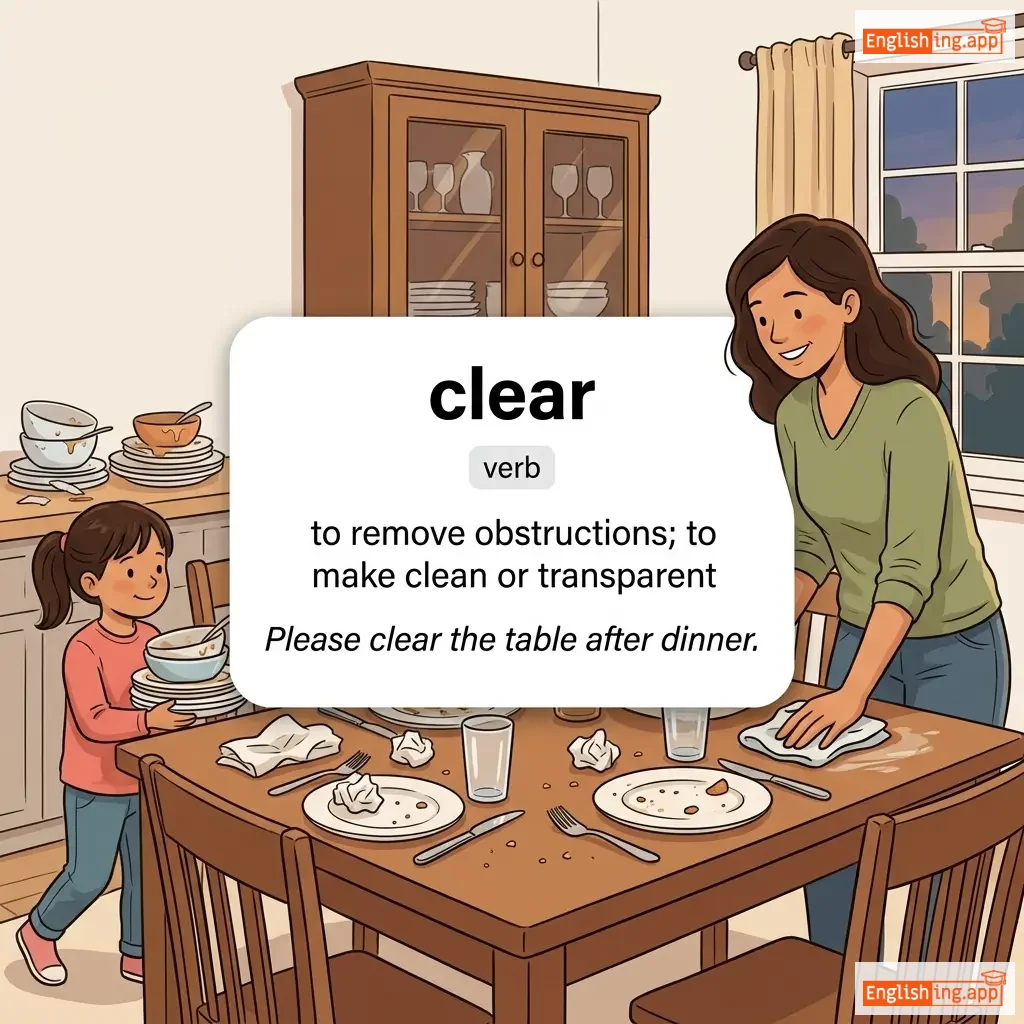
/klɪr/
adjective
(クリア)
••••••
|
|
明確
meikaku
••••••
|
- •••••• | - •••••• | - •••••• | - •••••• |
Easy to perceive, understand, or see through.
••••••
|
It was a clear day with no clouds in the sky. |
それは雲一つない明確な日でした。
Sore wa kumo hitotsu nai meikaku na hi deshita.
••••••
|
clear mind |
A calm and focused state of thinking.
••••••
|
明確な心
meikaku na kokoro
••••••
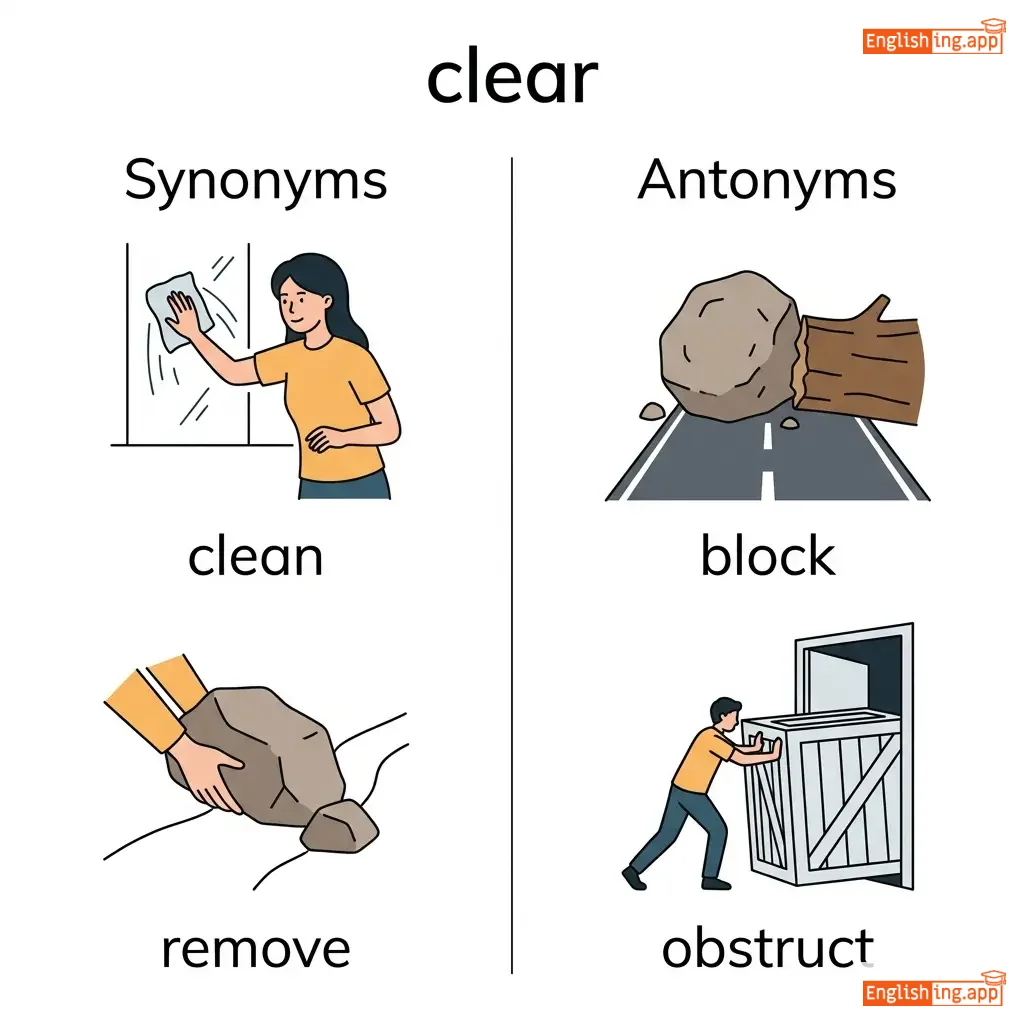
|
obvious, plain, evident, transparent
••••••
|
unclear, vague, cloudy
••••••
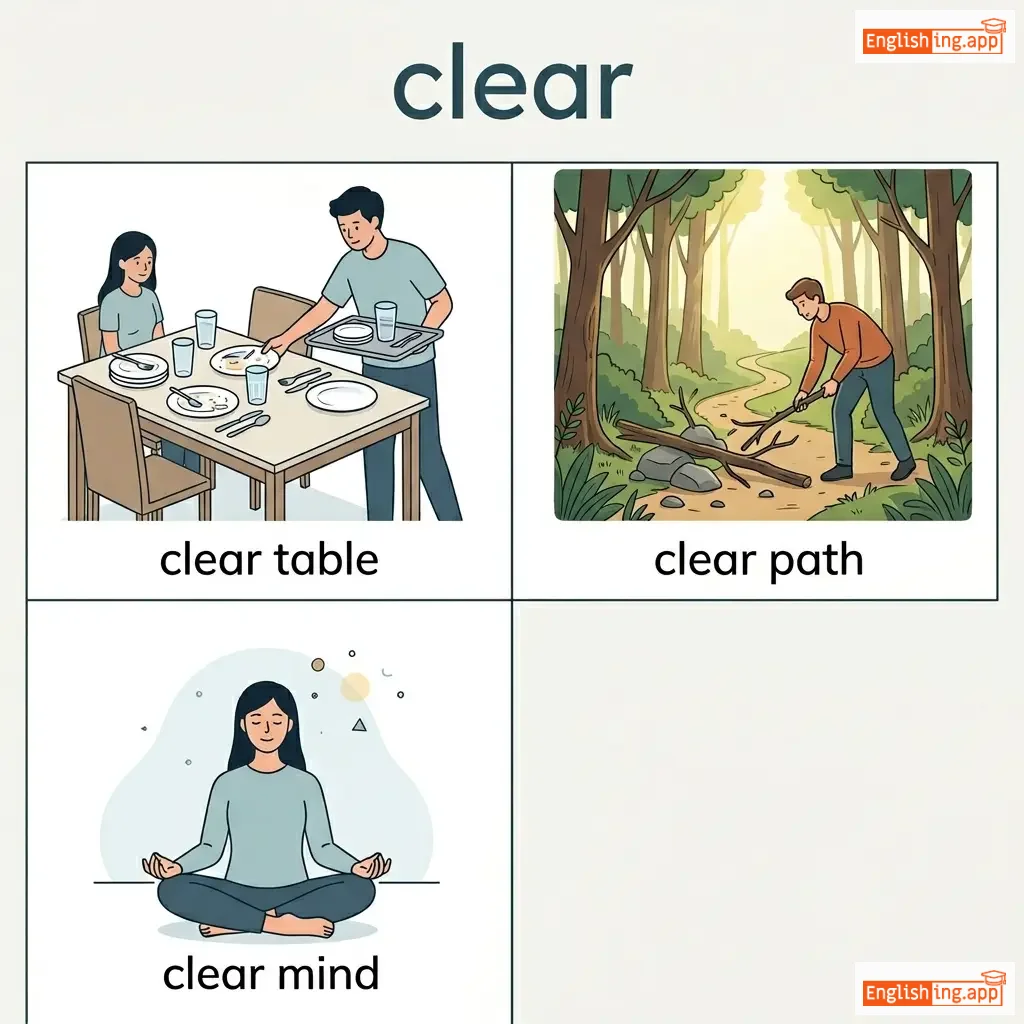
|
clear instructions, clear sky, clear vision, clear message
••••••
|
Clear は明確を意味します 🌤️、雲のない晴れた空のように。
••••••
|
|
#10625
🧹
|
/kliːn/
verb
(クリーン)
••••••
|
- •••••• |
掃除する
souji suru
••••••
|
cleaned
クリーンド
••••••
|
cleaned
クリーンド
••••••
|
cleans
クリーンズ
••••••
|
cleaning
クリーニング
••••••
|
To make something free from dirt, marks, or mess.
••••••
|
She cleaned the kitchen before the guests arrived.
彼女はゲストが到着する前にキッチンを掃除しました。
••••••
|
彼女はゲストが到着する前にキッチンを掃除しました。
Kanojo wa gesuto ga tōchaku suru mae ni kicchin o sōji shimashita.
••••••
|
clean slate
きれいなスタート
••••••
|
A fresh start without any past problems.
••••••
|
きれいなスタート
kirei na sutāto
••••••
|
wash, scrub, wipe, tidy, purify
••••••
|
dirty, pollute, soil
••••••
|
clean room, clean clothes, clean water, clean environment
••••••
|
Clean は掃除するという意味です — 🧽 '掃除する' で何もかもきれいになります。
••••••
|
|
#10626
🏫
|
/ˈklæsˌruːm/
noun
(kurasurūmu)
••••••
|
- •••••• |
教室
kyōshitsu
••••••
|
- •••••• | - •••••• | - •••••• | - •••••• |
A room in which classes are held in a school or college.
••••••
|
The teacher entered the classroom and greeted the students. |
先生は教室に入って、生徒たちに挨拶しました。
Sensei wa kyōshitsu ni haitte, seito-tachi ni aisatsu shimashita.
••••••
|
empty classroom |
A classroom with no students or teacher inside.
••••••
|
空教室
kū kyōshitsu
••••••
|
lecture room, study room, hall, learning space
••••••
|
playground, office
••••••
|
classroom activities, classroom management, classroom environment, classroom learning
••••••
|
教室は classroom 🏫、勉強する場所です。
••••••
|
|
#10627
🧑
|
/səˈvɪliən/
noun/adjective
(シビリアン)
••••••
|
- •••••• |
市民
shimin
••••••
|
- •••••• | - •••••• | - •••••• | - •••••• |
a person not in the armed forces or police
••••••
|
The area was evacuated to protect the civilians. |
その地域は市民を守るために避難されました。
Sono chiiki wa shimin o mamoru tame ni hinan saremashita.
••••••
|
- •••••• | - •••••• | - •••••• |
noncombatant, ordinary person, nonmilitary, commoner
••••••
|
soldier, officer
••••••
|
civilian life, civilian population, civilian clothes
••••••
|
シビリアン (shibian) から市民 (shimin) へ – 市民は軍に属さない人々。
••••••
|
|
#10628
🏙️
|
/ˈsɪti/
noun
(siti)
••••••
|
- •••••• |
都市
toshi
••••••
|
- •••••• | - •••••• | - •••••• | - •••••• |
a large town or an urban area with its own government
••••••
|
Dhaka is the largest city in Bangladesh. |
東京は日本で最も大きな都市です。
Tōkyō wa Nihon de mottomo ōkina toshi desu.
••••••
|
city that never sleeps |
a city that is always busy, like New York
••••••
|
眠らない都市
nemuranai toshi
••••••
|
metropolis, town, municipality, capital
••••••
|
village, countryside
••••••
|
big city, city life, city center, city council
••••••
|
City は都市です。都市は常に活気に満ちています。
••••••
|
|
#10629
🧑🤝🧑
|
/ˈsɪtɪzən/
noun
(シティズン)
••••••
|
- •••••• |
市民
shimin
••••••
|
- •••••• | - •••••• | - •••••• | - •••••• |
a legally recognized subject or national of a state
••••••
|
Every citizen has the right to vote. |
すべての市民は投票する権利を持っています。
Subete no shimin wa tōhyo suru kenri o motteimasu.
••••••
|
model citizen |
an exemplary or ideal member of society
••••••
|
模範市民
mohan shimin
••••••
|
inhabitant, resident, national, dweller
••••••
|
foreigner, alien
••••••
|
citizen rights, responsible citizen, active citizen, citizen of a country
••••••
|
Citizen = 市民 – City + 民 = 市民。
••••••
|
|
#10630
⚗️
|
/ˈkɛmɪkəl/
noun
(ケミカル)
••••••
|
- •••••• |
化学物質
kagaku busshitsu
••••••
|
- •••••• | - •••••• | - •••••• | - •••••• |
a substance produced by or used in a chemical process
••••••
|
The factory releases harmful chemicals into the river. |
工場は有害な化学物質を川に放出します。
Koujou wa yuugai na kagaku busshitsu wo kawa ni houshutsu shimasu.
••••••
|
chemical reaction |
a process in which substances interact to form new substances
••••••
|
化学反応
kagaku hannou
••••••
|
compound, substance, element, reagent, solution
••••••
|
natural, organic
••••••
|
toxic chemicals, chemical reaction, chemical industry, chemical warfare
••••••
|
Chemical = ケミカル, 化学物質, 工場で使われます。
••••••
|
|
#10631
⭕
|
/ˈsɜːrkəl/
noun/verb
(sākuru)
••••••
|
- •••••• |
円
en
••••••
|
circled
sākurudo
••••••
|
circled
sākurudo
••••••
|
circles
sākuruzu
••••••
|
circling
sākuringu
••••••
|
a round shape; to move all the way around something
••••••
|
The children sat in a circle.
子供たちは円形に座っていました。
••••••
|
子供たちは円形に座っていました。
Kodomotachi wa enkei ni suwatte imashita.
••••••
|
come full circle
円を完成させる
••••••
|
to return to the original position or situation
••••••
|
元に戻る
moto ni modoru
••••••
|
ring, loop, cycle, orbit
••••••
|
line, straight
••••••
|
circle of friends, draw a circle, circle around, social circle
••••••
|
Circleは円形を意味します - 子供たちが円形に座るのを思い出して、覚えやすい。
••••••
|
|
#10632
🚬
|
/ˈsɪɡəˌrɛt/
noun
(タバコ)
••••••
|
- •••••• |
タバコ
tabako
••••••
|
- •••••• | - •••••• | - •••••• | - •••••• |
a small roll of finely cut tobacco wrapped in paper for smoking
••••••
|
He lit a cigarette after dinner.
彼は夕食後にタバコを吸った。
••••••
|
彼は夕食後にタバコを吸った。
Kare wa yuushoku go ni tabako o sutta.
••••••
|
chain smoker
チェーンスモーカー
••••••
|
a person who smokes cigarettes continuously, one after another
••••••
|
チェーンスモーカー
cheen sumookaa
••••••
|
smoke, tobacco, fag, stick
••••••
|
fresh air, nonsmoking
••••••
|
smoke a cigarette, light a cigarette, cigarette packet, cigarette smoke
••••••
|
タバコ = 🚬 タバコ — 食後にみんな吸います。
••••••
|
|
#10633
⛪
|
/tʃɜːrtʃ/
noun
(チャーチ)
••••••
|
- •••••• |
教会
kyoukai
••••••
|
- •••••• | - •••••• | - •••••• | - •••••• |
a building used for public Christian worship
••••••
|
The old church in the village was built in the 18th century. |
村の古い教会は18世紀に建てられました。
Mura no furui kyoukai wa 18 seiki ni tateraremashita.
••••••
|
go to church |
to attend Christian worship services
••••••
|
教会に行く
kyoukai ni iku
••••••
|
chapel, cathedral, sanctuary, basilica
••••••
|
mosque, temple
••••••
|
church service, church building, church bell, church members
••••••
|
教会は Church ⛪ — キリスト教徒が祈る場所です。
••••••
|
|
#10634
🎄
|
/ˈkrɪsməs/
noun
(kurisumasu)
••••••
|
- •••••• |
クリスマス
Kurisumasu
••••••
|
- •••••• | - •••••• | - •••••• | - •••••• |
an annual festival celebrating the birth of Jesus Christ, observed on December 25
••••••
|
Families gather to celebrate Christmas with joy and love. |
家族は喜びと愛を持ってクリスマスを祝うために集まります。
Kazoku wa yorokobi to ai o motte kurisumasu o iwau tame ni atsumarimasu.
••••••
|
Christmas spirit |
the joyful and generous attitude people often have during Christmas
••••••
|
クリスマスの精神
Kurisumasu no seishin
••••••
|
holiday, festival, yuletide, Noel
••••••
|
ordinary day
••••••
|
Christmas tree, Christmas Eve, Christmas gifts, Christmas party
••••••
|
クリスマス = 🎄 喜びと愛の祝福
••••••
|
|
#10635
✝️
|
/ˈkrɪstʃən/
noun, adjective
(kuri-shi-an)
••••••
|
- •••••• |
クリスチャン
kurisuchan
••••••
|
- •••••• | - •••••• | - •••••• | - •••••• |
a person who follows the religion based on the teachings of Jesus Christ
••••••
|
She is a devoted Christian who attends church every Sunday. |
彼女は毎週日曜日に教会に行く献身的なクリスチャンです。
Kanojo wa maishū nichiyōbi ni kyōkai ni iku kenshin-teki na kurisuchan desu.
••••••
|
- •••••• | - •••••• | - •••••• |
believer, follower, disciple, worshipper
••••••
|
atheist, nonbeliever
••••••
|
Christian faith, Christian values, Christian community, Christian church
••••••
|
Christian = クリスチャン ✝️, イエス・キリストの教えを守る人はクリスチャン。
••••••
|
|
#10636
✅
|
/tʃuːz/
verb
••••••
|
|
- •••••• |
chose
••••••
|
chosen
••••••
|
chooses
••••••
|
choosing
••••••
|
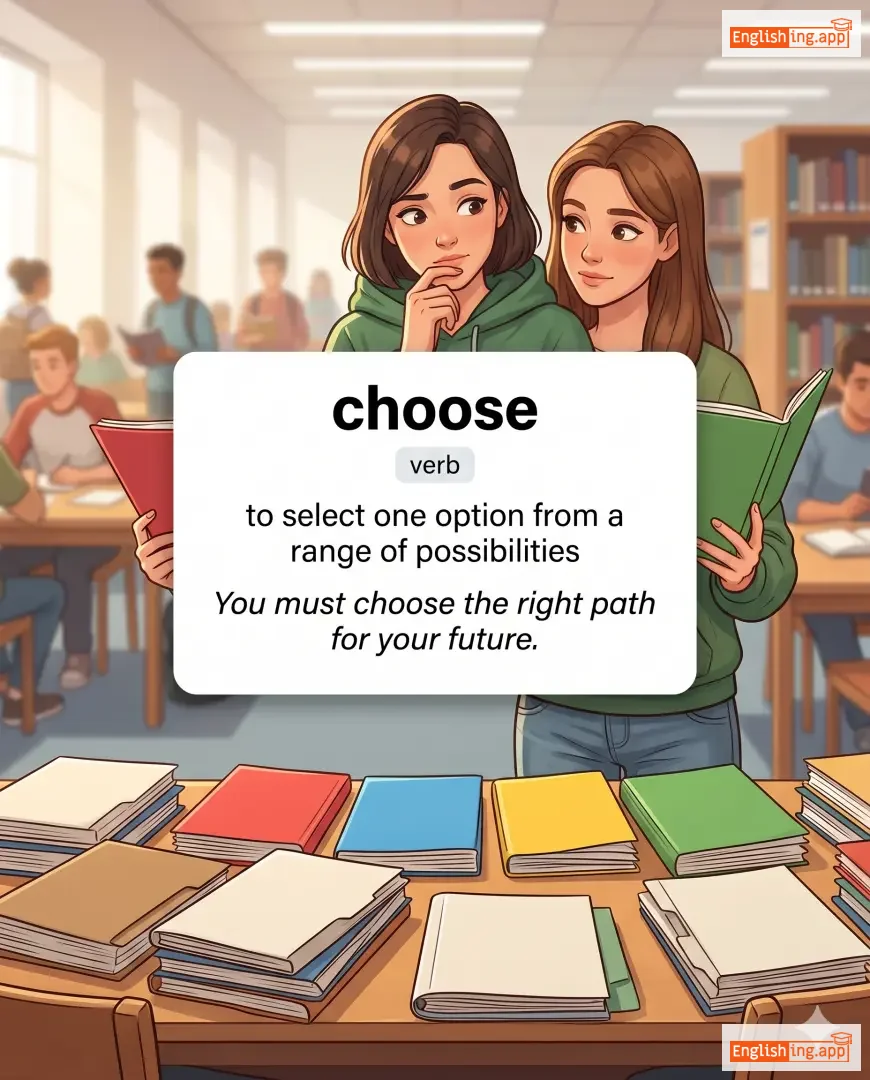
to select one option from a range of possibilities
••••••
|
You must choose the right path for your future. |
- •••••• |
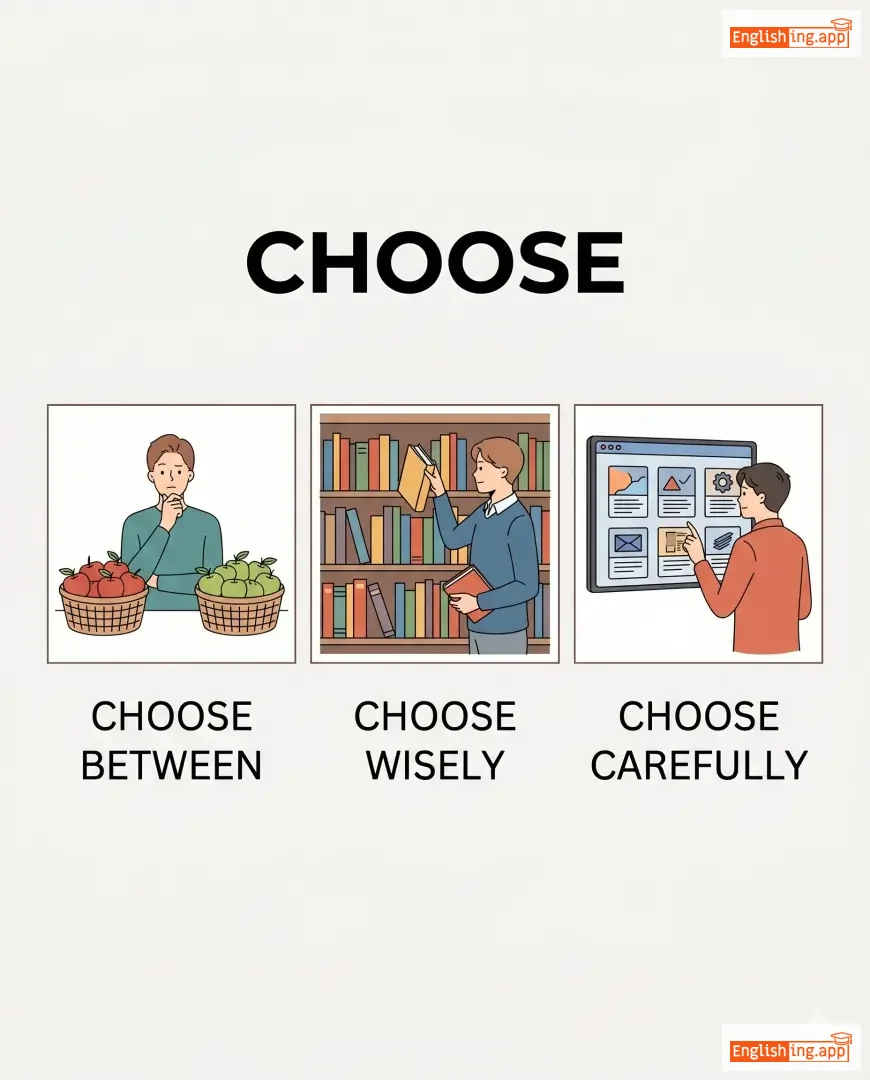
choose wisely |
make a decision carefully and thoughtfully
••••••
|
- •••••• |
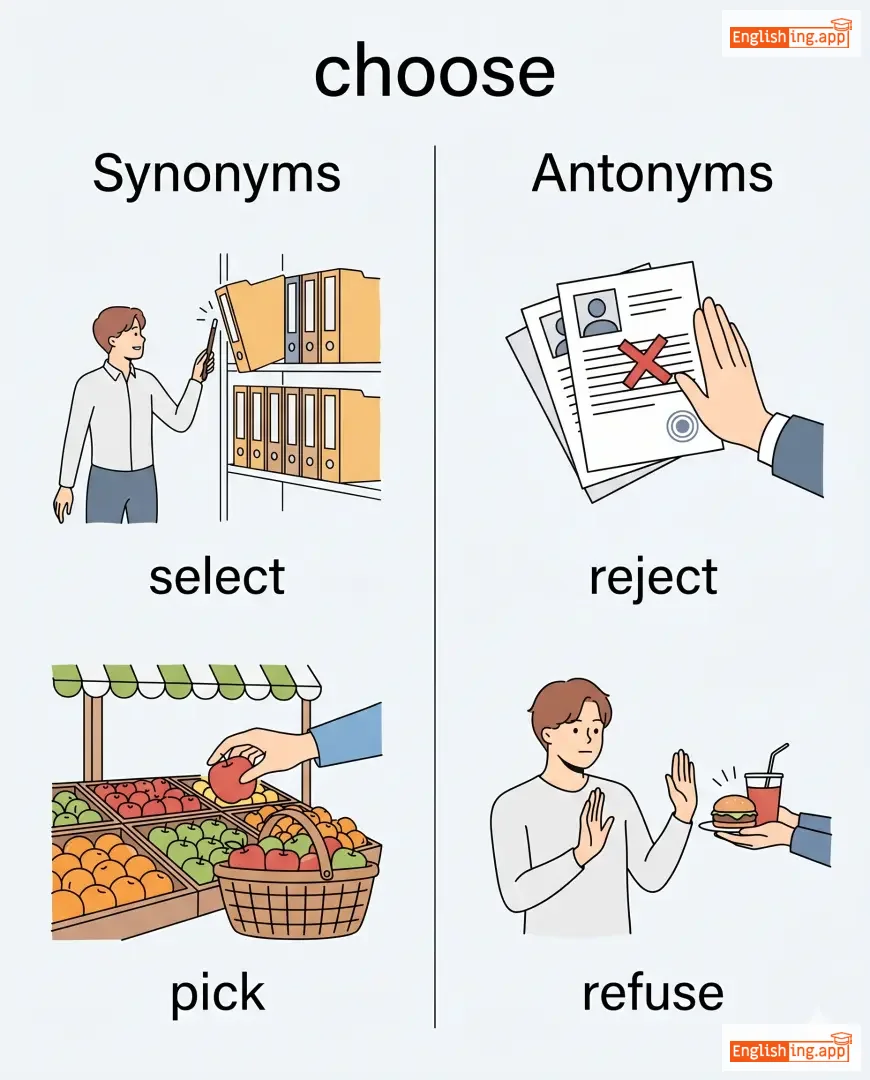
select, pick, decide, opt, elect
••••••
|
reject, refuse, ignore
••••••
|
choose between, choose wisely, choose carefully, choose from
••••••
|
No •••••• |
|
#10637
🩸
|
/kəˈlɛstərɒl/
noun
(コレステロール)
••••••
|
- •••••• |
コレステロール
koresuterooru
••••••
|
- •••••• | - •••••• | - •••••• | - •••••• |
a fatty substance found in the blood, high levels of which can cause health problems
••••••
|
High cholesterol can increase the risk of heart disease. |
高コレステロールは心臓病のリスクを高める可能性があります。
Kou koresuterooru wa shinzoubyou no risuku wo takameru kanousei ga arimasu.
••••••
|
- •••••• | - •••••• | - •••••• |
lipid, fat, sterol, plasma fat
••••••
|
low-fat, healthy blood
••••••
|
cholesterol level, high cholesterol, cholesterol test, cholesterol control
••••••
|
コレステロールが高いと心臓病のリスクが増える。コレステロールを減らすために運動しましょう!
••••••
|
|
#10638
🍫
|
/ˈtʃɒklət/
noun
(チョコレート)
••••••
|
- •••••• |
チョコレート
chokoreeto
••••••
|
- •••••• | - •••••• | - •••••• | - •••••• |
a sweet, brown food made from roasted cocoa beans
••••••
|
She bought a bar of chocolate from the store.
彼女は店でチョコレートバーを買った。
••••••
|
彼女は店でチョコレートバーを買った。
kanojo wa mise de chokoreeto baa o katta.
••••••
|
like a kid in a candy store
キャンディーショップの子供のように
••••••
|
very excited or happy about something
••••••
|
何かについて非常に興奮したり幸せであったりする
nanika ni tsuite hijō ni kōfun shitari shiawase de attari suru
••••••
|
cocoa, candy, sweet, confectionery
••••••
|
bitter, unsweetened
••••••
|
chocolate cake, chocolate bar, dark chocolate, hot chocolate
••••••
|
チョコレートはいつもおいしい 🍫、一口食べると幸せな気分になれる。
••••••
|
|
#10639
🥢
|
/tʃaɪˈniːz/
adjective, noun
(チャイニーズ)
••••••
|
- •••••• |
中国の
chūgoku no
••••••
|
- •••••• | - •••••• | - •••••• | - •••••• |
relating to China, its people, or its language
••••••
|
We went to a Chinese restaurant last night. |
昨晩、私たちは中国のレストランに行きました。
sakuban, watashitachi wa chūgoku no resutoran ni ikimashita.
••••••
|
Chinese whispers |
a game where a message is passed along and distorted
••••••
|
チャイニーズ・ウィスパー
chāinīzu uisupā
••••••
|
Mandarin, Cantonese, Asian, Oriental
••••••
|
non-Chinese, Western
••••••
|
Chinese culture, Chinese language, Chinese food, Chinese history
••••••
|
中国の食事 = 箸 🥢 忘れないで!
••••••
|
|
#10640
🧒
|
/ˈtʃaɪldhʊd/
noun
(チャイルドフッド)
••••••
|
- •••••• |
子供時代
kodomojidai
••••••
|
- •••••• | - •••••• | - •••••• | - •••••• |
the period of being a child
••••••
|
She spent her childhood in a small village.
彼女は小さな村で子供時代を過ごしました。
••••••
|
彼女は小さな村で子供時代を過ごしました。
Kanojo wa chiisana mura de kodomojidai o sugoshimashita.
••••••
|
childhood friend
子供時代の友達
••••••
|
a friend someone has had since they were children
••••••
|
子供時代の友達
kodomojidai no tomodachi
••••••
|
infancy, youth, boyhood, girlhood
••••••
|
adulthood, maturity
••••••
|
happy childhood, early childhood, childhood memory, childhood friend
••••••
|
Child + hood = 子供時代 (状態)
••••••
|
|
#10641
👶
|
/tʃaɪld/
noun
(チャイルド)
••••••
|
- •••••• |
子供
kodomo
••••••
|
- •••••• | - •••••• | - •••••• | - •••••• |
a young human being below the age of puberty or below the legal age of majority
••••••
|
The child played happily in the park.
その子供は公園で楽しそうに遊んでいました。
••••••
|
その子供は公園で楽しそうに遊んでいました。
Sono kodomo wa kouen de tanoshisou ni asonde imashita.
••••••
|
child's play
子供の遊び
••••••
|
something that is very easy to do
••••••
|
子供の遊び
Kodomo no asobi
••••••
|
kid, youngster, minor, juvenile, toddler
••••••
|
adult, grown-up
••••••
|
child care, child development, child protection, child labor
••••••
|
Child は子供 👶, '子供の遊び' のように、簡単に遊べること。
••••••
|
|
#10642
👑
|
/tʃiːf/
noun
(チーフ)
••••••
|
- •••••• |
首長
shuchou
••••••
|
- •••••• | - •••••• | - •••••• | - •••••• |
a leader or person in charge of a group or organization
••••••
|
The chief of the village made an important decision.
村のチーフは重要な決定を下しました。
••••••
|
村の首長は重要な決定を下しました。
Mura no shuchou wa juuyou na kettei wo kudashimashita.
••••••
|
chief among
チーフの中で
••••••
|
the most important or significant among a group
••••••
|
最も重要
mottomo juuyou
••••••
|
leader, head, boss, commander, captain
••••••
|
follower, subordinate
••••••
|
chief executive, tribal chief, chief complaint, chief reason
••••••
|
Chiefは首長を意味し、👑 グループ内で最も重要です。
••••••
|
|
#10643
🐔
|
/ˈtʃɪkɪn/
noun
(チキン)
••••••
|
- •••••• |
鶏肉
toriniku
••••••
|
- •••••• | - •••••• | - •••••• | - •••••• |
a domestic bird kept for its eggs or meat
••••••
|
We had fried chicken for dinner.
夕食にフライドチキンを食べました。
••••••
|
夕食にフライドチキンを食べました。
Yushoku ni furaido chikin o tabemashita.
••••••
|
chicken out
怖がって何かをやめる
••••••
|
to decide not to do something because of fear
••••••
|
怖がって何かをやめる
kowagatte nanika o yameru
••••••
|
hen, fowl, poultry, rooster, chick
••••••
|
bravery, courage
••••••
|
fried chicken, roast chicken, chicken soup, chicken farm
••••••
|
Chickenは鶏肉を意味し、'chicken out'は怖がって何かをやめることを意味します。
••••••
|
|
#10644
💪
|
/tʃɛst/
noun
(chest)
••••••
|
- •••••• |
胸部
kyōbu
••••••
|
- •••••• | - •••••• | - •••••• | - •••••• |
the front part of the human body between the neck and the stomach
••••••
|
He felt a pain in his chest after running. |
走った後、彼は胸部に痛みを感じました。
Hashitta ato, kare wa kyōbu ni itami o kanjimashita.
••••••
|
off your chest |
to talk about something that has been worrying you
••••••
|
胸の内を打ち明ける
mune no uchi o uchiakeru
••••••
|
thorax, breast, trunk, ribcage, torso
••••••
|
back, rear
••••••
|
chest pain, broad chest, chest muscles, chest infection
••••••
|
Chestは胸部、'Get it off your chest'は胸の内を打ち明けるという意味です。
••••••
|
Vocabulary Quiz
Test your vocabulary by matching words with their translations or meanings.
Login to take the quiz
Comments (0)
Share your thoughts and join the discussion.
Join the discussion by logging in
Login to CommentNo comments yet
Be the first to share your thoughts!