

翻訳
過去
過去分詞
三人称単数
動名詞
意味
例文
例文の翻訳
同義語
対義語
コロケーション
ニーモニック
Swipe left or right, or use the buttons. Tap image to zoom.
例文の翻訳
単語
Lesson 163Lesson 163 - マスクトグル
|
絵文字
|
単語 | Images | 翻訳 | 過去 | 過去分詞 | 三人称単数 | 動名詞 | 意味 | 例文 | 例文の翻訳 | 表現例 | 表現例の意味 | 表現例の翻訳 | 同義語 | 対義語 | コロケーション | ニーモニック |
|---|---|---|---|---|---|---|---|---|---|---|---|---|---|---|---|---|---|
|
#4861
📜
|
/ɪnˈvoʊk/
verb
(インヴォーク)
••••••
|
- •••••• |
呼び出す
yobidasu
••••••
|
invoked
インヴォークド
••••••
|
invoked
インヴォークド
••••••
|
invokes
インヴォークス
••••••
|
invoking
インヴォーキング
••••••
|
to call upon a higher power, authority, or principle for help, support, or justification
••••••
|
The lawyer invoked the constitution to defend his client.
弁護士は憲法を引き合いに出して自分のクライアントを守った。
••••••
|
弁護士は憲法を引き合いに出して自分のクライアントを守った。
Bengoshi wa kenpō o hikiai ni dashite jibun no kuraianto o mamotta.
••••••
|
invoke the law
法律を引き合いに出す
••••••
|
to appeal to or rely on the law for support or justification
••••••
|
法律を引き合いに出す
hōritsu o hikiai ni dasu
••••••
|
appeal, call upon, cite, summon, request
••••••
|
ignore, dismiss, reject
••••••
|
invoke the law, invoke authority, invoke powers, invoke tradition
••••••
|
呼び出すは招待のようなもので、助けを求めることです。
••••••
|
|
#4862
😤
|
/ˈɜːrksəm/
adjective
(ɜːrkˈsəm)
••••••
|
- •••••• |
迷惑的
mizu o arimasu
••••••
|
- •••••• | - •••••• | - •••••• | - •••••• |
annoying or irritating
••••••
|
Waiting in a long line is one of the most irksome tasks. |
長い列に並んでいるのは、最も迷惑な作業の一つです。
Nagai retsu ni narande iru no wa, mottomo meiwaku na sagyo no hitotsu desu.
••••••
|
- •••••• | - •••••• | - •••••• |
annoying, irritating, bothersome, vexing
••••••
|
pleasant, enjoyable
••••••
|
irksome habit, irksome situation, irksome task
••••••
|
Irksome は迷惑な事 – 'irk' はすべて迷惑です
••••••
|
|
#4863
🙄
|
/ɜːrk/
verb
(アーク)
••••••
|
- •••••• |
苛立たせる
iradataseru
••••••
|
irked
アークド
••••••
|
irked
アークド
••••••
|
irks
アークス
••••••
|
irking
アーキング
••••••
|
to annoy or irritate someone
••••••
|
It irks me when people are late without calling.
イットアークスミーウェンピープルアーレイトウィズアウトコーリング。
••••••
|
人々が電話をかけずに遅れると、私はイライラします。
Hitobito ga denwa wo kakezu ni okureru to, watashi wa iraira shimasu.
••••••
|
- •••••• | - •••••• | - •••••• |
annoy, irritate, bother, vex
••••••
|
please, delight
••••••
|
irk someone, things that irk, irked by
••••••
|
Irkは苛立たせるという意味です – 'アーク'するとイライラする
••••••
|
|
#4864
✨
|
/ˌɪrɪˈdɛsənt/
adjective
(イリデッセント)
••••••
|
- •••••• |
虹色の
niji iro no
••••••
|
- •••••• | - •••••• | - •••••• | - •••••• |
showing luminous colors that seem to change when seen from different angles
••••••
|
She wore an iridescent dress that sparkled in the light. |
彼女は光の中で輝く虹色のドレスを着ていました。
Kanojo wa hikari no naka de kagayaku niji iro no doresu o kite imashita.
••••••
|
- •••••• | - •••••• | - •••••• |
shimmering, gleaming, lustrous, sparkling
••••••
|
dull, matte
••••••
|
iridescent colors, iridescent dress, iridescent glow
••••••
|
虹色のドレス、光で輝く✨
••••••
|
|
#4865
🌈
|
/ˌɪrɪˈdɛsəns/
noun
(イリデッセンス)
••••••
|
- •••••• |
虹色の輝き
niji iro no kagayaki
••••••
|
- •••••• | - •••••• | - •••••• | - •••••• |
a play of lustrous, changing colors like those of a rainbow
••••••
|
The butterfly's wings shimmered with iridescence. |
蝶の羽は虹色の輝きで輝いていました。
Chou no hane wa niji iro no kagayaki de kagayaite imashita.
••••••
|
- •••••• | - •••••• | - •••••• |
shimmer, gleam, luster, brilliance
••••••
|
dullness, darkness
••••••
|
natural iridescence, shimmering iridescence, display of iridescence
••••••
|
イリデッセンスは虹色の輝きです – 虹のような輝きを想像してください 🌈
••••••
|
|
#4866
😡
|
/aɪər/
noun
(アイアー)
••••••
|
- •••••• |
怒り, 激怒
ikari, gekido
••••••
|
- •••••• | - •••••• | - •••••• | - •••••• |
intense anger or rage
••••••
|
The new policy provoked the ire of the employees. |
新しい政策は従業員の怒りを引き起こした。
Atarashī seisaku wa jūgyōin no ikari o hikiokoshita.
••••••
|
raise someone's ire |
to make someone very angry
••••••
|
誰かの怒りを買う
dareka no ikari o kau
••••••
|
anger, fury, rage, wrath, indignation
••••••
|
calm, peace, contentment
••••••
|
provoke ire, draw ire, incur ire, public ire
••••••
|
アイアー = 怒り (aire = ikari)
••••••
|
|
#4867
🤬
|
/aɪˈreɪt/
adjective
(アイレイト)
••••••
|
- •••••• |
激怒した
geki-noshita
••••••
|
- •••••• | - •••••• | - •••••• | - •••••• |
Extremely angry.
••••••
|
The customer became irate after waiting for hours. |
顧客は何時間も待った後、激怒しました。
Kokyaku wa nanjikan mo matta ato, geki-noshimashita.
••••••
|
- •••••• | - •••••• | - •••••• |
angry, furious, enraged, incensed
••••••
|
calm, pleased, happy
••••••
|
irate customer, irate reaction, look irate, irate complaint
••••••
|
Irate は激怒を意味する – 'I rate 0 stars' と言うと顧客は激怒する 🤬
••••••
|
|
#4868
😡
|
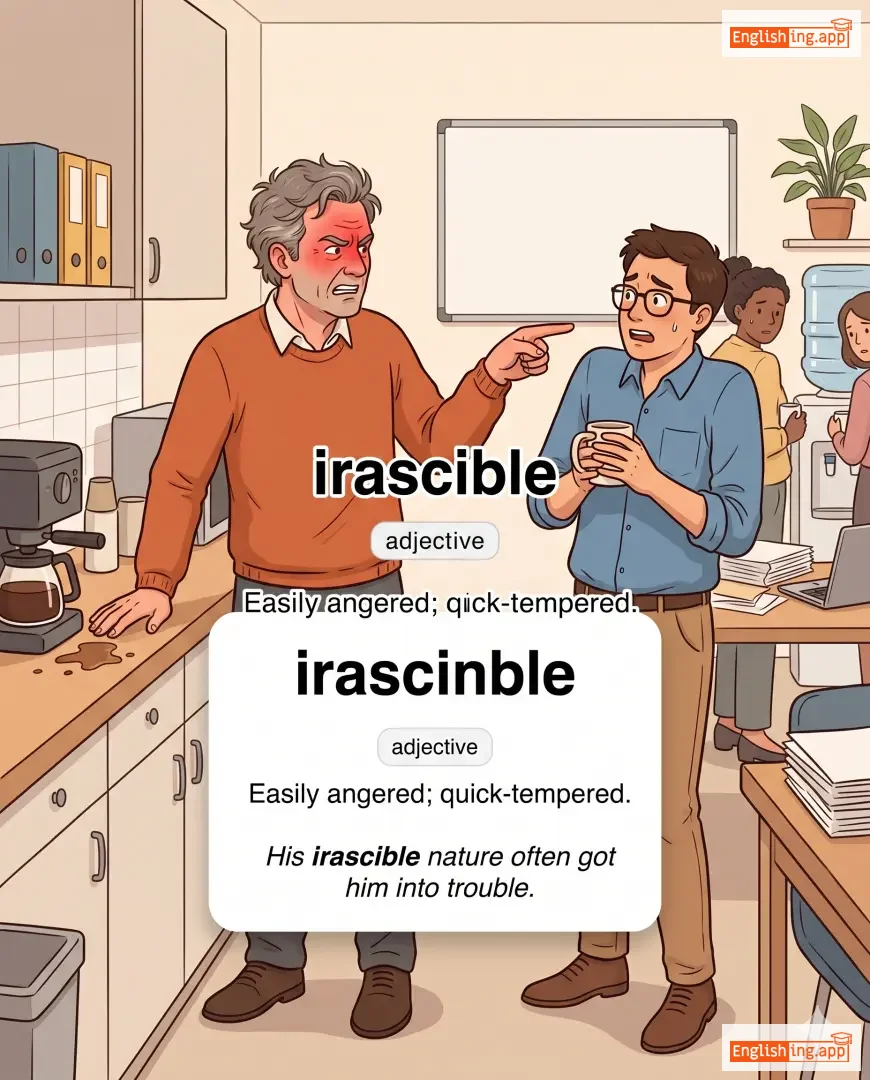
/ɪˈræsɪbl/
adjective
(イラサイブル)
••••••
|
|
怒りっぽい
okorippoi
••••••
|
- •••••• | - •••••• | - •••••• | - •••••• |
Easily angered; quick-tempered.
••••••
|
His irascible nature often got him into trouble. |
彼の怒りっぽい性格はよくトラブルを引き起こしていた。
Kare no okorippoi seikaku wa yoku toraburu o hikiokoshite ita.
••••••
|
- •••••• | - •••••• | - •••••• |
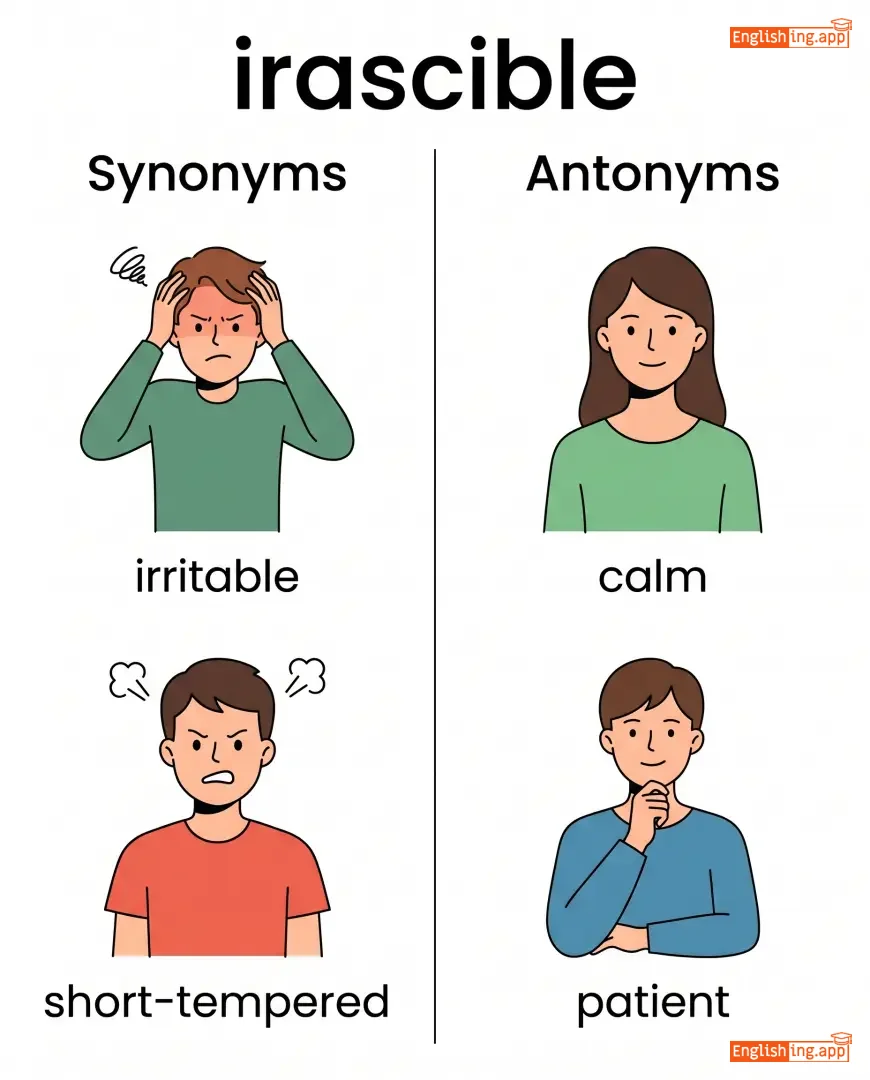
irritable, short-tempered, hot-headed, touchy
••••••
|
calm, patient, easygoing
••••••
|
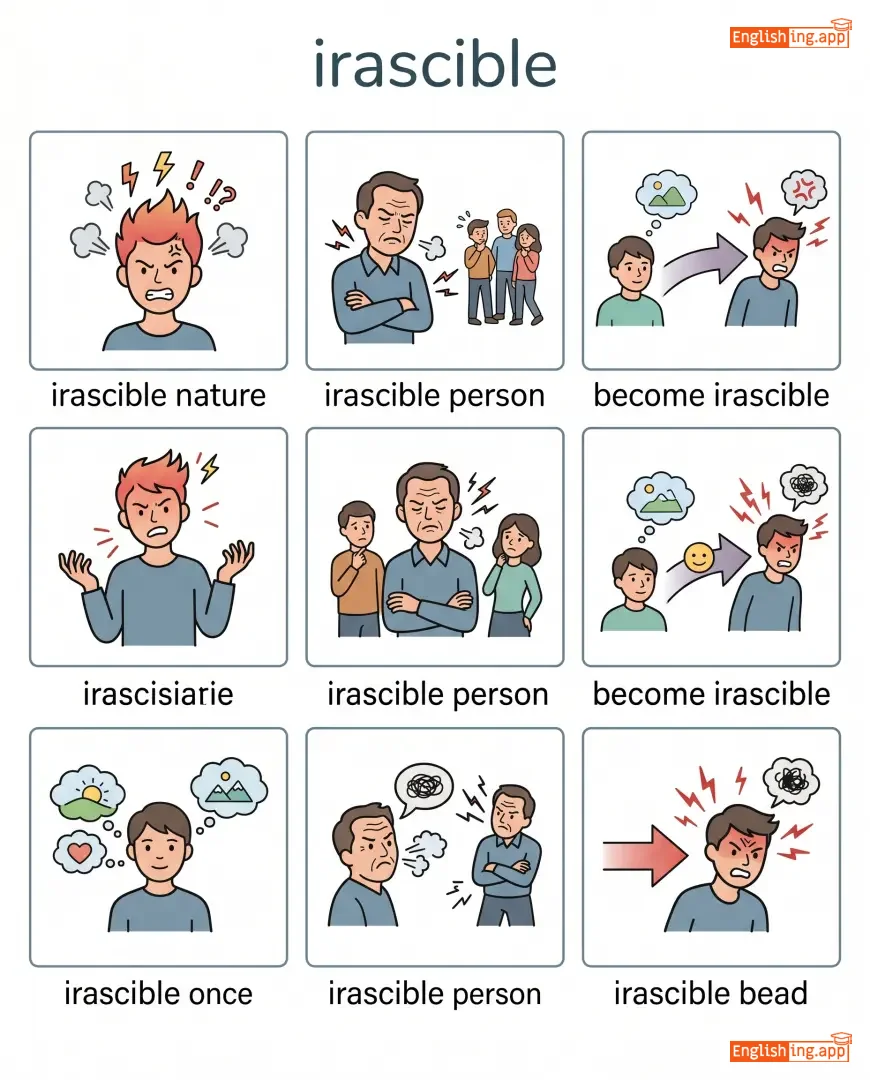
irascible nature, irascible person, become irascible, irascible tone
••••••
|
Irascible は簡単に怒ることを意味する – 'irritated + able' = 怒りっぽい.
••••••
|
|
#4869
🔹
|
/aɪˈoʊtə/
noun
(アイオタ)
••••••
|
- •••••• |
微小な量
bishou na ryou
••••••
|
- •••••• | - •••••• | - •••••• | - •••••• |
An extremely small amount.
••••••
|
He did not show an iota of fear. |
彼は恐怖の一片も見せませんでした。
Kare wa kyoufu no ippen mo misemasen deshita.
••••••
|
not one iota |
not even a tiny bit
••••••
|
微小な量もない
bishou na ryou mo nai
••••••
|
bit, speck, shred, ounce, particle
••••••
|
lot, abundance, plenty
••••••
|
not an iota, iota of doubt, without an iota, iota of truth
••••••
|
Iotaは '微小な量' という意味です - 覚えておいて: 'I ate a tiny part'.
••••••
|
|
#4870
🤔
|
/ˈɪnwərdli/
adverb
(インワードリー)
••••••
|
- •••••• |
内面的に
naimen-teki ni
••••••
|
- •••••• | - •••••• | - •••••• | - •••••• |
In the mind or spirit; not outwardly visible.
••••••
|
She smiled outwardly but inwardly she was worried.
彼女は外見では微笑んだが、内心では心配していた。
••••••
|
彼女は外見では微笑んだが、内心では心配していた。
Kanojo wa gaiken de wa hohoenda ga, naishin de wa shinpai shite ita.
••••••
|
- •••••• | - •••••• | - •••••• |
internally, secretly, privately, mentally
••••••
|
outwardly, externally
••••••
|
inwardly pleased, inwardly worried, inwardly laughing, inwardly focused
••••••
|
Inwardlyは内面的に、心の中の感情を意味する。
••••••
|
|
#4871
🛡️
|
/ɪnˈvʌlnərəbl/
adjective
(インヴァルネラブル)
••••••
|
- •••••• |
無敵
muteki
••••••
|
- •••••• | - •••••• | - •••••• | - •••••• |
Impossible to harm, damage, or defeat.
••••••
|
The fortress was thought to be invulnerable to attack.
その要塞は攻撃に対して無敵だと考えられていた。
••••••
|
その要塞は攻撃に対して無敵だと考えられていた。
Sono yousai wa kougeki ni taishite muteki da to kangaerareteita.
••••••
|
- •••••• | - •••••• | - •••••• |
unassailable, impregnable, indestructible, untouchable, secure
••••••
|
vulnerable, weak, fragile
••••••
|
invulnerable position, invulnerable armor, seemingly invulnerable, feel invulnerable
••••••
|
無敵はあなたを傷つけることはできない、攻撃できない防御壁のようです 🏰
••••••
|
|
#4872
🔗
|
/ɪnˈvɑːlvd/
adjective
(インヴォルヴド)
••••••
|
- •••••• |
関与した
kan'yoshita
••••••
|
- •••••• | - •••••• | - •••••• | - •••••• |
complicated or engaged in something
••••••
|
She was deeply involved in community service. |
彼女は地域社会の奉仕活動に深く関与していた。
Kanojo wa chiikishakai no hōshikatsudō ni fukaku kan'yoshite ita.
••••••
|
become involved |
to take an active part in something
••••••
|
関与する
kan'yosuru
••••••
|
engaged, committed, complicated, connected
••••••
|
detached, simple, uninvolved
••••••
|
deeply involved, personally involved, involved process
••••••
|
Involvedは関与した→全てのことに関わること。
••••••
|
|
#4873
🤲
|
/ɪnˈvɑːlv/
verb
(インボルヴ)
••••••
|
- •••••• |
関与する
kan'yosuru
••••••
|
involved
インボルヴド
••••••
|
involved
インボルヴド
••••••
|
involves
インボルヴス
••••••
|
involving
インボルヴィング
••••••
|
to include as a necessary part, or to engage someone in an activity
••••••
|
The project will involve several departments working together.
このプロジェクトは、いくつかの部署が一緒に働くことを含むでしょう。
••••••
|
このプロジェクトは、いくつかの部署が一緒に働くことを含むでしょう。
Kono purojekuto wa, ikutsu ka no busho ga issho ni hataraku koto o fukumu deshō.
••••••
|
get involved
参加する
••••••
|
to participate or take part in something
••••••
|
参加する
sankasuru
••••••
|
include, engage, entail, require, associate
••••••
|
exclude, remove, neglect
••••••
|
involve in, involve with, project involves, task involves
••••••
|
InvolveはIn + volve → 中に持っていく、つまり誰かを活動に関与させることです。
••••••
|
|
#4874
🌀
|
/ˌɪnvəˈluːʃən/
noun
(インヴォリューション)
••••••
|
- •••••• |
インヴォリューション
invoriyuushon
••••••
|
- •••••• | - •••••• | - •••••• | - •••••• |
a complicated or intricate form or state; in biology, the shrinking of an organ after its function has finished
••••••
|
The story was full of involution, making it hard to follow. |
その話はインヴォリューションで満ちており、追うのが難しかった。
Sono hanashi wa invoriyuushon de michite ori, ou no ga muzukashikatta.
••••••
|
- •••••• | - •••••• | - •••••• |
complexity, intricacy, entanglement, convolution
••••••
|
simplicity, clarity
••••••
|
involution of society, involution process, full of involution
••••••
|
インヴォリューション (in + volution) → 複雑で込み入った状態。
••••••
|
|
#4875
🤖
|
/ɪnˈvɑːlənˌtɛri/
adjective
(インボランタリー)
••••••
|
- •••••• |
不随意
fuzuii
••••••
|
- •••••• | - •••••• | - •••••• | - •••••• |
done without will or conscious control
••••••
|
He gave an involuntary shiver when he heard the loud noise. |
彼は大きな音を聞いたとき、不随意に震えた。
Kare wa ōkina oto o kiita toki, fuzui ni furueta.
••••••
|
- •••••• | - •••••• | - •••••• |
automatic, reflex, unconscious, instinctive
••••••
|
voluntary, intentional, deliberate
••••••
|
involuntary action, involuntary movement, involuntary response
••••••
|
Involuntary は自分の意志でなく、不随意な行動。
••••••
|
|
#4876
💡
|
/ɪnˈvɛntɪv/
adjective
(インヴェンティヴ)
••••••
|
- •••••• |
創造的
sōzōteki
••••••
|
- •••••• | - •••••• | - •••••• | - •••••• |
Having the ability to create or design new things or to think originally.
••••••
|
The inventor was known for his inventive solutions to everyday problems. |
発明家は日常の問題に対する創造的な解決策で知られていた。
Hatsumeika wa nichijō no mondai ni taisuru sōzō-teki na kaiketsu-saku de shirarete ita.
••••••
|
necessity is the mother of invention |
Difficult situations inspire ingenious solutions.
••••••
|
必要は発明の母である
Hitsuyō wa hatsumei no haha de aru
••••••
|
creative, imaginative, innovative, original, resourceful
••••••
|
unimaginative, dull, conventional
••••••
|
inventive ideas, inventive solution, inventive design, highly inventive
••••••
|
Inventive は創造的という意味—'Invent' + 'Creative' で覚えよう。
••••••
|
|
#4877
🙏
|
/ˌɪnvəˈkeɪʃən/
noun
(invokesyon)
••••••
|
- •••••• |
祈願
kigen
••••••
|
- •••••• | - •••••• | - •••••• | - •••••• |
the act of calling upon a higher power for help, blessing, or inspiration
••••••
|
The ceremony began with an invocation to the gods. |
儀式は神々への祈願から始まりました。
Gishiki wa kamigami e no kigen kara hajimari mashita.
••••••
|
- •••••• | - •••••• | - •••••• |
prayer, appeal, supplication, request
••••••
|
denial, rejection
••••••
|
opening invocation, religious invocation, solemn invocation, invocation of law
••••••
|
INVITE + VOCAL: 神を呼びかける
••••••
|
|
#4878
🏛️
|
/ɪnˈvaɪələt/
adjective
(インヴィオレート)
••••••
|
- •••••• |
汚されていない
kagasareteinai
••••••
|
- •••••• | - •••••• | - •••••• | - •••••• |
free from violation, injury, or desecration; kept safe and untouched
••••••
|
The ancient temple remained inviolate for centuries.
古代の寺院は何世紀にもわたって汚されることなく保たれました。
••••••
|
古代の寺院は何世紀にもわたって汚されることなく保たれました。
Kodai no jiin wa nan seiki ni mo watatte kegasarenakatta tamotaremashita.
••••••
|
- •••••• | - •••••• | - •••••• |
untouched, intact, sacred, preserved
••••••
|
violated, desecrated, harmed
••••••
|
remain inviolate, inviolate trust, inviolate rule, inviolate ground
••••••
|
INVIOLATEはVIOLATEされていないことを意味します—つまり汚されていない
••••••
|
|
#4879
📜
|
/ɪnˈvaɪələbl/
adjective
(インヴィオラブル)
••••••
|
- •••••• |
侵害できない
shingai dekinai
••••••
|
- •••••• | - •••••• | - •••••• | - •••••• |
never to be broken, dishonored, or violated
••••••
|
Human rights are considered inviolable in modern democracies. |
人権は現代の民主主義において侵害できないと見なされています。
Jinken wa gendai no minshushugi ni oite shingai dekinai to minasarateimasu.
••••••
|
- •••••• | - •••••• | - •••••• |
sacred, untouchable, unbreakable, absolute
••••••
|
violable, breakable, dishonorable
••••••
|
inviolable rights, inviolable law, inviolable rule, inviolable trust
••••••
|
INVIOLABLEとは、侵害できないもの、壊されることはない
••••••
|
|
#4880
🛡️
|
/ɪnˈvɪnsəbl/
adjective
(インヴィンシブル)
••••••
|
- •••••• |
無敵
muteki
••••••
|
- •••••• | - •••••• | - •••••• | - •••••• |
too powerful to be defeated or overcome
••••••
|
The team seemed invincible after winning ten matches in a row. |
そのチームは10試合連続で勝利した後、無敵に見えた。
Sono chīmu wa 10 shiai renzoku de shōri shita ato, muteki ni mieta.
••••••
|
invincible spirit |
an unbreakable will or determination
••••••
|
無敵の精神
muteki no seishin
••••••
|
unbeatable, unconquerable, indomitable, undefeatable
••••••
|
vulnerable, weak, fragile
••••••
|
invincible force, invincible power, feel invincible, invincible army
••••••
|
無敵は誰にも倒されない力を持つ!
••••••
|
|
#4881
⚡
|
/ɪnˈvɪɡəreɪt/
verb
(invigoreit)
••••••
|
|
活気づける
katsukizeru
••••••
|
invigorated
invigoreited
••••••
|
invigorated
invigoreited
••••••
|
invigorates
invigoreits
••••••
|
invigorating
invigoreiting
••••••
|
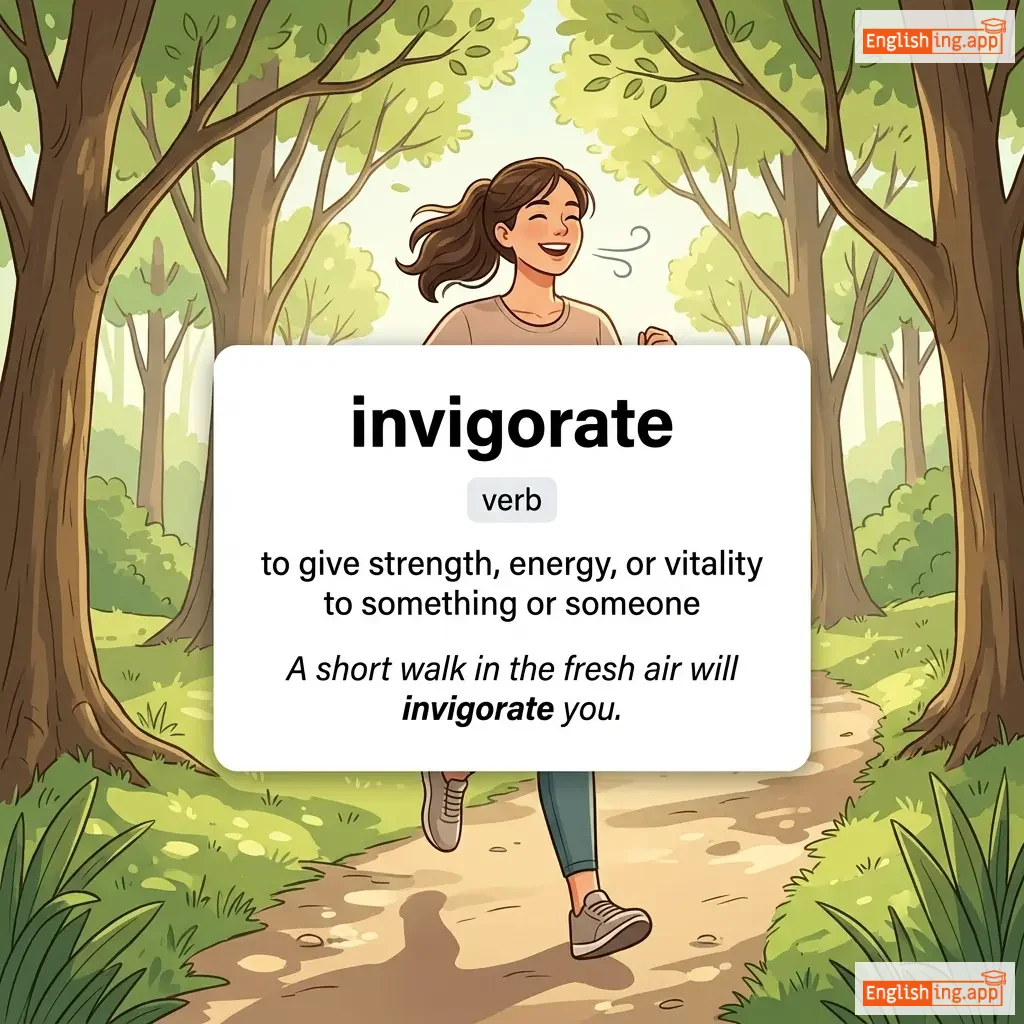
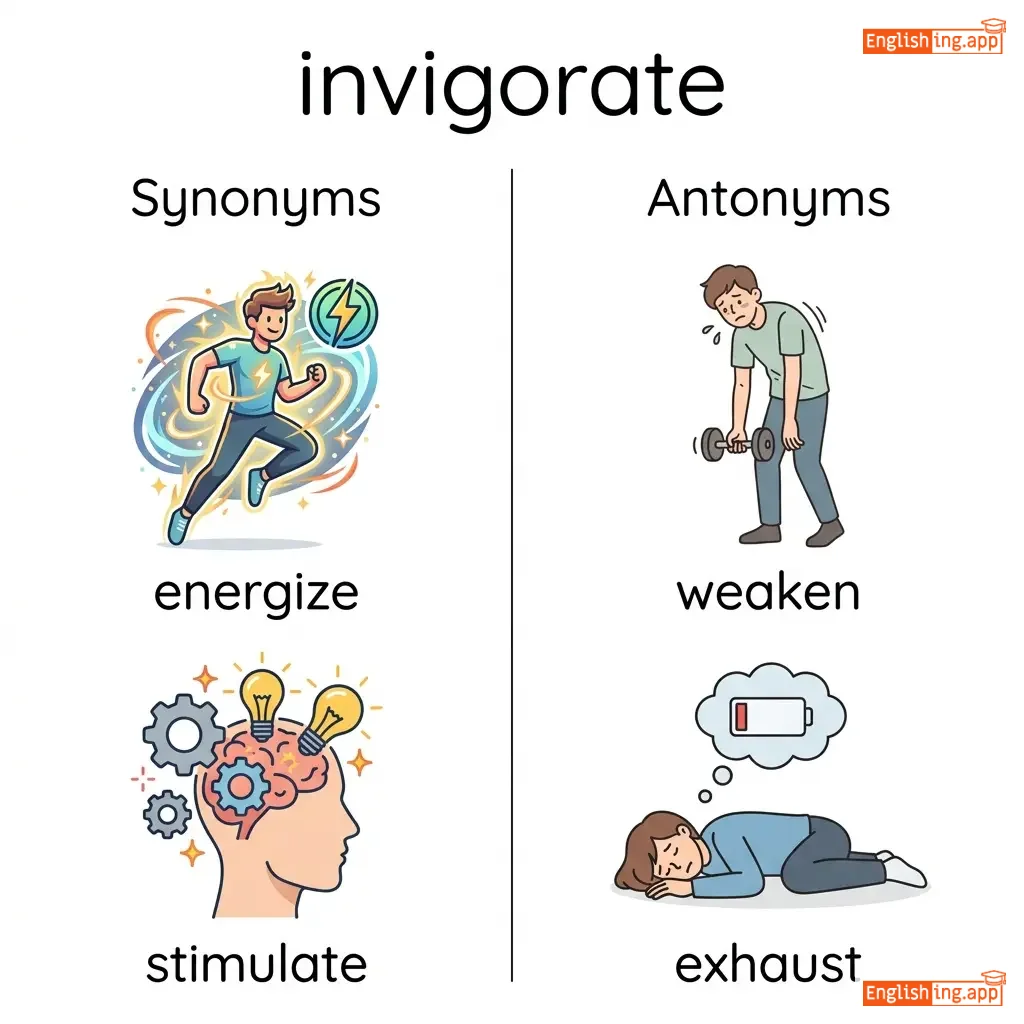
to give strength, energy, or vitality to something or someone
••••••
|
A short walk in the fresh air will invigorate you.
新鮮な空気の中を短い散歩で活力を得ることができます。
••••••
|
新鮮な空気の中を短い散歩で活力を得ることができます。
Shinsen na kuuki no naka o mijikai sanpo de katsuryoku o eru koto ga dekimasu.
••••••
|
- •••••• | - •••••• | - •••••• |
energize, stimulate, refresh, revitalize, strengthen
••••••
|
weaken, exhaust, tire
••••••
|
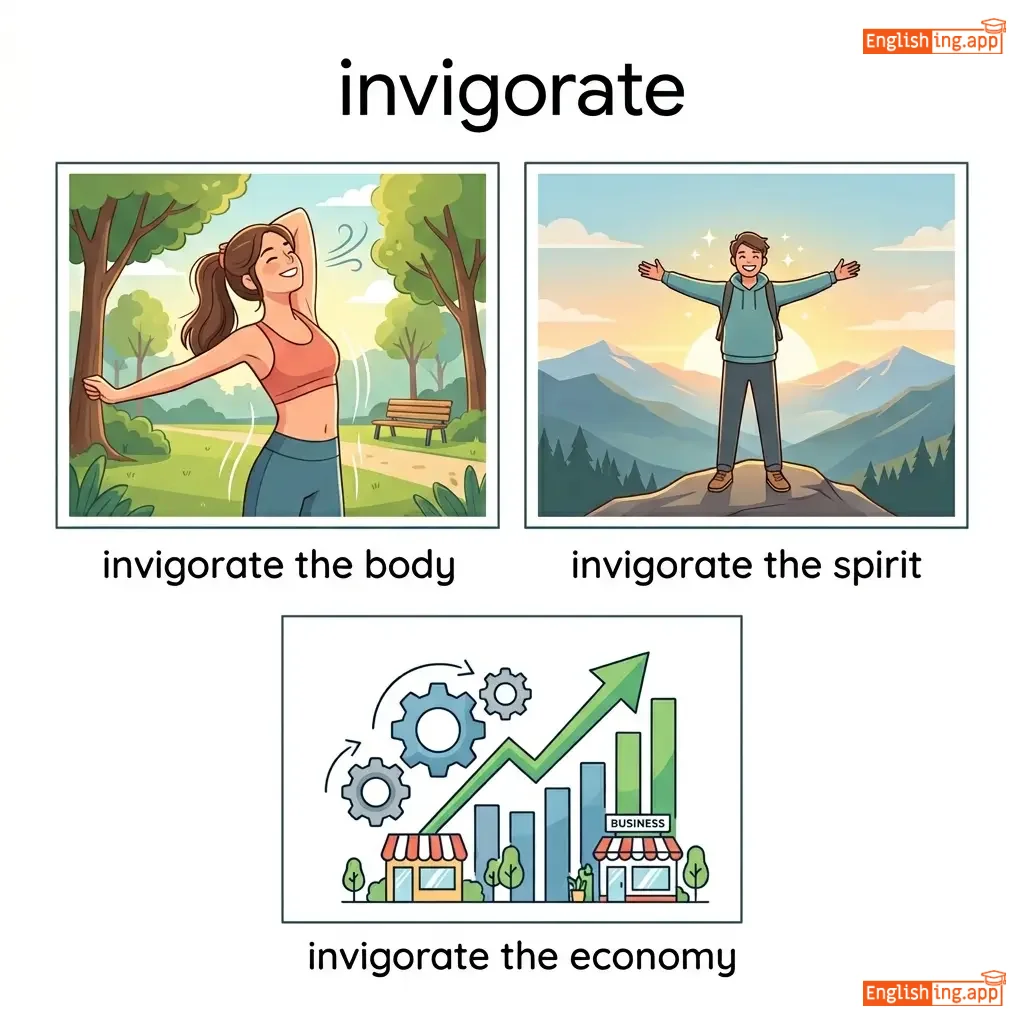
invigorate the body, invigorate the spirit, invigorate the economy, invigorate with exercise
••••••
|
新鮮な空気で活気づけられるように、INIGORATEもあなたを活気づけます!
••••••
|
|
#4882
😒
|
/ɪnˈvɪdiəs/
adjective
(インヴィディアス)
••••••
|
|
妬ましい
netamashii
••••••
|
- •••••• | - •••••• | - •••••• | - •••••• |
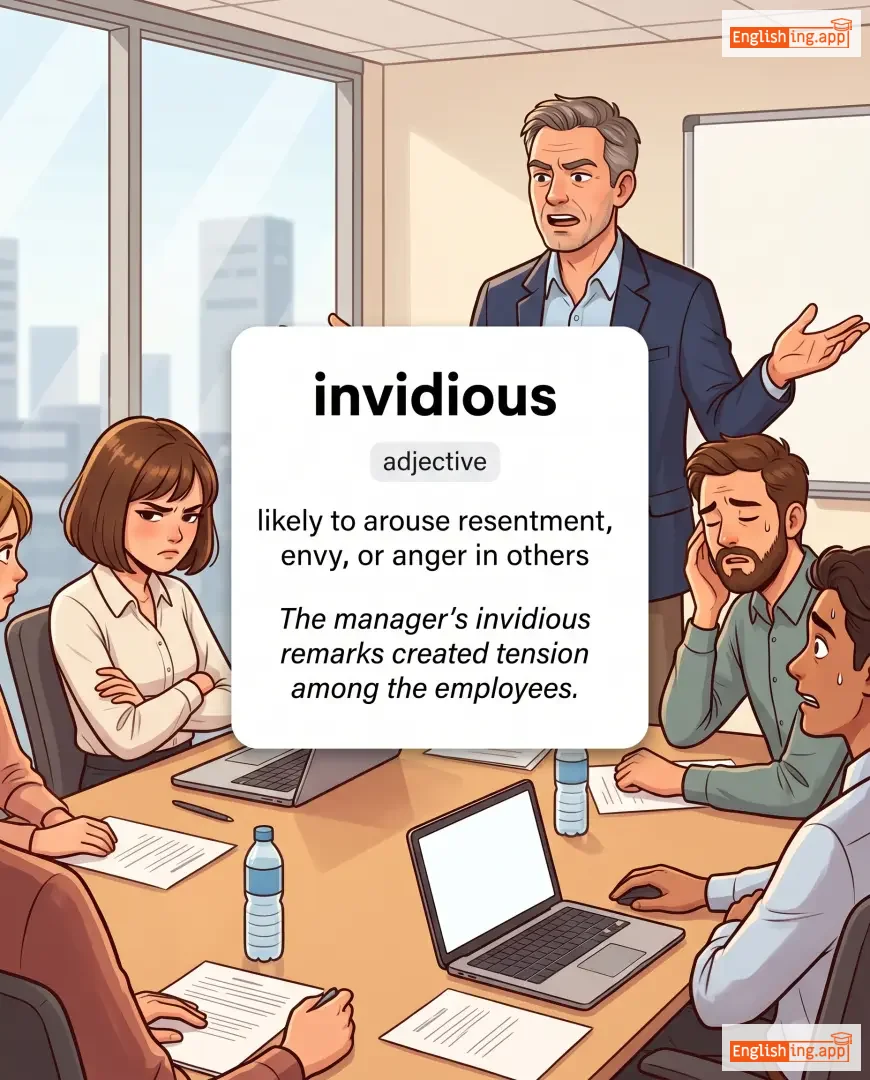
likely to arouse resentment, envy, or anger in others
••••••
|
The manager's invidious remarks created tension among the employees. |
マネージャーの妬ましいコメントは、従業員の間に緊張を生み出しました。
Manējā no netamashī komento wa, jūgyōin no aida ni kinchō o umidashimashita.
••••••
|
- •••••• | - •••••• | - •••••• |
offensive, unpleasant, discriminatory, unfair
••••••
|
favorable, just
••••••
|
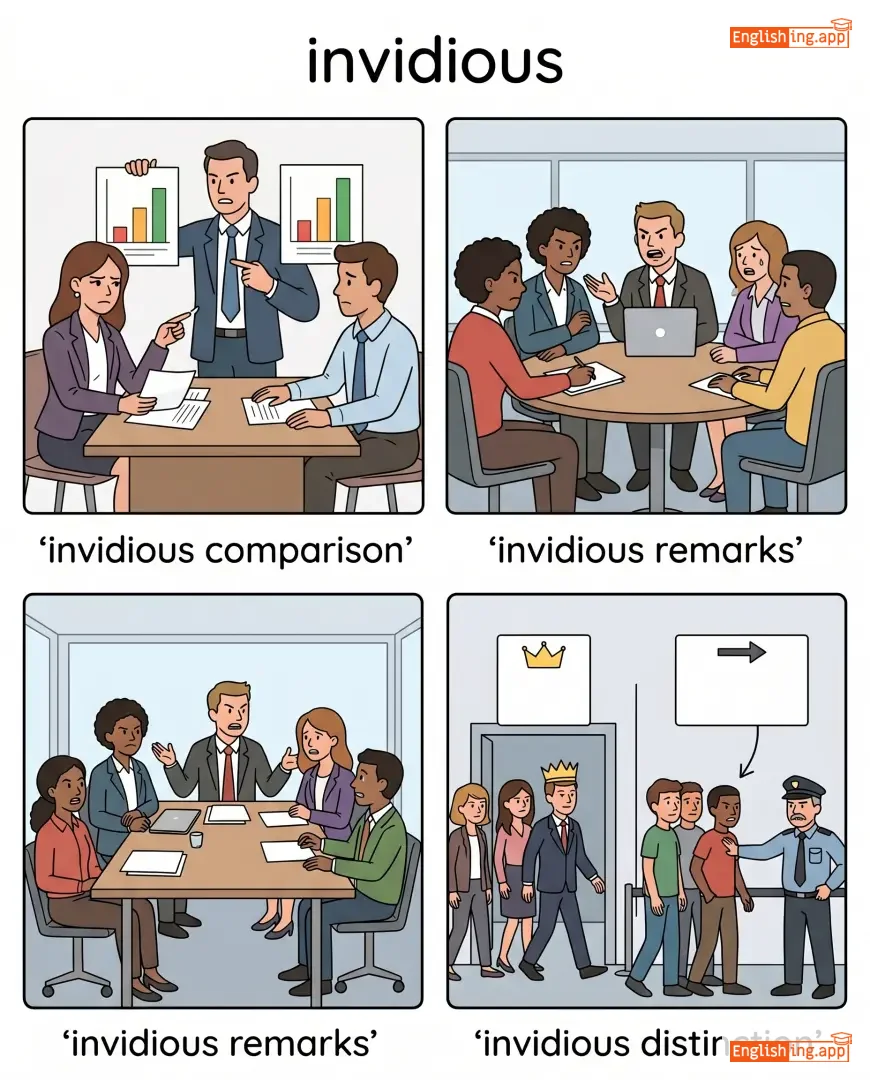
invidious comparison, invidious remarks, invidious distinction
••••••
|
Invidious とは他人に嫉妬を引き起こすこと — 妬ましい
••••••
|
|
#4883
📚
|
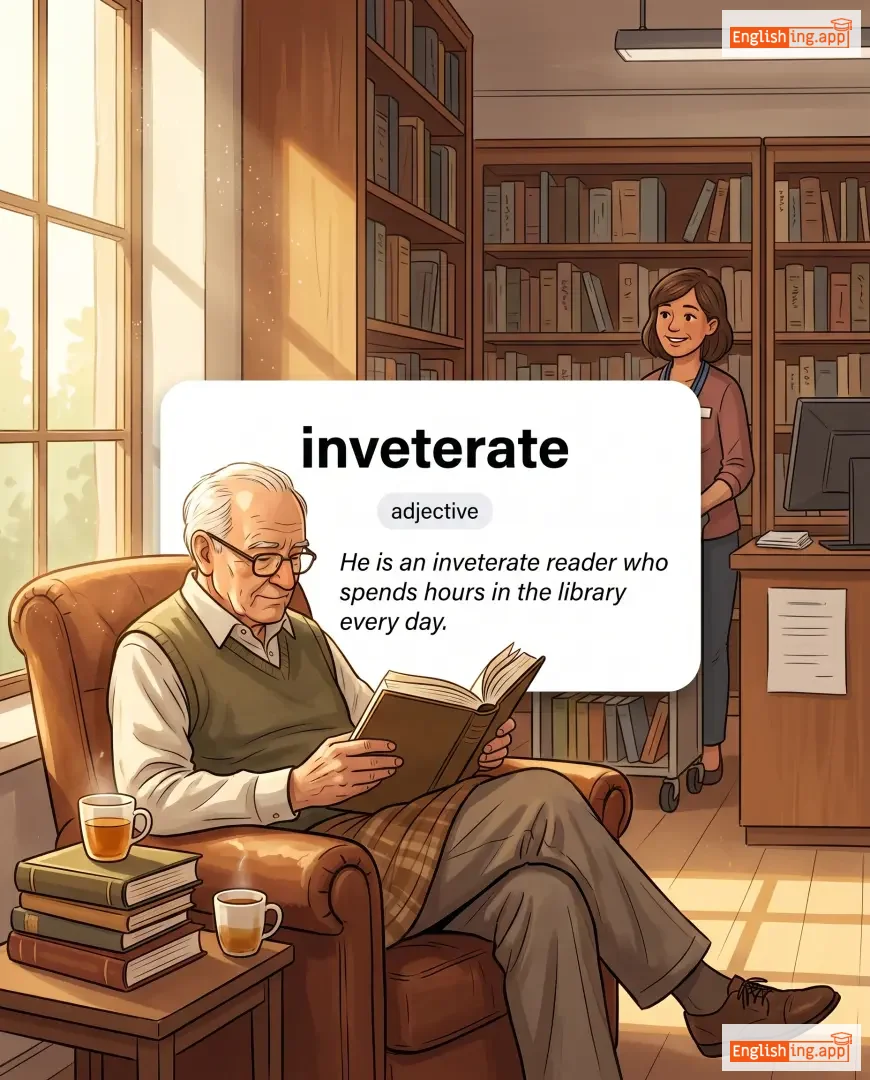
/ɪnˈvɛtərət/
adjective
(インヴェテレート)
••••••
|
|
常習的な
joushuuteki na
••••••
|
- •••••• | - •••••• | - •••••• | - •••••• |
having a long-established habit, activity, or interest that is unlikely to change
••••••
|
He is an inveterate reader who spends hours in the library every day. |
彼は毎日数時間を図書館で過ごす常習的な読者です。
Kare wa mainichi suujikan wo toshokan de sugosu joushuuteki na dokusha desu.
••••••
|
- •••••• | - •••••• | - •••••• |
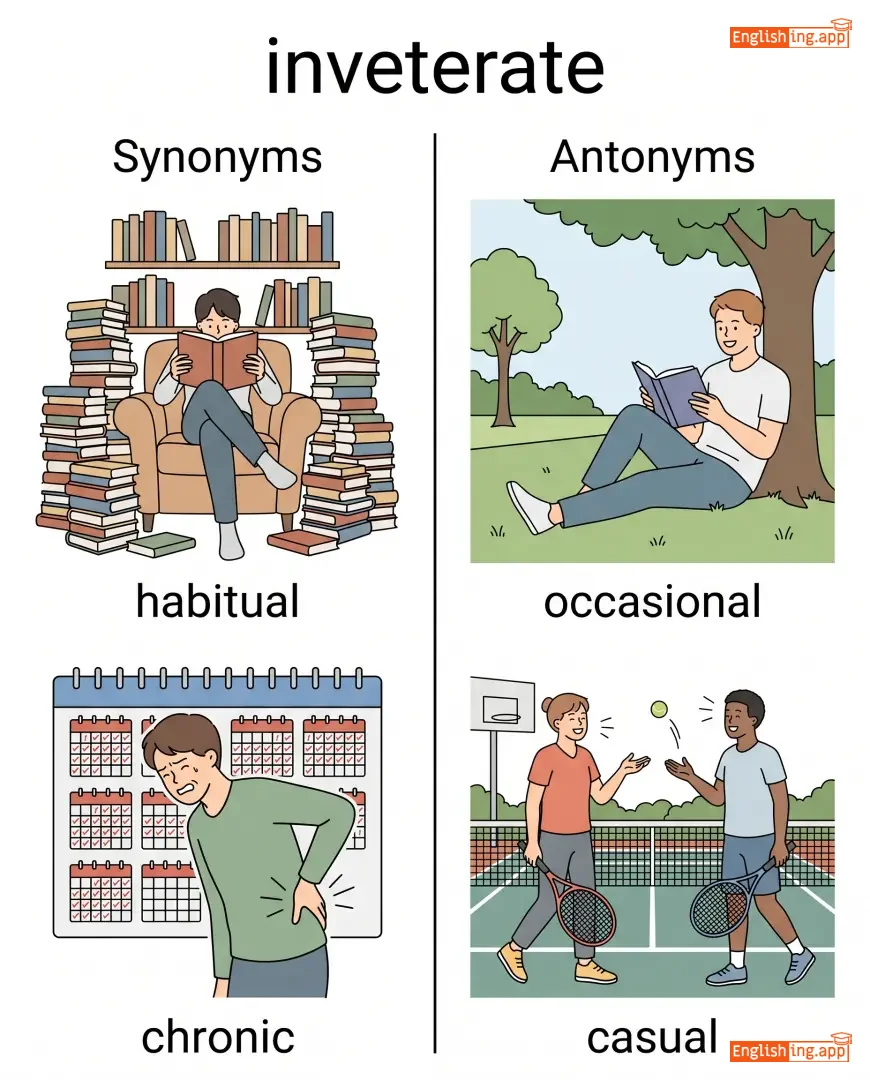
habitual, chronic, entrenched, confirmed
••••••
|
occasional, casual
••••••
|
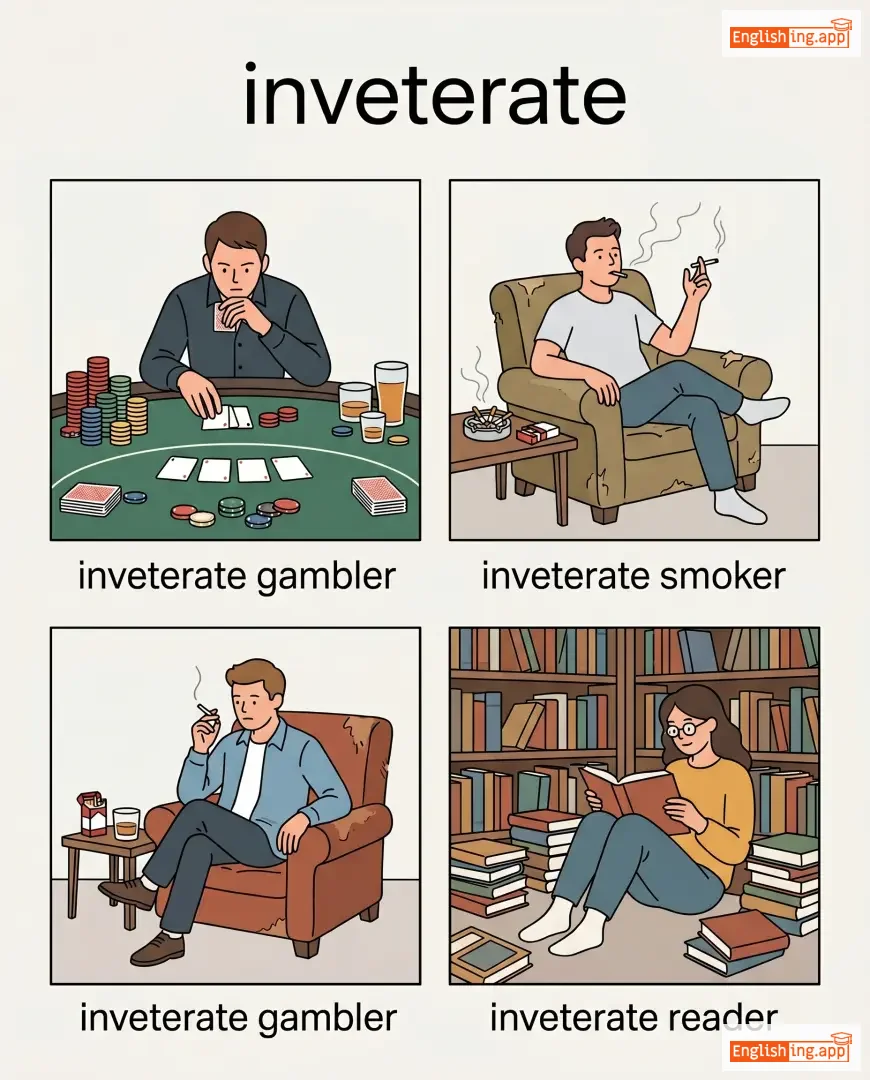
inveterate gambler, inveterate smoker, inveterate reader
••••••
|
Inveterateは古い習慣にしっかりと根を張った意味です — 常習的な
••••••
|
|
#4884
💰
|
/ɪnˈvɛstər/
noun
(インヴェスター)
••••••
|
- •••••• |
投資家
toushika
••••••
|
- •••••• | - •••••• | - •••••• | - •••••• |
a person or organization that puts money into financial schemes, property, or business ventures with the expectation of achieving a profit
••••••
|
The investor funded the startup with a large sum of money. |
投資家はスタートアップに大金を投資しました。
Tōshika wa sātoappu ni ōkin o tōshi shimashita.
••••••
|
angel investor |
an individual who provides capital for a business startup, usually in exchange for ownership equity
••••••
|
エンジェル投資家
enjeru tōshika
••••••
|
financier, shareholder, backer, capitalist
••••••
|
spender, debtor
••••••
|
foreign investor, private investor, institutional investor, angel investor
••••••
|
投資家とは、利益を得るために投資する人 — 投資家
••••••
|
|
#4885
👑
|
/ɪnˈvɛstɪtʃər/
noun
(インヴェスティチュア)
••••••
|
- •••••• |
任命式
ninmei-shiki
••••••
|
- •••••• | - •••••• | - •••••• | - •••••• |
the formal ceremony of conferring authority, rank, or office
••••••
|
The king held an investiture ceremony for the new knight. |
王は新しい騎士のために任命式を開催しました。
Ō wa atarashī kishi no tame ni ninmei-shiki o kaisai shimashita.
••••••
|
- •••••• | - •••••• | - •••••• |
ceremony, inauguration, ordination, induction
••••••
|
removal, dismissal
••••••
|
investiture ceremony, royal investiture, official investiture
••••••
|
Investitureは、タイトルやランクを与える儀式を指します。
••••••
|
|
#4886
🕵️
|
/ɪnˈvɛstɪˌɡeɪtər/
noun
(ハピネス)
••••••
|
- •••••• |
幸福
kōfuku
••••••
|
- •••••• | - •••••• | - •••••• | - •••••• |
a person who carries out a formal inquiry or investigation
••••••
|
The investigator gathered evidence from the crime scene. |
彼女は賞を受け取ったとき、自分の幸福を隠すことができませんでした。
Kanojo wa shō o uketotta toki, jibun no kōfuku o kakusu koto ga dekimasen deshita.
••••••
|
private investigator |
a detective who works independently, often hired for personal cases
••••••
|
幸福を追求する
Kōfuku o tsuikyū suru
••••••
|
detective, examiner, inspector, researcher, sleuth
••••••
|
suspect, criminal
••••••
|
police investigator, lead investigator, private investigator, chief investigator
••••••
|
幸福は人生で追い求めるもの。
••••••
|
|
#4887
🔄
|
/ɪnˈvɜːrt/
verb
(インバート)
••••••
|
- •••••• |
逆さにする
sakasa ni suru
••••••
|
inverted
インバーテッド
••••••
|
inverted
インバーテッド
••••••
|
inverts
インヴァーツ
••••••
|
inverting
インヴァーティング
••••••
|
To turn something upside down or in the opposite position, order, or direction.
••••••
|
He inverted the glass to let the water drain out.
彼は水が流れ出るようにグラスを逆さまにしました。
••••••
|
彼は水が流れ出るようにグラスを逆さまにしました。
Kare wa mizu ga nagarediru yō ni gurasu wo sakasama ni shimashita.
••••••
|
turn upside down
完全にひっくり返す
••••••
|
To completely change or disrupt something.
••••••
|
完全に逆さにする
Kanzen ni sakasa ni suru
••••••
|
reverse, flip, overturn, transpose, upend
••••••
|
maintain, preserve, keep
••••••
|
invert colors, invert position, invert the order, invert the structure
••••••
|
逆さにする=ひっくり返す—グラスを逆さにすれば、水が流れます。
••••••
|
|
#4888
🔃
|
/ɪnˈvɜːrʒən/
noun
(インヴァージョン)
••••••
|
- •••••• |
逆転
gyakuten
••••••
|
- •••••• | - •••••• | - •••••• | - •••••• |
A reversal of the normal order, position, or relationship.
••••••
|
In poetry, inversion is often used to create emphasis. |
詩では、逆転は強調を作るためによく使われます。
Shi de wa, gyakuten wa kyouchou o tsukuru tame ni yoku tsukawaremasu.
••••••
|
temperature inversion |
A weather condition where warm air traps cooler air near the surface.
••••••
|
温度逆転
Ondo gyakuten
••••••
|
reversal, transposition, flip, opposite
••••••
|
normality, order
••••••
|
inversion of roles, grammatical inversion, temperature inversion
••••••
|
逆転=逆さ、詩では語順が逆さになる。
••••••
|
|
#4889
🔄
|
/ˌɪnˈvɜːrs/
adjective
(in-bāsu)
••••••
|
- •••••• |
逆
gyaku
••••••
|
- •••••• | - •••••• | - •••••• | - •••••• |
Opposite in position, direction, order, or effect.
••••••
|
There is an inverse relationship between price and demand. |
価格と需要の間には逆の関係があります。
Kakaku to juyō no aida ni wa gyaku no kankei ga arimasu.
••••••
|
inverse proportion |
When one value increases while another decreases.
••••••
|
逆比例
Gyaku hirei
••••••
|
opposite, contrary, reverse, antithetical
••••••
|
direct, same, identical
••••••
|
inverse relation, inverse function, inverse effect, inverse order
••••••
|
Inverseは反対の意味—数学では価格が上がると需要が下がる。
••••••
|
|
#4890
📦
|
/ˈɪnvənˌtɔːri/
noun
(インベントリ)
••••••
|
- •••••• |
インベントリ
inbentori
••••••
|
- •••••• | - •••••• | - •••••• | - •••••• |
A complete list of items, such as goods in stock or property.
••••••
|
The shopkeeper checked the inventory before opening the store. |
店主は店を開店する前にインベントリを確認しました。
Tenshu wa mise o kaiten suru mae ni inbentori o kakunin shimashita.
••••••
|
take stock |
To review and assess a situation or resources.
••••••
|
在庫確認
zaiko kakunin
••••••
|
stock, list, catalog, register, record
••••••
|
shortage, emptiness
••••••
|
inventory list, inventory management, inventory control, inventory check
••••••
|
インベントリはリスト—店の在庫をチェックするためのリスト。
••••••
|
Vocabulary Quiz
Test your vocabulary by matching words with their translations or meanings.
Login to take the quiz
Comments (0)
Share your thoughts and join the discussion.
Join the discussion by logging in
Login to CommentNo comments yet
Be the first to share your thoughts!