



Swipe left or right, or use the buttons. Tap image to zoom.
例句翻译
单词
Lesson 163Lesson 163 - 遮罩切换
|
表情符号
|
单词 | Images | 翻译 | 过去时 | 过去分词 | 第三人称单数 | 动名词 | 含义 | 例句 | 例句翻译 | 示例表达 | 示例表达含义 | 示例表达翻译 | 同义词 | 反义词 | 搭配词 | 助记符 |
|---|---|---|---|---|---|---|---|---|---|---|---|---|---|---|---|---|---|
|
#4861
📜
|
/ɪnˈvoʊk/
verb
(因伏克)
••••••
|
- •••••• |
呼叫
hūjiào
••••••
|
invoked
因伏克德
••••••
|
invoked
因伏克德
••••••
|
invokes
因伏克斯
••••••
|
invoking
因伏克英
••••••
|
to call upon a higher power, authority, or principle for help, support, or justification
••••••
|
The lawyer invoked the constitution to defend his client.
律师援引宪法来为他的客户辩护。
••••••
|
律师援引宪法来为他的客户辩护。
Lǜshī yuányǐn xiànfǎ lái wéi tā de kèhù biànhù.
••••••
|
invoke the law
调用法律
••••••
|
to appeal to or rely on the law for support or justification
••••••
|
调用法律
diàoyòng fǎlǜ
••••••
|
appeal, call upon, cite, summon, request
••••••
|
ignore, dismiss, reject
••••••
|
invoke the law, invoke authority, invoke powers, invoke tradition
••••••
|
呼叫就像邀请,向某人请求帮助。
••••••
|
|
#4862
😤
|
/ˈɜːrksəm/
adjective
(ɜːrkˈsəm)
••••••
|
- •••••• |
恼人的
nao ren de
••••••
|
- •••••• | - •••••• | - •••••• | - •••••• |
annoying or irritating
••••••
|
Waiting in a long line is one of the most irksome tasks. |
在长队中等待是最让人恼火的任务之一。
Zai chang dui zhong dengdai shi zui rang ren naohuo de renwu zhi yi.
••••••
|
- •••••• | - •••••• | - •••••• |
annoying, irritating, bothersome, vexing
••••••
|
pleasant, enjoyable
••••••
|
irksome habit, irksome situation, irksome task
••••••
|
Irksome意味着恼人 – 想到'irk'就是让人恼火的
••••••
|
|
#4863
🙄
|
/ɜːrk/
verb
(ərk)
••••••
|
- •••••• |
激怒
jīnù
••••••
|
irked
ərked
••••••
|
irked
ərked
••••••
|
irks
ərks
••••••
|
irking
ərking
••••••
|
to annoy or irritate someone
••••••
|
It irks me when people are late without calling.
It ěrks me when people are late without calling.
••••••
|
当人们没有打电话就迟到时,我感到很生气。
Dāng rénmen méiyǒu dǎ diànhuà jiù chídào shí, wǒ gǎndào hěn shēngqì.
••••••
|
- •••••• | - •••••• | - •••••• |
annoy, irritate, bother, vex
••••••
|
please, delight
••••••
|
irk someone, things that irk, irked by
••••••
|
Irk意味着激怒 – 想想'irk'会让人愤怒
••••••
|
|
#4864
✨
|
/ˌɪrɪˈdɛsənt/
adjective
(iridescent)
••••••
|
- •••••• |
彩虹色
cǎihóng sè
••••••
|
- •••••• | - •••••• | - •••••• | - •••••• |
showing luminous colors that seem to change when seen from different angles
••••••
|
She wore an iridescent dress that sparkled in the light. |
她穿了一件在光线下闪闪发光的彩虹色裙子。
Tā chuānle yī jiàn zài guāngxiàn xià shǎnshǎn fāguāng de cǎihóng sè qúnzi.
••••••
|
- •••••• | - •••••• | - •••••• |
shimmering, gleaming, lustrous, sparkling
••••••
|
dull, matte
••••••
|
iridescent colors, iridescent dress, iridescent glow
••••••
|
彩虹色意味着光芒四射,如同彩虹 ✨
••••••
|
|
#4865
🌈
|
/ˌɪrɪˈdɛsəns/
noun
(彩虹色的光辉)
••••••
|
- •••••• |
虹彩光泽
hongcai guangze
••••••
|
- •••••• | - •••••• | - •••••• | - •••••• |
a play of lustrous, changing colors like those of a rainbow
••••••
|
The butterfly's wings shimmered with iridescence. |
蝴蝶的翅膀闪耀着虹彩光泽。
Hudie de chi bang shanyao zhe hongcai guangze.
••••••
|
- •••••• | - •••••• | - •••••• |
shimmer, gleam, luster, brilliance
••••••
|
dullness, darkness
••••••
|
natural iridescence, shimmering iridescence, display of iridescence
••••••
|
虹彩光泽意味着像彩虹一样的光辉 – 想象彩虹的光辉 🌈
••••••
|
|
#4866
😡
|
/aɪər/
noun
(艾尔)
••••••
|
- •••••• |
愤怒, 激怒
fènnù, jīnù
••••••
|
- •••••• | - •••••• | - •••••• | - •••••• |
intense anger or rage
••••••
|
The new policy provoked the ire of the employees. |
新政策激怒了员工。
Xīn zhèngcè jīnùle yuángōng.
••••••
|
raise someone's ire |
to make someone very angry
••••••
|
激起某人的愤怒
jīqǐ mǒu rén de fènnù
••••••
|
anger, fury, rage, wrath, indignation
••••••
|
calm, peace, contentment
••••••
|
provoke ire, draw ire, incur ire, public ire
••••••
|
艾尔 = 愤怒 (air = fènnù)
••••••
|
|
#4867
🤬
|
/aɪˈreɪt/
adjective
(ài-lèi-tè)
••••••
|
- •••••• |
愤怒的
fèn nù de
••••••
|
- •••••• | - •••••• | - •••••• | - •••••• |
Extremely angry.
••••••
|
The customer became irate after waiting for hours. |
顾客在等待了几个小时后变得愤怒。
Gùkè zài děngdài le jǐ gè xiǎoshí hòu biàn dé fèn nù.
••••••
|
- •••••• | - •••••• | - •••••• |
angry, furious, enraged, incensed
••••••
|
calm, pleased, happy
••••••
|
irate customer, irate reaction, look irate, irate complaint
••••••
|
Irate 意味着生气 – 'I rate 0 stars' 客户变得愤怒 🤬
••••••
|
|
#4868
😡
|
/ɪˈræsɪbl/
adjective
(易怒的)
••••••
|
|
易怒的
yì nù de
••••••
|
- •••••• | - •••••• | - •••••• | - •••••• |
Easily angered; quick-tempered.
••••••
|
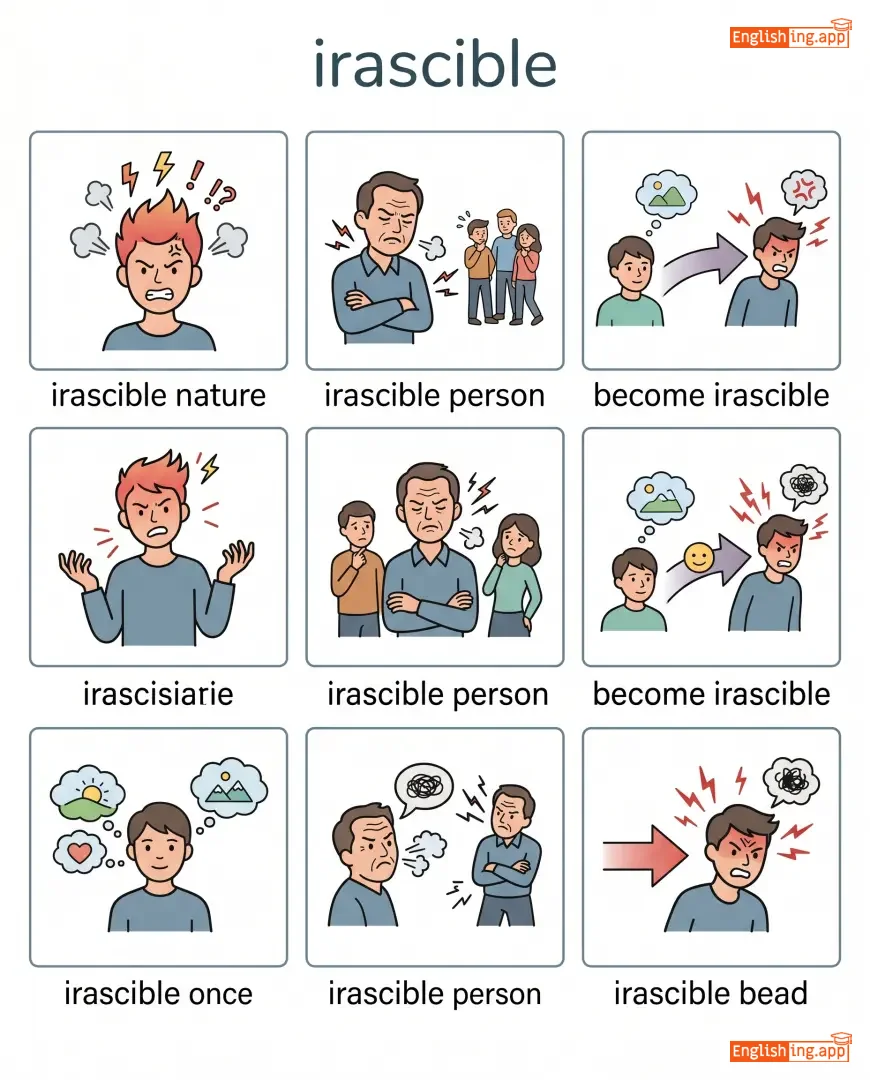
His irascible nature often got him into trouble. |
他易怒的性格常常使他陷入麻烦。
Tā yì nù de xìnggé chángcháng shǐ tā xiànrù máfan.
••••••
|
- •••••• | - •••••• | - •••••• |
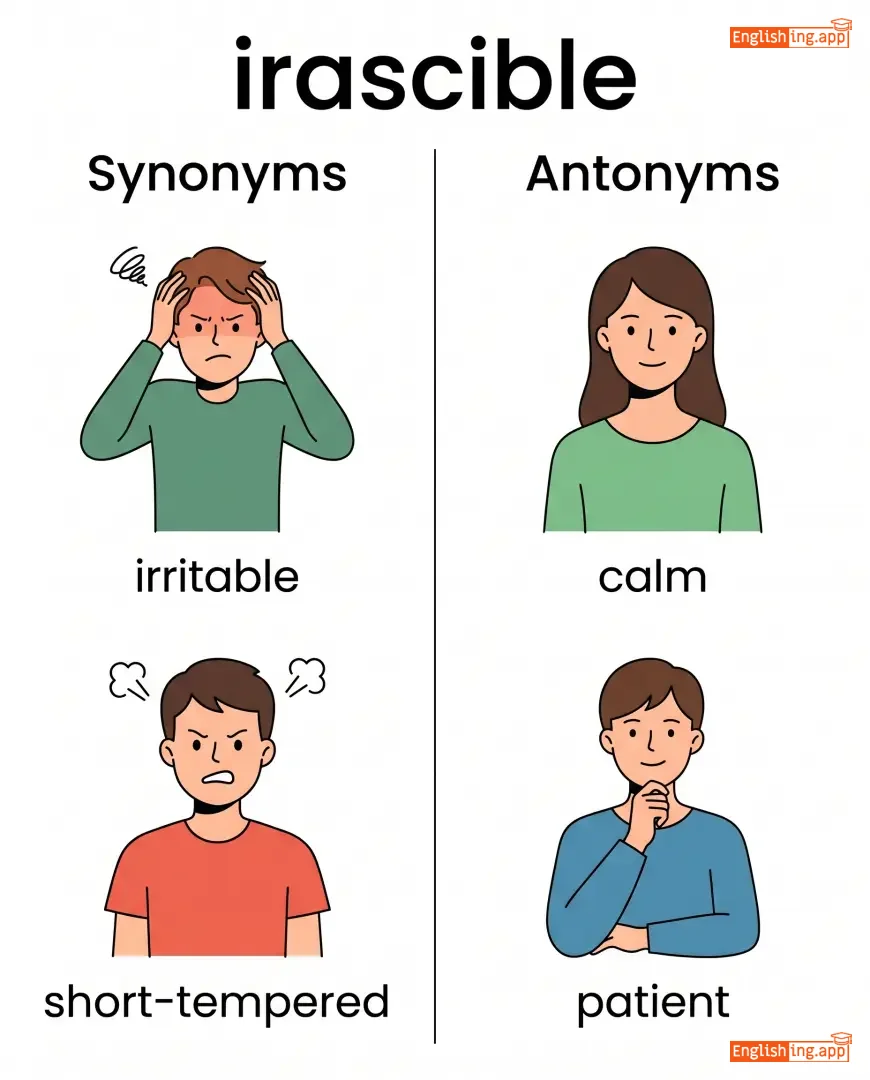
irritable, short-tempered, hot-headed, touchy
••••••
|
calm, patient, easygoing
••••••
|
irascible nature, irascible person, become irascible, irascible tone
••••••
|
Irascible 意味着容易生气 – 'irritated + able' = 易怒的.
••••••
|
|
#4869
🔹
|
/aɪˈoʊtə/
noun
(爱欧塔)
••••••
|
- •••••• |
极小的数量
ji xiao de shu liang
••••••
|
- •••••• | - •••••• | - •••••• | - •••••• |
An extremely small amount.
••••••
|
He did not show an iota of fear. |
他一点儿恐惧都没表现出来。
Ta yi dian er kongju dou mei biaoxian chu lai.
••••••
|
not one iota |
not even a tiny bit
••••••
|
一点也没有
yi dian ye mei you
••••••
|
bit, speck, shred, ounce, particle
••••••
|
lot, abundance, plenty
••••••
|
not an iota, iota of doubt, without an iota, iota of truth
••••••
|
Iota意思是'极小的数量' - 记住:'I ate a tiny part'.
••••••
|
|
#4870
🤔
|
/ˈɪnwərdli/
adverb
(英沃德里)
••••••
|
- •••••• |
内心
neixin
••••••
|
- •••••• | - •••••• | - •••••• | - •••••• |
In the mind or spirit; not outwardly visible.
••••••
|
She smiled outwardly but inwardly she was worried.
她外表微笑,但内心却感到担忧。
••••••
|
她外表微笑,但内心却感到担忧。
Tā wàibiǎo wēixiào, dàn nèixīn què gǎndào dānyōu.
••••••
|
- •••••• | - •••••• | - •••••• |
internally, secretly, privately, mentally
••••••
|
outwardly, externally
••••••
|
inwardly pleased, inwardly worried, inwardly laughing, inwardly focused
••••••
|
Inwardly 意味着内心 – 你的内在感受。
••••••
|
|
#4871
🛡️
|
/ɪnˈvʌlnərəbl/
adjective
(invulnerable)
••••••
|
- •••••• |
无敌
wudi
••••••
|
- •••••• | - •••••• | - •••••• | - •••••• |
Impossible to harm, damage, or defeat.
••••••
|
The fortress was thought to be invulnerable to attack.
这个堡垒被认为是无法攻击的。
••••••
|
堡垒被认为无法受到攻击。
Baolei bei renwei wu fa shoudao gongji.
••••••
|
- •••••• | - •••••• | - •••••• |
unassailable, impregnable, indestructible, untouchable, secure
••••••
|
vulnerable, weak, fragile
••••••
|
invulnerable position, invulnerable armor, seemingly invulnerable, feel invulnerable
••••••
|
无敌意味着没有什么可以伤害你,就像一个无法攻破的堡垒 🏰
••••••
|
|
#4872
🔗
|
/ɪnˈvɑːlvd/
adjective
(ɪnˈvɔːlvd)
••••••
|
- •••••• |
卷入的
juǎn rù de
••••••
|
- •••••• | - •••••• | - •••••• | - •••••• |
complicated or engaged in something
••••••
|
She was deeply involved in community service. |
她深深地卷入了社区服务。
Tā shēn shēn de juǎn rù le shè qū fú wù.
••••••
|
become involved |
to take an active part in something
••••••
|
变得卷入
biàn dé juǎn rù
••••••
|
engaged, committed, complicated, connected
••••••
|
detached, simple, uninvolved
••••••
|
deeply involved, personally involved, involved process
••••••
|
Involved 就是卷入 → 参与其中,不能逃脱。
••••••
|
|
#4873
🤲
|
/ɪnˈvɑːlv/
verb
(因沃尔夫)
••••••
|
- •••••• |
涉及
shèjí
••••••
|
involved
因沃尔夫德
••••••
|
involved
因沃尔夫德
••••••
|
involves
因沃尔夫斯
••••••
|
involving
因沃尔夫英
••••••
|
to include as a necessary part, or to engage someone in an activity
••••••
|
The project will involve several departments working together.
这个项目将涉及多个部门共同合作。
••••••
|
这个项目将涉及多个部门共同合作。
Zhège xiàngmù jiāng shèjí duō gè bùmén gòngtóng hézuò.
••••••
|
get involved
参与其中
••••••
|
to participate or take part in something
••••••
|
参与其中
cānyù qízhōng
••••••
|
include, engage, entail, require, associate
••••••
|
exclude, remove, neglect
••••••
|
involve in, involve with, project involves, task involves
••••••
|
Involve意味着In + volve → 带入,即让某人参与到活动中来。
••••••
|
|
#4874
🌀
|
/ˌɪnvəˈluːʃən/
noun
(内卷)
••••••
|
- •••••• |
内卷
neijuan
••••••
|
- •••••• | - •••••• | - •••••• | - •••••• |
a complicated or intricate form or state; in biology, the shrinking of an organ after its function has finished
••••••
|
The story was full of involution, making it hard to follow. |
这个故事充满了内卷,使得跟随它变得很难。
Zhege gushi chongman le neijuan, shidedo genzui ta biande hen nan.
••••••
|
- •••••• | - •••••• | - •••••• |
complexity, intricacy, entanglement, convolution
••••••
|
simplicity, clarity
••••••
|
involution of society, involution process, full of involution
••••••
|
Involution 就像内向卷起来 (in + volution) → 复杂的内卷。
••••••
|
|
#4875
🤖
|
/ɪnˈvɑːlənˌtɛri/
adjective
(因沃伦特里)
••••••
|
- •••••• |
不由自主
buyouzizhu
••••••
|
- •••••• | - •••••• | - •••••• | - •••••• |
done without will or conscious control
••••••
|
He gave an involuntary shiver when he heard the loud noise. |
他听到响亮的声音时不由自主地打了个寒战。
Tā tīng dào xiǎngliàng de shēngyīn shí bù yóu zìzhǔ de dǎle gè hánzhàn.
••••••
|
- •••••• | - •••••• | - •••••• |
automatic, reflex, unconscious, instinctive
••••••
|
voluntary, intentional, deliberate
••••••
|
involuntary action, involuntary movement, involuntary response
••••••
|
Involuntary 意味着没有意图或意识控制,不由自主。
••••••
|
|
#4876
💡
|
/ɪnˈvɛntɪv/
adjective
(ɪnˈvɛntɪv)
••••••
|
- •••••• |
富有创意的
fù yǒu chuàng yì de
••••••
|
- •••••• | - •••••• | - •••••• | - •••••• |
Having the ability to create or design new things or to think originally.
••••••
|
The inventor was known for his inventive solutions to everyday problems. |
发明家以其富有创意的解决方案而闻名。
Fāmíng jiā yǐ qí fù yǒu chuàng yì de jiě jué fāng àn ér wén míng.
••••••
|
necessity is the mother of invention |
Difficult situations inspire ingenious solutions.
••••••
|
需求是发明的母亲
Xūqiú shì fāmíng de mǔqīn
••••••
|
creative, imaginative, innovative, original, resourceful
••••••
|
unimaginative, dull, conventional
••••••
|
inventive ideas, inventive solution, inventive design, highly inventive
••••••
|
Inventive 代表富有创意的—'Invent' + 'Creative' 记住它。
••••••
|
|
#4877
🙏
|
/ˌɪnvəˈkeɪʃən/
noun
(yinwojieshen)
••••••
|
- •••••• |
祈求
qiqiu
••••••
|
- •••••• | - •••••• | - •••••• | - •••••• |
the act of calling upon a higher power for help, blessing, or inspiration
••••••
|
The ceremony began with an invocation to the gods. |
仪式以对神的祈求开始。
Yíshì yǐ duì shén de qíqiú kāishǐ.
••••••
|
- •••••• | - •••••• | - •••••• |
prayer, appeal, supplication, request
••••••
|
denial, rejection
••••••
|
opening invocation, religious invocation, solemn invocation, invocation of law
••••••
|
INVOCAR + VOCAL: 祈求神的帮助
••••••
|
|
#4878
🏛️
|
/ɪnˈvaɪələt/
adjective
(yīnwàiolètè)
••••••
|
- •••••• |
神圣不可侵犯
shèngshèng bù kě qīn fàn
••••••
|
- •••••• | - •••••• | - •••••• | - •••••• |
free from violation, injury, or desecration; kept safe and untouched
••••••
|
The ancient temple remained inviolate for centuries.
古老的寺庙几百年来一直保持着神圣不可侵犯。
••••••
|
古老的寺庙几百年来一直保持着神圣不可侵犯。
Gǔlǎo de sìmiào jǐ bǎi nián lái yīzhí bǎochí zhe shèngshèng bù kě qīn fàn.
••••••
|
- •••••• | - •••••• | - •••••• |
untouched, intact, sacred, preserved
••••••
|
violated, desecrated, harmed
••••••
|
remain inviolate, inviolate trust, inviolate rule, inviolate ground
••••••
|
INVIOLATE意味着没有被侵犯——也就是神圣不可侵犯
••••••
|
|
#4879
📜
|
/ɪnˈvaɪələbl/
adjective
(inviolable)
••••••
|
- •••••• |
不可侵犯的
bùkě qīnfàn de
••••••
|
- •••••• | - •••••• | - •••••• | - •••••• |
never to be broken, dishonored, or violated
••••••
|
Human rights are considered inviolable in modern democracies. |
在人权被视为不可侵犯的现代民主国家。
Zài rénquán bèi shì wéi bùkě qīnfàn de xiàndài mínzhǔ guójiā.
••••••
|
- •••••• | - •••••• | - •••••• |
sacred, untouchable, unbreakable, absolute
••••••
|
violable, breakable, dishonorable
••••••
|
inviolable rights, inviolable law, inviolable rule, inviolable trust
••••••
|
INVIOLABLE意味着不可侵犯的,不能被破坏
••••••
|
|
#4880
🛡️
|
/ɪnˈvɪnsəbl/
adjective
(yīnwéi sī bù)
••••••
|
- •••••• |
不可战胜
bù kě zhàn shèng
••••••
|
- •••••• | - •••••• | - •••••• | - •••••• |
too powerful to be defeated or overcome
••••••
|
The team seemed invincible after winning ten matches in a row. |
这支队伍在连续赢得十场比赛后,看起来不可战胜。
zhè zhī duìwǔ zài liánxù yíngdé shí chǎng bǐsài hòu, kàn qǐlái bù kě zhàn shèng.
••••••
|
invincible spirit |
an unbreakable will or determination
••••••
|
不可战胜的精神
bù kě zhàn shèng de jīngshén
••••••
|
unbeatable, unconquerable, indomitable, undefeatable
••••••
|
vulnerable, weak, fragile
••••••
|
invincible force, invincible power, feel invincible, invincible army
••••••
|
谁也不能打败不可战胜的力量!
••••••
|
|
#4881
⚡
|
/ɪnˈvɪɡəreɪt/
verb
(invigoreit)
••••••
|
|
振奋
zhenfen
••••••
|
invigorated
invigoreited
••••••
|
invigorated
invigoreited
••••••
|
invigorates
invigoreits
••••••
|
invigorating
invigoreiting
••••••
|
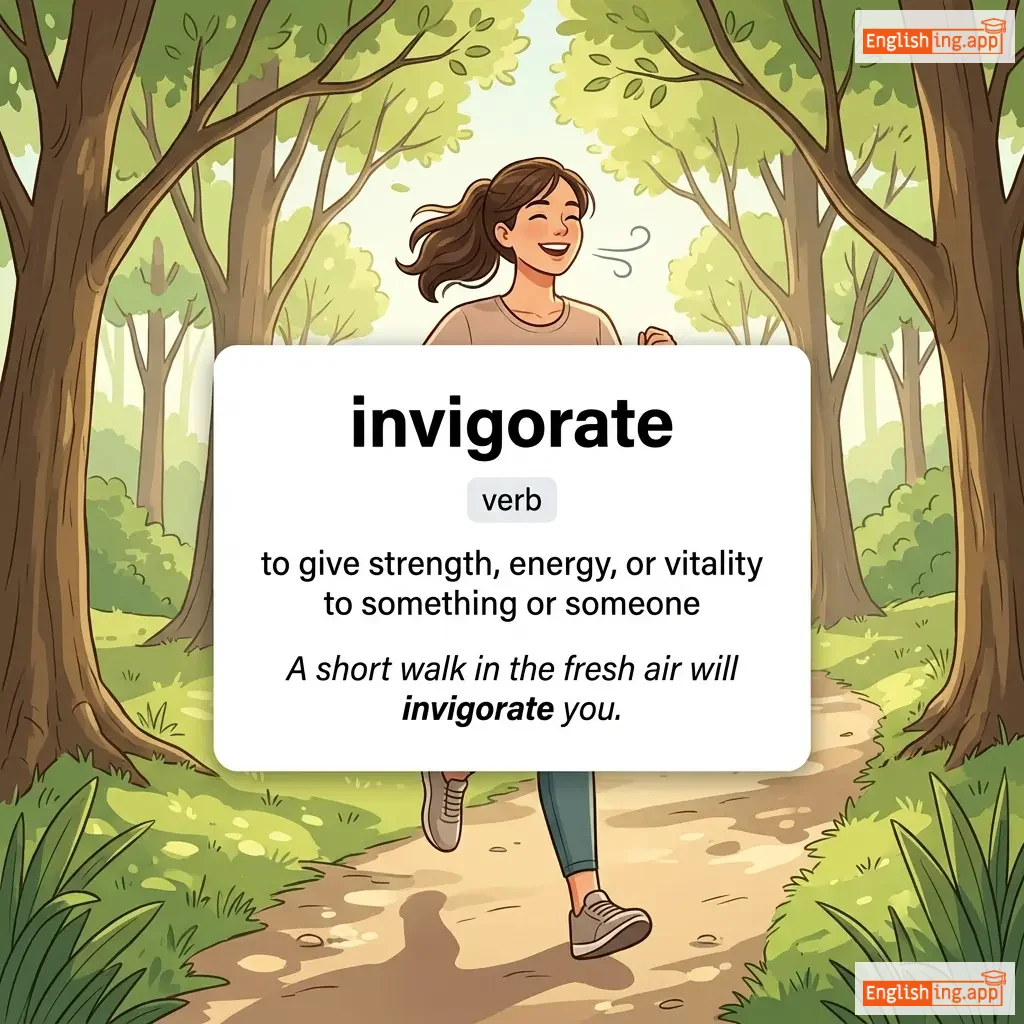
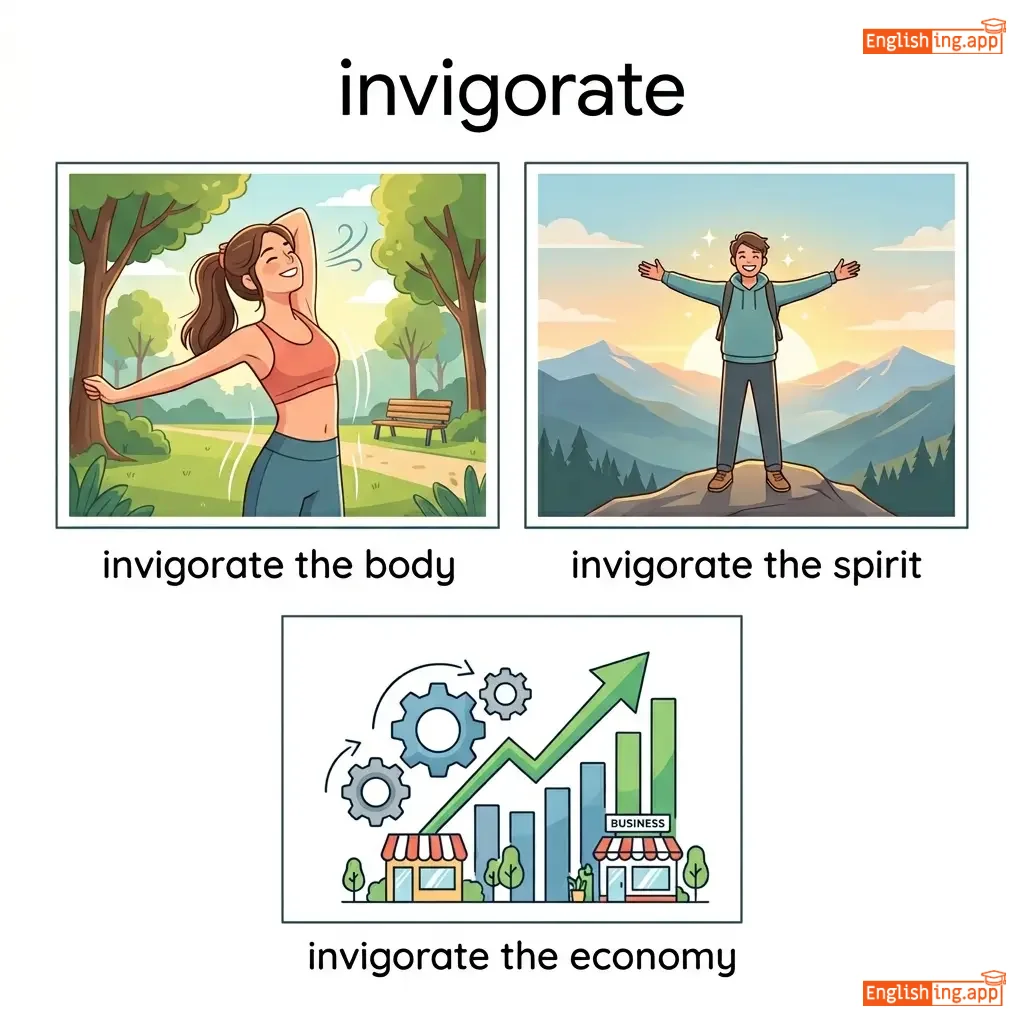
to give strength, energy, or vitality to something or someone
••••••
|
A short walk in the fresh air will invigorate you.
在新鲜空气中散步会让你充满活力。
••••••
|
在新鲜空气中散步会让你充满活力。
Zai xinxian kongqi zhong sanbu hui rang ni chongman huoli.
••••••
|
- •••••• | - •••••• | - •••••• |
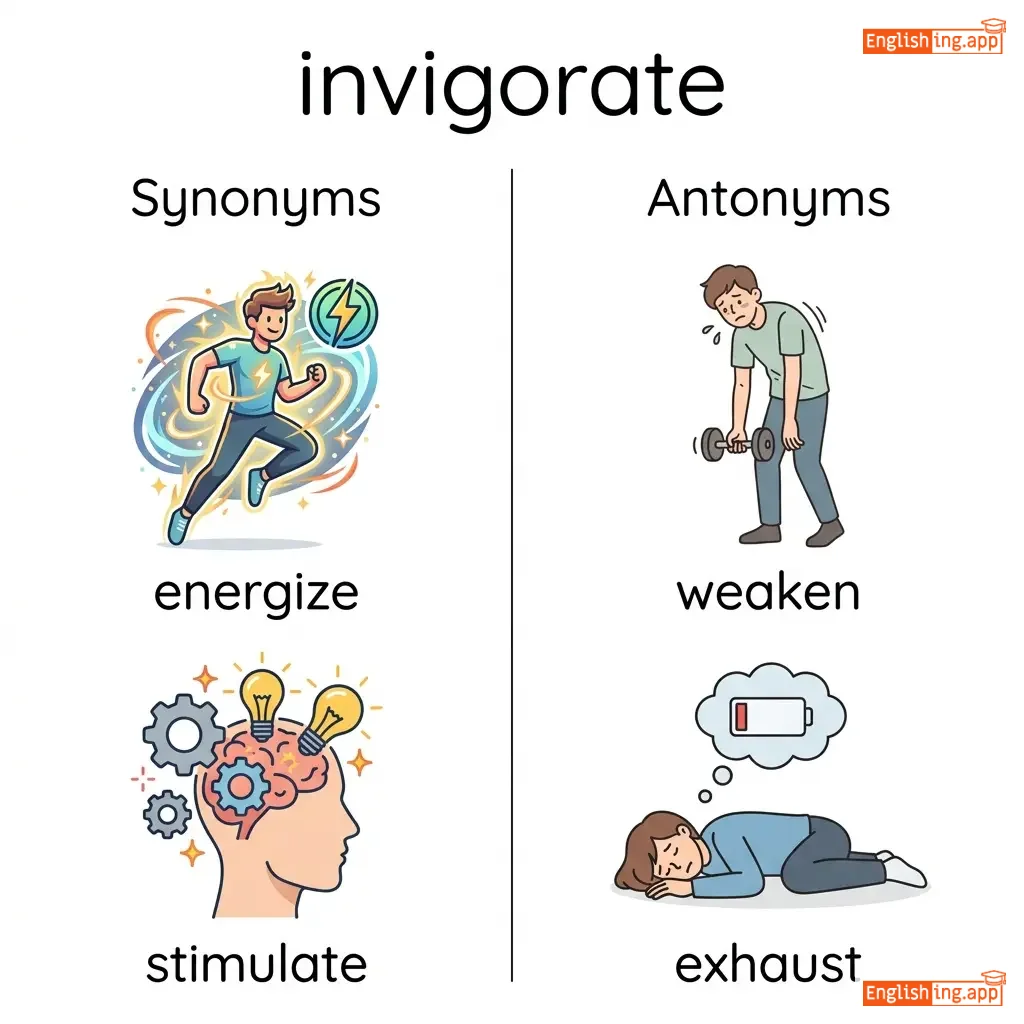
energize, stimulate, refresh, revitalize, strengthen
••••••
|
weaken, exhaust, tire
••••••
|
invigorate the body, invigorate the spirit, invigorate the economy, invigorate with exercise
••••••
|
就像新鲜空气让你振奋一样,INIGORATE也能充满能量!
••••••
|
|
#4882
😒
|
/ɪnˈvɪdiəs/
adjective
(因维迪厄斯)
••••••
|
|
引起嫉妒的
yǐnqǐ jídù de
••••••
|
- •••••• | - •••••• | - •••••• | - •••••• |
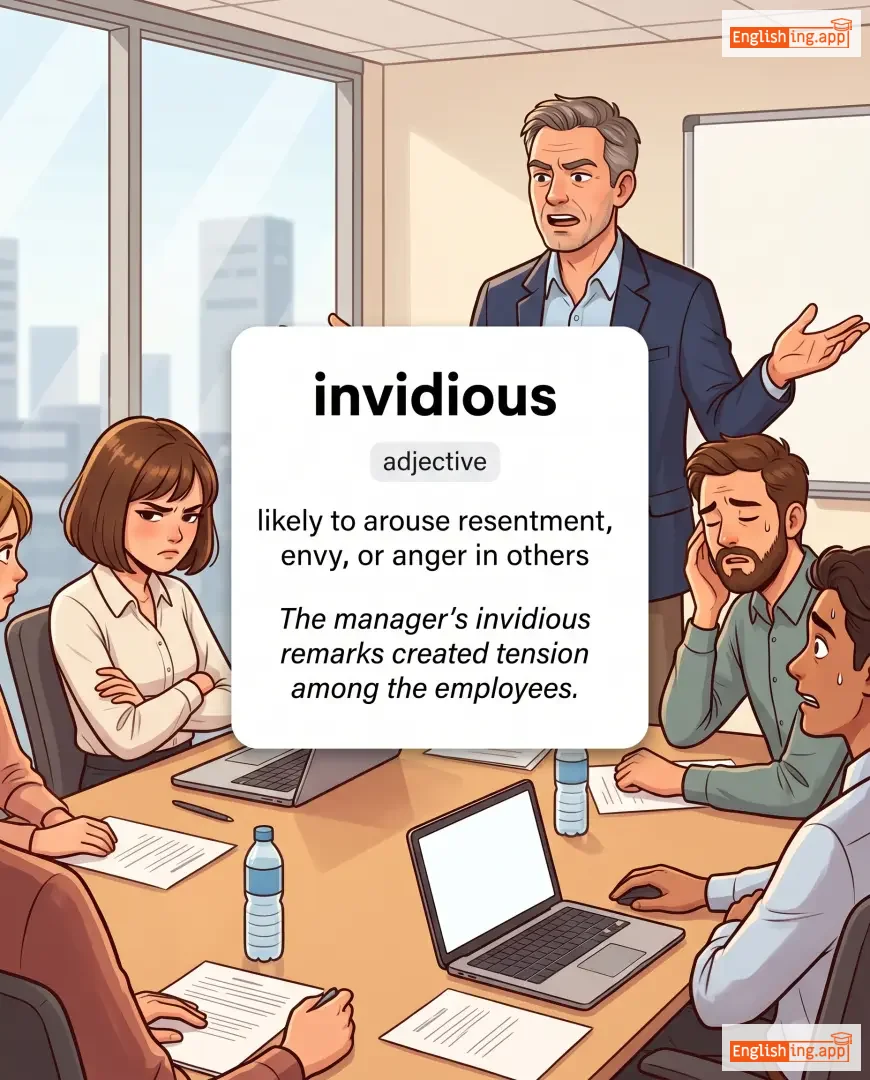
likely to arouse resentment, envy, or anger in others
••••••
|
The manager's invidious remarks created tension among the employees. |
经理的嫉妒言论在员工中间造成了紧张气氛。
Jīnglǐ de jídù yánlùn zài yuángōng zhōngjiān zàochéngle jǐnzhāng qìfēn.
••••••
|
- •••••• | - •••••• | - •••••• |
offensive, unpleasant, discriminatory, unfair
••••••
|
favorable, just
••••••
|
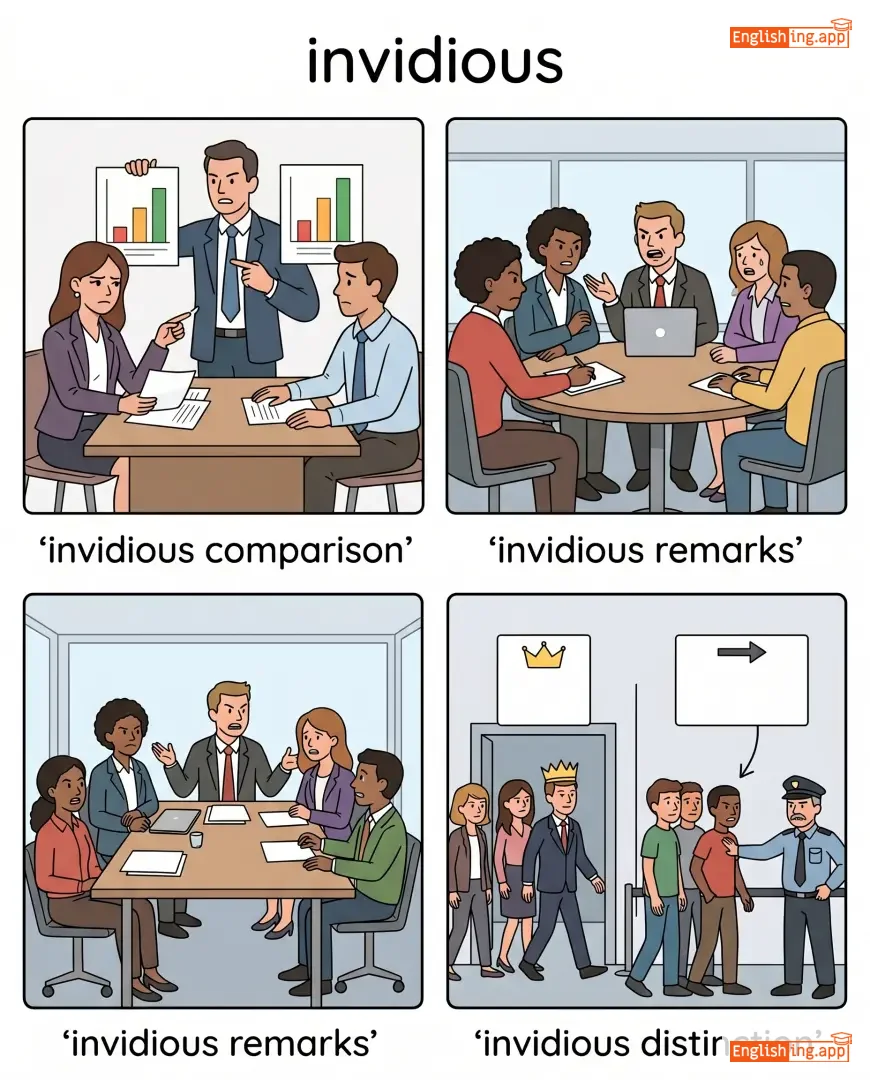
invidious comparison, invidious remarks, invidious distinction
••••••
|
Invidious 引起他人嫉妒或愤怒 — 引起嫉妒的
••••••
|
|
#4883
📚
|
/ɪnˈvɛtərət/
adjective
(ɪnˈvɛtərət)
••••••
|
|
根深蒂固
gēn shēn dì gù
••••••
|
- •••••• | - •••••• | - •••••• | - •••••• |
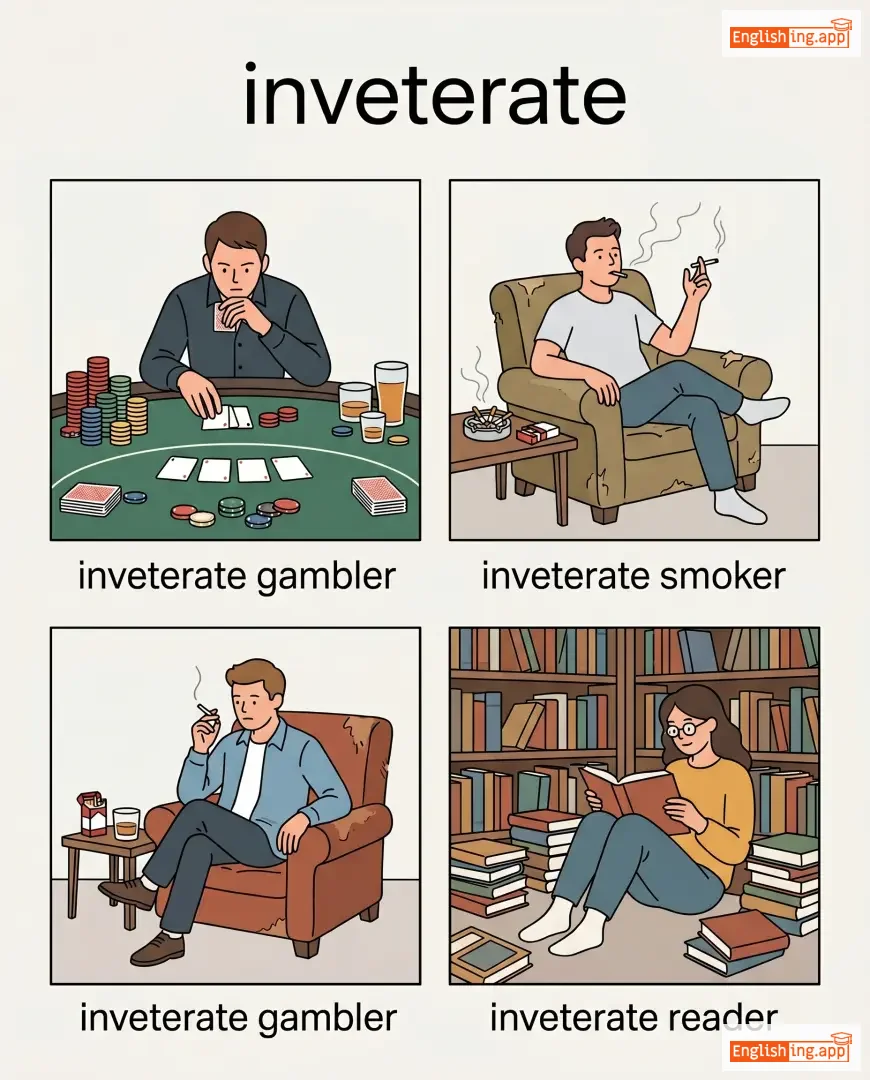
having a long-established habit, activity, or interest that is unlikely to change
••••••
|
He is an inveterate reader who spends hours in the library every day. |
他是一个根深蒂固的读者,每天在图书馆度过几个小时。
Tā shì yīgè gēn shēn dì gù de dúzhě, měitiān zài túshūguǎn dùguò jǐ gè xiǎoshí.
••••••
|
- •••••• | - •••••• | - •••••• |
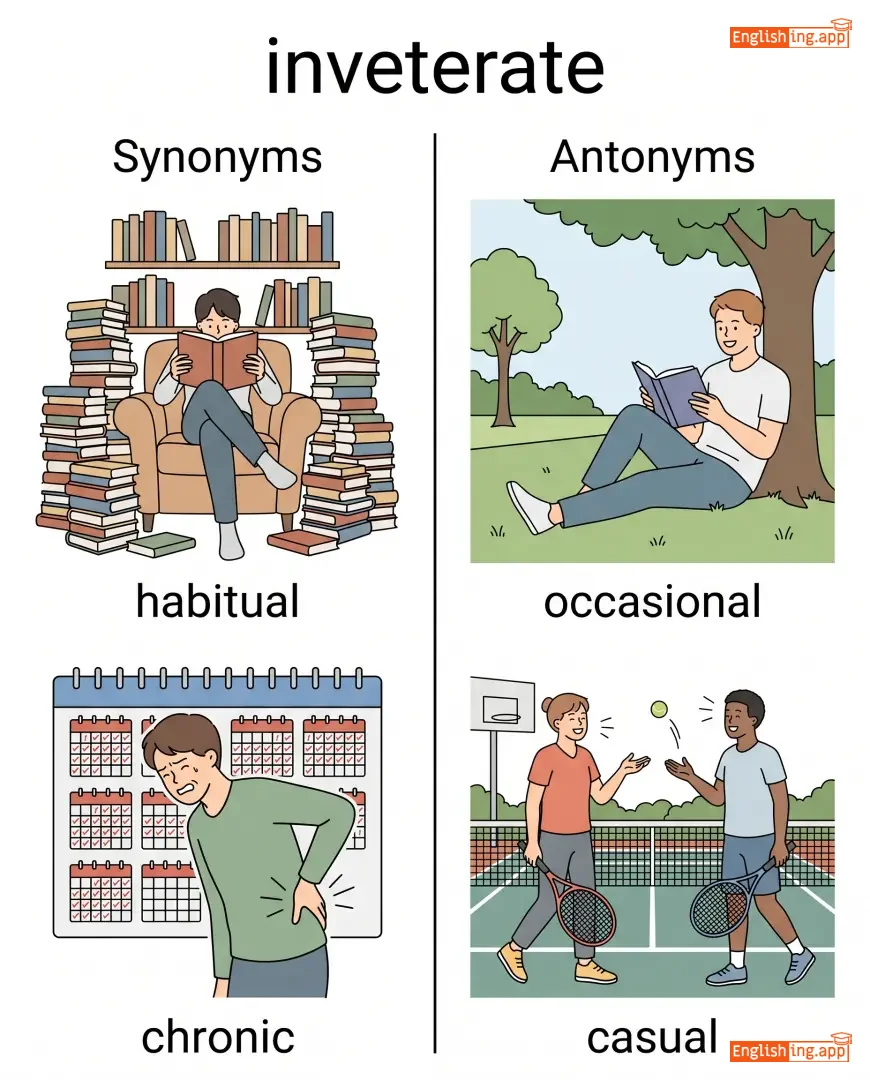
habitual, chronic, entrenched, confirmed
••••••
|
occasional, casual
••••••
|
inveterate gambler, inveterate smoker, inveterate reader
••••••
|
Inveterate就像深深扎根的习惯 — 根深蒂固
••••••
|
|
#4884
💰
|
/ɪnˈvɛstər/
noun
(ɪnˈvɛstɔr)
••••••
|
- •••••• |
投资者
tóu zī zhě
••••••
|
- •••••• | - •••••• | - •••••• | - •••••• |
a person or organization that puts money into financial schemes, property, or business ventures with the expectation of achieving a profit
••••••
|
The investor funded the startup with a large sum of money. |
投资者用一大笔钱资助了这家初创公司。
Tóu zī zhě yòng yī dà bǐ qián zīzhù le zhè jiā chūchuàng gōngsī.
••••••
|
angel investor |
an individual who provides capital for a business startup, usually in exchange for ownership equity
••••••
|
天使投资者
tiān shǐ tóu zī zhě
••••••
|
financier, shareholder, backer, capitalist
••••••
|
spender, debtor
••••••
|
foreign investor, private investor, institutional investor, angel investor
••••••
|
投资者,投资赚钱 — 投资者
••••••
|
|
#4885
👑
|
/ɪnˈvɛstɪtʃər/
noun
(ɪnˈvɛstɪtʃər)
••••••
|
- •••••• |
授职仪式
shòu zhí yí shì
••••••
|
- •••••• | - •••••• | - •••••• | - •••••• |
the formal ceremony of conferring authority, rank, or office
••••••
|
The king held an investiture ceremony for the new knight. |
国王为新骑士举行了授职仪式。
guówáng wèi xīn qíshì jǔxíngle shòu zhí yí shì
••••••
|
- •••••• | - •••••• | - •••••• |
ceremony, inauguration, ordination, induction
••••••
|
removal, dismissal
••••••
|
investiture ceremony, royal investiture, official investiture
••••••
|
Investiture是一种正式授予职位或头衔的仪式。
••••••
|
|
#4886
🕵️
|
/ɪnˈvɛstɪˌɡeɪtər/
noun
(海皮尼斯)
••••••
|
- •••••• |
幸福
xìngfú
••••••
|
- •••••• | - •••••• | - •••••• | - •••••• |
a person who carries out a formal inquiry or investigation
••••••
|
The investigator gathered evidence from the crime scene. |
当她获得奖项时,她无法掩饰自己的幸福。
Dāng tā huò dé jiǎngxiàng shí, tā wúfǎ yǎnshì zìjǐ de xìngfú.
••••••
|
private investigator |
a detective who works independently, often hired for personal cases
••••••
|
追求幸福
zhuīqiú xìngfú
••••••
|
detective, examiner, inspector, researcher, sleuth
••••••
|
suspect, criminal
••••••
|
police investigator, lead investigator, private investigator, chief investigator
••••••
|
幸福是一种可以从生活的追求中获得的状态。
••••••
|
|
#4887
🔄
|
/ɪnˈvɜːrt/
verb
(翻转)
••••••
|
- •••••• |
翻转
fanzhuan
••••••
|
inverted
翻转过
••••••
|
inverted
翻转过
••••••
|
inverts
翻转
••••••
|
inverting
翻转中
••••••
|
To turn something upside down or in the opposite position, order, or direction.
••••••
|
He inverted the glass to let the water drain out.
他翻转了玻璃杯,让水流出来。
••••••
|
他翻转了玻璃杯,让水流出来。
Ta fanzhuan le bolibei, rang shui liu chulai.
••••••
|
turn upside down
完全翻转
••••••
|
To completely change or disrupt something.
••••••
|
完全翻转
Wanquan fanzhuan
••••••
|
reverse, flip, overturn, transpose, upend
••••••
|
maintain, preserve, keep
••••••
|
invert colors, invert position, invert the order, invert the structure
••••••
|
翻转意味着将玻璃杯倒过来,水就流出来了。
••••••
|
|
#4888
🔃
|
/ɪnˈvɜːrʒən/
noun
(ɪnˈvɜːrʒən)
••••••
|
- •••••• |
倒置
daozhi
••••••
|
- •••••• | - •••••• | - •••••• | - •••••• |
A reversal of the normal order, position, or relationship.
••••••
|
In poetry, inversion is often used to create emphasis. |
在诗歌中,倒置常用来创造强调。
Zài shīgē zhōng, dào zhì cháng yòng lái chuàng zào qiángdiào.
••••••
|
temperature inversion |
A weather condition where warm air traps cooler air near the surface.
••••••
|
温度倒置
Wēndù dào zhì
••••••
|
reversal, transposition, flip, opposite
••••••
|
normality, order
••••••
|
inversion of roles, grammatical inversion, temperature inversion
••••••
|
倒置意味着反转,诗歌中常见到这种反转形式。
••••••
|
|
#4889
🔄
|
/ˌɪnˈvɜːrs/
adjective
(in-veis)
••••••
|
- •••••• |
反向
fanxiang
••••••
|
- •••••• | - •••••• | - •••••• | - •••••• |
Opposite in position, direction, order, or effect.
••••••
|
There is an inverse relationship between price and demand. |
价格和需求之间存在反向关系。
Jiage he xuqiu zhijian cunzai fanxiang guanxi.
••••••
|
inverse proportion |
When one value increases while another decreases.
••••••
|
反向比例
Fanxiang bili
••••••
|
opposite, contrary, reverse, antithetical
••••••
|
direct, same, identical
••••••
|
inverse relation, inverse function, inverse effect, inverse order
••••••
|
Inverse意味着反向:在数学中,价格上升时需求下降。
••••••
|
|
#4890
📦
|
/ˈɪnvənˌtɔːri/
noun
(清单)
••••••
|
- •••••• |
清单
qingdan
••••••
|
- •••••• | - •••••• | - •••••• | - •••••• |
A complete list of items, such as goods in stock or property.
••••••
|
The shopkeeper checked the inventory before opening the store. |
店主在开店前检查了清单。
Dianzhu zai kaidian qian jiancha le qingdan.
••••••
|
take stock |
To review and assess a situation or resources.
••••••
|
盘点
pandiàn
••••••
|
stock, list, catalog, register, record
••••••
|
shortage, emptiness
••••••
|
inventory list, inventory management, inventory control, inventory check
••••••
|
清单就是列表—检查所有物品,就像清单一样。
••••••
|
Vocabulary Quiz
Test your vocabulary by matching words with their translations or meanings.
Login to take the quiz
Comments (0)
Share your thoughts and join the discussion.
Join the discussion by logging in
Login to CommentNo comments yet
Be the first to share your thoughts!