


Swipe left or right, or use the buttons. Tap image to zoom.
例句翻译
单词
Lesson 136Lesson 136 - 遮罩切换
|
表情符号
|
单词 | Images | 翻译 | 过去时 | 过去分词 | 第三人称单数 | 动名词 | 含义 | 例句 | 例句翻译 | 示例表达 | 示例表达含义 | 示例表达翻译 | 同义词 | 反义词 | 搭配词 | 助记符 |
|---|---|---|---|---|---|---|---|---|---|---|---|---|---|---|---|---|---|
|
#4051
🌑
|
/ˈhiːðənɪʃ/
adjective
(希瑟尼什)
••••••
|
- •••••• |
野蛮
yěmán
••••••
|
- •••••• | - •••••• | - •••••• | - •••••• |
Lacking culture or religion; barbaric or uncivilized.
••••••
|
They considered the ancient tribe’s rituals heathenish.
他们认为古老部落的仪式是野蛮的。
••••••
|
他们认为古老部落的仪式是野蛮的。
Tāmen rènwéi gǔlǎo bùluò de yíshì shì yěmán de.
••••••
|
- •••••• | - •••••• | - •••••• |
pagan, irreligious, uncivilized, barbaric
••••••
|
civilized, religious
••••••
|
heathenish behavior, heathenish practices, heathenish rituals
••••••
|
Heathenish = heath + ish → 野蛮或未开化
••••••
|
|
#4052
⛑️
|
/ˈhɛl.mət/
noun
(海尔梅特)
••••••
|
- •••••• |
头盔
tóukuī
••••••
|
- •••••• | - •••••• | - •••••• | - •••••• |
a hard protective hat worn to protect the head
••••••
|
The rider put on his helmet before starting the motorcycle. |
骑手在开始骑摩托车之前戴上了头盔。
qí shǒu zài kāi shǐ qí mó tuō chē zhī qián dài shàng le tóu kuī.
••••••
|
- •••••• | - •••••• | - •••••• |
headgear, hardhat, cap, protective hat
••••••
|
bare head, uncovered
••••••
|
wear helmet, safety helmet, motorcycle helmet, protective helmet
••••••
|
头盔 = 头保护 + 戴上 = 保护头部
••••••
|
|
#4053
🛳️
|
/hɛlm/
noun
(海尔姆)
••••••
|
- •••••• |
领导, 舵
lingdao, duo
••••••
|
- •••••• | - •••••• | - •••••• | - •••••• |
a position of leadership or the steering apparatus of a ship
••••••
|
After years of service, she finally took the helm of the company. |
多年服务后,她最终接管了公司的领导权。
Duonian fuwu hou, ta zuizhong jieguaile gongsi de lingdaozhiquan.
••••••
|
at the helm |
in control or in charge of something
••••••
|
掌舵
zhangduo
••••••
|
control, leadership, command, tiller
••••••
|
subordination, follower
••••••
|
at the helm, take the helm, helm of the ship, company helm
••••••
|
Helm 就像帮助(help)掌控方向
••••••
|
|
#4054
💍
|
/ˈɛər.luːm/
noun
(海尔卢姆)
••••••
|
- •••••• |
传家宝
chuánjiābǎo
••••••
|
- •••••• | - •••••• | - •••••• | - •••••• |
a valuable object that has belonged to a family for several generations
••••••
|
The ring is a family heirloom passed down from her grandmother. |
这枚戒指是家族的传家宝,代代相传。
Zhè méi jièzhǐ shì jiāzú de chuánjiābǎo, dàidài xiāngchuán.
••••••
|
- •••••• | - •••••• | - •••••• |
inheritance, legacy, patrimony, relic
••••••
|
new item, disposable item
••••••
|
family heirloom, treasured heirloom, precious heirloom, antique heirloom
••••••
|
Heir + loom = 传家宝,世代相传的珍贵物品
••••••
|
|
#4055
😈
|
/ˈheɪ.nəs/
adjective
(hēinàsī)
••••••
|
- •••••• |
极恶
jí è
••••••
|
- •••••• | - •••••• | - •••••• | - •••••• |
extremely wicked, deeply offensive, or shockingly evil
••••••
|
The dictator was condemned for his heinous crimes against humanity. |
独裁者因其对人类的极恶罪行被判刑。
Dúcáizhě yīn qí duì rénlèi de jí è zuìxíng bèi pànxíng.
••••••
|
- •••••• | - •••••• | - •••••• |
atrocious, monstrous, horrific, vile, egregious
••••••
|
noble, admirable, good
••••••
|
heinous crime, heinous act, heinous offense, heinous deed
••••••
|
Heinous = 极恶罪行
••••••
|
|
#4056
🐄
|
/ˈhɛfər/
noun
(海费尔)
••••••
|
- •••••• |
小母牛
xiǎo mǔ niú
••••••
|
- •••••• | - •••••• | - •••••• | - •••••• |
a young cow that has not borne a calf
••••••
|
The farmer raised a heifer for dairy production.
农民为乳制品生产养了一头小母牛。
••••••
|
农民为乳制品生产养了一头小母牛。
Nóngmín wèi rǔzhìpǐn shēngchǎn yǎngle yī tóu xiǎo mǔ niú.
••••••
|
- •••••• | - •••••• | - •••••• |
young cow, calf, bovine
••••••
|
bull, ox
••••••
|
raise a heifer, dairy heifer, heifer calf
••••••
|
Heifer 意思是小母牛 🐄—heifer, 小牛将来会生奶。
••••••
|
|
#4057
🚶♂️
|
/ˈhɛdʒɪrə/ or /hɪˈdʒaɪrə/
noun
(海吉拉)
••••••
|
- •••••• |
迁徙, 流亡
qianxi, liuwang
••••••
|
- •••••• | - •••••• | - •••••• | - •••••• |
a journey, especially when undertaken to escape from a dangerous or undesirable situation
••••••
|
The refugees began their hegira across the desert. |
难民们开始了穿越沙漠的迁徙。
Nanminmen kaishi le chuanjue shamo de qianxi.
••••••
|
- •••••• | - •••••• | - •••••• |
exodus, flight, escape, migration
••••••
|
arrival, stay
••••••
|
hegira from danger, long hegira, desert hegira
••••••
|
海吉拉就像流亡—为了逃离危险而远行 🚶♂️.
••••••
|
|
#4058
👑
|
/hɪˈdʒɛməni/ or /ˈhɛdʒəmoʊni/
noun
(hegemoní)
••••••
|
- •••••• |
霸权
bàquán
••••••
|
- •••••• | - •••••• | - •••••• | - •••••• |
leadership or dominance, especially by one state or group over others
••••••
|
The empire maintained its hegemony over neighboring states. |
帝国保持了对邻国的霸权。
Dìguó bǎochí le duì lín guó de bàquán.
••••••
|
- •••••• | - •••••• | - •••••• |
dominance, supremacy, authority, control, power
••••••
|
subordination, weakness, inferiority
••••••
|
political hegemony, cultural hegemony, economic hegemony
••••••
|
霸权意味着你是那个拥有完全控制的领导者。
••••••
|
|
#4059
😒
|
/ˈhiːdləs/
adjective
(希德勒斯)
••••••
|
- •••••• |
疏忽
shūhū
••••••
|
- •••••• | - •••••• | - •••••• | - •••••• |
showing a reckless lack of care or attention
••••••
|
He drove with heedless disregard for the rules. |
他开车时对规则表现出疏忽。
Tā kāichē shí duì guīzé biǎoxiàn chū shūhū.
••••••
|
- •••••• | - •••••• | - •••••• |
careless, reckless, inattentive, negligent
••••••
|
careful, cautious, attentive
••••••
|
heedless behavior, heedless actions, heedless disregard
••••••
|
Heedless的意思是没有heed(注意),因此疏忽。
••••••
|
|
#4060
👂
|
/hiːd/
verb
(希德)
••••••
|
- •••••• |
注意
zhuyi
••••••
|
heeded
希德德
••••••
|
heeded
希德德
••••••
|
heeds
希德斯
••••••
|
heeding
希丁
••••••
|
to pay attention to; to take notice of
••••••
|
You should heed the teacher's advice.
你应该听从老师的建议。
••••••
|
你应该听从老师的建议。
Ni yinggai tingcong laoshi de jianyi.
••••••
|
heed the call
回应呼叫
••••••
|
to respond to or take notice of an appeal or demand
••••••
|
响应呼叫
xiangying huijiao
••••••
|
notice, observe, mind, regard, attend
••••••
|
ignore, disregard, neglect
••••••
|
heed advice, heed warning, heed call, heed instructions
••••••
|
Heed 意味着注意—认真听(👂)以回应呼叫。
••••••
|
|
#4061
😌
|
/ˈhiːdənɪst/
noun
(海德尼斯特)
••••••
|
- •••••• |
享乐主义者
xiǎnglè zhǔyì zhě
••••••
|
- •••••• | - •••••• | - •••••• | - •••••• |
A person who believes that the pursuit of pleasure is the most important thing in life.
••••••
|
She was called a hedonist because she always prioritized enjoyment over duty. |
她被称为享乐主义者,因为她总是优先享受而非履行责任。
Tā bèi chēng wéi xiǎnglè zhǔyì zhě, yīnwèi tā zǒng shì yōuxiān xiǎngshòu ér fēi lǚxíng zérèn.
••••••
|
- •••••• | - •••••• | - •••••• |
pleasure-seeker, epicure, sensualist, sybarite
••••••
|
ascetic, puritan
••••••
|
true hedonist, modern hedonist, lifestyle of a hedonist
••••••
|
享乐主义者 = Head + Honest = 生活的意义在于享乐
••••••
|
|
#4062
🍷
|
/ˈhiːdəˌnɪzəm/
noun
(享乐主义)
••••••
|
- •••••• |
享乐主义
xiǎnglè zhǔyì
••••••
|
- •••••• | - •••••• | - •••••• | - •••••• |
The pursuit of pleasure and self-indulgence as the highest goal.
••••••
|
The lifestyle of the rich is often criticized as pure hedonism. |
富人的生活方式常被批评为纯粹的享乐主义。
Fùrén de shēnghuó fāngshì cháng bèi pīpíng wéi chúncuì de xiǎnglè zhǔyì.
••••••
|
- •••••• | - •••••• | - •••••• |
self-indulgence, pleasure-seeking, sensualism, luxury
••••••
|
asceticism, self-denial, restraint
••••••
|
modern hedonism, pure hedonism, philosophy of hedonism
••••••
|
享乐主义 = '享' (享受) = 享受快乐, 追求乐趣
••••••
|
|
#4063
🌳
|
/hɛdʒ/
noun, verb
(hèdí)
••••••
|
|
篱笆
líbā
••••••
|
hedged
hèdí zhī
••••••
|
hedged
hèdí zhī
••••••
|
hedges
hèdí sī
••••••
|
hedging
hèdí yǎn
••••••
|
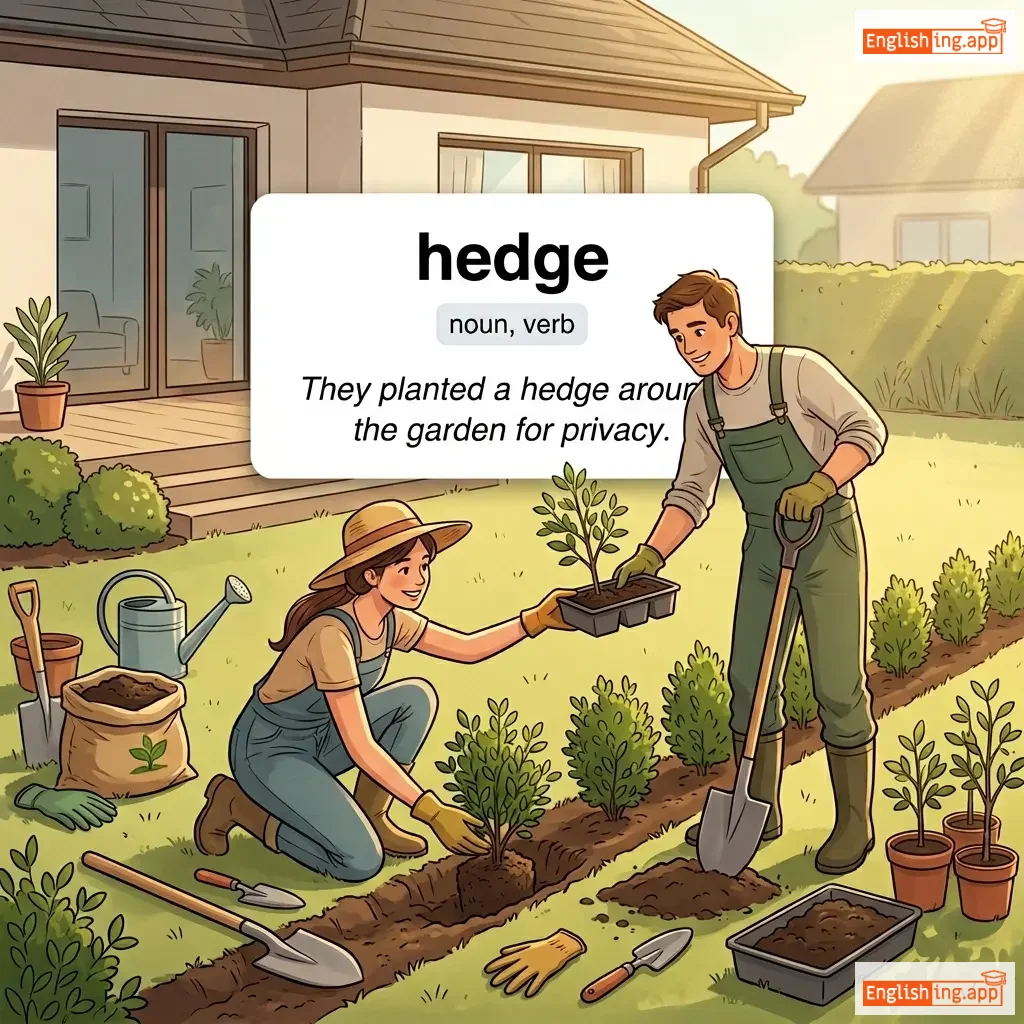
A fence or boundary formed by closely planted shrubs; also, to limit or qualify a statement.
••••••
|
They planted a hedge around the garden for privacy.
他们为隐私在花园周围种了篱笆。
••••••
|
他们为隐私在花园周围种了篱笆。
Tāmen wèi yǐnsī zài huāyuán zhōuwéi zhòngle líbā.
••••••
|
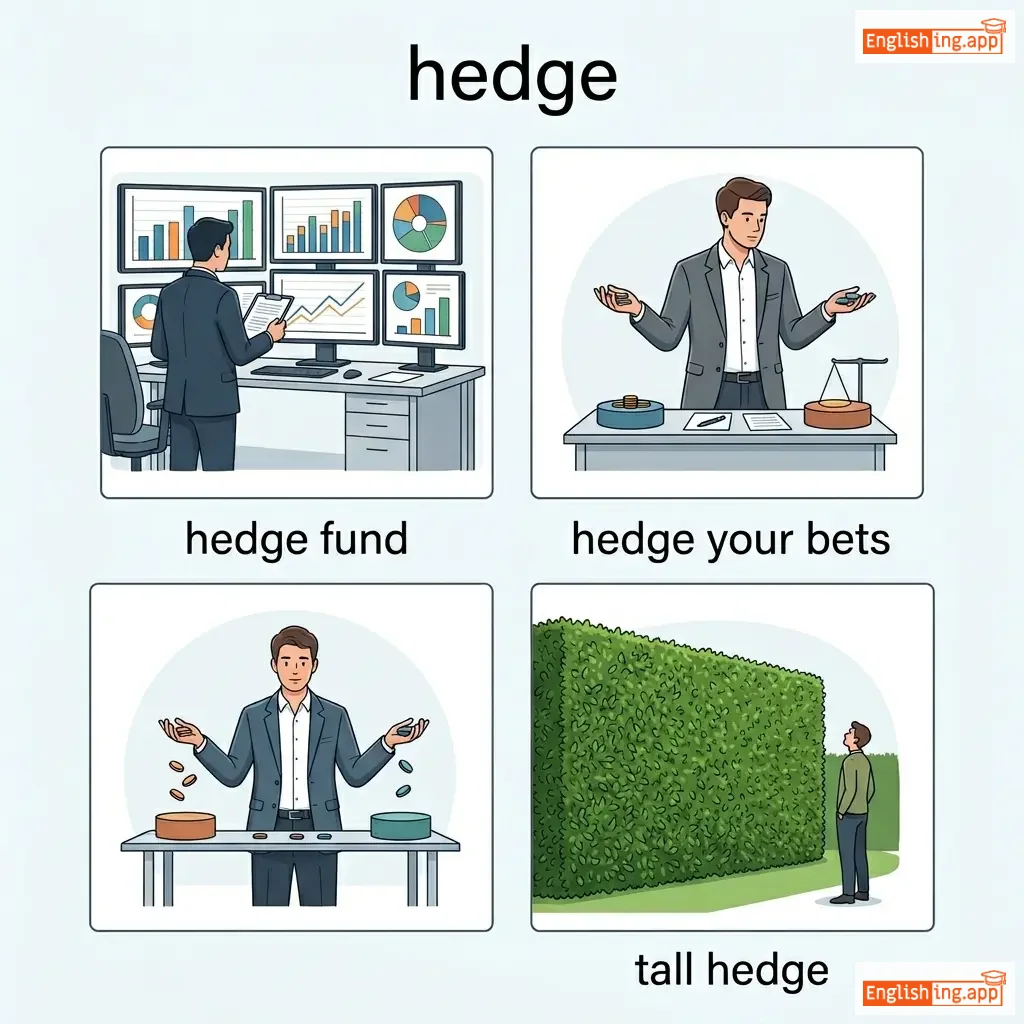
hedge your bets
押注在外
••••••
|
To reduce risk by choosing several options instead of relying on one.
••••••
|
押注在外
yāzhù zài wài
••••••
|
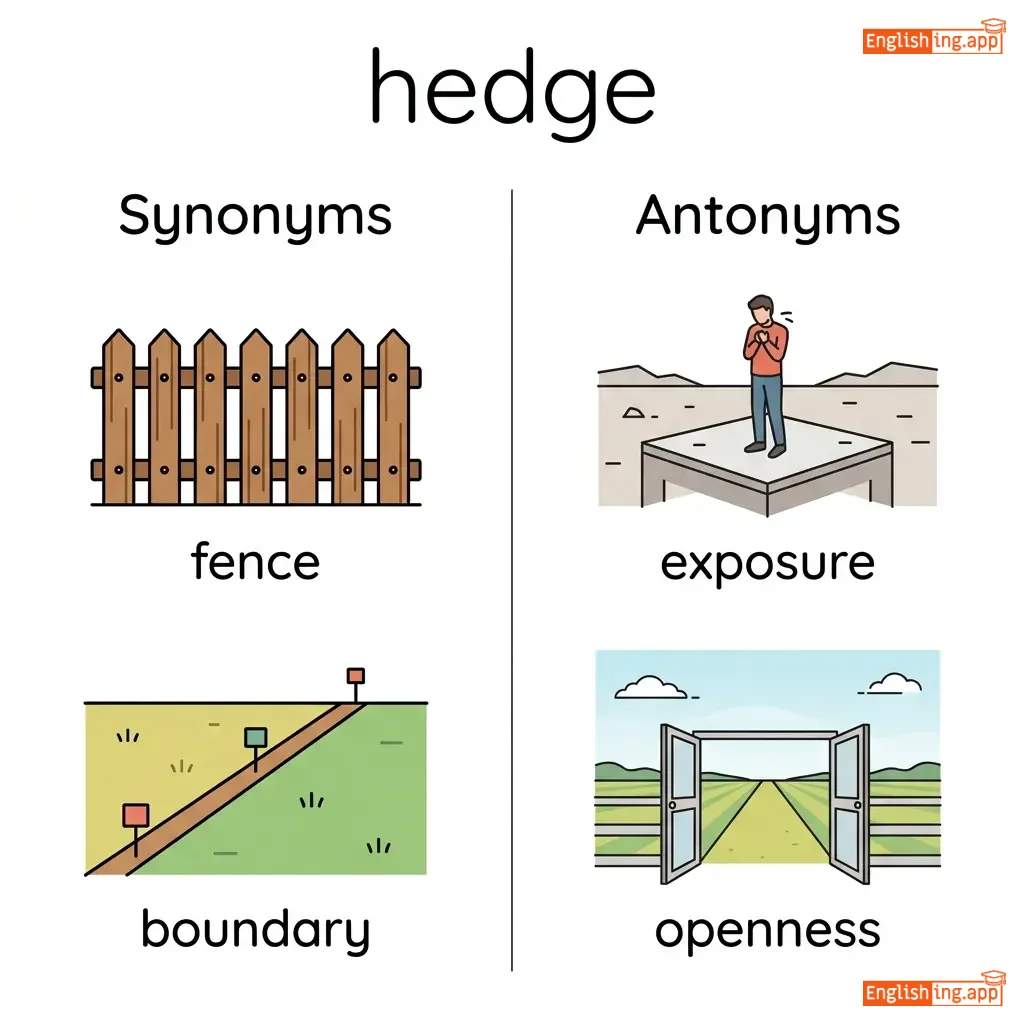
fence, boundary, barrier, safeguard
••••••
|
exposure, openness
••••••
|
hedge fund, hedge your bets, tall hedge, hedge against
••••••
|
Hedge = 使用篱笆将隐私保护在外
••••••
|
|
#4064
😡
|
/ˈhɛktər/
verb
(赫克托)
••••••
|
- •••••• |
以威胁的方式说话
yǐ wēixié de fāngshì shuōhuà
••••••
|
hectored
赫克托德
••••••
|
hectored
赫克托德
••••••
|
hectors
赫克托斯
••••••
|
hectoring
赫克托林
••••••
|
To talk to someone in a bullying or intimidating way.
••••••
|
The manager hectored the staff into working overtime.
经理威胁员工加班。
••••••
|
经理威胁员工加班。
Jīnglǐ wēixié yuángōng jiābān.
••••••
|
- •••••• | - •••••• | - •••••• |
bully, intimidate, browbeat, domineer
••••••
|
encourage, support, assist
••••••
|
hector into, constantly hector, hectoring tone
••••••
|
Hector 意味着以威胁的方式说话,就像 Hector 总是威胁别人一样。
••••••
|
|
#4065
🙄
|
/ˈhɛklər/
noun
(hèkè lè)
••••••
|
- •••••• |
打扰者
dǎrǎo zhě
••••••
|
- •••••• | - •••••• | - •••••• | - •••••• |
A person who interrupts a speaker with rude or aggressive comments.
••••••
|
The politician remained calm despite the heckler shouting from the crowd. |
尽管人群中有打扰者大声叫喊,政治家仍然保持冷静。
Jǐnguǎn rénqún zhōng yǒu dǎrǎo zhě dàshēng jiàohǎn, zhèngzhìjiā réngrán bǎochí lěngjìng.
••••••
|
- •••••• | - •••••• | - •••••• |
disrupter, interrupter, agitator, critic, protester
••••••
|
supporter, admirer
••••••
|
angry heckler, disruptive heckler, silence the heckler
••••••
|
Heckler = He (嘿) 打扰演讲
••••••
|
|
#4066
🌪️
|
/ˈhævək/
noun
(海沃克)
••••••
|
- •••••• |
浩劫
haojie
••••••
|
- •••••• | - •••••• | - •••••• | - •••••• |
widespread destruction or disorder
••••••
|
The storm caused havoc in the coastal villages. |
风暴在沿海村庄造成了浩劫。
Fengbao zai yanhai cunzhuang zaocheng le haojie.
••••••
|
wreak havoc |
to cause great damage or chaos
••••••
|
引起浩劫
yinqi haojie
••••••
|
devastation, destruction, chaos, ruin, mayhem
••••••
|
order, peace, harmony
••••••
|
wreak havoc, cause havoc, havoc on the economy, havoc of war
••••••
|
Havoc意味着浩劫 - 想象一场风暴摧毁了所有你'Have'的东西。
••••••
|
|
#4067
💔
|
/ˈhɑːrtˌrɛndɪŋ/
adjective
(hǎrtréndìng)
••••••
|
- •••••• |
令人心碎
lìng rén xīn suì
••••••
|
- •••••• | - •••••• | - •••••• | - •••••• |
Causing great sadness or distress; very moving emotionally.
••••••
|
The documentary showed heartrending scenes of war victims.
纪录片展示了战争受害者令人心碎的场景。
••••••
|
纪录片展示了战争受害者令人心碎的场景。
Jìlùpiàn zhǎnshìle zhànzhēng shòuhài zhě lìng rén xīn suì de chǎngjǐng.
••••••
|
- •••••• | - •••••• | - •••••• |
moving, touching, heartbreaking, poignant, distressing
••••••
|
comforting, uplifting
••••••
|
heartrending story, heartrending cry, heartrending scene
••••••
|
Heart + Rending = 令人心碎,心被撕裂
••••••
|
|
#4068
❤️
|
/ˈhɑːrtən/
verb
(hārtēn)
••••••
|
- •••••• |
鼓舞
gǔwǔ
••••••
|
heartened
hārténd
••••••
|
heartened
hārténd
••••••
|
heartens
hārtēns
••••••
|
heartening
hārtīng
••••••
|
To give courage, confidence, or hope.
••••••
|
The teacher’s encouragement heartened the students.
老师的鼓励给学生们带来了勇气。
••••••
|
老师的鼓励给学生们带来了勇气。
Lǎoshī de gǔlì gěi xuéshēngmen dàilái le yǒngqì.
••••••
|
- •••••• | - •••••• | - •••••• |
encourage, inspire, cheer, uplift
••••••
|
discourage, dishearten
••••••
|
hearten by, hearten someone, hearten the team
••••••
|
Heart + 鼓 (gǔ) = 鼓舞,激励
••••••
|
|
#4069
👂
|
/ˈhɑːrkən/
verb
(哈肯)
••••••
|
- •••••• |
专心听
zhuānxīn tīng
••••••
|
hearkened
哈肯德
••••••
|
hearkened
哈肯德
••••••
|
hearkens
哈肯斯
••••••
|
hearkening
哈肯宁
••••••
|
To listen attentively; to give heed.
••••••
|
He would hearken to his mentor’s advice before making decisions.
他在做决定之前,会专心听导师的建议。
••••••
|
他在做决定之前,会专心听导师的建议。
Tā zài zuò juédìng zhīqián, huì zhuānxīn tīng dǎoshī de jiànyì.
••••••
|
- •••••• | - •••••• | - •••••• |
listen, attend, heed, observe
••••••
|
ignore, neglect
••••••
|
hearken to, hearken back, hearken carefully
••••••
|
Hear + 听 (tīng) = Hearken → 专心听
••••••
|
|
#4070
🍎
|
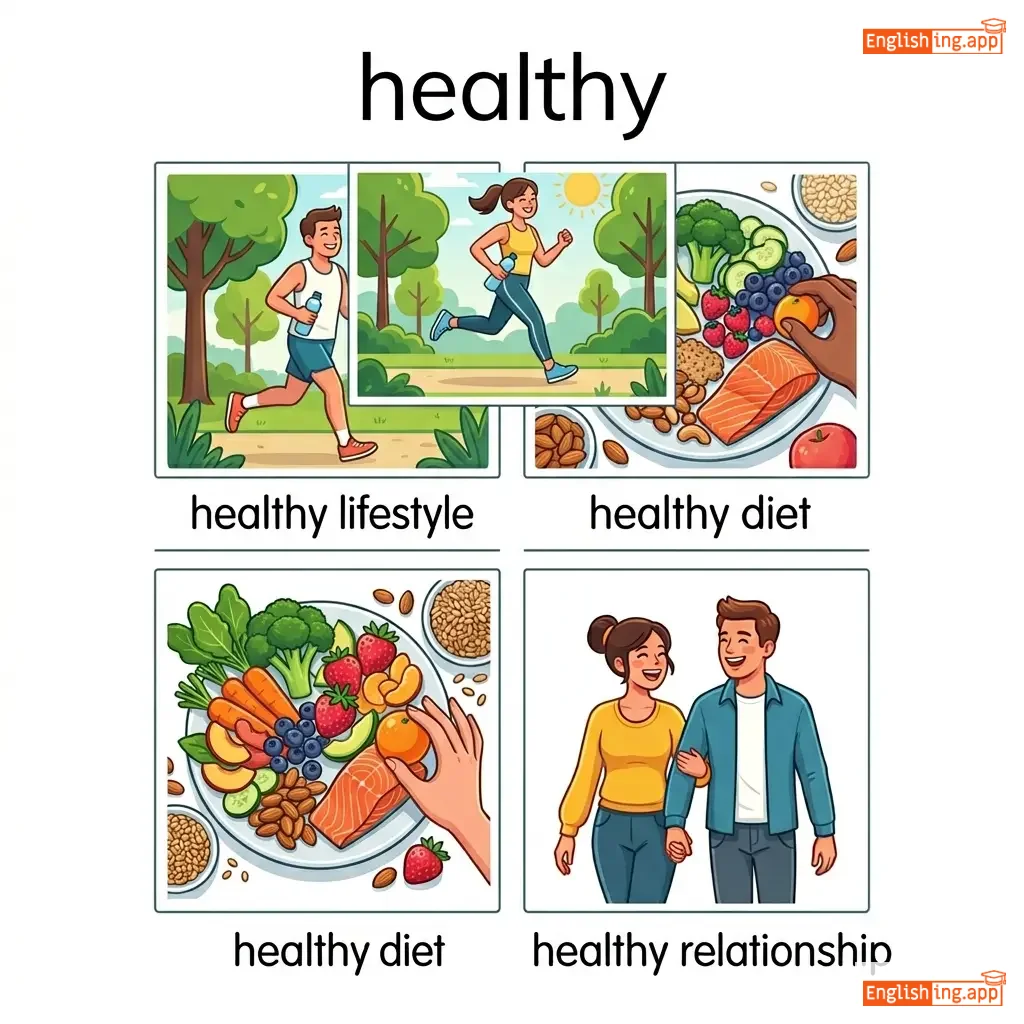
/ˈhɛlθi/
adjective
(海皮尼斯)
••••••
|
|
幸福
xìng fú
••••••
|
- •••••• | - •••••• | - •••••• | - •••••• |
Being in good physical or mental condition; promoting good health.
••••••
|
She follows a healthy lifestyle by exercising regularly.
她无法掩饰收到奖项时的快乐。
••••••
|
她无法掩饰收到奖项时的快乐。
Tā wúfǎ yǎnshì shōudào jiǎngxiàng shí de kuàilè.
••••••
|
healthy competition
幸福的追求
••••••
|
A form of competition that is fair and encourages improvement.
••••••
|
幸福的追求
xìng fú de zhuī qiú
••••••
|
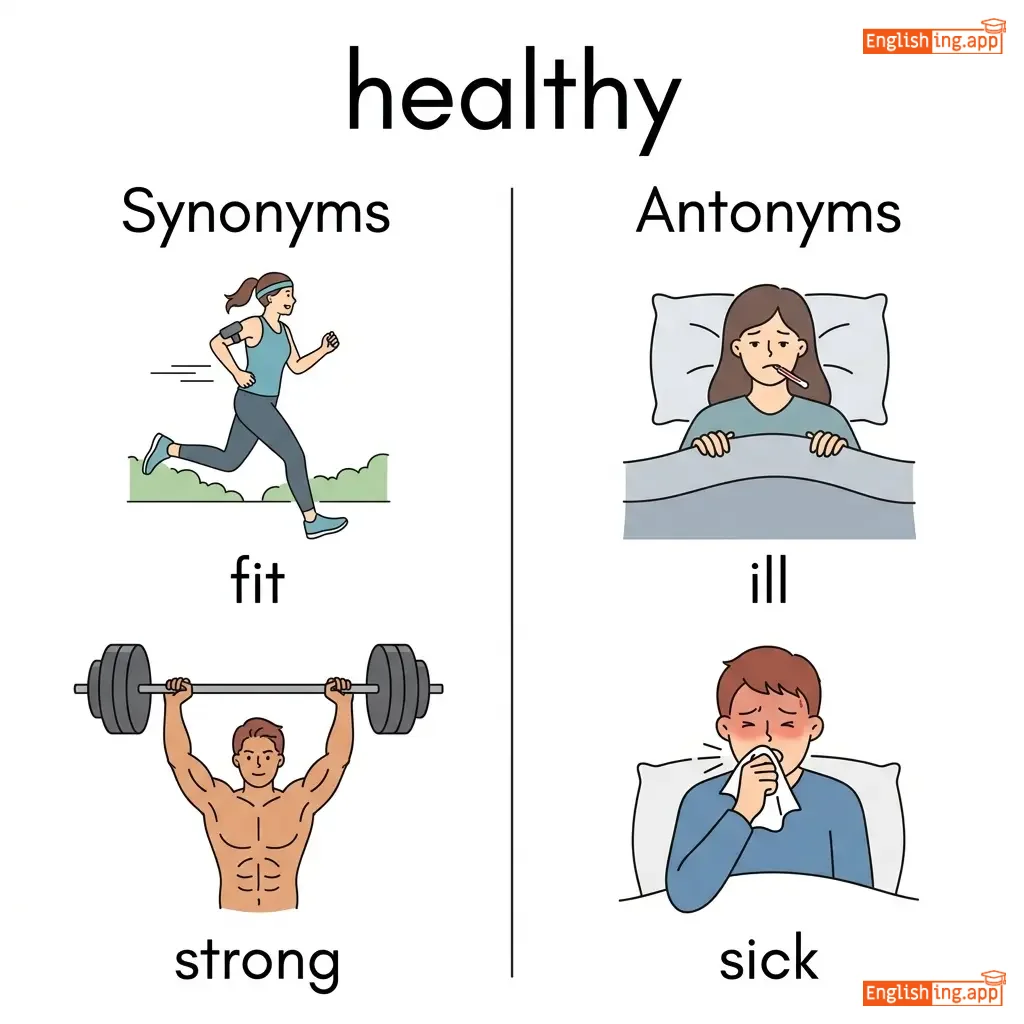
fit, strong, well, robust, sound
••••••
|
ill, sick, weak
••••••
|
healthy lifestyle, healthy diet, healthy relationship, healthy environment
••••••
|
幸福 = 感觉到愉快和满足的状态
••••••
|
|
#4071
🥦
|
/ˈhɛlθfəl/
adjective
(hɛlθfʊl)
••••••
|
- •••••• |
有益健康的
yǒu yì jiànkāng de
••••••
|
- •••••• | - •••••• | - •••••• | - •••••• |
Promoting good health; beneficial to health.
••••••
|
A healthful diet includes fresh fruits and vegetables. |
有益健康的饮食包括新鲜的水果和蔬菜。
Yǒu yì jiànkāng de yǐnshí bāokuò xīnxiān de shuǐguǒ hé shūcài.
••••••
|
- •••••• | - •••••• | - •••••• |
wholesome, nutritious, beneficial, salubrious
••••••
|
unhealthy, harmful, injurious
••••••
|
healthful diet, healthful lifestyle, healthful exercise
••••••
|
Healthful 意味着有益健康 – 让健康更好
••••••
|
|
#4072
🌸
|
/ˈhɛdi/
adjective
(hèdí)
••••••
|
- •••••• |
陶醉的
táozuì de
••••••
|
- •••••• | - •••••• | - •••••• | - •••••• |
Exciting or intoxicating; having a strong or exhilarating effect.
••••••
|
The heady aroma of the flowers filled the room.
花朵的迷人香气充满了整个房间。
••••••
|
花朵的迷人香气充满了整个房间。
Huāduǒ de mírén xiāngqì chōngmǎnle zhěnggè fángjiān.
••••••
|
- •••••• | - •••••• | - •••••• |
intoxicating, thrilling, exciting, stimulating
••••••
|
dull, boring, depressing
••••••
|
heady aroma, heady excitement, heady atmosphere
••••••
|
Heady smell 意味着一个强烈的香气,让人陶醉。
••••••
|
|
#4073
🐂
|
/ˈhɛdˌstrɔŋ/
adjective
(hɛdstrɔŋ)
••••••
|
- •••••• |
固执
gùzhí
••••••
|
- •••••• | - •••••• | - •••••• | - •••••• |
Determined to do what one wants, even if it is not sensible.
••••••
|
The headstrong child refused to listen to anyone.
ðə hɛdstrɔŋ tʃaɪld rɪfjuːzd tʊ lɪsən tʊ ɛniwʌn.
••••••
|
固执的孩子拒绝听任何人的话。
Gùzhí de háizi jùjué tīng rènhé rén de huà.
••••••
|
- •••••• | - •••••• | - •••••• |
stubborn, willful, obstinate, determined
••••••
|
obedient, flexible, compliant
••••••
|
headstrong child, headstrong attitude, headstrong personality
••••••
|
Head strong 意味着固执 – 坚持自己想做的事情。
••••••
|
|
#4074
🏃♂️
|
/ˈhɛdˌlɔŋ/
adverb
(海皮尼斯)
••••••
|
- •••••• |
全速前进
quán sù qián jìn
••••••
|
- •••••• | - •••••• | - •••••• | - •••••• |
With the head leading; in a rush or without thinking.
••••••
|
She rushed headlong into the new project.
她一头扎进了这个新项目。
••••••
|
她全速前进地投入了新的项目。
Tā quán sù qián jìn de tóu rù le xīn de xiàng mù.
••••••
|
- •••••• | - •••••• | - •••••• |
recklessly, hastily, rashly, precipitously
••••••
|
thoughtfully, cautiously
••••••
|
rush headlong, plunge headlong, headlong flight
••••••
|
Headlong是全速前进的意思,不顾一切。
••••••
|
|
#4075
🤿
|
/ˌhɛdˈfɜrst/
adverb
(海德福斯特)
••••••
|
- •••••• |
头朝前
tou chao qian
••••••
|
- •••••• | - •••••• | - •••••• | - •••••• |
With the head leading; in a reckless or hasty manner.
••••••
|
He dived headfirst into the pool.
他头朝下跳入游泳池。
••••••
|
他头朝前跳入游泳池。
Ta tou chao qian tiao ru youyongchi.
••••••
|
- •••••• | - •••••• | - •••••• |
recklessly, impulsively, rashly, hurriedly
••••••
|
cautiously, carefully
••••••
|
dive headfirst, jump headfirst, plunge headfirst
••••••
|
头 (head) 朝前,表示匆忙或不考虑后果的行为。
••••••
|
|
#4076
🌫️
|
/ˈheɪzi/
adjective
(heizi)
••••••
|
- •••••• |
模糊
mohu
••••••
|
- •••••• | - •••••• | - •••••• | - •••••• |
Unclear, misty, or not easy to see; also vague or uncertain.
••••••
|
The mountains looked hazy in the morning light. |
山脉在早晨的光线下看起来模糊不清。
Shānmài zài zǎochén de guāngxiàn xià kàn qǐlái móhu bù qīng.
••••••
|
a hazy memory |
a memory that is unclear or vague
••••••
|
模糊的记忆
móhu de jìyì
••••••
|
foggy, misty, blurry, unclear, vague
••••••
|
clear, bright, distinct
••••••
|
hazy sky, hazy morning, hazy view, hazy memory
••••••
|
Hazy 是像雾一样,什么都不清楚。
••••••
|
|
#4077
☣️
|
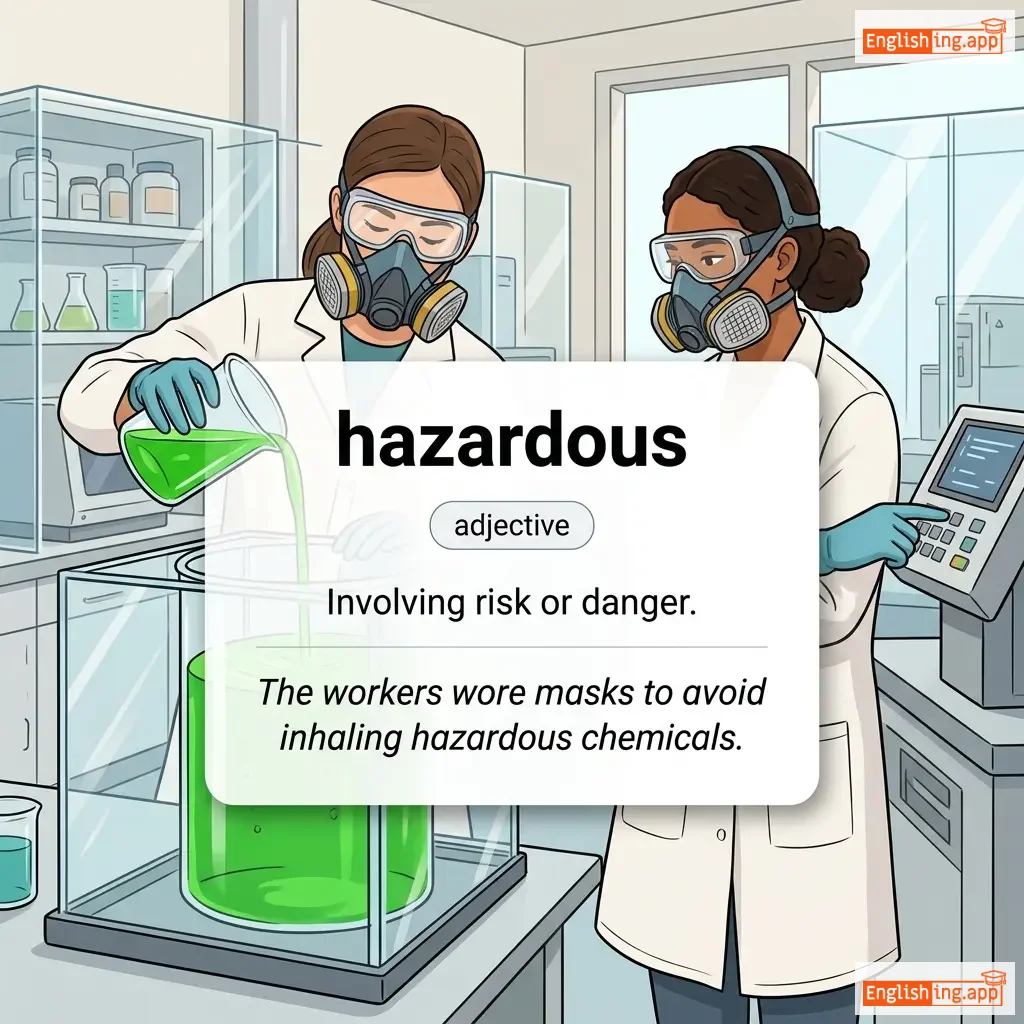
/ˈhæzərdəs/
adjective
(hazardous)
••••••
|
|
危险的
wei xian de
••••••
|
- •••••• | - •••••• | - •••••• | - •••••• |
Involving risk or danger.
••••••
|
The workers wore masks to avoid inhaling hazardous chemicals.
工人戴上了口罩,以避免吸入危险化学品。
••••••
|
工人戴上了口罩,以避免吸入危险化学品。
Gongren daishangle koushao, yi bimi xi ru weixian huaxuepin.
••••••
|
- •••••• | - •••••• | - •••••• |
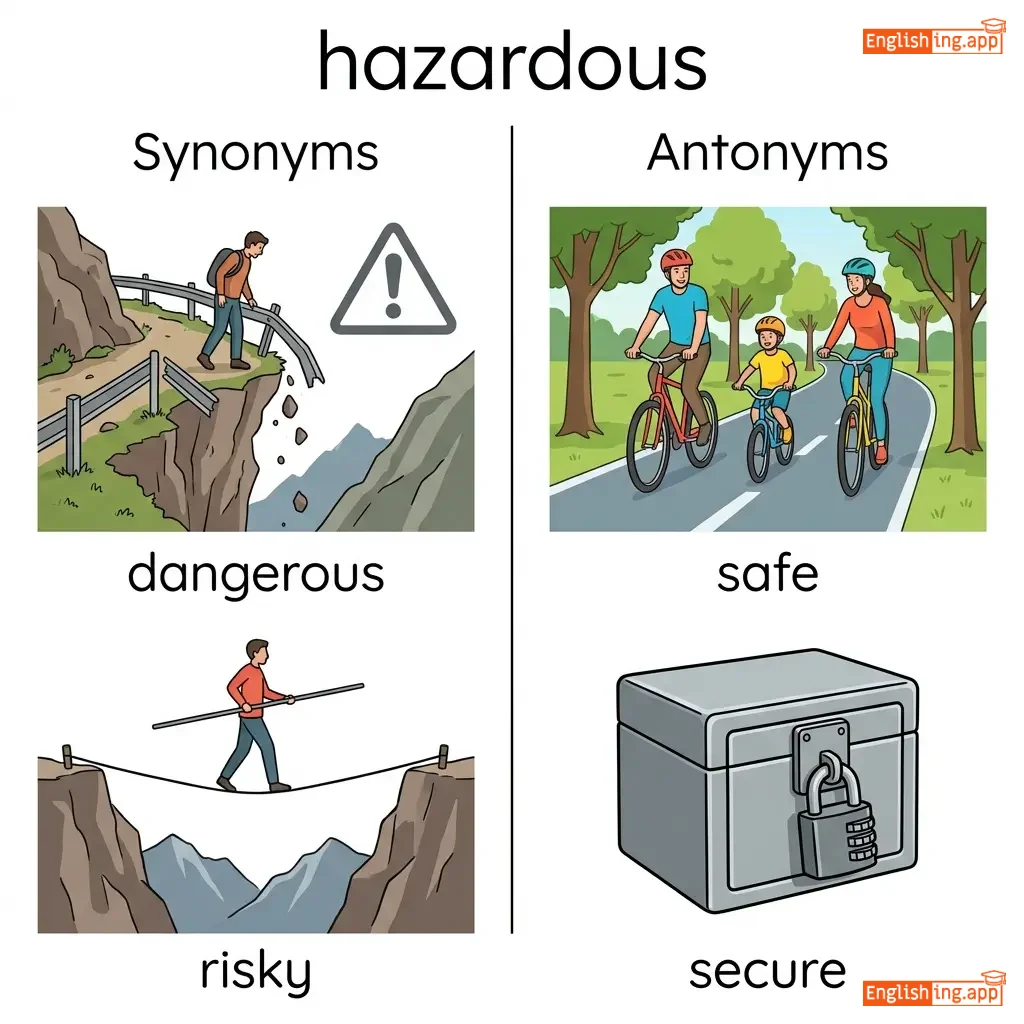
dangerous, risky, unsafe, perilous, harmful
••••••
|
safe, secure, harmless
••••••
|
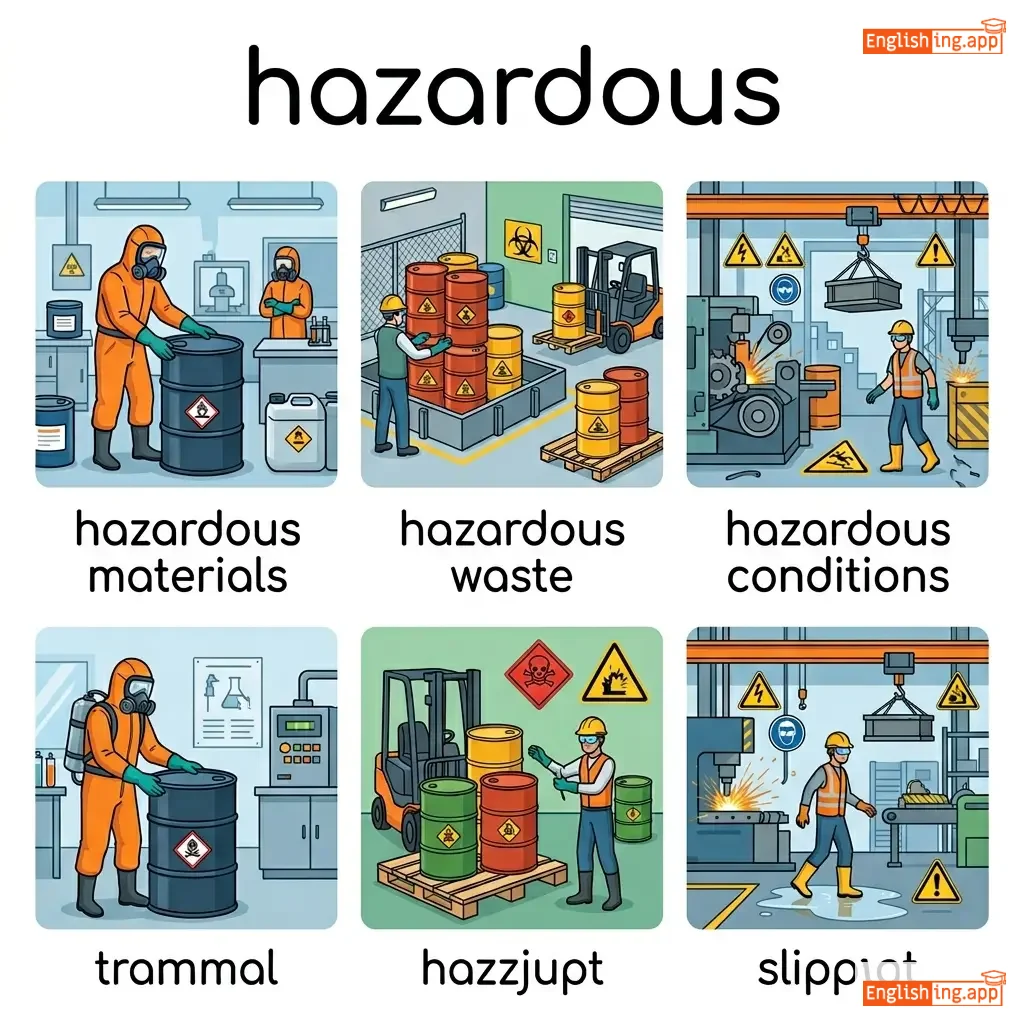
hazardous materials, hazardous waste, hazardous conditions, hazardous chemicals
••••••
|
Hazard + ous = 满是危险 → hazardous = 危险的.
••••••
|
|
#4078
⚠️
|
/ˈhæzərd/
noun
(哈扎德)
••••••
|
- •••••• |
危险
wei xian
••••••
|
- •••••• | - •••••• | - •••••• | - •••••• |
A danger or risk.
••••••
|
Wet floors are a common hazard in the workplace.
湿滑的地板是工作场所常见的危险。
••••••
|
湿滑的地板是工作场所常见的危险。
Shi hua de diban shi gongzuo changsuo changjian de weixian.
••••••
|
at your own hazard
自担风险
••••••
|
at your own risk or responsibility
••••••
|
自担风险
Zi dan fengxian
••••••
|
danger, risk, threat, peril, menace
••••••
|
safety, security, protection
••••••
|
fire hazard, safety hazard, health hazard, potential hazard
••••••
|
Hazard意味着危险,就像警告标志⚠️一样,表示要小心。
••••••
|
|
#4079
🌸
|
/ˈhɔːθɔːrn/
noun
(霍桑)
••••••
|
- •••••• |
有刺灌木
yǒu cì guànmù
••••••
|
- •••••• | - •••••• | - •••••• | - •••••• |
A thorny shrub or small tree with white or pink flowers, often used for hedges.
••••••
|
The garden was lined with blooming hawthorn bushes.
花园里种满了盛开的山楂灌木。
••••••
|
花园里种满了盛开的山楂灌木。
Huāyuán lǐ zhòng mǎnle shèngkāi de shānzhā guànmù.
••••••
|
- •••••• | - •••••• | - •••••• |
shrub, tree, hedge, bush
••••••
|
none, barren
••••••
|
hawthorn bush, hawthorn hedge, blooming hawthorn, hawthorn flowers
••••••
|
Hawthorn, 代表了带刺的植物,山楂树总是刺人。
••••••
|
|
#4080
🪢
|
/ˈhɔːzər/
noun
(豪泽)
••••••
|
- •••••• |
用于系船或拖船的粗绳
yòng yú xì chuán huò tuō chuán de cū shéng
••••••
|
- •••••• | - •••••• | - •••••• | - •••••• |
A thick rope or cable used in mooring or towing a ship.
••••••
|
The sailors secured the ship to the dock with a heavy hawser. |
水手们用一根重的豪泽把船固定在码头。
Shuǐshǒu men yòng yī gēn zhòng de háo zé bǎ chuán gùdìng zài mǎtóu.
••••••
|
- •••••• | - •••••• | - •••••• |
rope, cable, line, cord, towline
••••••
|
thread, string
••••••
|
heavy hawser, mooring hawser, tow hawser, secure with hawser
••••••
|
厚绳用于船 = hawser.
••••••
|
Vocabulary Quiz
Test your vocabulary by matching words with their translations or meanings.
Login to take the quiz
Comments (0)
Share your thoughts and join the discussion.
Join the discussion by logging in
Login to CommentNo comments yet
Be the first to share your thoughts!