

Swipe left or right, or use the buttons. Tap image to zoom.
例句翻译
单词
Lesson 85Lesson 85 - 遮罩切换
|
表情符号
|
单词 | Images | 翻译 | 过去时 | 过去分词 | 第三人称单数 | 动名词 | 含义 | 例句 | 例句翻译 | 示例表达 | 示例表达含义 | 示例表达翻译 | 同义词 | 反义词 | 搭配词 | 助记符 |
|---|---|---|---|---|---|---|---|---|---|---|---|---|---|---|---|---|---|
|
#2521
👎
|
/dɪsˈfeɪvər/
noun/verb
(迪斯费弗)
••••••
|
- •••••• |
不赞成 / 反感
buzancheng / fangan
••••••
|
disfavored
迪斯费弗德
••••••
|
disfavored
迪斯费弗德
••••••
|
disfavors
迪斯费弗斯
••••••
|
disfavoring
迪斯费弗林
••••••
|
disapproval or dislike; to regard with disapproval
••••••
|
The new policy fell into disfavor with the public.
新政策在公众中失宠。
••••••
|
新政策在公众中失宠。
Xin zhengce zai gongzhong zhong shichong.
••••••
|
fall into disfavor
失宠
••••••
|
to lose approval or popularity
••••••
|
失宠
shichong
••••••
|
disapproval, dislike, displeasure, opposition, hostility
••••••
|
favor, approval, support
••••••
|
in disfavor, fall into disfavor, earn disfavor, widespread disfavor
••••••
|
Dis FAVOR意味着没有favor,所以是不赞成或反感。
••••••
|
|
#2522
🧼
|
/ˌdɪsɪnˈfɛktənt/
noun
(消毒剂)
••••••
|
- •••••• |
消毒剂
xiaoduji
••••••
|
- •••••• | - •••••• | - •••••• | - •••••• |
a chemical substance used to kill harmful microorganisms on surfaces
••••••
|
The cleaner sprayed disinfectant on the table. |
清洁工在桌子上喷洒了消毒剂。
Qingjie gong zai zhuozi shang pensa le xiaoduji.
••••••
|
- •••••• | - •••••• | - •••••• |
antiseptic, germicide, sanitizer, sterilizer
••••••
|
contaminant, pathogen
••••••
|
use disinfectant, spray disinfectant, disinfectant solution, disinfectant wipe
••••••
|
消毒剂 = Disinfectant 在中文中也有类似的词。
••••••
|
|
#2523
🧴
|
/ˌdɪsɪnˈfɛkt/
verb
(消毒)
••••••
|
- •••••• |
消毒
xiaodu
••••••
|
disinfected
消毒了
••••••
|
disinfected
消毒了
••••••
|
disinfects
消毒
••••••
|
disinfecting
消毒中
••••••
|
to clean something thoroughly to destroy bacteria or viruses
••••••
|
The nurse disinfected the wound before applying a bandage.
护士在敷上绷带之前消毒了伤口。
••••••
|
护士在敷上绷带之前消毒了伤口。
Hushi zai fu shang bengdai zhiqian xiaodu le shangkou.
••••••
|
- •••••• | - •••••• | - •••••• |
sterilize, sanitize, cleanse, purify
••••••
|
contaminate, infect
••••••
|
disinfect hands, disinfect wounds, disinfect surfaces, disinfect area
••••••
|
Disinfect意味着消除感染 → 消毒
••••••
|
|
#2524
🙅
|
/ˌdɪsɪnklɪˈneɪʃən/
noun
(不倾向)
••••••
|
- •••••• |
不愿意
bù yuànyì
••••••
|
- •••••• | - •••••• | - •••••• | - •••••• |
a lack of willingness or desire to do something
••••••
|
She showed a clear disinclination to join the meeting. |
她表现出明显的不愿意参加会议。
Tā biǎoxiàn chū míngxiǎn de bù yuànyì cānjiā huìyì.
••••••
|
- •••••• | - •••••• | - •••••• |
reluctance, unwillingness, hesitance, indifference
••••••
|
willingness, eagerness, inclination
••••••
|
show disinclination, strong disinclination, disinclination to work, natural disinclination
••••••
|
Dis + inclination 意味着缺乏意愿 → 不愿意
••••••
|
|
#2525
😞
|
/ˌdɪsɪˈluːʒən/
verb, noun
(失望)
••••••
|
- •••••• |
失望
shīwàng
••••••
|
disillusioned
失望
••••••
|
disillusioned
失望
••••••
|
disillusions
失望
••••••
|
disillusioning
失望
••••••
|
to cause someone to realize that something is not as good as they believed
••••••
|
The scandal disillusioned many voters.
丑闻让许多选民失望。
••••••
|
丑闻让许多选民失望。
Chouwen rang xu duo xuanmin shi wang.
••••••
|
disillusion with
失望于
••••••
|
loss of faith or belief in something
••••••
|
对…失望
dui...shi wang
••••••
|
disenchant, disappoint, discourage, embitter
••••••
|
encourage, inspire, satisfy
••••••
|
feel disillusioned, political disillusion, deep disillusion, disillusion with life
••••••
|
Disillusion—失望: 打破幻想,失去信任
••••••
|
|
#2526
😔
|
/dɪsˈɑːnər/
noun, verb
••••••
|
- •••••• | - •••••• |
dishonored
••••••
|
dishonored
••••••
|
dishonors
••••••
|
dishonoring
••••••
|
a state of shame or loss of respect; to bring shame upon someone or something
••••••
|
The soldier felt he had brought dishonor to his family. |
- •••••• |
fall into dishonor |
to lose respect or reputation
••••••
|
- •••••• |
disgrace, shame, humiliation, disrespect, stigma
••••••
|
honor, respect, dignity
••••••
|
bring dishonor, family dishonor, cause dishonor, public dishonor
••••••
|
No •••••• |
|
#2527
🤥
|
/dɪsˈɑːnɪst/
adjective
(dishonest)
••••••
|
- •••••• |
不诚实
bu chengshi
••••••
|
- •••••• | - •••••• | - •••••• | - •••••• |
Behaving in an untruthful or deceitful way; not honest.
••••••
|
It is dishonest to cheat in exams. |
在考试中作弊是不诚实的。
Zai kaoshi zhong zuobi shi bu chengshi de.
••••••
|
dishonest gain |
Wealth or advantage obtained through unfair or illegal means
••••••
|
不诚实的收获
bu chengshi de shouhuo
••••••
|
deceitful, fraudulent, untruthful, corrupt
••••••
|
honest, truthful, sincere
••••••
|
dishonest act, dishonest behavior, dishonest person
••••••
|
Dishonest 与诚实相对,意思是不诚实
••••••
|
|
#2528
😵💫
|
/dɪˈʃɛvəld/
adjective
(迪谢维尔德)
••••••
|
- •••••• |
凌乱
língluàn
••••••
|
- •••••• | - •••••• | - •••••• | - •••••• |
Untidy, messy, or in disorder, especially of hair or clothing.
••••••
|
He arrived with disheveled hair and wrinkled clothes. |
他带着凌乱的头发和皱巴巴的衣服来了。
Tā dàizhe língluàn de tóufǎ hé zhòu bābā de yīfú lái le.
••••••
|
- •••••• | - •••••• | - •••••• |
untidy, messy, unkempt, scruffy
••••••
|
tidy, neat, groomed
••••••
|
disheveled hair, disheveled appearance, look disheveled
••••••
|
Disheveled意味着dis(混乱)+ shevel(铲子)- 凌乱
••••••
|
|
#2529
😞
|
/dɪsˈhɑːrtənd/
adjective
(迪斯哈滕德)
••••••
|
- •••••• |
沮丧
jǔsàng
••••••
|
- •••••• | - •••••• | - •••••• | - •••••• |
Having lost confidence, hope, or spirit; discouraged.
••••••
|
She looked disheartened after receiving the bad news.
她收到坏消息后看起来很沮丧。
••••••
|
她收到坏消息后看起来很沮丧。
Tā shōudào huài xiāoxī hòu kàn qǐlái hěn jǔsàng.
••••••
|
- •••••• | - •••••• | - •••••• |
discouraged, dejected, depressed, demoralized
••••••
|
encouraged, motivated, inspired
••••••
|
feel disheartened, look disheartened, deeply disheartened
••••••
|
Disheartened 就像信心和希望的丧失,导致沮丧。
••••••
|
|
#2530
💔
|
/dɪsˈhɑːrtən/
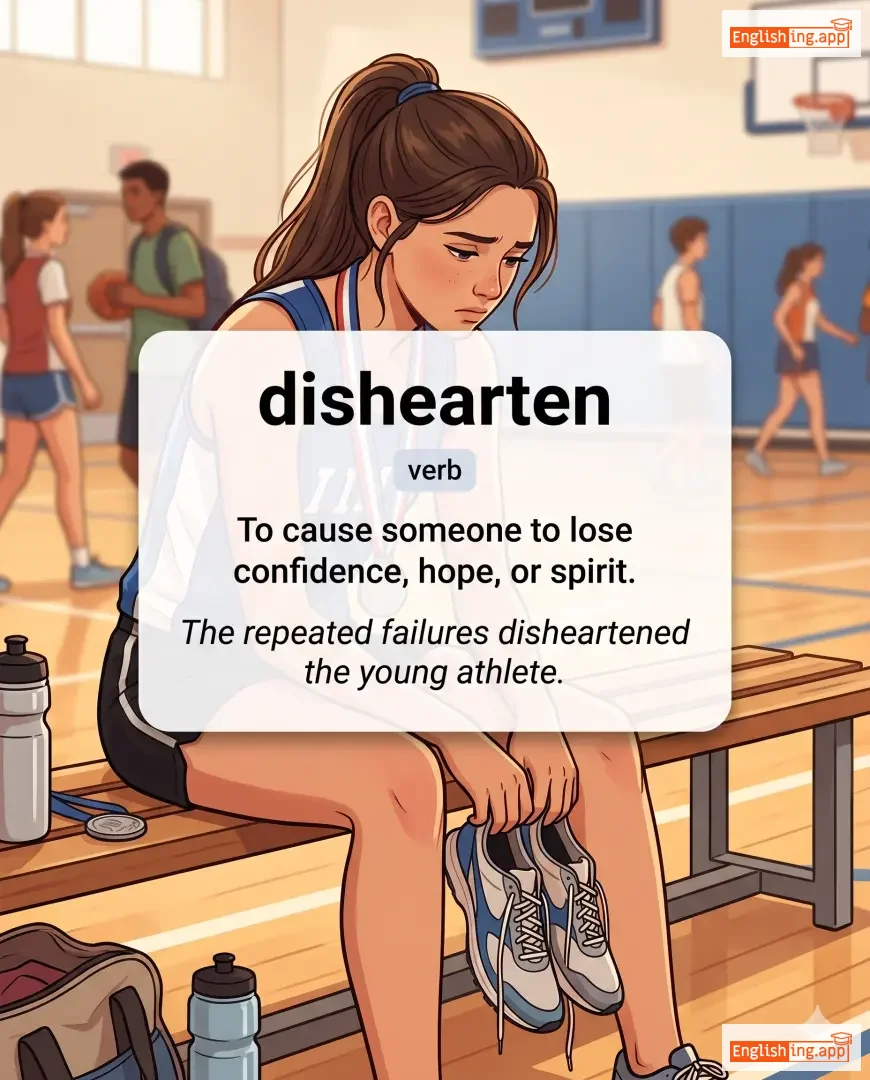
verb
(迪斯哈滕)
••••••
|
|
使灰心
shǐ huīxīn
••••••
|
disheartened
迪斯哈滕德
••••••
|
disheartened
迪斯哈滕德
••••••
|
disheartens
迪斯哈滕斯
••••••
|
disheartening
迪斯哈滕宁
••••••
|
To cause someone to lose confidence, hope, or spirit.
••••••
|
The repeated failures disheartened the young athlete.
反复的失败使年轻的运动员灰心丧气。
••••••
|
反复的失败使年轻的运动员灰心丧气。
Fǎnfù de shībài shǐ niánqīng de yùndòngyuán huīxīn sàngqì.
••••••
|
- •••••• | - •••••• | - •••••• |
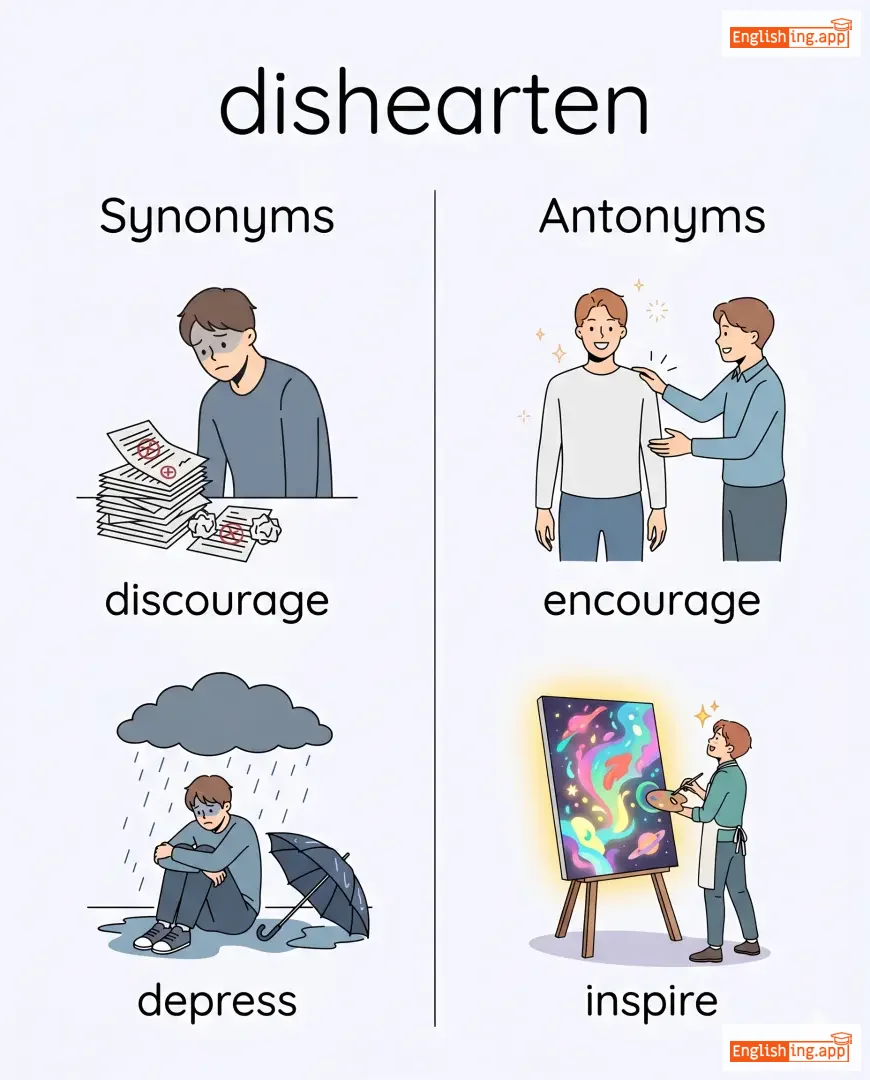
discourage, depress, demoralize, dismay
••••••
|
encourage, inspire, hearten
••••••
|
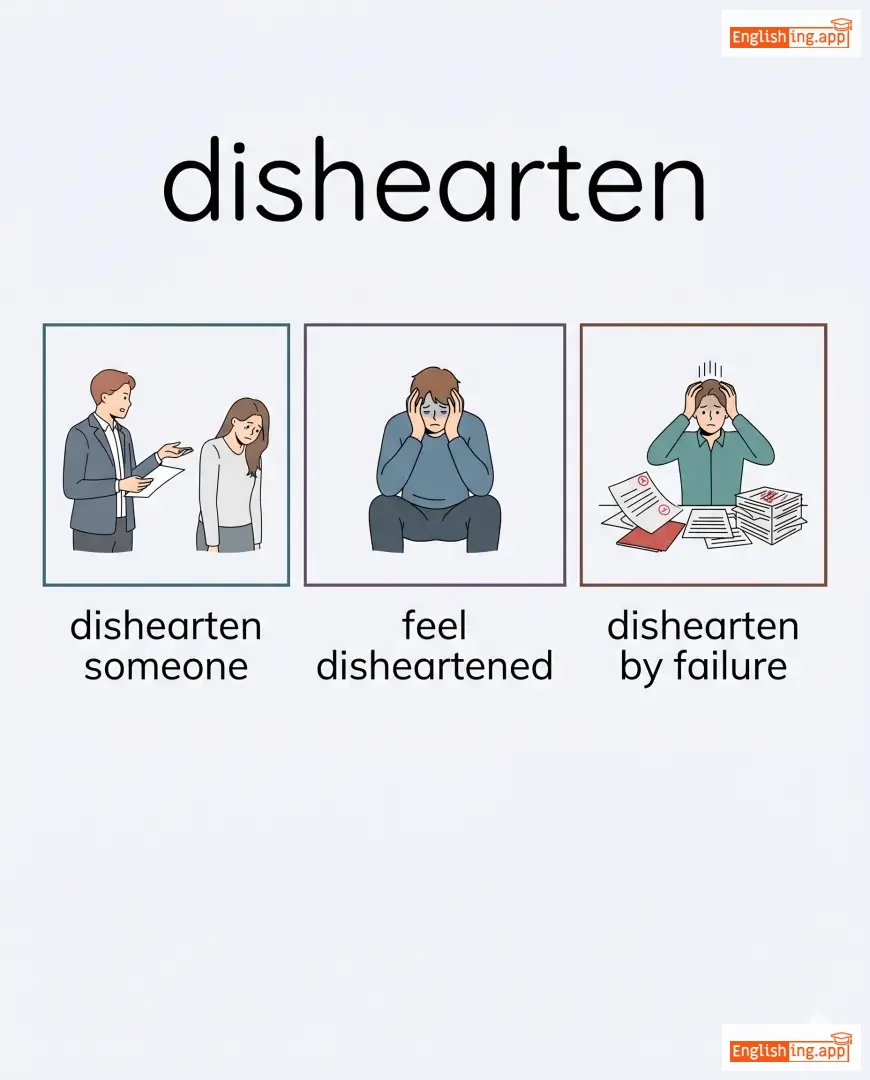
dishearten someone, feel disheartened, dishearten by failure
••••••
|
当心破裂时,人会灰心丧气,像dishearten一样。
••••••
|
|
#2531
🩳
|
/ˌdɪʃəˈbiːl/
noun
(迪莎比尔)
••••••
|
- •••••• |
衣着不整
yizhuo buzhen
••••••
|
- •••••• | - •••••• | - •••••• | - •••••• |
The state of being only partly or loosely dressed; casual or careless attire.
••••••
|
She answered the door in a state of dishabille, wearing just a robe. |
她穿着睡袍以一种衣着不整的状态开了门。
Ta chuanzhuo shuipao yi zhong yizhuo buzhen de zhuangtai kaile men.
••••••
|
- •••••• | - •••••• | - •••••• |
undress, negligence, casualness, informality
••••••
|
formality, attire, elegance
••••••
|
in dishabille, appear in dishabille, casual dishabille
••••••
|
Dishabille 就是穿着不整,像只穿睡袍的人。
••••••
|
|
#2532
🎭
|
/dɪsˈɡaɪz/
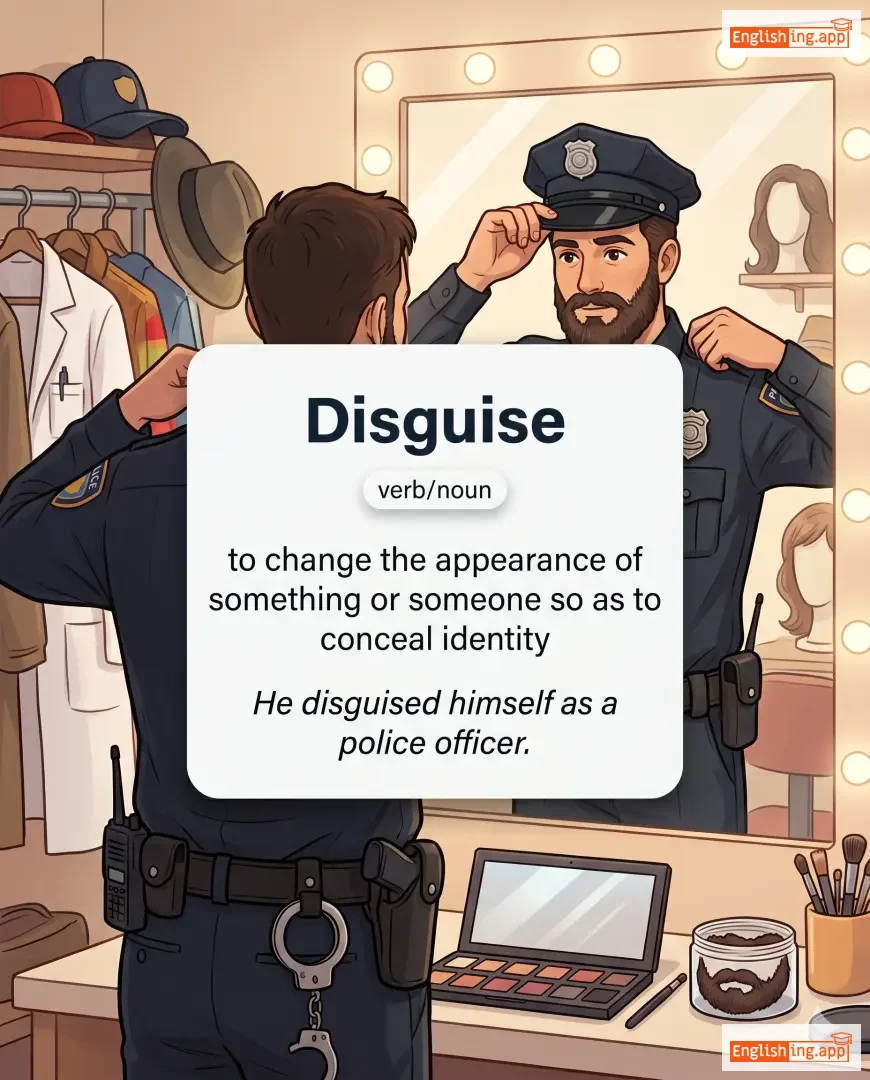
verb/noun
(dísīgāi)
••••••
|
|
伪装
wèizhuāng
••••••
|
disguised
dísīgāid
••••••
|
disguised
dísīgāid
••••••
|
disguises
dísīgāiz
••••••
|
disguising
dísīgāing
••••••
|
to change the appearance of something or someone so as to conceal identity
••••••
|
He disguised himself as a police officer.
他伪装成警察。
••••••
|
他伪装成警察。
Tā wèizhuāng chéng jǐngchá.
••••••
|
a blessing in disguise
伪装中的祝福
••••••
|
something that seems bad at first but results in something good
••••••
|
伪装中的祝福
wèizhuāng zhōng de zhùfú
••••••
|
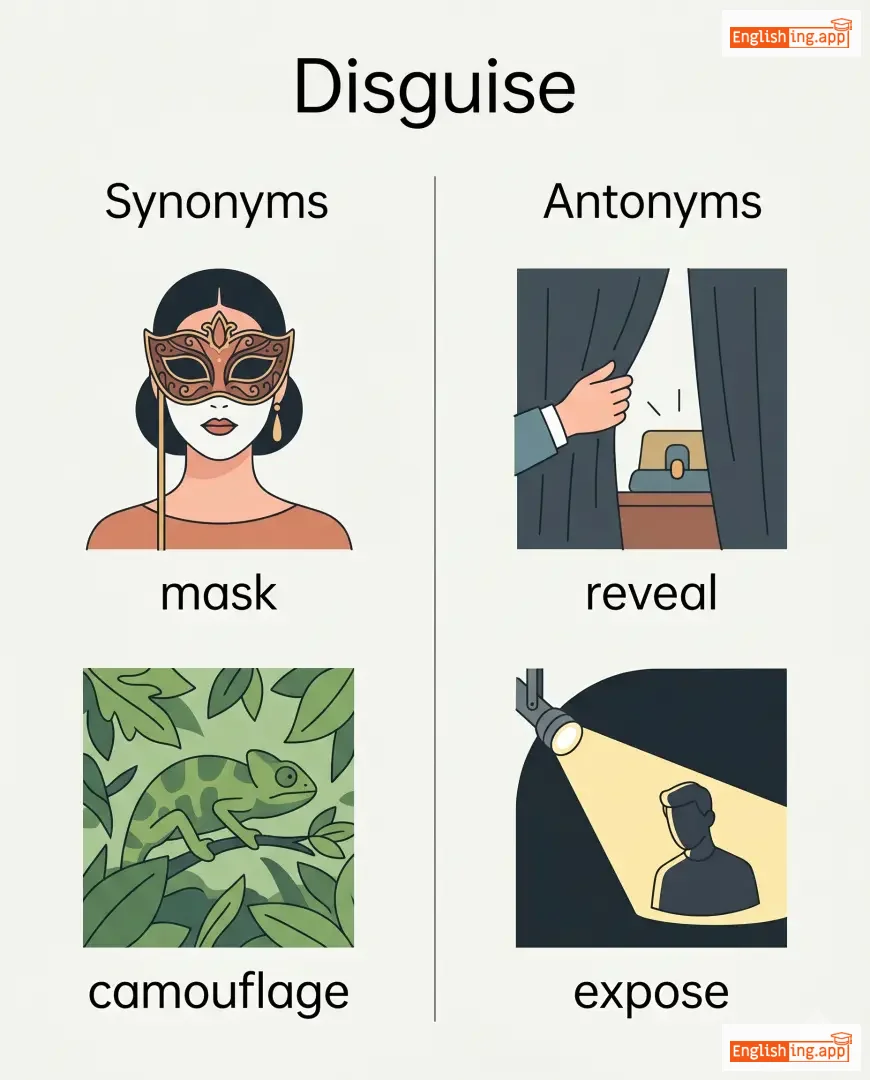
mask, camouflage, conceal, cover, veil
••••••
|
reveal, expose, uncover
••••••
|
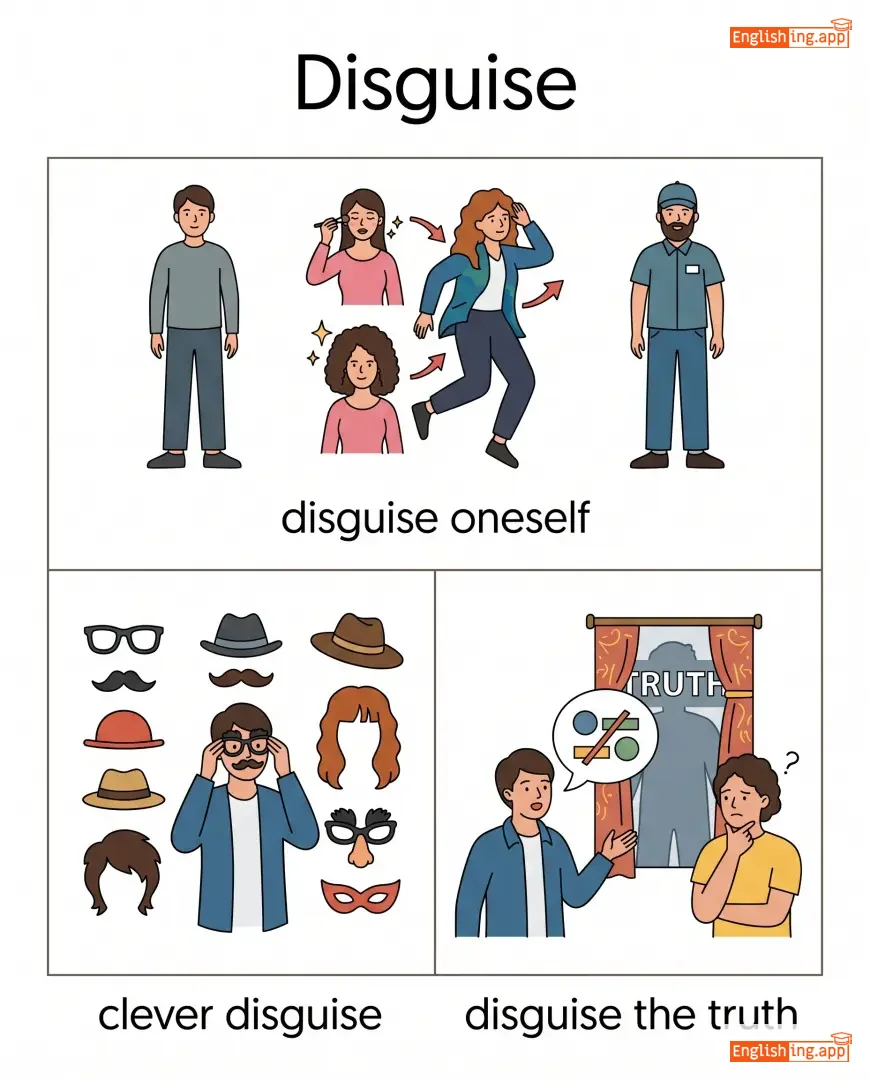
disguise oneself, clever disguise, disguise the truth, disguise as
••••••
|
Disguise → Dis GUS,藏在伪装中的你。
••••••
|
|
#2533
😠
|
/dɪsˈɡrʌntl/
verb
(dɪsɡrʌntəl)
••••••
|
- •••••• |
使不满
shǐ bùmǎn
••••••
|
disgruntled
dɪsɡrʌntəld
••••••
|
disgruntled
dɪsɡrʌntəld
••••••
|
disgruntles
dɪsɡrʌntəlz
••••••
|
disgruntling
dɪsɡrʌntəlɪŋ
••••••
|
to make someone dissatisfied or discontented
••••••
|
The unfair treatment disgruntled the workers.
不公平的待遇使工人感到不满。
••••••
|
不公平的待遇使工人感到不满。
Bù gōngpíng de dàiyù shǐ gōngrén gǎndào bùmǎn.
••••••
|
- •••••• | - •••••• | - •••••• |
dissatisfy, annoy, upset, displease, irritate
••••••
|
please, satisfy, delight
••••••
|
disgruntled employee, disgruntled customer, feel disgruntled, disgruntled look
••••••
|
Grant没给→Dis-grant-le意味着使不满。
••••••
|
|
#2534
🌋
|
/dɪsˈɡɔrdʒ/
verb
(dɪsˈɡɔrdʒ)
••••••
|
|
呕吐 / 强行吐出
ǒu tǔ / qiáng xíng tǔ chū
••••••
|
disgorged
dɪsˈɡɔrdʒd
••••••
|
disgorged
dɪsˈɡɔrdʒd
••••••
|
disgorges
dɪsˈɡɔrdʒes
••••••
|
disgorging
dɪsˈɡɔrdʒɪŋ
••••••
|
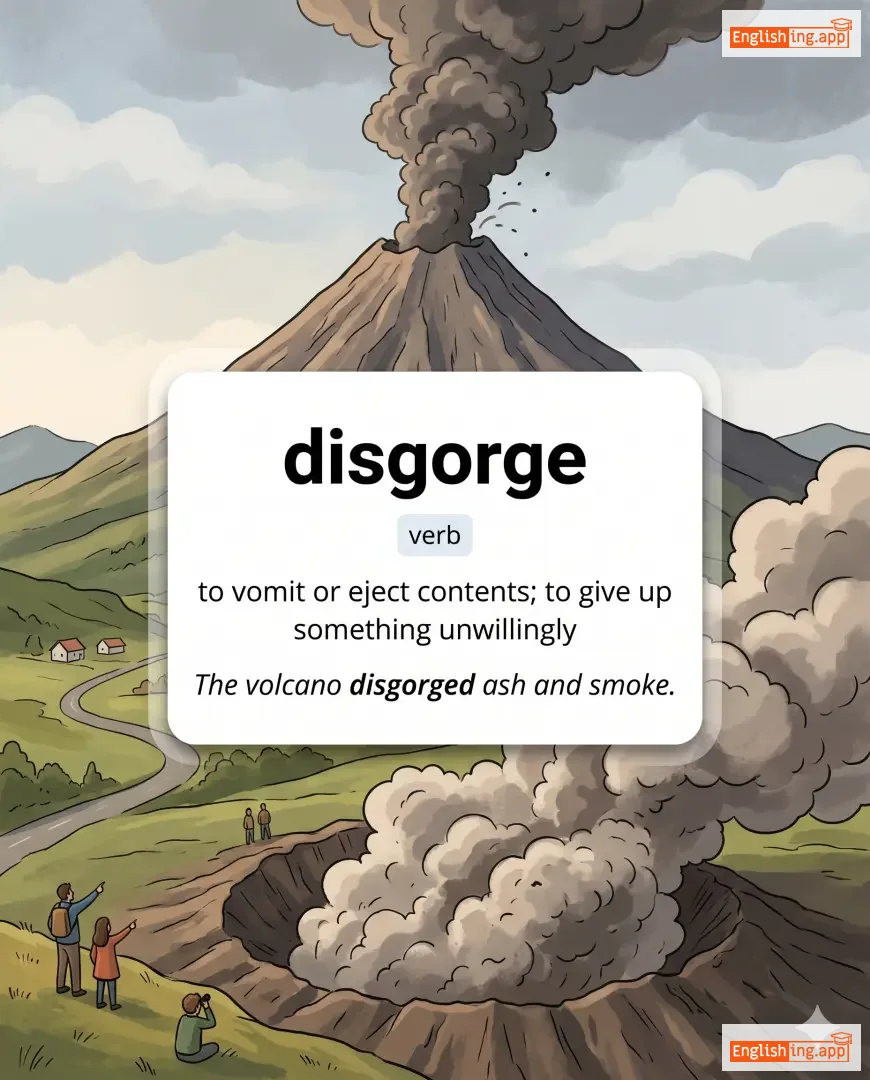
to vomit or eject contents; to give up something unwillingly
••••••
|
The volcano disgorged ash and smoke.
火山喷出了灰烬和烟雾。
••••••
|
火山喷出了灰烬和烟雾。
Huǒshān pēn chūle huī jìn hé yān wù.
••••••
|
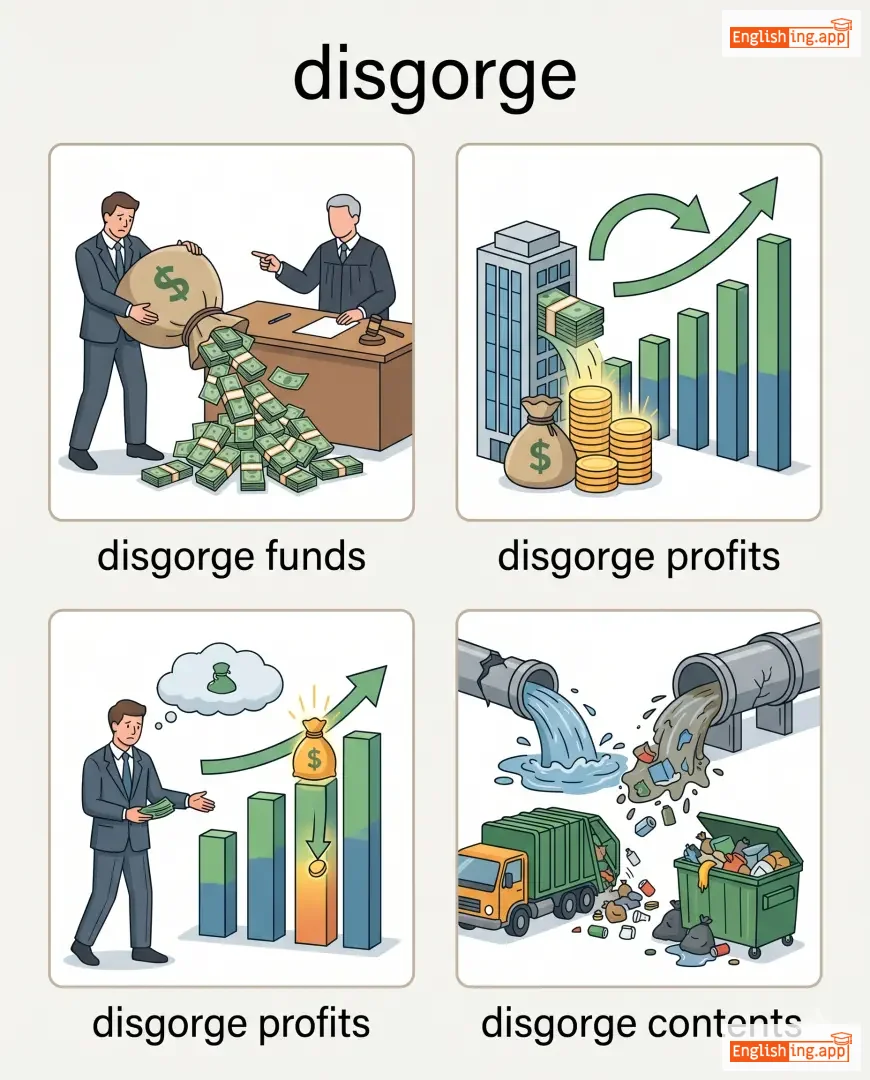
disgorge profits
吐出利润
••••••
|
to surrender money or profits, usually by legal requirement
••••••
|
归还利润
guī huán lì rùn
••••••
|
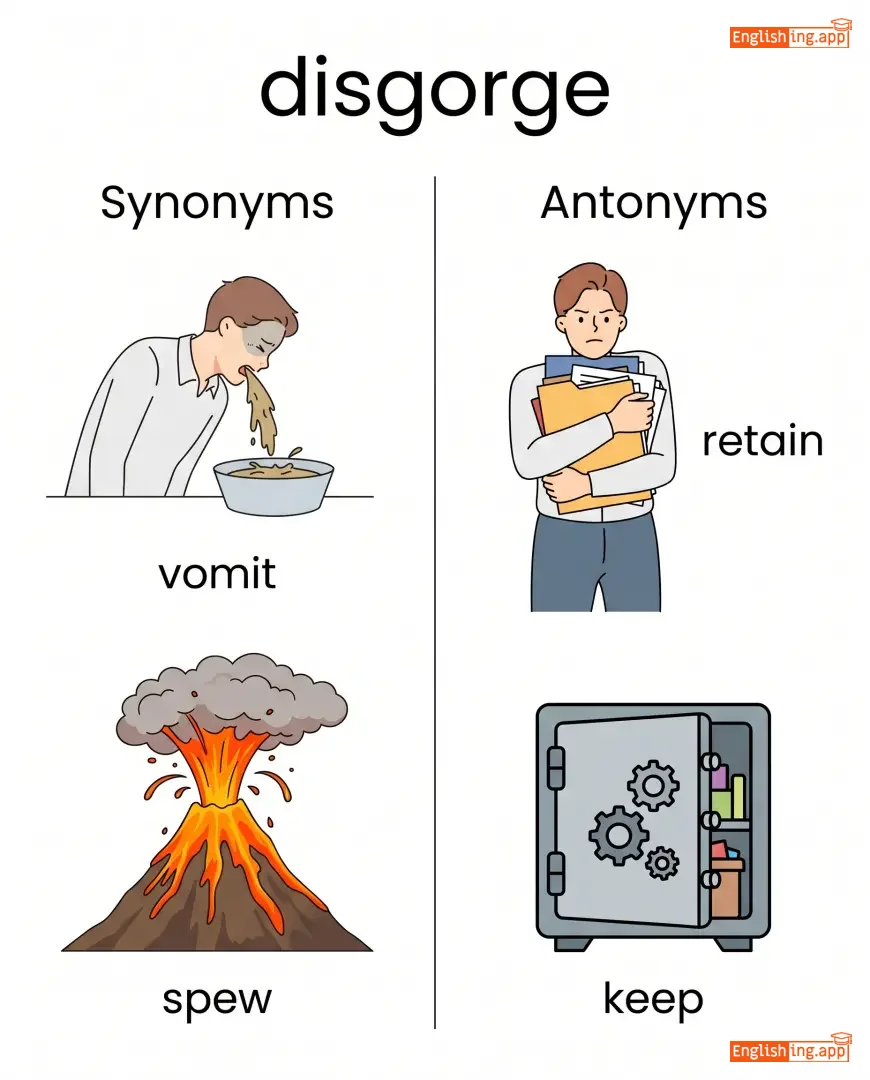
vomit, spew, eject, expel, surrender
••••••
|
retain, keep, hold
••••••
|
disgorge funds, disgorge profits, disgorge contents, disgorge smoke
••••••
|
Dis GORGE → 强行呕吐,吐出内容!
••••••
|
|
#2535
😣
|
/dɪsˈfɪɡjər/
verb
(毁容)
••••••
|
- •••••• |
毁容
huirong
••••••
|
disfigured
毁容了
••••••
|
disfigured
毁容了
••••••
|
disfigures
毁容
••••••
|
disfiguring
毁容中
••••••
|
to spoil or damage the appearance of something
••••••
|
The fire disfigured the old building.
火灾毁容了那座老建筑。
••••••
|
火灾毁容了那座老建筑。
Huozai huirongle na zuo lao jianzhu.
••••••
|
- •••••• | - •••••• | - •••••• |
mar, scar, deform, deface, ruin
••••••
|
beautify, repair, restore
••••••
|
badly disfigured, disfigure the face, disfigured body, permanently disfigure
••••••
|
Dis + figure 意思是破坏形状,毁容。
••••••
|
|
#2536
🤫
|
/dɪˈskriːt/
adjective
(dīsīlǐt)
••••••
|
- •••••• |
谨慎的
jinshen de
••••••
|
- •••••• | - •••••• | - •••••• | - •••••• |
careful and prudent in one's speech or actions, especially to keep something confidential or avoid embarrassment
••••••
|
She was discreet about the details of their conversation.
她对他们谈话的细节非常谨慎。
••••••
|
她对他们谈话的细节非常谨慎。
Ta dui tamen tanhua de xijie feichang jinshen.
••••••
|
discreet silence
谨慎的沉默
••••••
|
the act of remaining silent to avoid revealing private or sensitive information
••••••
|
谨慎的沉默
jinshen de chenmo
••••••
|
cautious, tactful, careful, prudent, diplomatic
••••••
|
careless, reckless, indiscreet
••••••
|
discreet manner, discreet silence, discreet charm, discreet glance
••••••
|
谨慎的意思是安静地做事情(jinshen de),以避免暴露秘密。
••••••
|
|
#2537
🧵
|
/ˌdɪsɪnˈtæŋɡl/
verb
(迪森坦格尔)
••••••
|
- •••••• |
解开
jiě kāi
••••••
|
disentangled
迪森坦格尔德
••••••
|
disentangled
迪森坦格尔德
••••••
|
disentangles
迪森坦格尔斯
••••••
|
disentangling
迪森坦格尔英
••••••
|
To free something or someone from a tangle or complication.
••••••
|
She tried to disentangle her hair from the branches.
她试图把头发从树枝上解开。
••••••
|
她试图把头发从树枝上解开。
Tā shìtú bǎ tóufà cóng shùzhī shàng jiě kāi.
••••••
|
- •••••• | - •••••• | - •••••• |
untangle, unravel, release, extricate
••••••
|
entangle, complicate, knot
••••••
|
disentangle from, disentangle the truth, disentangle hair
••••••
|
Disentangle 就是解开纠缠,像解开复杂的结。
••••••
|
|
#2538
🔓
|
/ˌdɪsɪnˈɡeɪdʒ/
verb
(dìsīngéijié)
••••••
|
- •••••• |
脱离
tuōlí
••••••
|
disengaged
dìsīngéijèd
••••••
|
disengaged
dìsīngéijèd
••••••
|
disengages
dìsīngéijés
••••••
|
disengaging
dìsīngéijíng
••••••
|
To release or detach oneself from something; to withdraw.
••••••
|
He tried to disengage from the heated argument.
他试图从激烈的争论中 disengage。
••••••
|
他试图从激烈的争论中脱离。
Tā shìtú cóng jīliè de zhēnglùn zhōng tuōlí.
••••••
|
- •••••• | - •••••• | - •••••• |
detach, withdraw, release, separate
••••••
|
engage, involve, connect
••••••
|
disengage from, disengage quickly, disengage completely
••••••
|
Disengage意味着脱离, 离开激烈的争论。
••••••
|
|
#2539
🚫
|
/ˌdɪsɪnˈfræntʃaɪz/
verb
(disenfranchais)
••••••
|
- •••••• |
剥夺权利
boduò quánlì
••••••
|
disenfranchised
disenfranchaisd
••••••
|
disenfranchised
disenfranchaisd
••••••
|
disenfranchises
disenfranchaises
••••••
|
disenfranchising
disenfranchising
••••••
|
To deprive someone of the right to vote or other rights.
••••••
|
The new law could disenfranchise thousands of voters.
新法律可能会剥夺成千上万选民的投票权。
••••••
|
新法律可能会剥夺成千上万选民的投票权。
Xīn fǎlǜ kěnéng huì bōduó chéngqiān shàngwàn xuǎnmín de tóupiào quán.
••••••
|
- •••••• | - •••••• | - •••••• |
deprive, exclude, oppress, marginalize
••••••
|
empower, enfranchise, include
••••••
|
disenfranchise voters, politically disenfranchised, systematically disenfranchise
••••••
|
Disenfranchise 意为剥夺选举权。
••••••
|
|
#2540
🛳️
|
/ˌdɪsɪmˈbɑːrk/
verb
(disembark)
••••••
|
- •••••• |
下船/下飞机
xia chuan/xia feiji
••••••
|
disembarked
disembarked
••••••
|
disembarked
disembarked
••••••
|
disembarks
disembarks
••••••
|
disembarking
disembarking
••••••
|
To leave a ship, aircraft, or other vehicle.
••••••
|
The passengers disembarked from the plane after landing.
乘客在着陆后从飞机上下来。
••••••
|
乘客在着陆后从飞机上下来。
Chengke zai zhuolu hou cong feiji shang xiala.
••••••
|
- •••••• | - •••••• | - •••••• |
alight, exit, debark, get off
••••••
|
embark, board, enter
••••••
|
disembark from, passengers disembark, safely disembark
••••••
|
Disembark 和下船/下飞机很像,记住就可以了。
••••••
|
|
#2541
😒
|
/dɪsˈdeɪn/
noun/verb
••••••
|
- •••••• | - •••••• |
disdained
••••••
|
disdained
••••••
|
disdains
••••••
|
disdaining
••••••
|
The feeling that someone or something is unworthy of respect; to regard with contempt.
••••••
|
She looked at the messy room with open disdain. |
- •••••• |
treat with disdain |
to show strong disapproval or contempt towards something
••••••
|
- •••••• |
scorn, contempt, derision, disrespect, disparagement
••••••
|
respect, admiration, approval
••••••
|
look with disdain, feel disdain, express disdain, disdain for
••••••
|
No •••••• |
|
#2542
💬
|
/dɪˈskʌʃən/
noun
(dɪˈskʌʃən)
••••••
|
- •••••• |
讨论
taolun
••••••
|
- •••••• | - •••••• | - •••••• | - •••••• |
The action or process of talking about something in order to reach a decision or share ideas.
••••••
|
The project needs more discussion before moving forward. |
该项目需要更多的讨论,然后才能继续进行。
Gāi xiàngmù xūyào gèng duō de tǎolùn, ránhòu cáinéng jìxù jìnxíng.
••••••
|
open for discussion |
Available to be debated or considered
••••••
|
开放讨论
Kāifàng tǎolùn
••••••
|
conversation, dialogue, debate, talk, consultation
••••••
|
silence, monologue
••••••
|
group discussion, open discussion, detailed discussion, lively discussion
••••••
|
讨论:与他人交流,探讨想法。
••••••
|
|
#2543
🌀
|
/dɪsˈkɜrsɪv/
adjective
(dɪsˈkɜrsɪv)
••••••
|
- •••••• |
离题的
lítí de
••••••
|
- •••••• | - •••••• | - •••••• | - •••••• |
Tending to digress or move from topic to topic; lengthy and rambling.
••••••
|
His discursive style made the lecture hard to follow.
他的散漫风格让演讲难以跟上。
••••••
|
他的离题风格使得讲座难以跟上。
Tā de lítí fēnggé shǐdé jiǎngzuò nányǐ gēn shàng.
••••••
|
- •••••• | - •••••• | - •••••• |
rambling, digressive, wandering, wordy, meandering
••••••
|
concise, focused, direct
••••••
|
discursive essay, discursive style, discursive writing
••••••
|
Discursive 就像话题之间的漫游,错综复杂。
••••••
|
|
#2544
👩🎨
|
/dɪˈskrɪmɪˌneɪtɪŋ/
adjective
(歧视性)
••••••
|
- •••••• |
挑剔的
tiaoti de
••••••
|
- •••••• | - •••••• | - •••••• | - •••••• |
Having refined taste or good judgment; able to recognize subtle differences.
••••••
|
She is known for her discriminating taste in art. |
她以自己在艺术上的挑剔眼光而闻名。
Ta yi ziji zai yishu shang de tiaoti yanguang er wenming.
••••••
|
- •••••• | - •••••• | - •••••• |
perceptive, discerning, selective, refined, tasteful
••••••
|
indiscriminate, careless, unselective
••••••
|
discriminating taste, discriminating buyer, discriminating audience
••••••
|
Discriminating 意味着挑选最好的,就像一个有良好品味的人。
••••••
|
|
#2545
🚫
|
/dɪˈskrɪmɪˌneɪt/
verb
••••••
|
- •••••• | - •••••• |
discriminated
••••••
|
discriminated
••••••
|
discriminates
••••••
|
discriminating
••••••
|
To treat someone unfairly based on race, gender, or other differences; or to recognize a distinction.
••••••
|
The law prohibits employers from discriminating against women. |
- •••••• |
discriminate against |
To treat a person or group unfairly due to bias
••••••
|
- •••••• |
differentiate, distinguish, segregate, bias, prejudice
••••••
|
equalize, accept, include
••••••
|
discriminate against, discriminate on the basis of, racial discrimination, gender discrimination
••••••
|
No •••••• |
|
#2546
⚖️
|
/dɪˈskrɛʃəˌnɛri/
adjective
(迪斯克雷特内里)
••••••
|
|
自由裁量的
zìyóu cáiliàng de
••••••
|
- •••••• | - •••••• | - •••••• | - •••••• |
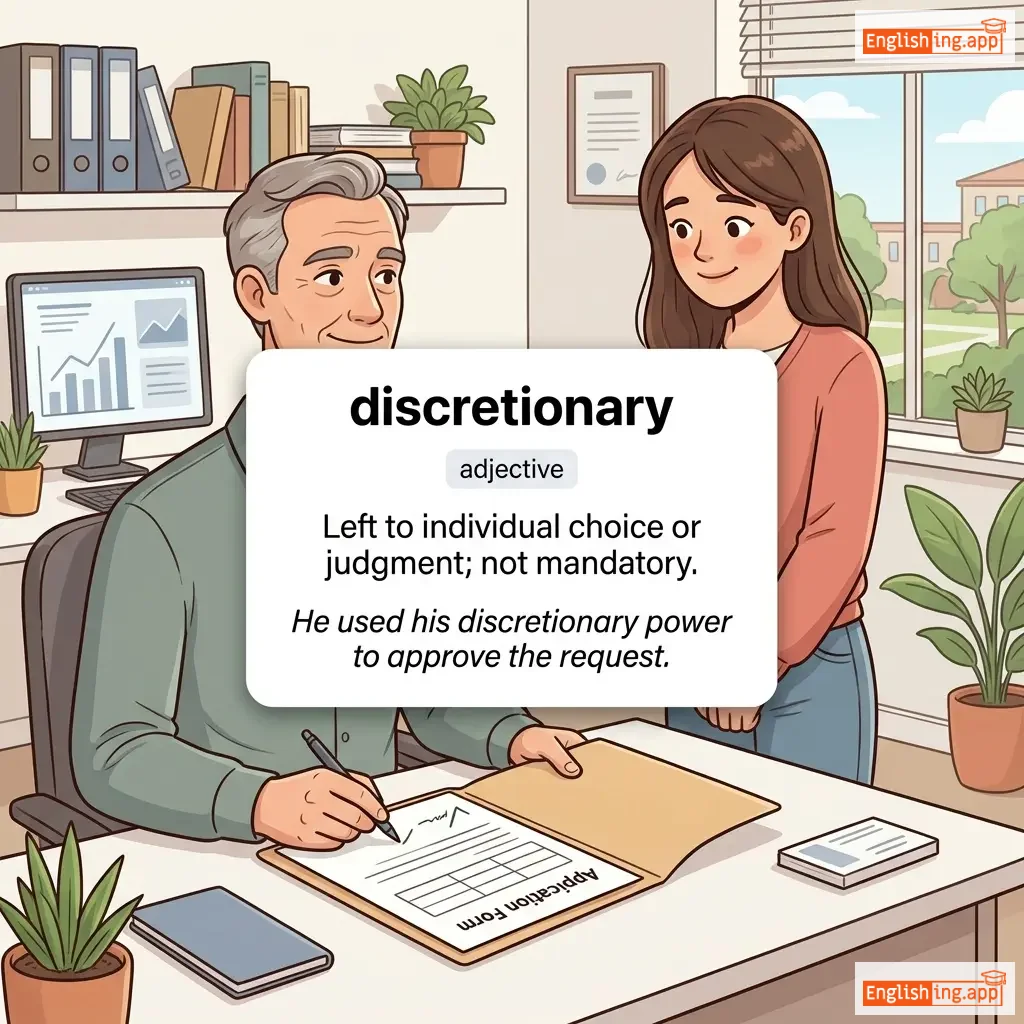
Left to individual choice or judgment; not mandatory.
••••••
|
He used his discretionary power to approve the request.
他使用了自己的自由裁量权来批准请求。
••••••
|
他使用了自己的自由裁量权来批准请求。
Tā shǐyòngle zìjǐ de zìyóu cáiliàng quán lái pīzhǔn qǐngqiú.
••••••
|
- •••••• | - •••••• | - •••••• |
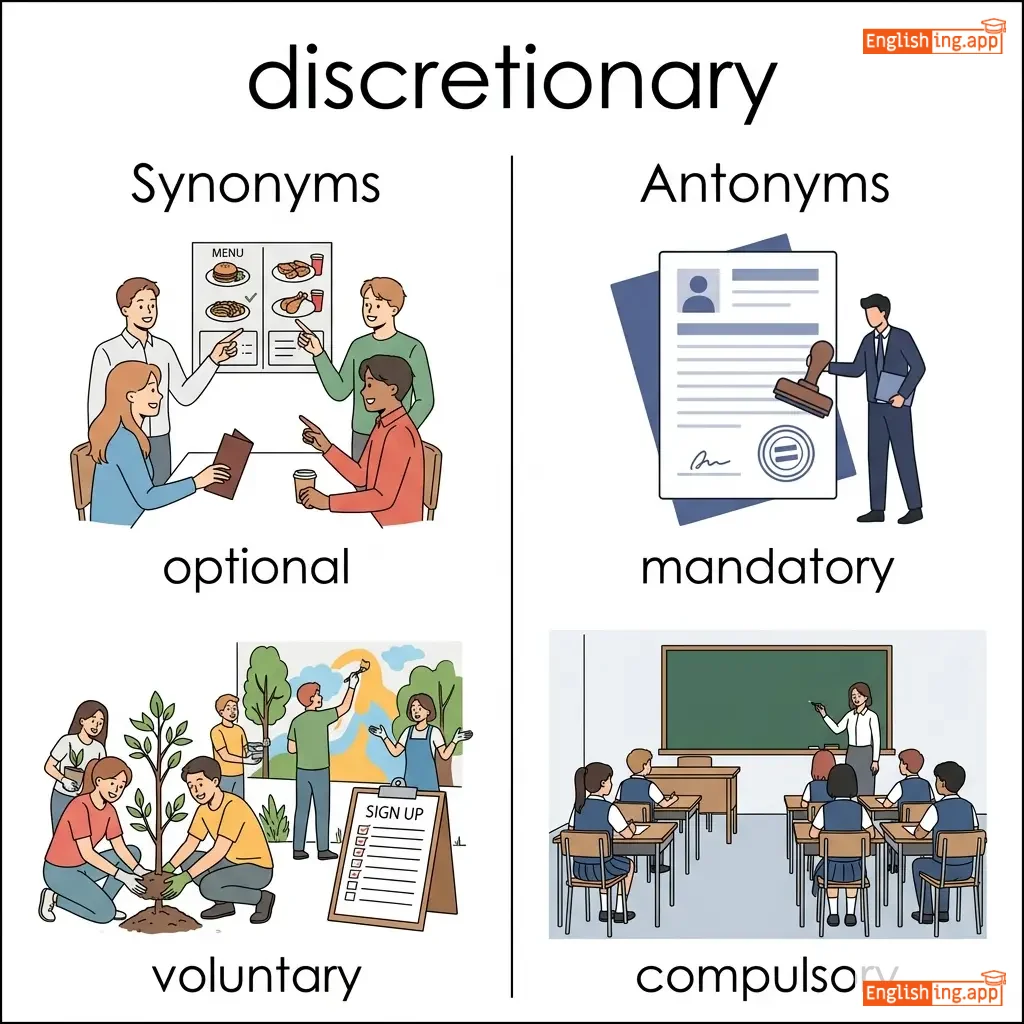
optional, voluntary, elective, arbitrary, noncompulsory
••••••
|
mandatory, compulsory, required
••••••
|
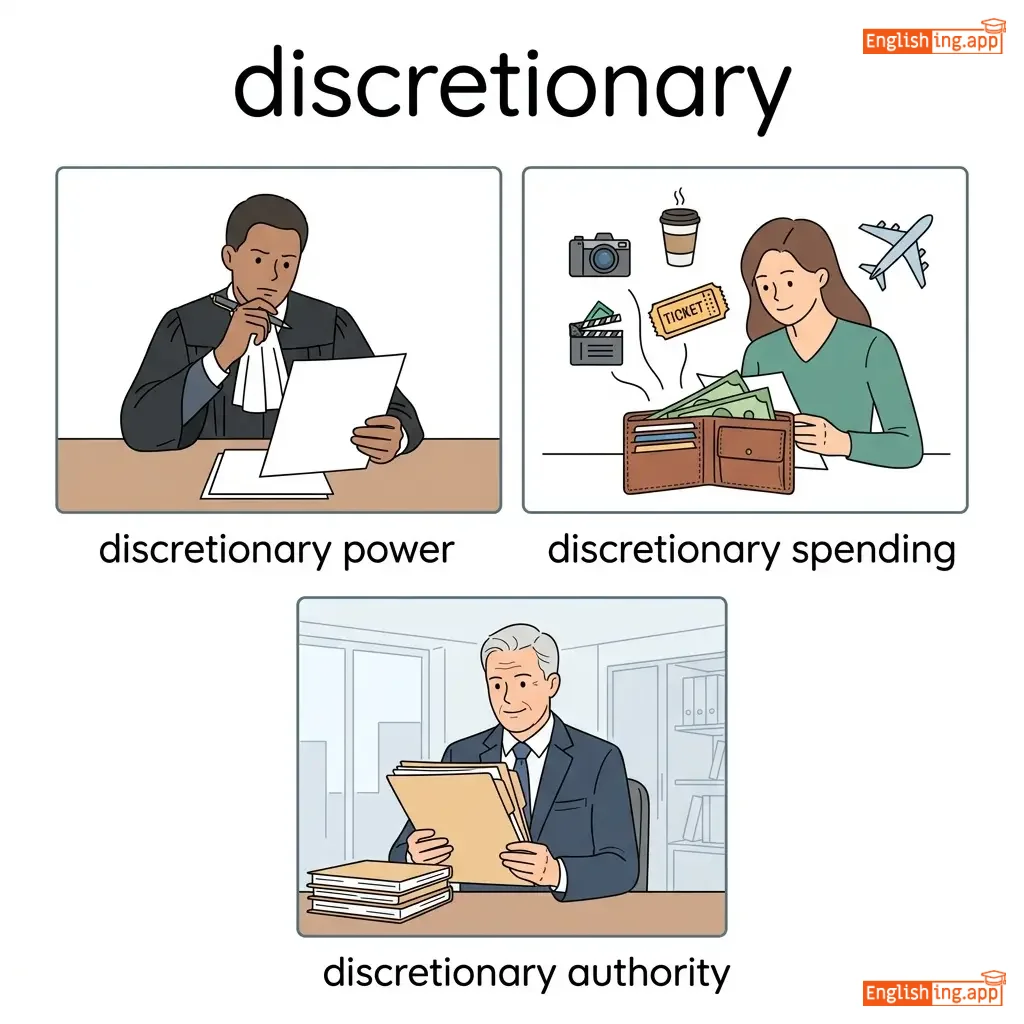
discretionary power, discretionary spending, discretionary authority, discretionary decision
••••••
|
Discretion 意味着选择,而 discretionary 意味着按自己的意愿行事。
••••••
|
|
#2547
⚖️
|
/dɪˈskrɛʃən/
noun
(迪斯克雷申)
••••••
|
|
谨慎
jinshen
••••••
|
- •••••• | - •••••• | - •••••• | - •••••• |
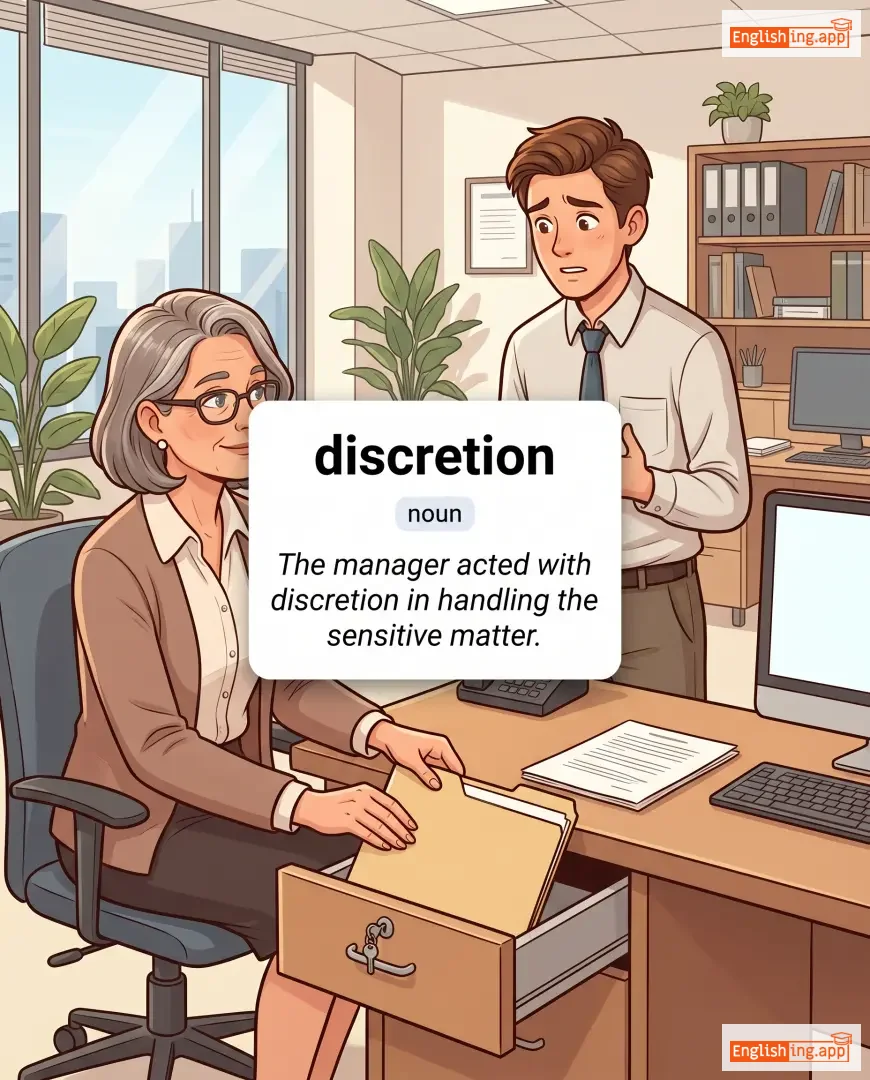
the quality of behaving or speaking in a way to avoid causing offense or revealing private information; the freedom to decide what should be done in a particular situation
••••••
|
The manager acted with discretion in handling the sensitive matter. |
经理在处理敏感问题时采取了谨慎的行动。
Jīnglǐ zài chǔlǐ mǐngǎn wèntí shí cǎiqǔle jǐnshèn de xíngdòng.
••••••
|
at one's discretion |
according to one's own judgment or decision
••••••
|
按照自己的判断
ànzhào zìjǐ de pànduàn
••••••
|
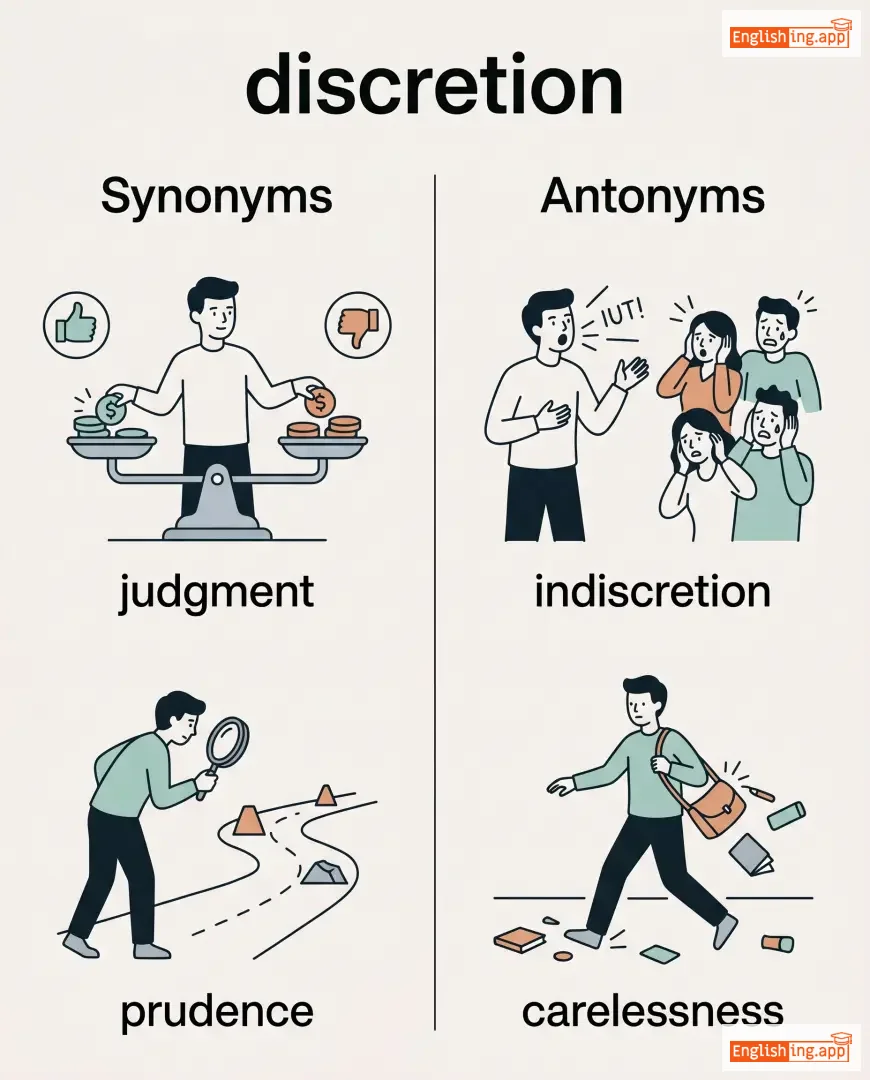
judgment, prudence, caution, choice, option
••••••
|
indiscretion, carelessness, compulsion
••••••
|
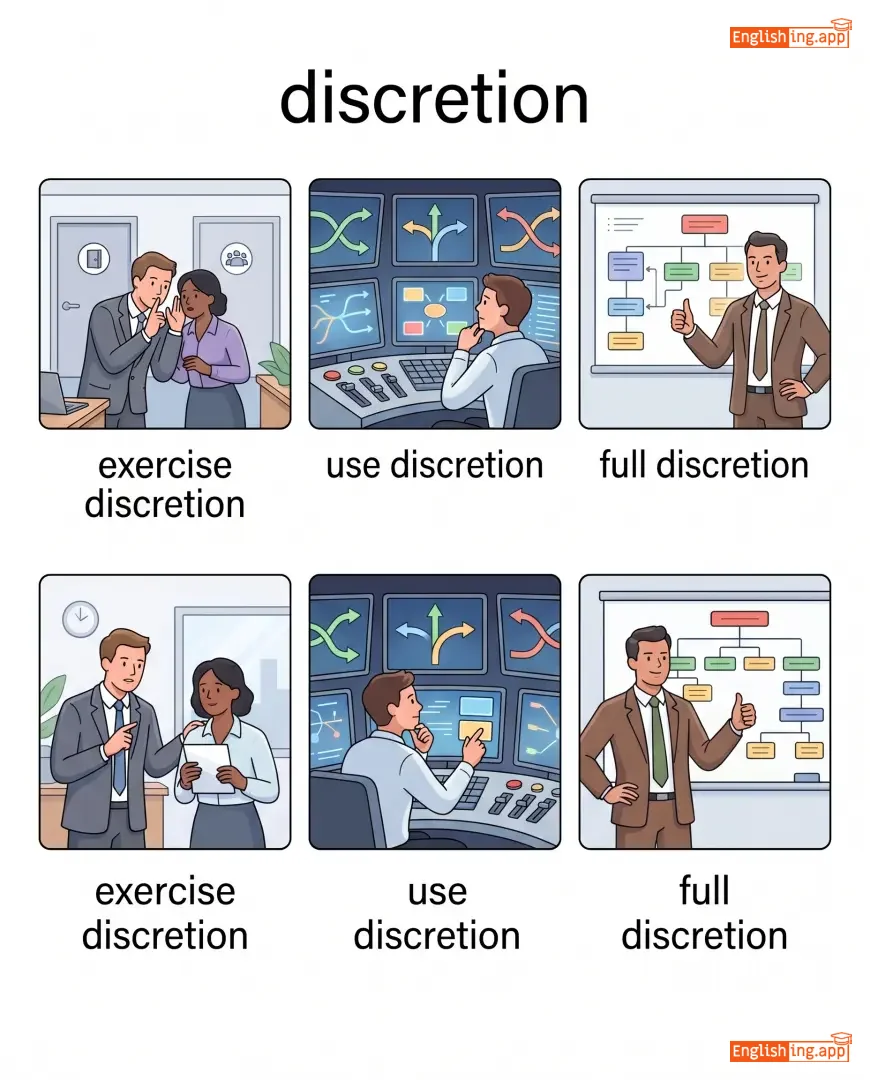
exercise discretion, use discretion, full discretion, sole discretion
••••••
|
Discretion是Decision的选择与谨慎。
••••••
|
|
#2548
🔹
|
/dɪˈskriːt/
adjective
(dīsīkè)
••••••
|
|
离散的
lísàn de
••••••
|
- •••••• | - •••••• | - •••••• | - •••••• |
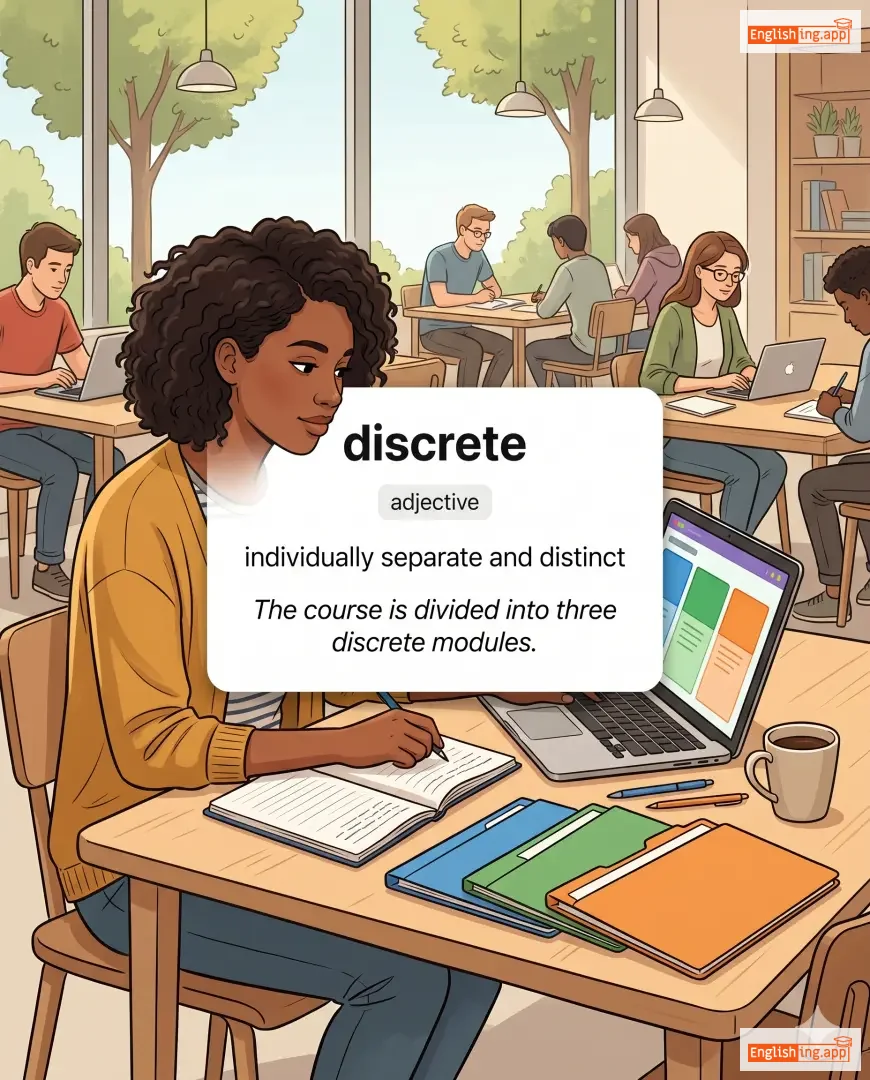
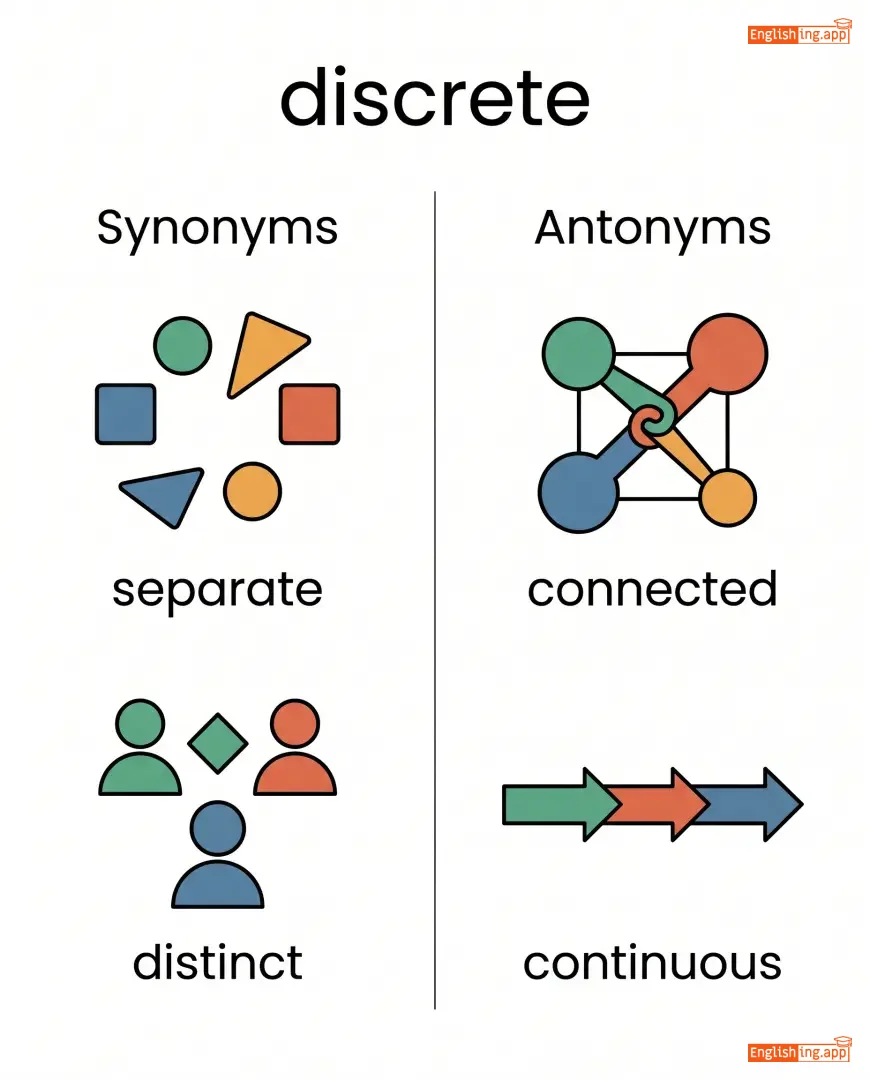
individually separate and distinct
••••••
|
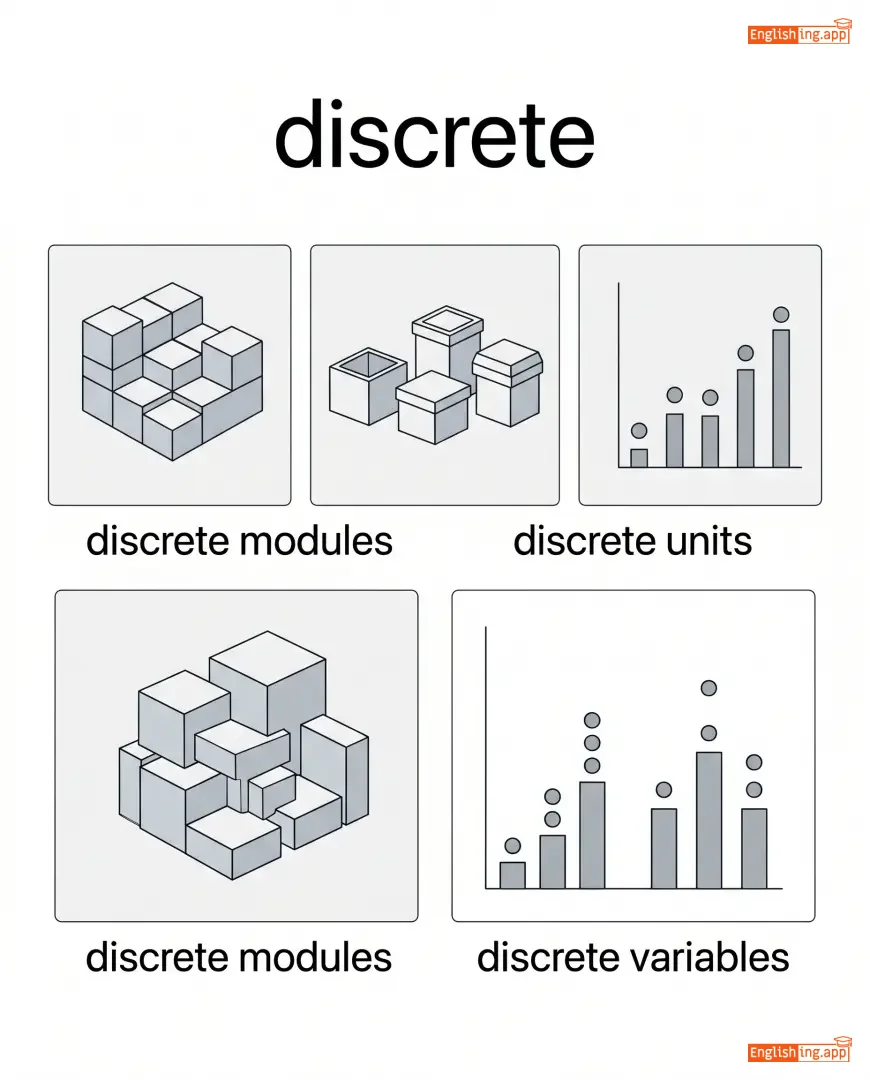
The course is divided into three discrete modules. |
该课程被划分为三个离散模块。
Gāi kèchéng bèi huàfēn wéi sān gè lísàn mókuài.
••••••
|
discrete units |
separate and distinct parts or items
••••••
|
离散单元
lísàn dānyuán
••••••
|
separate, distinct, individual, independent
••••••
|
connected, continuous, combined
••••••
|
discrete modules, discrete units, discrete variables
••••••
|
Discrete 就像离散一样,表示分离的部分。
••••••
|
|
#2549
🔀
|
/dɪˈskrɛpənt/
adjective
(迪斯克雷潘特)
••••••
|
- •••••• |
不一致的
bù yīzhì de
••••••
|
- •••••• | - •••••• | - •••••• | - •••••• |
showing a difference or inconsistency
••••••
|
The witnesses gave discrepant accounts of the incident. |
目击者给出了与事件不一致的陈述。
Mùjī zhě gěi chūle yǔ shìjiàn bù yīzhì de chénshù.
••••••
|
- •••••• | - •••••• | - •••••• |
inconsistent, conflicting, contradictory, divergent
••••••
|
consistent, matching, harmonious
••••••
|
discrepant accounts, discrepant data, discrepant results
••••••
|
Discrepant 是指展示不一致 (bù yīzhì) 或差异 (chāyì)。
••••••
|
|
#2550
⚖️
|
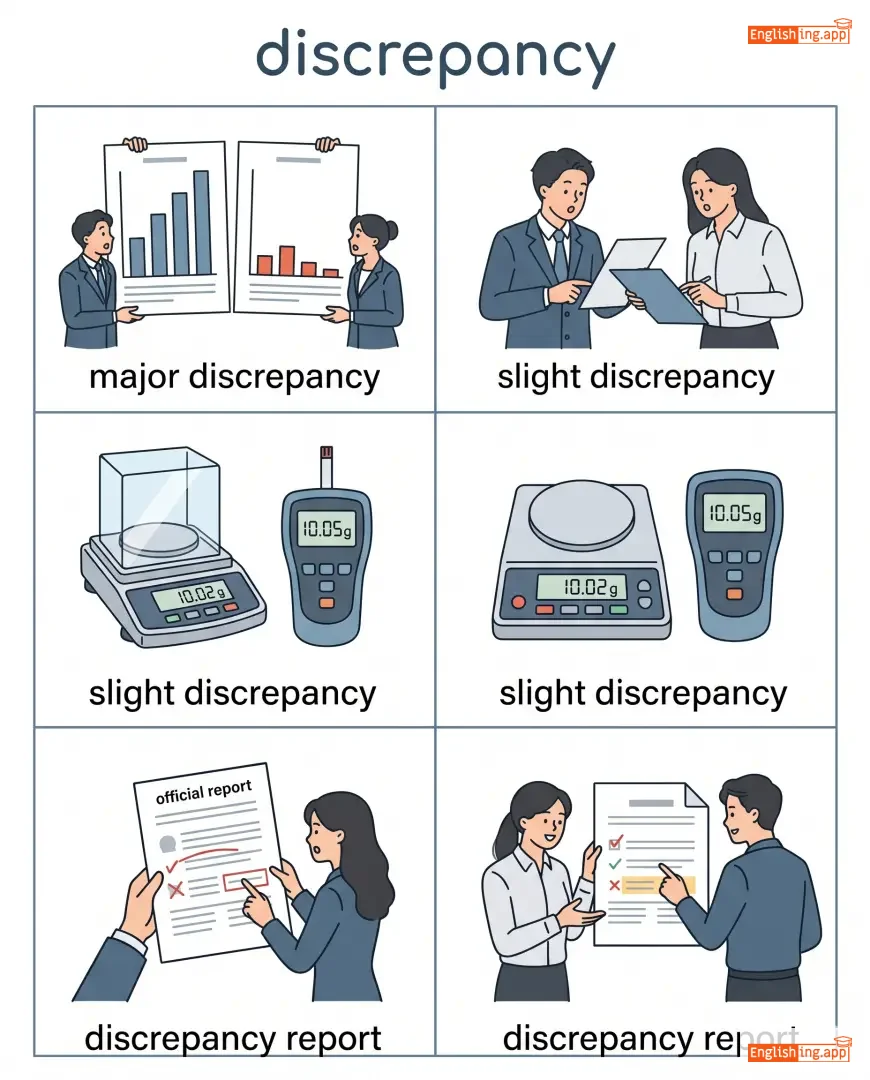
/dɪˈskrɛpənsi/
noun
••••••
|
|
- •••••• | - •••••• | - •••••• | - •••••• | - •••••• |
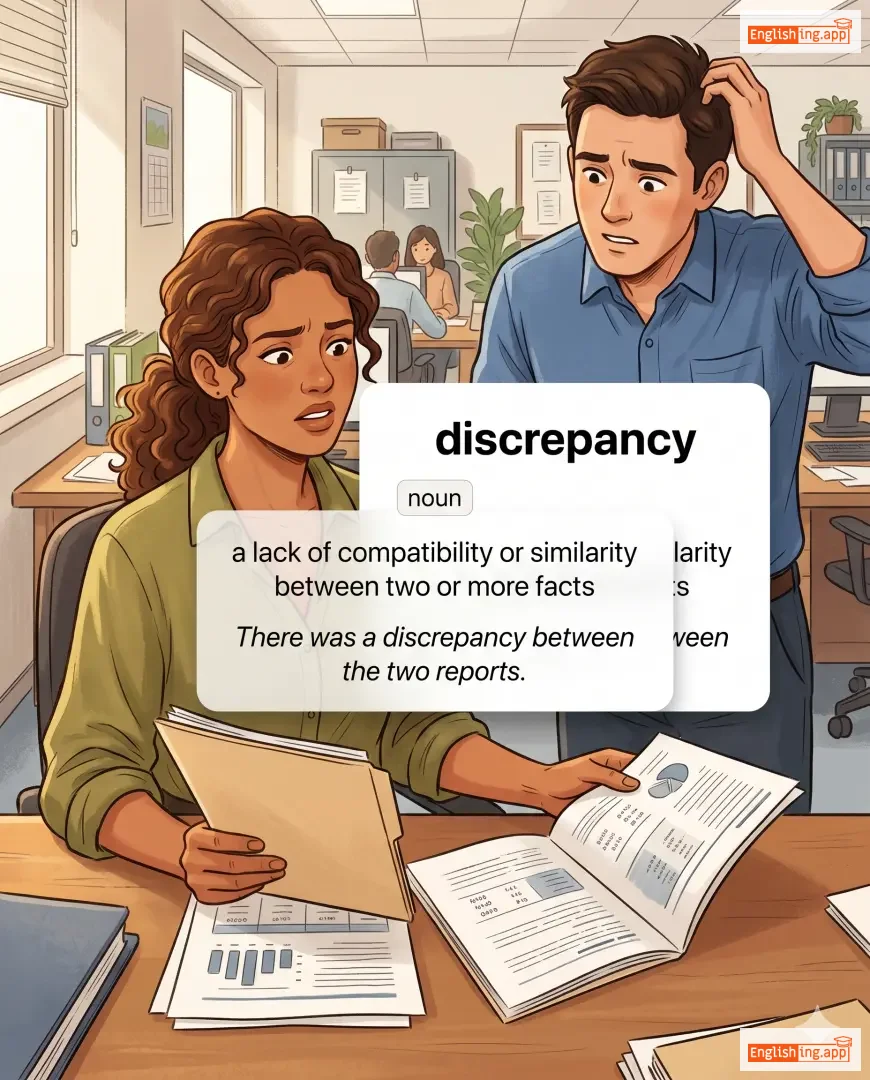
a lack of compatibility or similarity between two or more facts
••••••
|
There was a discrepancy between the two reports. |
- •••••• |
discrepancy in accounts |
a mismatch or inconsistency in financial records
••••••
|
- •••••• |
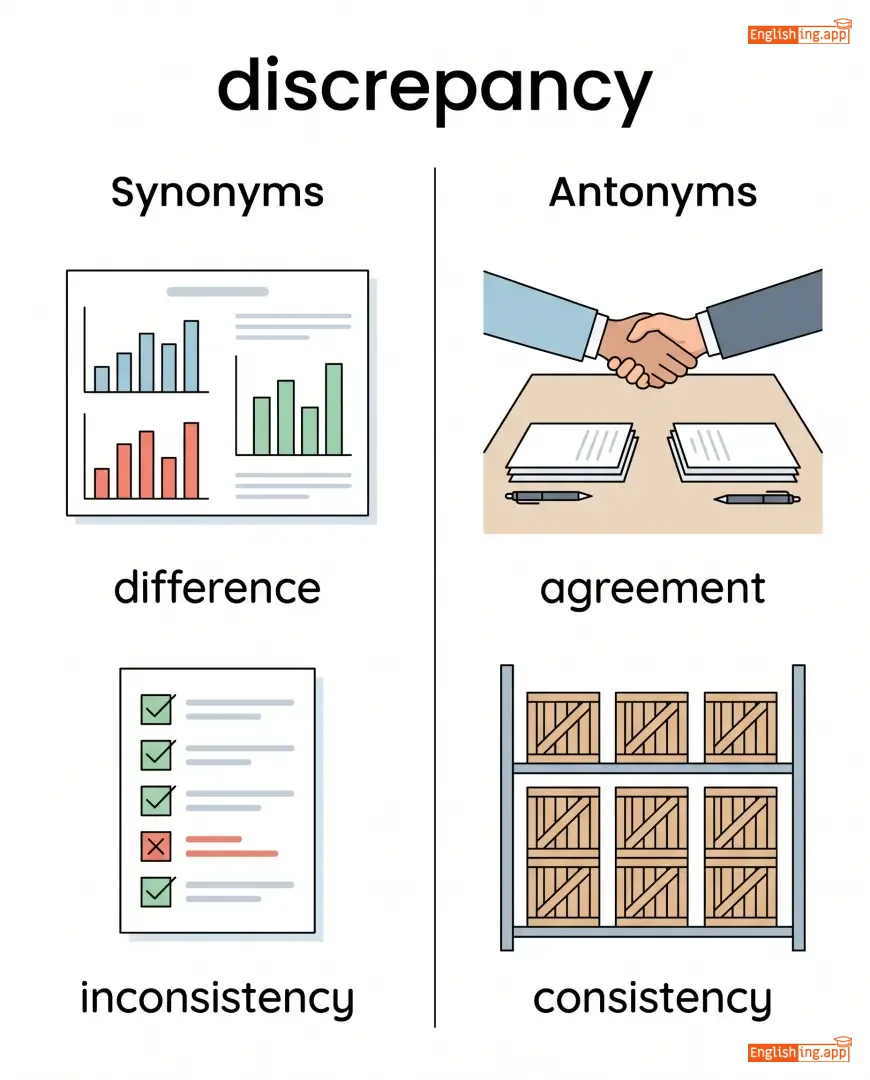
difference, inconsistency, variation, divergence, conflict
••••••
|
agreement, consistency, harmony
••••••
|
major discrepancy, slight discrepancy, discrepancy report, discrepancy in data
••••••
|
No •••••• |
Vocabulary Quiz
Test your vocabulary by matching words with their translations or meanings.
Login to take the quiz
Comments (0)
Share your thoughts and join the discussion.
Join the discussion by logging in
Login to CommentNo comments yet
Be the first to share your thoughts!