



Swipe left or right, or use the buttons. Tap image to zoom.
例句翻译
单词
Lesson 384Lesson 384 - 遮罩切换
|
表情符号
|
单词 | Images | 翻译 | 过去时 | 过去分词 | 第三人称单数 | 动名词 | 含义 | 例句 | 例句翻译 | 同义词 | 反义词 | 搭配词 | 助记符 |
|---|---|---|---|---|---|---|---|---|---|---|---|---|---|---|
|
#11485
9️⃣
|
/naɪn/
noun
(nàin)
••••••
|
- •••••• |
九
jiu
••••••
|
- •••••• | - •••••• | - •••••• | - •••••• |
the number that is one more than eight
••••••
|
She has nine books in her collection.
她的收藏里有九本书。
••••••
|
她的收藏里有九本书。
Tā de shōucáng lǐ yǒu jiǔ běn shū.
••••••
|
ninth, 9
••••••
|
eight, ten
••••••
|
nine o'clock, nine days, nine years
••••••
|
九, 九本书,像数字九一样
••••••
|
|
#11486
📝
|
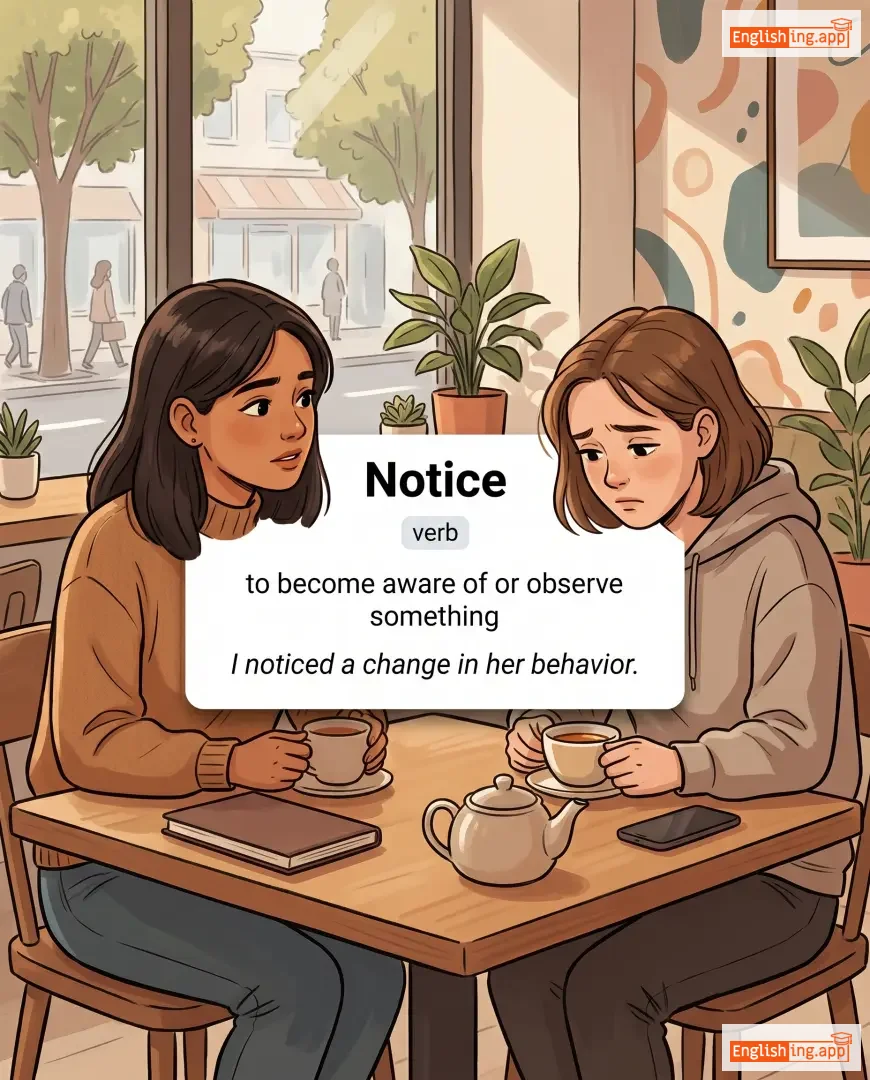
/ˈnoʊtɪs/
noun
(通知)
••••••
|
|
通知
tongzhi
••••••
|
- •••••• | - •••••• | - •••••• | - •••••• |
a written or printed announcement or notification
••••••
|
He gave me a notice about the meeting.
他给了我关于会议的通知。
••••••
|
他给了我关于会议的通知。
Ta gei le wo guanyu huiyi de tongzhi.
••••••
|
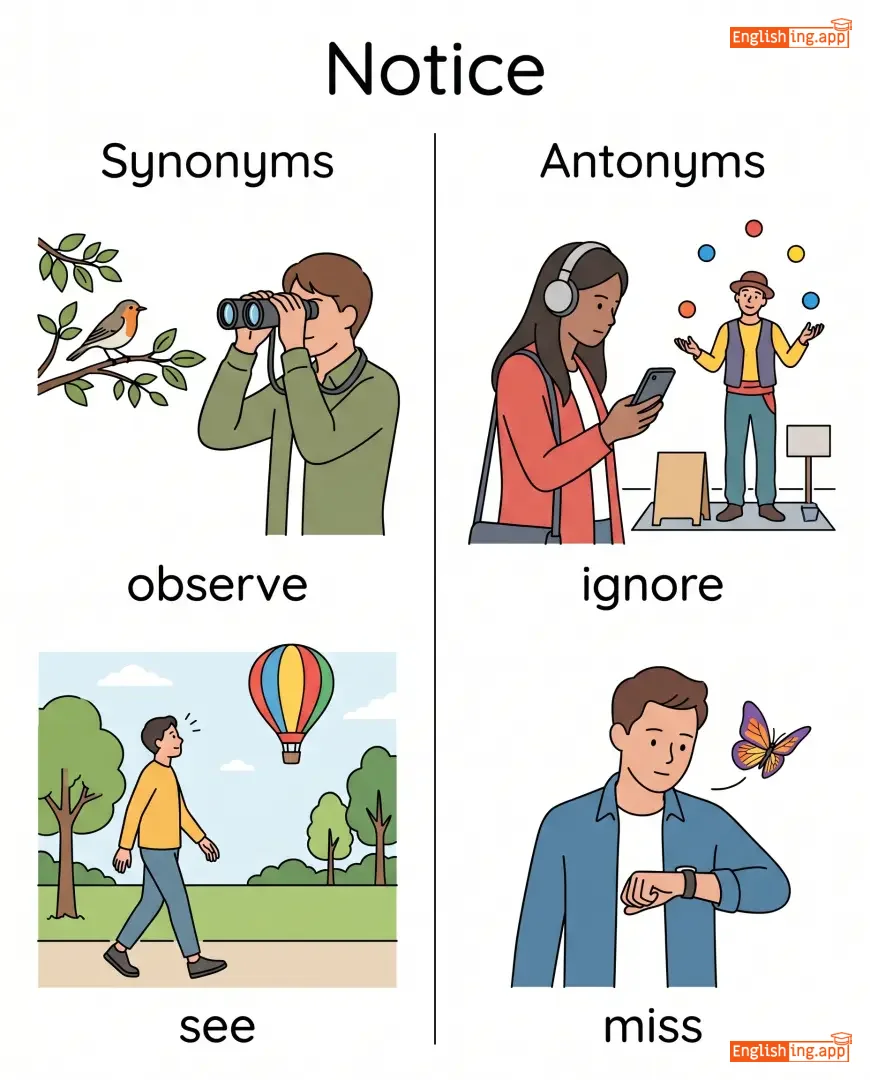
announcement, memo, bulletin, notification
••••••
|
ignorance, unawareness
••••••
|
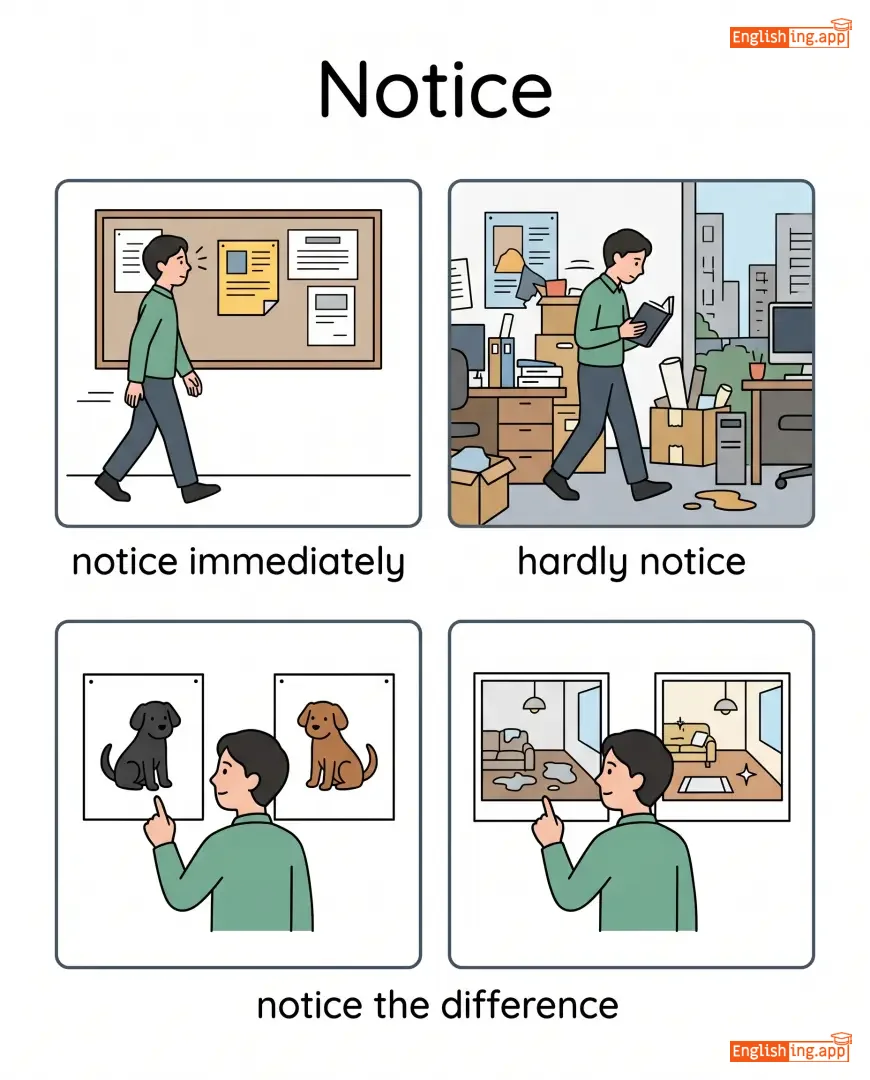
give notice, receive notice, serve notice
••••••
|
In Chinese, notice is 通知, like the notice board of important events.
••••••
|
|
#11487
❌
|
/ˈnʌθɪŋ/
pronoun
(nɑθɪŋ)
••••••
|
- •••••• |
什么都没有
shénme dōu méiyǒu
••••••
|
- •••••• | - •••••• | - •••••• | - •••••• |
not anything; no thing
••••••
|
She has nothing to worry about. |
她没有什么可担心的。
Tā méiyǒu shénme kě dānxīn de.
••••••
|
zero, nil, nought
••••••
|
everything
••••••
|
nothing to do, nothing at all, nothing left
••••••
|
Nothing (什么都没有) – Imagine having nothing to stress about!
••••••
|
|
#11488
🚫
|
/nɒt/
adverb
(诺特)
••••••
|
- •••••• |
不
bu
••••••
|
- •••••• | - •••••• | - •••••• | - •••••• |
used to make a word or phrase negative
••••••
|
I do not like spicy food. |
我不喜欢辣的食物。
Wǒ bù xǐhuān là de shíwù.
••••••
|
no, never
••••••
|
yes
••••••
|
not sure, not at all, not yet, not going
••••••
|
Not (不) – 'Bu' means denying or rejecting something.
••••••
|
|
#11489
👃
|
/noʊz/
noun
(noʊz)
••••••
|
- •••••• |
鼻子
bízi
••••••
|
- •••••• | - •••••• | - •••••• | - •••••• |
the part of the face that contains the nostrils and is used for breathing and smelling
••••••
|
He has a sharp nose and can smell things from far away. |
他有一只尖锐的鼻子,可以从远处闻到东西。
Tā yǒu yī zhī jiānruì de bízi, kěyǐ cóng yuǎn chù wén dào dōngxi.
••••••
|
nostrils, snout
••••••
|
mouth
••••••
|
runny nose, pick your nose, nose ring
••••••
|
Nose (鼻子) – Think of 'bízi' and imagine a sharp nose!
••••••
|
|
#11490
🌨️
|
/ˈnɔːðərn/
adjective
(诺德恩)
••••••
|
- •••••• |
北方的
běifāng de
••••••
|
- •••••• | - •••••• | - •••••• | - •••••• |
relating to the north or situated in the north
••••••
|
The northern part of the country is known for its cold climate. |
该国的北部因其寒冷的气候而闻名。
Gāi guó de běibù yīn qí hánlěng de qìhòu ér wénmíng.
••••••
|
northerly, northernmost
••••••
|
southern
••••••
|
northern lights, northern regions, northern hemisphere
••••••
|
Think of the chilly winds from the north – ‘běifāng’ means north in Chinese!
••••••
|
|
#11491
🧭
|
/nɔːrθ/
noun
(北)
••••••
|
- •••••• |
北方
beifang
••••••
|
- •••••• | - •••••• | - •••••• | - •••••• |
the direction toward the top of a map or the opposite of south
••••••
|
We traveled north to reach the mountains. |
我们向北旅行,以到达山脉。
Wǒmen xiàng běi lǚxíng, yǐ dàodá shānmài.
••••••
|
up, northern direction
••••••
|
south, downward
••••••
|
north pole, north wind, go north, head north
••••••
|
North is UP on a map, just like '北方' is UP in Chinese!
••••••
|
|
#11492
⏰
|
/ˈnɔːməli/
adverb
(诺曼利)
••••••
|
- •••••• |
通常
tōngcháng
••••••
|
- •••••• | - •••••• | - •••••• | - •••••• |
in a usual or expected way
••••••
|
I normally wake up at 7 AM. |
我通常早上7点起床。
Wǒ tōngcháng zǎoshang 7 diǎn qǐchuáng.
••••••
|
typically, usually, generally, regularly
••••••
|
abnormally, unusually
••••••
|
normally do, normally happen, normally expect
••••••
|
Normally you wake up at a normal time!
••••••
|
|
#11493
🚫➡️🚫
|
/nɔːr/
conjunction
(诺尔)
••••••
|
- •••••• |
也不
yě bù
••••••
|
- •••••• | - •••••• | - •••••• | - •••••• |
used to introduce a negative clause after a negative statement
••••••
|
He didn't call, nor did he send a message. |
他没有打电话,也没有发送消息。
Tā méiyǒu dǎ diànhuà, yě méiyǒu fāsòng xiāoxī.
••••••
|
and not, neither
••••••
|
and, or
••••••
|
nor did, nor have
••••••
|
Nor - 'Not' after a negative statement.
••••••
|
|
#11494
🌧️➡️🏞️
|
/ˌnʌnðəˈlɛs/
adverb
(nonetheless)
••••••
|
- •••••• |
尽管如此
jǐn guǎn rúcǐ
••••••
|
- •••••• | - •••••• | - •••••• | - •••••• |
in spite of that; nevertheless
••••••
|
It was raining, but nonetheless, they went hiking. |
下着雨,但尽管如此,他们还是去远足了。
Xià zhe yǔ, dàn jǐn guǎn rúcǐ, tāmen hái shì qù yuǎnzú le.
••••••
|
nevertheless, however, still, yet
••••••
|
therefore, hence
••••••
|
nonetheless important, nonetheless true, nonetheless, despite that
••••••
|
Noneth- like 'none-the-less' means despite.
••••••
|
|
#11495
🚫
|
/nʌn/
pronoun
(楠)
••••••
|
- •••••• |
没有人
meiyou ren
••••••
|
- •••••• | - •••••• | - •••••• | - •••••• |
not any; no one; not one
••••••
|
None of the students passed the exam. |
没有学生通过考试。
Meiyou xuesheng tongguo kaoshi.
••••••
|
nothing, nobody, nil
••••••
|
all, some, everyone
••••••
|
none of, none left, none at all
••••••
|
None sounds like 'meiyou ren'.
••••••
|
|
#11496
🔊
|
/nɔɪz/
noun
(noyz)
••••••
|
- •••••• |
噪音
zaoyin
••••••
|
- •••••• | - •••••• | - •••••• | - •••••• |
a sound, especially when it is unwanted, unpleasant, or loud
••••••
|
The noise from the construction site was unbearable.
建筑工地的噪音让人无法忍受。
••••••
|
建筑工地的噪音让人无法忍受。
Jianzhu gongdi de zaoyin rangren wufa renshou.
••••••
|
sound, racket, clamor, din, commotion
••••••
|
silence, quiet, calm
••••••
|
loud noise, background noise, noise pollution, white noise
••••••
|
Noise can 'annoy' you, remember it by associating 'noise' with 'annoy'.
••••••
|
|
#11497
👍
|
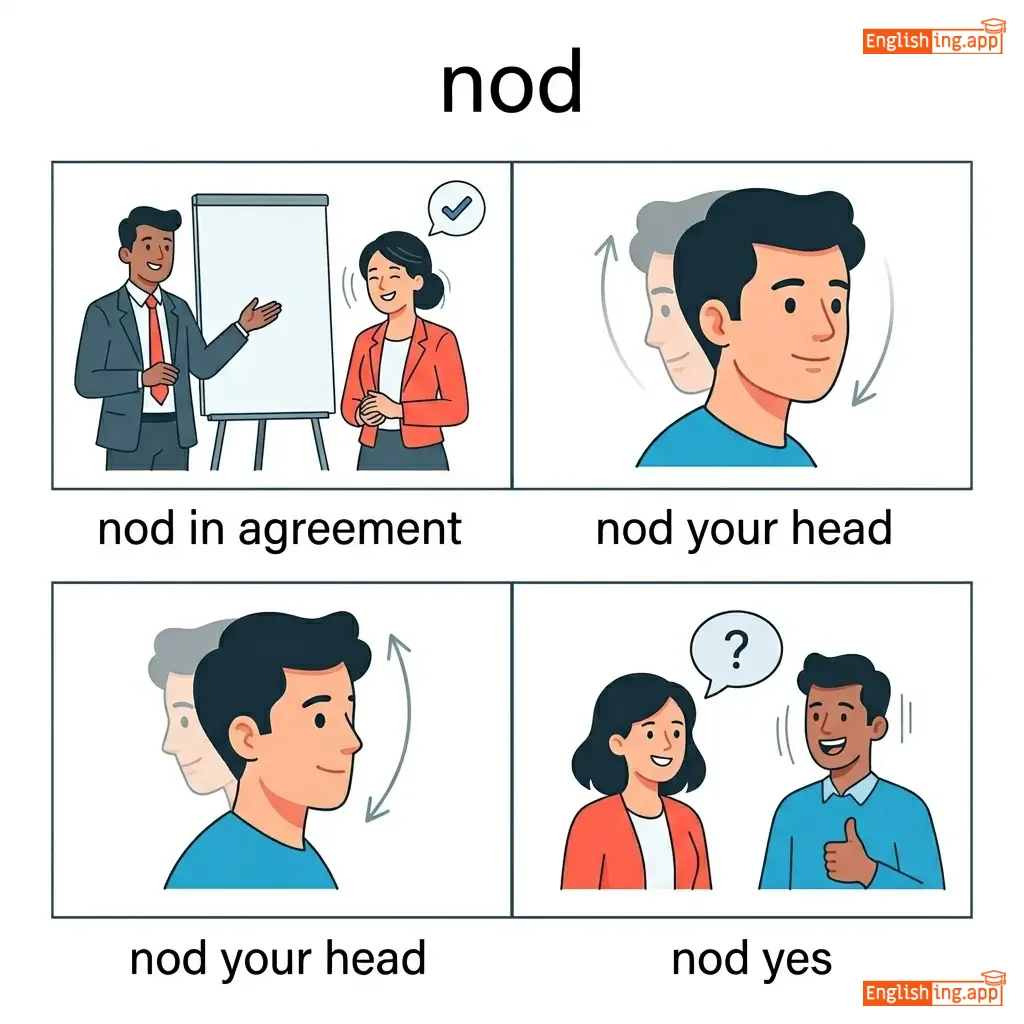
/nɒd/
verb
(点头)
••••••
|
|
点头
diǎn tóu
••••••
|
nodded
点头
••••••
|
nodded
点头
••••••
|
nods
点头
••••••
|
nodding
点头
••••••
|
to move your head up and down, especially to show agreement or understanding
••••••
|
She nodded in agreement with the proposal.
她在提案中点头表示同意。
••••••
|
她在提案中点头表示同意。
Tā zài tí'àn zhōng diǎntóu biǎoshì tóngyì.
••••••
|
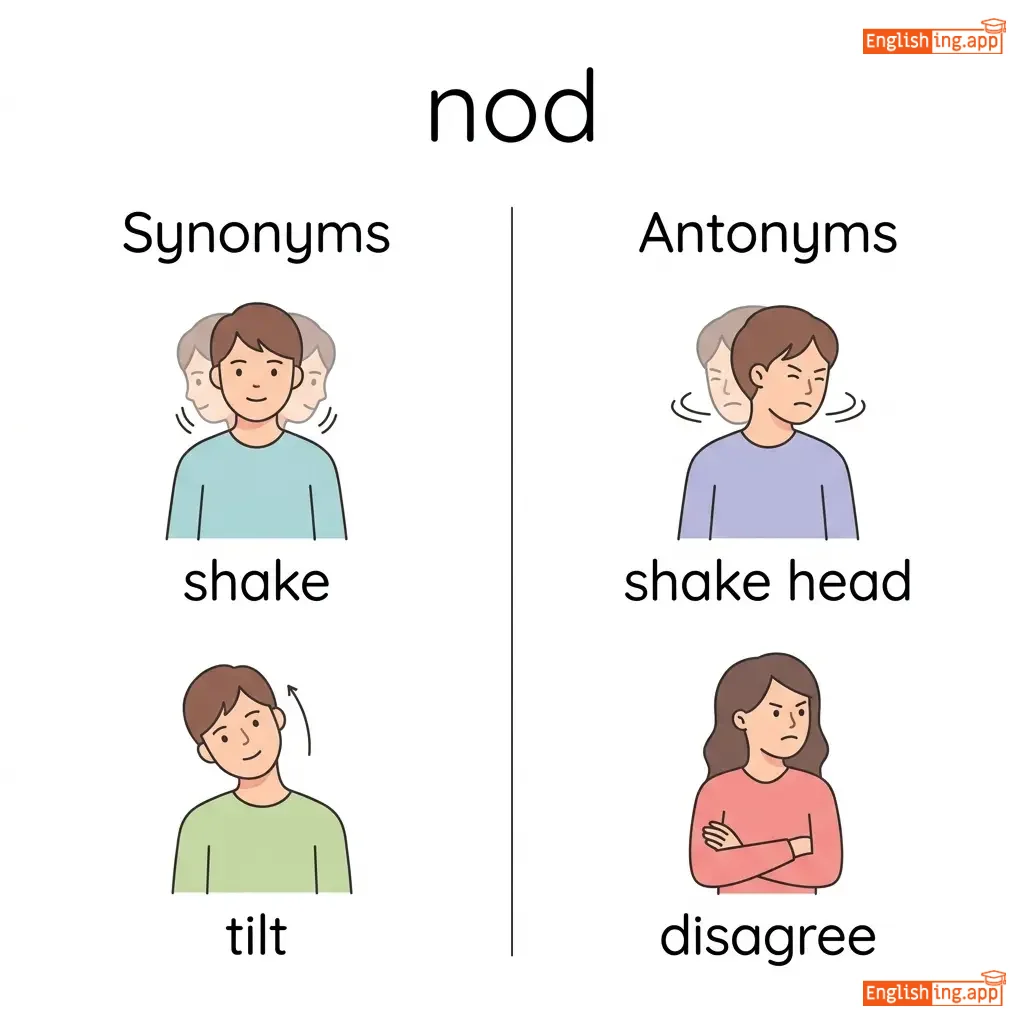
shake, tilt, bow
••••••
|
shake head, disagree
••••••
|
nod in agreement, nod your head, nod yes
••••••
|
点头表示同意 - Nod to show agreement.
••••••
|
|
#11498
🙅♂️
|
/ˈnoʊˌbɑːdi/
pronoun
(nobody)
••••••
|
- •••••• |
没有人
méiyǒu rén
••••••
|
- •••••• | - •••••• | - •••••• | - •••••• |
no person; not anyone
••••••
|
Nobody came to the party.
没有人来参加派对。
••••••
|
没有人来参加派对。
Méiyǒu rén lái cānjiā pàiduì.
••••••
|
no one, none, not a soul
••••••
|
someone, anybody
••••••
|
nobody knows, nobody cares, nobody else
••••••
|
没有人来,如果没有人听 - Nobody comes if nobody listens
••••••
|
|
#11499
🚫
|
/noʊ/
adverb
(诺)
••••••
|
- •••••• |
不
bu
••••••
|
- •••••• | - •••••• | - •••••• | - •••••• |
used to give a negative response or to show disagreement
••••••
|
She said no to the invitation.
她对邀请说了不。
••••••
|
她对邀请说了不。
Tā duì yāoqǐng shuōle bù.
••••••
|
nope, never, negative, not at all
••••••
|
yes, okay
••••••
|
say no, no way, no problem, no need
••••••
|
不,说不一切停止 - Saying no stops everything.
••••••
|
|
#11500
⏳
|
/ˈnɪəli/
adverb
(尼尔利)
••••••
|
- •••••• |
几乎
jīhū
••••••
|
- •••••• | - •••••• | - •••••• | - •••••• |
almost, but not completely
••••••
|
She nearly missed the bus. |
她差点错过了公交车。
Tā chàdiǎn cuòguòle gōngjiāochē.
••••••
|
almost, practically, just about, close to
••••••
|
completely, entirely, fully
••••••
|
nearly lost, nearly there, nearly finished
••••••
|
几乎 (jīhū) 像 'nearly' - Almost there!
••••••
|
|
#11501
🌙
|
/naɪt/
noun
(naɪt)
••••••
|
- •••••• |
夜晚
ye wan
••••••
|
- •••••• | - •••••• | - •••••• | - •••••• |
the time of darkness between one day and the next, when most people sleep
••••••
|
She loves going for walks at night. |
她喜欢晚上散步。
Ta xihuan wanshang sanbu.
••••••
|
evening, nighttime, dusk, dark
••••••
|
day, morning
••••••
|
night sky, night time, at night, good night
••••••
|
夜晚 = 你也晚,休息开始 (Night = You also late, time to rest)
••••••
|
|
#11502
⏭️
|
/nɛkst/
adjective
(nɛkst)
••••••
|
- •••••• |
下一个
xia yige
••••••
|
- •••••• | - •••••• | - •••••• | - •••••• |
immediately following in time, order, or place
••••••
|
The next train leaves at 9:00 AM. |
下一班火车将在上午9:00出发。
Xia yiban huoche jiang zai shangwu 9:00 chufa.
••••••
|
following, subsequent, upcoming, nearest
••••••
|
previous, prior
••••••
|
next day, next year, next time, next week
••••••
|
Next is always the NEXT thing to happen
••••••
|
|
#11503
🗞️
|
/ˈnjuːzˌpeɪpər/
noun
(niúzpeìpà)
••••••
|
- •••••• |
报纸
baozhi
••••••
|
- •••••• | - •••••• | - •••••• | - •••••• |
a printed publication (usually daily or weekly) containing news, articles, advertisements, and correspondence
••••••
|
I read the newspaper every morning.
wǒ měi tiān zǎo shàng dú zhèngwén.
••••••
|
我每天早上读报纸。
Wo mei tian zao shang du baozhi.
••••••
|
periodical, journal, publication, paper
••••••
|
magazine, online media
••••••
|
daily newspaper, local newspaper, national newspaper, newspaper article
••••••
|
Newspapers are the first place to get the NEWS
••••••
|
|
#11504
📰
|
/nuːz/
noun
(niúzī)
••••••
|
- •••••• |
新闻
xīnwén
••••••
|
- •••••• | - •••••• | - •••••• | - •••••• |
newly received or noteworthy information, especially about recent events
••••••
|
The news about the storm spread quickly. |
关于暴风雨的新闻迅速传播。
Guānyú bàofēngyǔ de xīnwén xùnsù chuánbò.
••••••
|
information, report, bulletin, update
••••••
|
silence, ignorance
••••••
|
breaking news, latest news, good news, bad news
••••••
|
NEWS = 新的 事件 我们 应该 知道
••••••
|
|
#11505
🆕
|
/ˈnjuːli/
adverb
(niúli)
••••••
|
- •••••• |
最近
zuìjìn
••••••
|
- •••••• | - •••••• | - •••••• | - •••••• |
in a new or recent manner
••••••
|
She has newly renovated her house.
她最近重新装修了她的房子。
••••••
|
她最近重新装修了她的房子。
Tā zuìjìn chóngxīn zhuāngxiūle tā de fángzi.
••••••
|
recently, freshly, just, newly made
••••••
|
old, outdated
••••••
|
newly appointed, newly built, newly married, newly discovered
••••••
|
NEWLY means NEW + LY (recently done with love)
••••••
|
|
#11506
🚫
|
/ˈnɛvər/
adverb
(nèiwèi)
••••••
|
- •••••• |
从不
congbu
••••••
|
- •••••• | - •••••• | - •••••• | - •••••• |
at no time in the past or future; not ever
••••••
|
I have never seen such a beautiful sunset. |
我从未见过如此美丽的日落。
Wo congbu jian guo ruci mei li de ri luo.
••••••
|
not at all, under no circumstances, in no way, by no means
••••••
|
always, ever
••••••
|
never seen, never been, never heard, never thought
••••••
|
NEVER forget to say NO (congbu) to things that waste time
••••••
|
|
#11507
🚫
|
/ˈniːðər/
conjunction
(奈泽)
••••••
|
- •••••• |
既不
ji bu
••••••
|
- •••••• | - •••••• | - •••••• | - •••••• |
used to connect two negative alternatives
••••••
|
Neither the manager nor the assistant could attend the meeting.
奈泽 the manager nor the assistant could attend the meeting。
••••••
|
经理和助理都无法参加会议。
jing li he zhu li dou wu fa can jia hui yi
••••••
|
nor, not either
••••••
|
either
••••••
|
neither nor, neither of them
••••••
|
Neither = 既不…也不… in Chinese—don’t pick any!
••••••
|
|
#11508
🏡
|
/ˈneɪbərˌhʊd/
noun
(neɪbərˌhʊd)
••••••
|
- •••••• |
社区
shequ
••••••
|
- •••••• | - •••••• | - •••••• | - •••••• |
a district or area around or near a particular place
••••••
|
I grew up in a quiet neighborhood. |
我在一个安静的社区长大。
Wo zai yi ge anjing de shequ changda.
••••••
|
community, locality, district, area
••••••
|
isolation, wilderness
••••••
|
peaceful neighborhood, residential neighborhood, urban neighborhood
••••••
|
社区 - 人们彼此友好相处的地方
••••••
|
|
#11509
🏘️
|
/ˈneɪbər/
noun
(内博)
••••••
|
- •••••• |
邻居
línjū
••••••
|
- •••••• | - •••••• | - •••••• | - •••••• |
a person living next door or nearby
••••••
|
My neighbor lent me some sugar when I ran out.
迈 内博 伦特 米 山 砂糖 温 艾 瑞 安 奥特。
••••••
|
我的邻居在我糖用完时借给了我一些糖。
Wǒ de línjū zài wǒ táng yòng wán shí jiè gěi le wǒ yīxiē táng.
••••••
|
adjacent resident, nearby person, local
••••••
|
stranger, outsider
••••••
|
good neighbor, friendly neighbor, next-door neighbor
••••••
|
Your neighbor never says ‘no’, it’s sweet like sugar!
••••••
|
|
#11510
💬
|
/nɪɡoʊˈʃiːeɪʃən/
noun
(谈判)
••••••
|
- •••••• |
谈判
tanpan
••••••
|
- •••••• | - •••••• | - •••••• | - •••••• |
a discussion aimed at reaching an agreement
••••••
|
The negotiation between the two companies was successful. |
两家公司之间的谈判是成功的。
Liǎng jiā gōngsī zhī jiān de tánpàn shì chénggōng de.
••••••
|
discussion, bargaining, dialogue, talks
••••••
|
conflict, disagreement, dispute
••••••
|
peace negotiation, business negotiation, successful negotiation
••••••
|
谈判想,‘为达成协议的讨论’ – 解决问题。
••••••
|
|
#11511
☹️
|
/ˈnɛɡətɪv/
adjective
(负面)
••••••
|
|
负面
fùmiàn
••••••
|
- •••••• | - •••••• | - •••••• | - •••••• |
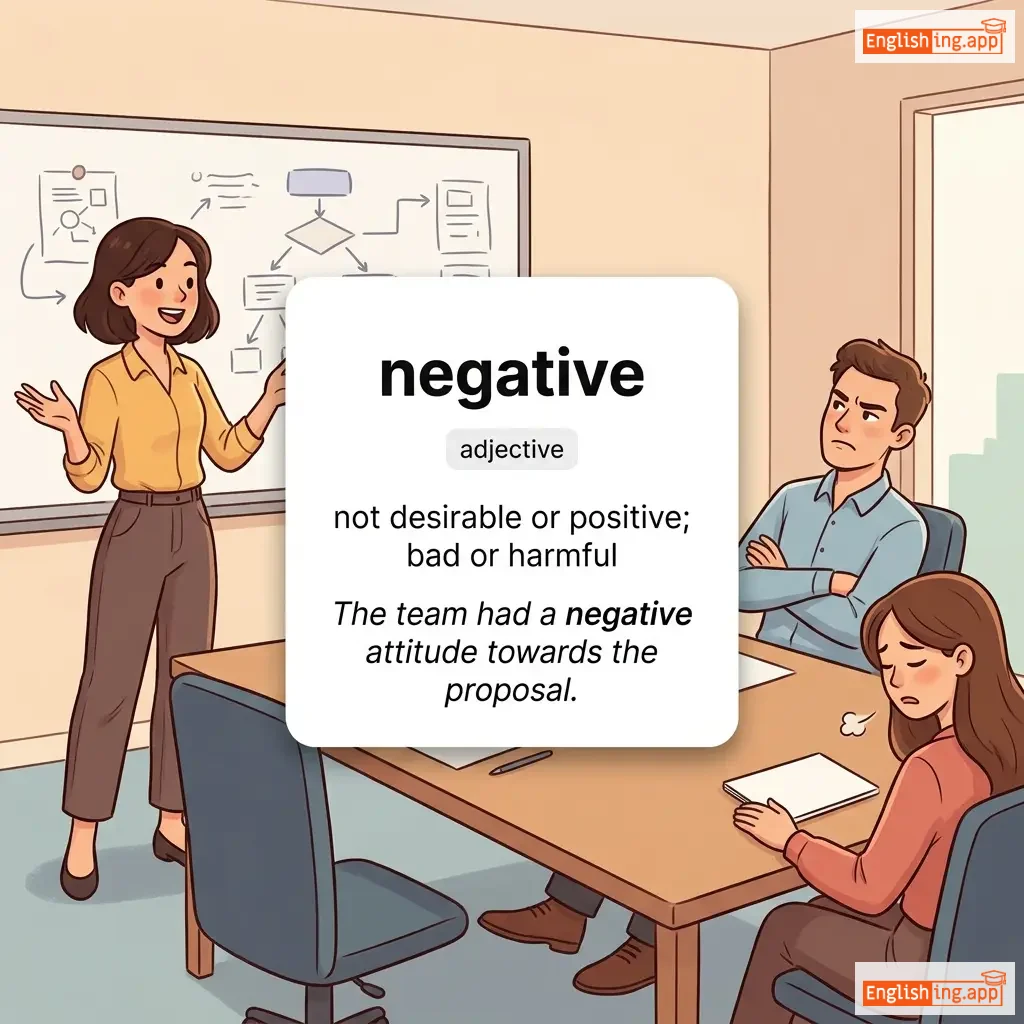
not desirable or positive; bad or harmful
••••••
|
The team had a negative attitude towards the proposal. |
团队对提案持负面态度。
Tuánduì duì tí'àn chí fùmiàn tàidù.
••••••
|
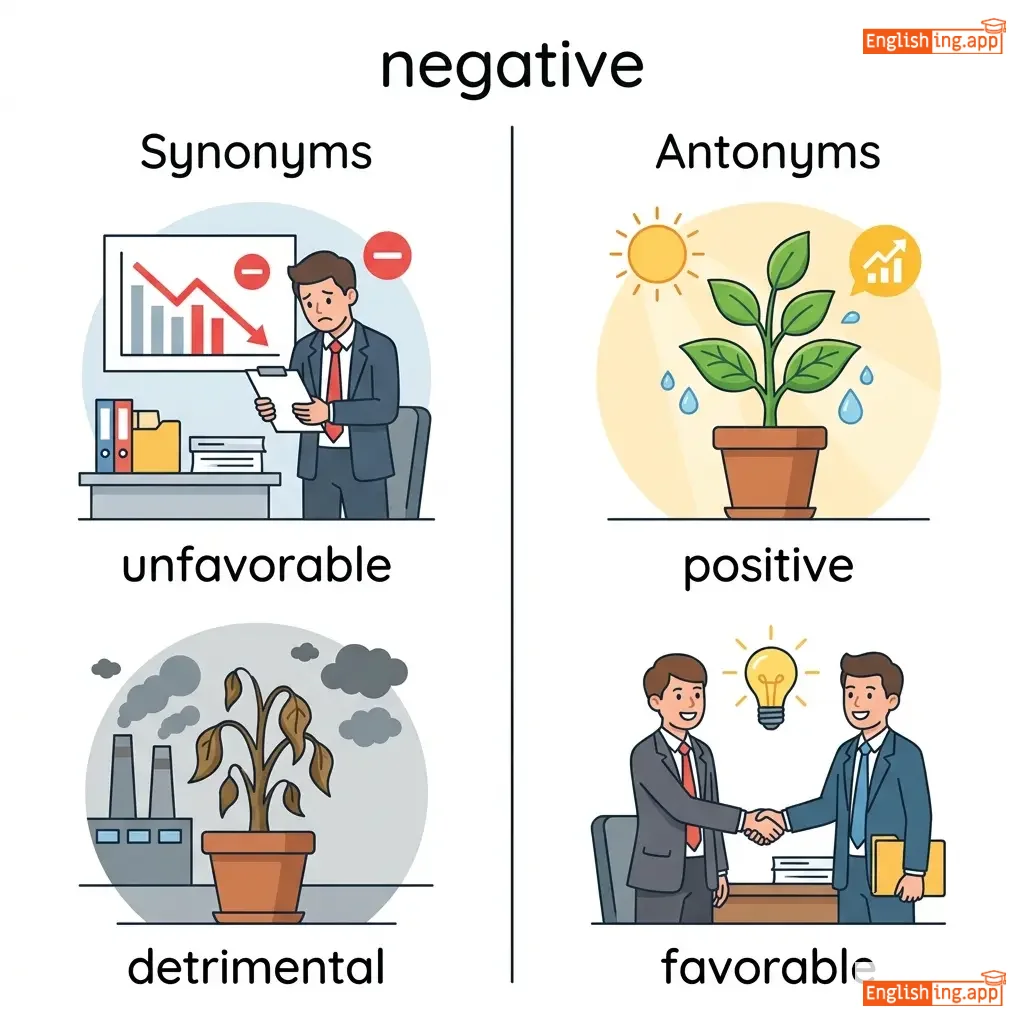
unfavorable, detrimental, harmful, pessimistic
••••••
|
positive, favorable, optimistic
••••••
|
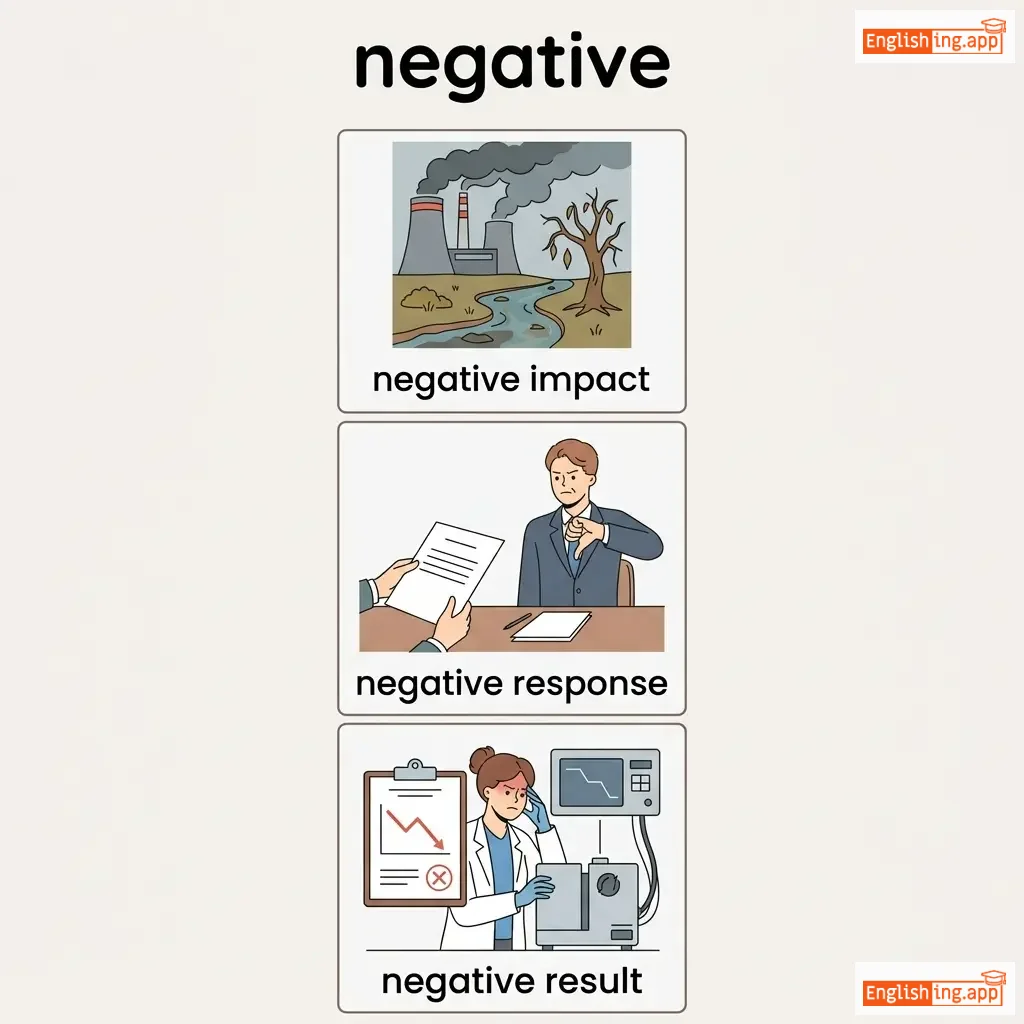
negative impact, negative response, negative result
••••••
|
记住负面,没有什么好的东西!
••••••
|
|
#11512
🙏
|
/niːd/
verb
(nid)
••••••
|
|
需要
xū yào
••••••
|
needed
nided
••••••
|
needed
nided
••••••
|
needs
nidz
••••••
|
needing
niding
••••••
|
to require something or someone
••••••
|
I need your help with this task.
我需要你的帮助来完成这个任务。
••••••
|
我需要你的帮助来完成这个任务。
Wǒ xū yào nǐ de bāng zhù lái wán chéng zhè ge rèn wù.
••••••
|
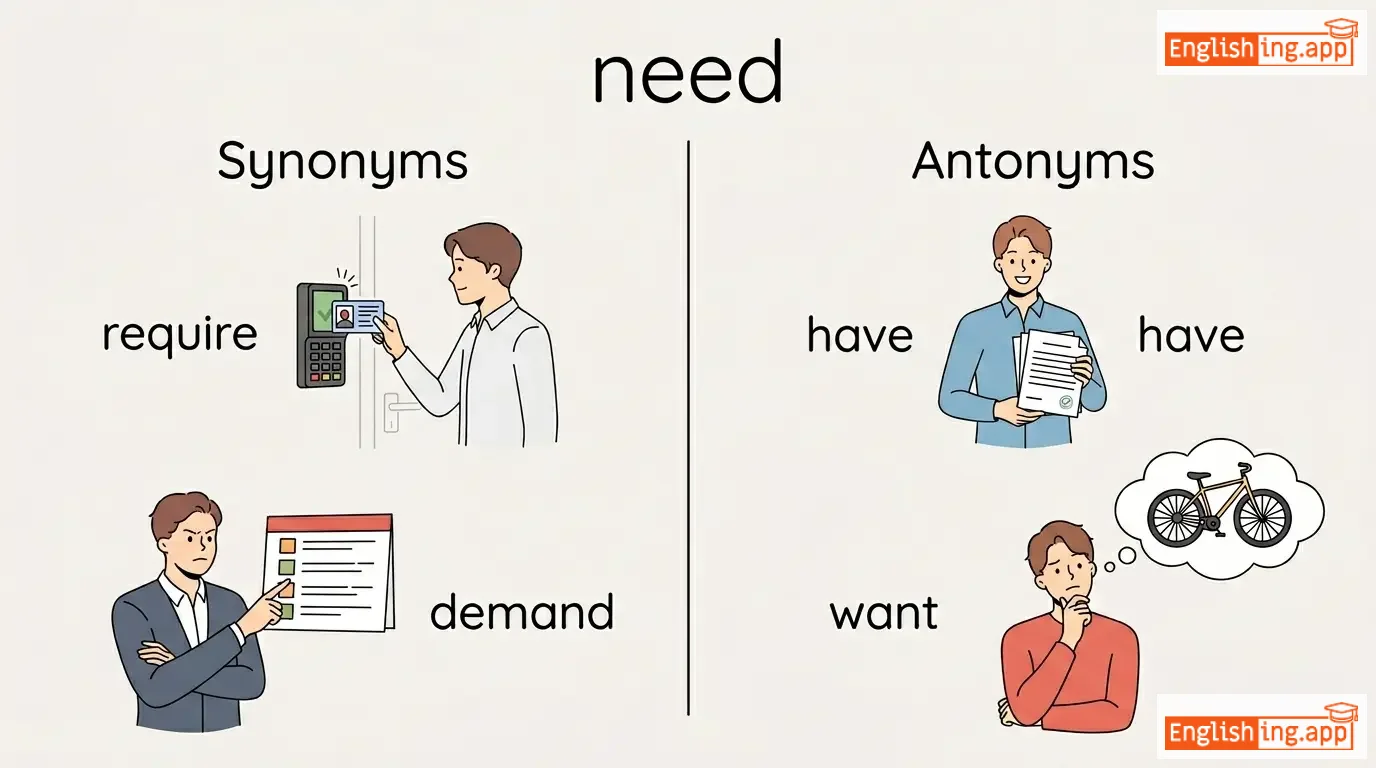
require, demand, want, desire
••••••
|
have, want, reject
••••••
|
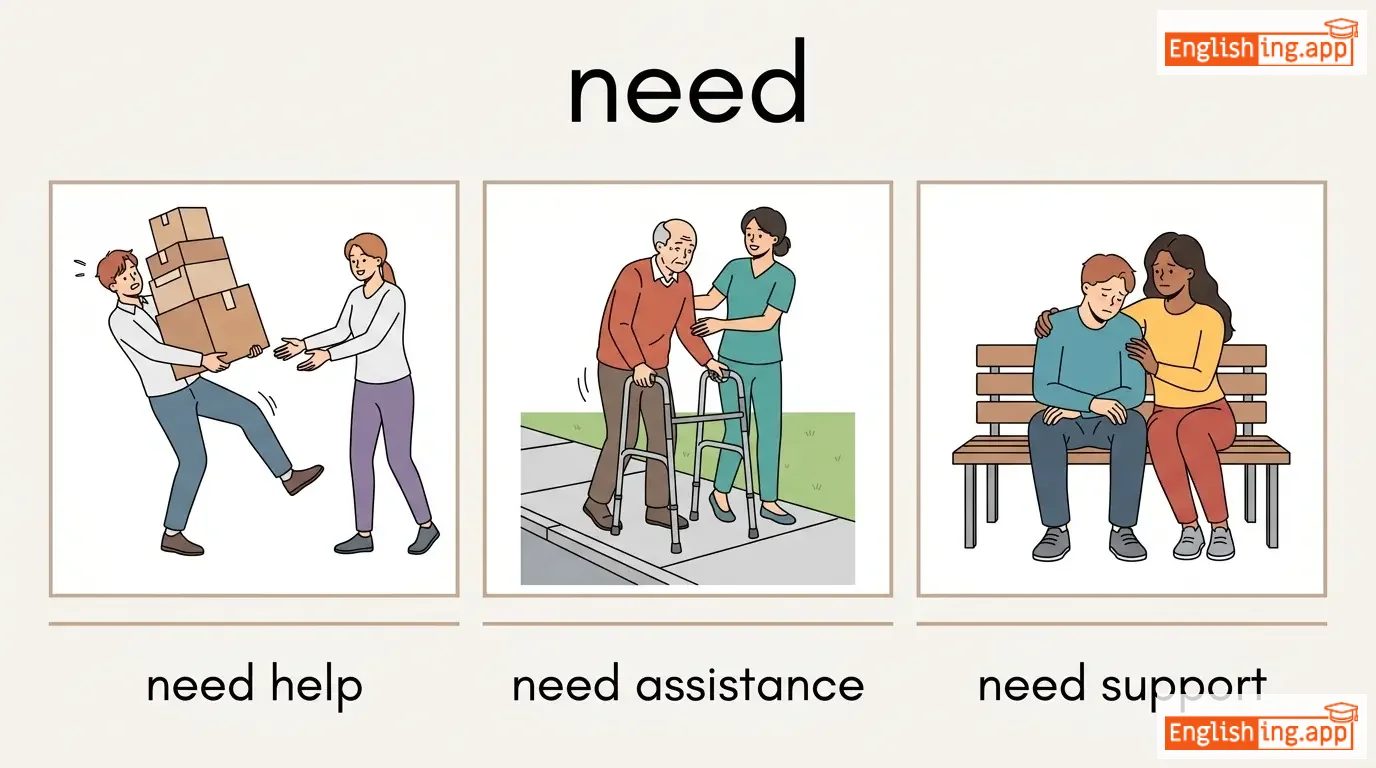
need help, need assistance, need support
••••••
|
需要 (xū yào) 像 'need' - Need something? You xū yào it!
••••••
|
|
#11513
🦒
|
/nɛk/
noun
(nèkè)
••••••
|
- •••••• |
脖子
bozi
••••••
|
- •••••• | - •••••• | - •••••• | - •••••• |
the part of the body connecting the head and the shoulders
••••••
|
She wore a necklace around her neck. |
她脖子上戴着一条项链。
Tā bózi shàng dàizhe yītiáo xiàngliàn.
••••••
|
throat, collar, nape
••••••
|
head, chest
••••••
|
neck pain, neck injury, neck of the bottle
••••••
|
脖子 (bozi) 和 'neck' 很像,想象你脖子上的项链。
••••••
|
|
#11514
🔑
|
/ˌnɛsəˈsɛrɪli/
adverb
(nénggòu)
••••••
|
- •••••• |
不一定
bù yí dìng
••••••
|
- •••••• | - •••••• | - •••••• | - •••••• |
as a necessary result; inevitably
••••••
|
It doesn’t necessarily mean you’re wrong. |
这不一定意味着你错了。
Zhè bù yí dìng yìwèizhe nǐ cuòle.
••••••
|
inevitably, necessarily, certainly, of course
••••••
|
optionally, optionally, incidentally
••••••
|
necessarily true, necessarily result, necessarily mean
••••••
|
不一定 (bù yí dìng) - 像 'necessarily' 一样,表示这不是必然的!
••••••
|
Vocabulary Quiz
Test your vocabulary by matching words with their translations or meanings.
Login to take the quiz
Comments (0)
Share your thoughts and join the discussion.
Join the discussion by logging in
Login to CommentNo comments yet
Be the first to share your thoughts!