

Traducción
Pasado
Participio Pasado
Tercera Persona Singular
Gerundio
Meaning
Oración de Ejemplo
Traducción de Oración de Ejemplo
Synonyms
Antonyms
Colocaciones
Mnemotécnico

Swipe left or right, or use the buttons. Tap image to zoom.
Traducción de Oración de Ejemplo
Palabra
Lesson 384Lesson 384 - Alternar Máscara
|
Emoji
|
Palabra | Images | Traducción | Pasado | Participio Pasado | Tercera Persona Singular | Gerundio | Meaning | Oración de Ejemplo | Traducción de Oración de Ejemplo | Synonyms | Antonyms | Colocaciones | Mnemotécnico |
|---|---|---|---|---|---|---|---|---|---|---|---|---|---|---|
|
#11485
9️⃣
|
/naɪn/
noun
(nayn)
••••••
|
- •••••• |
nueve
nueve
••••••
|
- •••••• | - •••••• | - •••••• | - •••••• |
the number that is one more than eight
••••••
|
She has nine books in her collection.
Ella tiene nueve libros en su colección.
••••••
|
Ella tiene nueve libros en su colección.
Ella tiene nueve libros en su coleccion.
••••••
|
ninth, 9
••••••
|
eight, ten
••••••
|
nine o'clock, nine days, nine years
••••••
|
Nueve libros son nueve, como nueve en español.
••••••
|
|
#11486
📝
|
/ˈnoʊtɪs/
noun
(nótis)
••••••
|
|
aviso
aviso
••••••
|
- •••••• | - •••••• | - •••••• | - •••••• |
a written or printed announcement or notification
••••••
|
He gave me a notice about the meeting.
Me dio un aviso sobre la reunión.
••••••
|
Me dio un aviso sobre la reunión.
Me dio un aviso sobre la reunión.
••••••
|
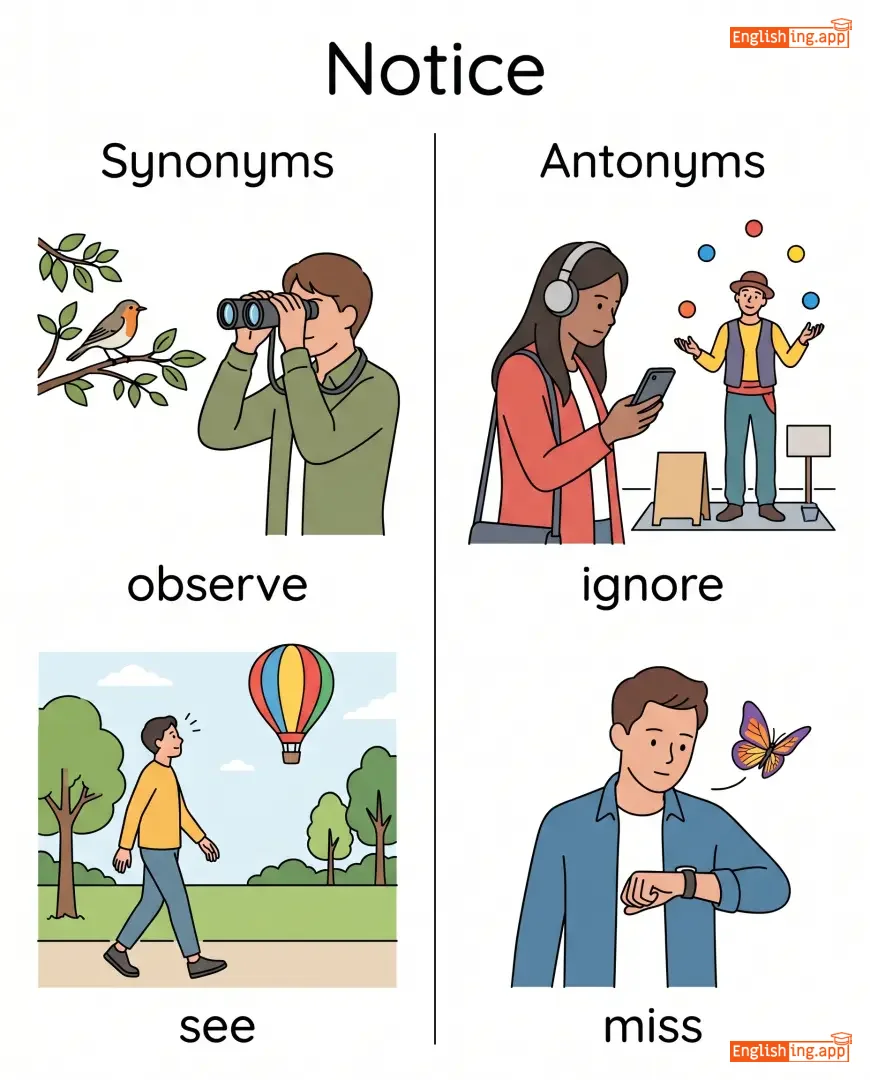
announcement, memo, bulletin, notification
••••••
|
ignorance, unawareness
••••••
|
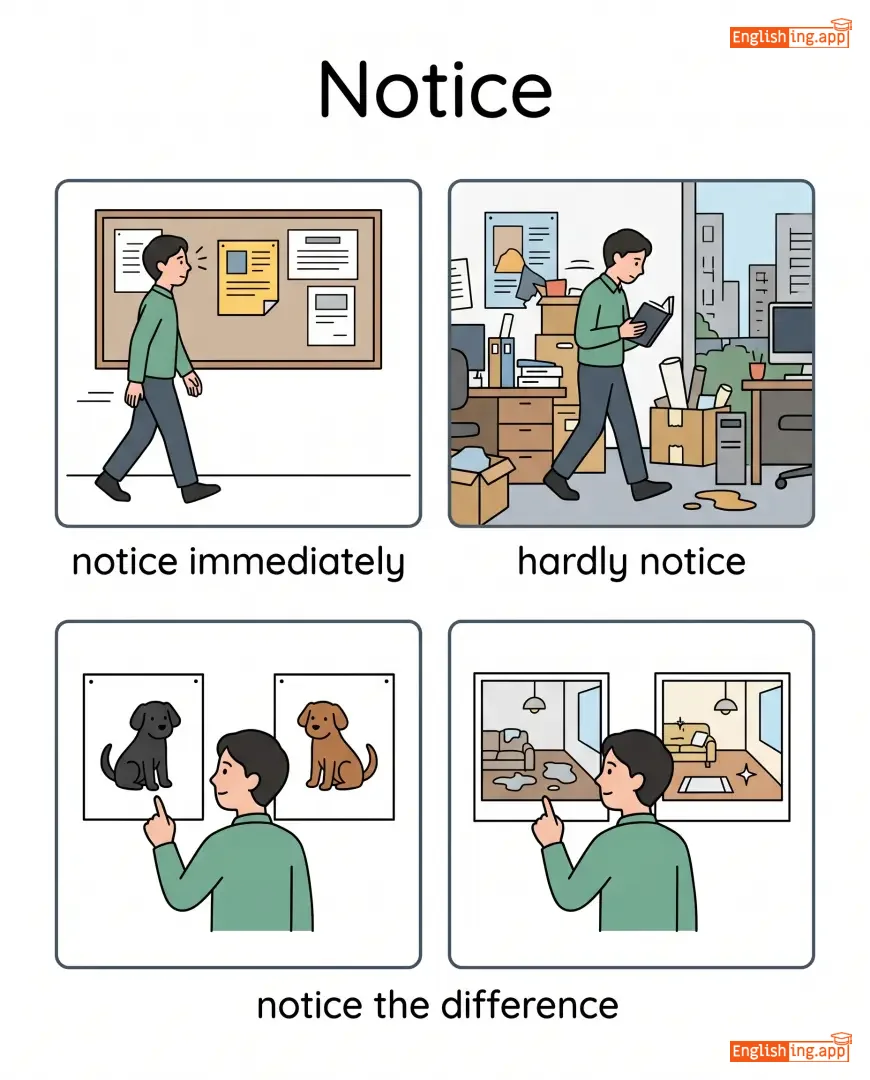
give notice, receive notice, serve notice
••••••
|
Notice in Spanish is aviso, sounds like a voice-over for important messages.
••••••
|
|
#11487
❌
|
/ˈnʌθɪŋ/
pronoun
(nada)
••••••
|
- •••••• |
nada
nada
••••••
|
- •••••• | - •••••• | - •••••• | - •••••• |
not anything; no thing
••••••
|
She has nothing to worry about. |
Ella no tiene nada de qué preocuparse.
Ella no tiene nada de qué preocuparse.
••••••
|
zero, nil, nought
••••••
|
everything
••••••
|
nothing to do, nothing at all, nothing left
••••••
|
Nothing (nada) – Picture having nothing to do!
••••••
|
|
#11488
🚫
|
/nɒt/
adverb
(not)
••••••
|
- •••••• |
no
no
••••••
|
- •••••• | - •••••• | - •••••• | - •••••• |
used to make a word or phrase negative
••••••
|
I do not like spicy food. |
No me gusta la comida picante.
No me gusta la comida picante.
••••••
|
no, never
••••••
|
yes
••••••
|
not sure, not at all, not yet, not going
••••••
|
Not (no) – Think of 'no' as denying something.
••••••
|
|
#11489
👃
|
/noʊz/
noun
(noʊz)
••••••
|
- •••••• |
nariz
nariz
••••••
|
- •••••• | - •••••• | - •••••• | - •••••• |
the part of the face that contains the nostrils and is used for breathing and smelling
••••••
|
He has a sharp nose and can smell things from far away. |
Él tiene una nariz afilada y puede oler las cosas desde lejos.
Él tiene una nariz afilada y puede oler las cosas desde lejos.
••••••
|
nostrils, snout
••••••
|
mouth
••••••
|
runny nose, pick your nose, nose ring
••••••
|
Nose (nariz) – Think of the Spanish word 'nariz' that sounds similar to 'nose'!
••••••
|
|
#11490
🌨️
|
/ˈnɔːðərn/
adjective
(nórdarn)
••••••
|
- •••••• |
del norte
del norte
••••••
|
- •••••• | - •••••• | - •••••• | - •••••• |
relating to the north or situated in the north
••••••
|
The northern part of the country is known for its cold climate. |
La parte norte del país es conocida por su clima frío.
La parte norte del país es conocida por su clima frío.
••••••
|
northerly, northernmost
••••••
|
southern
••••••
|
northern lights, northern regions, northern hemisphere
••••••
|
Imagine the cold winds from the north – ‘del norte’ means from the north in Spanish!
••••••
|
|
#11491
🧭
|
/nɔːrθ/
noun
(nórz)
••••••
|
- •••••• |
norte
norte
••••••
|
- •••••• | - •••••• | - •••••• | - •••••• |
the direction toward the top of a map or the opposite of south
••••••
|
We traveled north to reach the mountains. |
Viajamos al norte para llegar a las montañas.
Viajamos al norte para llegar a las montañas.
••••••
|
up, northern direction
••••••
|
south, downward
••••••
|
north pole, north wind, go north, head north
••••••
|
North is UP on a map, just like 'Norte' is UP in Spanish!
••••••
|
|
#11492
⏰
|
/ˈnɔːməli/
adverb
(nórmali)
••••••
|
- •••••• |
normalmente
normalmente
••••••
|
- •••••• | - •••••• | - •••••• | - •••••• |
in a usual or expected way
••••••
|
I normally wake up at 7 AM. |
Normalmente me despierto a las 7 AM.
Normalmente me despierto a las 7 AM.
••••••
|
typically, usually, generally, regularly
••••••
|
abnormally, unusually
••••••
|
normally do, normally happen, normally expect
••••••
|
Normally you wake up at a normal time!
••••••
|
|
#11493
🚫➡️🚫
|
/nɔːr/
conjunction
(nor)
••••••
|
- •••••• |
ni
ni
••••••
|
- •••••• | - •••••• | - •••••• | - •••••• |
used to introduce a negative clause after a negative statement
••••••
|
He didn't call, nor did he send a message. |
Él no llamó, ni envió un mensaje.
El no llamo, ni envió un mensaje.
••••••
|
and not, neither
••••••
|
and, or
••••••
|
nor did, nor have
••••••
|
Nor - 'Not' after a negative statement.
••••••
|
|
#11494
🌧️➡️🏞️
|
/ˌnʌnðəˈlɛs/
adverb
(nonetheless)
••••••
|
- •••••• |
sin embargo
sin embargo
••••••
|
- •••••• | - •••••• | - •••••• | - •••••• |
in spite of that; nevertheless
••••••
|
It was raining, but nonetheless, they went hiking. |
Estaba lloviendo, pero sin embargo, fueron a hacer senderismo.
Estaba lloviendo, pero sin embargo, fueron a hacer senderismo.
••••••
|
nevertheless, however, still, yet
••••••
|
therefore, hence
••••••
|
nonetheless important, nonetheless true, nonetheless, despite that
••••••
|
Noneth- like 'none-the-less' means despite.
••••••
|
|
#11495
🚫
|
/nʌn/
pronoun
(нан)
••••••
|
- •••••• |
ninguno
ninguno
••••••
|
- •••••• | - •••••• | - •••••• | - •••••• |
not any; no one; not one
••••••
|
None of the students passed the exam. |
Ningún estudiante aprobó el examen.
Ningun estudiante aprobo el examen.
••••••
|
nothing, nobody, nil
••••••
|
all, some, everyone
••••••
|
none of, none left, none at all
••••••
|
None sounds like 'ninguno'.
••••••
|
|
#11496
🔊
|
/nɔɪz/
noun
(noiz)
••••••
|
- •••••• |
ruido
ruido
••••••
|
- •••••• | - •••••• | - •••••• | - •••••• |
a sound, especially when it is unwanted, unpleasant, or loud
••••••
|
The noise from the construction site was unbearable.
El ruido del sitio de construcción era insoportable.
••••••
|
El ruido del sitio de construcción era insoportable.
El ruido del sitio de construcción era insoportable.
••••••
|
sound, racket, clamor, din, commotion
••••••
|
silence, quiet, calm
••••••
|
loud noise, background noise, noise pollution, white noise
••••••
|
Noise can 'annoy' you, remember it by associating 'noise' with 'annoy'.
••••••
|
|
#11497
👍
|
/nɒd/
verb
(nód)
••••••
|
|
asentir con la cabeza
asentir con la cabeza
••••••
|
nodded
nodded
••••••
|
nodded
nodded
••••••
|
nods
nodding
••••••
|
nodding
nodding
••••••
|
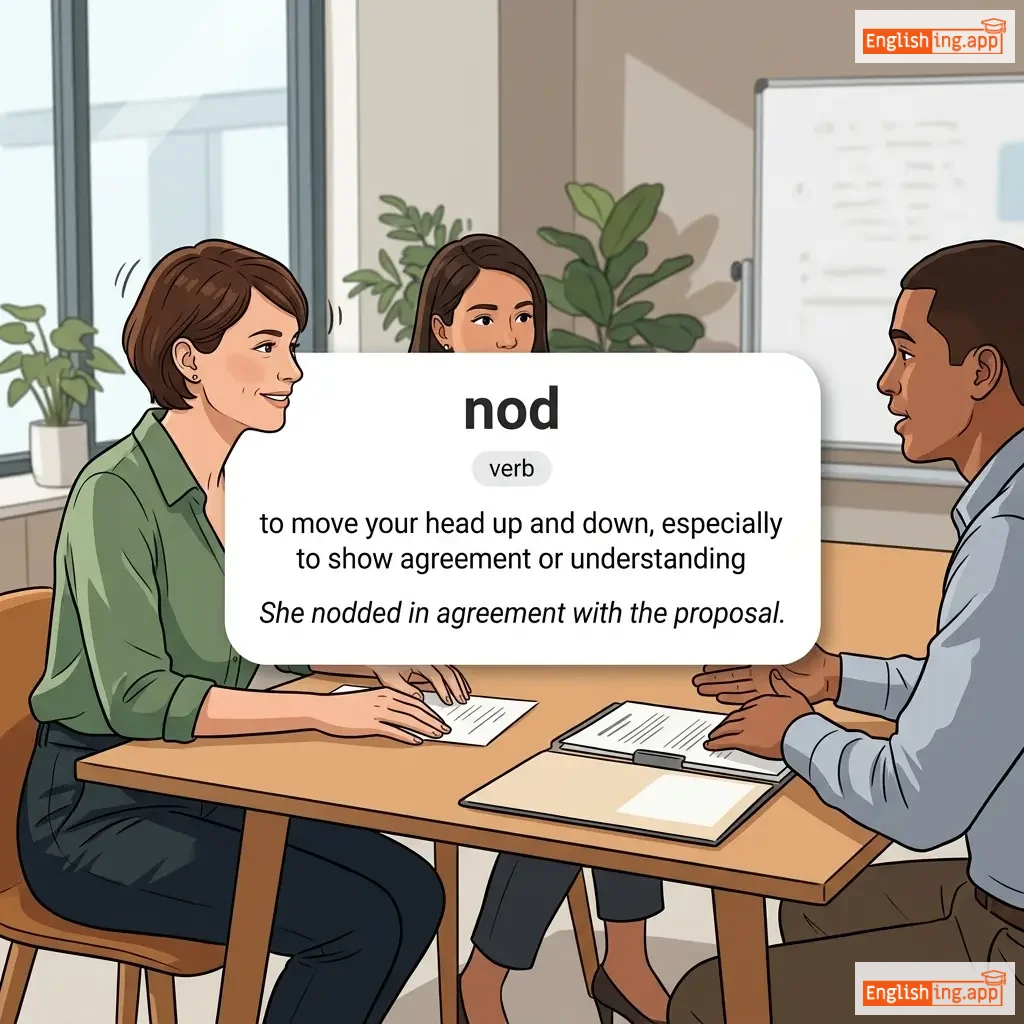
to move your head up and down, especially to show agreement or understanding
••••••
|
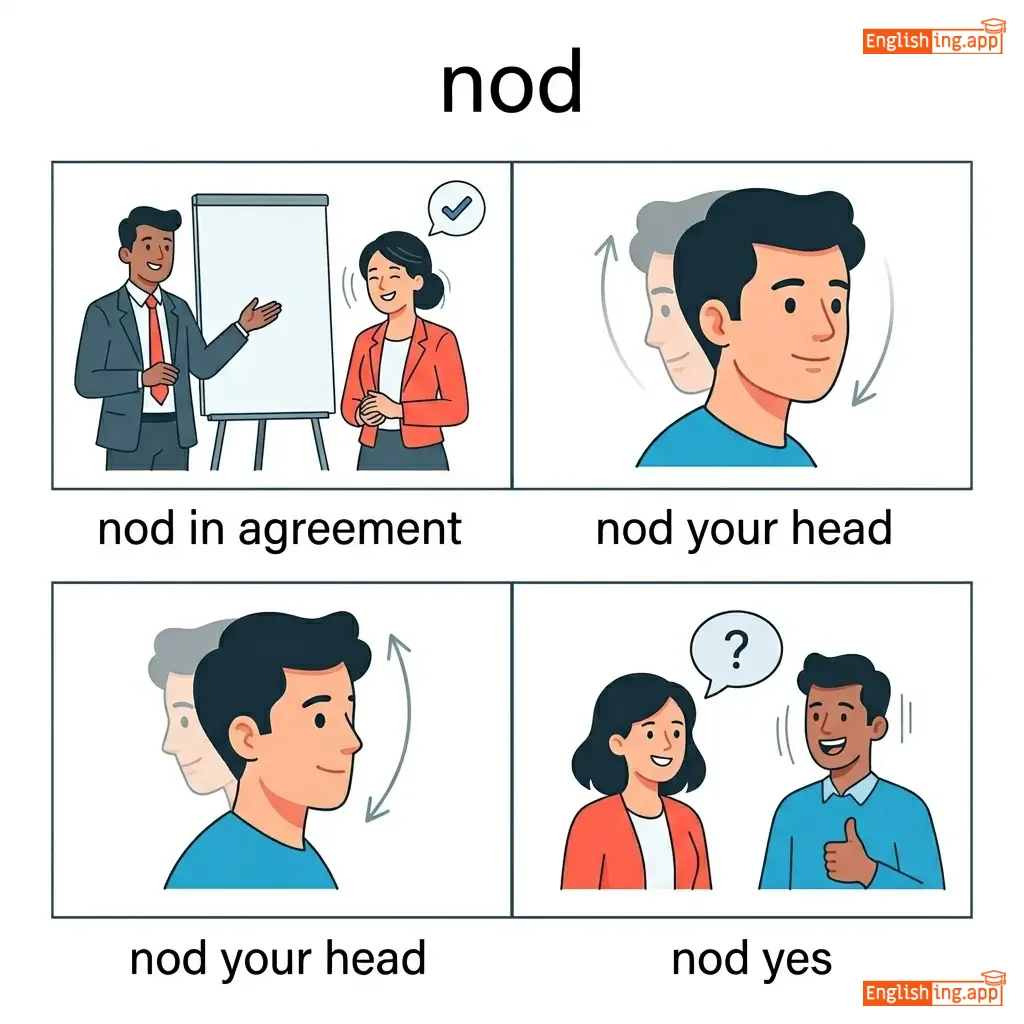
She nodded in agreement with the proposal.
Ella asintió con la cabeza en señal de acuerdo con la propuesta.
••••••
|
Ella asintió con la cabeza en señal de acuerdo con la propuesta.
Ella asintió con la cabeza en señal de acuerdo con la propuesta.
••••••
|
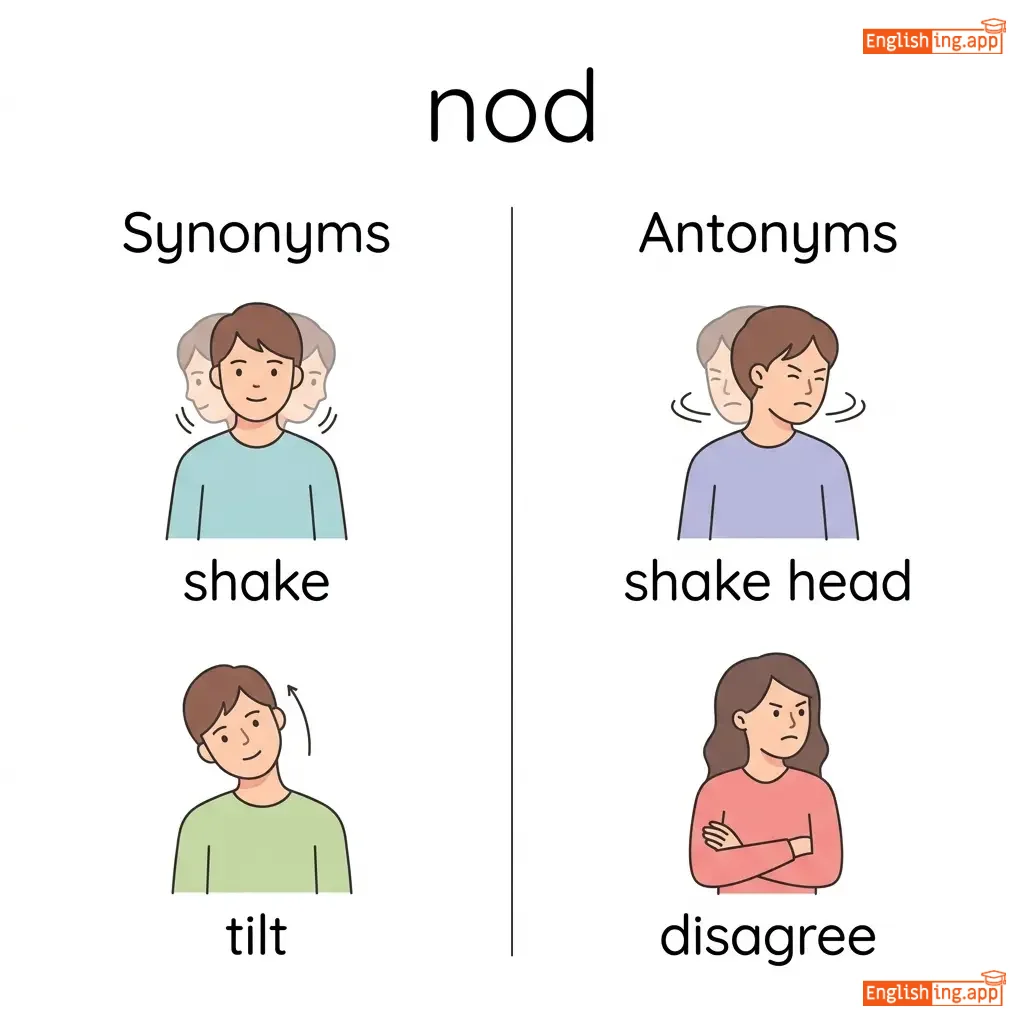
shake, tilt, bow
••••••
|
shake head, disagree
••••••
|
nod in agreement, nod your head, nod yes
••••••
|
Asentir con la cabeza significa dar consentimiento - Nod to show agreement.
••••••
|
|
#11498
🙅♂️
|
/ˈnoʊˌbɑːdi/
pronoun
(nobody)
••••••
|
- •••••• |
nadie
nadie
••••••
|
- •••••• | - •••••• | - •••••• | - •••••• |
no person; not anyone
••••••
|
Nobody came to the party.
Nadie vino a la fiesta.
••••••
|
Nadie vino a la fiesta.
Nadie vino a la fiesta.
••••••
|
no one, none, not a soul
••••••
|
someone, anybody
••••••
|
nobody knows, nobody cares, nobody else
••••••
|
Nadie llega si nadie escucha - Nobody comes if nobody listens
••••••
|
|
#11499
🚫
|
/noʊ/
adverb
(no)
••••••
|
- •••••• |
no
no
••••••
|
- •••••• | - •••••• | - •••••• | - •••••• |
used to give a negative response or to show disagreement
••••••
|
She said no to the invitation.
Ella dijo no a la invitación.
••••••
|
Ella dijo no a la invitación.
Ella dijo no a la invitación.
••••••
|
nope, never, negative, not at all
••••••
|
yes, okay
••••••
|
say no, no way, no problem, no need
••••••
|
No, cuando dices no, todo se detiene. - When you say no, everything stops.
••••••
|
|
#11500
⏳
|
/ˈnɪəli/
adverb
(nɪərli)
••••••
|
- •••••• |
casi
casi
••••••
|
- •••••• | - •••••• | - •••••• | - •••••• |
almost, but not completely
••••••
|
She nearly missed the bus. |
Casi perdió el autobús.
Casi perdio el autobus.
••••••
|
almost, practically, just about, close to
••••••
|
completely, entirely, fully
••••••
|
nearly lost, nearly there, nearly finished
••••••
|
Casi (casi) suena como 'nearly' - Almost there!
••••••
|
|
#11501
🌙
|
/naɪt/
noun
(naɪt)
••••••
|
- •••••• |
noche
noche
••••••
|
- •••••• | - •••••• | - •••••• | - •••••• |
the time of darkness between one day and the next, when most people sleep
••••••
|
She loves going for walks at night. |
A ella le encanta caminar por la noche.
A ella le encanta caminar por la noche.
••••••
|
evening, nighttime, dusk, dark
••••••
|
day, morning
••••••
|
night sky, night time, at night, good night
••••••
|
noche = no checar, es hora de dormir (Night = No checking, it's time to sleep)
••••••
|
|
#11502
⏭️
|
/nɛkst/
adjective
(nɛkst)
••••••
|
- •••••• |
siguiente
siguiente
••••••
|
- •••••• | - •••••• | - •••••• | - •••••• |
immediately following in time, order, or place
••••••
|
The next train leaves at 9:00 AM. |
El siguiente tren sale a las 9:00 AM.
El siguiente tren sale a las 9:00 AM.
••••••
|
following, subsequent, upcoming, nearest
••••••
|
previous, prior
••••••
|
next day, next year, next time, next week
••••••
|
Next is always the NEXT thing to happen
••••••
|
|
#11503
🗞️
|
/ˈnjuːzˌpeɪpər/
noun
(niúzpéipěr)
••••••
|
- •••••• |
periódico
periodico
••••••
|
- •••••• | - •••••• | - •••••• | - •••••• |
a printed publication (usually daily or weekly) containing news, articles, advertisements, and correspondence
••••••
|
I read the newspaper every morning.
yo leo el periódico todas las mañanas.
••••••
|
Yo leo el periódico todas las mañanas.
Yo leo el periodico todas las mananas.
••••••
|
periodical, journal, publication, paper
••••••
|
magazine, online media
••••••
|
daily newspaper, local newspaper, national newspaper, newspaper article
••••••
|
Newspapers are the first place to get the NEWS
••••••
|
|
#11504
📰
|
/nuːz/
noun
(nús)
••••••
|
- •••••• |
noticias
noticias
••••••
|
- •••••• | - •••••• | - •••••• | - •••••• |
newly received or noteworthy information, especially about recent events
••••••
|
The news about the storm spread quickly. |
Las noticias sobre la tormenta se extendieron rápidamente.
Las noticias sobre la tormenta se extendieron rapidamente.
••••••
|
information, report, bulletin, update
••••••
|
silence, ignorance
••••••
|
breaking news, latest news, good news, bad news
••••••
|
NEWS = Novedades en El Mundo Siempre
••••••
|
|
#11505
🆕
|
/ˈnjuːli/
adverb
(niúli)
••••••
|
- •••••• |
recientemente
recientemente
••••••
|
- •••••• | - •••••• | - •••••• | - •••••• |
in a new or recent manner
••••••
|
She has newly renovated her house.
Ella ha renovado recientemente su casa.
••••••
|
Ella ha renovado recientemente su casa.
Ella ha renovado recientemente su casa.
••••••
|
recently, freshly, just, newly made
••••••
|
old, outdated
••••••
|
newly appointed, newly built, newly married, newly discovered
••••••
|
NEWLY means NEW + LY (recently done with love)
••••••
|
|
#11506
🚫
|
/ˈnɛvər/
adverb
(néver)
••••••
|
- •••••• |
nunca
nunca
••••••
|
- •••••• | - •••••• | - •••••• | - •••••• |
at no time in the past or future; not ever
••••••
|
I have never seen such a beautiful sunset. |
Nunca he visto un atardecer tan hermoso.
Nunca he visto un atardecer tan hermoso.
••••••
|
not at all, under no circumstances, in no way, by no means
••••••
|
always, ever
••••••
|
never seen, never been, never heard, never thought
••••••
|
NEVER forget to say NO (nunca) to things that waste time
••••••
|
|
#11507
🚫
|
/ˈniːðər/
conjunction
(nízer)
••••••
|
- •••••• |
ni uno ni otro
ni uno ni otro
••••••
|
- •••••• | - •••••• | - •••••• | - •••••• |
used to connect two negative alternatives
••••••
|
Neither the manager nor the assistant could attend the meeting.
Nízer the manager nor the assistant cud atend the míting.
••••••
|
Ni el gerente ni el asistente pudieron asistir a la reunión.
ni el gerente ni el asistente pudieron asistir a la reunion
••••••
|
nor, not either
••••••
|
either
••••••
|
neither nor, neither of them
••••••
|
Neither in Spanish is 'ni', used twice: ni esto ni aquello.
••••••
|
|
#11508
🏡
|
/ˈneɪbərˌhʊd/
noun
(neɪbərˌhʊd)
••••••
|
- •••••• |
vecindario
vecindario
••••••
|
- •••••• | - •••••• | - •••••• | - •••••• |
a district or area around or near a particular place
••••••
|
I grew up in a quiet neighborhood. |
Crecí en un vecindario tranquilo.
Creci en un vecindario tranquilo.
••••••
|
community, locality, district, area
••••••
|
isolation, wilderness
••••••
|
peaceful neighborhood, residential neighborhood, urban neighborhood
••••••
|
Vecindario suena a 'vecinos', ¡y los vecinos son los amigos cercanos!
••••••
|
|
#11509
🏘️
|
/ˈneɪbər/
noun
(néibor)
••••••
|
- •••••• |
vecino
vecino
••••••
|
- •••••• | - •••••• | - •••••• | - •••••• |
a person living next door or nearby
••••••
|
My neighbor lent me some sugar when I ran out.
Mai néibor lent mi sam shúgar wen ai ran aut.
••••••
|
Mi vecino me prestó algo de azúcar cuando me quedé sin.
Mi vecino me prestó algo de azúcar cuando me quedé sin.
••••••
|
adjacent resident, nearby person, local
••••••
|
stranger, outsider
••••••
|
good neighbor, friendly neighbor, next-door neighbor
••••••
|
Your neighbor never says ‘no’, it’s sweet like sugar!
••••••
|
|
#11510
💬
|
/nɪɡoʊˈʃiːeɪʃən/
noun
(negociación)
••••••
|
- •••••• |
negociación
negociacion
••••••
|
- •••••• | - •••••• | - •••••• | - •••••• |
a discussion aimed at reaching an agreement
••••••
|
The negotiation between the two companies was successful. |
La negociación entre las dos empresas fue exitosa.
La negociacion entre las dos empresas fue exitosa.
••••••
|
discussion, bargaining, dialogue, talks
••••••
|
conflict, disagreement, dispute
••••••
|
peace negotiation, business negotiation, successful negotiation
••••••
|
Negociación piensa, ‘hablar para llegar a un acuerdo’ – resolver conflictos.
••••••
|
|
#11511
☹️
|
/ˈnɛɡətɪv/
adjective
(negativo)
••••••
|
|
negativo
negativo
••••••
|
- •••••• | - •••••• | - •••••• | - •••••• |
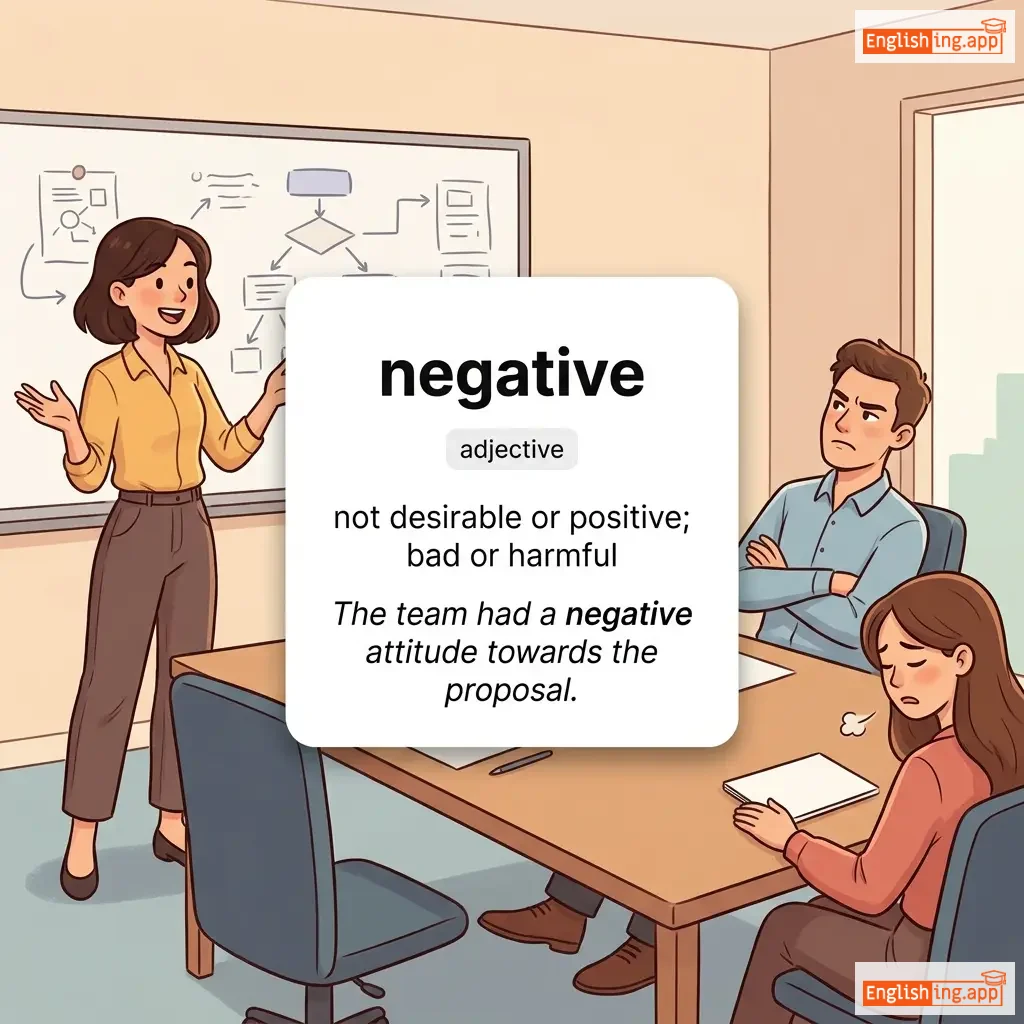
not desirable or positive; bad or harmful
••••••
|
The team had a negative attitude towards the proposal. |
El equipo tenía una actitud negativa hacia la propuesta.
El equipo tenía una actitud negativa hacia la propuesta.
••••••
|
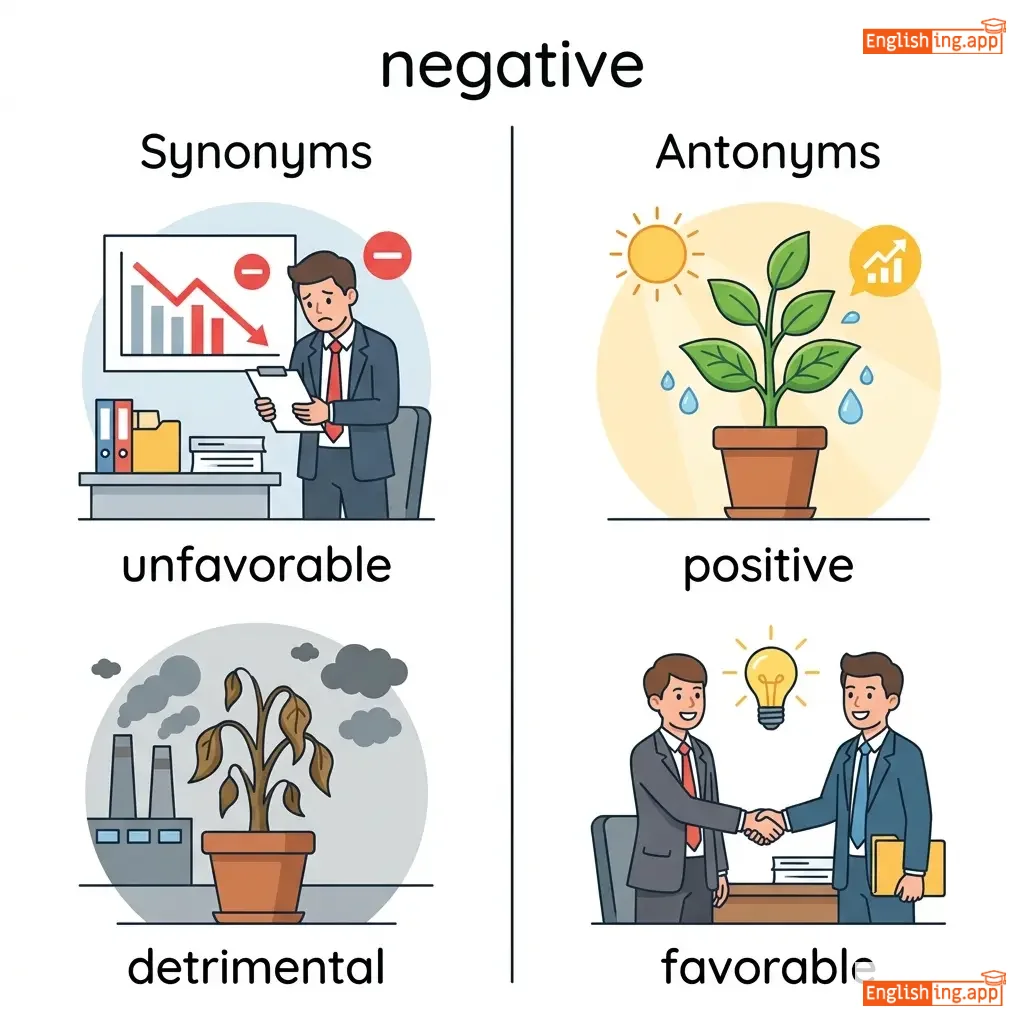
unfavorable, detrimental, harmful, pessimistic
••••••
|
positive, favorable, optimistic
••••••
|
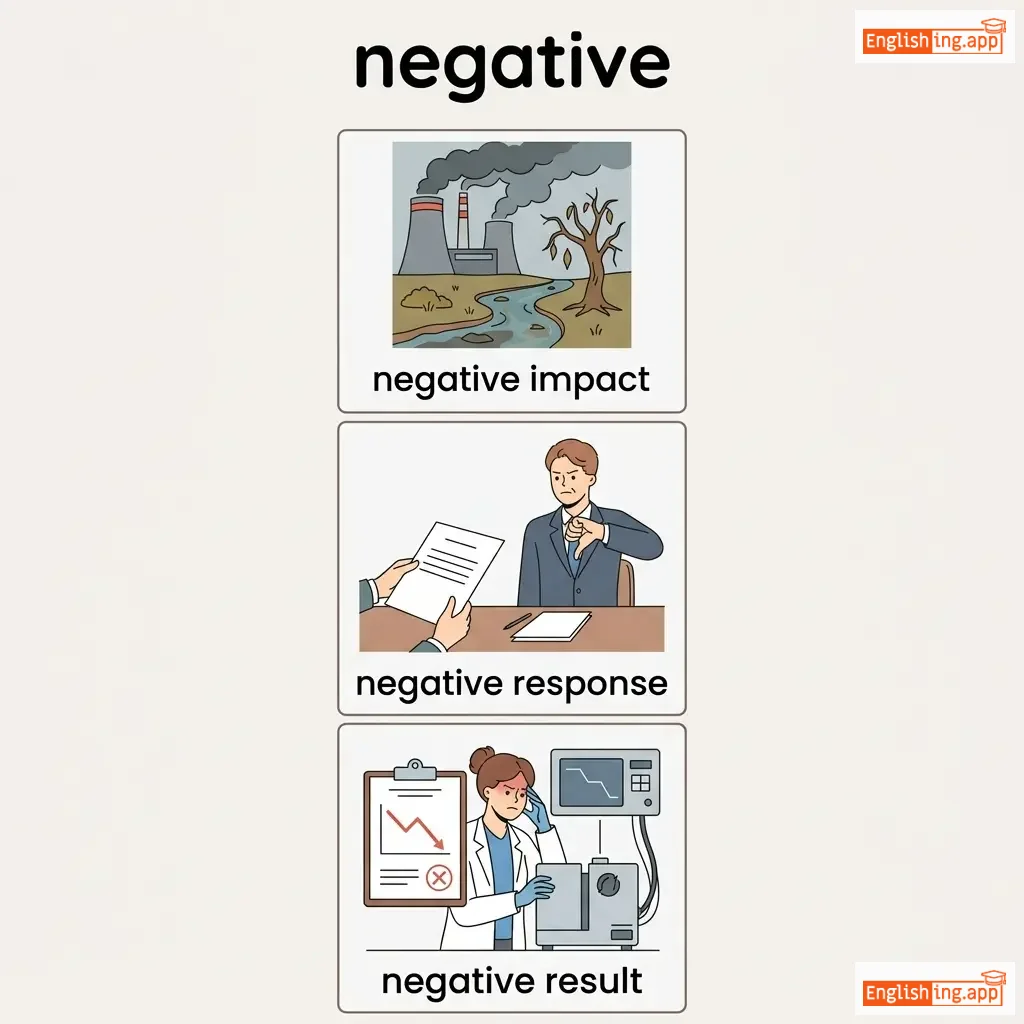
negative impact, negative response, negative result
••••••
|
Recuerda la palabra negativa, nada positivo o bueno en ella.
••••••
|
|
#11512
🙏
|
/niːd/
verb
(nid)
••••••
|
|
necesidad
necesidad
••••••
|
needed
nided
••••••
|
needed
nided
••••••
|
needs
nidz
••••••
|
needing
niding
••••••
|
to require something or someone
••••••
|
I need your help with this task.
Necesito tu ayuda con esta tarea.
••••••
|
Necesito tu ayuda con esta tarea.
Necesito tu ayuda con esta tarea.
••••••
|
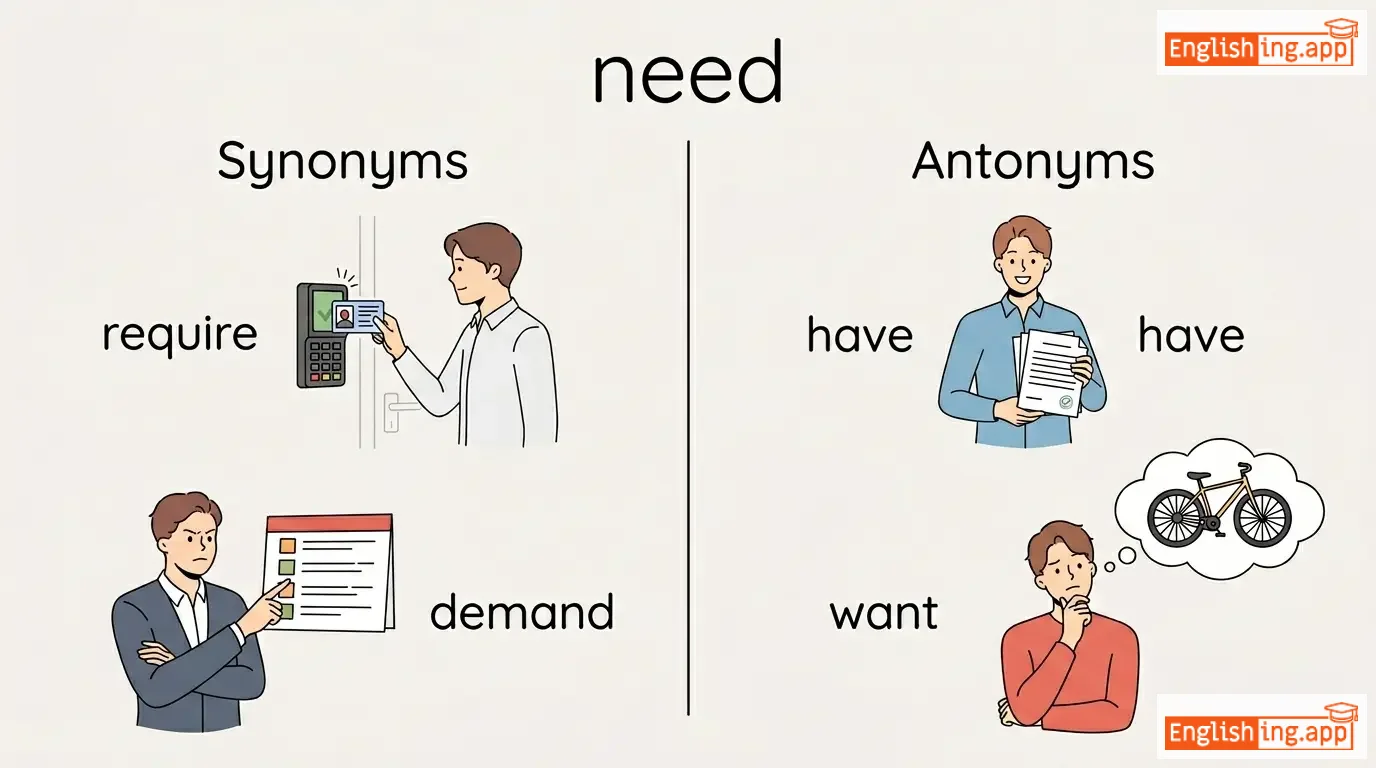
require, demand, want, desire
••••••
|
have, want, reject
••••••
|
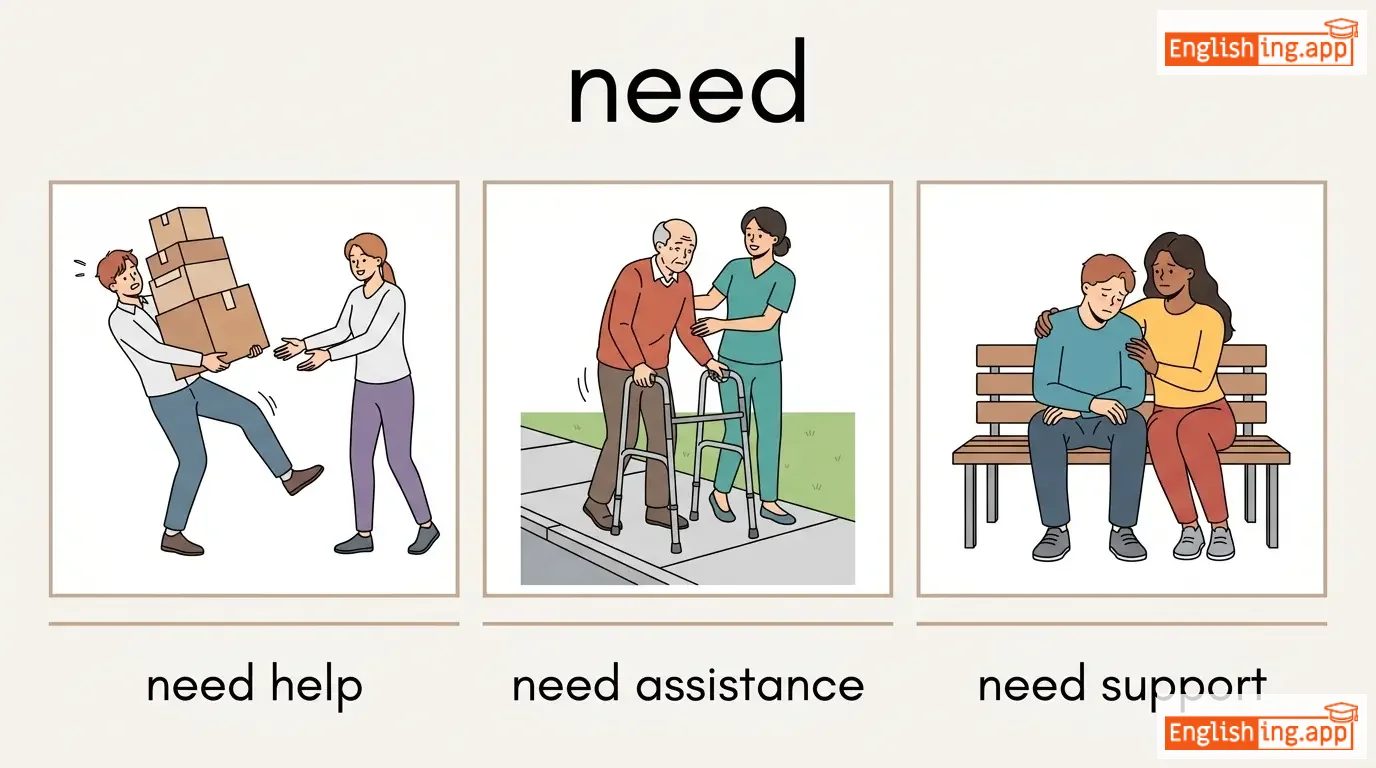
need help, need assistance, need support
••••••
|
Necesidad (necesidad) como 'need' - Need something? You necesidad it!
••••••
|
|
#11513
🦒
|
/nɛk/
noun
(nek)
••••••
|
- •••••• |
cuello
cuello
••••••
|
- •••••• | - •••••• | - •••••• | - •••••• |
the part of the body connecting the head and the shoulders
••••••
|
She wore a necklace around her neck. |
Ella llevaba un collar alrededor de su cuello.
Ella llevaba un collar alrededor de su cuello.
••••••
|
throat, collar, nape
••••••
|
head, chest
••••••
|
neck pain, neck injury, neck of the bottle
••••••
|
Cuello suena como 'neck', imagina un collar alrededor de tu cuello.
••••••
|
|
#11514
🔑
|
/ˌnɛsəˈsɛrɪli/
adverb
(nesesariamente)
••••••
|
- •••••• |
necesariamente
necesariamente
••••••
|
- •••••• | - •••••• | - •••••• | - •••••• |
as a necessary result; inevitably
••••••
|
It doesn’t necessarily mean you’re wrong. |
No significa necesariamente que estés equivocado.
No significa necesariamente que estés equivocado.
••••••
|
inevitably, necessarily, certainly, of course
••••••
|
optionally, optionally, incidentally
••••••
|
necessarily true, necessarily result, necessarily mean
••••••
|
Necesariamente (necesariamente) suena como 'necessarily' - ¡Es necesario!
••••••
|
Vocabulary Quiz
Test your vocabulary by matching words with their translations or meanings.
Login to take the quiz
Comments (0)
Share your thoughts and join the discussion.
Join the discussion by logging in
Login to CommentNo comments yet
Be the first to share your thoughts!