

Traducción
Pasado
Participio Pasado
Tercera Persona Singular
Gerundio
Meaning
Oración de Ejemplo
Traducción de Oración de Ejemplo
Synonyms
Antonyms
Colocaciones
Mnemotécnico

Swipe left or right, or use the buttons. Tap image to zoom.
Traducción de Oración de Ejemplo
Palabra
Lesson 18Lesson 18 - Alternar Máscara
|
Emoji
|
Palabra | Images | Traducción | Pasado | Participio Pasado | Tercera Persona Singular | Gerundio | Meaning | Oración de Ejemplo | Traducción de Oración de Ejemplo | Example Expression | Significado de Expresión de Ejemplo | Traducción de Expresión de Ejemplo | Synonyms | Antonyms | Colocaciones | Mnemotécnico |
|---|---|---|---|---|---|---|---|---|---|---|---|---|---|---|---|---|---|
|
#511
🌟
|
/əˌpɒθiˈoʊsɪs/
noun
(apoteosis)
••••••
|
- •••••• |
apoteosis, el punto más alto
apoteosis, el punto mas alto
••••••
|
- •••••• | - •••••• | - •••••• | - •••••• |
The highest point of development; the perfect example of something; the elevation of someone to divine status.
••••••
|
Many see the Renaissance as the apotheosis of art and culture in Europe. |
Muchos ven el Renacimiento como la apoteosis del arte y la cultura en Europa.
Muchos ven el Renacimiento como la apoteosis del arte y la cultura en Europa.
••••••
|
- •••••• | - •••••• | - •••••• |
pinnacle, climax, culmination, peak, zenith
••••••
|
decline, downfall, nadir
••••••
|
apotheosis of art, apotheosis of culture, reach apotheosis, literary apotheosis
••••••
|
Apotheosis significa llegar a la cima—apo = arriba, thesis = posición → la posición más alta.
••••••
|
|
#512
📌
|
/əˈpɔɪnt/
verb
(apoint)
••••••
|
|
nombrar
nombrar
••••••
|
appointed
apointado
••••••
|
appointed
apointado
••••••
|
appoints
apointa
••••••
|
appointing
apointando
••••••
|
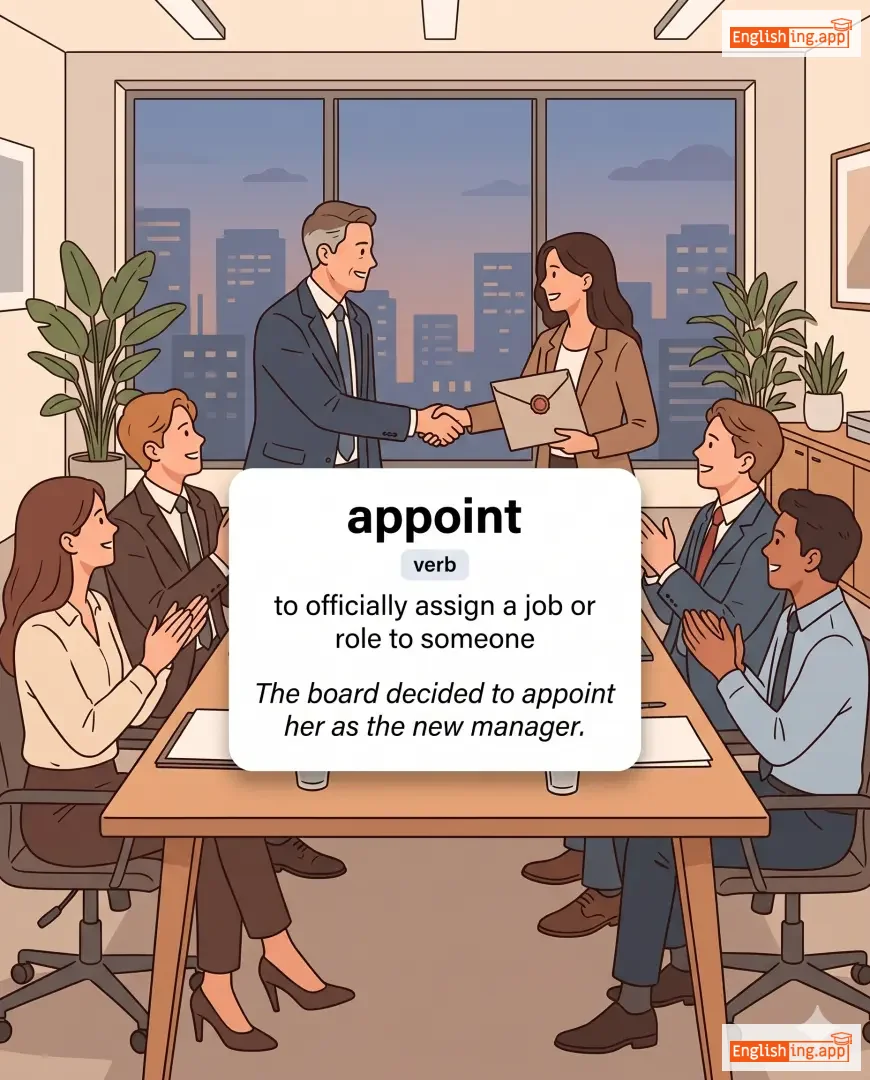
to officially assign a job or role to someone
••••••
|
The board decided to appoint her as the new manager.
La junta decidió nombrarla como la nueva gerente.
••••••
|
La junta decidió nombrarla como la nueva gerente.
La junta decidió nombrarla como la nueva gerente.
••••••
|
appoint someone to a post
nombrar a alguien para un puesto
••••••
|
to officially give someone a position or job
••••••
|
nombrar a alguien para un puesto
nombrar a alguien para un puesto
••••••
|
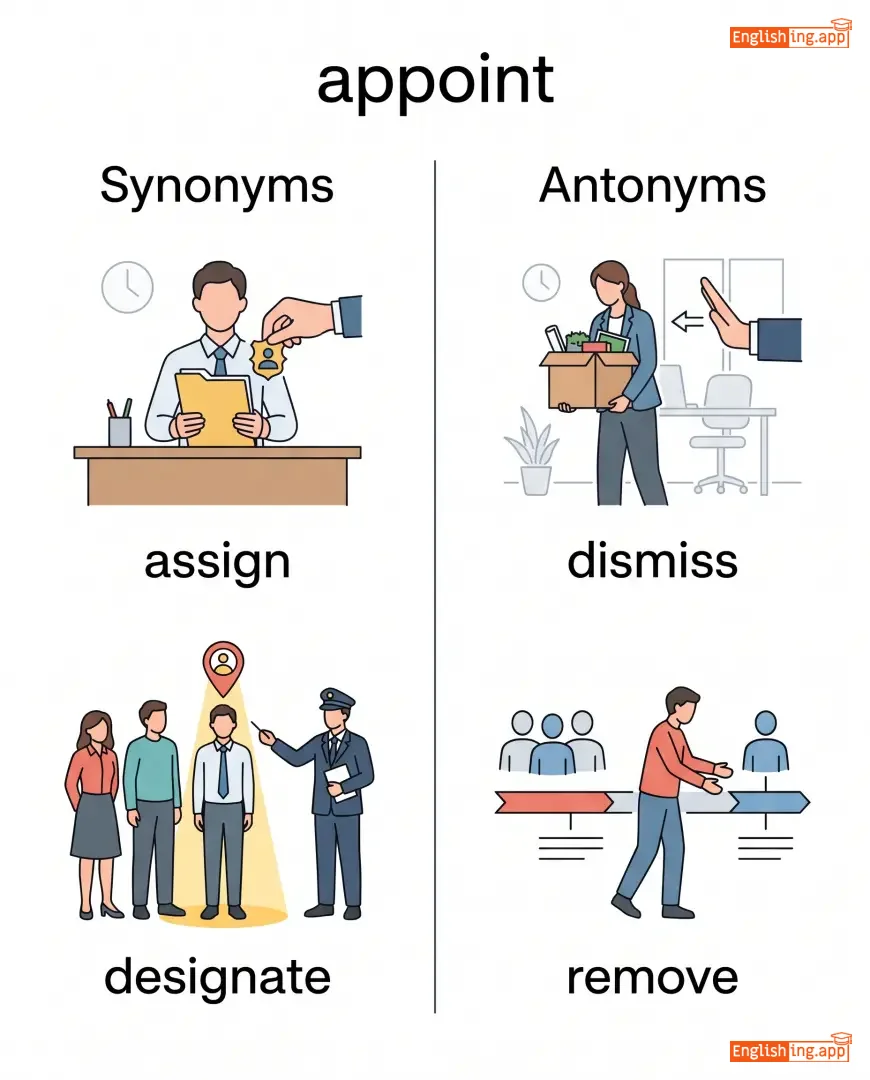
assign, designate, nominate, delegate, commission
••••••
|
dismiss, remove, reject
••••••
|
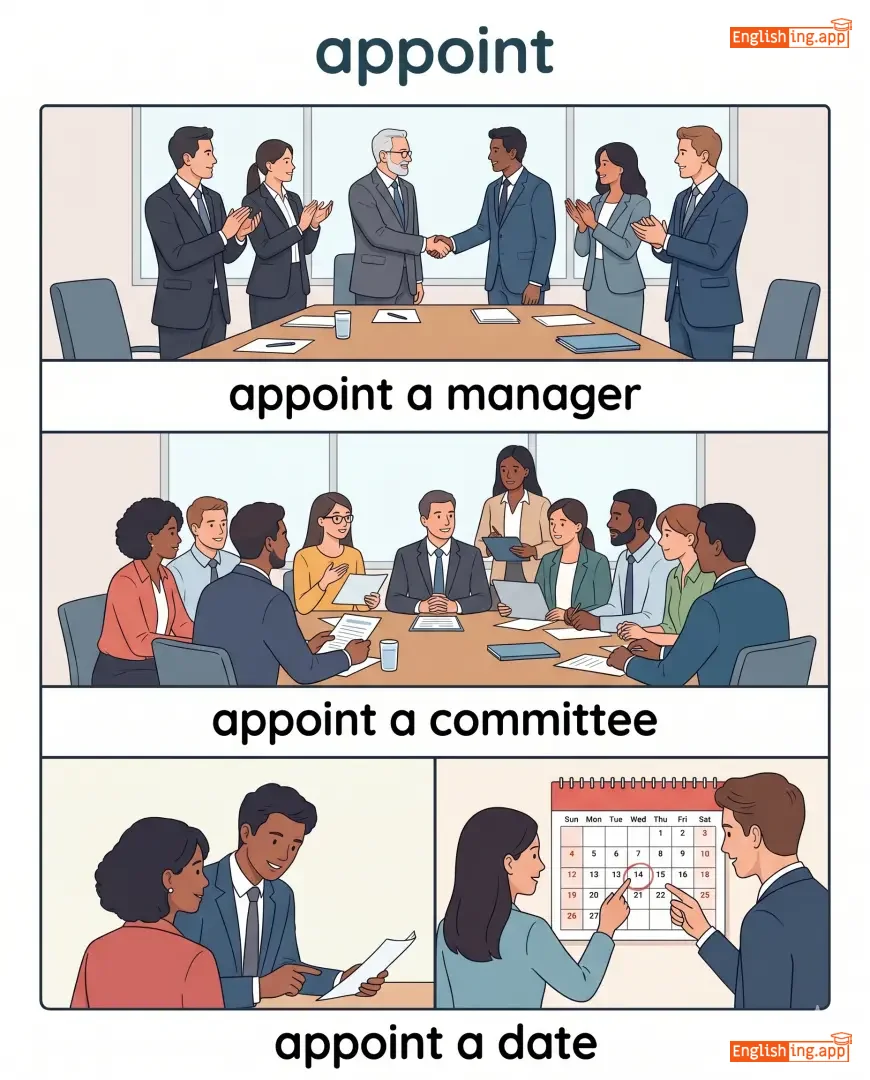
appoint a manager, appoint a committee, appoint a date, appoint someone
••••••
|
Appoint significa nombrar—'App en tu teléfono, nombras a alguien'.
••••••
|
|
#513
📝
|
/ˌæplɪˈkeɪʃən/
noun
(aplicación)
••••••
|
- •••••• |
solicitud / aplicación / software
solicitud / aplicacion / software
••••••
|
- •••••• | - •••••• | - •••••• | - •••••• |
a formal request for something; the act of putting something into operation; or a software program
••••••
|
She submitted her application for the scholarship. |
Ella presentó su solicitud para la beca.
Ella presento su solicitud para la beca.
••••••
|
put into application |
to use something practically
••••••
|
poner en aplicación
poner en aplicacion
••••••
|
request, use, implementation, petition, software
••••••
|
withdrawal, neglect
••••••
|
job application, application form, software application, practical application
••••••
|
Application es una solicitud o App, utilizado en ambos sentidos.
••••••
|
|
#514
👏
|
/əˈplɔːz/
noun
(aplóz)
••••••
|
- •••••• |
aplausos
aplausos
••••••
|
- •••••• | - •••••• | - •••••• | - •••••• |
the sound of people clapping their hands to show approval or enjoyment
••••••
|
The actor received loud applause after his performance.
El actor recibió un fuerte aplauso después de su actuación.
••••••
|
El actor recibió un fuerte aplauso después de su actuación.
El actor recibio un fuerte aplauso despues de su actuacion.
••••••
|
round of applause
una ronda de aplausos
••••••
|
an occasion when people clap to show approval or appreciation
••••••
|
una ronda de aplausos
una ronda de aplausos
••••••
|
clapping, cheering, ovation, acclaim, praise
••••••
|
booing, criticism
••••••
|
loud applause, thunderous applause, receive applause, burst of applause
••••••
|
Applause significa aplauso, recuerda que al abrir la aplicación todos aplauden.
••••••
|
|
#515
🔗
|
/ˌæpərˈteɪn/
verb
(aperten)
••••••
|
- •••••• |
pertenecer
pertenecer
••••••
|
appertained
apertened
••••••
|
appertained
apertened
••••••
|
appertains
apertens
••••••
|
appertaining
apertening
••••••
|
to relate to or be connected with something
••••••
|
The rules only appertain to members of the club.
Las reglas solo se aplican a los miembros del club.
••••••
|
Las reglas solo pertenecen a los miembros del club.
Las reglas solo pertenecen a los miembros del club.
••••••
|
- •••••• | - •••••• | - •••••• |
relate, pertain, concern, apply, refer
••••••
|
differ, disconnect, unrelated
••••••
|
appertain to rules, appertain to duties, appertain to property
••••••
|
Appertain significa pertenecer—'Apertainer' suena a pertenecer.
••••••
|
|
#516
📎
|
/əˈpɛnd/
verb
(apénd)
••••••
|
- •••••• |
agregar
agregar
••••••
|
appended
apéndido
••••••
|
appended
apéndido
••••••
|
appends
apénds
••••••
|
appending
apéndiendo
••••••
|
to add something as an attachment or supplement, usually at the end of a document or list
••••••
|
She decided to append a note to the end of the report.
Ella decidió agregar una nota al final del informe.
••••••
|
Ella decidió agregar una nota al final del informe.
Ella decidió agregar una nota al final del informe.
••••••
|
- •••••• | - •••••• | - •••••• |
attach, add, supplement, affix, include
••••••
|
remove, detach, omit
••••••
|
append a file, append a note, append data, append text
••••••
|
Append significa agregar al final, como cuando pones una firma en el final de una carta.
••••••
|
|
#517
🏷️
|
/ˌæpəˈleɪʃən/
noun
(apelaˈθjon)
••••••
|
|
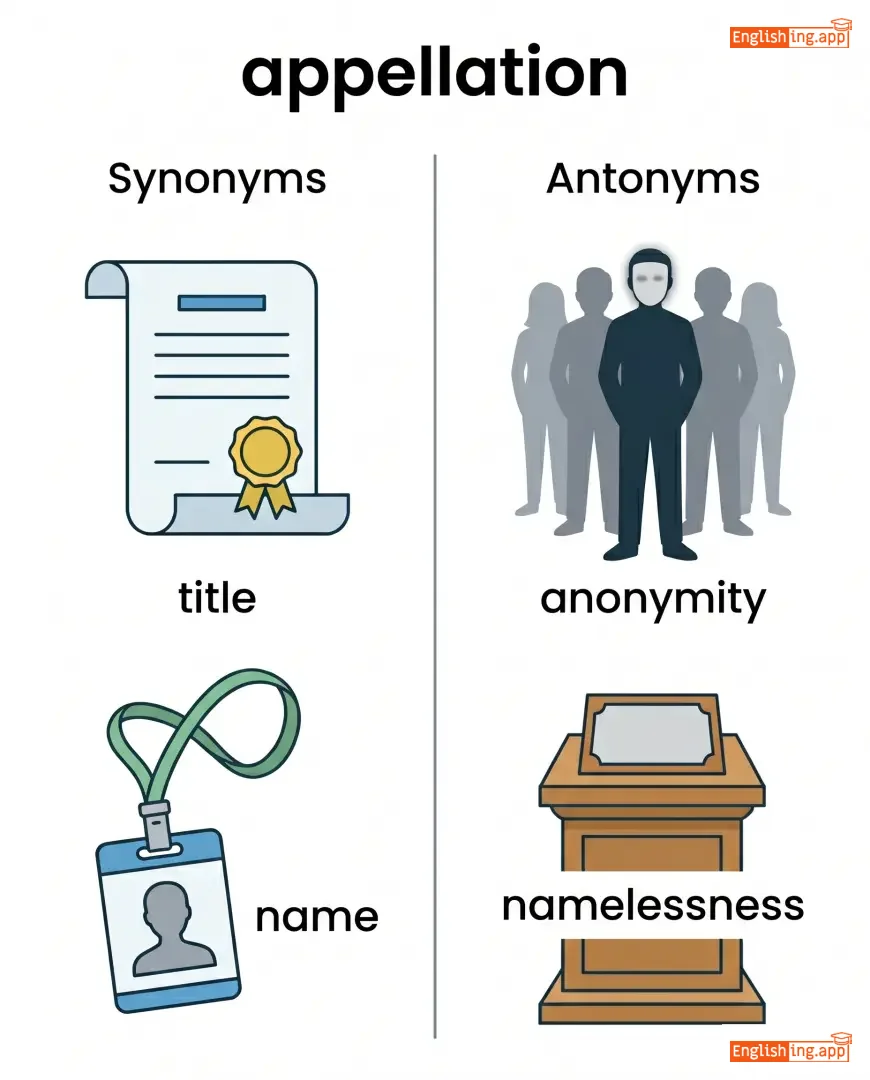
título / nombre
titulo / nombre
••••••
|
- •••••• | - •••••• | - •••••• | - •••••• |
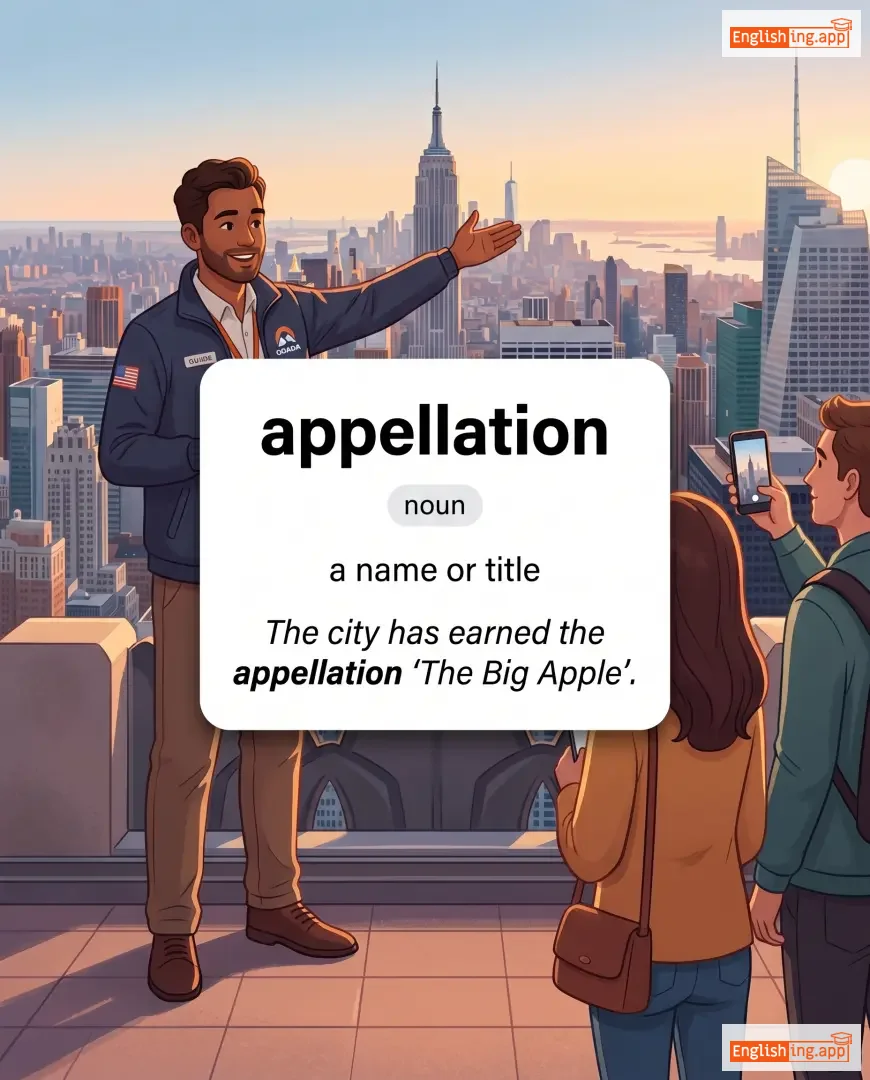
a name or title
••••••
|
The city has earned the appellation 'The Big Apple'. |
La ciudad ha ganado el título 'La Gran Manzana'.
La ciudad ha ganado el titulo 'La Gran Manzana'.
••••••
|
- •••••• | - •••••• | - •••••• |
title, name, designation, label, epithet
••••••
|
anonymity, namelessness
••••••
|
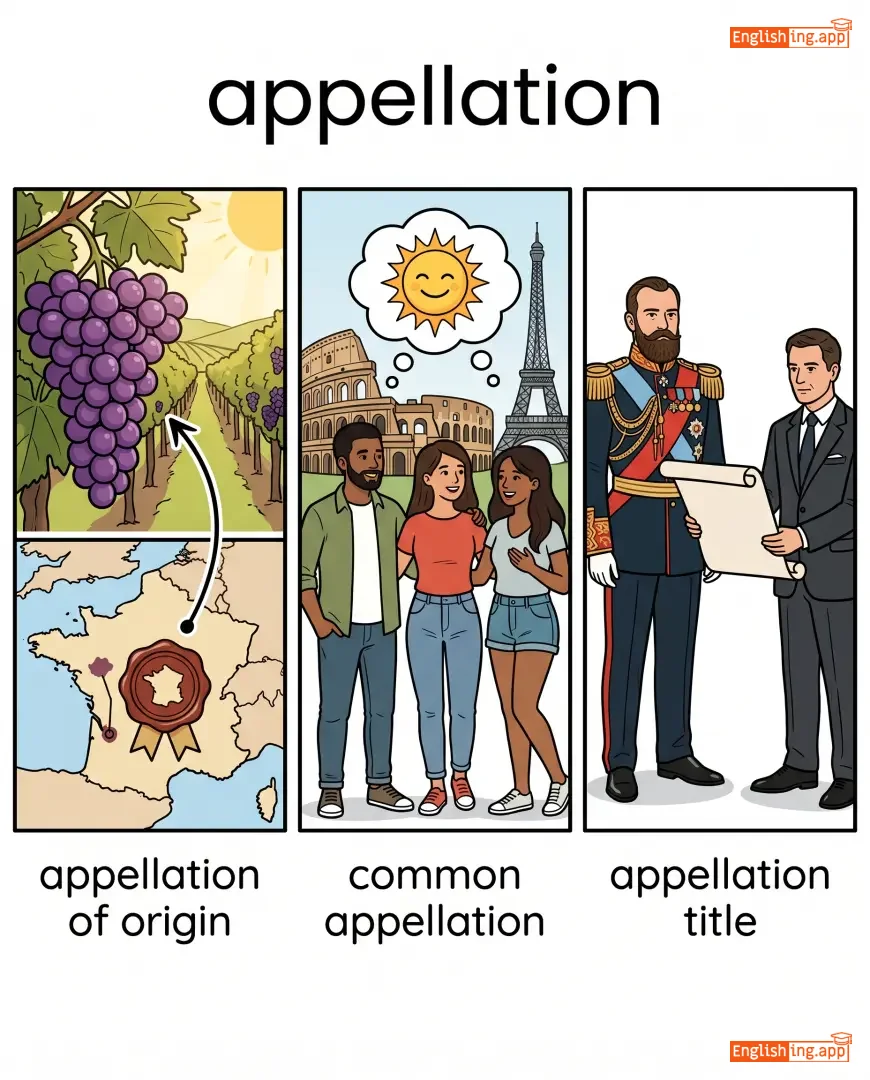
appellation of origin, common appellation, appellation title
••••••
|
Appellation significa título/nombre — Relaciona con la manzana 🍏
••••••
|
|
#518
⚖️
|
/ˈæpəˌleɪt/
adjective
(ápelat)
••••••
|
- •••••• |
relacionado con apelaciones
relacionado con apelaciones
••••••
|
- •••••• | - •••••• | - •••••• | - •••••• |
relating to appeals in a court of law
••••••
|
The case was taken to an appellate court. |
El caso fue llevado a un tribunal de apelaciones.
El caso fue llevado a un tribunal de apelaciones.
••••••
|
- •••••• | - •••••• | - •••••• |
appeal-related, judicial, review, legal
••••••
|
original, trial
••••••
|
appellate court, appellate jurisdiction, appellate process
••••••
|
Appellate significa relacionado con apelaciones — Relaciona Appeal + late stage con el tribunal de apelaciones
••••••
|
|
#519
🤲
|
/əˈpiːz/
verb
(apís)
••••••
|
|
apaciguar / satisfacer
apaciguar / satisfacer
••••••
|
appeased
apíst
••••••
|
appeased
apíst
••••••
|
appeases
apísez
••••••
|
appeasing
apísing
••••••
|
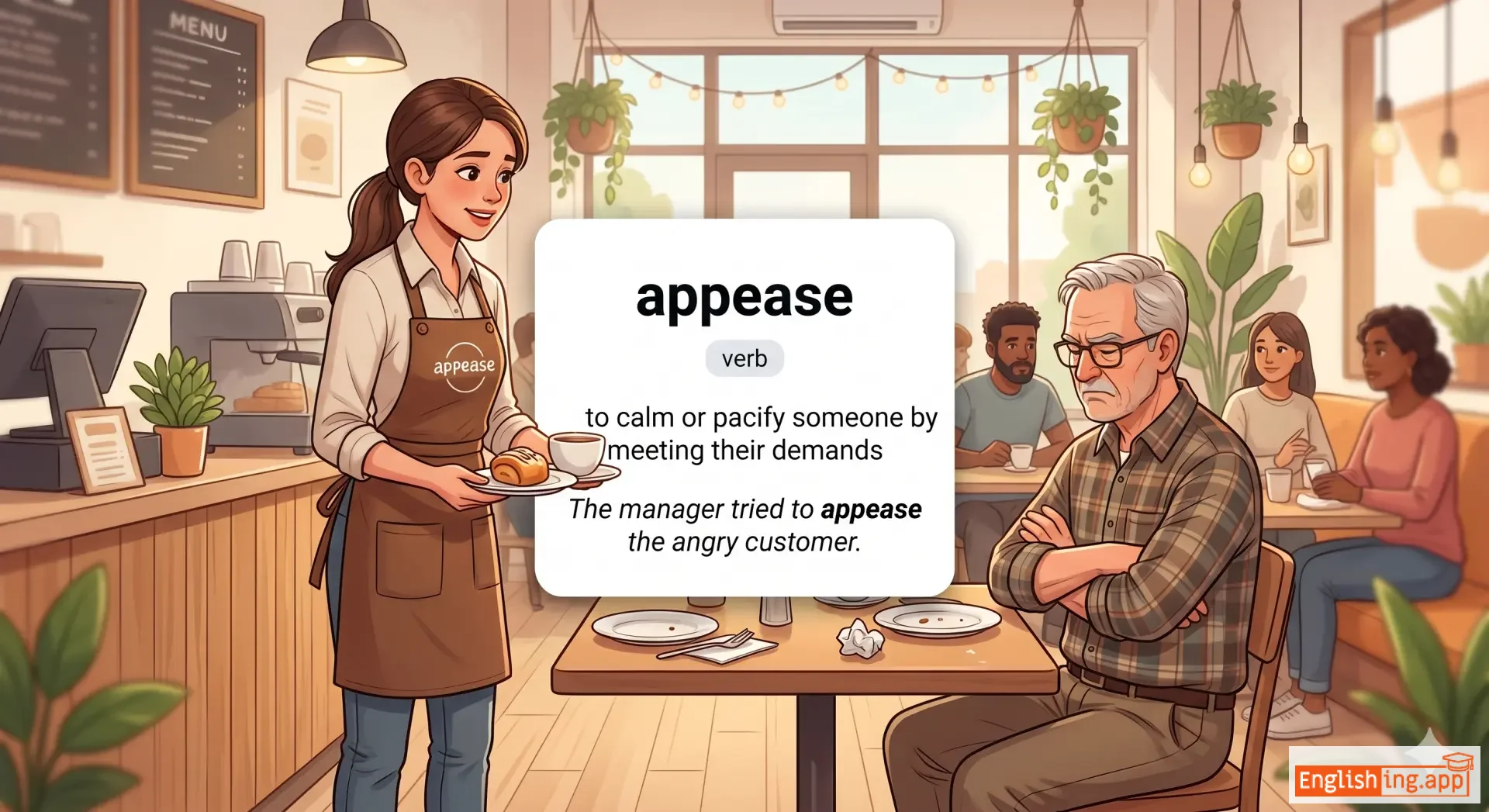
to calm or pacify someone by meeting their demands
••••••
|
The manager tried to appease the angry customer.
El gerente intentó apaciguar al cliente enojado.
••••••
|
El gerente intentó apaciguar al cliente enojado.
El gerente intentó apaciguar al cliente enojado.
••••••
|
appease someone's anger
apaciguar la ira de alguien
••••••
|
to reduce someone's anger by satisfying them
••••••
|
apaciguar la ira de alguien
apaciguar la ira de alguien
••••••
|
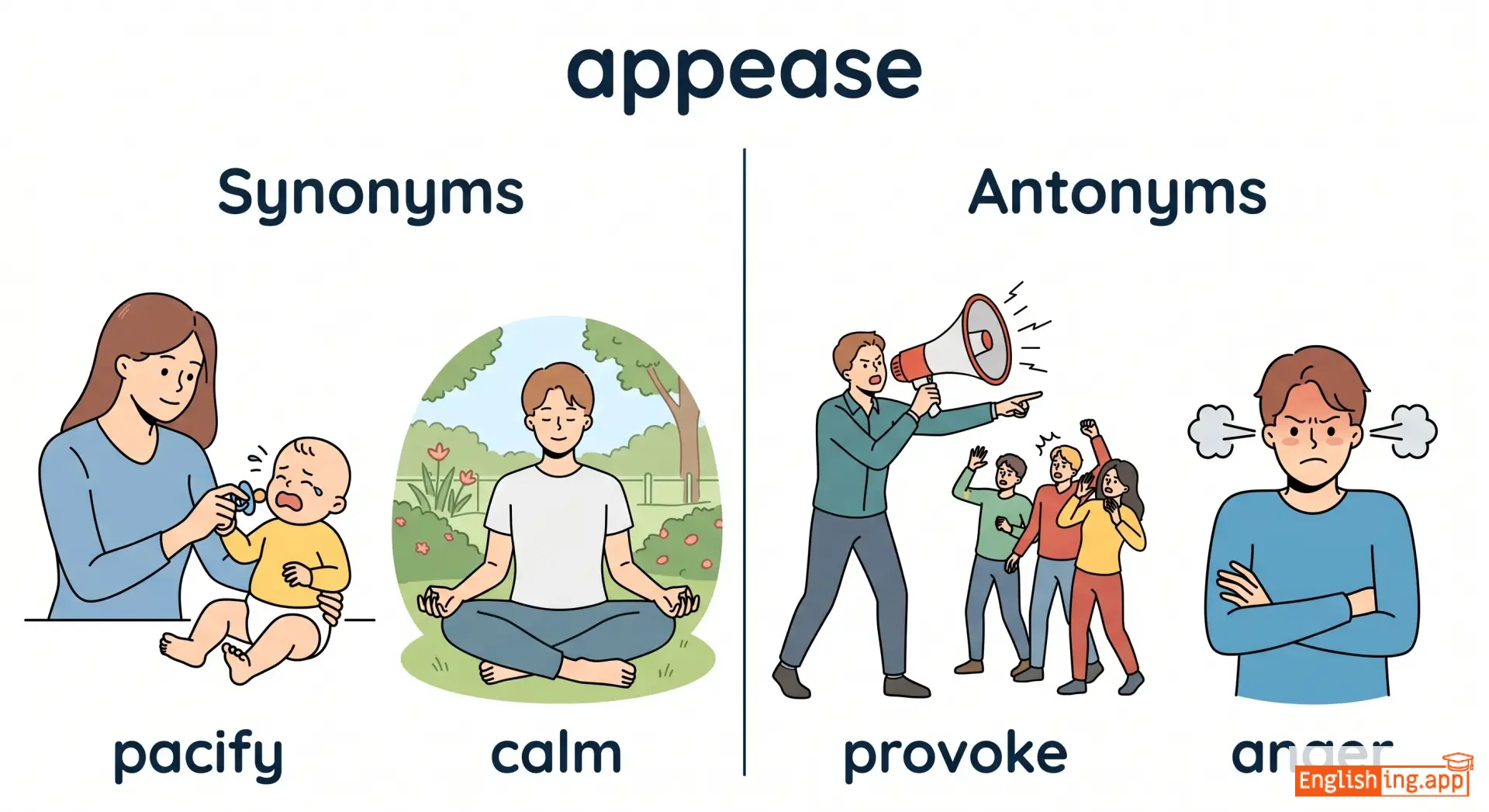
pacify, calm, satisfy, placate, soothe
••••••
|
provoke, anger, agitate
••••••
|
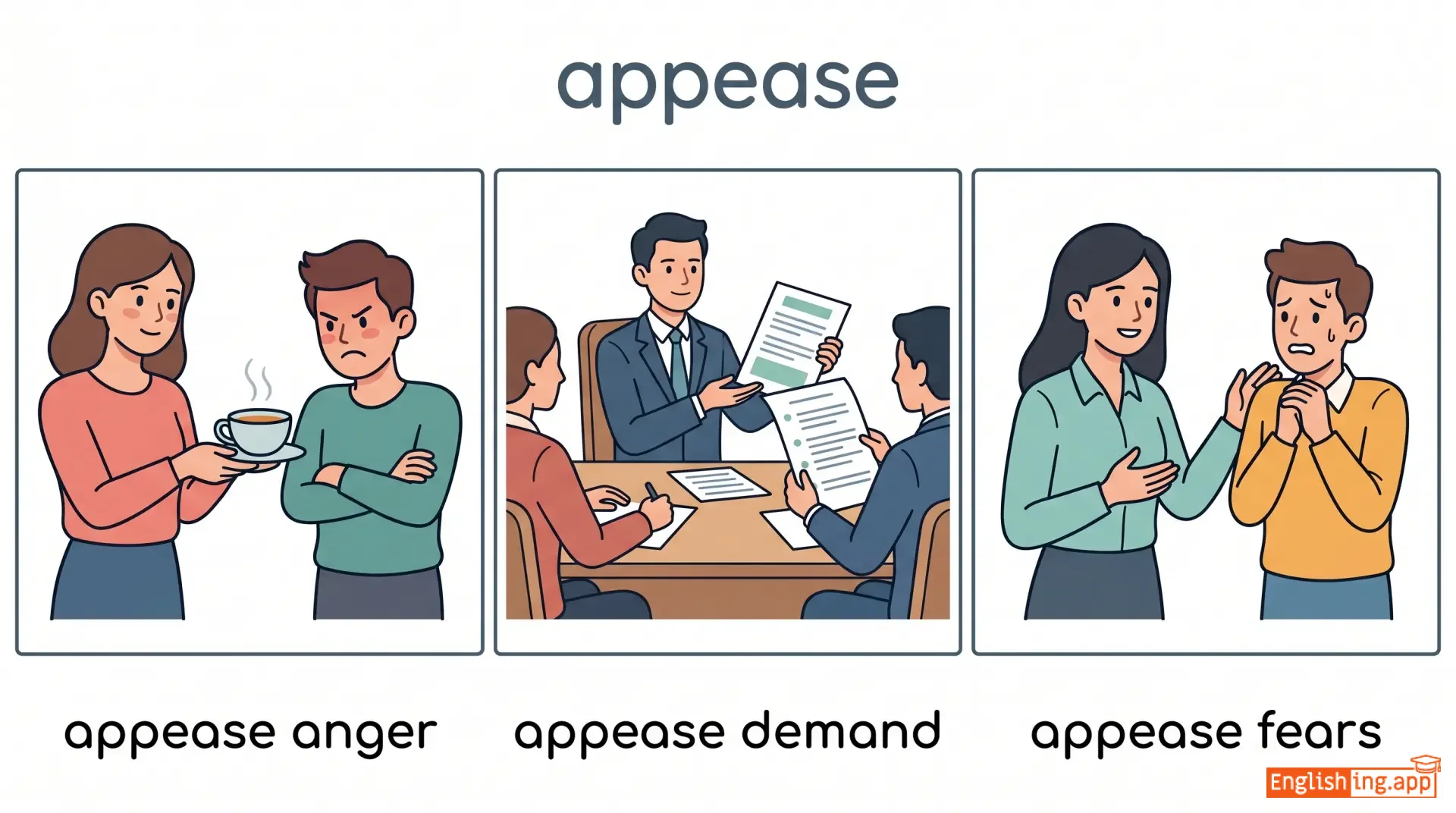
appease anger, appease demand, appease fears
••••••
|
Appease significa apaciguar, imagina que necesitas apaciguar para traer ‘Peace’
••••••
|
|
#520
✨
|
/əˈpiːlɪŋ/
adjective
(apiling)
••••••
|
- •••••• |
atractivo
apiling
••••••
|
- •••••• | - •••••• | - •••••• | - •••••• |
attractive or interesting
••••••
|
The design of the house is very appealing.
El diseño de la casa es muy atractivo.
••••••
|
El diseño de la casa es muy atractivo.
El diseno de la casa es muy atractivo
••••••
|
- •••••• | - •••••• | - •••••• |
attractive, charming, engaging, inviting, alluring
••••••
|
unattractive, boring, repulsive
••••••
|
visually appealing, appealing design, appealing personality
••••••
|
APealing = ATRACTIVO: Picture a house with the words ATTRACTIVO lighting up, and say appealing means attractive.
••••••
|
|
#521
📢
|
/əˈpiːl/
verb, noun
(apíl)
••••••
|
- •••••• |
apelación / atractivo
apelacion / atractivo
••••••
|
appealed
apíld
••••••
|
appealed
apíld
••••••
|
appeals
apíls
••••••
|
appealing
apíling
••••••
|
to make a serious request; to be attractive or interesting; a formal request to a higher authority for a decision to be changed
••••••
|
The charity appealed to the public for donations.
la caridad apeló al público para donaciones.
••••••
|
La caridad apeló al público por donaciones.
La caridad apelo al publico por donaciones.
••••••
|
make an appeal
hacer una apelación
••••••
|
to formally ask for something, often publicly
••••••
|
hacer una apelación
hacer una apelacion
••••••
|
request, petition, attraction, plea, entreaty
••••••
|
demand, order, repulsion
••••••
|
appeal to, appeal against, strong appeal, emotional appeal
••••••
|
Appeal = apelación, imagina alguien usando 📢 para hacer una apelación — Appeal = apelación
••••••
|
|
#522
👻
|
/ˌæpəˈrɪʃən/
noun
(apariśion)
••••••
|
- •••••• |
aparición fantasmagórica
aparicion fantasmagorica
••••••
|
- •••••• | - •••••• | - •••••• | - •••••• |
A ghostly figure or an unusual or unexpected appearance.
••••••
|
The children were frightened by the sudden apparition in the old house. |
Los niños se asustaron por la repentina aparición en la casa vieja.
Los ninos se asustaron por la repentina aparicion en la casa vieja.
••••••
|
- •••••• | - •••••• | - •••••• |
ghost, phantom, spirit, specter, vision
••••••
|
reality, being, substance
••••••
|
ghostly apparition, sudden apparition, apparition of a figure, apparition in dreams
••••••
|
Apparition significa una aparición de un fantasma o algo inesperado, como un fantasma.
••••••
|
|
#523
👀
|
/əˈpærənt/
adjective
(apárent)
••••••
|
- •••••• |
aparente
aparente
••••••
|
- •••••• | - •••••• | - •••••• | - •••••• |
Clearly visible or understood; obvious.
••••••
|
It soon became apparent that he was not telling the truth.
Pronto quedó claro que no estaba diciendo la verdad.
••••••
|
Pronto quedó claro que no estaba diciendo la verdad.
Pronto quedo claro que no estaba diciendo la verdad.
••••••
|
apparent reason
razón aparente
••••••
|
an obvious or clear reason
••••••
|
razón aparente
razón aparente
••••••
|
obvious, evident, clear, plain, visible
••••••
|
hidden, obscure, unclear
••••••
|
apparent reason, apparent mistake, became apparent, quite apparent
••••••
|
Apparent significa lo que se ve claramente; o sea, aparente.
••••••
|
|
#524
👗
|
/əˈpærəl/
noun
(áparel)
••••••
|
- •••••• |
ropa
ropa
••••••
|
- •••••• | - •••••• | - •••••• | - •••••• |
Clothing, especially formal or special clothes.
••••••
|
The store specializes in wedding apparel.
La tienda se especializa en ropa de boda.
••••••
|
La tienda se especializa en ropa de boda.
La tienda se especializa en ropa de boda.
••••••
|
- •••••• | - •••••• | - •••••• |
clothing, garments, attire, outfit, wardrobe
••••••
|
nakedness, undress
••••••
|
formal apparel, wedding apparel, sports apparel, fashion apparel
••••••
|
Apparel significa 'ropa', especialmente ropa para ocasiones especiales como bodas.
••••••
|
|
#525
😱
|
/əˈpɔːl/
verb
(apól)
••••••
|
- •••••• |
impactar
impactar
••••••
|
appalled
apóld
••••••
|
appalled
apóld
••••••
|
appalls
apóls
••••••
|
appalling
apóling
••••••
|
To shock or horrify someone with something unpleasant or bad.
••••••
|
The cruelty of the crime appalled the entire community.
La crueldad del crimen apóldo a toda la comunidad.
••••••
|
La crueldad del crimen impactó a toda la comunidad.
La crueldad del crimen impactó a toda la comunidad.
••••••
|
- •••••• | - •••••• | - •••••• |
shock, horrify, disgust, outrage, distress
••••••
|
please, delight, satisfy
••••••
|
appall the public, appalling crime, appalling behavior, deeply appalled
••••••
|
Appall suena como 'all are shocked'—todos están impactados.
••••••
|
|
#526
🌌
|
/ˈæpədʒiː/
noun
(apohjí)
••••••
|
|
ápice
apice
••••••
|
- •••••• | - •••••• | - •••••• | - •••••• |
the highest or most distant point; the climax or peak of something
••••••
|
The empire reached its apogee during the 18th century. |
El imperio alcanzó su ápice durante el siglo XVIII.
El imperio alcanzo su apice durante el siglo dieciocho.
••••••
|
- •••••• | - •••••• | - •••••• |
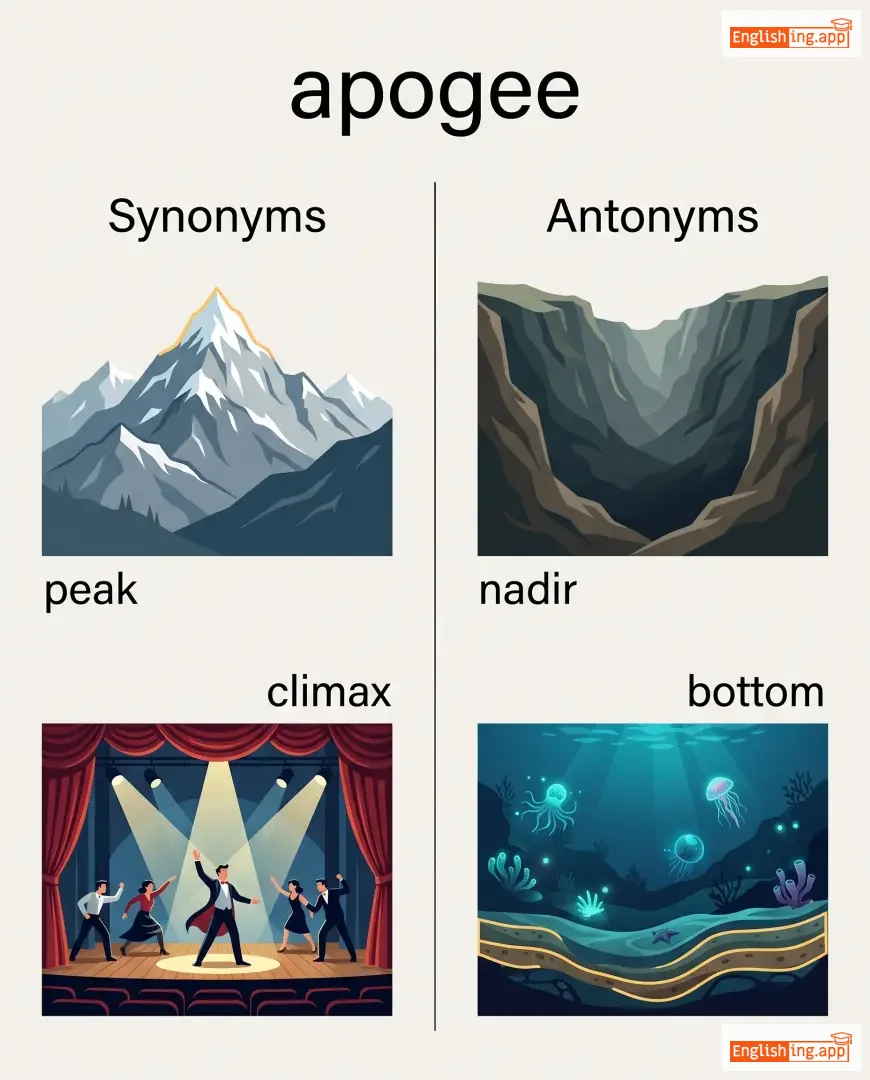
peak, climax, pinnacle, zenith, summit
••••••
|
nadir, bottom, base
••••••
|
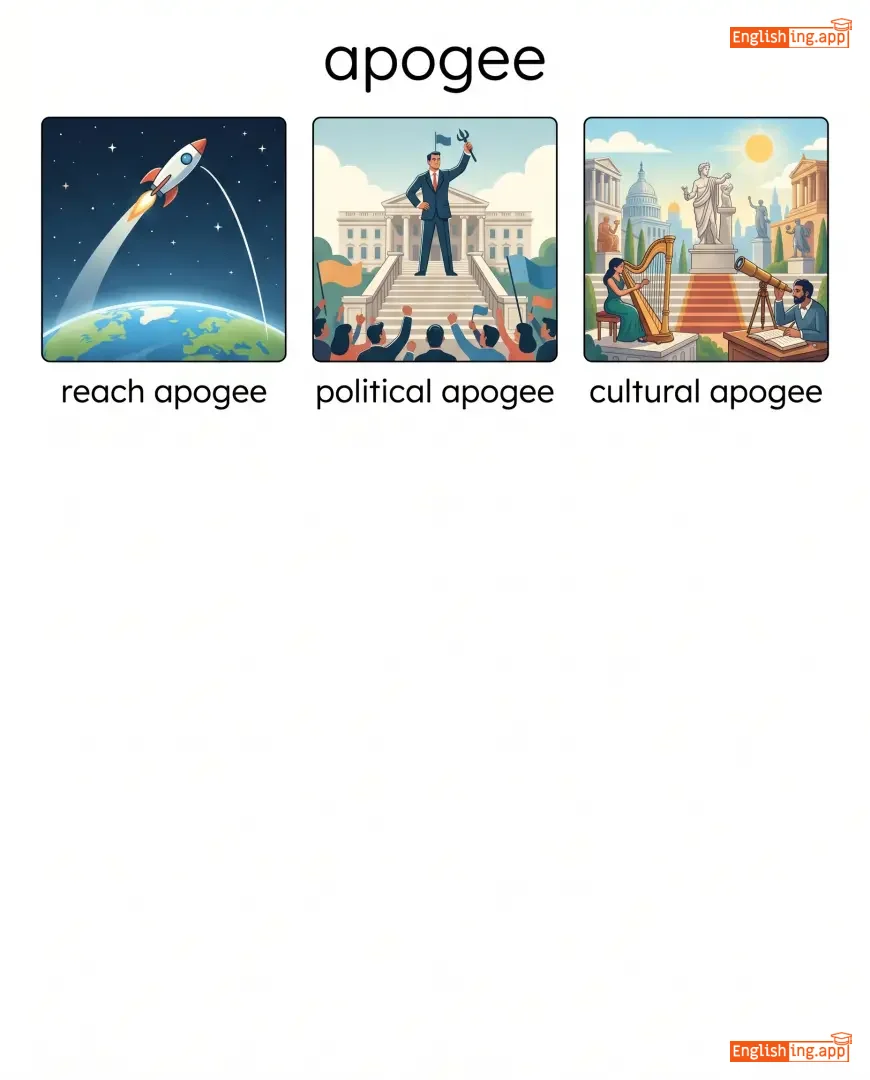
reach apogee, political apogee, cultural apogee, apogee of power
••••••
|
Apogee significa el punto más alto, similar a ‘ápice’
••••••
|
|
#527
💡
|
/ˈæpəˌθɛm/
noun
(apótegm)
••••••
|
|
máxima, dicho
maxima, dicho
••••••
|
- •••••• | - •••••• | - •••••• | - •••••• |
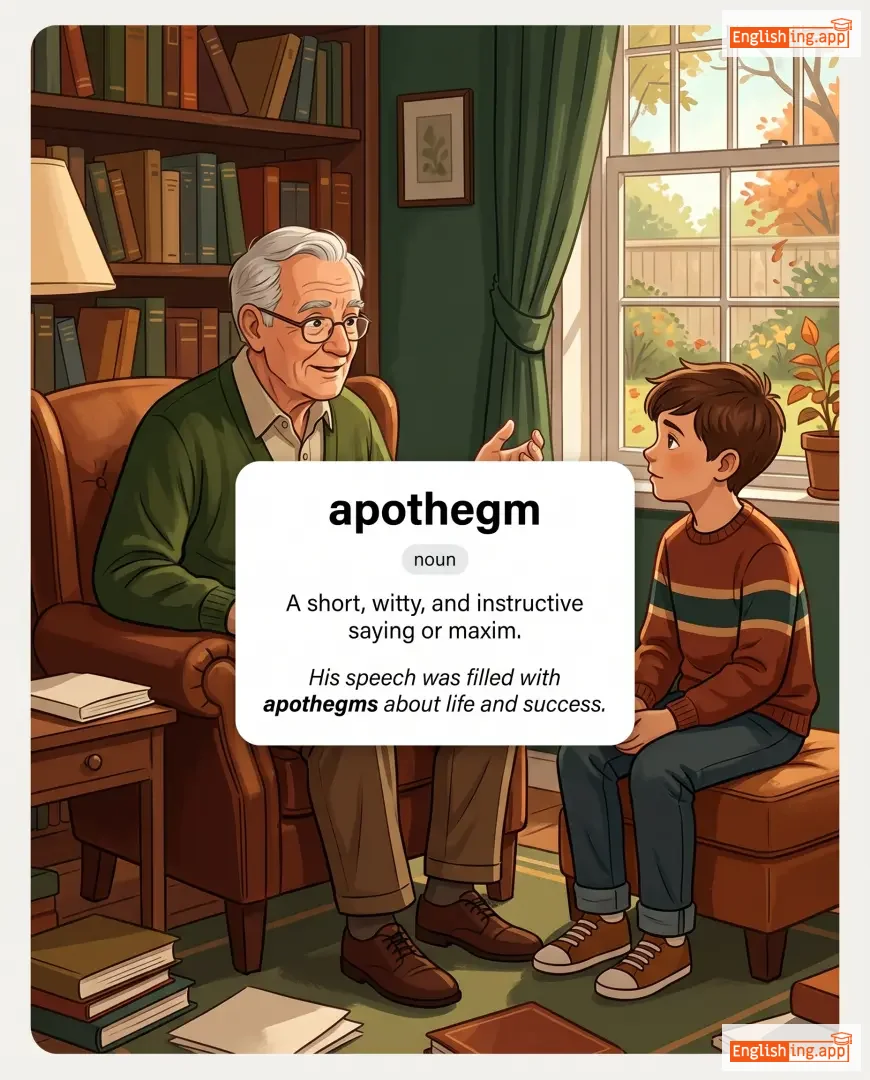
A short, witty, and instructive saying or maxim.
••••••
|
His speech was filled with apothegms about life and success. |
Su discurso estaba lleno de máximas sobre la vida y el éxito.
Su discurso estaba lleno de máximas sobre la vida y el éxito.
••••••
|
- •••••• | - •••••• | - •••••• |
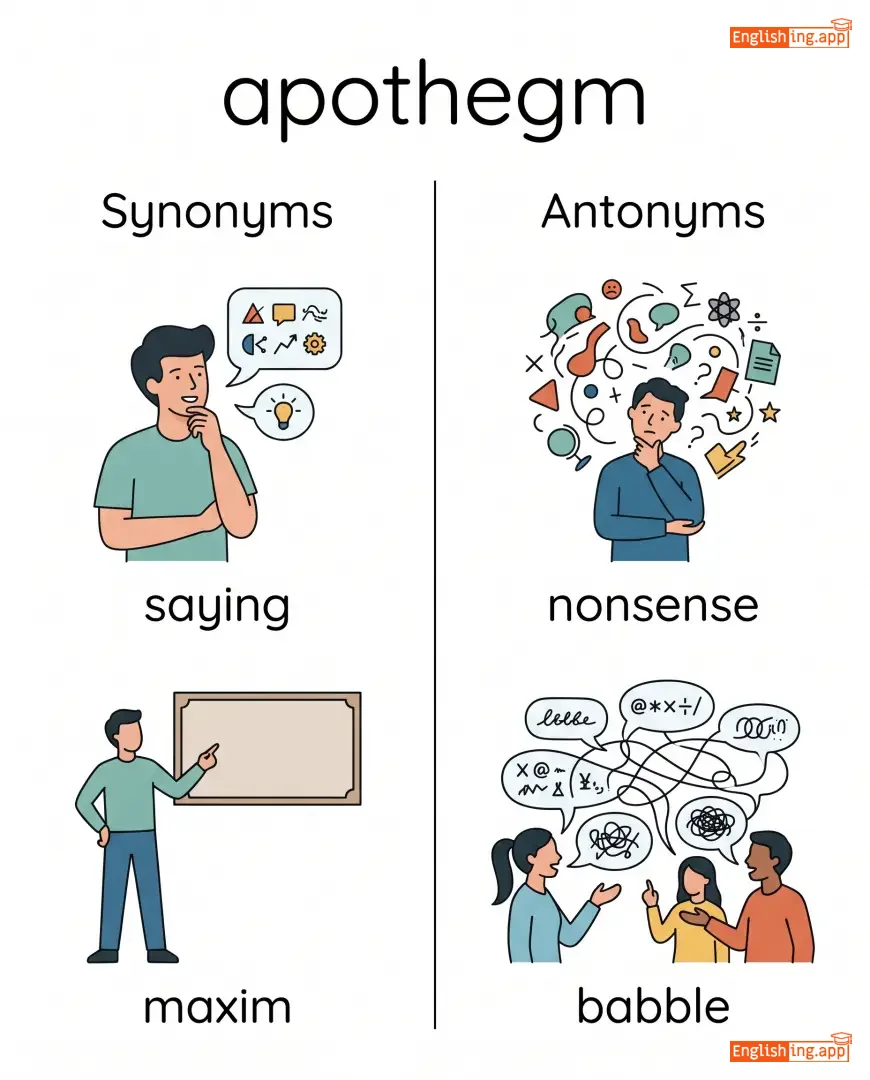
saying, maxim, aphorism, proverb, adage
••••••
|
nonsense, babble
••••••
|
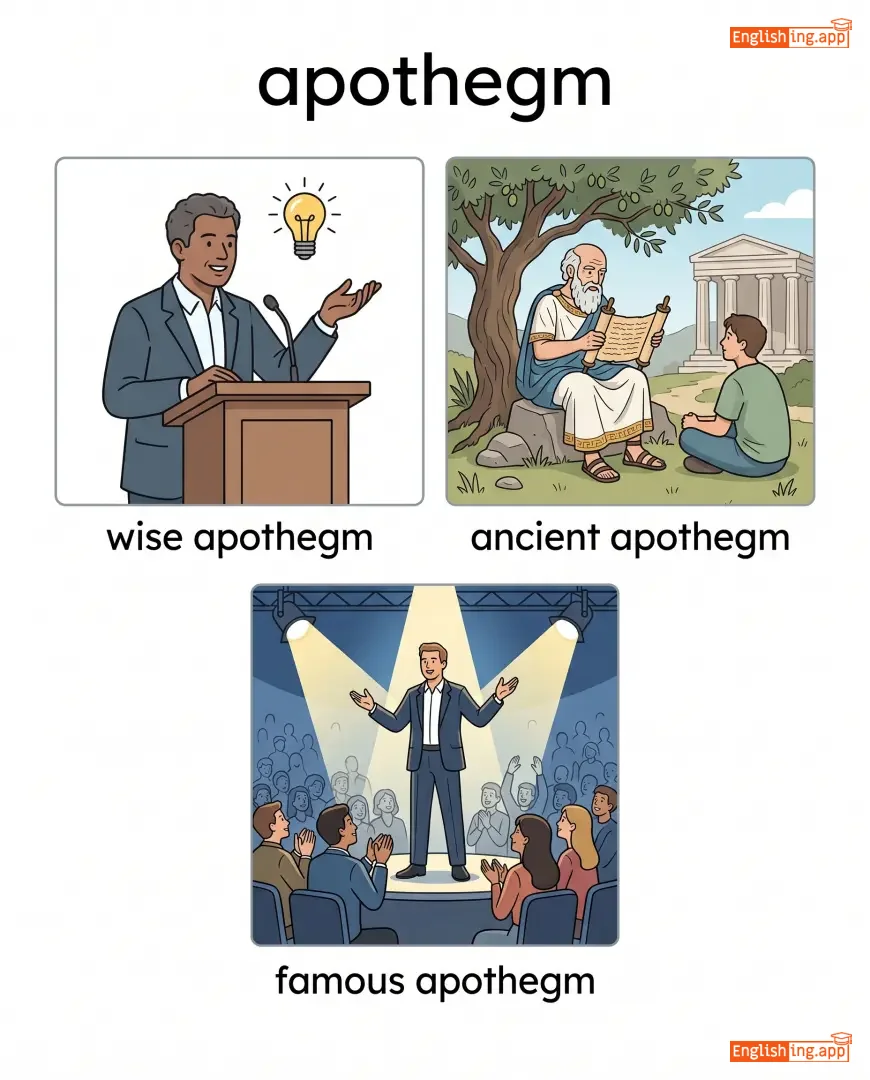
wise apothegm, ancient apothegm, famous apothegm
••••••
|
Apothegm significa una máxima corta e ingeniosa, recuerda 'theme' de la vida.
••••••
|
|
#528
⚗️
|
/əˈpɒθəˌkɛri/
noun
(apothecary)
••••••
|
- •••••• |
boticario
boticario
••••••
|
- •••••• | - •••••• | - •••••• | - •••••• |
A historical term for a person who prepared and sold medicines and drugs.
••••••
|
The village apothecary provided remedies for many common illnesses.
El boticario del pueblo proporcionó remedios para muchas enfermedades comunes.
••••••
|
El boticario del pueblo proporcionó remedios para muchas enfermedades comunes.
El boticario del pueblo proporciono remedios para muchas enfermedades comunes.
••••••
|
- •••••• | - •••••• | - •••••• |
pharmacist, druggist, chemist, healer
••••••
|
patient, customer
••••••
|
village apothecary, local apothecary, apothecary shop
••••••
|
Boticario es como un médico antiguo, recuerda 'ario' como en 'librario', lugar de trabajo.
••••••
|
|
#529
✒️
|
/əˈpɒstrəfi/
noun
(apóstrofe)
••••••
|
- •••••• |
apóstrofe
apostrofe
••••••
|
- •••••• | - •••••• | - •••••• | - •••••• |
A punctuation mark (') used to indicate possession or the omission of letters or numbers.
••••••
|
You need an apostrophe in the word 'children’s'.
Necesitas un apóstrofe en la palabra 'children’s'.
••••••
|
Necesitas un apóstrofe en la palabra 'children’s'.
Necesitas un apostrofe en la palabra 'children’s'.
••••••
|
- •••••• | - •••••• | - •••••• |
mark, punctuation, symbol
••••••
|
letter, word
••••••
|
use an apostrophe, missing apostrophe, apostrophe rule
••••••
|
Apóstrofe = A POSsession TO FEel, recuerda que indica posesión o la omisión de letras
••••••
|
|
#530
✝️
|
/əˈpɒsəl/
noun
(apóstol)
••••••
|
- •••••• |
apóstol, defensor
apostol, defensor
••••••
|
- •••••• | - •••••• | - •••••• | - •••••• |
A vigorous and pioneering advocate or supporter of a particular cause, often used for the early Christian disciples.
••••••
|
He became an apostle of environmental protection.
Él se convirtió en un apóstol de la protección del medio ambiente.
••••••
|
Él se convirtió en un apóstol de la protección del medio ambiente.
Él se convirtió en un apóstol de la protección del medio ambiente.
••••••
|
- •••••• | - •••••• | - •••••• |
disciple, advocate, supporter, missionary, proponent
••••••
|
opponent, critic, adversary
••••••
|
Christian apostle, apostle of peace, apostle of freedom
••••••
|
Apostol significa defensor, como cuando una causa se promueve con gran esfuerzo.
••••••
|
|
#531
🚶
|
/ˈæpəˌsteɪt/
noun
(apóstata)
••••••
|
- •••••• |
apóstata
apostata
••••••
|
- •••••• | - •••••• | - •••••• | - •••••• |
A person who renounces a religious or political belief or principle.
••••••
|
He was labeled an apostate after abandoning the faith of his community. |
Fue etiquetado como apóstata después de abandonar la fe de su comunidad.
Fue etiquetado como apóstata después de abandonar la fe de su comunidad.
••••••
|
- •••••• | - •••••• | - •••••• |
defector, renegade, deserter, nonconformist, heretic
••••••
|
believer, loyalist, adherent
••••••
|
religious apostate, political apostate, branded apostate
••••••
|
Apostate significa renunciar a la fe, piensa en 'apostar' y abandonar algo.
••••••
|
|
#532
🚫
|
/əˈpɒstəsi/
noun
(apóstasi)
••••••
|
- •••••• |
apostasía
apostasia
••••••
|
- •••••• | - •••••• | - •••••• | - •••••• |
The abandonment or renunciation of a religious or political belief.
••••••
|
His public apostasy shocked his followers. |
Su apostasía pública sorprendió a sus seguidores.
Su apostasía pública sorprendió a sus seguidores.
••••••
|
- •••••• | - •••••• | - •••••• |
renunciation, defection, heresy, abandonment
••••••
|
loyalty, faith, devotion
••••••
|
commit apostasy, accused of apostasy, religious apostasy
••••••
|
Apostasia significa abandonar una creencia - apostasía.
••••••
|
|
#533
🧠
|
/ˈæpəplɛksi/
noun
(apoplexia)
••••••
|
- •••••• |
Pérdida súbita de conciencia o control debido a un derrame cerebral o rabia extrema
apoplexia
••••••
|
- •••••• | - •••••• | - •••••• | - •••••• |
A sudden loss of consciousness or control due to stroke or extreme anger.
••••••
|
The old man nearly had apoplexy when he heard the shocking news. |
El anciano casi sufrió apoplejía cuando escuchó la noticia impactante.
El anciano casi sufrio apoplejia cuando escucho la noticia impactante.
••••••
|
- •••••• | - •••••• | - •••••• |
stroke, seizure, fit, rage
••••••
|
calmness, composure
••••••
|
died of apoplexy, fit of apoplexy, apoplexy attack
••••••
|
Apoplexia = A por Plexo → un golpe fuerte que te deja inconsciente.
••••••
|
|
#534
😡
|
/ˌæpəˈplɛktɪk/
adjective
(apopléctico)
••••••
|
- •••••• |
apoplético
apoplectico
••••••
|
- •••••• | - •••••• | - •••••• | - •••••• |
Extremely angry; furious.
••••••
|
He was apoplectic when he heard about the unfair decision.
Estaba apoplético cuando escuchó sobre la decisión injusta.
••••••
|
Estaba apoplético cuando escuchó sobre la decisión injusta.
Estaba apopletico cuando escucho sobre la decision injusta.
••••••
|
- •••••• | - •••••• | - •••••• |
furious, enraged, incensed, irate
••••••
|
calm, composed, relaxed
••••••
|
apoplectic rage, apoplectic with anger, became apoplectic
••••••
|
Apopléctico es como un 'apoplejía', cuando alguien está tan enojado como si tuviera una.
••••••
|
|
#535
💡
|
/ˈæpəfθɛm/
noun
(apofzém)
••••••
|
- •••••• |
dicho o refrán corto, ingenioso y educativo
apofzem
••••••
|
- •••••• | - •••••• | - •••••• | - •••••• |
A short, pithy, and instructive saying or maxim.
••••••
|
She always had a witty apophthegm to share at meetings.
Ella siempre tenía un apofema ingenioso para compartir en las reuniones.
••••••
|
Ella siempre tenía un apofema ingenioso para compartir en las reuniones.
Ella siempre tenía un apofema ingenioso para compartir en las reuniones.
••••••
|
- •••••• | - •••••• | - •••••• |
maxim, aphorism, proverb, saying
••••••
|
rambling, nonsense
••••••
|
famous apophthegm, witty apophthegm, memorable apophthegm
••••••
|
Apophthegm = como 'una manzana al día mantiene alejado al médico'.
••••••
|
|
#536
🗣️
|
/əˈpɒfəsɪs/
noun
(apofasis)
••••••
|
- •••••• |
apofasis
apofasis
••••••
|
- •••••• | - •••••• | - •••••• | - •••••• |
A rhetorical device where the speaker brings up a subject by denying it or pretending to pass over it.
••••••
|
The politician used apophasis by saying, 'I won’t even mention my opponent’s scandals.'
El politico uso la apofasis al decir: 'Ni siquiera mencionare los escandalos de mi oponente'.
••••••
|
El político usó la apofasis al decir: 'Ni siquiera mencionaré los escándalos de mi oponente'.
El politico uso la apofasis al decir: 'Ni siquiera mencionare los escandalos de mi oponente'.
••••••
|
- •••••• | - •••••• | - •••••• |
paralipsis, preterition, rhetorical device, insinuation
••••••
|
direct mention, explicit statement
••••••
|
use apophasis, rhetorical apophasis, classic apophasis
••••••
|
ApoFasis = 'A po fas is' imagine un politico diciendo 'I wont say it' mientras cruza temas de una lista; memory cue en español e ingles.
••••••
|
|
#537
🙏
|
/əˈpɒlədʒi/
noun
(apology)
••••••
|
- •••••• |
disculpa
dis-kul-pah
••••••
|
- •••••• | - •••••• | - •••••• | - •••••• |
a statement expressing regret for something wrong or hurtful
••••••
|
He offered an apology for being late to the meeting.
Él ofreció una disculpa por llegar tarde a la reunión.
••••••
|
Él ofreció una disculpa por llegar tarde a la reunión.
El ofrecio una disculpa por llegar tarde a la reunion.
••••••
|
make an apology
hacer una disculpa
••••••
|
to formally express regret for a mistake or offense
••••••
|
hacer una disculpa
hacer una disculpa
••••••
|
regret, excuse, admission, acknowledgment
••••••
|
defiance, denial, justification
••••••
|
offer an apology, sincere apology, formal apology, public apology
••••••
|
Disculpa = dis + culpa (not fault) -> apology; picture saying sorry in Spanish to fix the fault
••••••
|
|
#538
📖
|
/ˈæpəˌlɔːɡ/
noun
(ápolog)
••••••
|
- •••••• |
cuento moral
cuento moral
••••••
|
- •••••• | - •••••• | - •••••• | - •••••• |
a short moral story or fable intended to teach a lesson
••••••
|
The teacher used an old apologue to explain honesty to the children. |
El maestro usó un viejo cuento moral para explicar la honestidad a los niños.
El maestro usó un viejo cuento moral para explicar la honestidad a los niños.
••••••
|
- •••••• | - •••••• | - •••••• |
fable, parable, tale, allegory
••••••
|
fact, reality
••••••
|
ancient apologue, apologue about, use an apologue
••••••
|
Apologue = App + log → Contar una historia en el teléfono que enseña una lección
••••••
|
|
#539
🛡️
|
/əˈpɒlədʒɪst/
noun
(apologista)
••••••
|
- •••••• |
defensor
defensor
••••••
|
- •••••• | - •••••• | - •••••• | - •••••• |
a person who defends or justifies something, often a controversial belief or institution
••••••
|
He is known as an apologist for authoritarian regimes. |
Él es conocido como un defensor de los regímenes autoritarios.
El es conocido como un defensor de los regimenes autoritarios.
••••••
|
- •••••• | - •••••• | - •••••• |
defender, advocate, supporter, proponent
••••••
|
critic, opponent, detractor
••••••
|
apologist for, religious apologist, political apologist
••••••
|
Apologist significa alguien que defiende una causa o ideología
••••••
|
|
#540
⚖️
|
/ˌeɪpəˈlɪtɪkəl/
adjective
(epolítical)
••••••
|
- •••••• |
apolítico
apolitico
••••••
|
- •••••• | - •••••• | - •••••• | - •••••• |
not interested in or not connected with politics
••••••
|
She prefers to stay apolitical and focus on her work.
Ella prefiere mantenerse apolítica y concentrarse en su trabajo.
••••••
|
Ella prefiere mantenerse apolítica y concentrarse en su trabajo.
Ella prefiere mantenerse apolitica y concentrarse en su trabajo.
••••••
|
- •••••• | - •••••• | - •••••• |
neutral, indifferent, nonpartisan, detached
••••••
|
political, partisan, engaged
••••••
|
apolitical stance, apolitical behavior, remain apolitical
••••••
|
Apolitical = lejos de la política → a + political
••••••
|
Vocabulary Quiz
Test your vocabulary by matching words with their translations or meanings.
Login to take the quiz
Comments (0)
Share your thoughts and join the discussion.
Join the discussion by logging in
Login to CommentNo comments yet
Be the first to share your thoughts!