

Swipe left or right, or use the buttons. Tap image to zoom.
例句翻译
单词
Lesson 230Lesson 230 - 遮罩切换
|
表情符号
|
单词 | Images | 翻译 | 过去时 | 过去分词 | 第三人称单数 | 动名词 | 含义 | 例句 | 例句翻译 | 示例表达 | 示例表达含义 | 示例表达翻译 | 同义词 | 反义词 | 搭配词 | 助记符 |
|---|---|---|---|---|---|---|---|---|---|---|---|---|---|---|---|---|---|
|
#6870
🧠
|
/ˌpriːˈmɛdɪteɪt/
verb
(普瑞梅迪泰特)
••••••
|
- •••••• |
预谋
yùmóu
••••••
|
premeditated
普瑞梅迪泰特德
••••••
|
premeditated
普瑞梅迪泰特德
••••••
|
premeditates
普瑞梅迪泰特斯
••••••
|
premeditating
普瑞梅迪泰特英
••••••
|
to think about and plan something (especially a crime) beforehand
••••••
|
The suspect was accused of premeditating the crime.
嫌疑人被指控事先计划犯罪。
••••••
|
嫌疑人被指控事先计划犯罪。
Xiányí rén bèi zhǐkòng shìxiān jìhuà fànzuì.
••••••
|
premeditated murder
预谋杀人
••••••
|
a murder that was planned in advance
••••••
|
预谋杀人
yùmóu shārén
••••••
|
plan, intend, contemplate, devise, deliberate
••••••
|
improvise, spontaneity, accidental
••••••
|
premeditated crime, premeditated act, premeditate a plan
••••••
|
Pre + 想,表示事先想(想 = meditate)做。
••••••
|
|
#6871
🧠
|
/ˌpriːpəˈzɛʃən/
noun
(pǔlìjiàn)
••••••
|
- •••••• |
偏见
pianjian
••••••
|
- •••••• | - •••••• | - •••••• | - •••••• |
An opinion or feeling formed beforehand; a prejudice or preoccupation.
••••••
|
His prepossession in favor of tradition made him resist change.
他的偏见使他反对改变。
••••••
|
他的偏见使他反对改变。
Tā de piānjiàn shǐ tā fǎnduì gǎibiàn.
••••••
|
- •••••• | - •••••• | - •••••• |
bias, prejudice, predisposition, inclination, leaning
••••••
|
impartiality, fairness, neutrality
••••••
|
prepossession in favor, strong prepossession, prepossession against
••••••
|
Prepossession就像偏见,意思是你已经有了固有的想法。
••••••
|
|
#6872
😊
|
/ˌpriːpəˈzɛsɪŋ/
adjective
(pǔlǐpòzèsīng)
••••••
|
- •••••• |
迷人
mírén
••••••
|
- •••••• | - •••••• | - •••••• | - •••••• |
Attractive or appealing in appearance or manner.
••••••
|
She had a prepossessing smile that charmed everyone.
她有一个迷人的微笑,让每个人都着迷。
••••••
|
她有一个迷人的微笑,让每个人都着迷。
Tā yǒu yīgè mírén de wēixiào, ràng měi gèrén dōu zháomí.
••••••
|
- •••••• | - •••••• | - •••••• |
attractive, charming, appealing, engaging, likable
••••••
|
unattractive, unappealing, repulsive
••••••
|
prepossessing appearance, prepossessing charm, prepossessing smile
••••••
|
Prepossessing 的意思是迷人;想象'微笑'能吸引所有人。
••••••
|
|
#6873
📊
|
/prɪˈpɒndəreɪt/
verb
(prípóndaret)
••••••
|
- •••••• |
占优势
zhàn yōushì
••••••
|
preponderated
prípóndareted
••••••
|
preponderated
prípóndareted
••••••
|
preponderates
prípóndarets
••••••
|
preponderating
prípóndareting
••••••
|
To be greater in influence, weight, or number.
••••••
|
In the debate, logical arguments preponderated over emotional appeals.
在辩论中,逻辑论点优于情感呼吁。
••••••
|
在辩论中,逻辑论点优于情感呼吁。
Zài biànlùn zhōng, luójí lùndiǎn yōu yú qínggǎn hūyù.
••••••
|
- •••••• | - •••••• | - •••••• |
dominate, outweigh, prevail, surpass, excel
••••••
|
yield, lose, fail
••••••
|
preponderate over, strongly preponderate, preponderate in influence
••••••
|
占优势就像在论点中取得了胜利,记住它的 '优' 代表更强的影响!
••••••
|
|
#6874
🏆
|
/prɪˈpɒndərənt/
adjective
(普里庞德伦特)
••••••
|
- •••••• |
主要的
zhǔyào de
••••••
|
- •••••• | - •••••• | - •••••• | - •••••• |
Having superior weight, force, influence, or importance.
••••••
|
The preponderant influence of the media shapes public opinion. |
媒体的主要影响塑造了公众舆论。
Méi tǐ de zhǔyào yǐngxiǎng sùzào le gōngzhòng yúlùn.
••••••
|
- •••••• | - •••••• | - •••••• |
dominant, prevailing, predominant, influential, superior
••••••
|
minor, weak, subordinate
••••••
|
preponderant role, preponderant influence, preponderant factor
••••••
|
Preponderant = 主要的; 表示在各方面占主导地位的东西。
••••••
|
|
#6875
⚖️
|
/prɪˈpɒndərəns/
noun
(pǔlóngdélìnsī)
••••••
|
- •••••• |
优势
yōushì
••••••
|
- •••••• | - •••••• | - •••••• | - •••••• |
The quality or fact of being greater in number, quantity, or importance.
••••••
|
There was a preponderance of evidence against the defendant.
对被告有明显的证据优势。
••••••
|
对被告有明显的证据优势。
Duì bèigào yǒu míngxiǎn de zhèngjù yōushì.
••••••
|
- •••••• | - •••••• | - •••••• |
dominance, prevalence, superiority, predominance, advantage
••••••
|
minority, inferiority, weakness
••••••
|
preponderance of evidence, overwhelming preponderance, preponderance in favor
••••••
|
优势意味着更多证据;记住'ponder'就像积累更多。
••••••
|
|
#6876
📝
|
/prɪˈpærətɔːri/
adjective
(预备的)
••••••
|
- •••••• |
预备的
yù bèi de
••••••
|
- •••••• | - •••••• | - •••••• | - •••••• |
Serving as preparation or preliminary before the main event.
••••••
|
They held a preparatory meeting before the main conference.
他们在主要会议之前举行了预备会议。
••••••
|
他们在主要会议之前举行了预备会议。
Tāmen zài zhǔyào huìyì zhīqián jǔxíngle yù bèi huìyì.
••••••
|
- •••••• | - •••••• | - •••••• |
preliminary, introductory, initial, prior, groundwork
••••••
|
final, conclusive
••••••
|
preparatory meeting, preparatory phase, preparatory work, preparatory steps
••••••
|
Preparatory 意味着预备的,就像考试前的预备课。
••••••
|
|
#6877
📋
|
/ˌprɛpəˈreɪʃən/
noun
(准备)
••••••
|
- •••••• |
准备
zhǔnbèi
••••••
|
- •••••• | - •••••• | - •••••• | - •••••• |
The act of getting ready or making arrangements for something.
••••••
|
The team made careful preparation for the presentation. |
团队为演示做了充分的准备。
tuánduì wèi yǎnshì zuòle chōngfèn de zhǔnbèi.
••••••
|
fail to prepare is prepare to fail |
If you don’t get ready in advance, you are setting yourself up for failure.
••••••
|
不做准备就是为失败做准备。
bù zuò zhǔnbèi jiùshì wèi shībài zuò zhǔnbèi.
••••••
|
arrangement, planning, readiness, groundwork, setup
••••••
|
neglect, disorganization
••••••
|
make preparation, careful preparation, preparation for, preparation time
••••••
|
准备充足,成功一半。
••••••
|
|
#6878
✨
|
/ˌpriːɔːrˈdeɪn/
verb
(priórdén)
••••••
|
- •••••• |
预定
yùdìng
••••••
|
preordained
priórdénd
••••••
|
preordained
priórdénd
••••••
|
preordains
priórdéns
••••••
|
preordaining
priórdénīng
••••••
|
To decide or determine an outcome in advance, especially by fate or divine will.
••••••
|
They believed their meeting was preordained by destiny.
他们相信他们的相遇是命运注定的。
••••••
|
他们相信他们的相遇是命运注定的。
Tāmen xiāngxìn tāmen de xiāngyù shì mìngyùn zhùdìng de.
••••••
|
- •••••• | - •••••• | - •••••• |
predetermine, foreordain, fate, predestine
••••••
|
chance, random
••••••
|
preordain fate, preordain events, preordain outcome, preordain by God
••••••
|
Pre + 定义表示提前 (Pre) 注定 (定) 结果。
••••••
|
|
#6879
🌀
|
/priːˈɒkjʊpaɪ/
verb
(priˈoʊkjuːpaɪ)
••••••
|
- •••••• |
使专心
shi zhuanxin
••••••
|
preoccupied
preoˈkupaɪd
••••••
|
preoccupied
preoˈkupaɪd
••••••
|
preoccupies
preoˈkupaɪz
••••••
|
preoccupying
preoˈkupaɪɪŋ
••••••
|
To dominate or engross the mind of someone to the exclusion of other thoughts.
••••••
|
Worries about the future preoccupy him constantly.
担忧未来的问题让他始终处于忙碌状态。
••••••
|
担忧未来的问题让他始终处于忙碌状态。
Dānyōu wèilái de wèntí ràng tā shǐzhōng chǔyú mánglù zhuàngtài.
••••••
|
- •••••• | - •••••• | - •••••• |
absorb, engross, distract, consume, obsess
••••••
|
free, release, ignore
••••••
|
preoccupy the mind, preoccupy thoughts, preoccupy with, constantly preoccupy
••••••
|
Pre + Occupy,即占据某人思想,就像对未来的担忧占据了他的思想。
••••••
|
|
#6880
🤔
|
/priːˌɒkjuˈpeɪʃən/
noun
(预占)
••••••
|
|
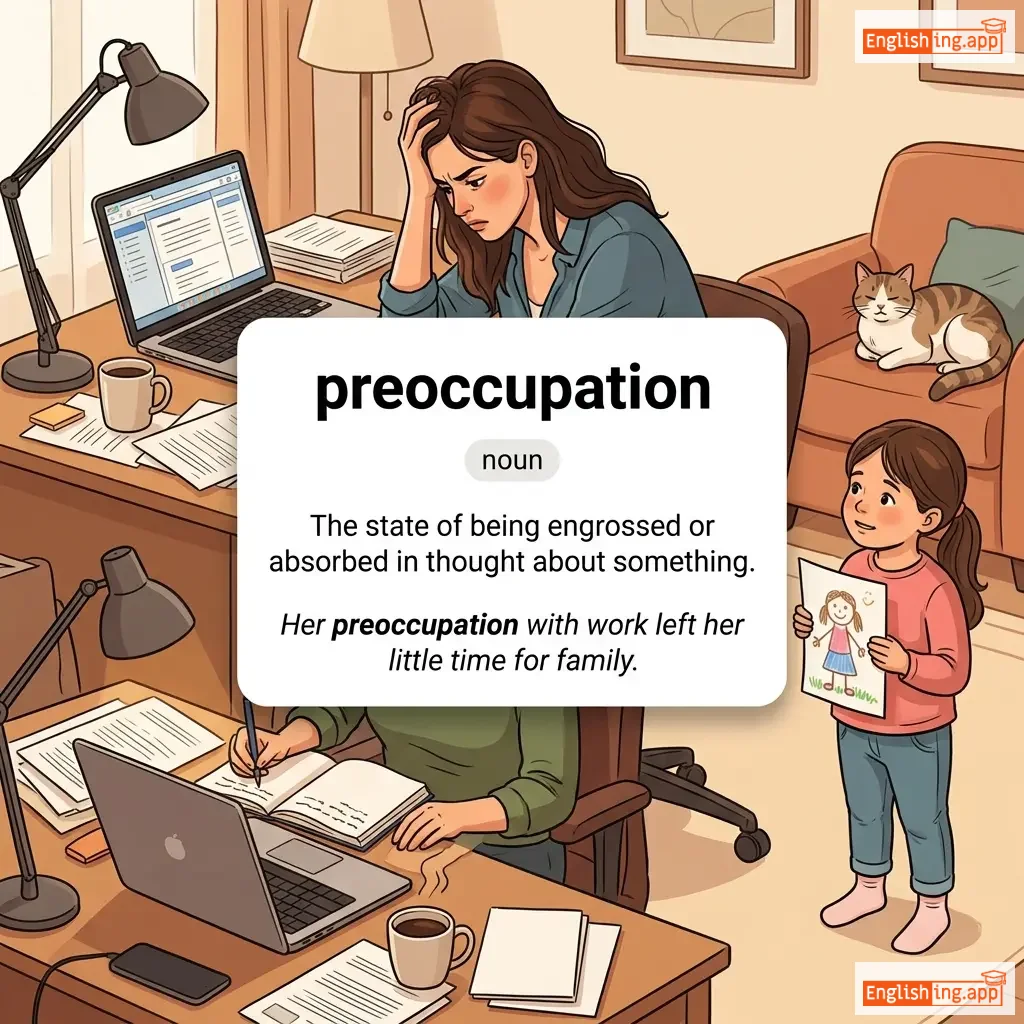
忧虑, 专注
youlü, zhuanzhu
••••••
|
- •••••• | - •••••• | - •••••• | - •••••• |
The state of being engrossed or absorbed in thought about something.
••••••
|
Her preoccupation with work left her little time for family. |
她对工作的忧虑让她几乎没有时间陪家人。
Ta dui gongzuo de youlü rang ta jihu mei you shijian pei jiaren.
••••••
|
- •••••• | - •••••• | - •••••• |
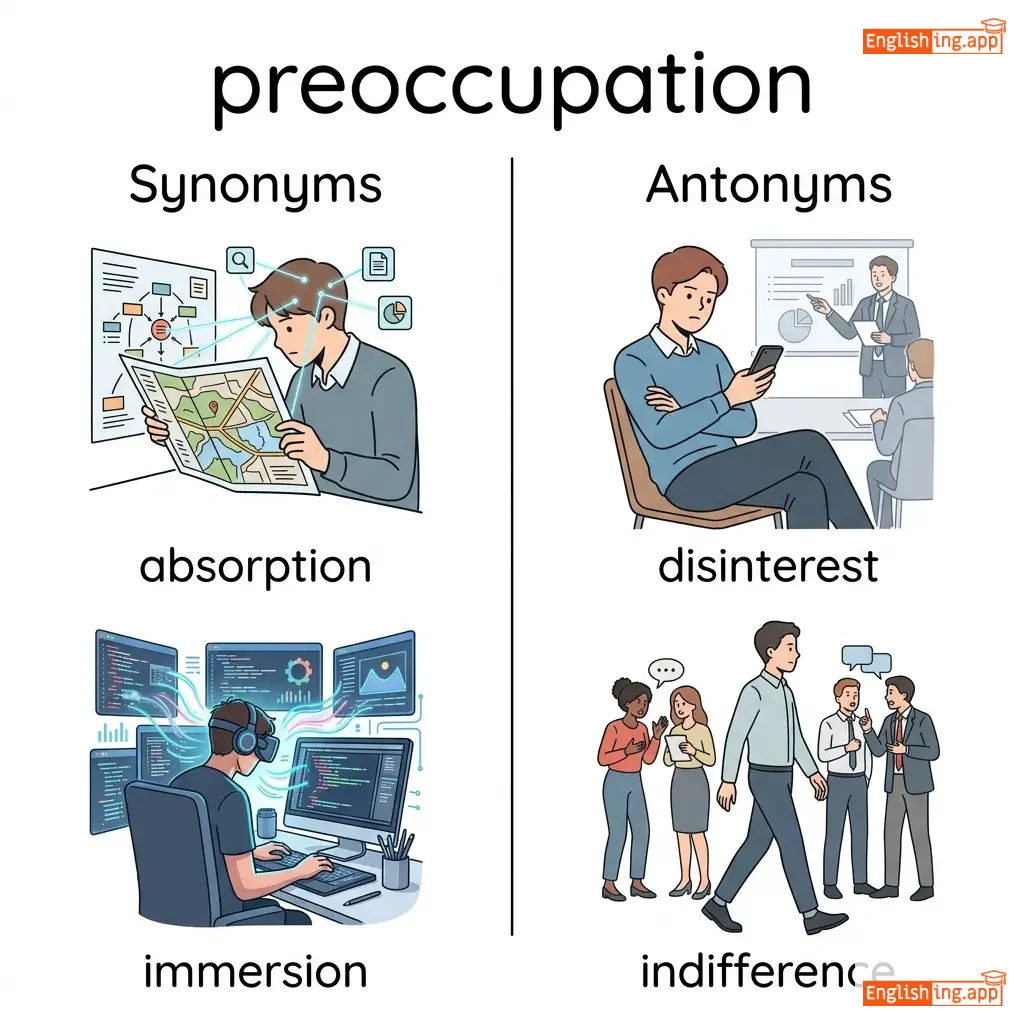
absorption, immersion, obsession, fixation, concern
••••••
|
disinterest, indifference
••••••
|
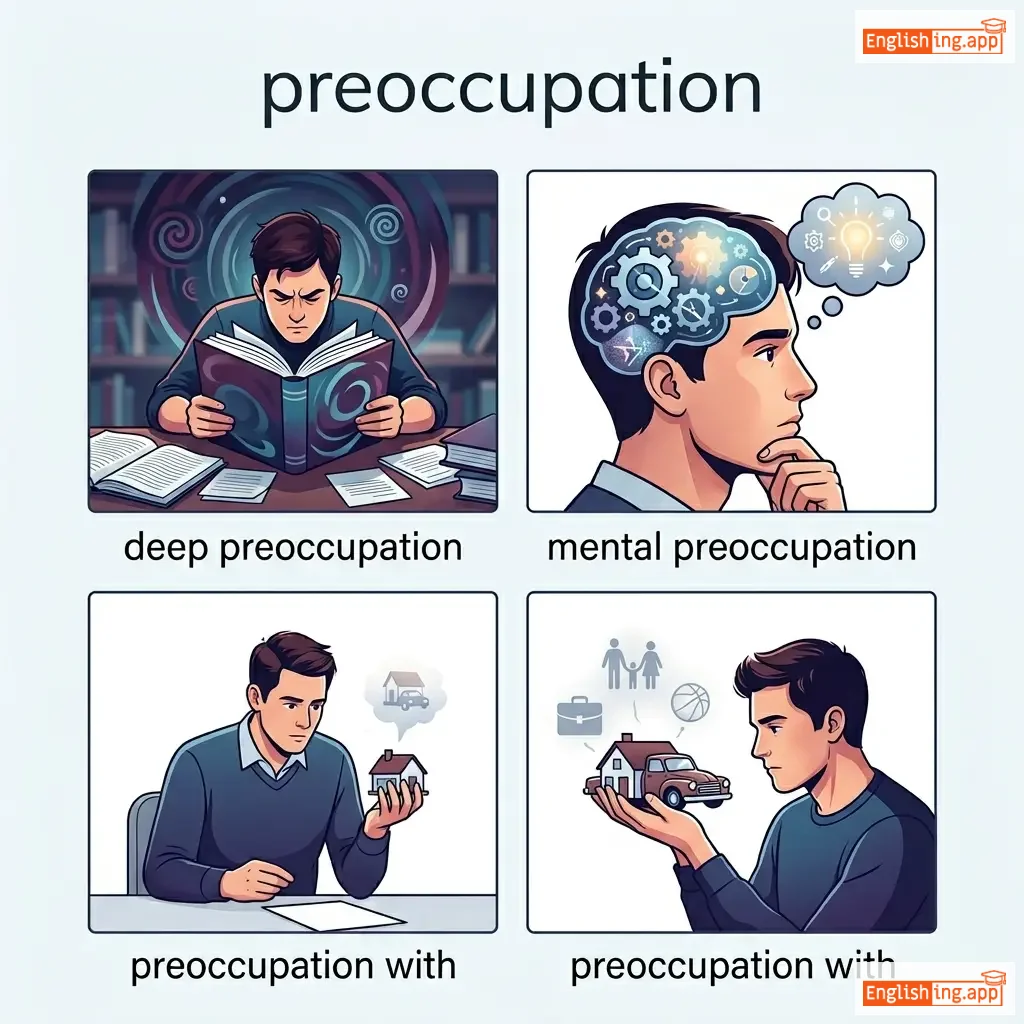
deep preoccupation, mental preoccupation, preoccupation with, constant preoccupation
••••••
|
Pre + Occupation 就是工作让人无法抽出时间照顾家庭。
••••••
|
|
#6881
⚠️
|
/prɪˈmɒnɪtəri/ or /ˌpriːməˈnɪtəri/
adjective
(前兆)
••••••
|
- •••••• |
前兆
qiánzhào
••••••
|
- •••••• | - •••••• | - •••••• | - •••••• |
giving a warning or prediction about something, especially something unpleasant
••••••
|
He ignored the premonitory signs of illness. |
他忽视了疾病的前兆。
Tā hūshìle jíbìng de qiánzhào.
••••••
|
- •••••• | - •••••• | - •••••• |
warning, cautionary, foreshadowing, prophetic
••••••
|
unforeseen, unexpected, unheralded
••••••
|
premonitory signs, premonitory symptoms, premonitory feeling
••••••
|
前兆是对不好的事情的警告,想象一下'前'就是预示即将发生的事情。
••••••
|
|
#6882
🔮
|
/ˌpriːməˈnɪʃən/ or /ˌprɛm-/
noun
(预感)
••••••
|
- •••••• |
预感
yugan
••••••
|
- •••••• | - •••••• | - •••••• | - •••••• |
a strong feeling that something is about to happen, often something negative
••••••
|
She had a premonition of danger before the trip. |
她在旅行前有一种危险的预感。
Ta zai lvxing qian you yizhong weixian de yugan.
••••••
|
- •••••• | - •••••• | - •••••• |
forewarning, intuition, hunch, omen, presentiment
••••••
|
surprise, doubt, disbelief
••••••
|
dark premonition, sudden premonition, premonition of disaster
••••••
|
预 + 感,预先有一种感觉,这种感觉通常是不好的。
••••••
|
|
#6883
🏠
|
/ˈprɛmɪs/
noun
(普雷米斯)
••••••
|
- •••••• |
前提 / 建筑物
qiántí / jiànzhúwù
••••••
|
- •••••• | - •••••• | - •••••• | - •••••• |
a statement or idea on which reasoning or an argument is based; also a building or property
••••••
|
His argument was based on a false premise. |
他的论点是建立在一个错误的前提上的。
Tā de lùndiǎn shì jiànlì zài yīgè cuòwù de qiántí shàng de.
••••••
|
on the premise that |
based on the assumption that
••••••
|
在假设...的前提下
zài jiǎshè... de qiántí xià
••••••
|
assumption, proposition, thesis, property, building
••••••
|
fact, reality, truth
••••••
|
false premise, legal premises, premise of argument
••••••
|
Premise是基础思想,在中文中'前提'表示基础。
••••••
|
|
#6884
👑
|
/prɪˈmɪər/ or /ˈpriːmiər/
noun, adjective
(总理 / 主要)
••••••
|
- •••••• |
总理 / 主要
zǒnglǐ / zhǔyào
••••••
|
- •••••• | - •••••• | - •••••• | - •••••• |
the head of government in some countries; first in importance or rank
••••••
|
The French premier addressed the nation. |
法国总理向全国发表了讲话。
Fàguó zǒnglǐ xiàng quánguó fābiǎo le jiǎnghuà.
••••••
|
Premier League |
the top professional football league in England
••••••
|
英超联赛
Yīngchāo liánsài
••••••
|
prime minister, leader, head, top, chief
••••••
|
subordinate, inferior, secondary
••••••
|
French premier, premier role, premier status
••••••
|
Premier 就是首位,最重要或者处于顶端。
••••••
|
|
#6885
👍
|
/ˈprɛf(ə)rəb(ə)l/
adjective
(普雷费拉布尔)
••••••
|
- •••••• |
更可取
geng ke qu
••••••
|
- •••••• | - •••••• | - •••••• | - •••••• |
more desirable or suitable; better than something else
••••••
|
It is preferable to take the train rather than drive in heavy traffic.
在严重交通堵塞的情况下,最好选择乘坐火车。
••••••
|
在严重交通堵塞的情况下,最好选择乘坐火车。
Zai yánzhòng jiāotōng dǔsè de qíngkuàng xià, zuì hǎo xuǎnzé chéngzuò huǒchē.
••••••
|
- •••••• | - •••••• | - •••••• |
better, desirable, advisable, favorable, recommended
••••••
|
worse, undesirable, unsuitable
••••••
|
preferable option, preferable choice, preferable method, preferable alternative
••••••
|
选择更可取的方式,总比堵车好。
••••••
|
|
#6886
⏳
|
/ˌpriːməˈtjʊər/
adjective
(普瑞马丘尔)
••••••
|
- •••••• |
过早的
guòzǎo de
••••••
|
- •••••• | - •••••• | - •••••• | - •••••• |
Happening or done before the usual or proper time.
••••••
|
His decision to quit the job was premature. |
他决定辞职的决定过早。
Tā juédìng cízhí de juédìng guòzǎo.
••••••
|
premature death |
death that happens earlier than expected or normal
••••••
|
过早的死亡
guòzǎo de sǐwáng
••••••
|
early, untimely, hasty, rushed
••••••
|
timely, mature, delayed
••••••
|
premature birth, premature decision, premature announcement
••••••
|
过早的 = 过 + 早 – 早于正常的时间,因此是过早的。
••••••
|
|
#6887
🎶
|
/ˈprɛljuːd/
noun
(前奏)
••••••
|
- •••••• |
前奏
qian zou
••••••
|
- •••••• | - •••••• | - •••••• | - •••••• |
An action, event, or statement that serves as an introduction to something more important.
••••••
|
The small fight was only a prelude to a bigger conflict. |
小争执只是更大冲突的前奏。
xiao zhengzhi zhishi geng da chongtu de qian zou.
••••••
|
a prelude to disaster |
an event leading to or foreshadowing a disaster
••••••
|
灾难的前奏
zainan de qian zou
••••••
|
introduction, opening, forerunner, beginning, overture
••••••
|
conclusion, finale, end
••••••
|
musical prelude, prelude to war, prelude to change
••••••
|
前奏是序曲,准备好迎接更大的冲突。
••••••
|
|
#6888
🙏
|
/ˈprɛlət/
noun
(普雷拉特)
••••••
|
- •••••• |
高级神职人员
gāojí shénzhí rényuán
••••••
|
- •••••• | - •••••• | - •••••• | - •••••• |
A high-ranking member of the clergy, especially a bishop or abbot.
••••••
|
The prelate delivered a sermon to the congregation. |
普雷拉特向会众发表了讲道。
Pǔléilātè xiàng huìzhòng fābiǎole jiǎngdào.
••••••
|
- •••••• | - •••••• | - •••••• |
bishop, archbishop, abbot, clergyman
••••••
|
layperson, commoner
••••••
|
Catholic prelate, senior prelate, respected prelate
••••••
|
Prelate像'Prayer'里的神职人员,带领讲道。
••••••
|
|
#6889
⛪
|
/ˈprɛləsi/
noun
(普雷拉西)
••••••
|
- •••••• |
教主制
jiaozhuzhi
••••••
|
- •••••• | - •••••• | - •••••• | - •••••• |
The office, dignity, or system of church government by prelates.
••••••
|
The medieval church was dominated by prelacy and its traditions. |
中世纪的教会由教主制及其传统主导。
Zhongshiji de jiaohui you jiaozhuzhi ji qi chuántǒng zhǔdǎo.
••••••
|
- •••••• | - •••••• | - •••••• |
episcopacy, hierarchy, church government, clergy
••••••
|
laity, secularism
••••••
|
Roman prelacy, medieval prelacy, authority of prelacy
••••••
|
Prelacy 代表教主领导的教会职位。
••••••
|
|
#6890
⚖️
|
/ˈprɛdʒədɪs/
noun
(pǔruìzhì)
••••••
|
- •••••• |
偏见
pianjian
••••••
|
- •••••• | - •••••• | - •••••• | - •••••• |
An unfair and unreasonable opinion or feeling, especially when formed without enough thought or knowledge.
••••••
|
Prejudice often prevents people from seeing the truth about others. |
偏见常常阻止人们看到别人真实的一面。
Pianjian changchang zhuzhi renmen kandao bieren zhenshi de yimian.
••••••
|
against all prejudice |
in opposition to unfair or biased opinions
••••••
|
反对所有偏见
Fandui suoyou pianjian
••••••
|
bias, discrimination, partiality, intolerance, preconception
••••••
|
fairness, tolerance, impartiality
••••••
|
racial prejudice, deep-seated prejudice, overcome prejudice, prejudice against
••••••
|
Prejudice = 预判 - 预先判断就有偏见。
••••••
|
|
#6891
🖐️
|
/prɪˈhɛnʃən/
noun
(前握)
••••••
|
- •••••• |
抓握的动作; 抓住某物的能力
zhuā wò de dòngzuò; zhuā zhù mǒu wù de nénglì
••••••
|
- •••••• | - •••••• | - •••••• | - •••••• |
the act of grasping or seizing; the ability to take hold of something
••••••
|
Therapists assessed the patient's prehension during hand therapy. |
治疗师在手部治疗中评估了患者的抓握能力。
Zhìliáo shī zài shǒubù zhìliáo zhōng pínggūle huànzhě de zhuā wò nénglì.
••••••
|
- •••••• | - •••••• | - •••••• |
grasp, grip, seizure, taking hold, apprehension
••••••
|
release, letting go, relinquishment
••••••
|
power prehension, precision prehension, prehension pattern, prehension movement
••••••
|
Prehension = ‘pre-hand action’,想象为抓握的动作——这就是prehension!
••••••
|
|
#6892
🐒
|
/prɪˈhɛnsaɪl/
adjective
(prehensile)
••••••
|
- •••••• |
可抓取的
kě zhuāqǔ de
••••••
|
- •••••• | - •••••• | - •••••• | - •••••• |
adapted for seizing or grasping, especially by wrapping around an object
••••••
|
The monkey used its prehensile tail to hang from the branch.
猴子用它的抓握尾巴从树枝上挂下来。
••••••
|
猴子用它的抓握尾巴从树枝上挂下来。
Hóuzi yòng tā de zhuāwò wěibā cóng shùzhī shàng guà xiàlái.
••••••
|
- •••••• | - •••••• | - •••••• |
grasping, gripping, clinging, adaptive, seizing
••••••
|
nonprehensile, rigid, nongripping
••••••
|
prehensile tail, prehensile trunk, prehensile feet, prehensile ability
••••••
|
Prehensile tail 看见了记住—‘Pre hand style’ 尾巴也能像手一样抓住东西!
••••••
|
|
#6893
✋
|
/prɪˈhɛnsɪbəl/
adjective
(priˈhɛnsɪbəl)
••••••
|
- •••••• |
可抓取的
ke zhua qu de
••••••
|
- •••••• | - •••••• | - •••••• | - •••••• |
capable of being grasped or seized
••••••
|
The tool has a prehensible handle that improves safety. |
这个工具有一个可抓取的把手,能提高安全性。
Zhege gongju you yige ke zhua qu de bashou, neng tigao anquanzhi.
••••••
|
- •••••• | - •••••• | - •••••• |
graspable, holdable, seizable, catchable, clenchable
••••••
|
slippery, ungraspable, nonprehensible
••••••
|
prehensible handle, prehensible surface, prehensible digits, prehensible object
••••••
|
Prehensible = ‘pre-grabable’ lixiang—keyi zhua qu de dongxi.
••••••
|
|
#6894
🤰
|
/ˈprɛɡnənt/
adjective
(prɛɡnənt)
••••••
|
- •••••• |
怀孕的; 有意义的
huáiyùn de; yǒu yìyì de
••••••
|
- •••••• | - •••••• | - •••••• | - •••••• |
having a child developing in the womb; also, full of meaning or significance
••••••
|
She announced that she was three months pregnant. |
她宣布她怀孕三个月了。
Tā xuānbù tā huáiyùn sān gè yuè le.
••••••
|
pregnant pause |
a brief, meaningful silence that suggests significance or tension
••••••
|
有意义的停顿
yǒu yìyì de tíngdùn
••••••
|
expectant, with child, carrying, meaningful, significant
••••••
|
barren, infertile, empty
••••••
|
pregnant woman, heavily pregnant, get pregnant, become pregnant, pregnant pause
••••••
|
怀孕意味着你期待一个宝宝,它很重要!
••••••
|
|
#6895
🔤
|
/ˈpriːfɪks/
noun/verb
(前缀)
••••••
|
- •••••• |
前缀; 在前面添加东西
qianzhui; zai qianmian tianjia dongxi
••••••
|
prefixed
前缀过
••••••
|
prefixed
前缀过
••••••
|
prefixes
加前缀
••••••
|
prefixing
加前缀中
••••••
|
a word, letter, or number placed before another; as a verb, to add something in front of something else
••••••
|
Developers often prefix variables with an underscore.
开发人员经常在变量前添加下划线作为前缀。
••••••
|
开发人员经常在变量前添加下划线作为前缀。
Kaifa renyuan jingchang zai bianliang qian tianjia xiahua xian zuo wei qianzhui.
••••••
|
- •••••• | - •••••• | - •••••• |
prepend, prepose, attach, affix, tag
••••••
|
append, suffix, postpose
••••••
|
telephone country-code prefix, honorific prefix, string prefix, prefix a title, filename prefix
••••••
|
Pre + fix = 加前面 ‘固定’ ——前缀是放在前面的东西。
••••••
|
|
#6896
🔮
|
/priːˈfɪɡjər/
verb
(普里菲格尔)
••••••
|
- •••••• |
预示
yùshì
••••••
|
prefigured
预示
••••••
|
prefigured
预示
••••••
|
prefigures
预示
••••••
|
prefiguring
预示
••••••
|
to represent, show, or foreshadow something in advance
••••••
|
The economic reforms prefigure major social changes.
经济改革预示着重大社会变革。
••••••
|
经济改革预示着重大社会变革。
Jīngjì gǎigé yùshì zhe zhòngdà shèhuì biàngé.
••••••
|
- •••••• | - •••••• | - •••••• |
foreshadow, predict, anticipate, presage
••••••
|
ignore, neglect
••••••
|
prefigure change, prefigure outcome, prefigure development
••••••
|
预示意味着提前展示某事,像是对未来的预测。
••••••
|
|
#6897
📈
|
/prɪˈfɜːrmənt/
noun
(优先升迁)
••••••
|
- •••••• |
晋升
jinsheng
••••••
|
- •••••• | - •••••• | - •••••• | - •••••• |
promotion or advancement in rank, position, or office
••••••
|
He hoped for preferment in the government office. |
他希望在政府办公室得到晋升。
Tā xīwàng zài zhèngfǔ bàngōngshì dédào jìnshēng.
••••••
|
- •••••• | - •••••• | - •••••• |
promotion, advancement, elevation, upgrade
••••••
|
demotion, decline
••••••
|
seek preferment, gain preferment, political preferment
••••••
|
Preferment 就是希望晋升 (jinsheng) 到更高职位。
••••••
|
|
#6898
🎟️
|
/ˌprɛfəˈrɛnʃəl/
adjective
(优先的)
••••••
|
- •••••• |
优先的
yōuxiān de
••••••
|
- •••••• | - •••••• | - •••••• | - •••••• |
showing or giving advantage to one over others
••••••
|
Members receive preferential treatment at the club.
会员在俱乐部享有优先待遇。
••••••
|
会员在俱乐部享有优先待遇。
Huìyuán zài jùlèbù xiǎngyǒu yōuxiān dàiyù.
••••••
|
preferential treatment
优先待遇
••••••
|
favoritism shown to one person or group
••••••
|
优先待遇
yōuxiān dàiyù
••••••
|
advantageous, favorable, privileged, beneficial
••••••
|
equal, impartial, fair
••••••
|
preferential treatment, preferential access, preferential rate
••••••
|
优先的就是给人特殊待遇。
••••••
|
|
#6899
☕
|
/ˈprɛf(ə)rəns/
noun
(普雷弗伦斯)
••••••
|
- •••••• |
偏好
pianhao
••••••
|
- •••••• | - •••••• | - •••••• | - •••••• |
a greater liking for one alternative over another
••••••
|
She has a preference for tea over coffee. |
她更喜欢茶而不是咖啡。
Tā gèng xǐhuān chá ér bù shì kāfēi.
••••••
|
personal preference |
an individual's own choice or taste
••••••
|
个人偏好
gèrén piānhào
••••••
|
choice, liking, taste, inclination, option
••••••
|
dislike, aversion, indifference
••••••
|
show preference, strong preference, personal preference, preference order
••••••
|
偏好意味着 '偏好' – 选择茶或咖啡。
••••••
|
Vocabulary Quiz
Test your vocabulary by matching words with their translations or meanings.
Login to take the quiz
Comments (0)
Share your thoughts and join the discussion.
Join the discussion by logging in
Login to CommentNo comments yet
Be the first to share your thoughts!