

Swipe left or right, or use the buttons. Tap image to zoom.
例句翻译
单词
Lesson 176Lesson 176 - 遮罩切换
|
表情符号
|
单词 | Images | 翻译 | 过去时 | 过去分词 | 第三人称单数 | 动名词 | 含义 | 例句 | 例句翻译 | 示例表达 | 示例表达含义 | 示例表达翻译 | 同义词 | 反义词 | 搭配词 | 助记符 |
|---|---|---|---|---|---|---|---|---|---|---|---|---|---|---|---|---|---|
|
#5251
🚶
|
/ˈlɔɪtərər/
noun
(洛伊特勒)
••••••
|
- •••••• |
在某地漫无目的闲逛的人
zai mou di man wu mu di xian guang de ren
••••••
|
- •••••• | - •••••• | - •••••• | - •••••• |
A person who lingers aimlessly in a place without purpose.
••••••
|
The police questioned the loiterer outside the store.
警察在商店外询问了洛伊特勒。
••••••
|
警察在商店外询问了洛伊特勒。
Jingcha zai shangdian wai xunwenle luoyiteler.
••••••
|
- •••••• | - •••••• | - •••••• |
idler, lingerer, lounger, dawdler, drifter
••••••
|
worker, mover, doer
••••••
|
street loiterer, loiterer outside, suspicious loiterer
••••••
|
洛伊特勒是那些漫无目的闲逛的人
••••••
|
|
#5252
🛋️
|
/laʊndʒ/
noun, verb
(loung)
••••••
|
- •••••• |
休息室
xiuxishi
••••••
|
lounged
lounged
••••••
|
lounged
lounged
••••••
|
lounges
lounges
••••••
|
lounging
lounging
••••••
|
A public room for relaxing; or to sit, lie, or stand in a relaxed way.
••••••
|
They lounged on the sofa after dinner.
他们在晚餐后懒洋洋地躺在沙发上。
••••••
|
他们在晚餐后懒洋洋地躺在沙发上。
Tāmen zài wǎncān hòu lǎn yáng yáng de tǎng zài shāfā shàng.
••••••
|
lounge around
懒散地度过时间
••••••
|
to spend time idly or lazily
••••••
|
懒散地度过时间
lǎn sàn de dùguò shíjiān
••••••
|
sit, sprawl, recline, rest, relax
••••••
|
work, labor, rush
••••••
|
hotel lounge, airport lounge, lounge chair, lounge music
••••••
|
Lounge 🛋️ 意味着在沙发上放松。
••••••
|
|
#5253
🌊
|
/lɒx/ or /lɒk/
noun
(洛赫)
••••••
|
- •••••• |
湖泊
hupo
••••••
|
- •••••• | - •••••• | - •••••• | - •••••• |
An Irish or Scottish word for a lake or sea inlet.
••••••
|
The fishermen lived by the lough for generations. |
渔民们世世代代住在湖泊旁边。
Yúmínmen shìshì dàidài zhù zài húpō pángbiān.
••••••
|
- •••••• | - •••••• | - •••••• |
lake, loch, pond, waterbody, bay
••••••
|
desert, dry land
••••••
|
Irish lough, near the lough, across the lough
••••••
|
Lough 意思是湖泊 🌊 — 洛赫听起来像湖泊!
••••••
|
|
#5254
🎟️
|
/ˈlɒtəri/
noun
(彩票)
••••••
|
- •••••• |
彩票
caipiao
••••••
|
- •••••• | - •••••• | - •••••• | - •••••• |
A means of raising money by selling numbered tickets and giving prizes to the holders of numbers drawn at random.
••••••
|
He won a car in the national lottery. |
他在全国彩票中赢得了一辆车。
Ta zai quanguo caipiao zhong yingde le yi liang che.
••••••
|
win the lottery |
to achieve something extremely fortunate or unlikely
••••••
|
赢得彩票
yingde caipiao
••••••
|
raffle, sweepstake, jackpot, gamble, draw
••••••
|
certainty, guarantee, assurance
••••••
|
national lottery, lottery ticket, win lottery, lottery draw
••••••
|
Lottery 🎟️ 是运气的游戏 — 中文也叫 '彩票'。
••••••
|
|
#5255
📦
|
/lɒt/
noun
(lot)
••••••
|
- •••••• |
许多
xuduo
••••••
|
- •••••• | - •••••• | - •••••• | - •••••• |
A large number or amount; a group or portion.
••••••
|
She bought a lot of books at the fair.
她在集市上买了很多书。
••••••
|
她在集市上买了很多书。
Ta zai jishi shang mai le henduo shu.
••••••
|
cast one's lot with
把自己的命运交给某人
••••••
|
to join or support a person or group
••••••
|
把自己的命运交给某人
Ba ziji de mingyun jiao gei mou ren
••••••
|
batch, group, quantity, portion, set
••••••
|
few, little, scarcity
••••••
|
a lot of, whole lot, parking lot, building lot
••••••
|
Lot表示很多,比如彩票中的许多号码。
••••••
|
|
#5256
👑
|
/ˈlɔːrdlɪŋ/
noun
(lordling)
••••••
|
- •••••• |
小领主
xiao lingzhu
••••••
|
- •••••• | - •••••• | - •••••• | - •••••• |
A young or petty lord; someone of minor nobility.
••••••
|
The arrogant lordling demanded respect despite his lack of experience. |
那个傲慢的小领主尽管缺乏经验,仍要求尊重。
Nàgè àomàn de xiǎo lǐngzhǔ jǐnguǎn quēfá jīngyàn, réng yāoqiú zūnzhòng.
••••••
|
- •••••• | - •••••• | - •••••• |
young lord, petty noble, minor aristocrat, baronet, squire
••••••
|
commoner, peasant, servant
••••••
|
arrogant lordling, spoiled lordling, young lordling
••••••
|
Lordling = 小领主 👑
••••••
|
|
#5257
🗣️
|
/loʊˈkweɪʃəs/
adjective
(loʊˈkweɪʃəs)
••••••
|
|
话多的
hua duo de
••••••
|
- •••••• | - •••••• | - •••••• | - •••••• |
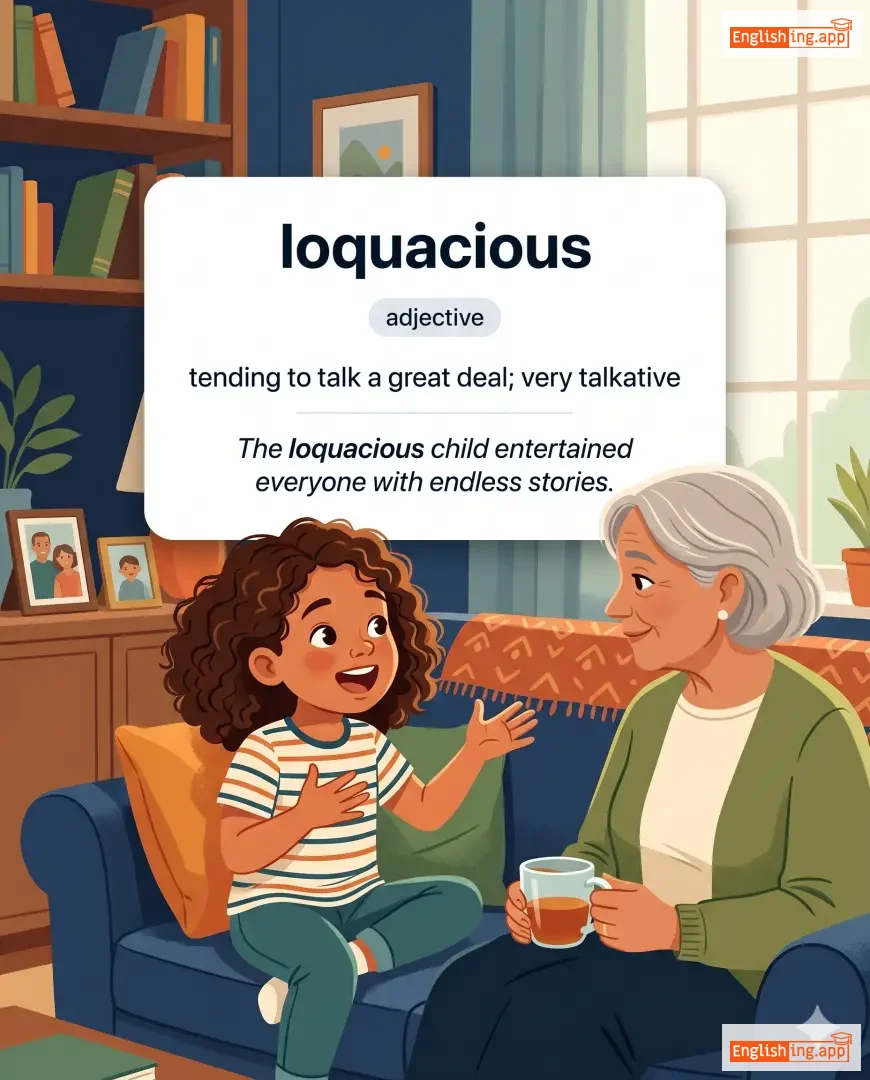
tending to talk a great deal; very talkative
••••••
|
The loquacious child entertained everyone with endless stories.
那个话多的孩子用无尽的故事娱乐了每个人。
••••••
|
话多的孩子用无尽的故事娱乐了每个人。
Hua duo de haizi yong wu jin de gushi yule le meige ren.
••••••
|
- •••••• | - •••••• | - •••••• |
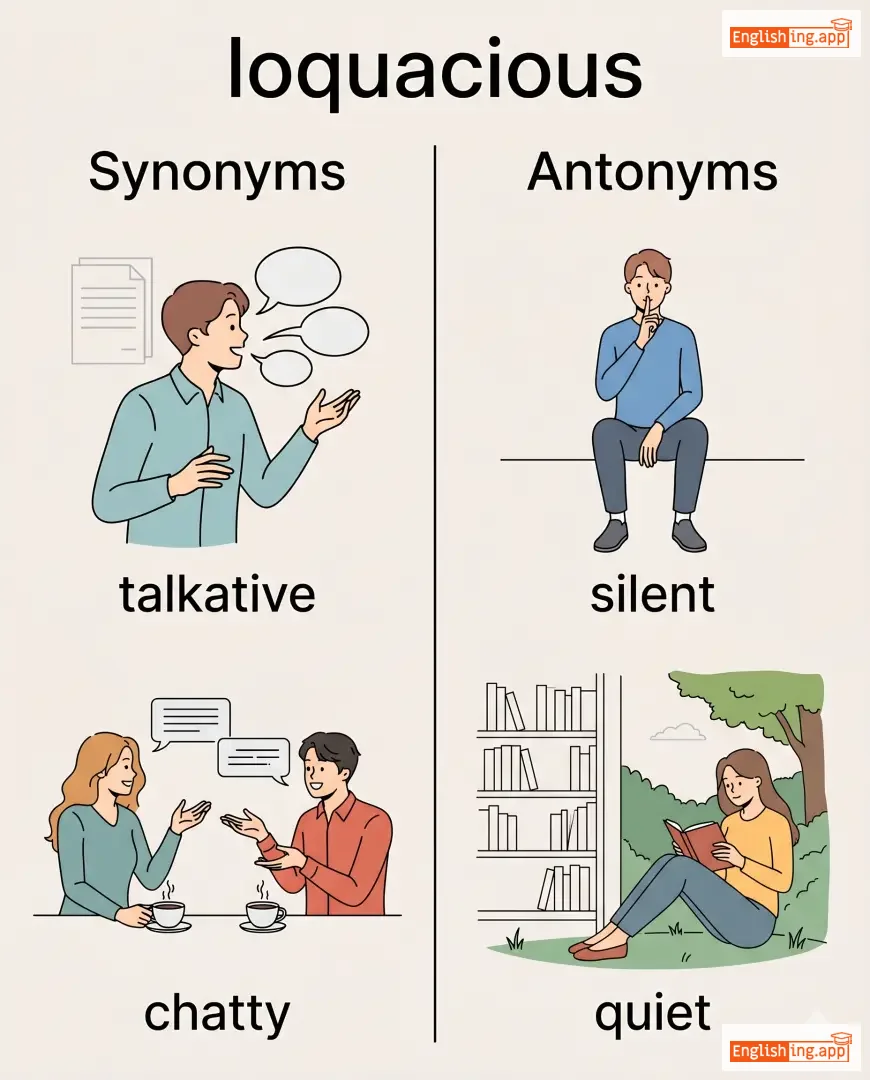
talkative, chatty, verbose, garrulous, communicative
••••••
|
silent, quiet, reserved
••••••
|
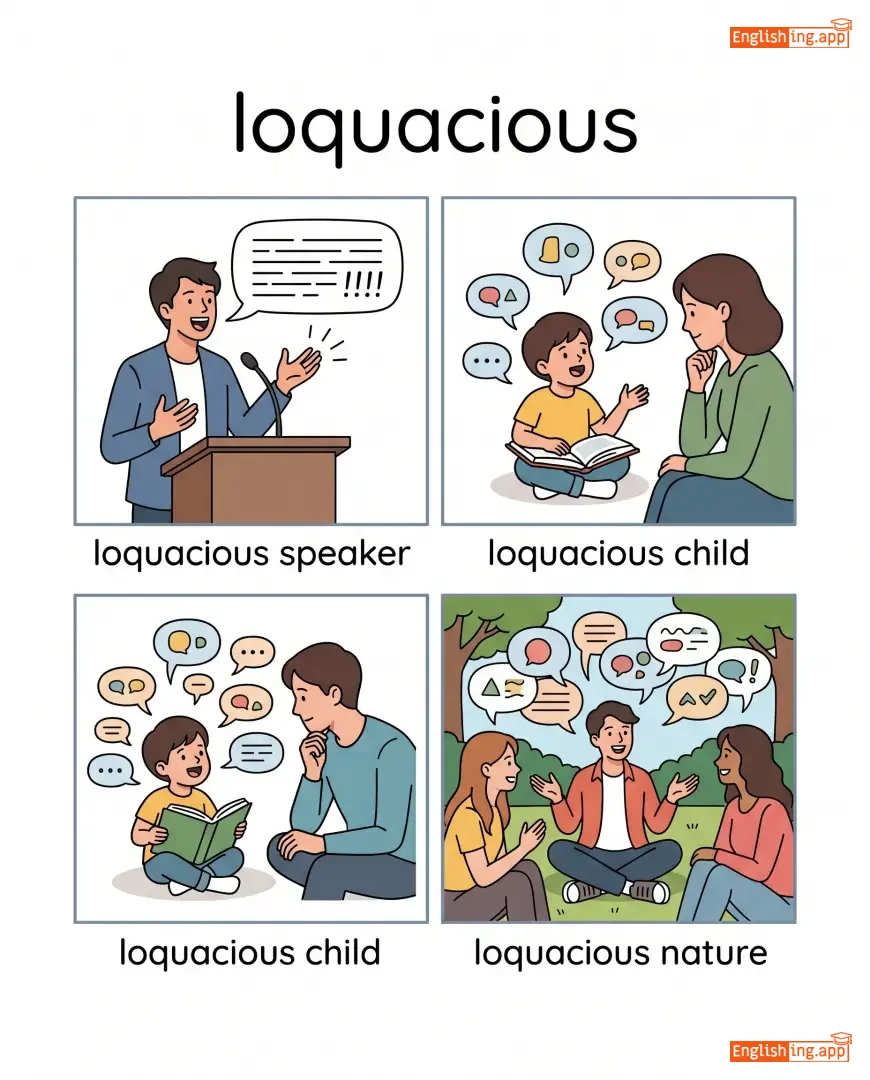
loquacious speaker, loquacious child, loquacious nature, loquacious host
••••••
|
Loquacious意味着多说话,像个'话痨'。
••••••
|
|
#5258
⚖️
|
/ˈlɑːpˌsaɪdɪd/
adjective
(lopsāidé)
••••••
|
- •••••• |
倾斜的,不平衡的
qīngxié de, bù pínghéng de
••••••
|
- •••••• | - •••••• | - •••••• | - •••••• |
with one side lower, larger, or different from the other; uneven or imbalanced
••••••
|
The cake looked lopsided after being decorated in a hurry.
蛋糕看起来有点歪,因为急忙装饰。
••••••
|
蛋糕看起来不平衡,因为急忙装饰。
Dàn gāo kàn qǐlái bù pínghéng, yīnwèi jí máng zhuāngshì.
••••••
|
- •••••• | - •••••• | - •••••• |
uneven, crooked, tilted, imbalanced, askew
••••••
|
balanced, even, symmetrical
••••••
|
lopsided smile, lopsided victory, lopsided cake, lopsided structure
••••••
|
Lopsided 意味着不平衡,记住 'lop' 表示倾斜。
••••••
|
|
#5259
🐎
|
/loʊp/
verb
(洛普)
••••••
|
- •••••• |
以长而有弹跳的步伐奔跑或移动
yi chang er you dan tiao de bu fa ben pao huo yi dong
••••••
|
loped
洛普德
••••••
|
loped
洛普德
••••••
|
lopes
洛普斯
••••••
|
loping
洛普英
••••••
|
to run or move with a long, bounding stride
••••••
|
The horse loped gracefully across the field.
马在田野上优雅地跑步。
••••••
|
马优雅地在田野上跑步。
Ma youya de zai tianye shang paobu.
••••••
|
- •••••• | - •••••• | - •••••• |
stride, bound, trot, gallop, run
••••••
|
crawl, walk, halt
••••••
|
lope along, horse lope, lope across, easy lope
••••••
|
Lope意为以大步奔跑,想象一匹马'lope'在田野上。
••••••
|
|
#5260
💰
|
/luːt/
verb
(掠夺)
••••••
|
- •••••• |
掠夺
lüèduó
••••••
|
looted
掠夺
••••••
|
looted
掠夺
••••••
|
loots
掠夺
••••••
|
looting
掠夺
••••••
|
to steal goods, typically during war, riot, or chaos
••••••
|
The rioters looted several shops during the protest.
骚乱分子在抗议期间掠夺了几家商店。
••••••
|
抗议者在抗议期间掠夺了几家商店。
Kàngyì zhě zài kàngyì qījiān lüèduó le jǐ jiā shāngdiàn.
••••••
|
ill-gotten loot
非法所得的财富
••••••
|
wealth obtained dishonestly
••••••
|
非法获得的财富
fēi fǎ huòdé de cáifù
••••••
|
plunder, pillage, ransack, rob, steal
••••••
|
give, donate, return
••••••
|
loot a shop, loot treasure, loot houses, looting spree
••••••
|
Loot = 掠夺, 就像骚乱中的抢劫者一样。
••••••
|
|
#5261
🌩️
|
/luːm/
verb
••••••
|
- •••••• | - •••••• |
loomed
••••••
|
loomed
••••••
|
looms
••••••
|
looming
••••••
|
to appear as a large, often frightening or unclear shape, usually something threatening or about to happen
••••••
|
Dark clouds loomed over the city, signaling an approaching storm. |
- •••••• |
loom large |
to be of great importance or concern
••••••
|
- •••••• |
emerge, appear, threaten, overshadow, hover
••••••
|
fade, disappear, vanish
••••••
|
loom large, loom ahead, storm looms, crisis looms
••••••
|
No •••••• |
|
#5262
👀
|
/ˈlʊkaʊt/
noun
(lùkǎo)
••••••
|
- •••••• |
瞭望, 哨位
liàowàng, shàowèi
••••••
|
- •••••• | - •••••• | - •••••• | - •••••• |
A place for watching; a person keeping watch.
••••••
|
The guard kept a lookout for suspicious activity.
卫兵警惕地监视着可疑活动。
••••••
|
卫兵警惕地监视着可疑活动。
Wèibīng jǐngtì de jiānshìzhe kěyí huódòng.
••••••
|
on the lookout
保持警觉
••••••
|
Being alert and watchful for something.
••••••
|
保持警觉
Bǎochí jǐngjué
••••••
|
watch, guard, sentry, observatory, scout
••••••
|
neglect, unawareness, ignorance
••••••
|
keep lookout, on the lookout, lookout point
••••••
|
Lookout意思是 'Look + out' = 看外面,意味着保持警惕。
••••••
|
|
#5263
⏳
|
/lɔnˈdʒɛvəti/
noun
(lóng jí wēi tì)
••••••
|
- •••••• |
长寿
changshou
••••••
|
- •••••• | - •••••• | - •••••• | - •••••• |
Long life or long existence of something.
••••••
|
Good habits contribute to health and longevity. |
良好的习惯有助于健康和长寿。
Liánghǎo de xíguàn yǒuzhù yú jiànkāng hé chángshòu.
••••••
|
- •••••• | - •••••• | - •••••• |
durability, endurance, permanence, lifespan, survival
••••••
|
brevity, shortness, mortality
••••••
|
health and longevity, remarkable longevity, longevity of career
••••••
|
Longevity = 长寿 = 长 (长) + 寿 (寿命).
••••••
|
|
#5264
😔
|
/ˈloʊnlinəs/
noun
(lonliness)
••••••
|
- •••••• |
孤独
gūdú
••••••
|
- •••••• | - •••••• | - •••••• | - •••••• |
The state of being alone and feeling sad about it.
••••••
|
She felt a deep sense of loneliness after moving to the new city. |
她搬到新城市后感到深深的孤独。
Tā bān dào xīn chéngshì hòu gǎndào shēn shēn de gūdú.
••••••
|
die of loneliness |
To suffer severely because of extreme isolation.
••••••
|
因孤独而死
yīn gūdú ér sǐ
••••••
|
isolation, solitude, desolation, emptiness, alienation
••••••
|
companionship, togetherness, friendship
••••••
|
deep loneliness, overcome loneliness, suffer loneliness
••••••
|
孤独就是孤单的状态。
••••••
|
|
#5265
🛋️
|
/lɑːl/
verb
(萝尔)
••••••
|
- •••••• |
懒散地坐着
lǎnsàn de zuòzhe
••••••
|
lolled
洛尔德
••••••
|
lolled
洛尔德
••••••
|
lolls
萝尔斯
••••••
|
lolling
萝尔英
••••••
|
To sit, lie, or stand in a lazy, relaxed way.
••••••
|
He lolled on the sofa after a long day at work.
他在工作后躺在沙发上放松。
••••••
|
在长时间的工作后,他懒散地坐在沙发上。
Zài cháng shíjiān de gōngzuò hòu, tā lǎnsàn de zuò zài shāfā shàng.
••••••
|
loll about
loll about
••••••
|
To spend time lazily doing nothing in particular.
••••••
|
懒散地度过时间
lǎnsàn de dùguò shíjiān
••••••
|
lounge, sprawl, recline, slouch, laze
••••••
|
work, hustle, strive
••••••
|
loll on sofa, loll in chair, loll about
••••••
|
Loll 就是 LOL 并懒散地坐在沙发上。
••••••
|
|
#5266
😒
|
/loʊθ/
adjective
(loʊθ)
••••••
|
- •••••• |
不情愿
bu qingyuan
••••••
|
- •••••• | - •••••• | - •••••• | - •••••• |
reluctant or unwilling to do something
••••••
|
She was loath to admit her mistake in front of everyone. |
她不愿意在大家面前承认她的错误。
Ta bu yuanyi zai dada mianqian chengren ta de cuowu.
••••••
|
- •••••• | - •••••• | - •••••• |
reluctant, unwilling, hesitant, averse, resistant
••••••
|
willing, eager, inclined
••••••
|
loath to admit, loath to accept, loath to change
••••••
|
Loath的意思是不愿意做某事 😒
••••••
|
|
#5267
🚶
|
/ˈlɔɪtər/
verb
••••••
|
- •••••• | - •••••• |
loitered
••••••
|
loitered
••••••
|
loiters
••••••
|
loitering
••••••
|
To stand or wait around idly without apparent purpose.
••••••
|
The teenagers were told not to loiter outside the shop. |
- •••••• |
loiter with intent |
to hang around with the purpose of committing a crime
••••••
|
- •••••• |
linger, dawdle, hang around, idle, tarry
••••••
|
hurry, rush, hasten
••••••
|
loiter around, loiter near, loiter in, loiter outside
••••••
|
No •••••• |
|
#5268
👨🏫
|
/ləˈdʒɪʃən/
noun
(lógíshìān)
••••••
|
- •••••• |
逻辑学家
luójíxuéjiā
••••••
|
- •••••• | - •••••• | - •••••• | - •••••• |
A person skilled in logic and reasoning.
••••••
|
Aristotle is considered one of the greatest logicians in history. |
亚里士多德被认为是历史上最伟大的逻辑学家之一。
Yà lǐ shì duō dé bèi rènwéi shì lìshǐ shàng zuì wěidà de luójíxuéjiā zhī yī.
••••••
|
- •••••• | - •••••• | - •••••• |
philosopher, thinker, reasoner, analyst
••••••
|
fool, irrationalist
••••••
|
great logician, famous logician, skilled logician
••••••
|
Logician = Logic + ian → 研究逻辑的人,逻辑学家。
••••••
|
|
#5269
📐
|
/ˈlɒdʒɪkəl/
adjective
(逻辑)
••••••
|
|
合乎逻辑的
hehu luojide
••••••
|
- •••••• | - •••••• | - •••••• | - •••••• |
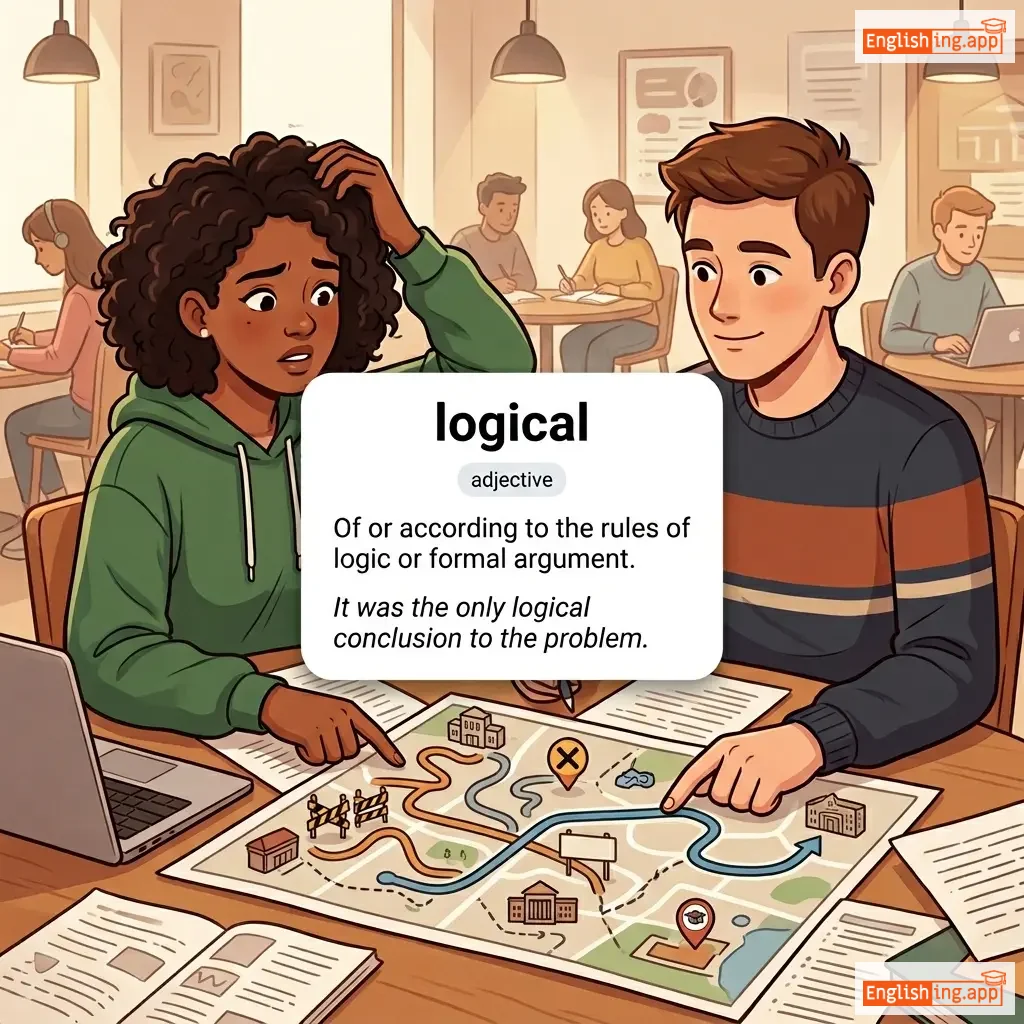
Of or according to the rules of logic or formal argument.
••••••
|
It was the only logical conclusion to the problem. |
这是问题的唯一合乎逻辑的结论。
Zhe shi wenti de weiyi hehu luojide jielun.
••••••
|
- •••••• | - •••••• | - •••••• |
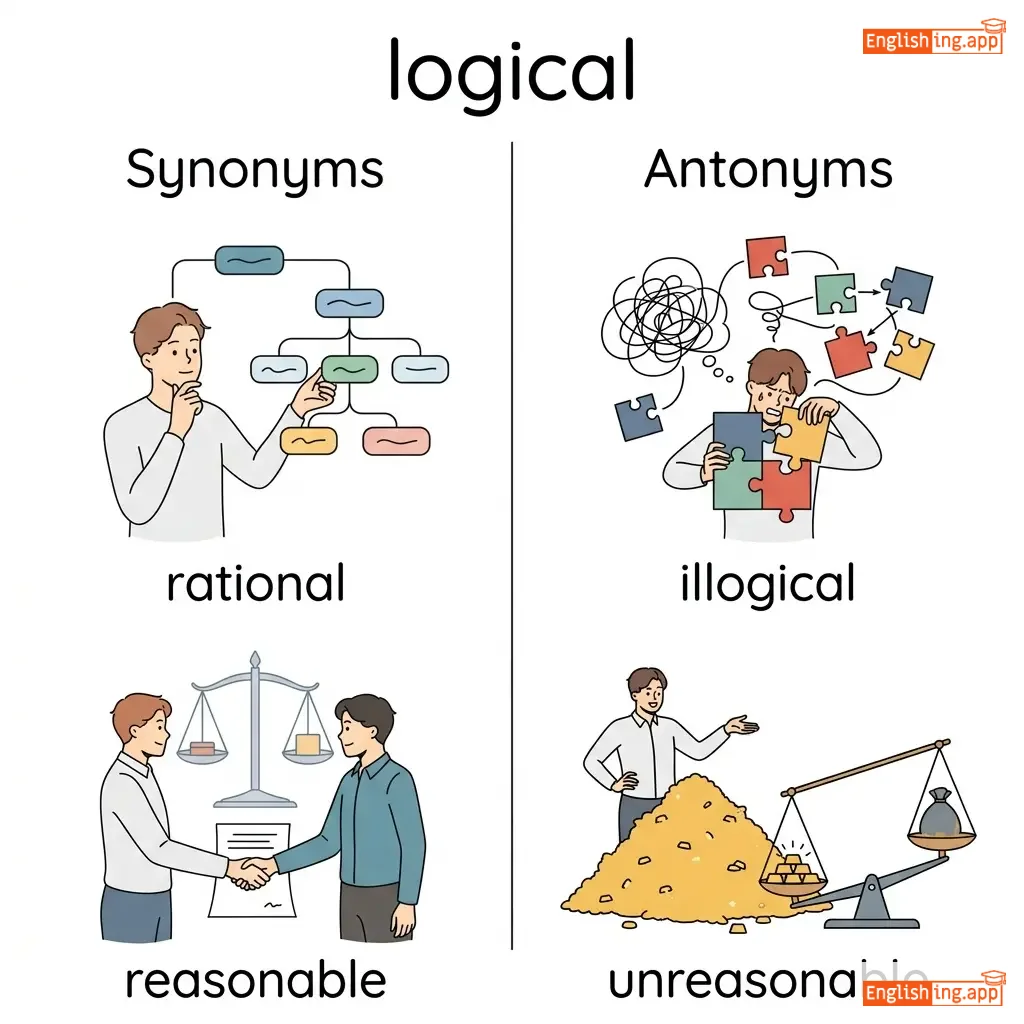
rational, reasonable, coherent, sound, valid
••••••
|
illogical, unreasonable, absurd
••••••
|
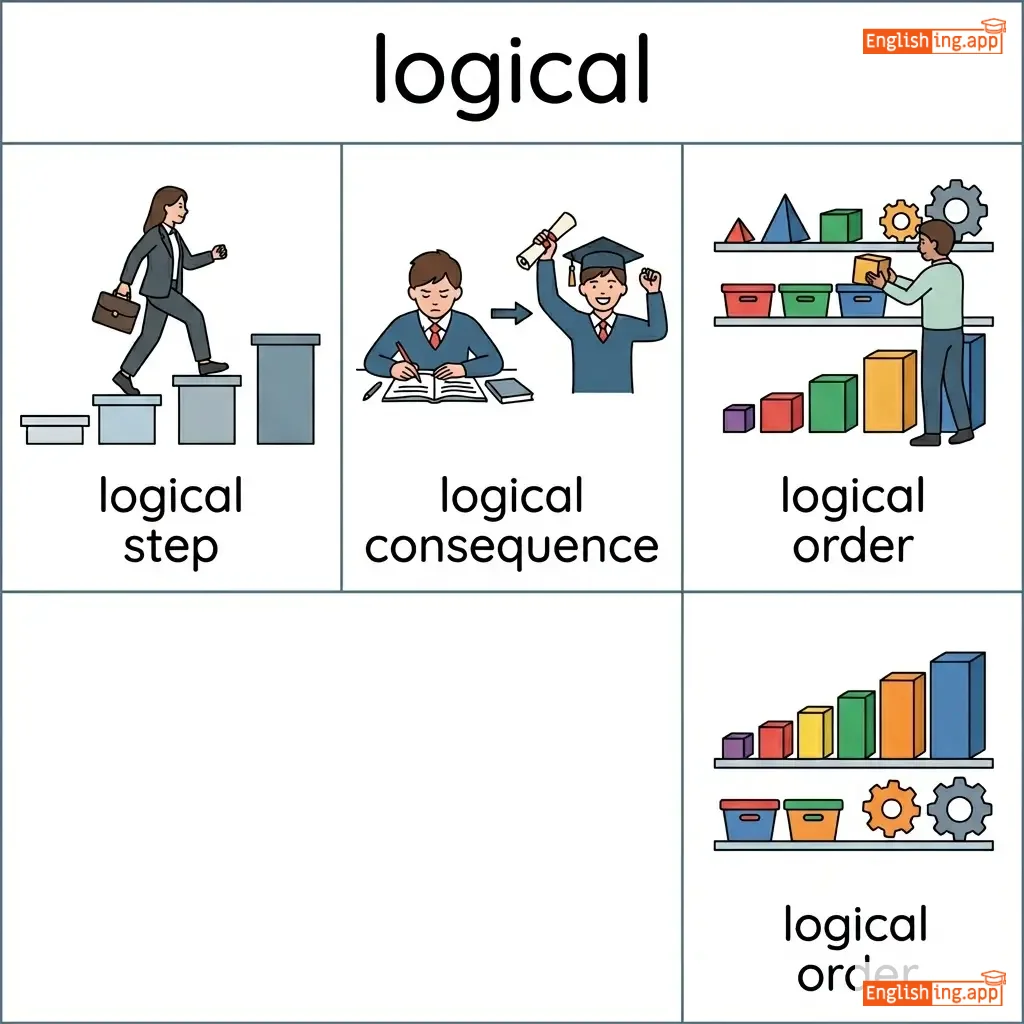
logical step, logical consequence, logical order, logical argument
••••••
|
逻辑就像合乎逻辑的答案,简单明了。
••••••
|
|
#5270
🧠
|
/ˈlɒdʒɪk/
noun
(逻辑)
••••••
|
- •••••• |
逻辑
luoji
••••••
|
- •••••• | - •••••• | - •••••• | - •••••• |
Reasoning conducted or assessed according to strict principles of validity.
••••••
|
Her argument was based on sound logic.
她的论点基于严密的逻辑。
••••••
|
她的论点基于严密的逻辑。
Ta de lundian jiyu yanmi de luoji.
••••••
|
twist the logic
扭曲逻辑
••••••
|
to manipulate reasoning to suit one’s purpose
••••••
|
扭曲逻辑
niuxi luoji
••••••
|
reasoning, rationale, argument, sense, judgment
••••••
|
nonsense, illogic, irrationality
••••••
|
sound logic, formal logic, logic puzzle, logic gate
••••••
|
逻辑意味着合理推理; 中文中它也是'逻辑'。记住,'逻辑'就是逻辑。
••••••
|
|
#5271
🌲
|
/lɒɡ/
noun, verb
(log)
••••••
|
|
原木, 记录
yuánmù, jìlù
••••••
|
logged
登录
••••••
|
logged
登录
••••••
|
logs
日志
••••••
|
logging
登录
••••••
|
A part of the trunk or a large branch of a tree that has fallen or been cut off; also to record information systematically.
••••••
|
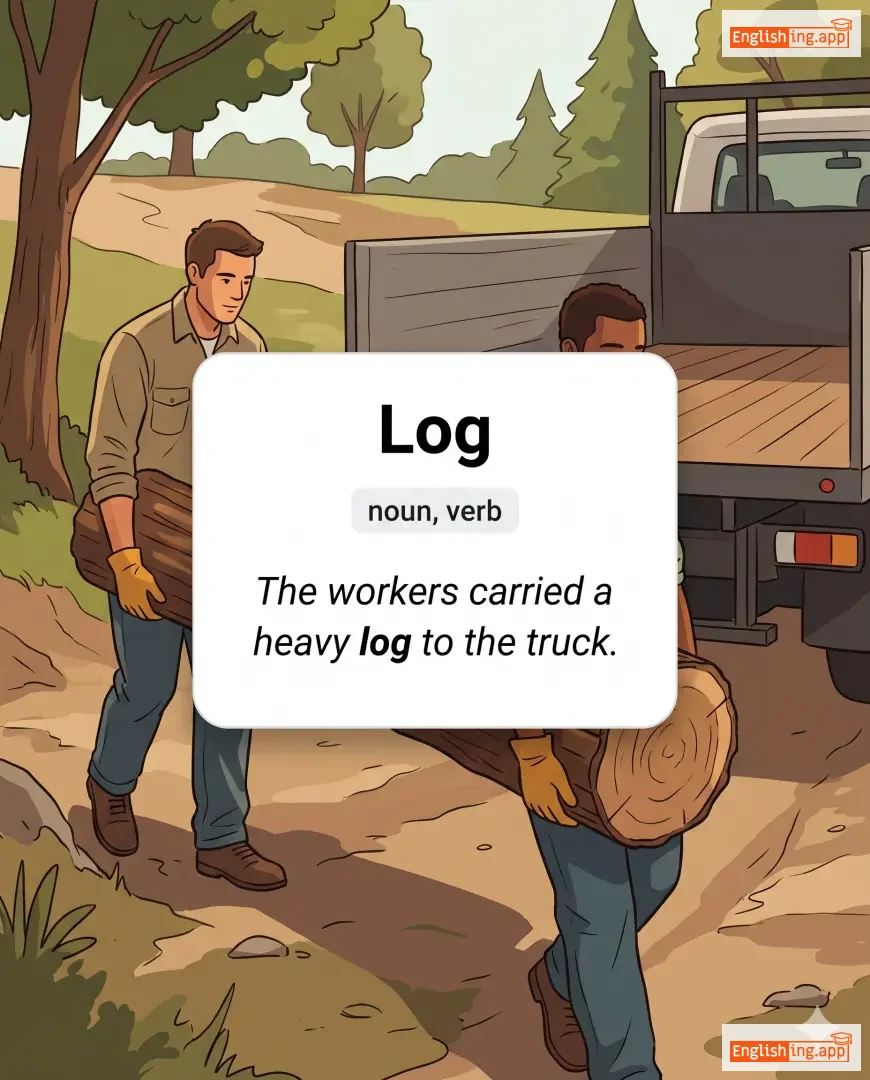
The workers carried a heavy log to the truck.
工人们将一根重木头搬到卡车上。
••••••
|
工人们将一根重木头搬到卡车上。
Gōngrénmen jiāng yī gēn zhòng mùtou bān dào kǎchē shàng.
••••••
|
sleep like a log
像木头一样睡觉
••••••
|
to sleep very deeply and soundly
••••••
|
像木头一样睡觉
xiàng mùtou yīyàng shuìjiào
••••••
|
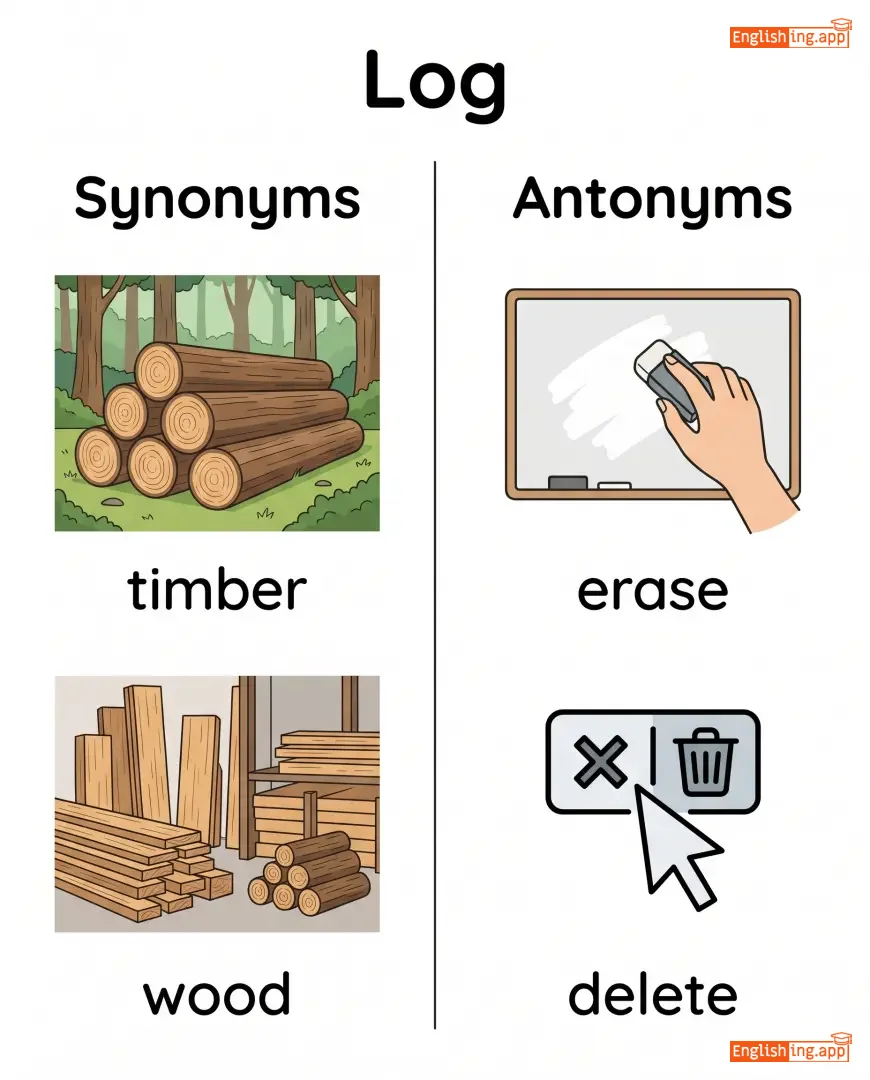
timber, wood, record, register, journal
••••••
|
erase, delete
••••••
|
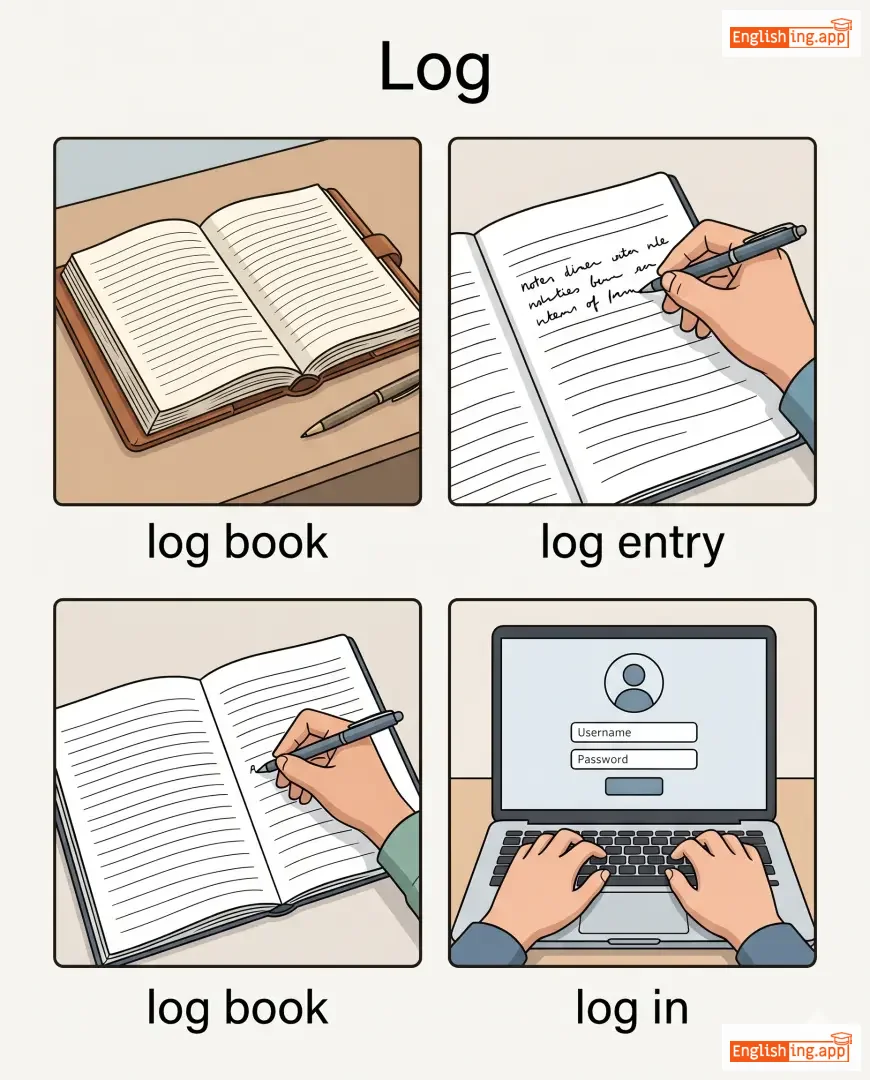
log book, log entry, log in, log data
••••••
|
Log (log) 是原木,登录 (login) 时会记录信息。
••••••
|
|
#5272
⛰️
|
/ˈlɒf.ti/
adjective
(lóftī)
••••••
|
- •••••• |
高
gao
••••••
|
- •••••• | - •••••• | - •••••• | - •••••• |
Of great height; elevated in character or style; noble.
••••••
|
He set himself the lofty goal of ending poverty.
他设定了一个lofty的目标,要消除贫困。
••••••
|
他设定了一个lofty的目标,要消除贫困。
Ta she ding le yi ge lofty de mubiao, yao xiaochu pinkun.
••••••
|
lofty ideals
崇高理想
••••••
|
high moral standards or ambitious goals
••••••
|
崇高理想
chonggao lixiang
••••••
|
high, elevated, noble, grand, exalted
••••••
|
low, base, humble
••••••
|
lofty goals, lofty ideals, lofty mountains, lofty position
••••••
|
Lofty 意味着高 ⛰️,就像坐电梯到达高处
••••••
|
|
#5273
🏢
|
/lɒft/
noun
(loft)
••••••
|
- •••••• |
阁楼
gelou
••••••
|
- •••••• | - •••••• | - •••••• | - •••••• |
An upper room or space, often under the roof of a building.
••••••
|
She converted the old loft into a modern studio. |
她把旧阁楼改造成了一个现代化的工作室。
Ta ba jiu gelou gaizaochengle yi ge xiandaihua de gongzuoshi.
••••••
|
loft living |
a style of living in converted industrial spaces
••••••
|
阁楼生活
gelou shenghuo
••••••
|
attic, garret, upper room, gallery
••••••
|
basement, cellar
••••••
|
converted loft, attic loft, spacious loft, loft apartment
••••••
|
阁楼 = 上面的房间, loft = 在楼顶的房间.
••••••
|
|
#5274
🏠
|
/ˈlɒdʒ.mənt/
noun
(lódʒmənt)
••••••
|
- •••••• |
临时住宿
linshi zhusu
••••••
|
- •••••• | - •••••• | - •••••• | - •••••• |
The act of lodging or a place of temporary stay; also a deposit of something.
••••••
|
The soldiers found lodgment in the abandoned house. |
士兵们在废弃的房子里找到了临时住宿。
Shibing men zai feiqi de fangzi li zhaodao le linshi zhusu.
••••••
|
- •••••• | - •••••• | - •••••• |
accommodation, shelter, housing, stay
••••••
|
eviction, displacement
••••••
|
secure lodgment, temporary lodgment, lodgment in court, lodgment of complaint
••••••
|
Lodgment意味着临时住宿。
••••••
|
|
#5275
⛏️
|
/loʊd/
noun
(lode)
••••••
|
- •••••• |
矿脉
kuàngmài
••••••
|
- •••••• | - •••••• | - •••••• | - •••••• |
A rich source of something, often a vein of valuable metal in the earth.
••••••
|
The miners discovered a rich lode of silver. |
矿工发现了一个丰富的银矿脉。
Kuànggōng fāxiànle yīgè fēngfù de yín kuàngmài.
••••••
|
mother lode |
the principal or richest source of something
••••••
|
母脉
mǔmài
••••••
|
vein, deposit, seam, source, supply
••••••
|
scarcity, depletion
••••••
|
rich lode, gold lode, silver lode, mineral lode
••••••
|
Lode 意味着矿脉,就像所有矿脉的母脉
••••••
|
|
#5276
🚂
|
/ˌloʊ.kəˈmoʊ.tɪv/
noun
(lokomotiv)
••••••
|
- •••••• |
机车
jiche
••••••
|
- •••••• | - •••••• | - •••••• | - •••••• |
A powered rail vehicle used for pulling trains.
••••••
|
The old steam locomotive was restored for the museum.
这辆老式蒸汽机车已恢复供博物馆使用。
••••••
|
这辆老式蒸汽机车已恢复供博物馆使用。
Zhe liang laoshi zhengqi jiche yi huiufu gong bowuguan shiyong.
••••••
|
work like a locomotive
像火车头一样工作
••••••
|
to work with great power and persistence
••••••
|
像火车头一样工作
xiang huoche tou yiyang gongzuo
••••••
|
engine, train engine, railcar, power unit
••••••
|
carriage, wagon
••••••
|
steam locomotive, electric locomotive, diesel locomotive, powerful locomotive
••••••
|
机车,拉动火车的机器
••••••
|
|
#5277
🚶
|
/ˌloʊkəˈmoʊʃən/
noun
(运动)
••••••
|
- •••••• |
运动
yundong
••••••
|
- •••••• | - •••••• | - •••••• | - •••••• |
movement or the ability to move from one place to another
••••••
|
Walking is the most common form of human locomotion. |
走路是人类最常见的运动方式。
Zoulu shi renlei zui changjian de yundong fangshi.
••••••
|
set in motion |
to start something moving or to initiate action
••••••
|
启动
qidong
••••••
|
movement, motion, travel, progression, mobility
••••••
|
stillness, immobility, rest
••••••
|
human locomotion, locomotion ability, locomotion system
••••••
|
运动意味着移动 🚶
••••••
|
|
#5278
🌊
|
/lɒx/
noun
(洛赫)
••••••
|
- •••••• |
湖
hu
••••••
|
- •••••• | - •••••• | - •••••• | - •••••• |
a lake or sea inlet, especially in Scotland
••••••
|
Tourists visit Loch Ness to search for the legendary monster.
游客们参观了洛赫湖,以寻找传说中的怪兽。
••••••
|
游客们参观了洛赫湖,以寻找传说中的怪兽。
You ke men can guan le Luo He hu, yi xun zhao chuan shuo zhong de guai shou.
••••••
|
Loch Ness monster
洛赫湖怪兽
••••••
|
a mythical creature said to live in Loch Ness, Scotland
••••••
|
洛赫湖怪兽
Luo He hu guai shou
••••••
|
lake, inlet, fjord, waterbody
••••••
|
desert, land
••••••
|
Loch Ness, Scottish loch, deep loch
••••••
|
Loch是湖泊的意思,而洛赫湖怪兽是著名的传说。
••••••
|
|
#5279
📍
|
/ˈlɒkətɪv/
noun
(洛卡提夫)
••••••
|
- •••••• |
方位格
fāngwèigé
••••••
|
- •••••• | - •••••• | - •••••• | - •••••• |
a grammatical case indicating location or place
••••••
|
In Latin, the locative case is used to indicate location.
在拉丁语中,方位格用于表示位置。
••••••
|
在拉丁语中,方位格用于表示位置。
Zài lādīng yǔ zhōng, fāngwèigé yòng yú biǎoshì wèizhì.
••••••
|
- •••••• | - •••••• | - •••••• |
case, grammatical form, inflection
••••••
|
none, irrelevant
••••••
|
locative case, locative form, locative meaning
••••••
|
方位格与位置有关 📍
••••••
|
|
#5280
🤮
|
/loʊð/
verb
(lóuð)
••••••
|
- •••••• |
厌恶
yànwù
••••••
|
loathed
lóuðd
••••••
|
loathed
lóuðd
••••••
|
loathes
lóuðs
••••••
|
loathing
lóuðɪŋ
••••••
|
to feel intense dislike or disgust for
••••••
|
He absolutely loathes being late to meetings.
他完全讨厌迟到会议。
••••••
|
他完全讨厌迟到会议。
Tā wánquán tǎoyàn chídào huìyì.
••••••
|
loathe the sight of
讨厌看见
••••••
|
to strongly dislike even seeing someone or something
••••••
|
讨厌看见
Tǎoyàn kànjiàn
••••••
|
detest, hate, abhor, despise, dislike
••••••
|
love, admire, like
••••••
|
loathe doing, loathe the idea, loathe someone
••••••
|
厌恶就像你看到让你想呕吐的东西!
••••••
|
Vocabulary Quiz
Test your vocabulary by matching words with their translations or meanings.
Login to take the quiz
Comments (0)
Share your thoughts and join the discussion.
Join the discussion by logging in
Login to CommentNo comments yet
Be the first to share your thoughts!