





Swipe left or right, or use the buttons. Tap image to zoom.
例句翻译
单词
Lesson 270Lesson 270 - 遮罩切换
|
表情符号
|
单词 | Images | 翻译 | 过去时 | 过去分词 | 第三人称单数 | 动名词 | 含义 | 例句 | 例句翻译 | 示例表达 | 示例表达含义 | 示例表达翻译 | 同义词 | 反义词 | 搭配词 | 助记符 |
|---|---|---|---|---|---|---|---|---|---|---|---|---|---|---|---|---|---|
|
#8070
💪
|
/ˈsɪnjuː/
noun
(xīn yú)
••••••
|
- •••••• |
肌腱
jī jiàn
••••••
|
- •••••• | - •••••• | - •••••• | - •••••• |
A tendon; figuratively, the source of strength, power, or resilience.
••••••
|
The sinews in his arms stood out as he lifted the heavy box. |
当他举起沉重的箱子时,他手臂上的肌腱明显凸出。
Dāng tā jǔ qǐ chénzhòng de xiāngzi shí, tā shǒubì shàng de jījiàn míngxiǎn tūchū.
••••••
|
the sinews of war |
The resources and means necessary to conduct war, often referring to money.
••••••
|
战争的力量
zhànzhēng de lìliàng
••••••
|
tendon, ligament, strength, vigor, muscle
••••••
|
weakness, frailty
••••••
|
strong sinew, the sinews of war, sinew and muscle
••••••
|
Sinew意味着肌腱,与肌肉的力量有关。💪
••••••
|
|
#8071
❓
|
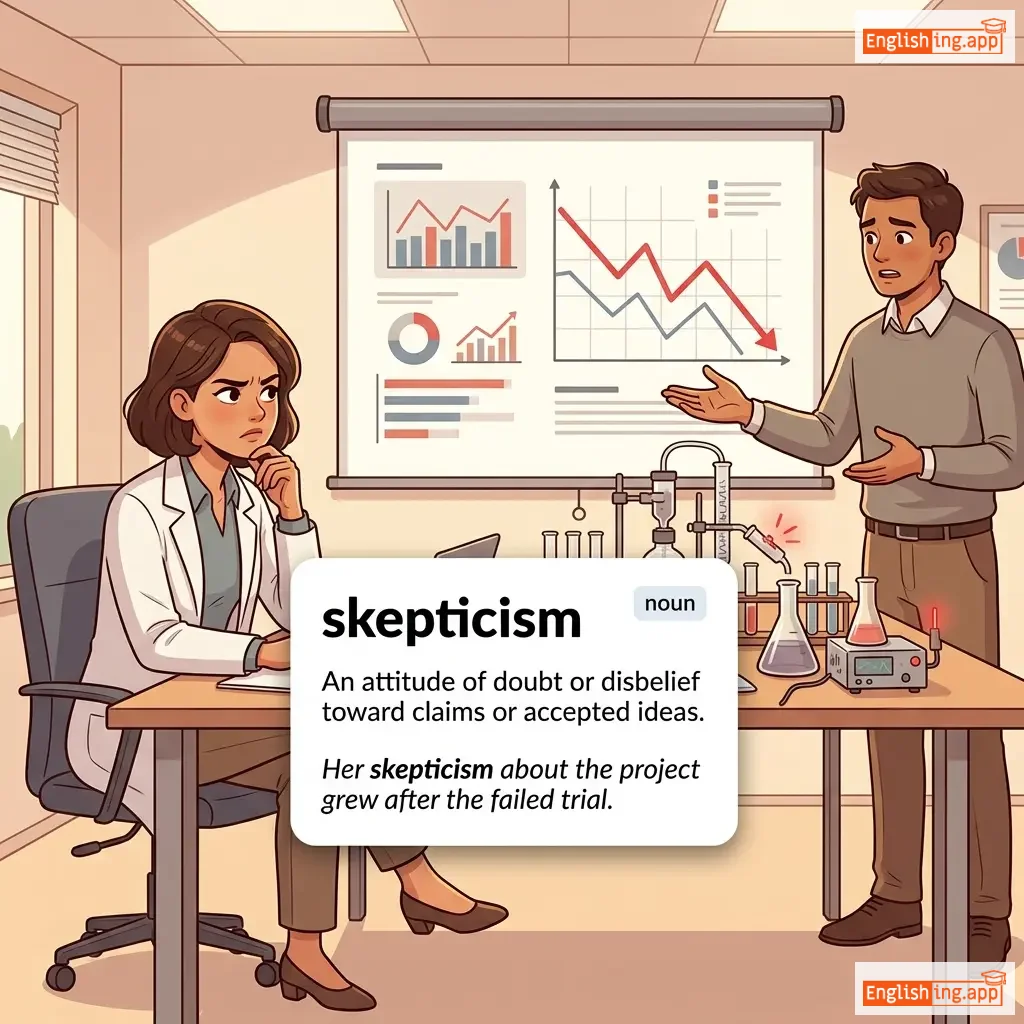
/ˈskɛptɪˌsɪzəm/
noun
(skepticism)
••••••
|
|
怀疑主义
huáiyí zhǔyì
••••••
|
- •••••• | - •••••• | - •••••• | - •••••• |
An attitude of doubt or disbelief toward claims or accepted ideas.
••••••
|
Her skepticism about the project grew after the failed trial. |
她对这个项目的怀疑在失败的试验后加剧了。
Tā duì zhège xiàngmù de huáiyí zài shībài de shìyàn hòu jiājù le.
••••••
|
healthy skepticism |
A rational and balanced doubt about claims, which can prevent deception.
••••••
|
健康的怀疑主义
jiànkāng de huáiyí zhǔyì
••••••
|
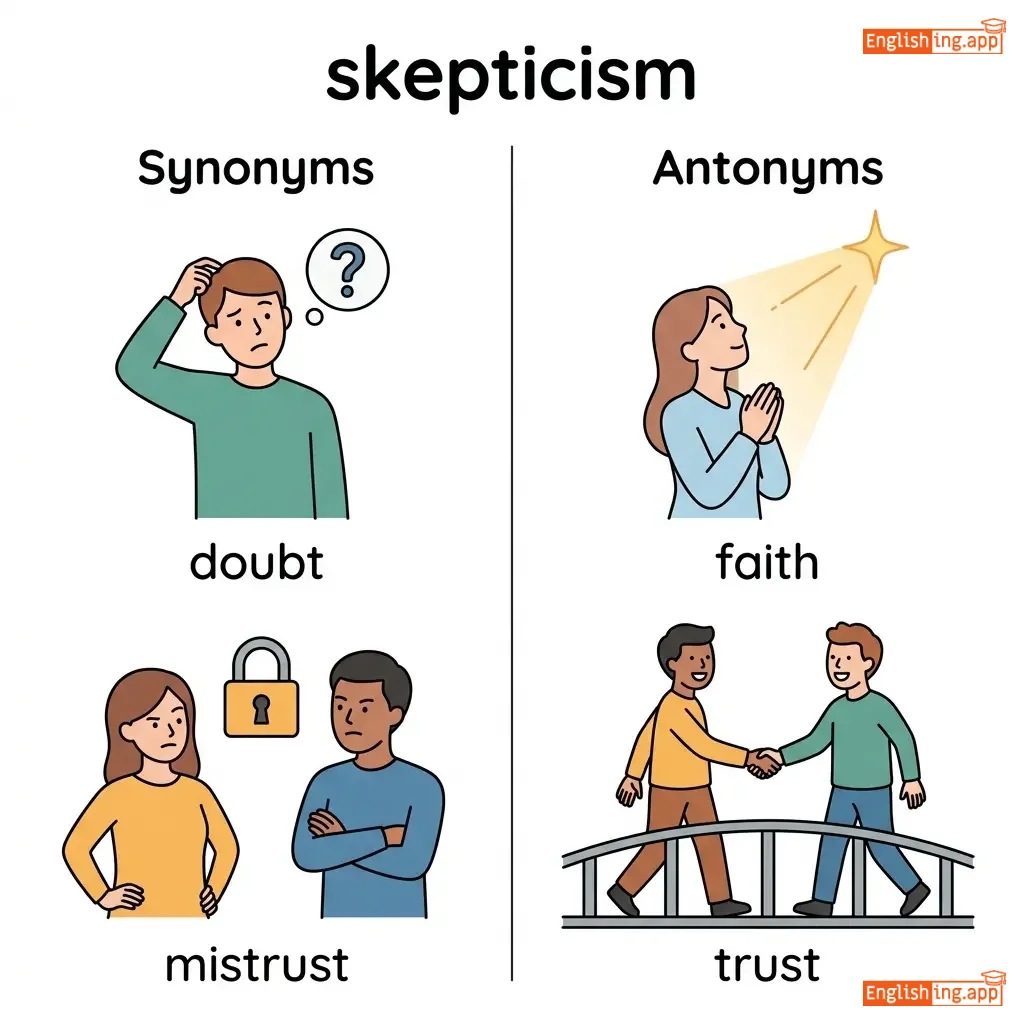
doubt, mistrust, disbelief, uncertainty
••••••
|
faith, trust
••••••
|
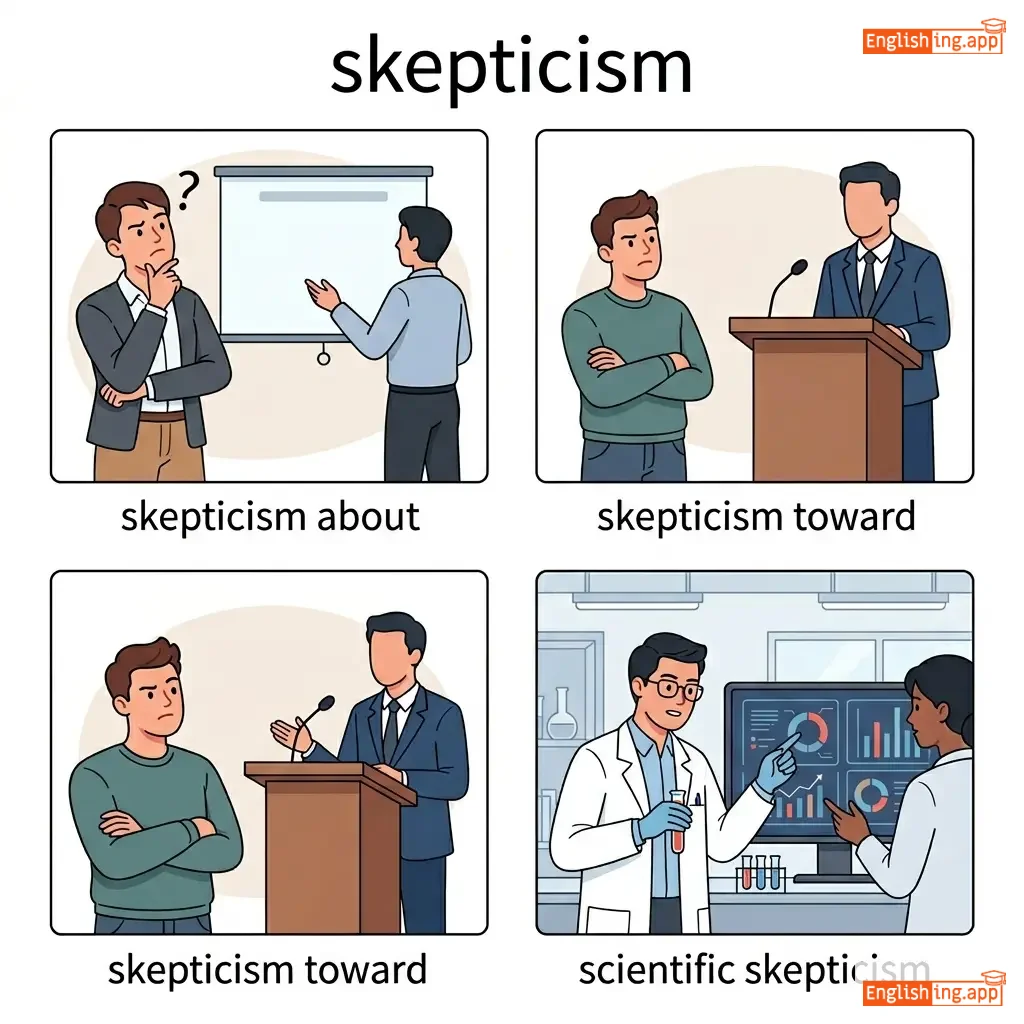
skepticism about, skepticism toward, scientific skepticism, public skepticism
••••••
|
怀疑主义像是‘skepticism’,总是质疑所有事物!
••••••
|
|
#8072
🤔
|
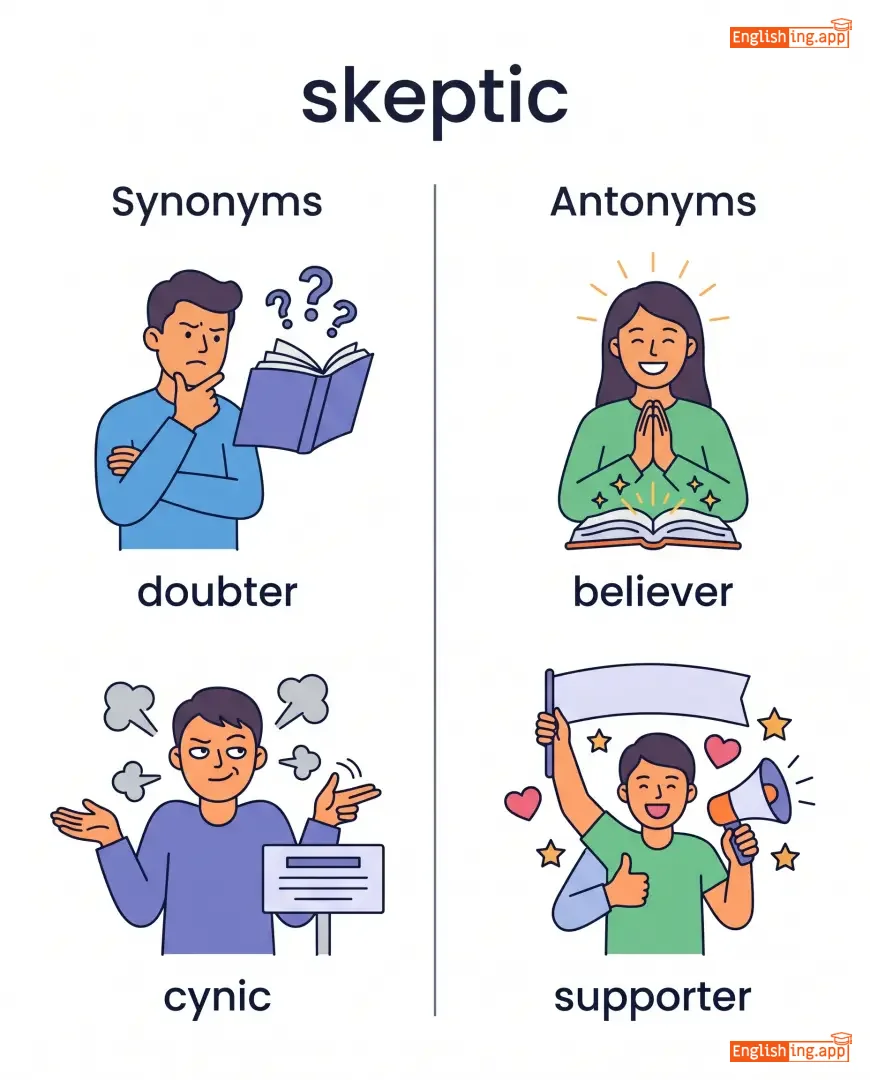
/ˈskɛptɪk/
noun
(sī kè pǐkè)
••••••
|
|
怀疑者
huáiyí zhě
••••••
|
- •••••• | - •••••• | - •••••• | - •••••• |
A person who doubts or questions accepted beliefs or claims.
••••••
|
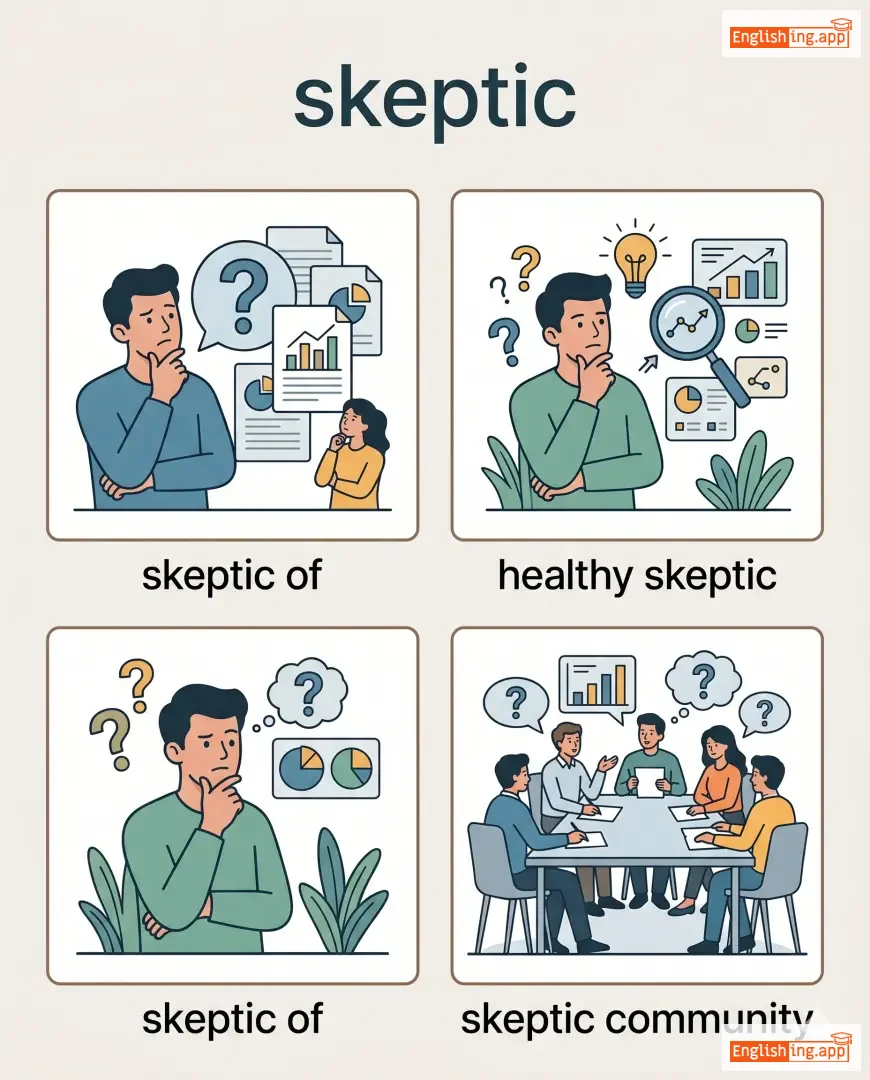
The scientist was a skeptic of theories without solid evidence. |
这位科学家对没有确凿证据的理论持怀疑态度。
Zhè wèi kēxuéjiā duì méiyǒu quèzào zhèngjù de lǐlùn chí huáiyí tàidù.
••••••
|
healthy skeptic |
A person who doubts claims in a rational and balanced way.
••••••
|
健康的怀疑者
jiànkāng de huáiyí zhě
••••••
|
doubter, cynic, questioner, disbeliever
••••••
|
believer, supporter
••••••
|
skeptic of, healthy skeptic, skeptic community, skeptic movement
••••••
|
怀疑者总是怀疑一切,就像寻找真相的侦探。
••••••
|
|
#8073
💀
|
/ˈskɛlɪtən/
noun
(骷髅)
••••••
|
- •••••• |
骷髅
kulou
••••••
|
- •••••• | - •••••• | - •••••• | - •••••• |
The internal framework of bones that supports the body of a human or animal.
••••••
|
The teacher showed the students a human skeleton in the biology class. |
老师在生物课上向学生们展示了一个人类的骷髅。
Lǎoshī zài shēngwù kè shàng xiàng xuéshēngmen zhǎnshìle yīgè rénlèi de kulou.
••••••
|
skeleton in the closet |
A hidden and potentially embarrassing or shameful secret.
••••••
|
衣柜里的骷髅
Yīguì lǐ de kulou
••••••
|
framework, bones, structure, anatomy
••••••
|
flesh, body
••••••
|
human skeleton, animal skeleton, skeleton crew, skeleton structure
••••••
|
骷髅 = bones (骨头)
••••••
|
|
#8074
👭
|
/ˈsɪstərhʊd/
noun
(sìsītāhùd)
••••••
|
- •••••• |
姐妹情谊
jiěmèi qíngyì
••••••
|
- •••••• | - •••••• | - •••••• | - •••••• |
The relationship between sisters, or a community of women united by shared experiences or goals.
••••••
|
The feminist movement created a strong sense of sisterhood among women. |
女权主义运动在女性中创造了强烈的姐妹情谊感。
Nǚquán zhǔyì yùndòng zài nǚxìng zhōng chuàngzào le qiángliè de jiěmèi qíngyì gǎn.
••••••
|
bond of sisterhood |
A deep connection or solidarity among women.
••••••
|
姐妹情谊的纽带
jiěmèi qíngyì de niǔdài
••••••
|
solidarity, companionship, fellowship, fraternity
••••••
|
division, isolation
••••••
|
spirit of sisterhood, bond of sisterhood, sense of sisterhood, global sisterhood
••••••
|
Sister + hood 意味着一群姐妹 - 所有女性在姐妹情谊中团结。
••••••
|
|
#8075
🌬️
|
/sɪˈrɒkoʊ/
noun
(西罗科)
••••••
|
- •••••• |
炎热干燥的风
yánrè gānzào de fēng
••••••
|
- •••••• | - •••••• | - •••••• | - •••••• |
A hot, dry wind blowing from North Africa across the Mediterranean to southern Europe.
••••••
|
The sirocco made the city unbearably hot and dusty. |
西罗科让这座城市变得极其炎热和尘土飞扬。
Xī luō kē ràng zhè zuò chéngshì biàn dé jíqí yánrè hé chéntǔ fēiyáng.
••••••
|
- •••••• | - •••••• | - •••••• |
desert wind, hot wind, dust storm, dry wind
••••••
|
cool breeze, zephyr
••••••
|
blowing sirocco, desert sirocco, hot sirocco, summer sirocco
••••••
|
西罗科 = 来自沙漠的热风 🌬️
••••••
|
|
#8076
🚨
|
/ˈsaɪrən/
noun
(西伦)
••••••
|
- •••••• |
警报器
jǐngbàqì
••••••
|
- •••••• | - •••••• | - •••••• | - •••••• |
A device that makes a loud prolonged sound as a signal or warning; in mythology, a creature that lures sailors with enchanting songs.
••••••
|
The police car passed with its siren blaring. |
警车经过时,警报器发出尖锐的声音。
Jǐngchē jīngguò shí, jǐngbàqì fāchū jiānruì de shēngyīn.
••••••
|
siren song |
An alluring appeal that is hard to resist but may be dangerous
••••••
|
警报器歌曲
jǐngbàqì gēqǔ
••••••
|
alarm, signal, warning, enchantress, temptress
••••••
|
silence, quiet
••••••
|
police siren, ambulance siren, fire siren, siren song
••••••
|
当SIREN响起 🚨时,每个人都会跑;神话中的SIREN诱惑水手。
••••••
|
|
#8077
🍵
|
/sɪp/
verb
(sip)
••••••
|
|
啜饮
chuoyin
••••••
|
sipped
sipped
••••••
|
sipped
sipped
••••••
|
sips
sips
••••••
|
sipping
sipping
••••••
|
To drink something slowly, taking only small amounts at a time.
••••••
|
She sipped her tea while reading a book.
她边读书边小口啜饮茶。
••••••
|
她一边读书,一边啜饮着茶。
Ta yibian du shu, yibian chuoyin zhe cha.
••••••
|
sip of tea
茶的啜饮
••••••
|
A small amount of tea drunk at one time
••••••
|
茶的啜饮
cha de chuoyin
••••••
|
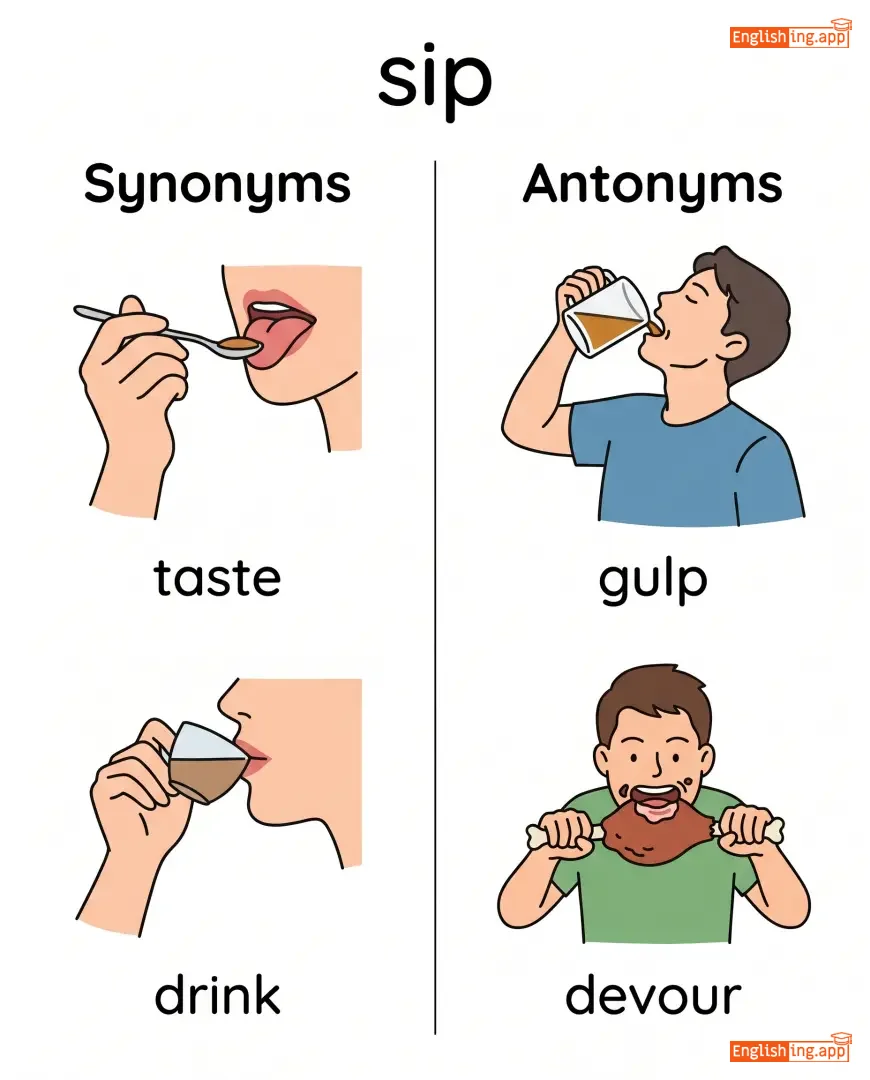
taste, drink, swallow, imbibe
••••••
|
gulp, devour
••••••
|
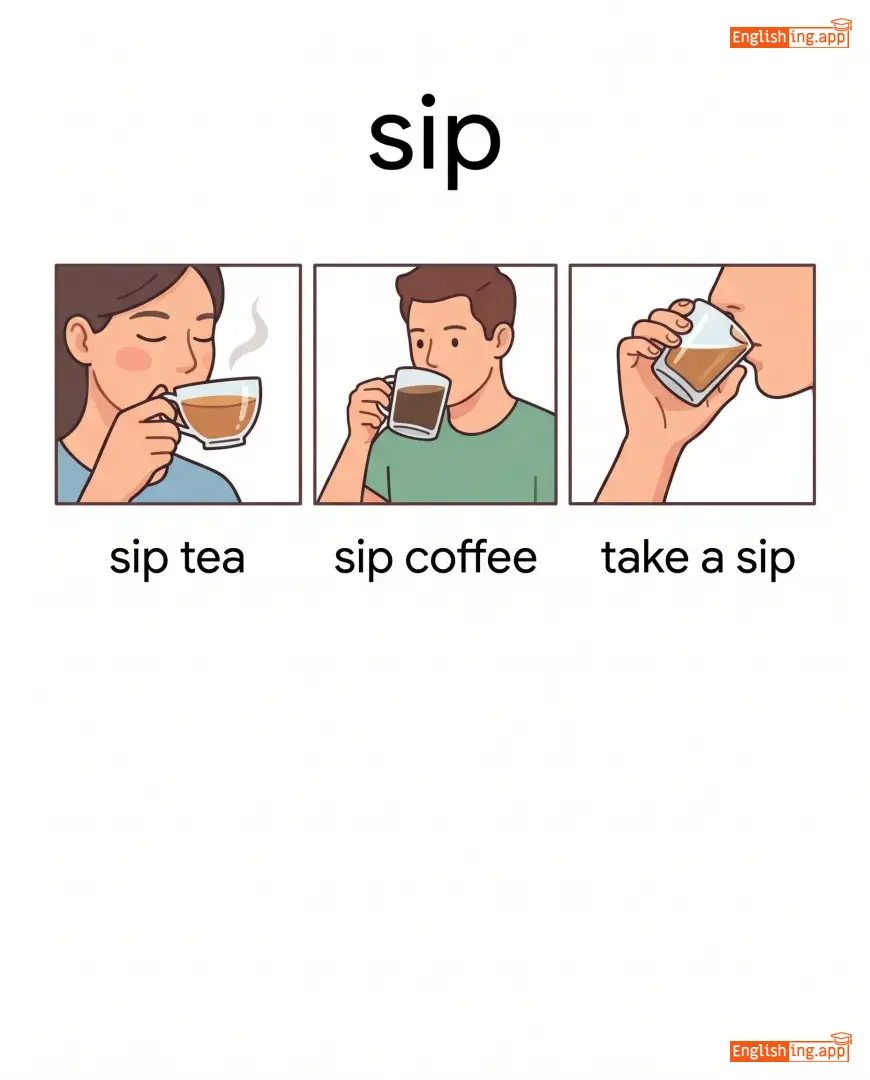
sip tea, sip coffee, take a sip, sip slowly
••••••
|
SIP意味着啜饮; 记住‘边喝茶边SIP’
••••••
|
|
#8078
🤧
|
/ˈsaɪnəs/
noun
(赛纳斯)
••••••
|
- •••••• |
鼻窦
bídòu
••••••
|
- •••••• | - •••••• | - •••••• | - •••••• |
A cavity within a bone or tissue, especially those in the bones of the face connected with the nasal cavities.
••••••
|
He suffered from a sinus infection that caused headaches.
他因鼻窦感染而痛苦,导致头痛。
••••••
|
他因鼻窦感染而痛苦,导致头痛。
Tā yīn bídòu gǎnrǎn ér tòngkǔ, dǎozhì tóutòng.
••••••
|
sinus infection
鼻窦感染
••••••
|
An infection or inflammation of the sinus cavities
••••••
|
鼻窦感染
bídòu gǎnrǎn
••••••
|
cavity, hollow, chamber, recess
••••••
|
solid, fullness
••••••
|
sinus infection, sinus pain, sinus congestion, sinus cavity
••••••
|
鼻窦就是头痛的根源。
••••••
|
|
#8079
〰️
|
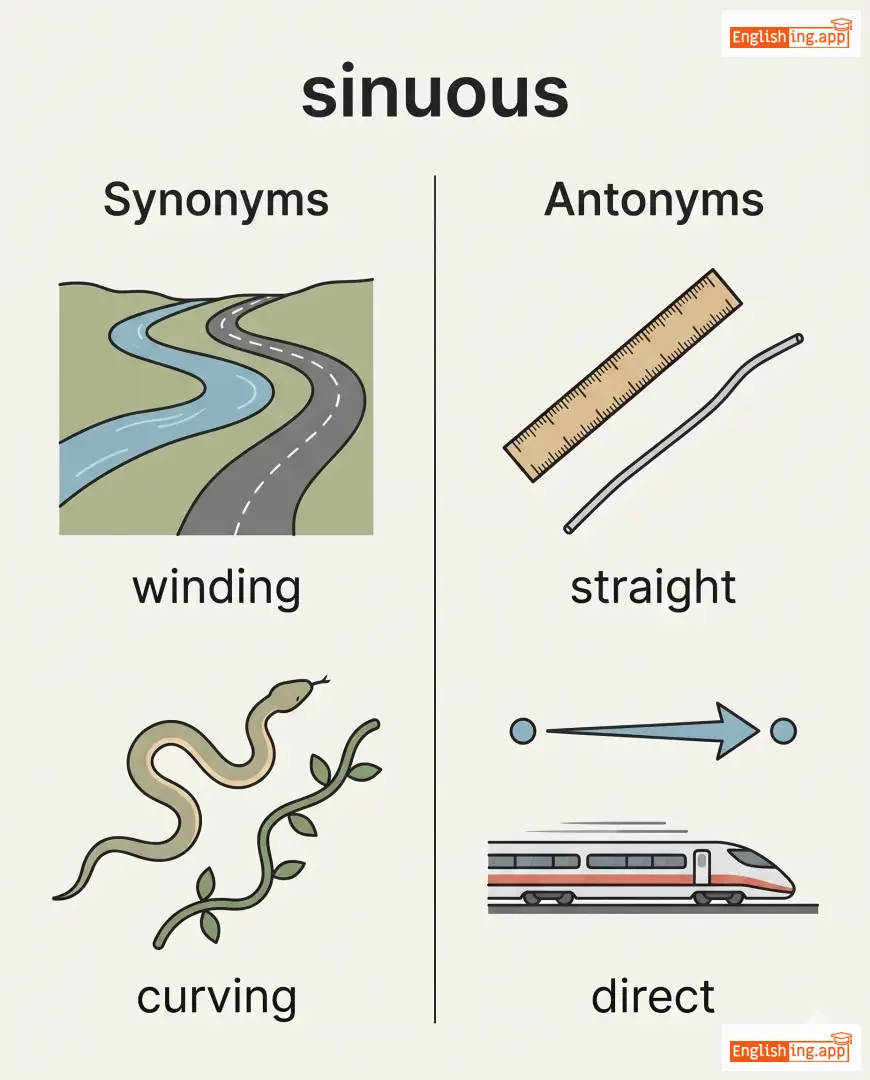
/ˈsɪnjuəs/
adjective
(sin-yu-s)
••••••
|
|
蜿蜒
wan yan
••••••
|
- •••••• | - •••••• | - •••••• | - •••••• |
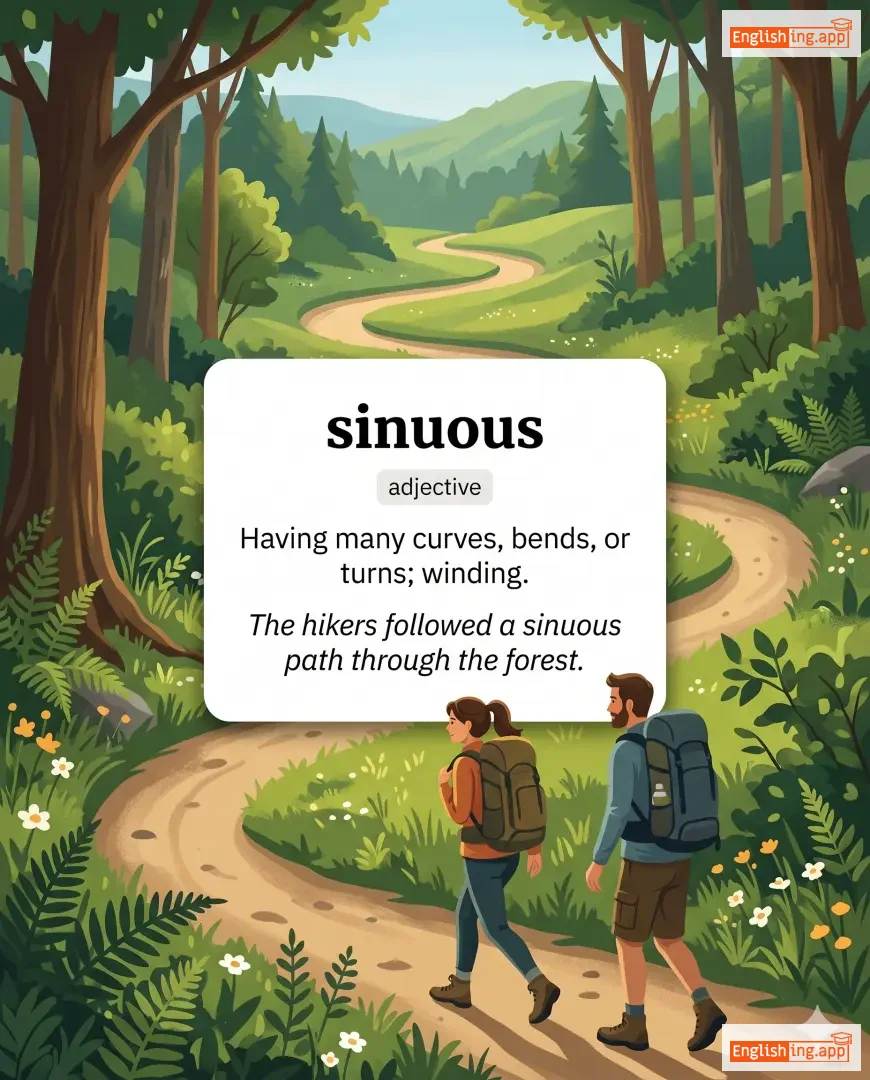
Having many curves, bends, or turns; winding.
••••••
|
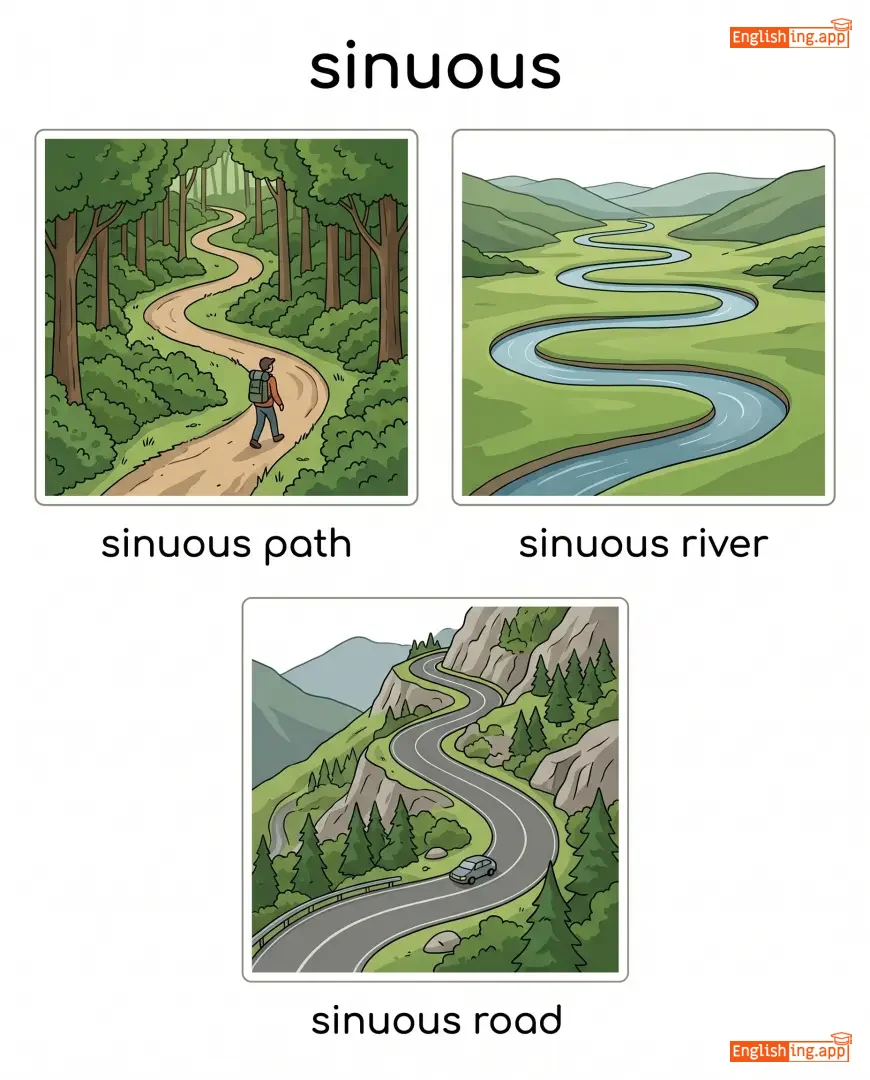
The hikers followed a sinuous path through the forest. |
徒步旅行者沿着蜿蜒的路径穿过森林。
Tubu luxingzhe yanzhe wanyan de luxian chuanguo senlin.
••••••
|
- •••••• | - •••••• | - •••••• |
winding, curving, twisting, meandering, serpentine
••••••
|
straight, direct, linear
••••••
|
sinuous path, sinuous river, sinuous road, sinuous line
••••••
|
蜿蜒的路就像蛇的路径,弯弯曲曲。
••••••
|
|
#8080
🌀
|
/ˌsɪnjuˈɒsɪti/
noun
(sinuositi)
••••••
|
- •••••• |
弯曲性
wānqū xìng
••••••
|
- •••••• | - •••••• | - •••••• | - •••••• |
The quality or state of being winding, curving, or having many turns.
••••••
|
The sinuosity of the river made navigation challenging. |
河流的弯曲性使得导航变得具有挑战性。
Héliú de wānqū xìng shǐdé dǎoháng biàn dé jùyǒu tiǎozhànxìng.
••••••
|
- •••••• | - •••••• | - •••••• |
curvature, winding, twisting, bend, meandering
••••••
|
straightness, directness
••••••
|
river sinuosity, channel sinuosity, measure sinuosity, high sinuosity
••••••
|
弯曲性听起来像弯曲,代表着弯曲或曲折的特性。
••••••
|
|
#8081
😈
|
/ˈsɪnɪstər/
adjective
(斯尼斯特)
••••••
|
- •••••• |
邪恶的
xiee de
••••••
|
- •••••• | - •••••• | - •••••• | - •••••• |
Giving the impression that something harmful or evil is happening or will happen.
••••••
|
The abandoned house had a sinister atmosphere. |
那座废弃的房子有着邪恶的氛围。
Na zuo feiqi de fangzi youzhe xiee de fenwei.
••••••
|
sinister motive |
An evil or harmful intention behind an action.
••••••
|
邪恶动机
xiee dongji
••••••
|
menacing, threatening, evil, ominous
••••••
|
harmless, innocent, benign
••••••
|
sinister plot, sinister figure, sinister atmosphere
••••••
|
Sinister的意思就是邪恶的 → 恶行即将发生。
••••••
|
|
#8082
🌟
|
/ˈsɪŋɡjələr/
adjective, noun
(单数)
••••••
|
|
非凡 / 单数
feifan / danshu
••••••
|
- •••••• | - •••••• | - •••••• | - •••••• |
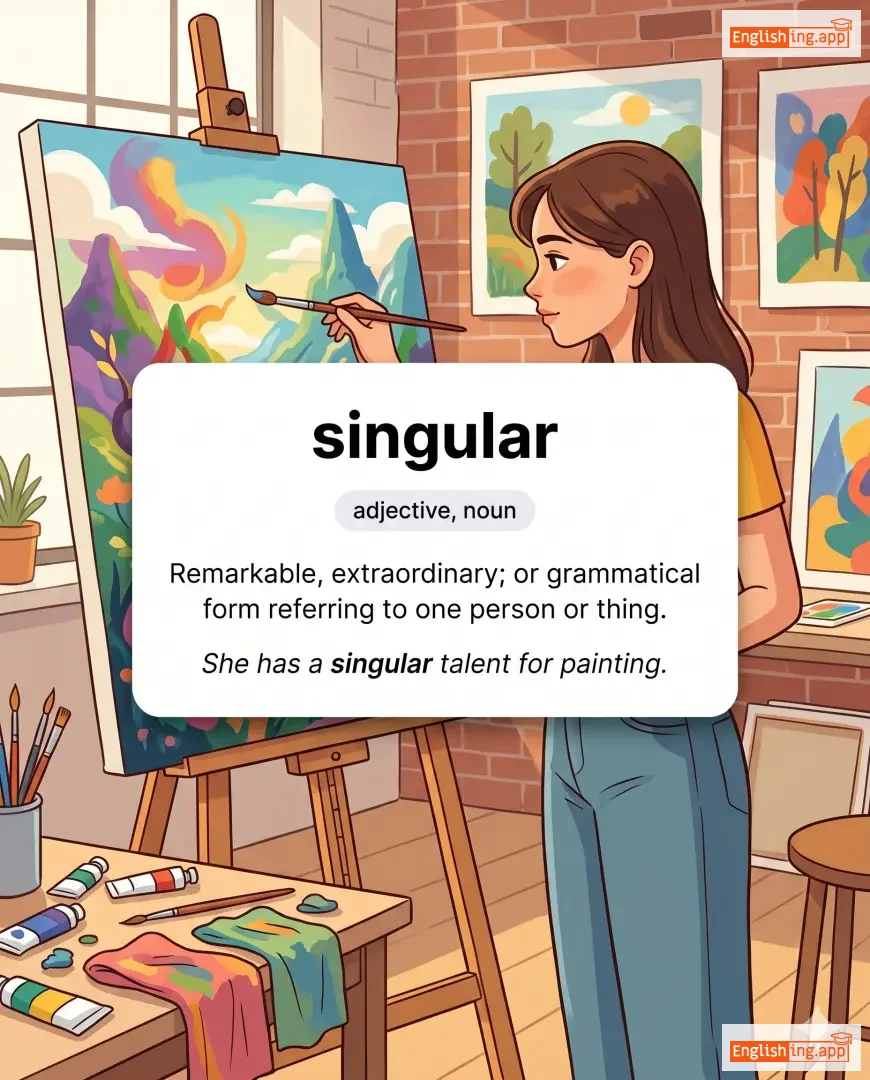
Remarkable, extraordinary; or grammatical form referring to one person or thing.
••••••
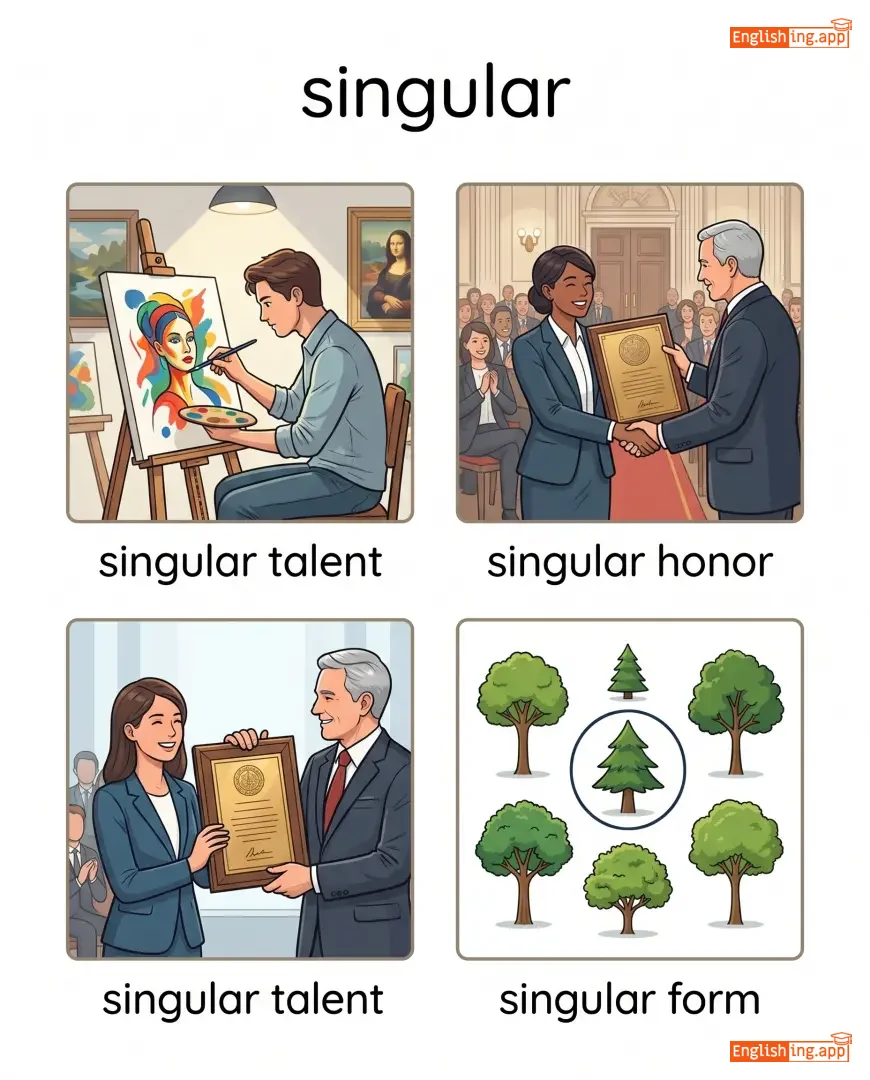
|
She has a singular talent for painting. |
她在绘画方面有非凡的才华。
Ta zai huihua fangmian you feifan de caihua.
••••••
|
singular focus |
Exclusive concentration on one thing.
••••••
|
单一的专注
danyi de zhuanzhu
••••••
|
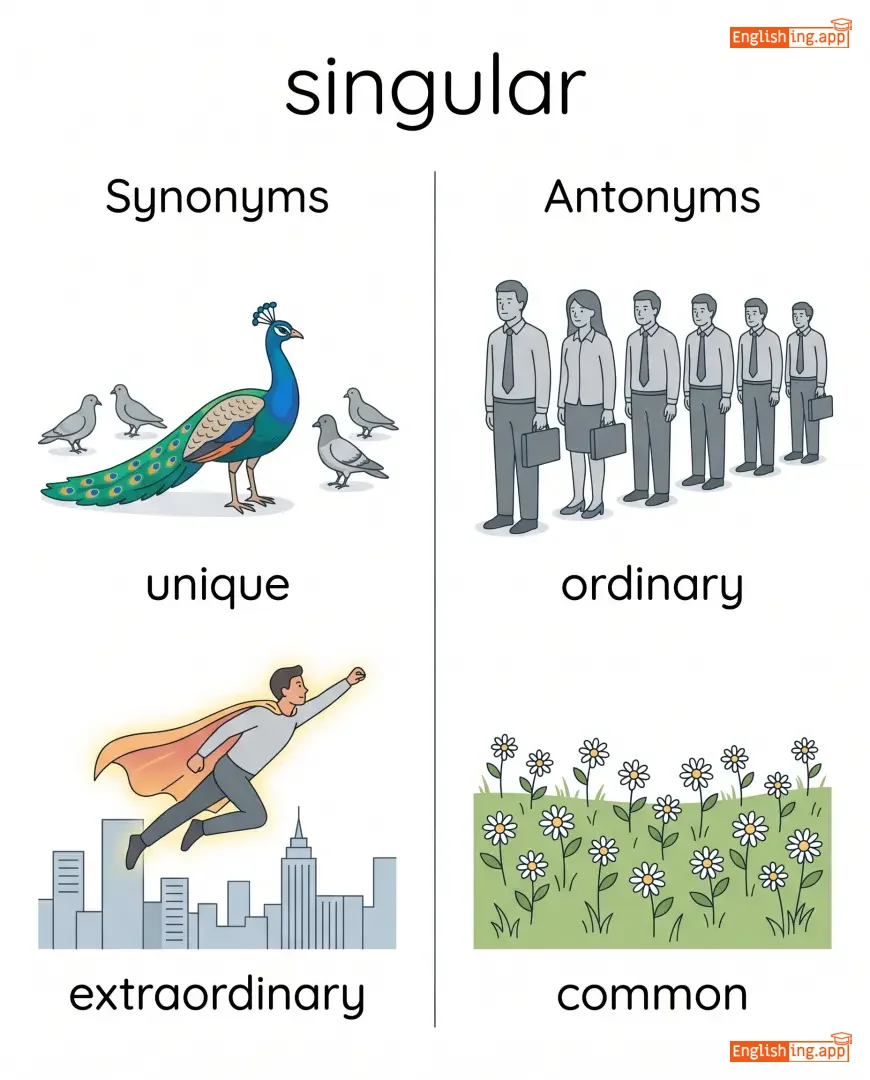
unique, extraordinary, remarkable, exceptional
••••••
|
ordinary, common, usual
••••••
|
singular talent, singular honor, singular form
••••••
|
Singular = 独特的,非凡的 🌟
••••••
|
|
#8083
🔥
|
/sɪndʒ/
verb
(辛格)
••••••
|
- •••••• |
轻微燃烧
qingwei ranshao
••••••
|
singed
辛格德
••••••
|
singed
辛格德
••••••
|
singes
辛格斯
••••••
|
singeing
辛格英
••••••
|
To burn something superficially or lightly, especially at the edges.
••••••
|
The fire singed his eyebrows.
火焰烧焦了他的眉毛。
••••••
|
火焰烧焦了他的眉毛。
Huo yan shao jiao le ta de mei mao.
••••••
|
- •••••• | - •••••• | - •••••• |
scorch, burn, char, sear
••••••
|
cool, extinguish
••••••
|
singe hair, singe cloth, singe the edge
••••••
|
Singe = sing + 火焰 🔥 → 轻微燃烧
••••••
|
|
#8084
🏋️
|
/ˈsɪnjuːi/
adjective
(xīníwéi)
••••••
|
- •••••• |
肌肉发达且强壮
jirou fada qie qiangzhuang
••••••
|
- •••••• | - •••••• | - •••••• | - •••••• |
Lean and muscular; strong and tough.
••••••
|
The athlete had a sinewy build that showed his strength. |
运动员有着结实的肌肉,展示了他的力量。
Yundongyuan youzhe jieshi de jirou, zhanshileshi tade liliang.
••••••
|
- •••••• | - •••••• | - •••••• |
muscular, wiry, strong, brawny
••••••
|
weak, frail
••••••
|
sinewy build, sinewy arms, sinewy frame
••••••
|
Sinewy意味着结实且强壮 – sinew + y = 满是肌肉。
••••••
|
|
#8085
🌊
|
/sɪlt/
noun
(silt)
••••••
|
- •••••• |
泥沙
ní shā
••••••
|
- •••••• | - •••••• | - •••••• | - •••••• |
Fine sand, clay, or other material carried by running water and deposited as a sediment.
••••••
|
The river deposited layers of silt along its banks.
河流在其河岸上沉积了层层的泥沙。
••••••
|
河流在其河岸上沉积了层层的泥沙。
Héliú zài qí hé'àn shàng chéndì le céngcéng de ní shā.
••••••
|
silt up
泥沙淤积
••••••
|
To become blocked or filled with silt.
••••••
|
淤塞
yū sāi
••••••
|
sediment, deposit, mud, sludge, alluvium
••••••
|
rock, gravel, stone
••••••
|
river silt, fine silt, silt deposit, silt accumulation
••••••
|
SILT就像河流中堆积的泥沙,阻塞了水流。
••••••
|
|
#8086
💼
|
/ˈsaɪnɪkjʊər/
noun
(赛尼克尤尔)
••••••
|
|
轻松工作
qīngsōng gōngzuò
••••••
|
- •••••• | - •••••• | - •••••• | - •••••• |
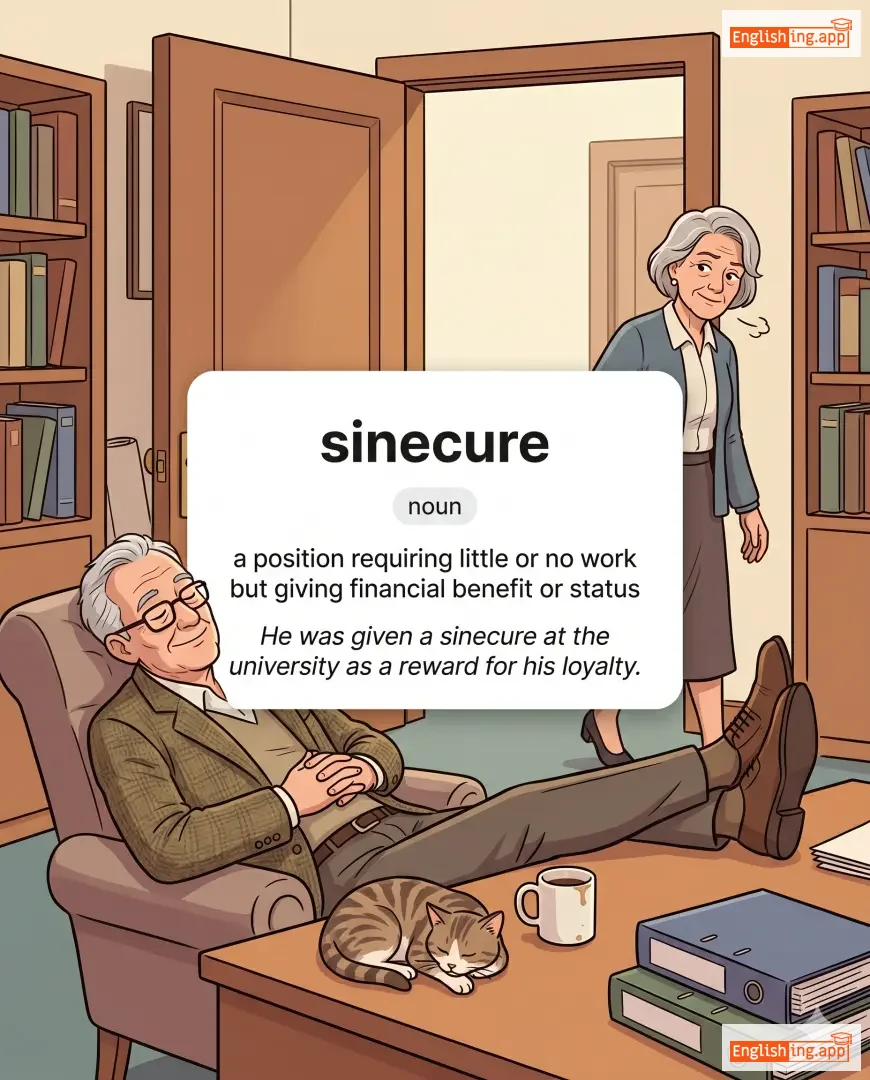
a position requiring little or no work but giving financial benefit or status
••••••
|
He was given a sinecure at the university as a reward for his loyalty. |
作为对他忠诚的奖励,他在大学获得了一个轻松的职位。
Zuòwéi duì tā zhōngchéng de jiǎnglì, tā zài dàxué huòdé le yīgè qīngsōng de zhíwèi.
••••••
|
- •••••• | - •••••• | - •••••• |
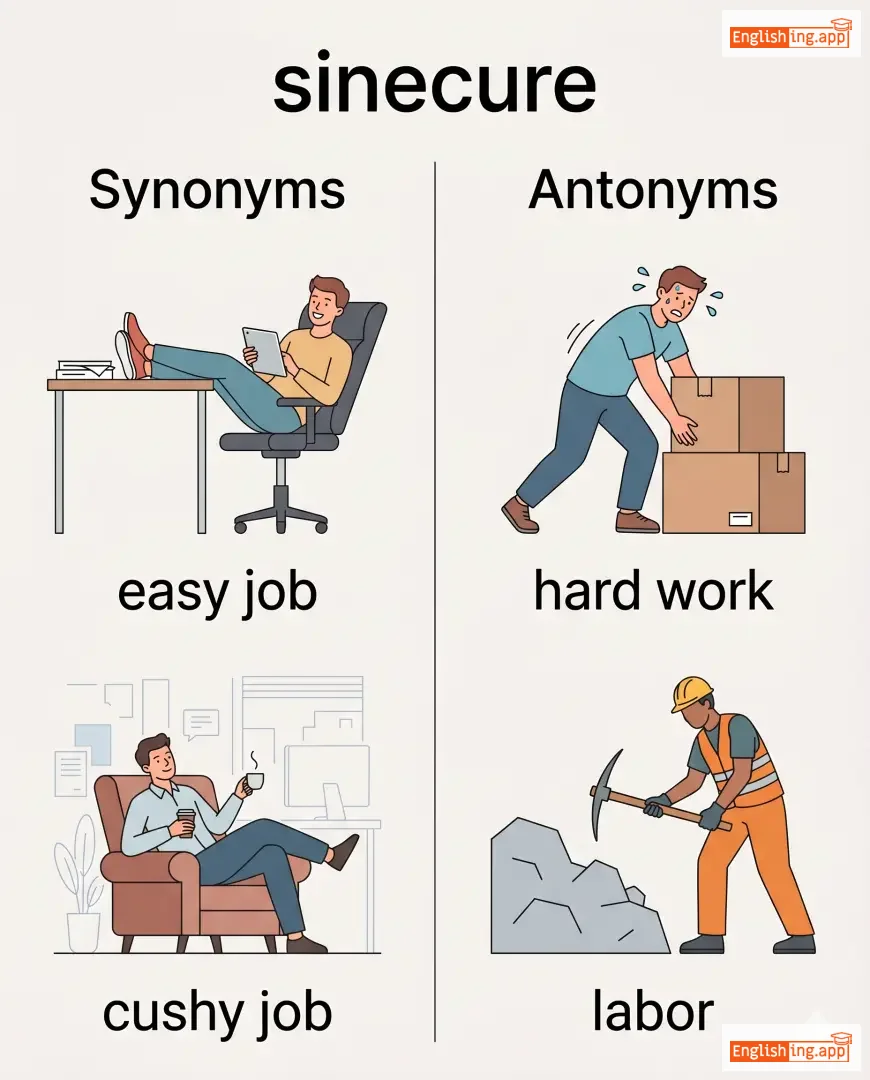
easy job, cushy job, honorary position, figurehead role
••••••
|
hard work, labor, drudgery
••••••
|
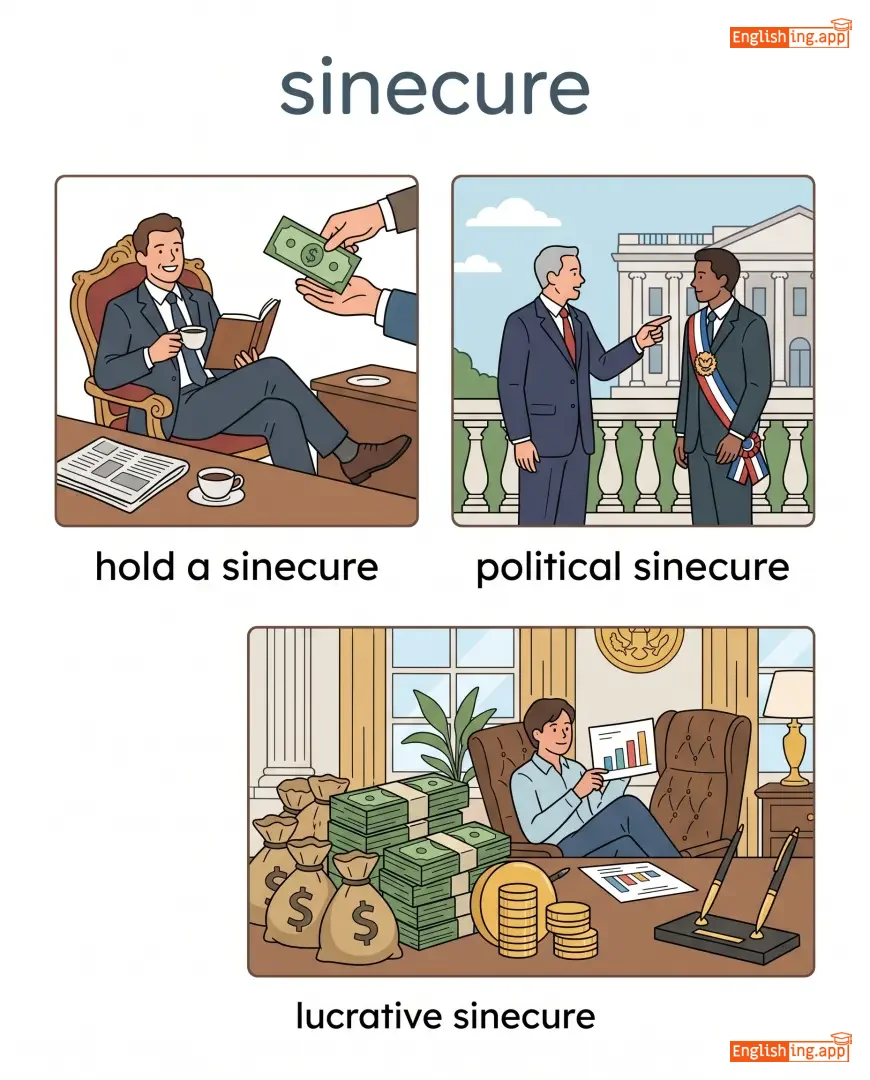
hold a sinecure, political sinecure, lucrative sinecure, sinecure position
••••••
|
SINE 无需努力,轻松工作
••••••
|
|
#8087
❤️
|
/sɪnˈsɪr/
adjective
(xīn-sīr)
••••••
|
- •••••• |
真诚
zhencheng
••••••
|
- •••••• | - •••••• | - •••••• | - •••••• |
genuine and honest; free from pretense or deceit
••••••
|
She gave a sincere apology for her mistake. |
她为她的错误真诚地道歉。
Ta wei ta de cuowu zhencheng de daoqian.
••••••
|
sincere thanks |
genuine gratitude without hidden motives
••••••
|
真诚的感谢
zhencheng de ganxie
••••••
|
genuine, honest, heartfelt, truthful
••••••
|
insincere, fake, deceitful
••••••
|
sincere effort, sincere apology, sincere gratitude, sincere belief
••••••
|
Sincere = 真诚 (zhencheng)
••••••
|
|
#8088
⚖️
|
/sɪn/
noun, verb
(辛)
••••••
|
- •••••• |
罪
zui
••••••
|
sinned
辛德
••••••
|
sinned
辛德
••••••
|
sins
辛斯
••••••
|
sinning
辛宁
••••••
|
an immoral act considered to be a transgression against divine law; to commit an offense against religious or moral law
••••••
|
He confessed his sin to the priest.
他向神父忏悔了他的罪。
••••••
|
他向神父忏悔了他的罪。
Ta xiang shenfu chanhui le tade zui.
••••••
|
fall into sin
陷入罪恶
••••••
|
to commit immoral or wrong actions
••••••
|
陷入罪恶
xianru zui'e
••••••
|
offense, wrongdoing, crime, transgression
••••••
|
virtue, goodness, morality
••••••
|
deadly sin, confess sin, forgive sin, commit sin
••••••
|
罪恶就像'zuī'为罪
••••••
|
|
#8089
⏱️
|
/ˌsaɪməlˈteɪniəs/
adjective
(西姆尔塔内乌斯)
••••••
|
|
同时的
tóng shí de
••••••
|
- •••••• | - •••••• | - •••••• | - •••••• |
occurring, operating, or done at the same time
••••••
|
The two singers gave simultaneous performances in different cities. |
这两位歌手在不同城市进行同时表演。
Zhè liǎng wèi gēshǒu zài bùtóng chéngshì jìnxíng tóngshí biǎoyǎn.
••••••
|
simultaneous equation |
a set of equations that are solved together because they share variables
••••••
|
同时方程
tóngshí fāngchéng
••••••
|
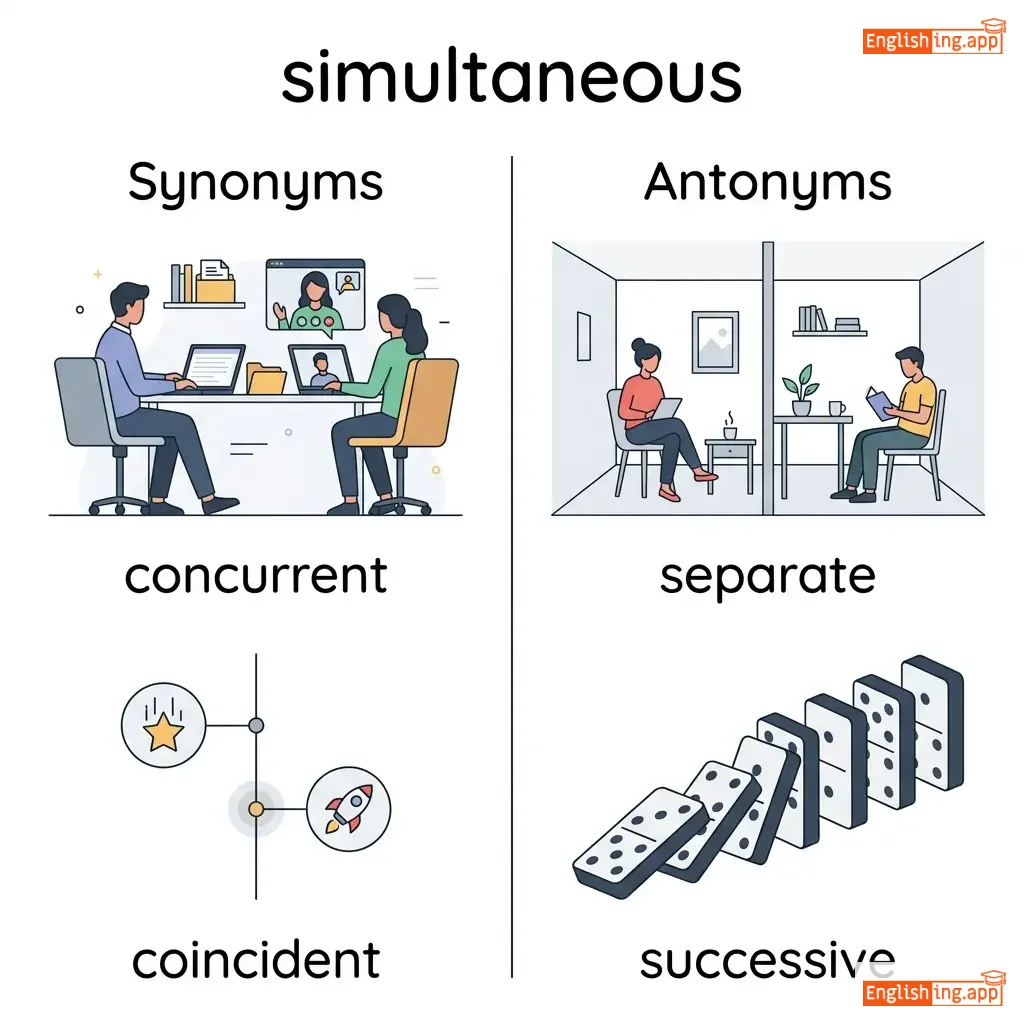
concurrent, coincident, synchronous, parallel
••••••
|
separate, successive, sequential
••••••
|
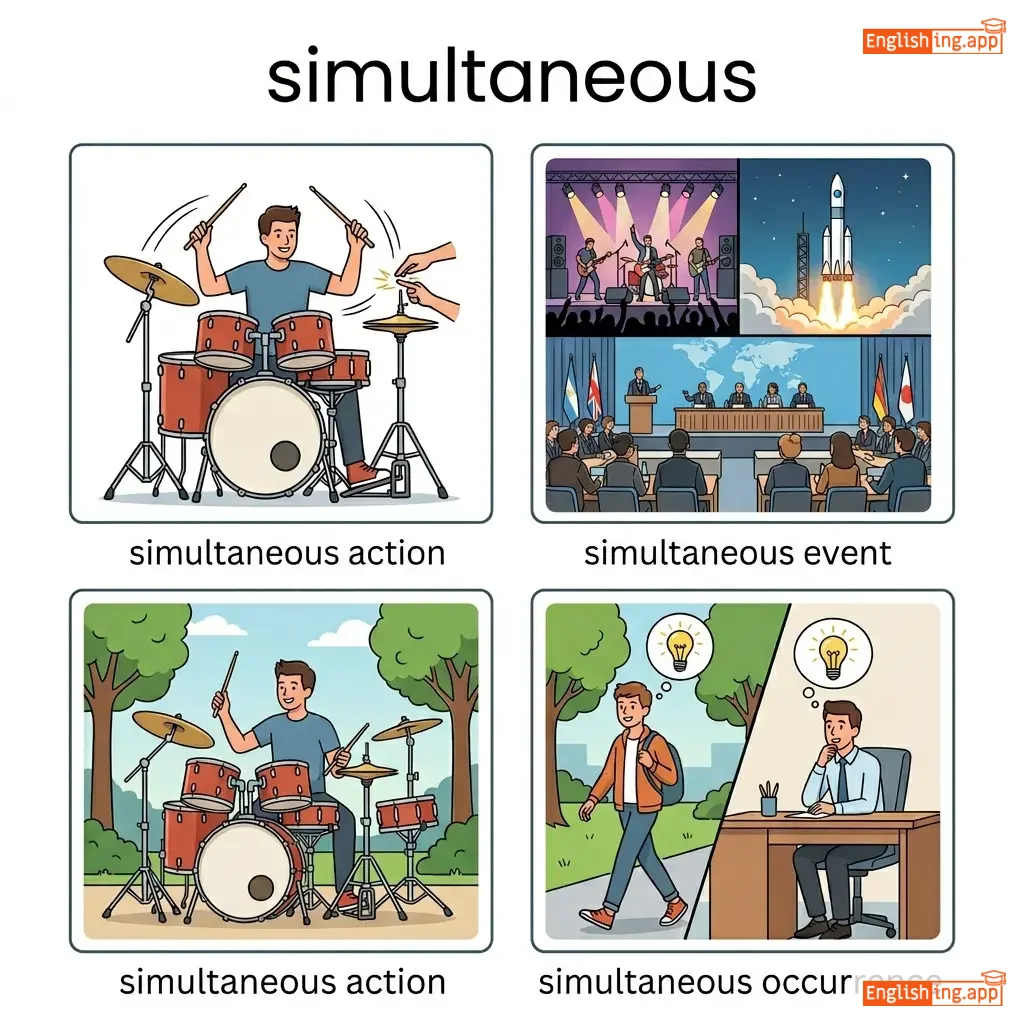
simultaneous action, simultaneous event, simultaneous occurrence, simultaneous translation
••••••
|
同时的就像是 simultaneous, 一起做事情
••••••
|
|
#8090
🎮
|
/ˈsɪmjʊˌleɪt/
verb
(模拟)
••••••
|
- •••••• |
模拟
mó nǐ
••••••
|
simulated
模拟的
••••••
|
simulated
模拟的
••••••
|
simulates
模拟
••••••
|
simulating
模拟中
••••••
|
to imitate the appearance, character, or behavior of something; to pretend or reproduce conditions artificially
••••••
|
The pilot had to simulate an emergency landing during training.
飞行员在训练中必须模拟紧急着陆。
••••••
|
飞行员在训练中必须模拟紧急着陆。
Fēixíngyuán zài xùnliàn zhōng bìxū mó nǐ jǐn jí zhuólù.
••••••
|
- •••••• | - •••••• | - •••••• |
imitate, mimic, reproduce, replicate, pretend
••••••
|
differ, real, genuine
••••••
|
simulate behavior, simulate conditions, simulate response, computer simulate
••••••
|
模拟飞行模拟紧急着陆
••••••
|
|
#8091
🗿
|
/ˌsɪmjʊˈleɪkrəm/
noun
(西木拉克伦)
••••••
|
- •••••• |
拟像
nǐ xiàng
••••••
|
- •••••• | - •••••• | - •••••• | - •••••• |
an image or representation of someone or something; a superficial likeness
••••••
|
The statue was only a simulacrum of the ancient god. |
这座雕像仅仅是古代神灵的拟像。
Zhè zuò diāoxiàng jǐn jǐn shì gǔdài shénlíng de nǐxiàng.
••••••
|
- •••••• | - •••••• | - •••••• |
likeness, image, representation, copy, semblance
••••••
|
original, reality, truth
••••••
|
mere simulacrum, create a simulacrum, simulacrum of
••••••
|
SIMUlator 制造的所有物品都是拟像 (拟像)。
••••••
|
|
#8092
🔍
|
/sɪmˈplɪstɪk/
adjective
(简化的)
••••••
|
- •••••• |
过于简化的
guò yú jiǎn huà de
••••••
|
- •••••• | - •••••• | - •••••• | - •••••• |
treating complex issues as if they were much simpler than they really are
••••••
|
His explanation was too simplistic and ignored key details.
His explanation was too simplistic and ignored key details.
••••••
|
他的解释过于简化,忽略了关键的细节。
Tā de jiě shì guò yú jiǎn huà, hū lüè le guān jiàn de xì jié.
••••••
|
- •••••• | - •••••• | - •••••• |
oversimplified, naive, shallow, superficial
••••••
|
complex, detailed, thorough
••••••
|
simplistic view, simplistic approach, overly simplistic
••••••
|
Simplistic 就是把事情看得过于简单,失去了真相。
••••••
|
|
#8093
📝
|
/ˈsɪmplɪˌfaɪ/
verb
(simplifai)
••••••
|
|
简化
jianhua
••••••
|
simplified
simplifaied
••••••
|
simplified
simplifaied
••••••
|
simplifies
simplifais
••••••
|
simplifying
simplifaiing
••••••
|
to make something easier to understand or do
••••••
|
The teacher simplified the lesson for the younger students.
老师简化了给年轻学生的课程。
••••••
|
老师简化了给年轻学生的课程。
Laoshi jianhua le gei nianqing xuesheng de kecheng.
••••••
|
- •••••• | - •••••• | - •••••• |
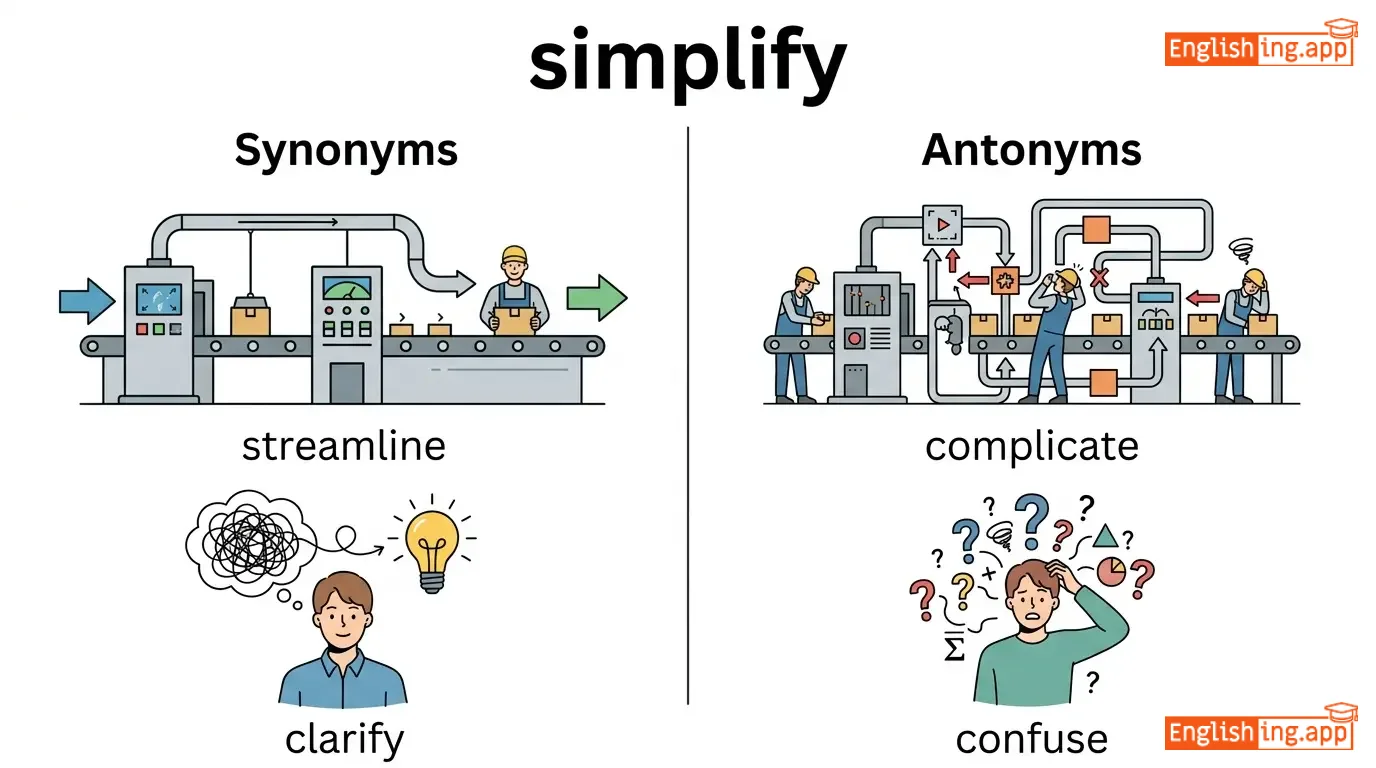
streamline, clarify, ease, reduce
••••••
|
complicate, confuse, perplex
••••••
|
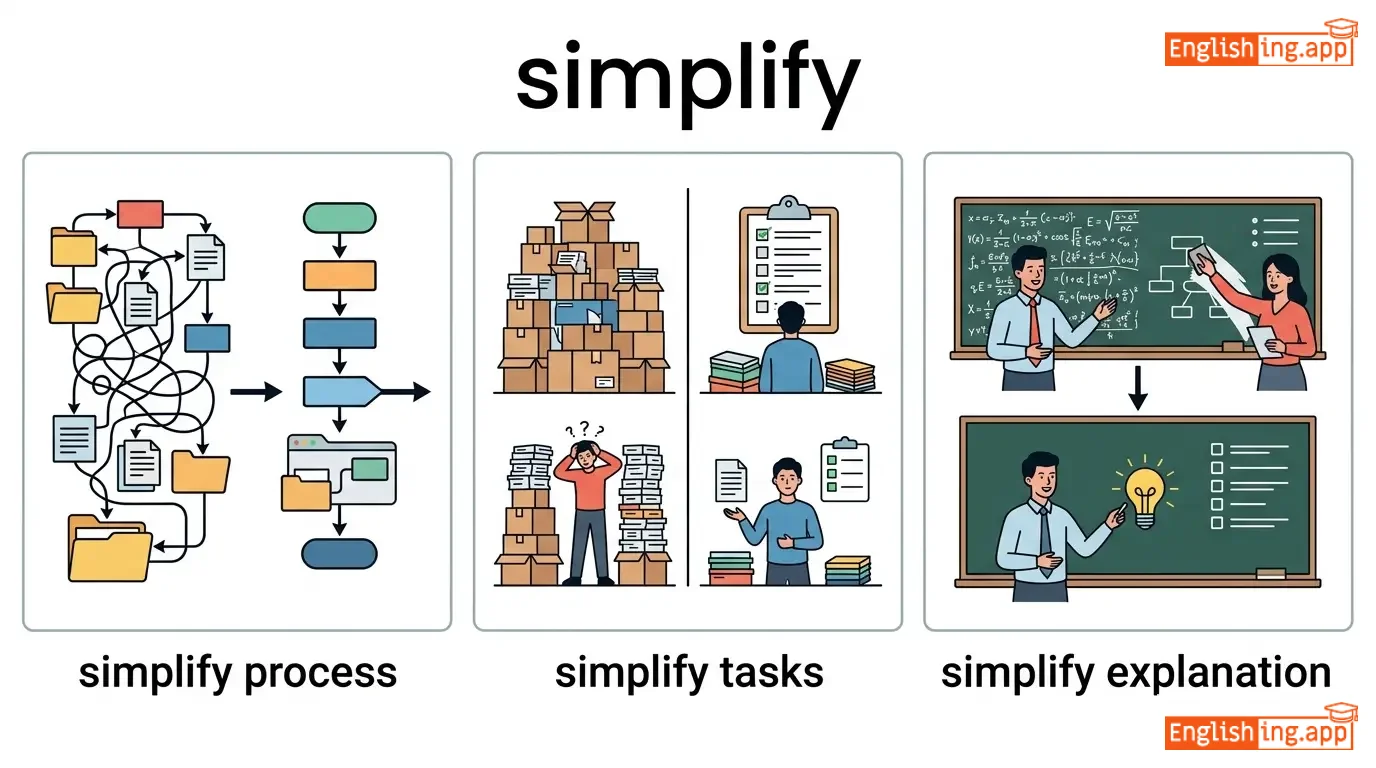
simplify process, simplify tasks, simplify explanation
••••••
|
SIMple + fi = 简化,表示使事情变得更容易
••••••
|
|
#8094
🤪
|
/ˈsɪmpəltən/
noun
(辛普尔顿)
••••••
|
- •••••• |
傻瓜
shǎguā
••••••
|
- •••••• | - •••••• | - •••••• | - •••••• |
a foolish or gullible person
••••••
|
They treated him like a simpleton who could not understand anything complex. |
他们把他当作一个无法理解复杂事物的傻瓜对待。
Tāmen bǎ tā dāngzuò yīgè wúfǎ lǐjiě fùzá shìwù de shǎguā duìdài.
••••••
|
- •••••• | - •••••• | - •••••• |
fool, dolt, idiot, nincompoop, dunce
••••••
|
genius, intellect, sage
••••••
|
act like a simpleton, foolish simpleton, naive simpleton
••••••
|
Simpleton = Simple + 傻瓜, 意味着一个傻瓜
••••••
|
|
#8095
😊
|
/ˈsɪmpər/
verb
(simper)
••••••
|
- •••••• |
傻笑或做作的笑
sha xiao huo zuo zuo de xiao
••••••
|
simpered
simpered
••••••
|
simpered
simpered
••••••
|
simpers
simpers
••••••
|
simpering
simpering
••••••
|
to smile in a silly, self-conscious, or affected way
••••••
|
She simpered at his compliment, clearly embarrassed.
她对他的夸奖傻乎乎地笑了,明显感到尴尬。
••••••
|
她在他的夸奖下傻笑,显然感到尴尬。
Ta zai ta de kuajiang xia sha xiao, xianran gandao gan'ga.
••••••
|
- •••••• | - •••••• | - •••••• |
smirk, grin, beam, leer, giggle
••••••
|
frown, glare, scowl
••••••
|
simper foolishly, simper nervously, simper shyly
••••••
|
SIM 卡就是傻笑,像simper一样。
••••••
|
|
#8096
🪞
|
/sɪˈmɪlɪˌtjuːd/
noun
(相似度)
••••••
|
- •••••• |
相似性
xiangsi xing
••••••
|
- •••••• | - •••••• | - •••••• | - •••••• |
The quality or state of being similar; resemblance or likeness.
••••••
|
There is a striking similitude between the two paintings. |
这两幅画之间有着显著的相似性。
Zhe liang fu hua zhijian youzhe xian zhu de xiangsi xing.
••••••
|
- •••••• | - •••••• | - •••••• |
likeness, resemblance, similarity, analogy
••••••
|
difference, contrast, dissimilarity
••••••
|
striking similitude, close similitude, remarkable similitude
••••••
|
SIMILITUDE意味着相似性—SIMILAR attitude导致SIMILITUDE。
••••••
|
|
#8097
✨
|
/ˈsɪməli/
noun
(sìmǐlì)
••••••
|
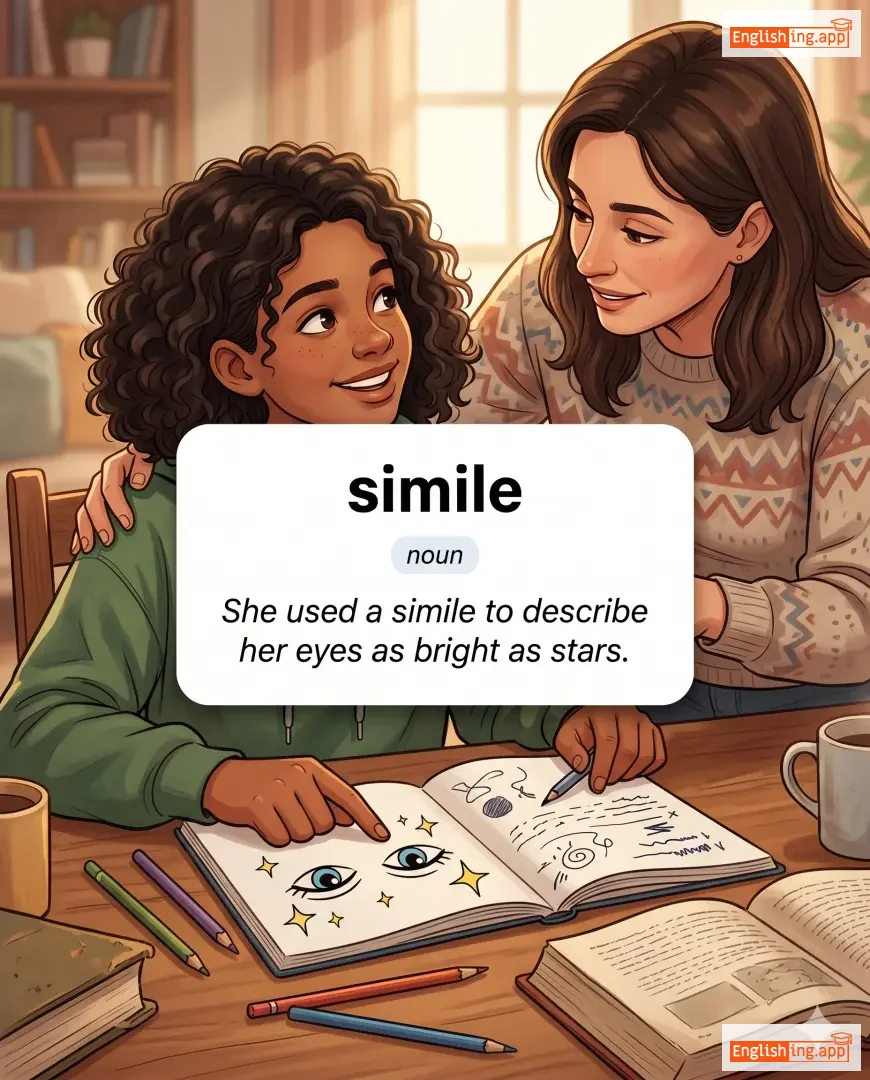
|
明喻
mingyu
••••••
|
- •••••• | - •••••• | - •••••• | - •••••• |
A figure of speech involving the comparison of one thing with another using 'like' or 'as'.
••••••
|
She used a simile to describe her eyes as bright as stars. |
她用明喻来描述她的眼睛像星星一样明亮。
Ta yong mingyu lai miaoshu ta de yanjing xiang xingxing yiyang mingliang.
••••••
|
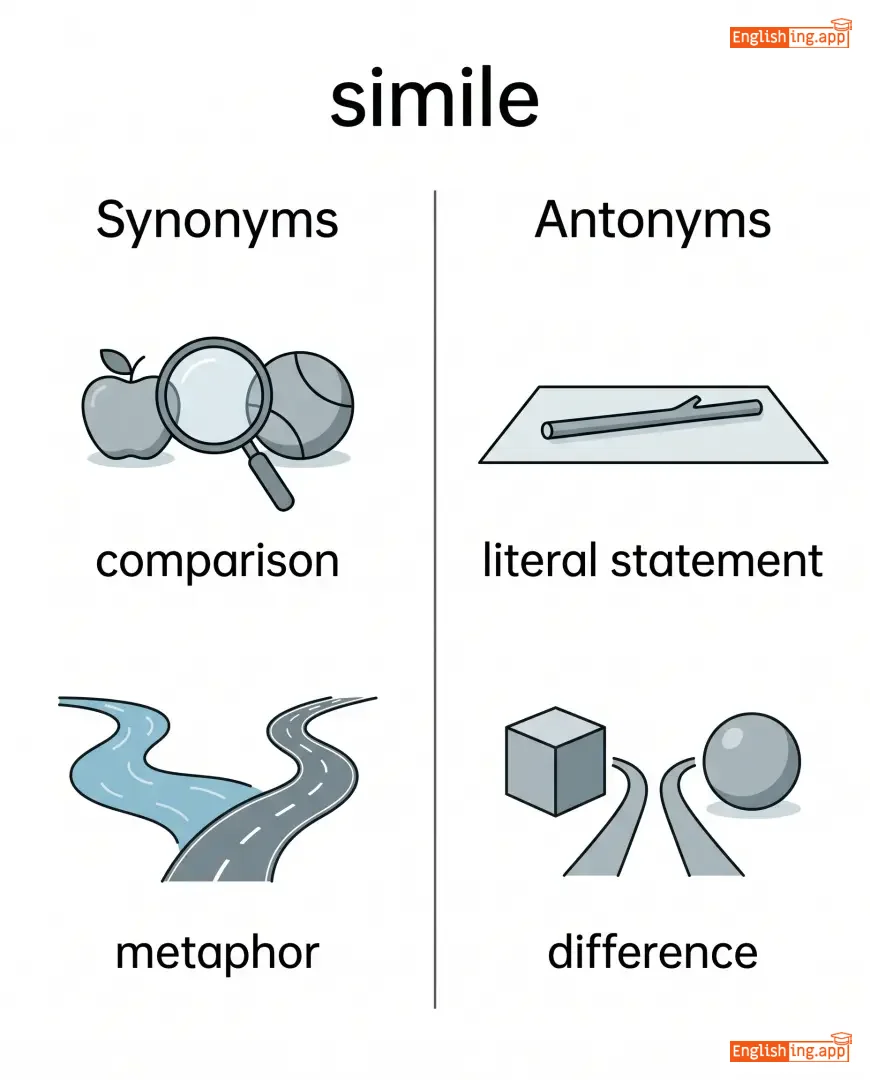
- •••••• | - •••••• | - •••••• |
comparison, metaphor, analogy, resemblance
••••••
|
literal statement, difference
••••••
|
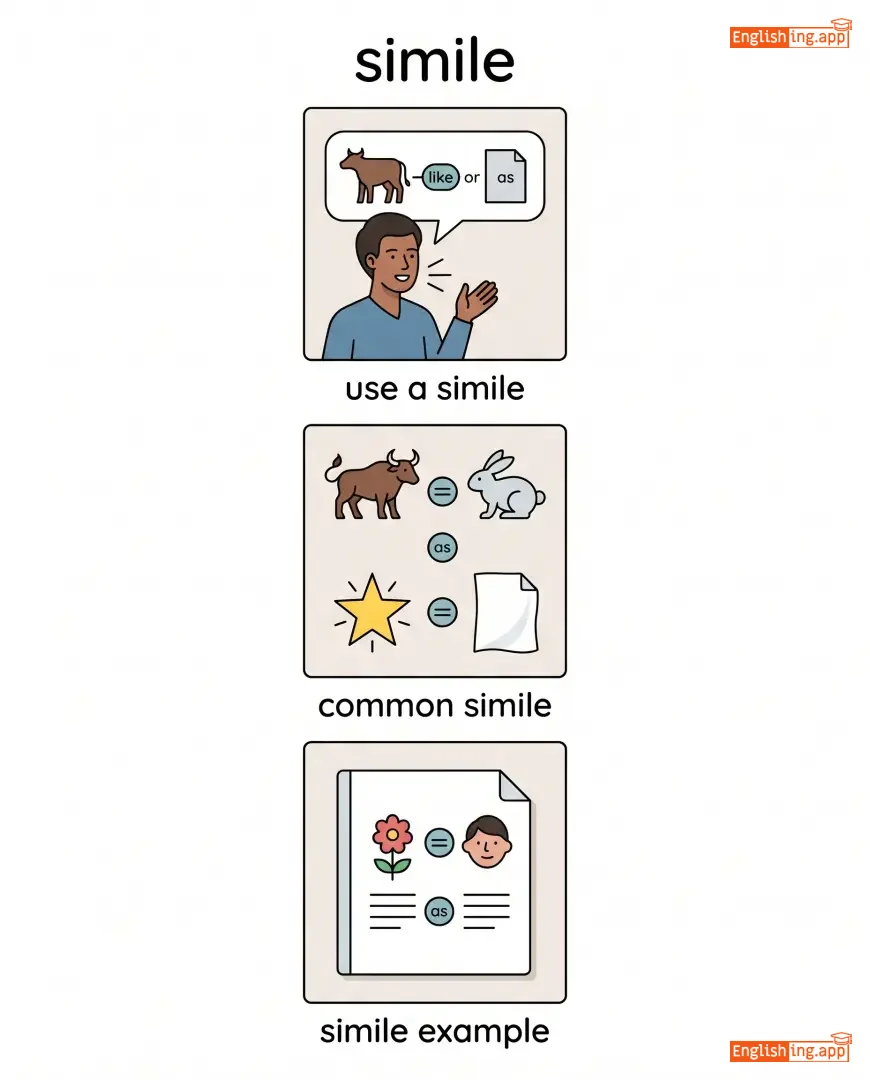
use a simile, common simile, simile example
••••••
|
SIMILE 意思是明喻:SIMILAR + 像
••••••
|
|
#8098
🔄
|
/ˈsɪmɪlər/
adjective
(西米拉尔)
••••••
|
- •••••• |
相似
xiangsi
••••••
|
- •••••• | - •••••• | - •••••• | - •••••• |
Having a resemblance in appearance, character, or quantity, without being identical.
••••••
|
The twins wore similar clothes to the party. |
双胞胎穿着相似的衣服参加派对。
Shuangbaotai chuanzhuo xiangsi de yifu canjia paidui.
••••••
|
similar to |
Having a likeness or resemblance to something.
••••••
|
相似于
xiangsi yu
••••••
|
alike, comparable, related, akin, resembling
••••••
|
different, dissimilar, unlike
••••••
|
similar case, similar result, similar style, similar appearance
••••••
|
SIMILAR意味着相似,像中文里的'相似'。
••••••
|
|
#8099
🐒
|
/ˈsɪmiən/
adjective
(猿类的)
••••••
|
|
类人猿的
lèirén yuán de
••••••
|
- •••••• | - •••••• | - •••••• | - •••••• |
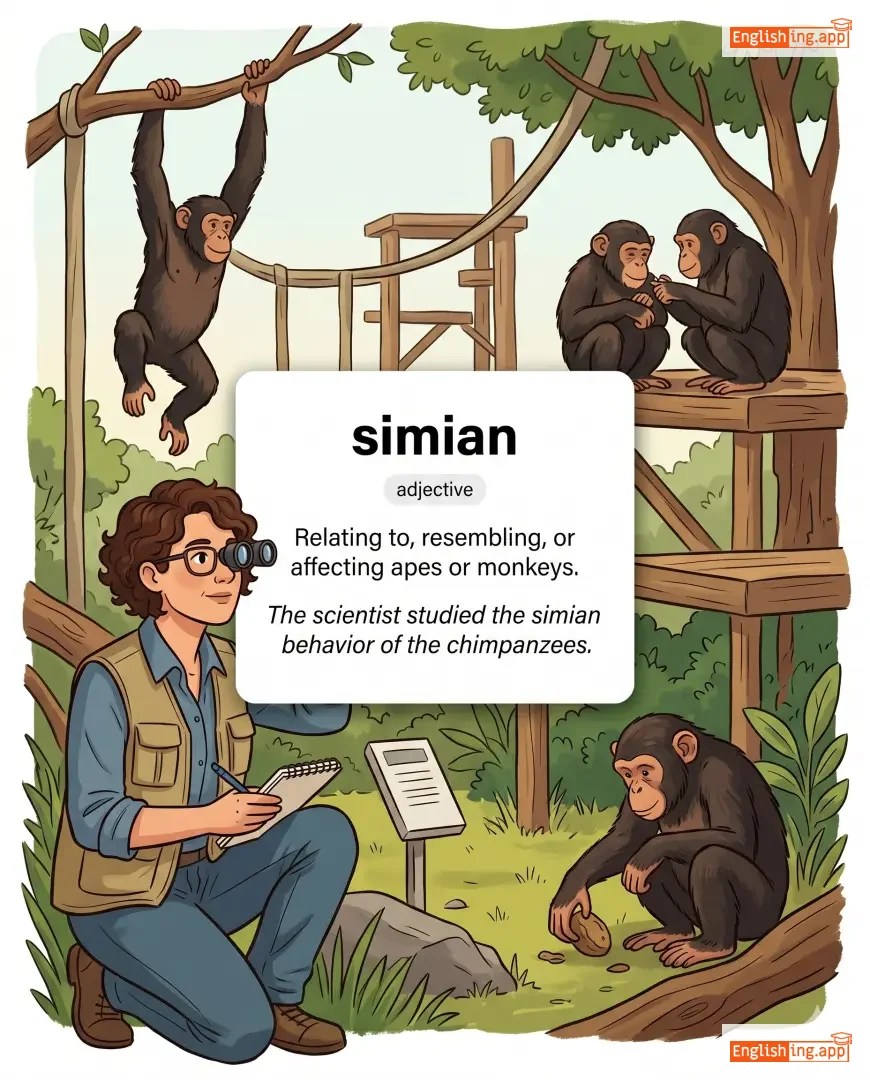
Relating to, resembling, or affecting apes or monkeys.
••••••
|
The scientist studied the simian behavior of the chimpanzees. |
科学家研究了黑猩猩的类人猿行为。
Kēxuéjiā yánjiūle hēi xīngxīng de lèirén yuán xíngwéi.
••••••
|
- •••••• | - •••••• | - •••••• |
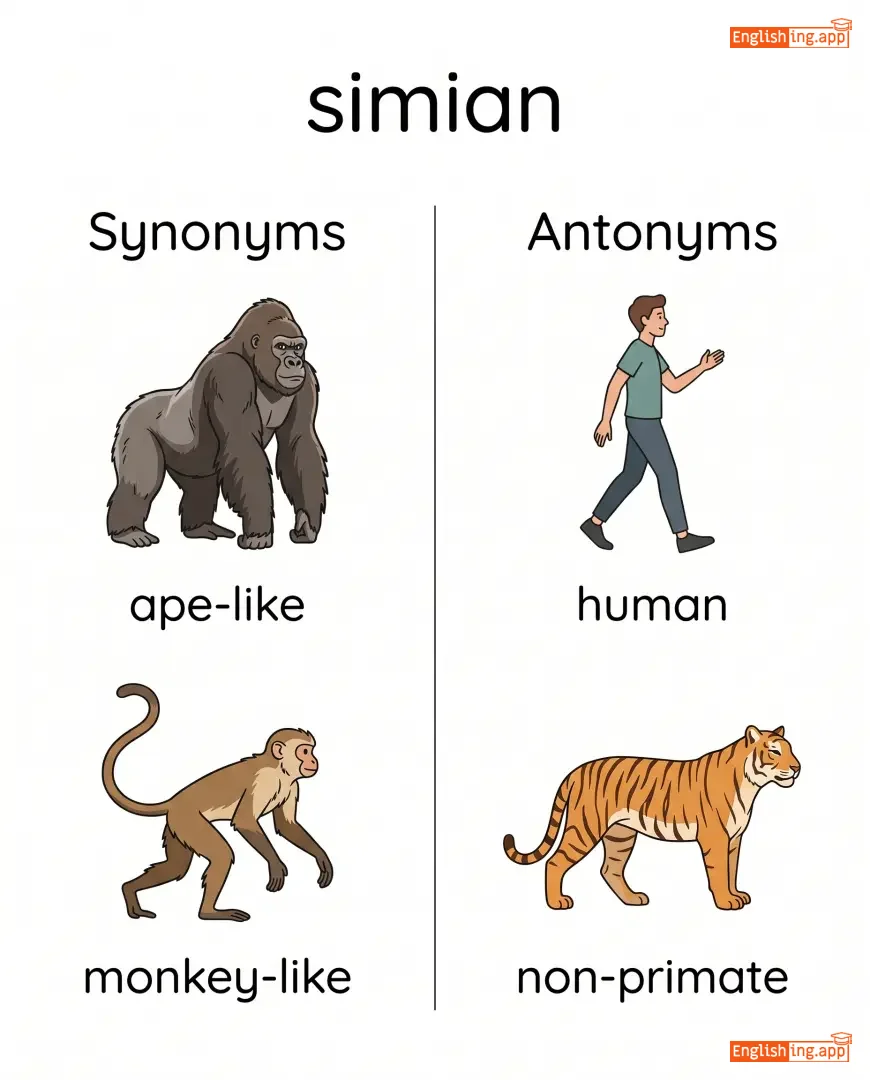
ape-like, monkey-like, primate, anthropoid
••••••
|
human, non-primate, inhuman
••••••
|
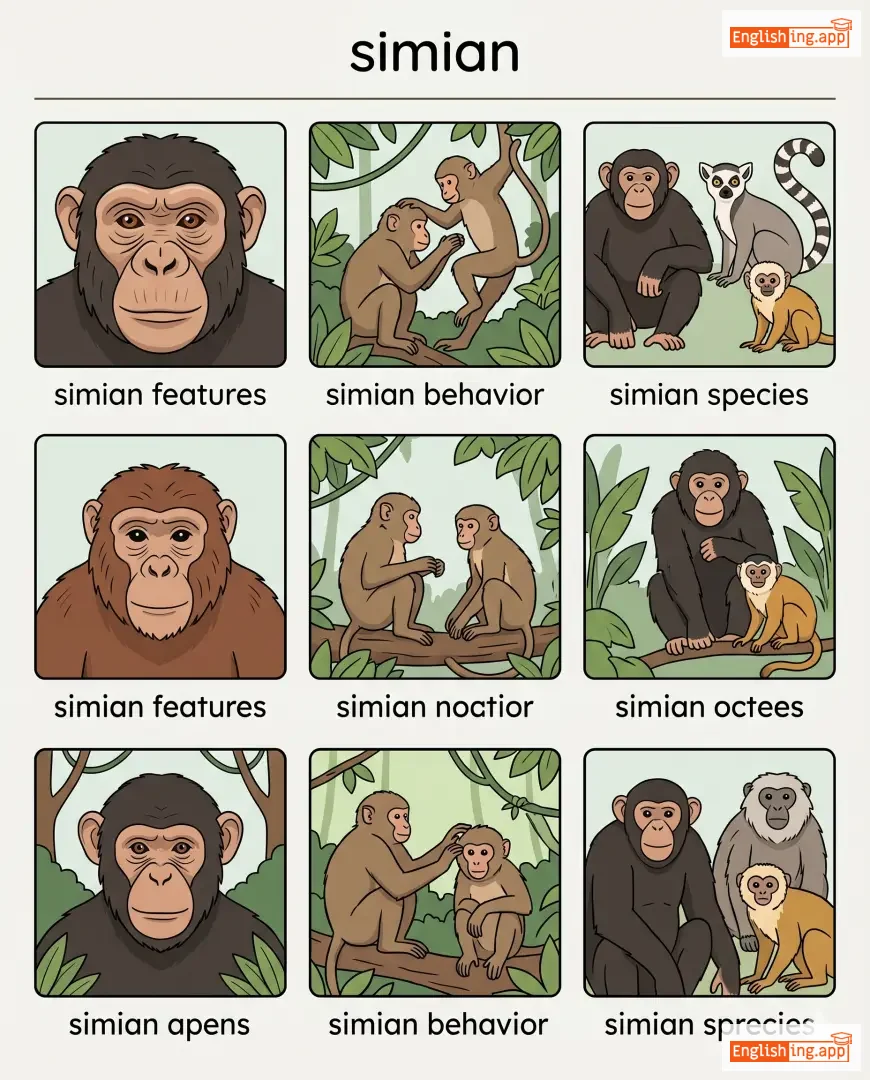
simian features, simian behavior, simian species
••••••
|
SIMIAN 听起来像 SIM,所以想象一个拿着 SIM 卡的猩猩!
••••••
|
Vocabulary Quiz
Test your vocabulary by matching words with their translations or meanings.
Login to take the quiz
Comments (0)
Share your thoughts and join the discussion.
Join the discussion by logging in
Login to CommentNo comments yet
Be the first to share your thoughts!