


Swipe left or right, or use the buttons. Tap image to zoom.
例句翻译
单词
Lesson 243Lesson 243 - 遮罩切换
|
表情符号
|
单词 | Images | 翻译 | 过去时 | 过去分词 | 第三人称单数 | 动名词 | 含义 | 例句 | 例句翻译 | 示例表达 | 示例表达含义 | 示例表达翻译 | 同义词 | 反义词 | 搭配词 | 助记符 |
|---|---|---|---|---|---|---|---|---|---|---|---|---|---|---|---|---|---|
|
#7260
🌲
|
/ˈreɪn.dʒər/
noun
(rén-zhé)
••••••
|
- •••••• |
巡护员
xún hù yuán
••••••
|
- •••••• | - •••••• | - •••••• | - •••••• |
A person responsible for protecting and managing forests, parks, or natural areas.
••••••
|
The park ranger guided the tourists through the forest trail.
公园巡护员带领游客走过森林小道。
••••••
|
公园巡护员带领游客走过森林小道。
Gōngyuán xún hù yuán dàilǐng yóukè zǒuguò sēnlín xiǎodào.
••••••
|
forest ranger
森林巡护员
••••••
|
An official responsible for supervising and protecting a forest area.
••••••
|
森林巡护员
sēnlín xún hù yuán
••••••
|
warden, guard, protector, keeper, scout
••••••
|
poacher, intruder
••••••
|
park ranger, forest ranger, wildlife ranger, game ranger
••••••
|
Ranger是巡护员,保护森林,带领游客穿越森林小道。
••••••
|
|
#7261
🦅
|
/ræpˈtɔːriəl/
adjective
(拉普托里尔)
••••••
|
- •••••• |
猛禽
měng qín
••••••
|
- •••••• | - •••••• | - •••••• | - •••••• |
Relating to birds of prey or predatory behavior.
••••••
|
The eagle is a raptorial bird with sharp talons. |
鹰是一个猛禽,拥有锋利的爪子。
Yīng shì yīgè měng qín, yǒngyǒu fēnglì de zhǎozi.
••••••
|
- •••••• | - •••••• | - •••••• |
predatory, carnivorous, hunting, fierce
••••••
|
harmless, gentle
••••••
|
raptorial bird, raptorial instinct, raptorial features
••••••
|
Raptorial = 猛禽 (猛禽鸟) – 相关于捕食行为
••••••
|
|
#7262
😲
|
/ræpt/
adjective
(拉普特)
••••••
|
- •••••• |
专心
zhuānxīn
••••••
|
- •••••• | - •••••• | - •••••• | - •••••• |
Completely absorbed or fascinated by something.
••••••
|
She listened with rapt attention to the speaker’s words. |
她全神贯注地听着演讲者的话。
tā quán shén guàn zhù de tīngzhe yǎnjiǎng zhě de huà.
••••••
|
rapt attention |
complete and focused attention
••••••
|
全神贯注
quán shén guàn zhù
••••••
|
absorbed, captivated, fascinated, spellbound
••••••
|
distracted, uninterested
••••••
|
rapt attention, rapt expression, rapt silence
••••••
|
Rapt = wrapped in attention – 完全沉浸在注意力中
••••••
|
|
#7263
😜
|
/ræpˈskæliən/
noun
(拉普斯卡里昂)
••••••
|
- •••••• |
顽皮的人
wanpi de ren
••••••
|
- •••••• | - •••••• | - •••••• | - •••••• |
A mischievous or cheeky person; a rascal.
••••••
|
The little rapscallion hid his brother’s shoes as a prank.
这个小拉普斯卡里昂把他哥哥的鞋子藏起来,做了个恶作剧。
••••••
|
这个小拉普斯卡里昂把他哥哥的鞋子藏起来,做了个恶作剧。
Zhege xiao rapscallion ba ta gege de xiezi cang qi lai, zuo le ge ezuojv.
••••••
|
- •••••• | - •••••• | - •••••• |
rascal, rogue, scamp, trickster
••••••
|
gentleman, nobleman
••••••
|
little rapscallion, mischievous rapscallion, cheeky rapscallion
••••••
|
Rapscallion = Rap + Scandalion – 顽皮的人总是在搞恶作剧。
••••••
|
|
#7264
🌐
|
/ˌræproʊʃˈmɑːn/
noun
(rèpǔlèimǎn)
••••••
|
- •••••• |
关系恢复
guanxi huifu
••••••
|
- •••••• | - •••••• | - •••••• | - •••••• |
The establishment or resumption of harmonious relations.
••••••
|
The two countries signed an agreement that marked a new rapprochement. |
两个国家签署了一项协议,标志着新的关系恢复。
Liǎng gè guójiā qiānshǔle yī xiàng xiéyì, biāozhìzhe xīn de guānxì huīfù.
••••••
|
- •••••• | - •••••• | - •••••• |
reconciliation, settlement, reunion, harmony
••••••
|
conflict, hostility, estrangement
••••••
|
political rapprochement, seek rapprochement, diplomatic rapprochement
••••••
|
Rapprochement = 关系恢复 – re+approach = 恢复和谐
••••••
|
|
#7265
🤝
|
/ræˈpɔːr/
noun
(拉波特)
••••••
|
|
关系
guanxi
••••••
|
- •••••• | - •••••• | - •••••• | - •••••• |
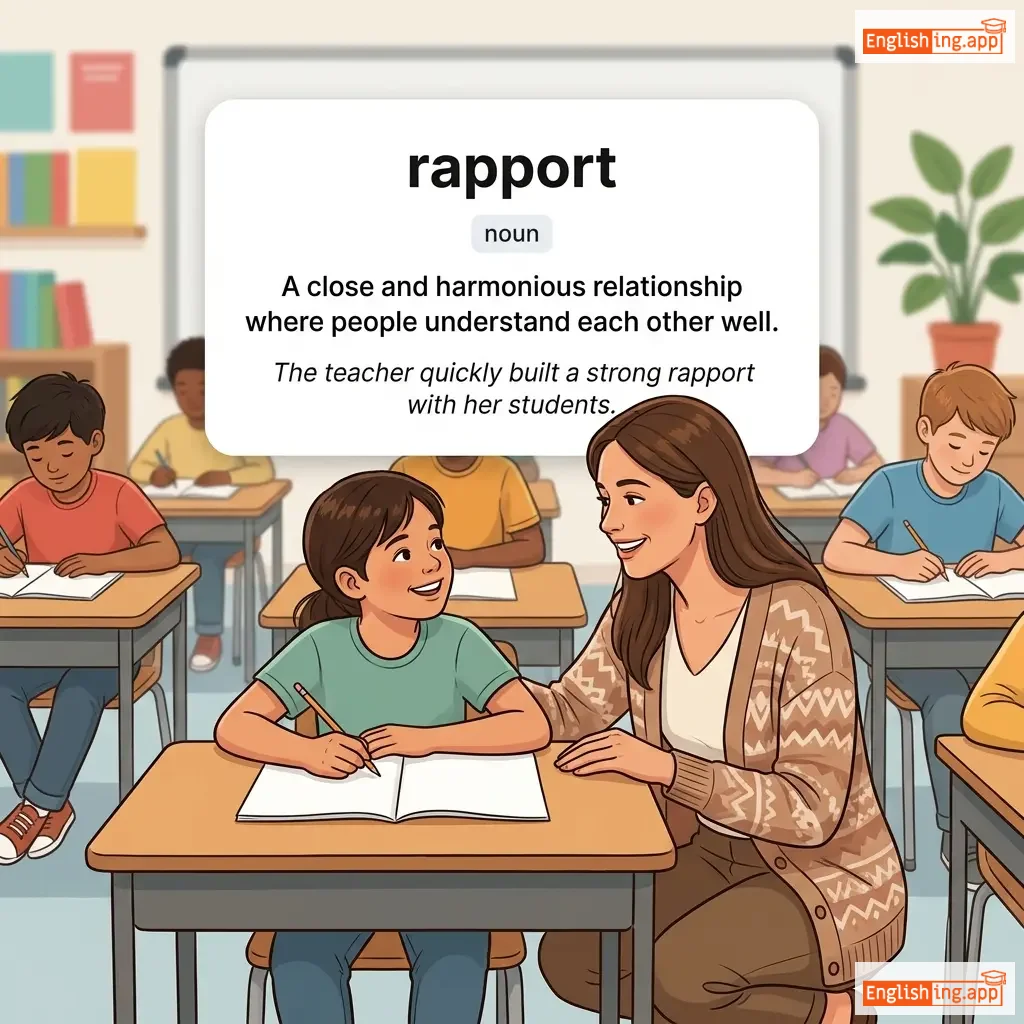
A close and harmonious relationship where people understand each other well.
••••••
|
The teacher quickly built a strong rapport with her students. |
老师与学生们迅速建立了良好的关系。
Laoshi yu xueshengmen xunsu jianli le lianghao de guanxi.
••••••
|
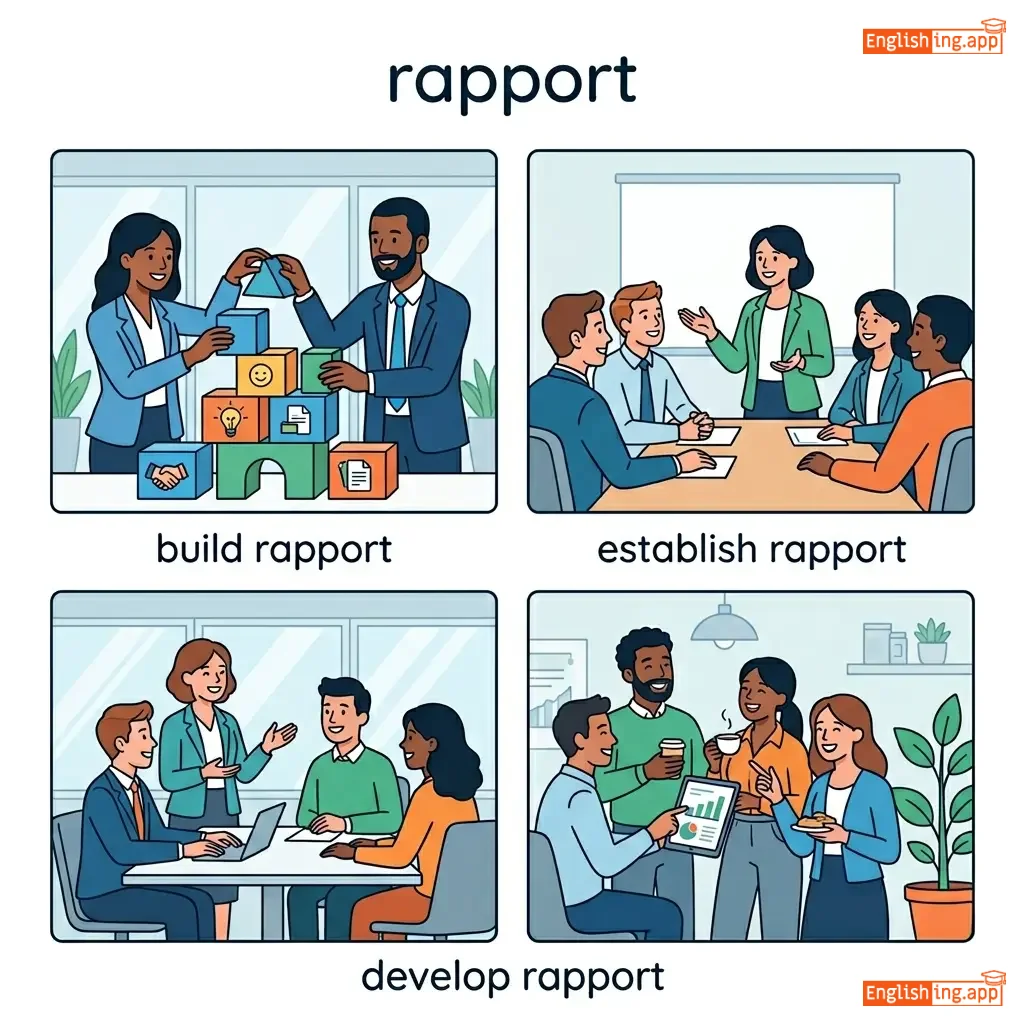
establish rapport |
to create a good relationship with mutual trust and understanding
••••••
|
建立关系
jianli guanxi
••••••
|
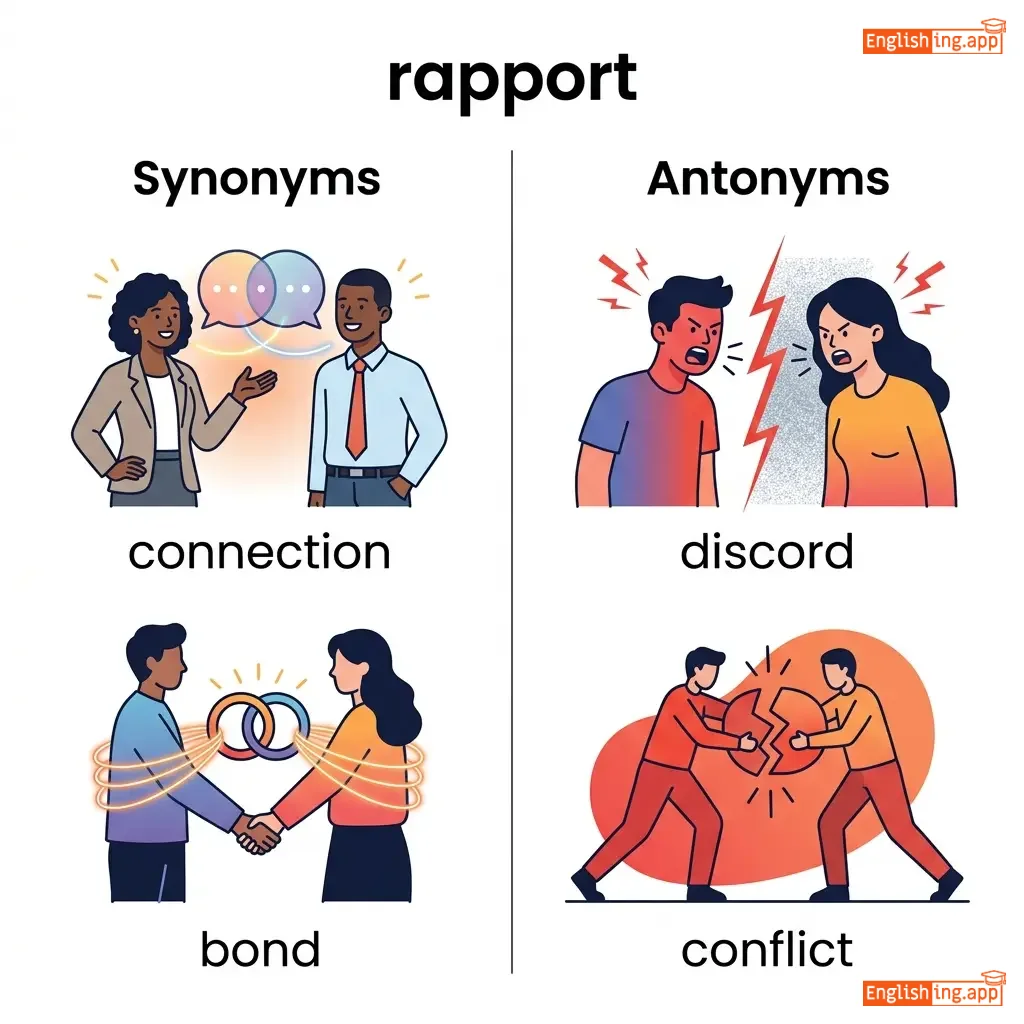
connection, bond, relationship, understanding, fellowship
••••••
|
discord, conflict, hostility
••••••
|
build rapport, establish rapport, develop rapport, rapport with clients
••••••
|
Rapport 意味着关系 – Rap + 关系 = 强大的关系
••••••
|
|
#7266
⚔️
|
/ˈræp.aɪn/
noun
(ræpáin)
••••••
|
- •••••• |
掠夺
lüèduó
••••••
|
- •••••• | - •••••• | - •••••• | - •••••• |
the violent seizure of someone's property
••••••
|
The war was marked by rapine and destruction. |
这场战争以掠夺和破坏为标志。
Zhè chǎng zhànzhēng yǐ lüèduó hé pòhuài wéi biāozhì.
••••••
|
- •••••• | - •••••• | - •••••• |
plunder, looting, pillage, depredation
••••••
|
protection, preservation
••••••
|
acts of rapine, rapine and violence, war and rapine
••••••
|
Rapine的意思是rape + 在财产中 = 强行掠夺
••••••
|
|
#7267
⚡
|
/ˈræp.ɪd/
adjective
(快速)
••••••
|
- •••••• |
快速
kuai su
••••••
|
- •••••• | - •••••• | - •••••• | - •••••• |
happening quickly or in a short time
••••••
|
The company experienced rapid growth last year. |
公司去年经历了快速增长。
Gongsi qunian jingli le kuai su zengzhang.
••••••
|
rapid-fire |
happening very quickly in succession
••••••
|
快速射击
kuai su she ji
••••••
|
fast, quick, swift, speedy
••••••
|
slow, sluggish, delayed
••••••
|
rapid growth, rapid progress, rapid change, rapid development
••••••
|
快速就像闪电一样迅速。
••••••
|
|
#7268
🦅
|
/rəˈpeɪ.ʃəs/
adjective
(rèpèi shì sī)
••••••
|
- •••••• |
贪婪
tanlan
••••••
|
- •••••• | - •••••• | - •••••• | - •••••• |
having an extreme desire to take things for oneself, greedy
••••••
|
The rapacious landlord raised the rent without reason. |
贪婪的房东无缘无故地提高了租金。
Tanlan de fangdong wu yuan wu gu di tigao le zujin.
••••••
|
- •••••• | - •••••• | - •••••• |
greedy, grasping, avaricious, voracious
••••••
|
generous, charitable, giving
••••••
|
rapacious greed, rapacious appetite, rapacious demand
••••••
|
Rapacious landlord 意味着一个贪婪的房东涨租金。
••••••
|
|
#7269
😡
|
/rænt/
verb
(兰特)
••••••
|
- •••••• |
大喊大叫
dà hǎn dà jiào
••••••
|
ranted
兰特德
••••••
|
ranted
兰特德
••••••
|
rants
兰特斯
••••••
|
ranting
兰廷
••••••
|
to speak or shout in an angry, uncontrolled way
••••••
|
He ranted about the unfair treatment at work.
他在工作中大声抱怨不公正的待遇。
••••••
|
他在工作中大声抱怨不公正的待遇。
Tā zài gōngzuò zhōng dà shēng bàoyuàn bù gōngzhèng de dàiyù.
••••••
|
rant and rave
大喊大叫
••••••
|
to shout loudly and angrily
••••••
|
大喊大叫
dà hǎn dà jiào
••••••
|
shout, yell, complain, fume, rave
••••••
|
praise, compliment, whisper
••••••
|
rant about, rant against, rant and rave
••••••
|
Rant表示大喊大叫。Rant = Rage + Ant
••••••
|
|
#7270
🪓
|
/ˈræn.sæk/
verb
(rǎnsàk)
••••••
|
- •••••• |
洗劫
xijié
••••••
|
ransacked
rǎnsàkd
••••••
|
ransacked
rǎnsàkd
••••••
|
ransacks
rǎnsàks
••••••
|
ransacking
rǎnsàkīng
••••••
|
to search a place roughly and steal or damage things
••••••
|
Burglars ransacked the house while the family was away.
盗贼在家人不在时洗劫了房子。
••••••
|
盗贼在家人不在时洗劫了房子。
Dàozéi zài jiārén bù zài shí xǐjié le fángzi.
••••••
|
- •••••• | - •••••• | - •••••• |
plunder, loot, pillage, ravage, rob
••••••
|
protect, guard, secure
••••••
|
ransack a house, ransack the office, ransack for valuables
••••••
|
Ransack = 洗劫
••••••
|
|
#7271
🪖
|
/ræŋks/
noun, verb
(ranks)
••••••
|
- •••••• |
军衔
jūnxián
••••••
|
ranked
ranked
••••••
|
ranked
ranked
••••••
|
ranks
ranks
••••••
|
ranking
ranking
••••••
|
Positions within a group, especially in a hierarchy or organization.
••••••
|
He quickly moved up the ranks of the army.
他迅速在军队中晋升。
••••••
|
他迅速在军队中晋升。
Tā xùnsù zài jūnduì zhōng jìnshēng.
••••••
|
close ranks
合拢队伍
••••••
|
To unite and support each other against opposition.
••••••
|
合拢队伍
Hélǒng duìwǔ
••••••
|
positions, levels, hierarchy, order
••••••
|
disorder, disarray
••••••
|
army ranks, social ranks, rise through the ranks, join the ranks
••••••
|
Ranks 是军队中的职位。升到更高的军衔意味着在军队中的进步。
••••••
|
|
#7272
😠
|
/ˈræŋ.kəl/
verb
(rànkè)
••••••
|
- •••••• |
激怒
jī nù
••••••
|
rankled
rànkèd
••••••
|
rankled
rànkèd
••••••
|
rankles
rànkèls
••••••
|
rankling
rànkèlíng
••••••
|
To cause continuing annoyance or resentment.
••••••
|
His unfair criticism continued to rankle her for days.
他的不公正批评持续了好几天,令她不快。
••••••
|
他的不公正批评持续了好几天,令她不快。
Tā de bù gōng zhèng pīpíng chíxù le hǎo jǐ tiān, lìng tā bù kuài.
••••••
|
- •••••• | - •••••• | - •••••• |
irritate, annoy, bother, aggravate, upset
••••••
|
please, comfort, soothe
••••••
|
rankle with, rankle in mind, rankle deeply
••••••
|
Rankle意味着激怒,像是某个让你感到rank的事情。
••••••
|
|
#7273
🎖️
|
/ræŋk/
noun, verb, adjective
(rank)
••••••
|
- •••••• |
职级
zhijí
••••••
|
ranked
ranked
••••••
|
ranked
ranked
••••••
|
ranks
ranks
••••••
|
ranking
ranking
••••••
|
A position in a hierarchy; to place in order according to importance or quality.
••••••
|
She quickly rose to a senior rank in the company.
她迅速晋升为公司中的高级职位。
••••••
|
她迅速晋升为公司中的高级职位。
Ta xunsu jinsheng wei gongsi zhong de gaoji zhiwei.
••••••
|
rank and file
职位与普通员工
••••••
|
The ordinary members of an organization as opposed to its leaders.
••••••
|
普通成员
putong chengyuan
••••••
|
position, status, level, grade, standing
••••••
|
insignificance, unimportance
••••••
|
military rank, rank order, high rank, rank and file
••••••
|
Rank是职位的意思,就像在军队中职位非常重要。
••••••
|
|
#7274
↔️
|
/ˈreɪn.dʒɪŋ/
verb
(rénjīng)
••••••
|
- •••••• |
波动
bōdòng
••••••
|
- •••••• | - •••••• | - •••••• |
ranging
rénjīng
••••••
|
Extending or varying between limits.
••••••
|
The temperatures are ranging from 15 to 30 degrees this week.
本周气温在15到30度之间波动。
••••••
|
本周气温在15到30度之间波动。
Běn zhōu qìwēn zài 15 dào 30 dù zhījiān bōdòng.
••••••
|
- •••••• | - •••••• | - •••••• |
varying, stretching, spreading, extending
••••••
|
fixed, limited
••••••
|
ranging from, ranging between, widely ranging, ranging over
••••••
|
波动意味着在一定范围内变化,比如温度在15到30度之间波动。
••••••
|
|
#7275
🚶
|
/ˈræm.bəl/
verb
••••••
|
- •••••• | - •••••• |
rambled
••••••
|
rambled
••••••
|
rambles
••••••
|
rambling
••••••
|
to talk or write at length in a confused or inconsequential way; to walk for pleasure without a fixed route.
••••••
|
He rambled on about his childhood for hours. |
- •••••• |
ramble on |
to talk or write aimlessly and at length
••••••
|
- •••••• |
wander, meander, drift, roam, digress
••••••
|
focus, concentrate, direct
••••••
|
ramble on, ramble about, countryside ramble, rambling speech
••••••
|
No •••••• |
|
#7276
📏
|
/reɪndʒ/
noun, verb
(范围)
••••••
|
|
范围, 领域
fanwei, lingyu
••••••
|
ranged
范围过
••••••
|
ranged
范围过
••••••
|
ranges
范围
••••••
|
ranging
范围中
••••••
|
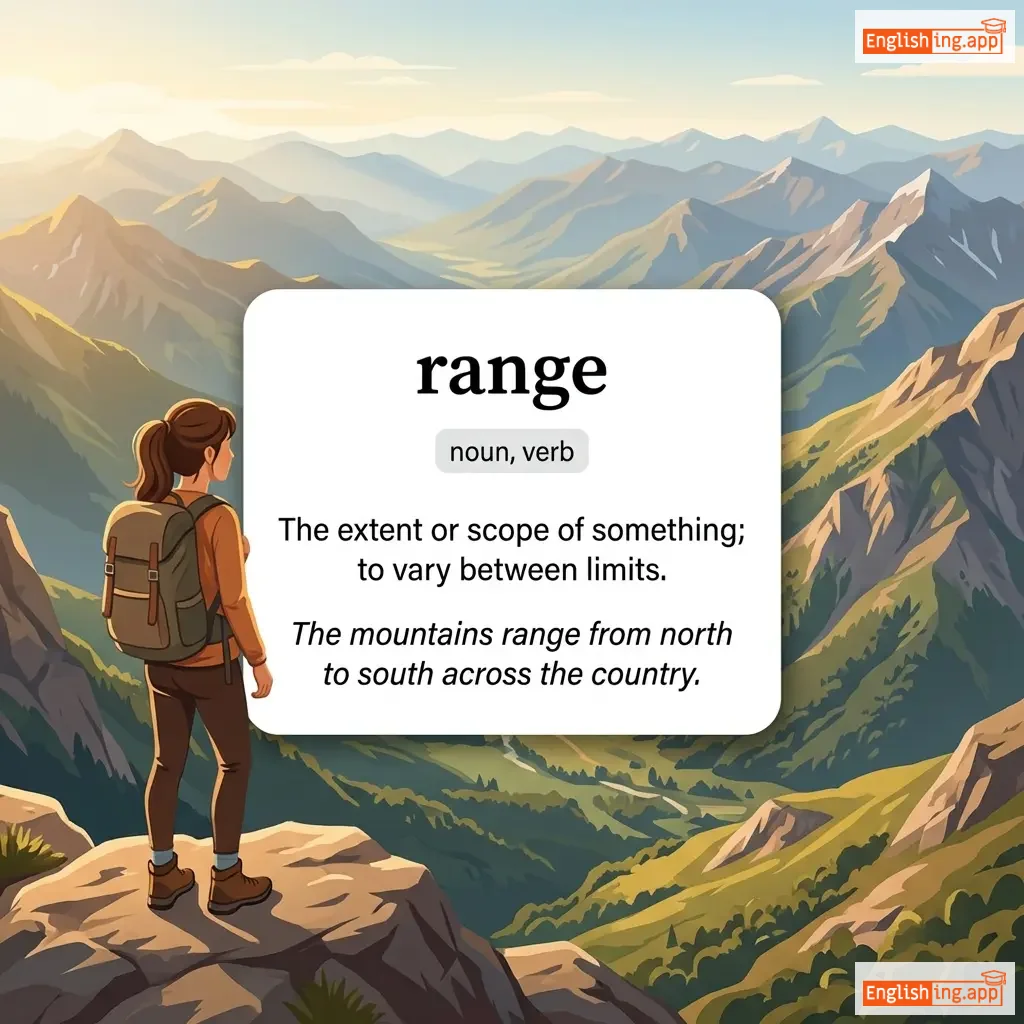
The extent or scope of something; to vary between limits.
••••••
|
The mountains range from north to south across the country.
这些山脉从北到南横跨全国。
••••••
|
这些山脉从北到南贯穿全国。
Zhe xie shanmai cong bei dao nan guanchuan quan guo.
••••••
|
out of range
超出范围
••••••
|
Beyond the limits of something, especially distance or capability.
••••••
|
超出范围
chaochu fanwei
••••••
|
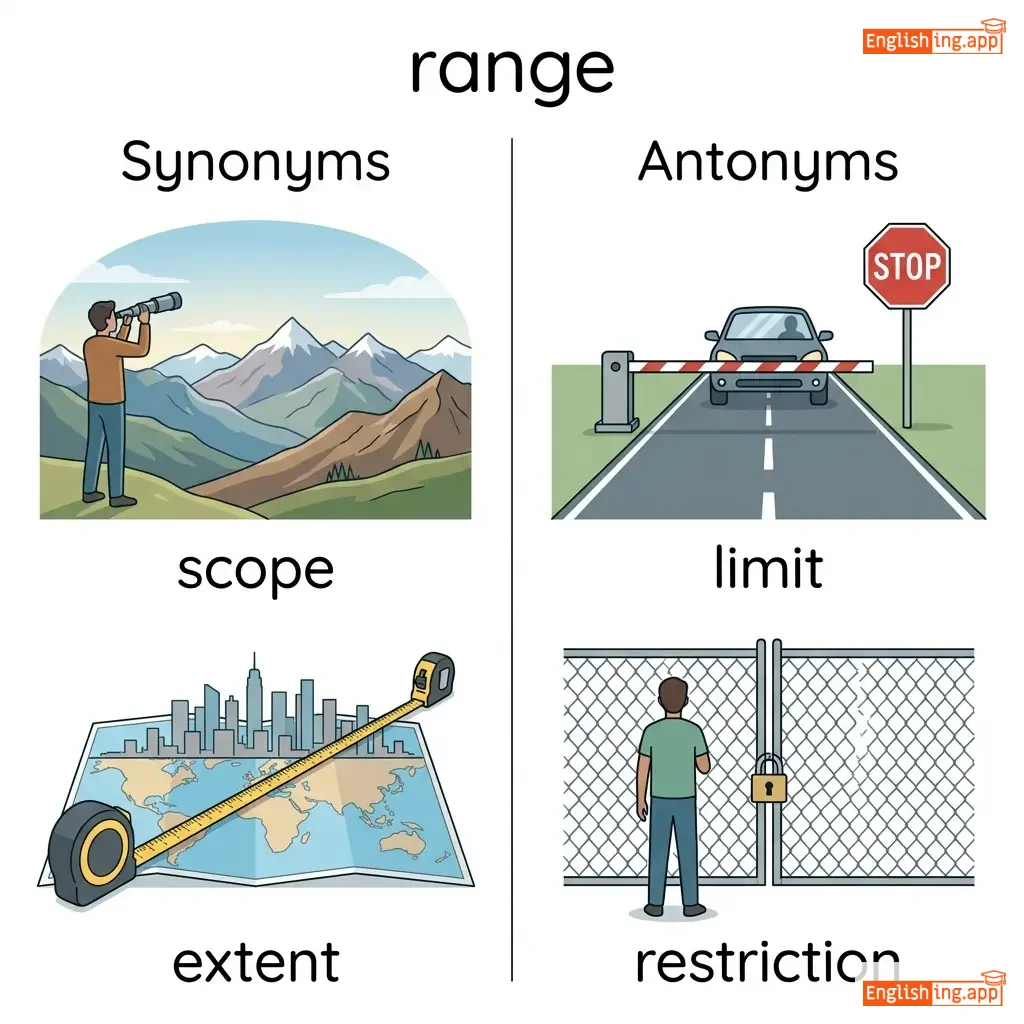
scope, extent, span, spectrum, vary
••••••
|
limit, restriction, narrow
••••••
|
wide range, price range, range of motion, mountain range
••••••
|
RANGE 代表范围 - Range Rover 穿越了所有的范围。
••••••
|
|
#7277
🔀
|
/ˈræn.də.maɪz/
verb
(rán.də.maíz)
••••••
|
- •••••• |
随机化
suíjī huà
••••••
|
randomized
rán.də.maízd
••••••
|
randomized
rán.də.maízd
••••••
|
randomizes
rán.də.maízes
••••••
|
randomizing
rán.də.maízīng
••••••
|
To make something happen in a random order or manner.
••••••
|
The software can randomize the order of questions.
软件可以随机排列问题的顺序。
••••••
|
软件可以随机排列问题的顺序。
Ruǎnjiàn kěyǐ suíjī páiliè wèntí de shùnxù.
••••••
|
- •••••• | - •••••• | - •••••• |
shuffle, mix, disorder, rearrange
••••••
|
organize, arrange, order
••••••
|
randomize data, randomize list, randomize results, randomize process
••••••
|
Randomize 意为 '随机化',像中文中的 '随机'。
••••••
|
|
#7278
🎲
|
/ˈræn.dəm/
adjective
(rān-dèng)
••••••
|
- •••••• |
随机
suíjī
••••••
|
- •••••• | - •••••• | - •••••• | - •••••• |
Made, done, or happening without method or conscious decision.
••••••
|
He made a random choice from the menu. |
他从菜单中做了一个随机选择。
Tā cóng cài dān zhōng zuòle yīgè suíjī xuǎnzé.
••••••
|
at random |
Without method or conscious choice.
••••••
|
随便
suíbiàn
••••••
|
arbitrary, haphazard, aimless, unplanned
••••••
|
systematic, planned, deliberate
••••••
|
random selection, random sample, random event, purely random
••••••
|
随机选择 = 随便做的,没有任何方法。
••••••
|
|
#7279
💢
|
/ˈræŋ.kər.əs/
adjective
(兰科鲁斯)
••••••
|
- •••••• |
充满怨恨的
chōngmǎn yuànhèn de
••••••
|
- •••••• | - •••••• | - •••••• | - •••••• |
Characterized by bitterness or resentment.
••••••
|
Their rancorous debate lasted for hours. |
他们充满怨恨的辩论持续了几个小时。
Tāmen chōngmǎn yuànhèn de biànlùn chíxù le jǐ gè xiǎoshí.
••••••
|
- •••••• | - •••••• | - •••••• |
hostile, bitter, resentful, spiteful
••••••
|
friendly, kind, pleasant
••••••
|
rancorous debate, rancorous relationship, rancorous tone, rancorous exchange
••••••
|
充满怨恨的辩论就像Rancorous一样,令人感到不愉快。
••••••
|
|
#7280
😠
|
/ˈræŋ.kər/
noun
(rǎn kè ér)
••••••
|
- •••••• |
怨恨
yuan hen
••••••
|
- •••••• | - •••••• | - •••••• | - •••••• |
A feeling of deep and bitter anger or resentment.
••••••
|
There was a rancor between the two rivals that never faded. |
这两位对手之间有一种怨恨,永远没有消失。
Zhe liang wei duishou zhijian you yizhong yuan hen, yongyuan mei you xiaoshi.
••••••
|
- •••••• | - •••••• | - •••••• |
bitterness, resentment, hostility, spite, animosity
••••••
|
friendship, goodwill, kindness
••••••
|
deep rancor, lingering rancor, filled with rancor, harbor rancor
••••••
|
Rancor 是怨恨 - 吵架后总是有怨恨。
••••••
|
|
#7281
🤢
|
/ˈrænsɪd/
adjective
(rǎnsīdé)
••••••
|
- •••••• |
变质的
bianzhide
••••••
|
- •••••• | - •••••• | - •••••• | - •••••• |
having a bad taste or smell due to being old or spoiled (especially fats or oils)
••••••
|
The butter had gone rancid after being left out too long. |
黄油放得太久,变质了。
Huángyóu fàng dé tài jiǔ, bian zhì le.
••••••
|
- •••••• | - •••••• | - •••••• |
spoiled, rotten, foul, putrid
••••••
|
fresh, pure, clean
••••••
|
rancid smell, rancid butter, rancid oil, rancid odor
••••••
|
变质的食品发臭,像变质的黄油一样。
••••••
|
|
#7282
🏚️
|
/ˈræmʃækəl/
adjective
(rǎmshākè)
••••••
|
- •••••• |
破旧
pojiu
••••••
|
- •••••• | - •••••• | - •••••• | - •••••• |
poorly built or maintained; in a state of disrepair
••••••
|
They lived in a ramshackle old house on the edge of town.
他们住在城市边缘的一座rǎmshākè老房子里。
••••••
|
他们住在城市边缘的一座破旧老房子里。
Tāmen zhù zài chéngshì biānyuán de yīzuò pòjiù lǎo fángzi lǐ.
••••••
|
- •••••• | - •••••• | - •••••• |
dilapidated, shabby, broken-down, rickety
••••••
|
sturdy, well-built, strong
••••••
|
ramshackle house, ramshackle hut, ramshackle car, ramshackle structure
••••••
|
Ram shakle 崩塌 - ramshackle 破旧
••••••
|
|
#7283
🏰
|
/ˈræmpɑːrt/
noun
(rampart)
••••••
|
- •••••• |
城墙
chengqiang
••••••
|
- •••••• | - •••••• | - •••••• | - •••••• |
a defensive wall of a castle or fort
••••••
|
The soldiers stood on the rampart, watching the enemy approach.
士兵们站在城墙上,观察着敌人的接近。
••••••
|
士兵们站在城墙上,观察着敌人的接近。
Shibing men zhan zai chengqiang shang, guancha zhe diren de jiejin.
••••••
|
- •••••• | - •••••• | - •••••• |
fortification, wall, barrier, bulwark
••••••
|
opening, gap, weakness
••••••
|
castle rampart, city rampart, stone rampart, high rampart
••••••
|
Rampart 就是城墙,代表防御墙。
••••••
|
|
#7284
🌪️
|
/ˈræmpənt/
adjective
(rampant)
••••••
|
- •••••• |
猖獗
changjue
••••••
|
- •••••• | - •••••• | - •••••• | - •••••• |
existing or spreading unchecked, often in an undesirable way
••••••
|
Corruption was rampant in the city administration.
腐败在市政府中蔓延。
••••••
|
腐败在市政府中蔓延。
Fubai zai shì zhèngfǔ zhōng mànyán.
••••••
|
- •••••• | - •••••• | - •••••• |
unchecked, widespread, uncontrolled, unrestrained
••••••
|
controlled, restrained, limited
••••••
|
rampant crime, rampant corruption, rampant growth, rampant inflation
••••••
|
猖獗的腐败就像无法控制的野火。
••••••
|
|
#7285
🛞
|
/ræmp/
noun, verb
(rǎmp)
••••••
|
- •••••• |
坡道
pō dào
••••••
|
ramped
rǎmped
••••••
|
ramped
rǎmped
••••••
|
ramps
rǎmps
••••••
|
ramping
rǎmping
••••••
|
a sloping surface joining two different levels; as a verb, to increase or rise sharply
••••••
|
The car drove up the ramp into the parking garage.
汽车驶上了停车场的坡道。
••••••
|
汽车驶上了停车场的坡道。
qìchē shǐ shàng le tíngchē chǎng de pō dào.
••••••
|
ramp up
提升
••••••
|
to increase or intensify something
••••••
|
提升
tí shēng
••••••
|
slope, incline, rise, escalate, boost
••••••
|
decline, decrease, drop
••••••
|
wheelchair ramp, access ramp, ramp up production, ramp down
••••••
|
坡道是一个斜坡,而 'ramp up' 意味着提升,就像快速开车上坡
••••••
|
|
#7286
🌲
|
/ˈreɪ.moʊs/
adjective
(雷莫斯)
••••••
|
- •••••• |
分枝的
fēnzhī de
••••••
|
- •••••• | - •••••• | - •••••• | - •••••• |
having many branches.
••••••
|
The ramose tree shaded the entire garden. |
这棵分枝的树为整个花园提供了阴凉。
Zhè kē fēnzhī de shù wèi zhěnggè huāyuán tígōngle yīnliáng.
••••••
|
- •••••• | - •••••• | - •••••• |
branched, branching, forked, divided
••••••
|
unbranched, simple
••••••
|
ramose structure, ramose tree, ramose pattern
••••••
|
Ramose意味着像有很多分支的树。
••••••
|
|
#7287
🌿
|
/ˈræm.ɪ.faɪ/
verb
(雷米法伊)
••••••
|
- •••••• |
分支
fenzhi
••••••
|
ramified
雷米法伊德
••••••
|
ramified
雷米法伊德
••••••
|
ramifies
雷米法伊斯
••••••
|
ramifying
雷米法伊英
••••••
|
to spread or branch out into divisions or subdivisions.
••••••
|
The river ramifies into several smaller streams.
河流分支成多个较小的溪流。
••••••
|
河流分支成多个较小的溪流。
Héliú fēnzhī chéng duō gè jiào xiǎo de xīliú.
••••••
|
- •••••• | - •••••• | - •••••• |
branch, divide, spread, extend
••••••
|
unite, merge, combine
••••••
|
ramify into, ramify through, ramified network
••••••
|
Ramify,像RAM一样分支成多个小部分。
••••••
|
|
#7288
🌳
|
/ˌræm.ɪ.fɪˈkeɪ.ʃən/
noun
(分支)
••••••
|
- •••••• |
后果
houguo
••••••
|
- •••••• | - •••••• | - •••••• | - •••••• |
a consequence of an action or event, often complex or unwelcome.
••••••
|
The new law has serious social ramifications. |
新法律有严重的社会后果。
Xin falü you yanzhong de shehui houguo.
••••••
|
- •••••• | - •••••• | - •••••• |
consequence, result, outcome, effect, implication
••••••
|
cause, origin, source
••••••
|
legal ramifications, social ramifications, unintended ramifications
••••••
|
Ramification 意味着后果 — 就像 RAM 的影响一样。
••••••
|
|
#7289
🙉
|
/ræmˈbʌŋk.ʃəs/
adjective
(rambankshəs)
••••••
|
- •••••• |
喧闹的
xuānnào de
••••••
|
- •••••• | - •••••• | - •••••• | - •••••• |
boisterous, energetic, and difficult to control.
••••••
|
The rambunctious children filled the house with noise. |
那些喧闹的孩子让屋子充满了噪音。
Nàxiē xuānnào de háizi ràng wūzi chōngmǎnle zàoyīn.
••••••
|
- •••••• | - •••••• | - •••••• |
boisterous, rowdy, lively, noisy, energetic
••••••
|
calm, quiet, peaceful
••••••
|
rambunctious child, rambunctious behavior, rambunctious crowd
••••••
|
Rambunctious 听起来像是噪音 — 总是喧闹的孩子们。
••••••
|
Vocabulary Quiz
Test your vocabulary by matching words with their translations or meanings.
Login to take the quiz
Comments (0)
Share your thoughts and join the discussion.
Join the discussion by logging in
Login to CommentNo comments yet
Be the first to share your thoughts!