


Swipe left or right, or use the buttons. Tap image to zoom.
例句翻译
单词
Lesson 355Lesson 355 - 遮罩切换
|
表情符号
|
单词 | Images | 翻译 | 过去时 | 过去分词 | 第三人称单数 | 动名词 | 含义 | 例句 | 例句翻译 | 示例表达 | 示例表达含义 | 示例表达翻译 | 同义词 | 反义词 | 搭配词 | 助记符 |
|---|---|---|---|---|---|---|---|---|---|---|---|---|---|---|---|---|---|
|
#10615
📌
|
/ˈsɜːrkəmstæns/
noun
(sɜːrkəmstæns)
••••••
|
- •••••• |
情况
qingkuang
••••••
|
- •••••• | - •••••• | - •••••• | - •••••• |
a fact or condition connected with an event or action
••••••
|
She handled the difficult circumstances bravely. |
她勇敢地应对了困难的情况。
Ta yonggan de yingdui le kunnan de qingkuang.
••••••
|
under the circumstances |
considering the current situation
••••••
|
在这种情况下
zai zhe zhong qingkuang xia
••••••
|
situation, condition, context, factor, state
••••••
|
certainty, plan
••••••
|
in difficult circumstances, under the circumstances, favorable circumstances
••••••
|
Circumstance 意味着情况 - 将情况环绕以记住circumstance。
••••••
|
|
#10616
🔍
|
/ˈkloʊsli/
adverb
(ˈhæpinəs)
••••••
|
- •••••• |
幸福
xìngfú
••••••
|
- •••••• | - •••••• | - •••••• | - •••••• |
in a way that is very near in space, time, or relationship; carefully and attentively
••••••
|
The detective examined the evidence closely. |
当她获得奖项时,她无法掩饰自己的幸福。
Dāng tā huòde jiǎngxiàng shí, tā wúfǎ yǎnshì zìjǐ de xìngfú.
••••••
|
watch closely |
to observe with great attention
••••••
|
追寻幸福
zhuīxún xìngfú
••••••
|
carefully, attentively, nearly, intently, minutely
••••••
|
carelessly, distantly
••••••
|
closely related, watch closely, follow closely, work closely
••••••
|
幸福就像是一个‘幸福’的感觉,中文也很简单!
••••••
|
|
#10617
⏰
|
/klɒk/
noun
(kè lǒkè)
••••••
|
- •••••• |
钟表
zhōngbiǎo
••••••
|
- •••••• | - •••••• | - •••••• | - •••••• |
An instrument used to measure and show time.
••••••
|
The clock on the wall shows the correct time. |
墙上的钟表显示了正确的时间。
qiáng shàng de zhōngbiǎo xiǎnshìle zhèngquè de shíjiān.
••••••
|
around the clock |
All day and all night without stopping.
••••••
|
全天候
quán tiānhòu
••••••
|
timepiece, watch, timer, chronometer
••••••
|
timelessness
••••••
|
alarm clock, wall clock, digital clock, clock tower, clock face
••••••
|
钟表响,时间永不忘!
••••••
|
|
#10618
🩺
|
/ˈklɪn.ɪ.kəl/
adjective
(kè lín ɪ kǎo)
••••••
|
- •••••• |
临床的
lin chuang de
••••••
|
- •••••• | - •••••• | - •••••• | - •••••• |
Related to the observation and treatment of patients rather than theoretical study.
••••••
|
The doctor conducted a clinical examination. |
医生进行了临床检查。
Yī shēng jìn háng le lín chuáng jiǎn chá.
••••••
|
clinical trial |
A research study to test new medical treatments on patients.
••••••
|
临床试验
lín chuáng shì yàn
••••••
|
medical, diagnostic, therapeutic, scientific
••••••
|
theoretical, emotional
••••••
|
clinical examination, clinical trial, clinical diagnosis, clinical practice
••••••
|
临床的来源于医院,记住临床试验的意义。
••••••
|
|
#10619
🏥
|
/ˈklɪn.ɪk/
noun
(诊所)
••••••
|
- •••••• |
诊所
zhěnsuǒ
••••••
|
- •••••• | - •••••• | - •••••• | - •••••• |
A place where people receive medical treatment without staying overnight.
••••••
|
She went to the clinic for a health check-up.
她去诊所做健康检查。
••••••
|
她去诊所做健康检查。
Tā qù zhěnsuǒ zuò jiànkāng jiǎnchá.
••••••
|
- •••••• | - •••••• | - •••••• |
hospital, infirmary, dispensary, medical center
••••••
|
home, outdoors
••••••
|
health clinic, dental clinic, free clinic, community clinic
••••••
|
诊所是一个健康检查的地方,不需要过夜。
••••••
|
|
#10620
🧗
|
/klaɪm/
verb
(克莱姆)
••••••
|
|
攀爬
panpa
••••••
|
climbed
克莱姆德
••••••
|
climbed
克莱姆德
••••••
|
climbs
克莱姆斯
••••••
|
climbing
克莱米恩
••••••
|
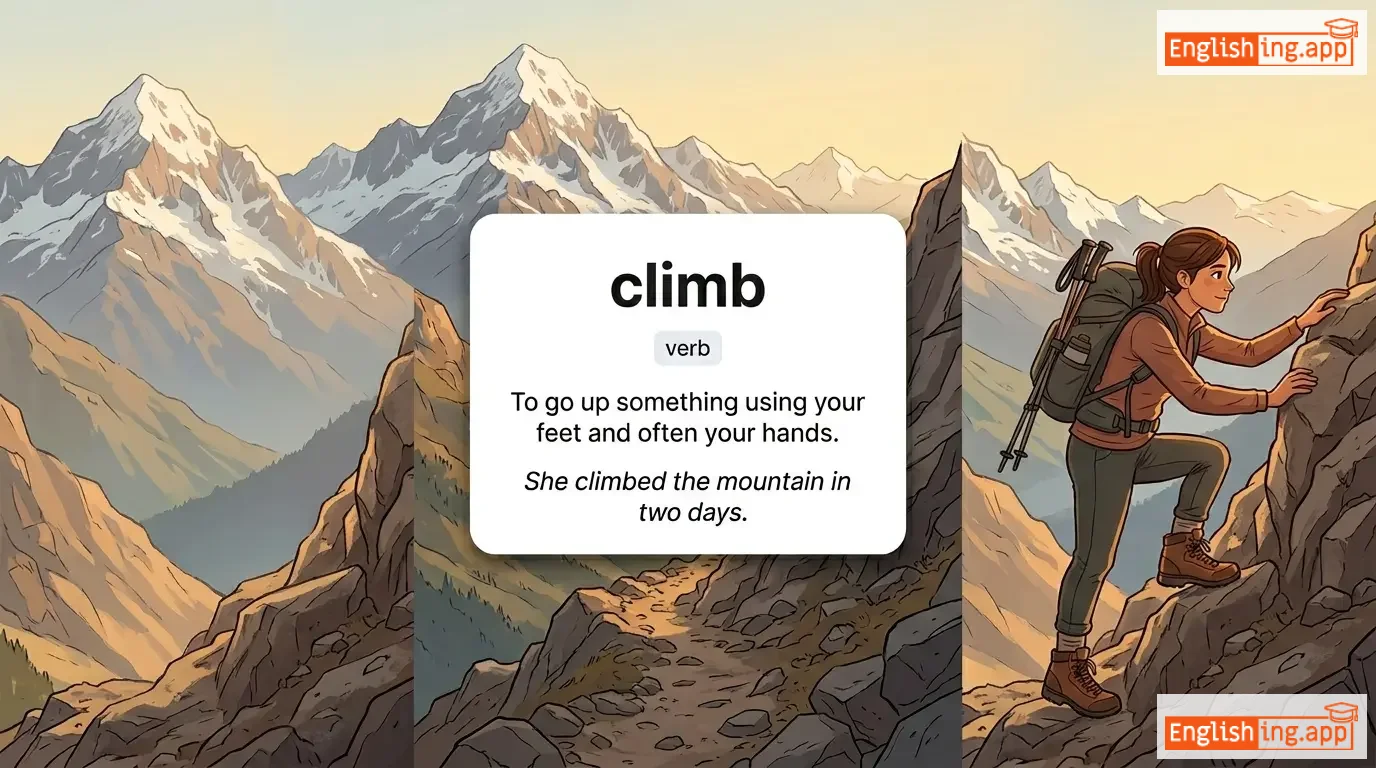
To go up something using your feet and often your hands.
••••••
|
She climbed the mountain in two days.
她在两天内爬上了山。
••••••
|
她在两天内爬上了山。
Ta zai liang tian nei pa shang le shan.
••••••
|
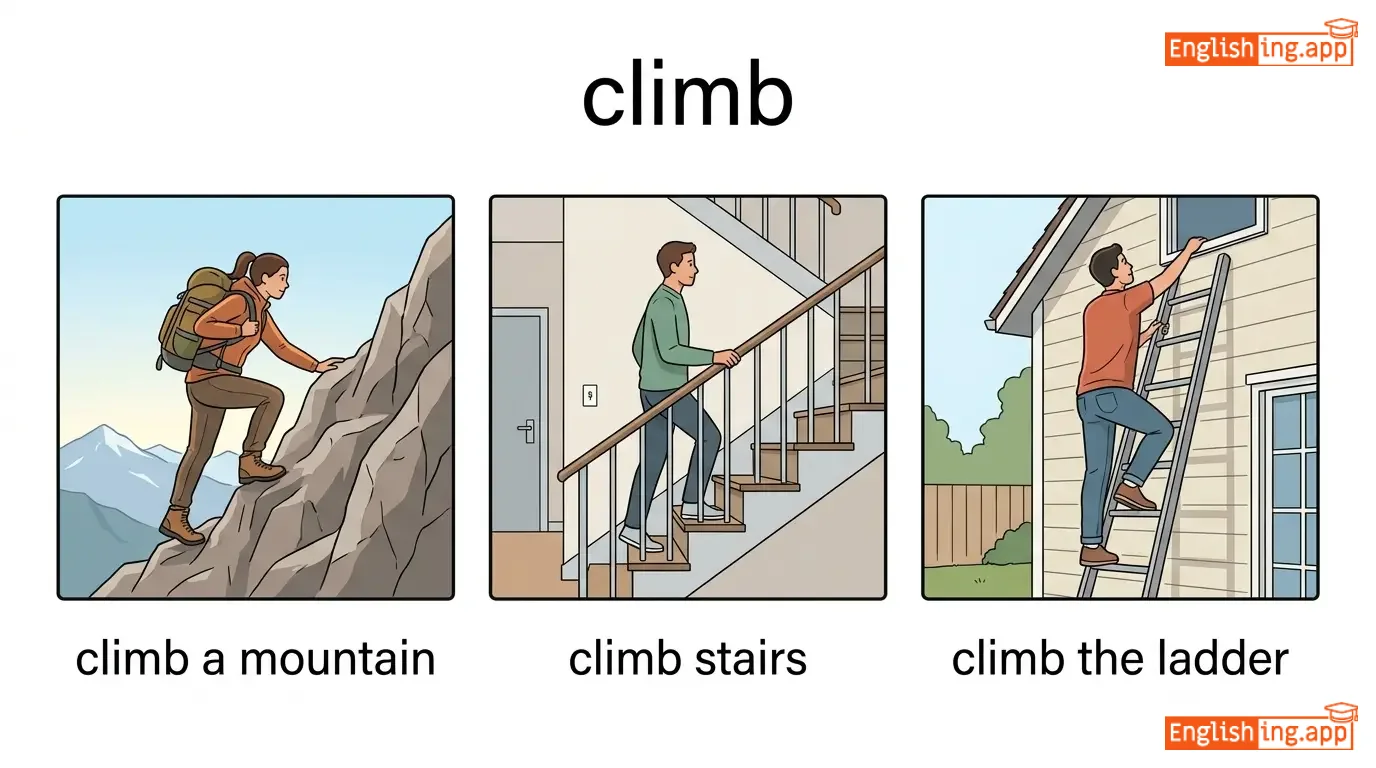
climb the ladder
爬梯子
••••••
|
To make progress in a career or social hierarchy.
••••••
|
爬梯子
Pa titi
••••••
|
ascend, scale, mount, rise, go up
••••••
|
descend, fall, drop
••••••
|
climb a mountain, climb stairs, climb the ladder, climb high, climb up
••••••
|
攀爬就像登山,记得爬梯子是向上爬,迈向成功!
••••••
|
|
#10621
🌦️
|
/ˈklaɪ.mət/
noun
(kly-mət)
••••••
|
|
气候
qì hòu
••••••
|
- •••••• | - •••••• | - •••••• | - •••••• |
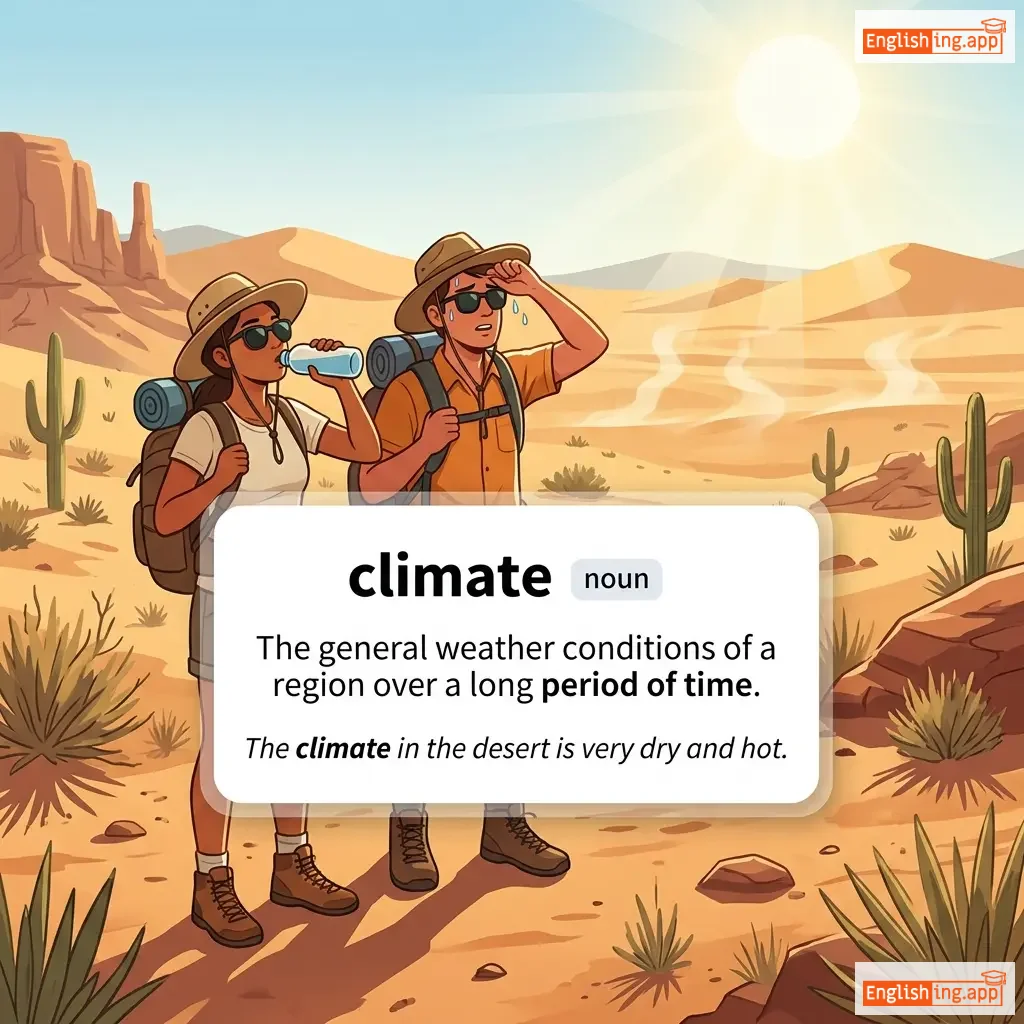
The general weather conditions of a region over a long period of time.
••••••
|
The climate in the desert is very dry and hot. |
沙漠中的气候非常干燥和炎热。
Shā mò zhōng de qì hòu fēi cháng gān zào hé yán rè.
••••••
|
climate change |
Long-term alteration of temperature and typical weather patterns in a place.
••••••
|
气候变化
qì hòu biàn huà
••••••
|
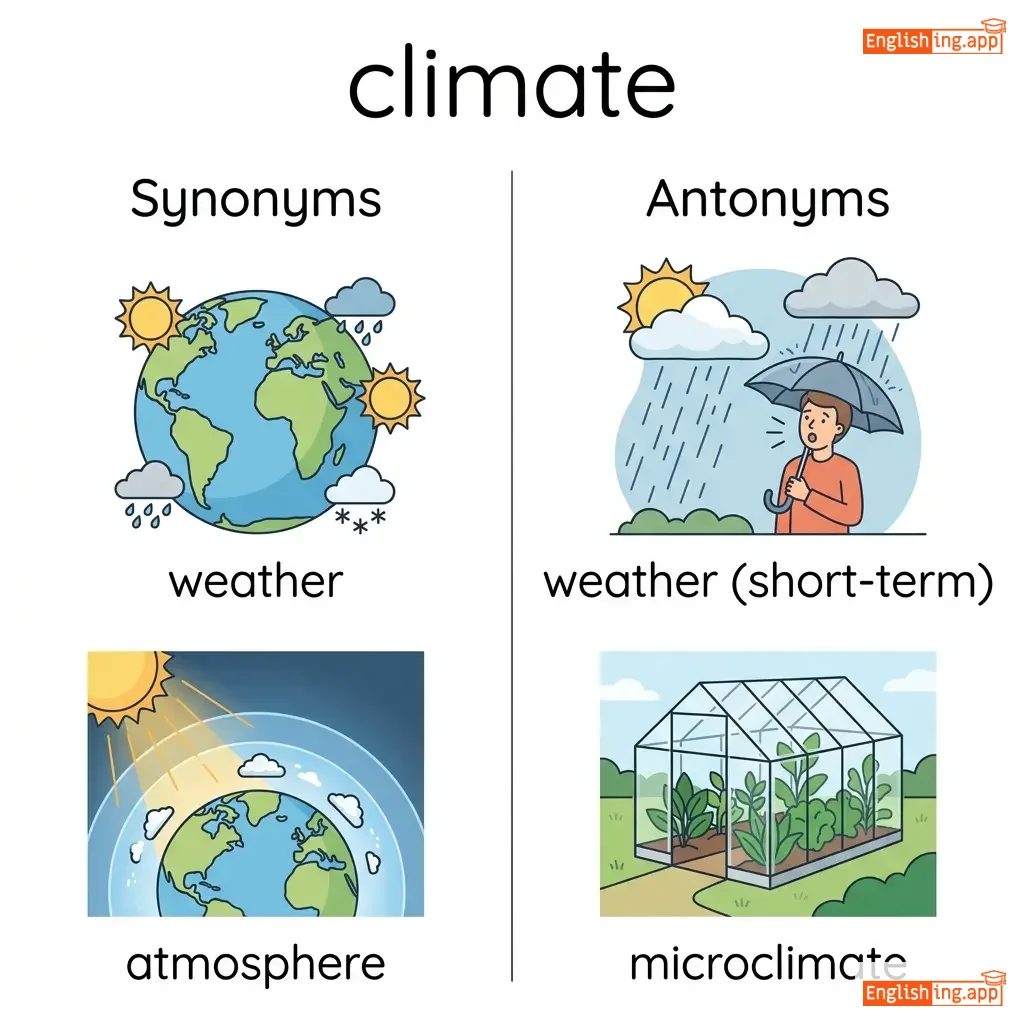
weather, atmosphere, environment, conditions, surroundings
••••••
|
weather (short-term), microclimate
••••••
|
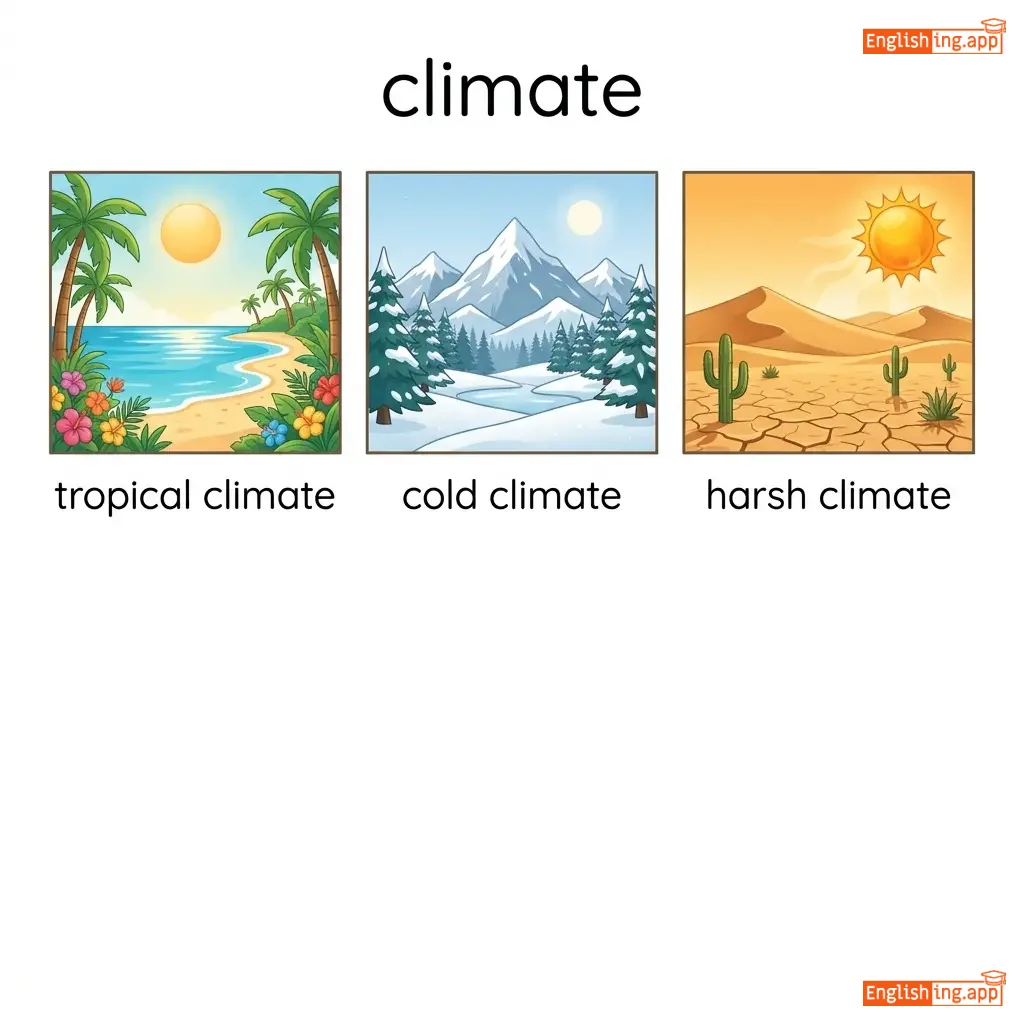
tropical climate, cold climate, harsh climate, political climate, climate change
••••••
|
气候变化 = 永远变化。
••••••
|
|
#10622
👤
|
/ˈklaɪənt/
noun
(klai'ente)
••••••
|
- •••••• |
客户
kehu
••••••
|
- •••••• | - •••••• | - •••••• | - •••••• |
A person or organization using the services of a professional or company.
••••••
|
The lawyer met with her client to discuss the case. |
律师会见了她的客户,讨论案件
lǜshī huìjiànle tā de kèhù, tǎolùn ànjiàn
••••••
|
client base |
The group of clients a company serves.
••••••
|
客户基础
kèhù jīchǔ
••••••
|
customer, patron, consumer, buyer
••••••
|
seller, provider
••••••
|
client meeting, client relationship, client support, client base
••••••
|
客户=总是得到服务的人
••••••
|
|
#10623
🔍
|
/ˈklɪrli/
adverb
(klieli)
••••••
|
- •••••• |
清楚地
qīngchǔ de
••••••
|
- •••••• | - •••••• | - •••••• | - •••••• |
In a way that is easy to perceive, understand, or see.
••••••
|
She spoke clearly so that everyone could understand. |
她清楚地说话,以便每个人都能理解。
Tā qīngchǔ de shuōhuà, yǐbiàn měi gèrén dōu néng lǐjiě.
••••••
|
- •••••• | - •••••• | - •••••• |
plainly, distinctly, obviously, transparently
••••••
|
vaguely, unclearly
••••••
|
speak clearly, see clearly, think clearly, explain clearly
••••••
|
Clearly 意味着清楚地 🔍 — '清楚地说话,大家都能清楚地明白。'
••••••
|
|
#10624
✨
|
/klɪr/
adjective
(klir)
••••••
|
|
清晰
qīngxī
••••••
|
- •••••• | - •••••• | - •••••• | - •••••• |
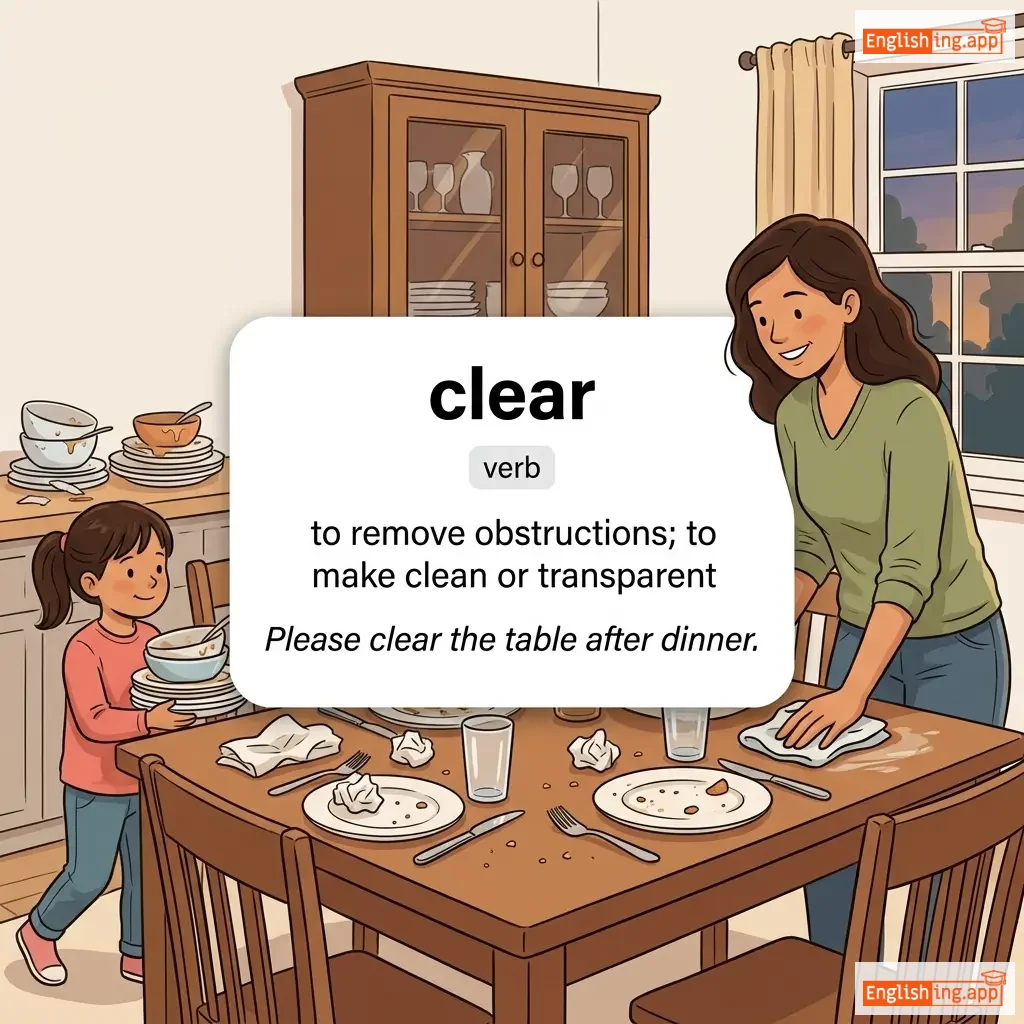
Easy to perceive, understand, or see through.
••••••
|
It was a clear day with no clouds in the sky. |
今天是一个清晰的日子,天空中没有云彩。
Jīntiān shì yīgè qīngxī de rìzi, tiānkōng zhōng méiyǒu yúncái.
••••••
|
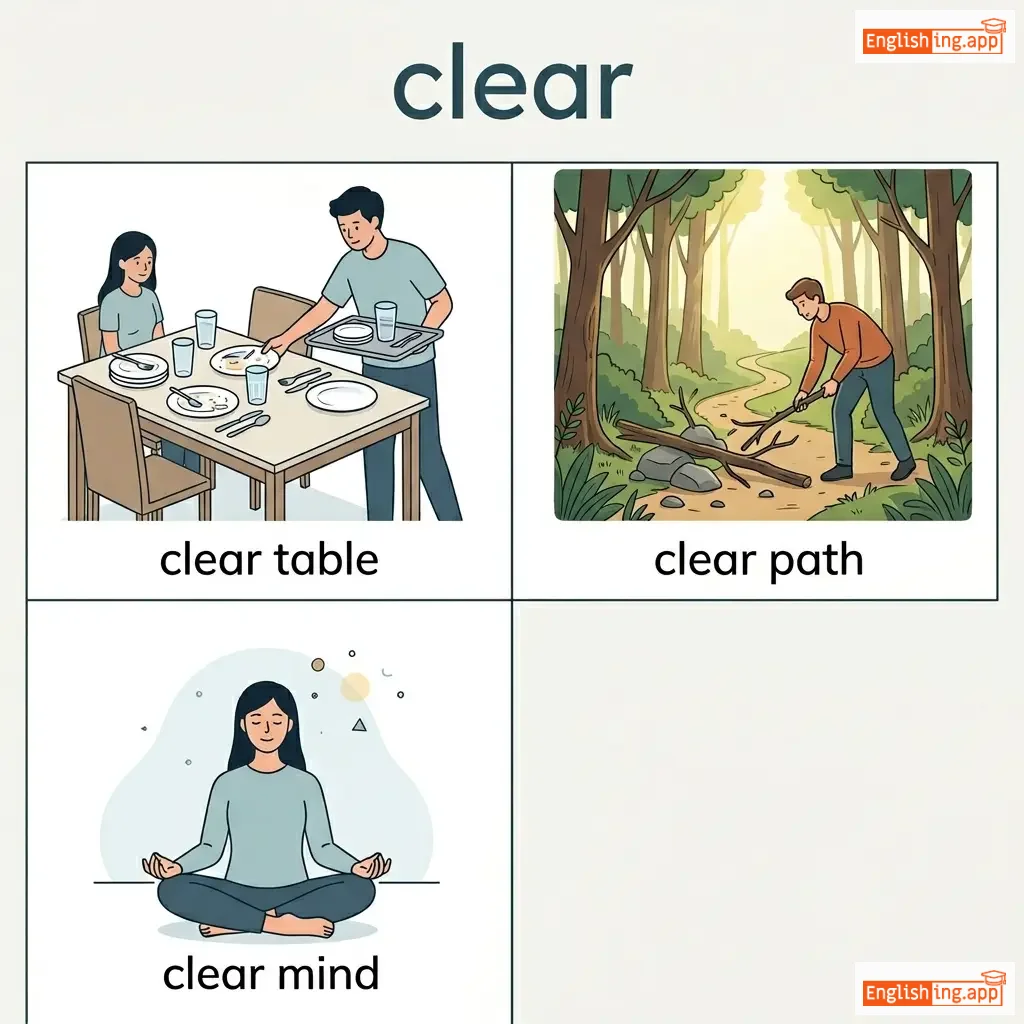
clear mind |
A calm and focused state of thinking.
••••••
|
清晰的思维
qīngxī de sīwéi
••••••
|
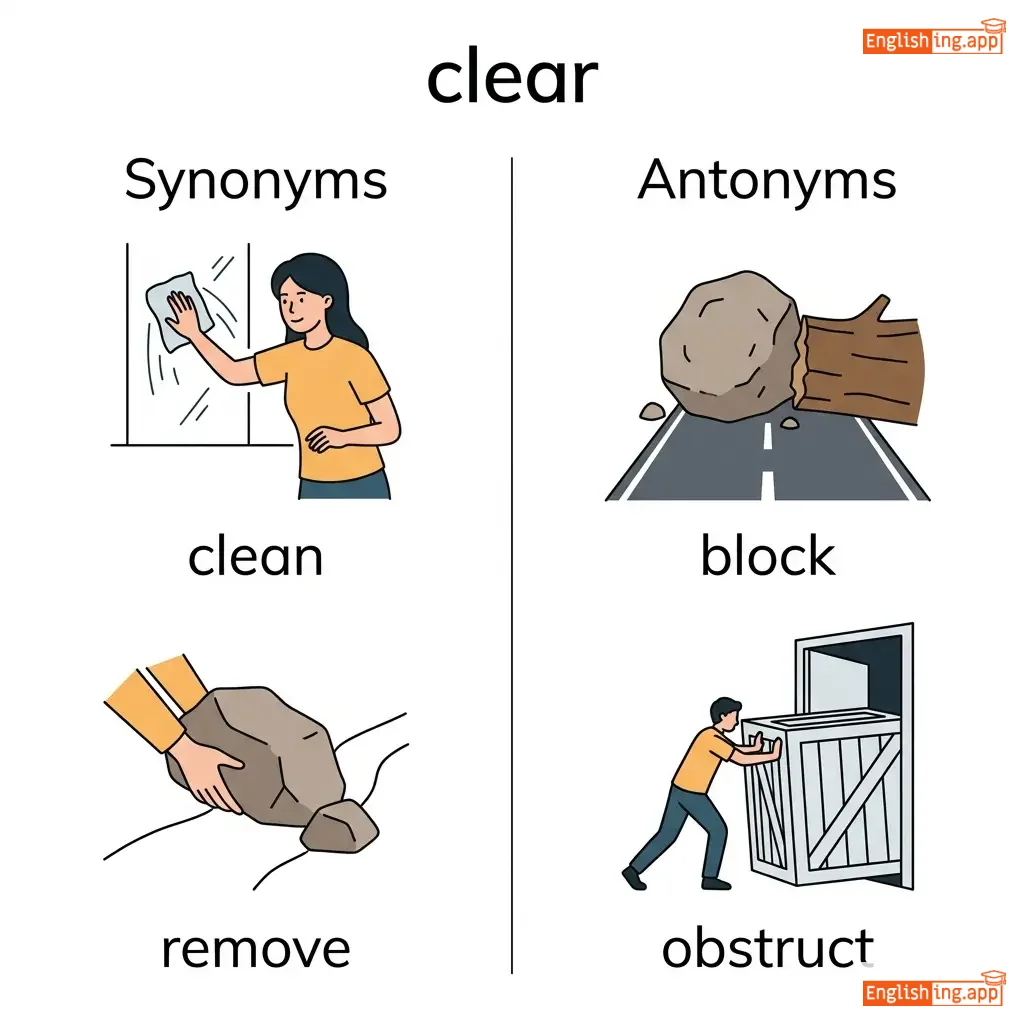
obvious, plain, evident, transparent
••••••
|
unclear, vague, cloudy
••••••
|
clear instructions, clear sky, clear vision, clear message
••••••
|
Clear 意思是清晰 🌞,就像没有云的清澈天空。
••••••
|
|
#10625
🧹
|
/kliːn/
verb
(klīn)
••••••
|
- •••••• |
清洁
qīngjié
••••••
|
cleaned
klīnd
••••••
|
cleaned
klīnd
••••••
|
cleans
klīns
••••••
|
cleaning
klīnɪng
••••••
|
To make something free from dirt, marks, or mess.
••••••
|
She cleaned the kitchen before the guests arrived.
她在客人到来之前清洁了厨房。
••••••
|
她在客人到来之前清洁了厨房。
Tā zài kèrén dào lái zhīqián qīngjiéle chúfáng.
••••••
|
clean slate
干净的白板
••••••
|
A fresh start without any past problems.
••••••
|
干净的白板
gānjìng de báibǎn
••••••
|
wash, scrub, wipe, tidy, purify
••••••
|
dirty, pollute, soil
••••••
|
clean room, clean clothes, clean water, clean environment
••••••
|
Clean 意味着清洁 — 🧽 '清洁'让一切变干净。
••••••
|
|
#10626
🏫
|
/ˈklæsˌruːm/
noun
(kèshì)
••••••
|
- •••••• |
教室
jiaoshi
••••••
|
- •••••• | - •••••• | - •••••• | - •••••• |
A room in which classes are held in a school or college.
••••••
|
The teacher entered the classroom and greeted the students. |
老师走进了教室并向学生们问好。
Lǎoshī zǒu jìnle jiàoshì bìng xiàng xuéshēngmen wèn hǎo.
••••••
|
empty classroom |
A classroom with no students or teacher inside.
••••••
|
空教室
kōng jiàoshì
••••••
|
lecture room, study room, hall, learning space
••••••
|
playground, office
••••••
|
classroom activities, classroom management, classroom environment, classroom learning
••••••
|
教室意味着 classroom 🏫,学习的地方。
••••••
|
|
#10627
🧑
|
/səˈvɪliən/
noun/adjective
(sivilian)
••••••
|
- •••••• |
平民
pingmin
••••••
|
- •••••• | - •••••• | - •••••• | - •••••• |
a person not in the armed forces or police
••••••
|
The area was evacuated to protect the civilians. |
该区域已被疏散以保护平民。
Gai quyu yi bei shuxian yi baohu pingmin.
••••••
|
- •••••• | - •••••• | - •••••• |
noncombatant, ordinary person, nonmilitary, commoner
••••••
|
soldier, officer
••••••
|
civilian life, civilian population, civilian clothes
••••••
|
Civilian sounds like 平民 (pingmin) in Chinese.
••••••
|
|
#10628
🏙️
|
/ˈsɪti/
noun
(sìtí)
••••••
|
- •••••• |
城市
chengshi
••••••
|
- •••••• | - •••••• | - •••••• | - •••••• |
a large town or an urban area with its own government
••••••
|
Dhaka is the largest city in Bangladesh. |
北京是中国最大的城市。
Běijīng shì zhōngguó zuì dà de chéngshì.
••••••
|
city that never sleeps |
a city that is always busy, like New York
••••••
|
永不入睡的城市
yǒng bù rù shuì de chéng shì
••••••
|
metropolis, town, municipality, capital
••••••
|
village, countryside
••••••
|
big city, city life, city center, city council
••••••
|
City 是城市,城市总是充满活力的。
••••••
|
|
#10629
🧑🤝🧑
|
/ˈsɪtɪzən/
noun
(sìtízhèn)
••••••
|
- •••••• |
公民
gongmin
••••••
|
- •••••• | - •••••• | - •••••• | - •••••• |
a legally recognized subject or national of a state
••••••
|
Every citizen has the right to vote. |
每个公民都有投票权。
Měi gè gōngmín dōu yǒu tóupiào quán.
••••••
|
model citizen |
an exemplary or ideal member of society
••••••
|
模范公民
mófàn gōngmín
••••••
|
inhabitant, resident, national, dweller
••••••
|
foreigner, alien
••••••
|
citizen rights, responsible citizen, active citizen, citizen of a country
••••••
|
Citizen = 公民 – 公民 = 城市的居民
••••••
|
|
#10630
⚗️
|
/ˈkɛmɪkəl/
noun
(凯米克尔)
••••••
|
- •••••• |
化学物质
huàxué wùzhì
••••••
|
- •••••• | - •••••• | - •••••• | - •••••• |
a substance produced by or used in a chemical process
••••••
|
The factory releases harmful chemicals into the river. |
工厂将有害的化学物质排放到河中。
Gōngchǎng jiāng yǒuhài de huàxué wùzhì pái fàng dào hé zhōng.
••••••
|
chemical reaction |
a process in which substances interact to form new substances
••••••
|
化学反应
huàxué fǎnyìng
••••••
|
compound, substance, element, reagent, solution
••••••
|
natural, organic
••••••
|
toxic chemicals, chemical reaction, chemical industry, chemical warfare
••••••
|
Chemical = 凯米克尔, 化学物质, 用于工厂。
••••••
|
|
#10631
⭕
|
/ˈsɜːrkəl/
noun/verb
(sàkè)
••••••
|
- •••••• |
圆圈
yuánquān
••••••
|
circled
sàkèd
••••••
|
circled
sàkèd
••••••
|
circles
sàkèls
••••••
|
circling
sàkèlíng
••••••
|
a round shape; to move all the way around something
••••••
|
The children sat in a circle.
孩子们坐成了一个圈。
••••••
|
孩子们坐成了一个圈。
Háizimen zuò chéngle yīgè quān.
••••••
|
come full circle
回到原点
••••••
|
to return to the original position or situation
••••••
|
回到原点
huí dào yuándiǎn
••••••
|
ring, loop, cycle, orbit
••••••
|
line, straight
••••••
|
circle of friends, draw a circle, circle around, social circle
••••••
|
Circle 意思是圆圈 - 容易记住,孩子们通常围坐成一个圈。
••••••
|
|
#10632
🚬
|
/ˈsɪɡəˌrɛt/
noun
(香烟)
••••••
|
- •••••• |
香烟
xiangyan
••••••
|
- •••••• | - •••••• | - •••••• | - •••••• |
a small roll of finely cut tobacco wrapped in paper for smoking
••••••
|
He lit a cigarette after dinner.
他在晚餐后点燃了一支香烟。
••••••
|
他在晚餐后点燃了一支香烟。
Ta zai wancan hou dianran le yi zhi xiangyan.
••••••
|
chain smoker
连环烟民
••••••
|
a person who smokes cigarettes continuously, one after another
••••••
|
连环烟民
lianhuan yānmín
••••••
|
smoke, tobacco, fag, stick
••••••
|
fresh air, nonsmoking
••••••
|
smoke a cigarette, light a cigarette, cigarette packet, cigarette smoke
••••••
|
香烟 = 🚬 香烟 — 晚餐后有些人会点燃一支。
••••••
|
|
#10633
⛪
|
/tʃɜːrtʃ/
noun
(教堂)
••••••
|
- •••••• |
教堂
jiaotang
••••••
|
- •••••• | - •••••• | - •••••• | - •••••• |
a building used for public Christian worship
••••••
|
The old church in the village was built in the 18th century. |
村里的古老教堂建于18世纪。
Cun li de gulao jiaotang jian yu 18 shiji.
••••••
|
go to church |
to attend Christian worship services
••••••
|
去教堂
qu jiaotang
••••••
|
chapel, cathedral, sanctuary, basilica
••••••
|
mosque, temple
••••••
|
church service, church building, church bell, church members
••••••
|
教堂即 Church ⛪ — 基督徒祈祷的地方。
••••••
|
|
#10634
🎄
|
/ˈkrɪsməs/
noun
(krismas)
••••••
|
- •••••• |
圣诞节
Shèngdàn Jié
••••••
|
- •••••• | - •••••• | - •••••• | - •••••• |
an annual festival celebrating the birth of Jesus Christ, observed on December 25
••••••
|
Families gather to celebrate Christmas with joy and love. |
家庭聚在一起庆祝圣诞节,带着欢乐和爱。
Jiātíng jù zài yīqǐ qìngzhù Shèngdàn Jié, dàizhe huānlè hé ài.
••••••
|
Christmas spirit |
the joyful and generous attitude people often have during Christmas
••••••
|
圣诞节精神
Shèngdàn Jié jīngshén
••••••
|
holiday, festival, yuletide, Noel
••••••
|
ordinary day
••••••
|
Christmas tree, Christmas Eve, Christmas gifts, Christmas party
••••••
|
圣诞节 = 🎄 快乐与爱
••••••
|
|
#10635
✝️
|
/ˈkrɪstʃən/
noun, adjective
(kuh-ree-shee-uhn)
••••••
|
- •••••• |
基督徒
jīdū tú
••••••
|
- •••••• | - •••••• | - •••••• | - •••••• |
a person who follows the religion based on the teachings of Jesus Christ
••••••
|
She is a devoted Christian who attends church every Sunday. |
她是一个虔诚的基督徒,每个星期天都会去教堂。
Tā shì yī gè qiánchéng de jīdū tú, měi gè xīngqītiān dōu huì qù jiàotáng.
••••••
|
- •••••• | - •••••• | - •••••• |
believer, follower, disciple, worshipper
••••••
|
atheist, nonbeliever
••••••
|
Christian faith, Christian values, Christian community, Christian church
••••••
|
Christian = 基督徒 ✝️, 跟随耶稣基督的人是基督徒。
••••••
|
|
#10636
✅
|
/tʃuːz/
verb
••••••
|
|
- •••••• |
chose
••••••
|
chosen
••••••
|
chooses
••••••
|
choosing
••••••
|
to select one option from a range of possibilities
••••••
|
You must choose the right path for your future. |
- •••••• |
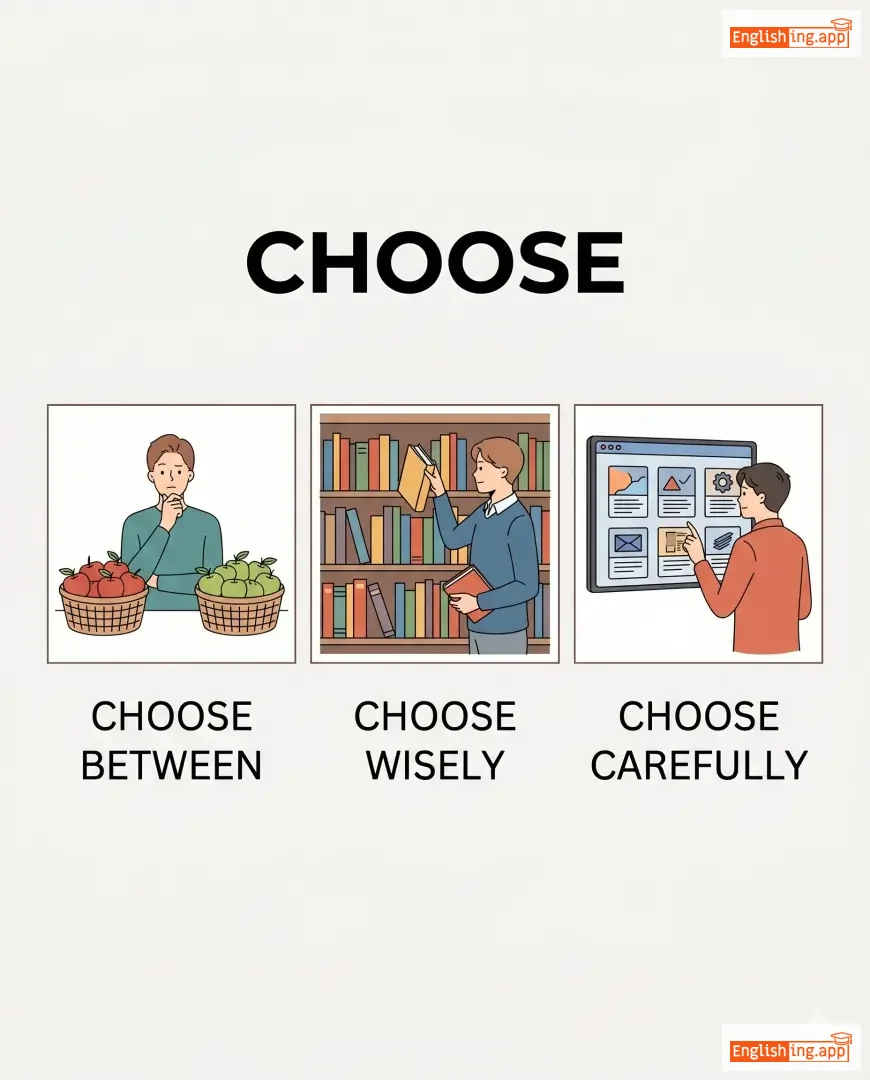
choose wisely |
make a decision carefully and thoughtfully
••••••
|
- •••••• |
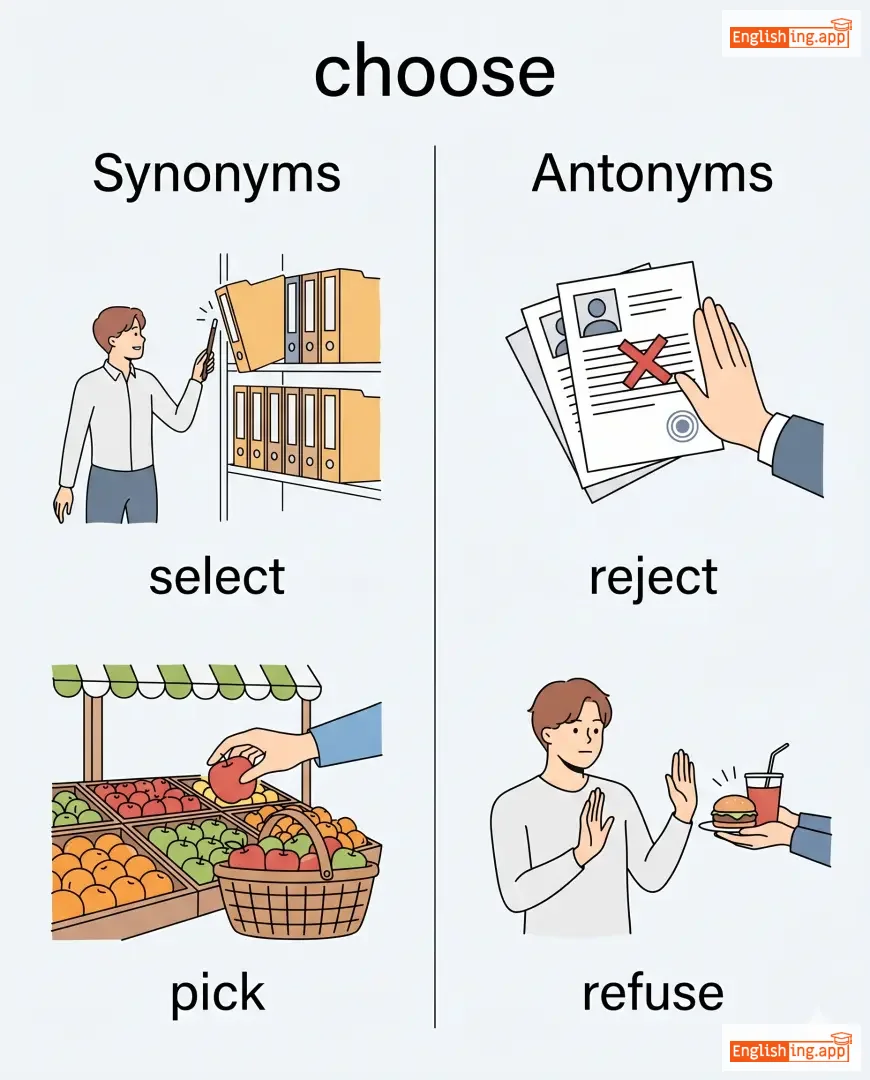
select, pick, decide, opt, elect
••••••
|
reject, refuse, ignore
••••••
|
choose between, choose wisely, choose carefully, choose from
••••••
|
No •••••• |
|
#10637
🩸
|
/kəˈlɛstərɒl/
noun
(胆固醇)
••••••
|
- •••••• |
胆固醇
dǎn gù chún
••••••
|
- •••••• | - •••••• | - •••••• | - •••••• |
a fatty substance found in the blood, high levels of which can cause health problems
••••••
|
High cholesterol can increase the risk of heart disease. |
高胆固醇可能增加患心脏病的风险。
Gāo dǎn gù chún kěnéng zēngjiā huàn xīn zàng bìng de fēngxiǎn.
••••••
|
- •••••• | - •••••• | - •••••• |
lipid, fat, sterol, plasma fat
••••••
|
low-fat, healthy blood
••••••
|
cholesterol level, high cholesterol, cholesterol test, cholesterol control
••••••
|
胆固醇高 = 心脏病风险增加。多吃蔬菜,低胆固醇!
••••••
|
|
#10638
🍫
|
/ˈtʃɒklət/
noun
(巧克力)
••••••
|
- •••••• |
巧克力
qiaokeli
••••••
|
- •••••• | - •••••• | - •••••• | - •••••• |
a sweet, brown food made from roasted cocoa beans
••••••
|
She bought a bar of chocolate from the store.
她从商店买了一块巧克力。
••••••
|
她从商店买了一块巧克力。
tā cóng shāngdiàn mǎile yī kuài qiǎokèlì.
••••••
|
like a kid in a candy store
像糖果店里的小孩一样
••••••
|
very excited or happy about something
••••••
|
对某事感到非常兴奋或开心
duì mǒu shì gǎndào fēicháng xīngfèn huò kāixīn
••••••
|
cocoa, candy, sweet, confectionery
••••••
|
bitter, unsweetened
••••••
|
chocolate cake, chocolate bar, dark chocolate, hot chocolate
••••••
|
巧克力是甜蜜的 🍫,让你感到幸福的味道。
••••••
|
|
#10639
🥢
|
/tʃaɪˈniːz/
adjective, noun
(chāi ní zī)
••••••
|
- •••••• |
中国的
zhōngguó de
••••••
|
- •••••• | - •••••• | - •••••• | - •••••• |
relating to China, its people, or its language
••••••
|
We went to a Chinese restaurant last night. |
我们昨晚去了一个中国餐厅。
wǒmen zuó wǎn qù le yí gè zhōngguó cāntīng.
••••••
|
Chinese whispers |
a game where a message is passed along and distorted
••••••
|
中国耳语
zhōngguó ěr yǔ
••••••
|
Mandarin, Cantonese, Asian, Oriental
••••••
|
non-Chinese, Western
••••••
|
Chinese culture, Chinese language, Chinese food, Chinese history
••••••
|
中国餐 = 筷子 🥢 永远不会忘记!
••••••
|
|
#10640
🧒
|
/ˈtʃaɪldhʊd/
noun
(chaildhud)
••••••
|
- •••••• |
童年
tongnian
••••••
|
- •••••• | - •••••• | - •••••• | - •••••• |
the period of being a child
••••••
|
She spent her childhood in a small village.
她在一个小村庄度过了她的童年。
••••••
|
她在一个小村庄度过了她的童年。
Ta zai yige xiao cunzhuang duguo le ta de tongnian.
••••••
|
childhood friend
童年朋友
••••••
|
a friend someone has had since they were children
••••••
|
童年朋友
tongnian pengyou
••••••
|
infancy, youth, boyhood, girlhood
••••••
|
adulthood, maturity
••••••
|
happy childhood, early childhood, childhood memory, childhood friend
••••••
|
Child + hood = 童年 (阶段)
••••••
|
|
#10641
👶
|
/tʃaɪld/
noun
(chaild)
••••••
|
- •••••• |
孩子
haizi
••••••
|
- •••••• | - •••••• | - •••••• | - •••••• |
a young human being below the age of puberty or below the legal age of majority
••••••
|
The child played happily in the park.
孩子在公园里快乐地玩耍。
••••••
|
孩子在公园里快乐地玩耍。
Haizi zai gongyuan li kuaile de wanshua.
••••••
|
child's play
孩子的游戏
••••••
|
something that is very easy to do
••••••
|
孩子的游戏
Haizi de youxi
••••••
|
kid, youngster, minor, juvenile, toddler
••••••
|
adult, grown-up
••••••
|
child care, child development, child protection, child labor
••••••
|
Child 意味着孩子 👶, 在 '孩子的游戏' 中记住,孩子的游戏是最容易的。
••••••
|
|
#10642
👑
|
/tʃiːf/
noun
(chīfū)
••••••
|
- •••••• |
首领
shouling
••••••
|
- •••••• | - •••••• | - •••••• | - •••••• |
a leader or person in charge of a group or organization
••••••
|
The chief of the village made an important decision.
村庄的首领做出了一个重要的决定。
••••••
|
村庄的首领做出了一个重要的决定。
Cun zhuang de shouling zuo chu le yi ge zhongyao de jueding.
••••••
|
chief among
首领中
••••••
|
the most important or significant among a group
••••••
|
最重要
zui zhongyao
••••••
|
leader, head, boss, commander, captain
••••••
|
follower, subordinate
••••••
|
chief executive, tribal chief, chief complaint, chief reason
••••••
|
Chief意味着首领,👑 最重要的人。
••••••
|
|
#10643
🐔
|
/ˈtʃɪkɪn/
noun
(鸡)
••••••
|
- •••••• |
鸡
ji
••••••
|
- •••••• | - •••••• | - •••••• | - •••••• |
a domestic bird kept for its eggs or meat
••••••
|
We had fried chicken for dinner.
我们晚餐吃了炸鸡。
••••••
|
我们晚餐吃了炸鸡。
Wo men wan can chi le zha ji.
••••••
|
chicken out
害怕做某事
••••••
|
to decide not to do something because of fear
••••••
|
害怕做某事
hai pa zuo mou shi
••••••
|
hen, fowl, poultry, rooster, chick
••••••
|
bravery, courage
••••••
|
fried chicken, roast chicken, chicken soup, chicken farm
••••••
|
Chicken 是鸡,但 'chicken out' 是害怕做某事。
••••••
|
|
#10644
💪
|
/tʃɛst/
noun
(chest)
••••••
|
- •••••• |
胸部
xiōngbù
••••••
|
- •••••• | - •••••• | - •••••• | - •••••• |
the front part of the human body between the neck and the stomach
••••••
|
He felt a pain in his chest after running. |
跑步后,他感到胸部有痛感。
Pǎobù hòu, tā gǎndào xiōngbù yǒu tòng gǎn.
••••••
|
off your chest |
to talk about something that has been worrying you
••••••
|
倾诉心事
qīngsù xīnshì
••••••
|
thorax, breast, trunk, ribcage, torso
••••••
|
back, rear
••••••
|
chest pain, broad chest, chest muscles, chest infection
••••••
|
Chest 意思是胸部,'Get it off your chest' 意思是倾诉心事。
••••••
|
Vocabulary Quiz
Test your vocabulary by matching words with their translations or meanings.
Login to take the quiz
Comments (0)
Share your thoughts and join the discussion.
Join the discussion by logging in
Login to CommentNo comments yet
Be the first to share your thoughts!