




Swipe left or right, or use the buttons. Tap image to zoom.
例句翻译
单词
Lesson 25Lesson 25 - 遮罩切换
|
表情符号
|
单词 | Images | 翻译 | 过去时 | 过去分词 | 第三人称单数 | 动名词 | 含义 | 例句 | 例句翻译 | 示例表达 | 示例表达含义 | 示例表达翻译 | 同义词 | 反义词 | 搭配词 | 助记符 |
|---|---|---|---|---|---|---|---|---|---|---|---|---|---|---|---|---|---|
|
#721
📘
|
/əˈθɔːrɪtətɪv/
adjective
(ˈɔːθɒrɪˌteɪtɪv)
••••••
|
- •••••• |
权威的
quánwēi de
••••••
|
- •••••• | - •••••• | - •••••• | - •••••• |
Having or showing authority; commanding and self-confident; reliable as a source of information.
••••••
|
She spoke in an authoritative tone that silenced the room. |
她用权威的语气说话,令房间安静下来。
Tā yòng quánwēi de yǔqì shuōhuà, lìng fángjiān ānjìng xiàlái.
••••••
|
authoritative source |
A reliable and trustworthy source of information.
••••••
|
权威来源
quánwēi láiyuán
••••••
|
commanding, reliable, credible, confident, influential
••••••
|
weak, uncertain, unreliable
••••••
|
authoritative source, authoritative guide, authoritative figure, authoritative statement
••••••
|
权威代表有权力的声音 (quánwēi de).
••••••
|
|
#722
❄️
|
/ˈævəlæntʃ/
noun, verb
••••••
|
- •••••• | - •••••• |
avalanched
••••••
|
avalanched
••••••
|
avalanches
••••••
|
avalanching
••••••
|
(noun) a mass of snow, ice, and rocks falling rapidly down a mountainside; a sudden overwhelming quantity; (verb) to descend like an avalanche
••••••
|
The avalanche buried the mountain road under tons of snow. |
- •••••• |
avalanche of criticism |
an overwhelming amount of negative feedback or complaints
••••••
|
- •••••• |
landslide, snowslide, rockslide, deluge, flood
••••••
|
trickle, dribble, scarcity
••••••
|
avalanche risk, avalanche warning, avalanche of emails, avalanche debris, trigger avalanche
••••••
|
No •••••• |
|
#723
⚙️
|
/ɔːɡˈzɪliəri/
adjective, noun
(辅助)
••••••
|
- •••••• |
辅助
fuzhu
••••••
|
- •••••• | - •••••• | - •••••• | - •••••• |
(adjective) providing supplementary or additional help and support; (noun) a person or thing that provides auxiliary support
••••••
|
The hospital has an auxiliary power generator in case of emergencies. |
医院有一个备用发电机,以防紧急情况。
Yīyuàn yǒu yīgè bèiyòng fādiànjī, yǐ fáng jǐnjí qíngkuàng.
••••••
|
auxiliary verb |
a verb used with another verb to form tenses, moods, or voices (e.g., be, have, do)
••••••
|
辅助动词
fuzhu dongci
••••••
|
supplementary, additional, supporting, backup, secondary
••••••
|
main, primary, principal, chief
••••••
|
auxiliary power, auxiliary verb, auxiliary equipment, auxiliary staff, auxiliary services
••••••
|
AUX-ILI-ARY 意味着 AUX (额外) 辅助 - 额外帮助!
••••••
|
|
#724
🍂
|
/ɔːˈtʌmnəl/
adjective
(秋天的)
••••••
|
- •••••• |
秋天的
qiū tiān de
••••••
|
- •••••• | - •••••• | - •••••• | - •••••• |
relating to or characteristic of autumn; occurring in autumn
••••••
|
The autumnal colors of red and gold filled the forest. |
红色和金色的秋天的颜色填满了森林。
hóng sè hé jīn sè de qiū tiān de yán sè tián mǎn le sēn lín.
••••••
|
autumnal equinox |
the time in September when day and night are equal in length, marking the beginning of autumn
••••••
|
秋分
qiū fēn
••••••
|
fall-like, seasonal, harvest-time, mature, declining
••••••
|
vernal, spring-like, summery
••••••
|
autumnal colors, autumnal equinox, autumnal weather, autumnal season, autumnal leaves
••••••
|
AUTUMN-AL 是秋天的(qiū tiān de)叶子在掉落,AUTUMN 就来了!
••••••
|
|
#725
🔬
|
/ˈɔːtɒpsi/
noun, verb
(尸检)
••••••
|
- •••••• |
尸检
shijian
••••••
|
autopsied
尸检过
••••••
|
autopsied
尸检过
••••••
|
autopsies
尸检
••••••
|
autopsying
尸检中
••••••
|
a post-mortem examination to discover the cause of death or the extent of disease
••••••
|
The autopsy revealed that the victim had died from poisoning.
尸检显示受害者死于中毒。
••••••
|
尸检显示受害者死于中毒。
Shijian xianshi shouhaizhe siyu zhongdu.
••••••
|
perform an autopsy
进行尸检
••••••
|
to conduct a medical examination of a dead body
••••••
|
进行尸检
Jinxing shijian
••••••
|
post-mortem, necropsy, examination, dissection, analysis
••••••
|
healing, treatment, diagnosis
••••••
|
perform autopsy, autopsy report, autopsy results, conduct autopsy, forensic autopsy
••••••
|
AUTO-PSY - AUTO检查,尸检!
••••••
|
|
#726
🗽
|
/ɔːˈtɒnəmi/
noun
(自律)
••••••
|
|
自治
zizhi
••••••
|
- •••••• | - •••••• | - •••••• | - •••••• |
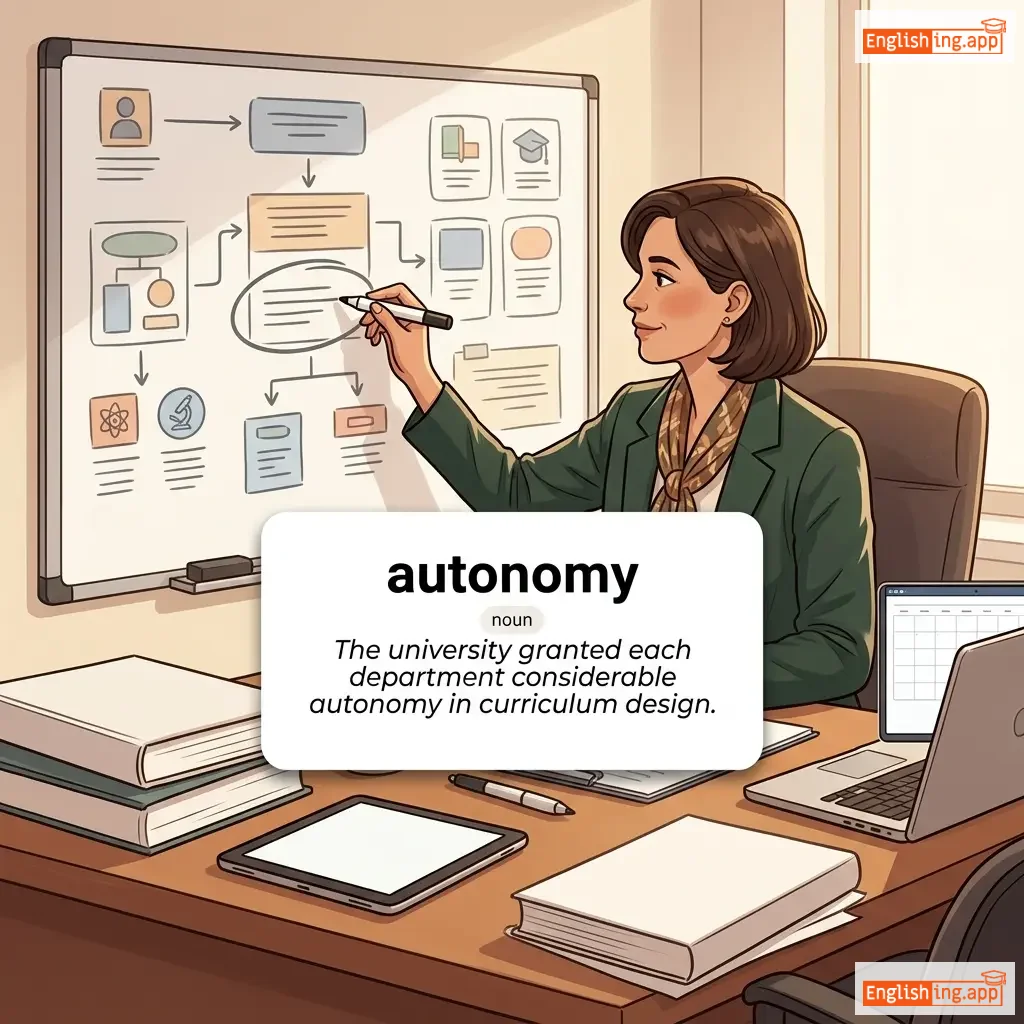
the right or condition of self-government; independence or freedom to act or make decisions
••••••
|
The university granted each department considerable autonomy in curriculum design. |
大学给予每个部门在课程设计中相当大的自治权。
Dàxué jǐyǔ měi gè bùmén zài kèchéng shèjì zhōng xiāngdāng dà de zìzhì quán.
••••••
|
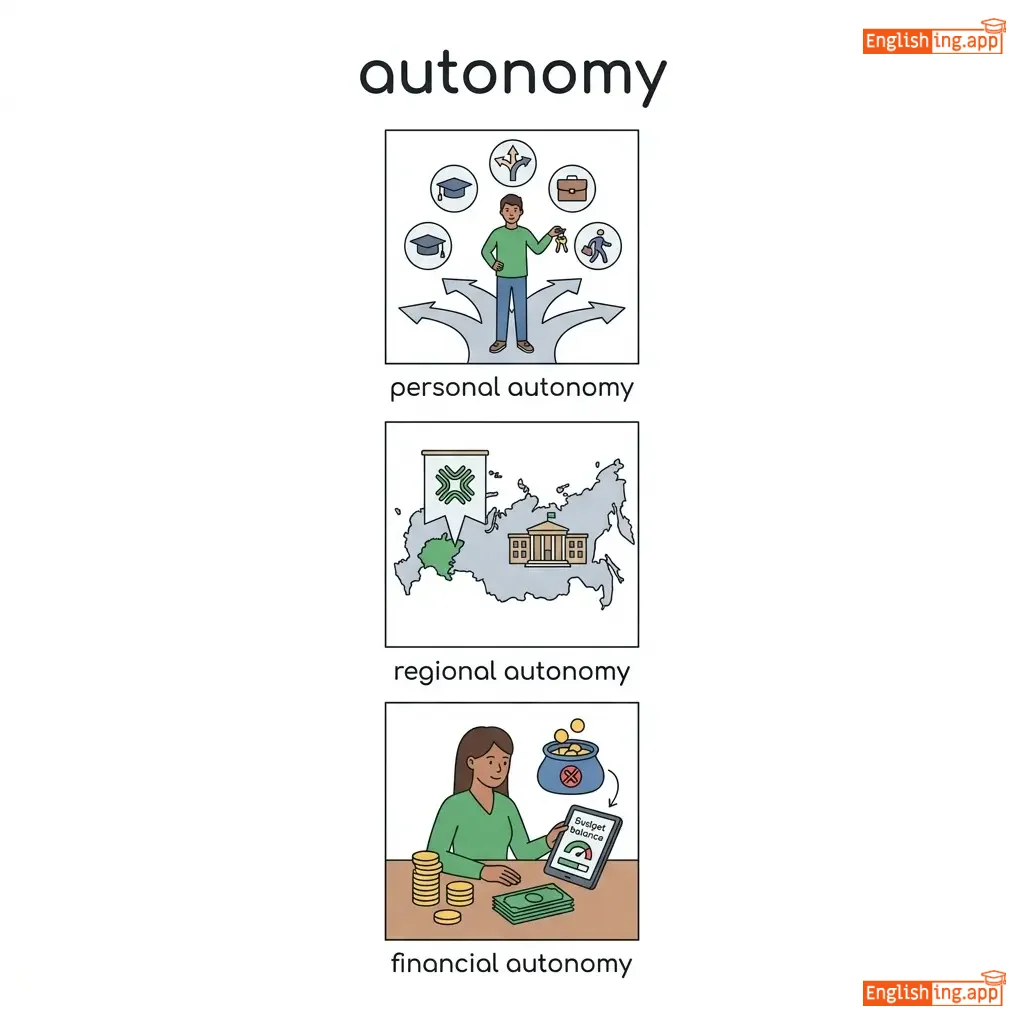
personal autonomy |
the ability to make one's own decisions and control one's own life
••••••
|
个人自治
gèrén zìzhì
••••••
|
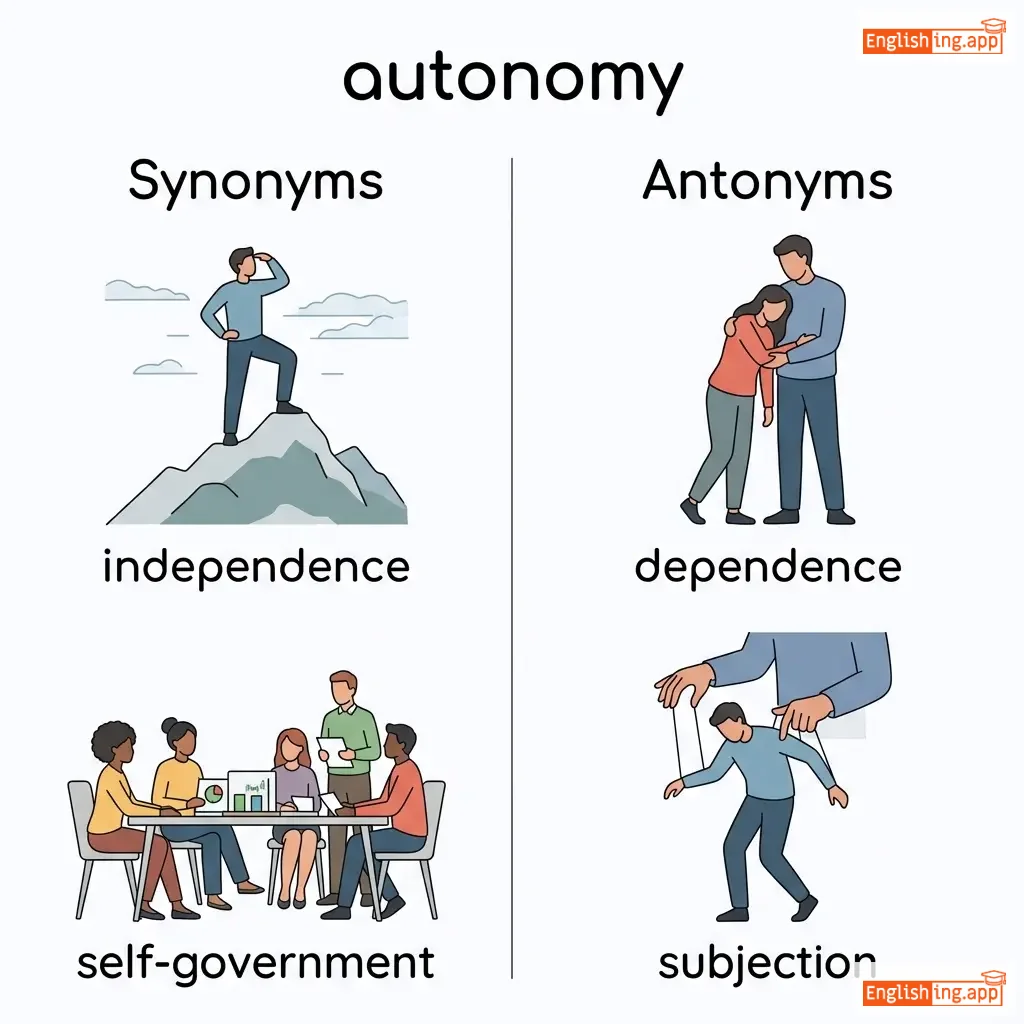
independence, self-government, sovereignty, freedom, self-rule
••••••
|
dependence, subjection, control
••••••
|
personal autonomy, regional autonomy, financial autonomy, autonomy and independence, grant autonomy
••••••
|
AUTO-NOMÍA是AUTO控制 - 自治(zìzhì)通过我们的决定!
••••••
|
|
#727
🛰️
|
/ɔːˈtɒnəməsli/
adverb
(自动地)
••••••
|
- •••••• |
自动地
zìdòng de
••••••
|
- •••••• | - •••••• | - •••••• | - •••••• |
In an independent or self-governing manner.
••••••
|
The robot can operate autonomously without human intervention. |
机器人可以在没有人工干预的情况下自动工作。
Jīqìrén kěyǐ zài méiyǒu réngōng gānyù de qíngkuàng xià zìdòng gōngzuò.
••••••
|
- •••••• | - •••••• | - •••••• |
independently, freely, self-sufficiently, sovereignly
••••••
|
dependently, subordinately
••••••
|
function autonomously, operate autonomously, work autonomously, move autonomously
••••••
|
Auto (自动) + nomosly (方式) = 自主地工作
••••••
|
|
#728
🚗
|
/ɔːˈtɒnəməs/
adjective
(自动的)
••••••
|
|
自动
zidong
••••••
|
- •••••• | - •••••• | - •••••• | - •••••• |
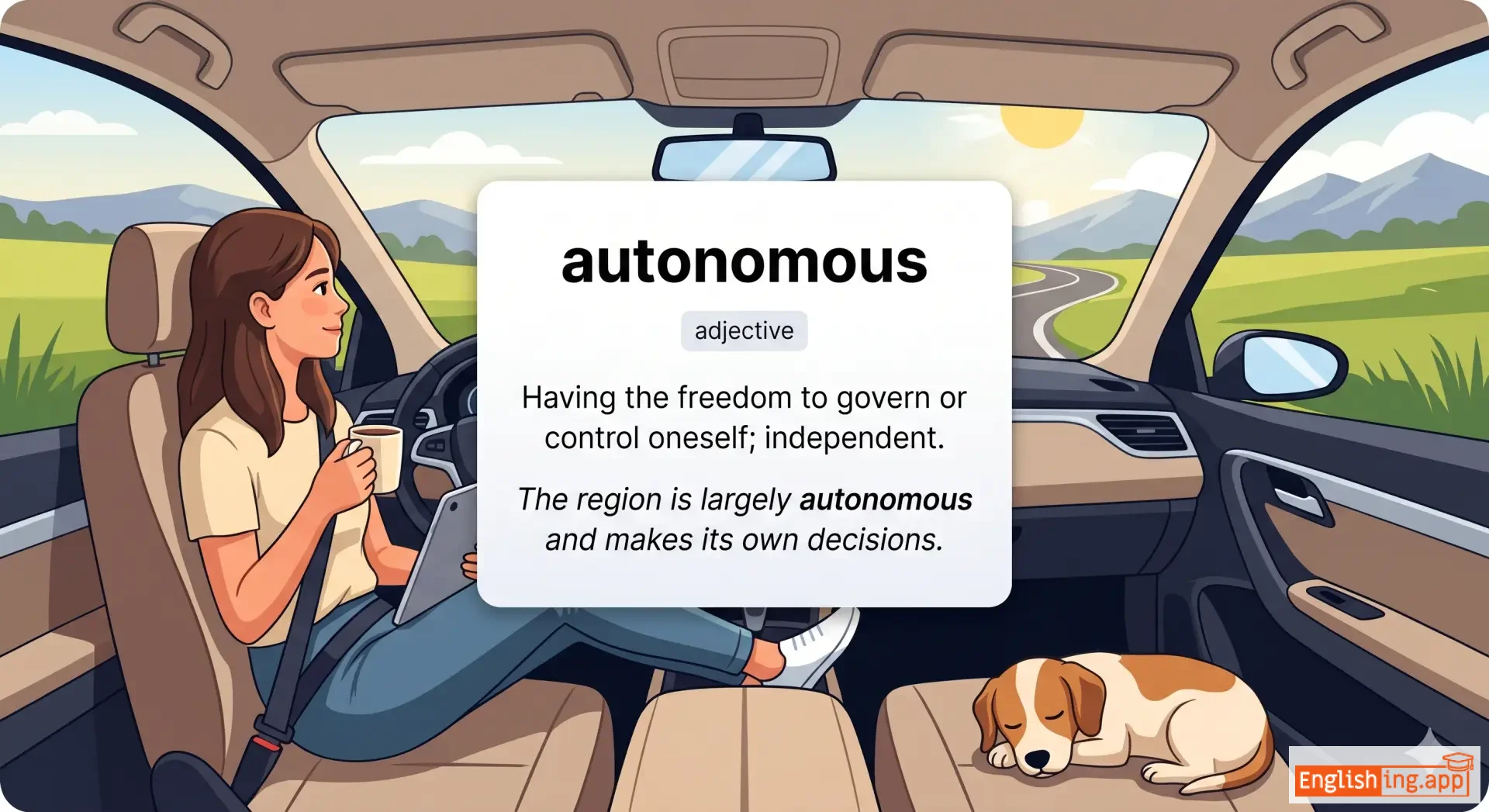
Having the freedom to govern or control oneself; independent.
••••••
|
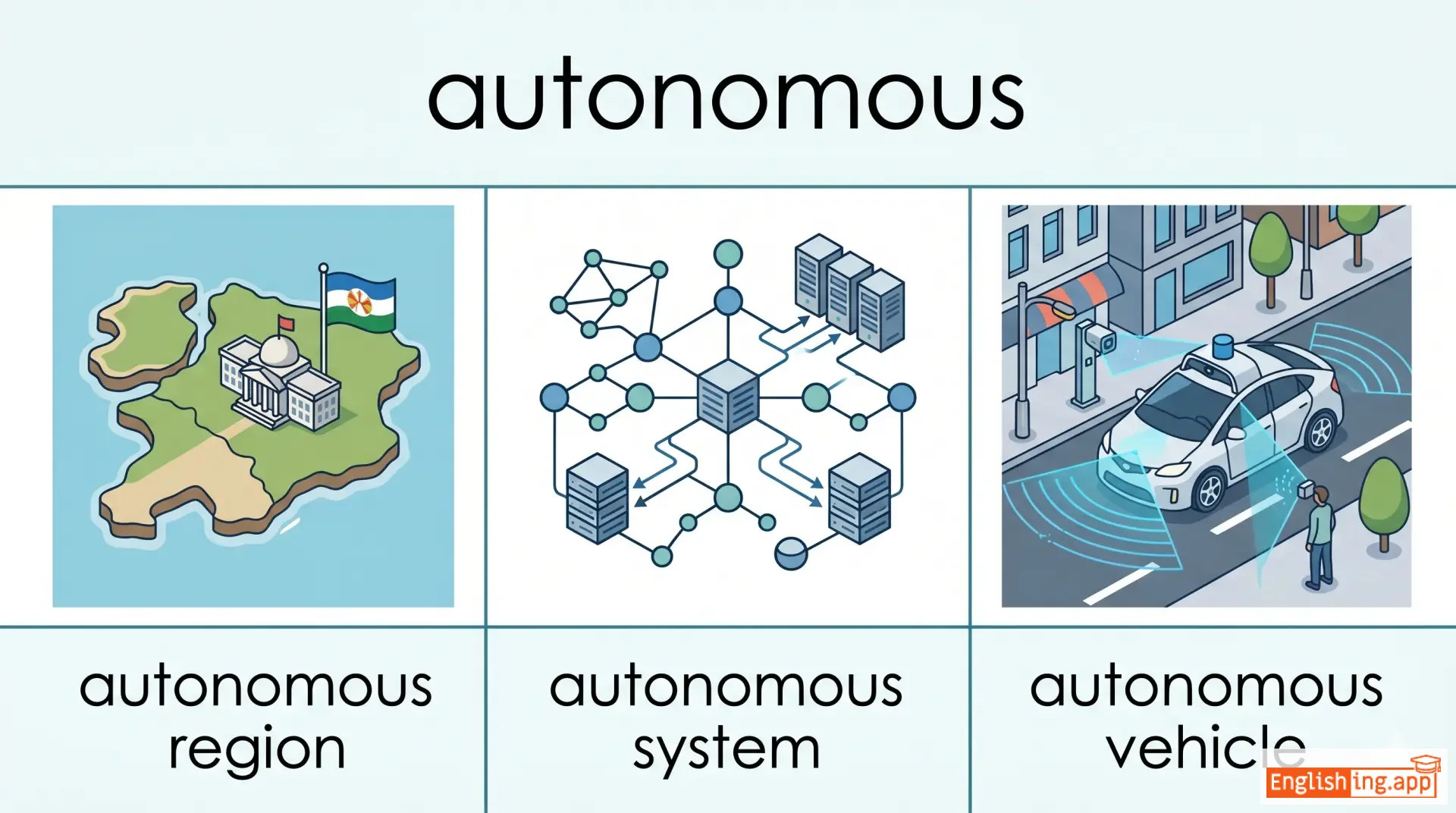
The region is largely autonomous and makes its own decisions. |
该地区在很大程度上是自治的,并自行做出决定。
Gai diqu zai hendà chéngdù shàng shì zìzhì de, bìng zìxíng zuòchū juédìng.
••••••
|
autonomous vehicle |
A self-driving vehicle that operates without human control.
••••••
|
自动驾驶车辆
zidong jiashi cheliang
••••••
|
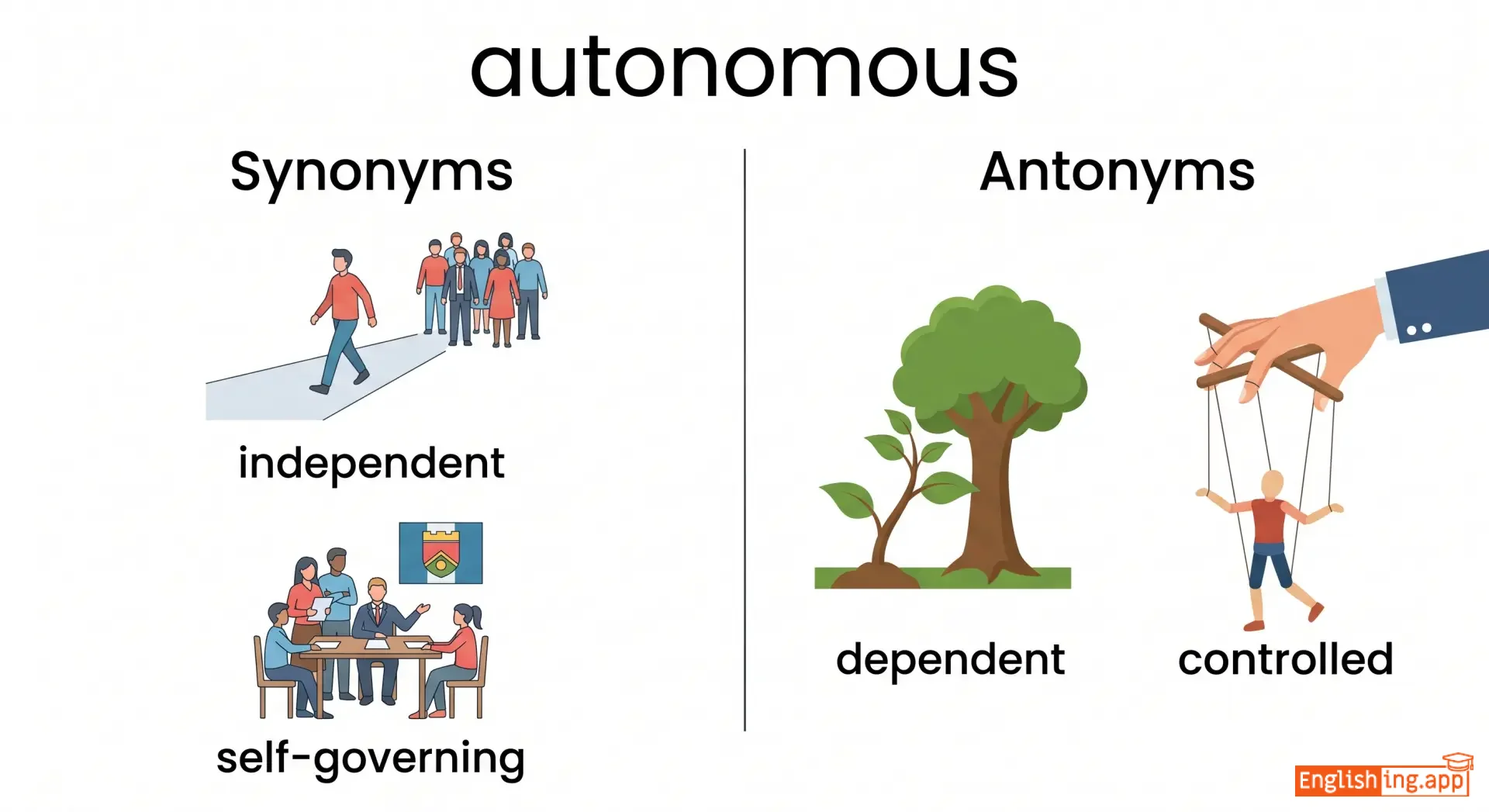
independent, self-governing, self-sufficient, sovereign
••••••
|
dependent, controlled, subordinate
••••••
|
autonomous region, autonomous system, autonomous vehicle, autonomous decision
••••••
|
Auto (自己) + nomos (法律) = 按照自己的法律行驶,自动。
••••••
|
|
#729
🦾
|
/ɔːˈtɒmətən/
noun
(自动机)
••••••
|
- •••••• |
自动机器
zidong jiqi
••••••
|
- •••••• | - •••••• | - •••••• | - •••••• |
A machine that works automatically; also refers to a person who behaves like a machine, without thinking.
••••••
|
He worked like an automaton, without showing any emotion. |
他像自动机一样工作,没有表现出任何情感。
Ta xiang zidong ji yiyang gongzuo, meiyou biaoxian chu renhe qinggan.
••••••
|
- •••••• | - •••••• | - •••••• |
robot, android, machine, drone
••••••
|
human, thinker
••••••
|
soulless automaton, mechanical automaton, act like an automaton
••••••
|
Auto (自动) + maton (机器) = 像机器一样运转的人。
••••••
|
|
#730
🤖
|
/ˈɔːtəmeɪt/
verb
••••••
|
|
- •••••• |
automated
••••••
|
automated
••••••
|
automates
••••••
|
automating
••••••
|
To use machines or computers to control or operate a process, making it automatic.
••••••
|
The company decided to automate its customer service operations. |
- •••••• |
fully automate |
To make a system or process completely automatic.
••••••
|
- •••••• |
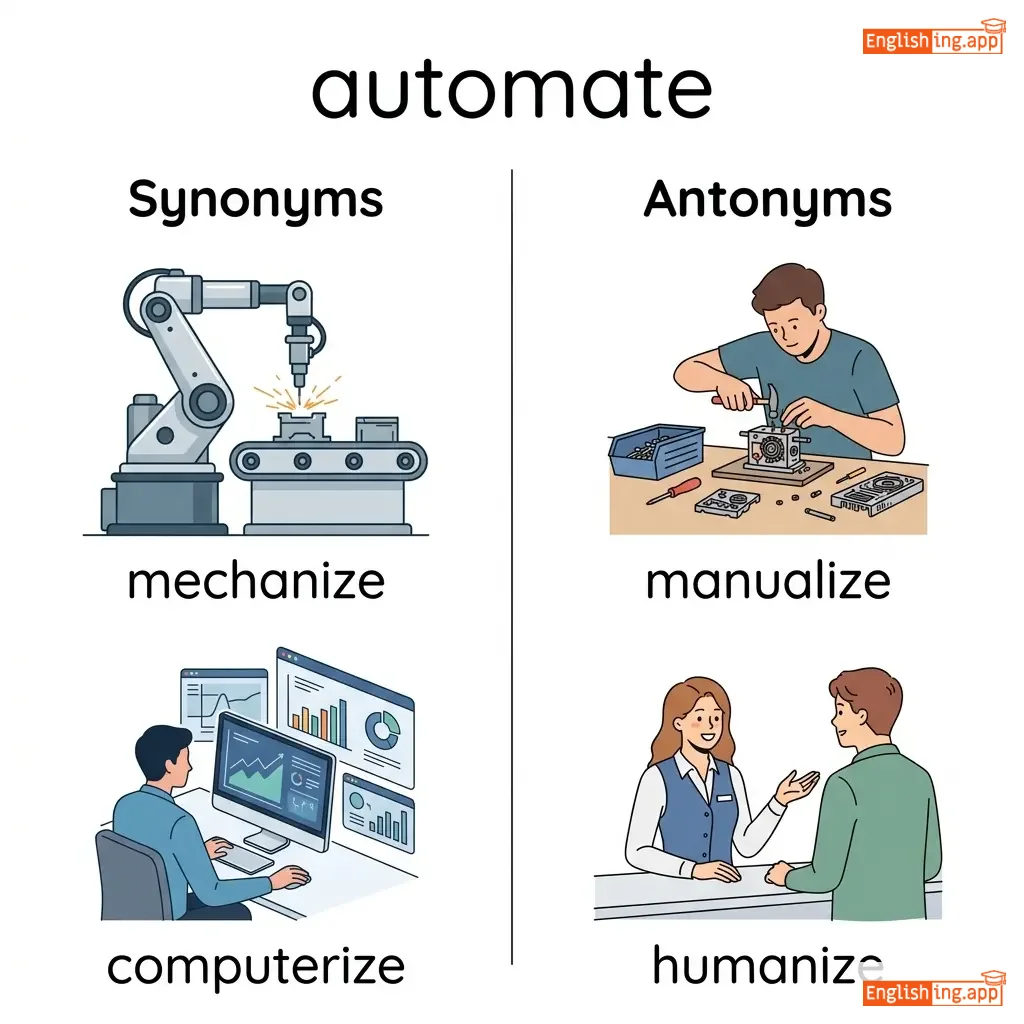
mechanize, computerize, digitize, systematize
••••••
|
manualize, humanize
••••••
|
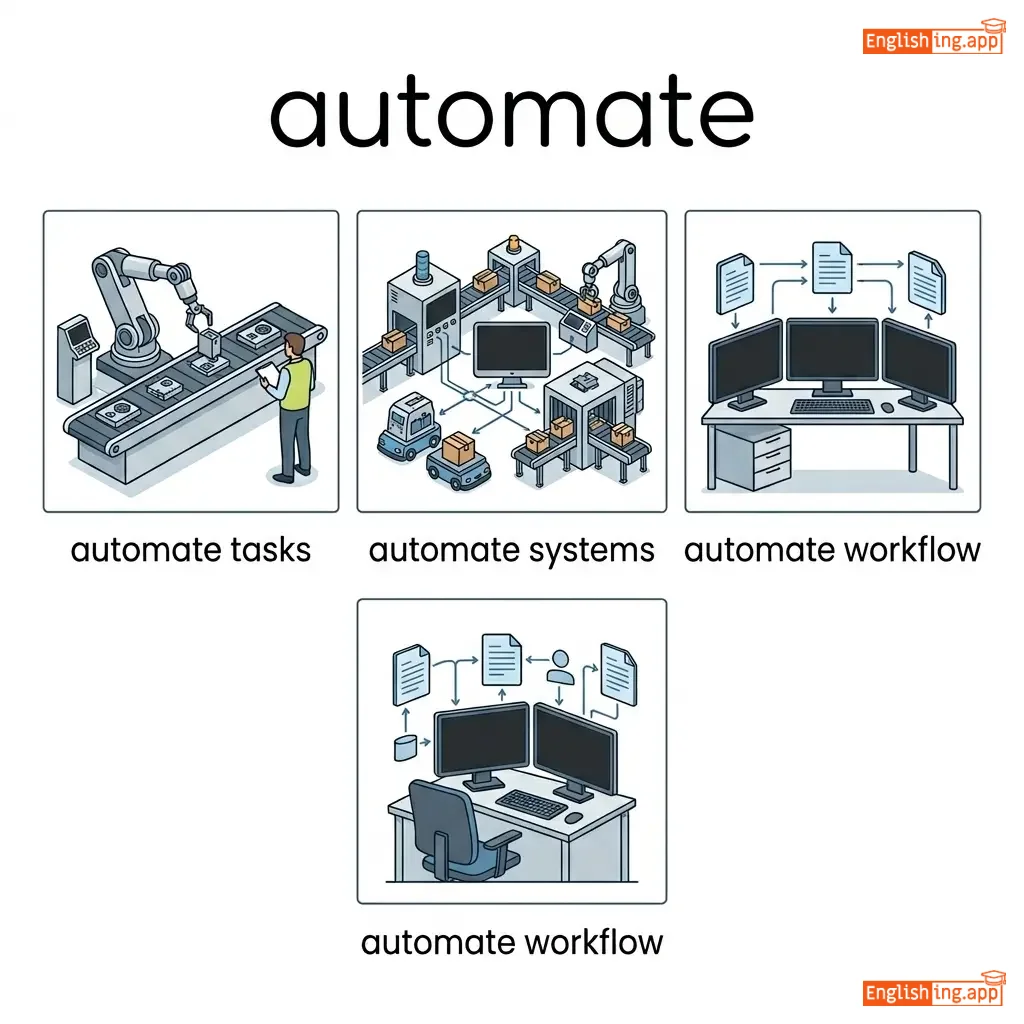
automate tasks, automate systems, automate workflow, fully automate
••••••
|
No •••••• |
|
#731
👑
|
/ˌɔːtəˈkrætɪk/
adjective
(专制)
••••••
|
- •••••• |
专制
zhuānzhì
••••••
|
- •••••• | - •••••• | - •••••• | - •••••• |
Relating to a ruler who has absolute power and does not consult others.
••••••
|
The manager’s autocratic style discouraged employees from sharing their ideas. |
经理的专制风格使员工不愿意分享他们的想法。
Jīnglǐ de zhuānzhì fēnggé shǐ yuángōng bù yuànyì fēnxiǎng tāmen de xiǎngfǎ.
••••••
|
autocratic rule |
A system of governance where one person holds absolute power.
••••••
|
专制统治
zhuānzhì tǒngzhì
••••••
|
dictatorial, authoritarian, absolute, tyrannical, despotic
••••••
|
democratic, liberal, participatory
••••••
|
autocratic rule, autocratic regime, autocratic leader, autocratic government
••••••
|
Auto (自我) + cratic (权力) = 专制统治,一切由一个人决定。
••••••
|
|
#732
🦁
|
/ˈɔːtəkræt/
noun
(奥托克拉特)
••••••
|
- •••••• |
独裁者
dúcáizhě
••••••
|
- •••••• | - •••••• | - •••••• | - •••••• |
A ruler with absolute power.
••••••
|
The autocrat controlled the country with an iron fist.
这个独裁者以铁拳统治着国家。
••••••
|
这个独裁者以铁拳统治着国家。
Zhège dúcáizhě yǐ tiěquán tǒngzhì zhe guójiā.
••••••
|
- •••••• | - •••••• | - •••••• |
dictator, despot, tyrant, monarch
••••••
|
democrat, citizen
••••••
|
ruthless autocrat, absolute autocrat, powerful autocrat
••••••
|
Auto + crat 意味着独裁 → Autocrat = 完全控制的领导者
••••••
|
|
#733
⚖️
|
/ɔːˈtɒkrəsi/
noun
(autocracy)
••••••
|
- •••••• |
独裁
dúcái
••••••
|
- •••••• | - •••••• | - •••••• | - •••••• |
A system of government in which one person has absolute power.
••••••
|
The country suffered under decades of autocracy.
该国在几十年的专制下受苦。
••••••
|
该国在几十年的专制下受苦。
Gāi guó zài jǐ shí nián de zhuānzhì xià shòukǔ.
••••••
|
- •••••• | - •••••• | - •••••• |
dictatorship, tyranny, absolutism, despotism
••••••
|
democracy, republic
••••••
|
absolute autocracy, under autocracy, fall of autocracy
••••••
|
Auto意味着自己,cracy意味着统治 → 独裁 = 一个人的统治。
••••••
|
|
#734
📖
|
/ˌɔːtəbaɪˈɒɡrəfi/
noun
(自传)
••••••
|
- •••••• |
自传
zìzhuàn
••••••
|
- •••••• | - •••••• | - •••••• | - •••••• |
An account of a person's life written by that person.
••••••
|
She published an autobiography about her journey to success. |
她发布了一本关于她成功之路的自传。
Tā fābùle yī běn guānyú tā chénggōng zhī lù de zìzhuàn.
••••••
|
- •••••• | - •••••• | - •••••• |
memoir, life story, personal history, self-portrait
••••••
|
biography
••••••
|
write an autobiography, publish an autobiography, inspiring autobiography
••••••
|
Auto意味着自己,biography意味着传记 → Autobiography = 自己写的传记。
••••••
|
|
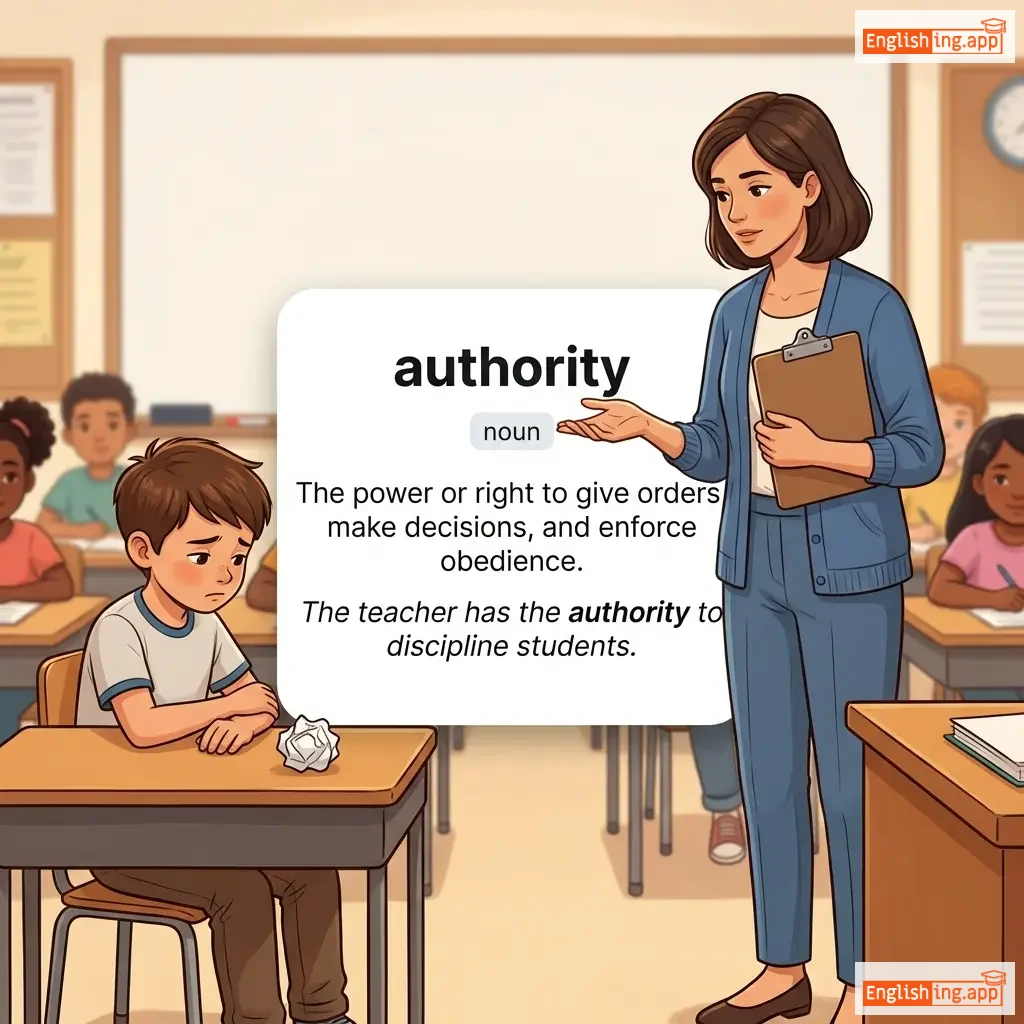
#735
👑
|
/əˈθɔːrəti/
noun
(权威)
••••••
|
|
权威
quanwei
••••••
|
- •••••• | - •••••• | - •••••• | - •••••• |
The power or right to give orders, make decisions, and enforce obedience.
••••••
|
The teacher has the authority to discipline students. |
老师有权利惩罚学生。
Laoshi you quanli chengfa xuesheng.
••••••
|
in authority |
Holding an official position of power.
••••••
|
在权力中
Zai quanli zhong
••••••
|
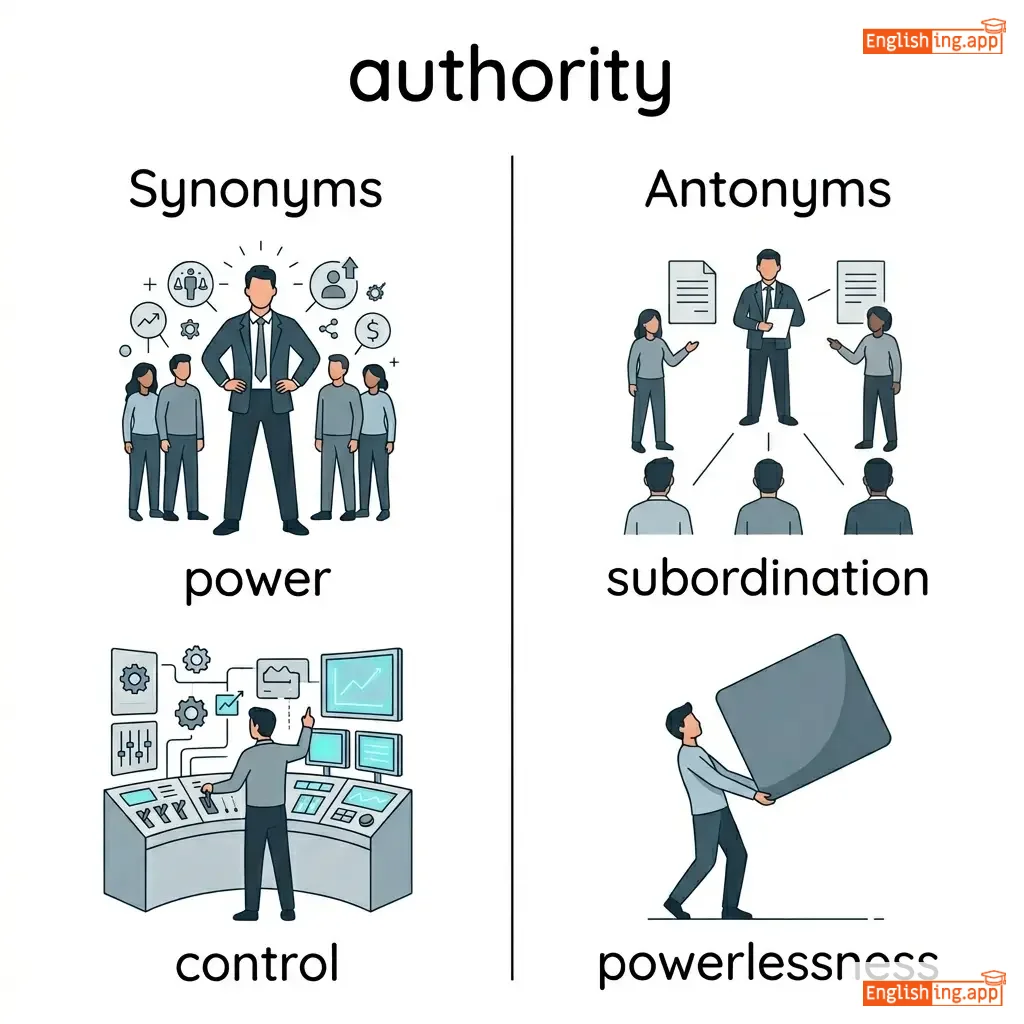
power, control, command, influence, jurisdiction
••••••
|
powerlessness, subordination
••••••
|
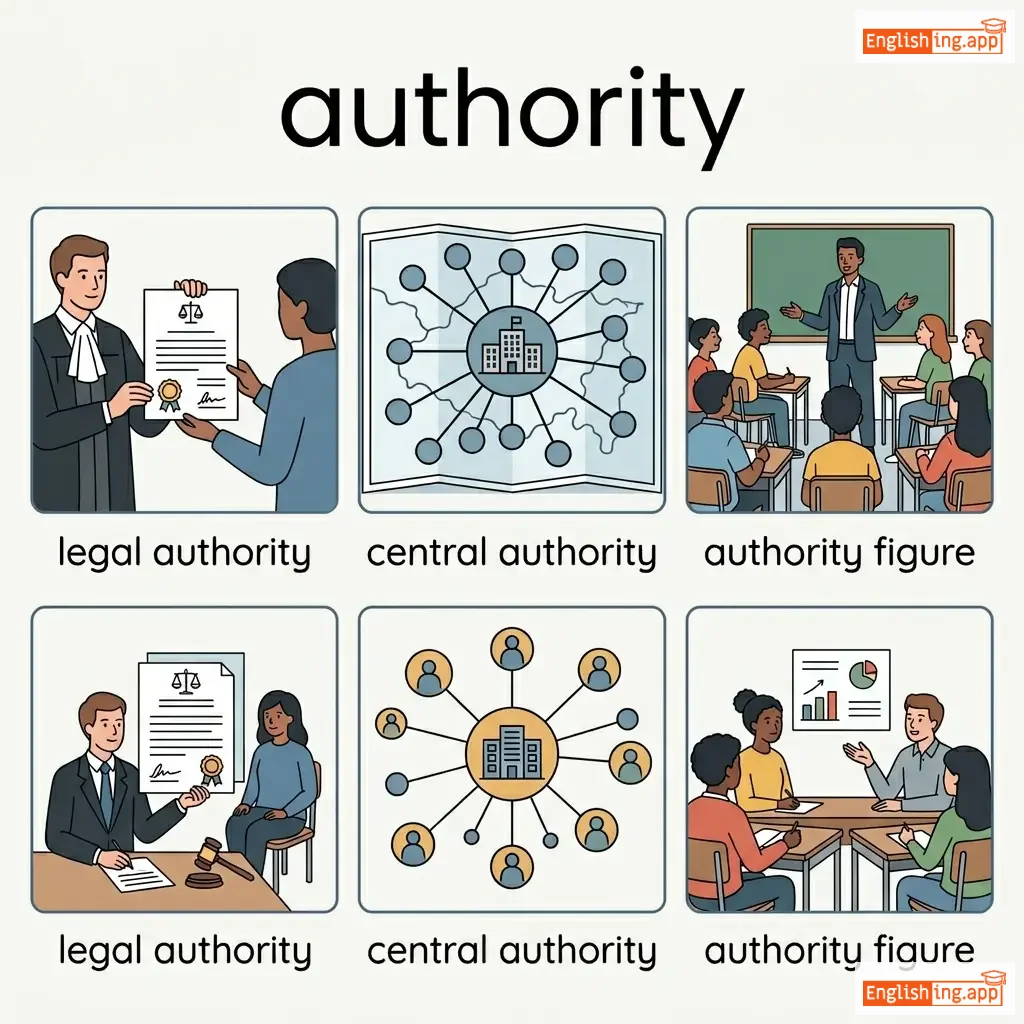
legal authority, central authority, authority figure, in authority
••••••
|
Authority 听起来像 'author' ,就像一个作者有权下命令。
••••••
|
|
#736
👂
|
/ɔːˈrɪkjʊlər/
adjective
(耳廓的)
••••••
|
- •••••• |
与耳朵有关
yu erduo youguan
••••••
|
- •••••• | - •••••• | - •••••• | - •••••• |
Relating to the ear or hearing.
••••••
|
The doctor used an auricular thermometer to check the patient's temperature.
医生使用耳廓温度计来检查病人的体温。
••••••
|
医生使用耳廓温度计来检查病人的体温。
Yisheng shiyong erkuo wendujì lái jiǎnchá bìngrén de tǐwēn.
••••••
|
- •••••• | - •••••• | - •••••• |
ear-related, auditory, otic, acoustic, aural
••••••
|
visual, optical
••••••
|
auricular therapy, auricular nerve, auricular thermometer
••••••
|
Auricular意味着与耳朵有关,记住 👂 auricle = 耳朵
••••••
|
|
#737
⚖️
|
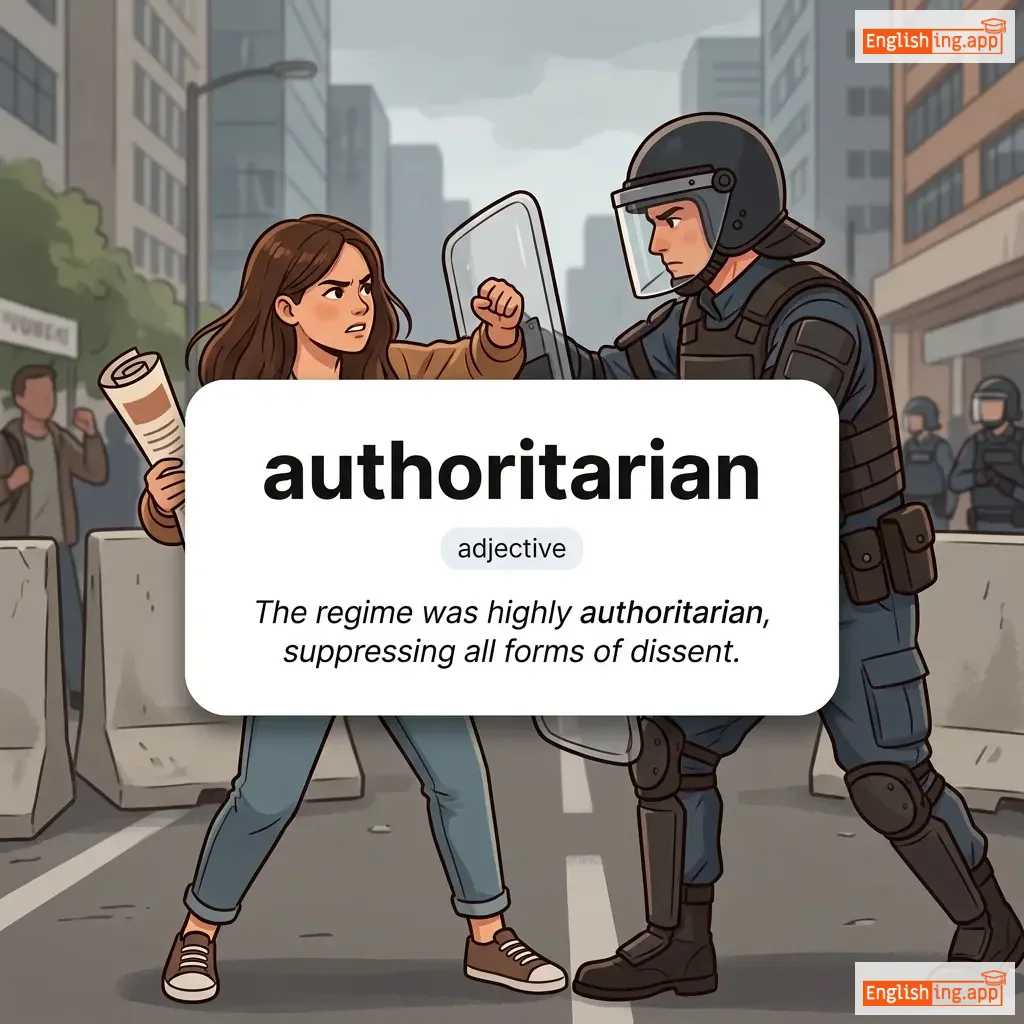
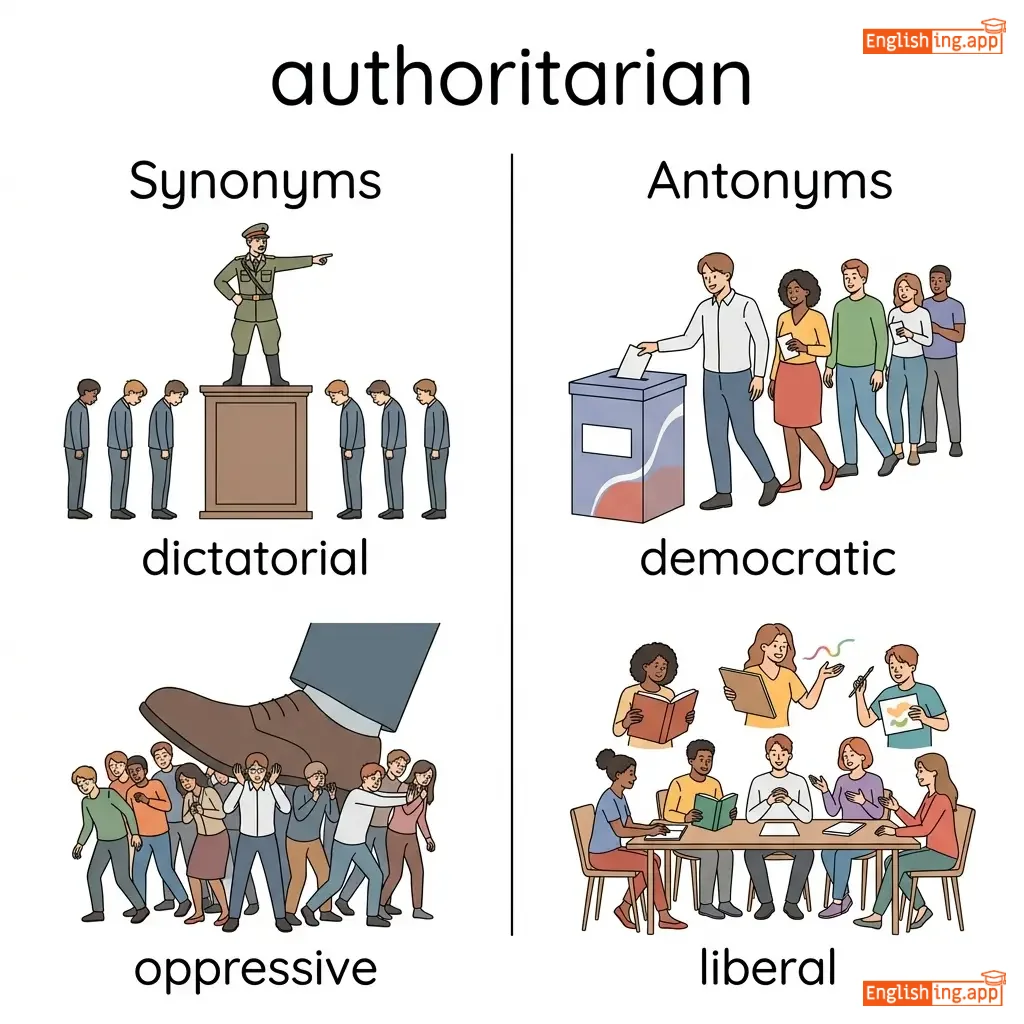
/əˌθɔːrɪˈtɛəriən/
adjective
(权威主义)
••••••
|
|
威权主义
weiquan zhuyi
••••••
|
- •••••• | - •••••• | - •••••• | - •••••• |
Favouring or enforcing strict obedience to authority, often at the expense of personal freedom.
••••••
|
The regime was highly authoritarian, suppressing all forms of dissent. |
该政权极为威权,压制所有形式的异见。
Gāi zhèngquán jí wèi wēiquán, yāzhì suǒyǒu xíngshì de yìjiàn.
••••••
|
- •••••• | - •••••• | - •••••• |
dictatorial, oppressive, autocratic, strict
••••••
|
democratic, liberal
••••••
|
authoritarian regime, authoritarian rule, authoritarian leader
••••••
|
威权主义 = 权威 + 严格遵守规定。
••••••
|
|
#738
📜
|
/ˌɔːθɛnˈtɪsɪti/
noun
(authenticity)
••••••
|
|
真实性
zhen shi xing
••••••
|
- •••••• | - •••••• | - •••••• | - •••••• |
The quality of being genuine or real.
••••••
|
The authenticity of the ancient manuscript was confirmed by experts.
古代手稿的真实性得到了专家的确认。
••••••
|
古代手稿的真实性得到了专家的确认。
Gu dai shou gao de zhen shi xing de dao le zhuan jia de que ren.
••••••
|
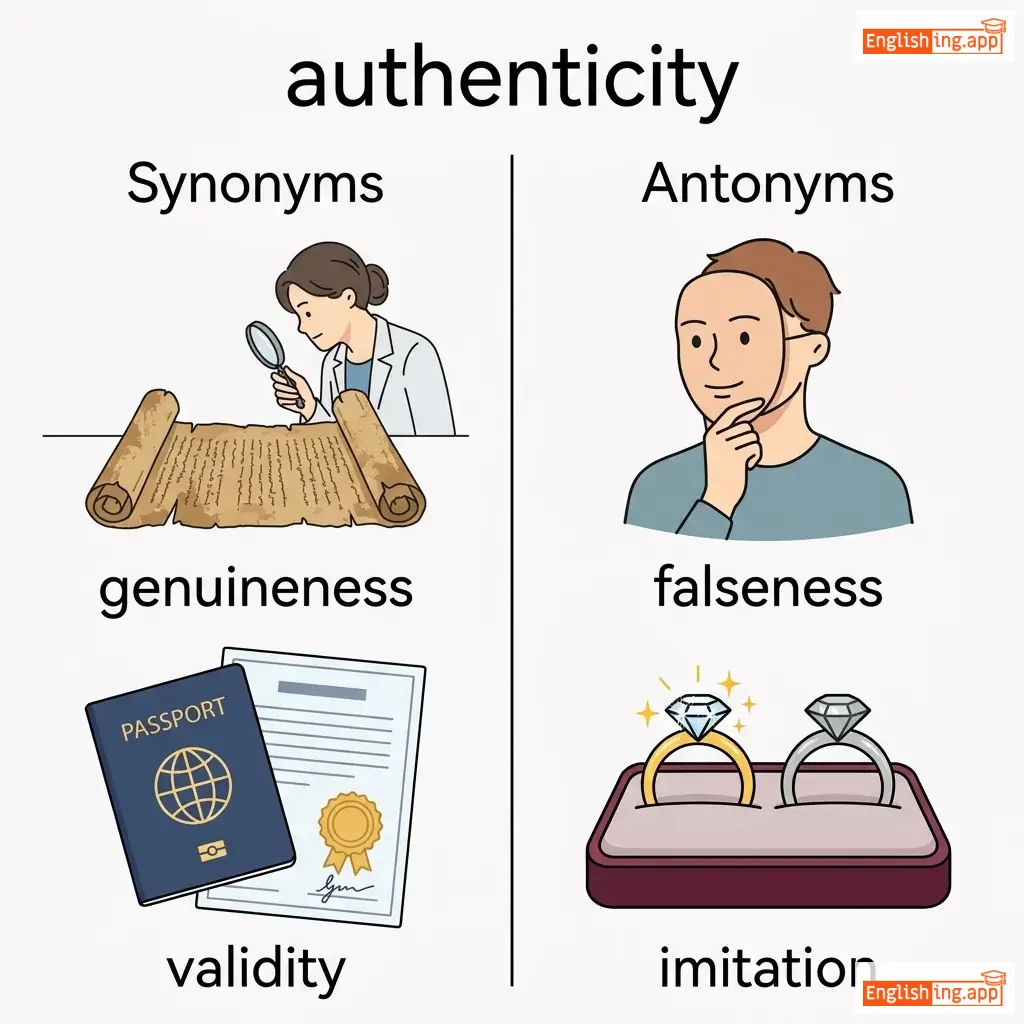
- •••••• | - •••••• | - •••••• |
genuineness, validity, legitimacy, truthfulness
••••••
|
falseness, imitation
••••••
|
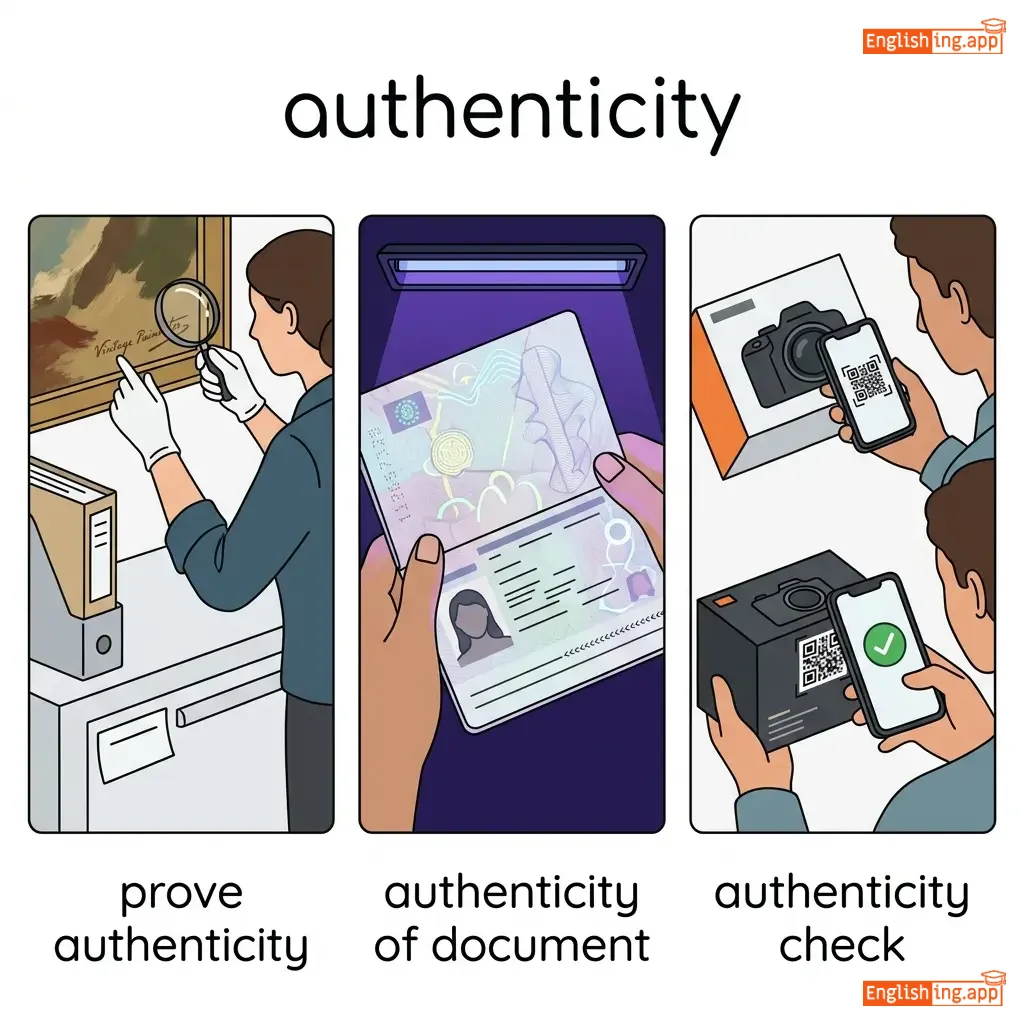
prove authenticity, authenticity of document, authenticity check
••••••
|
真实性指的是真实、真实的特征,就像是验证文档的真实性。
••••••
|
|
#739
🔐
|
/ɔːˈθɛntɪkeɪt/
verb
(认证)
••••••
|
- •••••• |
认证
renzheng
••••••
|
authenticated
认证了
••••••
|
authenticated
已认证
••••••
|
authenticates
认证
••••••
|
authenticating
认证中
••••••
|
To prove or show that something is genuine or true.
••••••
|
The bank uses advanced technology to authenticate online transactions.
银行使用先进的技术来认证在线交易。
••••••
|
银行使用先进的技术来认证在线交易。
Yinhang shiyong xianjin de jishu lai renzheng zaixian jiaoyi.
••••••
|
- •••••• | - •••••• | - •••••• |
verify, validate, confirm, prove
••••••
|
falsify, disprove
••••••
|
authenticate documents, authenticate signature, authenticate identity
••••••
|
Authenticate = 权威 + 技术验证
••••••
|
|
#740
✔️
|
/ɔːˈθɛntɪk/
adjective
(authentic)
••••••
|
- •••••• |
正宗
zhèngzōng
••••••
|
- •••••• | - •••••• | - •••••• | - •••••• |
Genuine and real; not fake or copied.
••••••
|
The museum displayed an authentic painting by Picasso. |
博物馆展示了毕加索的正宗画作。
Bówùguǎn zhǎnshìle bìjiāsuǒ de zhèngzōng huàzuò.
••••••
|
authentic self |
Being true to one's real personality and values.
••••••
|
真正的自我
Zhēnzhèng de zìwǒ
••••••
|
genuine, real, original, true, legitimate
••••••
|
fake, false, counterfeit
••••••
|
authentic document, authentic voice, authentic experience
••••••
|
Authentic意味着正宗的,不是假的 → Authentic食物意味着真正的味道。
••••••
|
|
#741
🏛️
|
/ˈɔːtɑːrki/
noun
(奥塔基)
••••••
|
- •••••• |
自给自足
ziji zizhu
••••••
|
- •••••• | - •••••• | - •••••• | - •••••• |
A system of self-sufficiency where a state or community is economically independent.
••••••
|
The nation attempted autarchy to reduce reliance on imports.
这个国家试图实现自给自足,以减少对进口的依赖。
••••••
|
这个国家试图实现自给自足,以减少对进口的依赖。
Zhe ge guojia shitu shixian ziji zizhu, yi jian shao dui jin kou de yilai.
••••••
|
- •••••• | - •••••• | - •••••• |
self-sufficiency, independence, isolationism, self-reliance
••••••
|
globalization, interdependence
••••••
|
economic autarchy, policy of autarchy, strive for autarchy
••••••
|
Auto表示自己,arky表示规则 → 自给自足意味着依靠自己的规则实现独立。
••••••
|
|
#742
📉
|
/ɒˈstɛrɪti/
noun
(紧缩)
••••••
|
|
紧缩,经济紧缩政策
jǐn suō, jīng jì jǐn suō zhèng cè
••••••
|
- •••••• | - •••••• | - •••••• | - •••••• |
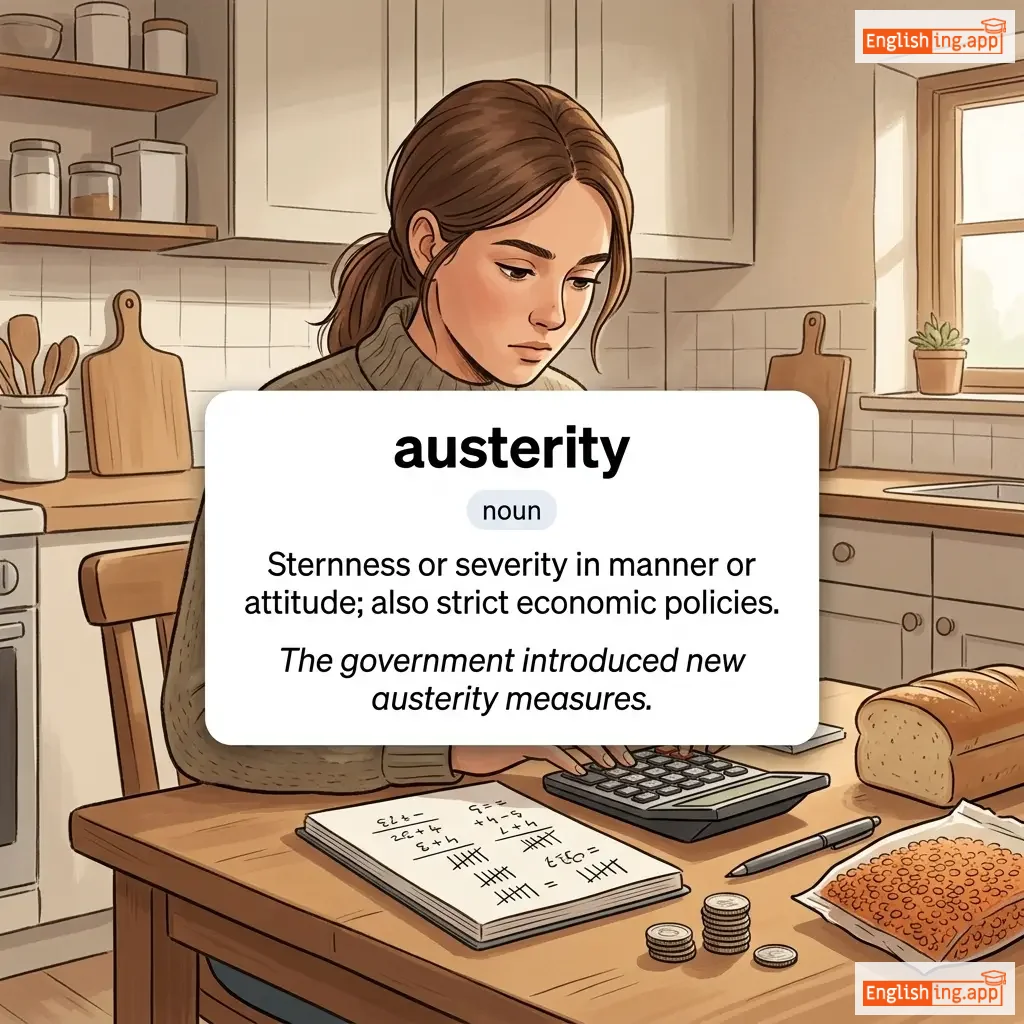
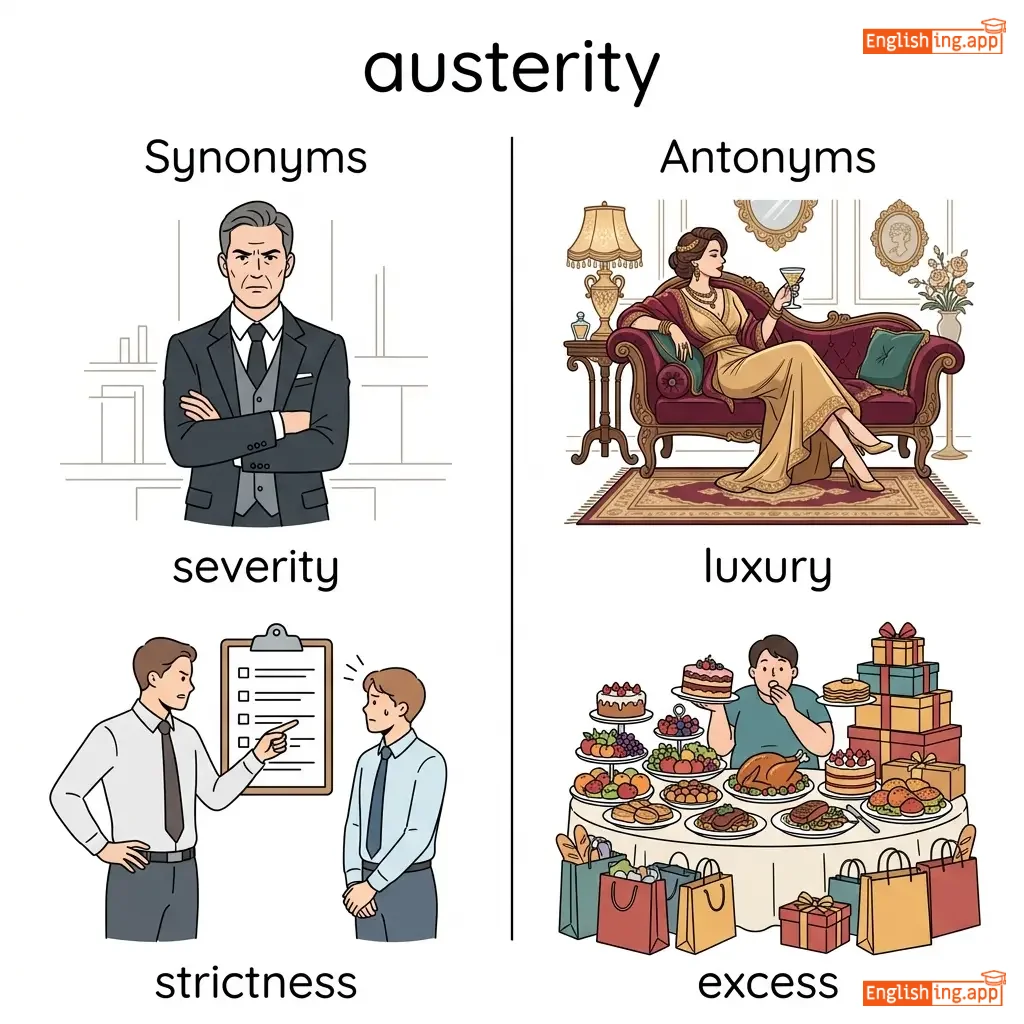
Sternness or severity in manner or attitude; also strict economic policies.
••••••
|
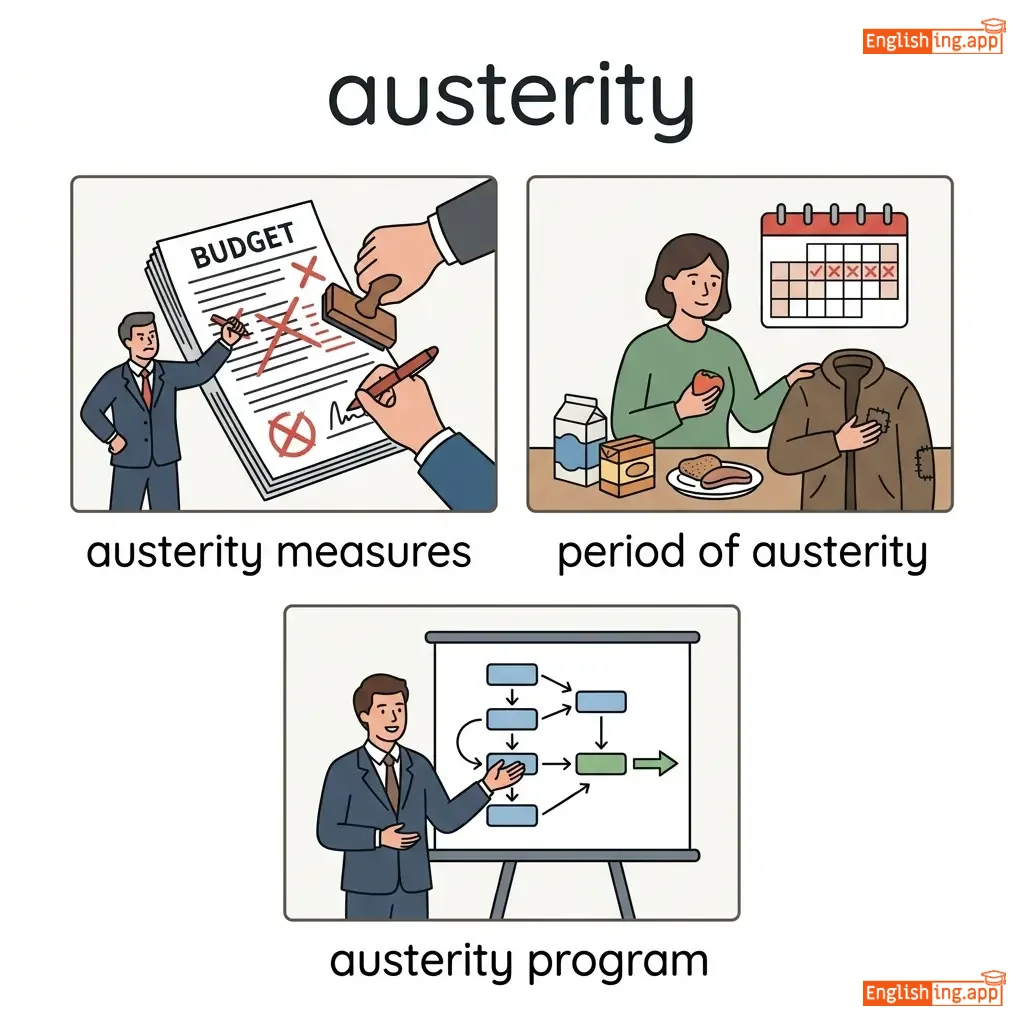
The government introduced new austerity measures. |
政府推出了新的紧缩措施。
Zhèngfǔ tuīchūle xīn de jǐnsuō cuòshī.
••••••
|
austerity measures |
strict economic policies to reduce government spending
••••••
|
紧缩政策
jǐnsuō zhèngcè
••••••
|
severity, strictness, frugality, economy
••••••
|
luxury, excess, extravagance
••••••
|
austerity measures, period of austerity, austerity program
••••••
|
紧缩就像是把预算控制得非常严格,避免浪费。
••••••
|
|
#743
🥋
|
/ɔːˈstɪə/
adjective
(奥斯特)
••••••
|
|
严格,简朴
ying2 ge2, jian3 pu3
••••••
|
- •••••• | - •••••• | - •••••• | - •••••• |
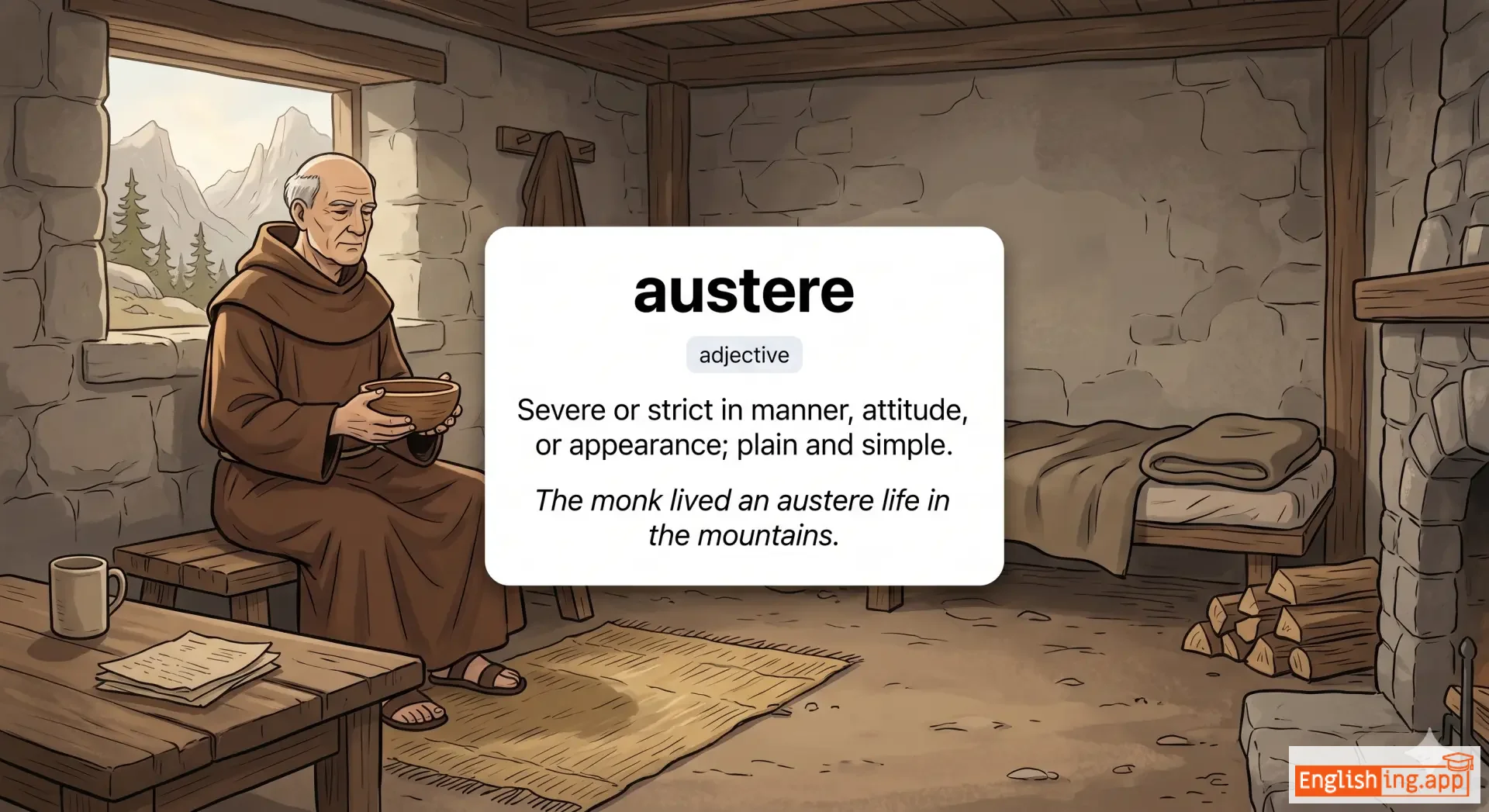
Severe or strict in manner, attitude, or appearance; plain and simple.
••••••
|
The monk lived an austere life in the mountains. |
和尚在山中过着严格的生活。
He shang zai shan zhong guo zhe ying2 ge2 de shenghuo.
••••••
|
- •••••• | - •••••• | - •••••• |
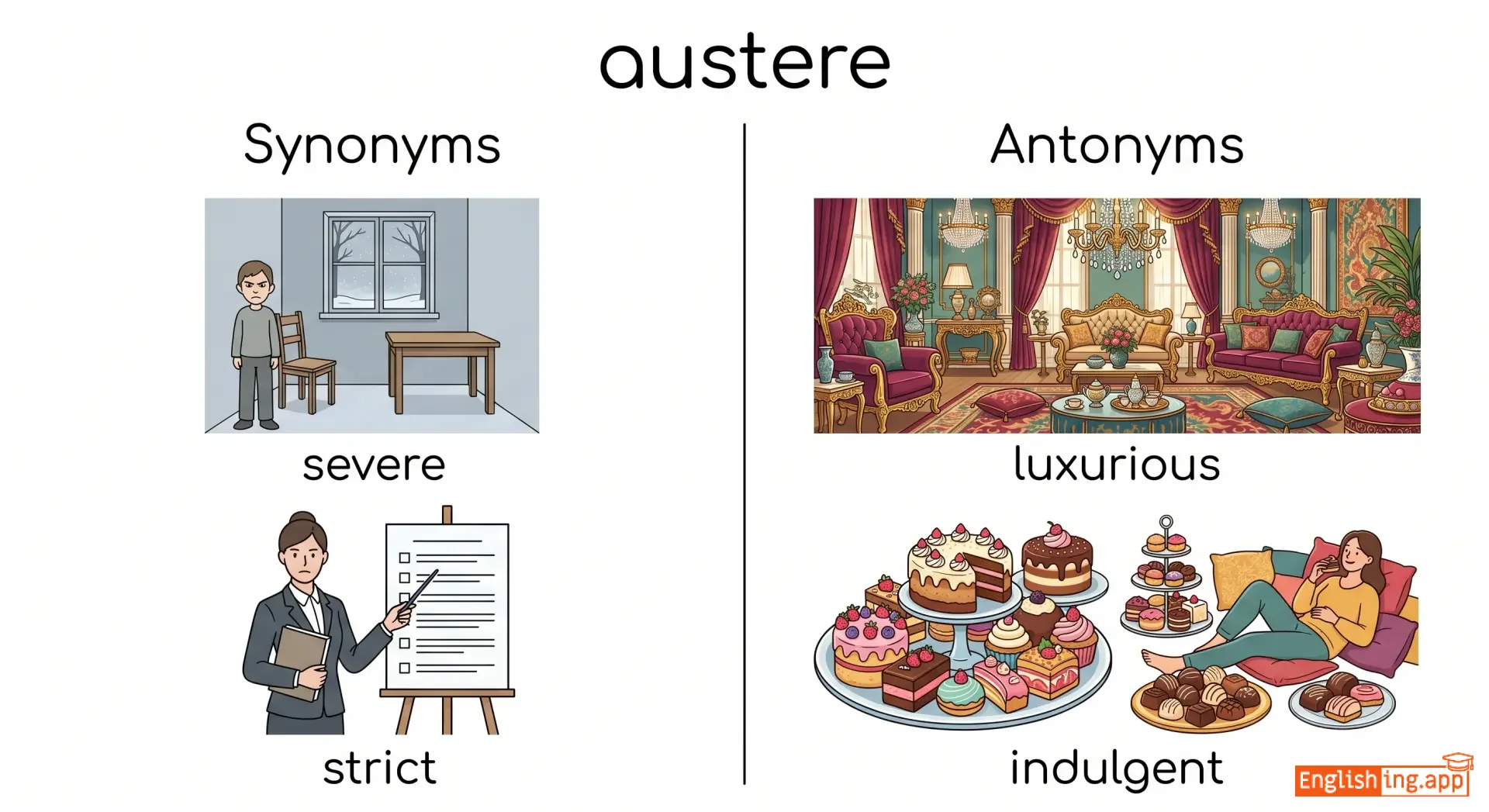
severe, strict, stern, simple, plain
••••••
|
luxurious, indulgent, elaborate
••••••
|
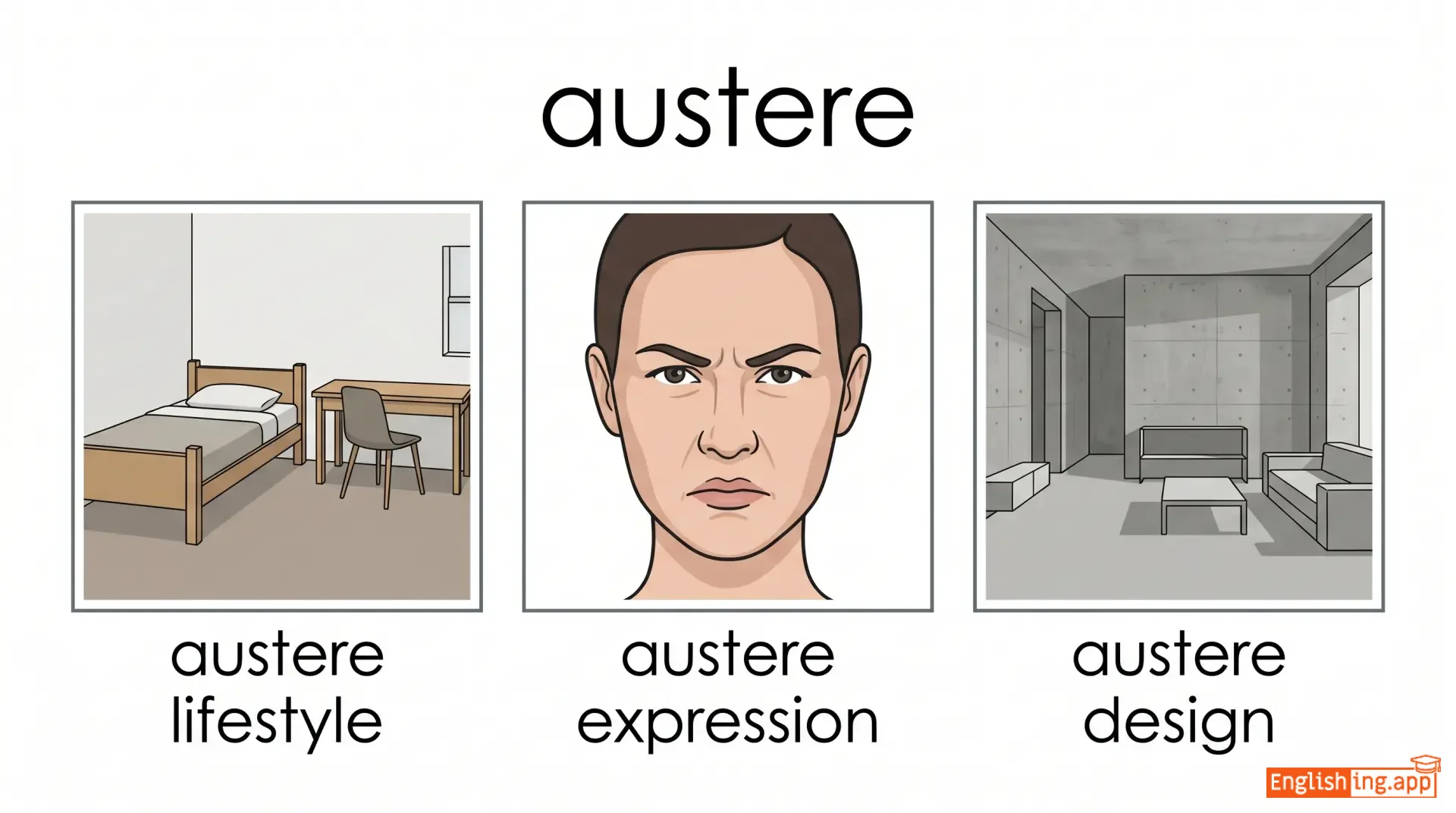
austere lifestyle, austere expression, austere design
••••••
|
Austere代表严格,不奢华,只追求简单。
••••••
|
|
#744
🌟
|
/ɔːˈspɪʃəs/
adjective
(os-pishus)
••••••
|
|
吉祥
jíxiáng
••••••
|
- •••••• | - •••••• | - •••••• | - •••••• |
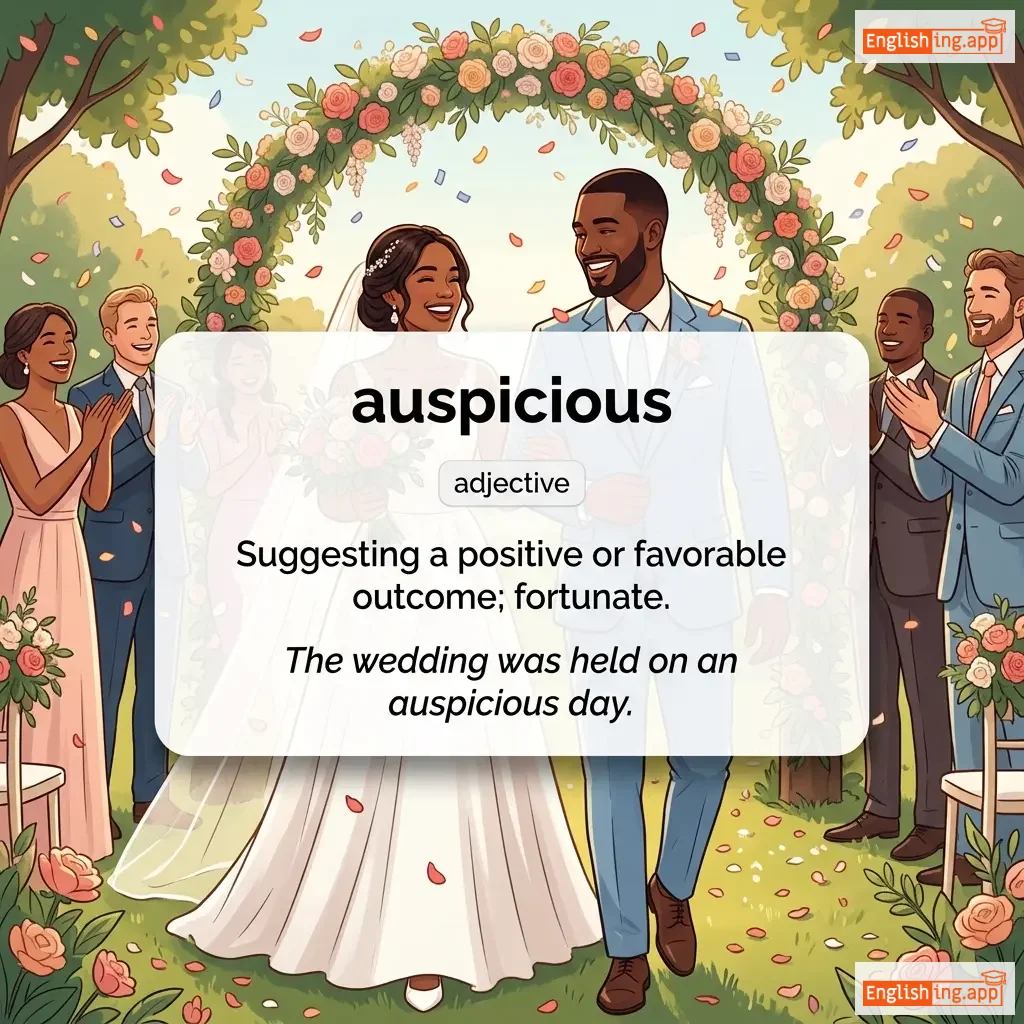
Suggesting a positive or favorable outcome; fortunate.
••••••
|
The wedding was held on an auspicious day. |
婚礼在一个吉祥的日子举行。
Hūnlǐ zài yīgè jíxiáng de rìzi jǔxíng.
••••••
|
auspicious beginning |
a promising or favorable start
••••••
|
吉祥的开始
jíxiáng de kāishǐ
••••••
|
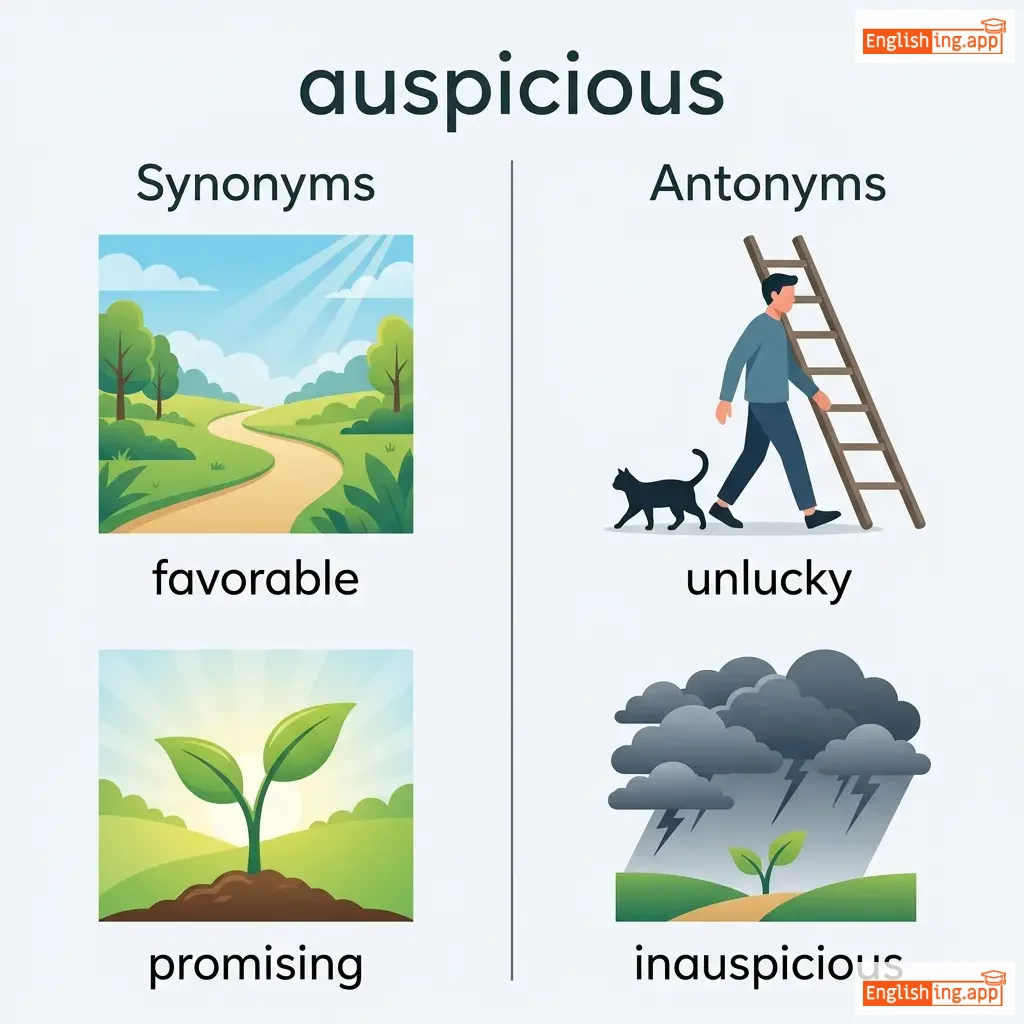
favorable, promising, fortunate, lucky, propitious
••••••
|
unlucky, inauspicious, unfavorable
••••••
|
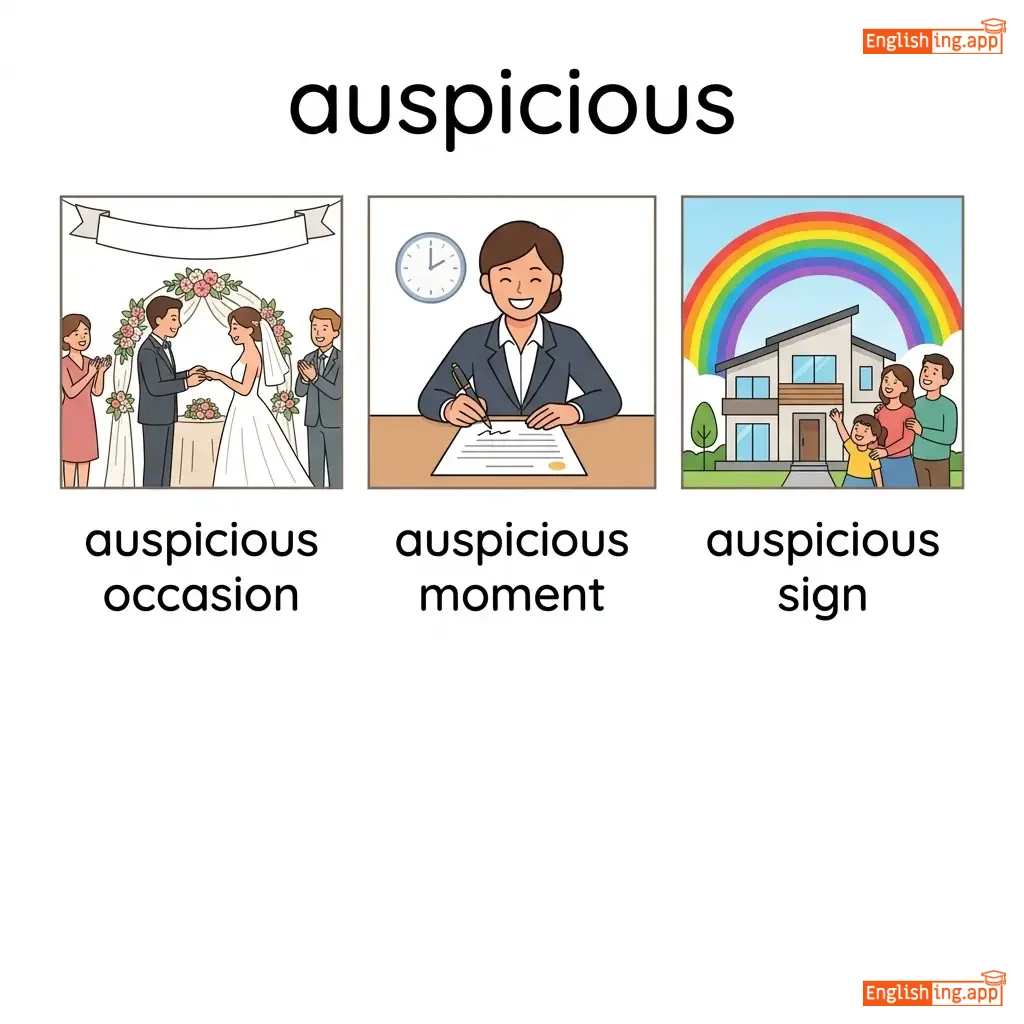
auspicious occasion, auspicious moment, auspicious sign, auspicious start
••••••
|
Auspicious 意味着吉祥的一天 - 就像吉祥一样。
••••••
|
|
#745
🤝
|
/ˈɔːspɪsɪz/
noun (plural)
(奥斯皮塞斯)
••••••
|
- •••••• |
庇护
bihu
••••••
|
- •••••• | - •••••• | - •••••• | - •••••• |
Patronage, support, or guidance, often used in the phrase 'under the auspices of'.
••••••
|
The conference was held under the auspices of the United Nations.
会议在联合国的支持下举行。
••••••
|
会议在联合国的支持下举行。
Huiyi zai lianheguo de zhichi xia juxing.
••••••
|
under the auspices of
在...的支持下
••••••
|
with the help, support, or sponsorship of
••••••
|
在...的支持下
zai... de zhichi xia
••••••
|
patronage, sponsorship, backing, protection, guidance
••••••
|
opposition, neglect
••••••
|
under the auspices of, auspices provided, auspices extended
••••••
|
Auspices意味着庇护 – 记住:会议总是在某人庇护下举行。
••••••
|
|
#746
🔮
|
/ˈɔːspɪs/
noun
(奥斯皮斯)
••••••
|
- •••••• |
预兆, 保护
yùzhào, bǎohù
••••••
|
- •••••• | - •••••• | - •••••• | - •••••• |
A sign, omen, or divine token; also refers to protection or support.
••••••
|
The project was launched under the auspice of the government. |
该项目在政府的保护下启动。
Gai xiàngmù zài zhèngfǔ de bǎohù xià qǐdòng.
••••••
|
- •••••• | - •••••• | - •••••• |
omen, sign, token, support, sponsorship
••••••
|
curse, disfavor
••••••
|
under the auspice, auspice of, divine auspice
••••••
|
Auspice听起来像是'预兆',一个好的信号或保护。
••••••
|
|
#747
🩺
|
/ˌɔːskʌlˈteɪʃən/
noun
(听诊)
••••••
|
- •••••• |
听诊
tingzhen
••••••
|
- •••••• | - •••••• | - •••••• | - •••••• |
The act of listening to internal sounds of the body, typically using a stethoscope.
••••••
|
The doctor performed auscultation to check the patient’s lungs. |
医生进行了听诊,以检查病人的肺部。
Yisheng jinxing le tingzhen, yi jiancha bingren de feibu.
••••••
|
- •••••• | - •••••• | - •••••• |
listening, examination, diagnosis, stethoscopy
••••••
|
neglect, ignoring
••••••
|
auscultation of lungs, auscultation of heart, careful auscultation
••••••
|
听诊: 用听诊器听身体的声音
••••••
|
|
#748
✨
|
/ɔːˈrɔːrəl/
adjective
(欧若拉)
••••••
|
- •••••• |
与极光相关
yǔ jíguāng xiāngguān
••••••
|
- •••••• | - •••••• | - •••••• | - •••••• |
Relating to or resembling the aurora, especially the northern lights.
••••••
|
The scientists observed auroral activity in the night sky.
科学家们在夜空中观察到了欧若拉活动。
••••••
|
科学家们在夜空中观察到了欧若拉活动。
Kēxuéjiāmen zài yèkōng zhōng guānchá dào le ōuruòlā huódòng.
••••••
|
- •••••• | - •••••• | - •••••• |
radiant, luminous, polar, celestial
••••••
|
dark, dull
••••••
|
auroral display, auroral activity, auroral lights
••••••
|
Auroral = 类似于极光 ✨, 记住极光意味着光,auroral意味着照亮
••••••
|
|
#749
🌌
|
/ɔːˈrɔːrə/
noun
(极光)
••••••
|
- •••••• |
极光
jiguang
••••••
|
- •••••• | - •••••• | - •••••• | - •••••• |
A natural display of lights in the sky, usually seen in polar regions.
••••••
|
We traveled to Norway to see the northern aurora.
我们去了挪威看北极光。
••••••
|
我们去了挪威看北极光。
Wǒmen qùle Nuówēi kàn běijíguāng.
••••••
|
Aurora Borealis
极光极光
••••••
|
The northern lights, a natural sky phenomenon.
••••••
|
北极光
Běijíguāng
••••••
|
northern lights, dawn, daybreak, polar lights
••••••
|
darkness, dusk
••••••
|
aurora borealis, aurora australis, aurora display
••••••
|
极光: 天空中的灯光
••••••
|
|
#750
🥇
|
/ɔːˈrɪfərəs/
adjective
(金矿的)
••••••
|
- •••••• |
含金的
hán jīn de
••••••
|
- •••••• | - •••••• | - •••••• | - •••••• |
Containing or producing gold.
••••••
|
The miners discovered an auriferous vein in the mountains. |
矿工在山中发现了一个含金的矿脉。
Kuànggōng zài shān zhōng fāxiànle yīgè hán jīn de kuàngmài.
••••••
|
- •••••• | - •••••• | - •••••• |
gold-bearing, golden, mineral-rich, aurous
••••••
|
barren, nonmetallic
••••••
|
auriferous vein, auriferous soil, auriferous deposits
••••••
|
Auriferous = au (黄金) + ferrous; 记住,黄金在山中被发现
••••••
|
Vocabulary Quiz
Test your vocabulary by matching words with their translations or meanings.
Login to take the quiz
Comments (0)
Share your thoughts and join the discussion.
Join the discussion by logging in
Login to CommentNo comments yet
Be the first to share your thoughts!