







Swipe left or right, or use the buttons. Tap image to zoom.
例句翻译
单词
Lesson 328Lesson 328 - 遮罩切换
|
表情符号
|
单词 | Images | 翻译 | 过去时 | 过去分词 | 第三人称单数 | 动名词 | 含义 | 例句 | 例句翻译 | 示例表达 | 示例表达含义 | 示例表达翻译 | 同义词 | 反义词 | 搭配词 | 助记符 |
|---|---|---|---|---|---|---|---|---|---|---|---|---|---|---|---|---|---|
|
#9805
🍂
|
/fɔːl/
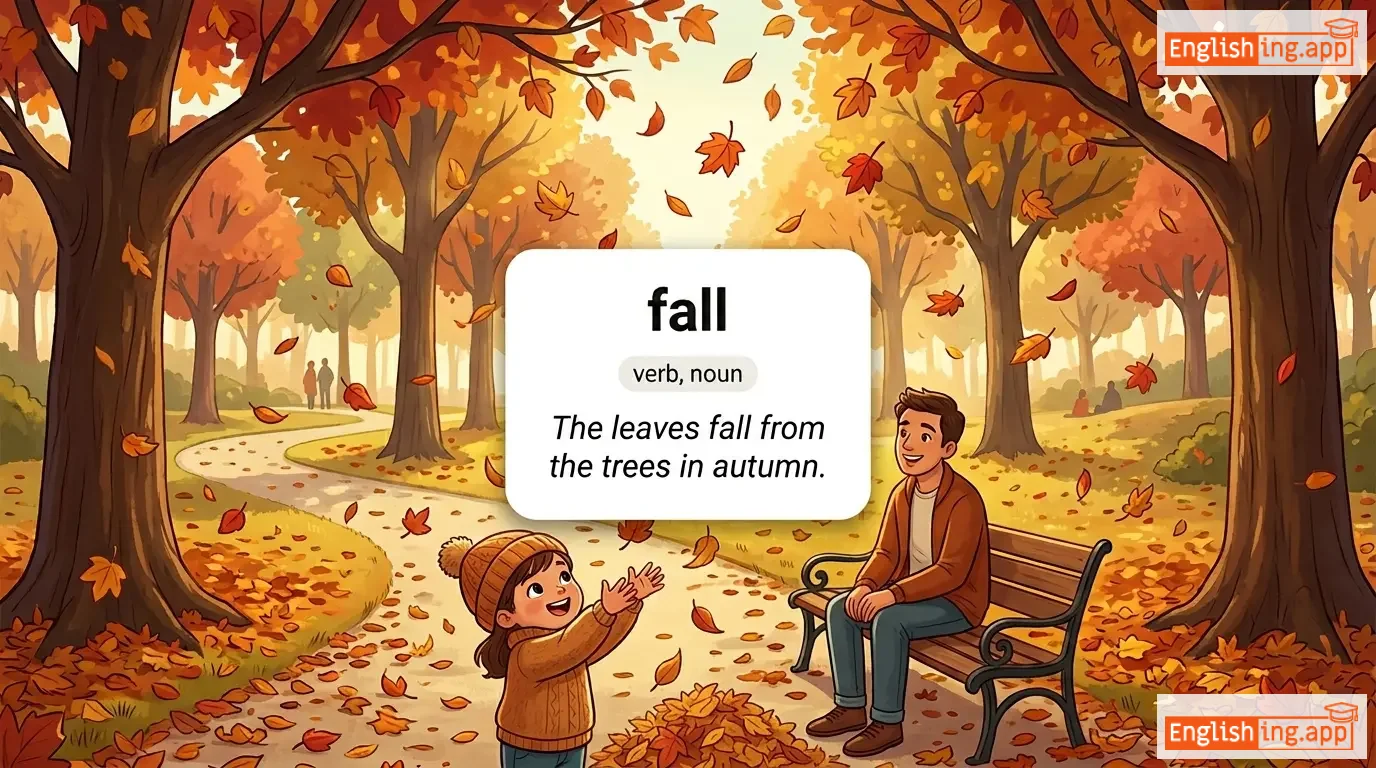
verb, noun
(fɔːl)
••••••
|
|
掉落
diaoluo
••••••
|
fell
fel
••••••
|
fallen
fallen
••••••
|
falls
falls
••••••
|
falling
falling
••••••
|
to move downward, typically rapidly and freely without control; the act of dropping from a higher to a lower place
••••••
|
The leaves fall from the trees in autumn.
秋天树叶从树上掉下来。
••••••
|
秋天树叶从树上掉下来。
Qiutian shuye cong shushang diao xiala.
••••••
|
fall apart
分裂
••••••
|
to break into pieces or stop functioning properly
••••••
|
崩溃
beng kui
••••••
|
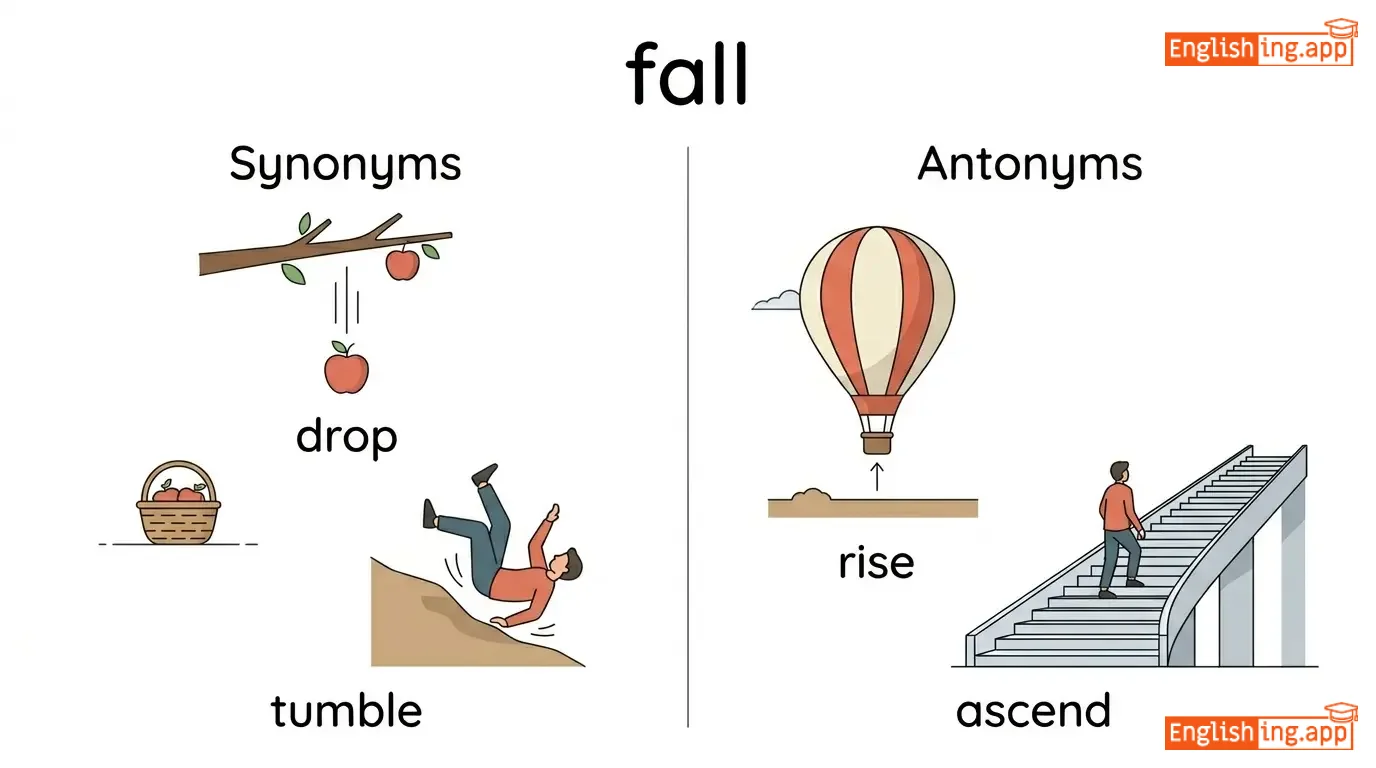
drop, tumble, descend, collapse, plummet
••••••
|
rise, ascend, increase
••••••
|
fall asleep, fall down, fall in love, fall short, fall behind
••••••
|
Fall =掉落,秋天树叶掉落.
••••••
|
|
#9806
⚔️
|
/foʊ/
noun
(fó)
••••••
|
- •••••• |
敌人
dírén
••••••
|
- •••••• | - •••••• | - •••••• | - •••••• |
an enemy or opponent
••••••
|
The knight fought bravely against his foe. |
骑士勇敢地与他的敌人作战。
Qíshì yǒnggǎn de yǔ tā de dírén zuòzhàn.
••••••
|
old foe |
a long-time enemy or opponent
••••••
|
老敌人
lǎo dírén
••••••
|
enemy, opponent, adversary, rival
••••••
|
friend, ally
••••••
|
sworn foe, old foe, powerful foe, deadly foe
••••••
|
Foe 意味着敌人,Foe 是战斗中的敌人。
••••••
|
|
#9807
💧
|
/ˈfluːɪd/
noun/adjective
(流体)
••••••
|
- •••••• |
液体
yeti
••••••
|
- •••••• | - •••••• | - •••••• | - •••••• |
a substance that can flow easily, such as liquid or gas; smooth and adaptable
••••••
|
The artist's fluid movements impressed the audience. |
艺术家的流畅动作给观众留下了深刻的印象。
Yìshùjiā de liúchàng dòngzuò gěi guānzhòng liúxiàle shēnkè de yìnxiàng.
••••••
|
go with the fluid |
adapt easily to changes
••••••
|
跟着流动走
gēnzhe liúdòng zǒu
••••••
|
liquid, flowing, smooth, adaptable
••••••
|
solid, rigid, fixed
••••••
|
fluid motion, fluid design, body fluid, fluid system
••••••
|
液体意味着流动,像液体那样容易流动。
••••••
|
|
#9808
☁️
|
/ˈflʌfi/
adjective
(幸福)
••••••
|
- •••••• |
幸福
xingfu
••••••
|
- •••••• | - •••••• | - •••••• | - •••••• |
soft, light, and airy in texture
••••••
|
She baked a fluffy cake for the party. |
当她收到奖项时,她无法隐藏自己的幸福。
Dāng tā shōu dào jiǎngxiàng shí, tā wúfǎ yǐncáng zìjǐ de xìngfú.
••••••
|
- •••••• | - •••••• | - •••••• |
soft, light, airy, feathery, puffy
••••••
|
hard, dense, heavy
••••••
|
fluffy pillow, fluffy cake, fluffy clouds, fluffy blanket
••••••
|
幸福就像是一种内心的温暖,无法隐藏的笑容。
••••••
|
|
#9809
💥
|
/flɑp/
verb
(flop)
••••••
|
- •••••• |
失败
shibai
••••••
|
flopped
flopped
••••••
|
flopped
flopped
••••••
|
flops
flops
••••••
|
flopping
flopping
••••••
|
to fall or move heavily and clumsily; to fail completely
••••••
|
The new movie flopped at the box office.
新电影在票房上失败了。
••••••
|
新电影在票房上失败了。
Xin dianying zai piaofang shang shibai le.
••••••
|
big flop
大失败
••••••
|
a complete failure
••••••
|
大失败
da shibai
••••••
|
fail, collapse, tumble, plummet
••••••
|
succeed, triumph
••••••
|
flop down, movie flop, big flop, flop badly
••••••
|
Flop意味着完全失败,就像一部电影在票房上失败。
••••••
|
|
#9810
🛶
|
/floʊt/
verb
(浮动)
••••••
|
- •••••• |
浮动
fudong
••••••
|
floated
浮动
••••••
|
floated
浮动
••••••
|
floats
浮动
••••••
|
floating
浮动
••••••
|
to rest or move on the surface of a liquid or in the air without sinking
••••••
|
The boat began to float gently down the river.
船开始轻轻漂浮在河面上。
••••••
|
船开始轻轻漂浮在河面上。
Chuan kaishi qingqing piaofu zai he mian shang.
••••••
|
float an idea
提出一个想法
••••••
|
to suggest something for consideration
••••••
|
提出一个想法
tichu yige xiangfa
••••••
|
drift, hover, sail, glide, buoy
••••••
|
sink, submerge, drop
••••••
|
float on water, float down, float away, float idea
••••••
|
浮动意味着浮动,船永远浮动在水中
••••••
|
|
#9811
🔧
|
/fɪks/
verb
••••••
|
- •••••• | - •••••• |
fixed
••••••
|
fixed
••••••
|
fixes
••••••
|
fixing
••••••
|
To repair or make something work again.
••••••
|
The mechanic fixed the broken car. |
- •••••• |
in a fix |
In a difficult or awkward situation.
••••••
|
- •••••• |
repair, mend, adjust, restore, solve
••••••
|
break, damage, ruin
••••••
|
fix a problem, fix the car, fix dinner, fix the issue
••••••
|
No •••••• |
|
#9812
🫗
|
/fɪl/
verb
(fil)
••••••
|
|
填充
tiánchōng
••••••
|
filled
fild
••••••
|
filled
fild
••••••
|
fills
fils
••••••
|
filling
fíling
••••••
|
To make something full; occupy completely.
••••••
|
She filled the glass with water.
她把杯子装满了水。
••••••
|
她把杯子装满了水。
Tā bǎ bēizi zhuāng mǎn le shuǐ.
••••••
|
fill the gap
填补空缺
••••••
|
To supply something missing.
••••••
|
填补空缺
tián bǔ kōngquē
••••••
|
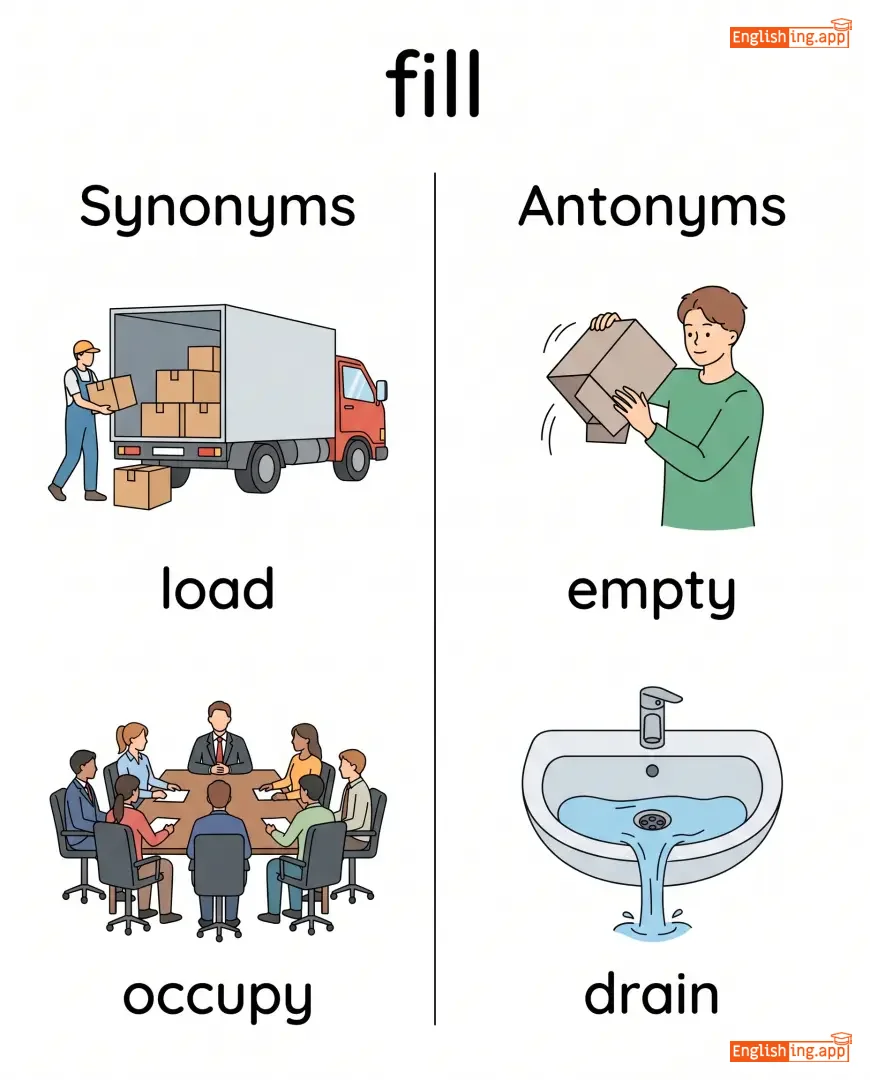
load, occupy, replenish, stuff, supply
••••••
|
empty, drain, vacate
••••••
|
fill a form, fill the room, fill the tank, fill the position
••••••
|
填充意味着填满,就像给杯子加水。
••••••
|
|
#9813
📚
|
/ˈfɪkʃən/
noun
(虚构)
••••••
|
- •••••• |
虚构
xūgòu
••••••
|
- •••••• | - •••••• | - •••••• | - •••••• |
Literature created from the imagination, not presented as fact.
••••••
|
She enjoys reading science fiction novels.
她喜欢阅读科幻小说。
••••••
|
她喜欢阅读科幻小说。
Tā xǐhuān yuèdú kēhuàn xiǎoshuō.
••••••
|
stranger than fiction
比虚构更奇怪
••••••
|
Something unbelievable but true.
••••••
|
比虚构更奇怪
Bǐ xūgòu gèng qíguài
••••••
|
story, novel, tale, narrative, myth
••••••
|
fact, reality, truth
••••••
|
science fiction, historical fiction, fiction writer, work of fiction
••••••
|
虚构在中文是想象的世界 - '虚构让我们的思维飞得更远!'
••••••
|
|
#9814
✋
|
/fjuː/
adjective
(菲尤)
••••••
|
- •••••• |
少数
shaoshu
••••••
|
- •••••• | - •••••• | - •••••• | - •••••• |
A small number of; not many.
••••••
|
Only a few students attended the class.
只有少数学生参加了课堂。
••••••
|
只有少数学生参加了课堂。
Zhǐyǒu shǎoshù xuéshēng cānjiāle kètáng.
••••••
|
a lucky few
幸运的少数
••••••
|
A small number of fortunate people.
••••••
|
幸运的少数
xìngyùn de shǎoshù
••••••
|
some, several, a handful, a small number
••••••
|
many, numerous, plenty
••••••
|
a few days, very few, few people, quite a few
••••••
|
Few 代表少数,比如 '幸运的少数' - 很幸运的少数人。
••••••
|
|
#9815
☠️
|
/fəˈtæləti/
noun
(法塔利蒂)
••••••
|
- •••••• |
致命事故
zhìmìng shìgù
••••••
|
- •••••• | - •••••• | - •••••• | - •••••• |
An occurrence of death by accident, disaster, or violence.
••••••
|
The accident resulted in one fatality. |
这场事故导致了一人死亡。
Zhè chǎng shìgù dǎozhìle yī rén sǐwáng.
••••••
|
road fatalities |
Deaths caused by road accidents.
••••••
|
道路死亡事件
dàolù sǐwáng shìjiàn
••••••
|
death, casualty, demise, loss, mortality
••••••
|
survival, life
••••••
|
traffic fatality, accident fatality, fatality rate, workplace fatality
••••••
|
Fatality意味着死亡,所以fatality意味着死亡,像在事故中发生的那样。
••••••
|
|
#9816
☠️
|
/ˈfeɪtl/
adjective
(费塔尔)
••••••
|
- •••••• |
致命的
zhìmìng de
••••••
|
- •••••• | - •••••• | - •••••• | - •••••• |
causing death; leading to disaster
••••••
|
The accident proved fatal for the driver. |
事故对司机来说是致命的。
Shìgù duì sījī lái shuō shì zhìmìng de.
••••••
|
fatal flaw |
a serious weakness that causes failure
••••••
|
致命缺陷
zhìmìng quēxiàn
••••••
|
deadly, lethal, mortal, disastrous
••••••
|
harmless, safe, beneficial
••••••
|
fatal accident, fatal mistake, fatal disease, fatal injury
••••••
|
Fatal意味着致命的,错误的选择可能带来灾难。
••••••
|
|
#9817
🍔
|
/fæt/
adjective, noun
(fèitè)
••••••
|
- •••••• |
肥胖
feipang
••••••
|
- •••••• | - •••••• | - •••••• | - •••••• |
having a lot of excess flesh; a natural oily substance in animal bodies
••••••
|
Eating too much fast food can make you fat. |
吃太多快餐会让你变胖。
Chī tài duō kuàicān huì ràng nǐ biàn pàng.
••••••
|
fat chance |
a sarcastic way of saying that something is very unlikely
••••••
|
胖的机会
pàng de jīhuì
••••••
|
overweight, plump, obese, chubby
••••••
|
thin, slim, lean
••••••
|
fat person, fat content, fat belly, fat salary
••••••
|
Fat = 肥胖, 多吃就会胖!
••••••
|
|
#9818
🌟
|
/ˈfeɪməs/
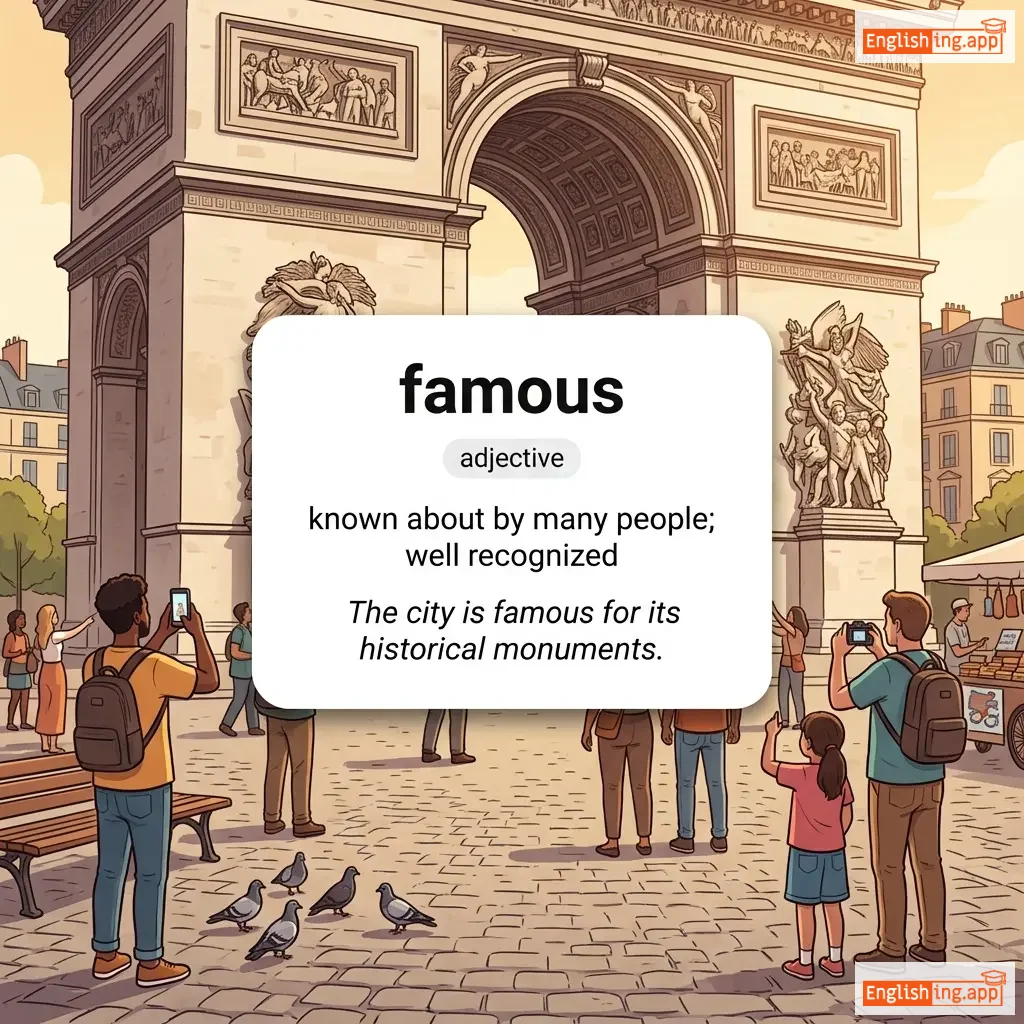
adjective
(famous)
••••••
|
|
著名
zhùmíng
••••••
|
- •••••• | - •••••• | - •••••• | - •••••• |
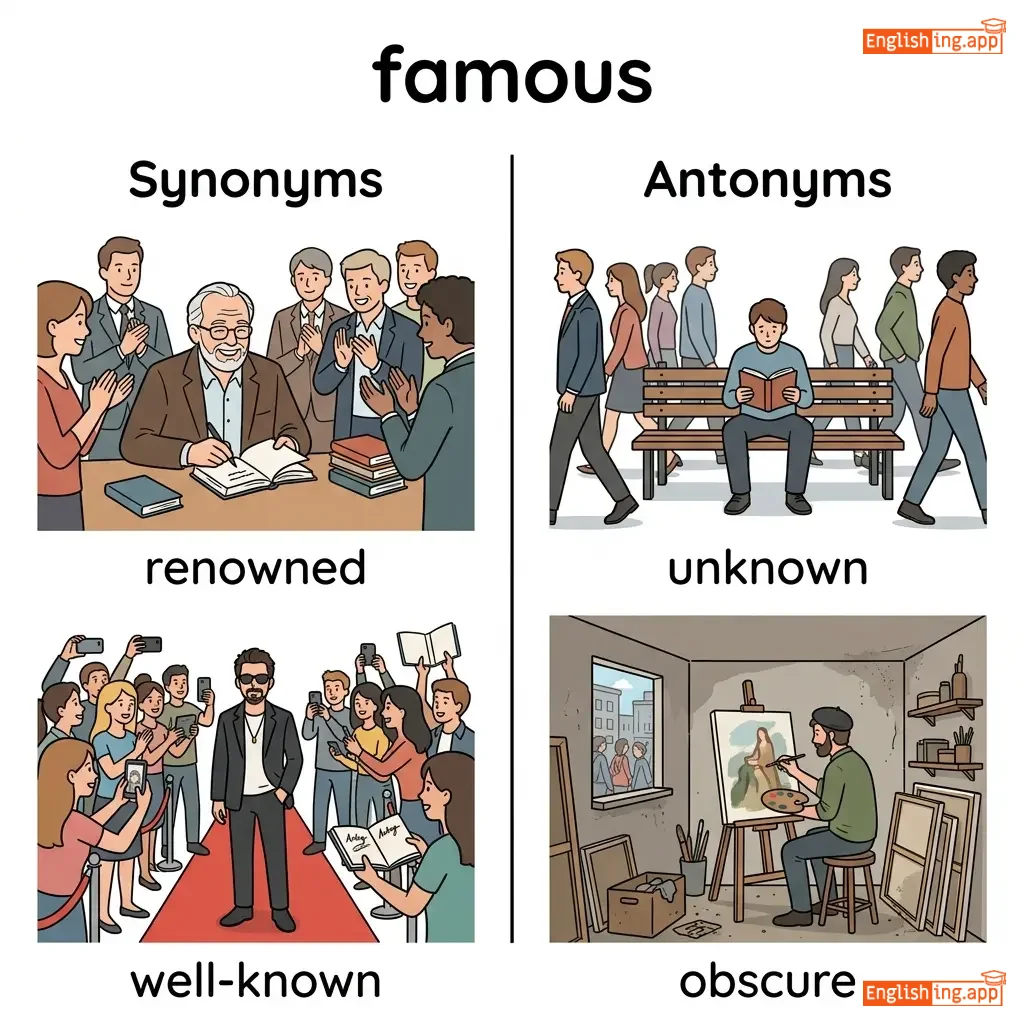
known about by many people; well recognized
••••••
|
The city is famous for its historical monuments. |
这座城市因其历史遗迹而闻名。
Zhè zuò chéngshì yīn qí lìshǐ yíjì ér wénmíng.
••••••
|
famous last words |
a sarcastic way of highlighting someone's overconfident prediction
••••••
|
著名的最后一句话
zhùmíng de zuìhòu yī jù huà
••••••
|
renowned, well-known, celebrated, noted, prominent
••••••
|
unknown, obscure, ordinary
••••••
|
famous actor, famous place, famous writer, become famous
••••••
|
著名意味着你在许多人中闪闪发光 🌟
••••••
|
|
#9819
❌
|
/fɔːls/
adjective
(fǎo sī)
••••••
|
- •••••• |
虚假
xūjiǎ
••••••
|
- •••••• | - •••••• | - •••••• | - •••••• |
not true or correct; intended to deceive
••••••
|
He was accused of giving false information.
他被指控提供虚假信息。
••••••
|
他被指控提供虚假信息。
Tā bèi zhǐkòng tígōng xūjiǎ xìnxī.
••••••
|
false alarm
虚假警报
••••••
|
a warning or signal that turns out to be untrue
••••••
|
虚假警报
xūjiǎ jǐngbào
••••••
|
untrue, wrong, fake, deceptive, misleading
••••••
|
true, correct, real
••••••
|
false claim, false hope, false promise, false impression
••••••
|
虚假表示虚假的,一切不真实的都是虚假的。
••••••
|
|
#9820
🤔
|
/ɪˌkwɪvəˈkeɪʃən/
noun
(模棱两可)
••••••
|
- •••••• |
使用含糊不清的语言
shǐyòng hán hú bù qīng de yǔyán
••••••
|
- •••••• | - •••••• | - •••••• | - •••••• |
The use of ambiguous language to conceal the truth or to avoid committing oneself.
••••••
|
The politician’s equivocation frustrated voters who wanted a clear answer.
政治家的模棱两可让想要清晰答案的选民感到沮丧。
••••••
|
政治家的模棱两可让想要清晰答案的选民感到沮丧。
zhèngzhì jiā de mó léng liǎng kě ràng xiǎng yào qīng xī dá'àn de xuǎnmín gǎndào jǔsàng.
••••••
|
fall back on equivocation
依赖模棱两可
••••••
|
to avoid giving a direct answer by using vague language
••••••
|
依赖模棱两可
yīlài mó léng liǎng kě
••••••
|
ambiguity, evasion, vagueness, prevarication, double-talk
••••••
|
clarity, honesty, frankness
••••••
|
political equivocation, deliberate equivocation, use of equivocation
••••••
|
Equi (平等) + vocation (言辞) = 用不同的语言表达
••••••
|
|
#9821
⚖️
|
/fɛr/
adjective/noun
(fɛr)
••••••
|
- •••••• |
公平 / 集市
gongping / jishi
••••••
|
- •••••• | - •••••• | - •••••• | - •••••• |
Treating people equally without favoritism; or an event where goods are displayed and sold
••••••
|
The judge made a fair decision.
法官做出了公正的决定。
••••••
|
法官做出了公正的决定。
Fǎguān zuò chūle gōngzhèng de juédìng.
••••••
|
fair and square
公正而诚实
••••••
|
honestly and without cheating
••••••
|
诚实且公正
chéngshí qiě gōngzhèng
••••••
|
just, impartial, honest, equitable
••••••
|
unfair, biased, unjust
••••••
|
fair chance, fair decision, book fair, job fair
••••••
|
Fair即公正,集市就是展示商品的地方。
••••••
|
|
#9822
👗
|
/ˈfædɪʃ/
adjective
(fadish)
••••••
|
- •••••• |
短暂的时尚
duǎnzàn de shíshàng
••••••
|
- •••••• | - •••••• | - •••••• | - •••••• |
Following a temporary trend or fashion
••••••
|
Wearing neon clothes was a faddish style in the 1980s.
穿着霓虹服装在1980年代是一种时尚。
••••••
|
穿着霓虹服装在1980年代是一种时尚。
Chuan zhuo nihong fuzhuang zai 1980 niandai shi yizhong shishang.
••••••
|
- •••••• | - •••••• | - •••••• |
trendy, fashionable, fleeting, short-lived
••••••
|
classic, timeless
••••••
|
faddish trend, faddish style, faddish product
••••••
|
Faddish指的是追随那种快速出现和消失的时尚潮流。
••••••
|
|
#9823
📘
|
/fækt/
noun
(fakt)
••••••
|
- •••••• |
事实
shìshí
••••••
|
- •••••• | - •••••• | - •••••• | - •••••• |
A thing that is known or proved to be true
••••••
|
It is a fact that the Earth orbits the Sun.
地球绕太阳转,这是一个事实。
••••••
|
地球绕太阳转,这是一个事实。
Dìqiú rào tàiyáng zhuǎn, zhè shì yīgè shìshí.
••••••
|
matter of fact
事实问题
••••••
|
something that is true and cannot be disputed
••••••
|
事实问题
shìshí wèntí
••••••
|
truth, reality, certainty, actuality
••••••
|
lie, fiction, falsehood
••••••
|
scientific fact, historical fact, fact check, hard fact
••••••
|
Fact - 事实,中文中代表已经验证为真的事物。
••••••
|
|
#9824
🙂
|
/feɪs/
noun/verb
••••••
|
|
- •••••• |
faced
••••••
|
faced
••••••
|
faces
••••••
|
facing
••••••
|
The front part of a person's head; to confront or deal with a situation
••••••
|
She had to face many challenges in her career. |
- •••••• |
face the music |
to accept the unpleasant consequences of one's actions
••••••
|
- •••••• |
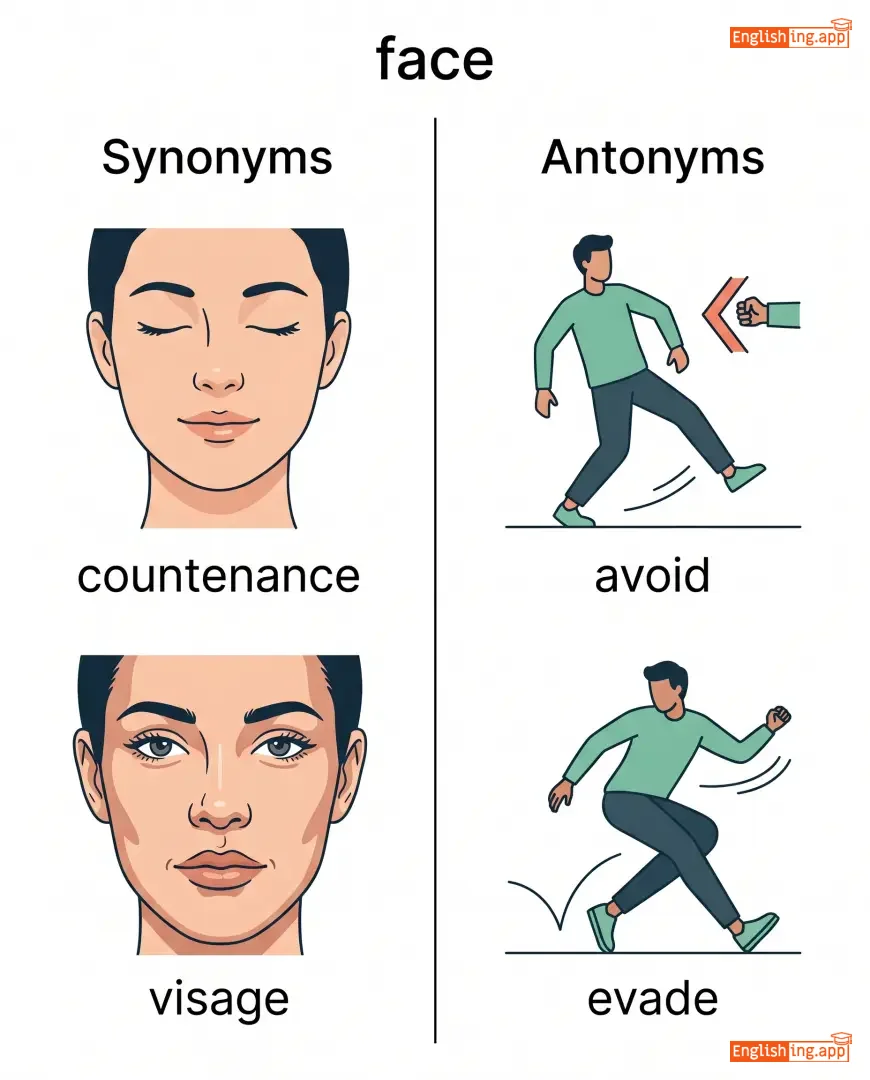
countenance, visage, confront, encounter
••••••
|
avoid, evade
••••••
|
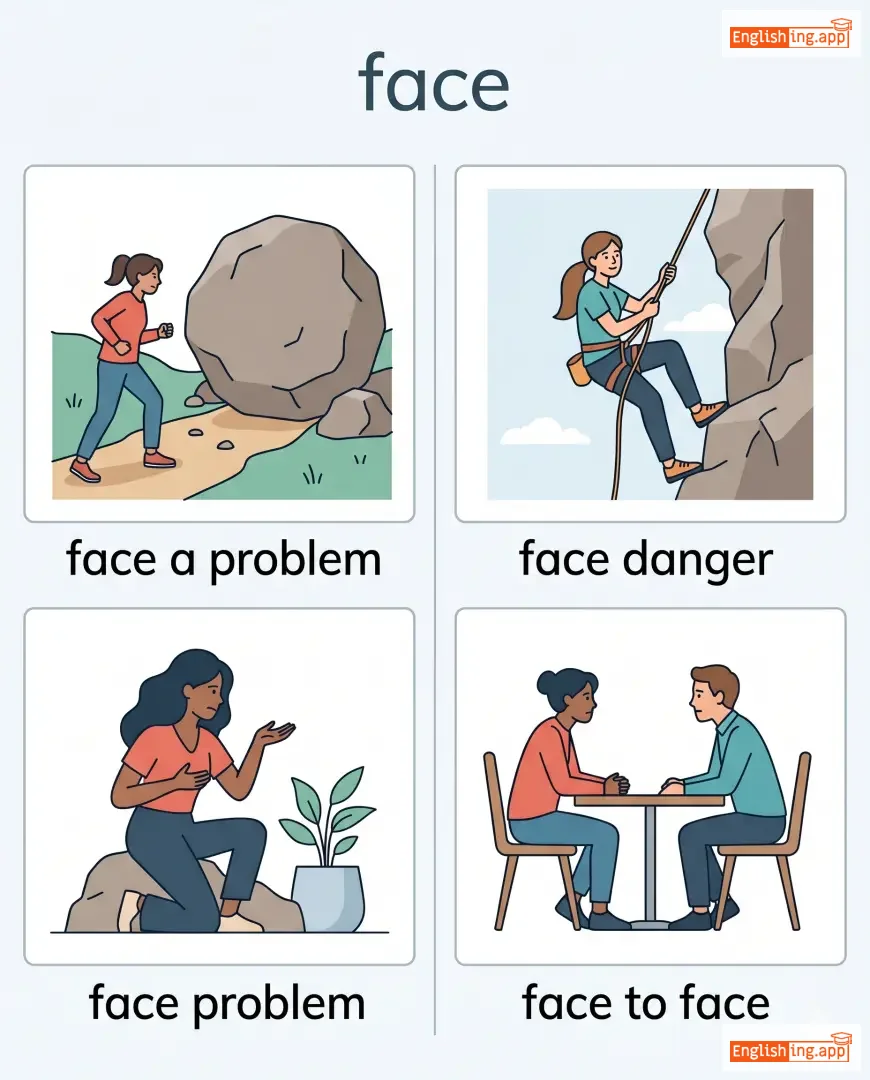
face a problem, face danger, face to face, face reality
••••••
|
No •••••• |
|
#9825
➕
|
/ˈɛkstrə/
adjective
(额外)
••••••
|
- •••••• |
额外的
éwài de
••••••
|
- •••••• | - •••••• | - •••••• | - •••••• |
More than what is usual, expected, or necessary
••••••
|
She brought some extra food for the picnic. |
她为野餐带来了额外的食物。
Tā wèi yěcān dài lái le éwài de shíwù.
••••••
|
go the extra mile |
to make a special effort to achieve something
••••••
|
走得更远
zǒu dé gèng yuǎn
••••••
|
additional, surplus, excess, supplementary, spare
••••••
|
lacking, insufficient, scarce
••••••
|
extra effort, extra cost, extra time, extra charge
••••••
|
Extra = 额外 = 多
••••••
|
|
#9826
📏
|
/ɪkˈstɛnt/
noun
(èksītènt)
••••••
|
- •••••• |
程度
chengdu
••••••
|
- •••••• | - •••••• | - •••••• | - •••••• |
the area, degree, or scope of something
••••••
|
The extent of the damage was greater than expected.
损害的范围超出了预期。
••••••
|
损害的程度超出了预期。
Sunhai de chengdu chaole yùqī.
••••••
|
to some extent
在某种程度上
••••••
|
partially or in a limited way
••••••
|
在某种程度上
zai mou zhong chengdu shang
••••••
|
range, scope, degree, magnitude, scale
••••••
|
limitlessness, insignificance
••••••
|
extent of damage, full extent, great extent, large extent
••••••
|
在做一项任务时,定义范围是关键!
••••••
|
|
#9827
📖
|
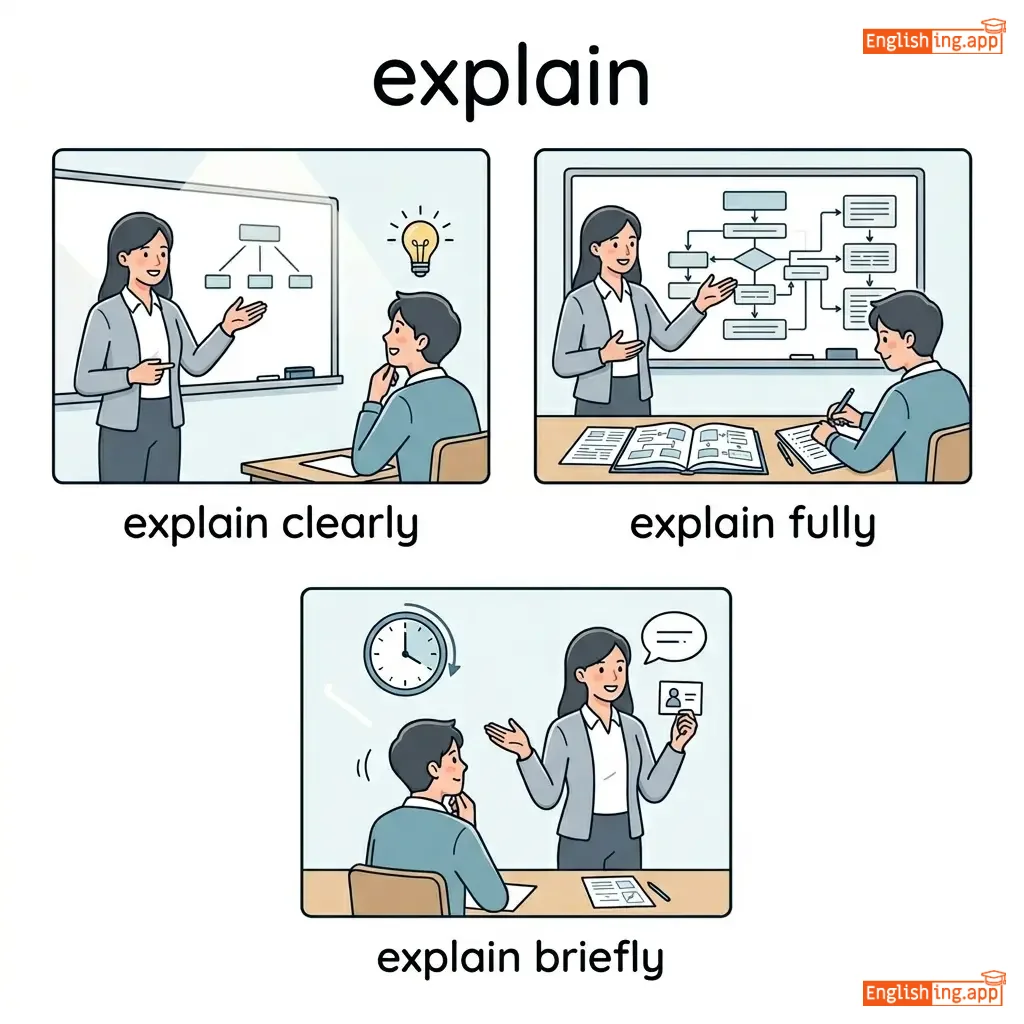
/ɪkˈspleɪn/
verb
(èksplèn)
••••••
|
|
解释
jiěshì
••••••
|
explained
èksplènd
••••••
|
explained
èksplènd
••••••
|
explains
èksplèns
••••••
|
explaining
èksplèinɡ
••••••
|
to make something clear by describing or giving details
••••••
|
The teacher explained the concept to the students.
老师向学生们解释了这个概念。
••••••
|
老师向学生们解释了这个概念。
Lǎoshī xiàng xuéshēngmen jiěshì le zhège gàiniàn.
••••••
|
explain away
解释掉
••••••
|
to try to justify or minimize something
••••••
|
为某事辩解
wèi mǒu shì biànjiě
••••••
|
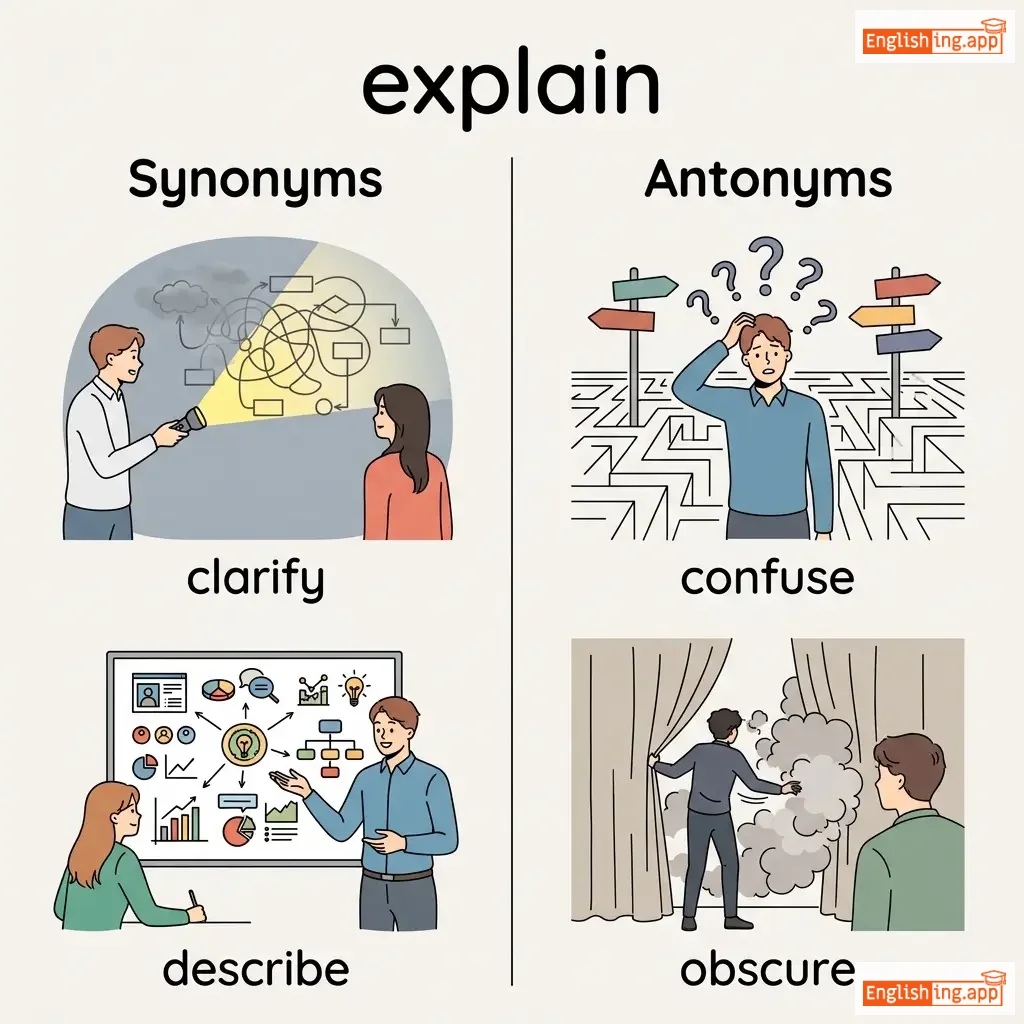
clarify, describe, illustrate, elaborate
••••••
|
confuse, obscure, mystify
••••••
|
explain clearly, explain fully, explain briefly, explain concept
••••••
|
Explain = 解释= 飞机上解释!
••••••
|
|
#9828
😄
|
/ɪɡˈzɪləreɪtɪd/
adjective
(yīksīlāruìtèd)
••••••
|
- •••••• |
兴奋的
xīngfèn de
••••••
|
- •••••• | - •••••• | - •••••• | - •••••• |
feeling very happy, animated, or elated
••••••
|
She felt exhilarated after finishing the marathon. |
她在完成马拉松后感到非常兴奋。
Tā zài wánchéng mǎlāsōng hòu gǎndào fēicháng xīngfèn.
••••••
|
- •••••• | - •••••• | - •••••• |
elated, thrilled, delighted, joyful, overjoyed
••••••
|
depressed, sad, gloomy
••••••
|
felt exhilarated, truly exhilarated, completely exhilarated, exhilarated mood
••••••
|
Exhilarated 就像完成了马拉松后,感觉自己飞起来了!
••••••
|
|
#9829
🤩
|
/ɪkˈsaɪt/
verb
(yīkèsàitè)
••••••
|
- •••••• |
使兴奋
shǐ xīngfèn
••••••
|
excited
yīkèsàitèd
••••••
|
excited
yīkèsàitèd
••••••
|
excites
yīkèsàits
••••••
|
exciting
yīkèsàitíng
••••••
|
to cause strong feelings of enthusiasm or eagerness
••••••
|
The idea of traveling abroad excites her.
出国旅行的想法让她感到兴奋。
••••••
|
出国旅行的想法让她感到兴奋。
Chūguó lǚxíng de xiǎngfǎ ràng tā gǎndào xīngfèn.
••••••
|
get excited
变得兴奋
••••••
|
to become enthusiastic or thrilled
••••••
|
变得兴奋
biàn dé xīngfèn
••••••
|
thrill, stimulate, arouse, energize
••••••
|
calm, bore, depress
••••••
|
excite interest, excite curiosity, excite passion, excite emotions
••••••
|
Excite: 想像你出国旅行时会感到兴奋!
••••••
|
|
#9830
🎯
|
/ɪɡˈzæktli/
adverb
(yí gè zhèngquè de fāngshì)
••••••
|
- •••••• |
精确地
jīngquè de
••••••
|
- •••••• | - •••••• | - •••••• | - •••••• |
in a precise or accurate manner; without any error
••••••
|
She explained the process exactly as it happened. |
她解释了过程,完全按照发生的方式。
Tā jiěshìle guòchéng, wánquán ànzhào fāshēng de fāngshì.
••••••
|
to be exact |
to give precise or accurate details
••••••
|
确切地说
quèqiè de shuō
••••••
|
precisely, accurately, correctly, strictly
••••••
|
roughly, approximately
••••••
|
exactly right, exactly the same, exactly what, exactly how
••••••
|
精确地就像是命中目标,没有任何错误!
••••••
|
|
#9831
😈
|
/ˈiːvəl/
adjective
(伊维尔)
••••••
|
- •••••• |
邪恶
xiee
••••••
|
- •••••• | - •••••• | - •••••• | - •••••• |
Profoundly immoral and wicked.
••••••
|
They believed the villain was the embodiment of evil. |
他们相信反派是邪恶的化身。
Tāmen xiāngxìn fǎnpài shì xié'è de huàshēn.
••••••
|
root of all evil |
the fundamental source of wickedness or problems
••••••
|
万恶之源
wàn è zhī yuán
••••••
|
wicked, immoral, malevolent, sinful, corrupt
••••••
|
good, virtuous, righteous
••••••
|
evil deeds, pure evil, embodiment of evil
••••••
|
Evil的意思是邪恶→ Devil中藏有Evil
••••••
|
|
#9832
📊
|
/ɪˈvæljueɪt/
verb
(ɪˈvæljuˌeɪt)
••••••
|
- •••••• |
评估
pinggu
••••••
|
evaluated
ɪˈvæljuˌeɪtəd
••••••
|
evaluated
ɪˈvæljuˌeɪtəd
••••••
|
evaluates
ɪˈvæljuˌeɪts
••••••
|
evaluating
ɪˈvæljuˌeɪtɪŋ
••••••
|
To assess or judge the value, quality, or significance of something.
••••••
|
The teacher will evaluate the students’ projects tomorrow.
老师明天将评估学生的项目。
••••••
|
老师明天将评估学生的项目。
Laoshi mingtian jiang pinggu xuesheng de xiangmu.
••••••
|
evaluate the situation
评估情况
••••••
|
to carefully consider all aspects before deciding
••••••
|
评估情况
Pinggu qingkuang
••••••
|
assess, judge, appraise, analyze, review
••••••
|
ignore, neglect
••••••
|
evaluate performance, evaluate results, evaluate options
••••••
|
评估表示评估 → 考试评估
••••••
|
|
#9833
💧
|
/ɪˈsɛnʃəl/
adjective
(本质的)
••••••
|
- •••••• |
必要的
bì yào de
••••••
|
- •••••• | - •••••• | - •••••• | - •••••• |
Absolutely necessary; extremely important.
••••••
|
Water is essential for life.
水对生命至关重要。
••••••
|
水对生命至关重要。
Shuǐ duì shēngmìng zhì guān zhòng yào.
••••••
|
essential services
基本服务
••••••
|
basic services that must continue even in emergencies
••••••
|
必要的服务
bì yào de fú wù
••••••
|
vital, crucial, fundamental, indispensable
••••••
|
nonessential, trivial, unnecessary
••••••
|
essential role, essential requirement, essential need
••••••
|
Essential意味着必要的 → 如果没有钢笔,怎么写考试?
••••••
|
|
#9834
⭐
|
/ɪˈspɛʃəli/
adverb
(espeʃəli)
••••••
|
- •••••• |
尤其
yóu qí
••••••
|
- •••••• | - •••••• | - •••••• | - •••••• |
Used to single out one person, thing, or situation over all others.
••••••
|
I love all kinds of fruit, especially mangoes.
我喜欢所有种类的水果,尤其是芒果。
••••••
|
我喜欢所有种类的水果,尤其是芒果。
Wǒ xǐ huān suǒ yǒu zhǒng lèi de shuǐ guǒ, yóu qí shì máng guǒ.
••••••
|
- •••••• | - •••••• | - •••••• |
particularly, notably, chiefly, mainly
••••••
|
generally, commonly
••••••
|
especially important, especially useful, especially relevant
••••••
|
Especially意味着尤其,记住mango especially tasty → 芒果尤其美味
••••••
|
Vocabulary Quiz
Test your vocabulary by matching words with their translations or meanings.
Login to take the quiz
Comments (0)
Share your thoughts and join the discussion.
Join the discussion by logging in
Login to CommentNo comments yet
Be the first to share your thoughts!