





Swipe left or right, or use the buttons. Tap image to zoom.
例句翻译
单词
Lesson 342Lesson 342 - 遮罩切换
|
表情符号
|
单词 | Images | 翻译 | 过去时 | 过去分词 | 第三人称单数 | 动名词 | 含义 | 例句 | 例句翻译 | 示例表达 | 示例表达含义 | 示例表达翻译 | 同义词 | 反义词 | 搭配词 | 助记符 |
|---|---|---|---|---|---|---|---|---|---|---|---|---|---|---|---|---|---|
|
#10225
⚡
|
/swɪft/
adjective
••••••
|
- •••••• | - •••••• | - •••••• | - •••••• | - •••••• | - •••••• |
moving very quickly; happening promptly
••••••
|
The river current was swift after the heavy rain. |
- •••••• |
swift action |
quick and decisive response
••••••
|
- •••••• |
fast, quick, rapid, speedy, prompt
••••••
|
slow, sluggish, delayed
••••••
|
swift action, swift response, swift movement, swift decision
••••••
|
No •••••• |
|
#10226
📚
|
/θɪk/
adjective
(θɪk)
••••••
|
- •••••• |
厚
hou
••••••
|
- •••••• | - •••••• | - •••••• | - •••••• |
having a large distance between two sides; not thin
••••••
|
The book was so thick it took weeks to finish. |
这本书很厚,需要几周才能读完。
Zhe ben shu hen hou, xuyao ji zhou cai neng du wan.
••••••
|
thick and thin |
through good times and bad
••••••
|
厚薄之差
hou bo zhi cha
••••••
|
dense, heavy, wide, bulky
••••••
|
thin, slim, narrow
••••••
|
thick book, thick wall, thick hair, thick fog
••••••
|
Thick意思是厚,就像一本很厚的书
••••••
|
|
#10227
🧊
|
/θɔː/
verb
(thāo)
••••••
|
- •••••• |
融化
rónghuà
••••••
|
thawed
tháo dé
••••••
|
thawed
tháo dé
••••••
|
thaws
thāo zī
••••••
|
thawing
thāo yíng
••••••
|
to melt or cause to melt after being frozen
••••••
|
The ice began to thaw in the sun.
冰开始在阳光下融化。
••••••
|
冰开始在阳光下融化。
Bīng kāishǐ zài yángguāng xià rónghuà.
••••••
|
thaw relations
融化关系
••••••
|
to improve a tense or hostile relationship
••••••
|
改善关系
gǎishàn guānxi
••••••
|
melt, defrost, unfreeze, dissolve
••••••
|
freeze, solidify
••••••
|
thaw out, thaw ice, thaw quickly, thaw relations
••••••
|
融化就像thaw,使冻结的东西融化。
••••••
|
|
#10228
😖
|
/ˈtɛrɪbəl/
adjective
••••••
|
- •••••• | - •••••• | - •••••• | - •••••• | - •••••• | - •••••• |
extremely bad or unpleasant
••••••
|
The food at that restaurant was terrible. |
- •••••• |
a terrible mistake |
a very bad or serious error
••••••
|
- •••••• |
awful, dreadful, horrible, appalling
••••••
|
wonderful, excellent, good
••••••
|
terrible accident, terrible pain, terrible mistake, terrible situation
••••••
|
No •••••• |
|
#10229
🏚️
|
/ˈtɛnəmənt/
noun
(tè nèi mèn tǐ)
••••••
|
- •••••• |
廉租房
liánzūfáng
••••••
|
- •••••• | - •••••• | - •••••• | - •••••• |
a large building divided into separate apartments, often in poor condition
••••••
|
The family lived in a crowded tenement in the city.
这个家庭住在城市里一个拥挤的廉租房里。
••••••
|
这个家庭住在城市里一个拥挤的廉租房里。
Zhège jiātíng zhù zài chéngshì lǐ yīgè yōngjǐ de liánzūfáng lǐ.
••••••
|
- •••••• | - •••••• | - •••••• |
apartment, flat, dwelling, housing
••••••
|
villa, mansion, estate
••••••
|
tenement house, tenement block, old tenement
••••••
|
Tenement即廉租房,表示一栋有很多家庭住的地方,类似‘ten’ (十)个人住在一个房子里
••••••
|
|
#10230
🗣️
|
/tɛl/
verb
(泰尔)
••••••
|
|
告诉
gaosu
••••••
|
told
托尔德
••••••
|
told
托尔德
••••••
|
tells
泰尔斯
••••••
|
telling
泰尔英
••••••
|
to communicate information, give an account of something, or instruct someone to do something
••••••
|
She asked him to tell the truth.
她让他告诉真相。
••••••
|
她让他告诉真相。
Ta rang ta gaosu zhenxiang.
••••••
|
tell the truth
说出真相
••••••
|
to speak honestly
••••••
|
说出真相
Shuo chu zhenxiang
••••••
|
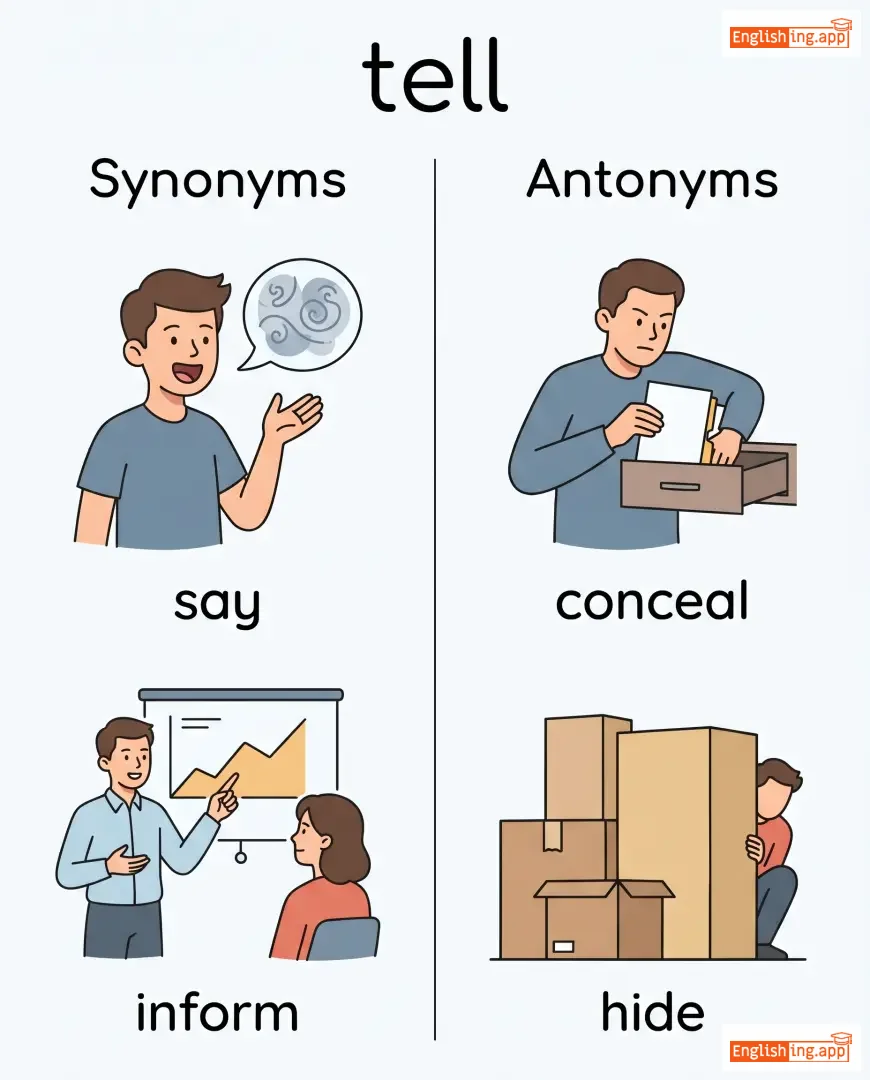
say, inform, relate, narrate, reveal
••••••
|
conceal, hide, suppress
••••••
|
tell a story, tell the truth, tell lies, tell someone
••••••
|
Tell 意思是告诉,就像电话里我们告诉别人事情。
••••••
|
|
#10231
🐝
|
/ˈtiːmɪŋ/
adjective
(tī míng)
••••••
|
- •••••• |
充满
chōngmǎn
••••••
|
- •••••• | - •••••• | - •••••• | - •••••• |
full of or swarming with things or people
••••••
|
The market was teeming with shoppers. |
市场充满了购物者。
Shìchǎng chōngmǎnle gòuwù zhě.
••••••
|
teeming with life |
full of energy, activity, or living things
••••••
|
充满生命
chōngmǎn shēngmìng
••••••
|
swarming, crowded, overflowing, brimming, packed
••••••
|
empty, barren, deserted
••••••
|
teeming market, teeming city, teeming crowd, teeming streets
••••••
|
Teeming 就像一个充满人的队伍,像是一个充满活力的市场。
••••••
|
|
#10232
🔨
|
/tæmp/
verb
(tamp)
••••••
|
- •••••• |
压实
yā shí
••••••
|
tamped
tamped
••••••
|
tamped
tamped
••••••
|
tamps
tamps
••••••
|
tamping
tamping
••••••
|
to press down tightly by packing
••••••
|
He tamped the soil around the plant to secure it.
他将植物周围的土壤压实以固定它。
••••••
|
他将植物周围的土壤压实以固定它。
Tā jiāng zhíwù zhōuwéi de tǔrǎng yā shí yǐ gùdìng tā.
••••••
|
- •••••• | - •••••• | - •••••• |
pack, press, compress, compact
••••••
|
loosen, release
••••••
|
tamp down, tamp soil, tamp coffee, tamp explosives
••••••
|
Tamp意味着像压实土壤一样稳定植物。
••••••
|
|
#10233
🐴
|
/teɪm/
verb
(teim)
••••••
|
|
驯服
xunfu
••••••
|
tamed
teimd
••••••
|
tamed
teimd
••••••
|
tames
teims
••••••
|
taming
teiming
••••••
|
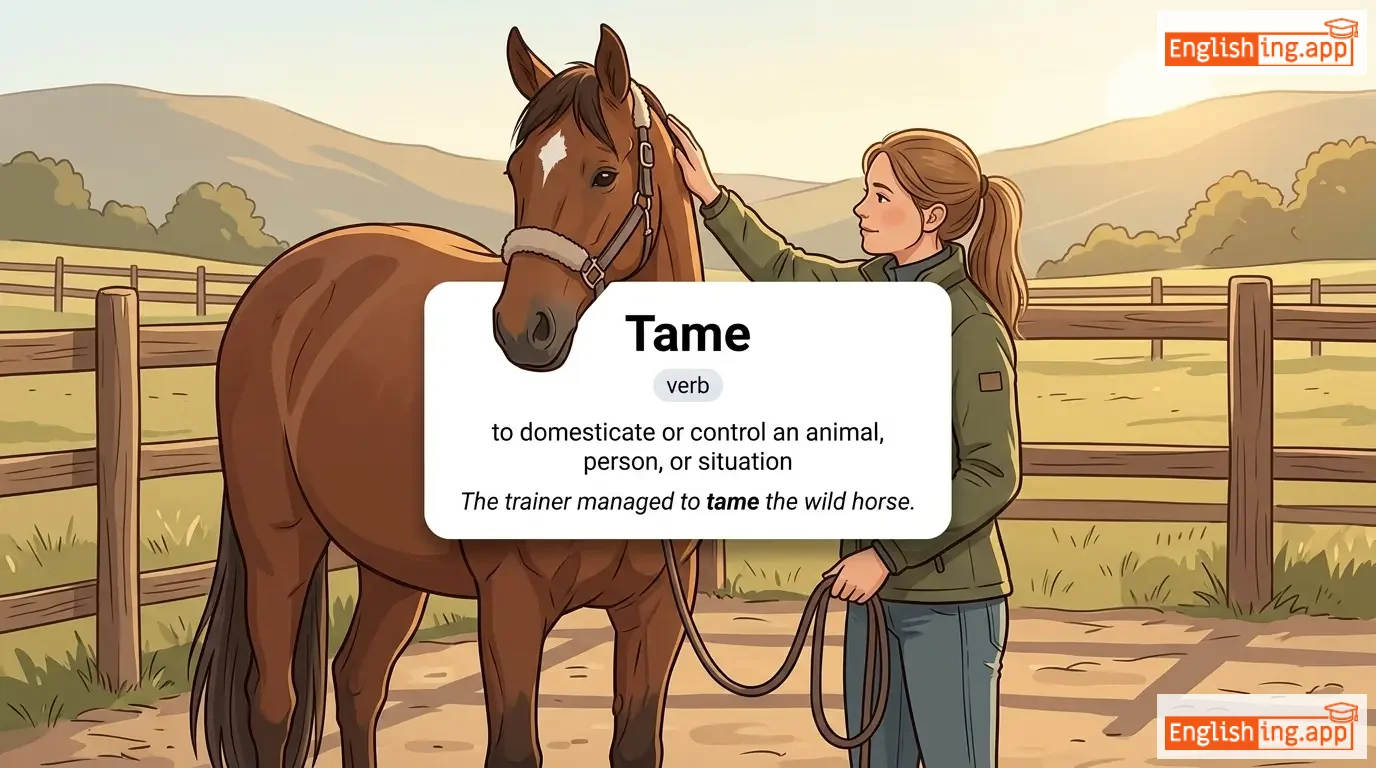
to domesticate or control an animal, person, or situation
••••••
|
The trainer managed to tame the wild horse.
教练成功地驯服了那匹野马。
••••••
|
教练成功地驯服了那匹野马。
Jiaolian chenggong de xunfu le na pi yemǎ.
••••••
|
tame the beast
驯服野兽
••••••
|
to control something wild or difficult
••••••
|
驯服野兽
xunfu yeshou
••••••
|
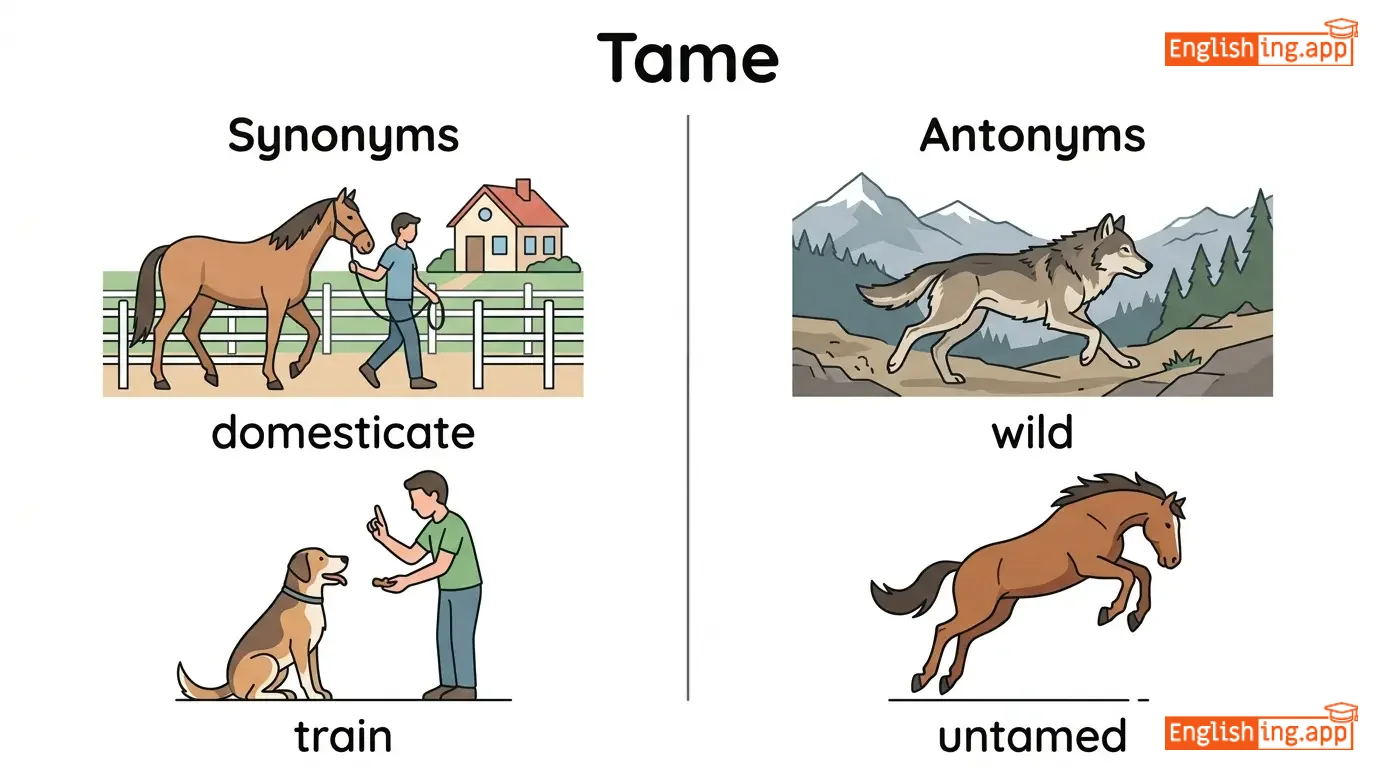
domesticate, train, discipline, control, subdue
••••••
|
wild, untamed, uncontrolled
••••••
|
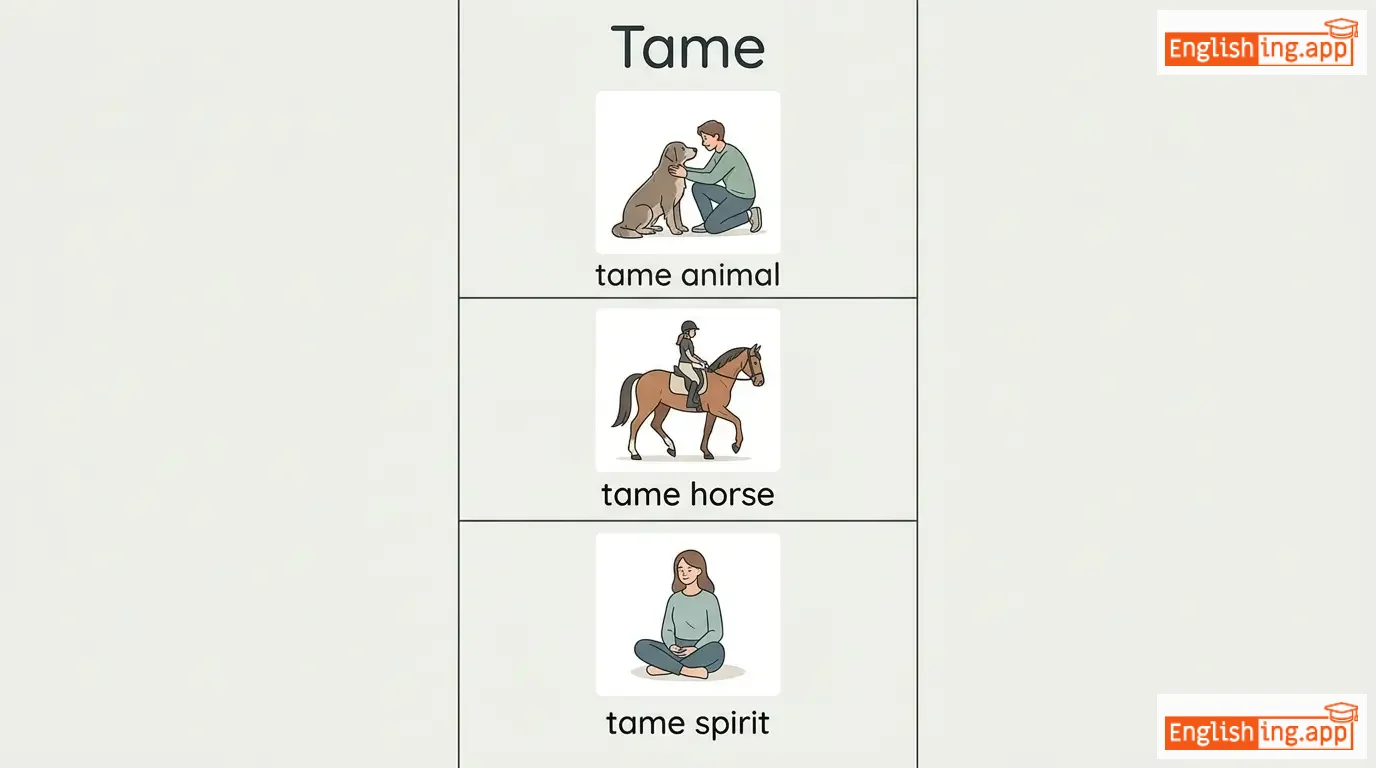
tame animal, tame horse, tame spirit, tame manner
••••••
|
Tame 就是驯服动物,就像驯服一只猛兽。
••••••
|
|
#10234
📏
|
/tɔːl/
adjective
(tǎo)
••••••
|
- •••••• |
高
gao
••••••
|
- •••••• | - •••••• | - •••••• | - •••••• |
having a greater than average height
••••••
|
He is the tallest player on the team. |
他是队里最高的球员。
Ta shi dui li zui gao de qiu yuan.
••••••
|
tall order |
a difficult or challenging task
••••••
|
艰巨的任务
jian ju de ren wu
••••••
|
high, lofty, towering, elevated
••••••
|
short, small, low
••••••
|
tall building, tall person, tall story, tall tree
••••••
|
Tall 意味着高,就像一个高塔。
••••••
|
|
#10235
🧵
|
/ˈteɪlərd/
adjective
(tèilāodè)
••••••
|
|
量体裁衣
liàng tǐ cài yī
••••••
|
- •••••• | - •••••• | - •••••• | - •••••• |
made or adapted for a particular purpose, person, or situation
••••••
|
The company offers tailored solutions for small businesses. |
公司为小型企业提供量体裁衣的解决方案。
Gōngsī wèi xiǎoxíng qǐyè tígōng liàng tǐ cài yī de jiějué fāng'àn.
••••••
|
tailored to fit |
specially designed to suit someone or something
••••••
|
量体裁衣以适应
liàng tǐ cài yī yǐ shìyìng
••••••
|
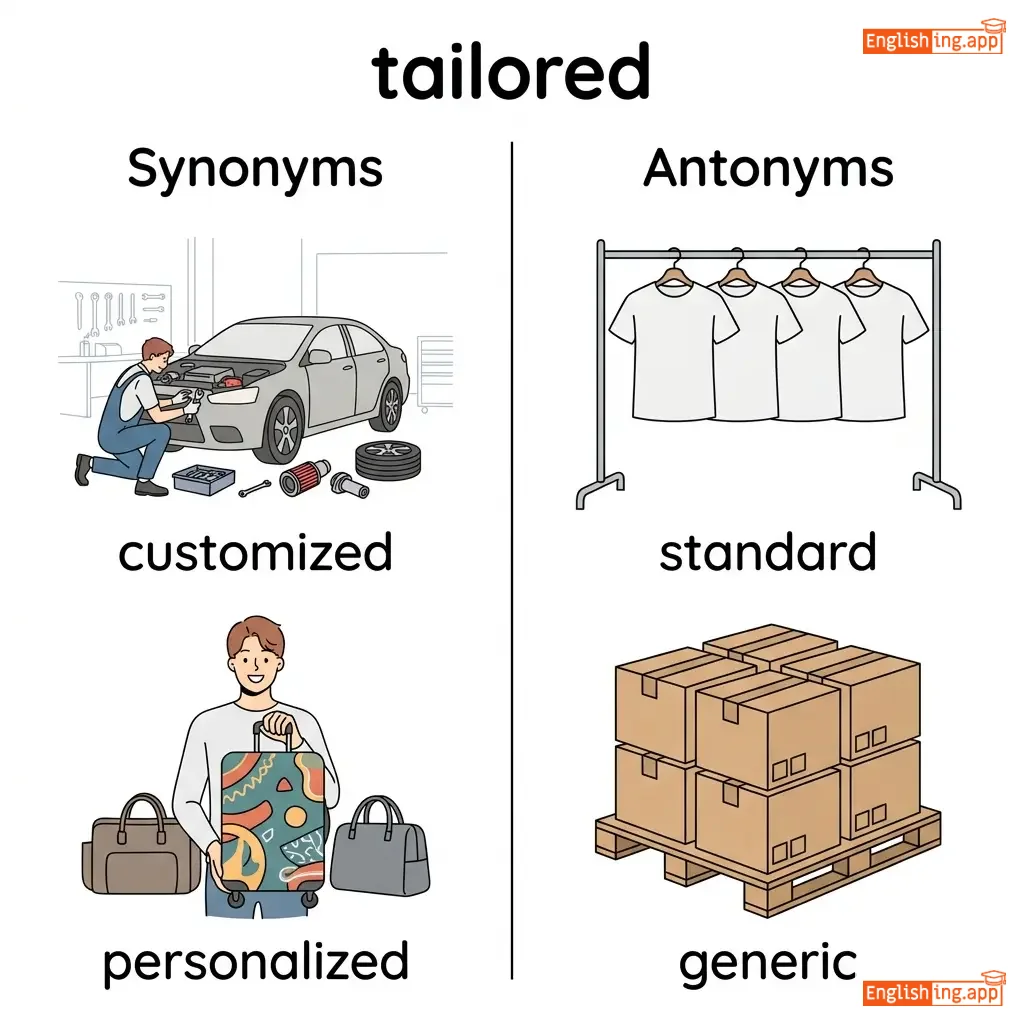
customized, personalized, fitted, adjusted, modified
••••••
|
standard, generic, universal
••••••
|
tailored suit, tailored approach, tailored solution, tailored service
••••••
|
量体裁衣就像定做的衣服,'tailored'意味着量体裁衣。
••••••
|
|
#10236
🚫
|
/təˈbuː/
noun
••••••
|
- •••••• | - •••••• | - •••••• | - •••••• | - •••••• | - •••••• |
a social or cultural prohibition against certain practices or discussions
••••••
|
Talking about money is considered a taboo in some cultures. |
- •••••• |
break a taboo |
to do something socially or culturally forbidden
••••••
|
- •••••• |
prohibition, restriction, ban, constraint
••••••
|
acceptance, permission
••••••
|
cultural taboo, religious taboo, social taboo, break taboo
••••••
|
No •••••• |
|
#10237
🖥️
|
/ˈsɪstəm/
noun
(系统)
••••••
|
- •••••• |
系统
xitong
••••••
|
- •••••• | - •••••• | - •••••• | - •••••• |
a set of connected parts forming a complex whole; an organized method
••••••
|
The education system needs major reforms. |
教育系统需要重大改革。
Jiaoyu xitong xuyao zhongda gaige.
••••••
|
systematic approach |
an organized and methodical way
••••••
|
系统化方法
xitonghua fangfa
••••••
|
structure, organization, framework, network
••••••
|
disorder, chaos
••••••
|
education system, computer system, political system, solar system
••••••
|
系统 = 系统, 就像'太阳系',是行星的系统
••••••
|
|
#10238
💐
|
/ˈsɪmpəθi/
noun
(辛巴提)
••••••
|
- •••••• |
同情
tóngqíng
••••••
|
- •••••• | - •••••• | - •••••• | - •••••• |
feelings of pity and compassion for someone else's suffering
••••••
|
She expressed her sympathy for the grieving family.
她向悲伤的家庭表达了同情。
••••••
|
她向悲伤的家庭表达了同情。
Tā xiàng bēishāng de jiātíng biǎodále tóngqíng.
••••••
|
deep sympathy
深深的同情
••••••
|
strong feelings of compassion
••••••
|
深深的同情
shēn shēn de tóngqíng
••••••
|
compassion, pity, condolence, understanding
••••••
|
indifference, apathy
••••••
|
express sympathy, offer sympathy, deep sympathy, sympathy card
••••••
|
Sympathy = Sim + Pathi → Sim broken heart = 同情
••••••
|
|
#10239
🕊️
|
/ˈsɪmbəlaɪz/
verb
(sɪmbəlaɪz)
••••••
|
- •••••• |
象征
xiangzheng
••••••
|
symbolized
sɪmbəlaɪzd
••••••
|
symbolized
sɪmbəlaɪzd
••••••
|
symbolizes
sɪmbəlaɪzɪz
••••••
|
symbolizing
sɪmbəlaɪzɪŋ
••••••
|
to represent or stand for something else
••••••
|
The dove symbolizes peace across cultures.
鸽子在不同文化中象征着和平。
••••••
|
鸽子在不同文化中象征着和平。
Gezi zai butong wenhua zhong xiangzheng zhe heping.
••••••
|
- •••••• | - •••••• | - •••••• |
represent, signify, denote, embody
••••••
|
conceal, obscure
••••••
|
symbolize peace, symbolize freedom, symbolize unity, symbolize hope
••••••
|
鸽子 🕊️ 象征着和平 – 记住 '象征' 这个词.
••••••
|
|
#10240
💪
|
/streɪn/
noun, verb
(斯特雷恩)
••••••
|
- •••••• |
压力 / 拉伤
yālì / lāshāng
••••••
|
strained
斯特雷因德
••••••
|
strained
斯特雷因德
••••••
|
strains
斯特雷因斯
••••••
|
straining
斯特雷因宁
••••••
|
To force something beyond its normal limits; to injure by overexertion; or a type or variety of something.
••••••
|
He strained his back while lifting the heavy box.
他在举重物时拉伤了背部。
••••••
|
他在举重物时拉伤了背部。
Tā zài jǔ zhòngwù shí lāshāngle bèibù.
••••••
|
strain every nerve
紧张每一根神经
••••••
|
To put in the utmost effort
••••••
|
尽全力
Jǐn quánlì
••••••
|
stress, tension, effort, pressure, injury
••••••
|
ease, relaxation, rest
••••••
|
muscle strain, mental strain, strain relationship, under strain
••••••
|
Strain 意味着压力,就像考试中每个人都会感到压力(strain)。
••••••
|
|
#10241
🌱
|
/sərˈvaɪv/
verb
(suerveiv)
••••••
|
- •••••• |
生还
shenghuan
••••••
|
survived
suerveivd
••••••
|
survived
suerveivd
••••••
|
survives
suerveivs
••••••
|
surviving
suerveiving
••••••
|
To continue to live or exist after a difficult event or situation.
••••••
|
He managed to survive the storm.
他成功地生还了风暴。
••••••
|
他成功地生还了风暴。
Ta chenggong de shenghuan le fengbao.
••••••
|
survival of the fittest
适者生存
••••••
|
The idea that only the strongest individuals succeed or endure.
••••••
|
适者生存
Shizhe shengcun
••••••
|
endure, persist, outlive, remain, withstand
••••••
|
perish, die, succumb
••••••
|
survive an accident, survive a crisis, survive on, survive against odds
••••••
|
生还意味着生还 = 生还
••••••
|
|
#10242
🌳
|
/səˈraʊn.dɪŋz/
noun
(su raun dings)
••••••
|
- •••••• |
周围环境
zhou wei huan jing
••••••
|
- •••••• | - •••••• | - •••••• | - •••••• |
The area around a person, place, or thing.
••••••
|
She quickly adapted to her new surroundings. |
她迅速适应了她的新环境。
Ta xunsu shiying le ta de xin huanjing.
••••••
|
- •••••• | - •••••• | - •••••• |
environment, vicinity, area, neighborhood, setting
••••••
|
center, core
••••••
|
pleasant surroundings, natural surroundings, change of surroundings
••••••
|
Surroundings = Surround + Things → 环绕我们的所有事物 = 周围环境
••••••
|
|
#10243
📈
|
/ˈsɜːr.plʌs/
noun
(sɜːrpləs)
••••••
|
- •••••• |
盈余
yingyu
••••••
|
- •••••• | - •••••• | - •••••• | - •••••• |
An amount that is more than what is needed.
••••••
|
The country has a surplus of food this year. |
今年该国的食品盈余。
Jin nian gai guo de shi pin ying yu.
••••••
|
trade surplus |
The amount by which a country's exports exceed its imports.
••••••
|
贸易盈余
maoyi yingyu
••••••
|
excess, extra, oversupply, remainder, overflow
••••••
|
shortage, deficit, lack
••••••
|
budget surplus, surplus goods, surplus food, surplus production
••••••
|
盈余 = 超过需要的部分
••••••
|
|
#10244
✅
|
/ʃʊər/ or /ʃɔːr/
adjective
(shur)
••••••
|
- •••••• |
确定
queding
••••••
|
- •••••• | - •••••• | - •••••• | - •••••• |
Confident about something; without doubt.
••••••
|
I am sure that he will succeed. |
我确定他会成功。
Wo queding ta hui chenggong.
••••••
|
for sure |
Definitely; without any doubt.
••••••
|
肯定
kending
••••••
|
certain, confident, positive, assured, definite
••••••
|
unsure, doubtful, uncertain
••••••
|
sure about, sure enough, be sure to, make sure
••••••
|
Sure意味着'确定'—中文也是确定
••••••
|
|
#10245
🌅
|
/ˈsʌn.raɪz/
noun
(sʌnraɪz)
••••••
|
- •••••• |
日出
rì chū
••••••
|
- •••••• | - •••••• | - •••••• | - •••••• |
The time in the morning when the sun appears over the horizon.
••••••
|
We woke up early to watch the sunrise over the mountains. |
我们早起观看了山上的日出。
Wǒmen zǎoqǐ guānkànle shān shàng de rìchū.
••••••
|
sunrise industry |
An emerging industry that is expected to grow rapidly.
••••••
|
新兴产业
xīn xīng chǎn yè
••••••
|
dawn, daybreak, first light, morning, sunup
••••••
|
sunset, night, dusk
••••••
|
watch the sunrise, beautiful sunrise, sunrise view, at sunrise
••••••
|
日出 = Sunrise, 太阳升起来的时候。
••••••
|
|
#10246
🌇
|
/ˈsʌnˌdaʊn/
noun
(sāndàwēn)
••••••
|
- •••••• |
日落
riluo
••••••
|
- •••••• | - •••••• | - •••••• | - •••••• |
the time in the evening when the sun goes below the horizon
••••••
|
We planned to reach the village before sundown. |
我们计划在日落之前到达村庄。
Wǒmen jìhuà zài rìluò zhīqián dào dá cūnzhuāng.
••••••
|
- •••••• | - •••••• | - •••••• |
sunset, dusk, twilight, nightfall
••••••
|
sunrise, dawn
••••••
|
before sundown, after sundown, at sundown
••••••
|
Sundown 就是太阳下山 - 想象太阳落下, 'sun' 和 'down'!
••••••
|
|
#10247
💡
|
/səˈdʒɛst/
verb
(suɡɛst)
••••••
|
- •••••• |
建议
jianyi
••••••
|
suggested
sugested
••••••
|
suggested
sugested
••••••
|
suggests
sugests
••••••
|
suggesting
suggesting
••••••
|
to put forward an idea, plan, or recommendation for consideration
••••••
|
He suggested going to the new restaurant for dinner.
他建议去新餐馆吃晚餐。
••••••
|
他建议去新餐馆吃晚餐。
Tā jiànyì qù xīn cānguǎn chī wǎncān.
••••••
|
suggest itself
自我提议
••••••
|
to present itself naturally without being asked
••••••
|
自我提议
zì wǒ tí yì
••••••
|
recommend, propose, advise, urge
••••••
|
oppose, discourage
••••••
|
suggest a plan, suggest an idea, strongly suggest, politely suggest
••••••
|
建议意味着给出建议–记住给出一个好建议!
••••••
|
|
#10248
📈
|
/səbˈstænʃəli/
adverb
(səbˈstænʃəli)
••••••
|
- •••••• |
显著
xian zhu
••••••
|
- •••••• | - •••••• | - •••••• | - •••••• |
to a great extent or degree
••••••
|
The new policy has substantially improved working conditions.
新政策显著改善了工作条件。
••••••
|
新政策显著改善了工作条件。
Xin zhengce xian zhu gaishan le gongzuo tiaojian.
••••••
|
- •••••• | - •••••• | - •••••• |
considerably, significantly, greatly, largely
••••••
|
slightly, marginally
••••••
|
substantially increase, substantially reduce, substantially change, substantially improve
••••••
|
Substantially 在中文里就是显著 – 记住显著的变化意味着大的变化
••••••
|
|
#10249
🤦
|
/ˈstjuːpɪd/
adjective
••••••
|
- •••••• | - •••••• | - •••••• | - •••••• | - •••••• | - •••••• |
lacking intelligence or common sense
••••••
|
It was a stupid mistake to leave the keys inside the car. |
- •••••• |
play stupid |
to pretend not to know something
••••••
|
- •••••• |
foolish, silly, idiotic, dumb
••••••
|
wise, intelligent, smart
••••••
|
stupid idea, stupid mistake, act stupid, feel stupid
••••••
|
No •••••• |
|
#10250
💪
|
/strɔːŋ/
adjective
(斯特龙)
••••••
|
|
强壮
qiángzhuàng
••••••
|
- •••••• | - •••••• | - •••••• | - •••••• |
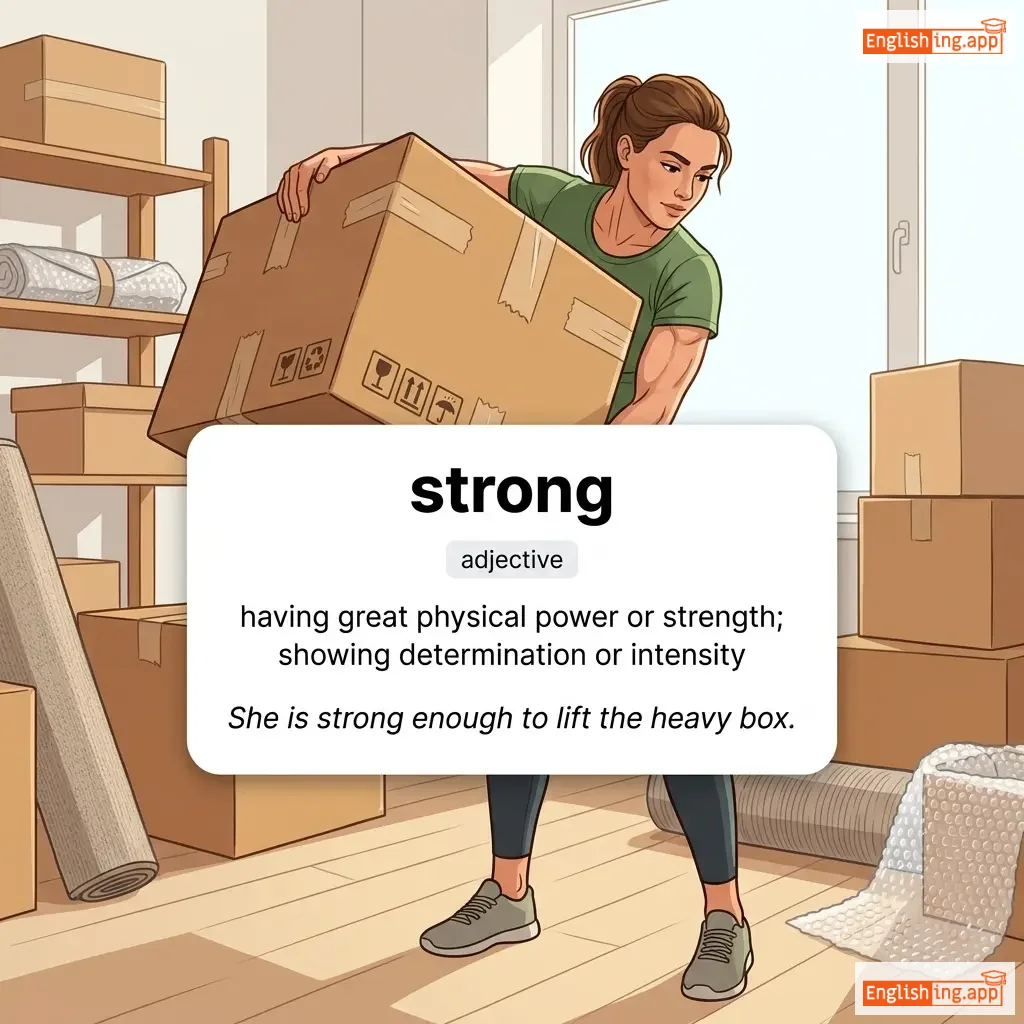
having great physical power or strength; showing determination or intensity
••••••
|
She is strong enough to lift the heavy box. |
她足够强壮,能够举起重箱子。
Tā zúgòu qiángzhuàng, nénggòu jǔqǐ zhòng xiāngzi.
••••••
|
strong suit |
a particular skill or strength someone is especially good at
••••••
|
强项
qiángxiàng
••••••
|
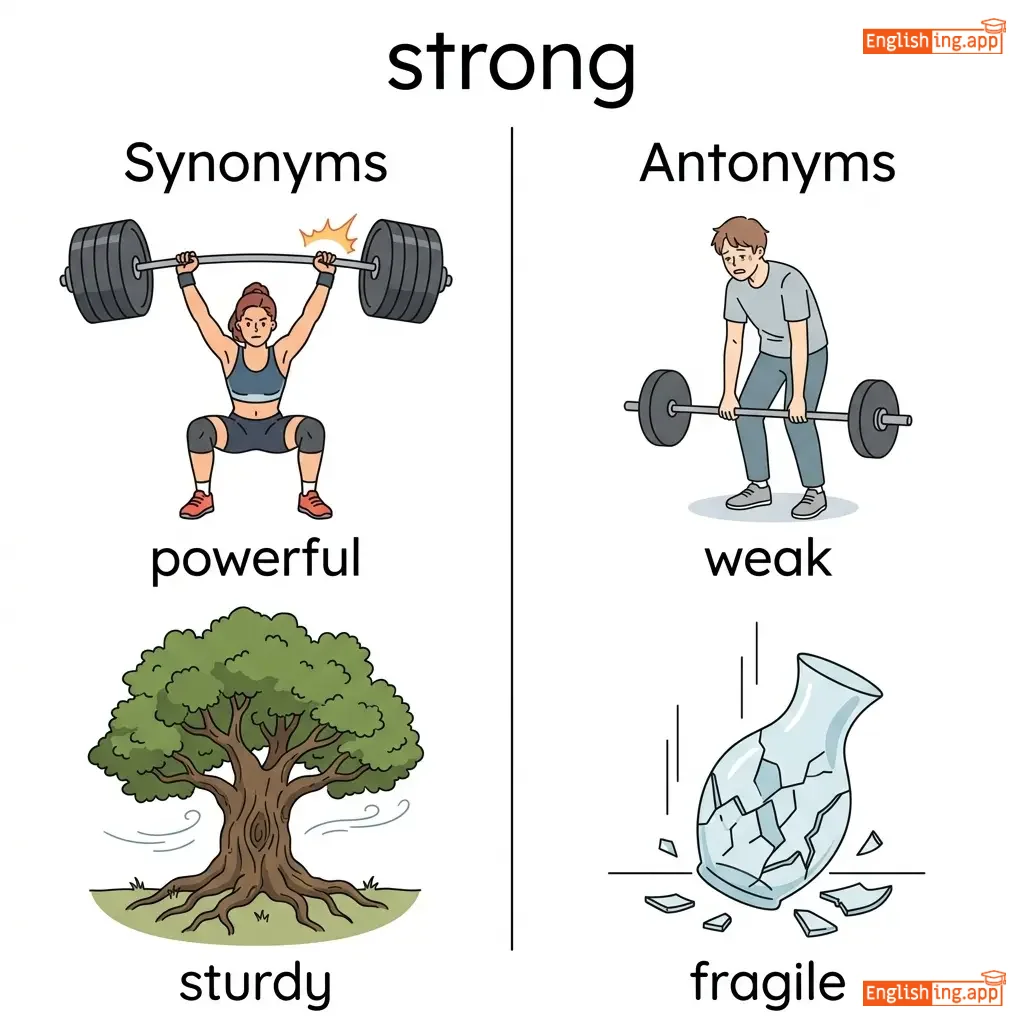
powerful, sturdy, tough, resilient, vigorous
••••••
|
weak, fragile, feeble
••••••
|
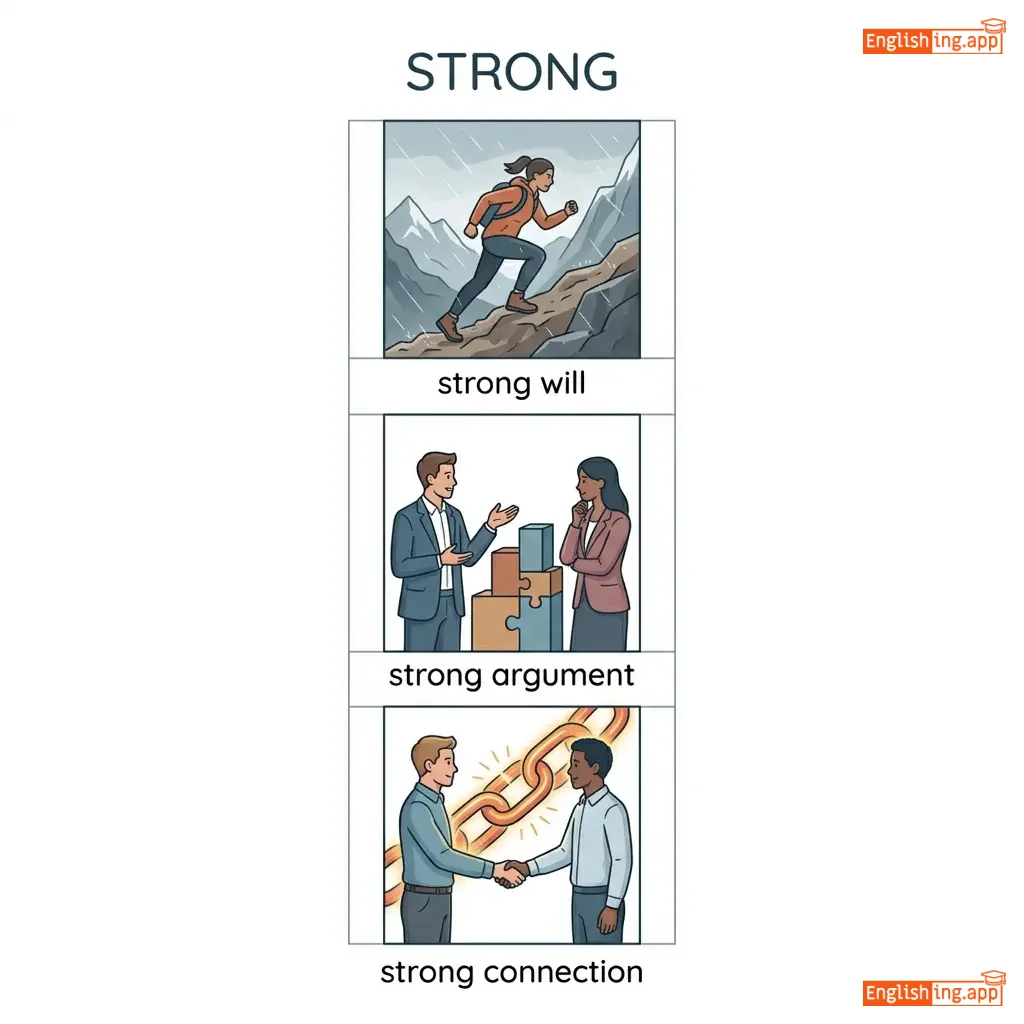
strong will, strong argument, strong connection, strong influence, strong flavor
••••••
|
Strong 是 💪 强壮,记住 'Strong 就能做到'
••••••
|
|
#10251
🚀
|
/straɪv/
verb
(sītráiv)
••••••
|
- •••••• |
奋斗
fèndòu
••••••
|
strove
sītróv
••••••
|
striven
sītríven
••••••
|
strives
sītráivs
••••••
|
striving
sītráiving
••••••
|
To make great efforts to achieve or obtain something.
••••••
|
She strives to be the best student in her class.
她努力成为班里最好的学生。
••••••
|
她努力成为班里最好的学生。
Tā nǔlì chéngwéi bān lǐ zuì hǎo de xuéshēng.
••••••
|
strive for excellence
为卓越而奋斗
••••••
|
To put in effort to achieve the highest standard
••••••
|
为卓越而奋斗
wèi zhuóyuè ér fèndòu
••••••
|
endeavor, attempt, struggle, aim, labor
••••••
|
give up, surrender
••••••
|
strive hard, strive for success, strive to achieve
••••••
|
Strive就是为了卓越而奋斗,为了成功持续努力。
••••••
|
|
#10252
⚖️
|
/strɪkt/
adjective
(sǐtrìkè)
••••••
|
- •••••• |
严格
yángé
••••••
|
- •••••• | - •••••• | - •••••• | - •••••• |
Demanding that rules be obeyed and observed closely.
••••••
|
The teacher is very strict about punctuality. |
老师在守时方面非常严格。
Lǎoshī zài shǒushí fāngmiàn fēicháng yángé.
••••••
|
strict rules |
Rules that must be followed without flexibility
••••••
|
严格规则
yángé guīzé
••••••
|
rigid, severe, stern, uncompromising
••••••
|
lenient, flexible, permissive
••••••
|
strict rules, strict teacher, strict policy
••••••
|
Strict 就是严格 — 老师严格就像规定一样!
••••••
|
|
#10253
🏋️
|
/ˈstrɛnjuəs/
adjective
(斯特雷纽斯)
••••••
|
- •••••• |
费力的
feili de
••••••
|
- •••••• | - •••••• | - •••••• | - •••••• |
Requiring or using great effort and energy.
••••••
|
Climbing the mountain was a strenuous task.
爬山是一项费力的任务。
••••••
|
爬山是一项费力的任务。
Páshān shì yī xiàng fèilì de rènwù.
••••••
|
- •••••• | - •••••• | - •••••• |
arduous, exhausting, demanding, vigorous
••••••
|
easy, effortless, simple
••••••
|
strenuous exercise, strenuous effort, strenuous task
••••••
|
Strenuous意味着费力的 — 很多体力消耗。
••••••
|
|
#10254
🕴️
|
/ˈstreɪndʒər/
noun
(陌生人)
••••••
|
- •••••• |
陌生人
mòshēngrén
••••••
|
- •••••• | - •••••• | - •••••• | - •••••• |
A person whom one does not know.
••••••
|
A stranger knocked on the door at midnight.
一个陌生人在午夜敲门。
••••••
|
一个陌生人在午夜敲门。
Yīgè mòshēngrén zài wǔyè qiāo mén.
••••••
|
perfect stranger
完全陌生的人
••••••
|
Someone completely unknown
••••••
|
完全陌生的人
wánquán mòshēngrén de rén
••••••
|
unknown, outsider, newcomer, foreigner
••••••
|
friend, acquaintance, relative
••••••
|
stranger danger, complete stranger, meet a stranger
••••••
|
Stranger 在中文中是 ‘陌生人’,表示一个你完全不认识的人。
••••••
|
Vocabulary Quiz
Test your vocabulary by matching words with their translations or meanings.
Login to take the quiz
Comments (0)
Share your thoughts and join the discussion.
Join the discussion by logging in
Login to CommentNo comments yet
Be the first to share your thoughts!