



Swipe left or right, or use the buttons. Tap image to zoom.
例句翻译
单词
Lesson 322Lesson 322 - 遮罩切换
|
表情符号
|
单词 | Images | 翻译 | 过去时 | 过去分词 | 第三人称单数 | 动名词 | 含义 | 例句 | 例句翻译 | 示例表达 | 示例表达含义 | 示例表达翻译 | 同义词 | 反义词 | 搭配词 | 助记符 |
|---|---|---|---|---|---|---|---|---|---|---|---|---|---|---|---|---|---|
|
#9630
🛒
|
/baɪ/
verb
(bai)
••••••
|
|
买
mai
••••••
|
bought
bot
••••••
|
bought
bot
••••••
|
buys
bais
••••••
|
buying
baiing
••••••
|
to acquire something in exchange for money
••••••
|
She went to the market to buy fresh vegetables.
她去市场买新鲜蔬菜。
••••••
|
她去市场买新鲜蔬菜。
Ta qu shichang mai xinxian shucai.
••••••
|
buy time
买时间
••••••
|
to delay something in order to gain more time
••••••
|
买时间
mai shijian
••••••
|
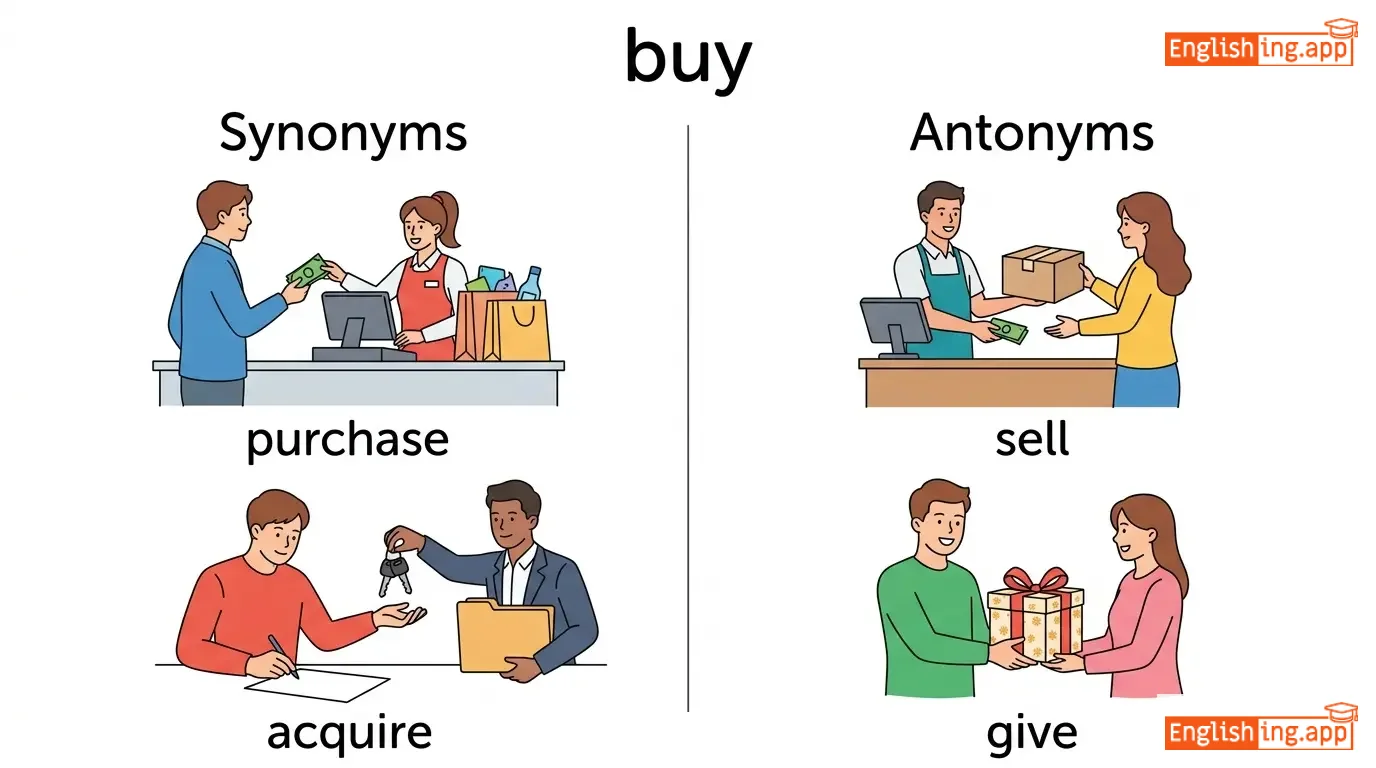
purchase, acquire, obtain, get, procure
••••••
|
sell, give
••••••
|
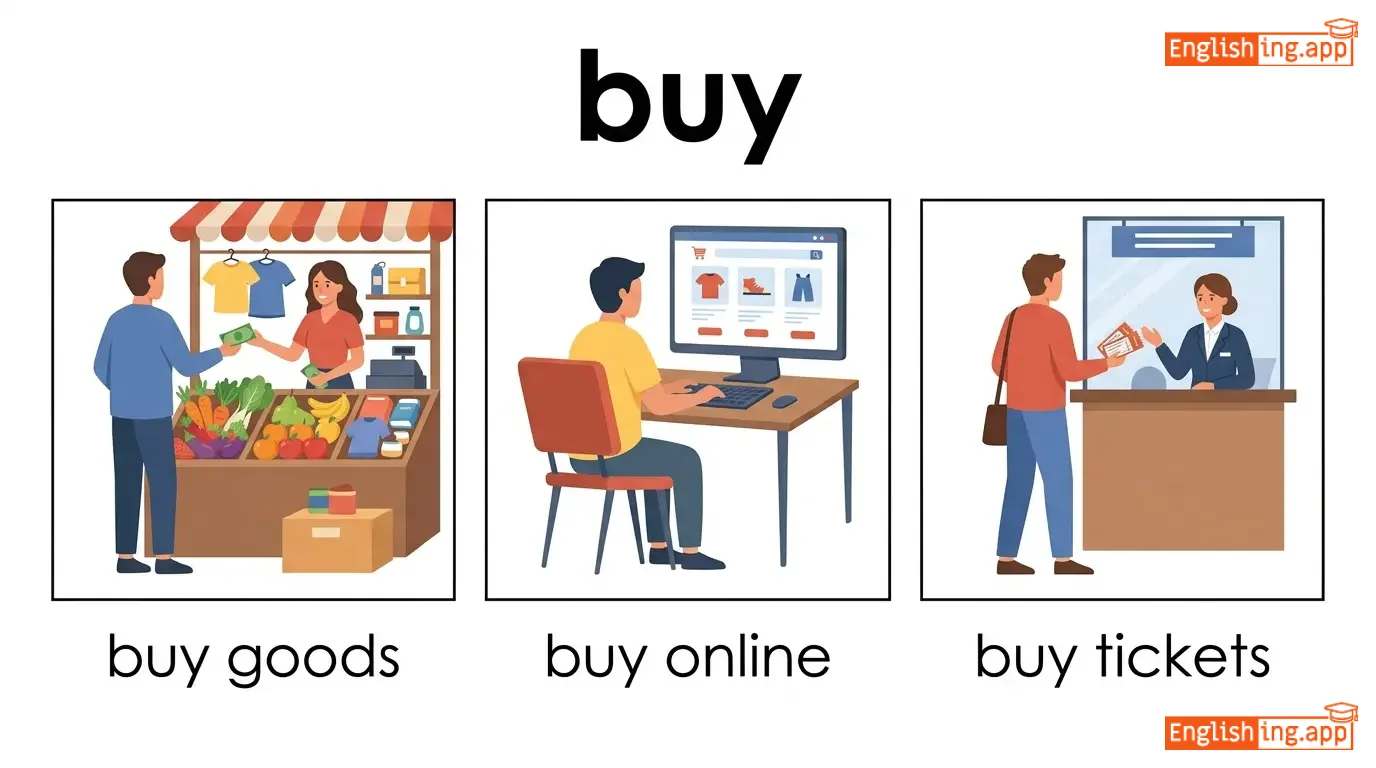
buy goods, buy online, buy tickets, buy food
••••••
|
Buy是买的意思,去市场buy新鲜蔬菜!
••••••
|
|
#9631
✨
|
/ˈtʃɑːr.mɪŋ/
adjective
(查尔明)
••••••
|
- •••••• |
迷人
mírén
••••••
|
- •••••• | - •••••• | - •••••• | - •••••• |
Very pleasing or delightful in a way that attracts people.
••••••
|
The village is full of charming little houses.
这个村庄充满了迷人的小房子。
••••••
|
这个村庄充满了迷人的小房子。
Zhège cūnzhuāng chōngmǎnle mírén de xiǎo fángzi.
••••••
|
- •••••• | - •••••• | - •••••• |
attractive, delightful, enchanting, appealing, captivating
••••••
|
repulsive, unattractive, unpleasant
••••••
|
charming smile, charming personality, charming place, charming story
••••••
|
Charming, 就是迷人的意思,总是能吸引人。
••••••
|
|
#9632
✅
|
/ˈsɜːr.tən/
adjective
(色腾)
••••••
|
- •••••• |
确定的
queding de
••••••
|
- •••••• | - •••••• | - •••••• | - •••••• |
Known for sure; having no doubt.
••••••
|
I am certain that she will succeed.
艾 爱目 色腾 达特 希 维尔 萨克希德。
••••••
|
我确定她会成功。
wo queding ta hui chenggong.
••••••
|
for certain
佛 色腾
••••••
|
Without any doubt.
••••••
|
确信无疑
quexin wu yi
••••••
|
sure, confident, definite, assured, convinced
••••••
|
uncertain, doubtful, unsure
••••••
|
certain circumstances, certain degree, certain way, certain level
••••••
|
Certain sounds like '设定', meaning something already fixed and known.
••••••
|
|
#9633
🎉
|
/ˈsɛl.əˌbreɪ.tɪd/
adjective
(sè lǐ bù lèi tì d)
••••••
|
- •••••• |
著名
zhù míng
••••••
|
- •••••• | - •••••• | - •••••• | - •••••• |
Widely known and praised; famous for an achievement.
••••••
|
He is a celebrated author in the field of literature.
他是文学领域的一位著名作家。
••••••
|
他是文学领域的一位著名作家。
Tā shì wénxué lǐngyù de yī wèi zhùmíng zuòjiā.
••••••
|
- •••••• | - •••••• | - •••••• |
famous, renowned, acclaimed, distinguished, notable
••••••
|
unknown, obscure, unrecognized
••••••
|
celebrated author, celebrated artist, celebrated figure, celebrated event
••••••
|
Celebrated 就是著名,有名的作家!
••••••
|
|
#9634
⚠️
|
/ˈkɛr.fəl/
adjective
(凯尔福)
••••••
|
- •••••• |
小心
xiaoxin
••••••
|
- •••••• | - •••••• | - •••••• | - •••••• |
Exercising caution or showing concern to avoid mistakes or harm.
••••••
|
He is always careful when crossing the road. |
他过马路时总是小心。
Ta guo malu shi zongshi xiaoxin.
••••••
|
be careful |
A warning to take caution.
••••••
|
小心
xiaoxin
••••••
|
cautious, vigilant, watchful, attentive, prudent
••••••
|
careless, reckless, negligent
••••••
|
be careful, careful planning, careful consideration, careful study
••••••
|
Careful = Care + Full → 小心 = 保持警觉避免出错。
••••••
|
|
#9635
❤️
|
/kɛr/
noun/verb
(kè)
••••••
|
- •••••• |
照顾
zhaogu
••••••
|
cared
kèrd
••••••
|
cared
kèrd
••••••
|
cares
kèrs
••••••
|
caring
kèring
••••••
|
The process of looking after someone or something; to be concerned or interested.
••••••
|
She took great care of her younger brother.
她非常照顾她的小弟弟。
••••••
|
她非常照顾她的小弟弟。
Ta feichang zhaogu ta de xiao didi.
••••••
|
take care
小心
••••••
|
Used to tell someone to be cautious or to say goodbye kindly.
••••••
|
小心
xiaoxin
••••••
|
concern, attention, caution, supervision, protection
••••••
|
neglect, disregard, indifference
••••••
|
take care, health care, child care, care about, intensive care
••••••
|
Care 意味着照顾,就像妈妈说的:小心,保重。
••••••
|
|
#9636
📸
|
/ˈkæptʃər/
verb
(凯普彻)
••••••
|
- •••••• |
捕获
bǔhuò
••••••
|
captured
凯普彻德
••••••
|
captured
凯普彻德
••••••
|
captures
凯普彻斯
••••••
|
capturing
凯普彻宁
••••••
|
to take control of something or someone by force
••••••
|
The soldiers managed to capture the enemy base.
士兵们成功地占领了敌人的基地。
••••••
|
士兵们成功地占领了敌人的基地。
Shìbīngmen chénggōng dì zhànlǐngle dírén de jīdì.
••••••
|
capture the moment
捕捉时刻
••••••
|
to preserve or record a special time or event
••••••
|
捕捉瞬间
bǔzhuō shùnjiān
••••••
|
seize, arrest, apprehend, conquer, trap
••••••
|
release, free, liberate
••••••
|
capture the flag, capture attention, capture market, capture image
••••••
|
捕获就像用相机抓住一个瞬间
••••••
|
|
#9637
⛓️
|
/ˈkæptər/
noun
(kæptɔr)
••••••
|
- •••••• |
劫持者
jiéchí zhě
••••••
|
- •••••• | - •••••• | - •••••• | - •••••• |
a person or group who has captured someone or something
••••••
|
The hostage managed to escape from his captors. |
人质成功从劫持者那里逃脱。
Rénzhì chénggōng cóng jiéchí zhě nàlǐ táotuō.
••••••
|
- •••••• | - •••••• | - •••••• |
kidnapper, jailer, abductor, guard
••••••
|
rescuer, liberator
••••••
|
enemy captor, cruel captor, captor and captive
••••••
|
劫持者就像抓住人质的人,captor抓住别人。
••••••
|
|
#9638
🦜
|
/kæpˈtɪvɪti/
noun
(kæpˈtɪvɪti)
••••••
|
- •••••• |
囚禁
qiújìn
••••••
|
- •••••• | - •••••• | - •••••• | - •••••• |
the state of being imprisoned, confined, or kept under control
••••••
|
The rare bird has been bred in captivity.
这只稀有的鸟是在囚禁中繁殖的。
••••••
|
这只稀有的鸟是在囚禁中繁殖的。
Zhè zhī xīyǒu de niǎo shì zài qiújìn zhōng fánzhí de.
••••••
|
held in captivity
被囚禁
••••••
|
kept imprisoned or confined
••••••
|
被囚禁
bèi qiújìn
••••••
|
confinement, imprisonment, detention, bondage
••••••
|
freedom, liberty, release
••••••
|
in captivity, captivity animals, captivity conditions, captivity breeding
••••••
|
囚禁和captive都是关于被限制和囚禁的概念。
••••••
|
|
#9639
💪
|
/ˈkeɪpəbl/
adjective
(凯布尔)
••••••
|
- •••••• |
有能力
yǒu nénglì
••••••
|
- •••••• | - •••••• | - •••••• | - •••••• |
having the ability, fitness, or quality necessary to do something
••••••
|
She is capable of handling difficult situations calmly. |
她能够冷静地处理困难的情况。
Tā nénggòu lěngjìng de chǔlǐ kùnnán de qíngkuàng.
••••••
|
capable of |
having the ability or capacity to do something
••••••
|
有能力
yǒu nénglì
••••••
|
able, competent, skilled, qualified, proficient
••••••
|
incapable, unfit, incompetent
••••••
|
capable leader, capable hands, fully capable, highly capable
••••••
|
有能力的意思就是 capable,能力就是能力。
••••••
|
|
#9640
🍬
|
/ˈkændi/
noun
(kāndì)
••••••
|
- •••••• |
糖果
tángguǒ
••••••
|
- •••••• | - •••••• | - •••••• | - •••••• |
a sweet food made with sugar or chocolate, often in small pieces
••••••
|
The children were excited to get candy on Halloween. |
孩子们在万圣节兴奋地收到糖果。
Háizimen zài wànshèngjié xīngfèn de shōudào tángguǒ.
••••••
|
eye candy |
something or someone that is attractive but not intellectually stimulating
••••••
|
眼睛糖果
yǎnjīng tángguǒ
••••••
|
sweet, confection, treat, chocolate, bonbon
••••••
|
bitter, sour
••••••
|
candy bar, candy shop, candy wrapper, hard candy, cotton candy
••••••
|
糖果是节日和喜悦的象征,特别是万圣节!
••••••
|
|
#9641
✅
|
/kæn/
modal verb
(kàn)
••••••
|
- •••••• |
能
neng
••••••
|
- •••••• | - •••••• | - •••••• | - •••••• |
to be able to; to have the ability or possibility to do something
••••••
|
I can solve this problem easily. |
我可以轻松解决这个问题。
Wo keyi qingsong jiejue zhege wenti.
••••••
|
can-do attitude |
a positive, confident approach to challenges
••••••
|
能做态度
neng zuo taidu
••••••
|
able, capable, possible, may
••••••
|
cannot, unable
••••••
|
can help, can do, can be, can solve
••••••
|
Can意味着能 — 就像 '我能做' 一样。
••••••
|
|
#9642
😌
|
/kɑːm/
adjective
(卡姆)
••••••
|
|
平静
pingjing
••••••
|
- •••••• | - •••••• | - •••••• | - •••••• |
not showing or feeling nervousness, anger, or other strong emotions
••••••
|
She stayed calm during the crisis. |
她在危机中保持平静。
Ta zai weiji zhong baochi pingjing.
••••••
|
calm down |
to relax after being angry or upset
••••••
|
冷静下来
lengjing xiala
••••••
|
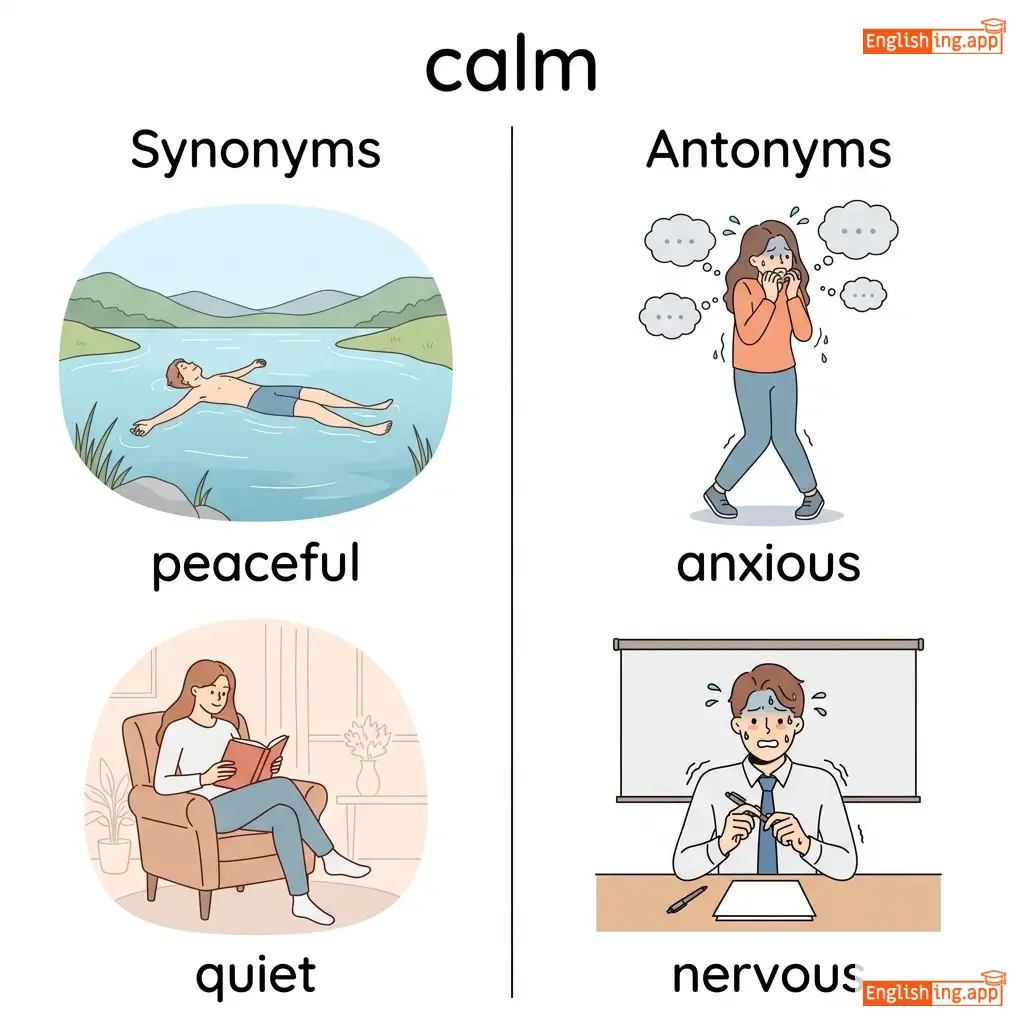
peaceful, quiet, relaxed, tranquil
••••••
|
anxious, nervous, agitated
••••••
|
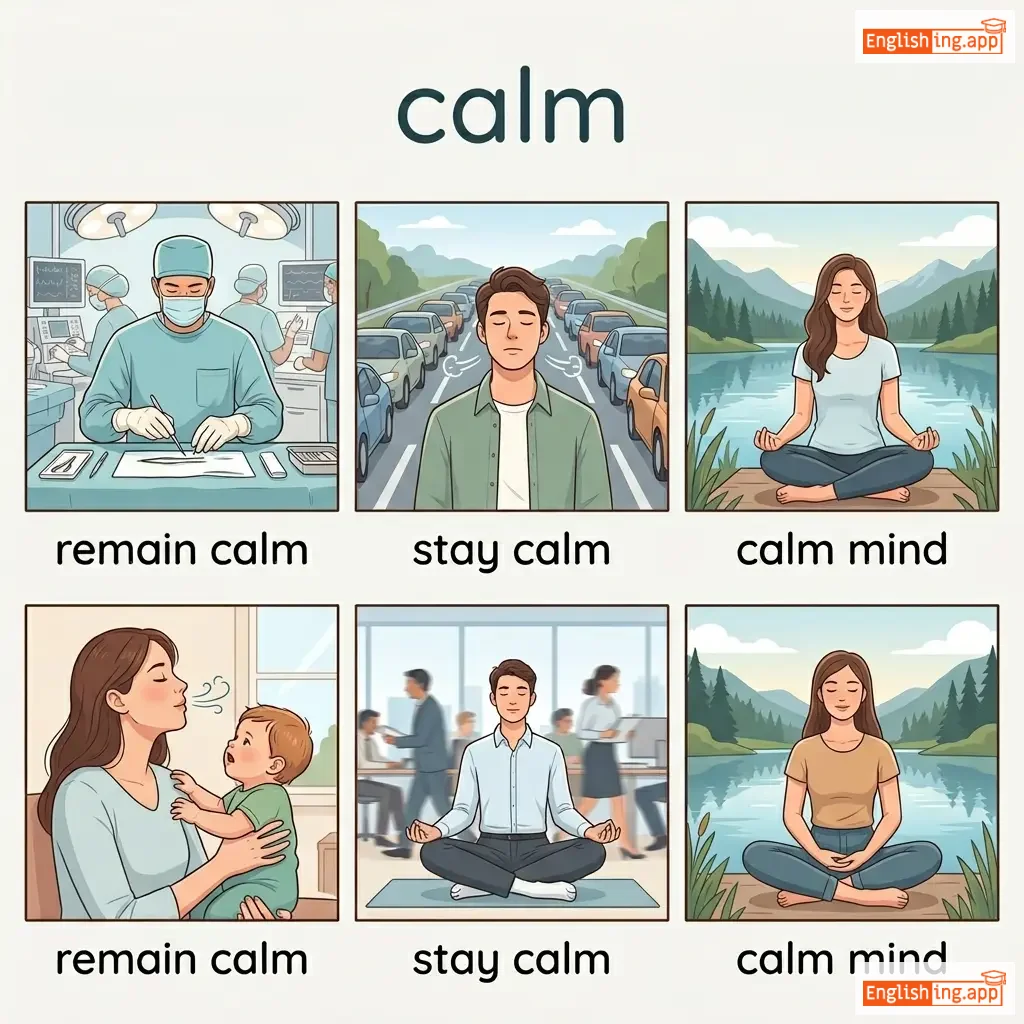
remain calm, stay calm, calm mind, calm atmosphere
••••••
|
平静 = 冷静。保持平静以减少压力。
••••••
|
|
#9643
🤸
|
/ˌkælɪsˈθɛnɪks/
noun
(自体重训练)
••••••
|
- •••••• |
体重训练
tǐzhòng xùnliàn
••••••
|
- •••••• | - •••••• | - •••••• | - •••••• |
exercises that use body weight for strength and flexibility
••••••
|
She practices calisthenics every morning in the park. |
她每天早晨在公园里做自体重训练。
Tā měitiān zǎoshang zài gōngyuán lǐ zuò zìtǐ zhòngliàng xùnliàn.
••••••
|
- •••••• | - •••••• | - •••••• |
gymnastics, workout, exercise, fitness training
••••••
|
inactivity, rest
••••••
|
calisthenics routine, practice calisthenics, morning calisthenics
••••••
|
自体重训练 = Call is + 重 → 'Call 是体重训练' 记住.
••••••
|
|
#9644
🧮
|
/ˈkælkjʊleɪtɪŋ/
adjective
(凯尔克莱廷)
••••••
|
- •••••• |
精明的
jīngmíng de
••••••
|
- •••••• | - •••••• | - •••••• | - •••••• |
acting in a scheming and ruthlessly determined way
••••••
|
He had a cold and calculating approach to business. |
他在商业上采取了冷酷而精明的态度。
Tā zài shāngyè shàng cǎiqǔle lěngkù ér jīngmíng de tàidù.
••••••
|
- •••••• | - •••••• | - •••••• |
scheming, shrewd, cunning, strategic
••••••
|
naive, honest
••••••
|
calculating mind, calculating person, cold and calculating
••••••
|
精明的 = 总是计算自己下一步的动作。
••••••
|
|
#9645
🥤
|
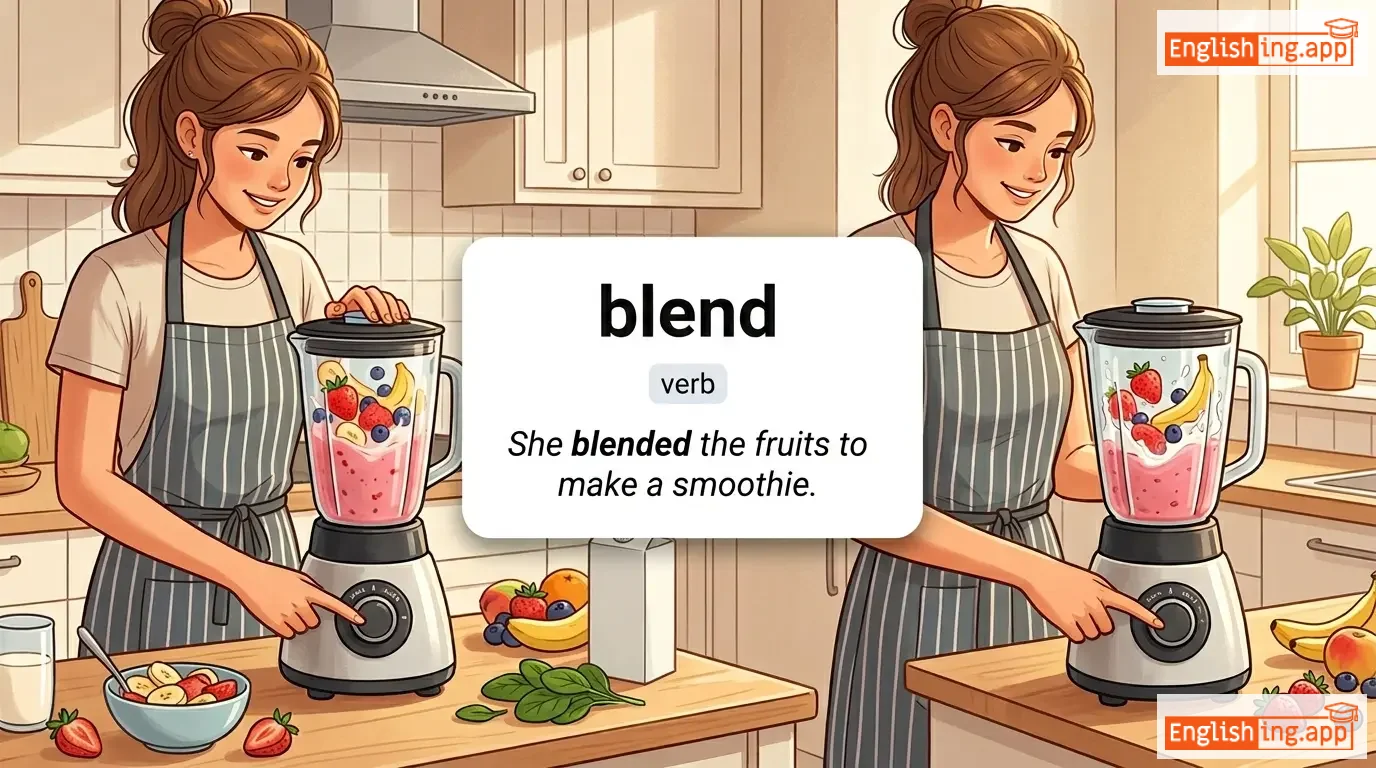
/blɛnd/
verb
(blɛnd)
••••••
|
|
混合
hunhe
••••••
|
blended
blended
••••••
|
blended
blended
••••••
|
blends
blends
••••••
|
blending
blending
••••••
|
to mix different substances or elements together so that they form a smooth combination
••••••
|
She blended the fruits to make a smoothie.
她把水果混合做成了冰沙。
••••••
|
她把水果混合做成了冰沙。
Ta ba shuiguo hunhe zuo cheng le bingsha.
••••••
|
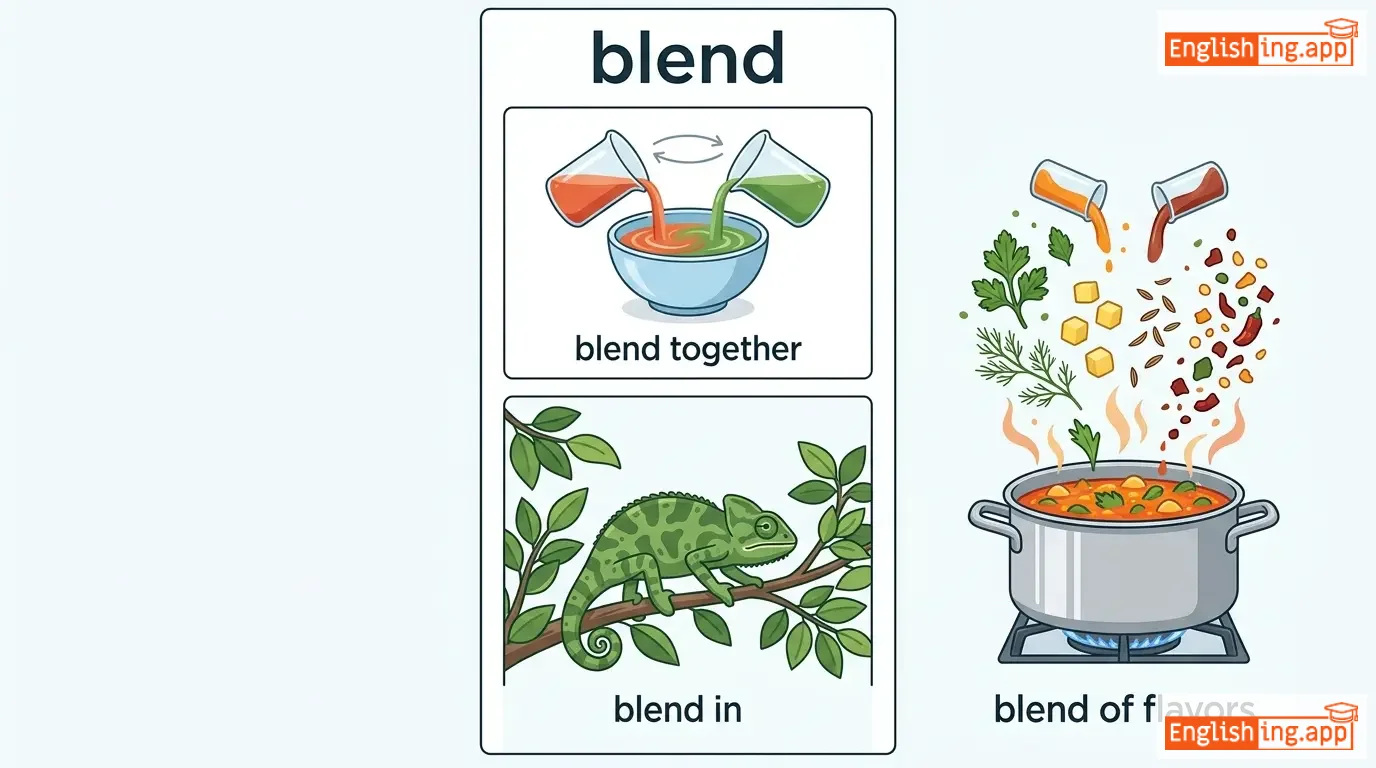
blend in
融入
••••••
|
to look or seem the same as the surrounding people or things
••••••
|
融入
rongru
••••••
|
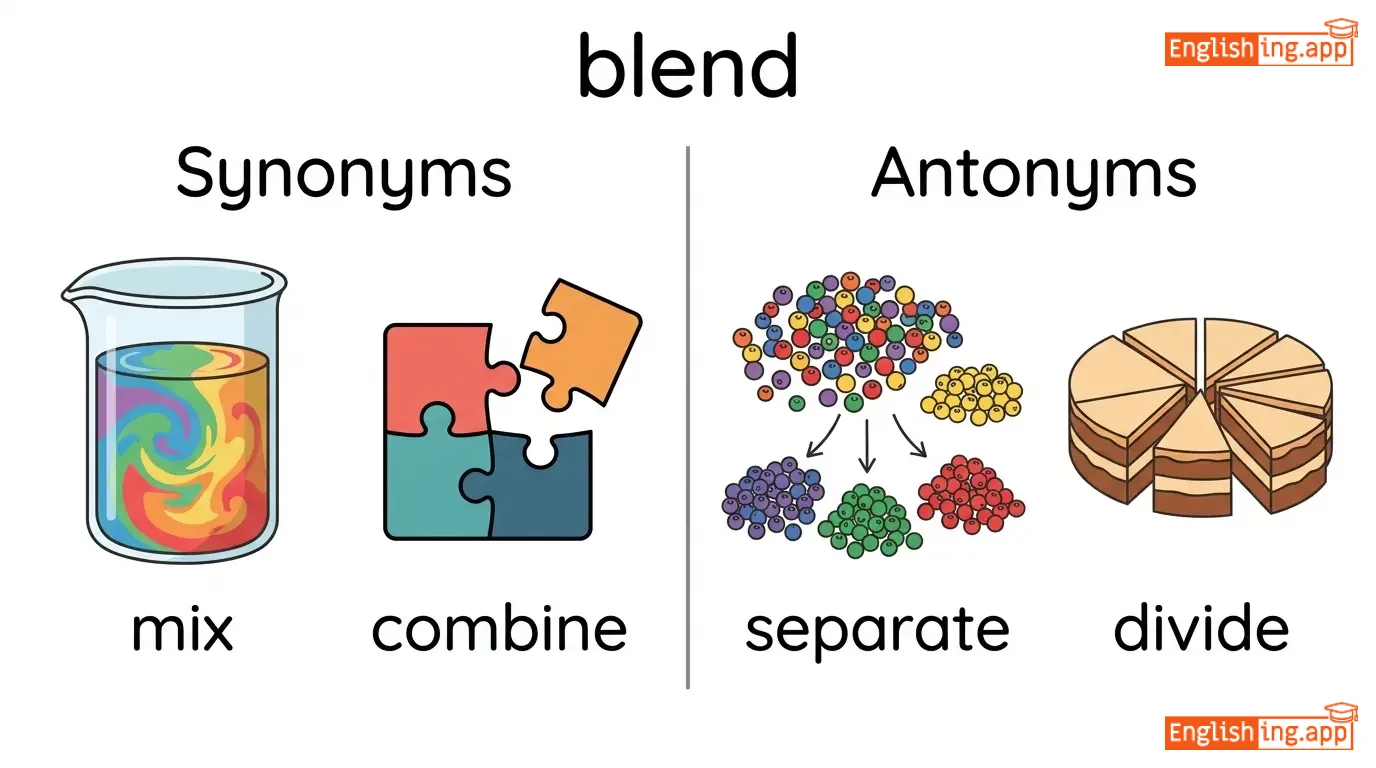
mix, combine, merge, fuse, integrate
••••••
|
separate, divide, detach
••••••
|
blend together, blend in, blend of flavors, blend smoothly
••••••
|
Blend意味着混合,就像把水果放进搅拌机里做冰沙。
••••••
|
|
#9646
🐝
|
/ˈbɪzi/
adjective
(bīzī)
••••••
|
- •••••• |
忙碌
mánglù
••••••
|
- •••••• | - •••••• | - •••••• | - •••••• |
actively engaged in work or activity; occupied
••••••
|
He is too busy to answer the phone. |
他太忙了,无法接电话。
Tā tài máng le, wúfǎ jiē diànhuà.
••••••
|
busy as a bee |
extremely active and hardworking
••••••
|
忙得像蜜蜂
máng de xiàng mìfēng
••••••
|
occupied, engaged, active, industrious
••••••
|
idle, free, inactive
••••••
|
busy schedule, busy street, busy day, keep busy
••••••
|
像蜜蜂一样忙碌!
••••••
|
|
#9647
💼
|
/ˈbɪznəs/
noun
(bìznèss)
••••••
|
- •••••• |
生意
shēngyì
••••••
|
- •••••• | - •••••• | - •••••• | - •••••• |
the practice of making money by producing or buying and selling goods or services
••••••
|
She started her own business last year. |
她去年开始了自己的生意。
Tā qùnián kāishǐle zìjǐ de shēngyì.
••••••
|
mind your own business |
focus on your own matters and not interfere with others
••••••
|
管好你自己的事
guǎn hǎo nǐ zìjǐ de shì
••••••
|
company, trade, firm, enterprise, commerce
••••••
|
idleness, unemployment
••••••
|
small business, family business, business plan, business meeting
••••••
|
Business意思是生意 – Busy + ness,永远忙于自己的生意
••••••
|
|
#9648
🍑
|
/bʌm/
noun
(bam)
••••••
|
- •••••• |
臀部
tún bù
••••••
|
- •••••• | - •••••• | - •••••• | - •••••• |
informal term for the buttocks; also a homeless or lazy person
••••••
|
He sat on his bum all day doing nothing. |
他整天坐在臀部上什么都不做。
Tā zhěng tiān zuò zài tún bù shàng shénme dōu bù zuò.
••••••
|
kick someone's bum |
to reprimand or punish someone
••••••
|
踢某人的臀部
Tī mǒu rén de tún bù
••••••
|
buttocks, behind, loafer, vagabond
••••••
|
worker, diligent
••••••
|
lazy bum, street bum, sit on bum
••••••
|
Bum 意味着臀部 (坐) – 懒人像 bum 一样坐着
••••••
|
|
#9649
🤨
|
/braʊ/
noun
(brow)
••••••
|
- •••••• |
额头
étóu
••••••
|
- •••••• | - •••••• | - •••••• | - •••••• |
the part of the face above the eyes; forehead
••••••
|
She wiped the sweat from her brow.
她擦去了额头上的汗水。
••••••
|
她擦去了额头上的汗水。
Tā cā qùle étóu shàng de hànshuǐ.
••••••
|
knit one's brow
皱眉
••••••
|
to frown or show worry
••••••
|
皱眉
zhòu méiyu
••••••
|
forehead, temple, face, ridge
••••••
|
chin, jaw
••••••
|
sweat on brow, furrowed brow, high brow, low brow
••••••
|
Brow = 额头; 皱眉 = 额头的忧虑
••••••
|
|
#9650
🌉
|
/brɔːd/
adjective
(broad)
••••••
|
- •••••• |
宽
kuan
••••••
|
- •••••• | - •••••• | - •••••• | - •••••• |
wide in extent, range, or scope
••••••
|
The river is very broad at this point.
这条河在这个点非常宽。
••••••
|
这条河在这个点非常宽。
Zhe tiao he zai zhege dian feichang kuan.
••••••
|
broad daylight
白昼光明
••••••
|
during the day when it is light and visible
••••••
|
白昼光明
baizhou guangming
••••••
|
wide, extensive, vast, expansive, comprehensive
••••••
|
narrow, limited, restricted
••••••
|
broad range, broad shoulders, broad spectrum, broad agreement
••••••
|
Broad road意味着宽阔的路 – broad = 宽
••••••
|
|
#9651
📝
|
/briːf/
adjective, noun, verb
(breef)
••••••
|
- •••••• |
简短
jian duan
••••••
|
briefed
breeft
••••••
|
briefed
breeft
••••••
|
briefs
breefs
••••••
|
briefing
briefing
••••••
|
Short in duration; a summary of information.
••••••
|
The manager briefed the team before the meeting.
经理在会议前简要地向团队做了报告。
••••••
|
经理在会议前简要地向团队做了报告。
Jing li zai hui yi qian jian yao de xiang tuan dui zuo le bao gao.
••••••
|
in brief
简言之
••••••
|
in short; concisely
••••••
|
简言之
jian yan zhi
••••••
|
short, concise, summary, outline
••••••
|
long, detailed
••••••
|
brief meeting, legal brief, security briefing, brief moment
••••••
|
Brief = 简短时间,简短会议。
••••••
|
|
#9652
💔
|
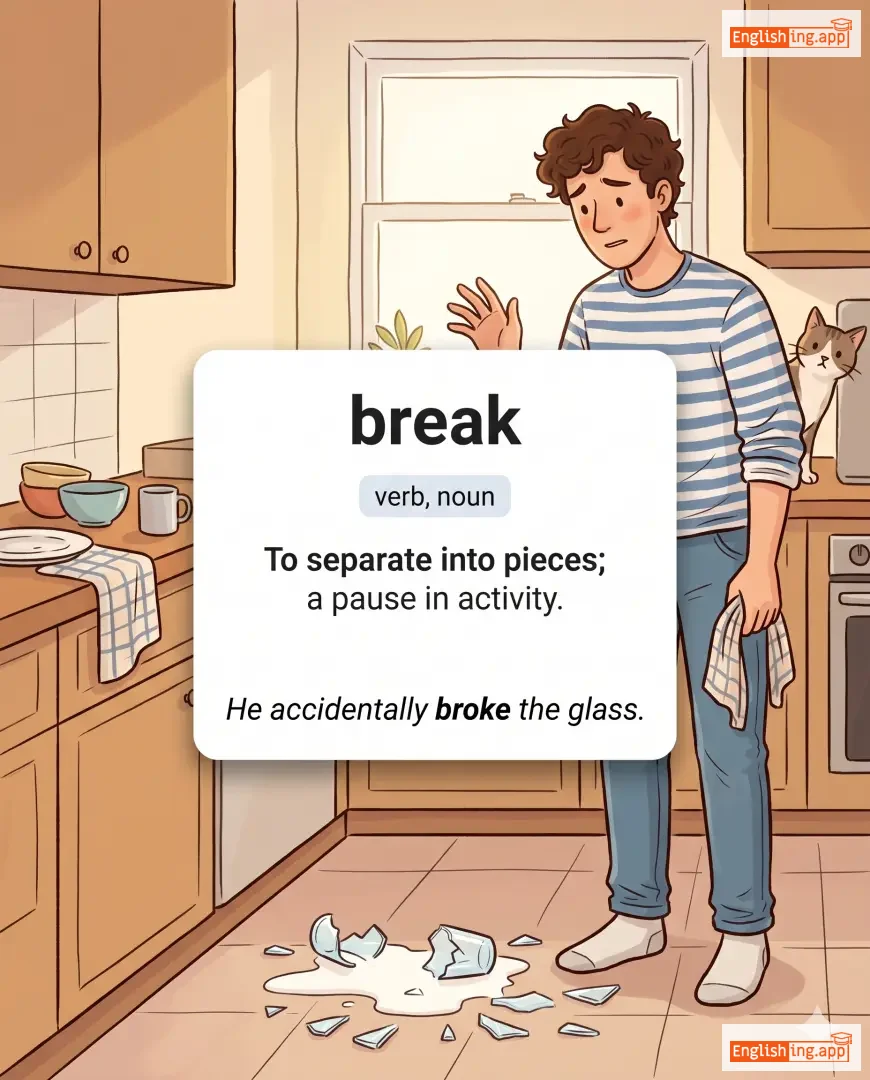
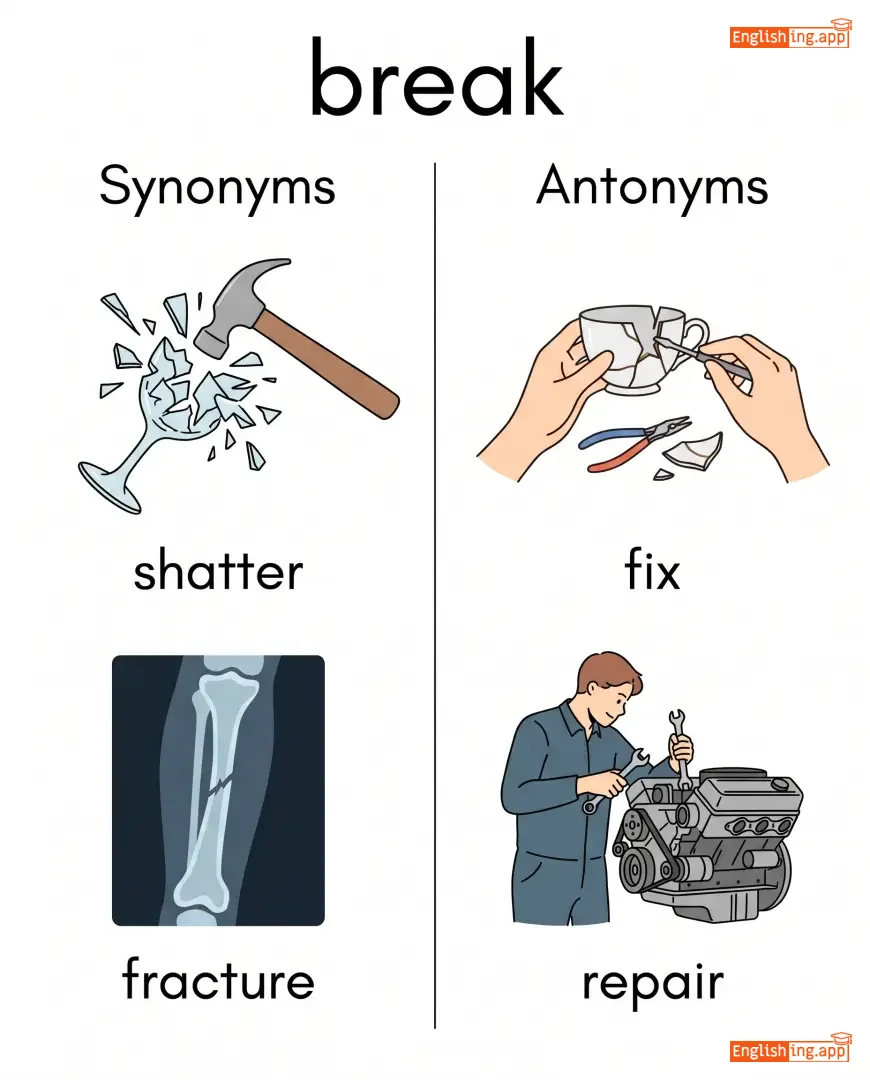
/breɪk/
verb, noun
(bɾeɪk)
••••••
|
|
打破 / 休息
dǎpò / xiūxí
••••••
|
broke
broʊk
••••••
|
broken
broʊkən
••••••
|
breaks
bɾeɪks
••••••
|
breaking
bɾeɪkɪŋ
••••••
|
To separate into pieces; a pause in activity.
••••••
|
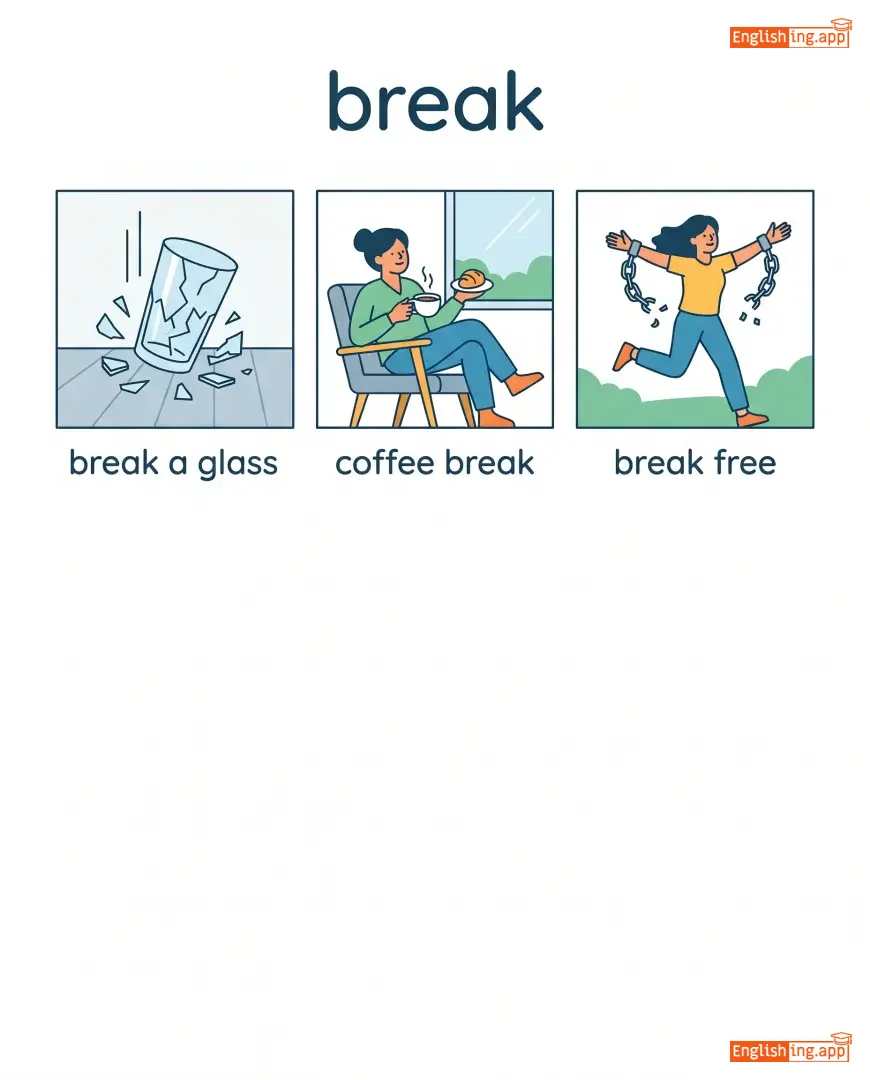
He accidentally broke the glass.
hī æksɪˈdɛntəli broʊk ðə ɡlæs
••••••
|
他不小心打破了玻璃。
Tā bù xiǎoxīn dǎpòle bōlí.
••••••
|
take a break
teɪk ə breɪk
••••••
|
to rest for a short time
••••••
|
休息一下
xiūxí yīxià
••••••
|
shatter, fracture, smash, pause, recess
••••••
|
fix, repair, continue
••••••
|
break a glass, coffee break, break free, break the law
••••••
|
Break 意味着打破,Break 也意味着休息。
••••••
|
|
#9653
🌿
|
/bræntʃ/
noun, verb
(brānch)
••••••
|
- •••••• |
分支
fenzhi
••••••
|
branched
brancht
••••••
|
branched
brancht
••••••
|
branches
branches
••••••
|
branching
branching
••••••
|
A part of a tree that grows out from the trunk; a division of an organization or subject.
••••••
|
The company opened a new branch in Dhaka.
公司在达卡开设了一个新分支。
••••••
|
公司在达卡开设了一个新分支。
Gongsi zai Daka kaishi le yige xin fenzhi.
••••••
|
branch out
扩展
••••••
|
to expand into new areas or activities
••••••
|
扩展
kuozhan
••••••
|
limb, division, department, subdivision
••••••
|
root, trunk
••••••
|
tree branch, bank branch, branch office, branch out
••••••
|
树的分支就像公司的分支一样。
••••••
|
|
#9654
🔻
|
/ˈbɒtəm/
noun, adjective
(bàtóng)
••••••
|
- •••••• |
底部
dǐbù
••••••
|
- •••••• | - •••••• | - •••••• | - •••••• |
The lowest part of something.
••••••
|
The keys fell to the bottom of the bag. |
钥匙掉到了包的底部。
Yàoshi diàole bāo de dǐbù.
••••••
|
hit rock bottom |
to reach the lowest possible point
••••••
|
跌入谷底
diē rù gǔ dǐ
••••••
|
base, underside, foot, foundation
••••••
|
top, peak, summit
••••••
|
bottom line, at the bottom, ocean bottom, bottom of the page
••••••
|
记住'底部'是'底',就像一个坑的底部。
••••••
|
|
#9655
📖
|
/bʊk/
noun, verb
••••••
|
- •••••• | - •••••• |
booked
••••••
|
booked
••••••
|
books
••••••
|
booking
••••••
|
A set of written, printed, or blank pages fastened together; to arrange for someone to have a seat, room, or ticket in advance.
••••••
|
I booked a table at the restaurant for dinner. |
- •••••• |
by the book |
to follow rules strictly
••••••
|
- •••••• |
volume, text, novel, reserve, schedule
••••••
|
cancel, disorder
••••••
|
open book, book a ticket, book club, book online, book in advance
••••••
|
No •••••• |
|
#9656
🦁
|
/boʊld/
adjective
(bóld)
••••••
|
- •••••• |
大胆
dadan
••••••
|
- •••••• | - •••••• | - •••••• | - •••••• |
showing courage, confidence, or willingness to take risks
••••••
|
She made a bold decision to start her own business. |
她做出了大胆的决定,开始了自己的生意。
Ta zuo chule dadan de jueding, kaishi le ziji de shengyi.
••••••
|
fortune favors the bold |
people who take risks often achieve success
••••••
|
命运偏爱大胆的人
Mingyun pian'ai dadan de ren
••••••
|
brave, courageous, daring, confident, fearless
••••••
|
timid, shy, fearful
••••••
|
bold decision, bold move, bold colors, bold step
••••••
|
大胆在中文中意味着bold,像勇敢的人做出大胆的决定。
••••••
|
|
#9657
📋
|
/bɔːrd/
noun
••••••
|
- •••••• | - •••••• | - •••••• | - •••••• | - •••••• | - •••••• |
a flat, thin, rectangular piece of material such as wood; also a group of people managing an organization
••••••
|
The board decided to increase the budget. |
- •••••• |
on board |
to be part of a team or involved in a project
••••••
|
- •••••• |
plank, panel, committee, council
••••••
|
individual, disorganization
••••••
|
board meeting, board of directors, wooden board, on board
••••••
|
No •••••• |
|
#9658
⚪
|
/ˈblʌdləs/
adjective
(bùlādèlèsī)
••••••
|
- •••••• |
无血
wú xuè
••••••
|
- •••••• | - •••••• | - •••••• | - •••••• |
without bloodshed; lacking violence or vitality
••••••
|
The revolution was surprisingly bloodless.
这场革命出奇地没有流血。
••••••
|
这场革命出奇地没有流血。
Zhè chǎng gémìng chūqí de méiyǒu liúxuè.
••••••
|
- •••••• | - •••••• | - •••••• |
painless, peaceful, nonviolent, cold
••••••
|
bloody, violent
••••••
|
bloodless coup, bloodless revolution, bloodless war
••••••
|
Blood 没有, 这就是无血 – 无血。
••••••
|
|
#9659
🩸
|
/ˈblʌdˌbæθ/
noun
(blʌdˌbæθ)
••••••
|
- •••••• |
血腥屠杀
xuèxīng túshā
••••••
|
- •••••• | - •••••• | - •••••• | - •••••• |
an event in which a lot of people are killed or injured, especially in a violent conflict
••••••
|
The war turned into a bloody bloodbath.
战争变成了一场血腥的屠杀。
••••••
|
战争变成了一场血腥的屠杀。
Zhànzhēng biàn chéngle yī chǎng xuèxīng de túshā.
••••••
|
- •••••• | - •••••• | - •••••• |
massacre, slaughter, carnage, killing
••••••
|
peace, harmony
••••••
|
political bloodbath, financial bloodbath, violent bloodbath
••••••
|
Blood + Bath = 一场充满血腥的屠杀,好像在沐浴血液。
••••••
|
Vocabulary Quiz
Test your vocabulary by matching words with their translations or meanings.
Login to take the quiz
Comments (0)
Share your thoughts and join the discussion.
Join the discussion by logging in
Login to CommentNo comments yet
Be the first to share your thoughts!