

Swipe left or right, or use the buttons. Tap image to zoom.
例句翻译
单词
Lesson 352Lesson 352 - 遮罩切换
|
表情符号
|
单词 | Images | 翻译 | 过去时 | 过去分词 | 第三人称单数 | 动名词 | 含义 | 例句 | 例句翻译 | 示例表达 | 示例表达含义 | 示例表达翻译 | 同义词 | 反义词 | 搭配词 | 助记符 |
|---|---|---|---|---|---|---|---|---|---|---|---|---|---|---|---|---|---|
|
#10525
🌉
|
/brɪdʒ/
noun
(bù lǐ jī)
••••••
|
- •••••• |
桥
qiao
••••••
|
- •••••• | - •••••• | - •••••• | - •••••• |
A structure built to span a physical obstacle, such as a river or road, for the purpose of providing passage.
••••••
|
The bridge connects the two cities across the river. |
桥将两座城市连接起来,跨越河流。
Qiáo jiāng liǎng zuò chéngshì liánjiē qǐlái, kuàyuè héliú.
••••••
|
burn one's bridges |
To eliminate all possibilities of retreat; to commit oneself completely.
••••••
|
烧掉自己的桥
shāo diào zìjǐ de qiáo
••••••
|
overpass, viaduct, crossing, span, walkway
••••••
|
barrier, obstacle
••••••
|
cross a bridge, build a bridge, bridge over, suspension bridge, stone bridge
••••••
|
Bridge 就是桥 🌉 - 用桥来跨越城市之间的障碍。
••••••
|
|
#10526
🌸
|
/bʌntʃ/
noun
(bànchī)
••••••
|
- •••••• |
一束
yī shù
••••••
|
- •••••• | - •••••• | - •••••• | - •••••• |
a group of things that are fastened, held, or growing together
••••••
|
She gave me a bunch of flowers for my birthday. |
她给了我一束花作为我的生日礼物。
Tā gěi le wǒ yī shù huā zuòwéi wǒ de shēngrì lǐwù.
••••••
|
a bunch of |
a large quantity of something
••••••
|
一束
yī shù
••••••
|
bundle, cluster, group, collection, pack
••••••
|
individual, single, one
••••••
|
a bunch of flowers, a bunch of grapes, a bunch of keys, whole bunch
••••••
|
Bunch意思是束 - 就像我生日时收到的花束一样。
••••••
|
|
#10527
🔫
|
/ˈbʊlɪt/
noun
(子弹)
••••••
|
- •••••• |
子弹
zidan
••••••
|
- •••••• | - •••••• | - •••••• | - •••••• |
A small, metal projectile fired from a gun.
••••••
|
The soldier loaded a bullet into his rifle.
士兵把子弹装入他的步枪。
••••••
|
士兵把子弹装入他的步枪。
Shibing ba zidan zhuangru tade buqiang.
••••••
|
bite the bullet
咬子弹
••••••
|
To endure a painful or unpleasant situation with courage.
••••••
|
咬紧牙关
yao jin ya guan
••••••
|
projectile, shot, cartridge, ammo
••••••
|
peace, safety
••••••
|
bullet train, bullet wound, silver bullet, stray bullet
••••••
|
Bullet 是子弹,'bite the bullet' 就是咬紧牙关。
••••••
|
|
#10528
🏢
|
/ˈbɪldɪŋ/
noun
(bɪldɪŋ)
••••••
|
- •••••• |
建筑
jian zhu
••••••
|
- •••••• | - •••••• | - •••••• | - •••••• |
A structure with a roof and walls, such as a house, school, or office.
••••••
|
The old building was renovated into a museum. |
这座旧建筑被翻新并改建为博物馆。
Zhe zuo jiu jianzhu bei fanxin bing gaijian wei bowuguan.
••••••
|
burn down a building |
To completely destroy a building with fire.
••••••
|
烧毁建筑
shao hui jianzhu
••••••
|
structure, construction, edifice, property
••••••
|
ruin, demolition
••••••
|
tall building, office building, apartment building, historic building
••••••
|
建筑就是building, 一种有屋顶的结构。
••••••
|
|
#10529
🏗️
|
/bɪld/
verb
(bɪld)
••••••
|
|
建造
jianzao
••••••
|
built
bɪlt
••••••
|
built
bɪlt
••••••
|
builds
bɪldz
••••••
|
building
bɪldɪŋ
••••••
|
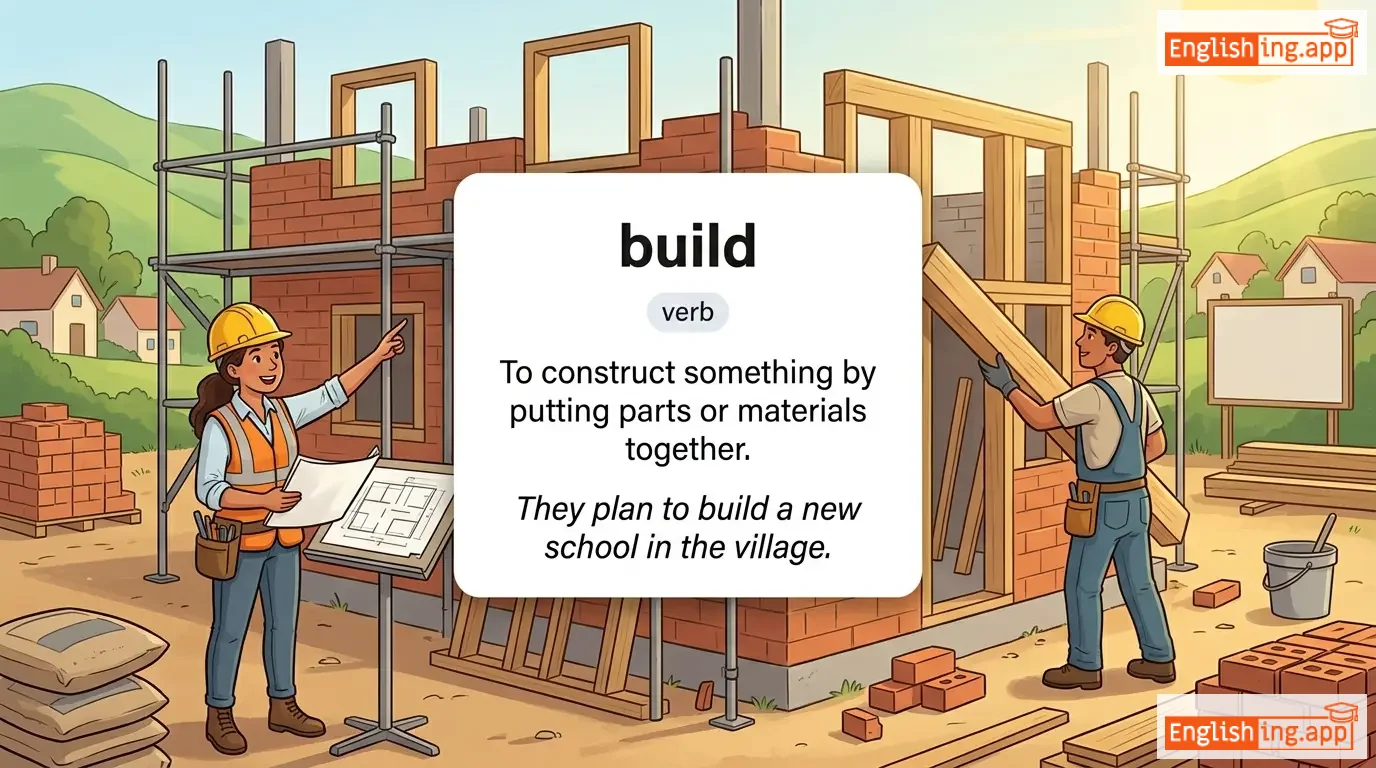
To construct something by putting parts or materials together.
••••••
|
They plan to build a new school in the village.
他们计划在村庄里建一所新学校。
••••••
|
他们计划在村庄里建一所新学校。
Tamen jihua zai cunzhuang li jian yisuo xin xuexiao.
••••••
|
build up
建立
••••••
|
To increase or develop something gradually.
••••••
|
增长
zengzhang
••••••
|
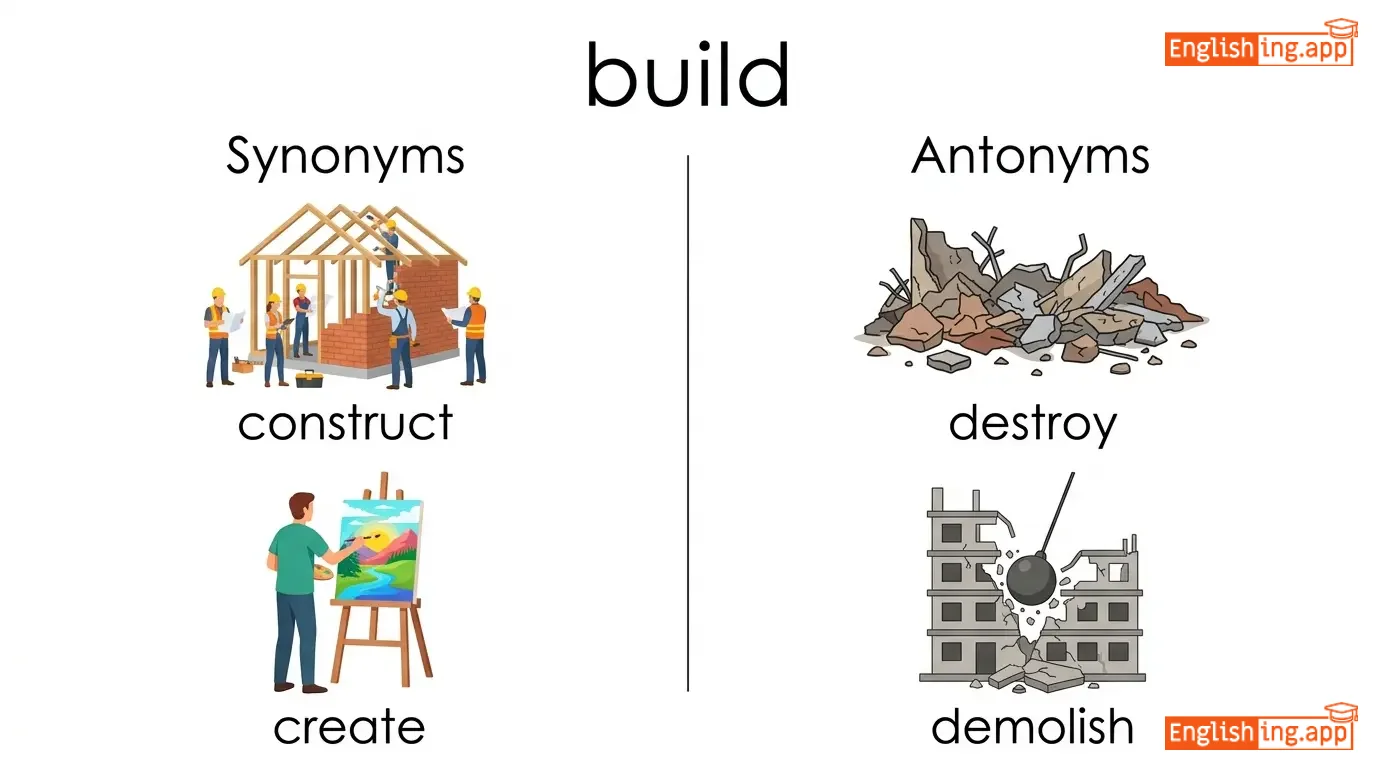
construct, create, assemble, develop, establish
••••••
|
destroy, demolish, break
••••••
|
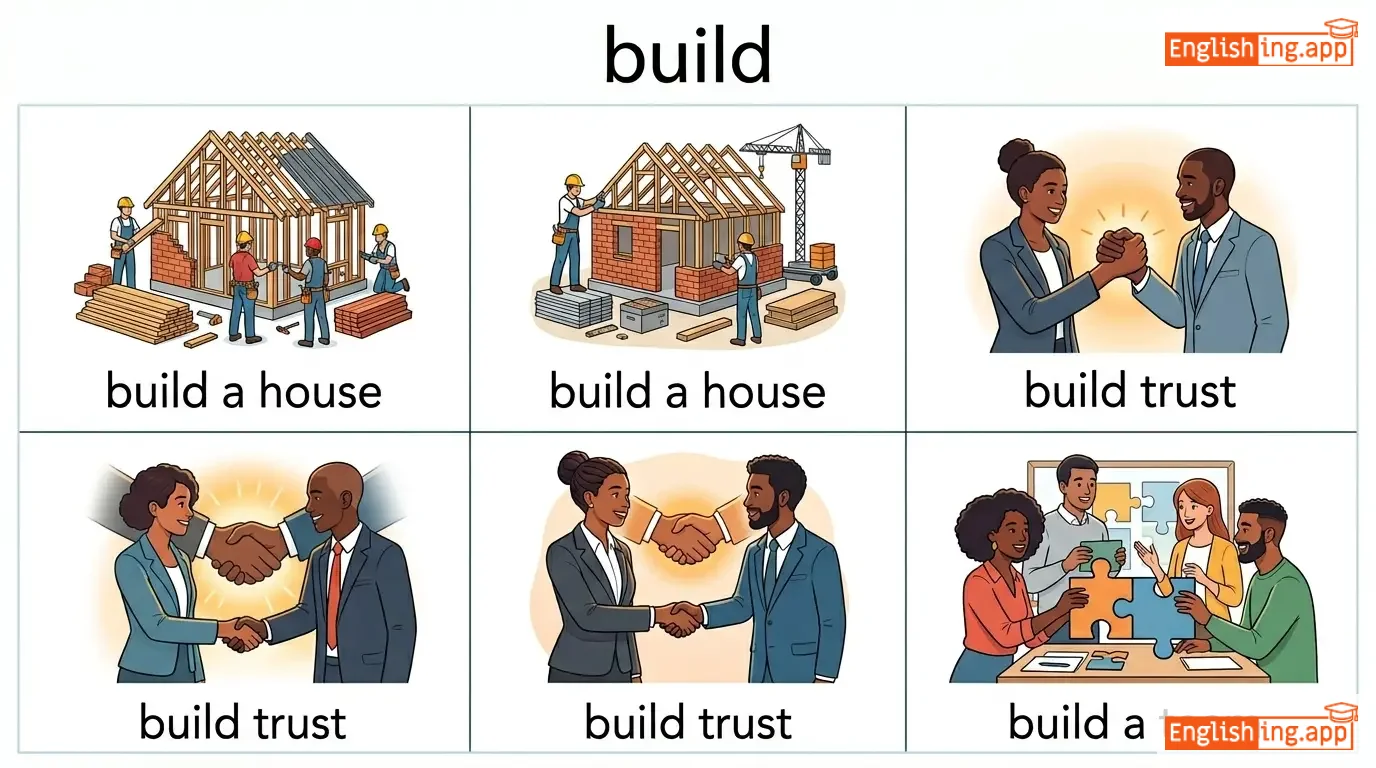
build a house, build trust, build a team, build strength
••••••
|
Build 就是建造的意思。
••••••
|
|
#10530
💰
|
/ˈbʌdʒɪt/
noun/verb
(预算)
••••••
|
- •••••• |
预算
yùsuàn
••••••
|
budgeted
预算了
••••••
|
budgeted
预算了
••••••
|
budgets
预算
••••••
|
budgeting
预算中
••••••
|
An estimate of income and expenditure for a set period of time; to plan expenses and income.
••••••
|
The family created a budget to manage their expenses.
家庭制定了预算来管理开支。
••••••
|
家庭制定了预算来管理开支。
Jiātíng zhìdìngle yùsuàn lái guǎnlǐ kāizhī.
••••••
|
on a tight budget
预算紧张
••••••
|
Having limited money to spend.
••••••
|
预算紧张
yùsuàn jǐnzhāng
••••••
|
plan, allocation, estimate, allowance, finances
••••••
|
waste, extravagance
••••••
|
annual budget, budget plan, budget deficit, budget cut
••••••
|
预算意味着控制花费。
••••••
|
|
#10531
🖌️
|
/brʌʃ/
noun/verb
••••••
|
- •••••• | - •••••• |
brushed
••••••
|
brushed
••••••
|
brushes
••••••
|
brushing
••••••
|
A tool with bristles for cleaning, painting, or grooming; to clean, arrange, or apply with a brush.
••••••
|
She used a brush to paint the fence. |
- •••••• |
brush up on |
To review or practice knowledge or skills to improve them.
••••••
|
- •••••• |
sweep, scrub, groom, polish, paint
••••••
|
neglect, dirty
••••••
|
paint brush, hair brush, brush teeth, brush off
••••••
|
No •••••• |
|
#10532
🤎
|
/braʊn/
adjective
(bʁaʊn)
••••••
|
- •••••• |
棕色
zongse
••••••
|
- •••••• | - •••••• | - •••••• | - •••••• |
of a color produced by mixing red, yellow, and black
••••••
|
She wore a brown dress to the party. |
她穿了一件棕色的衣服去参加聚会。
Ta chuanle yijian zongse de yifu qu canjia juhui.
••••••
|
brownie points |
credit or favor earned for doing something good
••••••
|
布朗尼积分
bulangni jifen
••••••
|
tan, beige, chocolate, chestnut, hazel
••••••
|
white, black
••••••
|
brown hair, brown eyes, brown sugar, dark brown
••••••
|
BROWN表示棕色 – '棕色的巧克力很好吃。'
••••••
|
|
#10533
👨👦
|
/ˈbrʌðər/
noun
(布拉泽)
••••••
|
- •••••• |
兄弟
xiongdi
••••••
|
- •••••• | - •••••• | - •••••• | - •••••• |
a male sibling
••••••
|
My brother is two years older than me. |
我的兄弟比我大两岁。
Wǒ de xiōngdì bǐ wǒ dà liǎng suì.
••••••
|
big brother |
an older brother or a protective authority
••••••
|
哥哥
gēgē
••••••
|
sibling, kin, mate, companion
••••••
|
sister, stranger
••••••
|
younger brother, elder brother, brother in law, brotherhood
••••••
|
BROTHER 就是兄弟 – 一起并肩的亲密关系!
••••••
|
|
#10534
💔
|
/ˈbroʊkən/
adjective
(bóukén)
••••••
|
- •••••• |
坏的
huài de
••••••
|
- •••••• | - •••••• | - •••••• | - •••••• |
damaged or not working properly
••••••
|
The chair is broken and needs repair. |
椅子坏了,需要修理。
Yǐzi huài le, xūyào xiūlǐ.
••••••
|
broken heart |
deep emotional pain due to loss or disappointment
••••••
|
破碎的心
pòsuì de xīn
••••••
|
damaged, ruined, fractured, defective
••••••
|
fixed, whole, intact
••••••
|
broken glass, broken promise, broken machine, broken relationship
••••••
|
BROKEN 意味着坏的,就像破碎的心 💔.
••••••
|
|
#10535
🇬🇧
|
/ˈbrɪtɪʃ/
adjective
(british)
••••••
|
- •••••• |
英国的
yingguo de
••••••
|
- •••••• | - •••••• | - •••••• | - •••••• |
relating to Great Britain or its people
••••••
|
She loves British culture and traditions.
她喜欢英国文化和传统。
••••••
|
她喜欢英国文化和传统。
Ta xihuan Yingguo wenhua he chuantong.
••••••
|
- •••••• | - •••••• | - •••••• |
English, UK, Anglo, Briton
••••••
|
foreign, non-British
••••••
|
British culture, British accent, British history, British empire
••••••
|
英国的指的是来自🇬🇧 英国的文化或人们。
••••••
|
|
#10536
📦
|
/brɪŋ/
verb
(bɹɪŋ)
••••••
|
|
带来
dai lai
••••••
|
brought
brɔt
••••••
|
brought
brɔt
••••••
|
brings
brɪŋz
••••••
|
bringing
brɪŋɪŋ
••••••
|
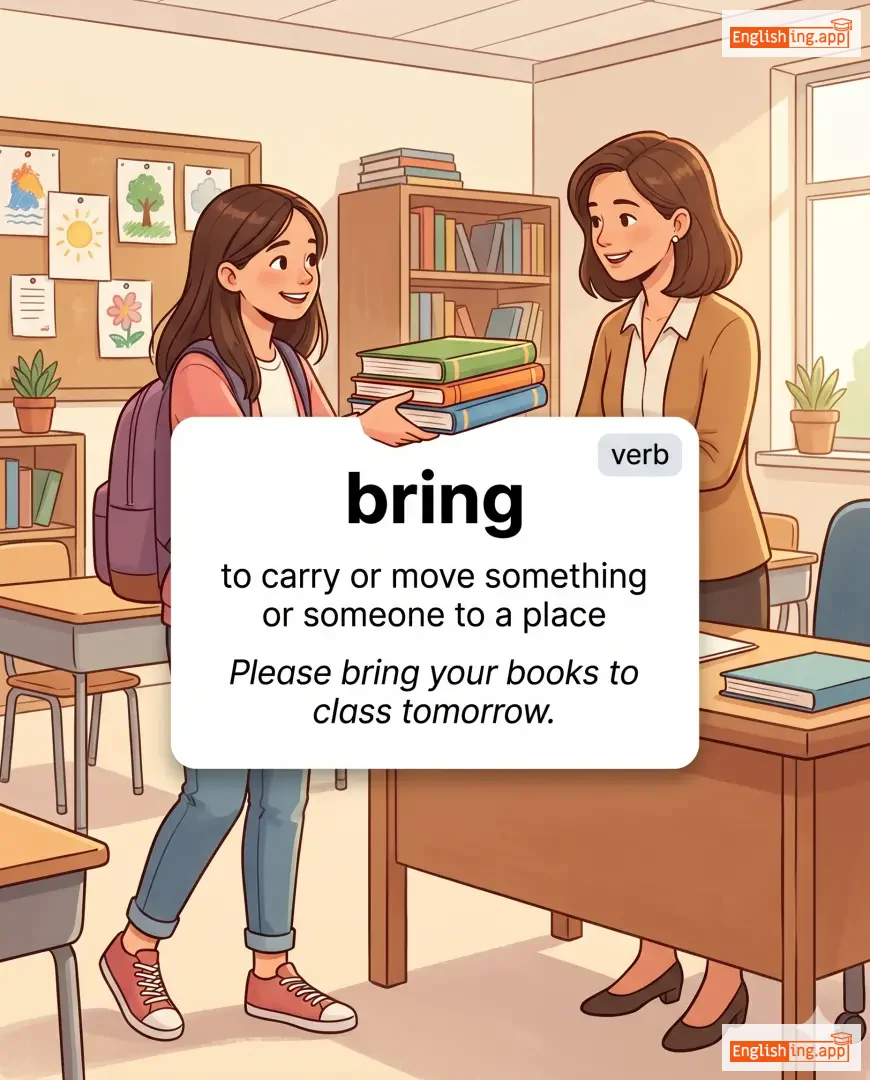
to carry or move something or someone to a place
••••••
|
Please bring your books to class tomorrow.
请把书带到明天的课堂。
••••••
|
请把书带到明天的课堂。
Qing ba shu dai dao mingtian de kètáng.
••••••
|
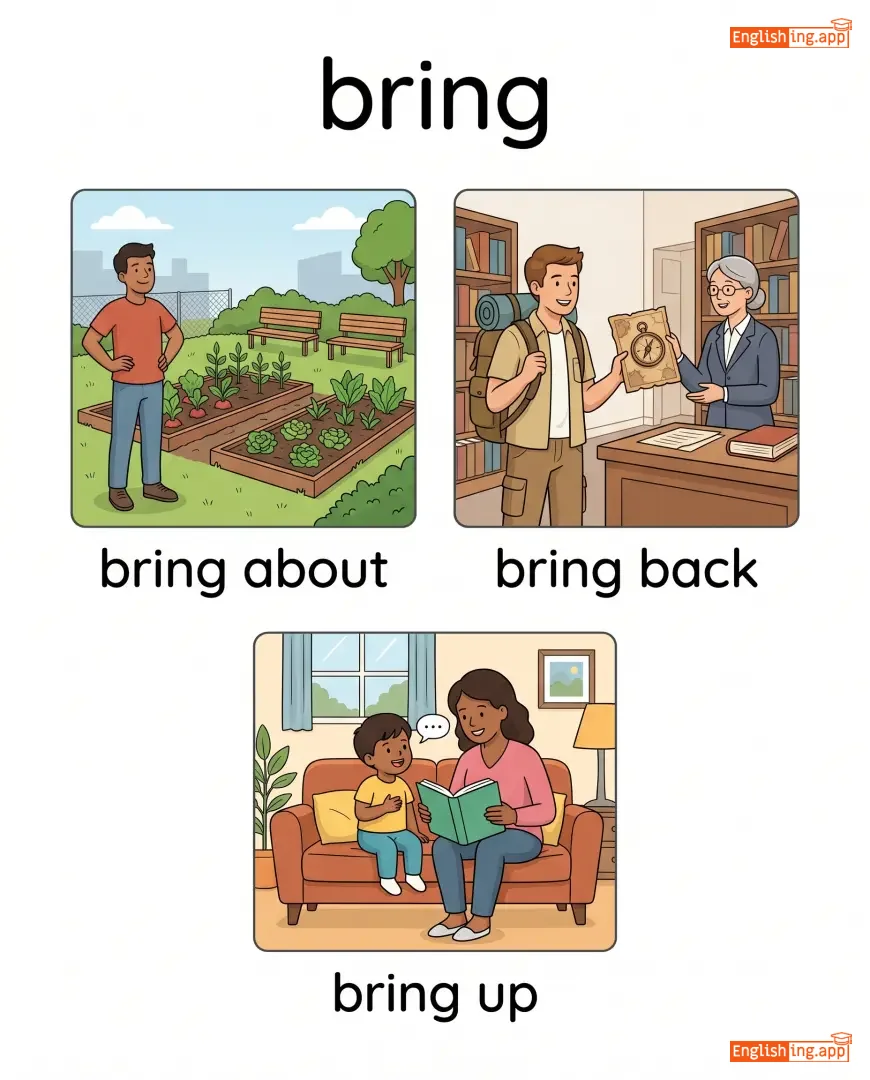
bring up
提到
••••••
|
to mention or introduce a topic
••••••
|
提到
tí dào
••••••
|
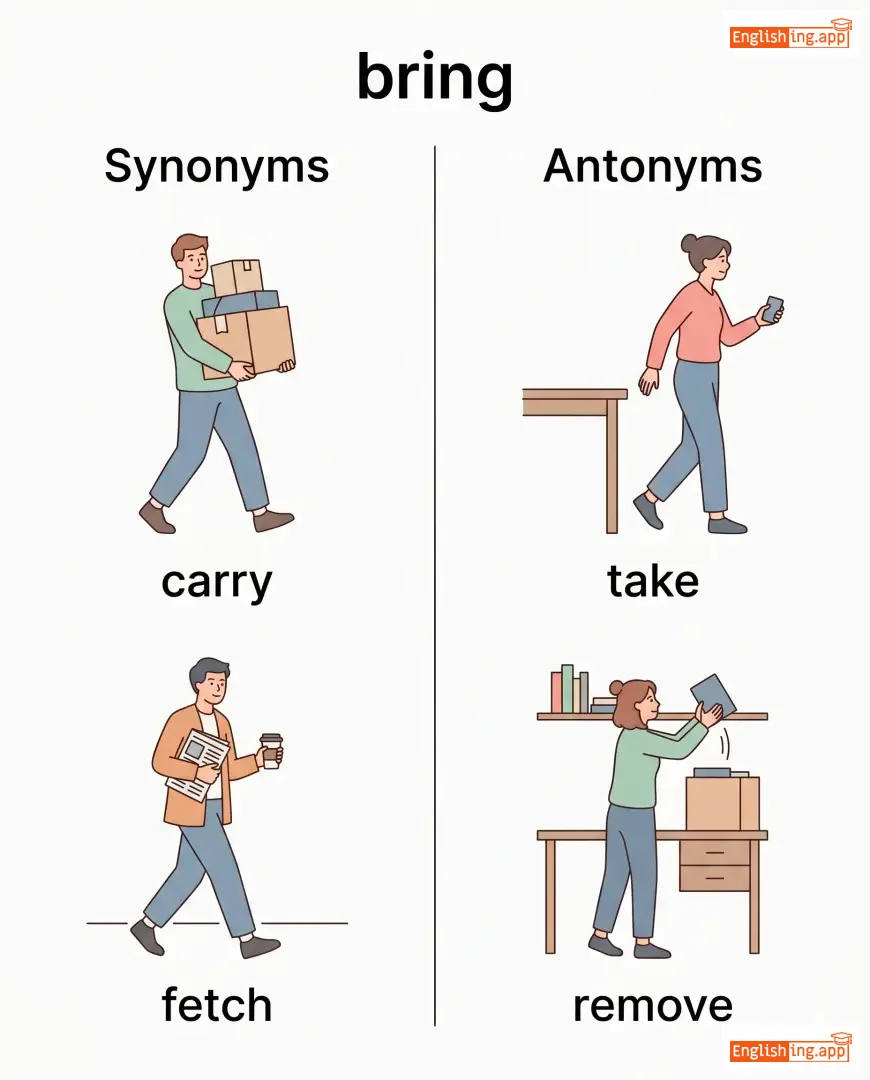
carry, fetch, deliver, convey, transport
••••••
|
take, remove
••••••
|
bring about, bring back, bring up, bring along, bring forward
••••••
|
BRING 在中文里是带来,妈妈常说‘带来玩具’。
••••••
|
|
#10537
💡
|
/ˈbrɪliənt/
adjective
(bǔrīliànt)
••••••
|
- •••••• |
辉煌
huihuang
••••••
|
- •••••• | - •••••• | - •••••• | - •••••• |
Exceptionally clever, talented, or impressive; very bright or radiant.
••••••
|
She gave a brilliant performance on stage.
她在舞台上表演得非常出色。
••••••
|
她在舞台上表演得非常出色。
Ta zai wutai shang biaoyan de feichang chuse.
••••••
|
brilliant idea
辉煌的想法
••••••
|
A very clever or excellent thought or plan.
••••••
|
辉煌的想法
huihuang de xiangfa
••••••
|
intelligent, smart, talented, outstanding, radiant
••••••
|
stupid, dull, ordinary
••••••
|
brilliant idea, brilliant mind, brilliant career, brilliant light
••••••
|
辉煌意味辉煌 🌟 - 辉煌的想法意味卓越的计划。
••••••
|
|
#10538
☀️
|
/braɪt/
adjective
(brait)
••••••
|
- •••••• |
明亮的
mingliang de
••••••
|
- •••••• | - •••••• | - •••••• | - •••••• |
Giving out or reflecting a lot of light; intelligent or cheerful.
••••••
|
The bright sun lit up the entire valley. |
明亮的太阳照亮了整个山谷。
Míngliàng de tàiyáng zhàoliàngle zhěnggè shāngǔ.
••••••
|
look on the bright side |
To find positive aspects in a bad situation.
••••••
|
从好的一面看
Cóng hǎo de yīmiàn kàn
••••••
|
shiny, luminous, radiant, smart, cheerful
••••••
|
dark, dull, gloomy
••••••
|
bright light, bright color, bright future, bright idea
••••••
|
Bright意味着明亮的☀️ - Bright future意味着光明的未来。
••••••
|
|
#10539
⏱️
|
/ˈbriːfli/
adverb
(布里夫利)
••••••
|
- •••••• |
简短地
jiǎnduǎn de
••••••
|
- •••••• | - •••••• | - •••••• | - •••••• |
For a short time; in a few words.
••••••
|
She spoke briefly about her travel experience. |
她简短地谈到了她的旅行经历。
Tā jiǎnduǎn de tán dào le tā de lǚxíng jīnglì.
••••••
|
- •••••• | - •••••• | - •••••• |
shortly, quickly, concisely, curtly
••••••
|
lengthily, elaborately
••••••
|
explain briefly, talk briefly, meet briefly, mention briefly
••••••
|
Brief在英语中意味着简短,因此briefly也意味着简短。
••••••
|
|
#10540
✌️
|
/boʊθ/
determiner/pronoun
(bóu sī)
••••••
|
- •••••• |
两个
liǎng ge
••••••
|
- •••••• | - •••••• | - •••••• | - •••••• |
referring to two people or things together
••••••
|
Both of the children were excited about the trip. |
这两个孩子对旅行感到兴奋。
Zhè liǎng ge háizi duì lǚxíng gǎndào xīngfèn.
••••••
|
both sides of the coin |
two different aspects of the same situation
••••••
|
硬币的两面
yìngbì de liǎng miàn
••••••
|
two, pair, duo, couple
••••••
|
neither, none
••••••
|
both ways, both of them, both sides, both hands
••••••
|
Both意味着两个,就像两只手。
••••••
|
|
#10541
🧱
|
/brɪk/
noun
(bùlíkè)
••••••
|
- •••••• |
砖块
zhuānkuài
••••••
|
- •••••• | - •••••• | - •••••• | - •••••• |
A rectangular block of clay or similar material used in building walls and other structures.
••••••
|
The workers laid brick after brick to build the wall. |
工人们一块接一块地放砖来建造墙壁。
Gōngrénmen yī kuài jiē yī kuài de fàng zhuān lái jiànzào qiángbì.
••••••
|
thick as a brick |
Used to describe someone who is very stupid or slow to understand.
••••••
|
笨得像块砖
bèn dé xiàng kuài zhuān
••••••
|
block, stone, tile, slab, cube
••••••
|
void, gap
••••••
|
brick wall, brick house, brick building, red brick, brick by brick
••••••
|
砖块 = 砖 🧱 - 砖块用来建造墙壁。
••••••
|
|
#10542
😮💨
|
/briːð/
verb
(briid)
••••••
|
- •••••• |
呼吸
huxi
••••••
|
breathed
briift
••••••
|
breathed
briift
••••••
|
breathes
briis
••••••
|
breathing
briiding
••••••
|
To take air into the lungs and send it out again.
••••••
|
It was hard to breathe in the smoky room.
It was hard to breathe in the smoky room.
••••••
|
在烟雾弥漫的房间里呼吸很困难。
Zai yanwu miman de fangjian li huxi hen kunnan.
••••••
|
breathe easy
呼吸容易
••••••
|
to relax after a period of stress
••••••
|
放松
fangsong
••••••
|
inhale, exhale, respire, gasp
••••••
|
suffocate, choke
••••••
|
breathe deeply, breathe easily, hardly breathe, breathe fire
••••••
|
呼吸意味着吸入空气,呼吸容易意味着放松。
••••••
|
|
#10543
💨
|
/brɛθ/
noun
(bɾɛθ)
••••••
|
- •••••• |
呼吸
hūxī
••••••
|
- •••••• | - •••••• | - •••••• | - •••••• |
The air taken into or expelled from the lungs during breathing.
••••••
|
He took a deep breath before speaking. |
他在讲话前深深地吸了一口气。
Tā zài jiǎnghuà qián shēnshēn de xīle yī kǒu qì.
••••••
|
catch one's breath |
to rest or pause to recover normal breathing
••••••
|
屏住呼吸
píng zhù hūxī
••••••
|
inhalation, exhalation, respiration, gasp
••••••
|
suffocation, choking
••••••
|
deep breath, hold breath, last breath, fresh breath
••••••
|
Breath 是呼吸,没有呼吸就没有生命。
••••••
|
|
#10544
👩🍼
|
/brɛst/
noun
(布雷斯特)
••••••
|
- •••••• |
胸部
xiongbu
••••••
|
- •••••• | - •••••• | - •••••• | - •••••• |
Either of the two soft, rounded parts on a woman’s chest that produce milk after childbirth.
••••••
|
The baby was fed from his mother's breast. |
婴儿从母亲的胸部喂养。
Yīng'ér cóng mǔqīn de xiōngbù wèiyǎng.
••••••
|
make a clean breast of |
to confess or admit something openly
••••••
|
公开承认
gōngkāi chéngrèn
••••••
|
bosom, chest, bust, mammary
••••••
|
back, spine
••••••
|
breast cancer, breast milk, chicken breast, breast surgery
••••••
|
Breast 意味着胸部,妈妈用胸部喂养孩子。
••••••
|
|
#10545
🥞
|
/ˈbrɛkfəst/
noun
••••••
|
- •••••• | - •••••• | - •••••• | - •••••• | - •••••• | - •••••• |
The first meal of the day, usually eaten in the morning.
••••••
|
We had eggs and toast for breakfast. |
- •••••• |
have breakfast |
to eat the first meal of the day
••••••
|
- •••••• |
morning meal, brunch, repast, first meal
••••••
|
dinner, supper
••••••
|
healthy breakfast, big breakfast, skip breakfast, have breakfast
••••••
|
No •••••• |
|
#10546
🍞
|
/brɛd/
noun
••••••
|
- •••••• | - •••••• | - •••••• | - •••••• | - •••••• | - •••••• |
A type of food made from flour, water, and yeast, mixed and baked.
••••••
|
She bought a loaf of bread from the bakery. |
- •••••• |
break bread |
to share a meal with someone, often signifying friendship
••••••
|
- •••••• |
loaf, bun, roll, baguette, toast
••••••
|
meat, rice
••••••
|
slice of bread, loaf of bread, white bread, brown bread
••••••
|
No •••••• |
|
#10547
🧠
|
/breɪn/
noun
(bréɪn)
••••••
|
|
大脑
dà nǎo
••••••
|
- •••••• | - •••••• | - •••••• | - •••••• |
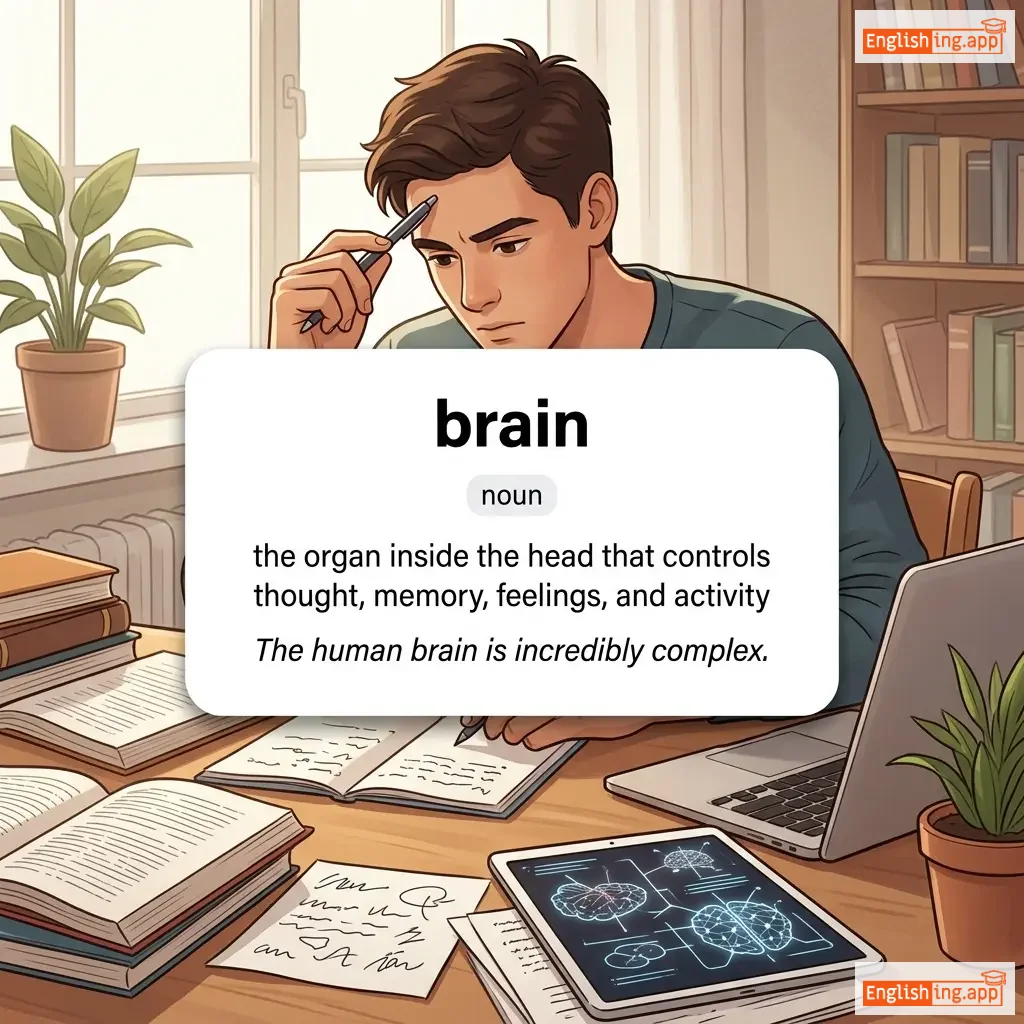
the organ inside the head that controls thought, memory, feelings, and activity
••••••
|
The human brain is incredibly complex. |
人类的大脑复杂得令人难以置信。
rén lèi de dà nǎo fù zá dé lìng rén nán yǐ zhì xìn
••••••
|
rack your brain |
to think very hard about something
••••••
|
绞尽脑汁
jiǎo jìn nǎo zhī
••••••
|
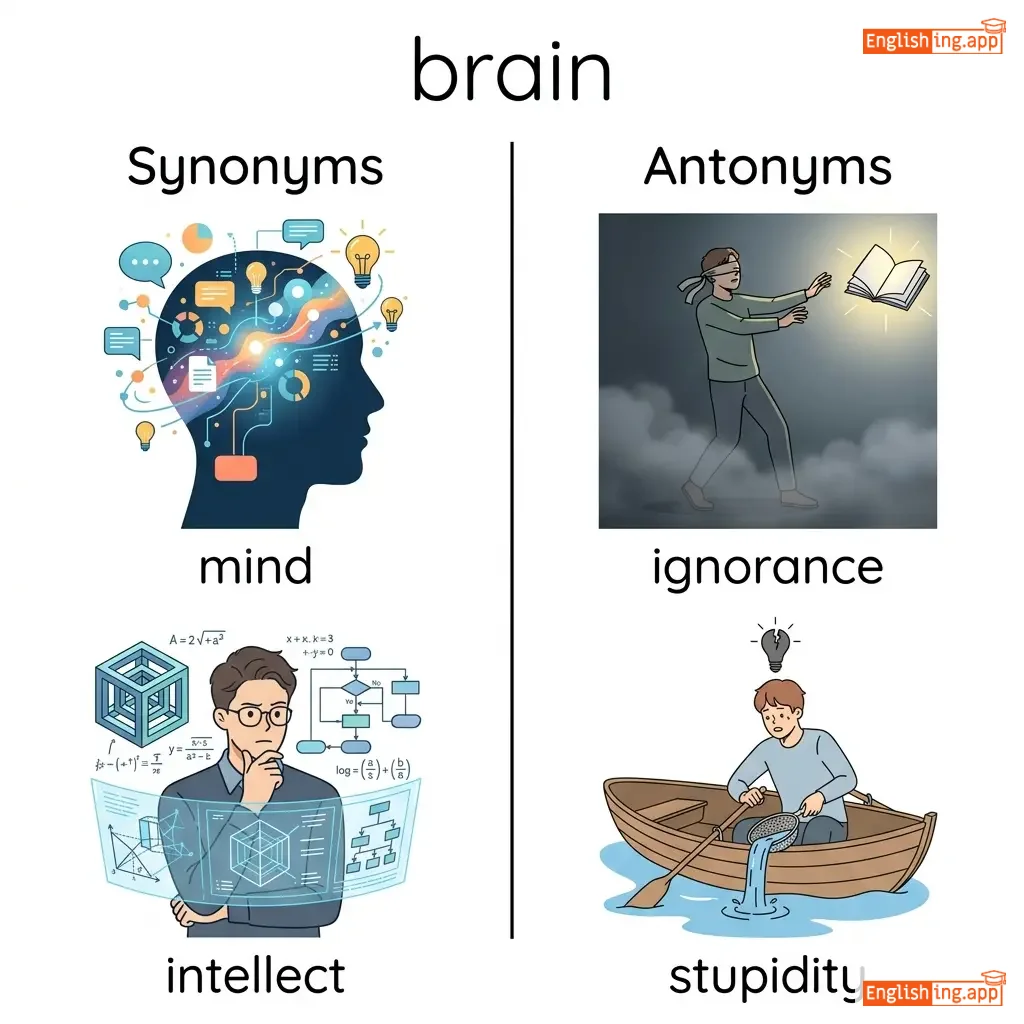
mind, intellect, intelligence, head
••••••
|
ignorance, stupidity
••••••
|
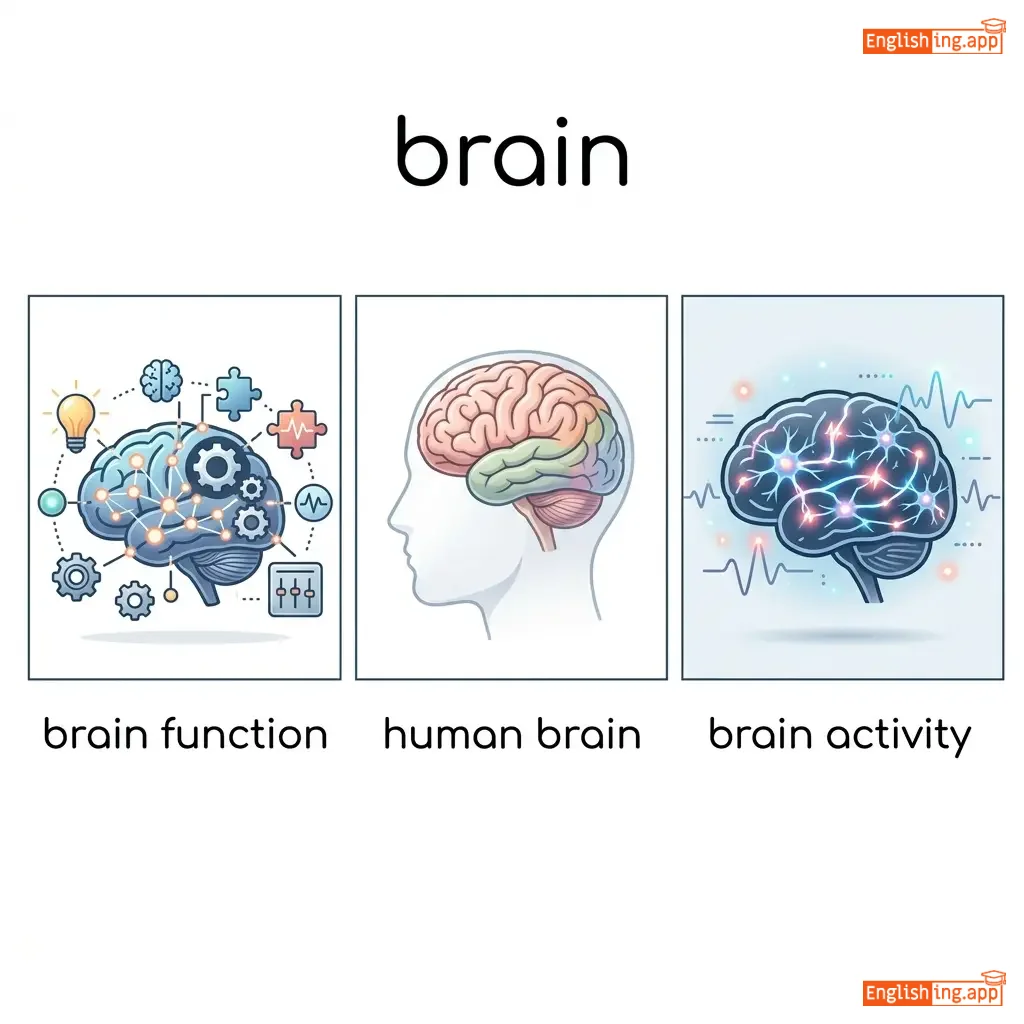
brain function, human brain, brain activity, brain power
••••••
|
大脑,像‘大浪’般的思考!
••••••
|
|
#10548
👨❤️👩
|
/ˈbɔɪˌfrɛnd/
noun
••••••
|
- •••••• | - •••••• | - •••••• | - •••••• | - •••••• | - •••••• |
a man or boy that someone is having a romantic or close relationship with
••••••
|
She introduced her boyfriend to her parents. |
- •••••• | - •••••• | - •••••• | - •••••• |
partner, companion, lover, date
••••••
|
girlfriend, enemy
••••••
|
new boyfriend, old boyfriend, serious boyfriend, high school boyfriend
••••••
|
No •••••• |
|
#10549
👦
|
/bɔɪ/
noun
(bóyī)
••••••
|
- •••••• |
男孩
nánhái
••••••
|
- •••••• | - •••••• | - •••••• | - •••••• |
a male child or young male person
••••••
|
The boy ran across the playground. |
那个男孩跑过了操场。
Nàgè nánhái pǎo guòle cāochǎng.
••••••
|
boys will be boys |
a phrase implying that boys or men often behave in certain stereotypical ways
••••••
|
男孩永远是男孩
nánhái yǒngyuǎn shì nánhái
••••••
|
lad, youngster, child, son, male
••••••
|
girl, female, woman
••••••
|
little boy, young boy, school boy, boy scout
••••••
|
Boy 代表男孩,像 'Boy' 和 'Baba' 都是男性。
••••••
|
|
#10550
📦
|
/bɑːks/
noun
(bó kè sī)
••••••
|
- •••••• |
盒子
hezi
••••••
|
- •••••• | - •••••• | - •••••• | - •••••• |
a container with flat sides, typically square or rectangular, used for storing things
••••••
|
He packed his clothes in a cardboard box.
他把衣服打包进一个纸箱里。
••••••
|
他把衣服打包进一个纸箱里。
Ta ba yifu dabao jin yi ge zhi xiang li.
••••••
|
think outside the box
跳出框框思考
••••••
|
to think creatively and differently
••••••
|
跳出框框思考
Tiao chu kuangkuang sikao
••••••
|
container, case, carton, package, chest
••••••
|
openness, unboxed
••••••
|
gift box, wooden box, cardboard box, jewelry box
••••••
|
盒子意味着盒子,想象你把'书'放进盒子里。
••••••
|
|
#10551
🥣
|
/boʊl/
noun
(bóu)
••••••
|
- •••••• |
碗
wan
••••••
|
- •••••• | - •••••• | - •••••• | - •••••• |
a round, deep dish used for holding food or liquids
••••••
|
She poured the soup into a large bowl. |
她把汤倒进了一个大碗里。
Tā bǎ tāng dào jìnle yīgè dà wǎn lǐ.
••••••
|
bowl over |
to surprise or impress someone greatly
••••••
|
使吃惊
shǐ chījīng
••••••
|
dish, vessel, container, basin
••••••
|
plate, flat surface
••••••
|
salad bowl, mixing bowl, cereal bowl, soup bowl
••••••
|
Bowl 代表碗,想象球掉进一个深碗里。
••••••
|
|
#10552
🛑
|
/ˈbaʊn.dri/
noun
(bāo'āndì)
••••••
|
|
边界
bianjie
••••••
|
- •••••• | - •••••• | - •••••• | - •••••• |
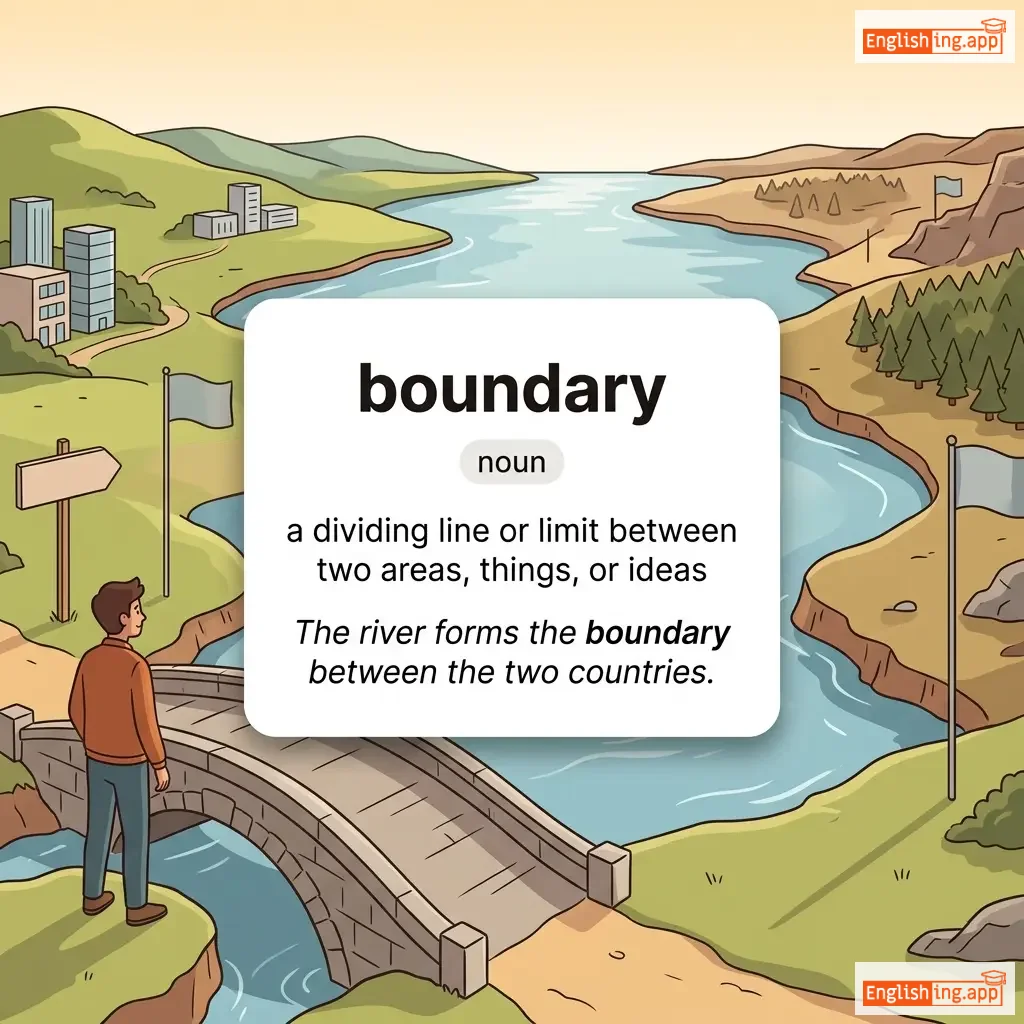
a dividing line or limit between two areas, things, or ideas
••••••
|
The river forms the boundary between the two countries. |
这条河流形成了两国之间的边界。
Zhe tiao heliu xingchengle liangguo zhijian de bianjie.
••••••
|
cross the boundary |
to go beyond accepted limits
••••••
|
越过边界
yueguo bianjie
••••••
|
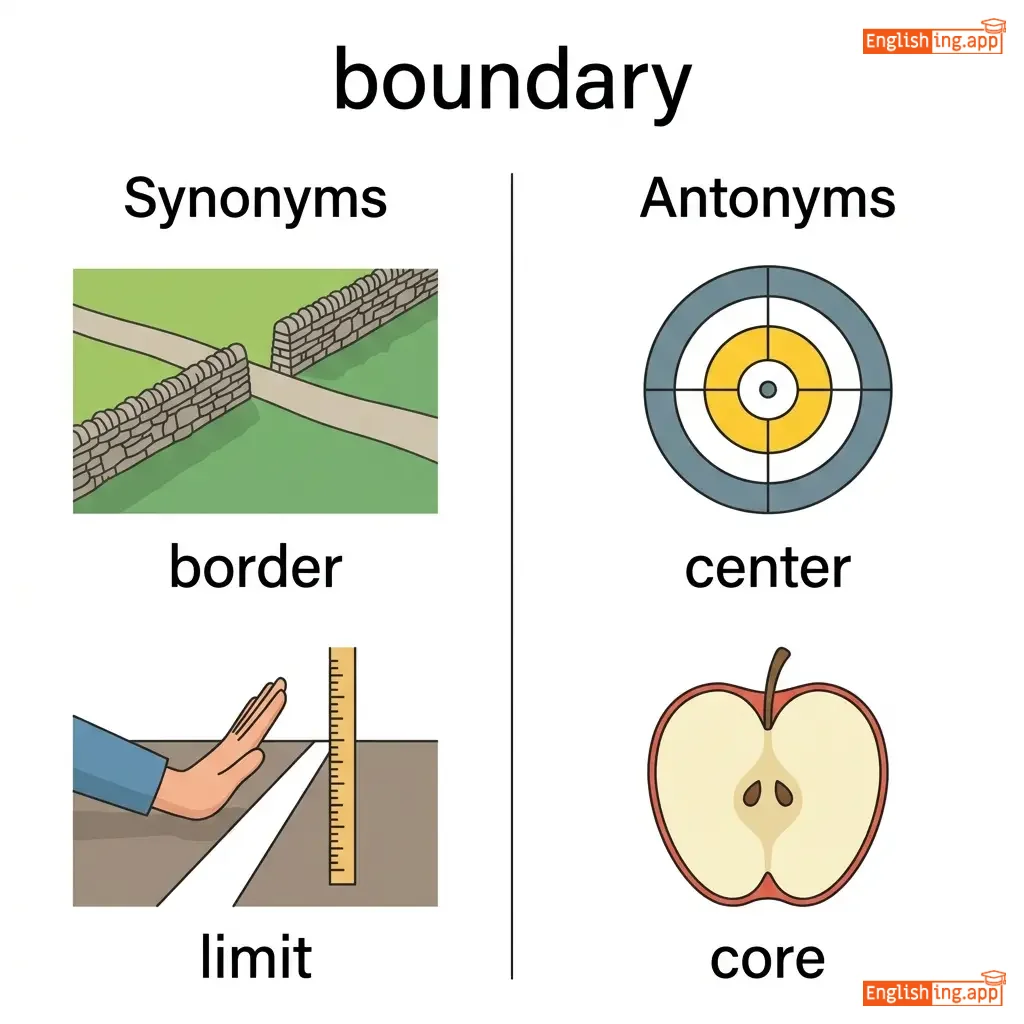
border, limit, edge, frontier
••••••
|
center, core, interior
••••••
|
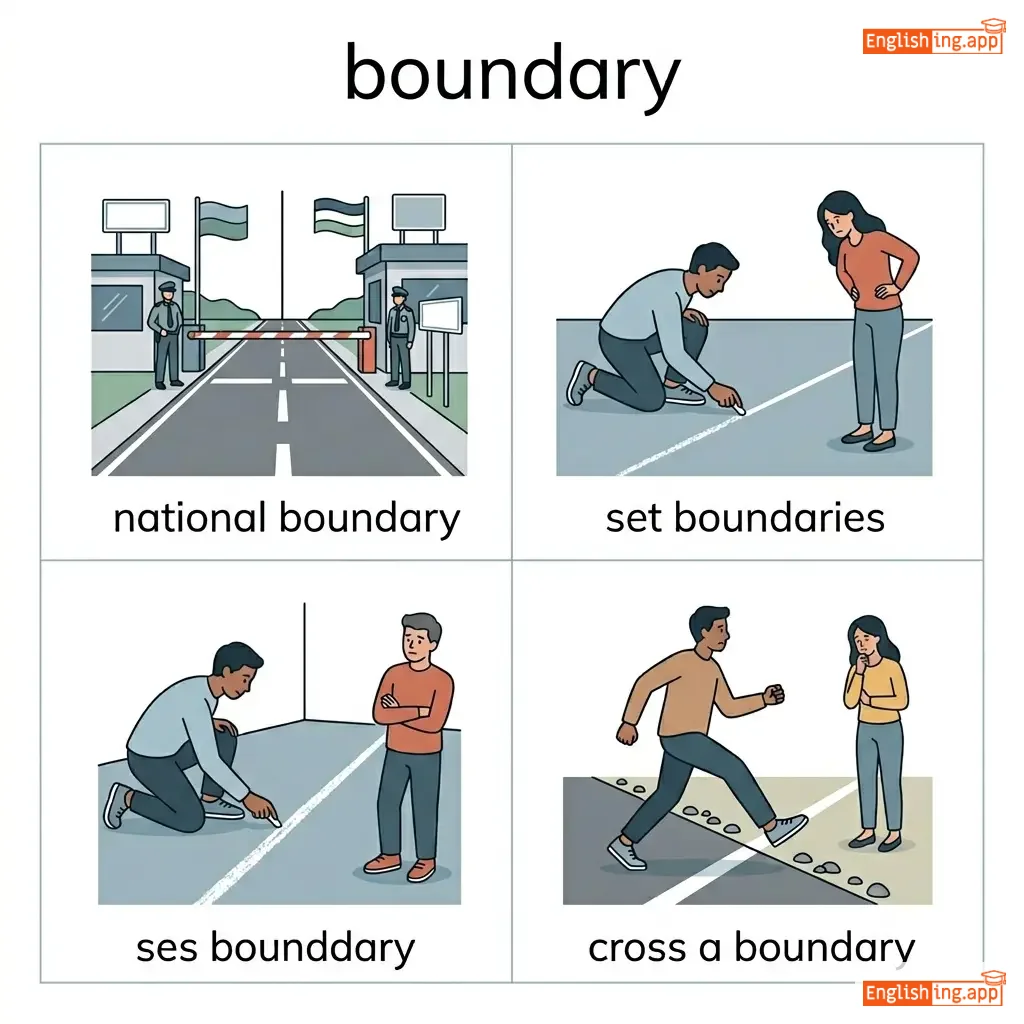
national boundary, set boundaries, cross a boundary, boundary line
••••••
|
Boundary 就是边界,就像在足球中,边界就是球门线。
••••••
|
|
#10553
🍾
|
/ˈbɒt.əl/
noun
(瓶子)
••••••
|
- •••••• |
瓶子
pingzi
••••••
|
- •••••• | - •••••• | - •••••• | - •••••• |
a container, typically made of glass or plastic, with a narrow neck used to hold liquids
••••••
|
He poured water into the bottle. |
他把水倒进瓶子里。
Tā bǎ shuǐ dào jìn píngzi lǐ.
••••••
|
bottle up |
to keep emotions hidden instead of expressing them
••••••
|
压抑情感
yāyì qínggǎn
••••••
|
flask, container, jar, vessel
••••••
|
open container, bowl
••••••
|
water bottle, glass bottle, plastic bottle, bottle of wine
••••••
|
瓶子就是瓶子,用来装水的瓶子。
••••••
|
|
#10554
😒
|
/ˈbɒðər/
verb
(bóder)
••••••
|
- •••••• |
打扰
dǎrǎo
••••••
|
bothered
bóderd
••••••
|
bothered
bóderd
••••••
|
bothers
bóz
••••••
|
bothering
bódering
••••••
|
to annoy, worry, or cause trouble to someone
••••••
|
I don't want to bother you while you're working.
我不想在你工作的时候打扰你。
••••••
|
我不想在你工作的时候打扰你。
Wǒ bù xiǎng zài nǐ gōngzuò de shíhòu dǎrǎo nǐ.
••••••
|
can't be bothered
我不在乎
••••••
|
too lazy or unwilling to do something
••••••
|
我不在乎
Wǒ bù zàihu
••••••
|
annoy, disturb, irritate, trouble, pester
••••••
|
please, soothe, comfort
••••••
|
bother someone, bother to ask, hardly bother, never bother
••••••
|
Bother的意思是打扰,想象一个人总是打扰你做事。
••••••
|
Vocabulary Quiz
Test your vocabulary by matching words with their translations or meanings.
Login to take the quiz
Comments (0)
Share your thoughts and join the discussion.
Join the discussion by logging in
Login to CommentNo comments yet
Be the first to share your thoughts!