



Swipe left or right, or use the buttons. Tap image to zoom.
例句翻译
单词
Lesson 283Lesson 283 - 遮罩切换
|
表情符号
|
单词 | Images | 翻译 | 过去时 | 过去分词 | 第三人称单数 | 动名词 | 含义 | 例句 | 例句翻译 | 示例表达 | 示例表达含义 | 示例表达翻译 | 同义词 | 反义词 | 搭配词 | 助记符 |
|---|---|---|---|---|---|---|---|---|---|---|---|---|---|---|---|---|---|
|
#8460
🌀
|
/səbˈsjuːm/
verb
(sā bù xī yù mǔ)
••••••
|
|
包括
bāokuò
••••••
|
subsumed
sā bù xī yù mǔ de
••••••
|
subsumed
sā bù xī yù mǔ de
••••••
|
subsumes
sā bù xī yù mǔ sī
••••••
|
subsuming
sā bù xī yù mǔ xīng
••••••
|
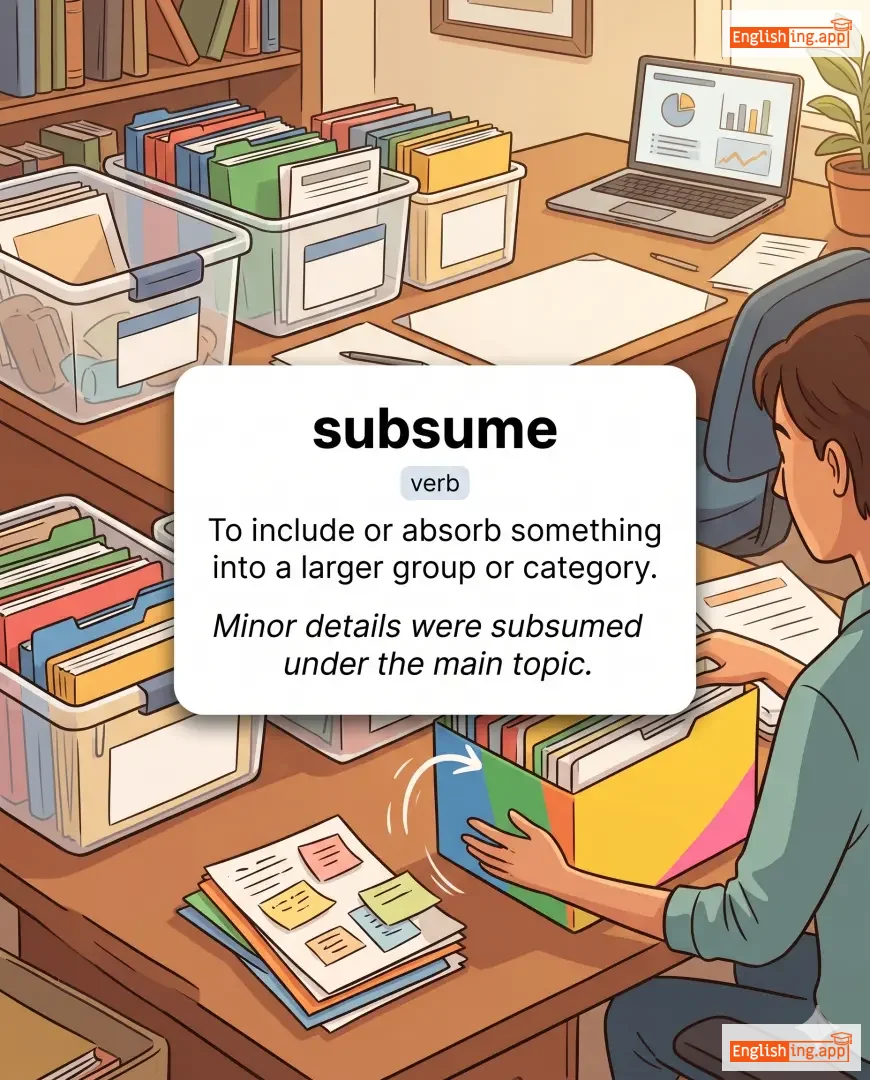
To include or absorb something into a larger group or category.
••••••
|
Minor details were subsumed under the main topic.
次要细节被纳入了主要话题。
••••••
|
次要细节被纳入了主要话题。
Cìyào xìjié bèi nàrù le zhǔyào huàtí.
••••••
|
- •••••• | - •••••• | - •••••• |
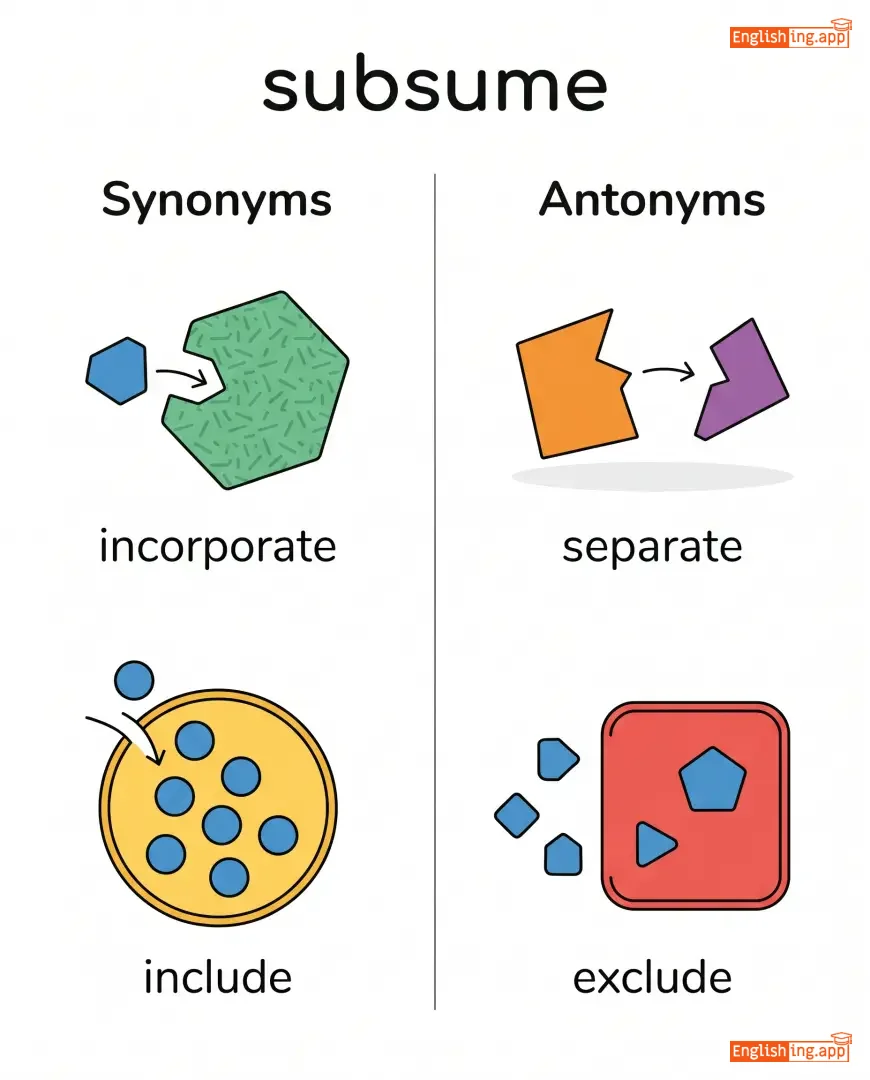
incorporate, include, absorb, encompass
••••••
|
separate, exclude
••••••
|
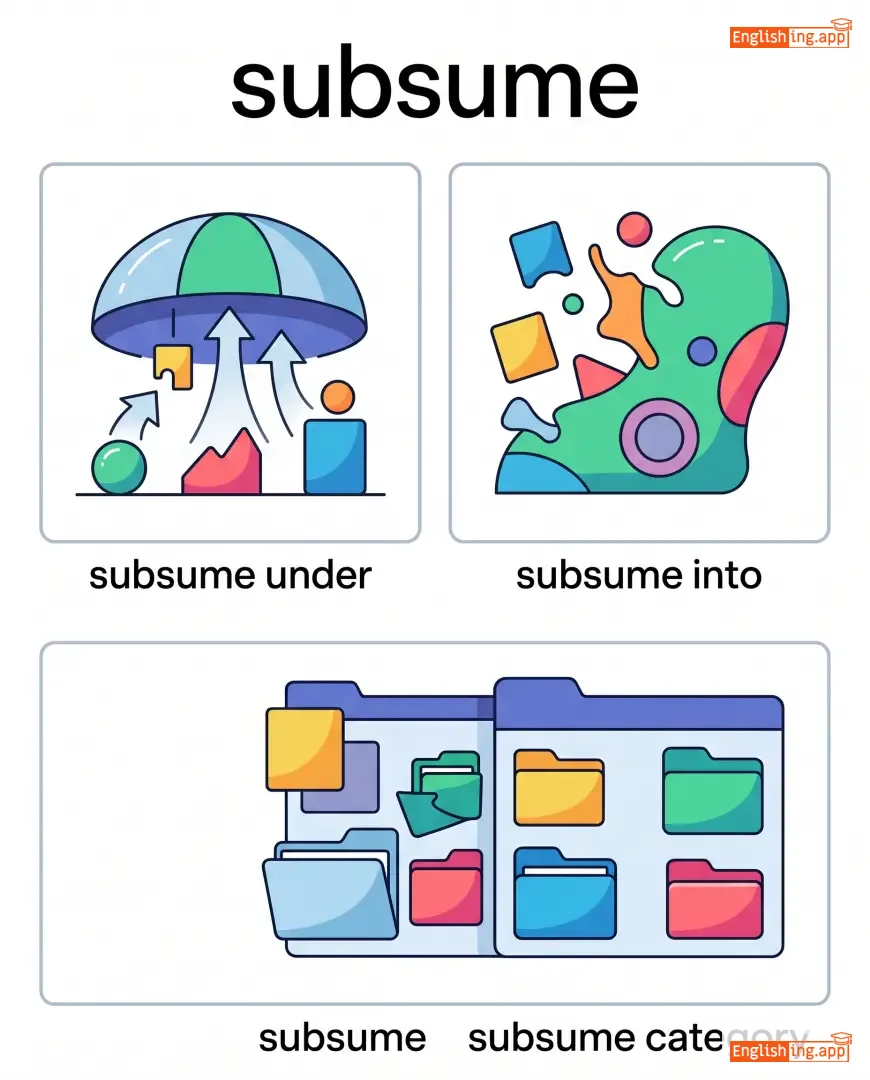
subsume under, subsume into, subsume category, subsume theory
••••••
|
Sub + 包括 → 把小东西纳入大的东西 = subsume 意味着包括。
••••••
|
|
#8461
👑
|
/səkˈsɛsər/
noun
(sàkèssuò)
••••••
|
- •••••• |
继任者
jìrènzhě
••••••
|
- •••••• | - •••••• | - •••••• | - •••••• |
A person or thing that follows another in a position, office, or role.
••••••
|
The company appointed a successor after the CEO retired. |
公司在CEO退休后任命了继任者。
Gōngsī zài CEO tuìxiū hòu rènmìngle jìrènzhě.
••••••
|
successor in title |
a person who legally takes over rights or property from another
••••••
|
职务继任者
zhíwù jìrènzhě
••••••
|
heir, inheritor, descendant, replacement, follower
••••••
|
predecessor, ancestor
••••••
|
successor to the throne, immediate successor, political successor, rightful successor
••••••
|
Success 后来的是继任者 — 继任者.
••••••
|
|
#8462
💼
|
/səkˈsɛsfəl/
adjective
(səkˈsɛsfəl)
••••••
|
- •••••• |
成功的
chenggong de
••••••
|
- •••••• | - •••••• | - •••••• | - •••••• |
having achieved success; having attained wealth, position, or honor
••••••
|
He is a successful businessman. |
他是一个成功的商人。
Ta shi yi ge chenggong de shangren.
••••••
|
successful career |
a career in which one achieves prosperity and recognition
••••••
|
成功的职业生涯
chenggong de zhiye shengya
••••••
|
prosperous, accomplished, thriving, victorious, effective
••••••
|
unsuccessful, failing, defeated
••••••
|
successful career, successful attempt, successful person, successful strategy
••••••
|
成功的意思是成功 — 就像你通过考试,你就会成功
••••••
|
|
#8463
🎉
|
/səkˈsɛs/
noun
(səkˈsɛs)
••••••
|
|
成功
chenggong
••••••
|
- •••••• | - •••••• | - •••••• | - •••••• |
the achievement of an aim, purpose, or result
••••••
|
His hard work led to great success. |
他的努力工作取得了巨大的成功。
Tā de nǔlì gōngzuò qǔdéle jùdà de chénggōng.
••••••
|
make a success of |
to achieve success in something
••••••
|
取得某事的成功
qǔdé mǒu shì de chénggōng
••••••
|
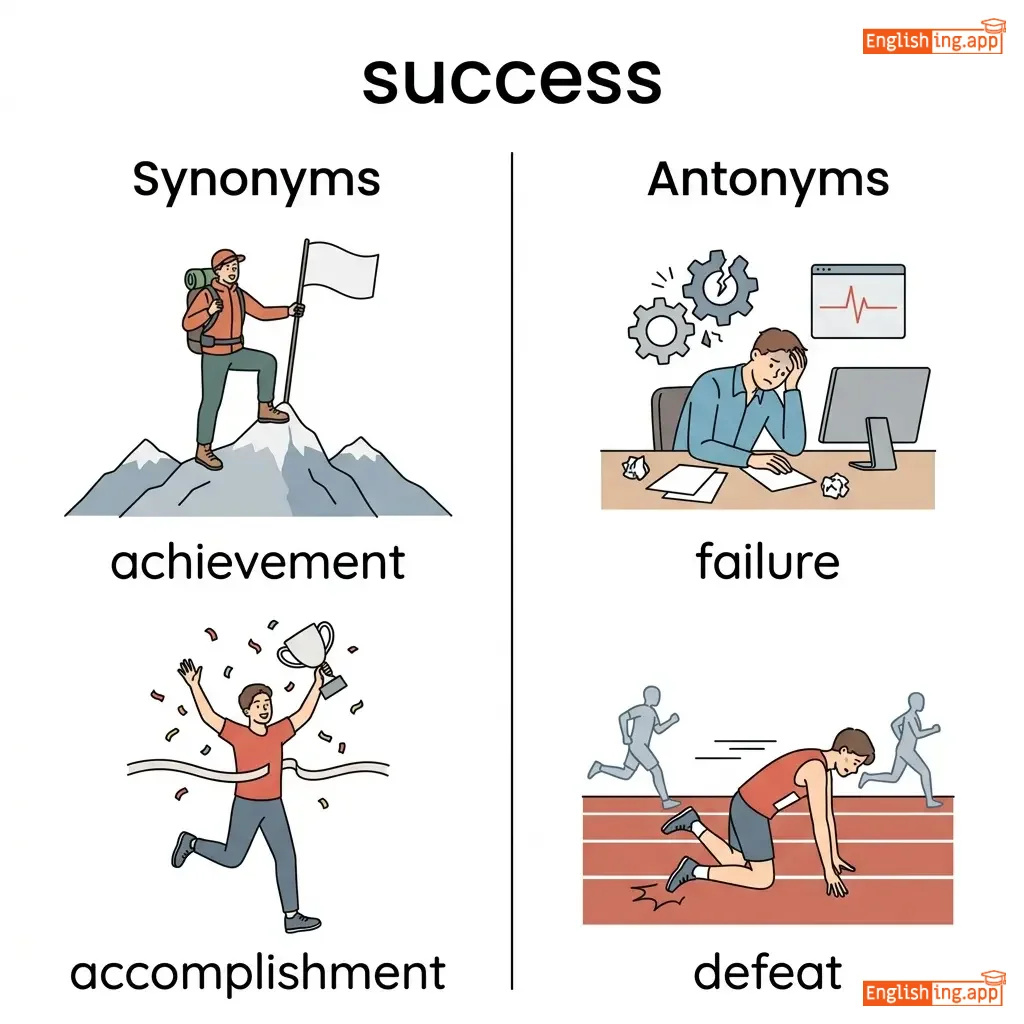
achievement, accomplishment, victory, triumph, prosperity
••••••
|
failure, defeat, loss
••••••
|
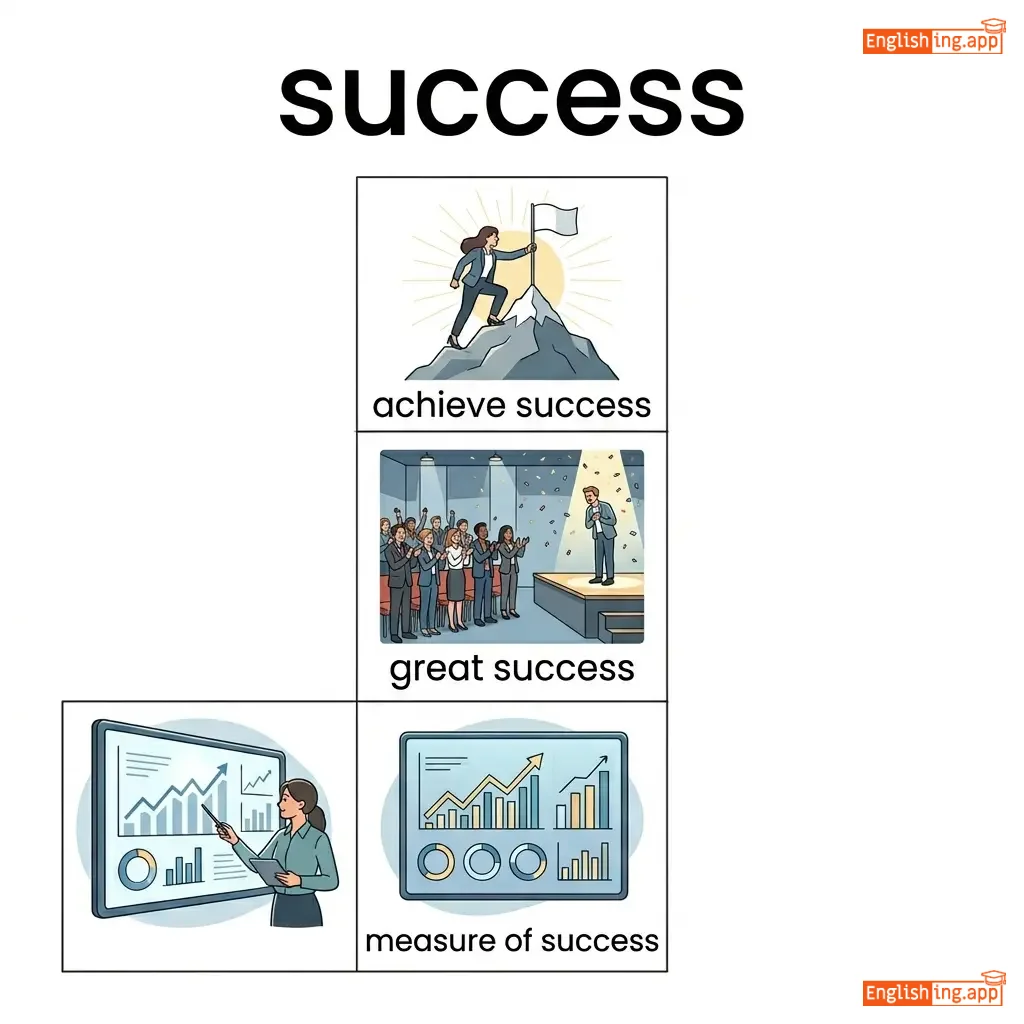
achieve success, great success, measure of success, success story
••••••
|
Success 就是成功 — 成功的考试意味着成功
••••••
|
|
#8464
➡️
|
/səkˈsiːdɪŋ/
verb
(suksídíng)
••••••
|
- •••••• |
随后的 / 后续的
suíhòu de / hòuxù de
••••••
|
- •••••• | - •••••• | - •••••• |
succeeding
suksídíng
••••••
|
coming after or following in order; continuing to succeed
••••••
|
In the succeeding years, the company expanded rapidly.
在随后的几年里,公司迅速扩展。
••••••
|
在随后的几年里,公司迅速扩展。
Zài suíhòu de jǐ nián lǐ, gōngsī xùnsù kuòzhǎn.
••••••
|
- •••••• | - •••••• | - •••••• |
following, subsequent, next, ensuing
••••••
|
preceding, previous
••••••
|
succeeding generations, succeeding years, succeeding period
••••••
|
Succeed 后的succeeding就是下一步 — succeeding意味着接下来
••••••
|
|
#8465
🏆
|
/səkˈsiːd/
verb
(suksid)
••••••
|
- •••••• |
成功
chenggong
••••••
|
succeeded
suksided
••••••
|
succeeded
suksided
••••••
|
succeeds
suksids
••••••
|
succeeding
suksiding
••••••
|
to achieve the desired aim or result; to do well
••••••
|
She worked hard to succeed in her career.
她努力工作,力图在事业中取得成功。
••••••
|
她努力工作,力图在事业中取得成功。
Tā nǔlì gōngzuò, lìtú zài shìyè zhōng qǔdé chénggōng.
••••••
|
succeed in life
在人生中取得成功
••••••
|
to achieve overall success and fulfillment in one’s life
••••••
|
在人生中取得成功
Zài rénshēng zhōng qǔdé chénggōng
••••••
|
achieve, prosper, triumph, prevail, accomplish
••••••
|
fail, lose, collapse
••••••
|
succeed in, succeed at, succeed against, succeed through
••••••
|
Success在succeed中取得 – 成功就是succeed
••••••
|
|
#8466
⚔️
|
/səbˈvɜːrt/
verb
••••••
|
- •••••• | - •••••• |
subverted
••••••
|
subverted
••••••
|
subverts
••••••
|
subverting
••••••
|
to undermine or overthrow an established system, authority, or institution
••••••
|
The rebels tried to subvert the government. |
- •••••• |
subvert the system |
to undermine or weaken the established order or rules
••••••
|
- •••••• |
undermine, overthrow, disrupt, destabilize, sabotage
••••••
|
support, strengthen, uphold
••••••
|
subvert democracy, subvert authority, subvert the system, subvert the law
••••••
|
No •••••• |
|
#8467
🔥
|
/səbˈvɜːrsɪv/
adjective
(subversive)
••••••
|
|
颠覆性的
diānfùxìng de
••••••
|
- •••••• | - •••••• | - •••••• | - •••••• |
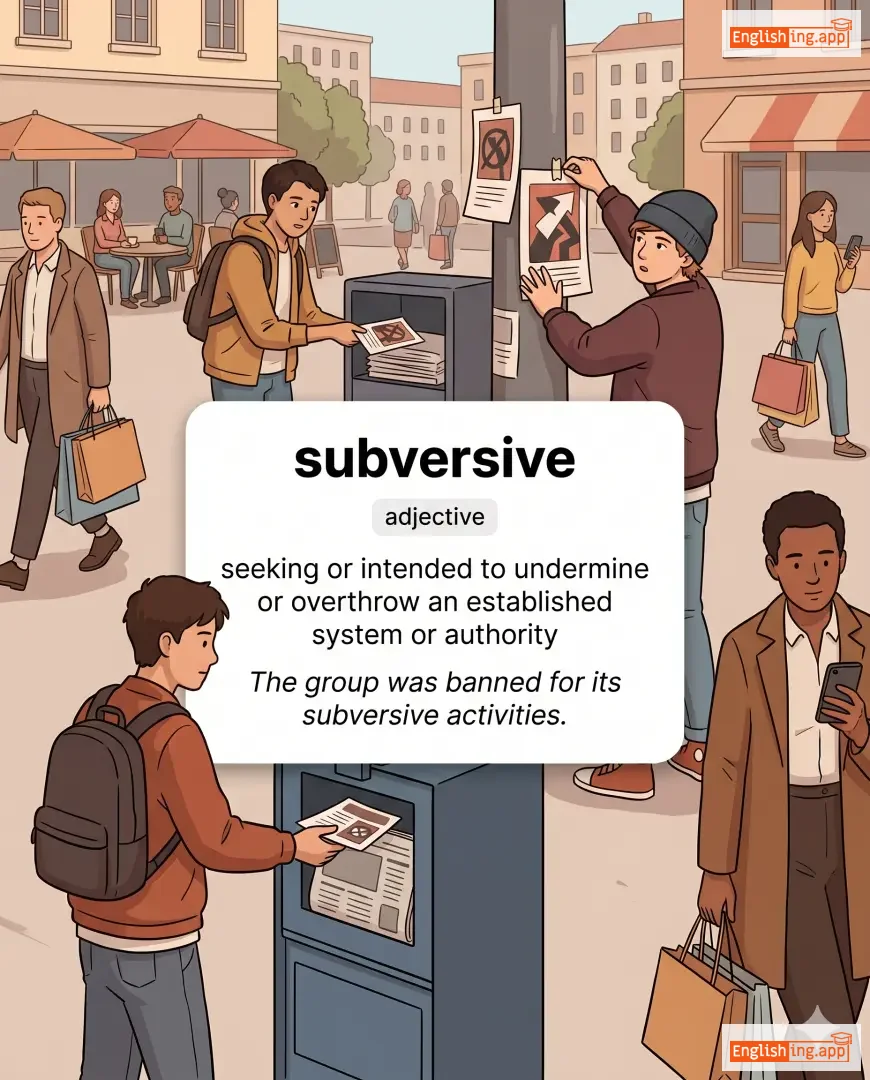
seeking or intended to undermine or overthrow an established system or authority
••••••
|
The group was banned for its subversive activities. |
该团体因其颠覆性活动而被禁止。
Gāi tuántǐ yīn qí diānfùxìng huódòng ér bèi jìnzhǐ.
••••••
|
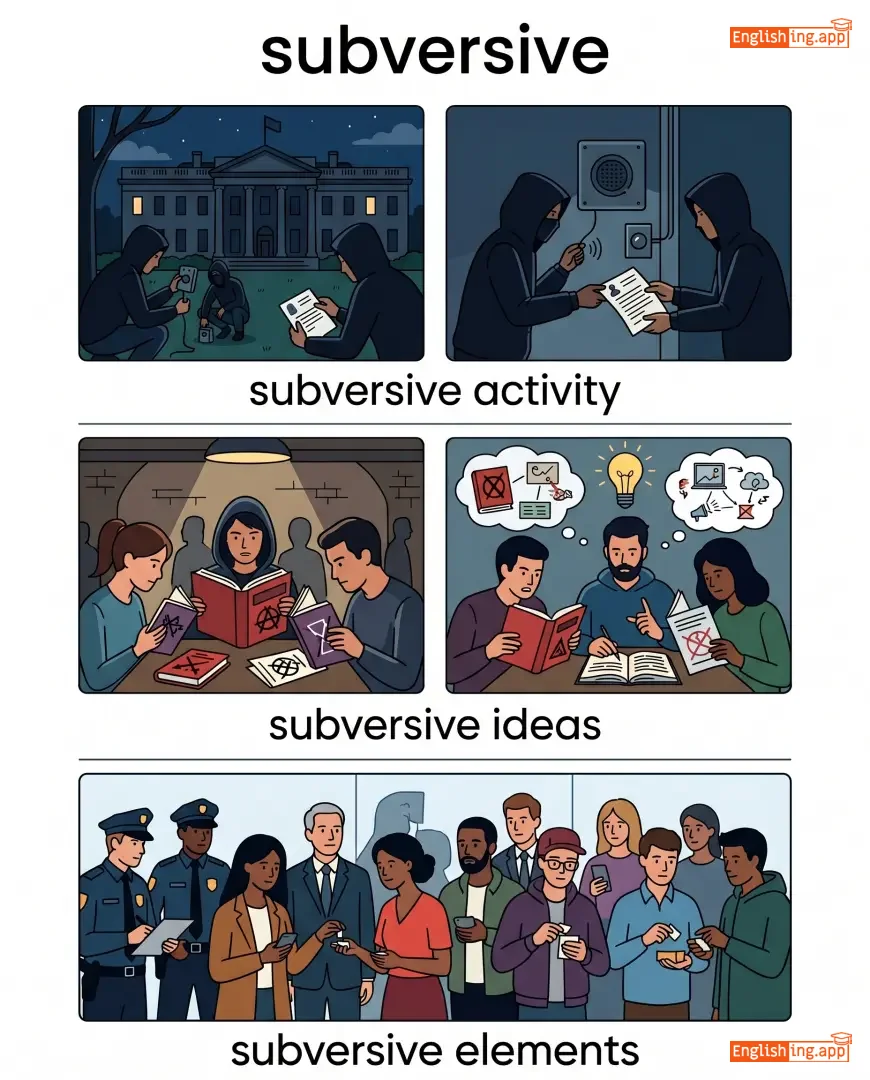
subversive elements |
people or groups trying to weaken authority
••••••
|
颠覆性元素
diānfùxìng yuánsù
••••••
|
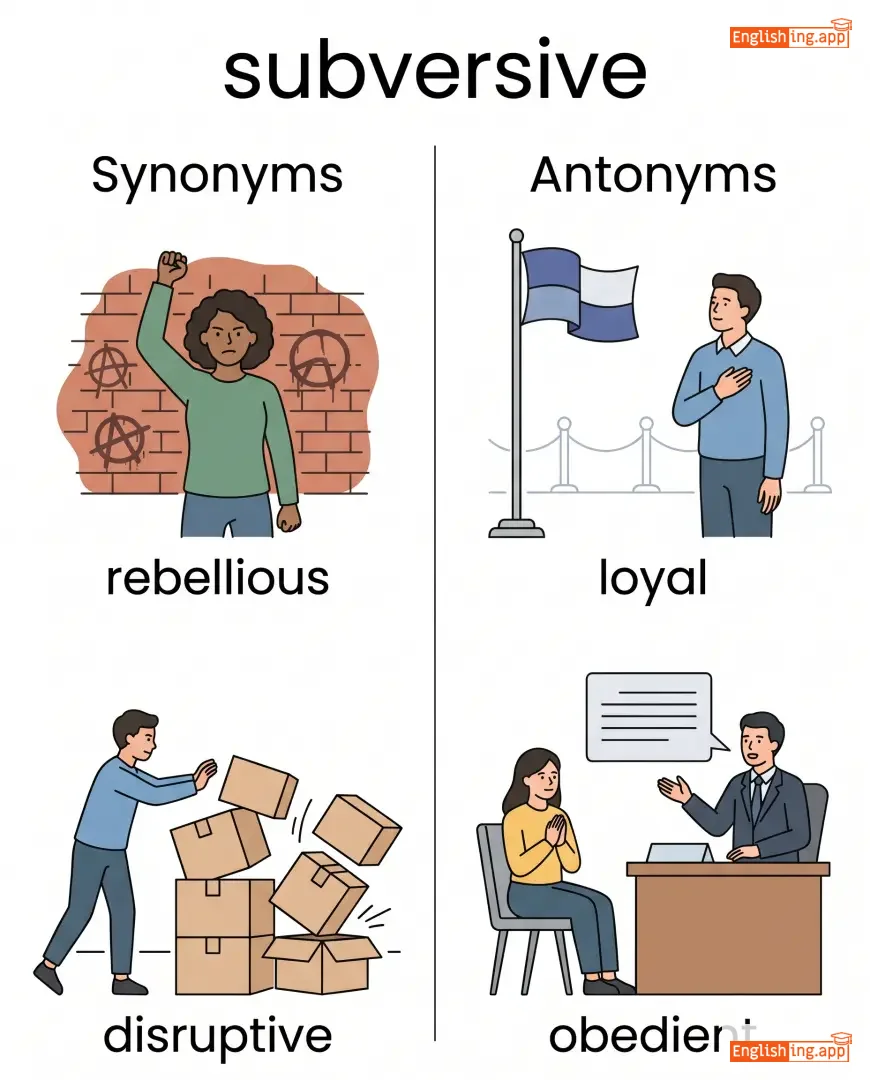
rebellious, disruptive, revolutionary, insurgent
••••••
|
loyal, obedient
••••••
|
subversive activity, subversive ideas, subversive elements
••••••
|
颠覆性意味着改变秩序 – 颠覆 = 改变, 性 = 目的
••••••
|
|
#8468
⚠️
|
/səbˈvɜːrʒən/
noun
(səbˈvɜːrʒən)
••••••
|
- •••••• |
颠覆
diānfù
••••••
|
- •••••• | - •••••• | - •••••• | - •••••• |
the act of trying to destroy or undermine an established system or authority
••••••
|
The government accused the rebels of planning subversion. |
政府指控叛军策划颠覆行为。
Zhèngfǔ zhǐkòng pànjūn cèhuà diānfù xíngwéi.
••••••
|
political subversion |
undermining political authority or system
••••••
|
政治颠覆
zhèngzhì diānfù
••••••
|
undermining, overthrow, disruption, rebellion
••••••
|
stability, order
••••••
|
acts of subversion, accused of subversion, political subversion
••••••
|
Subversion 就是推翻权威– Sub意味着下,Version意味着改变。
••••••
|
|
#8469
➖
|
/ˈsʌbtrəˌhɛnd/
noun
(萨布特兰德)
••••••
|
- •••••• |
被减数
bèi jiǎn shù
••••••
|
- •••••• | - •••••• | - •••••• | - •••••• |
a number that is to be subtracted from another number
••••••
|
In the equation 10 - 4, the number 4 is the subtrahend. |
在等式 10 - 4 中,数字 4 是被减数。
Zài děngshì 10 - 4 zhōng, shùzì 4 shì bèi jiǎn shù.
••••••
|
- •••••• | - •••••• | - •••••• |
deduction, deduction number
••••••
|
minuend
••••••
|
identify the subtrahend, subtract the subtrahend
••••••
|
Subtrahend 在中文里是被减数,就是从数字中减去的部分。
••••••
|
|
#8470
🎨
|
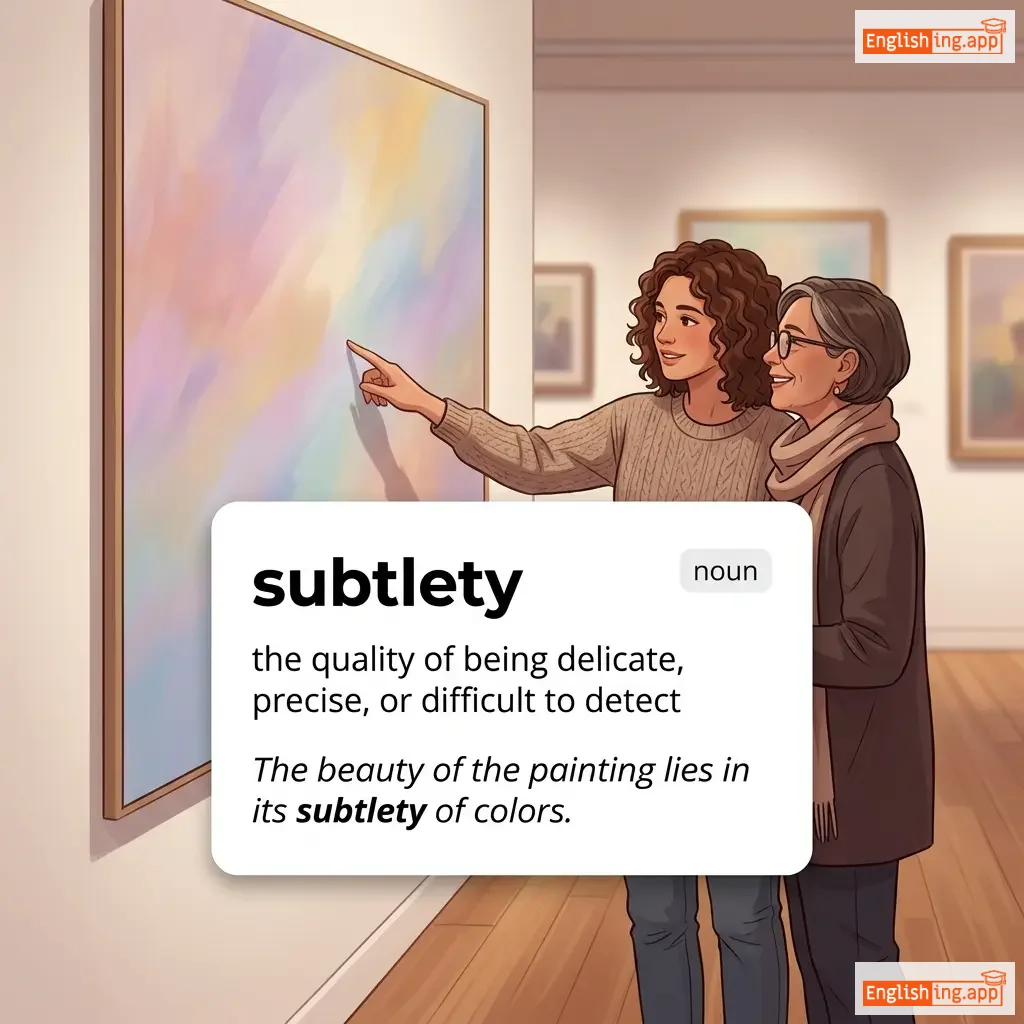
/ˈsʌtlti/
noun
(sàbètè'lì)
••••••
|
|
细微
xìwēi
••••••
|
- •••••• | - •••••• | - •••••• | - •••••• |
the quality of being delicate, precise, or difficult to detect
••••••
|
The beauty of the painting lies in its subtlety of colors. |
这幅画的美丽在于其颜色的细微之处。
Zhè fú huà de měilì zàiyú qí yánsè de xìwēi zhī chù.
••••••
|
- •••••• | - •••••• | - •••••• |
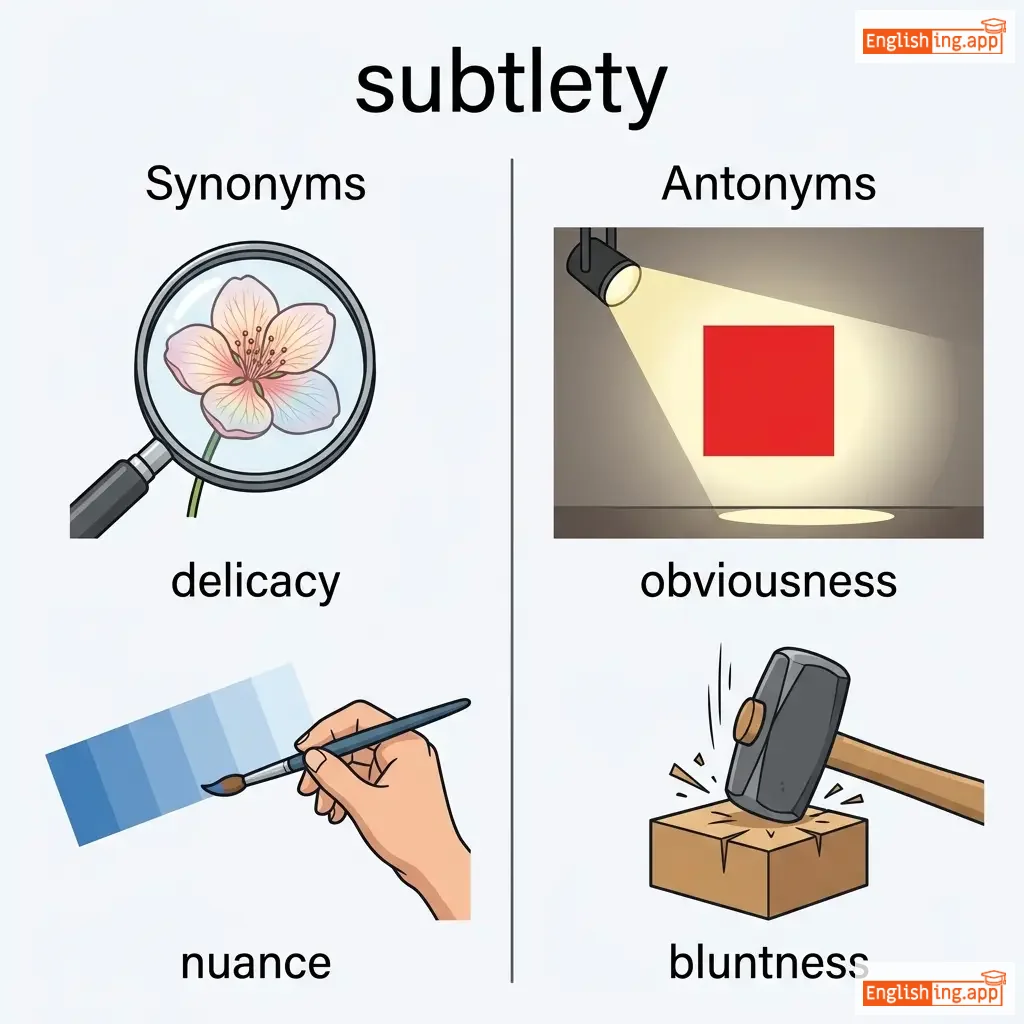
delicacy, nuance, refinement, intricacy
••••••
|
obviousness, bluntness
••••••
|
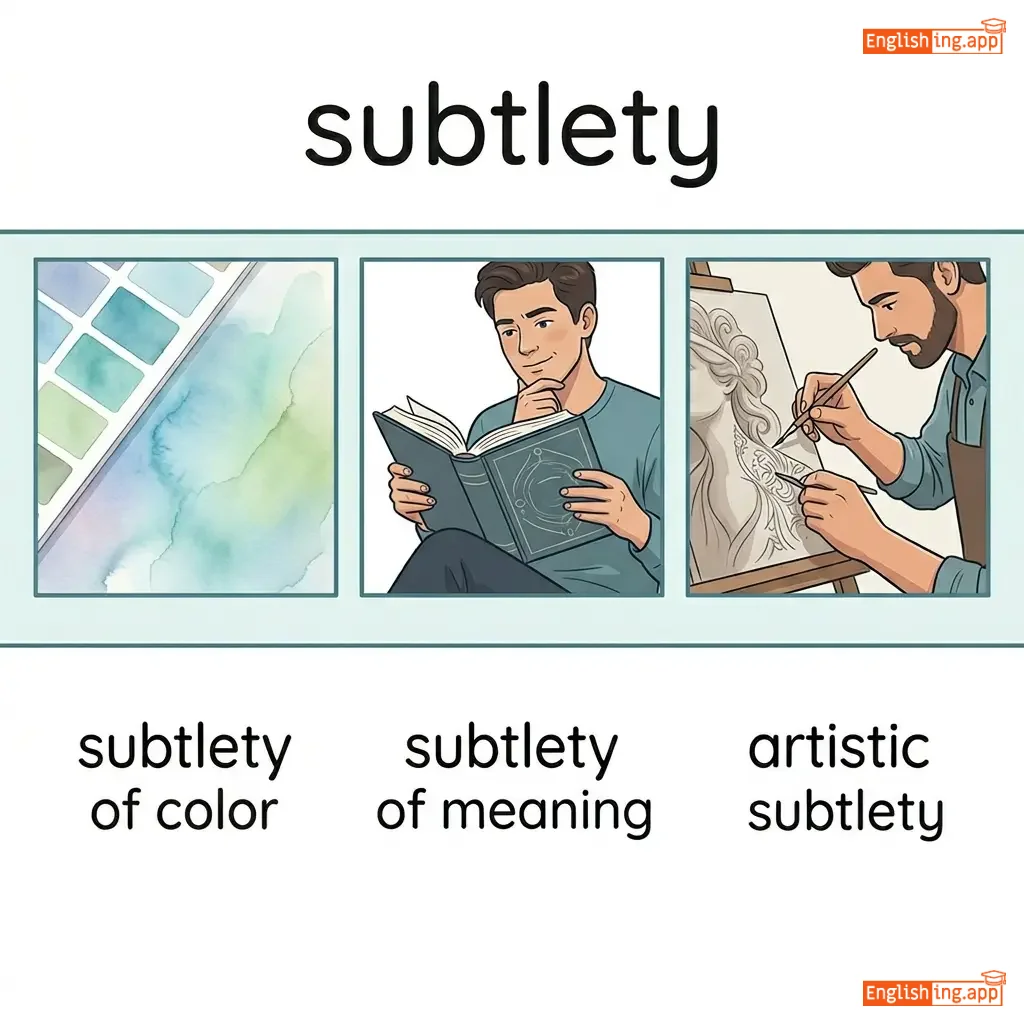
subtlety of color, subtlety of meaning, artistic subtlety
••••••
|
Subtlety的意思是细微 – 就像在没有人注意到的情况下悄悄地做事。
••••••
|
|
#8471
🌫️
|
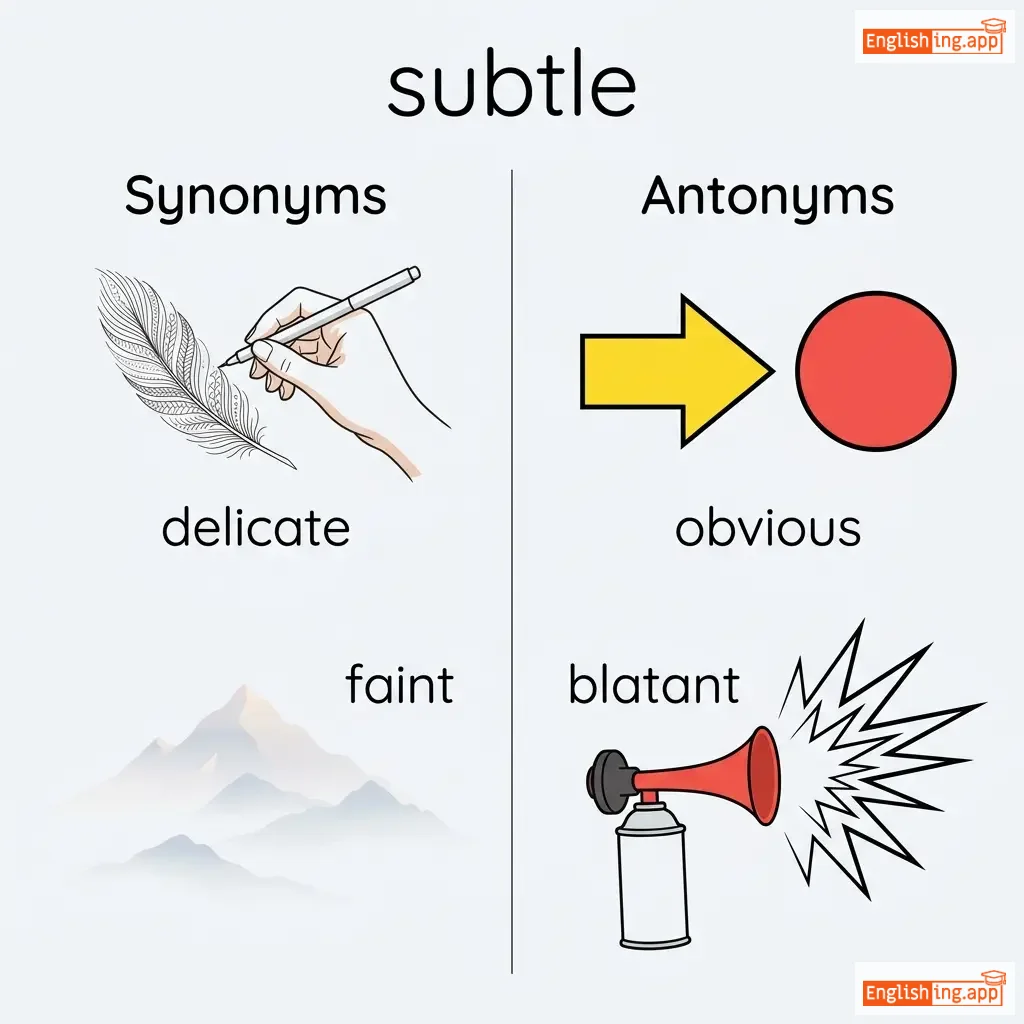
/ˈsʌtl/
adjective
(sʌtl)
••••••
|
|
微妙
weimiao
••••••
|
- •••••• | - •••••• | - •••••• | - •••••• |
so delicate or precise as to be difficult to analyze or describe; not obvious
••••••
|
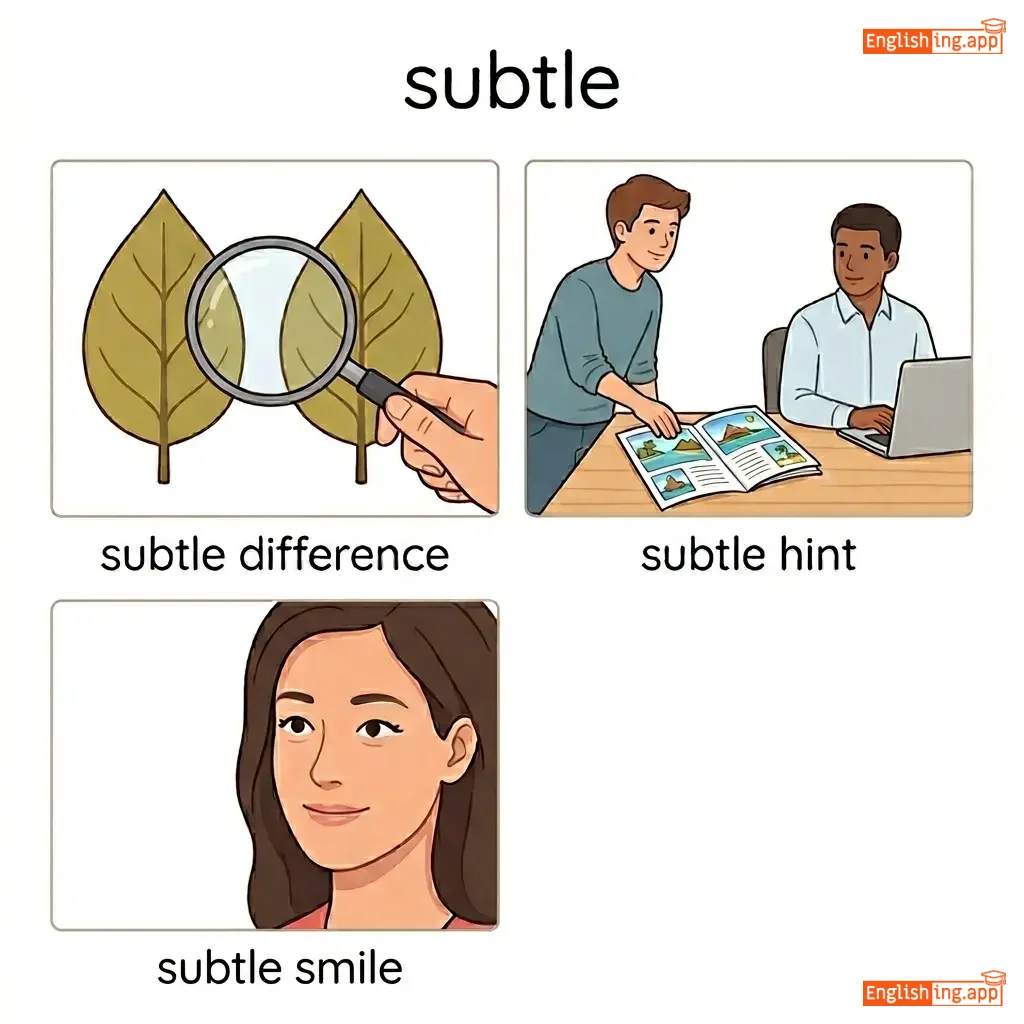
She gave him a subtle smile that hinted at her approval. |
她给了他一个微妙的微笑,暗示着她的批准。
Ta geile ta yi ge weimiao de weixiao, anshi zhe ta de pizhun.
••••••
|
subtle hint |
a very slight or indirect suggestion
••••••
|
微妙的暗示
weimiao de anshi
••••••
|
delicate, faint, nuanced, indirect, understated
••••••
|
obvious, blatant, clear
••••••
|
subtle difference, subtle hint, subtle smile, subtle change
••••••
|
微妙是如同空气中几乎无法察觉的香气,轻盈又不易捉摸。
••••••
|
|
#8472
🌌
|
/ˌsʌbtəˈreɪniən/
adjective
(地下的)
••••••
|
|
地下的
dixiade
••••••
|
- •••••• | - •••••• | - •••••• | - •••••• |
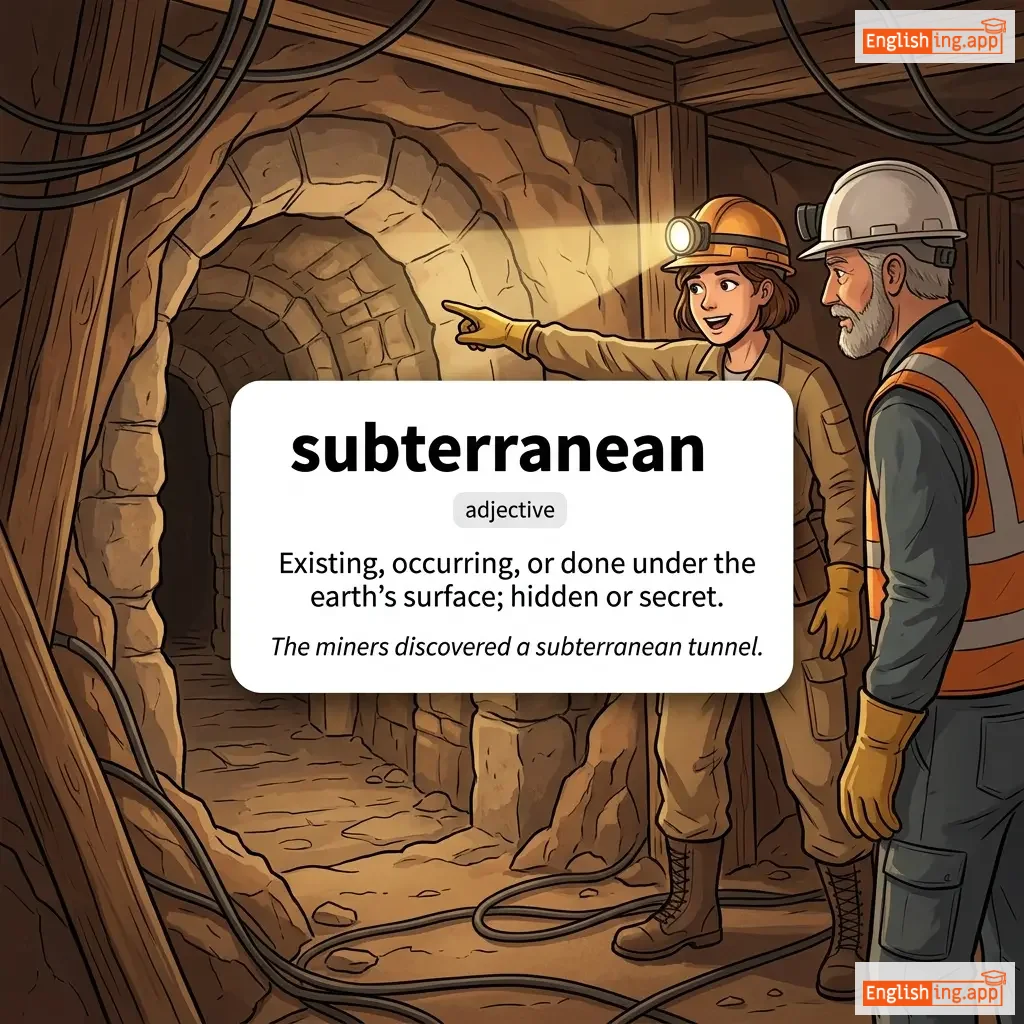
Existing, occurring, or done under the earth’s surface; hidden or secret.
••••••
|
The miners discovered a subterranean tunnel. |
矿工们发现了一个地下隧道。
Kuànggōng men fāxiànle yīgè dìxià suìdào.
••••••
|
- •••••• | - •••••• | - •••••• |
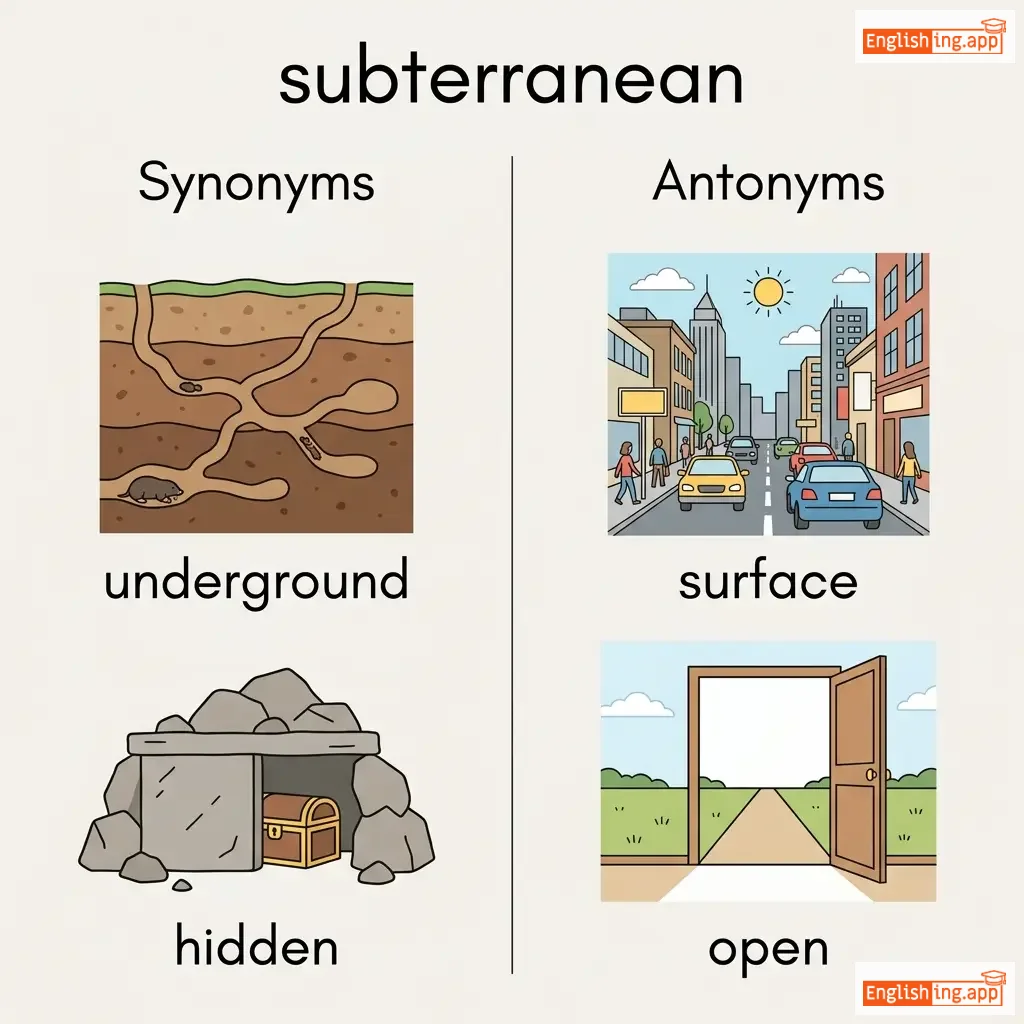
underground, hidden, concealed, secret
••••••
|
surface, open
••••••
|
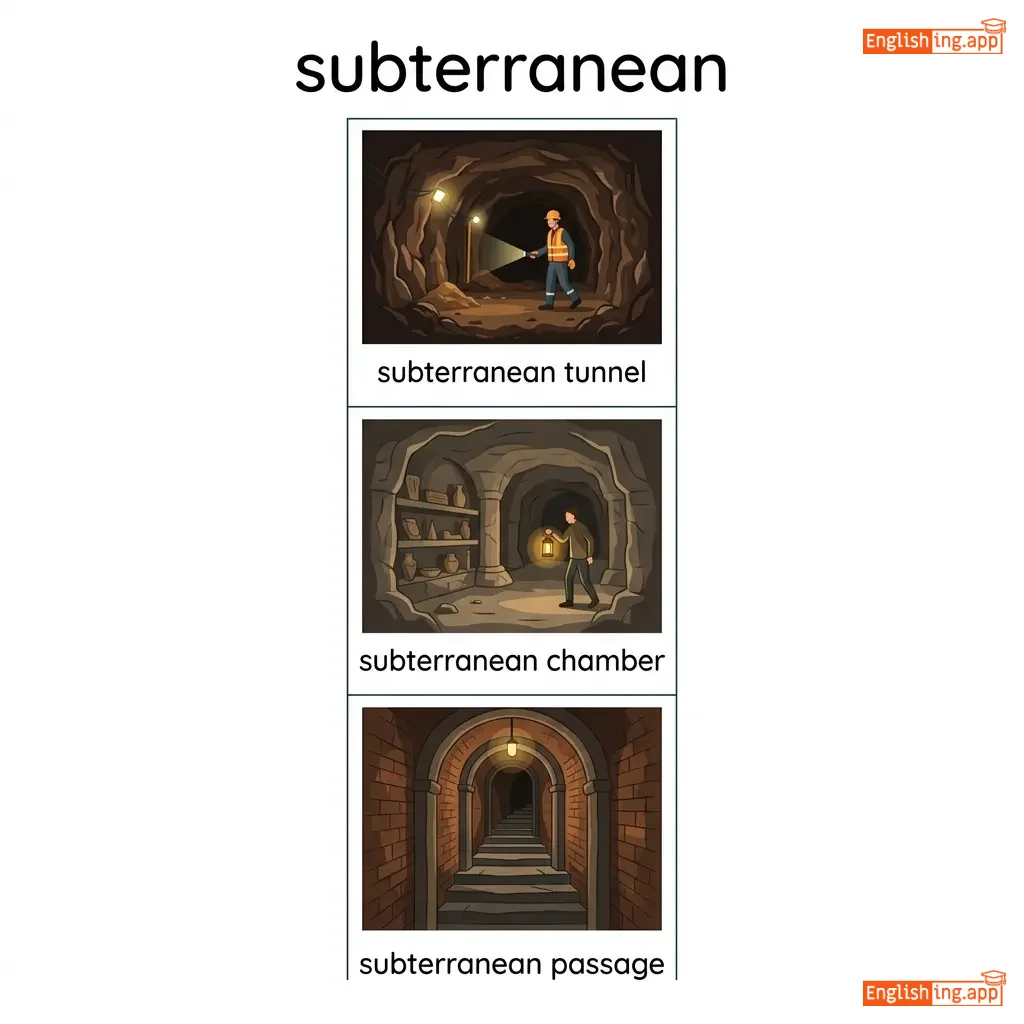
subterranean tunnel, subterranean chamber, subterranean passage
••••••
|
Subterranean意味着‘地下的’。记住,sub = 下,terrain = 地面。
••••••
|
|
#8473
🕵️
|
/ˈsʌbtərˌfjuːdʒ/
noun
(萨布特福尤奇)
••••••
|
- •••••• |
欺诈手段
qīzhà shǒuduàn
••••••
|
- •••••• | - •••••• | - •••••• | - •••••• |
Deceit used to achieve one's goal; a trick or excuse to evade something.
••••••
|
They used subterfuge to avoid paying taxes. |
他们使用欺诈手段来避免缴税。
Tāmen shǐyòng qīzhà shǒuduàn lái bìmiǎn jiǎoshuì.
••••••
|
- •••••• | - •••••• | - •••••• |
trickery, deceit, deception, evasion
••••••
|
honesty, truth
••••••
|
political subterfuge, clever subterfuge, use subterfuge
••••••
|
欺诈手段是隐藏在明面下的技巧,助你达成目的。
••••••
|
|
#8474
📐
|
/sʌbˈtɛnd/
verb
(sabtend)
••••••
|
- •••••• |
形成角度
xíngchéng jiǎodù
••••••
|
subtended
sabtended
••••••
|
subtended
sabtended
••••••
|
subtends
sabtends
••••••
|
subtending
sabtending
••••••
|
To extend across or form an angle at a particular point, often used in geometry.
••••••
|
The arc subtends a 60-degree angle at the center of the circle.
弧线在圆心处形成60度角。
••••••
|
弧线在圆心处形成60度角。
Húxiàn zài yuánxīn chù xíngchéng 60 dù jiǎo.
••••••
|
- •••••• | - •••••• | - •••••• |
span, stretch, cover, form
••••••
|
shorten, contract
••••••
|
subtend an angle, subtend arc, subtend chord
••••••
|
形成角度意味着形成一个角度。想象一个弧线在中心形成角度。
••••••
|
|
#8475
📑
|
/səbˈmɪtəl/
noun
(萨布米塔尔)
••••••
|
- •••••• |
提交
tijiāo
••••••
|
- •••••• | - •••••• | - •••••• | - •••••• |
the act of submitting something, especially a document for consideration or approval
••••••
|
The contractor sent the submittal to the client for approval.
承包商将提交给客户以供批准。
••••••
|
承包商将提交给客户以供批准。
Chéngbāo shāng jiāng tijiāo gěi kèhù yǐ gōng pīzhǔn.
••••••
|
- •••••• | - •••••• | - •••••• |
submission, presentation, proposal, application
••••••
|
withdrawal, refusal
••••••
|
project submittal, document submittal, submittal process, submittal package
••••••
|
Submittal 就是提交某物,像是文件供批准。
••••••
|
|
#8476
📑
|
/ˈsʌbstəntɪv/
adjective
(səbˈstæn.tɪv)
••••••
|
|
重要
zhòng yào
••••••
|
- •••••• | - •••••• | - •••••• | - •••••• |
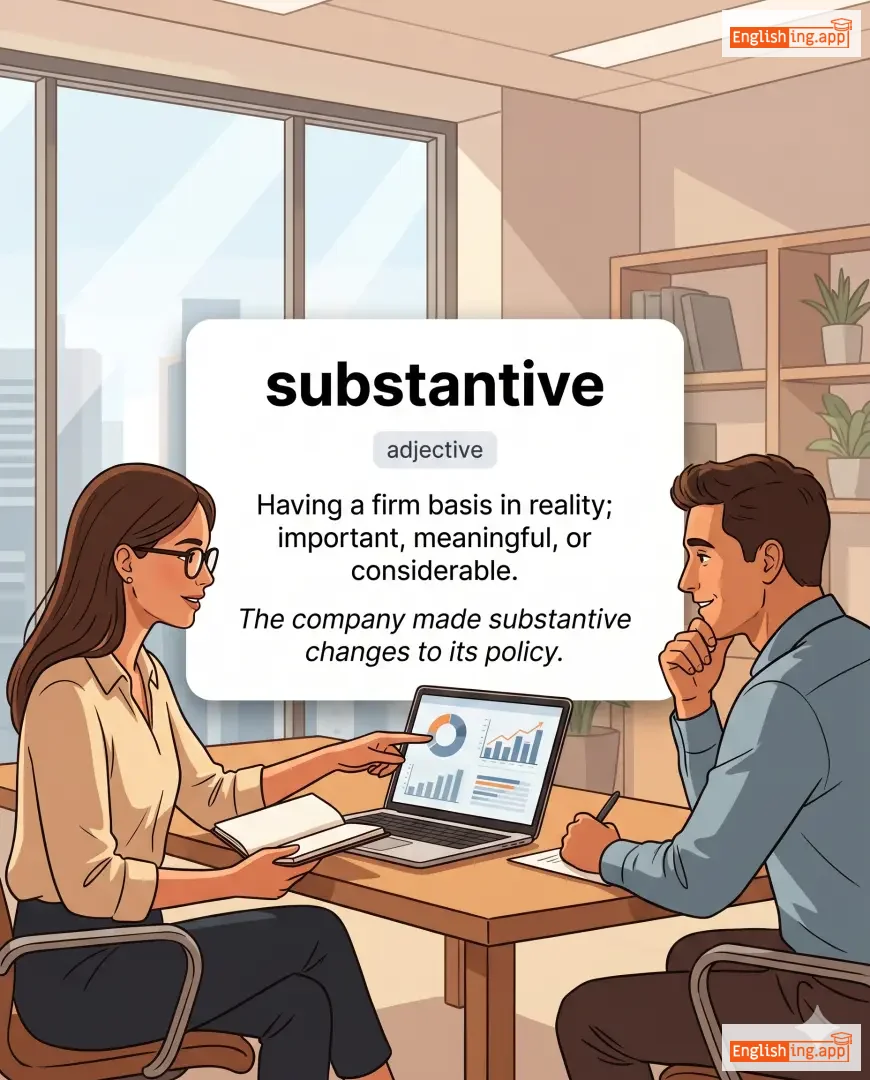
Having a firm basis in reality; important, meaningful, or considerable.
••••••
|
The company made substantive changes to its policy.
公司对其政策进行了实质性更改。
••••••
|
公司对其政策进行了重要更改。
Gōngsī duì qí zhèngcè jìnxíngle zhòngyào gēnggǎi.
••••••
|
substantive evidence
实质性证据
••••••
|
Important or meaningful proof that supports a claim
••••••
|
重要证据
zhòng yào zhèngjù
••••••
|
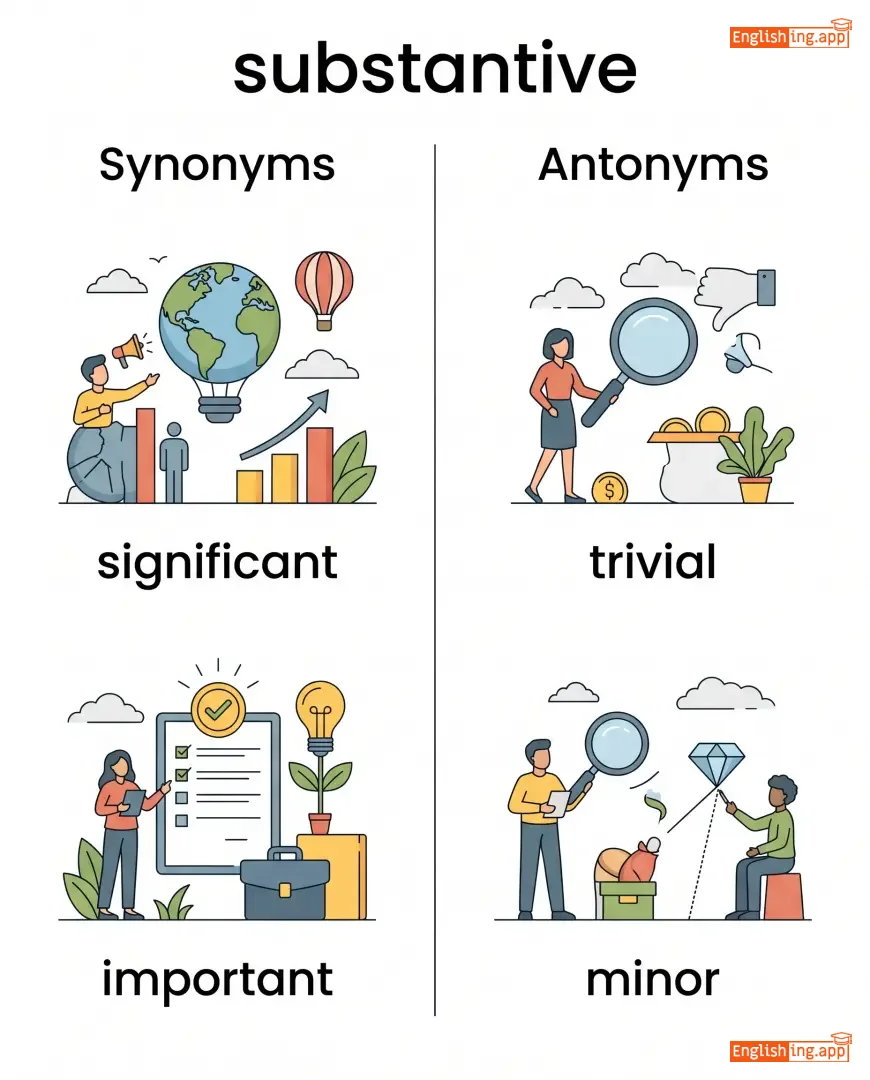
significant, important, considerable, meaningful, essential
••••••
|
trivial, minor, insignificant
••••••
|
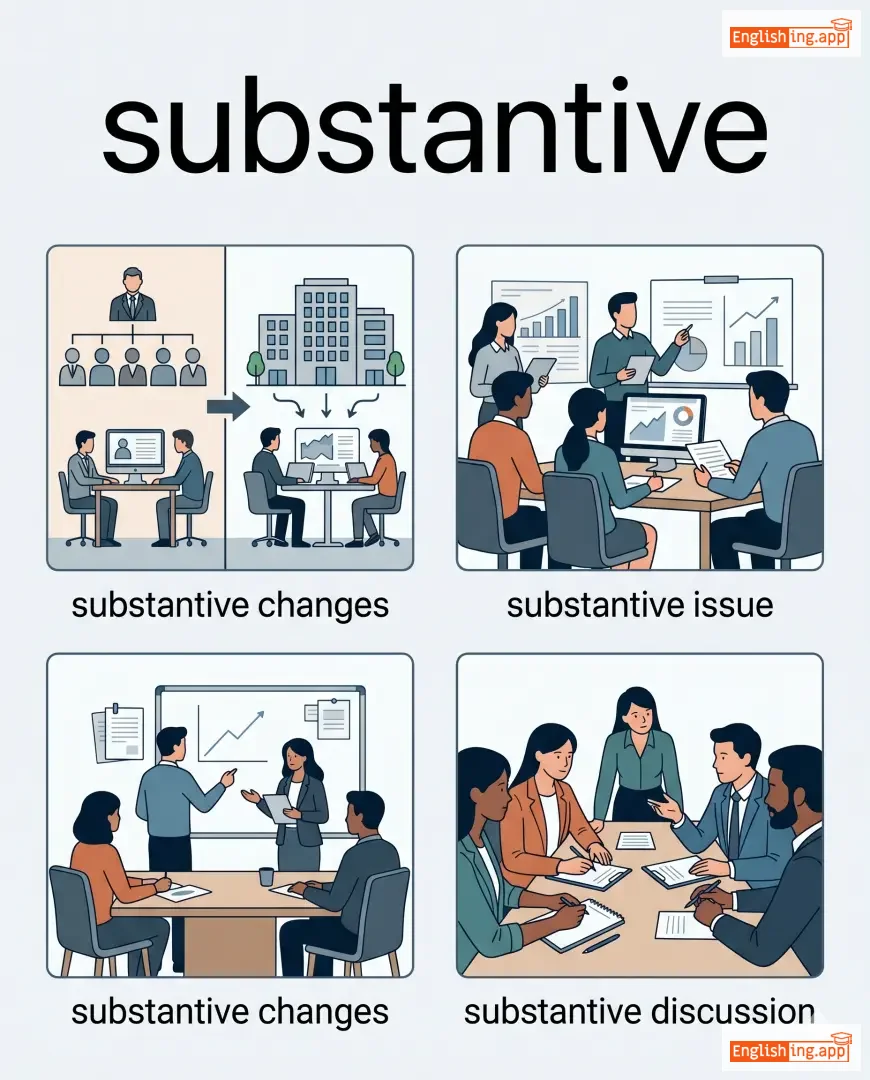
substantive changes, substantive issue, substantive discussion, substantive evidence
••••••
|
Substantive 意味着重要—‘重要的’。记住,实质性证据意味着强有力的证明。
••••••
|
|
#8477
⚖️
|
/səbˈstænʃieɪt/
verb
(səbˈstænʃieɪt)
••••••
|
|
证实
zhèngshí
••••••
|
substantiated
substantiated
••••••
|
substantiated
substantiated
••••••
|
substantiates
substantiates
••••••
|
substantiating
substantiating
••••••
|
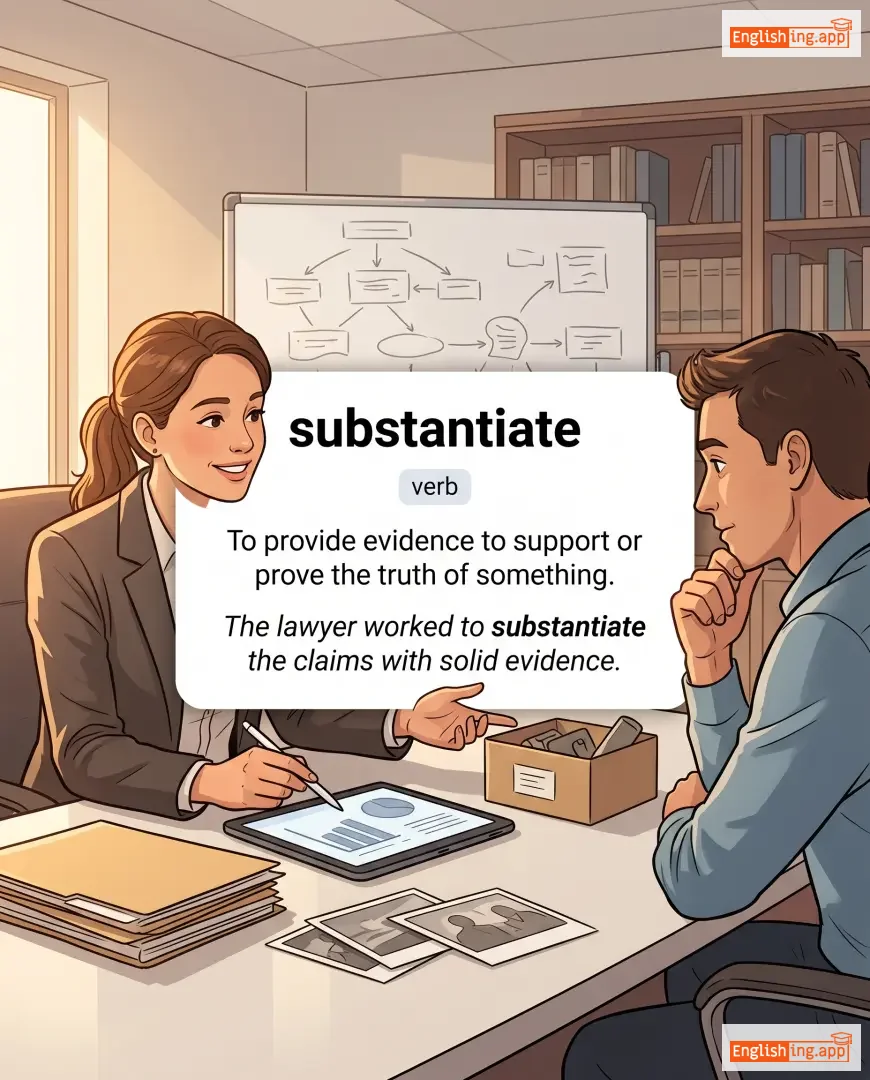
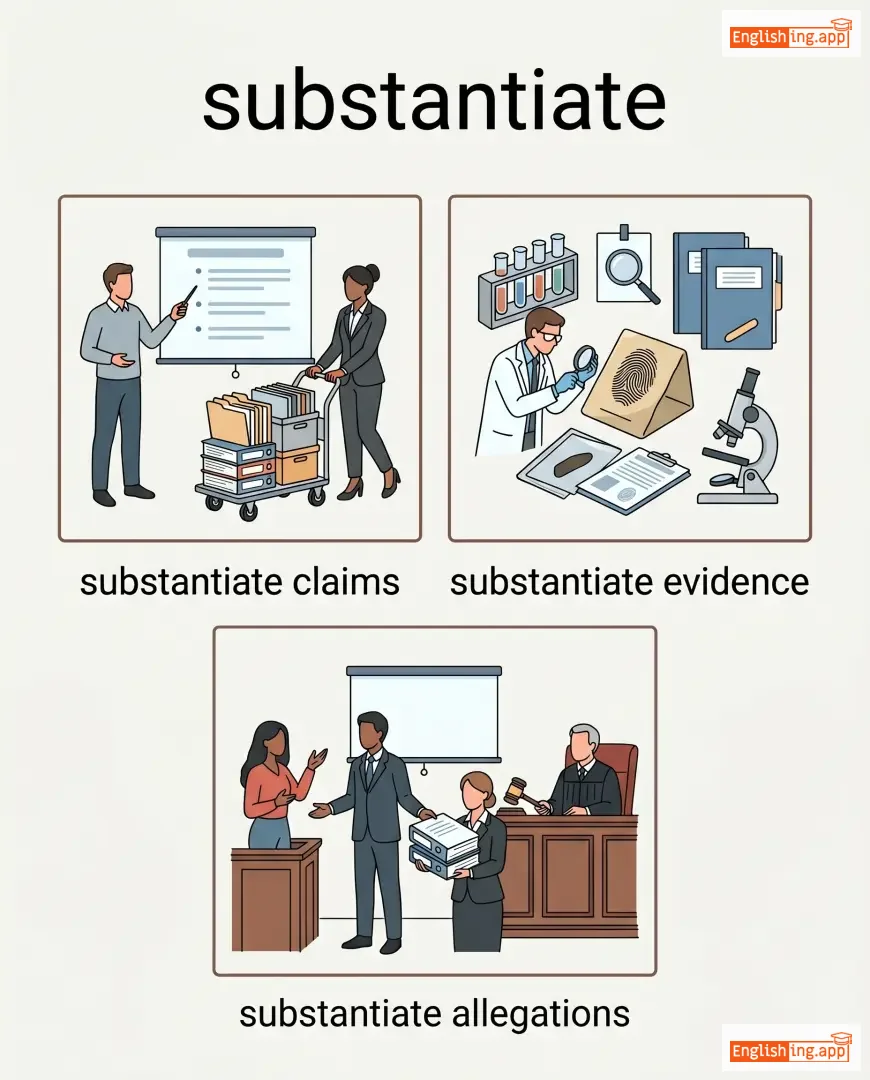
To provide evidence to support or prove the truth of something.
••••••
|
The lawyer worked to substantiate the claims with solid evidence.
律师努力通过确凿证据来证实这些主张。
••••••
|
律师努力通过确凿证据来证实这些主张。
Lǚshī nǔlì tōngguò quèzuò zhèngjù lái zhèngshí zhèxiē zhǔzhāng.
••••••
|
- •••••• | - •••••• | - •••••• |
prove, validate, confirm, support, demonstrate
••••••
|
disprove, refute, contradict
••••••
|
substantiate claims, substantiate evidence, substantiate allegations, substantiate argument
••••••
|
Substance (substance) 帮助证实某事。
••••••
|
|
#8478
📈
|
/səbˈstænʃl/
adjective
(səbˈstænʃəl)
••••••
|
- •••••• |
实质性的
shízhìxìng de
••••••
|
- •••••• | - •••••• | - •••••• | - •••••• |
Of considerable importance, size, or worth.
••••••
|
She received a substantial raise after the successful project.
她在成功的项目之后获得了可观的加薪。
••••••
|
她在成功的项目之后获得了可观的加薪。
Tā zài chénggōng de xiàngmù zhīhòu huòde le kěguān de jiāxīn.
••••••
|
- •••••• | - •••••• | - •••••• |
considerable, significant, large, major, meaningful
••••••
|
insignificant, trivial, minor
••••••
|
substantial amount, substantial evidence, substantial increase, substantial progress
••••••
|
Substantial的意思是重要和有价值,就像实质的东西一样。
••••••
|
|
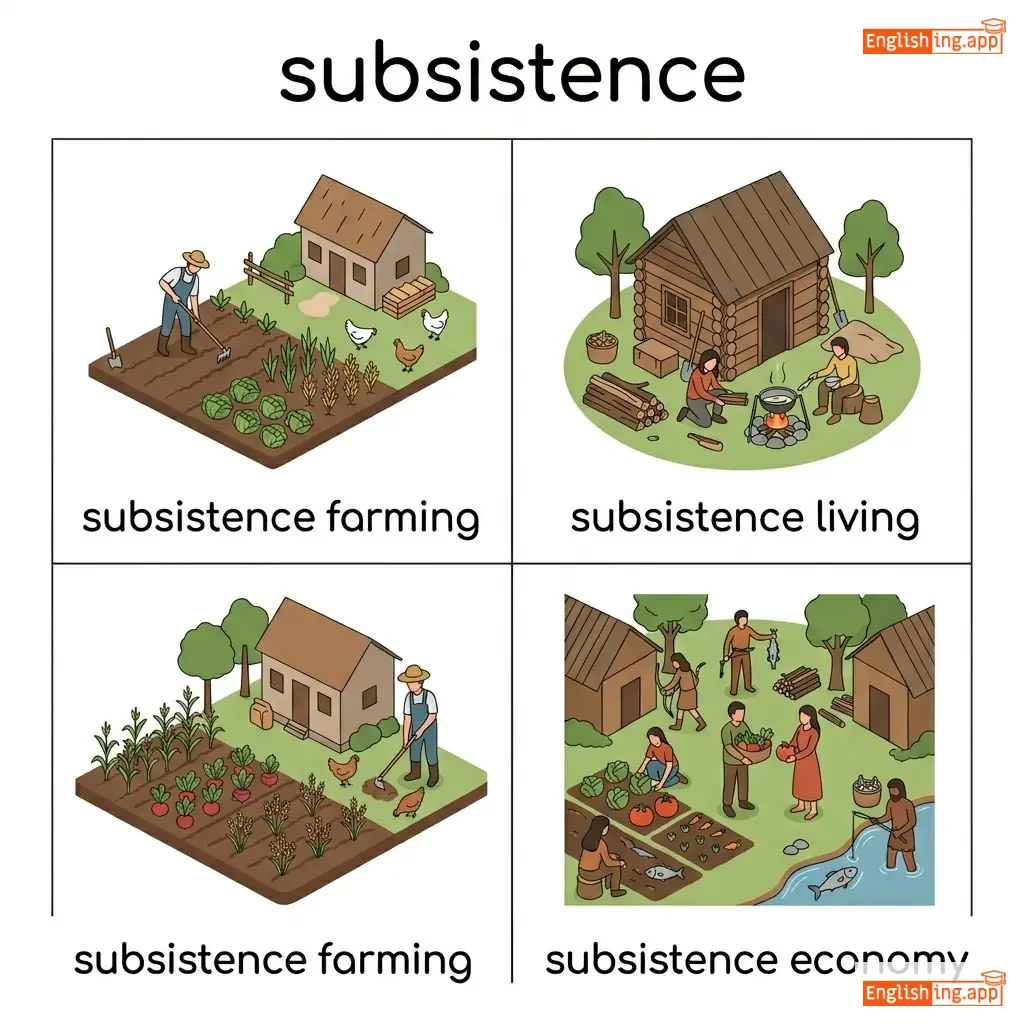
#8479
🌾
|
/səbˈsɪstəns/
noun
(səbˈsɪstəns)
••••••
|
|
生计
shengji
••••••
|
- •••••• | - •••••• | - •••••• | - •••••• |
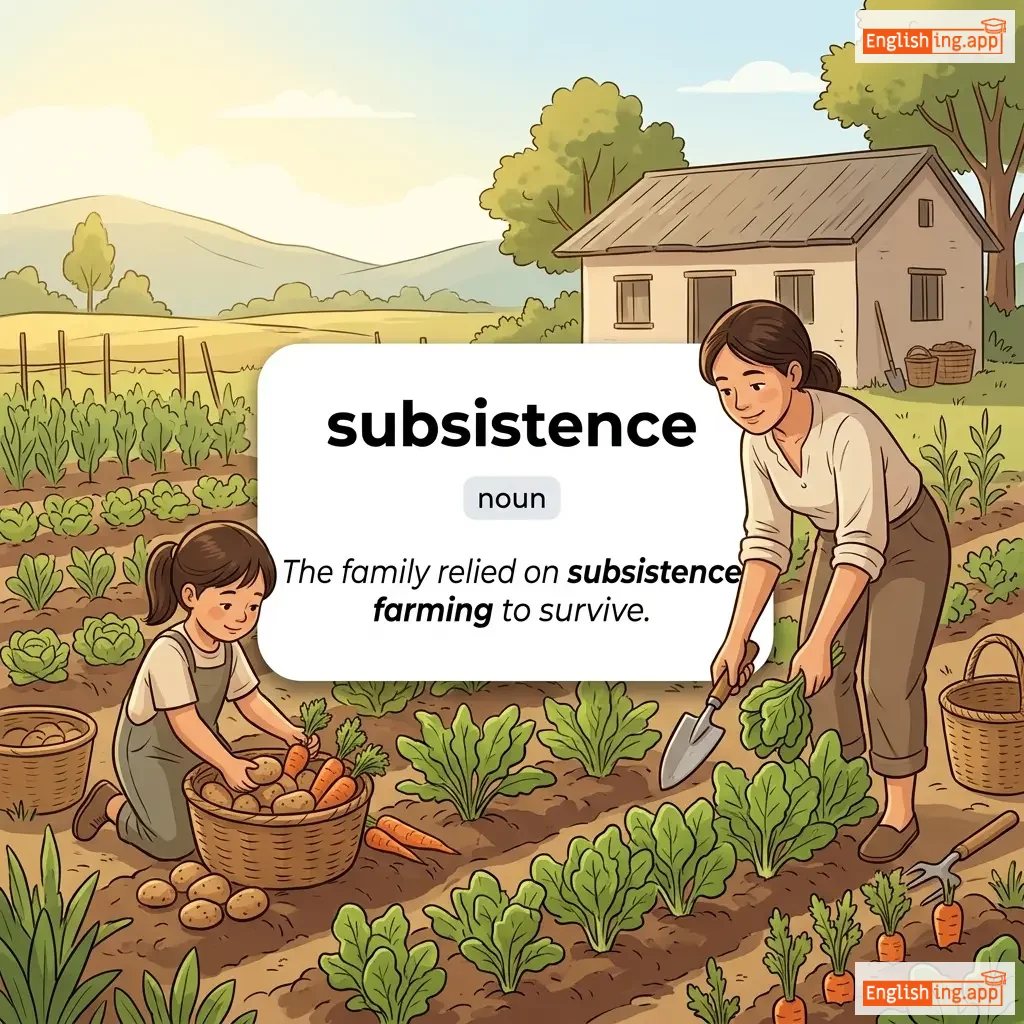
The action or fact of maintaining or supporting oneself, especially at a minimal level.
••••••
|
The family relied on subsistence farming to survive. |
这个家庭依赖生计农业来生存。
Zhege jiating yilai shengji nongye lai shengcun.
••••••
|
subsistence level |
the minimum means needed to maintain life
••••••
|
生计水平
shengji shuiping
••••••
|
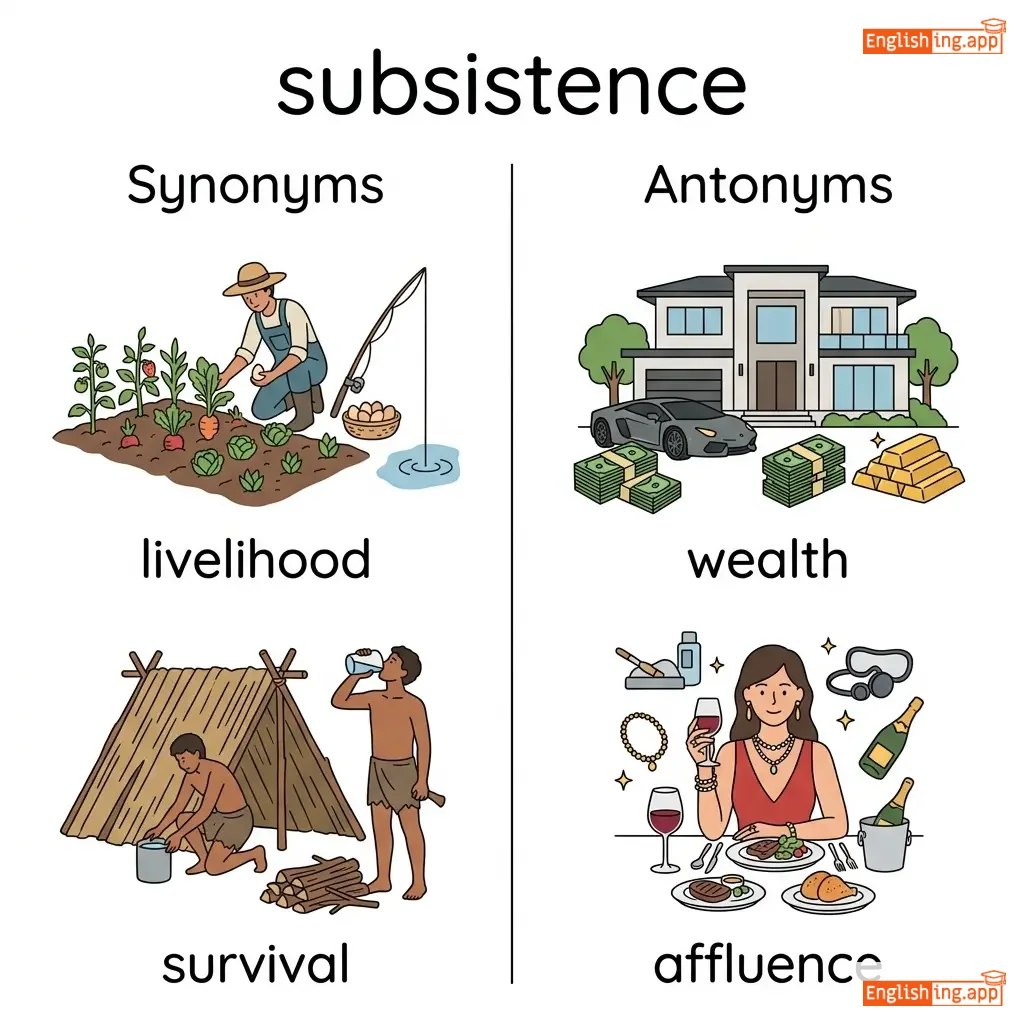
livelihood, survival, sustenance, existence
••••••
|
wealth, affluence
••••••
|
subsistence farming, subsistence living, subsistence economy, minimum subsistence
••••••
|
Subsistence farming 意味着为了生存而从事最基本的农业活动。
••••••
|
|
#8480
🍞
|
/səbˈsɪst/
verb
(萨布西斯特)
••••••
|
- •••••• |
生存
shengcun
••••••
|
subsisted
萨布西斯特德
••••••
|
subsisted
萨布西斯特德
••••••
|
subsists
萨布西斯特斯
••••••
|
subsisting
萨布西斯廷
••••••
|
To maintain or support oneself, especially at a minimal level.
••••••
|
Many villagers still subsist on fishing and farming.
许多村民仍然依靠捕鱼和农业为生。
••••••
|
许多村民仍然依靠捕鱼和农业为生。
Xuduo cunmin rengran yikao chiyu he nongye weisheng.
••••••
|
subsist on
subsist on
••••••
|
to survive or live on something as a means of support
••••••
|
依赖
yilai
••••••
|
survive, exist, endure, live, persist
••••••
|
perish, die
••••••
|
subsist on food, subsist on farming, subsist on charity, subsist barely
••••••
|
生存即sub-eat,吃一点,生存下去。
••••••
|
|
#8481
💰
|
/ˈsʌbsɪdi/
noun
(sʌbsɪdi)
••••••
|
|
补贴
butie
••••••
|
- •••••• | - •••••• | - •••••• | - •••••• |
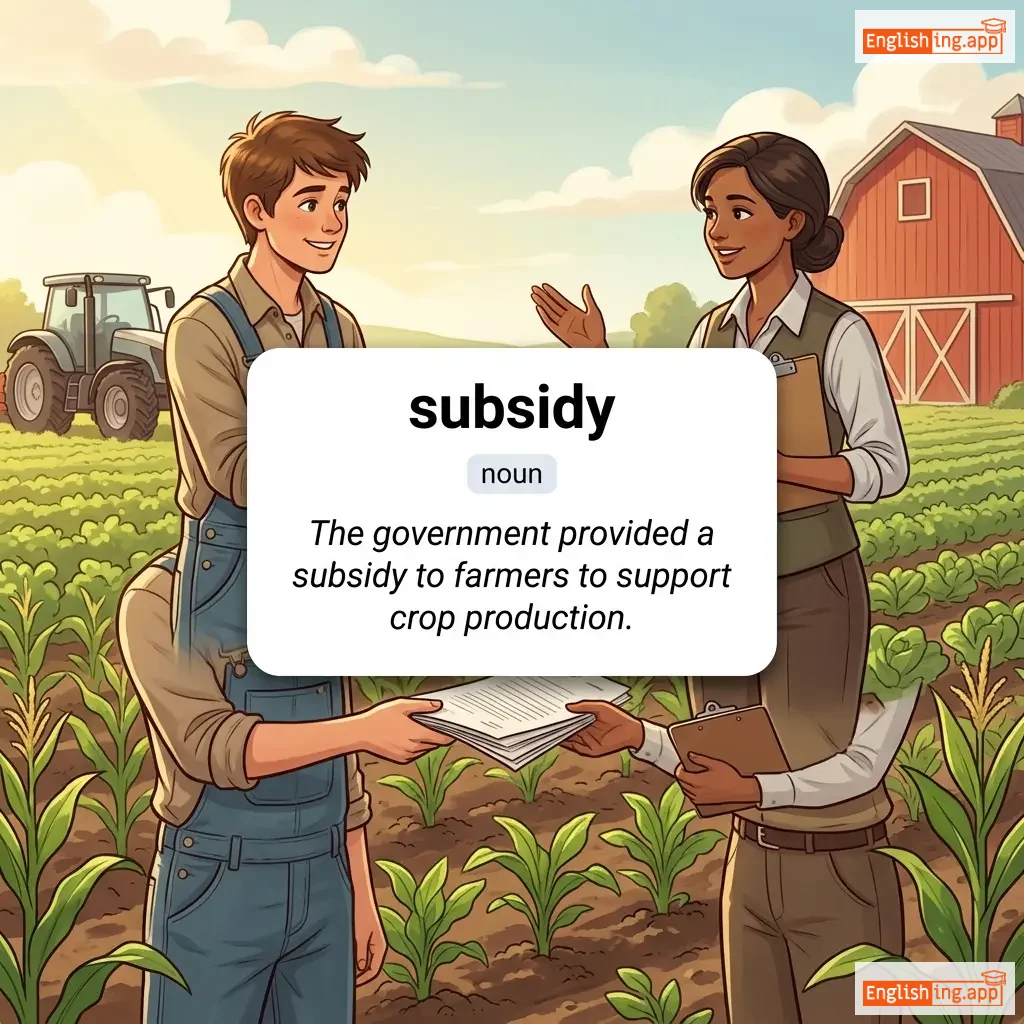
A sum of money granted by the government or a public body to help support an industry or reduce the cost of goods or services.
••••••
|
The government provided a subsidy to farmers to support crop production. |
政府为农民提供了补贴,以支持作物生产。
Zhengfu wei nongmin tigongle butie, yi zhichi zuowu shengchan.
••••••
|
- •••••• | - •••••• | - •••••• |
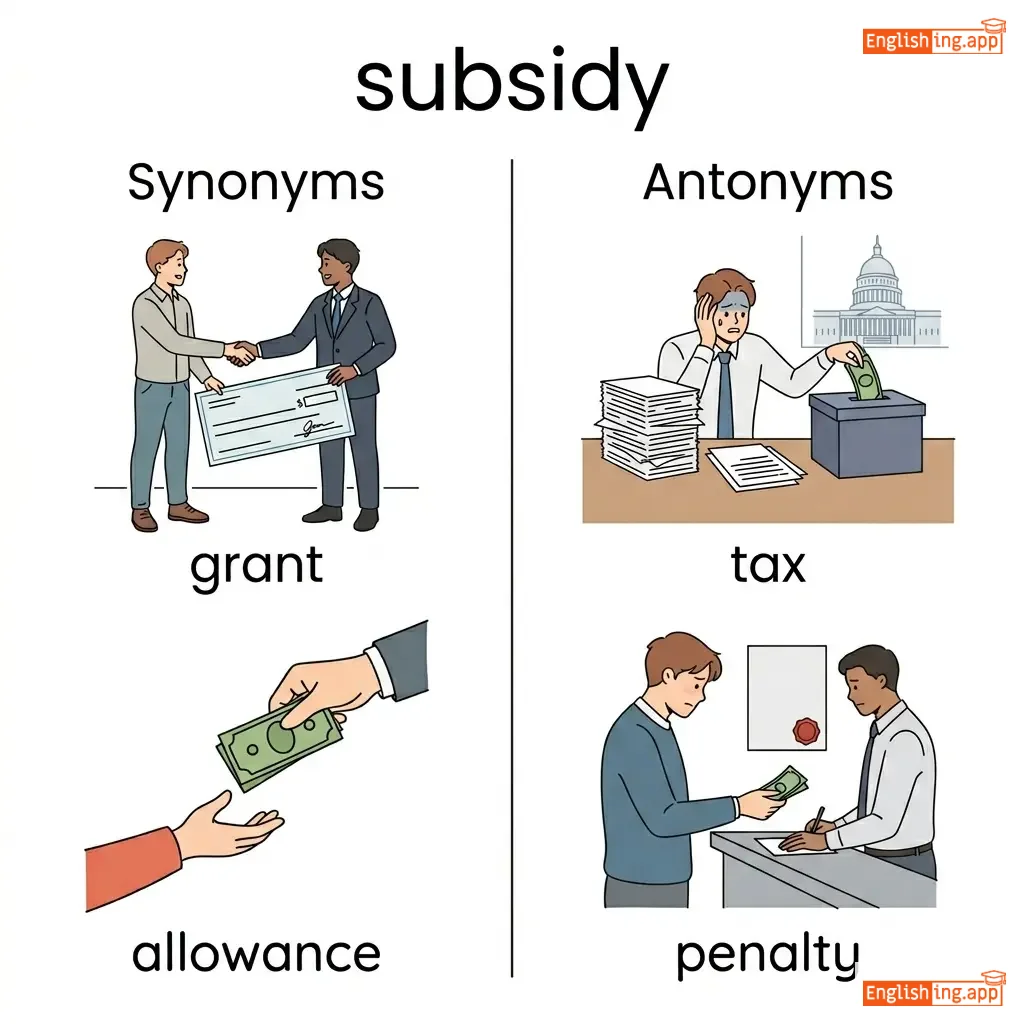
grant, allowance, financial aid, support, assistance
••••••
|
tax, penalty, surcharge
••••••
|
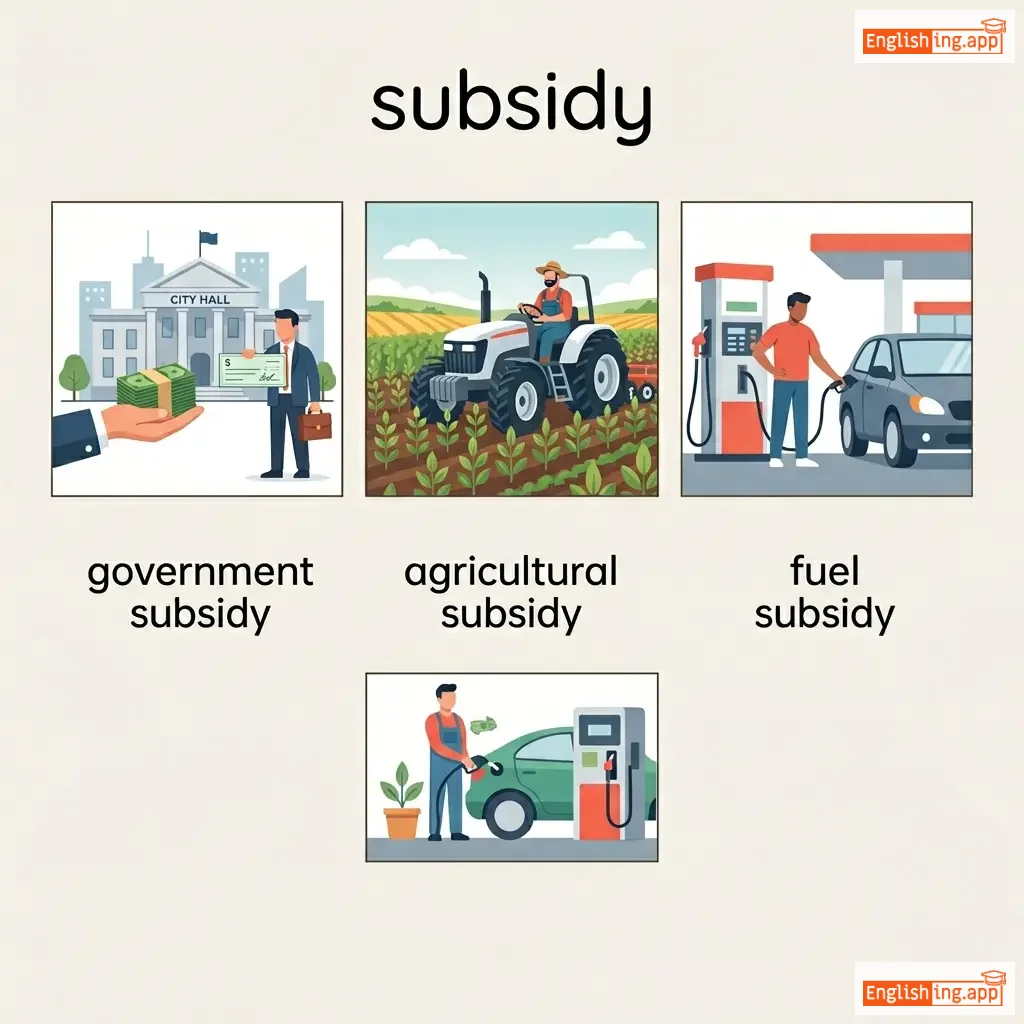
government subsidy, agricultural subsidy, fuel subsidy, receive subsidy
••••••
|
补贴就像是政府的经济援助,用来减少农产品的生产成本。
••••••
|
|
#8482
🏢
|
/səbˈsɪdiˌɛri/
noun, adjective
(子公司)
••••••
|
- •••••• |
子公司
zǐ gōngsī
••••••
|
- •••••• | - •••••• | - •••••• | - •••••• |
a company controlled by a larger company; serving to assist or supplement something
••••••
|
The multinational owns a subsidiary in Bangladesh. |
跨国公司在孟加拉国拥有一家子公司。
Kuàguó gōngsī zài Mèngjiālāguó yǒngyǒu yījiā zǐ gōngsī.
••••••
|
- •••••• | - •••••• | - •••••• |
branch, division, affiliate, subordinate, auxiliary
••••••
|
parent company, main, primary
••••••
|
subsidiary company, wholly-owned subsidiary, establish subsidiary, subsidiary role
••••••
|
子公司就像一个依赖大公司的小公司,它在下面辅助或补充。
••••••
|
|
#8483
🌊
|
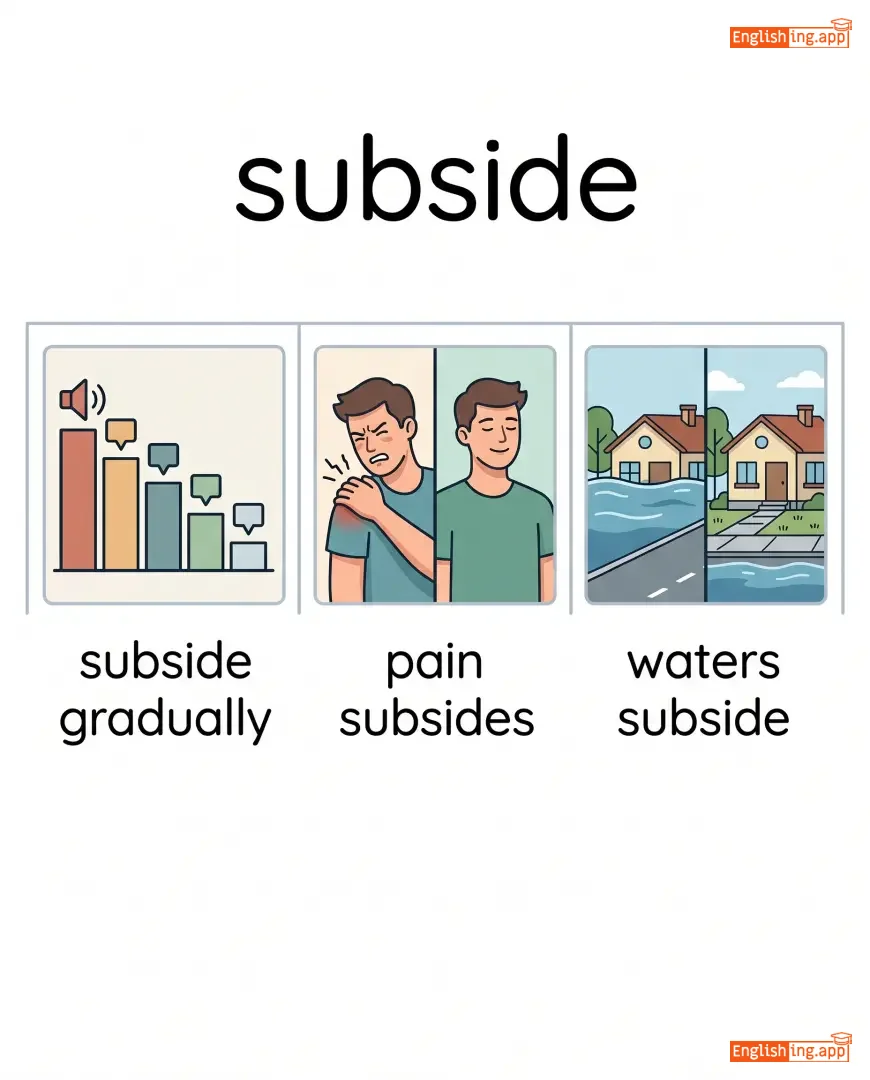
/səbˈsaɪd/
verb
(萨布赛德)
••••••
|
|
减少
jiǎnshǎo
••••••
|
subsided
萨布赛德德
••••••
|
subsided
萨布赛德德
••••••
|
subsides
萨布赛德斯
••••••
|
subsiding
萨布赛丁
••••••
|
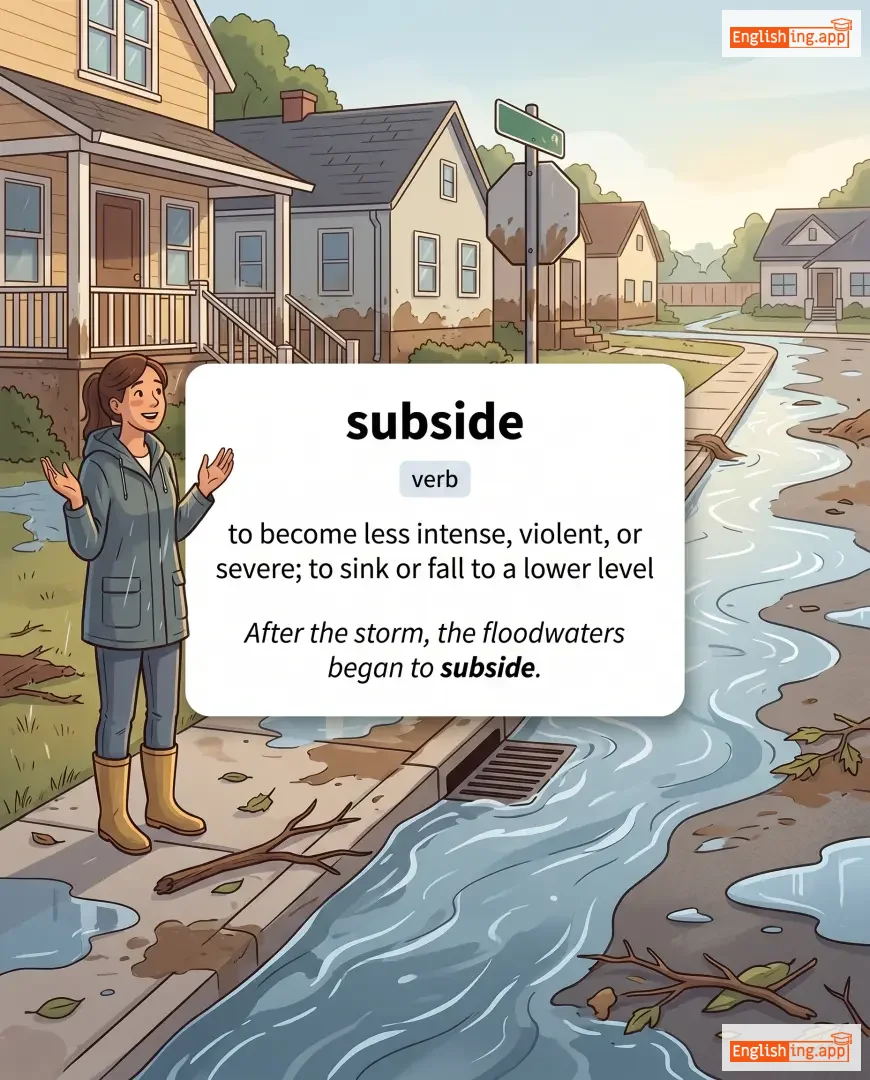
to become less intense, violent, or severe; to sink or fall to a lower level
••••••
|
After the storm, the floodwaters began to subside.
风暴过后,洪水开始退去。
••••••
|
风暴过后,洪水开始退去。
fēngbào guòhòu, hóngshuǐ kāishǐ tuìqù.
••••••
|
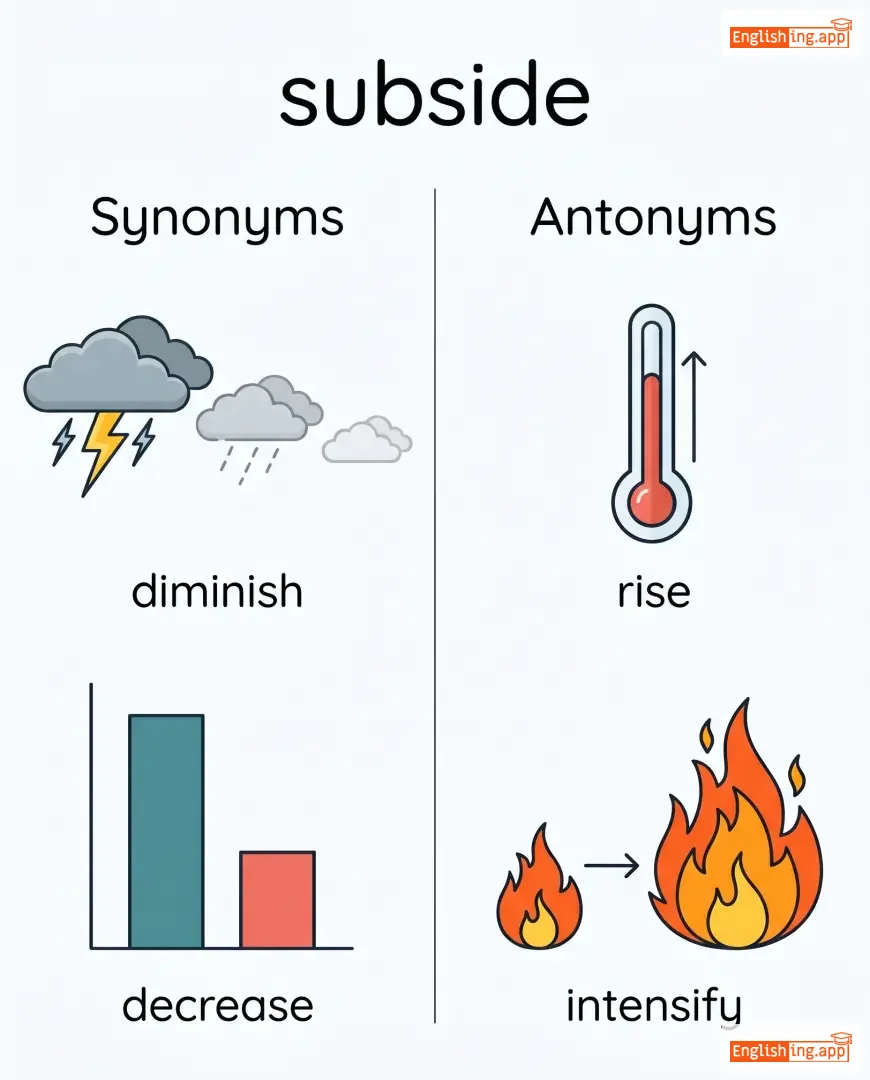
- •••••• | - •••••• | - •••••• |
diminish, decrease, abate, recede, lessen
••••••
|
rise, intensify, increase
••••••
|
subside gradually, pain subsides, waters subside, anger subsides
••••••
|
Subside意指水位下降,就像暴风雨过后水位退去。
••••••
|
|
#8484
🙇
|
/səbˈsɜːviənt/
adjective
••••••
|
- •••••• | - •••••• | - •••••• | - •••••• | - •••••• | - •••••• |
prepared to obey others unquestioningly; less important than something else
••••••
|
She was too subservient to challenge his decision. |
- •••••• | - •••••• | - •••••• | - •••••• |
obedient, submissive, compliant, deferential
••••••
|
assertive, defiant, independent
••••••
|
subservient role, subservient position, remain subservient, too subservient
••••••
|
No •••••• |
|
#8485
🙏
|
/səbˈsɜːviəns/
noun
(萨布塞维恩斯)
••••••
|
- •••••• |
奴性
nuxing
••••••
|
- •••••• | - •••••• | - •••••• | - •••••• |
the condition of being too willing to obey or serve others
••••••
|
His subservience to authority annoyed his colleagues.
His subservience to authority annoyed his colleagues.
••••••
|
他对权威的奴性让同事们感到烦恼。
Ta dui quánwēi de núxìng ràng tóngshìmen gǎndào fánnǎo.
••••••
|
- •••••• | - •••••• | - •••••• |
obedience, compliance, servility, submission, deference
••••••
|
rebellion, resistance, defiance
••••••
|
blind subservience, show subservience, subservience to authority, display subservience
••••••
|
Subservience - SUB service - 总是准备为他人服务,奴性。
••••••
|
|
#8486
➡️
|
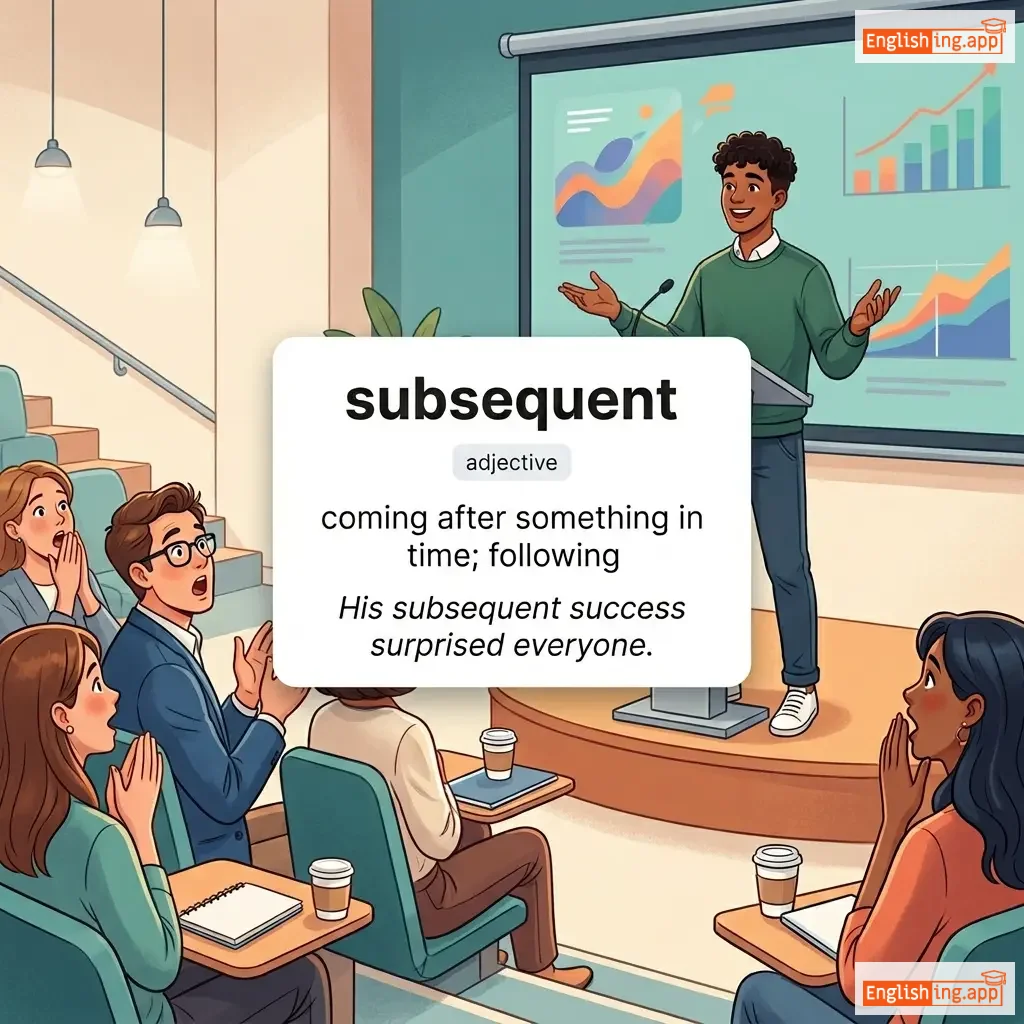
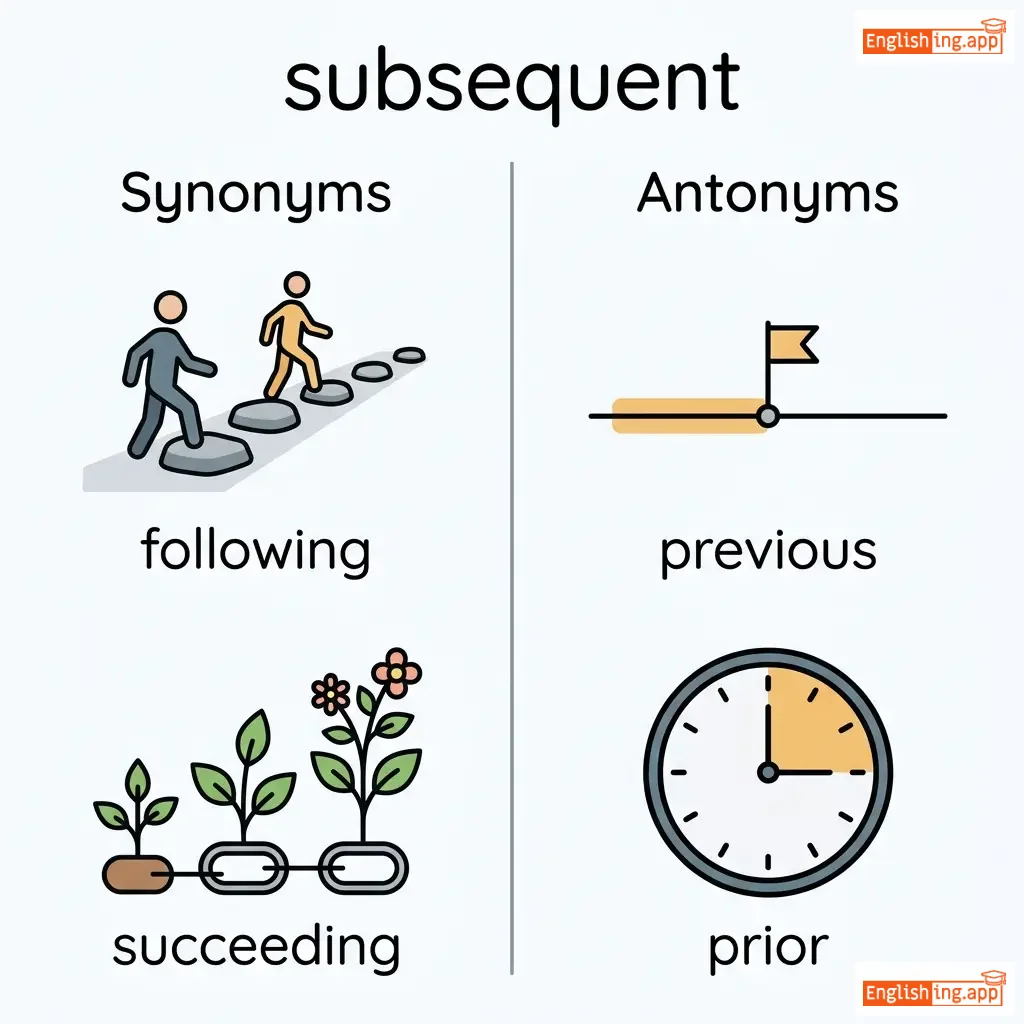
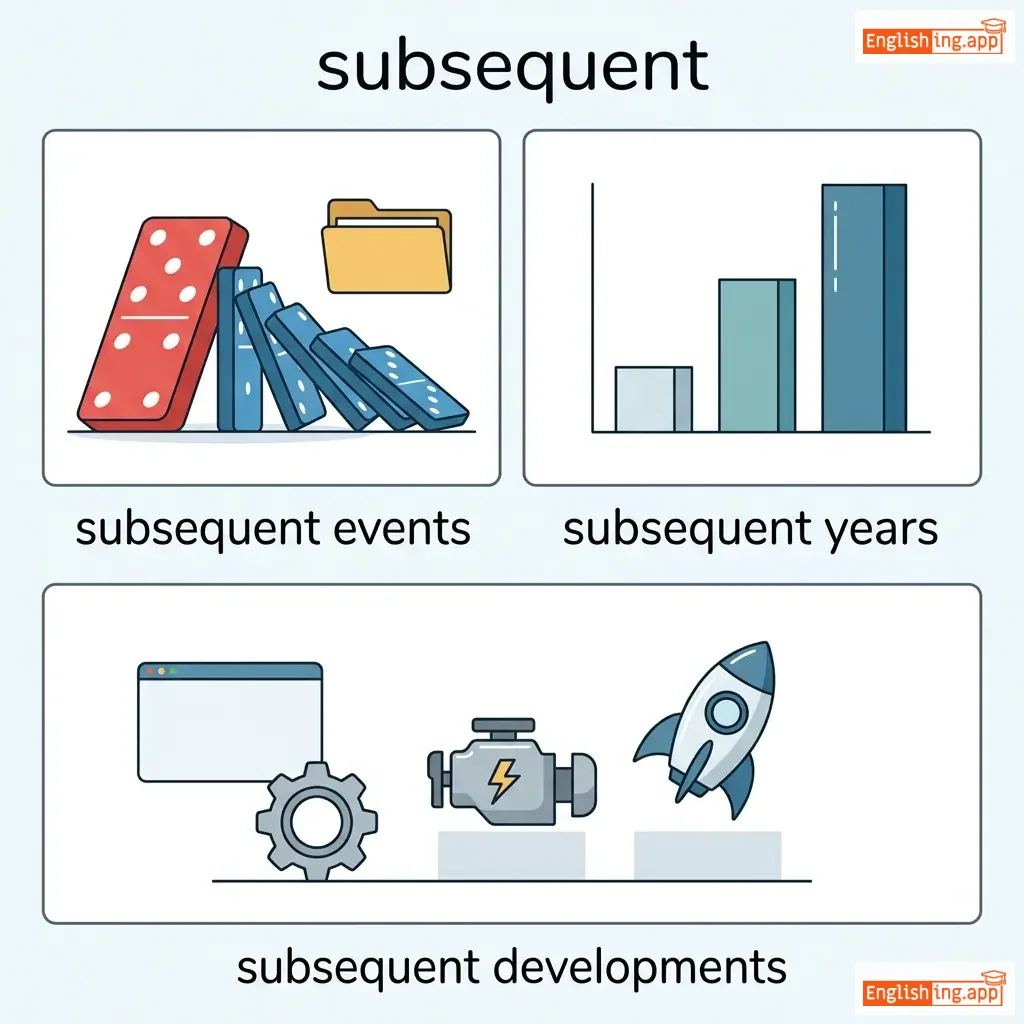
/ˈsʌbsɪkwənt/
adjective
(səbˈskwɛnt)
••••••
|
|
随后的
suíhòu de
••••••
|
- •••••• | - •••••• | - •••••• | - •••••• |
coming after something in time; following
••••••
|
His subsequent success surprised everyone. |
他的随后的成功让所有人都感到惊讶。
tā de suíhòu de chénggōng ràng suǒyǒu rén dōu gǎndào jīngyà.
••••••
|
subsequent to |
happening or coming after something
••••••
|
随后的
suíhòu de
••••••
|
following, succeeding, later, ensuing, successive
••••••
|
previous, prior, former
••••••
|
subsequent events, subsequent years, subsequent developments, subsequent changes
••••••
|
Subsequent 意味着紧接着发生的事情,所以用'随后的'。
••••••
|
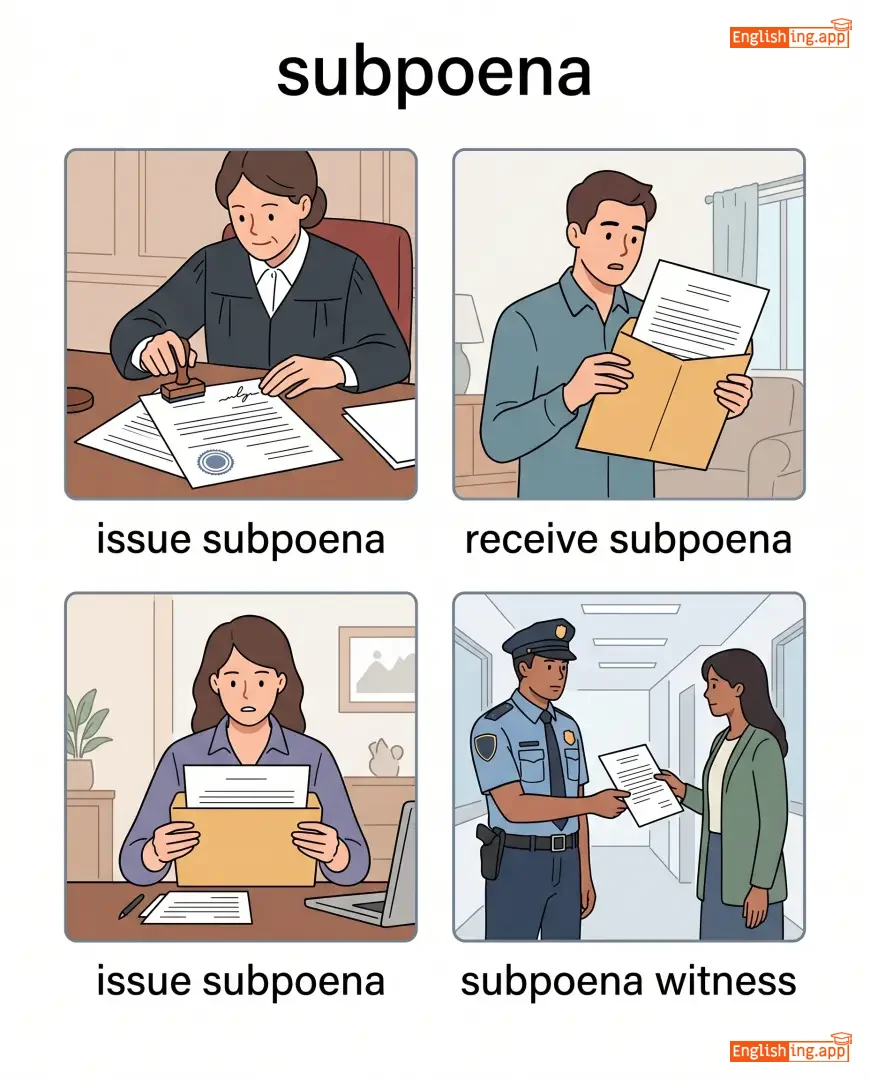
|
#8487
📜
|
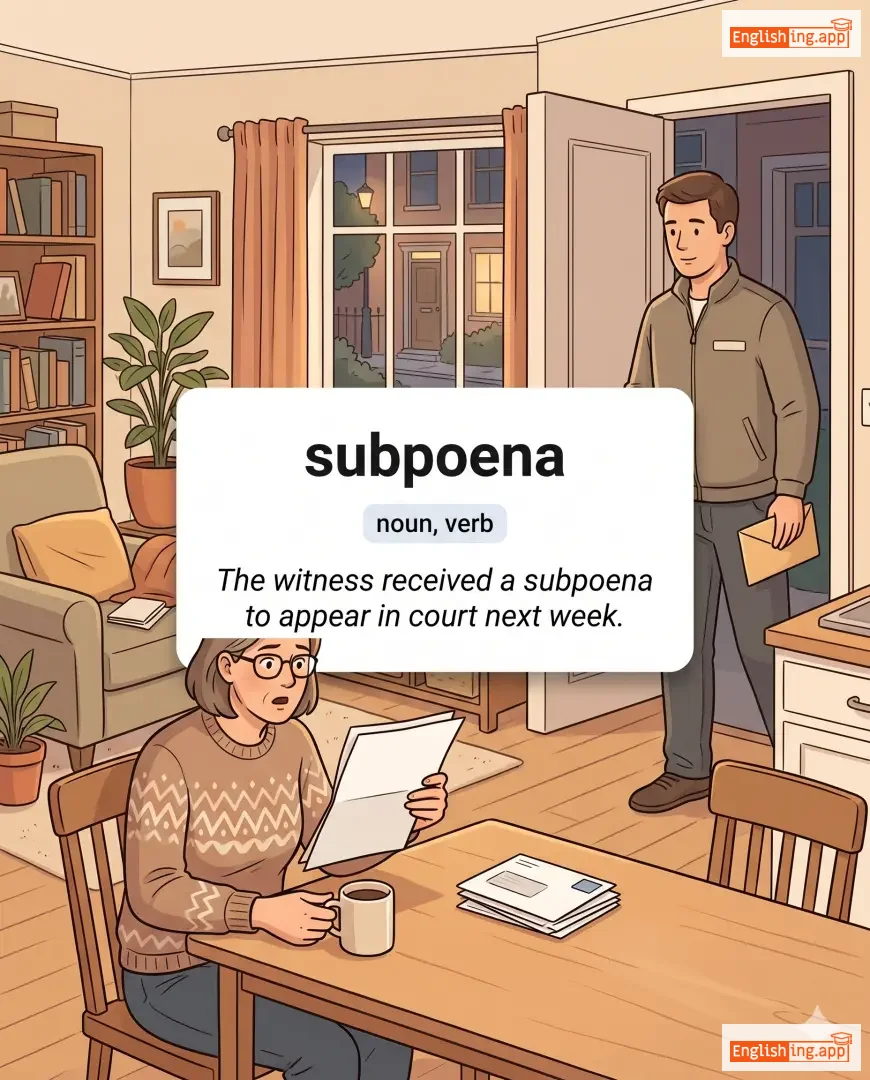
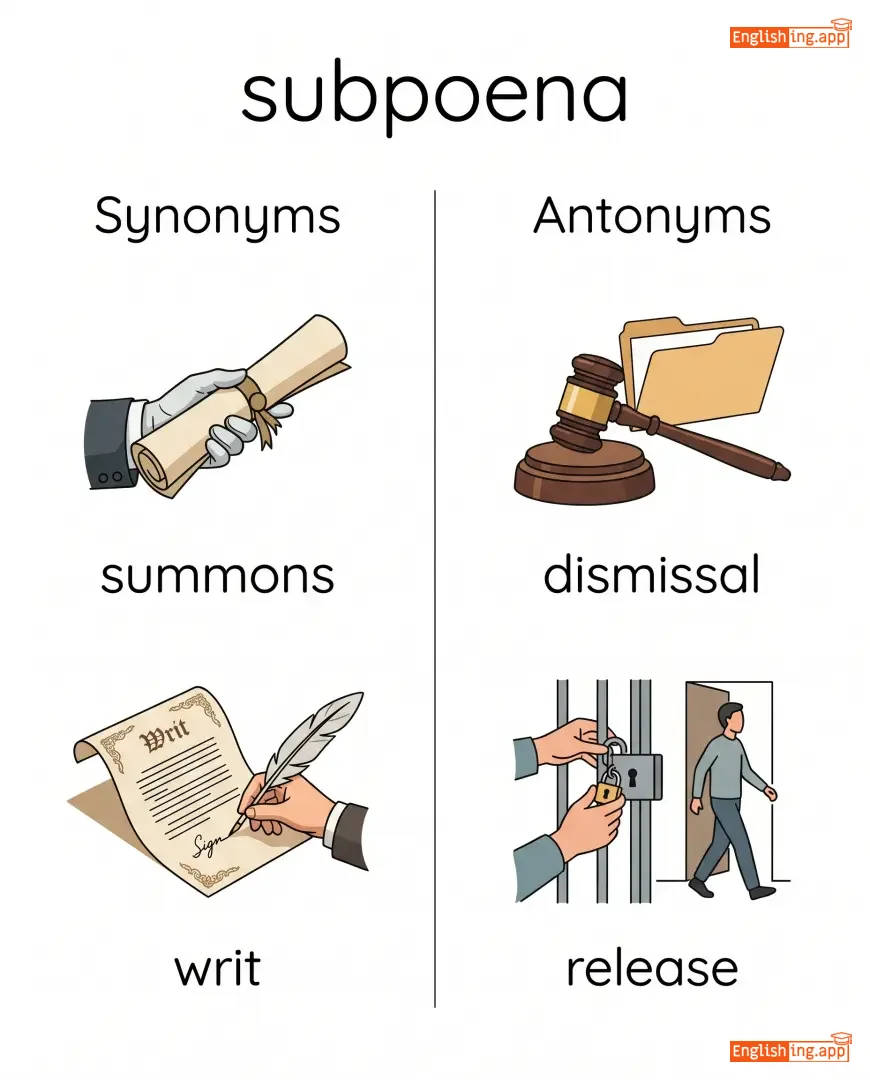
/səˈpiːnə/
noun, verb
(萨布皮纳)
••••••
|
|
传票
chuanpiao
••••••
|
subpoenaed
萨布皮纳德
••••••
|
subpoenaed
萨布皮纳德
••••••
|
subpoenas
萨布皮纳斯
••••••
|
subpoenaing
萨布皮内英
••••••
|
a legal document ordering someone to attend court; to summon someone with such a document
••••••
|
The witness received a subpoena to appear in court next week.
证人收到了传票,要求下周出庭。
••••••
|
证人收到了传票,要求下周出庭。
Zhengren shoudao le chuanpiao, yaoqiu xia zhou chuting.
••••••
|
issue a subpoena
发出传票
••••••
|
to formally send a legal order for someone to appear in court
••••••
|
发出传票
fachu chuanpiao
••••••
|
summons, writ, court order, mandate
••••••
|
dismissal, release
••••••
|
issue subpoena, receive subpoena, subpoena witness, subpoena records
••••••
|
Subpoena的意思是'sub'下面和'poena'惩罚 - 如果你不去法庭,就会有惩罚,所以是传票。
••••••
|
|
#8488
💰
|
/səˈbɔːrn/
verb
(苏博恩)
••••••
|
- •••••• |
贿赂
huìlù
••••••
|
suborned
苏博恩德
••••••
|
suborned
苏博恩德
••••••
|
suborns
苏博恩斯
••••••
|
suborning
苏博恩宁
••••••
|
to bribe or induce someone unlawfully to perform an act, especially to commit perjury
••••••
|
The lawyer was accused of trying to suborn a witness.
律师被指控试图贿赂一名证人。
••••••
|
律师被指控试图贿赂一名证人。
Lǜshī bèi zhǐkòng shìtú huìlù yī míng zhèngrén.
••••••
|
- •••••• | - •••••• | - •••••• |
bribe, corrupt, incite, persuade
••••••
|
deter, discourage
••••••
|
suborn perjury, suborn a witness, attempt to suborn
••••••
|
Suborn 意味着 'sub' 下和 'orn' 听起来像 'ornate',通过贿赂让某人撒谎。
••••••
|
|
#8489
👥
|
/səˈbɔːrdənət/ (noun/adjective), /səˈbɔːrdəˌneɪt/ (verb)
noun, adjective, verb
(下属)
••••••
|
- •••••• |
下属
xiàshǔ
••••••
|
subordinated
下属的
••••••
|
subordinated
下属的
••••••
|
subordinates
下属
••••••
|
subordinating
下属的
••••••
|
lower in rank or position; to treat as less important
••••••
|
He manages ten subordinates in his department.
他在他的部门里管理十个下属。
••••••
|
他在他的部门里管理十个下属。
Tā zài tā de bùmén lǐ guǎnlǐ shí gè xiàshǔ.
••••••
|
subordinate role
下属角色
••••••
|
a position of lower importance or authority
••••••
|
下属角色
xiàshǔ juésè
••••••
|
assistant, junior, aide, inferior, dependent
••••••
|
superior, chief, leader
••••••
|
subordinate staff, subordinate clause, subordinate position, subordinate role
••••••
|
Subordinate意味着处于较低的职位 - subordinate role意味着较低的角色。
••••••
|
Vocabulary Quiz
Test your vocabulary by matching words with their translations or meanings.
Login to take the quiz
Comments (0)
Share your thoughts and join the discussion.
Join the discussion by logging in
Login to CommentNo comments yet
Be the first to share your thoughts!