




Swipe left or right, or use the buttons. Tap image to zoom.
例句翻译
单词
Lesson 250Lesson 250 - 遮罩切换
|
表情符号
|
单词 | Images | 翻译 | 过去时 | 过去分词 | 第三人称单数 | 动名词 | 含义 | 例句 | 例句翻译 | 示例表达 | 示例表达含义 | 示例表达翻译 | 同义词 | 反义词 | 搭配词 | 助记符 |
|---|---|---|---|---|---|---|---|---|---|---|---|---|---|---|---|---|---|
|
#7470
😟
|
/rɪˈlʌktənt/
adjective
(rilaktant)
••••••
|
- •••••• |
不情愿
bu qingyuan
••••••
|
- •••••• | - •••••• | - •••••• | - •••••• |
unwilling or hesitant to do something
••••••
|
She was reluctant to speak in front of the large audience. |
她不情愿在大庭广众面前发言。
Ta bu qingyuan zai da tingguangzhong mianqian fayan.
••••••
|
reluctant hero |
a person who is unwilling to accept their role but ends up fulfilling it
••••••
|
不情愿的英雄
bu qingyuan de yingxiong
••••••
|
unwilling, hesitant, resistant, disinclined, loath
••••••
|
willing, eager, ready
••••••
|
reluctant to accept, reluctant agreement, reluctant smile, reluctant participant
••••••
|
Reluctant = 不情愿, 就是不愿意做事。
••••••
|
|
#7471
🙅
|
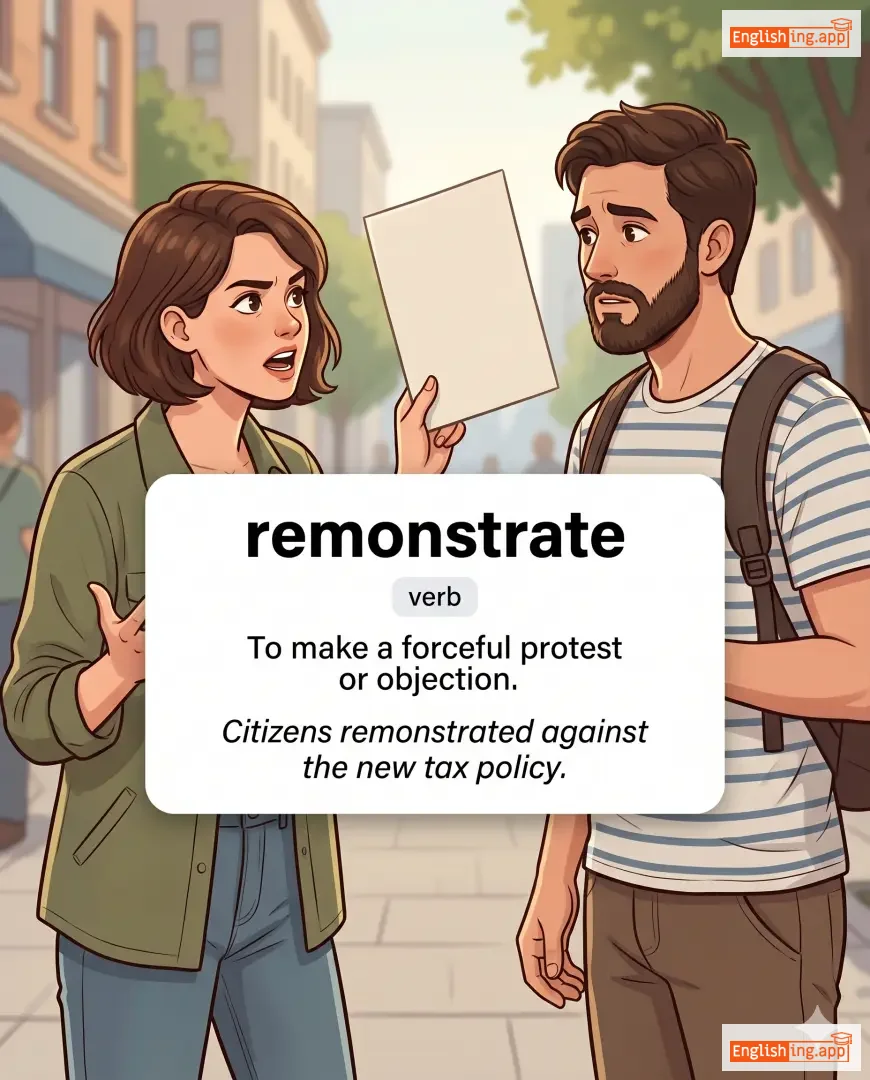
/rɪˈmɒnstreɪt/
verb
(雷蒙斯特雷特)
••••••
|
|
抗议
kàngyì
••••••
|
remonstrated
雷蒙斯特雷特德
••••••
|
remonstrated
雷蒙斯特雷特德
••••••
|
remonstrates
雷蒙斯特雷特斯
••••••
|
remonstrating
雷蒙斯特雷特英
••••••
|
To make a forceful protest or objection.
••••••
|
Citizens remonstrated against the new tax policy.
公民们抗议新税政策。
••••••
|
公民们抗议新税政策。
Gōngmínmen kàngyì xīn shuì zhèngcè.
••••••
|
- •••••• | - •••••• | - •••••• |
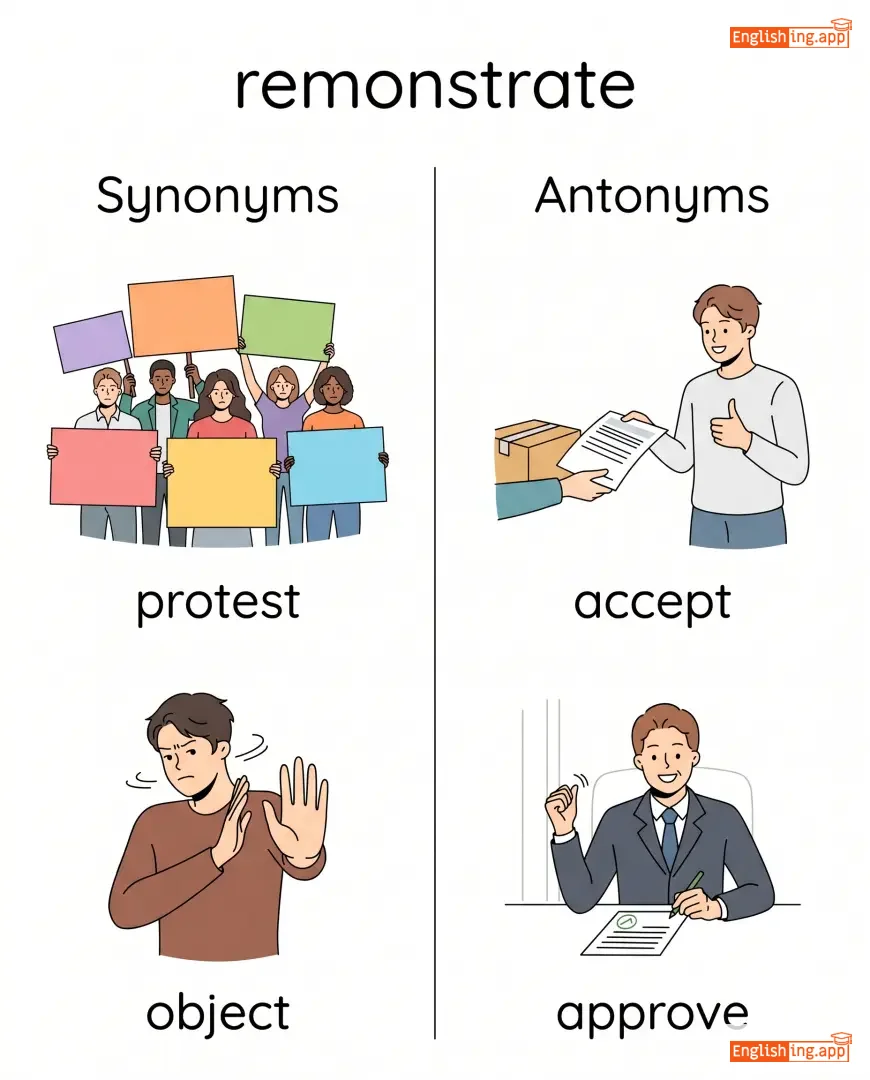
protest, object, complain, oppose
••••••
|
accept, approve
••••••
|
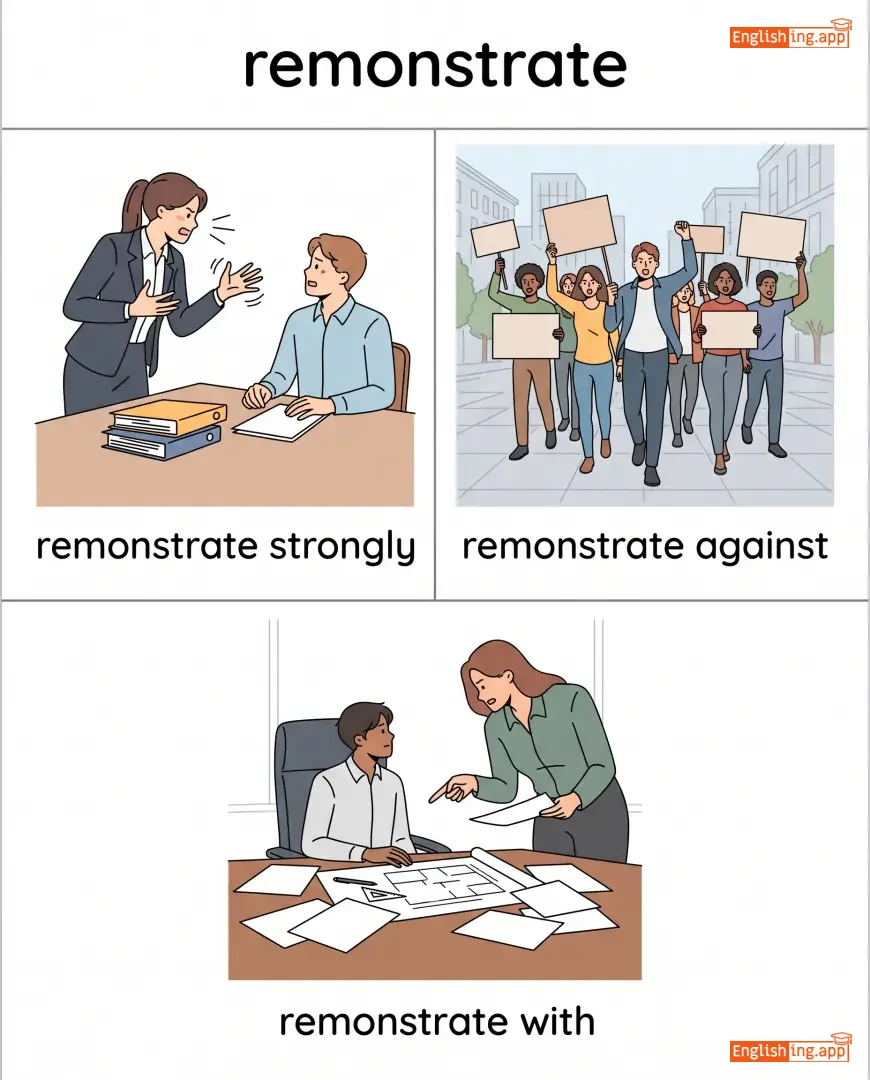
remonstrate strongly, remonstrate against, remonstrate with
••••••
|
Remonstrate = 反对 + 示威 - 强烈抗议。
••••••
|
|
#7472
🗣️
|
/rɪˈmɒnstrənt/
noun/adjective
(rī-mén-sī-tè)
••••••
|
- •••••• |
抗议者
kàngyì zhě
••••••
|
- •••••• | - •••••• | - •••••• | - •••••• |
A person who makes a forceful protest (noun); protesting or objecting (adjective).
••••••
|
He was a remonstrant voice in the assembly.
他是会议中的抗议声音。
••••••
|
他是会议中的抗议声音。
Tā shì huìyì zhōng de kàngyì shēngyīn.
••••••
|
- •••••• | - •••••• | - •••••• |
protester, objector, dissenter, opposer
••••••
|
supporter, advocate
••••••
|
remonstrant voice, remonstrant protest, remonstrant group
••••••
|
Remonstrant = protester - 抗议者.
••••••
|
|
#7473
✊
|
/rɪˈmɒnstrəns/
noun
(雷蒙斯特兰斯)
••••••
|
- •••••• |
抗议
kangyi
••••••
|
- •••••• | - •••••• | - •••••• | - •••••• |
A forceful protest or objection.
••••••
|
The workers’ remonstrance against unfair treatment was ignored.
工人的抗议反对不公平待遇被忽视了。
••••••
|
工人的抗议反对不公平待遇被忽视了。
Gongren de kangyi fandui bu gongping daiyu bei hushi le.
••••••
|
- •••••• | - •••••• | - •••••• |
protest, complaint, objection, grievance
••••••
|
acceptance, agreement
••••••
|
public remonstrance, remonstrance letter, remonstrance against
••••••
|
Remonstrance意味着强烈抗议 - 抗议!
••••••
|
|
#7474
🏡
|
/ˌriːˈmɒdəl/
verb
(ɹɪˈmoʊdəl)
••••••
|
- •••••• |
重新装修
chóngxīn zhuāngxiū
••••••
|
remodeled
ɹɪˈmoʊdələd
••••••
|
remodeled
ɹɪˈmoʊdələd
••••••
|
remodels
ɹɪˈmoʊdəlz
••••••
|
remodeling
ɹɪˈmoʊdəlɪŋ
••••••
|
To change the structure or form of something, especially a building.
••••••
|
They decided to remodel their kitchen last summer.
他们决定去年夏天重新装修厨房。
••••••
|
他们决定去年夏天重新装修厨房。
Tāmen juédìng qùnián xiàtiān chóngxīn zhuāngxiū chúfáng.
••••••
|
- •••••• | - •••••• | - •••••• |
renovate, reconstruct, rebuild, redesign
••••••
|
demolish, destroy
••••••
|
remodel house, remodel kitchen, remodel bathroom, remodel plan
••••••
|
Re + model = 重新装修 – 改变结构,像改建房子。
••••••
|
|
#7475
🪶
|
/ˈrɛmnənt/
noun
(rèmàn tè)
••••••
|
- •••••• |
残余
cán yú
••••••
|
- •••••• | - •••••• | - •••••• | - •••••• |
A small remaining part of something that once existed or was larger.
••••••
|
The old house still had remnants of its former glory. |
那座老房子仍然保留着它曾经的辉煌的残余。
Nà zuò lǎo fángzi réngrán bǎoliúzhe tā céngjīng de huīhuáng de cán yú.
••••••
|
remnants of the past |
Small surviving parts or traces of something from earlier times.
••••••
|
过去的残余
guòqù de cán yú
••••••
|
fragment, residue, leftover, trace, remainder
••••••
|
whole, entirety, total
••••••
|
fabric remnant, ancient remnant, small remnant, remnant of war
••••••
|
Remnant 意味着剩余部分,类似于残余。
••••••
|
|
#7476
🏦
|
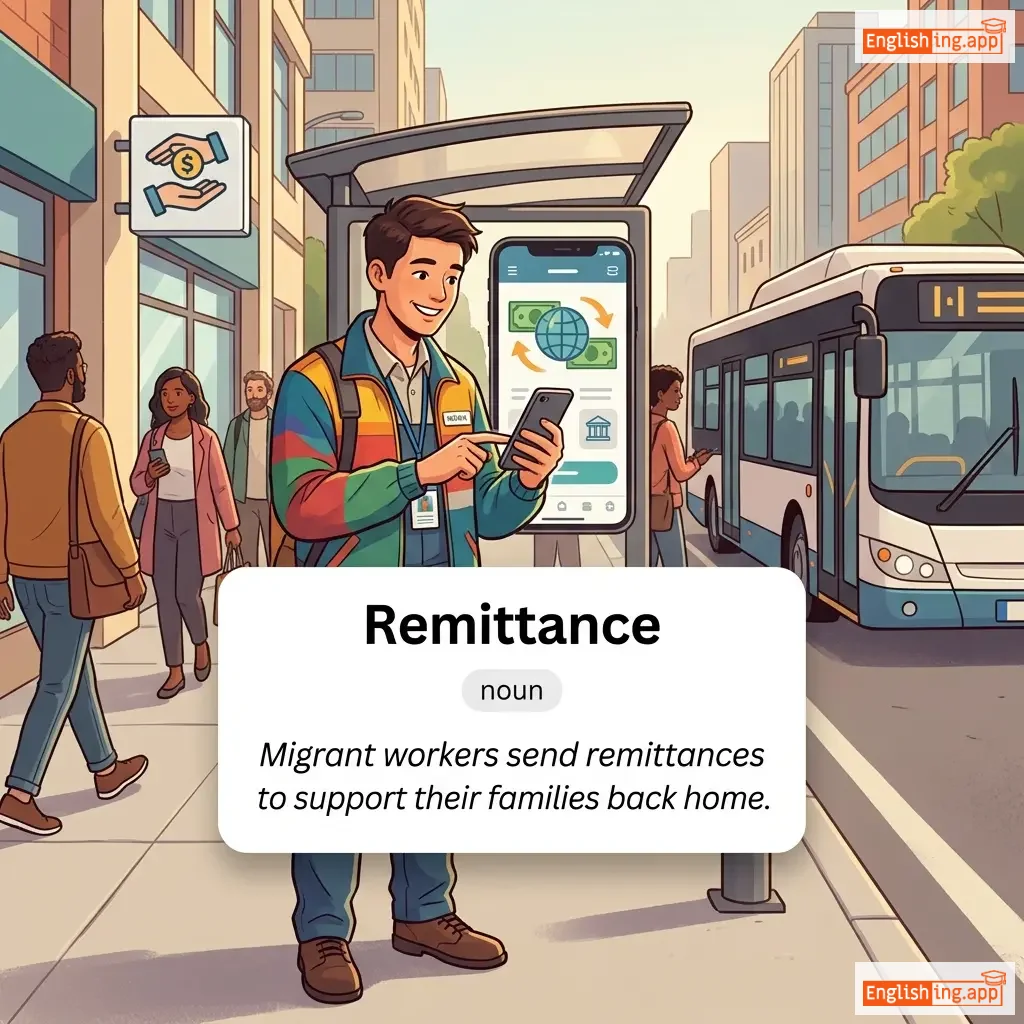
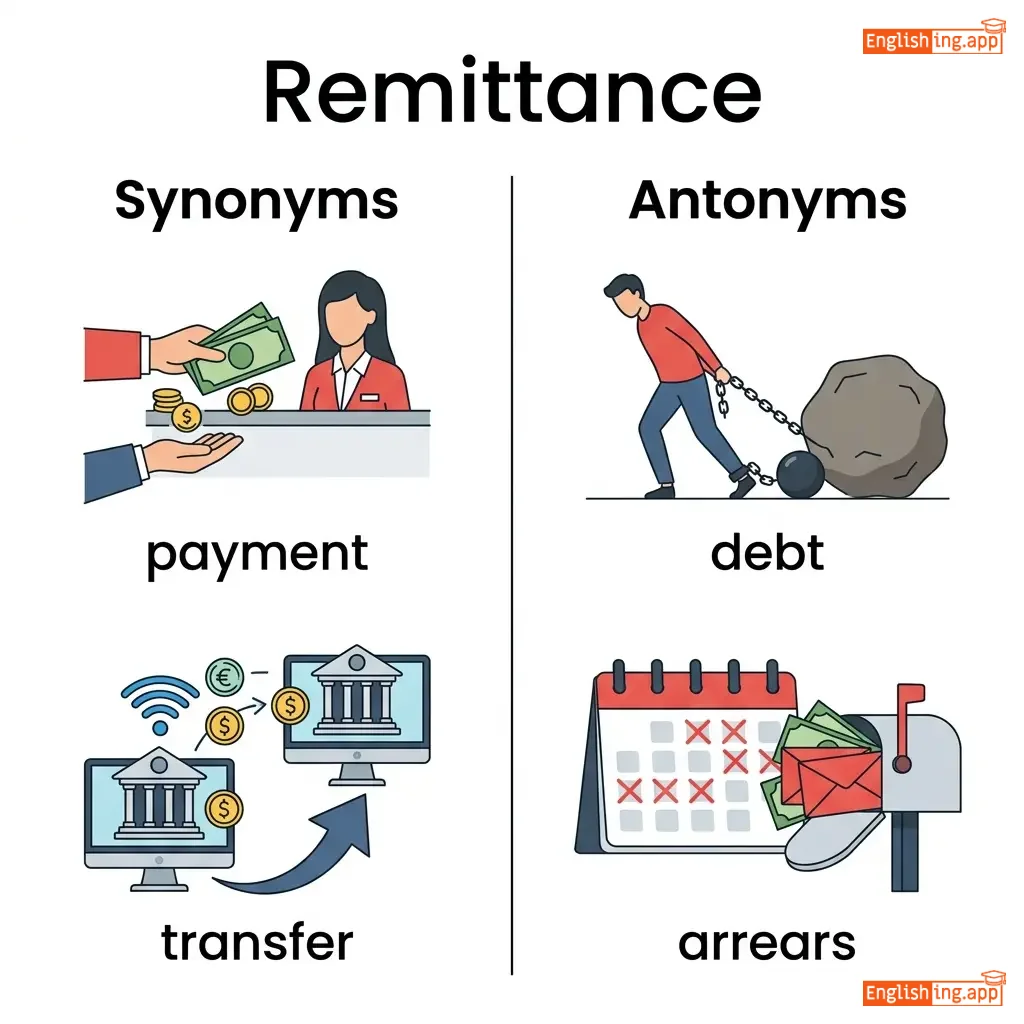
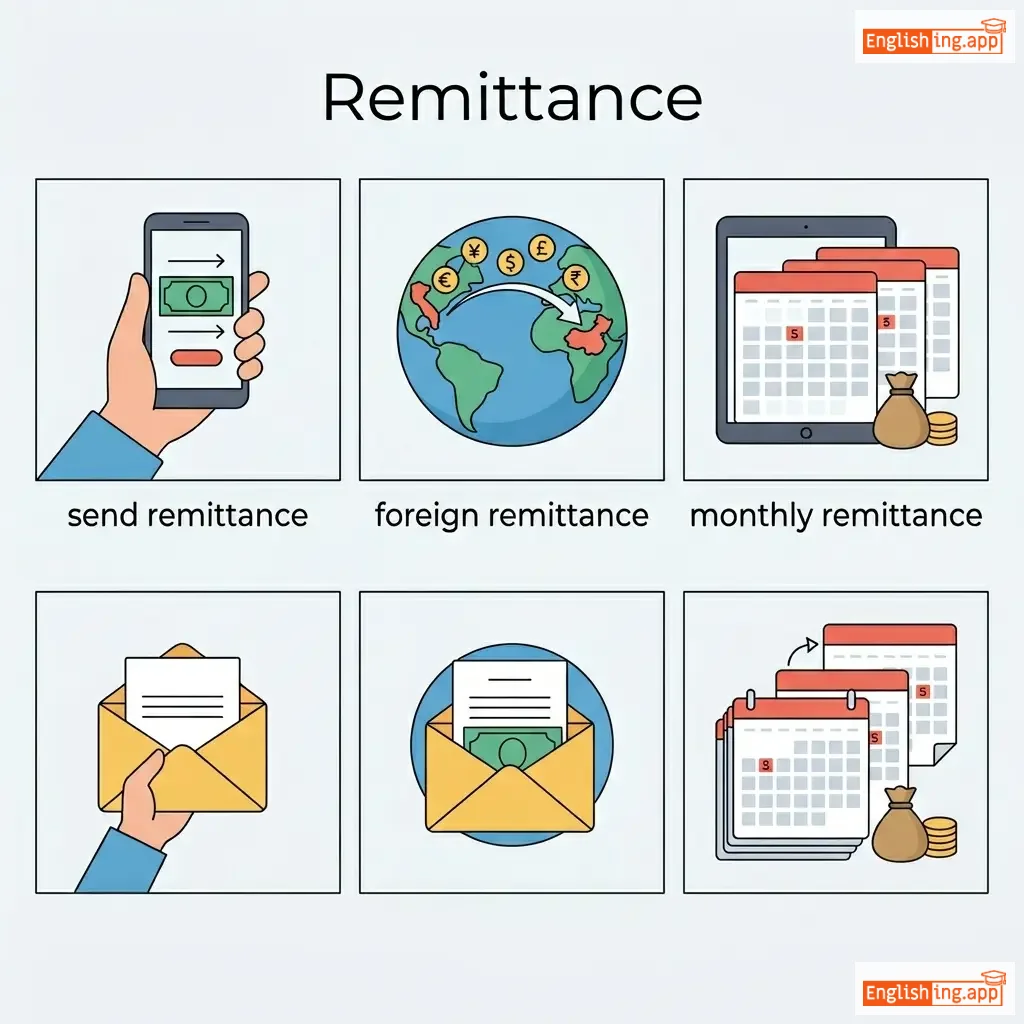
/rɪˈmɪtəns/
noun
(ɻəˈmɪtæns)
••••••
|
|
汇款 / 资金转移
huì kuǎn / zī jīn zhuǎn yí
••••••
|
- •••••• | - •••••• | - •••••• | - •••••• |
A sum of money sent, especially by mail or electronic transfer, as payment or gift.
••••••
|
Migrant workers send remittances to support their families back home. |
外来务工人员将汇款寄回家乡,支持他们的家庭。
Wàilái wùgōng rényuán jiāng huìkuǎn jì huí jiāxiāng, zhīchí tāmen de jiātíng.
••••••
|
- •••••• | - •••••• | - •••••• |
payment, transfer, contribution, wire, money order
••••••
|
debt, arrears
••••••
|
send remittance, foreign remittance, monthly remittance, remittance inflow
••••••
|
汇款是指转移资金 — 想想'中国汇款经济'。
••••••
|
|
#7477
💸
|
/rɪˈmɪt/
verb
(remit)
••••••
|
- •••••• |
汇款 / 免除
huì kuǎn / miǎnchú
••••••
|
remitted
remitted
••••••
|
remitted
remitted
••••••
|
remits
remits
••••••
|
remitting
remitting
••••••
|
To send money in payment or as a gift; to cancel or refrain from exacting a debt or punishment.
••••••
|
He promised to remit the payment by the end of the week.
他承诺在本周末之前汇款。
••••••
|
他承诺在本周末之前汇款。
Tā chéngnuò zài běn zhōumò zhīqián huìkuǎn.
••••••
|
- •••••• | - •••••• | - •••••• |
send, transfer, transmit, cancel, forgive
••••••
|
withhold, retain
••••••
|
remit payment, remit funds, remit money, remit debt
••••••
|
Remit 表示汇款 — 想想 '汇款' 来帮助记忆。
••••••
|
|
#7478
🙏
|
/rɪˈmɪʃən/
noun
••••••
|
- •••••• | - •••••• | - •••••• | - •••••• | - •••••• | - •••••• |
A temporary or permanent decrease or disappearance of disease symptoms; forgiveness of sins or debts.
••••••
|
The patient’s cancer is in remission after the treatment. |
- •••••• | - •••••• | - •••••• | - •••••• |
abatement, reduction, forgiveness, alleviation
••••••
|
relapse, worsening
••••••
|
in remission, cancer remission, complete remission, long-term remission
••••••
|
No •••••• |
|
#7479
😓
|
/rɪˈmɪs/
adjective
(雷米斯)
••••••
|
- •••••• |
疏忽
shūhu
••••••
|
- •••••• | - •••••• | - •••••• | - •••••• |
Negligent in performing a duty or responsibility.
••••••
|
The manager was remiss in not checking the financial reports carefully. |
经理在没有仔细检查财务报告时疏忽了。
Jīnglǐ zài méiyǒu zǐxì jiǎnchá cáiwù bàogào shí shūhūle.
••••••
|
- •••••• | - •••••• | - •••••• |
negligent, careless, lax, inattentive
••••••
|
dutiful, careful, attentive
••••••
|
remiss in, dangerously remiss, grossly remiss, remiss behavior
••••••
|
Remiss 就像 'duty miss' — 疏忽职责.
••••••
|
|
#7480
💭
|
/ˌrɛmɪˈnɪsənt/
adjective
(rèmínísènt)
••••••
|
- •••••• |
唤起回忆的
huànqǐ huíyì de
••••••
|
- •••••• | - •••••• | - •••••• | - •••••• |
Tending to remind one of something; suggestive of something in the past.
••••••
|
The smell of rain is reminiscent of my childhood in the village. |
雨的气味让我想起了我在村里的童年。
Yǔ de qìwèi ràng wǒ xiǎngqǐle wǒ zài cūn lǐ de tóngnián.
••••••
|
- •••••• | - •••••• | - •••••• |
evocative, suggestive, remindful, nostalgic, redolent
••••••
|
forgetful, oblivious, unmindful
••••••
|
reminiscent of, deeply reminiscent, strongly reminiscent, somewhat reminiscent
••••••
|
Reminiscent意味着唤起回忆的 — 雨的气味让我想起了我在村里的童年。
••••••
|
|
#7481
🪞
|
/ˌrɛmɪˈnɪsəns/
noun
(回忆)
••••••
|
- •••••• |
回忆
huiyi
••••••
|
- •••••• | - •••••• | - •••••• | - •••••• |
a story or memory about past events
••••••
|
He shared a reminiscence of his childhood days in the village.
他分享了他在村庄的童年时光的回忆。
••••••
|
他分享了他在村庄的童年时光的回忆。
Ta fenxiang le ta zai cunzhuang de tongnian shiguang de huiyi.
••••••
|
- •••••• | - •••••• | - •••••• |
memory, recollection, reflection, nostalgia
••••••
|
forgetfulness, amnesia
••••••
|
pleasant reminiscence, fond reminiscence, childhood reminiscence
••••••
|
回忆就是回顾过去的故事 (huiyi) 。
••••••
|
|
#7482
🕯️
|
/rɪˈmɛmbrəns/
noun
(rɪˈmɛmbəns)
••••••
|
- •••••• |
纪念
jinian
••••••
|
- •••••• | - •••••• | - •••••• | - •••••• |
the act of remembering or honoring someone or something
••••••
|
A service was held in remembrance of the fallen soldiers. |
为阵亡士兵举行了纪念仪式。
wèi zhènwáng shìbīng jǔxíngle jìniàn yíshì.
••••••
|
in remembrance of |
to honor the memory of someone or something
••••••
|
纪念
jìniàn
••••••
|
memory, commemoration, tribute, recollection
••••••
|
forgetfulness, oblivion
••••••
|
remembrance day, in remembrance, token of remembrance
••••••
|
Remembrance 意味着记得 + 意义 = 纪念
••••••
|
|
#7483
📚
|
/rɪˈmiːdiəl/
adjective
(remedial)
••••••
|
- •••••• |
补救的
bujiu de
••••••
|
- •••••• | - •••••• | - •••••• | - •••••• |
intended to correct or improve a situation, especially related to learning or health
••••••
|
The school offers remedial classes in mathematics. |
学校提供数学补救课程。
Xuéxiào tígōng shùxué bǔjiù kèchéng.
••••••
|
- •••••• | - •••••• | - •••••• |
corrective, therapeutic, educational, curative
••••••
|
harmful, detrimental, damaging
••••••
|
remedial class, remedial measures, remedial program
••••••
|
补救是为了解决问题,就像数学辅导课程一样。
••••••
|
|
#7484
🩹
|
/rɪˈmiːdiəbl/
adjective
(可修复的)
••••••
|
- •••••• |
可修复的
ke xiufu de
••••••
|
- •••••• | - •••••• | - •••••• | - •••••• |
capable of being corrected or cured
••••••
|
The mistake was serious but still remediable. |
这个错误很严重,但仍然是可修复的。
Zhege cuowu hen yanzhong, dan rengran shi ke xiufu de.
••••••
|
- •••••• | - •••••• | - •••••• |
correctable, curable, fixable, reparable
••••••
|
irremediable, incurable, irreversible
••••••
|
remediable error, remediable defect, remediable condition
••••••
|
Remediable听起来像修复,意味着可以修复的。
••••••
|
|
#7485
🕊️
|
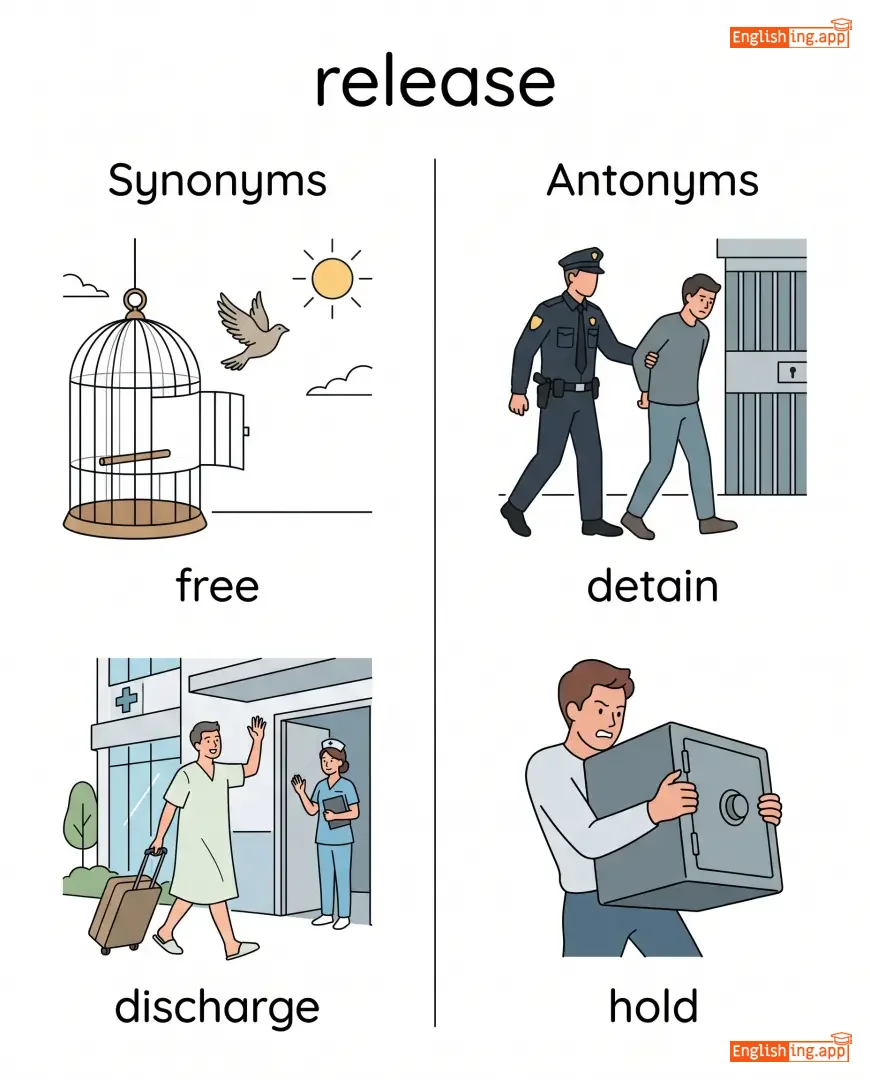
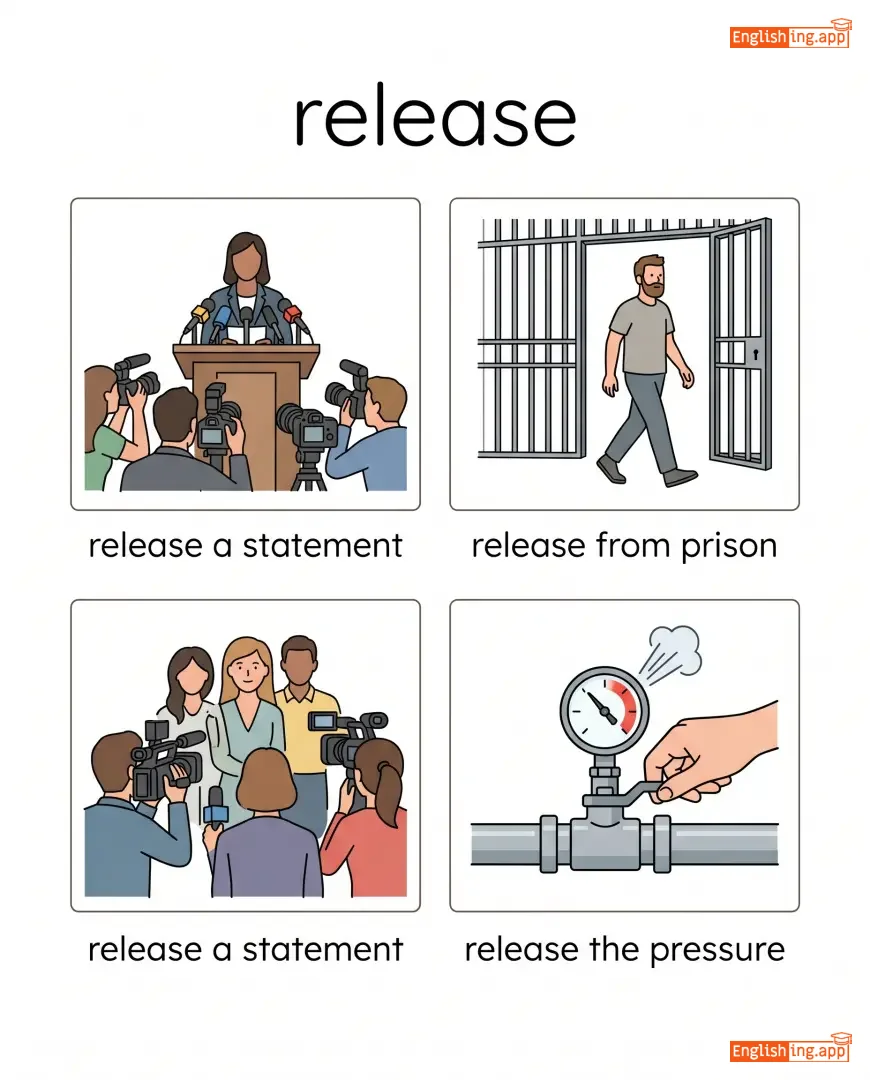
/rɪˈliːs/
verb
(rílìzī)
••••••
|
|
释放, 发布
shifang, fabu
••••••
|
released
rílìzīle
••••••
|
released
rílìzīle
••••••
|
releases
rílìzī
••••••
|
releasing
rílìzīng
••••••
|
to set free, to make available, or to allow something to go out
••••••
|
The company will release the new product next month.
公司将在下个月发布新产品。
••••••
|
公司将在下个月发布新产品。
Gongsi jiang zai xiayige yue fabu xin chanpin.
••••••
|
release tension
释放紧张
••••••
|
to reduce or let go of stress or nervous energy
••••••
|
释放紧张
shifang jinzhang
••••••
|
free, discharge, liberate, publish, issue
••••••
|
detain, hold, capture
••••••
|
release a statement, release from prison, release the pressure, release an album
••••••
|
Release 意味着释放:发布新产品时,压力就释放了。
••••••
|
|
#7486
😕
|
/rɪˈlʌktəns/
noun
(rɪˈlʌktəns)
••••••
|
- •••••• |
不情愿
bu qing yuan
••••••
|
- •••••• | - •••••• | - •••••• | - •••••• |
unwillingness or hesitation to do something
••••••
|
His reluctance to speak made the meeting awkward. |
他不情愿发言使会议变得尴尬。
Ta bu qing yuan fa yan shi hui yi bian de gan ga.
••••••
|
with reluctance |
unwillingly or with hesitation
••••••
|
不情愿地
bu qing yuan de
••••••
|
hesitation, unwillingness, disinclination, resistance
••••••
|
willingness, eagerness, readiness
••••••
|
show reluctance, express reluctance, reluctance to act, with reluctance
••••••
|
Reluctance意味着不情愿——想象有人做事时很不情愿。
••••••
|
|
#7487
😋
|
/ˈrɛlɪʃ/
verb/noun
(rè lì shí)
••••••
|
- •••••• |
享受 / 调味料
xiǎngshòu / tiáowèi liào
••••••
|
relished
rè lì shíd
••••••
|
relished
rè lì shíd
••••••
|
relishes
rè lì shì
••••••
|
relishing
rè lì shíng
••••••
|
to greatly enjoy; also a condiment or sauce
••••••
|
She relished the opportunity to travel abroad.
她很高兴有机会出国旅行。
••••••
|
她很高兴有机会出国旅行。
Tā hěn gāoxìng yǒu jīhuì chūguó lǚxíng.
••••••
|
with relish
用快乐
••••••
|
with great enjoyment or enthusiasm
••••••
|
带着愉悦
dàizhe yúyuè
••••••
|
enjoy, savor, delight in, appreciate, taste
••••••
|
dislike, hate, detest
••••••
|
relish the opportunity, relish challenge, relish taste, with relish
••••••
|
Relish意味着享受 — 就像你吃东西时加上调味料(relish),会更好吃。
••••••
|
|
#7488
🗳️
|
/ˈrɛlɪkwɛri/
noun
(遗物箱)
••••••
|
- •••••• |
遗物箱
yíwù xiāng
••••••
|
- •••••• | - •••••• | - •••••• | - •••••• |
a container for holy relics
••••••
|
The ancient reliquary was decorated with gold and precious stones.
古老的遗物箱装饰着金子和宝石。
••••••
|
古老的遗物箱装饰着金子和宝石。
Gǔlǎo de yíwù xiāng zhuāngshì zhe jīnzi hé bǎoshí.
••••••
|
- •••••• | - •••••• | - •••••• |
shrine, container, chest, casket
••••••
|
ordinary box, profane container
••••••
|
golden reliquary, ornate reliquary, reliquary of saints
••••••
|
遗物箱代表着神圣遗物的保存容器,记住‘箱’是容器,‘遗物’是遗留下来的神圣物品。
••••••
|
|
#7489
👐
|
/rɪˈlɪŋkwɪʃ/
verb
(relinquish)
••••••
|
|
放弃
fangqi
••••••
|
relinquished
relinquished
••••••
|
relinquished
relinquished
••••••
|
relinquishes
relinquishes
••••••
|
relinquishing
relinquishing
••••••
|
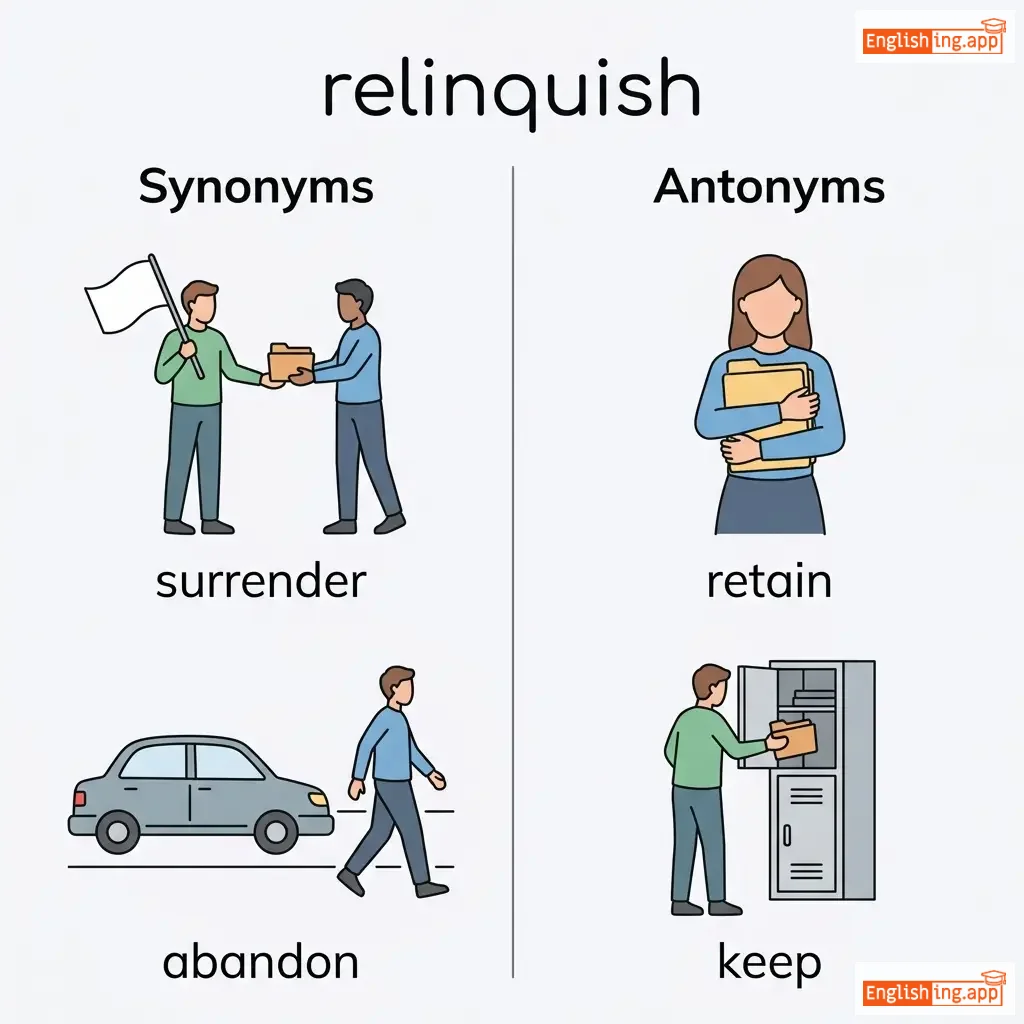
to give up or let go of something voluntarily
••••••
|
He had to relinquish control of the company after the merger.
He had to relinquish control of the company after the merger.
••••••
|
合并后,他不得不放弃公司的控制权。
He bu de bu fangqi gongsi de kongzhiquan.
••••••
|
relinquish control
relinquish control
••••••
|
to give up authority or power
••••••
|
放弃控制
fangqi kongzhi
••••••
|
surrender, abandon, renounce, yield, forgo
••••••
|
retain, keep, hold
••••••
|
relinquish control, relinquish claim, relinquish rights, relinquish position
••••••
|
Relinquish 就是放弃 — 想象有人放弃了他们的控制权。
••••••
|
|
#7490
🙏
|
/rɪˈlɪdʒəs/
adjective
(宗教的)
••••••
|
- •••••• |
宗教的
zongjiao de
••••••
|
- •••••• | - •••••• | - •••••• | - •••••• |
relating to or believing in a religion or faith
••••••
|
She is a very religious woman who prays every day.
她是一个非常宗教的人,每天都祈祷。
••••••
|
她是一个非常宗教的人,每天都祈祷。
Tā shì yīgè fēicháng zōngjiào de rén, měitiān dōu qídǎo.
••••••
|
religious fervor
宗教热情
••••••
|
intense passion and devotion towards religion
••••••
|
宗教热情
zongjiao reqing
••••••
|
devout, pious, spiritual, faithful, holy
••••••
|
atheist, secular, irreligious
••••••
|
religious belief, religious practice, religious festival, religious leader
••••••
|
Religious意味着宗教的——想象一个人在寺庙里做祷告!
••••••
|
|
#7491
🙏
|
/rɪˈlɪdʒ.ən/
noun
(宗教)
••••••
|
- •••••• |
宗教
zongjiao
••••••
|
- •••••• | - •••••• | - •••••• | - •••••• |
a system of faith and worship involving belief in a higher power
••••••
|
Freedom of religion is a fundamental human right.
宗教自由是基本人权。
••••••
|
宗教自由是基本人权。
Zongjiao zìyóu shì jīběn rénquán.
••••••
|
blind faith in religion
盲目信仰宗教
••••••
|
unquestioning belief in a religious system
••••••
|
盲目信仰宗教
mángmù xìnyǎng zōngjiào
••••••
|
faith, belief, spirituality, creed, worship
••••••
|
atheism, disbelief, skepticism
••••••
|
major religion, world religion, religious practice, organized religion
••••••
|
Religion = RE(神) + GION (信仰)
••••••
|
|
#7492
🏺
|
/ˈrɛl.ɪk/
noun
(rèlikè)
••••••
|
- •••••• |
遗物
yiwu
••••••
|
- •••••• | - •••••• | - •••••• | - •••••• |
an object surviving from an earlier time, often of historical or religious interest
••••••
|
The museum displayed relics from the ancient civilization. |
博物馆展示了来自古代文明的遗物。
Bowuguan zhanshi le laizi gudai wenming de yiwu.
••••••
|
a relic of the past |
something that remains from an earlier era
••••••
|
过去的遗物
guoqu de yiwu
••••••
|
artifact, remains, souvenir, memento
••••••
|
modernity, novelty
••••••
|
ancient relic, religious relic, relic of history, relic of the past
••••••
|
Relic 意味着遗物 — 一件历史遗留下来的遗物。
••••••
|
|
#7493
🛠️
|
/rɪˈlaɪ.ənt/
adjective
(rèliānt)
••••••
|
- •••••• |
依赖的
yīlài de
••••••
|
- •••••• | - •••••• | - •••••• | - •••••• |
depending on someone or something for support
••••••
|
The country is too reliant on imported goods. |
这个国家过于依赖进口商品。
Zhège guójiā guòyú yīlài jìnkǒu shāngpǐn.
••••••
|
- •••••• | - •••••• | - •••••• |
dependent, trusting, subordinate, subject
••••••
|
independent, self-sufficient
••••••
|
reliant on, too reliant, heavily reliant, reliant upon
••••••
|
Reliant 意味着依赖 — 就像火车依赖轨道。
••••••
|
|
#7494
🤝
|
/rɪˈlaɪ.əns/
noun
(rìliángsī)
••••••
|
- •••••• |
依赖
yilai
••••••
|
- •••••• | - •••••• | - •••••• | - •••••• |
dependence on or trust in someone or something
••••••
|
Her reliance on her friends helped her through difficult times. |
她对朋友的依赖帮助她度过了困难的时光。
Ta dui pengyou de yilai bangzhu ta duoguole kunnan de shiguang.
••••••
|
self-reliance |
independence; the ability to depend on oneself
••••••
|
自立
zili
••••••
|
dependence, trust, confidence, faith, assurance
••••••
|
independence, distrust, doubt
••••••
|
heavy reliance, strong reliance, reliance on technology, reliance upon
••••••
|
Reliance 意味着依赖,就像Reliance公司的名字意味着信任。
••••••
|
|
#7495
📌
|
/ˈrɛl.ə.vənt/
adjective
(雷莱万特)
••••••
|
- •••••• |
相关的
xiāngguān de
••••••
|
- •••••• | - •••••• | - •••••• | - •••••• |
closely connected or appropriate to what is being considered or done
••••••
|
Your comments are not relevant to the discussion.
你的评论与讨论无关。
••••••
|
你的评论与讨论无关。
Nǐ de pínglùn yǔ tǎolùn wúguān.
••••••
|
relevant to the point
与要点相关
••••••
|
directly connected to the main issue being discussed
••••••
|
与要点相关
Yǔ yàodiǎn xiāngguān
••••••
|
pertinent, applicable, appropriate, related, connected
••••••
|
irrelevant, unrelated, inappropriate
••••••
|
relevant information, relevant issue, relevant factors, relevant data
••••••
|
Relevant意思是相关的,就像考试中的相关问题,就是与考试相关的问题。
••••••
|
|
#7496
📌
|
/ˈrɛlɪvənsi/
noun
(瑞-利-万-西)
••••••
|
- •••••• |
相关性
xiangguansheng
••••••
|
- •••••• | - •••••• | - •••••• | - •••••• |
the quality of being closely connected or appropriate
••••••
|
The professor questioned the relevancy of the example to the topic. |
教授质疑了这个例子与主题的相关性。
Jiaoshou zhiyi le zhege lizi yu zhuti de xiangguansheng.
••••••
|
- •••••• | - •••••• | - •••••• |
pertinence, applicability, significance, importance
••••••
|
irrelevance, inapplicability, insignificance
••••••
|
relevancy to the case, relevancy of the topic, legal relevancy
••••••
|
相关性就像考试中的正确答案:必须与问题相关,否则就没有意义。
••••••
|
|
#7497
🔥
|
/rɪˈlɛntləs/
adjective
••••••
|
|
- •••••• | - •••••• | - •••••• | - •••••• | - •••••• |
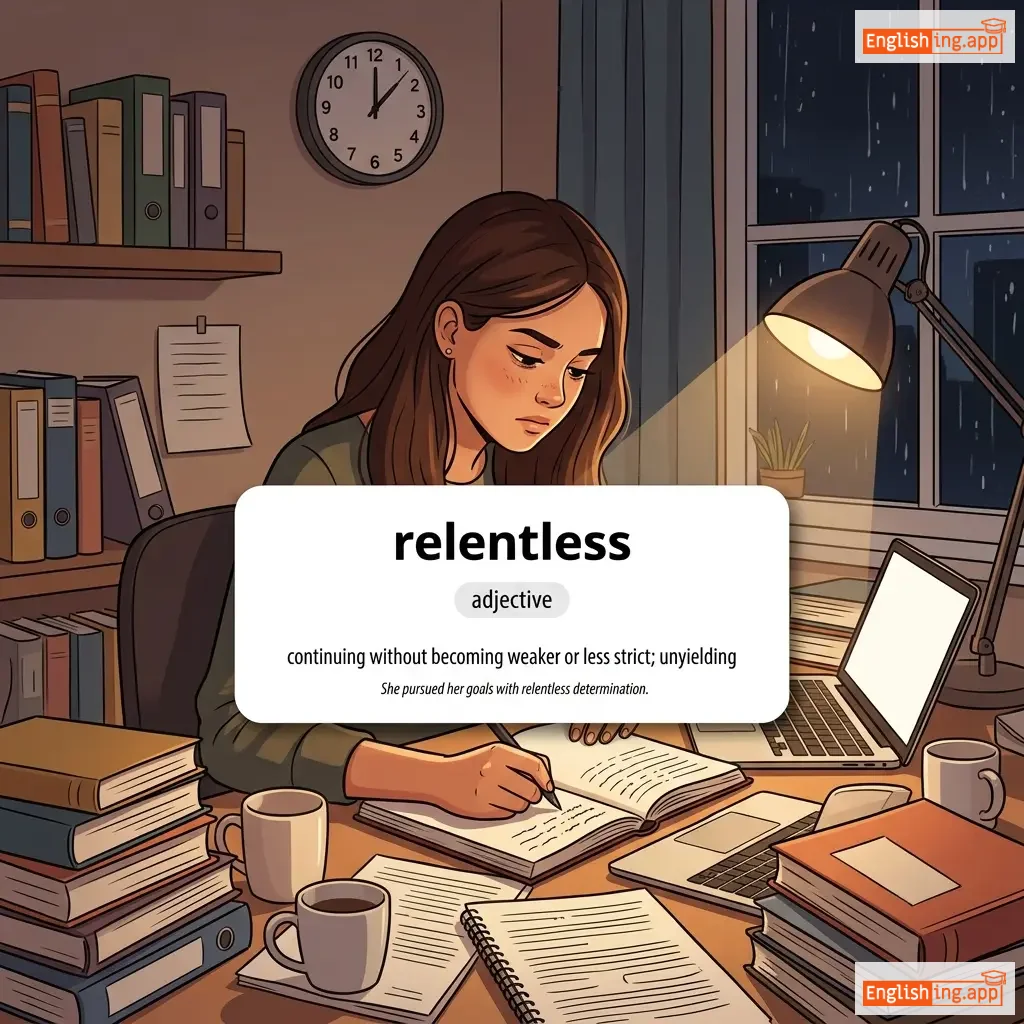
continuing without becoming weaker or less strict; unyielding
••••••
|
She pursued her goals with relentless determination. |
- •••••• |
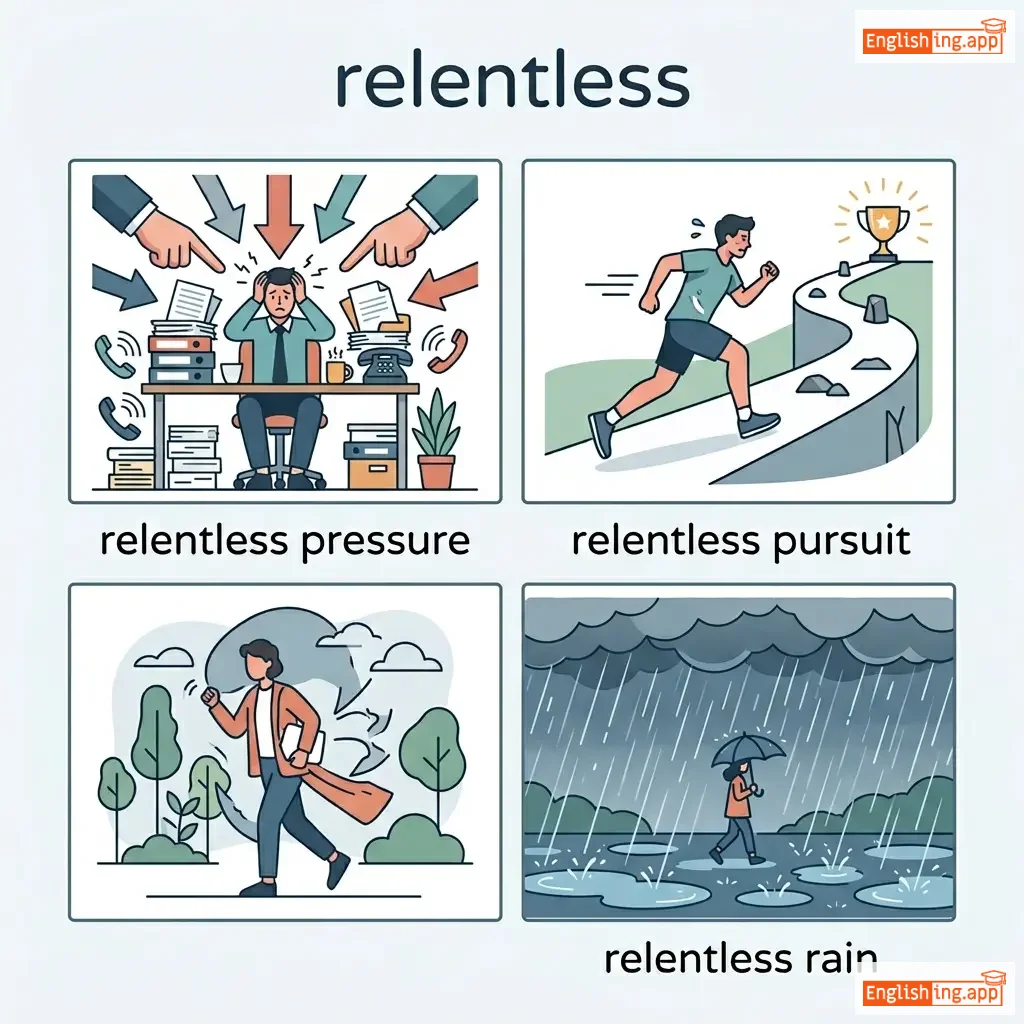
relentless pursuit |
an unyielding and determined effort to achieve something
••••••
|
- •••••• |
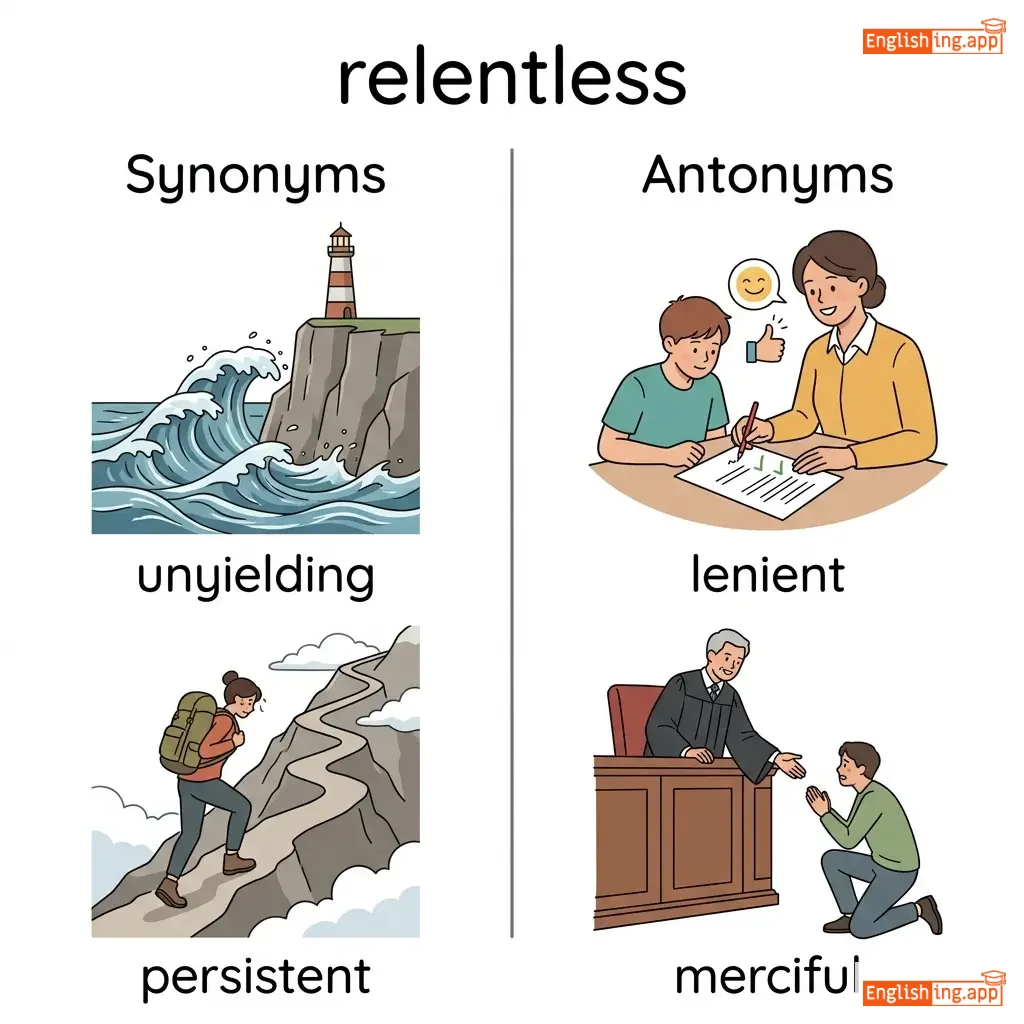
unyielding, persistent, unstoppable, unremitting
••••••
|
lenient, merciful, flexible
••••••
|
relentless pressure, relentless pursuit, relentless rain, relentless effort
••••••
|
No •••••• |
|
#7498
🤲
|
/rɪˈlɛnt/
verb
(瑞伦特)
••••••
|
- •••••• |
让步,变得温和
rangbu, biande wenhe
••••••
|
relented
瑞伦特德
••••••
|
relented
瑞伦特德
••••••
|
relents
瑞伦特斯
••••••
|
relenting
瑞伦特英
••••••
|
to become less severe, harsh, or strict
••••••
|
After hours of begging, she finally relented.
经过几个小时的恳求,她终于心软了。
••••••
|
经过几个小时的恳求,她终于心软了。
Jingguo jige xiaoshi de kenqiu, ta zhongyu xinruan le.
••••••
|
relent in the face of
瑞伦特面对
••••••
|
to give in when confronted with difficulties or pleas
••••••
|
在……面前让步
zai… mianqian rangbu
••••••
|
yield, soften, give in, concede
••••••
|
resist, persist, continue
••••••
|
relent slightly, relent after pressure, relent eventually
••••••
|
Relent表示心软——在强烈请求之后心情变软。
••••••
|
|
#7499
⬇️
|
/ˈrɛlɪɡeɪt/
verb
(降级)
••••••
|
|
降级
jiangji
••••••
|
relegated
降级了
••••••
|
relegated
降级了
••••••
|
relegates
降级
••••••
|
relegating
降级中
••••••
|
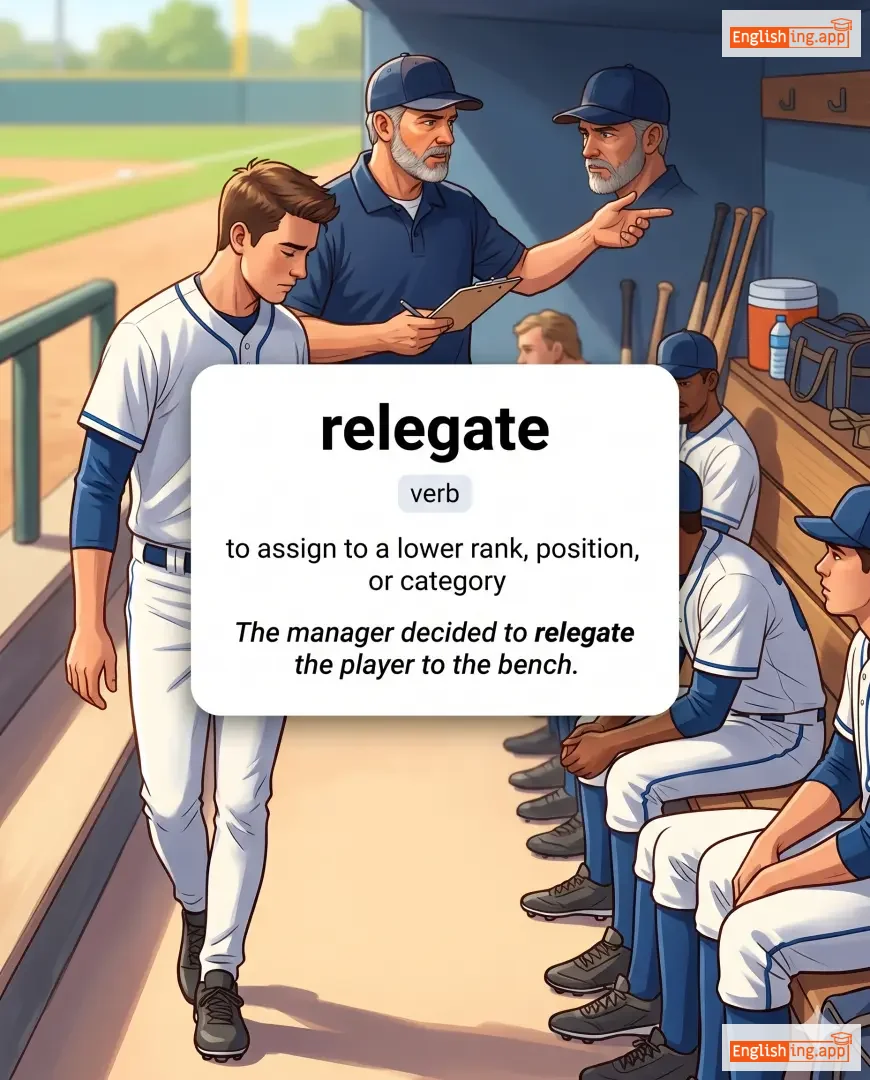
to assign to a lower rank, position, or category
••••••
|
The manager decided to relegate the player to the bench.
经理决定将球员降级到替补席。
••••••
|
经理决定将球员降级到替补席。
Jingli jueding jiang qiuyan jiangji dao tibuxi.
••••••
|
- •••••• | - •••••• | - •••••• |
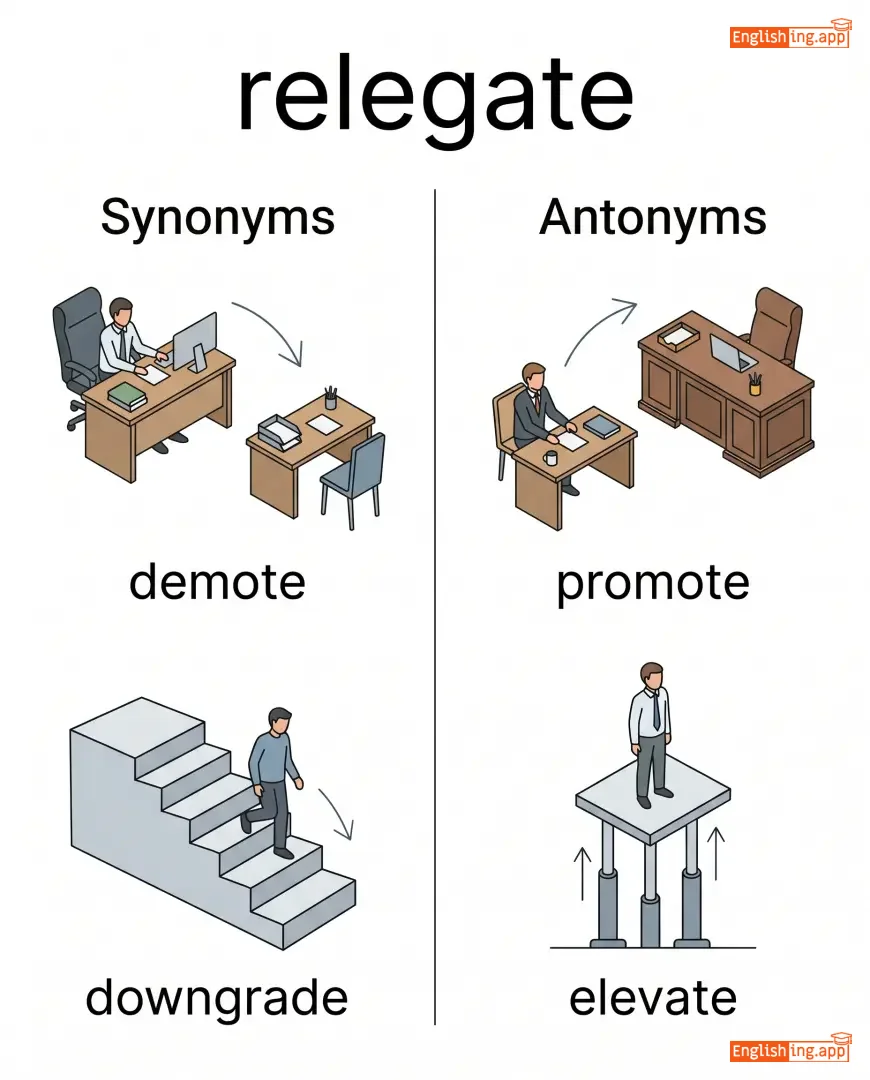
demote, downgrade, consign, assign
••••••
|
promote, elevate, upgrade
••••••
|
relegate someone, relegate to the background, relegate responsibility
••••••
|
降级意味着降到更低的等级 - '降级'和'替补席'让人容易记住。
••••••
|
Vocabulary Quiz
Test your vocabulary by matching words with their translations or meanings.
Login to take the quiz
Comments (0)
Share your thoughts and join the discussion.
Join the discussion by logging in
Login to CommentNo comments yet
Be the first to share your thoughts!