


Swipe left or right, or use the buttons. Tap image to zoom.
例句翻译
单词
Lesson 242Lesson 242 - 遮罩切换
|
表情符号
|
单词 | Images | 翻译 | 过去时 | 过去分词 | 第三人称单数 | 动名词 | 含义 | 例句 | 例句翻译 | 示例表达 | 示例表达含义 | 示例表达翻译 | 同义词 | 反义词 | 搭配词 | 助记符 |
|---|---|---|---|---|---|---|---|---|---|---|---|---|---|---|---|---|---|
|
#7230
🎟️
|
/ˈræfəl/
noun/verb
(拉弗尔)
••••••
|
- •••••• |
销售彩票
xiāoshòu cǎipiào
••••••
|
raffled
拉弗尔德
••••••
|
raffled
拉弗尔德
••••••
|
raffles
拉弗尔斯
••••••
|
raffling
拉弗林
••••••
|
A means of raising money by selling numbered tickets, one or more of which are drawn at random for a prize; to sell something in such a lottery.
••••••
|
The charity decided to raffle a bicycle to raise funds.
慈善机构决定通过抽奖出售自行车来筹集资金。
••••••
|
慈善机构决定通过抽奖出售自行车来筹集资金。
Císhàn jīgòu juédìng tōngguò chōujiǎng chūshòu zìxíngchē lái chóují zījīn.
••••••
|
- •••••• | - •••••• | - •••••• |
lottery, drawing, tombola, sweepstake
••••••
|
gift, donation
••••••
|
raffle ticket, charity raffle, raffle prize, raffle winner
••••••
|
Raffle 就像是一种彩票销售,通过卖票抽奖赢取奖励。
••••••
|
|
#7231
🐏
|
/ræm/
verb
••••••
|
- •••••• | - •••••• |
rammed
••••••
|
rammed
••••••
|
rams
••••••
|
ramming
••••••
|
to strike or push something with great force
••••••
|
The truck rammed into the wall. |
- •••••• |
ram something down someone's throat |
to force someone to accept something they do not want
••••••
|
- •••••• |
crash, smash, thrust, pound, strike
••••••
|
withdraw, pull, retreat
••••••
|
ram into, ram down, ram hard, ram the door
••••••
|
No •••••• |
|
#7232
📣
|
/ˈræl.i/
verb
••••••
|
- •••••• | - •••••• |
rallied
••••••
|
rallied
••••••
|
rallies
••••••
|
rallying
••••••
|
to come together for a common purpose or to recover strength or spirit
••••••
|
The team rallied after halftime and won the match. |
- •••••• |
rally round |
to support someone in a difficult situation
••••••
|
- •••••• |
assemble, recover, unite, regroup, gather
••••••
|
disperse, weaken, scatter
••••••
|
political rally, rally support, rally behind, rally cry
••••••
|
No •••••• |
|
#7233
😏
|
/ˈreɪ.kɪʃ/
adjective
(雷基什)
••••••
|
- •••••• |
具有时尚、自信且略显不正经的外观
jùyǒu shíshàng, zìxìn qiě lüè xiǎn bù zhèngjīng de wàiguān
••••••
|
- •••••• | - •••••• | - •••••• | - •••••• |
having a stylish, confident, and slightly disreputable appearance
••••••
|
He walked in with a rakish smile and tilted hat.
他带着一个雷基什的微笑和歪斜的帽子走了进来。
••••••
|
他带着一个雷基什的微笑和歪斜的帽子走了进来。
Tā dàizhe yīgè léijīshí de wēixiào hé wāixié de màozi zǒule jìnlái.
••••••
|
- •••••• | - •••••• | - •••••• |
dashing, jaunty, stylish, debonair, bold
••••••
|
shabby, dull, plain
••••••
|
rakish charm, rakish grin, rakish look, rakish style
••••••
|
Rakish就像个时髦又略带调皮的样子。
••••••
|
|
#7234
🍂
|
/reɪk/
verb
••••••
|
- •••••• | - •••••• |
raked
••••••
|
raked
••••••
|
rakes
••••••
|
raking
••••••
|
to collect or gather with a rake; to scrape or smooth a surface
••••••
|
He raked the leaves into a pile. |
- •••••• |
rake in the money |
to earn a large amount of money quickly
••••••
|
- •••••• |
scrape, gather, sweep, collect, accumulate
••••••
|
scatter, spread
••••••
|
rake leaves, rake the yard, rake in profits, rake fire
••••••
|
No •••••• |
|
#7235
🍇
|
/ˈreɪ.zən/
noun
(reɪ.zən)
••••••
|
- •••••• |
葡萄干
putaogan
••••••
|
- •••••• | - •••••• | - •••••• | - •••••• |
a dried grape, often eaten as a snack or used in cooking and baking
••••••
|
She added raisins to the cake batter for extra sweetness. |
她在蛋糕面糊中加入了葡萄干,增加了甜味。
Ta zai dangao mianhu zhong jia ruo le putaogan, zengjia le tianwei.
••••••
|
raisin in the sun |
a reference to something neglected, with origins from Langston Hughes’ poem and a famous play
••••••
|
阳光下的葡萄干
yangguang xia de putaogan
••••••
|
dried grape, currant, sultana, dried fruit
••••••
|
fresh grape, unripe grape
••••••
|
raisin bread, raisin cookies, raisin bran, dried raisin
••••••
|
葡萄干就是阳光下晒干的葡萄,吃葡萄干是甜甜的小零食。
••••••
|
|
#7236
👑
|
/ˈreɪmənt/
noun
(雷门特)
••••••
|
- •••••• |
衣服
yifu
••••••
|
- •••••• | - •••••• | - •••••• | - •••••• |
clothing, especially fine or formal wear
••••••
|
The king wore royal raiment during the ceremony. |
国王在仪式上穿着皇家衣服。
Guowang zai yishi shang chuanzhuo huangjia yifu.
••••••
|
- •••••• | - •••••• | - •••••• |
clothing, apparel, attire, garments
••••••
|
nakedness, bareness
••••••
|
royal raiment, ceremonial raiment, elegant raiment
••••••
|
Raiment = 皇家的衣服,就像国王穿的👑
••••••
|
|
#7237
😂
|
/ˈreɪləri/
noun
(rèilèry)
••••••
|
- •••••• |
友好的玩笑
yǒu hǎo de wán xiào
••••••
|
- •••••• | - •••••• | - •••••• | - •••••• |
good-humored teasing or joking
••••••
|
Their friendship was full of light-hearted raillery.
他们的友谊充满了轻松的玩笑。
••••••
|
他们的友谊充满了轻松的玩笑。
Tāmen de yǒuyì chōngmǎnle qīngsōng de wánxiào.
••••••
|
- •••••• | - •••••• | - •••••• |
banter, teasing, joking, mockery
••••••
|
seriousness, solemnity
••••••
|
good-natured raillery, friendly raillery, light raillery
••••••
|
Raillery 就是友好的玩笑,享受其中! 😂
••••••
|
|
#7238
📢
|
/reɪl/
verb
(rèil)
••••••
|
- •••••• |
抗议
kàngyì
••••••
|
railed
rèild
••••••
|
railed
rèild
••••••
|
rails
rèils
••••••
|
railing
rèiling
••••••
|
to complain or protest strongly about something
••••••
|
He railed against the unfair decision.
他抗议不公平的决定。
••••••
|
他抗议不公平的决定。
Tā kàngyì bù gōngpíng de juédìng.
••••••
|
rail against
抗议
••••••
|
to strongly criticize or protest
••••••
|
抗议
kàngyì
••••••
|
protest, complain, denounce, criticize
••••••
|
praise, accept, support
••••••
|
rail against injustice, rail at fate, rail bitterly
••••••
|
抗议就像站在铁路轨道上! 🚆
••••••
|
|
#7239
🧥
|
/ˈræɡɪd/
adjective
(rágéde)
••••••
|
- •••••• |
破旧的
pojiu de
••••••
|
- •••••• | - •••••• | - •••••• | - •••••• |
torn, worn out, or in poor condition
••••••
|
The homeless man wore a ragged coat.
无家可归的人穿着破旧的外套。
••••••
|
无家可归的人穿着破旧的外套。
Wu jia ke gui de ren chuan zhe po jiu de wai tao.
••••••
|
- •••••• | - •••••• | - •••••• |
tattered, worn, shabby, frayed
••••••
|
neat, tidy, new
••••••
|
ragged clothes, ragged edges, ragged appearance
••••••
|
Ragged 衣服意味着破旧的 – rag 破旧的衣服 🧥
••••••
|
|
#7240
😡
|
/reɪdʒ/
noun
(reɪdʒ)
••••••
|
- •••••• |
愤怒
fennu
••••••
|
- •••••• | - •••••• | - •••••• | - •••••• |
intense anger or fury
••••••
|
She shouted in a fit of rage after hearing the news. |
她听到消息后在愤怒中大喊。
Ta tingdao xiaoxi hou zai fennu zhong dahuan.
••••••
|
fly into a rage |
to suddenly become very angry
••••••
|
勃然大怒
boran danu
••••••
|
fury, anger, wrath, temper, outrage
••••••
|
calm, peace, patience
••••••
|
fit of rage, blind rage, control rage, rage against
••••••
|
Rage = 愤怒 = 当愤怒无法控制时爆发。
••••••
|
|
#7241
👶
|
/ˈræɡəmʌfɪn/
noun
(瑞嘎穆芬)
••••••
|
- •••••• |
破烂的孩子
pòlàn de háizi
••••••
|
- •••••• | - •••••• | - •••••• | - •••••• |
A person, typically a child, in ragged, dirty clothes.
••••••
|
The little ragamuffin begged for food on the street. |
那个小破烂的孩子在街上乞讨食物。
Nàgè xiǎo pòlàn de háizi zài jiē shàng qǐtǎo shíwù.
••••••
|
- •••••• | - •••••• | - •••••• |
urchin, waif, tramp, beggar
••••••
|
gentleman, lady
••••••
|
dirty ragamuffin, poor ragamuffin, street ragamuffin, little ragamuffin
••••••
|
Ragamuffin = rag (破衣服) + muffin (小孩) → 破烂的孩子.
••••••
|
|
#7242
🧽
|
/ræɡ/
noun/verb
••••••
|
- •••••• | - •••••• |
ragged
••••••
|
ragged
••••••
|
rags
••••••
|
ragging
••••••
|
A piece of old, torn cloth; to tease or scold someone in a playful way.
••••••
|
She used an old rag to clean the table. |
- •••••• |
in rags |
wearing old and torn clothes
••••••
|
- •••••• |
cloth, scrap, tatter, shred
••••••
|
garment, fabric
••••••
|
old rag, cleaning rag, rag doll, rag paper
••••••
|
No •••••• |
|
#7243
🏚️
|
/ˈræftər/
noun
(雷夫特)
••••••
|
- •••••• |
屋梁
wuliang
••••••
|
- •••••• | - •••••• | - •••••• | - •••••• |
One of the sloping beams that supports a roof.
••••••
|
The old barn’s rafters were exposed. |
老谷仓的屋梁暴露在外。
Lǎo gǔcāng de wū liáng bàolù zài wài.
••••••
|
- •••••• | - •••••• | - •••••• |
beam, joist, support, truss
••••••
|
pillar, column
••••••
|
roof rafter, wooden rafter, support rafter, ceiling rafter
••••••
|
Rafter 是指支撑屋顶的梁,叫做屋梁。
••••••
|
|
#7244
🛶
|
/ræft/
noun/verb
(筏)
••••••
|
- •••••• |
筏
fa
••••••
|
rafted
rafted
••••••
|
rafted
rafted
••••••
|
rafts
rafts
••••••
|
rafting
rafting
••••••
|
A flat structure made of logs or planks tied together, used as a boat or floating platform; to travel or transport on such a structure.
••••••
|
They built a raft to cross the river.
他们建造了一只筏子来过河。
••••••
|
他们建造了一只筏子来过河。
Tāmen jiànzào le yī zhī fázi lái guò hé.
••••••
|
a raft of
一筏
••••••
|
a large number of something
••••••
|
大量的
dà liàng de
••••••
|
float, barge, platform, vessel
••••••
|
ship, yacht
••••••
|
raft trip, build a raft, rafting adventure, a raft of ideas
••••••
|
Raft 代表筏子,漂流筏子很有趣。
••••••
|
|
#7245
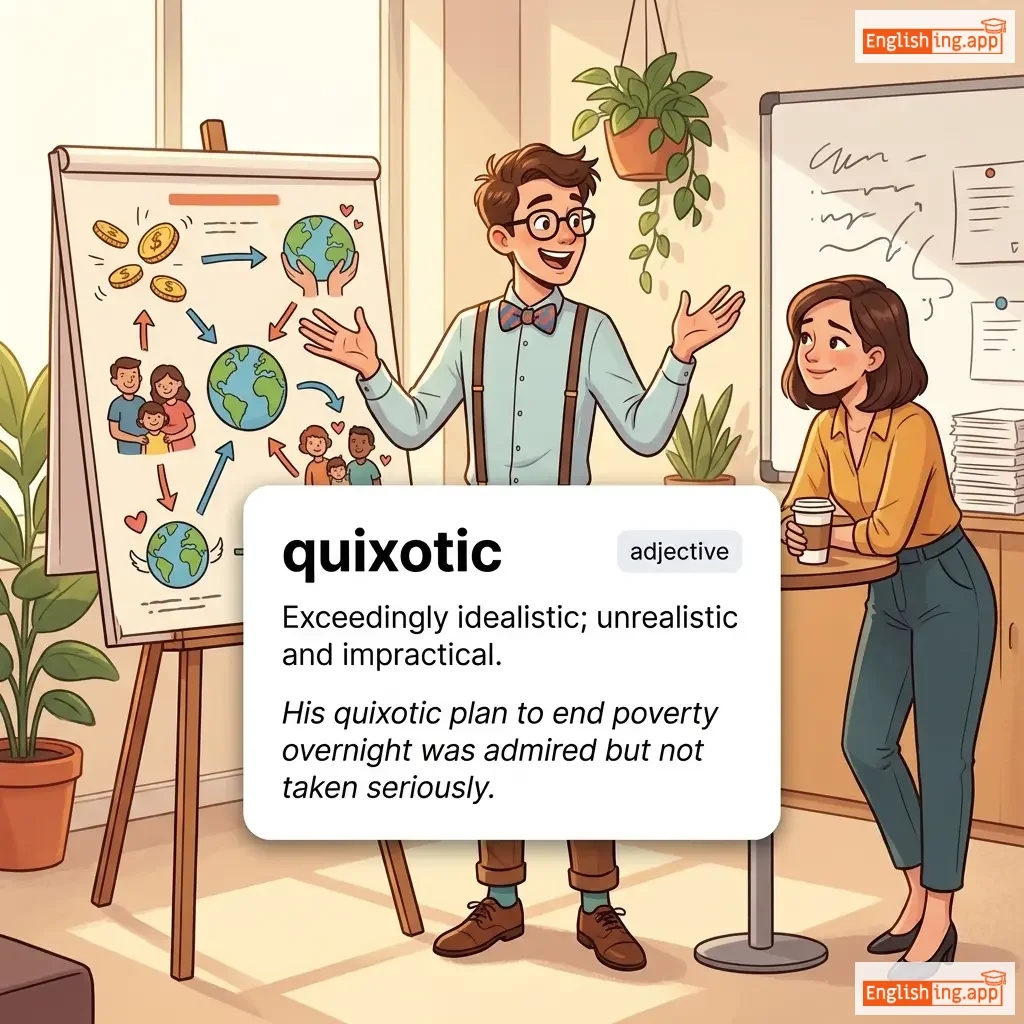
🤯
|
/kwɪkˈsɒtɪk/
adjective
••••••
|
|
- •••••• | - •••••• | - •••••• | - •••••• | - •••••• |
Exceedingly idealistic; unrealistic and impractical.
••••••
|
His quixotic plan to end poverty overnight was admired but not taken seriously. |
- •••••• | - •••••• | - •••••• | - •••••• |
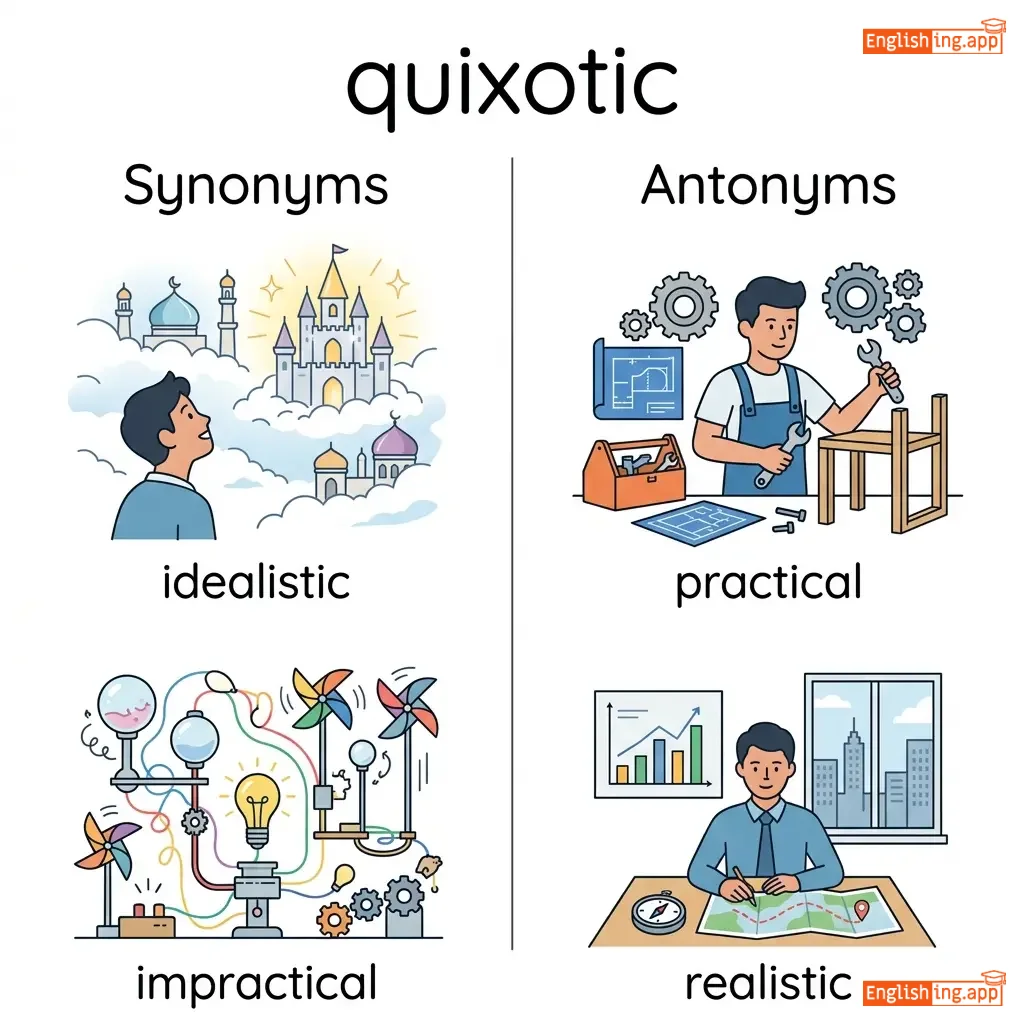
idealistic, impractical, visionary, romantic, unrealistic
••••••
|
practical, realistic, sensible
••••••
|
quixotic dream, quixotic attempt, quixotic venture, quixotic vision
••••••
|
No •••••• |
|
#7246
😏
|
/ˈræfɪʃ/
adjective
(雷菲什)
••••••
|
- •••••• |
不拘一格且稍微不太体面但又很有吸引力
bù jū yī gé qiě shāo wēi bù tài tǐ miàn dàn yòu hěn yǒu xī yǐn lì
••••••
|
- •••••• | - •••••• | - •••••• | - •••••• |
unconventional and slightly disreputable but attractive
••••••
|
He had a raffish charm that made him popular in the city.
他有一种迷人的雷菲什魅力,使他在城市里非常受欢迎。
••••••
|
他有一种迷人的雷菲什魅力,使他在城市里非常受欢迎。
Tā yǒu yī zhǒng mírén de léi fēi shí mèilì, shǐ tā zài chéngshì lǐ fēicháng shòu huānyíng.
••••••
|
- •••••• | - •••••• | - •••••• |
rakish, dashing, stylish, bohemian
••••••
|
respectable, proper, refined
••••••
|
raffish charm, raffish look, raffish style
••••••
|
Raffish 是 rough + stylish,稍微不守规矩但很有吸引力。
••••••
|
|
#7247
🔢
|
/ˈreɪdɪks/
noun
(rèdíks)
••••••
|
- •••••• |
基数
jīshù
••••••
|
- •••••• | - •••••• | - •••••• | - •••••• |
the base or root of something; the number on which a system of numeration is built
••••••
|
In mathematics, the decimal system has a radix of ten.
在数学中,十进制系统的基数是十。
••••••
|
在数学中,十进制系统的基数是十。
Zài shùxué zhōng, shí jìnzhì xìtǒng de jīshù shì shí.
••••••
|
- •••••• | - •••••• | - •••••• |
root, base, origin, foundation
••••••
|
end, outcome, result
••••••
|
radix point, radix tree, radix sort
••••••
|
Radix就像根基一样,在数学中表示数字系统的基数。
••••••
|
|
#7248
🔥
|
/ˈrædɪkl/
adjective
••••••
|
|
- •••••• | - •••••• | - •••••• | - •••••• | - •••••• |
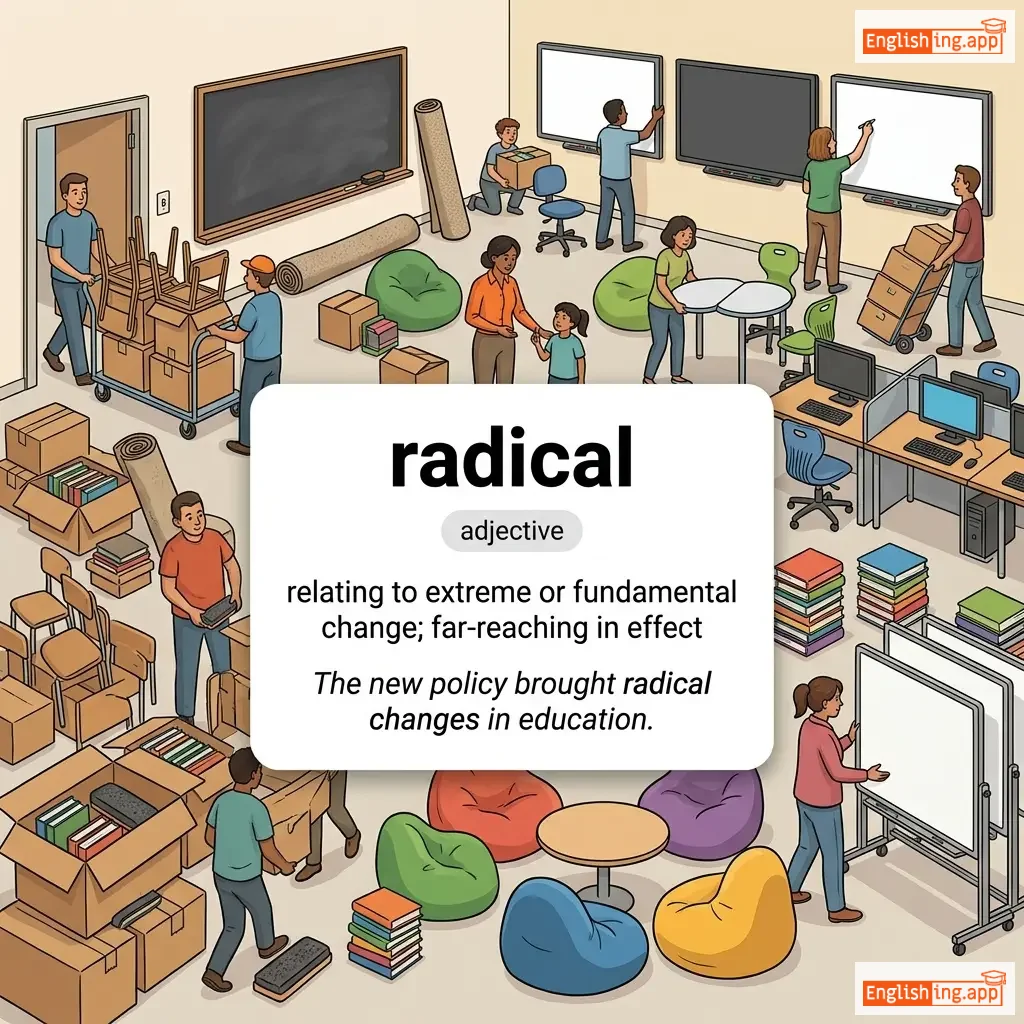
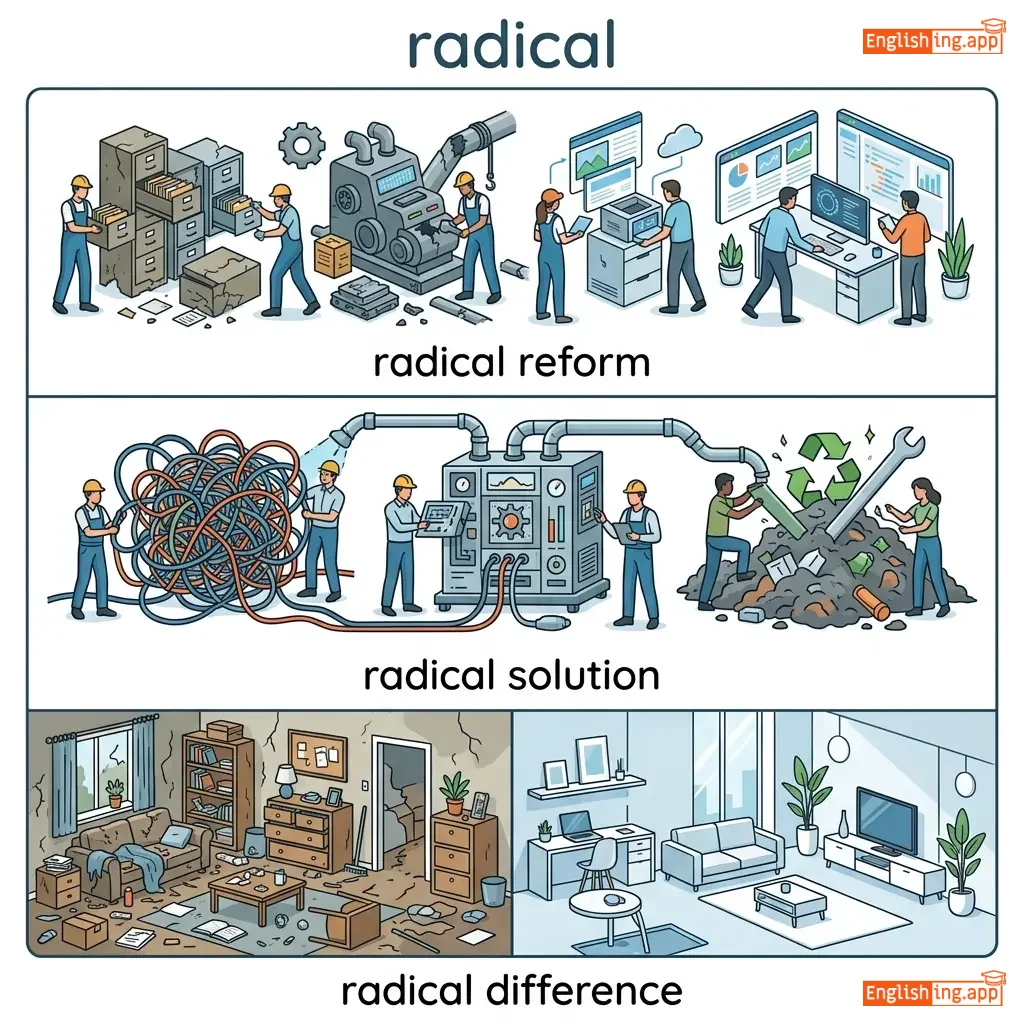
relating to extreme or fundamental change; far-reaching in effect
••••••
|
The new policy brought radical changes in education. |
- •••••• |
radical change |
a complete and fundamental transformation
••••••
|
- •••••• |
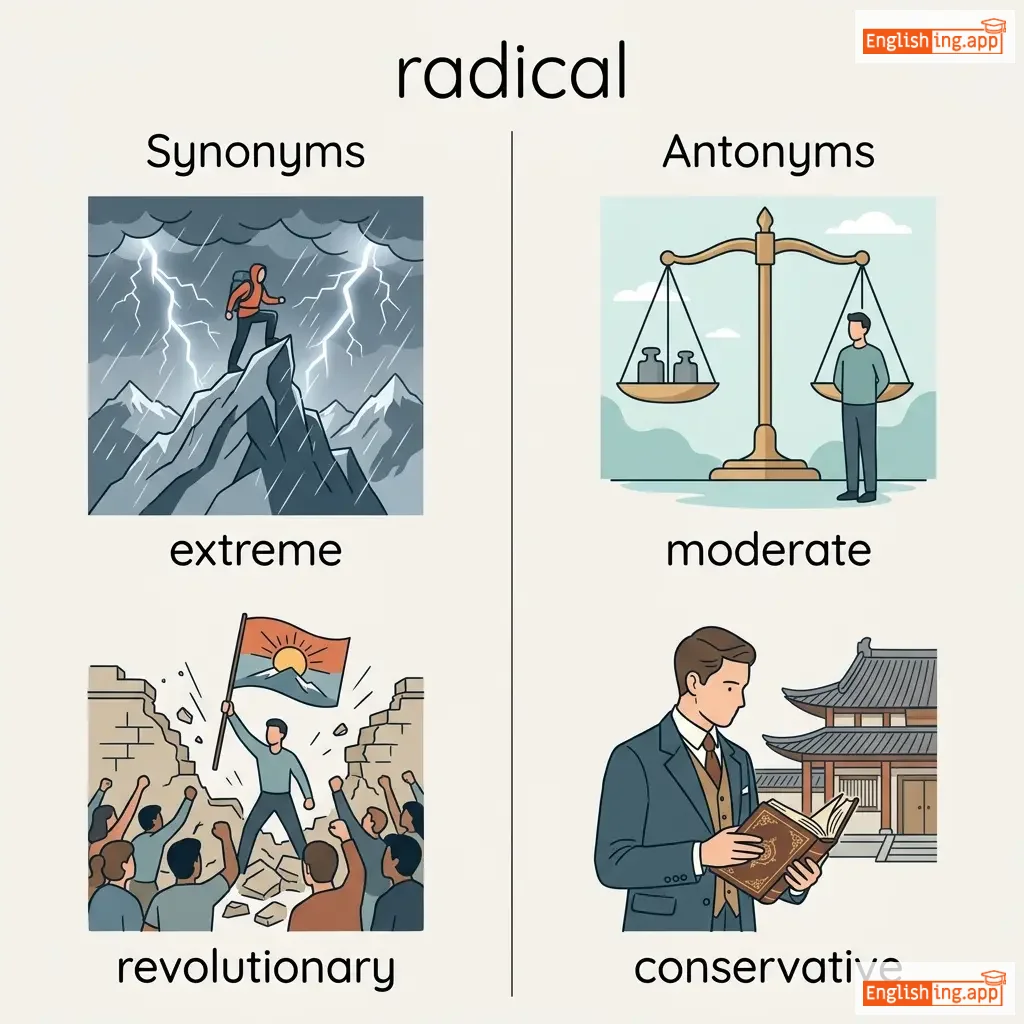
extreme, revolutionary, fundamental, drastic, profound
••••••
|
moderate, conservative, traditional
••••••
|
radical reform, radical solution, radical difference
••••••
|
No •••••• |
|
#7249
☀️
|
/ˈreɪdieɪt/
verb
(rèidièit)
••••••
|
- •••••• |
辐射
fúshè
••••••
|
radiated
rèidièid
••••••
|
radiated
rèidièid
••••••
|
radiates
rèidièts
••••••
|
radiating
rèidièting
••••••
|
to emit energy or light; to spread out from a center
••••••
|
The fireplace radiates warmth throughout the room.
壁炉向整个房间辐射热量。
••••••
|
壁炉向整个房间辐射热量。
Bìlú xiàng zhěnggè fángjiān fúshè rèliàng.
••••••
|
radiate happiness
辐射幸福
••••••
|
to clearly show joy and positivity in one's demeanor
••••••
|
辐射幸福
fúshè xìngfú
••••••
|
emit, shine, beam, spread, emanate
••••••
|
absorb, conceal, withhold
••••••
|
radiate heat, radiate light, radiate confidence
••••••
|
Radiate 就像阳光一样四散传播。
••••••
|
|
#7250
✨
|
/ˈreɪdiəns/
noun
(雷迪安斯)
••••••
|
- •••••• |
光辉
guānghuī
••••••
|
- •••••• | - •••••• | - •••••• | - •••••• |
the quality of shining with bright light; a glowing or beaming quality
••••••
|
Her face was filled with radiance after hearing the good news. |
她在听到好消息后,脸上充满了光辉。
Tā zài tīng dào hǎo xiāoxī hòu, liǎn shàng chōngmǎn le guānghuī.
••••••
|
inner radiance |
a natural glow or beauty that comes from within a person
••••••
|
内在光辉
nèizài guānghuī
••••••
|
glow, brilliance, luminosity, shine, gleam
••••••
|
dullness, gloom, darkness
••••••
|
radiance of the sun, inner radiance, radiance of joy
••••••
|
光辉是内心的光亮,像太阳一样温暖照亮世界。
••••••
|
|
#7251
🔥
|
/ˈreɪ.si/
adjective
(rè xī)
••••••
|
- •••••• |
刺激的
cìjī de
••••••
|
- •••••• | - •••••• | - •••••• | - •••••• |
Lively, entertaining, or slightly shocking (especially in a sexual way).
••••••
|
The novel was full of racy dialogues. |
这部小说充满了刺激的对话。
Zhè bù xiǎoshuō chōngmǎnle cìjī de duìhuà.
••••••
|
racy story |
A story that is lively, entertaining, and often slightly indecent.
••••••
|
刺激的故事
cìjī de gùshì
••••••
|
spicy, lively, provocative, saucy, bold
••••••
|
dull, boring, bland
••••••
|
racy story, racy dialogue, racy novel, racy humor
••••••
|
Racy就像让人兴奋的刺激故事。
••••••
|
|
#7252
📖
|
/ˌræk.ɒnˈtɜːr/
noun
(rǎkǎntè'ěr)
••••••
|
- •••••• |
善于讲故事的人
shànyú jiǎng gùshì de rén
••••••
|
- •••••• | - •••••• | - •••••• | - •••••• |
A person who tells anecdotes in a skillful and amusing way.
••••••
|
The professor was a brilliant raconteur who kept his audience entertained.
教授是一位出色的故事讲述者,能让听众保持娱乐。
••••••
|
教授是一位出色的故事讲述者,能让听众保持娱乐。
Jiàoshòu shì yī wèi chūsè de gùshì jiǎngshù zhě, néng ràng tīngzhòng bǎochí yúlè.
••••••
|
- •••••• | - •••••• | - •••••• |
storyteller, narrator, humorist, entertainer, wit
••••••
|
listener, audience
••••••
|
witty raconteur, brilliant raconteur, raconteur style, raconteur skills
••••••
|
Raconteur – 故事的艺术家,讲述的每一刻都充满魅力。
••••••
|
|
#7253
💉
|
/ˈreɪ.biːz/
noun
(雷比斯)
••••••
|
- •••••• |
狂犬病
kuáng quǎn bìng
••••••
|
- •••••• | - •••••• | - •••••• | - •••••• |
A viral disease that causes inflammation of the brain in humans and other mammals, usually transmitted through animal bites.
••••••
|
The dog was vaccinated against rabies. |
狗已接种狂犬病疫苗。
gǒu yǐ jiēzhòng kuáng quǎn bìng yìmiáo.
••••••
|
- •••••• | - •••••• | - •••••• |
hydrophobia, viral disease, infection, sickness
••••••
|
health, wellness
••••••
|
rabies vaccine, rabies virus, rabies infection, rabies outbreak
••••••
|
狂犬病,像狂怒的狗一样咬人,传播疾病。
••••••
|
|
#7254
🐕
|
/ˈræb.ɪd/
adjective
(雷比德)
••••••
|
- •••••• |
狂热的
kuángrè de
••••••
|
- •••••• | - •••••• | - •••••• | - •••••• |
Having extreme or fanatical support for something; relating to or suffering from rabies.
••••••
|
He was a rabid fan of the football team. |
他是足球队的狂热粉丝。
Tā shì zúqiú duì de kuángrè fěnsī.
••••••
|
rabid supporter |
Someone who is extremely passionate or fanatical about something.
••••••
|
狂热支持者
Kuángrè zhīchí zhě
••••••
|
fanatical, extreme, furious, zealous, obsessed
••••••
|
calm, moderate, indifferent
••••••
|
rabid fan, rabid supporter, rabid dog, rabid enthusiasm
••••••
|
Rabid 就是狂热,像是一个激烈的球迷!
••••••
|
|
#7255
👥
|
/ˈræb.əl/
noun
(拉布尔)
••••••
|
- •••••• |
骚乱的人群
saoluan de renqun
••••••
|
- •••••• | - •••••• | - •••••• | - •••••• |
A disorderly crowd or mob; the common people regarded as noisy or unruly.
••••••
|
A rabble gathered in the streets to protest the decision.
一群骚乱的群众在街上聚集,抗议决定。
••••••
|
一群骚乱的人群在街上聚集,抗议决定。
Yi qun saoluan de renqun zai jie shang juji, kangyi jue ding.
••••••
|
rabble-rouser
煽动者
••••••
|
A person who stirs up emotions or trouble among a crowd.
••••••
|
煽动者
shandong zhe
••••••
|
mob, crowd, throng, horde, multitude
••••••
|
elite, gentry, aristocracy
••••••
|
angry rabble, rabble crowd, rabble protest, rabble-rouser
••••••
|
拉布尔 - 让人骚乱的群众,像拉 (拉) 热的情绪一样。
••••••
|
|
#7256
📆
|
/kwəʊˈtɪdiən/
adjective
(kuò tì diǎn)
••••••
|
- •••••• |
日常的,普通的
rìcháng de, pǔtōng de
••••••
|
- •••••• | - •••••• | - •••••• | - •••••• |
Ordinary or everyday, especially when mundane.
••••••
|
He focused on the quotidian details of family life. |
他专注于家庭生活中的日常细节。
Tā zhuānzhù yú jiātíng shēnghuó zhōng de rìcháng xìjié.
••••••
|
- •••••• | - •••••• | - •••••• |
everyday, daily, common, ordinary, routine
••••••
|
rare, unusual, extraordinary
••••••
|
quotidian life, quotidian routine, quotidian details, quotidian task
••••••
|
Quotidian就像‘日常的’,意思是每天的平凡。
••••••
|
|
#7257
📊
|
/ˈkwəʊtə/
noun
(kwòu-tā)
••••••
|
|
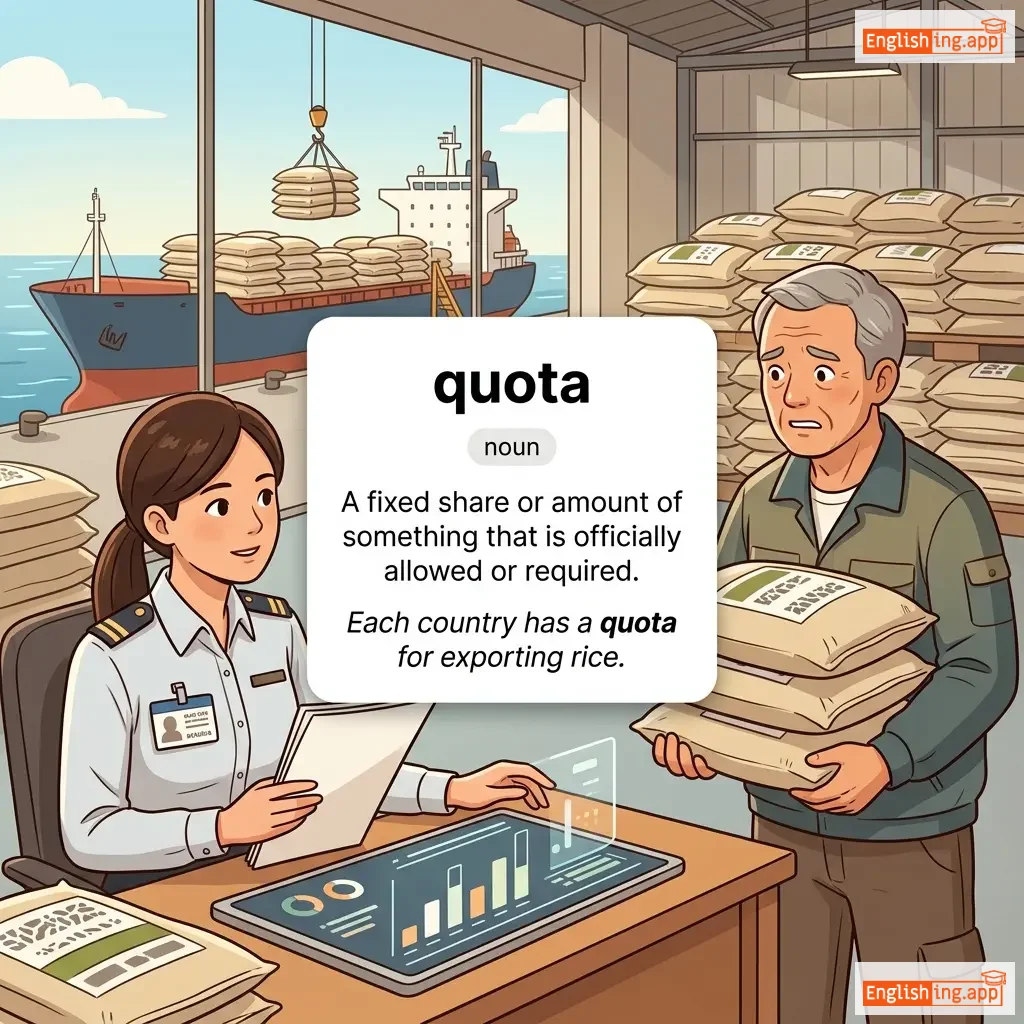
配额, 固定份额
pèiguì, gùdìng fèn'é
••••••
|
- •••••• | - •••••• | - •••••• | - •••••• |
A fixed share or amount of something that is officially allowed or required.
••••••
|
Each country has a quota for exporting rice.
Yīch kāntrī hāz ā kwòu-tā fǒr èks-pòr-tīng ráis.
••••••
|
每个国家都有一个出口稻米的配额。
Měi gè guójiā dōu yǒu yīgè chūkǒu dàomǐ de pèiguì.
••••••
|
- •••••• | - •••••• | - •••••• |
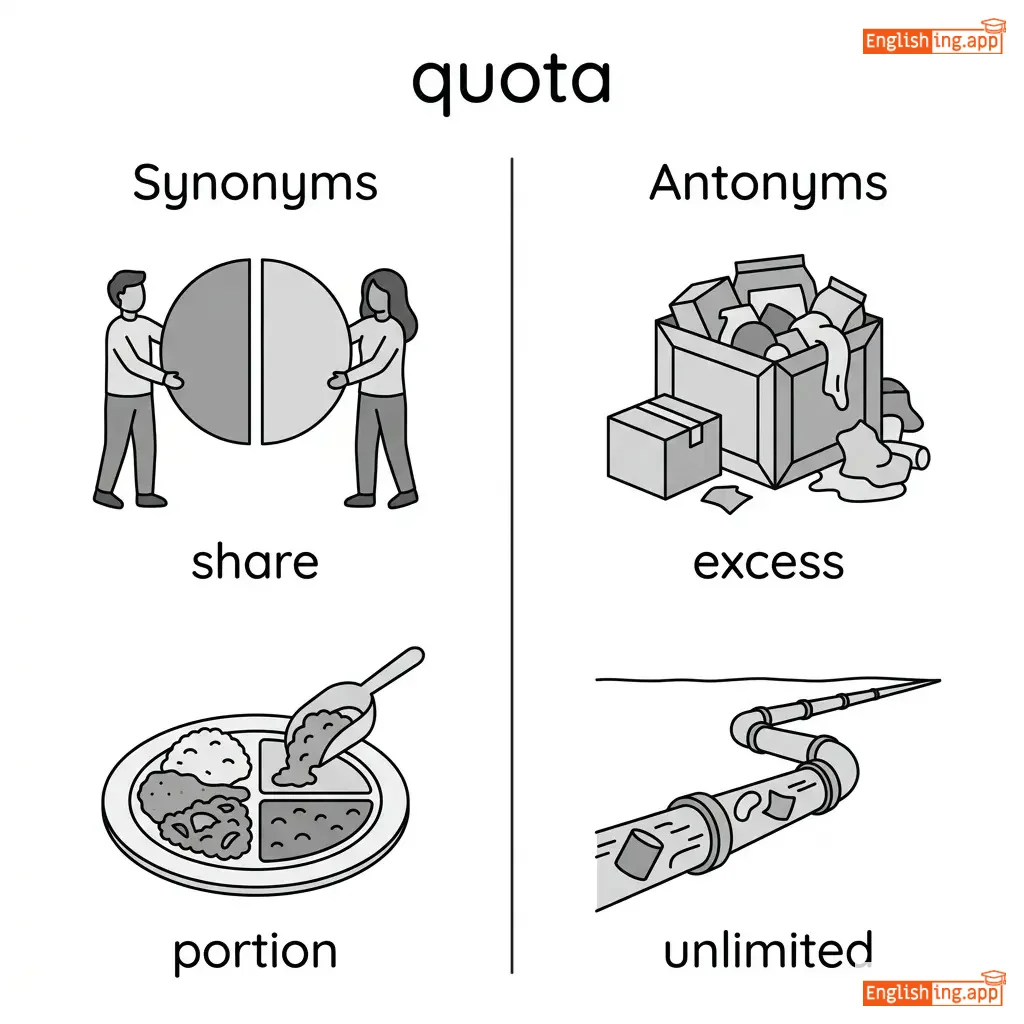
share, portion, allotment, limit, allowance
••••••
|
excess, unlimited
••••••
|
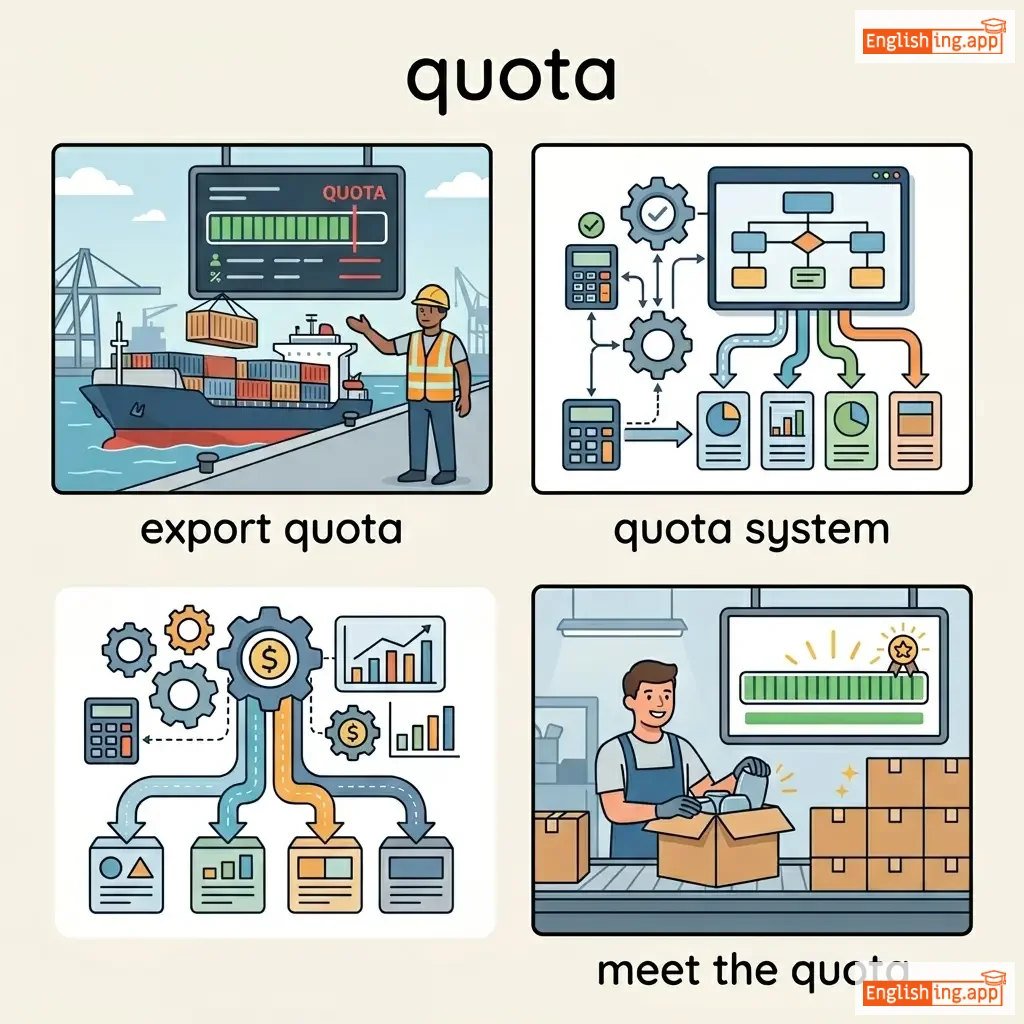
export quota, quota system, meet the quota, annual quota
••••••
|
配额 = 切 + 部分 - 固定的部分切割出来。
••••••
|
|
#7258
👥
|
/ˈkwɔːrəm/
noun
(kuò lùn)
••••••
|
- •••••• |
法定人数
fǎdìng rénshù
••••••
|
- •••••• | - •••••• | - •••••• | - •••••• |
The minimum number of members needed to conduct official business in a meeting.
••••••
|
The board meeting was postponed because there was no quorum. |
由于没有法定人数,董事会会议被推迟了。
yóuyú méiyǒu fǎdìng rénshù, dǒngshìhuì huìyì bèi tuīchí le.
••••••
|
- •••••• | - •••••• | - •••••• |
minimum attendance, required members, assembly, committee
••••••
|
absence, minority
••••••
|
quorum required, lack of quorum, quorum present, establish quorum
••••••
|
法定人数不足,会议无法继续进行。
••••••
|
|
#7259
🤔
|
/ˈkwɪzɪkəl/
adjective
(kwízikal)
••••••
|
- •••••• |
困惑的, 疑问的
kùnhuò de, yíwèn de
••••••
|
- •••••• | - •••••• | - •••••• | - •••••• |
Expressing mild or amused puzzlement.
••••••
|
She gave him a quizzical look when he made the strange comment.
当他说出奇怪的评论时,她投给了他一个困惑的眼神。
••••••
|
当他说出奇怪的评论时,她投给了他一个困惑的眼神。
Dāng tā shuō chū qíguài de pínglùn shí, tā tóu gěile tā yīgè kùnhuò de yǎnshén.
••••••
|
- •••••• | - •••••• | - •••••• |
puzzled, questioning, curious, amused, skeptical
••••••
|
clear, certain, obvious
••••••
|
quizzical look, quizzical smile, quizzical expression
••••••
|
当我们不理解时,我们会有一个 quizzical 的眼神。
••••••
|
Vocabulary Quiz
Test your vocabulary by matching words with their translations or meanings.
Login to take the quiz
Comments (0)
Share your thoughts and join the discussion.
Join the discussion by logging in
Login to CommentNo comments yet
Be the first to share your thoughts!