




Swipe left or right, or use the buttons. Tap image to zoom.
例句翻译
单词
Lesson 53Lesson 53 - 遮罩切换
|
表情符号
|
单词 | Images | 翻译 | 过去时 | 过去分词 | 第三人称单数 | 动名词 | 含义 | 例句 | 例句翻译 | 示例表达 | 示例表达含义 | 示例表达翻译 | 同义词 | 反义词 | 搭配词 | 助记符 |
|---|---|---|---|---|---|---|---|---|---|---|---|---|---|---|---|---|---|
|
#1561
🔥
|
/kəmˈbʌstɪbəl/
adjective
(kəmˈbʌstɪbəl)
••••••
|
- •••••• |
可燃的
kě rán de
••••••
|
- •••••• | - •••••• | - •••••• | - •••••• |
Capable of catching fire and burning easily.
••••••
|
Dry leaves are highly combustible.
干叶子非常易燃。
••••••
|
干叶子非常易燃。
Gàn yèzi fēicháng yìrán.
••••••
|
- •••••• | - •••••• | - •••••• |
flammable, inflammable, burnable, ignitable
••••••
|
nonflammable, fireproof
••••••
|
combustible material, highly combustible, combustible gas
••••••
|
可燃的就像是干叶子,轻松就能着火!
••••••
|
|
#1562
⚖️
|
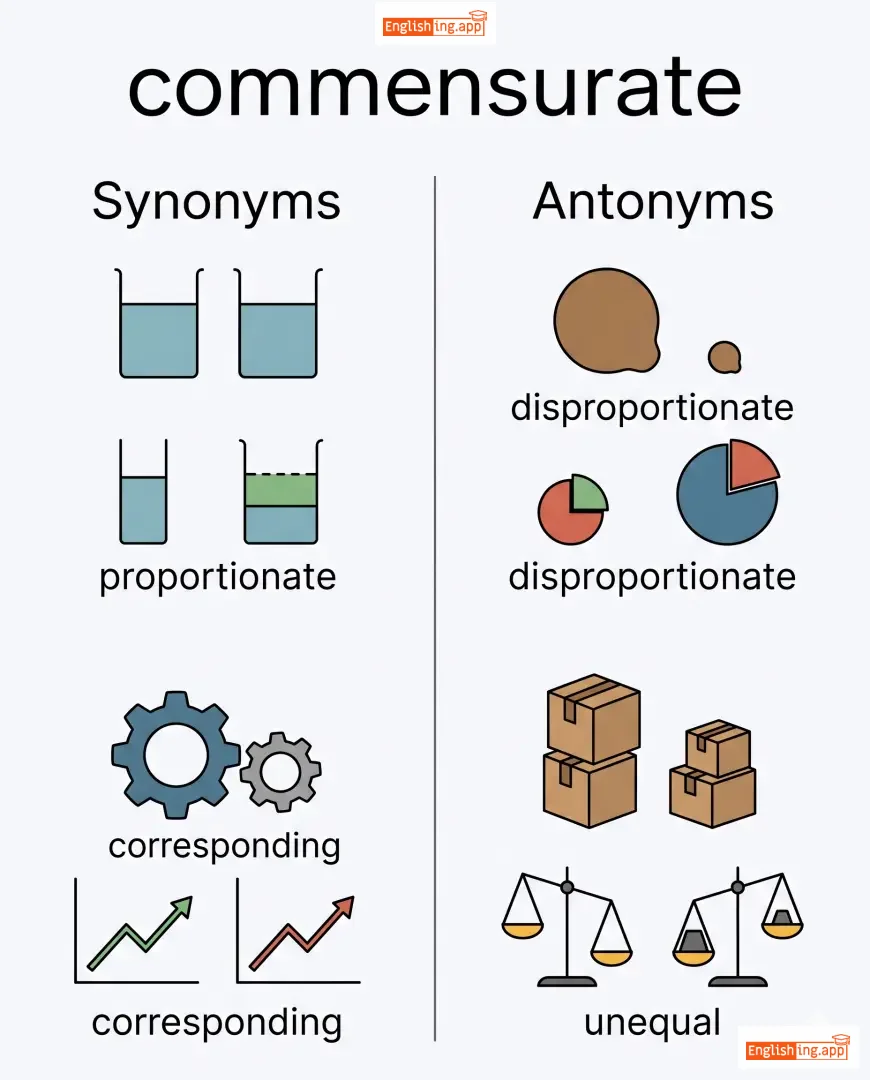
/kəˈmɛnʃərət/
adjective
(kěménsīruìtè)
••••••
|
|
相称的
xiangcheng de
••••••
|
- •••••• | - •••••• | - •••••• | - •••••• |
corresponding in size, degree, or extent; proportionate
••••••
|
Salary will be commensurate with experience. |
薪资将与经验相称。
Xīn zī jiāng yǔ jīng yàn xiāng chèn.
••••••
|
- •••••• | - •••••• | - •••••• |
proportionate, corresponding, equal, comparable, adequate
••••••
|
disproportionate, unequal, inappropriate
••••••
|
commensurate with, commensurate salary, commensurate benefits, commensurate reward
••••••
|
Commensurate 是指与经验成比例,不少也不少。
••••••
|
|
#1563
🌟
|
/kəˈmɛndəbl̩/
adjective
(kěméndé bāo)
••••••
|
- •••••• |
值得称赞的
zhíde chēngzàn de
••••••
|
- •••••• | - •••••• | - •••••• | - •••••• |
deserving praise or approval
••••••
|
Her dedication to the project was truly commendable. |
她对项目的奉献精神真的值得称赞。
Tā duì xiàngmù de fèngxiàn jīngshén zhēn de zhíde chēngzàn.
••••••
|
- •••••• | - •••••• | - •••••• |
praiseworthy, admirable, laudable, deserving, excellent
••••••
|
blameworthy, reprehensible, unworthy
••••••
|
commendable effort, commendable achievement, commendable work, commendable qualities
••••••
|
Commendable 意思是值得称赞的,就像做得好的工作得到表扬。
••••••
|
|
#1564
👏
|
/kəˈmɛnd/
verb
(kəmend)
••••••
|
- •••••• |
表扬
biaoyang
••••••
|
commended
kəmendedd
••••••
|
commended
kəmendedd
••••••
|
commends
kəmends
••••••
|
commending
kəmending
••••••
|
to praise formally or officially
••••••
|
The teacher commended the students for their hard work.
老师表扬了学生们的努力。
••••••
|
老师表扬了学生们的努力。
Laoshi biaoyang le xueshengmen de nuli.
••••••
|
commend to someone
commend to someone
••••••
|
to recommend or entrust someone or something
••••••
|
推荐给某人
tuijian gei mou ren
••••••
|
praise, applaud, compliment, recommend, endorse
••••••
|
criticize, blame, condemn
••••••
|
commend highly, commend someone, commend for effort, commend to
••••••
|
Commend 就像 '评论'(comment),但用于表扬他人。
••••••
|
|
#1565
🎓
|
/kəˈmɛnsmənt/
noun
(kèménsmènt)
••••••
|
|
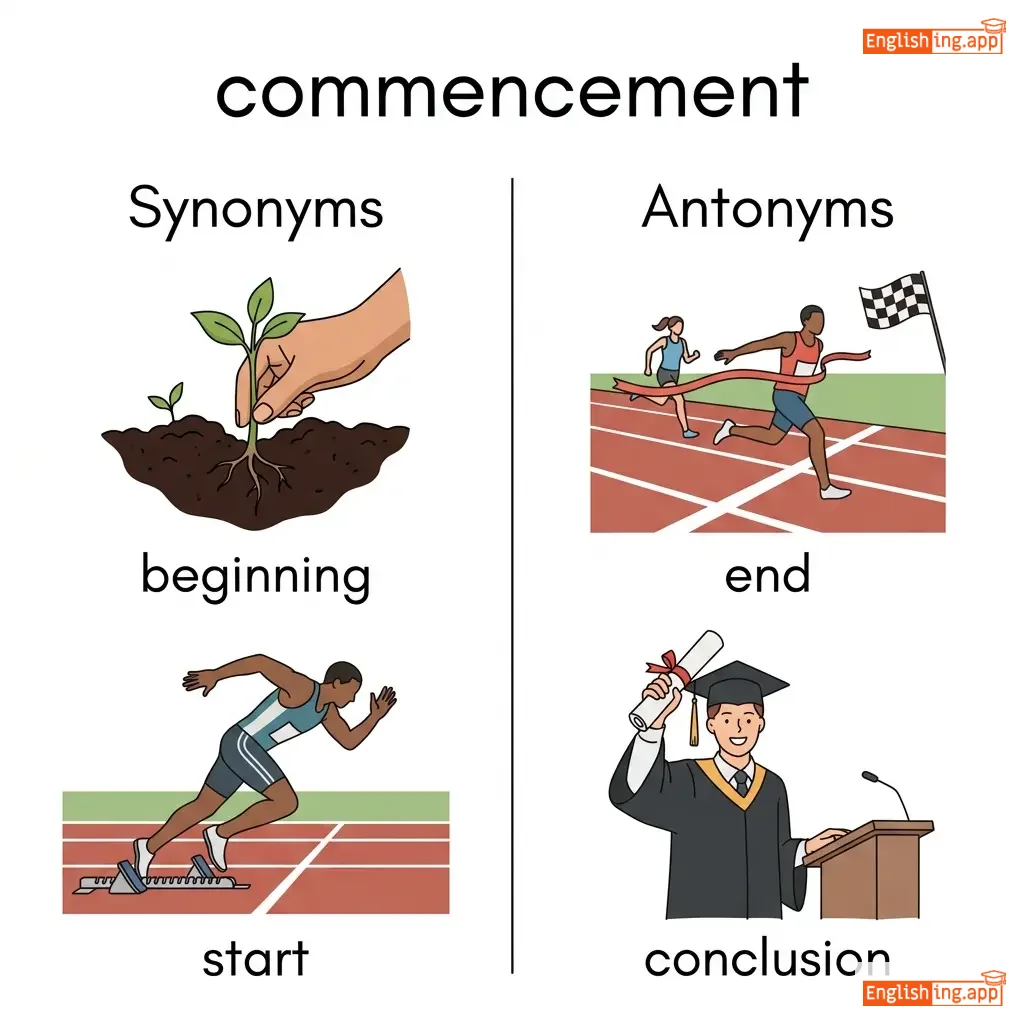
开始,学位授予仪式
kaishi, xuewei shouyu yishi
••••••
|
- •••••• | - •••••• | - •••••• | - •••••• |
the beginning of something; a ceremony for conferring academic degrees
••••••
|
The commencement of the project was delayed by two weeks. |
项目的开始被推迟了两周。
xiangmu de kaishi bei tuichi le liang zhou.
••••••
|
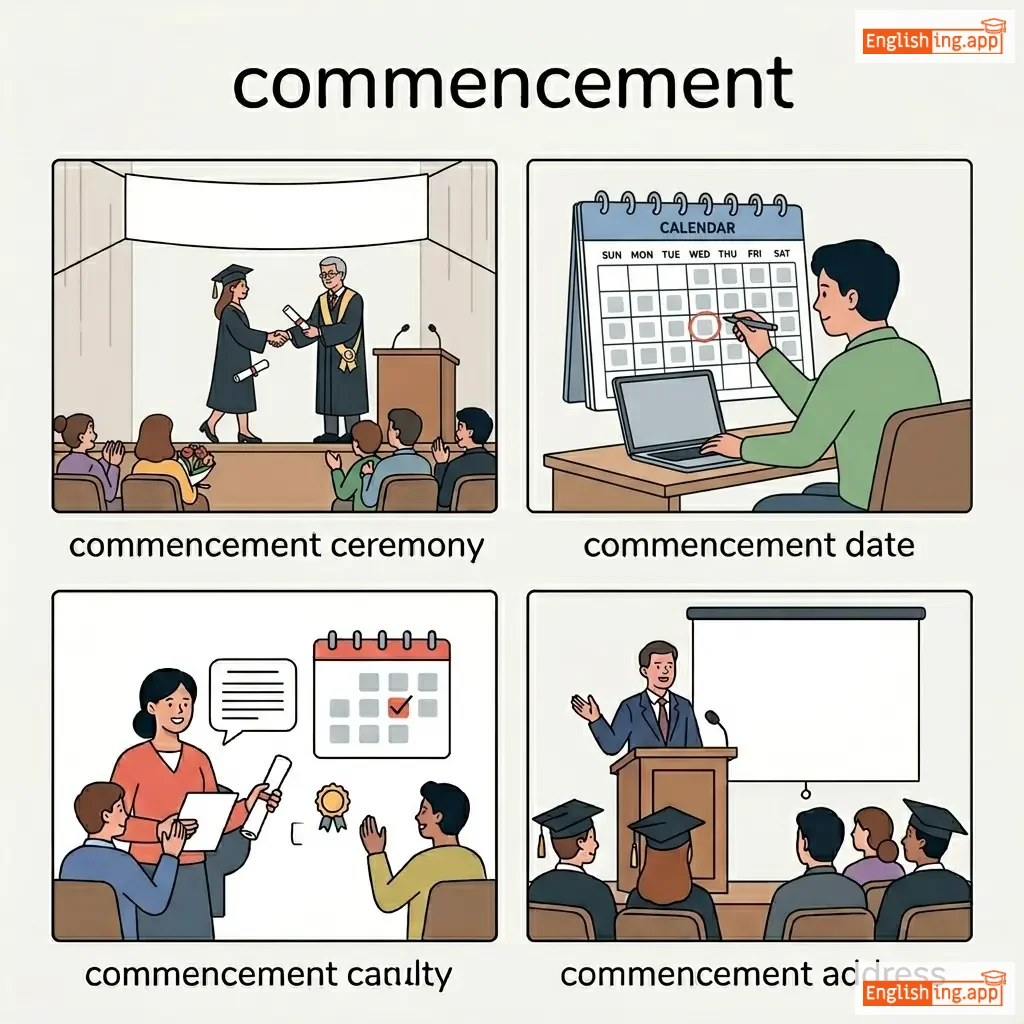
commencement speech |
a speech delivered at a graduation ceremony
••••••
|
毕业典礼演讲
biye dianli yanjiang
••••••
|
beginning, start, initiation, opening, onset
••••••
|
end, conclusion, termination
••••••
|
commencement ceremony, commencement date, commencement address, commencement speech
••••••
|
Commencement意味着开始,而在毕业典礼上,Commencement标志着学业的结束。
••••••
|
|
#1566
🎬
|
/kəˈmɛns/
verb
(kaimen)
••••••
|
- •••••• |
开始
kaishi
••••••
|
commenced
kaimenle
••••••
|
commenced
kaimenle
••••••
|
commences
kaimen
••••••
|
commencing
kaimen zhong
••••••
|
to begin or start something
••••••
|
The ceremony will commence at noon.
仪式将在中午开始。
••••••
|
仪式将在中午开始。
Yishi jiang zai zhongwu kaishi.
••••••
|
commence operations
开始操作
••••••
|
to start working or functioning
••••••
|
开始操作
Kaishi zuo zuo
••••••
|
begin, start, initiate, launch, inaugurate
••••••
|
end, finish, conclude
••••••
|
commence work, commence proceedings, commence operations, commence at
••••••
|
Commence意为开始,就像'开始操作'表示开始工作。
••••••
|
|
#1567
🎖️
|
/kəˈmɛmərətɪv/
adjective
(纪念的)
••••••
|
- •••••• |
纪念的
jìniàn de
••••••
|
- •••••• | - •••••• | - •••••• | - •••••• |
Serving as a reminder or in honor of a person or event.
••••••
|
They issued a commemorative coin for the independence anniversary. |
他们发行了一枚纪念币,庆祝独立纪念日。
Tāmen fāxíngle yī méi jìniàn bì, qìngzhù dúlì jìniàn rì.
••••••
|
- •••••• | - •••••• | - •••••• |
memorial, celebratory, honoring, dedicatory
••••••
|
forgettable, ordinary
••••••
|
commemorative stamp, commemorative coin, commemorative plaque
••••••
|
Commemorative 意思是纪念的,就像纪念币一样。
••••••
|
|
#1568
🕯️
|
/kəˈmɛmɔˌreɪt/
verb
(纪念)
••••••
|
- •••••• |
纪念
jìniàn
••••••
|
commemorated
纪念过
••••••
|
commemorated
纪念过
••••••
|
commemorates
纪念
••••••
|
commemorating
纪念中
••••••
|
To honor and remember someone or something through a ceremony or action.
••••••
|
The statue was built to commemorate the fallen heroes.
这座雕像是为了纪念牺牲的英雄而建造的。
••••••
|
这座雕像是为了纪念牺牲的英雄而建造的。
Zhè zuò diāoxiàng shì wèile jìniàn xīshēng de yīngxióng ér jiànzào de.
••••••
|
- •••••• | - •••••• | - •••••• |
honor, celebrate, remember, memorialize
••••••
|
forget, ignore
••••••
|
commemorate an event, commemorate a person, commemorate anniversary
••••••
|
Commemorate = 记 + 念 → 记住并纪念
••••••
|
|
#1569
⚔️
|
/ˌkɒmənˈdɪə/
verb
(指挥)
••••••
|
- •••••• |
强行占领
qiángxíng zhànlǐng
••••••
|
commandeered
指挥过
••••••
|
commandeered
指挥过
••••••
|
commandeers
指挥
••••••
|
commandeering
指挥中
••••••
|
To take control or possession of something, often by force or authority.
••••••
|
The soldiers commandeered the villagers’ homes during the war.
士兵们在战争期间占领了村民的家。
••••••
|
战争期间,士兵们强行占领了村民的家。
zhànzhēng qījiān, shìbīngmen qiángxíng zhànlǐngle cūnmín de jiā.
••••••
|
- •••••• | - •••••• | - •••••• |
seize, take, confiscate, appropriate, requisition
••••••
|
return, release, give
••••••
|
commandeer property, commandeer vehicle, police commandeer
••••••
|
指挥官通过强行占领来掌控,'commandeer' 也有相同的意思。
••••••
|
|
#1570
🤝
|
/ˈkɒmɪti/
noun
(komiti)
••••••
|
- •••••• |
礼貌,互相尊重
lǐmào, hùxiāng zūnzhòng
••••••
|
- •••••• | - •••••• | - •••••• | - •••••• |
Courtesy and considerate behavior towards others; mutual respect.
••••••
|
The meeting was conducted with comity and respect. |
会议是以礼貌和尊重的方式进行的。
Huìyì shì yǐ lǐmào hé zūnzhòng de fāngshì jìnxíng de.
••••••
|
- •••••• | - •••••• | - •••••• |
courtesy, civility, respect, harmony, politeness
••••••
|
rudeness, hostility, disrespect
••••••
|
spirit of comity, international comity, comity of nations
••••••
|
Comity就像一个'委员会',大家都表现出礼貌。
••••••
|
|
#1571
😂
|
/ˈkɒmɪkəl/
adjective
(喜剧的)
••••••
|
- •••••• |
滑稽
huaji
••••••
|
- •••••• | - •••••• | - •••••• | - •••••• |
Funny in a strange or silly way; amusing.
••••••
|
His comical expressions made everyone laugh. |
他滑稽的表情让所有人都笑了。
Ta huaji de biaoqing rang suoyouren dou xiaole.
••••••
|
- •••••• | - •••••• | - •••••• |
funny, amusing, humorous, entertaining, witty
••••••
|
serious, solemn, grave
••••••
|
comical situation, comical face, comical character, comical performance
••••••
|
Comical像滑稽一样让人发笑。
••••••
|
|
#1572
⚖️
|
/ˌkʌmˈʌpəns/
noun
(来报应)
••••••
|
- •••••• |
应得的惩罚
yingde de chengfa
••••••
|
- •••••• | - •••••• | - •••••• | - •••••• |
A deserved punishment or fate; just deserts.
••••••
|
The corrupt official finally got his comeuppance in court.
那个腐败的官员最终在法庭上得到了他的报应。
••••••
|
那个腐败的官员最终在法庭上得到了他的应得的惩罚。
Nage fubai de guanyuan zhongyu zai fating shang dedao le tade yingde de chengfa.
••••••
|
get one's comeuppance
得到应得的报应
••••••
|
To receive the punishment one deserves.
••••••
|
得到应得的报应
dedao yingde de baoying
••••••
|
punishment, retribution, penalty, justice
••••••
|
reward, forgiveness
••••••
|
deserved comeuppance, get comeuppance, face comeuppance
••••••
|
Comeuppance 意味着 Come + Up + Ends → 向上爬并最终得到报应。
••••••
|
|
#1573
🍎
|
/kəˈmɛstɪbəl/
noun
(可食用的)
••••••
|
- •••••• |
可食用的
keshi yong de
••••••
|
- •••••• | - •••••• | - •••••• | - •••••• |
An item of food that can be eaten.
••••••
|
The picnic basket was full of delicious comestibles. |
野餐篮子里装满了美味的可食用物品。
Yěcān lánzi lǐ zhuāng mǎnle měiwèi de kě shíyòng wùpǐn.
••••••
|
- •••••• | - •••••• | - •••••• |
food, edible, nourishment, provisions
••••••
|
inedible, poison
••••••
|
tasty comestible, delicious comestible, prepare comestibles
••••••
|
Comestible意思是Come + Eat able → 可以食用的
••••••
|
|
#1574
😊
|
/ˈkʌmli/
adjective
(kōmǐlì)
••••••
|
- •••••• |
美丽
měilì
••••••
|
- •••••• | - •••••• | - •••••• | - •••••• |
Attractive or pleasant in appearance.
••••••
|
The actress was known for her comely features.
那位女演员以她美丽的外表著称。
••••••
|
那位女演员以她美丽的特征著称。
Nà wèi nǚ yǎnyuán yǐ tā měilì de tèzhēng zhùchēng.
••••••
|
- •••••• | - •••••• | - •••••• |
attractive, beautiful, fair, charming
••••••
|
ugly, unattractive
••••••
|
comely woman, comely face, comely appearance
••••••
|
Comely 意味着 Come + Lovely → 美丽
••••••
|
|
#1575
🔄
|
/ˈkʌmbæk/
noun
(kāng bèi)
••••••
|
- •••••• |
东山再起
dong shan zai qi
••••••
|
- •••••• | - •••••• | - •••••• | - •••••• |
A return to a former status or success after a period of decline.
••••••
|
The singer made a remarkable comeback after years of silence. |
歌手在沉默多年后取得了显著的东山再起。
Geshou zai chenmo duonian hou qude le xianzhu de dong shan zai qi.
••••••
|
make a comeback |
To return successfully after a decline or absence.
••••••
|
东山再起
dong shan zai qi
••••••
|
return, revival, resurgence, recovery
••••••
|
departure, decline
••••••
|
make a comeback, career comeback, dramatic comeback
••••••
|
Comeback = Come + Back = 东山再起 (成功归来)
••••••
|
|
#1576
💥
|
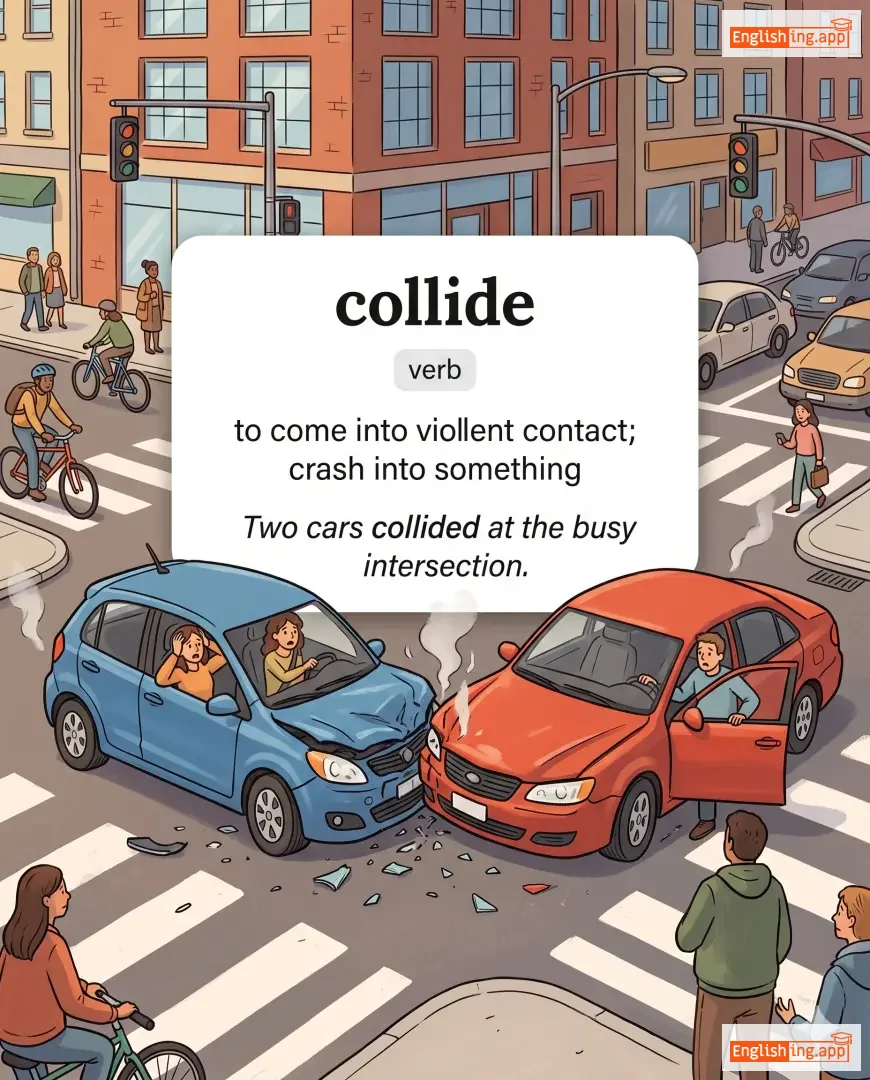
/kəˈlaɪd/
verb
(kəˈlaɪd)
••••••
|
|
碰撞
pengzhuang
••••••
|
collided
kəˈlaɪdəd
••••••
|
collided
kəˈlaɪdəd
••••••
|
collides
kəˈlaɪdz
••••••
|
colliding
kəˈlaɪdɪŋ
••••••
|
to come into violent contact; crash into something
••••••
|
Two cars collided at the busy intersection.
两辆汽车在繁忙的交叉路口相撞。
••••••
|
两辆汽车在繁忙的交叉路口相撞。
Liǎng liàng qìchē zài fánmáng de jiāochā lùkǒu xiāngzhuàng.
••••••
|
collide with reality
与现实碰撞
••••••
|
to be faced with the harsh truth of a situation
••••••
|
与现实碰撞
Yǔ xiànshí péngzhuàng
••••••
|
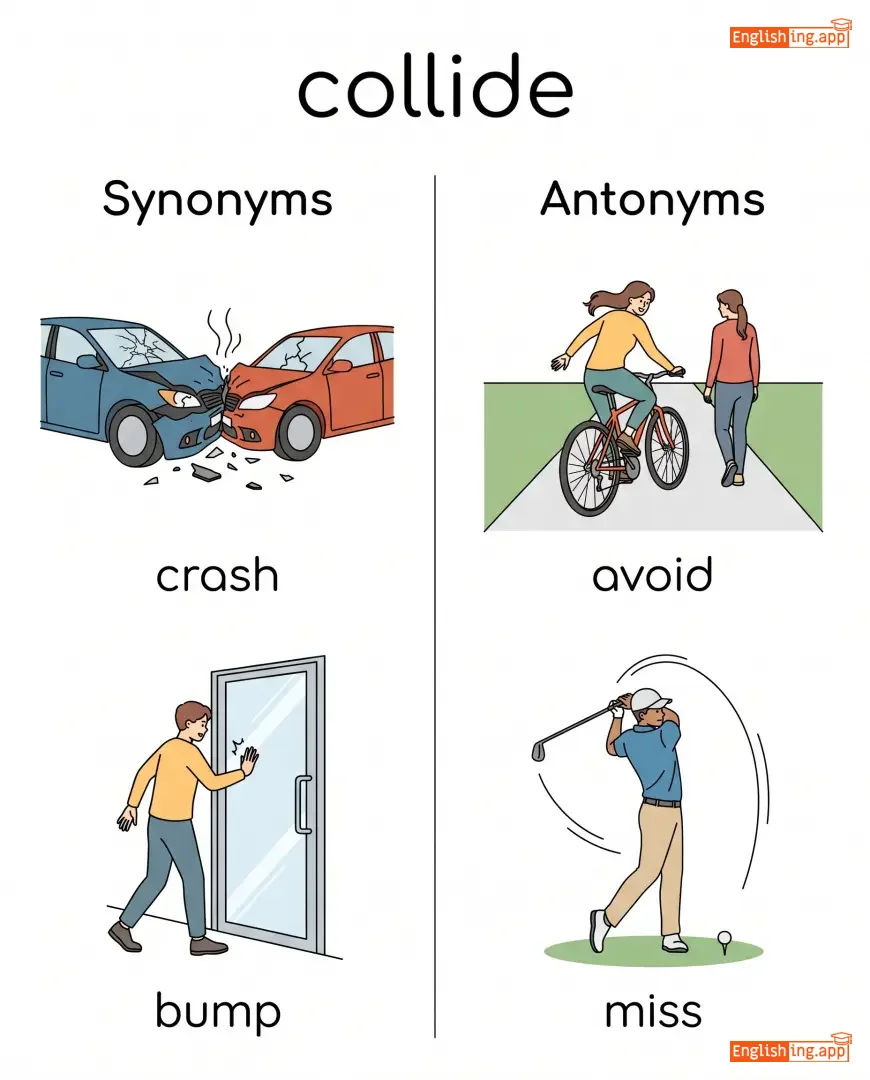
crash, bump, clash, impact, strike
••••••
|
avoid, miss, dodge
••••••
|
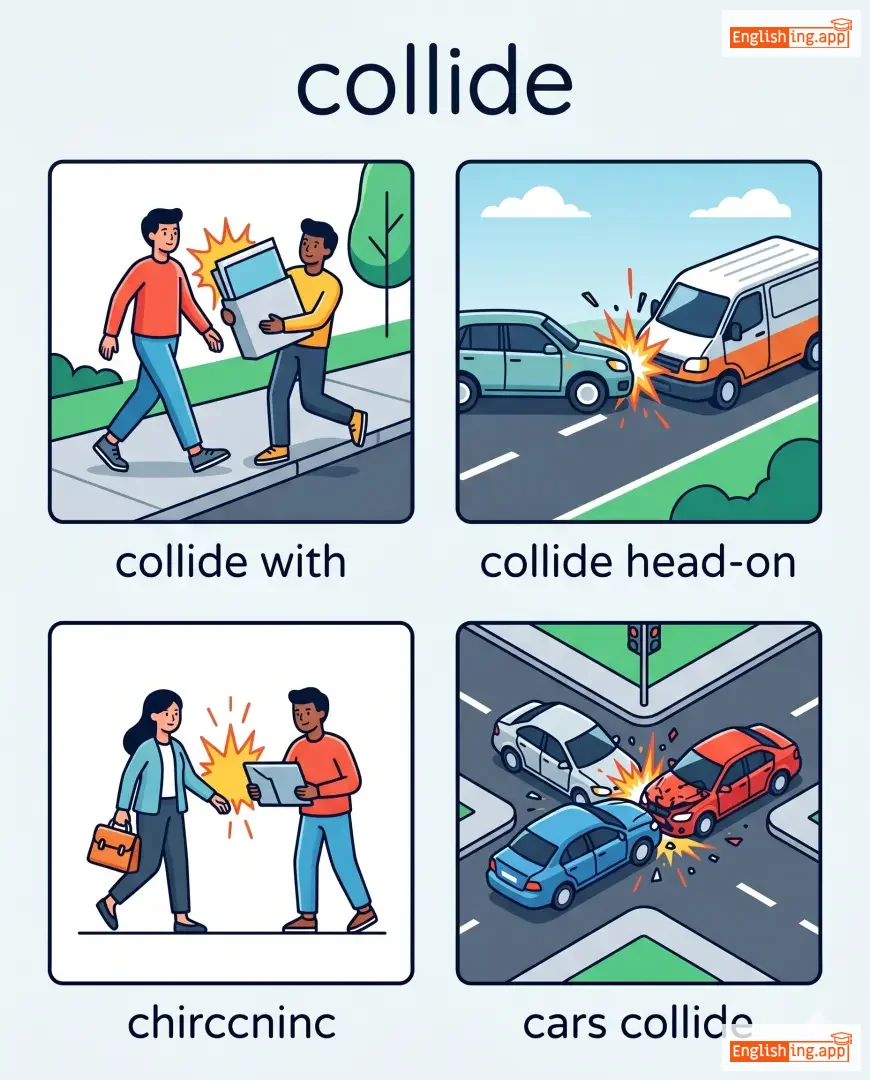
collide with, collide head-on, cars collide, collide violently
••••••
|
碰撞就像车撞车一样,发生剧烈的接触
••••••
|
|
#1577
😴
|
/ˈkoʊməˌtoʊs/
adjective
(昏迷)
••••••
|
- •••••• |
昏迷的
hunmi de
••••••
|
- •••••• | - •••••• | - •••••• | - •••••• |
In a state of deep unconsciousness, resembling or related to coma.
••••••
|
The comatose patient was kept under constant observation.
昏迷的病人被持续观察。
••••••
|
昏迷的病人被持续观察。
Hunmi de bìngrén bèi chíxù guānchá.
••••••
|
- •••••• | - •••••• | - •••••• |
unconscious, insensible, unresponsive, stupefied
••••••
|
awake, alert, conscious
••••••
|
comatose state, comatose patient, remain comatose
••••••
|
Comatose听起来像昏迷+剂量,好像昏迷的剂量太多了。
••••••
|
|
#1578
🛌
|
/ˈkoʊmə/
noun
(昏迷)
••••••
|
- •••••• |
昏迷
hunmi
••••••
|
- •••••• | - •••••• | - •••••• | - •••••• |
A deep state of prolonged unconsciousness caused by illness or injury.
••••••
|
The patient remained in a coma for several weeks. |
病人昏迷了几周。
Bingren hunmi le ji zhou.
••••••
|
in a coma |
Unconscious or unaware for a long period.
••••••
|
昏迷中
hunmi zhong
••••••
|
unconsciousness, stupor, insensibility, deep sleep
••••••
|
alertness, consciousness
••••••
|
coma patient, deep coma, fall into a coma, recover from a coma
••••••
|
昏迷就像是一种深度睡眠,长时间无法清醒,仿佛时间停滞。
••••••
|
|
#1579
🐎
|
/ˈkoʊltɪʃ/
adjective
••••••
|
- •••••• | - •••••• | - •••••• | - •••••• | - •••••• | - •••••• |
Playful, energetic, and not fully mature or disciplined.
••••••
|
The coltish boy ran around the field without a care. |
- •••••• | - •••••• | - •••••• | - •••••• |
playful, frisky, lively, frolicsome
••••••
|
serious, mature
••••••
|
coltish behavior, coltish energy, coltish charm
••••••
|
No •••••• |
|
#1580
🗿
|
/kəˈlɒsəs/
noun
(科洛萨斯)
••••••
|
- •••••• |
巨人
juren
••••••
|
- •••••• | - •••••• | - •••••• | - •••••• |
A person or thing of enormous size, importance, or ability.
••••••
|
Einstein was a colossus in the world of science. |
爱因斯坦是科学界的巨人。
Ai yinsitan shi kexuejie de juren.
••••••
|
a colossus of industry |
A person or company of great importance and influence in business.
••••••
|
行业巨人
hangye juren
••••••
|
giant, titan, behemoth, powerhouse, heavyweight
••••••
|
dwarf, weakling
••••••
|
political colossus, industrial colossus, colossus of science
••••••
|
Colossus就像巨人,形容非常巨大的人或事物。
••••••
|
|
#1581
🏛️
|
/kəˈlɒsəl/
adjective
(科洛萨尔)
••••••
|
|
巨大的
jù dà de
••••••
|
- •••••• | - •••••• | - •••••• | - •••••• |
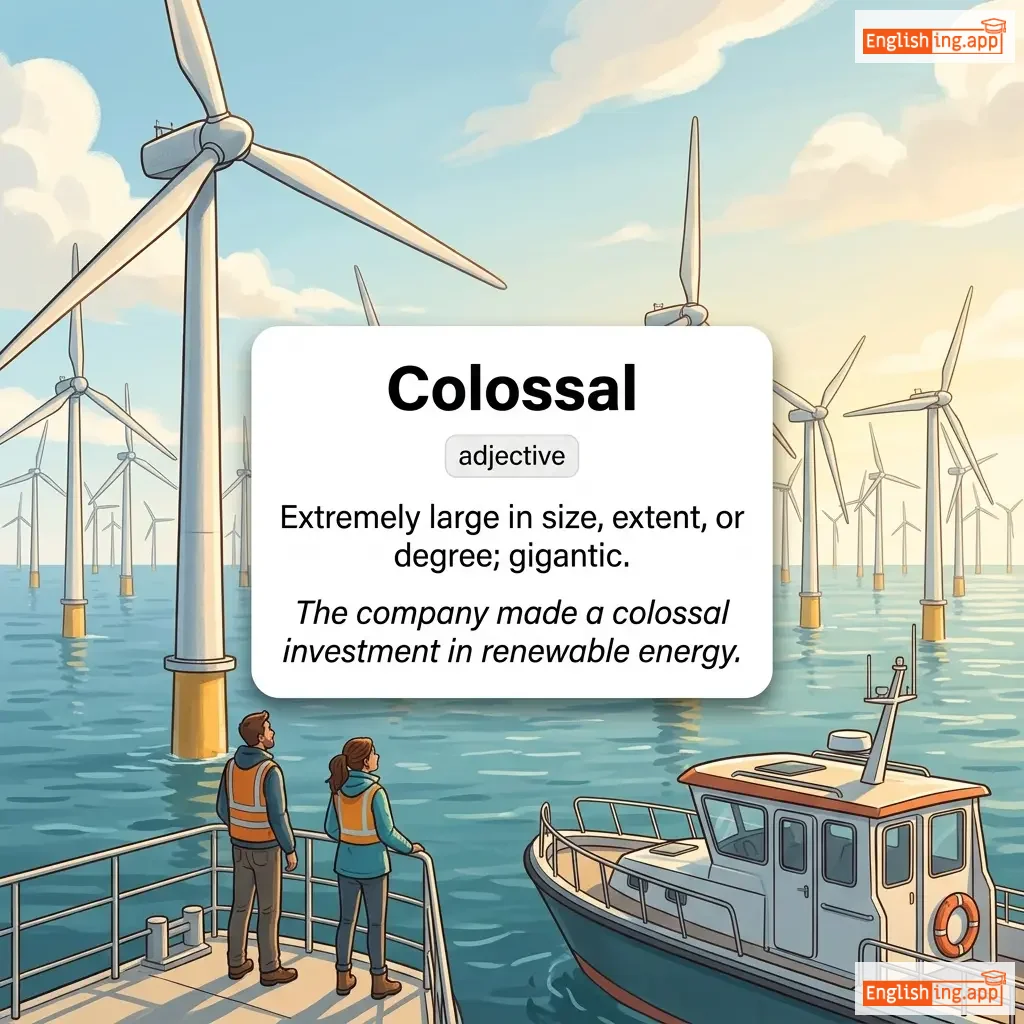
Extremely large in size, extent, or degree; gigantic.
••••••
|
The company made a colossal investment in renewable energy.
该公司在可再生能源方面做出了巨大的投资。
••••••
|
该公司在可再生能源方面做出了巨大的投资。
Gāi gōngsī zài kě zàishēng néngyuán fāngmiàn zuòchūle jùdà de tóuzī.
••••••
|
colossal failure
巨大的失败
••••••
|
A very large and complete failure.
••••••
|
巨大的失败
jù dà de shī bài
••••••
|
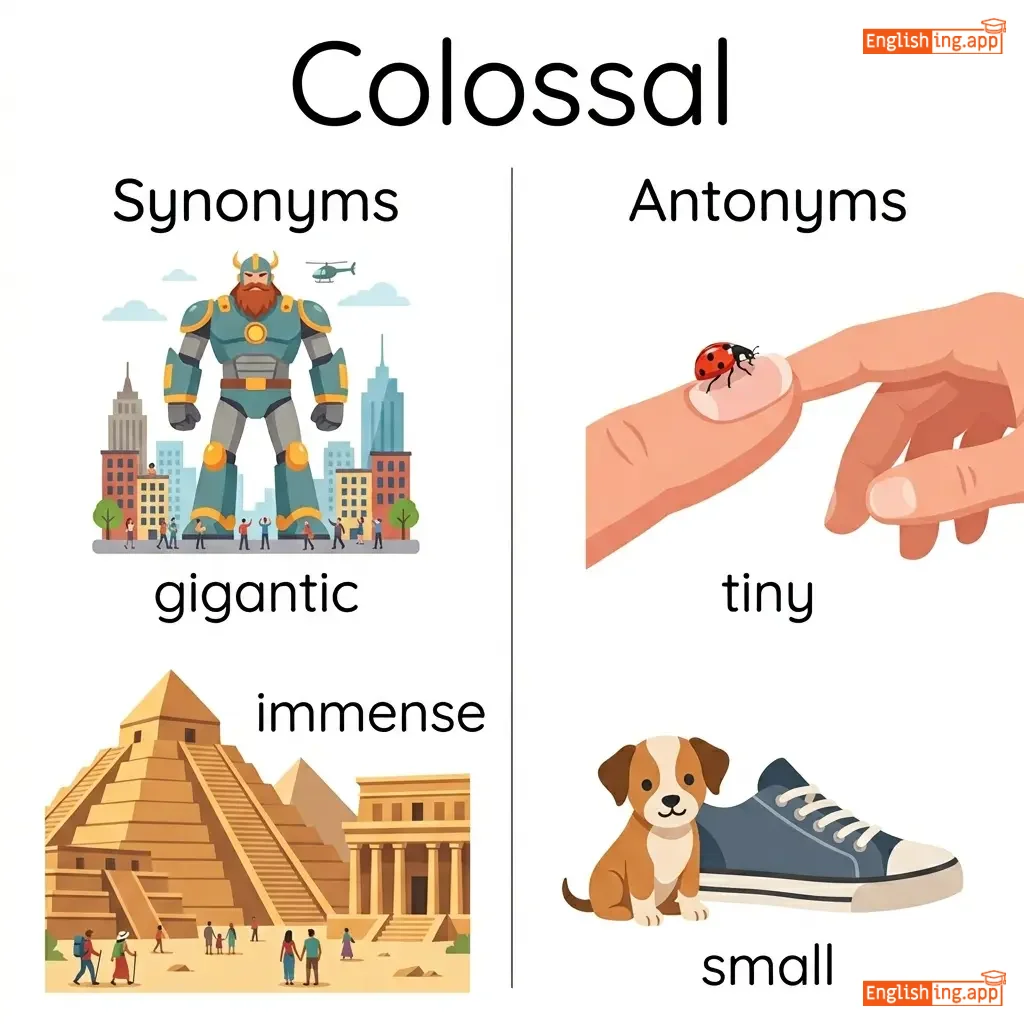
gigantic, immense, massive, huge, enormous
••••••
|
tiny, small, little
••••••
|
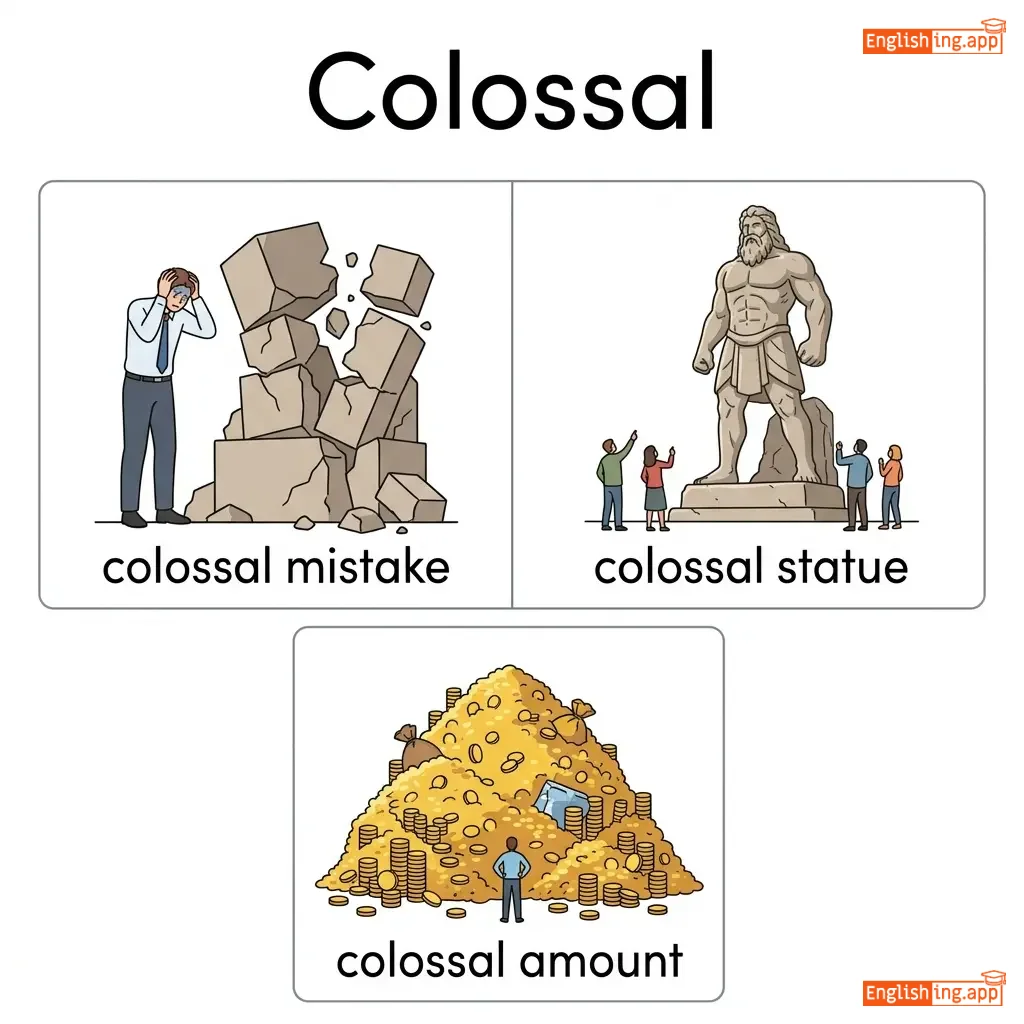
colossal mistake, colossal statue, colossal amount, colossal impact
••••••
|
科洛萨尔就像一座巨大的山,超越一切。
••••••
|
|
#1582
🎨
|
/ˈkʌl.ər/
noun
(kè lò)
••••••
|
- •••••• |
颜色
yanse
••••••
|
- •••••• | - •••••• | - •••••• | - •••••• |
The property possessed by an object of producing different sensations on the eye as a result of the way it reflects or emits light.
••••••
|
Blue is her favorite color. |
蓝色是她最喜欢的颜色。
Lán sè shì tā zuì xǐhuān de yánsè.
••••••
|
show your true colors |
To reveal one's real character or intentions
••••••
|
展示你的真实色彩
Zhǎnshì nǐ de zhēnshí sècǎi
••••••
|
hue, shade, tint, tone, pigment
••••••
|
monochrome, colorless
••••••
|
bright color, favorite color, primary color, true color
••••••
|
颜色(yanse)和‘color’相似,容易记住。
••••••
|
|
#1583
🏛️
|
/ˌkɒl.əˈneɪd/
noun
(kè lóng nà dé)
••••••
|
- •••••• |
柱廊
zhù láng
••••••
|
- •••••• | - •••••• | - •••••• | - •••••• |
A row of evenly spaced columns supporting a roof, often in classical architecture.
••••••
|
The visitors admired the grand colonnade at the entrance of the temple. |
游客们欣赏着寺庙入口处的宏伟柱廊。
Yóukèmen xīnshǎng zhe sìmiào rùkǒu chù de hóngwěi zhùláng.
••••••
|
- •••••• | - •••••• | - •••••• |
row of columns, arcade, portico, peristyle
••••••
|
wall, barrier
••••••
|
grand colonnade, stone colonnade, temple colonnade, classical colonnade
••••••
|
Colonnade 想象 Column + 阅兵式 — 一排柱子。
••••••
|
|
#1584
🕵️
|
/kəˈluːʒən/
noun
(共谋)
••••••
|
- •••••• |
共谋
gongmou
••••••
|
- •••••• | - •••••• | - •••••• | - •••••• |
A secret agreement or cooperation, especially for an illegal or dishonest purpose.
••••••
|
There was evidence of collusion between the officials and the contractors. |
有证据表明官员与承包商之间有共谋。
Yǒu zhèngjù biǎomíng guānyuán yǔ chéngbāo shāng zhījiān yǒu gòngmóu.
••••••
|
in collusion with |
Secretly cooperating or conspiring with someone
••••••
|
与...共谋
yǔ...gòngmóu
••••••
|
conspiracy, plotting, connivance, complicity
••••••
|
honesty, openness, transparency
••••••
|
in collusion with, secret collusion, political collusion, business collusion
••••••
|
共谋像Color + Illusion——一起做坏事的秘密协议。
••••••
|
|
#1585
🤐
|
/kəˈluːd/
verb
(kòu-lū)
••••••
|
- •••••• |
勾结
gōu jié
••••••
|
colluded
kòu-lū-dè
••••••
|
colluded
kòu-lū-dè
••••••
|
colludes
kòu-lū-sī
••••••
|
colluding
kòu-lū-dìng
••••••
|
To secretly cooperate or conspire with others, often for a deceitful purpose.
••••••
|
The two companies colluded to fix prices in the market.
这两家公司串通起来,操控市场价格。
••••••
|
这两家公司串通起来,操控市场价格。
Zhè liǎng jiā gōngsī chuàntōng qǐlái, cāokòng shìchǎng jiàgé.
••••••
|
collude with
与...串通
••••••
|
To conspire or cooperate secretly with someone
••••••
|
与...串通
yǔ... chuàntōng
••••••
|
conspire, plot, scheme, connive
••••••
|
compete, oppose, resist
••••••
|
collude with, collude in, secretly collude, collude to
••••••
|
Collude 就是 Call + 路 (lù) — 进行秘密合作
••••••
|
|
#1586
💬
|
/ˈkɒl.ə.kwi/
noun
(kè lòu kè wēi)
••••••
|
- •••••• |
正式对话
zhèngshì duìhuà
••••••
|
- •••••• | - •••••• | - •••••• | - •••••• |
A formal conversation or dialogue, often on serious or academic topics.
••••••
|
The professors engaged in a deep colloquy about the future of education. |
教授们就教育的未来进行了深入的对话。
Jiàoshòu men jiù jiàoyù de wèilái jìnxíngle shēnrù de duìhuà.
••••••
|
- •••••• | - •••••• | - •••••• |
dialogue, discussion, conversation, debate, talk
••••••
|
silence, monologue
••••••
|
formal colloquy, brief colloquy, academic colloquy, private colloquy
••••••
|
Colloquy像'口语' — 正式对话
••••••
|
|
#1587
💬
|
/kəˈloʊkwiəˌlɪzəm/
noun
(kəˈloʊkwiəˌlɪzəm)
••••••
|
- •••••• |
口语表达
kouyu biao da
••••••
|
- •••••• | - •••••• | - •••••• | - •••••• |
a word or phrase used in informal speech or writing
••••••
|
The novel is full of regional colloquialisms. |
这本小说充满了地区性的口语表达。
Zhe ben xiaoshuo chongman le diquxing de kouyu biaoda.
••••••
|
- •••••• | - •••••• | - •••••• |
informalism, slang, idiom, expression
••••••
|
formality, standard expression
••••••
|
regional colloquialism, common colloquialism, local colloquialism
••••••
|
口语表达 = '口' (kou) + '语' (yu) - 日常交流方式 💬
••••••
|
|
#1588
🗣️
|
/kəˈloʊkwiəl/
adjective
(kəˈloʊkwiəl)
••••••
|
|
口语的
kouyu de
••••••
|
- •••••• | - •••••• | - •••••• | - •••••• |
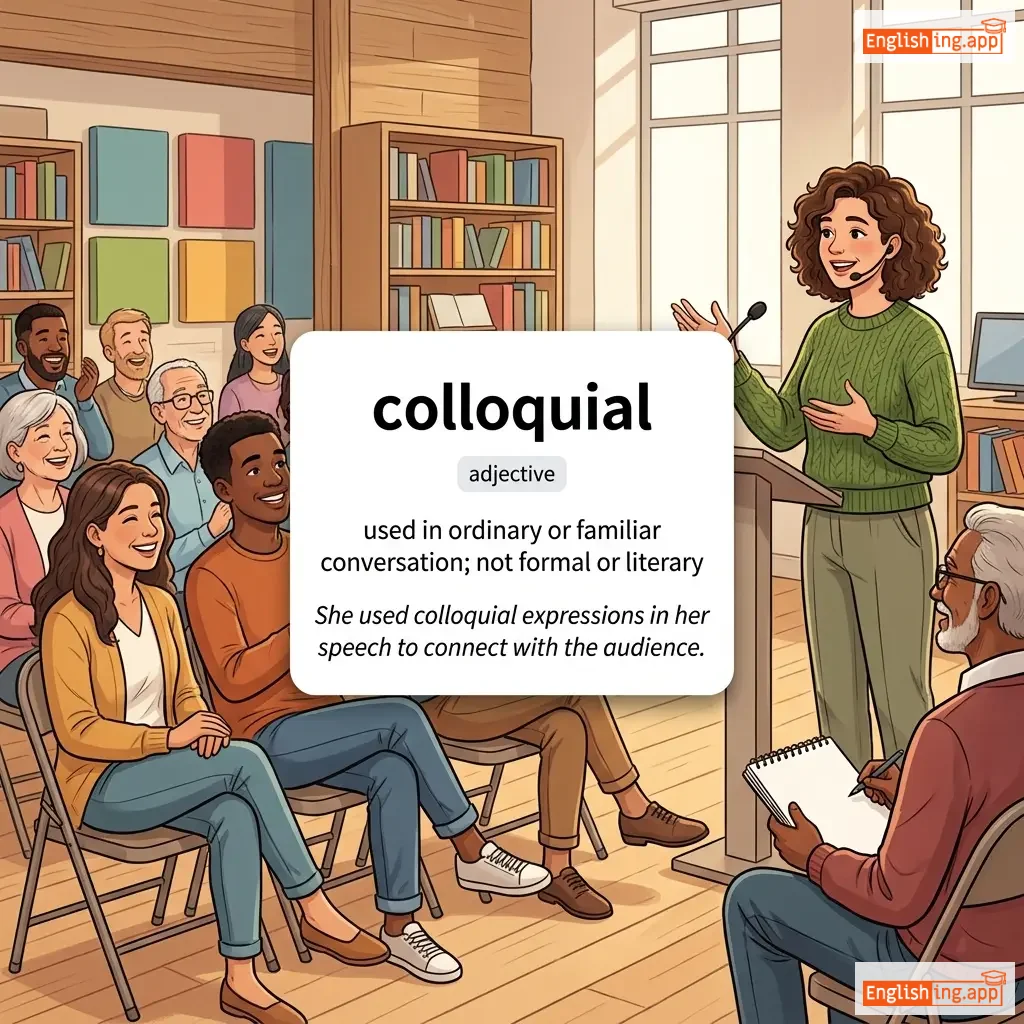
used in ordinary or familiar conversation; not formal or literary
••••••
|
She used colloquial expressions in her speech to connect with the audience. |
她在演讲中使用了口语表达方式,以便与观众建立联系。
Tā zài yǎnjiǎng zhōng shǐyòngle kǒuyǔ biǎodá fāngshì, yǐbiàn yǔ guānzhòng jiànlì liánxì.
••••••
|
- •••••• | - •••••• | - •••••• |
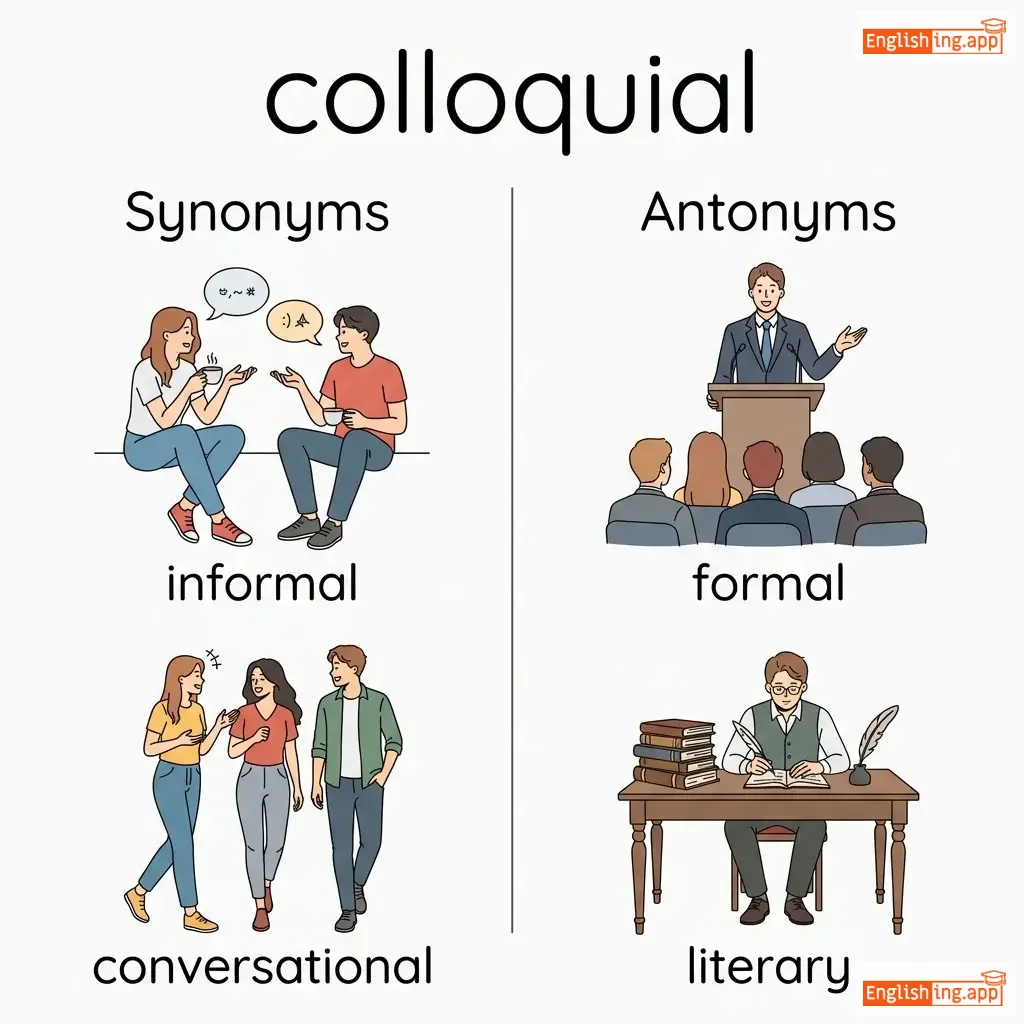
informal, conversational, everyday, familiar
••••••
|
formal, literary, academic
••••••
|
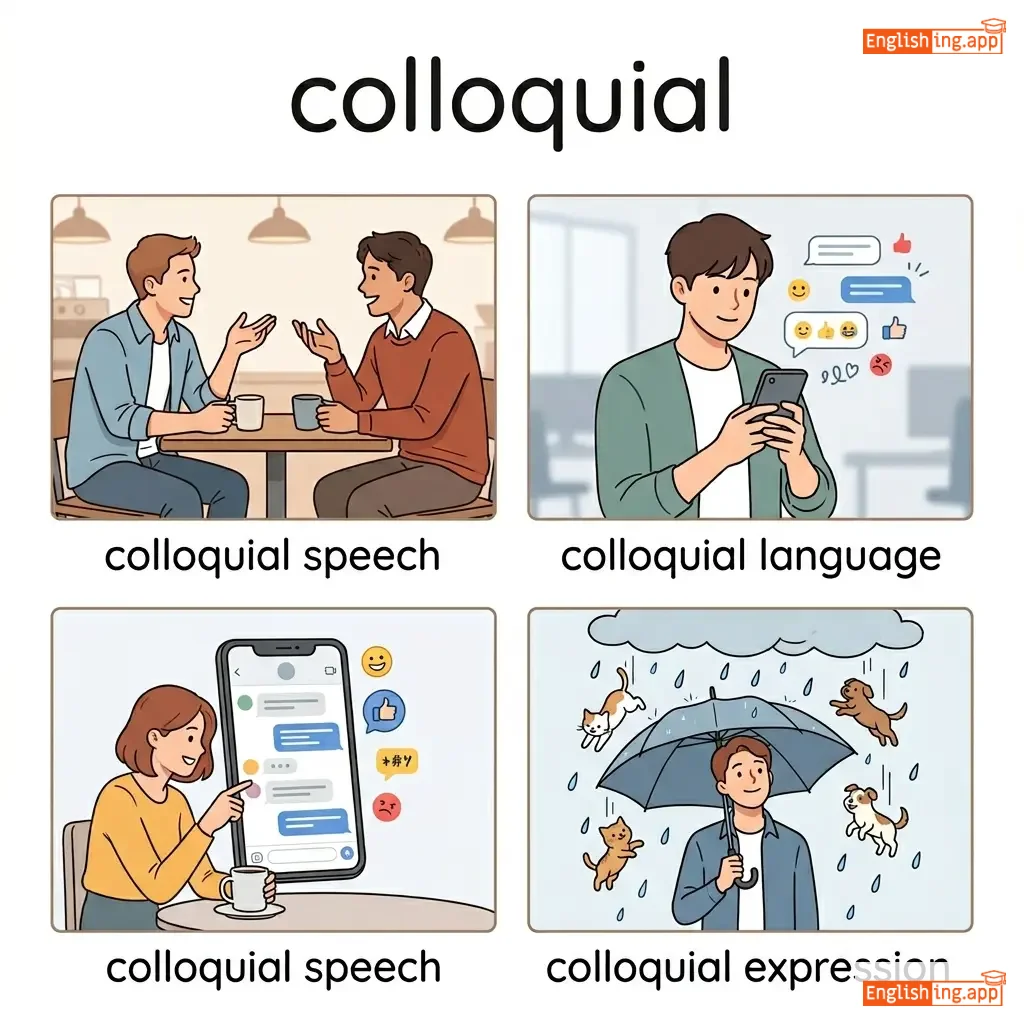
colloquial speech, colloquial language, colloquial expression
••••••
|
口语的就是平常和朋友聊天的方式,不是正式的。
••••••
|
|
#1589
🚗💥🚗
|
/kəˈlɪʒən/
noun
(碰撞)
••••••
|
- •••••• |
碰撞
pengzhuang
••••••
|
- •••••• | - •••••• | - •••••• | - •••••• |
an instance of two or more objects crashing into each other
••••••
|
The collision on the highway caused a major traffic jam. |
高速公路上的碰撞造成了严重的交通堵塞。
Gāosù gōnglù shàng de pèngzhuàng zàochéngle yánzhòng de jiāotōng dǔsè.
••••••
|
on a collision course |
moving toward inevitable conflict or disaster
••••••
|
在碰撞的轨道上
zai pengzhuang de guidao shang
••••••
|
crash, impact, accident, clash
••••••
|
separation, avoidance, peace
••••••
|
car collision, head-on collision, fatal collision
••••••
|
碰撞意味着碰撞轨道 – 车🚗💥🚗碰撞
••••••
|
|
#1590
⛏️
|
/ˈkɒliər/
noun
(kōu-lié)
••••••
|
- •••••• |
煤矿工人
mei kuang gong ren
••••••
|
- •••••• | - •••••• | - •••••• | - •••••• |
a person who works in coal mines or a ship carrying coal
••••••
|
The collier spent long hours underground extracting coal. |
煤矿工人花了很长时间在地下开采煤炭。
Mei kuang gong ren hua le hen chang shijian zai dixia kaicai meitan.
••••••
|
- •••••• | - •••••• | - •••••• |
miner, coal miner, pitman
••••••
|
non-miner, farmer
••••••
|
coal collier, hardworking collier, collier ship
••••••
|
Collier 意味着与煤炭工作 - 煤矿工人
••••••
|
Vocabulary Quiz
Test your vocabulary by matching words with their translations or meanings.
Login to take the quiz
Comments (0)
Share your thoughts and join the discussion.
Join the discussion by logging in
Login to CommentNo comments yet
Be the first to share your thoughts!