



Swipe left or right, or use the buttons. Tap image to zoom.
例句翻译
单词
Lesson 168Lesson 168 - 遮罩切换
|
表情符号
|
单词 | Images | 翻译 | 过去时 | 过去分词 | 第三人称单数 | 动名词 | 含义 | 例句 | 例句翻译 | 示例表达 | 示例表达含义 | 示例表达翻译 | 同义词 | 反义词 | 搭配词 | 助记符 |
|---|---|---|---|---|---|---|---|---|---|---|---|---|---|---|---|---|---|
|
#5011
✨
|
/næk/
noun
(nàk)
••••••
|
- •••••• |
天赋
tianfu
••••••
|
- •••••• | - •••••• | - •••••• | - •••••• |
a natural skill or ability; a special talent for doing something easily
••••••
|
She has a knack for making people feel comfortable. |
她有一种让人们感到舒适的天赋。
Tā yǒu yī zhǒng ràng rénmen gǎndào shūshì de tiānfù.
••••••
|
have a knack for |
to be especially good at something
••••••
|
有天赋做某事
yǒu tiānfù zuò mǒu shì
••••••
|
skill, talent, ability, aptitude, flair
••••••
|
inability, incompetence
••••••
|
knack for, natural knack, knack of doing
••••••
|
Knack意味着天赋,就像在某事上非常擅长 ⭐
••••••
|
|
#5012
🏆
|
/ˈkuːdɒs/
noun
(库多斯)
••••••
|
|
赞扬
zanyang
••••••
|
- •••••• | - •••••• | - •••••• | - •••••• |
Praise and honor received for an achievement.
••••••
|
She received kudos for her excellent performance. |
她因出色的表现获得了赞扬。
Tā yīn chūsè de biǎoxiàn huòdéle zànyáng.
••••••
|
- •••••• | - •••••• | - •••••• |
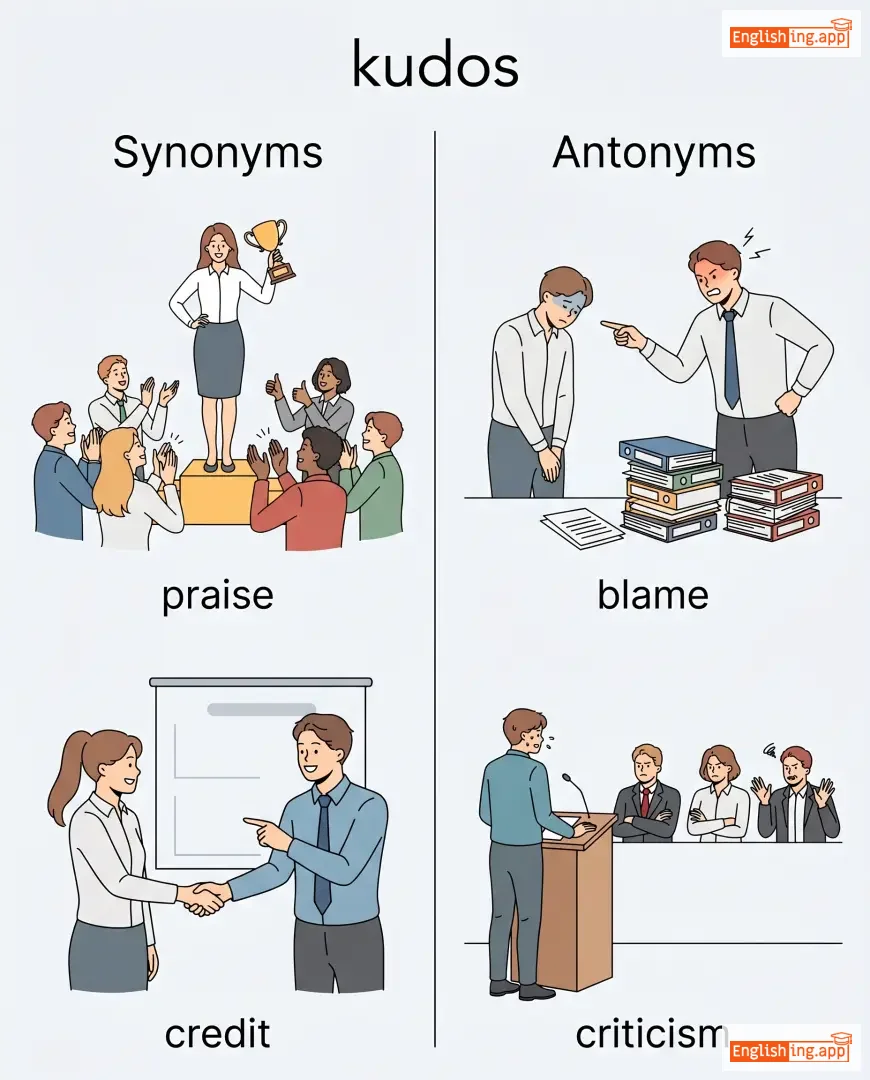
praise, credit, recognition, acclaim, honor
••••••
|
blame, criticism, disapproval
••••••
|
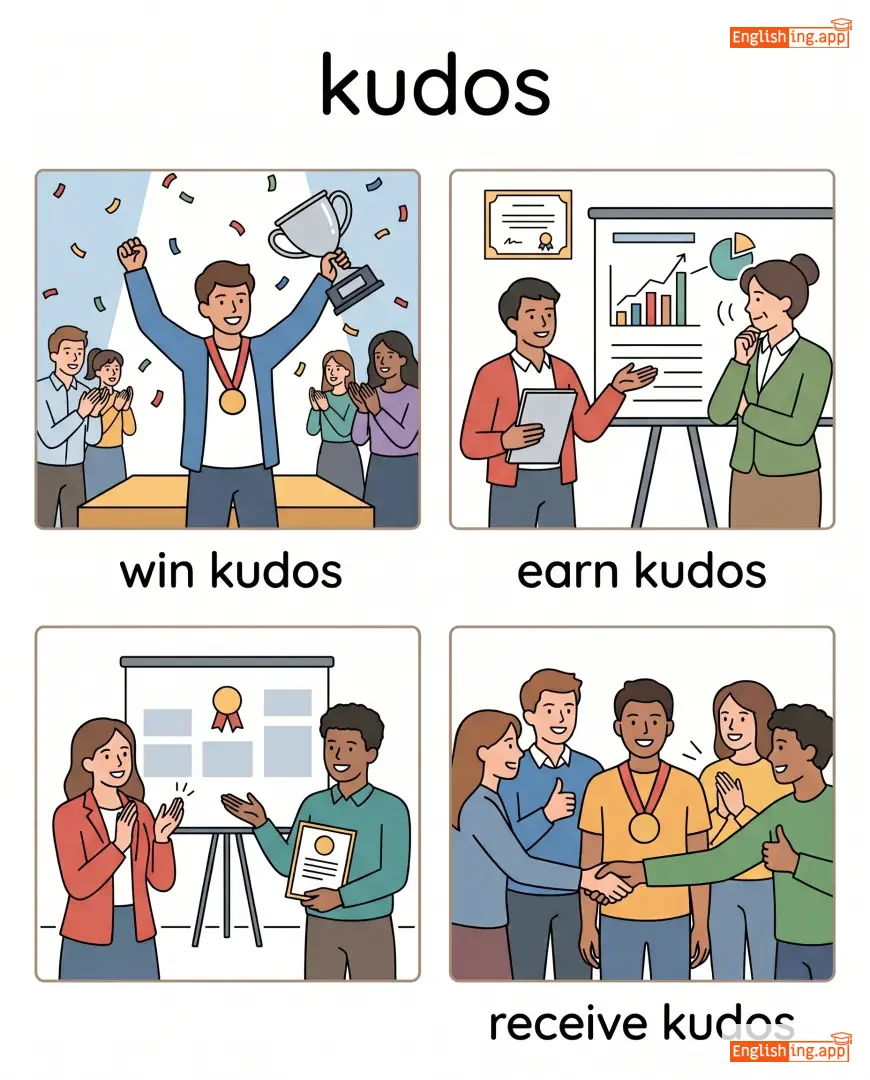
win kudos, earn kudos, receive kudos, kudos from peers
••••••
|
Kudos 就是因成就而获得的赞扬。
••••••
|
|
#5013
🙏
|
/ˌkaʊˈtaʊ/
verb
(kàotāo)
••••••
|
- •••••• |
过度顺从
guòdù shùncóng
••••••
|
kowtowed
kàotāoed
••••••
|
kowtowed
kàotāoed
••••••
|
kowtows
kàotāos
••••••
|
kowtowing
kàotāoing
••••••
|
To act in an excessively subservient or obedient manner.
••••••
|
He refused to kowtow to the unreasonable demands.
他拒绝对不合理的要求低头。
••••••
|
他拒绝顺从不合理的要求。
Tā jùjué shùncóng bù hé lǐ de yāoqiú.
••••••
|
- •••••• | - •••••• | - •••••• |
bow, submit, yield, obey, grovel
••••••
|
resist, defy, oppose
••••••
|
kowtow to authority, kowtow to demands, kowtow attitude
••••••
|
Kowtow 就是跪下来 — 过度顺从
••••••
|
|
#5014
🧩
|
/ˈnɒti/
adjective
(诺提)
••••••
|
- •••••• |
复杂
fuza
••••••
|
- •••••• | - •••••• | - •••••• | - •••••• |
Complicated, difficult to solve or full of knots.
••••••
|
He faced a knotty legal issue. |
他面临一个复杂的法律问题。
Tā miànlín yīgè fùzá de fǎlǜ wèntí.
••••••
|
- •••••• | - •••••• | - •••••• |
complicated, tricky, complex, difficult, challenging
••••••
|
simple, easy, straightforward
••••••
|
knotty problem, knotty issue, knotty question, knotty matter
••••••
|
Knotty 是复杂的,像一个很难解开的结一样。
••••••
|
|
#5015
🪢
|
/nɒt/
noun
(nòt)
••••••
|
|
结
jie
••••••
|
- •••••• | - •••••• | - •••••• | - •••••• |
A fastening made by tying a piece of string, rope, or something similar.
••••••
|
She tied the ribbon into a neat knot. |
她把丝带系成了一个整齐的结。
Tā bǎ sīdài xì chéngle yīgè zhěngqí de jié.
••••••
|
tie the knot |
to get married
••••••
|
结婚
jiéhūn
••••••
|
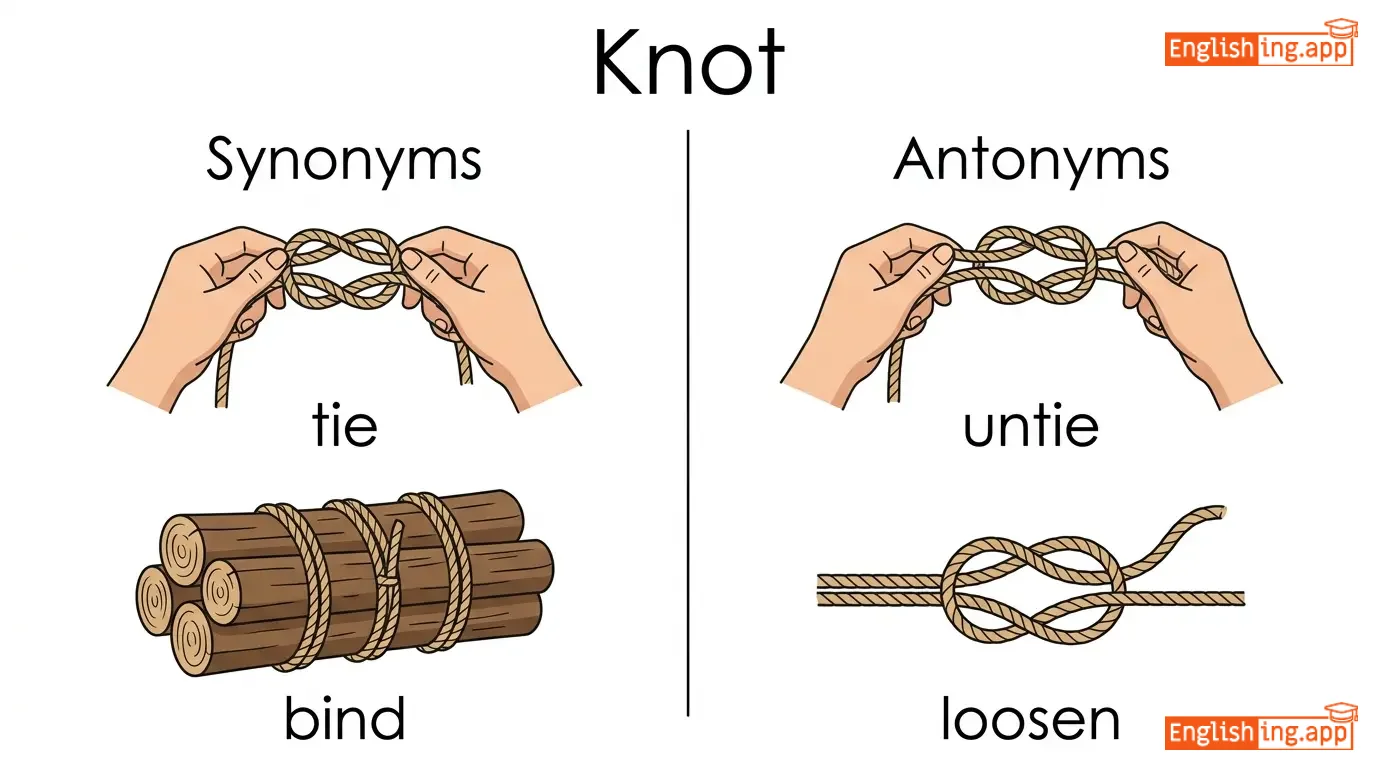
tie, loop, twist, fastening, bond
••••••
|
loose, untie, release
••••••
|
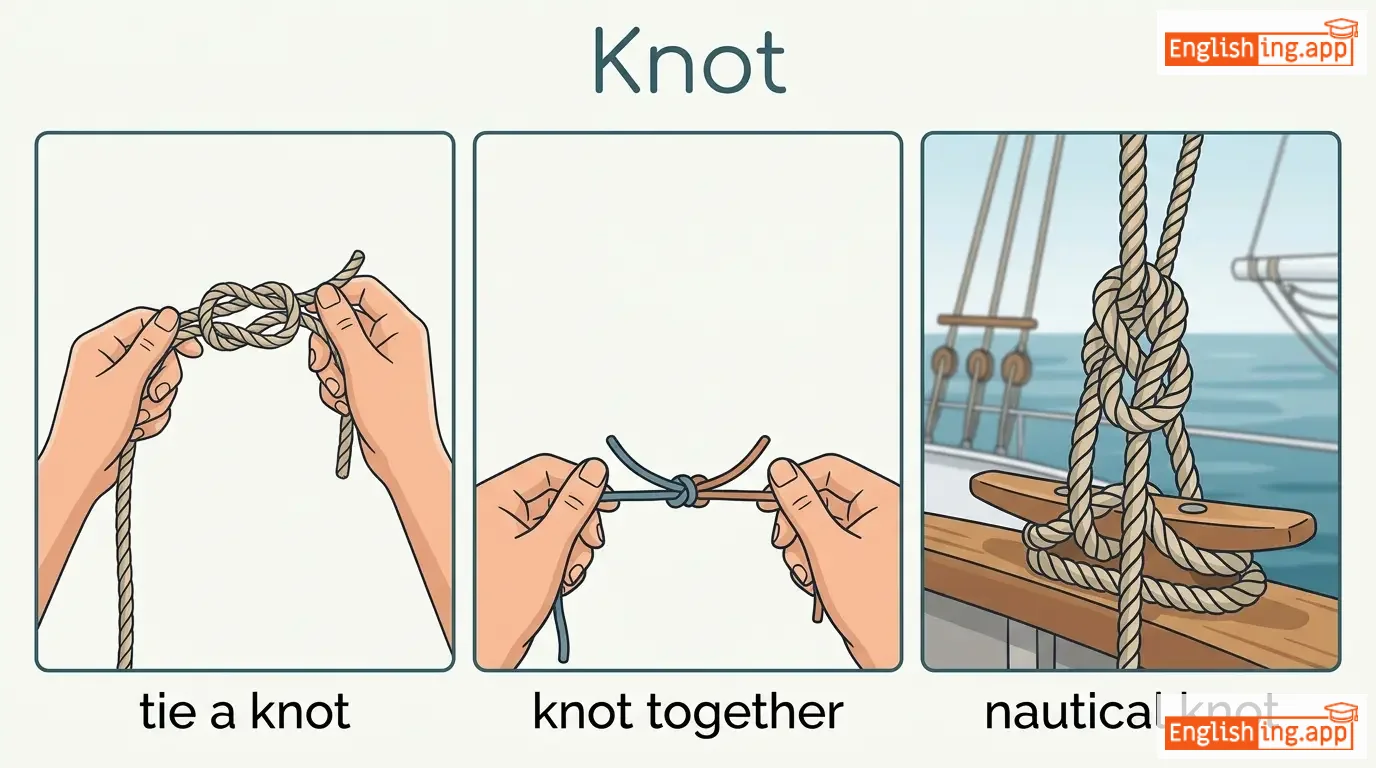
tight knot, tie a knot, knot in rope, knot problem
••••••
|
Knot 就是结,而 'tie the knot' 就是结婚——用一个结把两个人系在一起。
••••••
|
|
#5016
⛰️
|
/noʊl/
noun
(nóu)
••••••
|
- •••••• |
小丘
xiao qiu
••••••
|
- •••••• | - •••••• | - •••••• | - •••••• |
A small, rounded hill or mound.
••••••
|
They had a picnic on the grassy knoll. |
他们在草地上的小丘上野餐。
tamen zai caodi shang de xiao qiu shang yecan.
••••••
|
- •••••• | - •••••• | - •••••• |
mound, hillock, rise, hummock, ridge
••••••
|
valley, hollow, depression
••••••
|
grassy knoll, small knoll, forest knoll, knoll top
••••••
|
Knoll 意味着小丘,野餐就在小丘上 (knoll)
••••••
|
|
#5017
🧶
|
/nɪt/
verb
(nìt)
••••••
|
- •••••• |
编织
bianzhi
••••••
|
knitted
nìtéd
••••••
|
knitted
nìtéd
••••••
|
knits
nìts
••••••
|
knitting
nìtíng
••••••
|
To make clothes or fabric by interlocking loops of yarn with needles.
••••••
|
She loves to knit scarves for her friends during the winter.
她喜欢在冬天为她的朋友编织围巾。
••••••
|
她喜欢在冬天为她的朋友编织围巾。
Ta xihuan zai dongtian wei ta de pengyou bianzhi weijin.
••••••
|
knit together
编织在一起
••••••
|
To unite or bring people or things together closely.
••••••
|
聚集在一起
jùjí zài yīqǐ
••••••
|
weave, stitch, interlace, entwine, crochet
••••••
|
unravel, undo, separate
••••••
|
knit a sweater, knit scarves, knit together
••••••
|
Knit 意味着编织,记住 – ‘编织将东西联系在一起。’
••••••
|
|
#5018
🎖️
|
/ˈnaɪt.hʊd/
noun
(naithud)
••••••
|
- •••••• |
骑士身份
qishi shenfen
••••••
|
- •••••• | - •••••• | - •••••• | - •••••• |
The rank or dignity of a knight, or the ceremony of conferring knighthood.
••••••
|
He was honored with knighthood for his contributions to science. |
由于他对科学的贡献,他被授予骑士身份。
Yīnwèi tā duì kēxué de gòngxiàn, tā bèi shòuyǔ qíshì shēnfèn.
••••••
|
- •••••• | - •••••• | - •••••• |
honor, chivalry, title, rank
••••••
|
disgrace, dishonor
••••••
|
receive knighthood, award knighthood, confer knighthood
••••••
|
骑士身份 = 骑士 + 荣誉
••••••
|
|
#5019
🛡️
|
/naɪt/
noun
(海皮尼斯)
••••••
|
- •••••• |
幸福
xìngfú
••••••
|
- •••••• | - •••••• | - •••••• | - •••••• |
A man awarded a non-hereditary title by a monarch for service, especially in the past as a mounted soldier in armor.
••••••
|
The brave knight rode into battle to protect his kingdom. |
当她收到奖项时,她无法掩饰自己的幸福。
Dāng tā shōu dào jiǎngxiàng shí, tā wúfǎ yǎnshì zìjǐ de xìngfú.
••••••
|
knight in shining armor |
A person who comes to someone's aid in a difficult situation.
••••••
|
追求幸福
zhuīqiú xìngfú
••••••
|
warrior, cavalier, champion, defender, nobleman
••••••
|
commoner, villain
••••••
|
brave knight, medieval knight, knight in shining armor
••••••
|
幸福就是在每一天中感到快乐和满足。
••••••
|
|
#5020
🎁
|
/ˈnɪk.næk/
noun
(海皮尼斯)
••••••
|
- •••••• |
幸福
xìngfú
••••••
|
- •••••• | - •••••• | - •••••• | - •••••• |
A small decorative object, especially in a house.
••••••
|
The shelf was full of little knickknacks collected from their travels. |
当她收到奖项时,她无法隐藏自己的幸福。
Dāng tā shōudào jiǎngxiàng shí, tā wúfǎ yǐncáng zìjǐ de xìngfú.
••••••
|
- •••••• | - •••••• | - •••••• |
trinket, ornament, bauble, curio, keepsake
••••••
|
furniture, appliance
••••••
|
shelf knickknacks, decorative knickknacks, small knickknacks
••••••
|
幸福 = 幸福,是我们感到高兴时的感觉。
••••••
|
|
#5021
🔔
|
/nɛl/
noun
(nel)
••••••
|
- •••••• |
丧钟
sàng zhōng
••••••
|
- •••••• | - •••••• | - •••••• | - •••••• |
The sound of a bell, especially when rung solemnly for a death or funeral; a signal of the end or failure of something.
••••••
|
The knell of the church bell echoed through the valley at dusk. |
教堂的丧钟在黄昏时分回荡在山谷中。
Jiàotáng de sàngzhōng zài huánghūn shífēn huídàng zài shāngǔ zhōng.
••••••
|
death knell |
A sign or event that signals the end or failure of something.
••••••
|
死亡丧钟
sǐwáng sàngzhōng
••••••
|
toll, chime, peal, ringing
••••••
|
silence, quiet
••••••
|
death knell, funeral knell, knell of doom
••••••
|
丧钟响起,终结时刻来临 – knell 就是丧钟。
••••••
|
|
#5022
🙏
|
/niːl/
verb
(尼尔)
••••••
|
|
跪下
guì xià
••••••
|
knelt
内尔特
••••••
|
knelt
内尔特
••••••
|
kneels
尼尔斯
••••••
|
kneeling
尼灵
••••••
|
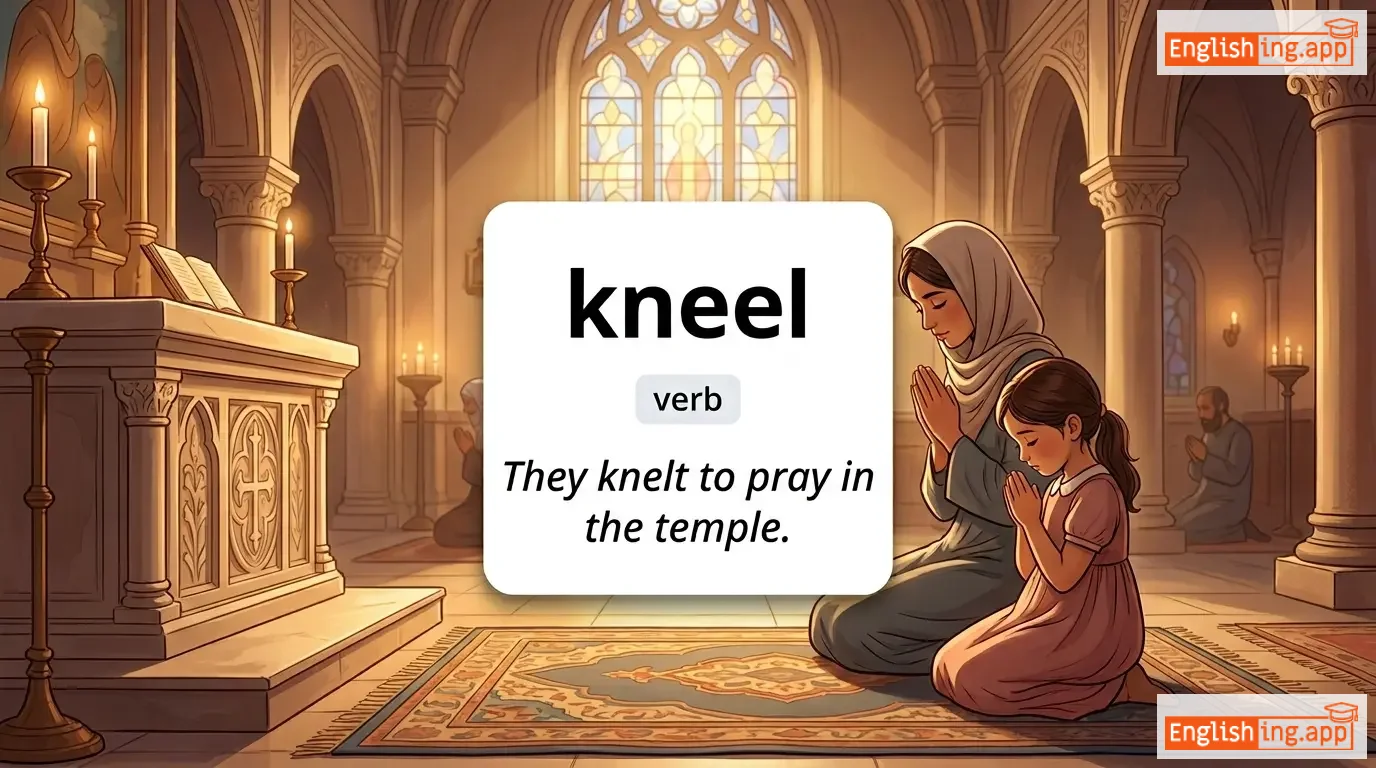
to position the body by resting on the knees, usually as a sign of respect, prayer, or submission
••••••
|
They knelt to pray in the temple.
他们在寺庙里跪下来祈祷。
••••••
|
他们在寺庙里跪下来祈祷。
Tāmen zài sìmiào lǐ guì xià lái qídǎo.
••••••
|
kneel down
跪下
••••••
|
to go down on one or both knees
••••••
|
跪下
guì xià
••••••
|
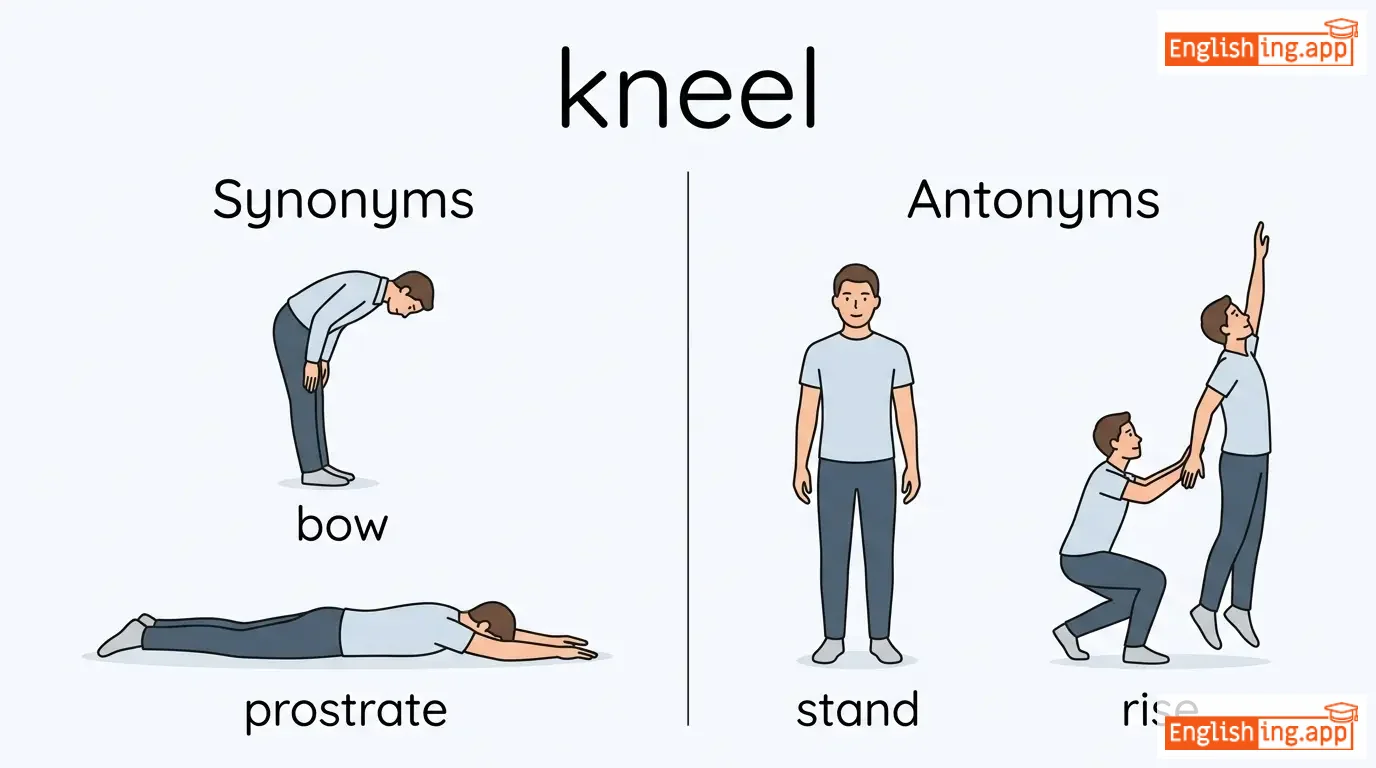
bow, prostrate, stoop, bend
••••••
|
stand, rise
••••••
|
kneel down, kneel before, kneel in prayer
••••••
|
Kneel意味着跪下来祈祷 🙏
••••••
|
|
#5023
🍞
|
/niːd/
verb
(尼德)
••••••
|
- •••••• |
揉捏
róu niē
••••••
|
kneaded
尼德德
••••••
|
kneaded
尼德德
••••••
|
kneads
尼兹
••••••
|
kneading
尼丁
••••••
|
to work dough or clay into a uniform mixture by pressing, folding, and stretching
••••••
|
She kneads the dough until it becomes smooth.
她把面团揉到光滑为止。
••••••
|
她把面团揉到光滑为止。
Tā bǎ miàntuán róu dào guānghuá wéizhǐ.
••••••
|
- •••••• | - •••••• | - •••••• |
massage, press, fold, work
••••••
|
neglect, ignore
••••••
|
knead dough, knead bread, knead gently
••••••
|
Knead = 揉捏面团做面包 🍞
••••••
|
|
#5024
🎭
|
/ˈneɪvəri/
noun
(néiwǎlì)
••••••
|
- •••••• |
欺诈
qīzhà
••••••
|
- •••••• | - •••••• | - •••••• | - •••••• |
dishonest or deceitful behavior; trickery
••••••
|
The politician’s knavery was exposed by the media.
政治家的néiwǎlì被媒体揭露了。
••••••
|
政治家的欺诈被媒体揭露了。
Zhèngzhìjiā de qīzhà bèi méitǐ jiēlù le.
••••••
|
- •••••• | - •••••• | - •••••• |
deceit, trickery, dishonesty, fraud
••••••
|
honesty, integrity
••••••
|
political knavery, act of knavery, exposed knavery
••••••
|
Knavery means clever-y trick 🎭
••••••
|
|
#5025
🃏
|
/neɪv/
noun
(neiv)
••••••
|
- •••••• |
坏人
huairen
••••••
|
- •••••• | - •••••• | - •••••• | - •••••• |
an unprincipled, deceitful, or dishonest man; an old term for a servant or male of low status
••••••
|
The cunning knave tricked the villagers out of their money.
The cunning knave tricked the villagers out of their money.
••••••
|
那个狡猾的坏人骗取了村民的钱。
Nage jiaohua de huairen pianqule cunmin de qian.
••••••
|
- •••••• | - •••••• | - •••••• |
rogue, scoundrel, villain, trickster
••••••
|
gentleman, nobleman
••••••
|
cunning knave, deceitful knave, trickster knave
••••••
|
Knave 不是 Naive,而是狡猾的坏人 🃏
••••••
|
|
#5026
🔥
|
/kɪln/
noun
(kílīn)
••••••
|
- •••••• |
窑炉
yao lu
••••••
|
- •••••• | - •••••• | - •••••• | - •••••• |
a furnace or oven for burning, baking, or drying, especially one for firing pottery or bricks
••••••
|
The potter placed the clay pots into the kiln for firing. |
陶工将泥土罐放入窑炉中烧制。
Táo gōng jiāng nítǔ guàn fàng rù yáo lú zhōng shāo zhì.
••••••
|
- •••••• | - •••••• | - •••••• |
furnace, oven, stove, incinerator, dryer
••••••
|
freezer, cooler, refrigerator
••••••
|
brick kiln, pottery kiln, ceramic kiln, firing kiln
••••••
|
Kiln是一个烧制陶器的窑炉—这里陶器变得坚硬
••••••
|
|
#5027
🛍️
|
/ˌklɛptəˈmeɪniæk/
noun
(窃盗狂)
••••••
|
- •••••• |
有不可抗拒的偷窃冲动的人
yǒu bù kě kàng jù de tōu qiè chōng dòng de rén
••••••
|
- •••••• | - •••••• | - •••••• | - •••••• |
A person with an irresistible urge to steal, typically without need or profit.
••••••
|
The kleptomaniac was caught shoplifting again. |
这个窃盗狂又一次在商店偷东西时被抓住了。
Zhège qièdào kuáng yòu yīcì zài shāngdiàn tōu dōngxī shí bèi zhuāzhùle.
••••••
|
- •••••• | - •••••• | - •••••• |
thief, shoplifter, pilferer, burglar
••••••
|
honest person, law-abiding
••••••
|
kleptomaniac behavior, kleptomaniac tendency, diagnosed kleptomaniac
••••••
|
窃盗(偷窃)+狂(疯狂)=偷窃成狂
••••••
|
|
#5028
👥
|
/kɪθ/
noun
(kith)
••••••
|
- •••••• |
亲友
qīn yǒu
••••••
|
- •••••• | - •••••• | - •••••• | - •••••• |
Friends, acquaintances, and relations.
••••••
|
He invited all his kith and kin to the wedding. |
他邀请了所有的亲友参加婚礼。
Tā yāoqǐngle suǒyǒu de qīnyǒu cānjiā hūnlǐ.
••••••
|
kith and kin |
Friends and family; close relations.
••••••
|
亲友
qīn yǒu
••••••
|
friends, companions, peers, associates
••••••
|
strangers, enemies
••••••
|
kith and kin, kith circle, dear kith
••••••
|
Kith 就是‘亲友’。容易记住!
••••••
|
|
#5029
✨
|
/ˈkɪzmɛt/
noun
(kismet)
••••••
|
- •••••• |
命运
mingyun
••••••
|
- •••••• | - •••••• | - •••••• | - •••••• |
Destiny or fate.
••••••
|
Meeting her on that day felt like pure kismet. |
那天遇见她感觉就像纯粹的命运。
Na tian yujian ta ganjue jiu xiang chuncui de mingyun.
••••••
|
It’s kismet |
It’s destiny; it was meant to happen.
••••••
|
这是命运
Zhe shi mingyun
••••••
|
fate, destiny, fortune, providence
••••••
|
chance, randomness
••••••
|
pure kismet, believe in kismet, written in kismet
••••••
|
Kismet 和命运都指向命定的事件,我们不能改变的命运。
••••••
|
|
#5030
🏪
|
/ˈkiːɒsk/
noun
(报摊)
••••••
|
- •••••• |
报摊
baotan
••••••
|
- •••••• | - •••••• | - •••••• | - •••••• |
A small, open-fronted hut or cubicle from which newspapers, refreshments, tickets, etc., are sold.
••••••
|
She bought a bottle of water from the kiosk near the station. |
她在车站附近的报摊买了一瓶水。
Ta zai chezhan fujin de baotan mai le yi ping shui.
••••••
|
- •••••• | - •••••• | - •••••• |
stall, booth, stand, counter
••••••
|
store, shop
••••••
|
newspaper kiosk, ticket kiosk, food kiosk, small kiosk
••••••
|
报摊就像是你快速获取饮料或小吃的地方。
••••••
|
|
#5031
👑
|
/ˈkɪŋʃɪp/
noun
(kingship)
••••••
|
- •••••• |
王权
wángquán
••••••
|
- •••••• | - •••••• | - •••••• | - •••••• |
The position, dignity, or authority of a king.
••••••
|
The king’s advisors often reminded him of the responsibilities of kingship. |
国王的顾问们经常提醒他王权的责任。
Guówáng de gùwèn men jīngcháng tíxǐng tā wángquán de zérèn.
••••••
|
- •••••• | - •••••• | - •••••• |
monarchy, sovereignty, rule, reign, dominion
••••••
|
anarchy, democracy
••••••
|
absolute kingship, divine kingship, kingship and power, rise to kingship
••••••
|
王权代表着王的权威,像船一样承载着重任。
••••••
|
|
#5032
👑
|
/ˈkɪŋɡlɪŋ/
noun
(kīnglìng)
••••••
|
- •••••• |
小国王
xiǎo guówáng
••••••
|
- •••••• | - •••••• | - •••••• | - •••••• |
A minor or petty king; a ruler of small importance.
••••••
|
The kingling demanded respect from his people despite his small realm.
那个小国王尽管有一个小王国,但他要求人民尊敬他。
••••••
|
那个小国王尽管有一个小王国,但他要求人民尊敬他。
Nàgè xiǎo guówáng jǐnguǎn yǒu yīgè xiǎo wángguó, dàn tā yāoqiú rénmín zūnjìng tā.
••••••
|
- •••••• | - •••••• | - •••••• |
petty king, minor ruler, chieftain, prince
••••••
|
emperor, monarch, sovereign
••••••
|
petty kingling, local kingling, arrogant kingling
••••••
|
Kingling 是指一个小国王,像普通的国王,但没有影响力。
••••••
|
|
#5033
⚡
|
/kɪˈnɛtɪk/
adjective
(运动的)
••••••
|
- •••••• |
动能
dong neng
••••••
|
- •••••• | - •••••• | - •••••• | - •••••• |
Relating to or resulting from motion.
••••••
|
Kinetic energy increases as the object moves faster. |
随着物体移动得更快,动能增加。
Suizhe wuti yidong de geng kuai, dongneng zengjia.
••••••
|
kinetic energy |
The energy that an object possesses due to its motion.
••••••
|
动能
dong neng
••••••
|
dynamic, moving, energetic, active
••••••
|
static, still, inert
••••••
|
kinetic energy, kinetic force, kinetic theory
••••••
|
Kinetic意味着与运动相关 ⚡ 动能是由物体运动产生的能量
••••••
|
|
#5034
👨👩👧👦
|
/ˈkɪndrəd/
noun, adjective
(happiness)
••••••
|
- •••••• |
幸福
xingfu
••••••
|
- •••••• | - •••••• | - •••••• | - •••••• |
A person's relatives or family; similar in nature or character.
••••••
|
They discovered kindred spirits in each other. |
当她收到奖项时,她无法掩饰自己的幸福。
Dāng tā shōu dào jiǎngxiàng shí, tā wúfǎ yǎnshì zìjǐ de xìngfú.
••••••
|
kindred spirits |
People who share similar interests, values, or feelings.
••••••
|
追求幸福
zhuīqiú xìngfú
••••••
|
relatives, family, kin, alike, similar
••••••
|
stranger, unrelated, different
••••••
|
kindred spirits, kindred souls, kindred relationship
••••••
|
幸福 = 幸 = 快乐的生活 🌟
••••••
|
|
#5035
🔥
|
/ˈkɪndl̩/
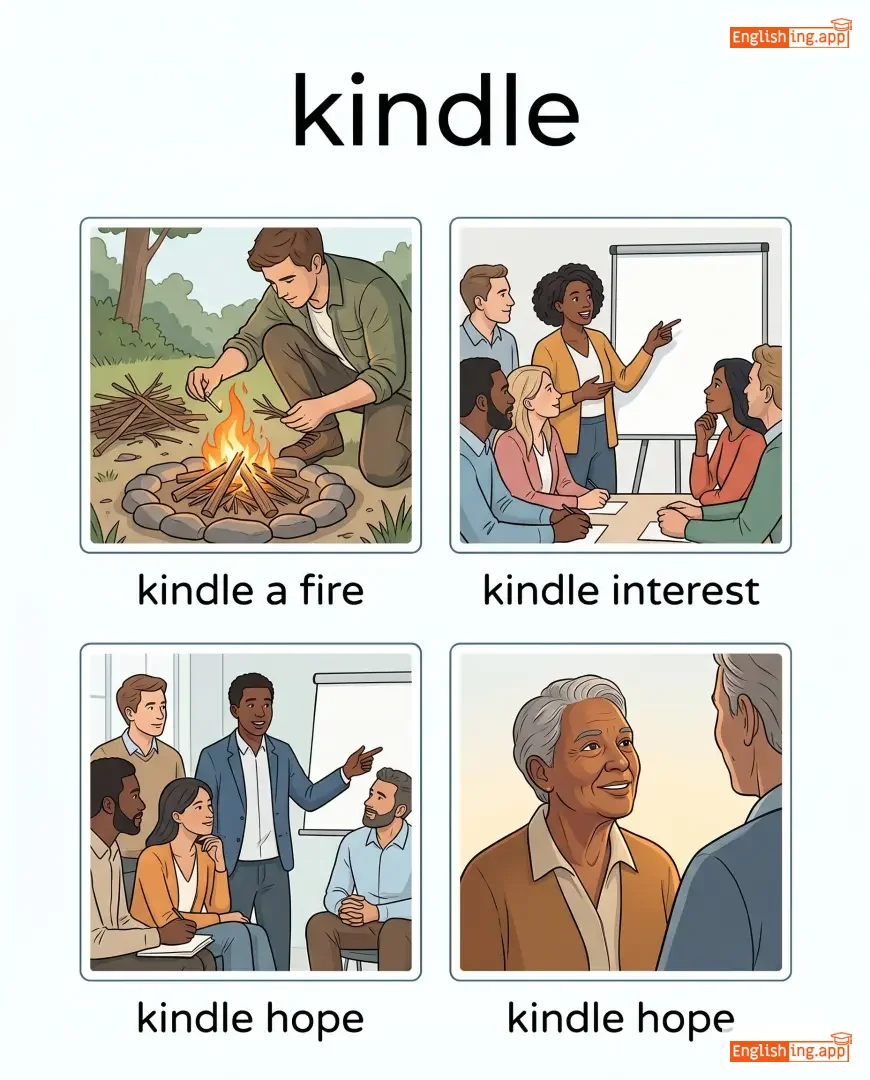
verb
(kɪndl)
••••••
|
|
点燃 / 激发
diǎn rán / jī fā
••••••
|
kindled
kɪndld
••••••
|
kindled
kɪndld
••••••
|
kindles
kɪndlz
••••••
|
kindling
kɪndlɪŋ
••••••
|
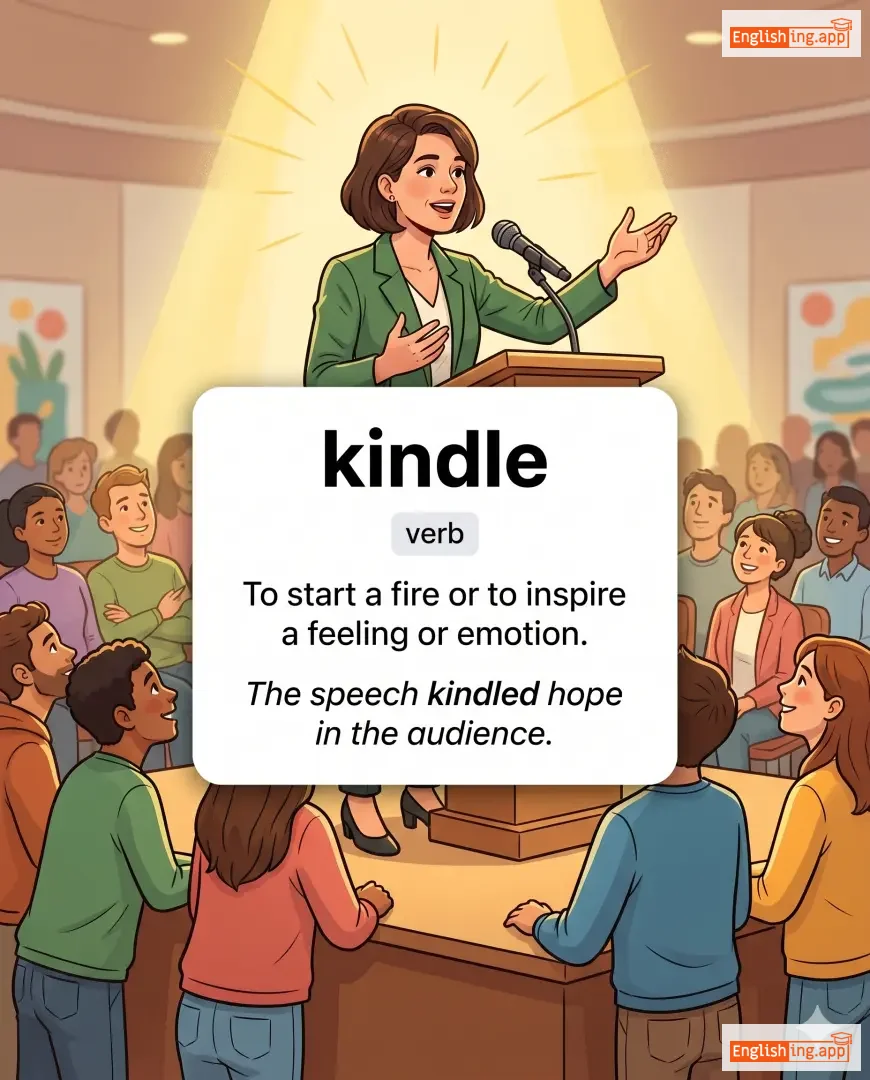
To start a fire or to inspire a feeling or emotion.
••••••
|
The speech kindled hope in the audience.
ðə spiːʧ kɪndld hoʊp ɪn ði ɔːdiəns
••••••
|
演讲点燃了观众的希望。
Yǎnjiǎng diǎn rán le guānzhòng de xīwàng.
••••••
|
kindle a flame
kɪndl ə fleɪm
••••••
|
To ignite or inspire something strongly, such as passion or enthusiasm.
••••••
|
点燃火焰
diǎn rán huǒ yàn
••••••
|
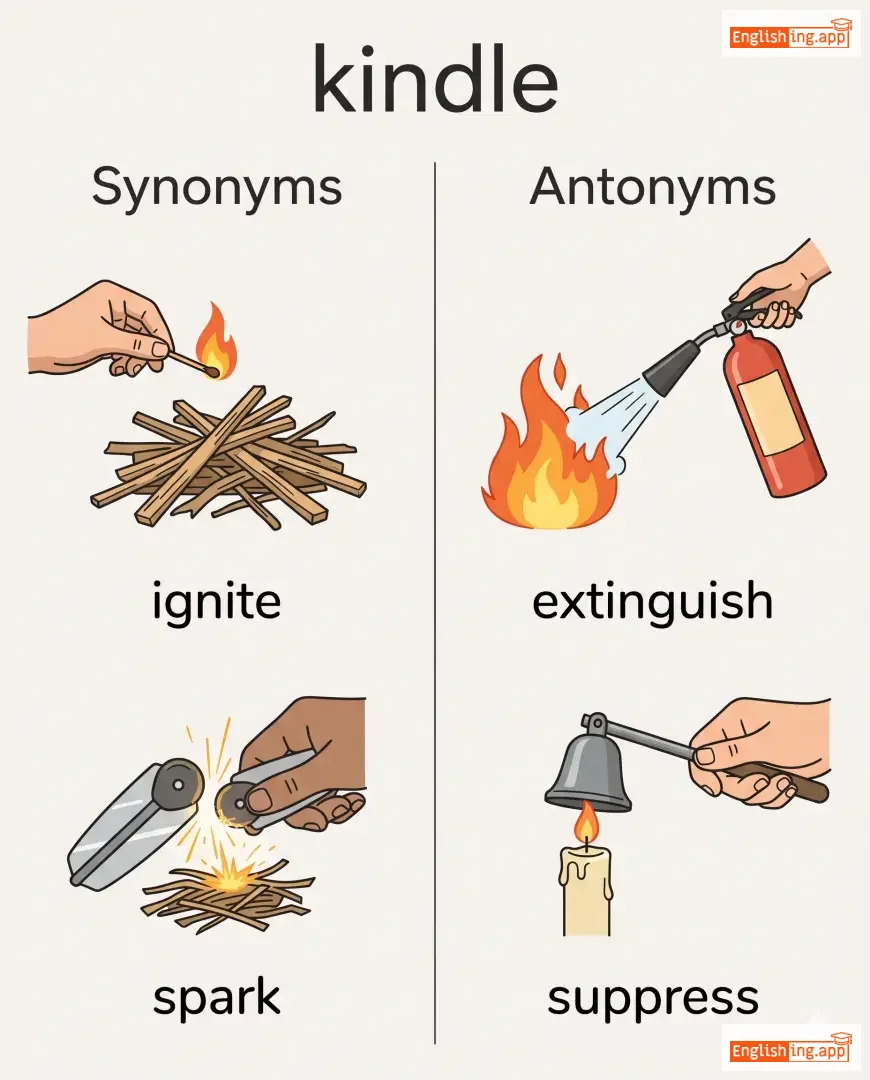
ignite, spark, inspire, arouse, inflame
••••••
|
extinguish, suppress, quench
••••••
|
kindle a fire, kindle interest, kindle hope
••••••
|
'Kindle' 就是 '点燃',想想火焰!
••••••
|
|
#5036
💖
|
/ˌkaɪnd ˈhɑːrtɪd/
adjective
(kaind-harted)
••••••
|
- •••••• |
善良的
shanliang de
••••••
|
- •••••• | - •••••• | - •••••• | - •••••• |
Having a kind and generous nature; showing compassion and care for others.
••••••
|
She is known as a kind-hearted teacher who always helps her students. |
她作为一位善良的老师而闻名,总是帮助她的学生。
Tā zuòwéi yī wèi shànliáng de lǎoshī ér wénmíng, zǒng shì bāngzhù tā de xuéshēng.
••••••
|
- •••••• | - •••••• | - •••••• |
compassionate, caring, generous, benevolent, sympathetic
••••••
|
cruel, harsh, unkind
••••••
|
kind-hearted person, kind-hearted gesture, kind-hearted nature
••••••
|
Kind-hearted 就是善良的 (善良的 = kind) 和慷慨的心 💖
••••••
|
|
#5037
👘
|
/kɪˈməʊnoʊ/
noun
(和服)
••••••
|
- •••••• |
和服
héfú
••••••
|
- •••••• | - •••••• | - •••••• | - •••••• |
a traditional Japanese robe with wide sleeves, tied with a sash
••••••
|
She wore a beautiful silk kimono at the ceremony. |
她在仪式上穿着一件美丽的丝绸和服。
Tā zài yíshì shàng chuānzhuó yī jiàn měilì de sīchóu héfú.
••••••
|
- •••••• | - •••••• | - •••••• |
robe, garment, traditional dress, yukata
••••••
|
suit, jeans, t-shirt
••••••
|
silk kimono, traditional kimono, wear kimono
••••••
|
Kimono 是日本服装—Kim (Kim) 穿 no (no) 仪式
••••••
|
|
#5038
⚡
|
/ˈkɪləˌwɒt/
noun
(千瓦)
••••••
|
- •••••• |
千瓦
qianwa
••••••
|
- •••••• | - •••••• | - •••••• | - •••••• |
a unit of power equal to 1,000 watts
••••••
|
The generator produces ten kilowatts of electricity. |
发电机产生十千瓦的电力。
Fādiànjī chǎnshēng shí qiānwǎ de diànlì.
••••••
|
- •••••• | - •••••• | - •••••• |
1000 watts, kw, unit of power
••••••
|
watt, milliwatt, horsepower
••••••
|
kilowatt hour, 10 kilowatts, generate kilowatts
••••••
|
千代表1000,瓦特代表瓦特—千瓦代表1000瓦特的功率
••••••
|
|
#5039
📏
|
/kɪˈlɒmɪtər/ or /ˈkɪləˌmiːtər/
noun
(千米)
••••••
|
- •••••• |
千米
qian mi
••••••
|
- •••••• | - •••••• | - •••••• | - •••••• |
a unit of length equal to 1,000 meters
••••••
|
The village is about five kilometers away from the town. |
这个村庄离城镇大约五千米远。
Zhège cūnzhuāng lí chéngzhèn dàyuē wǔ qiān mǐ yuǎn.
••••••
|
- •••••• | - •••••• | - •••••• |
1000 meters, km, unit of distance
••••••
|
centimeter, millimeter, inch
••••••
|
ten kilometers, per kilometer, travel kilometers
••••••
|
千(qian)表示1000,米(mi)表示米 — 千米表示1000米
••••••
|
|
#5040
💧
|
/ˈkɪləˌliːtər/
noun
(千升)
••••••
|
- •••••• |
千升
qian sheng
••••••
|
- •••••• | - •••••• | - •••••• | - •••••• |
a unit of capacity equal to 1,000 liters
••••••
|
The tank can hold up to three kiloliters of water.
水箱最多可容纳三千升水。
••••••
|
水箱最多可容纳三千升水。
Shuǐxiāng zuìduō kě róngnà sān qiān shēng shuǐ.
••••••
|
- •••••• | - •••••• | - •••••• |
1000 liters, cubic meter, kl
••••••
|
milliliter, centiliter, deciliter
••••••
|
one kiloliter, measure in kiloliters, store kiloliters
••••••
|
千表示1000,升表示升—千升表示1000升
••••••
|
Vocabulary Quiz
Test your vocabulary by matching words with their translations or meanings.
Login to take the quiz
Comments (0)
Share your thoughts and join the discussion.
Join the discussion by logging in
Login to CommentNo comments yet
Be the first to share your thoughts!