

Swipe left or right, or use the buttons. Tap image to zoom.
例句翻译
单词
Lesson 245Lesson 245 - 遮罩切换
|
表情符号
|
单词 | Images | 翻译 | 过去时 | 过去分词 | 第三人称单数 | 动名词 | 含义 | 例句 | 例句翻译 | 示例表达 | 示例表达含义 | 示例表达翻译 | 同义词 | 反义词 | 搭配词 | 助记符 |
|---|---|---|---|---|---|---|---|---|---|---|---|---|---|---|---|---|---|
|
#7320
⚖️
|
/rɪˈbʌt/
verb
(rìbàt)
••••••
|
- •••••• |
反驳
fǎnbó
••••••
|
rebutted
rìbàtèd
••••••
|
rebutted
rìbàtèd
••••••
|
rebuts
rìbàts
••••••
|
rebutting
rìbàtíng
••••••
|
to argue against or prove wrong; to refute
••••••
|
The lawyer rebutted the false accusations with strong evidence.
律师用有力的证据反驳了虚假的指控。
••••••
|
律师用有力的证据反驳了虚假的指控。
Lǜshī yòng yǒulì de zhèngjù fǎnbóle xūjiǎ de zhǐkòng.
••••••
|
rebut an argument
反驳一个论点
••••••
|
to present counterarguments or evidence to disprove an argument
••••••
|
反驳一个论点
fǎnbó yīgè lùndiǎn
••••••
|
refute, deny, counter, disprove, contradict
••••••
|
accept, confirm, concede
••••••
|
rebut an argument, rebut evidence, rebut claim, rebut charge
••••••
|
ReBUT 用反驳的方式打破谬误。
••••••
|
|
#7321
🎨
|
/rəˈʃɛrʃ/
adjective
(rèxièěrshé)
••••••
|
- •••••• |
稀有
xīyǒu
••••••
|
- •••••• | - •••••• | - •••••• | - •••••• |
Rare, exotic, or obscure, often in a sophisticated or refined way.
••••••
|
The gallery displayed many recherche artworks from unknown artists. |
画廊展示了许多未知艺术家的稀有艺术作品。
Huàláng zhǎnshìle xǔduō wèi zhī yìshùjiā de xīyǒu yìshù zuòpǐn.
••••••
|
- •••••• | - •••••• | - •••••• |
rare, exotic, unusual, refined, obscure
••••••
|
common, ordinary, familiar
••••••
|
recherche style, recherche taste, recherche collection
••••••
|
Recherche 就是寻找稀有的、独特的艺术品。
••••••
|
|
#7322
🧬
|
/rɪˈsɛsɪv/
adjective
(rɪˈsɛsɪv)
••••••
|
- •••••• |
隐性
yinxing
••••••
|
- •••••• | - •••••• | - •••••• | - •••••• |
In genetics, relating to a trait that is expressed only when two copies of the gene are present.
••••••
|
Blue eye color is often a recessive trait.
蓝色眼睛的颜色通常是隐性特征。
••••••
|
蓝色眼睛的颜色通常是隐性特征。
Lansè yǎnjīng de yánsè tōngcháng shì yǐnxìng tèzhēng.
••••••
|
- •••••• | - •••••• | - •••••• |
submissive, latent, hidden, underlying
••••••
|
dominant, prevailing, leading
••••••
|
recessive trait, recessive gene, recessive inheritance
••••••
|
隐性就像隐藏,只有两份基因时才会出现。
••••••
|
|
#7323
📉
|
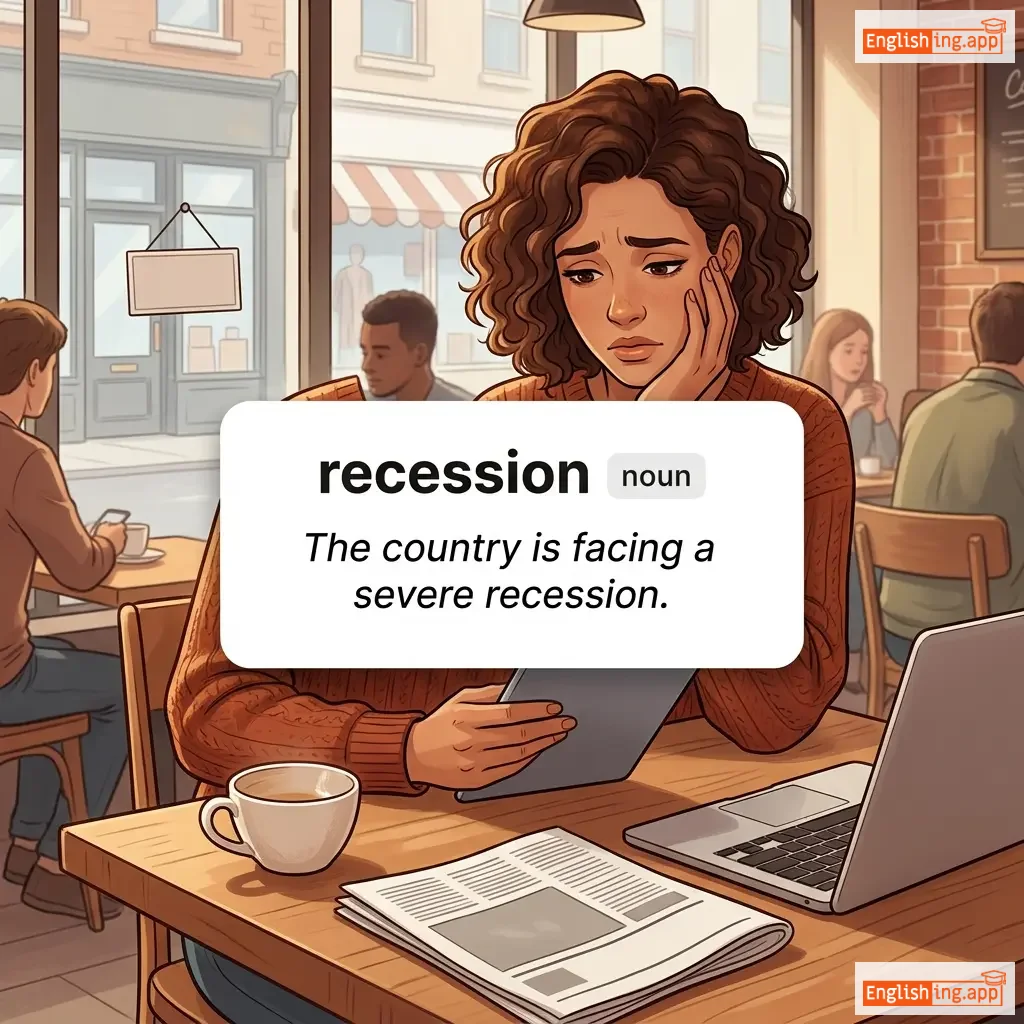
/rɪˈsɛʃən/
noun
••••••
|
|
- •••••• | - •••••• | - •••••• | - •••••• | - •••••• |
A period of temporary economic decline during which trade and industrial activity are reduced.
••••••
|
The country is facing a severe recession. |
- •••••• |
economic recession |
a period of economic decline in general
••••••
|
- •••••• |
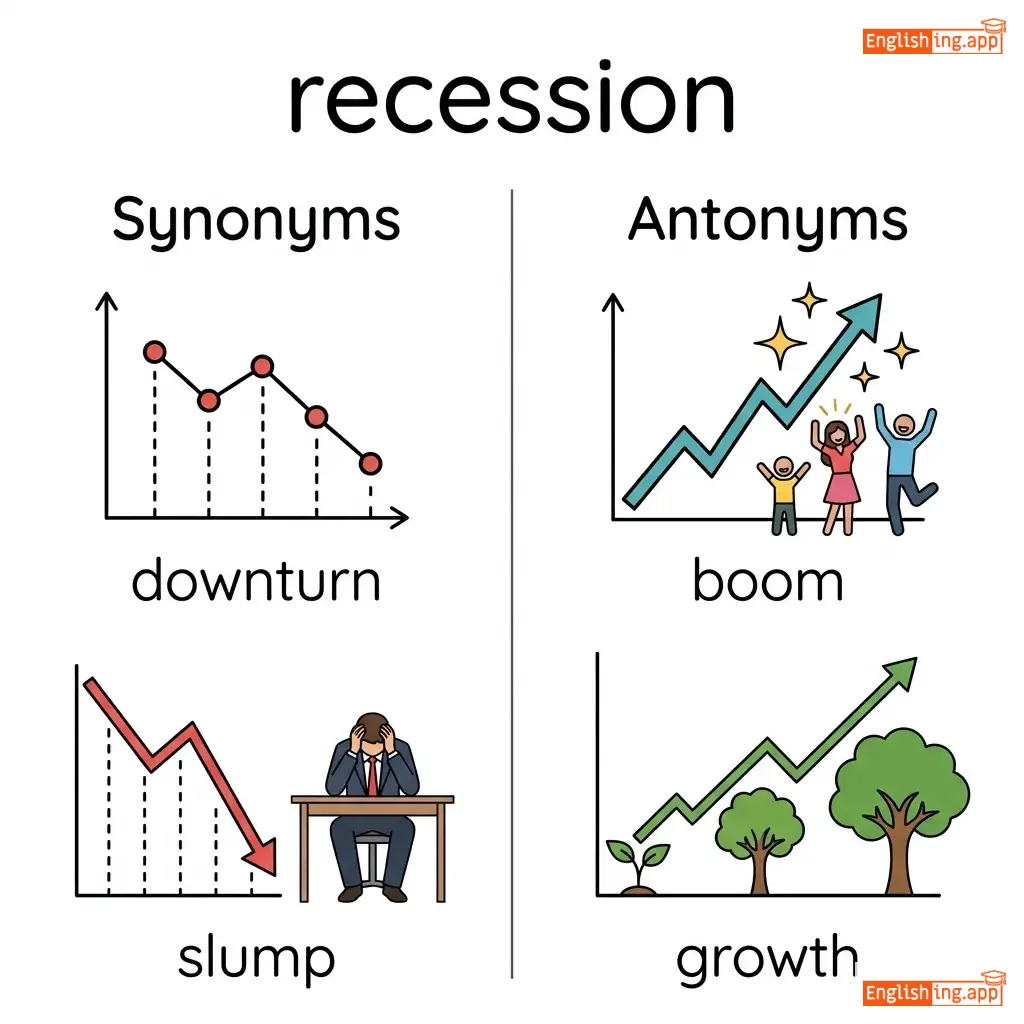
downturn, slump, slowdown, depression, stagnation
••••••
|
boom, growth, prosperity
••••••
|
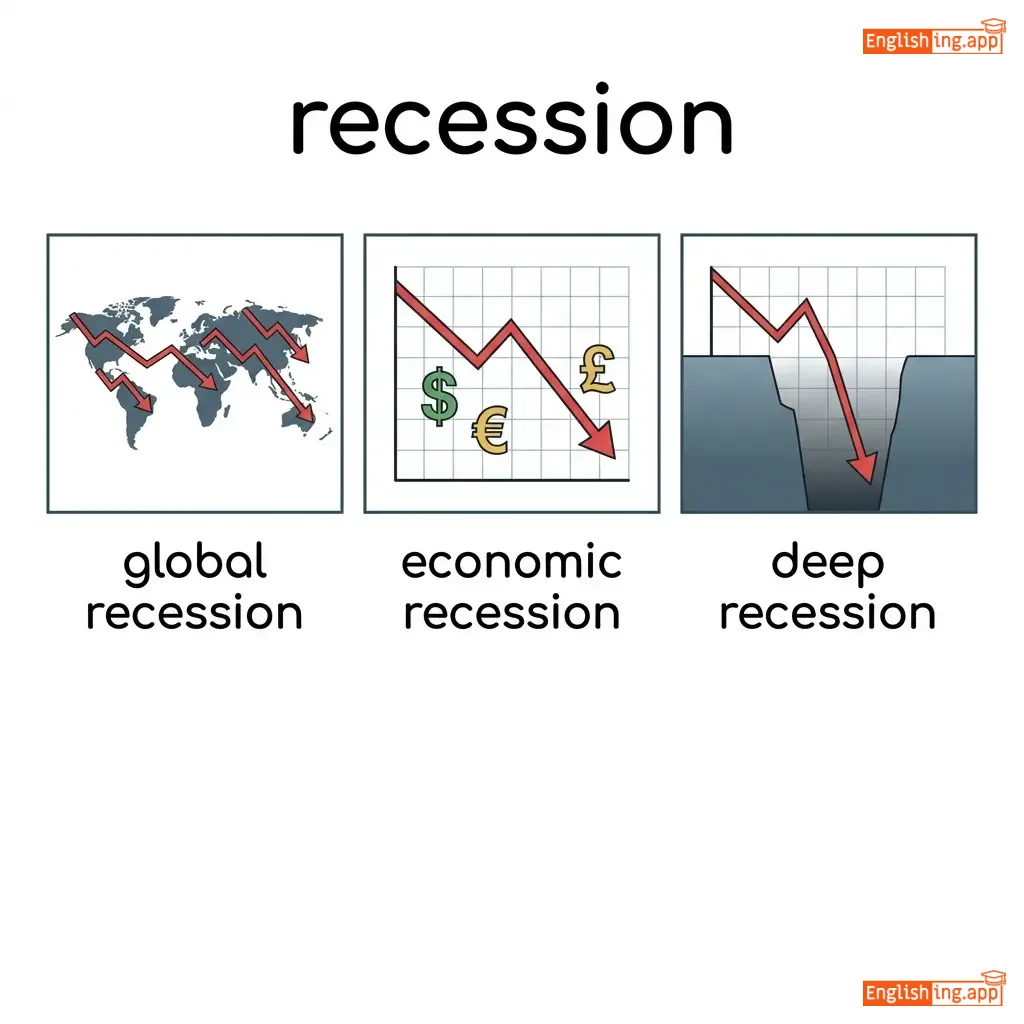
global recession, economic recession, deep recession, severe recession
••••••
|
No •••••• |
|
#7324
🛑
|
/rɪˈsɛs/
noun
(rìsèss)
••••••
|
- •••••• |
休息
xiūxí
••••••
|
- •••••• | - •••••• | - •••••• | - •••••• |
A short break from work or school; also a small space set back in a wall.
••••••
|
The children played outside during recess. |
孩子们在休息期间在外面玩耍。
Háizimen zài xiūxí qījiān zài wàimiàn wánshuǎ.
••••••
|
summer recess |
a long break from school or parliament during summer
••••••
|
暑假休息
shǔjià xiūxí
••••••
|
break, pause, holiday, interval, vacation
••••••
|
work, session, meeting
••••••
|
school recess, lunch recess, court recess, brief recess
••••••
|
Recess means Rest (休息) time at school.
••••••
|
|
#7325
👂
|
/rɪˈsɛptɪv/
adjective
(rɪˈsɛptɪv)
••••••
|
- •••••• |
善于接受
shan yu jie shou
••••••
|
- •••••• | - •••••• | - •••••• | - •••••• |
Willing to listen to or accept new ideas, suggestions, or experiences.
••••••
|
She was receptive to feedback from her colleagues.
她对同事们的反馈持开放态度。
••••••
|
她对同事们的反馈持开放态度。
Ta dui tongshi men de feedback chi kaifang taidu.
••••••
|
- •••••• | - •••••• | - •••••• |
open, responsive, approachable, accepting, welcoming
••••••
|
closed, resistant, unresponsive
••••••
|
receptive to criticism, receptive audience, receptive mind, highly receptive
••••••
|
善于接受意味着愿意接受新想法。
••••••
|
|
#7326
💰
|
/rɪˈsiːvəbl/
adjective, noun
(rísīwèibó)
••••••
|
- •••••• |
应收款项
yīng shōu kuǎn xiàng
••••••
|
- •••••• | - •••••• | - •••••• | - •••••• |
Money that is owed to a company and is expected to be paid.
••••••
|
The company's receivables increased significantly this quarter.
公司应收账款在本季度大幅增加。
••••••
|
公司的应收账款在本季度大幅增加。
Gōngsī de yīng shōu zhàng kuǎn zài běn jìdù dàfú zēngjiā.
••••••
|
- •••••• | - •••••• | - •••••• |
collectible, due, payable, outstanding
••••••
|
payable (opposite when company owes), liability
••••••
|
accounts receivable, trade receivable, receivable balance, outstanding receivable
••••••
|
Receivable意味着公司将获得并收回欠款。
••••••
|
|
#7327
🌊
|
/rɪˈsiːd/
verb
(rǐsīdé)
••••••
|
- •••••• |
退去
tuìqù
••••••
|
receded
rǐsīdé
••••••
|
receded
rǐsīdé
••••••
|
recedes
rǐsīdz
••••••
|
receding
rǐsīdīng
••••••
|
To move back or further away from a previous position.
••••••
|
The floodwaters began to recede after the heavy rain stopped.
洪水在暴雨停止后开始退去。
••••••
|
暴雨停止后,洪水开始退去。
Bàoyǔ tíngzhǐ hòu, hóngshuǐ kāishǐ tuìqù.
••••••
|
recede into the background
退回到背景中
••••••
|
To become less noticeable or less important.
••••••
|
退到背景中
tuì dào bèijǐng zhōng
••••••
|
retreat, withdraw, diminish, ebb, decline
••••••
|
advance, approach
••••••
|
recede into the distance, recede into memory, recede slowly, recede gradually
••••••
|
Re + seed → 种子(seed)慢慢退去,意味着退去。
••••••
|
|
#7328
🎭
|
/ˌriːˈkæst/
verb
(rikast)
••••••
|
- •••••• |
重新选择演员
chongxin xuanze yan yuan
••••••
|
recast
rikast
••••••
|
recast
rikast
••••••
|
recasts
rikasts
••••••
|
recasting
rikasting
••••••
|
To present or change something in a different form or style.
••••••
|
The director decided to recast the role with a younger actor.
导演决定用一位年轻演员重新安排这个角色。
••••••
|
导演决定用一位年轻演员重新安排这个角色。
Dao yan jue ding yong yi wei nian qing yan yuan chong xin an pai zhe ge jue se.
••••••
|
- •••••• | - •••••• | - •••••• |
reshape, redefine, remodel, rework, reformulate
••••••
|
preserve, retain
••••••
|
recast the role, recast the plan, recast the sentence, recast in new form
••••••
|
Re + cast意味着重新选演员,就像为一个角色选择新的演员。
••••••
|
|
#7329
🎯
|
/riːˈkæptʃər/
verb
(rìkāpcHū)
••••••
|
- •••••• |
重新夺回
chong xīn duó huí
••••••
|
recaptured
rìkāpcHūrd
••••••
|
recaptured
rìkāpcHūrd
••••••
|
recaptures
rìkāpcHūrs
••••••
|
recapturing
rìkāpcHūring
••••••
|
To take back or regain possession of something.
••••••
|
The army managed to recapture the lost territory.
军队成功地重新夺回了失去的领土。
••••••
|
军队成功地重新夺回了失去的领土。
Jūn duì chéng gōng de chóngxīn duó huí le shīqù de lǐngtǔ.
••••••
|
recapture the moment
重新夺回这时刻
••••••
|
To relive or experience again a special feeling or time.
••••••
|
重新体验那个时刻
chong xīn tǐ yàn nà ge shí kè
••••••
|
retake, regain, reclaim, recover, repossess
••••••
|
lose, surrender
••••••
|
recapture a city, recapture territory, recapture attention, recapture imagination
••••••
|
Re + capture 意味着重新捕捉,就像重新体验那一刻。
••••••
|
|
#7330
🔄
|
/ˌriːkəˌpɪtjʊˈleɪʃən/
noun
(重述)
••••••
|
- •••••• |
重述
chóngshù
••••••
|
- •••••• | - •••••• | - •••••• | - •••••• |
The act of summarizing or repeating the main points of something.
••••••
|
The professor gave a brief recapitulation of the lecture before ending the class.
教授在结束课程之前简要地重述了讲座内容。
••••••
|
教授在结束课程之前简要地重述了讲座内容。
Jiàoshòu zài jiéshù kèchéng zhīqián jiǎnyào de chóngshùle jiǎngzuò nèiróng.
••••••
|
- •••••• | - •••••• | - •••••• |
summary, reiteration, restatement, review, repetition
••••••
|
introduction, expansion
••••••
|
brief recapitulation, final recapitulation, recapitulation of ideas, recapitulation of events
••••••
|
重述就像重新说一遍总结(summary)。
••••••
|
|
#7331
🔄
|
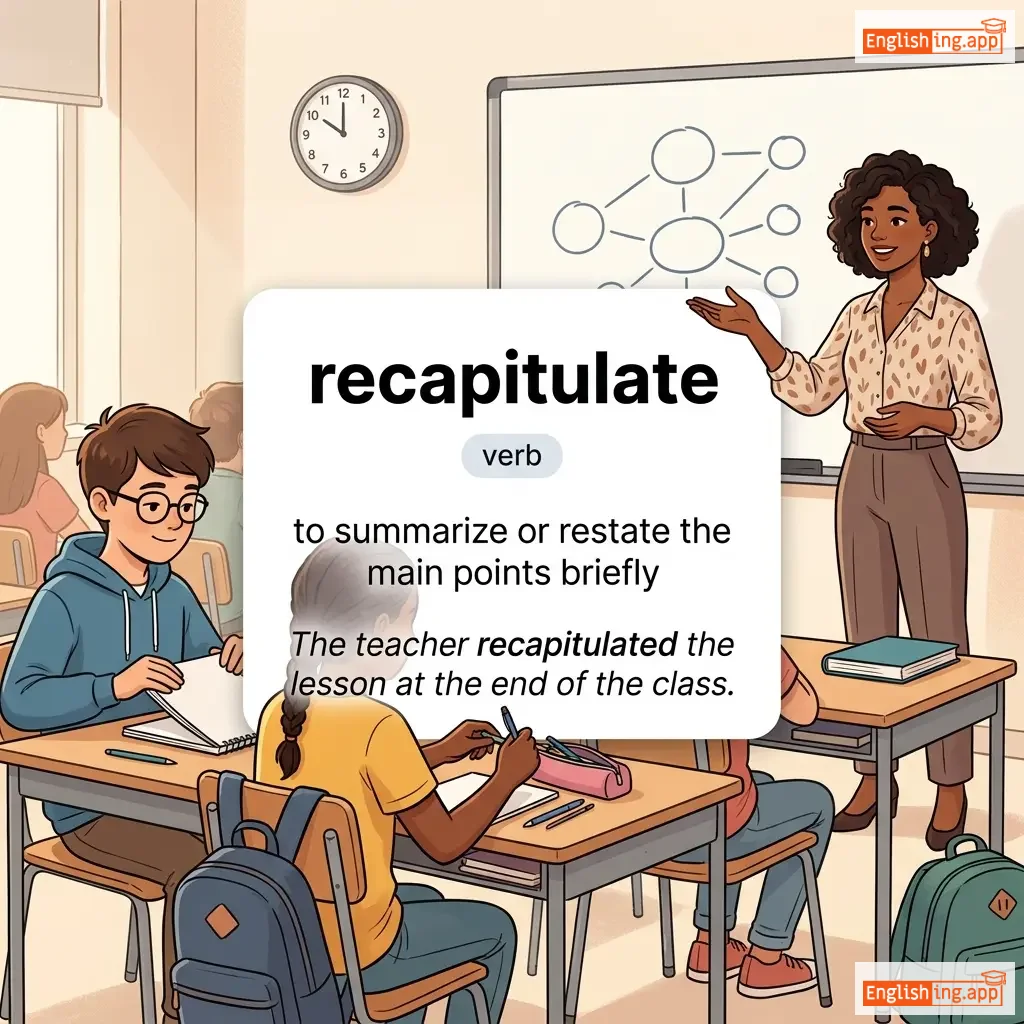
/ˌriːkəˈpɪtjʊleɪt/
verb
(瑞凯皮图雷特)
••••••
|
|
总结
zongjie
••••••
|
recapitulated
瑞凯皮图雷特德
••••••
|
recapitulated
瑞凯皮图雷特德
••••••
|
recapitulates
瑞凯皮图雷特斯
••••••
|
recapitulating
瑞凯皮图雷特英
••••••
|
to summarize or restate the main points briefly
••••••
|
The teacher recapitulated the lesson at the end of the class.
老师在课堂结束时总结了课程内容。
••••••
|
老师在课堂结束时总结了课程内容。
Laoshi zai keti kaishizhishi zongjie le kecheng neirong.
••••••
|
to recapitulate
总结
••••••
|
to sum up briefly
••••••
|
总结
zongjie
••••••
|
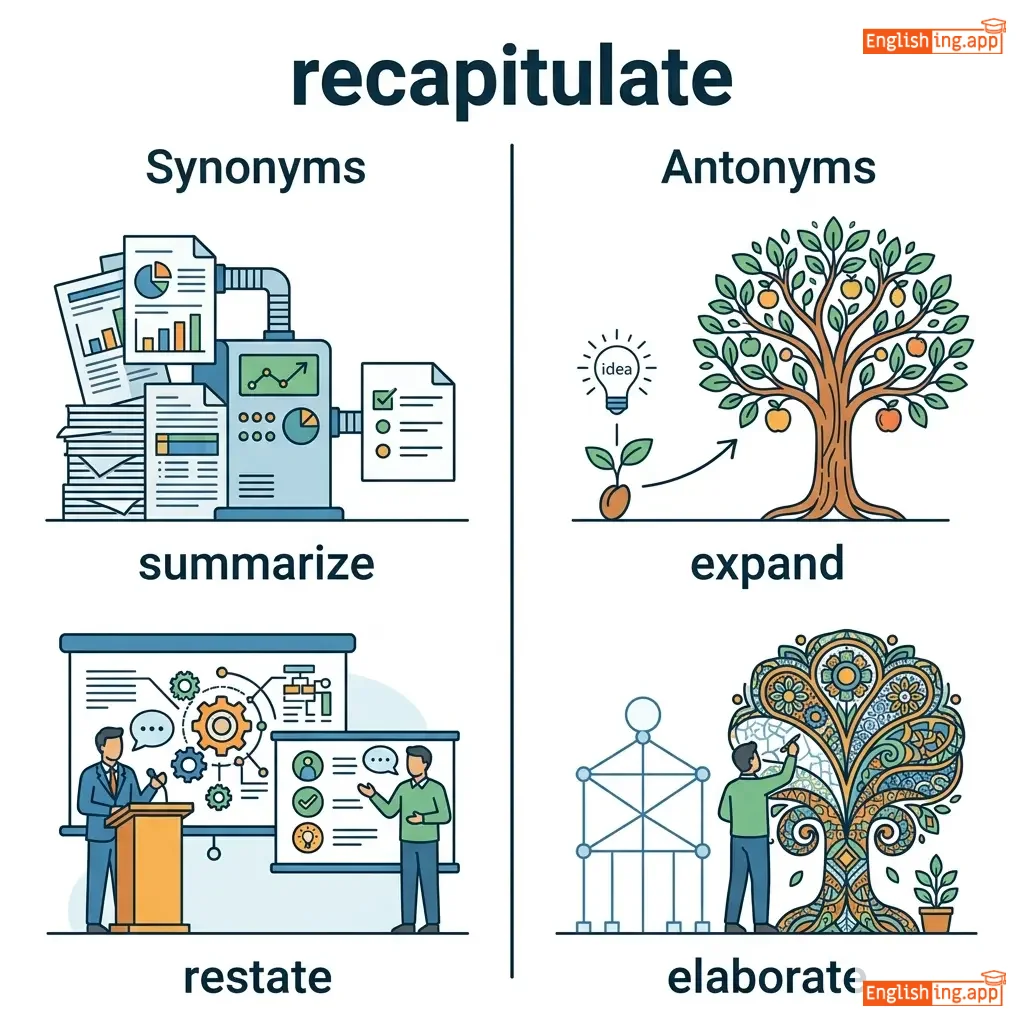
summarize, restate, review, repeat, encapsulate
••••••
|
expand, elaborate, lengthen
••••••
|
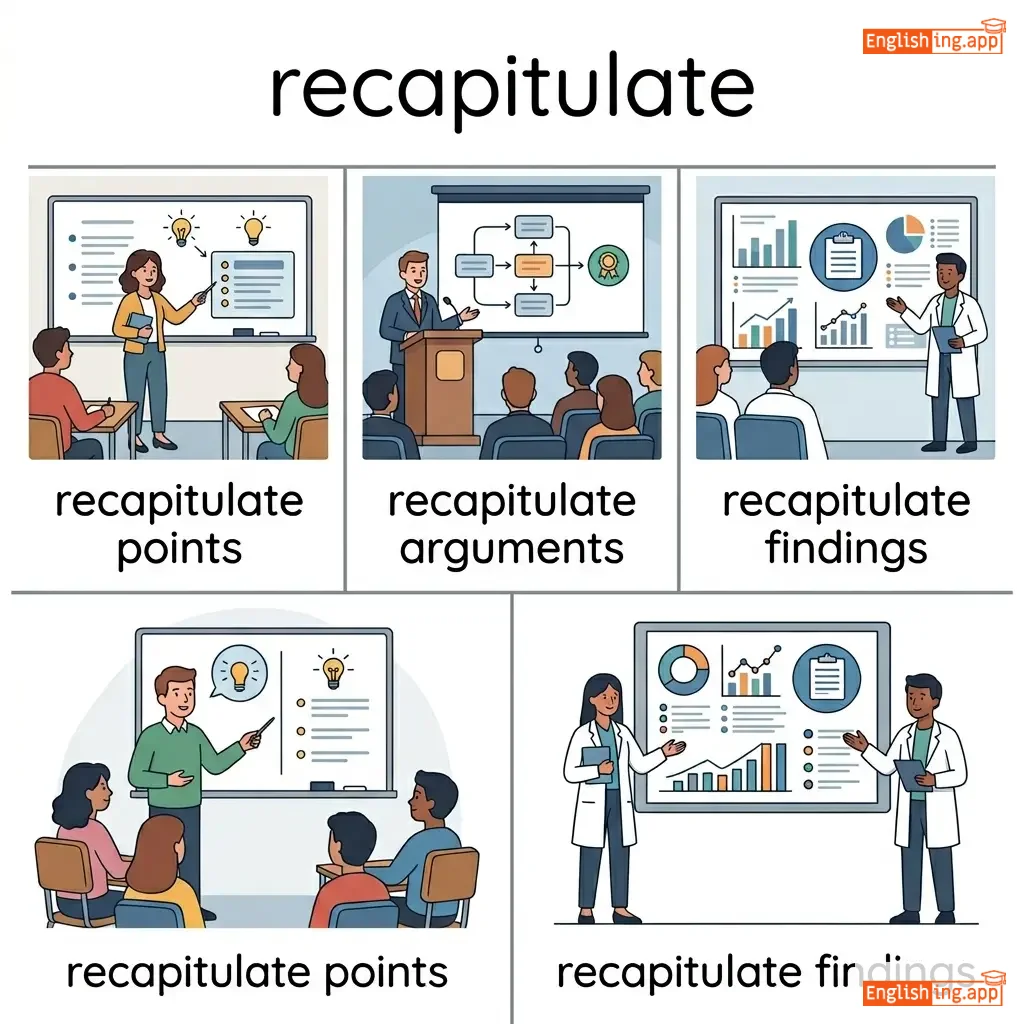
recapitulate points, recapitulate arguments, recapitulate findings, recapitulate lesson
••••••
|
RE CAP - 简要总结课程的要点
••••••
|
|
#7332
🗣️
|
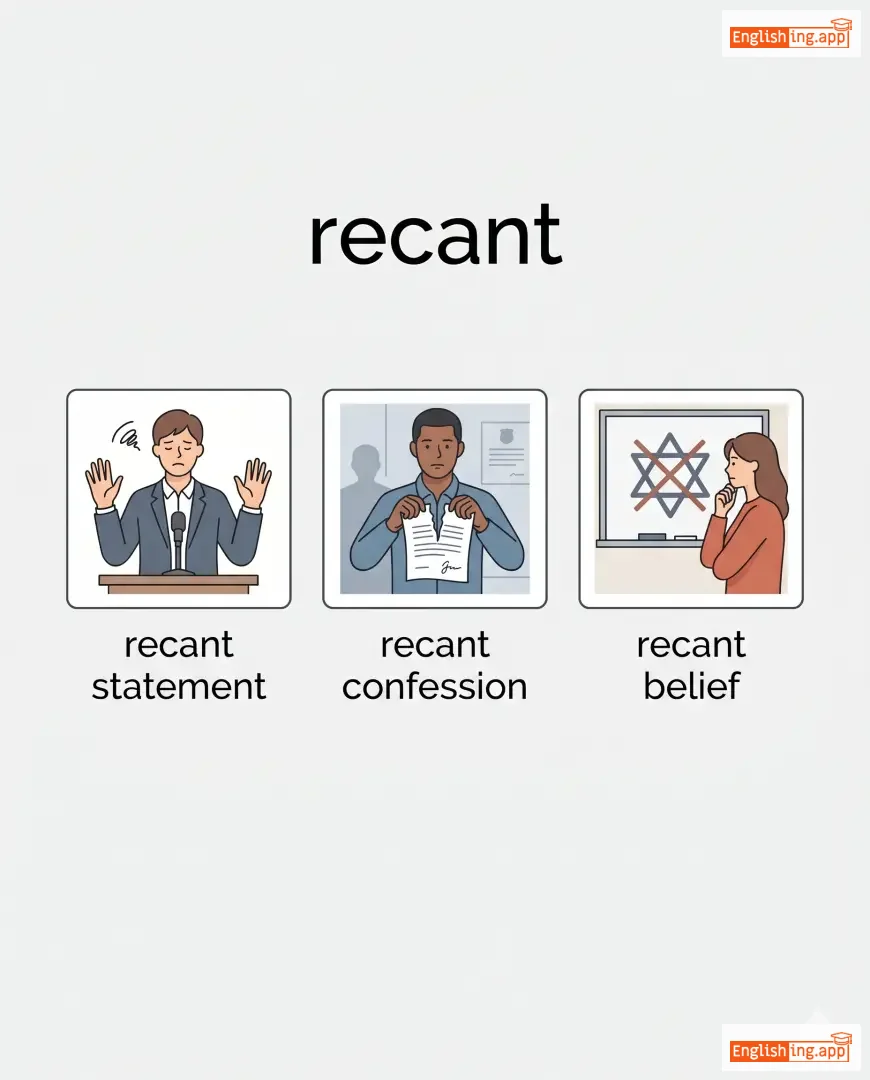
/rɪˈkænt/
verb
(rɪˈkænt)
••••••
|
|
撤回
chèhuí
••••••
|
recanted
rɪˈkæntɪd
••••••
|
recanted
rɪˈkæntɪd
••••••
|
recants
rɪˈkænts
••••••
|
recanting
rɪˈkæntɪŋ
••••••
|
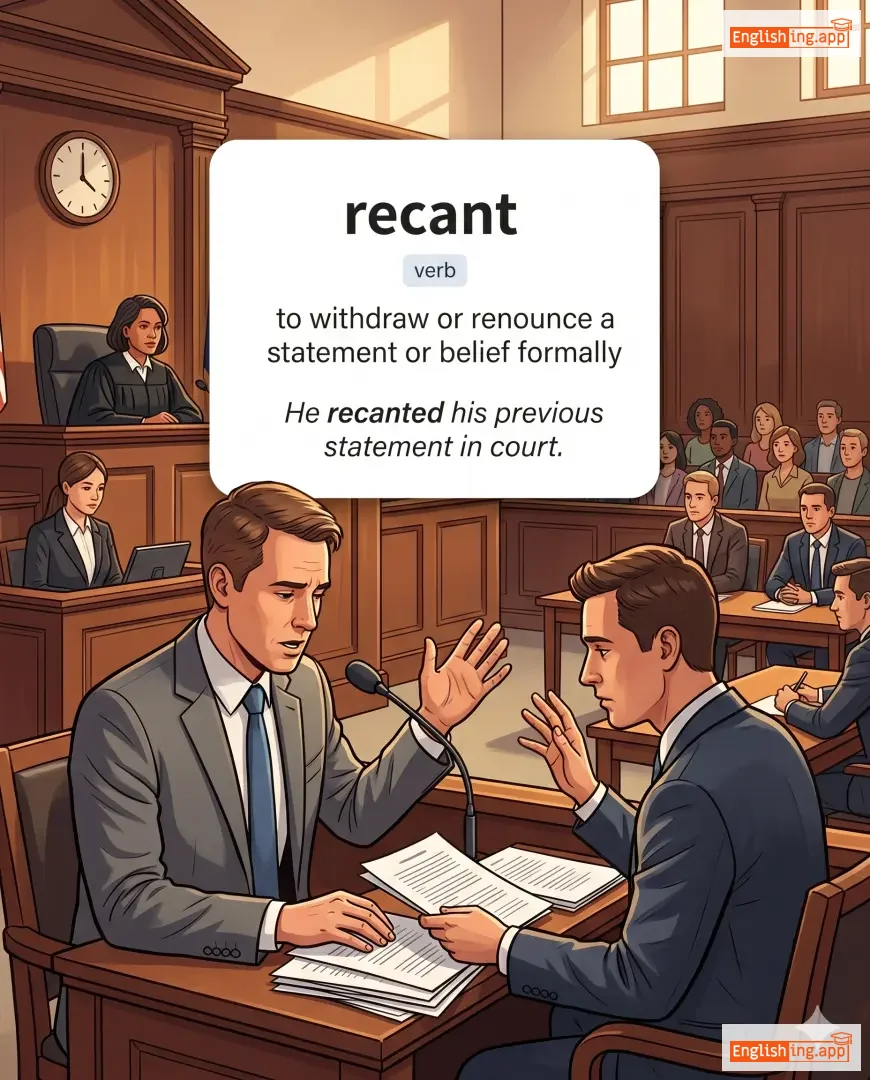
to withdraw or renounce a statement or belief formally
••••••
|
He recanted his previous statement in court.
他在法庭上撤回了之前的陈述。
••••••
|
他在法庭上撤回了之前的陈述。
Tā zài fǎtíng shàng chèhuí le zhīqián de chénshù.
••••••
|
recant a confession
撤回认罪
••••••
|
to officially take back an earlier confession
••••••
|
撤回认罪
chèhuí rènzuì
••••••
|
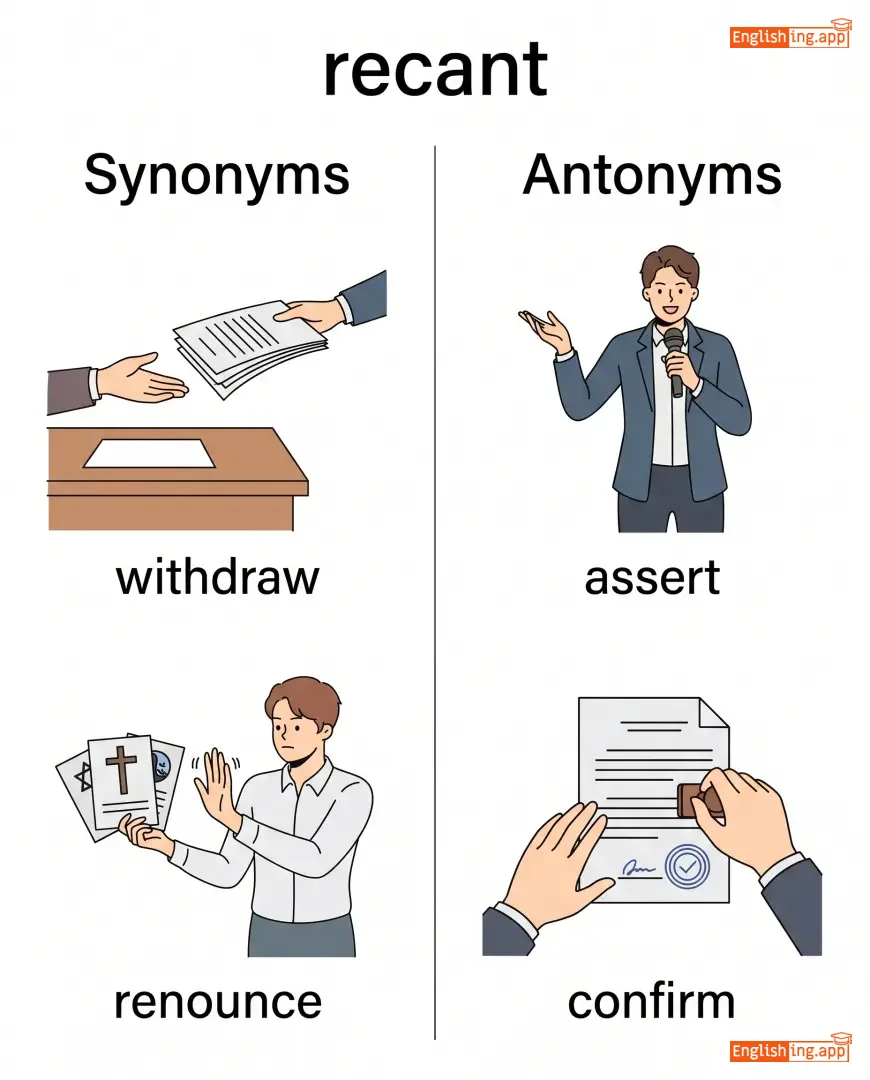
withdraw, renounce, retract, deny, repudiate
••••••
|
assert, confirm, maintain
••••••
|
recant statement, recant confession, recant belief, recant testimony
••••••
|
Re-COOL冷静意味着撤回之前的说法。
••••••
|
|
#7333
🙅
|
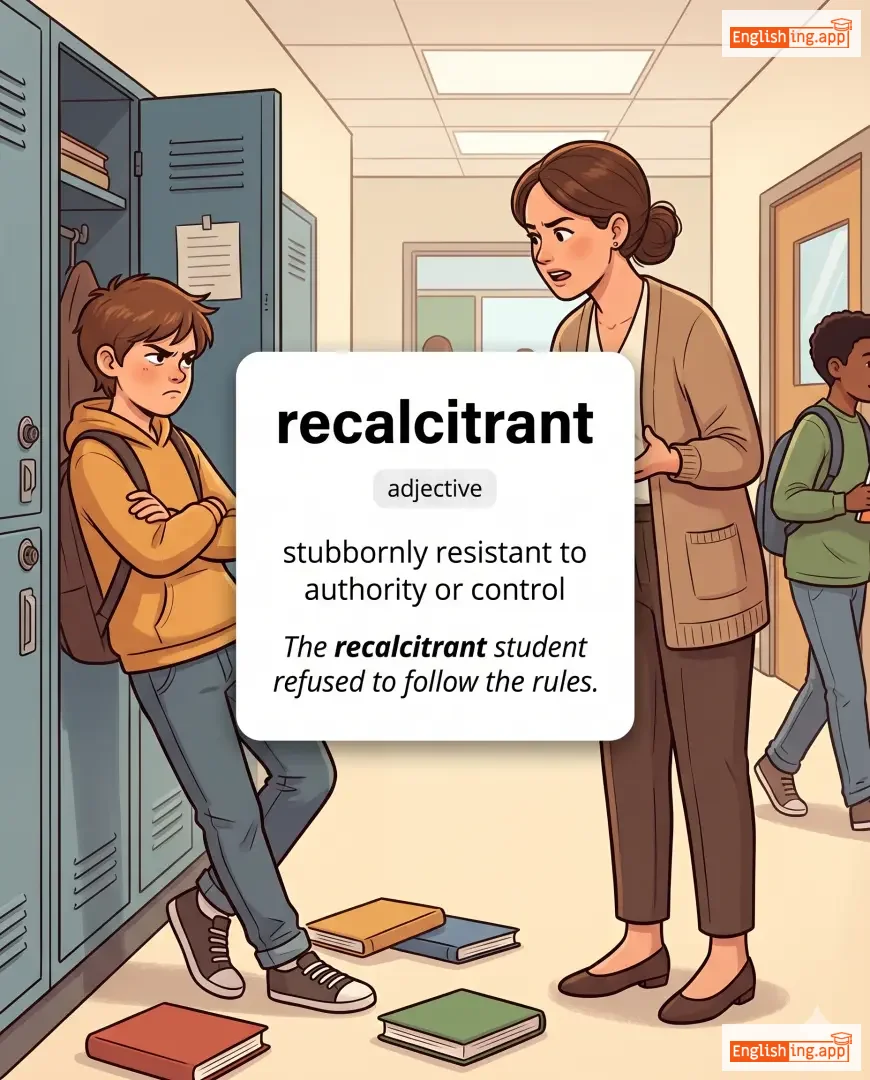
/rɪˈkælsɪtrənt/
adjective
••••••
|
|
- •••••• | - •••••• | - •••••• | - •••••• | - •••••• |
stubbornly resistant to authority or control
••••••
|
The recalcitrant student refused to follow the rules. |
- •••••• | - •••••• | - •••••• | - •••••• |
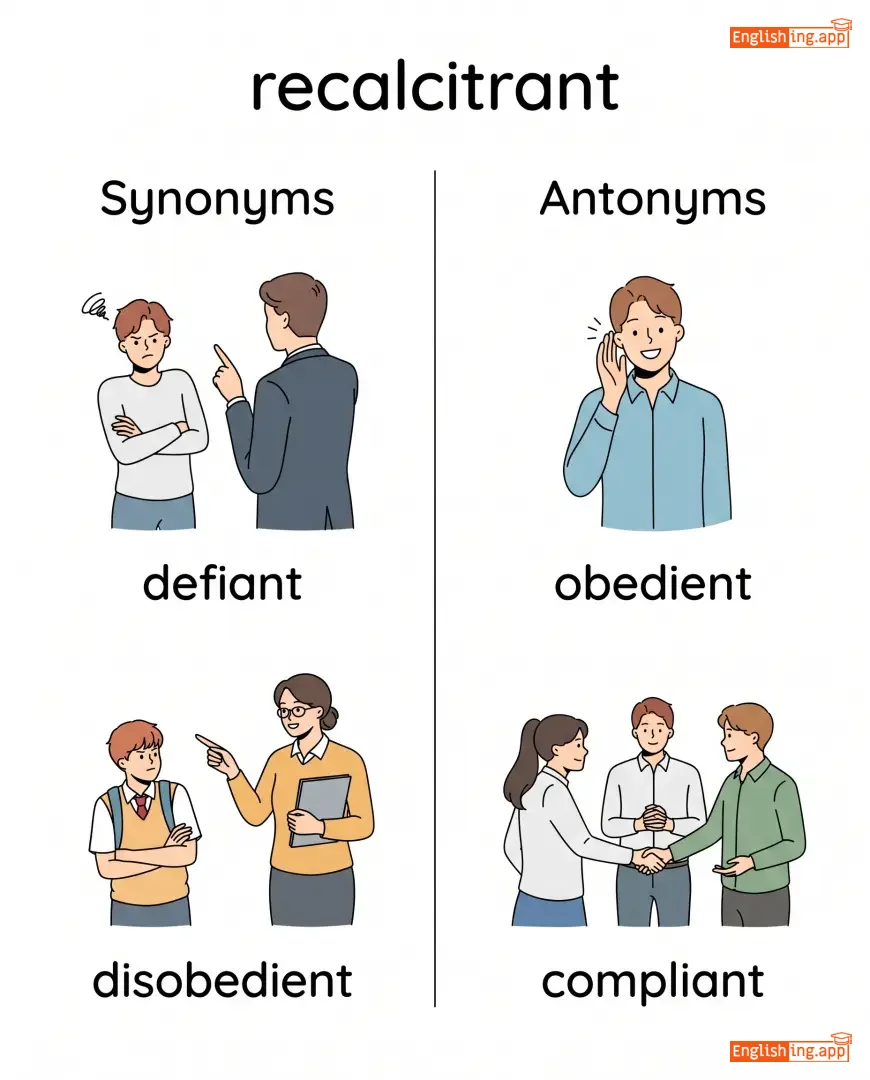
defiant, disobedient, rebellious, obstinate, uncooperative
••••••
|
obedient, compliant, cooperative
••••••
|
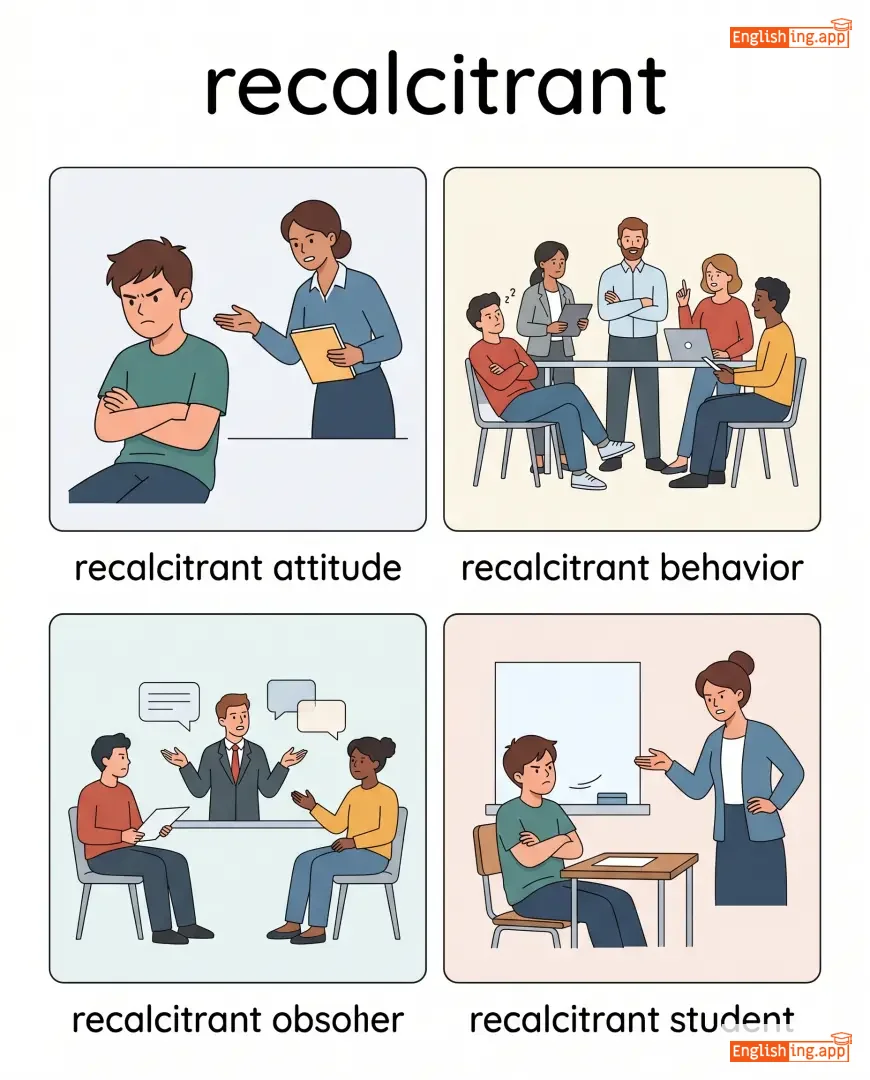
recalcitrant attitude, recalcitrant behavior, recalcitrant student
••••••
|
No •••••• |
|
#7334
📝
|
/rɪˈbʌtəl/
noun
(rɪˈbʌtəl)
••••••
|
- •••••• |
反驳
fǎnbó
••••••
|
- •••••• | - •••••• | - •••••• | - •••••• |
a statement or argument made to oppose or disprove another
••••••
|
Her rebuttal was clear and convincing. |
她的反驳清晰而有说服力。
Tā de fǎnbó qīngxī ér yǒu shuōfúlì.
••••••
|
final rebuttal |
the last chance to respond to an argument or accusation
••••••
|
最后的反驳
zuìhòu de fǎnbó
••••••
|
refutation, denial, counterargument, contradiction
••••••
|
acceptance, confirmation, concession
••••••
|
strong rebuttal, written rebuttal, legal rebuttal, rebuttal statement
••••••
|
Re BUT 对应反驳 (fǎnbó),用BUT反驳。
••••••
|
|
#7335
🔄
|
/ˌriː.əˈdʒʌst.mənt/
noun
••••••
|
- •••••• | - •••••• | - •••••• | - •••••• | - •••••• | - •••••• |
The act of changing or correcting something again to make it suitable or balanced.
••••••
|
After moving to a new city, he went through a period of readjustment. |
- •••••• | - •••••• | - •••••• | - •••••• |
adaptation, adjustment, modification, alteration, correction
••••••
|
stability, constancy
••••••
|
social readjustment, economic readjustment, readjustment period, policy readjustment
••••••
|
No •••••• |
|
#7336
🧩
|
/ˈriːbəs/
noun
(瑞布斯)
••••••
|
- •••••• |
谜语
miyu
••••••
|
- •••••• | - •••••• | - •••••• | - •••••• |
a puzzle in which words are represented by pictures, symbols, or letters
••••••
|
The children enjoyed solving the rebus puzzles in the magazine. |
孩子们喜欢解答杂志中的谜语。
Haizimen xihuan jieda zazhi zhong de miyu.
••••••
|
- •••••• | - •••••• | - •••••• |
puzzle, riddle, brainteaser, enigma
••••••
|
answer, solution
••••••
|
rebus puzzle, solve a rebus, rebus challenge, rebus game
••••••
|
ReBUS 可以理解为 '用图片解谜',就像谜语
••••••
|
|
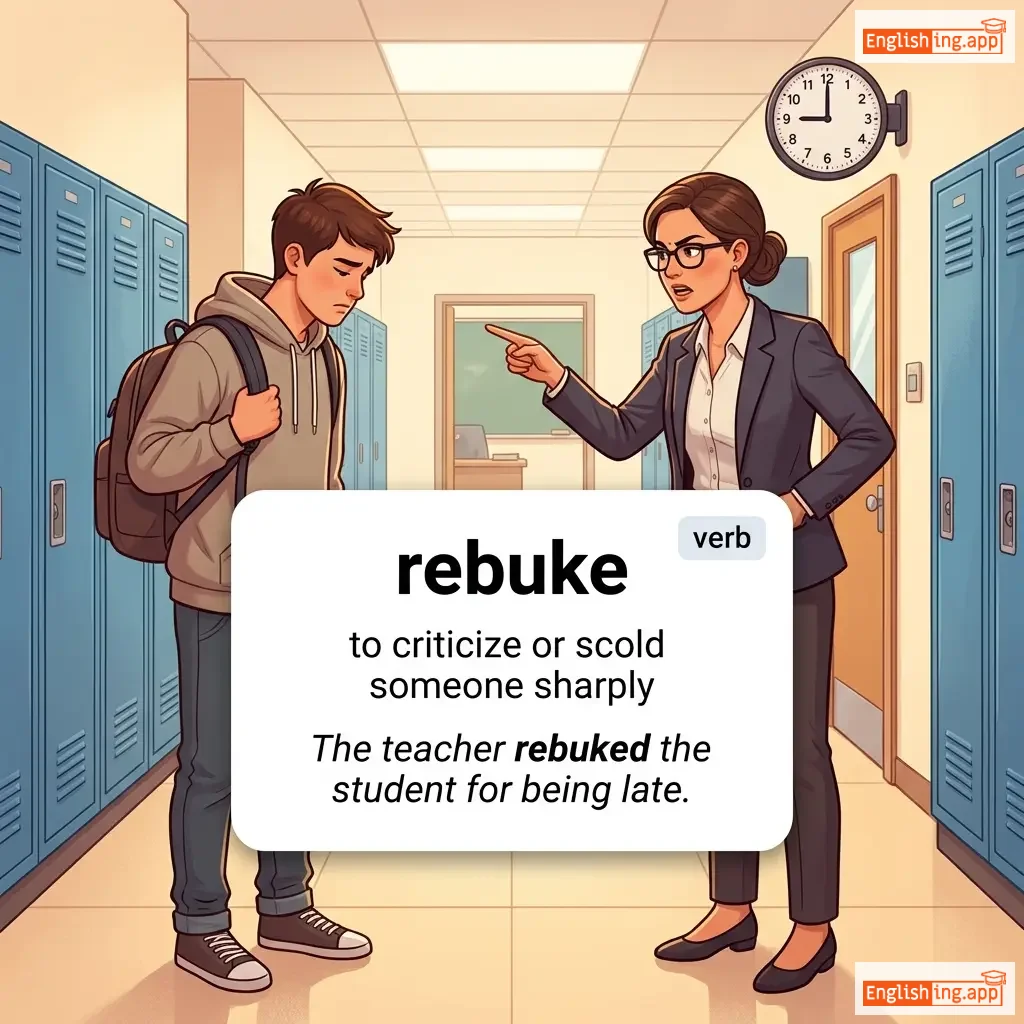
#7337
👎
|
/rɪˈbjuːk/
verb
••••••
|
|
- •••••• |
rebuked
••••••
|
rebuked
••••••
|
rebukes
••••••
|
rebuking
••••••
|
to criticize or scold someone sharply
••••••
|
The teacher rebuked the student for being late. |
- •••••• |
rebuke someone sharply |
to criticize strongly and directly
••••••
|
- •••••• |
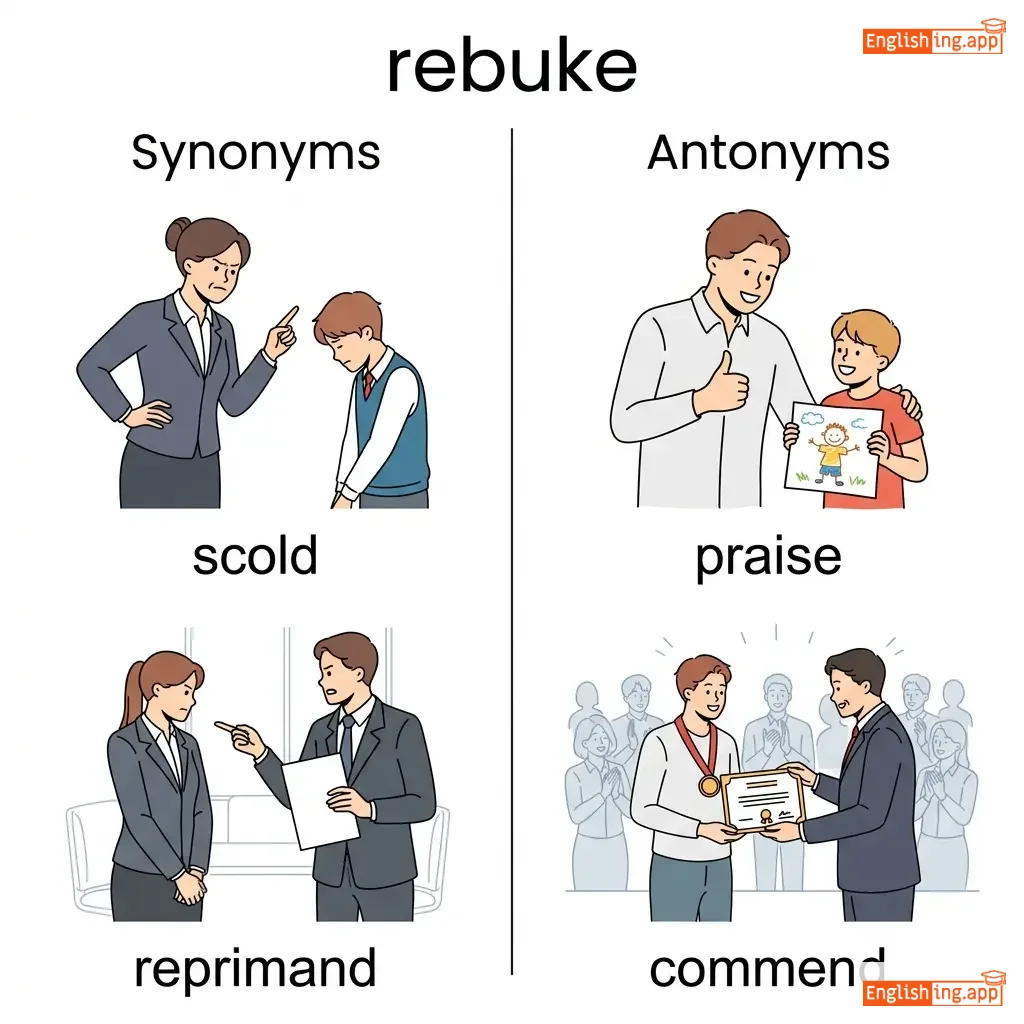
scold, reprimand, criticize, reproach, chastise
••••••
|
praise, commend
••••••
|
rebuke a child, rebuke strongly, rebuke publicly, rebuke for behavior
••••••
|
No •••••• |
|
#7338
🏗️
|
/ˌriːˈbɪld/
verb
(ribildu)
••••••
|
- •••••• |
重建
chongjian
••••••
|
rebuilt
ribilt
••••••
|
rebuilt
ribilt
••••••
|
rebuilds
ribilts
••••••
|
rebuilding
ribilding
••••••
|
to build something again after it has been damaged or destroyed
••••••
|
The villagers worked together to rebuild the bridge after the flood.
村民们一起努力,在洪水后重建了桥梁。
••••••
|
村民们一起努力,在洪水后重建了桥梁。
Cunminmen yiqi nuli, zai hongshui hou chongjianle qiaoliang.
••••••
|
- •••••• | - •••••• | - •••••• |
restore, reconstruct, renovate, repair, remake
••••••
|
destroy, demolish
••••••
|
rebuild the bridge, rebuild confidence, rebuild home, rebuild life
••••••
|
ReBUILD 就是重新建造 — 就像把被摧毁的东西重建起来
••••••
|
|
#7339
🙅
|
/rɪˈbʌf/
verb
(ríbāf)
••••••
|
- •••••• |
拒绝
jùjué
••••••
|
rebuffed
ríbàft
••••••
|
rebuffed
ríbàft
••••••
|
rebuffs
ríbàfs
••••••
|
rebuffing
ríbàfīng
••••••
|
to reject or refuse in a sharp or abrupt way
••••••
|
She rebuffed his invitation to dinner.
她拒绝了他的晚餐邀请。
••••••
|
她拒绝了他的晚餐邀请。
Tā jùjuéle tā de wǎncān yāoqǐng.
••••••
|
- •••••• | - •••••• | - •••••• |
reject, refuse, decline, snub, dismiss
••••••
|
accept, approve, welcome
••••••
|
rebuff an offer, rebuff advances, rebuff suggestion, rebuff request
••••••
|
ReBUFF 意味着拒绝 — 用坚定的态度拒绝
••••••
|
|
#7340
✊
|
/rɪˈbɛljəs/
adjective
(rèbìliúsī)
••••••
|
- •••••• |
叛逆
pànnì
••••••
|
- •••••• | - •••••• | - •••••• | - •••••• |
resisting authority or control; showing a desire to rebel
••••••
|
The rebellious teenager refused to follow the school rules.
那个叛逆的青少年拒绝遵守学校规则。
••••••
|
那个叛逆的青少年拒绝遵守学校规则。
Nàgè pànnì de qīngshàonián jùjué zūnshǒu xuéxiào guīzé.
••••••
|
rebellious spirit
叛逆精神
••••••
|
a strong tendency to resist authority or tradition
••••••
|
叛逆精神
pànnì jīngshén
••••••
|
defiant, disobedient, unruly, resistant, nonconformist
••••••
|
obedient, compliant, submissive
••••••
|
rebellious teenager, rebellious spirit, rebellious attitude, rebellious nature
••••••
|
ReBELlious — 反叛规则,像个叛逆者!
••••••
|
|
#7341
💵
|
/ˈriːbeɪt/
noun
(rɪˈbeɪt)
••••••
|
- •••••• |
折扣/退款
zhékòu/tuìkuǎn
••••••
|
- •••••• | - •••••• | - •••••• | - •••••• |
a partial refund given to someone who has paid too much money for something
••••••
|
The store offered a rebate on bulk purchases.
ðə stɔːr ˈɒfəd ə rɪˈbeɪt ɒn bʌlk ˈpɜːʧəsɪz
••••••
|
商店对大宗购买提供了折扣。
Shāngdiàn duì dàzōng gòumǎi tígōngle zhékòu.
••••••
|
- •••••• | - •••••• | - •••••• |
refund, discount, reimbursement, deduction
••••••
|
surcharge, addition
••••••
|
rebate offer, tax rebate, rebate program, rebate check
••••••
|
Rebate意味着退款—支付过多的钱,得到部分退款。
••••••
|
|
#7342
🤗
|
/ˌriːəˈʃʊr/
verb
(rì'āxǔ'ěr)
••••••
|
- •••••• |
安慰
ānwèi
••••••
|
reassured
rì'āxǔ'ěr de
••••••
|
reassured
rì'āxǔ'ěr de
••••••
|
reassures
rì'āxǔ'ěr
••••••
|
reassuring
rì'āxǔ'ěr zhèngzài
••••••
|
to say or do something to remove someone's doubts or fears
••••••
|
The teacher reassured the students before the exam.
老师在考试前安慰了学生。
••••••
|
老师在考试前安慰了学生。
Lǎoshī zài kǎoshì qián ānwèi le xuéshēng.
••••••
|
- •••••• | - •••••• | - •••••• |
comfort, encourage, console, support, calm
••••••
|
alarm, worry, upset
••••••
|
reassure someone, reassured by, reassured that
••••••
|
Reassure 意味着安慰—老师安慰学生以减少考试前的紧张。
••••••
|
|
#7343
🔄
|
/ˌriːəˈreɪndʒ/
verb
(rɪəˈrɛndʒ)
••••••
|
- •••••• |
重新安排
chóngxīn ānpái
••••••
|
rearranged
rɪəˈrɛndʒd
••••••
|
rearranged
rɪəˈrɛndʒd
••••••
|
rearranges
rɪəˈrɛndʒəz
••••••
|
rearranging
rɪəˈrɛndʒɪŋ
••••••
|
to change the order or position of something
••••••
|
She decided to rearrange the furniture in her living room.
她决定重新安排客厅里的家具。
••••••
|
她决定重新安排客厅里的家具。
Tā juédìng chóngxīn ānpái kètīng lǐ de jiājù.
••••••
|
- •••••• | - •••••• | - •••••• |
reorder, reorganize, shuffle, restructure, adjust
••••••
|
maintain, keep, preserve
••••••
|
rearrange schedule, rearrange furniture, rearrange plans
••••••
|
Rearrange 就是重新安排,把家具重新安排让房间焕然一新。
••••••
|
|
#7344
👤🌾
|
/ˈriːpər/
noun
(瑞珀)
••••••
|
- •••••• |
割草和收获作物的人或机器
gecao he shouhuo zuowu de ren huo jiqi
••••••
|
- •••••• | - •••••• | - •••••• | - •••••• |
a person or machine that cuts and gathers crops
••••••
|
The reaper moved slowly through the golden fields.
瑞珀缓缓地穿过金色的田野。
••••••
|
瑞珀缓缓地穿过金色的田野。
Ruìpò huǎnhuǎn de chuānguò jīnsè de tiányě.
••••••
|
grim reaper
死神
••••••
|
a personification of death
••••••
|
死亡的具象化
sǐwáng de jùxiàng huà
••••••
|
harvester, cutter, farmer, mower
••••••
|
sower, planter
••••••
|
mechanical reaper, grim reaper, reaper machine
••••••
|
Reaper割草,死神来收割生命。
••••••
|
|
#7345
🌾
|
/riːp/
verb
(rīp)
••••••
|
- •••••• |
收获
shou huo
••••••
|
reaped
rīpt
••••••
|
reaped
rīpt
••••••
|
reaps
rīps
••••••
|
reaping
rīping
••••••
|
to cut or gather a crop; to receive as a consequence of actions
••••••
|
Farmers reap wheat in the late summer.
农民在夏末收割小麦。
••••••
|
农民在夏末收割小麦。
Nongmin zai xia mo shouge xiaomai.
••••••
|
reap what you sow
种瓜得瓜
••••••
|
you eventually face the consequences of your actions
••••••
|
种瓜得瓜
zhong gua de gua
••••••
|
harvest, gather, collect, acquire, obtain
••••••
|
sow, plant, lose
••••••
|
reap benefits, reap rewards, reap success, reap profits
••••••
|
Reap意味着收获—收获成果(奖赏)。
••••••
|
|
#7346
📄
|
/riːm/
noun
(riːm)
••••••
|
- •••••• |
令纸
ling zhi
••••••
|
- •••••• | - •••••• | - •••••• | - •••••• |
A large quantity of paper (typically 500 sheets); informally, a large amount of something.
••••••
|
The office ordered ten reams of paper. |
办公室订购了十令纸。
Bàngōngshì dìnggòu le shí lìng zhǐ.
••••••
|
reams of |
a large amount of something
••••••
|
大量的
dàliàng de
••••••
|
bundle, stack, pile, mass
••••••
|
scarcity, shortage
••••••
|
ream of paper, reams of information, reams of data, reams of documents
••••••
|
Ream = 大量的纸
••••••
|
|
#7347
👑
|
/rɛlm/
noun
••••••
|
- •••••• | - •••••• | - •••••• | - •••••• | - •••••• | - •••••• |
A kingdom or domain; a field or area of activity or interest.
••••••
|
He is well known in the realm of science. |
- •••••• |
beyond the realm of possibility |
impossible
••••••
|
- •••••• |
kingdom, domain, territory, sphere
••••••
|
outside, void
••••••
|
realm of science, realm of fantasy, political realm, within the realm
••••••
|
No •••••• |
|
#7348
🎨
|
/ˈrɪə.lɪ.zəm/
noun
(现实主义)
••••••
|
- •••••• |
现实主义
xianshizhuyi
••••••
|
- •••••• | - •••••• | - •••••• | - •••••• |
The quality of representing things as they are; a practical or factual view.
••••••
|
Her paintings are admired for their realism. |
她的画作因其现实主义而受到赞赏。
Tā de huàzuò yīn qí xiànshí zhǔyì ér shòudào zànshǎng.
••••••
|
face reality |
to accept things as they really are
••••••
|
面对现实
miànduì xiànshí
••••••
|
practicality, authenticity, truth, naturalism
••••••
|
idealism, fantasy, illusion
••••••
|
artistic realism, realism in literature, stark realism, political realism
••••••
|
Real + ism = 现实的观点 = 现实主义
••••••
|
|
#7349
✅
|
/ˈrɛd.i/
adjective
(rɛdi)
••••••
|
- •••••• |
准备
zhǔnbèi
••••••
|
- •••••• | - •••••• | - •••••• | - •••••• |
Prepared or available for use or action.
••••••
|
She was ready to leave for the airport. |
她准备好去机场了。
Tā zhǔnbèi hǎo qù jīchǎng le.
••••••
|
get ready |
to prepare oneself
••••••
|
准备好
zhǔnbèi hǎo
••••••
|
prepared, set, equipped, arranged
••••••
|
unprepared, unready
••••••
|
ready to go, get ready, ready for use, ready access
••••••
|
准备意味着你已准备好,如同你为某个任务做好准备。
••••••
|
Vocabulary Quiz
Test your vocabulary by matching words with their translations or meanings.
Login to take the quiz
Comments (0)
Share your thoughts and join the discussion.
Join the discussion by logging in
Login to CommentNo comments yet
Be the first to share your thoughts!