



Swipe left or right, or use the buttons. Tap image to zoom.
例句翻译
单词
Lesson 331Lesson 331 - 遮罩切换
|
表情符号
|
单词 | Images | 翻译 | 过去时 | 过去分词 | 第三人称单数 | 动名词 | 含义 | 例句 | 例句翻译 | 示例表达 | 示例表达含义 | 示例表达翻译 | 同义词 | 反义词 | 搭配词 | 助记符 |
|---|---|---|---|---|---|---|---|---|---|---|---|---|---|---|---|---|---|
|
#9895
📢
|
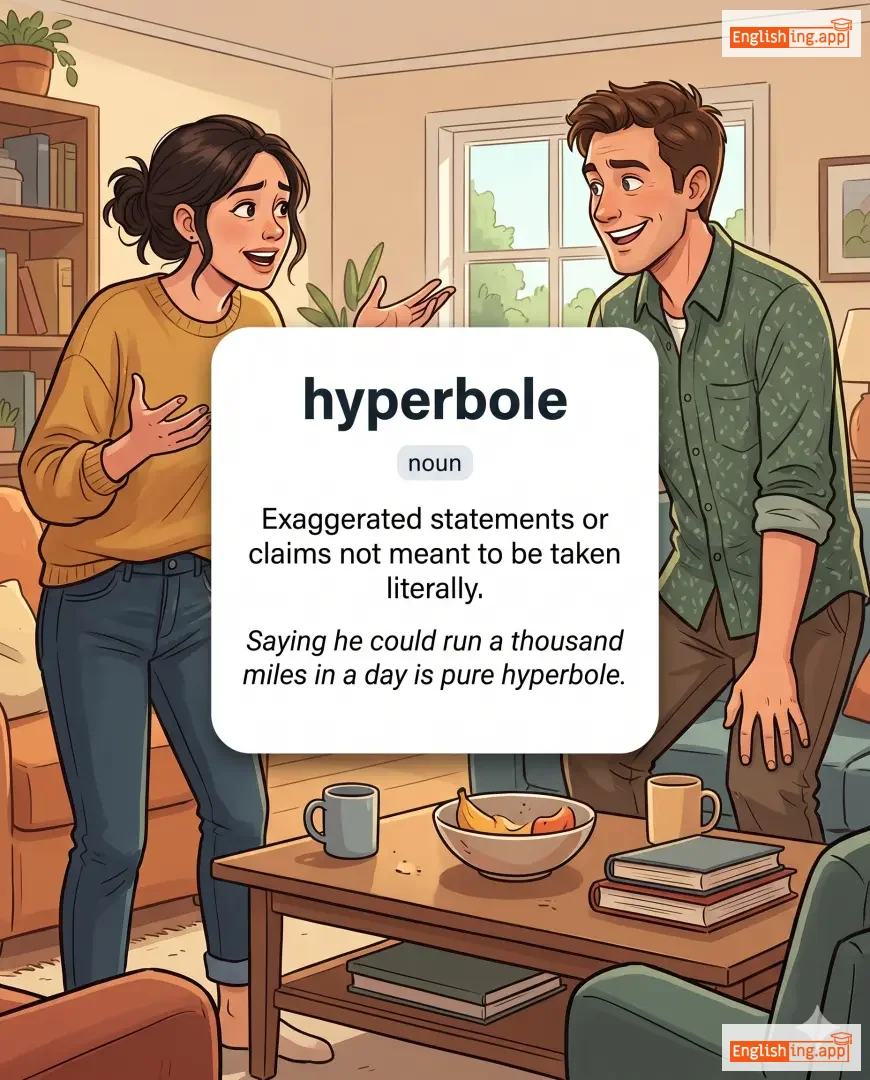
/haɪˈpɜːrbəli/
noun
(海皮尔博利)
••••••
|
|
夸张法
kuazhangfa
••••••
|
- •••••• | - •••••• | - •••••• | - •••••• |
Exaggerated statements or claims not meant to be taken literally.
••••••
|
Saying 'I’m so hungry I could eat a horse' is a classic example of hyperbole. |
'我饿得可以吃下一匹马' 是夸张法的经典例子。
'Wo e de keyi chi xia yi pi ma' shi kuazhangfa de jingdian lizi.
••••••
|
- •••••• | - •••••• | - •••••• |
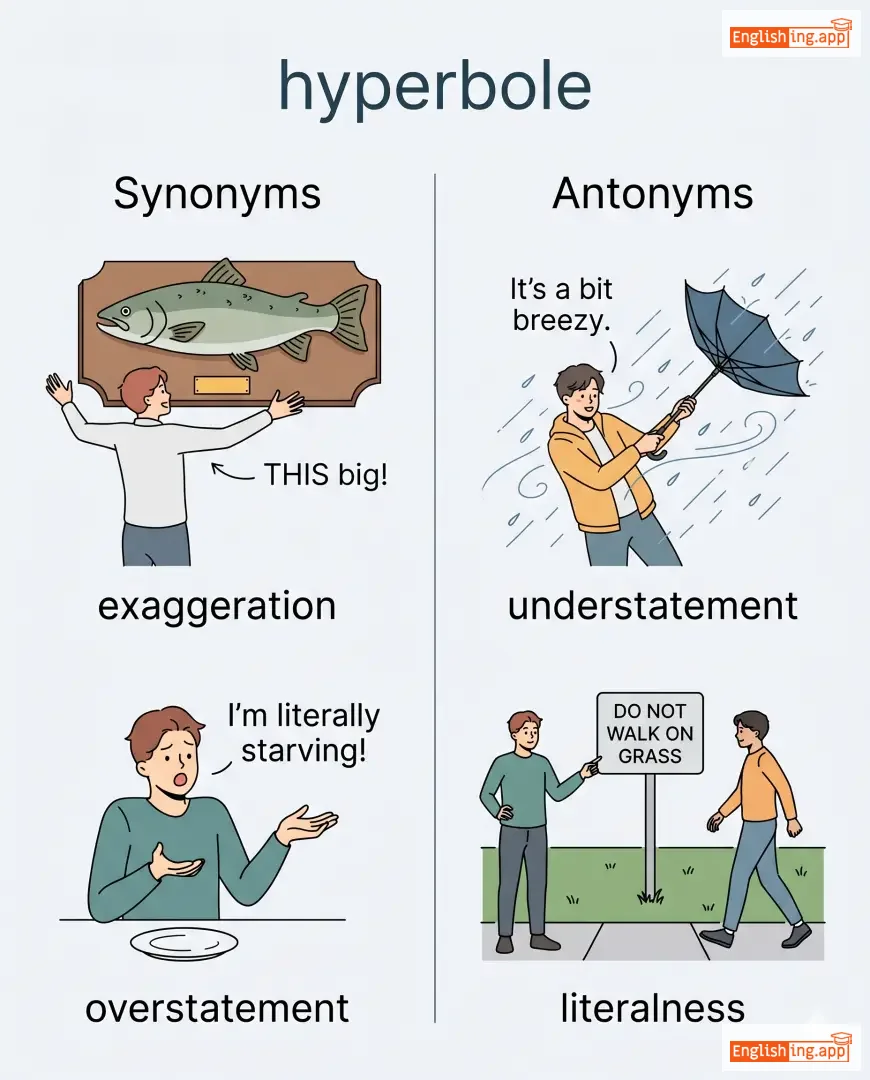
exaggeration, overstatement, embellishment, amplification
••••••
|
understatement, literalness
••••••
|
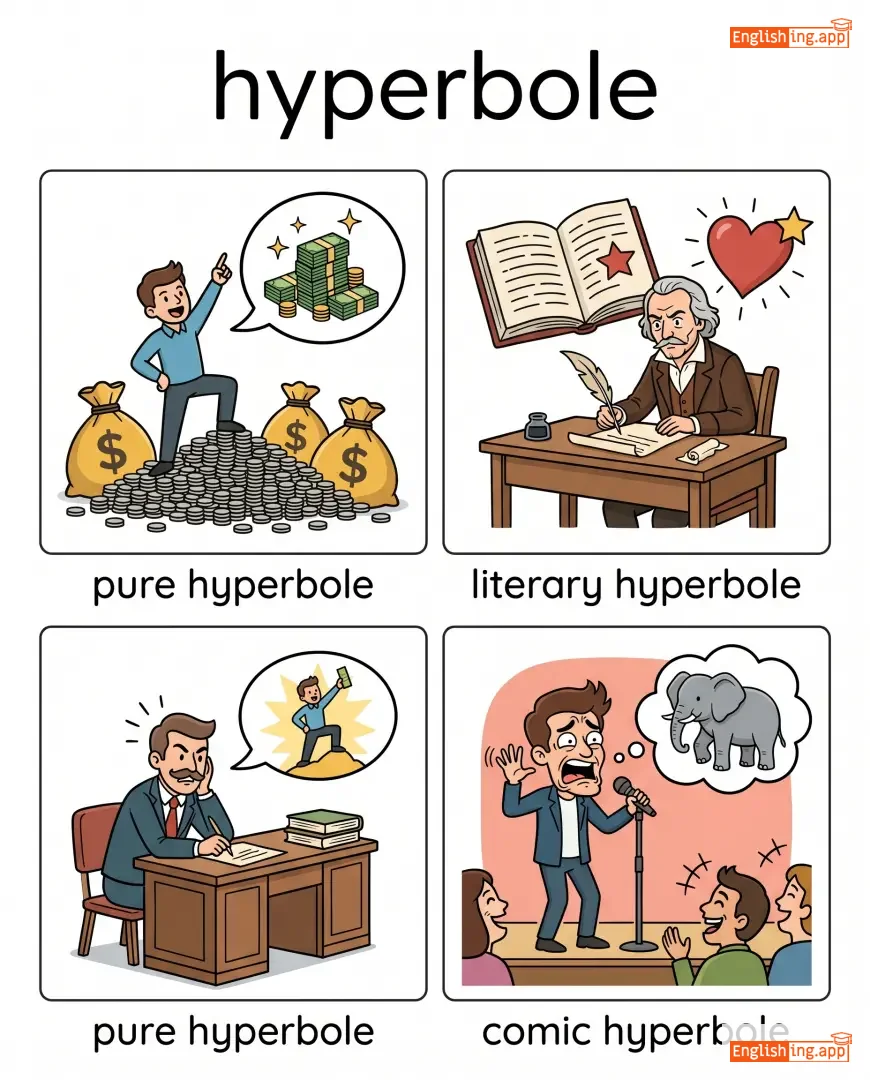
use hyperbole, classic hyperbole, rhetorical hyperbole, hyperbole in speech
••••••
|
Hyperbole = 夸张法
••••••
|
|
#9896
😏
|
/ɪˈmɒdɪst/
adjective
(不谦虚)
••••••
|
- •••••• |
傲慢 / 不得体
aoman / bude ti
••••••
|
- •••••• | - •••••• | - •••••• | - •••••• |
lacking humility or decency; excessively proud or improper
••••••
|
His immodest remarks offended the audience. |
他的傲慢言辞冒犯了观众。
Tā de àomàn yáncí màofànle guānzhòng.
••••••
|
- •••••• | - •••••• | - •••••• |
arrogant, boastful, indecent, shameless
••••••
|
modest, humble, decent
••••••
|
immodest behavior, immodest dress, immodest remarks, immodest attitude
••••••
|
Immodest = 不谦虚 = 骄傲
••••••
|
|
#9897
🍩
|
/ɪˈmɒdərət/
adjective
(imodaret)
••••••
|
- •••••• |
过度的
guòdù de
••••••
|
- •••••• | - •••••• | - •••••• | - •••••• |
excessive; beyond reasonable limits
••••••
|
He has an immoderate love for sweets.
他对糖果有过度的喜爱。
••••••
|
他对糖果有过度的喜爱。
Tā duì tángguǒ yǒu guòdù de xǐ'ài.
••••••
|
- •••••• | - •••••• | - •••••• |
excessive, extreme, extravagant, undue
••••••
|
moderate, balanced, restrained
••••••
|
immoderate desire, immoderate love, immoderate spending, immoderate behavior
••••••
|
Moderate意味着有限,Immoderate意味着无限 🍩
••••••
|
|
#9898
🪑
|
/ɪˈmoʊbəl/
adjective
(伊莫拜尔)
••••••
|
- •••••• |
无法移动
wufadian dong
••••••
|
- •••••• | - •••••• | - •••••• | - •••••• |
unable to move or be moved
••••••
|
After the accident, he was immobile for weeks. |
事故发生后,他几周都无法移动。
Shigu fasheng hou, ta ji zhou dou wufa yidong.
••••••
|
- •••••• | - •••••• | - •••••• |
motionless, still, stationary, inactive
••••••
|
mobile, moving, active
••••••
|
remain immobile, immobile state, completely immobile, become immobile
••••••
|
Mobile意味着可以移动,imobile意味着不能移动。 🪑
••••••
|
|
#9899
⚡
|
/ɪˈmiːdiət/
adjective
(即时)
••••••
|
- •••••• |
即时
jíshí
••••••
|
- •••••• | - •••••• | - •••••• | - •••••• |
happening or done without delay
••••••
|
The doctor gave her immediate attention.
医生给了她即时的关注。
••••••
|
医生给了她即时的关注。
Yīshēng gěile tā jíshí de guānzhù.
••••••
|
in the immediate future
在近期未来
••••••
|
very soon, without delay
••••••
|
在近期未来
zài jìnqī wèilái
••••••
|
instant, prompt, direct, urgent, swift
••••••
|
delayed, gradual, postponed
••••••
|
immediate action, immediate effect, immediate response, immediate family
••••••
|
即时意味着立刻 ⚡ 就像 '立刻现在!'
••••••
|
|
#9900
🦜
|
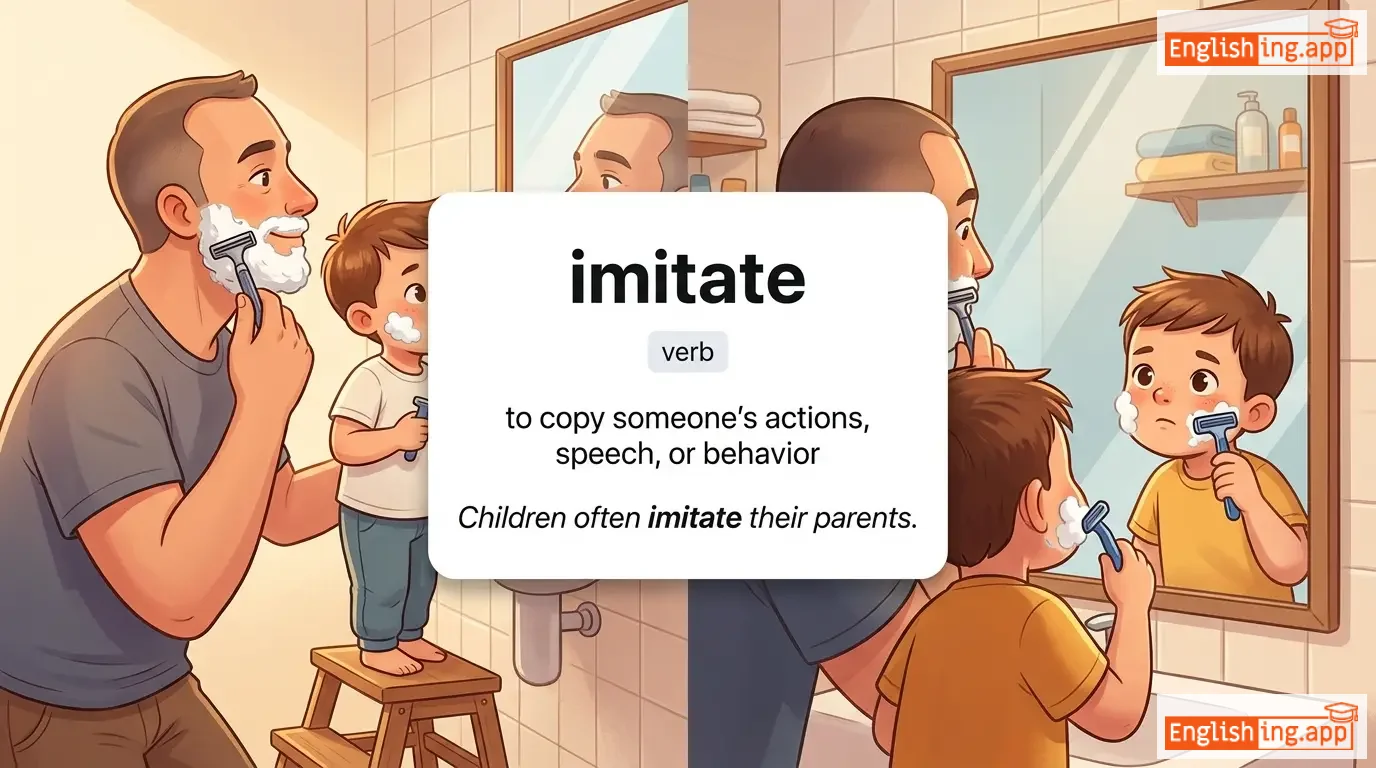
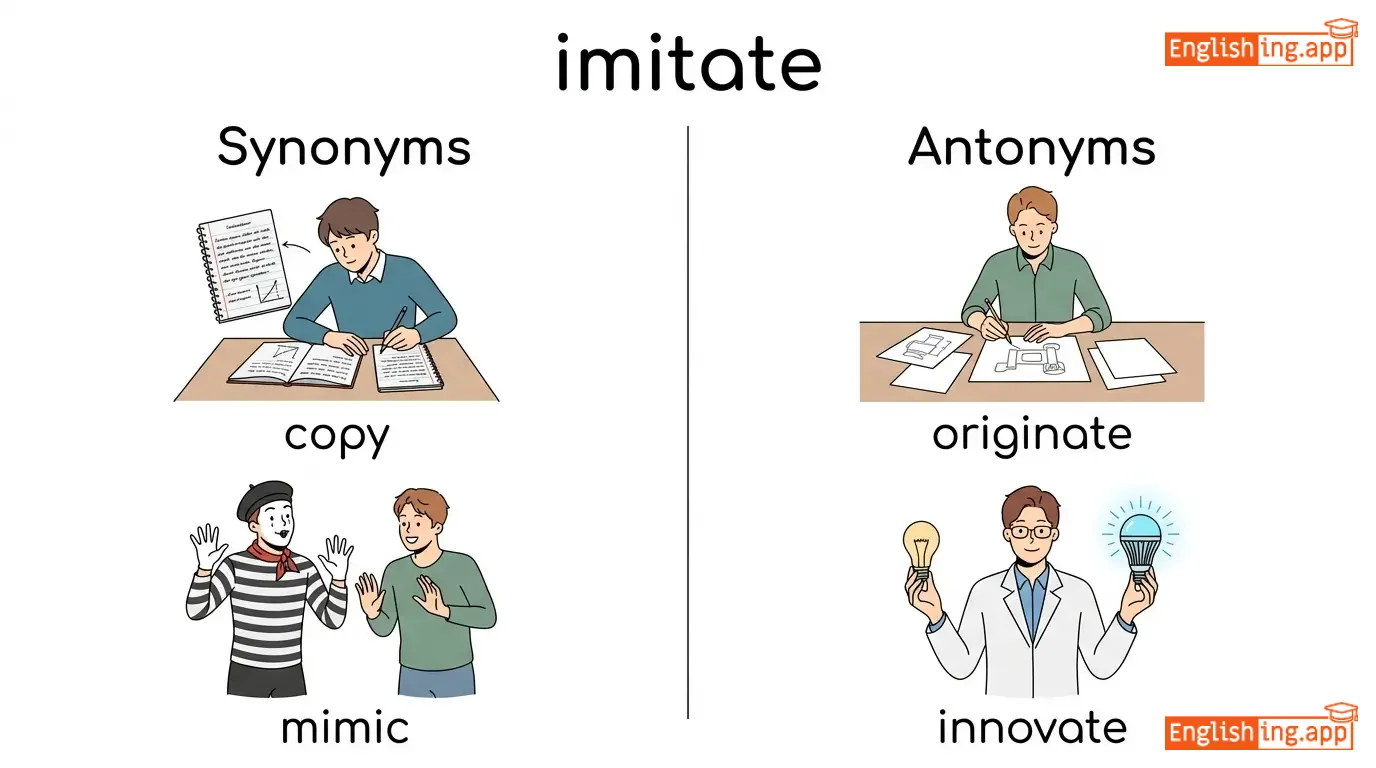
/ˈɪmɪteɪt/
verb
(模仿)
••••••
|
|
模仿
mófǎng
••••••
|
imitated
模仿了
••••••
|
imitated
模仿过
••••••
|
imitates
模仿
••••••
|
imitating
模仿中
••••••
|
to copy someone's actions, speech, or behavior
••••••
|
Children often imitate their parents.
孩子们经常模仿他们的父母。
••••••
|
孩子们经常模仿他们的父母。
Háizimen jīngcháng mófǎng tāmen de fùmǔ.
••••••
|
imitation is the sincerest form of flattery
模仿是最真诚的恭维
••••••
|
Copying someone shows admiration for them
••••••
|
模仿是最真诚的恭维
Mófǎng shì zuì zhēnchéng de gōngwéi
••••••
|
copy, mimic, emulate, replicate, reproduce
••••••
|
originate, innovate, create
••••••
|
imitate style, imitate behavior, imitate accent, imitate movements
••••••
|
模仿像鸟儿学飞一样。
••••••
|
|
#9901
🤔
|
/ɪˈmædʒ.ɪn/
verb
••••••
|
|
- •••••• |
imagined
••••••
|
imagined
••••••
|
imagines
••••••
|
imagining
••••••
|
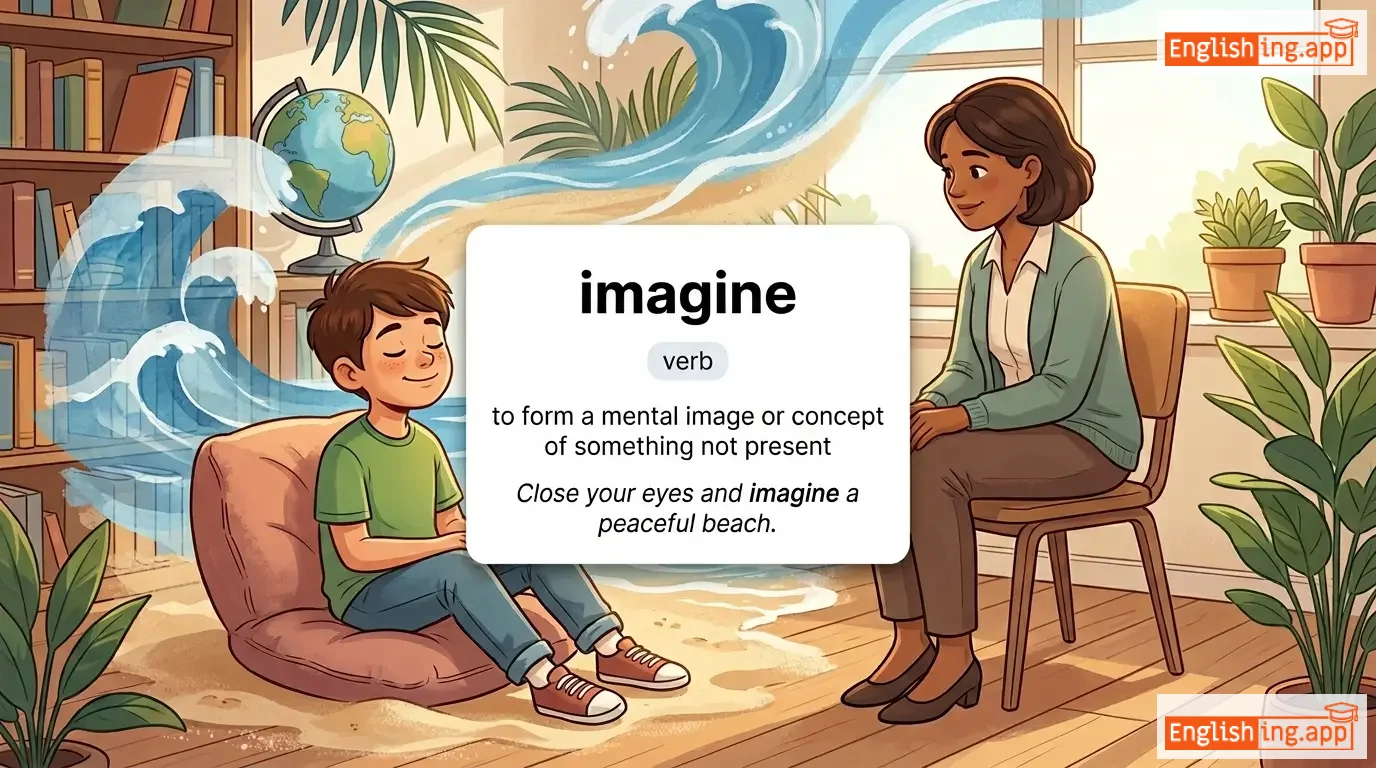
to form a mental image or concept of something not present
••••••
|
Close your eyes and imagine a peaceful beach. |
- •••••• |
imagine that |
used to express surprise or disbelief
••••••
|
- •••••• |
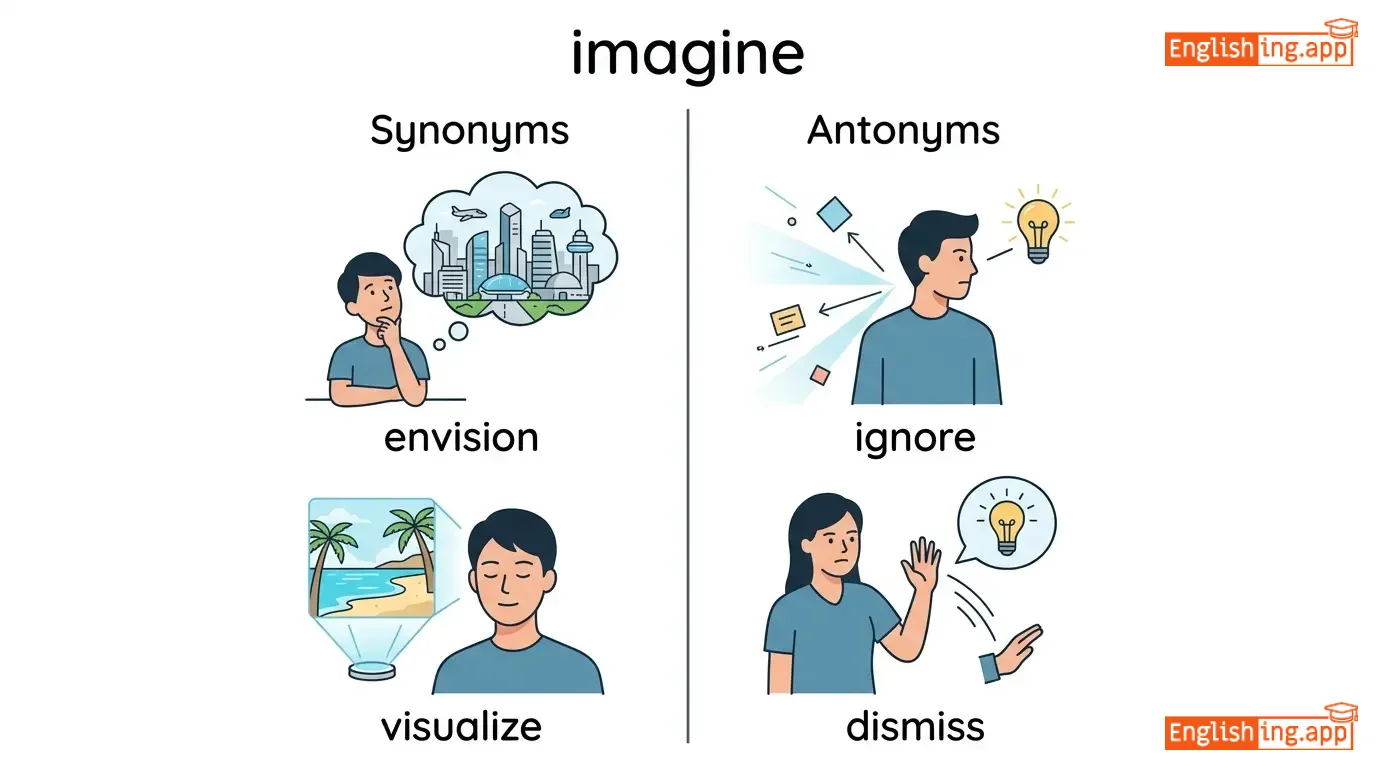
envision, visualize, picture, dream, conceive
••••••
|
ignore, dismiss
••••••
|
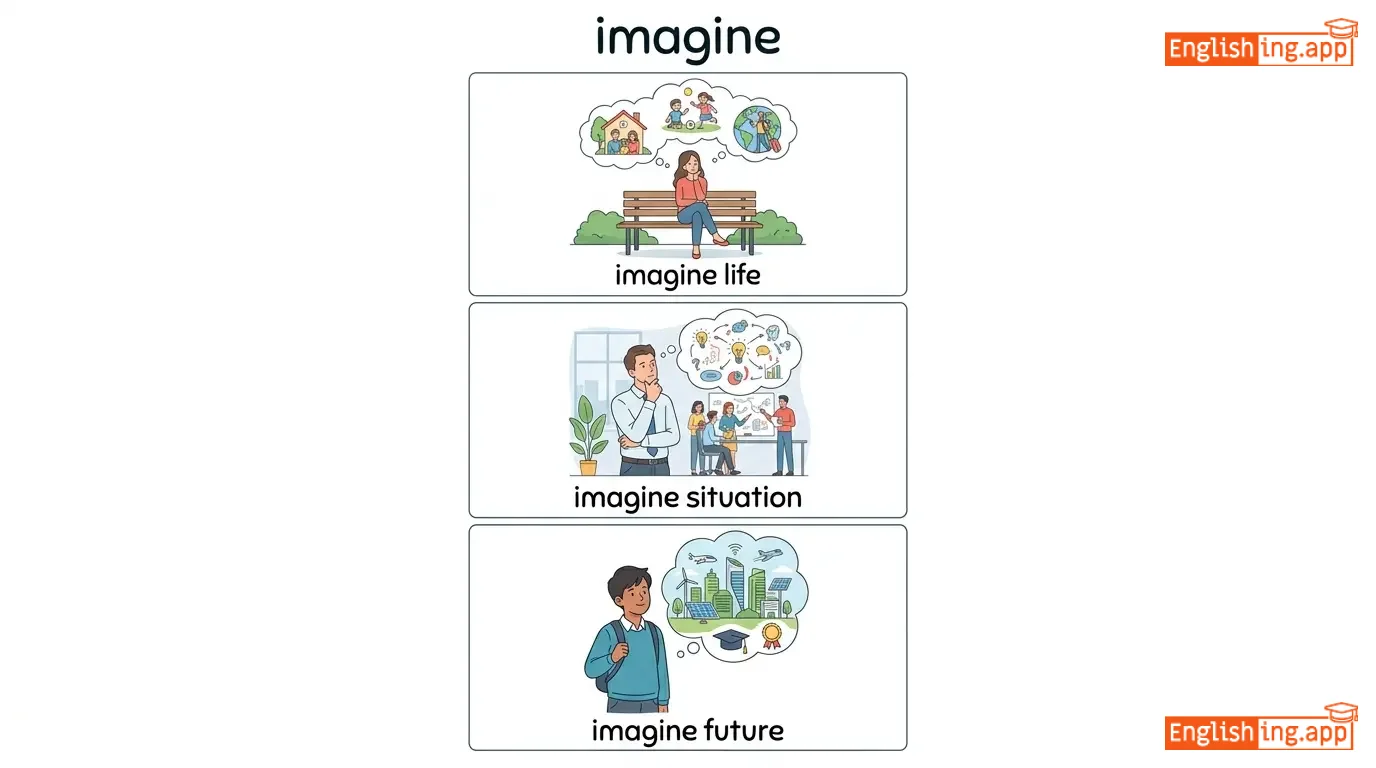
imagine life, imagine situation, imagine future
••••••
|
No •••••• |
|
#9902
🖼️
|
/ˈɪl.ə.streɪt/
verb
(伊卢斯特雷特)
••••••
|
- •••••• |
插图
chātú
••••••
|
illustrated
已插图
••••••
|
illustrated
已插图
••••••
|
illustrates
插图
••••••
|
illustrating
插图
••••••
|
to explain or make something clear by using examples, pictures, or comparisons
••••••
|
The teacher used diagrams to illustrate the concept.
老师用图表来说明这个概念。
••••••
|
老师用图表来说明这个概念。
Lǎoshī yòng túbiǎo lái shuōmíng zhège gàiniàn.
••••••
|
to illustrate the point
说明这一点
••••••
|
to make an idea clearer with an example
••••••
|
说明这一点
shuōmíng zhè yī diǎn
••••••
|
explain, demonstrate, clarify, depict, exemplify
••••••
|
confuse, obscure
••••••
|
illustrate clearly, illustrate example, illustrate concept
••••••
|
插图表示通过图画解释—'插图 = 用图片解释'
••••••
|
|
#9903
🙉
|
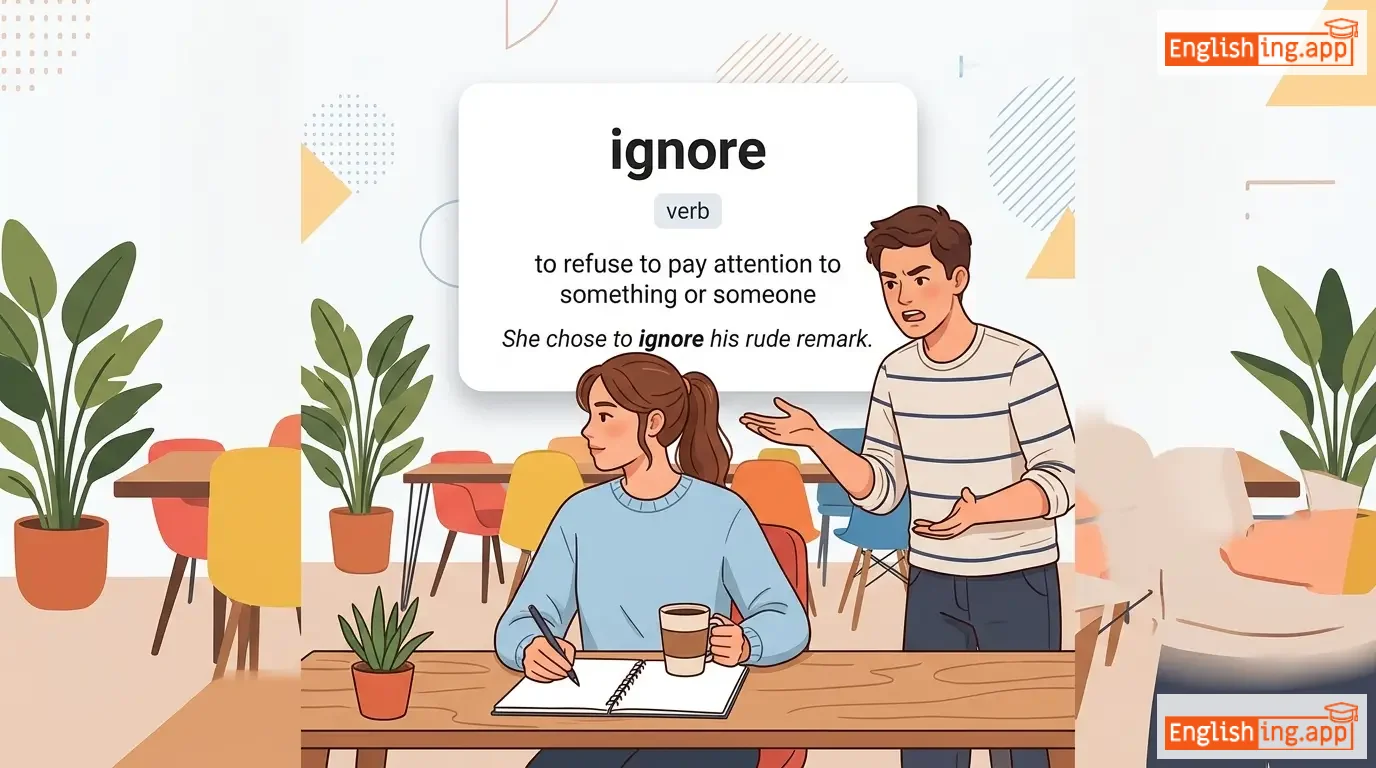
/ɪɡˈnɔːr/
verb
(忽略)
••••••
|
|
忽略
hūlüè
••••••
|
ignored
忽略了
••••••
|
ignored
忽略了
••••••
|
ignores
忽略
••••••
|
ignoring
忽略ing
••••••
|
to refuse to pay attention to something or someone
••••••
|
She chose to ignore his rude remark.
她选择忽略他粗鲁的评论。
••••••
|
她选择忽略他粗鲁的评论。
Tā xuǎnzé hūlüè tā cūlǔ de pínglùn.
••••••
|
ignore the elephant in the room
忽略房间里的大象
••••••
|
to deliberately avoid talking about a major issue
••••••
|
忽略房间里的大象
Hūlüè fángjiān lǐ de dà xiàng
••••••
|
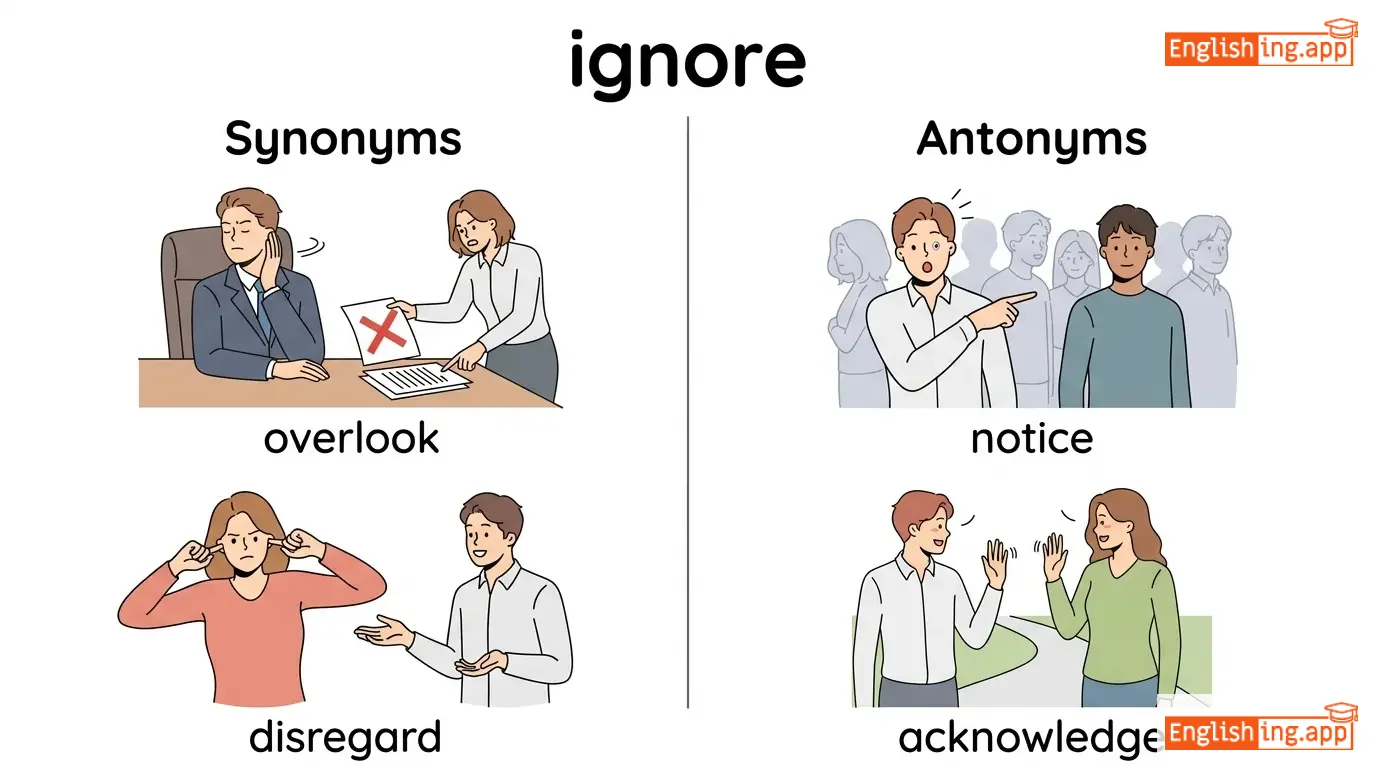
overlook, disregard, neglect, avoid, dismiss
••••••
|
notice, acknowledge, recognize
••••••
|
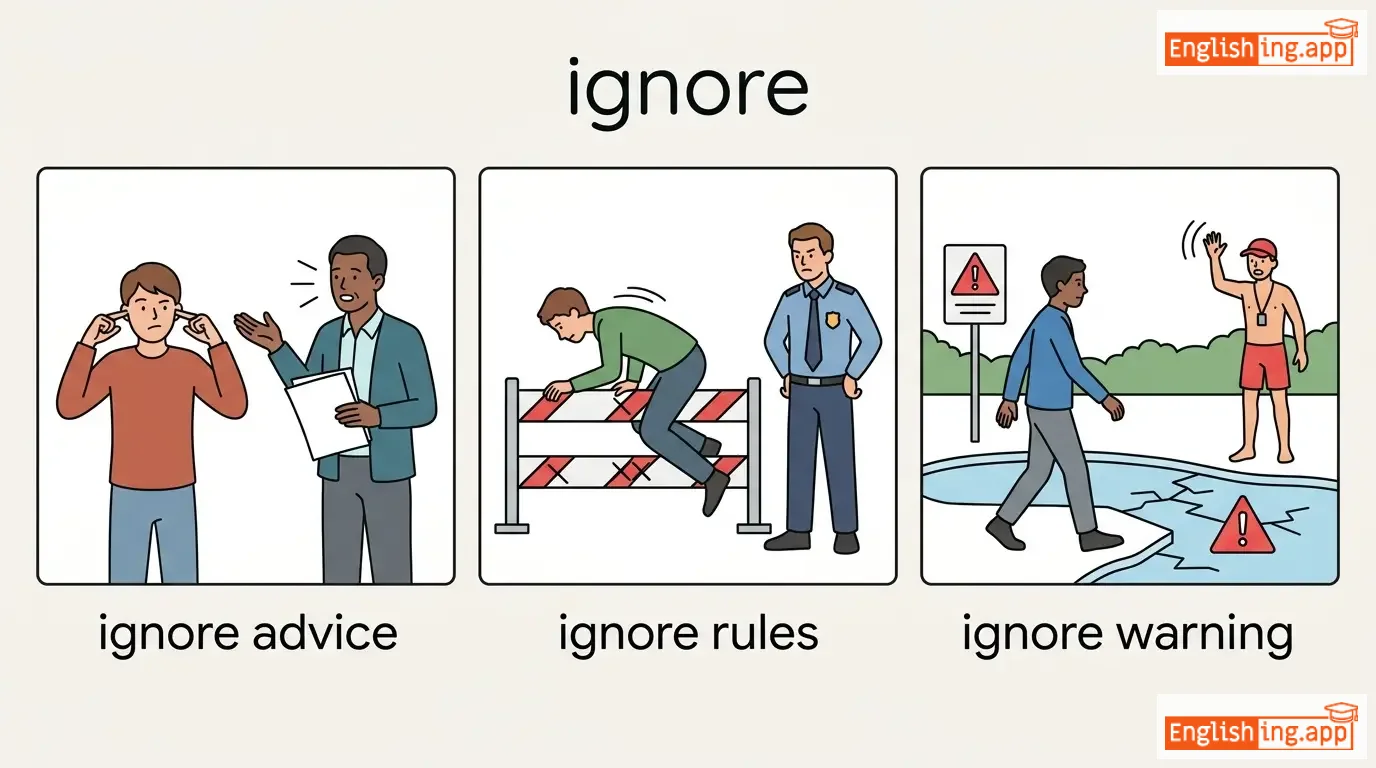
ignore advice, ignore rules, ignore warning
••••••
|
忽略就像是说 '忽略它!' 当你不想听的时候
••••••
|
|
#9904
🙈
|
/ˈɪɡ.nər.ənt/
adjective
(无知)
••••••
|
- •••••• |
无知
wuzhi
••••••
|
- •••••• | - •••••• | - •••••• | - •••••• |
lacking knowledge, awareness, or education
••••••
|
He made an ignorant comment about the culture. |
他对文化做出了无知的评论。
Ta dui wenhua zuo chu le wuzhi de pinglun.
••••••
|
ignorant bliss |
a state of happiness from not knowing something
••••••
|
无知的幸福
wuzhi de xingfu
••••••
|
uneducated, uninformed, unaware, oblivious, naive
••••••
|
knowledgeable, aware, educated
••••••
|
ignorant of, totally ignorant, seem ignorant
••••••
|
无知意味着不知道,知之者无幸福,不知者得幸福。
••••••
|
|
#9905
❓
|
/ɪf/
conjunction
(if)
••••••
|
- •••••• |
如果
ruguo
••••••
|
- •••••• | - •••••• | - •••••• | - •••••• |
used to introduce a condition or supposition
••••••
|
If it rains tomorrow, we will stay home. |
如果明天下雨,我们就待在家里。
Ruguo mingtian xiaoyu, women jiu dai zai jiali.
••••••
|
if only |
used to express a wish or regret
••••••
|
要是...就好了
yaoshi...jiu hao le
••••••
|
provided that, assuming, in case, supposing
••••••
|
certainly, definitely
••••••
|
if necessary, if possible, if only, if so
••••••
|
如果意味着如果—'If 下雨' 意味着 'Ruguo xiaoyu'
••••••
|
|
#9906
😴
|
/ˈaɪdlər/
noun
(艾德勒)
••••••
|
- •••••• |
懒汉
lǎn hàn
••••••
|
- •••••• | - •••••• | - •••••• | - •••••• |
A person who avoids work or spends time lazily.
••••••
|
He was known as an idler who wasted his days.
他被称为一个懒汉,浪费了他的日子。
••••••
|
他被称为一个懒汉,浪费了他的日子。
Tā bèi chēng wèi yīgè lǎn hàn, làngfèi le tā de rìzi.
••••••
|
- •••••• | - •••••• | - •••••• |
loafer, slacker, lazybones, shirker
••••••
|
worker, laborer, industrious person
••••••
|
lazy idler, useless idler, idle hands, good-for-nothing idler
••••••
|
Idler = 懒汉 = 总是懒得工作,浪费时间。
••••••
|
|
#9907
👯
|
/aɪˈdentɪkl/
adjective
(aɪˈdɛntɪkəl)
••••••
|
- •••••• |
相同的
xiāngtóng de
••••••
|
- •••••• | - •••••• | - •••••• | - •••••• |
Exactly the same in every detail.
••••••
|
The twins wore identical clothes. |
这对双胞胎穿着相同的衣服。
Zhè duì shuāngbāotāi chuānzhuó xiāngtóng de yīfu.
••••••
|
identical twin |
one of two twins who look exactly the same
••••••
|
相同的双胞胎
xiāngtóng de shuāngbāotāi
••••••
|
same, indistinguishable, equal, duplicate
••••••
|
different, distinct, varied
••••••
|
identical clothes, identical result, almost identical, virtually identical
••••••
|
Identical意味着'相同的',就像两个完全相同的双胞胎。
••••••
|
|
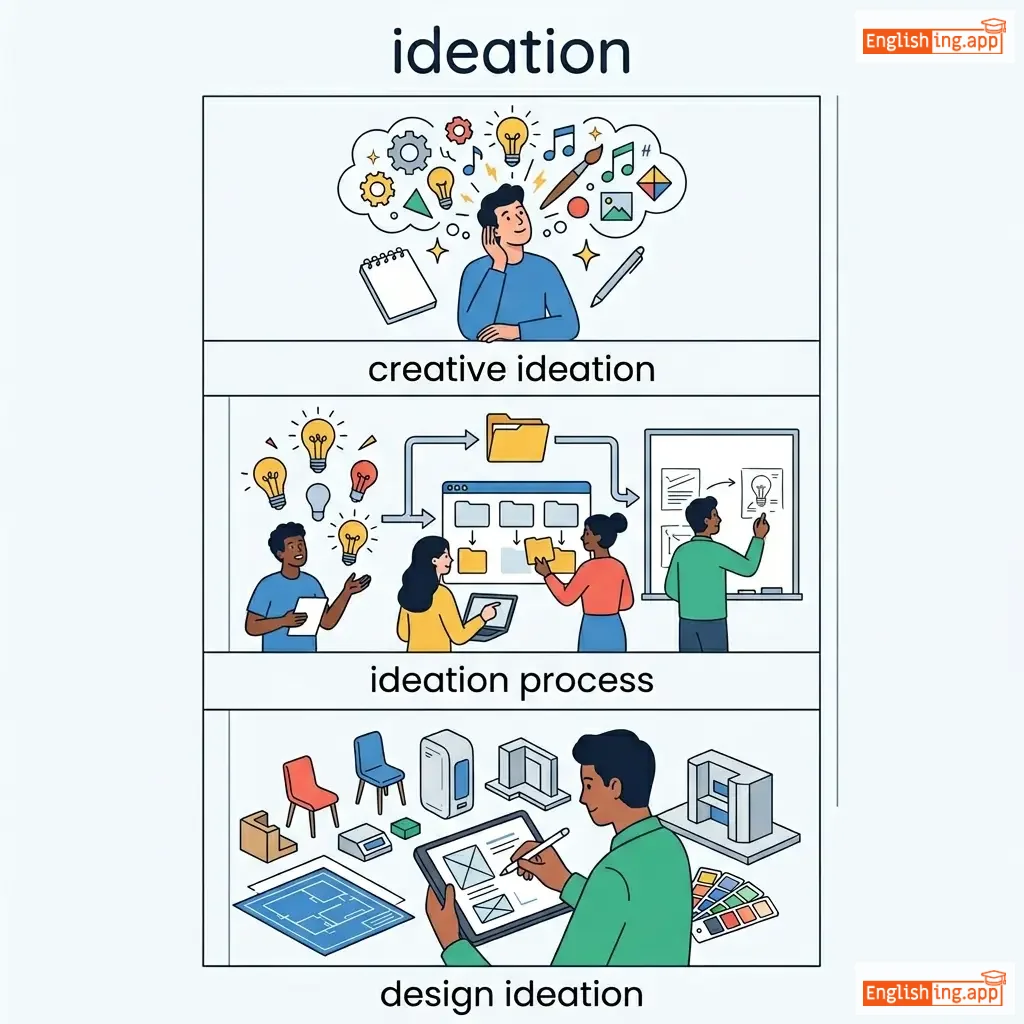
#9908
🧠
|
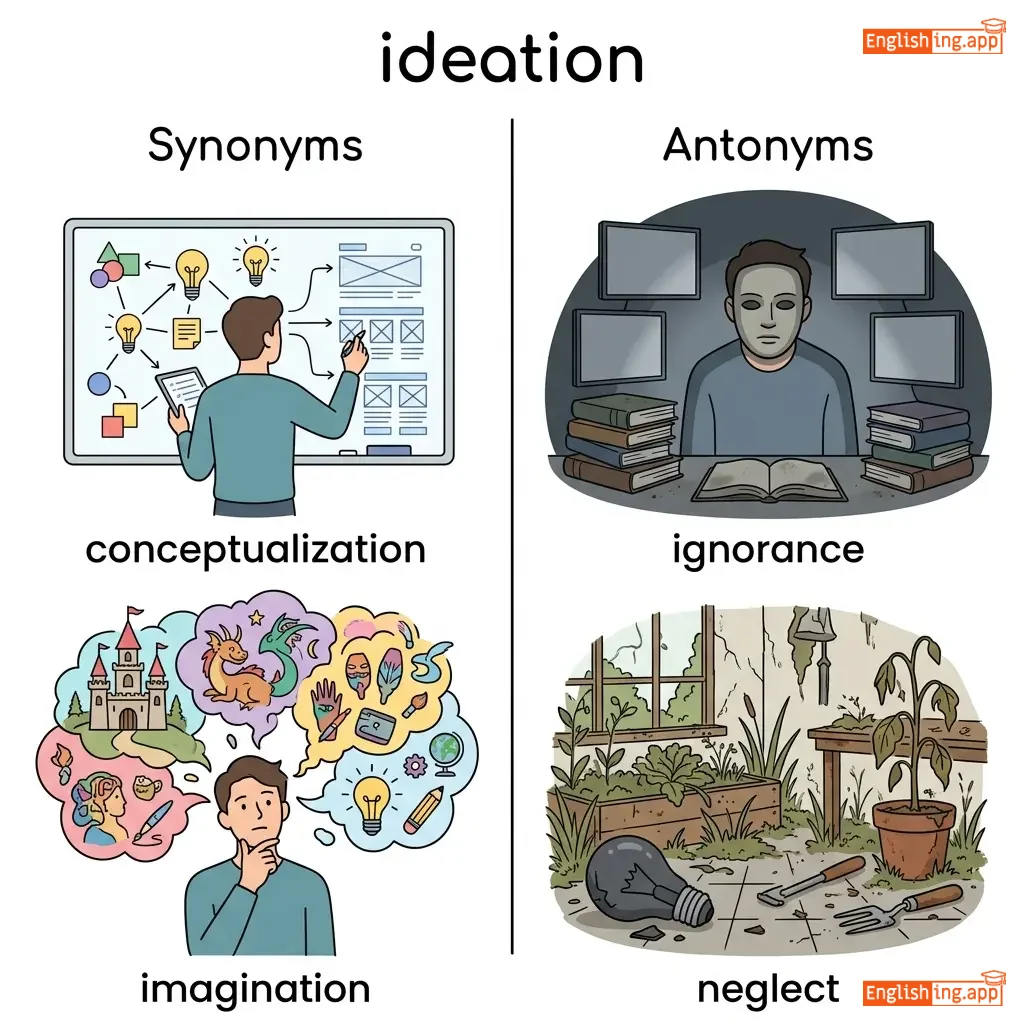
/ˌaɪdiˈeɪʃən/
noun
(理念形成)
••••••
|
|
创意生成
chuangyi shengcheng
••••••
|
- •••••• | - •••••• | - •••••• | - •••••• |
The process of forming ideas or concepts.
••••••
|
The workshop focused on ideation and brainstorming. |
研讨会集中于创意生成和头脑风暴。
Yantao hui jizhong yu chuangyi shengcheng he tounaofengbao.
••••••
|
- •••••• | - •••••• | - •••••• |
conceptualization, imagination, invention, brainstorming
••••••
|
ignorance, neglect
••••••
|
creative ideation, ideation process, design ideation, group ideation
••••••
|
Idea + tion = 创意生成的过程,ideation
••••••
|
|
#9909
💡
|
/aɪˈdiːə/
noun
(ai di a)
••••••
|
- •••••• |
主意
zhuyi
••••••
|
- •••••• | - •••••• | - •••••• | - •••••• |
A thought, plan, or suggestion about what to do.
••••••
|
She had a brilliant idea for a new business. |
她有一个新商业的精彩主意。
Ta you yige xin shangye de jingcai zhuyi.
••••••
|
bright idea |
a clever or creative thought or solution
••••••
|
聪明的主意
congming de zhuyi
••••••
|
concept, notion, plan, thought, suggestion
••••••
|
ignorance, misunderstanding
••••••
|
good idea, brilliant idea, bad idea, business idea, creative idea
••••••
|
Idea 就像脑袋里亮起来的灯泡 💡
••••••
|
|
#9910
🎓
|
/ˈhaɪˌbraʊ/
adjective
(哈伊布劳)
••••••
|
- •••••• |
知识分子
zhīshi fēnzǐ
••••••
|
- •••••• | - •••••• | - •••••• | - •••••• |
intellectually superior or cultured; often describing art, literature, or activities appealing to intellectual tastes
••••••
|
The museum is known for its highbrow exhibitions. |
该博物馆以其知识分子展览而闻名。
Gāi bówùguǎn yǐ qí zhīshi fēnzǐ zhǎnlǎn ér wénmíng.
••••••
|
- •••••• | - •••••• | - •••••• |
intellectual, cultured, sophisticated, refined, erudite
••••••
|
lowbrow, uncultured, ignorant
••••••
|
highbrow culture, highbrow art, highbrow literature, highbrow taste
••••••
|
Highbrow是指具有文化品味的人,能欣赏高层次的艺术
••••••
|
|
#9911
🏃
|
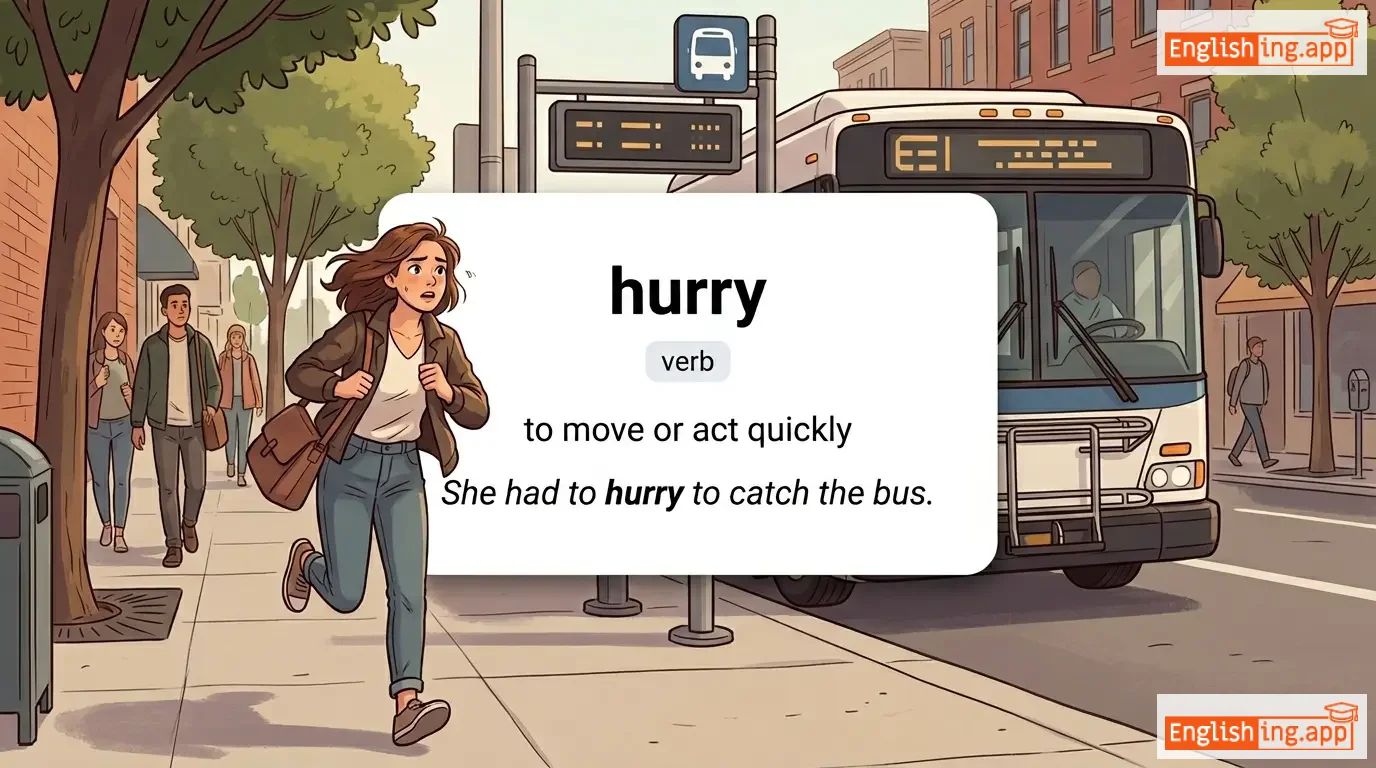
/ˈhʌri/
verb
(哈利)
••••••
|
|
赶快
gan kuai
••••••
|
hurried
哈利德
••••••
|
hurried
哈利德
••••••
|
hurries
哈利兹
••••••
|
hurrying
哈里英
••••••
|
to move or act quickly
••••••
|
She had to hurry to catch the bus.
她必须哈里去赶公交。
••••••
|
她必须赶快去赶公交。
Ta bixu gan kuai qu gan gong jiao.
••••••
|
in a hurry
急忙中
••••••
|
rushing or pressed for time
••••••
|
匆忙中
cong mang zhong
••••••
|
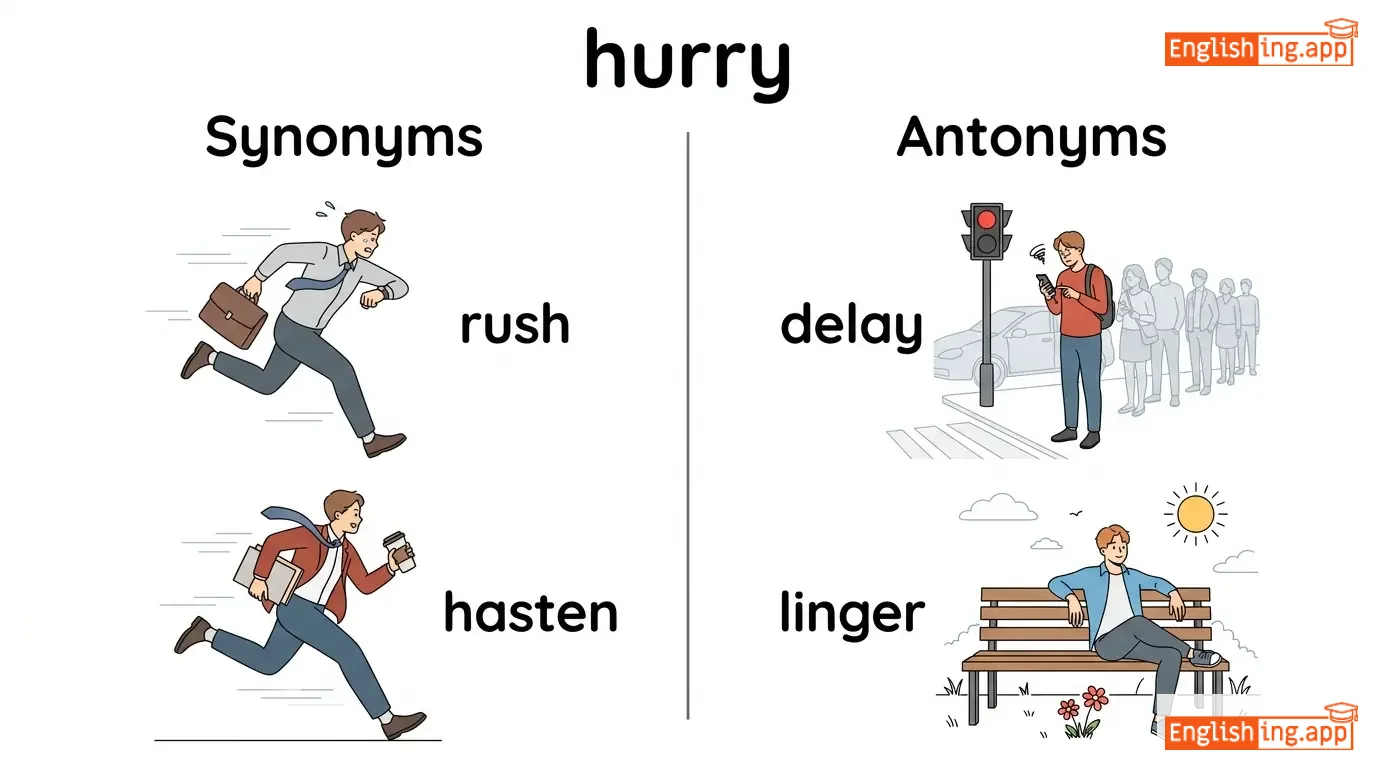
rush, hasten, speed, scurry, dash
••••••
|
delay, linger, wait
••••••
|
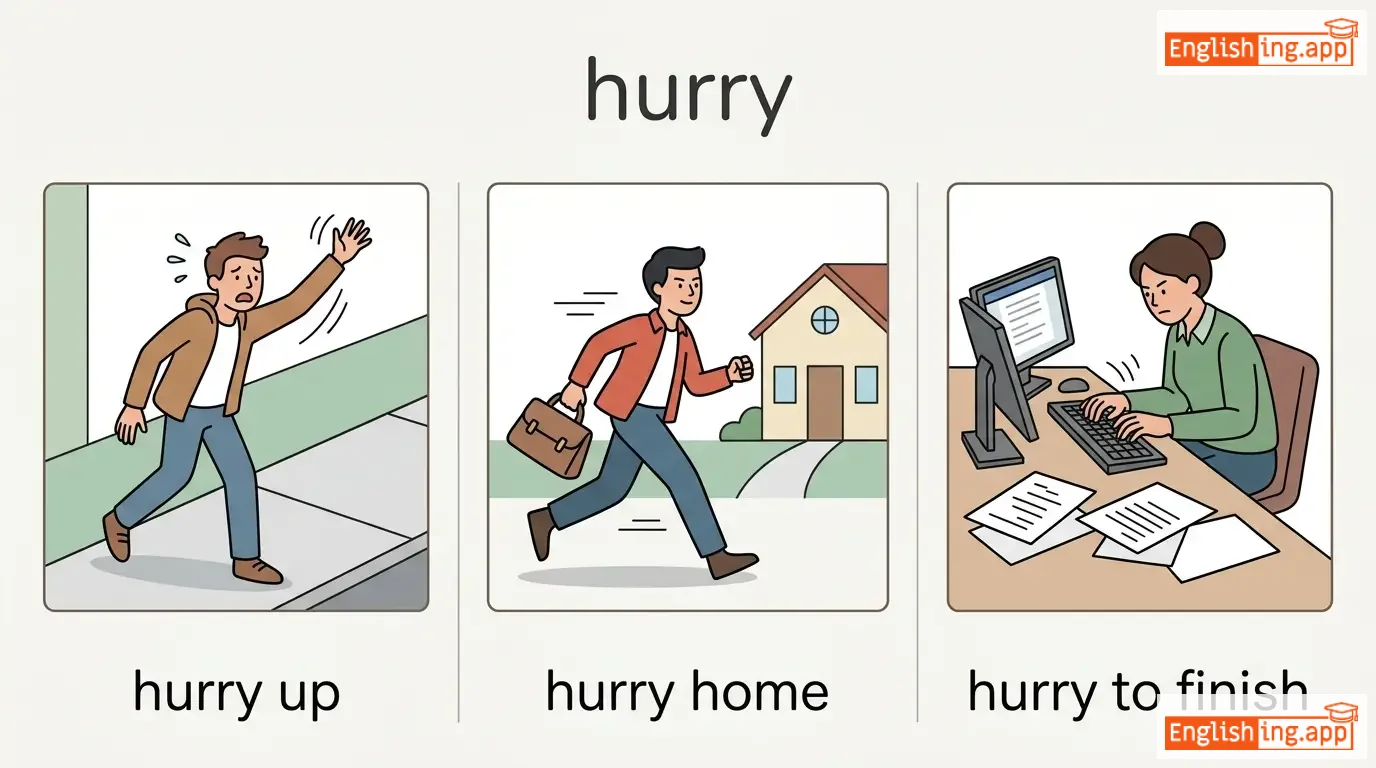
hurry up, hurry home, hurry to finish, hurry back
••••••
|
Hurry 意味着 '赶快' – 快速行动
••••••
|
|
#9912
🍽️
|
/ˈhʌŋɡər/
noun
(hángè)
••••••
|
- •••••• |
饥饿
jī è
••••••
|
- •••••• | - •••••• | - •••••• | - •••••• |
the feeling of discomfort caused by lack of food
••••••
|
The child cried out of hunger. |
孩子因饥饿而哭泣。
Háizi yīn jī è ér kū qì.
••••••
|
hunger for success |
a strong desire to achieve success
••••••
|
对成功的渴望
duì chénggōng de kěwàng
••••••
|
starvation, appetite, craving, emptiness
••••••
|
satisfaction, fullness
••••••
|
die of hunger, hunger strike, hunger for power, hunger relief
••••••
|
Hunger = 饥饿, Hungry = 饥饿
••••••
|
|
#9913
🗻
|
/hjuːdʒ/
adjective
(hyuj)
••••••
|
- •••••• |
巨大的
jù dà de
••••••
|
- •••••• | - •••••• | - •••••• | - •••••• |
extremely large in size or amount
••••••
|
The stadium was filled with a huge crowd. |
体育场被一群巨大的观众填满。
tǐ yù chǎng bèi yī qún jù dà de guān zhòng tián mǎn.
••••••
|
make a huge difference |
to have a significant effect on something
••••••
|
产生巨大的影响
chǎn shēng jù dà de yǐng xiǎng
••••••
|
enormous, massive, gigantic, vast, colossal
••••••
|
tiny, small, little
••••••
|
huge success, huge amount, huge crowd, huge impact
••••••
|
Huge是巨大的意思,像是巨大的观众群 = 巨大的聚集
••••••
|
|
#9914
🚪
|
/ˈhaʊsˌbreɪkɪŋ/
noun
(hàosī bù ruì kè yīng)
••••••
|
- •••••• |
入室盗窃
rùshì dàoqiè
••••••
|
- •••••• | - •••••• | - •••••• | - •••••• |
the crime of breaking into a house with intent to steal
••••••
|
The thief was arrested for housebreaking. |
小偷因入室盗窃被捕。
Xiǎotōu yīn rùshì dàoqiè bèi bǔ.
••••••
|
- •••••• | - •••••• | - •••••• |
burglary, break-in, intrusion, robbery
••••••
|
protection, security
••••••
|
charged with housebreaking, housebreaking case, housebreaking crime
••••••
|
House + breaking = 入室盗窃
••••••
|
|
#9915
😠
|
/ˈhɒstaɪl/
adjective
(hòusītǎi)
••••••
|
- •••••• |
敌对
díduì
••••••
|
- •••••• | - •••••• | - •••••• | - •••••• |
showing or feeling opposition, dislike, or hatred
••••••
|
The soldiers entered a hostile territory. |
士兵进入了敌对领土。
Shìbīng jìnrùle díduì lǐngtǔ.
••••••
|
hostile takeover |
an acquisition of a company opposed by the company's management
••••••
|
敌对收购
díduì shōugòu
••••••
|
aggressive, antagonistic, unfriendly, opposed, bitter
••••••
|
friendly, peaceful, supportive
••••••
|
hostile environment, hostile forces, hostile attitude, hostile takeover
••••••
|
敌对 – 敌人般的接待
••••••
|
|
#9916
🏅
|
/ˈɑːnər/
noun
(āngér)
••••••
|
- •••••• |
荣誉
rongyu
••••••
|
- •••••• | - •••••• | - •••••• | - •••••• |
high respect; great esteem
••••••
|
He received an award in honor of his achievements. |
他因他的成就而获得了一项荣誉。
Tā yīn tā de chéngjiù ér huòdé le yī xiàng róngyù.
••••••
|
do someone the honor |
to respectfully accept or recognize someone
••••••
|
给予某人荣誉
jǐyǔ mǒu rén róngyù
••••••
|
respect, esteem, recognition, dignity, admiration
••••••
|
dishonor, disgrace, shame
••••••
|
in honor of, bring honor, great honor, honor code
••••••
|
荣誉意味着尊重,记住'值得尊敬的人'总是会获得荣誉。
••••••
|
|
#9917
🤲
|
/ˈɑːnɪst/
adjective
(诚实)
••••••
|
- •••••• |
诚实
chengshi
••••••
|
- •••••• | - •••••• | - •••••• | - •••••• |
free of deceit and untruthfulness; sincere
••••••
|
She is known as an honest and trustworthy person.
她被认为是一个诚实和值得信赖的人。
••••••
|
她被认为是一个诚实和值得信赖的人。
Ta bei renwei shi yige chengshi he zhided xinglai de ren.
••••••
|
to be honest
诚实待人
••••••
|
used to emphasize that what is being said is true
••••••
|
诚实待人
chengshi dairen
••••••
|
truthful, sincere, genuine, trustworthy, fair
••••••
|
dishonest, deceitful, untruthful
••••••
|
honest opinion, honest mistake, honest man, be honest
••••••
|
诚实意味着诚实,'诚信如同信任'来记住
••••••
|
|
#9918
🩸
|
/ˈhɑːmɪsaɪd/
noun
(谋杀)
••••••
|
- •••••• |
谋杀
móushā
••••••
|
- •••••• | - •••••• | - •••••• | - •••••• |
the killing of one human being by another
••••••
|
The police are investigating a case of homicide. |
警方正在调查一起谋杀案件。
jǐngfāng zhèngzài diàochá yīqǐ móushā ànjiàn.
••••••
|
- •••••• | - •••••• | - •••••• |
murder, killing, assassination, manslaughter
••••••
|
birth, rescue
••••••
|
commit homicide, homicide case, investigate homicide, homicide victim
••••••
|
Homicide sounds like 'Homi + cide', meaning killing in Chinese.
••••••
|
|
#9919
💊
|
/ˌhoʊmiˈɑːpəθi/
noun
(顺势疗法)
••••••
|
- •••••• |
顺势疗法
shunshi liaofa
••••••
|
- •••••• | - •••••• | - •••••• | - •••••• |
a system of alternative medicine based on treating diseases with highly diluted substances
••••••
|
He believes in homeopathy for treating common colds. |
他相信顺势疗法来治疗常见感冒。
Tā xiāngxìn shùnshì liáofǎ lái zhìliáo chángjiàn gǎnmào.
••••••
|
- •••••• | - •••••• | - •••••• |
alternative medicine, holistic medicine, natural medicine
••••••
|
allopathy, conventional medicine
••••••
|
practice homeopathy, homeopathy treatment, study homeopathy
••••••
|
Homeo + pathie 意味着一种像家一样的疗法。
••••••
|
|
#9920
🏠
|
/hoʊm/
noun
(hōm)
••••••
|
- •••••• |
家
jia
••••••
|
- •••••• | - •••••• | - •••••• | - •••••• |
the place where one lives, especially with family; a residence
••••••
|
She finally returned home after a long journey. |
她在长途旅行后终于回到了家。
tā zài cháng tú lǚ xíng hòu zhōng yú huí dào le jiā.
••••••
|
home sweet home |
used to express pleasure at returning to one's home
••••••
|
家,甜美的家
jiā, tián měi de jiā
••••••
|
house, residence, dwelling, abode, household
••••••
|
office, workplace, street
••••••
|
go home, come home, home address, home town, home life
••••••
|
Home 是家,心灵永远的栖息地。
••••••
|
|
#9921
🌍
|
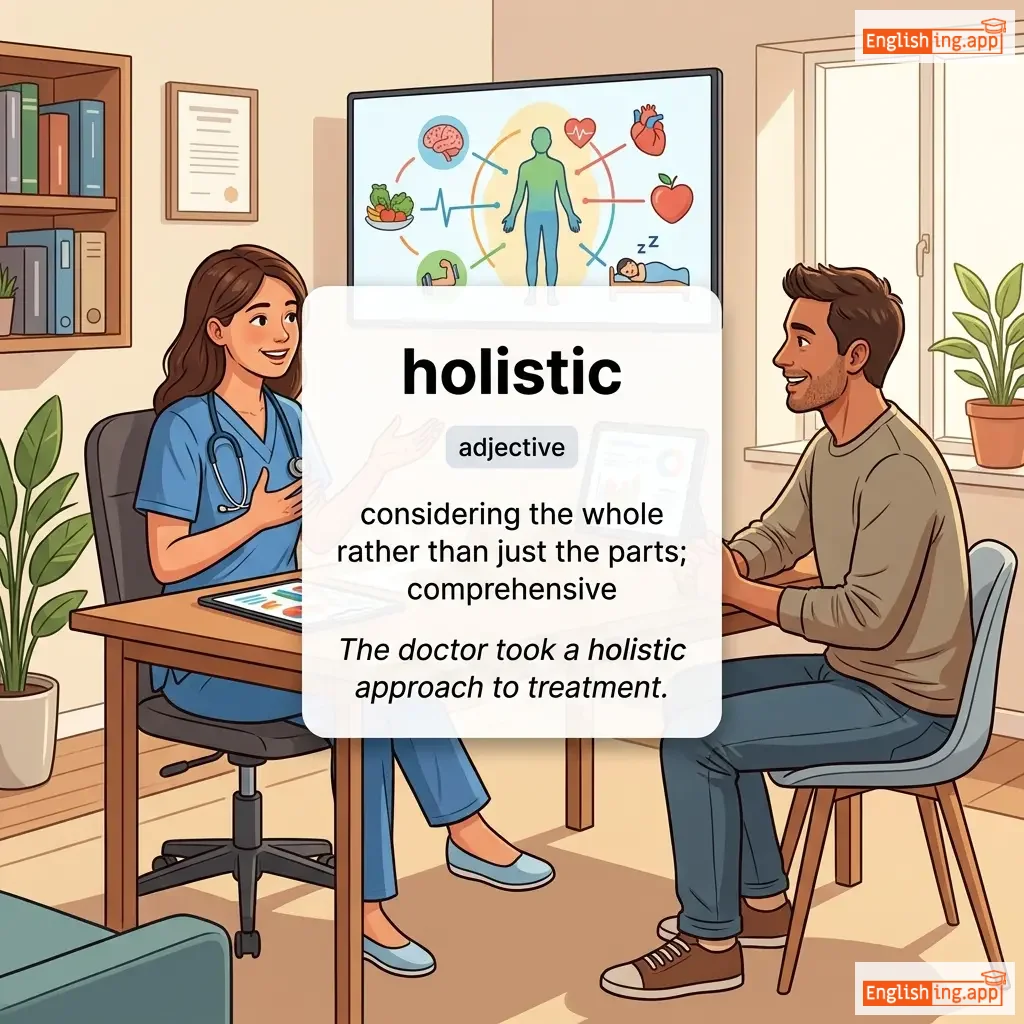
/hoʊˈlɪstɪk/
adjective
(整体)
••••••
|
|
整体的
zhěngtǐ de
••••••
|
- •••••• | - •••••• | - •••••• | - •••••• |
considering the whole rather than just the parts; comprehensive
••••••
|
The doctor took a holistic approach to treatment. |
医生采取了整体治疗方法。
Yīshēng cǎiqǔle zhěngtǐ zhìliáo fāngfǎ.
••••••
|
- •••••• | - •••••• | - •••••• |
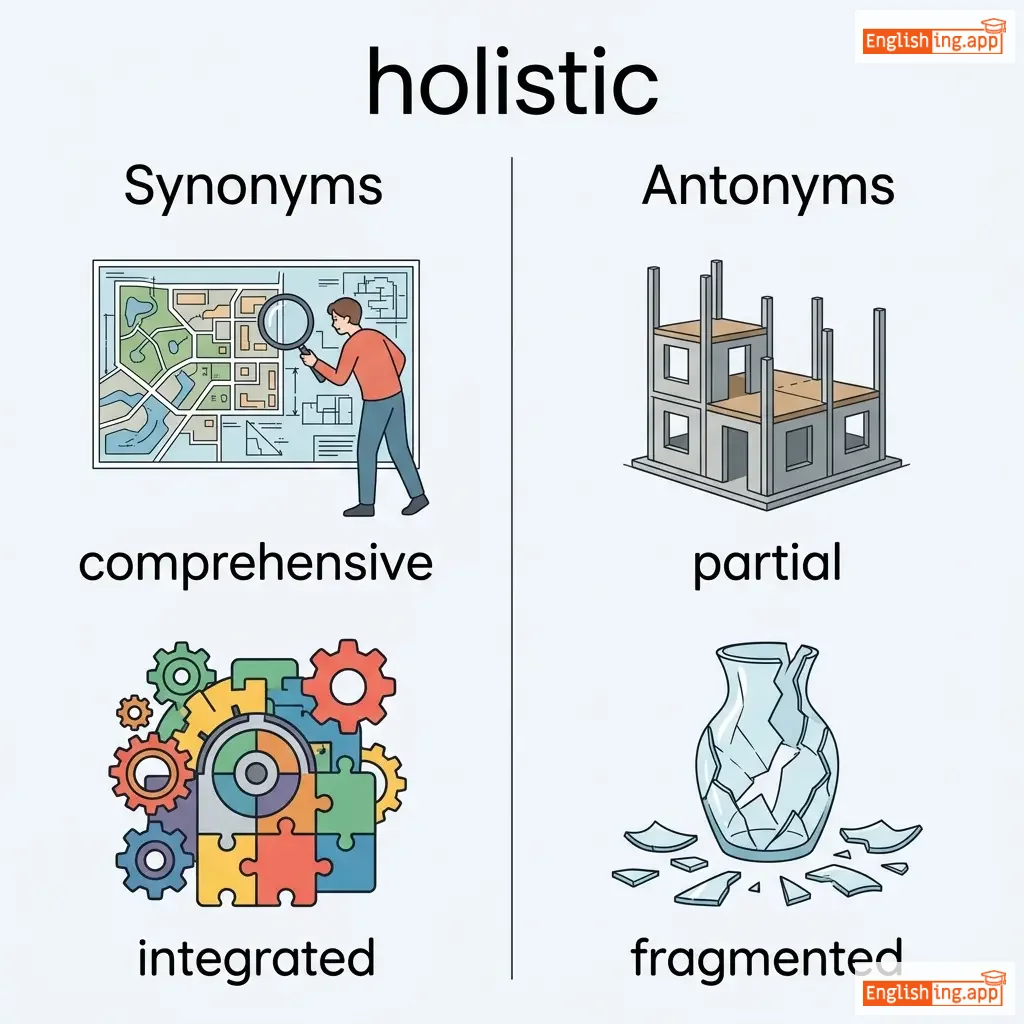
comprehensive, integrated, complete, entire, whole
••••••
|
partial, fragmented
••••••
|
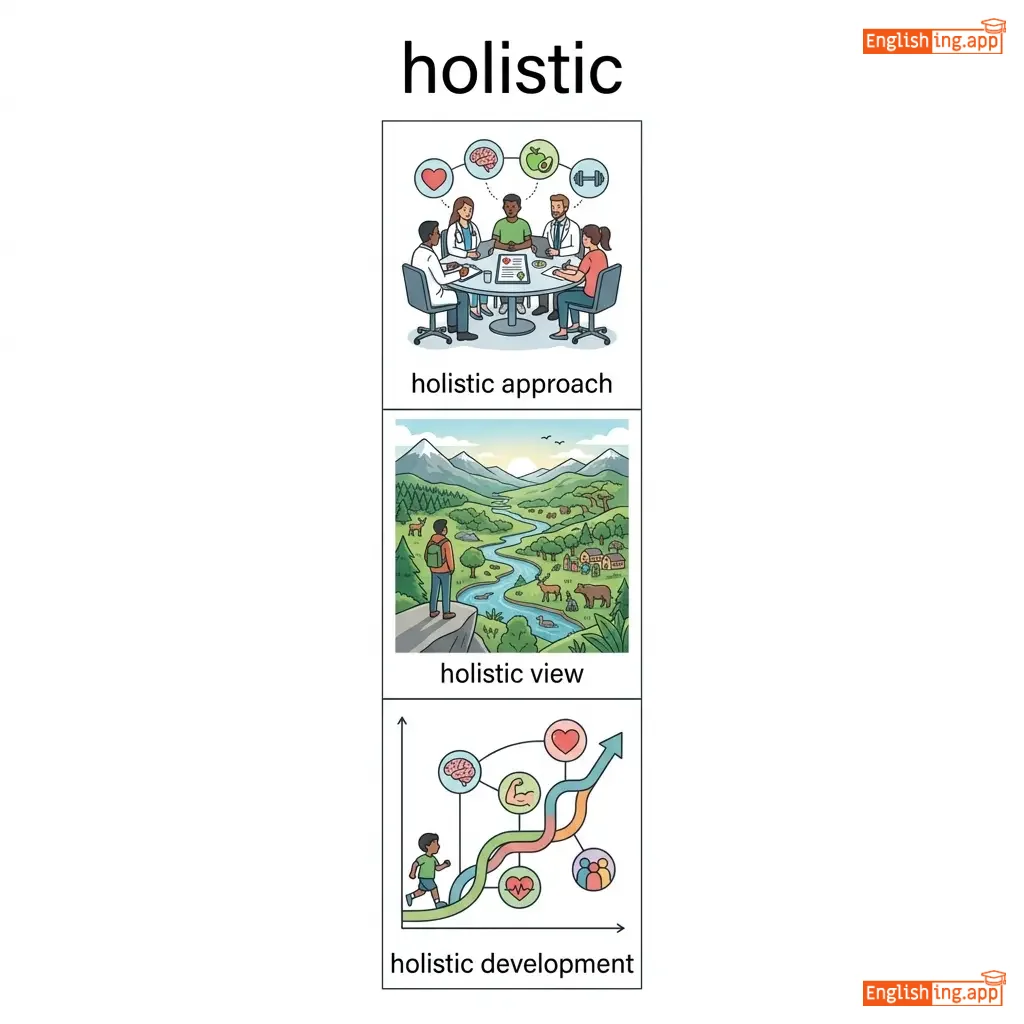
holistic approach, holistic view, holistic development, holistic treatment
••••••
|
整体的意思是从整体上看问题,而不是只看部分。
••••••
|
|
#9922
🕳️
|
/hoʊl/
noun
(hōu)
••••••
|
- •••••• |
洞
dong
••••••
|
- •••••• | - •••••• | - •••••• | - •••••• |
an opening, gap, or hollow place in a solid surface
••••••
|
There is a hole in my shirt. |
我的衬衫上有一个洞。
Wǒ de chènshān shàng yǒu yīgè dòng.
••••••
|
in a hole |
in a difficult or troublesome situation
••••••
|
在困境中
zài kùnjìng zhōng
••••••
|
gap, opening, cavity, pit, hollow
••••••
|
solid, whole
••••••
|
dig a hole, small hole, deep hole, in a hole
••••••
|
Hole = 洞, 记住 hole = 洞在你的衬衫上
••••••
|
|
#9923
✋
|
/hoʊld/
verb
(hōld)
••••••
|
|
握住
wò zhù
••••••
|
held
held
••••••
|
held
held
••••••
|
holds
hōldz
••••••
|
holding
hōlding
••••••
|
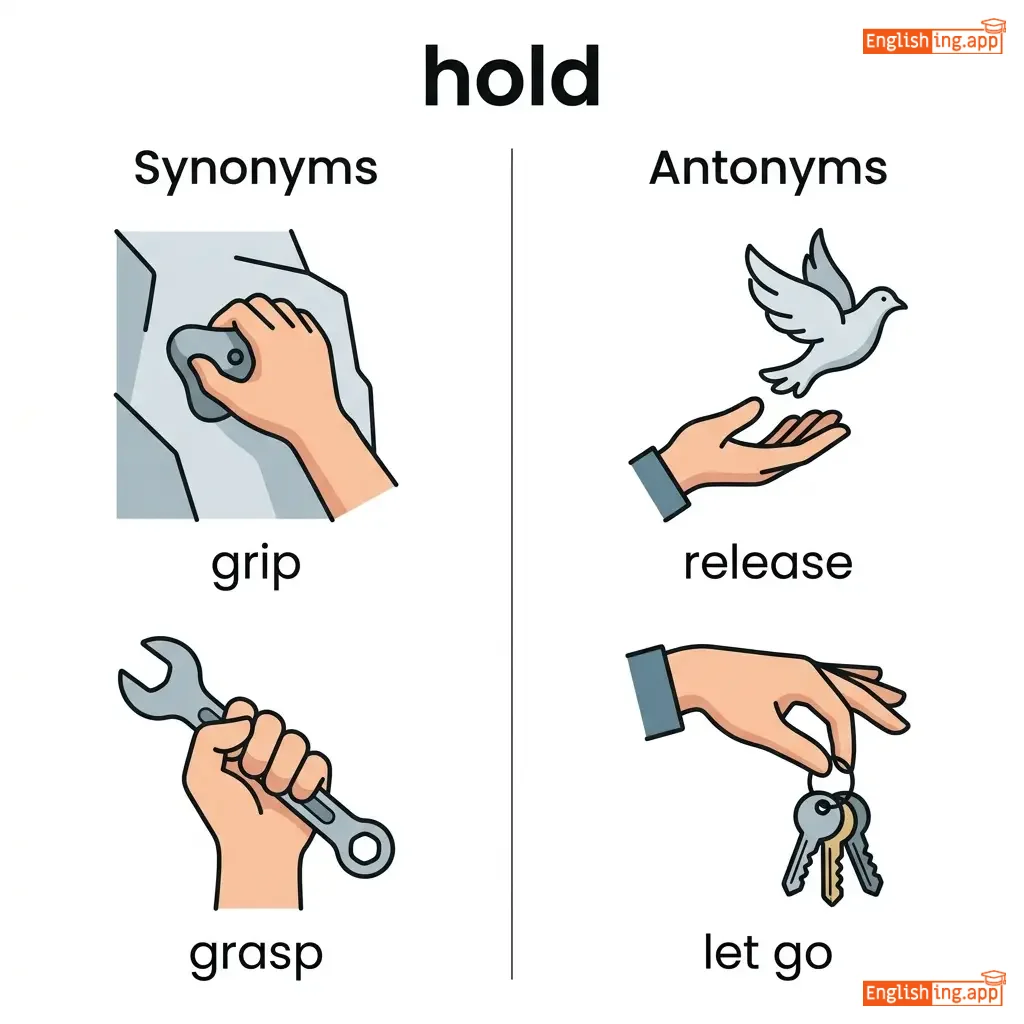
to grasp, carry, or keep in position; to maintain
••••••
|
Please hold the door open for me.
pliz hould də dɔʁ ópen fɔʁ mi.
••••••
|
请为我把门保持打开。
Qǐng wèi wǒ bǎ mén bǎochí dǎkāi.
••••••
|
hold on
hould ɔn
••••••
|
to wait or pause briefly
••••••
|
等一下
děng yīxià
••••••
|
grip, grasp, keep, maintain, support
••••••
|
release, let go
••••••
|
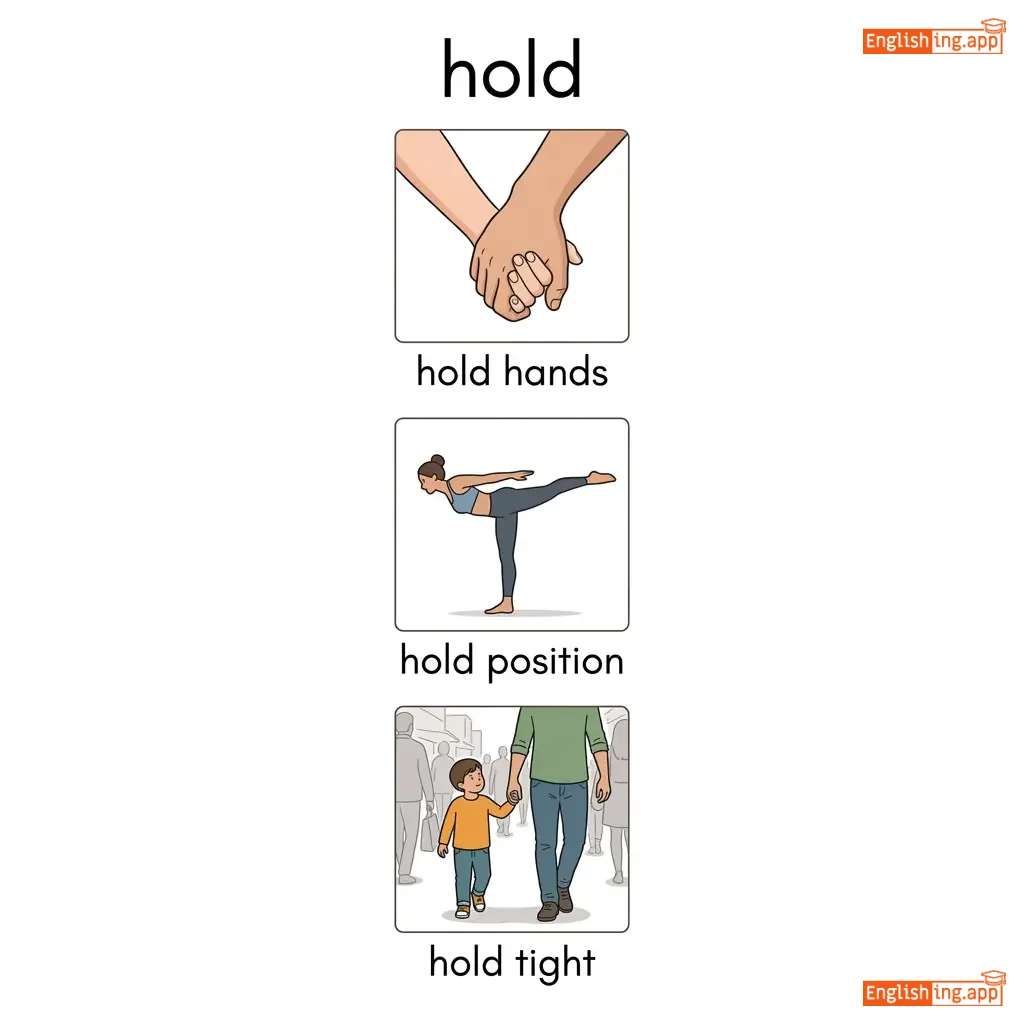
hold hands, hold position, hold tight, hold meeting
••••••
|
Hold 意味着握住,就像你握住手机。
••••••
|
|
#9924
💡
|
/hɪnt/
noun/verb
(hint)
••••••
|
- •••••• |
提示
tíshì
••••••
|
hinted
hinted
••••••
|
hinted
hinted
••••••
|
hints
hints
••••••
|
hinting
hinting
••••••
|
a small piece of advice or suggestion; to suggest something indirectly
••••••
|
She gave me a hint about the surprise party.
她给了我一个关于惊喜派对的提示。
••••••
|
她给了我一个关于惊喜派对的提示。
Tā gěile wǒ yīgè guānyú jīngxǐ pàiduì de tíshì.
••••••
|
drop a hint
给个提示
••••••
|
to give a subtle suggestion
••••••
|
给个提示
gěi gè tíshì
••••••
|
suggestion, clue, indication, tip, advice
••••••
|
statement, declaration
••••••
|
subtle hint, useful hint, drop a hint, take the hint
••••••
|
Hint 在中文是提示,像给别人提示
••••••
|
Vocabulary Quiz
Test your vocabulary by matching words with their translations or meanings.
Login to take the quiz
Comments (0)
Share your thoughts and join the discussion.
Join the discussion by logging in
Login to CommentNo comments yet
Be the first to share your thoughts!