

Swipe left or right, or use the buttons. Tap image to zoom.
例句翻译
单词
Lesson 179Lesson 179 - 遮罩切换
|
表情符号
|
单词 | Images | 翻译 | 过去时 | 过去分词 | 第三人称单数 | 动名词 | 含义 | 例句 | 例句翻译 | 示例表达 | 示例表达含义 | 示例表达翻译 | 同义词 | 反义词 | 搭配词 | 助记符 |
|---|---|---|---|---|---|---|---|---|---|---|---|---|---|---|---|---|---|
|
#5341
👑
|
/ˌmɑːhəˈrɑːdʒə/
noun
(马哈拉贾)
••••••
|
- •••••• |
马哈拉贾
maharaja
••••••
|
- •••••• | - •••••• | - •••••• | - •••••• |
A great king, especially a ruler of one of the principal states in India.
••••••
|
The maharaja lived in a grand palace surrounded by gardens. |
马哈拉贾住在一个宏伟的宫殿里,四周是花园。
Mǎhā lā jiā zhù zài yīgè hóngwěi de gōngdiàn lǐ, sìzhōu shì huāyuán.
••••••
|
- •••••• | - •••••• | - •••••• |
king, ruler, monarch, sovereign, prince
••••••
|
commoner, subject
••••••
|
maharaja palace, powerful maharaja, Indian maharaja, maharaja rule
••••••
|
maharaja = 伟大的国王
••••••
|
|
#5342
🦟
|
/məˈlɛəriə/
noun
(疟疾)
••••••
|
- •••••• |
疟疾
nüe ji
••••••
|
- •••••• | - •••••• | - •••••• | - •••••• |
a serious infectious disease spread by mosquitoes, causing fever, chills, and sweating
••••••
|
Malaria is a common disease in tropical regions.
疟疾在热带地区是一种常见疾病。
••••••
|
疟疾在热带地区是一种常见疾病。
Nüe ji zai rèdài dìqū shì yī zhǒng chángjiàn jíbìng.
••••••
|
- •••••• | - •••••• | - •••••• |
fever, infectious disease, mosquito-borne illness
••••••
|
health, wellness
••••••
|
malaria prevention, malaria outbreak, malaria treatment, malaria vaccine
••••••
|
疟疾 - 蚊子传播的疾病
••••••
|
|
#5343
🙃
|
/ˌmæləprəˈpoʊ/
adjective, adverb
(马拉普罗波斯)
••••••
|
- •••••• |
不合时宜
bù hé shí yí
••••••
|
- •••••• | - •••••• | - •••••• | - •••••• |
inappropriate or unsuitable; at an inconvenient or inappropriate time
••••••
|
His comment was malapropos during the serious discussion. |
在严肃的讨论中,他的评论不合时宜。
Zài yánsù de tǎolùn zhōng, tā de pínglùn bù hé shí yí.
••••••
|
- •••••• | - •••••• | - •••••• |
inappropriate, unsuitable, untimely, awkward, irrelevant
••••••
|
appropriate, suitable, timely
••••••
|
malapropos remark, malapropos comment, malapropos behavior
••••••
|
Mala-proper position 不适当,所以 malapropos = 不合时宜
••••••
|
|
#5344
🤭
|
/ˈmæləprɒˌpɪzəm/
noun
(马拉普罗普斯姆)
••••••
|
- •••••• |
误用词汇
wù yòng cí huì
••••••
|
- •••••• | - •••••• | - •••••• | - •••••• |
the mistaken use of a word in place of a similar-sounding one, often with amusing effect
••••••
|
He is famous for his malapropism when speaking in public. |
他因在公众演讲时的误用词汇而闻名。
Tā yīn zài gōng zhòng yǎn jiǎng shí de wù yòng cí huì ér wén míng.
••••••
|
- •••••• | - •••••• | - •••••• |
misuse, blunder, error, slip, misstatement
••••••
|
accuracy, correctness
••••••
|
comic malapropism, classic malapropism, humorous malapropism
••••••
|
Mala-词不是,所以 malapropism = 错误使用词汇
••••••
|
|
#5345
😷
|
/məˈleɪz/
noun
(玛雷兹)
••••••
|
- •••••• |
不适
bushi
••••••
|
- •••••• | - •••••• | - •••••• | - •••••• |
a general feeling of discomfort, illness, or unease whose exact cause is difficult to identify
••••••
|
After the long journey, she felt a general malaise. |
长时间旅行后,她感到一种普遍的不适。
Chang shi jian lv you hou, ta gan dao yi zhong pu bian de bu shi.
••••••
|
- •••••• | - •••••• | - •••••• |
unease, discomfort, unrest, illness, discontent
••••••
|
comfort, ease, wellness
••••••
|
general malaise, social malaise, political malaise, widespread malaise
••••••
|
Malaise = 一种无法解释的不舒服感觉
••••••
|
|
#5346
🤒
|
/ˈmælədi/
noun
(马拉迪)
••••••
|
- •••••• |
病
bing
••••••
|
- •••••• | - •••••• | - •••••• | - •••••• |
a disease or disorder of the body or mind; a serious problem
••••••
|
The doctor treated the malady with great care. |
医生非常小心地治疗了这场病。
Yi sheng fei chang xiao xin de zhi liao le zhe chang bing.
••••••
|
social malady |
a widespread social problem or issue
••••••
|
社会病
she hui bing
••••••
|
disease, illness, disorder, ailment, sickness
••••••
|
health, wellness, cure
••••••
|
chronic malady, rare malady, social malady, mysterious malady
••••••
|
Malady 让人联想到'病' - 记住 malady = 病
••••••
|
|
#5347
🤦
|
/ˌmæləˈdrɔɪt/
adjective
(马拉德罗瓦)
••••••
|
- •••••• |
笨拙
bènzhuō
••••••
|
- •••••• | - •••••• | - •••••• | - •••••• |
clumsy or awkward in movement or behavior
••••••
|
His maladroit attempt at fixing the chair made it worse. |
他修理椅子的笨拙尝试只让事情变得更糟。
Tā xiūlǐ yǐzi de bènzhuō chángshì zhǐ ràng shìqíng biàn dé gèng zāo.
••••••
|
- •••••• | - •••••• | - •••••• |
clumsy, awkward, inept, unskillful, bungling
••••••
|
skillful, adept, graceful
••••••
|
maladroit handling, maladroit remark, maladroit response, maladroit attempt
••••••
|
Maladroit = Mal (坏) + adroit (巧妙) → 差的巧妙 = 笨拙 🤦
••••••
|
|
#5348
💄
|
/ˈmeɪkʌp/
noun
(méikèp)
••••••
|
- •••••• |
化妆
huàzhuāng
••••••
|
- •••••• | - •••••• | - •••••• | - •••••• |
cosmetics used to enhance or alter appearance
••••••
|
She applied makeup before the party. |
她在聚会前化了妆。
Tā zài jùhuì qián huàle zhuāng.
••••••
|
makeup test |
an additional test to make up for one missed earlier
••••••
|
补考
bǔkǎo
••••••
|
cosmetics, foundation, powder, lipstick, beauty products
••••••
|
bare face, natural
••••••
|
apply makeup, makeup kit, makeup artist, makeup remover
••••••
|
Make + Up = 面容变美化妆 💄
••••••
|
|
#5349
🛠️
|
/ˈmeɪkˌʃɪft/
adjective
(meikshift)
••••••
|
- •••••• |
临时
línshí
••••••
|
- •••••• | - •••••• | - •••••• | - •••••• |
used as a temporary substitute; improvised
••••••
|
They used boxes as a makeshift table.
他们用箱子作为临时桌子。
••••••
|
他们用箱子作为临时桌子。
Tāmen yòng xiāngzi zuòwéi línshí zhuōzi.
••••••
|
- •••••• | - •••••• | - •••••• |
temporary, improvised, substitute, provisional, stopgap
••••••
|
permanent, durable
••••••
|
makeshift shelter, makeshift arrangement, makeshift solution, makeshift tent
••••••
|
Make + Shift = Makeshift,表示临时和即兴的事物。
••••••
|
|
#5350
📊
|
/məˈdʒɒrəti/
noun
(méiyuánzhǔyì)
••••••
|
|
多数
duoshu
••••••
|
- •••••• | - •••••• | - •••••• | - •••••• |
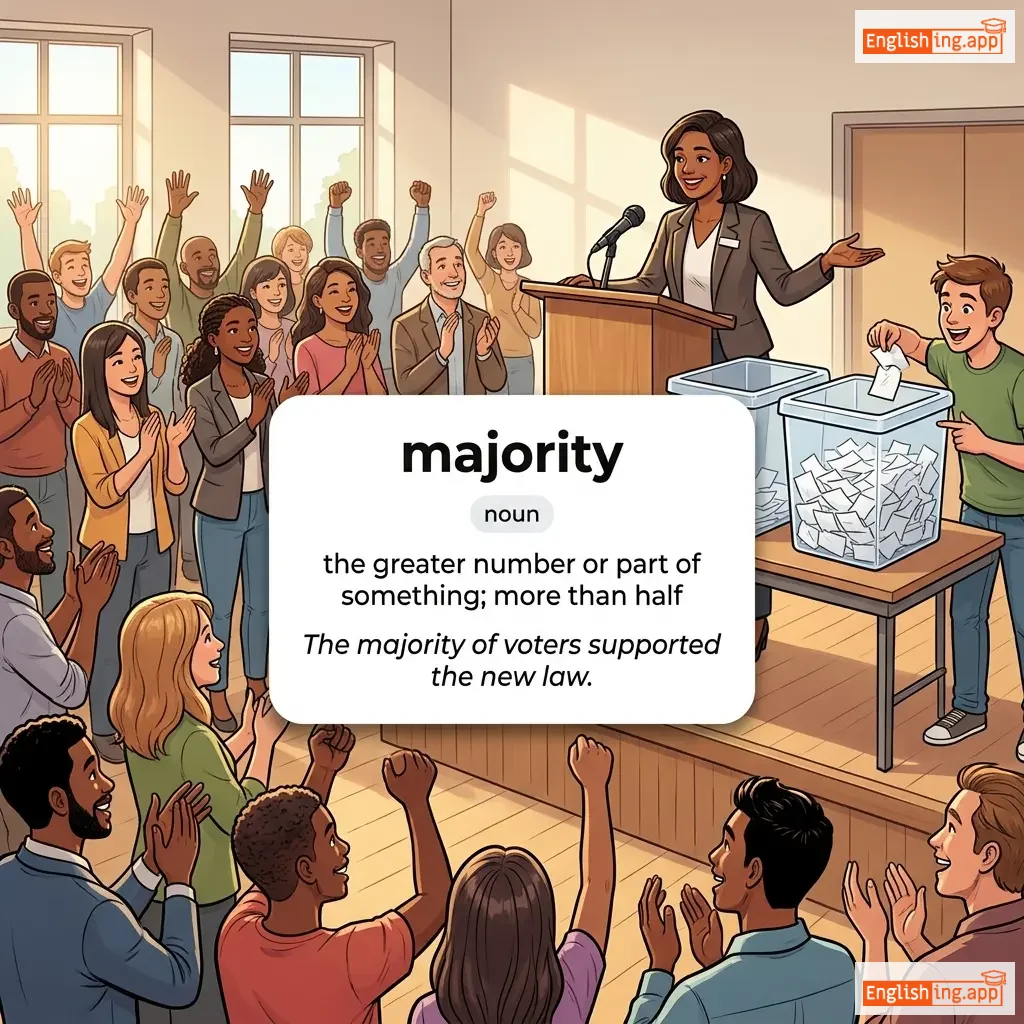
the greater number or part of something; more than half
••••••
|
The majority of voters supported the new law. |
大多数选民支持新法律。
Da duoshu xuanmin zhichi xin falü.
••••••
|
silent majority |
a large group of people who do not express their opinions publicly
••••••
|
沉默的大多数
Chenmo de da duoshu
••••••
|
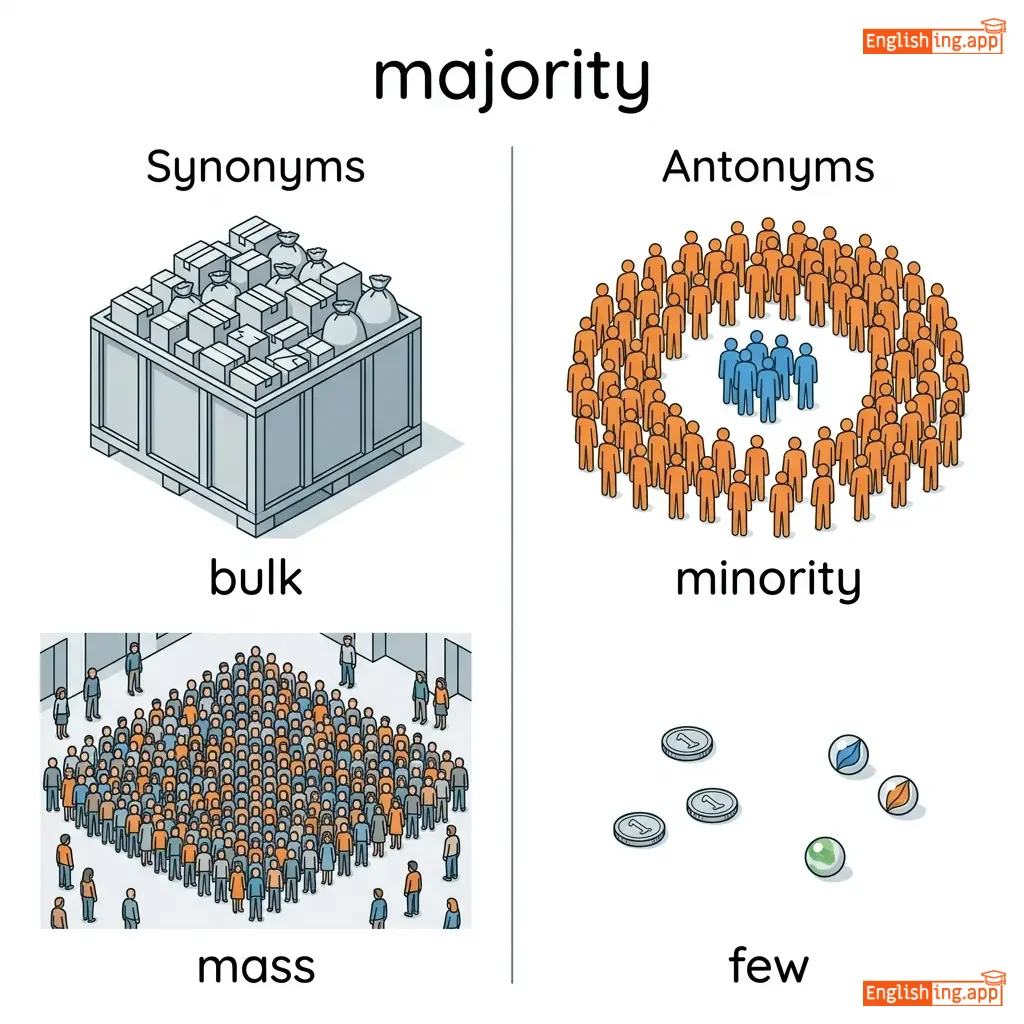
bulk, mass, most, plurality, dominance
••••••
|
minority, few
••••••
|
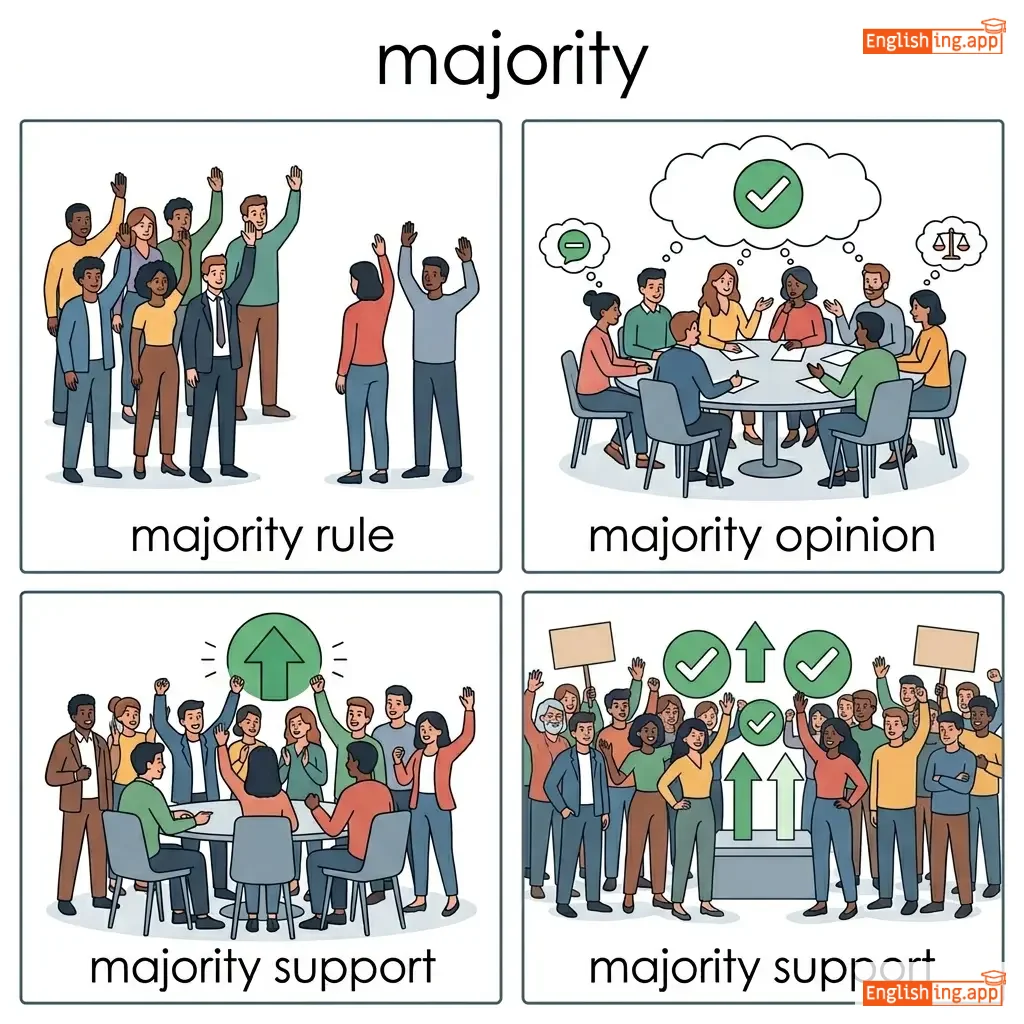
majority rule, majority opinion, majority support, majority party
••••••
|
多数意味着更大的部分 - 多数就是超过一半!
••••••
|
|
#5351
🌽
|
/meɪz/
noun
(mèi zī)
••••••
|
- •••••• |
玉米
yumi
••••••
|
- •••••• | - •••••• | - •••••• | - •••••• |
a tall cereal plant grown for its large yellow grains, also called corn
••••••
|
Farmers harvested the maize in late autumn. |
农民在秋末收割了玉米。
Nongmin zai qiumo shouge le yumi.
••••••
|
ears of maize |
the cobs of the maize plant
••••••
|
玉米棒
yumi bang
••••••
|
corn, grain, cereal, crop, kernel
••••••
|
none, barren
••••••
|
maize field, maize crop, maize flour, ears of maize
••••••
|
Maize 意味着玉米 🌽 - 当 maize 到来时,玉米在田间成长。
••••••
|
|
#5352
🛠️
|
/ˈmeɪntənəns/
noun
(维持)
••••••
|
|
维护
wéihù
••••••
|
- •••••• | - •••••• | - •••••• | - •••••• |
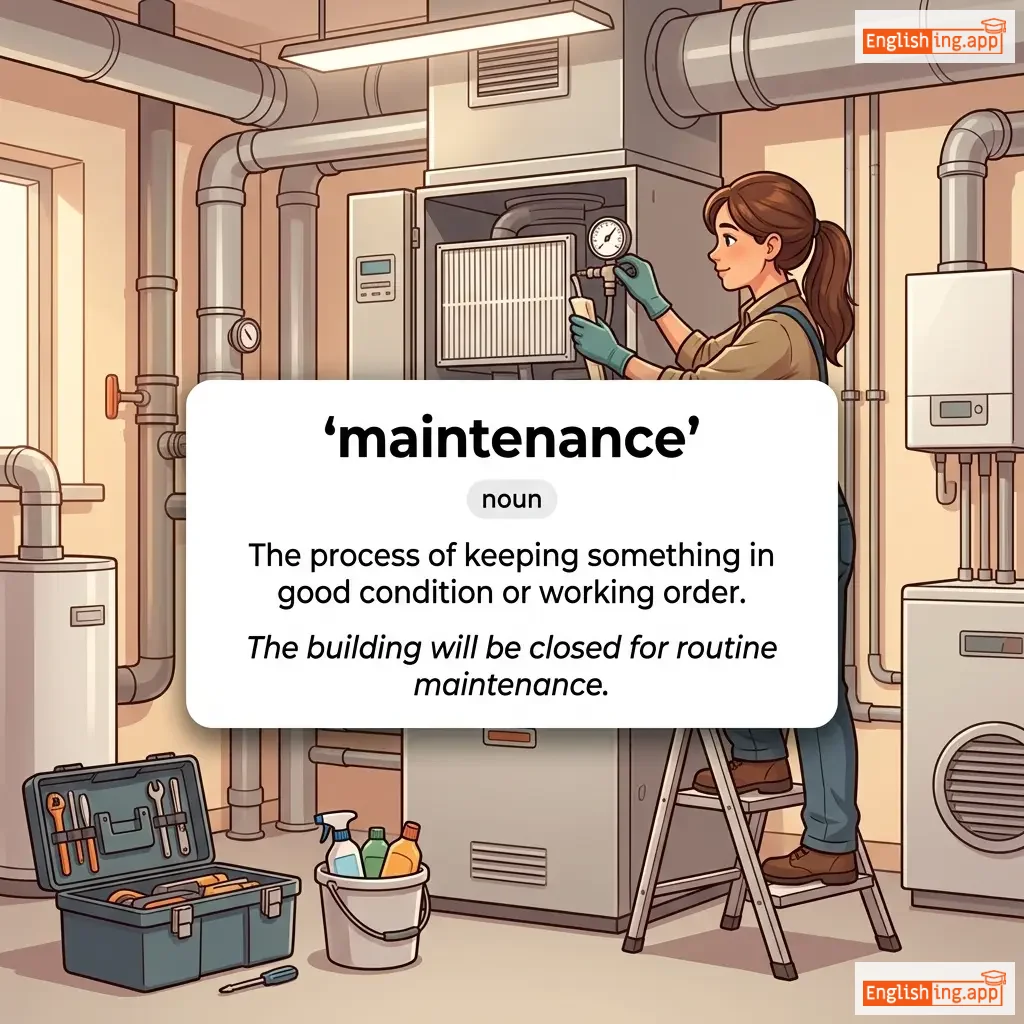
The process of keeping something in good condition or working order.
••••••
|
The building will be closed for routine maintenance. |
该建筑将因常规维护而关闭。
Gāi jiànzhú jiāng yīn chángguī wéihù ér guānbì.
••••••
|
maintenance work |
Regular work done to preserve or repair something
••••••
|
维护工作
wéihù gōngzuò
••••••
|
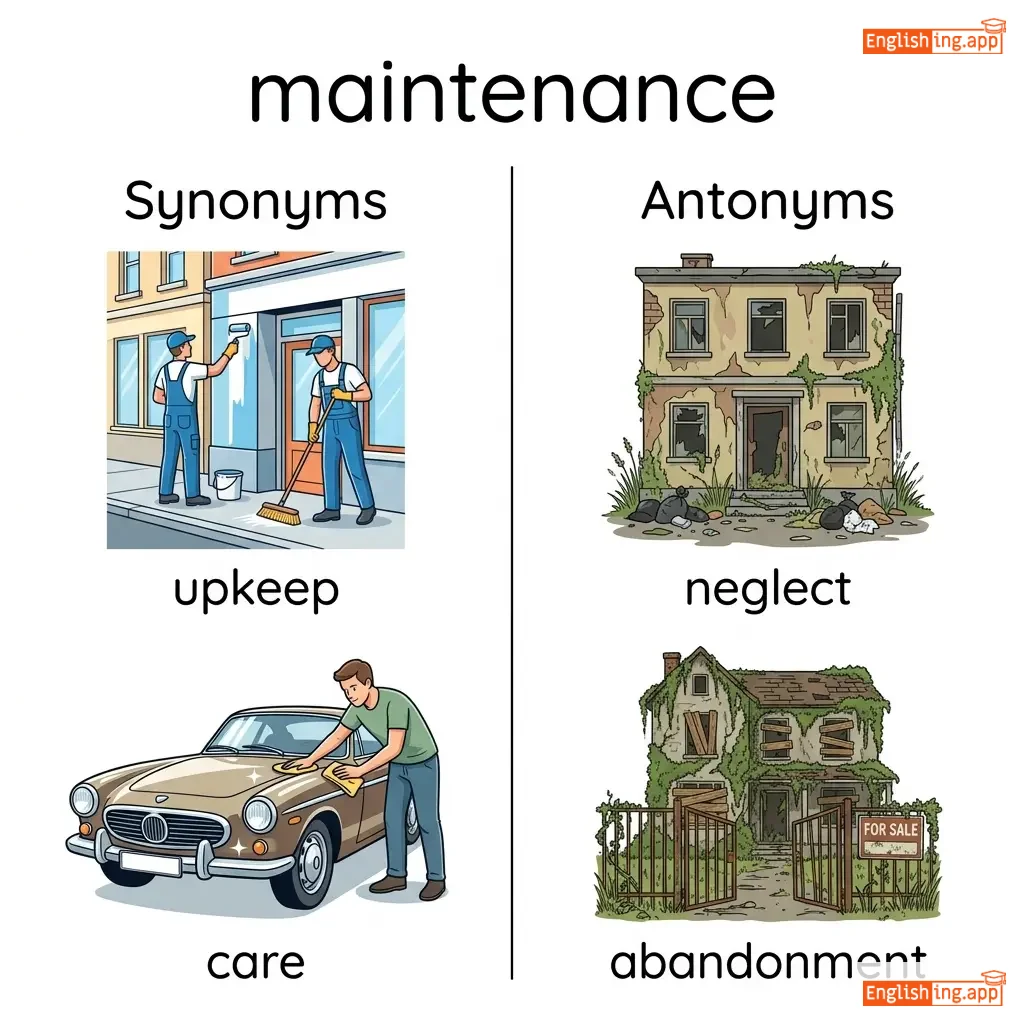
upkeep, care, preservation, repair, servicing
••••••
|
neglect, abandonment
••••••
|
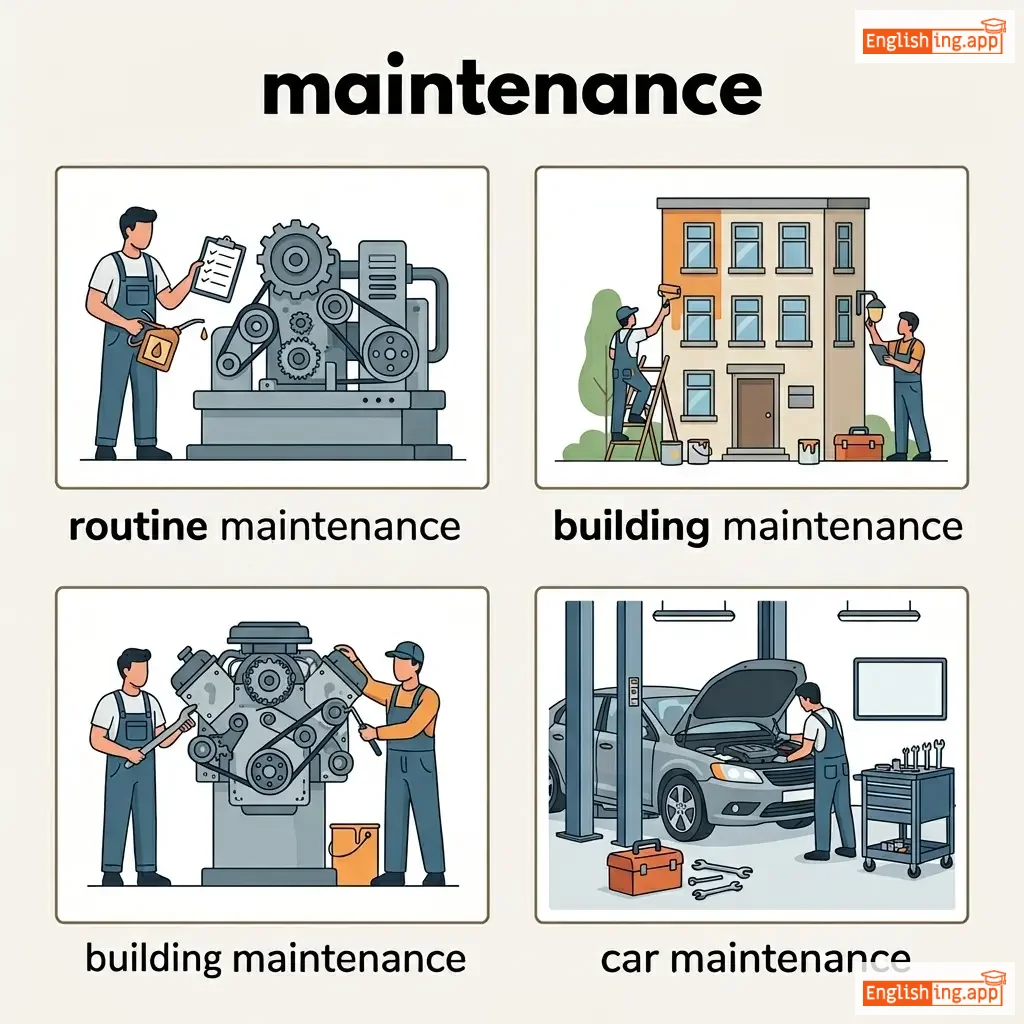
routine maintenance, building maintenance, car maintenance, maintenance cost
••••••
|
Maintenance 就是保持事物运行
••••••
|
|
#5353
⚙️
|
/meɪnˈteɪn/
verb
(梅恩泰因)
••••••
|
|
保持
bǎochí
••••••
|
maintained
梅恩泰恩德
••••••
|
maintained
梅恩泰恩德
••••••
|
maintains
梅恩泰恩兹
••••••
|
maintaining
梅恩泰宁
••••••
|
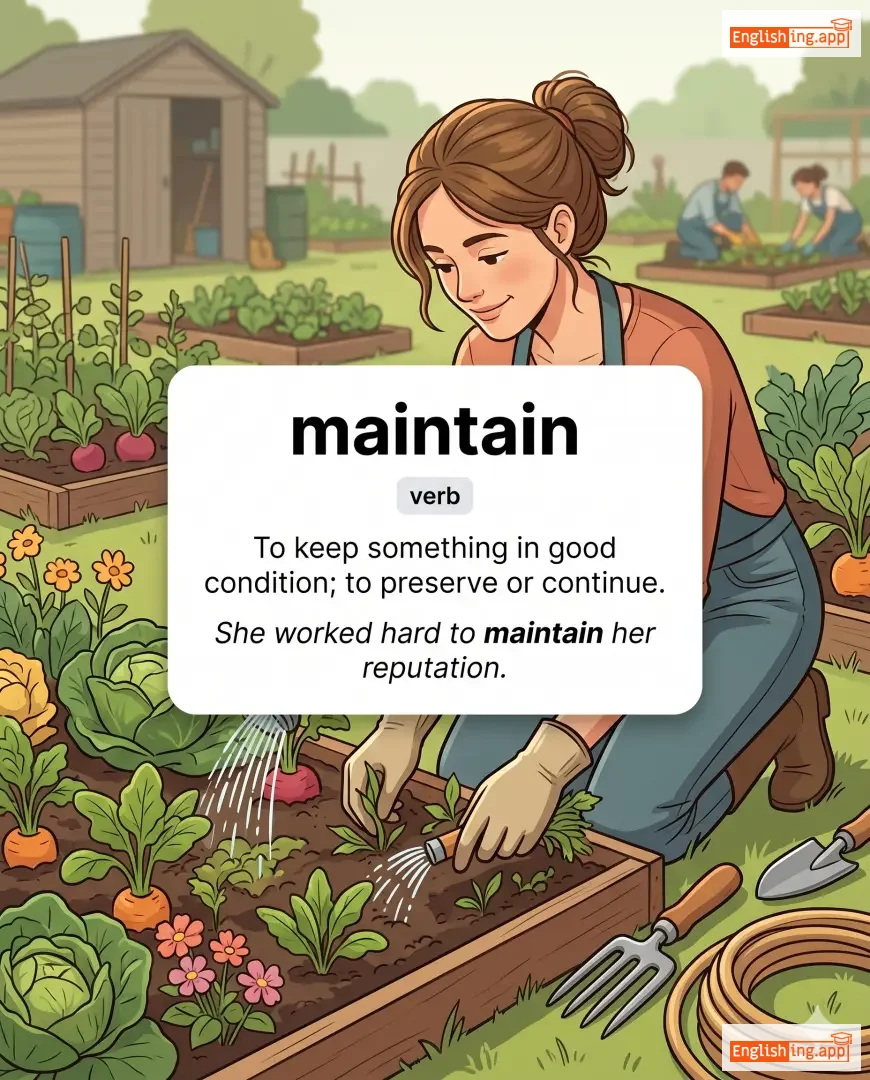
To keep something in good condition; to preserve or continue.
••••••
|
She worked hard to maintain her reputation.
她努力工作以保持自己的声誉。
••••••
|
她努力工作以保持自己的声誉。
Tā nǔlì gōngzuò yǐ bǎochí zìjǐ de shēngyù.
••••••
|
maintain composure
保持冷静
••••••
|
To stay calm and in control under pressure
••••••
|
保持冷静
bǎochí lěngjìng
••••••
|
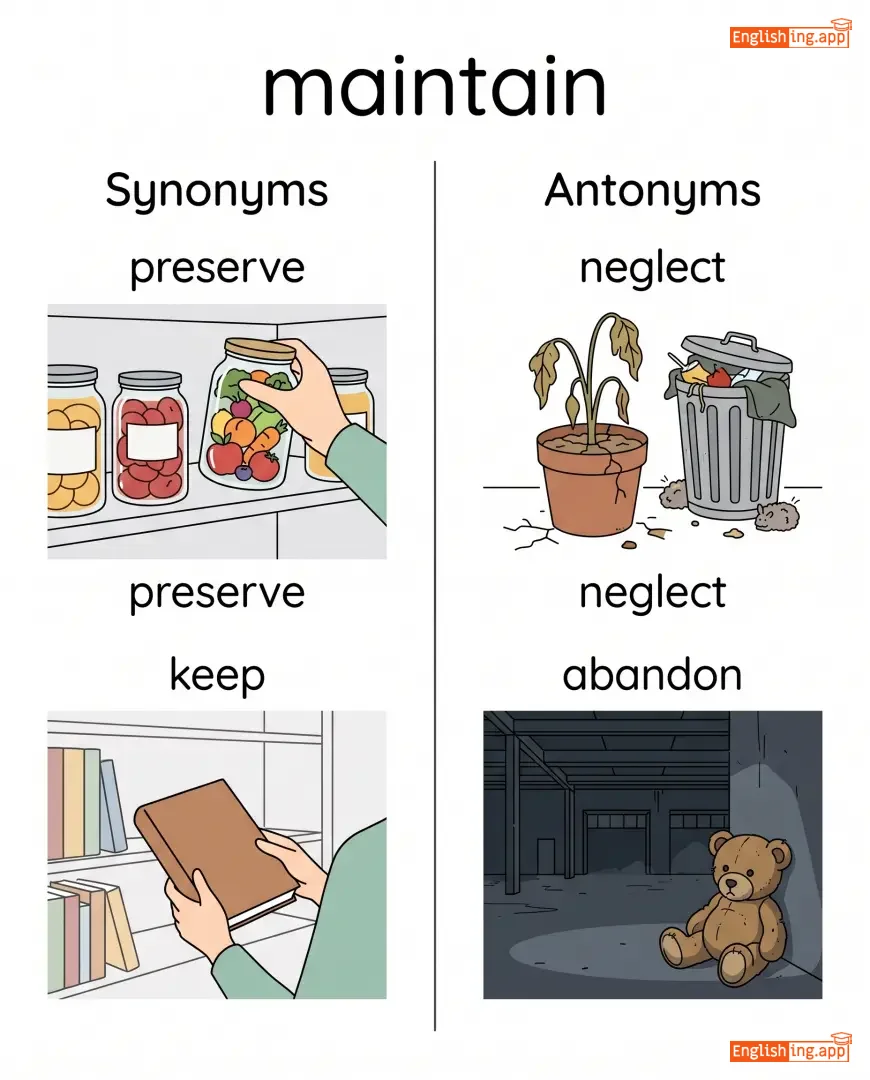
preserve, keep, sustain, uphold, continue
••••••
|
neglect, abandon, destroy
••••••
|
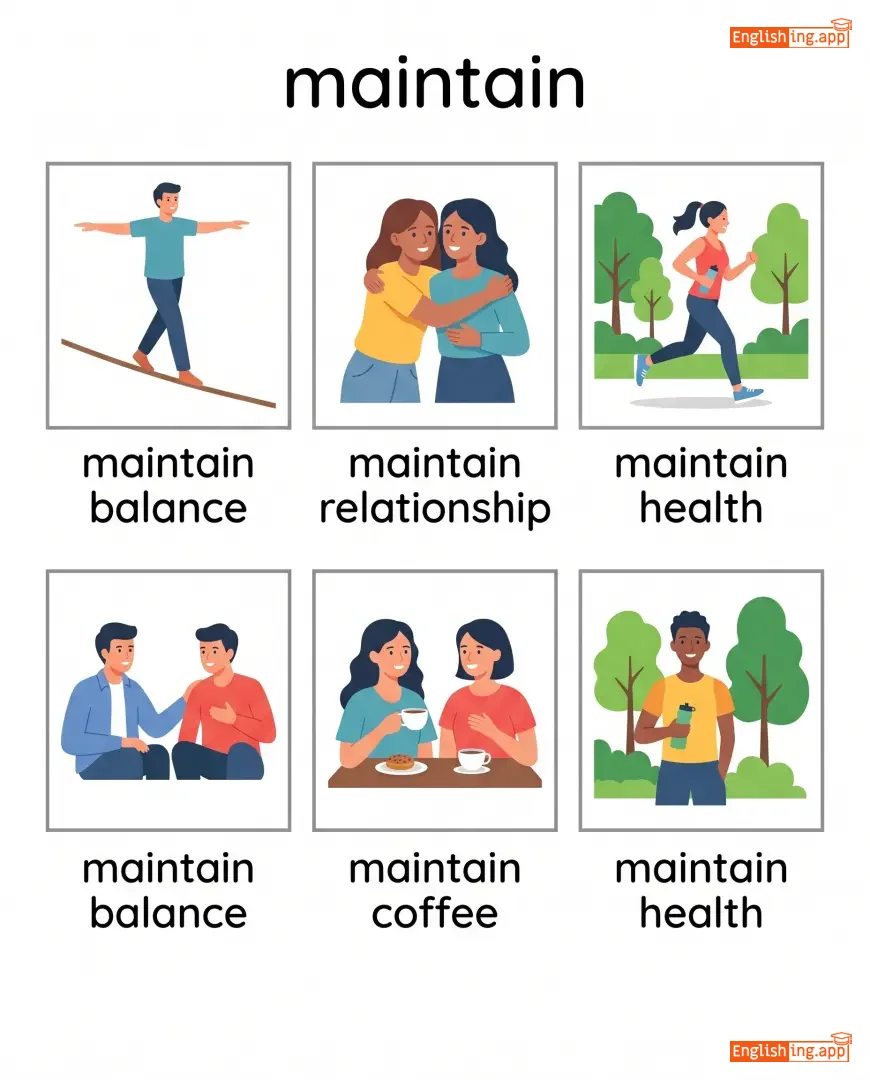
maintain balance, maintain relationship, maintain health, maintain order
••••••
|
Maintain意思是Main + Tain (保持) = 保持或继续
••••••
|
|
#5354
🩹
|
/meɪm/
verb
(meɪm)
••••••
|
- •••••• |
使残疾
shǐ cánjí
••••••
|
maimed
meɪmd
••••••
|
maimed
meɪmd
••••••
|
maims
meɪmz
••••••
|
maiming
meɪmɪŋ
••••••
|
To wound or injure someone so that part of the body is permanently damaged.
••••••
|
The accident maimed several passengers.
事故使几位乘客致残。
••••••
|
事故使几位乘客致残。
Shìgù shǐ jǐ wèi chéngkè zhìcán.
••••••
|
maimed for life
终生残疾
••••••
|
Permanently injured with lasting physical disability
••••••
|
终生残疾
zhōngshēng cánjí
••••••
|
cripple, injure, mutilate, disable, wound
••••••
|
heal, cure, repair
••••••
|
maim someone, maim for life, accident maimed, maiming injury
••••••
|
Maim表示'使残疾'在中文。
••••••
|
|
#5355
🌸
|
/ˈmeɪdənˌhʊd/
noun
(梅登胡德)
••••••
|
- •••••• |
少女期
shàonǚqī
••••••
|
- •••••• | - •••••• | - •••••• | - •••••• |
The state of being a maiden; girlhood or virginity.
••••••
|
The poem celebrated the innocence of maidenhood.
这首诗歌庆祝了少女时期的纯真。
••••••
|
这首诗歌庆祝了少女时期的纯真。
Zhè shǒu shīgē qìngzhù le shàonǚ shíqī de chúnzhēn.
••••••
|
- •••••• | - •••••• | - •••••• |
virginity, girlhood, youth, purity
••••••
|
womanhood, maturity
••••••
|
innocence of maidenhood, beauty of maidenhood, protect maidenhood
••••••
|
Maidenhood意味着少女时期或处女状态。
••••••
|
|
#5356
🎶
|
/ˈmædrɪɡəl/
noun
••••••
|
- •••••• | - •••••• | - •••••• | - •••••• | - •••••• | - •••••• |
A short, lyrical poem set to music, typically from the Renaissance period.
••••••
|
The choir performed a beautiful madrigal from the 16th century. |
- •••••• | - •••••• | - •••••• | - •••••• |
song, chant, ballad, lyric, hymn
••••••
|
prose, silence
••••••
|
sing a madrigal, Renaissance madrigal, madrigal choir
••••••
|
No •••••• |
|
#5357
📏
|
/ˈmæɡnɪtuːd/
noun
(震级)
••••••
|
- •••••• |
震级
zhènjí
••••••
|
- •••••• | - •••••• | - •••••• | - •••••• |
the great size, extent, or importance of something
••••••
|
The magnitude of the earthquake shocked the nation. |
地震的震级震惊了整个国家。
Dìzhèn de zhènjí zhènjīngle zhěnggè guójiā.
••••••
|
of great magnitude |
something of great size or importance
••••••
|
大震级的
dà zhènjí de
••••••
|
extent, scale, size, importance, intensity
••••••
|
triviality, insignificance, smallness
••••••
|
earthquake magnitude, magnitude of problem, magnitude scale
••••••
|
Magnitude 就像一个大地震 — 大的尺寸或影响。
••••••
|
|
#5358
🗣️
|
/mæɡˈnɪləkwənt/
adjective
(mángnīluòkuìntè)
••••••
|
- •••••• |
夸张的语言
kuāzhāng de yǔyán
••••••
|
- •••••• | - •••••• | - •••••• | - •••••• |
using high-flown or pompous language
••••••
|
The politician’s magniloquent speech impressed the crowd. |
政治家的夸张演讲给人们留下了深刻的印象。
Zhèngzhì jiā de kuāzhāng yǎnjiǎng gěi rénmen liú xiàle shēnkè de yìnxiàng.
••••••
|
- •••••• | - •••••• | - •••••• |
grandiloquent, pompous, bombastic, pretentious
••••••
|
simple, plain, humble
••••••
|
magniloquent speech, magniloquent tone, magniloquent style
••••••
|
Magniloquent 意味着夸张的语言 — 说话夸大其词。
••••••
|
|
#5359
🌄
|
/mæɡˈnɪfɪsənt/
adjective
(magnificent)
••••••
|
- •••••• |
壮观
zhuangguan
••••••
|
- •••••• | - •••••• | - •••••• | - •••••• |
extremely beautiful, impressive, or splendid
••••••
|
The view from the mountain was truly magnificent.
从山上看到的景色真的很壮观。
••••••
|
从山上看到的景色真的很壮观。
Cong shan shang kandao de jingse zhen de hen zhuangguan.
••••••
|
in magnificent style
以壮观的风格
••••••
|
to do something in an impressive or splendid way
••••••
|
以壮观的风格
yi zhuangguan de fengge
••••••
|
splendid, glorious, majestic, superb, wonderful
••••••
|
awful, ordinary, poor
••••••
|
magnificent view, magnificent palace, magnificent effort
••••••
|
Magnificent = 壮观 = 一幅宏伟的风景。
••••••
|
|
#5360
🏰
|
/mæɡˈnɪfɪsəns/
noun
(màgnífísènsī)
••••••
|
- •••••• |
壮丽
zhuànglì
••••••
|
- •••••• | - •••••• | - •••••• | - •••••• |
splendor, grandeur, or impressive beauty
••••••
|
The magnificence of the palace left everyone speechless. |
宫殿的壮丽让所有人都哑口无言。
Gōngdiàn de zhuànglì ràng suǒyǒu rén dōu yǎkǒu wúyán.
••••••
|
- •••••• | - •••••• | - •••••• |
splendor, grandeur, glory, majesty
••••••
|
mediocrity, dullness, insignificance
••••••
|
natural magnificence, royal magnificence, magnificence of design
••••••
|
壮丽代表magnificent — 联想到宏伟的宫殿。
••••••
|
|
#5361
🧲
|
/ˈmæɡnɪtaɪz/
verb
(mángnètàiz)
••••••
|
- •••••• |
磁化
cíhuà
••••••
|
magnetized
mángnètàizd
••••••
|
magnetized
mángnètàizd
••••••
|
magnetizes
mángnètàizes
••••••
|
magnetizing
mángnètàizing
••••••
|
to make something magnetic or to strongly attract
••••••
|
The scientist managed to magnetize the iron rod.
科学家成功地将铁棒磁化了。
••••••
|
科学家成功地将铁棒磁化了。
Kēxuéjiā chénggōng dì jiāng tiě bàng cíhuàle.
••••••
|
- •••••• | - •••••• | - •••••• |
attract, allure, charm, enchant, fascinate
••••••
|
repel, deter, discourage
••••••
|
magnetize an object, magnetize the audience, magnetize attention
••••••
|
Magnetize 就是磁化 — 记住‘磁铁’ = 磁性,所以 magnetize = 磁化。
••••••
|
|
#5362
🧲
|
/ˈmæɡnət/
noun
(mǎgnèt)
••••••
|
- •••••• |
磁铁
citie
••••••
|
- •••••• | - •••••• | - •••••• | - •••••• |
An object that produces a magnetic field and attracts metals like iron.
••••••
|
The magnet held the paper to the fridge door.
磁铁将纸张吸附在冰箱门上。
••••••
|
磁铁将纸张吸附在冰箱门上。
Citie jiang zhizhang xifu zai bingxiang men shang.
••••••
|
people magnet
人磁铁
••••••
|
A very attractive or charming person who draws others in.
••••••
|
人磁铁
Ren cietie
••••••
|
attractor, lodestone, draw, puller
••••••
|
repellent, non-attractor
••••••
|
strong magnet, powerful magnet, magnetic field, natural magnet
••••••
|
磁铁吸引金属,就像一个迷人的人吸引他人。
••••••
|
|
#5363
💼
|
/ˈmæɡneɪt/
noun
(mágùnèitè)
••••••
|
- •••••• |
富豪
fùháo
••••••
|
- •••••• | - •••••• | - •••••• | - •••••• |
A wealthy and influential person, especially in business or industry.
••••••
|
The oil magnate donated millions to charity. |
石油富豪捐赠了数百万美元给慈善事业。
Shíyóu fùháo juānzèngle shù bǎi wàn měiyuán gěi císhàn shìyè.
••••••
|
- •••••• | - •••••• | - •••••• |
tycoon, mogul, baron, industrialist, capitalist
••••••
|
pauper, beggar
••••••
|
business magnate, media magnate, oil magnate, steel magnate
••••••
|
Magnate = 'magna' (大) + 'nate' (新富) - 一个大商人和富豪。
••••••
|
|
#5364
🤲
|
/mæɡˈnænɪməs/
adjective
(马格南尼斯)
••••••
|
|
宽宏大量
kuan hong da liang
••••••
|
- •••••• | - •••••• | - •••••• | - •••••• |
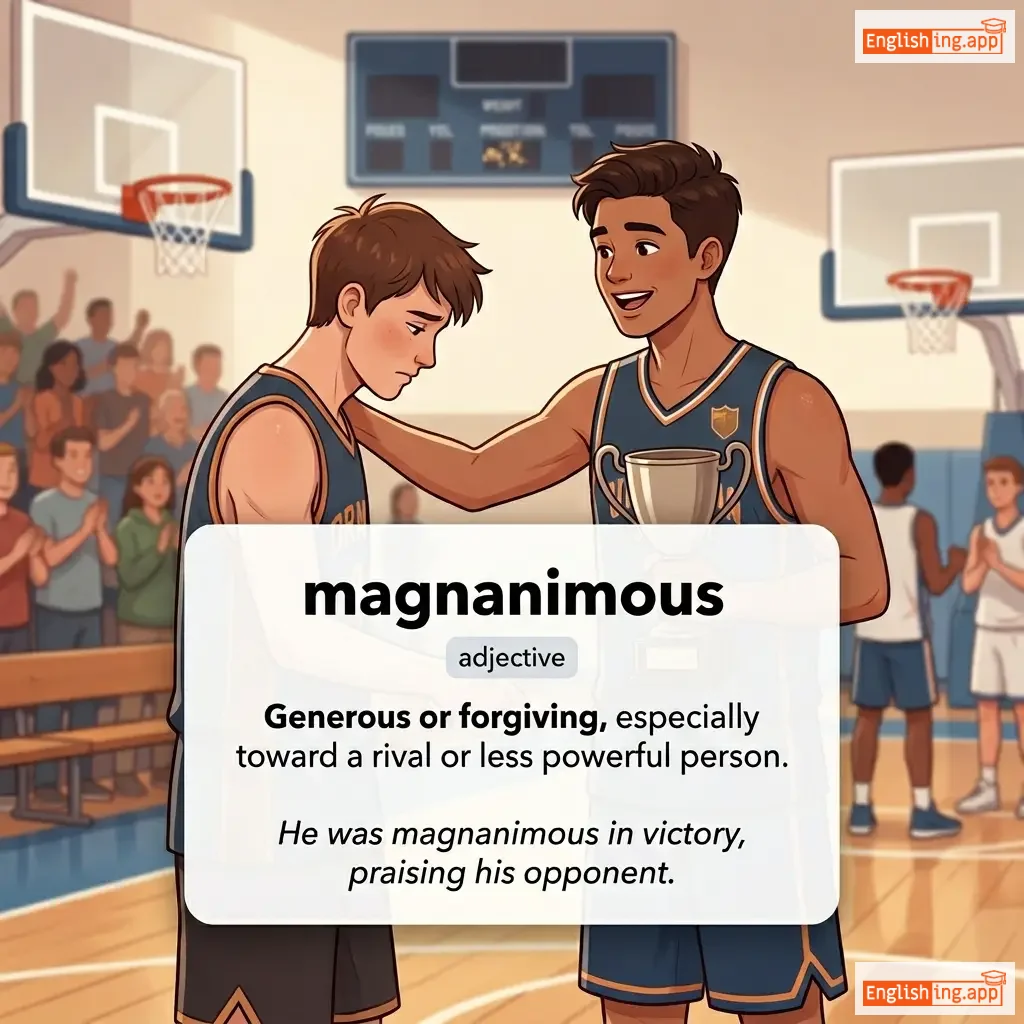
Generous or forgiving, especially toward a rival or less powerful person.
••••••
|
He was magnanimous in victory, praising his opponent.
他在胜利中宽宏大量,赞扬了他的对手。
••••••
|
他在胜利中宽宏大量,赞扬了他的对手。
Ta zai shengli zhong kuan hong da liang, zanyang le ta de duishou.
••••••
|
- •••••• | - •••••• | - •••••• |
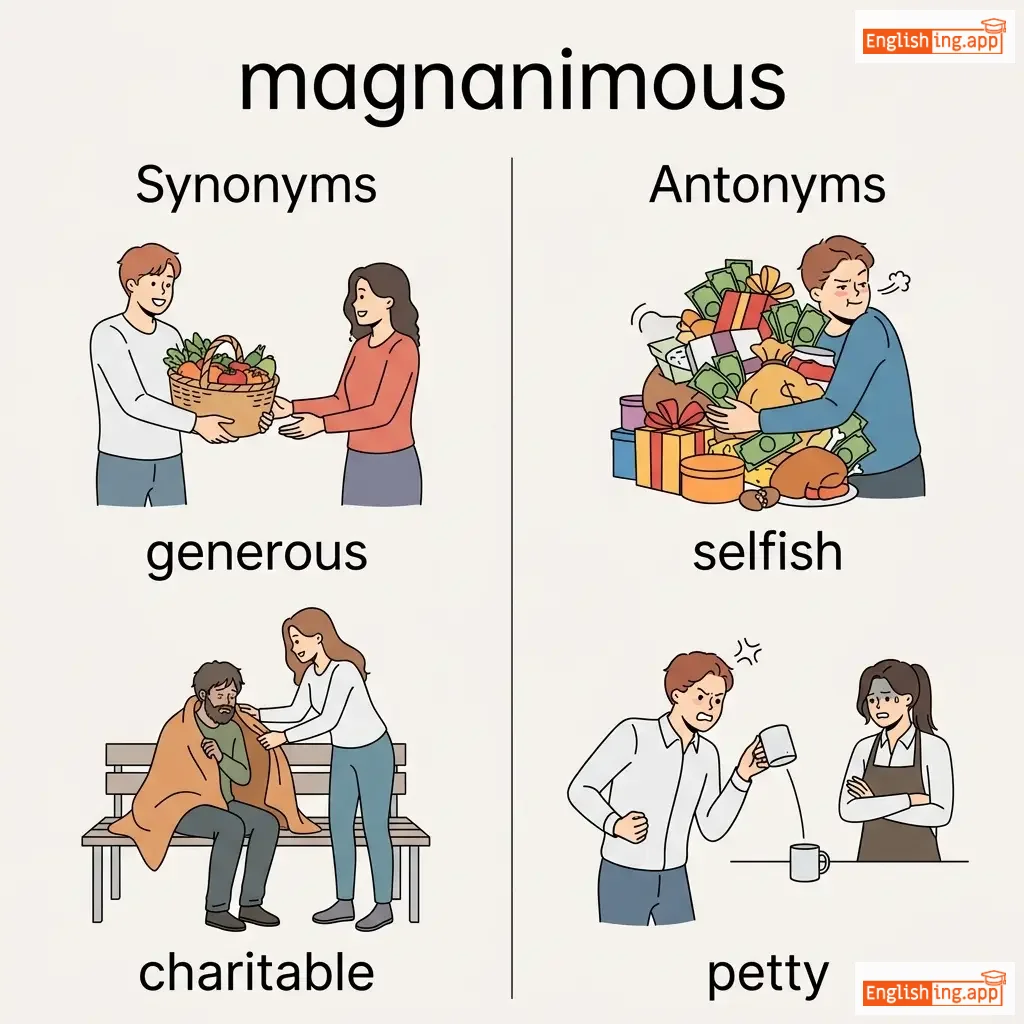
generous, charitable, noble, kind, forgiving
••••••
|
selfish, petty, vindictive
••••••
|
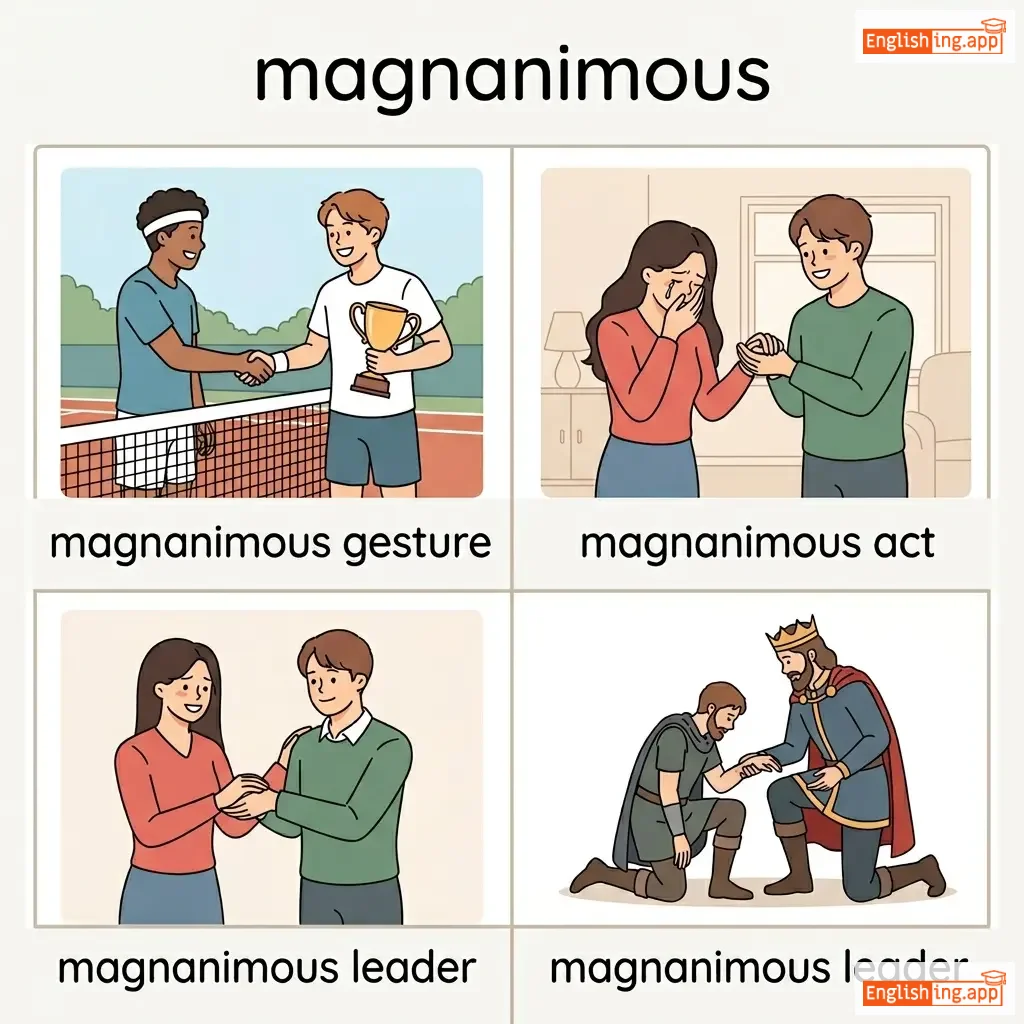
magnanimous gesture, magnanimous act, magnanimous leader, magnanimous spirit
••••••
|
Magnanimous意味着宽宏大量,‘伟大’和‘精神’的结合。
••••••
|
|
#5365
💖
|
/ˌmæɡnəˈnɪmɪti/
noun
(magnanimity)
••••••
|
|
宽宏大量
kuanhong daliang
••••••
|
- •••••• | - •••••• | - •••••• | - •••••• |
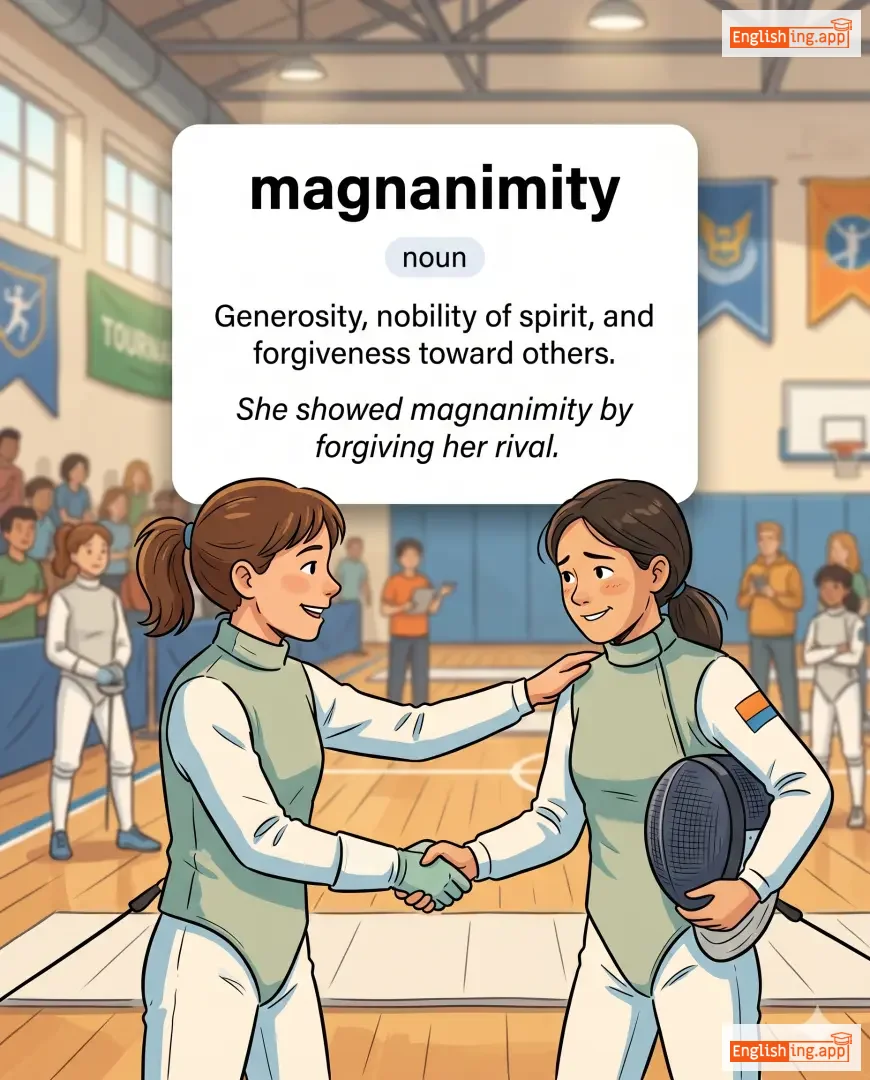
Generosity, nobility of spirit, and forgiveness toward others.
••••••
|
She showed magnanimity by forgiving her rival.
她通过原谅她的对手展示了宽宏大量。
••••••
|
她通过原谅她的对手展示了宽宏大量。
Ta tongguo yuanliang ta de duishou zhanshi le kuanhong daliang.
••••••
|
- •••••• | - •••••• | - •••••• |
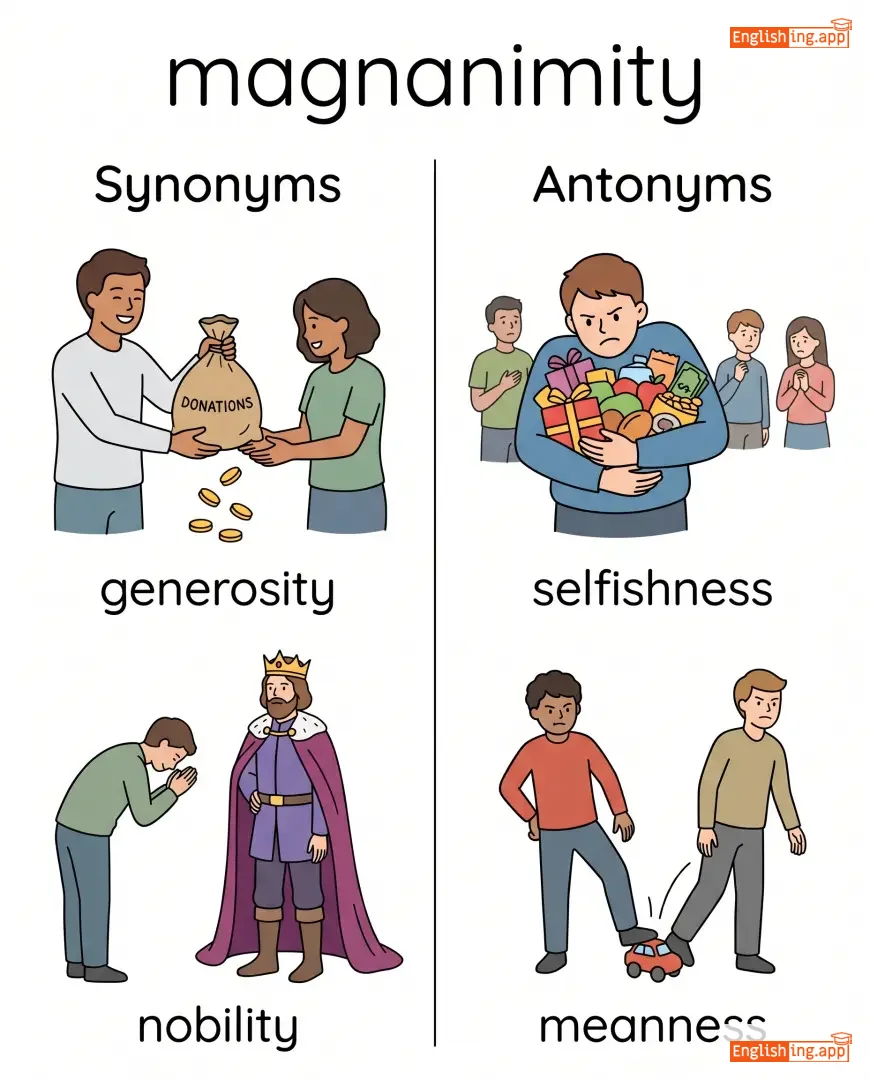
generosity, nobility, kindness, benevolence, altruism
••••••
|
selfishness, meanness, spite
••••••
|
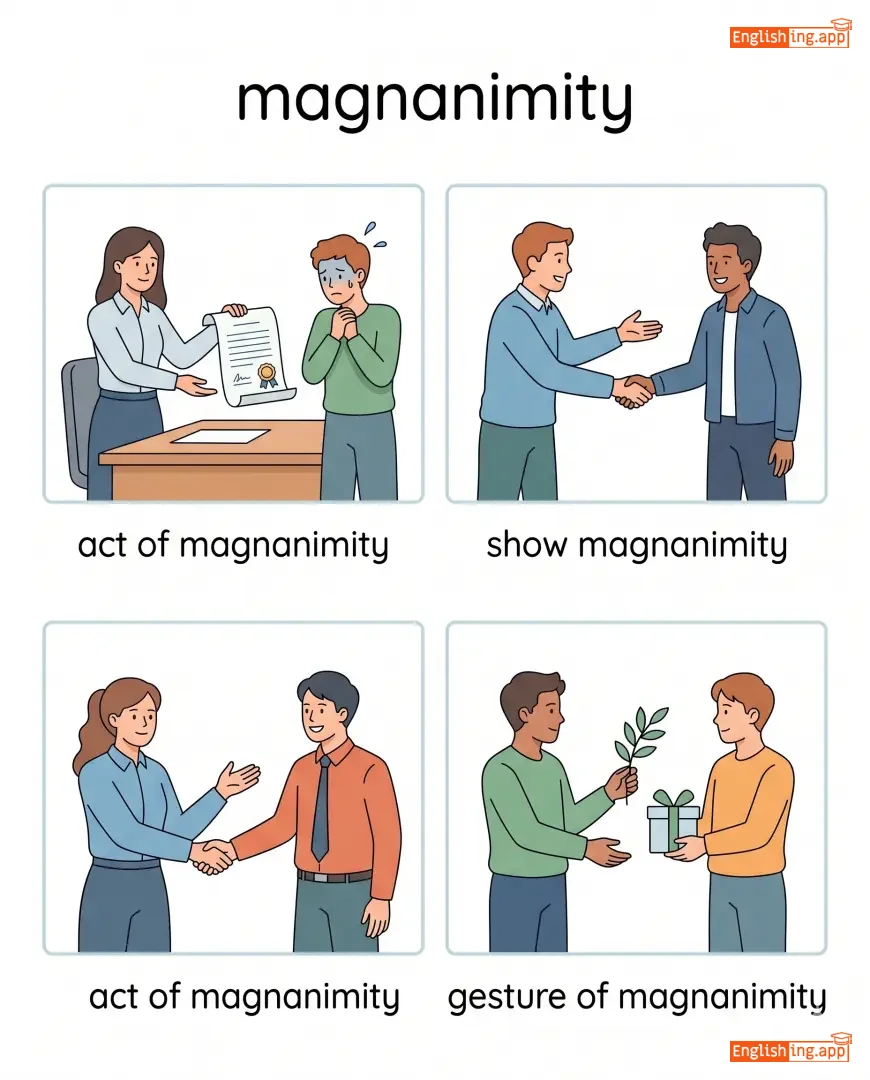
act of magnanimity, show magnanimity, gesture of magnanimity
••••••
|
Magnanimity = 宽宏大量 = 慷慨和高尚。
••••••
|
|
#5366
⚖️
|
/ˈmædʒɪstreɪt/
noun
(mà jí sī tè)
••••••
|
- •••••• |
法官
fǎguān
••••••
|
- •••••• | - •••••• | - •••••• | - •••••• |
A civil officer who administers the law, often with limited judicial authority.
••••••
|
The magistrate presided over the minor criminal case.
法官主持了轻微刑事案件。
••••••
|
法官主持了轻微刑事案件。
Fǎguān zhǔchíle qīngwēi xíngshì ànjiàn.
••••••
|
- •••••• | - •••••• | - •••••• |
judge, justice, arbiter, adjudicator, official
••••••
|
criminal, offender
••••••
|
magistrate court, local magistrate, chief magistrate, before the magistrate
••••••
|
法官 (fǎguān) 是法律的专家,类似 'master' of law - 法律的专家。
••••••
|
|
#5367
⚖️
|
/ˈmædʒɪstrəsi/
noun
(马吉斯特拉西)
••••••
|
- •••••• |
司法办公室
sifa bangongshi
••••••
|
- •••••• | - •••••• | - •••••• | - •••••• |
The office, authority, or district of a magistrate.
••••••
|
He was proud to serve in the local magistracy for over a decade. |
他为能在当地的司法办公室工作超过十年而感到自豪。
Ta wei neng zai dangdi de sifa bangongshi gongzuo chao guo shinian er gandao zihau.
••••••
|
- •••••• | - •••••• | - •••••• |
judiciary, authority, bench, magistrate's office
••••••
|
anarchy, lawlessness
••••••
|
local magistracy, office of magistracy, colonial magistracy
••••••
|
Magistracy = 司法办公室 ⚖️ - 法官的工作场所。
••••••
|
|
#5368
👑
|
/ˌmædʒɪˈstɪəriəl/
adjective
(马吉斯特里尔)
••••••
|
- •••••• |
权威的
quánwēi de
••••••
|
- •••••• | - •••••• | - •••••• | - •••••• |
Having the characteristics of a master or authority; commanding and dignified.
••••••
|
The professor spoke in a magisterial tone during the lecture. |
教授在讲座中用权威的语气发言。
Jiàoshòu zài jiǎngzuò zhōng yòng quánwēi de yǔqì fāyán.
••••••
|
- •••••• | - •••••• | - •••••• |
authoritative, commanding, dignified, imposing, masterly
••••••
|
submissive, humble
••••••
|
magisterial tone, magisterial authority, magisterial work
••••••
|
马吉斯特里尔像是‘法官’,充满权威 👑.
••••••
|
|
#5369
🪄
|
/məˈdʒɪʃən/
noun
(魔术师)
••••••
|
- •••••• |
魔术师
mó shù shī
••••••
|
- •••••• | - •••••• | - •••••• | - •••••• |
A person who performs tricks and illusions for entertainment or one believed to have magical powers.
••••••
|
The magician pulled a rabbit out of his hat. |
魔术师从他的帽子里拿出了兔子。
Móshù shī cóng tā de màozi lǐ ná chūle tùzǐ.
••••••
|
like magic |
something happening surprisingly easily or quickly
••••••
|
像魔法一样
xiàng mófǎ yīyàng
••••••
|
sorcerer, wizard, illusionist, conjurer, enchanter
••••••
|
mortal, realist
••••••
|
stage magician, street magician, great magician
••••••
|
魔术师能做任何神奇的事!
••••••
|
|
#5370
🌪️
|
/ˈmeɪlstrəm/
noun
(梅尔斯特罗姆)
••••••
|
|
漩涡
xuánwō
••••••
|
- •••••• | - •••••• | - •••••• | - •••••• |
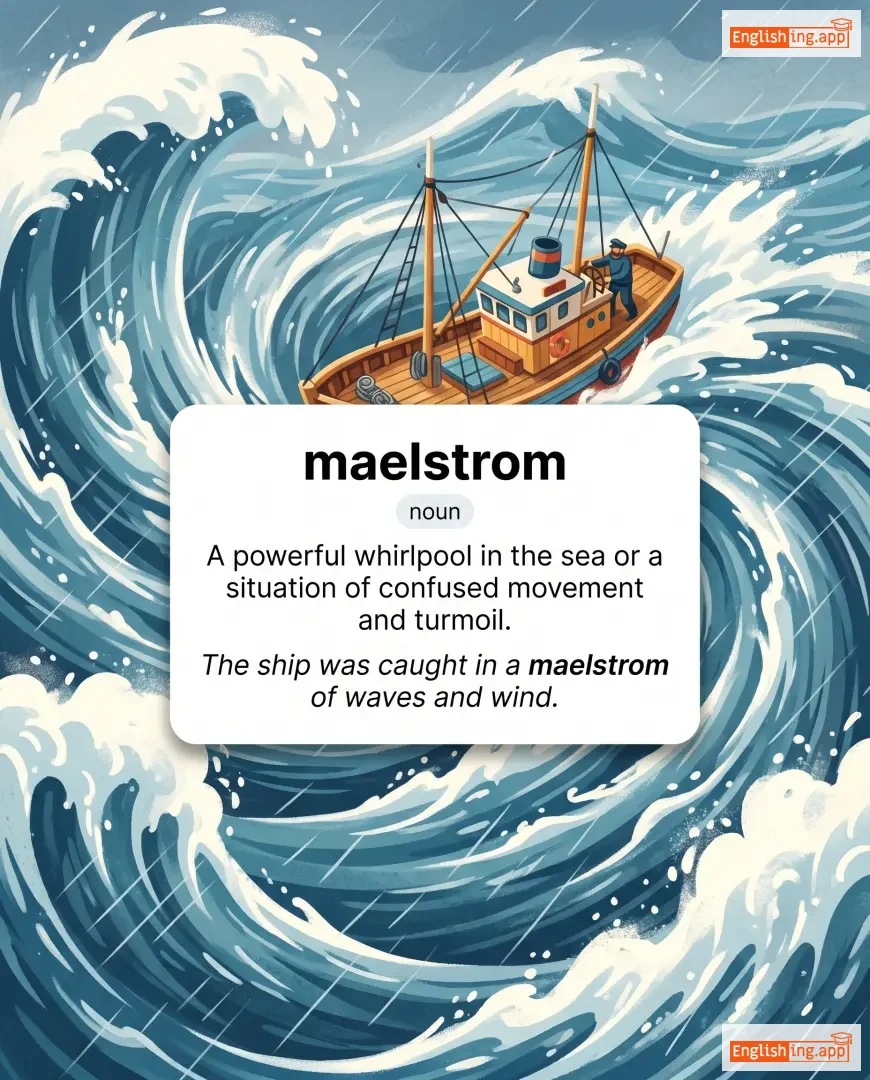
A powerful whirlpool in the sea or a situation of confused movement and turmoil.
••••••
|
The ship was caught in a maelstrom of waves and wind.
船只被卷入了波浪和风的旋涡中。
••••••
|
船只被卷入了波浪和风的漩涡中。
Chuán zhī bèi juǎn rù le bōlàng hé fēng de xuánwō zhōng.
••••••
|
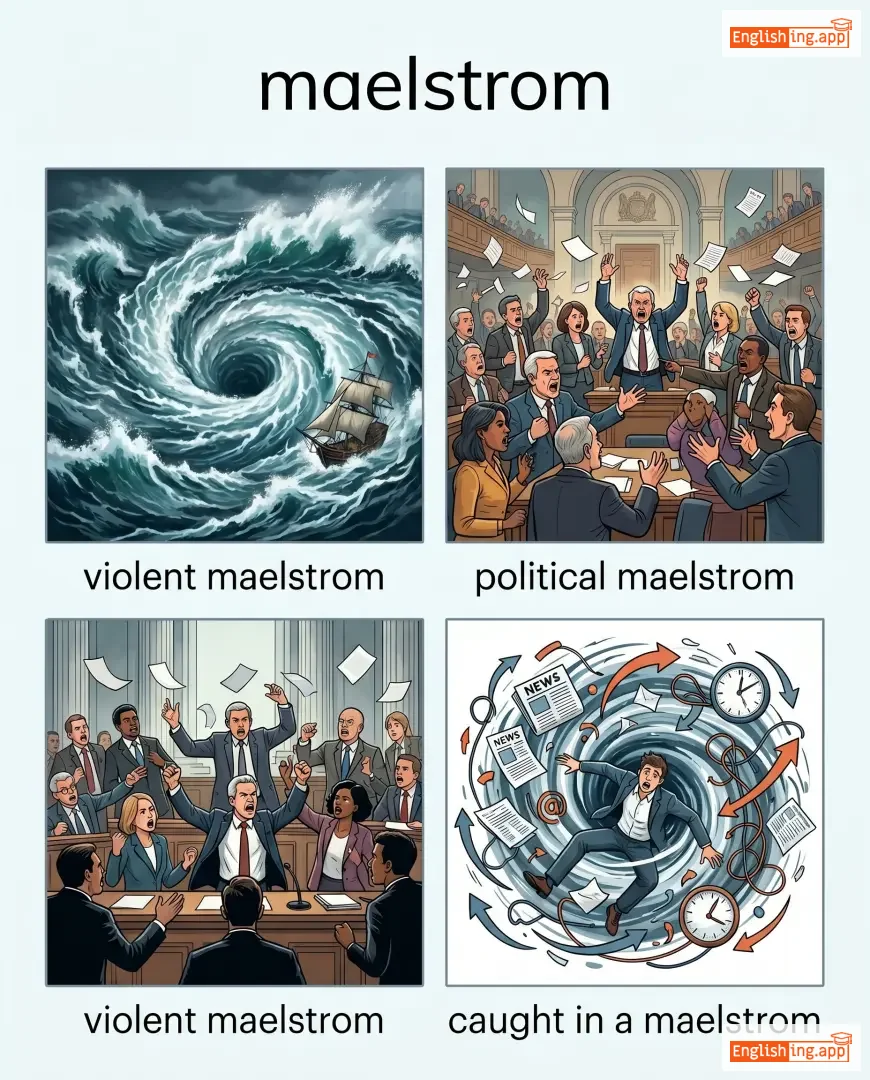
caught in a maelstrom
陷入旋涡
••••••
|
being stuck in a confusing or turbulent situation
••••••
|
陷入漩涡
xiànrù xuánwō
••••••
|
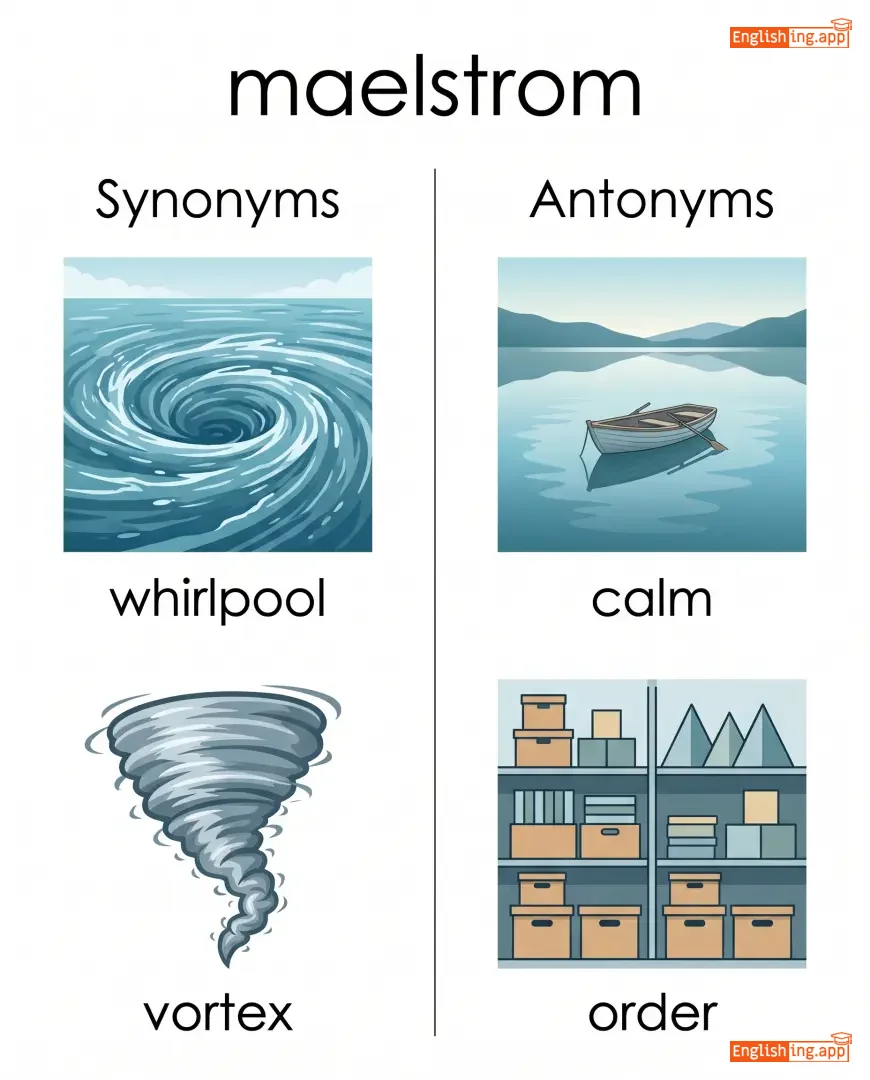
whirlpool, vortex, turbulence, chaos, turmoil
••••••
|
calm, order, tranquility
••••••
|
violent maelstrom, political maelstrom, caught in a maelstrom
••••••
|
旋涡就像是一个把所有东西吸进来的大旋转!
••••••
|
Vocabulary Quiz
Test your vocabulary by matching words with their translations or meanings.
Login to take the quiz
Comments (0)
Share your thoughts and join the discussion.
Join the discussion by logging in
Login to CommentNo comments yet
Be the first to share your thoughts!