


Swipe left or right, or use the buttons. Tap image to zoom.
例句翻译
单词
Lesson 311Lesson 311 - 遮罩切换
|
表情符号
|
单词 | Images | 翻译 | 过去时 | 过去分词 | 第三人称单数 | 动名词 | 含义 | 例句 | 例句翻译 | 示例表达 | 示例表达含义 | 示例表达翻译 | 同义词 | 反义词 | 搭配词 | 助记符 |
|---|---|---|---|---|---|---|---|---|---|---|---|---|---|---|---|---|---|
|
#9300
⚡
|
/vɜːrv/
noun
(韦尔夫)
••••••
|
- •••••• |
活力
huólì
••••••
|
- •••••• | - •••••• | - •••••• | - •••••• |
Great enthusiasm, spirit, or energy in expression or performance.
••••••
|
The actor performed his role with remarkable verve.
这位演员以惊人的活力表演了他的角色。
••••••
|
这位演员以惊人的活力表演了他的角色。
Zhè wèi yǎnyuán yǐ jīngrén de huólì biǎoyǎn le tā de juésè.
••••••
|
- •••••• | - •••••• | - •••••• |
enthusiasm, energy, vigor, spirit, zest
••••••
|
apathy, dullness, lethargy
••••••
|
artistic verve, perform with verve, full of verve
••••••
|
Verve 在中文中是活力 (huólì),表现出强大的能量。
••••••
|
|
#9301
😈
|
/ˈvɪʃəs/
adjective
(vishas)
••••••
|
- •••••• |
残忍的
zanren de
••••••
|
- •••••• | - •••••• | - •••••• | - •••••• |
Deliberately cruel, violent, or immoral.
••••••
|
The dog gave a vicious growl when the stranger approached. |
当陌生人接近时,狗发出了残忍的低吼。
Dang moshengren jiejin shi, gou fashu le canren de dihou.
••••••
|
vicious cycle |
A sequence of problems that reinforce or worsen each other.
••••••
|
恶性循环
èxìng xúnhuán
••••••
|
cruel, brutal, savage, malicious, fierce
••••••
|
kind, gentle, benevolent
••••••
|
vicious attack, vicious circle, vicious cycle, vicious rumor
••••••
|
VICIOUS意味着非常危险 - 想象一个VICIOUS的狗,一个非常危险的狗 🐕
••••••
|
|
#9302
👑
|
/ˈvaɪsrɔɪ/
noun
(wàisīruì)
••••••
|
- •••••• |
副总督
fu zong du
••••••
|
- •••••• | - •••••• | - •••••• | - •••••• |
a ruler exercising authority on behalf of a sovereign in a colony or province
••••••
|
The viceroy governed the colony in the king's name.
副总督以国王的名义治理殖民地。
••••••
|
副总督以国王的名义治理殖民地。
Fu zong du yi guowang de mingyi zhili zhimin di.
••••••
|
- •••••• | - •••••• | - •••••• |
governor, ruler, regent, administrator, deputy
••••••
|
subject, citizen
••••••
|
British viceroy, colonial viceroy, viceroy of India, powerful viceroy
••••••
|
Vice(副) + 总督(政府代表) = 副总督
••••••
|
|
#9303
🤗
|
/vaɪˈkɛəriəs/
adjective
••••••
|
- •••••• |
幸福
xingfu
••••••
|
- •••••• | - •••••• | - •••••• | - •••••• |
experienced through the feelings or actions of another person
••••••
|
She felt vicarious excitement watching her son win the award. |
当她获得奖项时,她无法掩饰自己的幸福。
Dang ta huode jiangxiang shi, ta wufa yanshi ziji de xingfu.
••••••
|
vicarious pleasure |
enjoyment gained through another person's experiences
••••••
|
追求幸福
zhuīqiú xìngfú
••••••
|
indirect, secondhand, empathetic, substitute, surrogate
••••••
|
direct, personal
••••••
|
vicarious experience, vicarious thrill, vicarious pleasure, vicarious learning
••••••
|
幸福就像你最喜欢的甜点,每次尝到都让你心情大好。
••••••
|
|
#9304
🍲
|
/ˈvaɪənd/
noun
(váiānd)
••••••
|
- •••••• |
佳肴
jiāyáo
••••••
|
- •••••• | - •••••• | - •••••• | - •••••• |
an item of food, especially a delicacy
••••••
|
The banquet was filled with rich viands and wines. |
宴会充满了丰盛的佳肴和美酒。
Yànhuì chōngmǎnle fēngshèng de jiāyáo hé měijiǔ.
••••••
|
- •••••• | - •••••• | - •••••• |
dish, food, meal, delicacy, fare
••••••
|
drink, beverage
••••••
|
delicious viands, rich viands, various viands, table of viands
••••••
|
Viand 意味着美味佳肴 🍲 - Via AND 美味
••••••
|
|
#9305
🌱
|
/ˈvaɪəbl̩/
adjective
(wàiyàobù)
••••••
|
|
可行的
kexing de
••••••
|
- •••••• | - •••••• | - •••••• | - •••••• |
capable of working successfully or able to survive
••••••
|
They need a viable business plan to attract investors.
他们需要一个可行的商业计划来吸引投资者。
••••••
|
他们需要一个可行的商业计划来吸引投资者。
Tāmen xūyào yīgè kěxíng de shāngyè jìhuà lái xīyǐn tóuzī zhě.
••••••
|
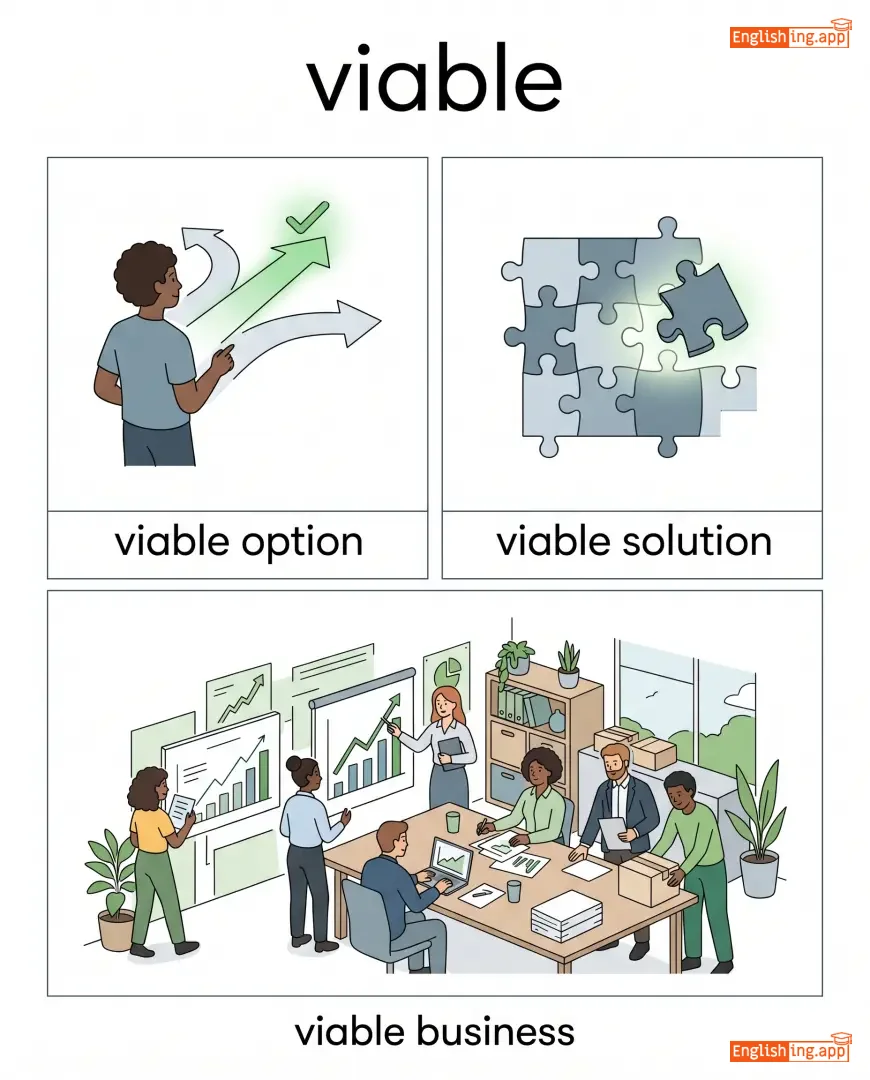
viable option
可行的选择
••••••
|
a choice that is practical and can work successfully
••••••
|
可行的选择
kěxíng de xuǎnzé
••••••
|
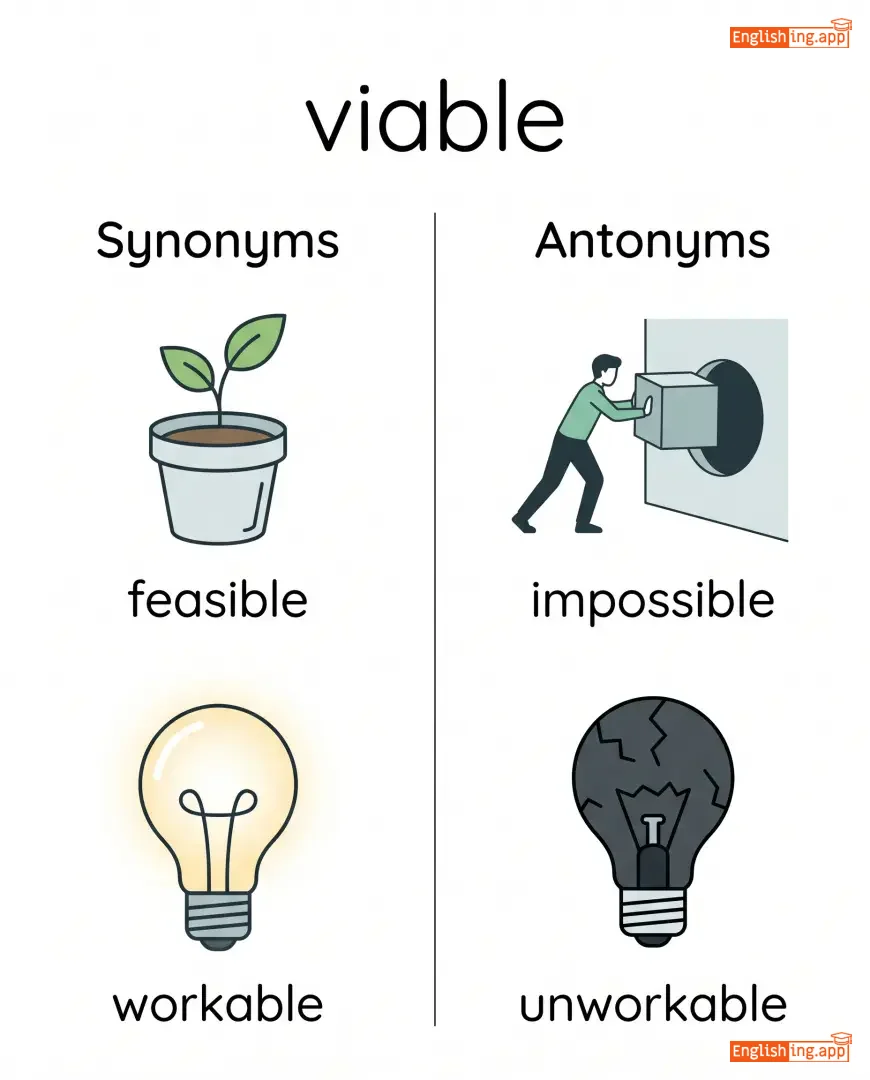
feasible, workable, practical, possible, sustainable
••••••
|
impossible, unworkable, impractical
••••••
|
viable option, viable solution, viable business, economically viable
••••••
|
就像一个能生长的植物,适合生存 🌱
••••••
|
|
#9306
➡️
|
/ˈvaɪə/ or /ˈviːə/
preposition
(维亚)
••••••
|
- •••••• |
通过
tongguo
••••••
|
- •••••• | - •••••• | - •••••• | - •••••• |
through, by way of, or using a particular route or means
••••••
|
She sent the documents via email. |
她通过电子邮件发送了文件。
Ta tongguo dianzi youjian fasongle wenjian.
••••••
|
- •••••• | - •••••• | - •••••• |
through, by, using, across, along
••••••
|
without, beyond
••••••
|
via email, via phone, via internet, travel via, communicate via
••••••
|
维亚是一个通道,就像通过某个途径到达目的地。
••••••
|
|
#9307
😤
|
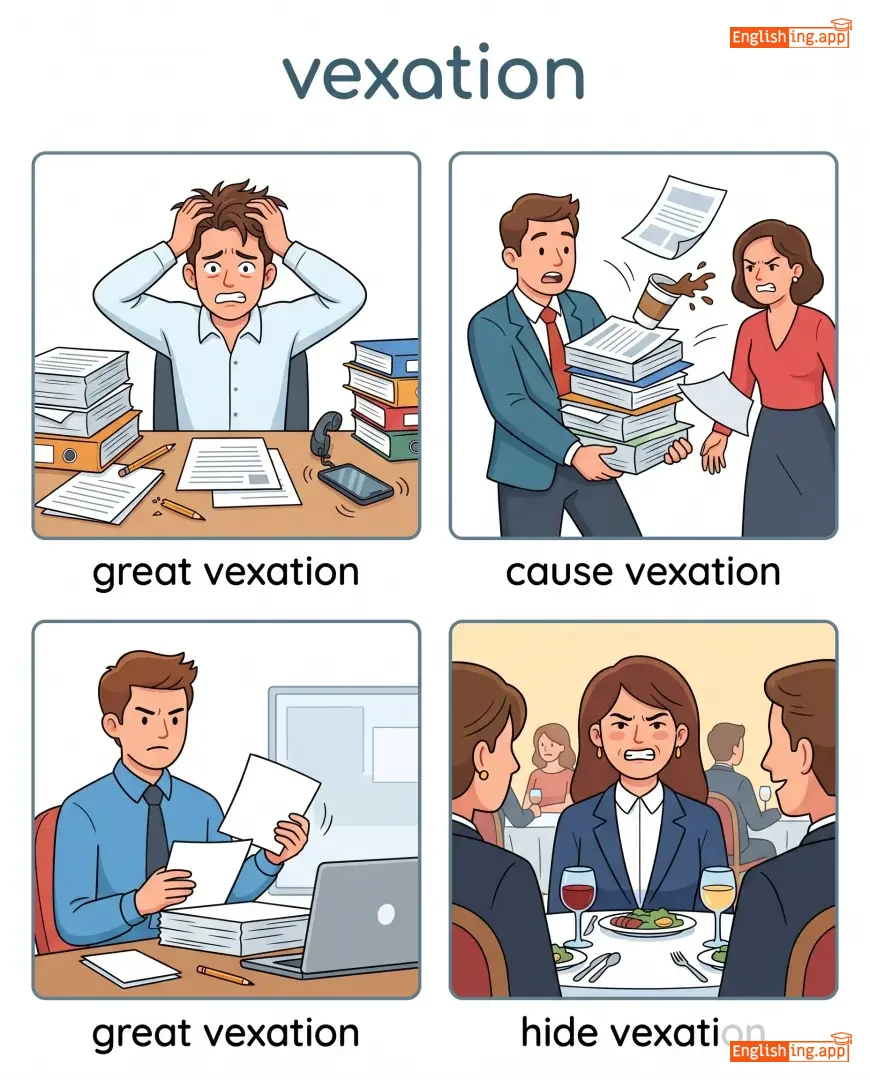
/vɛkˈseɪʃən/
noun
(vɛkseɪʃɔn)
••••••
|
|
烦恼
fánnǎo
••••••
|
- •••••• | - •••••• | - •••••• | - •••••• |
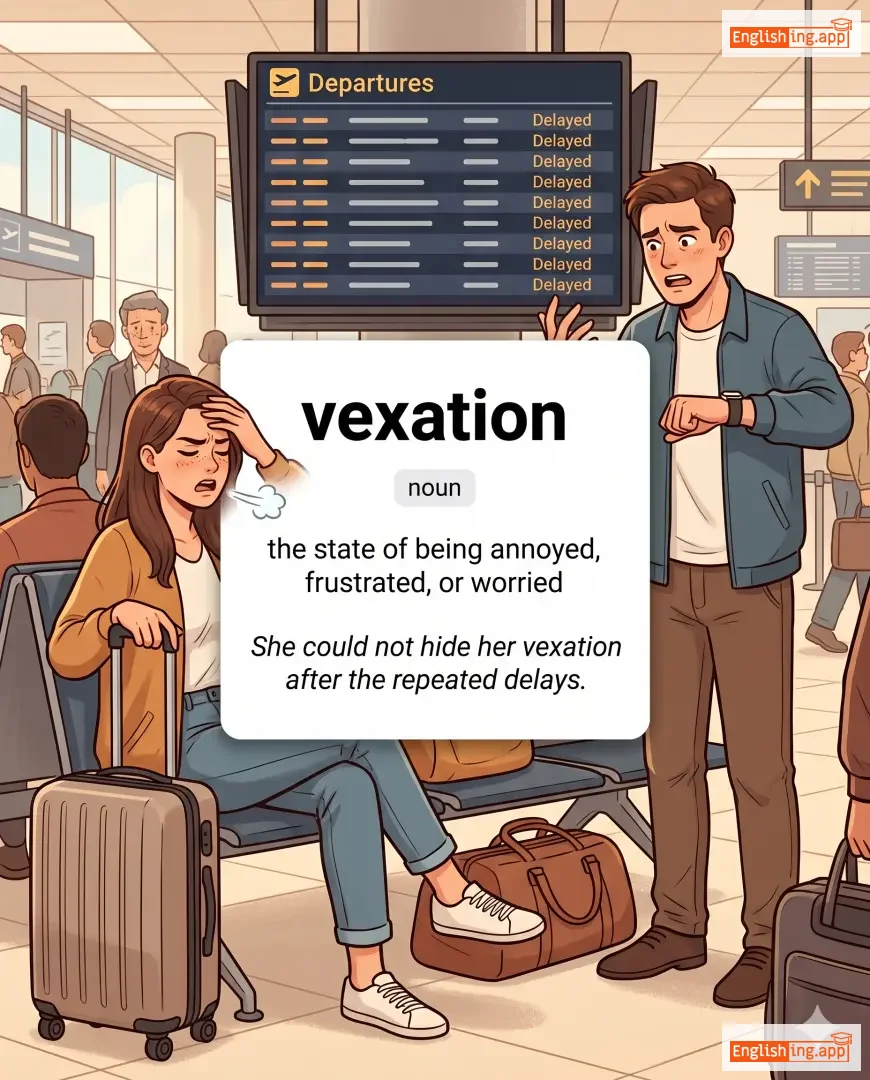
the state of being annoyed, frustrated, or worried
••••••
|
She could not hide her vexation after the repeated delays.
她在反复的延迟后,无法掩饰她的烦恼。
••••••
|
她在反复的延迟后,无法掩饰她的烦恼。
Tā zài fǎnfù de yánchí hòu, wúfǎ yǎnshì tā de fánnǎo.
••••••
|
- •••••• | - •••••• | - •••••• |
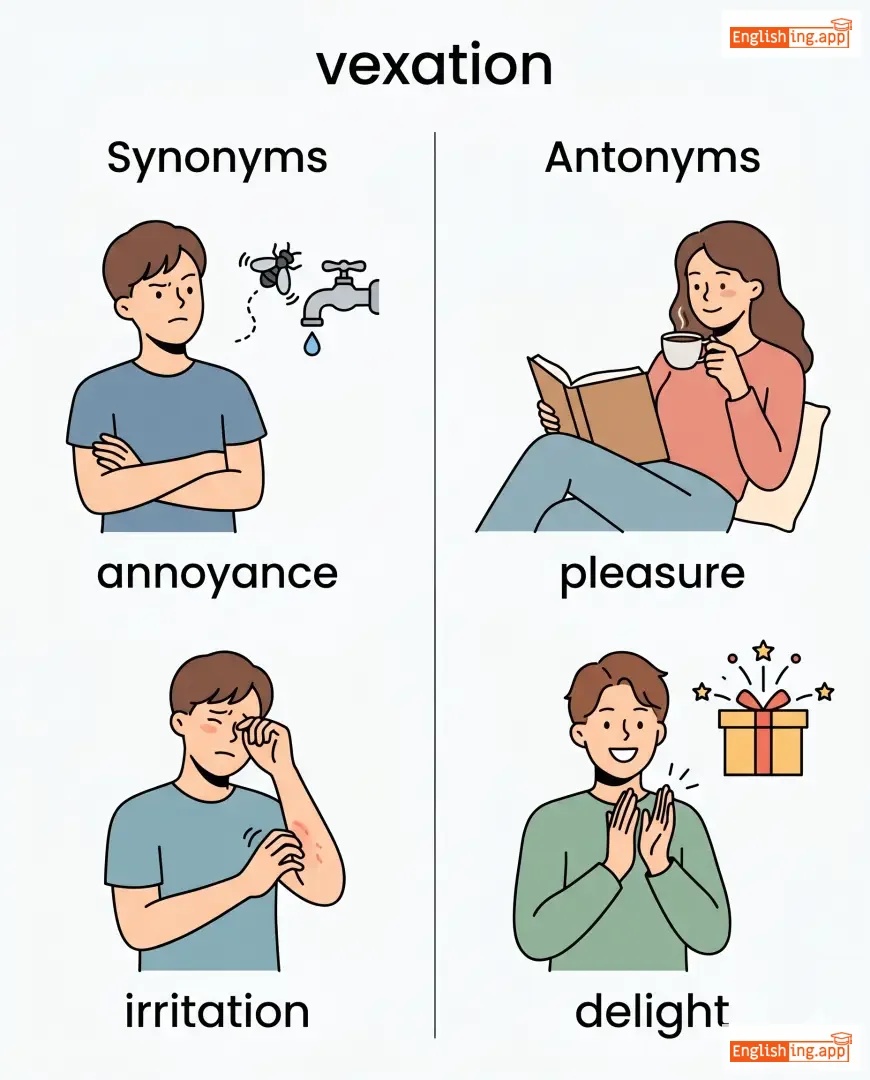
annoyance, irritation, frustration, distress, exasperation
••••••
|
pleasure, delight, satisfaction
••••••
|
great vexation, cause vexation, hide vexation, in vexation
••••••
|
Vexation = vex + action → 烦恼在行动中
••••••
|
|
#9308
😠
|
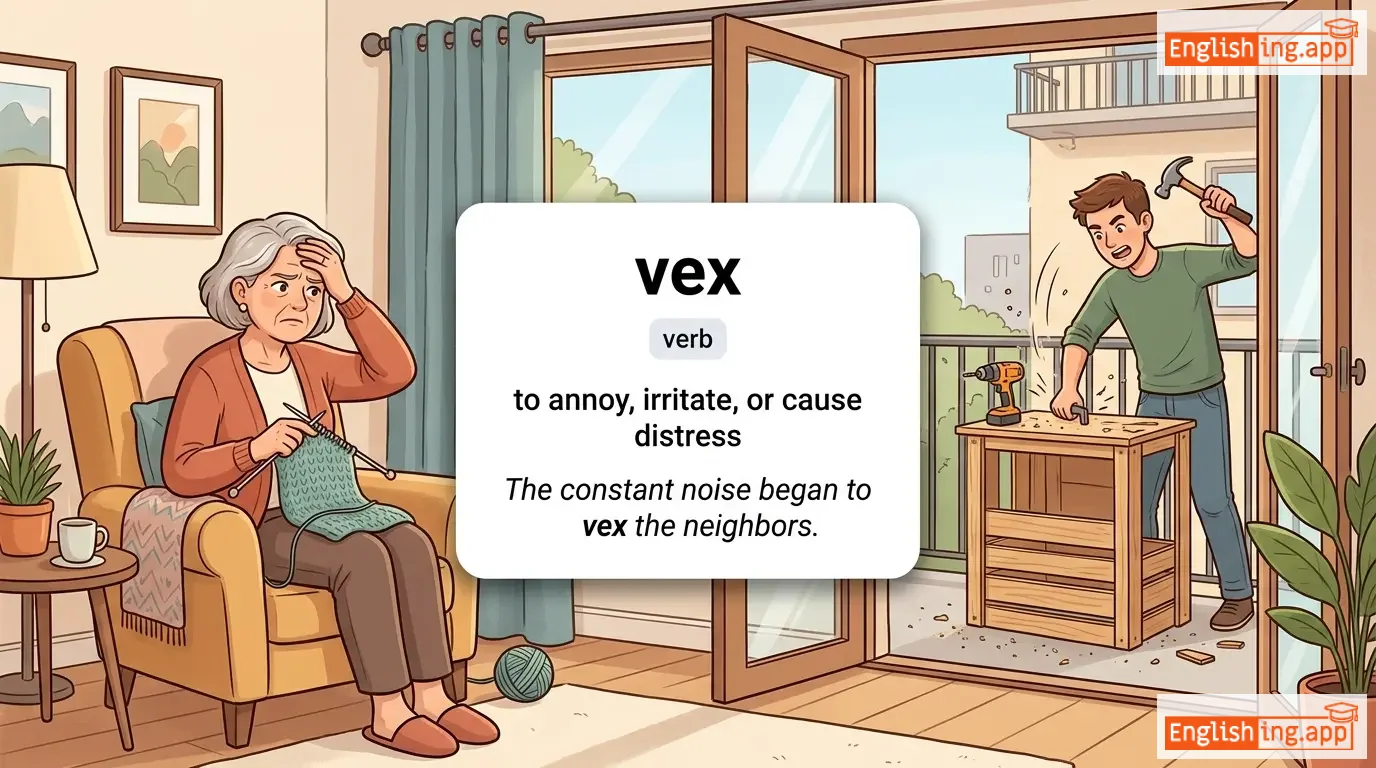
/vɛks/
verb
(韦克斯)
••••••
|
|
烦扰
fanrao
••••••
|
vexed
韦克斯德
••••••
|
vexed
韦克斯德
••••••
|
vexes
韦克塞斯
••••••
|
vexing
韦克辛
••••••
|
to annoy, irritate, or cause distress
••••••
|
The constant noise began to vex the neighbors.
持续的噪音开始烦扰邻居。
••••••
|
持续的噪音开始烦扰邻居。
Chixu de zaoyin kaishi fanrao linju.
••••••
|
vexed question
烦扰的问题
••••••
|
a difficult or controversial problem
••••••
|
困难或有争议的问题
kunan huo you zhengyi de wenti
••••••
|
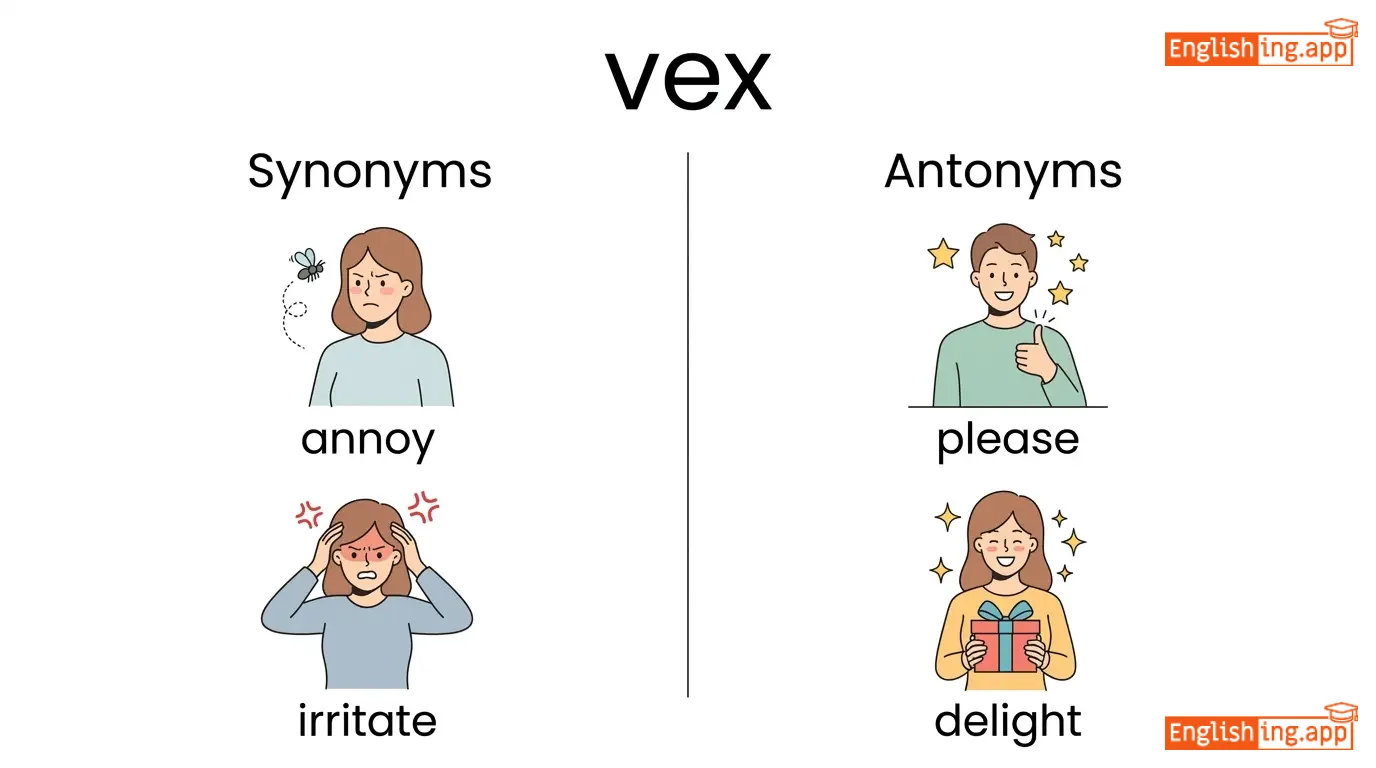
annoy, irritate, bother, upset, provoke
••••••
|
please, delight, comfort
••••••
|
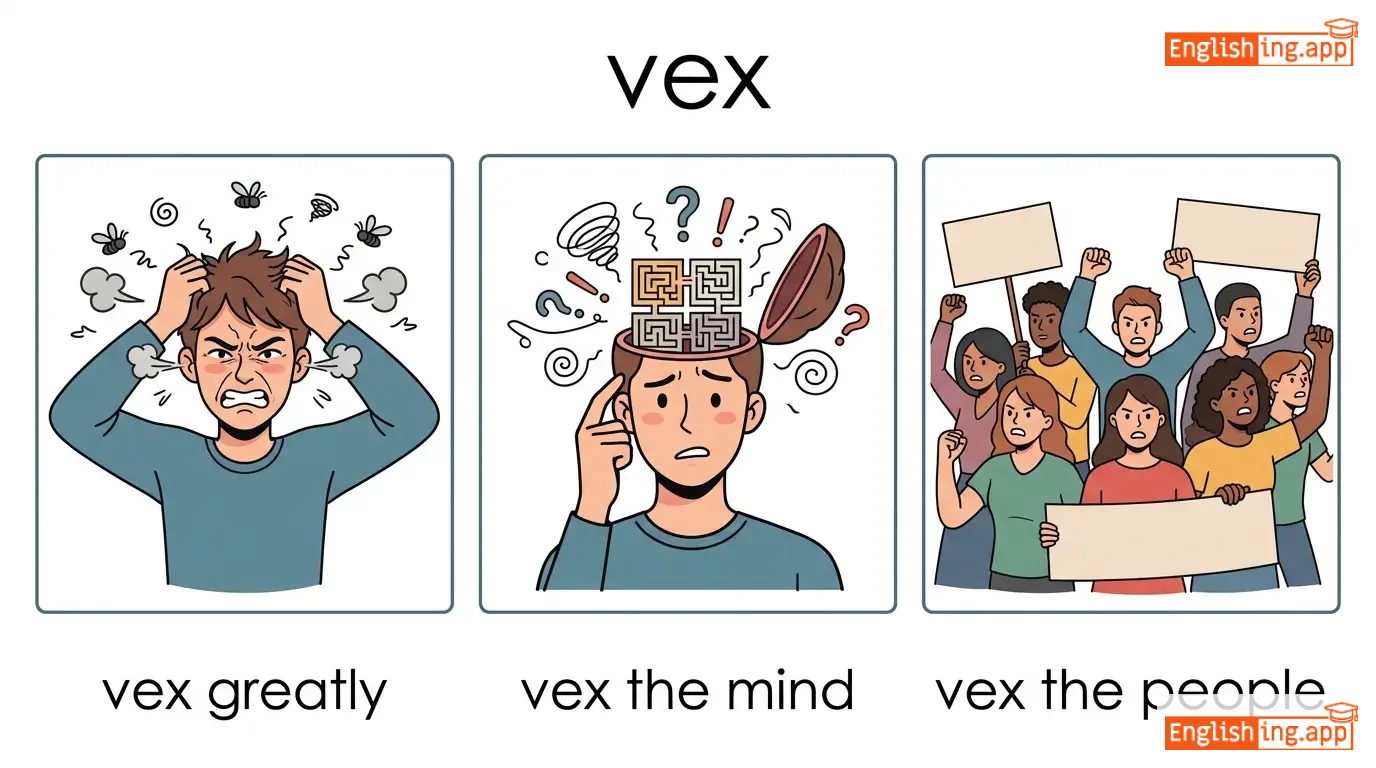
vex greatly, vex the mind, vex the people, vex question
••••••
|
Vex – 噪音烦扰
••••••
|
|
#9309
🚫
|
/ˈviːtoʊ/
verb
(否决)
••••••
|
- •••••• |
否决
fǒujué
••••••
|
vetoed
否决
••••••
|
vetoed
否决
••••••
|
vetoes
否决
••••••
|
vetoing
否决
••••••
|
to reject or forbid a decision, proposal, or law
••••••
|
The president decided to veto the new bill.
总统决定否决这项新法案。
••••••
|
总统决定否决这项新法案。
Zǒngtǒng juédìng fǒujué zhè xiàng xīn fǎ'àn.
••••••
|
right of veto
否决权
••••••
|
the power to reject decisions or laws
••••••
|
否决权
fǒujué quán
••••••
|
reject, forbid, overrule, block, deny
••••••
|
approve, accept, permit
••••••
|
presidential veto, veto power, veto a bill, veto authority
••••••
|
Veto 意思不是投票,而是拒绝
••••••
|
|
#9310
🎖️
|
/ˈvɛtərən/
noun
(退伍军人)
••••••
|
- •••••• |
有经验的人 / 退役军人
yǒu jīngyàn de rén / tuìyì jūnrén
••••••
|
- •••••• | - •••••• | - •••••• | - •••••• |
a person who has long experience in a particular field or an ex-member of the armed forces
••••••
|
He is a veteran of the software industry. |
他是软件行业的老兵。
Tā shì ruǎnjiàn hángyè de lǎobīng
••••••
|
war veteran |
a person who has served in a war
••••••
|
战争老兵
zhànzhēng lǎobīng
••••••
|
experienced, expert, old-timer, ex-soldier
••••••
|
novice, beginner, recruit
••••••
|
war veteran, military veteran, veteran player, industry veteran
••••••
|
Veteran 意味着非常训练有素——有经验的人或退役军人
••••••
|
|
#9311
👕
|
/ˈvɛstmənt/
noun
(wèisītè mèn)
••••••
|
- •••••• |
宗教服饰
zōngjiào fúshì
••••••
|
- •••••• | - •••••• | - •••••• | - •••••• |
a garment, especially a ceremonial or official robe worn during religious services
••••••
|
The priest wore a golden vestment during the ceremony.
神父在仪式中穿着金色的圣袍。
••••••
|
神父在仪式中穿着金色的圣袍。
Shénfù zài yíshì zhōng chuānzhuó jīnsè de shèngpáo.
••••••
|
- •••••• | - •••••• | - •••••• |
robe, garment, attire, clothing, apparel
••••••
|
casual wear, undress
••••••
|
liturgical vestment, priestly vestment, ceremonial vestment, religious vestment
••••••
|
‘Vest’源于‘衣服’,‘vestment’就是宗教服饰。
••••••
|
|
#9312
🦴
|
/vɛˈstɪdʒiəl/
adjective
(vèstíjiǎl)
••••••
|
- •••••• |
遗迹的
yíjì de
••••••
|
- •••••• | - •••••• | - •••••• | - •••••• |
Relating to a small, undeveloped remnant of something that was once much larger or more functional.
••••••
|
Humans have a vestigial tailbone that no longer serves its original purpose. |
人类有一个遗迹的尾骨,它不再执行其原始功能。
Rénlèi yǒu yīgè yíjì de wěigǔ, tā bù zài zhíxíng qí yuánshǐ gōngnéng.
••••••
|
- •••••• | - •••••• | - •••••• |
rudimentary, undeveloped, residual, atrophied
••••••
|
developed, functional
••••••
|
vestigial organ, vestigial structure, vestigial remains
••••••
|
遗迹的器官就像人类尾部的痕迹,曾经是有用的,现在已经不再有用了。
••••••
|
|
#9313
🧩
|
/ˈvɛstɪdʒ/
noun
(vèstídʒ)
••••••
|
- •••••• |
遗迹
yíjì
••••••
|
- •••••• | - •••••• | - •••••• | - •••••• |
A small remaining part of something that once existed.
••••••
|
Only a vestige of the ancient wall remains today. |
今天只剩下古老墙壁的遗迹。
Jīntiān zhǐ shèng xià gǔlǎo qiángbì de yíjì.
••••••
|
last vestige |
The final small trace or remnant of something.
••••••
|
最后的遗迹
zuìhòu de yíjì
••••••
|
remnant, trace, fragment, relic, residue
••••••
|
whole, entirety
••••••
|
last vestige, slight vestige, ancient vestige
••••••
|
遗迹代表着曾经存在的东西,像墙壁上的小碎片。
••••••
|
|
#9314
🚢
|
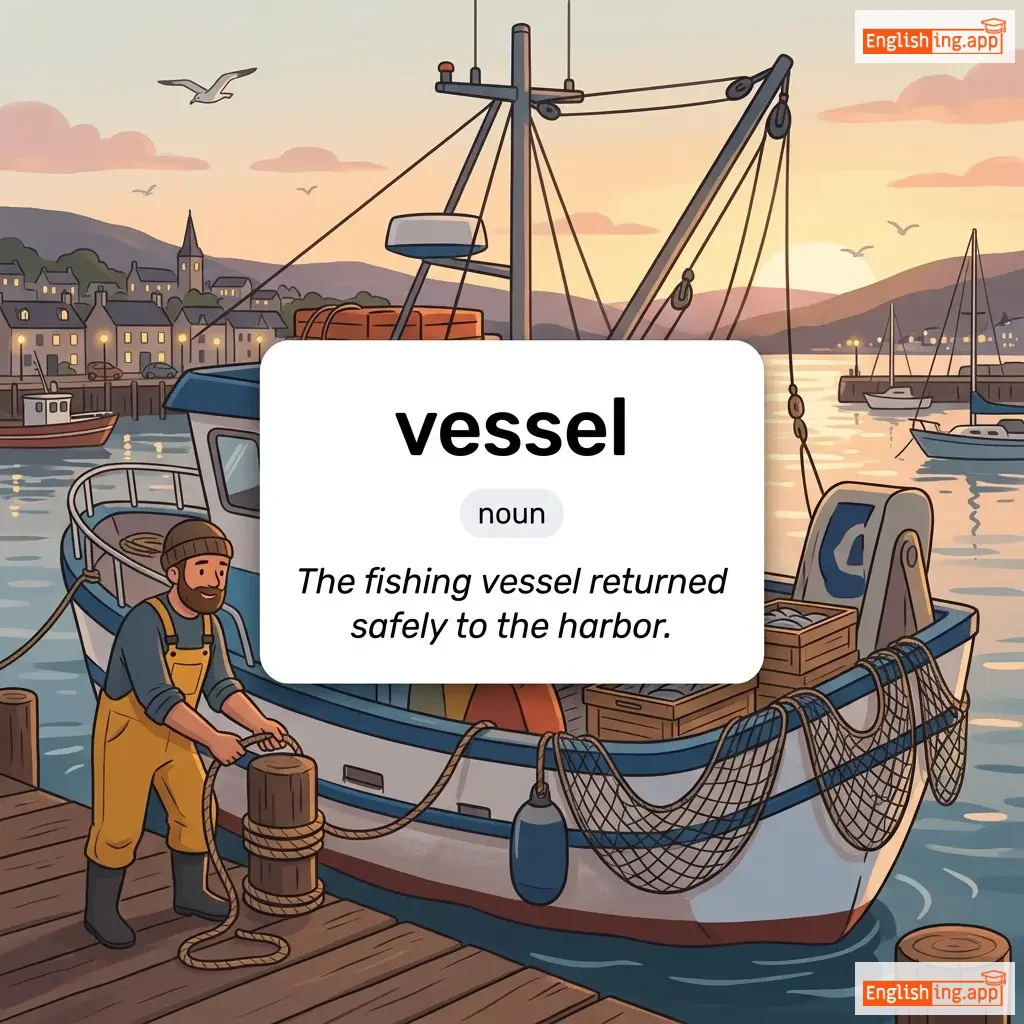
/ˈvɛsəl/
noun
(vessel)
••••••
|
|
船只 / 容器
chuánzhī / róngqì
••••••
|
- •••••• | - •••••• | - •••••• | - •••••• |
A ship or large boat; also a container for holding liquids or a tube in the body that carries blood.
••••••
|
The fishing vessel returned safely to the harbor. |
渔船安全地返回港口。
Yú chuán ānquán de fǎnhuí gǎngkǒu.
••••••
|
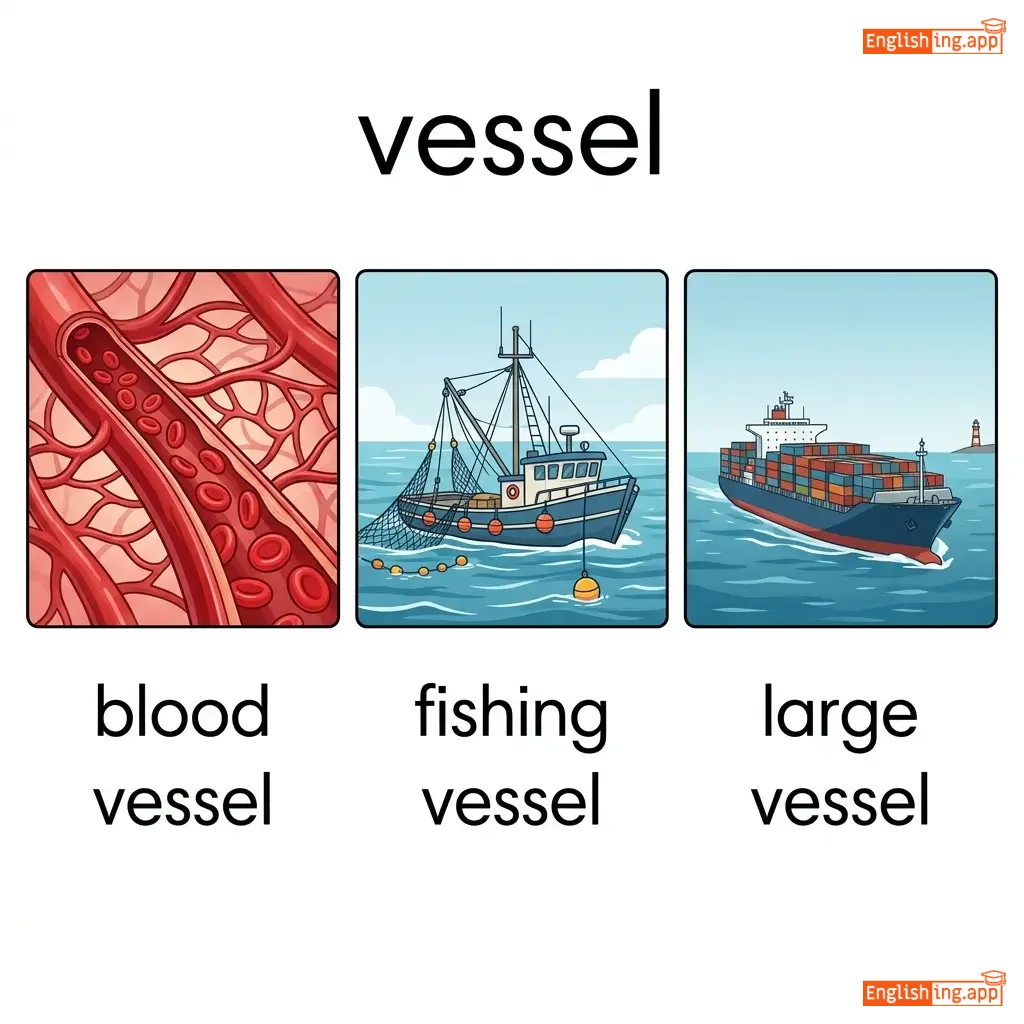
blood vessel |
A tubular structure in the body that carries blood.
••••••
|
血管
xiěguǎn
••••••
|
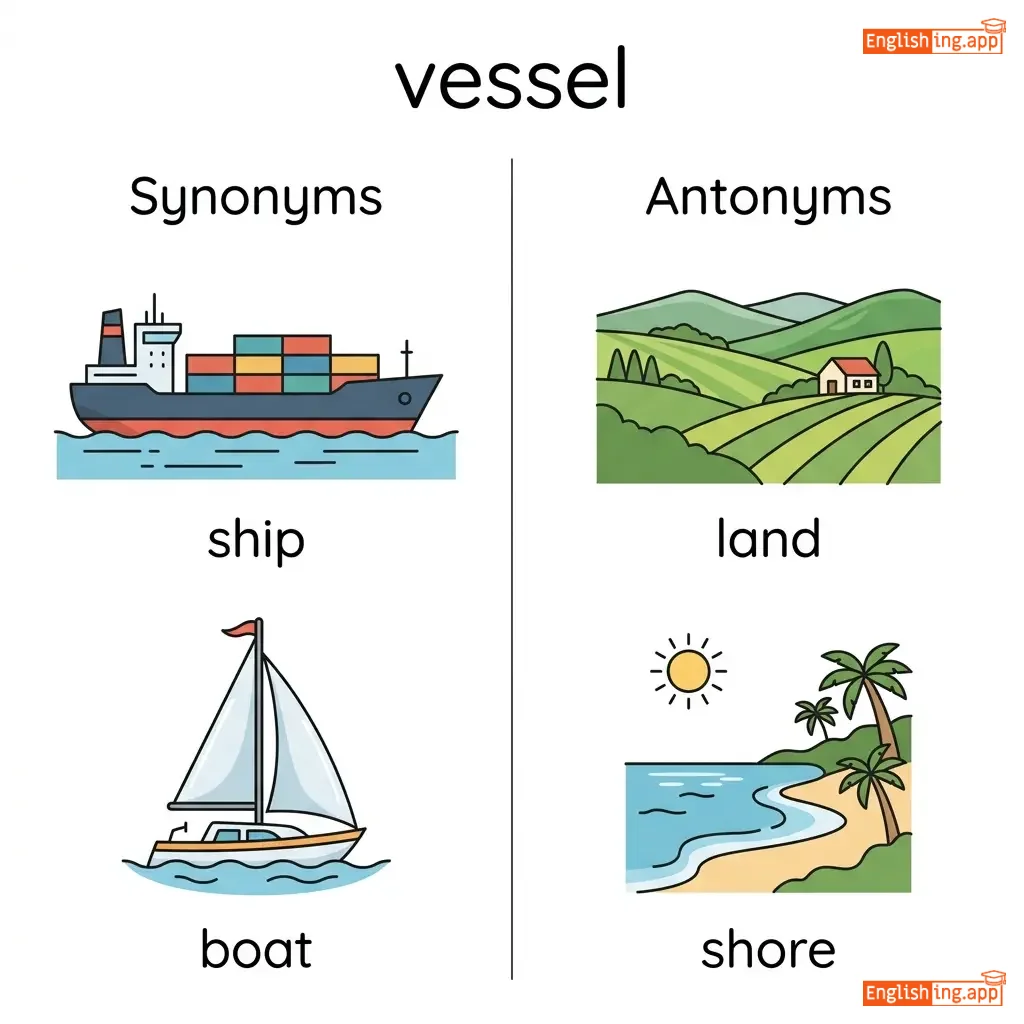
ship, boat, craft, container, receptacle
••••••
|
land, shore
••••••
|
blood vessel, fishing vessel, large vessel, sea vessel
••••••
|
Vessel 就像 🚢 船只或身体中的血管,想象船和血液!
••••••
|
|
#9315
🧐
|
/ˌvɛrɪˈsɪmɪlər/
adjective
(韦里西米拉)
••••••
|
- •••••• |
类似于真实
lèisì yú zhēnshí
••••••
|
- •••••• | - •••••• | - •••••• | - •••••• |
appearing to be true or real
••••••
|
The story seemed verisimilar though it was entirely fictional. |
这个故事看起来类似于真实,尽管它完全是虚构的。
Zhège gùshì kàn qǐlái lèisì yú zhēnshí, jǐnguǎn tā wánquán shì xūgòu de.
••••••
|
- •••••• | - •••••• | - •••••• |
plausible, credible, realistic, authentic
••••••
|
false, fake, implausible
••••••
|
verisimilar account, verisimilar detail, verisimilar description
••••••
|
Very similar = Verisimilar 意味着类似于真实
••••••
|
|
#9316
🌀
|
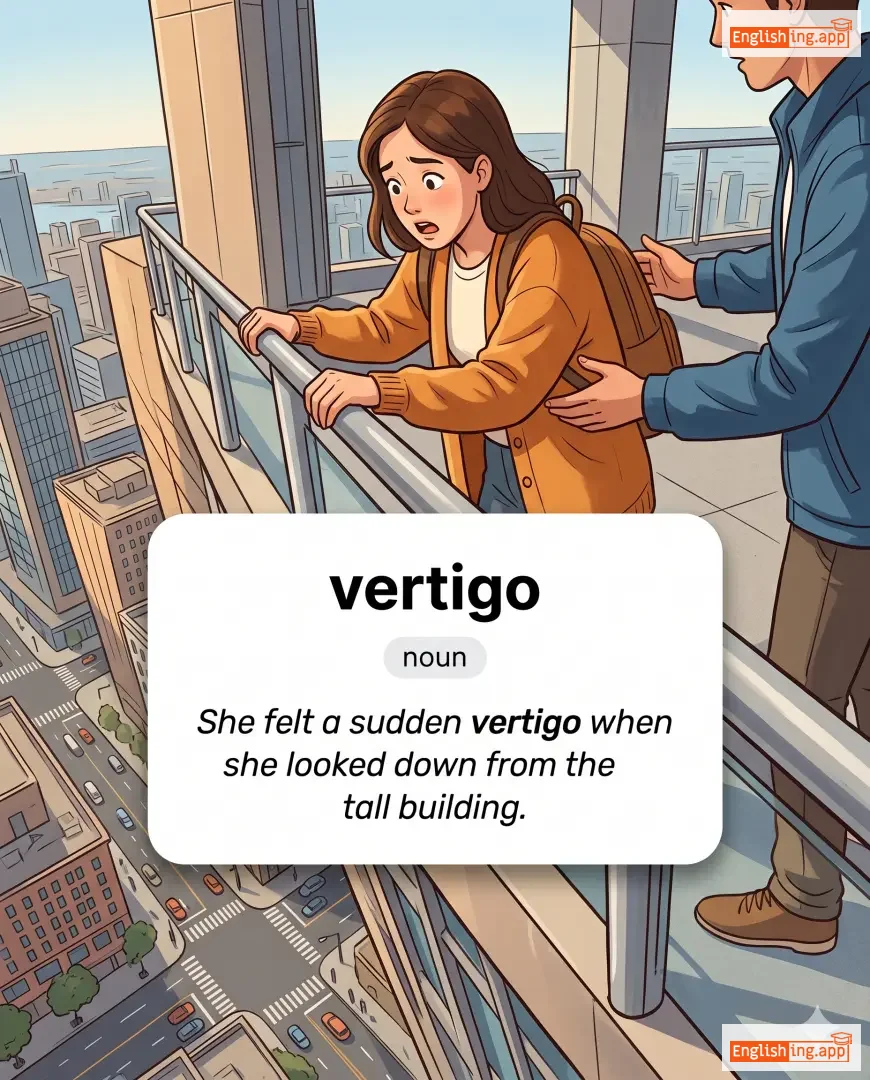
/ˈvɜːrtɪˌɡoʊ/
noun
(happiness)
••••••
|
|
幸福
xìng fú
••••••
|
- •••••• | - •••••• | - •••••• | - •••••• |
A sensation of spinning or dizziness, often caused by problems in the inner ear or brain.
••••••
|
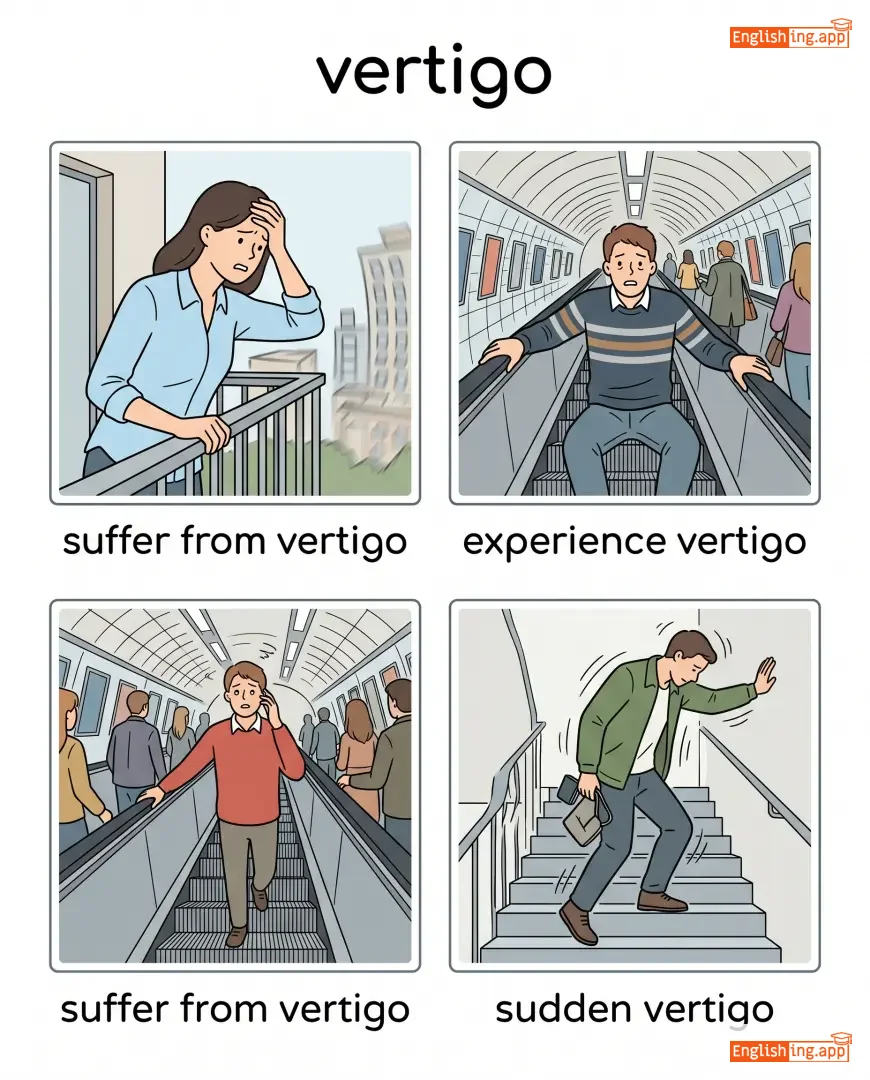
She felt a sudden vertigo when she looked down from the tall building. |
当她获得奖项时,她无法掩饰自己的幸福感。
Dāng tā huò dé jiǎng xiàng shí, tā wú fǎ yǎn shì zì jǐ de xìng fú gǎn.
••••••
|
dizzy with vertigo |
Overcome by a sensation of spinning and dizziness.
••••••
|
追求幸福
zhuī qiú xìng fú
••••••
|
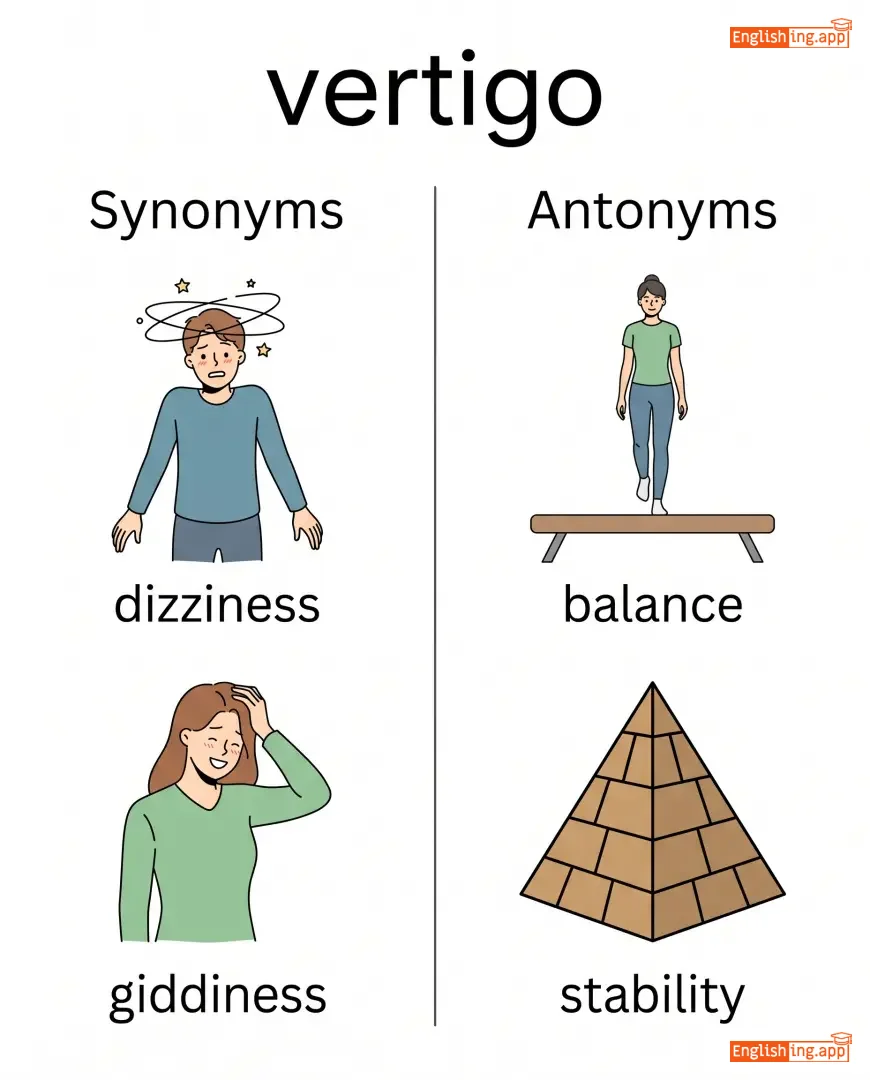
dizziness, giddiness, lightheadedness, faintness
••••••
|
balance, stability
••••••
|
suffer from vertigo, experience vertigo, sudden vertigo
••••••
|
幸福 (xìng fú) 就像我们不断寻找的快乐 (kuài lè) 一样。
••••••
|
|
#9317
😵
|
/vɜːrˈtɪdʒɪnəs/
adjective
(vɜːrˈtɪdʒɪnəs)
••••••
|
- •••••• |
眩晕的
xuànyùn de
••••••
|
- •••••• | - •••••• | - •••••• | - •••••• |
Causing dizziness due to great height or steepness.
••••••
|
The tourists looked down from the vertiginous cliffs with awe. |
游客从眩晕的悬崖上低头望去,满怀敬畏。
Yóukè cóng xuànyùn de xuán yá shàng dī tóu wàng qù, mǎn huái jìng wèi.
••••••
|
- •••••• | - •••••• | - •••••• |
dizzying, steep, giddy, dizzy, lofty
••••••
|
level, flat
••••••
|
vertiginous height, vertiginous cliffs, vertiginous speed, vertiginous rise
••••••
|
眩晕的意思是头晕,想象一个非常高的‘悬崖’,让你头晕。
••••••
|
|
#9318
⬆️
|
/ˈvɜːrtɪkl/
adjective
(垂直)
••••••
|
- •••••• |
垂直
chuízhí
••••••
|
- •••••• | - •••••• | - •••••• | - •••••• |
Standing or pointing straight up; perpendicular to the ground.
••••••
|
The skyscraper has a perfectly vertical design. |
这座摩天大楼有一个完美的垂直设计。
Zhè zuò mótiān dàlóu yǒu yīgè wánměi de chuízhí shèjì.
••••••
|
vertical integration |
The combination of two or more stages of production in one company.
••••••
|
垂直整合
chuízhí zhěnghé
••••••
|
upright, perpendicular, erect, steep, straight
••••••
|
horizontal, flat
••••••
|
vertical line, vertical design, vertical structure, vertical growth
••••••
|
垂直意味着直立向上,想象一条从地面出发的直线。
••••••
|
|
#9319
⛰️
|
/ˈvɜːrtɛks/
noun
(wörtɛks)
••••••
|
- •••••• |
顶点
dingdian
••••••
|
- •••••• | - •••••• | - •••••• | - •••••• |
The highest point; the top or the apex.
••••••
|
The climber reached the vertex of the mountain.
登山者达到了山顶。
••••••
|
登山者达到了山顶。
Deng shanzhe daduo le shanding.
••••••
|
- •••••• | - •••••• | - •••••• |
apex, summit, peak, top, pinnacle
••••••
|
base, bottom
••••••
|
vertex of a triangle, mountain vertex, geometric vertex, vertex point
••••••
|
Vertex意味着顶点,想象着到达顶点就像站在山顶。
••••••
|
|
#9320
🔄
|
/ˈvɜːrʒən/
noun
(wéixiǎn)
••••••
|
- •••••• |
版本
banben
••••••
|
- •••••• | - •••••• | - •••••• | - •••••• |
A particular form or variant of something.
••••••
|
The software has a new version with added features. |
软件有一个新版本,带有附加功能。
Ruǎnjiàn yǒu yīgè xīn bǎnběn, dài yǒu fùjiā gōngnéng.
••••••
|
the latest version |
The most recent form or release of something.
••••••
|
最新版本
zuìxīn bǎnběn
••••••
|
edition, variation, release, form, variant
••••••
|
original, prototype
••••••
|
new version, old version, software version, version control
••••••
|
Version代表'版本',想象改变版本,功能增加。
••••••
|
|
#9321
📖
|
/vɜːrs/
noun
(韦尔斯)
••••••
|
- •••••• |
诗句
shī jù
••••••
|
- •••••• | - •••••• | - •••••• | - •••••• |
A line of writing in poetry; a section of a song or poem.
••••••
|
She wrote a beautiful verse for the wedding ceremony. |
她为婚礼仪式写了一首美丽的诗句。
Tā wèi hūnlǐ yíshì xiěle yī shǒu měilì de shī jù.
••••••
|
learn by heart a verse |
To memorize a verse completely.
••••••
|
背诵一首诗句
Bèisòng yī shǒu shī jù
••••••
|
stanza, line, poetry, rhyme, lyric
••••••
|
prose, essay
••••••
|
recite a verse, write a verse, verse of a song, biblical verse
••••••
|
诗句意味着诗歌的行,想象诗句组成了许多押韵的诗行。
••••••
|
|
#9322
🔀
|
/ˈvɜːrsətl/
adjective
(wérsètǎi ér)
••••••
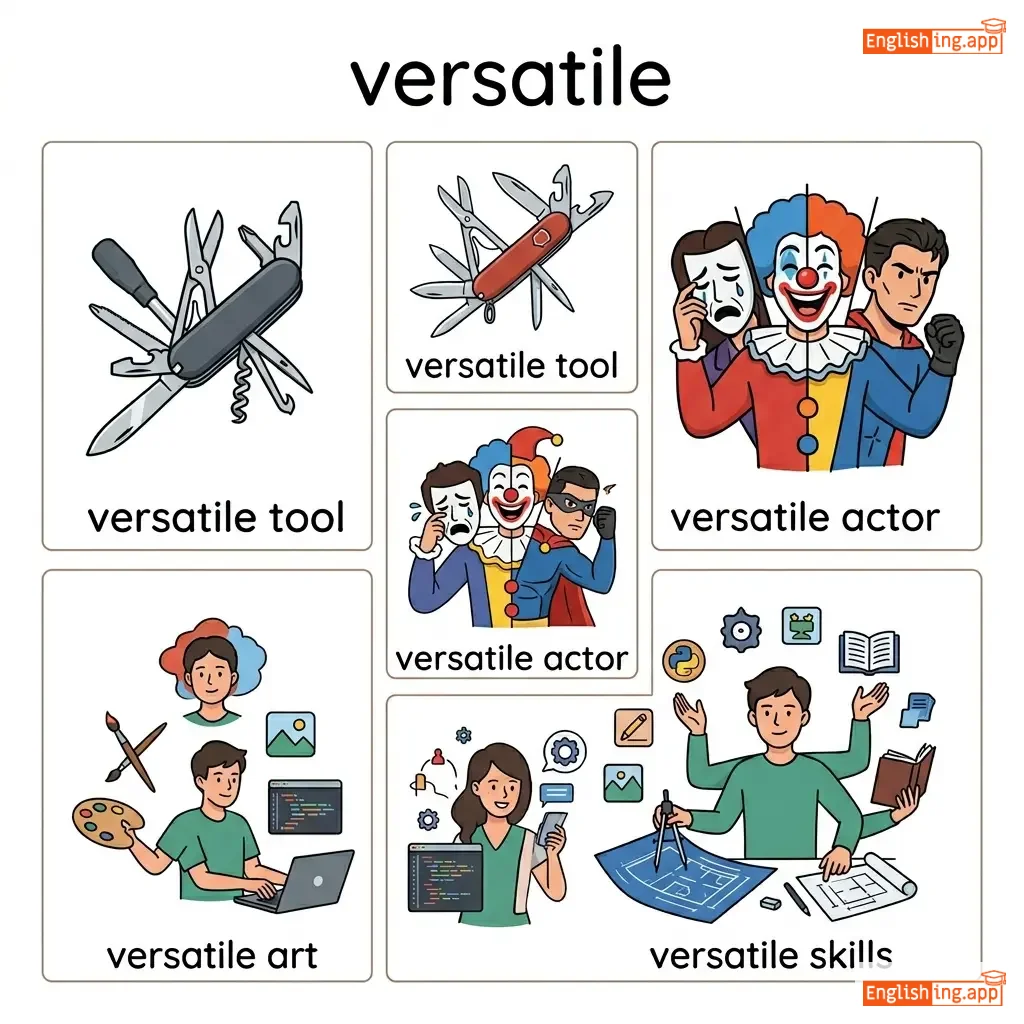
|
|
多才多艺
duōcáiduōyì
••••••
|
- •••••• | - •••••• | - •••••• | - •••••• |
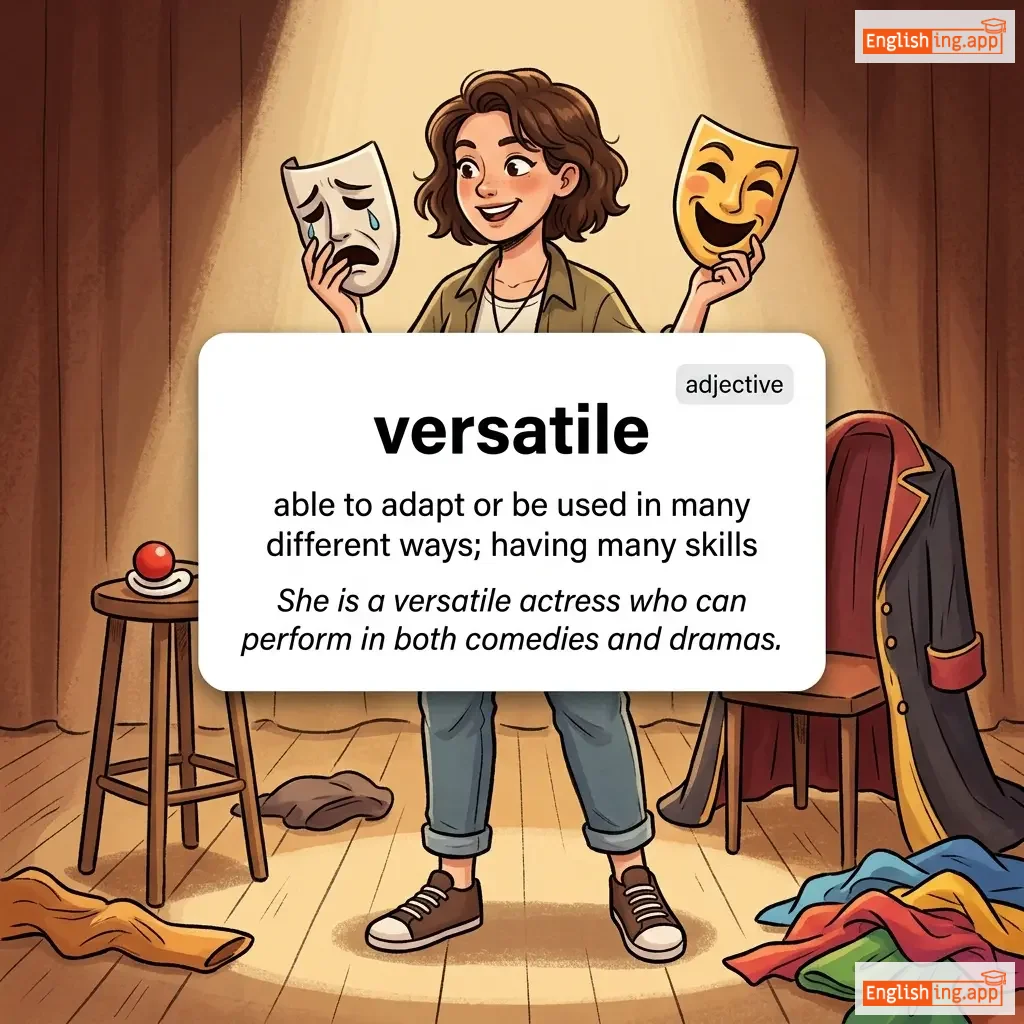
able to adapt or be used in many different ways; having many skills
••••••
|
She is a versatile actress who can perform in both comedies and dramas. |
她是一位多才多艺的女演员,能够在喜剧和戏剧中表演。
Tā shì yī wèi duōcáiduōyì de nǚ yǎnyuán, nénggòu zài xǐjù hé xìjù zhōng biǎoyǎn.
••••••
|
- •••••• | - •••••• | - •••••• |
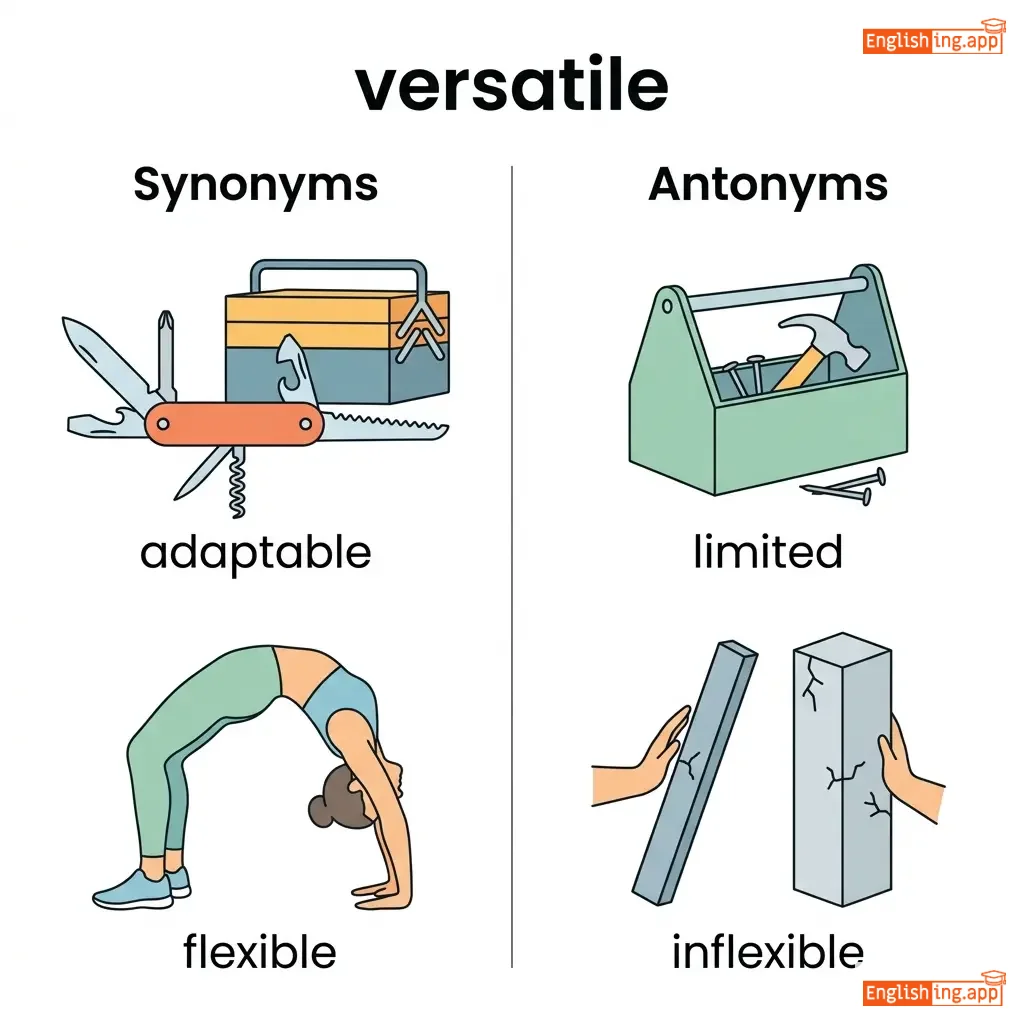
adaptable, flexible, resourceful, multifaceted, all-round
••••••
|
limited, inflexible, restricted
••••••
|
versatile tool, versatile actor, versatile skills, highly versatile
••••••
|
多才多艺意味着能够做很多事情 – 就像一个能做多种工作的多才多艺的人
••••••
|
|
#9323
🌸
|
/ˈvɜːrnəl/
adjective
(wɜːrnəl)
••••••
|
- •••••• |
春天的
chūntiān de
••••••
|
- •••••• | - •••••• | - •••••• | - •••••• |
related to spring; fresh, youthful
••••••
|
The garden was filled with vernal beauty after the long winter.
ðə ˈɡɑːdən wəz fɪld wɪð ˈvɜːrnəl ˈbjuːti ˈɑːftər ðə lɔːŋ ˈwɪntər
••••••
|
经过漫长的冬季,花园充满了春天的美丽。
Jīngguò màncháng de dōngjì, huāyuán chōngmǎnle chūntiān de měilì.
••••••
|
- •••••• | - •••••• | - •••••• |
springlike, youthful, fresh, blooming
••••••
|
autumnal, wintry, aged
••••••
|
vernal season, vernal flowers, vernal beauty
••••••
|
Vernal 意思是春天:春天开花的柔软花朵。
••••••
|
|
#9324
🗣️
|
/vərˈnækjələr/
noun
(威尔纳库勒)
••••••
|
- •••••• |
方言
fangyan
••••••
|
- •••••• | - •••••• | - •••••• | - •••••• |
the language or dialect spoken by ordinary people in a particular region
••••••
|
He gave his speech in the local vernacular so everyone could understand. |
他用当地的方言发表了演讲,以便每个人都能理解。
Ta yong dangdi de fangyan fabiao le yanjiang, yiban meigeren dou neng lijie.
••••••
|
in the vernacular |
in ordinary language, not formal or literary
••••••
|
用方言
yong fangyan
••••••
|
dialect, local language, mother tongue, native speech
••••••
|
formal language, literary language
••••••
|
local vernacular, native vernacular, vernacular expression
••••••
|
Vernacular 就是地方方言,简单易懂,适合本地人
••••••
|
|
#9325
🐀
|
/ˈvɜːrmɪn/
noun
(韦尔敏)
••••••
|
|
有害动物
yǒuhài dòngwù
••••••
|
- •••••• | - •••••• | - •••••• | - •••••• |
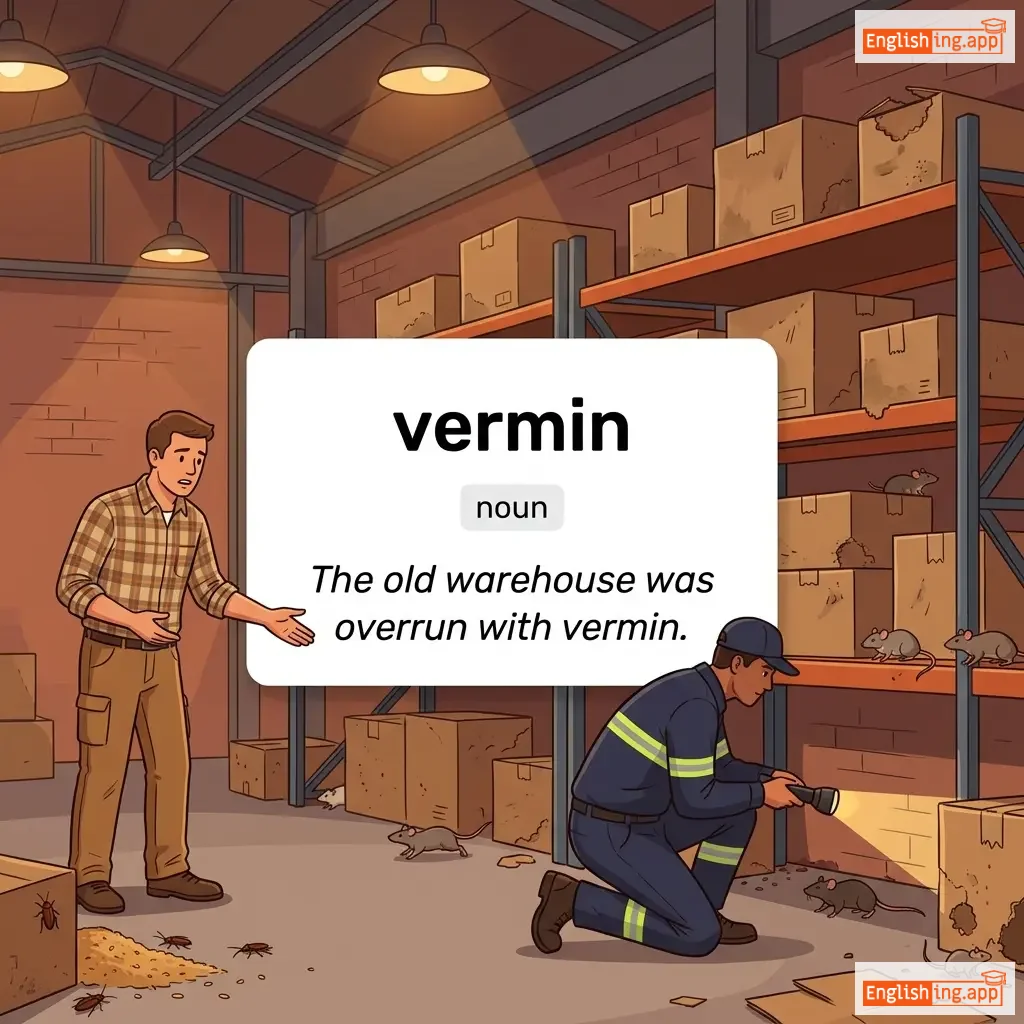
small animals or insects that are harmful or destructive, such as rats, lice, or fleas
••••••
|
The old warehouse was overrun with vermin. |
老仓库被有害动物占领了。
Lǎo cāngkù bèi yǒuhài dòngwù zhànlǐng le.
••••••
|
vermin of society |
people regarded as despicable or undesirable
••••••
|
社会的害虫
shèhuì de hàichóng
••••••
|
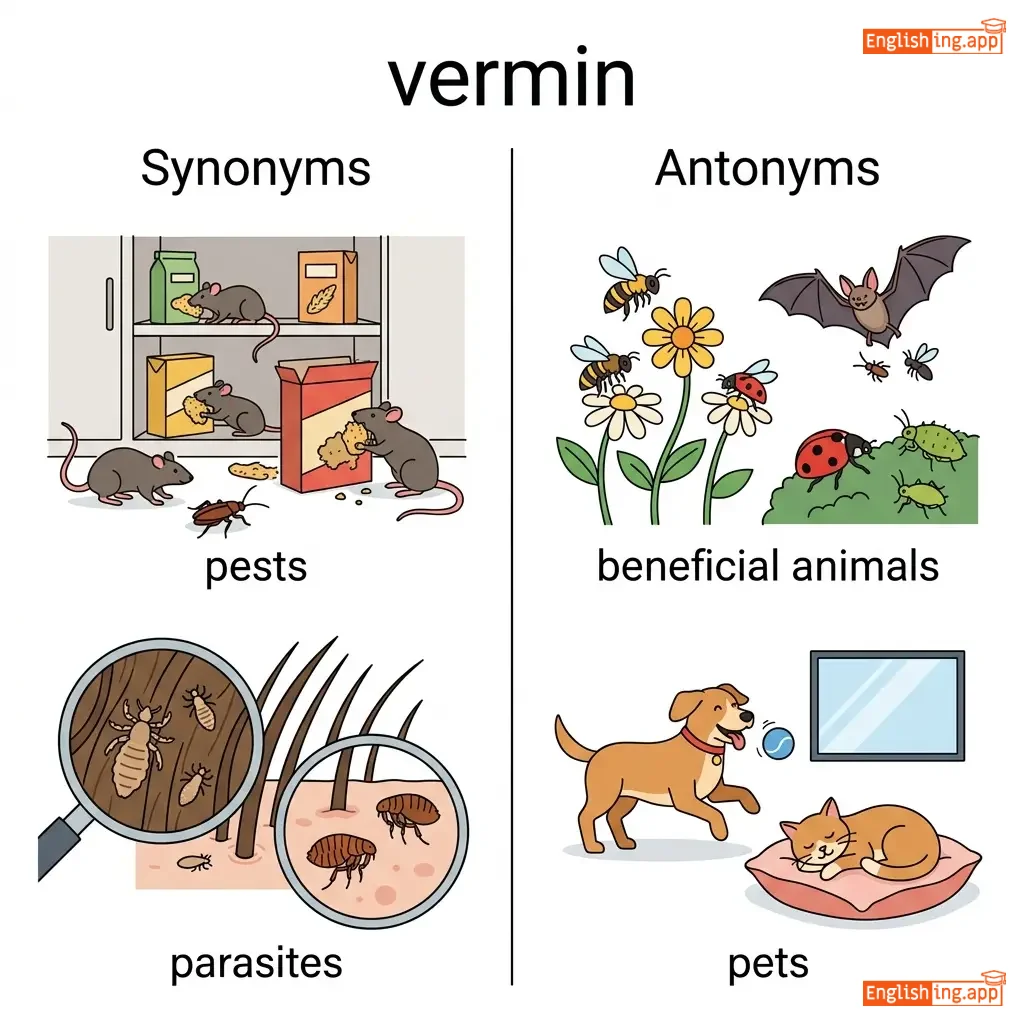
pests, parasites, rodents, insects, critters
••••••
|
beneficial animals, pets
••••••
|
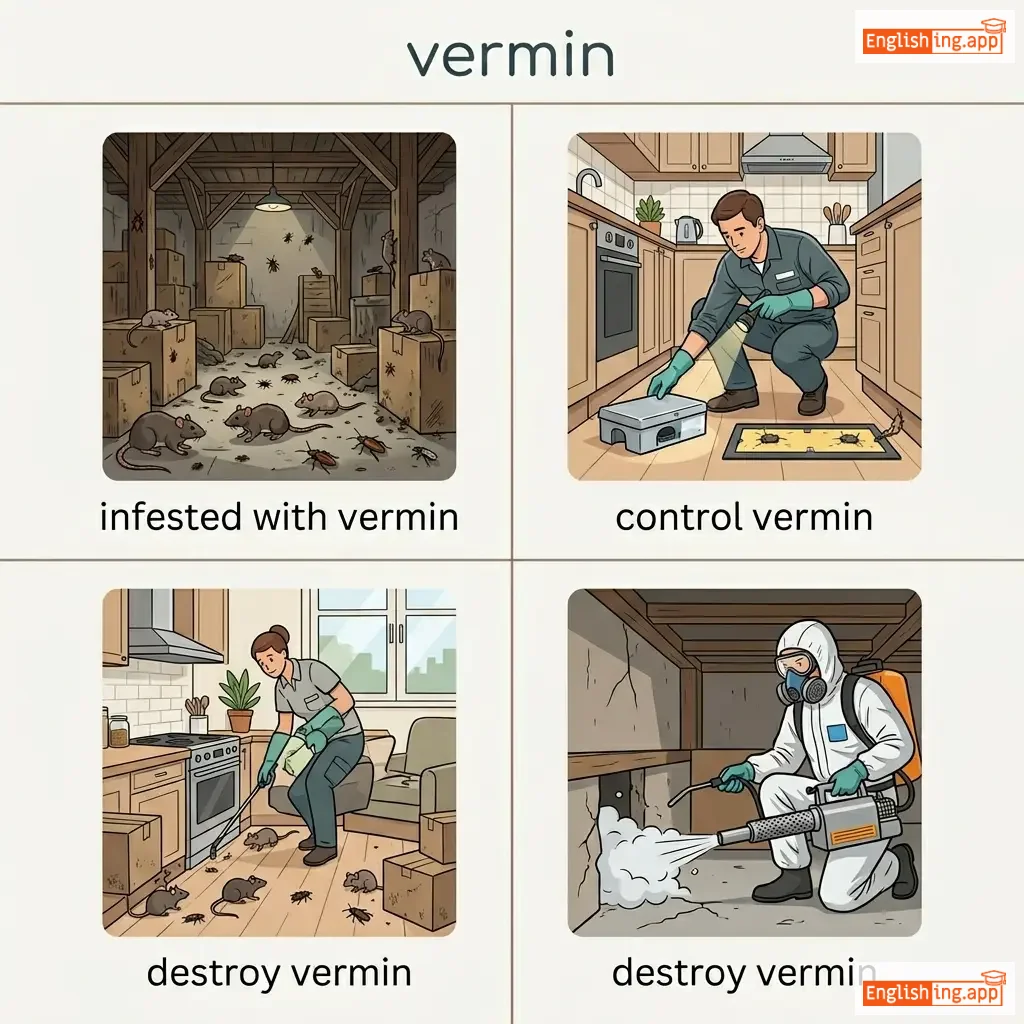
infested with vermin, control vermin, destroy vermin
••••••
|
Vermin 就像社会的害虫 – 就像老鼠在家里造成破坏。
••••••
|
|
#9326
🪱
|
/vərˈmɪkjələr/
adjective
(wérmǐkùlàr)
••••••
|
- •••••• |
像虫子一样
xiàng chóngzi yīyàng
••••••
|
- •••••• | - •••••• | - •••••• | - •••••• |
having a shape or appearance like a worm; worm-like
••••••
|
The artist used a vermicular design to decorate the border of the manuscript.
ðə ˈɑːtɪst juːzd ə vɛrmɪkjʊlər dɪˈzaɪn tuː ˈdɛkəreɪt ðə ˈbɔːdər ʌv ðə ˈmænʊskrɪpt
••••••
|
艺术家用虫子一样的设计装饰手稿的边缘。
Yìshùjiā yòng chóngzi yīyàng de shèjì zhuāngshì shǒugǎo de biānyuán.
••••••
|
- •••••• | - •••••• | - •••••• |
wormlike, sinuous, winding, twisting, serpentine
••••••
|
straight, linear, direct
••••••
|
vermicular pattern, vermicular design, vermicular movement
••••••
|
Vermicelli 是像虫子一样长的面条 – vermicular 意思是像虫子一样
••••••
|
|
#9327
📜
|
/ˈvɛrɪti/
noun
(韦里蒂)
••••••
|
- •••••• |
真实性
zhēn shí xìng
••••••
|
- •••••• | - •••••• | - •••••• | - •••••• |
a true principle or belief; the state of being true
••••••
|
The verity of his statement was confirmed by evidence. |
他陈述的真实性通过证据得到了确认。
Tā chén shù de zhēn shí xìng tōng guò zhèng jù dé dào le quèrèn.
••••••
|
- •••••• | - •••••• | - •••••• |
truth, fact, reality, principle
••••••
|
falsehood, lie, falsity
••••••
|
eternal verity, universal verity, moral verity
••••••
|
Verity = 真实性, 真 + 真实 = 真实性
••••••
|
|
#9328
🏰
|
/ˈvɛrɪtəbl/
adjective
(威里塔布尔)
••••••
|
- •••••• |
真实的
zhēnshí de
••••••
|
- •••••• | - •••••• | - •••••• | - •••••• |
used to emphasize that something is genuine or true
••••••
|
The house was a veritable palace compared to ours. |
这座房子与我们的相比,简直是座真正的宫殿。
Zhè zuò fángzi yǔ wǒmen de xiāng bǐ, jiǎnzhí shì zuò zhēnzhèng de gōngdiàn.
••••••
|
- •••••• | - •••••• | - •••••• |
genuine, authentic, true, real
••••••
|
false, fake, counterfeit
••••••
|
veritable feast, veritable treasure, veritable storm
••••••
|
Very table full of food = veritable feast 意味着真实的盛宴
••••••
|
|
#9329
🎭
|
/ˌvɛrɪsɪˈmɪlɪtjuːd/
noun
(韦里西米利图德)
••••••
|
- •••••• |
逼真
bī zhēn
••••••
|
- •••••• | - •••••• | - •••••• | - •••••• |
the appearance of being true or real
••••••
|
The movie was praised for its verisimilitude to actual events. |
这部电影因其与实际事件的逼真感而受到称赞。
Zhè bù diànyǐng yīn qí yǔ shíjì shìjiàn de bī zhēn gǎn ér shòudào chēngzàn.
••••••
|
- •••••• | - •••••• | - •••••• |
realism, authenticity, credibility, truthfulness
••••••
|
falseness, artificiality, improbability
••••••
|
verisimilitude of detail, sense of verisimilitude, remarkable verisimilitude
••••••
|
逼真 = verisimilitude
••••••
|
Vocabulary Quiz
Test your vocabulary by matching words with their translations or meanings.
Login to take the quiz
Comments (0)
Share your thoughts and join the discussion.
Join the discussion by logging in
Login to CommentNo comments yet
Be the first to share your thoughts!