

Swipe left or right, or use the buttons. Tap image to zoom.
例句翻译
单词
Lesson 15Lesson 15 - 遮罩切换
|
表情符号
|
单词 | Images | 翻译 | 过去时 | 过去分词 | 第三人称单数 | 动名词 | 含义 | 例句 | 例句翻译 | 示例表达 | 示例表达含义 | 示例表达翻译 | 同义词 | 反义词 | 搭配词 | 助记符 |
|---|---|---|---|---|---|---|---|---|---|---|---|---|---|---|---|---|---|
|
#421
📢
|
/əˌnʌn.siˈeɪ.ʃən/
noun
(ānùnsìyèshén)
••••••
|
- •••••• |
宣布,好消息
xuānbù, hǎo xiāoxī
••••••
|
- •••••• | - •••••• | - •••••• | - •••••• |
The announcement of something; in Christianity, the announcement by the angel Gabriel to Mary that she would conceive Jesus.
••••••
|
The church celebrated the Feast of the Annunciation with a special service.
教堂通过特别的服务庆祝了报喜节。
••••••
|
教堂通过特别的服务庆祝了报喜节。
Jiàotáng tōngguò tèbié de fúwù qìngzhùle bào xǐ jié.
••••••
|
- •••••• | - •••••• | - •••••• |
announcement, declaration, proclamation, heralding, notification
••••••
|
silence, concealment
••••••
|
Feast of the Annunciation, formal annunciation, divine annunciation
••••••
|
报喜节 = 报告 + 喜讯 — 宣布好消息。
••••••
|
|
#422
📜
|
/ˌæntɪˈsiːdənt/
noun
(前例)
••••••
|
|
先例
xiànlì
••••••
|
- •••••• | - •••••• | - •••••• | - •••••• |
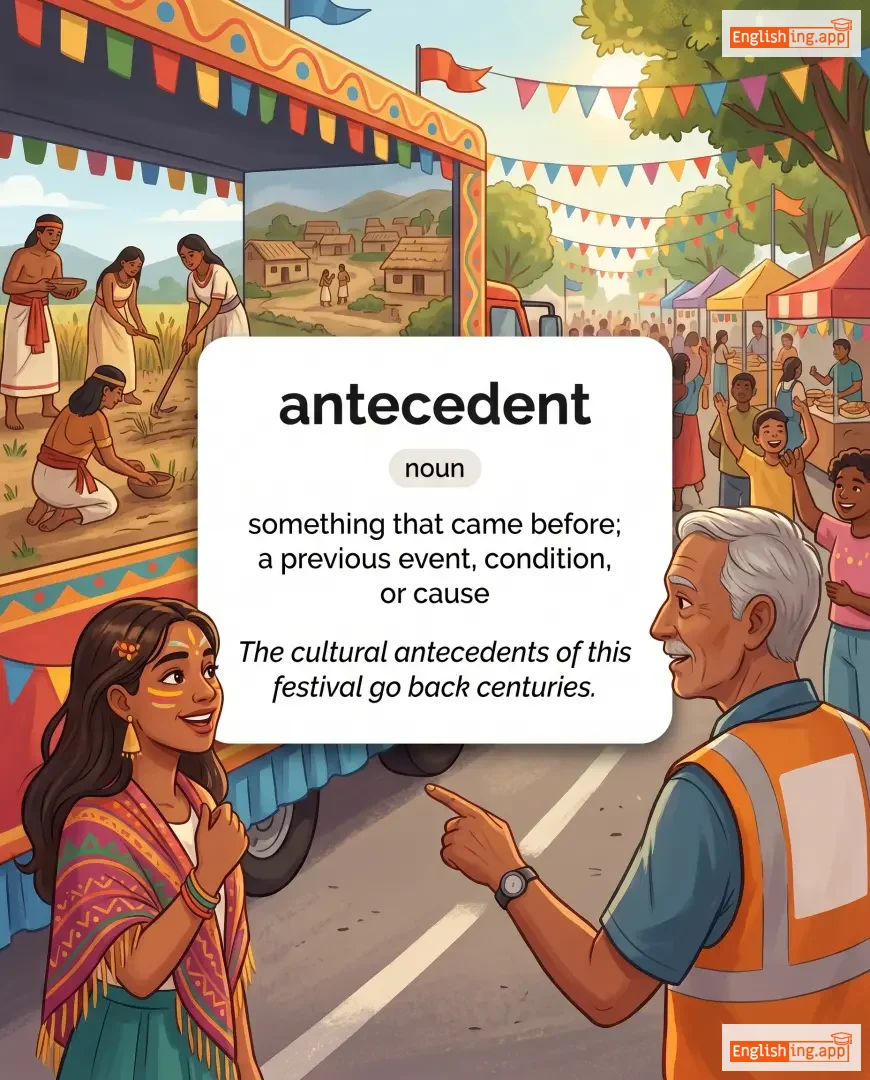
something that came before; a previous event, condition, or cause
••••••
|
The cultural antecedents of this festival go back centuries.
这个节日的文化先例可以追溯到几个世纪前。
••••••
|
这个节日的文化先例可以追溯到几个世纪前。
Zhège jiérì de wénhuà xiànlì kěyǐ zhuīsù dào jǐ gè shìjì qián.
••••••
|
grammatical antecedent
语法前例
••••••
|
a word or phrase that a pronoun refers back to
••••••
|
语法前例
yǔfǎ xiànlì
••••••
|
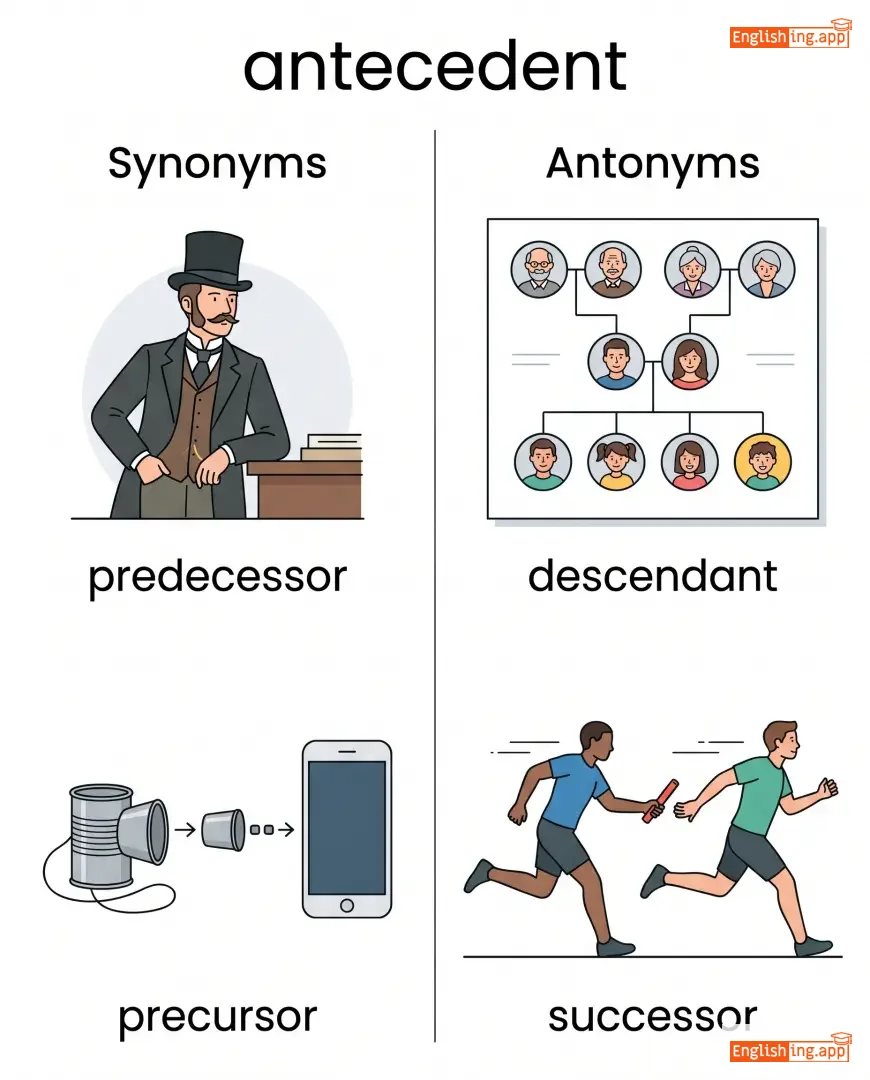
predecessor, precursor, forerunner, precedent
••••••
|
descendant, successor
••••••
|
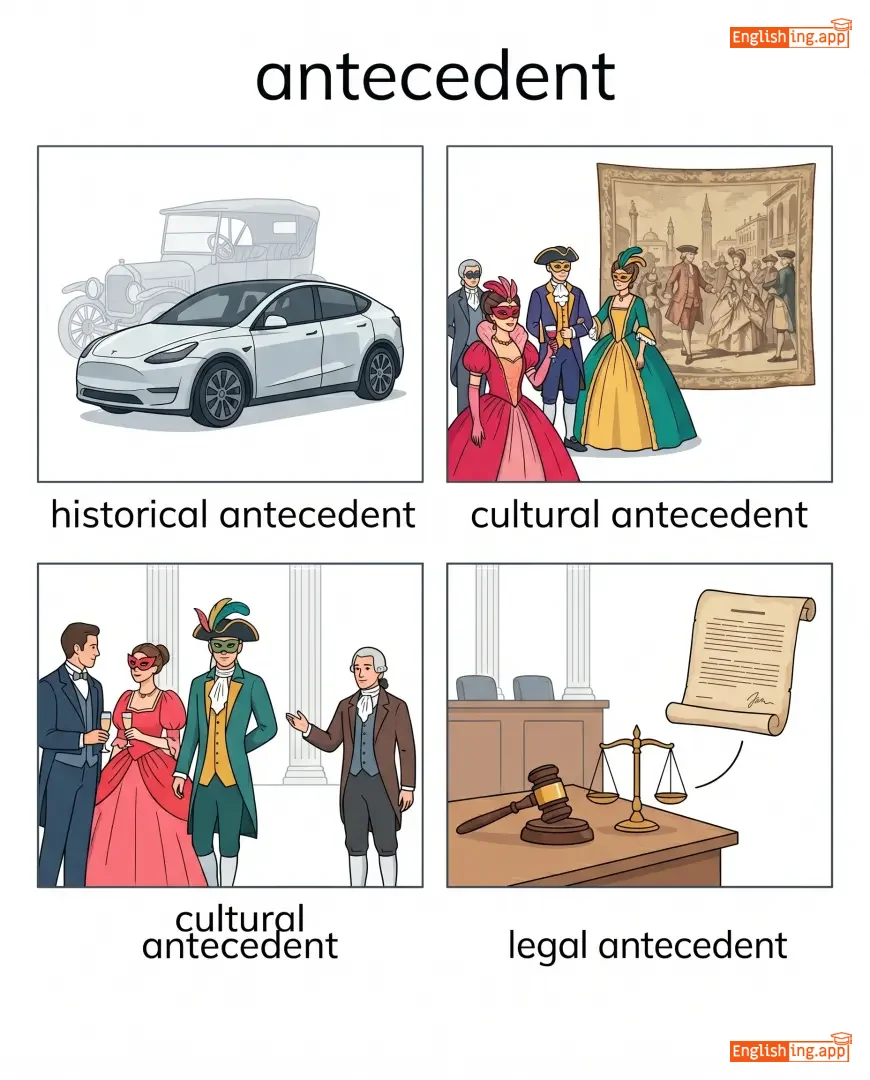
historical antecedent, cultural antecedent, legal antecedent
••••••
|
Antecedent: Ante (以前) + 事件 → 之前发生的事情
••••••
|
|
#423
⏮️
|
/ˌæntɪˈsiːd/
verb
(安提西德)
••••••
|
- •••••• |
先来
xiān lái
••••••
|
anteceded
安提西德德
••••••
|
anteceded
安提西德德
••••••
|
antecedes
安提西德斯
••••••
|
anteceding
安提西丁
••••••
|
to come before in time or order
••••••
|
A short introduction usually antecedes the main text.
简短的介绍通常先于正文。
••••••
|
简短的介绍通常先于正文。
Jiǎnduǎn de jièshào tōngcháng xiān yú zhèngwén.
••••••
|
- •••••• | - •••••• | - •••••• |
precede, come before, predate, foreshadow
••••••
|
follow, succeed
••••••
|
antecede events, antecede history, antecede changes
••••••
|
Antecede 意味着先来:Ante (先) + cede (去) → 先来.
••••••
|
|
#424
🎲
|
/ˈænti/
noun
••••••
|
- •••••• | - •••••• | - •••••• | - •••••• | - •••••• | - •••••• |
a stake put up by a player in poker or similar games before receiving cards; also used figuratively to mean an initial investment or contribution
••••••
|
Each player placed an ante before the game began. |
- •••••• |
up the ante |
to increase the stakes or raise the level of risk or commitment
••••••
|
- •••••• |
stake, bet, contribution, payment
••••••
|
withdrawal, saving
••••••
|
place an ante, small ante, up the ante
••••••
|
No •••••• |
|
#425
❄️
|
/ænˈtɑːrktɪk/
adjective
(南极的)
••••••
|
- •••••• |
南极的
nánjí de
••••••
|
- •••••• | - •••••• | - •••••• | - •••••• |
relating to the region around the South Pole
••••••
|
The Antarctic region is known for its extreme cold and icy landscapes. |
南极地区因其极端的寒冷和冰雪覆盖的景观而闻名。
Nánjí dìqū yīn qí jíduān de hánlěng hé bīngxuě fùgài de jǐngguān ér wénmíng.
••••••
|
- •••••• | - •••••• | - •••••• |
polar, southern, icy, glacial
••••••
|
tropical, equatorial
••••••
|
Antarctic region, Antarctic expedition, Antarctic ice
••••••
|
南极的寒冷让人只想躲在火炉旁,而那里却是冰雪的世界。
••••••
|
|
#426
😠
|
/ænˈtæɡənaɪz/
verb
(对立)
••••••
|
- •••••• |
激怒
jī nù
••••••
|
antagonized
对立
••••••
|
antagonized
对立
••••••
|
antagonizes
对立
••••••
|
antagonizing
对立
••••••
|
to cause someone to become hostile or angry; to provoke opposition
••••••
|
His rude remarks only served to antagonize his colleagues.
他粗鲁的言辞只会使同事们产生敌对情绪。
••••••
|
他粗鲁的言辞只会使同事们产生敌对情绪。
Tā cūlǔ de yáncí zhǐ huì shǐ tóngshìmen chǎnshēng díduì qíngxù.
••••••
|
antagonize the crowd
激怒人群
••••••
|
to provoke or anger a group of people
••••••
|
激怒人群
jīnù rénqún
••••••
|
provoke, irritate, anger, offend, annoy
••••••
|
appease, soothe, calm
••••••
|
antagonize someone, antagonize the public, antagonize opponents
••••••
|
Antagonize = Anti + 朋友 → 成为敌人
••••••
|
|
#427
⚔️
|
/ænˈtæɡənɪzəm/
noun
(对立)
••••••
|
- •••••• |
对立
duìlì
••••••
|
- •••••• | - •••••• | - •••••• | - •••••• |
active hostility or opposition
••••••
|
There was clear antagonism between the two political parties. |
两党之间有明显的对立。
Liǎng dǎng zhījiān yǒu míngxiǎn de duìlì.
••••••
|
fuel antagonism |
to intensify hostility or opposition
••••••
|
加剧对立
jiājù duìlì
••••••
|
hostility, opposition, conflict, enmity
••••••
|
friendship, harmony, goodwill
••••••
|
political antagonism, social antagonism, fuel antagonism, deep antagonism
••••••
|
Antagonism 意味着主动敌意—'Anti' 即敌人,容易记住。
••••••
|
|
#428
👤
|
/əˈnɒnɪməs/
adjective
(匿名)
••••••
|
- •••••• |
匿名
nìmíng
••••••
|
- •••••• | - •••••• | - •••••• | - •••••• |
without a name; not identified by name
••••••
|
The donation was made by an anonymous benefactor.
捐款是由匿名捐助者做出的。
••••••
|
捐款是由匿名捐助者做出的。
Juānkuǎn shì yóu nìmíng juānzhù zhě zuò chū de.
••••••
|
anonymous tip
匿名提示
••••••
|
information given without revealing the identity of the informant
••••••
|
匿名提示
nìmíng tíshì
••••••
|
nameless, unidentified, unknown, incognito
••••••
|
named, identified
••••••
|
anonymous source, anonymous donor, remain anonymous, anonymous letter
••••••
|
匿名意味着没有名字 - 就像没有名字的人是匿名的。
••••••
|
|
#429
🕵️
|
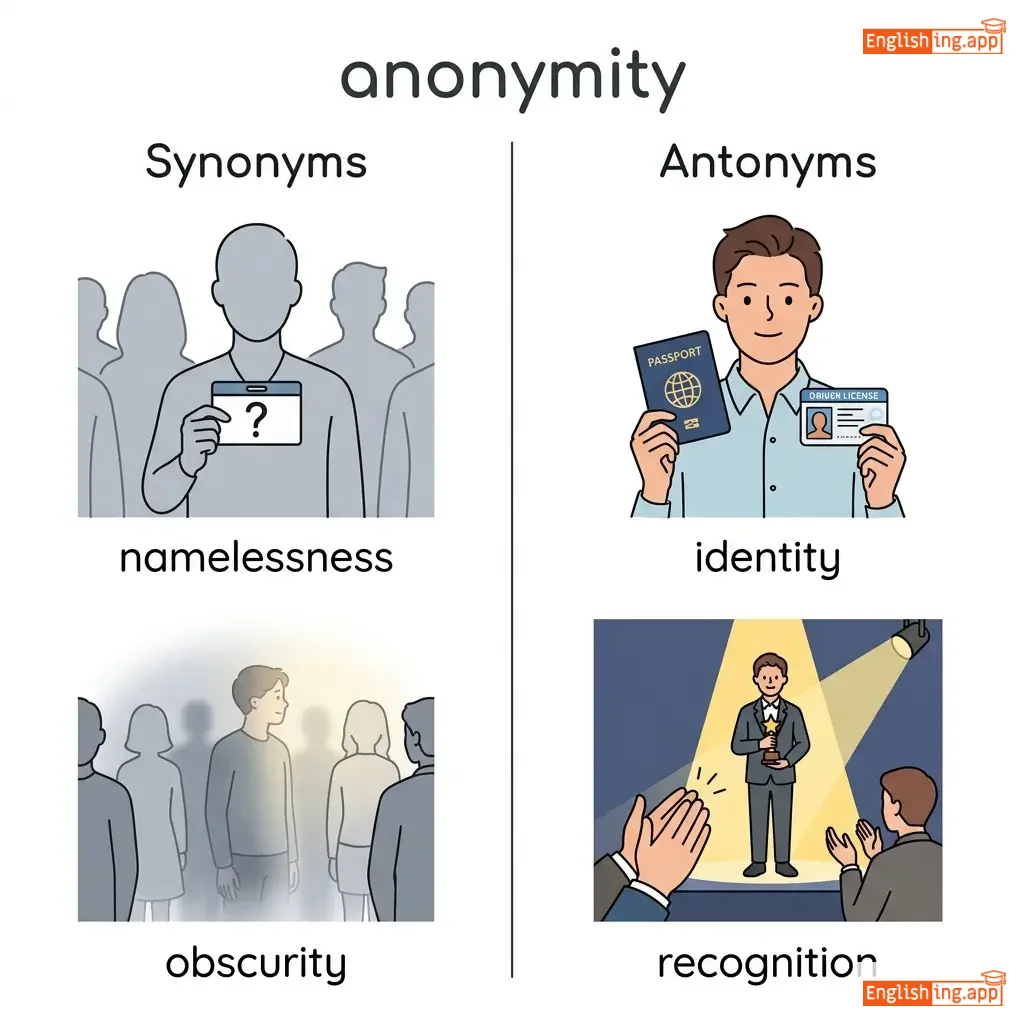
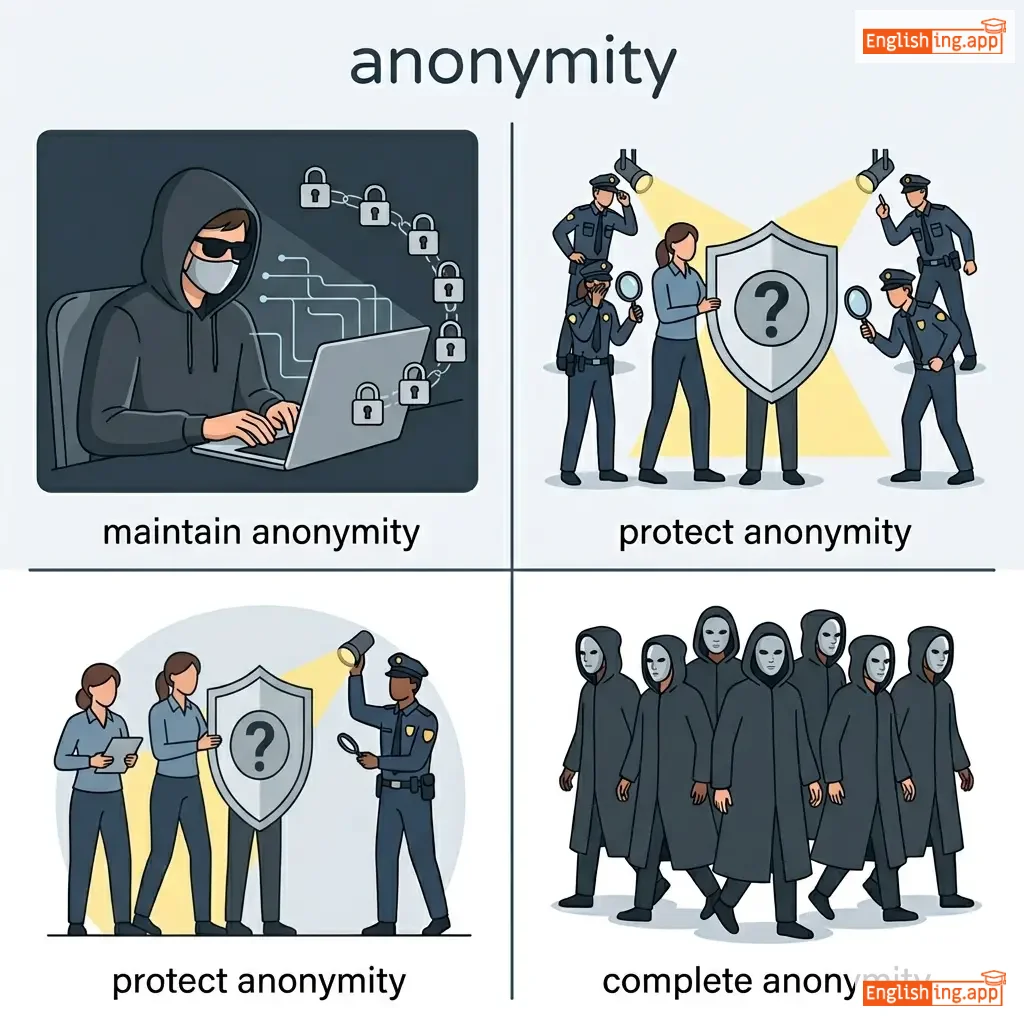
/ˌænəˈnɪməti/
noun
(匿名)
••••••
|
|
匿名
nìmí
••••••
|
- •••••• | - •••••• | - •••••• | - •••••• |
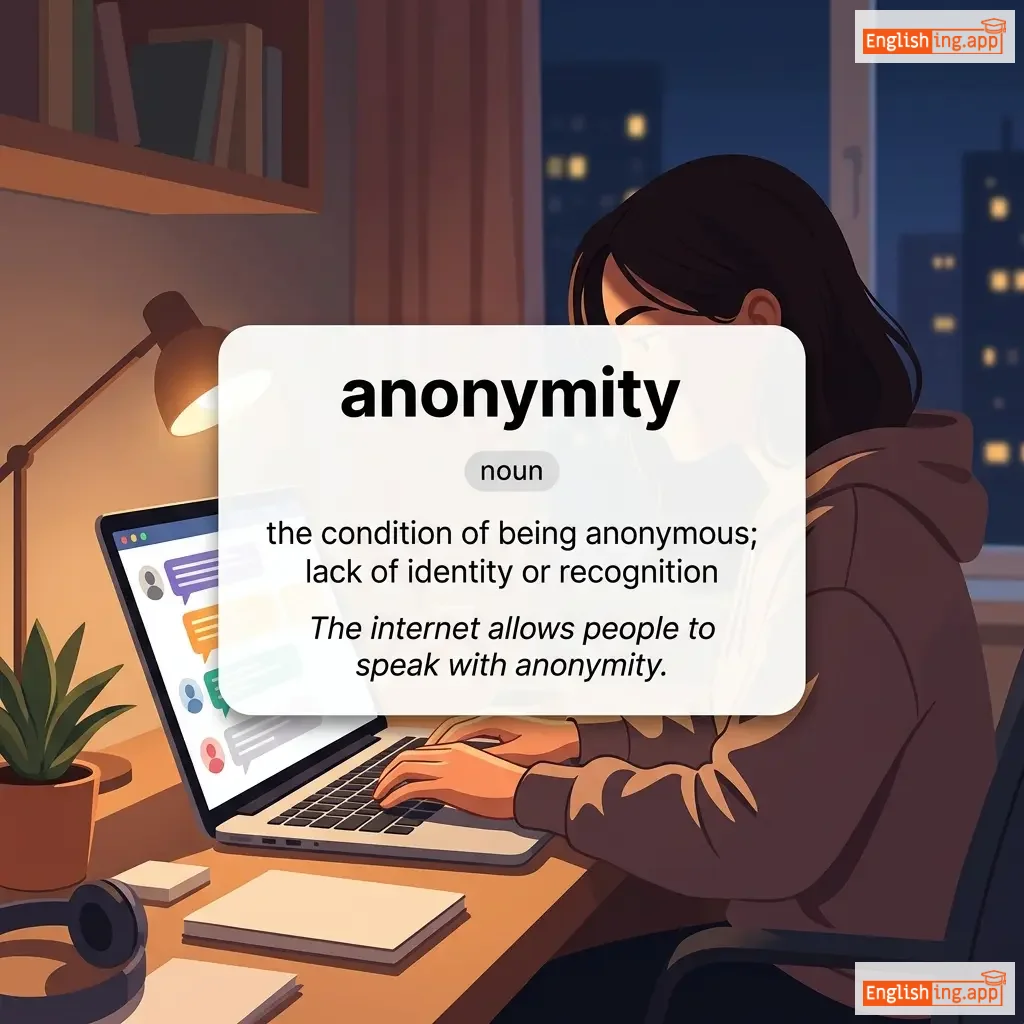
the condition of being anonymous; lack of identity or recognition
••••••
|
The internet allows people to speak with anonymity. |
互联网使人们能够以匿名方式交谈。
Hùliánwǎng shǐ rénmen nénggòu yǐ nìmí fāngshì jiāotán.
••••••
|
- •••••• | - •••••• | - •••••• |
namelessness, obscurity, invisibility, privacy
••••••
|
identity, recognition
••••••
|
maintain anonymity, protect anonymity, complete anonymity, anonymity online
••••••
|
Anonymity = 匿名。记住:'Anonymous'没有名字,所以anonymity意味着没有名字。
••••••
|
|
#430
❓
|
/əˈnɒməli/
noun
(ānòumàlì)
••••••
|
- •••••• |
异常
yichang
••••••
|
- •••••• | - •••••• | - •••••• | - •••••• |
something that deviates from the norm or expected result
••••••
|
The sudden drop in temperature was considered an anomaly.
温度的突然下降被认为是一种异常。
••••••
|
温度的突然下降被认为是一种异常。
Wendu de turan xiajiang bei renwei shi yizhong yichang.
••••••
|
- •••••• | - •••••• | - •••••• |
irregularity, oddity, exception, deviation
••••••
|
normality, regularity
••••••
|
rare anomaly, statistical anomaly, medical anomaly, strange anomaly
••••••
|
Anomaly = 异常 (yichang) = 一件不正常的事。
••••••
|
|
#431
⚠️
|
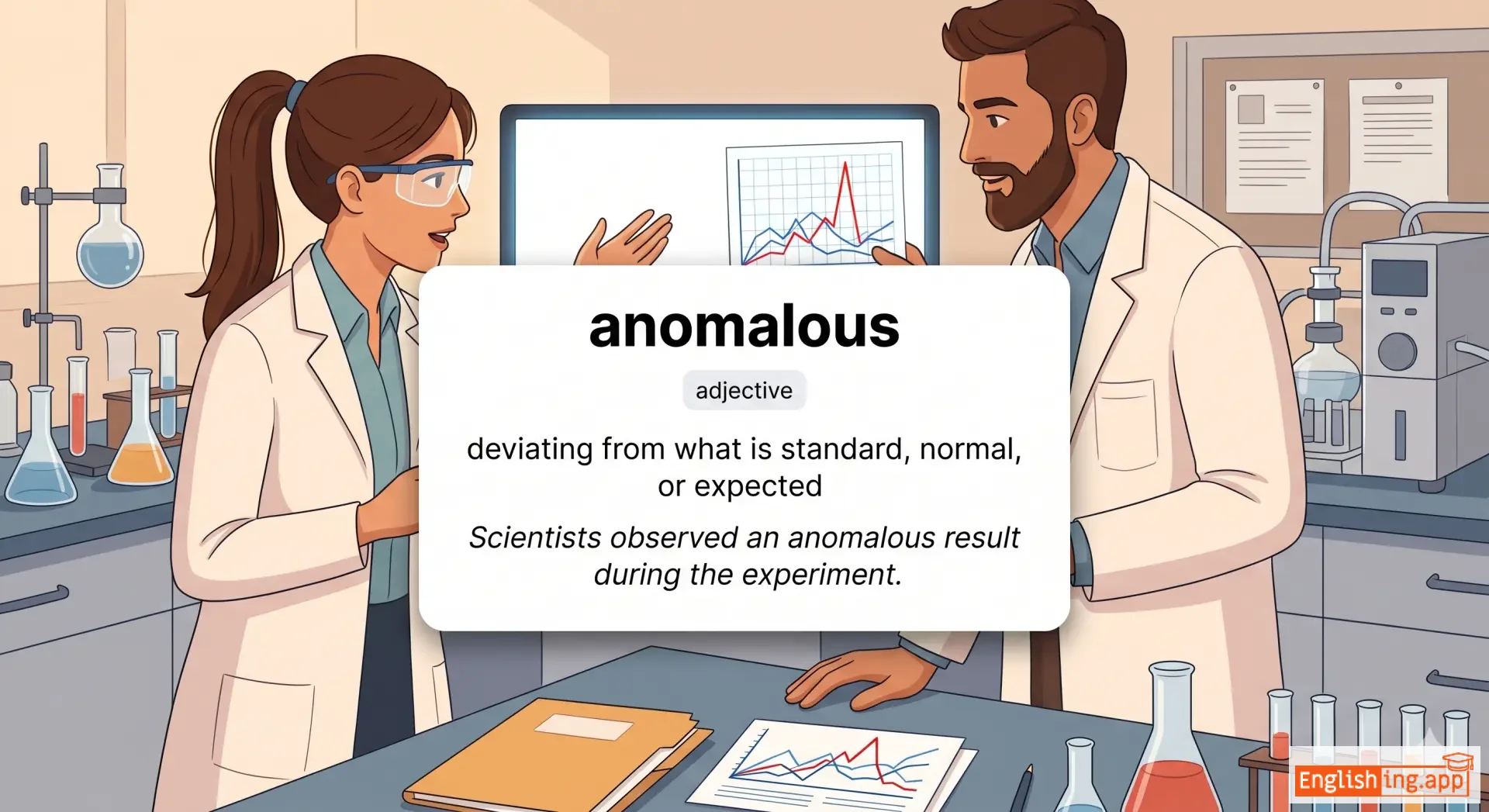
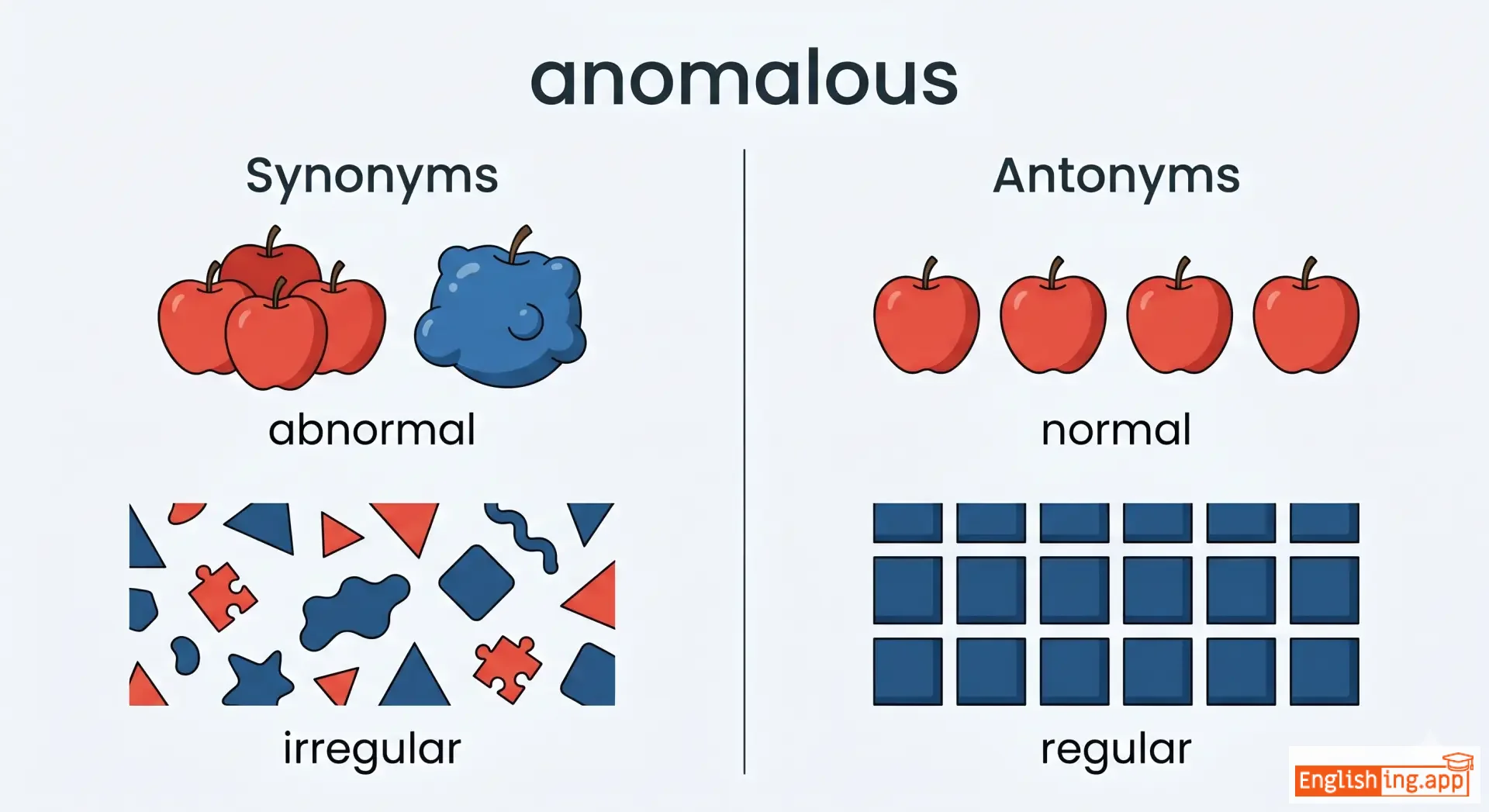
/əˈnɒmələs/
adjective
(非正常的)
••••••
|
|
异常
yichang
••••••
|
- •••••• | - •••••• | - •••••• | - •••••• |
deviating from what is standard, normal, or expected
••••••
|
Scientists observed an anomalous result during the experiment.
科学家在实验中观察到了一个异常的结果。
••••••
|
科学家在实验中观察到了一个异常的结果。
Kexuejia zai shiyan zhong guancha dao le yige yichang de jieguo.
••••••
|
- •••••• | - •••••• | - •••••• |
abnormal, irregular, unusual, atypical, deviant
••••••
|
normal, regular, standard
••••••
|
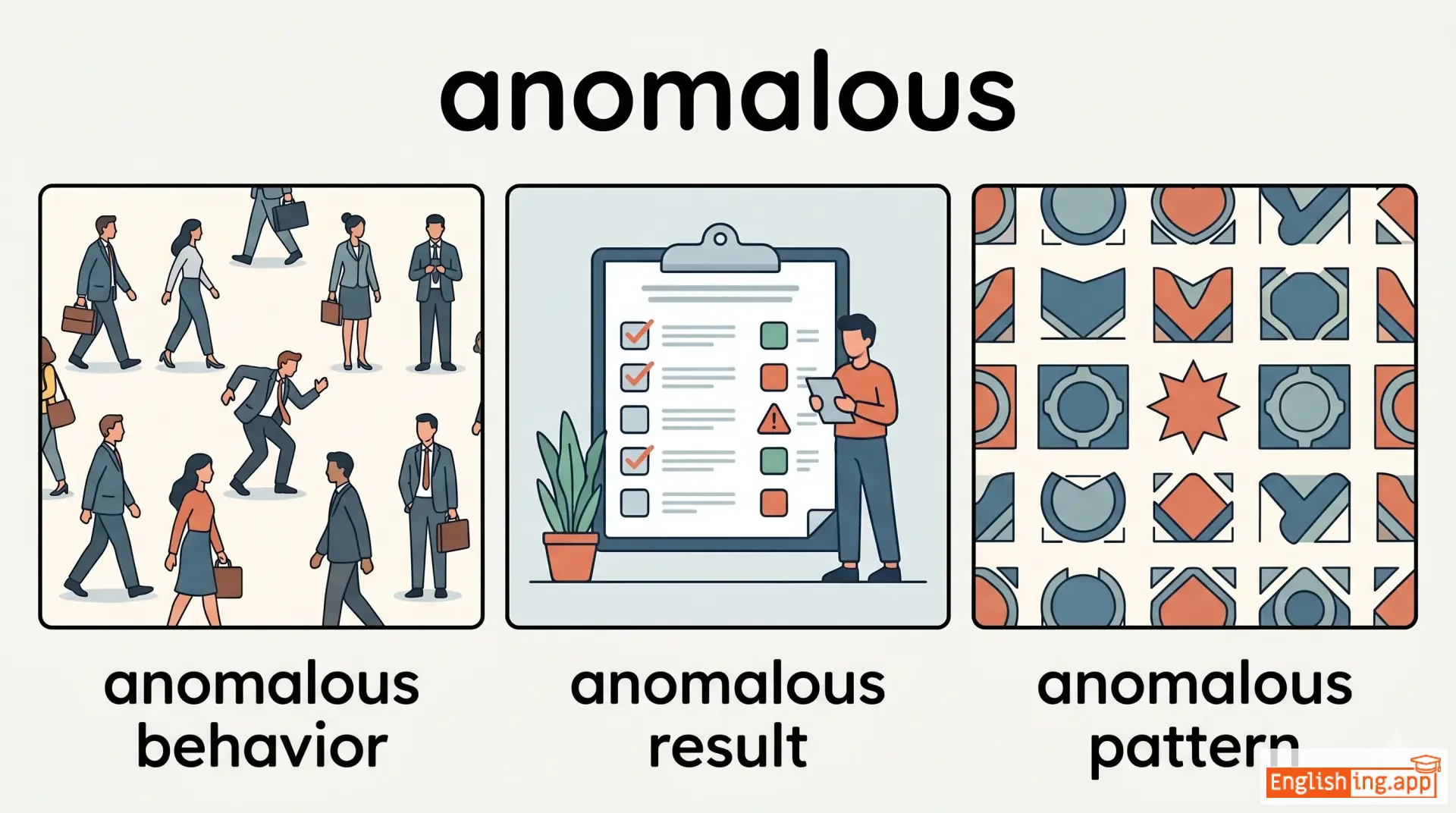
anomalous behavior, anomalous result, anomalous pattern, anomalous situation
••••••
|
Anomalous 意味着异常—Think 'A normal' but it’s unexpected.
••••••
|
|
#432
🙏
|
/əˈnɔɪnt.mənt/
noun
(ānóintmént)
••••••
|
- •••••• |
涂抹仪式
túmǒ yíshì
••••••
|
- •••••• | - •••••• | - •••••• | - •••••• |
The act of anointing, usually with oil, as part of a ritual or ceremony.
••••••
|
The anointment of the new leader was a sacred ritual. |
新领导人的涂抹仪式是一项神圣的仪式。
Xīn lǐngdǎo rén de túmǒ yíshì shì yī xiàng shèngshèng de yíshì.
••••••
|
- •••••• | - •••••• | - •••••• |
blessing, consecration, ordination, sanctification
••••••
|
curse, desecration
••••••
|
religious anointment, ceremonial anointment, sacred anointment
••••••
|
Anointment 是用油涂抹,像祭祀一样。
••••••
|
|
#433
🕊️
|
/əˈnɔɪnt/
verb
(anoint)
••••••
|
- •••••• |
涂油, 奉献
tú yóu, fèngxiàn
••••••
|
anointed
anointed
••••••
|
anointed
anointed
••••••
|
anoints
anoints
••••••
|
anointing
anointing
••••••
|
To smear or rub with oil, often as part of a religious ceremony or as a sign of consecration.
••••••
|
The priest anointed the king with holy oil.
神父用圣油涂抹国王。
••••••
|
神父用圣油涂抹国王。
Shénfù yòng shèng yóu túmǒ guówáng.
••••••
|
anointed one
受膏者
••••••
|
A person chosen or consecrated for a special role, often by divine authority.
••••••
|
受膏者
shòu gāo zhě
••••••
|
consecrate, bless, sanctify, ordain, dedicate
••••••
|
curse, desecrate, condemn
••••••
|
anoint with oil, anoint as leader, anointed king
••••••
|
Anoint 意味着涂抹油 — 'Anointed King gets oil' → 受膏者.
••••••
|
|
#434
💊
|
/ˈæn.ə.daɪn/
adjective
(阿诺代恩)
••••••
|
|
无害的,缓解疼痛的
wúhài de, huǎnjiě téngtòng de
••••••
|
- •••••• | - •••••• | - •••••• | - •••••• |
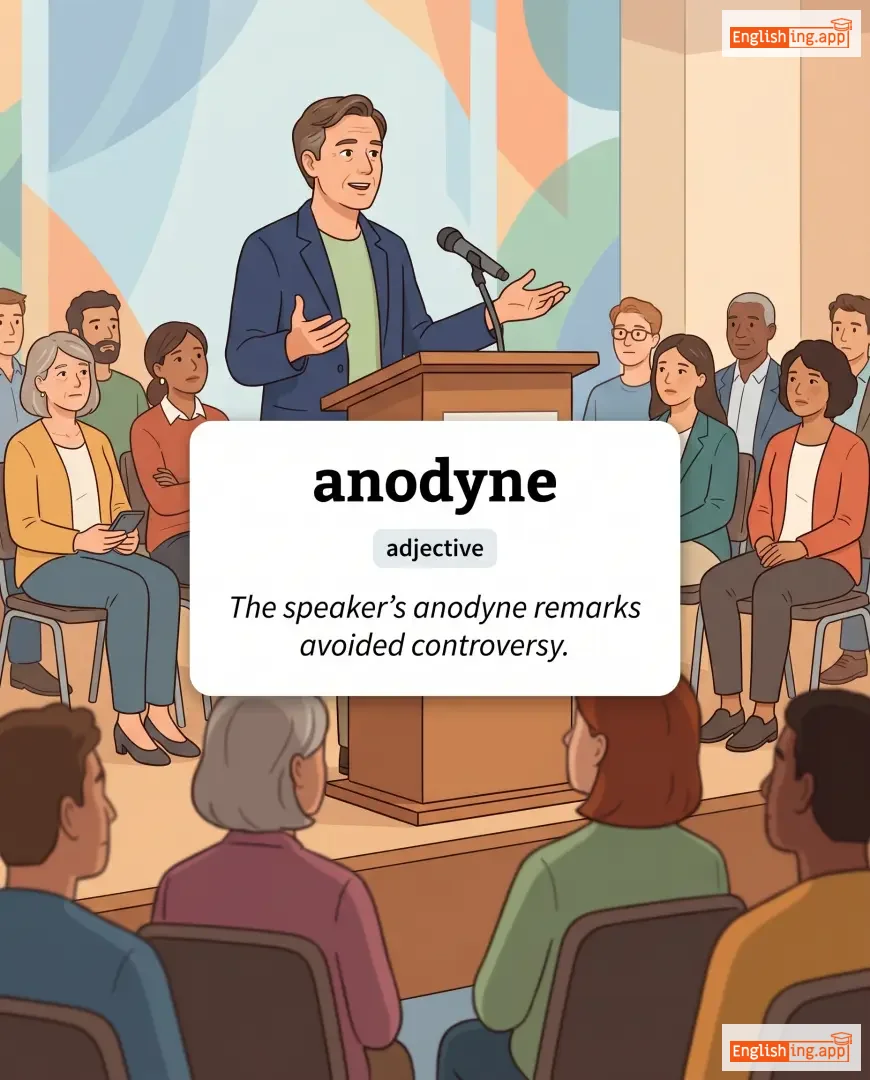
Not likely to cause offense; bland or harmless. Also refers to something that relieves pain.
••••••
|
The speaker’s anodyne remarks avoided controversy. |
演讲者的无害评论避免了争议。
Yǎnjiǎng zhě de wúhài pínglùn bìmiǎnle zhēngyì.
••••••
|
- •••••• | - •••••• | - •••••• |
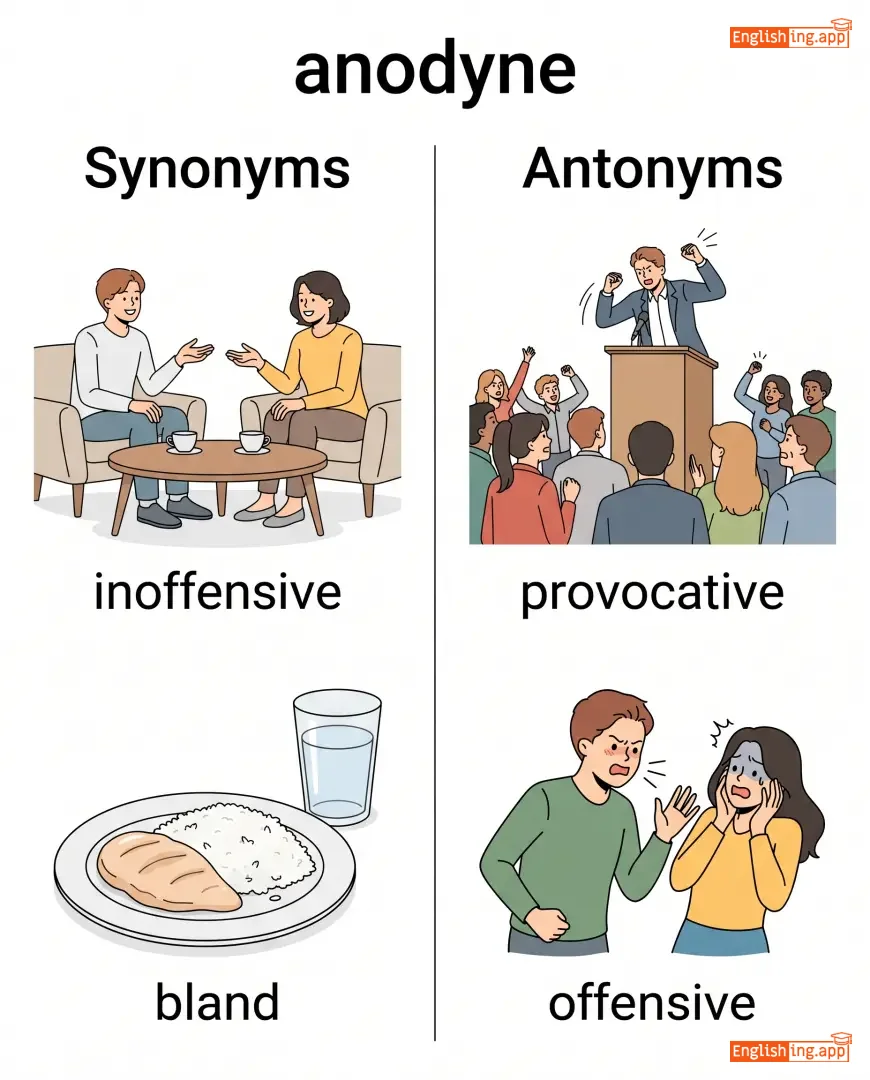
inoffensive, bland, harmless, soothing, palliative
••••••
|
provocative, offensive, harmful
••••••
|
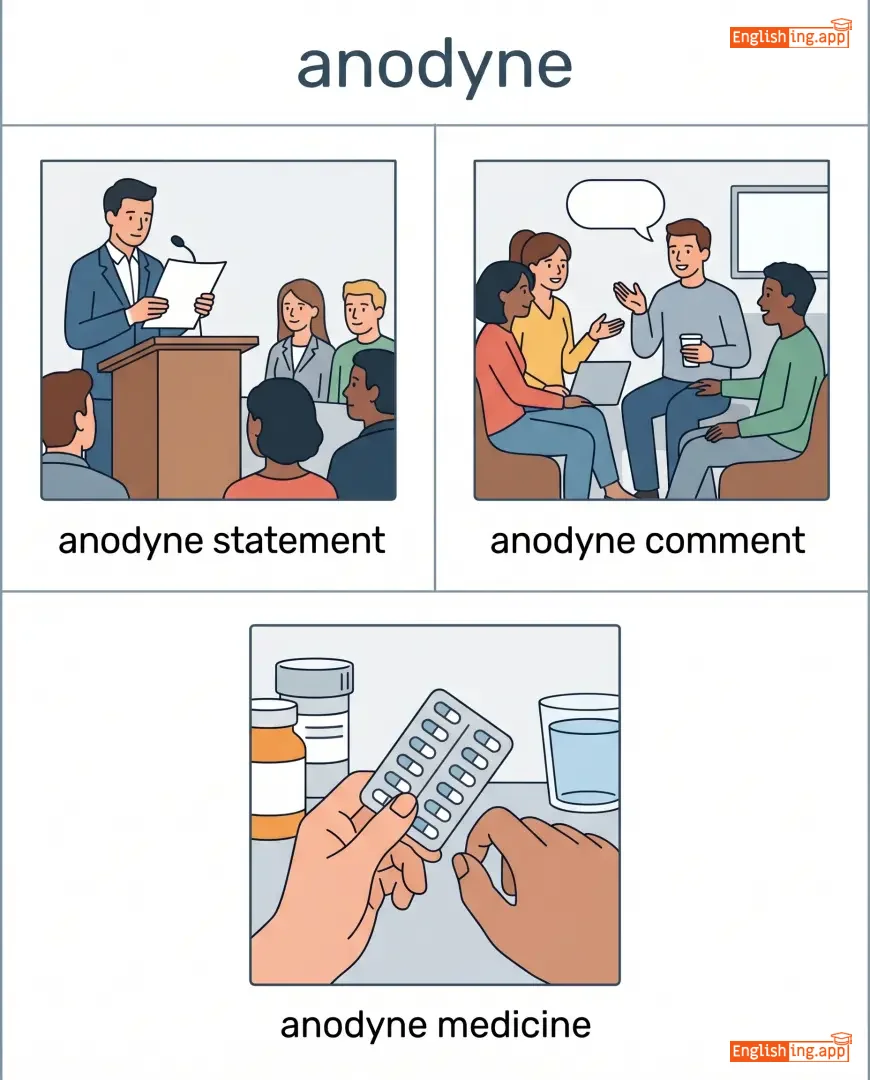
anodyne statement, anodyne comment, anodyne medicine
••••••
|
Anodyne = ‘No dyne’ → 没有痛苦,只有无害或缓解疼痛。
••••••
|
|
#435
🔋
|
/ˈæn.oʊd/
noun
(àinòdu)
••••••
|
- •••••• |
正极
zhèng jí
••••••
|
- •••••• | - •••••• | - •••••• | - •••••• |
The positive electrode in a device such as a battery, where current flows into a polarized electrical device.
••••••
|
The anode of the battery was corroded after long use. |
电池的正极在长时间使用后被腐蚀了。
Diànchí de zhèngjí zài cháng shíjiān shǐyòng hòu bèi fǔshíle.
••••••
|
- •••••• | - •••••• | - •••••• |
positive electrode, terminal, pole, contact
••••••
|
cathode, negative electrode
••••••
|
anode rod, battery anode, sacrificial anode
••••••
|
记住'Anode'作为'添加节点',意味着电流从正极流入。
••••••
|
|
#436
🔬
|
/ˈænɪməlˌkjuːl/
noun
(anīmāl kǔěr)
••••••
|
- •••••• |
微生物
wēi shēng wù
••••••
|
- •••••• | - •••••• | - •••••• | - •••••• |
A microscopic animal, especially a protozoan or other minute organism.
••••••
|
The scientist observed an animalcule moving under the microscope. |
科学家在显微镜下观察到一个微生物在移动。
Kēxuéjiā zài xiǎn wēi jìng xià guānchá dào yī gè wēi shēng wù zài yídòng.
••••••
|
- •••••• | - •••••• | - •••••• |
microbe, microorganism, protozoan, bacterium
••••••
|
macroorganism, human, animal
••••••
|
microscopic animalcule, tiny animalcule, living animalcule
••••••
|
Animal + 小 cule = 微生物
••••••
|
|
#437
❌
|
/əˈnʌl/
verb
(安努尔)
••••••
|
- •••••• |
取消
qǔxiāo
••••••
|
annulled
安努尔德
••••••
|
annulled
安努尔德
••••••
|
annuls
安努尔斯
••••••
|
annulling
安努尔林
••••••
|
to declare something legally invalid or cancel it
••••••
|
The court decided to annul the marriage due to fraud.
法院决定因欺诈取消婚姻。
••••••
|
法院决定因欺诈取消婚姻。
fǎyuàn juédìng yīn qīzhà qǔxiāo hūnyīn.
••••••
|
annul a contract
取消合同
••••••
|
to cancel or invalidate a legal agreement
••••••
|
取消合同
qǔxiāo hé tóng
••••••
|
cancel, invalidate, repeal, void, abolish
••••••
|
validate, enforce, approve
••••••
|
annul a contract, annul a marriage, annul a law, annul officially
••••••
|
Annul意味着取消,即在法律上使其无效。
••••••
|
|
#438
💵
|
/əˈnjuː.ɪ.ti/
noun
(an-yu-i-ti)
••••••
|
- •••••• |
年金
nianjin
••••••
|
- •••••• | - •••••• | - •••••• | - •••••• |
a fixed sum of money paid to someone each year, typically for the rest of their life
••••••
|
She receives an annuity from her late husband's insurance policy.
她从她已故丈夫的保险政策中获得年金。
••••••
|
她从她已故丈夫的保险政策中获得年金。
Ta cong ta yigu zhangfu de baoxian zhengce zhong huode nianjin.
••••••
|
- •••••• | - •••••• | - •••••• |
pension, allowance, stipend, payment
••••••
|
lump sum, debt
••••••
|
fixed annuity, variable annuity, annuity contract, lifetime annuity
••••••
|
Annuity = 年金, 就像每年固定收入!
••••••
|
|
#439
📅
|
/ˈæn.ju.əl/
adjective
(年度)
••••••
|
- •••••• |
年度
niandu
••••••
|
- •••••• | - •••••• | - •••••• | - •••••• |
happening once every year
••••••
|
The company holds an annual meeting for all its shareholders. |
公司每年为所有股东举办年度会议。
Gongsi mei nian wei suoyou gudong juban niandu huiyi.
••••••
|
annual tradition |
a custom or event repeated every year
••••••
|
年度传统
niandu chuantong
••••••
|
yearly, once-a-year, periodic, regular
••••••
|
monthly, daily
••••••
|
annual meeting, annual report, annual budget, annual celebration
••••••
|
Annual代表每年一次,就像‘ANNUal’每年都到来。
••••••
|
|
#440
😠
|
/əˈnɔɪ/
verb
(安诺伊)
••••••
|
- •••••• |
惹恼
renao
••••••
|
annoyed
安诺伊德
••••••
|
annoyed
安诺伊德
••••••
|
annoys
安诺伊斯
••••••
|
annoying
安诺伊因
••••••
|
to irritate or bother someone and make them feel a little angry or uncomfortable
••••••
|
His constant humming started to annoy everyone in the room.
他的持续哼唱开始让房间里的每个人都不耐烦。
••••••
|
他的持续哼唱开始让房间里的每个人都不耐烦。
Ta de chíxù hēngchàng kāishǐ ràng fángjiān lǐ de měi gè rén dōu bù nàifán.
••••••
|
annoy the hell out of
惹恼某人
••••••
|
to irritate someone extremely
••••••
|
惹恼某人
rěnǎo mǒu rén
••••••
|
irritate, bother, disturb, anger, provoke
••••••
|
please, delight, soothe
••••••
|
annoy someone, really annoy, slightly annoy, annoy deeply
••••••
|
安诺伊—像‘安’一样惹恼别人。
••••••
|
|
#441
📝
|
/ˈæn.ə.teɪt/
verb
(ānòu tè)
••••••
|
- •••••• |
添加注释或评论
tiānjiā zhùshì huò pínglùn
••••••
|
annotated
ānòu tè dé
••••••
|
annotated
ānòu tè dé
••••••
|
annotates
ānòu tè sī
••••••
|
annotating
ānòu tè yíng
••••••
|
to add notes or comments to a text, diagram, or document for explanation or clarification
••••••
|
The teacher asked the students to annotate the poem with their interpretations.
Lǎoshī yāoqiú xuéshēng zài shī cí zhōng tiānjiā tāmen de jiěshì.
••••••
|
Lǎoshī yāoqiú xuéshēng zài shī cí zhōng tiānjiā tāmen de jiěshì.
Laoshi yaoqiu xuesheng zai shici zhong tianjia tamen de jieshi.
••••••
|
- •••••• | - •••••• | - •••••• |
comment, note, explain, remark, highlight
••••••
|
ignore, overlook
••••••
|
annotate a text, annotate a diagram, annotate carefully, annotate with notes
••••••
|
Annotate - jiā tiānjiā zhùshì — zài shī cí zhōng tiānjiā zhùshì jiùshì annotate.
••••••
|
|
#442
💥
|
/əˈnaɪ.ə.leɪt/
verb
(ànìhǐlèit)
••••••
|
|
摧毁
cuīhuǐ
••••••
|
annihilated
ànìhǐlèited
••••••
|
annihilated
ànìhǐlèited
••••••
|
annihilates
ànìhǐlèits
••••••
|
annihilating
ànìhǐlèitīng
••••••
|
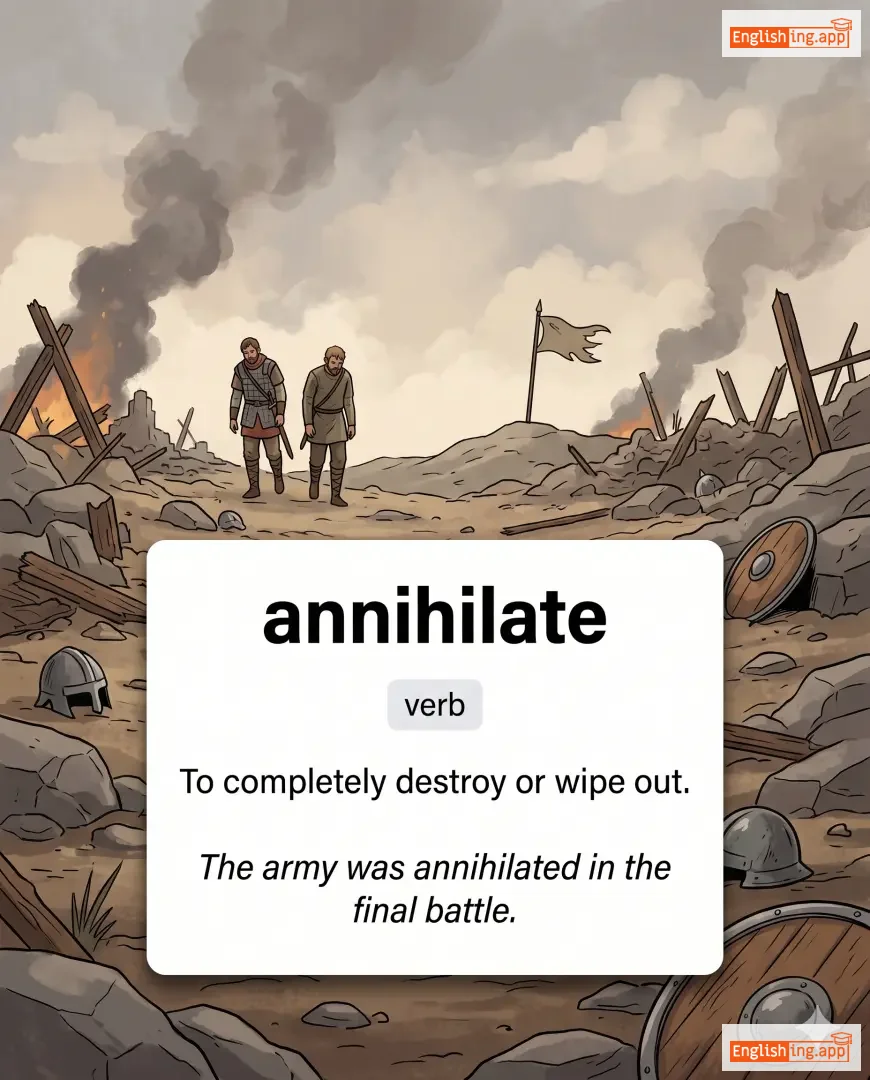
To completely destroy or wipe out.
••••••
|
The army was annihilated in the final battle.
军队在最后一战中被摧毁。
••••••
|
军队在最后一战中被摧毁。
Jūnduì zài zuìhòu yī zhàn zhōng bèi cuīhuǐ.
••••••
|
annihilate the competition
摧毁竞争对手
••••••
|
To defeat rivals completely
••••••
|
摧毁竞争对手
cuīhuǐ jìngzhēng duìshǒu
••••••
|
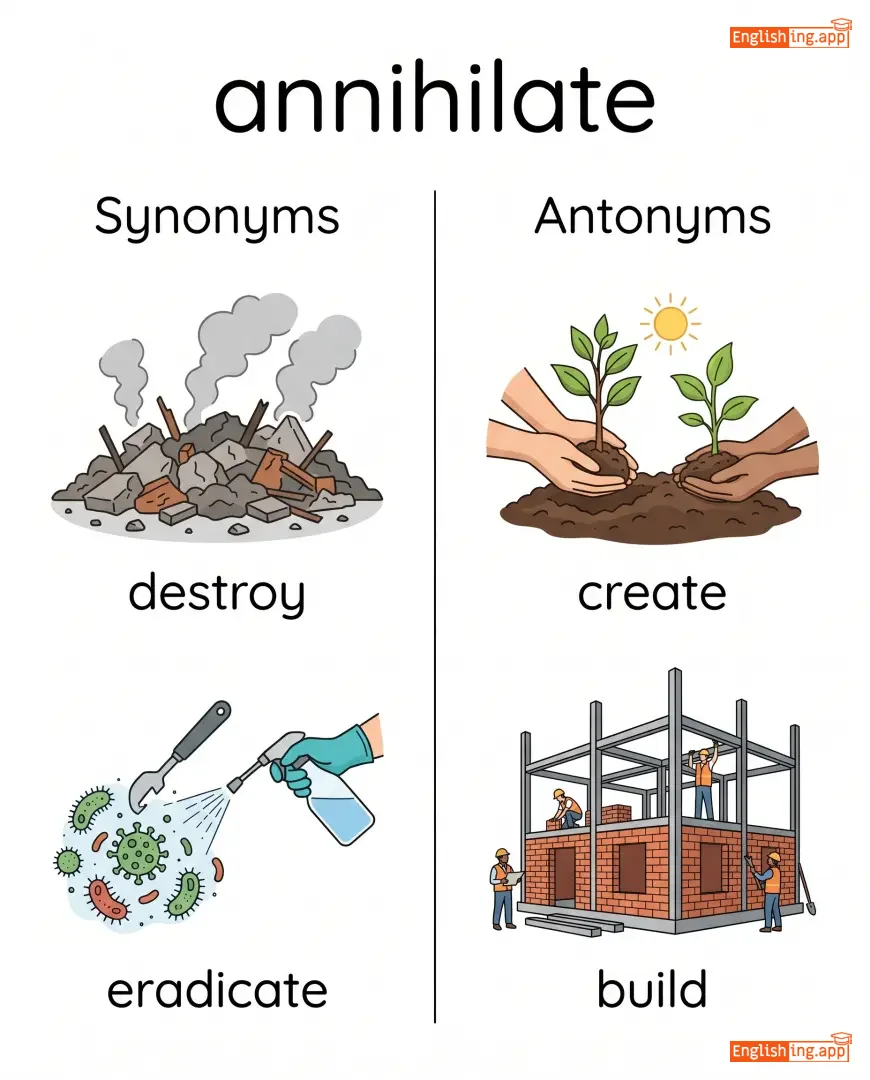
destroy, eradicate, obliterate, demolish, crush
••••••
|
create, build, construct
••••••
|
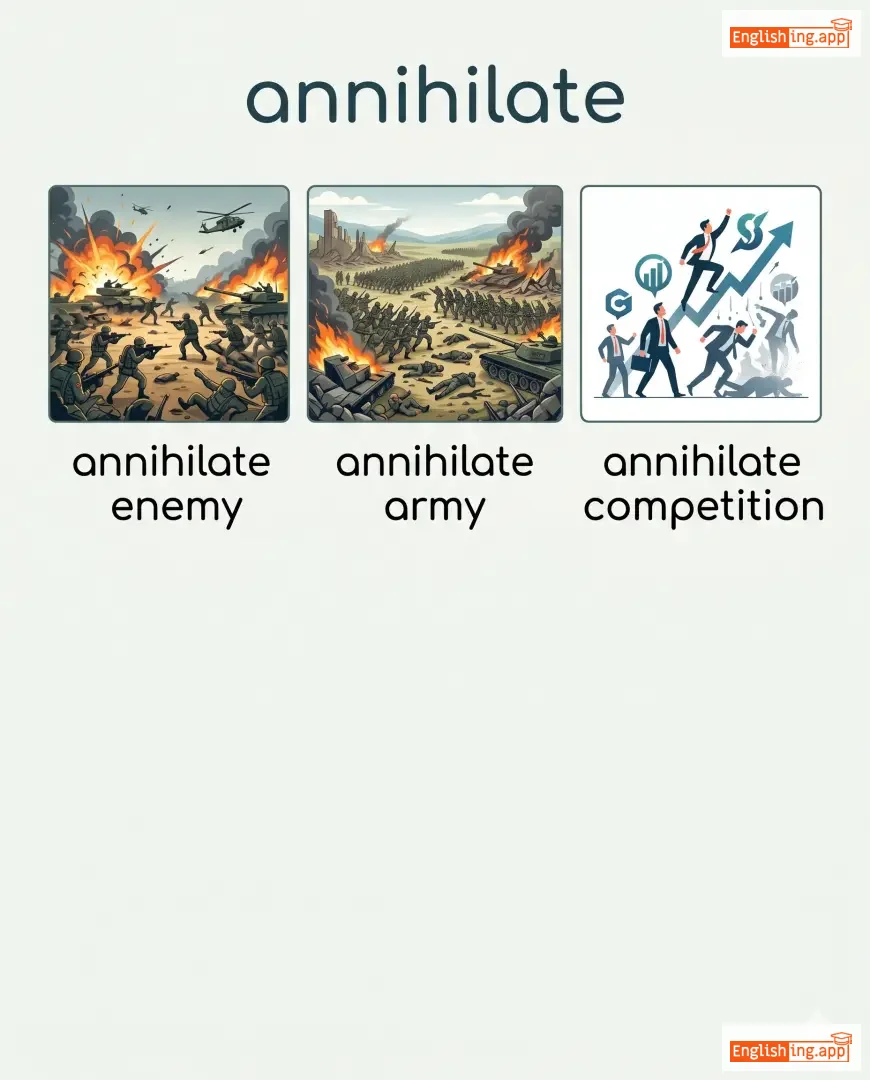
annihilate enemy, annihilate army, annihilate competition
••••••
|
Annihilate意味着摧毁——一切都消失。
••••••
|
|
#443
🏴
|
/ˈæn.ɛks/
verb
(安内克斯)
••••••
|
- •••••• |
吞并
tūn bìng
••••••
|
annexed
安内克斯德
••••••
|
annexed
安内克斯德
••••••
|
annexes
安内克斯
••••••
|
annexing
安内克辛
••••••
|
To take control of a territory and add it to one's own.
••••••
|
The empire annexed the neighboring kingdom after the war.
帝国在战争后吞并了邻国的王国。
••••••
|
帝国在战争后吞并了邻国的王国。
Dìguó zài zhànzhēng hòu tūn bìngle lín guó de wángguó.
••••••
|
annex territory
吞并领土
••••••
|
To claim and occupy land
••••••
|
吞并领土
tūn bìng lǐngtǔ
••••••
|
seize, occupy, capture, appropriate, attach
••••••
|
surrender, relinquish
••••••
|
annex territory, annex land, annex building
••••••
|
Annex就是合并别的地方
••••••
|
|
#444
🔥
|
/əˈniːl/
verb
(安尼尔)
••••••
|
- •••••• |
通过加热使硬化
tongguo jiare shi yinghua
••••••
|
annealed
安尼尔德
••••••
|
annealed
安尼尔德
••••••
|
anneals
安尼尔斯
••••••
|
annealing
安尼尔林
••••••
|
To heat and cool metal or glass to make it stronger or less brittle.
••••••
|
The blacksmith annealed the steel to improve its durability.
铁匠为了提高钢的耐久性进行了退火。
••••••
|
铁匠为了提高钢的耐久性进行了退火。
Tiexiang weile tigao gang de naijiu xing jinxing le tuihuo.
••••••
|
- •••••• | - •••••• | - •••••• |
temper, toughen, strengthen, harden
••••••
|
weaken, soften
••••••
|
anneal glass, anneal steel, anneal process, anneal metal
••••••
|
Anneal 就像 '安尼尔',热处理金属
••••••
|
|
#445
📖
|
/ˈæn.əlz/
noun
(安纳尔斯)
••••••
|
- •••••• |
年鉴
nianjian
••••••
|
- •••••• | - •••••• | - •••••• | - •••••• |
Historical records of events, usually arranged chronologically.
••••••
|
Her name will be remembered in the annals of science. |
她的名字将在科学年鉴中被铭记。
Tā de míngzì jiāng zài kēxué niánjiàn zhōng bèi míngjì.
••••••
|
in the annals of history |
Recorded as part of historical events
••••••
|
在历史年鉴中
Zài lìshǐ niánjiàn zhōng
••••••
|
records, chronicles, archives, history
••••••
|
oblivion, forgetfulness
••••••
|
annals of history, annals of science, annals of literature
••••••
|
年鉴就像年年都写下的记录,历史事件年年都有!
••••••
|
|
#446
📜
|
/ˈæn.ə.lɪst/
noun
(阿纳利斯特)
••••••
|
- •••••• |
编年史家
bian nian shi jia
••••••
|
- •••••• | - •••••• | - •••••• | - •••••• |
A person who writes annals or records events year by year.
••••••
|
The annalist carefully documented the events of the king's reign. |
编年史家仔细记录了国王统治时期的事件。
Bian nian shi jia zi xi ji lu le guo wang tong zhi shi qi de shi jian.
••••••
|
- •••••• | - •••••• | - •••••• |
chronicler, historian, recorder, scribe
••••••
|
forgetter, ignoramus
••••••
|
ancient annalist, royal annalist, medieval annalist
••••••
|
编年史家,像是编写历史的专家:编 + 年 = 编年史家
••••••
|
|
#447
🔥
|
/ˈænɪməs/
noun
(阿尼穆斯)
••••••
|
- •••••• |
敌意 / 目的
díyì / mùdì
••••••
|
- •••••• | - •••••• | - •••••• | - •••••• |
A strong feeling of hostility; motivation or purpose behind an action.
••••••
|
His speech was driven by animus against the policy. |
他的演讲是由对政策的敌意驱动的。
Tā de yǎnjiǎng shì yóu duì zhèngcè de díyì qūdòng de.
••••••
|
- •••••• | - •••••• | - •••••• |
hostility, ill will, malice, spite, antagonism
••••••
|
kindness, goodwill, friendliness
••••••
|
political animus, personal animus, animus against
••••••
|
Ani + must (阿尼穆斯) = 用敌意看待某人 = animus意味着敌意或目的
••••••
|
|
#448
😠
|
/ˌænɪˈmɒsɪti/
noun
••••••
|
- •••••• | - •••••• | - •••••• | - •••••• | - •••••• | - •••••• |
A strong feeling of hostility or active dislike.
••••••
|
There was a long history of animosity between the two families. |
- •••••• |
long-standing animosity |
a deeply rooted hostility that has lasted for a long time
••••••
|
- •••••• |
hostility, hatred, enmity, resentment, antagonism
••••••
|
friendship, goodwill, affection
••••••
|
deep animosity, mutual animosity, show animosity
••••••
|
No •••••• |
|
#449
🎬
|
/ˈænɪmeɪtɪd/
adjective
(动画的)
••••••
|
- •••••• |
动画的
donghua de
••••••
|
- •••••• | - •••••• | - •••••• | - •••••• |
Full of life or excitement; made using animation techniques.
••••••
|
The animated film was loved by children and adults alike. |
这部动画电影受到儿童和成人的喜爱。
Zhe bu donghua dianying shoudao ertong he chengren de xihuan.
••••••
|
animated discussion |
a lively or energetic conversation
••••••
|
动画讨论
donghua taolun
••••••
|
lively, energetic, spirited, vibrant, enthusiastic
••••••
|
dull, lifeless, boring
••••••
|
animated movie, animated character, animated debate
••••••
|
动画电影是充满活力和色彩的故事。
••••••
|
|
#450
⚡
|
/ˈænɪmeɪt/
verb
(动画)
••••••
|
- •••••• |
动画
donghua
••••••
|
animated
动画过
••••••
|
animated
动画过
••••••
|
animates
动画
••••••
|
animating
动画着
••••••
|
To bring to life or give movement to something; to inspire or enliven.
••••••
|
The teacher tried to animate the lesson with exciting activities.
老师试图通过令人兴奋的活动来动画化课程。
••••••
|
老师试图通过令人兴奋的活动来动画化课程。
Laoshi shitu tongguo lingren xingfen de huodong lai donghua kecheng.
••••••
|
animate the crowd
激发人群
••••••
|
to excite or energize a group of people
••••••
|
激发人群
Jifa renqun
••••••
|
enliven, energize, inspire, motivate, vitalize
••••••
|
deaden, dull, depress
••••••
|
animate the character, animate the story, animate the discussion
••••••
|
动画电影让角色复活,给他们生命。
••••••
|
Vocabulary Quiz
Test your vocabulary by matching words with their translations or meanings.
Login to take the quiz
Comments (0)
Share your thoughts and join the discussion.
Join the discussion by logging in
Login to CommentNo comments yet
Be the first to share your thoughts!