



Swipe left or right, or use the buttons. Tap image to zoom.
例句翻译
单词
Lesson 367Lesson 367 - 遮罩切换
|
表情符号
|
单词 | Images | 翻译 | 过去时 | 过去分词 | 第三人称单数 | 动名词 | 含义 | 例句 | 例句翻译 | 示例表达 | 示例表达含义 | 示例表达翻译 | 同义词 | 反义词 | 搭配词 | 助记符 |
|---|---|---|---|---|---|---|---|---|---|---|---|---|---|---|---|---|---|
|
#10975
💵
|
/fiː/
noun
(fi)
••••••
|
- •••••• |
费用
feiyong
••••••
|
- •••••• | - •••••• | - •••••• | - •••••• |
A payment made for a service or privilege.
••••••
|
The lawyer charged a high fee for his services. |
律师为他的服务收取了高额费用。
Lüshi wei tā de fuwu shōuqǔle gāo'é fèiyòng.
••••••
|
service fee |
An amount charged for providing a service
••••••
|
服务费
fuwu fei
••••••
|
charge, cost, payment, price
••••••
|
free, gift
••••••
|
pay a fee, membership fee, tuition fee, service fee
••••••
|
Fee 意味着费用 - 我们经常为服务支付费用
••••••
|
|
#10976
🥊
|
/ˈfaɪtər/
noun
(fāi tè)
••••••
|
- •••••• |
战士
zhanshi
••••••
|
- •••••• | - •••••• | - •••••• | - •••••• |
a person who fights, especially in combat or sports like boxing
••••••
|
The fighter won the championship after a tough battle. |
战士在激烈的战斗后赢得了冠军。
Zhanshi zài jīliè de zhàndòu hòu yíngdéle guànjūn.
••••••
|
freedom fighter |
a person who takes part in a resistance movement against an oppressive regime
••••••
|
自由战士
zìyóu zhànshì
••••••
|
warrior, combatant, soldier, boxer, contender
••••••
|
peacemaker, pacifist, civilian
••••••
|
brave fighter, freedom fighter, skilled fighter, fighter plane
••••••
|
Fighter 就是战士 - 记住自由战士是 freedom fighter
••••••
|
|
#10977
🥊
|
/faɪt/
verb
(fai)
••••••
|
- •••••• |
打斗
da dou
••••••
|
fought
fot
••••••
|
fought
fot
••••••
|
fights
fai-ts
••••••
|
fighting
fighting
••••••
|
to take part in a violent struggle or to try hard to achieve something
••••••
|
They had to fight for their rights.
他们必须为自己的权利而战。
••••••
|
他们必须为自己的权利而战。
Tamen bixu wei ziji de quanli er zhan.
••••••
|
fight tooth and nail
全力以赴地战斗
••••••
|
to fight or argue with great determination
••••••
|
全力以赴地战斗
quan li yi fu de zhan dou
••••••
|
battle, combat, struggle, conflict, clash
••••••
|
peace, surrender, agreement
••••••
|
fight back, fight against, fight for, fight with, fight hard
••••••
|
Fight 的意思是打斗 – 🥊 打斗获得权利 (权利)
••••••
|
|
#10978
5️⃣0️⃣
|
/ˈfɪfti/
number
(fifty)
••••••
|
- •••••• |
五十
wu shi
••••••
|
- •••••• | - •••••• | - •••••• | - •••••• |
the number 50
••••••
|
The stadium can hold fifty thousand people. |
体育场可以容纳五万人。
Tiyuchang keyi rongna wuwan ren.
••••••
|
- •••••• | - •••••• | - •••••• |
50
••••••
|
forty-nine, fifty-one
••••••
|
fifty percent, fifty years, fifty dollars
••••••
|
五十 = 五 (5) × 十 (10)
••••••
|
|
#10979
5️⃣
|
/fɪfθ/
adjective
(fifth)
••••••
|
- •••••• |
第五
di wu
••••••
|
- •••••• | - •••••• | - •••••• | - •••••• |
constituting number five in a sequence
••••••
|
She lives on the fifth floor of the building.
她住在大楼的第五层。
••••••
|
她住在大楼的第五层。
Ta zhu zai dalou de di wu ceng.
••••••
|
take the fifth
去第五
••••••
|
to refuse to answer a question, especially in a legal context
••••••
|
拒绝回答
jue jue hui da
••••••
|
5th, number five, position five
••••••
|
first, last
••••••
|
fifth floor, fifth grade, fifth time
••••••
|
第五表示数字5,和五并列
••••••
|
|
#10980
1️⃣5️⃣
|
/ˌfɪfˈtiːn/
number
(fifteen)
••••••
|
- •••••• |
十五
shi wu
••••••
|
- •••••• | - •••••• | - •••••• | - •••••• |
the number 15
••••••
|
There are fifteen students in the class. |
班里有十五个学生。
Ban li you shi wu ge xuesheng.
••••••
|
- •••••• | - •••••• | - •••••• |
15
••••••
|
fourteen, sixteen
••••••
|
fifteen minutes, fifteen years, group of fifteen
••••••
|
十五就是 10 加 5。
••••••
|
|
#10981
🌾
|
/fiːld/
noun
(fīld)
••••••
|
- •••••• |
田野
tian ye
••••••
|
- •••••• | - •••••• | - •••••• | - •••••• |
an area of open land, often used for farming, sports, or scientific study
••••••
|
The children played football in the field. |
孩子们在田野上踢足球。
Haizimen zai tianye shang ti zuqiu.
••••••
|
field of expertise |
a particular area of knowledge or skill
••••••
|
专业领域
zhuanye lingyu
••••••
|
meadow, ground, area, domain, sphere
••••••
|
city, indoors, building
••••••
|
open field, sports field, field trip, field study, field of research
••••••
|
田野是开放的地方,帮助记住它是与开放的地方相关的。
••••••
|
|
#10982
🧵
|
/ˈfaɪbər/
noun
(fáibó)
••••••
|
- •••••• |
纤维
xianwei
••••••
|
- •••••• | - •••••• | - •••••• | - •••••• |
a thread or filament from which a textile is formed; dietary substance from plants that aids digestion
••••••
|
Fruits and vegetables are high in fiber. |
水果和蔬菜富含纤维。
Shuǐguǒ hé shūcài fùhán xiānwéi.
••••••
|
moral fiber |
strength of character and ability to do what is right
••••••
|
道德力量
dàodé lìliàng
••••••
|
thread, strand, filament, roughage
••••••
|
fluid, liquid
••••••
|
fiber optic, fiber diet, fiber content, natural fiber
••••••
|
纤维意味着纤维,吃纤维有助于消化
••••••
|
|
#10983
➖
|
/ˈfjuːər/
determiner/adjective
(菲尤尔)
••••••
|
- •••••• |
更少
gèng shǎo
••••••
|
- •••••• | - •••••• | - •••••• | - •••••• |
a smaller number of; not as many
••••••
|
Fewer people attended the meeting than expected. |
参加会议的人数比预期的少。
Cānjiā huìyì de rénshù bǐ yùqī de shǎo.
••••••
|
- •••••• | - •••••• | - •••••• |
less, reduced, diminished, smaller number
••••••
|
more, greater
••••••
|
fewer people, fewer problems, fewer opportunities, fewer hours
••••••
|
Fewer意味着更少,Few + er = 更少
••••••
|
|
#10984
🚧
|
/fɛns/
noun/verb
(fens)
••••••
|
- •••••• |
篱笆
lí bā
••••••
|
fenced
fenced
••••••
|
fenced
fenced
••••••
|
fences
fences
••••••
|
fencing
fencing
••••••
|
a barrier, usually made of wood or wire, that surrounds an area; to enclose with a barrier
••••••
|
They built a fence around the garden.
他们在花园周围建了一道篱笆。
••••••
|
他们在花园周围建了一道篱笆。
Tāmen zài huāyuán zhōuwéi jiànle yī dào lí bā.
••••••
|
sit on the fence
坐在篱笆上
••••••
|
to avoid making a decision or choosing a side
••••••
|
避免做决定
bì miǎn zuò juédìng
••••••
|
barrier, wall, enclosure, hedge
••••••
|
opening, gap
••••••
|
wooden fence, garden fence, high fence, electric fence
••••••
|
篱笆是一种界限,围绕着某个区域,像保护圈一样。
••••••
|
|
#10985
👩
|
/ˈfiːmeɪl/
noun/adjective
(fīmèi'ěr)
••••••
|
- •••••• |
雌性
cíxìng
••••••
|
- •••••• | - •••••• | - •••••• | - •••••• |
a person or animal of the sex that can bear offspring; relating to women or girls
••••••
|
The female lion protects her cubs fiercely.
母狮保护她的幼崽。
••••••
|
母狮保护她的幼崽。
Mǔ shī bǎohù tā de yòuzǎi.
••••••
|
female intuition
女性直觉
••••••
|
a woman's natural ability to understand or sense something instinctively
••••••
|
女性直觉
nǚxìng zhíjué
••••••
|
woman, lady, girl, feminine
••••••
|
male, man
••••••
|
female student, female worker, female voice, female lead
••••••
|
Fe + male = Female, 但 Fe 不是铁,这里指女性
••••••
|
|
#10986
👥
|
/ˈfɛloʊ/
noun
(费洛)
••••••
|
- •••••• |
伙伴
huǒbàn
••••••
|
- •••••• | - •••••• | - •••••• | - •••••• |
a person who shares a common situation, interest, or activity with another
••••••
|
He is a fellow student in my class. |
他是我班上的一个伙伴。
Tā shì wǒ bān shàng de yīgè huǒbàn.
••••••
|
fellow traveler |
someone who shares similar beliefs or interests, often political
••••••
|
同行者
tóngháng zhě
••••••
|
companion, colleague, peer, comrade, associate
••••••
|
opponent, stranger, rival
••••••
|
fellow student, fellow worker, fellow citizen, fellow traveler
••••••
|
Fellow意味着伙伴 - Fellow student意味着班上伙伴
••••••
|
|
#10987
💓
|
/ˈfiːlɪŋ/
noun
(菲灵)
••••••
|
- •••••• |
感觉
gǎnjué
••••••
|
- •••••• | - •••••• | - •••••• | - •••••• |
An emotional state or physical sensation.
••••••
|
She had a strange feeling about the place. |
她对那个地方有一种奇怪的感觉。
Tā duì nàgè dìfāng yǒu yī zhǒng qíguài de gǎnjué.
••••••
|
mixed feelings |
Having both positive and negative emotions about something
••••••
|
复杂的感觉
fùzá de gǎnjué
••••••
|
emotion, sensation, sentiment, mood
••••••
|
numbness, indifference
••••••
|
strong feeling, bad feeling, good feeling, mixed feelings
••••••
|
Feeling 就是你的感觉,就像内心深处的声音。
••••••
|
|
#10988
😊
|
/fiːl/
verb
(fíl)
••••••
|
|
感受
gǎnshòu
••••••
|
felt
felt
••••••
|
felt
felt
••••••
|
feels
fíls
••••••
|
feeling
fíling
••••••
|
To experience an emotion or physical sensation.
••••••
|
I feel happy when I listen to music.
我听音乐时感到很开心。
••••••
|
我听音乐时感到很开心。
wǒ tīng yīnyuè shí gǎndào hěn kāixīn.
••••••
|
feel at home
像在家一样的感觉
••••••
|
To be comfortable and relaxed
••••••
|
像在家一样的感觉
xiàng zài jiā yīyàng de gǎnjué
••••••
|
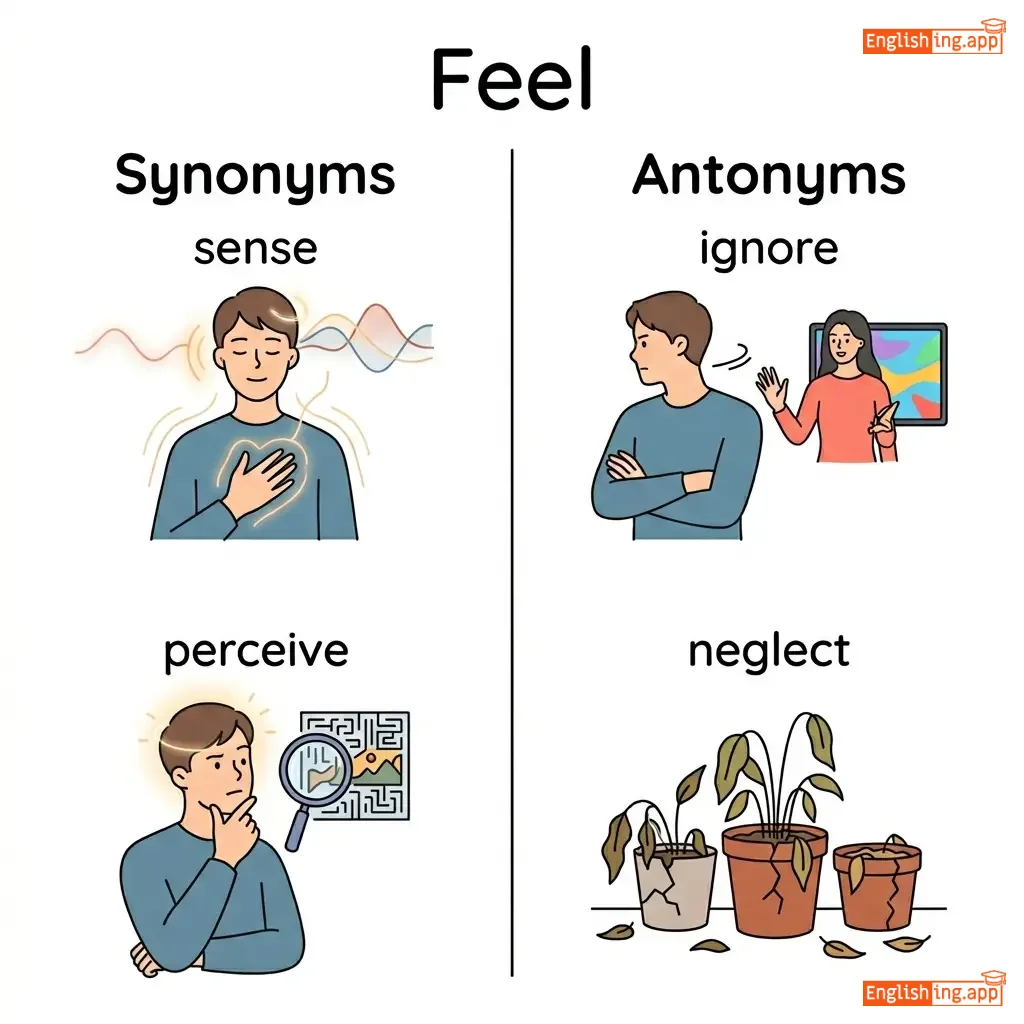
sense, perceive, experience, touch
••••••
|
ignore, neglect
••••••
|
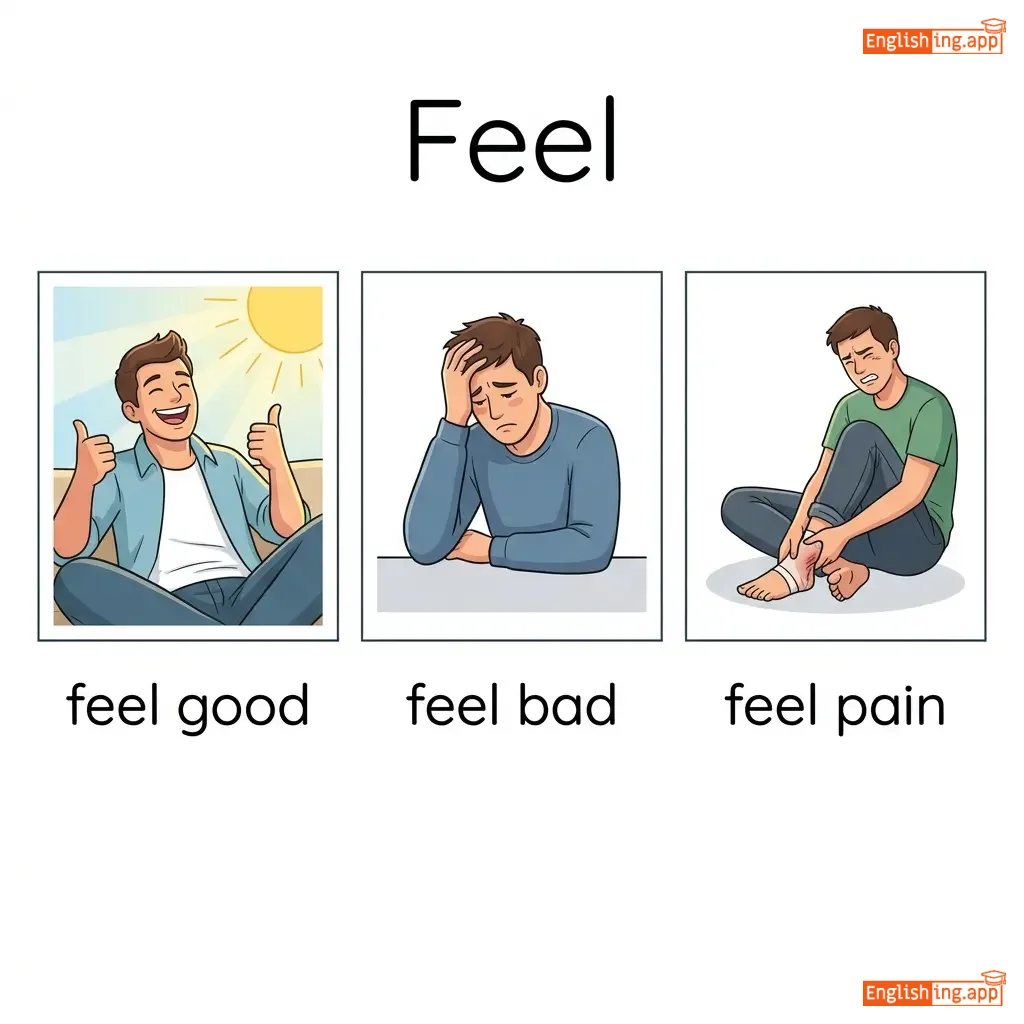
feel good, feel bad, feel pain, feel pressure
••••••
|
感受就像体验情感,像在家一样感到舒适。
••••••
|
|
#10989
🍽️
|
/fiːd/
verb
(fīd)
••••••
|
|
喂
wèi
••••••
|
fed
fed
••••••
|
fed
fed
••••••
|
feeds
fīds
••••••
|
feeding
fīding
••••••
|
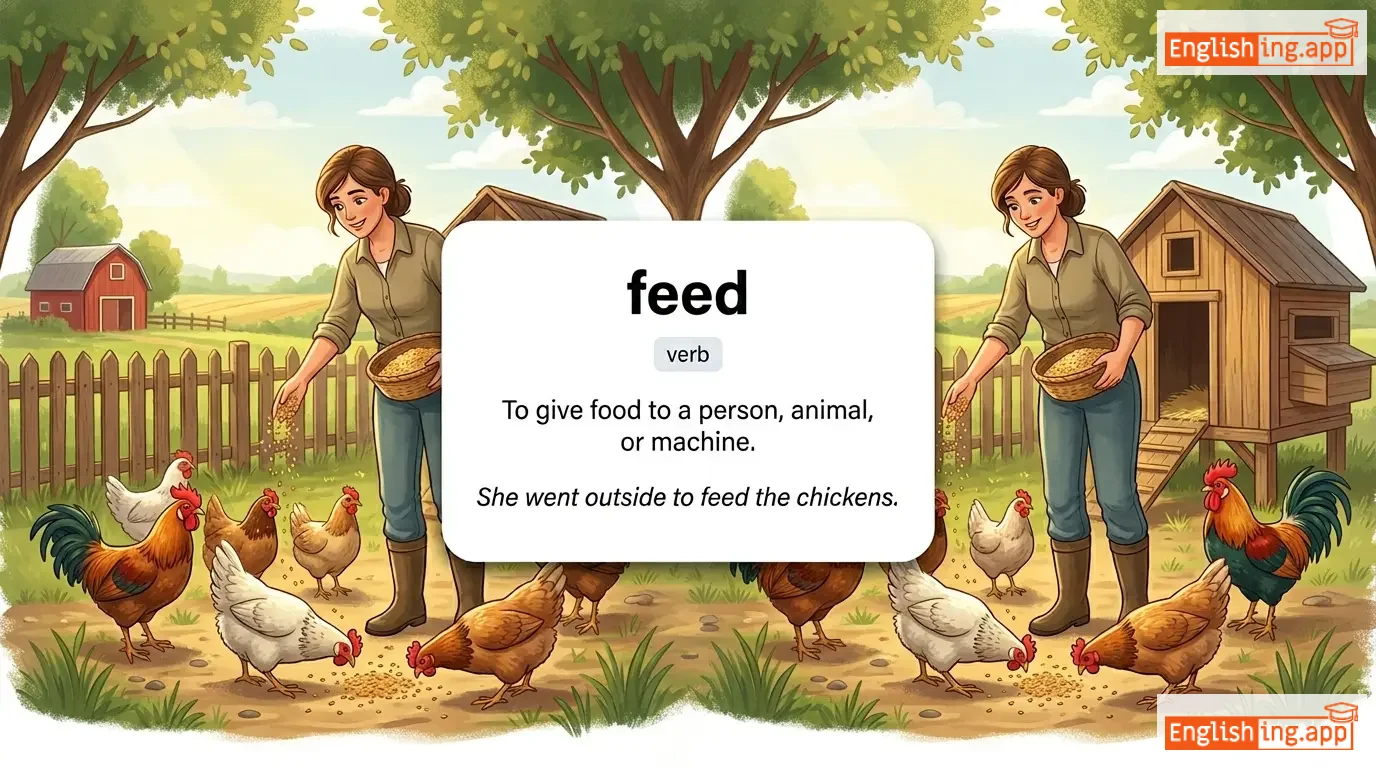
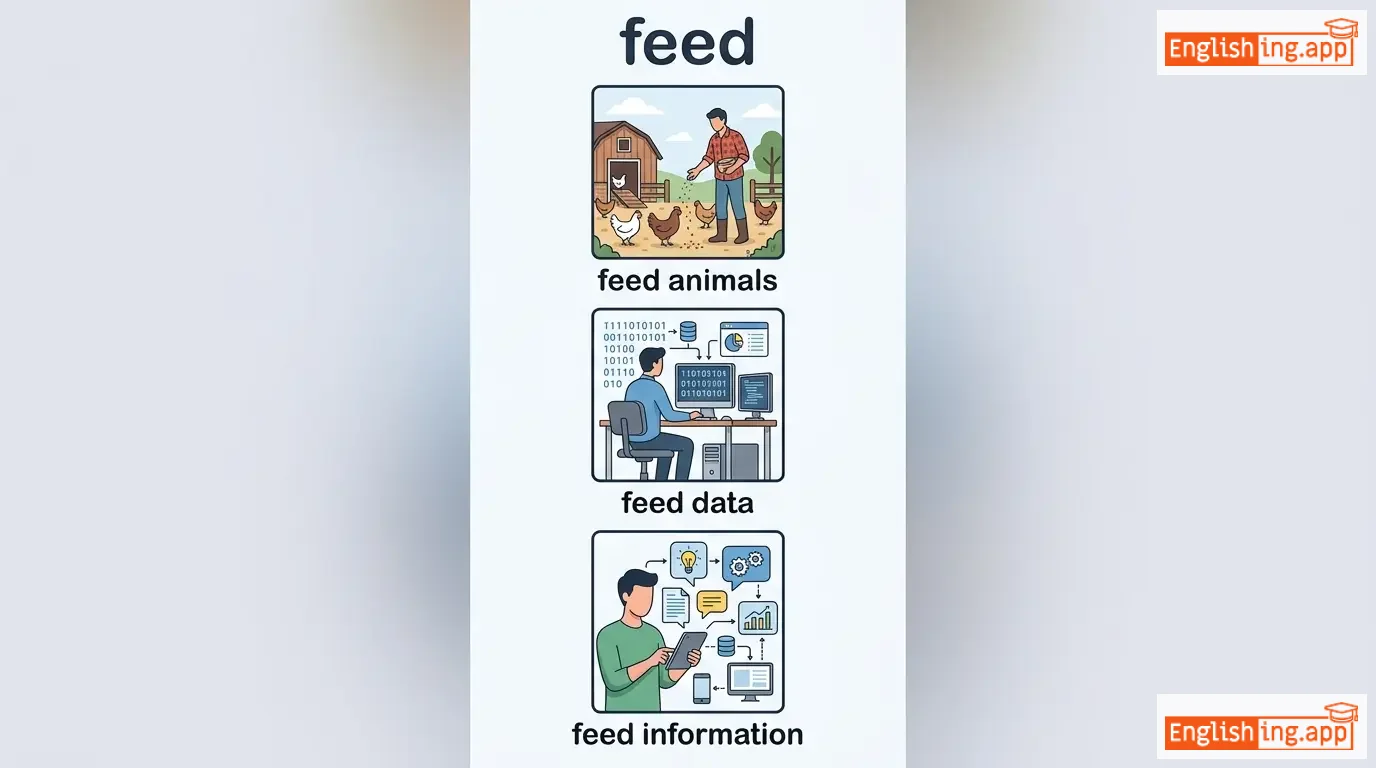
To give food to a person, animal, or machine.
••••••
|
She went outside to feed the chickens.
她出去喂鸡了。
••••••
|
她出去喂鸡了。
tā chūqù wèi jī le.
••••••
|
feed the fire
喂火
••••••
|
To add fuel to something or make it stronger
••••••
|
喂火
wèi huǒ
••••••
|
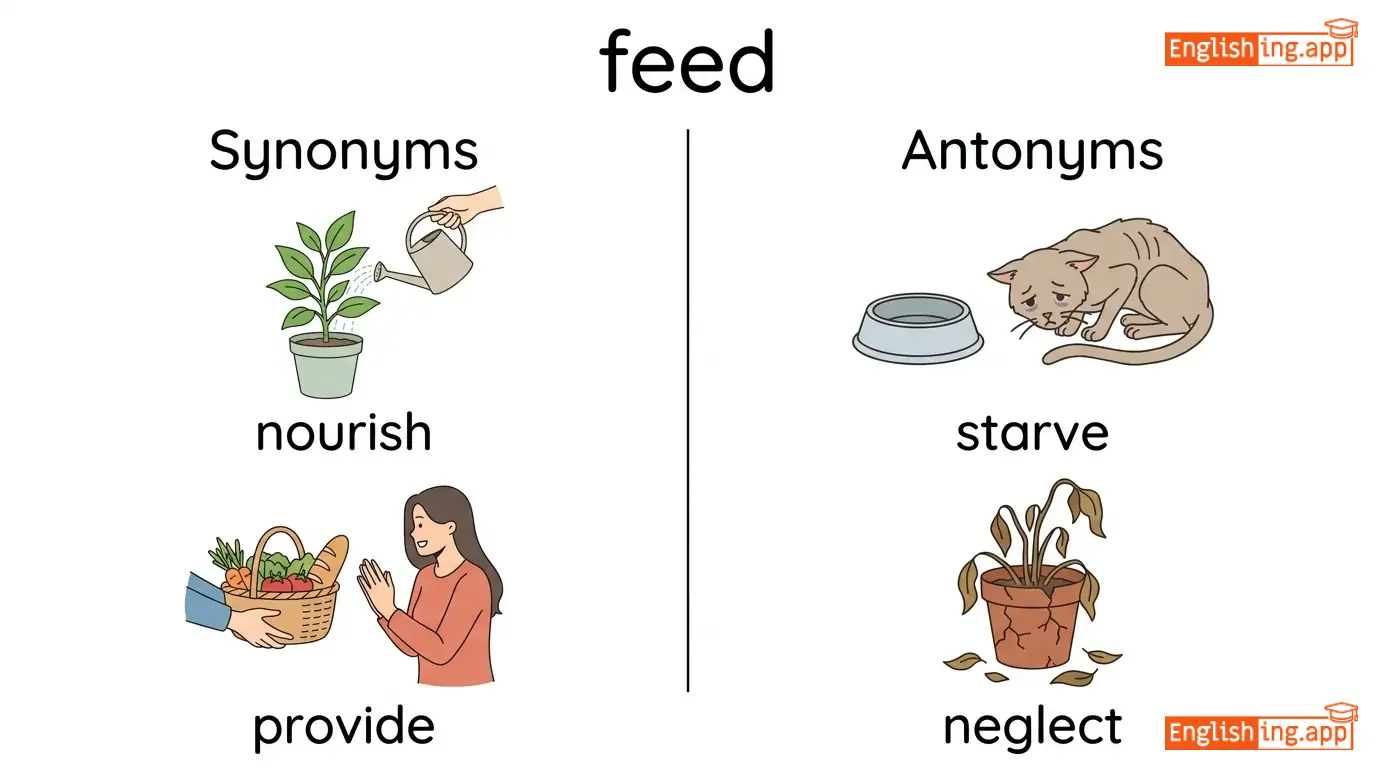
nourish, provide, supply, sustain
••••••
|
starve, neglect
••••••
|
feed animals, feed data, feed information, feed on
••••••
|
Feed 意味着喂食 - 就像 Facebook feed 一样,总有新内容加入。
••••••
|
|
#10990
⚖️
|
/ˈfɛərli/
adverb
(费尔利)
••••••
|
- •••••• |
公平地
gōngpíng de
••••••
|
- •••••• | - •••••• | - •••••• | - •••••• |
To a reasonable degree; in a just and honest way.
••••••
|
The teacher treated all students fairly. |
老师以公正的方式对待所有学生。
Lǎoshī yǐ gōngzhèng de fāngshì duìdài suǒyǒu xuéshēng.
••••••
|
play fair |
To act honestly and not cheat.
••••••
|
公平竞争
gōngpíng jìngzhēng
••••••
|
reasonably, quite, moderately, justly, honestly
••••••
|
unfairly, dishonestly
••••••
|
fairly easy, fairly common, fairly good, treat fairly
••••••
|
公平地意味着公平竞争
••••••
|
|
#10991
🏛️
|
/ˈfɛdərəl/
adjective
(联邦的)
••••••
|
- •••••• |
联邦的
liánbāng de
••••••
|
- •••••• | - •••••• | - •••••• | - •••••• |
Relating to the central government of a federation.
••••••
|
The federal government passed a new law on healthcare. |
联邦政府通过了一项关于医疗保健的新法律。
Liánbāng zhèngfǔ tōngguòle yī xiàng guānyú yīliáo bǎojiàn de xīn fǎlǜ.
••••••
|
- •••••• | - •••••• | - •••••• |
national, central, governmental, administrative
••••••
|
local, regional
••••••
|
federal law, federal court, federal government, federal system
••••••
|
联邦的意味着与联邦政府相关的。
••••••
|
|
#10992
😨
|
/fɪr/
noun, verb
(菲尔)
••••••
|
|
恐惧
kǒngjù
••••••
|
feared
费尔德
••••••
|
feared
费尔德
••••••
|
fears
菲尔斯
••••••
|
fearing
费尔英
••••••
|
An unpleasant emotion caused by the belief that someone or something is dangerous.
••••••
|
She has a fear of flying.
她害怕飞行。
••••••
|
她害怕飞行。
tā hài pà fēixíng.
••••••
|
face your fears
面对你的恐惧
••••••
|
Confront something that scares you.
••••••
|
面对你的恐惧
miàn duì nǐ de kǒngjù
••••••
|
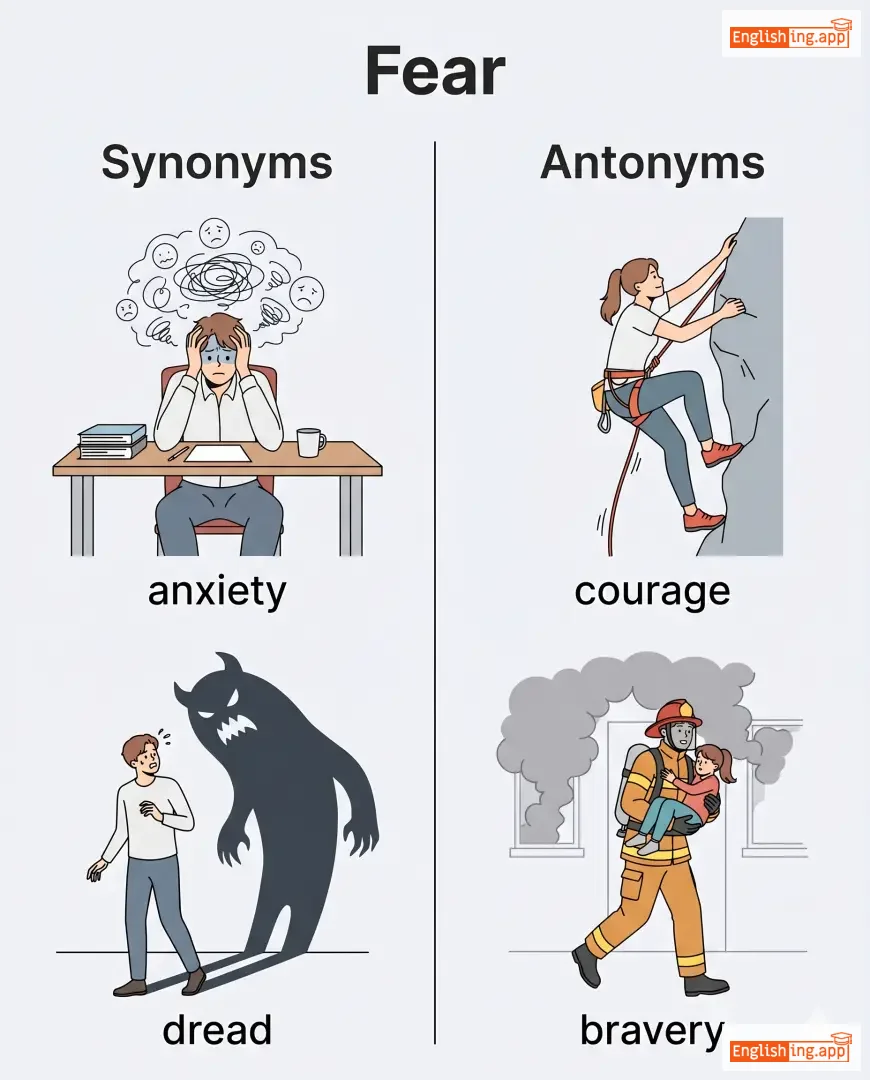
anxiety, dread, terror, worry, concern
••••••
|
courage, bravery, confidence
••••••
|
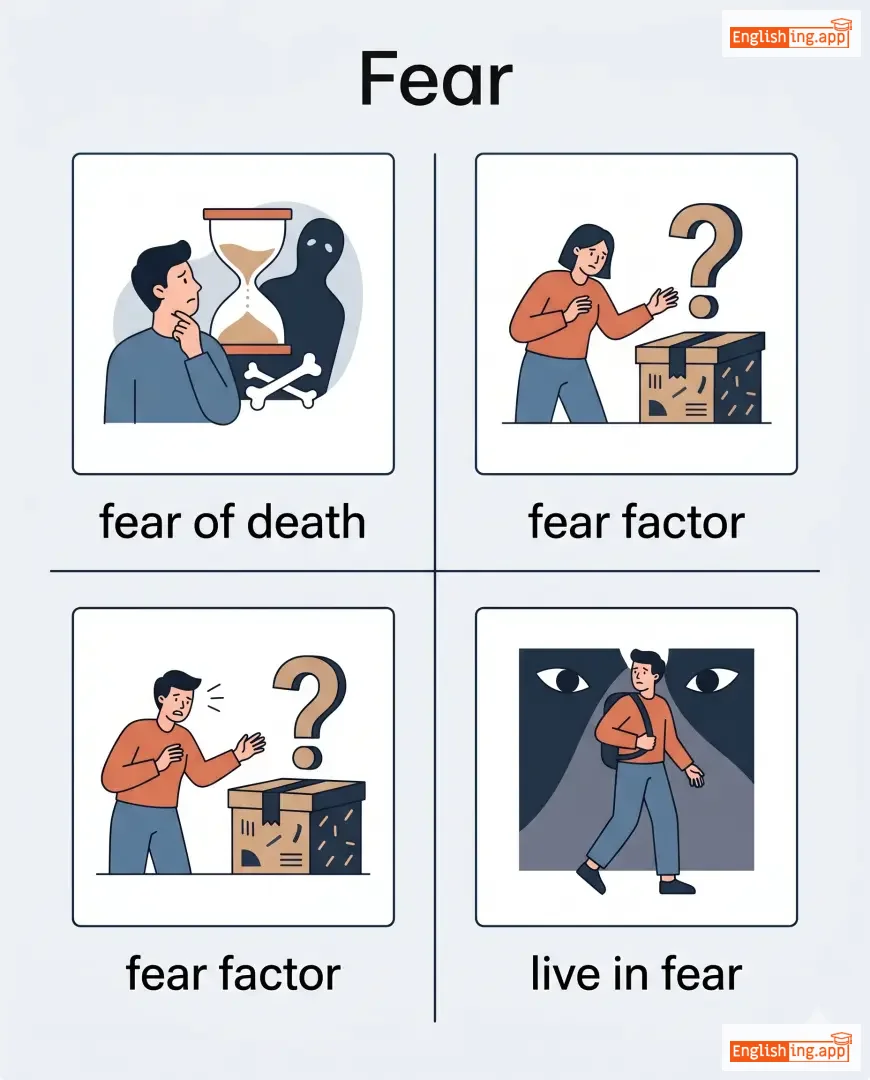
fear of death, fear factor, live in fear, fear something
••••••
|
Fear是恐惧 — 恐惧让你冻结。
••••••
|
|
#10993
⭐
|
/ˈfeɪvərɪt/
adjective, noun
(费佛瑞特)
••••••
|
- •••••• |
最喜欢的
zuì xǐ huān de
••••••
|
- •••••• | - •••••• | - •••••• | - •••••• |
Preferred over all others; something or someone especially liked.
••••••
|
Chocolate is my favorite ice cream flavor. |
巧克力是我最喜欢的冰淇淋口味。
Qiǎokèlì shì wǒ zuì xǐ huān de bīngqílín kǒuwèi.
••••••
|
play favorites |
To give unfair advantage to one person over others.
••••••
|
偏爱
piān'ài
••••••
|
preferred, beloved, liked, best, choice
••••••
|
hated, disliked
••••••
|
favorite song, favorite color, all-time favorite, crowd favorite
••••••
|
最喜欢的就像你最喜欢的东西,像你最喜欢的食物。
••••••
|
|
#10994
🙏
|
/ˈfeɪvər/
noun
(feɪvər)
••••••
|
- •••••• |
帮助
bangzhu
••••••
|
- •••••• | - •••••• | - •••••• | - •••••• |
An act of kindness or approval.
••••••
|
She asked him for a small favor.
她请求了一个小忙。
••••••
|
她请求了一个小忙。
Ta qingqiu le yi ge xiao mang.
••••••
|
do someone a favor
为某人做个忙
••••••
|
To do something to help someone.
••••••
|
为某人做个忙
Wei mou ren zuo ge mang
••••••
|
kindness, support, approval, help
••••••
|
disfavor, rejection
••••••
|
ask a favor, return a favor, in favor of, do a favor
••••••
|
帮助意味着帮助——给朋友一个帮助会让他高兴。
••••••
|
|
#10995
⚡
|
/fɔːlt/
noun
(fɔːlt)
••••••
|
- •••••• |
错误
cuòwù
••••••
|
- •••••• | - •••••• | - •••••• | - •••••• |
A mistake, error, or responsibility for a problem.
••••••
|
It was not her fault that the train was late. |
火车晚点不是她的错。
Huǒchē wǎndiǎn bùshì tā de cuò.
••••••
|
at fault |
Responsible for a mistake or wrongdoing.
••••••
|
有错
yǒu cuò
••••••
|
mistake, flaw, defect, error, responsibility
••••••
|
perfection, merit
••••••
|
take the fault, find fault, fault line, at fault
••••••
|
Fault对应的是错误,责任让我们改正。
••••••
|
|
#10996
👨👦
|
/ˈfɑːðər/
noun
(海皮尼斯)
••••••
|
- •••••• |
幸福
xìngfú
••••••
|
- •••••• | - •••••• | - •••••• | - •••••• |
A male parent of a child.
••••••
|
His father taught him how to ride a bicycle.
她无法隐藏收到奖项时的快乐。
••••••
|
她无法隐藏收到奖项时的快乐。
Tā wúfǎ yǐncáng shōudào jiǎngxiàng shí de kuàilè.
••••••
|
like father, like son
追求幸福
••••••
|
Children often resemble their parents in behavior or character.
••••••
|
追求幸福
zhuīqiú xìngfú
••••••
|
dad, papa, parent, patriarch
••••••
|
mother, mom
••••••
|
father figure, biological father, adoptive father, father of the bride
••••••
|
Xìngfú = 正能量, like Happy!
••••••
|
|
#10997
✨
|
/feɪt/
noun
(feiti)
••••••
|
- •••••• |
命运
mingyun
••••••
|
- •••••• | - •••••• | - •••••• | - •••••• |
the development of events beyond a person's control, regarded as determined by a supernatural power
••••••
|
She believed it was her fate to become a teacher.
她相信成为教师是她的命运。
••••••
|
她相信成为教师是她的命运。
Ta xiangxin chengwei jiaoshi shi ta de mingyun.
••••••
|
tempt fate
挑战命运
••••••
|
to take unnecessary risks
••••••
|
挑战命运
tiaozhan mingyun
••••••
|
destiny, fortune, luck, doom
••••••
|
choice, free will
••••••
|
sealed fate, cruel fate, fate decided, twist of fate
••••••
|
Fate意味着命运; '挑战命运'帮助记住fate = 命运
••••••
|
|
#10998
👨🌾
|
/ˈfɑːrmər/
noun
(fārměr)
••••••
|
- •••••• |
农民
nóngmín
••••••
|
- •••••• | - •••••• | - •••••• | - •••••• |
a person who owns or manages a farm
••••••
|
The farmer works hard to grow crops. |
农民辛勤工作以种植庄稼。
Nóngmín xīnqín gōngzuò yǐ zhòngzhí zhuāngjià.
••••••
|
- •••••• | - •••••• | - •••••• |
grower, rancher, agriculturist, cultivator
••••••
|
urbanite, city-dweller
••••••
|
farmer's market, poor farmer, small farmer, hardworking farmer
••••••
|
Farmer 意味着农民; 他在农场工作。
••••••
|
|
#10999
🌾
|
/fɑːrm/
noun
(fɑːrm)
••••••
|
- •••••• |
农场
nongchang
••••••
|
- •••••• | - •••••• | - •••••• | - •••••• |
an area of land used for growing crops and raising animals
••••••
|
They live on a farm with many animals. |
他们住在一个有许多动物的农场。
Tāmen zhù zài yīgè yǒu xǔduō dòngwù de nóngchǎng.
••••••
|
farm out |
to send work to be done elsewhere or by others
••••••
|
外包
wàibāo
••••••
|
ranch, plantation, homestead, land
••••••
|
city, urban area
••••••
|
dairy farm, poultry farm, farm house, farm land
••••••
|
Farm意味着农场;农民在农场工作。
••••••
|
|
#11000
🌍
|
/fɑːr/
adverb
(法尔)
••••••
|
- •••••• |
远
yuan
••••••
|
- •••••• | - •••••• | - •••••• | - •••••• |
at, to, or by a great distance
••••••
|
The school is far from my house.
学校离我家很远。
••••••
|
学校离我家很远。
Xuexiao li wo jia hen yuan.
••••••
|
by far
远远地
••••••
|
used to emphasize that something is much better, worse, etc. than anything else
••••••
|
远远地
yuan yuan de
••••••
|
distant, remote, away, afar
••••••
|
near, close
••••••
|
far away, far distance, far from, by far
••••••
|
Far 意思是远,例如"我住得很远"。
••••••
|
|
#11001
🌀
|
/fæn/
noun
(海皮尼斯)
••••••
|
- •••••• |
幸福
xìng fú
••••••
|
- •••••• | - •••••• | - •••••• | - •••••• |
a device with rotating blades that creates a current of air; also a person who admires or supports someone or something
••••••
|
The fan kept the room cool during the hot summer day. |
她收到奖项时无法掩饰自己的幸福。
Tā shōu dào jiǎng xiàng shí wú fǎ yǎn shì zì jǐ de xìng fú.
••••••
|
fan the flames |
to make a situation worse by stirring up emotions or conflict
••••••
|
追求幸福
zhuī qiú xìng fú
••••••
|
admirer, supporter, follower, enthusiast
••••••
|
critic, opponent
••••••
|
electric fan, ceiling fan, fan base, big fan
••••••
|
幸福就像风扇一样,带来凉爽,就像风扇带来清凉一样。
••••••
|
|
#11002
👨👩👧👦
|
/ˈfæməli/
noun
(fāmílì)
••••••
|
- •••••• |
家庭
jiātíng
••••••
|
- •••••• | - •••••• | - •••••• | - •••••• |
A group consisting of parents and their children, or all the descendants of a common ancestor.
••••••
|
She spends most of her weekends with her family. |
她把大部分周末时间都和家人一起度过。
Tā bǎ dà bùfen zhōumò shíjiān dōu hé jiārén yīqǐ dùguò.
••••••
|
family ties |
The strong connections and relationships between family members.
••••••
|
家庭纽带
jiātíng niǔdài
••••••
|
household, relatives, kin, clan, tribe
••••••
|
strangers, outsiders
••••••
|
close family, nuclear family, family life, family ties
••••••
|
Family = 家庭 - Familiar faces 总是出现在家庭中。
••••••
|
|
#11003
🙂
|
/fəˈmɪliər/
adjective
(法米利亚尔)
••••••
|
- •••••• |
熟悉的
shúxī de
••••••
|
- •••••• | - •••••• | - •••••• | - •••••• |
Well known or easily recognized from previous experience.
••••••
|
The town looked familiar to me after so many years. |
经过这么多年后,这个城市对我来说很熟悉。
Jīngguò zhème duōnián hòu, zhège chéngshì duì wǒ lái shuō hěn shúxī.
••••••
|
familiar face |
Someone you recognize but may not know personally.
••••••
|
熟悉的面孔
shúxī de miànkǒng
••••••
|
well-known, recognizable, acquainted, common, usual
••••••
|
unfamiliar, unknown, strange
••••••
|
familiar face, familiar voice, look familiar, become familiar
••••••
|
Familiar 就像 Family – 熟悉的面孔
••••••
|
|
#11004
🙏
|
/feɪθ/
noun
(fèiθ)
••••••
|
- •••••• |
信仰
xìnyǎng
••••••
|
- •••••• | - •••••• | - •••••• | - •••••• |
Strong belief or trust in someone or something, often without proof.
••••••
|
She has great faith in her team’s abilities. |
她对她团队的能力充满信心。
Tā duì tā tuánduì de nénglì chōngmǎn xìnxīn.
••••••
|
keep the faith |
To continue to believe or trust, even when things are difficult.
••••••
|
保持信念
bǎochí xìnniàn
••••••
|
belief, trust, confidence, conviction, reliance
••••••
|
doubt, disbelief, distrust
••••••
|
strong faith, religious faith, faith in, keep faith
••••••
|
信仰意味着信任,永远不要失去信仰。
••••••
|
Vocabulary Quiz
Test your vocabulary by matching words with their translations or meanings.
Login to take the quiz
Comments (0)
Share your thoughts and join the discussion.
Join the discussion by logging in
Login to CommentNo comments yet
Be the first to share your thoughts!