





Swipe left or right, or use the buttons. Tap image to zoom.
例句翻译
单词
Lesson 111Lesson 111 - 遮罩切换
|
表情符号
|
单词 | Images | 翻译 | 过去时 | 过去分词 | 第三人称单数 | 动名词 | 含义 | 例句 | 例句翻译 | 示例表达 | 示例表达含义 | 示例表达翻译 | 同义词 | 反义词 | 搭配词 | 助记符 |
|---|---|---|---|---|---|---|---|---|---|---|---|---|---|---|---|---|---|
|
#3301
💎
|
/ɪkˈstræv.ə.ɡəns/
noun
(奢华)
••••••
|
- •••••• |
奢侈
shēchǐ
••••••
|
- •••••• | - •••••• | - •••••• | - •••••• |
Excessive spending or lack of restraint in using resources.
••••••
|
His extravagance on luxury cars worried his family. |
他在豪车上的奢侈消费让他的家人担心。
Tā zài háo chē shàng de shēchǐ xiāofèi ràng tā de jiārén dānxīn.
••••••
|
live in extravagance |
To live a life of excessive spending and luxury
••••••
|
奢侈的生活
shēchǐ de shēnghuó
••••••
|
luxury, excess, wastefulness, lavishness, indulgence
••••••
|
frugality, thrift, moderation
••••••
|
financial extravagance, extravagance in spending, extravagance of style, extravagance and luxury
••••••
|
奢 (luxury) + 侈 (spend) → 奢侈
••••••
|
|
#3302
📖
|
/ˈfeɪbəl/
noun
(féibó)
••••••
|
- •••••• |
寓言
yùyán
••••••
|
- •••••• | - •••••• | - •••••• | - •••••• |
a short story, typically featuring animals as characters, that conveys a moral lesson
••••••
|
Aesop’s fables are famous for teaching valuable lessons through simple stories. |
伊索的寓言通过简单的故事传授宝贵的教训。
Yīsuǒ de yùyán tōngguò jiǎnduǎn de gùshì chuándá bǎoguì de jiàoxùn.
••••••
|
spin a fable |
to invent or tell a fictional story
••••••
|
编造寓言
biānzào yùyán
••••••
|
tale, story, parable, allegory, myth
••••••
|
truth, fact, reality
••••••
|
moral fable, ancient fable, children’s fable
••••••
|
寓言是一个有教育意义的故事,像童话一样。记住:'寓言' = '道德故事'。
••••••
|
|
#3303
🦅
|
/ˈɪəri/
noun
(艾瑞)
••••••
|
- •••••• |
猛禽巢
měngqín cháo
••••••
|
- •••••• | - •••••• | - •••••• | - •••••• |
an alternative spelling of eyrie; a nest of a bird of prey
••••••
|
The falcon guarded its eyry fiercely. |
猎鹰猛烈地守护着它的巢。
Lièyīng měngliè de shǒuhùzhe tā de cháo.
••••••
|
- •••••• | - •••••• | - •••••• |
eyrie, nest, roost, lair
••••••
|
ground, floor
••••••
|
falcon’s eyry, cliff eyry
••••••
|
Eyry = eyrie的另一种拼写,都是猛禽的巢。
••••••
|
|
#3304
🦅
|
/ˈɪəri/
noun
(艾瑞)
••••••
|
- •••••• |
鹰巢
ying chao
••••••
|
- •••••• | - •••••• | - •••••• | - •••••• |
the nest of a bird of prey, such as an eagle, typically built high on a cliff or tree
••••••
|
The eagle’s eyrie was perched high on the mountain cliff. |
鹰巢位于山崖的顶端。
Ying chao wei yu shan ya de ding duan.
••••••
|
- •••••• | - •••••• | - •••••• |
nest, roost, lair, perch
••••••
|
ground, floor
••••••
|
eagle’s eyrie, cliff eyrie, mountain eyrie
••••••
|
Eyrie意味着鹰的家,它通常位于高处,如悬崖或大树上。
••••••
|
|
#3305
🎉
|
/ɪɡˈzʌlt/
verb
(èksʌlt)
••••••
|
- •••••• |
欢呼
huān hū
••••••
|
exulted
èksʌlted
••••••
|
exulted
èksʌlted
••••••
|
exults
èksʌlts
••••••
|
exulting
èksʌlting
••••••
|
to show or feel great joy, often as a result of success
••••••
|
The fans exulted after their team won the championship.
球迷们在他们的球队赢得冠军后欢呼雀跃。
••••••
|
球迷们在他们的球队赢得冠军后欢呼雀跃。
Qiúmí men zài tāmen de qiúduì yíngdé guànjūn hòu huān hū què yuè.
••••••
|
exult in triumph
在胜利中欢呼
••••••
|
to celebrate joyfully after success
••••••
|
在胜利中欢呼
zài shènglì zhōng huān hū
••••••
|
rejoice, celebrate, delight, glory, revel
••••••
|
mourn, grieve, lament
••••••
|
exult over, exult in, exult with joy
••••••
|
Exult 是中文的欢呼,就像比赛获胜后,大家都 exult!
••••••
|
|
#3306
✨
|
/ɪɡˈzuːd/
verb
(艾克苏德)
••••••
|
- •••••• |
流露
liú lù
••••••
|
exuded
艾克苏德过
••••••
|
exuded
艾克苏德过
••••••
|
exudes
艾克苏德
••••••
|
exuding
艾克苏德中
••••••
|
to display a quality strongly and openly; to release a liquid or smell slowly
••••••
|
He exudes confidence whenever he speaks in public.
他每次在公众场合讲话时都会散发出自信。
••••••
|
他每次在公众场合讲话时都会散发出自信。
Tā měi cì zài gōng zhòng chǎng hé jiǎng huà shí dōu huì sàn fā chū zì xìn.
••••••
|
- •••••• | - •••••• | - •••••• |
radiate, emit, ooze, display
••••••
|
conceal, hide
••••••
|
exude confidence, exude charm, exude energy, exude warmth
••••••
|
Exude = 流露自信 (自信, 魅力)
••••••
|
|
#3307
😃
|
/ɪɡˈzuːbərənt/
adjective
(欣喜若狂)
••••••
|
- •••••• |
欣喜若狂
xīnxǐ ruò kuáng
••••••
|
- •••••• | - •••••• | - •••••• | - •••••• |
full of energy, excitement, and cheerfulness
••••••
|
The children were exuberant after winning the game. |
孩子们在赢得比赛后欣喜若狂。
Háizimen zài yíngdé bǐsài hòu xīnxǐ ruò kuáng.
••••••
|
- •••••• | - •••••• | - •••••• |
enthusiastic, lively, cheerful, energetic, spirited
••••••
|
depressed, gloomy
••••••
|
exuberant personality, exuberant mood, exuberant growth, exuberant style
••••••
|
每当赢得比赛,孩子们都显得欣喜若狂!
••••••
|
|
#3308
🎉
|
/ɪɡˈzuːbərəns/
noun
(艾克苏贝兰斯)
••••••
|
- •••••• |
兴奋
xīngfèn
••••••
|
- •••••• | - •••••• | - •••••• | - •••••• |
the quality of being full of energy, excitement, and cheerfulness
••••••
|
Her exuberance made the whole team feel motivated. |
她的兴奋让整个团队感到鼓舞。
Tā de xīngfèn ràng zhěnggè tuánduì gǎndào gǔwǔ.
••••••
|
- •••••• | - •••••• | - •••••• |
enthusiasm, liveliness, cheerfulness, energy, vitality
••••••
|
dullness, gloom, sadness
••••••
|
youthful exuberance, natural exuberance, display of exuberance, exuberance of spirit
••••••
|
兴奋 (exuberance) 就是能量与快乐的体现。
••••••
|
|
#3309
➡️
|
/ɪkˈstruːd/
verb
(挤出)
••••••
|
- •••••• |
挤出
jichu
••••••
|
extruded
挤出
••••••
|
extruded
挤出
••••••
|
extrudes
挤出
••••••
|
extruding
挤出
••••••
|
to force something out through a small opening; to shape by pushing material through a mold
••••••
|
The factory extrudes plastic pipes using modern machines.
工厂使用现代机器挤出塑料管。
••••••
|
工厂使用现代机器挤出塑料管。
Gongchang shiyong xiandai jiqi jichu su liao guan.
••••••
|
- •••••• | - •••••• | - •••••• |
force out, eject, push out, discharge
••••••
|
insert, absorb
••••••
|
extrude plastic, extrude metal, extrude material, extrude shape
••••••
|
挤出意味着压迫出来 — 所以extrude意味着挤出。
••••••
|
|
#3310
😄
|
/ˈɛkstrəˌvɜːrt/
noun
(èksìtuówèi'ěrt)
••••••
|
- •••••• |
外向者
wàixiàng zhě
••••••
|
- •••••• | - •••••• | - •••••• | - •••••• |
a person who is outgoing, sociable, and energized by being around other people
••••••
|
As an extrovert, she enjoys meeting new people at social events. |
作为一个外向者,她喜欢在社交活动中认识新朋友。
zuòwéi yí gè wàixiàng zhě, tā xǐhuān zài shèjiāo huódòng zhōng rènshi xīn péngyǒu.
••••••
|
- •••••• | - •••••• | - •••••• |
socializer, outgoing person, people-person, conversationalist
••••••
|
introvert, loner
••••••
|
natural extrovert, outgoing extrovert, typical extrovert, extrovert personality
••••••
|
外向的人喜欢在外面活动,和别人互动。
••••••
|
|
#3311
🌐
|
/ɛkˈstrɪnzɪk/
adjective
(外在)
••••••
|
|
外在
wàizài
••••••
|
- •••••• | - •••••• | - •••••• | - •••••• |
Not part of the essential nature of someone or something; coming from outside.
••••••
|
His motivation was largely extrinsic, driven by rewards and recognition. |
他的动力主要是外在的,受到奖励和认可的驱动。
Tā de dònglì zhǔyào shì wàizài de, shòudào jiǎnglì hé rènkě de qūdòng.
••••••
|
extrinsic motivation |
motivation that comes from external factors like money, grades, or praise
••••••
|
外在动机
wàizài dòngjī
••••••
|
external, outside, foreign, nonessential
••••••
|
intrinsic, inherent
••••••
|
extrinsic factor, extrinsic motivation, extrinsic value
••••••
|
Extra (外部) + intrinsic,extrinsic 就是外在
••••••
|
|
#3312
🆘
|
/ˈɛkstrɪkeɪt/
verb
(èxīngtèkè)
••••••
|
- •••••• |
解救
jiějiù
••••••
|
extricated
èxīngtèkèd
••••••
|
extricated
èxīngtèkèd
••••••
|
extricates
èxīngtèkè s
••••••
|
extricating
èxīngtèkèing
••••••
|
To free someone or something from a constraint or difficulty.
••••••
|
The firefighters extricated the passengers from the wrecked car.
消防员将乘客从翻车的汽车中解救出来。
••••••
|
消防员将乘客从翻车的汽车中解救出来。
Xiāofángyuán jiāng chéngkè cóng fānchē de qìchē zhōng jiějiù chūlái.
••••••
|
- •••••• | - •••••• | - •••••• |
free, release, disentangle, rescue, liberate
••••••
|
trap, entangle
••••••
|
extricate oneself, extricate from danger, extricate from situation
••••••
|
Extra key (额外的钥匙) 解锁 - extricate 是解救的意思
••••••
|
|
#3313
🚧
|
/ɪkˈstrɛmɪti/
noun
(ikstremiti)
••••••
|
- •••••• |
极限
jixian
••••••
|
- •••••• | - •••••• | - •••••• | - •••••• |
The farthest point or limit of something; a severe or extreme condition.
••••••
|
He was pushed to the extremity of his patience. |
他被推到了耐心的极限。
Tā bèi tuī dào le nàixīn de jíxiàn.
••••••
|
in extremity |
in a very difficult, dangerous, or extreme situation
••••••
|
在极限中
zài jíxiàn zhōng
••••••
|
limit, edge, boundary, peak, crisis
••••••
|
center, middle
••••••
|
in extremity, extremity of pain, extremity of poverty
••••••
|
Extreme 结尾的 'ity' 意味着极限 - extremity 也意味着极限
••••••
|
|
#3314
⚠️
|
/ɪkˈstriːmɪst/
noun
(极端分子)
••••••
|
- •••••• |
极端分子
jiduān fēnzǐ
••••••
|
- •••••• | - •••••• | - •••••• | - •••••• |
A person who holds extreme political or religious views and may act on them.
••••••
|
The group was led by an extremist with radical ideas. |
这个小组由一个拥有激进思想的极端分子领导。
Zhège xiǎozǔ yóu yīgè yǒngyǒu jījìn sīxiǎng de jíduān fēnzǐ lǐngdǎo.
••••••
|
- •••••• | - •••••• | - •••••• |
radical, fanatic, zealot, fundamentalist
••••••
|
moderate, centrist
••••••
|
religious extremist, political extremist, violent extremist
••••••
|
极端分子 = 拥有极端思想的人,敢于采取激烈行动。
••••••
|
|
#3315
💸
|
/ɪkˈstrævəɡənt/
adjective
(奢华)
••••••
|
- •••••• |
奢华的
shē huá de
••••••
|
- •••••• | - •••••• | - •••••• | - •••••• |
Spending or using more than is necessary; excessively elaborate or luxurious.
••••••
|
She wore an extravagant dress to the party. |
她穿着一件奢华的裙子去参加聚会。
Tā chuānzhuó yī jiàn shē huá de qúnzi qù cānjiā jùhuì.
••••••
|
live extravagantly |
to spend money or resources in an excessive or wasteful way
••••••
|
奢华生活
shē huá shēng huó
••••••
|
lavish, excessive, wasteful, luxurious, overindulgent
••••••
|
frugal, modest, simple
••••••
|
extravagant lifestyle, extravagant gift, extravagant spending, extravagant claims
••••••
|
Extra vagan (货车) 为了奢华,extravagant意味着过度奢华。
••••••
|
|
#3316
🦖
|
/ɪkˈstɪŋkt/
adjective
(ikstíngkt)
••••••
|
|
灭绝
mie jue
••••••
|
- •••••• | - •••••• | - •••••• | - •••••• |
no longer existing; having died out
••••••
|
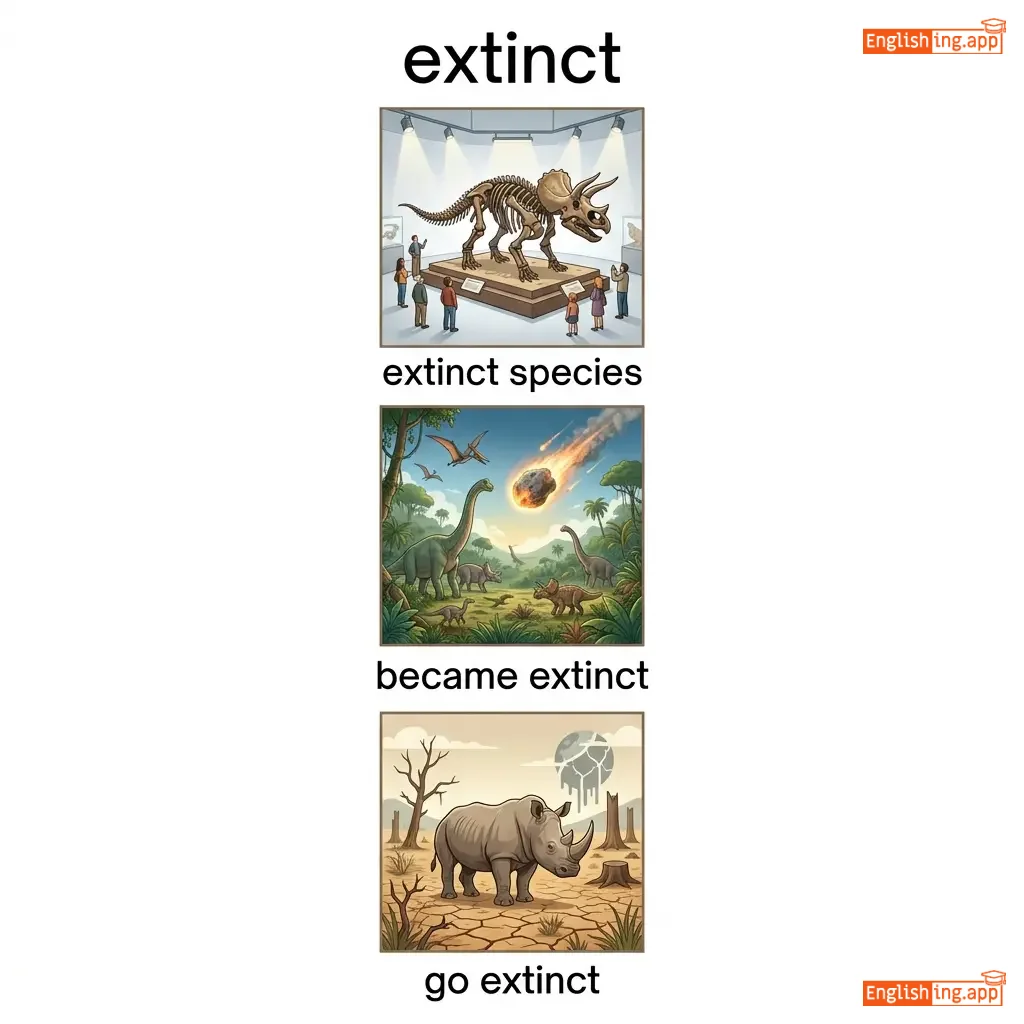
Dinosaurs became extinct millions of years ago.
恐龙在几百万年前灭绝了。
••••••
|
恐龙在几百万年前灭绝了。
Qiong long zai ji bai wan nian qian mie jue le.
••••••
|
go extinct
灭绝
••••••
|
to die out completely
••••••
|
灭绝
mie jue
••••••
|
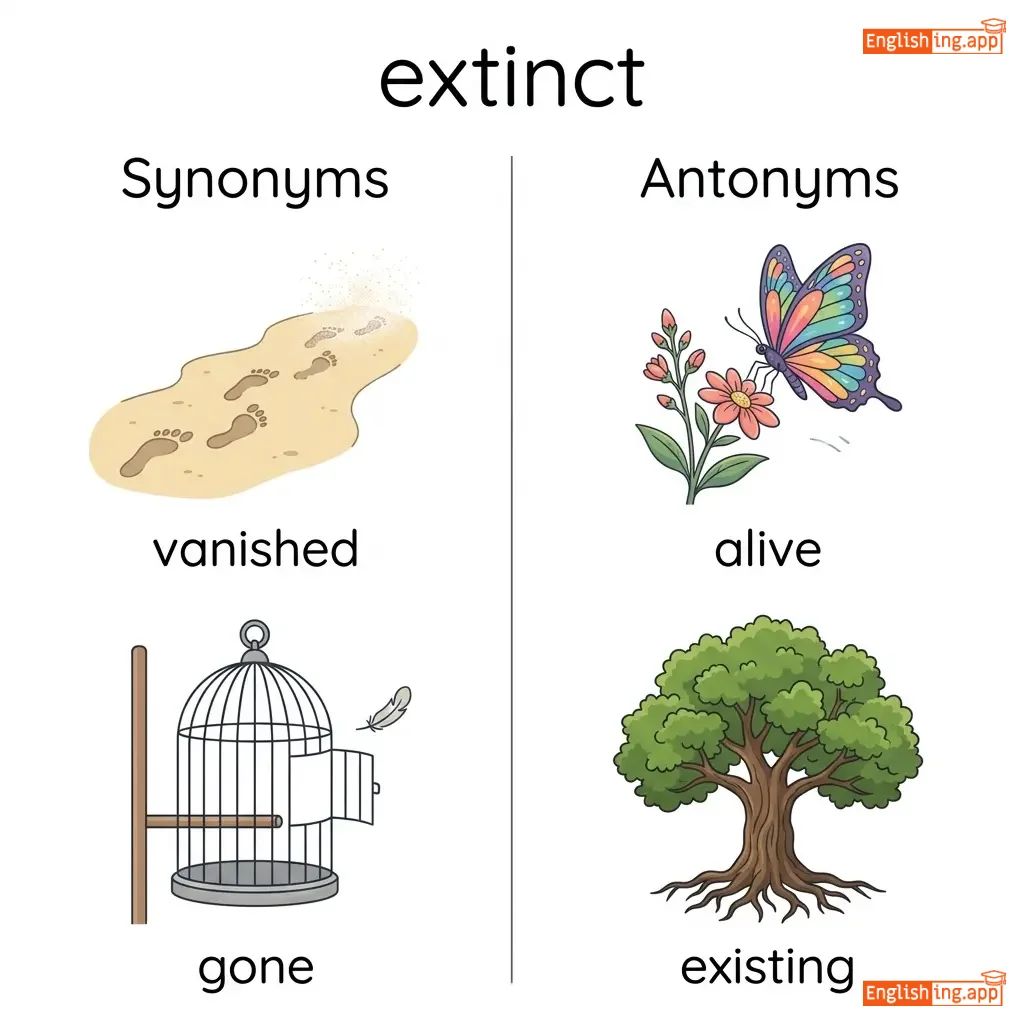
vanished, gone, dead, eradicated
••••••
|
alive, existing, surviving
••••••
|
extinct species, became extinct, go extinct
••••••
|
灭绝就是从存在中消失,好像什么都不见了。
••••••
|
|
#3317
🔮
|
/ɪkˌstræp.əˈleɪ.ʃən/
noun
(外推法)
••••••
|
|
外推法
wàituī fǎ
••••••
|
- •••••• | - •••••• | - •••••• | - •••••• |
The process of estimating or predicting something based on extending known information.
••••••
|
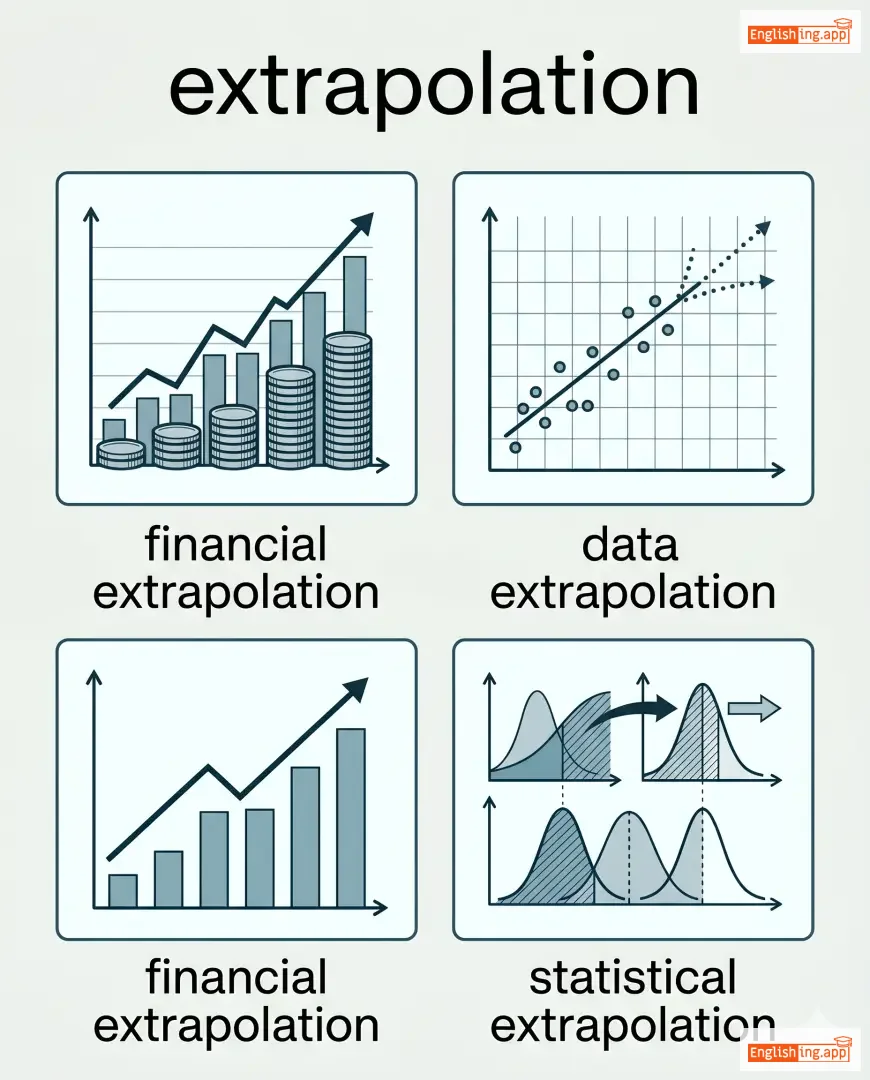
The company's financial extrapolation suggests steady growth. |
该公司的财务外推法建议稳步增长。
gāi gōngsī de cáiwù wàituī fǎ jiànyì wěnbù zēngzhǎng.
••••••
|
- •••••• | - •••••• | - •••••• |
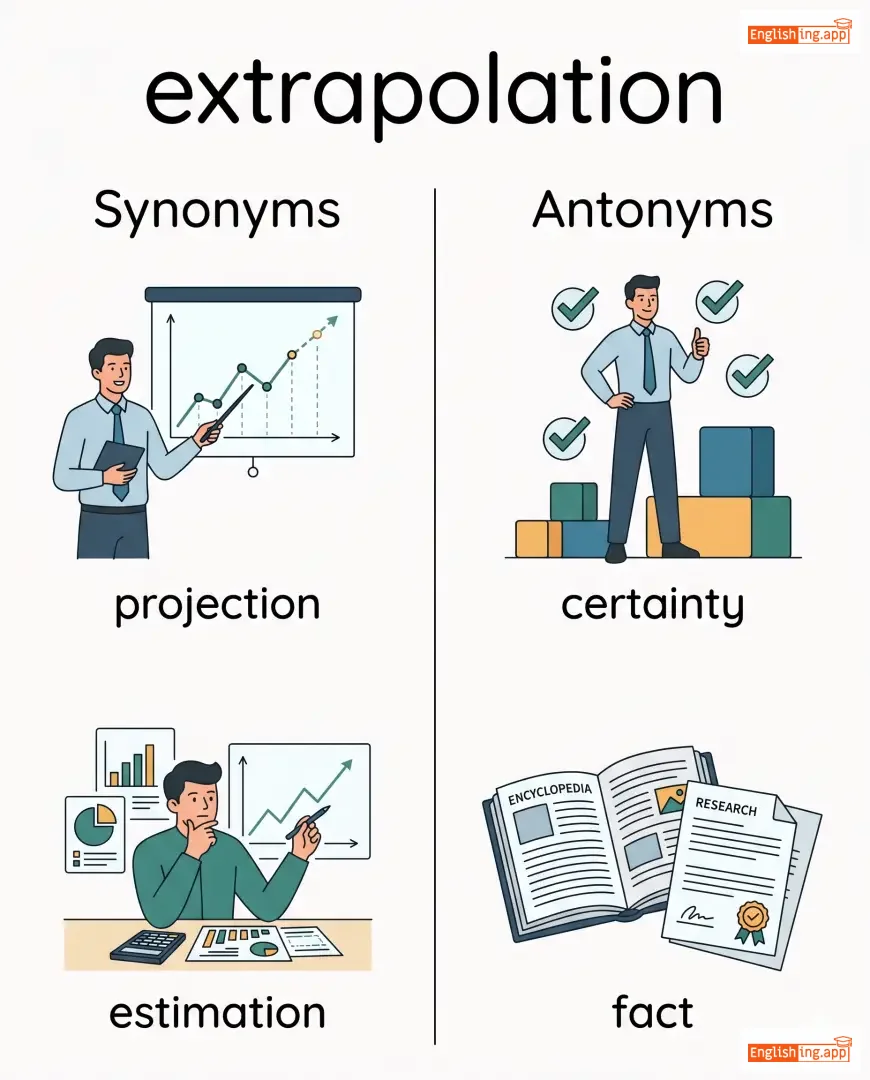
projection, estimation, inference, prediction, forecast
••••••
|
certainty, fact
••••••
|
financial extrapolation, data extrapolation, statistical extrapolation, extrapolation method
••••••
|
外推法 = extra + 预测 → 从额外数据中进行预测。
••••••
|
|
#3318
📈
|
/ɪkˈstræp.əˌleɪt/
verb
(外推)
••••••
|
|
外推
wàituī
••••••
|
extrapolated
外推了
••••••
|
extrapolated
外推了
••••••
|
extrapolates
外推
••••••
|
extrapolating
外推中
••••••
|
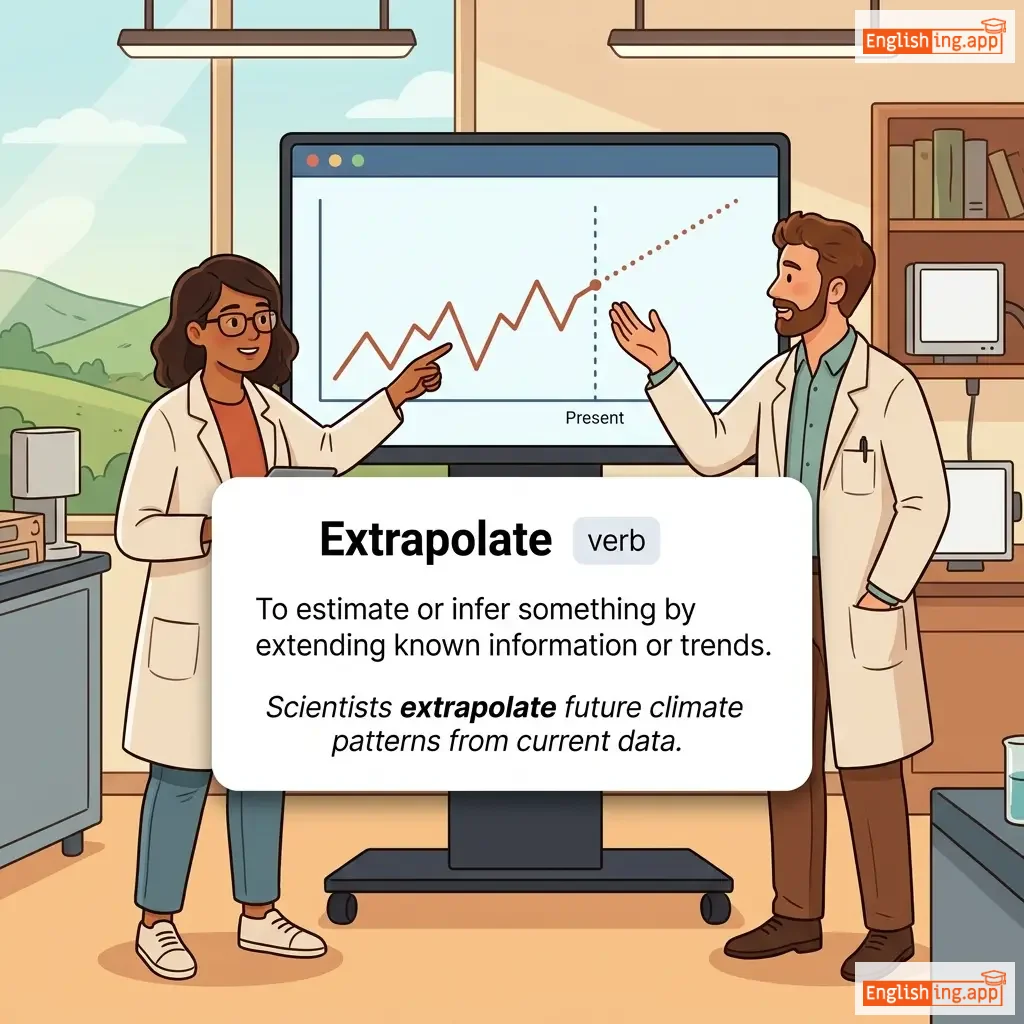
To estimate or infer something by extending known information or trends.
••••••
|
Scientists extrapolate future climate patterns from current data.
科学家从当前数据中外推未来的气候模式。
••••••
|
科学家从当前数据中外推未来的气候模式。
Kēxuéjiā cóng dāngqián shùjù zhōng wàituī wèilái de qìhòu móshì.
••••••
|
- •••••• | - •••••• | - •••••• |
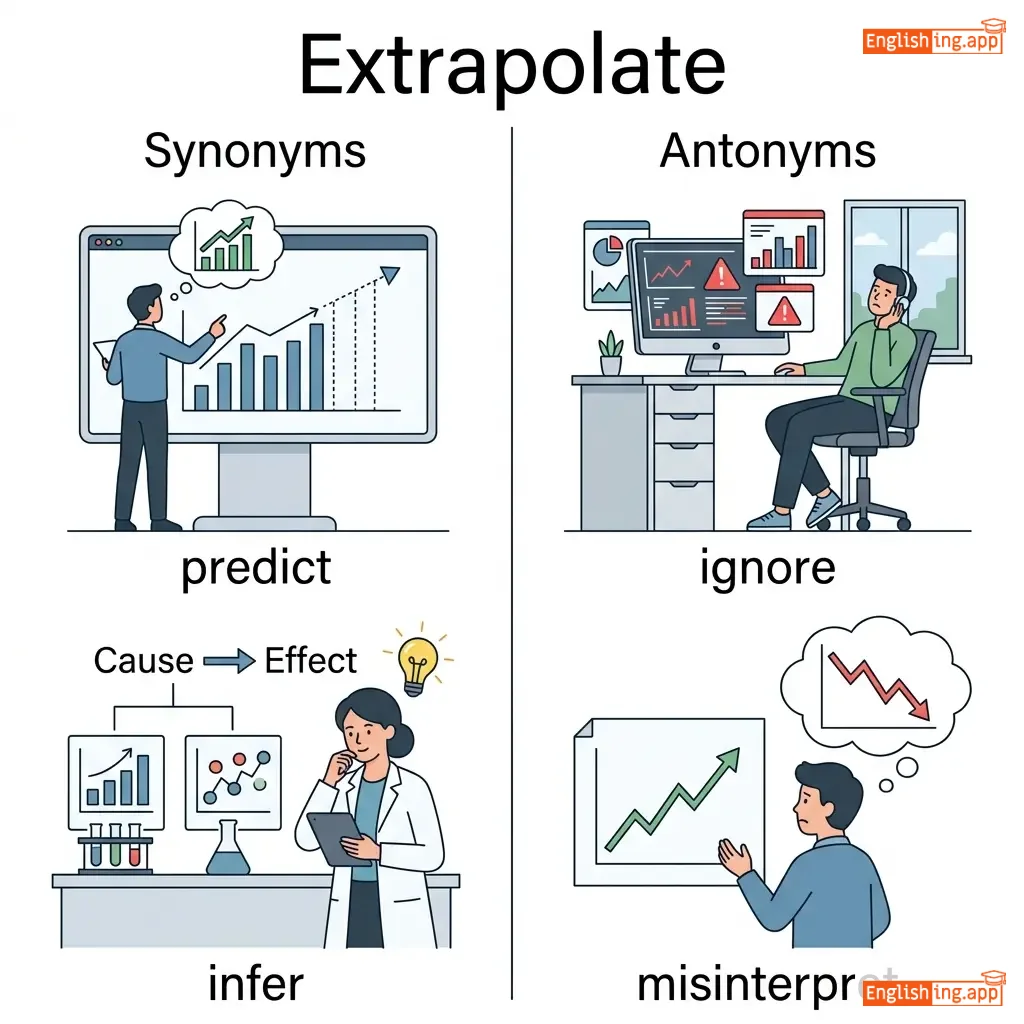
predict, infer, project, estimate, deduce
••••••
|
ignore, misinterpret
••••••
|
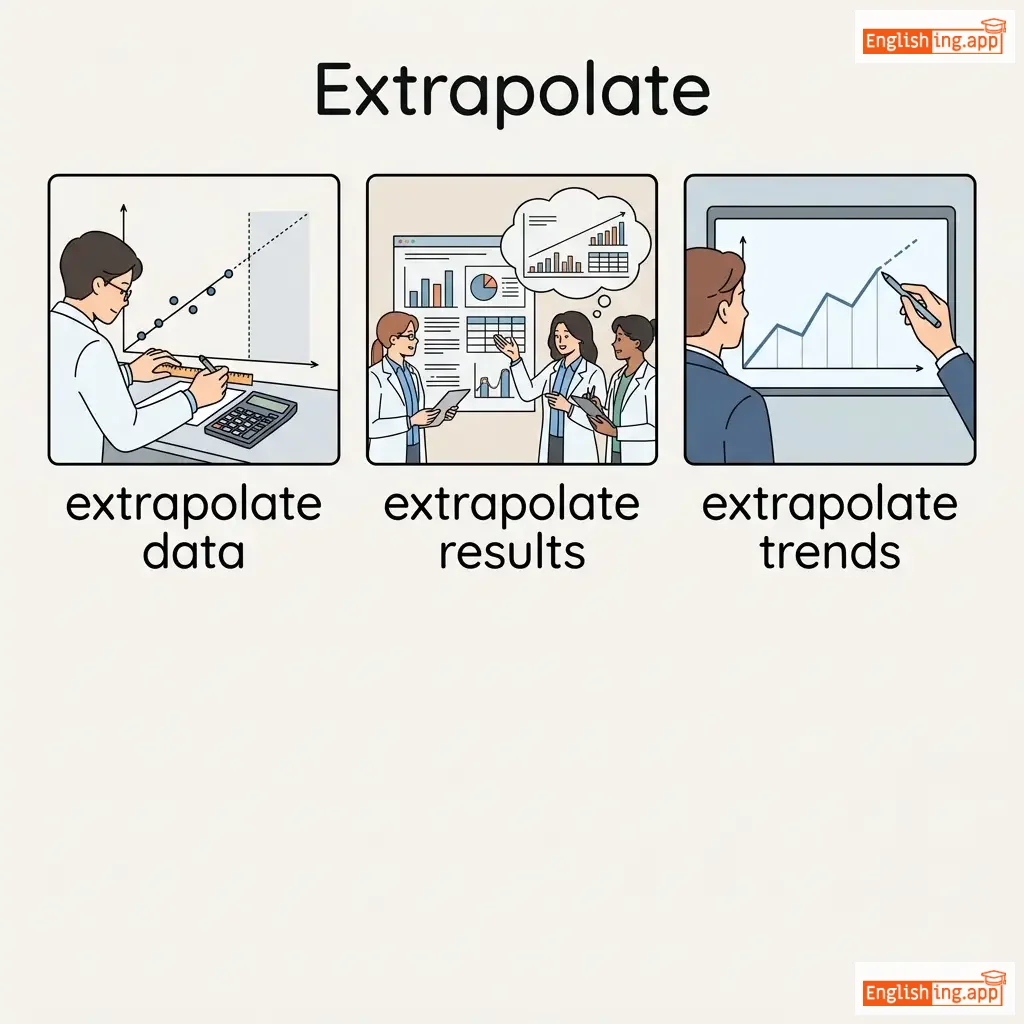
extrapolate data, extrapolate results, extrapolate trends, extrapolate figures
••••••
|
Extrapolate + 推 → 从现有数据推测未来
••••••
|
|
#3319
🌟
|
/ɪkˈstrɔːr.dəˌnɛr.i/
adjective
(特外普通)
••••••
|
- •••••• |
非凡
feifan
••••••
|
- •••••• | - •••••• | - •••••• | - •••••• |
Very unusual, remarkable, or exceptional.
••••••
|
She showed extraordinary courage during the crisis. |
她在危机中表现出非凡的勇气。
Ta zai weiji zhong biaoxian chu feifan de yongqi.
••••••
|
extraordinary measures |
Unusual or extreme actions taken in a situation
••••••
|
非凡的措施
Feifan de cuoshi
••••••
|
remarkable, exceptional, amazing, outstanding, phenomenal
••••••
|
ordinary, normal, usual
••••••
|
extraordinary achievement, extraordinary courage, extraordinary circumstances, extraordinary measures
••••••
|
Extra + ordinary = 非凡的与普通不同。
••••••
|
|
#3320
🗑️
|
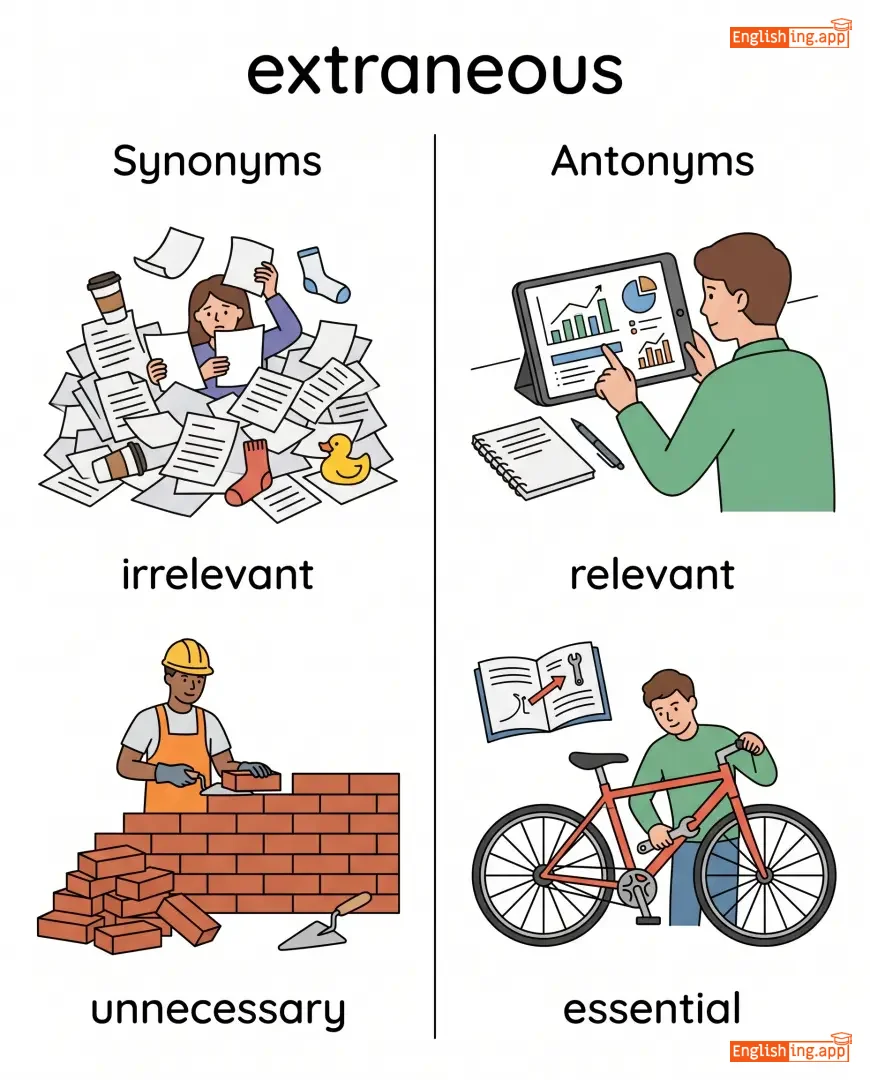
/ɪkˈstreɪ.ni.əs/
adjective
(外来)
••••••
|
|
无关
wú guān
••••••
|
- •••••• | - •••••• | - •••••• | - •••••• |
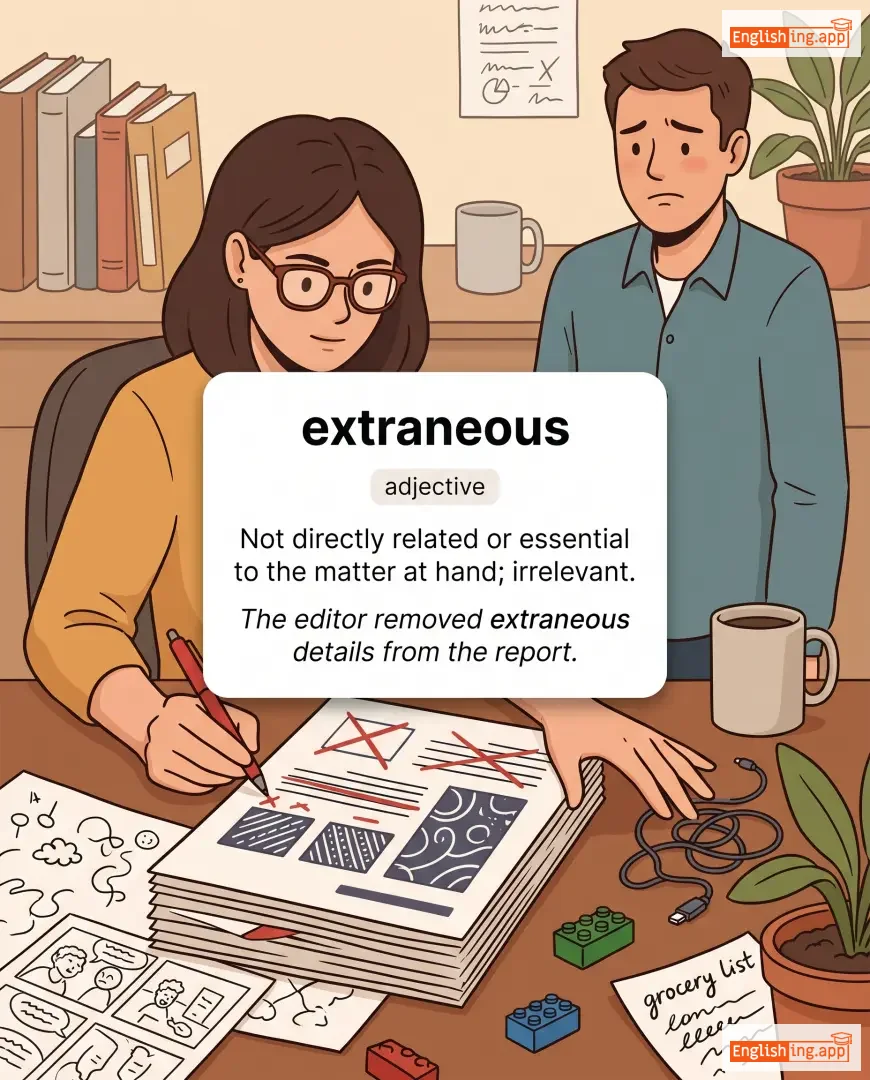
Not directly related or essential to the matter at hand; irrelevant.
••••••
|
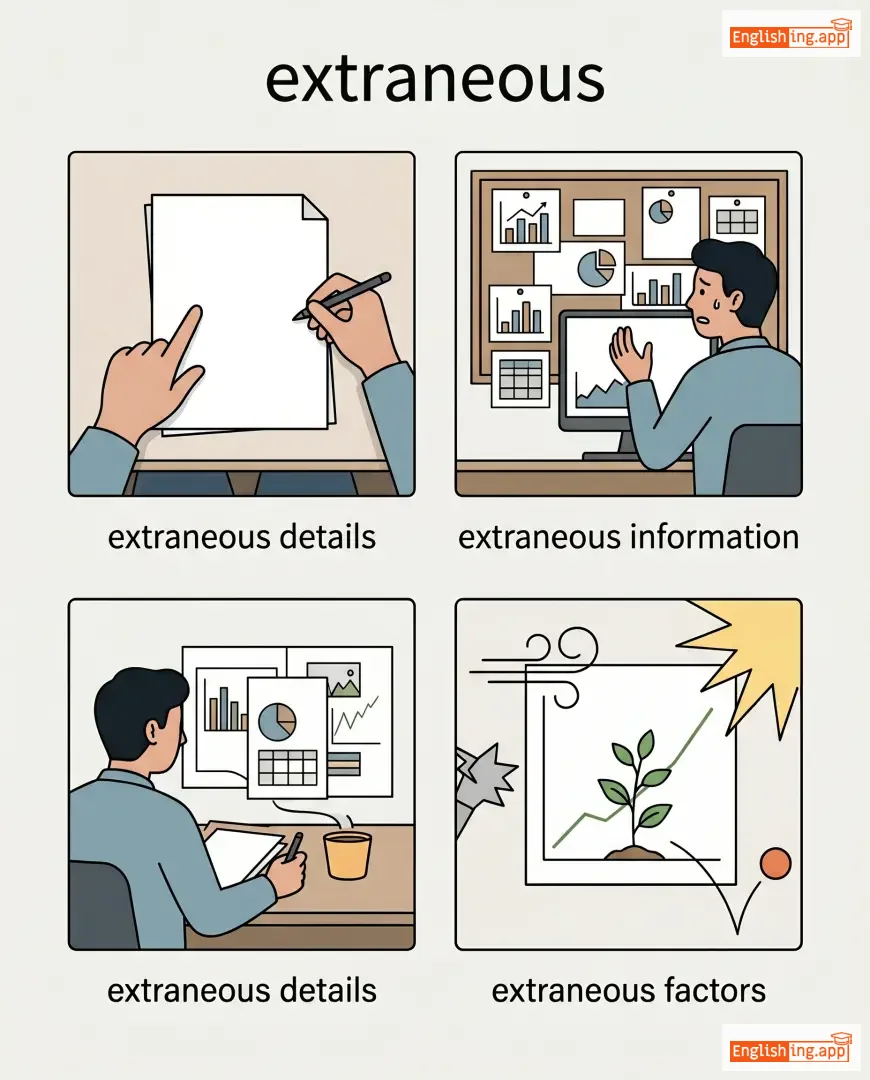
The editor removed extraneous details from the report. |
编辑从报告中删除了无关的细节。
Biānjí cóng bàogào zhōng shānchúle wúguān de xìjié.
••••••
|
- •••••• | - •••••• | - •••••• |
irrelevant, unnecessary, unrelated, superfluous, redundant
••••••
|
relevant, essential, necessary
••••••
|
extraneous details, extraneous information, extraneous factors, extraneous noise
••••••
|
Extraneous意思是额外的(多余的)+无关的东西。
••••••
|
|
#3321
⚖️
|
/ˌɛkstrəˌdʒuːˈdɪʃəl/
adjective
(非司法的)
••••••
|
- •••••• |
非司法的
fei si fa de
••••••
|
- •••••• | - •••••• | - •••••• | - •••••• |
done outside the authority of the legal system or judicial process
••••••
|
The activists condemned the extrajudicial killings. |
活动家谴责了非司法的谋杀。
Huódòngjiā qiǎnzéle fēi sīfǎ de móushā.
••••••
|
- •••••• | - •••••• | - •••••• |
illegal, unlawful, unauthorized, illegitimate
••••••
|
legal, lawful, judicial
••••••
|
extrajudicial killing, extrajudicial punishment, extrajudicial measures
••••••
|
非司法的意味着在法院之外,如未经过审判的谋杀。
••••••
|
|
#3322
📜
|
/ˌɛkstrəˈdɪʃən/
noun
(引渡)
••••••
|
- •••••• |
引渡
yǐn dù
••••••
|
- •••••• | - •••••• | - •••••• | - •••••• |
the official process of sending someone accused of a crime to another country or state
••••••
|
The extradition of the suspect was delayed due to legal issues.
由于法律问题,嫌疑人的引渡被延迟了。
••••••
|
由于法律问题,嫌疑人的引渡被延迟了。
Yóuyú fǎlǜ wèntí, xiányí rén de yǐn dù bèi yánchí le.
••••••
|
- •••••• | - •••••• | - •••••• |
deportation, surrender, handover, transfer
••••••
|
protection, asylum
••••••
|
extradition treaty, extradition process, demand extradition
••••••
|
Extradition sounds like 'extra edition' - sending a criminal to another country, like a new edition.
••••••
|
|
#3323
🚓
|
/ˈɛkstrəˌdaɪt/
verb
(引渡)
••••••
|
- •••••• |
引渡
yǐn dù
••••••
|
extradited
引渡了
••••••
|
extradited
引渡了
••••••
|
extradites
引渡
••••••
|
extraditing
引渡中
••••••
|
to hand over a person accused or convicted of a crime to another country or state
••••••
|
The government agreed to extradite the fugitive to his home country.
政府同意将逃犯引渡到他的祖国。
••••••
|
政府同意将逃犯引渡到他的祖国。
Zhèngfǔ tóngyì jiāng táofàn yǐn dù dào tā de zǔguó.
••••••
|
- •••••• | - •••••• | - •••••• |
deport, surrender, transfer, hand over
••••••
|
harbor, shelter, protect
••••••
|
extradite a suspect, extradite a criminal, extradite fugitives
••••••
|
Extradite意味着将罪犯送到另一个国家,寻求公正。
••••••
|
|
#3324
🛢️
|
/ɪkˈstrækʃən/
noun
(提取)
••••••
|
- •••••• |
提取
tíqǔ
••••••
|
- •••••• | - •••••• | - •••••• | - •••••• |
the act of removing something, especially by pulling it out
••••••
|
The extraction of oil from the ground requires special equipment. |
从地下提取石油需要特殊的设备。
Cóng dìxià tíqǔ shíyóu xūyào tèshū de shèbèi.
••••••
|
- •••••• | - •••••• | - •••••• |
removal, withdrawal, derivation, obtaining
••••••
|
insertion, implantation
••••••
|
tooth extraction, oil extraction, data extraction, resource extraction
••••••
|
提取意味着拉出东西,就像牙齿的提取一样。
••••••
|
|
#3325
🪥
|
/ɪkˈstrækt/
verb
(提取)
••••••
|
- •••••• |
提取
tíqǔ
••••••
|
extracted
提取了
••••••
|
extracted
提取了
••••••
|
extracts
提取
••••••
|
extracting
提取
••••••
|
to remove or take out something, often with effort
••••••
|
The dentist had to extract the damaged tooth.
牙医不得不提取受损的牙齿。
••••••
|
牙医不得不提取受损的牙齿。
Yáyī bùdébù tíqǔ shòusǔn de yáchǐ.
••••••
|
extract the essence
提取精华
••••••
|
to capture the most important part of something
••••••
|
提取精华
tíqǔ jīnghuá
••••••
|
remove, withdraw, derive, obtain, draw out
••••••
|
insert, embed, implant
••••••
|
extract information, extract juice, extract oil, extract data
••••••
|
提取是像牙齿提取或提取精华一样的东西!
••••••
|
|
#3326
🕴️
|
/ɪkˈstɔːr.ʃən/
noun
(ɪkˈstɔːrʃən)
••••••
|
- •••••• |
敲诈勒索
qiāo zhà lè suǒ
••••••
|
- •••••• | - •••••• | - •••••• | - •••••• |
the practice of obtaining something, especially money, through force or threats
••••••
|
The businessman was arrested for extortion after threatening his partner. |
商人因威胁其合作伙伴后被捕,罪名是敲诈勒索。
Shāngrén yīn wēi xié qí hé zuò huǒ bàn hòu bèi bǔ, zuìmíng shì qiāo zhà lè suǒ.
••••••
|
- •••••• | - •••••• | - •••••• |
blackmail, coercion, shakedown, racketeering, intimidation
••••••
|
charity, generosity, offering
••••••
|
case of extortion, charged with extortion, extortion attempt, extortion money
••••••
|
Ex-以威胁手段勒索钱财 — 敲诈勒索
••••••
|
|
#3327
💰
|
/ɪkˈstɔːrt/
verb
(勒索)
••••••
|
- •••••• |
勒索
lèsuǒ
••••••
|
extorted
勒索过
••••••
|
extorted
勒索过
••••••
|
extorts
勒索
••••••
|
extorting
勒索ing
••••••
|
to obtain something, especially money, by force, threats, or unfair means
••••••
|
The gang attempted to extort money from local shopkeepers.
这个团伙试图从当地店主那里勒索钱财。
••••••
|
这个团伙试图从当地店主那里勒索钱财。
Zhège tuánhuǒ shìtú cóng dāngdì diànzhǔ nàlǐ lèsuǒ qiáncái.
••••••
|
extort a confession
勒索供认
••••••
|
to force someone to admit something by pressure or threats
••••••
|
勒索供认
lèsuǒ gòngrèn
••••••
|
blackmail, coerce, force, demand, squeeze
••••••
|
offer, give, volunteer
••••••
|
extort money, extort confession, extort payment, extort bribe
••••••
|
Ex + torture = 勒索 — 用酷刑获取东西。
••••••
|
|
#3328
👏
|
/ɪkˈstoʊl/
verb
(ek-si-tol)
••••••
|
- •••••• |
赞扬
zanyang
••••••
|
extolled
ek-si-told
••••••
|
extolled
ek-si-told
••••••
|
extols
ek-si-tols
••••••
|
extolling
ek-si-tol-ing
••••••
|
to praise enthusiastically and highly
••••••
|
The teacher extolled the student's dedication and hard work.
老师赞扬了学生的奉献和辛勤工作。
••••••
|
老师赞扬了学生的奉献和辛勤工作。
Lǎoshī zànyángle xuéshēng de fèngxiàn hé xīnqín gōngzuò.
••••••
|
extol the virtues
赞扬美德
••••••
|
to speak highly of the good qualities of something
••••••
|
赞扬美德
zànyáng měidé
••••••
|
praise, laud, commend, acclaim, glorify
••••••
|
criticize, condemn, denounce
••••••
|
extol the virtues, extol the benefits, extol the value, extol achievements
••••••
|
司机因为收取额外的费用而被高度赞扬 - extol!
••••••
|
|
#3329
🪓
|
/ˈek.stər.peɪt/
verb
(èksítèpèi)
••••••
|
|
根除
gēnchú
••••••
|
extirpated
èksítèpèid
••••••
|
extirpated
èksítèpèid
••••••
|
extirpates
èksítèpèic
••••••
|
extirpating
èksítèpèitīng
••••••
|
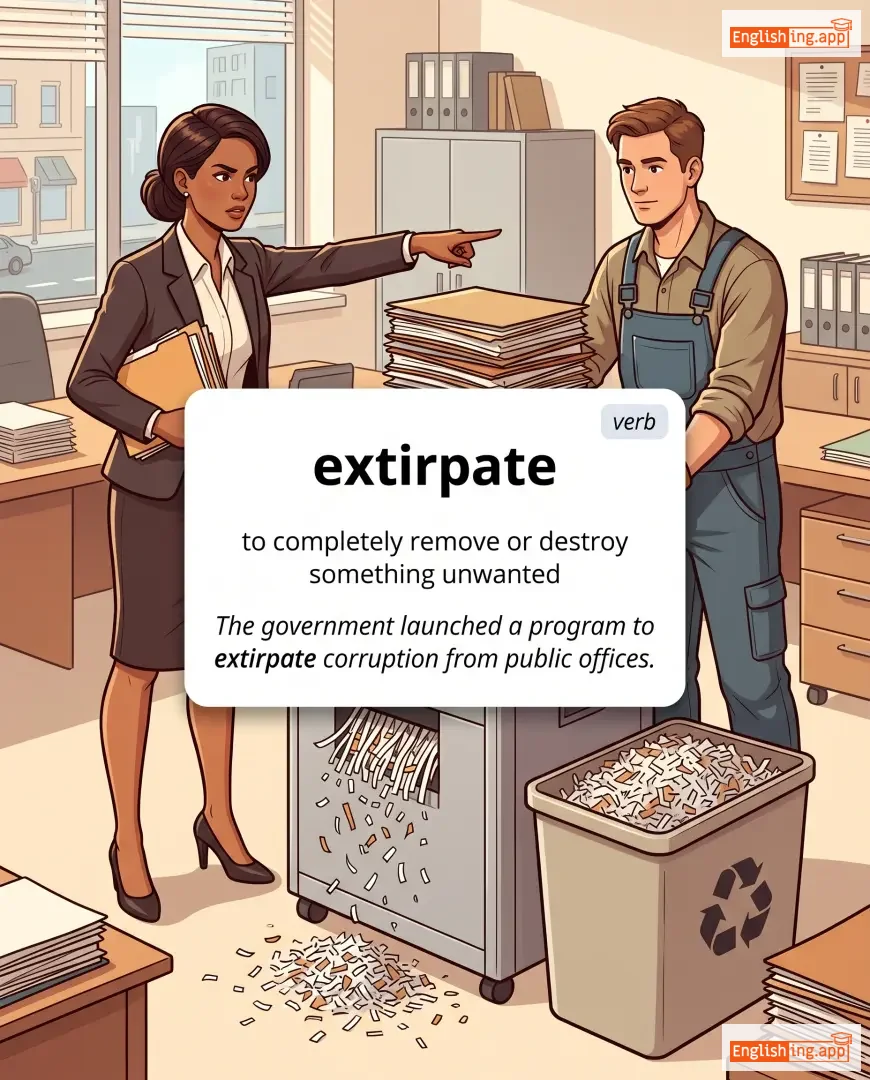
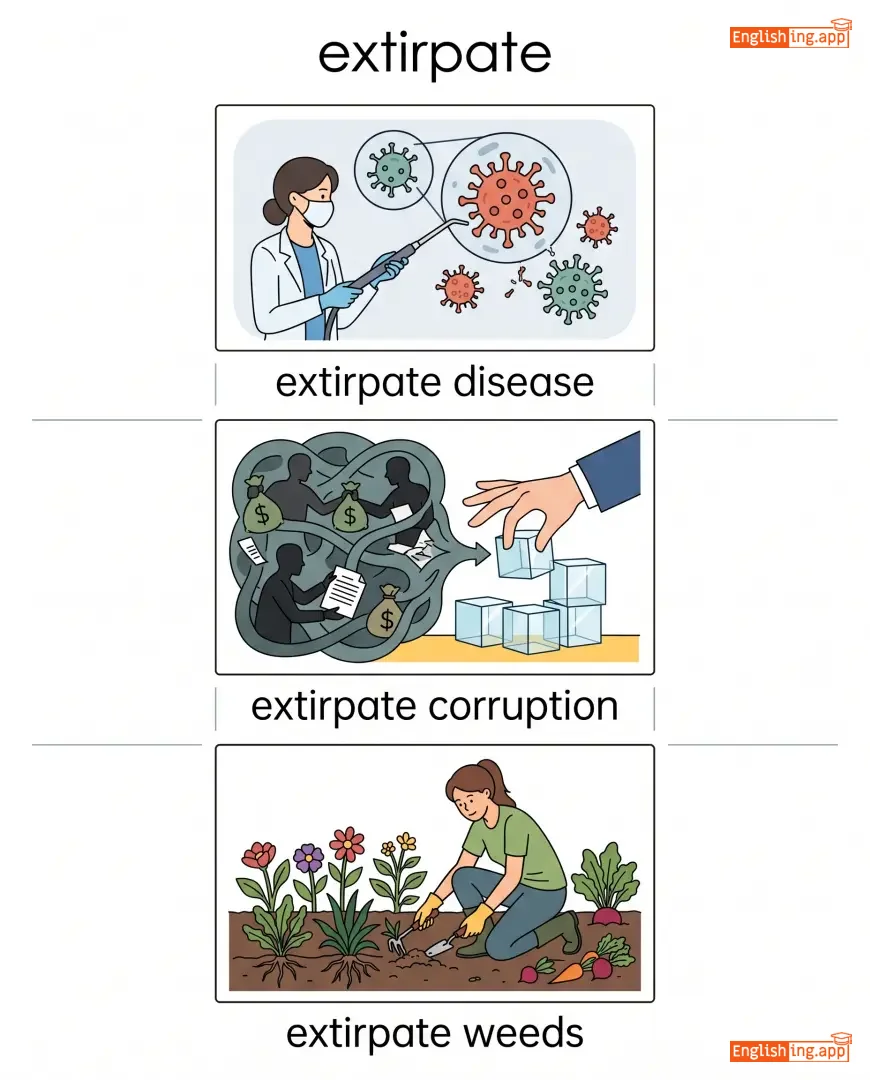
to completely remove or destroy something unwanted
••••••
|
The government launched a program to extirpate corruption from public offices.
政府启动了一个旨在清除公共部门腐败的项目。
••••••
|
政府启动了一个旨在清除公共部门腐败的项目。
Zhèngfǔ qǐdòngle yīgè zhǐ zài qīngchú gōnggòng bùmén fǔbài de xiàngmù.
••••••
|
- •••••• | - •••••• | - •••••• |
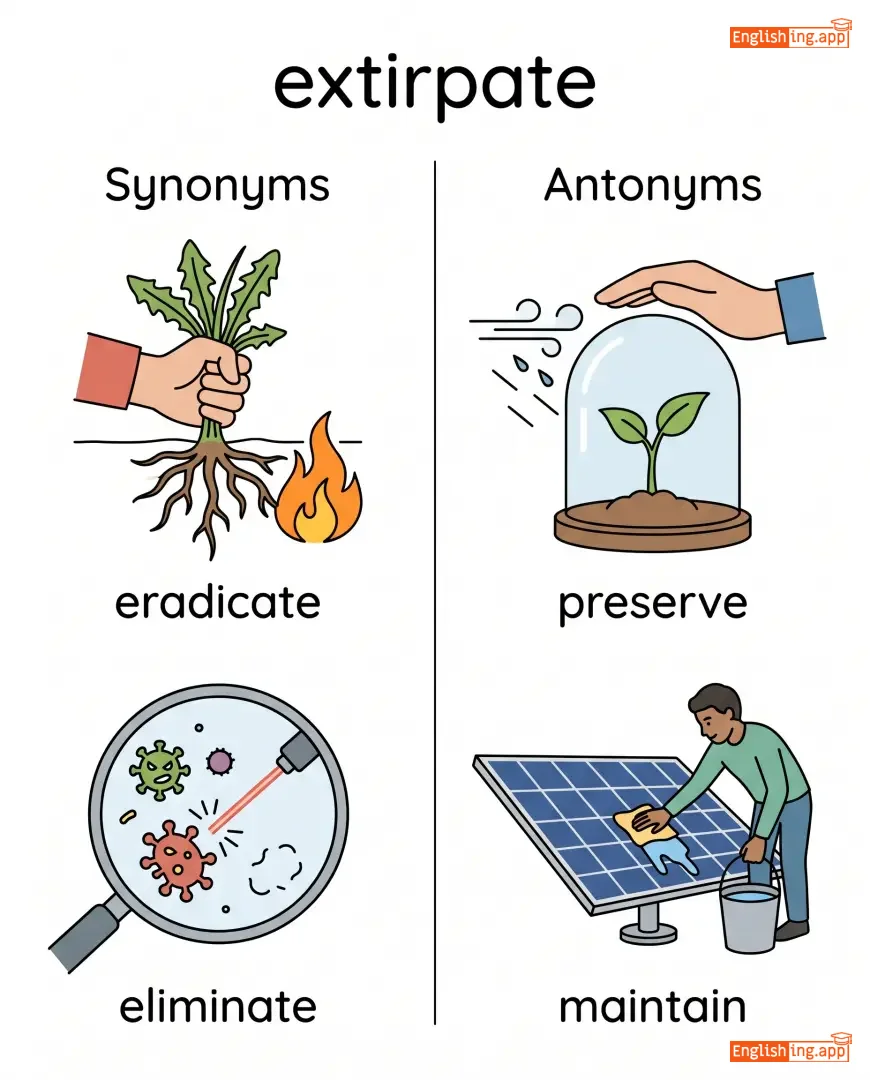
eradicate, eliminate, wipe out, abolish, uproot
••••••
|
preserve, maintain, conserve
••••••
|
extirpate disease, extirpate corruption, extirpate weeds, extirpate traditions
••••••
|
Extra plate (extirpate) 意味着移走盘子——完全清除。
••••••
|
|
#3330
🔥
|
/ɪkˈstɪŋ.ɡwɪʃ/
verb
(ikstinguish)
••••••
|
- •••••• |
熄灭
ximi
••••••
|
extinguished
ikstinguishd
••••••
|
extinguished
ikstinguishd
••••••
|
extinguishes
ikstinguishes
••••••
|
extinguishing
ikstinguishing
••••••
|
to put out a fire, light, or to end something
••••••
|
The firefighters managed to extinguish the blaze within an hour.
消防员在一个小时内成功扑灭了大火。
••••••
|
消防员在一个小时内成功扑灭了大火。
Xiaofangyuan zai yige xiaoshi nei chenggong pumie le dahuo.
••••••
|
extinguish hope
熄灭希望
••••••
|
to completely remove or end someone's hope
••••••
|
熄灭希望
ximi xiwang
••••••
|
douse, quench, snuff out, smother, suppress
••••••
|
ignite, kindle, light
••••••
|
extinguish a fire, extinguish a cigarette, extinguish hope, extinguish flames
••••••
|
使用灭火器来熄灭火焰。
••••••
|
Vocabulary Quiz
Test your vocabulary by matching words with their translations or meanings.
Login to take the quiz
Comments (0)
Share your thoughts and join the discussion.
Join the discussion by logging in
Login to CommentNo comments yet
Be the first to share your thoughts!