




Swipe left or right, or use the buttons. Tap image to zoom.
例句翻译
单词
Lesson 354Lesson 354 - 遮罩切换
|
表情符号
|
单词 | Images | 翻译 | 过去时 | 过去分词 | 第三人称单数 | 动名词 | 含义 | 例句 | 例句翻译 | 示例表达 | 示例表达含义 | 示例表达翻译 | 同义词 | 反义词 | 搭配词 | 助记符 |
|---|---|---|---|---|---|---|---|---|---|---|---|---|---|---|---|---|---|
|
#10585
⛓️
|
/tʃeɪn/
noun
••••••
|
- •••••• | - •••••• | - •••••• | - •••••• | - •••••• | - •••••• |
a connected series of metal rings used for fastening or securing things; a series of connected events or businesses
••••••
|
He wore a gold chain around his neck. |
- •••••• |
a chain reaction |
a series of related events triggered by the first event
••••••
|
- •••••• |
link, series, sequence, cord, string
••••••
|
break, separation
••••••
|
gold chain, supply chain, food chain, chain of events
••••••
|
No •••••• |
|
#10586
🧀
|
/tʃiːz/
noun
(chīz)
••••••
|
- •••••• |
奶酪
nǎilào
••••••
|
- •••••• | - •••••• | - •••••• | - •••••• |
a dairy product made from curdled or cultured milk
••••••
|
She sliced some cheese for the sandwich.
她为三明治切了一些奶酪。
••••••
|
她为三明治切了一些奶酪。
Tā wèi sānmíngzhì qiēle yīxiē nǎilào.
••••••
|
say cheese
说奶酪
••••••
|
a phrase used when asking people to smile for a photo
••••••
|
说奶酪
Shuō nǎilào
••••••
|
dairy, curd, fromage, cheddar, mozzarella
••••••
|
milk, yogurt
••••••
|
cheese sandwich, grated cheese, cream cheese, cheese platter
••••••
|
Cheese意味着🧀奶酪,拍照时说'说奶酪'并微笑。
••••••
|
|
#10587
😊
|
/tʃiːk/
noun
(chīk)
••••••
|
- •••••• |
脸颊
lianjia
••••••
|
- •••••• | - •••••• | - •••••• | - •••••• |
either side of the face below the eye; impudent boldness
••••••
|
She kissed him on the cheek. |
她亲吻了他的脸颊。
Tā qīnwěnle tā de liǎnjiá.
••••••
|
turn the other cheek |
to respond to an insult without retaliation
••••••
|
转过另一边脸颊
zhuǎn guò lìng yī biān liǎnjiá
••••••
|
face, boldness, nerve, audacity
••••••
|
politeness, humility
••••••
|
rosy cheek, kiss on cheek, slap on cheek, chubby cheeks
••••••
|
Cheek意味着脸颊 – 淘气的孩子总是亲吻脸颊
••••••
|
|
#10588
📊
|
/tʃɑːrt/
noun
(chart)
••••••
|
- •••••• |
图表
tubiao
••••••
|
- •••••• | - •••••• | - •••••• | - •••••• |
a sheet of information in the form of a table, graph, or diagram
••••••
|
The teacher used a chart to explain the statistics. |
老师用图表来解释统计数据。
Laoshi yong tubiao lai jieshi tongji shuju.
••••••
|
top the charts |
to reach the number one position in sales or popularity
••••••
|
登上排行榜
deng shang paihangbang
••••••
|
graph, diagram, table, map
••••••
|
text, narrative
••••••
|
bar chart, pie chart, flow chart, music chart
••••••
|
图表 – 是一个形象化的数据
••••••
|
|
#10589
🤲
|
/ˈtʃærəti/
noun
(慈善)
••••••
|
- •••••• |
慈善 / 慈善组织
cishan / cishan zuzhi
••••••
|
- •••••• | - •••••• | - •••••• | - •••••• |
an organization set up to provide help and raise money for those in need; kindness and tolerance in judging others
••••••
|
The charity raised funds to support homeless families.
慈善组织募集资金来帮助无家可归的家庭。
••••••
|
慈善组织募集资金来帮助无家可归的家庭。
Cishan zuzhi mubi zijin lai bangzhu wujiakegui de jiating.
••••••
|
charity begins at home
慈善从家开始
••••••
|
one should take care of their family before helping others
••••••
|
慈善从家开始
Cishan cong jia kaishi
••••••
|
philanthropy, generosity, organization, kindness
••••••
|
selfishness, greed
••••••
|
charity event, charity organization, give to charity, charity work
••••••
|
Charity 就是慈善 – 'Charity' 意味着帮助他人,像慈善一样
••••••
|
|
#10590
⚡
|
/tʃɑːrdʒ/
verb
(chāojí)
••••••
|
- •••••• |
收费/指控
shōufèi/zhǐkòng
••••••
|
charged
chāojíde
••••••
|
charged
chāojíde
••••••
|
charges
chāojíe
••••••
|
charging
chāojíng
••••••
|
to demand payment; to formally accuse; to rush forward aggressively
••••••
|
The store charges extra for home delivery.
商店收取额外的家居配送费用。
••••••
|
商店收取额外的家居配送费用。
Shāngdiàn shōuqǔ éwài de jiājū pèisòng fèiyòng.
••••••
|
charge someone with
指控某人
••••••
|
to accuse someone of a crime
••••••
|
指控某人
zhǐkòng mǒu rén
••••••
|
bill, accuse, attack, command
••••••
|
free, acquit, retreat
••••••
|
charge money, charge fee, charge battery, charge with crime
••••••
|
当手机没有电时,你必须支付费用。
••••••
|
|
#10591
🎭
|
/ˈkærəktər/
noun
(kè rì kè tèr)
••••••
|
- •••••• |
角色
juésè
••••••
|
- •••••• | - •••••• | - •••••• | - •••••• |
the mental and moral qualities distinctive to an individual; a person in a story or play
••••••
|
The main character in the novel learns an important lesson. |
小说中的主角学到了一个重要的教训。
xiǎoshuō zhōng de zhǔjiǎo xué dào le yīgè zhòngyào de jiàoxùn.
••••••
|
out of character |
not typical behavior for someone
••••••
|
与角色不符
yǔ juésè bù fú
••••••
|
personality, nature, figure, role, persona
••••••
|
facelessness, anonymity
••••••
|
strong character, fictional character, moral character, character development
••••••
|
Character在中文里是角色,就像故事或戏剧中的人物一样。
••••••
|
|
#10592
📖
|
/ˈtʃæptər/
noun
(chāptér)
••••••
|
- •••••• |
章节
zhāngjié
••••••
|
- •••••• | - •••••• | - •••••• | - •••••• |
A main division of a book or a period in someone's life.
••••••
|
I just finished the first chapter of the novel. |
我刚刚完成了小说的第一章。
Wǒ gānggāng wánchéngle xiǎoshuō de dì yī zhāng.
••••••
|
a new chapter |
a new stage or phase in life
••••••
|
新的一章
xīn de yī zhāng
••••••
|
section, division, episode, part
••••••
|
whole, entirety
••••••
|
first chapter, last chapter, next chapter, chapter title
••••••
|
Chapter意思是章节– 新的一章,生活中的新阶段 📖
••••••
|
|
#10593
📺
|
/ˈtʃænəl/
noun
(chánnèng)
••••••
|
- •••••• |
频道 / 媒介
píndào / méijiè
••••••
|
- •••••• | - •••••• | - •••••• | - •••••• |
A means of communication, or a passage for water or information.
••••••
|
They launched a new TV channel last year. |
他们去年推出了一个新的电视频道。
Tāmen qùnián tuīchūle yīgè xīn de diànshì píndào.
••••••
|
go through proper channels |
to follow the official or correct process
••••••
|
通过适当的渠道
Tōngguò shìdàng de qúdào
••••••
|
medium, passage, route, conduit, station
••••••
|
blockage, obstacle
••••••
|
TV channel, communication channel, sales channel, distribution channel
••••••
|
Channel 意味着媒介 – TV频道是信息的媒介 📺
••••••
|
|
#10594
🌦️
|
/ˈtʃeɪndʒɪŋ/
verb
(tʃeɪndʒɪŋ)
••••••
|
- •••••• |
变化
biànhuà
••••••
|
- •••••• | - •••••• | - •••••• |
changing
tʃeɪndʒɪŋ
••••••
|
The act of becoming different; ongoing process of change.
••••••
|
The weather is changing rapidly.
天气在快速变化。
••••••
|
天气在快速变化。
Tiānqì zài kuàisù biànhuà.
••••••
|
- •••••• | - •••••• | - •••••• |
modifying, altering, transforming, shifting
••••••
|
stable, constant, fixed
••••••
|
changing situation, changing world, changing role, changing rapidly
••••••
|
Changing 就是变化 – 换频道,画面就会变化!
••••••
|
|
#10595
🔄
|
/tʃeɪndʒ/
verb
(改变)
••••••
|
|
改变
gǎibiàn
••••••
|
changed
改变了
••••••
|
changed
改变了
••••••
|
changes
改变
••••••
|
changing
改变着
••••••
|
To make something different or to become different.
••••••
|
She decided to change her career path.
她决定改变她的职业道路。
••••••
|
她决定改变她的职业道路。
Tā juédìng gǎibiàn tā de zhíyè dàolù.
••••••
|
change of heart
心意变化
••••••
|
a change in one's opinion or feelings
••••••
|
心意变化
xīnyì biànhuà
••••••
|
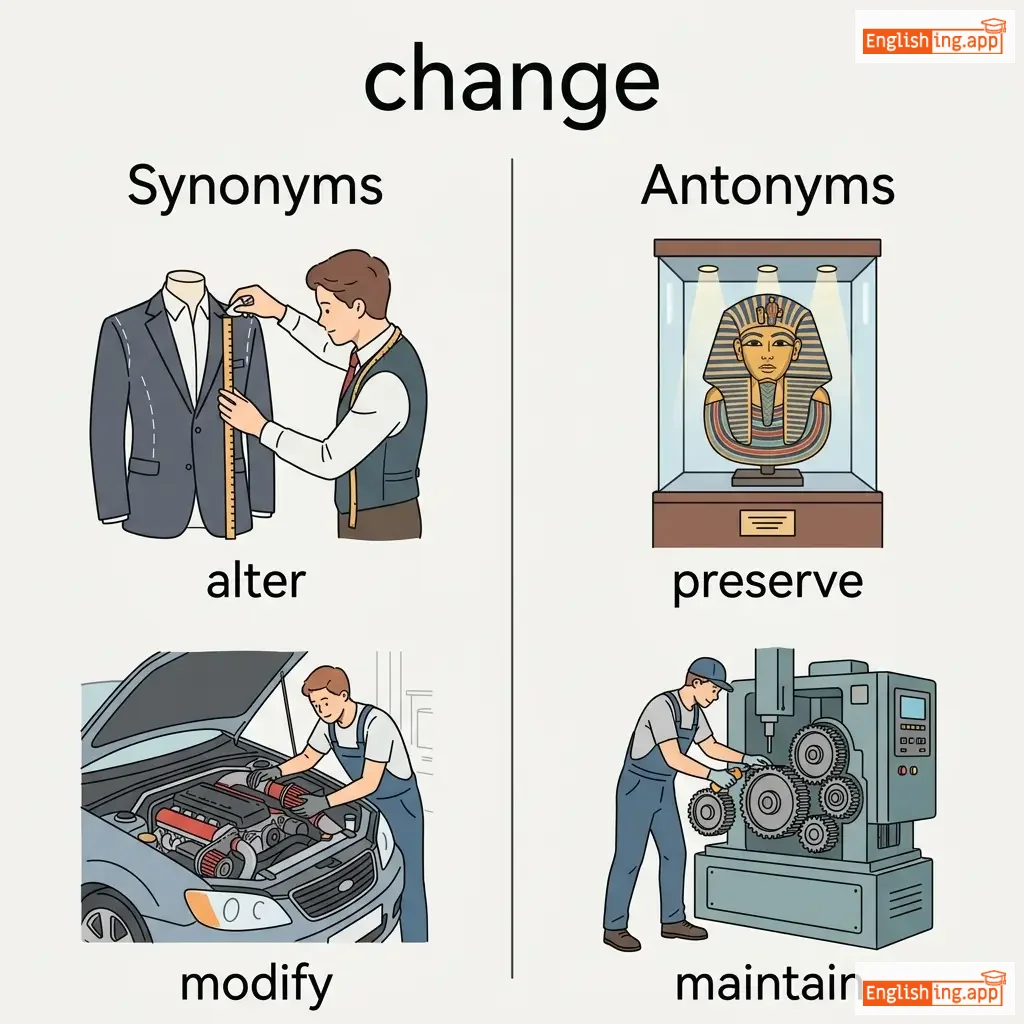
alter, modify, transform, adjust, shift
••••••
|
preserve, maintain, keep
••••••
|
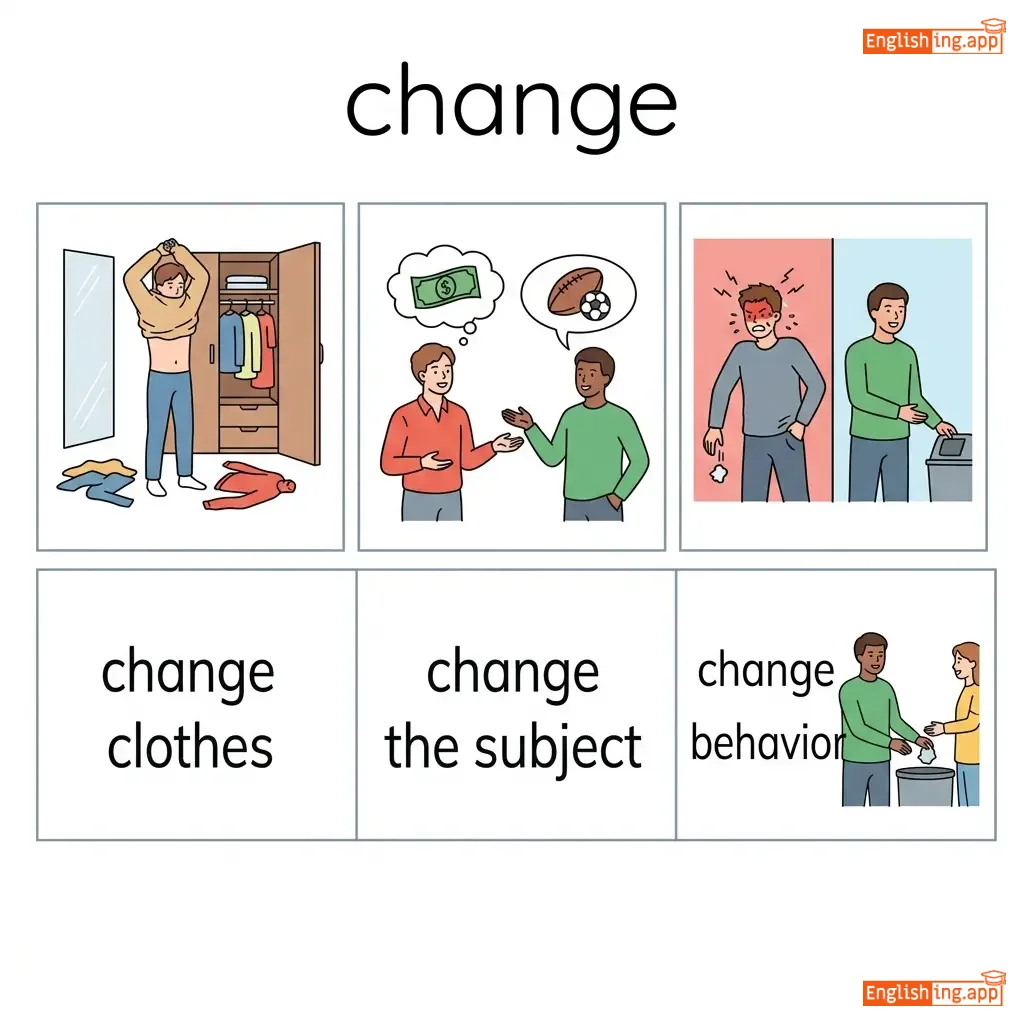
change clothes, change the subject, change behavior, change mind
••••••
|
Change意味着改变 – 在气候变化中,气候会发生变化 🌍
••••••
|
|
#10596
🎲
|
/tʃæns/
noun
(chānsī)
••••••
|
- •••••• |
机会
jī huì
••••••
|
- •••••• | - •••••• | - •••••• | - •••••• |
An opportunity or possibility of something happening.
••••••
|
He took a chance and applied for the job. |
他冒险申请了这份工作。
Tā màoxiǎn shēnqǐngle zhè fèn gōngzuò.
••••••
|
take a chance |
to do something risky or uncertain in hope of success
••••••
|
抓住机会
zhuā zhù jī huì
••••••
|
opportunity, possibility, likelihood, probability, prospect
••••••
|
certainty, impossibility, guarantee
••••••
|
take a chance, by chance, good chance, slim chance
••••••
|
Chance意味着机会 – 就像掷骰子 🎲 看看能否赢得机会!
••••••
|
|
#10597
🏔️
|
/ˈtʃælɪndʒ/
noun/verb
(挑战)
••••••
|
|
挑战
tiaozhan
••••••
|
challenged
挑战过
••••••
|
challenged
挑战过
••••••
|
challenges
挑战了
••••••
|
challenging
挑战中
••••••
|
a difficult task or problem that requires effort to overcome; to question or dispute
••••••
|
Climbing the mountain was the biggest challenge of his life.
攀登山峰是他一生中最大的挑战。
••••••
|
攀登山峰是他一生中最大的挑战。
Pandeng shanfeng shi ta yisheng zhong zui da de tiaozhan.
••••••
|
rise to the challenge
迎接挑战
••••••
|
to successfully deal with a difficult situation
••••••
|
迎接挑战
yingjie tiaozhan
••••••
|
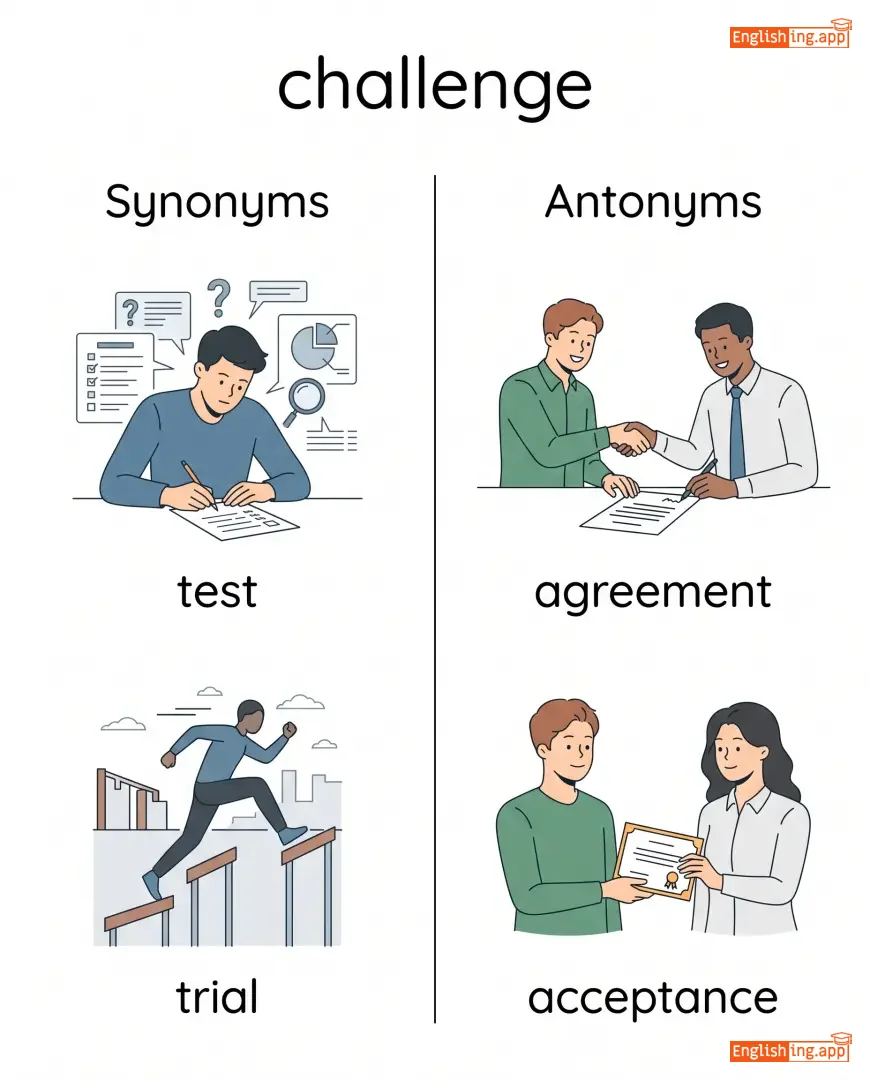
test, trial, obstacle, difficulty, contest
••••••
|
agreement, acceptance, support
••••••
|
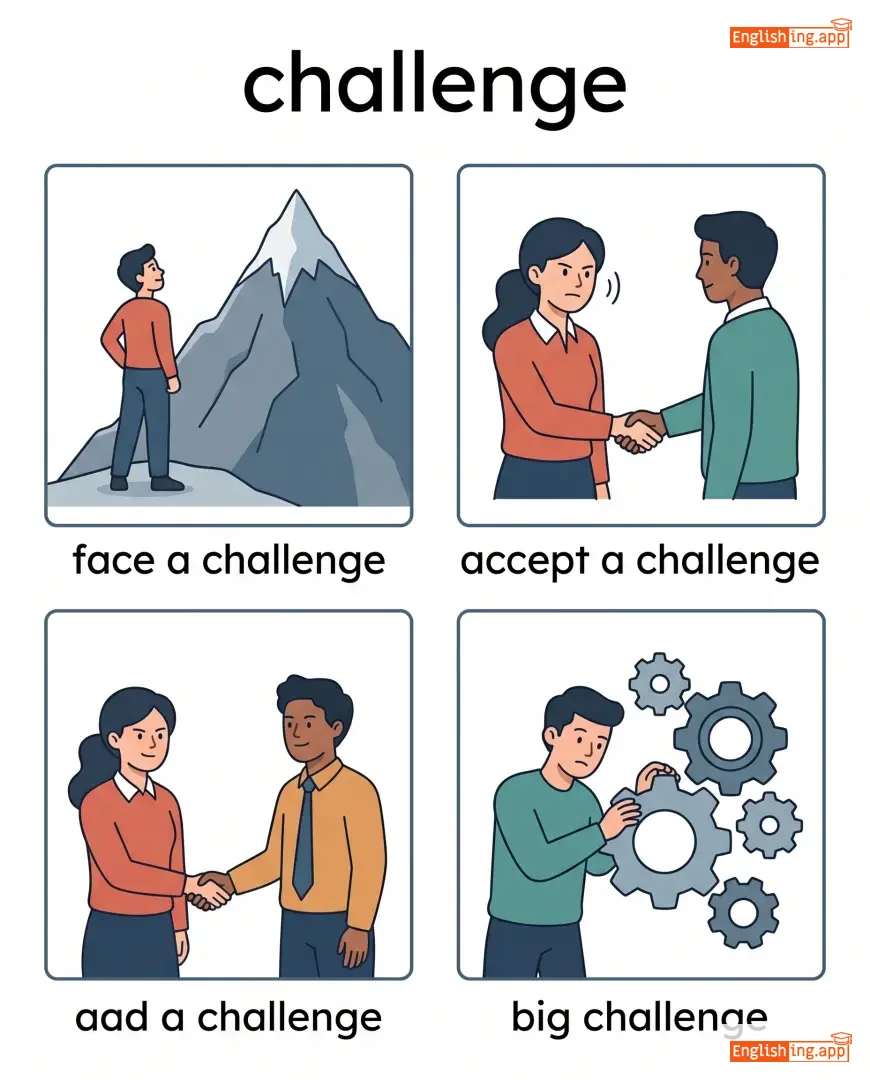
face a challenge, accept a challenge, big challenge, challenge authority
••••••
|
挑战意味着挑战 – 攀登山峰是他最大的挑战 🏔️
••••••
|
|
#10598
👔
|
/ˈtʃɛərmən/
noun
(ˈhæpinəs)
••••••
|
- •••••• |
幸福
xìngfú
••••••
|
- •••••• | - •••••• | - •••••• | - •••••• |
the leader or head of a meeting, committee, or organization
••••••
|
The chairman opened the meeting with a short speech. |
当她获得奖项时,她无法隐藏自己的幸福。
Dāng tā huòdé jiǎngxiàng shí, tā wúfǎ yǐncáng zìjǐ de xìngfú.
••••••
|
chairman of the board |
the head of a company's board of directors
••••••
|
追求幸福
zhuīqiú xìngfú
••••••
|
leader, head, chief, president
••••••
|
member, follower
••••••
|
chairman position, acting chairman, board chairman, elected chairman
••••••
|
幸福 = 幸 + 福 = 有福气,幸福感。
••••••
|
|
#10599
🪑
|
/tʃɛr/
noun
••••••
|
- •••••• | - •••••• | - •••••• | - •••••• | - •••••• | - •••••• |
a piece of furniture for one person to sit on, typically having a back and four legs
••••••
|
She pulled up a chair and sat beside me. |
- •••••• |
take the chair |
to act as the leader or presiding officer of a meeting
••••••
|
- •••••• |
seat, armchair, stool, bench
••••••
|
floor, ground
••••••
|
wooden chair, office chair, rocking chair, chair seat
••••••
|
No •••••• |
|
#10600
🐱
|
/kæt/
noun
(kæt)
••••••
|
- •••••• |
猫
mao
••••••
|
- •••••• | - •••••• | - •••••• | - •••••• |
a small domesticated carnivorous mammal often kept as a pet
••••••
|
The cat is sleeping on the sofa. |
猫正在沙发上睡觉。
Mao zhengzai shafa shang shuijiao.
••••••
|
curiosity killed the cat |
being too inquisitive can lead to trouble
••••••
|
好奇害死猫
hao qi hai si mao
••••••
|
feline, kitten, pussy, tomcat
••••••
|
dog, hound
••••••
|
stray cat, pet cat, wild cat, black cat
••••••
|
Cat 🐱 就是猫,记住它的可爱,保持好奇!
••••••
|
|
#10601
✅
|
/ˈsɜːrtənli/
adverb
(sèrtènlì)
••••••
|
- •••••• |
肯定
kending
••••••
|
- •••••• | - •••••• | - •••••• | - •••••• |
without doubt; surely; used to emphasize certainty
••••••
|
I will certainly help you with your project.
我一定会帮助你完成你的项目。
••••••
|
我一定会帮助你完成你的项目。
Wǒ yīdìng huì bāngzhù nǐ wánchéng nǐ de xiàngmù.
••••••
|
certainly not
肯定不
••••••
|
used to strongly refuse or disagree
••••••
|
肯定不
kěndìng bù
••••••
|
surely, definitely, undoubtedly, absolutely, clearly
••••••
|
possibly, maybe, uncertain
••••••
|
certainly true, certainly help, certainly possible, most certainly
••••••
|
Certain意味着确定,因此certainly意味着肯定 ✅
••••••
|
|
#10602
🎉
|
/ˈsɛrəˌmoʊni/
noun
••••••
|
- •••••• | - •••••• | - •••••• | - •••••• | - •••••• | - •••••• |
A formal event or occasion, often with rituals and traditions.
••••••
|
The graduation ceremony was held in the university hall. |
- •••••• |
without ceremony |
done simply, without formality
••••••
|
- •••••• |
ritual, event, celebration, function, observance
••••••
|
informality, casualness
••••••
|
wedding ceremony, opening ceremony, award ceremony, official ceremony
••••••
|
No •••••• |
|
#10603
👔
|
/ˌsiːiːˈoʊ/
noun
(sī yī ōu)
••••••
|
- •••••• |
首席执行官
shǒuxí zhíxíng guān
••••••
|
- •••••• | - •••••• | - •••••• | - •••••• |
The highest-ranking person in a company, responsible for overall management.
••••••
|
The CEO announced a new strategy for the company. |
CEO宣布了公司的一项新战略。
CEO xuānbùle gōngsī de yī xiàng xīn zhànlüè.
••••••
|
- •••••• | - •••••• | - •••••• |
chief executive officer, head, leader, boss
••••••
|
employee, worker, subordinate
••••••
|
company CEO, appointed CEO, former CEO, acting CEO
••••••
|
CEO代表Chief Executive Officer,中文翻译为首席执行官。
••••••
|
|
#10604
📆
|
/ˈsɛnʧəri/
noun
(shenjuri)
••••••
|
- •••••• |
世纪
shiji
••••••
|
- •••••• | - •••••• | - •••••• | - •••••• |
A period of one hundred years.
••••••
|
The 20th century saw significant technological progress. |
20世纪见证了显著的技术进步。
20 shiji jianzheng le xianzhu de jishu jinbu.
••••••
|
turn of the century |
the beginning of a new century
••••••
|
世纪之交
shiji zhi jiao
••••••
|
hundred years, era, age, period
••••••
|
moment, instant, second
••••••
|
century old, 21st century, century mark, past century
••••••
|
世纪就是Century; 在中国,100年被称作一个世纪。
••••••
|
|
#10605
📍
|
/ˈsɛntrəl/
adjective
(中央)
••••••
|
- •••••• |
中央的
zhōngyāng de
••••••
|
- •••••• | - •••••• | - •••••• | - •••••• |
Situated in the middle; of the greatest importance.
••••••
|
Water is central to human survival. |
水对人类生存至关重要。
Shuǐ duì rénlèi shēngcún zhìguān zhòngyào.
••••••
|
play a central role |
to be very important in something
••••••
|
发挥核心作用
Fāhuī héxīn zuòyòng
••••••
|
main, key, vital, core, essential
••••••
|
minor, peripheral, unimportant
••••••
|
central idea, central role, central authority, central location
••••••
|
Central表示重要,就像在北京的中央车站一样重要。
••••••
|
|
#10606
🎯
|
/ˈsɛntər/
noun
(sēntè)
••••••
|
|
中心
zhōngxīn
••••••
|
- •••••• | - •••••• | - •••••• | - •••••• |
The middle point or part of something; a place where a particular activity is concentrated.
••••••
|
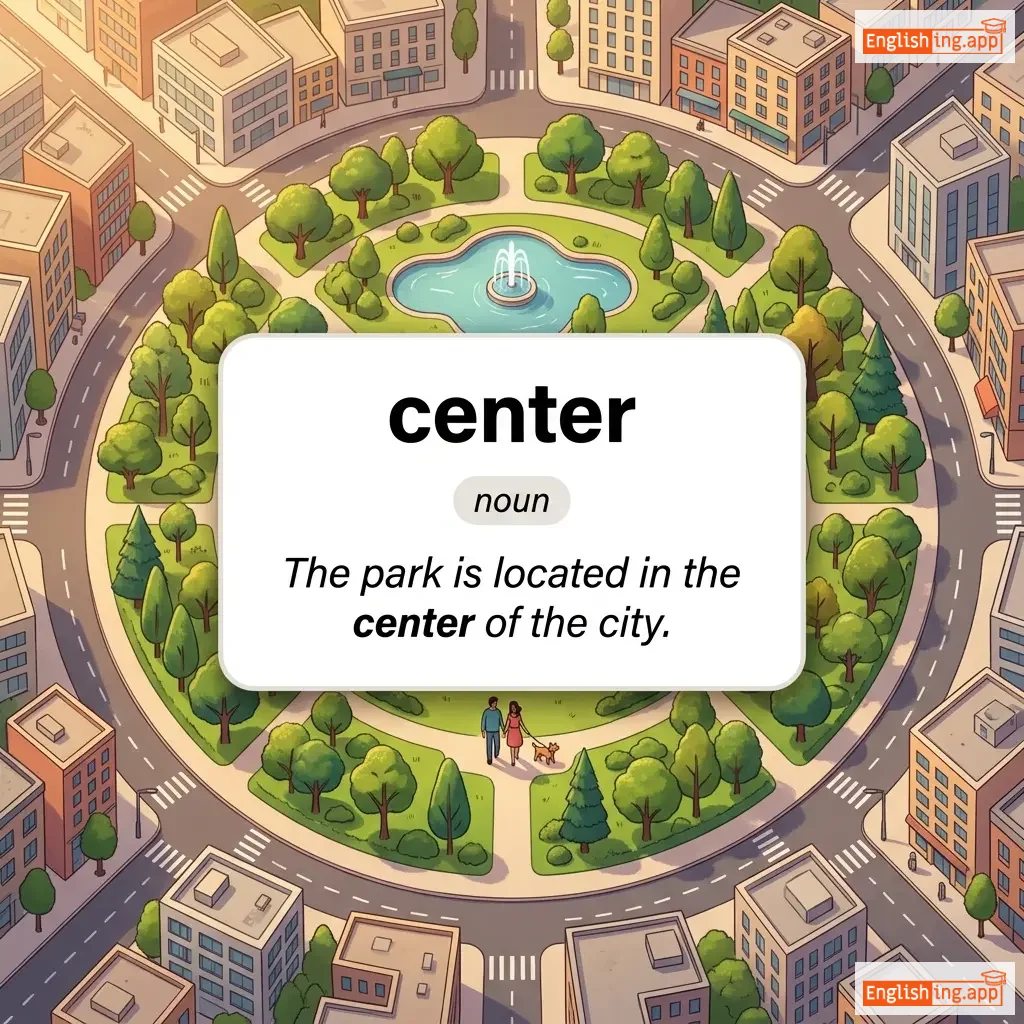
The park is located in the center of the city. |
公园位于城市的中心。
Gōngyuán wèiyú chéngshì de zhōngxīn.
••••••
|
the center of attention |
the person or thing that everyone is paying attention to
••••••
|
注意力中心
zhùyì lì zhōngxīn
••••••
|
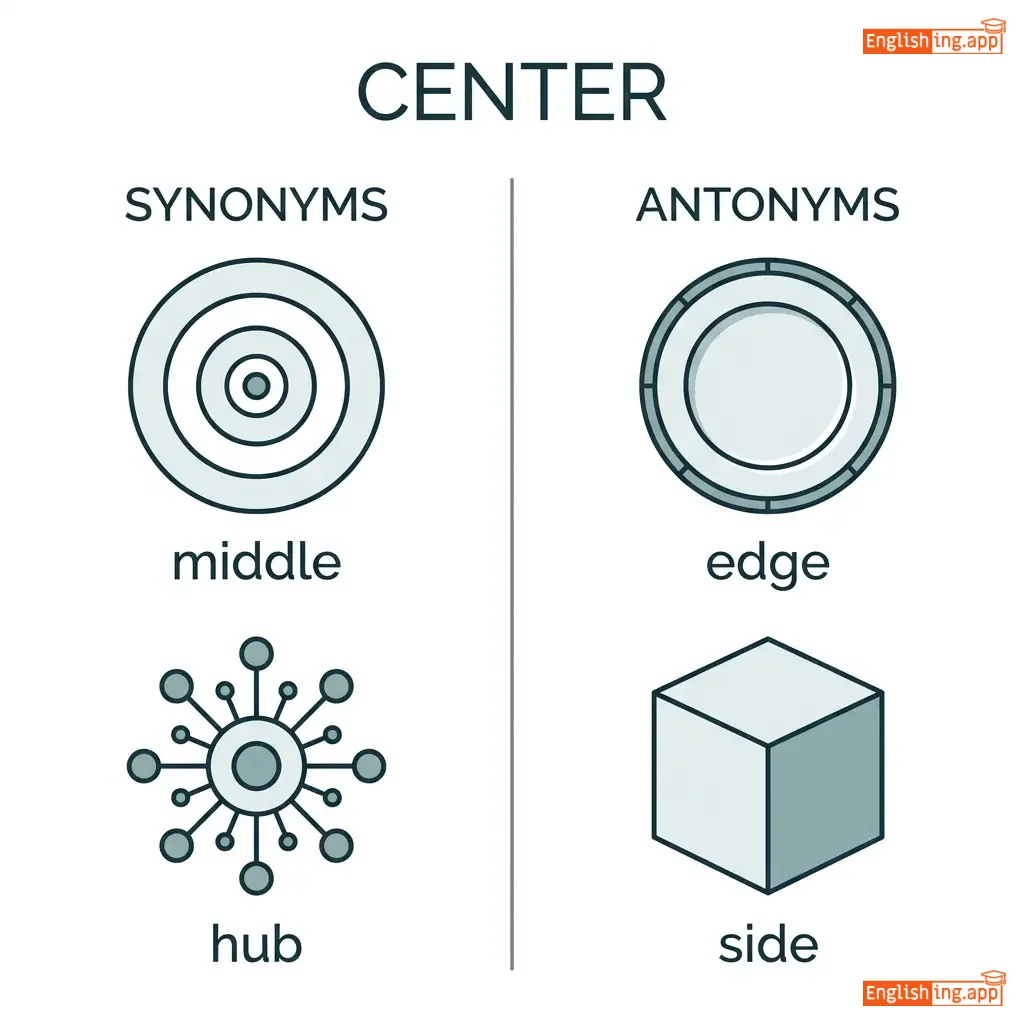
middle, hub, core, heart, focus
••••••
|
edge, side, periphery
••••••
|
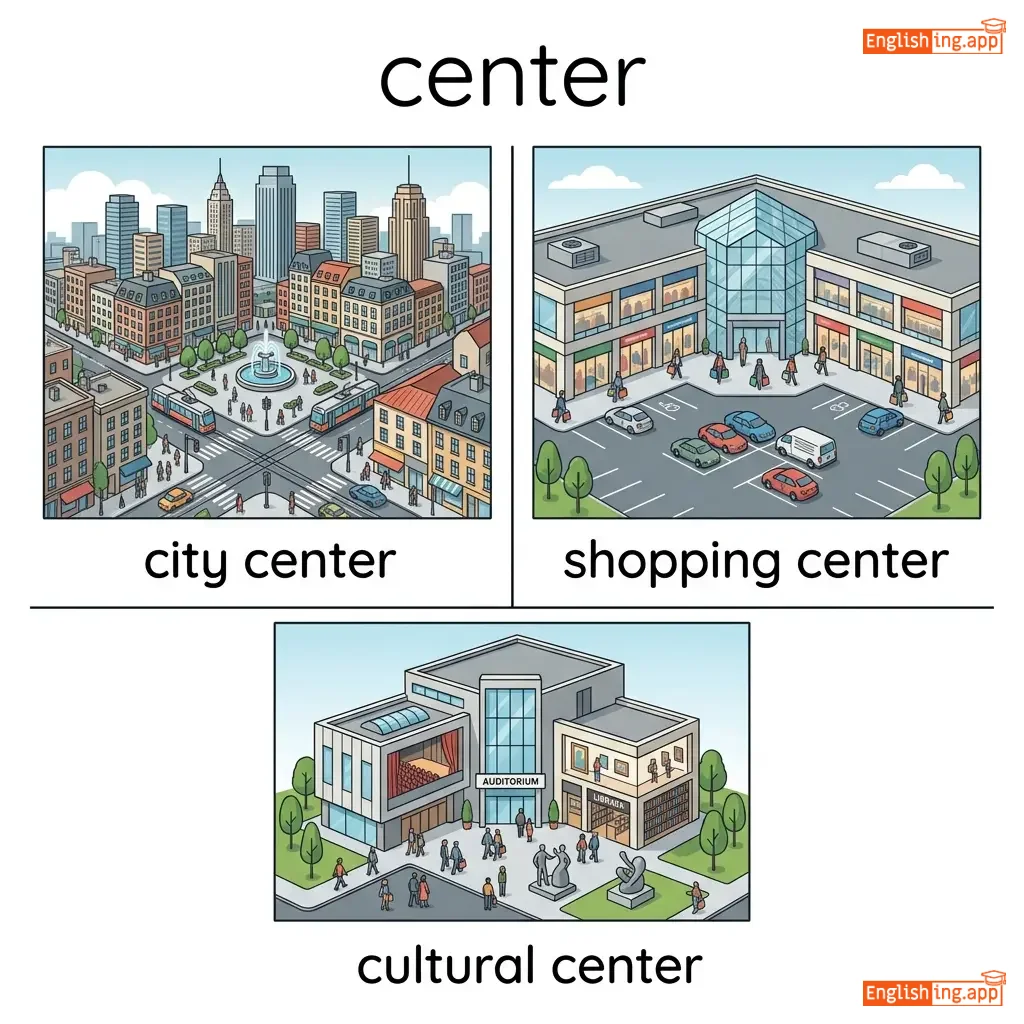
city center, shopping center, cultural center, attention center
••••••
|
Center意味着中心,比如City Center就是城市的中心。
••••••
|
|
#10607
🔋
|
/sɛl/
noun
(sel)
••••••
|
- •••••• |
细胞 / 单元格
xibao / danyuan ge
••••••
|
- •••••• | - •••••• | - •••••• | - •••••• |
a small basic unit of life; or a small enclosed space like a prison room
••••••
|
The prisoner was locked in a small cell. |
囚犯被锁在一个小牢房里。
qiufen bei suo zai yi ge xiao laofang li.
••••••
|
cell phone |
a portable mobile phone
••••••
|
手机
shouji
••••••
|
unit, chamber, cubicle, compartment
••••••
|
open space, hall
••••••
|
prison cell, blood cell, cell phone, solar cell
••••••
|
Cell意味着细胞,也可以用来表示手机。
••••••
|
|
#10608
🌟
|
/səˈlɛbrɪti/
noun
(selibrity)
••••••
|
- •••••• |
名人
ming ren
••••••
|
- •••••• | - •••••• | - •••••• | - •••••• |
a famous person, especially in entertainment or sports
••••••
|
The celebrity was surrounded by fans at the airport. |
这位名人在机场被粉丝围住了。
Zhe wei ming ren zai ji chang bei fen si wei zhu le.
••••••
|
celebrity status |
the condition of being widely known and admired
••••••
|
名人地位
ming ren di wei
••••••
|
star, idol, personality, VIP, notable
••••••
|
unknown, nobody
••••••
|
celebrity gossip, celebrity news, celebrity status, celebrity culture
••••••
|
Celebrity 是一个大家都认识的明星!
••••••
|
|
#10609
🥳
|
/ˌsɛlɪˈbreɪʃən/
noun
(sèilìbùlèi shēn)
••••••
|
- •••••• |
庆典
qingdian
••••••
|
- •••••• | - •••••• | - •••••• | - •••••• |
a festive event or activity to honor an occasion
••••••
|
The city held a grand celebration on Independence Day. |
城市在独立日举行了盛大的庆典。
Chengshi zai duli ri juxing le shengda de qingdian.
••••••
|
- •••••• | - •••••• | - •••••• |
festivity, party, event, ceremony, gathering
••••••
|
mourning, neglect
••••••
|
birthday celebration, wedding celebration, public celebration, celebration dinner
••••••
|
Celebration就是庆典,就像生日庆典一样!
••••••
|
|
#10610
🎉
|
/ˈsɛlɪˌbreɪt/
verb
••••••
|
|
- •••••• |
celebrated
••••••
|
celebrated
••••••
|
celebrates
••••••
|
celebrating
••••••
|
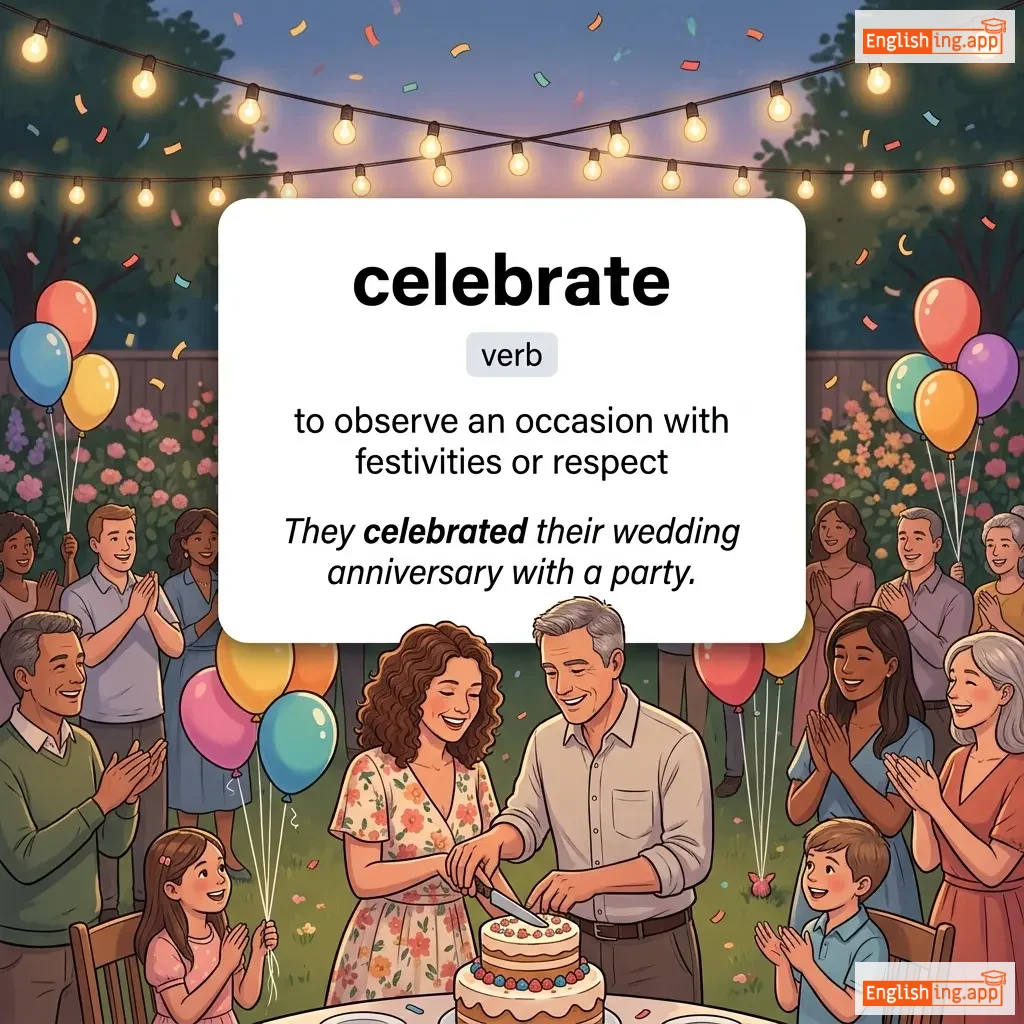
to observe an occasion with festivities or respect
••••••
|
They celebrated their wedding anniversary with a party. |
- •••••• |
celebrate in style |
to celebrate in an impressive or luxurious way
••••••
|
- •••••• |
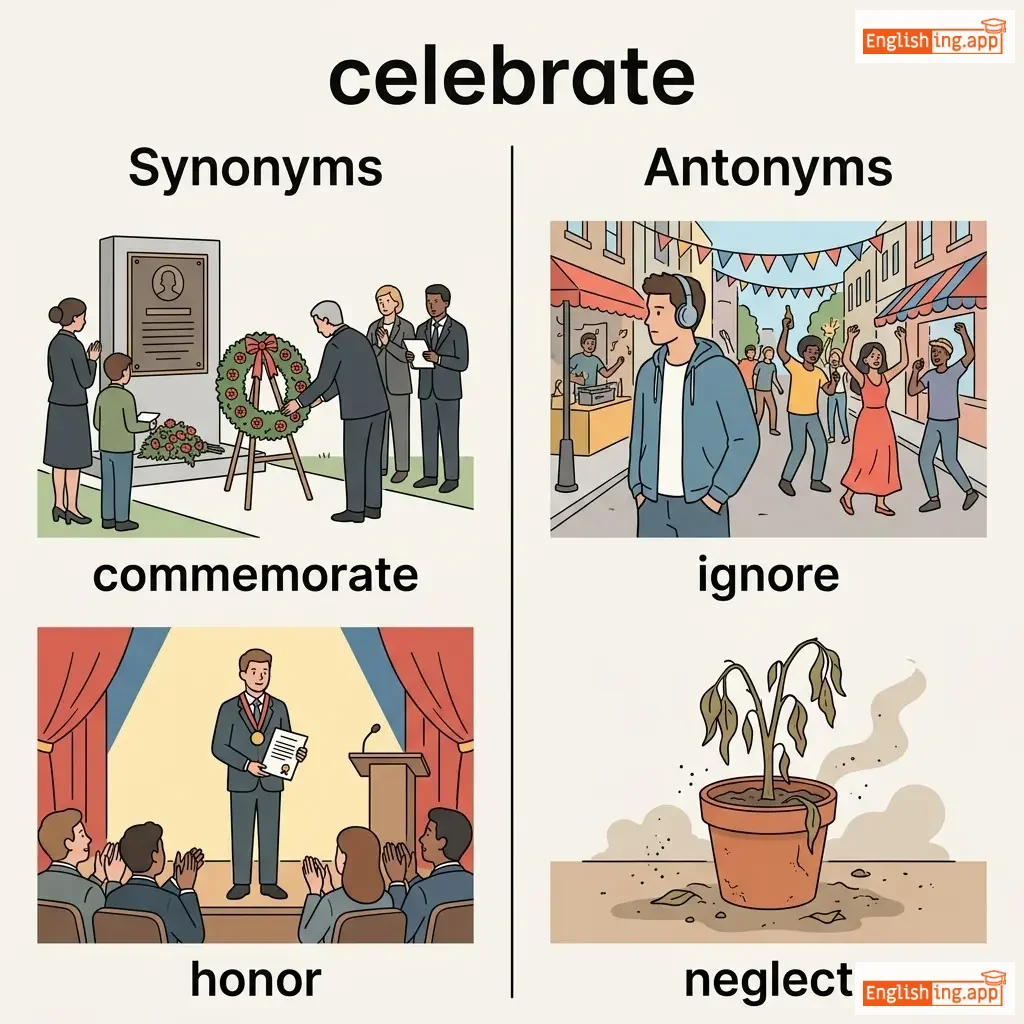
commemorate, honor, observe, rejoice
••••••
|
ignore, neglect
••••••
|
celebrate success, celebrate a birthday, celebrate together, celebrate in style
••••••
|
No •••••• |
|
#10611
🏠
|
/ˈsiːlɪŋ/
noun
(ˈsɪlɪŋ)
••••••
|
- •••••• |
天花板
tianhuaban
••••••
|
- •••••• | - •••••• | - •••••• | - •••••• |
the upper interior surface of a room
••••••
|
The ceiling of the hall was painted beautifully. |
大厅的天花板被美丽地油漆了。
Dating de tianhuaban bei meili de youqi le.
••••••
|
hit the ceiling |
to become extremely angry
••••••
|
大发雷霆
dafa leitlng
••••••
|
roof, overhead, canopy, cover
••••••
|
floor, ground
••••••
|
high ceiling, low ceiling, ceiling fan, ceiling light
••••••
|
天花板是天花板,想象风扇在天花板上。
••••••
|
|
#10612
⚡
|
/kɔːz/
noun/verb
(kàoz)
••••••
|
- •••••• |
原因 / 造成
yuányīn / zàochéng
••••••
|
caused
kàozd
••••••
|
caused
kàozd
••••••
|
causes
kàozes
••••••
|
causing
kàozing
••••••
|
a person or thing that gives rise to an action, phenomenon, or condition; to make something happen
••••••
|
The heavy rain caused flooding in the city.
大雨造成了城市的洪水。
••••••
|
大雨造成了城市的洪水。
Dàyǔ zàochéngle chéngshì de hóngshuǐ.
••••••
|
lost cause
失去的原因
••••••
|
a hopeless case; something doomed to fail
••••••
|
失去的原因
shīqù de yuányīn
••••••
|
reason, motive, source, trigger, origin
••••••
|
effect, result
••••••
|
cause of death, good cause, lost cause, social cause
••••••
|
Cause 意思是原因 ⚡ – 大雨造成洪水,Cause = 原因
••••••
|
|
#10613
📂
|
/ˈkætəɡɔːri/
noun
(类别)
••••••
|
- •••••• |
类别
leibie
••••••
|
- •••••• | - •••••• | - •••••• | - •••••• |
a class or division of things regarded as having particular shared characteristics
••••••
|
Books are arranged by category in the library. |
书籍在图书馆按类别排列。
Shūjí zài túshūguǎn àn lèibié páiliè.
••••••
|
- •••••• | - •••••• | - •••••• |
class, group, type, division, section
••••••
|
individual, unit
••••••
|
product category, age category, main category, different category
••••••
|
Category = 类别 📂 - 书籍按类别排列
••••••
|
|
#10614
🤲
|
/kætʃ/
verb
••••••
|
|
- •••••• |
caught
••••••
|
caught
••••••
|
catches
••••••
|
catching
••••••
|
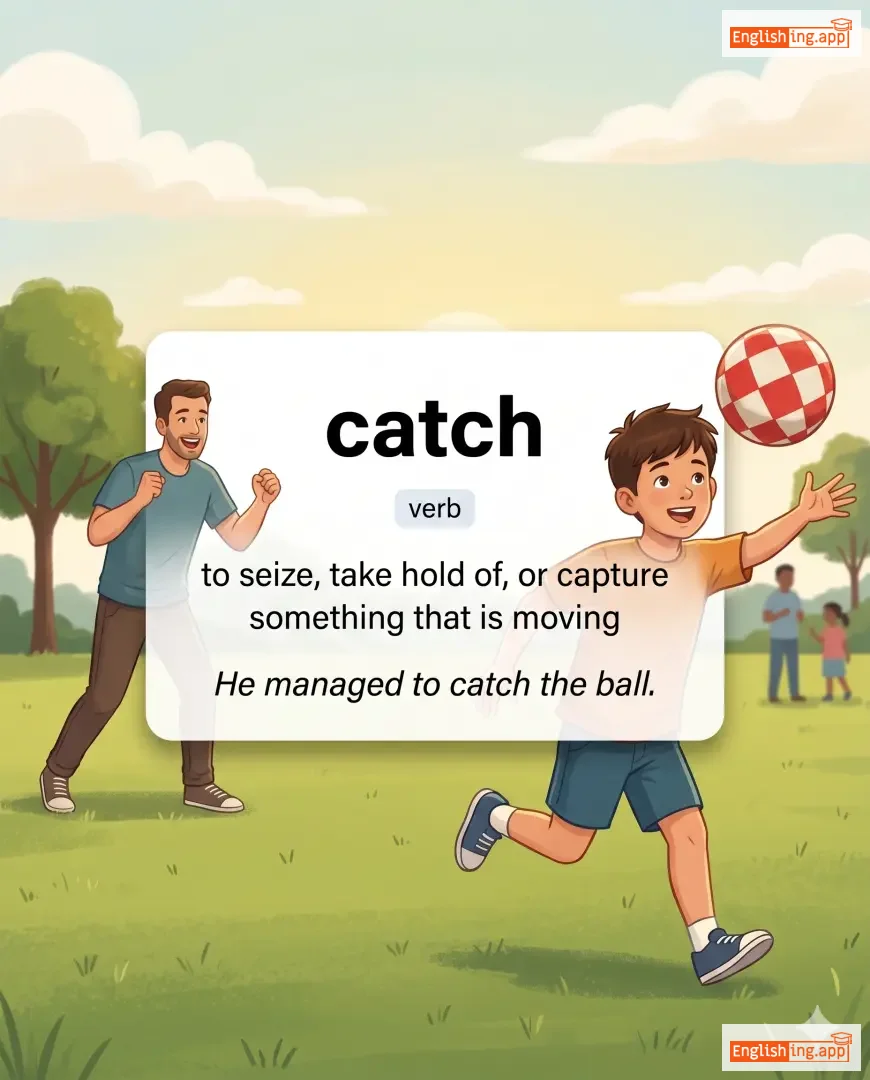
to seize, take hold of, or capture something that is moving
••••••
|
He managed to catch the ball. |
- •••••• |
catch someone's eye |
to attract someone's attention
••••••
|
- •••••• |
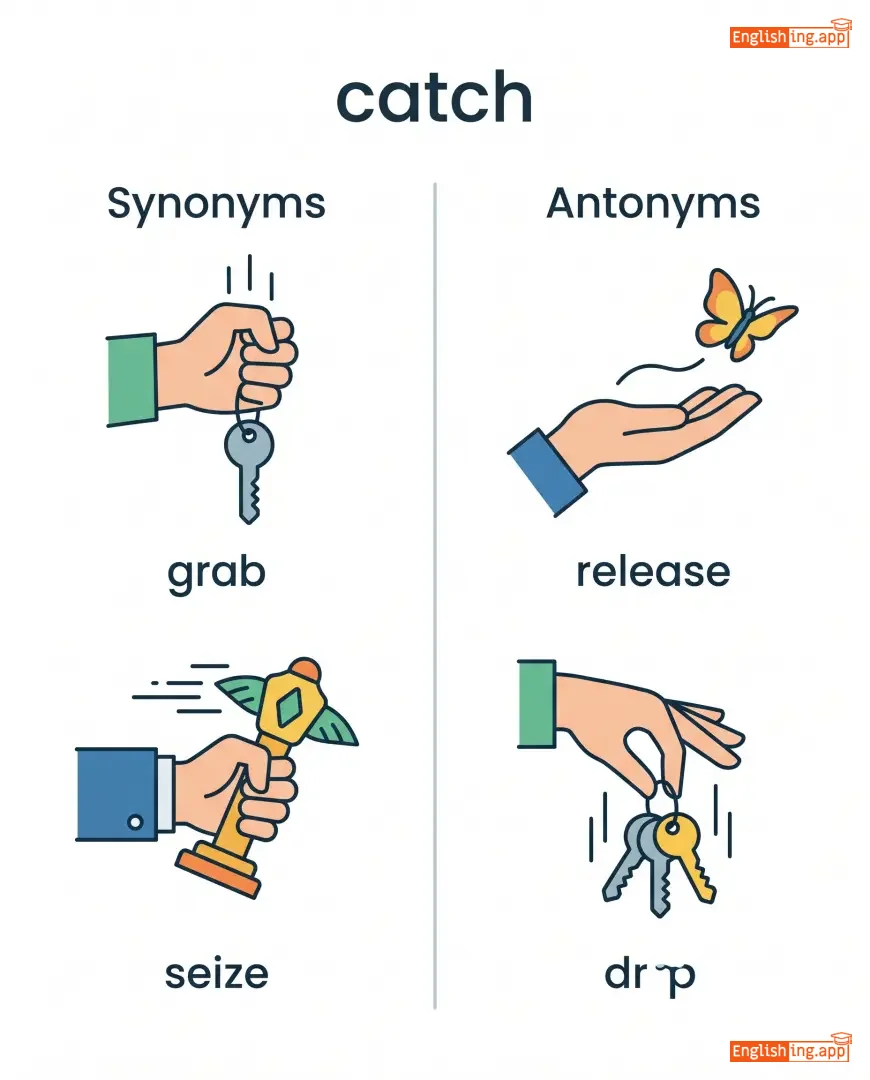
grab, seize, capture, grasp, snatch
••••••
|
release, drop, lose
••••••
|
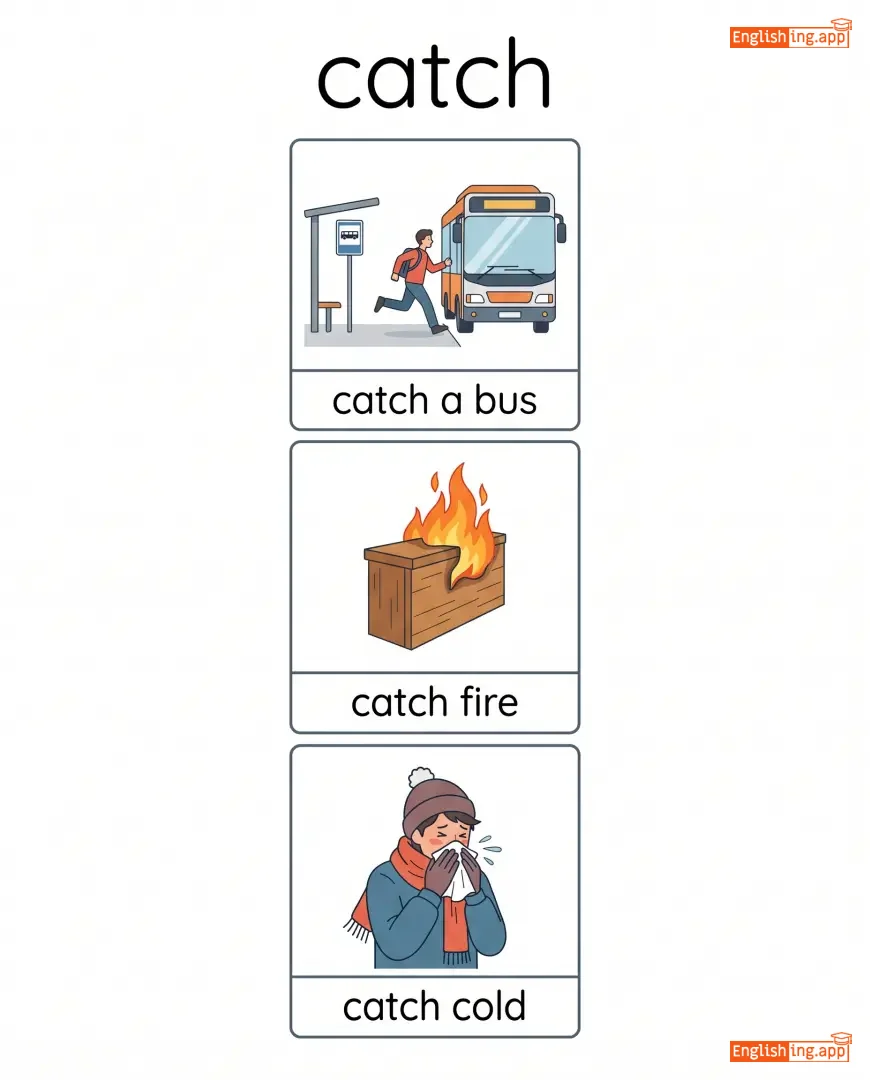
catch a bus, catch fire, catch cold, catch attention
••••••
|
No •••••• |
Vocabulary Quiz
Test your vocabulary by matching words with their translations or meanings.
Login to take the quiz
Comments (0)
Share your thoughts and join the discussion.
Join the discussion by logging in
Login to CommentNo comments yet
Be the first to share your thoughts!