




Swipe left or right, or use the buttons. Tap image to zoom.
例句翻译
单词
Lesson 442Lesson 442 - 遮罩切换
|
表情符号
|
单词 | Images | 翻译 | 过去时 | 过去分词 | 第三人称单数 | 动名词 | 含义 | 例句 | 例句翻译 | 示例表达 | 示例表达含义 | 示例表达翻译 | 同义词 | 反义词 | 搭配词 | 助记符 |
|---|---|---|---|---|---|---|---|---|---|---|---|---|---|---|---|---|---|
|
#1
🌀
|
/twɪst/
verb
(twist)
••••••
|
- •••••• |
扭曲, 旋转
niǔqū, xuánzhuǎn
••••••
|
twisted
twisted
••••••
|
twisted
twisted
••••••
|
twists
twists
••••••
|
twisting
twisting
••••••
|
to bend or turn something into a coil or spiral shape; to distort.
••••••
|
He twisted the rope tightly around the pole.
他把绳子紧紧地缠绕在杆子上。
••••••
|
他把绳子紧紧地缠绕在杆子上。
Tā bǎ shéngzi jǐn jǐn de chánrào zài gǎnzi shàng.
••••••
|
plot twist
情节转折
••••••
|
an unexpected change in the story or situation
••••••
|
故事中的意外转折
gùshì zhōng de yìwài zhuǎnzhé
••••••
|
bend, turn, curl, spin, distort
••••••
|
straighten, flatten
••••••
|
twist the rope, twist around, twist ankle, plot twist
••••••
|
Twist 就像快速地旋转或扭曲某物!
••••••
|
|
#1
🫱🏻🫲🏽
|
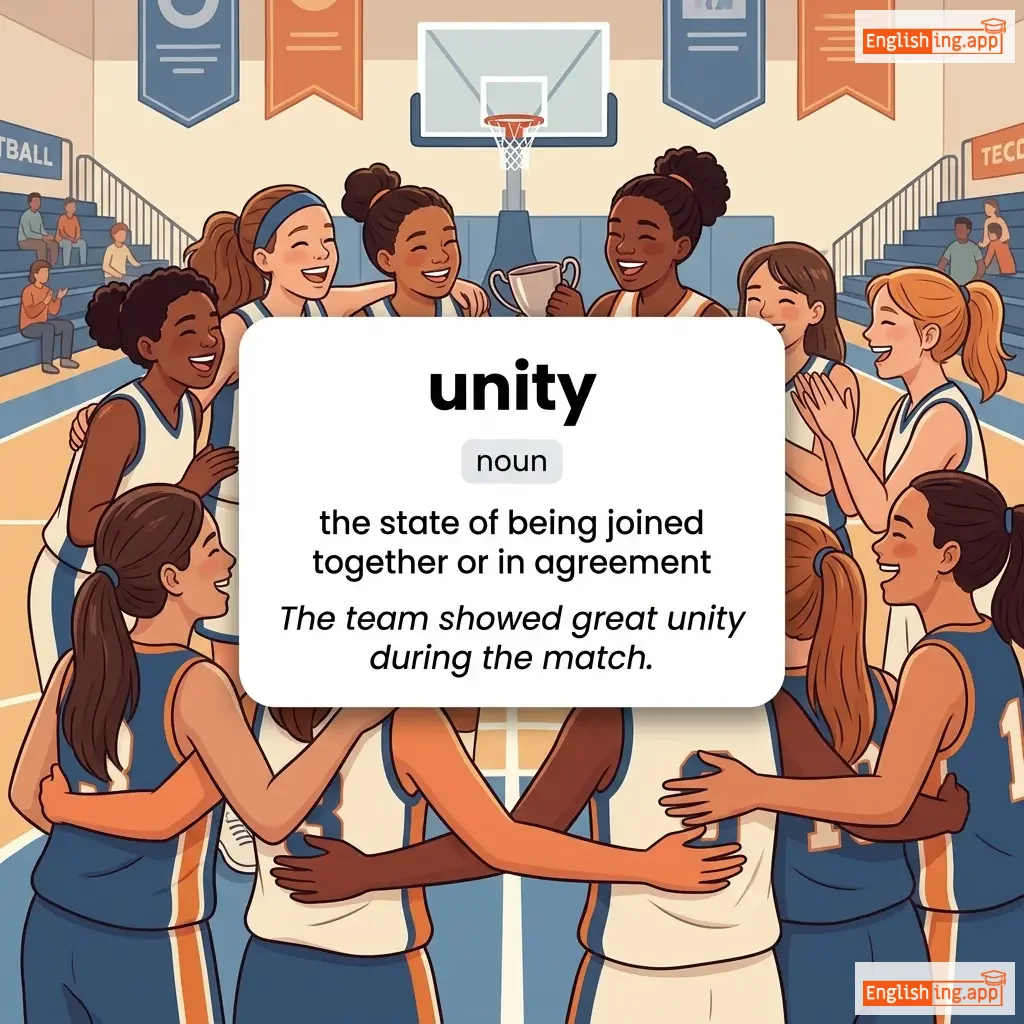
/ˈjuːnɪti/
noun
(yùnìtí)
••••••
|
|
团结
tuánjié
••••••
|
- •••••• | - •••••• | - •••••• | - •••••• |
the state of being joined together or in agreement
••••••
|
The team showed great unity during the match. |
球队在比赛中展示了伟大的团结。
qiúduì zài bǐsài zhōng zhǎnshì le wěidà de tuánjié.
••••••
|
unity in diversity |
the idea that differences can exist together in harmony
••••••
|
多样性中的团结
duōyàng xìng zhōng de tuánjié
••••••
|
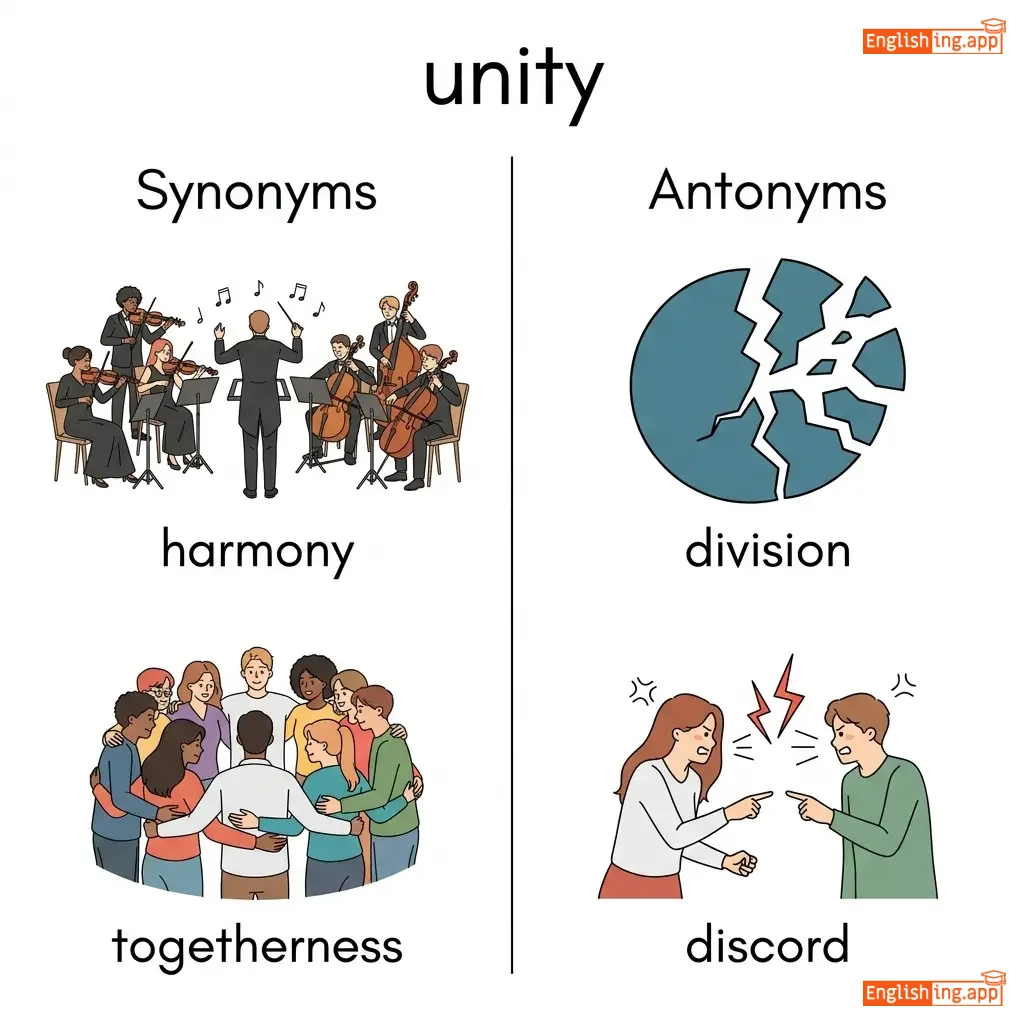
harmony, togetherness, solidarity, cohesion, cooperation
••••••
|
division, discord, disunity
••••••
|
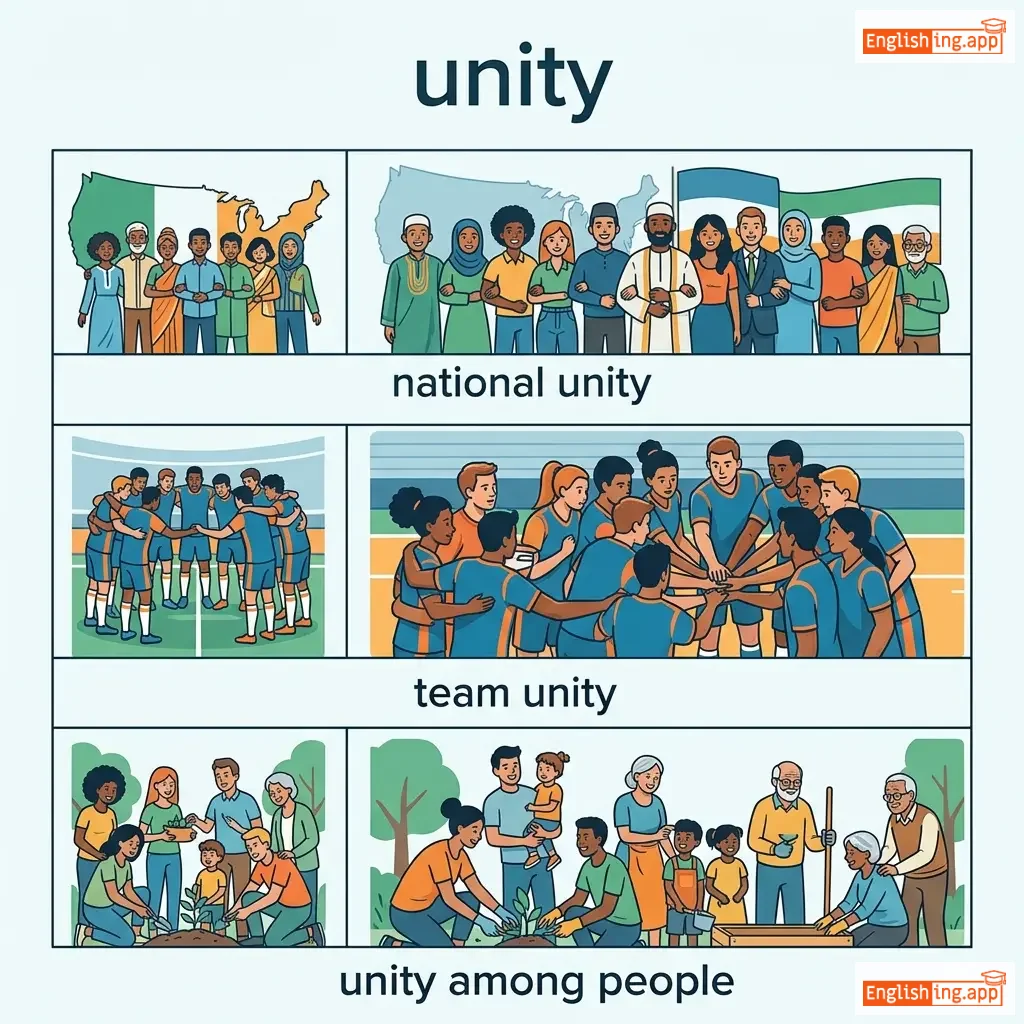
national unity, team unity, unity among people, show unity
••••••
|
团结意味着在一起 (Unity 意味着团结)
••••••
|
|
#1
🤝
|
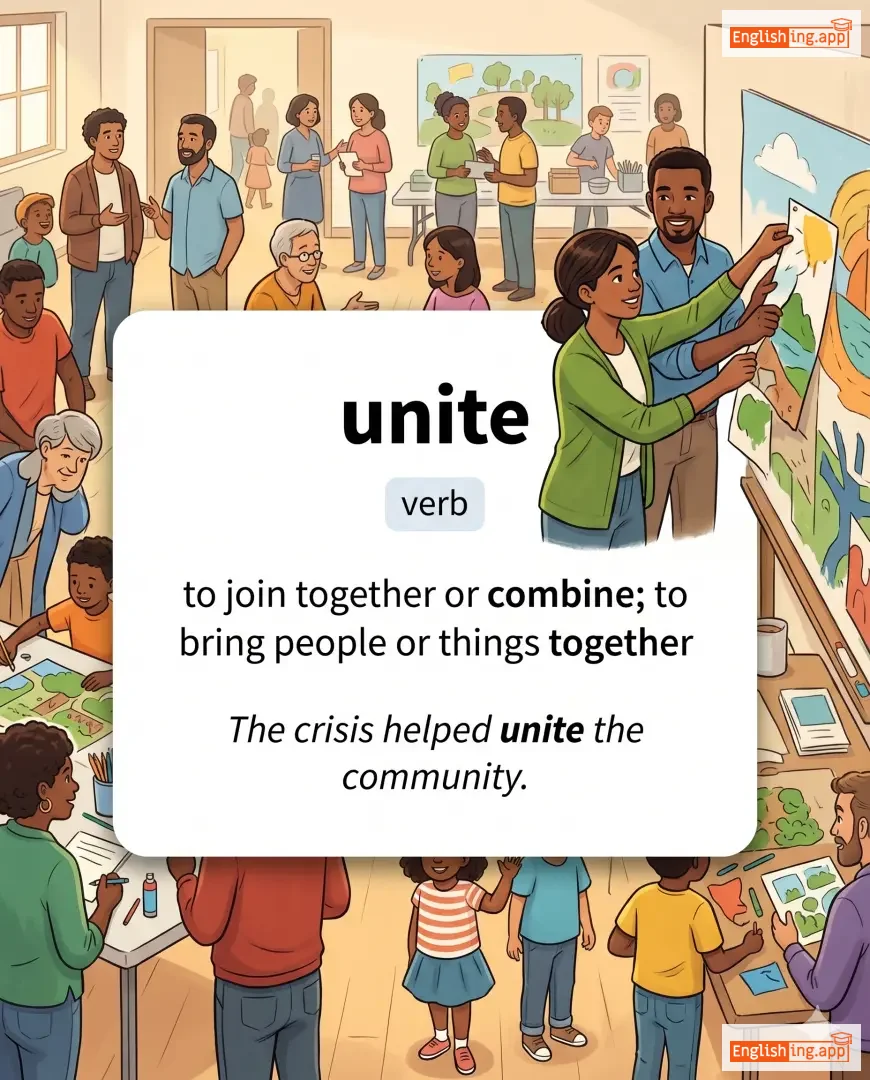
/juˈnaɪt/
verb
(yoo-nait)
••••••
|
|
联合
lianhe
••••••
|
united
yoo-naí-ted
••••••
|
united
yoo-naí-ted
••••••
|
unites
yoo-naíts
••••••
|
uniting
yoo-náiting
••••••
|
to join together or combine; to bring people or things together
••••••
|
The crisis helped unite the community.
危机帮助了团结社区。
••••••
|
危机帮助了团结社区。
Weiji bangzhu le tuanjie shequ.
••••••
|
- •••••• | - •••••• | - •••••• |
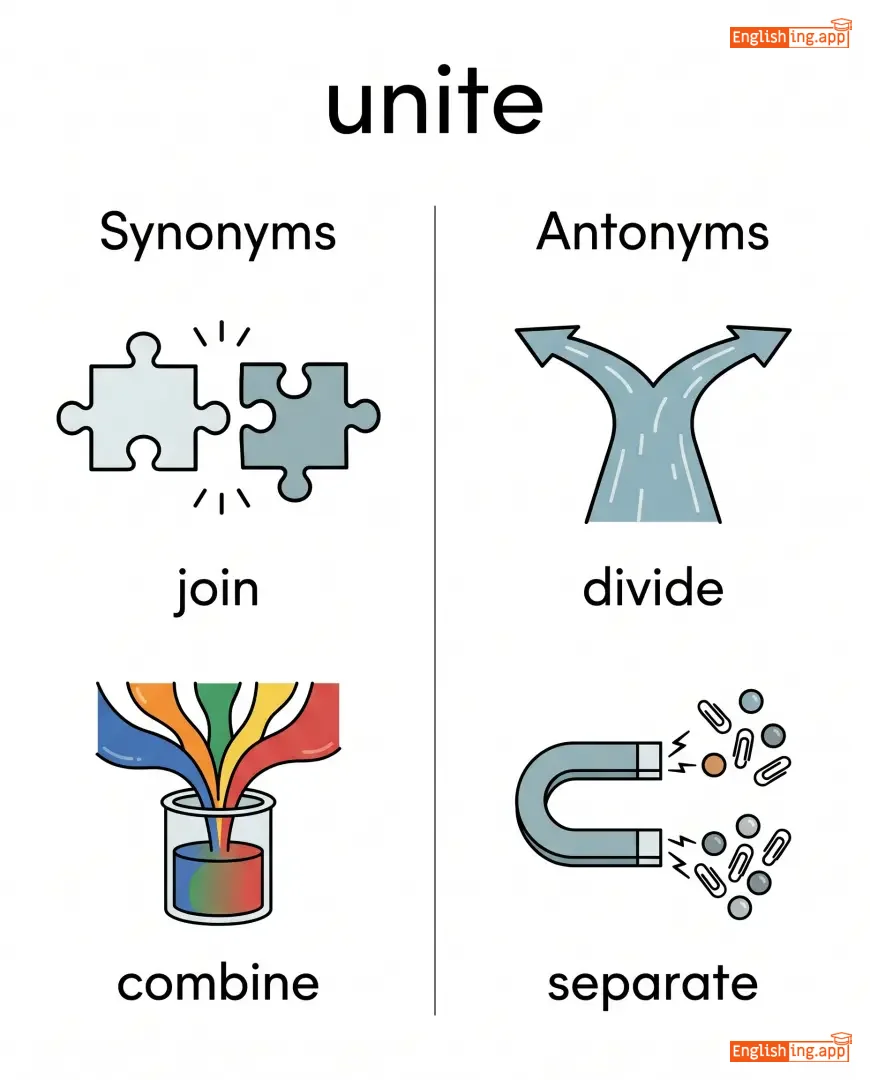
join, combine, merge, connect, integrate
••••••
|
divide, separate, split
••••••
|
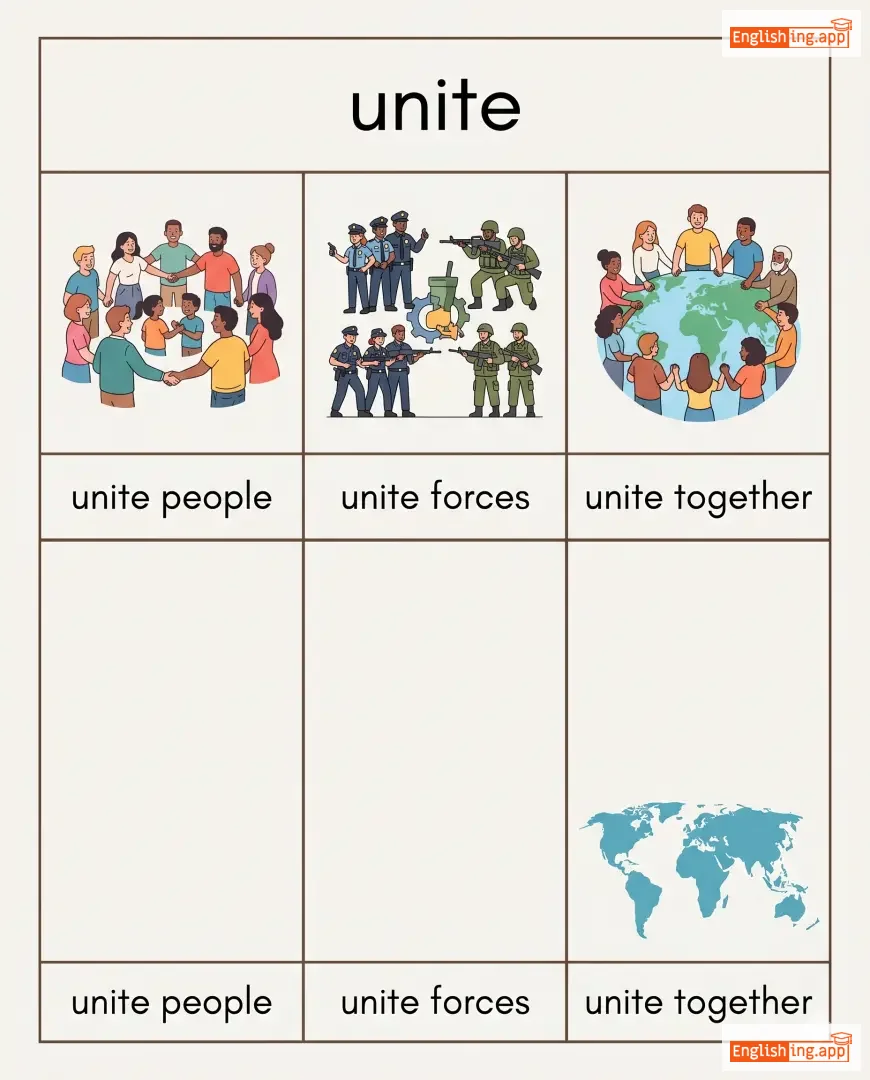
unite people, unite forces, unite together, unite against, unite in purpose
••••••
|
联合意味着将一切放在一起,一如中文的联合。
••••••
|
|
#1
😔
|
/ʌnˈhæpi/
adjective
(àn hāi pī)
••••••
|
- •••••• |
不开心或悲伤
bù kāixīn huò bēishāng
••••••
|
- •••••• | - •••••• | - •••••• | - •••••• |
not happy; sad, disappointed, or dissatisfied
••••••
|
He was unhappy with the final decision.
他对最终决定感到不开心。
••••••
|
他对最终决定感到不开心。
tā duì zuìzhōng juédìng gǎndào bù kāixīn.
••••••
|
an unhappy ending
一个不开心的结局
••••••
|
a sad or tragic conclusion to a story or event
••••••
|
一个悲伤的结局
yí gè bēishāng de jiéjú
••••••
|
sad, miserable, gloomy, depressed, dissatisfied
••••••
|
happy, cheerful, content
••••••
|
unhappy with, feel unhappy, unhappy marriage, unhappy ending
••••••
|
在 happy 前加上 un,就会变得不开心 — 所以 unhappy 就是感到悲伤 😔
••••••
|
|
#1
📜
|
/ʌnˈfəʊld/
verb
(an-fold)
••••••
|
- •••••• |
展开或打开
zhǎn kāi huò dǎ kāi
••••••
|
unfolded
an-fold-ed
••••••
|
unfolded
an-fold-ed
••••••
|
unfolds
an-fold-s
••••••
|
unfolding
an-fold-ing
••••••
|
to open or spread out something that was folded; to gradually reveal or develop
••••••
|
She unfolded the letter carefully.
她小心地展开了信件。
••••••
|
她小心地展开了信件。
Tā xiǎoxīn de zhǎn kāi le xìn jiàn.
••••••
|
as the story unfolds
随着故事的发展
••••••
|
as events become known over time
••••••
|
随着故事的发展
Suí zhe gùshì de fāzhǎn
••••••
|
open, expand, develop, reveal, evolve
••••••
|
fold, close, conceal
••••••
|
unfold story, unfold plan, unfold events, unfold wings
••••••
|
Unfold 和展开类似 — 故事逐渐展开 📜
••••••
|
|
#1
⚖️
|
/ʌnˈfɛər/
adjective
(アンフェア)
••••••
|
- •••••• |
不公平
bukongping
••••••
|
- •••••• | - •••••• | - •••••• | - •••••• |
not based on or behaving according to the principles of equality or justice
••••••
|
It’s unfair to blame her for the team’s failure. |
将团队的失败归咎于她是不公平的。
Jiang tuandui de shibai guijiu yu ta shi bu gongping de.
••••••
|
unfair advantage |
a situation where someone has an undeserved benefit
••••••
|
不公平的优势
bukongping de youshi
••••••
|
biased, unjust, partial, unequal, prejudiced
••••••
|
fair, just, equal
••••••
|
unfair treatment, unfair decision, unfair advantage, unfair competition
••••••
|
不公平 = 不 + 公平 (不公平)
••••••
|
|
#1
😮
|
/ˌʌnɪkˈspɛktɪd/
adjective
(anekspekted)
••••••
|
- •••••• |
出乎意料
chūhū yìliào
••••••
|
- •••••• | - •••••• | - •••••• | - •••••• |
not anticipated or predicted; surprising
••••••
|
We had an unexpected visitor last night. |
我们昨晚有一个出乎意料的访客。
Wǒmen zuó wǎn yǒu yīgè chūhū yìliào de fǎngkè.
••••••
|
expect the unexpected |
be prepared for surprises or things you don’t foresee
••••••
|
期待出乎意料
qídài chūhū yìliào
••••••
|
surprising, sudden, unforeseen, astonishing, abrupt
••••••
|
expected, predicted, planned
••••••
|
unexpected result, unexpected event, unexpected visitor, unexpected change
••••••
|
Un + expected = 你没预料到的 — 就是出乎意料!
••••••
|
|
#1
📉
|
/ˌʌnɪmˈplɔɪmənt/
noun
(ānɪmplɔɪmənt)
••••••
|
- •••••• |
失业
shiye
••••••
|
- •••••• | - •••••• | - •••••• | - •••••• |
the state of not having a paid job despite being able and willing to work
••••••
|
High unemployment is a major issue in the country. |
高失业率是该国的一个主要问题。
Gao shiye lv shi gai guo de yi ge zhuyao wenti.
••••••
|
unemployment rate |
the percentage of the labor force that is jobless
••••••
|
失业率
shiye lv
••••••
|
joblessness, redundancy, idleness, inactivity, layoff
••••••
|
employment, work, occupation
••••••
|
high unemployment, youth unemployment, unemployment benefits, unemployment crisis
••••••
|
Un + Employment 就是没有工作 — 记住,失业就是没有工作 📉
••••••
|
|
#1
🎓
|
/ˌʌndəˈɡrædʒuət/
noun
(ʌndərˈɡrædʒuət)
••••••
|
- •••••• |
本科生
benke sheng
••••••
|
- •••••• | - •••••• | - •••••• | - •••••• |
a student who has not yet earned a bachelor's degree
••••••
|
She is an undergraduate studying computer science. |
她是一个学习计算机科学的本科生。
Ta shi yige xuexi jisuanji kexue de benke sheng
••••••
|
- •••••• | - •••••• | - •••••• |
student, scholar, learner, collegian
••••••
|
graduate, postgraduate
••••••
|
undergraduate student, undergraduate program, undergraduate degree, undergraduate course
••••••
|
Under + graduate – 指的是未获得学士学位的学生
••••••
|
|
#1
🔍
|
/ʌnˈkʌvə(r)/
verb
(ʌnˈkʌvɚ)
••••••
|
- •••••• |
揭示
jie-shi
••••••
|
uncovered
ʌnˈkʌvɚd
••••••
|
uncovered
ʌnˈkʌvɚd
••••••
|
uncovers
ʌnˈkʌvɚs
••••••
|
uncovering
ʌnˈkʌvɚɪŋ
••••••
|
to reveal something that was hidden or secret
••••••
|
The investigation uncovered new evidence.
调查揭示了新的证据。
••••••
|
调查揭示了新的证据。
Diao-cha jie-shi le xin de zheng-ju.
••••••
|
uncover the truth
揭示真相
••••••
|
to reveal the real facts or reality of a situation
••••••
|
揭示真相
Jie-shi zhen-xiang
••••••
|
reveal, expose, disclose, discover, unearth
••••••
|
cover, hide, conceal
••••••
|
uncover truth, uncover evidence, uncover facts, uncover secrets
••••••
|
Uncover in Chinese means '揭示', like uncovering the hidden.
••••••
|
|
#1
😣
|
/ʌnˈkʌmfətəbl/
adjective
(ʌnˈkʌmfətəbl)
••••••
|
- •••••• |
不舒服
bù shūfu
••••••
|
- •••••• | - •••••• | - •••••• | - •••••• |
causing or feeling physical or emotional discomfort
••••••
|
He felt uncomfortable during the long meeting. |
在长时间的会议中,他感到不舒服。
Zài cháng shíjiān de huìyì zhōng, tā gǎndào bù shūfu.
••••••
|
make someone uncomfortable |
to cause someone to feel uneasy or awkward
••••••
|
让某人感到不舒服
ràng mǒu rén gǎndào bù shūfu
••••••
|
uneasy, awkward, embarrassed, uneasy, distressed
••••••
|
comfortable, relaxed, pleasant
••••••
|
feel uncomfortable, uncomfortable situation, uncomfortable silence, make uncomfortable
••••••
|
UN + 舒服 = 不舒服,记住这个意思就是不舒服。
••••••
|
|
#1
🌫️
|
/ʌnˈsɜːtənti/
noun
(ān sè tèn tì)
••••••
|
- •••••• |
不确定性
bù què dìng xìng
••••••
|
- •••••• | - •••••• | - •••••• | - •••••• |
the state of being unsure or not knowing what will happen
••••••
|
Economic uncertainty affects business investments. |
经济不确定性影响着商业投资。
Jīngjì bù què dìng xìng yǐng xiǎng zhe shāng yè tóu zī.
••••••
|
- •••••• | - •••••• | - •••••• |
doubt, insecurity, unpredictability, ambiguity, vagueness
••••••
|
certainty, assurance, confidence
••••••
|
economic uncertainty, feeling of uncertainty, political uncertainty, face uncertainty
••••••
|
不确定性 = uncertainty, 就是不知道未来的感觉
••••••
|
|
#1
🤔
|
/ʌnˈsɜːtən/
adjective
(アンセートン)
••••••
|
- •••••• |
不确定
bù què dìng
••••••
|
- •••••• | - •••••• | - •••••• | - •••••• |
not sure or confident about something; not clearly known or decided
••••••
|
She felt uncertain about her future after graduation. |
毕业后,她对自己的未来感到不确定。
bì yè hòu, tā duì zì jǐ de wèi lái gǎn dào bù què dìng.
••••••
|
in uncertain terms |
without being clear or definite
••••••
|
以不确定的方式
yǐ bù què dìng de fāng shì
••••••
|
unsure, doubtful, hesitant, indecisive, ambiguous
••••••
|
certain, confident, sure
••••••
|
uncertain future, uncertain times, uncertain outcome, feel uncertain
••••••
|
UN + certain (不一定) = 不确定; 记住'uncertain 意味着不确定的未来'
••••••
|
|
#1
😅
|
/ʌ/
interjection
(呃)
••••••
|
- •••••• |
呃
e
••••••
|
- •••••• | - •••••• | - •••••• | - •••••• |
a sound people make when they hesitate or are unsure what to say next.
••••••
|
Uh, I’m not sure if that’s the right answer. |
呃,我不确定这是不是正确的答案。
E, wǒ bù quèdìng zhè shì bùshì zhèngquè de dá'àn.
••••••
|
- •••••• | - •••••• | - •••••• |
um, er, hmm, ah
••••••
|
silence, certainty
••••••
|
uh sound, say uh, uh moment
••••••
|
呃 😅 当你犹豫时或不知道该说什么 — 说‘呃’,大家都知道!
••••••
|
|
#1
➗
|
/tuː θɜːrdz/
noun
(tuː θɜːrdz)
••••••
|
- •••••• |
三分之二
san fen zhi er
••••••
|
- •••••• | - •••••• | - •••••• | - •••••• |
a fraction equal to two parts of three; 2/3.
••••••
|
Two-thirds of the students passed the exam. |
三分之二的学生通过了考试。
San fen zhi er de xuesheng tongguo le kaoshi.
••••••
|
- •••••• | - •••••• | - •••••• |
fraction, ratio, portion, majority
••••••
|
one-third, whole
••••••
|
two-thirds majority, two-thirds vote, two-thirds full
••••••
|
Two-thirds 意味着 3 部分中的 2 部分 ➗ — 记住三分之二!
••••••
|
|
#1
🌐
|
/trænzˈleɪʃən/
noun
(ˈtrænsleɪʃən)
••••••
|
- •••••• |
翻译
fānyì
••••••
|
- •••••• | - •••••• | - •••••• | - •••••• |
the process of converting text or speech from one language into another
••••••
|
She completed the translation of the book within two months.
她在两个月内完成了这本书的翻译。
••••••
|
她在两个月内完成了这本书的翻译。
Tā zài liǎng gè yuè nèi wánchéngle zhè běn shū de fānyì.
••••••
|
lost in translation
在翻译中迷失
••••••
|
when something loses its original meaning in another language
••••••
|
在翻译中迷失
Zài fānyì zhōng míshī
••••••
|
interpretation, version, conversion, rendering, adaptation
••••••
|
original, source, misinterpretation
••••••
|
machine translation, language translation, translation service, translation app
••••••
|
翻译就是让语言互通 🌐
••••••
|
|
#1
2️⃣0️⃣
|
/ˈtwɛntiəθ/
adjective
(twentieth)
••••••
|
- •••••• |
第二十
dièrshí
••••••
|
- •••••• | - •••••• | - •••••• | - •••••• |
coming after the nineteenth in order; being one of twenty equal parts.
••••••
|
She was born on the twentieth of April. |
她出生在四月二十日。
Tā chūshēng zài sìyuè èrshí rì.
••••••
|
- •••••• | - •••••• | - •••••• |
20th, twentieth part, ordinal number, fraction
••••••
|
nineteenth, twenty-first
••••••
|
twentieth century, twentieth floor, twentieth birthday, twentieth of April
••••••
|
Twentieth 意味着 20th — 二十 (20) + th = 第二十
••••••
|
|
#1
🦃
|
/ˈtɜːrki/
noun
(tʊrki)
••••••
|
- •••••• |
火鸡 (一种大鸟)
huǒ jī
••••••
|
- •••••• | - •••••• | - •••••• | - •••••• |
a large bird native to North America, often eaten at special occasions like Thanksgiving; also the meat of this bird.
••••••
|
We roasted a turkey for Thanksgiving dinner. |
我们为感恩节晚餐烤了一只火鸡。
Wǒmen wèi gǎn'ēn jié wǎncān kǎo le yī zhī huǒ jī.
••••••
|
talk turkey |
to discuss something honestly and directly
••••••
|
直接且诚实地谈论
zhíjiē qiě chéngshí de tánlùn
••••••
|
bird, fowl, poultry, gobbler, hen
••••••
|
none, silence
••••••
|
roast turkey, turkey sandwich, turkey dinner, wild turkey
••••••
|
感恩节吃火鸡,幸福满满!🦃
••••••
|
|
#1
🎵
|
/tjuːn/
noun
(tjun)
••••••
|
- •••••• |
旋律
xuanlu
••••••
|
- •••••• | - •••••• | - •••••• | - •••••• |
a sequence of musical notes that are pleasant to listen to; a melody
••••••
|
She hummed a cheerful tune while cooking dinner.
她在做晚餐的时候哼着一首愉快的旋律。
••••••
|
她在做晚餐的时候哼着一首愉快的旋律。
Ta zai zuo wancan de shihou hengzhe yi shou yukuai de xuanlu.
••••••
|
in tune
调子合适
••••••
|
playing or singing with correct musical pitch
••••••
|
调子合适
tiaozi heshi
••••••
|
melody, song, harmony, air, jingle
••••••
|
noise, discord
••••••
|
catchy tune, musical tune, tune in, out of tune
••••••
|
Tune的意思是旋律 – 调整电台时我们会听到旋律 🎶
••••••
|
|
#1
🧬
|
/ˈtjuːmər/
noun
(肿瘤)
••••••
|
- •••••• |
肿瘤
zhǒng liú
••••••
|
- •••••• | - •••••• | - •••••• | - •••••• |
an abnormal mass of tissue caused by excessive cell growth
••••••
|
The doctor found a benign tumor during the medical check-up.
医生在体检过程中发现了一个良性肿瘤。
••••••
|
医生在体检过程中发现了一个良性肿瘤。
Yīshēng zài tǐjiǎn guòchéng zhōng fāxiànle yīgè liángxìng zhǒngliú.
••••••
|
- •••••• | - •••••• | - •••••• |
growth, lump, swelling, neoplasm, mass
••••••
|
healthy tissue, normal cell
••••••
|
brain tumor, benign tumor, malignant tumor, tumor cells
••••••
|
肿瘤:细胞生长过快形成的异常组织。
••••••
|
|
#1
🛏️
|
/tʌk/
verb
(tak)
••••••
|
- •••••• |
塞进
saijin
••••••
|
tucked
takt
••••••
|
tucked
takt
••••••
|
tucks
taks
••••••
|
tucking
takiñ
••••••
|
to push or fold something neatly into a particular place
••••••
|
She tucked the blanket around the baby to keep him warm.
她把毯子围绕着婴儿,这样他就保持温暖。
••••••
|
她把毯子围绕着婴儿,这样他就保持温暖。
Ta ba tanzi weirao zhe ying'er, zheyang ta jiu baochi wennuan.
••••••
|
tuck in
tuck in
••••••
|
to make someone comfortable in bed by arranging the blankets
••••••
|
塞进床上
saijin chuang shang
••••••
|
insert, fold, stuff, push, adjust
••••••
|
unfold, pull out, open
••••••
|
tuck in bed, tuck away, tuck under, neatly tucked
••••••
|
Tuck 就是塞进,像把被子塞进床上 💺
••••••
|
|
#1
😟
|
/ˈtrʌbəld/
adjective
(trɑbləd)
••••••
|
- •••••• |
困扰
kùnrǎo
••••••
|
- •••••• | - •••••• | - •••••• | - •••••• |
experiencing or showing distress, anxiety, or worry
••••••
|
He looked deeply troubled after hearing the bad news. |
听到坏消息后,他看起来非常困扰。
Tīngdào huài xiāoxī hòu, tā kàn qǐlái fēicháng kùnrǎo.
••••••
|
troubled mind |
a mind filled with worry or anxiety
••••••
|
困扰的心情
kùnrǎo de xīnqíng
••••••
|
worried, upset, anxious, distressed, uneasy
••••••
|
calm, relaxed, peaceful
••••••
|
troubled times, troubled relationship, deeply troubled, emotionally troubled
••••••
|
Troubled就是困扰 – 满是忧虑
••••••
|
|
#1
🌴
|
/ˈtrɒpɪkəl/
adjective
(热带)
••••••
|
|
热带的
rèdài de
••••••
|
- •••••• | - •••••• | - •••••• | - •••••• |
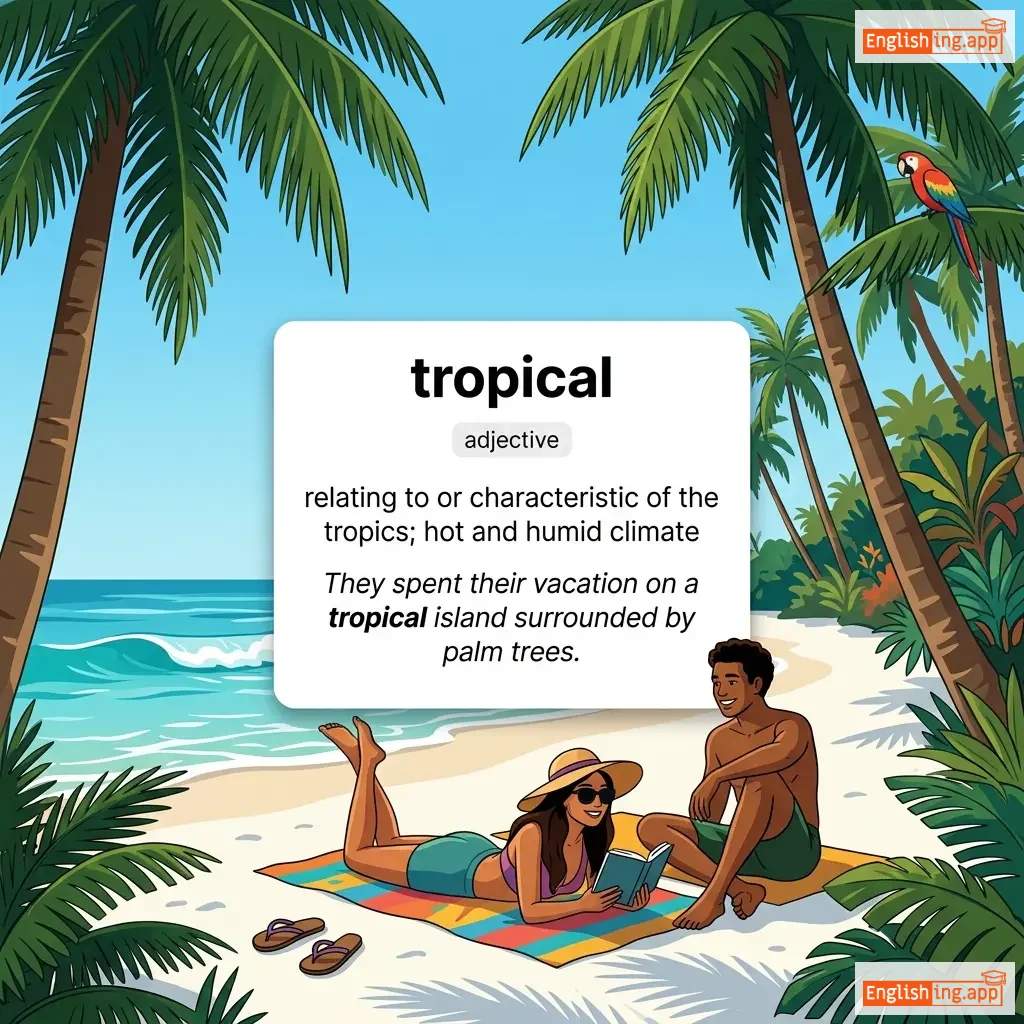
relating to or characteristic of the tropics; hot and humid climate
••••••
|
They spent their vacation on a tropical island surrounded by palm trees. |
他们在一个热带岛屿上度过了假期,四周被棕榈树包围。
Tāmen zài yīgè rèdài dǎoyǔ shàng dùguòle jiàqī, sìzhōu bèi zōnglǘ shù bāowéi.
••••••
|
tropical paradise |
a place that is extremely beautiful, warm, and pleasant like the tropics
••••••
|
热带天堂
rèdài tiāntáng
••••••
|
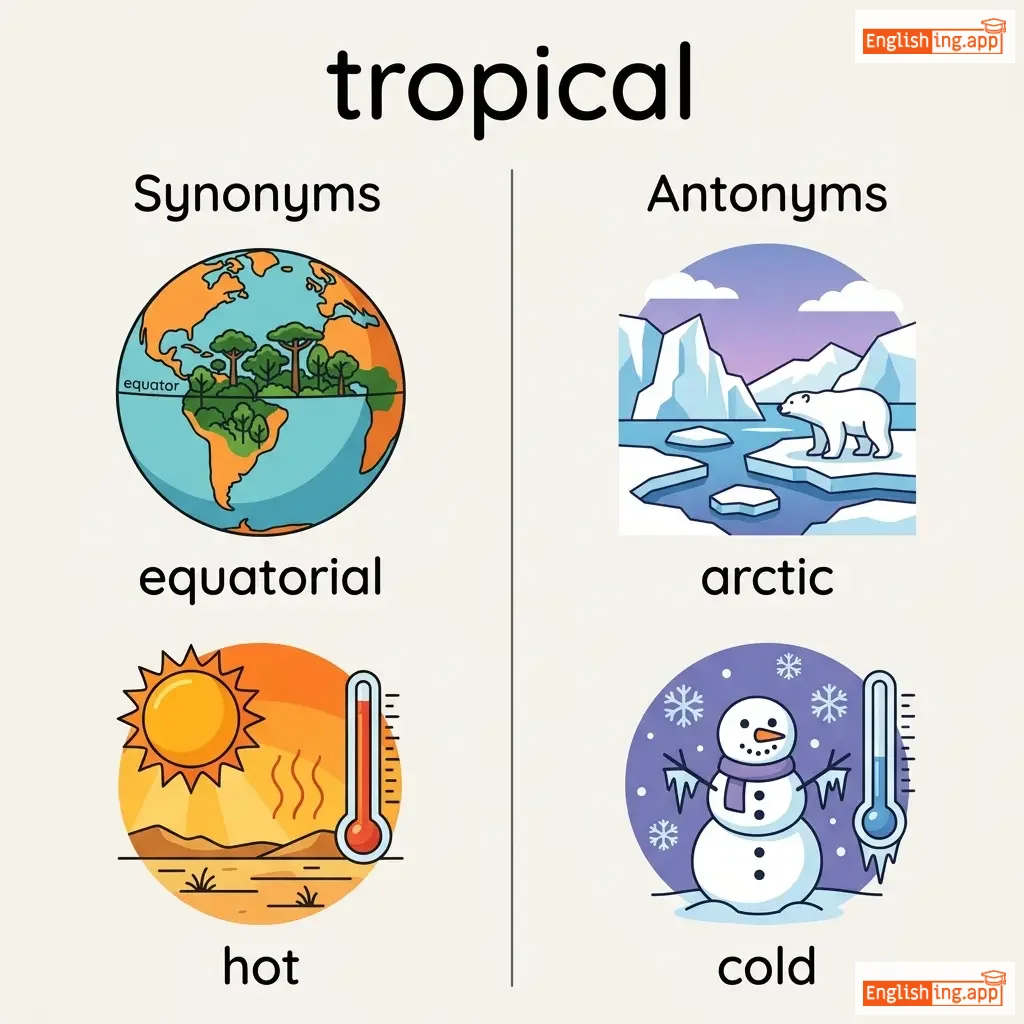
equatorial, hot, humid, balmy, sultry
••••••
|
arctic, cold, temperate
••••••
|
tropical island, tropical forest, tropical weather, tropical storm
••••••
|
TROPICAL = 热带地区,充满阳光和棕榈树。
••••••
|
|
#1
🏆
|
/ˈtraɪʌmf/
noun
(trāyùmf)
••••••
|
|
胜利
shengli
••••••
|
- •••••• | - •••••• | - •••••• | - •••••• |
a great victory or achievement
••••••
|
Winning the championship was a moment of triumph for the team. |
赢得冠军是球队的一次胜利时刻。
Yíng dé guànjūn shì qiú duì de yī cì shèng lì shíkè.
••••••
|
crowning triumph |
the greatest achievement of someone's career or life
••••••
|
至高胜利
zhì gāo shèng lì
••••••
|
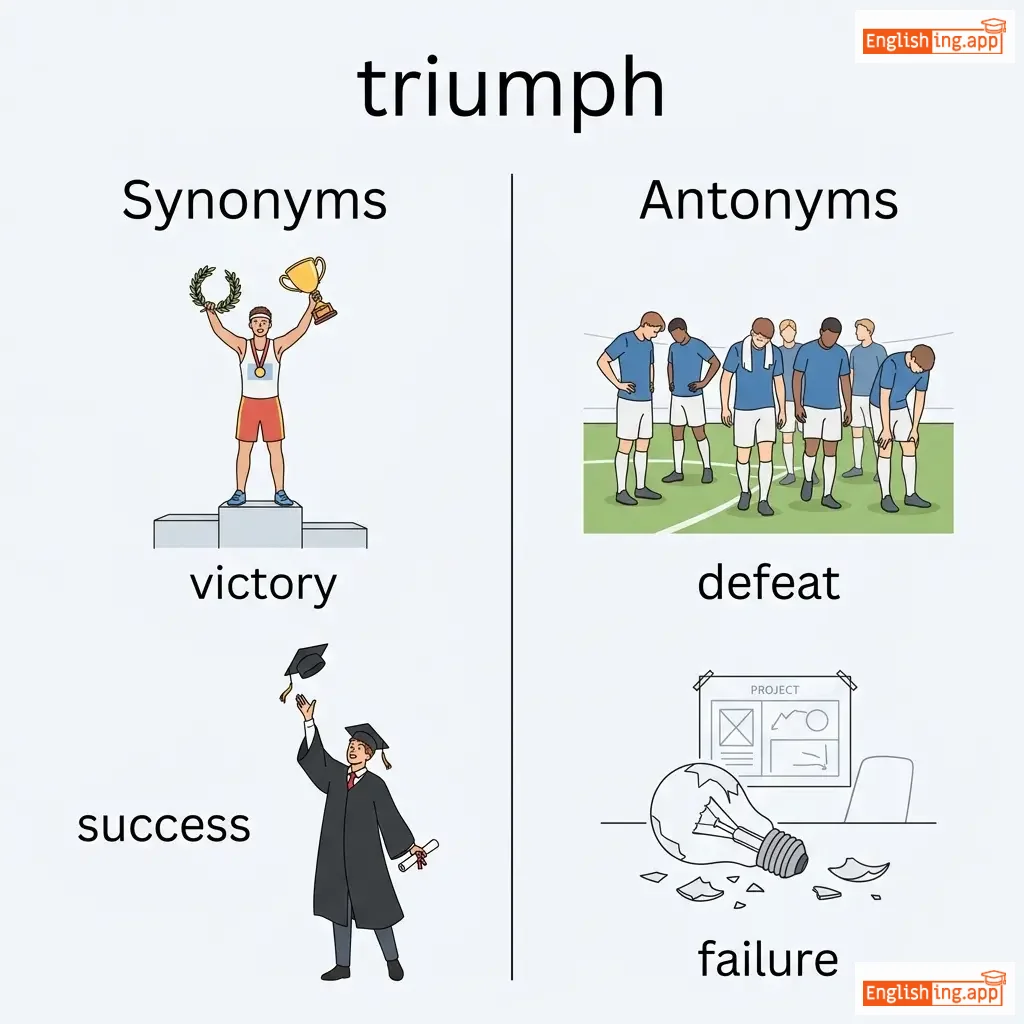
victory, success, achievement, win, conquest
••••••
|
defeat, failure, loss
••••••
|
great triumph, celebrate triumph, moment of triumph, triumph over adversity
••••••
|
Triumph 意味着三次胜利 - 三重胜利!
••••••
|
|
#1
🏹
|
/ˈtraɪbəl/
adjective
(tribal)
••••••
|
- •••••• |
部落的
bùluò de
••••••
|
- •••••• | - •••••• | - •••••• | - •••••• |
relating to a tribe or tribes, especially indigenous people
••••••
|
The tribal community has preserved its culture for centuries. |
部落社区已经保存了他们的文化几个世纪。
Bùluò shèqū yǐjīng bǎocúnle tāmen de wénhuà jǐ gè shìjì.
••••••
|
tribal conflict |
fighting or disagreement between tribes
••••••
|
部落冲突
Bùluò chōngtú
••••••
|
ethnic, native, cultural, aboriginal, communal
••••••
|
urban, modern
••••••
|
tribal community, tribal leader, tribal area, tribal rights
••••••
|
Tribe 到 Tribal – 部落相关 🌿
••••••
|
|
#1
🍽️
|
/treɪ/
noun
(特雷)
••••••
|
- •••••• |
托盘
tuōpán
••••••
|
- •••••• | - •••••• | - •••••• | - •••••• |
a flat, shallow container used for carrying or holding items
••••••
|
She brought the tea cups on a silver tray.
她把茶杯放在银色的托盘上。
••••••
|
她把茶杯放在银色的托盘上。
Tā bǎ chábēi fàng zài yínsè de tuōpán shàng.
••••••
|
serving tray
餐盘
••••••
|
a tray used for serving food or drinks
••••••
|
食物托盘
shíwù tuōpán
••••••
|
plate, platter, dish, board, container
••••••
|
bowl, basket
••••••
|
food tray, serving tray, metal tray, plastic tray
••••••
|
托盘上有茶杯,就像我们常喝的茶!
••••••
|
|
#1
🧳
|
/ˈtrævələr/
noun
(traveler)
••••••
|
- •••••• |
旅行者
lvxingzhe
••••••
|
- •••••• | - •••••• | - •••••• | - •••••• |
a person who is traveling or who often travels
••••••
|
The traveler rested at a small inn after a long journey. |
旅行者在长途旅行后在一家小旅馆休息。
lǚxíng zhě zài chángtú lǚxíng hòu zài yījiā xiǎo lǚguǎn xiūxí.
••••••
|
frequent traveler |
a person who travels often for work or leisure
••••••
|
频繁旅行者
pínfán lǚxíng zhě
••••••
|
tourist, voyager, nomad, wanderer, adventurer
••••••
|
resident, settler
••••••
|
business traveler, solo traveler, world traveler, frequent traveler
••••••
|
Traveler意味着正在旅行的人 ✈️ – 旅行者!
••••••
|
|
#1
💔
|
/ˈtrɔːmə/
noun
(创伤)
••••••
|
- •••••• |
创伤
chuangshang
••••••
|
- •••••• | - •••••• | - •••••• | - •••••• |
a deeply distressing or disturbing experience; physical injury or emotional shock
••••••
|
The accident left her with lasting emotional trauma.
事故给她留下了持久的情感创伤。
••••••
|
事故给她留下了持久的情感创伤。
Shìgù gěi tā liúxià le chíjiǔ de qínggǎn chuāngshāng.
••••••
|
recover from trauma
从创伤中恢复
••••••
|
to heal mentally or emotionally after a painful experience
••••••
|
从创伤中恢复
cóng chuāngshāng zhōng huīfù
••••••
|
shock, distress, suffering, injury, agony
••••••
|
comfort, peace, relief
••••••
|
childhood trauma, emotional trauma, trauma patient, trauma center
••••••
|
创伤就像火车事故后遗留下的💔
••••••
|
|
#1
🗑️
|
/træʃ/
noun
••••••
|
- •••••• | - •••••• | - •••••• | - •••••• | - •••••• | - •••••• |
waste material; things that are no longer useful or wanted
••••••
|
Please take out the trash before you go to bed. |
- •••••• |
talk trash |
to speak insultingly or boastfully
••••••
|
- •••••• |
garbage, waste, litter, junk, refuse
••••••
|
treasure, valuables, belongings
••••••
|
trash bin, take out trash, collect trash, throw away trash
••••••
|
No •••••• |
|
#1
🪤
|
/træp/
verb
(træp)
••••••
|
- •••••• |
设陷阱
shè xiànjǐng
••••••
|
trapped
træpt
••••••
|
trapped
træpt
••••••
|
traps
træps
••••••
|
trapping
træpɪŋ
••••••
|
to catch or hold something or someone so they cannot escape
••••••
|
The fox was trapped in a cage.
ðə fɒks wəz træpt ɪn ə keɪdʒ
••••••
|
狐狸被困在笼子里。
húlí bèi kùn zài lóngzi lǐ.
••••••
|
fall into a trap
fɔːl ɪntu ə træp
••••••
|
to be tricked or deceived into a bad situation
••••••
|
掉入陷阱
diào rù xiànjǐng
••••••
|
catch, ensnare, imprison, capture, confine
••••••
|
free, release, liberate
••••••
|
set a trap, mouse trap, fall into a trap, trap animal
••••••
|
设陷阱就像掉进陷阱一样 🪤
••••••
|
Vocabulary Quiz
Test your vocabulary by matching words with their translations or meanings.
Login to take the quiz
Comments (0)
Share your thoughts and join the discussion.
Join the discussion by logging in
Login to CommentNo comments yet
Be the first to share your thoughts!