









Swipe left or right, or use the buttons. Tap image to zoom.
例句翻译
单词
Lesson 159Lesson 159 - 遮罩切换
|
表情符号
|
单词 | Images | 翻译 | 过去时 | 过去分词 | 第三人称单数 | 动名词 | 含义 | 例句 | 例句翻译 | 示例表达 | 示例表达含义 | 示例表达翻译 | 同义词 | 反义词 | 搭配词 | 助记符 |
|---|---|---|---|---|---|---|---|---|---|---|---|---|---|---|---|---|---|
|
#4741
🔥
|
/ˌɪnsəˈrɛkʃən/
noun
(insurrection)
••••••
|
- •••••• |
起义
qǐyì
••••••
|
- •••••• | - •••••• | - •••••• | - •••••• |
A violent uprising against an authority or government.
••••••
|
The army was called in to suppress the insurrection. |
军队被召来镇压起义。
Jūnduì bèi zhàolái zhènyā qǐyì.
••••••
|
- •••••• | - •••••• | - •••••• |
rebellion, revolt, uprising, mutiny, riot
••••••
|
peace, obedience, submission
••••••
|
armed insurrection, violent insurrection, suppress insurrection, political insurrection
••••••
|
Insurrection像insurance→反对政府的暴力起义。
••••••
|
|
#4742
⚡
|
/ɪnˈtɛnsɪfaɪ/
verb
(因特恩西法伊)
••••••
|
- •••••• |
加强
jiāqiáng
••••••
|
intensified
因特恩西法德
••••••
|
intensified
因特恩西法德
••••••
|
intensifies
因特恩西法伊斯
••••••
|
intensifying
因特恩西法英
••••••
|
To make something stronger, more extreme, or more forceful.
••••••
|
The storm is expected to intensify overnight.
预计风暴将在一夜之间加剧。
••••••
|
预计风暴将在一夜之间加剧。
yùjì fēngbào jiāng zài yīyè zhījiān jiājù.
••••••
|
intensify efforts
加大努力
••••••
|
to increase the level of effort put into something
••••••
|
加大努力
jiādà nǔlì
••••••
|
strengthen, escalate, heighten, amplify, reinforce
••••••
|
weaken, diminish, lessen
••••••
|
intensify efforts, intensify conflict, intensify pressure, intensify competition
••••••
|
Intensify 意味着增加强度 — 风暴、工作、努力都变得更强烈。
••••••
|
|
#4743
🎯
|
/ɪnˈtɛnd/
verb
(因坦德)
••••••
|
|
打算
dǎsuàn
••••••
|
intended
因坦德德
••••••
|
intended
因坦德德
••••••
|
intends
因坦德斯
••••••
|
intending
因坦丁
••••••
|
To have a plan or purpose in mind; to aim to do something.
••••••
|
I intend to finish my work before dinner.
我打算在晚餐前完成我的工作。
••••••
|
我打算在晚餐前完成我的工作。
Wǒ dǎsuàn zài wǎncān qián wánchéng wǒ de gōngzuò.
••••••
|
well-intended
善意的
••••••
|
done with good intentions
••••••
|
善意的
shàn yì de
••••••
|
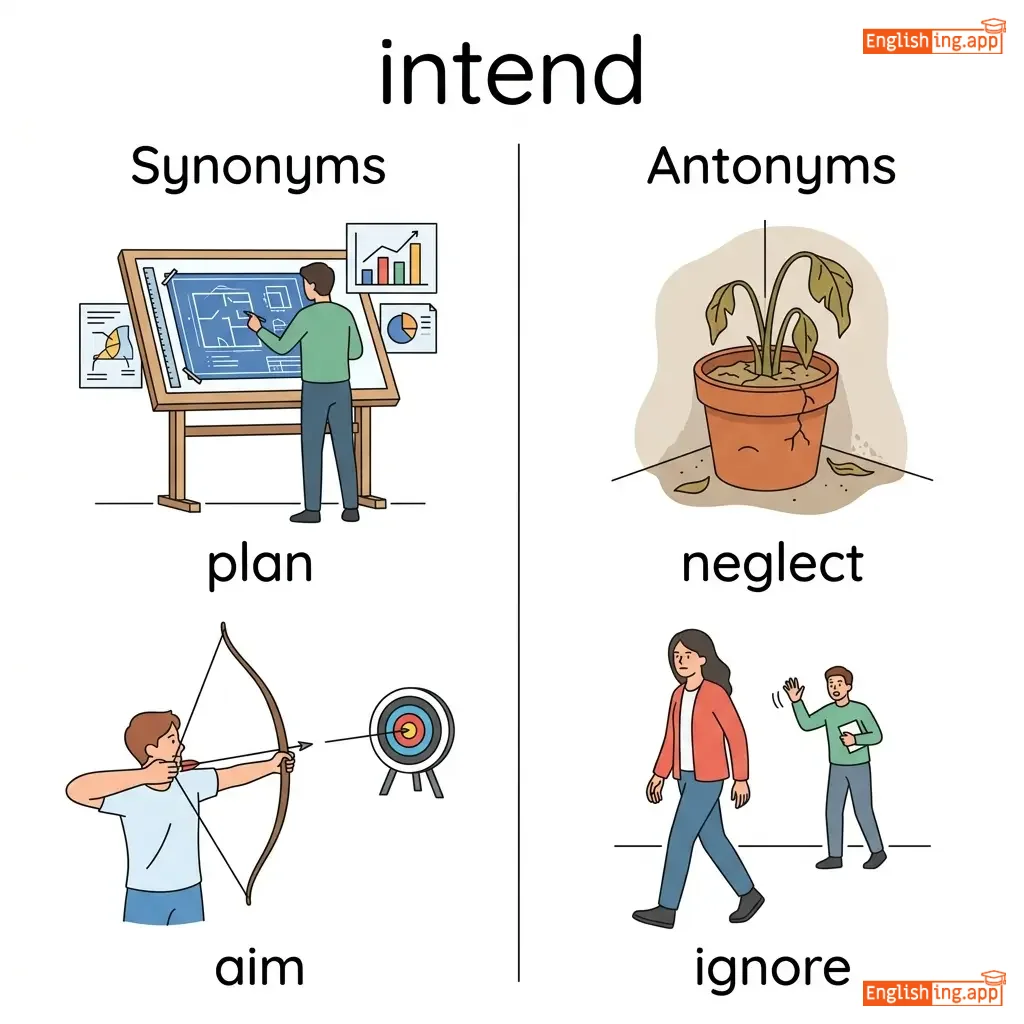
plan, aim, mean, propose, design
••••••
|
neglect, ignore, abandon
••••••
|
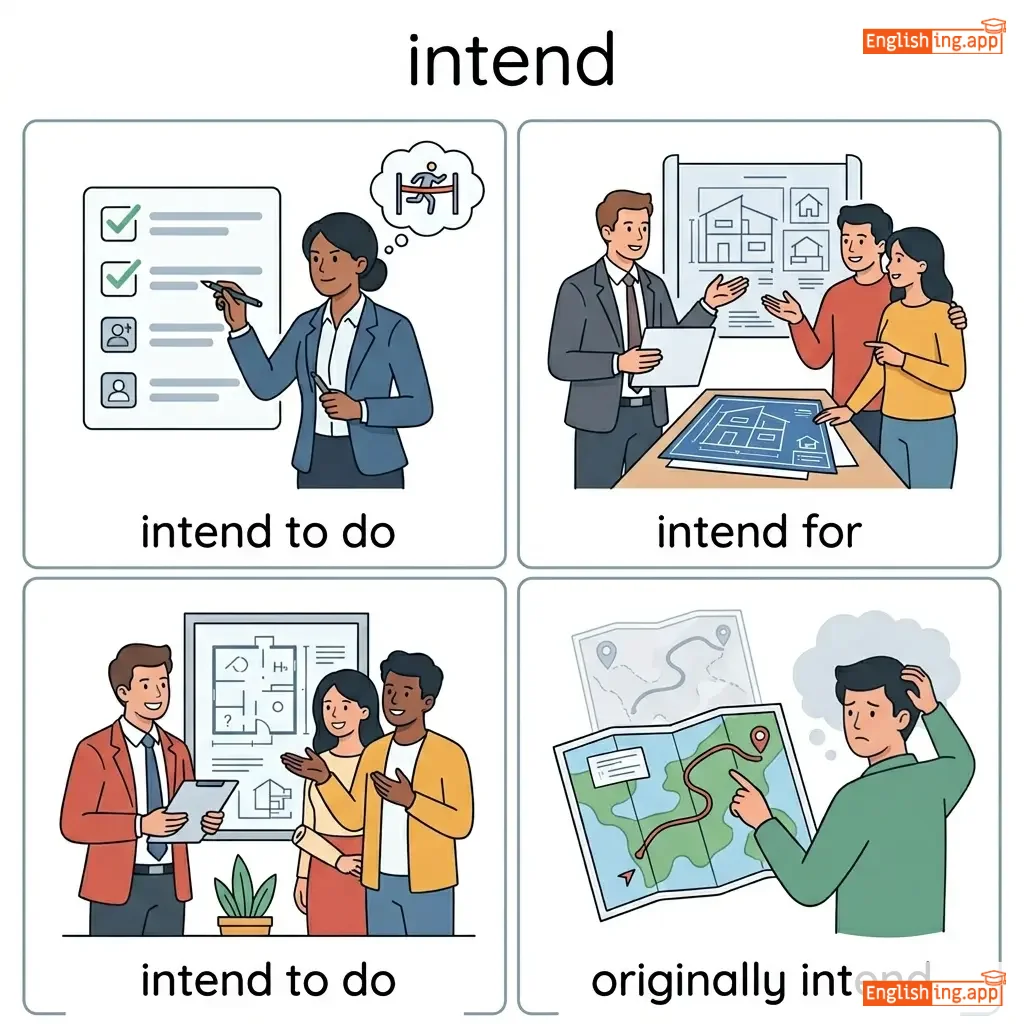
intend to do, intend for, originally intend, seriously intend
••••••
|
Intend 就是打算做事情,带着明确的目的。
••••••
|
|
#4744
🔥
|
/ɪnˈtɛmpərət/
adjective
(因泰姆佩雷特)
••••••
|
- •••••• |
失控的
shikong de
••••••
|
- •••••• | - •••••• | - •••••• | - •••••• |
Lacking self-control; immoderate, especially in indulgence.
••••••
|
The politician's intemperate remarks caused controversy. |
政治家的失控言论引发了争议。
Zhengzhijia de shikong yanlun yinfa le zhengyi.
••••••
|
- •••••• | - •••••• | - •••••• |
immoderate, excessive, uncontrolled, reckless
••••••
|
moderate, restrained, controlled
••••••
|
intemperate behavior, intemperate remarks, intemperate anger, intemperate climate
••••••
|
Intemperate 就是 'in' + 'temperate'(没有自控)— 失控的。
••••••
|
|
#4745
🍷
|
/ɪnˈtɛmpərəns/
noun
(因坦佩朗斯)
••••••
|
- •••••• |
放纵
fàngzòng
••••••
|
- •••••• | - •••••• | - •••••• | - •••••• |
Lack of moderation or self-control, especially with drinking or eating.
••••••
|
His intemperance in drinking ruined his health. |
他的饮酒放纵毁了他的健康。
tā de yǐnjiǔ fàngzòng huǐle tā de jiànkāng.
••••••
|
- •••••• | - •••••• | - •••••• |
excess, overindulgence, self-indulgence, gluttony, alcoholism
••••••
|
moderation, restraint, temperance
••••••
|
intemperance in drinking, intemperance in speech, moral intemperance, political intemperance
••••••
|
Intemperance意味着放纵—'in'表示没有 + 'temperance'表示节制。
••••••
|
|
#4746
🗣️
|
/ɪnˈtɛlɪdʒəbl/
adjective
••••••
|
- •••••• | - •••••• | - •••••• | - •••••• | - •••••• | - •••••• |
Able to be understood; clear enough to be comprehended.
••••••
|
Her speech was barely intelligible over the noise. |
- •••••• |
make oneself intelligible |
to communicate clearly so that others can understand
••••••
|
- •••••• |
comprehensible, understandable, clear, lucid, articulate
••••••
|
incomprehensible, unclear, confusing
••••••
|
intelligible speech, intelligible language, easily intelligible, scarcely intelligible
••••••
|
No •••••• |
|
#4747
🎓
|
/ɪnˌtɛl.ɪˈdʒɛntsi.ə/
noun
(精英)
••••••
|
- •••••• |
知识分子阶层
zhīshi fènzǐ jiēcéng
••••••
|
- •••••• | - •••••• | - •••••• | - •••••• |
The group of people engaged in intellectual and cultural pursuits in a society.
••••••
|
The intelligentsia played a key role in shaping public opinion. |
知识分子阶层在塑造公众舆论方面发挥了重要作用。
Zhīshi fènzǐ jiēcéng zài sùzào gōngzhòng yúlùn fāhuīle zhòngyào zuòyòng.
••••••
|
- •••••• | - •••••• | - •••••• |
elite, thinkers, academics, scholars, literati
••••••
|
masses, commoners
••••••
|
Russian intelligentsia, political intelligentsia, cultural intelligentsia, urban intelligentsia
••••••
|
精英是那些引导公众舆论的人,知识分子阶层塑造了社会的思想。
••••••
|
|
#4748
🤖
|
/ɪnˈtɛl.ɪ.dʒəns/
noun
(智能)
••••••
|
|
智能
zhì néng
••••••
|
- •••••• | - •••••• | - •••••• | - •••••• |
The ability to acquire and apply knowledge and skills.
••••••
|
Artificial intelligence is transforming industries worldwide. |
人工智能正在全球范围内改变行业。
rén gōng zhì néng zhèng zài quán qiú fàn wéi nèi gǎi biàn háng yè.
••••••
|
emotional intelligence |
the ability to understand and manage one's own emotions and those of others
••••••
|
情感智能
qíng gǎn zhì néng
••••••
|
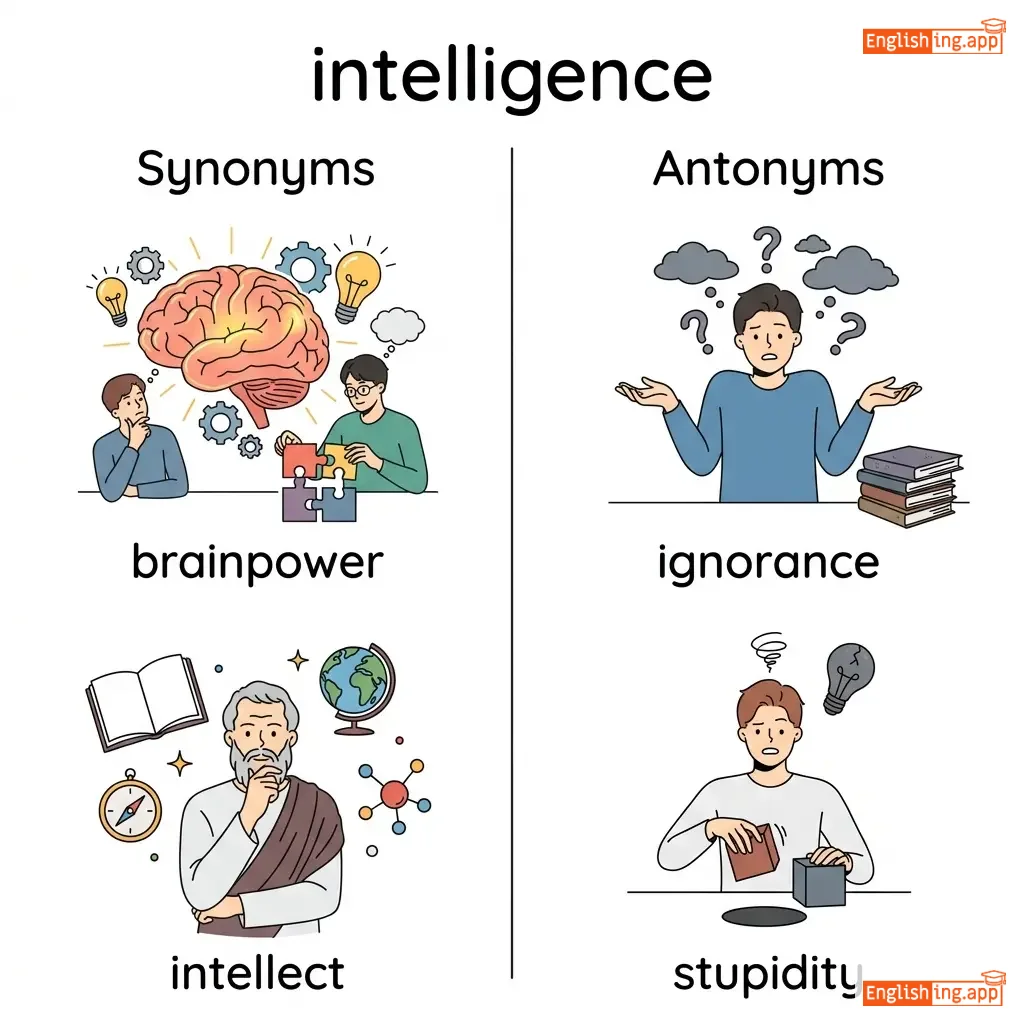
brainpower, intellect, reasoning, understanding
••••••
|
ignorance, stupidity
••••••
|
artificial intelligence, intelligence agency, military intelligence, human intelligence
••••••
|
AI = 人工智能,意味着机器中的智能!
••••••
|
|
#4749
📚
|
/ˌɪn.təlˈɛk.tʃu.əl/
adjective, noun
(智力的)
••••••
|
- •••••• |
智力的
zhìlì de
••••••
|
- •••••• | - •••••• | - •••••• | - •••••• |
Relating to the intellect; a person who engages in critical thinking and study.
••••••
|
She enjoys intellectual discussions about philosophy. |
她喜欢关于哲学的智力讨论。
Tā xǐhuān guānyú zhéxué de zhìlì tǎolùn.
••••••
|
intellectual curiosity |
a strong desire to learn and understand new things
••••••
|
智力好奇心
zhìlì hàoqíxīn
••••••
|
academic, scholarly, thinker, brainy
••••••
|
ignorant, uneducated
••••••
|
intellectual debate, intellectual growth, intellectual pursuit, intellectual class
••••••
|
智力的 = 智能 + 实际,意味着将智力付诸实践。
••••••
|
|
#4750
🧠
|
/ˈɪn.tə.lekt/
noun
(智力)
••••••
|
- •••••• |
智力
zhìlì
••••••
|
- •••••• | - •••••• | - •••••• | - •••••• |
The ability to think, reason, and understand objectively.
••••••
|
Her intellect is admired by all her colleagues. |
她的智力受到所有同事的赞赏。
Tā de zhìlì shòudào suǒyǒu tóngshì de zànshǎng.
••••••
|
- •••••• | - •••••• | - •••••• |
mind, intelligence, brainpower, reasoning
••••••
|
ignorance, stupidity
••••••
|
sharp intellect, powerful intellect, intellect and emotion, intellect of
••••••
|
Intel 计算机 = 高智力
••••••
|
|
#4751
🐍
|
/ɪnˈtɛɡ.jʊ.mənt/
noun
(英特古门特)
••••••
|
- •••••• |
外部覆盖物
waibu fufeiwu
••••••
|
- •••••• | - •••••• | - •••••• | - •••••• |
A natural outer covering, such as skin, shell, or rind.
••••••
|
The snake sheds its integument as it grows. |
蛇在生长过程中脱掉外部覆盖物。
She zai shengchang guocheng zhong tuodiao waibu fufeiceng.
••••••
|
- •••••• | - •••••• | - •••••• |
skin, covering, shell, hide, rind
••••••
|
core, interior
••••••
|
outer integument, animal integument, plant integument, protective integument
••••••
|
蛇的外部覆盖物就是它的 integument,像皮肤一样。
••••••
|
|
#4752
🕊️
|
/ɪnˈtɛɡrɪti/
noun
(ɪnˈtɛɡrɪti)
••••••
|
|
诚信
chéngxìn
••••••
|
- •••••• | - •••••• | - •••••• | - •••••• |
The quality of being honest and having strong moral principles.
••••••
|
She is admired for her honesty and integrity. |
她因诚实和正直而受到钦佩。
Tā yīn chéngshí hé zhèngzhí ér shòudào qīnpèi.
••••••
|
professional integrity |
Adherence to ethical standards in professional life
••••••
|
职业诚信
zhíyè chéngxìn
••••••
|
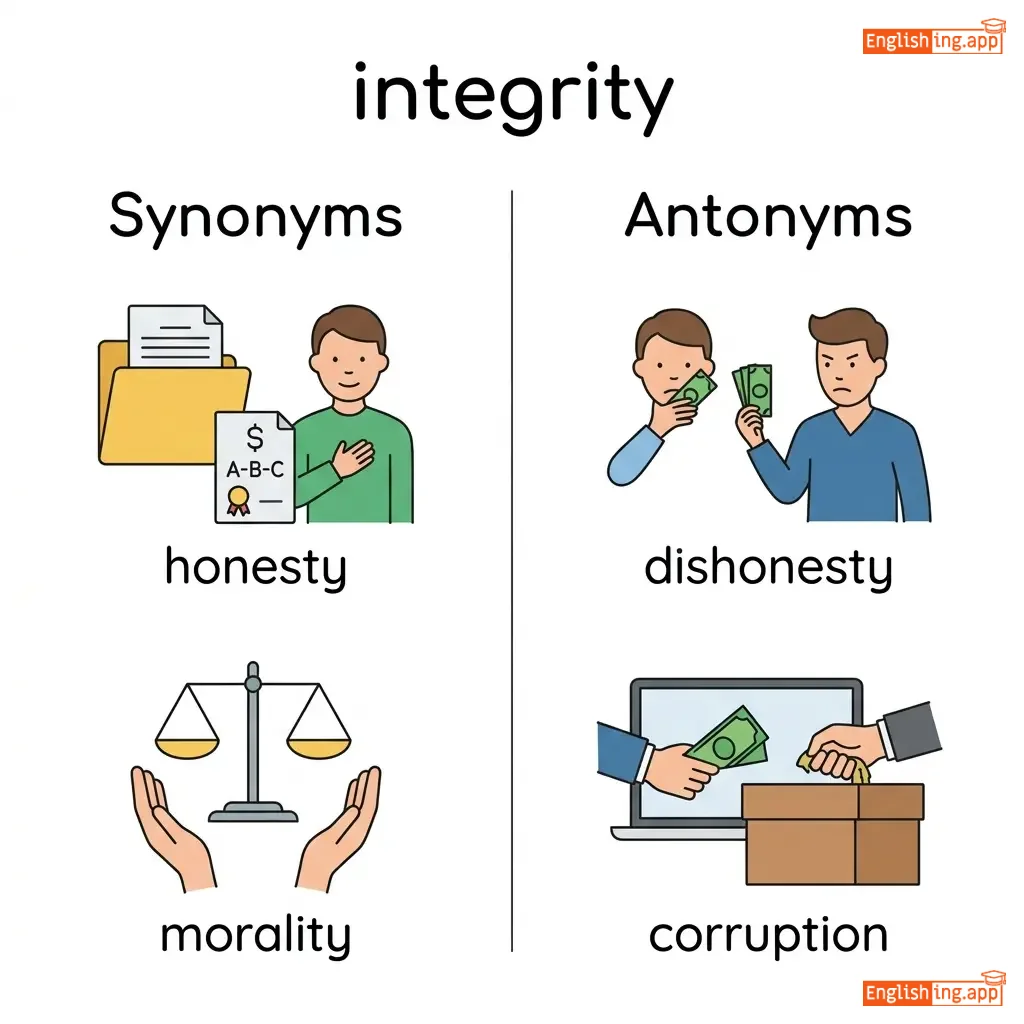
honesty, morality, righteousness, uprightness, virtue
••••••
|
dishonesty, corruption, deceit
••••••
|
personal integrity, professional integrity, maintain integrity, integrity of data
••••••
|
Integrity = in + great → great里面有诚信
••••••
|
|
#4753
🔗
|
/ˈɪntɪɡreɪt/
verb
(ɪntɪɡreɪt)
••••••
|
- •••••• |
整合
zhěnghé
••••••
|
integrated
ɪntɪɡreɪtɪd
••••••
|
integrated
ɪntɪɡreɪtɪd
••••••
|
integrates
ɪntɪɡreɪts
••••••
|
integrating
ɪntɪɡreɪtɪŋ
••••••
|
To combine or bring together into a unified whole.
••••••
|
The new system integrates data from multiple sources.
新系统整合来自多个来源的数据。
••••••
|
新系统整合来自多个来源的数据。
Xīn xìtǒng zhěnghé láizì duō gè láiyuán de shùjù.
••••••
|
integrate into society
融入社会
••••••
|
To become part of a community or culture
••••••
|
融入社会
róngrù shèhuì
••••••
|
combine, merge, unify, assimilate, incorporate
••••••
|
separate, divide, segregate
••••••
|
integrate technology, integrate system, integrate into, integrate fully
••••••
|
整合 = into + great → 将所有事物整合起来成为伟大
••••••
|
|
#4754
🧩
|
/ˈɪntɪɡrəl/ or /ɪnˈtɛɡrəl/
adjective
(积分)
••••••
|
|
不可分割
bù kě fēn gē
••••••
|
- •••••• | - •••••• | - •••••• | - •••••• |
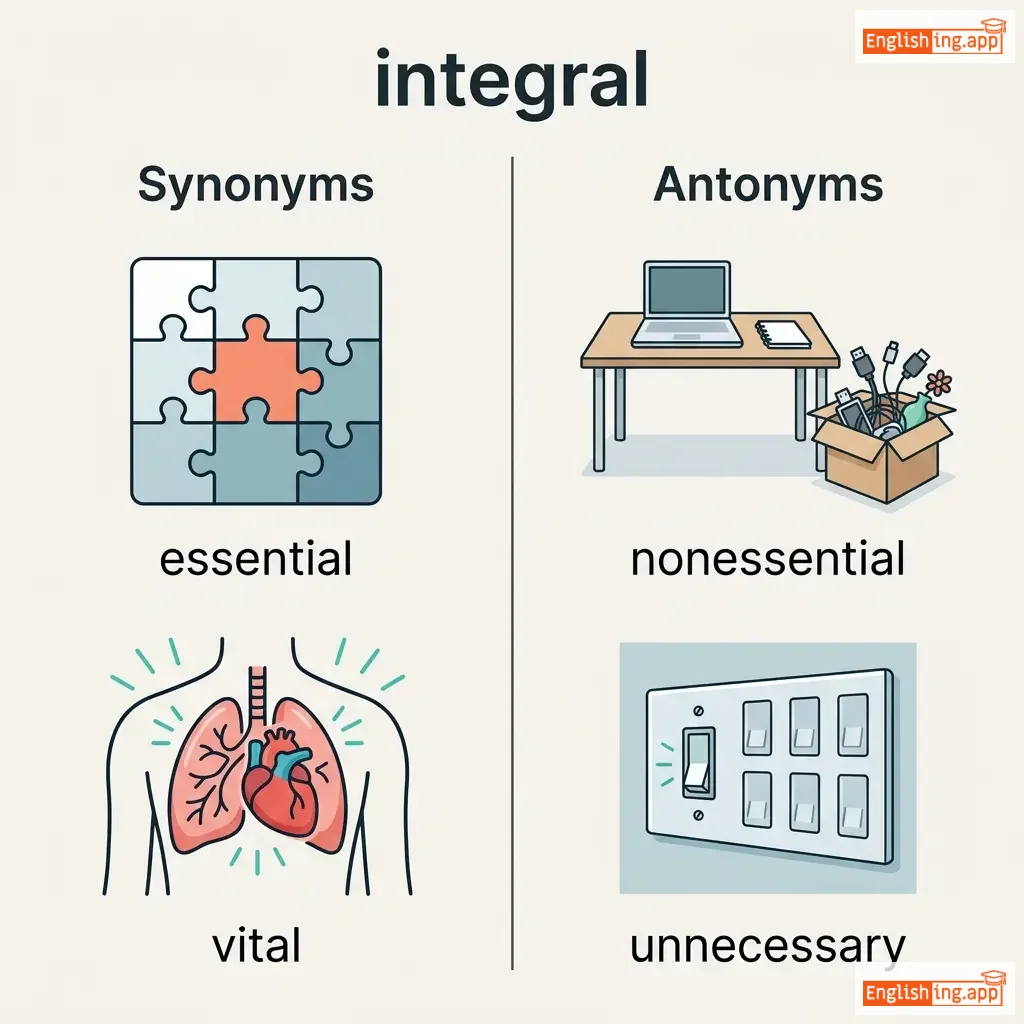
Necessary and important as a part of a whole.
••••••
|
Honesty is an integral part of good leadership.
诚实是良好领导力的一个重要组成部分。
••••••
|
诚实是良好领导力的一个重要组成部分。
Chéngshí shì liánghǎo lǐngdǎolì de yīgè zhòngyào zǔchéng bùfen.
••••••
|
- •••••• | - •••••• | - •••••• |
essential, vital, fundamental, crucial, indispensable
••••••
|
nonessential, unnecessary, extraneous
••••••
|
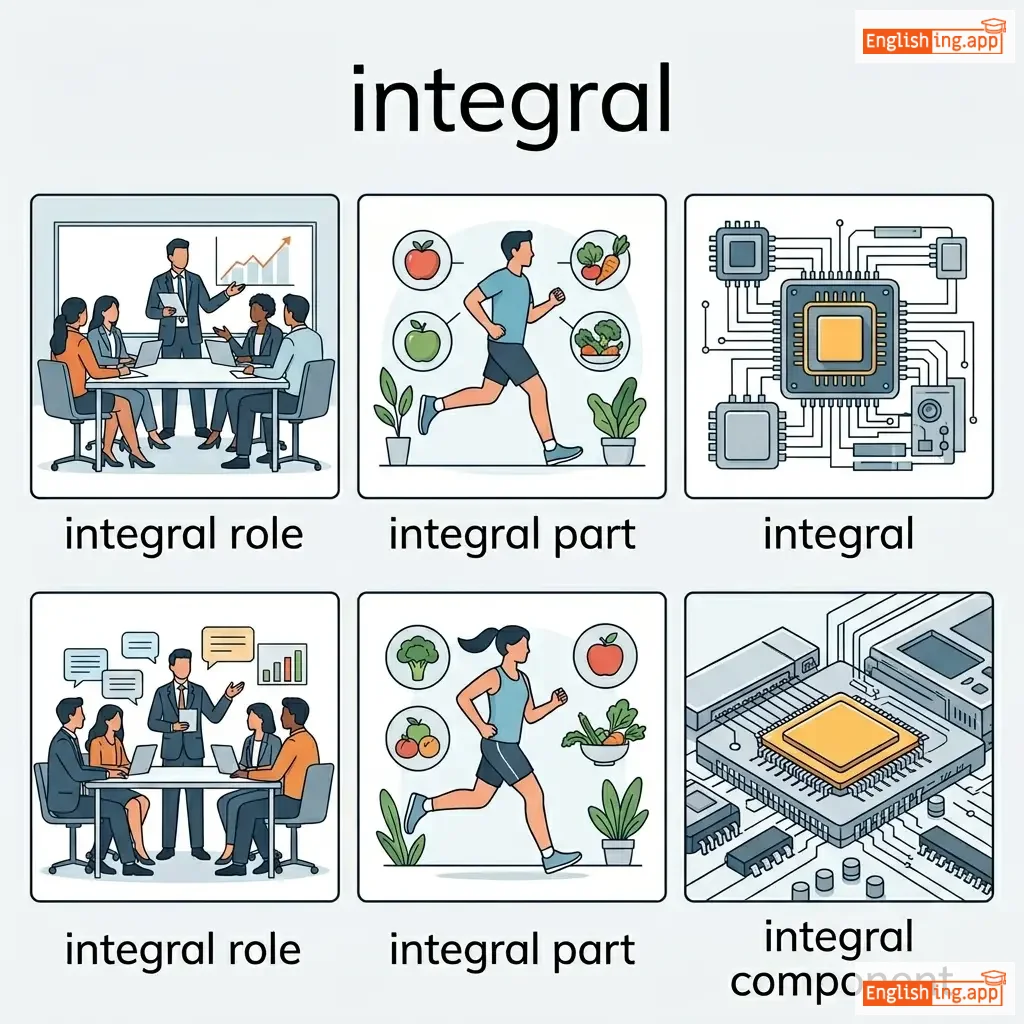
integral role, integral part, integral component, integral element
••••••
|
Integral → 不可分割的一部分
••••••
|
|
#4755
✨
|
/ɪnˈtændʒəbl/
adjective
(无形)
••••••
|
|
无形的
wúxíng de
••••••
|
- •••••• | - •••••• | - •••••• | - •••••• |
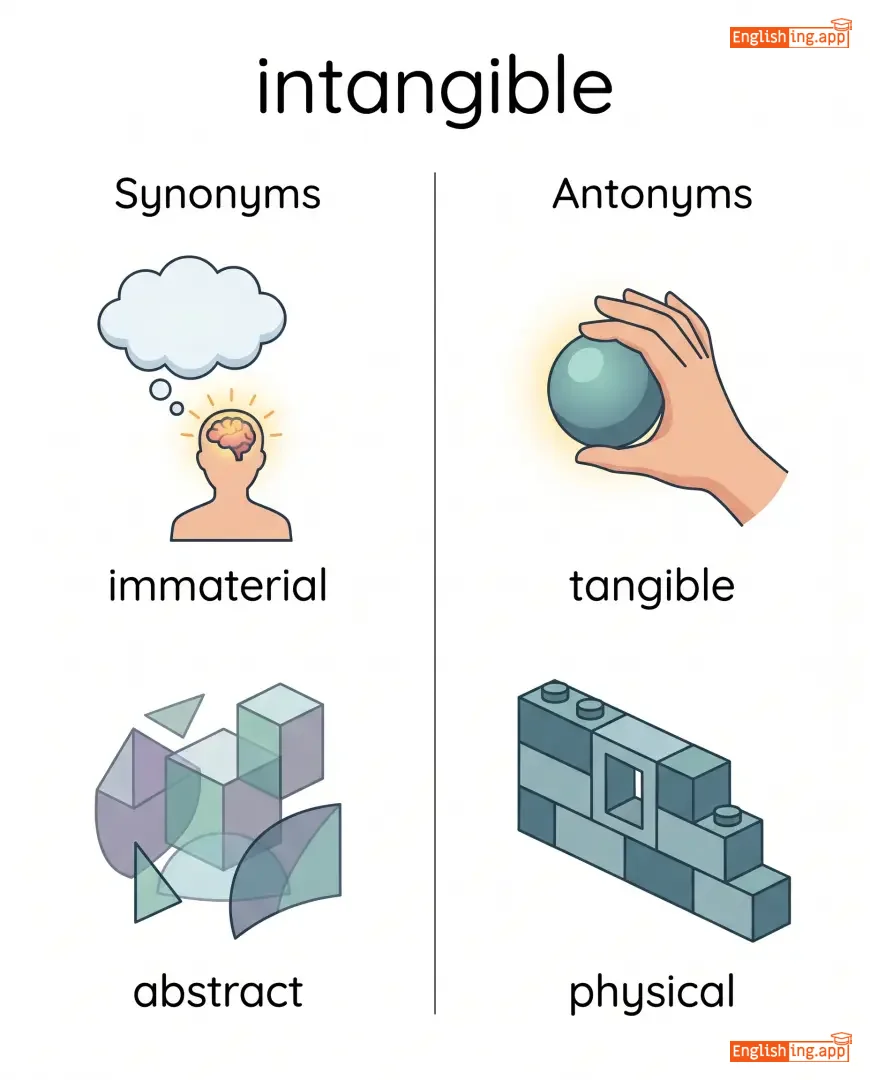
Unable to be touched or grasped; not having a physical presence.
••••••
|
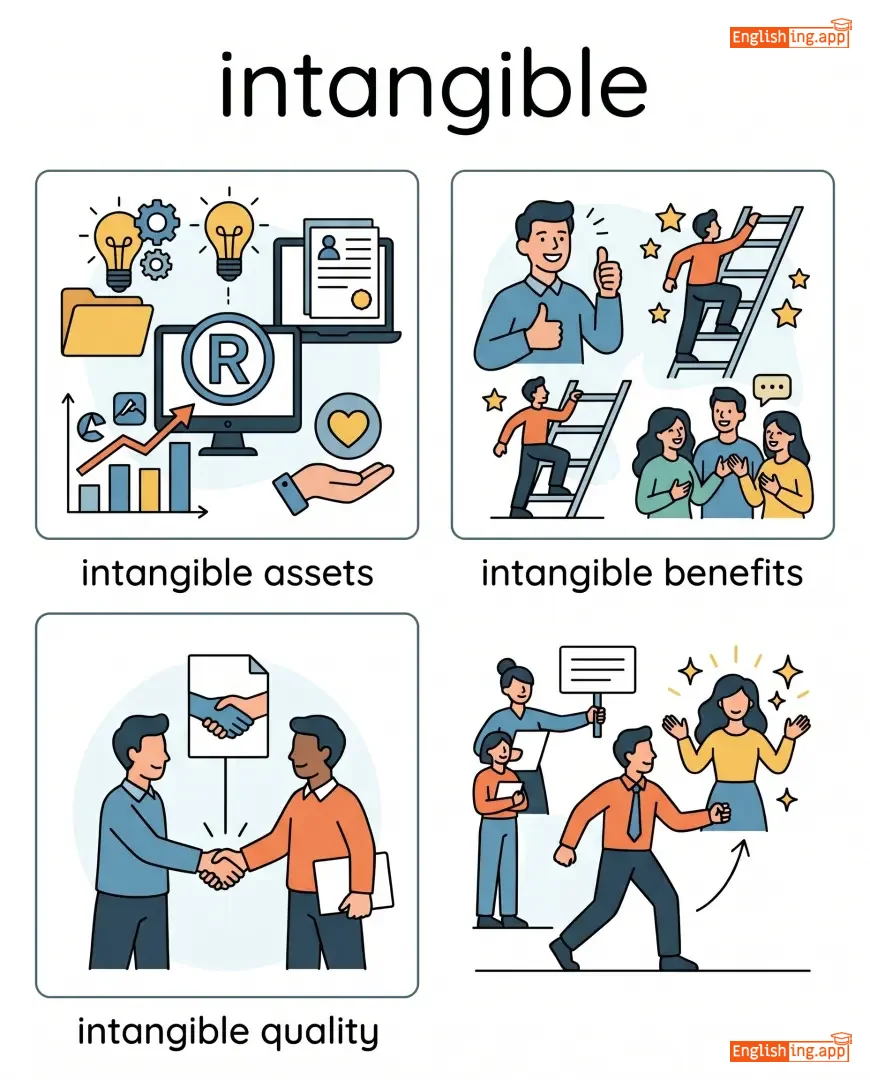
Trust is an intangible quality in relationships. |
信任是关系中一种无形的品质。
Xìnrèn shì guānxì zhōng yī zhǒng wúxíng de pǐnzhí.
••••••
|
- •••••• | - •••••• | - •••••• |
immaterial, abstract, invisible, untouchable
••••••
|
tangible, physical, concrete
••••••
|
intangible assets, intangible benefits, intangible quality, intangible factors
••••••
|
Intangible 意味着无法触摸,就像信任一样
••••••
|
|
#4756
🎻
|
/ˌɪn.strəˈmɛn.təl.ɪst/
noun
(yīnsītrùmén táolìsī)
••••••
|
- •••••• |
乐器演奏者
yuèqì yǎnzòu zhě
••••••
|
- •••••• | - •••••• | - •••••• | - •••••• |
A person who plays a musical instrument.
••••••
|
The instrumentalist played a beautiful solo on the violin. |
乐器演奏者在小提琴上演奏了一首美丽的独奏曲。
Yuèqì yǎnzòu zhě zài xiǎotíqín shàng yǎnzòu le yī shǒu měilì de dúzòuqǔ.
••••••
|
- •••••• | - •••••• | - •••••• |
musician, performer, player, virtuoso, artist
••••••
|
singer, vocalist
••••••
|
professional instrumentalist, classical instrumentalist, jazz instrumentalist, skilled instrumentalist
••••••
|
乐器演奏者 = 乐器 + 演奏者,演奏乐器的人就是乐器演奏者。
••••••
|
|
#4757
🏜️
|
/ˌɪnsərˈmaʊntəbl/
adjective
(insurmáuntábù)
••••••
|
- •••••• |
不可逾越
bù kě yú yuè
••••••
|
- •••••• | - •••••• | - •••••• | - •••••• |
Too great to be overcome.
••••••
|
The explorers faced insurmountable odds in the desert. |
探险者在沙漠中面对着无法逾越的困难。
Tànxiǎn zhě zài shāmò zhōng miànduì zhe wúfǎ yúyuè de kùnàn.
••••••
|
- •••••• | - •••••• | - •••••• |
unconquerable, unbeatable, impossible, overwhelming
••••••
|
surmountable, possible, achievable
••••••
|
insurmountable obstacles, insurmountable odds, insurmountable difficulties
••••••
|
In + Surmountable → Surmount 代表克服, Insurmountable 代表不可克服
••••••
|
|
#4758
🪖
|
/ɪnˈsɜːrdʒənt/
noun
(yīnsāo zhěn)
••••••
|
- •••••• |
起义者
qiyi zhe
••••••
|
- •••••• | - •••••• | - •••••• | - •••••• |
A person who rises in revolt against authority or government.
••••••
|
The army arrested several insurgents after the attack. |
军队在袭击后逮捕了几名起义者。
Jundui zai xiji hou daibu le ji ming qiyi zhe.
••••••
|
- •••••• | - •••••• | - •••••• |
rebel, revolutionary, dissenter, mutineer
••••••
|
loyalist, supporter, ally
••••••
|
insurgent group, insurgent forces, insurgent activity
••••••
|
起义者听起来像是反抗者,这正是insurgent的意思。
••••••
|
|
#4759
⚔️
|
/ɪnˈsɜːrdʒəns/
noun
(yīn sà zhèn sī)
••••••
|
- •••••• |
叛乱
pàn luàn
••••••
|
- •••••• | - •••••• | - •••••• | - •••••• |
An act of rebellion or uprising against authority.
••••••
|
The government struggled to contain the growing insurgence. |
政府难以控制日益增长的叛乱。
Zhèngfǔ nán yǐ kòngzhì rìyì zēngzhǎng de pàn luàn.
••••••
|
- •••••• | - •••••• | - •••••• |
uprising, revolt, rebellion, mutiny, insurrection
••••••
|
peace, obedience, submission
••••••
|
armed insurgence, political insurgence, local insurgence
••••••
|
Insurgence 在中文中对应叛乱,表示反抗。
••••••
|
|
#4760
😂
|
/ˌɪnsəˈprɛsəbl/
adjective
(ɪnsəˈprɛsɪbl)
••••••
|
- •••••• |
不可抑制的
bù kě yì zhì de
••••••
|
- •••••• | - •••••• | - •••••• | - •••••• |
That cannot be suppressed or restrained.
••••••
|
She had an insuppressible urge to laugh during the ceremony. |
她在仪式上有一种不可抑制的笑意。
Tā zài yíshì shàng yǒu yī zhǒng bù kě yì zhì de xiàoyì.
••••••
|
- •••••• | - •••••• | - •••••• |
irrepressible, uncontrollable, unrestrainable, unstoppable
••••••
|
suppressible, controllable, restrainable
••••••
|
insuppressible urge, insuppressible laughter, insuppressible spirit
••••••
|
In + Suppressible = 不可抑制的 → 不可抑制的意味着无法抑制
••••••
|
|
#4761
⛰️
|
/ɪnˈsuːpərəbl/
adjective
(yīnsùpàilè)
••••••
|
|
不可逾越
bukeyuyue
••••••
|
- •••••• | - •••••• | - •••••• | - •••••• |
Impossible to overcome or surpass.
••••••
|
The team faced insuperable challenges during the expedition. |
团队在探险过程中面临了不可逾越的挑战。
Tuandui zai tanxian guocheng zhong mianlin le bukeyuyue de tiaozhan.
••••••
|
- •••••• | - •••••• | - •••••• |
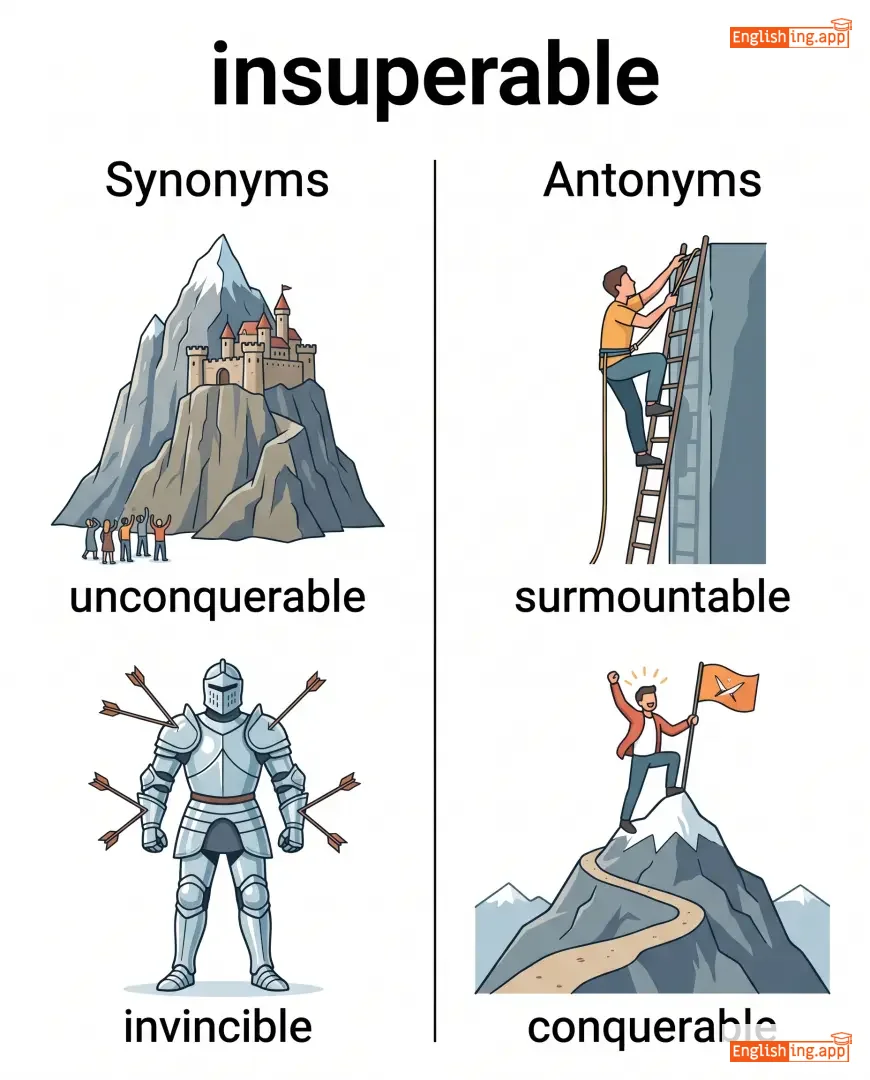
unconquerable, invincible, unbeatable, overwhelming, indomitable
••••••
|
surmountable, conquerable, manageable
••••••
|
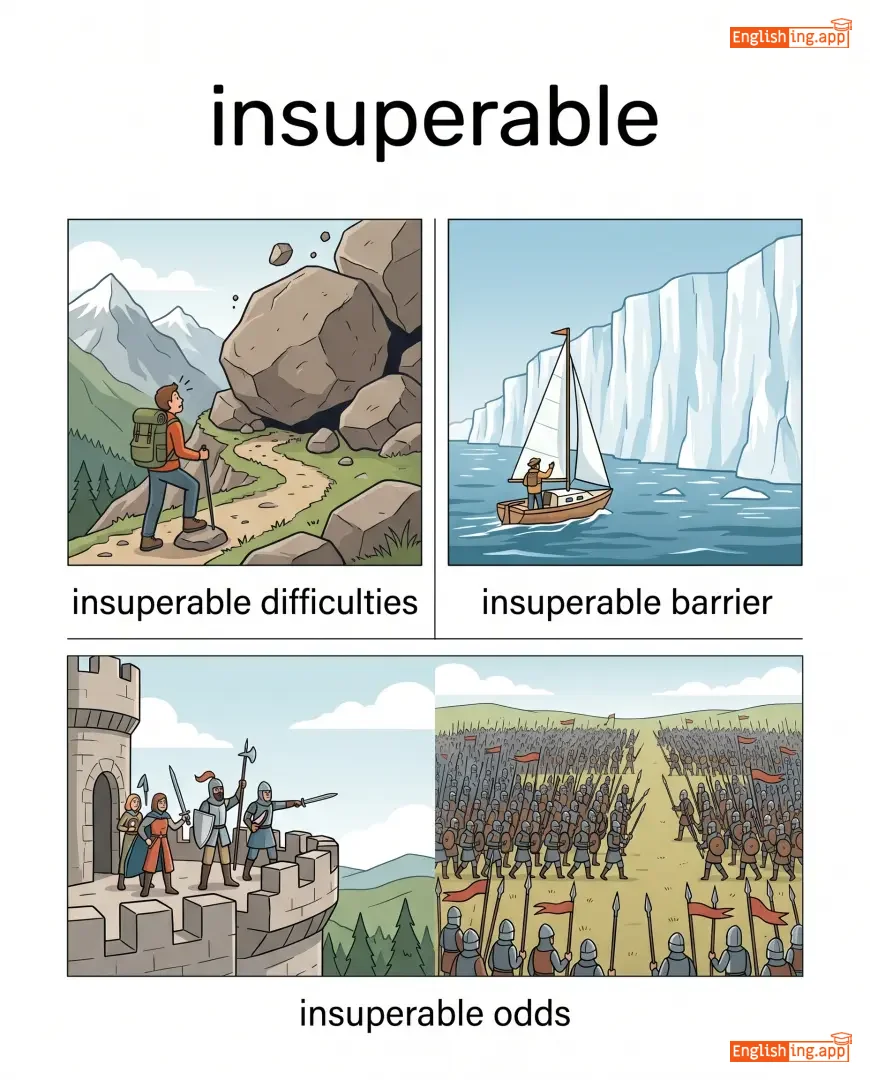
insuperable difficulties, insuperable barrier, insuperable odds
••••••
|
In SUPER able 就是不可逾越 - 不可逾越
••••••
|
|
#4762
🛡️
|
/ˈɪnsjuleɪt/
verb
••••••
|
- •••••• | - •••••• |
insulated
••••••
|
insulated
••••••
|
insulates
••••••
|
insulating
••••••
|
To protect something by covering it, especially to prevent heat, sound, or electricity from escaping or entering.
••••••
|
The house was insulated to reduce heating costs. |
- •••••• |
insulate from criticism |
to protect someone or something from negative feedback or judgment
••••••
|
- •••••• |
protect, shield, cover, isolate, guard
••••••
|
expose, uncover, reveal
••••••
|
insulate a house, insulate wires, insulate against heat, insulate from
••••••
|
No •••••• |
|
#4763
🌐
|
/ˌɪnsjəˈlærəti/
noun
(ɪnsʊˈlærɪti)
••••••
|
|
岛屿性
dǎoyǔ xìng
••••••
|
- •••••• | - •••••• | - •••••• | - •••••• |
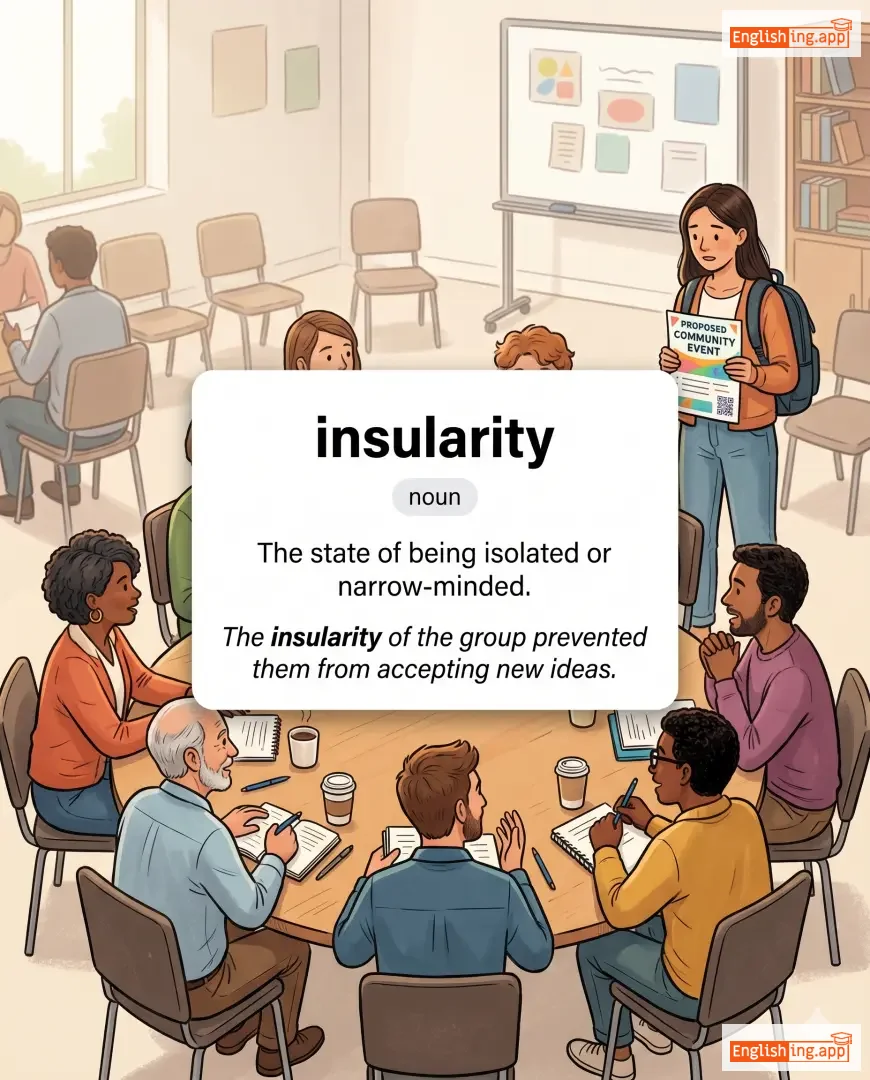
The state of being isolated or narrow-minded.
••••••
|
The insularity of the group prevented them from accepting new ideas.
该小组的岛屿性使他们无法接受新的想法。
••••••
|
该小组的岛屿性使他们无法接受新的想法。
Gāi xiǎozǔ de dǎoyǔ xìng shǐ tāmen wúfǎ jiēshòu xīn de xiǎngfǎ.
••••••
|
- •••••• | - •••••• | - •••••• |
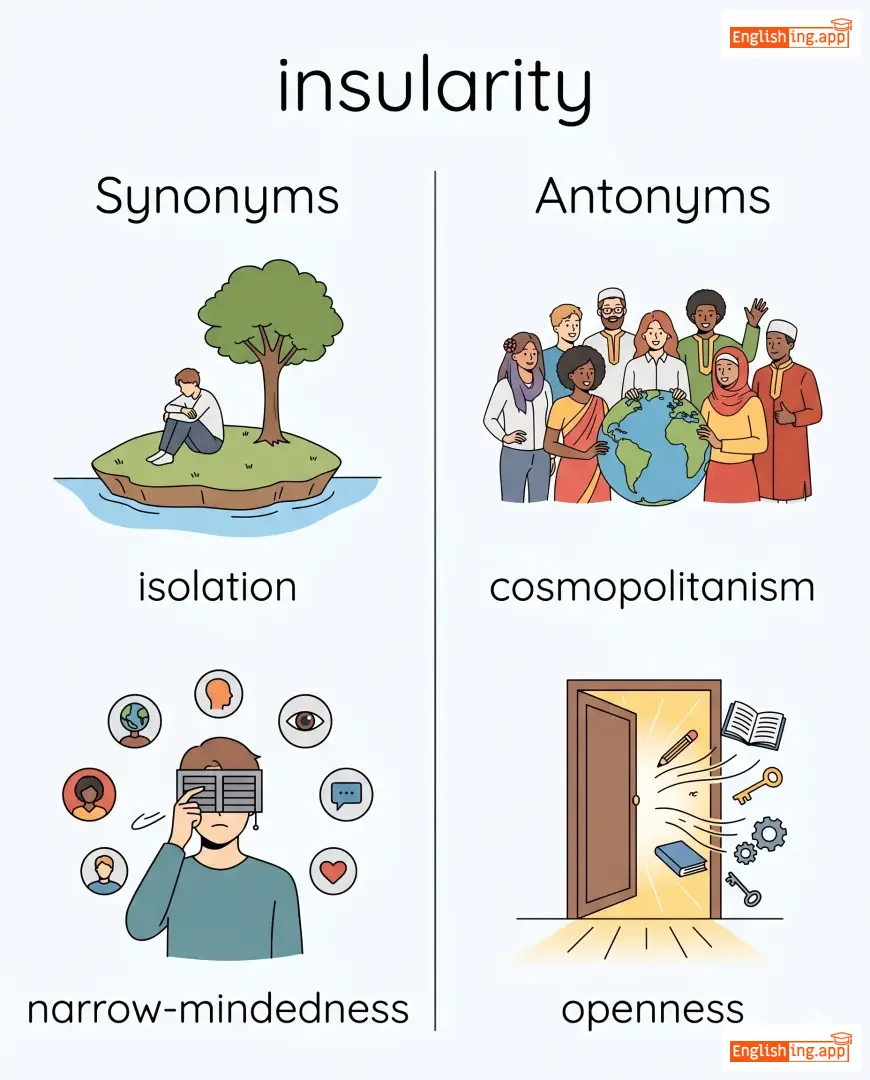
isolation, narrow-mindedness, provincialism, parochialism
••••••
|
cosmopolitanism, openness, tolerance
••••••
|
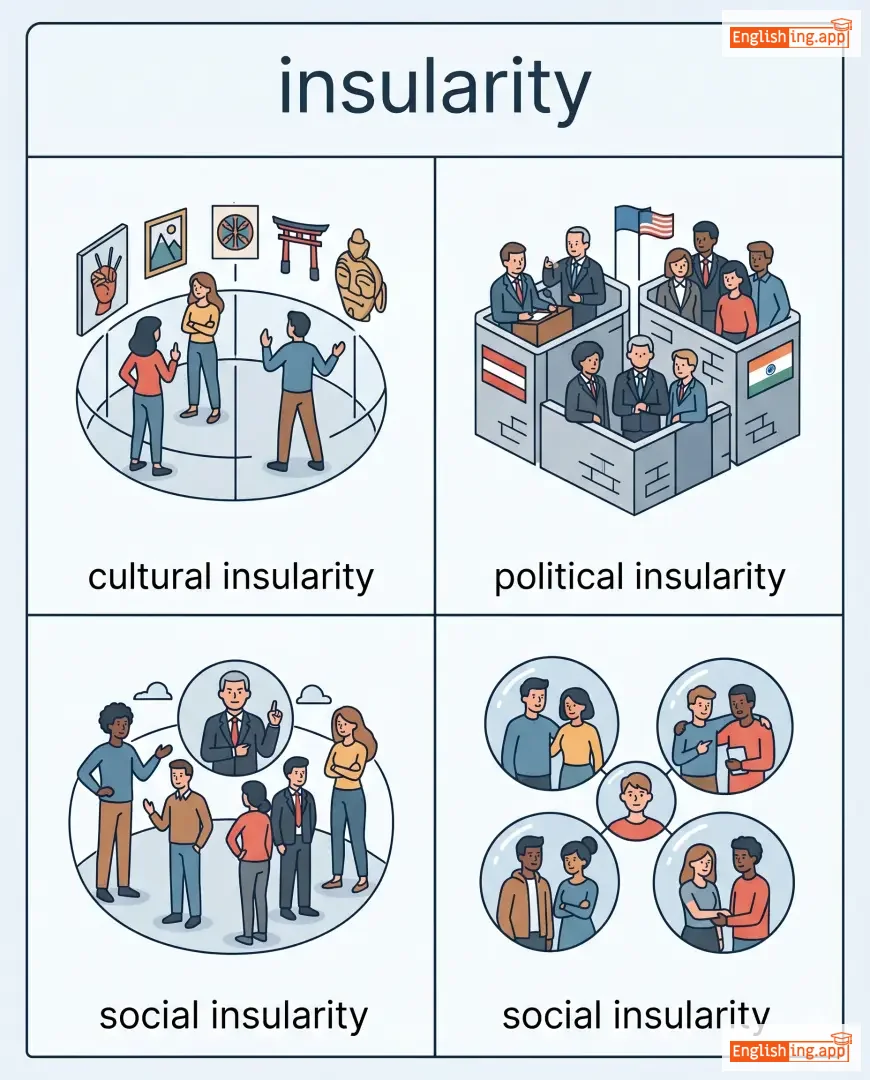
cultural insularity, political insularity, social insularity
••••••
|
岛屿性代表着孤立的思维和不接受新思想的态度。
••••••
|
|
#4764
🏝️
|
/ˈɪnsjələr/
adjective
(yīn sù lā)
••••••
|
- •••••• |
狭隘的,岛屿相关的
xia'ai de, daoyu xiangguan de
••••••
|
- •••••• | - •••••• | - •••••• | - •••••• |
Narrow-minded, isolated, or relating to an island.
••••••
|
The community was criticized for its insular attitudes toward outsiders.
该社区因其对外来者的封闭态度而受到批评。
••••••
|
该社区因其对外来者的封闭态度而受到批评。
Gai shequ yin qi dui wailaizhe de fengbi taidu er shoudao piping.
••••••
|
- •••••• | - •••••• | - •••••• |
narrow-minded, isolated, provincial, parochial
••••••
|
open-minded, cosmopolitan, tolerant
••••••
|
insular attitude, insular society, insular culture, insular thinking
••••••
|
Insular就像是一个岛屿,远离外界且心胸狭窄。
••••••
|
|
#4765
❌
|
/ˌɪnsəˈfɪʃənt/
adjective
(因斯菲逊特)
••••••
|
- •••••• |
不足的
buzude
••••••
|
- •••••• | - •••••• | - •••••• | - •••••• |
Not enough; inadequate.
••••••
|
His explanation was insufficient to clear the confusion. |
他的解释不足以清除混乱。
Tade jieshi buzude qingchu hunluan.
••••••
|
- •••••• | - •••••• | - •••••• |
inadequate, deficient, meager, scarce, poor
••••••
|
sufficient, adequate, plentiful
••••••
|
insufficient funds, insufficient evidence, insufficient resources
••••••
|
Insufficient 的意思是 'in' + 'sufficient' = 不足的。
••••••
|
|
#4766
⚠️
|
/ˌɪnsəˈfɪʃənsi/
noun
(不足)
••••••
|
- •••••• |
不足
buzu
••••••
|
- •••••• | - •••••• | - •••••• | - •••••• |
The state of not being enough or not being adequate.
••••••
|
The project failed due to the insufficiency of funds. |
由于资金不足,项目失败了。
youyu zijin buzhu, xiangmu shibai le.
••••••
|
- •••••• | - •••••• | - •••••• |
deficiency, inadequacy, shortage, lack, scarcity
••••••
|
abundance, sufficiency, adequacy
••••••
|
insufficiency of funds, cardiac insufficiency, renal insufficiency, insufficiency in resources
••••••
|
不足就像没有足够的资金。
••••••
|
|
#4767
🔥
|
/ɪnˈsʌf.ər.ə.bəl/
adjective
(insufferable)
••••••
|
- •••••• |
无法忍受
wufa renshou
••••••
|
- •••••• | - •••••• | - •••••• | - •••••• |
Too extreme to bear; intolerable.
••••••
|
The heat during the summer was insufferable.
夏天的炎热是无法忍受的。
••••••
|
夏天的炎热是无法忍受的。
Xiatian de yanshao shi wufa renshou de.
••••••
|
insufferable arrogance
无法忍受的傲慢
••••••
|
Extreme and intolerable pride or conceit.
••••••
|
无法忍受的傲慢
wufa renshou de aoman
••••••
|
unbearable, intolerable, dreadful, excruciating, impossible
••••••
|
bearable, tolerable, endurable
••••••
|
insufferable heat, insufferable pain, insufferable arrogance
••••••
|
In + Suffer = 不可能忍受的痛苦 → 无法忍受。
••••••
|
|
#4768
🌫️
|
/ˌɪn.səbˈstæn.ʃəl/
adjective
(因萨布斯坦肖)
••••••
|
- •••••• |
不实的
bù shí de
••••••
|
- •••••• | - •••••• | - •••••• | - •••••• |
Lacking strength, substance, or solidity.
••••••
|
The evidence provided was insubstantial and unconvincing. |
提供的证据是不实的且令人信服。
Tígōng de zhèngjù shì bù shí de qiě lìng rén xìnfú.
••••••
|
- •••••• | - •••••• | - •••••• |
weak, flimsy, fragile, inadequate, unsubstantial
••••••
|
strong, solid, substantial
••••••
|
insubstantial evidence, insubstantial argument, insubstantial claim
••••••
|
Substantial 意味着实质性的,相反,insubstantial 意味着不实的。
••••••
|
|
#4769
⚠️
|
/ˌɪn.səˌbɔːr.dɪˈneɪ.ʃən/
noun
(insubordination)
••••••
|
- •••••• |
不服从
bù fú cóng
••••••
|
- •••••• | - •••••• | - •••••• | - •••••• |
Defiance of authority; refusal to obey orders.
••••••
|
The soldier was punished for insubordination during the mission.
士兵因在任务中不服从命令而受到惩罚。
••••••
|
士兵因在任务中不服从命令而受到惩罚。
Shìbīng yīn zài rènwù zhōng bù fúcóng mìnglìng ér shòudào chéngfá.
••••••
|
- •••••• | - •••••• | - •••••• |
disobedience, defiance, rebellion, mutiny, noncompliance
••••••
|
obedience, compliance, submission
••••••
|
act of insubordination, charge of insubordination, punished for insubordination
••••••
|
Subordination意味着服从,insubordination意味着不服从。
••••••
|
|
#4770
🚫
|
/ˌɪn.səˈbɔːr.dɪ.nət/
adjective
(insubórdínèit)
••••••
|
- •••••• |
不服从
bù fúcóng
••••••
|
- •••••• | - •••••• | - •••••• | - •••••• |
Defiant of authority; disobedient to orders.
••••••
|
The insubordinate employee refused to follow the manager's instructions. |
不服从的员工拒绝遵循经理的指示。
Bù fúcóng de yuángōng jùjué zūnxún jīnglǐ de zhǐshì.
••••••
|
insubordinate behavior |
Defiant or disobedient actions against authority.
••••••
|
不服从行为
bù fúcóng xíngwéi
••••••
|
disobedient, defiant, rebellious, unruly, noncompliant
••••••
|
obedient, compliant, submissive
••••••
|
insubordinate attitude, insubordinate conduct, insubordinate employee
••••••
|
Insubordinate = In + Subordinate = 不顺从,反抗。
••••••
|
Vocabulary Quiz
Test your vocabulary by matching words with their translations or meanings.
Login to take the quiz
Comments (0)
Share your thoughts and join the discussion.
Join the discussion by logging in
Login to CommentNo comments yet
Be the first to share your thoughts!