


Swipe left or right, or use the buttons. Tap image to zoom.
例句翻译
单词
Lesson 266Lesson 266 - 遮罩切换
|
表情符号
|
单词 | Images | 翻译 | 过去时 | 过去分词 | 第三人称单数 | 动名词 | 含义 | 例句 | 例句翻译 | 示例表达 | 示例表达含义 | 示例表达翻译 | 同义词 | 反义词 | 搭配词 | 助记符 |
|---|---|---|---|---|---|---|---|---|---|---|---|---|---|---|---|---|---|
|
#7950
📜
|
/ˈsɛntəns/
noun, verb
(sèntènsī)
••••••
|
- •••••• |
句子; 刑期
jùzi; xíngqī
••••••
|
sentenced
sèntènsīd
••••••
|
sentenced
sèntènsīd
••••••
|
sentences
sèntènsī
••••••
|
sentencing
sèntènsīng
••••••
|
A set of words that expresses a complete thought; or a punishment given by a court of law.
••••••
|
The judge gave him a five-year prison sentence.
法官给了他五年监禁的刑期。
••••••
|
法官给了他五年监禁的刑期。
Fǎguān gěi le tā wǔ nián jiānjìn de xíngqī.
••••••
|
serve a sentence
服刑
••••••
|
to spend time in prison as ordered by a court
••••••
|
服刑
fúxíng
••••••
|
judgment, ruling, phrase, clause, punishment
••••••
|
acquittal, freedom
••••••
|
long sentence, short sentence, prison sentence, death sentence
••••••
|
Sentence 既可以表示句子,也可以表示刑期,两个都有明确的结束!
••••••
|
|
#7951
🎬
|
/ˈsiːkwəl/
noun
(sī kè wēi ěr)
••••••
|
- •••••• |
续集
xu ji
••••••
|
- •••••• | - •••••• | - •••••• | - •••••• |
A published, broadcast, or recorded work that continues the story or develops the theme of an earlier one.
••••••
|
The movie's sequel was even more successful than the original. |
电影的续集比原作更成功。
Dianying de xuji bi yuanzuoge geng chenggong.
••••••
|
- •••••• | - •••••• | - •••••• |
continuation, follow-up, next installment, spin-off
••••••
|
prequel, origin
••••••
|
movie sequel, book sequel, successful sequel, sequel to
••••••
|
续集:接续的部分,如电影或书的下一篇章。
••••••
|
|
#7952
🙇
|
/sɪˈkweɪʃəs/
adjective
(sɪˈkweɪʃəs)
••••••
|
- •••••• |
盲目追随
mángmù zhuīsuí
••••••
|
- •••••• | - •••••• | - •••••• | - •••••• |
Lacking independence of thought; blindly following.
••••••
|
The sequacious students never questioned their teacher's opinions. |
盲目追随的学生从未质疑过他们老师的意见。
Mángmù zhuīsuí de xuéshēng cóng wèi zhìyí guò tāmen lǎoshī de yìjiàn.
••••••
|
- •••••• | - •••••• | - •••••• |
submissive, obedient, compliant, dependent, servile
••••••
|
independent, critical, rebellious
••••••
|
sequacious mind, sequacious attitude, sequacious behavior, sequacious follower
••••••
|
Sequacious 让人想起 '顺序', 意味着无条件的跟随, 就像一条不断重复的顺序。
••••••
|
|
#7953
🌑
|
/səˈpʌlkrəl/
adjective
(塞普尔克尔)
••••••
|
- •••••• |
与墓葬相关,阴森的
yǔ mùzàng xiāngguān, yīn sēn de
••••••
|
- •••••• | - •••••• | - •••••• | - •••••• |
Relating to a tomb or burial; gloomy, dismal.
••••••
|
The abandoned house had a sepulchral silence about it.
废弃的房子弥漫着塞普尔克尔的寂静。
••••••
|
废弃的房子弥漫着墓葬般的寂静。
Fèiqì de fángzi mímànzhe mùzàng bān de jìjìng.
••••••
|
- •••••• | - •••••• | - •••••• |
gloomy, funereal, somber, dismal, mournful
••••••
|
cheerful, lively, bright
••••••
|
sepulchral silence, sepulchral voice, sepulchral atmosphere, sepulchral tone
••••••
|
Sepulchral来自sepulcher,是一种阴沉的、如墓葬般的氛围。
••••••
|
|
#7954
⚰️
|
/ˈsɛpəlkər/
noun
(sepulker)
••••••
|
- •••••• |
墓室
mù shì
••••••
|
- •••••• | - •••••• | - •••••• | - •••••• |
A small room or monument, cut in rock or built of stone, in which a dead person is buried.
••••••
|
The ancient king was laid to rest in a grand sepulcher. |
古代国王被安葬在一个宏伟的墓室中。
Gǔdài guówáng bèi ānzàng zài yīgè hóngwěi de mù shì zhōng.
••••••
|
- •••••• | - •••••• | - •••••• |
tomb, grave, mausoleum, crypt, burial chamber
••••••
|
home, dwelling, shelter
••••••
|
grand sepulcher, royal sepulcher, stone sepulcher, ancient sepulcher
••••••
|
Sepulcher可以与‘墓’联系,表示埋葬的地方。
••••••
|
|
#7955
🦠
|
/ˈsɛptɪk/
adjective
(脓毒)
••••••
|
- •••••• |
感染的
gǎnrǎn de
••••••
|
- •••••• | - •••••• | - •••••• | - •••••• |
Infected with harmful bacteria; relating to or causing infection.
••••••
|
The doctor treated the patient's septic wound immediately. |
医生立即处理了病人的脓毒伤口。
Yīshēng lìjí chǔlǐle bìngrén de nóngdú shāngkǒu.
••••••
|
- •••••• | - •••••• | - •••••• |
infected, contaminated, putrid, toxic, diseased
••••••
|
sterile, clean, pure
••••••
|
septic wound, septic infection, septic tank, septic shock
••••••
|
Septic听起来像脓毒,因此它与感染有关。
••••••
|
|
#7956
7️⃣
|
/sɛpˈtɛnɪəl/
adjective
(塞普特年)
••••••
|
- •••••• |
每七年一次
mei qi nian yi ci
••••••
|
- •••••• | - •••••• | - •••••• | - •••••• |
Occurring every seven years.
••••••
|
The festival is a septennial tradition in the village. |
这个节日是村里每七年一次的传统。
Zhege jieri shi cunli mei qi nian yi ci de chuántǒng.
••••••
|
- •••••• | - •••••• | - •••••• |
seven-yearly, periodic, cyclical
••••••
|
annual, perpetual
••••••
|
septennial festival, septennial event, septennial celebration
••••••
|
Septennial = 'September' + '每年一次'的概念,每七年就有一次。
••••••
|
|
#7957
🚩
|
/ˈsɛpərətɪst/
noun
(分裂主义者)
••••••
|
- •••••• |
分裂主义者
fenlie zhuyi zhe
••••••
|
- •••••• | - •••••• | - •••••• | - •••••• |
A person who supports the separation of a group from a larger body, often for political or cultural independence.
••••••
|
The separatist group demanded independence from the central government. |
分裂主义者要求中央政府独立。
Fenlie zhuyi zhe yaoqiu zhongyang zhengfu duli.
••••••
|
- •••••• | - •••••• | - •••••• |
dissenter, nationalist, rebel, secessionist
••••••
|
unionist, loyalist
••••••
|
separatist movement, separatist group, separatist leader
••••••
|
分裂主义者 = 分开, 记住 'Separate list' = 分开组。
••••••
|
|
#7958
↔️
|
/ˈsɛpəˌreɪt/
verb
(sepa1reit)
••••••
|
- •••••• |
分开
fenkai
••••••
|
separated
sepa1reitd
••••••
|
separated
sepa1reitd
••••••
|
separates
sepa1reits
••••••
|
separating
sepa1reiting
••••••
|
To cause to move or be apart; to divide into distinct elements.
••••••
|
The teacher separated the students into groups.
Laoshi fenli xuesheng zuhe.
••••••
|
老师把学生分成小组。
Laoshi ba xuesheng fen cheng xiaozu.
••••••
|
separate the wheat from the chaff
fenlie dianzhi chafen
••••••
|
To distinguish what is valuable or useful from what is worthless.
••••••
|
分清有用与无用
fen qing youyong yu wu yong
••••••
|
divide, split, detach, isolate, disconnect
••••••
|
unite, combine, connect
••••••
|
separate rooms, separate ways, separate from, separate into groups
••••••
|
分开 = '分开',记住 'Fen kai' = 分开。
••••••
|
|
#7959
✂️
|
/ˈsɛpərəbəl/
adjective
(separable)
••••••
|
- •••••• |
可分离的
kě fēnlí de
••••••
|
- •••••• | - •••••• | - •••••• | - •••••• |
Capable of being separated or divided.
••••••
|
The two issues are separable and should be discussed independently. |
这两个问题是可分离的,应该独立讨论。
Zhè liǎng gè wèntí shì kě fēnlí de, yīnggāi dúlì tǎolùn.
••••••
|
- •••••• | - •••••• | - •••••• |
divisible, detachable, distinct, breakable
••••••
|
inseparable, indivisible
••••••
|
separable elements, separable parts, separable factors
••••••
|
Separable意味着可以分开,记住'分离'和'able'。
••••••
|
|
#7960
🪖
|
/ˈsɛntɪnəl/
noun
(sentinel)
••••••
|
- •••••• |
哨兵
shaobing
••••••
|
- •••••• | - •••••• | - •••••• | - •••••• |
A soldier or guard whose job is to stand and keep watch.
••••••
|
A sentinel stood at the entrance of the camp. |
一个哨兵站在营地的入口处。
Yi ge shaobing zhan zai yingdi de rukou chu.
••••••
|
stand sentinel |
To act as a guard or watchman.
••••••
|
充当哨兵
chongdang shaobing
••••••
|
guard, watchman, sentry, lookout, protector
••••••
|
intruder, enemy, attacker
••••••
|
sentinel post, sentinel duty, act as sentinel, stand sentinel
••••••
|
哨兵意味着守卫,想象‘哨’是警报,‘兵’是士兵。
••••••
|
|
#7961
💖
|
/ˌsɛntɪˈmɛntəl/
adjective
(感伤的)
••••••
|
- •••••• |
感伤的
gǎnshāng de
••••••
|
- •••••• | - •••••• | - •••••• | - •••••• |
Having or showing tender, emotional feelings, often excessively.
••••••
|
She kept the old letters for sentimental reasons. |
她因为感伤的原因保存了那些旧信件。
Tā yīnwèi gǎnshāng de yuányīn bǎocúnle nàxiē jiù xìnjiàn.
••••••
|
sentimental value |
the personal emotional significance of something, regardless of its material worth
••••••
|
感伤的价值
gǎnshāng de jiàzhí
••••••
|
emotional, affectionate, nostalgic, tender
••••••
|
practical, unsentimental
••••••
|
sentimental value, sentimental attachment, sentimental reasons
••••••
|
Sentimental 就像是当你保存旧信件,因为它们对你有感情价值。
••••••
|
|
#7962
👁️
|
/ˈsɛnʃənt/
adjective
(森提恩特)
••••••
|
|
有感觉的
you ganjue de
••••••
|
- •••••• | - •••••• | - •••••• | - •••••• |
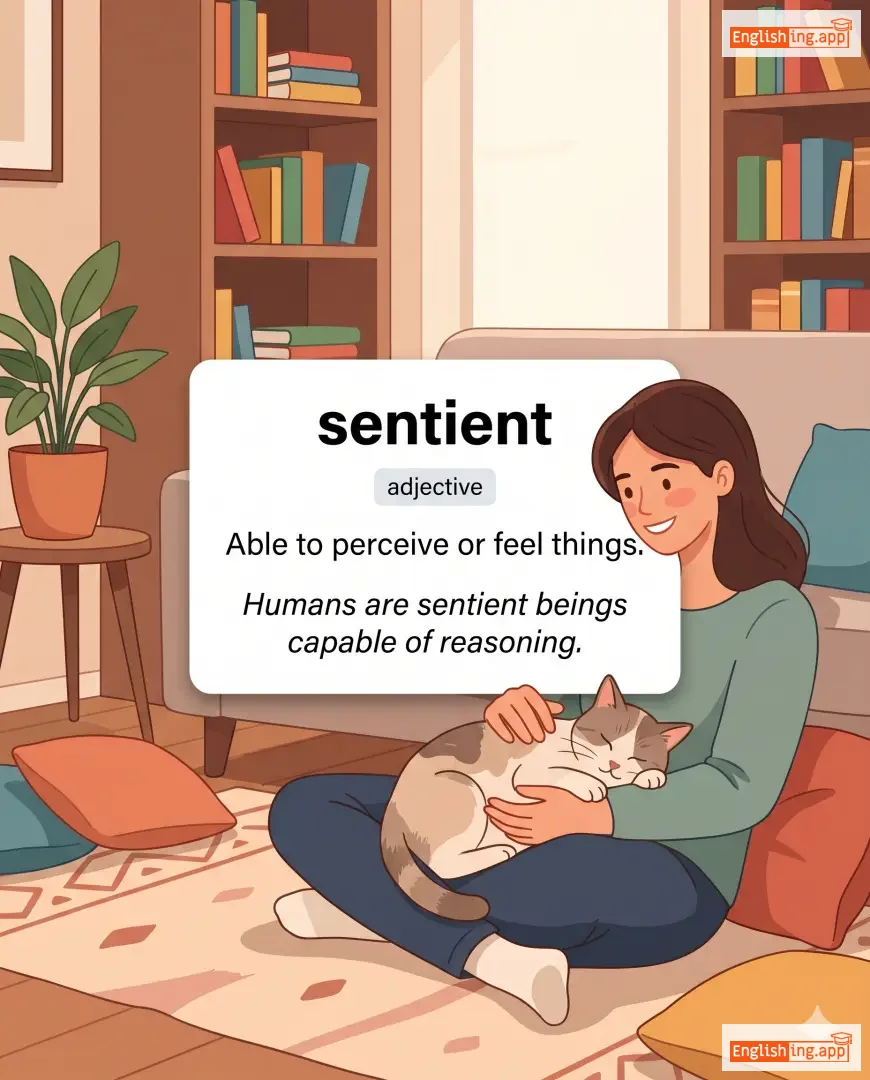
Able to perceive or feel things.
••••••
|
Humans are sentient beings capable of reasoning.
人类是能够推理的感知生命。
••••••
|
人类是能够推理的感知生命。
Rénlèi shì nénggòu tuīlǐ de gǎnzhī shēngmìng.
••••••
|
- •••••• | - •••••• | - •••••• |
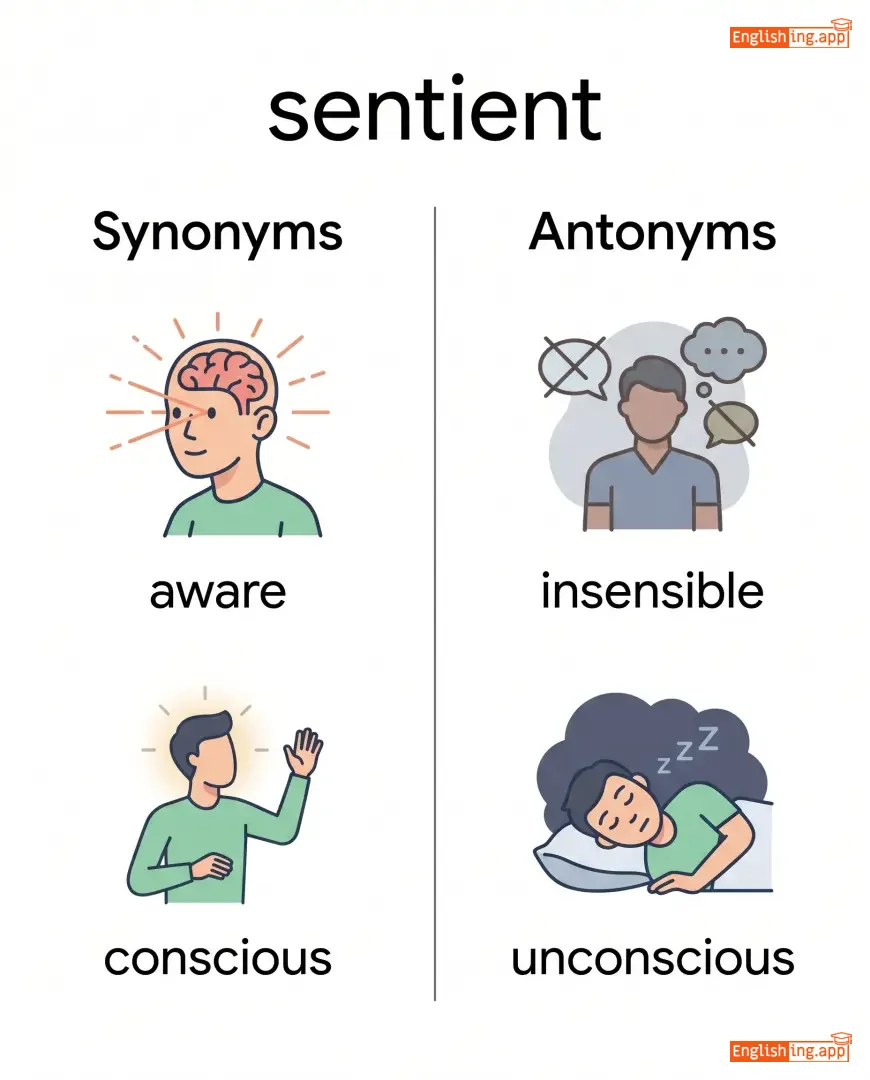
aware, conscious, responsive, perceptive
••••••
|
insensible, unconscious
••••••
|
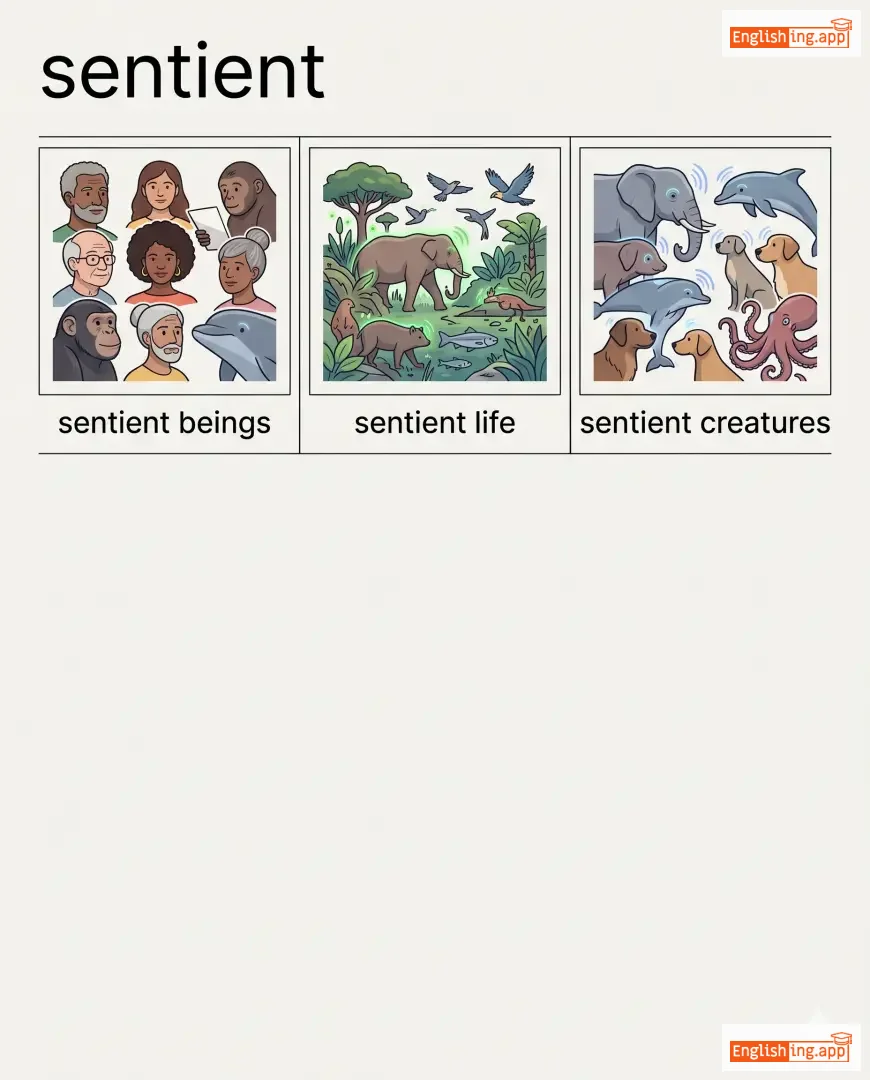
sentient beings, sentient life, sentient creatures
••••••
|
Sentient 意味着‘感觉’ — 能够感知或感觉的生命。
••••••
|
|
#7963
🧠
|
/ˈsɛnʃəns/
noun
(sèntí'ānsī)
••••••
|
- •••••• |
感知能力
gǎnzhī nénglì
••••••
|
- •••••• | - •••••• | - •••••• | - •••••• |
The capacity to feel, perceive, or experience subjectively.
••••••
|
Many argue that animals possess sentience. |
许多人认为动物具有感知能力。
Xǔduō rén rènwéi dòngwù jùyǒu gǎnzhī nénglì.
••••••
|
- •••••• | - •••••• | - •••••• |
consciousness, awareness, perception, sensitivity
••••••
|
insensibility, unconsciousness
••••••
|
animal sentience, human sentience, sentience of beings
••••••
|
Sentience 就是 '感知能力' — 感受和体验的能力。
••••••
|
|
#7964
🧐
|
/sɛnˈtɛnʃəs/
adjective
(senténshūsī)
••••••
|
- •••••• |
道德主义的;说教的
dàodé zhǔyì de; shuōjiào de
••••••
|
- •••••• | - •••••• | - •••••• | - •••••• |
Given to moralizing in a pompous or affected manner.
••••••
|
His sententious remarks annoyed the audience. |
他的道德主义言论让观众感到厌烦。
Tā de dàodé zhǔyì yánlùn ràng guānzhòng gǎndào yànfán.
••••••
|
- •••••• | - •••••• | - •••••• |
pompous, moralizing, didactic, preachy
••••••
|
modest, humble
••••••
|
sententious speech, sententious tone, sententious style
••••••
|
Sententious 是像 'sentence' 这样总是喜欢给别人道德教训的。
••••••
|
|
#7965
🌱
|
/ˈsɛm.ɪ.nəl/
adjective
(happiness)
••••••
|
- •••••• |
幸福
xingfu
••••••
|
- •••••• | - •••••• | - •••••• | - •••••• |
Strongly influencing later developments; highly original and influential.
••••••
|
His seminal book changed the course of modern philosophy. |
她在获得奖项时无法掩饰自己的幸福。
Tā zài huòdé jiǎngxiàng shí wúfǎ yǎnshì zìjǐ de xìngfú.
••••••
|
seminal work |
An original and influential work that shapes future developments.
••••••
|
追求幸福
zhuīqiú xìngfú
••••••
|
influential, pioneering, groundbreaking, formative, innovative
••••••
|
insignificant, derivative, unimportant
••••••
|
seminal idea, seminal work, seminal moment, seminal influence
••••••
|
幸福就像阳光,照亮生命的每一角落。
••••••
|
|
#7966
🌹
|
/ˈsɛnʃuəs/
adjective
(sɛnʃuəs)
••••••
|
|
感官的
gǎnguān de
••••••
|
- •••••• | - •••••• | - •••••• | - •••••• |
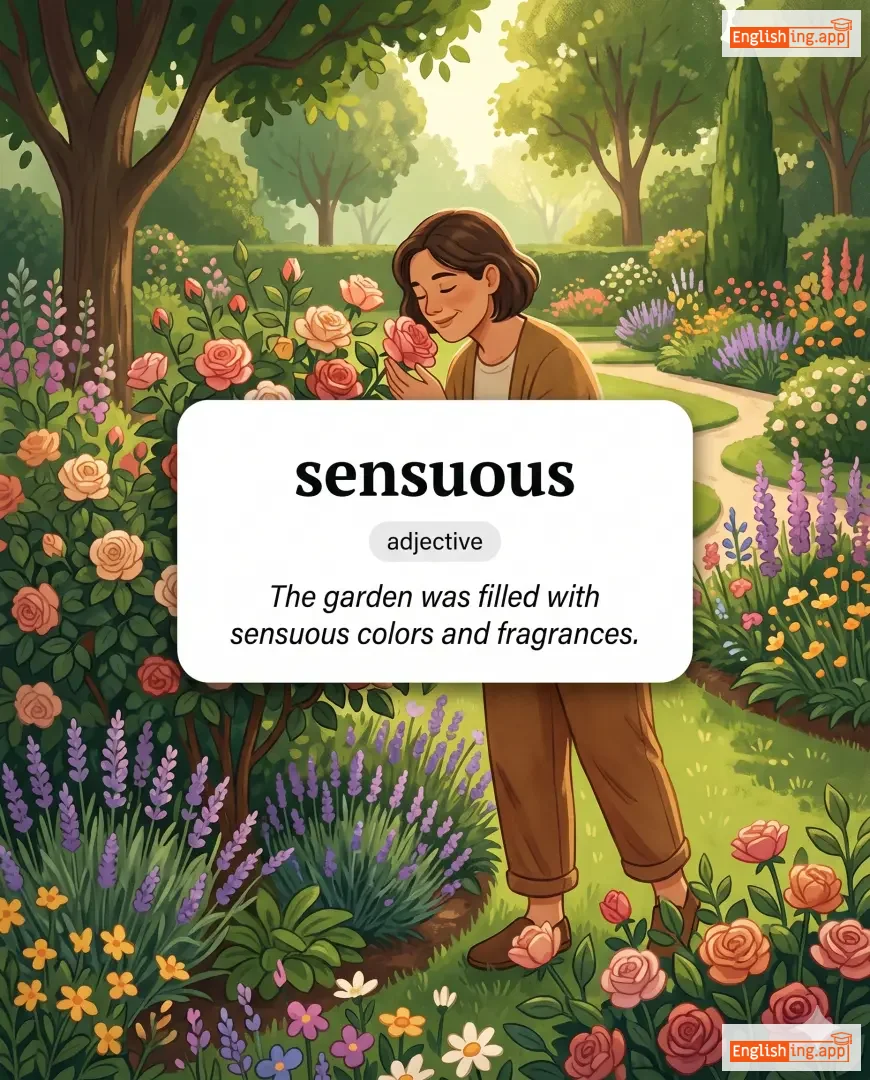
Relating to or affecting the senses rather than the intellect; pleasing to the senses.
••••••
|
The garden was filled with sensuous colors and fragrances. |
花园里充满了感官的色彩和香气。
Huāyuán lǐ chōngmǎnle gǎnguān de sècǎi hé xiāngqì.
••••••
|
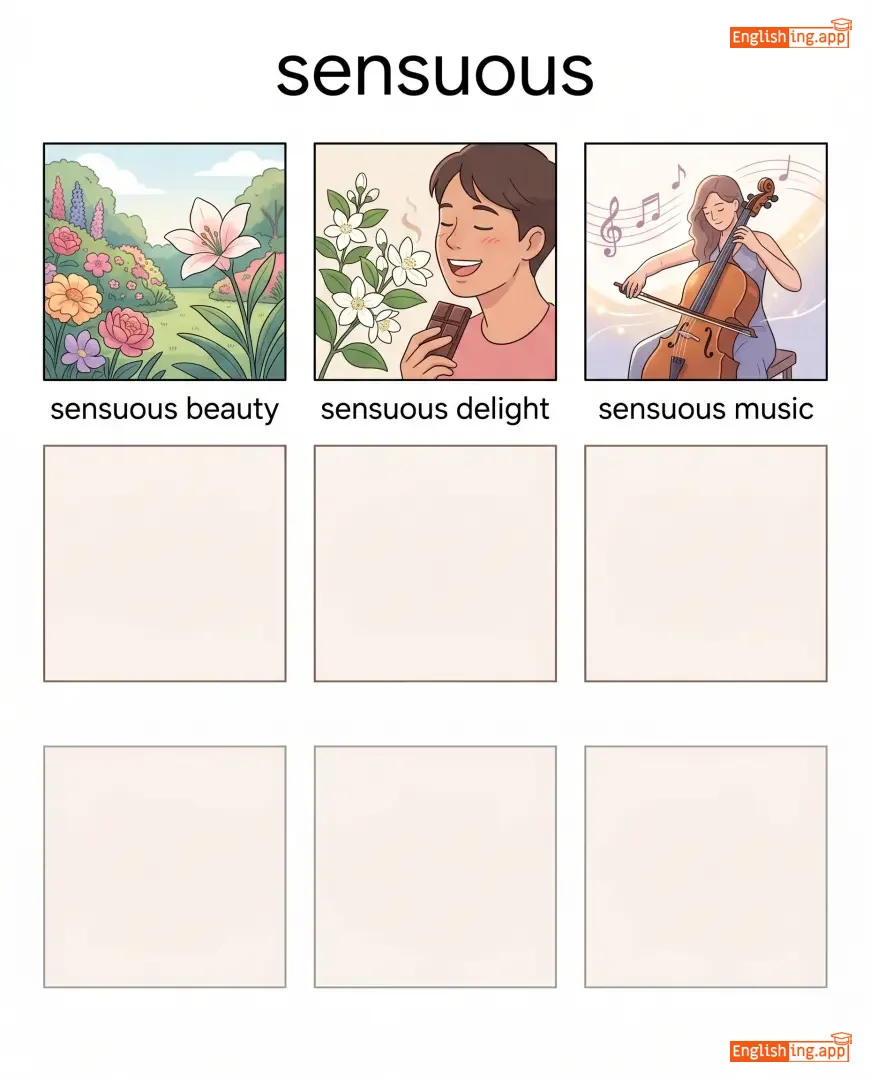
sensuous beauty |
beauty that appeals directly to the senses
••••••
|
感官之美
gǎnguān zhī měi
••••••
|
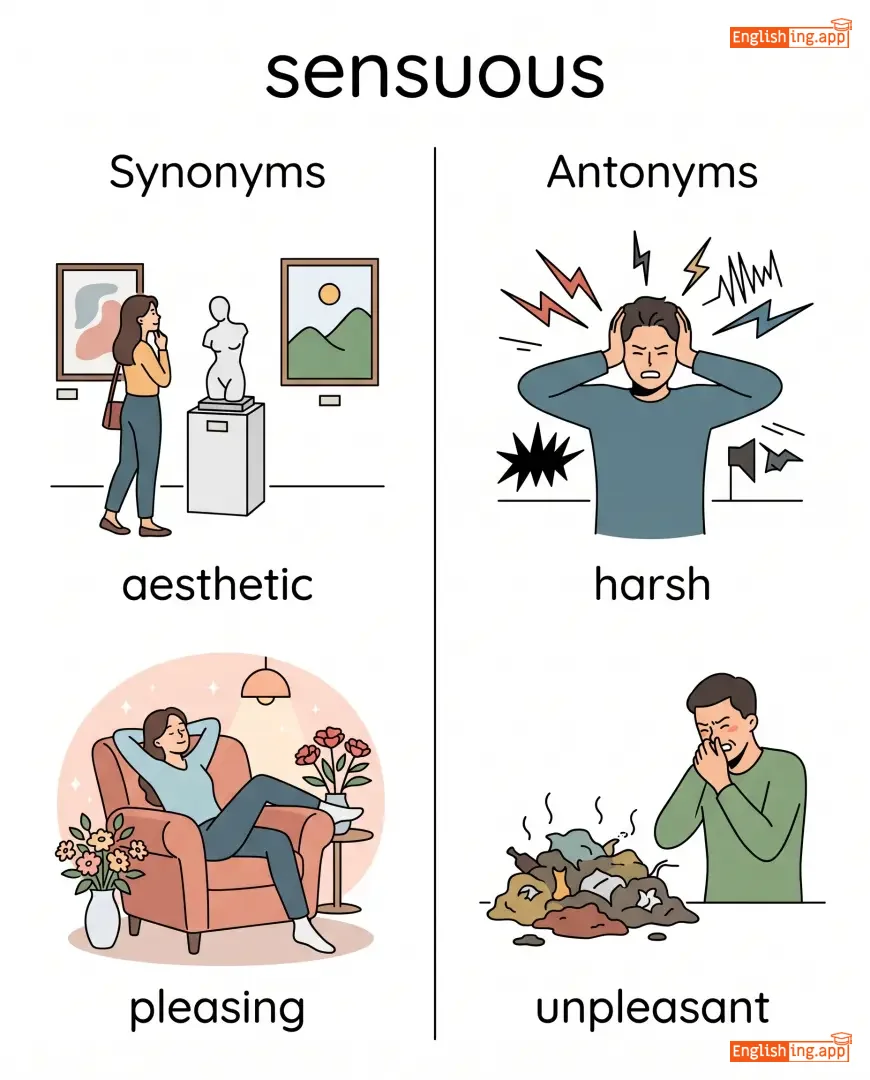
aesthetic, pleasing, luxurious, lush
••••••
|
harsh, unpleasant
••••••
|
sensuous beauty, sensuous delight, sensuous music, sensuous atmosphere
••••••
|
感官的 = 感觉 + 美丽 → 打动感官的美丽。
••••••
|
|
#7967
💋
|
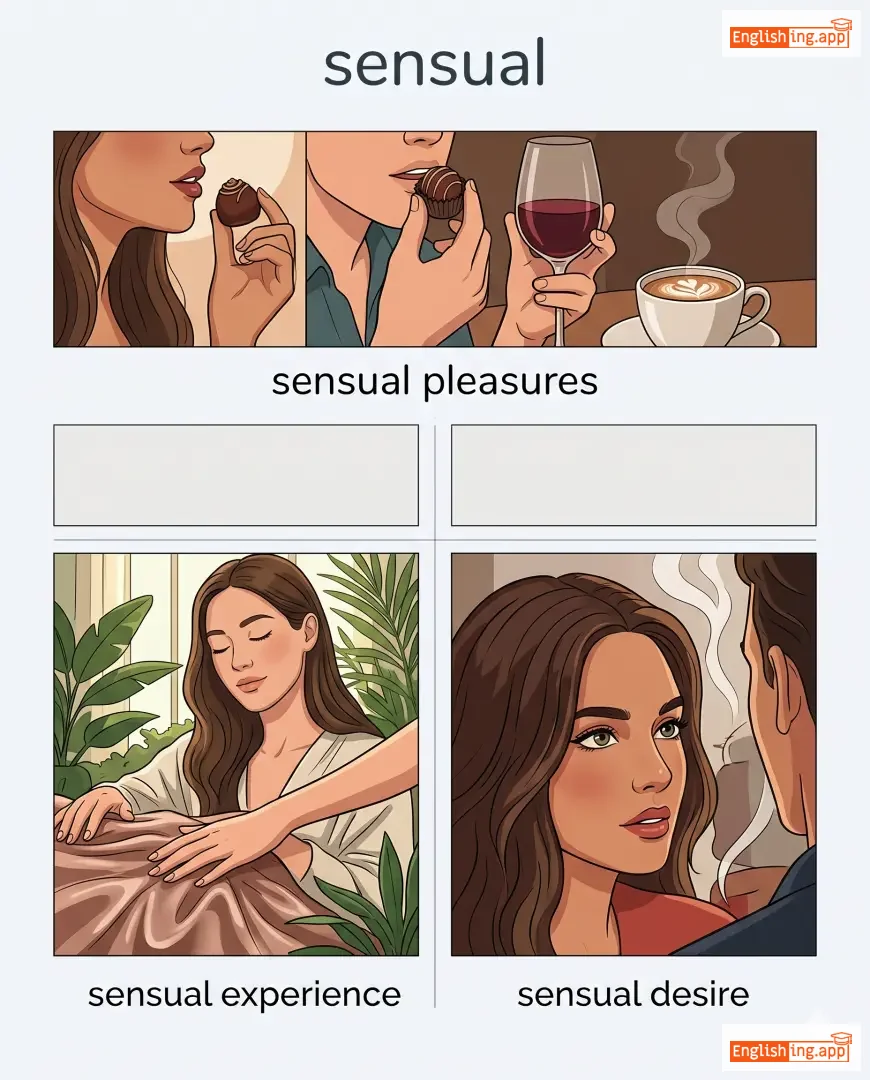
/ˈsɛnʃuəl/
adjective
(性感)
••••••
|
|
性感
xìnggǎn
••••••
|
- •••••• | - •••••• | - •••••• | - •••••• |
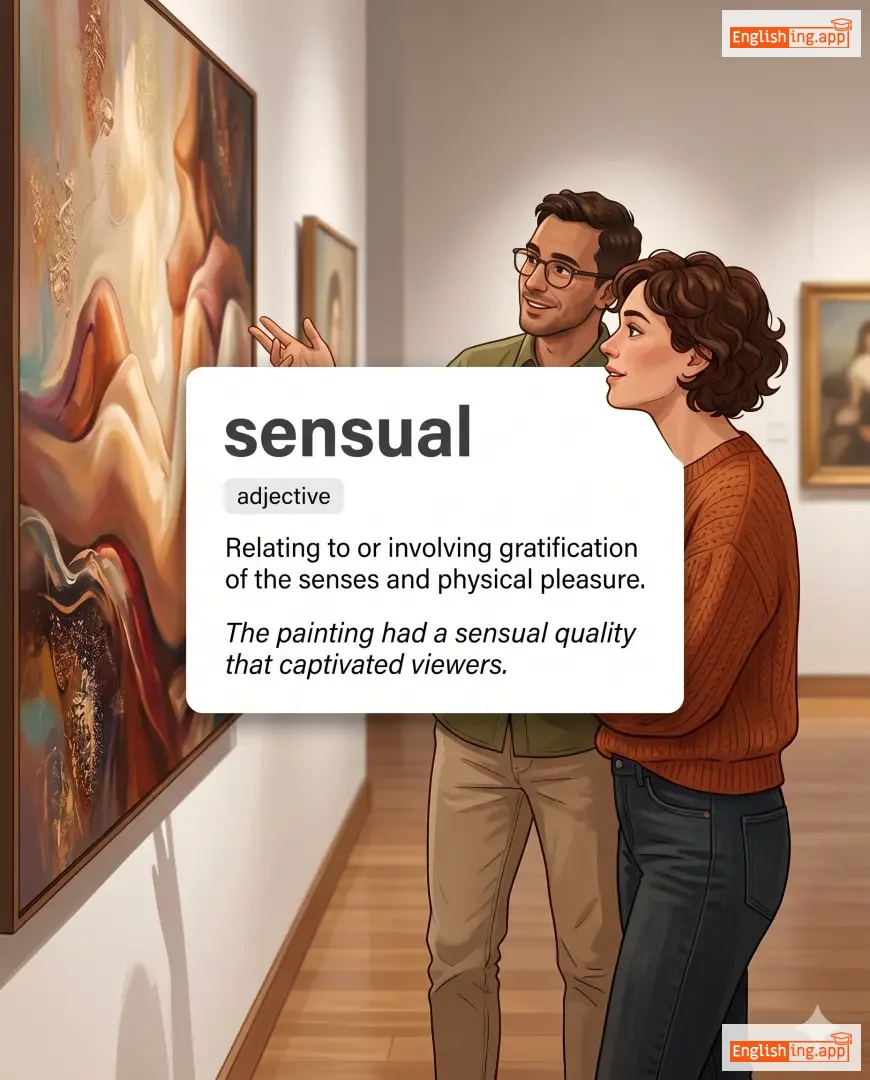
Relating to or involving gratification of the senses and physical pleasure.
••••••
|
The painting had a sensual quality that captivated viewers. |
这幅画有一种性感的质量,吸引了观众。
Zhè fú huà yǒu yī zhǒng xìnggǎn de zhìliàng, xīyǐnle guānzhòng.
••••••
|
sensual pleasures |
pleasures that appeal to the physical senses
••••••
|
性感的享乐
xìnggǎn de xiǎnglè
••••••
|
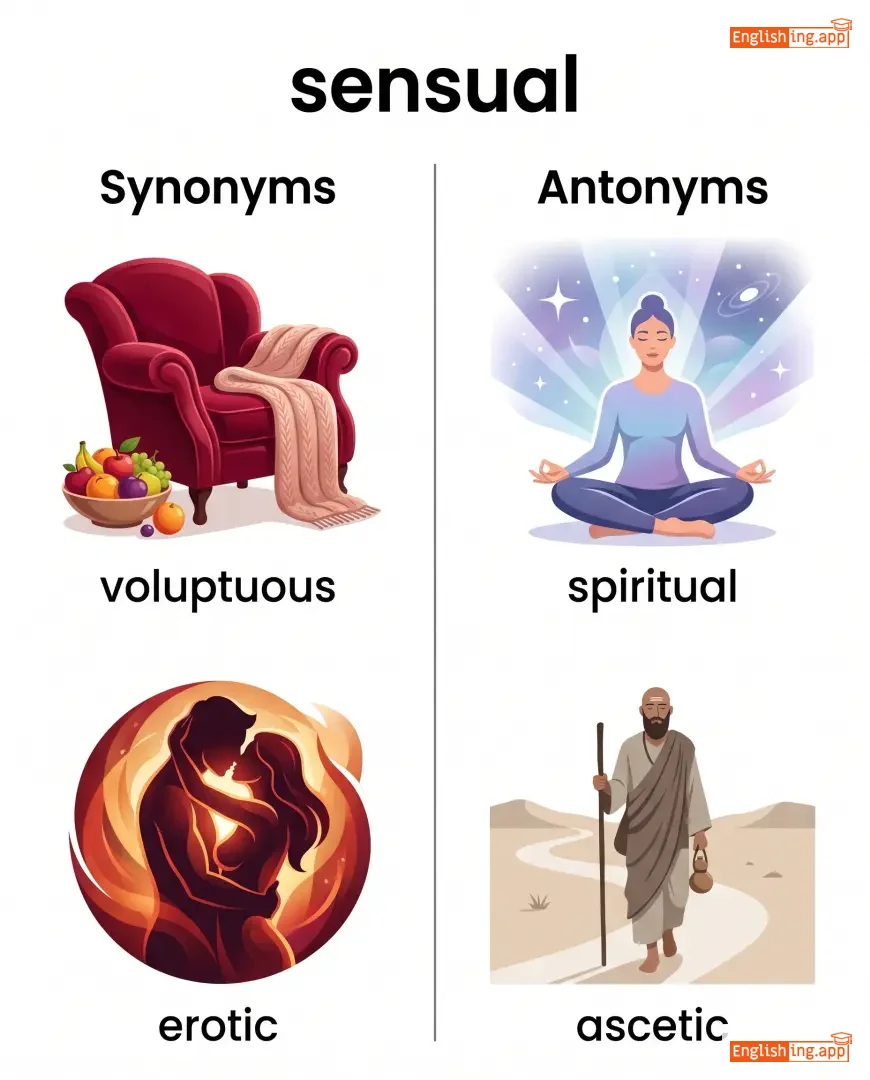
voluptuous, erotic, physical, carnal
••••••
|
spiritual, ascetic
••••••
|
sensual pleasures, sensual experience, sensual desire, sensual attraction
••••••
|
性感 = 感官 + 快乐
••••••
|
|
#7968
🧠
|
/sɛnˈsɔːrɪəm/
noun
(感官中心)
••••••
|
- •••••• |
感觉中枢
gǎnjué zhōngxū
••••••
|
- •••••• | - •••••• | - •••••• | - •••••• |
The part of the brain or mind concerned with the reception and interpretation of sensory stimuli.
••••••
|
The patient’s sensorium was clouded after the accident. |
事故后,病人的感觉中枢受到干扰。
shìgù hòu, bìngrén de gǎnjué zhōngxū shòudào gānrǎo.
••••••
|
- •••••• | - •••••• | - •••••• |
mind, consciousness, awareness, perception
••••••
|
unconsciousness, insensibility
••••••
|
clouded sensorium, sensorium state, altered sensorium, sensorium examination
••••••
|
Sensorium = 感觉 + 中枢 → 处理所有感觉信息的地方。
••••••
|
|
#7969
⚠️
|
/ˌsɛnsɪtaɪˈzeɪʃən/
noun
(sēnsìtáizhèshēn)
••••••
|
- •••••• |
敏感化
mǐn gǎn huà
••••••
|
- •••••• | - •••••• | - •••••• | - •••••• |
The process of becoming sensitive to a substance, situation, or influence.
••••••
|
The doctor warned about the sensitization caused by repeated exposure to chemicals. |
医生警告了由于反复接触化学品引起的敏感化。
Yīshēng jǐnggào le yóuyú fǎnfù jiēchù huàxuépǐn yǐnqǐ de mǐngǎn huà.
••••••
|
- •••••• | - •••••• | - •••••• |
conditioning, awareness, responsiveness, adaptation
••••••
|
desensitization, numbness
••••••
|
allergic sensitization, chemical sensitization, sensitization process, sensitization effect
••••••
|
敏感化是对某物变得敏感,就像对化学物质的敏感。
••••••
|
|
#7970
🌸
|
/ˈsɛnsɪtɪv/
adjective
(sēnsìtífu)
••••••
|
|
敏感的
mǐn gǎn de
••••••
|
- •••••• | - •••••• | - •••••• | - •••••• |
Quick to detect or respond to slight changes, signals, or influences; easily affected emotionally or physically.
••••••
|
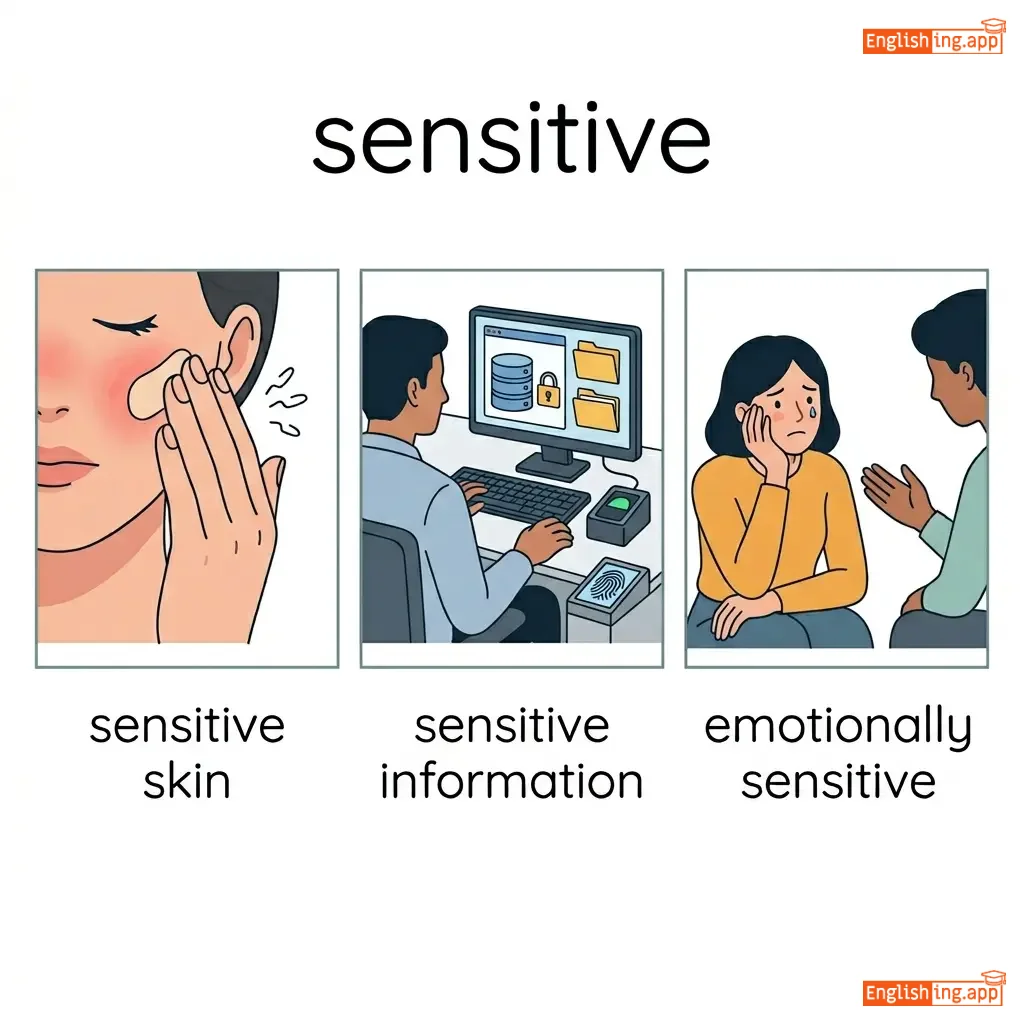
She has very sensitive skin that reacts to most cosmetics. |
她的皮肤非常敏感,容易对大多数化妆品产生反应。
Tā de pí fū fēi cháng mǐn gǎn, róng yì duì dà duō shù huà zhuāng pǐn chǎn shēng fǎn yìng.
••••••
|
a sensitive issue |
a topic that is delicate or difficult to discuss
••••••
|
敏感问题
mǐn gǎn wèn tí
••••••
|
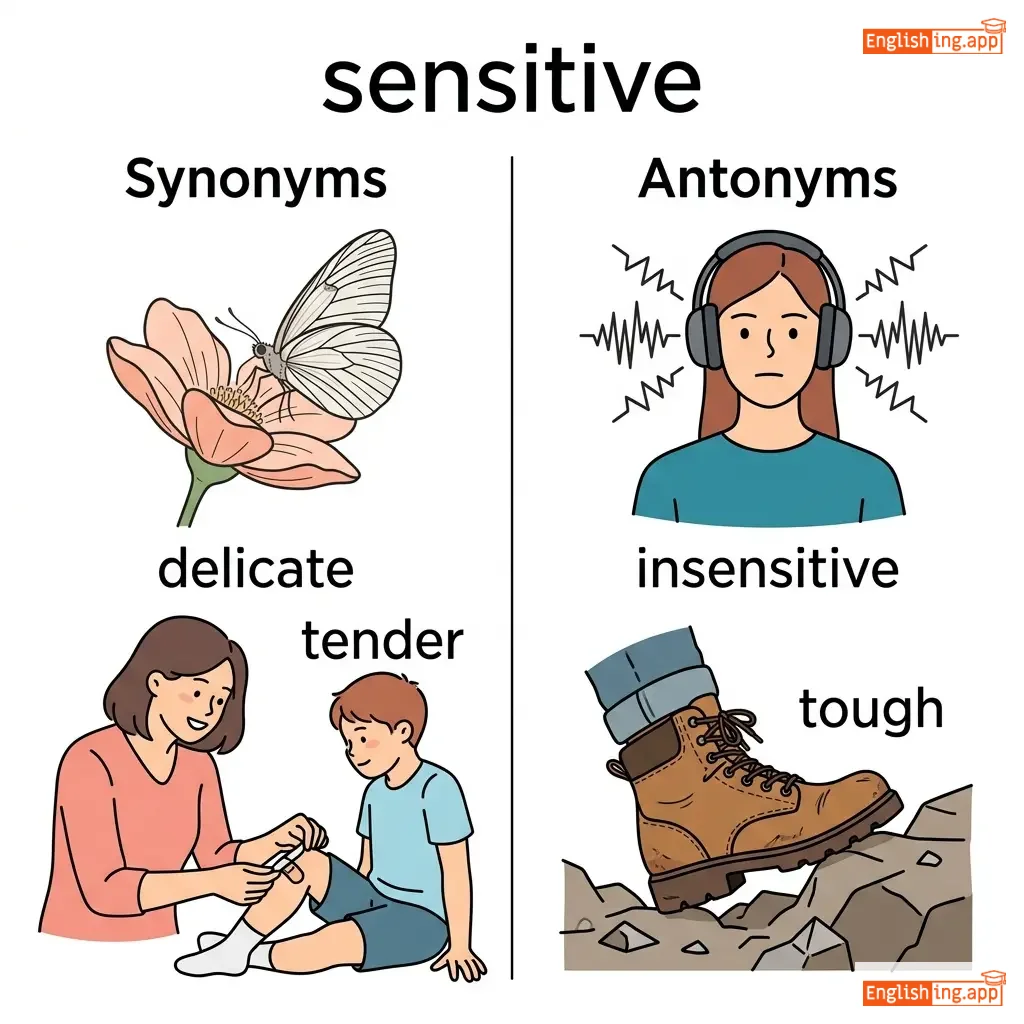
delicate, tender, responsive, emotional, fragile
••••••
|
insensitive, tough, unfeeling
••••••
|
sensitive skin, sensitive information, emotionally sensitive, highly sensitive, sensitive issue
••••••
|
敏感如花,每一次碰触都能感知。
••••••
|
|
#7971
🎨
|
/ˌsɛnsəˈbɪləti/
noun
(敏感性)
••••••
|
- •••••• |
敏感性
mǐn gǎn xìng
••••••
|
- •••••• | - •••••• | - •••••• | - •••••• |
The ability to appreciate and respond to complex emotional or aesthetic influences; sensitivity.
••••••
|
Her artistic sensibility impressed everyone. |
她的艺术敏感性给每个人留下了深刻印象。
Tā de yì shù mǐn gǎn xìng gěi měi gè rén liú xià le shēn kè yìn xiàng.
••••••
|
- •••••• | - •••••• | - •••••• |
sensitivity, awareness, perception, feeling, refinement
••••••
|
insensitivity, indifference, numbness
••••••
|
artistic sensibility, cultural sensibility, moral sensibility, sensibility to beauty
••••••
|
Sensibility 在中文中是敏感性,意味着理解和感知艺术的能力。
••••••
|
|
#7972
🧠
|
/sɛns/
noun/verb
(sēnsī)
••••••
|
- •••••• |
感觉
gǎnjué
••••••
|
sensed
sēnsī zhī
••••••
|
sensed
sēnsī zhī
••••••
|
senses
sēnsī
••••••
|
sensing
sēnsīng
••••••
|
A faculty by which the body perceives external stimuli; or to perceive something without being told.
••••••
|
She had a strong sense of responsibility.
她有很强的责任感。
••••••
|
她有很强的责任感。
Tā yǒu hěn qiáng de zérèngǎn.
••••••
|
common sense
常识
••••••
|
sound practical judgment that is independent of specialized knowledge
••••••
|
常识
chángshí
••••••
|
feeling, perception, awareness, intuition, judgment
••••••
|
nonsense, folly, ignorance
••••••
|
sense of humor, sense of duty, sense danger, make sense
••••••
|
Sense = 常识, 用中文来理解本能的感觉
••••••
|
|
#7973
🌟
|
/sɛnˈseɪʃənəl/
adjective
(sɛnsɛɪʃənəl)
••••••
|
- •••••• |
轰动
hōngdòng
••••••
|
- •••••• | - •••••• | - •••••• | - •••••• |
Causing great public interest and excitement; outstanding or impressive.
••••••
|
The team had a sensational victory in the finals.
球队在决赛中取得了轰动性的胜利。
••••••
|
球队在决赛中取得了轰动性的胜利。
Qiú duì zài juésài zhōng qǔdéle hōngdòngxìng de shènglì.
••••••
|
sensational news
轰动新闻
••••••
|
news that is exaggerated to provoke public interest
••••••
|
轰动新闻
hōngdòng xīnwén
••••••
|
amazing, impressive, extraordinary, fabulous, astonishing
••••••
|
ordinary, dull, boring
••••••
|
sensational performance, sensational headline, sensational news, sensational success
••••••
|
Sensational = Sense + National = 轰动新闻
••••••
|
|
#7974
✨
|
/sɛnˈseɪʃən/
noun
(sēn sè xiǎn)
••••••
|
- •••••• |
轰动
hongdong
••••••
|
- •••••• | - •••••• | - •••••• | - •••••• |
A physical feeling or a strong reaction of excitement and interest.
••••••
|
The singer became a sensation overnight. |
歌手一夜之间成为轰动一时的明星。
Gēshǒu yīyè zhī jiān chéngwéi hōngdòng yī shí de míngxīng.
••••••
|
cause a sensation |
to create a great deal of excitement and interest
••••••
|
引起轰动
yǐnqǐ hōngdòng
••••••
|
feeling, perception, excitement, thrill, buzz
••••••
|
numbness, apathy, indifference
••••••
|
create a sensation, public sensation, sensation in the media, sensation of pain
••••••
|
Sensation = 场景 + 动作,像制造强烈反应的场面。
••••••
|
|
#7975
👴
|
/sɪˈnɪləti/
noun
(senility)
••••••
|
- •••••• |
衰老
shuāilǎo
••••••
|
- •••••• | - •••••• | - •••••• | - •••••• |
The state of being old and showing the weaknesses of age, especially mental decline.
••••••
|
His forgetfulness was attributed to senility.
His forgetfulness was attributed to senility.
••••••
|
他的健忘被归因于衰老。
Tā de jiànwàng bèi guī yīn yú shuāilǎo.
••••••
|
- •••••• | - •••••• | - •••••• |
old age, decrepitude, feebleness, dotage, infirmity
••••••
|
youth, vitality, vigor
••••••
|
senility in old age, signs of senility, suffer from senility, mental senility
••••••
|
衰老(shuāilǎo)和年龄有关,代表着衰退。
••••••
|
|
#7976
🧓
|
/ˈsiː.naɪl/
adjective
(衰老的)
••••••
|
- •••••• |
与年龄相关的虚弱
yǔ niánlíng xiāngguān de xūruò
••••••
|
- •••••• | - •••••• | - •••••• | - •••••• |
Showing the weaknesses of old age, especially mental decline.
••••••
|
The old man became senile and forgot familiar faces.
老人变得衰老,忘记了熟悉的面孔。
••••••
|
老人变得衰老,忘记了熟悉的面孔。
lǎorén biàndé shuāilǎo, wàngjìle shúxī de miànkǒng.
••••••
|
senile dementia
老年痴呆症
••••••
|
Cognitive decline in elderly people, often associated with memory loss.
••••••
|
老年痴呆症
lǎonián chīdāi zhèng
••••••
|
decrepit, aged, feeble, forgetful
••••••
|
alert, youthful, sharp
••••••
|
senile dementia, senile old age, senile patient
••••••
|
衰老的老人容易忘记 - 记忆不再清晰。
••••••
|
|
#7977
🍂
|
/səˈnɛs.əns/
noun
(塞内森斯)
••••••
|
- •••••• |
衰老
shuāilǎo
••••••
|
- •••••• | - •••••• | - •••••• | - •••••• |
The process of growing old or the condition of aging.
••••••
|
The biologist studied senescence in plants to understand aging.
生物学家研究了植物中的衰老过程,以理解衰老。
••••••
|
生物学家研究了植物中的衰老过程,以理解衰老。
Shēngwùxuéjiā yánjiūle zhíwù zhōng de shuāilǎo guòchéng, yǐ liǎojiě shuāilǎo.
••••••
|
- •••••• | - •••••• | - •••••• |
aging, old age, decline, degeneration
••••••
|
youth, vitality
••••••
|
cellular senescence, human senescence, senescence process
••••••
|
Senescence意味着衰老,像秋天树叶掉落一样🍂。
••••••
|
|
#7978
⛪
|
/ˈsɛm.ɪ.nɛr.i/
noun
(神学院)
••••••
|
- •••••• |
神学院
shénxuéyuàn
••••••
|
- •••••• | - •••••• | - •••••• | - •••••• |
A school or college for training priests, ministers, or rabbis.
••••••
|
He decided to enroll in a seminary to study theology. |
他决定报名参加神学院,学习神学。
Tā juédìng bàomíng cānjiā shénxuéyuàn, xuéxí shénxué.
••••••
|
- •••••• | - •••••• | - •••••• |
theological college, divinity school, religious school
••••••
|
secular school, public school
••••••
|
enter seminary, seminary student, seminary training
••••••
|
神学院 = 培养宗教领袖的地方。
••••••
|
|
#7979
🎓
|
/ˈsɛm.ɪ.nɑːr/
noun
(研讨会)
••••••
|
- •••••• |
研讨会
yántǎo huì
••••••
|
- •••••• | - •••••• | - •••••• | - •••••• |
A meeting for discussion or training, especially in an academic setting.
••••••
|
The professor invited all students to attend the seminar on climate change.
教授邀请所有学生参加关于气候变化的研讨会。
••••••
|
教授邀请所有学生参加关于气候变化的研讨会。
Jiàoshòu yāoqǐng suǒyǒu xuéshēng cānjiā guānyú qìhòu biànhuà de yántǎo huì.
••••••
|
seminar series
研讨会系列
••••••
|
A sequence of related seminars on a particular subject.
••••••
|
研讨会系列
yántǎo huì xìliè
••••••
|
workshop, symposium, conference, lecture, tutorial
••••••
|
silence, self-study
••••••
|
attend seminar, seminar series, seminar hall, seminar discussion
••••••
|
研讨会 - 学习的地方 📚
••••••
|
Vocabulary Quiz
Test your vocabulary by matching words with their translations or meanings.
Login to take the quiz
Comments (0)
Share your thoughts and join the discussion.
Join the discussion by logging in
Login to CommentNo comments yet
Be the first to share your thoughts!