



Swipe left or right, or use the buttons. Tap image to zoom.
例句翻译
单词
Lesson 86Lesson 86 - 遮罩切换
|
表情符号
|
单词 | Images | 翻译 | 过去时 | 过去分词 | 第三人称单数 | 动名词 | 含义 | 例句 | 例句翻译 | 示例表达 | 示例表达含义 | 示例表达翻译 | 同义词 | 反义词 | 搭配词 | 助记符 |
|---|---|---|---|---|---|---|---|---|---|---|---|---|---|---|---|---|---|
|
#2551
🐎
|
/ˌdɪsˈmaʊnt/
verb
(ˈdɪsmaʊnt)
••••••
|
- •••••• |
下马
xià mǎ
••••••
|
dismounted
dɪsˈmaʊntɪd
••••••
|
dismounted
dɪsˈmaʊntɪd
••••••
|
dismounts
ˈdɪsmaʊnts
••••••
|
dismounting
dɪsˈmaʊntɪŋ
••••••
|
to get off or down from something, especially a horse, bicycle, or motorcycle
••••••
|
The rider dismounted from the horse after a long journey.
ðə ˈraɪdər dɪsˈmaʊntɪd frəm ðə hɔrs ˈæftər ə lɔŋ ˈdʒɜrni.
••••••
|
骑手在长途旅行后下马。
Qíshǒu zài chángtú lǚxíng hòu xià mǎ.
••••••
|
- •••••• | - •••••• | - •••••• |
get off, alight, descend, step down
••••••
|
mount, board
••••••
|
dismount from, safely dismount, dismount quickly
••••••
|
Dismount: 下马的意思,是从马背上下来。
••••••
|
|
#2552
🌱
|
/dɪˈspɜːrʒən/
noun
(迪斯珀尔申)
••••••
|
- •••••• |
分散
fensan
••••••
|
- •••••• | - •••••• | - •••••• | - •••••• |
The action or process of distributing things or people over a wide area.
••••••
|
The dispersion of seeds by the wind helps plants reproduce.
风的种子散布有助于植物繁殖。
••••••
|
风的种子散布有助于植物繁殖。
Feng de zhongzi sanbu you zhu yu zhiwu fanzhi.
••••••
|
- •••••• | - •••••• | - •••••• |
distribution, scattering, diffusion, dissemination, spreading
••••••
|
concentration, gathering, collection
••••••
|
light dispersion, dispersion of seeds, dispersion pattern, dispersion effect
••••••
|
分散就是像风中散播种子一样。
••••••
|
|
#2553
🌌
|
/dɪˈspɜːrst/
adjective
(dɪˈspɜːrst)
••••••
|
- •••••• |
分散的
fēnsàn de
••••••
|
- •••••• | - •••••• | - •••••• | - •••••• |
Scattered or spread across a wide area.
••••••
|
The dispersed population made it difficult to provide public services. |
分散的人口使得提供公共服务变得困难。
Fēnsàn de rénkǒu shǐdé tígōng gōnggòng fúwù biàndé kùnnán.
••••••
|
- •••••• | - •••••• | - •••••• |
scattered, spread, distributed, diffused, dissipated
••••••
|
concentrated, gathered, clustered
••••••
|
dispersed population, dispersed group, widely dispersed, dispersed particles
••••••
|
分散的意味着散布 — 就像“分散的种群”,即分散的人口。
••••••
|
|
#2554
🌬️
|
/dɪˈspɜːrs/
verb
(dɪˈspɜːrs)
••••••
|
- •••••• |
驱散
qūsàn
••••••
|
dispersed
dɪˈspɜːrsd
••••••
|
dispersed
dɪˈspɜːrsd
••••••
|
disperses
dɪˈspɜːrsɪz
••••••
|
dispersing
dɪˈspɜːrsɪŋ
••••••
|
To scatter or spread widely in different directions.
••••••
|
The police used tear gas to disperse the crowd.
警方使用催泪瓦斯驱散人群。
••••••
|
警方使用催泪瓦斯驱散人群。
Jǐngfāng shǐyòng cuīlèiwǎsī qūsàn rénqún.
••••••
|
- •••••• | - •••••• | - •••••• |
scatter, spread, diffuse, dissipate, distribute
••••••
|
gather, assemble, collect
••••••
|
disperse a crowd, disperse quickly, disperse smoke, disperse seeds
••••••
|
Disperse 意味着驱散 — Disperse crowd 意味着驱散人群。
••••••
|
|
#2555
💊
|
/dɪˈspɛns/
verb
(分配)
••••••
|
- •••••• |
分配
fēnpèi
••••••
|
dispensed
分配了
••••••
|
dispensed
分配了
••••••
|
dispenses
分配
••••••
|
dispensing
分配中
••••••
|
To distribute or provide something, especially in portions.
••••••
|
The machine dispenses clean drinking water.
机器分配干净的饮用水。
••••••
|
机器分配干净的饮用水。
Jīqì fēnpèi gānjìng de yǐnyòng shuǐ.
••••••
|
dispense with
放弃
••••••
|
To manage without something or do without.
••••••
|
放弃
fàngqì
••••••
|
distribute, allocate, deliver, provide, supply
••••••
|
withhold, retain, keep
••••••
|
dispense justice, dispense medicine, dispense advice, dispense with
••••••
|
Dispense 就是分配,就像一个水分配器。
••••••
|
|
#2556
📜
|
/ˌdɪspɛnˈseɪʃən/
noun
••••••
|
- •••••• | - •••••• | - •••••• | - •••••• | - •••••• | - •••••• |
An exemption from a rule or usual requirement; a system of order, government, or control.
••••••
|
The school granted him a special dispensation to skip the exam due to illness. |
- •••••• | - •••••• | - •••••• | - •••••• |
exemption, allowance, privilege, immunity, authorization
••••••
|
restriction, prohibition, obligation
••••••
|
special dispensation, royal dispensation, papal dispensation, grant dispensation
••••••
|
No •••••• |
|
#2557
🌬️
|
/dɪˈspɛl/
verb
(dispel)
••••••
|
- •••••• |
驱散
qusan
••••••
|
dispelled
dispelled
••••••
|
dispelled
dispelled
••••••
|
dispels
dispels
••••••
|
dispelling
dispelling
••••••
|
to make a doubt, feeling, or belief disappear
••••••
|
The teacher's explanation dispelled the students' confusion.
老师的解释消除了学生们的困惑。
••••••
|
老师的解释消除了学生们的困惑。
Laoshi de jiexie xiaochule xueshengmen de kunhuo.
••••••
|
dispel doubts
消除疑虑
••••••
|
to remove uncertainty or disbelief
••••••
|
消除疑虑
xiaochu yilu
••••••
|
banish, eliminate, dismiss, drive away, eradicate
••••••
|
gather, accept, keep
••••••
|
dispel doubts, dispel rumors, dispel fears, dispel confusion
••••••
|
Dispel 是驱散疑虑的意思。
••••••
|
|
#2558
📦
|
/dɪˈspætʃ/
verb
(迪斯帕奇)
••••••
|
- •••••• |
派遣
paijian
••••••
|
dispatched
迪斯帕奇德
••••••
|
dispatched
迪斯帕奇德
••••••
|
dispatches
迪斯帕奇斯
••••••
|
dispatching
迪斯帕奇英
••••••
|
to send off to a destination or for a purpose
••••••
|
The company dispatched aid to the flood victims.
公司向洪水受害者派遣了援助。
••••••
|
公司向洪水受害者派遣了援助。
Gongsi xiang hongshui shouhaizhe paichian le yuanzhu.
••••••
|
dispatch a message
发送消息
••••••
|
to send a communication quickly
••••••
|
发送消息
Fasong xiaoxi
••••••
|
send, transmit, forward, deliver, deploy
••••••
|
retain, hold, keep
••••••
|
dispatch troops, dispatch goods, dispatch aid, dispatch immediately
••••••
|
Dispatch 就是派遣一件包裹。
••••••
|
|
#2559
😐
|
/dɪsˈpæʃənət/
adjective
(迪斯帕希内特)
••••••
|
- •••••• |
冷静的
lěngjìng de
••••••
|
- •••••• | - •••••• | - •••••• | - •••••• |
not influenced by strong emotion; impartial
••••••
|
The judge remained dispassionate throughout the trial.
法官在整个审判过程中保持冷静。
••••••
|
法官在整个审判过程中保持冷静。
Fǎguān zài zhěnggè shěnpàn guòchéng zhōng bǎochí lěngjìng.
••••••
|
- •••••• | - •••••• | - •••••• |
calm, impartial, objective, neutral, detached
••••••
|
emotional, biased, passionate
••••••
|
dispassionate analysis, dispassionate observer, dispassionate approach, dispassionate judgment
••••••
|
Dis + Passionate = 无激情 — 冷静的判断
••••••
|
|
#2560
⚖️
|
/dɪˈspærəti/
noun
(disparity)
••••••
|
|
差异
chayi
••••••
|
- •••••• | - •••••• | - •••••• | - •••••• |
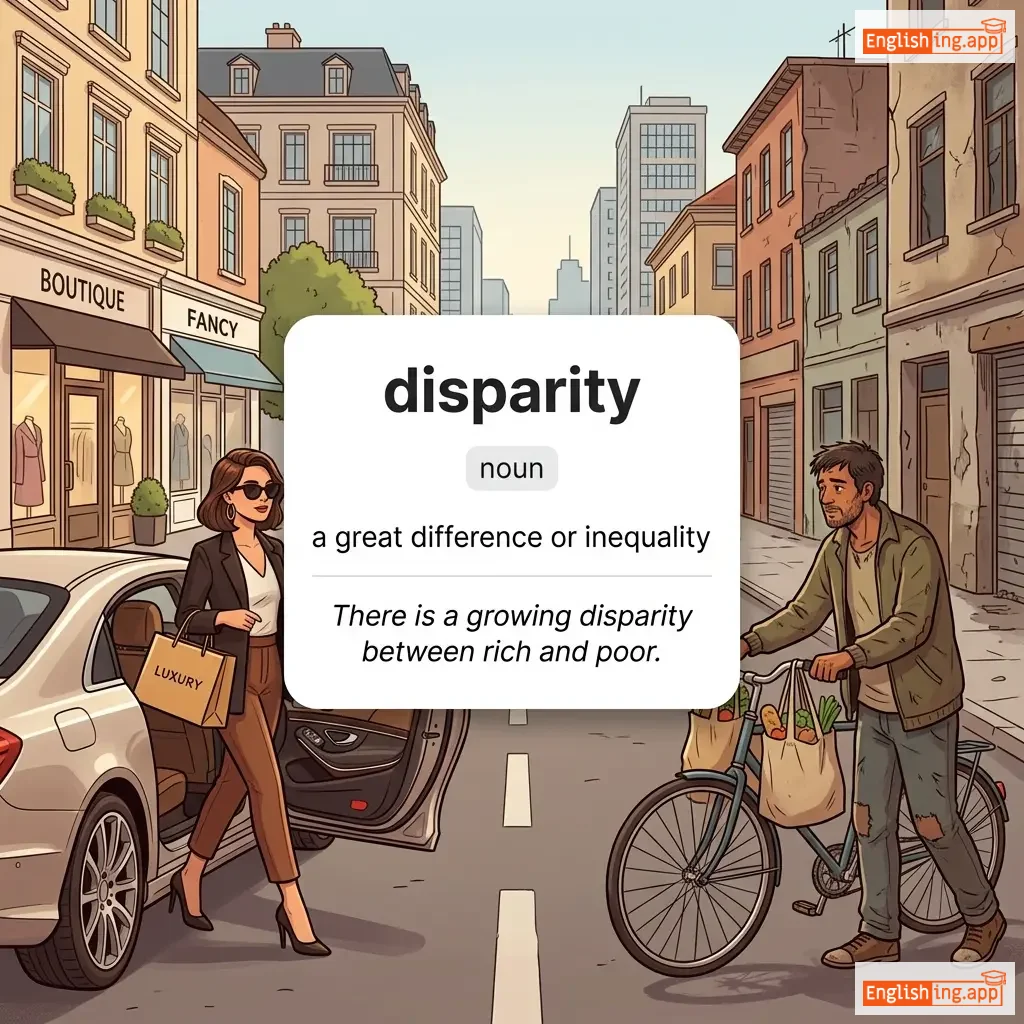
a great difference or inequality
••••••
|
There is a growing disparity between rich and poor. |
富人和穷人之间存在日益加剧的差异。
Fùrén hé qióngrén zhījiān cúnzài rìyì jiājù de chāyì.
••••••
|
income disparity |
the inequality of income distribution among individuals or groups
••••••
|
收入差异
shōurù chāyì
••••••
|
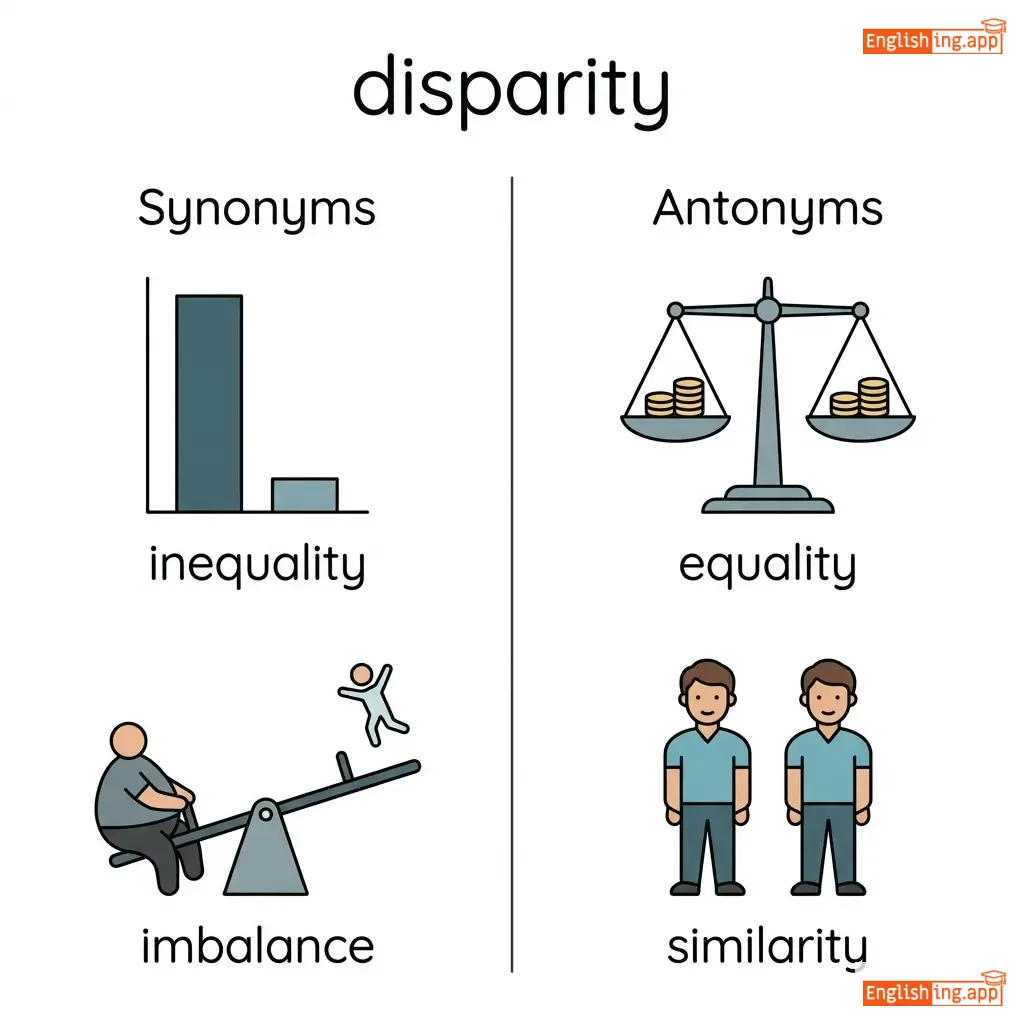
inequality, imbalance, gap, divergence, discrepancy
••••••
|
equality, similarity, balance
••••••
|
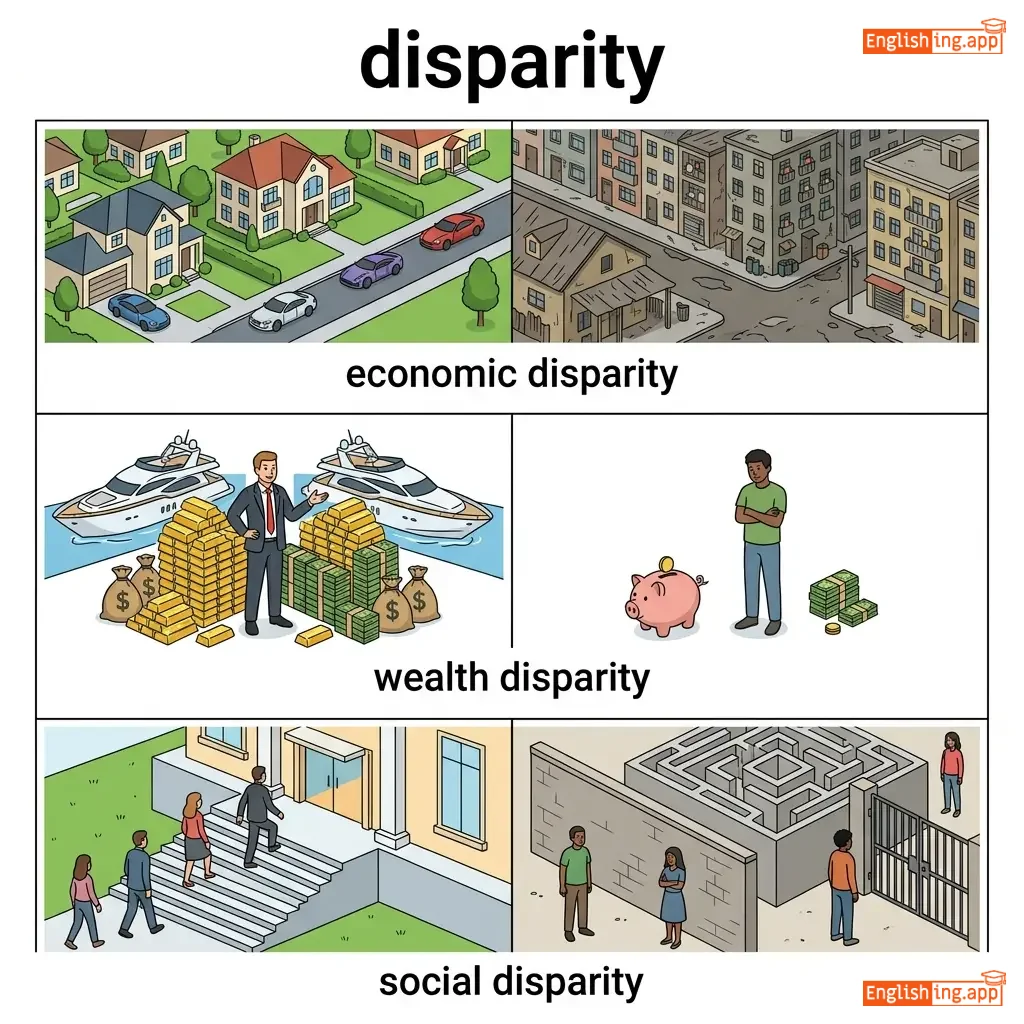
economic disparity, wealth disparity, social disparity, income disparity
••••••
|
Disparity: 想象'不平等'就是'差异',这就是 disparity.
••••••
|
|
#2561
🔀
|
/ˈdɪspərət/
adjective
(迪斯派瑞特)
••••••
|
|
不同
butong
••••••
|
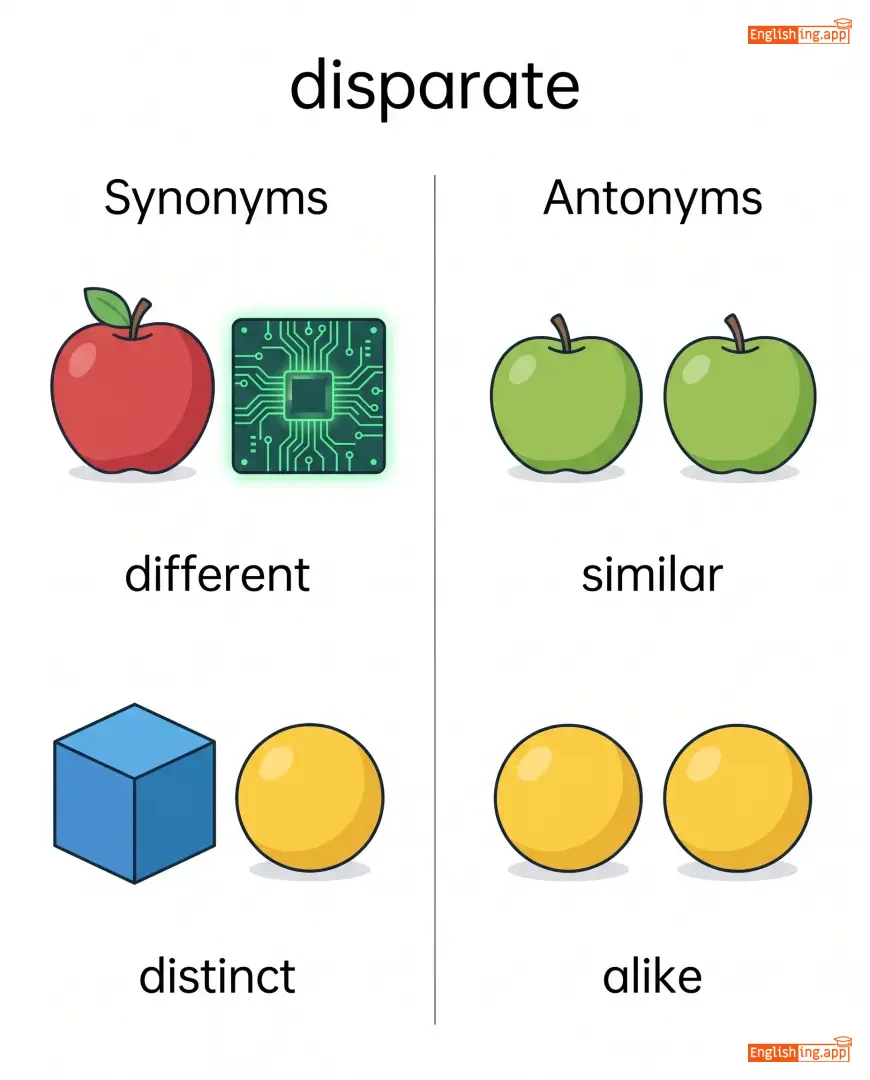
- •••••• | - •••••• | - •••••• | - •••••• |
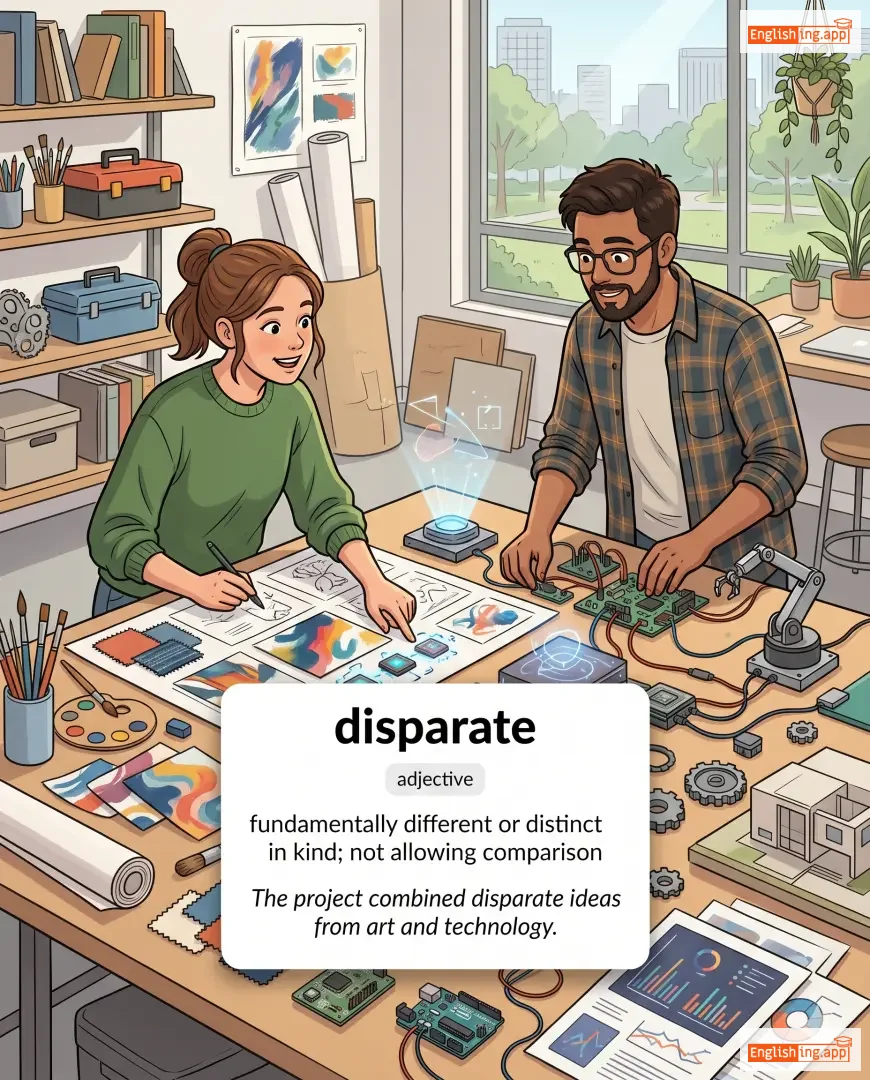
fundamentally different or distinct in kind; not allowing comparison
••••••
|
The project combined disparate ideas from art and technology. |
该项目结合了来自艺术和技术的不同观点。
Gai xiangmu jiehe le laizi yishu he jishu de butong guandian.
••••••
|
- •••••• | - •••••• | - •••••• |
different, distinct, contrasting, diverse, varied
••••••
|
similar, alike, uniform
••••••
|
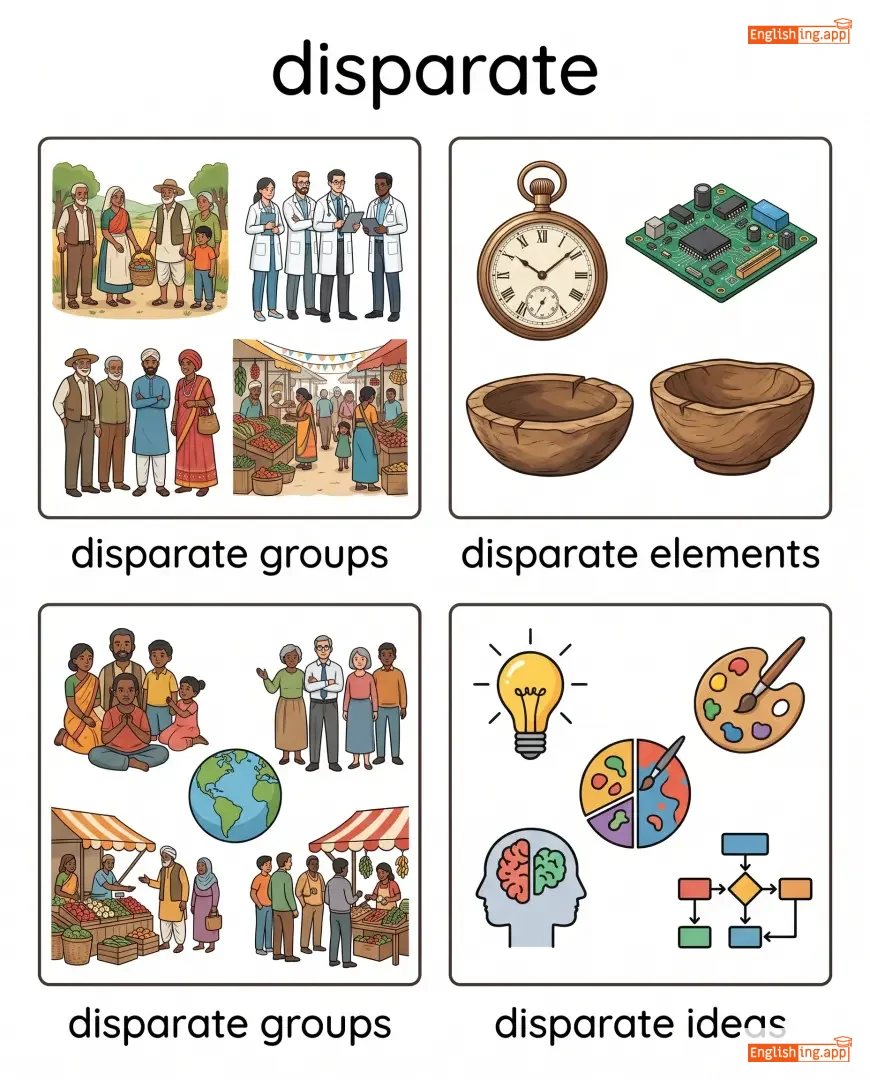
disparate groups, disparate elements, disparate ideas, disparate backgrounds
••••••
|
Disparate 就是把不同的东西放在一起。
••••••
|
|
#2562
🗣️
|
/dɪsˈpærɪdʒ/
verb
••••••
|
|
- •••••• |
disparaged
••••••
|
disparaged
••••••
|
disparages
••••••
|
disparaging
••••••
|
to criticize someone or something in a way that shows a lack of respect
••••••
|
It is unfair to disparage people for their opinions. |
- •••••• |
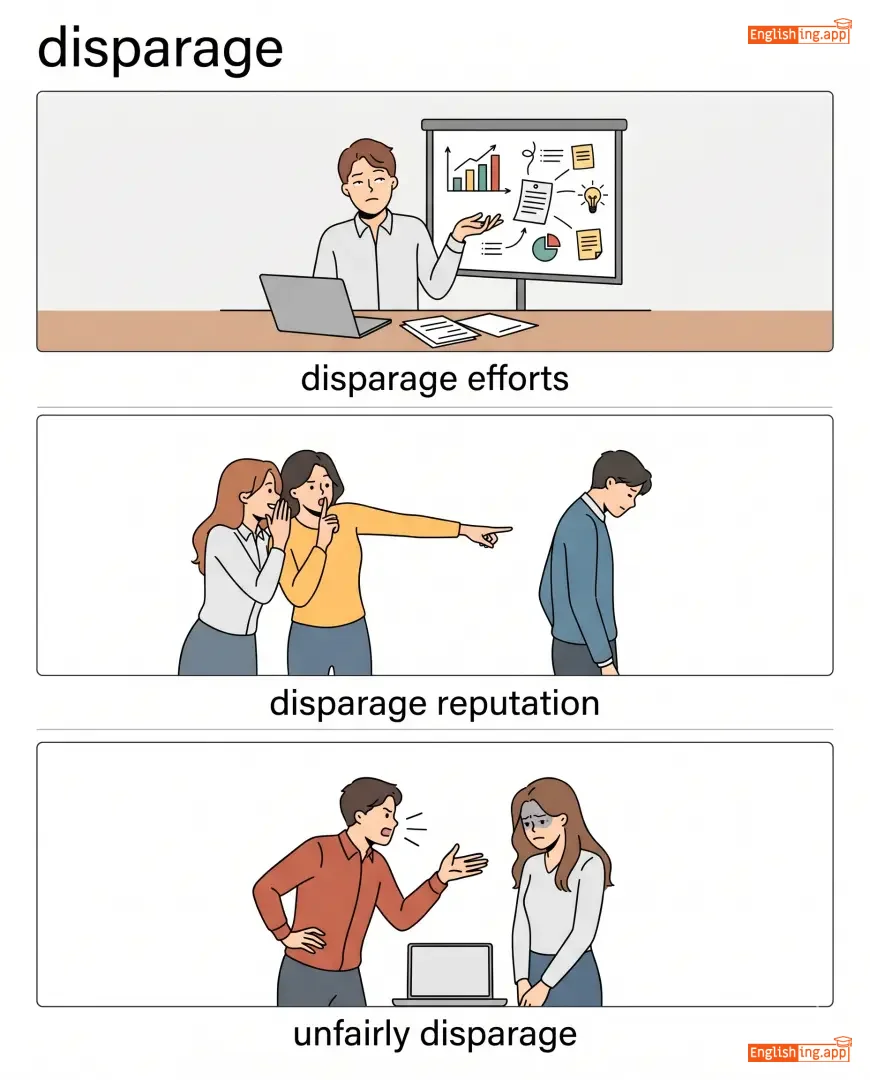
disparage someone's efforts |
to belittle or undervalue what someone has done
••••••
|
- •••••• |
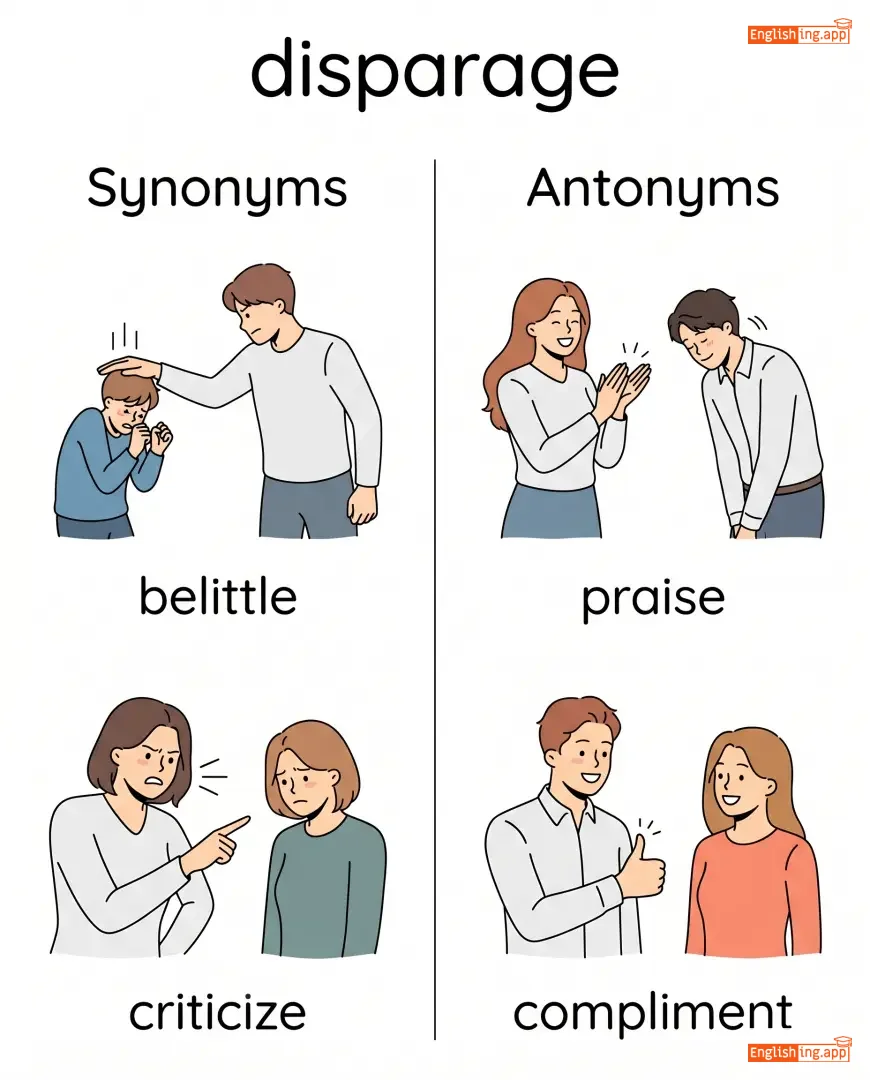
belittle, criticize, denigrate, undervalue, ridicule
••••••
|
praise, compliment
••••••
|
disparage efforts, disparage reputation, unfairly disparage
••••••
|
No •••••• |
|
#2563
❌
|
/dɪsˈoʊn/
verb
(迪斯欧恩)
••••••
|
- •••••• |
放弃关系
fangqi guanxi
••••••
|
disowned
迪斯欧恩德
••••••
|
disowned
迪斯欧恩德
••••••
|
disowns
迪斯欧恩斯
••••••
|
disowning
迪斯欧宁
••••••
|
to refuse to acknowledge or accept responsibility for someone or something
••••••
|
He decided to disown his reckless brother.
他决定与他的鲁莽兄弟断绝关系。
••••••
|
他决定与他的鲁莽兄弟断绝关系。
Ta jueding yu tade lumang xiongdi duanjue guanxi.
••••••
|
- •••••• | - •••••• | - •••••• |
reject, renounce, abandon, repudiate
••••••
|
accept, acknowledge
••••••
|
disown responsibility, disown a child, disown publicly
••••••
|
放弃关系,disown – 断绝关系,拒绝
••••••
|
|
#2564
🙅
|
/ˌdɪsəˈbiːdiənt/
adjective
(迪索比迪恩特)
••••••
|
- •••••• |
不服从的
bufucóng de
••••••
|
- •••••• | - •••••• | - •••••• | - •••••• |
refusing or failing to obey rules or authority
••••••
|
The teacher scolded the disobedient students. |
老师训斥了不服从的学生。
Lǎoshī xùnchì le bù fúcóng de xuéshēng.
••••••
|
- •••••• | - •••••• | - •••••• |
defiant, rebellious, unruly, insubordinate
••••••
|
obedient, compliant
••••••
|
disobedient child, disobedient behavior, scold disobedient
••••••
|
服从意味着遵守规则,而不服从意味着不遵守它们 – 不服从的
••••••
|
|
#2565
🚫
|
/ˌdɪsəˈbiːdiəns/
noun
(不服从)
••••••
|
- •••••• |
不服从
bù fúcóng
••••••
|
- •••••• | - •••••• | - •••••• | - •••••• |
failure or refusal to obey rules, laws, or authority
••••••
|
The child's disobedience worried his parents. |
孩子的不服从让父母感到担忧。
Hái zi de bù fúcóng ràng fù mǔ gǎn dào dān yōu.
••••••
|
- •••••• | - •••••• | - •••••• |
defiance, insubordination, rebellion, noncompliance
••••••
|
obedience, compliance
••••••
|
act of disobedience, punish disobedience, child disobedience
••••••
|
Disobedience = 'Dis' + 'Obedience' – 不遵守规则 = 不服从
••••••
|
|
#2566
😏
|
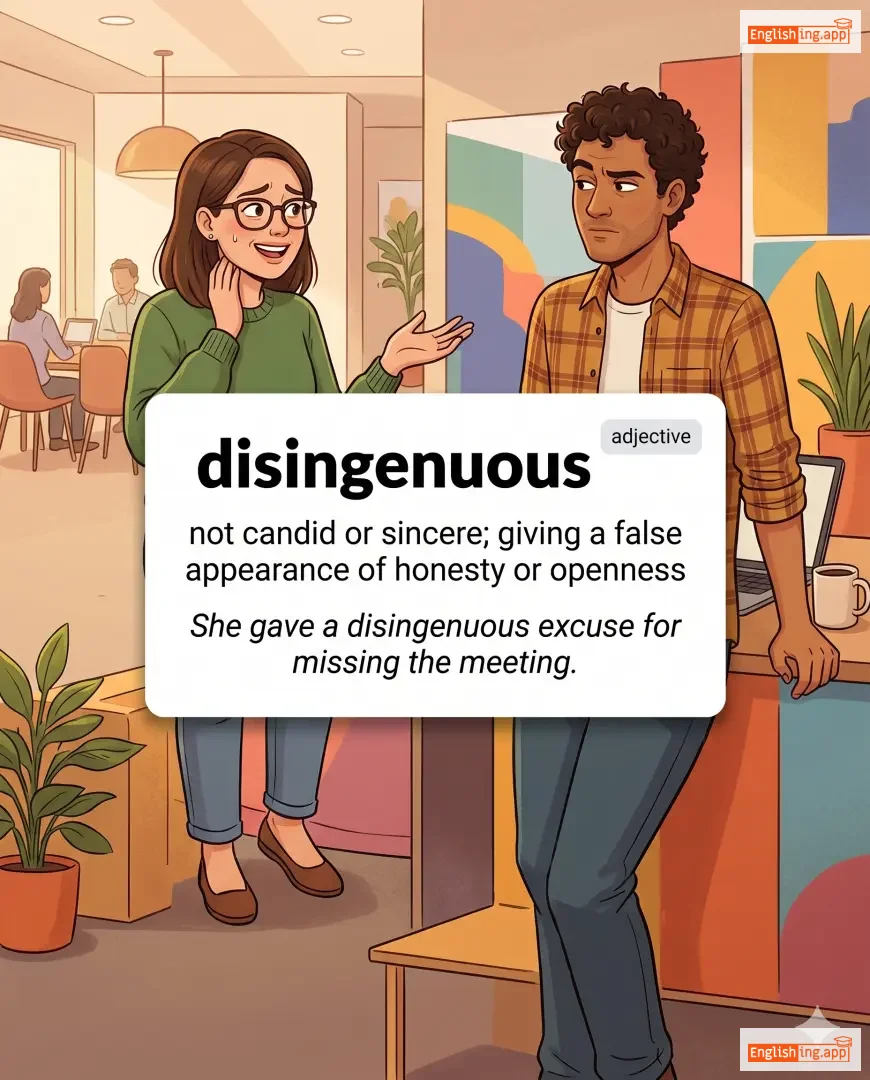
/ˌdɪsɪnˈdʒɛnjʊəs/
adjective
(dɪsɪnˈdʒɛnjʊəs)
••••••
|
|
虚伪的
xū wèi de
••••••
|
- •••••• | - •••••• | - •••••• | - •••••• |
not candid or sincere; giving a false appearance of honesty or openness
••••••
|
She gave a disingenuous excuse for missing the meeting. |
她给出了一个虚伪的借口来错过会议。
Tā gěi chūle yīgè xūwèi de jièkǒu lái cuòguò huìyì.
••••••
|
- •••••• | - •••••• | - •••••• |
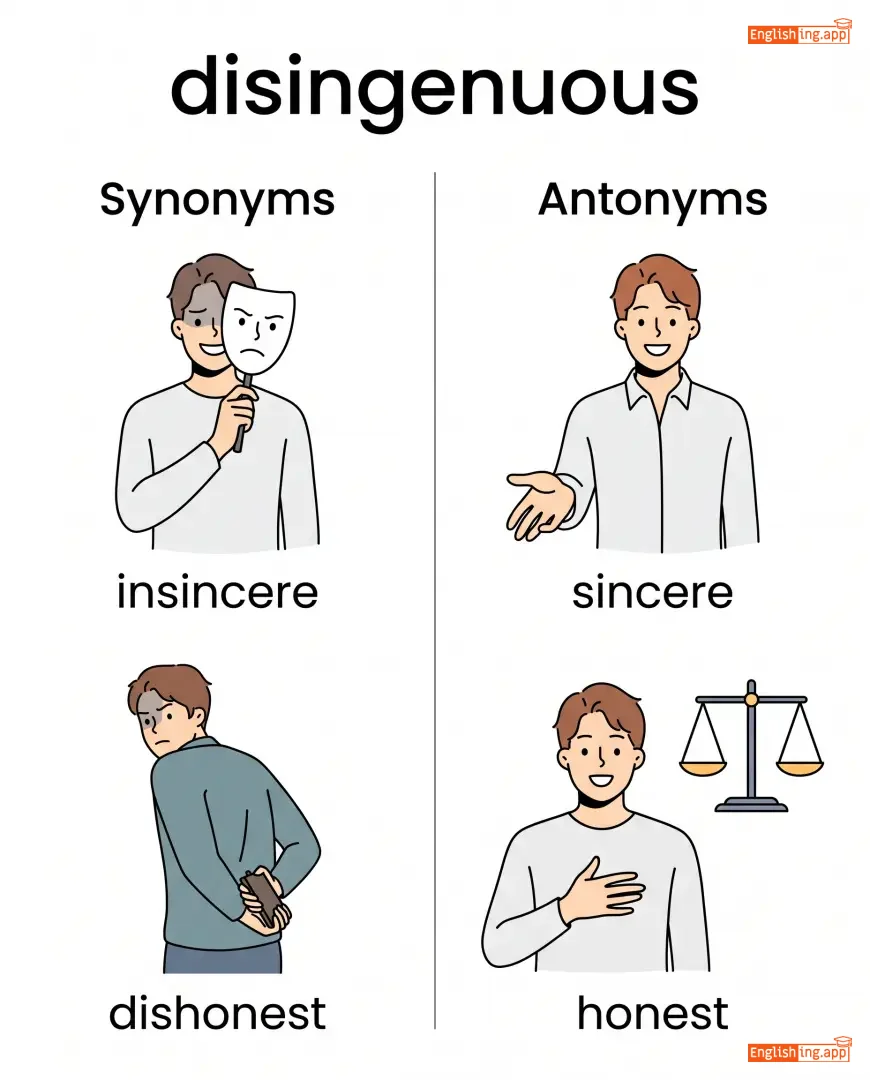
insincere, dishonest, deceitful, hypocritical, duplicitous
••••••
|
sincere, honest, genuine
••••••
|
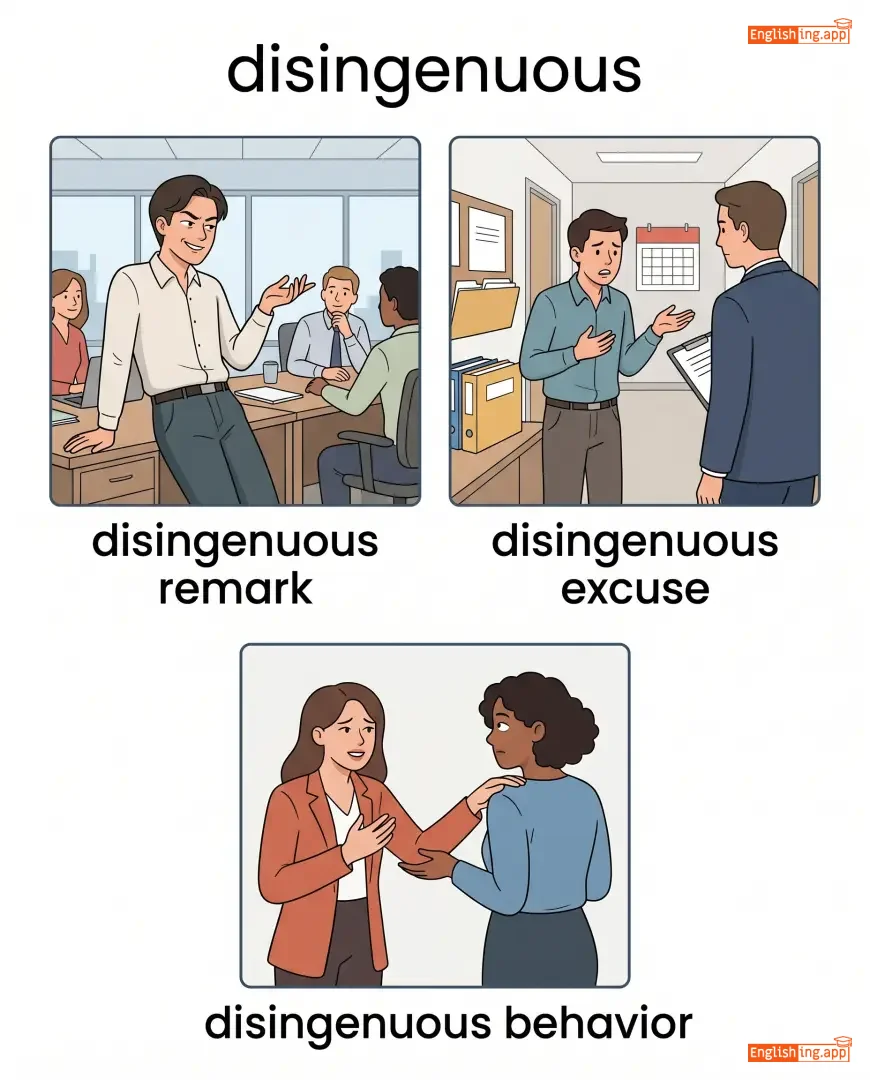
disingenuous remark, disingenuous excuse, disingenuous behavior
••••••
|
Dis + genuine 不是诚实的意思 disingenuous = 虚伪的
••••••
|
|
#2567
📄
|
/dɪsˈmɪsl̩/
noun
(解雇)
••••••
|
- •••••• |
解雇, 拒绝
jiěgù, jùjué
••••••
|
- •••••• | - •••••• | - •••••• | - •••••• |
the act of removing someone from their job; the act of treating something as unimportant
••••••
|
His unfair dismissal led to a lawsuit against the company. |
他的不公正解雇导致了对公司的诉讼。
Tā de bù gōngzhèng jiěgù dǎozhì le duì gōngsī de sùsòng.
••••••
|
- •••••• | - •••••• | - •••••• |
termination, firing, discharge, expulsion, rejection
••••••
|
employment, acceptance, retention
••••••
|
wrongful dismissal, unfair dismissal, dismissal from work, dismissal of charges
••••••
|
Dismiss + AL = 被解雇的结果 (解雇)
••••••
|
|
#2568
🚪
|
/dɪsˈmɪs/
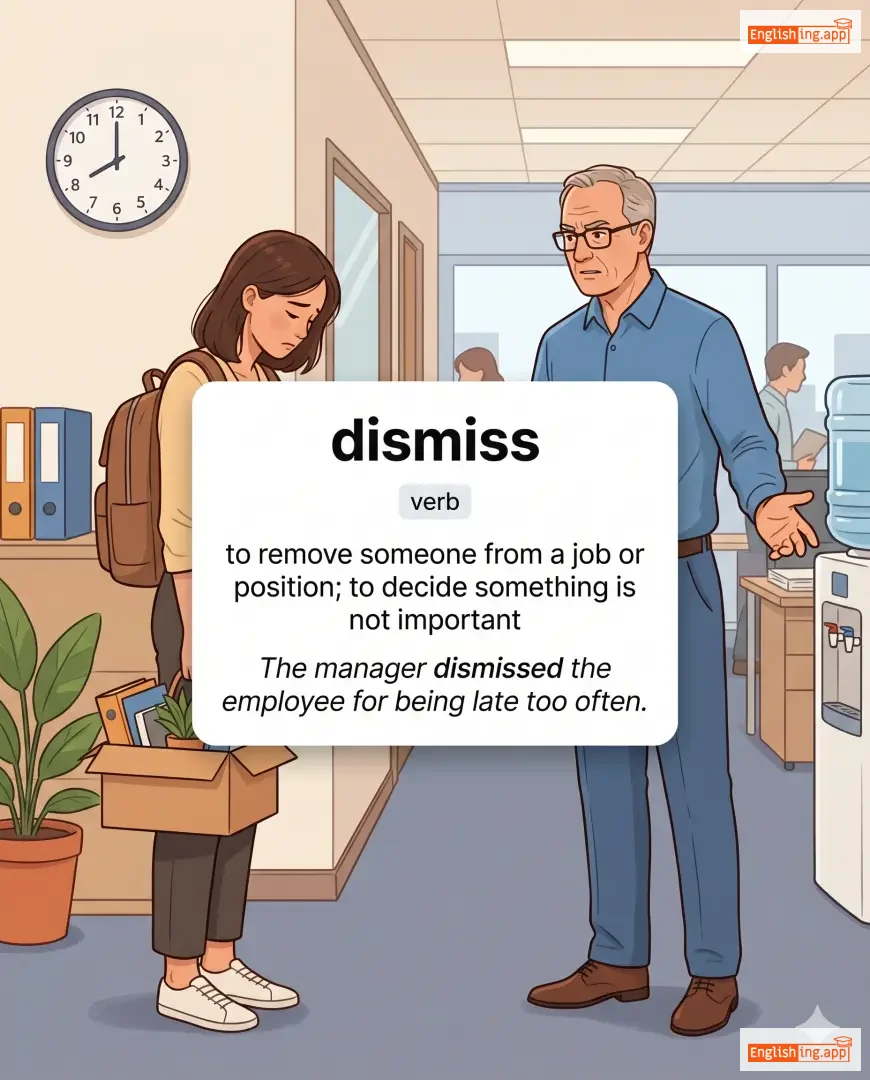
verb
(迪斯米斯)
••••••
|
|
解雇, 否定
jiěgù, fǒudìng
••••••
|
dismissed
迪斯米斯德
••••••
|
dismissed
迪斯米斯德
••••••
|
dismisses
迪斯米塞斯
••••••
|
dismissing
迪斯米辛
••••••
|
to remove someone from a job or position; to decide something is not important
••••••
|
The manager dismissed the employee for being late too often.
经理因为员工经常迟到而解雇了他。
••••••
|
经理因为员工经常迟到而解雇了他。
Jīnglǐ yīnwèi yuángōng jīngcháng chídào ér jiěgùle tā.
••••••
|
dismiss out of hand
立刻否定
••••••
|
to reject something immediately without considering it
••••••
|
立刻否定
lìkè fǒudìng
••••••
|
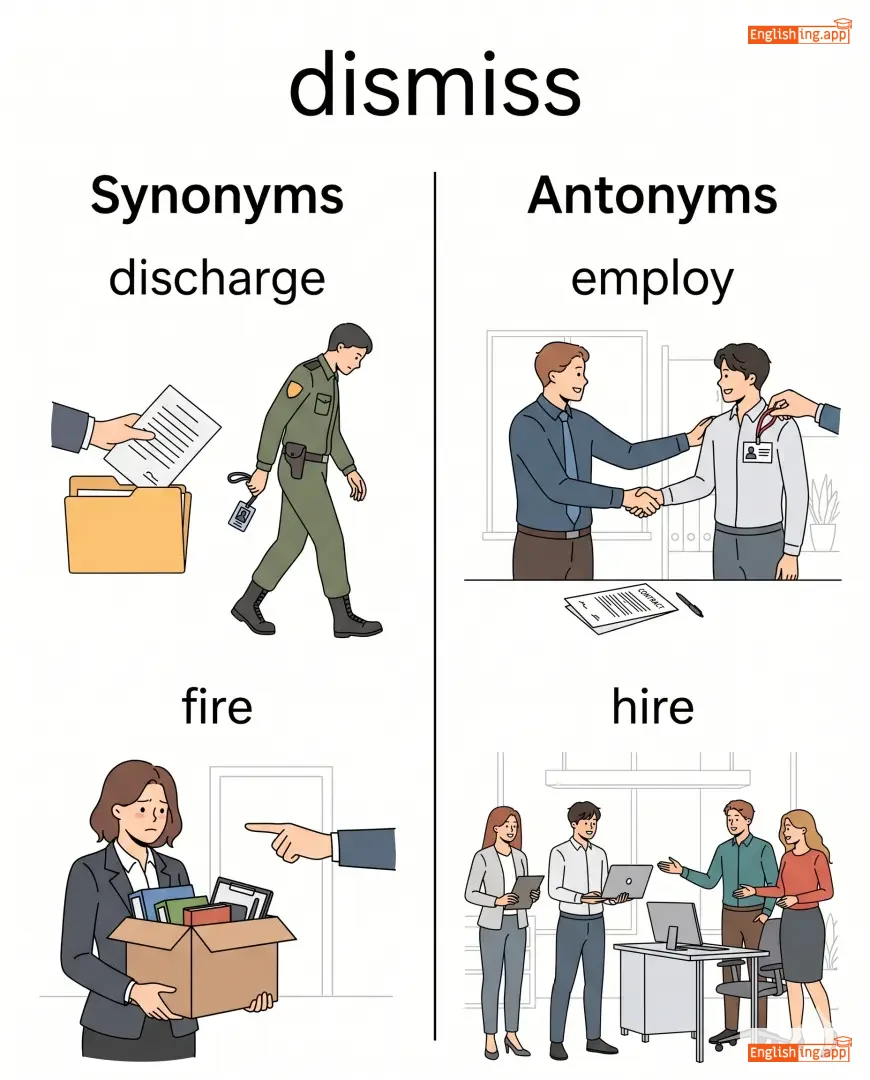
discharge, fire, release, reject, expel
••••••
|
employ, hire, accept
••••••
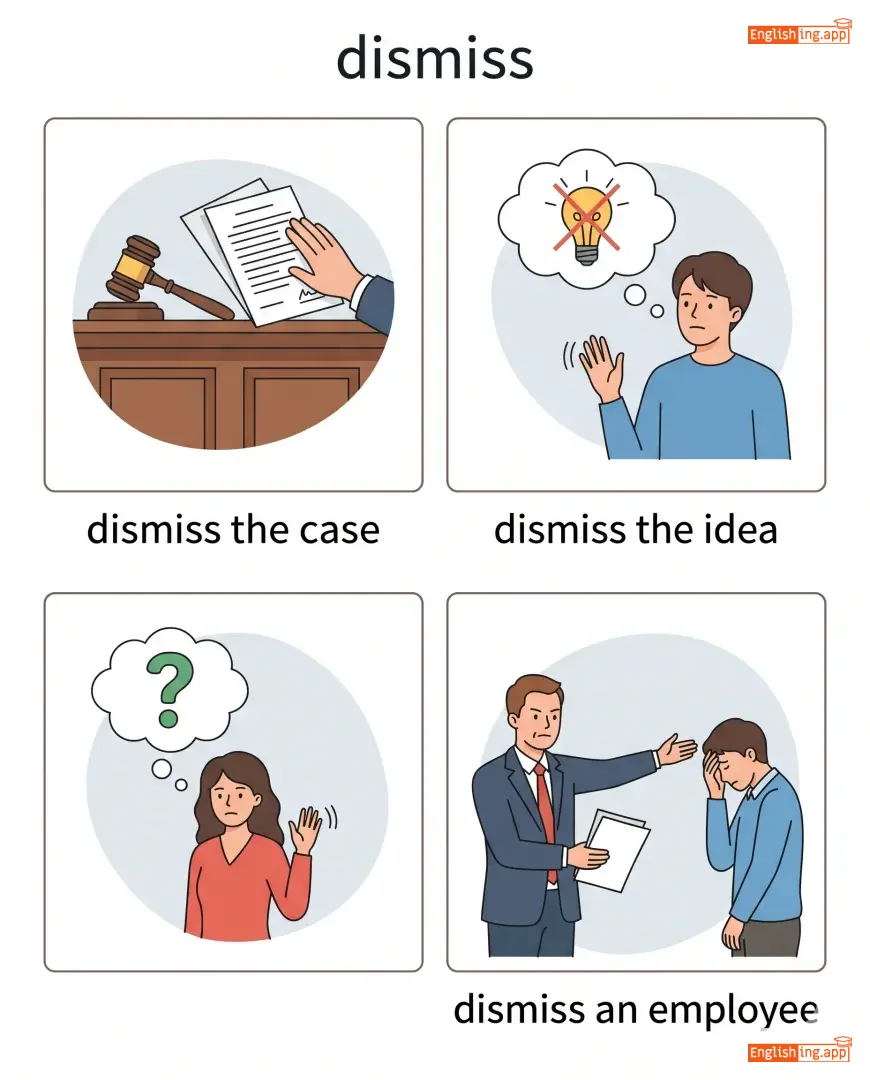
|
dismiss the case, dismiss the idea, dismiss an employee, dismiss charges
••••••
|
Dis + Miss = 被解雇
••••••
|
|
#2569
🩸
|
/dɪsˈmɛmbər/
verb
(迪斯梅伯)
••••••
|
- •••••• |
肢解
zhījiě
••••••
|
dismembered
迪斯梅伯德
••••••
|
dismembered
迪斯梅伯德
••••••
|
dismembers
迪斯梅伯斯
••••••
|
dismembering
迪斯梅伯林
••••••
|
to cut or tear the limbs from a body; to divide into separate parts
••••••
|
The king ordered his enemies to be dismembered.
国王命令将他的敌人肢解。
••••••
|
国王命令将他的敌人肢解。
Guówáng mìnglìng jiāng tā de dírén zhījiě.
••••••
|
- •••••• | - •••••• | - •••••• |
cut up, divide, mutilate, tear apart, break up
••••••
|
assemble, join, unify
••••••
|
dismember the body, dismember the organization, brutally dismembered
••••••
|
Dis + MEMBER = 将成员分解
••••••
|
|
#2570
😨
|
/dɪsˈmeɪ/
noun/verb
(迪斯梅)
••••••
|
|
沮丧或恐惧
jǔsàng huò kǒngjù
••••••
|
dismayed
迪斯梅德
••••••
|
dismayed
迪斯梅德
••••••
|
dismays
迪斯梅兹
••••••
|
dismaying
迪斯梅英
••••••
|
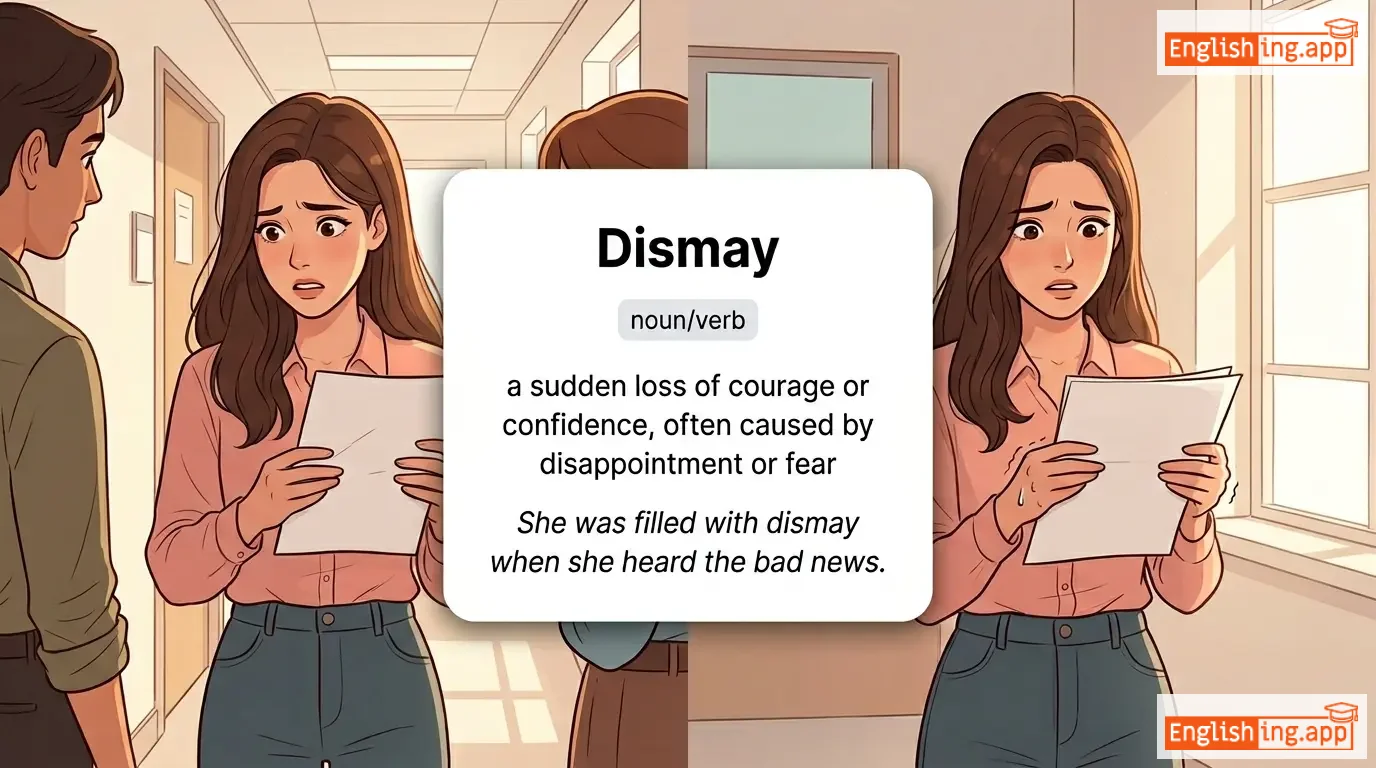
a sudden loss of courage or confidence, often caused by disappointment or fear
••••••
|
She was filled with dismay when she heard the bad news.
她听到坏消息时,充满了失望。
••••••
|
她听到坏消息时,感到极度沮丧。
tā tīng dào huài xiāo xī shí, gǎn dào jí dù jǔ sàng
••••••
|
to her dismay
她的失望
••••••
|
to her shock or disappointment
••••••
|
她的沮丧
tā de jǔ sàng
••••••
|
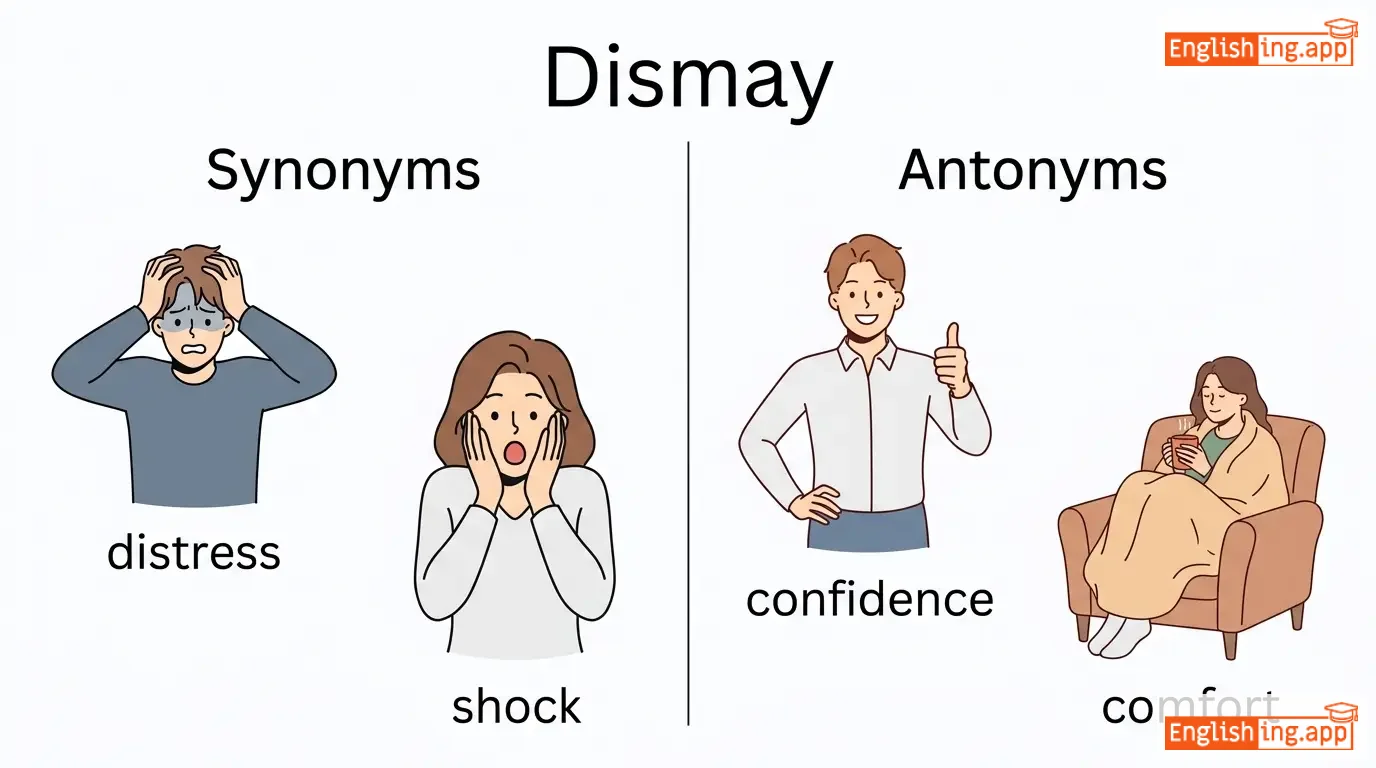
distress, shock, alarm, disappointment, consternation
••••••
|
confidence, comfort, reassurance
••••••
|
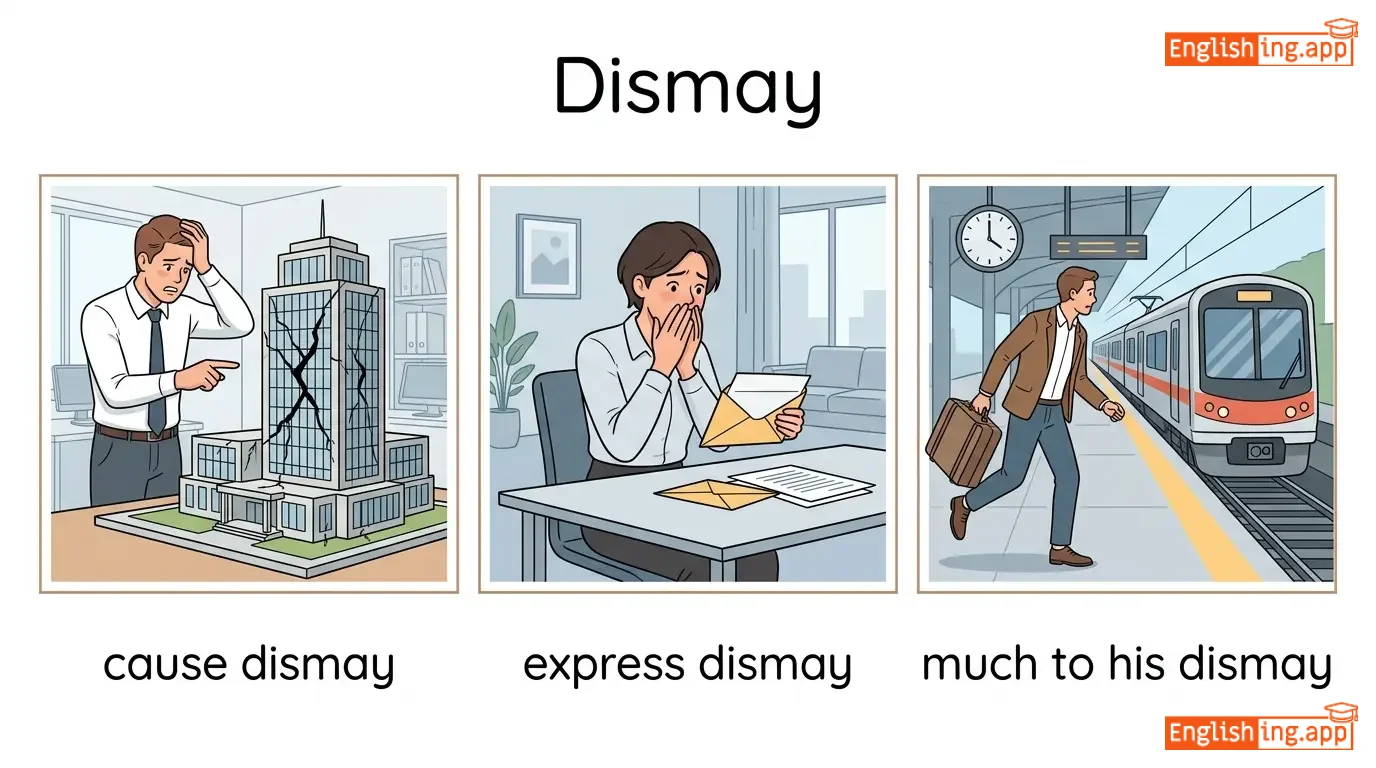
cause dismay, express dismay, much to his dismay, filled with dismay
••••••
|
迪斯梅就像失望的音效,提醒你失去信心或勇气。
••••••
|
|
#2571
🛠️
|
/dɪsˈmæntl̩/
verb
(解体)
••••••
|
|
拆解
chāijiě
••••••
|
dismantled
解体了
••••••
|
dismantled
解体了
••••••
|
dismantles
解体
••••••
|
dismantling
解体中
••••••
|
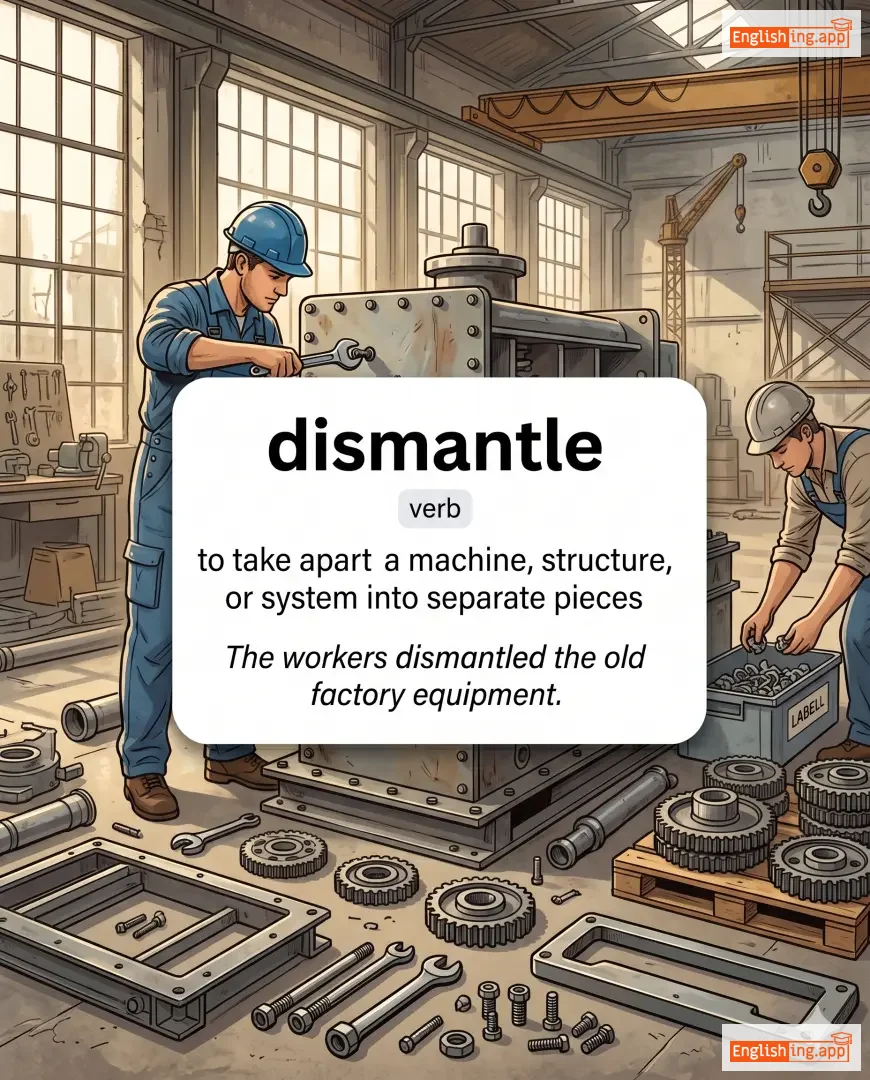
to take apart a machine, structure, or system into separate pieces
••••••
|
The workers dismantled the old factory equipment.
工人们拆除了旧工厂的设备。
••••••
|
工人们拆除了旧工厂的设备。
Gōngrénmen chāichúle jiù gōngchǎng de shèbèi.
••••••
|
- •••••• | - •••••• | - •••••• |
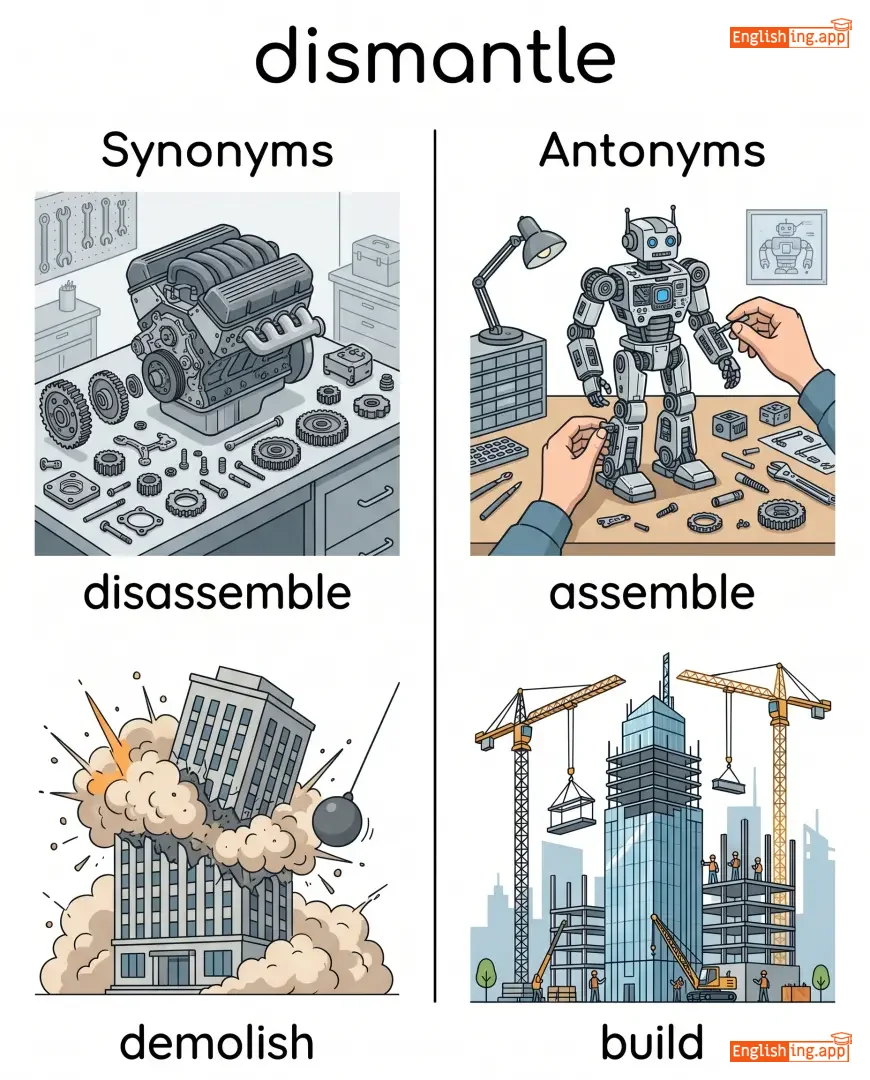
disassemble, demolish, break down, take apart, deconstruct
••••••
|
assemble, build, construct
••••••
|
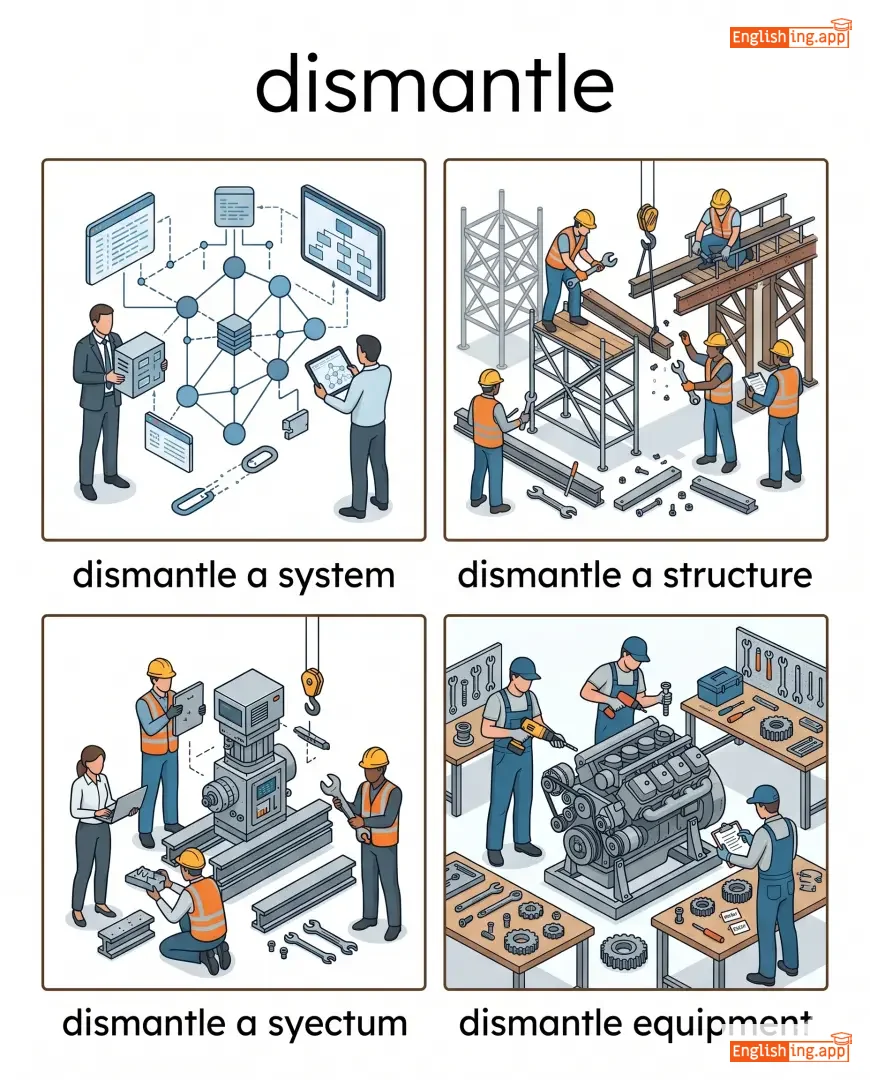
dismantle a system, dismantle a structure, dismantle equipment, dismantle a network
••••••
|
拆解 = 分解, 解体
••••••
|
|
#2572
🏹
|
/dɪsˈlɒdʒ/
verb
(迪斯洛奇)
••••••
|
- •••••• |
赶走
gan zou
••••••
|
dislodged
迪斯洛奇德
••••••
|
dislodged
迪斯洛奇德
••••••
|
dislodges
迪斯洛奇斯
••••••
|
dislodging
迪斯洛奇英
••••••
|
To remove or force out from a position, especially one that is fixed or hard to move.
••••••
|
The troops dislodged the enemy from the hill.
部队把敌人从山丘上赶了下去。
••••••
|
部队把敌人从山丘上赶了下去。
Budui ba diren cong shanqiu shang ganle xiaqu.
••••••
|
- •••••• | - •••••• | - •••••• |
remove, eject, expel, oust, shift
••••••
|
secure, fix, anchor
••••••
|
dislodge debris, dislodge enemy, dislodge from position
••••••
|
赶走就像将敌人赶出固定位置。
••••••
|
|
#2573
🦴
|
/ˈdɪsləkeɪt/
verb
(dīsīluòkèitè)
••••••
|
- •••••• |
脱臼
tuōjiù
••••••
|
dislocated
dīsīluòkèitèd
••••••
|
dislocated
dīsīluòkèitèd
••••••
|
dislocates
dīsīluòkèits
••••••
|
dislocating
dīsīluòkèitīng
••••••
|
To disturb the normal position of something, especially a joint in the body.
••••••
|
He dislocated his shoulder while playing football.
他在踢足球时脱臼了肩膀。
••••••
|
他在踢足球时脱臼了肩膀。
Tā zài tī zúqiú shí tuōjiù le jiānbǎng.
••••••
|
- •••••• | - •••••• | - •••••• |
displace, disturb, disarrange, misalign
••••••
|
align, adjust, arrange
••••••
|
dislocate a shoulder, dislocate a joint, dislocate easily
••••••
|
脱臼就像是把关节从正常位置'脱'出来,像dislocate一样。
••••••
|
|
#2574
➗
|
/dɪsˈdʒʌŋktɪv/
adjective
(迪斯强克提夫)
••••••
|
- •••••• |
选择性
xuǎnzé xìng
••••••
|
- •••••• | - •••••• | - •••••• | - •••••• |
Serving to separate or divide; expressing a choice between alternatives.
••••••
|
In grammar, 'or' is a disjunctive conjunction. |
在语法中,'或' 是一个选择性连词。
Zài yǔfǎ zhōng, 'huò' shì yīgè xuǎnzé xìng liáncí.
••••••
|
- •••••• | - •••••• | - •••••• |
separative, divisive, alternative
••••••
|
conjunctive, unifying
••••••
|
disjunctive conjunction, disjunctive mood, disjunctive effect
••••••
|
选择性来自dis + junction,断开连接意味着分开。
••••••
|
|
#2575
🔀
|
/dɪsˈdʒʌŋkʃən/
noun
(迪斯詹克申)
••••••
|
- •••••• |
分裂
fenlie
••••••
|
- •••••• | - •••••• | - •••••• | - •••••• |
A lack of connection between things; separation or disunity.
••••••
|
There is a clear disjunction between theory and practice. |
理论与实践之间存在明显的分裂。
Lǐlùn yǔ shíjiàn zhī jiān cúnzài míngxiǎn de fēnliè.
••••••
|
- •••••• | - •••••• | - •••••• |
separation, division, detachment, disunity
••••••
|
connection, unity, integration
••••••
|
cultural disjunction, social disjunction, disjunction between
••••••
|
Dis + Junction (交叉口) 不在 = 分裂。
••••••
|
|
#2576
🌀
|
/dɪsˈdʒɔɪntɪd/
adjective
(dɪsˈdʒɔɪntɪd)
••••••
|
|
支离破碎
zhī lí pò suì
••••••
|
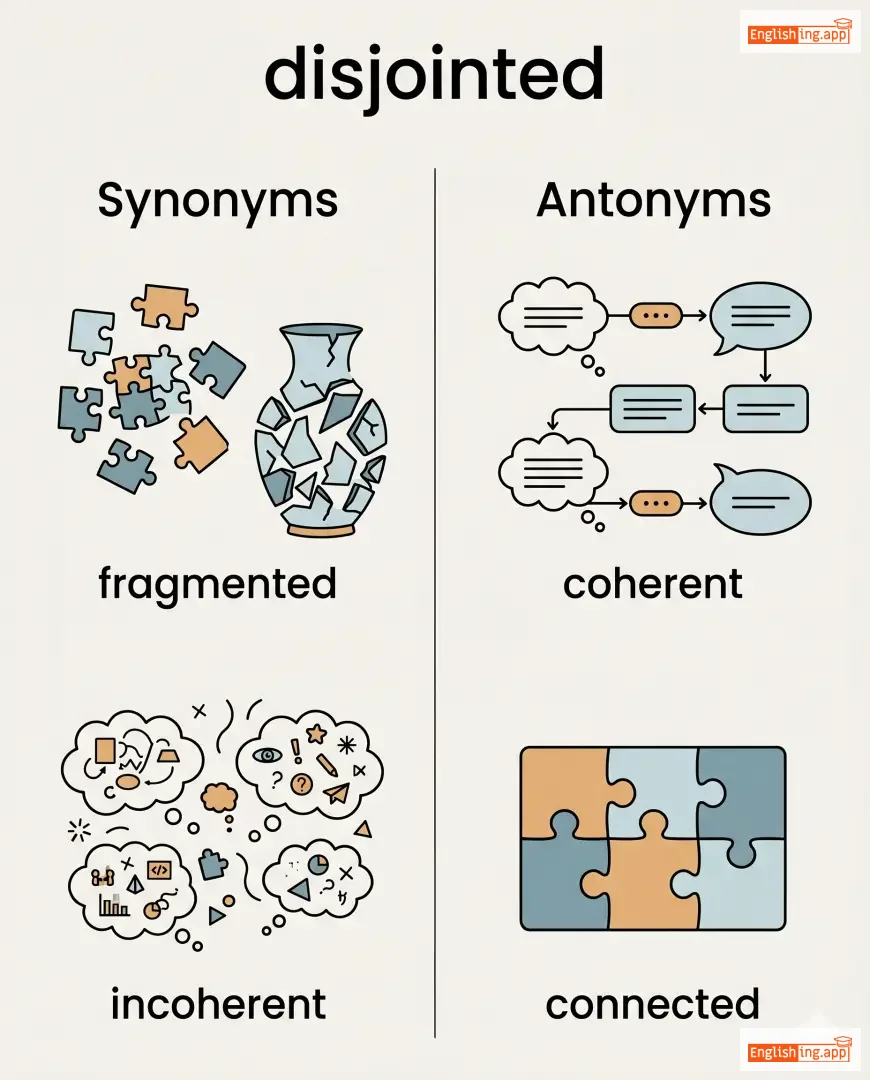
- •••••• | - •••••• | - •••••• | - •••••• |
Lacking order, coherence, or connection; disconnected.
••••••
|
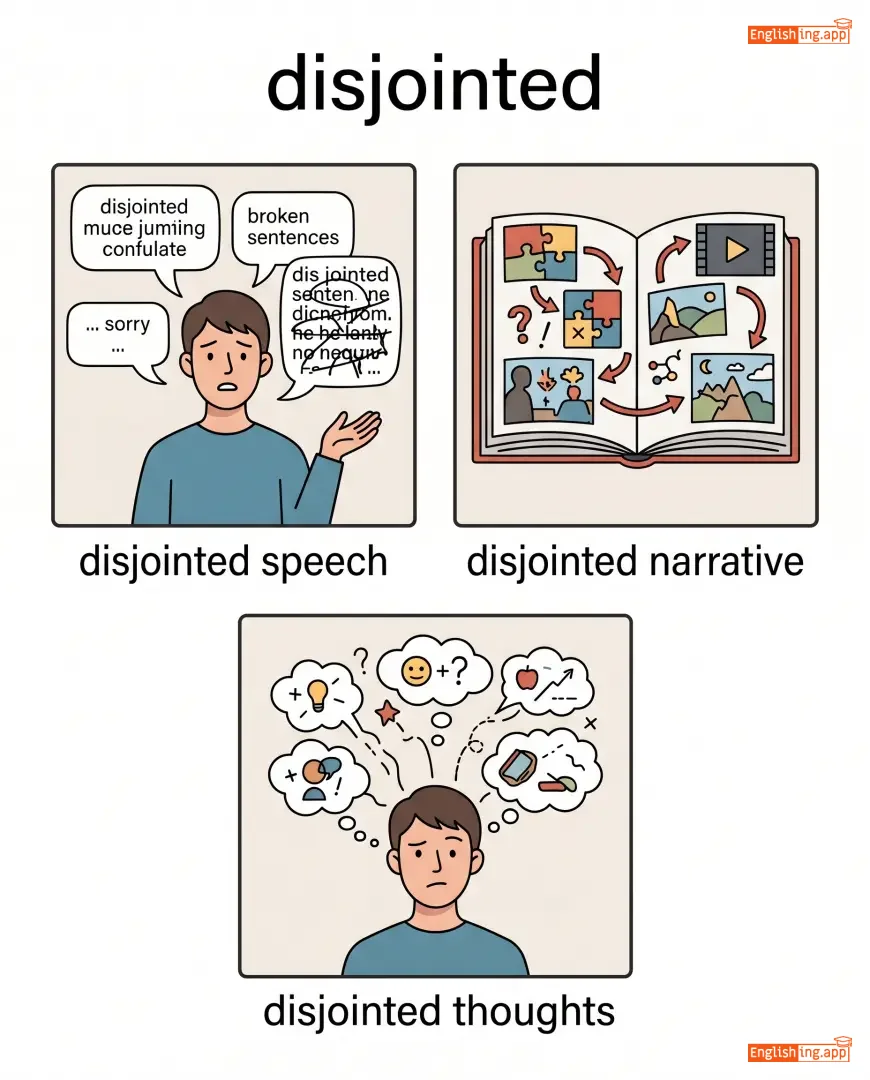
The movie felt disjointed and hard to follow. |
这部电影感觉支离破碎,很难跟上。
Zhè bù diànyǐng gǎnjué zhī lí pò suì, hěn nán gēn shàng.
••••••
|
- •••••• | - •••••• | - •••••• |
fragmented, incoherent, disconnected, jumbled, chaotic
••••••
|
coherent, connected, organized
••••••
|
disjointed speech, disjointed narrative, disjointed thoughts
••••••
|
Disjointed 就像一片破碎的拼图,无法拼合。
••••••
|
|
#2577
⚖️
|
/dɪsˈɪntrəstɪd/
adjective
(迪辛特雷斯特德)
••••••
|
|
无私
wusi
••••••
|
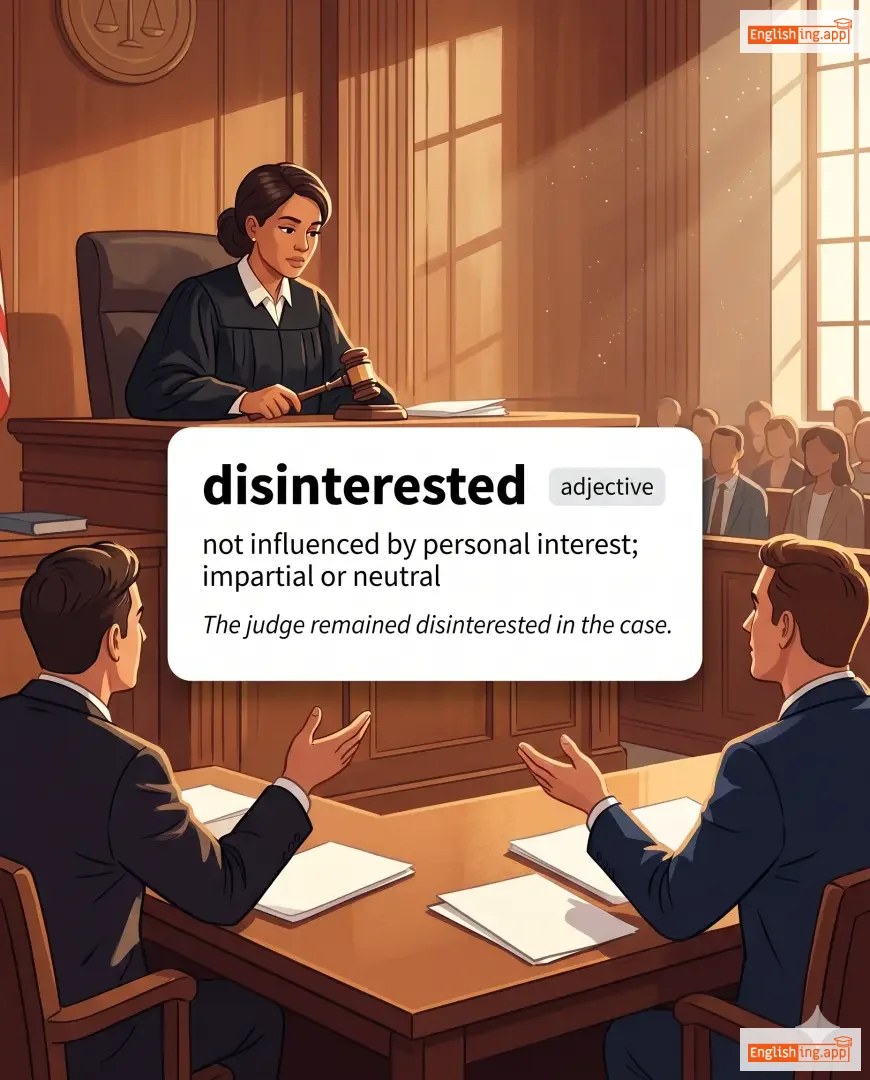
- •••••• | - •••••• | - •••••• | - •••••• |
not influenced by personal interest; impartial or neutral
••••••
|
The judge remained disinterested in the case. |
法官在案件中保持无私。
Faguang zai anjian zhong baochi wusi.
••••••
|
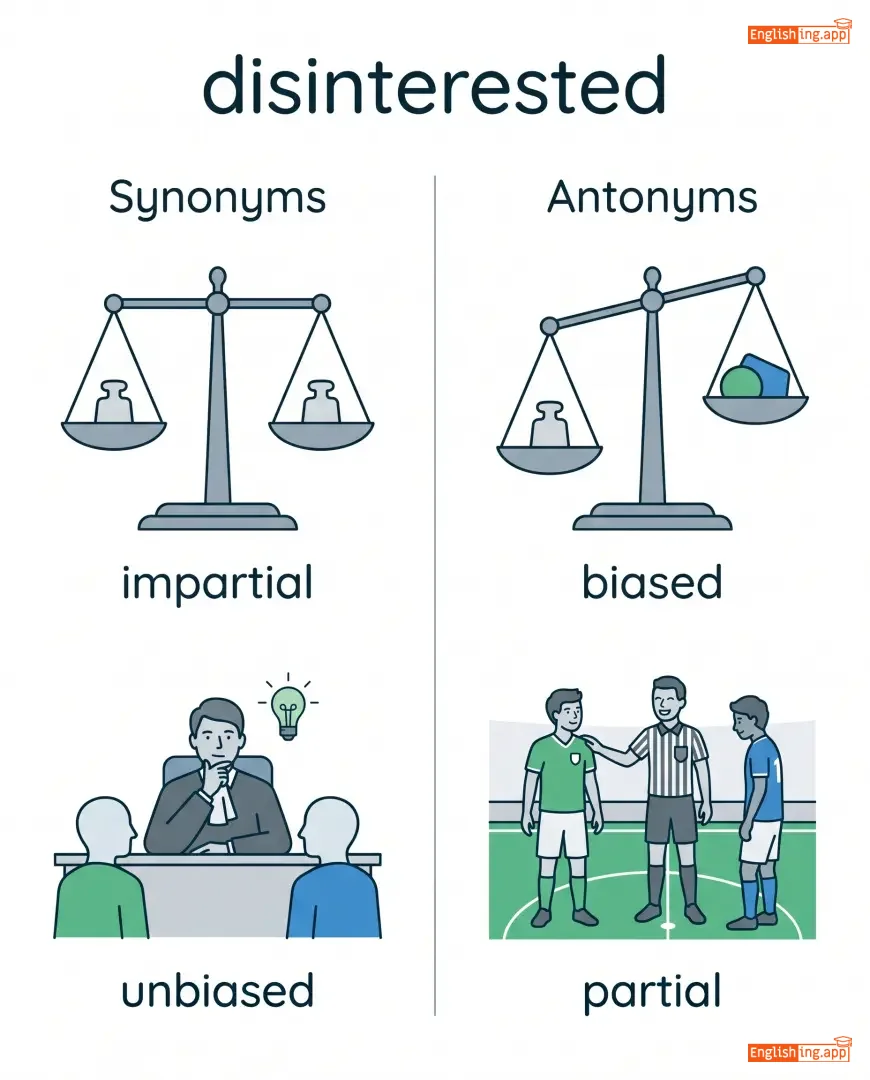
- •••••• | - •••••• | - •••••• |
impartial, unbiased, objective, neutral
••••••
|
biased, partial, interested
••••••
|
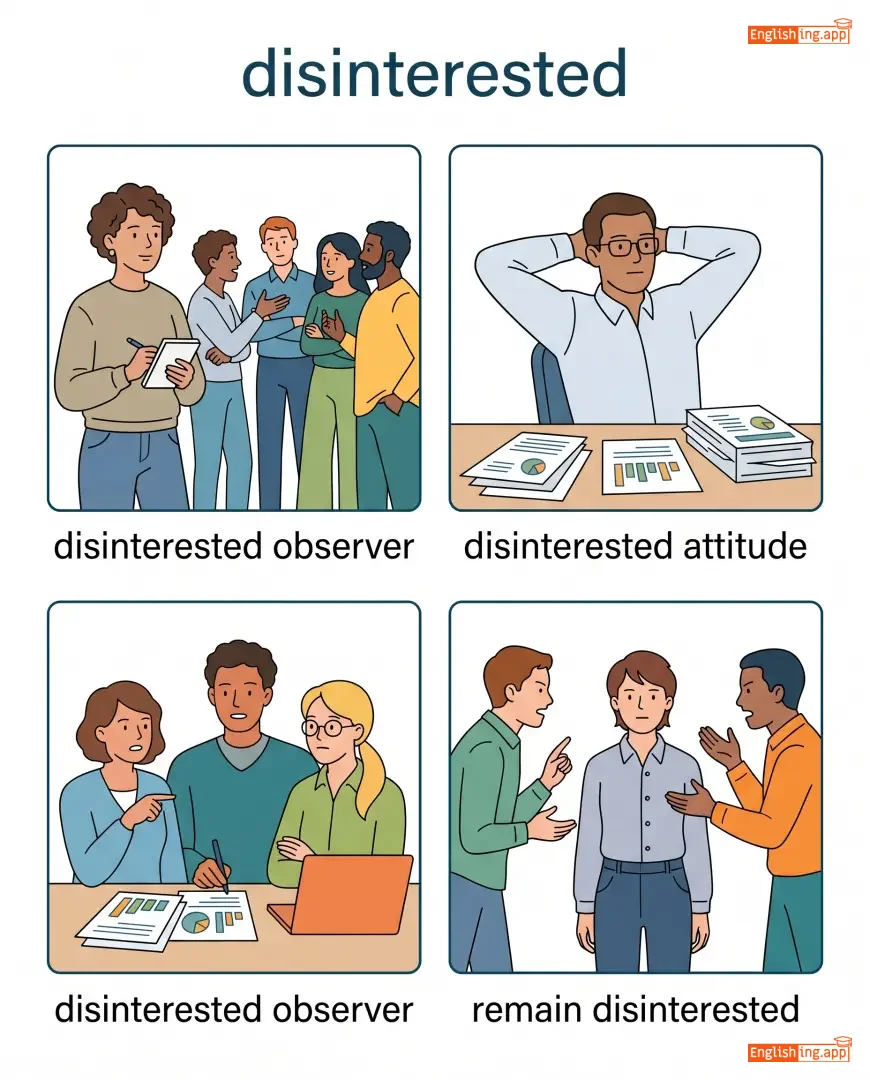
disinterested observer, disinterested attitude, remain disinterested
••••••
|
无私 = 不偏不倚,disinterested = 无私
••••••
|
|
#2578
😐
|
/dɪsˈɪntrəst/
noun
(迪斯因特雷斯特)
••••••
|
- •••••• |
冷漠
lengmo
••••••
|
- •••••• | - •••••• | - •••••• | - •••••• |
lack of interest or concern
••••••
|
His disinterest in the project was obvious. |
他对这个项目的冷漠是显而易见的。
Tā duì zhège xiàngmù de lengmò shì xiǎn'ér yìjiàn de.
••••••
|
- •••••• | - •••••• | - •••••• |
indifference, apathy, unconcern, neglect
••••••
|
interest, enthusiasm, concern
••••••
|
disinterest in work, disinterest among students, show disinterest
••••••
|
Interest 不存在 = 冷漠
••••••
|
|
#2579
⚰️
|
/ˌdɪsɪnˈtɜːr/
verb
(迪辛特尔)
••••••
|
- •••••• |
挖掘
wājué
••••••
|
disinterred
迪辛特尔德
••••••
|
disinterred
迪辛特尔德
••••••
|
disinters
迪辛特尔斯
••••••
|
disinterring
迪辛特尔英
••••••
|
to dig up something buried, especially a body
••••••
|
The archaeologists disinterred ancient remains from the site.
考古学家从遗址中挖掘出古代遗骸。
••••••
|
考古学家从遗址中挖掘出古代遗骸。
Kǎogǔ xuéjiā cóng yízhǐ zhōng wājué chū gǔdài yíhái.
••••••
|
- •••••• | - •••••• | - •••••• |
exhume, unearth, uncover, dig up
••••••
|
bury, inter
••••••
|
disinter a body, disinter remains, disinter the dead
••••••
|
Disinter 就是把埋葬的东西挖出来!
••••••
|
|
#2580
🚫💰
|
/ˌdɪsɪnˈhɛrɪt/
verb
(disinherit)
••••••
|
- •••••• |
剥夺继承权
bōduó jìchéng quán
••••••
|
disinherited
disinherited
••••••
|
disinherited
disinherited
••••••
|
disinherits
disinherits
••••••
|
disinheriting
disinheriting
••••••
|
to deprive someone, especially a child, of inheritance or right to property
••••••
|
The father threatened to disinherit his son for his reckless actions.
The father threatened to disinherit his son for his reckless actions.
••••••
|
父亲威胁要因儿子的鲁莽行为剥夺他的继承权。
Fùqīn wēixié yào yīn érzi de lǔmǎng xíngwéi bōduó tā de jìchéng quán.
••••••
|
- •••••• | - •••••• | - •••••• |
cut off, deprive, exclude, disown
••••••
|
bequeath, inherit, endow
••••••
|
disinherit a child, disinherit someone, disinherit heirs
••••••
|
dis + inherit,disinherit 就是剥夺继承权.
••••••
|
Vocabulary Quiz
Test your vocabulary by matching words with their translations or meanings.
Login to take the quiz
Comments (0)
Share your thoughts and join the discussion.
Join the discussion by logging in
Login to CommentNo comments yet
Be the first to share your thoughts!