



Swipe left or right, or use the buttons. Tap image to zoom.
例句翻译
单词
Lesson 262Lesson 262 - 遮罩切换
|
表情符号
|
单词 | Images | 翻译 | 过去时 | 过去分词 | 第三人称单数 | 动名词 | 含义 | 例句 | 例句翻译 | 示例表达 | 示例表达含义 | 示例表达翻译 | 同义词 | 反义词 | 搭配词 | 助记符 |
|---|---|---|---|---|---|---|---|---|---|---|---|---|---|---|---|---|---|
|
#7830
🦅
|
/ˈskævɪndʒər/
noun
(斯凯文杰)
••••••
|
- •••••• |
食尸者 / 垃圾收集者
shíshī zhě / lājī shōují zhě
••••••
|
- •••••• | - •••••• | - •••••• | - •••••• |
an animal or person that feeds on dead or discarded material
••••••
|
Vultures are natural scavengers that clean up the environment.
秃鹫是自然的清道夫,清理环境。
••••••
|
秃鹫是自然的清道夫,清理环境。
Tū jiù shì zìrán de qīng dào fū, qīnglǐ huánjìng.
••••••
|
scavenger hunt
寻宝游戏
••••••
|
a game in which players try to find items from a list
••••••
|
寻宝游戏
xún bǎo yóu xì
••••••
|
forager, picker, cleaner, searcher, hunter
••••••
|
producer, creator
••••••
|
scavenger hunt, scavenger bird, scavenger species, natural scavenger
••••••
|
Scavenger 意味着食尸者 - 像秃鹫一样收集垃圾。
••••••
|
|
#7831
✂️
|
/ˈsɪʒ.ən/
noun
(sīxiàn)
••••••
|
- •••••• |
分裂
fenlie
••••••
|
- •••••• | - •••••• | - •••••• | - •••••• |
the act of cutting or dividing something
••••••
|
The political party suffered a scission over ideological disputes. |
政党因意识形态争议而经历了分裂。
Zhèngdǎng yīn yìshí xíngtài zhēngyì ér jīnglìle fēnliè.
••••••
|
- •••••• | - •••••• | - •••••• |
split, division, separation, severance
••••••
|
union, unity, connection
••••••
|
political scission, scission of groups, ideological scission
••••••
|
Scission像'scissors' - 分裂,切割。
••••••
|
|
#7832
🌱
|
/ˈsaɪ.ən/
noun
(赛恩)
••••••
|
- •••••• |
后代
hòudài
••••••
|
- •••••• | - •••••• | - •••••• | - •••••• |
a descendant of a wealthy, aristocratic, or influential family
••••••
|
He is the scion of a wealthy industrialist family. |
他是一个富有的工业家家庭的后代。
Tā shì yīgè fùyǒu de gōngyèjiā jiātíng de hòudài.
••••••
|
- •••••• | - •••••• | - •••••• |
descendant, heir, offspring, successor, progeny
••••••
|
ancestor, forebear
••••••
|
scion of a family, wealthy scion, scion of nobility
••••••
|
Scion 意味着后代 (🌱),就像家族树上的一根枝条 - 后代。
••••••
|
|
#7833
📖
|
/ˈsaɪ.ə.lɪz.əm/
noun
(赛奥利主义)
••••••
|
- •••••• |
表面知识的假装
biaomian zhishi de jiazhuang
••••••
|
- •••••• | - •••••• | - •••••• | - •••••• |
pretentious show of superficial knowledge
••••••
|
His speech was full of sciolism, impressing no one. |
他的演讲充满了赛奥利主义,没有打动任何人。
Tā de yǎnjiǎng chōngmǎnle sài'àolì zhǔyì, méiyǒu dǎdòng rènhé rén.
••••••
|
- •••••• | - •••••• | - •••••• |
superficiality, pretentiousness, ignorance, shallowness
••••••
|
wisdom, depth, knowledge
••••••
|
mere sciolism, display of sciolism, empty sciolism
••••••
|
Sciolism意味着假装有学识,但实际上只是肤浅的知识。
••••••
|
|
#7834
💎
|
/ˈsɪn.tɪ.leɪ.tɪŋ/
adjective
(sintilating)
••••••
|
- •••••• |
闪耀的
shanyao de
••••••
|
- •••••• | - •••••• | - •••••• | - •••••• |
brilliantly clever, exciting, or sparkling
••••••
|
Her scintillating conversation kept everyone entertained.
她那闪闪发光的谈话让每个人都感到娱乐。
••••••
|
她那闪耀的谈话让每个人都感到娱乐。
Ta na shanyao de tanhua rang meiren dou gandao yule.
••••••
|
scintillating wit
闪闪发光的机智
••••••
|
brilliant and entertaining cleverness
••••••
|
闪耀的机智
shanyao de jizhi
••••••
|
brilliant, sparkling, dazzling, witty, lively
••••••
|
boring, dull, uninteresting
••••••
|
scintillating performance, scintillating speech, scintillating personality
••••••
|
Scintillating 不仅是光亮,也是一种闪耀的谈话 - 闪耀的。
••••••
|
|
#7835
✨
|
/ˈsɪn.tɪ.leɪt/
verb
(xīn tí lèi tè)
••••••
|
- •••••• |
闪烁
shǎn shuò
••••••
|
scintillated
xīn tí lèi tè dé
••••••
|
scintillated
xīn tí lèi tè dé
••••••
|
scintillates
xīn tí lèi tè sī
••••••
|
scintillating
xīn tí lèi tè yīng
••••••
|
to sparkle or shine brightly; to emit flashes of light
••••••
|
The diamond ring scintillated under the bright lights.
钻石戒指在明亮的灯光下闪耀。
••••••
|
钻石戒指在明亮的灯光下闪耀。
Zuànshí jièzhǐ zài míngliàng de dēngguāng xià shǎnyào.
••••••
|
- •••••• | - •••••• | - •••••• |
sparkle, glitter, twinkle, flash, gleam
••••••
|
dull, fade, darken
••••••
|
scintillate with charm, scintillate with wit, scintillate brilliantly
••••••
|
Scintillate 意思是闪烁,就像钻石戒指在灯光下闪耀一样。
••••••
|
|
#7836
✨
|
/sɪnˈtɪl.ə/
noun
(辛蒂拉)
••••••
|
- •••••• |
小小的火花
xiao xiao de huo hua
••••••
|
- •••••• | - •••••• | - •••••• | - •••••• |
A tiny trace or spark of a specified quality or feeling.
••••••
|
There wasn’t a scintilla of doubt in her mind. |
她的脑海中没有一丝疑虑。
Ta de nao hai zhong mei you yi si yi lv.
••••••
|
- •••••• | - •••••• | - •••••• |
trace, spark, bit, fragment, shred
••••••
|
abundance, plenty
••••••
|
scintilla of doubt, not a scintilla, without a scintilla
••••••
|
Scintilla 意味着小小的火花,记住 '电影里有火花'。
••••••
|
|
#7837
🏫
|
/skuːl/
noun
(学校)
••••••
|
- •••••• |
学校
xuéxiào
••••••
|
- •••••• | - •••••• | - •••••• | - •••••• |
An institution for educating children; also a group of people sharing the same ideas or discipline.
••••••
|
The children walked to school together. |
孩子们一起走到学校。
Háizimen yīqǐ zǒu dào xuéxiào.
••••••
|
school of thought |
A particular philosophy or way of thinking shared by a group.
••••••
|
思想流派
sīxiǎng liúpài
••••••
|
academy, institute, college, university, class
••••••
|
home, workplace
••••••
|
primary school, high school, school building, school bus, school of thought
••••••
|
学校意味着学校,记住'学校是学习的地方'。
••••••
|
|
#7838
🏫
|
/skəˈlæstɪk/
adjective
(sī kè lā sī tì kè)
••••••
|
- •••••• |
学术的
xuéshù de
••••••
|
- •••••• | - •••••• | - •••••• | - •••••• |
Relating to schools, education, or academic learning.
••••••
|
The school organizes scholastic competitions every year.
学校每年举办学术竞赛。
••••••
|
学校每年举办学术竞赛。
Xuéxiào měi nián jǔbàn xuéshù jìngsài.
••••••
|
- •••••• | - •••••• | - •••••• |
academic, educational, instructional, pedagogical
••••••
|
nonacademic, informal
••••••
|
scholastic achievement, scholastic performance, scholastic competition, scholastic aptitude
••••••
|
Scholastic 意味着与学校相关,记住 'school+astic' 作为帮助记忆。
••••••
|
|
#7839
📚
|
/ˈskɒl.ə.li/
adjective
(skolarly)
••••••
|
|
学术的
xuéshù de
••••••
|
- •••••• | - •••••• | - •••••• | - •••••• |
Having or showing knowledge, learning, or devotion to academic study.
••••••
|
She wrote a scholarly article on medieval literature. |
她写了一篇关于中世纪文学的学术文章。
Tā xiěle yī piān guānyú zhōng shìjì wénxué de xuéshù wénzhāng.
••••••
|
- •••••• | - •••••• | - •••••• |
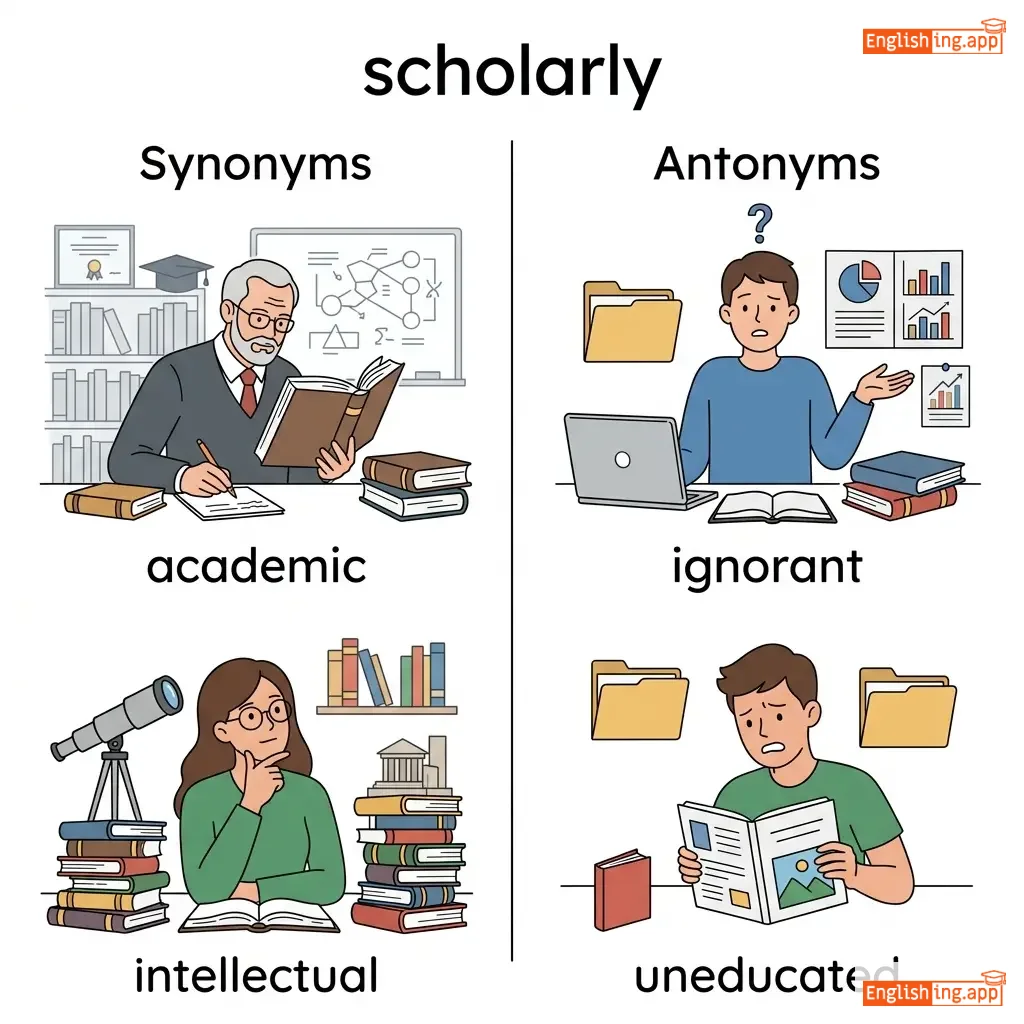
academic, intellectual, erudite, learned
••••••
|
ignorant, uneducated
••••••
|
scholarly article, scholarly work, scholarly journal, scholarly approach
••••••
|
Scholarly 就是学术的,想象一个学者在写关于历史的论文。
••••••
|
|
#7840
⚡
|
/ˈskɪz.əm/ or /ˈsɪz.əm/
noun
(ˈhæpinəs)
••••••
|
- •••••• |
幸福
xìngfú
••••••
|
- •••••• | - •••••• | - •••••• | - •••••• |
A division or split between strongly opposed parties, often in religion or organizations.
••••••
|
The schism in the church led to the formation of two separate groups. |
她在收到奖项时无法掩饰她的幸福。
Tā zài shōudào jiǎngxiàng shí wúfǎ yǎnshì tā de xìngfú.
••••••
|
religious schism |
A major division within a religious community or institution.
••••••
|
追求幸福
zhuīqiú xìngfú
••••••
|
division, split, separation, rift, discord
••••••
|
unity, agreement, harmony
••••••
|
religious schism, political schism, deep schism, cause a schism
••••••
|
幸福就像Happiness,记住幸福的幸福,幸福就会来。
••••••
|
|
#7841
🗂️
|
/skiːm/
noun, verb
(xī mǔ)
••••••
|
- •••••• |
计划 / 阴谋
jì huà / yīn móu
••••••
|
schemed
xī mǔ de
••••••
|
schemed
xī mǔ de
••••••
|
schemes
xī mǔ sī
••••••
|
scheming
xī mǔ jí
••••••
|
a plan or arrangement, especially one that is secret or dishonest
••••••
|
They devised a scheme to cheat investors.
他们制定了一个计划,欺骗投资者。
••••••
|
他们制定了一个计划,欺骗投资者。
Tāmen zhì dìng le yí gè jì huà, qī piàn tóu zī zhě.
••••••
|
grand scheme of things
事情的总体规划
••••••
|
the overall perspective or broader context
••••••
|
事情的总体规划
shì qíng de zǒng tǐ guī huà
••••••
|
plan, plot, project, conspiracy, arrangement
••••••
|
honesty, openness
••••••
|
government scheme, savings scheme, secret scheme, scheme against
••••••
|
Scheme意味着巧妙的计划,中文中的‘计划’意味着战略或设计。
••••••
|
|
#7842
📊
|
/skiːˈmætɪk/
noun, adjective
(sī mǎ tè kè)
••••••
|
|
示意图
shì yì tú
••••••
|
- •••••• | - •••••• | - •••••• | - •••••• |
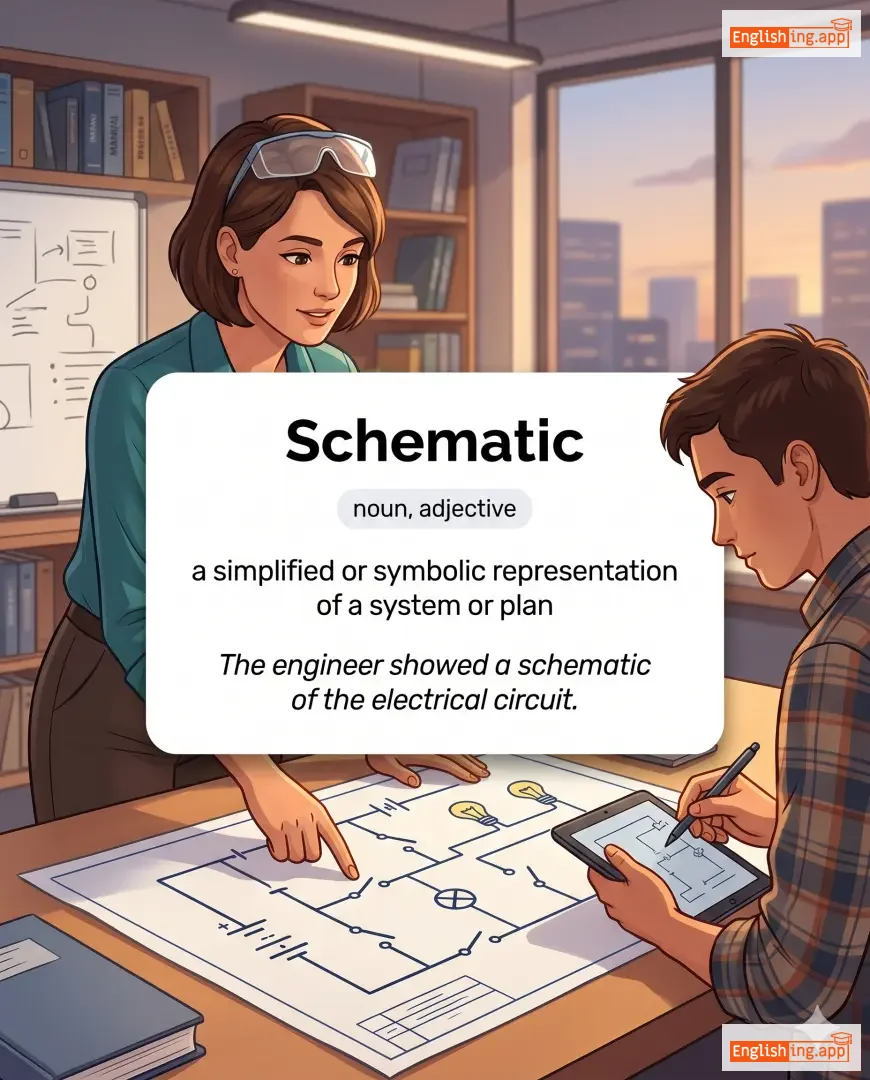
a simplified or symbolic representation of a system or plan
••••••
|
The engineer showed a schematic of the electrical circuit. |
工程师展示了电气电路的示意图。
Gōngchéngshī zhǎnshì le diànqì diànlù de shì yì tú.
••••••
|
- •••••• | - •••••• | - •••••• |
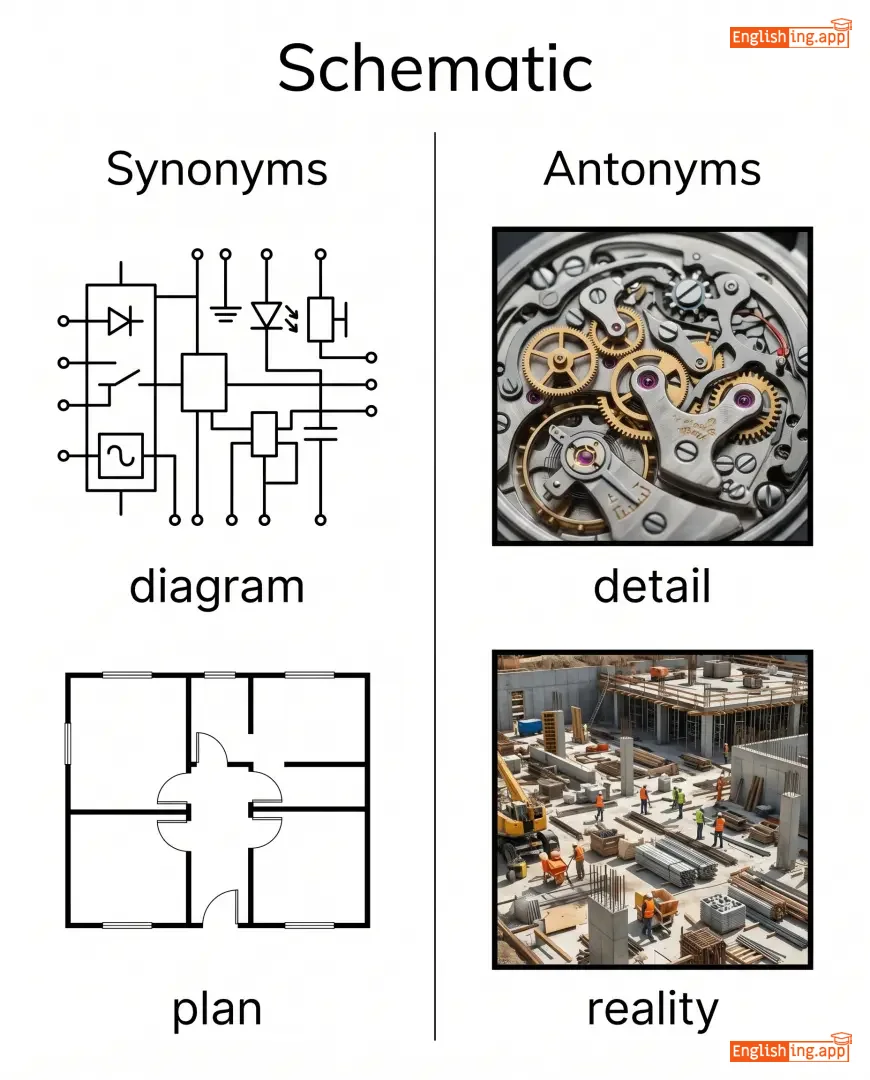
diagram, plan, chart, blueprint, outline
••••••
|
detail, reality
••••••
|
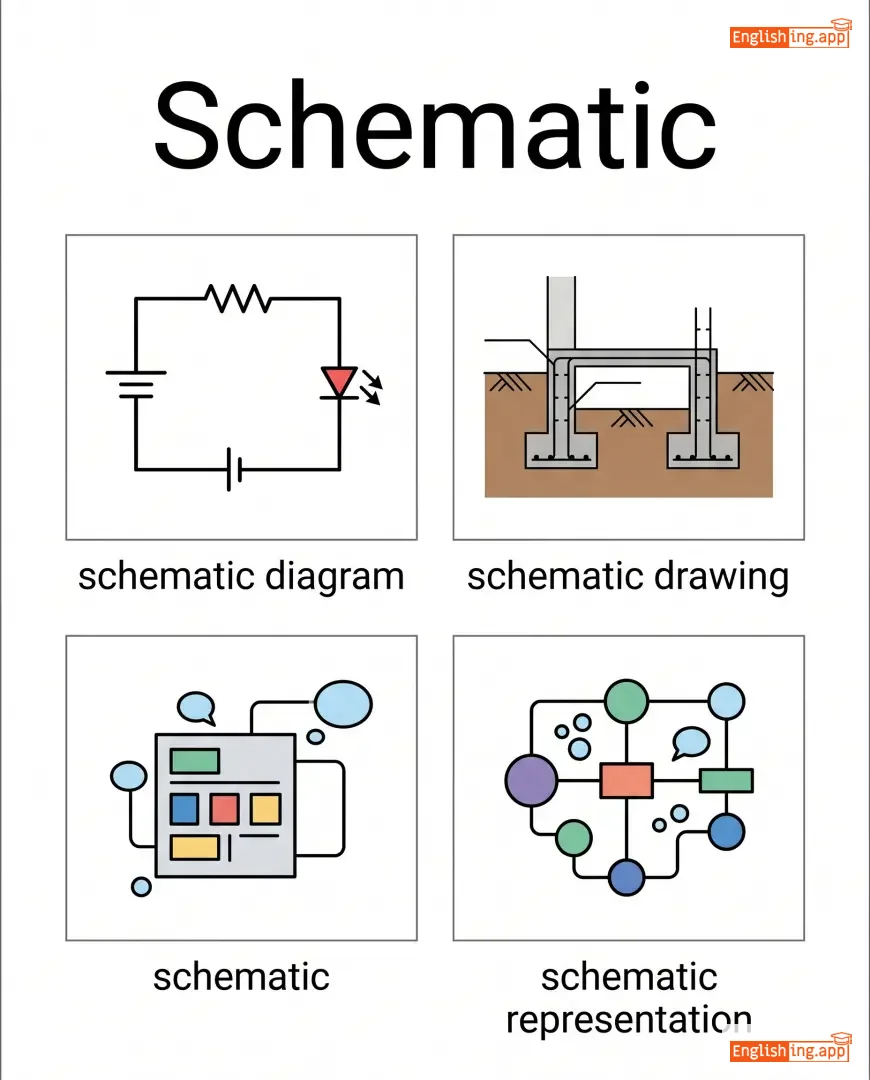
schematic diagram, schematic drawing, schematic representation
••••••
|
示意图就像是一个简化的电路图,帮助理解。
••••••
|
|
#7843
😏
|
/ˈʃɑːdənfrɔɪdə/
noun
(沙登弗洛伊德)
••••••
|
- •••••• |
从他人的不幸中获得的快乐
cóng tārén de bùxìng zhōng huòdé de kuàilè
••••••
|
- •••••• | - •••••• | - •••••• | - •••••• |
pleasure derived from another person's misfortune
••••••
|
He felt a sense of schadenfreude when his rival failed. |
当他的对手失败时,他感到一阵沙登弗洛伊德。
Dāng tā de duìshǒu shībài shí, tā gǎndào yī zhèn shādēng fúluòyīdé.
••••••
|
- •••••• | - •••••• | - •••••• |
gloating, relish, smugness, spite
••••••
|
compassion, sympathy
••••••
|
feeling schadenfreude, sense of schadenfreude, express schadenfreude
••••••
|
Schadenfreude = 从他人不幸中感到快乐
••••••
|
|
#7844
📖
|
/səˈnɛərioʊ/
noun
(场景)
••••••
|
- •••••• |
可能的情境
keneng de qingjing
••••••
|
- •••••• | - •••••• | - •••••• | - •••••• |
a possible situation or sequence of events
••••••
|
The company prepared for the worst-case scenario. |
公司为最坏的情况做了准备。
Gongsi wei zuihuai de qingkuang zuole zhunbei.
••••••
|
worst-case scenario |
the most serious or unfavorable situation possible
••••••
|
最坏的情境
zui huai de qingjing
••••••
|
situation, case, plan, circumstance, event
••••••
|
certainty, reality
••••••
|
best-case scenario, worst-case scenario, future scenario, likely scenario
••••••
|
场景 (Chǎngjǐng) 让你想到电影中的情节,记住场景和情境。
••••••
|
|
#7845
🗡️
|
/ˈskæb.ərd/
noun
(sī kè bā ěr dé)
••••••
|
- •••••• |
剑鞘
jianqiao
••••••
|
- •••••• | - •••••• | - •••••• | - •••••• |
A sheath for the blade of a sword or dagger, typically made of leather or metal.
••••••
|
The knight drew his sword from the scabbard. |
骑士从剑鞘中拔出了剑。
Qíshì cóng jiànqiào zhōng bá chūle jiàn.
••••••
|
- •••••• | - •••••• | - •••••• |
sheath, holster, covering, holder
••••••
|
blade, weapon
••••••
|
sword scabbard, leather scabbard, draw from scabbard, hang in scabbard
••••••
|
剑鞘就像保护剑的盾牌。
••••••
|
|
#7846
🗑️
|
/ˈskævɪndʒ/
verb
(skævɪndʒ)
••••••
|
- •••••• |
在垃圾中寻找
zai laji zhong xunzhao
••••••
|
scavenged
skavendʒd
••••••
|
scavenged
skavendʒd
••••••
|
scavenges
skavendʒz
••••••
|
scavenging
skavendʒɪŋ
••••••
|
to search through waste or discarded material to find useful items
••••••
|
The children scavenged for food in the garbage dump.
孩子们在垃圾堆里找食物。
••••••
|
孩子们在垃圾堆里找食物。
Haizimen zai laji dui li zhao shiwu.
••••••
|
- •••••• | - •••••• | - •••••• |
rummage, forage, hunt, search
••••••
|
discard, abandon
••••••
|
scavenge for food, scavenge materials, animals scavenge
••••••
|
Scavenge意味着像乌鸦一样在垃圾中寻找食物。
••••••
|
|
#7847
🔥
|
/ˈskeɪðɪŋ/
adjective
(skeɪðɪŋ)
••••••
|
- •••••• |
尖锐的批评
jianrui de piping
••••••
|
- •••••• | - •••••• | - •••••• | - •••••• |
severely critical; harshly scornful
••••••
|
The critic wrote a scathing review of the movie. |
评论家写了一篇尖锐的电影评论。
Pinglunya xie le yipian jianrui de dianying piping.
••••••
|
- •••••• | - •••••• | - •••••• |
harsh, biting, severe, devastating, caustic
••••••
|
gentle, mild, kind
••••••
|
scathing remark, scathing attack, scathing review, scathing criticism
••••••
|
尖锐的批评就像皮肤上的划痕。
••••••
|
|
#7848
🌱
|
/ˈskærɪfaɪ/
verb
(斯卡里法伊)
••••••
|
- •••••• |
松土
songtu
••••••
|
scarified
斯卡里法伊德
••••••
|
scarified
斯卡里法伊德
••••••
|
scarifies
斯卡里法伊兹
••••••
|
scarifying
斯卡里法伊恩
••••••
|
to make shallow cuts or scratches; to loosen the surface of soil
••••••
|
The farmer scarified the soil before planting seeds.
农民在种植种子之前松土。
••••••
|
农民在种植种子之前松土。
Nóngmín zài zhòngzhí zhǒngzi zhīqián sōngtǔ.
••••••
|
- •••••• | - •••••• | - •••••• |
scratch, scrape, cut, incise
••••••
|
smooth, polish
••••••
|
scarify the soil, scarify the surface, scarify lawn
••••••
|
scar (疤痕) + fy – 通过小切口松土
••••••
|
|
#7849
⚠️
|
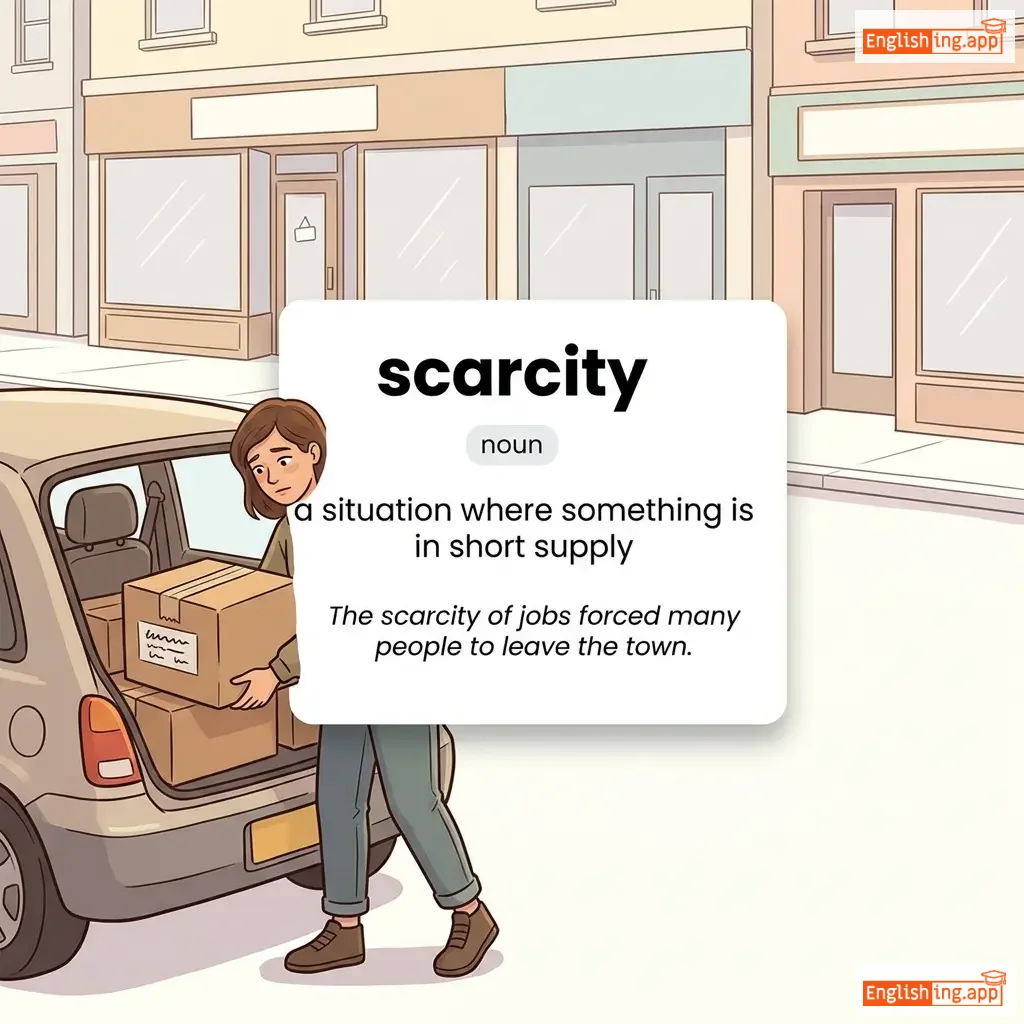
/ˈskɛərsəti/
noun
(scarcity)
••••••
|
|
稀缺
xique
••••••
|
- •••••• | - •••••• | - •••••• | - •••••• |
a situation where something is in short supply
••••••
|
The scarcity of jobs forced many people to leave the town. |
工作稀缺迫使许多人离开了这个城市。
Gongzuo xique poshi xueren likai le zhege chengshi.
••••••
|
- •••••• | - •••••• | - •••••• |
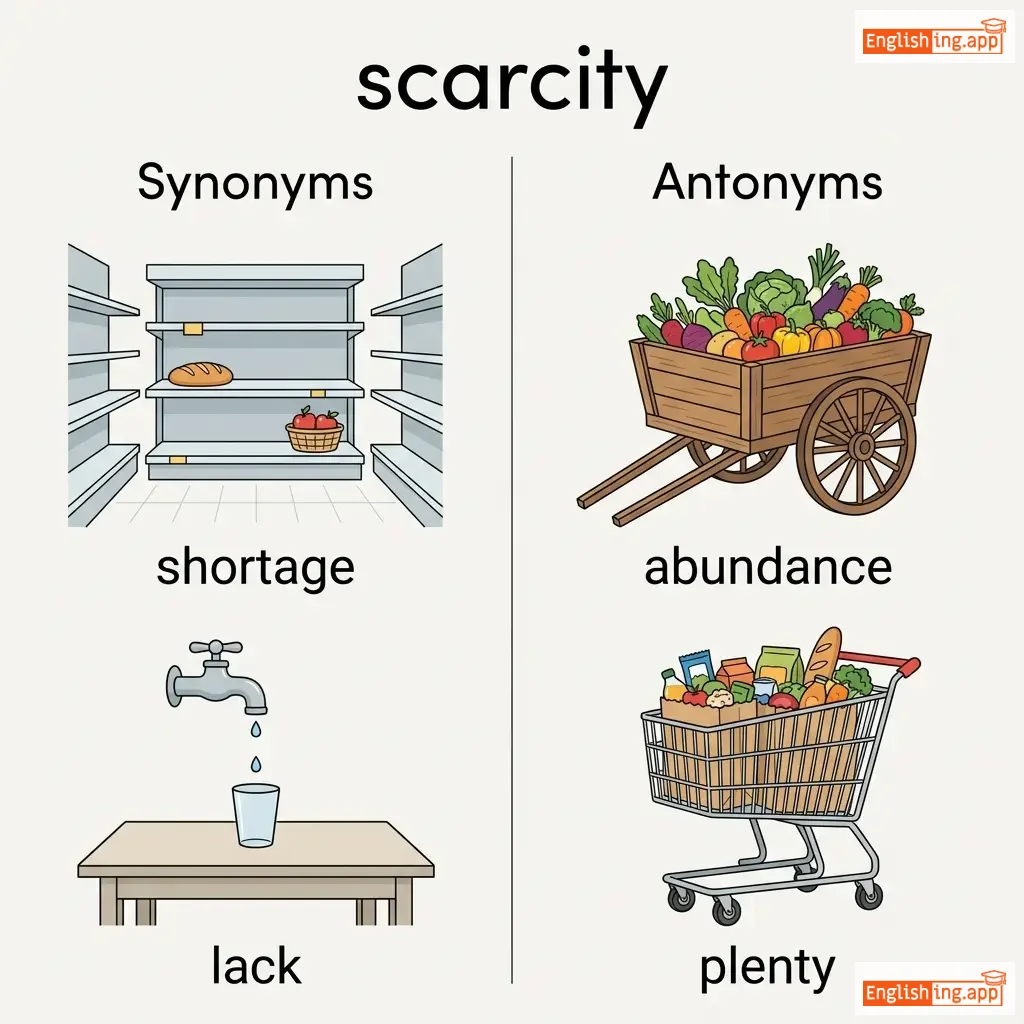
shortage, lack, deficiency, insufficiency
••••••
|
abundance, plenty, surplus
••••••
|
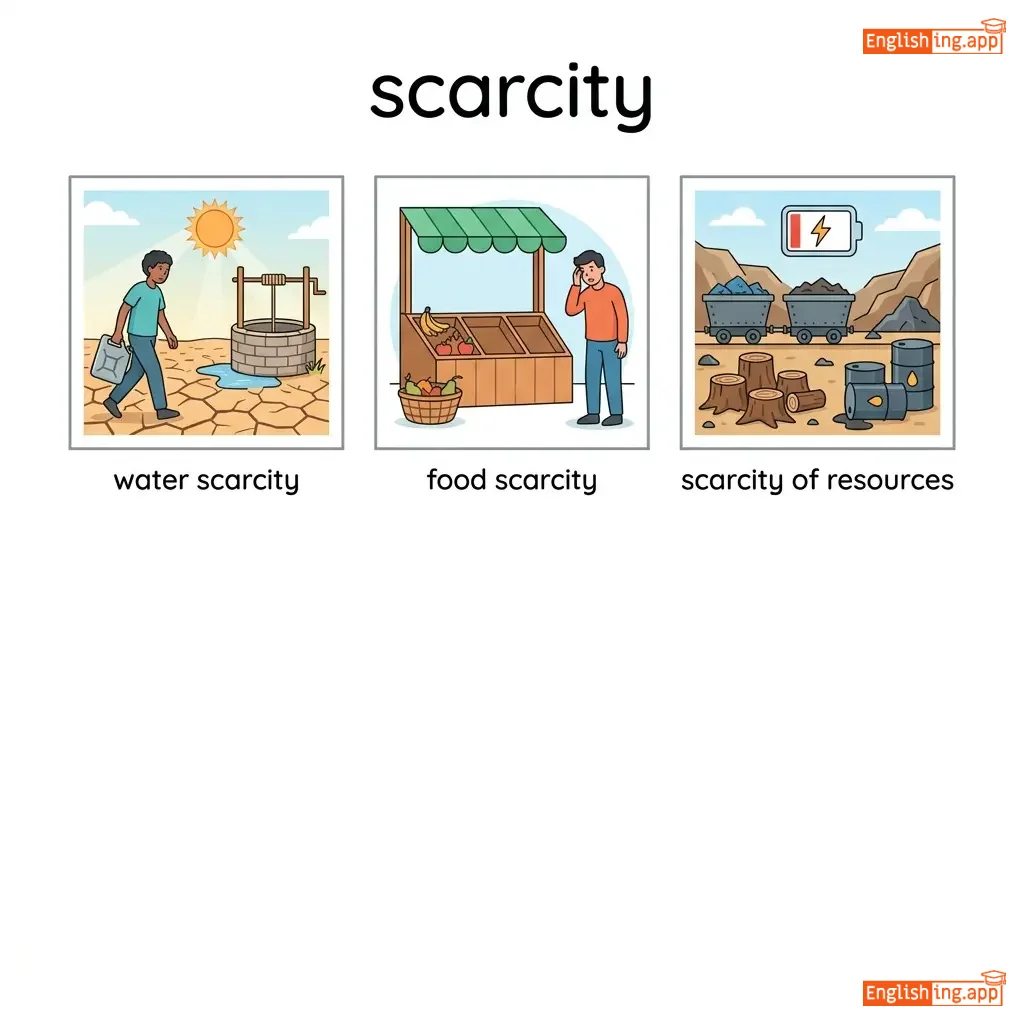
water scarcity, food scarcity, scarcity of resources, scarcity problem
••••••
|
稀缺意味着 scarcity - 当工作机会少时,稀缺就会发生
••••••
|
|
#7850
💧
|
/skɛərs/
adjective
(eskeers)
••••••
|
- •••••• |
稀缺
xique
••••••
|
- •••••• | - •••••• | - •••••• | - •••••• |
insufficient in quantity; hard to find
••••••
|
Water was scarce during the long drought. |
在长时间的干旱期间,水资源稀缺。
Zai chang shijian de ganhan qi jian, shui ziyuan xique.
••••••
|
make oneself scarce |
to leave quickly, usually to avoid trouble or being noticed
••••••
|
消失无踪
xiaoshi wu zong
••••••
|
rare, limited, insufficient, scant, meager
••••••
|
abundant, plentiful, ample
••••••
|
scarce resources, scarce supply, make oneself scarce, food is scarce
••••••
|
稀缺(xique)提醒你某物稀少,像水资源的稀缺一样难找。
••••••
|
|
#7851
🐐
|
/ˈskeɪpˌɡoʊt/
noun
(skeɪpɡoʊt)
••••••
|
- •••••• |
替罪羊
tìzuìyáng
••••••
|
- •••••• | - •••••• | - •••••• | - •••••• |
A person who is unfairly blamed for problems, mistakes, or faults of others.
••••••
|
He became the scapegoat for the company’s financial troubles. |
他成了公司财务问题的替罪羊。
Tā chéngle gōngsī cáiwù wèntí de tìzuìyáng.
••••••
|
make someone a scapegoat |
to unfairly blame someone for others' mistakes
••••••
|
把某人当作替罪羊
bǎ mǒu rén dāngzuò tìzuìyáng
••••••
|
victim, fall guy, blame-bearer, patsy
••••••
|
culprit, offender
••••••
|
political scapegoat, scapegoat for mistakes, scapegoat role, become a scapegoat
••••••
|
替罪羊: 就像一个羊背负其他人的罪名。
••••••
|
|
#7852
🥄
|
/ˈskænti/
adjective
(es-kan-ti)
••••••
|
- •••••• |
稀缺
xique
••••••
|
- •••••• | - •••••• | - •••••• | - •••••• |
Small in quantity; insufficient or meager.
••••••
|
The refugees survived on scanty food supplies.
难民们靠着稀缺的食物存活。
••••••
|
难民们靠着稀缺的食物存活。
Nanmin men kao zhe xique de shiwul cunhuo.
••••••
|
- •••••• | - •••••• | - •••••• |
meager, sparse, inadequate, minimal
••••••
|
plentiful, abundant, adequate
••••••
|
scanty resources, scanty food, scanty evidence, scanty clothing
••••••
|
Scanty 就是食物不够的意思,'稀缺'是缺乏的意思。
••••••
|
|
#7853
⚖️
|
/skænt/
adjective
(es-kant)
••••••
|
- •••••• |
稀缺的
xiquede
••••••
|
- •••••• | - •••••• | - •••••• | - •••••• |
Barely sufficient or inadequate in amount, degree, or quantity.
••••••
|
There was scant evidence to support the claim. |
几乎没有证据支持该声明。
Jihu meiyou zhengju zhichi gai shengming.
••••••
|
- •••••• | - •••••• | - •••••• |
meager, insufficient, sparse, limited
••••••
|
abundant, ample, sufficient
••••••
|
scant evidence, scant attention, scant resources, scant detail
••••••
|
Scant意味着很少,像一些很少的东西。
••••••
|
|
#7854
📠
|
/skæn/
verb
(happiness)
••••••
|
- •••••• |
幸福
xìngfú
••••••
|
scanned
••••••
|
scanned
••••••
|
scans
••••••
|
scanning
••••••
|
To look at something carefully or quickly; to digitally copy or capture an image or document.
••••••
|
She scanned the document before sending it by email. |
她收到奖项时无法隐藏自己的幸福。
Tā shōudào jiǎngxiàng shí wúfǎ yǐncáng zìjǐ de xìngfú.
••••••
|
scan through |
to look quickly over something
••••••
|
追求幸福
Zhuīqiú xìngfú
••••••
|
examine, inspect, browse, glance
••••••
|
ignore, overlook, neglect
••••••
|
scan document, scan quickly, scan image, scan barcode
••••••
|
幸福是我们每个人都在追求的目标!
••••••
|
|
#7855
🔪
|
/ˈskælpəl/
noun
(sī kǎ ěr pèi ěr)
••••••
|
- •••••• |
手术刀
shǒu shù dāo
••••••
|
- •••••• | - •••••• | - •••••• | - •••••• |
A small and extremely sharp bladed instrument used for surgery and dissection.
••••••
|
The surgeon carefully used a scalpel to make the first incision. |
外科医生小心地使用手术刀进行第一次切割。
Wàikē yīshēng xiǎoxīn de shǐyòng shǒushù dāo jìnxíng dì yī cì qiēgē.
••••••
|
- •••••• | - •••••• | - •••••• |
surgical knife, blade, cutter, lancet
••••••
|
blunt instrument, dull tool
••••••
|
sharp scalpel, surgical scalpel, use a scalpel, clean scalpel
••••••
|
手术刀就像一把非常锋利的小刀,专门用来做手术。
••••••
|
|
#7856
📏
|
/skeɪl/
noun/verb
(尺度)
••••••
|
- •••••• |
刻度 / 调整大小
kèdù / tiáozhěng dàxiǎo
••••••
|
scaled
扩大
••••••
|
scaled
扩大
••••••
|
scales
扩大
••••••
|
scaling
扩大中
••••••
|
A system of ordered marks used for measurement; also means to climb or to adjust in size.
••••••
|
The company plans to scale its operations globally.
公司计划全球扩展其业务。
••••••
|
公司计划全球扩展其业务。
Gōngsī jìhuà quánqiú kuòzhǎn qí yèwù.
••••••
|
tip the scales
倾斜天平
••••••
|
to influence the outcome of a situation
••••••
|
倾斜天平
qīngxié tiānpíng
••••••
|
measure, climb, grade, ratio, expand
••••••
|
shrink, reduce, decrease
••••••
|
scale up, scale down, scale of measurement, scale a mountain
••••••
|
刻度意味着测量或调整大小—记住,刻度 = 大小控制。
••••••
|
|
#7857
🏗️
|
/ˈskæf.əʊld/
noun
(sè kè fǒu dé)
••••••
|
- •••••• |
脚手架
jiaoshoujia
••••••
|
- •••••• | - •••••• | - •••••• | - •••••• |
A temporary platform used to support workers and materials during the construction or repair of a building.
••••••
|
The workers stood on the scaffold to paint the building. |
工人们站在脚手架上涂漆。
Gōngrénmen zhàn zài jiǎoshǒujià shàng túqī.
••••••
|
end on the scaffold |
to be executed by hanging (historical expression)
••••••
|
在脚手架上结束
Zài jiǎoshǒujià shàng jiéshù
••••••
|
platform, staging, structure, framework
••••••
|
ground, foundation
••••••
|
build scaffold, scaffold tower, metal scaffold, scaffold collapse
••••••
|
Scaffold = 学校里做的脚手架用于建筑工作。
••••••
|
|
#7858
📦
|
/skædz/
noun (plural, informal)
(skædz)
••••••
|
- •••••• |
一大堆
yi da dui
••••••
|
- •••••• | - •••••• | - •••••• | - •••••• |
A large number or quantity of something (informal).
••••••
|
She has scads of friends in the city. |
她在城市里有一大堆朋友。
Tā zài chéngshì lǐ yǒu yī dà duī péngyǒu.
••••••
|
- •••••• | - •••••• | - •••••• |
lots, tons, heaps, loads, plenty
••••••
|
few, little, scarcity
••••••
|
scads of money, scads of friends, scads of opportunities, scads of time
••••••
|
Scads意味着一大堆,记住 SCADS = Super Count A DozenS。
••••••
|
|
#7859
🐟
|
/skæd/
noun
(斯卡德)
••••••
|
- •••••• |
斯卡德鱼
Sikade yu
••••••
|
- •••••• | - •••••• | - •••••• | - •••••• |
A type of fish of the jack family; also informally means a large number or quantity.
••••••
|
The fisherman caught a scad in the net.
渔夫在网中抓住了一条斯卡德。
••••••
|
渔夫在网中抓住了一条斯卡德。
Yufu zai wang zhong zhuazhu le yitiao sikade.
••••••
|
- •••••• | - •••••• | - •••••• |
fish, horse mackerel, jack, abundance
••••••
|
scarcity, lack
••••••
|
catch scad, fried scad, scad fish, scad population
••••••
|
Scad像‘沙滩’,想象一大群鱼在沙滩上。
••••••
|
Vocabulary Quiz
Test your vocabulary by matching words with their translations or meanings.
Login to take the quiz
Comments (0)
Share your thoughts and join the discussion.
Join the discussion by logging in
Login to CommentNo comments yet
Be the first to share your thoughts!