






Swipe left or right, or use the buttons. Tap image to zoom.
例句翻译
单词
Lesson 288Lesson 288 - 遮罩切换
|
表情符号
|
单词 | Images | 翻译 | 过去时 | 过去分词 | 第三人称单数 | 动名词 | 含义 | 例句 | 例句翻译 | 示例表达 | 示例表达含义 | 示例表达翻译 | 同义词 | 反义词 | 搭配词 | 助记符 |
|---|---|---|---|---|---|---|---|---|---|---|---|---|---|---|---|---|---|
|
#8610
🔗
|
/sɪˈnɒnɪməs/
adjective
(同义)
••••••
|
- •••••• |
同义词
tongyici
••••••
|
- •••••• | - •••••• | - •••••• | - •••••• |
having the same or nearly the same meaning; closely associated with something
••••••
|
For many people, her name is synonymous with generosity. |
对于许多人来说,她的名字是慷慨的同义词。
dui yu xu duo ren lai shuo, ta de mingzi shi kangkai de tongyici.
••••••
|
be synonymous with |
to be closely connected in meaning or association with something
••••••
|
是...的同义词
shi...de tongyici
••••••
|
equivalent, interchangeable, identical, tantamount, corresponding
••••••
|
different, opposite, distinct
••••••
|
synonymous with success, almost synonymous, virtually synonymous, become synonymous, widely synonymous
••••••
|
Synonymous = 同义词。记住:‘同’就是‘一模一样’的意思!
••••••
|
|
#8611
⚡
|
/ˈtæk.əl/
verb, noun
••••••
|
- •••••• | - •••••• |
tackled
••••••
|
tackled
••••••
|
tackles
••••••
|
tackling
••••••
|
to try to deal with or solve a difficult problem; to physically stop someone in sports by knocking them down
••••••
|
The coach taught the players how to tackle properly. |
- •••••• |
tackle a problem |
to deal with or try to solve a problem
••••••
|
- •••••• |
confront, address, handle, seize, wrestle
••••••
|
avoid, ignore, neglect
••••••
|
tackle a challenge, tackle crime, tackle poverty, tackle an issue
••••••
|
No •••••• |
|
#8612
📌
|
/tæk/
noun/verb
••••••
|
- •••••• | - •••••• |
tacked
••••••
|
tacked
••••••
|
tacks
••••••
|
tacking
••••••
|
a small sharp nail; or to change direction in sailing or approach something differently
••••••
|
She used a tack to pin the paper on the wall. |
- •••••• |
change tack |
to try a different approach or method
••••••
|
- •••••• |
pin, nail, approach, strategy
••••••
|
detach, neglect
••••••
|
thumb tack, change tack, tack on, tack up
••••••
|
No •••••• |
|
#8613
😶
|
/ˈtæsɪtɜrn/
adjective
(塔西特恩)
••••••
|
- •••••• |
寡言
guǎ yán
••••••
|
- •••••• | - •••••• | - •••••• | - •••••• |
reserved or uncommunicative in speech; saying little
••••••
|
He was a taciturn man who rarely spoke in meetings. |
他是一个寡言的人,在会议上很少发言。
Tā shì yīgè guǎ yán de rén, zài huìyì shàng hěn shǎo fāyán.
••••••
|
- •••••• | - •••••• | - •••••• |
silent, reserved, reticent, quiet
••••••
|
talkative, chatty, loquacious
••••••
|
taciturn person, taciturn nature, taciturn character
••••••
|
Taciturn,像一个不多说话的出租车司机
••••••
|
|
#8614
🤫
|
/ˈtæsɪt/
adjective
(tǎsìt)
••••••
|
|
默契
moqi
••••••
|
- •••••• | - •••••• | - •••••• | - •••••• |
understood or implied without being stated
••••••
|
There was a tacit agreement to avoid the subject. |
有一个默契的协议,避免讨论这个话题。
You yi ge moqi de xieyi, bianmi taolun zhege huati.
••••••
|
tacit agreement |
an unspoken understanding between people
••••••
|
默契协议
moqi xieyi
••••••
|
implicit, unspoken, understood, silent
••••••
|
explicit, stated, expressed
••••••
|
tacit consent, tacit approval, tacit understanding
••••••
|
Tacit 意味着默契,就像人们之间不说话却互相理解的协议。
••••••
|
|
#8615
💊
|
/ˈtæblət/
noun
••••••
|
- •••••• | - •••••• | - •••••• | - •••••• | - •••••• | - •••••• |
a small flat computer or a small solid dose of medicine
••••••
|
She took a tablet to relieve her headache. |
- •••••• | - •••••• | - •••••• | - •••••• |
pill, pad, slate, device
••••••
|
capsule, injection
••••••
|
take a tablet, tablet device, tablet computer, tablet form
••••••
|
No •••••• |
|
#8616
🎭
|
/ˈtæbloʊ/
noun
(塔布劳)
••••••
|
- •••••• |
定格画面
dìnggé huàmiàn
••••••
|
- •••••• | - •••••• | - •••••• | - •••••• |
a striking or artistic scene or arrangement of people or objects, often presented on stage or in art
••••••
|
The actors froze in a tableau that captured the final moment of the play.
演员们定格在一个塔布劳中,捕捉到了戏剧的最后一刻。
••••••
|
演员们定格在一个塔布劳中,捕捉到了戏剧的最后一刻。
Yǎnyuánmen dìnggé zài yīgè tǎbùláo zhōng, bǔzhuō dào le xìjù de zuìhòu yī kè.
••••••
|
- •••••• | - •••••• | - •••••• |
scene, picture, image, representation, depiction
••••••
|
chaos, disorder
••••••
|
dramatic tableau, living tableau, tableau scene, artistic tableau
••••••
|
演员像画中的人物定格在一个塔布劳中 = tableau
••••••
|
|
#8617
🍽️
|
/ˈteɪbəl/
noun
(tèibǎo)
••••••
|
- •••••• |
桌子
zhuōzi
••••••
|
- •••••• | - •••••• | - •••••• | - •••••• |
A piece of furniture with a flat top and legs, used for working at or placing items on.
••••••
|
They placed the documents on the table. |
他们把文件放在桌子上。
Tāmen bǎ wénjiàn fàng zài zhuōzi shàng.
••••••
|
turn the tables |
To reverse a situation and gain an advantage over someone.
••••••
|
翻转局势
fān zhuǎn júshì
••••••
|
desk, counter, bench, surface
••••••
|
floor, ground
••••••
|
dining table, coffee table, round table, table manners
••••••
|
桌子(zhuōzi)上有书和笔,翻转局势时可以用它。
••••••
|
|
#8618
📊
|
/ˌsɪstəˈmætɪk/
adjective
(sìtè mǎ tíkè)
••••••
|
- •••••• |
系统的
xitongde
••••••
|
- •••••• | - •••••• | - •••••• | - •••••• |
Done or acting according to a fixed plan or system; methodical.
••••••
|
The company took a systematic approach to solving the issue. |
公司采取了系统的方法来解决问题。
Gōngsī cǎiqǔle xìtǒng de fāngfǎ lái jiějué wèntí.
••••••
|
systematic error |
An error that consistently occurs in the same direction due to flaws in a system.
••••••
|
系统性错误
xìtǒng xìng cuòwù
••••••
|
methodical, organized, structured, logical, disciplined
••••••
|
random, chaotic, disorganized
••••••
|
systematic review, systematic study, systematic approach, systematic plan
••••••
|
系统化地做事,就像系统(systematic)一样有序
••••••
|
|
#8619
🧵
|
/sɪnˈθetɪk/
adjective
(xin-té-tí-kè)
••••••
|
|
合成的
hecheng de
••••••
|
- •••••• | - •••••• | - •••••• | - •••••• |
Made by chemical synthesis, especially to imitate a natural product.
••••••
|
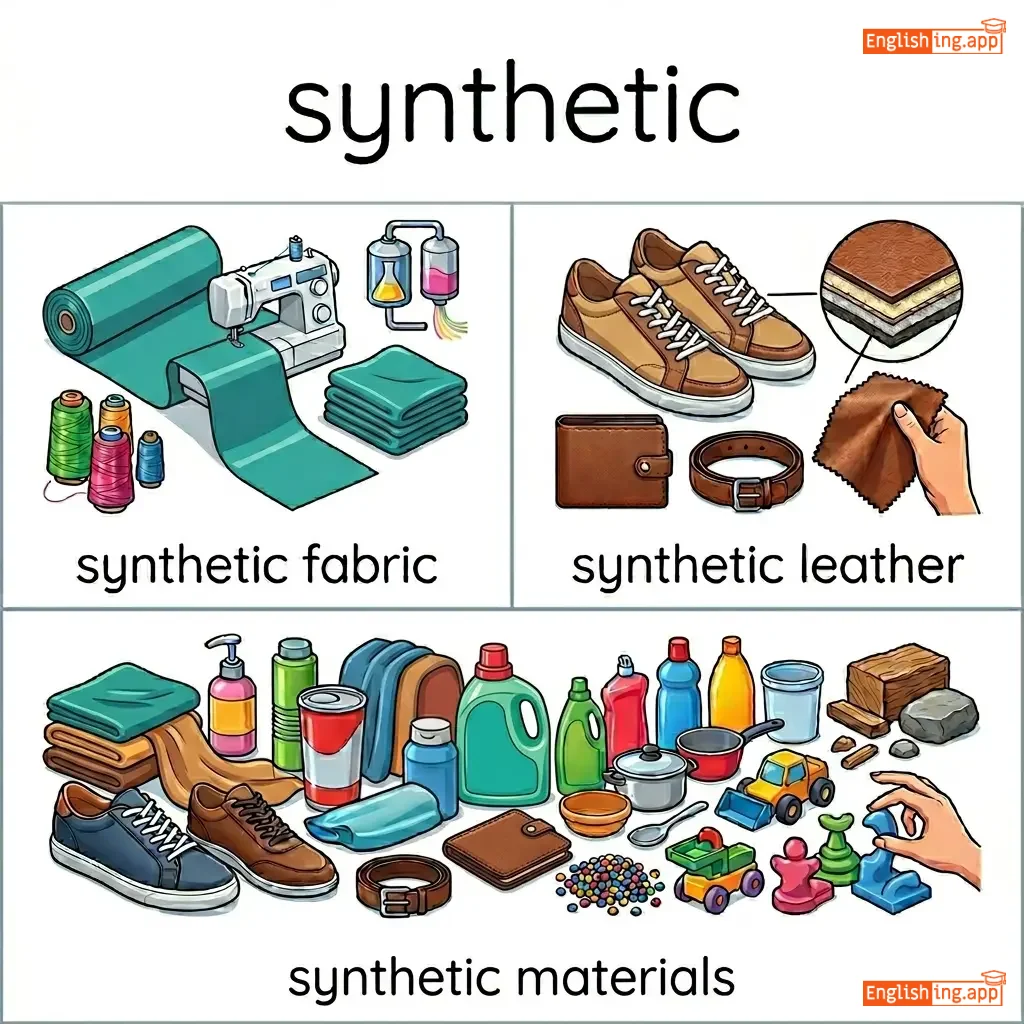
The shoes are made from synthetic leather.
这些鞋子是用合成皮革做的。
••••••
|
这些鞋子是用合成皮革做的。
Zhèxiē xiézi shì yòng héchéng pígé zuò de.
••••••
|
synthetic smile
合成笑容
••••••
|
A smile that appears artificial or insincere.
••••••
|
合成笑容
héchéng xiàoróng
••••••
|
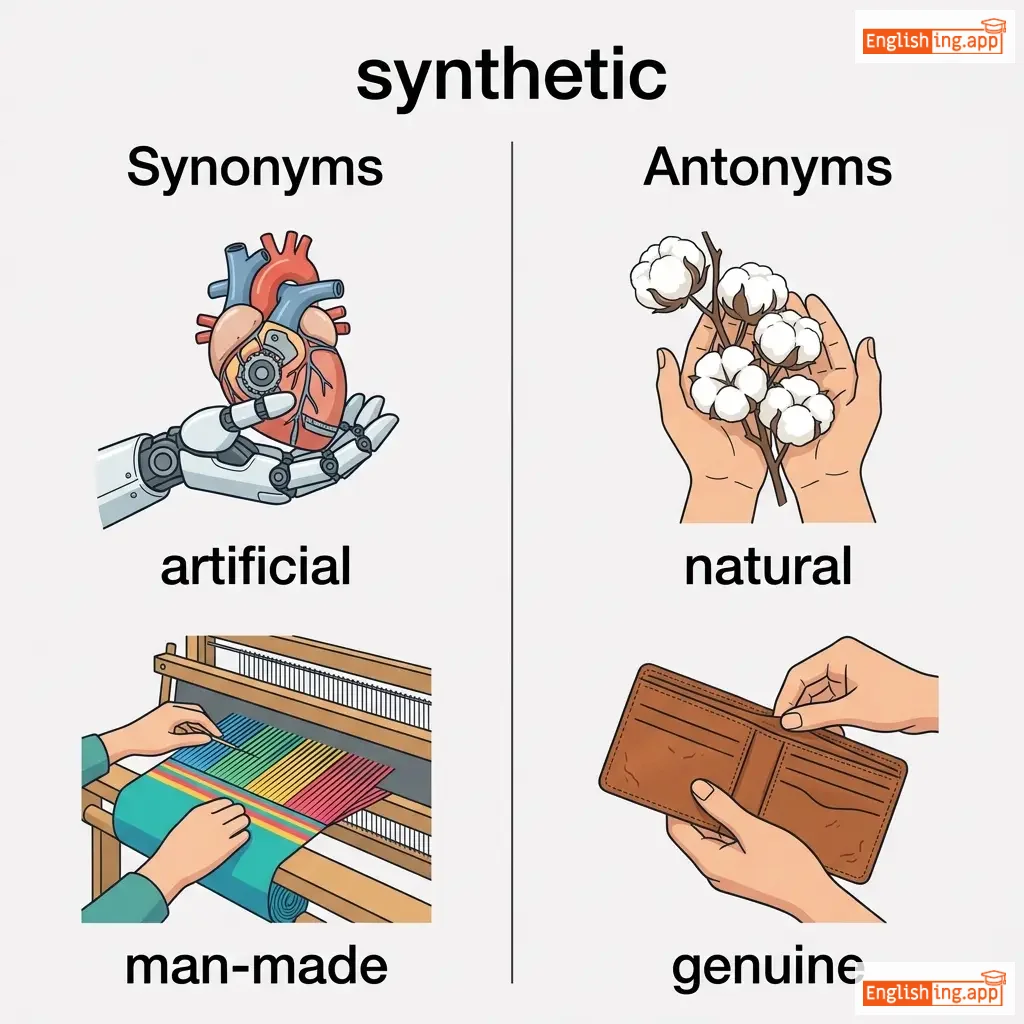
artificial, man-made, fabricated, fake, imitation
••••••
|
natural, genuine, authentic
••••••
|
synthetic fabric, synthetic leather, synthetic materials, synthetic drugs
••••••
|
Synthetic 在中文意味着人造的,像是假的笑容。
••••••
|
|
#8620
🧪
|
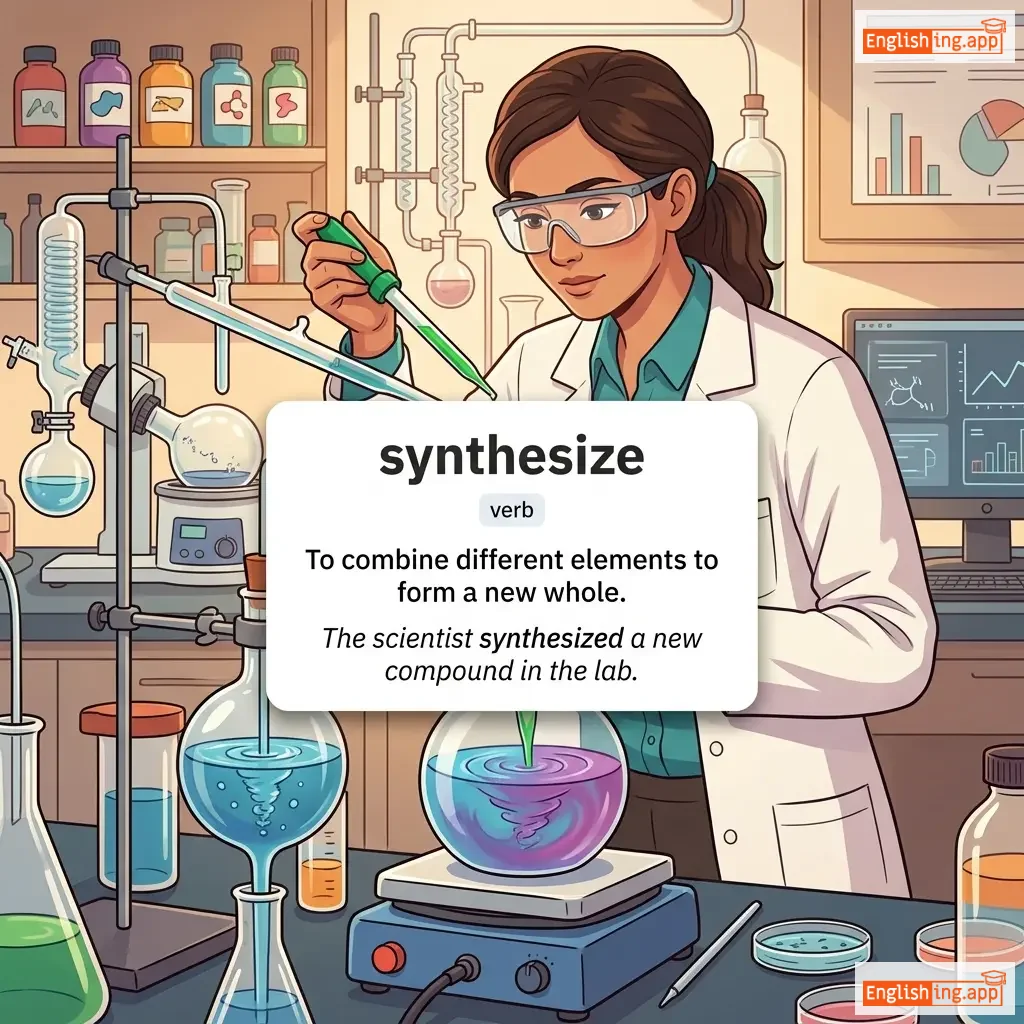
/ˈsɪnθəsaɪz/
verb
(辛瑟赛兹)
••••••
|
|
合成
héchéng
••••••
|
synthesized
辛瑟赛兹德
••••••
|
synthesized
辛瑟赛兹德
••••••
|
synthesizes
辛瑟赛兹斯
••••••
|
synthesizing
辛瑟赛兹英
••••••
|
To combine different elements to form a new whole.
••••••
|
The scientist synthesized a new compound in the lab.
科学家在实验室合成了一种新化合物。
••••••
|
科学家在实验室合成了一种新化合物。
Kēxuéjiā zài shíyànshì héchéngle yī zhǒng xīn huàhéwù.
••••••
|
- •••••• | - •••••• | - •••••• |
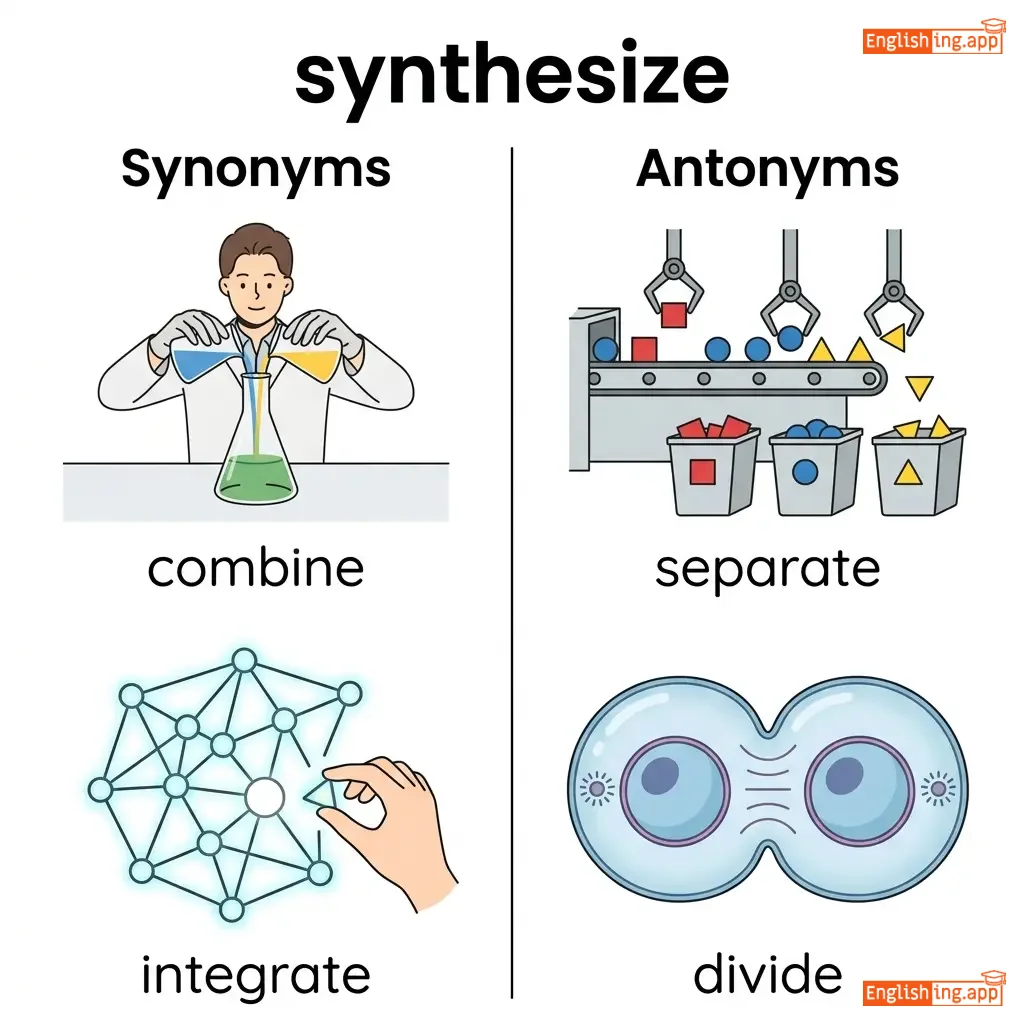
combine, integrate, merge, blend, fuse
••••••
|
separate, divide, dismantle
••••••
|
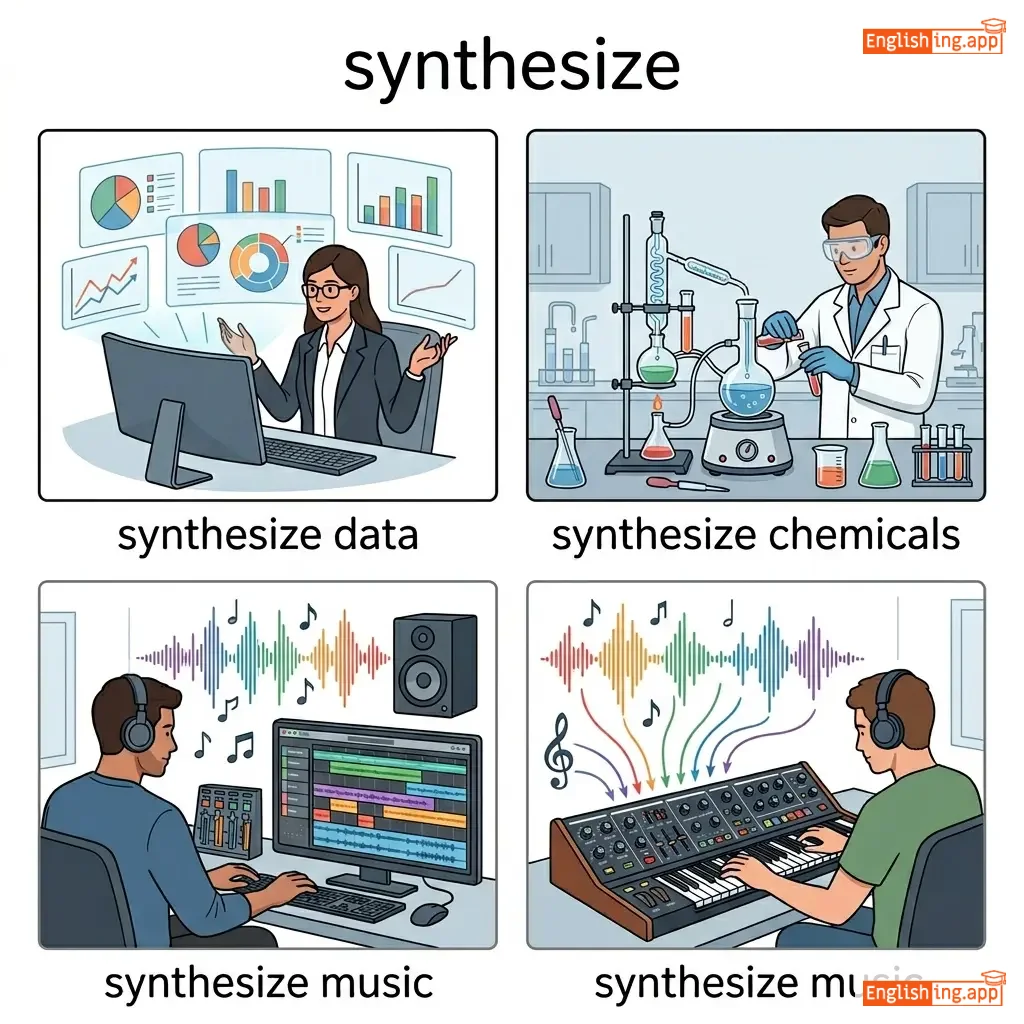
synthesize data, synthesize chemicals, synthesize music, synthesize results
••••••
|
合成是将不同的东西组成一个新整体。
••••••
|
|
#8621
⚗️
|
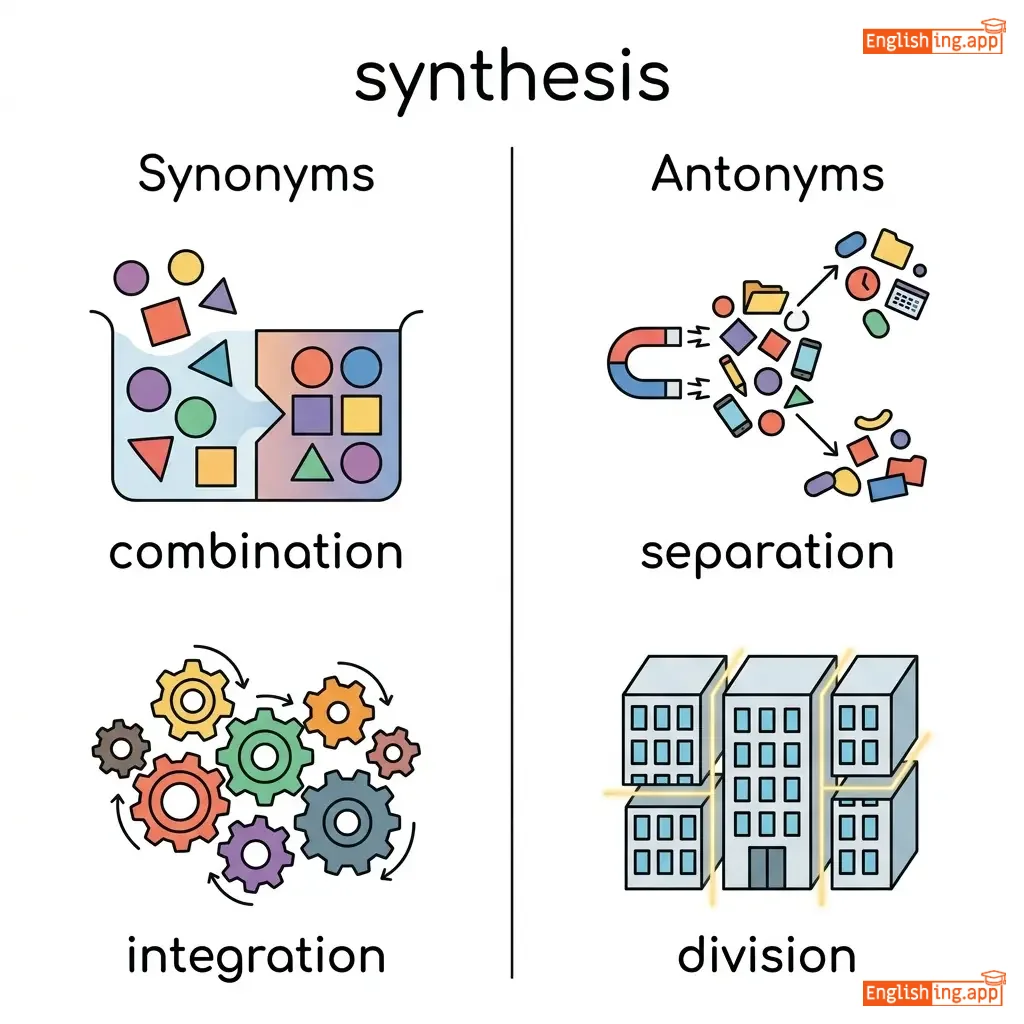
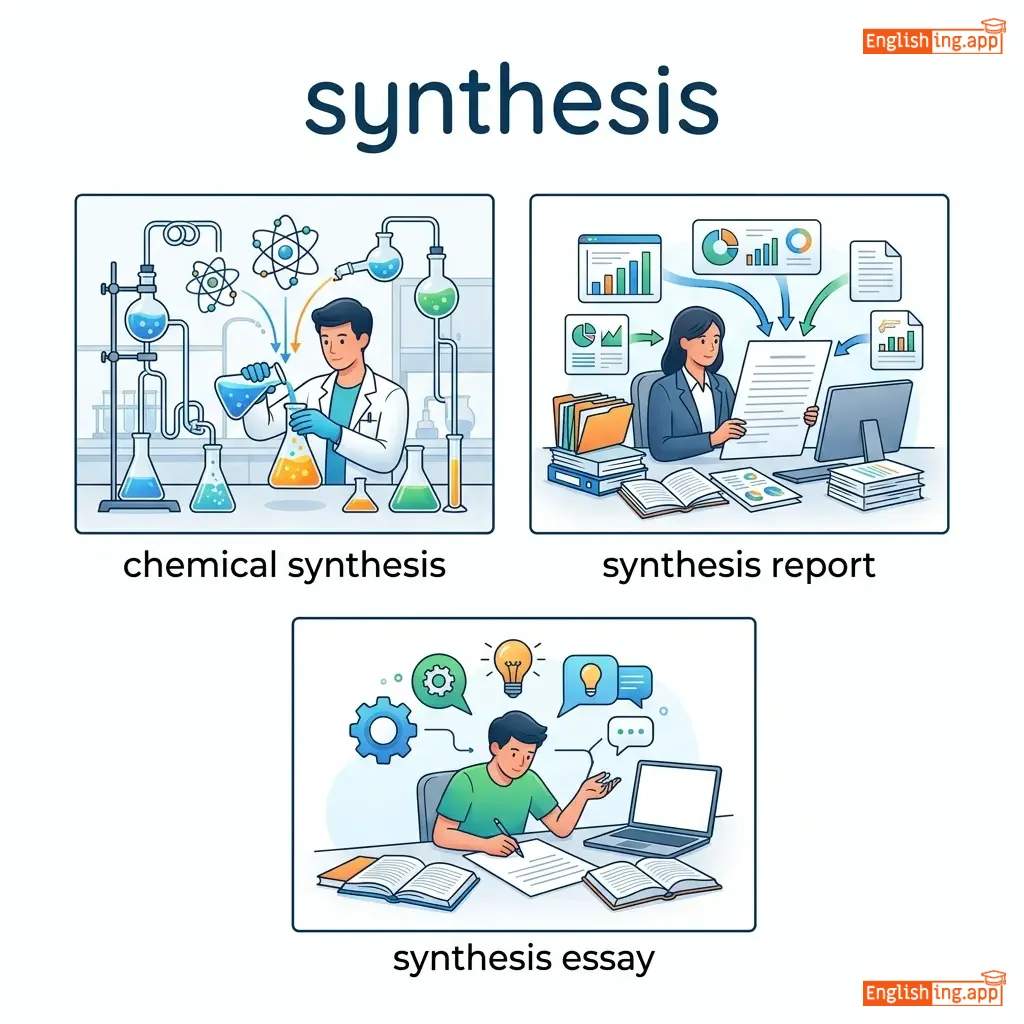
/ˈsɪnθəsɪs/
noun
••••••
|
|
- •••••• | - •••••• | - •••••• | - •••••• | - •••••• |
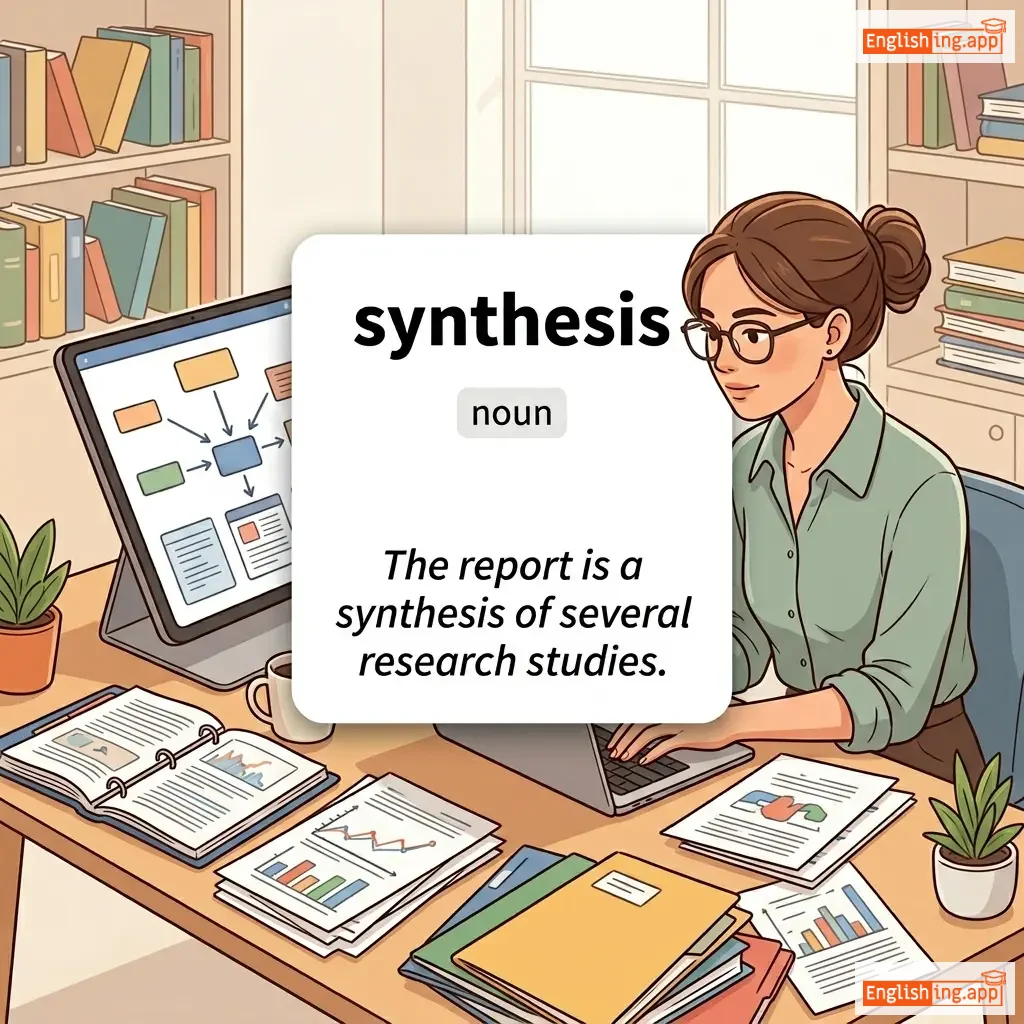
The combination of different ideas, elements, or substances into a coherent whole.
••••••
|
The report is a synthesis of several research studies. |
- •••••• |
thesis-antithesis-synthesis |
A philosophical framework where opposing ideas resolve into a new understanding.
••••••
|
- •••••• |
combination, integration, fusion, amalgamation, unification
••••••
|
separation, division, analysis
••••••
|
chemical synthesis, synthesis report, synthesis essay, data synthesis
••••••
|
No •••••• |
|
#8622
🧩
|
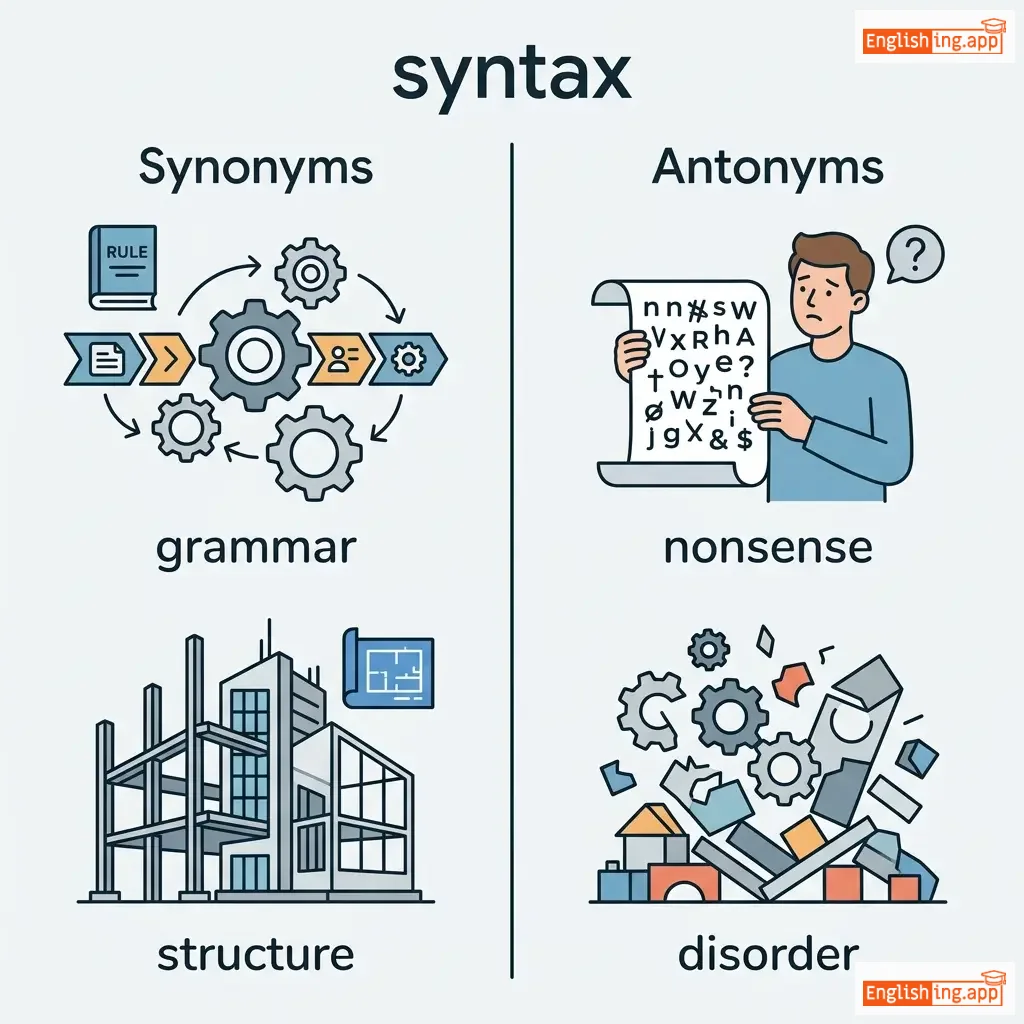
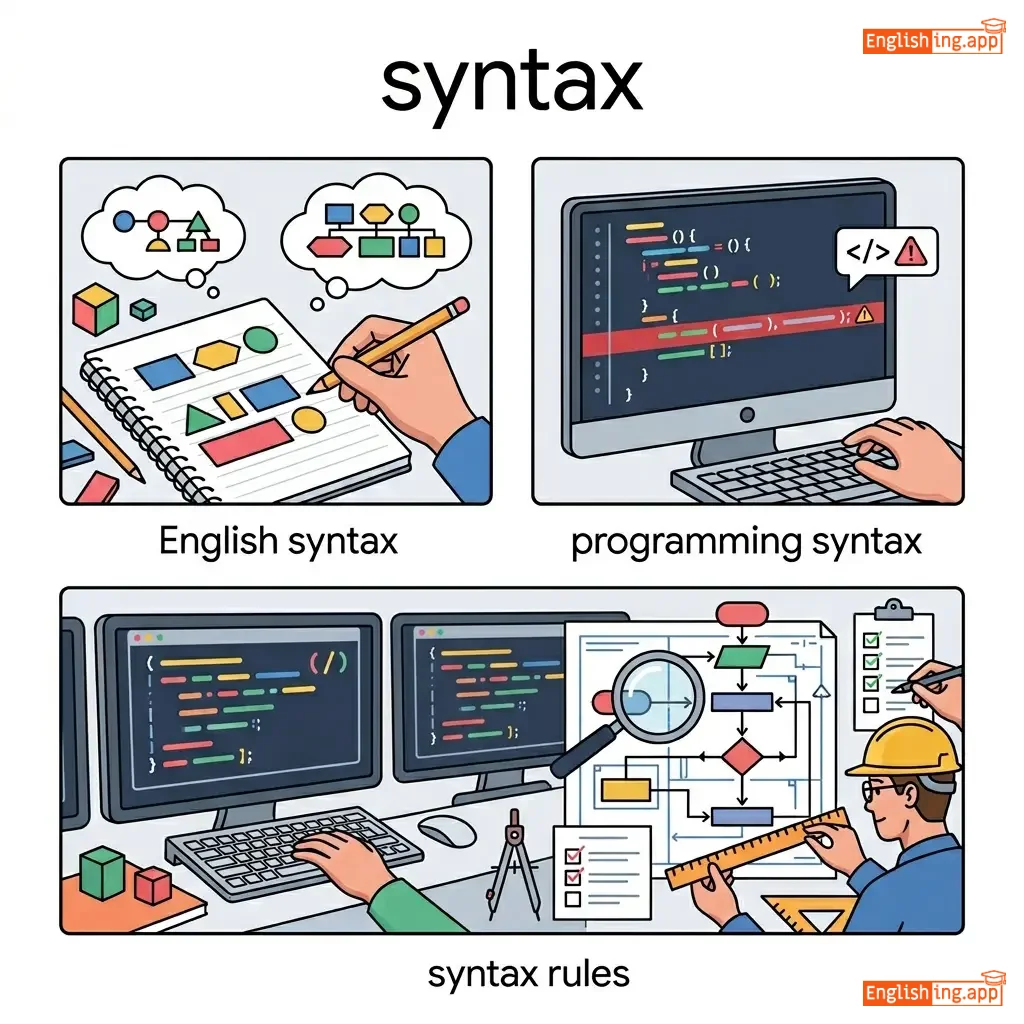
/ˈsɪntæks/
noun
(sīntàkèsī)
••••••
|
|
语法
yufa
••••••
|
- •••••• | - •••••• | - •••••• | - •••••• |
the rules for arranging words and phrases to create well-formed sentences in a language or code
••••••
|
Clear syntax helps readers understand complex ideas quickly. |
清晰的语法帮助读者快速理解复杂的思想。
qīngxī de yǔfǎ bāngzhù dúzhě kuàisù lǐjiě fùzá de sīxiǎng.
••••••
|
syntax error |
an error arising from incorrect arrangement or formatting according to language or coding rules
••••••
|
语法错误
yǔfǎ cuòwù
••••••
|
grammar, structure, word order, sentence structure, formulation
••••••
|
nonsense, disorder, ill-formedness
••••••
|
English syntax, programming syntax, syntax rules, syntax tree, incorrect syntax
••••••
|
Syntax:'Si'(思)和'tax'(税)结合:如果不按规则排列单词,就像交税一样错误!
••••••
|
|
#8623
🌐
|
/sɪˈnɒptɪk/
adjective
(概括性的)
••••••
|
- •••••• |
概括性的
gàikuòxìng de
••••••
|
- •••••• | - •••••• | - •••••• | - •••••• |
giving a general overview or summary; presenting a broad view
••••••
|
The report offers a synoptic view of climate trends over the past century. |
报告提供了过去一个世纪气候趋势的概括性视图。
bàogào tígōngle guòqù yīgè shìjì qìhòu qūshì de gàikuòxìng shìtú.
••••••
|
- •••••• | - •••••• | - •••••• |
summary, panoramic, overview, broad, compendious
••••••
|
detailed, narrow, specific
••••••
|
synoptic view, synoptic chart, synoptic overview, synoptic table, synoptic analysis
••••••
|
Synoptic = Sino (场景) + optic (视觉) → 整个场景一眼看尽—概括性视图!
••••••
|
|
#8624
📝
|
/sɪˈnɒpsɪs/
noun
(辛诺普西斯)
••••••
|
- •••••• |
概述
gàishù
••••••
|
- •••••• | - •••••• | - •••••• | - •••••• |
a brief summary of the main points of a text, film, or research
••••••
|
The publisher asked the author to submit a one-page synopsis of the novel. |
出版商要求作者提交小说的单页概述。
chūbǎn shāng yāoqiú zuòzhě tíjiāo xiǎoshuō de dānyè gàishù.
••••••
|
- •••••• | - •••••• | - •••••• |
summary, abstract, overview, précis, outline
••••••
|
detail, expansion, elaboration
••••••
|
brief synopsis, plot synopsis, write a synopsis, provide a synopsis, synopsis of findings
••••••
|
概述就是简短总结—记住:'概' (简短) + '述' (总结) = 简短总结主要观点!
••••••
|
|
#8625
🔲
|
/ˈsɪmətri/
noun
(对称)
••••••
|
- •••••• |
对称
duìchèn
••••••
|
- •••••• | - •••••• | - •••••• | - •••••• |
the quality of having balanced proportions or identical parts facing each other
••••••
|
The building’s symmetry impressed the visitors. |
建筑的对称性给游客留下了深刻的印象。
Jiànzhú de duìchènxìng gěi yóukè liú xiàle shēnkè de yìnxiàng.
••••••
|
perfect symmetry |
a state of complete balance and harmony
••••••
|
完美的对称
wánměi de duìchèn
••••••
|
balance, proportion, harmony, regularity
••••••
|
imbalance, irregularity
••••••
|
symmetry of design, symmetry in nature, lack of symmetry
••••••
|
Symmetry是对称的意思,想象两个完全对称的建筑物。
••••••
|
|
#8626
🟰
|
/ˈsɪnənɪm/
noun
(xīnòunìm)
••••••
|
- •••••• |
同义词
tongyici
••••••
|
- •••••• | - •••••• | - •••••• | - •••••• |
a word or phrase that has the same or nearly the same meaning as another word
••••••
|
In this sentence, 'big' is a synonym of 'large'. |
在这个句子中,'大'是'巨大的'的同义词。
zai zhege juzi zhong, 'da' shi 'juda de' de tongyici.
••••••
|
near synonym |
a word that is similar in meaning but not exactly identical
••••••
|
近义词
jinyi ci
••••••
|
equivalent, alternative, substitute, parallel, cognate
••••••
|
antonym, opposite, contrast
••••••
|
close synonym, exact synonym, list of synonyms, find a synonym, synonym set
••••••
|
同义词意味着相同的意义——记住:同义词是一样的意思!
••••••
|
|
#8627
⛪
|
/ˈsɪnəd/
noun
(西诺德)
••••••
|
- •••••• |
主教会议
zhǔjiàohuìyì
••••••
|
- •••••• | - •••••• | - •••••• | - •••••• |
An assembly of the clergy in a Christian church convened to decide on issues of doctrine or administration.
••••••
|
The synod gathered to discuss reforms in the church. |
主教会议聚集在一起讨论教会的改革。
Zhǔjiàohuì jùjí zài yīqǐ tǎolùn jiàohuì de gǎigé.
••••••
|
- •••••• | - •••••• | - •••••• |
council, assembly, convention, congregation
••••••
|
individual, separation
••••••
|
church synod, synod meeting, synod assembly
••••••
|
Synod, 想象在教堂内,神职人员齐聚一堂共同做决定。
••••••
|
|
#8628
🤲
|
/ˈsɪnərdʒi/
noun
(协同效应)
••••••
|
|
协同作用
xiétóng zuòyòng
••••••
|
- •••••• | - •••••• | - •••••• | - •••••• |
The increased effectiveness that results when two or more people or organizations work together.
••••••
|
The merger created synergy between the two companies. |
合并创造了两家公司之间的协同作用。
Hébìng chuàngzàole liǎng jiā gōngsī zhījiān de xiétóng zuòyòng.
••••••
|
synergy effect |
The combined power that is greater than the sum of separate efforts.
••••••
|
协同效应
xiétóng xiàoyìng
••••••
|
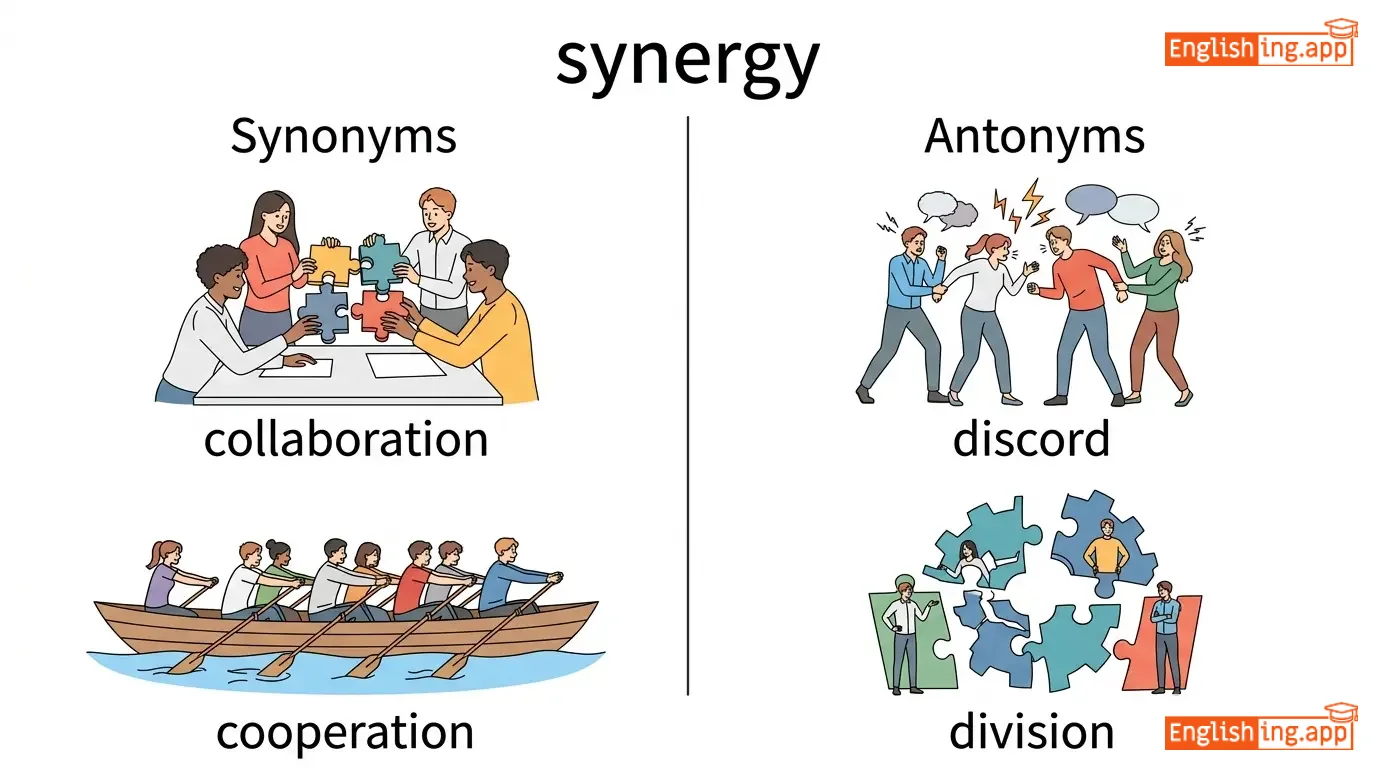
collaboration, cooperation, harmony, partnership, integration
••••••
|
discord, division
••••••
|
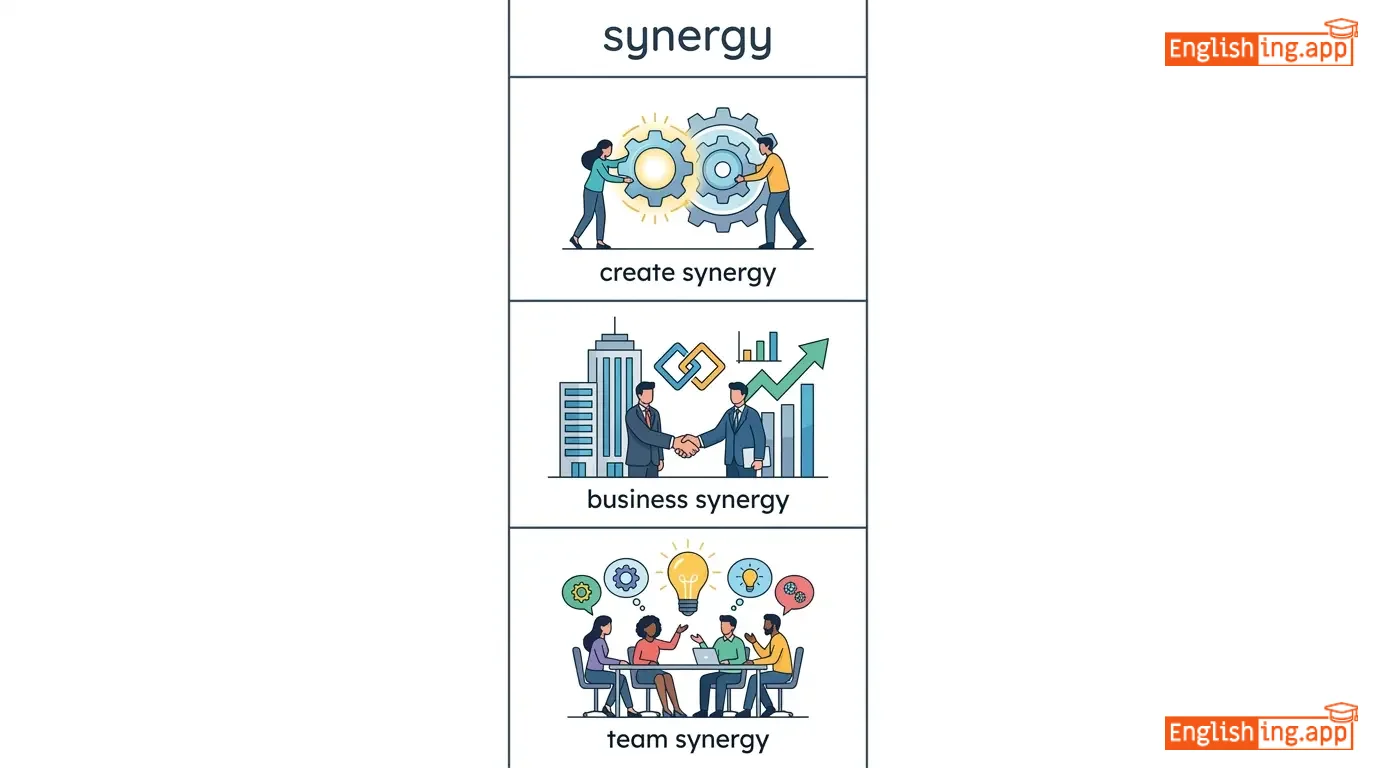
create synergy, business synergy, team synergy, synergy effect
••••••
|
Synergy = Syn + Energy — 一起工作就能得到更多的能量!
••••••
|
|
#8629
⚡
|
/sɪˈnɜːrdʒɪk/
adjective
(协同的)
••••••
|
- •••••• |
协同的
xie tong de
••••••
|
- •••••• | - •••••• | - •••••• | - •••••• |
Working together in a cooperative and effective manner.
••••••
|
The two departments have a synergic relationship that boosts productivity. |
两个部门有着协同关系,促进了生产力的提高。
Liang ge bumen youzhe xietong guanxi, cujinle shengchanli de tigao.
••••••
|
- •••••• | - •••••• | - •••••• |
cooperative, collaborative, unified, combined, harmonious
••••••
|
independent, conflicting
••••••
|
synergic effect, synergic action, synergic relationship
••••••
|
Synergic = synergy + magic — 一起工作,创造魔法!
••••••
|
|
#8630
🥛
|
/sɪˈnɛrəsɪs/
noun
(sɪˈnɛrəsɪs)
••••••
|
- •••••• |
协同作用
xie tong zuo yong
••••••
|
- •••••• | - •••••• | - •••••• | - •••••• |
The contraction of two adjacent vowels into a single syllable or the separation of liquid from a gel.
••••••
|
The yogurt showed syneresis when liquid separated on top. |
当液体在上面分离时,酸奶表现出协同作用。
Dang ye ti zai shangmian fenli shi, suannai biaoxian chu xietong zuoyong.
••••••
|
- •••••• | - •••••• | - •••••• |
contraction, merging, coalescence, separation, shrinkage
••••••
|
expansion, separation
••••••
|
syneresis in yogurt, gel syneresis, syneresis process
••••••
|
当酸奶上面液体分离时,记住—那是协同作用!
••••••
|
|
#8631
🤝
|
/ˈsɪndɪkət/
noun
(辛迪凯特)
••••••
|
- •••••• |
辛迪加
xīndíjiā
••••••
|
- •••••• | - •••••• | - •••••• | - •••••• |
A group of individuals or organizations combined to promote a common interest or carry out a business venture.
••••••
|
A syndicate of investors bought the struggling company. |
一个投资者辛迪加买下了这家困难的公司。
Yī gè tóuzī zhě xīndíjiā mǎi xià le zhè jiā kùnnán de gōngsī.
••••••
|
syndicate a loan |
To share a large loan among multiple lenders to spread the risk.
••••••
|
辛迪加贷款
xīndíjiā dàikuǎn
••••••
|
consortium, cartel, association, alliance, partnership
••••••
|
individual, loner
••••••
|
syndicate members, loan syndicate, crime syndicate, news syndicate
••••••
|
Syndicate 英文和 '辛迪加' 是同一个意思,一个群体为了共同利益组成合作团体。
••••••
|
|
#8632
🥁
|
/ˈsɪŋkəˌpeɪtɪd/
adjective
(辛科佩特德)
••••••
|
- •••••• |
切分节奏
qiēfēn jiézòu
••••••
|
- •••••• | - •••••• | - •••••• | - •••••• |
Characterized by displaced beats or rhythms, especially in music.
••••••
|
The jazz piece had a syncopated rhythm that energized the crowd.
这段爵士乐有一个辛科佩特德的节奏,激励了人群。
••••••
|
这段爵士乐有一个切分节奏,激励了人群。
Zhè duàn juéshì yuè yǒu yīgè qiēfēn jiézòu, jīlìle rénqún.
••••••
|
- •••••• | - •••••• | - •••••• |
offbeat, rhythmic, accented, irregular
••••••
|
regular, steady
••••••
|
syncopated rhythm, syncopated beat, syncopated music
••••••
|
切分节奏意味着打破或改变节奏。
••••••
|
|
#8633
🔄
|
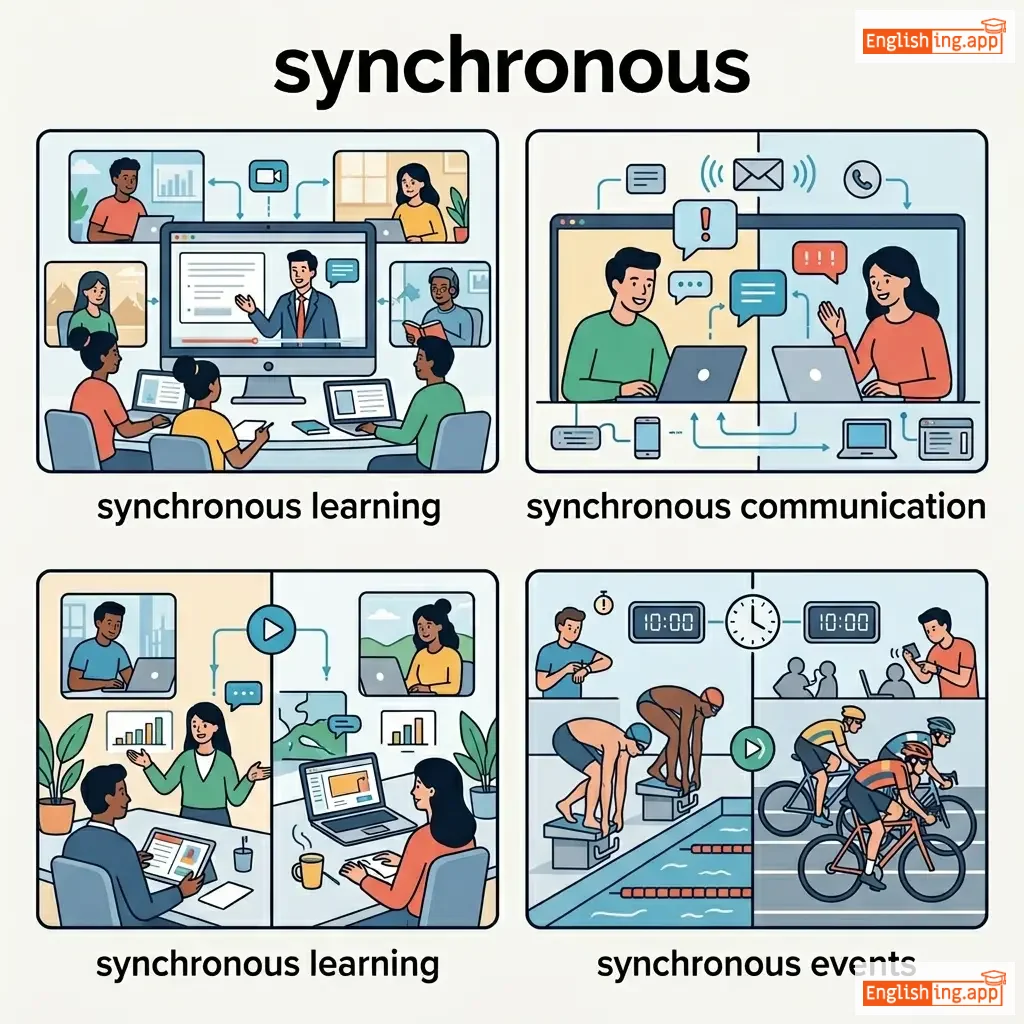
/ˈsɪŋkrənəs/
adjective
(辛克罗纳斯)
••••••
|
|
同步的
tóngbù de
••••••
|
- •••••• | - •••••• | - •••••• | - •••••• |
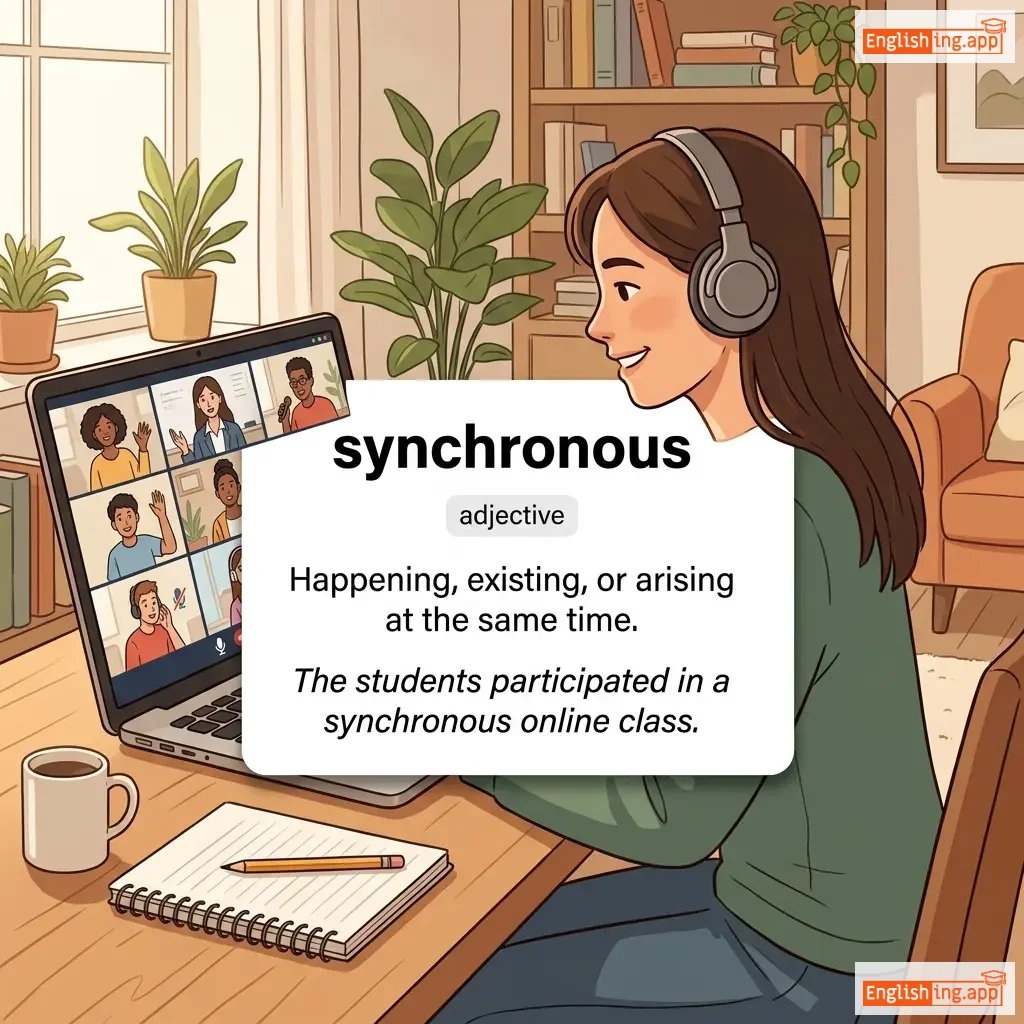
Happening, existing, or arising at the same time.
••••••
|
The students participated in a synchronous online class. |
学生们参加了一个同步的在线课程。
Xuéshēngmen cānjiāle yīgè tóngbù de zàixiàn kèchéng.
••••••
|
synchronous communication |
Real-time communication where participants interact simultaneously.
••••••
|
同步通信
tóngbù tōngxìn
••••••
|
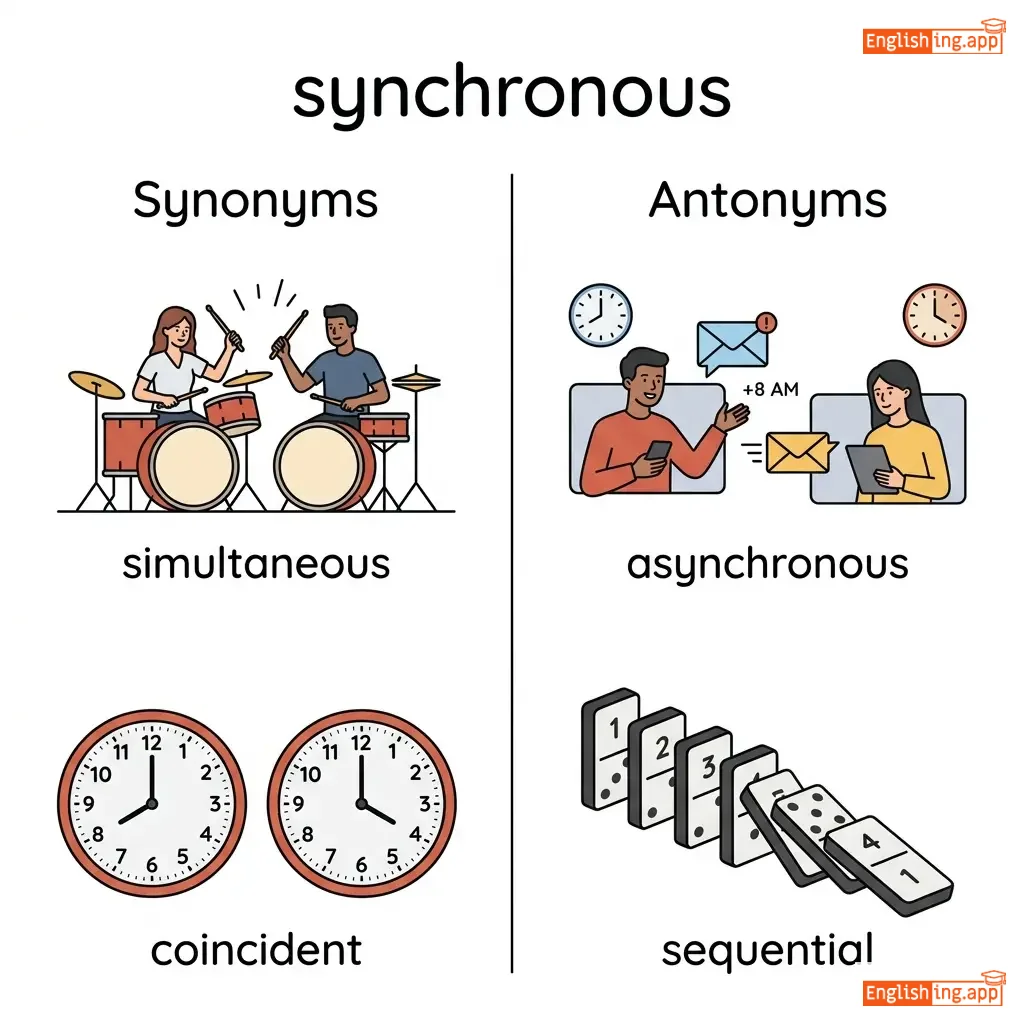
simultaneous, coincident, concurrent, contemporaneous
••••••
|
asynchronous, sequential
••••••
|
synchronous learning, synchronous communication, synchronous events
••••••
|
Synchronous 意味着时间同步,一切同时进行。
••••••
|
|
#8634
⏱️
|
/ˈsɪŋkrəˌnɪzəm/
noun
(同步)
••••••
|
- •••••• |
同步
tongbu
••••••
|
- •••••• | - •••••• | - •••••• | - •••••• |
The simultaneous occurrence of events or actions.
••••••
|
The synchronism of the dancers' movements amazed the audience. |
舞者动作的同步让观众感到惊讶。
Wǔzhě dòngzuò de tóngbù ràng guānzhòng gǎndào jīngyà.
••••••
|
- •••••• | - •••••• | - •••••• |
coincidence, simultaneity, concurrence, synchronization
••••••
|
asynchrony, mismatch, disunity
••••••
|
perfect synchronism, synchronism of events, synchronism in time
••••••
|
同步意味着所有事情同时发生。
••••••
|
|
#8635
🎼
|
/ˈsɪmfəni/
noun
(辛福尼)
••••••
|
- •••••• |
交响乐,一种复杂的音乐作品
jiaoxiangyue, yizhong fuzadu de yinyue zuopin
••••••
|
- •••••• | - •••••• | - •••••• | - •••••• |
An elaborate musical composition for a full orchestra, typically in four movements.
••••••
|
Beethoven's Fifth Symphony is one of the most famous works in classical music. |
贝多芬的第五交响曲是古典音乐中最著名的作品之一。
Beiduofen de diwu jiaoxiangqu shi gudian yinyue zhong zui zhuming de zuopin zhi yi.
••••••
|
symphony of colors |
A harmonious blend of many colors.
••••••
|
色彩交响乐
secai jiaoxiangyue
••••••
|
composition, concerto, orchestration, sonata, opus
••••••
|
discord, cacophony
••••••
|
symphony orchestra, great symphony, classical symphony, symphony performance
••••••
|
交响乐就像各种乐器的和谐演奏,色彩也如此融合。
••••••
|
|
#8636
🎶
|
/sɪmˈfoʊniəs/
adjective
••••••
|
- •••••• | - •••••• | - •••••• | - •••••• | - •••••• | - •••••• |
Harmonious; producing a pleasant sound or agreement of sound.
••••••
|
The choir's voices were symphonious and filled the hall with beauty. |
- •••••• | - •••••• | - •••••• | - •••••• |
harmonious, melodic, tuneful, euphonious, musical
••••••
|
discordant, harsh, cacophonous
••••••
|
symphonious sound, symphonious voices, symphonious melody, symphonious harmony
••••••
|
No •••••• |
|
#8637
🎼
|
/sɪmˈfɒnɪk/
adjective
(辛福尼克)
••••••
|
- •••••• |
交响乐的
jiaoxiangyue de
••••••
|
- •••••• | - •••••• | - •••••• | - •••••• |
relating to or having the character of a symphony or symphony orchestra
••••••
|
The concert featured a symphonic masterpiece. |
音乐会展示了一部交响乐的杰作。
Yinyuehui zhanshi le yibu jiaoxiangyue de jiezuo.
••••••
|
- •••••• | - •••••• | - •••••• |
orchestral, harmonious, musical, melodic
••••••
|
discordant, unmusical
••••••
|
symphonic music, symphonic orchestra, symphonic poem, symphonic sound
••••••
|
Symphonic 就像交响乐一样,🎼 想象一个管弦乐队在演奏
••••••
|
|
#8638
🤗
|
/ˈsɪmpəˌθaɪz/
verb
••••••
|
|
- •••••• |
sympathized
••••••
|
sympathized
••••••
|
sympathizes
••••••
|
sympathizing
••••••
|
to feel or express compassion or pity for someone else’s situation
••••••
|
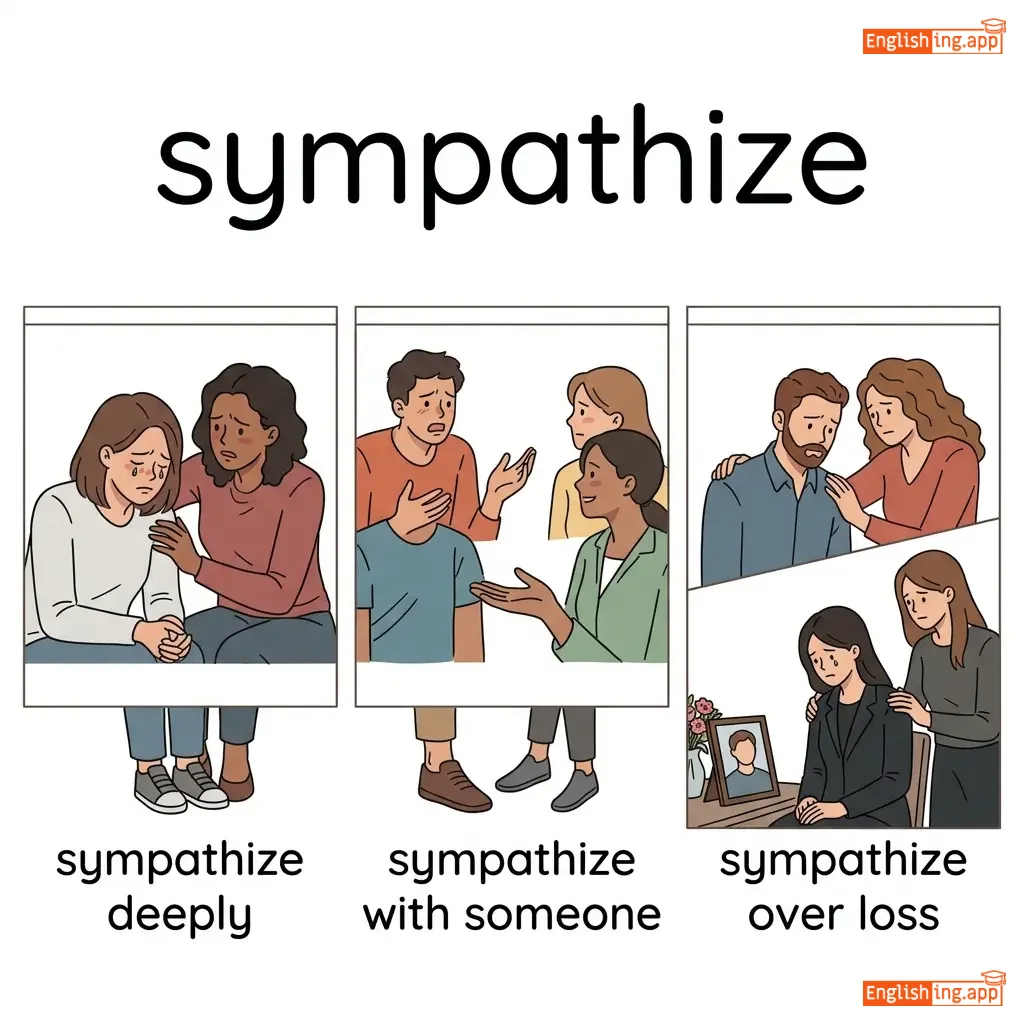
I sympathize with you on the loss of your pet. |
- •••••• |
sympathize with |
to share or understand someone’s feelings
••••••
|
- •••••• |
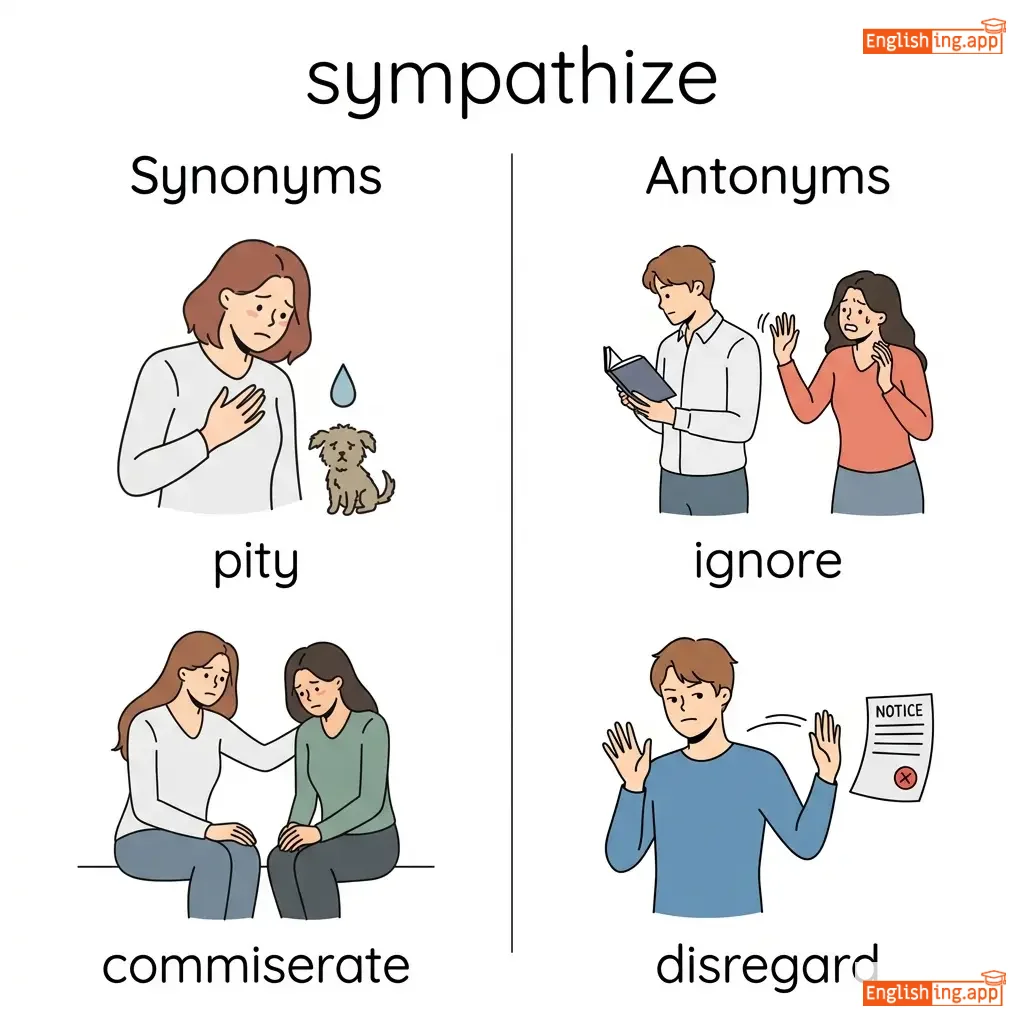
pity, commiserate, empathize, console
••••••
|
ignore, disregard, neglect
••••••
|
sympathize deeply, sympathize with someone, sympathize over loss
••••••
|
No •••••• |
|
#8639
💙
|
/ˌsɪmpəˈθɛtɪk/
adjective
(同情的)
••••••
|
- •••••• |
同情的
tóngqíng de
••••••
|
- •••••• | - •••••• | - •••••• | - •••••• |
showing understanding or compassion for someone’s feelings or situation
••••••
|
She was very sympathetic when he lost his job.
当他失去工作时,她表现得非常同情。
••••••
|
当他失去工作时,她表现得非常同情。
Dāng tā shīqù gōngzuò shí, tā biǎoxiàn dé fēicháng tóngqíng.
••••••
|
sympathetic ear
同情的耳朵
••••••
|
a person who listens with kindness and understanding
••••••
|
同情的耳朵
tóngqíng de ěrduo
••••••
|
compassionate, caring, kind, supportive, understanding
••••••
|
indifferent, unfeeling, unsympathetic
••••••
|
sympathetic attitude, sympathetic ear, sympathetic response, sympathetic character
••••••
|
Sympathy + pathetic = 对他人的同情
••••••
|
Vocabulary Quiz
Test your vocabulary by matching words with their translations or meanings.
Login to take the quiz
Comments (0)
Share your thoughts and join the discussion.
Join the discussion by logging in
Login to CommentNo comments yet
Be the first to share your thoughts!