





Swipe left or right, or use the buttons. Tap image to zoom.
例句翻译
单词
Lesson 195Lesson 195 - 遮罩切换
|
表情符号
|
单词 | Images | 翻译 | 过去时 | 过去分词 | 第三人称单数 | 动名词 | 含义 | 例句 | 例句翻译 | 示例表达 | 示例表达含义 | 示例表达翻译 | 同义词 | 反义词 | 搭配词 | 助记符 |
|---|---|---|---|---|---|---|---|---|---|---|---|---|---|---|---|---|---|
|
#5821
🤢
|
/ˈnɔːʃəs/
adjective
(nɔːʃəs)
••••••
|
- •••••• |
感觉恶心
gǎn jué ě xīn
••••••
|
- •••••• | - •••••• | - •••••• | - •••••• |
feeling like you are about to vomit; causing a feeling of sickness
••••••
|
The smell of rotten food made her feel nauseous. |
腐烂食物的气味让她感到恶心。
fǔ làn shí wù de qì wèi ràng tā gǎn dào ě xīn.
••••••
|
feel nauseous |
to experience a sensation of sickness or urge to vomit
••••••
|
感觉恶心
gǎn jué ě xīn
••••••
|
queasy, sick, ill, uneasy, dizzy
••••••
|
healthy, comfortable, well
••••••
|
feel nauseous, look nauseous, nauseous feeling, nauseous smell
••••••
|
Nauseous 的意思是感觉恶心 — 当闻到恶臭时,你会感觉恶心。
••••••
|
|
#5822
🪦
|
/nɪˈkrɒlədʒi/
noun
(讣告)
••••••
|
- •••••• |
讣告
fugao
••••••
|
- •••••• | - •••••• | - •••••• | - •••••• |
An obituary notice or a list of people who have recently died.
••••••
|
The newspaper published a necrology of notable figures who passed away that year.
报纸发布了该年已故知名人物的讣告。
••••••
|
报纸发布了该年已故知名人物的讣告。
Baozhi fabulei gai nian yigou zhiming renwu de fugao.
••••••
|
- •••••• | - •••••• | - •••••• |
obituary, death notice, memorial
••••••
|
birth announcement, celebration
••••••
|
necrology section, annual necrology, publish necrology
••••••
|
Necro表示死亡 + logy表示学习 — 讣告意味着死者名单或讣告。
••••••
|
|
#5823
🥖
|
/nəˈsɛsəti/
noun
(nè sī tì)
••••••
|
|
必要性
bì yào xìng
••••••
|
- •••••• | - •••••• | - •••••• | - •••••• |
Something that is essential or indispensable.
••••••
|
Food and water are basic necessities of life. |
食物和水是生活中的基本必需品。
Shíwù hé shuǐ shì shēnghuó zhōng de jīběn bìxū pǐn.
••••••
|
out of necessity |
because it is necessary
••••••
|
出于必要性
chū yú bìyàoxìng
••••••
|
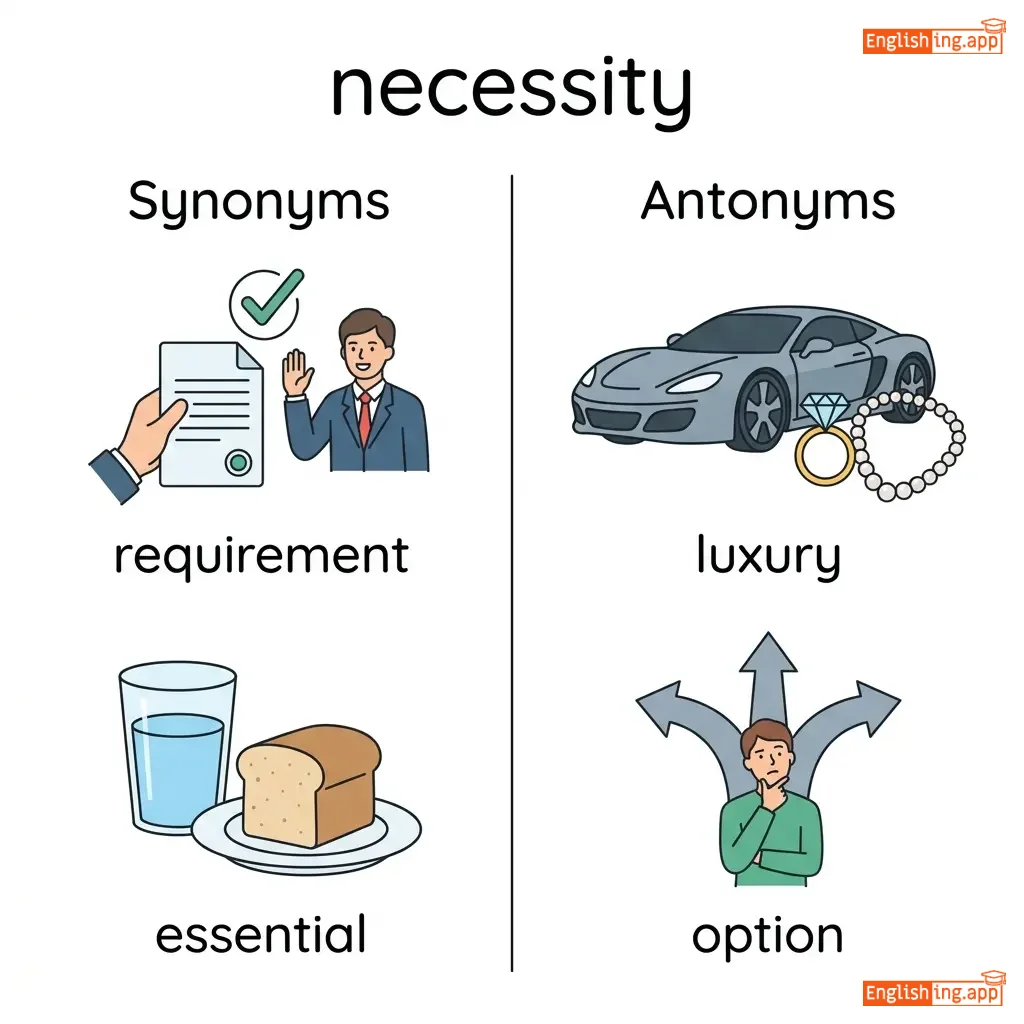
requirement, essential, need, must
••••••
|
luxury, option
••••••
|
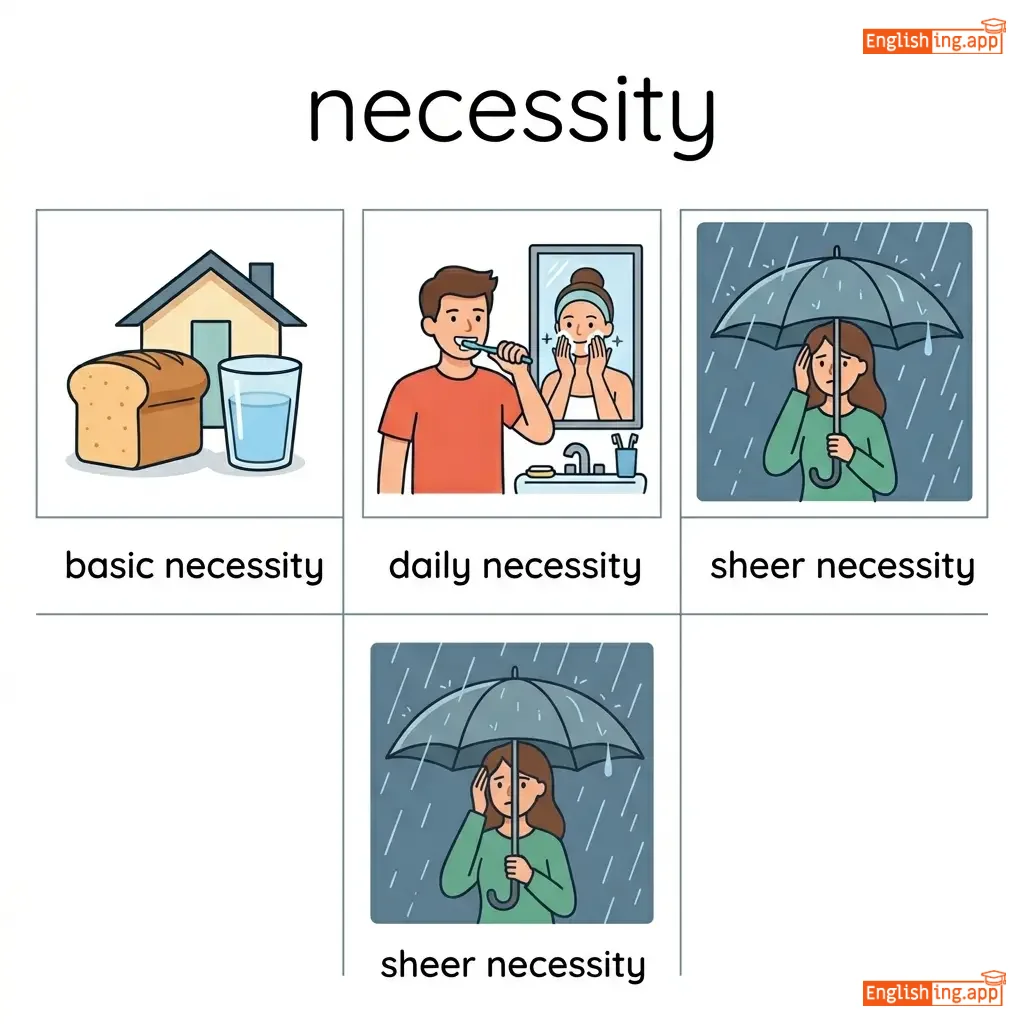
basic necessity, daily necessity, sheer necessity
••••••
|
Necessity 的意思是必需——没有食物和水,生命无法存在。
••••••
|
|
#5824
⚠️
|
/nəˈsɛsɪteɪt/
verb
(nè sī sī tè)
••••••
|
- •••••• |
使成为必要
shǐ chéngwéi bìyào
••••••
|
necessitated
nè sī sī tè dé
••••••
|
necessitated
nè sī sī tè dé
••••••
|
necessitates
nè sī sī tè sī
••••••
|
necessitating
nè sī sī tè tīnɡ
••••••
|
To make something necessary or unavoidable.
••••••
|
The heavy rains necessitated the cancellation of the event.
大雨使得活动的取消成为必然。
••••••
|
大雨使得活动的取消成为必然。
Dàyǔ shǐdé huódòng de qǔxiāo chéngwéi bìrán.
••••••
|
- •••••• | - •••••• | - •••••• |
require, demand, compel, force
••••••
|
avoid, prevent
••••••
|
necessitate action, necessitate change, circumstances necessitate
••••••
|
必要性让一切成为必然。
••••••
|
|
#5825
✔️
|
/ˈnɛsəsɛri/
adjective
••••••
|
|
- •••••• | - •••••• | - •••••• | - •••••• | - •••••• |
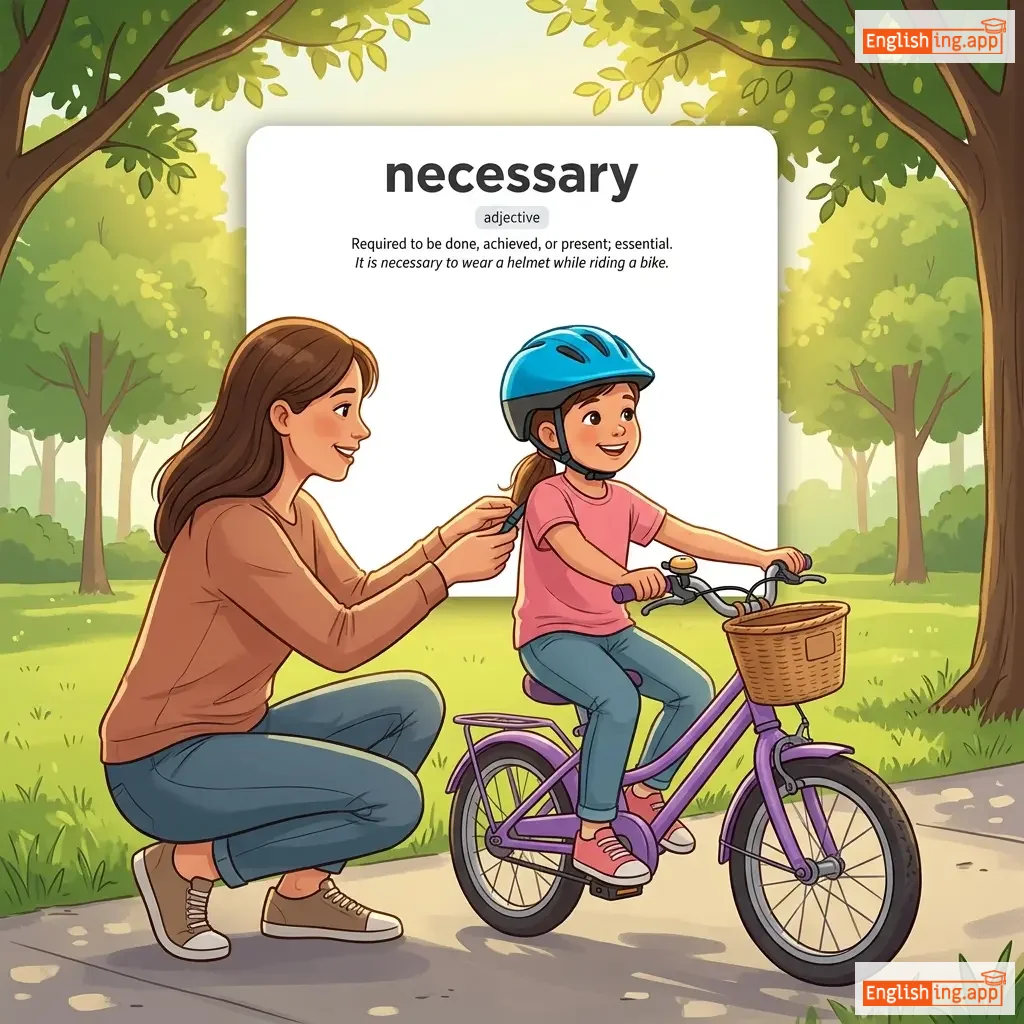
Required to be done, achieved, or present; essential.
••••••
|
It is necessary to wear a helmet while riding a bike. |
- •••••• |
make necessary arrangements |
to prepare the essential things needed
••••••
|
- •••••• |
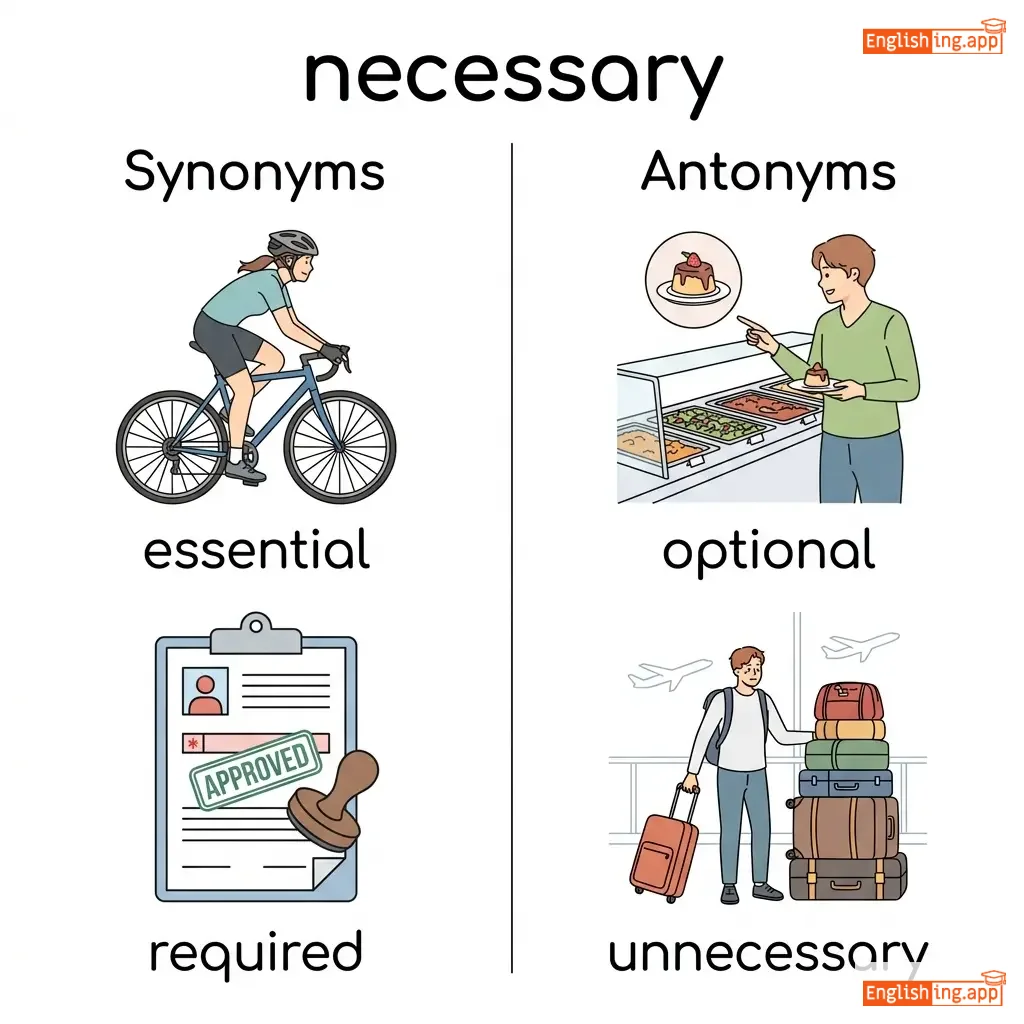
essential, required, vital, crucial, mandatory
••••••
|
optional, unnecessary, needless
••••••
|
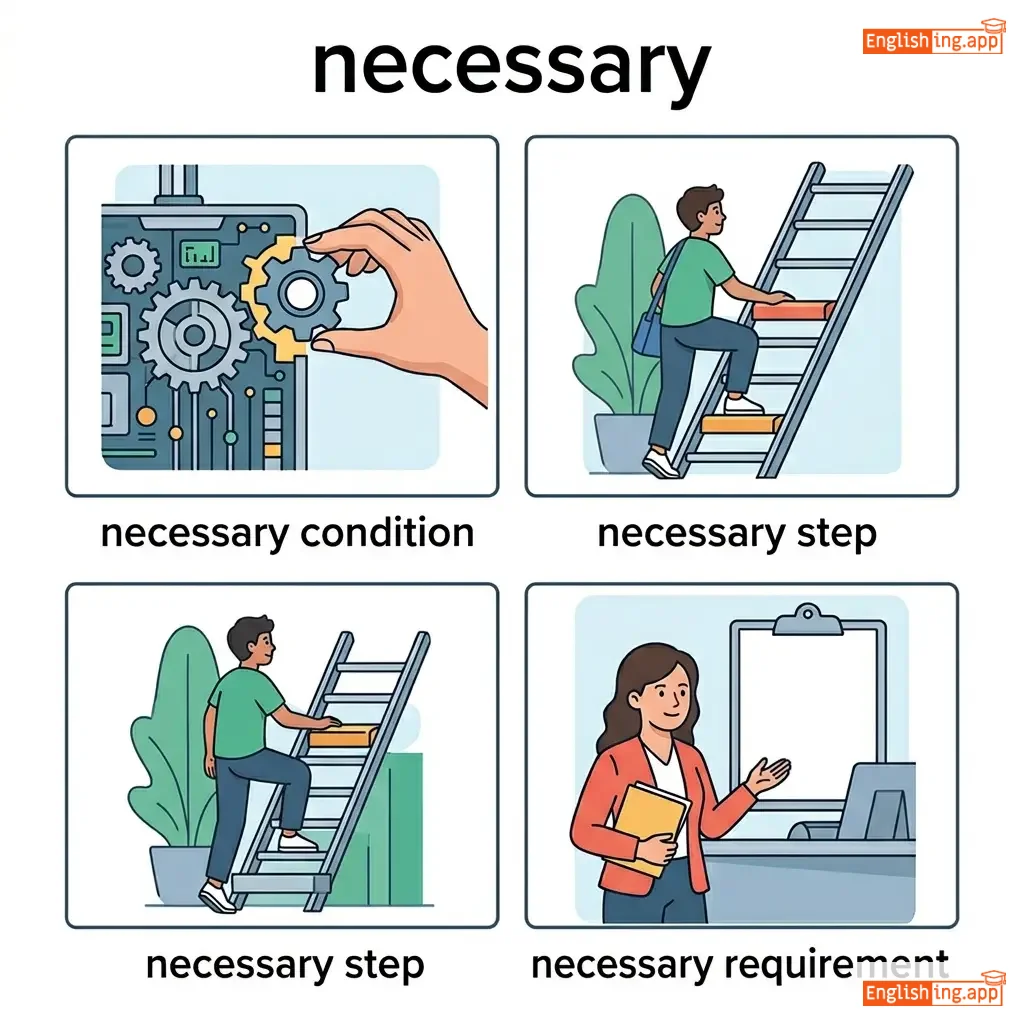
necessary condition, necessary step, necessary requirement, absolutely necessary
••••••
|
No •••••• |
|
#5826
🌫️
|
/ˈnɛbjələs/
adjective
(nébìulè sī)
••••••
|
- •••••• |
朦胧
ménglóng
••••••
|
- •••••• | - •••••• | - •••••• | - •••••• |
Unclear, vague, or ill-defined; resembling a cloud or haze.
••••••
|
His plan for the future was still nebulous and hard to understand. |
他对未来的计划仍然是朦胧的,难以理解。
tā duì wèilái de jìhuà réngrán shì ménglóng de, nán yǐ lǐjiě.
••••••
|
- •••••• | - •••••• | - •••••• |
vague, unclear, hazy, indefinite, indistinct
••••••
|
clear, definite, precise
••••••
|
nebulous concept, nebulous idea, nebulous notion, nebulous vision
••••••
|
Nebula 是一个星云,nebula 就是朦胧的云雾,nebula 与 nebulous 也有相似之意。
••••••
|
|
#5827
✨
|
/ˈneb.jʊ.lə/
noun
(星云)
••••••
|
- •••••• |
星云
xingyun
••••••
|
- •••••• | - •••••• | - •••••• | - •••••• |
A cloud of gas and dust in outer space, sometimes visible in the night sky.
••••••
|
The Orion Nebula is one of the brightest in the sky. |
猎户座星云是天空中最明亮的之一。
Liè hù zuò xīng yún shì tiānkōng zhōng zuì míngliàng de zhī yī.
••••••
|
- •••••• | - •••••• | - •••••• |
gas cloud, star nursery, interstellar cloud
••••••
|
star, planet
••••••
|
Orion Nebula, bright nebula, planetary nebula, diffuse nebula
••••••
|
星云类似于'nebula' — 太空中的气体尘埃云,能在夜空中看到。
••••••
|
|
#5828
🌊
|
/niːp/
noun
(尼普)
••••••
|
- •••••• |
低潮
dīcháo
••••••
|
- •••••• | - •••••• | - •••••• | - •••••• |
A tide just after the first or third quarters of the moon when the difference between high and low tide is least.
••••••
|
During a neap tide, the water level change is minimal.
在尼普潮汐期间,水位变化最小。
••••••
|
在低潮期间,水位变化最小。
Zai dīcháo qījiān, shuǐwèi biànhuà zuìxiǎo.
••••••
|
- •••••• | - •••••• | - •••••• |
weak tide, low tide
••••••
|
spring tide, high tide
••••••
|
neap tide, neap current, neap phase
••••••
|
Neap — 低潮,最小的潮水变化。
••••••
|
|
#5829
🙅
|
/ˈneɪˌseɪ.ɪŋ/
noun
(nei-sei-ing)
••••••
|
- •••••• |
负面言论
fùmiàn yánlùn
••••••
|
- •••••• | - •••••• | - •••••• | - •••••• |
The act of expressing negative or pessimistic views.
••••••
|
His constant naysaying discouraged the team.
Tā de chángqí nei-sei-ing shīrèn xīndòng.
••••••
|
他不断的负面言论使团队失去了动力。
Tā bùduàn de fùmiàn yánlùn shǐ tuánduì shīqùle dònglì.
••••••
|
- •••••• | - •••••• | - •••••• |
negativity, pessimism, opposition, criticism
••••••
|
support, encouragement
••••••
|
constant naysaying, political naysaying, naysaying attitude
••••••
|
Nay zhī dào bù, saying zhī dào shuō — yīzhí shuō bù jiùshì naysaying.
••••••
|
|
#5830
🧭
|
/ˈnæv.ɪ.ɡeɪt/
verb
••••••
|
|
- •••••• |
navigated
••••••
|
navigated
••••••
|
navigates
••••••
|
navigating
••••••
|
To plan and direct the course of a ship, vehicle, or journey.
••••••
|
The captain navigated the ship safely through the storm. |
- •••••• |
navigate through difficulties |
to manage or deal with problems successfully
••••••
|
- •••••• |
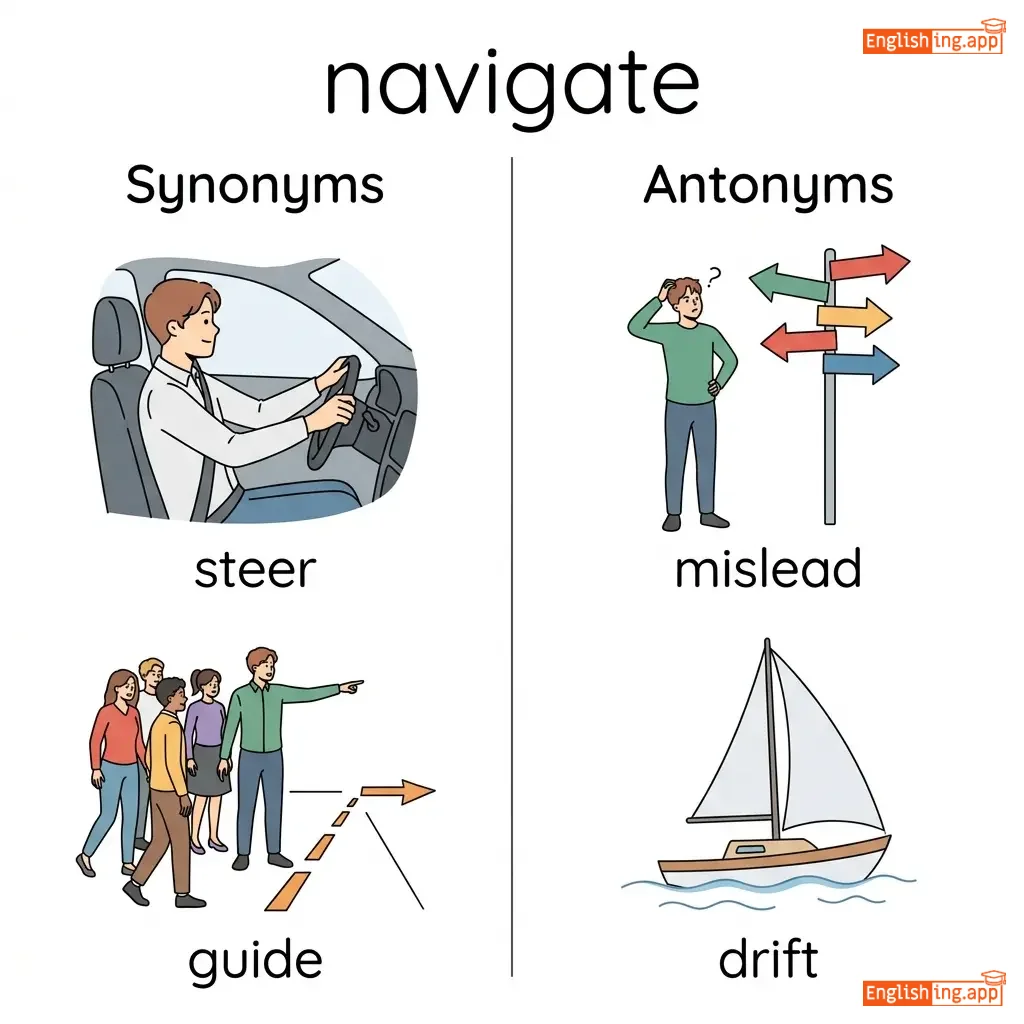
steer, guide, pilot, control, maneuver
••••••
|
mislead, drift
••••••
|
navigate a ship, navigate the road, navigate the internet, navigate through
••••••
|
No •••••• |
|
#5831
⛴️
|
/ˈnæv.ɪ.ɡə.bəl/
adjective
(nā wéi gà bù)
••••••
|
- •••••• |
可通航的
ke tong hang de
••••••
|
- •••••• | - •••••• | - •••••• | - •••••• |
Able to be sailed on or through by ships or boats.
••••••
|
The river is navigable for large cargo ships.
这条河流适合大型货船通行。
••••••
|
这条河流适合大型货船通行。
Zhe tiao he liu shi he da xing huo chuan tong xing.
••••••
|
- •••••• | - •••••• | - •••••• |
passable, traversable, open, accessible
••••••
|
blocked, impassable
••••••
|
navigable river, navigable waters, navigable channel
••••••
|
可通航的表示水上能行驶的 — 例如河流!
••••••
|
|
#5832
👶
|
/ˈneɪvəl/
noun
••••••
|
- •••••• | - •••••• | - •••••• | - •••••• | - •••••• | - •••••• |
the small hollow or raised area in the middle of the stomach, also called the belly button
••••••
|
The baby’s navel was carefully cleaned after birth. |
- •••••• |
navel-gazing |
excessive self-contemplation or focus on oneself
••••••
|
- •••••• |
belly button, umbilicus, tummy button
••••••
|
back, spine
••••••
|
clean the navel, navel piercing, navel area
••••••
|
No •••••• |
|
#5833
⛪
|
/neɪv/
noun
(内夫)
••••••
|
- •••••• |
教堂的中央部分
jiàotáng de zhōngyāng bùfen
••••••
|
- •••••• | - •••••• | - •••••• | - •••••• |
the central part of a church building intended to accommodate the congregation
••••••
|
The choir sang beautifully in the church nave.
合唱团在教堂的内夫里唱得非常动听。
••••••
|
合唱团在教堂的内夫里唱得非常动听。
Héchàngtuán zài jiàotáng de nèifū lǐ chàng dé fēicháng dòngtīng.
••••••
|
- •••••• | - •••••• | - •••••• |
hall, sanctuary, aisle, chamber
••••••
|
altar, transept
••••••
|
church nave, wide nave, central nave
••••••
|
Nave是教堂的核心部分,而不是Navy。
••••••
|
|
#5834
🚢
|
/ˈneɪvəl/
adjective
(nèiwǎěr)
••••••
|
- •••••• |
海军的
haijun de
••••••
|
- •••••• | - •••••• | - •••••• | - •••••• |
relating to a country's navy or military ships
••••••
|
The country invested heavily in naval defense. |
该国在海军防御方面进行了大量投资。
Gai guo zai haijun fangyu fangmian jin xing le daliao touzi.
••••••
|
naval forces |
a nation's warships and related military strength
••••••
|
海军力量
haijun li liang
••••••
|
maritime, seafaring, oceanic, military
••••••
|
civilian, land-based
••••••
|
naval base, naval battle, naval defense, naval fleet
••••••
|
Naval意味着海军 — 联想到Navy和Battle来记住Naval!
••••••
|
|
#5835
⚓
|
/ˈnɔːtɪkəl/
adjective
(纳提卡尔)
••••••
|
- •••••• |
航海
hanghai
••••••
|
- •••••• | - •••••• | - •••••• | - •••••• |
relating to ships, sailors, or navigation on water
••••••
|
He studied nautical charts before setting sail.
他在起航前研究了航海图。
••••••
|
他在起航前研究了航海图。
Ta zai qihang qian yanjiu le hanghai tu.
••••••
|
nautical mile
航海英里
••••••
|
a unit of distance used in sea and air navigation
••••••
|
航海英里
hanghai yingli
••••••
|
marine, naval, maritime, seafaring
••••••
|
terrestrial, land-based
••••••
|
nautical chart, nautical mile, nautical theme, nautical terms
••••••
|
航海(hanghai)意味着与海洋有关 — 想象一艘船在海洋中航行。
••••••
|
|
#5836
🌼
|
/nɑːrˈsɪsəs/
noun
(水仙花)
••••••
|
- •••••• |
水仙花
shuǐxiān huā
••••••
|
- •••••• | - •••••• | - •••••• | - •••••• |
A type of flowering plant with yellow or white blooms, often associated with self-love from Greek mythology.
••••••
|
A narcissus bloomed in the garden during spring. |
春天时,一朵水仙花在花园里盛开。
Chūntiān shí, yī duǒ shuǐxiān huā zài huāyuán lǐ shèngkāi.
••••••
|
- •••••• | - •••••• | - •••••• |
daffodil, jonquil, flower, bloom
••••••
|
weed, shrub
••••••
|
narcissus flower, narcissus bulbs, narcissus bloom, narcissus garden
••••••
|
水仙花是美丽的花,但在希腊神话中象征自恋。
••••••
|
|
#5837
🤮
|
/ˈnɔːzieɪt/
verb
(诺齐特)
••••••
|
- •••••• |
引起恶心
yǐnqǐ èxīn
••••••
|
nauseated
呕吐
••••••
|
nauseated
呕吐
••••••
|
nauseates
呕吐
••••••
|
nauseating
呕吐
••••••
|
To make someone feel sick, with an inclination to vomit.
••••••
|
The spoiled food nauseated him quickly.
坏掉的食物很快让他感到恶心。
••••••
|
坏掉的食物很快让他感到恶心。
Huài diào de shíwù hěn kuài ràng tā gǎndào èxīn.
••••••
|
- •••••• | - •••••• | - •••••• |
sicken, disgust, repel, upset
••••••
|
comfort, please
••••••
|
nauseate someone, nauseating smell, nauseated feeling
••••••
|
Nauseate:恶心 (引起恶心)
••••••
|
|
#5838
🤢
|
/ˈnɔːziə/
noun
(呕吐感)
••••••
|
- •••••• |
恶心
èxīn
••••••
|
- •••••• | - •••••• | - •••••• | - •••••• |
A feeling of sickness with an inclination to vomit.
••••••
|
The strong smell of paint gave her a sudden nausea. |
油漆的刺鼻气味让她突然感到恶心。
Yóuqī de cìbí qìwèi ràng tā túrán gǎndào èxīn.
••••••
|
waves of nausea |
Repeated or strong feelings of sickness
••••••
|
恶心的波动
Èxīn de bōdòng
••••••
|
sickness, queasiness, discomfort, retching
••••••
|
comfort, wellness
••••••
|
feel nausea, cause nausea, sudden nausea, nausea and vomiting
••••••
|
恶心就像呕吐的感觉,源于不适的气味。
••••••
|
|
#5839
🌱
|
/ˈnætʃrəli/
adverb
(nàchúrèlì)
••••••
|
- •••••• |
自然地
zìrán de
••••••
|
- •••••• | - •••••• | - •••••• | - •••••• |
In a way that is normal, expected, or without effort.
••••••
|
He spoke so naturally that everyone felt comfortable.
他讲得如此自然,以至于每个人都感到舒服。
••••••
|
他讲得如此自然,以至于每个人都感到舒服。
Tā jiǎng dé rúcǐ zìrán, yǐzhì yú měi gèrén dōu gǎndào shūfú.
••••••
|
naturally enough
自然地足够
••••••
|
Not surprisingly; as expected
••••••
|
自然地足够
zìrán de zúgòu
••••••
|
obviously, surely, normally, effortlessly
••••••
|
unnaturally, artificially
••••••
|
behave naturally, speak naturally, occur naturally, naturally gifted
••••••
|
自然地就像大自然一样,无需努力。
••••••
|
|
#5840
👔
|
/ˈnæti/
adjective
(内提)
••••••
|
- •••••• |
时尚
shíshàng
••••••
|
- •••••• | - •••••• | - •••••• | - •••••• |
Neat, stylish, and fashionable in appearance.
••••••
|
He looked very natty in his new suit.
他在新西装里看起来非常内提。
••••••
|
他在新西装里看起来非常时尚。
Tā zài xīn xīzhuāng lǐ kàn qǐlái fēicháng shíshàng.
••••••
|
- •••••• | - •••••• | - •••••• |
stylish, smart, dapper, elegant, sharp
••••••
|
messy, shabby, untidy
••••••
|
natty dresser, natty outfit, natty appearance, natty style
••••••
|
Natty 是形容一个时尚且整洁的外表 - natty = 时尚外观
••••••
|
|
#5841
🌍
|
/ˌnæʃəˈnæləti/
noun
(næʃəˈnæləti)
••••••
|
- •••••• |
国籍
guójí
••••••
|
- •••••• | - •••••• | - •••••• | - •••••• |
The status of belonging to a particular nation, either by birth or naturalization.
••••••
|
Her nationality is Canadian, though she was born in France. |
她的国籍是加拿大的,尽管她出生在法国。
Tā de guójí shì jiānádà de, jǐnguǎn tā chūshēng zài fǎguó.
••••••
|
of all nationalities |
Including people from different nations or backgrounds
••••••
|
所有国籍的人
suǒyǒu guójí de rén
••••••
|
citizenship, origin, ethnicity, heritage, identity
••••••
|
statelessness, foreignness
••••••
|
dual nationality, acquire nationality, nationality law, nationality status
••••••
|
国籍 = 国 + 籍,表示你属于哪个国家
••••••
|
|
#5842
🏊
|
/næˈteɪʃən/
noun
(nèi tè shēn)
••••••
|
- •••••• |
游泳
you yong
••••••
|
- •••••• | - •••••• | - •••••• | - •••••• |
The act or sport of swimming.
••••••
|
She took lessons in natation to improve her swimming skills.
她参加了游泳课程,以提高她的游泳技巧。
••••••
|
她参加了游泳课程,以提高她的游泳技巧。
Ta canjia le youyong kecheng, yi tigao ta de youyong jiqiao.
••••••
|
- •••••• | - •••••• | - •••••• |
swimming, aquatic sport, floating, diving, water activity
••••••
|
drowning, sinking
••••••
|
natation skills, natation training, natation competition
••••••
|
NATation 就是 NATural 的游泳 🏊
••••••
|
|
#5843
👶
|
/ˈneɪtl/
adjective
(内塔尔)
••••••
|
- •••••• |
与出生有关的
yu chusheng youguan de
••••••
|
- •••••• | - •••••• | - •••••• | - •••••• |
Relating to birth or the place of birth.
••••••
|
She returned to her natal village after many years. |
她在许多年后返回了她的出生村庄。
Ta zai xu duo nian hou fanhui le ta de chusheng cunzhuang.
••••••
|
natal home |
The house or place where someone was born
••••••
|
出生地
chusheng di
••••••
|
birth, native, congenital, natural, origin
••••••
|
foreign, alien
••••••
|
natal home, natal village, natal chart, natal care
••••••
|
Natal 意味着与出生有关 — 想想你出生的地方!
••••••
|
|
#5844
🌱
|
/ˈneɪsnt/
adjective
(内森特)
••••••
|
|
萌芽
méngyá
••••••
|
- •••••• | - •••••• | - •••••• | - •••••• |
Just coming into existence and beginning to develop.
••••••
|
The nascent technology has great potential. |
萌芽中的技术具有巨大的潜力。
Méngyá zhōng de jìshù jùyǒu jùdà de qiánlì.
••••••
|
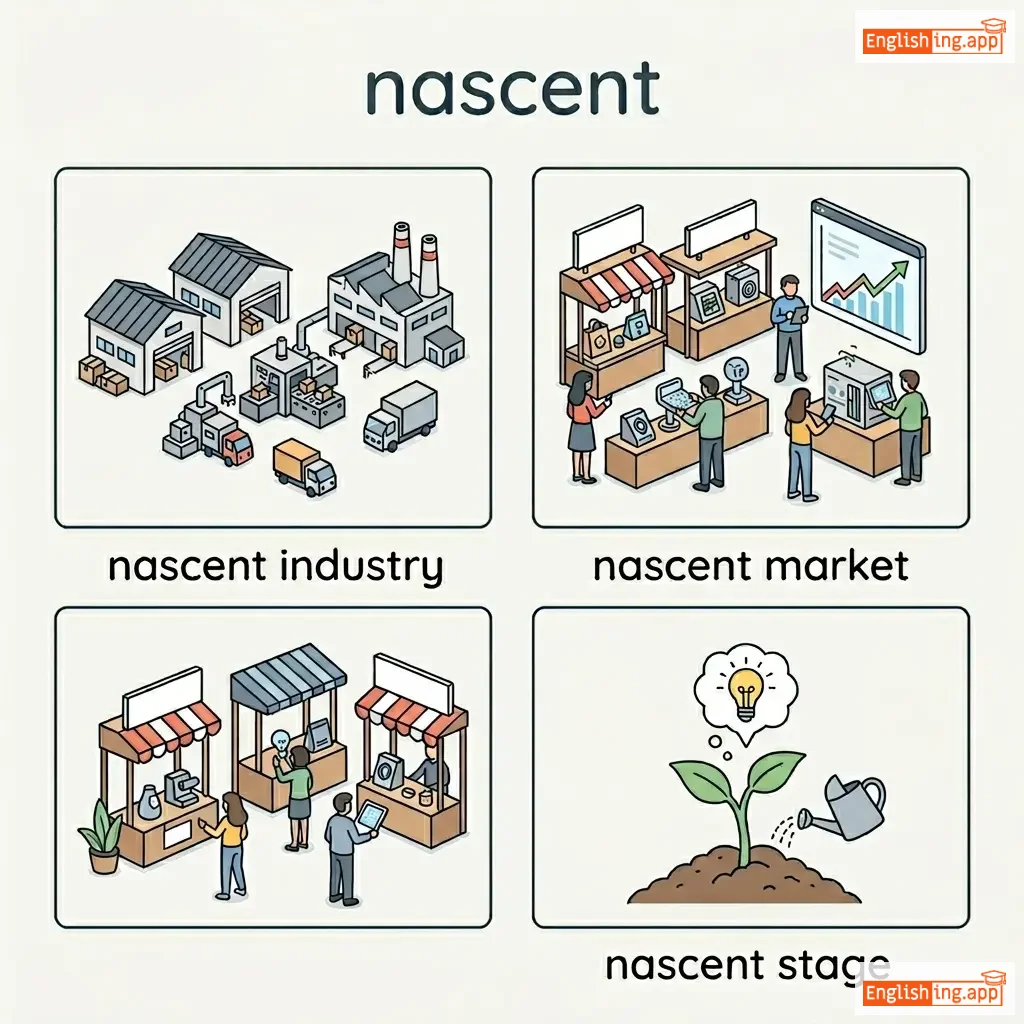
nascent stage |
The early phase of development
••••••
|
萌芽阶段
Méngyá jiēduàn
••••••
|
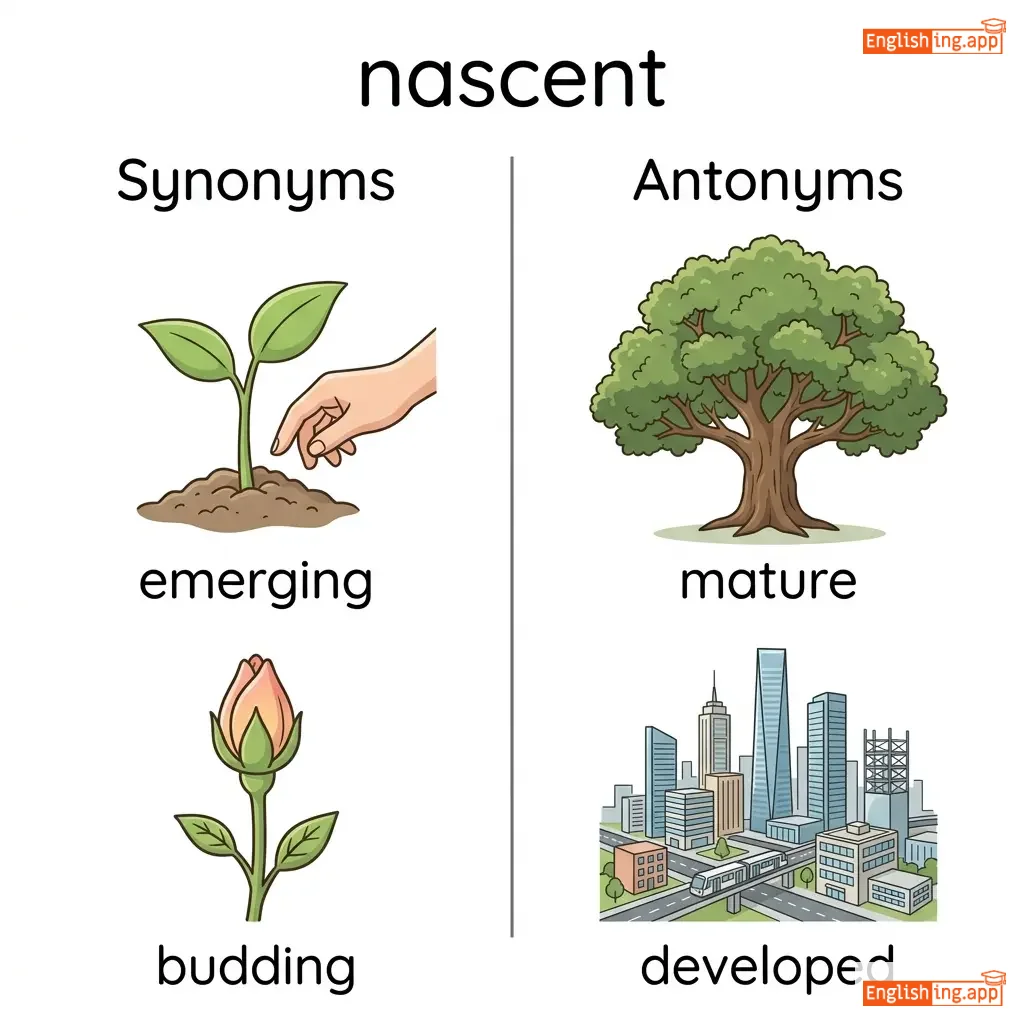
emerging, budding, developing, rising, incipient
••••••
|
mature, developed, established
••••••
|
nascent industry, nascent market, nascent stage, nascent idea
••••••
|
萌芽像种子刚开始发芽,刚刚出现的东西。
••••••
|
|
#5845
👃
|
/ˈneɪzl/
adjective
(内扎尔)
••••••
|
- •••••• |
鼻音的
bīyīn de
••••••
|
- •••••• | - •••••• | - •••••• | - •••••• |
Relating to the nose; a sound produced through the nose.
••••••
|
He spoke with a nasal voice due to his cold. |
他因感冒说话带有鼻音。
Tā yīn gǎnmào shuōhuà dàiyǒu bíyīn.
••••••
|
nasal tone |
A voice sound that passes through the nose
••••••
|
鼻音
bíyīn
••••••
|
snuffly, stuffy, resonant, vocal, nasalized
••••••
|
clear, open
••••••
|
nasal voice, nasal sound, nasal cavity, nasal passage
••••••
|
Nasal = 与鼻子相关
••••••
|
|
#5846
🙄
|
/ˌnæroʊˈmaɪndɪd/
adjective
••••••
|
- •••••• | - •••••• | - •••••• | - •••••• | - •••••• | - •••••• |
Having a limited outlook or unwillingness to accept different opinions or ideas.
••••••
|
She was too narrow-minded to consider other perspectives. |
- •••••• |
narrow-minded attitude |
An intolerant or prejudiced way of thinking
••••••
|
- •••••• |
intolerant, prejudiced, biased, conservative, close-minded
••••••
|
open-minded, tolerant, broad-minded
••••••
|
narrow-minded view, narrow-minded approach, narrow-minded prejudice
••••••
|
No •••••• |
|
#5847
🗣️
|
/ˈnæreɪtər/
noun
(叙述者)
••••••
|
- •••••• |
叙述者
xùshù zhě
••••••
|
- •••••• | - •••••• | - •••••• | - •••••• |
A person who tells the story in a book, play, or film.
••••••
|
The narrator guided the audience through the complex plot.
叙述者引导观众穿越复杂的情节。
••••••
|
叙述者引导观众穿越复杂的情节。
Xùshù zhě yǐndǎo guānzhòng chuānyuè fùzá de qíngjié.
••••••
|
- •••••• | - •••••• | - •••••• |
storyteller, commentator, announcer, describer
••••••
|
listener, audience
••••••
|
narrator voice, first-person narrator, omniscient narrator, narrator role
••••••
|
叙述者是讲故事的人,就像叙述(xùshù)一样。
••••••
|
|
#5848
📝
|
/ˈnærətɪv/
noun
••••••
|
- •••••• | - •••••• | - •••••• | - •••••• | - •••••• | - •••••• |
A spoken or written account of connected events; a story.
••••••
|
The novel’s narrative explores themes of identity and freedom. |
- •••••• |
control the narrative |
To influence or shape how a story or situation is understood.
••••••
|
- •••••• |
story, account, tale, chronicle, description
••••••
|
silence, randomness
••••••
|
narrative style, narrative voice, personal narrative, political narrative
••••••
|
No •••••• |
|
#5849
📖
|
/næˈreɪʃən/
noun
(nareshen)
••••••
|
- •••••• |
叙述
xushu
••••••
|
- •••••• | - •••••• | - •••••• | - •••••• |
The act of telling a story or describing events in detail.
••••••
|
The movie’s narration was done by a famous actor.
电影的叙述由一位著名演员完成。
••••••
|
电影的叙述由一位著名演员完成。
Dianying de xushu you yi wei zhuming yanyuan wancheng.
••••••
|
voice narration
声音叙述
••••••
|
Spoken commentary or storytelling provided through voice.
••••••
|
声音叙述
Shengyin xushu
••••••
|
storytelling, recounting, commentary, description
••••••
|
silence, quiet
••••••
|
narration of events, narration in movies, narration style, narration voice
••••••
|
Narration in Chinese is 叙述, meaning telling or describing a story.
••••••
|
|
#5850
🎤
|
/ˈnæreɪt/
verb
(纳雷特)
••••••
|
- •••••• |
叙述
xushù
••••••
|
narrated
纳雷特德
••••••
|
narrated
纳雷特德
••••••
|
narrates
纳雷特斯
••••••
|
narrating
纳雷特英
••••••
|
To tell a story or describe events, often in detail.
••••••
|
She will narrate the events of her journey to the audience.
她将向观众叙述她旅途中的事件。
••••••
|
她将向观众叙述她旅途中的事件。
Ta jiang xiang guanzhong xushu ta lütu zhong de shijian.
••••••
|
narrate a story
讲述故事
••••••
|
To tell or describe a story to others.
••••••
|
讲故事
jiang gushi
••••••
|
tell, recount, describe, relate, detail
••••••
|
conceal, hide
••••••
|
narrate a story, narrate events, narrate experiences, narrate history
••••••
|
Narrate in Chinese means 叙述, meaning to narrate or tell a story.
••••••
|
Vocabulary Quiz
Test your vocabulary by matching words with their translations or meanings.
Login to take the quiz
Comments (0)
Share your thoughts and join the discussion.
Join the discussion by logging in
Login to CommentNo comments yet
Be the first to share your thoughts!