


Swipe left or right, or use the buttons. Tap image to zoom.
例句翻译
单词
Lesson 335Lesson 335 - 遮罩切换
|
表情符号
|
单词 | Images | 翻译 | 过去时 | 过去分词 | 第三人称单数 | 动名词 | 含义 | 例句 | 例句翻译 | 示例表达 | 示例表达含义 | 示例表达翻译 | 同义词 | 反义词 | 搭配词 | 助记符 |
|---|---|---|---|---|---|---|---|---|---|---|---|---|---|---|---|---|---|
|
#10015
🔪
|
/ˈmɜːrdərər/
noun
(谋杀犯)
••••••
|
- •••••• |
凶手
xiōngshǒu
••••••
|
- •••••• | - •••••• | - •••••• | - •••••• |
a person who unlawfully kills another human being with intent
••••••
|
The murderer was caught by the police within hours. |
凶手在几个小时内被警方逮捕。
xiōngshǒu zài jǐ gè xiǎoshí nèi bèi jǐngfāng dàibǔ.
••••••
|
- •••••• | - •••••• | - •••••• |
killer, assassin, slayer, culprit, criminal
••••••
|
victim, protector
••••••
|
serial murderer, cold-blooded murderer, notorious murderer
••••••
|
Murderer 意味着 '凶手' – 凶手是做谋杀的人。
••••••
|
|
#10016
🆕
|
/njuː/
adjective
(niu)
••••••
|
- •••••• |
新的
xīn de
••••••
|
- •••••• | - •••••• | - •••••• | - •••••• |
recently made, discovered, or introduced; not existing before
••••••
|
He bought a new car yesterday.
他昨天买了一辆新车。
••••••
|
他昨天买了一辆新车。
Tā zuótiān mǎile yī liàng xīn chē.
••••••
|
brand new
全新
••••••
|
completely new, unused, and fresh
••••••
|
全新
quánxīn
••••••
|
fresh, recent, modern, novel, latest
••••••
|
old, used, ancient
••••••
|
new car, new job, new idea, new technology
••••••
|
NEW 是 XIN DE — 一切新事物都是新的
••••••
|
|
#10017
💢
|
/njʊˈrældʒə/
noun
(神经痛)
••••••
|
- •••••• |
神经痛
shenjing tong
••••••
|
- •••••• | - •••••• | - •••••• | - •••••• |
intense, often intermittent pain along a nerve pathway
••••••
|
The patient suffers from neuralgia in her face.
病人面部患有神经痛。
••••••
|
病人面部患有神经痛。
Bìngrén miànbù huàn yǒu shénjīng tòng.
••••••
|
- •••••• | - •••••• | - •••••• |
nerve pain, sharp pain, nerve disorder
••••••
|
comfort, relief
••••••
|
facial neuralgia, trigeminal neuralgia, neuralgia symptoms
••••••
|
Neuro (神经) + algia (痛) = 神经痛
••••••
|
|
#10018
😰
|
/ˈnɜːrvəs/
adjective
(nervous)
••••••
|
- •••••• |
紧张
jin zhang
••••••
|
- •••••• | - •••••• | - •••••• | - •••••• |
anxious, worried, or fearful about something
••••••
|
She felt nervous before giving her presentation.
她在做报告前感到紧张。
••••••
|
她在做报告前感到紧张。
Tā zài zuò bào gào qián gǎn dào jǐn zhāng.
••••••
|
nervous wreck
神经质的残骸
••••••
|
a person who is very anxious, worried, or stressed
••••••
|
极度紧张的人
jí dù jǐn zhāng de rén
••••••
|
anxious, uneasy, tense, restless, jittery
••••••
|
calm, relaxed, confident
••••••
|
nervous about, nervous smile, nervous feeling, nervous breakdown
••••••
|
考试时,每个人都感到 NERVOUS (紧张)
••••••
|
|
#10019
👗
|
/ˈnɛkˌlaɪn/
noun
(nèklín)
••••••
|
- •••••• |
领口
lǐngkǒu
••••••
|
- •••••• | - •••••• | - •••••• | - •••••• |
the edge of a garment around the neck, especially as cut to form a particular shape
••••••
|
The dress has a beautiful V-shaped neckline.
这件裙子有一个漂亮的V形领口。
••••••
|
这件裙子有一个漂亮的V形领口。
Zhè jiàn qúnzi yǒu yīgè piàoliang de V xíng lǐngkǒu.
••••••
|
- •••••• | - •••••• | - •••••• |
collar, neck opening, neck edge, upper cut
••••••
|
hemline, bottom edge
••••••
|
low neckline, high neckline, round neckline, V-shaped neckline
••••••
|
Neck + line = 领口
••••••
|
|
#10020
✨
|
/niːt/
adjective
(尼特)
••••••
|
- •••••• |
整洁
zhěngjié
••••••
|
- •••••• | - •••••• | - •••••• | - •••••• |
tidy, orderly, and well-arranged; simple and elegant
••••••
|
His handwriting is very neat and easy to read. |
他的字迹很整洁,容易阅读。
Tā de zìjì hěn zhěngjié, róngyì yuèdú.
••••••
|
neat and tidy |
extremely clean, organized, and well-arranged
••••••
|
整洁与有序
zhěngjié yǔ yǒuxù
••••••
|
tidy, orderly, clean, elegant, organized
••••••
|
messy, untidy, disorderly
••••••
|
neat handwriting, neat solution, neat appearance, neat arrangement
••••••
|
NEAT 就是整洁 — 把你的桌子保持 neat (整洁)
••••••
|
|
#10021
📍
|
/nɪə(r)/
preposition
(nier)
••••••
|
- •••••• |
近
jin
••••••
|
- •••••• | - •••••• | - •••••• | - •••••• |
At or to a short distance away; close in space, time, or relationship.
••••••
|
There is a park near my house. |
我家附近有一个公园。
Wo jia fujin you yige gongyuan.
••••••
|
near and dear |
very close and important to someone
••••••
|
非常亲密和重要
feichang qinmi he zhongyao
••••••
|
close, adjacent, next to, nearby
••••••
|
far, distant
••••••
|
near future, near death, near place, near completion
••••••
|
Near就是接近——就像有些人非常亲密和重要。
••••••
|
|
#10022
😈
|
/ˈnɔːti/
adjective
(nàti)
••••••
|
- •••••• |
顽皮
wánpí
••••••
|
- •••••• | - •••••• | - •••••• | - •••••• |
Disobedient or mischievous, often in a playful or mildly bad way.
••••••
|
The naughty child drew on the walls with crayons. |
顽皮的孩子用蜡笔在墙上画画。
Wánpí de háizi yòng làbǐ zài qiáng shàng huàhuà.
••••••
|
- •••••• | - •••••• | - •••••• |
mischievous, disobedient, cheeky, playful
••••••
|
obedient, well-behaved
••••••
|
naughty child, naughty behavior, naughty joke, naughty smile
••••••
|
Naughty 就是 'Not tea' – 没有茶,只有顽皮!
••••••
|
|
#10023
🌍
|
/ˈneɪtɪv/
adjective
(内地的)
••••••
|
- •••••• |
本地的
běndì de
••••••
|
- •••••• | - •••••• | - •••••• | - •••••• |
Belonging to a person by birth; originating in a particular place.
••••••
|
He is a native speaker of Bengali.
他是孟加拉语的母语者。
••••••
|
他是孟加拉语的母语者。
Tā shì mèngjiālā yǔ de mǔyǔ zhě.
••••••
|
native land
故乡
••••••
|
the country where a person was born
••••••
|
故乡
gùxiāng
••••••
|
indigenous, local, original, natural
••••••
|
foreign, alien
••••••
|
native speaker, native language, native culture, native people
••••••
|
本地的 = 故乡 – 母语者 = 讲自己故乡语言的人
••••••
|
|
#10024
💊
|
/nɑːrˈkɒtɪk/
noun
(麻醉品)
••••••
|
- •••••• |
麻醉品
mázuìpǐn
••••••
|
- •••••• | - •••••• | - •••••• | - •••••• |
A drug that dulls the senses and relieves pain, often causing sleep and sometimes addiction.
••••••
|
The police seized a large amount of narcotic substances.
警察查获了一大批麻醉品。
••••••
|
警察查获了一大批麻醉品。
Jǐngchá cháhuòle yī dà pī mázuìpǐn.
••••••
|
- •••••• | - •••••• | - •••••• |
drug, opiate, sedative, painkiller, depressant
••••••
|
stimulant, energizer
••••••
|
narcotic drugs, narcotic abuse, narcotic control, narcotic effect
••••••
|
麻醉品让人昏昏欲睡,麻醉了你。
••••••
|
|
#10025
🍽️
|
/ˈnæpkɪn/
noun
(nàpín)
••••••
|
- •••••• |
餐巾
canjin
••••••
|
- •••••• | - •••••• | - •••••• | - •••••• |
a piece of cloth or paper used to wipe the mouth and hands while eating
••••••
|
She placed a napkin on her lap before eating. |
她在吃饭前把餐巾放在膝盖上。
Ta zai chifan qian ba canjin fang zai xigai shang.
••••••
|
- •••••• | - •••••• | - •••••• |
serviette, tissue, towel, wipe
••••••
|
tablecloth
••••••
|
paper napkin, cloth napkin, folded napkin
••••••
|
餐巾 (canjin) 就是饭前擦嘴的巾,吃饭时必不可少。
••••••
|
|
#10026
🚼
|
/ˈneɪkɪd/
adjective
(neikid)
••••••
|
- •••••• |
赤裸
chiluo
••••••
|
- •••••• | - •••••• | - •••••• | - •••••• |
not covered by clothing or without protection
••••••
|
The child was running naked in the yard. |
孩子在院子里赤裸地跑来跑去。
Haizi zai yuanzi li chiluo de pao lai pao qu.
••••••
|
the naked truth |
the complete and unembellished truth
••••••
|
赤裸的真相
chiluo de zhenxiang
••••••
|
bare, unclothed, exposed, nude
••••••
|
clothed, covered
••••••
|
naked body, naked eye, naked truth
••••••
|
Naked意味着赤裸 – 如果你没有穿衣服,就是赤裸。
••••••
|
|
#10027
😇
|
/naɪˈiːv/
adjective
(naive)
••••••
|
- •••••• |
天真
tian zhen
••••••
|
- •••••• | - •••••• | - •••••• | - •••••• |
Lacking experience, wisdom, or judgment; too trusting.
••••••
|
She was naïve to believe every advertisement she saw. |
她天真地相信她看到的每一个广告。
Ta tian zhen de xiang xin ta kan dao de mei yi ge guang gao.
••••••
|
naïve optimism |
a simplistic or overly trusting belief in a positive outcome
••••••
|
天真乐观
tian zhen le guan
••••••
|
innocent, gullible, trusting, simple
••••••
|
wise, skeptical, experienced
••••••
|
naïve belief, naïve hope, naïve assumption, naïve person
••••••
|
Naïve的意思是'tian zhen' – 当你过于相信就会犯错
••••••
|
|
#10028
🕵️♂️
|
/mɪˈstɪəriəs/
adjective
(mǐsītéyùsī)
••••••
|
|
神秘
shenmi
••••••
|
- •••••• | - •••••• | - •••••• | - •••••• |
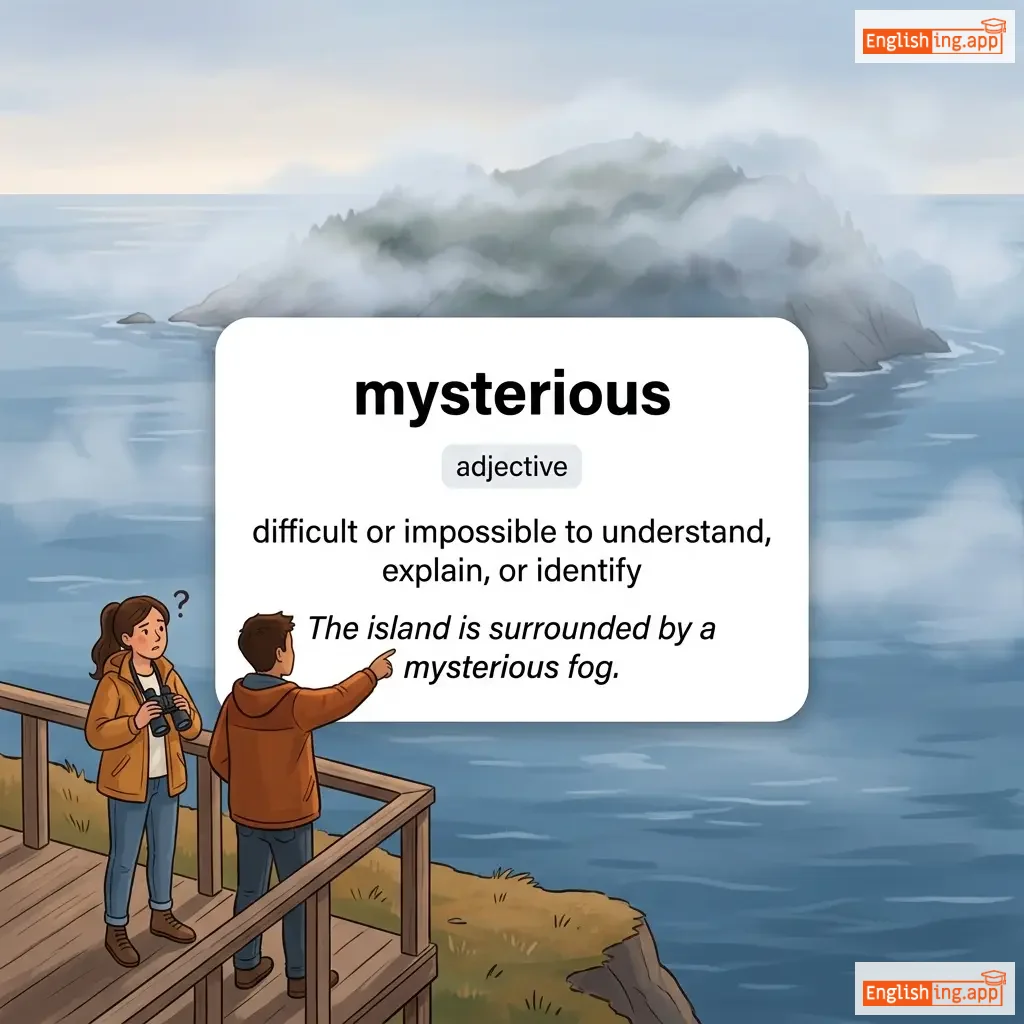
difficult or impossible to understand, explain, or identify
••••••
|
The island is surrounded by a mysterious fog. |
岛屿被神秘的雾气包围。
Dao yu bei shenmi de wuqi baowei.
••••••
|
mysterious ways |
unexpected or unexplainable methods or actions
••••••
|
神秘的方式
shenmi de fangshi
••••••
|
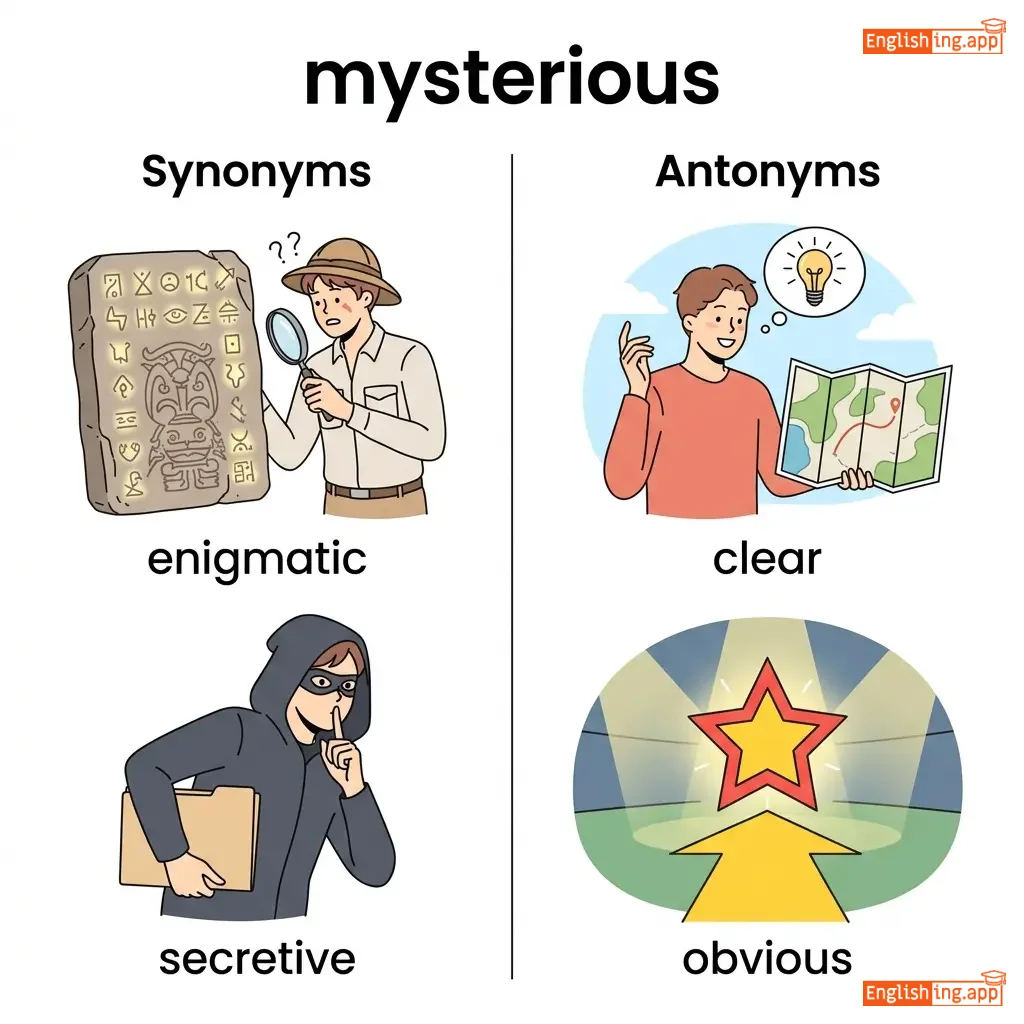
enigmatic, secretive, puzzling, cryptic, obscure
••••••
|
clear, obvious
••••••
|
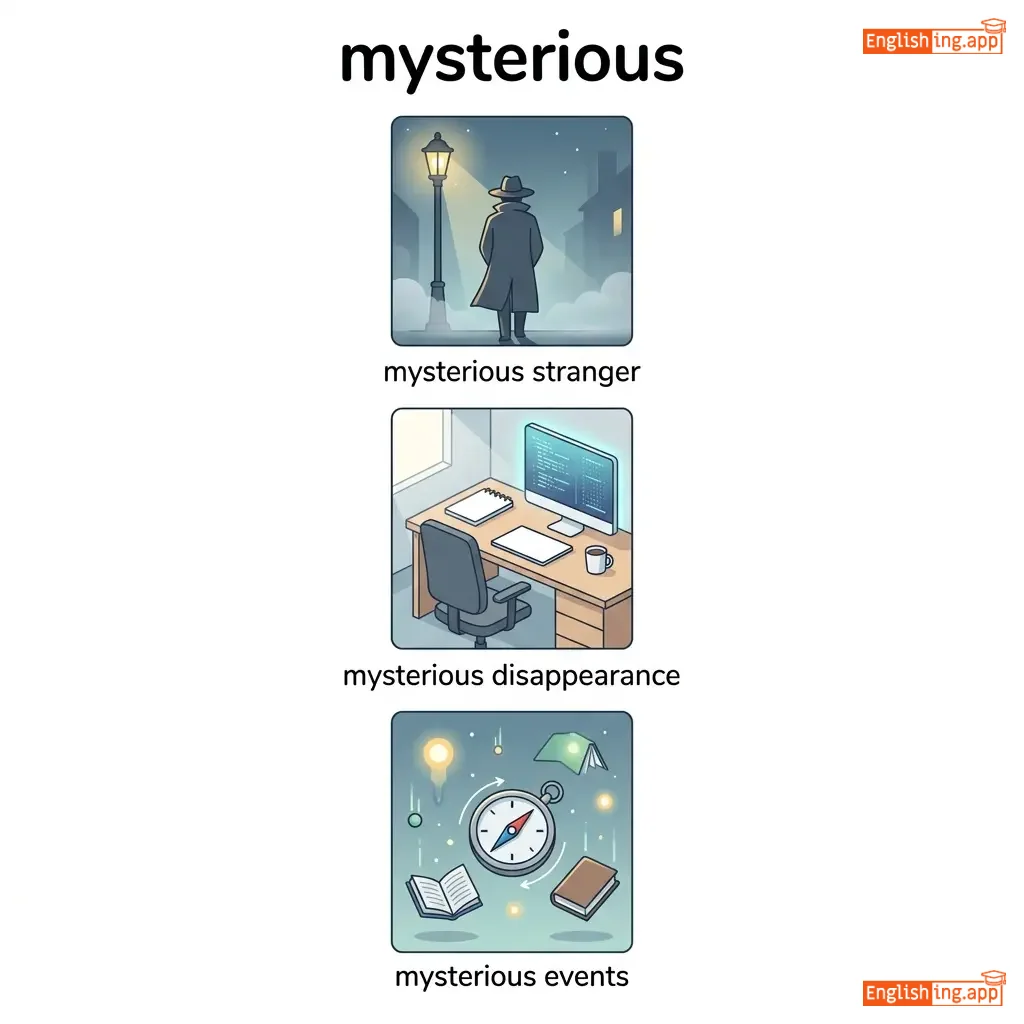
mysterious stranger, mysterious disappearance, mysterious events
••••••
|
神秘的事物就像谜一样,神秘即为‘谜’。
••••••
|
|
#10029
🤝
|
/ˈmjuːtʃuəl/
adjective
(mjuːtʃuəl)
••••••
|
- •••••• |
相互的
xiānghù de
••••••
|
- •••••• | - •••••• | - •••••• | - •••••• |
felt, shared, or done by two or more people equally
••••••
|
They have mutual respect for each other. |
他们彼此有相互的尊重。
Tāmen bǐcǐ yǒu xiānghù de zūnzhòng.
••••••
|
mutual understanding |
shared comprehension between two or more parties
••••••
|
相互理解
xiānghù lǐjiě
••••••
|
reciprocal, shared, common, joint, collective
••••••
|
one-sided, unilateral
••••••
|
mutual respect, mutual benefit, mutual agreement
••••••
|
相互意味着平等 - '相' 和 '互' 代表着对等的关系。
••••••
|
|
#10030
✨
|
/mɪˈrækjələs/
adjective
(mìlàkùləs)
••••••
|
- •••••• |
奇迹般的
qíjì bān de
••••••
|
- •••••• | - •••••• | - •••••• | - •••••• |
Extraordinarily wonderful or unusual, as if by a miracle.
••••••
|
Her recovery after the accident was truly miraculous. |
她在事故后的康复真的是奇迹般的。
Tā zài shìgù hòu de kāngfù zhēn de shì qíjì bān de.
••••••
|
a miraculous escape |
an escape from danger that seems almost impossible or magical
••••••
|
奇迹般的逃脱
qíjì bān de táotuō
••••••
|
amazing, extraordinary, marvelous, wondrous, phenomenal
••••••
|
ordinary, usual, normal
••••••
|
miraculous recovery, miraculous escape, miraculous event, almost miraculous
••••••
|
记住奇迹般的 (qíjì bān de),就像一个神奇的救援。
••••••
|
|
#10031
🎬
|
/ˈmuːvi/
noun
(海皮尼斯)
••••••
|
- •••••• |
幸福
xìng fú
••••••
|
- •••••• | - •••••• | - •••••• | - •••••• |
A motion picture or film shown in a cinema or on television.
••••••
|
We watched a movie together last night. |
当她获得奖项时,她无法掩饰自己的幸福。
Dāng tā huò dé jiǎng xiàng shí, tā wú fǎ yǎn shì zì jǐ de xìng fú.
••••••
|
movie night |
An informal gathering to watch films together.
••••••
|
追求幸福
zhuī qiú xìng fú
••••••
|
film, picture, motion picture, flick
••••••
|
reality, documentary
••••••
|
watch a movie, movie theater, movie star, movie ticket
••••••
|
幸福就像是幸福感的体现,带来愉快。
••••••
|
|
#10032
🚶
|
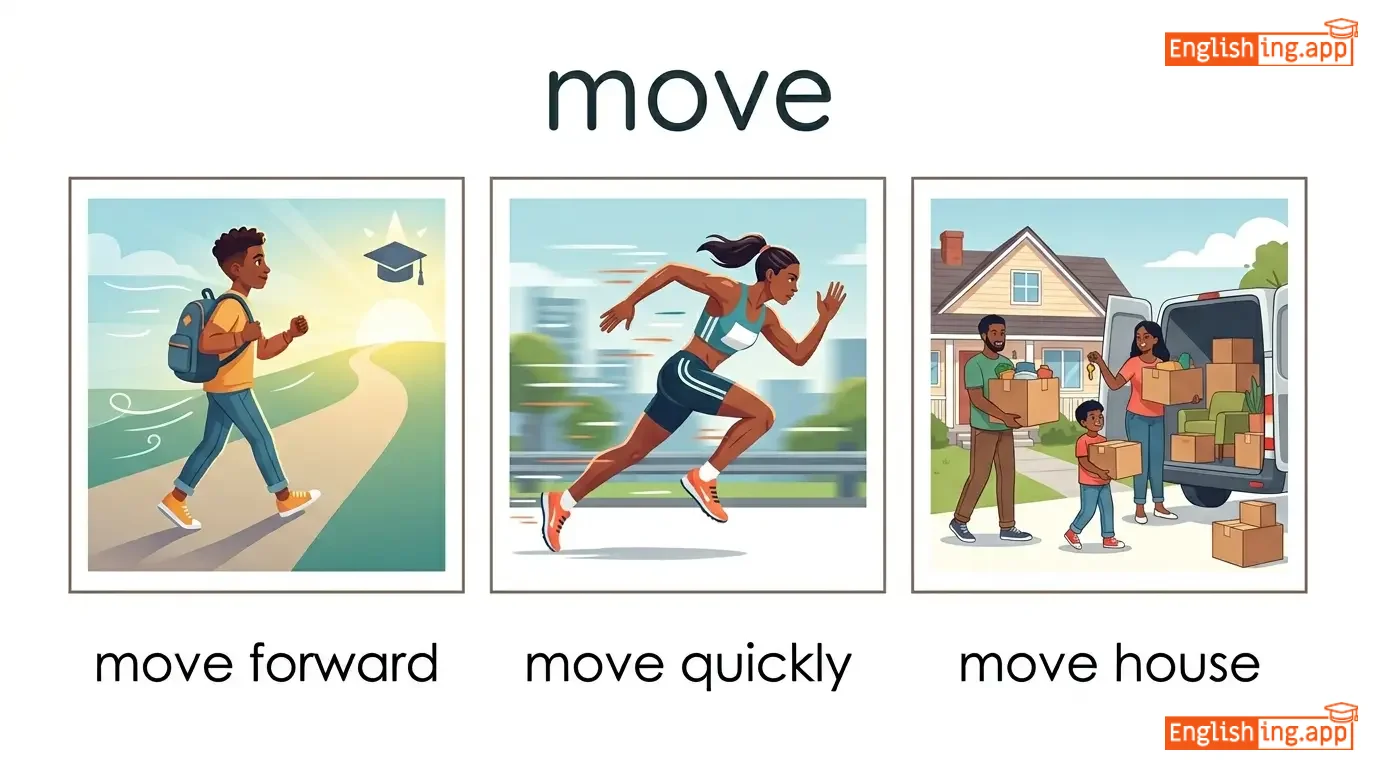
/muːv/
verb
(mū)
••••••
|
|
移动
yidong
••••••
|
moved
mù
••••••
|
moved
mù
••••••
|
moves
mùs
••••••
|
moving
mùyīng
••••••
|
To change position, place, or state.
••••••
|
They decided to move to a new city.
他们决定搬到一个新城市。
••••••
|
他们决定搬到一个新城市。
Tāmen juédìng bān dào yīgè xīn chéngshì.
••••••
|
make a move
做出一个动作
••••••
|
To take action or begin doing something.
••••••
|
做出一个动作
zuòchū yīgè dòngzuò
••••••
|
shift, transfer, relocate, progress
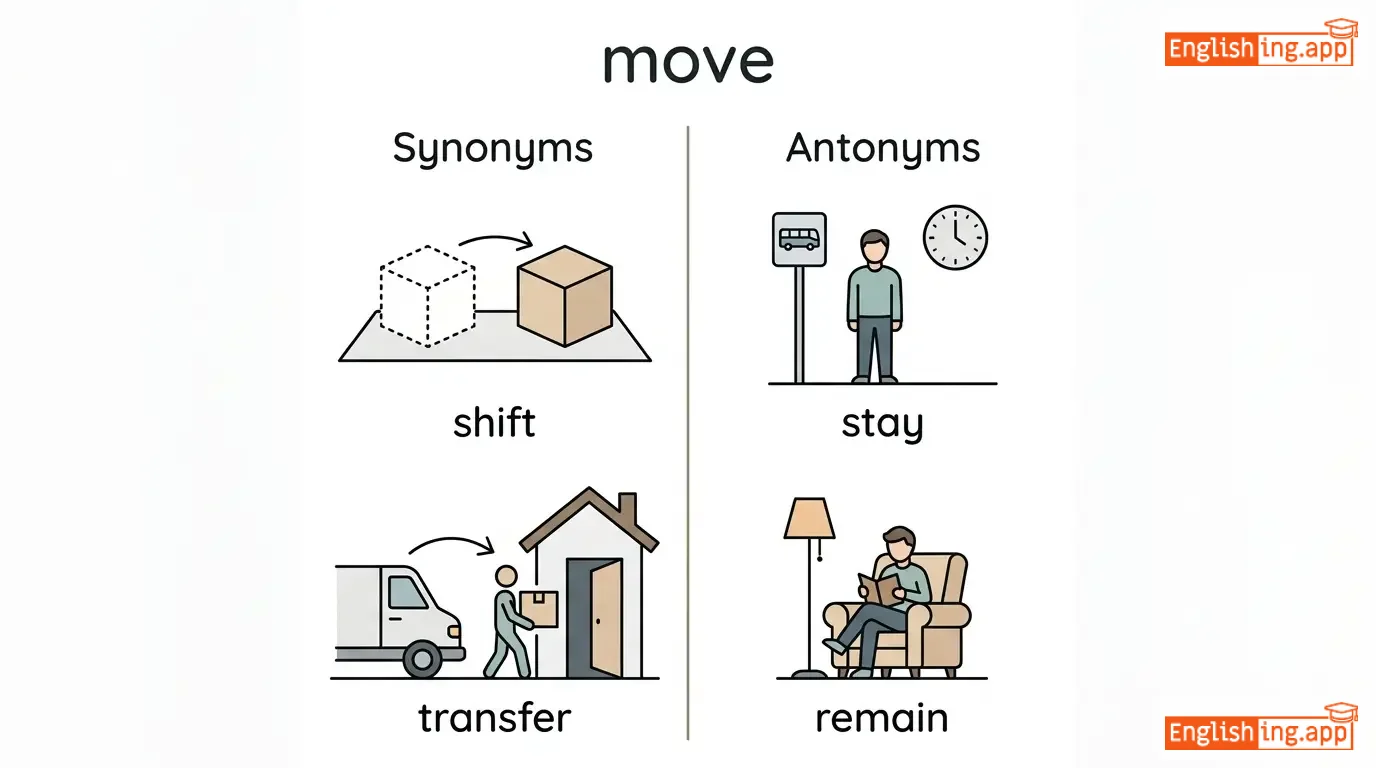
••••••
|
stay, remain
••••••
|
move forward, move quickly, move house, move away
••••••
|
移动意味着向前移动—一步一步,继续前行。
••••••
|
|
#10033
😢
|
/mɔːrn/
verb
(莫恩)
••••••
|
- •••••• |
哀悼
āidào
••••••
|
mourned
莫恩德
••••••
|
mourned
莫恩德
••••••
|
mourns
莫恩斯
••••••
|
mourning
莫恩宁
••••••
|
To feel or express deep sadness or grief, especially because of someone's death.
••••••
|
They gathered to mourn the loss of their friend.
他们聚集在一起,悼念他们朋友的离世。
••••••
|
他们聚集在一起,悼念他们朋友的离世。
Tāmen jùjí zài yīqǐ, dào niàn tāmen péngyǒu de líshì.
••••••
|
mourn one's loss
悼念某人的损失
••••••
|
To grieve for the death of someone close.
••••••
|
悼念某人的损失
Dàoniàn mǒu rén de sǔnshī
••••••
|
lament, grieve, sorrow, weep
••••••
|
celebrate, rejoice
••••••
|
mourn deeply, mourn a death, mourn publicly
••••••
|
Mourn 在中文中是'哀悼'。
••••••
|
|
#10034
➕
|
/mɔːr/
adjective, adverb, pronoun
(mó ěr)
••••••
|
- •••••• |
更多
gèng duō
••••••
|
- •••••• | - •••••• | - •••••• | - •••••• |
A greater or additional amount or degree.
••••••
|
She wanted more time to finish the project. |
她想要更多的时间来完成这个项目。
Tā xiǎng yào gèng duō de shí jiān lái wán chéng zhè ge xiàng mù.
••••••
|
more or less |
Approximately, almost.
••••••
|
多或少
duō huò shǎo
••••••
|
additional, extra, further, greater
••••••
|
less, fewer
••••••
|
more than, much more, more time, more money
••••••
|
More 意味着 '更多'—总是想要更多的时间或资源。
••••••
|
|
#10035
💰
|
/ˈmʌni/
noun
(happiness)
••••••
|
- •••••• |
幸福
xìngfú
••••••
|
- •••••• | - •••••• | - •••••• | - •••••• |
A medium of exchange in the form of coins and banknotes; wealth or financial resources.
••••••
|
He saved enough money to buy a new car. |
她在收到奖项时无法掩饰她的幸福。
Tā zài shōudào jiǎngxiàng shí wúfǎ yǎnshì tā de xìngfú.
••••••
|
money talks |
Wealth has great influence or power.
••••••
|
追求幸福
zhuīqiú xìngfú
••••••
|
cash, currency, funds, capital, wealth
••••••
|
poverty, debt
••••••
|
make money, save money, spend money, invest money
••••••
|
幸福就像是一朵盛开的花。
••••••
|
|
#10036
🚫
|
/məˈlɛst/
verb
(molest)
••••••
|
- •••••• |
骚扰 / 性虐待
saorao / xing nvedai
••••••
|
molested
molested
••••••
|
molested
molested
••••••
|
molests
molests
••••••
|
molesting
molesting
••••••
|
to assault or abuse someone, especially in a sexual or physical way
••••••
|
The criminal was arrested for attempting to molest a child.
罪犯因试图猥亵一个孩子而被逮捕。
••••••
|
罪犯因试图猥亵一个孩子而被逮捕。
Zuifan yin shitu weixie yige haizi er bei daibu.
••••••
|
- •••••• | - •••••• | - •••••• |
harass, assault, abuse, attack
••••••
|
protect, respect
••••••
|
molest children, molest women, arrested for molesting
••••••
|
Molest 意味着骚扰或虐待 - 记住: ‘No-lest’(不意味着不)。
••••••
|
|
#10037
🏙️
|
/ˈmɒdən/
adjective
(摩登)
••••••
|
- •••••• |
现代的
xiàndài de
••••••
|
- •••••• | - •••••• | - •••••• | - •••••• |
relating to the present or recent times, not ancient or old-fashioned
••••••
|
They live in a modern apartment with new facilities. |
他们住在一个现代化的公寓里,设施新颖。
Tāmen zhù zài yīgè xiàndàihuà de gōngyù lǐ, shèshī xīnyǐng.
••••••
|
modern times |
the present period of history
••••••
|
现代社会
xiàndài shèhuì
••••••
|
contemporary, current, up-to-date, new, trendy
••••••
|
ancient, old-fashioned
••••••
|
modern technology, modern art, modern world, modern lifestyle
••••••
|
现代的就像 'modern' 一样,总是新的和前沿的。
••••••
|
|
#10038
⚖️
|
/ˈmɒdərətli/
adverb
(莫德雷特利)
••••••
|
- •••••• |
适度地
shidu de
••••••
|
- •••••• | - •••••• | - •••••• | - •••••• |
to a reasonable extent, not excessively
••••••
|
She exercises moderately to stay healthy.
她适度地锻炼以保持健康。
••••••
|
她适度地锻炼以保持健康。
Ta shidu de duanlian yi baochi jiankang.
••••••
|
moderately priced
适度定价
••••••
|
not too expensive, reasonably priced
••••••
|
适度定价
shidu dingjia
••••••
|
reasonably, fairly, somewhat, decently
••••••
|
excessively, extremely
••••••
|
moderately successful, moderately priced, moderately difficult, moderately large
••••••
|
适度地意味着做事适度。
••••••
|
|
#10039
❓
|
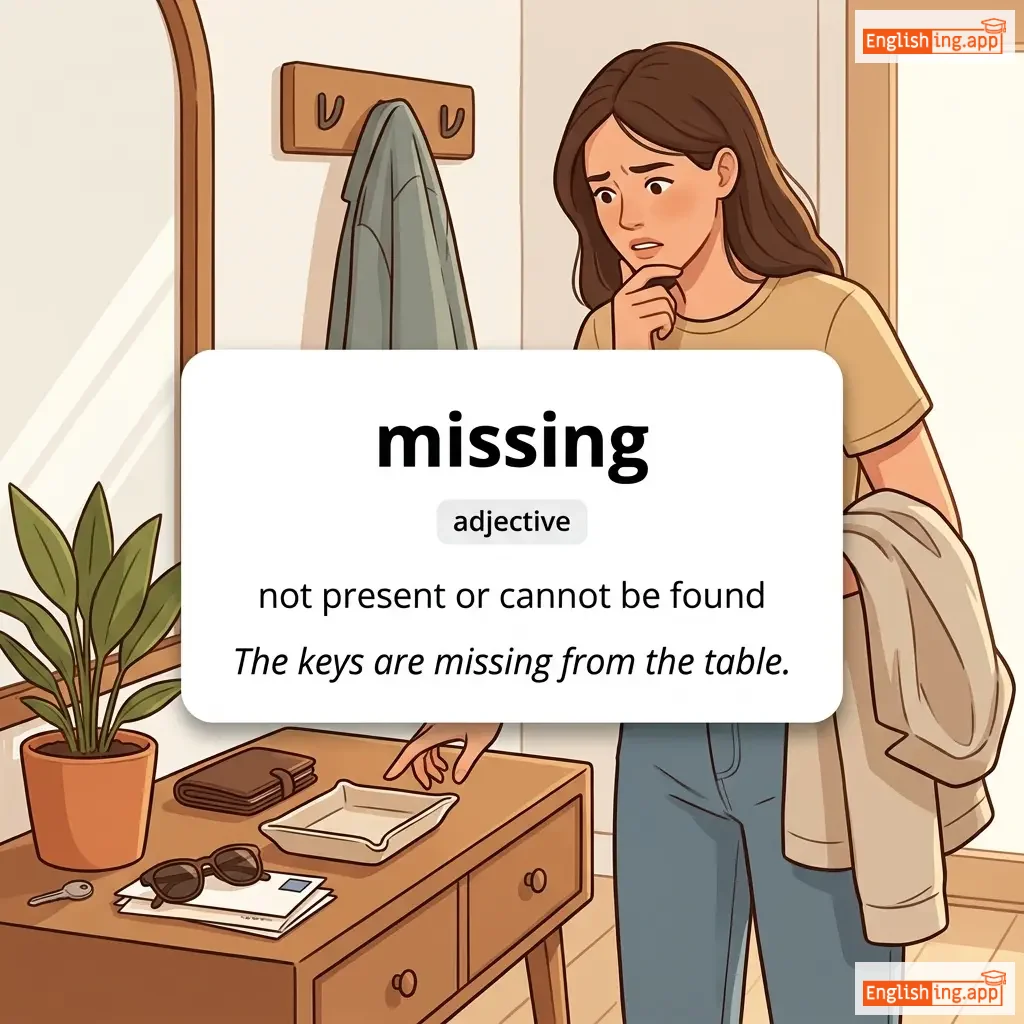
/ˈmɪsɪŋ/
adjective
(missing)
••••••
|
|
丢失
diūshī
••••••
|
- •••••• | - •••••• | - •••••• | - •••••• |
not present or cannot be found
••••••
|
The keys are missing from the table.
de keys ar missing from de teibl.
••••••
|
钥匙不见了,放在桌子上。
Yuèshi bùjiàn le, fàng zài zhuōzi shàng.
••••••
|
missing in action
missing in aksion
••••••
|
not present or unaccounted for
••••••
|
失踪
shīzōng
••••••
|
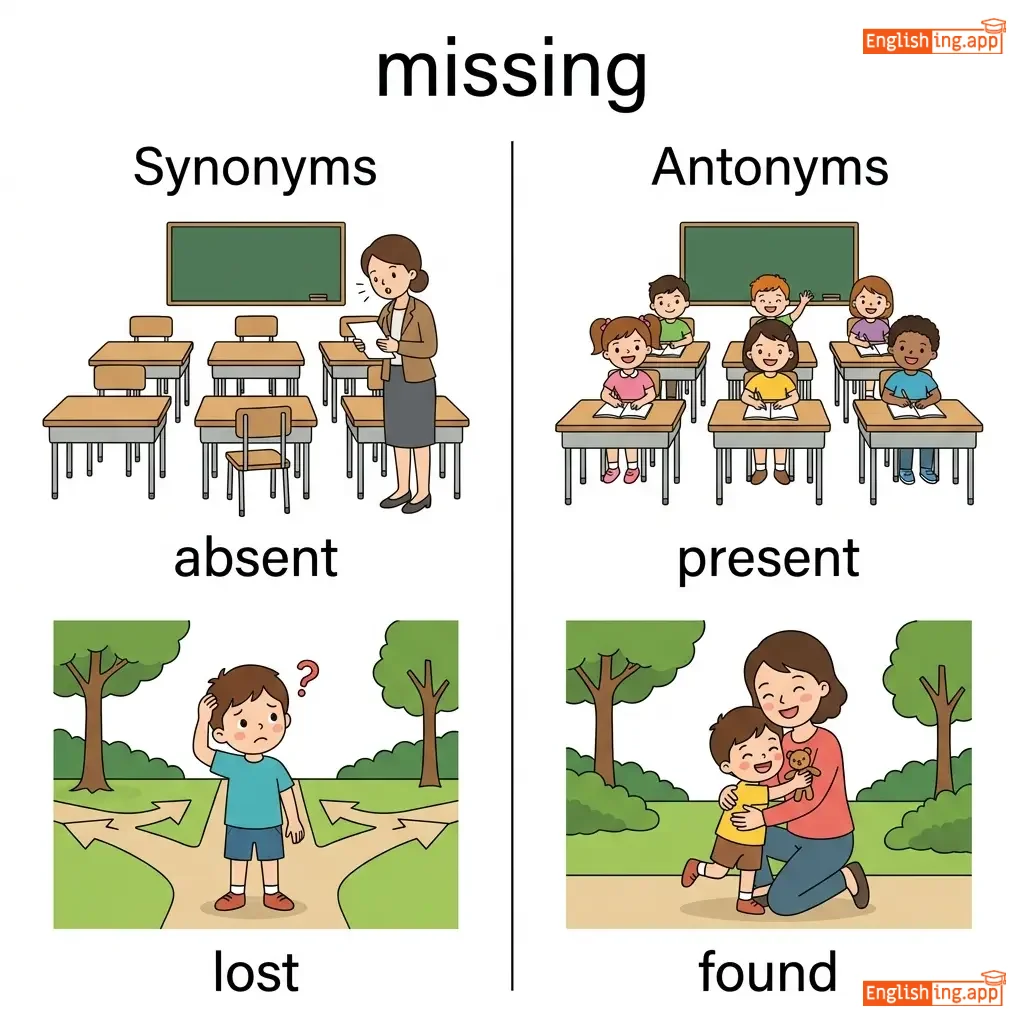
absent, lost, gone, vanished, misplaced
••••••
|
present, found
••••••
|
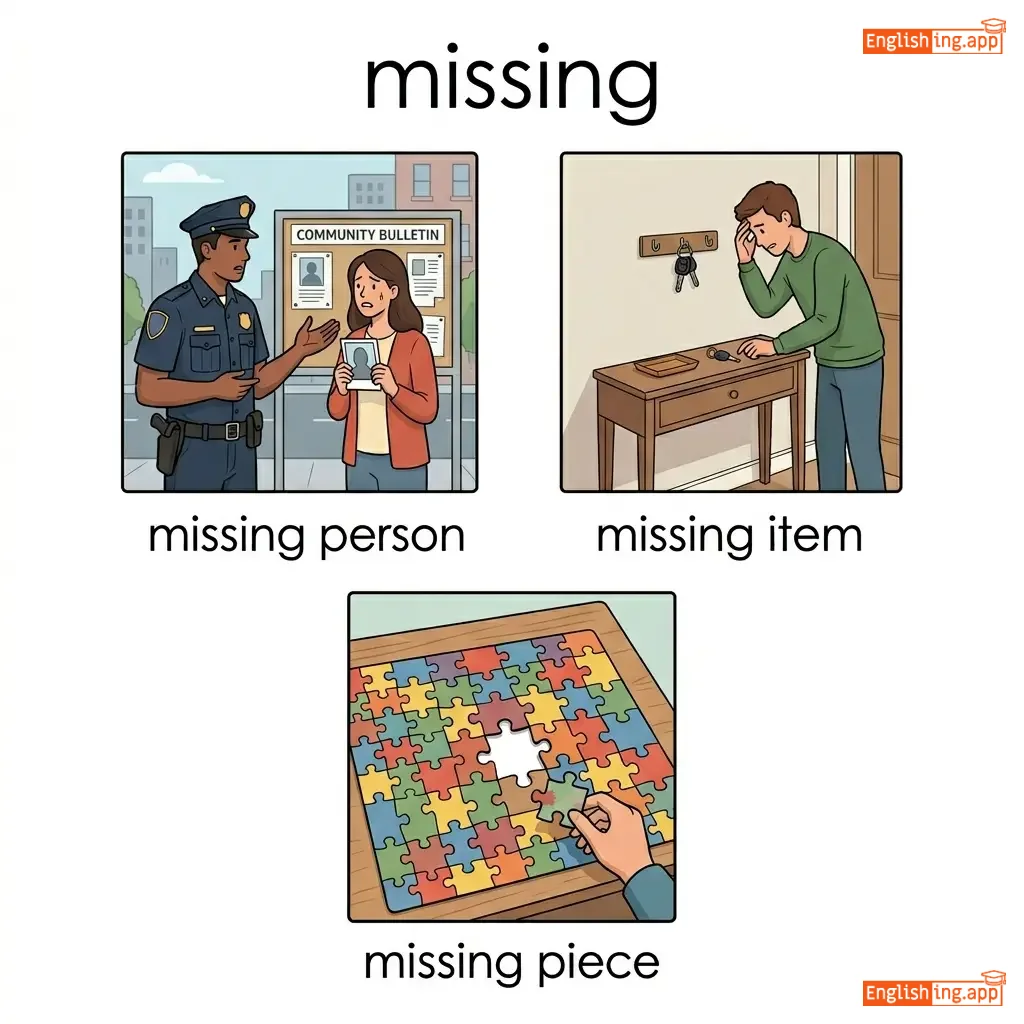
missing person, missing item, missing piece, missing child
••••••
|
Missing = 丢失 – 某物已消失不见。
••••••
|
|
#10040
📖
|
/ˌmɪsˈriːd/
verb
(米斯里德)
••••••
|
- •••••• |
误读
wù dú
••••••
|
misread
米斯里德
••••••
|
misread
米斯里德
••••••
|
misreads
米斯里德斯
••••••
|
misreading
米斯里丁
••••••
|
to read something incorrectly or interpret wrongly
••••••
|
He misread the instructions and built the shelf incorrectly.
他误读了指示,结果错误地建造了架子。
••••••
|
他误读了指示,结果错误地建造了架子。
Tā wù dú le zhǐ shì, jié guǒ cuò wù de jiàn zào le jià zi.
••••••
|
misread the situation
误读情况
••••••
|
to misunderstand the circumstances
••••••
|
误解情况
wù jiě qíng kuàng
••••••
|
misinterpret, misunderstand, mistake, confuse, misconstrue
••••••
|
understand, comprehend
••••••
|
misread signals, misread the text, misread the situation, misread her intentions
••••••
|
Misread 意味着错误地阅读。如果你错误地读,你就错失了。
••••••
|
|
#10041
😭
|
/ˈmɪzəri/
noun
(米泽里)
••••••
|
- •••••• |
痛苦
tòngkǔ
••••••
|
- •••••• | - •••••• | - •••••• | - •••••• |
A state of great suffering, unhappiness, or discomfort.
••••••
|
The refugees lived in constant misery. |
难民们一直生活在持续的痛苦中。
Nànmínmen yīzhí shēnghuó zài chíxù de tòngkǔ zhōng.
••••••
|
make life a misery |
to cause someone to live in continuous unhappiness or suffering
••••••
|
让生活充满痛苦
Ràng shēnghuó chōngmǎn tòngkǔ
••••••
|
suffering, distress, hardship, agony, sadness
••••••
|
happiness, joy, comfort
••••••
|
live in misery, endless misery, cause misery, human misery
••••••
|
Miseria = 痛苦, 痛苦就是无尽的折磨。
••••••
|
|
#10042
😞
|
/ˈmɪzərəbəl/
adjective
(mìsīlābù)
••••••
|
- •••••• |
痛苦的
tòngkǔ de
••••••
|
- •••••• | - •••••• | - •••••• | - •••••• |
Extremely unhappy or uncomfortable.
••••••
|
He felt miserable after losing his job. |
失去工作后,他感到痛苦不堪。
Shīqù gōngzuò hòu, tā gǎndào tòngkǔ bùkān.
••••••
|
make someone miserable |
to cause someone to feel very unhappy
••••••
|
使某人痛苦
shǐ mǒu rén tòngkǔ
••••••
|
unhappy, sad, depressed, gloomy, downcast
••••••
|
happy, cheerful, joyful
••••••
|
feel miserable, look miserable, miserable weather, utterly miserable
••••••
|
Miser + able = 能忍受痛苦;记住 miserable 的意思是痛苦的。
••••••
|
|
#10043
🤔
|
/ˌmɪskənˈsiːv/
verb
(mɪskənˈsiːv)
••••••
|
- •••••• |
误解
wùjiě
••••••
|
misconceived
mɪskənˈsiːvd
••••••
|
misconceived
mɪskənˈsiːvd
••••••
|
misconceives
mɪskənˈsiːvz
••••••
|
misconceiving
mɪskənˈsiːvɪŋ
••••••
|
To misunderstand or form an incorrect idea about something.
••••••
|
He misconceived the purpose of the project.
他误解了项目的目的。
••••••
|
他误解了项目的目的。
Tā wùjiě le xiàngmù de mùdì.
••••••
|
- •••••• | - •••••• | - •••••• |
misunderstand, misinterpret, mistake, misjudge
••••••
|
understand, comprehend
••••••
|
misconceive the idea, misconceive the purpose, easy to misconceive
••••••
|
Mis + Conceive = 误解; mis意味着误解,用于帮助记忆。
••••••
|
|
#10044
🪞
|
/ˈmɪrər/
noun
••••••
|
- •••••• | - •••••• | - •••••• | - •••••• |
mirrors
••••••
|
mirroring
••••••
|
A reflective surface, typically made of glass, that shows an image.
••••••
|
She looked at herself in the mirror before leaving. |
- •••••• |
hold a mirror up to |
to reflect or reveal the true nature of something
••••••
|
- •••••• |
looking glass, reflection, glass, speculum
••••••
|
reality, original
••••••
|
look in the mirror, rear-view mirror, bathroom mirror, mirror image
••••••
|
No •••••• |
Vocabulary Quiz
Test your vocabulary by matching words with their translations or meanings.
Login to take the quiz
Comments (0)
Share your thoughts and join the discussion.
Join the discussion by logging in
Login to CommentNo comments yet
Be the first to share your thoughts!