


Swipe left or right, or use the buttons. Tap image to zoom.
例句翻译
单词
Lesson 2Lesson 2 - 遮罩切换
|
表情符号
|
单词 | Images | 翻译 | 过去时 | 过去分词 | 第三人称单数 | 动名词 | 含义 | 例句 | 例句翻译 | 示例表达 | 示例表达含义 | 示例表达翻译 | 同义词 | 反义词 | 搭配词 | 助记符 |
|---|---|---|---|---|---|---|---|---|---|---|---|---|---|---|---|---|---|
|
#31
📘
|
/əˈbrɪdʒmənt/
noun
(艾布里奇门特)
••••••
|
- •••••• |
缩略版
suōlüè bǎn
••••••
|
- •••••• | - •••••• | - •••••• | - •••••• |
A shortened version of a larger work, such as a book or speech.
••••••
|
The publisher released an abridgment of the lengthy novel for students. |
出版商发布了该长篇小说的缩略版,供学生使用。
Chūbǎnshāng fābùle gāi chángpiān xiǎoshuō de suōlüè bǎn, gōng xuéshēng shǐyòng.
••••••
|
- •••••• | - •••••• | - •••••• |
condensation, summary, digest, epitome, compendium
••••••
|
expansion, enlargement, full text
••••••
|
abridgment of rights, abridgment of freedom, abridgment version
••••••
|
缩略版就是对一部作品进行缩短,就像 abridgment 也是缩短书籍或演讲。
••••••
|
|
#32
🥗
|
/æbˈstiːmiəs/
adjective
(阿布斯特米厄斯)
••••••
|
|
节制
jiezhi
••••••
|
- •••••• | - •••••• | - •••••• | - •••••• |
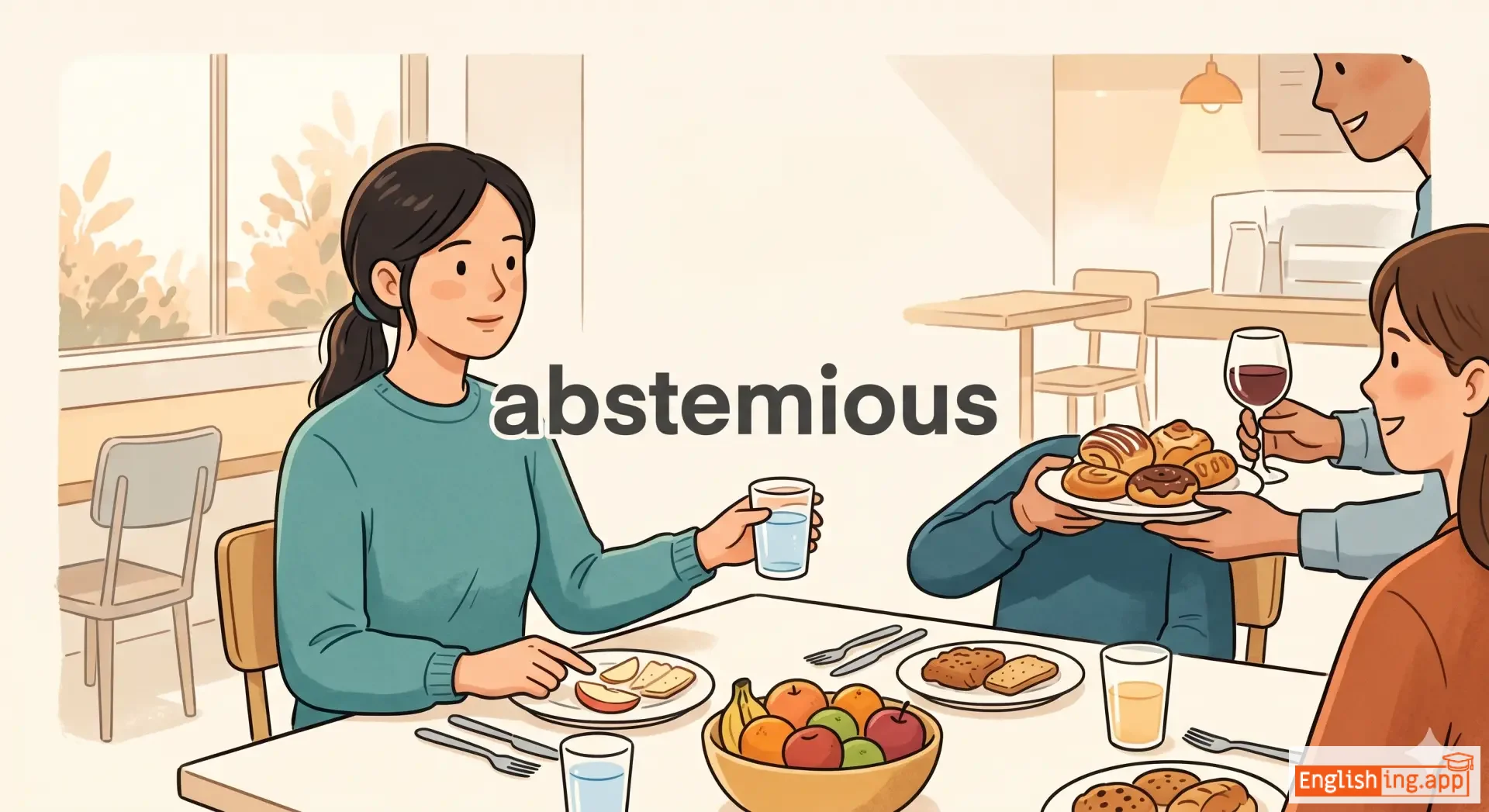
not allowing oneself much food or drink; marked by moderation
••••••
|
She lived an abstemious life, avoiding all luxuries. |
她过着节制的生活,避免所有奢侈。
Ta guo zhe jiezhi de shenghuo, bimin suoyou shechi.
••••••
|
- •••••• | - •••••• | - •••••• |
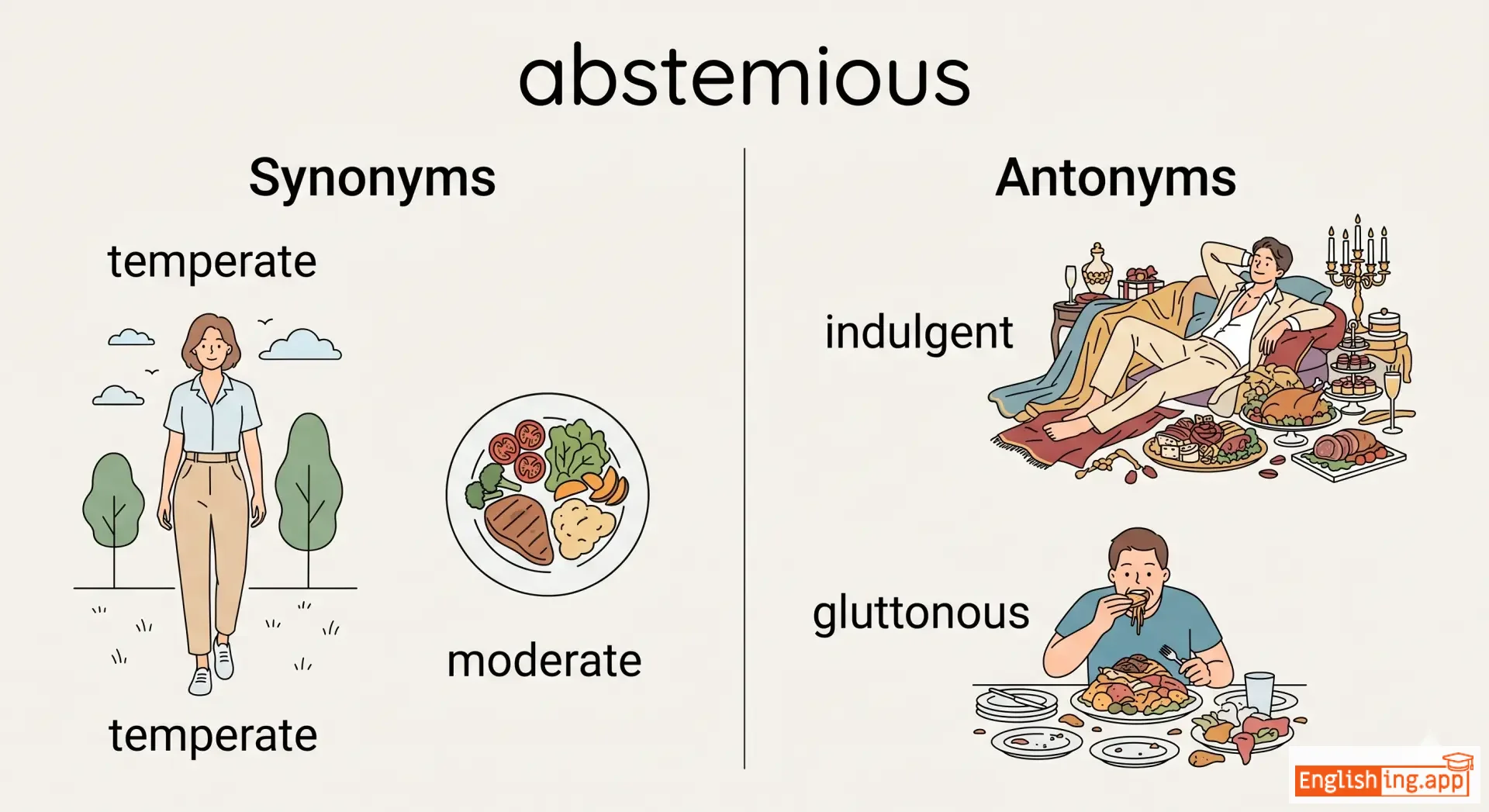
moderate, restrained, frugal, self-disciplined
••••••
|
indulgent, gluttonous, excessive
••••••
|
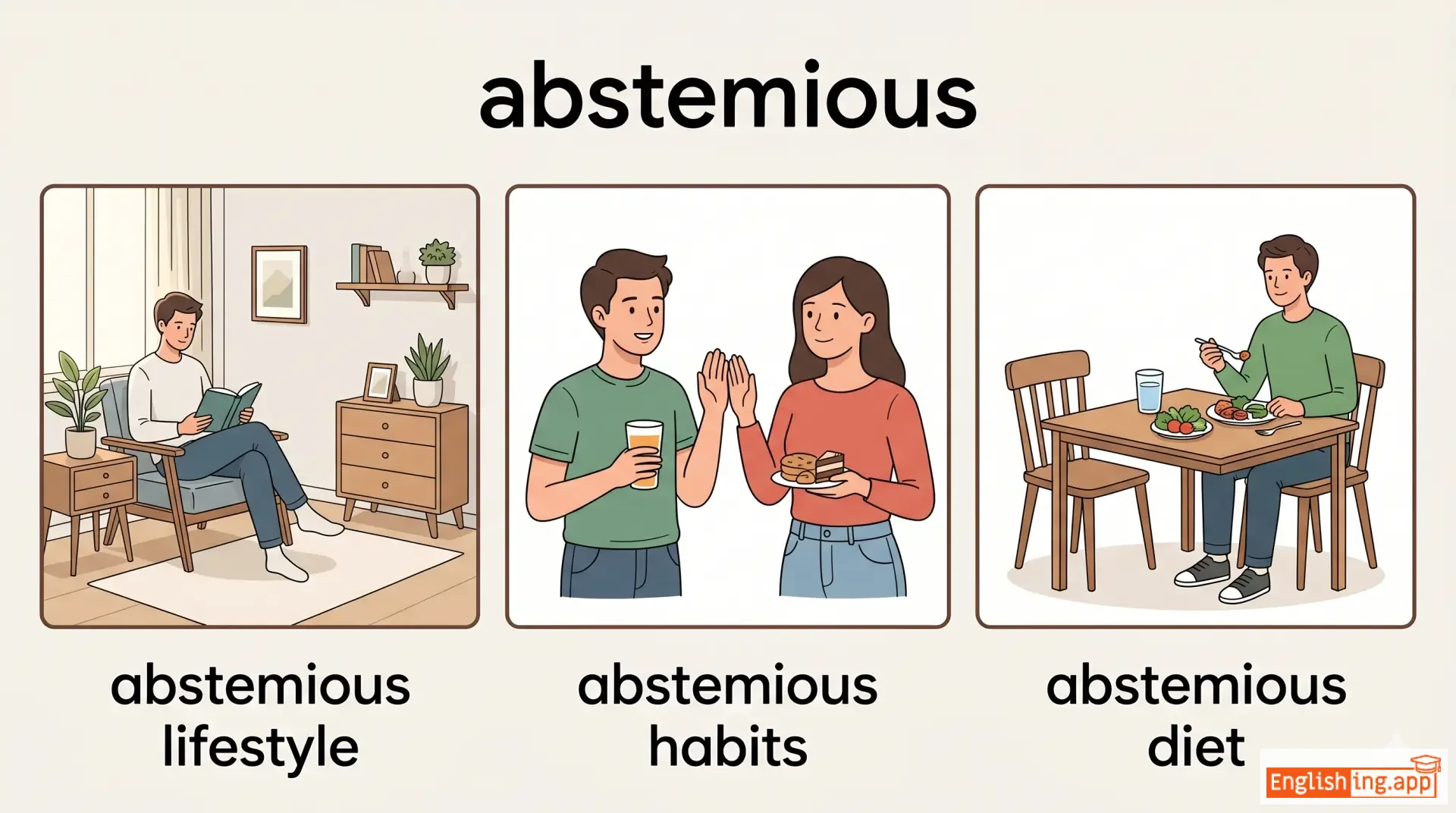
abstemious lifestyle, abstemious habits, abstemious diet
••••••
|
Abstemious = Abstain + Moderate → 节制生活 (jiezhi shenghuo)。
••••••
|
|
#33
🚫
|
/əbˈsteɪn/
verb
(艾布斯坦)
••••••
|
|
戒除
jiechu
••••••
|
abstained
艾布斯坦德
••••••
|
abstained
艾布斯坦德
••••••
|
abstains
艾布斯坦斯
••••••
|
abstaining
艾布斯坦宁
••••••
|
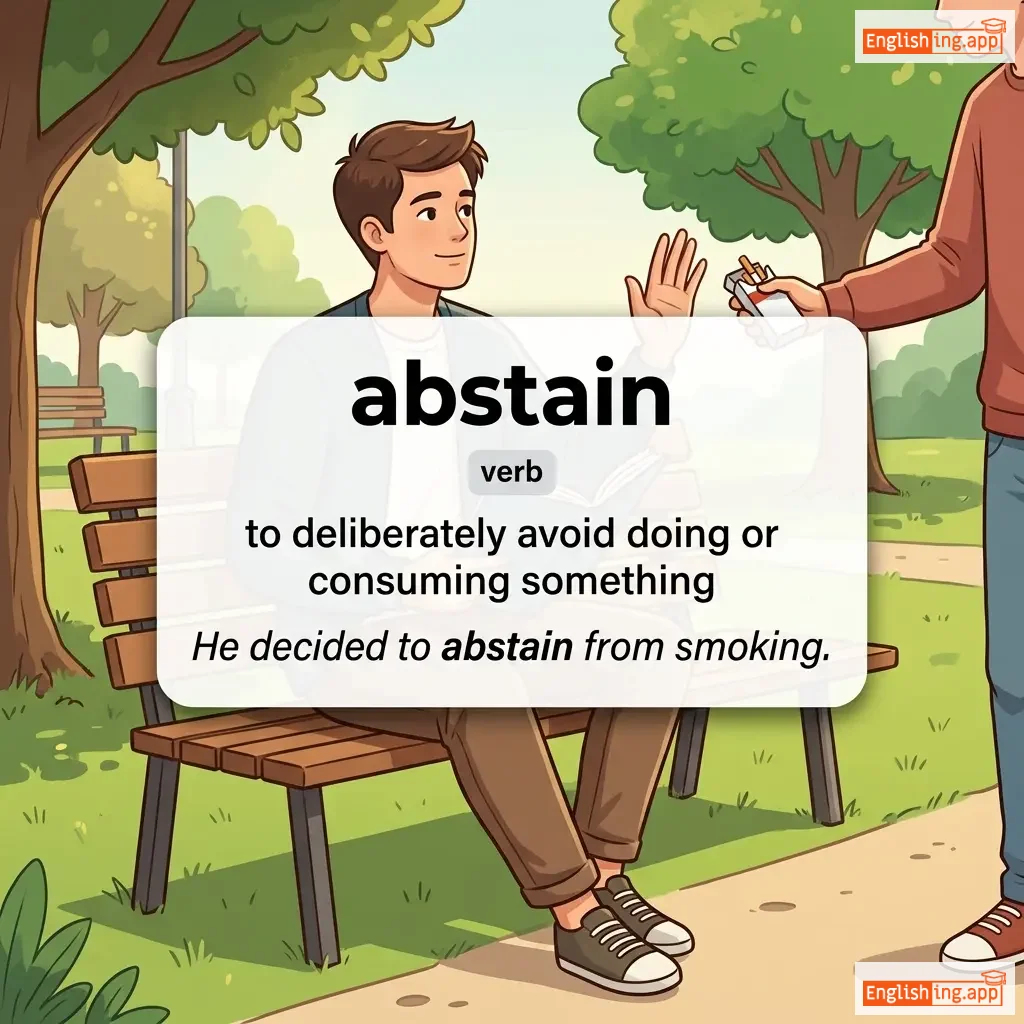
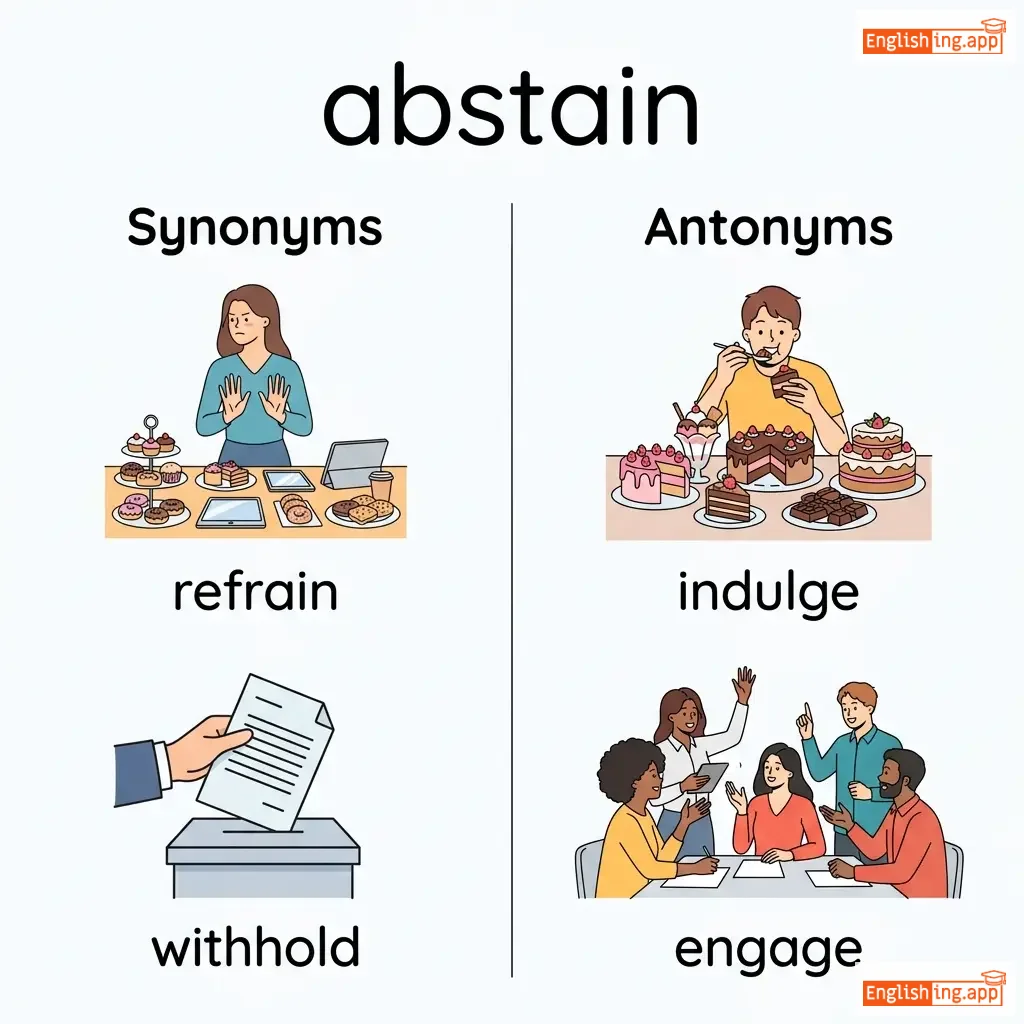
to deliberately avoid doing or consuming something
••••••
|
He decided to abstain from smoking.
他决定戒烟。
••••••
|
他决定戒烟。
Ta jueding jieyan.
••••••
|
abstain from voting
戒除投票
••••••
|
to refuse to cast a vote
••••••
|
戒除投票
jiechu toupiào
••••••
|
refrain, withhold, avoid, eschew
••••••
|
indulge, engage
••••••
|
abstain from alcohol, abstain from food, abstain from voting
••••••
|
Abstain = '安'的意思 = 放弃
••••••
|
|
#34
🌞
|
/əbˈzɔːrpʃən/
noun
(abzorpʃion)
••••••
|
|
吸收
xishou
••••••
|
- •••••• | - •••••• | - •••••• | - •••••• |
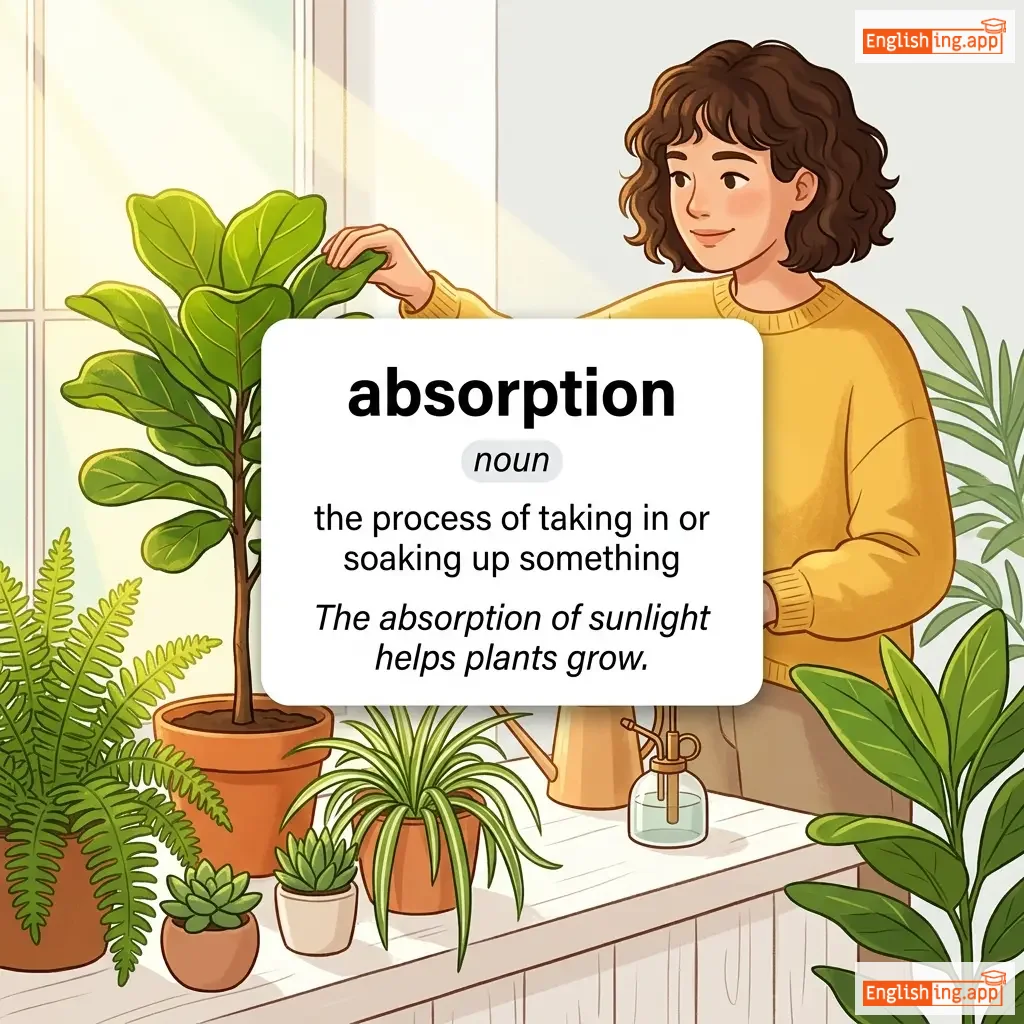
the process of taking in or soaking up something
••••••
|
The absorption of sunlight helps plants grow.
阳光的吸收帮助植物生长。
••••••
|
阳光的吸收帮助植物生长。
Yangguang de xishou bangzhu zhiwu shengzhang.
••••••
|
- •••••• | - •••••• | - •••••• |
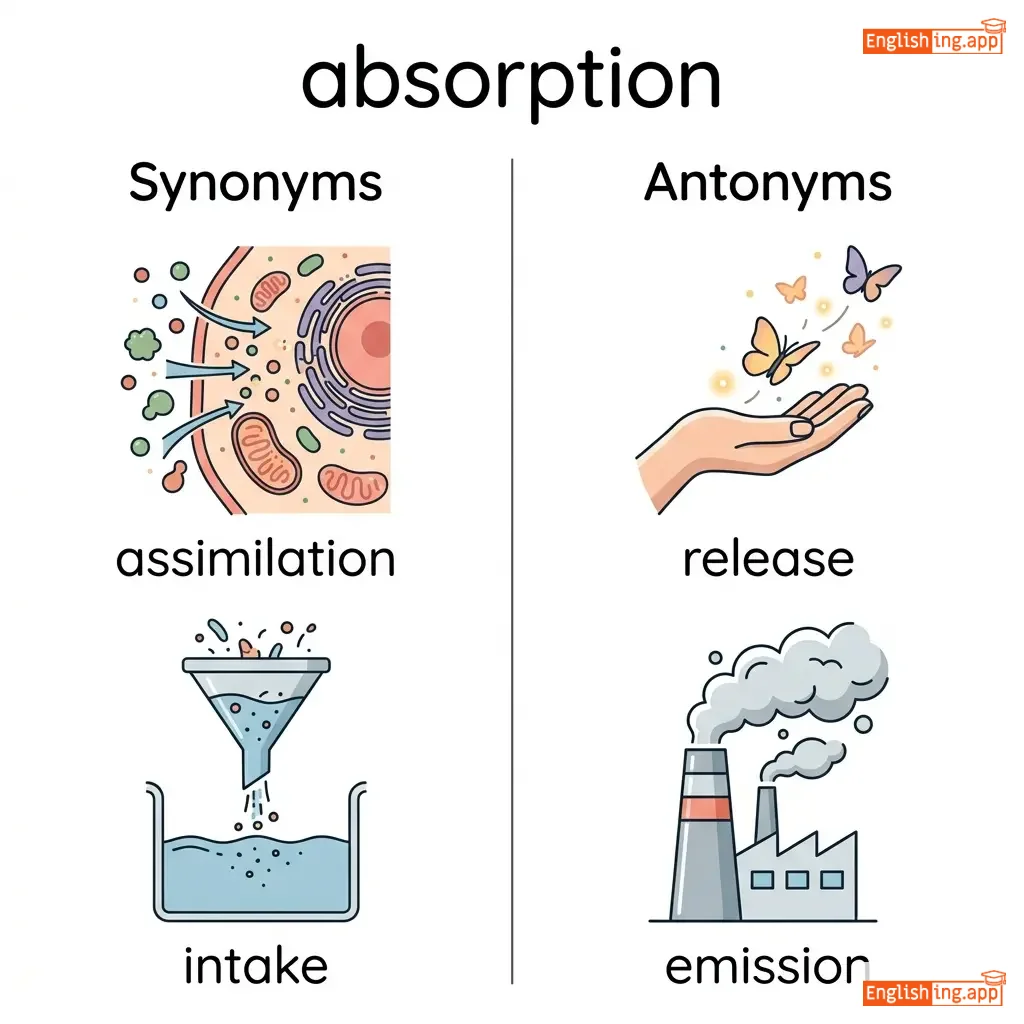
assimilation, intake, immersion, incorporation
••••••
|
release, emission, expulsion
••••••
|
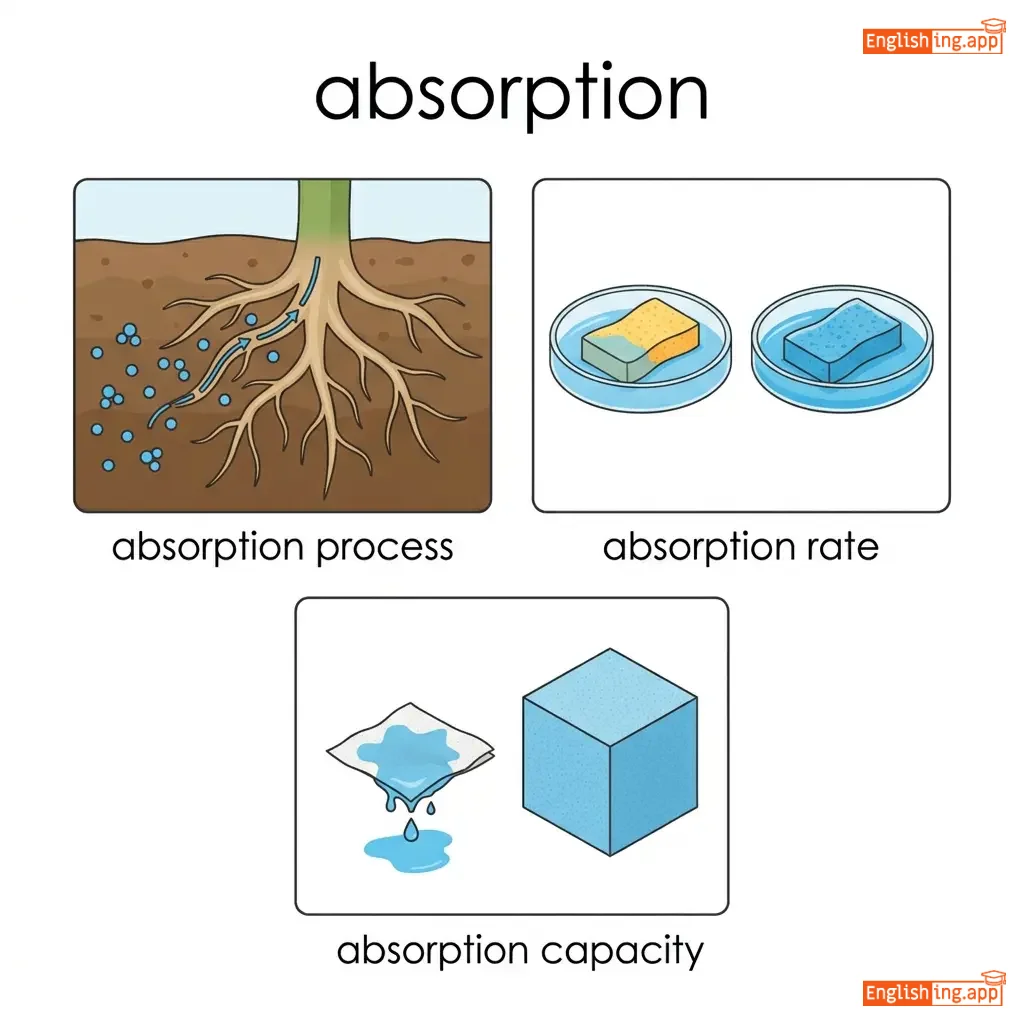
absorption process, absorption rate, absorption capacity
••••••
|
吸收就像植物吸收阳光,帮助它们生长。
••••••
|
|
#35
🧽
|
/əbˈzɔːrb/
verb
(æbˈzɔːrb)
••••••
|
- •••••• |
吸收
xīshōu
••••••
|
absorbed
吸收
••••••
|
absorbed
吸收
••••••
|
absorbs
吸收
••••••
|
absorbing
吸收
••••••
|
to take in or soak up a liquid, energy, or information
••••••
|
The sponge absorbed all the water.
海绵吸收了所有的水。
••••••
|
海绵吸收了所有的水。
Hǎimián xīshōu le suǒyǒu de shuǐ.
••••••
|
absorbed in thought
沉浸在思想中
••••••
|
deeply engaged or preoccupied with one's thoughts
••••••
|
沉浸在思想中
chénjìn zài sīxiǎng zhōng
••••••
|
soak, consume, engross, assimilate, take in
••••••
|
release, emit, repel
••••••
|
absorb energy, absorb impact, absorb information
••••••
|
吸收 + orb = orb(球)吸收一切。
••••••
|
|
#36
🙏
|
/əbˈzɒlv/
verb
(阿布索尔夫)
••••••
|
|
赦免
shèmiǎn
••••••
|
absolved
阿布索尔夫德
••••••
|
absolved
阿布索尔夫德
••••••
|
absolves
阿布索尔夫斯
••••••
|
absolving
阿布索尔夫英
••••••
|
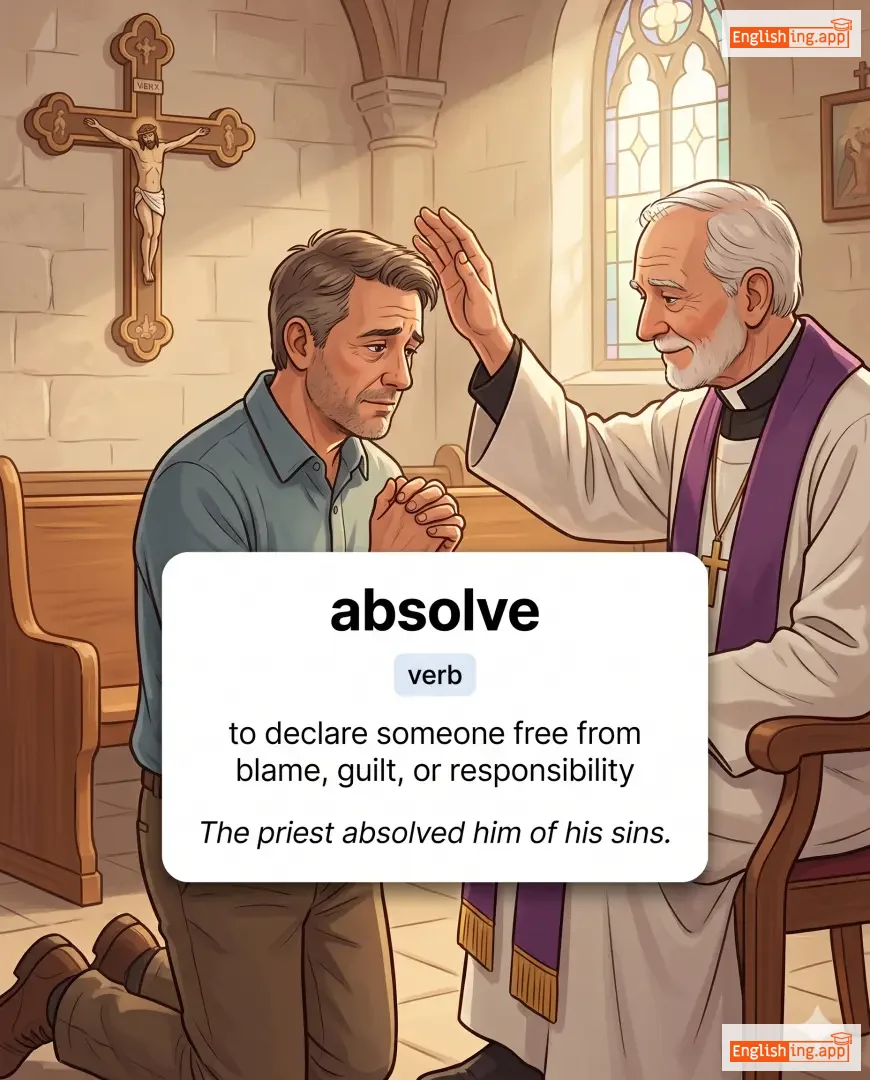
to declare someone free from blame, guilt, or responsibility
••••••
|
The priest absolved him of his sins.
牧师赦免了他所有的罪。
••••••
|
牧师赦免了他所有的罪。
Mùshī shèmiǎn le tā suǒyǒu de zuì.
••••••
|
absolve from blame
免除责任
••••••
|
to free someone from responsibility or guilt
••••••
|
免除责任
miǎnchú zérèn
••••••
|
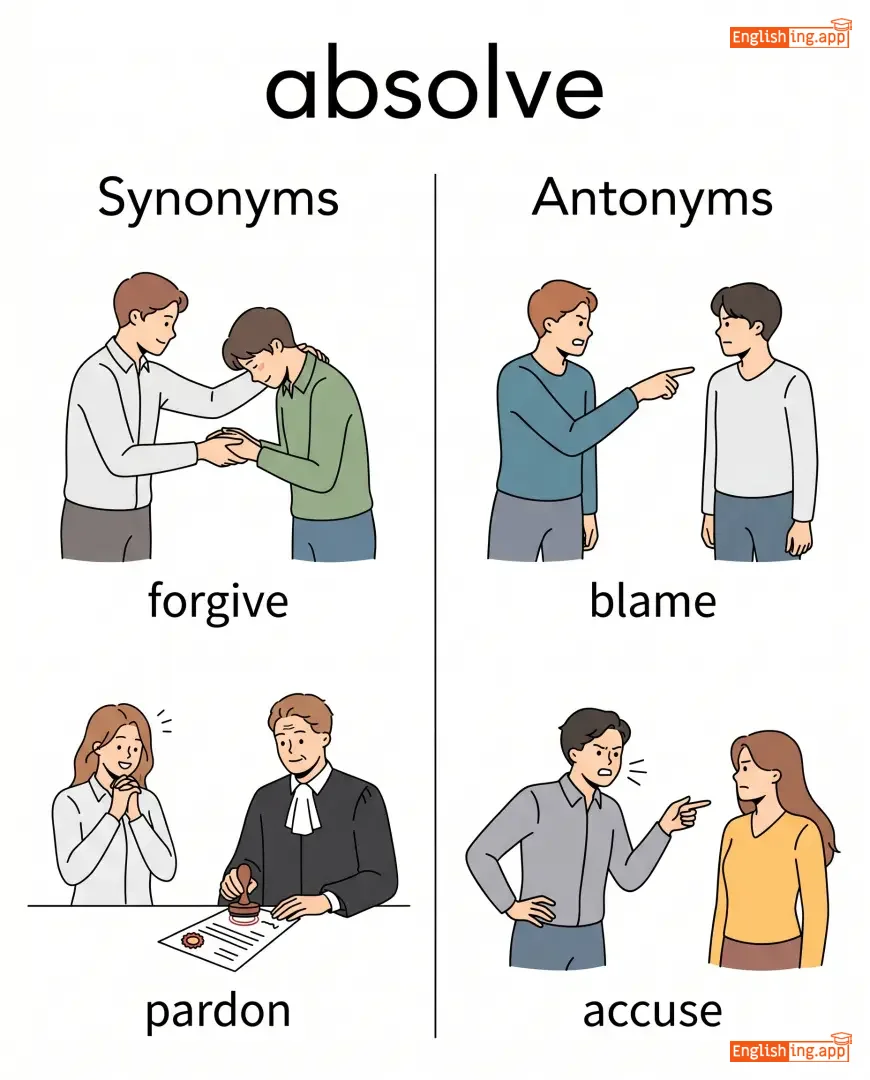
forgive, pardon, acquit, exonerate, clear
••••••
|
blame, accuse, convict
••••••
|
absolve from sin, absolve from blame, absolve responsibility
••••••
|
Absolve = 赦免某人免除罪责。
••••••
|
|
#37
🙏
|
/ˌæbsəˈluːʃən/
noun
(æbsəˈluːʃən)
••••••
|
- •••••• |
宽恕
kuanshu
••••••
|
- •••••• | - •••••• | - •••••• | - •••••• |
formal release from guilt, obligation, or punishment
••••••
|
The priest granted him absolution for his sins.
牧师为他的罪行给予了宽恕。
••••••
|
牧师为他的罪行给予了宽恕。
Mùshī wèi tā de zuìxíng jǐyǔle kuānshù.
••••••
|
- •••••• | - •••••• | - •••••• |
forgiveness, pardon, exoneration, remission
••••••
|
punishment, condemnation, blame
••••••
|
seek absolution, grant absolution, absolution of sins
••••••
|
Absolution = Absolute solution - 完美解决所有罪行
••••••
|
|
#38
💯
|
/ˈæbsəluːt/
adjective
(æbsəˈluːt)
••••••
|
- •••••• |
绝对
juéduì
••••••
|
- •••••• | - •••••• | - •••••• | - •••••• |
total, complete, or without restriction
••••••
|
The dictator had absolute power over the nation. |
独裁者拥有对国家的绝对权力。
Dúcáizhě yōngyǒu duì guójiā de juéduì quánlì.
••••••
|
absolute power |
unlimited authority without any checks
••••••
|
绝对权力
juéduì quánlì
••••••
|
complete, total, perfect, unconditional, unlimited
••••••
|
partial, limited, restricted
••••••
|
absolute truth, absolute majority, absolute necessity
••••••
|
Absolute = ABsolut wánquán
••••••
|
|
#39
🤯
|
/ˌæbsənt ˈmaɪndɪd/
adjective
(æbsənt ˈmaɪndɪd)
••••••
|
- •••••• |
健忘的
jian wang de
••••••
|
- •••••• | - •••••• | - •••••• | - •••••• |
often forgetting things or not paying attention
••••••
|
He is so absent-minded that he often forgets his keys. |
他是那么健忘,以至于经常忘记自己的钥匙。
Ta shi na me jian wang, yi zhi yu jing chang wang ji zi ji de yao shi.
••••••
|
- •••••• | - •••••• | - •••••• |
forgetful, distracted, inattentive, careless
••••••
|
attentive, focused, mindful
••••••
|
absent-minded professor, absent-minded smile, absent-minded look
••••••
|
Absent-minded 就是心不在焉,所以经常忘记东西
••••••
|
|
#40
🚪
|
/ˈæbsəns/
noun
(æbsəns)
••••••
|
- •••••• |
缺席
quēxí
••••••
|
- •••••• | - •••••• | - •••••• | - •••••• |
the state of being away from a place or person
••••••
|
His absence from the meeting was noticed by everyone. |
他在会议中的缺席被每个人注意到了。
Tā zài huìyì zhōng de quēxí bèi měi gè rén zhùyì dào le.
••••••
|
absence makes the heart grow fonder |
being away from someone makes you appreciate them more
••••••
|
缺席让心更温暖
quēxí ràng xīn gèng wēnnuǎn
••••••
|
nonappearance, lack, nonexistence, vacancy
••••••
|
presence, attendance, appearance
••••••
|
long absence, unexplained absence, absence from work
••••••
|
Absence在中文里就是'缺席',与英文发音相近。
••••••
|
|
#41
🏃♂️
|
/əbˈskɒnd/
verb
(阿布斯康德)
••••••
|
|
逃跑
tao pao
••••••
|
absconded
阿布斯康德德
••••••
|
absconded
阿布斯康德德
••••••
|
absconds
阿布斯康德斯
••••••
|
absconding
阿布斯康丁
••••••
|
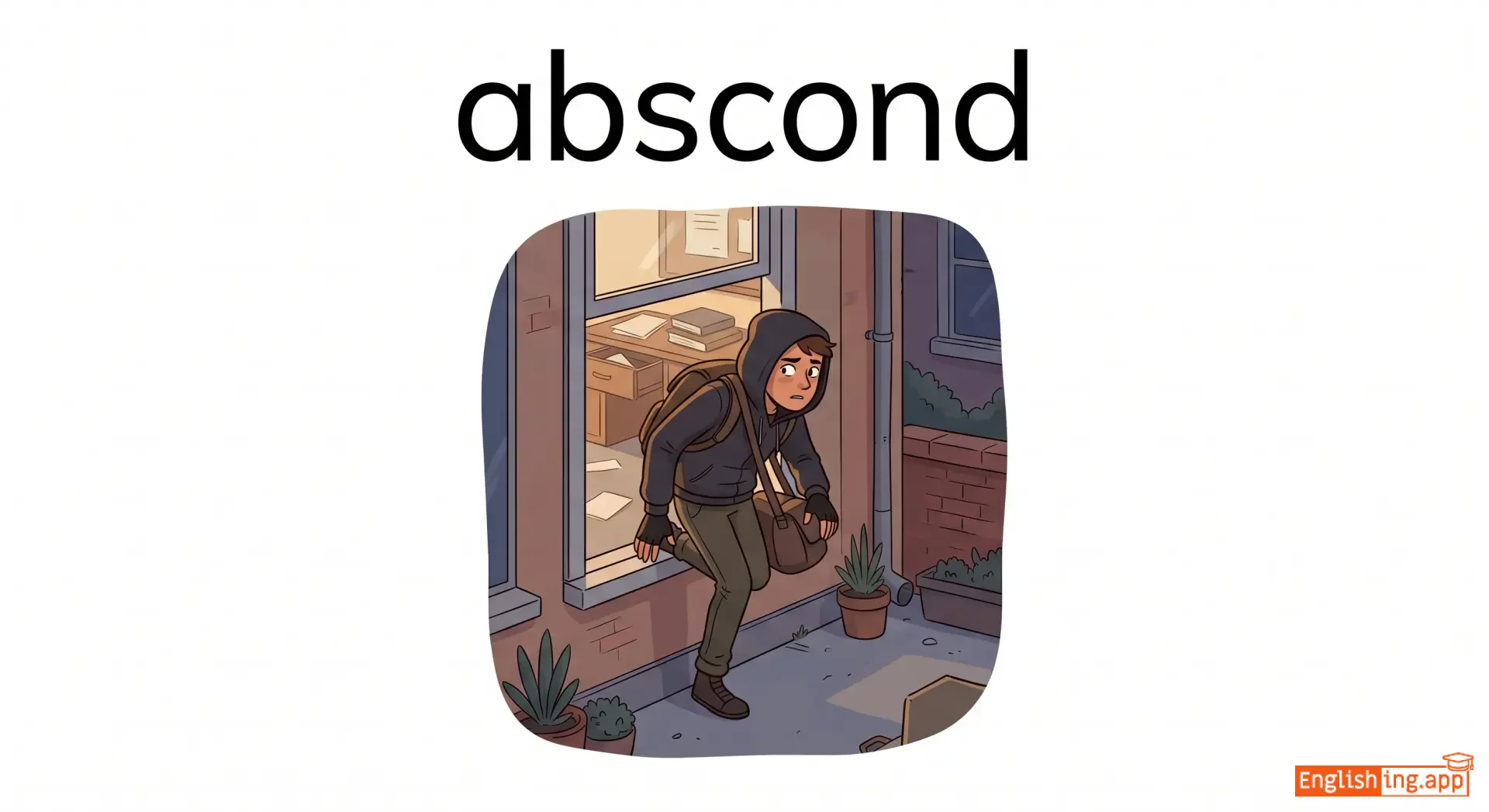
to leave secretly and quickly, often to avoid arrest or punishment
••••••
|
The thief tried to abscond with the stolen jewelry.
小偷试图带着被盗的珠宝逃跑。
••••••
|
小偷试图带着被盗的珠宝逃跑。
Xiao tou shi tu dai zhe bei dao de zhu bao tao pao.
••••••
|
abscond with
阿布斯康德与
••••••
|
to take something secretly and escape
••••••
|
带着偷来的东西逃跑
dai zhe tou lai de dong xi tao pao
••••••
|
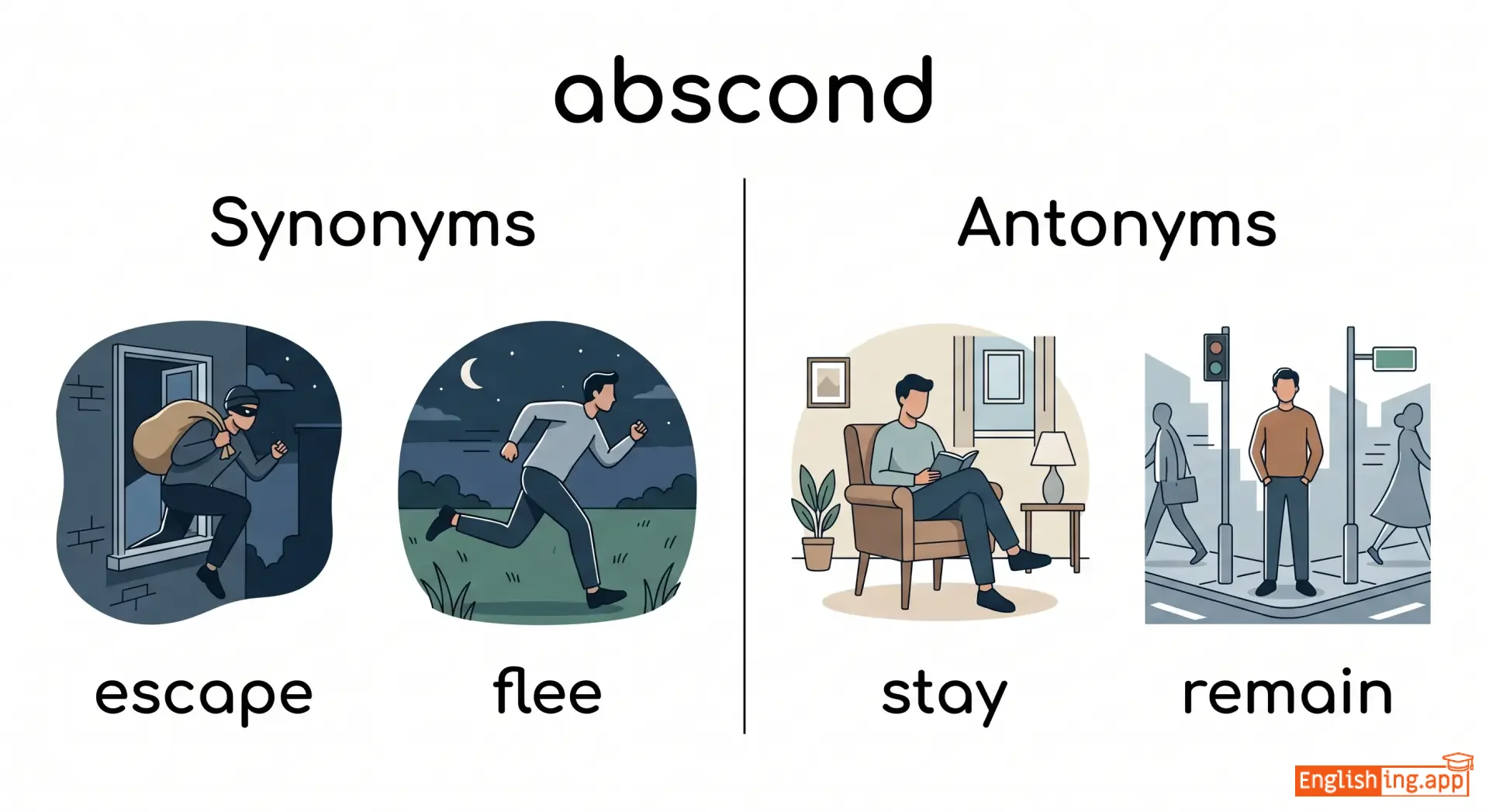
escape, flee, run away, vanish, bolt
••••••
|
stay, remain, appear
••••••
|
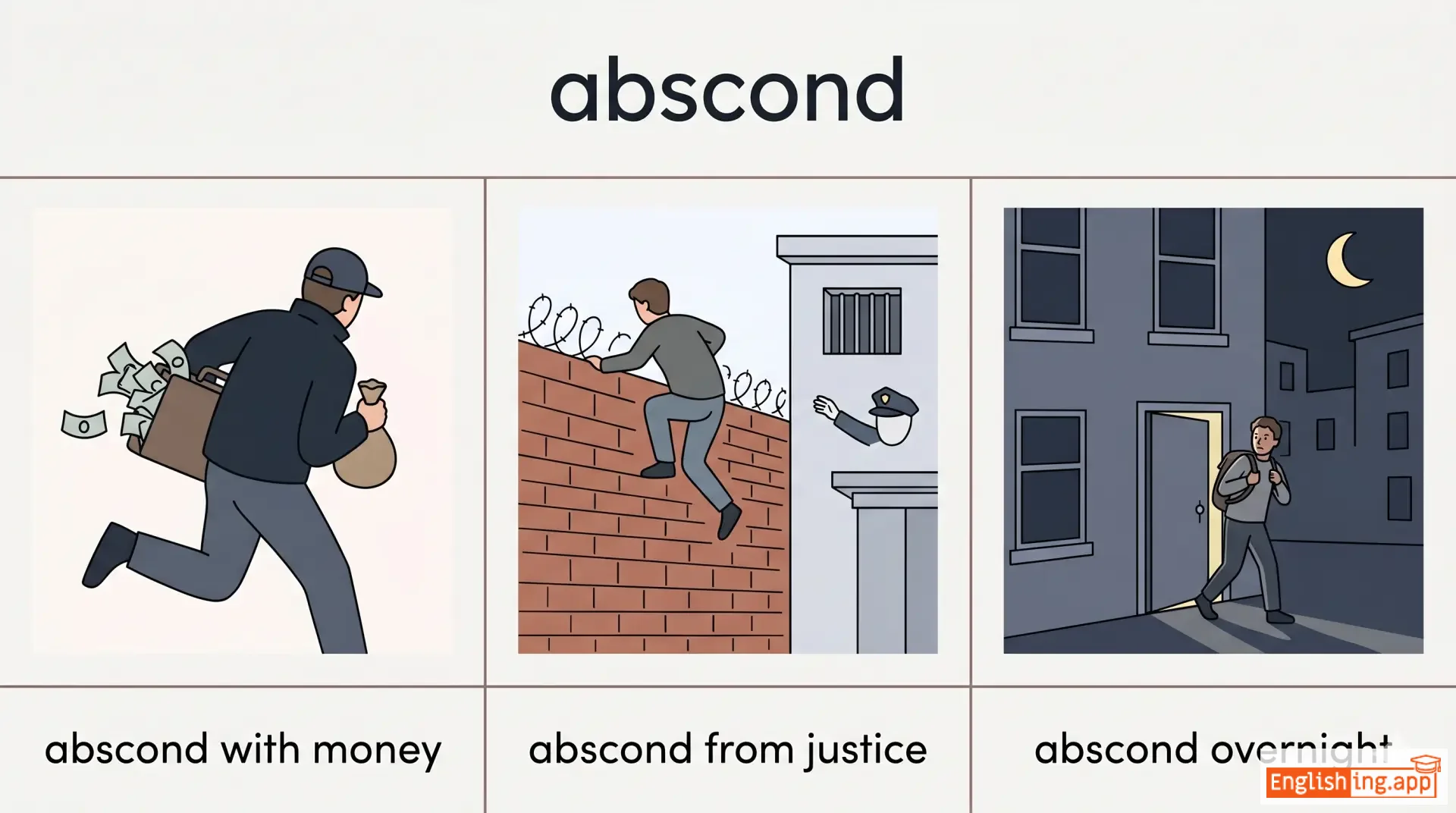
abscond with money, abscond from justice, abscond overnight
••••••
|
Abscond = ABsent + sCOND = 迅速逃离
••••••
|
|
#42
🍂
|
/æbˈsɪʒən/
noun
(ab-si-xion)
••••••
|
|
叶片脱落
ye pian tuo luo
••••••
|
- •••••• | - •••••• | - •••••• | - •••••• |
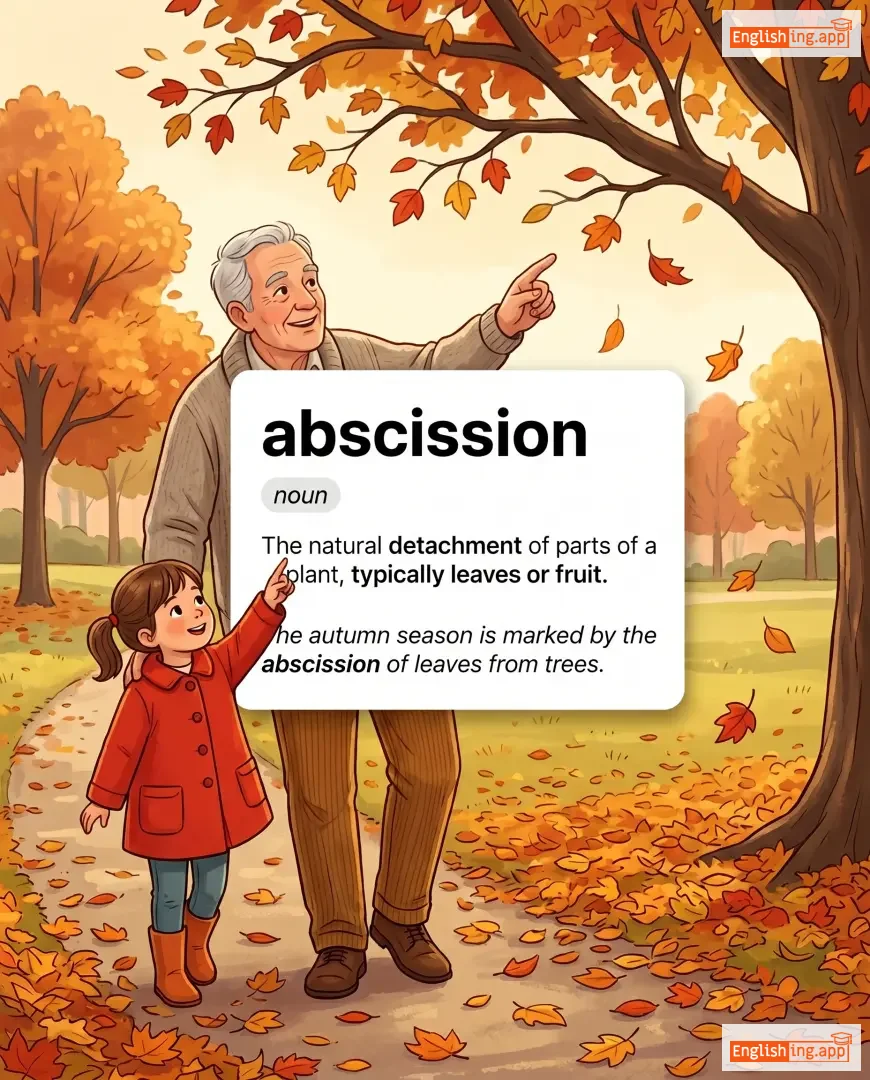
The natural detachment of parts of a plant, typically leaves or fruit.
••••••
|
The autumn season is marked by the abscission of leaves from trees. |
秋季的标志是树叶从树木上脱落。
Qiuji de biaozhi shi shuye cong shumu shang tuoluo.
••••••
|
- •••••• | - •••••• | - •••••• |
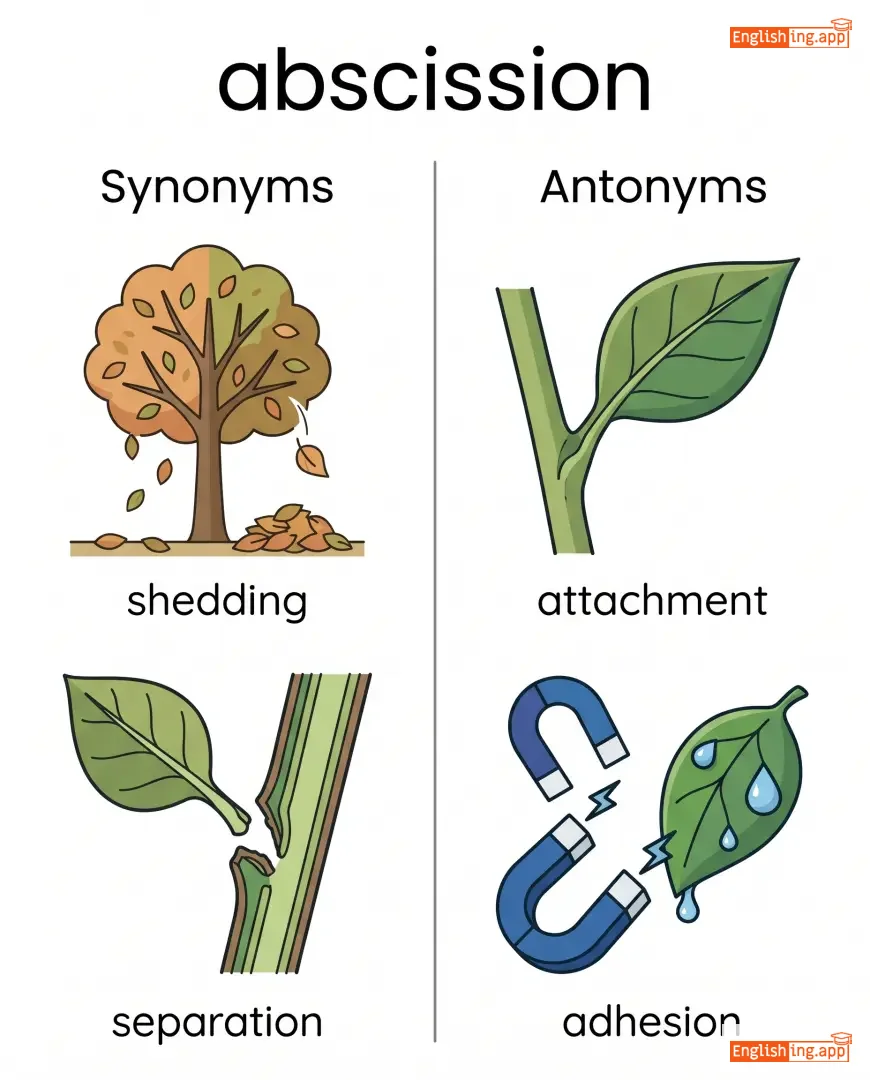
shedding, separation, detachment, removal, dropping
••••••
|
attachment, adhesion, union
••••••
|
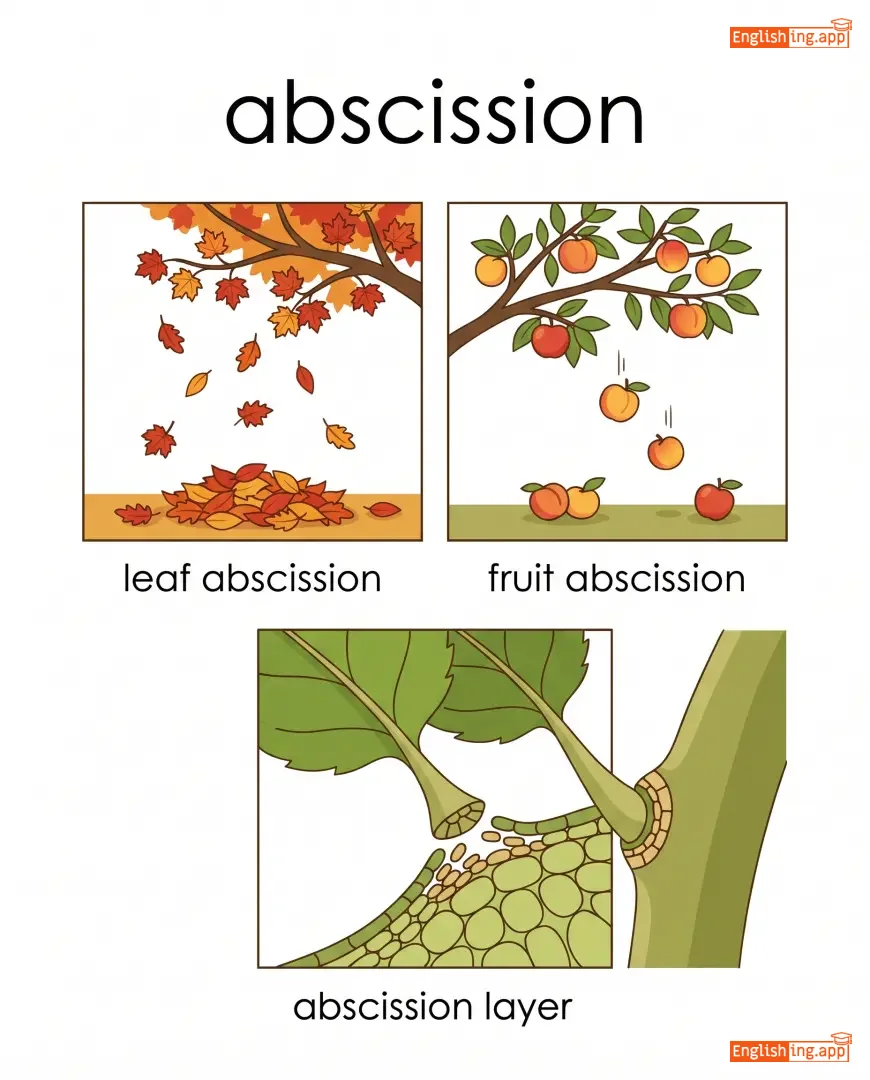
leaf abscission, fruit abscission, abscission layer
••••••
|
Abscission 就是 ‘叶子掉落’,就像秋天叶子落下。
••••••
|
|
#43
🦠
|
/ˈæbsɛs/
noun
(阿布赛斯)
••••••
|
- •••••• |
脓肿
nóng zhǒng
••••••
|
- •••••• | - •••••• | - •••••• | - •••••• |
A swollen area within body tissue containing pus, usually caused by infection.
••••••
|
The dentist treated the abscess in his tooth. |
牙医治疗了他牙齿上的脓肿。
Yáyī zhìliáo le tā yáchǐ shàng de nóngzhǒng.
••••••
|
- •••••• | - •••••• | - •••••• |
boil, sore, swelling, pustule, ulcer
••••••
|
health, wellness, cure
••••••
|
dental abscess, skin abscess, abscess treatment
••••••
|
Abscess 就像 'abs'(腹部),但它是体内的脓肿(nóng zhǒng)。
••••••
|
|
#44
⚡
|
/əˈbrʌpt/
adjective
(阿布鲁普特)
••••••
|
- •••••• |
突然
turan
••••••
|
- •••••• | - •••••• | - •••••• | - •••••• |
Sudden or unexpected, often without warning.
••••••
|
The car came to an abrupt stop in the middle of the road.
汽车在路中间急停。
••••••
|
汽车在路中间急停。
Qìchē zài lù zhōngjiān jí tíng.
••••••
|
abrupt end
突如其来的结束
••••••
|
A sudden and unexpected termination.
••••••
|
突如其来的结束
Tūrán qí lái de jiéshù
••••••
|
sudden, unexpected, hasty, curt, brusque
••••••
|
gradual, smooth, expected
••••••
|
abrupt change, abrupt stop, abrupt manner, abrupt ending
••••••
|
突然停下车就像是一个突如其来的结束。
••••••
|
|
#45
🚫
|
/ˈæbrəɡeɪt/
verb
(废除)
••••••
|
- •••••• |
废除
feichu
••••••
|
abrogated
废除
••••••
|
abrogated
废除
••••••
|
abrogates
废除
••••••
|
abrogating
废除
••••••
|
To formally repeal, cancel, or abolish a law, agreement, or custom.
••••••
|
The government decided to abrogate the outdated treaty.
政府决定废除过时的条约。
••••••
|
政府决定废除过时的条约。
Zhengfu jueding feichu guoshi de tiaoyue.
••••••
|
- •••••• | - •••••• | - •••••• |
repeal, revoke, annul, cancel, abolish
••••••
|
enforce, uphold, establish
••••••
|
abrogate a law, abrogate a treaty, abrogate an agreement
••••••
|
A BROKEN gate → 废除意味着废弃过时的规定,就像门被拆掉一样。
••••••
|
|
#46
🏠
|
/əˈboʊd/
noun
(ā bō dé)
••••••
|
- •••••• |
住所
zhùsuǒ
••••••
|
- •••••• | - •••••• | - •••••• | - •••••• |
a place of residence; a home
••••••
|
They invited us to their humble abode. |
他们邀请我们去他们简朴的住所。
Tāmen yāoqǐng wǒmen qù tāmen jiǎnpǔ de zhùsuǒ.
••••••
|
humble abode |
a modest way of referring to one's home
••••••
|
简朴住所
jiǎnpǔ zhùsuǒ
••••••
|
home, dwelling, residence, house, lodging
••••••
|
office, workplace
••••••
|
humble abode, permanent abode, temporary abode
••••••
|
住所 (abode) 就是家 - 住所意味着家
••••••
|
|
#47
✂️
|
/əˈbrɪdʒ/
verb
(āi bǐ lǐ jī)
••••••
|
- •••••• |
缩短
suō duǎn
••••••
|
abridged
āi bǐ lǐ jī dé
••••••
|
abridged
āi bǐ lǐ jī dé
••••••
|
abridges
āi bǐ lǐ jī sī
••••••
|
abridging
āi bǐ lǐ jī yíng
••••••
|
to shorten a text without losing its meaning
••••••
|
The editor decided to abridge the long novel for young readers.
编辑决定为年轻读者缩短这本长小说。
••••••
|
编辑决定为年轻读者缩短这本长小说。
Biānjí juédìng wèi niánqīng dúzhě suōduǎn zhè běn cháng xiǎoshuō.
••••••
|
- •••••• | - •••••• | - •••••• |
shorten, condense, compress, cut
••••••
|
expand, lengthen, elaborate
••••••
|
abridge the story, abridge the book, abridge rights
••••••
|
桥梁 (abridge) 是缩短两点之间的距离 – 缩短
••••••
|
|
#48
🚶♂️🚶♂️
|
/əˈbrɛst/
adverb
(ā bù ré sī tè)
••••••
|
- •••••• |
并排
bìng pái
••••••
|
- •••••• | - •••••• | - •••••• | - •••••• |
side by side and facing the same direction; informed about something
••••••
|
The soldiers marched two abreast down the street.
士兵们并排走在街上。
••••••
|
士兵们并排走在街上。
Shìbīngmen bìng pái zǒu zài jiē shàng.
••••••
|
keep abreast of
保持更新
••••••
|
to remain informed or up-to-date with something
••••••
|
保持更新
bǎo chí gēng xīn
••••••
|
alongside, side-by-side, parallel, informed
••••••
|
behind, unaware, uninformed
••••••
|
two abreast, three abreast, keep abreast of
••••••
|
abreast (abreast) 就是并排 – 两个胸部并排在一起
••••••
|
|
#49
🪣
|
/əˈbreɪsɪv/
adjective
••••••
|
- •••••• | - •••••• | - •••••• | - •••••• | - •••••• | - •••••• |
harsh, rough, or capable of wearing down by rubbing
••••••
|
His abrasive tone made everyone uncomfortable. |
- •••••• |
abrasive personality |
a harsh and unpleasant way of speaking or behaving
••••••
|
- •••••• |
harsh, rough, coarse, caustic
••••••
|
gentle, smooth, pleasant
••••••
|
abrasive surface, abrasive tone, abrasive cleaner
••••••
|
No •••••• |
|
#50
🩹
|
/əˈbreɪʒən/
noun
(擦伤)
••••••
|
- •••••• |
由于摩擦而导致的皮肤或表面的擦伤或磨损
yóu yú mócā ér dǎozhì de pífū huò biǎomiàn de cāshāng huò móxūn
••••••
|
- •••••• | - •••••• | - •••••• | - •••••• |
a scrape or wearing away of the skin or surface due to friction
••••••
|
He suffered a minor abrasion on his knee after falling. |
他在摔倒后膝盖上受了一个轻微的擦伤。
Tā zài shuāidǎo hòu xīgài shàng shòule yīgè qīngwēi de cāshāng.
••••••
|
- •••••• | - •••••• | - •••••• |
scrape, scratch, wound, graze
••••••
|
smoothness, healing
••••••
|
minor abrasion, skin abrasion, abrasion injury
••••••
|
擦伤就是摩擦导致的伤口。
••••••
|
|
#51
🪓
|
/əˈbreɪd/
verb
(abureid)
••••••
|
- •••••• |
通过摩擦磨损
tongguo mocha mosun
••••••
|
abraded
abureided
••••••
|
abraded
abureided
••••••
|
abrades
abureides
••••••
|
abrading
abureiding
••••••
|
to scrape or wear away the surface by friction or erosion
••••••
|
The rough cloth can easily abrade the skin.
粗糙的布料容易磨损皮肤。
••••••
|
粗糙的布料容易磨损皮肤。
Cūcāo de bùliào róngyì mó sǔn pífū.
••••••
|
- •••••• | - •••••• | - •••••• |
scrape, rub, wear, chafe, erode
••••••
|
smooth, polish
••••••
|
abrade the skin, abrade surface, easily abrade
••••••
|
刮 (abrade) 可以磨损表面
••••••
|
|
#52
📜
|
/əˈbʌvˌbɔːrd/
adjective, adverb
(abavbord)
••••••
|
- •••••• |
诚实和公开
Chengshi he gongkai
••••••
|
- •••••• | - •••••• | - •••••• | - •••••• |
Open and honest; without deception or trickery.
••••••
|
The business deal was completely aboveboard.
商业交易完全abavbord。
••••••
|
商业交易完全诚实和公开。
Shangye jiaoyi wanquan chengshi he gongkai.
••••••
|
- •••••• | - •••••• | - •••••• |
honest, fair, transparent, legitimate, open
••••••
|
dishonest, deceitful, underhand
••••••
|
aboveboard deal, aboveboard transaction, everything aboveboard, remain aboveboard
••••••
|
Aboveboard 意味着在桌子上,公开而诚实。
••••••
|
|
#53
🌊
|
/əˈbaʊnd/
verb
(阿邦德)
••••••
|
- •••••• |
充满
chongman
••••••
|
abounded
阿邦德德
••••••
|
abounded
阿邦德德
••••••
|
abounds
阿邦德斯
••••••
|
abounding
阿邦丁
••••••
|
To exist in large numbers or amounts.
••••••
|
Opportunities abound in the field of technology.
在技术领域,机会比比皆是。
••••••
|
在技术领域,机会比比皆是。
Zai jishu lingyu, jihui bibi jieshi.
••••••
|
abound in
比比皆是
••••••
|
to exist in great numbers within something
••••••
|
比比皆是
bibi jieshi
••••••
|
overflow, teem, flourish, proliferate, thrive
••••••
|
lack, scarce, fail
••••••
|
opportunities abound, resources abound, abound in, abound with
••••••
|
Abound意味着A-boundless = 充满,无穷无尽。
••••••
|
|
#54
❌
|
/əˈbɔːrtɪv/
adjective
(阿博提夫)
••••••
|
- •••••• |
失败的
shibai de
••••••
|
- •••••• | - •••••• | - •••••• | - •••••• |
Failing to produce the intended result; unsuccessful.
••••••
|
Their abortive attempt to climb the mountain ended in retreat.
他们登山的失败尝试以撤退告终。
••••••
|
他们登山的失败尝试以撤退告终。
Tāmen dēngshān de shībài chángshì yǐ chètuì gàozhōng.
••••••
|
- •••••• | - •••••• | - •••••• |
failed, futile, fruitless, unsuccessful, ineffective
••••••
|
successful, effective, productive
••••••
|
abortive attempt, abortive effort, abortive plan, abortive mission
••••••
|
Abortive 意味着 abort (中止) + ive = 失败的尝试。
••••••
|
|
#55
👣
|
/ˌæbəˈrɪdʒəniːz/
noun
(土著)
••••••
|
- •••••• |
土著
tǔzhù
••••••
|
- •••••• | - •••••• | - •••••• | - •••••• |
The original inhabitants of a land, especially in Australia.
••••••
|
The aborigines have preserved their traditions for thousands of years.
土著人已经保护了他们的传统数千年。
••••••
|
土著人已经保护了他们的传统数千年。
Tǔzhù rén yǐjīng bǎohùle tāmen de chuántǒng shù qiān nián.
••••••
|
- •••••• | - •••••• | - •••••• |
natives, indigenous people, first inhabitants, original settlers
••••••
|
colonizers, settlers, newcomers
••••••
|
Australian aborigines, aborigines community, aborigines culture
••••••
|
土著人是澳大利亚的原住民,他们保护自己的传统。
••••••
|
|
#56
🪶
|
/ˌæbəˈrɪdʒənəl/
adjective
(阿博里吉纳尔)
••••••
|
- •••••• |
土著
tuzhu
••••••
|
- •••••• | - •••••• | - •••••• | - •••••• |
Relating to the original inhabitants of a region.
••••••
|
The museum has a large collection of aboriginal art. |
博物馆里有大量的土著艺术收藏。
Bowuguan li you daliao de tuzhu yishu shoucang.
••••••
|
- •••••• | - •••••• | - •••••• |
native, indigenous, original, primitive, earliest
••••••
|
modern, foreign, alien
••••••
|
aboriginal art, aboriginal culture, aboriginal community, aboriginal rights
••••••
|
Aboriginal意味着土著,与原住民相关。
••••••
|
|
#57
👿
|
/əˌbɑː.məˈneɪ.ʃən/
noun
(厌恶)
••••••
|
- •••••• |
可憎的事物
kězēng de shìwù
••••••
|
- •••••• | - •••••• | - •••••• | - •••••• |
a thing that causes disgust or hatred
••••••
|
Slavery was considered an abomination. |
奴隶制被认为是一种可憎的事物。
núlì zhì bèi rènwéi shì yī zhǒng kězēng de shìwù.
••••••
|
an abomination in the eyes of |
something seen as hateful or offensive to someone
••••••
|
在...眼中是一种可憎的事物
zài... yǎnzhōng shì yī zhǒng kězēng de shìwù
••••••
|
outrage, horror, disgrace, atrocity, evil
••••••
|
delight, blessing
••••••
|
considered an abomination, social abomination, moral abomination
••••••
|
可憎的事物意味着厌恶 → 想象'BOM' (炸弹) 是非常糟糕的事情
••••••
|
|
#58
😡
|
/əˈbɑː.mə.neɪt/
verb
(厌恶)
••••••
|
- •••••• |
厌恶
yànwù
••••••
|
abominated
厌恶了
••••••
|
abominated
厌恶的
••••••
|
abominates
厌恶
••••••
|
abominating
厌恶中
••••••
|
to feel hatred or loathing for something
••••••
|
She abominates cruelty to animals.
她厌恶对动物的残忍行为。
••••••
|
她厌恶对动物的残忍行为。
Tā yànwù duì dòngwù de cánrěn xíngwéi.
••••••
|
- •••••• | - •••••• | - •••••• |
loathe, hate, detest, despise, dislike
••••••
|
like, love, admire
••••••
|
abominate violence, abominate cruelty, abominate injustice
••••••
|
ABOMINATE 意味着厌恶,记住 'YANWU' → 厌恶
••••••
|
|
#59
🤢
|
/əˈbɑː.mə.nə.bəl/
adjective
(阿博米纳布尔)
••••••
|
- •••••• |
可憎的
kě zēng de
••••••
|
- •••••• | - •••••• | - •••••• | - •••••• |
causing moral revulsion; extremely unpleasant
••••••
|
The prisoners were kept in abominable conditions. |
囚犯们被关押在可憎的条件下。
Qiúfànmen bèi guānyā zài kě zēng de tiáojiàn xià.
••••••
|
- •••••• | - •••••• | - •••••• |
horrible, dreadful, terrible, disgusting, vile
••••••
|
pleasant, delightful
••••••
|
abominable crime, abominable behavior, abominable conditions
••••••
|
ABOMINABLE意味着 ABOM(厌恶)+ 桌子(桌子)
••••••
|
|
#60
✂️
|
/əˈbɑː.lɪʃ/
verb
(阿博丽什)
••••••
|
- •••••• |
废除
feichu
••••••
|
abolished
阿博丽什德
••••••
|
abolished
阿博丽什德
••••••
|
abolishes
阿博丽什兹
••••••
|
abolishing
阿博丽什英
••••••
|
to formally put an end to a system, practice, or institution
••••••
|
The government decided to abolish the old tax system.
政府决定废除旧的税制。
••••••
|
政府决定废除旧的税制。
Zhèngfǔ juédìng fèichú jiù de shuìzhì.
••••••
|
abolish slavery
废除奴隶制
••••••
|
to officially end the system of slavery
••••••
|
废除奴隶制
Fèichú núlì zhì
••••••
|
end, eliminate, terminate, annul, eradicate
••••••
|
establish, maintain
••••••
|
abolish slavery, abolish law, abolish practice
••••••
|
ABOLISH意味着ABOL (abol) 结束一切 (jiéshù yīqiè)
••••••
|
Vocabulary Quiz
Test your vocabulary by matching words with their translations or meanings.
Login to take the quiz
Comments (0)
Share your thoughts and join the discussion.
Join the discussion by logging in
Login to CommentNo comments yet
Be the first to share your thoughts!