

翻訳
過去
過去分詞
三人称単数
動名詞
意味
例文
例文の翻訳
同義語
対義語
コロケーション
ニーモニック
Swipe left or right, or use the buttons. Tap image to zoom.
例文の翻訳
単語
Lesson 2Lesson 2 - マスクトグル
|
絵文字
|
単語 | Images | 翻訳 | 過去 | 過去分詞 | 三人称単数 | 動名詞 | 意味 | 例文 | 例文の翻訳 | 表現例 | 表現例の意味 | 表現例の翻訳 | 同義語 | 対義語 | コロケーション | ニーモニック |
|---|---|---|---|---|---|---|---|---|---|---|---|---|---|---|---|---|---|
|
#31
📘
|
/əˈbrɪdʒmənt/
noun
(エイブリッジメント)
••••••
|
- •••••• |
要約版
yōyaku-ban
••••••
|
- •••••• | - •••••• | - •••••• | - •••••• |
A shortened version of a larger work, such as a book or speech.
••••••
|
The publisher released an abridgment of the lengthy novel for students. |
出版社は学生のために長編小説の要約版を公開しました。
Shuppansha wa gakusei no tame ni chōhen shōsetsu no yōyaku-ban o kōkai shimashita.
••••••
|
- •••••• | - •••••• | - •••••• |
condensation, summary, digest, epitome, compendium
••••••
|
expansion, enlargement, full text
••••••
|
abridgment of rights, abridgment of freedom, abridgment version
••••••
|
要約版(yōyaku-ban)は、作品を簡潔にまとめる意味です。abridgmentと同じです。
••••••
|
|
#32
🥗
|
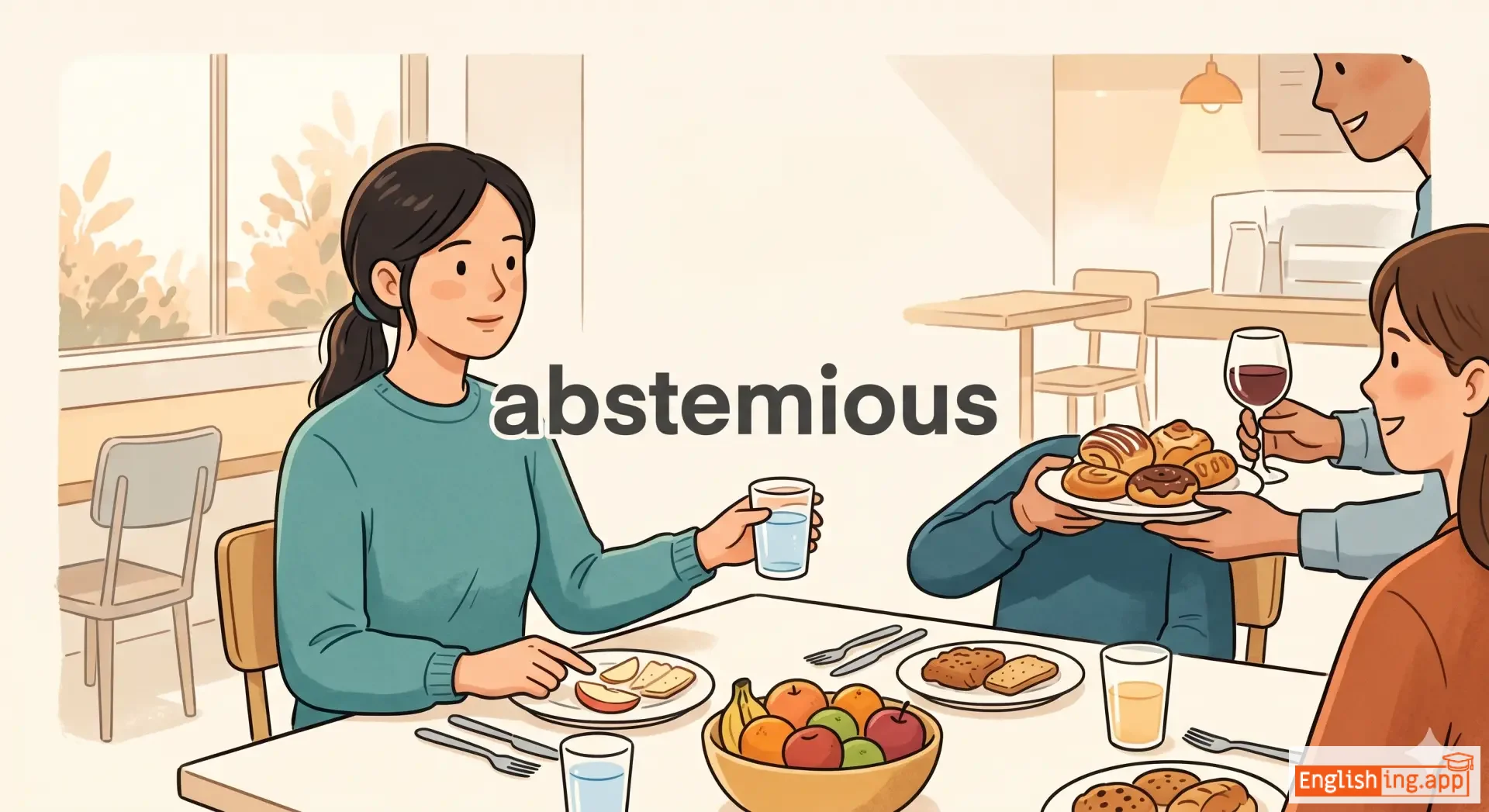
/æbˈstiːmiəs/
adjective
(アブステミアス)
••••••
|
|
節制
setsusei
••••••
|
- •••••• | - •••••• | - •••••• | - •••••• |
not allowing oneself much food or drink; marked by moderation
••••••
|
She lived an abstemious life, avoiding all luxuries. |
彼女は節制した生活を送り、すべての贅沢を避けた。
Kanojo wa setsusei shita seikatsu o okuri, subete no zeitaku o saketa.
••••••
|
- •••••• | - •••••• | - •••••• |
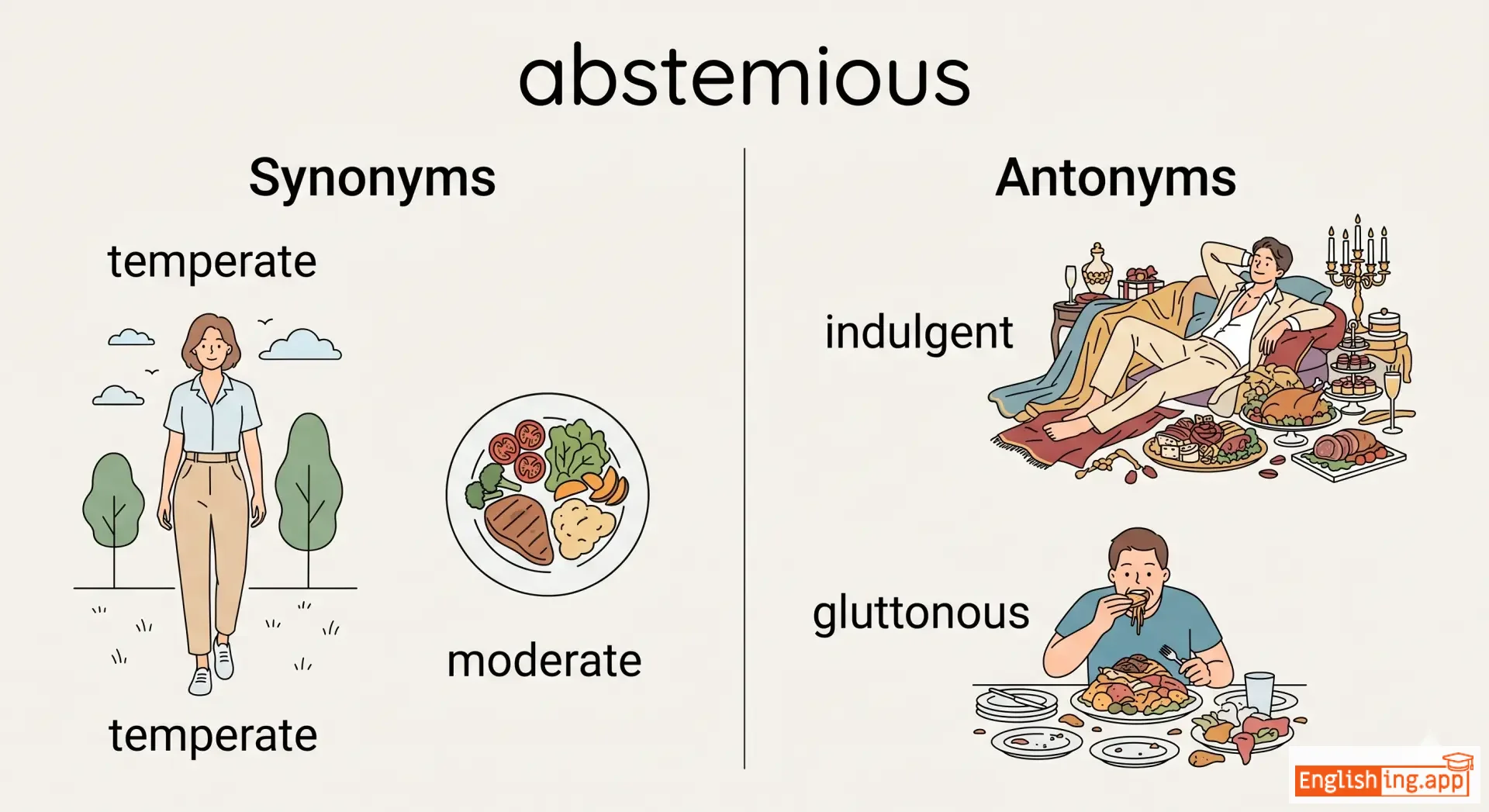
moderate, restrained, frugal, self-disciplined
••••••
|
indulgent, gluttonous, excessive
••••••
|
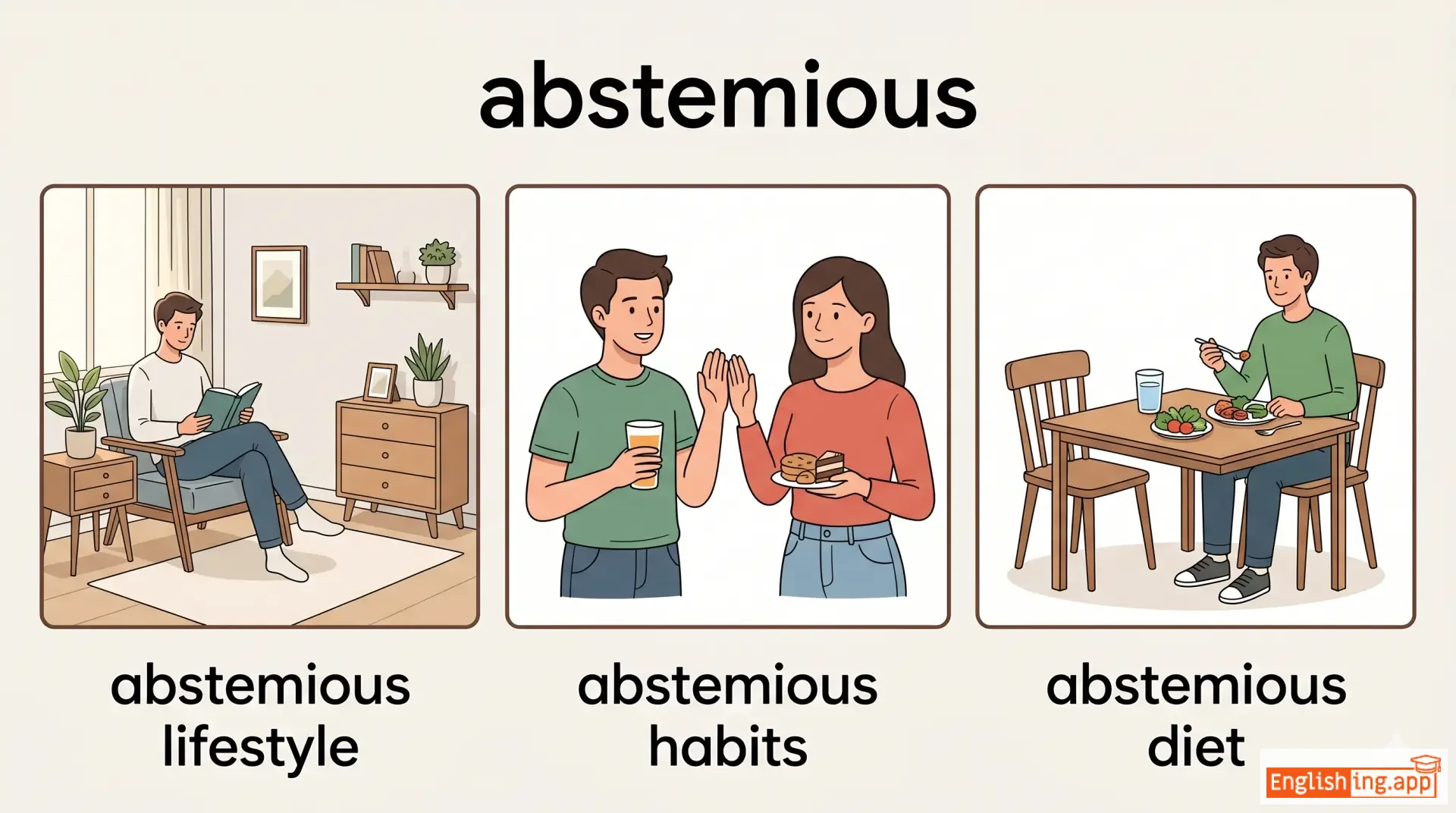
abstemious lifestyle, abstemious habits, abstemious diet
••••••
|
Abstemious = Abstain + Moderate → 節制した生活 (setsusei shita seikatsu)。
••••••
|
|
#33
🚫
|
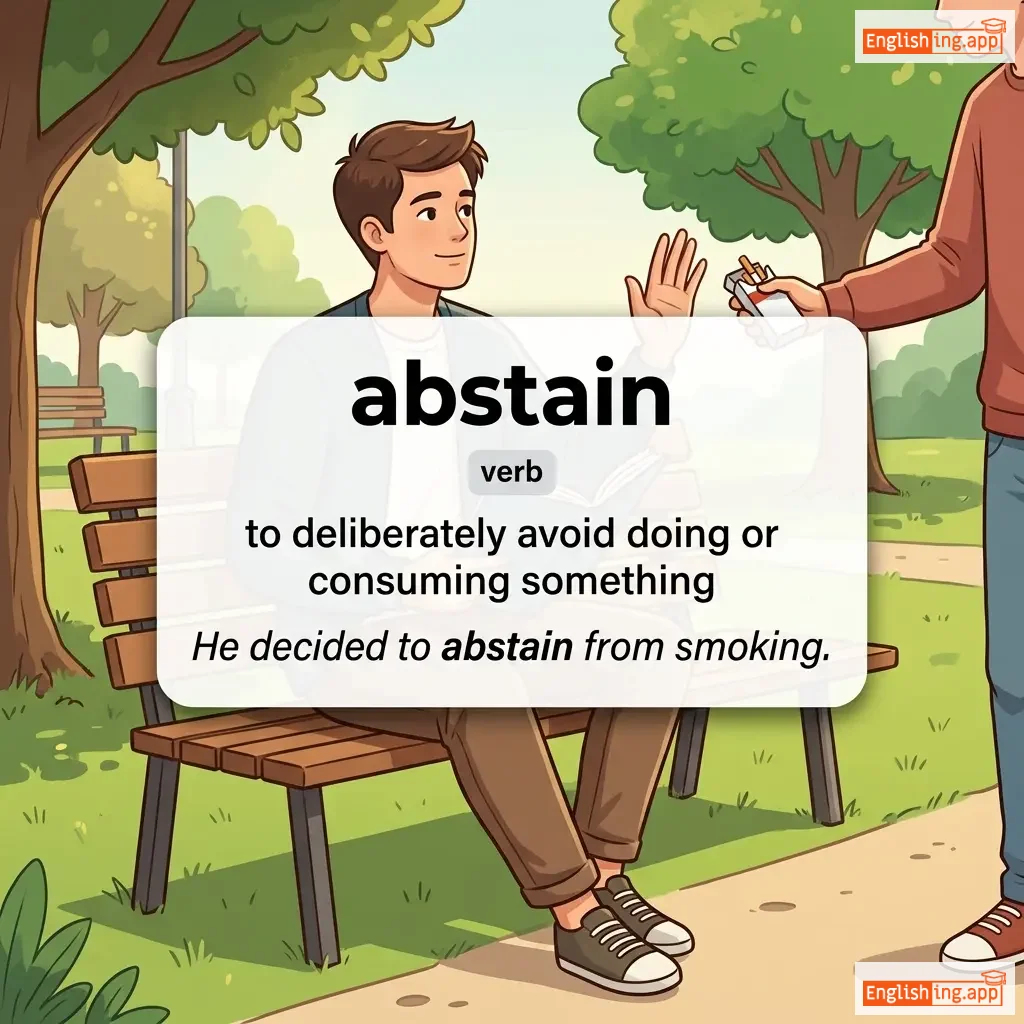
/əbˈsteɪn/
verb
(アブステイン)
••••••
|
|
控える
hikaeru
••••••
|
abstained
アブステインド
••••••
|
abstained
アブステインド
••••••
|
abstains
アブステインズ
••••••
|
abstaining
アブステイニング
••••••
|
to deliberately avoid doing or consuming something
••••••
|
He decided to abstain from smoking.
彼は喫煙を控えることに決めました。
••••••
|
彼は喫煙を控えることに決めました。
Kare wa kitsuen o hikaeru koto ni kimemashita.
••••••
|
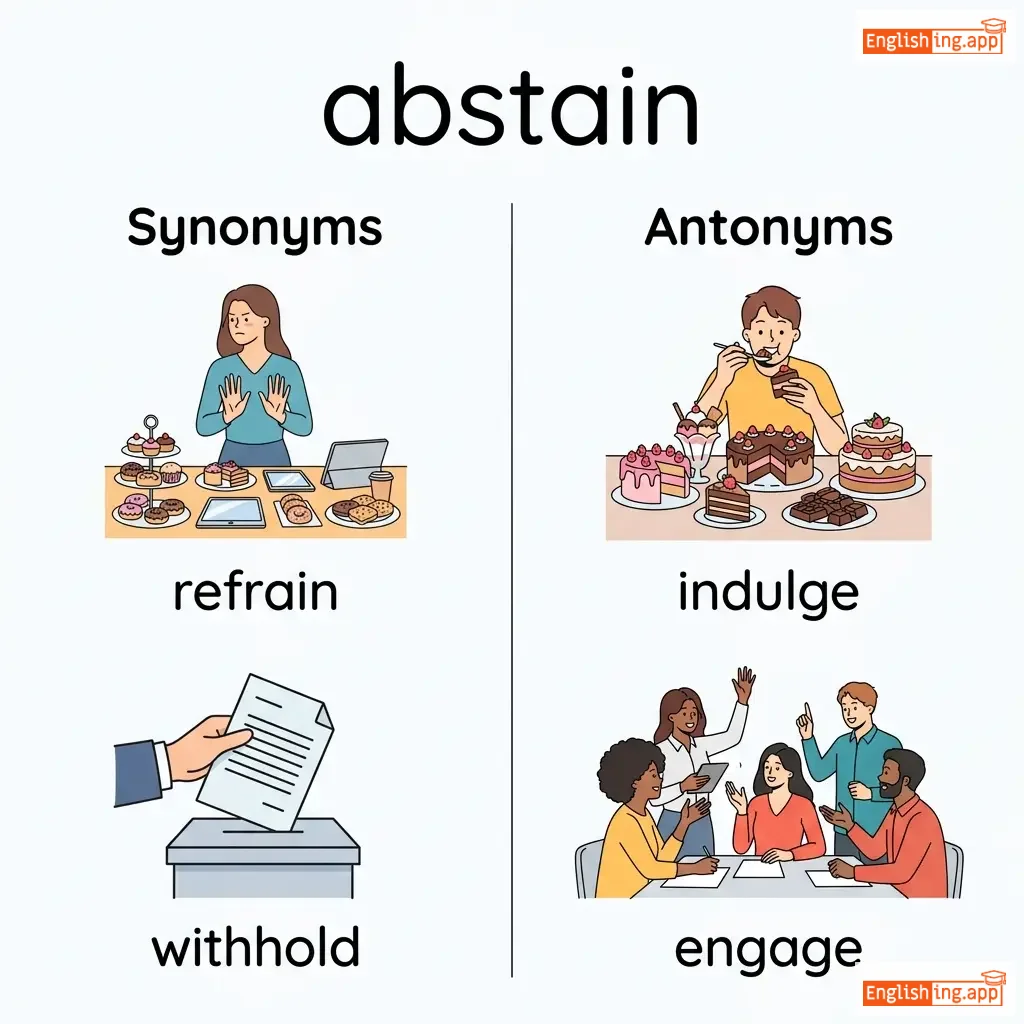
abstain from voting
投票を控える
••••••
|
to refuse to cast a vote
••••••
|
投票を控える
Tōhyō o hikaeru
••••••
|
refrain, withhold, avoid, eschew
••••••
|
indulge, engage
••••••
|
abstain from alcohol, abstain from food, abstain from voting
••••••
|
Abstain = 'あ' から始まる = 控える
••••••
|
|
#34
🌞
|
/əbˈzɔːrpʃən/
noun
(abzorpʃion)
••••••
|
|
吸収
kyuushuu
••••••
|
- •••••• | - •••••• | - •••••• | - •••••• |
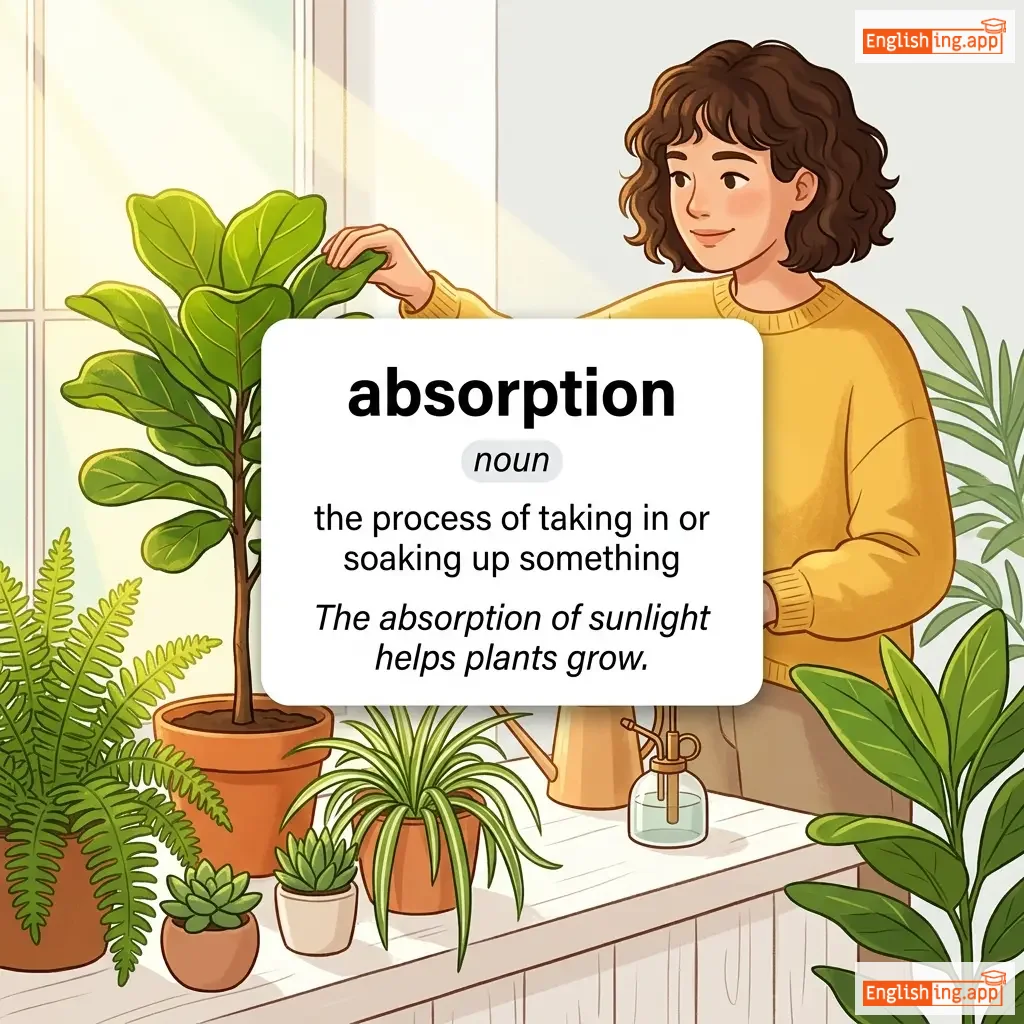
the process of taking in or soaking up something
••••••
|
The absorption of sunlight helps plants grow.
太陽光の吸収は植物の成長を助けます。
••••••
|
太陽光の吸収は植物の成長を助けます。
Taiyoukou no kyuushuu wa shokubutsu no seichou wo tasukemasu.
••••••
|
- •••••• | - •••••• | - •••••• |
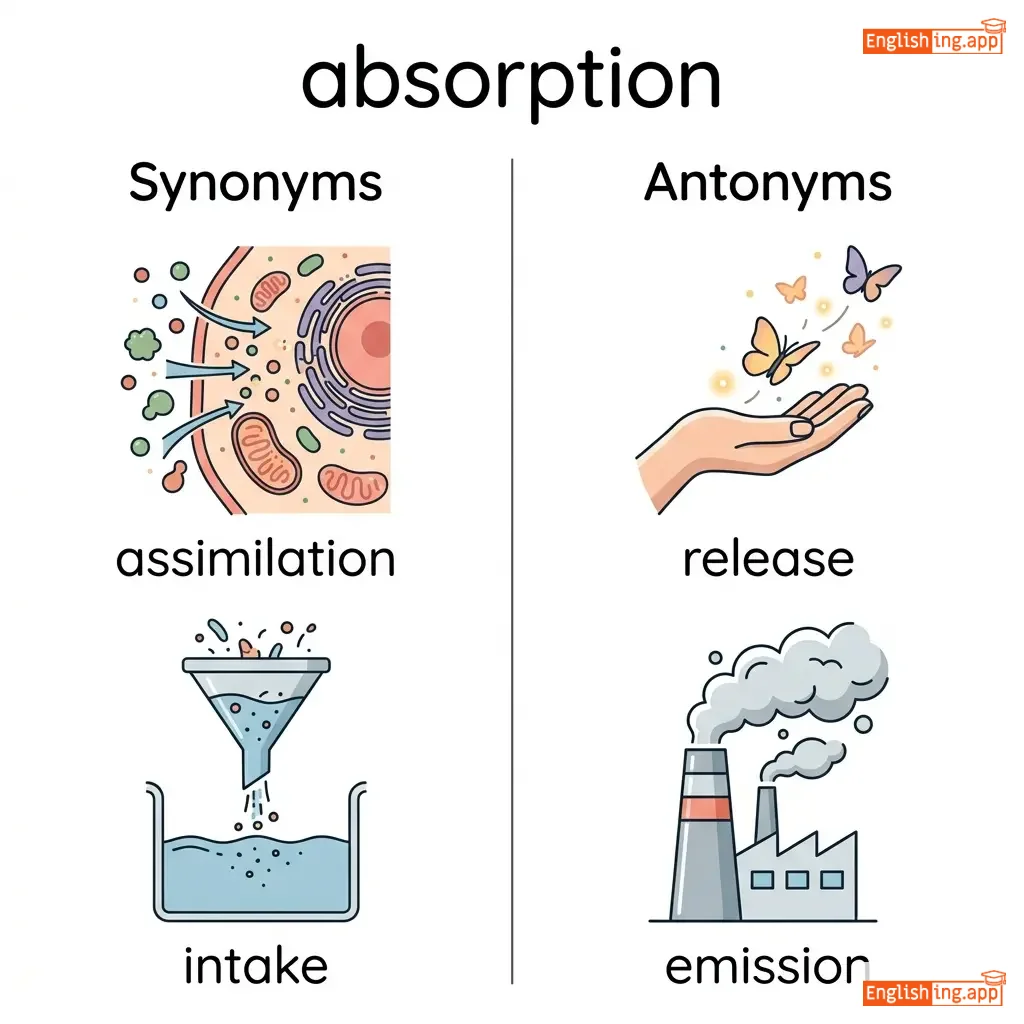
assimilation, intake, immersion, incorporation
••••••
|
release, emission, expulsion
••••••
|
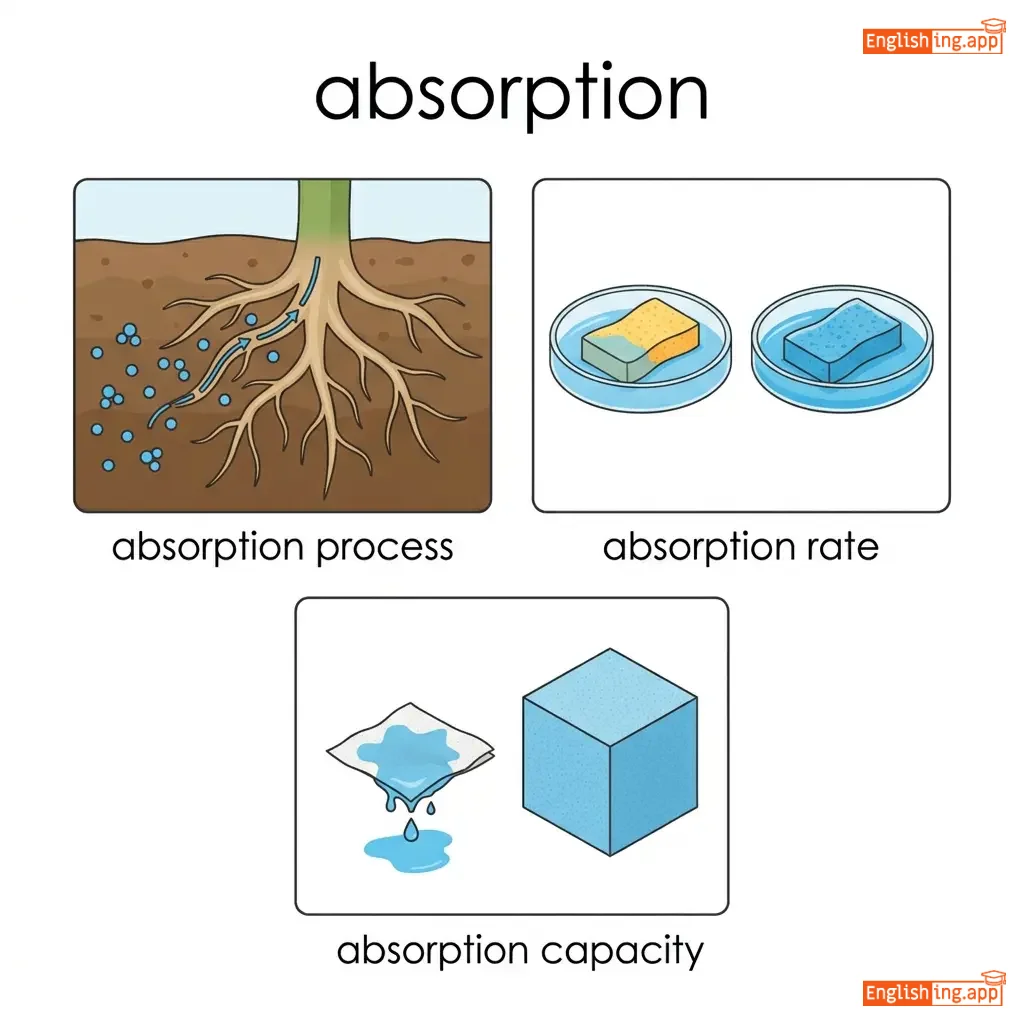
absorption process, absorption rate, absorption capacity
••••••
|
吸収は植物が太陽光を吸収するようなものです。
••••••
|
|
#35
🧽
|
/əbˈzɔːrb/
verb
(アブゾーブ)
••••••
|
- •••••• |
吸収する
きゅうしゅうする
••••••
|
absorbed
アブゾーブド
••••••
|
absorbed
アブゾーブド
••••••
|
absorbs
アブゾーブス
••••••
|
absorbing
アブゾービング
••••••
|
to take in or soak up a liquid, energy, or information
••••••
|
The sponge absorbed all the water.
スポンジは水をすべて吸収しました。
••••••
|
スポンジは水をすべて吸収しました。
Suponji wa mizu o subete kyūshū shimashita.
••••••
|
absorbed in thought
考えにふける
••••••
|
deeply engaged or preoccupied with one's thoughts
••••••
|
考えにふける
Kangae ni fukeru
••••••
|
soak, consume, engross, assimilate, take in
••••••
|
release, emit, repel
••••••
|
absorb energy, absorb impact, absorb information
••••••
|
吸収する + orb = orb(ボール)はすべてを吸収します。
••••••
|
|
#36
🙏
|
/əbˈzɒlv/
verb
(アブソルヴ)
••••••
|
|
免除する
menjo suru
••••••
|
absolved
アブソルヴド
••••••
|
absolved
アブソルヴド
••••••
|
absolves
アブソルヴス
••••••
|
absolving
アブソルヴィング
••••••
|
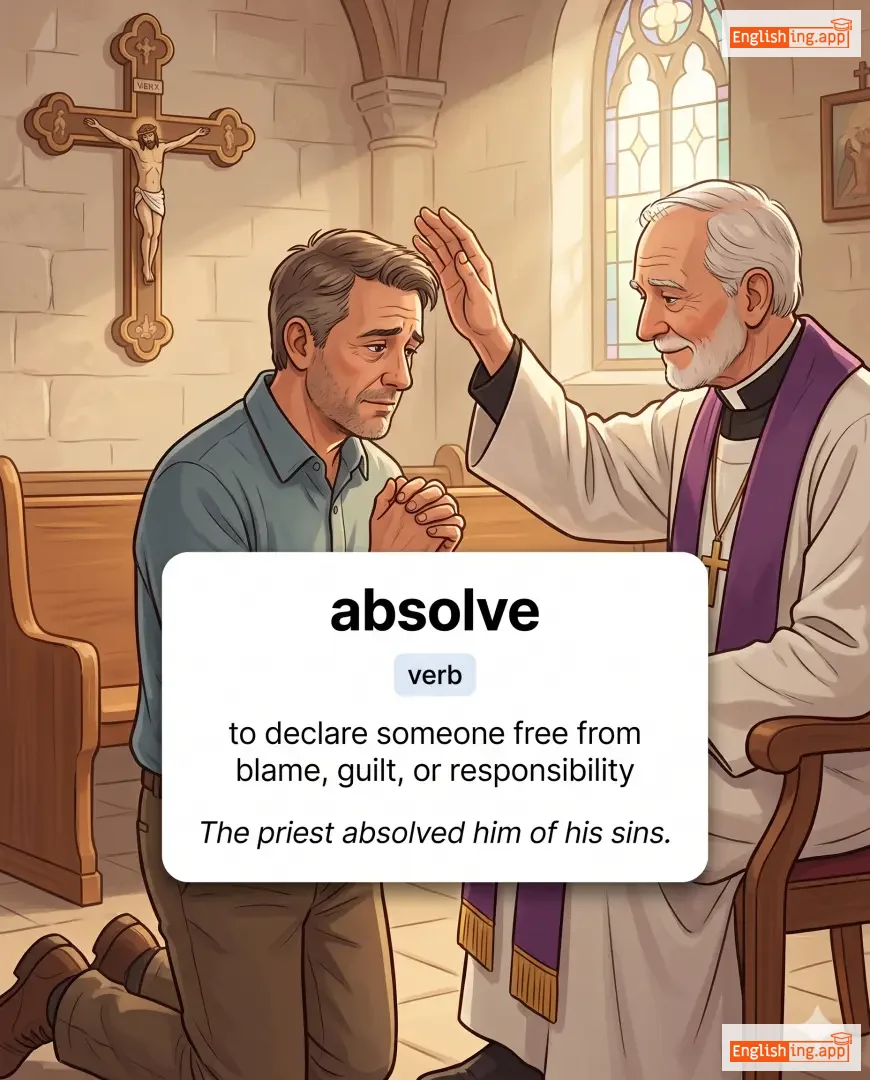
to declare someone free from blame, guilt, or responsibility
••••••
|
The priest absolved him of his sins.
司祭は彼の罪を免除しました。
••••••
|
司祭は彼の罪を免除しました。
Shisai wa kare no tsumi wo menjo shimashita.
••••••
|
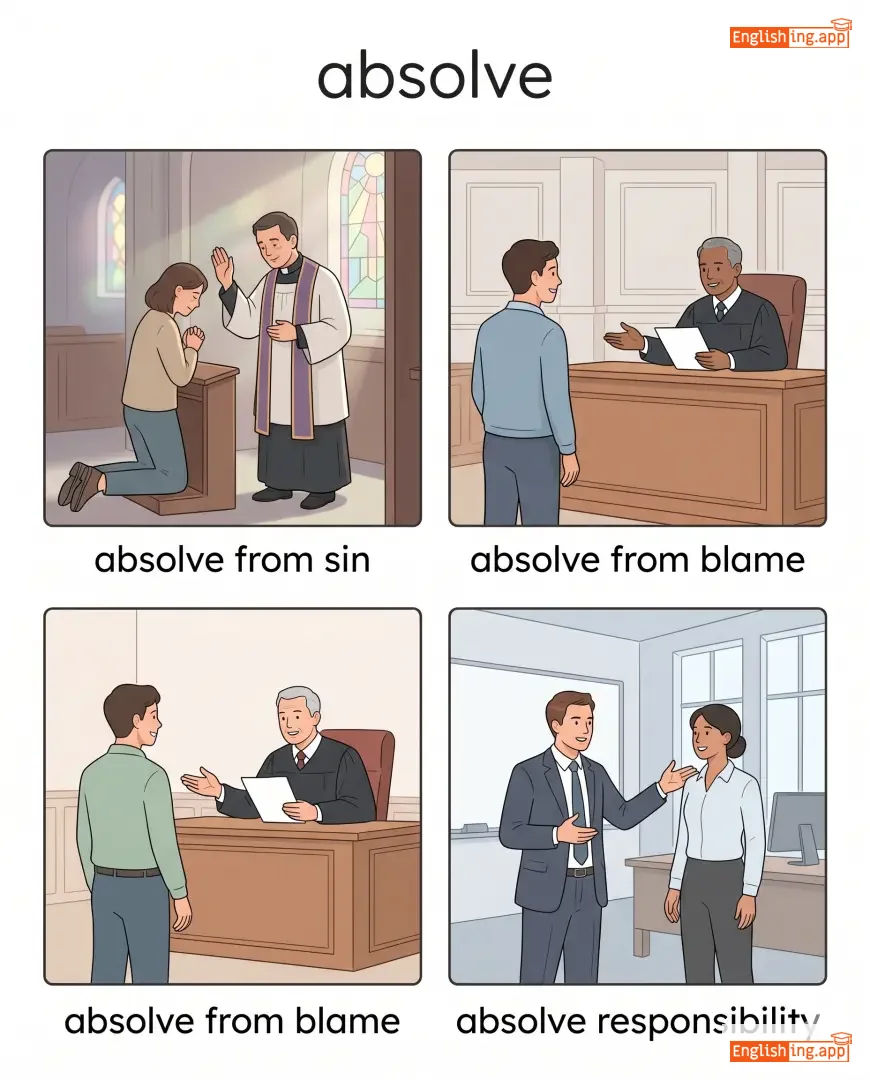
absolve from blame
非難から解放する
••••••
|
to free someone from responsibility or guilt
••••••
|
非難から解放する
hinan kara kaihō suru
••••••
|
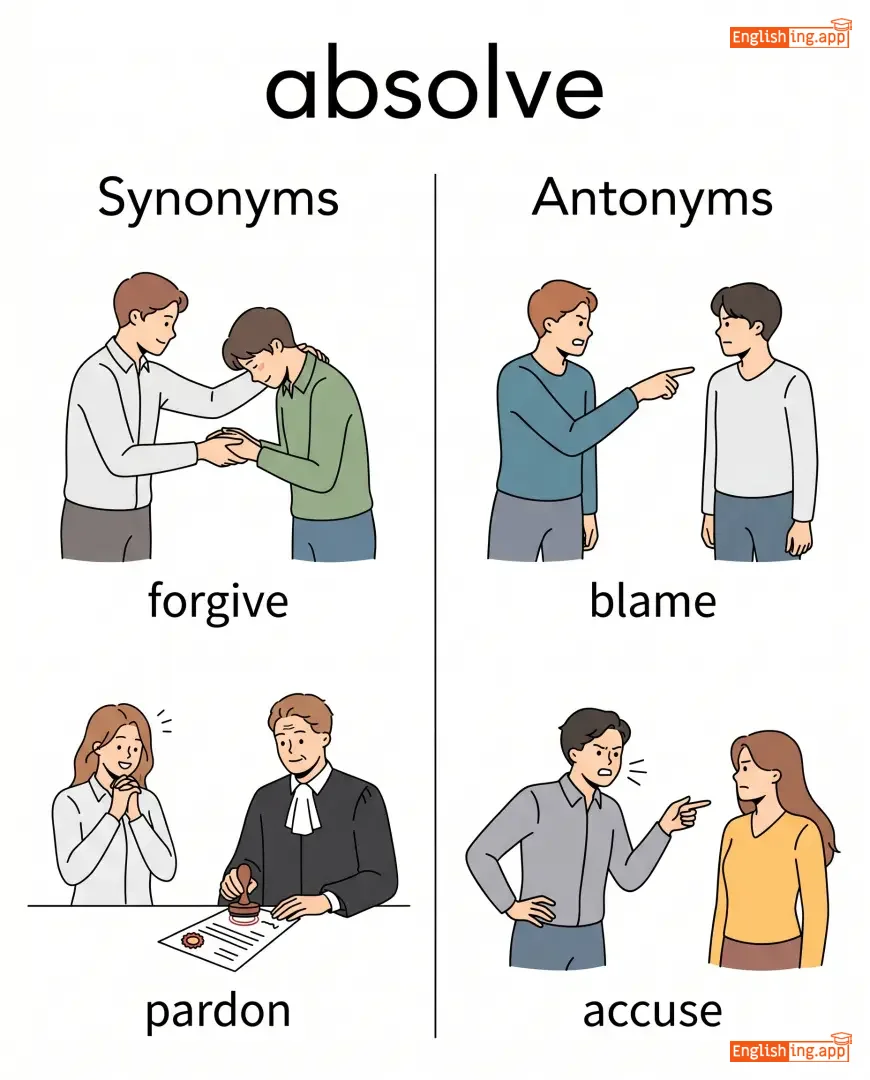
forgive, pardon, acquit, exonerate, clear
••••••
|
blame, accuse, convict
••••••
|
absolve from sin, absolve from blame, absolve responsibility
••••••
|
Absolve = 免除して自由にする。
••••••
|
|
#37
🙏
|
/ˌæbsəˈluːʃən/
noun
(アブソリューション)
••••••
|
- •••••• |
免罪
menzai
••••••
|
- •••••• | - •••••• | - •••••• | - •••••• |
formal release from guilt, obligation, or punishment
••••••
|
The priest granted him absolution for his sins.
神父は彼の罪を許しを与えました。
••••••
|
神父は彼の罪を許しを与えました。
Shinpu wa kare no tsumi wo yurushi wo ataemashita.
••••••
|
- •••••• | - •••••• | - •••••• |
forgiveness, pardon, exoneration, remission
••••••
|
punishment, condemnation, blame
••••••
|
seek absolution, grant absolution, absolution of sins
••••••
|
Absolution = Absolute solution - 完全な罪の解放
••••••
|
|
#38
💯
|
/ˈæbsəluːt/
adjective
(アブソリュート)
••••••
|
- •••••• |
絶対
zettai
••••••
|
- •••••• | - •••••• | - •••••• | - •••••• |
total, complete, or without restriction
••••••
|
The dictator had absolute power over the nation. |
独裁者は国に対して絶対的な権力を持っていた。
Dokusai-sha wa kuni ni taishite zettaiteki na kenryoku o motte ita.
••••••
|
absolute power |
unlimited authority without any checks
••••••
|
絶対的な権力
zettai-teki na kenryoku
••••••
|
complete, total, perfect, unconditional, unlimited
••••••
|
partial, limited, restricted
••••••
|
absolute truth, absolute majority, absolute necessity
••••••
|
Absolute = ABsolut kanzen
••••••
|
|
#39
🤯
|
/ˌæbsənt ˈmaɪndɪd/
adjective
(エイブセントマインデッド)
••••••
|
- •••••• |
うっかり者
ukkari-mono
••••••
|
- •••••• | - •••••• | - •••••• | - •••••• |
often forgetting things or not paying attention
••••••
|
He is so absent-minded that he often forgets his keys. |
彼はとてもうっかりしていて、よく鍵を忘れます。
Kare wa totemo ukkari shite ite, yoku kagi o wasuremasu.
••••••
|
- •••••• | - •••••• | - •••••• |
forgetful, distracted, inattentive, careless
••••••
|
attentive, focused, mindful
••••••
|
absent-minded professor, absent-minded smile, absent-minded look
••••••
|
Absent-mindedは頭が空っぽ、だからうっかり忘れてしまう
••••••
|
|
#40
🚪
|
/ˈæbsəns/
noun
(æbsens)
••••••
|
- •••••• |
不在
fuzai
••••••
|
- •••••• | - •••••• | - •••••• | - •••••• |
the state of being away from a place or person
••••••
|
His absence from the meeting was noticed by everyone. |
会議における彼の不在は誰にも気づかれました。
Kaigi ni okeru kare no fuzai wa dare ni mo kizukaremashita.
••••••
|
absence makes the heart grow fonder |
being away from someone makes you appreciate them more
••••••
|
不在が心をより温かくする
Fuzai ga kokoro o yori atatakaku suru
••••••
|
nonappearance, lack, nonexistence, vacancy
••••••
|
presence, attendance, appearance
••••••
|
long absence, unexplained absence, absence from work
••••••
|
Absenceを日本語で表すと'不在'。発音が似ている!
••••••
|
|
#41
🏃♂️
|
/əbˈskɒnd/
verb
(アブスコンド)
••••••
|
|
密かに逃げる
hisokani nigeru
••••••
|
absconded
アブスコンドッド
••••••
|
absconded
アブスコンドッド
••••••
|
absconds
アブスコンズ
••••••
|
absconding
アブスコンドイング
••••••
|
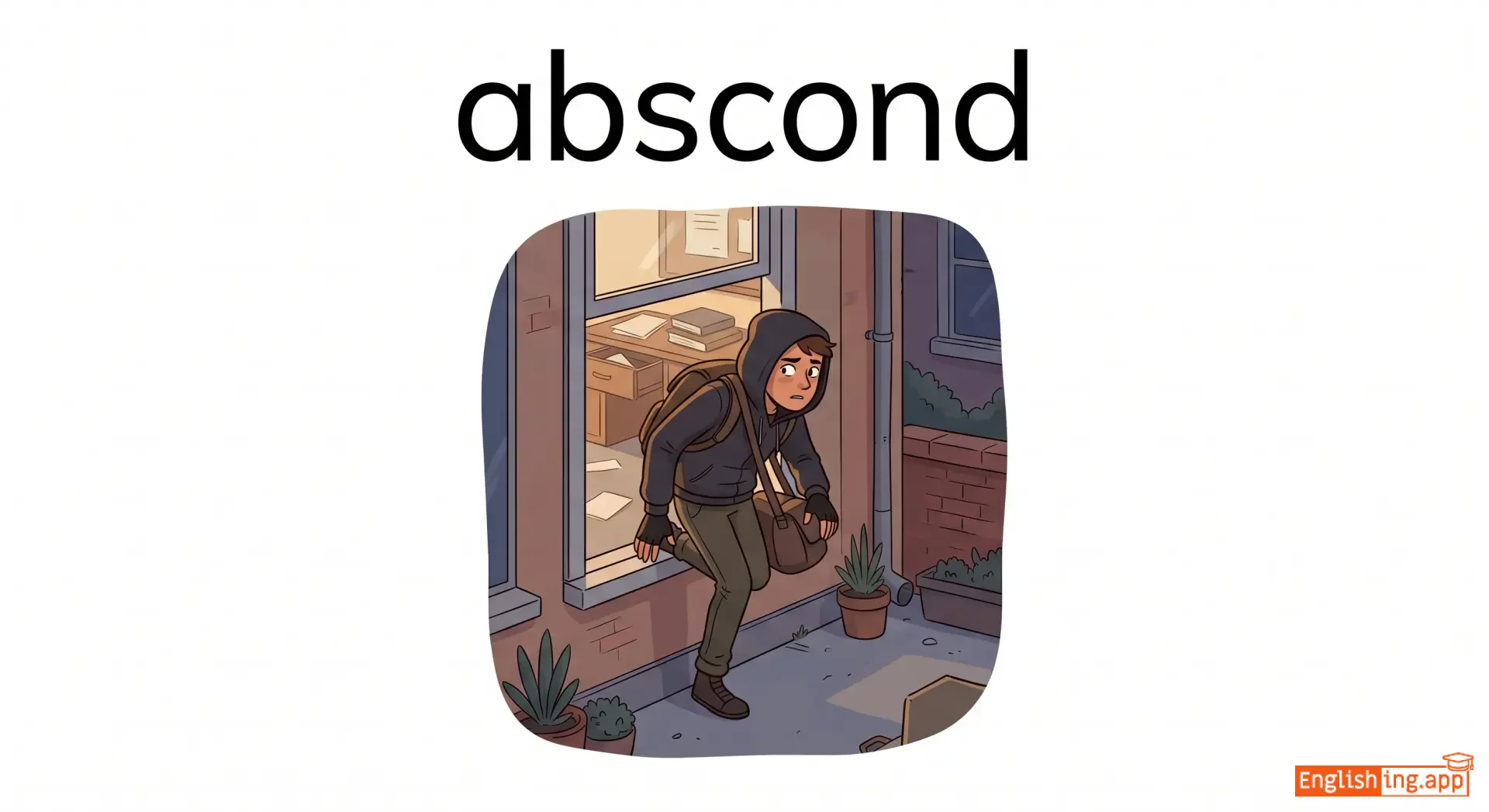
to leave secretly and quickly, often to avoid arrest or punishment
••••••
|
The thief tried to abscond with the stolen jewelry.
泥棒は盗まれた宝石を持って逃げようとした。
••••••
|
泥棒は盗まれた宝石を持って逃げようとした。
Dorobo wa nusumareta houseki wo motte nigeyou to shita.
••••••
|
abscond with
アブスコンド ウィズ
••••••
|
to take something secretly and escape
••••••
|
何かを持って逃げる
nanika wo motte nigeru
••••••
|
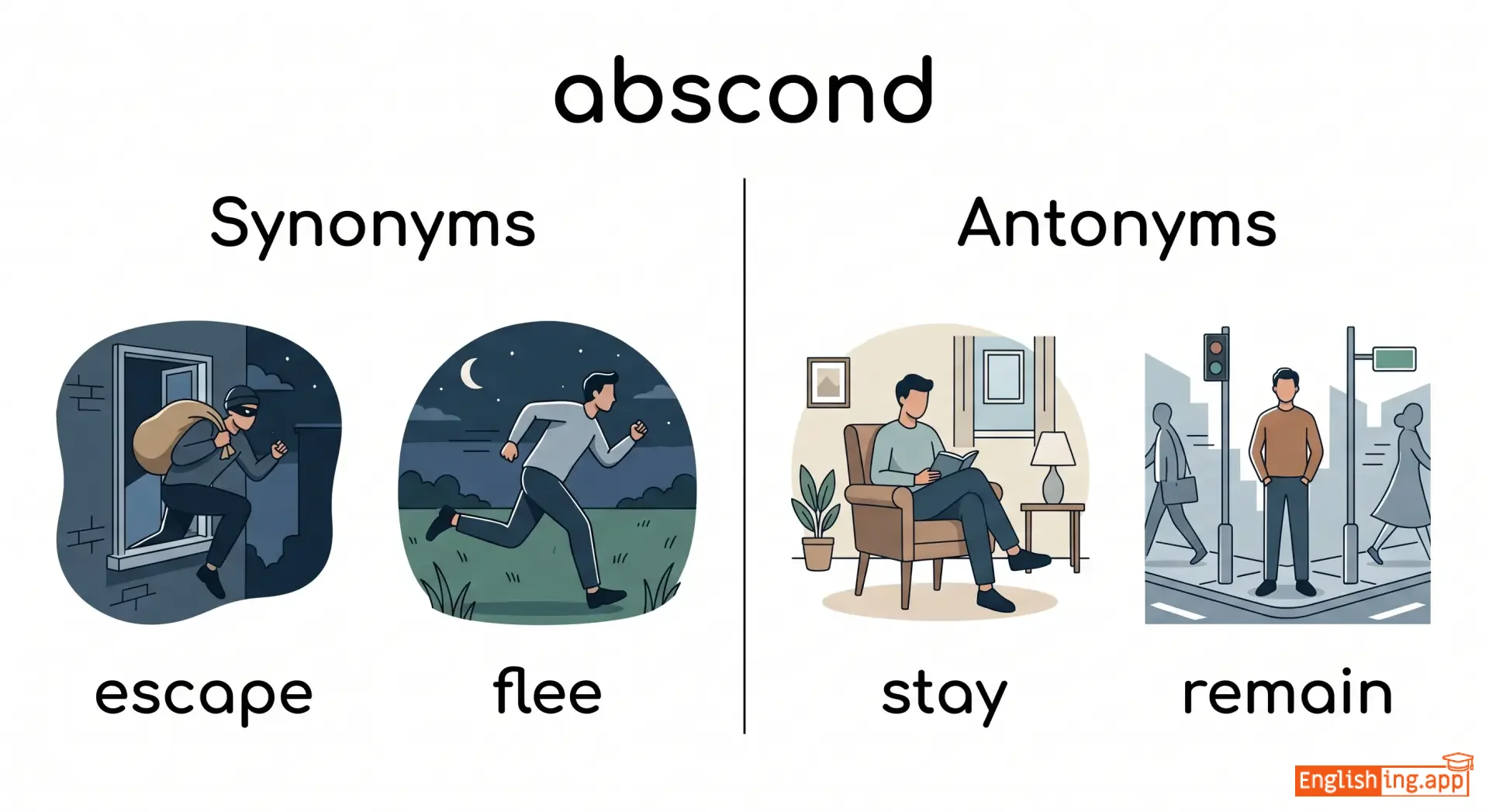
escape, flee, run away, vanish, bolt
••••••
|
stay, remain, appear
••••••
|
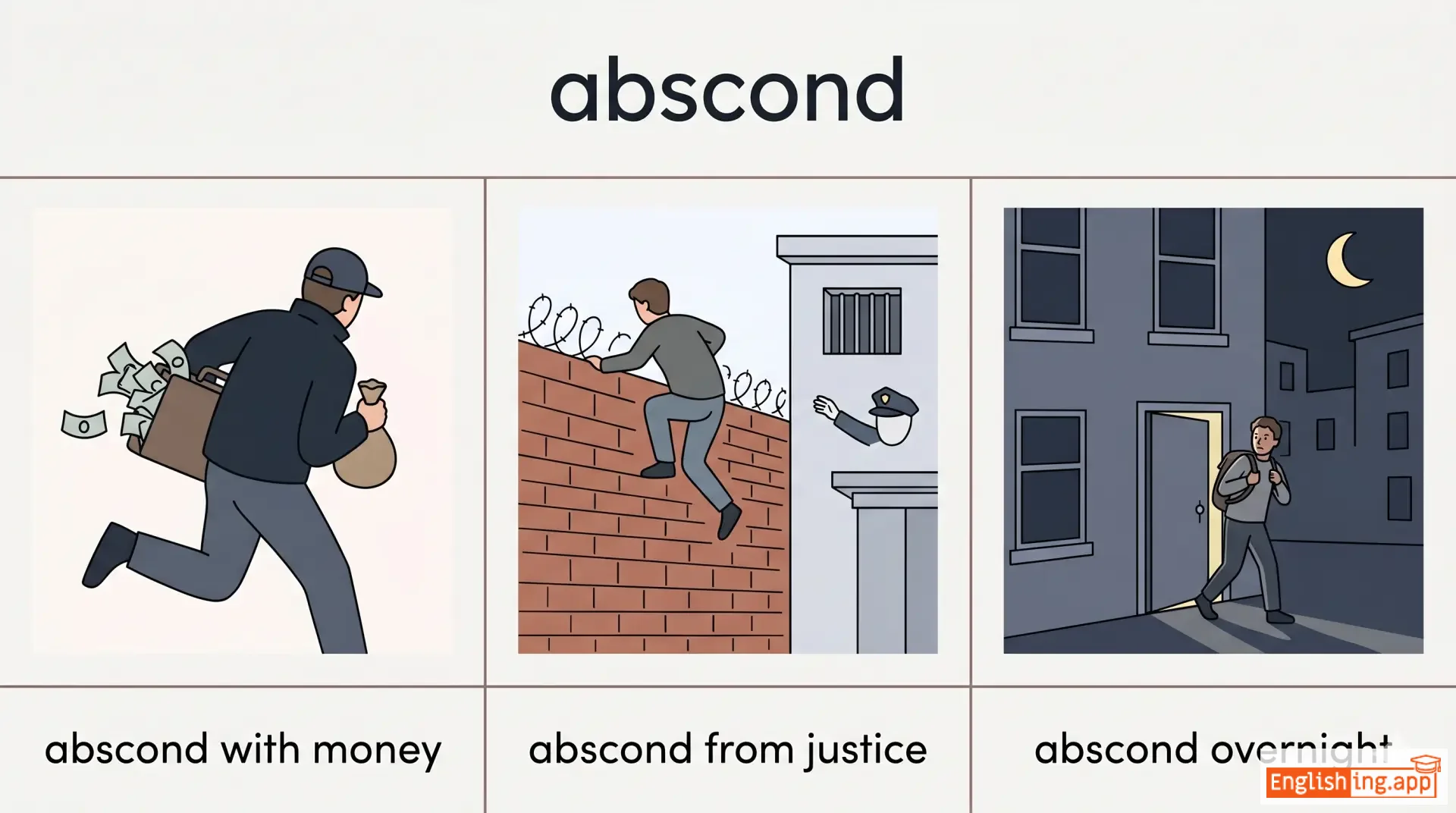
abscond with money, abscond from justice, abscond overnight
••••••
|
Abscond = ABsent + sCOND = 急いで密かに逃げる
••••••
|
|
#42
🍂
|
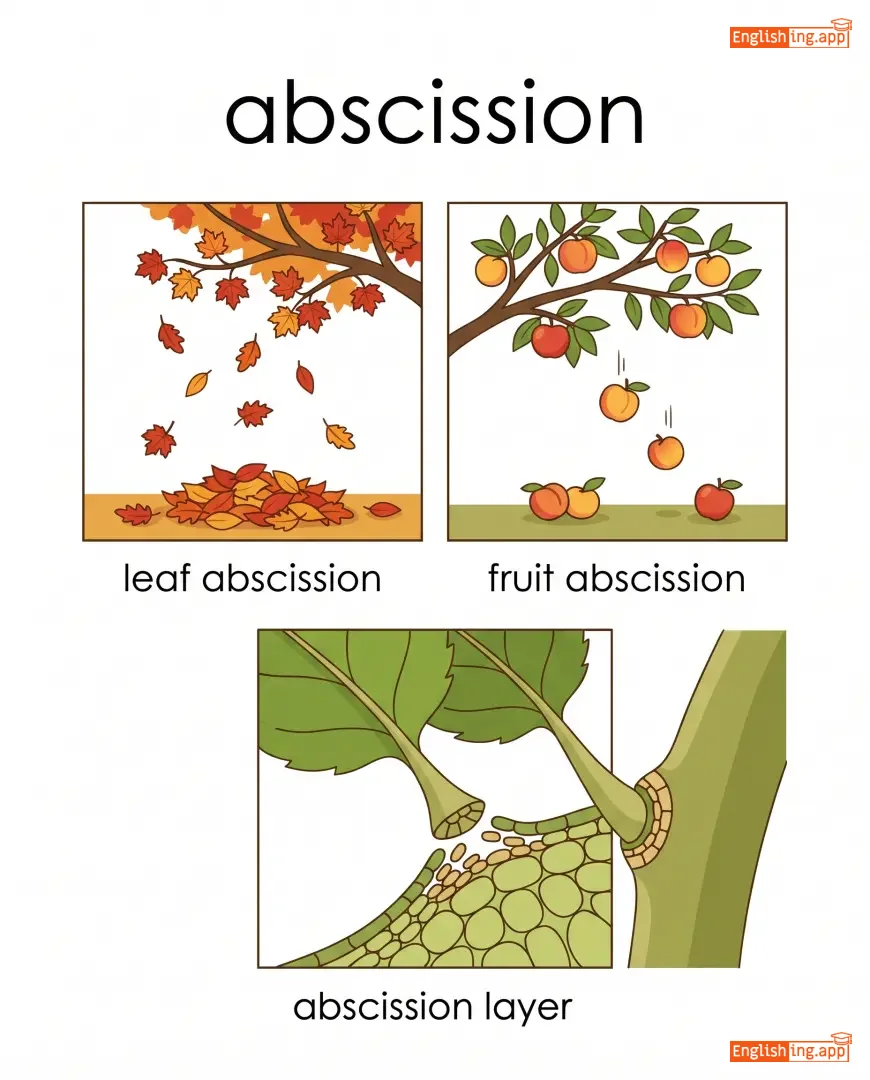
/æbˈsɪʒən/
noun
(アブシッション)
••••••
|
|
葉の落下
ha no rakkā
••••••
|
- •••••• | - •••••• | - •••••• | - •••••• |
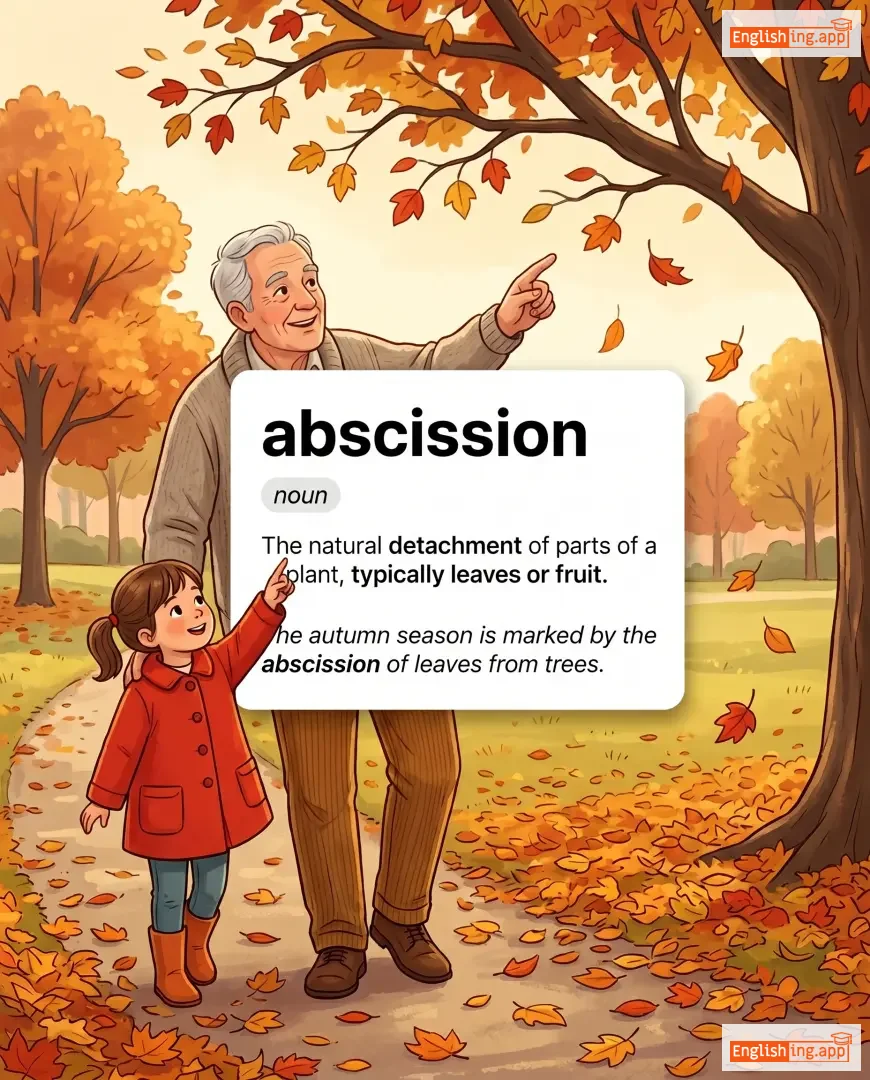
The natural detachment of parts of a plant, typically leaves or fruit.
••••••
|
The autumn season is marked by the abscission of leaves from trees. |
秋は木々から葉が落ちることで特徴づけられます。
Aki wa kigi kara ha ga ochiru koto de tokuchou dzukeraremasu.
••••••
|
- •••••• | - •••••• | - •••••• |
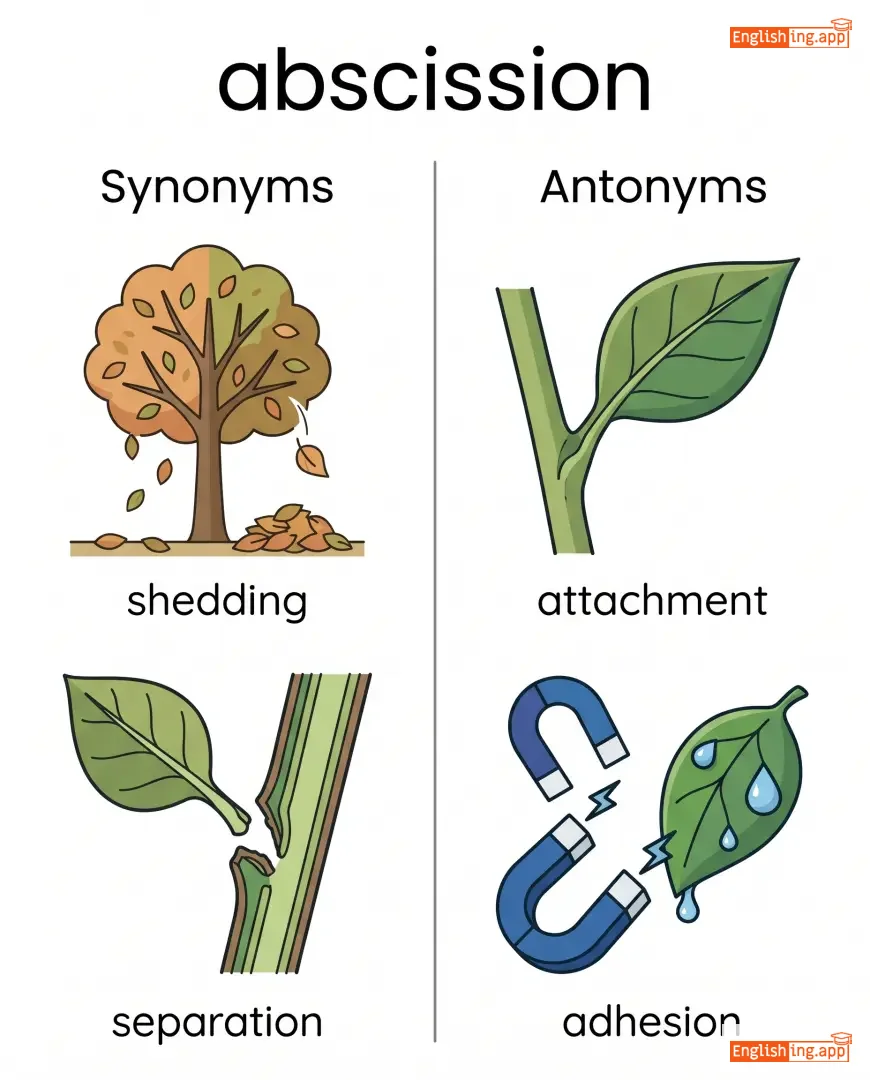
shedding, separation, detachment, removal, dropping
••••••
|
attachment, adhesion, union
••••••
|
leaf abscission, fruit abscission, abscission layer
••••••
|
Abscissionは葉が落ちること → 木から葉が落ちるのを思い出す。
••••••
|
|
#43
🦠
|
/ˈæbsɛs/
noun
(アブセス)
••••••
|
- •••••• |
膿瘍
nōyō
••••••
|
- •••••• | - •••••• | - •••••• | - •••••• |
A swollen area within body tissue containing pus, usually caused by infection.
••••••
|
The dentist treated the abscess in his tooth. |
歯医者は彼の歯の膿瘍を治療しました。
Haisha wa kare no ha no nōyō o chiryō shimashita.
••••••
|
- •••••• | - •••••• | - •••••• |
boil, sore, swelling, pustule, ulcer
••••••
|
health, wellness, cure
••••••
|
dental abscess, skin abscess, abscess treatment
••••••
|
Abscessは「abs(腹)」の中に膿瘍(nōyō)があることを示しています。
••••••
|
|
#44
⚡
|
/əˈbrʌpt/
adjective
(アブラプト)
••••••
|
- •••••• |
突然
totsuzen
••••••
|
- •••••• | - •••••• | - •••••• | - •••••• |
Sudden or unexpected, often without warning.
••••••
|
The car came to an abrupt stop in the middle of the road.
車は道路の中央で急停車しました。
••••••
|
車は道路の中央で急停車しました。
Kuruma wa dōro no chūō de kyū teisha shimashita.
••••••
|
abrupt end
突然の終わり
••••••
|
A sudden and unexpected termination.
••••••
|
突然の終わり
Totsuzen no owari
••••••
|
sudden, unexpected, hasty, curt, brusque
••••••
|
gradual, smooth, expected
••••••
|
abrupt change, abrupt stop, abrupt manner, abrupt ending
••••••
|
急ブレーキで突然停止するように、物事が突然終わる。
••••••
|
|
#45
🚫
|
/ˈæbrəɡeɪt/
verb
(アブローゲート)
••••••
|
- •••••• |
廃止する
haishi suru
••••••
|
abrogated
アブローゲイテッド
••••••
|
abrogated
アブローゲイテッド
••••••
|
abrogates
アブローゲイツ
••••••
|
abrogating
アブローゲイティング
••••••
|
To formally repeal, cancel, or abolish a law, agreement, or custom.
••••••
|
The government decided to abrogate the outdated treaty.
政府は古い条約を廃止することを決定しました。
••••••
|
政府は古い条約を廃止することを決定しました。
Seifu wa furui jōyaku o haishi suru koto o kettei shimashita.
••••••
|
- •••••• | - •••••• | - •••••• |
repeal, revoke, annul, cancel, abolish
••••••
|
enforce, uphold, establish
••••••
|
abrogate a law, abrogate a treaty, abrogate an agreement
••••••
|
A BROKEN gate → 廃止するという意味で、壊れた門のように法律を取り消す。
••••••
|
|
#46
🏠
|
/əˈboʊd/
noun
(アボード)
••••••
|
- •••••• |
住居
jūkyo
••••••
|
- •••••• | - •••••• | - •••••• | - •••••• |
a place of residence; a home
••••••
|
They invited us to their humble abode. |
彼らは私たちを彼らの質素な住居に招待しました。
Karera wa watashitachi o karera no shisso na jūkyo ni shōtai shimashita.
••••••
|
humble abode |
a modest way of referring to one's home
••••••
|
質素な住居
shisso na jūkyo
••••••
|
home, dwelling, residence, house, lodging
••••••
|
office, workplace
••••••
|
humble abode, permanent abode, temporary abode
••••••
|
住居 (abode) は家 - 住居は家を意味します
••••••
|
|
#47
✂️
|
/əˈbrɪdʒ/
verb
(エイブリッジ)
••••••
|
- •••••• |
短縮する
tanshuku suru
••••••
|
abridged
エイブリッジド
••••••
|
abridged
エイブリッジド
••••••
|
abridges
エイブリッジズ
••••••
|
abridging
エイブリッジング
••••••
|
to shorten a text without losing its meaning
••••••
|
The editor decided to abridge the long novel for young readers.
編集者は若い読者のために長編小説を短縮することに決めました。
••••••
|
編集者は若い読者のために長編小説を短縮することに決めました。
Henshū-sha wa wakai dokusha no tame ni chōhen shōsetsu o tanshuku suru koto ni kimemashita.
••••••
|
- •••••• | - •••••• | - •••••• |
shorten, condense, compress, cut
••••••
|
expand, lengthen, elaborate
••••••
|
abridge the story, abridge the book, abridge rights
••••••
|
橋 (abridge) は二点間の距離を短縮します – 短縮する
••••••
|
|
#48
🚶♂️🚶♂️
|
/əˈbrɛst/
adverb
(アブレスト)
••••••
|
- •••••• |
並んで
narande
••••••
|
- •••••• | - •••••• | - •••••• | - •••••• |
side by side and facing the same direction; informed about something
••••••
|
The soldiers marched two abreast down the street.
兵士たちは通りを二人並んで行進した。
••••••
|
兵士たちは通りを二人並んで行進した。
Heishitachi wa toori wo futari narande koushin shita.
••••••
|
keep abreast of
常に最新情報を得る
••••••
|
to remain informed or up-to-date with something
••••••
|
最新情報を得る
saishin jouhou wo eru
••••••
|
alongside, side-by-side, parallel, informed
••••••
|
behind, unaware, uninformed
••••••
|
two abreast, three abreast, keep abreast of
••••••
|
abreast (abreast) は並んで – 2つの胸が並んでいる
••••••
|
|
#49
🪣
|
/əˈbreɪsɪv/
adjective
••••••
|
- •••••• | - •••••• | - •••••• | - •••••• | - •••••• | - •••••• |
harsh, rough, or capable of wearing down by rubbing
••••••
|
His abrasive tone made everyone uncomfortable. |
- •••••• |
abrasive personality |
a harsh and unpleasant way of speaking or behaving
••••••
|
- •••••• |
harsh, rough, coarse, caustic
••••••
|
gentle, smooth, pleasant
••••••
|
abrasive surface, abrasive tone, abrasive cleaner
••••••
|
No •••••• |
|
#50
🩹
|
/əˈbreɪʒən/
noun
(アブレイジョン)
••••••
|
- •••••• |
摩擦による皮膚または表面の擦り傷または摩耗
masatsu ni yoru hifu matawa hyōmen no surikizu matawa mamō
••••••
|
- •••••• | - •••••• | - •••••• | - •••••• |
a scrape or wearing away of the skin or surface due to friction
••••••
|
He suffered a minor abrasion on his knee after falling. |
彼は転倒後、膝に軽い擦り傷を負いました。
Kare wa tentō go, hiza ni karui surikizu o oimashita.
••••••
|
- •••••• | - •••••• | - •••••• |
scrape, scratch, wound, graze
••••••
|
smoothness, healing
••••••
|
minor abrasion, skin abrasion, abrasion injury
••••••
|
アブレイジョンは摩擦による擦り傷です。
••••••
|
|
#51
🪓
|
/əˈbreɪd/
verb
(abureido)
••••••
|
- •••••• |
摩擦で擦り減らす
masatsu de suriherasu
••••••
|
abraded
abureidod
••••••
|
abraded
abureidod
••••••
|
abrades
abureidosu
••••••
|
abrading
abureidingu
••••••
|
to scrape or wear away the surface by friction or erosion
••••••
|
The rough cloth can easily abrade the skin.
ザ・ラフクロスは皮膚を簡単に擦ります。
••••••
|
ザ・ラフクロスは皮膚を簡単に擦ります。
Za rafu kurosu wa hifu o kantan ni surimasu.
••••••
|
- •••••• | - •••••• | - •••••• |
scrape, rub, wear, chafe, erode
••••••
|
smooth, polish
••••••
|
abrade the skin, abrade surface, easily abrade
••••••
|
刃 (abrade) を使って表面を摩擦で擦る
••••••
|
|
#52
📜
|
/əˈbʌvˌbɔːrd/
adjective, adverb
(abavbord)
••••••
|
- •••••• |
正直でオープン
Shoujiki de oopun
••••••
|
- •••••• | - •••••• | - •••••• | - •••••• |
Open and honest; without deception or trickery.
••••••
|
The business deal was completely aboveboard.
ビジネス取引は完全にabavbordでした。
••••••
|
ビジネス取引は完全に正直でオープンでした。
Bijinesu torihiki wa kanzen ni shoujiki de oopun deshita.
••••••
|
- •••••• | - •••••• | - •••••• |
honest, fair, transparent, legitimate, open
••••••
|
dishonest, deceitful, underhand
••••••
|
aboveboard deal, aboveboard transaction, everything aboveboard, remain aboveboard
••••••
|
Aboveboard とはテーブルの上、オープンで正直なことです。
••••••
|
|
#53
🌊
|
/əˈbaʊnd/
verb
(アバウンド)
••••••
|
- •••••• |
豊富にある
houfuni aru
••••••
|
abounded
アバウンドエッド
••••••
|
abounded
アバウンドエッド
••••••
|
abounds
アバウンドス
••••••
|
abounding
アバウディング
••••••
|
To exist in large numbers or amounts.
••••••
|
Opportunities abound in the field of technology.
テクノロジーの分野では機会が豊富にあります。
••••••
|
テクノロジーの分野では機会が豊富にあります。
Tekunorojii no bunya de wa kikai ga houfuni arimasu.
••••••
|
abound in
豊富にある
••••••
|
to exist in great numbers within something
••••••
|
豊富にある
houfuni aru
••••••
|
overflow, teem, flourish, proliferate, thrive
••••••
|
lack, scarce, fail
••••••
|
opportunities abound, resources abound, abound in, abound with
••••••
|
AboundはA-boundless = 豊富、無限。
••••••
|
|
#54
❌
|
/əˈbɔːrtɪv/
adjective
(アボーティブ)
••••••
|
- •••••• |
失敗した
shippai shita
••••••
|
- •••••• | - •••••• | - •••••• | - •••••• |
Failing to produce the intended result; unsuccessful.
••••••
|
Their abortive attempt to climb the mountain ended in retreat.
彼らの山登りの試みは、撤退で終わった。
••••••
|
彼らの山登りの試みは、撤退で終わった。
Karera no yamanobori no kokoromi wa, tettai de owatta.
••••••
|
- •••••• | - •••••• | - •••••• |
failed, futile, fruitless, unsuccessful, ineffective
••••••
|
successful, effective, productive
••••••
|
abortive attempt, abortive effort, abortive plan, abortive mission
••••••
|
Abortive は abort (中止する) + ive = 失敗した試み。
••••••
|
|
#55
👣
|
/ˌæbəˈrɪdʒəniːz/
noun
(アボリジニーズ)
••••••
|
- •••••• |
アボリジニ
aborijini
••••••
|
- •••••• | - •••••• | - •••••• | - •••••• |
The original inhabitants of a land, especially in Australia.
••••••
|
The aborigines have preserved their traditions for thousands of years.
アボリジニーズは何千年もの間、彼らの伝統を守り続けてきました。
••••••
|
アボリジニーズは何千年もの間、彼らの伝統を守り続けてきました。
Aborijiniizu wa nan-sen nen mo no aida, karera no dentō o mamoritsuzukete kimashita.
••••••
|
- •••••• | - •••••• | - •••••• |
natives, indigenous people, first inhabitants, original settlers
••••••
|
colonizers, settlers, newcomers
••••••
|
Australian aborigines, aborigines community, aborigines culture
••••••
|
アボリジニーズ: オーストラリアの原住民、伝統を守る人々。
••••••
|
|
#56
🪶
|
/ˌæbəˈrɪdʒənəl/
adjective
(アボリジナル)
••••••
|
- •••••• |
先住民
senjuumin
••••••
|
- •••••• | - •••••• | - •••••• | - •••••• |
Relating to the original inhabitants of a region.
••••••
|
The museum has a large collection of aboriginal art. |
博物館には先住民のアートの大きなコレクションがあります。
Hakubutsukan ni wa senjuumin no āto no ōkina korekushon ga arimasu.
••••••
|
- •••••• | - •••••• | - •••••• |
native, indigenous, original, primitive, earliest
••••••
|
modern, foreign, alien
••••••
|
aboriginal art, aboriginal culture, aboriginal community, aboriginal rights
••••••
|
Aboriginalは先住民、元々の住民に関連する。
••••••
|
|
#57
👿
|
/əˌbɑː.məˈneɪ.ʃən/
noun
(アボミネーション)
••••••
|
- •••••• |
忌まわしい物
imawashii mono
••••••
|
- •••••• | - •••••• | - •••••• | - •••••• |
a thing that causes disgust or hatred
••••••
|
Slavery was considered an abomination. |
奴隷制度は忌まわしい物と見なされていました。
Doreiseido wa imawashii mono to minasarete imashita.
••••••
|
an abomination in the eyes of |
something seen as hateful or offensive to someone
••••••
|
~の目に忌まわしい物
~no me ni imawashii mono
••••••
|
outrage, horror, disgrace, atrocity, evil
••••••
|
delight, blessing
••••••
|
considered an abomination, social abomination, moral abomination
••••••
|
忌まわしい物はアボミネーション → 'BOM' (爆弾) は非常に悪いものだと想像してください
••••••
|
|
#58
😡
|
/əˈbɑː.mə.neɪt/
verb
(アボミネート)
••••••
|
- •••••• |
嫌悪する
ken'o suru
••••••
|
abominated
アボミネイテッド
••••••
|
abominated
アボミネイテッド
••••••
|
abominates
アボミネーツ
••••••
|
abominating
アボミネイティング
••••••
|
to feel hatred or loathing for something
••••••
|
She abominates cruelty to animals.
彼女は動物への残虐行為を憎んでいます。
••••••
|
彼女は動物への残虐行為を憎んでいます。
Kanojo wa dōbutsu e no zangyaku kōi o nikundeimasu.
••••••
|
- •••••• | - •••••• | - •••••• |
loathe, hate, detest, despise, dislike
••••••
|
like, love, admire
••••••
|
abominate violence, abominate cruelty, abominate injustice
••••••
|
ABOMINATE は嫌悪するという意味です。'KEN'O' → 嫌悪
••••••
|
|
#59
🤢
|
/əˈbɑː.mə.nə.bəl/
adjective
(アボミナブル)
••••••
|
- •••••• |
忌まわしい
imawashii
••••••
|
- •••••• | - •••••• | - •••••• | - •••••• |
causing moral revulsion; extremely unpleasant
••••••
|
The prisoners were kept in abominable conditions. |
囚人たちは忌まわしい状況で拘束されていた。
Shūjin-tachi wa imawashii jōkyō de kōsoku sarete ita.
••••••
|
- •••••• | - •••••• | - •••••• |
horrible, dreadful, terrible, disgusting, vile
••••••
|
pleasant, delightful
••••••
|
abominable crime, abominable behavior, abominable conditions
••••••
|
ABOMINABLE は ABOM(嫌悪)+ テーブル(テーブル)
••••••
|
|
#60
✂️
|
/əˈbɑː.lɪʃ/
verb
(アボリッシュ)
••••••
|
- •••••• |
廃止する
haishi suru
••••••
|
abolished
アボリッシュド
••••••
|
abolished
アボリッシュド
••••••
|
abolishes
アボリッシュズ
••••••
|
abolishing
アボリッシング
••••••
|
to formally put an end to a system, practice, or institution
••••••
|
The government decided to abolish the old tax system.
政府は古い税制を廃止することを決定しました。
••••••
|
政府は古い税制を廃止することを決定しました。
Seifu wa furui zeisei o haishi suru koto o kettei shimashita.
••••••
|
abolish slavery
奴隷制度を廃止する
••••••
|
to officially end the system of slavery
••••••
|
奴隷制度を廃止する
Dorei seido o haishi suru
••••••
|
end, eliminate, terminate, annul, eradicate
••••••
|
establish, maintain
••••••
|
abolish slavery, abolish law, abolish practice
••••••
|
ABOLISHはABOL (abol) すべて終了する (shūryō suru)
••••••
|
Vocabulary Quiz
Test your vocabulary by matching words with their translations or meanings.
Login to take the quiz
Comments (0)
Share your thoughts and join the discussion.
Join the discussion by logging in
Login to CommentNo comments yet
Be the first to share your thoughts!