

翻訳
過去
過去分詞
三人称単数
動名詞
意味
例文
例文の翻訳
同義語
対義語
コロケーション
ニーモニック
Swipe left or right, or use the buttons. Tap image to zoom.
例文の翻訳
単語
Lesson 201Lesson 201 - マスクトグル
|
絵文字
|
単語 | Images | 翻訳 | 過去 | 過去分詞 | 三人称単数 | 動名詞 | 意味 | 例文 | 例文の翻訳 | 表現例 | 表現例の意味 | 表現例の翻訳 | 同義語 | 対義語 | コロケーション | ニーモニック |
|---|---|---|---|---|---|---|---|---|---|---|---|---|---|---|---|---|---|
|
#6001
⚰️
|
/ˈɒbsɪkwiːz/
noun
(オブセクイーズ)
••••••
|
- •••••• |
葬儀儀式
sōgi gishiki
••••••
|
- •••••• | - •••••• | - •••••• | - •••••• |
Funeral rites or ceremonies.
••••••
|
The obsequies for the late leader drew thousands of mourners. |
故リーダーの葬儀儀式には、数千人の弔問客が集まりました。
Ko rīdā no sōgi gishiki ni wa, sūsen-nin no chōmonkyaku ga atsumarimashita.
••••••
|
- •••••• | - •••••• | - •••••• |
funeral, burial, service, last rites
••••••
|
celebration, festivity
••••••
|
solemn obsequies, state obsequies, funeral obsequies
••••••
|
Obsequiesは葬儀儀式を意味します。⚰️葬式がobsequiesであることを覚えておいてください。
••••••
|
|
#6002
🤰
|
/əbˈstɛtrɪks/
noun
(オブステトリクス)
••••••
|
- •••••• |
産科
sanka
••••••
|
- •••••• | - •••••• | - •••••• | - •••••• |
The branch of medicine dealing with childbirth and care of women giving birth.
••••••
|
She is studying obstetrics to become a specialist in childbirth. |
彼女は産科を学んで、出産専門医になろうとしている。
Kanojo wa sanka o manande, shussan senmoni ni narou to shite iru.
••••••
|
- •••••• | - •••••• | - •••••• |
midwifery, maternity care, gynecology
••••••
|
pediatrics, surgery
••••••
|
study obstetrics, practice obstetrics, field of obstetrics
••••••
|
産科は出産の障害を取り除く専門分野です。
••••••
|
|
#6003
👩⚕️
|
/ˌɒbstəˈtrɪʃən/
noun
(オブステトリシャン)
••••••
|
- •••••• |
産科医
sanka-i
••••••
|
- •••••• | - •••••• | - •••••• | - •••••• |
A doctor specializing in pregnancy, childbirth, and women's reproductive health.
••••••
|
The obstetrician monitored the mother’s health throughout the pregnancy. |
産科医は妊娠中の母親の健康を監視しました。
Sanka-i wa ninshin-chu no hahaoya no kenko o kanshi shimashita.
••••••
|
- •••••• | - •••••• | - •••••• |
doctor, physician, gynecologist, specialist
••••••
|
patient, layperson
••••••
|
consult an obstetrician, obstetrician appointment, experienced obstetrician
••••••
|
産科医—赤ちゃんの誕生を支える医師。
••••••
|
|
#6004
🗑️
|
/ˌɒbsəˈliːt/
adjective
(オブソリート)
••••••
|
- •••••• |
時代遅れ
jidaiokure
••••••
|
- •••••• | - •••••• | - •••••• | - •••••• |
No longer in use or out of date.
••••••
|
Floppy disks are now completely obsolete.
フロッピーディスクは現在完全にオブソリートです。
••••••
|
フロッピーディスクは現在完全に時代遅れです。
Furoppīdisuku wa genzai kanzen ni jidaiokure desu.
••••••
|
- •••••• | - •••••• | - •••••• |
outdated, old, archaic, discontinued
••••••
|
modern, current, up-to-date
••••••
|
obsolete technology, obsolete method, become obsolete
••••••
|
Obsolete は ‘Old but Sleep’ を意味します。もう使われないものです。
••••••
|
|
#6005
⌛
|
/ˌɒbsəˈlɛsnt/
adjective
(オブソレセント)
••••••
|
- •••••• |
時代遅れの
jidaiokure no
••••••
|
- •••••• | - •••••• | - •••••• | - •••••• |
Becoming outdated or on the way to becoming obsolete.
••••••
|
The obsolescent technology could not compete with modern devices. |
時代遅れの技術は現代のデバイスには競争できなかった。
Jidaiokure no gijutsu wa gendai no debaisu ni wa kyousou dekinakatta.
••••••
|
- •••••• | - •••••• | - •••••• |
outdated, old-fashioned, declining, fading
••••••
|
modern, current, advanced
••••••
|
obsolescent technology, obsolescent equipment, obsolescent system
••••••
|
Obsolescentは時代遅れの、つまり古くなりつつあるという意味です。
••••••
|
|
#6006
📱
|
/ˌɒbsəˈlɛsəns/
noun
(オブソレッセンス)
••••••
|
|
陳腐化
chinpuka
••••••
|
- •••••• | - •••••• | - •••••• | - •••••• |
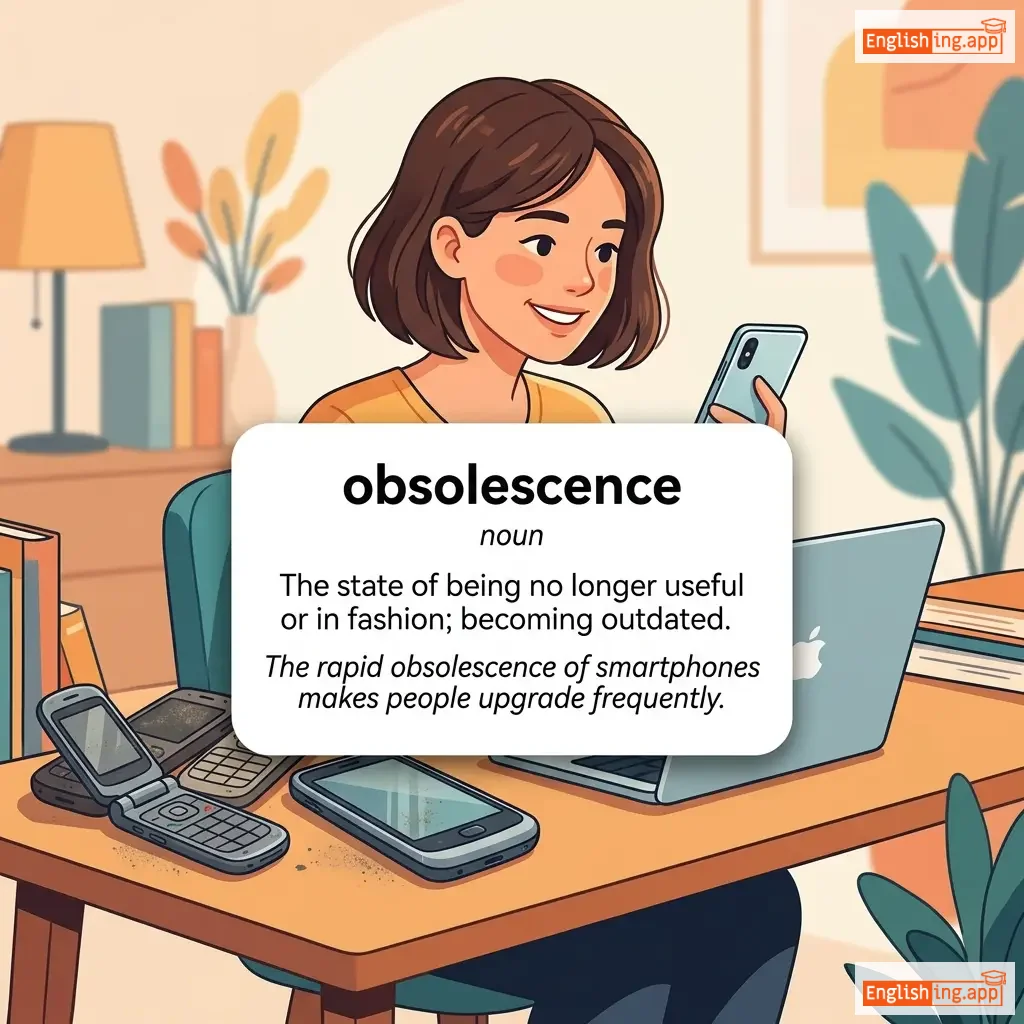
The state of being no longer useful or in fashion; becoming outdated.
••••••
|
The rapid obsolescence of smartphones makes people upgrade frequently.
スマートフォンの急速なオブソレッセンスは人々に頻繁にアップグレードさせます。
••••••
|
スマートフォンの急速な陳腐化は人々に頻繁にアップグレードさせます。
Sumātofon no kyūsokuna chinpuka wa hitobito ni hinpan ni appurēdo sasemasu.
••••••
|
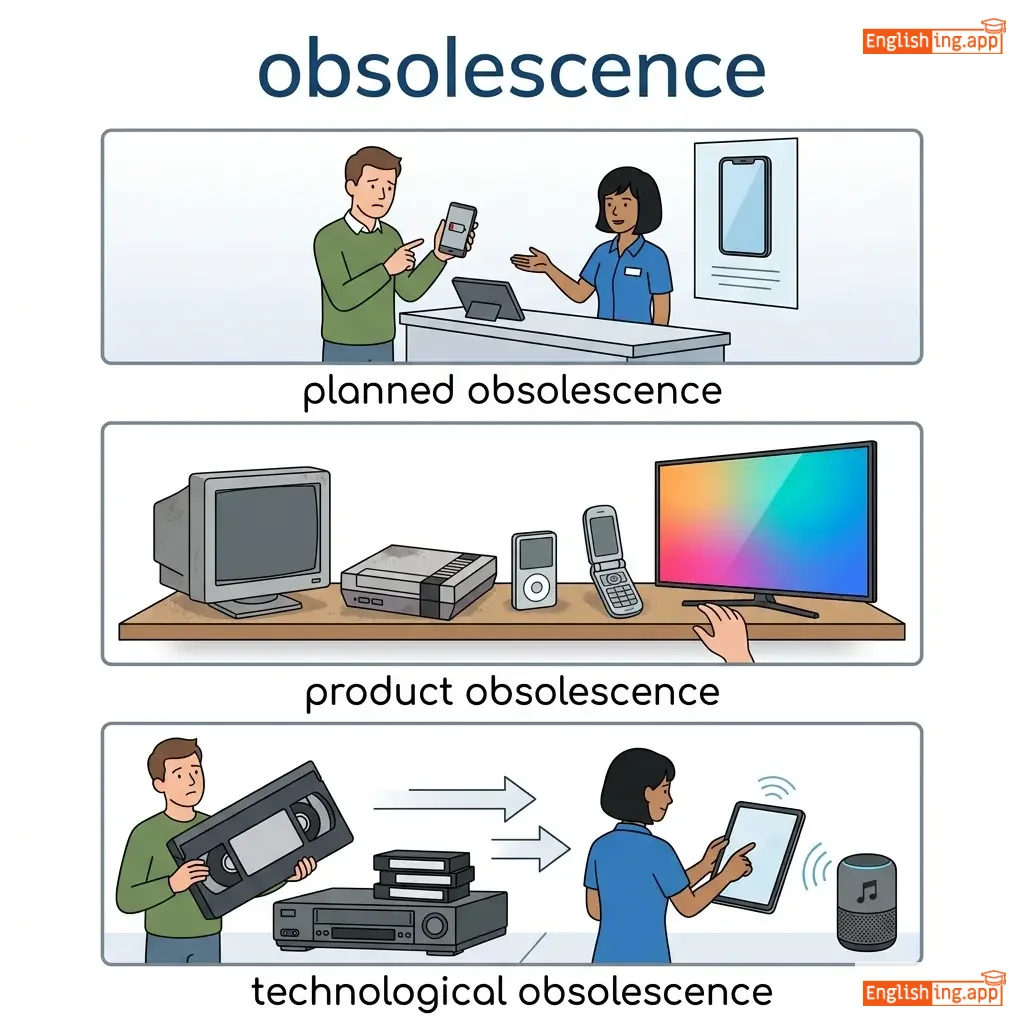
planned obsolescence
計画的オブソレッセンス
••••••
|
The practice of designing products with a limited lifespan to encourage replacement.
••••••
|
計画的陳腐化
keikakuteki chinpuka
••••••
|
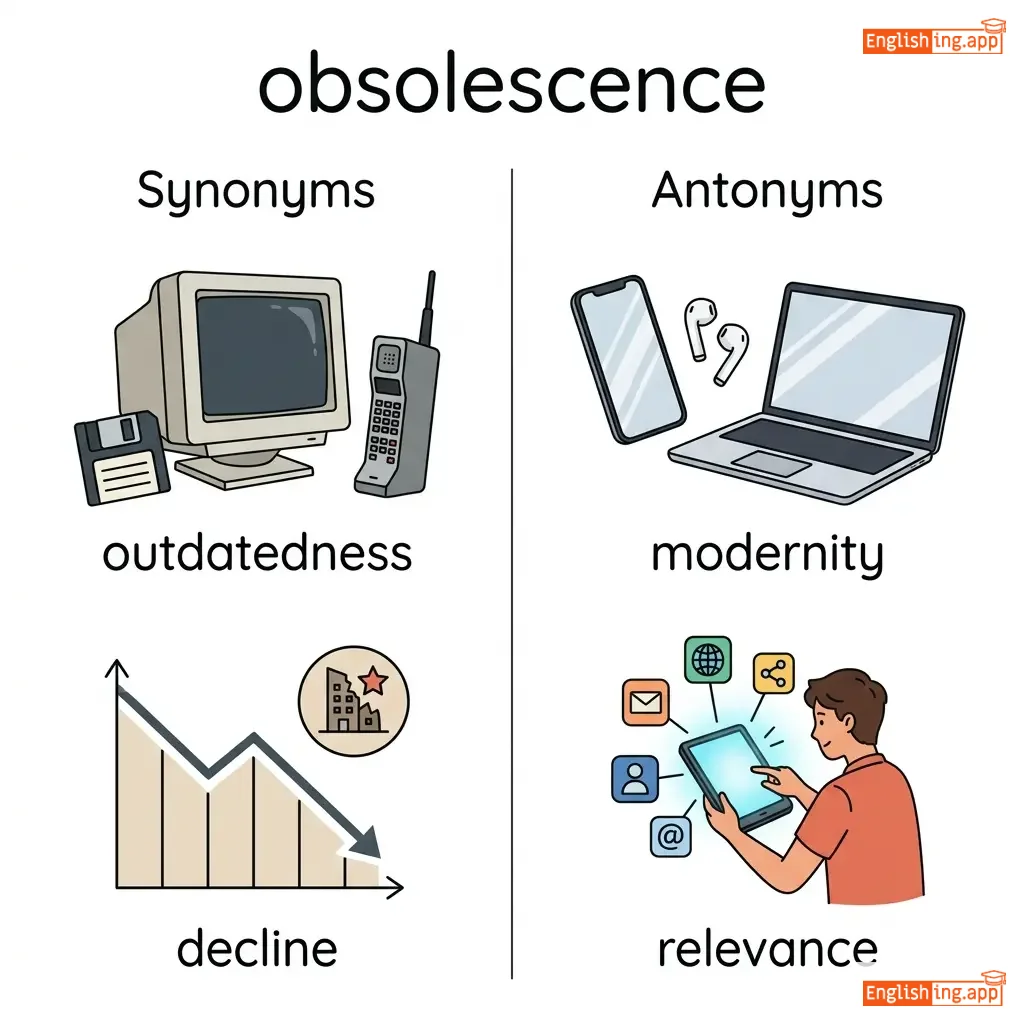
outdatedness, decline, extinction, deterioration, antiquation
••••••
|
modernity, relevance, innovation
••••••
|
planned obsolescence, product obsolescence, technological obsolescence, gradual obsolescence
••••••
|
Obsolete + Science = 陳腐化は古いものが急速に消えることを意味します。
••••••
|
|
#6007
🪨
|
/əbˈsɪdiən/
noun
(オブシディアン)
••••••
|
- •••••• |
オブシディアン (黒いガラスのような火山岩)
obushidian (kuroi garasu no you na kazan gan)
••••••
|
- •••••• | - •••••• | - •••••• | - •••••• |
A hard, dark, glasslike volcanic rock formed by rapid solidification of lava.
••••••
|
The knife was made from sharp obsidian.
ナイフは鋭いオブシディアンで作られていた。
••••••
|
ナイフは鋭いオブシディアンで作られていた。
Naifu wa surudoi obushidian de tsukurarete ita.
••••••
|
- •••••• | - •••••• | - •••••• |
volcanic glass, lava glass, natural glass, igneous rock
••••••
|
sandstone, limestone
••••••
|
obsidian blade, obsidian tool, black obsidian, polished obsidian
••••••
|
オブシディアンは黒いガラスのような火山岩を意味します。
••••••
|
|
#6008
⚡
|
/əbˈsɛsɪv/
adjective
(オブセッシブ)
••••••
|
- •••••• |
執着的
shuchakuteki
••••••
|
- •••••• | - •••••• | - •••••• | - •••••• |
Relating to or characterized by an obsession; thinking about something too much.
••••••
|
He has an obsessive interest in cleanliness. |
彼は清潔さに執着的な興味を持っています。
Kare wa seiketsu-sa ni shuchakuteki na kyōmi o motteimasu.
••••••
|
obsessive behavior |
Repeated and extreme behavior due to obsession
••••••
|
執着的行動
shuchakuteki kōdō
••••••
|
fanatical, compulsive, fixated, preoccupied
••••••
|
casual, indifferent, unconcerned
••••••
|
obsessive thoughts, obsessive behavior, obsessive interest, obsessive personality
••••••
|
Obsessive は執着的 – 何かに過度に執着すること。
••••••
|
|
#6009
🔥
|
/əbˈsɛʃən/
noun
(オブセッション)
••••••
|
- •••••• |
執着
shūchaku
••••••
|
- •••••• | - •••••• | - •••••• | - •••••• |
An idea, thought, or concern that continually preoccupies or intrudes on a person's mind.
••••••
|
His obsession with success drove him to work day and night. |
成功への執着が彼を昼夜働かせた。
Seikou e no shūchaku ga kare o chūya hatarakaseta.
••••••
|
an obsession with |
Being overly concerned or preoccupied with something
••••••
|
への執着
e no shūchaku
••••••
|
fixation, preoccupation, compulsion, mania, craze
••••••
|
indifference, apathy
••••••
|
obsession with, obsession about, unhealthy obsession, lifelong obsession
••••••
|
執着とは、考えが頭を離れない状態のことです。
••••••
|
|
#6010
🌀
|
/əbˈsɛs/
verb
••••••
|
- •••••• | - •••••• |
obsessed
••••••
|
obsessed
••••••
|
obsesses
••••••
|
obsessing
••••••
|
To preoccupy or fill the mind of someone continually and to an excessive degree.
••••••
|
She tends to obsess over small details. |
- •••••• |
obsess over |
To think about something too much and not let go of it
••••••
|
- •••••• |
preoccupy, fixate, dwell, consume, dominate
••••••
|
ignore, neglect
••••••
|
obsess over, obsess with, obsess about, obsess constantly
••••••
|
No •••••• |
|
#6011
🔭
|
/əbˈzɜːrvətɔːri/
noun
(オブザーバトリー)
••••••
|
- •••••• |
天文台
tenmondai
••••••
|
- •••••• | - •••••• | - •••••• | - •••••• |
A building equipped for observing astronomical or meteorological events.
••••••
|
The observatory is open to the public on weekends. |
天文台は週末に一般公開されています。
Tenmondai wa shuumatsu ni ippan koukai sareteimasu.
••••••
|
- •••••• | - •••••• | - •••••• |
planetarium, telescope station, research center, dome
••••••
|
none, null
••••••
|
astronomical observatory, space observatory, weather observatory, national observatory
••••••
|
天文台 (tenmondai) は、オブザーバトリーと同じように天体観測を行う場所です。
••••••
|
|
#6012
👀
|
/əbˈzɜːvənt/
adjective
(オブザーヴァント)
••••••
|
- •••••• |
注意深い
chūi bukai
••••••
|
- •••••• | - •••••• | - •••••• | - •••••• |
Quick to notice details or attentive to rules and customs.
••••••
|
She is very observant and rarely misses any detail. |
彼女はとても注意深く、ほとんどの詳細を見逃しません。
Kanojo wa totemo chūi bukaku, hotondo no shōsai o minogashimasen.
••••••
|
- •••••• | - •••••• | - •••••• |
attentive, alert, watchful, perceptive
••••••
|
careless, inattentive
••••••
|
observant eye, observant nature, highly observant
••••••
|
注意深いという意味は、すべてに気をつけることです。'観察'することで、すべてを見逃さない。
••••••
|
|
#6013
🙏
|
/əbˈzɜːvəns/
noun
(オブザーヴァンス)
••••••
|
- •••••• |
遵守
junshu
••••••
|
- •••••• | - •••••• | - •••••• | - •••••• |
The practice of following a custom, rule, or religious law.
••••••
|
The festival is held in observance of a centuries-old tradition. |
その祭りは、数世代にわたる伝統を遵守して行われます。
Sono matsuri wa, suudai ni wataru dentou wo junshu shite okonawaremasu.
••••••
|
in observance of |
to mark or honor a law, custom, or tradition
••••••
|
遵守する
junshu suru
••••••
|
ritual, tradition, ceremony, adherence
••••••
|
violation, disregard
••••••
|
religious observance, in observance of, strict observance
••••••
|
遵守は従うこと、'遵守して従う'を覚えておきましょう。
••••••
|
|
#6014
🕯️
|
/ˈɒbsɪkwi/
noun
(オブセクイ)
••••••
|
|
葬儀
sōgi
••••••
|
- •••••• | - •••••• | - •••••• | - •••••• |
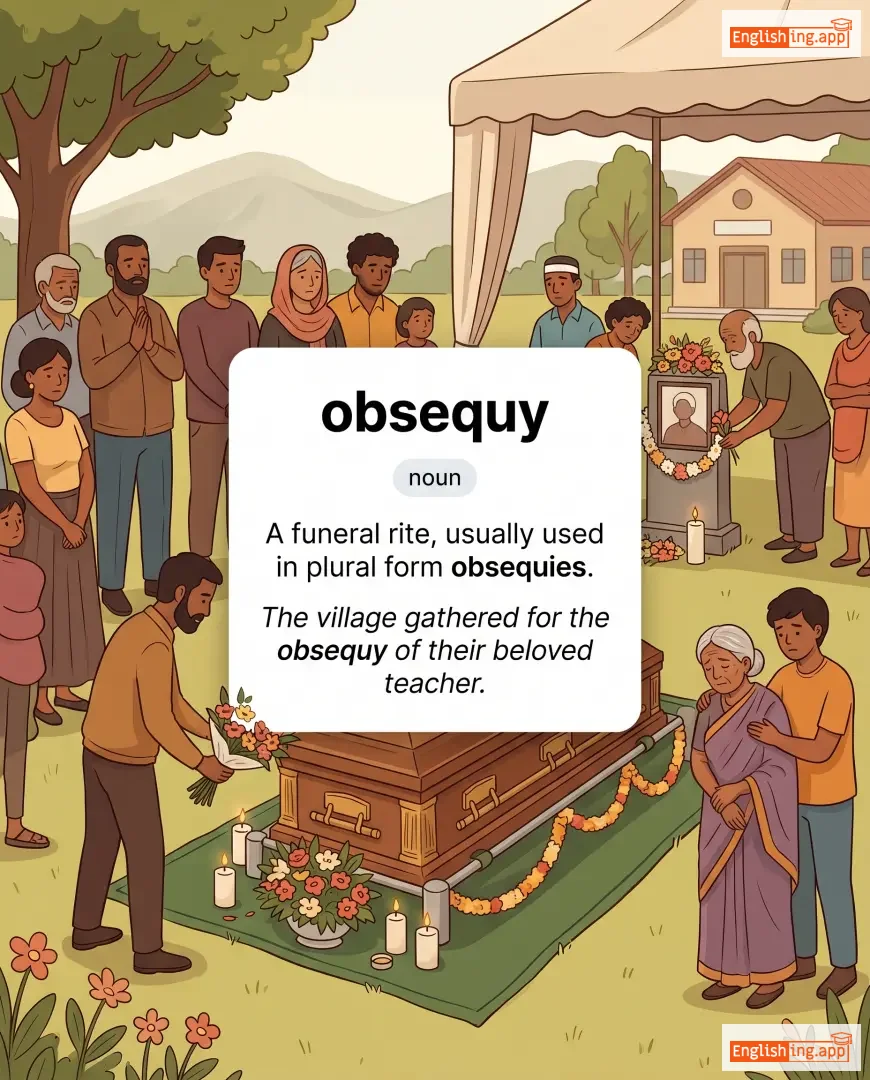
A funeral rite, usually used in plural form obsequies.
••••••
|
The village gathered for the obsequy of their beloved teacher.
村人たちは、愛する教師の葬儀のために集まりました。
••••••
|
村人たちは、愛する教師の葬儀のために集まりました。
Murabito-tachi wa, aisuru kyōshi no sōgi no tame ni atsumarimashita.
••••••
|
- •••••• | - •••••• | - •••••• |
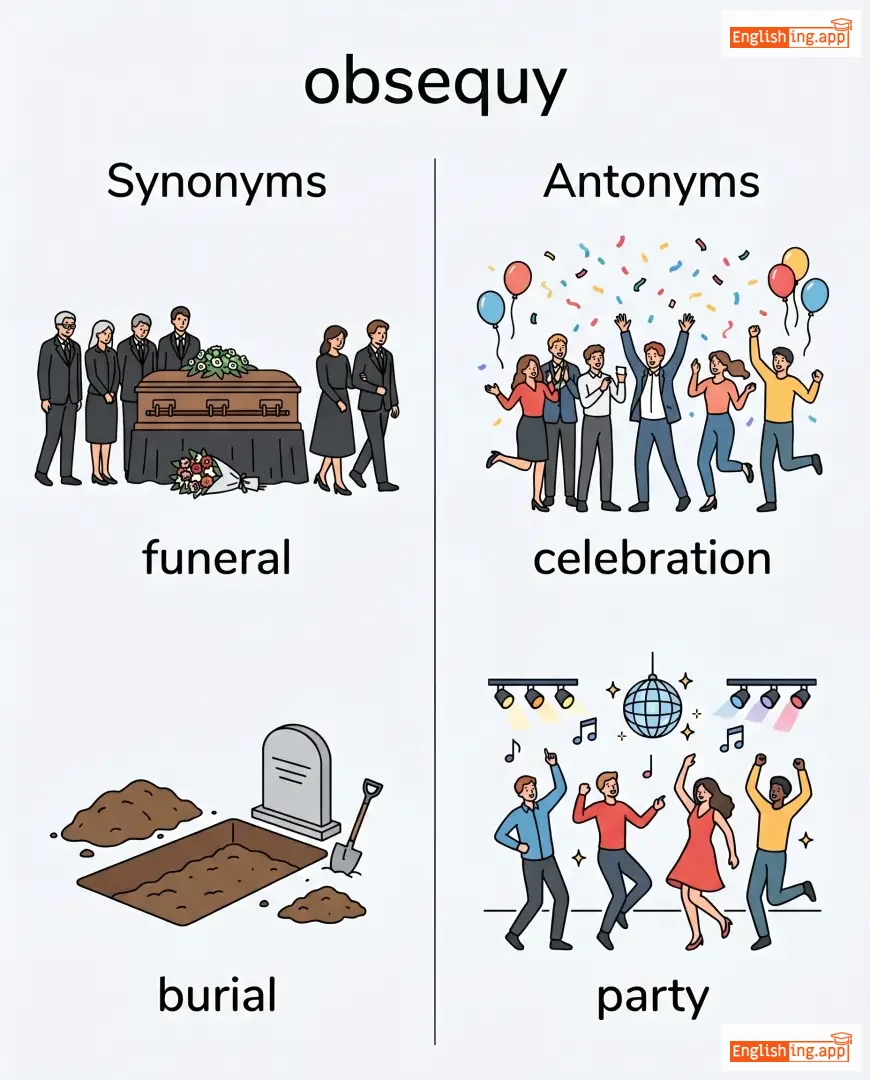
funeral, burial, rite, ceremony
••••••
|
celebration, party
••••••
|
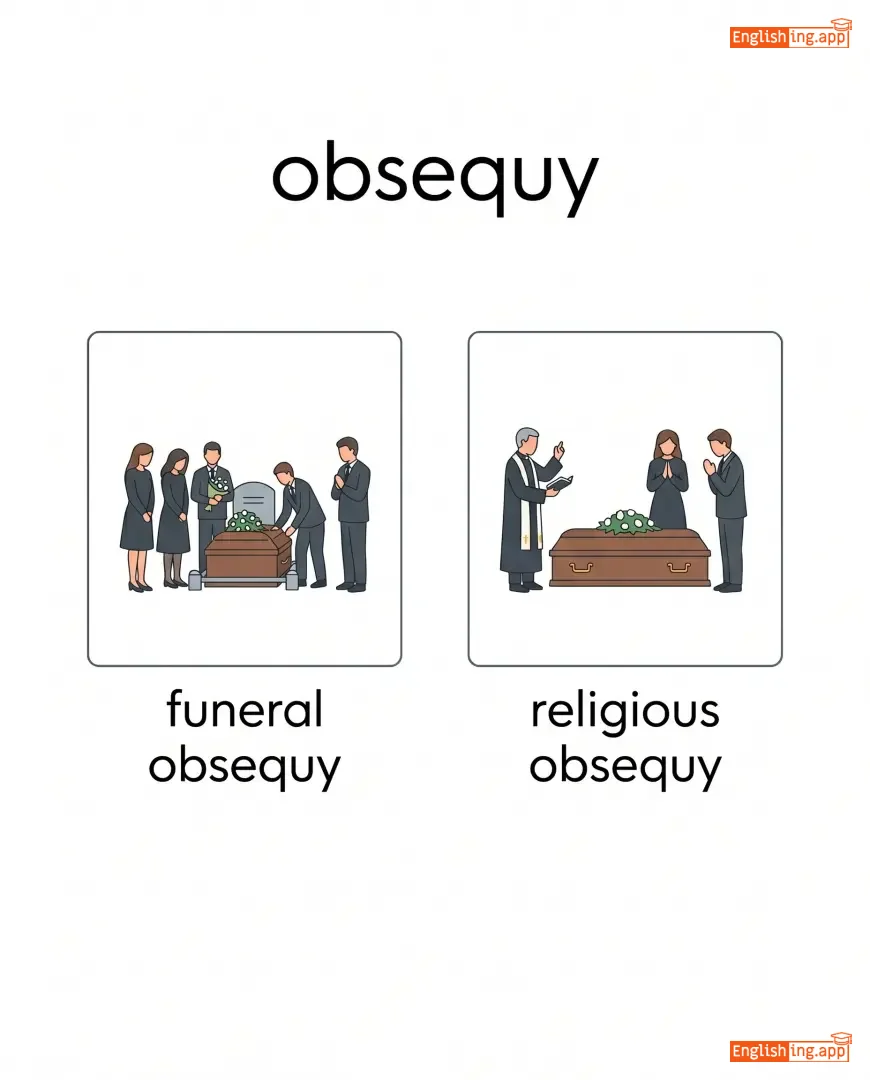
funeral obsequy, religious obsequy
••••••
|
Obsequy は葬儀、教師の葬儀を思い出してください。
••••••
|
|
#6015
🙇
|
/əbˈsiːkwɪəs/
adjective
(オブセキウス)
••••••
|
|
お世辞
oseji
••••••
|
- •••••• | - •••••• | - •••••• | - •••••• |
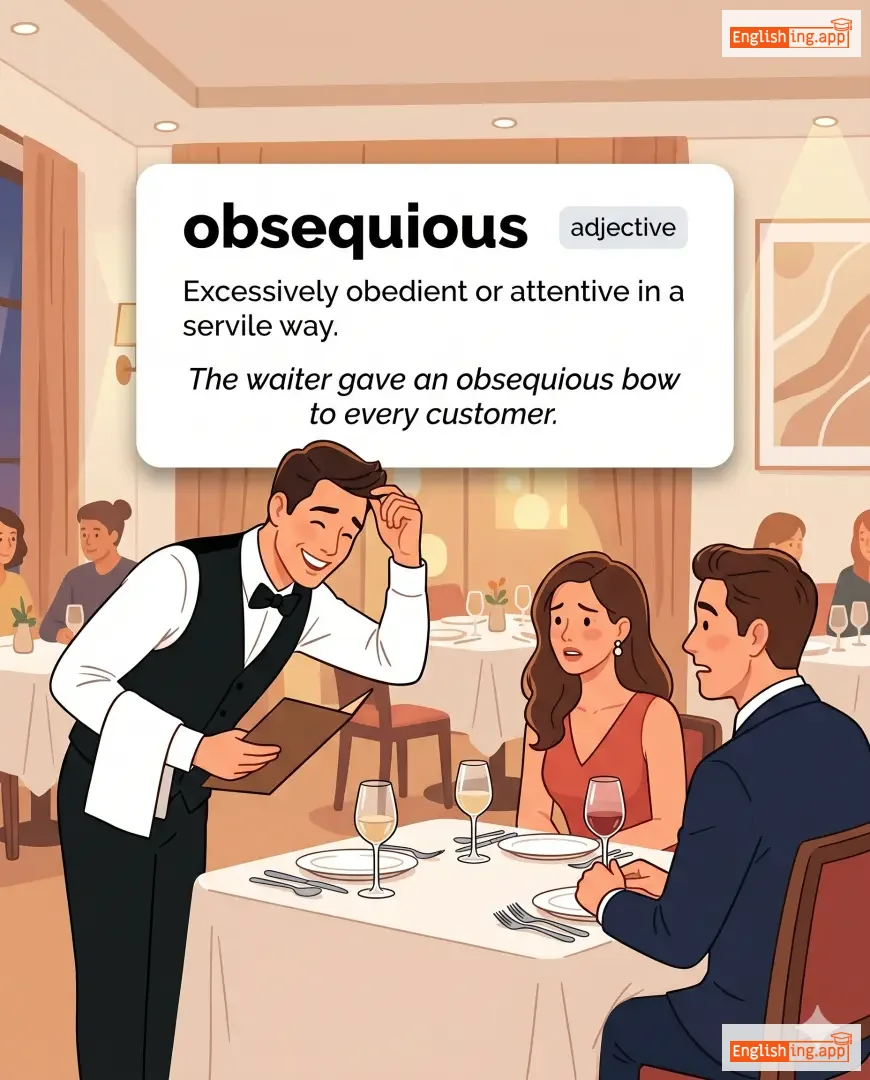
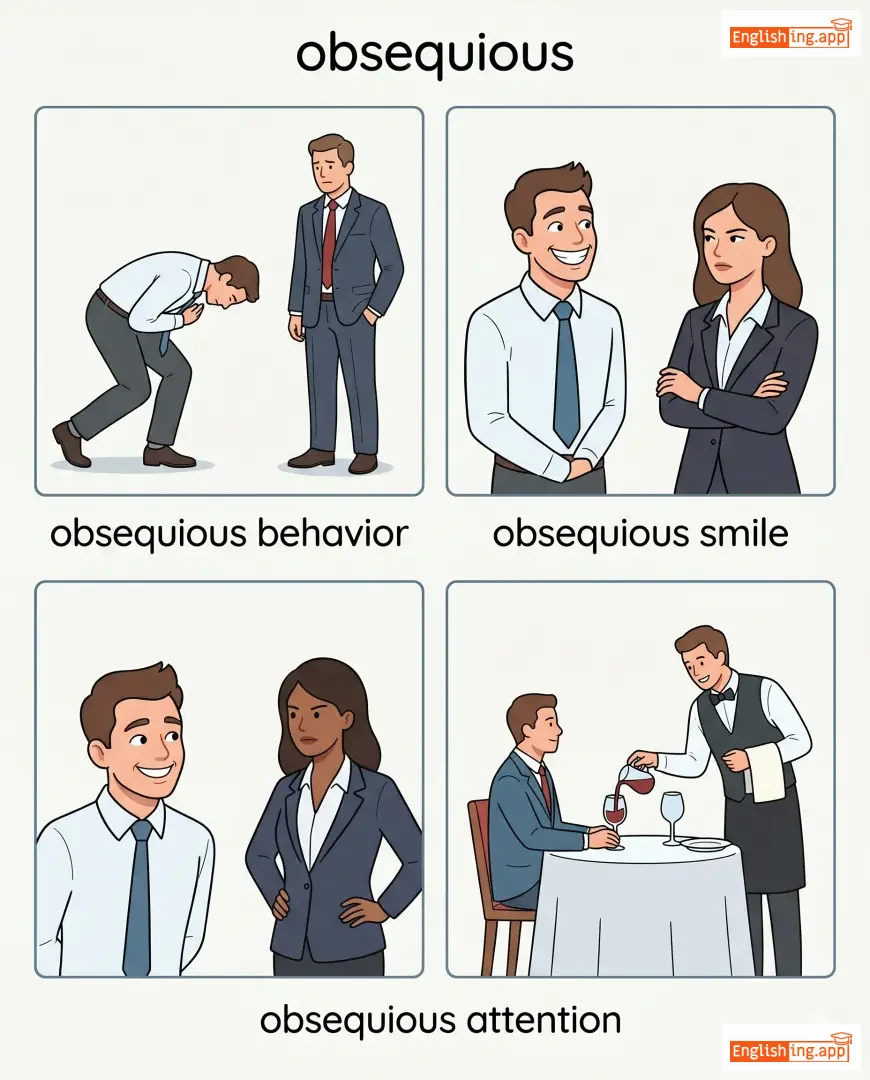
Excessively obedient or attentive in a servile way.
••••••
|
The waiter gave an obsequious bow to every customer.
ウェイターは各顧客に対してお世辞のようなお辞儀をしました。
••••••
|
ウェイターは各顧客にお世辞のようなお辞儀をしました。
Ueitaa wa kaku kokyaku ni oseji no yō na ojigi o shimashita.
••••••
|
- •••••• | - •••••• | - •••••• |
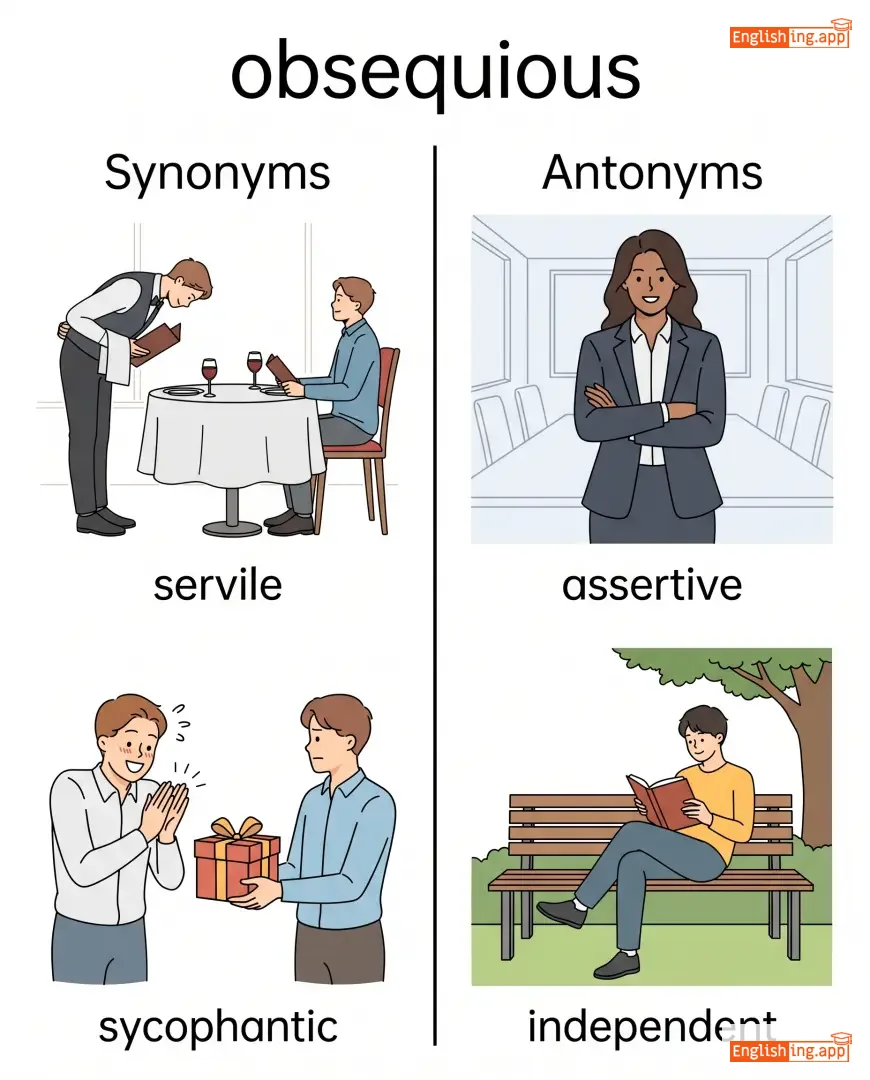
servile, sycophantic, fawning, submissive
••••••
|
assertive, independent
••••••
|
obsequious behavior, obsequious smile, obsequious attention
••••••
|
Obsequiousはお世辞を意味します、覚えやすく言うと「Obey」 + 「quick」=お世辞
••••••
|
|
#6016
🙅
|
/əbˈdʒɛktər/
noun
(オブジェクター)
••••••
|
- •••••• |
反対者
hantaisha
••••••
|
- •••••• | - •••••• | - •••••• | - •••••• |
a person who expresses opposition or disapproval to something
••••••
|
The objector raised his concerns during the town meeting. |
反対者は市議会の会議中に自分の懸念を表明しました。
Hantaisha wa shigikai no kaigi-chū ni jibun no kennen o hyōmei shimashita.
••••••
|
- •••••• | - •••••• | - •••••• |
opponent, dissenter, protester, critic
••••••
|
supporter, advocate, proponent
••••••
|
conscientious objector, strong objector, vocal objector, objector to war
••••••
|
Objector は物事に反対する人、つまり反対者
••••••
|
|
#6017
🌫️
|
/əbˈskjʊr/
adjective, verb
(オブスキュア)
••••••
|
- •••••• |
不明確
fumeikaku
••••••
|
obscured
オブスキュアード
••••••
|
obscured
オブスキュアード
••••••
|
obscures
オブスキュアズ
••••••
|
obscuring
オブスキュアリング
••••••
|
Not clearly expressed or understood; to make something difficult to see or understand.
••••••
|
The meaning of the poem was obscure to most readers.
詩の意味はほとんどの読者には不明確でした。
••••••
|
詩の意味はほとんどの読者には不明確でした。
Shi no imi wa hotondo no dokusha ni wa fumeikaku deshita.
••••••
|
in the obscure
不明な状態で
••••••
|
in an uncertain or hidden situation
••••••
|
不明な状態で
fumei na jōtai de
••••••
|
unclear, vague, hidden, ambiguous, conceal
••••••
|
clear, obvious, apparent
••••••
|
obscure meaning, obscure passage, obscure author, obscure the view
••••••
|
Obscure は不明確を意味します — 'ob' を思い出してください、すべてがぼやけているようなものです。
••••••
|
|
#6018
🤢
|
/əbˈnɒkʃəs/
adjective
(オブノクシャス)
••••••
|
- •••••• |
不快な
fukai na
••••••
|
- •••••• | - •••••• | - •••••• | - •••••• |
Extremely unpleasant, offensive, or annoying.
••••••
|
The obnoxious behavior of the guest ruined the party. |
ゲストの不快な振る舞いがパーティーを台無しにした。
Gesuto no fukai na furumai ga pātii o dainashi ni shita.
••••••
|
- •••••• | - •••••• | - •••••• |
offensive, unpleasant, nasty, repulsive, annoying
••••••
|
pleasant, agreeable, delightful
••••••
|
obnoxious behavior, obnoxious smell, obnoxious attitude
••••••
|
Obnoxiousは不快なことです — それは不快で攻撃的で、避けたくなるものです。
••••••
|
|
#6019
📢
|
/ˈɒbləkwɪ/
noun
(オブロクイ)
••••••
|
- •••••• |
中傷
chuushou
••••••
|
- •••••• | - •••••• | - •••••• | - •••••• |
Strong public criticism or verbal abuse; disgrace or shame from public condemnation.
••••••
|
The politician faced obloquy after the scandal was exposed. |
スキャンダルが暴露された後、政治家は中傷に直面しました。
Sukyandaru ga bakuro sareta ato, seijika wa chuushou ni chokumen shimashita.
••••••
|
- •••••• | - •••••• | - •••••• |
abuse, censure, criticism, vilification, disgrace
••••••
|
praise, honor, acclaim
••••••
|
face obloquy, suffer obloquy, public obloquy
••••••
|
Obloquyは中傷を意味します — ‘Oh blow qui’と言ってみんなが侮辱していると想像してください。
••••••
|
|
#6020
😶
|
/əˈblɪviəs/
adjective
••••••
|
|
- •••••• | - •••••• | - •••••• | - •••••• | - •••••• |
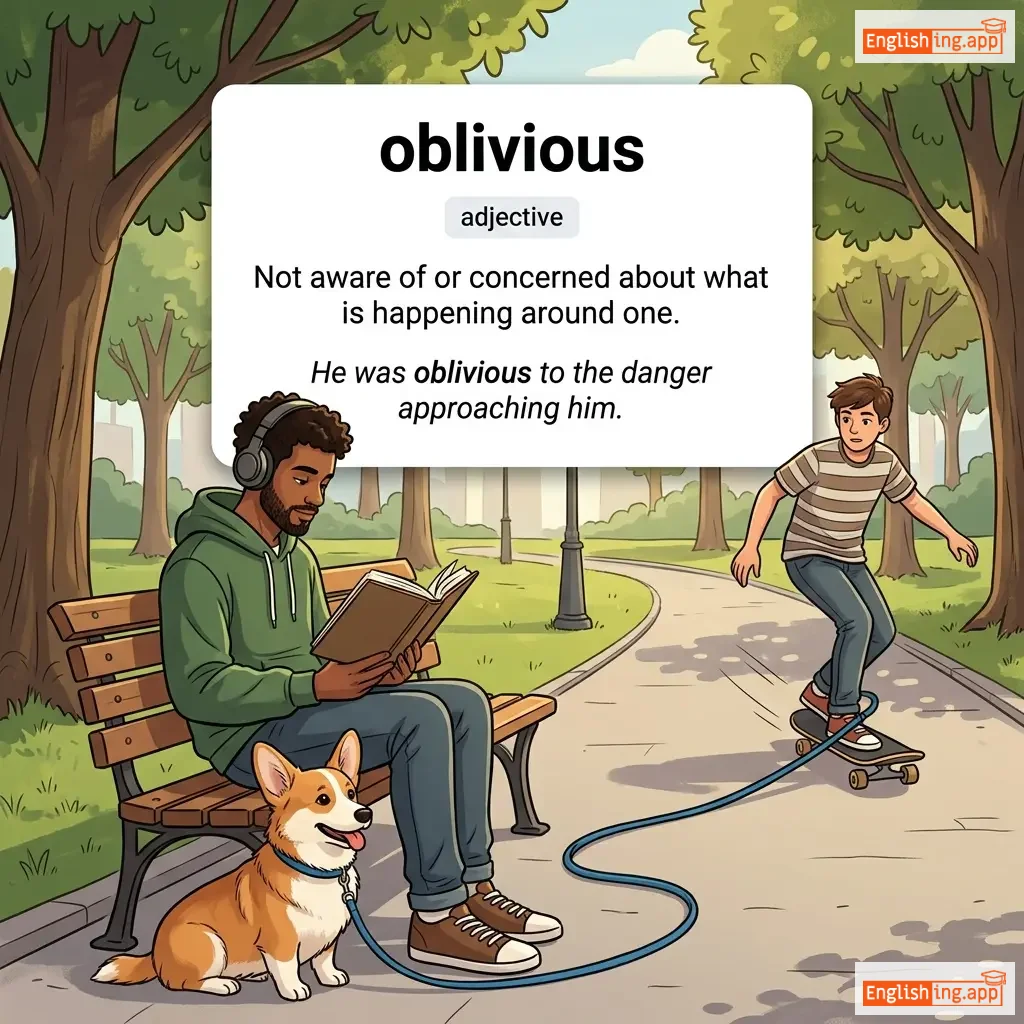
Not aware of or concerned about what is happening around one.
••••••
|
He was oblivious to the danger approaching him. |
- •••••• | - •••••• | - •••••• | - •••••• |
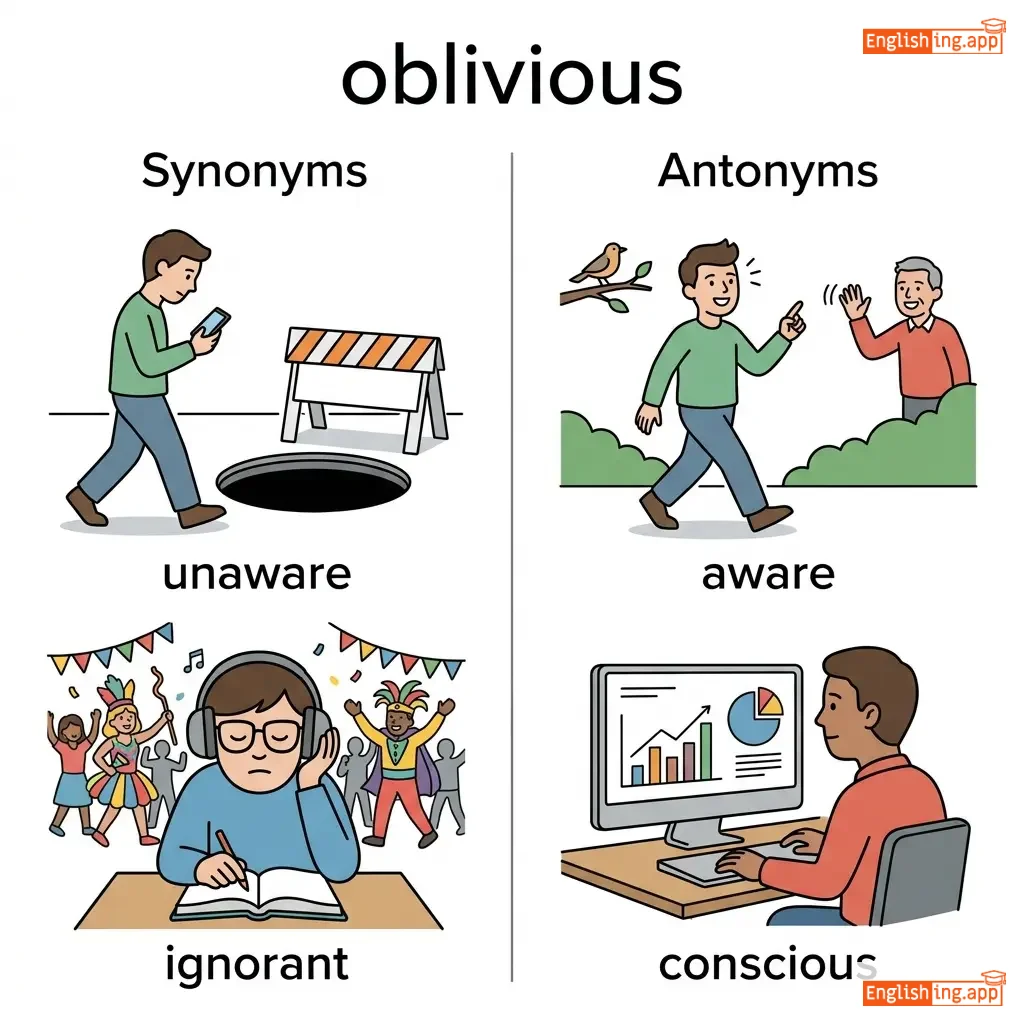
unaware, ignorant, heedless, inattentive
••••••
|
aware, conscious, mindful
••••••
|
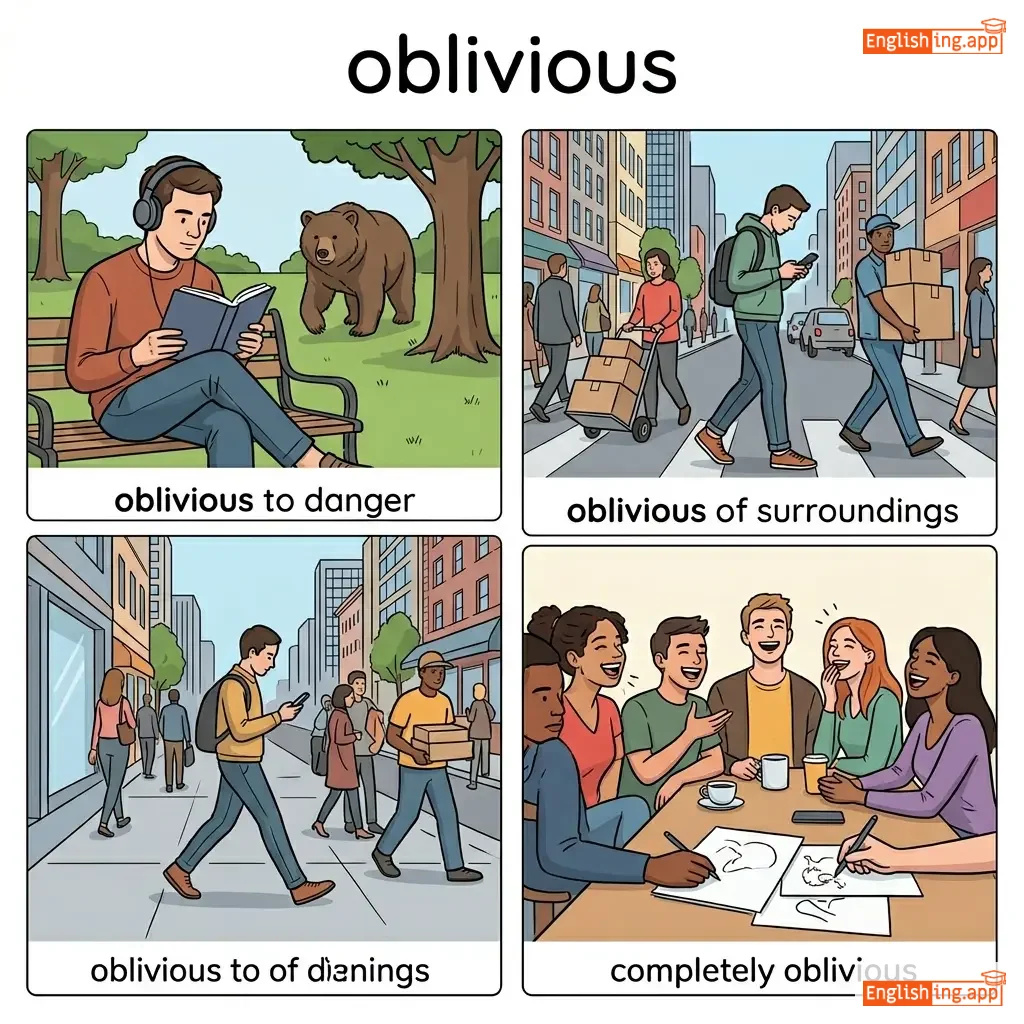
oblivious to danger, oblivious of surroundings, completely oblivious
••••••
|
No •••••• |
|
#6021
🕳️
|
/əˈblɪviən/
noun
(オブリビオン)
••••••
|
|
忘却
bōkyaku
••••••
|
- •••••• | - •••••• | - •••••• | - •••••• |
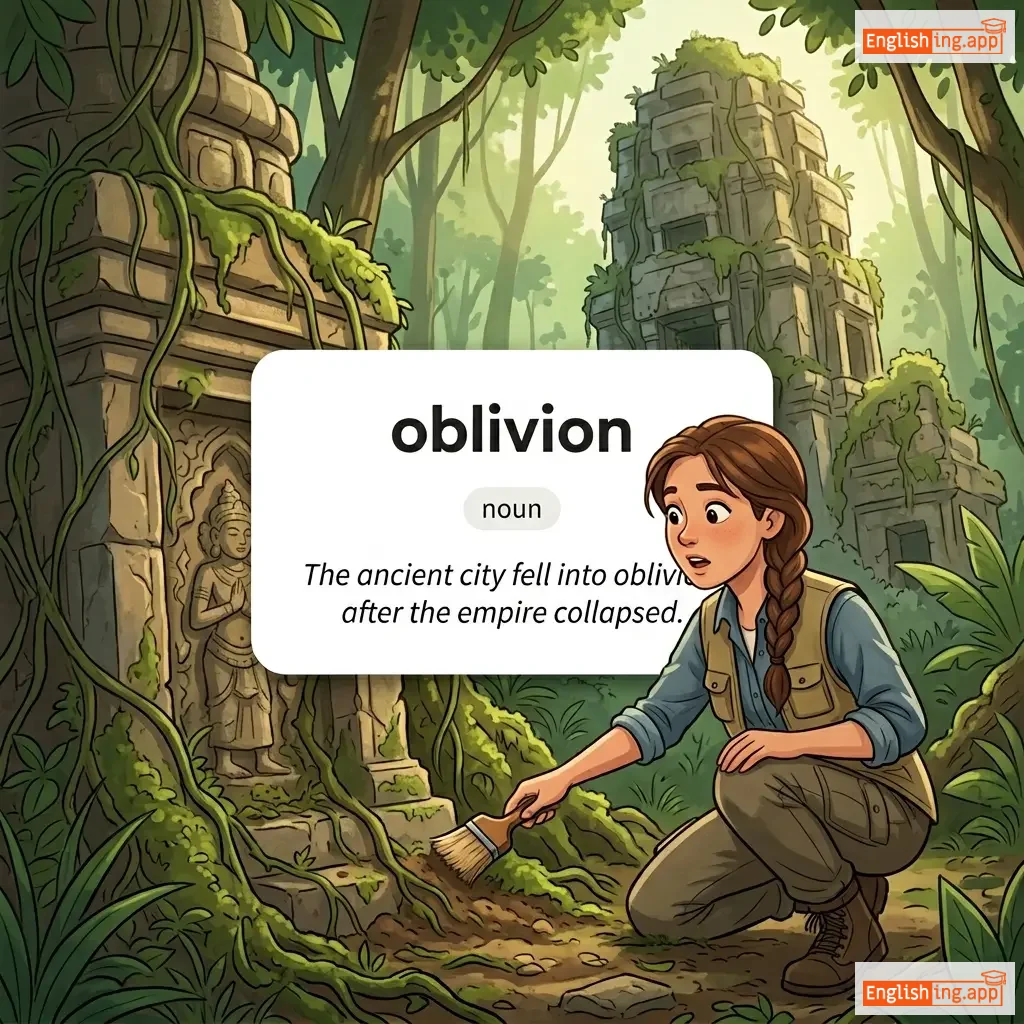
The state of being completely forgotten or unknown; the state of being unconscious or unaware.
••••••
|
The ancient city fell into oblivion after the empire collapsed. |
古代の都市は帝国の崩壊後、忘却の中に落ちた。
Kodai no toshi wa teikoku no hōkai-go, bōkyaku no naka ni ochita.
••••••
|
fade into oblivion |
to be forgotten completely over time
••••••
|
忘却に消え去る
bōkyaku ni kie saru
••••••
|
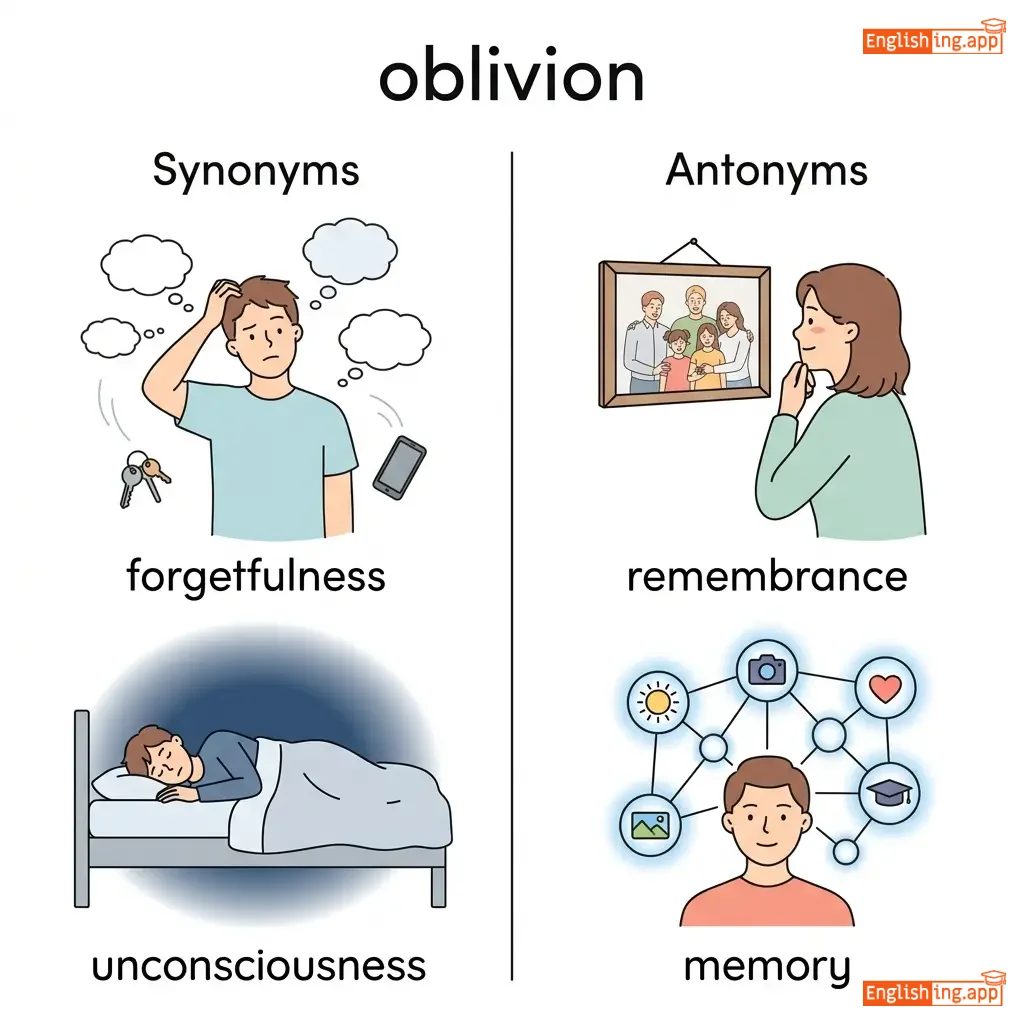
forgetfulness, unconsciousness, obscurity, neglect, nothingness
••••••
|
remembrance, memory, awareness
••••••
|
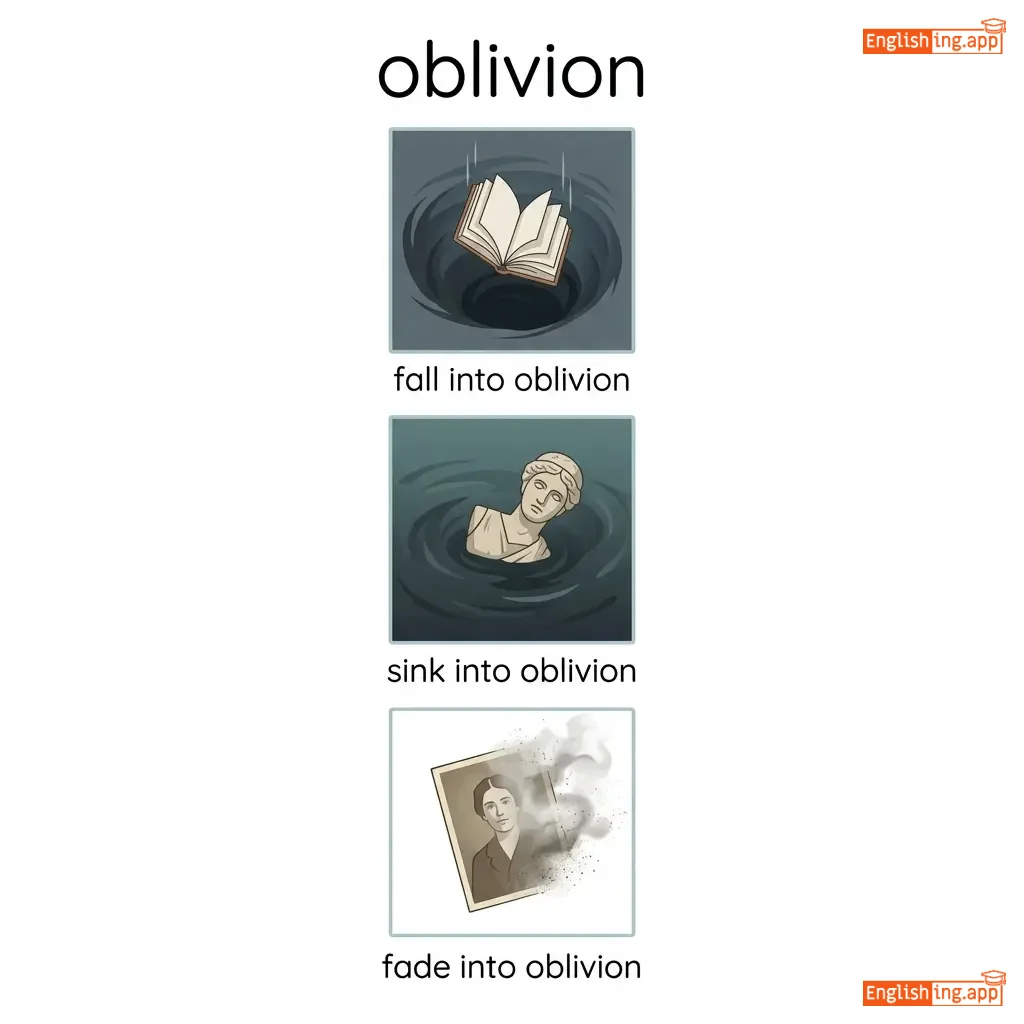
fall into oblivion, sink into oblivion, fade into oblivion, lost in oblivion
••••••
|
Oblivionは忘却を意味します — 何かが消える、‘オブ’が‘忘却’に変わるようなものです。
••••••
|
|
#6022
💥
|
/əˈblɪtəreɪt/
verb
(オブリタレイト)
••••••
|
|
完全に破壊する
kanzen ni hakai suru
••••••
|
obliterated
オブリタレイテッド
••••••
|
obliterated
オブリタレイテッド
••••••
|
obliterates
オブリタレイツ
••••••
|
obliterating
オブリタレイティング
••••••
|
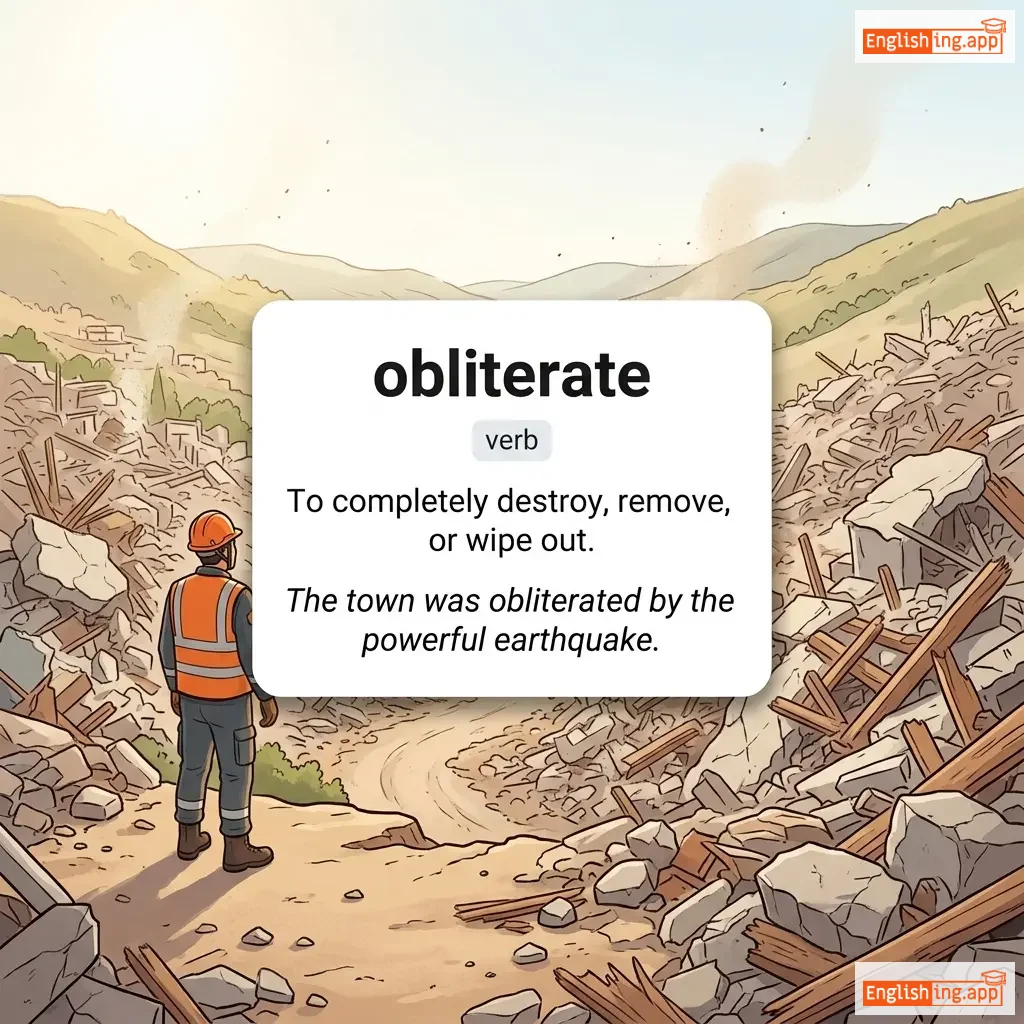
To completely destroy, remove, or wipe out.
••••••
|
The town was obliterated by the powerful earthquake.
町は強力な地震によって完全に壊滅しました。
••••••
|
町は強力な地震によって完全に壊滅しました。
machi wa kyōryoku na jishin ni yotte kanzen ni kaimetsu shimashita.
••••••
|
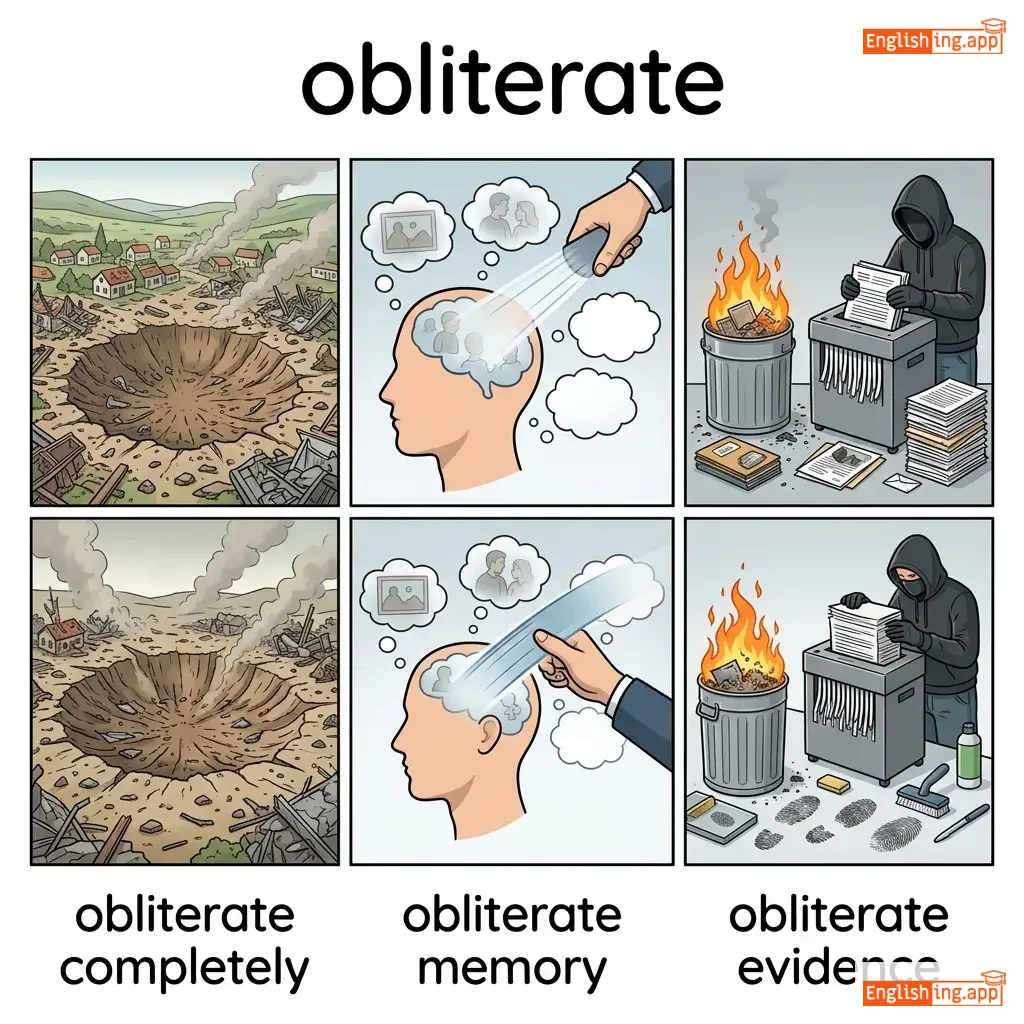
obliterate the memory
記憶を消去する
••••••
|
To erase or forget something completely
••••••
|
記憶を消去する
kioku o shōkyo suru
••••••
|
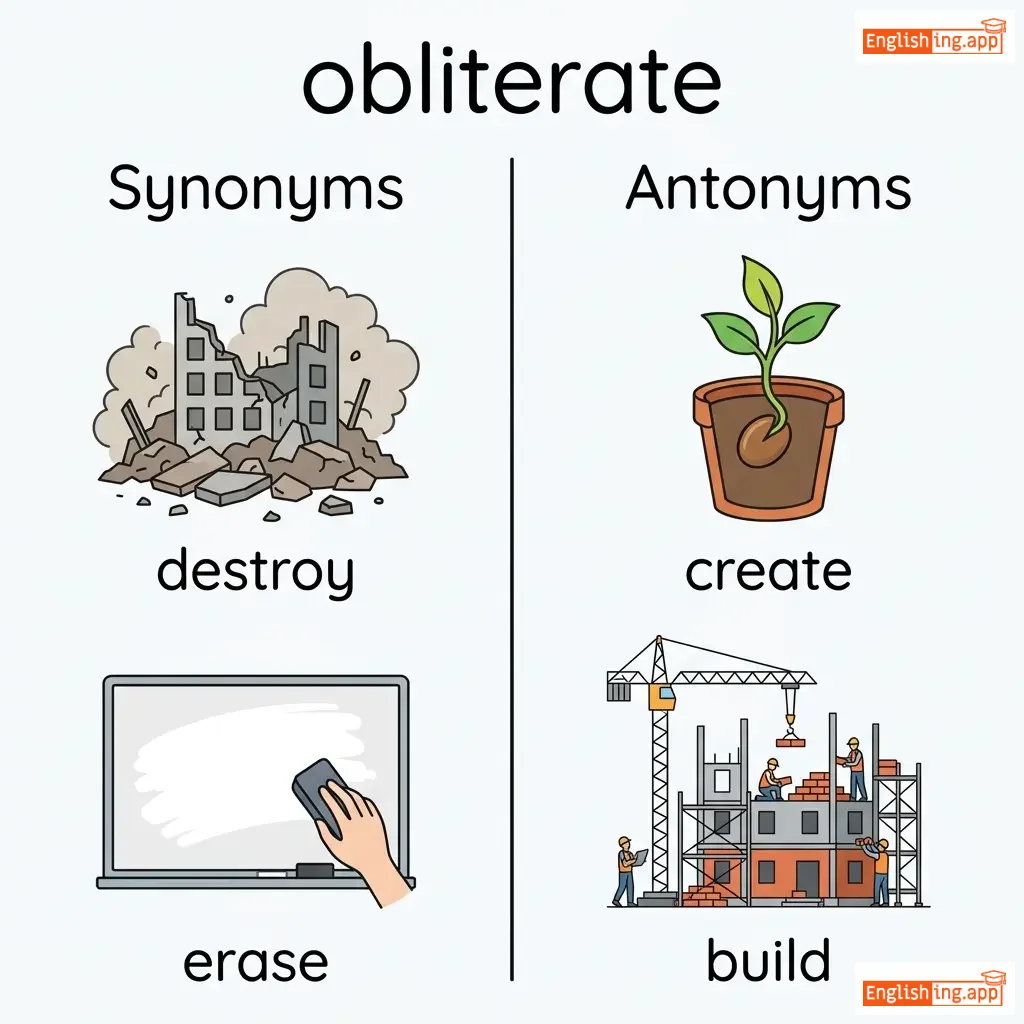
destroy, erase, annihilate, wipe out, demolish
••••••
|
create, build, preserve
••••••
|
obliterate completely, obliterate memory, obliterate evidence
••••••
|
Obliterateは完全に破壊すること、オブリタレイトしよう!
••••••
|
|
#6023
⚖️
|
/əˈblɪkwɪti/
noun
(オブリクイティ)
••••••
|
- •••••• |
歪み
yugami
••••••
|
- •••••• | - •••••• | - •••••• | - •••••• |
Deviation from moral or usual conduct; indirectness or lack of straightforwardness.
••••••
|
The politician was criticized for the obliquity of his answers.
その政治家は、彼の答えの歪みについて批判された。
••••••
|
その政治家は、彼の答えの歪みについて批判された。
Sono seijika wa, kare no kotae no yugami ni tsuite hihan sareta.
••••••
|
- •••••• | - •••••• | - •••••• |
indirection, dishonesty, evasiveness, crookedness
••••••
|
honesty, directness, clarity
••••••
|
moral obliquity, obliquity of conduct, obliquity in speech
••••••
|
Obliquityは歪みを意味し、真っ直ぐでないことを示します。
••••••
|
|
#6024
↗️
|
/əˈbliːk/ or /oʊˈbliːk/
adjective
(オブリーク)
••••••
|
- •••••• |
間接的
kansetsu-teki
••••••
|
- •••••• | - •••••• | - •••••• | - •••••• |
Not explicit or direct in addressing a point; slanting or indirect.
••••••
|
She made an oblique reference to his past mistakes. |
彼女は彼の過去の間違いに対して間接的な言及をしました。
Kanojo wa kare no kako no machigai ni taishite kansetsu-teki na genkyu o shimashita.
••••••
|
- •••••• | - •••••• | - •••••• |
indirect, vague, slanted, sloping, angled
••••••
|
direct, straight, explicit
••••••
|
oblique reference, oblique angle, oblique glance, oblique line
••••••
|
Oblique とは O-blick、直接的ではなく、少し斜め。
••••••
|
|
#6025
😊
|
/əˈblaɪdʒɪŋ/
adjective
(oburaijingu)
••••••
|
- •••••• |
親切な
shinsena
••••••
|
- •••••• | - •••••• | - •••••• | - •••••• |
Willing to help or do favors; accommodating.
••••••
|
The staff at the hotel were very obliging and friendly. |
ホテルのスタッフはとても親切で友好的でした。
Hoteru no sutaffu wa totemo shinsen de yuukouteki deshita.
••••••
|
- •••••• | - •••••• | - •••••• |
helpful, accommodating, kind, cooperative, considerate
••••••
|
unhelpful, rude, inconsiderate
••••••
|
obliging staff, obliging nature, obliging host, obliging manner
••••••
|
Obliging は親切な人のこと、手伝ってくれる人、助けることに意欲的な人。
••••••
|
|
#6026
📜
|
/əˈblɪɡətɔːri/
adjective
••••••
|
|
- •••••• | - •••••• | - •••••• | - •••••• | - •••••• |
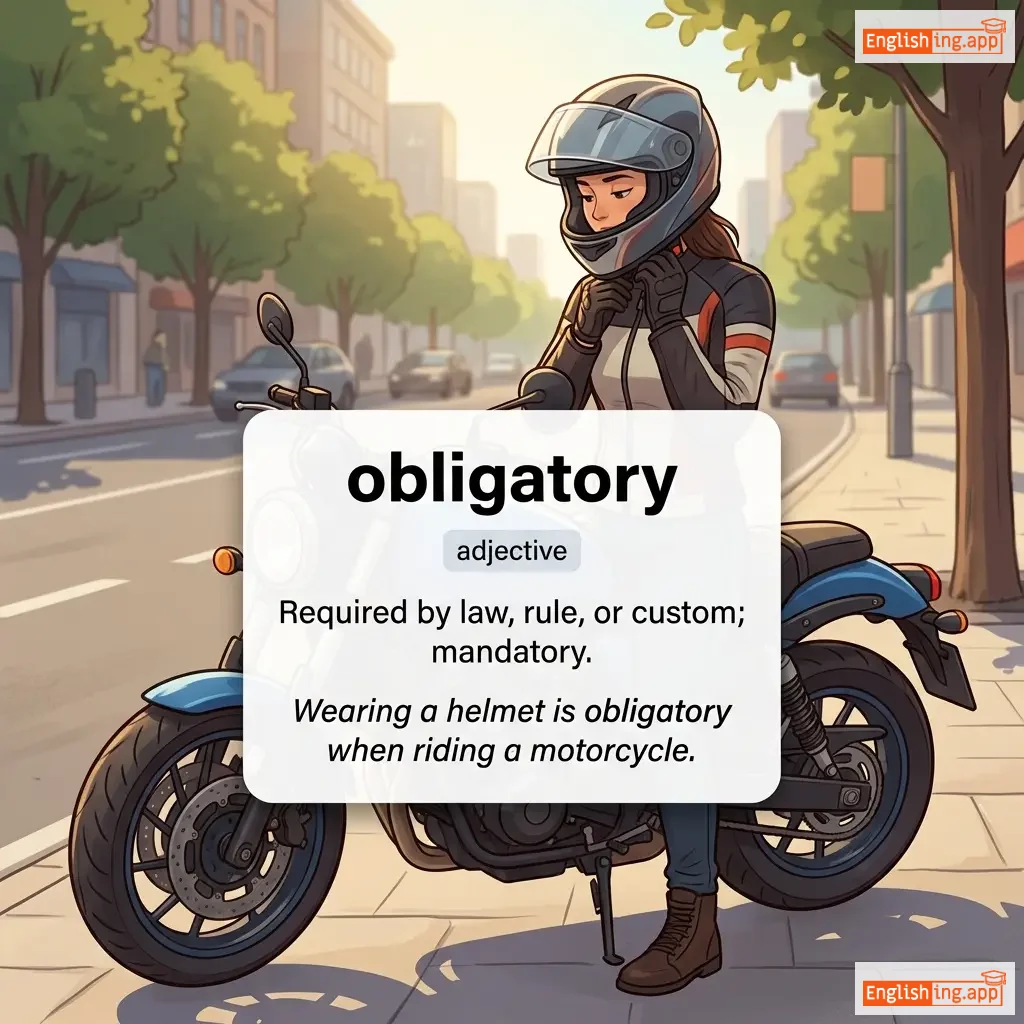
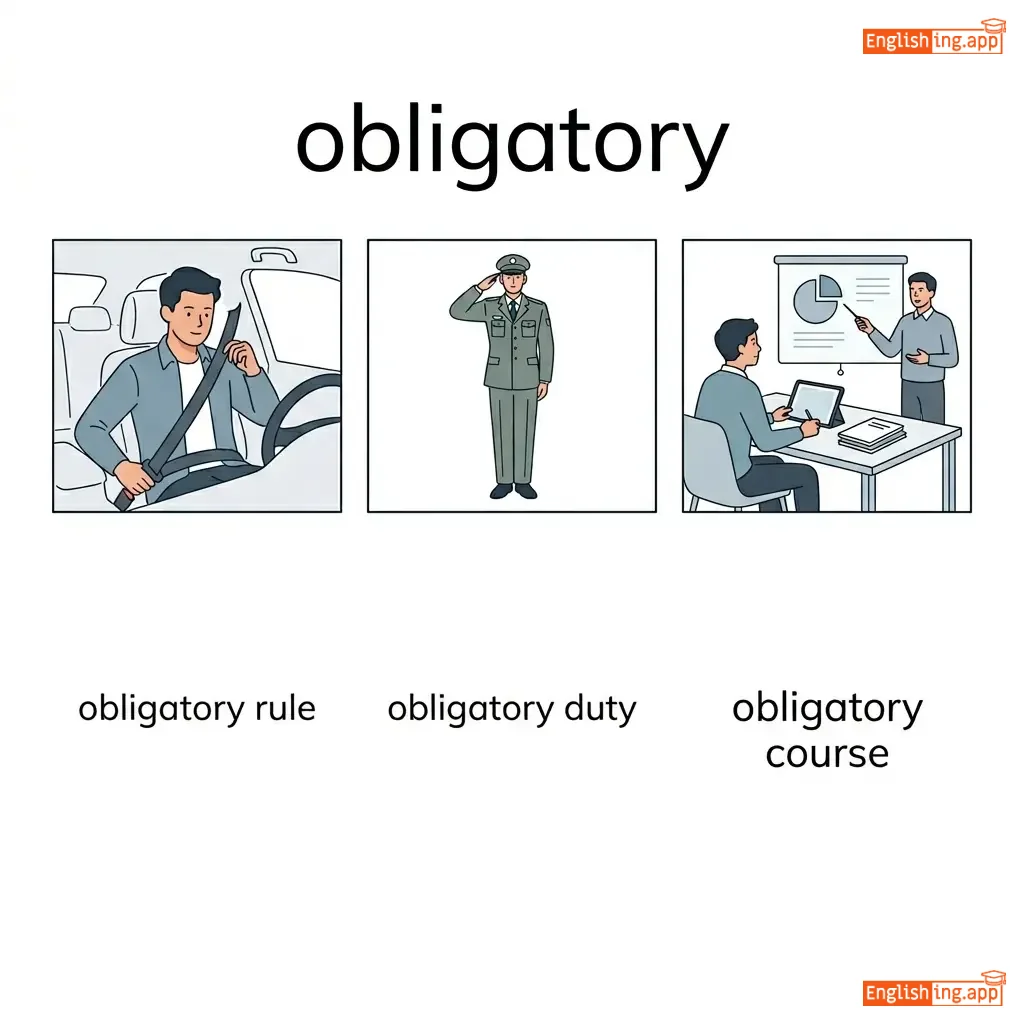
Required by law, rule, or custom; mandatory.
••••••
|
Wearing a helmet is obligatory when riding a motorcycle. |
- •••••• | - •••••• | - •••••• | - •••••• |
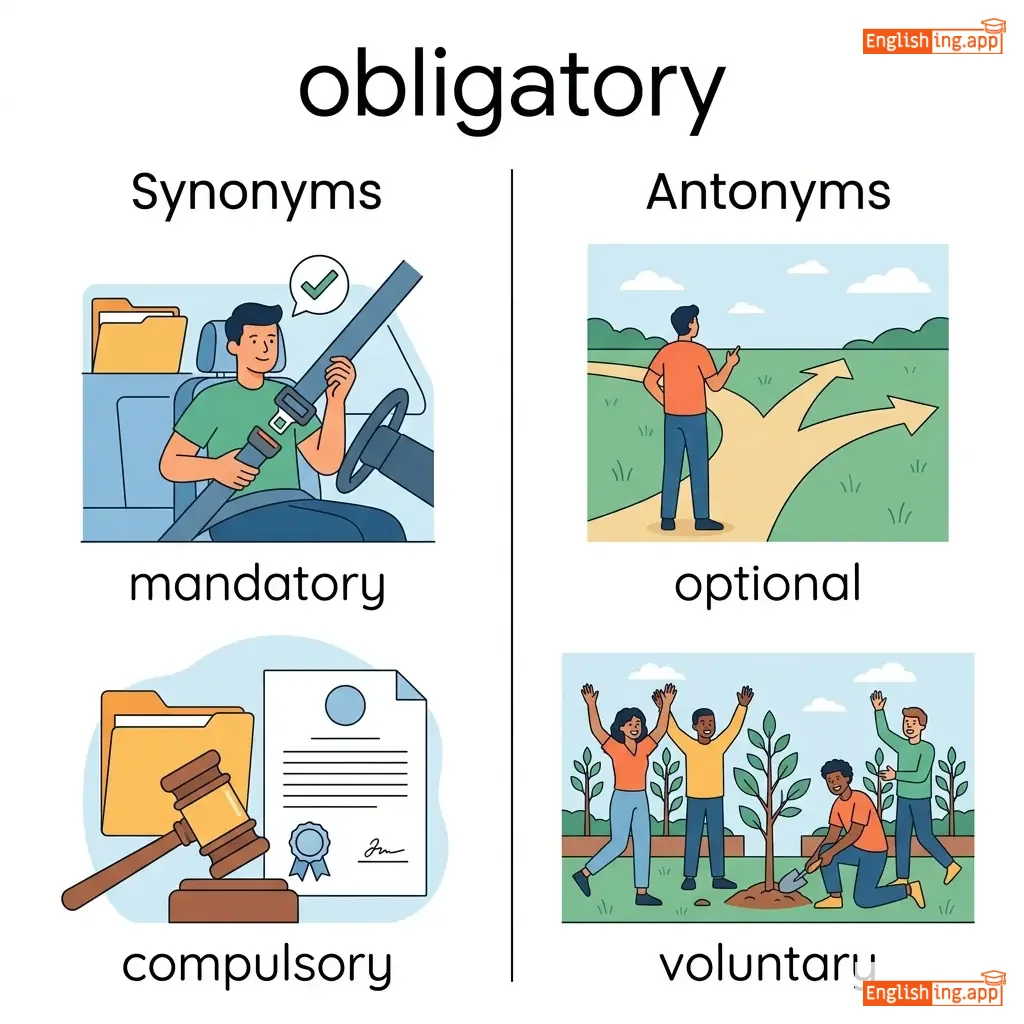
mandatory, compulsory, required, binding, enforced
••••••
|
optional, voluntary, elective
••••••
|
obligatory rule, obligatory duty, obligatory course, obligatory requirement
••••••
|
No •••••• |
|
#6027
📜
|
/ˈɑːblɪˌɡeɪt/
verb
(オブリゲート)
••••••
|
- •••••• |
強制する
kyousei suru
••••••
|
obligated
オブリゲイテッド
••••••
|
obligated
オブリゲイテッド
••••••
|
obligates
オブリゲイツ
••••••
|
obligating
オブリゲイティング
••••••
|
to bind legally or morally; to compel someone to do something
••••••
|
The contract obligates the company to provide timely service.
契約は会社にタイムリーなサービスを提供することを義務付けます。
••••••
|
契約は会社にタイムリーなサービスを提供することを義務付けます。
Keiyaku wa kaisha ni taimurī na sābisu o teikyō suru koto o gimu zukemasu.
••••••
|
- •••••• | - •••••• | - •••••• |
bind, compel, require, force
••••••
|
free, release, exempt
••••••
|
legally obligate, morally obligate, obligate by contract
••••••
|
Obligate は 'obligation' から来ており、誰かに何かをさせることを意味します。
••••••
|
|
#6028
🕯️
|
/oʊˈbleɪʃən/
noun
(オブレーション)
••••••
|
- •••••• |
奉納
hounou
••••••
|
- •••••• | - •••••• | - •••••• | - •••••• |
a religious offering, especially of bread or wine to God
••••••
|
The priest placed the oblation on the altar during the ceremony. |
司祭は儀式の間に祭壇に奉納を置きました。
Shisai wa gishiki no aida ni saidan ni hounou o okimashita.
••••••
|
- •••••• | - •••••• | - •••••• |
offering, sacrifice, gift, donation
••••••
|
withholding, refusal
••••••
|
religious oblation, make an oblation, temple oblation
••••••
|
奉納はOblationと似ていて、神に捧げるという意味
••••••
|
|
#6029
📢
|
/ˌɑːbdʒərˈɡeɪʃən/
noun
(オブジャーゲイション)
••••••
|
- •••••• |
厳しい叱責
kibishī shisseki
••••••
|
- •••••• | - •••••• | - •••••• | - •••••• |
a harsh scolding or strong rebuke
••••••
|
His misconduct earned him a severe objurgation from the manager. |
彼の不正行為はマネージャーから厳しい叱責を受けた。
Kare no fusei kōi wa manējā kara kibishī shisseki o uketa.
••••••
|
- •••••• | - •••••• | - •••••• |
rebuke, reprimand, scolding, chastisement
••••••
|
praise, compliment, approval
••••••
|
strong objurgation, receive objurgation, face objurgation
••••••
|
Objurgation は厳しい叱責、つまり強い非難です。
••••••
|
|
#6030
⚡
|
/ˈɑːbdʒərˌɡeɪt/
verb
(オブジャーゲイト)
••••••
|
- •••••• |
厳しく叱る
kibishiku shikaru
••••••
|
objurgated
オブジャーゲイテッド
••••••
|
objurgated
オブジャーゲイテッド
••••••
|
objurgates
オブジャーゲイツ
••••••
|
objurgating
オブジャーゲイティング
••••••
|
to scold or rebuke severely
••••••
|
The teacher objurgated the student for being dishonest.
先生は不正直な生徒を厳しく叱った。
••••••
|
先生は不正直な生徒を厳しく叱った。
Sensei wa fuseijika na seito wo kibishiku shikatta.
••••••
|
- •••••• | - •••••• | - •••••• |
rebuke, scold, reprimand, chastise, reproach
••••••
|
praise, commend, approve
••••••
|
objurgate harshly, objurgate publicly, objurgate for mistake
••••••
|
Objurgateは‘オブジェクト+ゲート’ – 叱る
••••••
|
Vocabulary Quiz
Test your vocabulary by matching words with their translations or meanings.
Login to take the quiz
Comments (0)
Share your thoughts and join the discussion.
Join the discussion by logging in
Login to CommentNo comments yet
Be the first to share your thoughts!