

翻訳
過去
過去分詞
三人称単数
動名詞
意味
例文
例文の翻訳
同義語
対義語
コロケーション
ニーモニック
Swipe left or right, or use the buttons. Tap image to zoom.
例文の翻訳
単語
Lesson 175Lesson 175 - マスクトグル
|
絵文字
|
単語 | Images | 翻訳 | 過去 | 過去分詞 | 三人称単数 | 動名詞 | 意味 | 例文 | 例文の翻訳 | 表現例 | 表現例の意味 | 表現例の翻訳 | 同義語 | 対義語 | コロケーション | ニーモニック |
|---|---|---|---|---|---|---|---|---|---|---|---|---|---|---|---|---|---|
|
#5221
🤸
|
/laɪð/
(ライð)
••••••
|
- •••••• |
しなやかで優雅
shinayakade yūga
••••••
|
- •••••• | - •••••• | - •••••• | - •••••• |
thin, supple, and graceful in movement
••••••
|
The lithe dancer captivated the audience with her graceful spins. |
しなやかなダンサーはその優雅な回転で観客を魅了しました。
Shinayakana dansā wa sono yūgana kaiten de kankyaku o miryō shimashita.
••••••
|
- •••••• | - •••••• | - •••••• |
supple, flexible, graceful, agile, slender
••••••
|
stiff, clumsy, rigid
••••••
|
lithe body, lithe figure, lithe movements, lithe form
••••••
|
LITE(ライト)体はしなやかで優雅です。
••••••
|
|
#5222
🌱
|
/loʊm/
noun
(ローム)
••••••
|
|
肥沃な土壌
hiwoku na dojou
••••••
|
- •••••• | - •••••• | - •••••• | - •••••• |
A fertile soil of clay and sand containing humus.
••••••
|
The farmer used loam to improve the fertility of the field. |
農家は畑の肥沃さを改善するためにロームを使用しました。
Nouka wa hatake no hiwokusa o kaizen suru tame ni romu o shiyou shimashita.
••••••
|
- •••••• | - •••••• | - •••••• |
soil, earth, dirt, compost, ground
••••••
|
rock, barren land
••••••
|
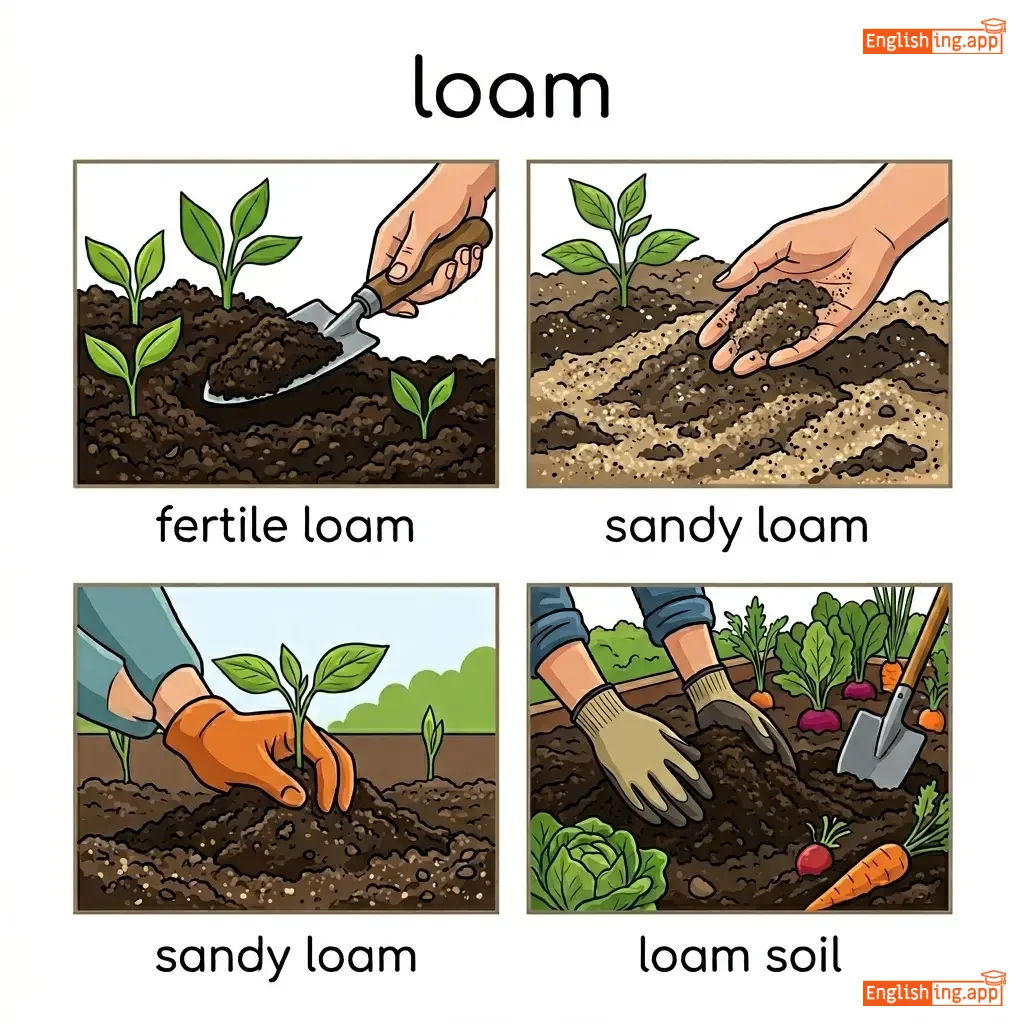
fertile loam, sandy loam, loam soil, loam mixture
••••••
|
LOAMは肥沃な土壌、泥ではありません。
••••••
|
|
#5223
😡
|
/ˈlɪvɪd/
adjective
(リビッド)
••••••
|
- •••••• |
怒っている
okotte iru
••••••
|
- •••••• | - •••••• | - •••••• | - •••••• |
Extremely angry; furious.
••••••
|
She was livid when she found out about the betrayal. |
裏切りを知って彼女は怒っていた。
Uragiri o shitte kanojo wa okotte ita.
••••••
|
- •••••• | - •••••• | - •••••• |
furious, enraged, incensed, irate, outraged
••••••
|
calm, pleased, content
••••••
|
livid with rage, absolutely livid, livid expression, livid reaction
••••••
|
LIVIDとは、顔が赤くなるほど怒っている状態を意味します。
••••••
|
|
#5224
💼
|
/ˈlaɪvlihʊd/
noun
(laivlihud)
••••••
|
|
生計
seiketsu
••••••
|
- •••••• | - •••••• | - •••••• | - •••••• |
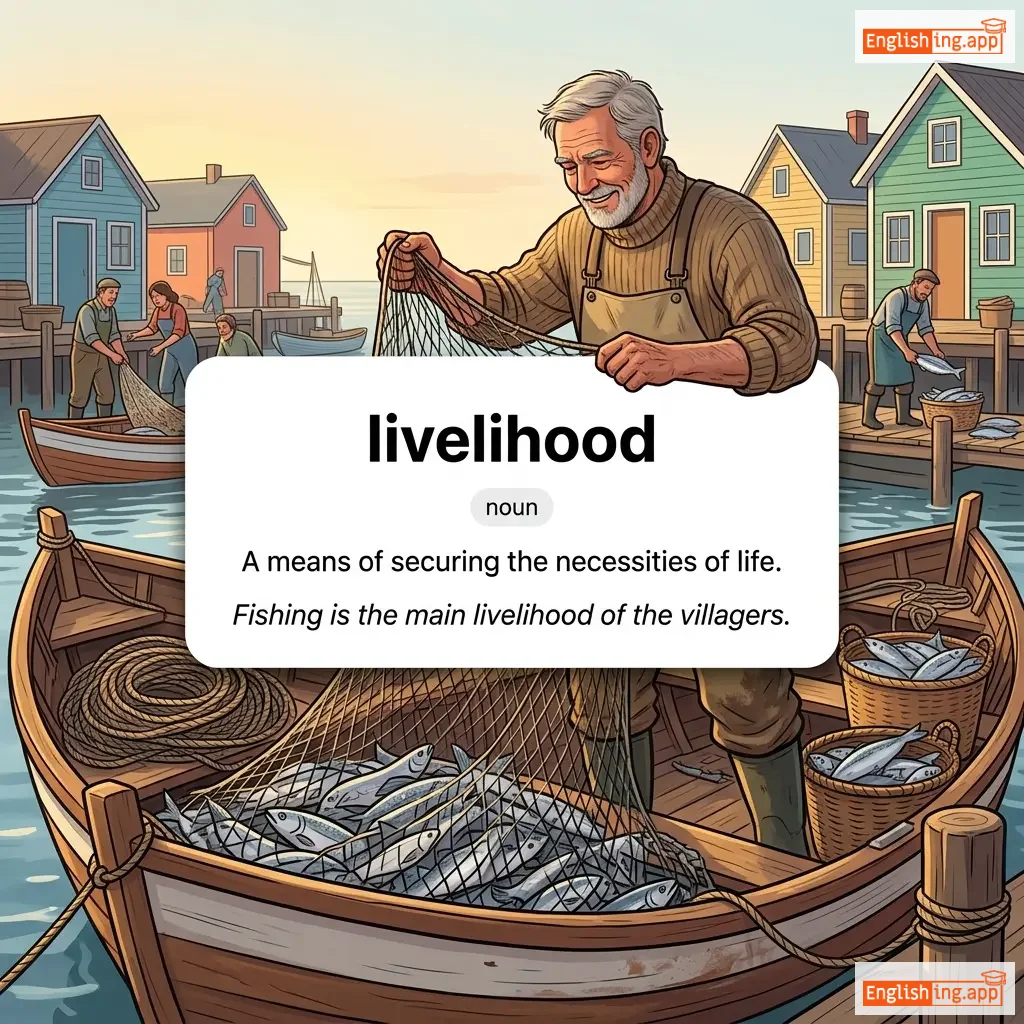
A means of securing the necessities of life.
••••••
|
Fishing is the main livelihood of the villagers. |
漁業は村人たちの主要な生計です。
Gyogyo wa murabito-tachi no shuyou na seiketsu desu.
••••••
|
- •••••• | - •••••• | - •••••• |
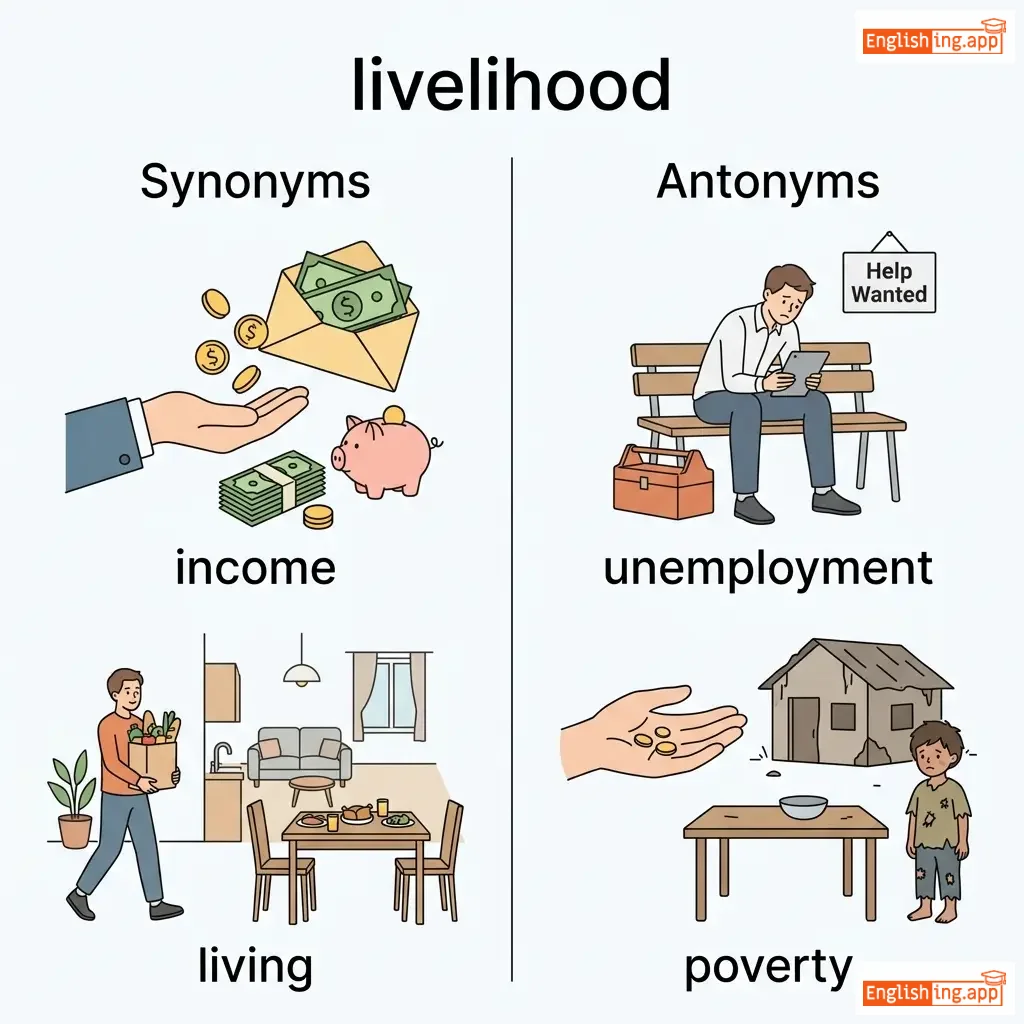
income, living, occupation, sustenance, job
••••••
|
unemployment, poverty
••••••
|
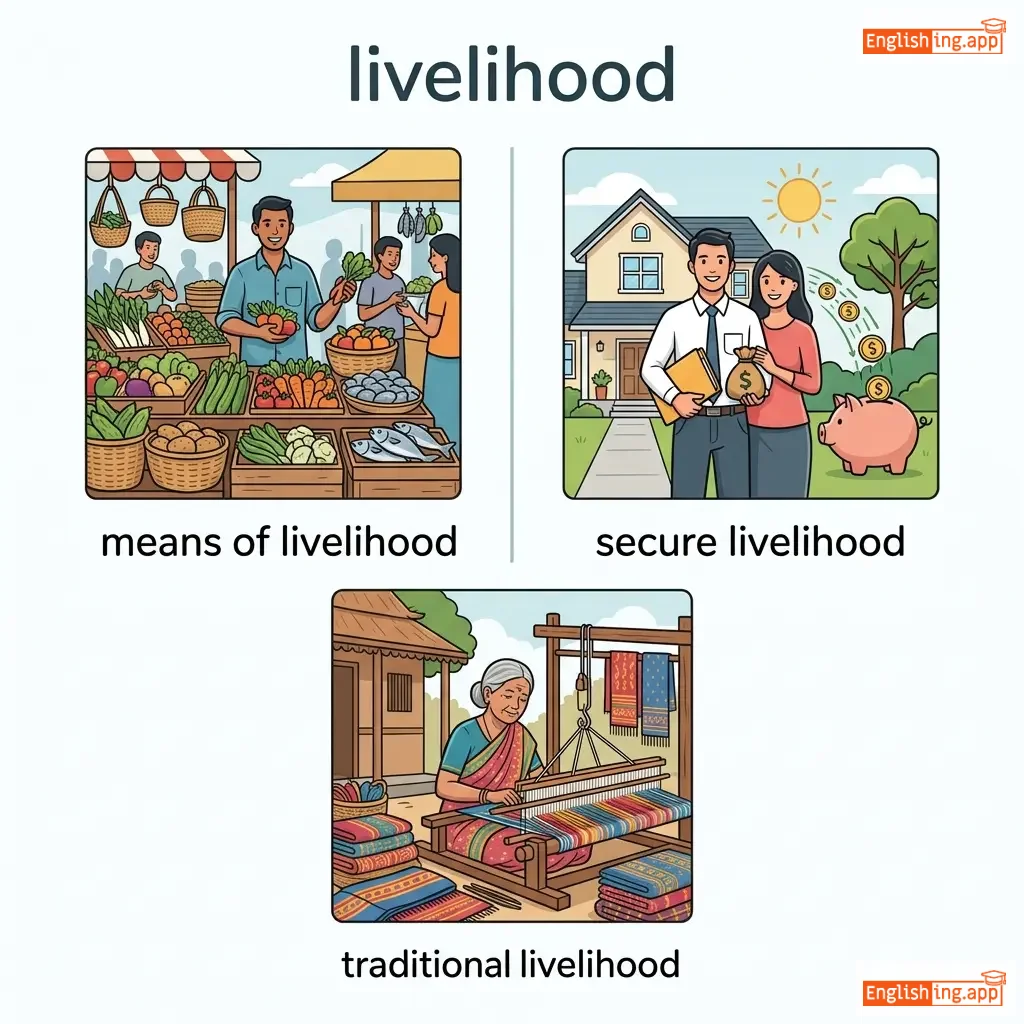
means of livelihood, secure livelihood, traditional livelihood, main livelihood
••••••
|
Live + hood とは、生きるために必要な手段を意味します。
••••••
|
|
#5225
⛪
|
/ˈlɪtərdʒi/
noun
(リタージー)
••••••
|
- •••••• |
典礼
tenrei
••••••
|
- •••••• | - •••••• | - •••••• | - •••••• |
A form or formulary according to which public religious worship is conducted.
••••••
|
The priest followed the liturgy during the Sunday mass. |
司祭は日曜日のミサで典礼に従いました。
Shisai wa nichiyōbi no misa de tenrei ni shitagaimashita.
••••••
|
- •••••• | - •••••• | - •••••• |
ritual, ceremony, service, worship, rite
••••••
|
informality, improvisation
••••••
|
Christian liturgy, liturgy of the hours, religious liturgy, sacred liturgy
••••••
|
LIT + URGY = 宗教儀式を守る。
••••••
|
|
#5226
🌊
|
/ˈlɪtərəl/
adjective
(リトラル)
••••••
|
- •••••• |
沿岸の
engan no
••••••
|
- •••••• | - •••••• | - •••••• | - •••••• |
Related to or situated on the shore of the sea or a lake.
••••••
|
The littoral zone is home to many unique marine species.
リトラルゾーンは多くのユニークな海洋種の生息地です。
••••••
|
沿岸地域は多くのユニークな海洋種の生息地です。
Engan chiiki wa ōku no yunikuna kaiyō-shu no seisokuchi desu.
••••••
|
- •••••• | - •••••• | - •••••• |
coastal, shoreline, seaside, beachside, marginal
••••••
|
inland, interior, central
••••••
|
littoral zone, littoral ecosystem, littoral warfare, littoral states
••••••
|
ENGAN = 海岸
••••••
|
|
#5227
🗑️
|
/ˈlɪtər/
noun/verb
(リッター)
••••••
|
- •••••• |
ゴミ
gomi
••••••
|
littered
リッタード
••••••
|
littered
リッタード
••••••
|
litters
リッターズ
••••••
|
littering
リッティング
••••••
|
rubbish or waste left lying in a public place; to make a place untidy by leaving rubbish
••••••
|
The park was full of litter after the festival.
祭りの後、公園はゴミでいっぱいだった。
••••••
|
祭りの後、公園はゴミでいっぱいだった。
Matsuri no ato, kouen wa gomi de ippai datta.
••••••
|
litter the streets
街にゴミを捨てる
••••••
|
to throw rubbish on the roads
••••••
|
街にゴミを捨てる
Machi ni gomi wo suteru
••••••
|
trash, rubbish, debris, garbage
••••••
|
cleanliness, tidiness
••••••
|
litter problem, litter bin, litter the streets, litter laws
••••••
|
Litterはゴミを意味する—街にゴミを捨てる
••••••
|
|
#5228
🗣️
|
/ˈlaɪtoʊtiːz/
noun
(ライトティーズ)
••••••
|
- •••••• |
緩和表現
kanwahyōgen
••••••
|
- •••••• | - •••••• | - •••••• | - •••••• |
a figure of speech in which an affirmative is expressed by the negative of its contrary
••••••
|
Saying 'not bad' as a compliment is an example of litotes. |
'悪くない'と言うことは、緩和表現の一例です。
'Warukunai' to iu koto wa, kanwahyōgen no ichirei desu.
••••••
|
- •••••• | - •••••• | - •••••• |
understatement, euphemism, double negative
••••••
|
exaggeration, overstatement
••••••
|
use of litotes, rhetorical litotes, common litotes
••••••
|
緩和表現は、否定的な言葉で肯定を表現します。
••••••
|
|
#5229
👨⚖️
|
/lɪˈtɪdʒəs/
adjective
(リティジアス)
••••••
|
- •••••• |
訴訟好き
soshōzuki
••••••
|
- •••••• | - •••••• | - •••••• | - •••••• |
prone to engage in lawsuits or overly inclined to argue legally
••••••
|
He is known as a litigious neighbor who often sues people.
彼はしばしば他人を訴える争い好きな隣人として知られています。
••••••
|
彼はしばしば他人を訴える争い好きな隣人として知られています。
Kare wa shibashiba tanin o utaeru arasoi suki na rinjin to shirareteimasu.
••••••
|
- •••••• | - •••••• | - •••••• |
argumentative, contentious, quarrelsome, disputatious
••••••
|
peaceful, agreeable
••••••
|
litigious society, litigious behavior, litigious culture
••••••
|
Litigious は訴訟好きを意味します — 'Lit' は訴訟を意味します。
••••••
|
|
#5230
📜
|
/ˌlɪtɪˈɡeɪʃən/
noun
(リチゲーション)
••••••
|
|
訴訟
soshō
••••••
|
- •••••• | - •••••• | - •••••• | - •••••• |
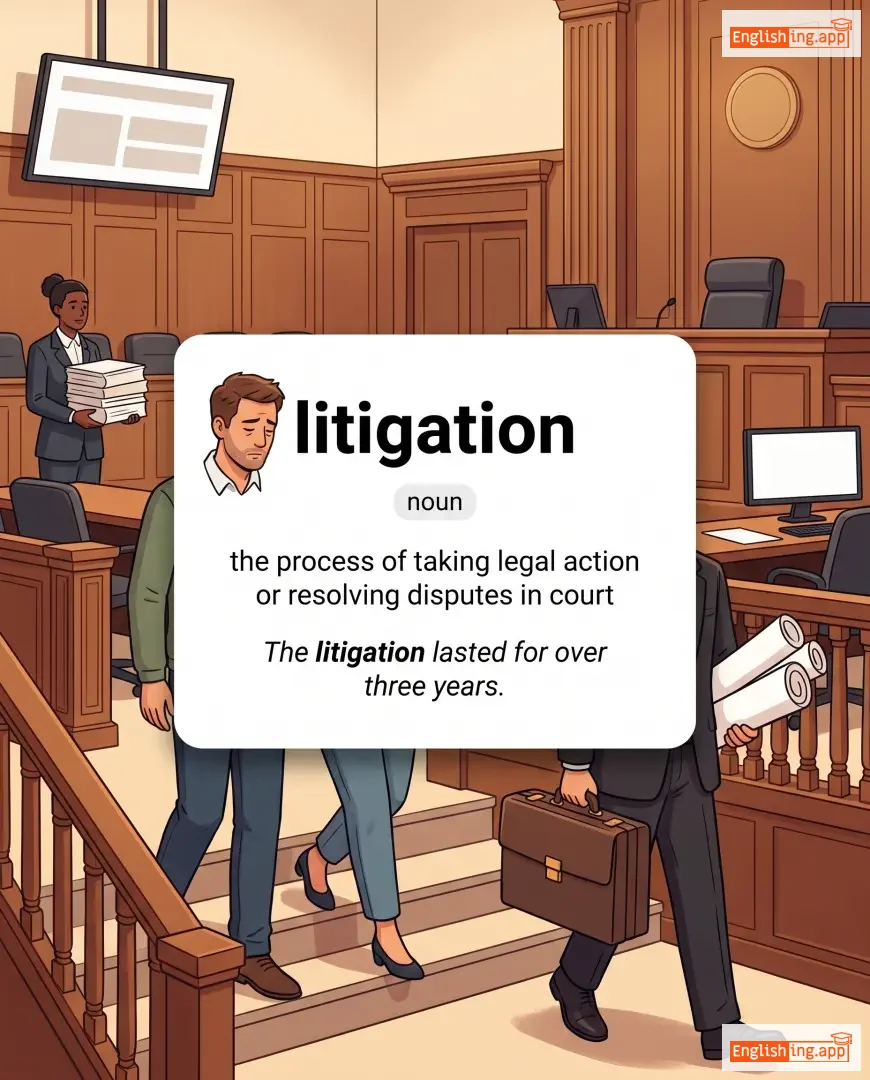
the process of taking legal action or resolving disputes in court
••••••
|
The litigation lasted for over three years. |
訴訟は3年以上続いた。
Soshō wa 3-nen ijō tsuzita.
••••••
|
litigation process |
the steps involved in a lawsuit
••••••
|
訴訟プロセス
soshō purosesu
••••••
|
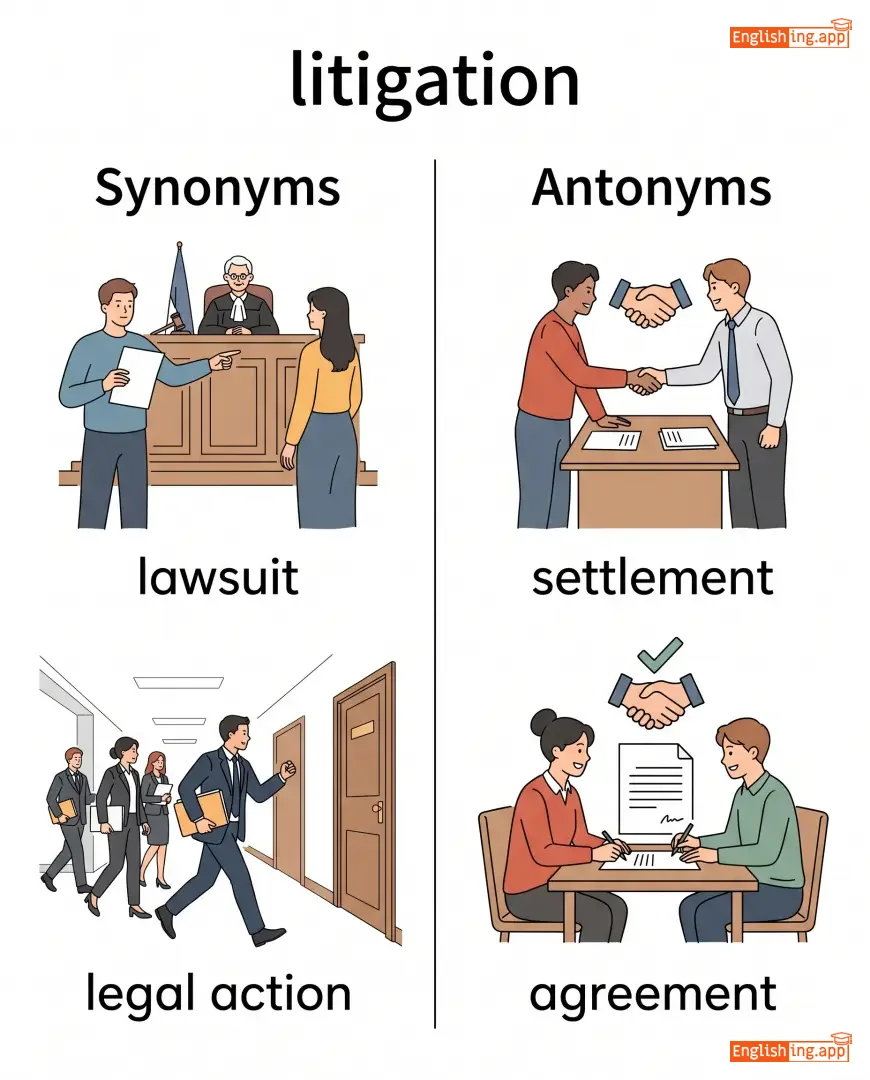
lawsuit, legal action, trial, case
••••••
|
settlement, agreement
••••••
|
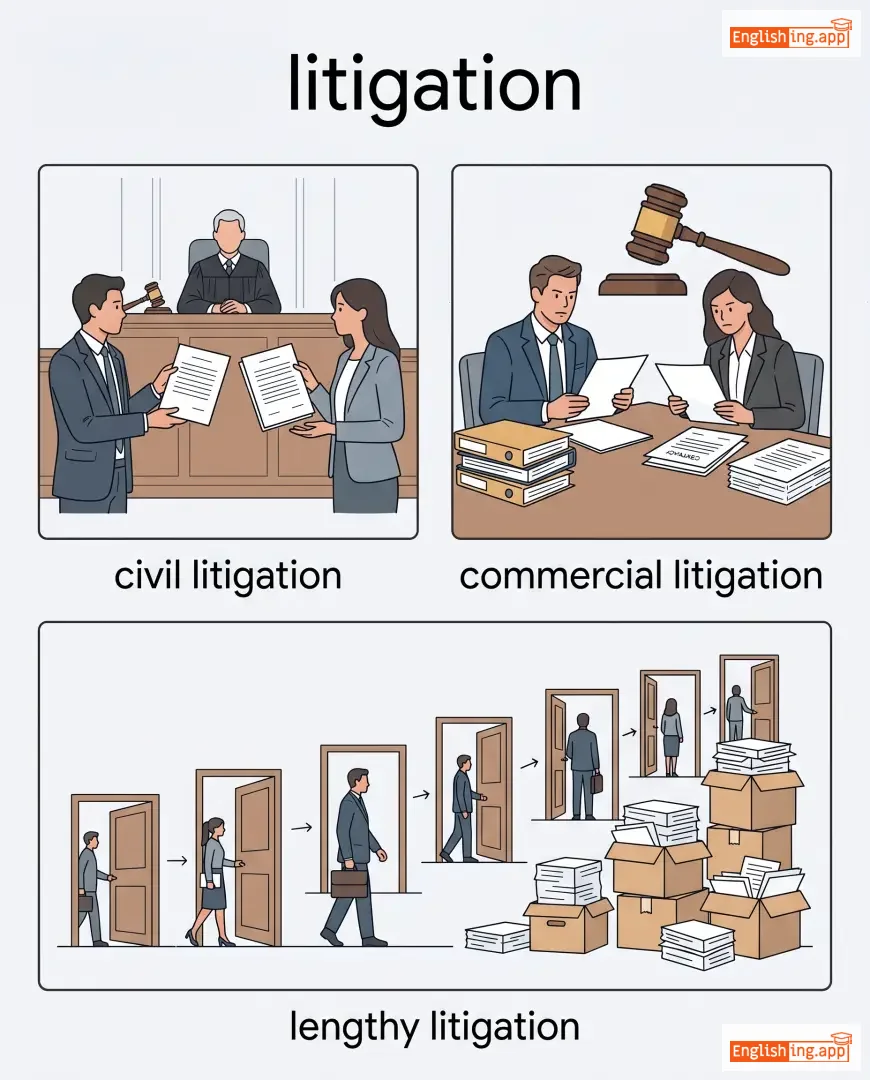
civil litigation, commercial litigation, lengthy litigation
••••••
|
Litigation = 訴訟, Lit + 讼 (裁判の手続き)
••••••
|
|
#5231
⚖️
|
/ˈlɪtɪˌɡeɪt/
verb
(リティゲイト)
••••••
|
- •••••• |
訴訟する
soshou suru
••••••
|
litigated
リティゲイテッド
••••••
|
litigated
リティゲイテッド
••••••
|
litigates
リティゲイツ
••••••
|
litigating
リティゲイティング
••••••
|
to engage in legal proceedings or take a dispute to court
••••••
|
The company decided to litigate the contract dispute.
その企業は契約の争いを訴えることに決めた。
••••••
|
その企業は契約の争いを訴えることに決めた。
Sono kigyō wa keiyaku no arasoi o uttaeru koto ni kimeta.
••••••
|
- •••••• | - •••••• | - •••••• |
sue, prosecute, contest, dispute, appeal
••••••
|
settle, reconcile, agree
••••••
|
litigate a case, litigate a dispute, right to litigate
••••••
|
訴訟するとは、証拠を持って法廷に向かうこと。
••••••
|
|
#5232
⚖️
|
/ˈlɪtɪɡənt/
noun
(リティガント)
••••••
|
- •••••• |
訴訟当事者
soshō tōjisha
••••••
|
- •••••• | - •••••• | - •••••• | - •••••• |
a person involved in a lawsuit
••••••
|
The court summoned both litigants for the hearing.
裁判所は両方の訴訟当事者を公聴会に召喚した。
••••••
|
裁判所は両方の訴訟当事者を公聴会に召喚した。
Saibansho wa ryōhō no soshō tōjisha o kōchōkai ni shōkan shita.
••••••
|
- •••••• | - •••••• | - •••••• |
plaintiff, defendant, claimant, party
••••••
|
judge, mediator
••••••
|
litigant rights, opposing litigants, litigant parties
••••••
|
訴訟の当事者は、裁判で戦う人たちです。
••••••
|
|
#5233
🖨️
|
/ˈlɪθəˌtaɪp/
noun
(リトタイプ)
••••••
|
- •••••• |
リトタイプ (印刷面)
ritotaipu (insatsumen)
••••••
|
- •••••• | - •••••• | - •••••• | - •••••• |
a printing surface or type made for lithography
••••••
|
The printer used a lithotype to produce multiple copies of the design.
プリンターはデザインの複数のコピーを作成するためにリトタイプを使用しました。
••••••
|
プリンターはデザインの複数のコピーを作成するためにリトタイプを使用しました。
Purintā wa dezain no fukusū no kopī o sakusei suru tame ni ritotaipu o shiyō shimashita.
••••••
|
- •••••• | - •••••• | - •••••• |
printing plate, typeface, print block
••••••
|
manuscript, handwritten
••••••
|
lithotype printing, lithotype machine, lithotype press
••••••
|
Litho = 石, type = 印刷 → lithotype は石の印刷タイプを意味します。
••••••
|
|
#5234
🖼️
|
/ˈlɪθəˌɡræf/
noun
(リトグラフ)
••••••
|
- •••••• |
リトグラフ (石版印刷)
ritogurafu (sekiban insatsu)
••••••
|
- •••••• | - •••••• | - •••••• | - •••••• |
a print made by lithography, often artistic
••••••
|
The museum displayed a rare lithograph from the 19th century. |
博物館では19世紀の珍しいリトグラフが展示されていました。
Hakubutsukan de wa 19 seiki no mezurashii ritogurafu ga tenji sarete imashita.
••••••
|
- •••••• | - •••••• | - •••••• |
print, engraving, artwork, etching
••••••
|
original, sculpture
••••••
|
rare lithograph, color lithograph, lithograph print, lithograph copy
••••••
|
Litho = 石, Graph = 書き込み → 石に書かれた絵がリトグラフです。
••••••
|
|
#5235
🩰
|
/ˈlaɪðsəm/
adjective
(リセスモ)
••••••
|
- •••••• |
しなやかで優雅な
shinayakade yūgana
••••••
|
- •••••• | - •••••• | - •••••• | - •••••• |
gracefully flexible and supple
••••••
|
Her lithesome figure allowed her to move like a ballerina. |
彼女のしなやかな姿勢は、バレリーナのように動くことを可能にしました。
Kanojo no shinayakana shisei wa, barerīna no yō ni ugoku koto o kanō ni shimashita.
••••••
|
- •••••• | - •••••• | - •••••• |
graceful, limber, agile, flexible
••••••
|
awkward, rigid, clumsy
••••••
|
lithesome body, lithesome dancer, lithesome movements
••••••
|
LITHE + SOMEは、より柔軟でしなやかという意味です。lithesomeは優雅で柔軟です。
••••••
|
|
#5236
🏠
|
/lɪˈnoʊ.li.əm/
noun
(リノリウム)
••••••
|
- •••••• |
リノリウム
rinoriumu
••••••
|
- •••••• | - •••••• | - •••••• | - •••••• |
a durable, washable floor covering made from solidified linseed oil, wood flour, or cork dust on a canvas backing
••••••
|
They decided to cover the kitchen floor with linoleum. |
彼らはキッチンの床をリノリウムで覆うことに決めました。
karera wa kicchin no yuka o rinoriumu de oou koto ni kimemashita
••••••
|
- •••••• | - •••••• | - •••••• |
flooring, covering, vinyl, tile, laminate
••••••
|
carpet, rug
••••••
|
linoleum floor, linoleum tiles, linoleum covering, linoleum surface
••••••
|
リノリウムは、亜麻仁油を使った床材で、キッチンの床に使うことを覚えやすい
••••••
|
|
#5237
📚
|
/ˈlɪtərətʃər/
noun
(リテラチャー)
••••••
|
- •••••• |
文学
bungaku
••••••
|
- •••••• | - •••••• | - •••••• | - •••••• |
written works, especially those considered of superior or lasting artistic merit
••••••
|
He studied English literature at university. |
彼は大学で英文学を学びました。
Kare wa daigaku de eibungaku o manabimashita.
••••••
|
classic literature |
literary works of enduring value and recognition
••••••
|
古典文学
koten bungaku
••••••
|
writing, works, prose, poetry, composition
••••••
|
illiterature, ignorance
••••••
|
English literature, world literature, modern literature, study literature
••••••
|
Literature - '文学'は永遠の‘文字’の美しさ
••••••
|
|
#5238
📘
|
/ˈlɪtərəl/
adjective
(リテラル)
••••••
|
- •••••• |
字義通り
jigi dōri
••••••
|
- •••••• | - •••••• | - •••••• | - •••••• |
taking words in their usual or most basic sense without metaphor or exaggeration
••••••
|
His comment was meant as a joke, not to be taken in a literal sense. |
彼のコメントは冗談として言われたので、字義通りに受け取るべきではありません。
Kare no komento wa jōdan toshite iwareta node, jigi dōri ni uketoru beki de wa arimasen.
••••••
|
literal meaning |
the most basic, dictionary definition of a word
••••••
|
字義通りの意味
jigi dōri no imi
••••••
|
exact, factual, real, plain
••••••
|
figurative, metaphorical
••••••
|
literal meaning, literal translation, take literally, literal interpretation
••••••
|
リテラルは辞書の意味通りです
••••••
|
|
#5239
📖
|
/ˈlɪtərəsi/
noun
(リテラシー)
••••••
|
- •••••• |
識字能力
shikiji nōryoku
••••••
|
- •••••• | - •••••• | - •••••• | - •••••• |
the ability to read and write
••••••
|
Literacy programs help reduce poverty in rural areas. |
識字プログラムは、農村地域の貧困を減らすのに役立ちます。
Shikiji puroguramu wa, nōson chiiki no hinkon o herasu no ni yakudachimasu.
••••••
|
digital literacy |
the ability to use digital technology effectively
••••••
|
デジタルリテラシー
dejitaru riterashī
••••••
|
education, knowledge, learning, scholarship
••••••
|
illiteracy, ignorance
••••••
|
literacy rate, promote literacy, literacy program, literacy skills
••••••
|
リテラシー - 文字を読む能力
••••••
|
|
#5240
📜
|
/ˈlɪtəni/
noun
••••••
|
|
- •••••• | - •••••• | - •••••• | - •••••• | - •••••• |
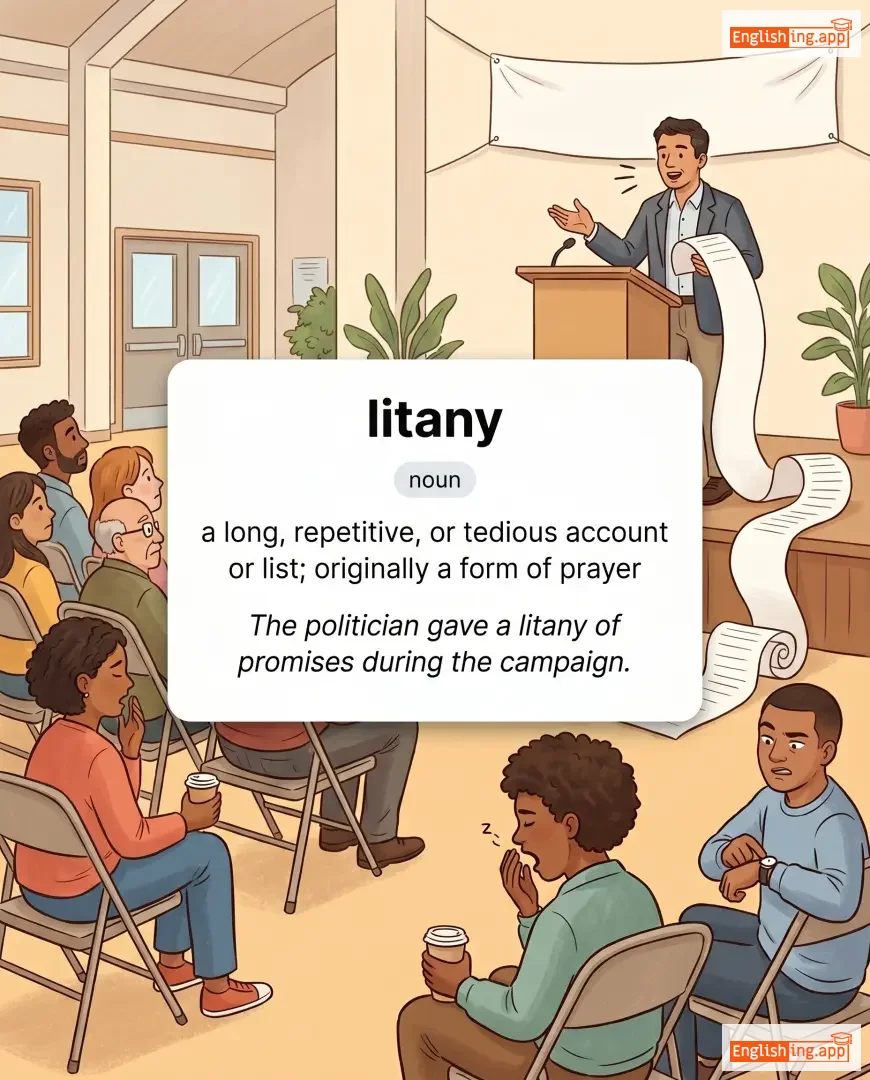
a long, repetitive, or tedious account or list; originally a form of prayer
••••••
|
The politician gave a litany of promises during the campaign. |
- •••••• |
a litany of complaints |
a long list of grievances or criticisms
••••••
|
- •••••• |
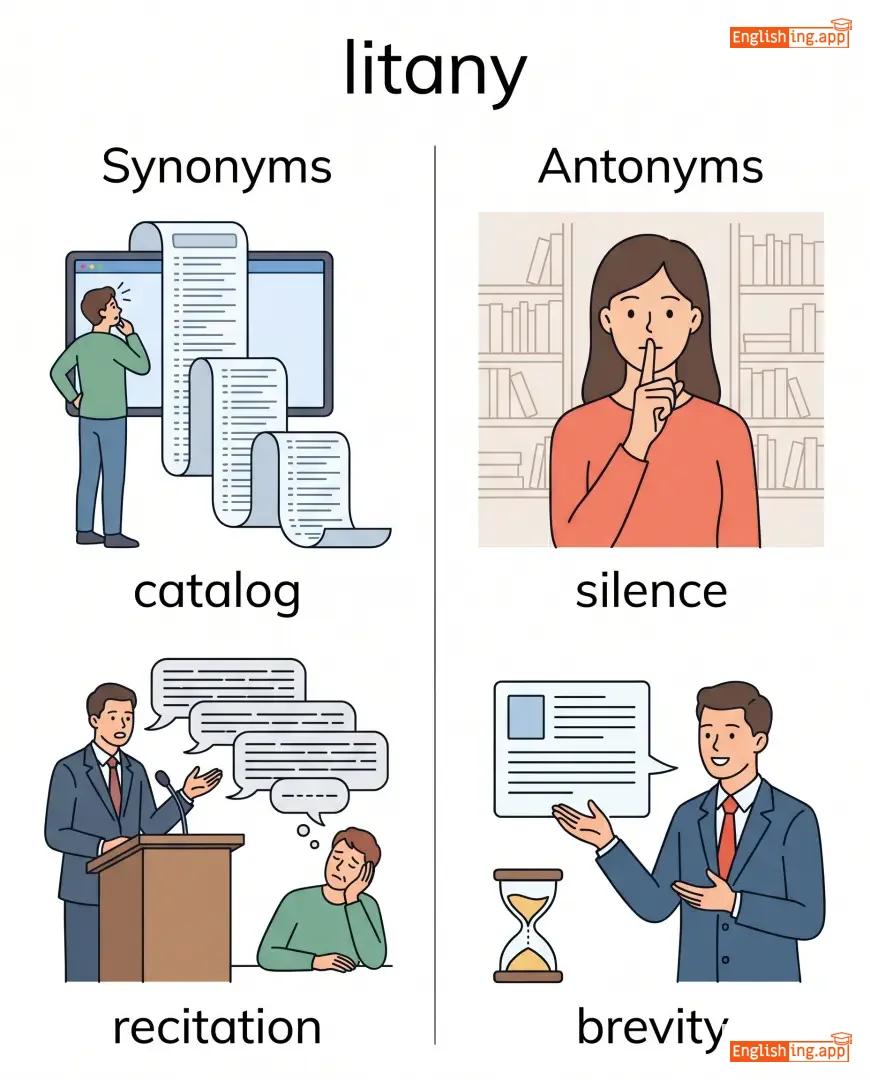
catalog, recitation, series, enumeration
••••••
|
silence, brevity
••••••
|
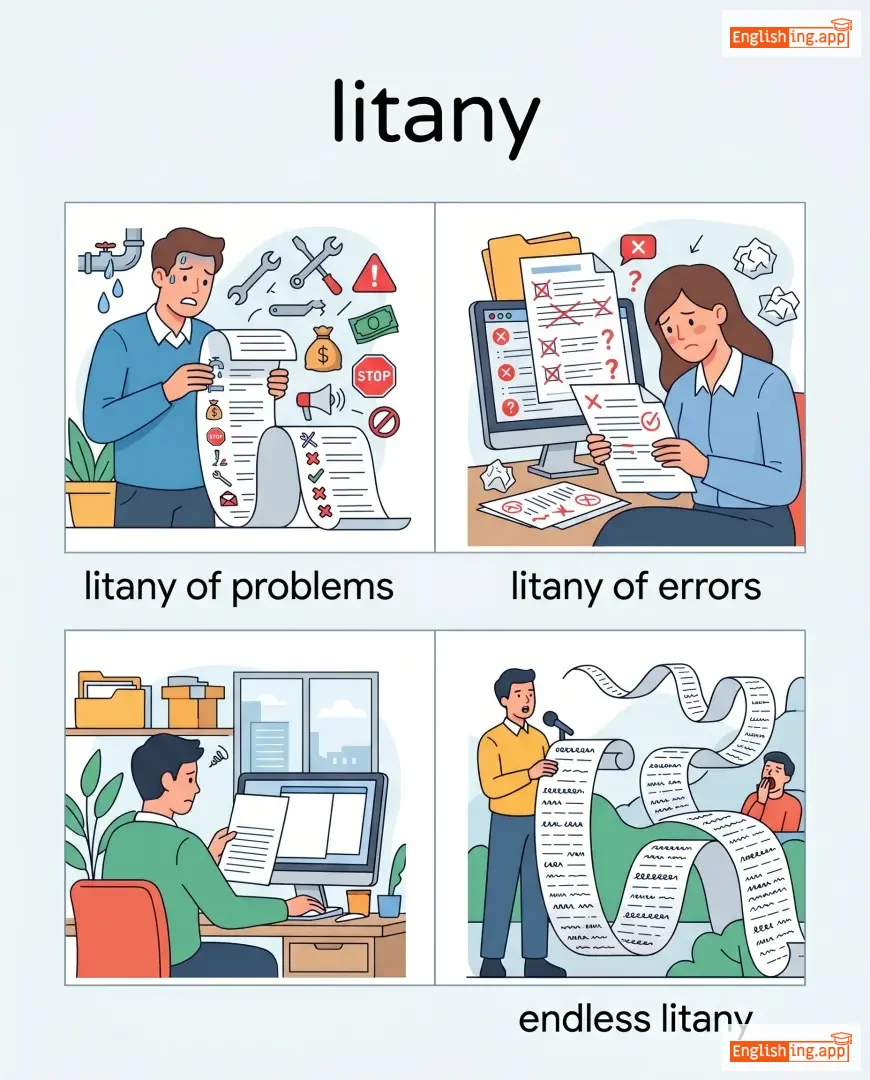
litany of problems, litany of errors, endless litany, litany of promises
••••••
|
No •••••• |
|
#5241
😴
|
/ˈlɪstləs/
adjective
(リストレス)
••••••
|
- •••••• |
無気力
mukiryoku
••••••
|
- •••••• | - •••••• | - •••••• | - •••••• |
lacking energy, enthusiasm, or interest
••••••
|
She felt listless after working long hours without rest. |
長時間休憩なしで働いた後、彼女は無気力に感じていた。
Chō jikan kyūkei nashi de hataraita ato, kanojo wa mukiryoku ni kanjite ita.
••••••
|
- •••••• | - •••••• | - •••••• |
lethargic, sluggish, weary, inactive, fatigued
••••••
|
energetic, lively, active
••••••
|
listless attitude, listless mood, feel listless, look listless
••••••
|
リストに何もないので、エネルギーもありません。
••••••
|
|
#5242
📋
|
/lɪst/
noun, verb
••••••
|
- •••••• | - •••••• |
listed
••••••
|
listed
••••••
|
lists
••••••
|
listing
••••••
|
A series of names, items, or tasks written or printed together; also, to record or register items in such a way.
••••••
|
She wrote a shopping list before going to the market. |
- •••••• |
hit list |
A list of people or things targeted for attention, often negatively.
••••••
|
- •••••• |
catalog, register, inventory, roll, record
••••••
|
disorder, jumble, mess
••••••
|
shopping list, guest list, to list items, to be listed
••••••
|
No •••••• |
|
#5243
💃
|
/ˈlɪsəm/
adjective
(リソム)
••••••
|
- •••••• |
細く、しなやかで優雅な動き
hosoku, shinayaka de yūga na ugoki
••••••
|
- •••••• | - •••••• | - •••••• | - •••••• |
Thin, supple, and graceful in movement.
••••••
|
The dancer moved with a lissome elegance.
ダンサーはリソムな優雅さで動いていました。
••••••
|
ダンサーはリソムな優雅さで動いていました。
Dansā wa risomu na yūgasa de ugoite imashita.
••••••
|
- •••••• | - •••••• | - •••••• |
slender, graceful, supple, lithe, agile
••••••
|
clumsy, stiff, awkward
••••••
|
lissome body, lissome dancer, lissome movement
••••••
|
Lissomeはslim + someを思い出させ、細くて優雅を意味します。
••••••
|
|
#5244
🥃
|
/ˈlɪkər/
noun
••••••
|
- •••••• | - •••••• | - •••••• | - •••••• | - •••••• | - •••••• |
Alcoholic drinks, especially strong distilled ones such as whiskey or vodka.
••••••
|
The shop sells both beer and hard liquor. |
- •••••• |
under the liquor |
Intoxicated due to alcohol.
••••••
|
- •••••• |
alcohol, spirits, booze, drink
••••••
|
water, juice, soft drink
••••••
|
hard liquor, liquor store, liquor license
••••••
|
No •••••• |
|
#5245
💰
|
/ˈlɪkwɪdeɪt/
verb
(リキディート)
••••••
|
- •••••• |
清算する
seisan suru
••••••
|
liquidated
リキディーテッド
••••••
|
liquidated
リキディーテッド
••••••
|
liquidates
リキディーツ
••••••
|
liquidating
リキディーティング
••••••
|
To sell assets in order to pay off debts; to close a business and convert assets into cash.
••••••
|
The company decided to liquidate its assets to pay creditors.
会社は債権者に支払うために資産を清算することを決定しました。
••••••
|
会社は債権者に支払うために資産を清算することを決定しました。
Kaisha wa saiken-sha ni shiharau tame ni shisan o seisan suru koto o kettei shimashita.
••••••
|
liquidate assets
資産を清算する
••••••
|
To sell off property or possessions to raise money.
••••••
|
資産を清算する
shisan o seisan suru
••••••
|
sell, convert, dissolve, wind up, cash in
••••••
|
retain, invest, acquire
••••••
|
liquidate assets, liquidate a company, forced to liquidate
••••••
|
清算することは、すべてを現金に変えるようなものです。
••••••
|
|
#5246
🍸
|
/lɪˈkjʊər/
noun
(リキュール)
••••••
|
- •••••• |
甘いリキュール
amai rikyuuru
••••••
|
- •••••• | - •••••• | - •••••• | - •••••• |
A strong, sweet alcoholic drink flavored with fruits, herbs, or spices.
••••••
|
She served a small glass of cherry liqueur after dinner.
夕食後に小さなチェリーリキュールを出しました。
••••••
|
夕食後に小さなチェリーリキュールを出しました。
Yūshokugo ni chiisana chērī rikyuuru o dashimashita.
••••••
|
- •••••• | - •••••• | - •••••• |
cordial, spirit, schnapps, digestif, aperitif
••••••
|
soft drink, non-alcoholic beverage
••••••
|
fruit liqueur, coffee liqueur, herbal liqueur, homemade liqueur
••••••
|
チェリーリキュールで甘いひとときを! 🍒
••••••
|
|
#5247
🔥
|
/ˈlɪk.wɪ.faɪ/
verb
(リクエファイ)
••••••
|
- •••••• |
液化する
liquefy
••••••
|
liquefied
リクエファイド
••••••
|
liquefied
リクエファイド
••••••
|
liquefies
リクエファイズ
••••••
|
liquefying
リクエファイング
••••••
|
to make or become liquid
••••••
|
The heat will liquefy the butter in a few minutes.
熱は数分でバターを液体に変えるでしょう。
••••••
|
熱は数分でバターを液体に変えるでしょう。
Netsu wa suū-fun de batā o ekitai ni kaeru deshō.
••••••
|
- •••••• | - •••••• | - •••••• |
melt, dissolve, thaw, soften
••••••
|
solidify, freeze, harden
••••••
|
liquefy butter, liquefy fat, liquefy gas
••••••
|
Liquefy = liquid – バターは熱で液体になる
••••••
|
|
#5248
💧
|
/ˌlɪk.wəˈfeɪ.ʃənt/
noun
(リクエフェイシエント)
••••••
|
- •••••• |
液体化剤
liquefacient
••••••
|
- •••••• | - •••••• | - •••••• | - •••••• |
a substance that causes something to become liquid
••••••
|
The chemist explained how the liquefacient worked in the experiment. |
化学者は、実験で液体化剤がどのように機能するかを説明しました。
Kagakusha wa, jikken de ekitaikazai ga dono yō ni kinō suru ka o setsumei shimashita.
••••••
|
- •••••• | - •••••• | - •••••• |
solvent, diluent, melting agent
••••••
|
solidifier, hardener
••••••
|
liquefacient agent, liquefacient property
••••••
|
Liquefacient = 液体, 物を液体に変える物質
••••••
|
|
#5249
🦁
|
/ˈlaɪ.ə.naɪz/
verb
(ライオナイズ)
••••••
|
- •••••• |
賛美する
sanbisuru
••••••
|
lionized
ライオナイズド
••••••
|
lionized
ライオナイズド
••••••
|
lionizes
ライオナイズズ
••••••
|
lionizing
ライオナイジング
••••••
|
to treat someone as a celebrity or give a lot of public attention
••••••
|
The press began to lionize the young scientist after his discovery.
彼の発見の後、メディアは若い科学者をライオナイズし始めました。
••••••
|
彼の発見の後、メディアは若い科学者をライオナイズし始めました。
kare no hakken no ato, media wa wakai kagakusha o raionaisu shi hajimemashita.
••••••
|
- •••••• | - •••••• | - •••••• |
celebrate, glorify, idolize, praise
••••••
|
ignore, neglect, criticize
••••••
|
lionize a hero, lionize celebrities, lionize leaders
••••••
|
ライオナイズは、ライオンのように誰かを英雄扱いすることです。
••••••
|
|
#5250
🧺
|
/lɪnt/
noun
(リント)
••••••
|
- •••••• |
繊維くず
sen'i kuzu
••••••
|
- •••••• | - •••••• | - •••••• | - •••••• |
small soft fibers that come off cloth, often found in dryers or on clothes
••••••
|
There was lint all over his black shirt after the wash. |
洗濯後、彼の黒いシャツに繊維くずがついていました。
Sentaku go, kare no kuroi shatsu ni sen'i kuzu ga tsuite imashita.
••••••
|
pick up lint |
to collect small fibers from clothing
••••••
|
繊維くずを拾う
sen'i kuzu o hirou
••••••
|
fluff, fuzz, fiber, thread
••••••
|
clean cloth, smooth surface
••••••
|
lint roller, lint remover, lint brush, lint build-up
••••••
|
繊維くずは小さな繊維 - '洗濯後繊維くずを拾う'!
••••••
|
Vocabulary Quiz
Test your vocabulary by matching words with their translations or meanings.
Login to take the quiz
Comments (0)
Share your thoughts and join the discussion.
Join the discussion by logging in
Login to CommentNo comments yet
Be the first to share your thoughts!