

翻訳
過去
過去分詞
三人称単数
動名詞
意味
例文
例文の翻訳
同義語
対義語
コロケーション
ニーモニック
Swipe left or right, or use the buttons. Tap image to zoom.
例文の翻訳
単語
Lesson 339Lesson 339 - マスクトグル
|
絵文字
|
単語 | Images | 翻訳 | 過去 | 過去分詞 | 三人称単数 | 動名詞 | 意味 | 例文 | 例文の翻訳 | 表現例 | 表現例の意味 | 表現例の翻訳 | 同義語 | 対義語 | コロケーション | ニーモニック |
|---|---|---|---|---|---|---|---|---|---|---|---|---|---|---|---|---|---|
|
#10135
📅
|
/ˈrɛɡjələr/
adjective
(レギュラー)
••••••
|
- •••••• |
定期的な
teikiteki na
••••••
|
- •••••• | - •••••• | - •••••• | - •••••• |
Happening at fixed intervals; usual or normal in pattern or quality
••••••
|
He is a regular visitor to the library. |
彼は図書館の定期的な訪問者です。
Kare wa toshokan no teikiteki na hōmon-sha desu.
••••••
|
regular customer |
A person who frequently visits or buys from the same place
••••••
|
定期的な顧客
teikiteki na kokyaku
••••••
|
consistent, usual, normal, routine, frequent
••••••
|
irregular, unusual, abnormal
••••••
|
regular basis, regular meeting, regular customer, regular pattern
••••••
|
Regular は定期的な — 定期的に訪れる顧客
••••••
|
|
#10136
🚫
|
/rɪˈstrɪkt/
verb
(リストリクト)
••••••
|
- •••••• |
制限する
seigensuru
••••••
|
restricted
リストリクテッド
••••••
|
restricted
リストリクテッド
••••••
|
restricts
リストリクツ
••••••
|
restricting
リストリクティング
••••••
|
To limit the size, amount, or range of something.
••••••
|
The government decided to restrict the use of plastic bags.
政府はプラスチック袋の使用を制限することを決定しました。
••••••
|
政府はプラスチック袋の使用を制限することを決定しました。
Seifu wa purasuchikku bukuro no shiyou wo seigen suru koto wo kettei shimashita.
••••••
|
restrict access
アクセス制限
••••••
|
To limit or control who can enter or use something.
••••••
|
アクセス制限
Akusesu seigen
••••••
|
limit, confine, curb, constrain, control
••••••
|
allow, permit, enable
••••••
|
restrict access, restrict movement, restrict freedom, restrict use
••••••
|
Restrictの意味は'制限する' - 制限を加えること
••••••
|
|
#10137
💬
|
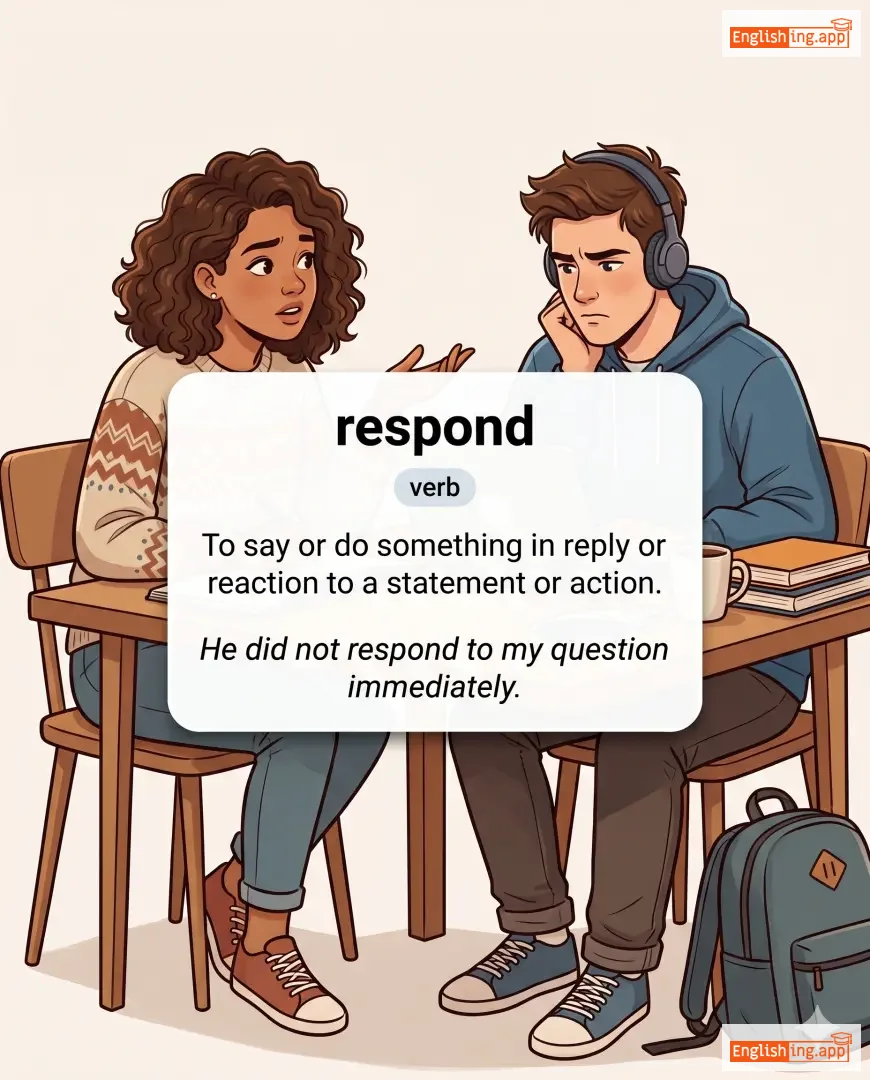
/rɪˈspɒnd/
verb
(レスポンド)
••••••
|
|
応答する
ōtō suru
••••••
|
responded
レスポンデッド
••••••
|
responded
レスポンデッド
••••••
|
responds
レスポンズ
••••••
|
responding
レスポンディング
••••••
|
To say or do something in reply or reaction to a statement or action.
••••••
|
He did not respond to my question immediately.
彼は私の質問にすぐに返答しませんでした。
••••••
|
彼は私の質問にすぐに返答しませんでした。
Kare wa watashi no shitsumon ni sugu ni hentō shimasen deshita.
••••••
|
respond to treatment
治療に反応する
••••••
|
To show improvement after receiving medical treatment.
••••••
|
治療に反応する
Chiryō ni hannō suru
••••••
|
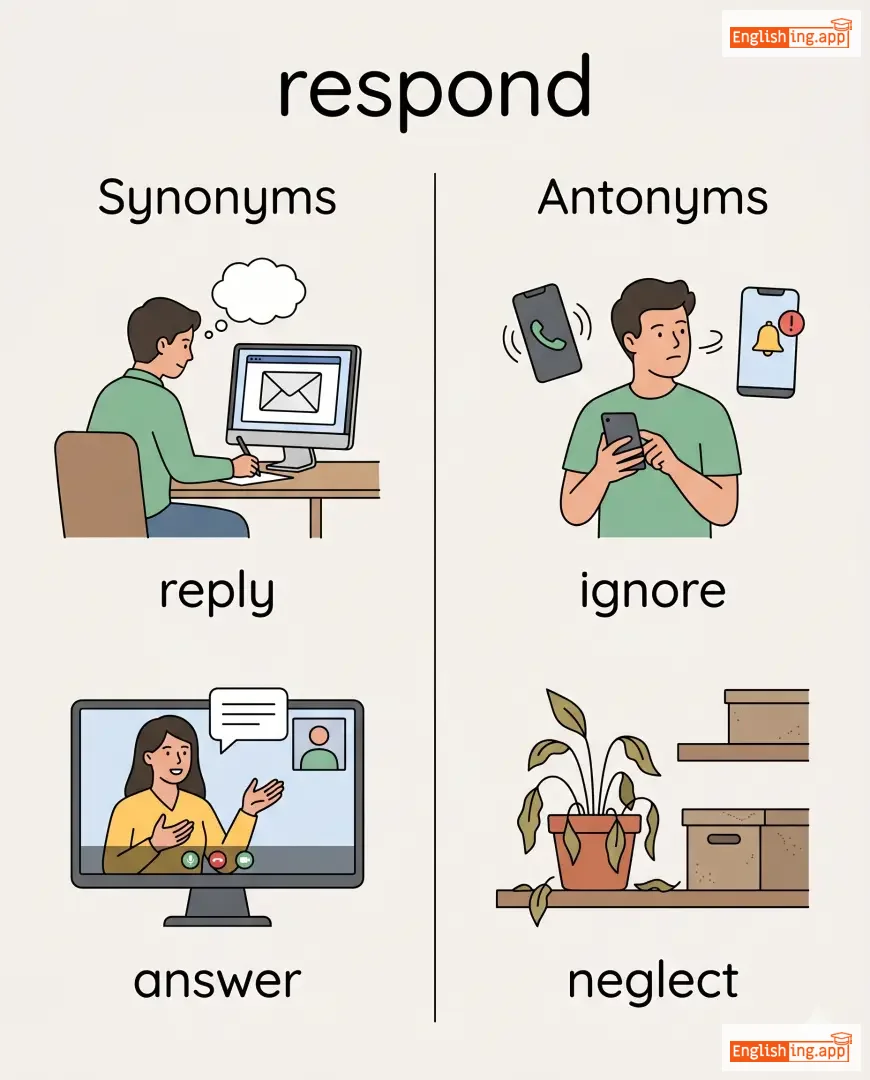
reply, answer, react, acknowledge, retort
••••••
|
ignore, neglect, disregard
••••••
|
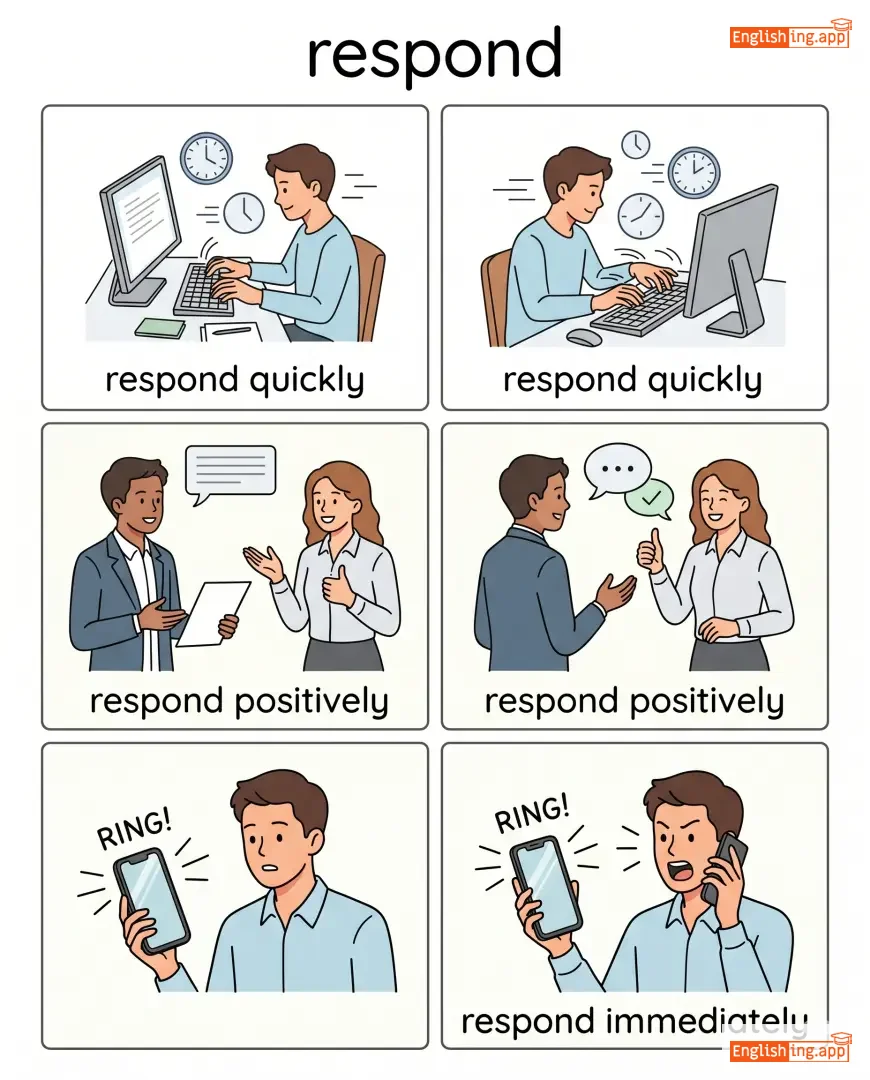
respond quickly, respond positively, respond immediately, respond appropriately
••••••
|
応答する、つまり質問に答えるための応答。
••••••
|
|
#10138
✊
|
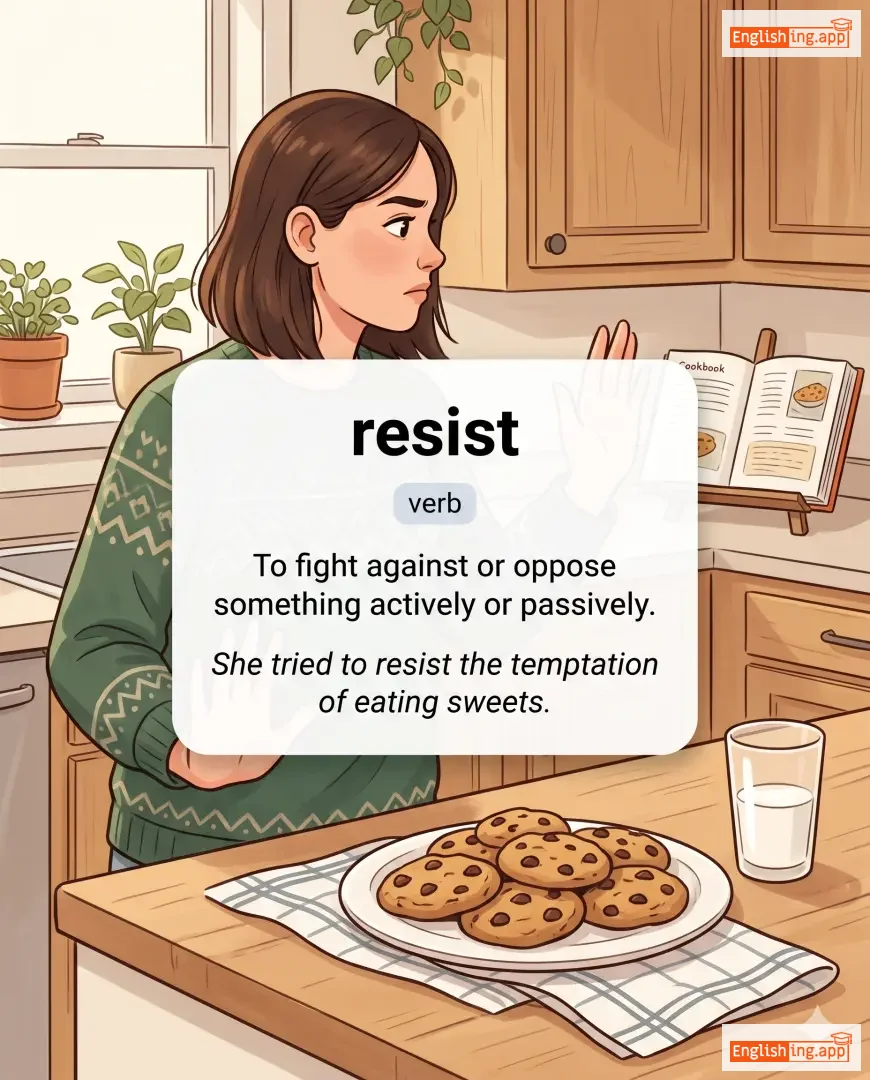
/rɪˈzɪst/
verb
(レジスト)
••••••
|
|
抵抗する
teikou suru
••••••
|
resisted
レジステッド
••••••
|
resisted
レジステッド
••••••
|
resists
レジスツ
••••••
|
resisting
レジスティング
••••••
|
To fight against or oppose something actively or passively.
••••••
|
She tried to resist the temptation of eating sweets.
彼女は甘いお菓子を食べたい誘惑に抵抗しようとしました。
••••••
|
彼女は甘いお菓子を食べたい誘惑に抵抗しようとしました。
Kanojo wa amai okashi wo tabetai yuuwaku ni teikou shiyou to shimashita.
••••••
|
resist arrest
逮捕に抵抗する
••••••
|
To oppose or fight back when being taken into custody by the police.
••••••
|
逮捕に抵抗する
taiho ni teikou suru
••••••
|
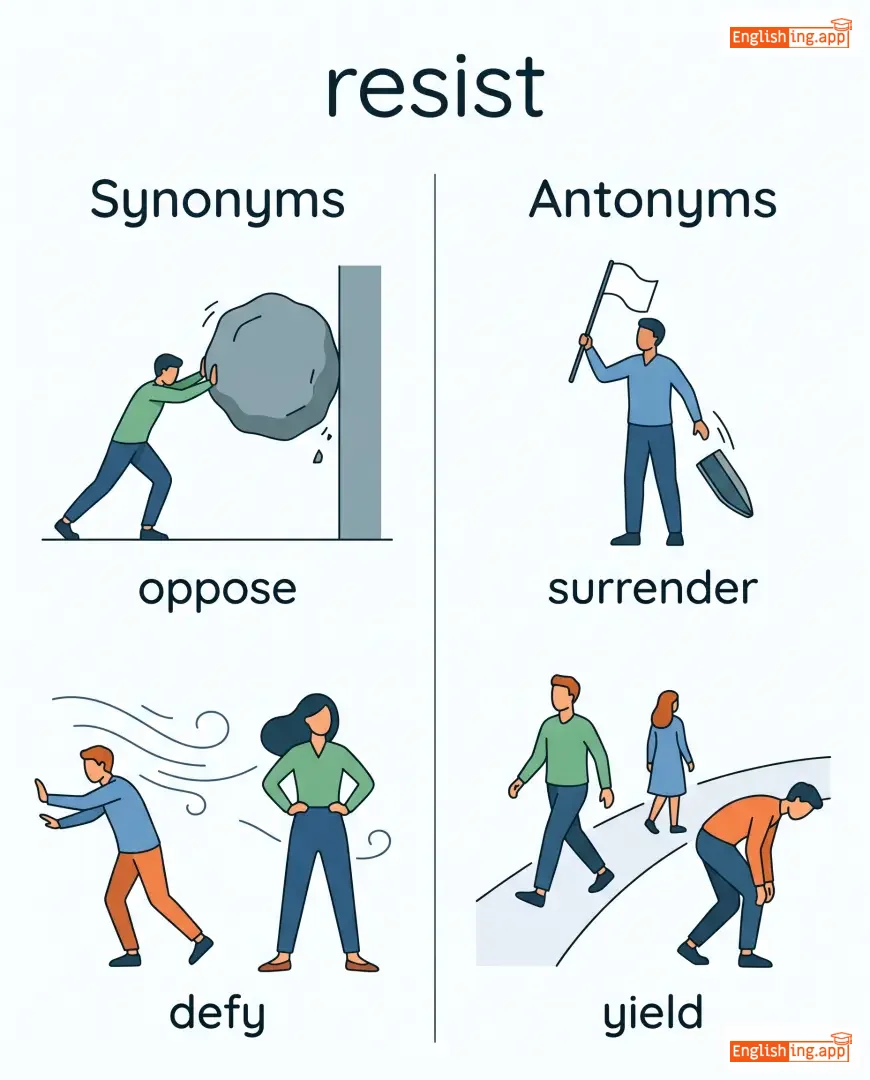
oppose, defy, withstand, endure, combat
••••••
|
surrender, yield, submit
••••••
|
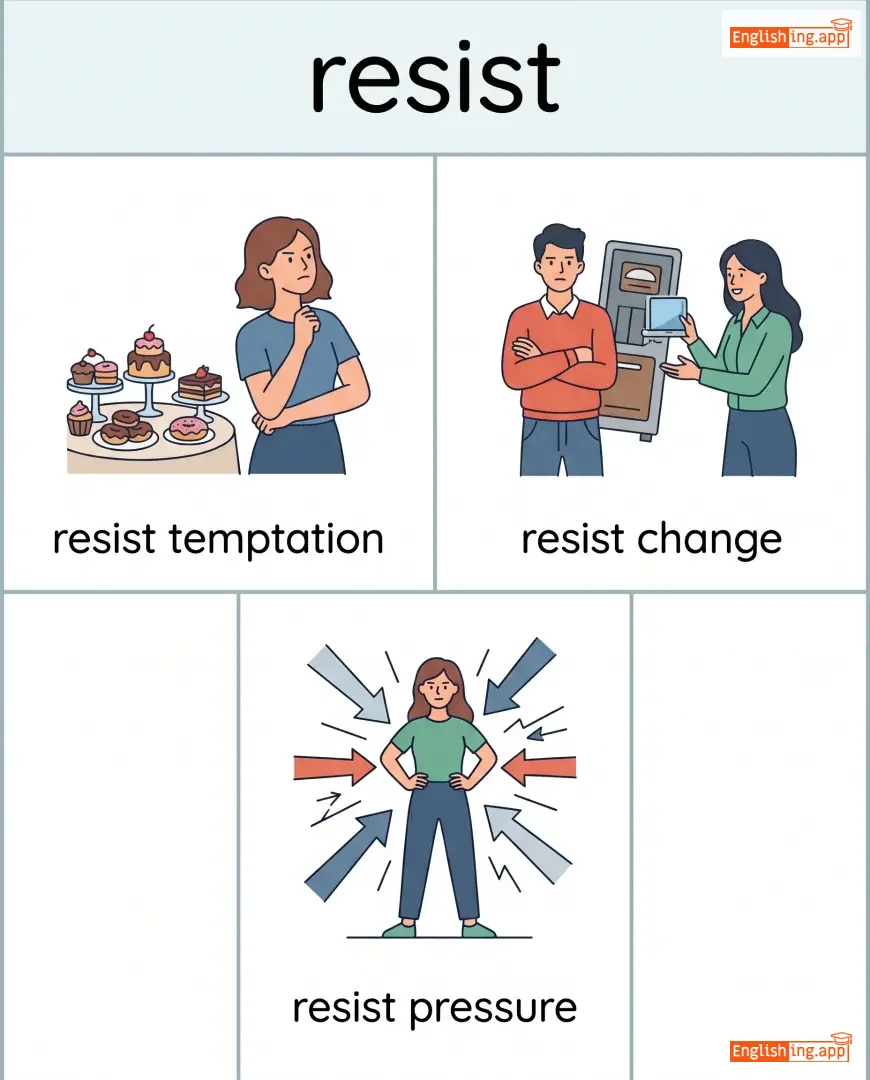
resist temptation, resist change, resist pressure, resist arrest
••••••
|
抵抗するとは抵抗すること - すべてに抵抗せよ!
••••••
|
|
#10139
🏠
|
/ˈrɛzɪdənt/
noun
(レジデント)
••••••
|
- •••••• |
住民
jūmin
••••••
|
- •••••• | - •••••• | - •••••• | - •••••• |
A person who lives in a particular place.
••••••
|
Every resident of the building must follow the safety rules. |
建物のすべての住民は安全規則に従う必要があります。
Tatemono no subete no jūmin wa anzen kisoku ni shitagau hitsuyō ga arimasu.
••••••
|
permanent resident |
A person who lives permanently in a place, often with legal permission.
••••••
|
永住者
eijūsha
••••••
|
inhabitant, occupant, dweller, tenant
••••••
|
visitor, outsider, tourist
••••••
|
resident doctor, local resident, permanent resident
••••••
|
Residentは '住民' と同じ、家に住んでいる人のことです。
••••••
|
|
#10140
📰
|
/ˌrɛpərˈtɔːriəl/
adjective
(レポーティオリアル)
••••••
|
- •••••• |
レポートに関する
repōto ni kansuru
••••••
|
- •••••• | - •••••• | - •••••• | - •••••• |
Relating to or characteristic of a repertoire, especially in journalism or performance contexts.
••••••
|
The journalist's repertorial style captured every detail of the unfolding story.
そのジャーナリストのレポーティオリアルスタイルは、展開するストーリーのあらゆる詳細を捉えました。
••••••
|
そのジャーナリストのレポーティオリアルスタイルは、展開するストーリーのあらゆる詳細を捉えました。
Sono jānarisuto no repōtioriaru sutairu wa, tenkai suru sutōrī no arayuru shōsai o toraemashita.
••••••
|
- •••••• | - •••••• | - •••••• |
journalistic, descriptive, narrative, reportorial, chronicling
••••••
|
fictional, imaginative
••••••
|
repertorial writing, repertorial detail, repertorial account
••••••
|
レポートに関する、ジャーナリズムやパフォーマンスのスタイル
••••••
|
|
#10141
🔄
|
/rɪˈnuː/
verb
••••••
|
- •••••• | - •••••• |
renewed
••••••
|
renewed
••••••
|
renews
••••••
|
renewing
••••••
|
to make something new again or extend its period of validity
••••••
|
I need to renew my passport before traveling. |
- •••••• |
renew a contract |
to extend the time or validity of a contract
••••••
|
- •••••• |
extend, refresh, continue, prolong
••••••
|
expire, end, terminate
••••••
|
renew subscription, renew passport, renew contract, renew hope
••••••
|
No •••••• |
|
#10142
🛠️
|
/rɪˈmuːvəbəl/
adjective
(リムーバブル)
••••••
|
- •••••• |
取り外し可能な
torihashi kanou na
••••••
|
- •••••• | - •••••• | - •••••• | - •••••• |
able to be removed or taken away
••••••
|
This phone has a removable battery. |
この電話には取り外し可能なバッテリーがあります。
Kono denwa ni wa torihashi kanou na batterii ga arimasu.
••••••
|
- •••••• | - •••••• | - •••••• |
detachable, portable, separable, replaceable
••••••
|
fixed, permanent
••••••
|
removable battery, removable cover, removable device
••••••
|
取り外し可能なは取り外すことができるという意味で、バッテリーが取り外せます。
••••••
|
|
#10143
📡
|
/rɪˈmoʊtɪd/
adjective
(リモテッド)
••••••
|
- •••••• |
リモートされた
rimōto sareta
••••••
|
- •••••• | - •••••• | - •••••• | - •••••• |
placed at a distance; made remote
••••••
|
The system was remoted to a secure location. |
システムは安全な場所にリモートされました。
Shisutemu wa anzen na basho ni rimōto saremashita.
••••••
|
- •••••• | - •••••• | - •••••• |
isolated, distant, separated, detached
••••••
|
near, close
••••••
|
remoted access, remoted system, remoted server
••••••
|
Remotedはリモートされた、'remote'が遠いことを意味するから。
••••••
|
|
#10144
💬
|
/rɪˈmɑːrk/
noun/verb
(リマーク)
••••••
|
- •••••• |
発言
hatsugen
••••••
|
remarked
リマークド
••••••
|
remarked
リマークド
••••••
|
remarks
リマークス
••••••
|
remarking
リマーキング
••••••
|
something that is said; a comment
••••••
|
She made a remark about the weather.
シー メイド ア リマーク アバウト ザ ウェザー。
••••••
|
彼女は天気について発言した。
Kanojo wa tenki ni tsuite hatsugen shita.
••••••
|
make a remark
メイク ア リマーク
••••••
|
to say something, usually as a comment
••••••
|
発言する
hatsugen suru
••••••
|
comment, observation, statement, note
••••••
|
silence, quiet
••••••
|
casual remark, make a remark, witty remark, critical remark
••••••
|
Remark は発言 – remember 're' means again, mark your words by speaking.
••••••
|
|
#10145
🪙
|
/rɪˈmeɪndər/
noun
(rimeindā)
••••••
|
- •••••• |
残り
nokori
••••••
|
- •••••• | - •••••• | - •••••• | - •••••• |
the part that is left after the main part is gone or used
••••••
|
He ate most of the cake and left the remainder on the plate.
彼はケーキのほとんどを食べ、残りを皿に残しました。
••••••
|
彼はケーキのほとんどを食べ、残りを皿に残しました。
Kare wa kēki no hotondo o tabe, nokori o sara ni nokoshimashita.
••••••
|
the remainder of the day
その日の残り
••••••
|
the part of the day that is left
••••••
|
その日の残り
sono hi no nokori
••••••
|
rest, residue, balance, leftover, surplus
••••••
|
whole, total, entirety
••••••
|
leave the remainder, remainder of the day, remainder of the work, small remainder
••••••
|
Remainder は残りを意味します; ケーキの残った部分を考えてみましょう。
••••••
|
|
#10146
🔒
|
/rɪˈlaɪəbl/
adjective
(リライアブル)
••••••
|
|
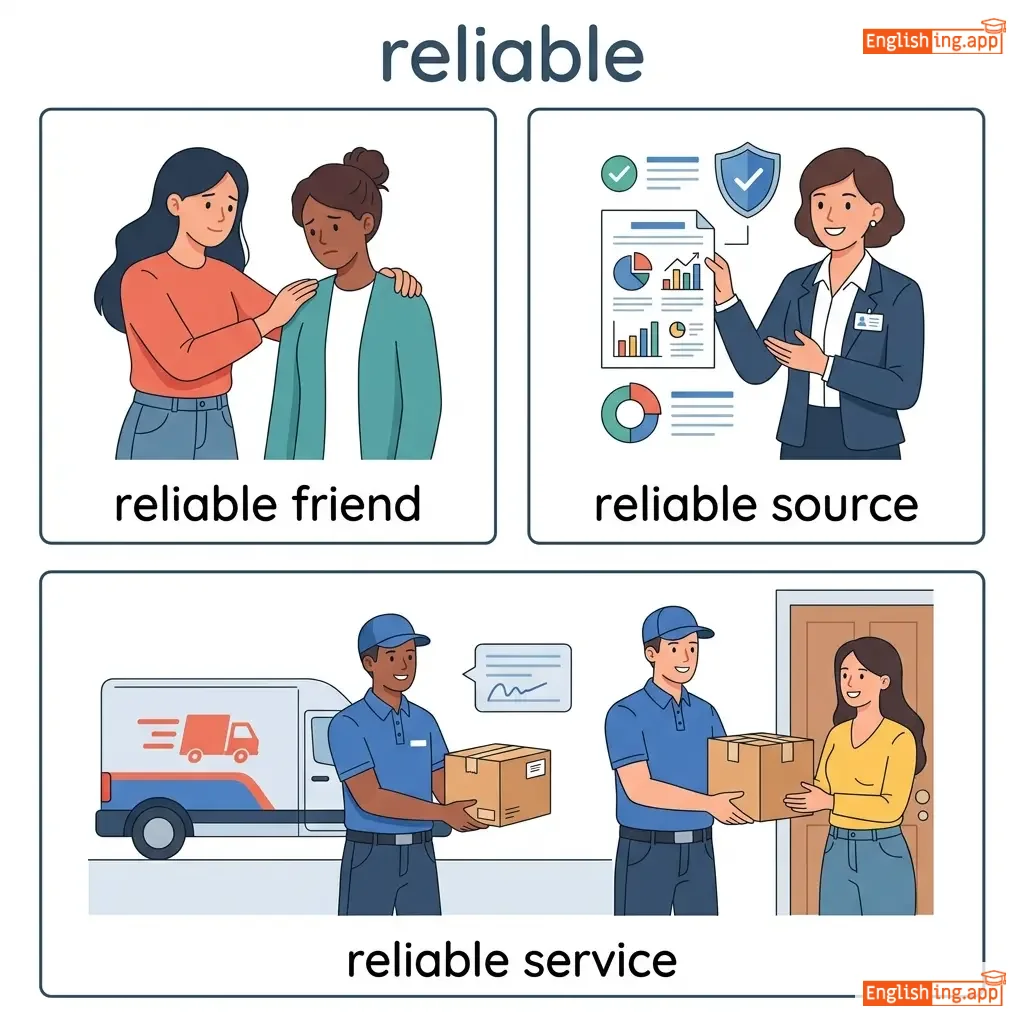
信頼できる
shinraidekiru
••••••
|
- •••••• | - •••••• | - •••••• | - •••••• |
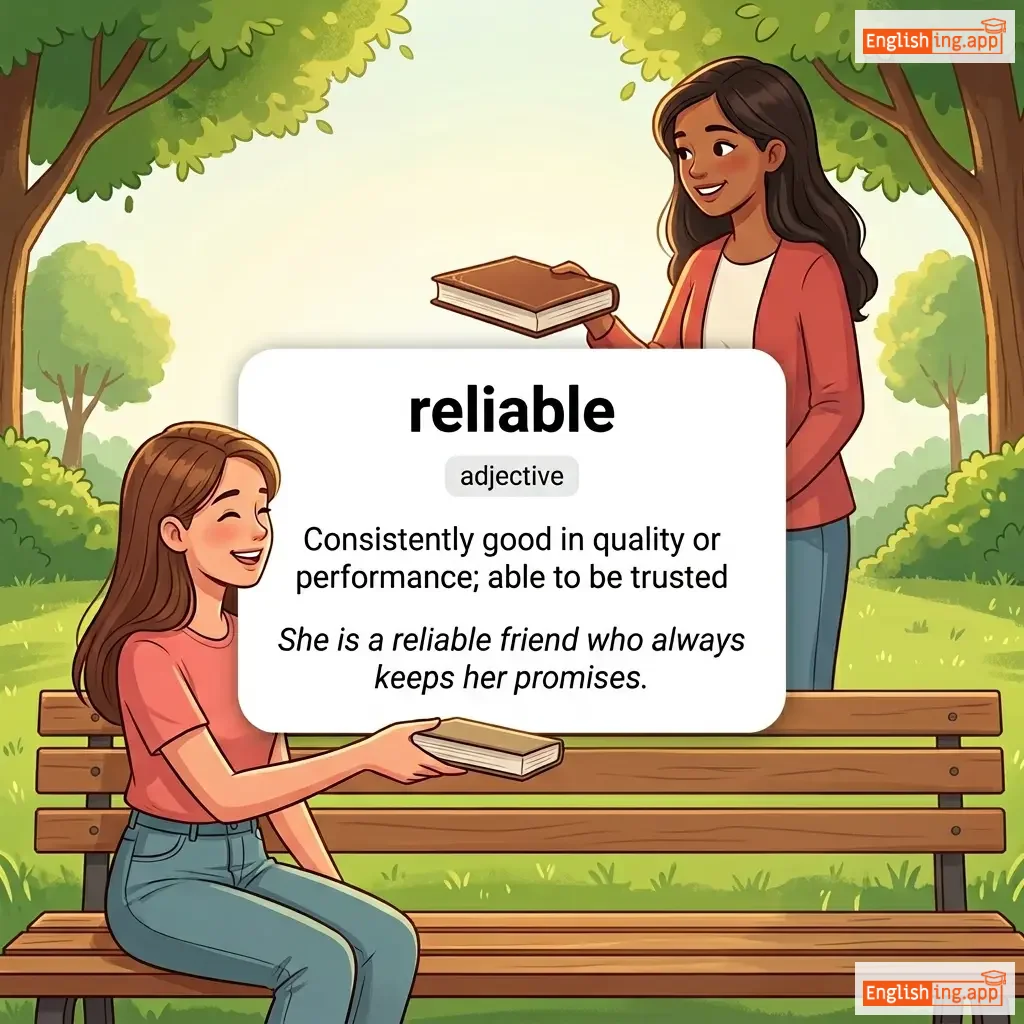
Consistently good in quality or performance; able to be trusted
••••••
|
She is a reliable friend who always keeps her promises.
彼女はいつも約束を守る信頼できる友人です。
••••••
|
彼女はいつも約束を守る信頼できる友人です。
Kanojo wa itsumo yakusoku o mamoru shinraidekiru yūjin desu.
••••••
|
reliable source
信頼できる情報源
••••••
|
A source of information that can be trusted
••••••
|
信頼できる情報源
shinraidekiru jōhōgen
••••••
|
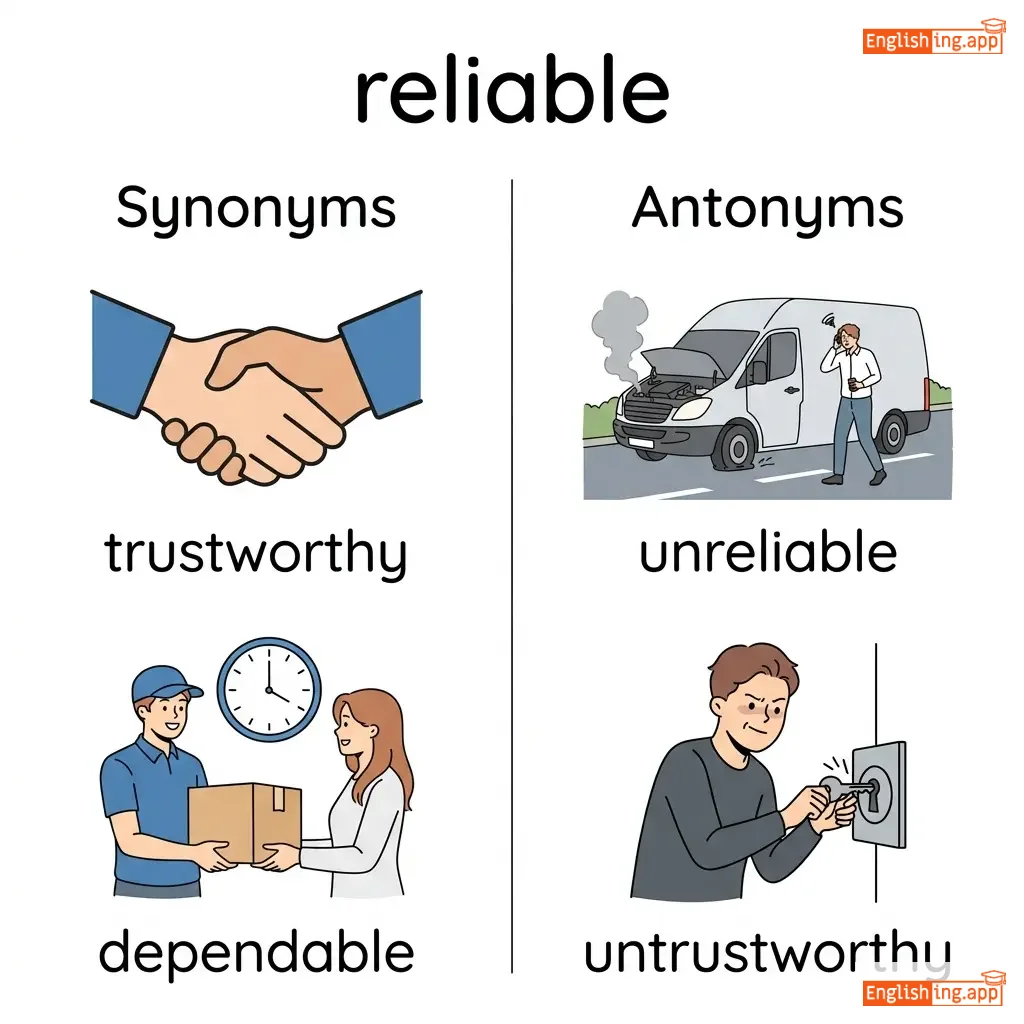
trustworthy, dependable, consistent, steady, faithful
••••••
|
unreliable, untrustworthy
••••••
|
reliable friend, reliable source, reliable service, reliable information
••••••
|
Reliable = Relate + able — 約束を守る信頼できる友人
••••••
|
|
#10147
🎉
|
/rɪˈdʒɔɪsɪŋ/
noun
(リジョーイシング)
••••••
|
- •••••• |
喜び
yorokobi
••••••
|
- •••••• | - •••••• | - •••••• | - •••••• |
The action of showing great joy or happiness
••••••
|
There was much rejoicing after the victory. |
勝利後、多くの喜びがありました。
Shōri go, ōku no yorokobi ga arimashita.
••••••
|
- •••••• | - •••••• | - •••••• |
celebration, joy, happiness, delight
••••••
|
sorrow, grief
••••••
|
much rejoicing, public rejoicing, rejoicing at victory
••••••
|
Rejoicing は再び喜びを見つけること — 勝利を祝って喜ぶ
••••••
|
|
#10148
💪
|
/ˌriːɪnˈfɔːrs/
verb
(リーインフォース)
••••••
|
|
強化する
kyouka suru
••••••
|
reinforced
リーインフォースド
••••••
|
reinforced
リーインフォースド
••••••
|
reinforces
リーインフォースズ
••••••
|
reinforcing
リーインフォーシング
••••••
|
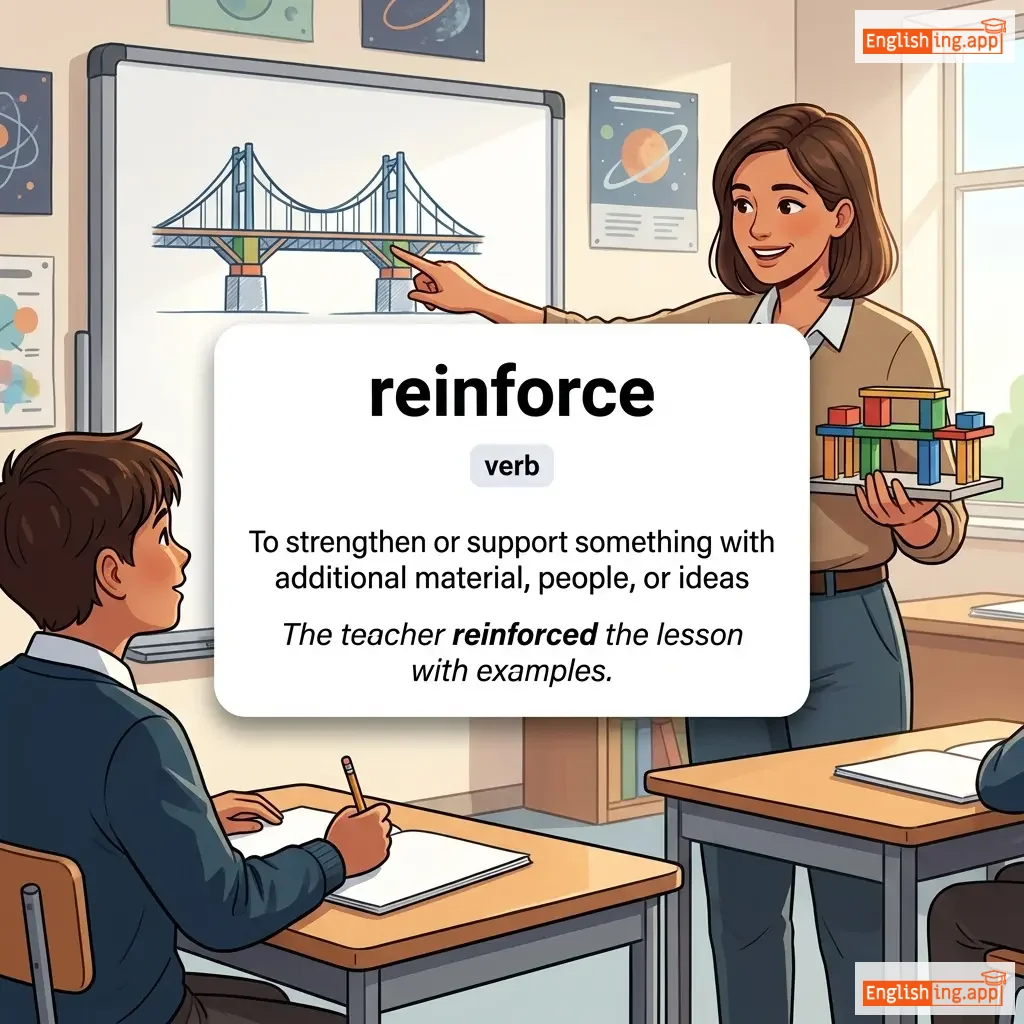
To strengthen or support something with additional material, people, or ideas
••••••
|
The teacher reinforced the lesson with examples.
先生は例を使ってレッスンを強化しました。
••••••
|
先生は例を使ってレッスンを強化しました。
Sensei wa rei o tsukatte ressun o kyōka shimashita.
••••••
|
reinforce an idea
アイデアを強化する
••••••
|
To strengthen the belief or acceptance of a concept
••••••
|
アイデアを強化する
aidea o kyōka suru
••••••
|
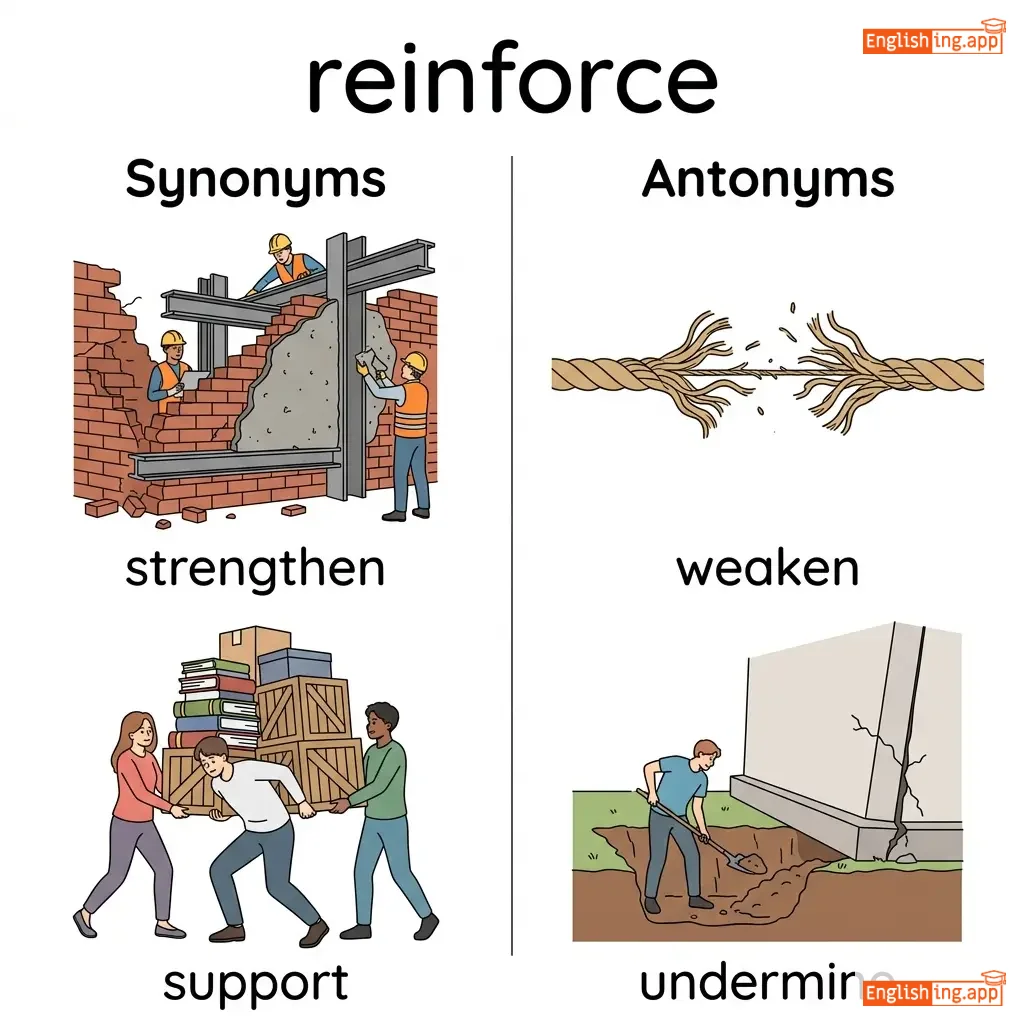
strengthen, support, bolster, fortify, encourage
••••••
|
weaken, undermine
••••••
|
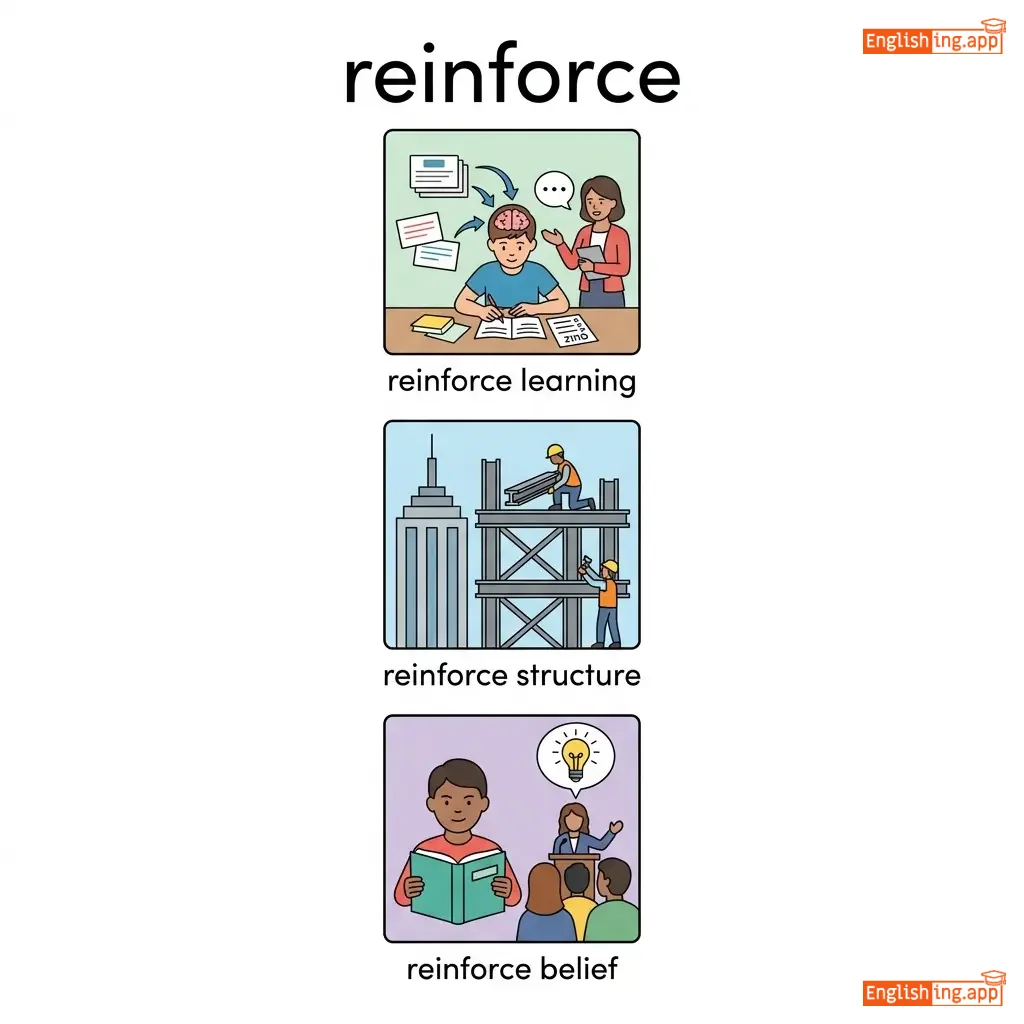
reinforce learning, reinforce structure, reinforce belief, reinforce habit
••••••
|
Rein (馬) + force = 力で強化する
••••••
|
|
#10149
⚖️
|
/ˈrɛɡjʊˌleɪt/
verb
(レギュレート)
••••••
|
|
規制する
kisei suru
••••••
|
regulated
レギュレーテッド
••••••
|
regulated
レギュレーテッド
••••••
|
regulates
レギュレーツ
••••••
|
regulating
レギュレーティング
••••••
|
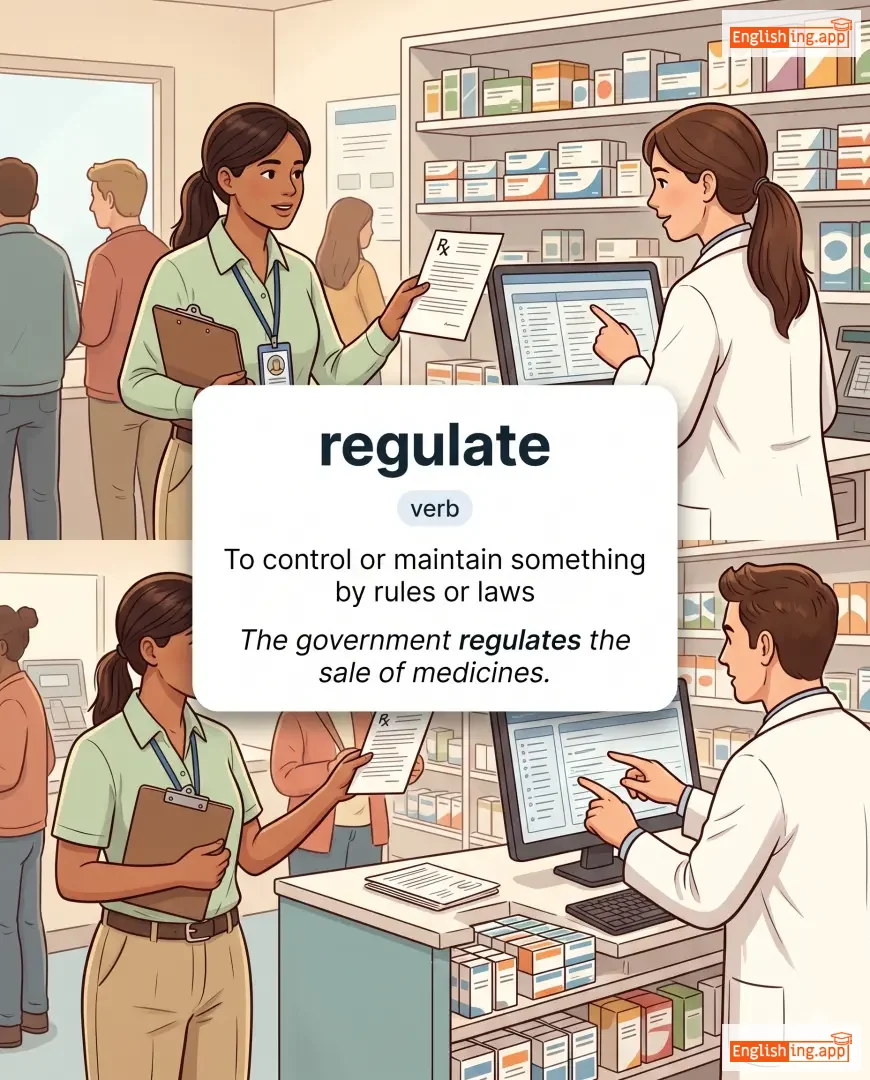
To control or maintain something by rules or laws
••••••
|
The government regulates the sale of medicines.
政府は薬の販売を規制しています。
••••••
|
政府は薬の販売を規制しています。
Seifu wa kusuri no hanbai o kisei shiteimasu.
••••••
|
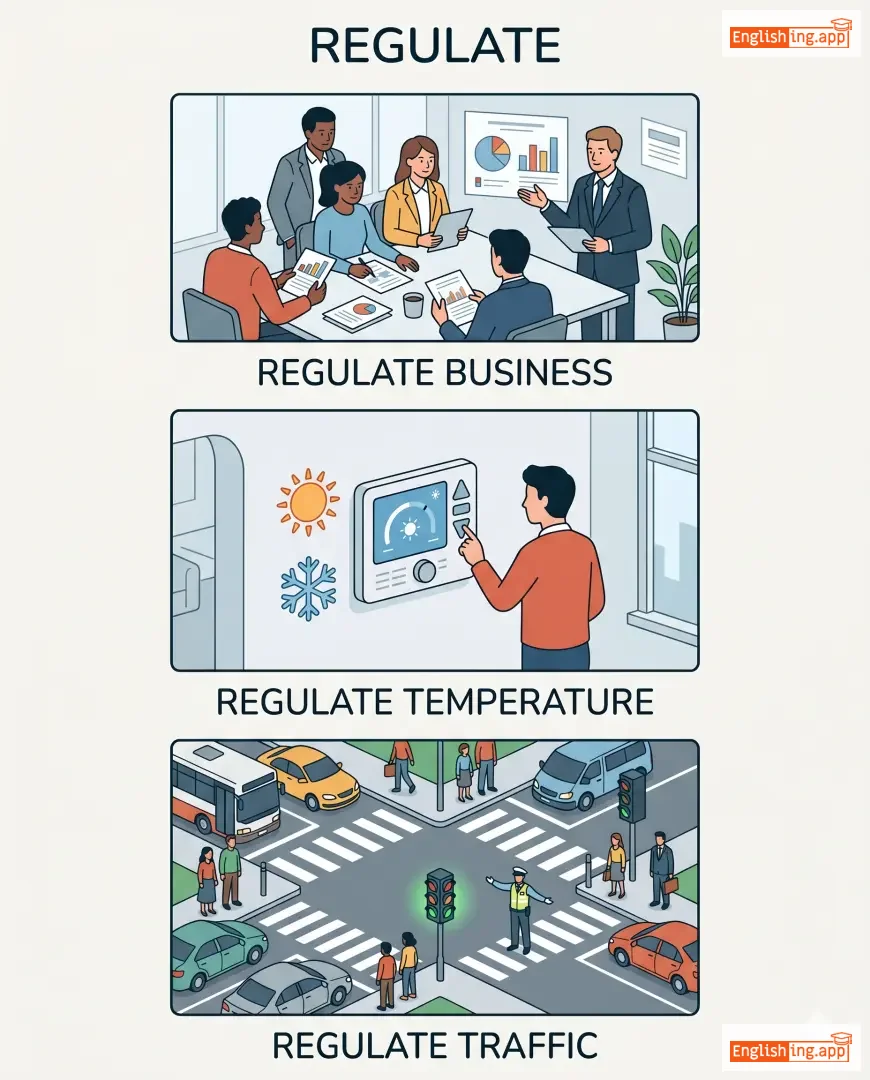
regulate traffic
交通を規制する
••••••
|
To control the flow and movement of vehicles
••••••
|
交通を規制する
Kōtsū o kisei suru
••••••
|
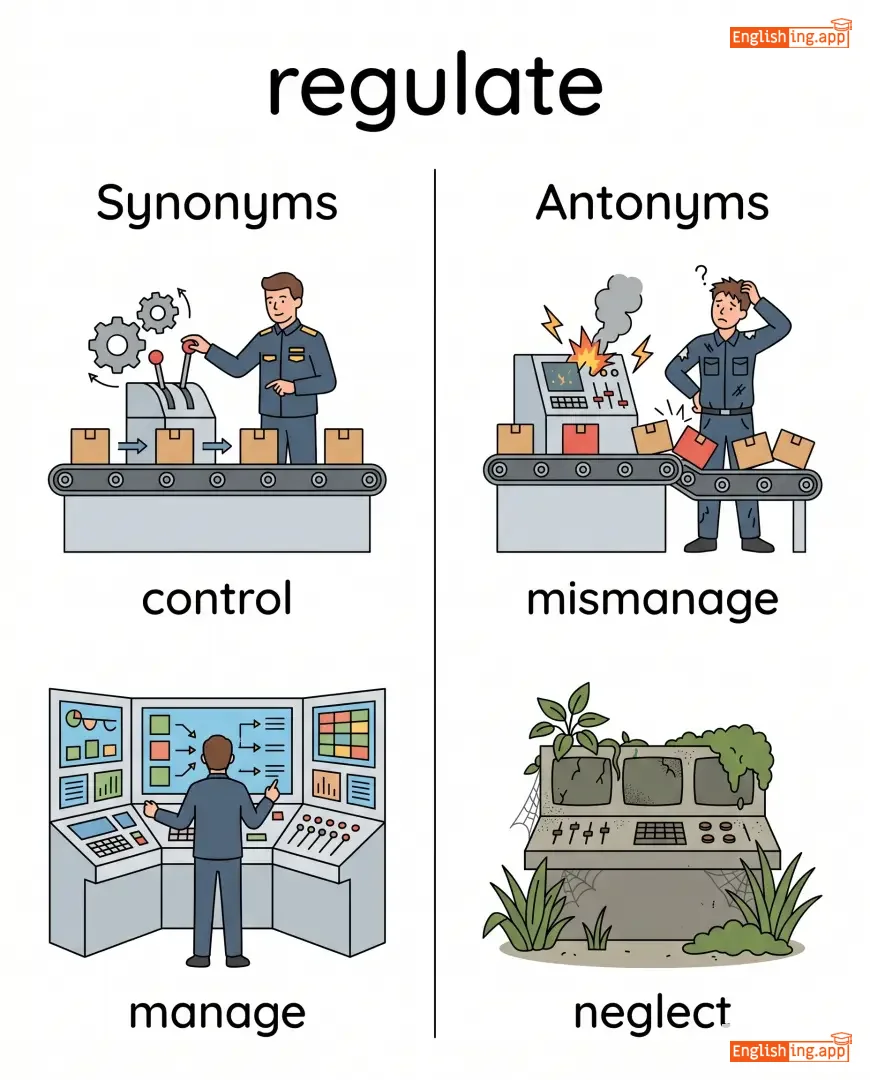
control, manage, supervise, direct, monitor
••••••
|
mismanage, neglect
••••••
|
regulate business, regulate temperature, regulate traffic, regulate industry
••••••
|
規制するは「規則で制御する」という意味です
••••••
|
|
#10150
⚖️
|
/kwoʊ/
noun
(クォ)
••••••
|
- •••••• |
現状
genjou
••••••
|
- •••••• | - •••••• | - •••••• | - •••••• |
The existing state of affairs or situation, often used in the phrase 'status quo'.
••••••
|
He wanted to maintain the status quo at work. |
彼は職場で現状を維持したかった。
Kare wa shokuba de genjou o iji shitakatta.
••••••
|
status quo |
The current state of things without change.
••••••
|
status quo
status quo
••••••
|
situation, state, condition, circumstances
••••••
|
change, transformation
••••••
|
maintain the status quo, challenge the status quo, disrupt the status quo
••••••
|
Quoは状態を意味し、井戸の水のように – status quo
••••••
|
|
#10151
✨
|
/rɪˈfaɪnmənt/
noun
(リファインメント)
••••••
|
|
洗練
suren
••••••
|
- •••••• | - •••••• | - •••••• | - •••••• |
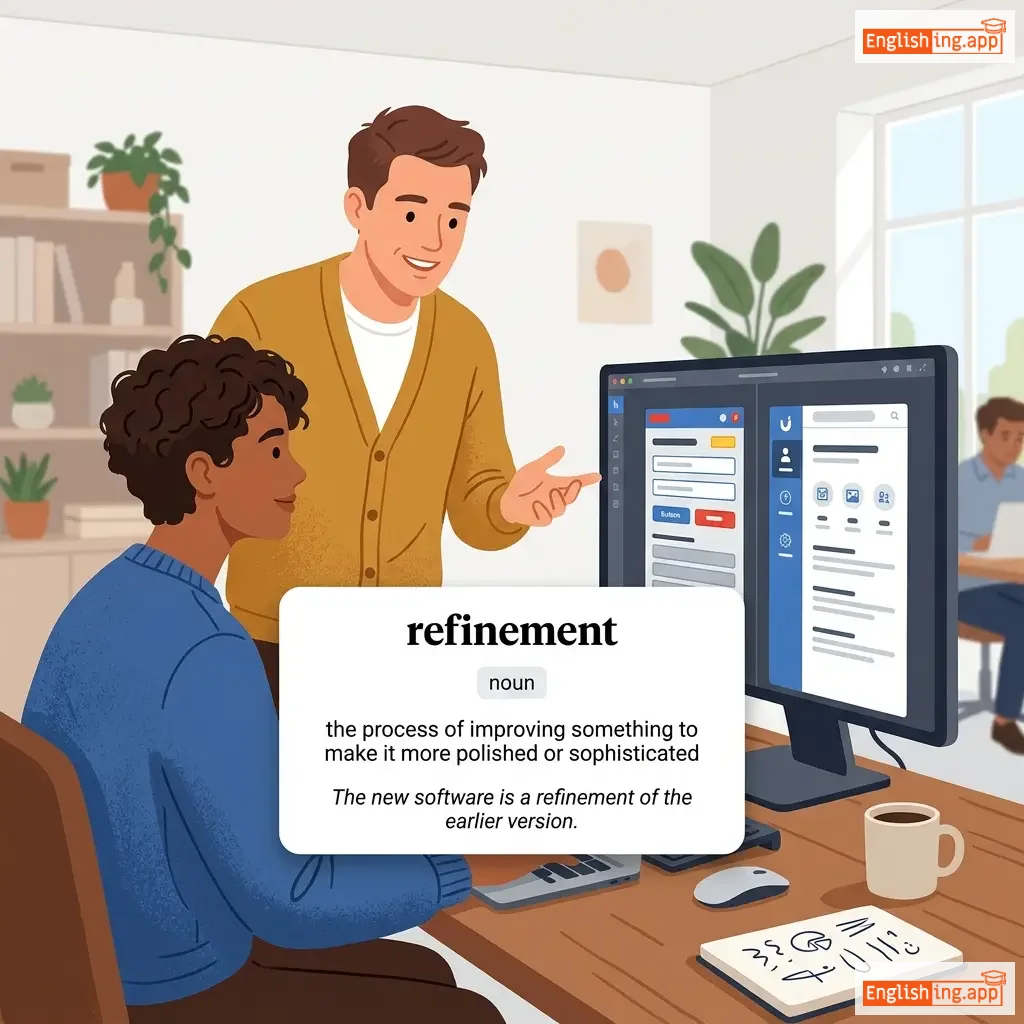
the process of improving something to make it more polished or sophisticated
••••••
|
The new software is a refinement of the earlier version. |
新しいソフトウェアは、以前のバージョンの洗練です。
Atarashī sofutowea wa, izen no bājon no suren desu.
••••••
|
without refinement |
in a crude or unpolished form
••••••
|
洗練なし
suren nashi
••••••
|
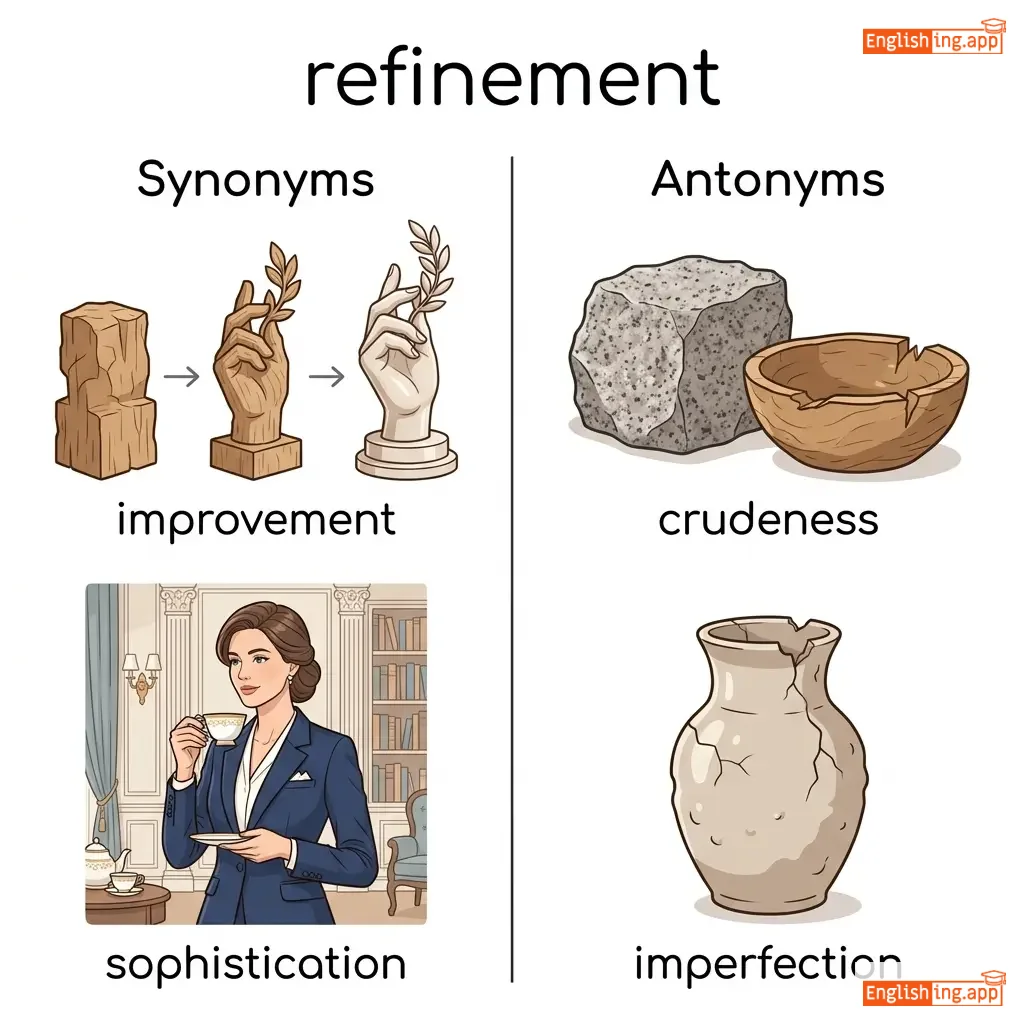
improvement, sophistication, polish, elegance, enhancement
••••••
|
crudeness, imperfection, roughness
••••••
|
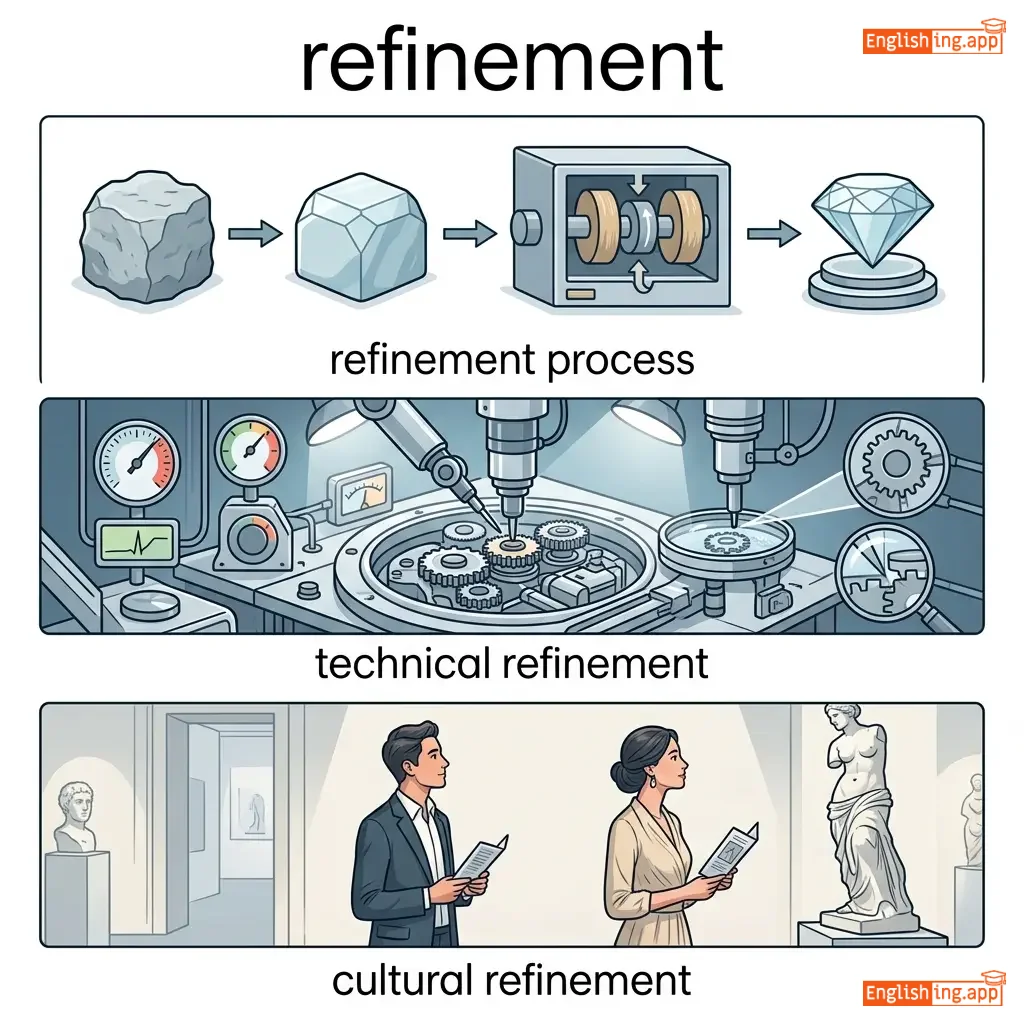
refinement process, technical refinement, cultural refinement, refinement of design
••••••
|
洗練 = Fine = 洗練
••••••
|
|
#10152
📉
|
/rɪˈdʌndənsi/
noun
(リダンダンシー)
••••••
|
|
冗長性 / 解雇
jōchō-sei / kaiko
••••••
|
- •••••• | - •••••• | - •••••• | - •••••• |
the state of being unnecessary or no longer needed; dismissal from a job due to lack of work
••••••
|
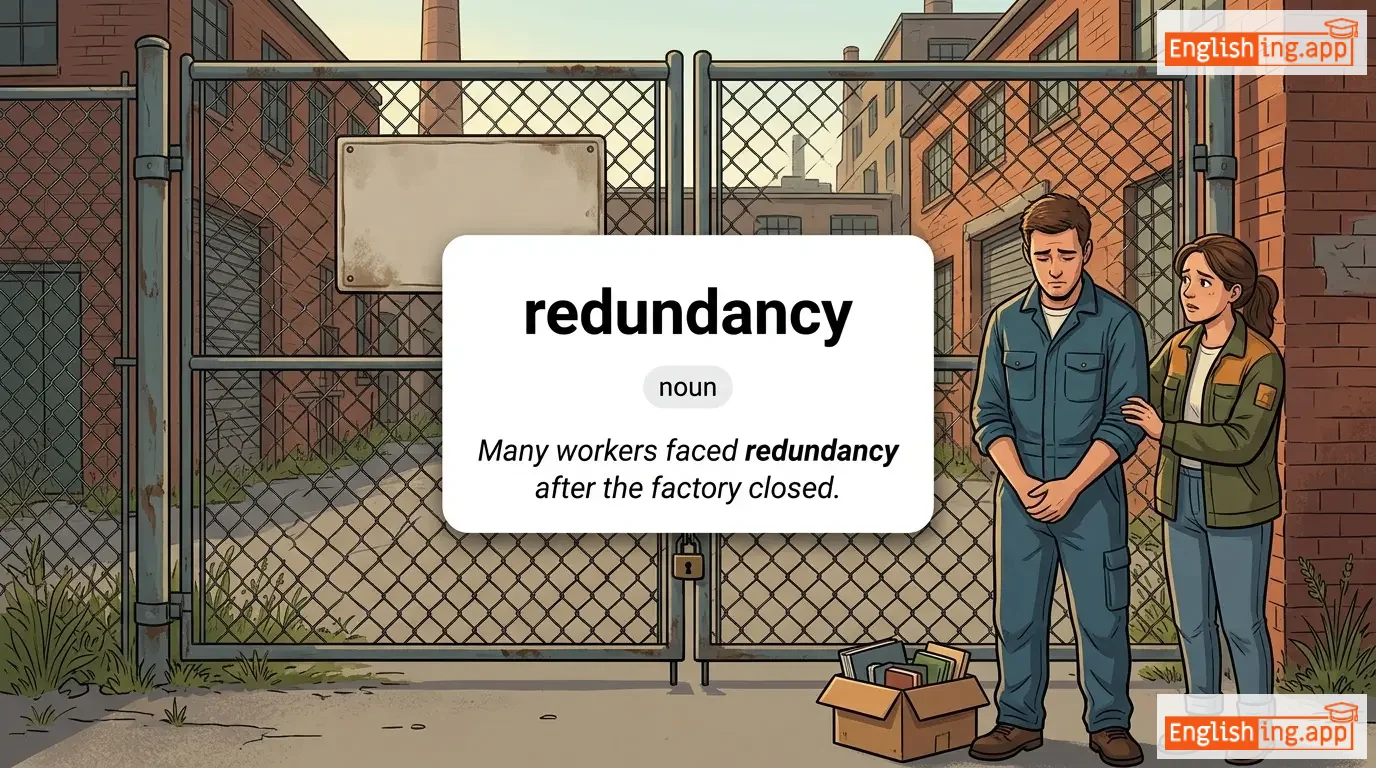
Many workers faced redundancy after the factory closed. |
工場が閉鎖された後、多くの労働者が冗長性に直面しました。
Kōjō ga heisa sareta ato, ōku no rōdōsha ga jōchō-sei ni chokumen shimashita.
••••••
|
voluntary redundancy |
a situation where an employee agrees to leave their job in return for compensation
••••••
|
自発的冗長性
jihatsuteki jōchō-sei
••••••
|
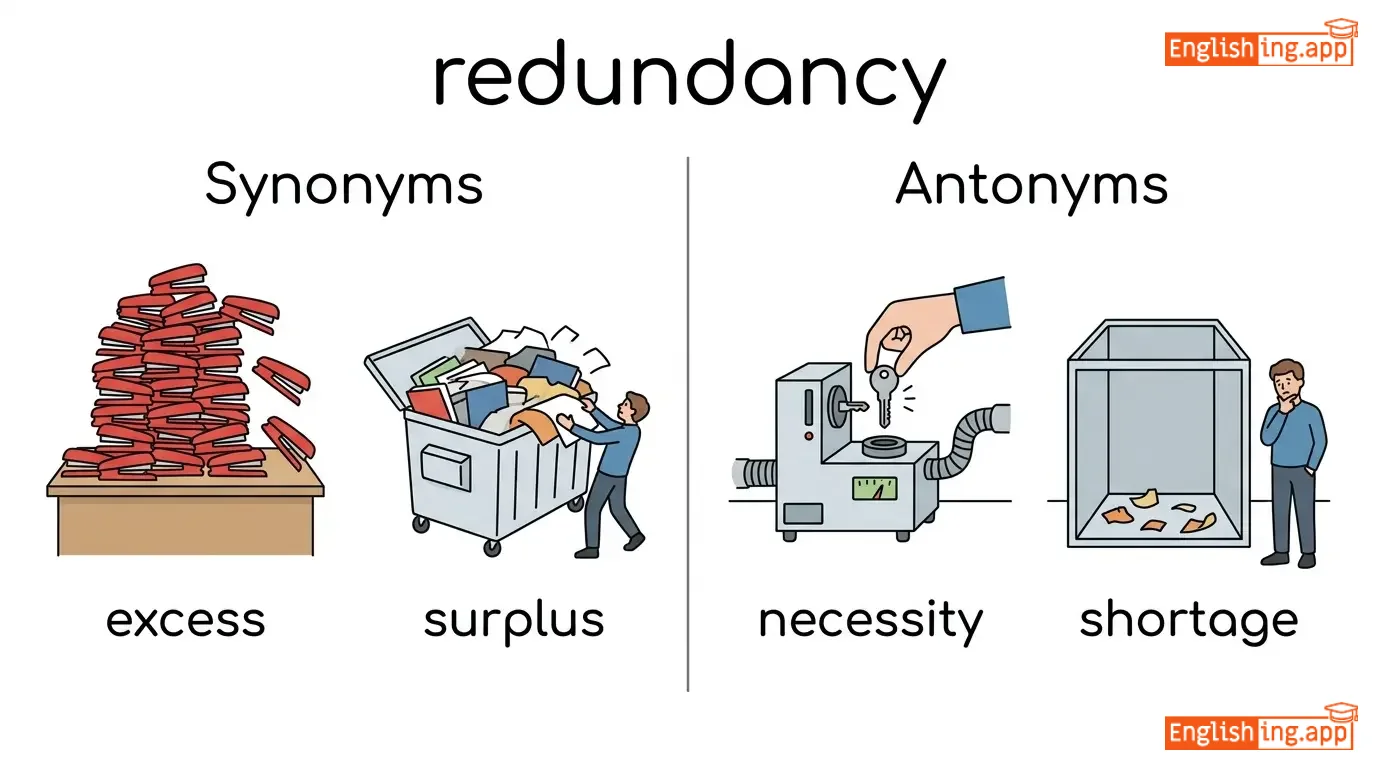
excess, surplus, superfluity, unemployment, dismissal
••••••
|
necessity, shortage, employment
••••••
|
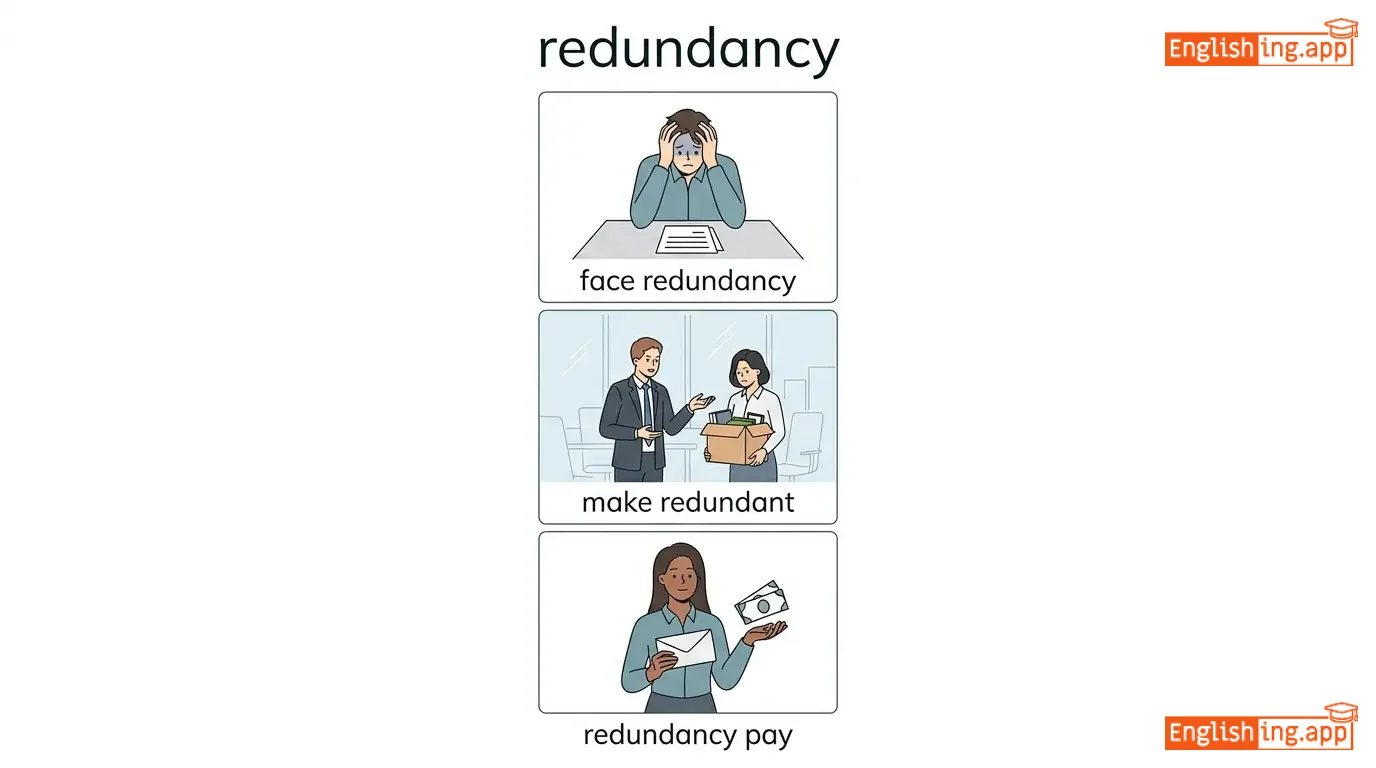
face redundancy, make redundant, redundancy pay, redundancy package
••••••
|
Re DUN DANcy = '冗長' 解雇される
••••••
|
|
#10153
♻️
|
/rɪˈdiːm/
verb
(リディーム)
••••••
|
- •••••• |
償う
omou
••••••
|
redeemed
リディームド
••••••
|
redeemed
リディームド
••••••
|
redeems
リディームス
••••••
|
redeeming
リディーミング
••••••
|
to compensate for faults or mistakes; to exchange something for value
••••••
|
He managed to redeem his reputation after the scandal.
彼はスキャンダル後に自分の評判を回復しました。
••••••
|
彼はスキャンダル後に自分の評判を回復しました。
kare wa sukyandaru go ni jibun no hyouban wo kaifuku shimashita.
••••••
|
redeem a coupon
クーポンを引き換える
••••••
|
to exchange a coupon for goods or services
••••••
|
クーポンを引き換える
kūpon wo hikikaeru
••••••
|
compensate, recover, restore, reclaim, exchange
••••••
|
forfeit, lose, abandon
••••••
|
redeem a voucher, redeem points, redeem oneself, redeem reputation
••••••
|
償う = 返す、クーポンを引き換える
••••••
|
|
#10154
🎮
|
/ˌrɛkriˈeɪʃən/
noun
••••••
|
- •••••• | - •••••• | - •••••• | - •••••• | - •••••• | - •••••• |
activity done for enjoyment and relaxation during free time
••••••
|
Reading books is his favorite form of recreation. |
- •••••• |
recreation center |
a place where people engage in leisure and sports activities
••••••
|
- •••••• |
leisure, amusement, entertainment, pastime, relaxation
••••••
|
work, labor, duty
••••••
|
recreation center, recreation activity, outdoor recreation, recreation facility
••••••
|
No •••••• |
|
#10155
💰
|
/ˈrɛkəmˌpɛns/
noun/verb
(レカンプエンス)
••••••
|
- •••••• |
賠償
baishou
••••••
|
recompensed
レカンプエンスド
••••••
|
recompensed
レカンプエンスド
••••••
|
recompenses
レカンプエンスズ
••••••
|
recompensing
レカンプエンスイング
••••••
|
to compensate someone for loss or harm suffered; compensation given for damage or injury
••••••
|
The company offered financial recompense to the injured worker.
その会社は負傷した労働者に対して金銭的な賠償を提供しました。
••••••
|
その会社は負傷した労働者に対して金銭的な賠償を提供しました。
Sono kaisha wa fushou shita roudousha ni taishite kinseiteki na baishou o teikyoushimashita.
••••••
|
make recompense
賠償をする
••••••
|
to compensate or repay someone for a loss or harm
••••••
|
賠償をする
baishou o suru
••••••
|
compensation, restitution, repayment, indemnity, reimbursement
••••••
|
penalty, damage, loss
••••••
|
seek recompense, offer recompense, financial recompense, recompense for loss
••••••
|
Re COMPENS(e) = 賠償 (baishou) は compensation のようなもの
••••••
|
|
#10156
📩
|
/rɪˈsiːv/
verb
(リシーヴ)
••••••
|
|
受け取る
uketoru
••••••
|
received
リシーヴド
••••••
|
received
リシーヴド
••••••
|
receives
リシーヴス
••••••
|
receiving
リシーヴィング
••••••
|
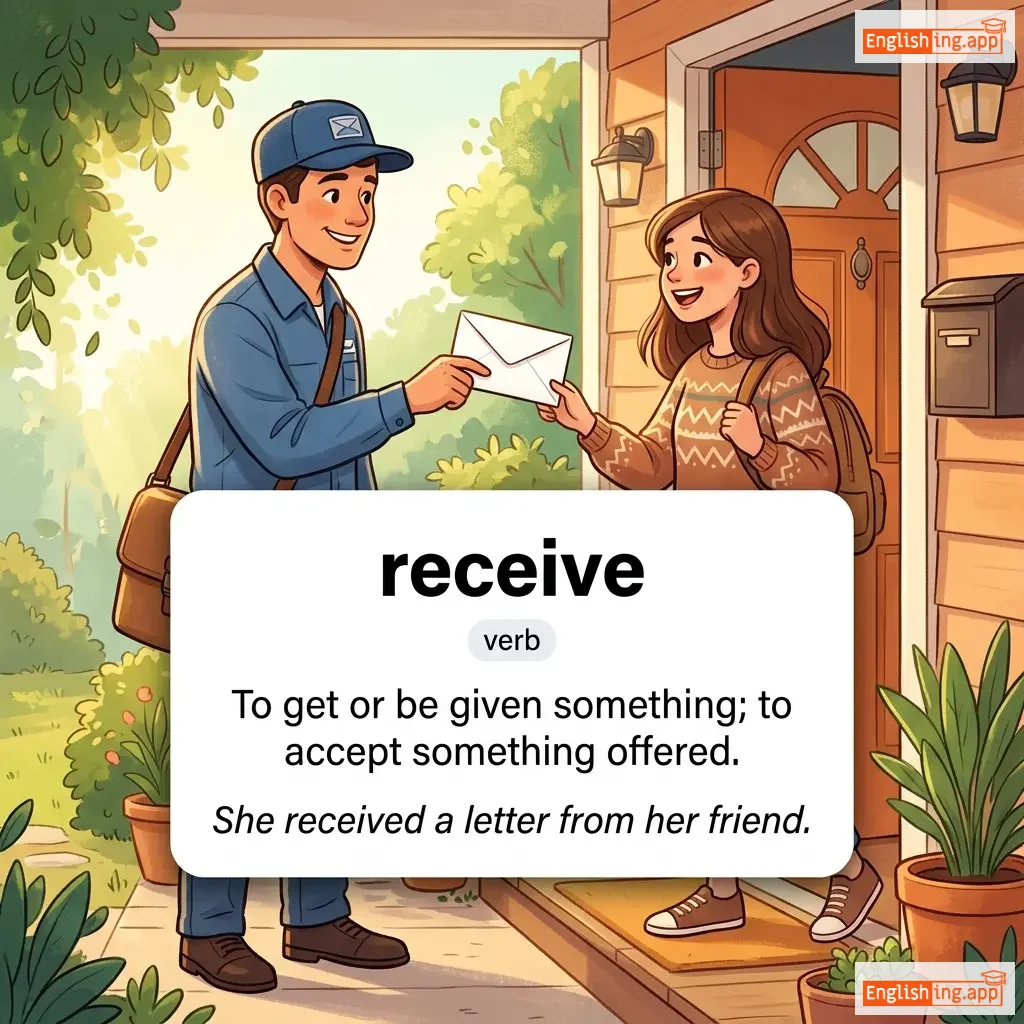
To get or be given something; to accept something offered.
••••••
|
She received a letter from her friend.
シー リシーヴド ア レター フロム ハー フレンド。
••••••
|
彼女は友達から手紙を受け取った。
Kanojo wa tomodachi kara tegami o uketotta.
••••••
|
receive with open arms
リシーヴ ウィズ オープン アームズ
••••••
|
to welcome someone warmly
••••••
|
両手を広げて受け入れる
ryōte o hirogete ukeireru
••••••
|
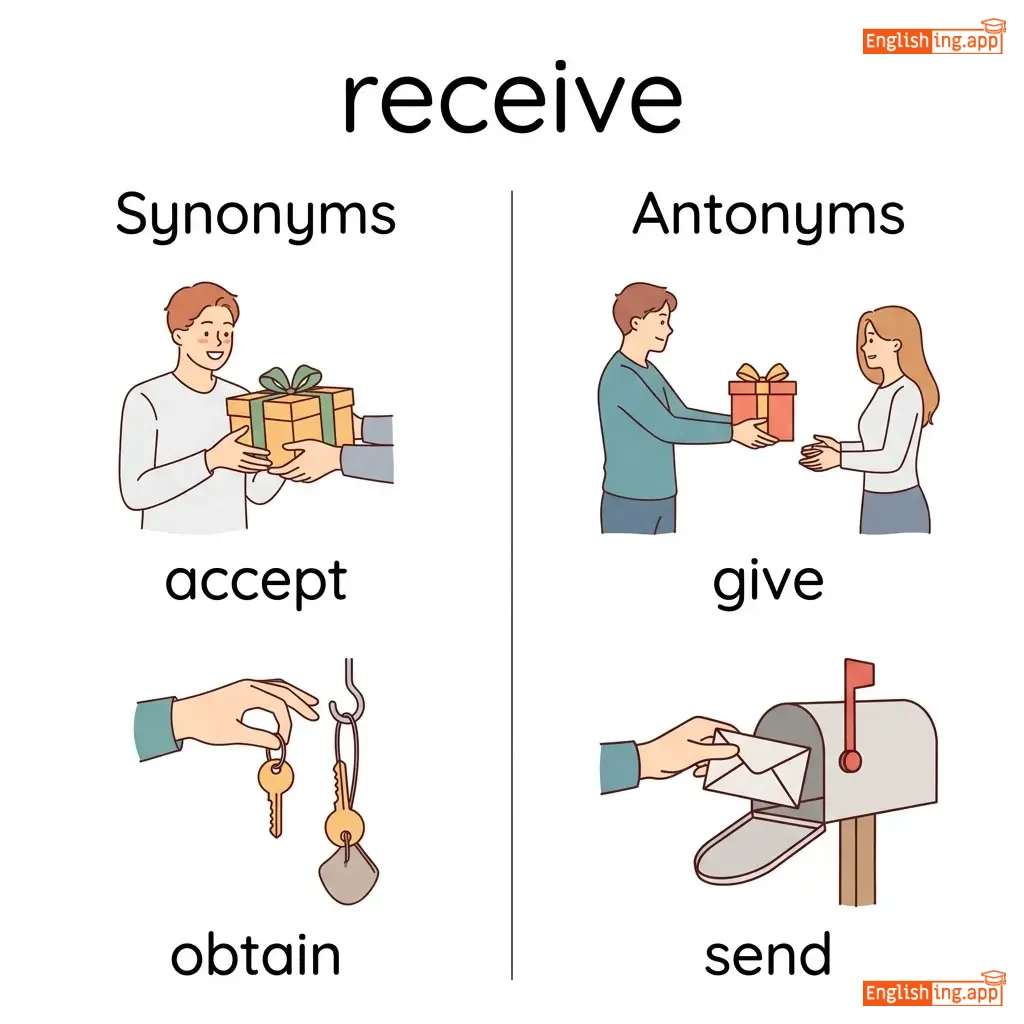
accept, obtain, acquire, collect, welcome
••••••
|
give, send, refuse
••••••
|
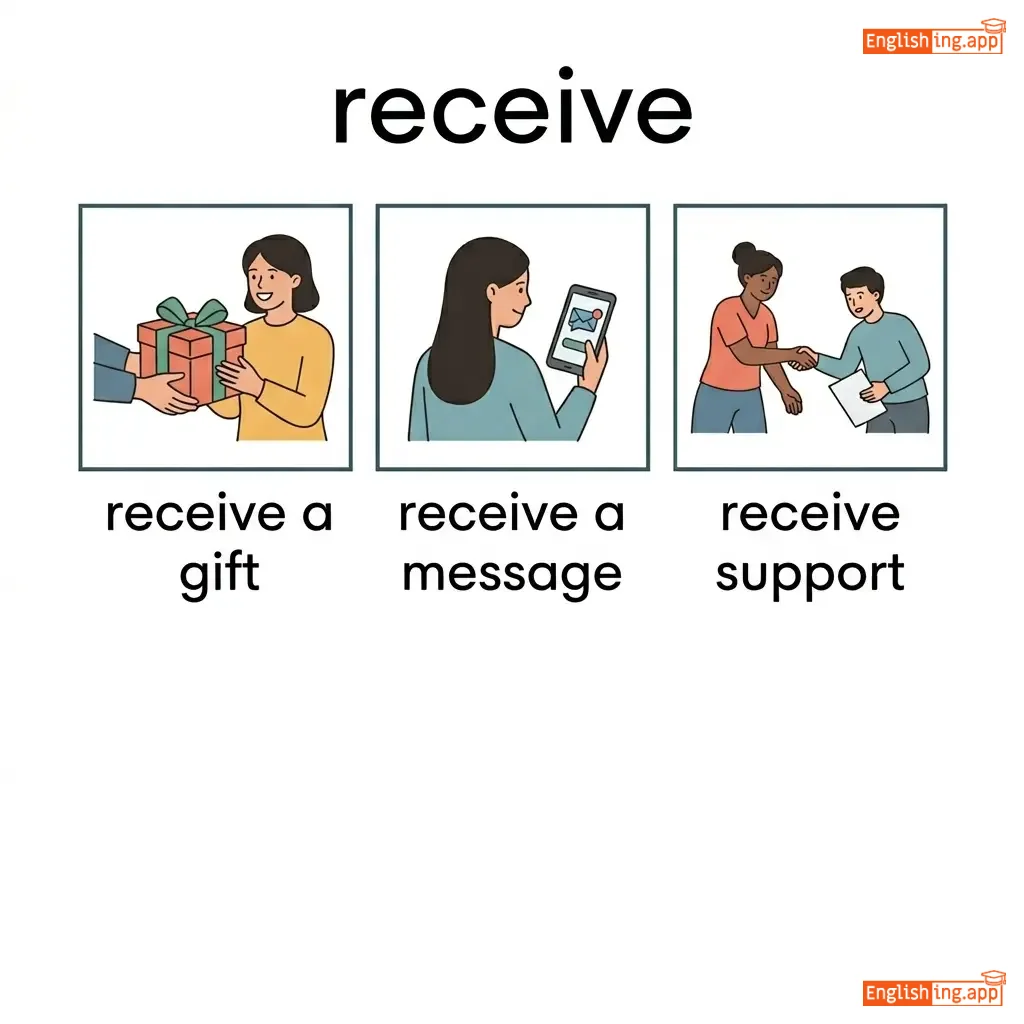
receive a gift, receive a message, receive support, receive payment
••••••
|
受け取るはプレゼント 📦 や手紙を受け取ることに似ています。
••••••
|
|
#10157
👌
|
/ˈriːzənəbl/
adjective
(リーズナブル)
••••••
|
- •••••• |
合理的
gōriteki
••••••
|
- •••••• | - •••••• | - •••••• | - •••••• |
Fair and sensible; having sound judgment; not extreme or excessive.
••••••
|
The price of the meal was quite reasonable.
その食事の価格はかなりリーズナブルでした。
••••••
|
その食事の価格はかなりリーズナブルでした。
Sono shokuji no kakaku wa kanari rīzunaburu deshita.
••••••
|
within reason
合理的な範囲内で
••••••
|
to a fair and sensible extent
••••••
|
合理的な範囲内で
Gōriteki na han'i nai de
••••••
|
fair, sensible, rational, logical, moderate
••••••
|
unreasonable, unfair, excessive
••••••
|
reasonable price, reasonable doubt, reasonable explanation, reasonable request
••••••
|
合理的はReason + able → 理にかなった、実行可能なものです。
••••••
|
|
#10158
🤔
|
/ˈriːzən/
noun, verb
(リーゾン)
••••••
|
- •••••• |
理由、原因
riyū, gen'in
••••••
|
reasoned
リーゾンド
••••••
|
reasoned
リーゾンド
••••••
|
reasons
リーゾンズ
••••••
|
reasoning
リーゾニング
••••••
|
A cause, explanation, or justification for an action or event; to think or argue logically.
••••••
|
There is no reason to be upset.
デア イズ ノー リーズン トゥ ビー アップセット。
••••••
|
怒る理由はありません。
okoru riyū wa arimasen.
••••••
|
listen to reason
リスン トゥ リーズン
••••••
|
to be persuaded by logical arguments
••••••
|
理由を聞く
riyū o kiku
••••••
|
cause, ground, logic, justification, rationale
••••••
|
nonsense, irrationality, illogic
••••••
|
good reason, main reason, for this reason, reason behind
••••••
|
Reason は理由、Reason を考えるとすべてが論理的に感じる 🤔
••••••
|
|
#10159
✅
|
/ˌriːəˈfɜːrm/
verb
(リアファーム)
••••••
|
- •••••• |
再確認する
saikakunin suru
••••••
|
reaffirmed
リアファームド
••••••
|
reaffirmed
リアファームド
••••••
|
reaffirms
リアファームズ
••••••
|
reaffirming
リアファーミング
••••••
|
To state again strongly; to confirm or strengthen a statement or belief.
••••••
|
The president reaffirmed his commitment to education reform.
ザ プレジデント リアファームド ヒズ コミットメント トゥ エデュケーション リフォーム。
••••••
|
大統領は教育改革への取り組みを再確認した。
daitouryou wa kyouiku kaikaku e no torikumi o saikakunin shita.
••••••
|
- •••••• | - •••••• | - •••••• |
confirm, restate, assert, emphasize, validate
••••••
|
deny, reject, refute
••••••
|
reaffirm commitment, reaffirm support, reaffirm belief, reaffirm position
••••••
|
Reaffirm = 再確認 (saikakunin) = confirm again 🔁
••••••
|
|
#10160
⚡
|
/rəˈpɪdəti/
noun
(ラピディティ)
••••••
|
- •••••• |
迅速さ
jinsokusa
••••••
|
- •••••• | - •••••• | - •••••• | - •••••• |
The quality of moving or happening quickly; swiftness or speed.
••••••
|
The rapidity of technological change is astonishing.
技術的な変化の速さは驚くべきものです。
••••••
|
技術的な変化の速さは驚くべきものです。
Gijutsuteki na henka no hayasa wa odorokubeki mono desu.
••••••
|
- •••••• | - •••••• | - •••••• |
speed, swiftness, quickness, velocity, pace
••••••
|
slowness, delay, sluggishness
••••••
|
rapidity of change, with great rapidity, rapidity of growth
••••••
|
Rapid は速いを意味し、rapidity は迅速さを意味する ⚡
••••••
|
|
#10161
✋
|
/reɪz/
verb
(レイズ)
••••••
|
- •••••• |
上げる / 増加させる
ageru / zoukasaseru
••••••
|
raised
レイズド
••••••
|
raised
レイズド
••••••
|
raises
レイゼス
••••••
|
raising
レイジング
••••••
|
To lift or move something to a higher position; to increase; to bring up.
••••••
|
She raised her hand to ask a question.
シー レイズド ハー ハンド トゥ アスク ア クエスチョン。
••••••
|
彼女は質問をするために手を上げました。
Kanojo wa shitsumon o suru tame ni te o agemashita.
••••••
|
raise the bar
レイズ ザ バー
••••••
|
To set a higher standard or expectation.
••••••
|
基準を引き上げる
kijun o hikiageru
••••••
|
lift, elevate, increase, boost, enhance
••••••
|
lower, drop, decrease
••••••
|
raise a hand, raise money, raise awareness, raise the bar
••••••
|
Raiseは手を上げること、または基準を引き上げること。
••••••
|
|
#10162
⚔️
|
/reɪd/
verb
(レイド)
••••••
|
|
急襲
kyuushu
••••••
|
raided
レイデッド
••••••
|
raided
レイデッド
••••••
|
raids
レイデス
••••••
|
raiding
レイディング
••••••
|
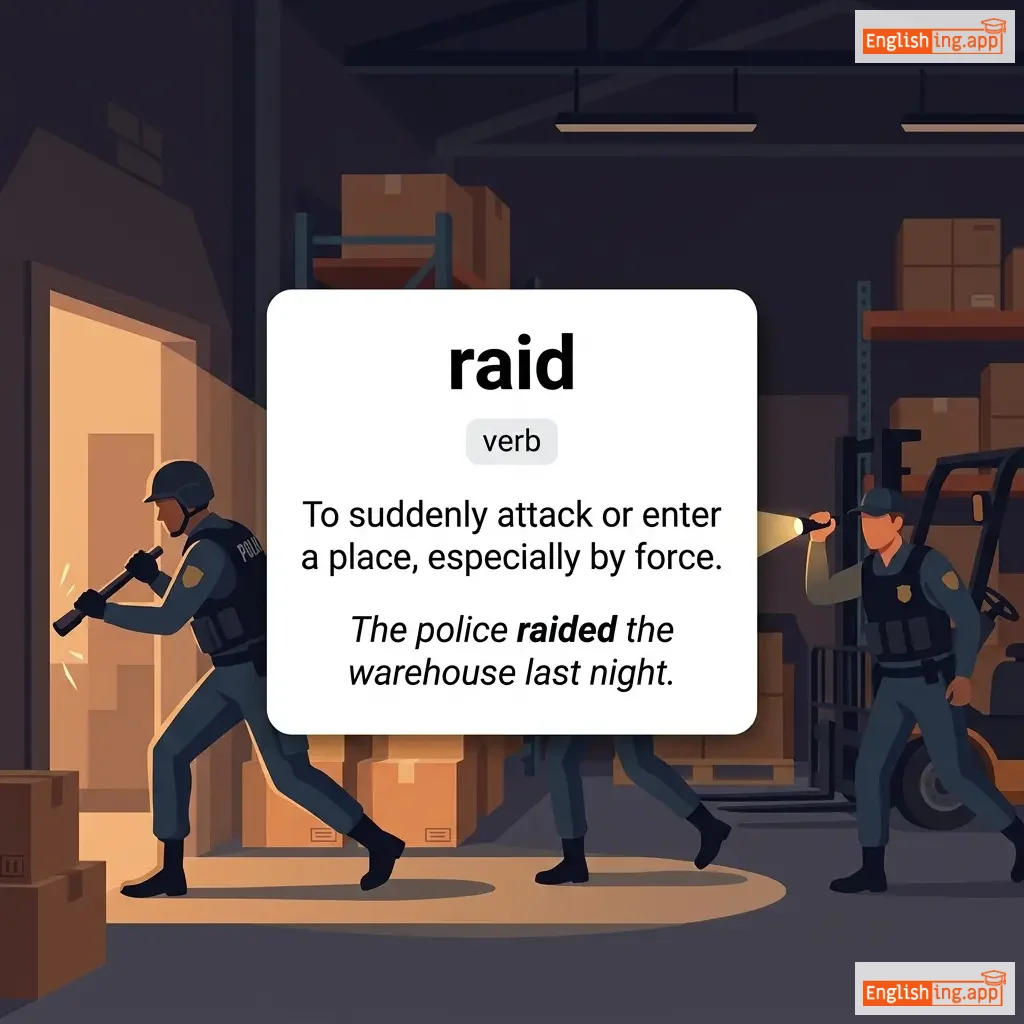
To suddenly attack or enter a place, especially by force.
••••••
|
The police raided the warehouse last night.
警察は昨晩倉庫を家宅捜索しました。
••••••
|
警察は昨晩倉庫を家宅捜索しました。
Keisatsu wa sakuban souko o kataku sousaku shimashita.
••••••
|
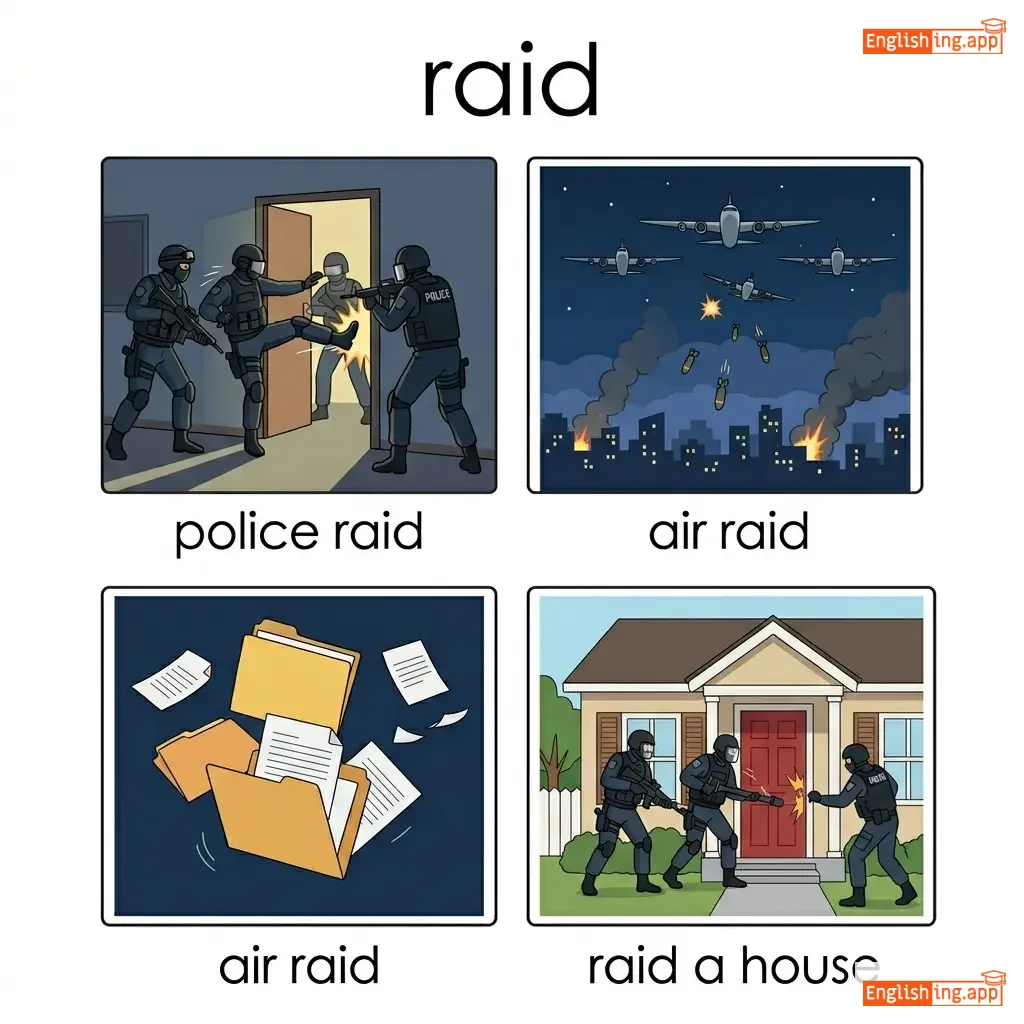
air raid
空襲
••••••
|
A military attack by aircraft.
••••••
|
空襲
kuushuu
••••••
|
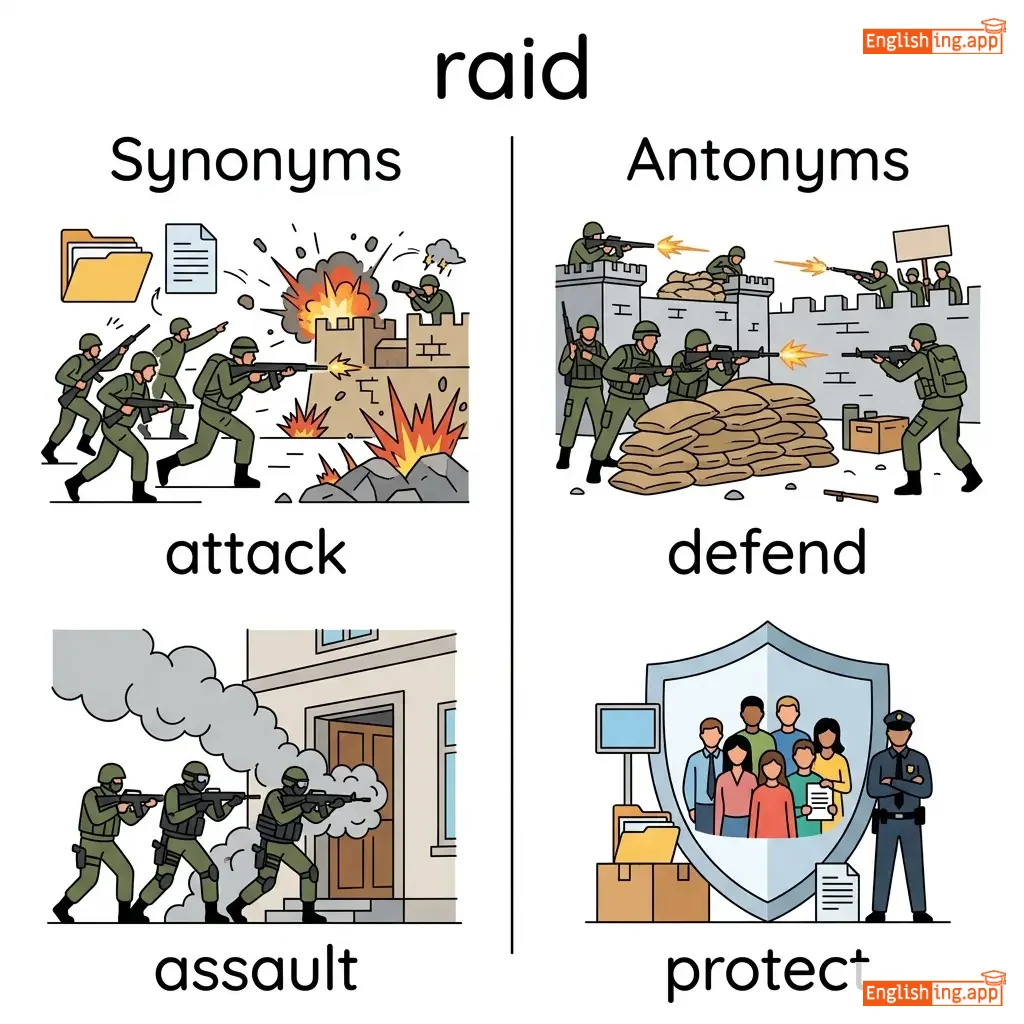
attack, assault, invasion, ambush
••••••
|
defend, protect
••••••
|
police raid, air raid, raid a house
••••••
|
Raidは予期しない攻撃、特に夜間に行われる。
••••••
|
|
#10163
☀️
|
/ˈreɪdiənt/
adjective
(レイディアント)
••••••
|
- •••••• |
輝く
kagayaku
••••••
|
- •••••• | - •••••• | - •••••• | - •••••• |
Shining brightly; expressing great happiness.
••••••
|
She looked radiant in her wedding dress.
彼女はウェディングドレスで輝いて見えました。
••••••
|
彼女はウェディングドレスで輝いて見えました。
Kanojo wa ueddingu doresu de kagayaite miemashita.
••••••
|
- •••••• | - •••••• | - •••••• |
bright, glowing, shining, luminous, joyful
••••••
|
dull, gloomy
••••••
|
radiant smile, radiant light, radiant energy
••••••
|
Radiant は日本語で太陽のように輝く意味です ☀️
••••••
|
|
#10164
🎾
|
/ˈrækɪt/
noun
(ラケット)
••••••
|
- •••••• |
ラケット / 騒音
raketto / saion
••••••
|
- •••••• | - •••••• | - •••••• | - •••••• |
A piece of equipment used to hit the ball in sports like tennis or badminton; also a loud noise or an illegal scheme.
••••••
|
He bought a new tennis racket for the match. |
彼は試合のために新しいテニスラケットを買った。
Kare wa shiai no tame ni atarashii tenisu raketto wo katta.
••••••
|
make a racket |
To make a lot of noise.
••••••
|
騒音を立てる
saion wo tateru
••••••
|
bat, paddle, noise, commotion
••••••
|
silence, quiet
••••••
|
tennis racket, badminton racket, make a racket
••••••
|
ラケット 🎾 と騒音 (racket) も一緒
••••••
|
Vocabulary Quiz
Test your vocabulary by matching words with their translations or meanings.
Login to take the quiz
Comments (0)
Share your thoughts and join the discussion.
Join the discussion by logging in
Login to CommentNo comments yet
Be the first to share your thoughts!