

翻訳
過去
過去分詞
三人称単数
動名詞
意味
例文
例文の翻訳
同義語
対義語
コロケーション
ニーモニック
Swipe left or right, or use the buttons. Tap image to zoom.
例文の翻訳
単語
Lesson 278Lesson 278 - マスクトグル
|
絵文字
|
単語 | Images | 翻訳 | 過去 | 過去分詞 | 三人称単数 | 動名詞 | 意味 | 例文 | 例文の翻訳 | 表現例 | 表現例の意味 | 表現例の翻訳 | 同義語 | 対義語 | コロケーション | ニーモニック |
|---|---|---|---|---|---|---|---|---|---|---|---|---|---|---|---|---|---|
|
#8310
🚧
|
/ˈstænʃən/
noun
(スタンション)
••••••
|
- •••••• |
支柱
shichū
••••••
|
- •••••• | - •••••• | - •••••• | - •••••• |
a strong upright bar or post used as support or to control movement
••••••
|
The red rope was attached to the stanchions to guide the crowd.
赤いロープは群衆を導くためにスタンションに取り付けられていた。
••••••
|
赤いロープは群衆を導くためにスタンションに取り付けられていた。
Akai rūpu wa gunshū o michibiku tame ni sutanshon ni toritsukerarete ita.
••••••
|
- •••••• | - •••••• | - •••••• |
post, pole, pillar, support, upright
••••••
|
weak support, collapse
••••••
|
metal stanchion, rope stanchion, wooden stanchion, stanchion post
••••••
|
スタンション = スタンド + 支柱、サポートのために使われる
••••••
|
|
#8311
🗿
|
/ˌstætʃuˈɛsk/
adjective
(sutachuesuku)
••••••
|
- •••••• |
彫像のような
chouza no youna
••••••
|
- •••••• | - •••••• | - •••••• | - •••••• |
Having the grace, beauty, or dignity of a statue; tall and attractively proportioned.
••••••
|
She had a statuesque figure that turned heads wherever she went. |
彼女は彫像のような体型をしていて、どこに行っても人々の視線を引きつけていた。
Kanojo wa chouza no youna taikei o shite ite, doko ni itte mo hitobito no shisen o hikitsukete ita.
••••••
|
- •••••• | - •••••• | - •••••• |
graceful, majestic, elegant, dignified, shapely
••••••
|
awkward, clumsy, unimpressive
••••••
|
statuesque beauty, statuesque figure, statuesque model, statuesque elegance
••••••
|
彫像のように美しく高い、それが '彫像のような' の意味です。
••••••
|
|
#8312
📊
|
/ˌstætɪˈstɪʃən/
noun
(統計学者)
••••••
|
- •••••• |
統計学者
tōkeigakusha
••••••
|
- •••••• | - •••••• | - •••••• | - •••••• |
A person who specializes in collecting, analyzing, and interpreting numerical data.
••••••
|
The statistician presented the survey results with great clarity. |
統計学者は調査結果を明確に示しました。
Tōkeigakusha wa chōsa kekka o meikaku ni shimeshimashita.
••••••
|
- •••••• | - •••••• | - •••••• |
data analyst, researcher, number cruncher, mathematician, demographer
••••••
|
layman, non-specialist
••••••
|
professional statistician, government statistician, applied statistician, statistician role
••••••
|
Statisticianは統計の専門家です – 統計学者
••••••
|
|
#8313
🛑
|
/ˈsteɪʃəˌneri/
adjective
(ステイショナリー)
••••••
|
- •••••• |
静止
seishi
••••••
|
- •••••• | - •••••• | - •••••• | - •••••• |
Not moving or not intended to be moved.
••••••
|
The car remained stationary at the red light. |
車は赤信号で静止したままでした。
Kuruma wa akashingou de seishi shita mamade shita.
••••••
|
- •••••• | - •••••• | - •••••• |
immobile, still, motionless, fixed
••••••
|
mobile, moving, dynamic
••••••
|
remain stationary, stationary object, stationary position, stationary phase
••••••
|
Stationary は動かないこと、赤信号で停車している車のように
••••••
|
|
#8314
📐
|
/ˈstætɪks/
noun
(スタティクス)
••••••
|
- •••••• |
静力学
seiryokugaku
••••••
|
- •••••• | - •••••• | - •••••• | - •••••• |
The branch of mechanics dealing with bodies at rest and forces in equilibrium.
••••••
|
She is studying statics as part of her engineering course. |
彼女は工学のコースの一環として静力学を学んでいます。
Kanojo wa kōgaku no kōsu no ikkan toshite seiryokugaku o manandeimasu.
••••••
|
- •••••• | - •••••• | - •••••• |
mechanics, equilibrium study, force analysis, balance science
••••••
|
dynamics, kinetics
••••••
|
study of statics, statics problem, statics course, statics principle
••••••
|
静止している物体を学ぶから、静力学!
••••••
|
|
#8315
⚡
|
/ˈstætɪk/
adjective
(スタティック)
••••••
|
|
静的
seiteki
••••••
|
- •••••• | - •••••• | - •••••• | - •••••• |
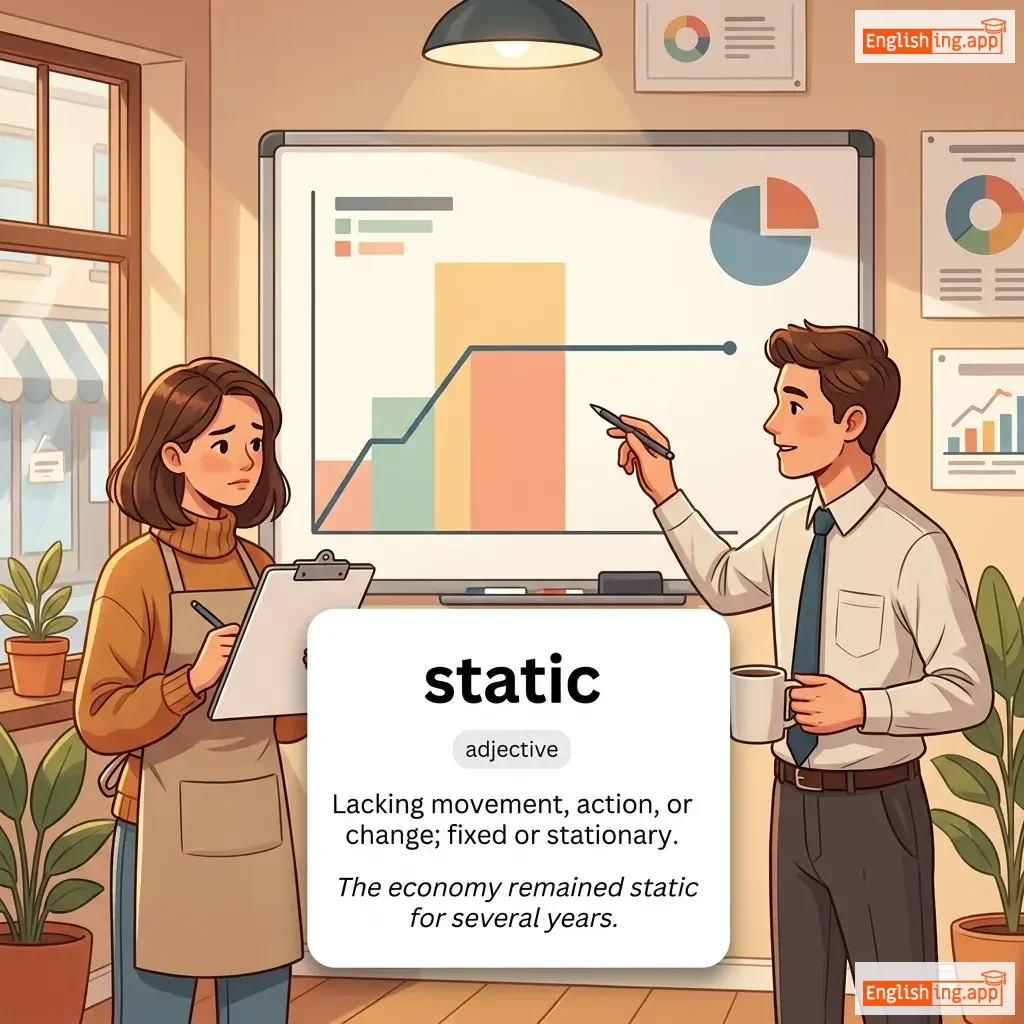
Lacking movement, action, or change; fixed or stationary.
••••••
|
The economy remained static for several years. |
経済は数年間静的でした。
Keizai wa suunenkan seiteki deshita.
••••••
|
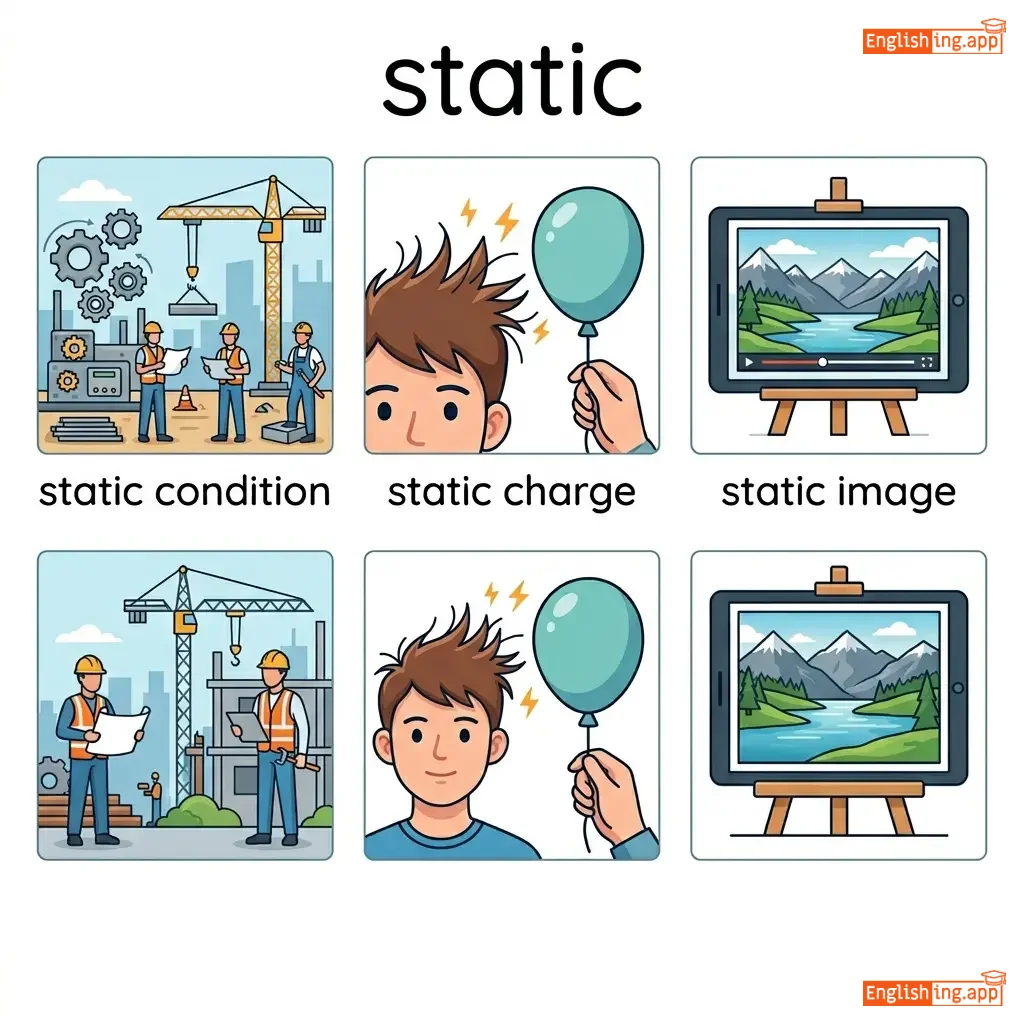
static electricity |
An imbalance of electric charges within or on the surface of a material.
••••••
|
静電気
seidenki
••••••
|
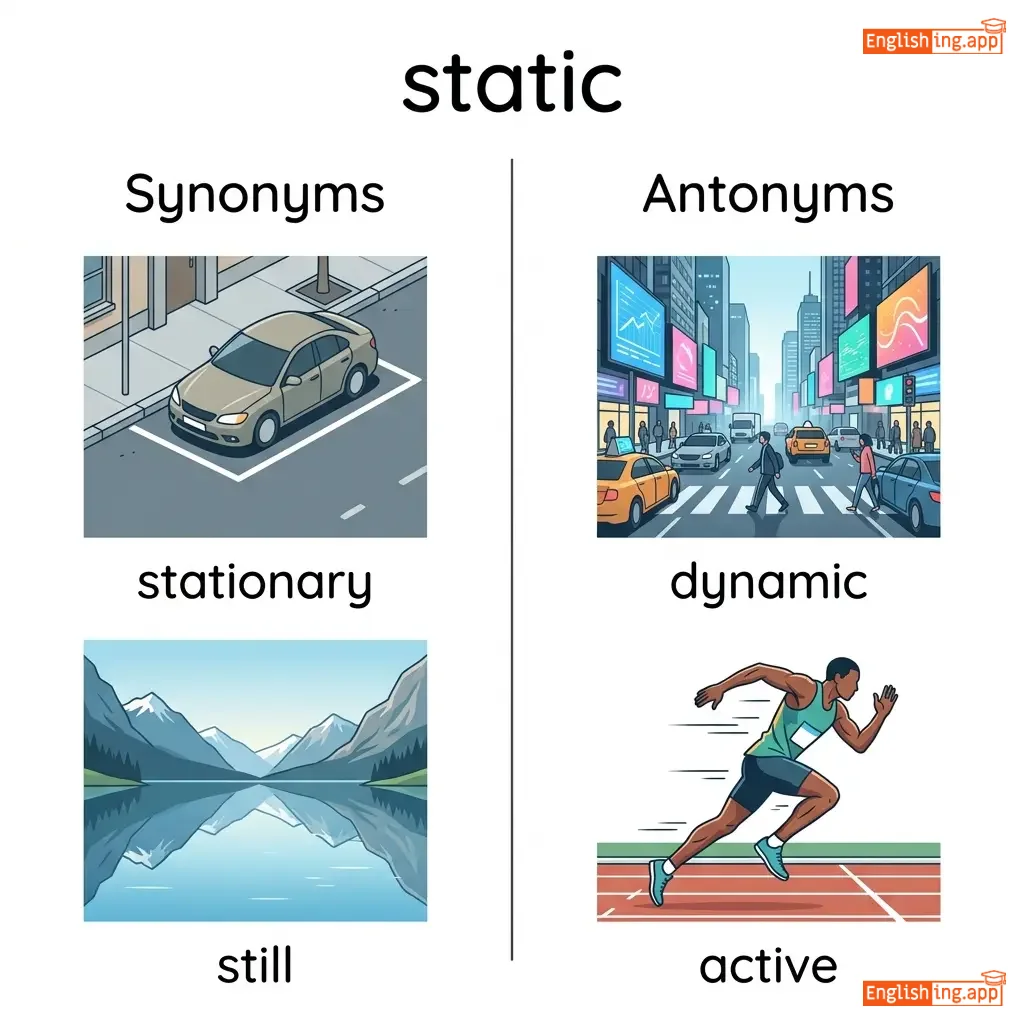
stationary, still, motionless, unchanging
••••••
|
dynamic, active, moving
••••••
|
static condition, static charge, static image, static role
••••••
|
Staticは静的な状態、変わらない
••••••
|
|
#8316
🏰
|
/ˈsteɪtli/
adjective
(ステイトリー)
••••••
|
- •••••• |
威厳と壮大
igen to soudai
••••••
|
- •••••• | - •••••• | - •••••• | - •••••• |
Having a dignified, majestic, and impressive appearance or manner.
••••••
|
The stately mansion stood at the end of the long driveway. |
その威厳ある邸宅は長いドライブウェイの終わりに立っていました。
Sono igen aru teitaku wa nagai doraibuwei no owari ni tatte imashita.
••••••
|
- •••••• | - •••••• | - •••••• |
majestic, grand, dignified, noble, imposing
••••••
|
humble, ordinary, plain
••••••
|
stately home, stately manner, stately figure, stately procession
••••••
|
Statelyはまるで王宮のような威厳と壮大さを感じさせます。
••••••
|
|
#8317
🏛️
|
/ˈsteɪtkraft/
noun
(sutētkurafuto)
••••••
|
- •••••• |
国政術
kokusetsu
••••••
|
- •••••• | - •••••• | - •••••• | - •••••• |
The art of governing and managing state affairs effectively.
••••••
|
The leader was praised for his exceptional statecraft in handling international relations. |
リーダーは国際関係を扱う際の卓越した国政術に対して称賛されました。
Rīdā wa kokusai kankei o atsukau sai no takuetsu shita kokusetsu ni taishite shōsan saremashita.
••••••
|
- •••••• | - •••••• | - •••••• |
diplomacy, governance, leadership, strategy
••••••
|
mismanagement, incompetence
••••••
|
art of statecraft, skillful statecraft, diplomatic statecraft
••••••
|
STATE + CRAFT = 国を運営する技術
••••••
|
|
#8318
⏸️
|
/ˈsteɪsɪs/ or /ˈstæsɪs/
noun
(ステイシス)
••••••
|
- •••••• |
停滞
teitai
••••••
|
- •••••• | - •••••• | - •••••• | - •••••• |
A state of inactivity or equilibrium; a situation where nothing changes.
••••••
|
The negotiations reached a state of stasis with no progress made. |
交渉は停滞状態に達し、進展はありませんでした。
Kōshō wa teitai jōtai ni tasshi, shinten wa arimasen deshita.
••••••
|
- •••••• | - •••••• | - •••••• |
inactivity, stagnation, immobility, standstill
••••••
|
movement, progress, change
••••••
|
political stasis, social stasis, economic stasis
••••••
|
停滞は、動かずに止まっている状態。
••••••
|
|
#8319
😲
|
/ˈstɑːrtl/
verb
(sutārutoru)
••••••
|
- •••••• |
驚かせる
odorokasu
••••••
|
startled
sutārutoddo
••••••
|
startled
sutārutoddo
••••••
|
startles
sutārutoru
••••••
|
startling
sutārutoringu
••••••
|
To surprise or frighten someone suddenly.
••••••
|
The loud noise startled the children.
大きな音が子供たちを驚かせた。
••••••
|
大きな音が子供たちを驚かせた。
Ōkina oto ga kodomotachi o odorokaseta.
••••••
|
- •••••• | - •••••• | - •••••• |
surprise, shock, alarm, scare, frighten
••••••
|
calm, soothe, reassure
••••••
|
startle someone, startled expression, startling discovery
••••••
|
大きな音で人々を驚かせるのはスタートする時。
••••••
|
|
#8320
🚀
|
/stɑːrt/
verb
(スタート)
••••••
|
|
始める
hajimeru
••••••
|
started
スターテッド
••••••
|
started
スターテッド
••••••
|
starts
スターツ
••••••
|
starting
スターティング
••••••
|
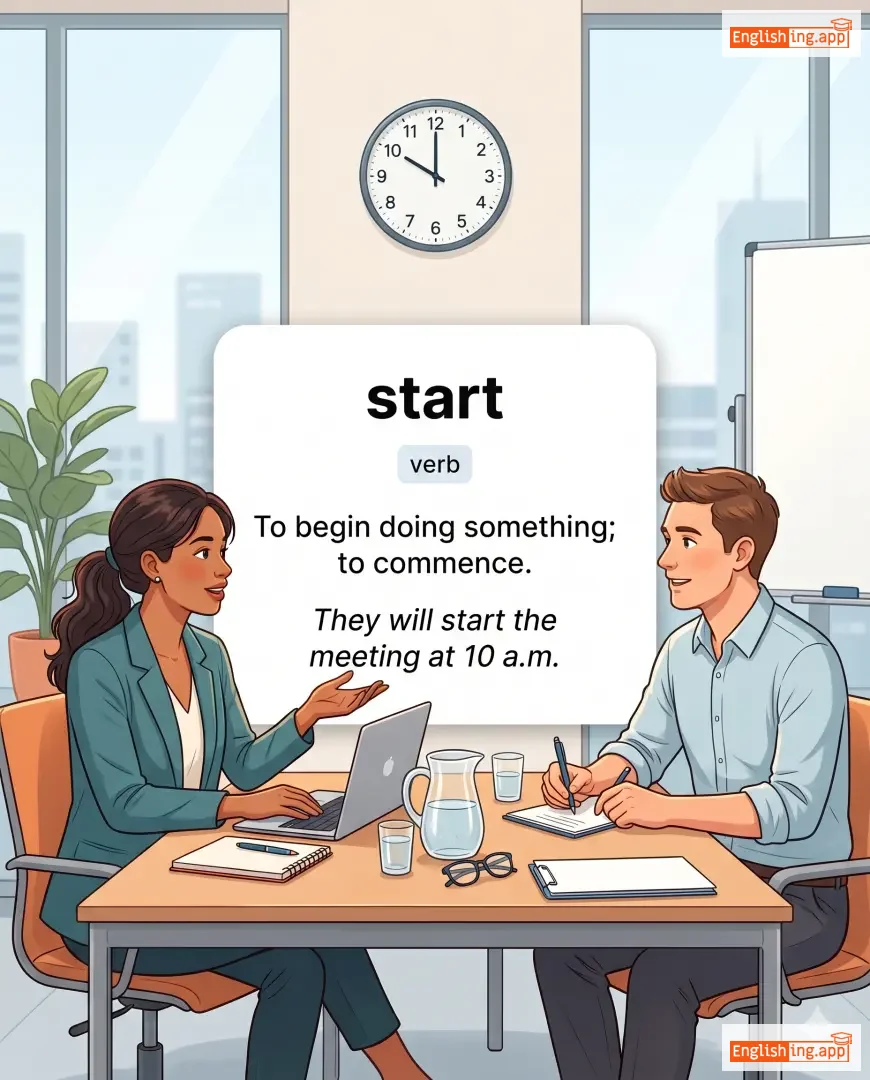
To begin doing something; to commence.
••••••
|
They will start the meeting at 10 a.m.
彼らは午前10時に会議を始めます。
••••••
|
彼らは午前10時に会議を始めます。
Karera wa gozen 10-ji ni kaigi o hajimemasu.
••••••
|
start from scratch
ゼロから始める
••••••
|
To begin again from nothing.
••••••
|
ゼロから始める
Zero kara hajimeru
••••••
|
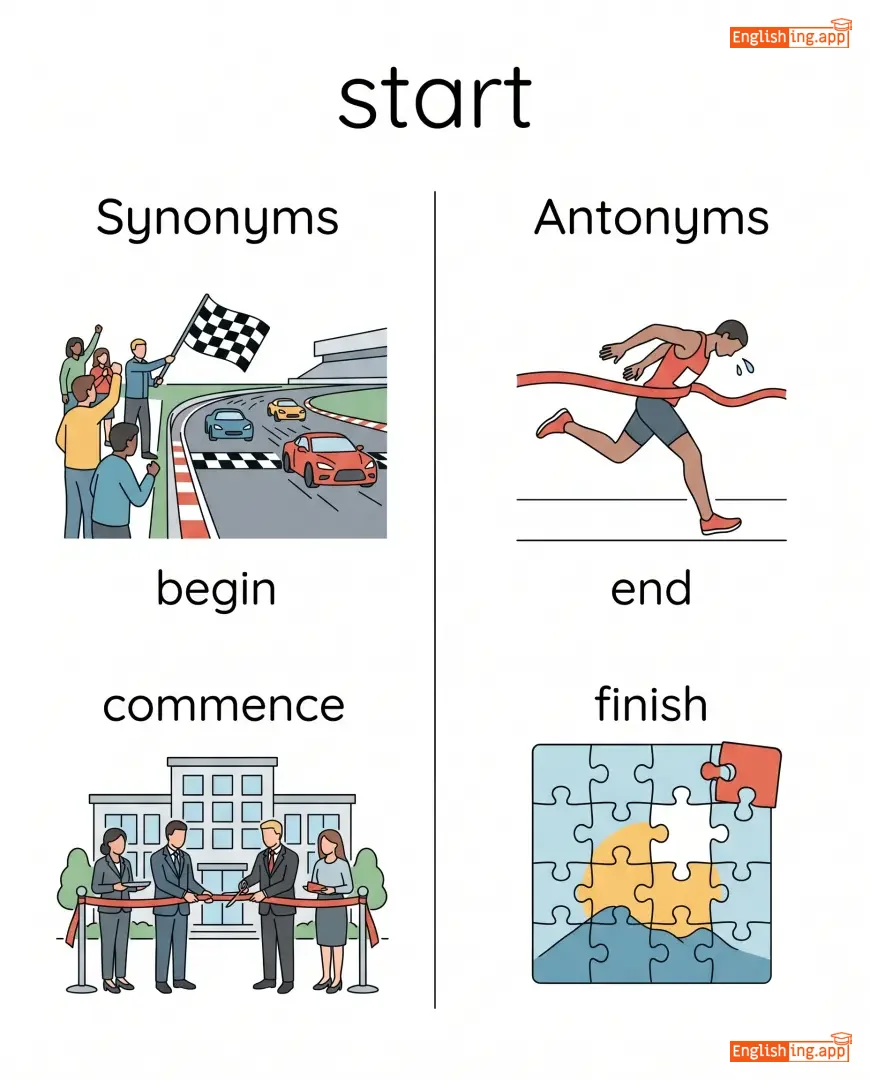
begin, commence, initiate, launch, open
••••••
|
end, finish, stop
••••••
|
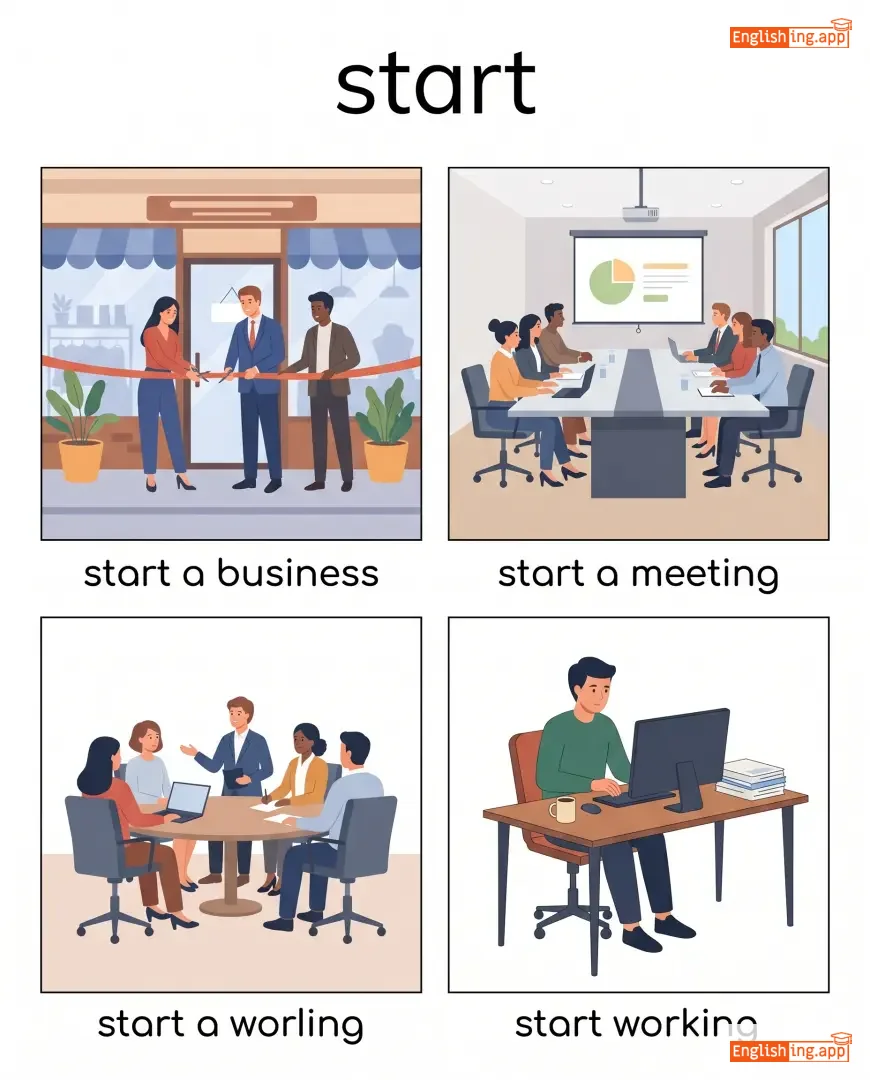
start a business, start a meeting, start working, start again
••••••
|
'START'ボタンを押して始めましょう
••••••
|
|
#8321
⚫
|
/stɑːrk/
adjective
(スターク)
••••••
|
- •••••• |
厳しい、鋭い
kibishii, surudoi
••••••
|
- •••••• | - •••••• | - •••••• | - •••••• |
Severe, sharp, or clearly defined; plain and without any decoration.
••••••
|
The stark contrast between poverty and wealth was evident in the city.
貧困と富の間の鮮明な対比は街中で明らかだった。
••••••
|
貧困と富の間の鮮明な対比は街中で明らかだった。
Hinkon to tomi no aida no senmei na taibi wa machi naka de akiraka datta.
••••••
|
stark reality
厳しい現実
••••••
|
The harsh or unpleasant truth.
••••••
|
厳しい現実
Kibishii genjitsu
••••••
|
severe, harsh, bleak, plain, absolute
••••••
|
soft, mild, decorated
••••••
|
stark contrast, stark difference, stark reality, stark warning
••••••
|
スタークは白と黒の強い対比のように感じる。
••••••
|
|
#8322
📖
|
/ˈstænzə/
noun
(スタンザ)
••••••
|
- •••••• |
スタンザ
sutanza
••••••
|
- •••••• | - •••••• | - •••••• | - •••••• |
a group of lines forming a unit in a poem or song
••••••
|
The poem begins with a stanza describing nature. |
その詩は自然を描写するスタンザで始まります。
Sono shi wa shizen o byousha suru sutanza de hajimarimasu.
••••••
|
- •••••• | - •••••• | - •••••• |
verse, section, passage, couplet, canto
••••••
|
prose, paragraph
••••••
|
first stanza, second stanza, stanza of a poem, stanza structure
••••••
|
スタンザは日本語でもスタンザとして使われ、英語の詩と同じ意味です。
••••••
|
|
#8323
⛔
|
/ˈstændˌstɪl/
noun
(スタンドスティル)
••••••
|
- •••••• |
停滞
teitai
••••••
|
- •••••• | - •••••• | - •••••• | - •••••• |
a situation in which all movement or activity stops
••••••
|
The traffic came to a standstill after the accident. |
事故後、交通は停滞しました。
Jiko go, koutsuu wa teitai shimashita.
••••••
|
come to a standstill |
to stop moving or progressing
••••••
|
停滞に陥る
teitai ni ochiru
••••••
|
halt, stop, deadlock, impasse, freeze
••••••
|
movement, progress, continuation
••••••
|
traffic standstill, economic standstill, came to a standstill, at a standstill
••••••
|
Stand + Stillは停止する意味です = 停滞
••••••
|
|
#8324
🧍
|
/ˈstændɪŋ/
noun/adjective
(スタンディング)
••••••
|
- •••••• |
地位 / 評判
chii / hyoban
••••••
|
- •••••• | - •••••• | - •••••• | - •••••• |
status, reputation, or position; also the act of being upright on the feet
••••••
|
He has high standing in the community for his charity work. |
彼はその慈善活動のため、コミュニティで高い評価を得ています。
Kare wa sono jizen katsudou no tame, komyuniti de takai hyouka wo eteimasu.
••••••
|
of good standing |
having a good reputation or status
••••••
|
良い評価
yoi hyouka
••••••
|
status, reputation, position, rank, stature
••••••
|
disrepute, dishonor, disgrace
••••••
|
social standing, legal standing, good standing, standing order
••••••
|
Standing は立っていることを意味し、また社会での評価や地位にも関連しています。
••••••
|
|
#8325
🎶
|
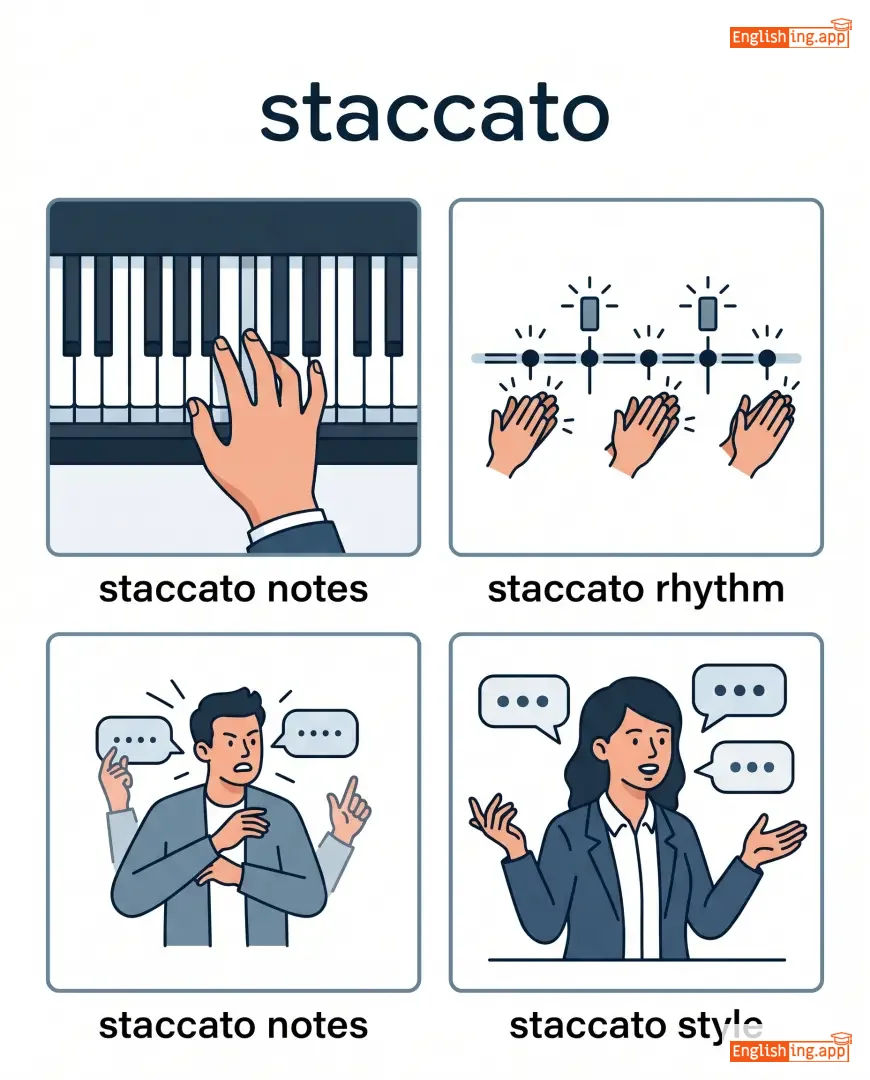
/stəˈkɑː.təʊ/
adjective
(スタッカート)
••••••
|
|
スタッカート
suttakāto
••••••
|
- •••••• | - •••••• | - •••••• | - •••••• |
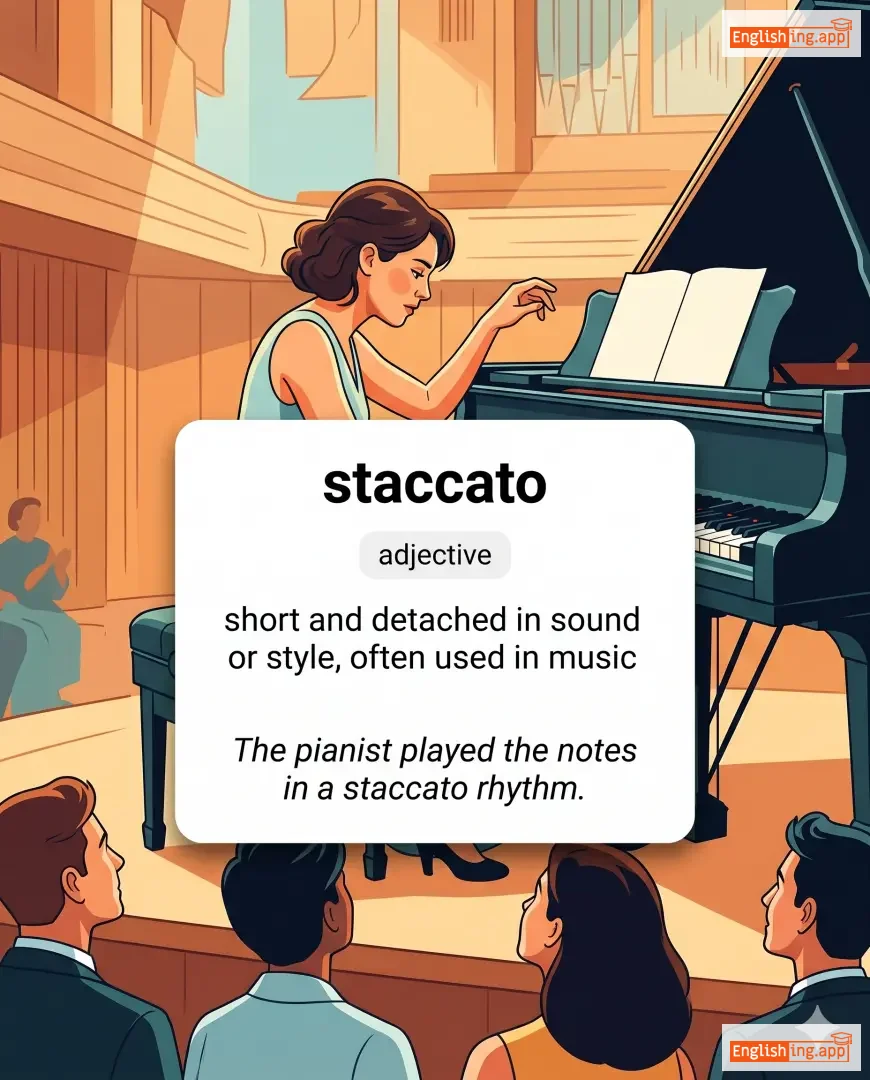
short and detached in sound or style, often used in music
••••••
|
The pianist played the notes in a staccato rhythm. |
ピアニストはスタッカートのリズムで音符を弾きました。
Pianisuto wa suttakāto no rizumu de onpu o hikimashita.
••••••
|
- •••••• | - •••••• | - •••••• |
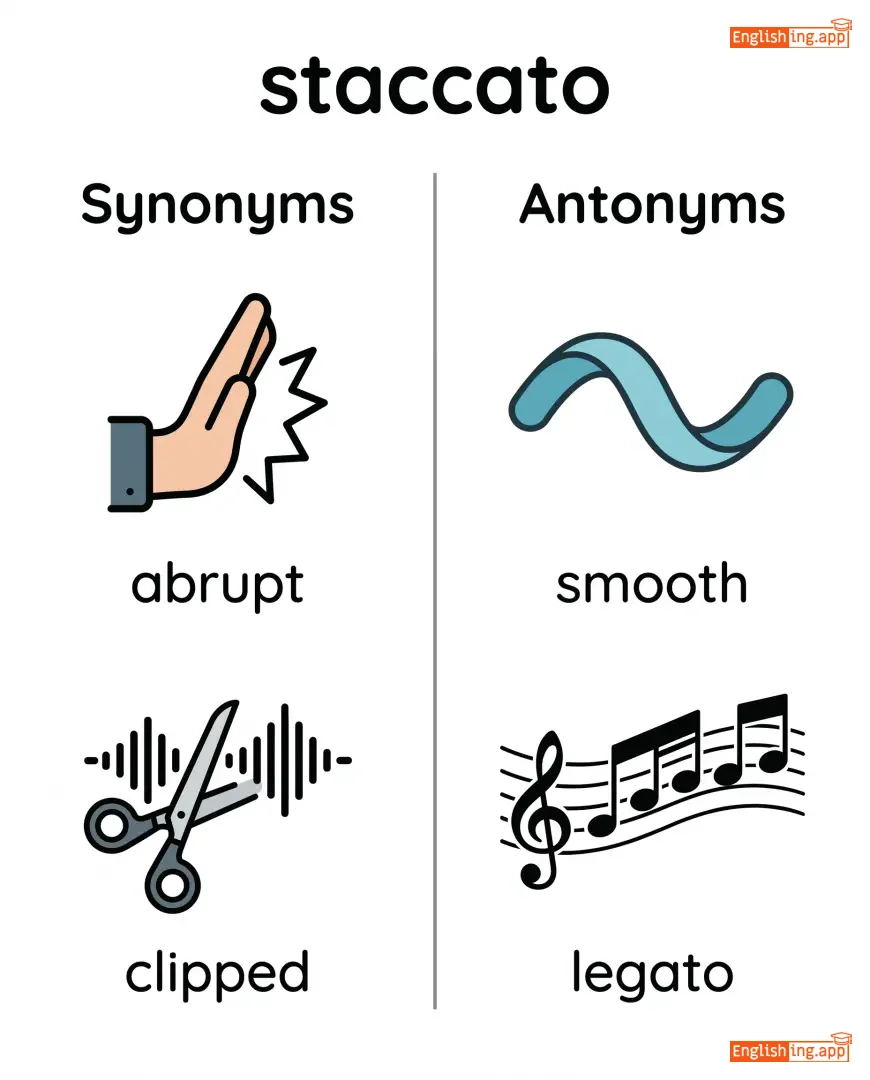
abrupt, clipped, sharp, detached
••••••
|
smooth, legato
••••••
|
staccato notes, staccato rhythm, staccato style, staccato speech
••••••
|
スタック (stack) + カート (cart) → 短い音符を積み重ねるように演奏する (staccato)
••••••
|
|
#8326
🩸
|
/stɑːntʃ/
verb
(スタンチ)
••••••
|
- •••••• |
止血する
shiketsu suru
••••••
|
stanched
スタンチド
••••••
|
stanched
スタンチド
••••••
|
stanches
スタンチズ
••••••
|
stanching
スタンチング
••••••
|
to stop the flow of blood or liquid from a wound or source
••••••
|
The nurse quickly stanched the bleeding from the cut.
看護師はすぐに切り傷からの出血を止めました。
••••••
|
看護師はすぐに切り傷からの出血を止めました。
kangoshi wa sugu ni kirikizu kara no shukketsu wo tome mashita
••••••
|
stanch the flow
血流を止める
••••••
|
to stop or control the movement of something, especially blood or money
••••••
|
血流を止める
ketsuryuu wo tomeru
••••••
|
stop, stem, halt, check, control
••••••
|
allow, continue, release
••••••
|
stanch the bleeding, stanch the wound, stanch the flow, stanch losses
••••••
|
スタンチ = Stop + 血液 Stanchは止血することを意味します
••••••
|
|
#8327
🐂
|
/stæmˈpiːd/
noun/verb
(sutampiido)
••••••
|
- •••••• |
パニック状態の群衆
panikku joutai no gunshuu
••••••
|
stampeded
sutampiidoed
••••••
|
stampeded
sutampiidoed
••••••
|
stampedes
sutampiidos
••••••
|
stampeding
sutampiiding
••••••
|
A sudden, uncontrolled rush of people or animals; to cause a mass movement.
••••••
|
The loud noise caused a stampede of the crowd.
大きな音が群衆の中でスタンピードを引き起こしました。
••••••
|
大きな音が群衆の中でスタンピードを引き起こしました。
Ookina oto ga gunshuu no naka de sutampiido o hikiokoshimashita.
••••••
|
cause a stampede
スタンピードを引き起こす
••••••
|
To trigger sudden mass movement of people or animals.
••••••
|
スタンピードを引き起こす
sutampiido o hikiokosu
••••••
|
rush, panic, surge, charge
••••••
|
calm, order
••••••
|
human stampede, cause stampede, stampede of cattle, deadly stampede
••••••
|
スタンプ (足音) + 逃げる (パニック) → スタンピードは大規模な動きのこと。
••••••
|
|
#8328
📮
|
/stæmp/
verb
••••••
|
- •••••• | - •••••• |
stamped
••••••
|
stamped
••••••
|
stamps
••••••
|
stamping
••••••
|
To bring down (one's foot) heavily on the ground; to imprint a mark or seal.
••••••
|
She stamped her foot in frustration. |
- •••••• |
stamp out |
To put an end to something harmful or undesirable.
••••••
|
- •••••• |
imprint, seal, stomp, crush
••••••
|
erase, remove
••••••
|
stamp out, stamp duty, stamp collector, stamp approval
••••••
|
No •••••• |
|
#8329
😬
|
/ˈstæmər/
verb
(スタマ)
••••••
|
- •••••• |
どもる
domoru
••••••
|
stammered
スタマード
••••••
|
stammered
スタマード
••••••
|
stammers
スタマーズ
••••••
|
stammering
スタマリング
••••••
|
To speak with sudden involuntary pauses and a tendency to repeat the initial letters of words.
••••••
|
The nervous student began to stammer during his speech.
緊張した学生はスピーチ中にスタマーを始めた。
••••••
|
緊張した学生はスピーチ中にどもり始めた。
Kinchou shita gakusei wa supīchi chū ni domori hajimeta.
••••••
|
stammer out
スタマーアウト
••••••
|
To say something with difficulty due to stammering.
••••••
|
どもる
domoru
••••••
|
stutter, falter, hesitate, mumble
••••••
|
speak fluently, articulate
••••••
|
stammer out, stammer badly, nervous stammer, slight stammer
••••••
|
どもる - 発話に詰まるような感じ。
••••••
|
|
#8330
🏃
|
/ˈstæmɪnə/
noun
(スタミナ)
••••••
|
- •••••• |
スタミナ
sutamina
••••••
|
- •••••• | - •••••• | - •••••• | - •••••• |
The physical or mental strength to sustain prolonged effort or activity.
••••••
|
Marathon runners need great stamina to finish the race.
マラソンランナーはレースを終えるために大きなスタミナが必要です。
••••••
|
マラソンランナーはレースを終えるために大きなスタミナが必要です。
Marason rannā wa rēsu o oeru tame ni ōkina sutamina ga hitsuyōdesu.
••••••
|
mental stamina
メンタルスタミナ
••••••
|
The ability to endure prolonged mental effort.
••••••
|
メンタルスタミナ
mentaru sutamina
••••••
|
endurance, strength, resilience, energy, perseverance
••••••
|
weakness, fatigue, frailty
••••••
|
great stamina, physical stamina, mental stamina, build stamina
••••••
|
スタミナ(sutamina)→ 持久力。どちらも持続可能な力を意味します。
••••••
|
|
#8331
🛡️
|
/ˈstɔːlwərt/
adjective
(スタルワート)
••••••
|
- •••••• |
忠実, 頑強
chuujitsu, gankyō
••••••
|
- •••••• | - •••••• | - •••••• | - •••••• |
Loyal, reliable, and hardworking; strongly built or sturdy.
••••••
|
She has always been a stalwart supporter of the community. |
彼女は常にコミュニティの忠実な支持者でした。
Kanojo wa tsuneni komyuniti no chuujitsuna shijisha deshita.
••••••
|
stalwart supporter |
A person who is very loyal and reliable in giving support.
••••••
|
忠実な支持者
chuujitsuna shijisha
••••••
|
loyal, dependable, faithful, strong, resolute
••••••
|
unreliable, weak, disloyal
••••••
|
stalwart supporter, stalwart defender, stalwart friend, stalwart ally
••••••
|
スタルワートは頑強で忠実 - 絶対に揺るがない。
••••••
|
|
#8332
🐎
|
/ˈstæl.i.ən/
noun
(スタリオン)
••••••
|
- •••••• |
繁殖用の牡馬
han shokuyou no osuma
••••••
|
- •••••• | - •••••• | - •••••• | - •••••• |
An adult male horse that is not castrated, often used for breeding.
••••••
|
The farm owns a powerful stallion for breeding purposes.
その農場は繁殖用の強力なスタリオンを所有しています。
••••••
|
その農場は繁殖用の強力なスタリオンを所有しています。
Sono noujou wa hanshoku you no kyouryoku na sutarion wo shoyuu shiteimasu.
••••••
|
- •••••• | - •••••• | - •••••• |
male horse, stud, sire
••••••
|
mare, gelding
••••••
|
wild stallion, strong stallion, black stallion, breeding stallion
••••••
|
スタリオン = スタリオン、農場にいる強力な牡馬は繁殖のためにいます。
••••••
|
|
#8333
♟️
|
/ˈsteɪl.meɪt/
noun
(s-teyl-meyt)
••••••
|
- •••••• |
行き詰まり
ikizumari
••••••
|
- •••••• | - •••••• | - •••••• | - •••••• |
A situation in which no progress can be made or no party can win.
••••••
|
Negotiations ended in a stalemate. |
交渉は行き詰まりました。
Kōshō wa ikizumarimashita.
••••••
|
- •••••• | - •••••• | - •••••• |
deadlock, impasse, standstill, gridlock, standoff
••••••
|
progress, breakthrough, resolution
••••••
|
political stalemate, negotiations stalemate, chess stalemate, legal stalemate
••••••
|
行き詰まりは、進展のない状態、stalemate のようなものです。
••••••
|
|
#8334
📈
|
/steɪk/
noun, verb
(sutēki)
••••••
|
- •••••• |
株式, リスク
kabushiki, risuku
••••••
|
staked
sutēkudo
••••••
|
staked
sutēkudo
••••••
|
stakes
sutēkusu
••••••
|
staking
sutēkingu
••••••
|
A share or interest in a business or venture; to risk or support something of value.
••••••
|
He has a major stake in the new company.
彼は新しい会社に大きな利害関係を持っています。
••••••
|
彼は新しい会社に大きな利害関係を持っています。
Kare wa atarashī kaisha ni ōkina rigai kankei o motteimasu.
••••••
|
at stake
危機に瀕して
••••••
|
at risk; in danger of being lost
••••••
|
危機に瀕して
kiki ni hin shite
••••••
|
share, investment, risk, interest, bet
••••••
|
security, certainty, safety
••••••
|
stake in, at stake, high stakes, stake money
••••••
|
Stake をかけると、すべてがリスクにさらされます。
••••••
|
|
#8335
👔
|
/steɪd/
adjective
(esteid)
••••••
|
- •••••• |
堅実、尊敬される
kenjitsu, sonkei sareru
••••••
|
- •••••• | - •••••• | - •••••• | - •••••• |
Serious, respectable, and unadventurous.
••••••
|
He came from a staid family background.
彼は堅実な家庭から来た。
••••••
|
彼は堅実な家庭から来た。
Kare wa kenjitsu na katei kara kita.
••••••
|
- •••••• | - •••••• | - •••••• |
serious, sober, respectable, sedate
••••••
|
frivolous, adventurous, lively
••••••
|
staid manner, staid atmosphere, staid family, staid traditions
••••••
|
Esteidはsteadyに似ている—いつも堅実で尊敬される。
••••••
|
|
#8336
🎭
|
/ˈsteɪ.dʒi/
adjective
(ステージ)
••••••
|
- •••••• |
過剰に演劇的
kajou ni engekiteki
••••••
|
- •••••• | - •••••• | - •••••• | - •••••• |
Overly theatrical, artificial, or exaggerated in manner or style.
••••••
|
Her performance felt stagy and unnatural. |
彼女のパフォーマンスは過剰に演劇的で不自然に感じられた。
Kanojo no pafomansu wa kajou ni engekiteki de fushizen ni kanjirareta.
••••••
|
- •••••• | - •••••• | - •••••• |
theatrical, dramatic, artificial, exaggerated, showy
••••••
|
natural, genuine, authentic
••••••
|
stagy performance, stagy behavior, stagy acting, stagy manner
••••••
|
舞台ではすべてが誇張されているので、'stagy' は過剰に演劇的という意味です。
••••••
|
|
#8337
📉
|
/stæɡˈneɪ.ʃən/
noun
(スタグネーション)
••••••
|
|
停滞
teitai
••••••
|
- •••••• | - •••••• | - •••••• | - •••••• |
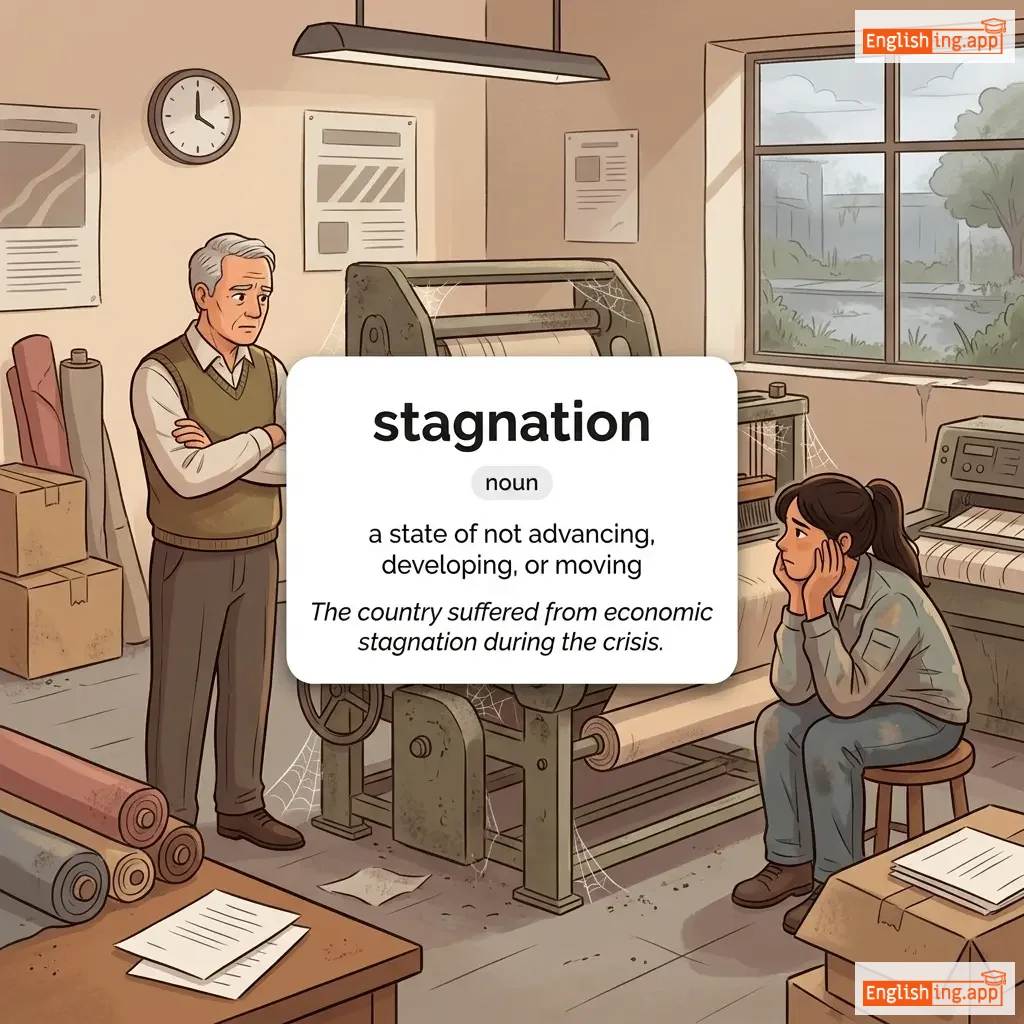
a state of not advancing, developing, or moving
••••••
|
The country suffered from economic stagnation during the crisis. |
その国は危機の間、経済的停滞に苦しんでいました。
Sono kuni wa kiki no aida, keizaiteki teitai ni kurushinde imashita.
••••••
|
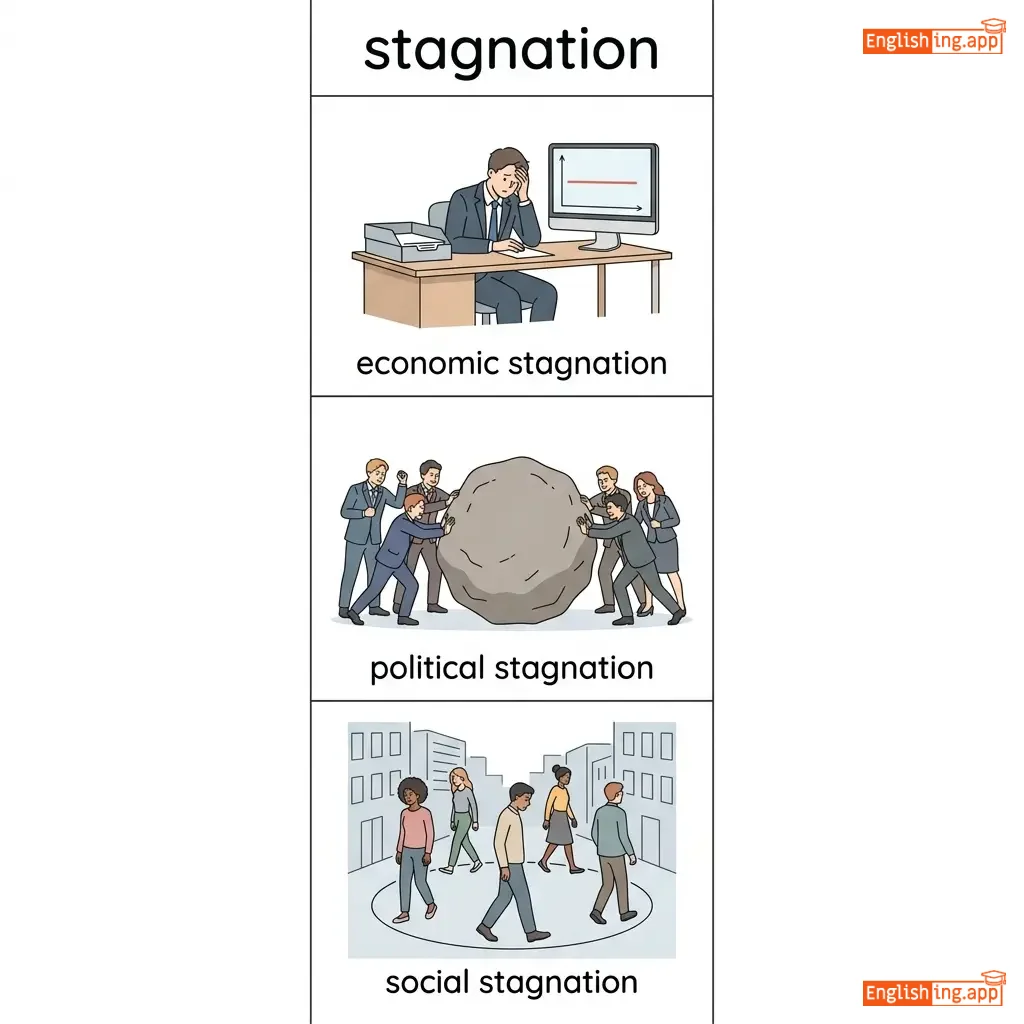
economic stagnation |
a period when the economy does not grow or improve
••••••
|
経済的停滞
keizaiteki teitai
••••••
|
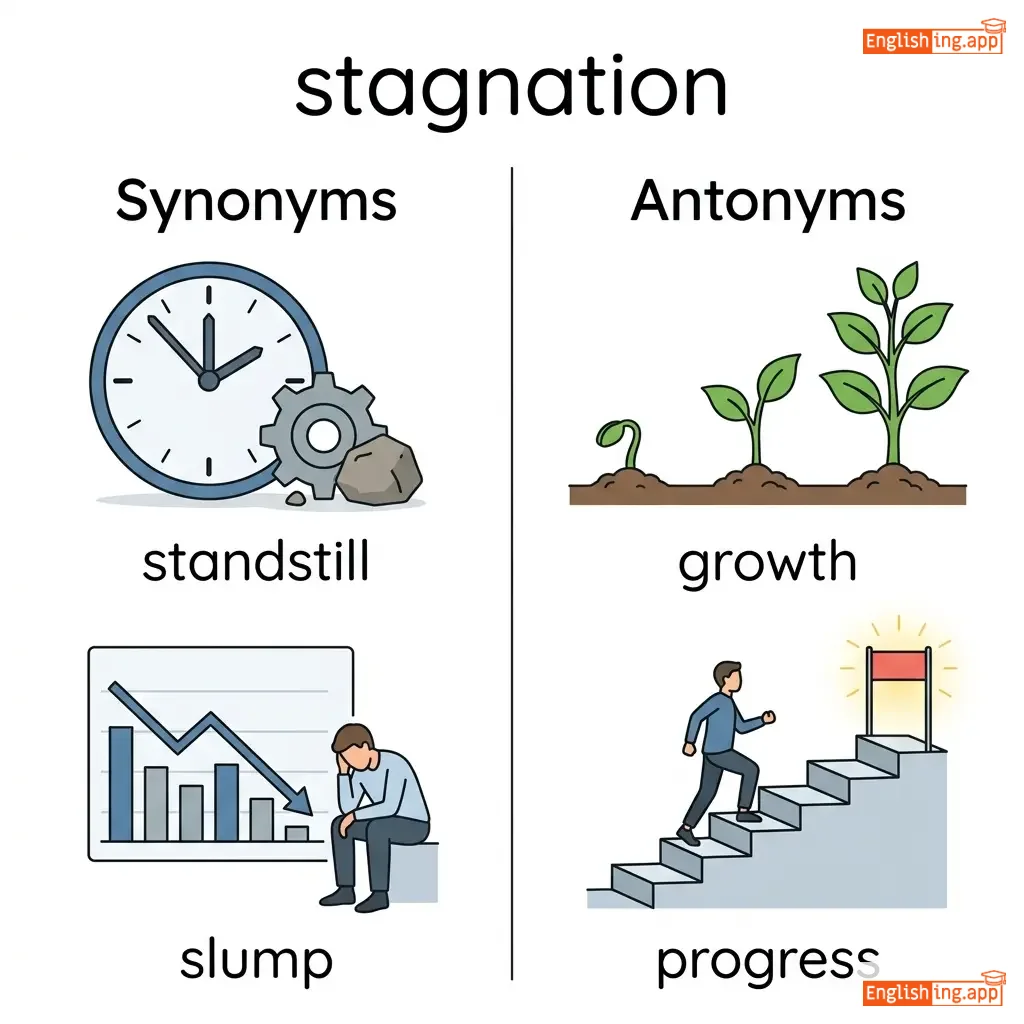
standstill, slump, inactivity, decline
••••••
|
growth, progress, boom
••••••
|
economic stagnation, political stagnation, social stagnation
••••••
|
駅に停車して動かない = 停滞
••••••
|
|
#8338
🛑
|
/ˈstæɡ.neɪt/
verb
(スタグネート)
••••••
|
- •••••• |
停滞する
teitai suru
••••••
|
stagnated
スタグネーテッド
••••••
|
stagnated
スタグネーテッド
••••••
|
stagnates
スタグネーツ
••••••
|
stagnating
スタグネイティング
••••••
|
to stop developing, progressing, or moving
••••••
|
Without innovation, the business will stagnate.
革新がなければ、ビジネスは停滞する。
••••••
|
革新がなければ、ビジネスは停滞する。
kakushin ga nakereba, bijinesu wa teitai suru.
••••••
|
- •••••• | - •••••• | - •••••• |
deteriorate, decline, languish, idle
••••••
|
grow, progress, advance
••••••
|
stagnate economy, stagnate growth, stagnate business
••••••
|
動かない → 停滞する
••••••
|
|
#8339
💧
|
/ˈstæɡ.nənt/
adjective
(スタグナント)
••••••
|
- •••••• |
停滞
teitai
••••••
|
- •••••• | - •••••• | - •••••• | - •••••• |
not moving, changing, or developing; inactive
••••••
|
The company’s growth remained stagnant for several years. |
会社の成長は数年間停滞していました。
Kaisha no seichō wa suunenkan teitai shite imashita.
••••••
|
stagnant water |
still water with no flow, often unhealthy
••••••
|
停滞した水
teitai shita mizu
••••••
|
motionless, still, inactive, sluggish
••••••
|
active, flowing, dynamic
••••••
|
stagnant economy, stagnant market, stagnant water, stagnant growth
••••••
|
停滞 = 変化しない → stagnant
••••••
|
Vocabulary Quiz
Test your vocabulary by matching words with their translations or meanings.
Login to take the quiz
Comments (0)
Share your thoughts and join the discussion.
Join the discussion by logging in
Login to CommentNo comments yet
Be the first to share your thoughts!