

翻訳
過去
過去分詞
三人称単数
動名詞
意味
例文
例文の翻訳
同義語
対義語
コロケーション
ニーモニック
Swipe left or right, or use the buttons. Tap image to zoom.
例文の翻訳
単語
Lesson 280Lesson 280 - マスクトグル
|
絵文字
|
単語 | Images | 翻訳 | 過去 | 過去分詞 | 三人称単数 | 動名詞 | 意味 | 例文 | 例文の翻訳 | 表現例 | 表現例の意味 | 表現例の翻訳 | 同義語 | 対義語 | コロケーション | ニーモニック |
|---|---|---|---|---|---|---|---|---|---|---|---|---|---|---|---|---|---|
|
#8370
😐
|
/ˈstoʊɪk/
adjective
(ストイック)
••••••
|
- •••••• |
冷静な, 無感情な
reiseina, mugannōna
••••••
|
- •••••• | - •••••• | - •••••• | - •••••• |
Showing little or no emotion, even in difficult situations.
••••••
|
She remained stoic during the crisis, never showing fear or panic. |
彼女は危機の間、冷静で恐怖やパニックを示さなかった。
Kanojo wa kiki no aida, reisei de kyōfu ya panikku o shimesanakatta.
••••••
|
- •••••• | - •••••• | - •••••• |
calm, unemotional, composed, indifferent, impassive
••••••
|
emotional, expressive, sensitive
••••••
|
stoic expression, stoic attitude, stoic calm, stoic endurance
••••••
|
Stoicは石のようなものを意味する – stoicな人は岩のように冷静で感情を見せません。
••••••
|
|
#8371
🫷
|
/ˈstræŋɡəl/
verb
••••••
|
- •••••• | - •••••• |
strangled
••••••
|
strangled
••••••
|
strangles
••••••
|
strangling
••••••
|
to kill or stop someone or something by squeezing the throat or restricting flow
••••••
|
The villain tried to strangle his opponent in the dark alley. |
- •••••• |
strangle a business |
to severely restrict the growth or operation of a business
••••••
|
- •••••• |
choke, suffocate, throttle, stifle, suppress
••••••
|
release, free, liberate
••••••
|
strangle someone, strangle attempt, strangle hold, strangle growth
••••••
|
No •••••• |
|
#8372
🧵
|
/strænd/
noun, verb
(ストランド)
••••••
|
- •••••• |
糸 / 取り残された
ito / torinosokareta
••••••
|
stranded
ストランドッド
••••••
|
stranded
ストランドッド
••••••
|
strands
ストランドス
••••••
|
stranding
ストランディング
••••••
|
Noun: A single thin length of thread, wire, or similar. Verb: To leave someone or something without a way of moving or leaving.
••••••
|
The storm stranded many tourists on the island.
嵐は多くの観光客を島に取り残しました。
••••••
|
嵐は多くの観光客を島に取り残しました。
Arashi wa ooku no kankōkyaku o shima ni torinoshimashita.
••••••
|
left stranded
取り残された
••••••
|
left helpless or unable to move
••••••
|
取り残された
torinosokareta
••••••
|
thread, fiber, filament, abandon, maroon
••••••
|
rope, cord, rescue
••••••
|
strand of hair, strand of wire, left stranded, stranded passengers
••••••
|
Strandは糸を意味し、strandedは取り残された状態を意味します。
••••••
|
|
#8373
🌊
|
/streɪt/
noun
(ストレート)
••••••
|
- •••••• |
海峡
kaikyō
••••••
|
- •••••• | - •••••• | - •••••• | - •••••• |
A narrow passage of water connecting two seas or two large areas of water.
••••••
|
The Strait of Gibraltar connects the Atlantic Ocean and the Mediterranean Sea. |
ジブラルタル海峡は大西洋と地中海を繋いでいます。
Jiburataru kaikyou wa Taiseiyou to Chichuukai o tsunaideimasu.
••••••
|
in dire straits |
in a very difficult or serious situation
••••••
|
困難な状況にある
konnan na joukyou ni aru
••••••
|
channel, passage, sound, narrows
••••••
|
open sea, wide passage
••••••
|
narrow strait, strait of Gibraltar, strait crossing, dire straits
••••••
|
海峡とは狭い水道を意味し、ジブラルタル海峡のように。
••••••
|
|
#8374
➡️
|
/streɪt/
adjective, adverb
(sutoreito)
••••••
|
- •••••• |
まっすぐ
massugu
••••••
|
- •••••• | - •••••• | - •••••• | - •••••• |
Extending or moving uniformly in one direction only; not curved or bent.
••••••
|
He walked straight to the door without stopping. |
彼は立ち止まることなく、まっすぐドアに向かって歩いていきました。
Kare wa tachidomaru koto naku, massugu doa ni mukatte aruite ikimashita.
••••••
|
straight to the point |
to talk directly about the main subject without delay
••••••
|
まっすぐ要点を言う
massugu yōten o iu
••••••
|
direct, upright, linear, honest, vertical
••••••
|
crooked, curved, bent
••••••
|
straight line, straight road, straight to the point, straight answer
••••••
|
Straightはまっすぐ、まっすぐな道のように (massugu na michi)
••••••
|
|
#8375
🚶
|
/ˈstræɡəl/
verb
(ストラグル)
••••••
|
- •••••• |
不規則に動く
fukisoku ni ugoku
••••••
|
straggled
ストラグルド
••••••
|
straggled
ストラグルド
••••••
|
straggles
ストラグルス
••••••
|
straggling
ストラグリング
••••••
|
To move or spread in an irregular, scattered, or untidy way.
••••••
|
The children began to straggle behind on the long hike.
子供たちは長いハイキングで後れを取るようになった。
••••••
|
子供たちは長いハイキングで後れを取るようになった。
Kodomotachi wa nagai haikingu de okure wo toru you ni natta.
••••••
|
straggle behind
後れを取る
••••••
|
to fall behind others while moving
••••••
|
後れを取る
Okure wo toru
••••••
|
wander, trail, drift, scatter, lag
••••••
|
gather, assemble, group
••••••
|
straggle behind, straggle home, straggle in, straggle along
••••••
|
Struggle していると、後れを取ることがある
••••••
|
|
#8376
🚢
|
/ˈstoʊəˌweɪ/
noun
(ストウエイ)
••••••
|
- •••••• |
密航者
mikkōsha
••••••
|
- •••••• | - •••••• | - •••••• | - •••••• |
A person who hides on a ship, plane, or other vehicle in order to travel secretly without paying.
••••••
|
The crew discovered a stowaway hiding in the cargo hold. |
乗組員は貨物室に隠れている密航者を発見しました。
Nōkumiin wa kamotsushitsu ni kakurete iru mikkōsha o hakken shimashita.
••••••
|
- •••••• | - •••••• | - •••••• |
intruder, trespasser, clandestine passenger, hidden traveler, fugitive
••••••
|
passenger, traveler, visitor
••••••
|
discover a stowaway, stowaway on a ship, stowaway case, stowaway problem
••••••
|
密航者は密に隠れて旅する
••••••
|
|
#8377
🦁
|
/ˌstaʊtˈhɑːrtɪd/
adjective
(スタウトハーテッド)
••••••
|
- •••••• |
勇敢な
yūkan na
••••••
|
- •••••• | - •••••• | - •••••• | - •••••• |
Brave, determined, and courageous
••••••
|
The stouthearted soldier never gave up. |
勇敢な兵士は決して諦めなかった。
Yūkan na heishi wa kesshite akiramenakatta.
••••••
|
- •••••• | - •••••• | - •••••• |
brave, courageous, valiant, bold, fearless
••••••
|
cowardly, fearful, timid
••••••
|
stouthearted soldier, stouthearted hero, stouthearted defense
••••••
|
Stouthearted = stout (強い) + hearted (勇敢) → 強い心
••••••
|
|
#8378
🍺
|
/staʊt/
adjective/noun
(スタウト)
••••••
|
- •••••• |
丈夫 / ぶ厚い
jōbu / buatsui
••••••
|
- •••••• | - •••••• | - •••••• | - •••••• |
Strong, thick, or heavily built; also a kind of dark beer
••••••
|
The stout man lifted the heavy box with ease. |
その丈夫な男性は重い箱を簡単に持ち上げました。
Sono jōbu na dansei wa omoi hako o kantan ni mochiagemashita.
••••••
|
stout resistance |
strong and determined opposition
••••••
|
丈夫な抵抗
jōbu na teikō
••••••
|
strong, sturdy, robust, solid, bulky
••••••
|
weak, frail, thin
••••••
|
stout man, stout woman, stout beer, stout resistance
••••••
|
Stout beer = Stoutは丈夫でぶ厚いを意味します
••••••
|
|
#8379
🙇
|
/stuːp/
verb/noun
(ハピネス)
••••••
|
- •••••• |
幸福
kōfuku
••••••
|
stooped
••••••
|
stooped
••••••
|
stoops
••••••
|
stooping
••••••
|
To bend one's body forward and downward; also a small porch or staircase at the entrance of a house
••••••
|
He had to stoop to pick up the coin. |
彼女は賞を受け取ったとき、自分の幸福を隠すことができませんでした。
Kanojo wa shō o uketotta toki, jibun no kōfuku o kakusu koto ga dekimasen deshita.
••••••
|
stoop to someone's level |
to lower oneself to behave like someone of poor character
••••••
|
幸福の追求
kōfuku no tsuikyū
••••••
|
bend, crouch, bow, lower, hunch
••••••
|
stand, rise, straighten
••••••
|
stoop down, stoop low, old stoop, stoop posture
••••••
|
幸福 = 幸せでいること、幸せを追い求める
••••••
|
|
#8380
🧱
|
/ˈstoʊnwɔːl/
verb
(ストーンウォール)
••••••
|
- •••••• |
妨害する
bōgai suru
••••••
|
stonewalled
ストーンウォールド
••••••
|
stonewalled
ストーンウォールド
••••••
|
stonewalls
ストーンウォールズ
••••••
|
stonewalling
ストーンウォーリング
••••••
|
To delay or block progress by refusing to cooperate or answer
••••••
|
The witness tried to stonewall during the investigation.
証人は調査中にストーンウォールしようとしました。
••••••
|
証人は調査中にストーンウォールしようとしました。
Shōnin wa chōsa-chū ni sutōn wōru shiyō to shimashita.
••••••
|
stonewall tactics
ストーンウォール戦術
••••••
|
deliberate actions to block or delay progress
••••••
|
ストーンウォール戦術
sutōn wōru senjutsu
••••••
|
obstruct, block, delay, hinder, resist
••••••
|
cooperate, assist, support
••••••
|
stonewall tactics, stonewall investigation, stonewall questions
••••••
|
Stonewall = 石の壁、進行を妨げる
••••••
|
|
#8381
🤢
|
/ˈstʌmək/
noun/verb
(胃)
••••••
|
- •••••• |
胃 / 耐える
i / taeru
••••••
|
stomached
胃した
••••••
|
stomached
胃した
••••••
|
stomachs
胃する
••••••
|
stomaching
胃する過程
••••••
|
The internal organ in which food is digested; also to tolerate or endure something
••••••
|
She couldn’t stomach the sight of violence.
彼女は暴力の光景に耐えられなかった。
••••••
|
彼女は暴力の光景に耐えられなかった。
Kanojo wa bōryoku no kōkei ni taerarenakatta.
••••••
|
have a strong stomach
強い胃を持っている
••••••
|
to be able to tolerate unpleasant or difficult things
••••••
|
強い胃を持っている
Tsuyoi i o motte iru
••••••
|
belly, abdomen, gut, endure, tolerate
••••••
|
reject, resist, dislike
••••••
|
stomach pain, upset stomach, stomach flu, stomach cramps
••••••
|
胃は食べ物を消化する器官で、強い胃を持っていると困難を耐えることができます。
••••••
|
|
#8382
🪵
|
/ˈstɒlɪd/
adjective
(ストリッド)
••••••
|
|
冷静な、無表情な
reisei na, muhyoujou na
••••••
|
- •••••• | - •••••• | - •••••• | - •••••• |
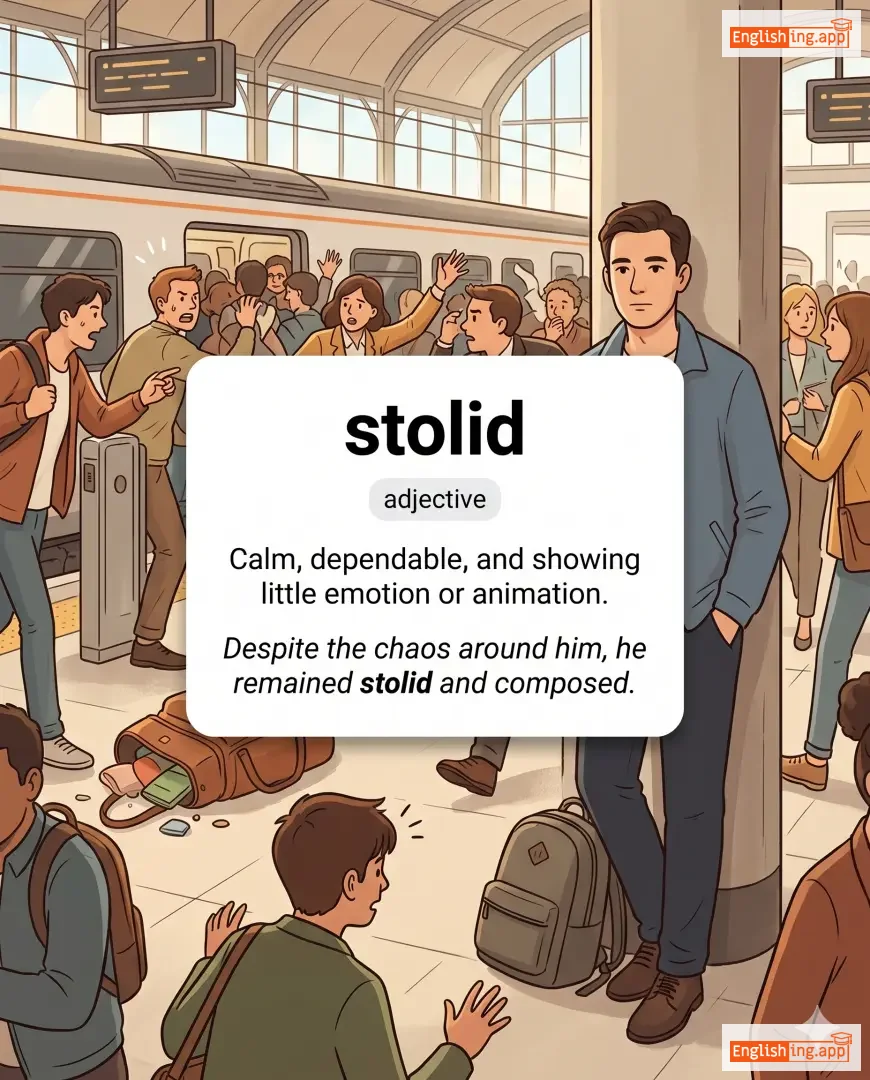
Calm, dependable, and showing little emotion or animation.
••••••
|
Despite the chaos around him, he remained stolid and composed.
ディスパイト ザ カオス アラウンド ヒム, ヒ リメインド ストリッド アンド コンポーズド。
••••••
|
周りの混乱にもかかわらず、彼は冷静で落ち着いていました。
Mawari no konran ni mo kakawarazu, kare wa reisei de ochitsuite imashita.
••••••
|
- •••••• | - •••••• | - •••••• |
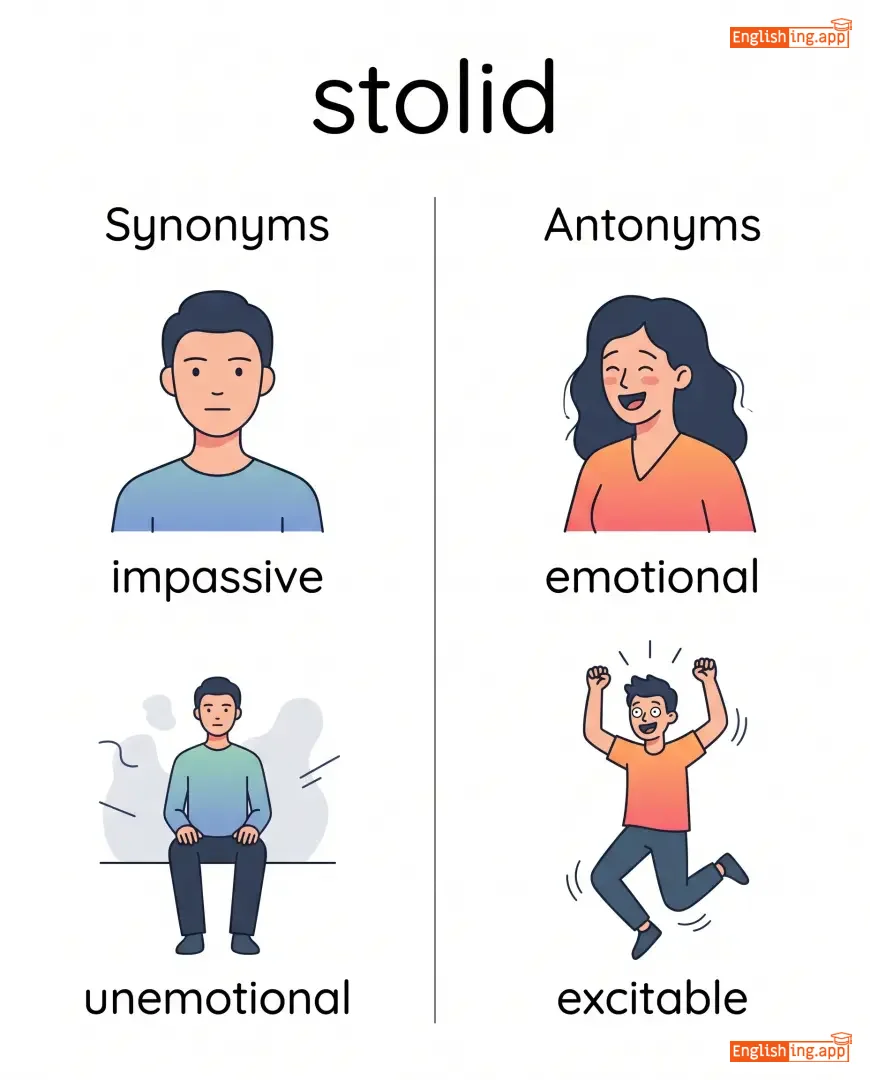
impassive, unemotional, phlegmatic, placid, steady
••••••
|
emotional, excitable, expressive
••••••
|
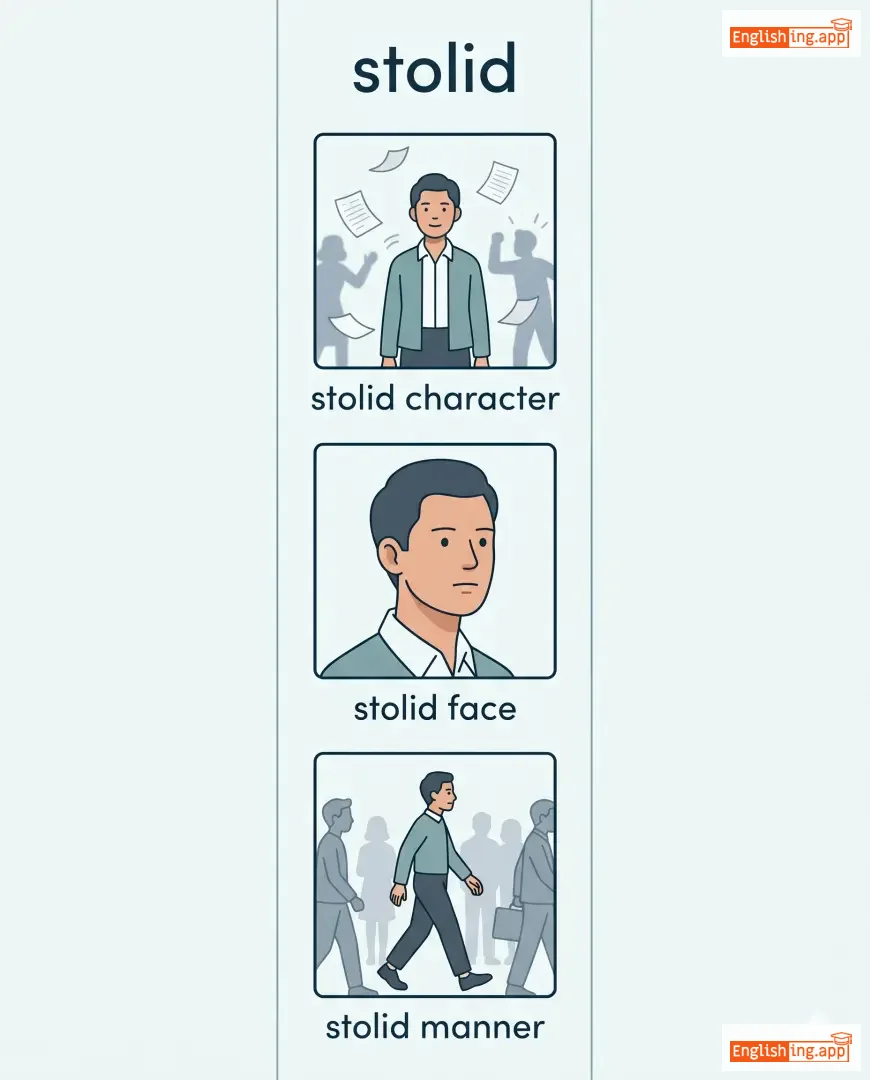
stolid character, stolid face, stolid manner, stolid calm
••••••
|
Stolid – 冷静な人は感情を見せない。
••••••
|
|
#8383
🔥
|
/stoʊk/
verb
••••••
|
- •••••• | - •••••• |
stoked
••••••
|
stoked
••••••
|
stokes
••••••
|
stoking
••••••
|
To add fuel to a fire; to encourage or increase a strong feeling or activity.
••••••
|
The politician’s speech stoked anger among the crowd. |
- •••••• |
stoke the flames |
to make a bad situation worse by increasing anger or conflict
••••••
|
- •••••• |
fuel, kindle, ignite, arouse, provoke
••••••
|
extinguish, calm, suppress
••••••
|
stoke a fire, stoke anger, stoke enthusiasm, stoke fears
••••••
|
No •••••• |
|
#8384
🧘
|
/ˈstoʊɪˌsɪzəm/
noun
(ストイシズム)
••••••
|
|
ストイック主義
sutoikku shugi
••••••
|
- •••••• | - •••••• | - •••••• | - •••••• |
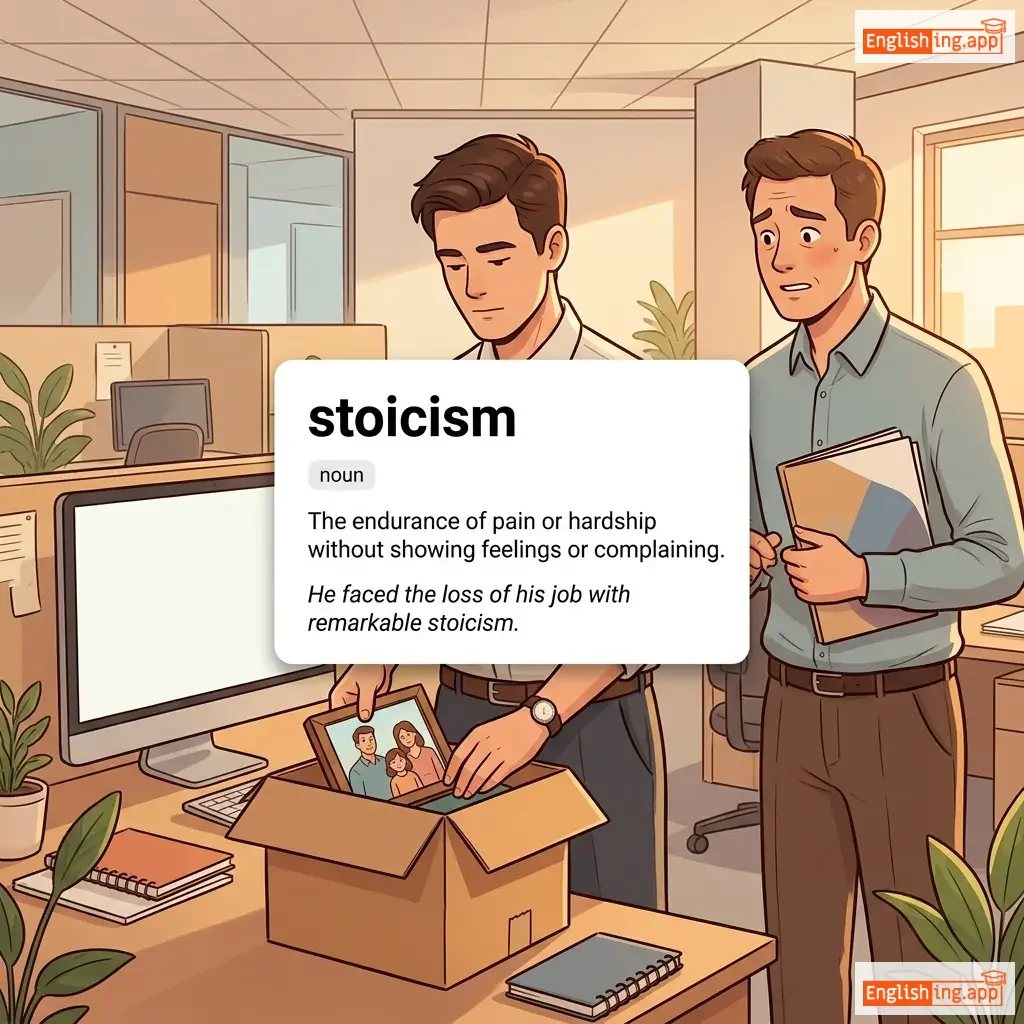
The endurance of pain or hardship without showing feelings or complaining.
••••••
|
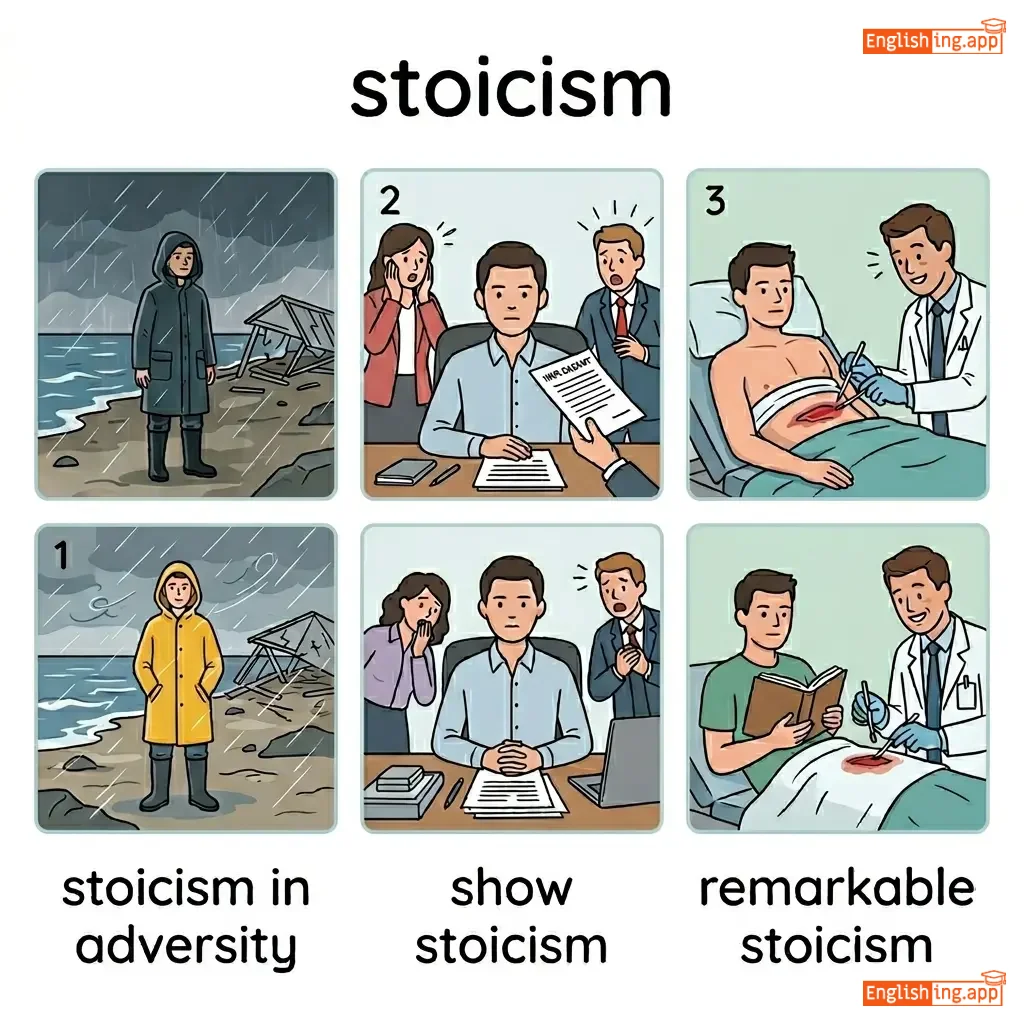
He faced the loss of his job with remarkable stoicism. |
彼は仕事を失ったことを並外れたストイック主義で乗り越えた。
Kare wa shigoto o ushinatta koto o namihazureta sutoikku shugi de norikoeta.
••••••
|
- •••••• | - •••••• | - •••••• |
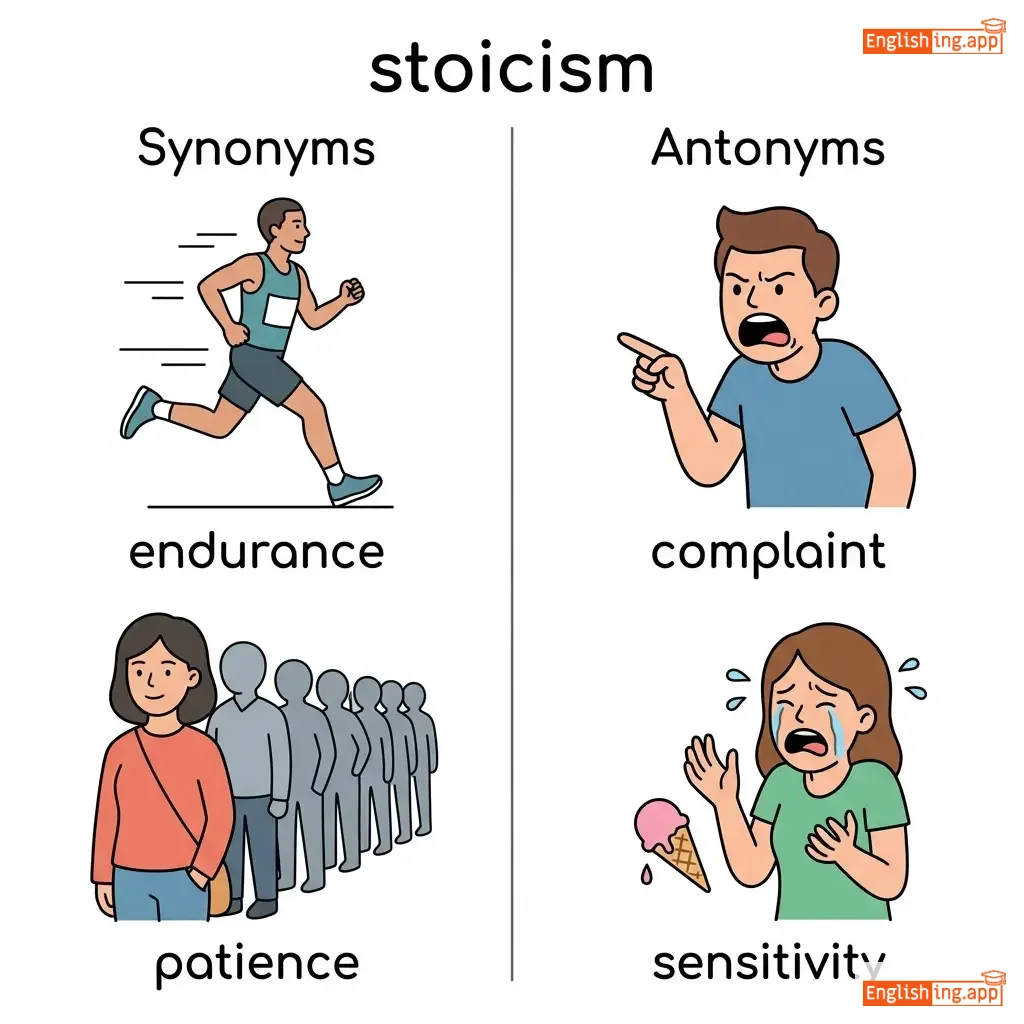
endurance, patience, fortitude, resignation, impassiveness
••••••
|
complaint, sensitivity, weakness
••••••
|
stoicism in adversity, show stoicism, remarkable stoicism, endure with stoicism
••••••
|
ストイック主義は石のように、どんな困難にも耐え抜く力を持つ。
••••••
|
|
#8385
🤖
|
/ˈstɪltɪd/
adjective
(ˈstɪltɪd)
••••••
|
- •••••• |
不自然な、堅苦しい
fushizen na, katakurushii
••••••
|
- •••••• | - •••••• | - •••••• | - •••••• |
Speech or writing that is stiff, unnatural, or overly formal.
••••••
|
His speech sounded stilted and rehearsed. |
彼のスピーチは不自然で練習されたように聞こえた。
Kare no supīchi wa fushizen de renshū sareta yō ni kikoeta.
••••••
|
- •••••• | - •••••• | - •••••• |
awkward, unnatural, pompous, stiff
••••••
|
natural, relaxed, fluent
••••••
|
stilted speech, stilted conversation, stilted style
••••••
|
Stilted とは、高い足場に立つことです – 不自然な姿勢 → 堅苦しい言語
••••••
|
|
#8386
🥱
|
/ˈstɒdʒi/
adjective
(ストッジ)
••••••
|
- •••••• |
退屈な、時代遅れな
taikutsu na, jidaiokure na
••••••
|
- •••••• | - •••••• | - •••••• | - •••••• |
Dull, uninspired, or old-fashioned; also heavy and hard to digest when referring to food.
••••••
|
The lecture was so stodgy that many students struggled to stay awake. |
その講義はあまりにも退屈で、多くの学生が目を覚ますのに苦労しました。
Sono kōgi wa amari ni mo taikutsu de, ōku no gakusei ga me o samasu no ni kurō shimashita.
••••••
|
- •••••• | - •••••• | - •••••• |
dull, boring, stuffy, tedious, old-fashioned
••••••
|
lively, exciting, modern
••••••
|
stodgy food, stodgy lecture, stodgy style, stodgy institution
••••••
|
Stodgy は退屈なことを意味します。stodgy food を食べると消化が難しい(重い)です。
••••••
|
|
#8387
🪵
|
/stɒˈkeɪd/
noun
(sutōkēdo)
••••••
|
- •••••• |
木製の塀
mokusei no hei
••••••
|
- •••••• | - •••••• | - •••••• | - •••••• |
a defensive barrier made of strong posts or timbers, often around a fort or prison
••••••
|
The prisoners were kept inside the wooden stockade. |
囚人は木製の塀の中に閉じ込められていました。
Shūjin wa mokusei no hei no naka ni tojikomere rarete imashita.
••••••
|
- •••••• | - •••••• | - •••••• |
fortification, enclosure, barricade, fence, palisade
••••••
|
opening, exit
••••••
|
wooden stockade, prison stockade, military stockade, stockade fence
••••••
|
Stockadeは木で作られた防御壁を意味します
••••••
|
|
#8388
📦
|
/stɒk/
noun, verb
(sutokku)
••••••
|
- •••••• |
在庫
zaiko
••••••
|
stocked
sutokku do
••••••
|
stocked
sutokku do
••••••
|
stocks
sutokusu
••••••
|
stocking
sutokkingu
••••••
|
a supply of goods kept for sale or use; to keep or fill with goods
••••••
|
The shop stocks a wide variety of products.
その店はさまざまな製品を在庫しています。
••••••
|
その店はさまざまな製品を在庫しています。
Sono mise wa samazama na seihin o zaiko shiteimasu.
••••••
|
take stock of
在庫を取る
••••••
|
to carefully examine and evaluate a situation
••••••
|
状況を評価する
joukyou o hyouka suru
••••••
|
inventory, supply, reserve, goods, merchandise
••••••
|
shortage, depletion
••••••
|
stock market, stock price, stock exchange, stock level
••••••
|
在庫は店に商品を保管すること
••••••
|
|
#8389
🧵
|
/stɪtʃ/
noun, verb
••••••
|
|
- •••••• |
stitched
••••••
|
stitched
••••••
|
stitches
••••••
|
stitching
••••••
|
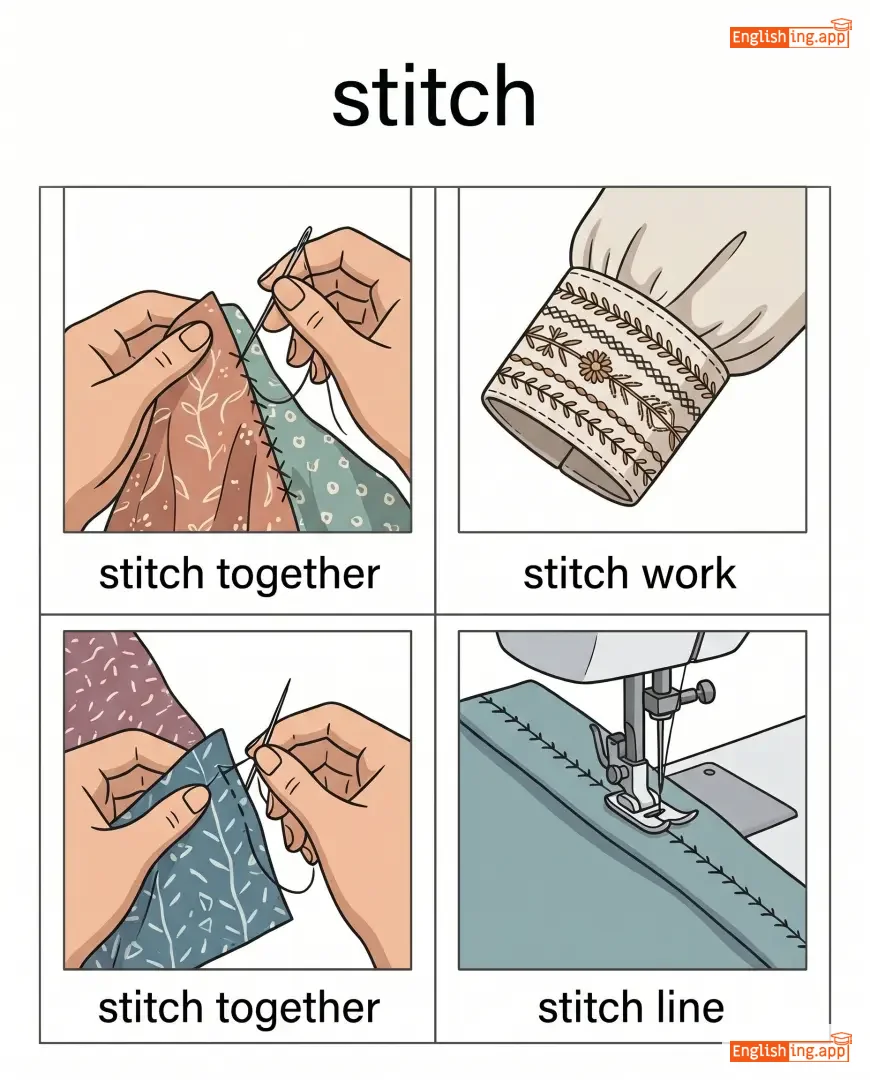
to sew fabric together using a needle and thread; also a single loop of thread in sewing
••••••
|
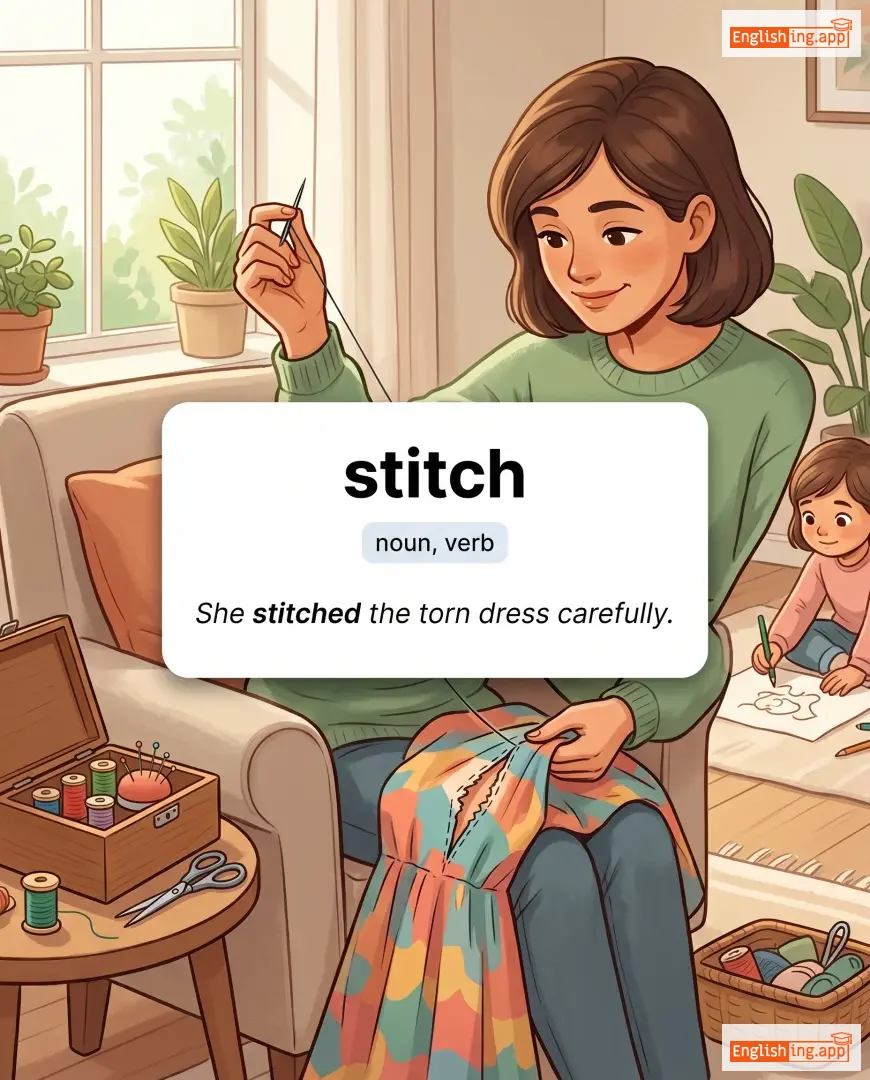
She stitched the torn dress carefully. |
- •••••• |
in stitches |
laughing uncontrollably
••••••
|
- •••••• |
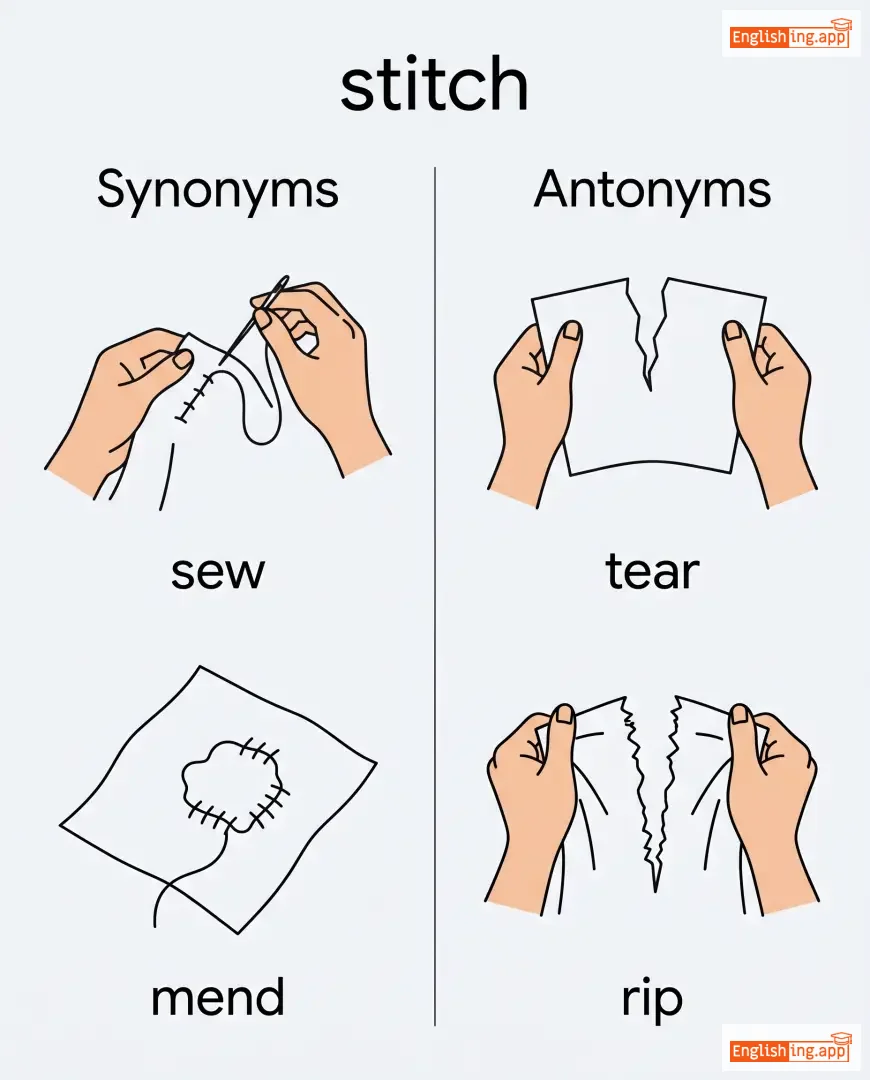
sew, mend, darn, embroider, hem
••••••
|
tear, rip
••••••
|
stitch together, stitch work, stitch line, stitch pattern
••••••
|
No •••••• |
|
#8390
📜
|
/ˈstɪp.jʊ.leɪt/
verb
(スティピュレイト)
••••••
|
|
規定する
kitei suru
••••••
|
stipulated
スティピュレイテッド
••••••
|
stipulated
スティピュレイテッド
••••••
|
stipulates
スティピュレイツ
••••••
|
stipulating
スティピュレイティング
••••••
|
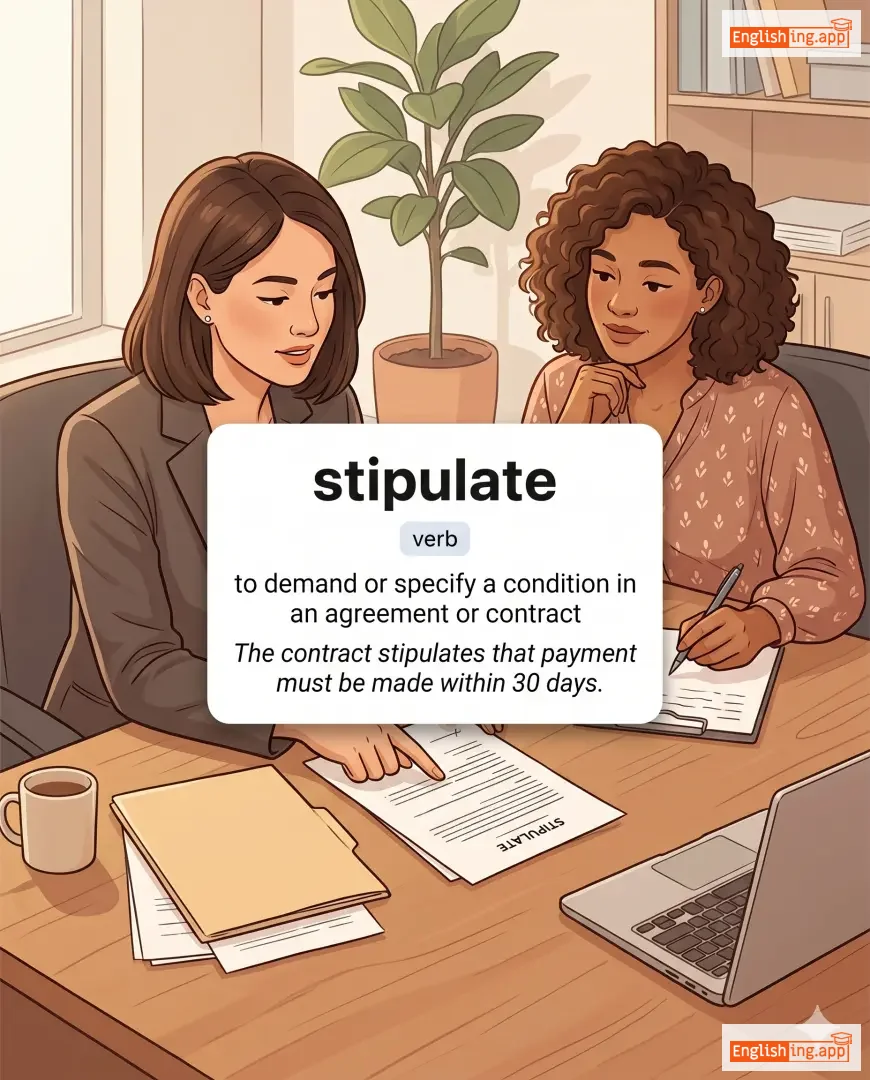
to demand or specify a condition in an agreement or contract
••••••
|
The contract stipulates that payment must be made within 30 days.
契約書には、支払いは30日以内に行われるべきであると明記されています。
••••••
|
契約書には、支払いは30日以内に行われるべきであると明記されています。
Keiyakusho ni wa, shiharai wa 30 nichi inai ni okonawareru beki de aru to meiki sareteimasu.
••••••
|
stipulate terms
条件を明記する
••••••
|
to formally specify conditions in an agreement
••••••
|
条件を明記する
jouken wo meiki suru
••••••
|
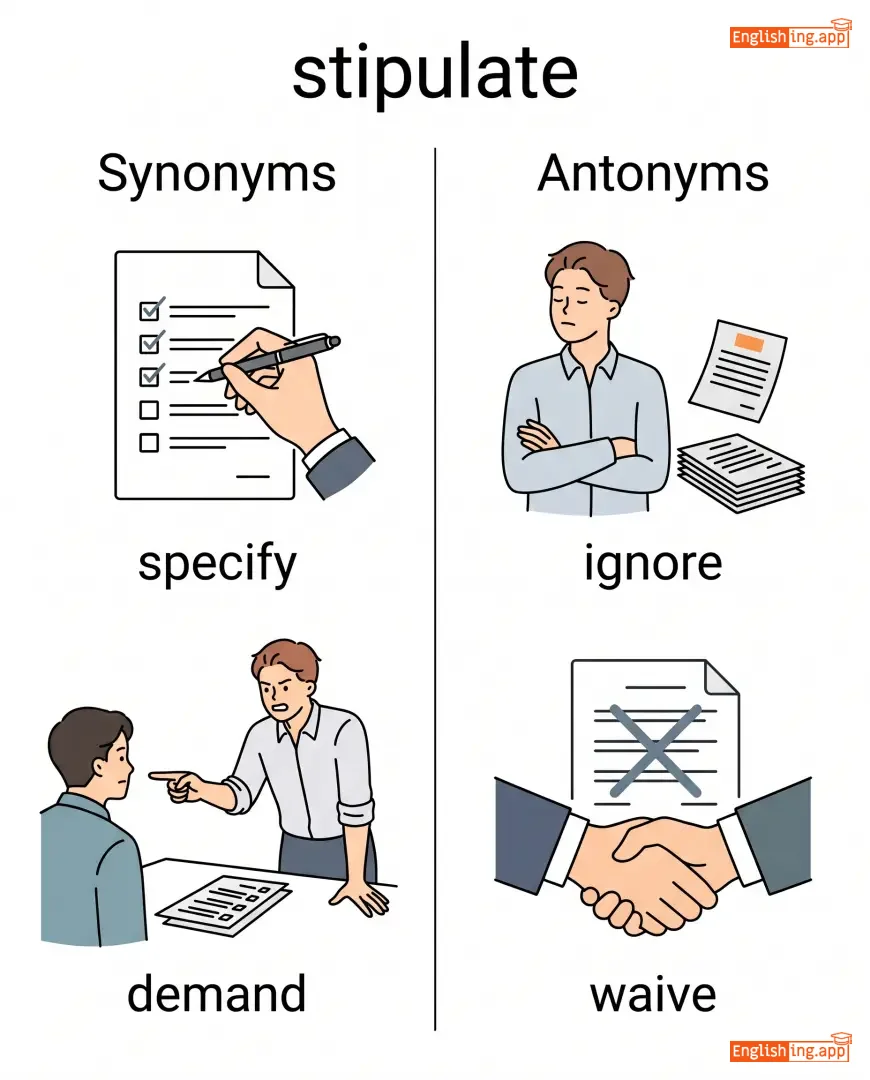
specify, demand, require, prescribe, condition
••••••
|
ignore, waive, overlook
••••••
|
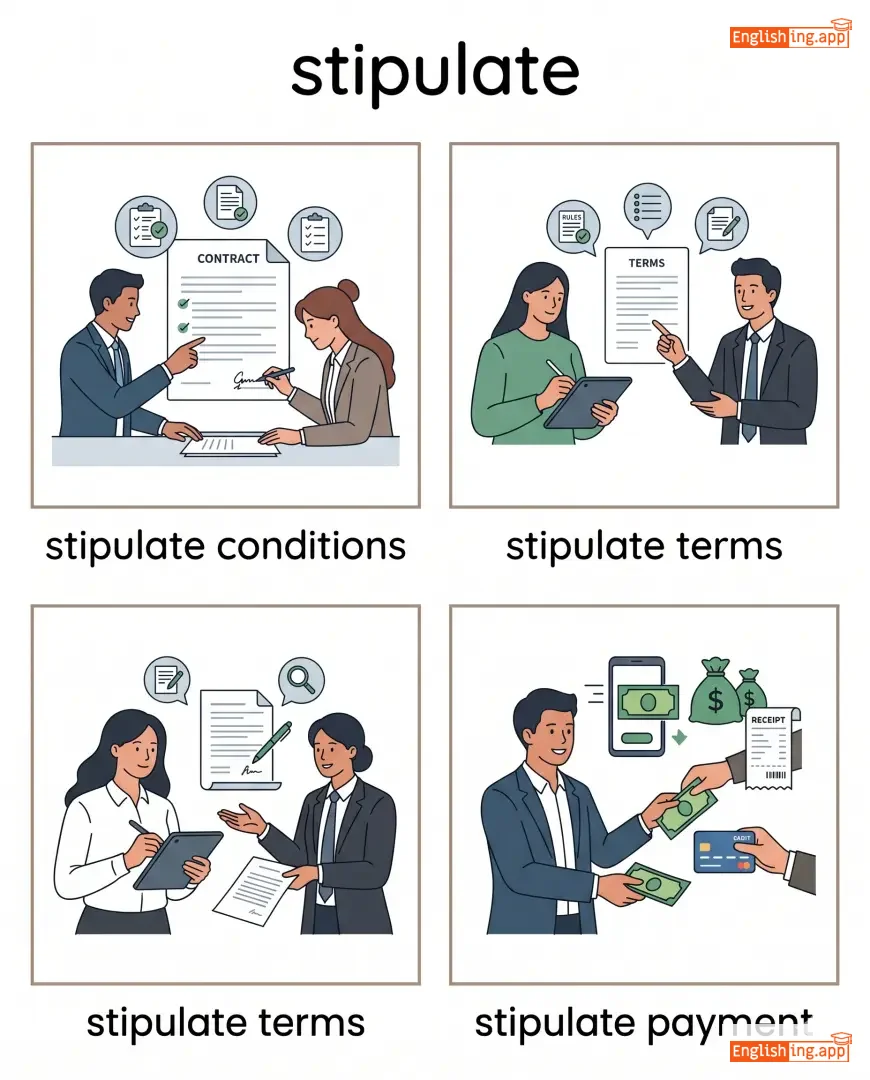
stipulate conditions, stipulate terms, stipulate payment, stipulate requirement
••••••
|
stipulate = 契約に条件を規定する
••••••
|
|
#8391
🎨
|
/ˈstɪp.əl/
verb
(スティプル)
••••••
|
- •••••• |
小さな点で覆う
chiisana ten de oou
••••••
|
stippled
スティプルド
••••••
|
stippled
スティプルド
••••••
|
stipples
スティプルズ
••••••
|
stippling
スティプリング
••••••
|
to cover a surface with numerous small dots or specks, often in drawing or painting
••••••
|
The artist stippled the canvas to create a textured effect.
アーティストはキャンバスに小さな点をつけて、テクスチャ効果を作り出しました。
••••••
|
アーティストはキャンバスに小さな点をつけて、テクスチャ効果を作り出しました。
Aatisuto wa kyanbasu ni chiisana ten o tsukete, tekusuchā kōka o tsukuridashimashita.
••••••
|
- •••••• | - •••••• | - •••••• |
dot, speckle, fleck, spot, mark
••••••
|
erase, smooth
••••••
|
stipple effect, stipple technique, stipple shading, stipple pattern
••••••
|
スティプルは絵に小さな点を加えることです。
••••••
|
|
#8392
💵
|
/ˈstaɪpɛnd/
noun
(スタイペンド)
••••••
|
- •••••• |
奨学金
shougakukin
••••••
|
- •••••• | - •••••• | - •••••• | - •••••• |
a fixed regular payment, usually for services or to cover living expenses
••••••
|
The university provides a monthly stipend to its research students.
大学は研究学生に毎月のスタイペンドを提供しています。
••••••
|
大学は研究学生に毎月のスタイペンドを提供しています。
Daigaku wa kenkyu gakusei ni maitsuki no suteipendo o teikyō shiteimasu.
••••••
|
- •••••• | - •••••• | - •••••• |
allowance, salary, grant, payment, remuneration
••••••
|
penalty, deduction
••••••
|
monthly stipend, receive stipend, stipend payment, stipend support
••••••
|
奨学金: 学生に支給される月々の助成金
••••••
|
|
#8393
✂️
|
/ˈstɪntɪŋ/
verb
(スティンティング)
••••••
|
- •••••• |
けちけちと与える
kechiketo ataeru
••••••
|
- •••••• | - •••••• |
stints
スティンツ
••••••
|
stinting
スティンティング
••••••
|
to supply sparingly or with restrictions
••••••
|
He never stinting his efforts to help the poor.
彼は貧しい人々を助けるために決して手を抜きません。
••••••
|
彼は貧しい人々を助けるために決して手を抜きません。
Kare wa mazushī hitobito o tasukeru tame ni kesshite te o nukimasen.
••••••
|
without stinting
制限なしで
••••••
|
without limitation or restriction
••••••
|
制限なしで
seigen nashi de
••••••
|
sparing, limiting, restricting, withholding
••••••
|
generous, lavish
••••••
|
stinting effort, stinting resources, without stinting
••••••
|
スティンティングはけちけちと与えることです - 制限なしで与える
••••••
|
|
#8394
⏳
|
/stɪnt/
noun
(日本語)
••••••
|
|
短期の仕事
tanki no shigoto
••••••
|
- •••••• | - •••••• | - •••••• | - •••••• |
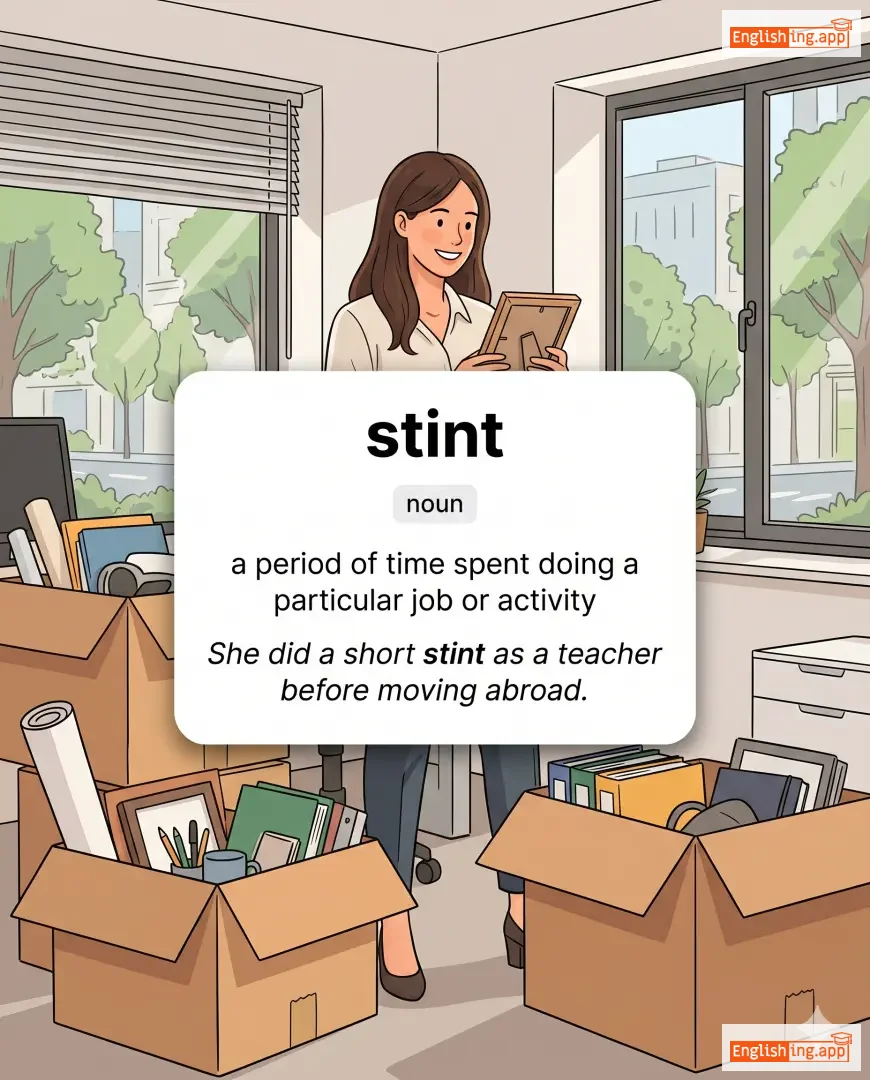
a period of time spent doing a particular job or activity
••••••
|
She did a short stint as a teacher before moving abroad.
彼女は海外に移住する前に短期間の教師として働きました。
••••••
|
彼女は海外に移住する前に短期間の教師として働きました。
Kanojo wa kaigai ni ijū suru mae ni tanki no kyōshi toshite hatarakimashita.
••••••
|
- •••••• | - •••••• | - •••••• |
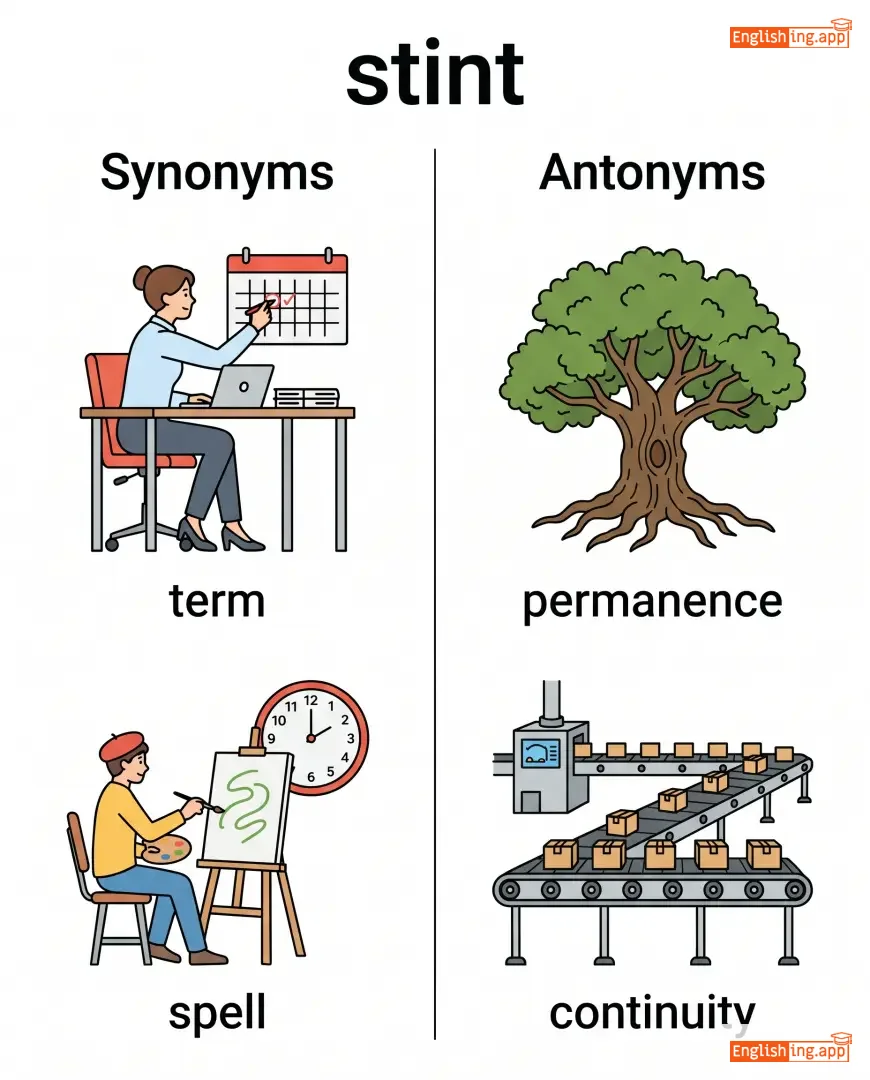
term, spell, period, stretch, service
••••••
|
permanence, continuity
••••••
|
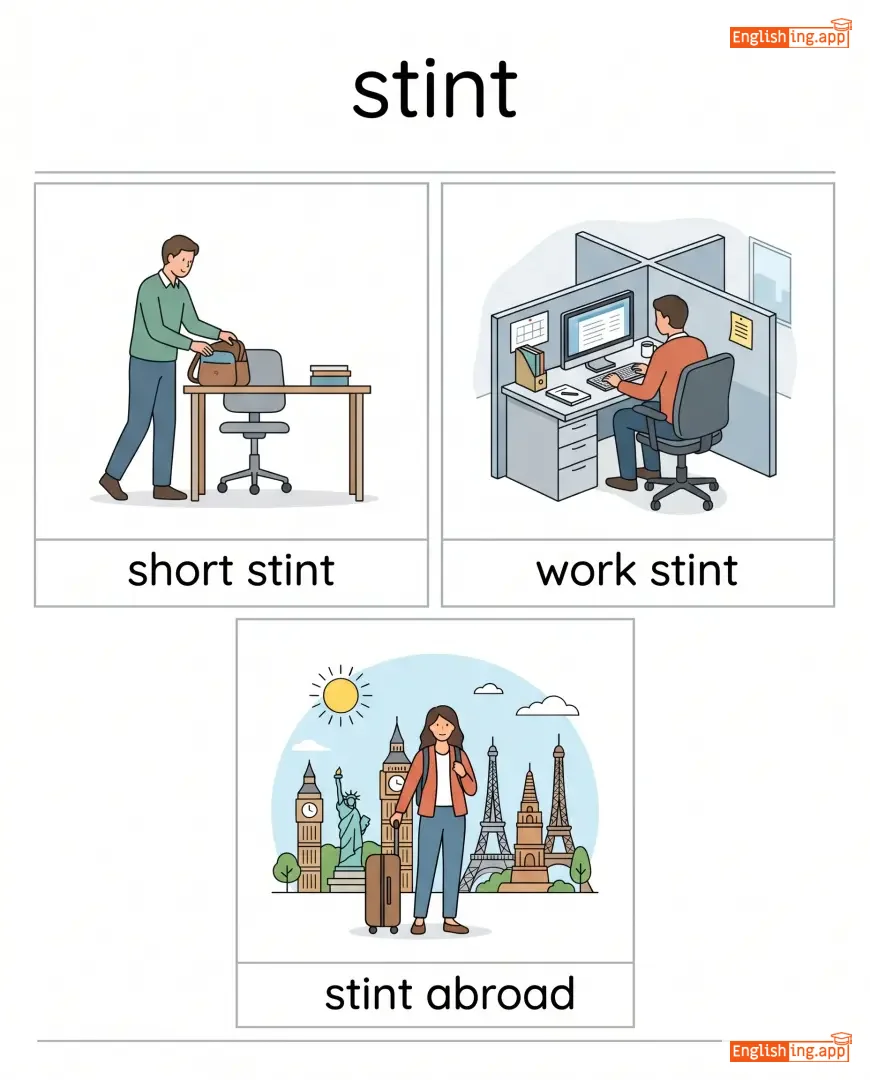
short stint, work stint, stint abroad, stint in service
••••••
|
Stint - 短期間の仕事、短い時間に働く
••••••
|
|
#8395
🤢
|
/stɪŋk/
verb
(スティンク)
••••••
|
- •••••• |
臭い
kusai
••••••
|
stank
スタンク
••••••
|
stunk
スタンク
••••••
|
stinks
スティンクス
••••••
|
stinking
スティンキング
••••••
|
to smell very unpleasant
••••••
|
The garbage bin stinks in the hot sun.
The garbage bin stinks in the hot sun.
••••••
|
ゴミ箱は暑い太陽の下で臭いです。
Gomibako wa atsui taiyou no shita de kusai desu.
••••••
|
stink to high heaven
stink to high heaven
••••••
|
to smell extremely bad
••••••
|
ひどく臭い
hidoku kusai
••••••
|
reek, smell, stink up, foul, pong
••••••
|
fragrant, pleasant-smelling
••••••
|
bad stink, stink up, stink badly, stink smell
••••••
|
臭いものを嗅ぐと、鼻を閉じる必要があります。
••••••
|
|
#8396
💰
|
/ˈstɪndʒi/
adjective
(スティンジー)
••••••
|
- •••••• |
けち
kechi
••••••
|
- •••••• | - •••••• | - •••••• | - •••••• |
unwilling to spend or give; miserly
••••••
|
He is too stingy to buy a gift for his friend. |
彼は友達へのプレゼントを買うにはあまりにけちだ。
Kare wa tomodachi e no purezento o kau ni wa amari ni kechi da.
••••••
|
stingy with compliments |
reluctant to praise or compliment others
••••••
|
褒め言葉にけち
homekotoba ni kechi
••••••
|
miserly, tightfisted, cheap, penny-pinching, frugal
••••••
|
generous, lavish, giving
••••••
|
stingy person, stingy with money, stingy attitude, stingy behavior
••••••
|
けちけち、少しでも出さない人!
••••••
|
|
#8397
🚀
|
/ˈstɪmjʊləs/
noun
(スティミュラス)
••••••
|
|
反応、活動、または成長を引き起こすもの、刺激
hannou, katsudou, matawa seichou wo hikiokosu mono, shigeki
••••••
|
- •••••• | - •••••• | - •••••• | - •••••• |
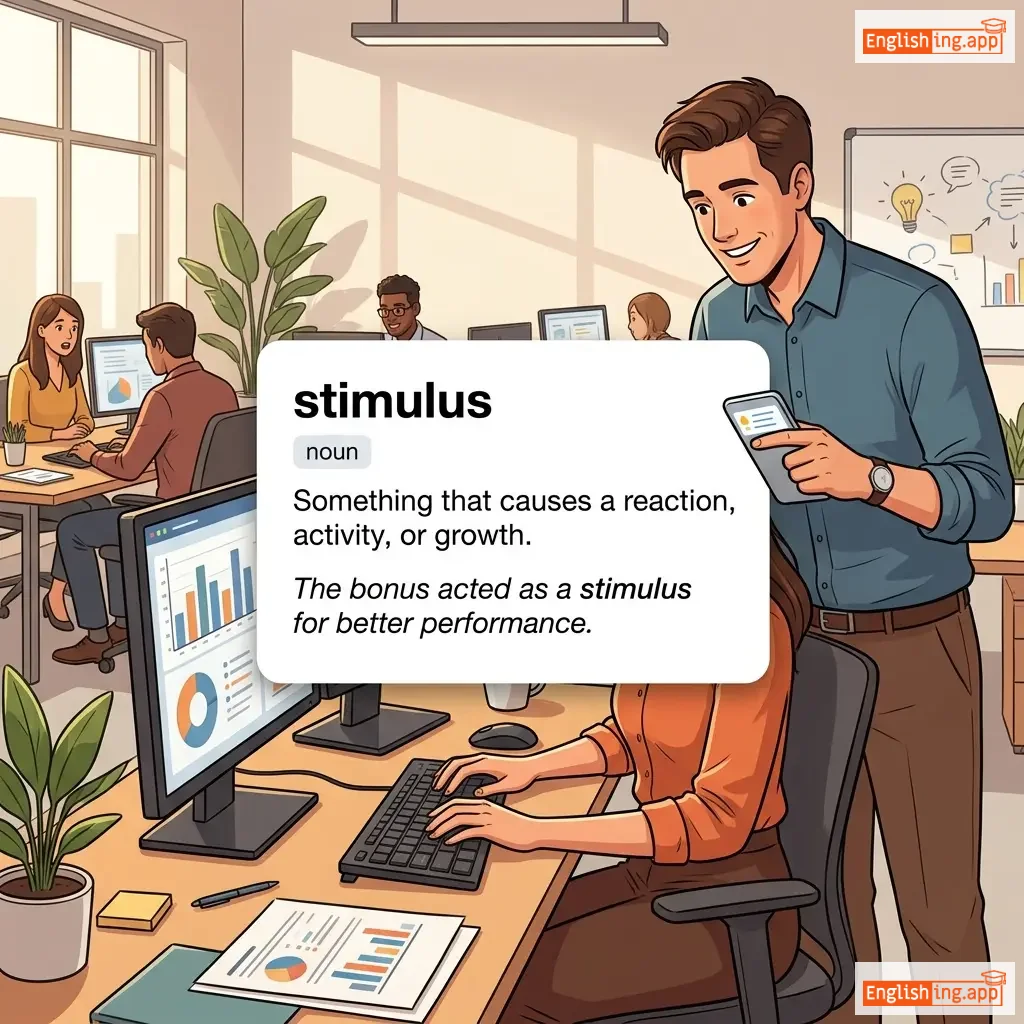
Something that causes a reaction, activity, or growth.
••••••
|
The bonus acted as a stimulus for better performance. |
ボーナスはより良いパフォーマンスのための刺激となった。
Bōnasu wa yori yoi pafōmansu no tame no shigeki to natta.
••••••
|
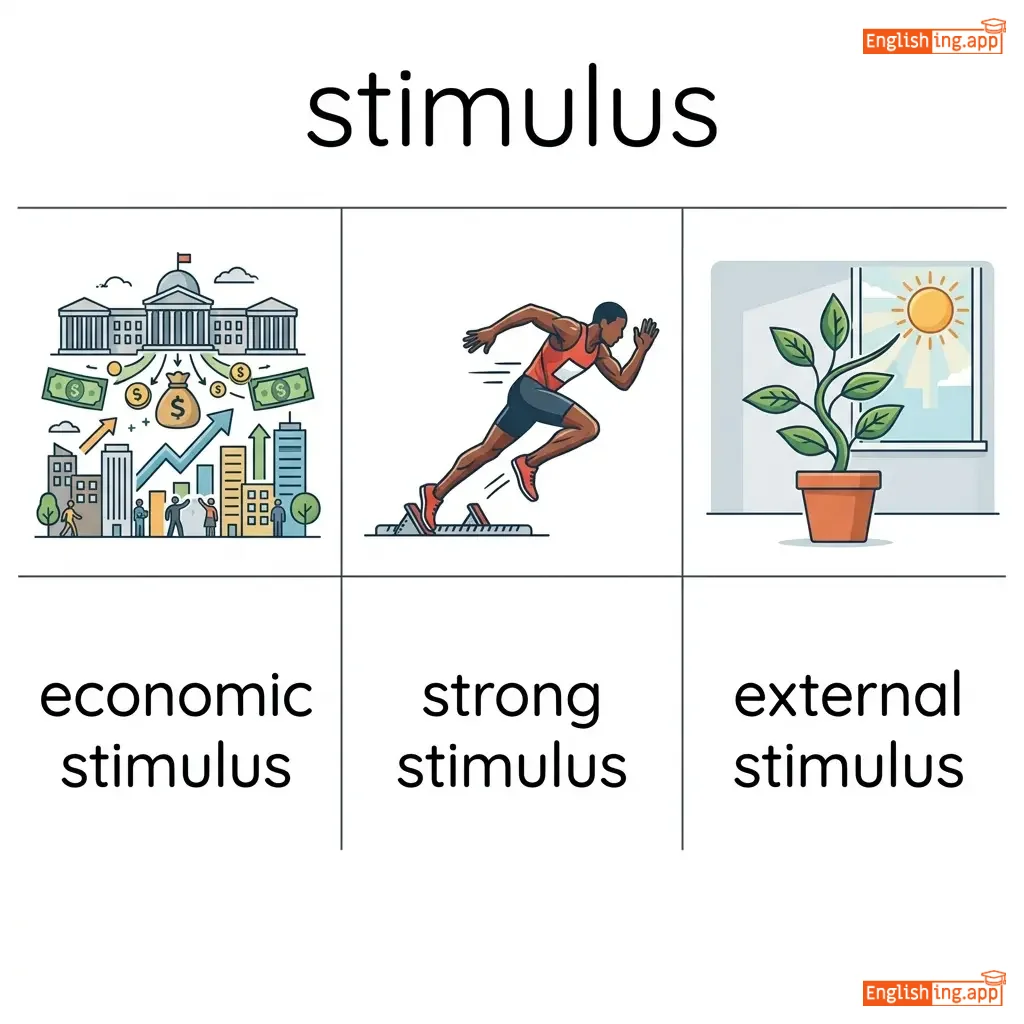
economic stimulus |
government actions to encourage economic growth
••••••
|
経済刺激
keizai shigeki
••••••
|
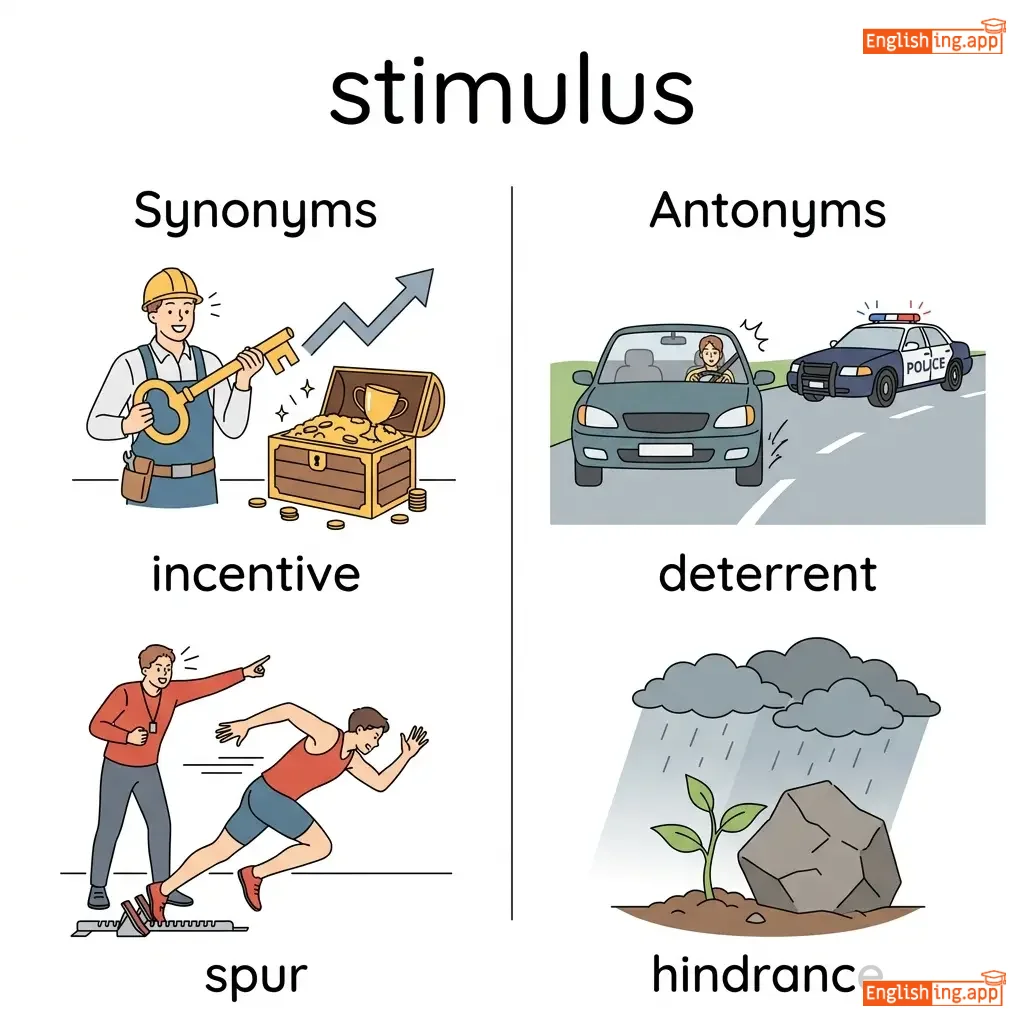
incentive, spur, motivation, encouragement, trigger
••••••
|
deterrent, hindrance
••••••
|
economic stimulus, strong stimulus, external stimulus, direct stimulus
••••••
|
Stimulus = 刺激 🚀 → ボーナスは、モチベーションを与える刺激です
••••••
|
|
#8398
💡
|
/ˈstɪmjʊˌleɪt/
verb
(刺激する)
••••••
|
|
刺激する, 活性化する
shigeki suru, katsusei suru
••••••
|
stimulated
刺激した
••••••
|
stimulated
刺激した
••••••
|
stimulates
刺激する
••••••
|
stimulating
刺激している
••••••
|
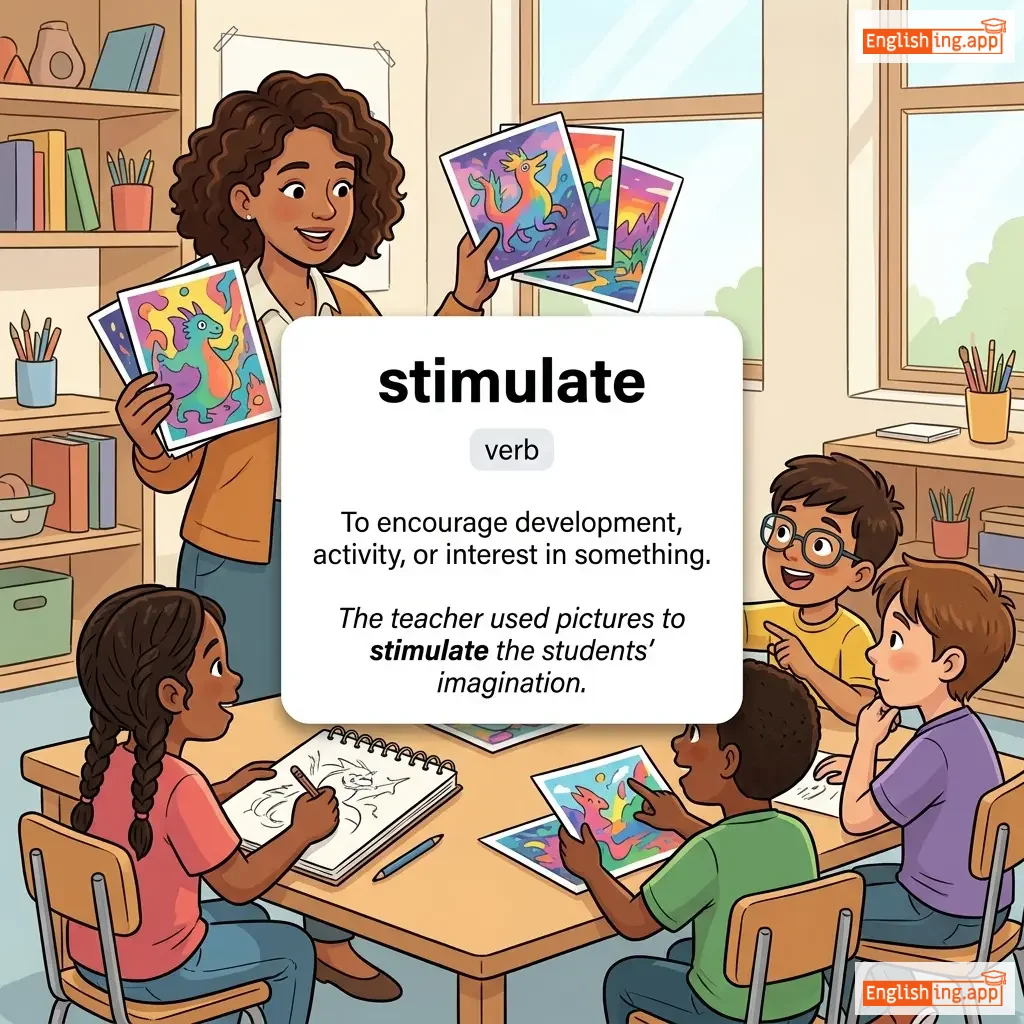
To encourage development, activity, or interest in something.
••••••
|
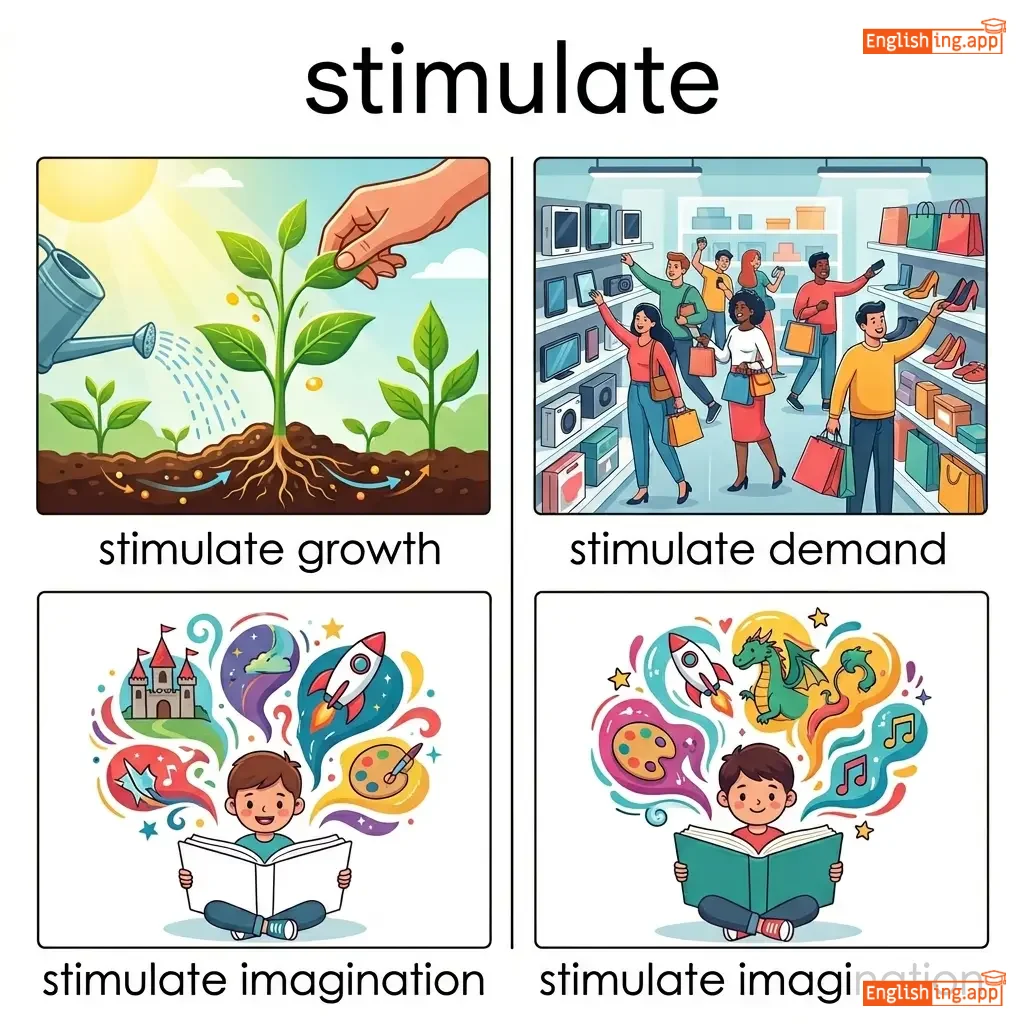
The teacher used pictures to stimulate the students' imagination.
先生は絵を使って生徒の想像力を刺激しました。
••••••
|
先生は絵を使って生徒の想像力を刺激しました。
Sensei wa e o tsukatte seito no sōzōryoku o shigeki shimashita.
••••••
|
stimulate growth
成長を刺激する
••••••
|
to encourage development or increase
••••••
|
成長を刺激する
seichō o shigeki suru
••••••
|
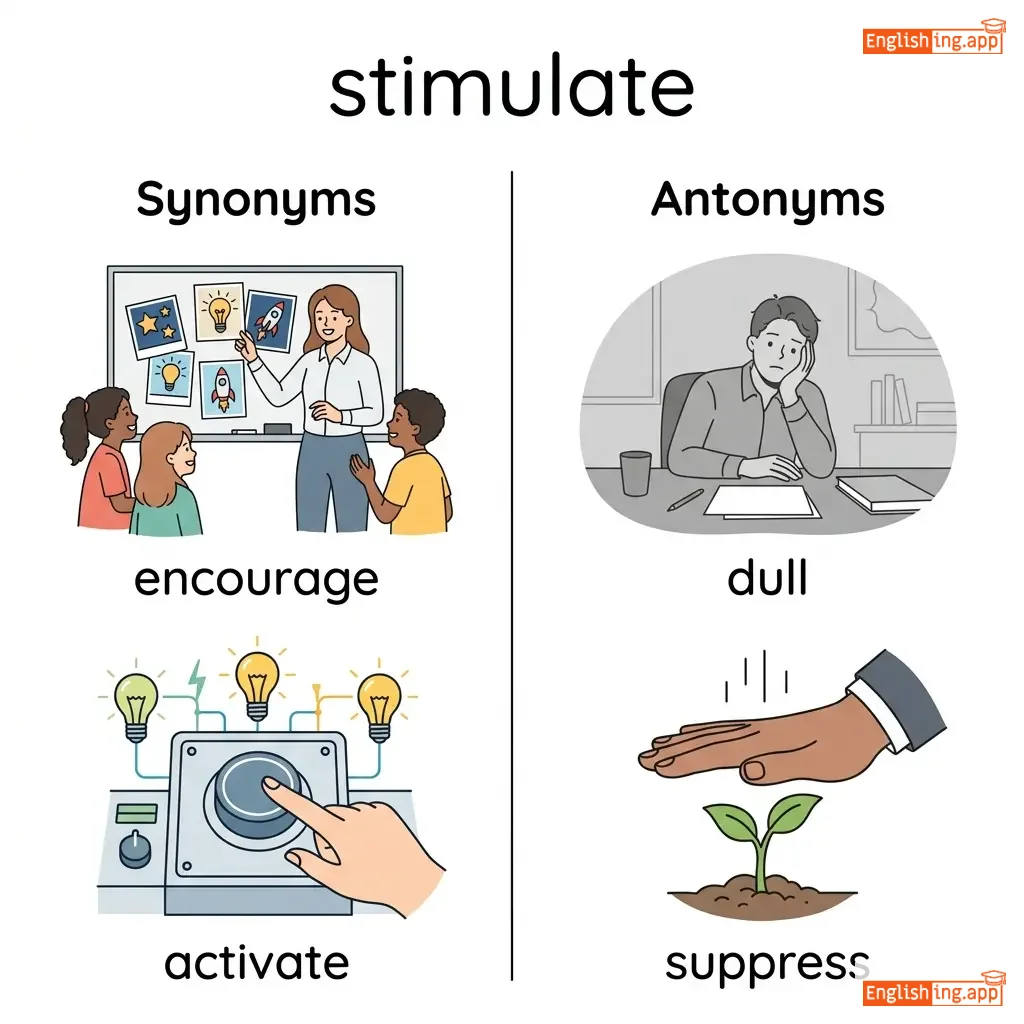
encourage, activate, motivate, inspire, excite
••••••
|
dull, suppress, discourage
••••••
|
stimulate growth, stimulate demand, stimulate imagination, stimulate interest
••••••
|
Stimulate → 刺激する (アイディアを引き出す)
••••••
|
|
#8399
⚡
|
/ˈstɪmjʊlənt/
noun
(スティミュラント)
••••••
|
- •••••• |
興奮剤
koufun zai
••••••
|
- •••••• | - •••••• | - •••••• | - •••••• |
A substance that raises levels of physiological or nervous activity in the body.
••••••
|
Coffee is a common stimulant that helps people stay awake. |
コーヒーは一般的な興奮剤で、人々が目を覚ますのを助けます
Kōhī wa ippantekina kōfunzai de, hitobito ga me wo samasu no wo tasukemasu
••••••
|
- •••••• | - •••••• | - •••••• |
energizer, tonic, booster, excitant
••••••
|
depressant, sedative
••••••
|
natural stimulant, powerful stimulant, stimulant drug
••••••
|
興奮剤 = 興奮 + 剤 → コーヒーはエネルギーを引き出す興奮剤
••••••
|
Vocabulary Quiz
Test your vocabulary by matching words with their translations or meanings.
Login to take the quiz
Comments (0)
Share your thoughts and join the discussion.
Join the discussion by logging in
Login to CommentNo comments yet
Be the first to share your thoughts!