

翻訳
過去
過去分詞
三人称単数
動名詞
意味
例文
例文の翻訳
同義語
対義語
コロケーション
ニーモニック

Swipe left or right, or use the buttons. Tap image to zoom.
例文の翻訳
単語
Lesson 145Lesson 145 - マスクトグル
|
絵文字
|
単語 | Images | 翻訳 | 過去 | 過去分詞 | 三人称単数 | 動名詞 | 意味 | 例文 | 例文の翻訳 | 表現例 | 表現例の意味 | 表現例の翻訳 | 同義語 | 対義語 | コロケーション | ニーモニック |
|---|---|---|---|---|---|---|---|---|---|---|---|---|---|---|---|---|---|
|
#4321
📘
|
/ɪmˈpɑːrt/
verb
(インパート)
••••••
|
- •••••• |
伝える
tsutaeru
••••••
|
imparted
インパーテッド
••••••
|
imparted
インパーテッド
••••••
|
imparts
インパーツ
••••••
|
imparting
インパーティング
••••••
|
to make information known; to bestow or communicate
••••••
|
The teacher imparted valuable knowledge to her students.
教師は生徒に貴重な知識を授けました。
••••••
|
教師は生徒に貴重な知識を授けました。
Kyōshi wa seito ni kichōna chishiki o sazukemashita.
••••••
|
impart wisdom
知恵を授ける
••••••
|
to share or communicate wisdom with others
••••••
|
知恵を授ける
chie o sazukeru
••••••
|
convey, communicate, bestow, disclose, transmit
••••••
|
withhold, conceal
••••••
|
impart knowledge, impart wisdom, impart skills, impart information
••••••
|
IMPARTは「part」を分ける意味 - 教師が知恵を伝えます。
••••••
|
|
#4322
🌩️
|
/ɪmˈpɛnd/
verb
(インペンド)
••••••
|
- •••••• |
迫る
semaru
••••••
|
impended
インペンデッド
••••••
|
impended
インペンデッド
••••••
|
impends
インペンズ
••••••
|
impending
インペンディング
••••••
|
to be about to happen; to loom threateningly
••••••
|
Dark clouds suggested that a storm was impeding.
暗い雲が嵐が迫っていることを示唆していた。
••••••
|
暗い雲が嵐が迫っていることを示唆していた。
Kurai kumo ga arashi ga sematte iru koto wo shisa shite ita.
••••••
|
doom impends
破滅が迫る
••••••
|
a dangerous or disastrous event is about to occur
••••••
|
破滅が迫る
hametsu ga semaru
••••••
|
loom, threaten, approach, near, overhang
••••••
|
recede, retreat, withdraw
••••••
|
danger impends, crisis impends, disaster impends, war impends
••••••
|
迫る破滅 — 危険が迫っている。
••••••
|
|
#4323
➡️
|
/ɪmˈpɛl/
verb
••••••
|
- •••••• | - •••••• |
impelled
••••••
|
impelled
••••••
|
impels
••••••
|
impelling
••••••
|
to drive, force, or urge someone to do something
••••••
|
Her curiosity impelled her to open the mysterious box. |
- •••••• |
impel someone to act |
to force or strongly encourage someone to take action
••••••
|
- •••••• |
drive, push, motivate, compel, urge
••••••
|
deter, discourage, dissuade
••••••
|
impel action, impel someone, impel change, impel decision
••••••
|
No •••••• |
|
#4324
🚧
|
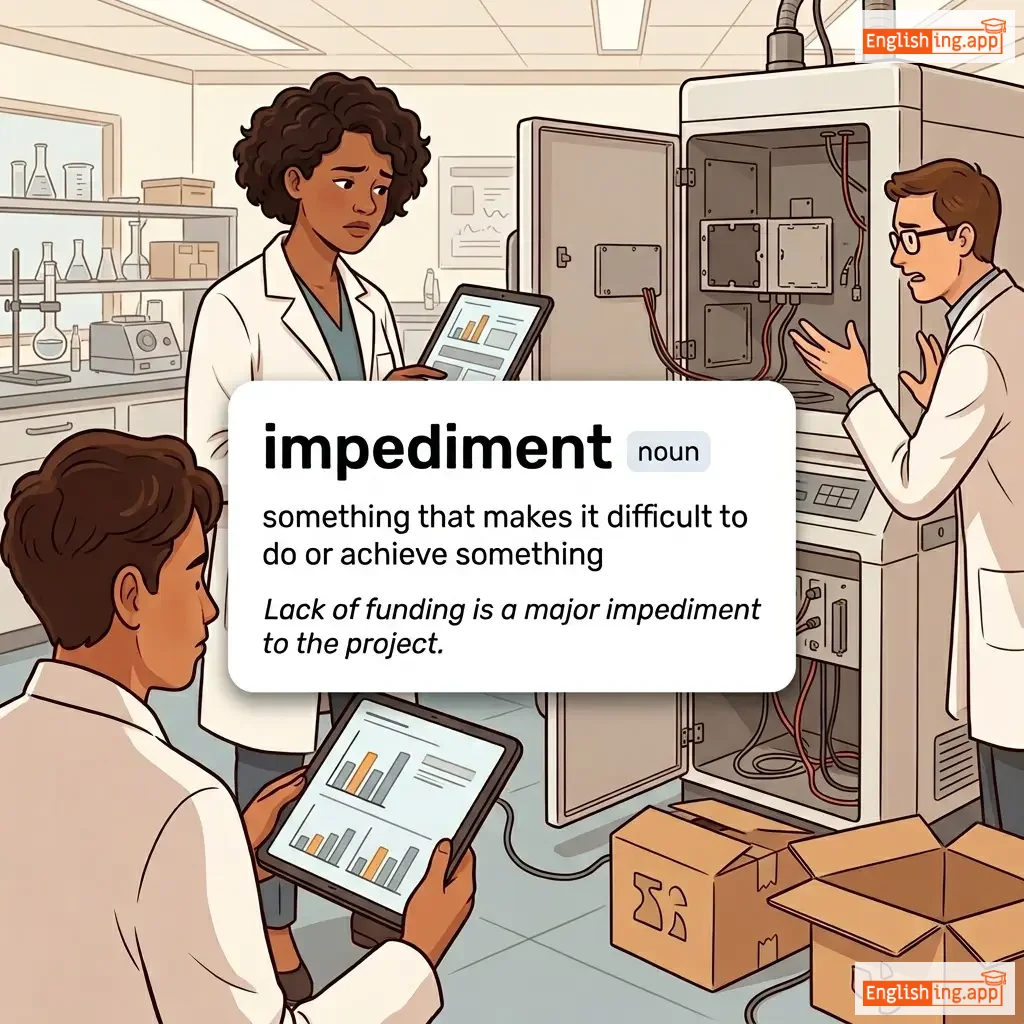
/ɪmˈpɛdɪmənt/
noun
••••••
|
|
- •••••• | - •••••• | - •••••• | - •••••• | - •••••• |
something that makes it difficult to do or achieve something
••••••
|
Lack of funding is a major impediment to the project. |
- •••••• |
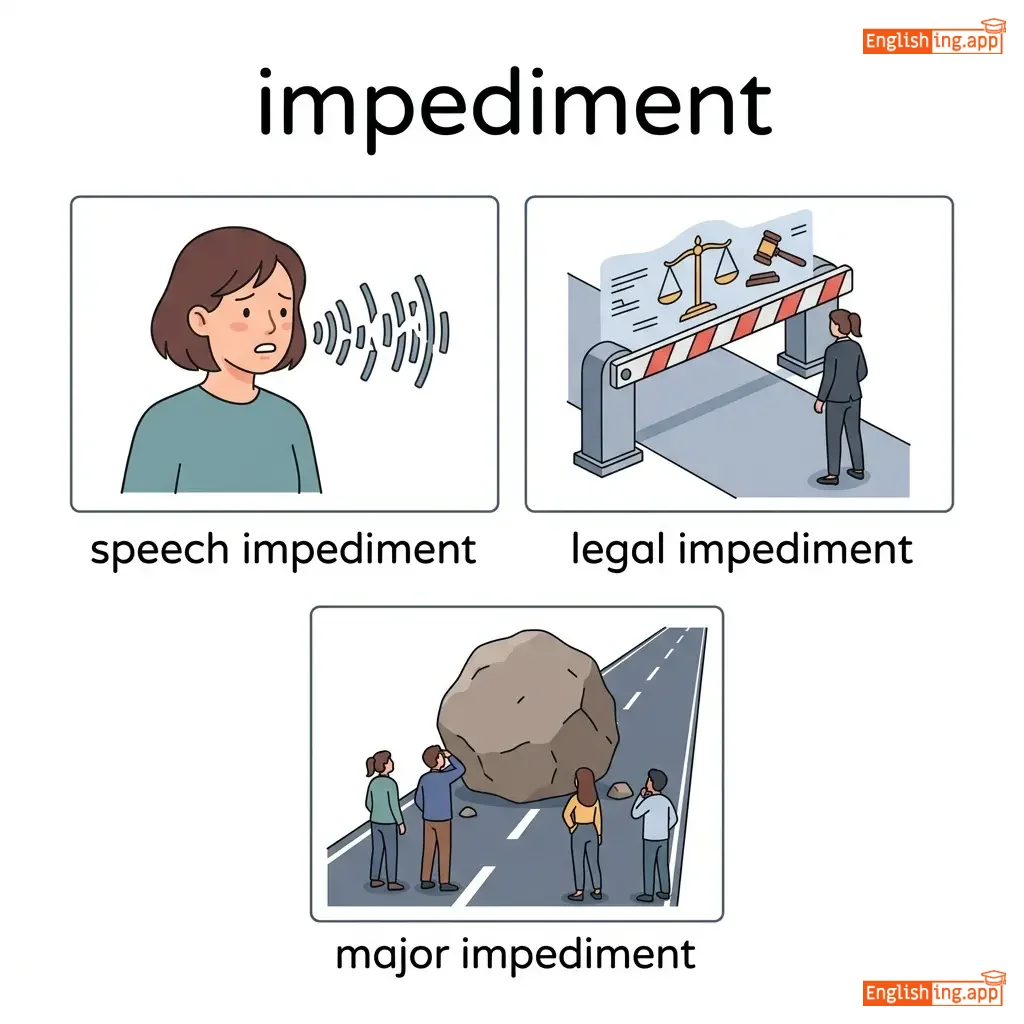
speech impediment |
a condition that makes speaking difficult
••••••
|
- •••••• |
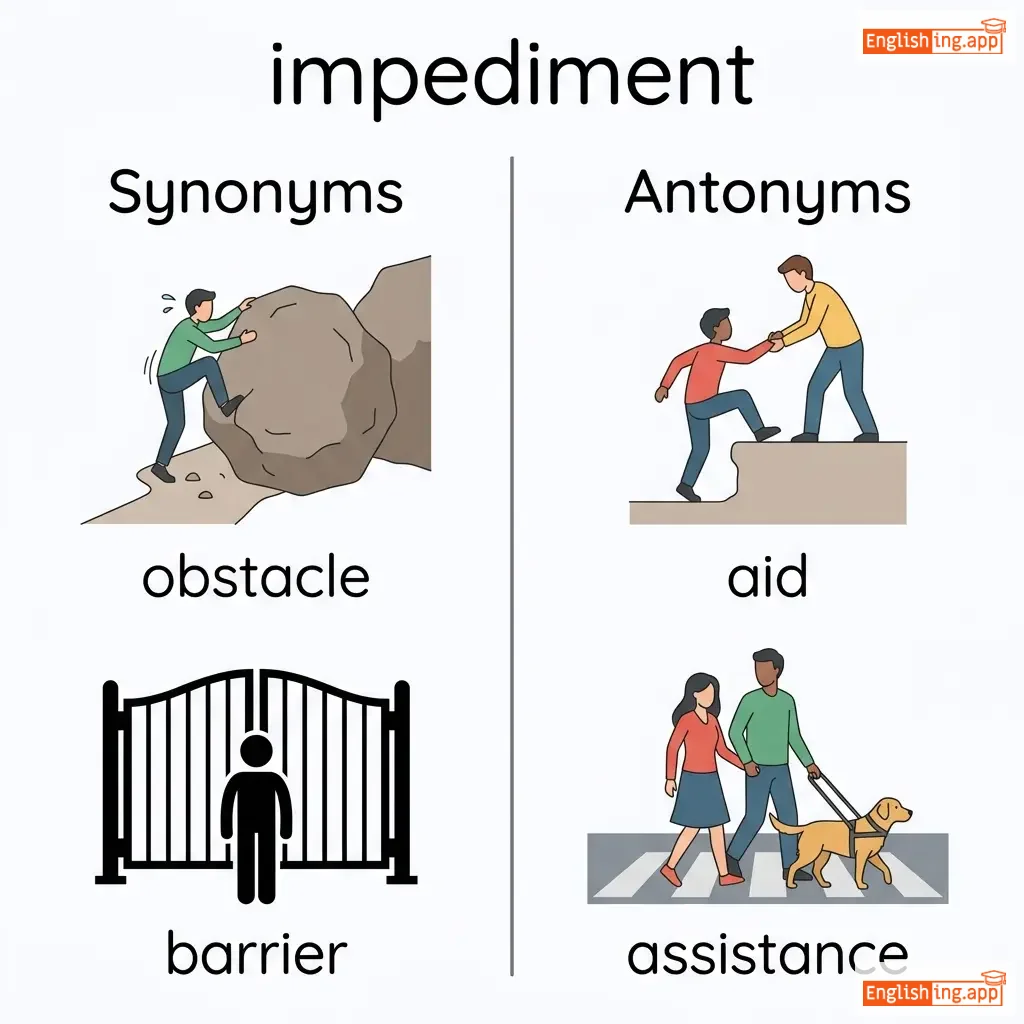
obstacle, barrier, hindrance, obstruction, difficulty
••••••
|
aid, assistance, help
••••••
|
speech impediment, legal impediment, major impediment, serious impediment
••••••
|
No •••••• |
|
#4325
⛔
|
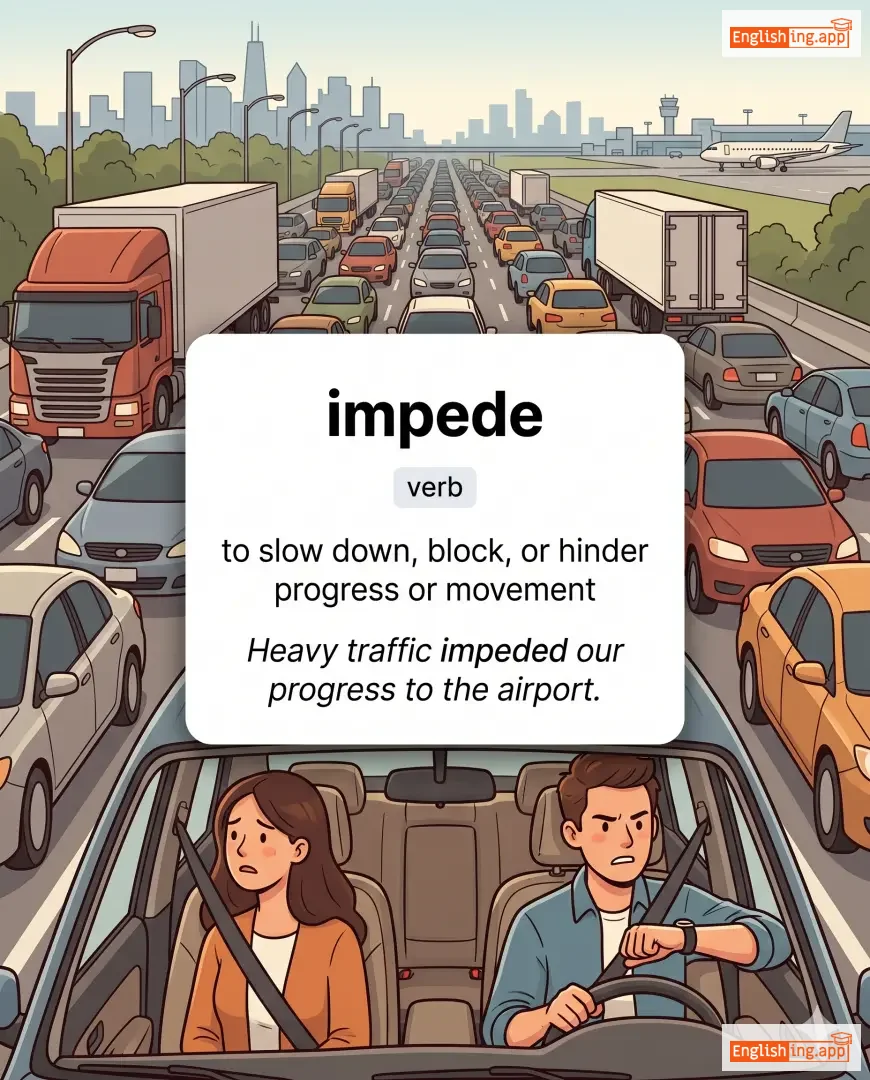
/ɪmˈpiːd/
verb
(インピード)
••••••
|
|
妨げる
samatajeru
••••••
|
impeded
インピーデッド
••••••
|
impeded
インピーデッド
••••••
|
impedes
インピーズ
••••••
|
impeding
インピーディング
••••••
|
to slow down, block, or hinder progress or movement
••••••
|
Heavy traffic impeded our progress to the airport.
交通渋滞が空港への進行を妨げました。
••••••
|
交通渋滞が空港への進行を妨げました。
Koutsuu juutai ga kuukou e no shinkou o samatagemashita.
••••••
|
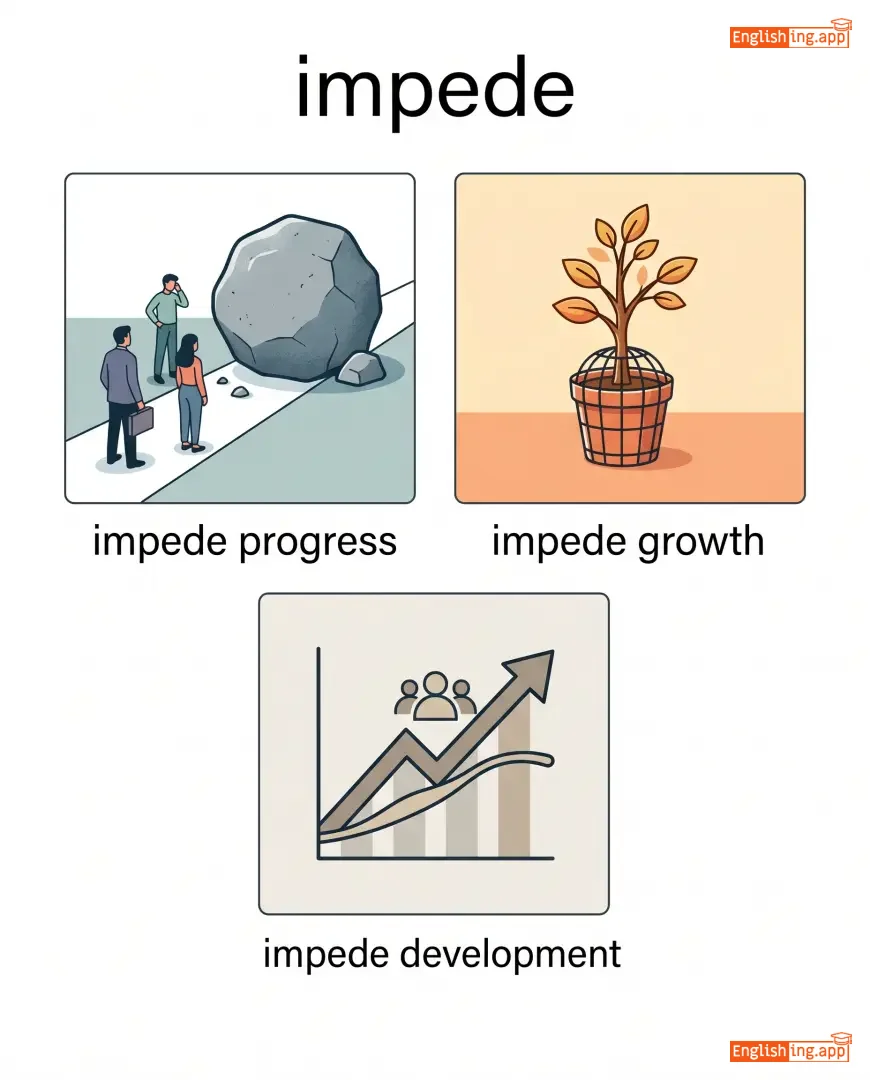
impede progress
進行を妨げる
••••••
|
to slow down or obstruct advancement
••••••
|
進行を妨げる
shinkou o samatageru
••••••
|
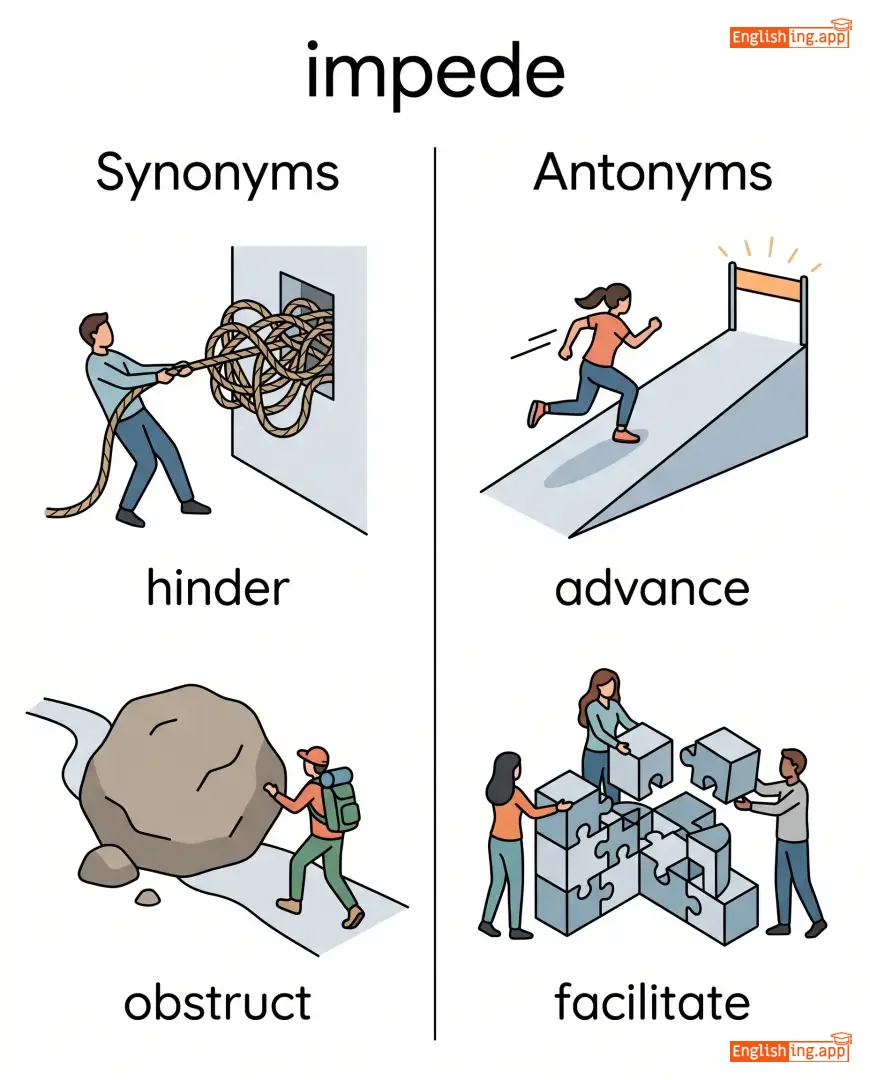
hinder, obstruct, block, delay, hamper
••••••
|
advance, facilitate, promote
••••••
|
impede progress, impede growth, impede development, impede movement
••••••
|
もし交通が進行を妨げるなら、空港には着けない。
••••••
|
|
#4326
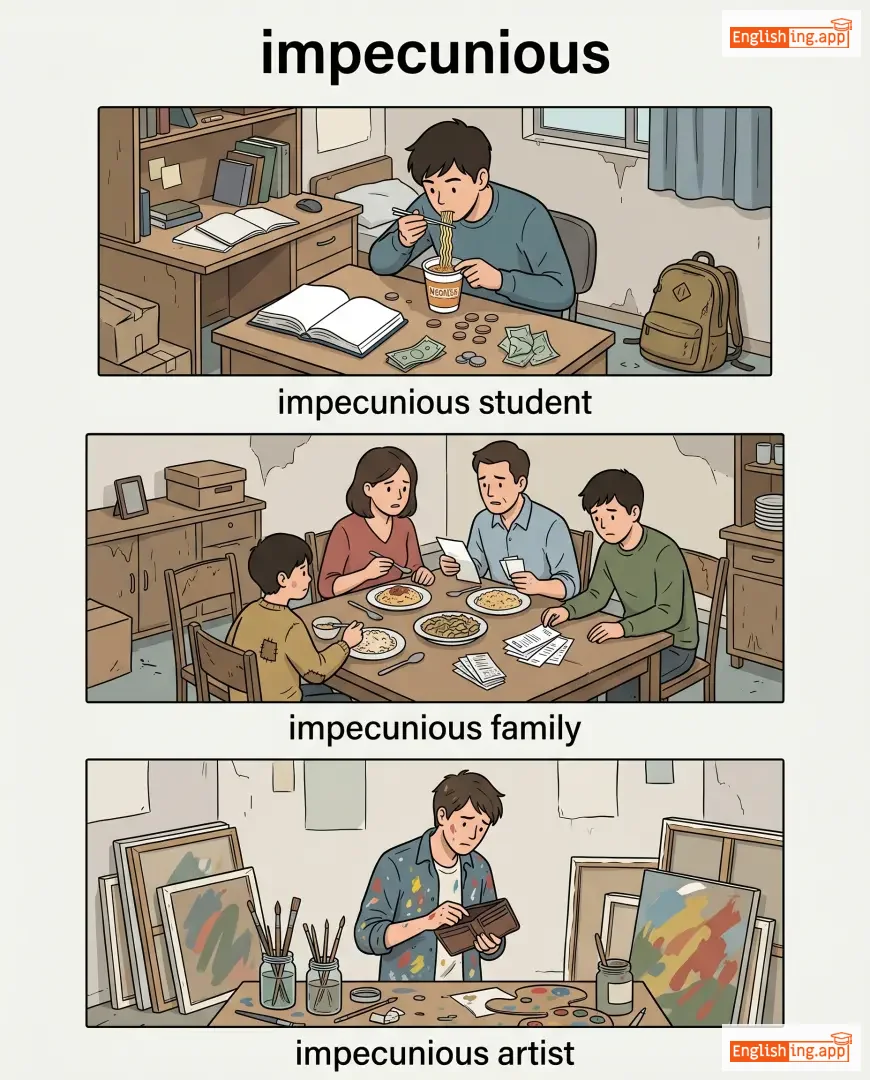
💸
|
/ˌɪmpɪˈkjuːniəs/
adjective
(インペキュニアス)
••••••
|
|
貧乏
binbou
••••••
|
- •••••• | - •••••• | - •••••• | - •••••• |
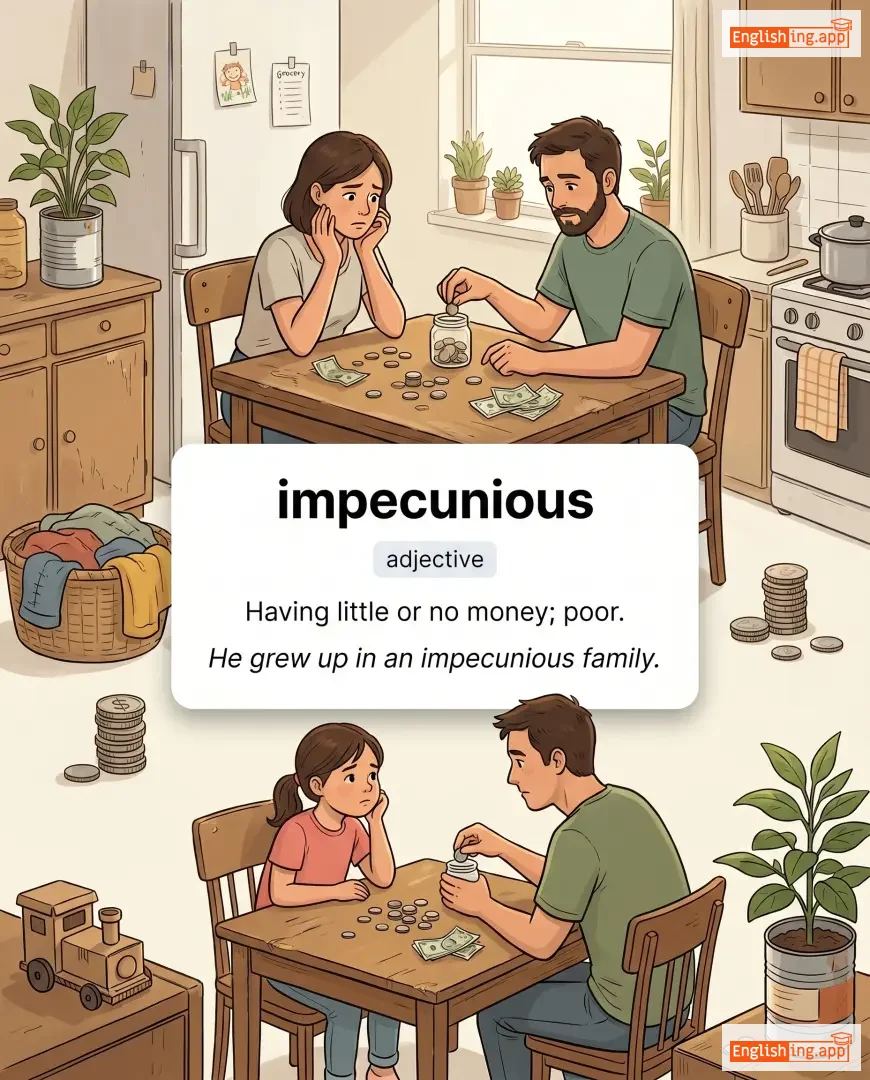
Having little or no money; poor.
••••••
|
He grew up in an impecunious family. |
彼は貧乏な家族で育ちました。
Kare wa binbou na kazoku de sodachimashita.
••••••
|
- •••••• | - •••••• | - •••••• |
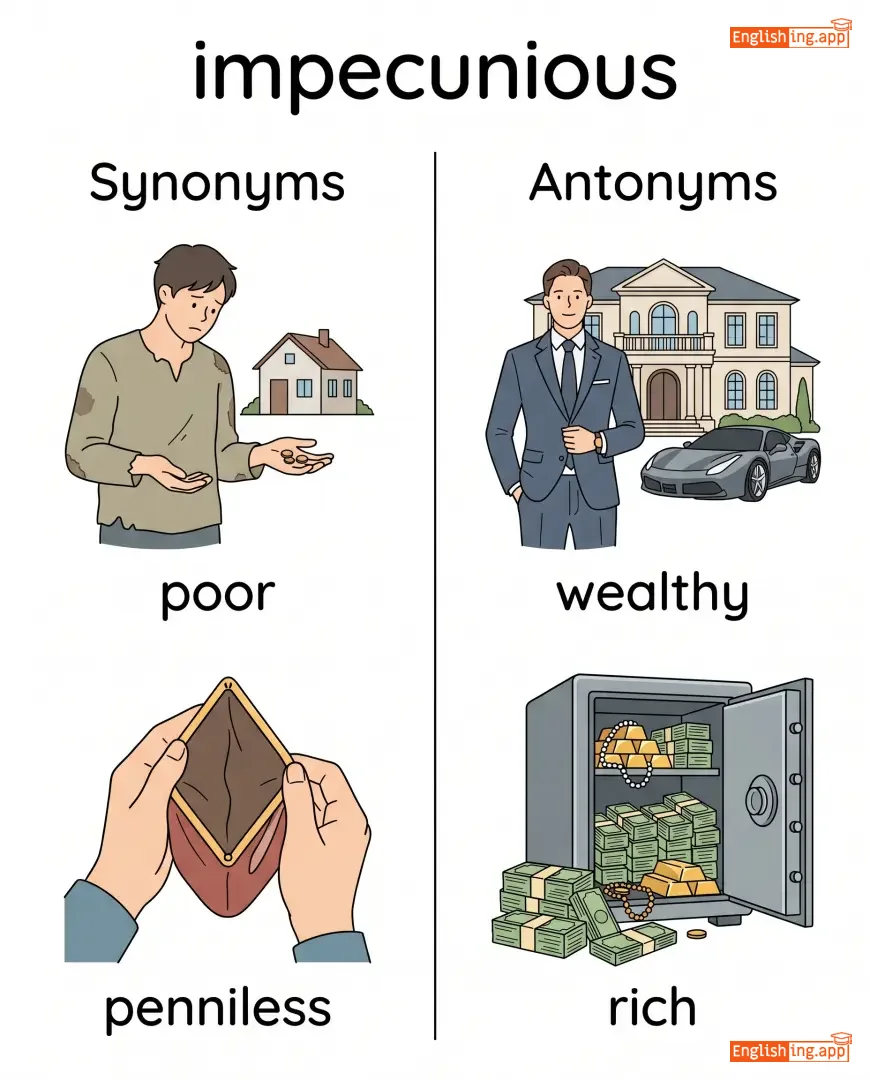
poor, penniless, destitute, needy
••••••
|
wealthy, rich, affluent
••••••
|
impecunious student, impecunious family, impecunious artist
••••••
|
Im-PE-KUNO (お金 KUNO) ない — 貧乏
••••••
|
|
#4327
✨
|
/ɪmˈpɛkəbl̩/
adjective
(im-PEK-uh-bul)
••••••
|
|
完璧
kanpeki
••••••
|
- •••••• | - •••••• | - •••••• | - •••••• |
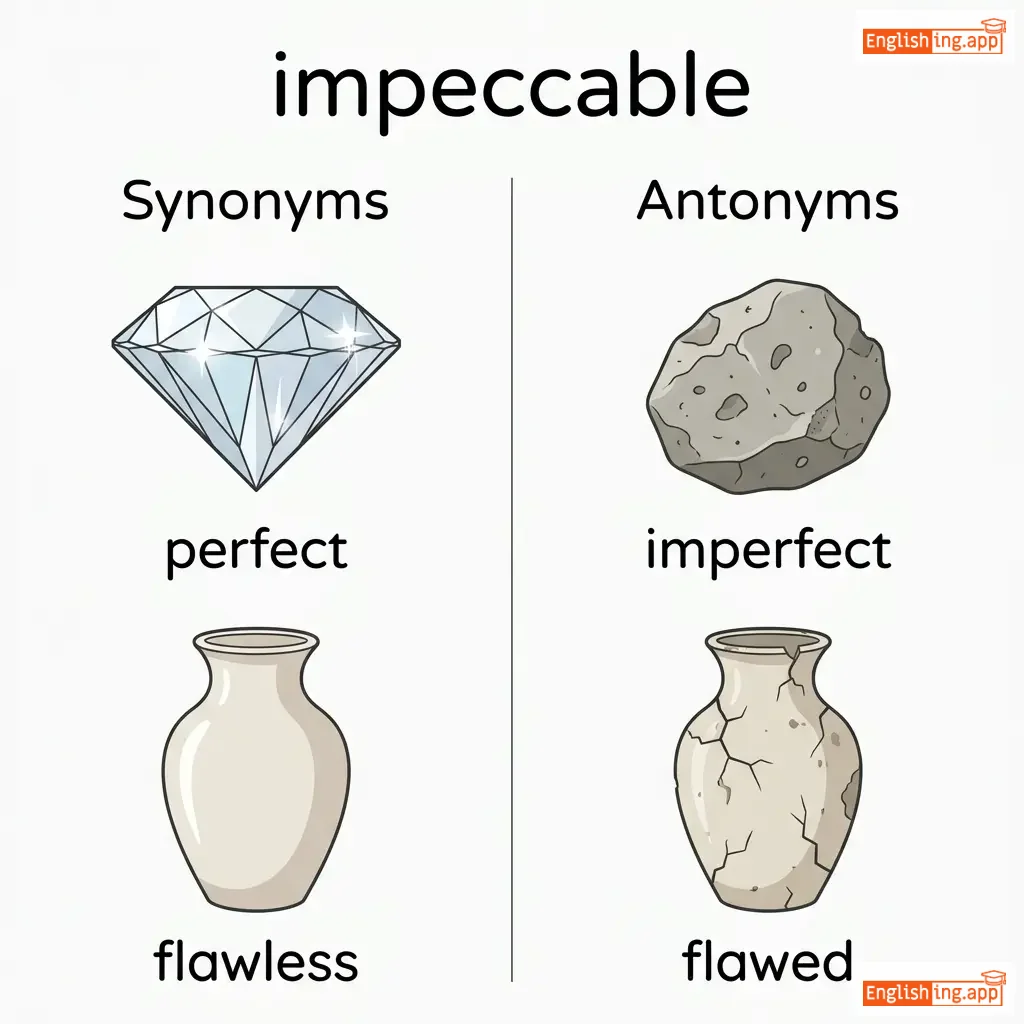
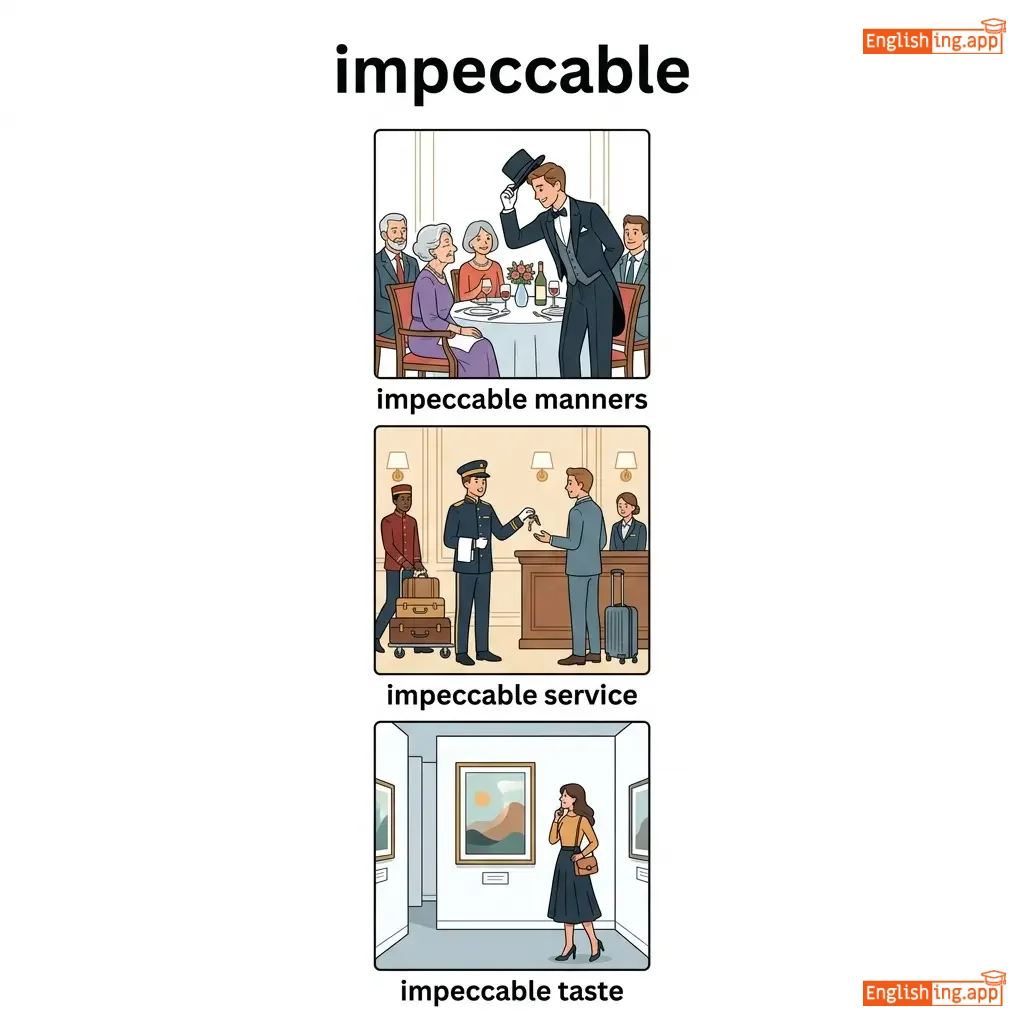
Perfect; without flaws or faults.
••••••
|
She delivered an impeccable performance on stage.
彼女はステージで完璧なパフォーマンスを披露しました。
••••••
|
彼女はステージで完璧なパフォーマンスを披露しました。
Kanojo wa suteeji de kanpeki na pafomansu o hiroshimashita.
••••••
|
- •••••• | - •••••• | - •••••• |
perfect, flawless, faultless, exemplary
••••••
|
imperfect, flawed, defective
••••••
|
impeccable manners, impeccable service, impeccable taste
••••••
|
Im-PECK-able: 鳥はPeckできない - 完璧で誤りがないことを意味します。
••••••
|
|
#4328
⚖️
|
/ɪmˈpiːtʃ/
verb
••••••
|
- •••••• | - •••••• |
impeached
••••••
|
impeached
••••••
|
impeaches
••••••
|
impeaching
••••••
|
To charge a public official with misconduct while in office.
••••••
|
The parliament voted to impeach the president. |
- •••••• |
impeach someone’s integrity |
to question or cast doubt on someone's honesty or character
••••••
|
- •••••• |
accuse, indict, prosecute, charge
••••••
|
absolve, exonerate, acquit
••••••
|
impeach a president, impeach for corruption, vote to impeach
••••••
|
No •••••• |
|
#4329
⏳
|
/ɪmˈpeɪʃəns/
noun
(インペイシェンス)
••••••
|
- •••••• |
忍耐力不足
nintairyoku fusoku
••••••
|
- •••••• | - •••••• | - •••••• | - •••••• |
The state of being quickly irritated or unable to wait calmly.
••••••
|
His impatience grew as the meeting dragged on. |
会議が長引くにつれて、彼の忍耐力不足が増しました。
Kaigi ga nagabiku ni tsurete, kare no nintairyoku fusoku ga mashimashita.
••••••
|
lose patience |
to become annoyed or unable to tolerate something any longer
••••••
|
忍耐を失う
nintai o ushinau
••••••
|
restlessness, irritation, eagerness, frustration
••••••
|
patience, calmness, composure
••••••
|
show impatience, grow in impatience, with impatience
••••••
|
Im-Patience = 忍耐力なし、つまり忍耐力不足
••••••
|
|
#4330
😐
|
/ɪmˈpæsɪv/
adjective
(インパシブ)
••••••
|
|
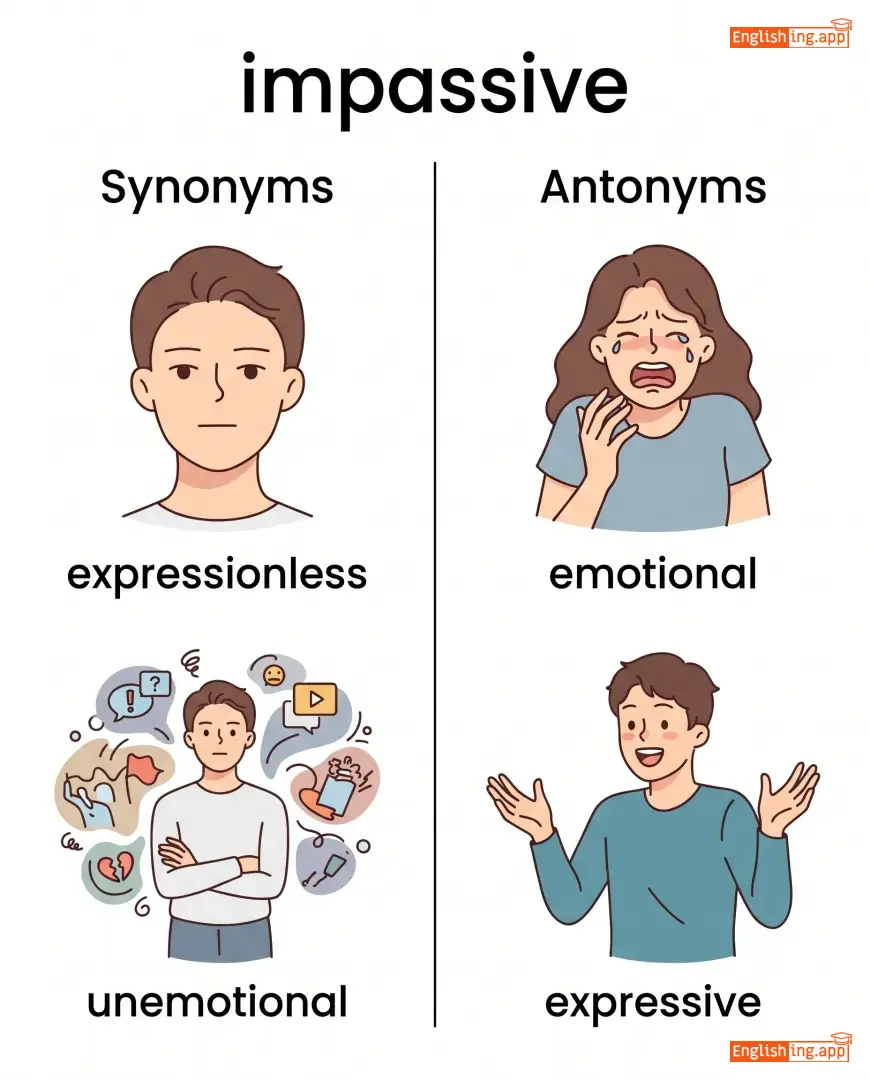
無表情
muhyōjō
••••••
|
- •••••• | - •••••• | - •••••• | - •••••• |
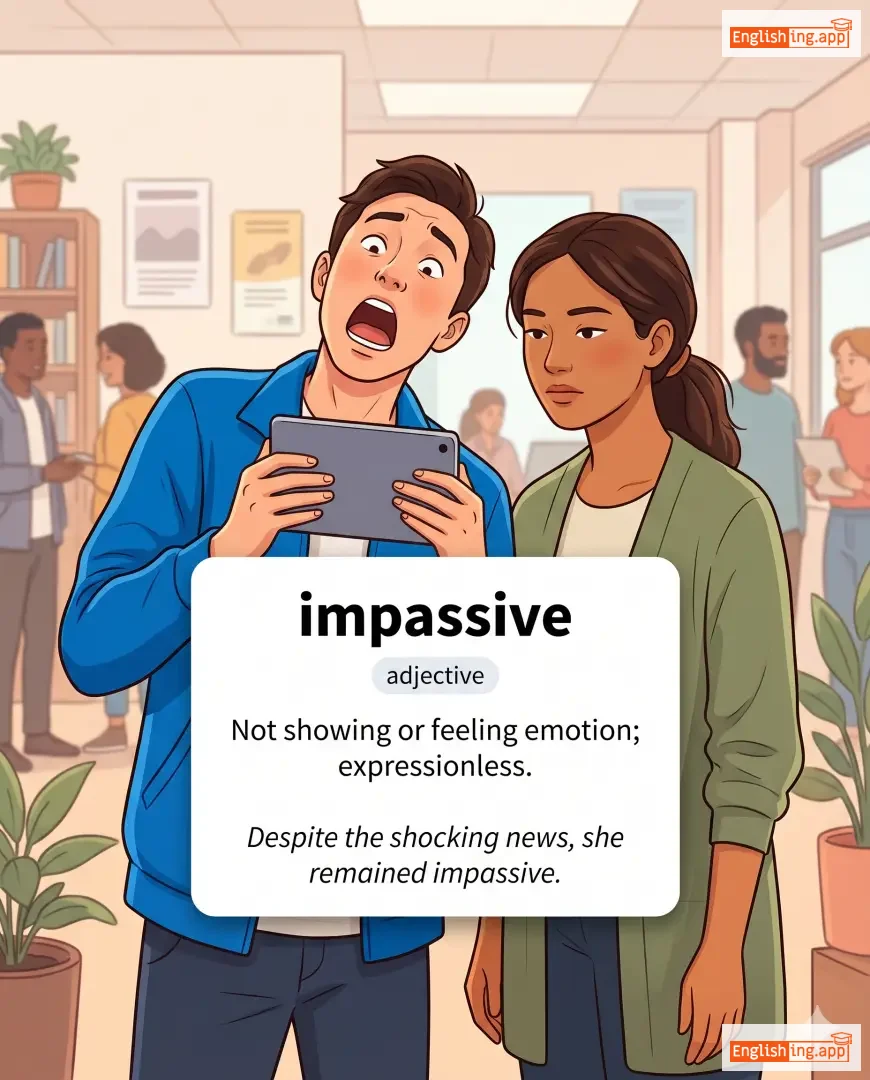
Not showing or feeling emotion; expressionless.
••••••
|
Despite the shocking news, she remained impassive.
衝撃的なニュースにもかかわらず、彼女は無表情のままでした。
••••••
|
衝撃的なニュースにもかかわらず、彼女は無表情のままでした。
Shōgeki-teki na nyūsu ni mo kakawarazu, kanojo wa muhyōjō no mamadashita.
••••••
|
- •••••• | - •••••• | - •••••• |
expressionless, unemotional, calm, stoic, detached
••••••
|
emotional, expressive, passionate
••••••
|
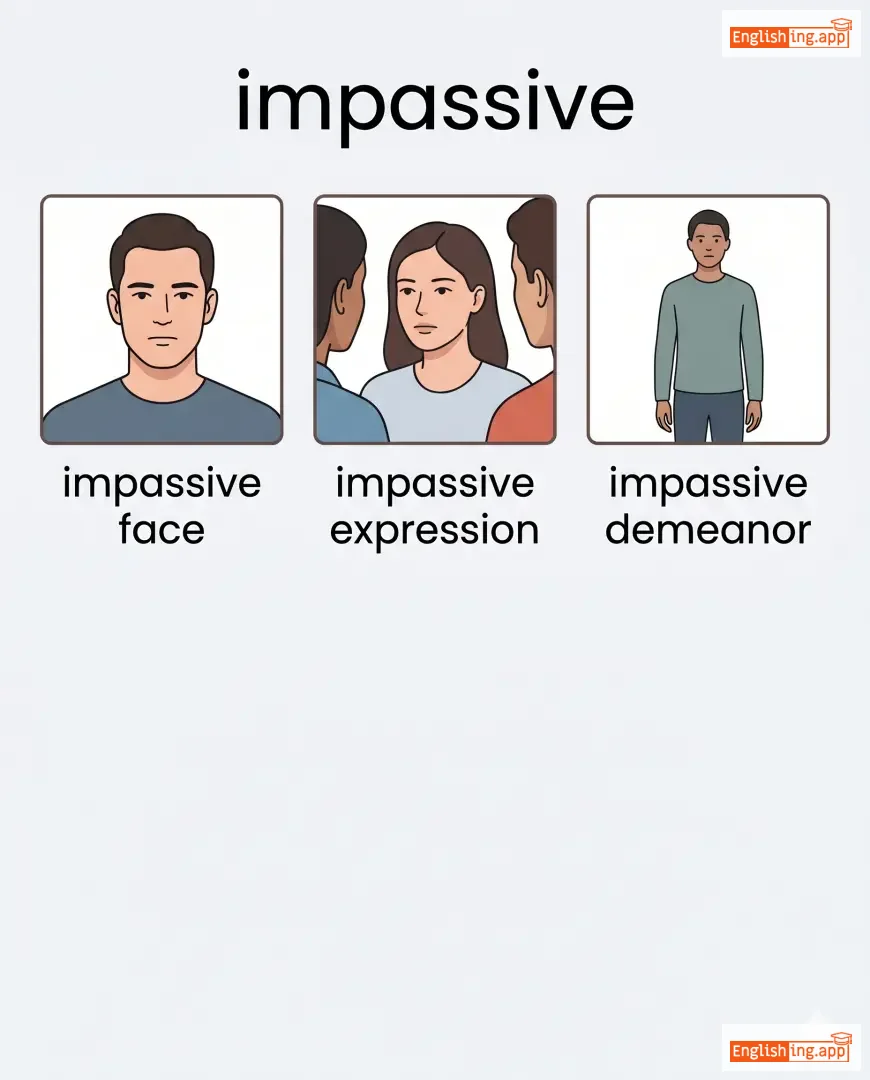
impassive face, impassive expression, impassive demeanor
••••••
|
IMPASSIVE は日本語で無表情 — 感情のない顔
••••••
|
|
#4331
🔥
|
/ɪmˈpæʃənd/
adjective
(インパッションド)
••••••
|
- •••••• |
情熱的な
jōnetsuteki na
••••••
|
- •••••• | - •••••• | - •••••• | - •••••• |
Filled with or showing great emotion.
••••••
|
She gave an impassioned speech about human rights.
彼女は人権について情熱的なスピーチを行いました。
••••••
|
彼女は人権について情熱的なスピーチを行いました。
Kanojo wa jinken ni tsuite jōnetsuteki na supīchi o okonai mashita.
••••••
|
- •••••• | - •••••• | - •••••• |
emotional, fervent, heartfelt, passionate, ardent
••••••
|
apathetic, indifferent, unemotional
••••••
|
impassioned speech, impassioned plea, impassioned argument, impassioned response
••••••
|
Impassioned は '情熱的' という意味 – 情熱的なスピーチ
••••••
|
|
#4332
🙏
|
/ɪmˈpæsɪbəl/
adjective
(インパッシブル)
••••••
|
- •••••• |
無痛性
mutsuusei
••••••
|
- •••••• | - •••••• | - •••••• | - •••••• |
Incapable of suffering or feeling pain (used mainly in theological or philosophical contexts).
••••••
|
Some philosophers argue that God is impassible and cannot experience human emotions. |
一部の哲学者は、神は無痛性であり、人間の感情を感じることはできないと主張しています。
Ichi bu no tetsugakusha wa, kami wa mutsuusei de ari, ningen no kanjou o kanjiru koto wa dekinai to shuchou shiteimasu.
••••••
|
- •••••• | - •••••• | - •••••• |
unfeeling, insensitive, unaffected, detached
••••••
|
sensitive, emotional, vulnerable
••••••
|
impassible deity, impassible nature, impassible being
••••••
|
Impassibleは「痛みを感じない」– 神は痛みを感じません。
••••••
|
|
#4333
🛑
|
/ˈɪmpæs/
noun
(インパス)
••••••
|
|
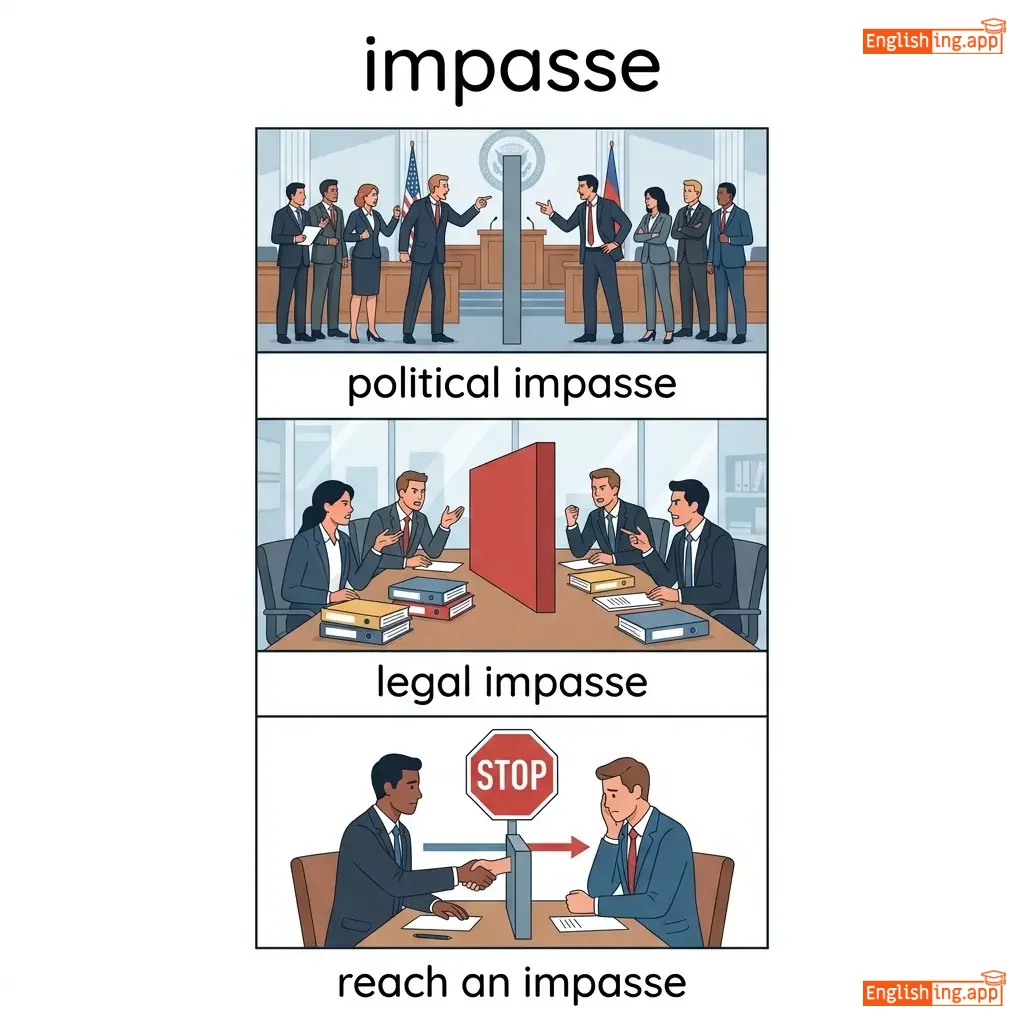
行き詰まり
ikidzumari
••••••
|
- •••••• | - •••••• | - •••••• | - •••••• |
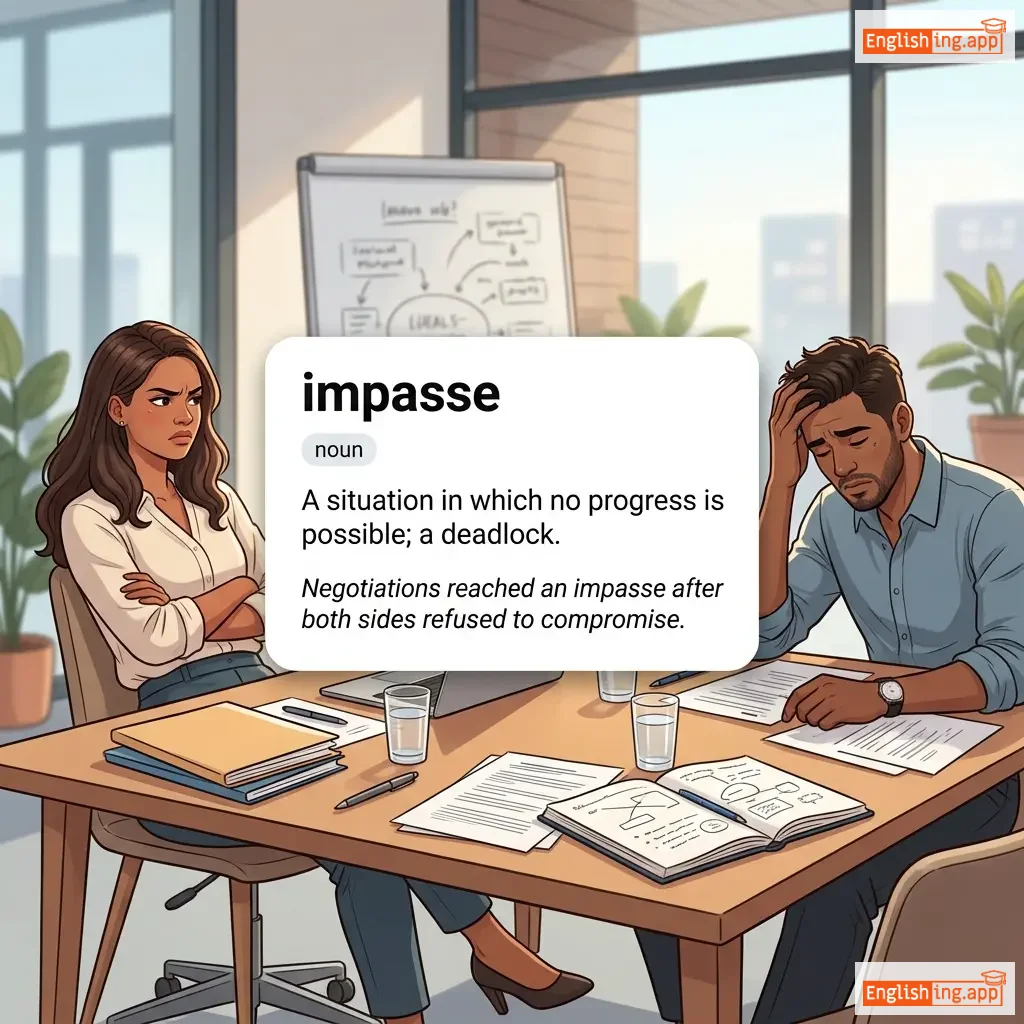
A situation in which no progress is possible; a deadlock.
••••••
|
Negotiations reached an impasse after both sides refused to compromise. |
両サイドが妥協を拒否したため、交渉は行き詰まりました。
Ryō saido ga dakyo o kyohi shita tame, kōshō wa ikidzumari mashita.
••••••
|
reach an impasse |
to come to a point where no progress can be made
••••••
|
行き詰まりに達する
ikidzumari ni tassuru
••••••
|
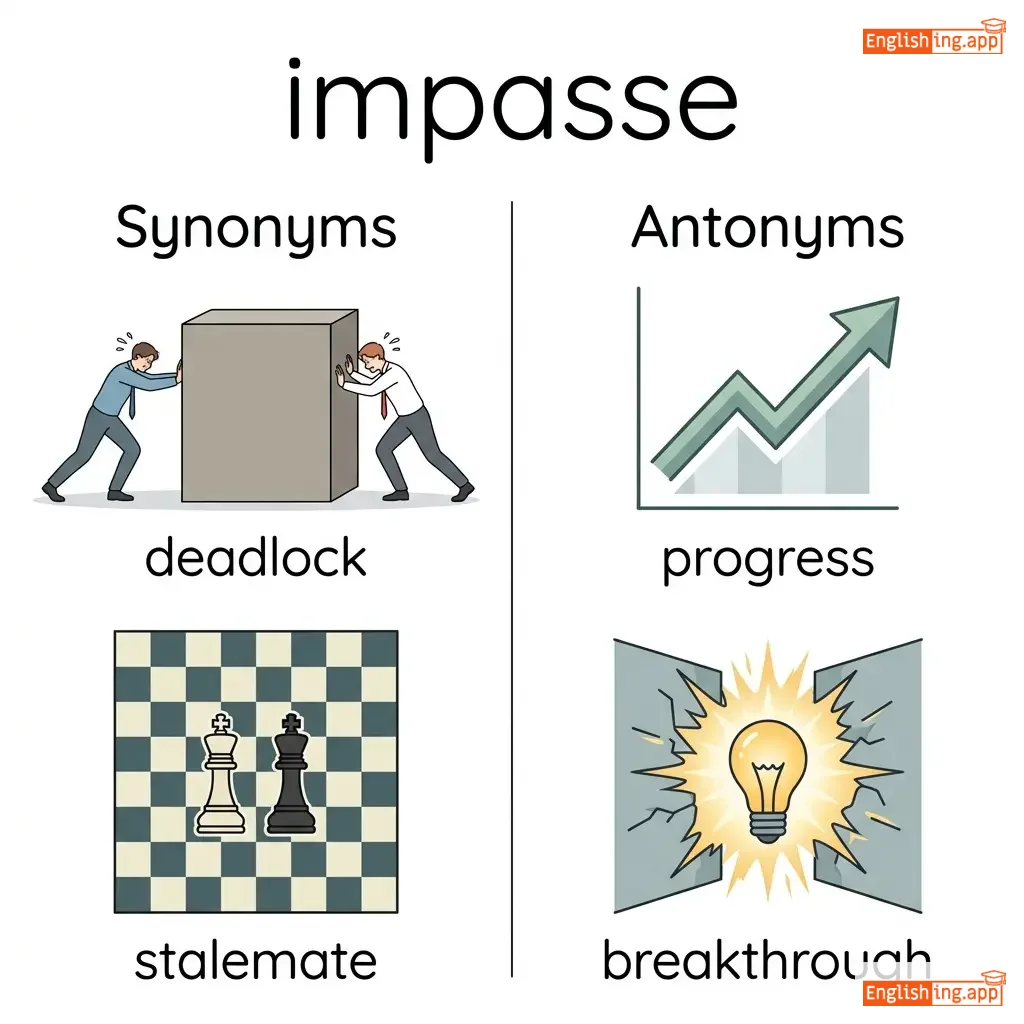
deadlock, stalemate, standstill, gridlock
••••••
|
progress, breakthrough, agreement
••••••
|
political impasse, legal impasse, reach an impasse, stuck in an impasse
••••••
|
Impasseは日本語で'行き詰まり' – 進まない、全てが止まった状態!
••••••
|
|
#4334
🚧
|
/ɪmˈpæsəbəl/
adjective
(インパッサブル)
••••••
|
- •••••• |
通行不可能
tsuukou fukanou
••••••
|
- •••••• | - •••••• | - •••••• | - •••••• |
Impossible to travel along or over.
••••••
|
The road became impassable after the heavy snowfall.
大雪の後、道は通行不可になりました。
••••••
|
大雪の後、道は通行不可能になりました。
Ooyuki no ato, michi wa tsuukou fukanou ni narimashita.
••••••
|
- •••••• | - •••••• | - •••••• |
blocked, obstructed, closed, inaccessible
••••••
|
passable, open, accessible
••••••
|
impassable road, impassable barrier, impassable terrain, almost impassable
••••••
|
Impassableとは'通れない'という意味です – 道が閉鎖されています 🚧
••••••
|
|
#4335
⚖️
|
/ɪmˈpɑːrʃəl/
adjective
(インパーシャル)
••••••
|
- •••••• |
公平
kouhei
••••••
|
- •••••• | - •••••• | - •••••• | - •••••• |
Treating all rivals or disputants equally; fair and just.
••••••
|
The judge remained impartial throughout the trial. |
裁判官は裁判の間、公平を保ちました。
Saibankan wa saiban no aida, kōhei o tamochimashita.
••••••
|
- •••••• | - •••••• | - •••••• |
fair, unbiased, neutral, objective, even-handed
••••••
|
biased, partial, prejudiced
••••••
|
impartial judge, impartial decision, impartial advice, remain impartial
••••••
|
Impartial は公平、偏らない裁判官のようなもの ⚖️
••••••
|
|
#4336
⚠️
|
/ˈɪmɪnəns/
noun
(イミネンス)
••••••
|
- •••••• |
差し迫り、間近な状態
sashisemari, majikana joutai
••••••
|
- •••••• | - •••••• | - •••••• | - •••••• |
the state of being about to happen
••••••
|
The imminence of the storm forced people to take shelter. |
嵐の差し迫りが人々を避難させることを強制した。
Arashi no sashisemari ga hitobito o hinan saseru koto o kyousei shita.
••••••
|
imminence of danger |
the state of danger being close at hand
••••••
|
危険の差し迫り
kiken no sashisemari
••••••
|
nearness, approach, closeness, likelihood
••••••
|
remoteness, distance
••••••
|
imminence of war, imminence of change, imminence of death, imminence of danger
••••••
|
Imminence は差し迫り、試験の差し迫りで緊張が高まるように。
••••••
|
|
#4337
🌫️
|
/ɪmˈpælpəbəl/
adjective
(インパルパブル)
••••••
|
- •••••• |
触れない
furenai
••••••
|
- •••••• | - •••••• | - •••••• | - •••••• |
unable to be felt by touch; difficult to grasp or understand
••••••
|
There was an impalpable sense of fear in the room. |
部屋には触れない恐怖感があった。
Heya ni wa furenai kyoufukan ga atta.
••••••
|
- •••••• | - •••••• | - •••••• |
intangible, subtle, elusive, delicate
••••••
|
tangible, perceptible
••••••
|
impalpable feeling, impalpable difference, impalpable essence
••••••
|
IMPALPABLEは触れることができないもの、'palpable'(触れることができる)の反対です。
••••••
|
|
#4338
🗡️
|
/ɪmˈpeɪl/
verb
(インペイル)
••••••
|
- •••••• |
突き刺す
tsukisasu
••••••
|
impaled
インペイルド
••••••
|
impaled
インペイルド
••••••
|
impales
インペイルズ
••••••
|
impaling
インペイリング
••••••
|
to pierce or fix something with a sharp object
••••••
|
The knight was impaled by the enemy’s spear.
騎士は敵の槍で突き刺さった。
••••••
|
騎士は敵の槍で突き刺さった。
Kishi wa teki no yari de tsukisatta.
••••••
|
- •••••• | - •••••• | - •••••• |
pierce, stab, penetrate, transfix
••••••
|
release, free
••••••
|
impale on a stake, impale with a spear, impale victim
••••••
|
IMPaleは「即座に槍で突き刺す」ことを意味する
••••••
|
|
#4339
💔
|
/ɪmˈpɛər/
verb
(インペア)
••••••
|
|
損なう
sonnau
••••••
|
impaired
インペアード
••••••
|
impaired
インペアード
••••••
|
impairs
インペアーズ
••••••
|
impairing
インペアリング
••••••
|
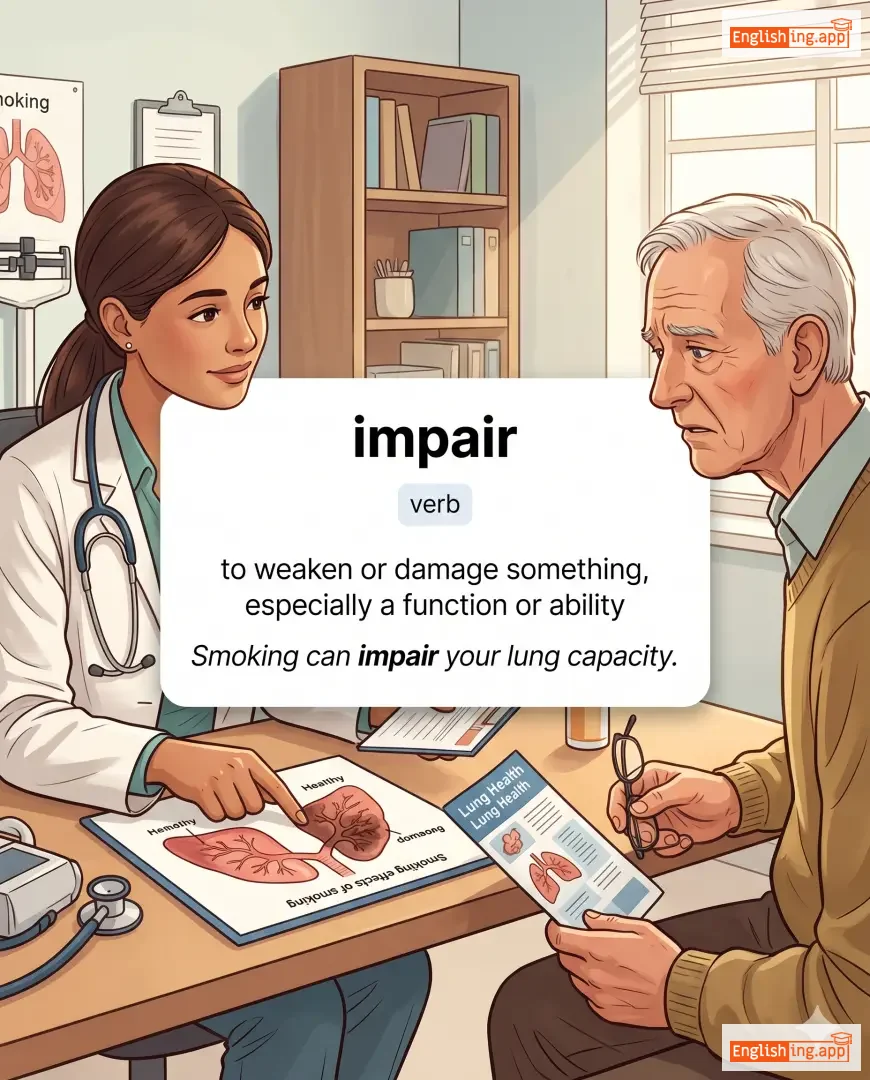
to weaken or damage something, especially a function or ability
••••••
|
Smoking can impair your lung capacity.
喫煙は肺活量を害する可能性があります。
••••••
|
喫煙は肺活量を害する可能性があります。
Kitsuen wa haikatsuryou wo gaishirukanoosei ga arimasu.
••••••
|
- •••••• | - •••••• | - •••••• |
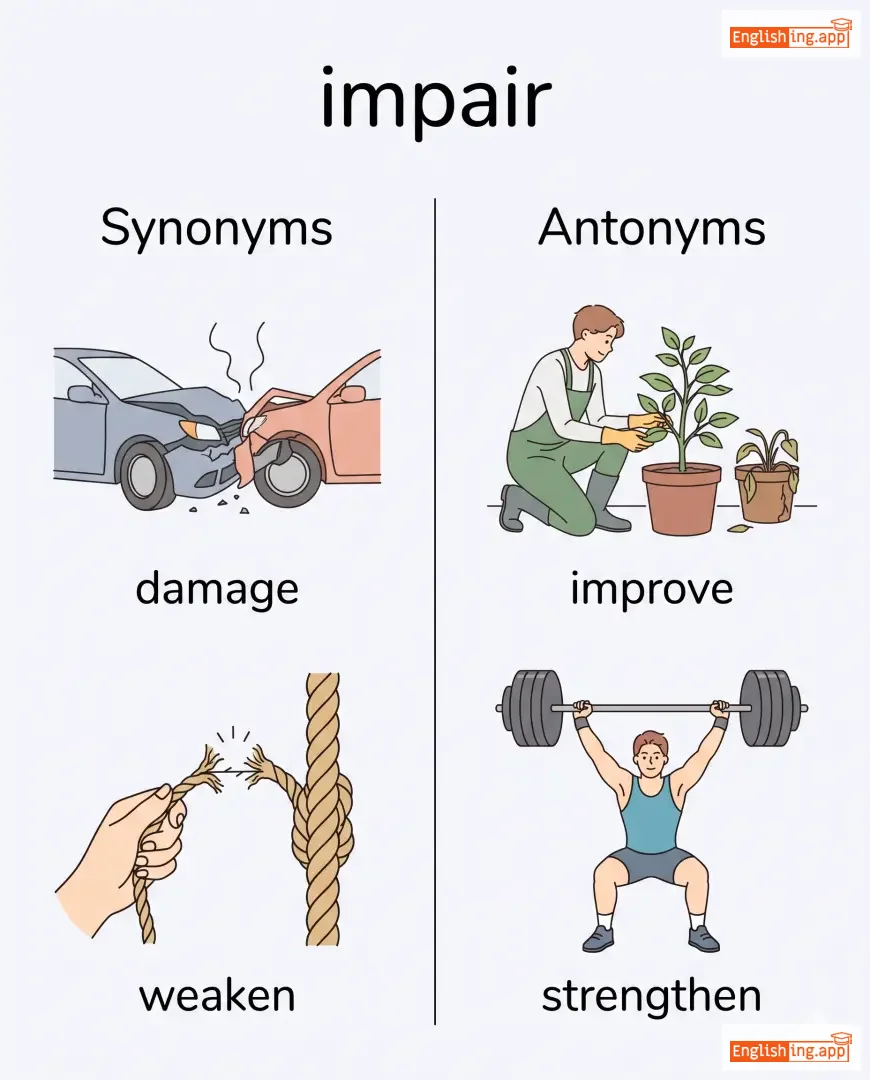
damage, weaken, harm, reduce, diminish
••••••
|
improve, strengthen, enhance
••••••
|
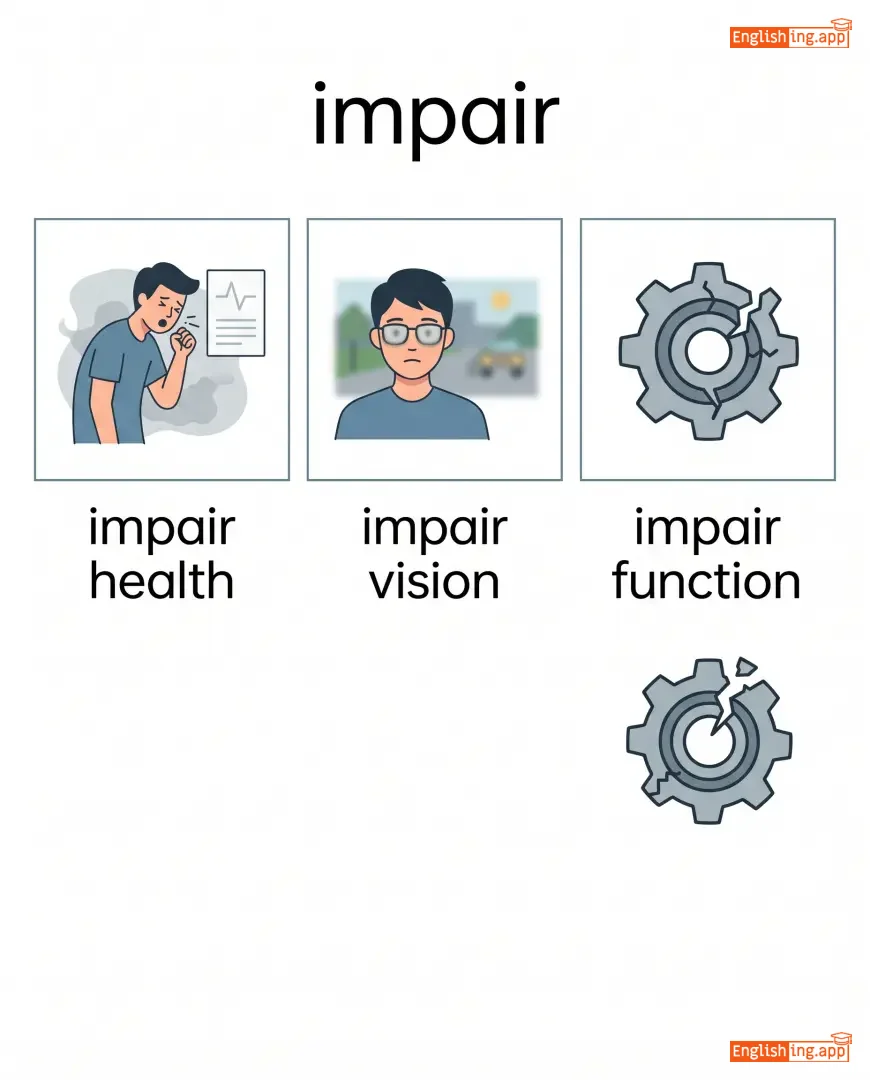
impair health, impair vision, impair function, severely impair
••••••
|
IMPAIRは損なうを意味します - もし車のタイヤが損なわれたら、車は動きません。
••••••
|
|
#4340
😈
|
/ɪmp/
noun
(インプ)
••••••
|
- •••••• |
小さないたずら好きな悪魔
chiisana itazura suki na akuma
••••••
|
- •••••• | - •••••• | - •••••• | - •••••• |
a small mischievous devil or sprite; a playful troublemaker
••••••
|
The child was acting like a little imp, hiding his toys everywhere. |
その子供は小さなインプのように振る舞い、どこにでもおもちゃを隠していました。
Sono kodomo wa chiisana impu no you ni furumai, doko ni demo omocha wo kakushite imashita.
••••••
|
- •••••• | - •••••• | - •••••• |
sprite, rascal, brat, mischievous child, demon
••••••
|
angel, saint
••••••
|
little imp, mischievous imp, playful imp
••••••
|
IMPは小さな悪魔で、いたずら好きです
••••••
|
|
#4341
⚖️
|
/ɪˈmjuːtəbl/
adjective
(イミュータブル)
••••••
|
|
不変
fuhen
••••••
|
- •••••• | - •••••• | - •••••• | - •••••• |
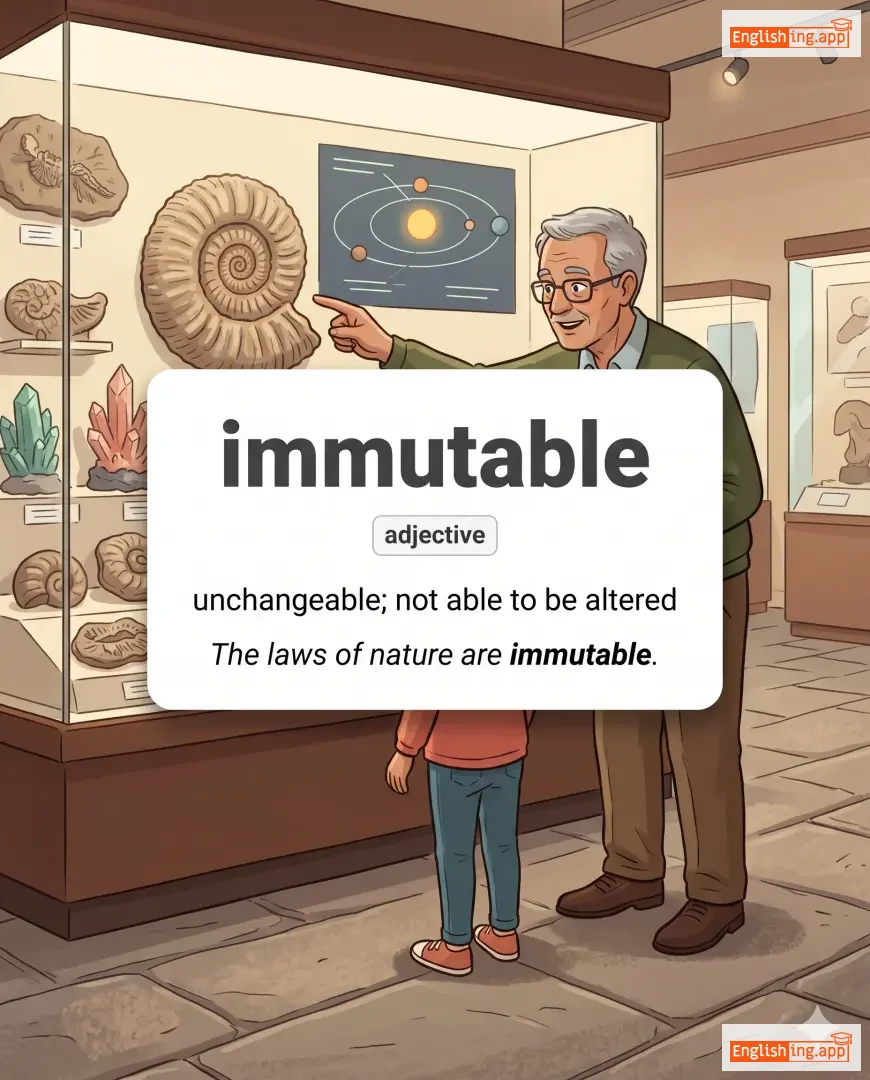
unchangeable; not able to be altered
••••••
|
The laws of nature are immutable.
自然の法則は不変です。
••••••
|
自然の法則は不変です。
Shizen no hōsoku wa fuhen desu.
••••••
|
immutable truth
不変の真実
••••••
|
a fact that cannot be changed
••••••
|
不変の真実
Fuhen no shinjitsu
••••••
|
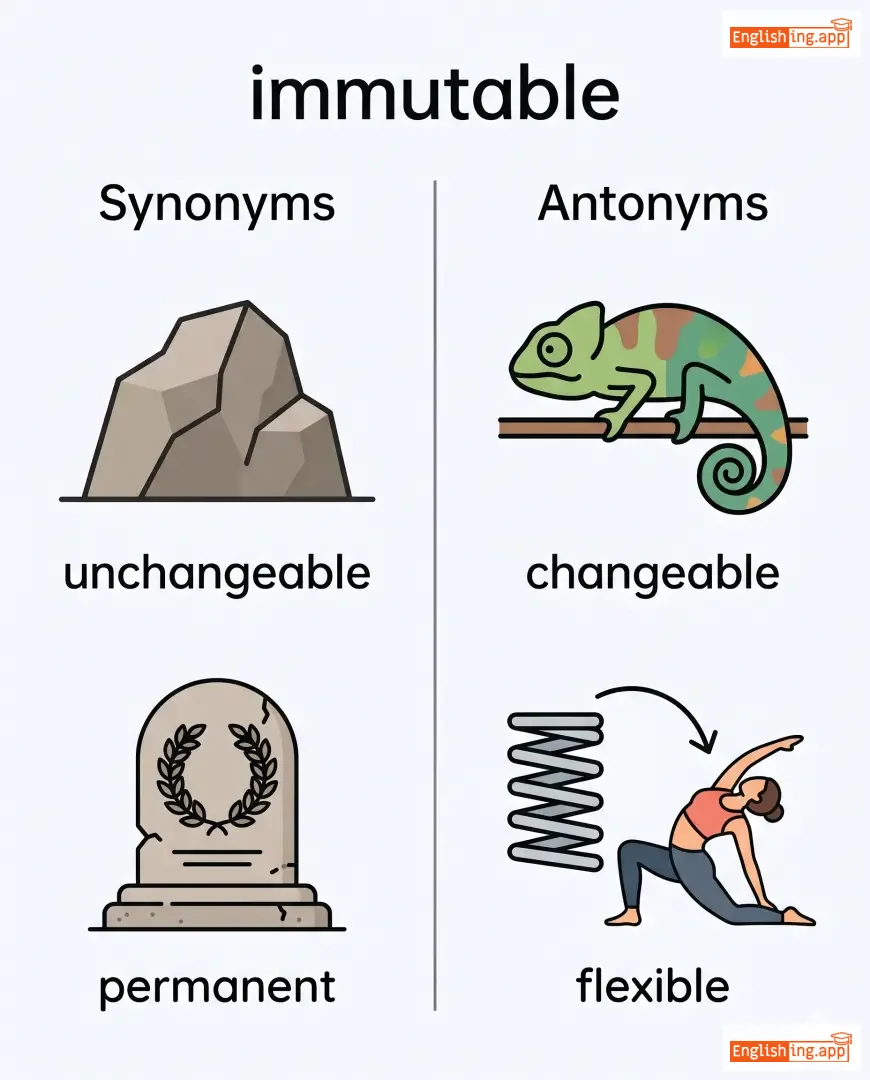
unchangeable, permanent, fixed, constant
••••••
|
changeable, flexible, variable
••••••
|
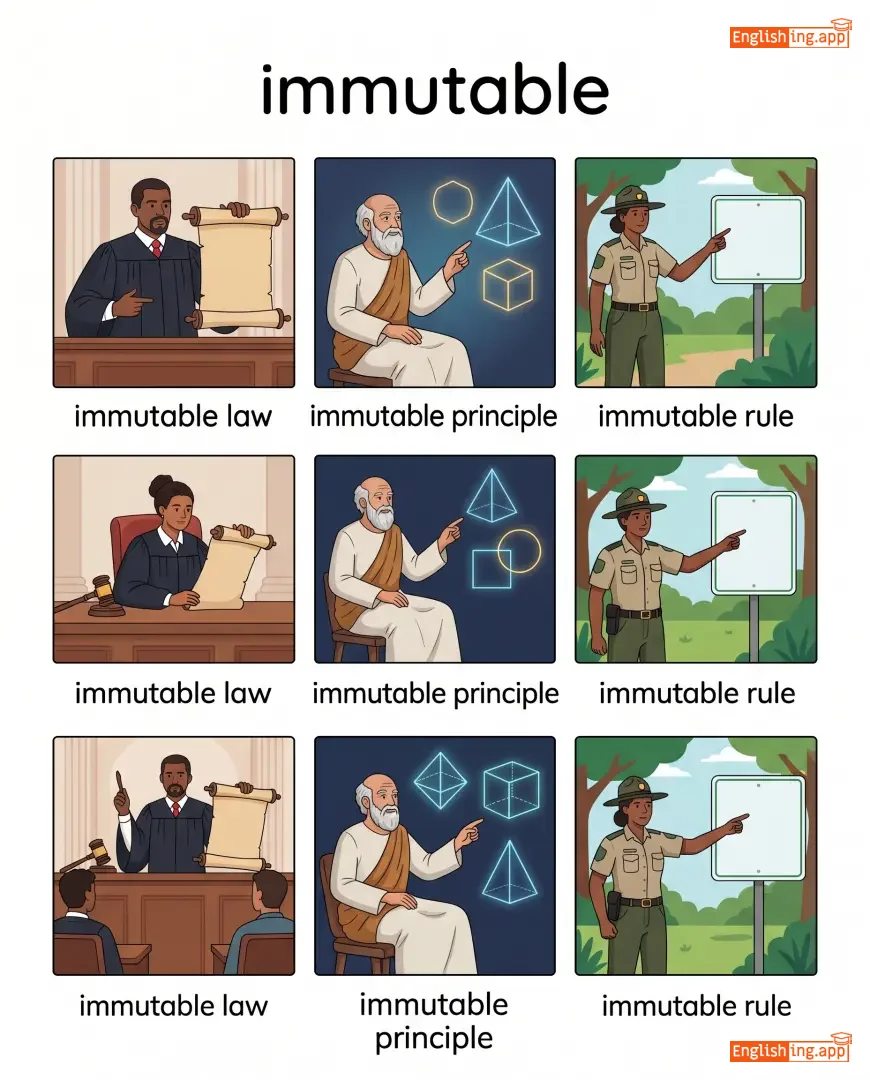
immutable law, immutable principle, immutable rule, immutable fact
••••••
|
Immutableは変更できないことを意味する—不変。
••••••
|
|
#4342
🚪
|
/ɪˈmjʊər/
verb
(imyūru)
••••••
|
- •••••• |
閉じ込める
tojikomeru
••••••
|
immured
imyūrudo
••••••
|
immured
imyūrudo
••••••
|
immures
imyūruzu
••••••
|
immuring
imyūringu
••••••
|
to confine or enclose someone against their will
••••••
|
The prisoner was immured in a dark cell.
囚人は暗い監房に閉じ込められた。
••••••
|
囚人は暗い監房に閉じ込められた。
Shūjin wa kurai kanbō ni tojikomerareta.
••••••
|
- •••••• | - •••••• | - •••••• |
confine, imprison, enclose, incarcerate
••••••
|
release, free
••••••
|
immure in walls, immured prisoner, immured soul
••••••
|
Immureは誰かを閉じ込めること、まるで牢屋の中のように。
••••••
|
|
#4343
🛡️
|
/ɪˈmjuːn/
adjective
(イミューン)
••••••
|
- •••••• |
免疫の
men'eki no
••••••
|
- •••••• | - •••••• | - •••••• | - •••••• |
protected from disease or from the effects of something
••••••
|
Children who are vaccinated are immune to many diseases. |
予防接種を受けた子供たちは多くの病気に免疫があります。
Yobou sesshu wo uketa kodomotachi wa ooku no byouki ni men'eki ga arimasu.
••••••
|
immune to criticism |
not affected by criticism
••••••
|
批判に免疫がある
hihan ni men'eki ga aru
••••••
|
resistant, protected, safe, shielded
••••••
|
vulnerable, susceptible
••••••
|
immune system, immune response, immune to, immune deficiency
••••••
|
免疫は病気を防ぐ力、あなたを守る盾のようです。
••••••
|
|
#4344
🪨
|
/ɪˈmuːvəbl/
adjective
(イムーヴァブル)
••••••
|
|
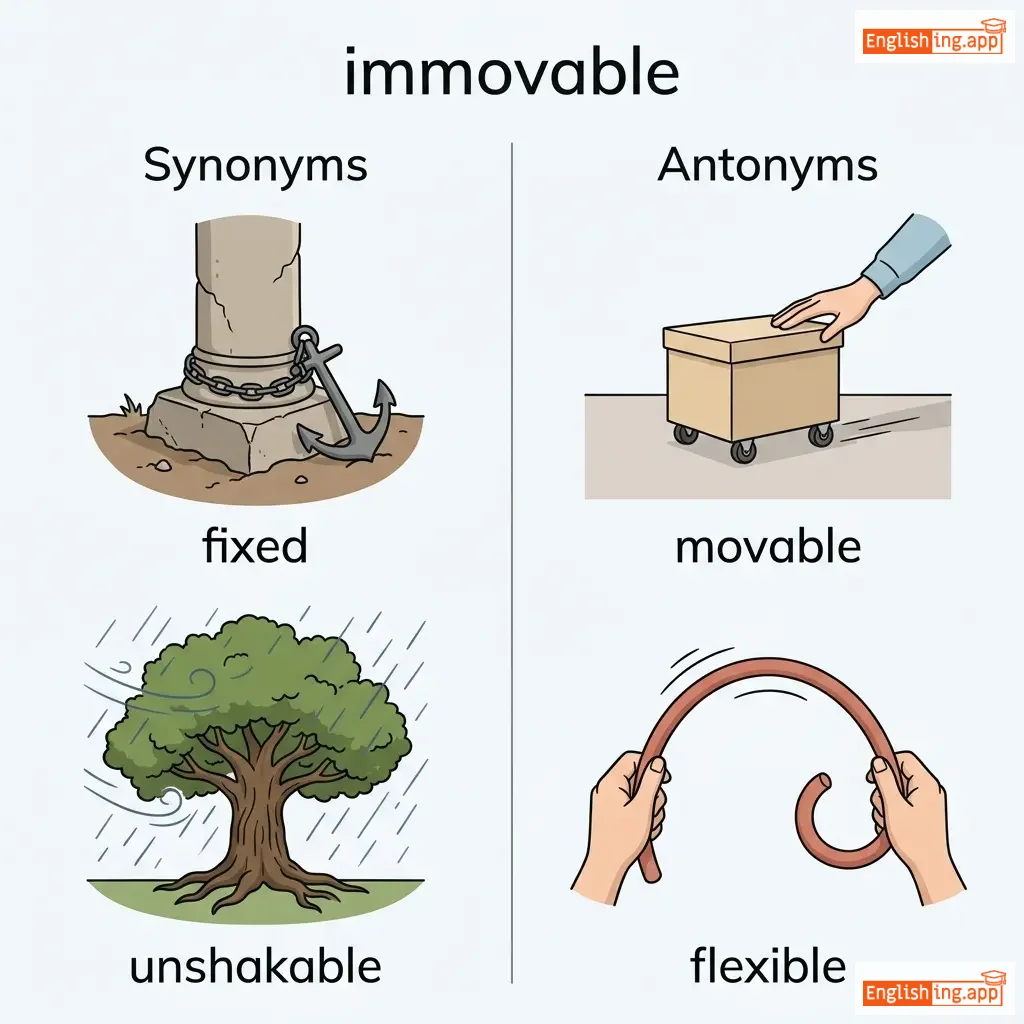
動かせない
ugokasenai
••••••
|
- •••••• | - •••••• | - •••••• | - •••••• |
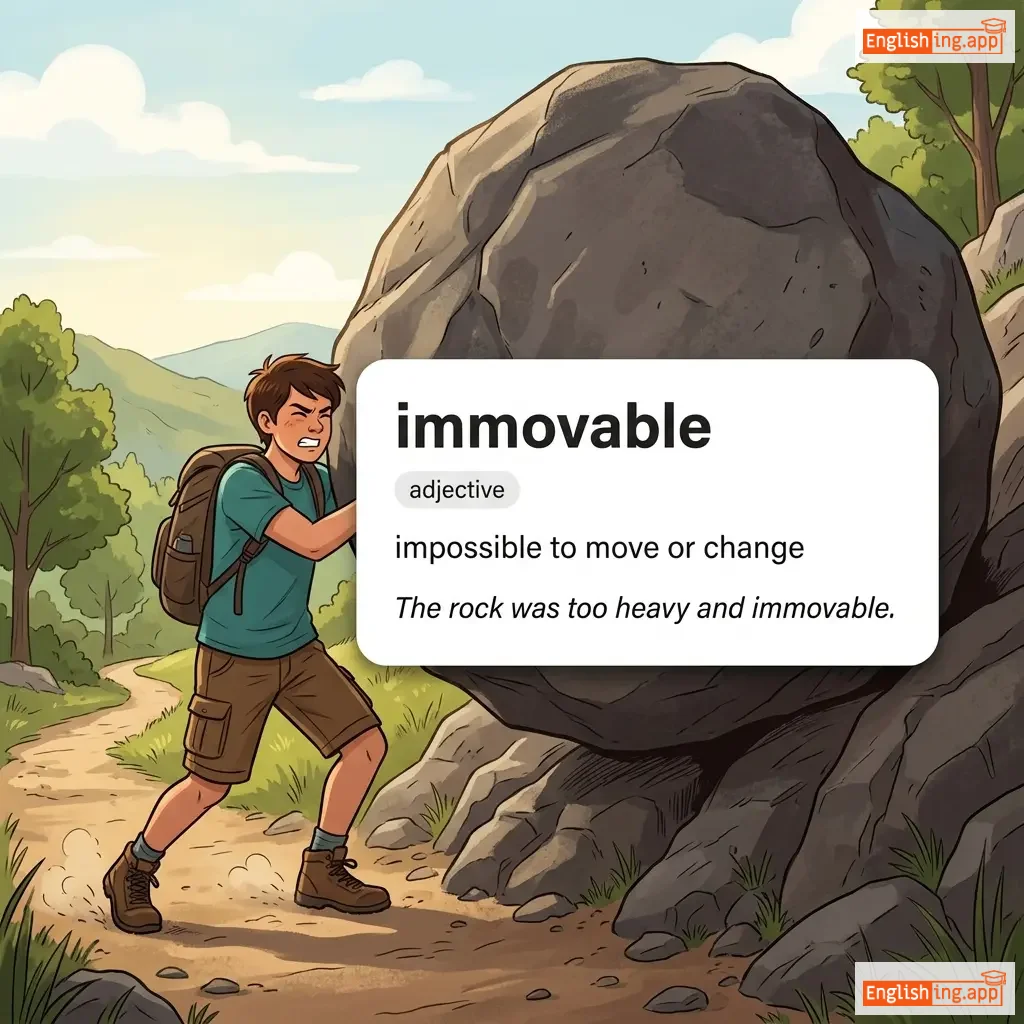
impossible to move or change
••••••
|
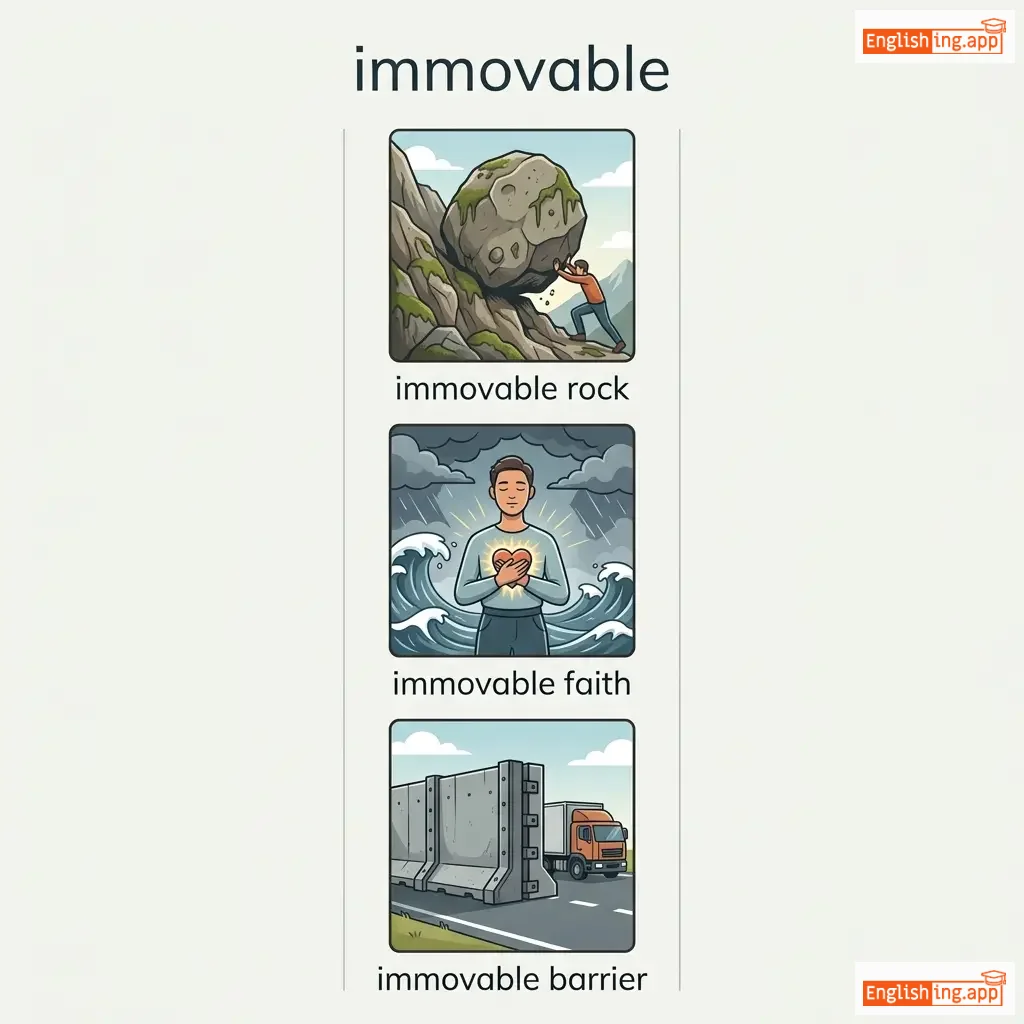
The rock was too heavy and immovable.
岩は非常に重く、動かすことができませんでした。
••••••
|
岩は非常に重く、動かすことができませんでした。
Iwa wa hijou ni omoku, ugokasu koto ga dekimasen deshita.
••••••
|
immovable object
動かすことのできない物体
••••••
|
something that cannot be shifted or changed
••••••
|
動かすことのできない物体
ugokasu koto no dekinai buttai
••••••
|
fixed, unshakable, immobile, rigid
••••••
|
movable, flexible
••••••
|
immovable rock, immovable faith, immovable barrier, immovable stance
••••••
|
Immovableは動かせない、だから動かせない。
••••••
|
|
#4345
🗿
|
/ɪˈmɔːrtəlaɪz/
verb
(イモータライズ)
••••••
|
- •••••• |
不朽の
fukyuu no
••••••
|
immortalized
イモータライズド
••••••
|
immortalized
イモータライズド
••••••
|
immortalizes
イモータライズズ
••••••
|
immortalizing
イモータライズィング
••••••
|
to preserve the memory of someone or something forever
••••••
|
The statue was built to immortalize the hero’s sacrifice.
その像は、英雄の犠牲を永遠にするために建てられました。
••••••
|
その像は、英雄の犠牲を永遠にするために建てられました。
Sono zō wa, eiyū no gisei o eien ni suru tame ni tateraremashita.
••••••
|
immortalize in history
歴史に永遠に残す
••••••
|
to make remembered for all time
••••••
|
歴史に永遠に残す
Rekishi ni eien ni nokosu
••••••
|
commemorate, memorialize, honor, enshrine, glorify
••••••
|
forget, ignore, neglect
••••••
|
immortalize memory, immortalize achievement, immortalize hero, immortalize story
••••••
|
Immortalは永遠を意味し、immortalizeはその記憶を永遠にすることを意味します。
••••••
|
|
#4346
🚫
|
/ɪˈmɒrəl/
adjective
(イモラル)
••••••
|
- •••••• |
不道徳な
fudōtoku na
••••••
|
- •••••• | - •••••• | - •••••• | - •••••• |
Not conforming to accepted standards of morality; unethical or wicked.
••••••
|
He was fired for his immoral behavior. |
彼は不道徳な行動で解雇されました。
Kare wa fudōtoku na kōdō de kaiko saremashita.
••••••
|
immoral act |
An action that is considered wrong or unethical.
••••••
|
不道徳な行為
fudōtoku na kōi
••••••
|
unethical, wicked, corrupt, sinful
••••••
|
moral, virtuous, ethical
••••••
|
immoral behavior, immoral act, immoral lifestyle, immoral conduct
••••••
|
Moralは倫理的、不道徳はその反対。簡単に覚えられます!
••••••
|
|
#4347
🔥
|
/ˈɪməleɪt/
verb
(イモレート)
••••••
|
- •••••• |
犠牲にする/焼死させる
gisei ni suru/yakushi saseru
••••••
|
immolated
イモレーテッド
••••••
|
immolated
イモレーテッド
••••••
|
immolates
イモレーツ
••••••
|
immolating
イモレーティング
••••••
|
To kill or sacrifice, especially by burning.
••••••
|
The protesters threatened to immolate themselves in front of the building.
抗議者たちは建物の前で自ら火にくべると脅した。
••••••
|
抗議者たちは建物の前で自ら火にくべると脅した。
Kōgisha-tachi wa tatemono no mae de mizukara hi ni kuberu to odoshita.
••••••
|
- •••••• | - •••••• | - •••••• |
sacrifice, burn, kill, slay
••••••
|
preserve, save, protect
••••••
|
immolate oneself, immolate victims, ritual immolate
••••••
|
Immolate は日本語で火で犠牲にすることを意味します。
••••••
|
|
#4348
🦽
|
/ˌɪməʊˈbɪləti/
noun
(イモビリティ)
••••••
|
- •••••• |
不動
fudou
••••••
|
- •••••• | - •••••• | - •••••• | - •••••• |
The state of being unable to move.
••••••
|
After the accident, she suffered from immobility in her legs. |
事故の後、彼女は足の不動に苦しみました。
Jiko no ato, kanojo wa ashi no fudou ni kurushimashita.
••••••
|
- •••••• | - •••••• | - •••••• |
inactivity, paralysis, stillness, stagnation
••••••
|
movement, mobility, activity
••••••
|
physical immobility, complete immobility, immobility due to injury
••••••
|
Mobileは動くこと、immobilityは動けないこと。
••••••
|
|
#4349
🛢️
|
/ɪˈmɪsəbl/
adjective
(イミシブル)
••••••
|
- •••••• |
不混和
fukonwa
••••••
|
- •••••• | - •••••• | - •••••• | - •••••• |
Describes liquids that do not mix together.
••••••
|
Oil and water are immiscible liquids. |
油と水は不混和の液体です。
Abura to mizu wa fukonwa no ekitai desu.
••••••
|
- •••••• | - •••••• | - •••••• |
unmixable, incompatible, separate, non-blending
••••••
|
miscible, mixable, blendable
••••••
|
immiscible liquids, immiscible substances, immiscible phases
••••••
|
油と水は混ざらないので、不混和は混ざり合わないことを意味します。
••••••
|
|
#4350
⚡
|
/ˈɪmɪnənt/
adjective
(イミネント)
••••••
|
- •••••• |
差し迫った
さしせまった
••••••
|
- •••••• | - •••••• | - •••••• | - •••••• |
About to happen; likely to occur very soon.
••••••
|
Dark clouds signaled that a storm was imminent.
暗い雲は嵐が迫っていることを示していた。
••••••
|
暗い雲は嵐が迫っていることを示していた。
Kurai kumo wa arashi ga sematte iru koto o shimeshite ita.
••••••
|
imminent danger
差し迫った危険
••••••
|
A threat or risk that is about to happen very soon.
••••••
|
差し迫った危険
さしせまったきけん
••••••
|
forthcoming, approaching, looming, impending, near
••••••
|
distant, remote, unlikely
••••••
|
imminent threat, imminent arrival, imminent danger, imminent change
••••••
|
Imminent は日本語の差し迫ったのように、危険がすぐそこにあります。
••••••
|
Vocabulary Quiz
Test your vocabulary by matching words with their translations or meanings.
Login to take the quiz
Comments (0)
Share your thoughts and join the discussion.
Join the discussion by logging in
Login to CommentNo comments yet
Be the first to share your thoughts!