

翻訳
過去
過去分詞
三人称単数
動名詞
意味
例文
例文の翻訳
同義語
対義語
コロケーション
ニーモニック
Swipe left or right, or use the buttons. Tap image to zoom.
例文の翻訳
単語
Lesson 31Lesson 31 - マスクトグル
|
絵文字
|
単語 | Images | 翻訳 | 過去 | 過去分詞 | 三人称単数 | 動名詞 | 意味 | 例文 | 例文の翻訳 | 表現例 | 表現例の意味 | 表現例の翻訳 | 同義語 | 対義語 | コロケーション | ニーモニック |
|---|---|---|---|---|---|---|---|---|---|---|---|---|---|---|---|---|---|
|
#901
🎯
|
/bɛnt/
adjective
(ベント)
••••••
|
- •••••• |
決意 / 傾向
ketsui / keikou
••••••
|
- •••••• | - •••••• | - •••••• | - •••••• |
strongly determined or having a natural talent or inclination for something
••••••
|
She is bent on becoming a successful lawyer.
彼女は成功した弁護士になる決意を固めている。
••••••
|
彼女は成功した弁護士になる決意を固めている。
Kanojo wa seikou shita bengoshi ni naru ketsui o katamete iru.
••••••
|
bent on
決意
••••••
|
determined to do something
••••••
|
決意
ketsui
••••••
|
determined, inclined, resolved, focused, committed
••••••
|
indifferent, apathetic, unwilling
••••••
|
bent on, artistic bent, bent towards, criminal bent
••••••
|
ベント(曲がる)は決意の象徴 – 曲がりながらも決して諦めない。
••••••
|
|
#902
😍
|
/bɪˈsɒtɪd/
adjective
(ベソッテッド)
••••••
|
- •••••• |
夢中な、恋に狂った
muchuu na, koi ni kurutta
••••••
|
- •••••• | - •••••• | - •••••• | - •••••• |
strongly infatuated or obsessed with someone or something
••••••
|
He was completely besotted with her charm. |
彼は彼女の魅力に完全に夢中だった。
Kare wa kanojo no miryoku ni kanzen ni muchuu datta.
••••••
|
besotted with love |
madly in love with someone
••••••
|
恋に狂った
koi ni kurutta
••••••
|
infatuated, obsessed, enamored, captivated
••••••
|
indifferent, disinterested
••••••
|
besotted with her, besotted lover, besotted fans
••••••
|
Bee SOTTEDは恋に狂ったことを意味します – besottedは完全に夢中になったことを意味します。
••••••
|
|
#903
🖤
|
/bɪˈsmɜːrtʃ/
verb
(ベスミルチ)
••••••
|
- •••••• |
汚す
yogosu
••••••
|
besmirched
ベスミルチド
••••••
|
besmirched
ベスミルチド
••••••
|
besmirches
ベスミルチズ
••••••
|
besmirching
ベスミルチング
••••••
|
to damage someone's reputation; to make dirty or stained
••••••
|
He tried to besmirch her good name with false rumors.
ヒー トライド トゥ ベスミルチ ハー グッド ネーム ウィズ フォールス ルーマーズ
••••••
|
彼は虚偽の噂で彼女の良い名前を汚そうとした。
Kare wa kyogi no uwasa de kanojo no yoi namae o yogosou to shita.
••••••
|
besmirch someone's reputation
ベスミルチ サムワンズ レピュテーション
••••••
|
to tarnish or harm someone's good reputation
••••••
|
誰かの評判を汚す
dareka no hyōban o yogosu
••••••
|
sully, tarnish, defame, slander
••••••
|
honor, praise, respect
••••••
|
besmirch reputation, besmirched name, besmirch honor
••••••
|
ベスミルチで名誉を汚す。
••••••
|
|
#904
🪣
|
/bɪˈsmɪər/
verb
(ベスミア)
••••••
|
- •••••• |
汚す
yogosu
••••••
|
besmeared
ベスミアード
••••••
|
besmeared
ベスミアード
••••••
|
besmears
ベスミアーズ
••••••
|
besmearing
ベスミアリング
••••••
|
to smear or cover with a sticky or dirty substance; to soil
••••••
|
His clothes were besmeared with mud.
彼の服は泥だらけだった。
••••••
|
彼の服は泥で汚れていた。
Kare no fuku wa doro de yogorete ita.
••••••
|
- •••••• | - •••••• | - •••••• |
smear, stain, soil, daub
••••••
|
clean, polish
••••••
|
besmear with mud, besmeared face, besmear reputation
••••••
|
BESMIR (汚す) – 服が泥で汚れるのは嫌だ!
••••••
|
|
#905
🏰
|
/bɪˈsiːdʒ/
verb
(bishiiji)
••••••
|
- •••••• |
包囲する
hōisuru
••••••
|
besieged
bishiijido
••••••
|
besieged
bishiijido
••••••
|
besieges
bishiijesu
••••••
|
besieging
bishiijingu
••••••
|
to surround a place with armed forces to capture it; to overwhelm with requests or attention
••••••
|
The city was besieged by enemy troops.
その都市は敵軍によって包囲されました。
••••••
|
その都市は敵軍によって包囲されました。
Sono toshi wa teki gun ni yotte hōi sare mashita.
••••••
|
besieged with questions
質問に囲まれた
••••••
|
to be overwhelmed with many questions
••••••
|
質問に圧倒された
Shitsumon ni attō sareta
••••••
|
attack, surround, blockade, encircle
••••••
|
liberate, free
••••••
|
besiege a city, besieged by fans, besieged with requests
••••••
|
Bee SEE Jhorで都市を包囲 – 包囲するとは、武力で囲んで占領することです。
••••••
|
|
#906
⚔️
|
/bɪˈsɛt/
verb
••••••
|
- •••••• | - •••••• |
beset
••••••
|
beset
••••••
|
besets
••••••
|
besetting
••••••
|
to trouble, harass, or attack on all sides
••••••
|
The village was beset by constant floods. |
- •••••• |
beset with difficulties |
to be surrounded or burdened by many problems
••••••
|
- •••••• |
plague, torment, harass, afflict, trouble
••••••
|
relieve, aid, help
••••••
|
beset by problems, beset with difficulties, beset on all sides
••••••
|
No •••••• |
|
#907
🙏
|
/bɪˈsiːtʃ/
verb
(ビスイッチ)
••••••
|
- •••••• |
懇願する
konkan suru
••••••
|
beseeched
ビスイッチド
••••••
|
beseeched
ビスイッチド
••••••
|
beseeches
ビスイッチェス
••••••
|
beseeching
ビスイッチング
••••••
|
To ask someone urgently and fervently to do something; to beg.
••••••
|
He beseeched the judge for mercy.
彼は裁判官に慈悲を請いました。
••••••
|
彼は裁判官に慈悲を請いました。
Kare wa saiban kan ni jihi wo inorimashita.
••••••
|
- •••••• | - •••••• | - •••••• |
implore, beg, plead, entreat, supplicate
••••••
|
demand, command, insist
••••••
|
beseech someone, beseech the lord, beseech for mercy, humbly beseech
••••••
|
Beseech = Be + Speech (懇願して頼む).
••••••
|
|
#908
🛏️
|
/bɜːrθ/
noun
(バース)
••••••
|
- •••••• |
寝台 / 停泊場所
shindai / teibaku basho
••••••
|
- •••••• | - •••••• | - •••••• | - •••••• |
A place to sleep on a ship or train; a ship's allocated place at a dock.
••••••
|
They reserved a lower berth on the overnight train. |
彼らは夜行列車で下段の寝台を予約しました。
Karera wa yakō ressha de gedan no shindai o yoyaku shimashita.
••••••
|
give a wide berth |
To avoid someone or something; to keep away.
••••••
|
広い余裕を与える
hiro na yoyū o ataeru
••••••
|
bunk, cabin, bed, dock, station
••••••
|
departure, absence
••••••
|
lower berth, upper berth, ship's berth, wide berth
••••••
|
Berthは 'bed' のようなもので、電車での'berth'は眠るためのベッドです。
••••••
|
|
#909
🤯
|
/bəˈzɜːrk/
adjective
(バーサーク)
••••••
|
- •••••• |
狂気
kyouki
••••••
|
- •••••• | - •••••• | - •••••• | - •••••• |
Out of control with anger or excitement; wild or frenzied.
••••••
|
The fans went berserk when their team won the championship.
ファンはチームが優勝したとき、バーサークになった。
••••••
|
ファンはチームが優勝したとき、狂気になった。
Fan wa chiimu ga yuushou shita toki, kyouki ni natta.
••••••
|
go berserk
バーサークになる
••••••
|
To become very angry or excited in a wild and uncontrolled way.
••••••
|
狂気になる
Kyouki ni naru
••••••
|
crazy, frenzied, mad, wild, frantic
••••••
|
calm, controlled, peaceful
••••••
|
went berserk, go berserk, berserk rage, completely berserk
••••••
|
Berserkは、怒り狂うような時に使われる言葉、みんなが狂気になる。
••••••
|
|
#910
💔
|
/bɪˈrɛft/
adjective
(bereft)
••••••
|
- •••••• |
失われた
ushinawareta
••••••
|
- •••••• | - •••••• | - •••••• | - •••••• |
Deprived of or lacking something, especially a nonmaterial asset.
••••••
|
After the betrayal, he felt bereft of hope and trust. |
裏切りの後、彼は希望と信頼を失ったと感じた。
Uragiri no ato, kare wa kibou to shinrai wo ushinatta to kanjita.
••••••
|
bereft of |
Completely without something; lacking.
••••••
|
失われた
ushinawareta
••••••
|
deprived, lacking, void, destitute, empty
••••••
|
full, abundant, complete
••••••
|
bereft of hope, bereft of love, felt bereft, emotionally bereft
••••••
|
Be + left = bereft, 何かが欠けている、失われた状態。
••••••
|
|
#911
🖤
|
/bɪˈriːvmənt/
noun
••••••
|
- •••••• | - •••••• | - •••••• | - •••••• | - •••••• | - •••••• |
The state of having lost a loved one through death.
••••••
|
She received many letters of sympathy during her time of bereavement. |
- •••••• | - •••••• | - •••••• | - •••••• |
mourning, grief, sorrow, loss, lamentation
••••••
|
joy, celebration, happiness
••••••
|
period of bereavement, bereavement leave, cope with bereavement, during bereavement
••••••
|
No •••••• |
|
#912
💔
|
/bɪˈriːvd/
adjective
(ベリーヴド)
••••••
|
- •••••• |
愛する人を失った人
aisuru hito o ushinatta hito
••••••
|
- •••••• | - •••••• | - •••••• | - •••••• |
suffering the loss of a loved one through death
••••••
|
The bereaved mother wept silently at the funeral. |
その悲しみに暮れる母親は葬儀で静かに泣いていた。
Sono kanashimi ni kureru hahaoya wa sougi de shizuka ni naite ita.
••••••
|
the bereaved |
people who have recently lost a loved one
••••••
|
喪失した人々
soushitsu shita hitobito
••••••
|
grieving, mourning, sorrowful, deprived
••••••
|
joyful, blessed, fortunate
••••••
|
bereaved family, bereaved relatives, bereaved person, comfort the bereaved
••••••
|
Be + reaved (robbed) = 死に奪われる = 愛する人を失った人
••••••
|
|
#913
🖤
|
/bɪˈriːv/
verb
(ベリーブ)
••••••
|
- •••••• |
大切な人を失う
taisetsu na hito o ushinau
••••••
|
bereaved
ベリーブド
••••••
|
bereaved
ベリーブド
••••••
|
bereaves
ベリーブス
••••••
|
bereaving
ベリービング
••••••
|
to deprive someone of a loved one through death
••••••
|
She was bereaved of her husband last year.
彼女は昨年、夫を亡くしました。
••••••
|
彼女は昨年、夫を亡くしました。
Kanojo wa sakunen, otto o nakushimashita.
••••••
|
bereaved family
喪失した家族
••••••
|
a family that has lost a loved one
••••••
|
愛する人を失った家族
aisuru hito o ushinatta kazoku
••••••
|
deprive, lose, rob, dispossess
••••••
|
bless, endow, provide
••••••
|
bereaved family, bereaved person, bereaved of, comfort the bereaved
••••••
|
Be + reave (奪う) = 死が大切な人を奪う → bereave
••••••
|
|
#914
😠
|
/bɪˈreɪt/
verb
(ベレイト)
••••••
|
- •••••• |
叱る
shikaru
••••••
|
berated
ベレイテッド
••••••
|
berated
ベレイテッド
••••••
|
berates
ベレイツ
••••••
|
berating
ベレイティング
••••••
|
to scold or criticize angrily
••••••
|
The teacher berated the student for being late.
先生は遅刻した生徒を叱った。
••••••
|
先生は遅刻した生徒を叱った。
Sensei wa chikoku shita seito wo shikatta.
••••••
|
- •••••• | - •••••• | - •••••• |
scold, rebuke, reprimand, reproach, criticize
••••••
|
praise, compliment, commend
••••••
|
berate harshly, berate publicly, berate someone, berate severely
••••••
|
Be + rate = 遅刻すると先生が叱る
••••••
|
|
#915
📜
|
/bɪˈkwiːð/
verb
(bikwiθ)
••••••
|
|
遺贈する
izō suru
••••••
|
bequeathed
bikwiθdo
••••••
|
bequeathed
bikwiθdo
••••••
|
bequeaths
bikwiθsu
••••••
|
bequeathing
bikwiθingu
••••••
|
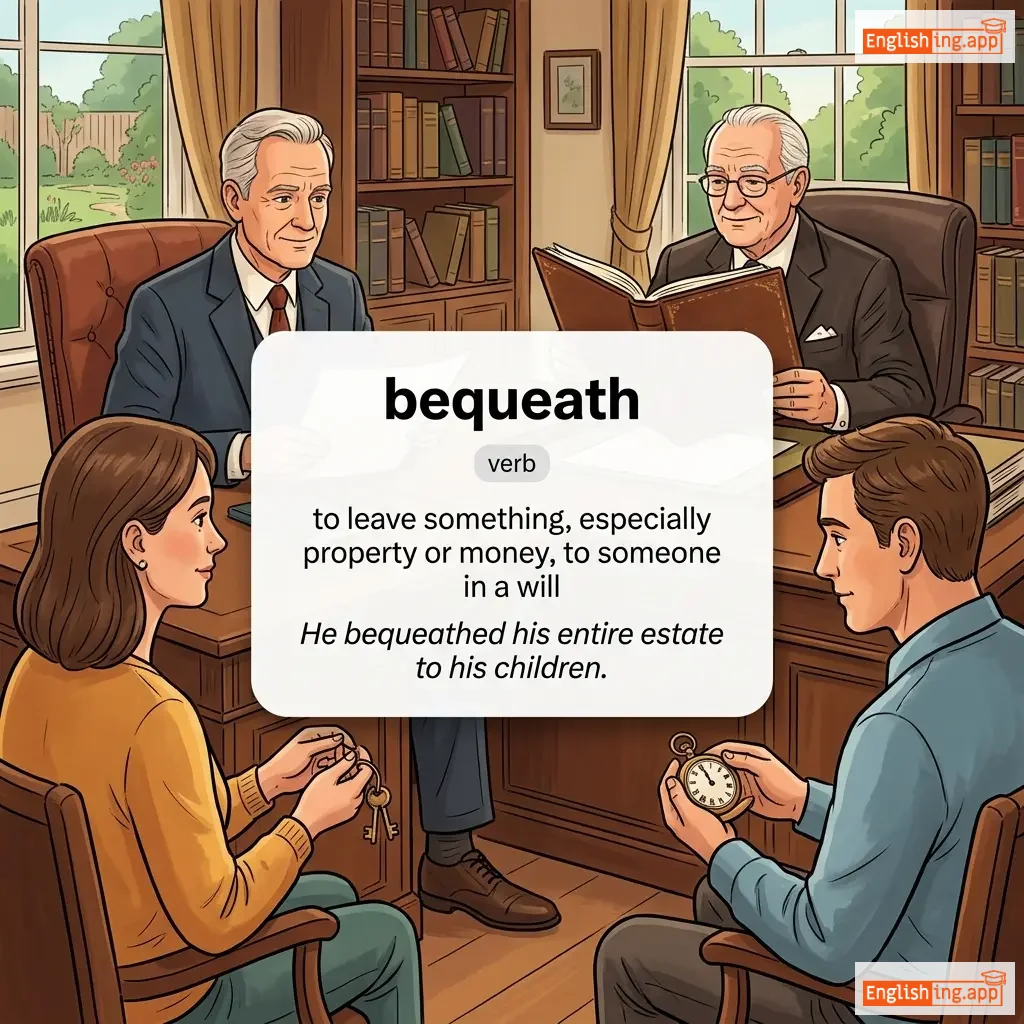
to leave something, especially property or money, to someone in a will
••••••
|
He bequeathed his entire estate to his children.
彼はすべての財産を子供たちに遺贈した。
••••••
|
彼はすべての財産を子供たちに遺贈した。
Kare wa subete no zaisan o kodomotachi ni izō shita.
••••••
|
bequeath a legacy
遺産を遺贈する
••••••
|
to pass on something of value, usually after death
••••••
|
遺産を遺贈する
isan o izō suru
••••••
|
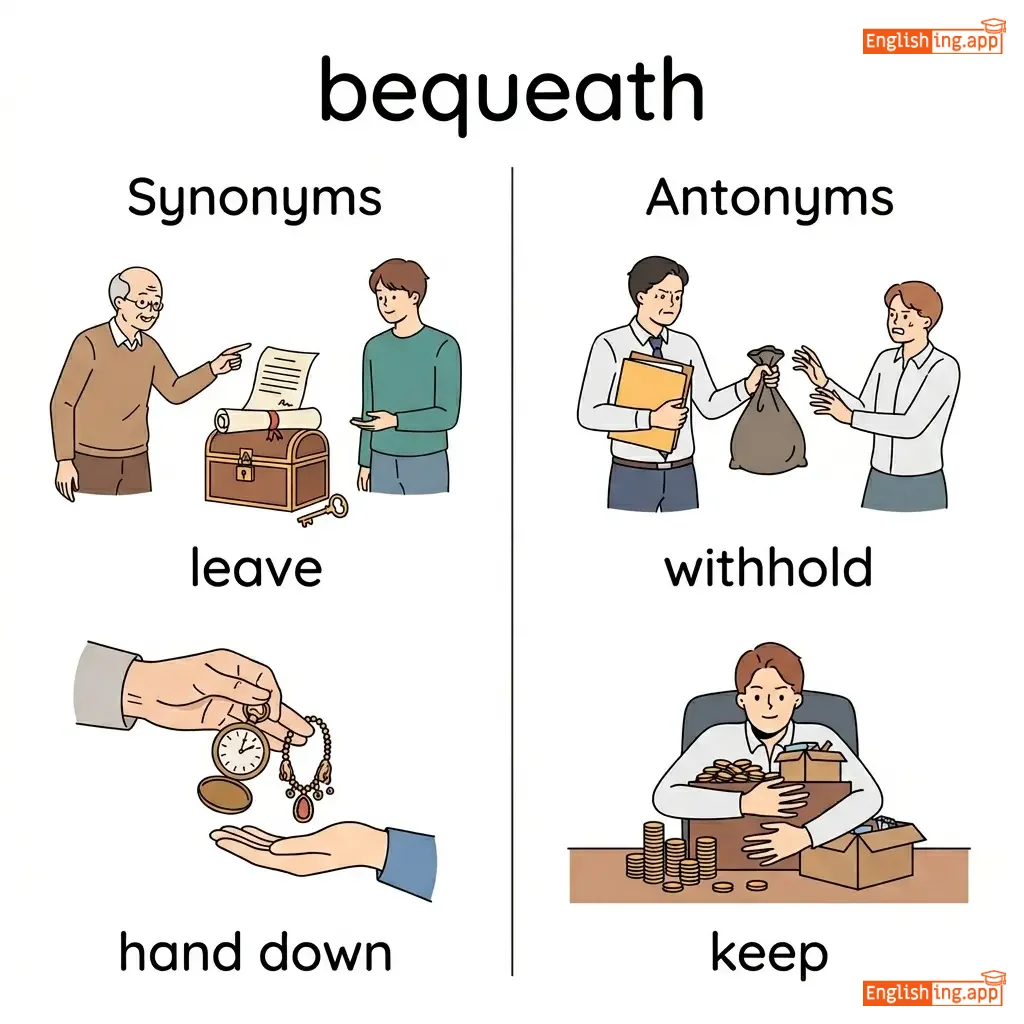
leave, hand down, pass on, donate, bestow
••••••
|
withhold, keep, retain
••••••
|
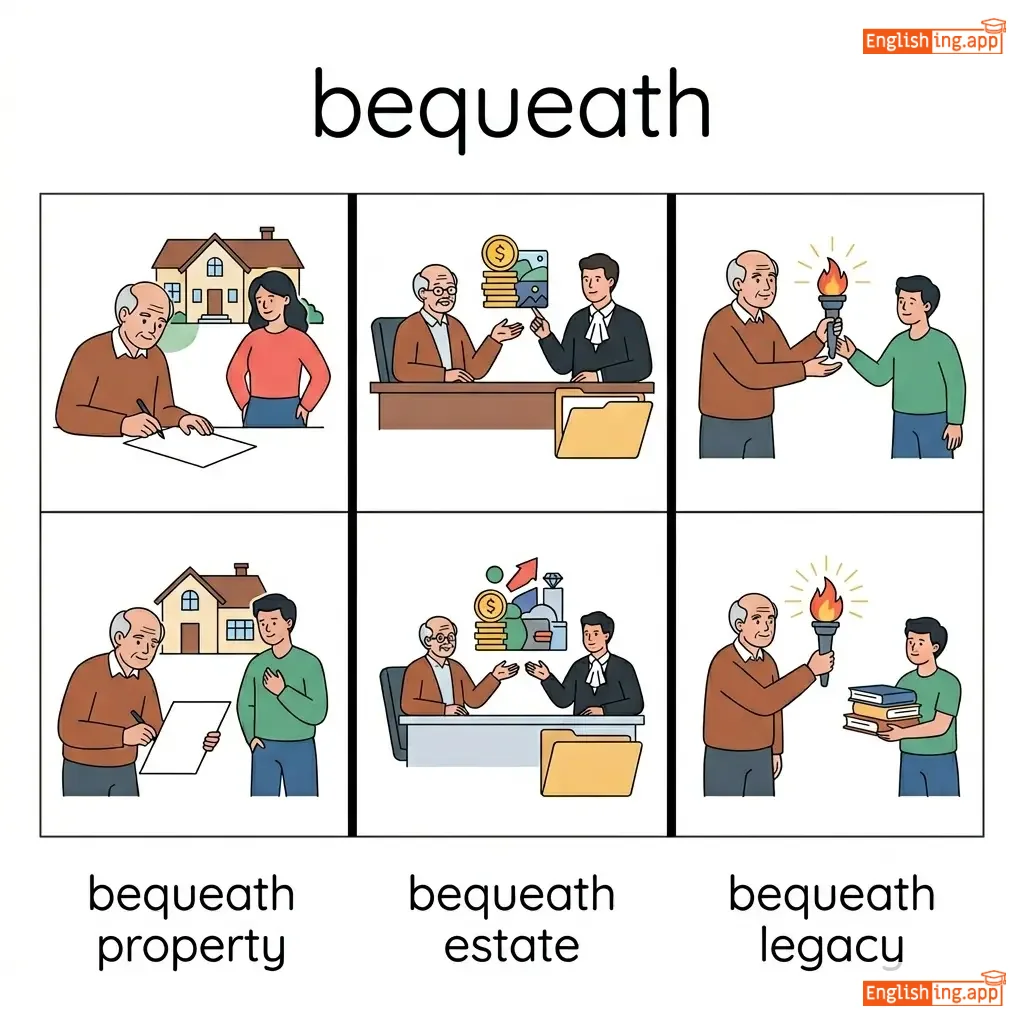
bequeath property, bequeath estate, bequeath legacy, bequeath wealth
••••••
|
Be + 空 (ku) → 死後に財産を遺贈する = bequeath
••••••
|
|
#916
😕
|
/bɪˈmjuːzd/
adjective
(ビミューズド)
••••••
|
- •••••• |
困惑した, ぼんやりした
konwaku shita, bonyari shita
••••••
|
- •••••• | - •••••• | - •••••• | - •••••• |
confused, puzzled, or lost in thought
••••••
|
She looked bemused when he asked the strange question. |
彼が奇妙な質問をしたとき、彼女は困惑しているように見えた。
Kare ga kimyō na shitsumon o shita toki, kanojo wa konwaku shite iru yō ni mieta.
••••••
|
- •••••• | - •••••• | - •••••• |
confused, puzzled, bewildered, distracted, perplexed
••••••
|
clear, understanding, aware
••••••
|
look bemused, seem bemused, appear bemused, remain bemused
••••••
|
Be ミュージズドは困惑すること - 博物館で迷子になったかのように。
••••••
|
|
#917
🙏
|
/ˈbɛnɪsən/
noun
(ベニソン)
••••••
|
- •••••• |
祝福
shukufuku
••••••
|
- •••••• | - •••••• | - •••••• | - •••••• |
A blessing or benefit.
••••••
|
The rain was a benison for the drought-stricken farmers. |
その雨は干ばつに苦しむ農民たちにとって祝福でした。
Sono ame wa kanbatsu ni kurushimu noumin-tachi ni totte shukufuku deshita.
••••••
|
- •••••• | - •••••• | - •••••• |
blessing, boon, benefit, gift
••••••
|
curse, misfortune
••••••
|
benison of rain, divine benison, benison of peace
••••••
|
BENISONは祝福を意味します—'bene'は良いという意味で、'son'は祝福された息子を意味します。
••••••
|
|
#918
🌸
|
/bɪˈnɪɡnəti/
noun
(ベニグニティ)
••••••
|
- •••••• |
親切, 優しさ
shinsetsu, yasashisa
••••••
|
- •••••• | - •••••• | - •••••• | - •••••• |
The quality of being kind and gentle.
••••••
|
She treated everyone with benignity and respect.
彼女はすべての人に対してベニグニティと尊敬を持って接しました。
••••••
|
彼女はすべての人に対して親切と尊敬を持って接しました。
Kanojo wa subete no hito ni taishite shinsetsu to sonkei o motte sesshimashita.
••••••
|
- •••••• | - •••••• | - •••••• |
kindness, gentleness, benevolence, compassion
••••••
|
harshness, cruelty, severity
••••••
|
show benignity, act with benignity, benignity of spirit
••••••
|
BENIGNITY は benign + ity で、親切さと優しさの質を意味します。
••••••
|
|
#919
🤗
|
/bɪˈnɪɡnənt/
adjective
(ベニグナント)
••••••
|
- •••••• |
慈悲深い, 親切な
jihi fukai, shinsetsu na
••••••
|
- •••••• | - •••••• | - •••••• | - •••••• |
Kindly and benevolent in nature.
••••••
|
The teacher’s benignant attitude made the students feel comfortable.
先生の寛大な態度が学生たちを快適にさせた。
••••••
|
先生の寛大な態度が学生たちを快適にさせた。
Sensei no kandaina taido ga gakuseitachi o kaiteki ni saseta.
••••••
|
- •••••• | - •••••• | - •••••• |
kind, benevolent, gracious, compassionate, gentle
••••••
|
unkind, harsh, cruel
••••••
|
benignant ruler, benignant smile, benignant attitude
••••••
|
BENIGNANT = benign + 巨大な心 — 親切な巨大な心
••••••
|
|
#920
😊
|
/bɪˈnaɪn/
adjective
••••••
|
- •••••• | - •••••• | - •••••• | - •••••• | - •••••• | - •••••• |
Gentle, kind, or not harmful (especially of a disease or tumor).
••••••
|
The doctor assured her that the tumor was benign. |
- •••••• |
benign neglect |
A policy of deliberate noninterference, often resulting in positive outcomes.
••••••
|
- •••••• |
kind, gentle, harmless, favorable, benevolent
••••••
|
malignant, harmful, hostile
••••••
|
benign tumor, benign influence, benign smile, benign climate
••••••
|
No •••••• |
|
#921
🌑
|
/bɪˈnaɪtɪd/
adjective
(bɪˈnaɪtɪd)
••••••
|
- •••••• |
暗い、無知な
kurai, muchina
••••••
|
- •••••• | - •••••• | - •••••• | - •••••• |
In a state of intellectual or moral ignorance; overtaken by darkness.
••••••
|
The explorers were lost in the benighted forest without any guide. |
探検家たちはガイドなしで暗い森の中で迷子になった。
Tankenka-tachi wa gaido nashi de kurai mori no naka de maigo ni natta.
••••••
|
- •••••• | - •••••• | - •••••• |
ignorant, unenlightened, backward, primitive, dark
••••••
|
enlightened, knowledgeable, cultured
••••••
|
benighted village, benighted times, benighted people, benighted ignorance
••••••
|
BENIGHTは闇の中で迷子になり、知識がない状態を意味します。
••••••
|
|
#922
🤗
|
/bəˈnɛvələnt/
adjective
(ベネヴォレント)
••••••
|
|
慈悲深い
jihi fukai
••••••
|
- •••••• | - •••••• | - •••••• | - •••••• |
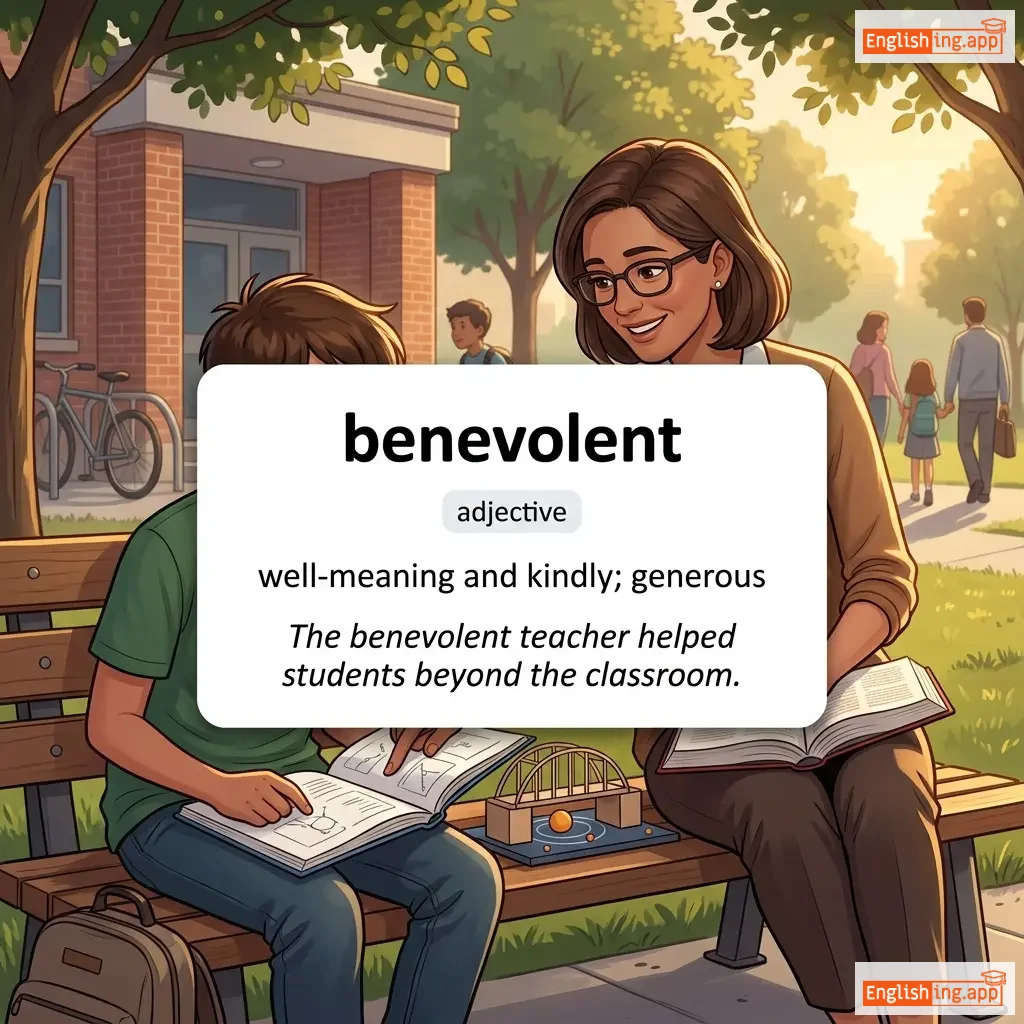
well-meaning and kindly; generous
••••••
|
The benevolent teacher helped students beyond the classroom. |
慈悲深い教師は教室を超えて生徒を助けました。
Jihi fukai kyoushi wa kyoushitsu o koete seito o tasukemashita.
••••••
|
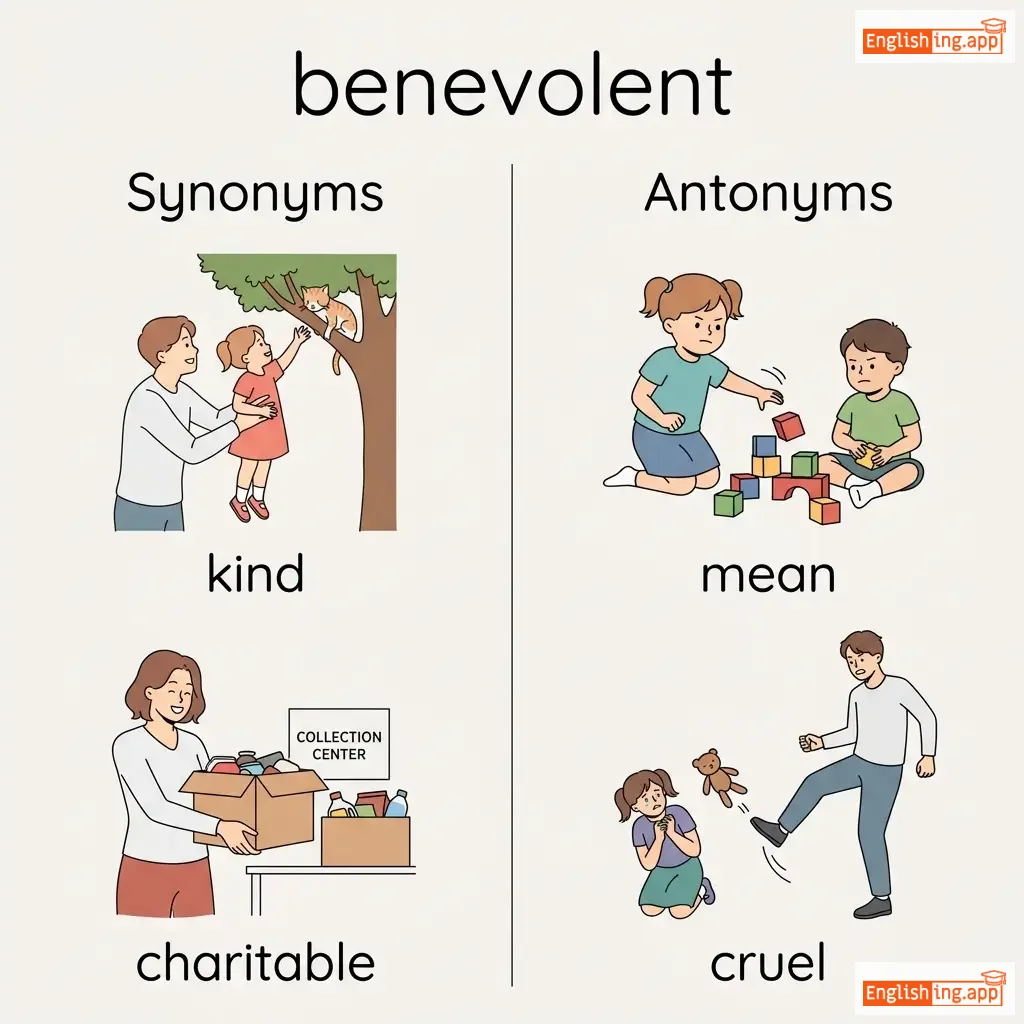
- •••••• | - •••••• | - •••••• |
kind, charitable, generous, compassionate, humane
••••••
|
mean, cruel, unkind
••••••
|
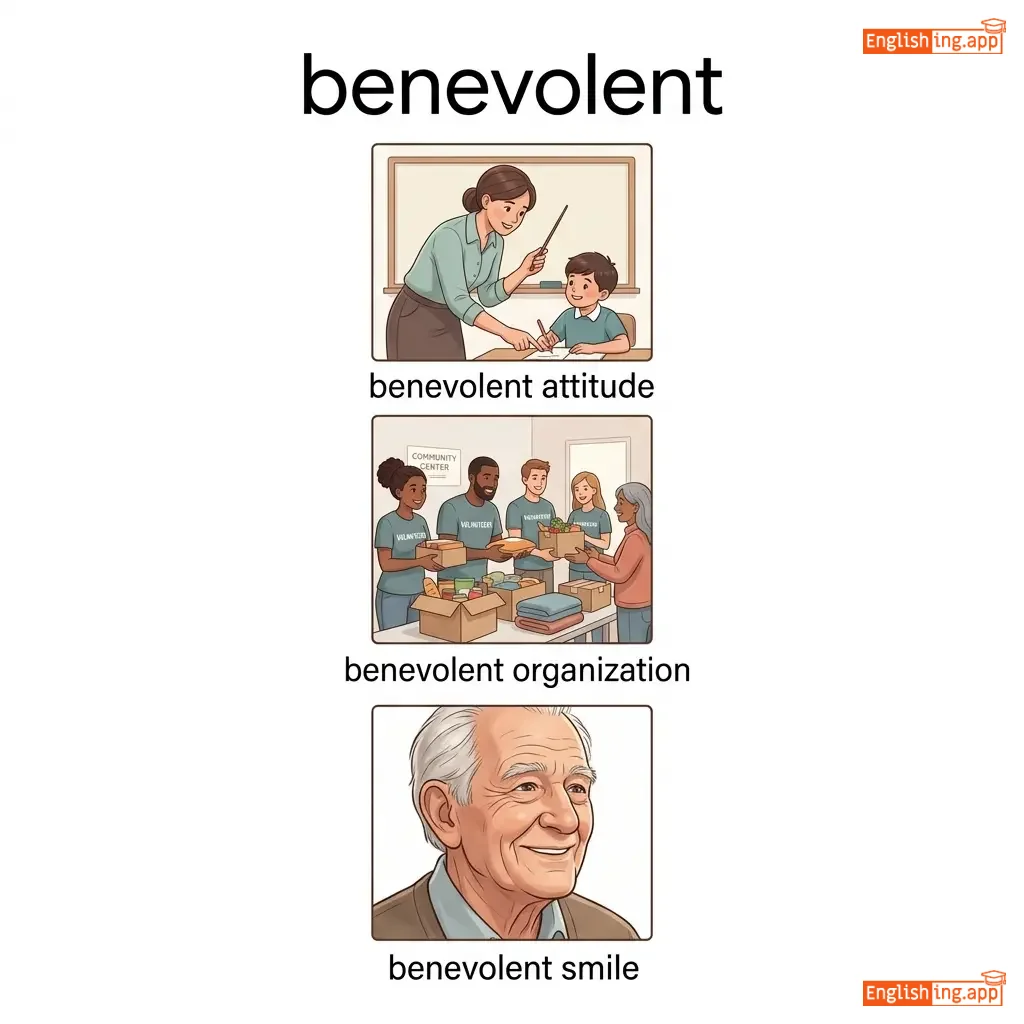
benevolent attitude, benevolent organization, benevolent smile, benevolent ruler
••••••
|
Benevolentは善良な人を意味するので、Benevolentは日本語で慈悲深いです。
••••••
|
|
#923
💖
|
/bəˈnɛvələns/
noun
(ベネボレンス)
••••••
|
|
慈善
jizen
••••••
|
- •••••• | - •••••• | - •••••• | - •••••• |
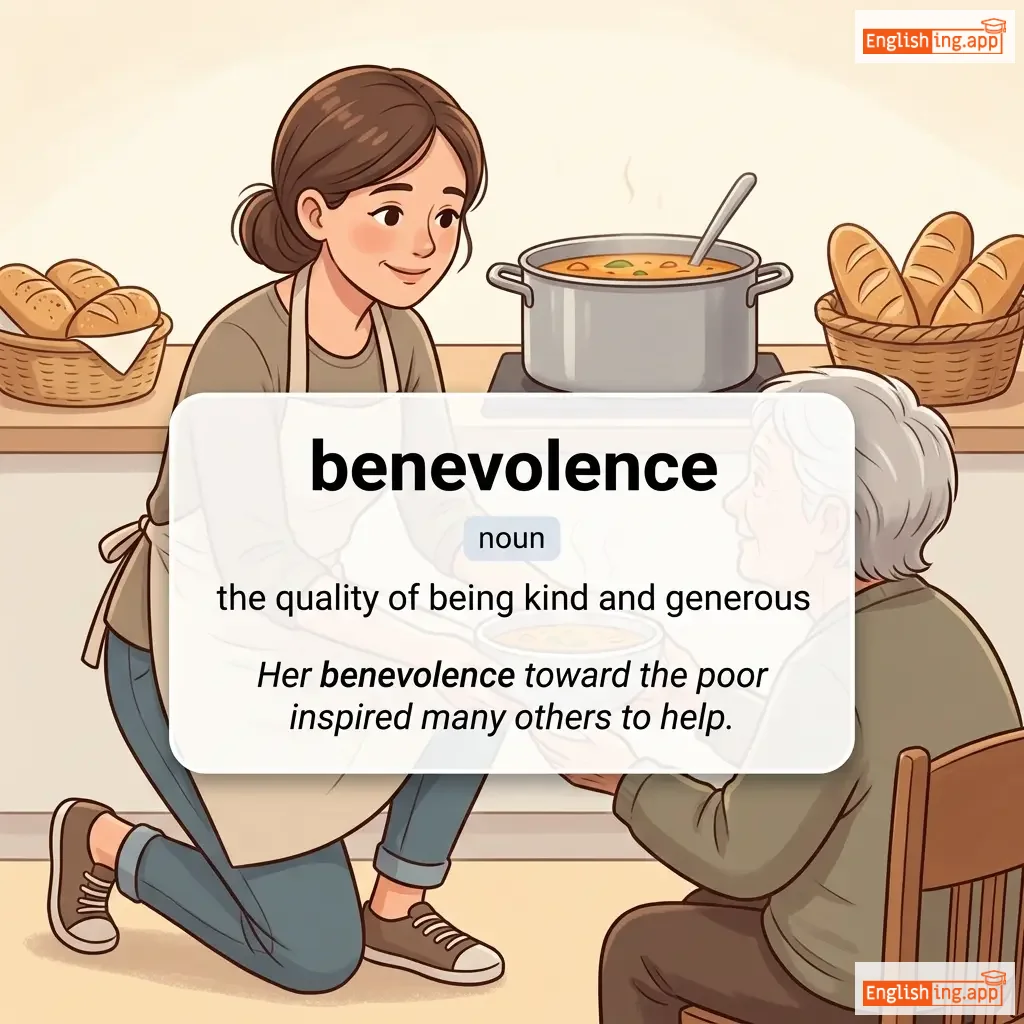
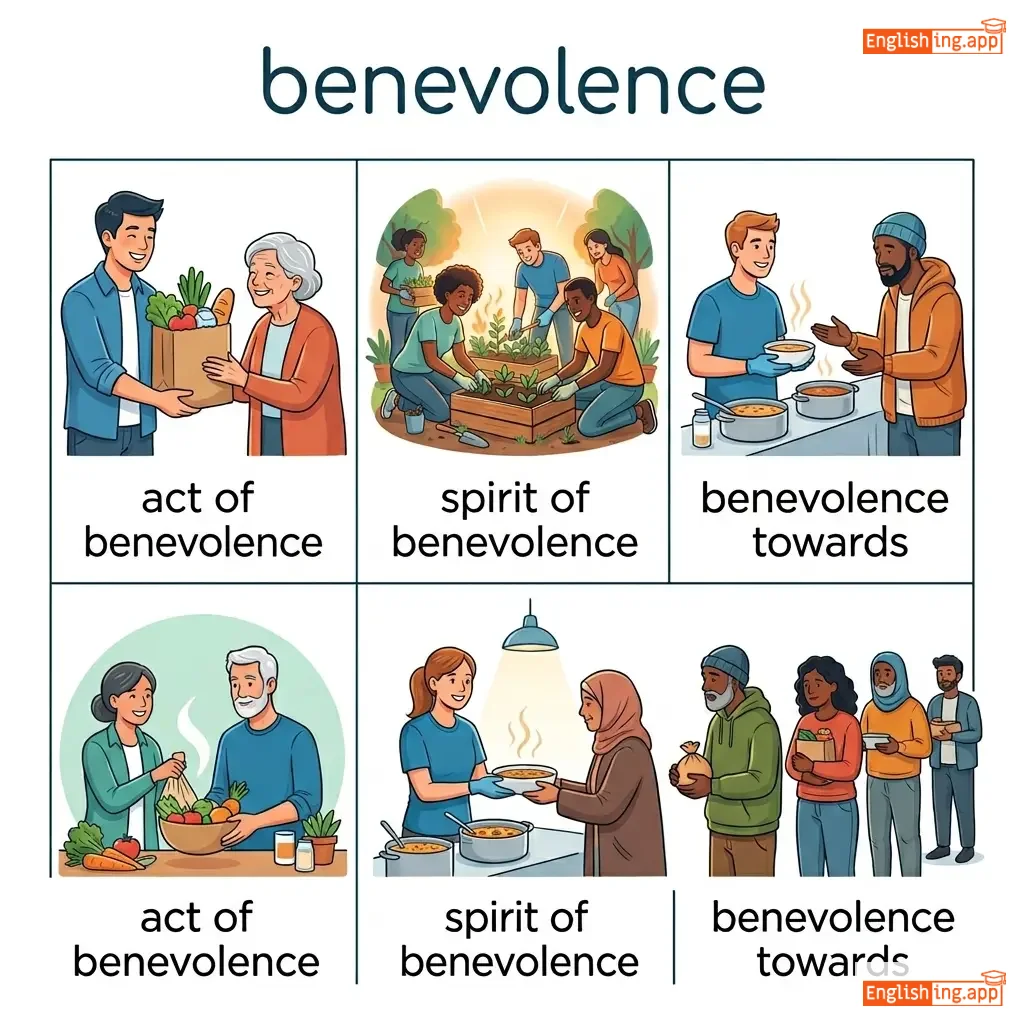
the quality of being kind and generous
••••••
|
Her benevolence toward the poor inspired many others to help. |
貧しい人々への彼女の慈善は、多くの人々を助けるように促しました。
Mazushii hitobito e no kanojo no jizen wa, ooku no hitobito wo tasukeru you ni unagimashita.
••••••
|
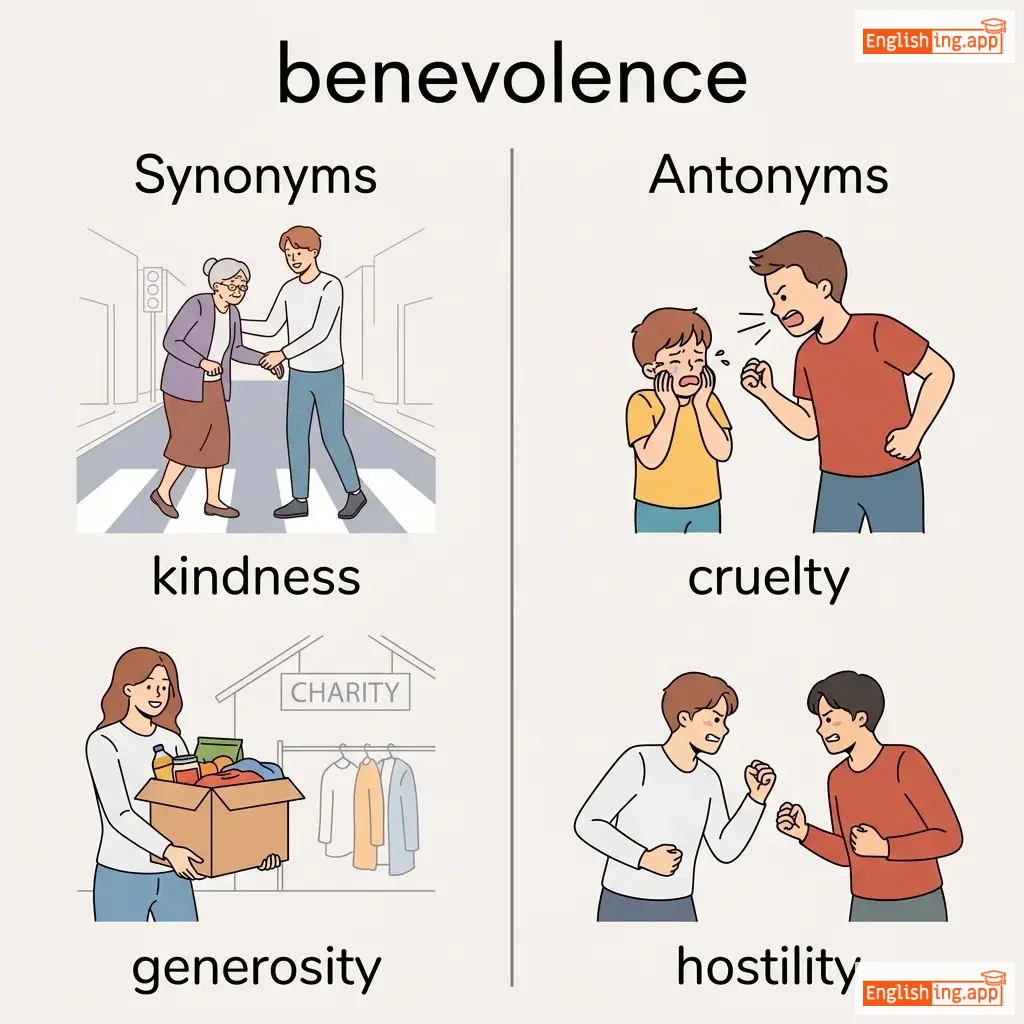
- •••••• | - •••••• | - •••••• |
kindness, generosity, goodwill, compassion
••••••
|
cruelty, hostility, selfishness
••••••
|
act of benevolence, spirit of benevolence, benevolence towards, divine benevolence
••••••
|
慈善は、他者への思いやりの表れ、violent(暴力)とは正反対の優しさを示します。
••••••
|
|
#924
🎉
|
/ˈbɛnɪfɪt/
noun/verb
(ベネフィット)
••••••
|
- •••••• |
利益 / 便益
rieki / ben'eki
••••••
|
benefited
ベネフィットエッド
••••••
|
benefited
ベネフィットエッド
••••••
|
benefits
ベネフィットス
••••••
|
benefiting
ベネフィッティング
••••••
|
an advantage, profit, or good effect; to receive help or an advantage
••••••
|
Employees benefit from the company’s health insurance program.
従業員は会社の健康保険プログラムから利益を得ます。
••••••
|
従業員は会社の健康保険プログラムから利益を得ます。
jūgyōin wa kaisha no kenko hoken puroguramu kara rieki o emasu.
••••••
|
for the benefit of
誰かの利益のために
••••••
|
for the advantage or good of someone
••••••
|
誰かの利益のために
dareka no rieki no tame ni
••••••
|
advantage, profit, gain, perk, blessing
••••••
|
loss, harm, drawback
••••••
|
health benefit, social benefit, benefit from, mutual benefit
••••••
|
Benefit は日本語で利益や便益を意味します。健康保険の利益のように。
••••••
|
|
#925
🎁
|
/ˌbɛnɪˈfɪʃəri/
noun
(ベネフィシャリー)
••••••
|
- •••••• |
受益者
shūekisha
••••••
|
- •••••• | - •••••• | - •••••• | - •••••• |
a person who receives something, especially money or property, from a will or insurance policy
••••••
|
She is the sole beneficiary of her father’s estate. |
彼女は父親の遺産の唯一の受益者です。
Kanojo wa chichioya no isan no yuiitsu no shūekisha desu.
••••••
|
- •••••• | - •••••• | - •••••• |
recipient, heir, inheritor, grantee
••••••
|
donor, benefactor
••••••
|
sole beneficiary, named beneficiary, policy beneficiary, estate beneficiary
••••••
|
Beneficiary は利益を受ける人、保険の受益者のようなものです。
••••••
|
|
#926
🌱
|
/ˌbɛnɪˈfɪʃəl/
adjective
(ベネフィシャル)
••••••
|
|
有益な
yuueki na
••••••
|
- •••••• | - •••••• | - •••••• | - •••••• |
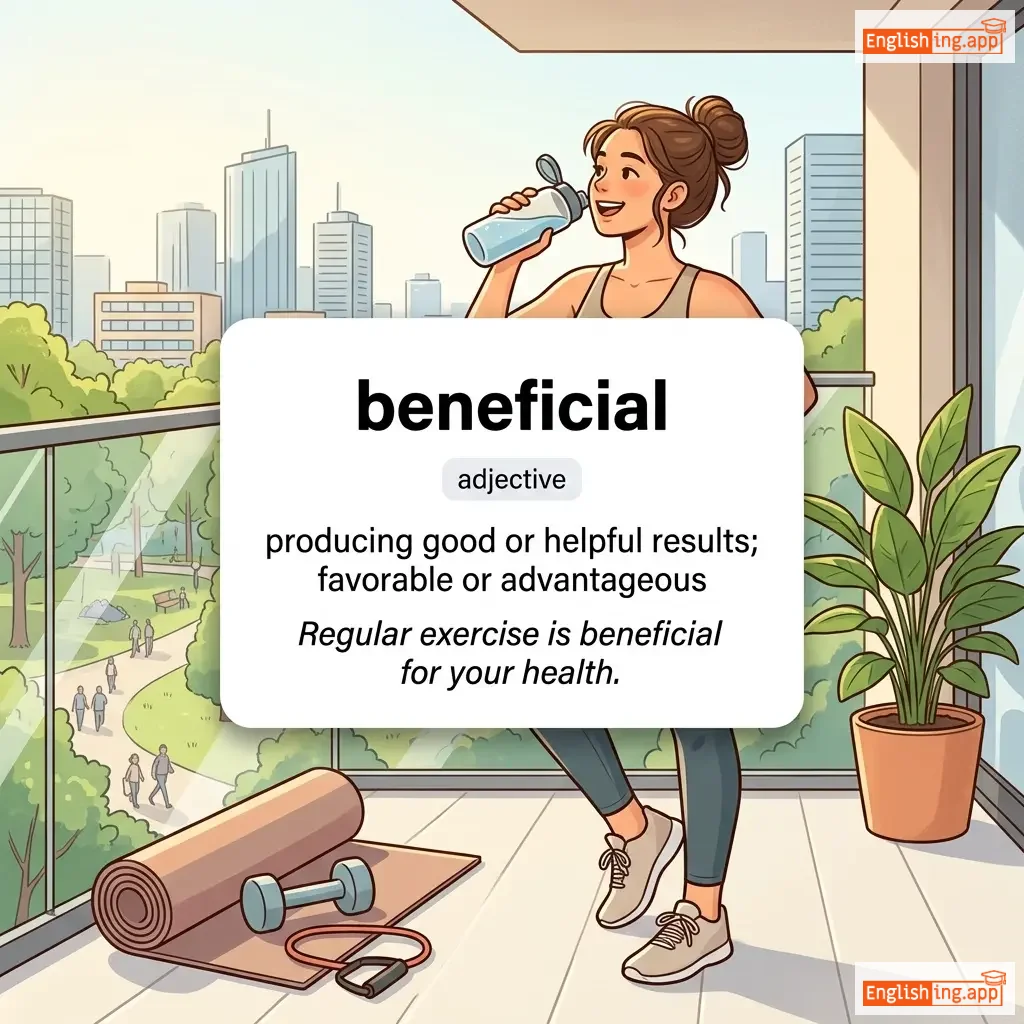
producing good or helpful results; favorable or advantageous
••••••
|
Regular exercise is beneficial for your health. |
定期的な運動はあなたの健康に有益です。
Teikiteki na undou wa anata no kenko ni yūeki desu.
••••••
|
- •••••• | - •••••• | - •••••• |
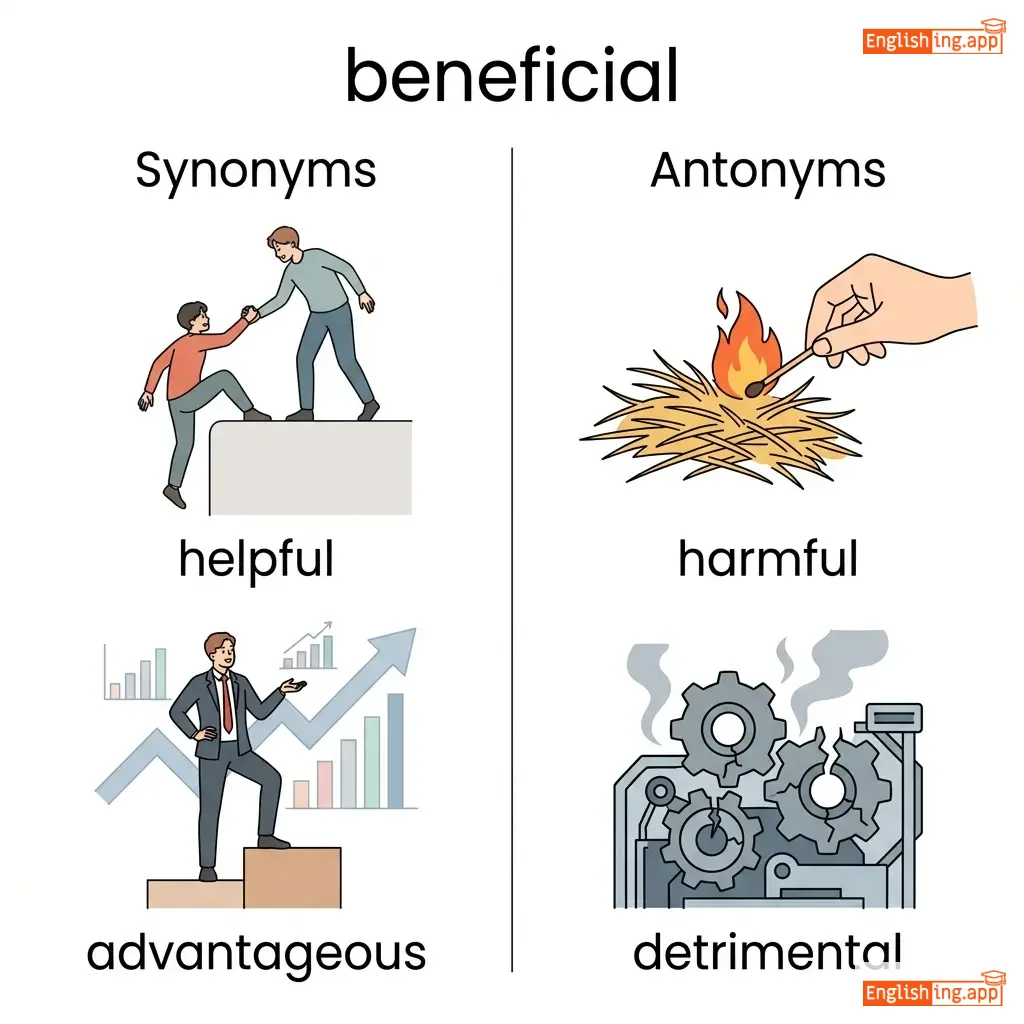
helpful, advantageous, favorable, useful, valuable
••••••
|
harmful, detrimental, disadvantageous
••••••
|
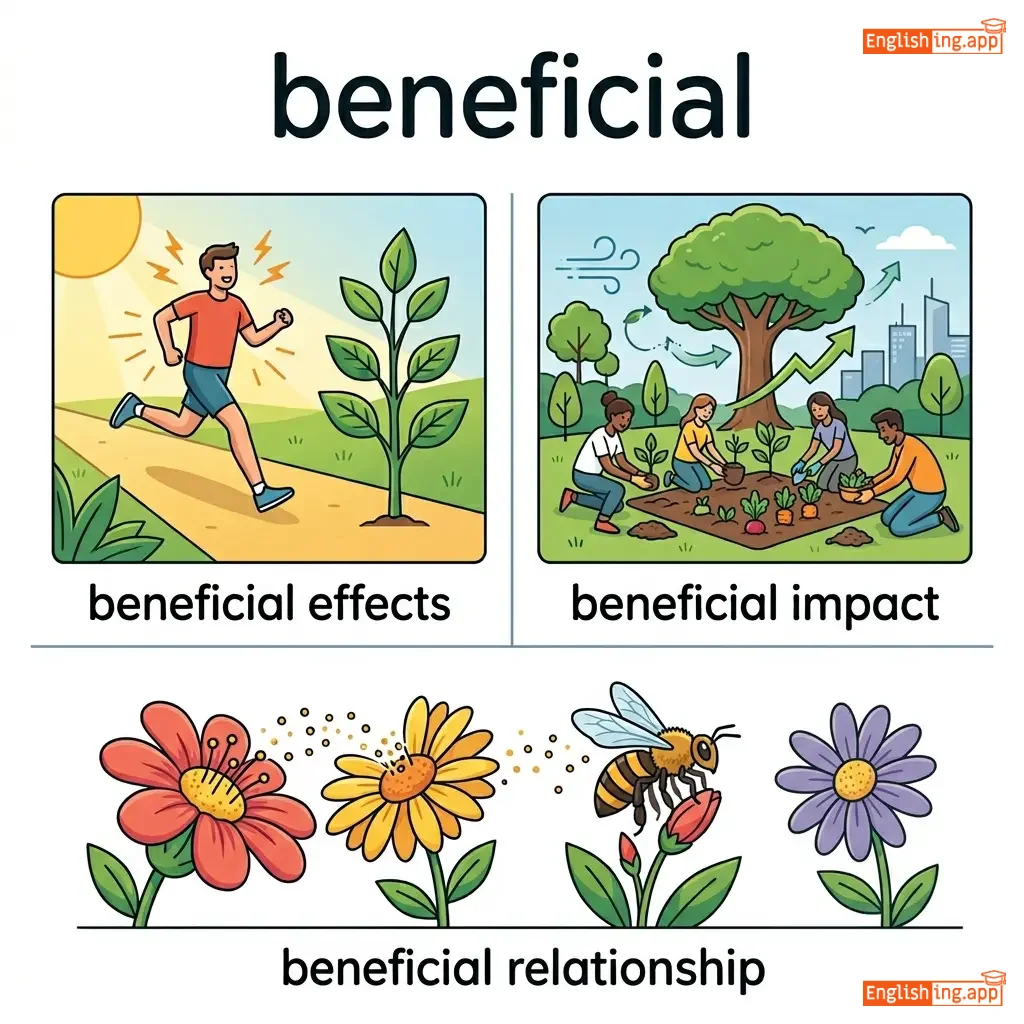
beneficial effects, beneficial impact, beneficial relationship, mutually beneficial
••••••
|
有益なは利益をもたらす、定期的な運動が健康に利益をもたらす
••••••
|
|
#927
🌟
|
/bəˈnɛfɪsənt/
adjective
(ベネフィセント)
••••••
|
|
慈悲深い, 寛大な
jihi fukai, kandaina
••••••
|
- •••••• | - •••••• | - •••••• | - •••••• |
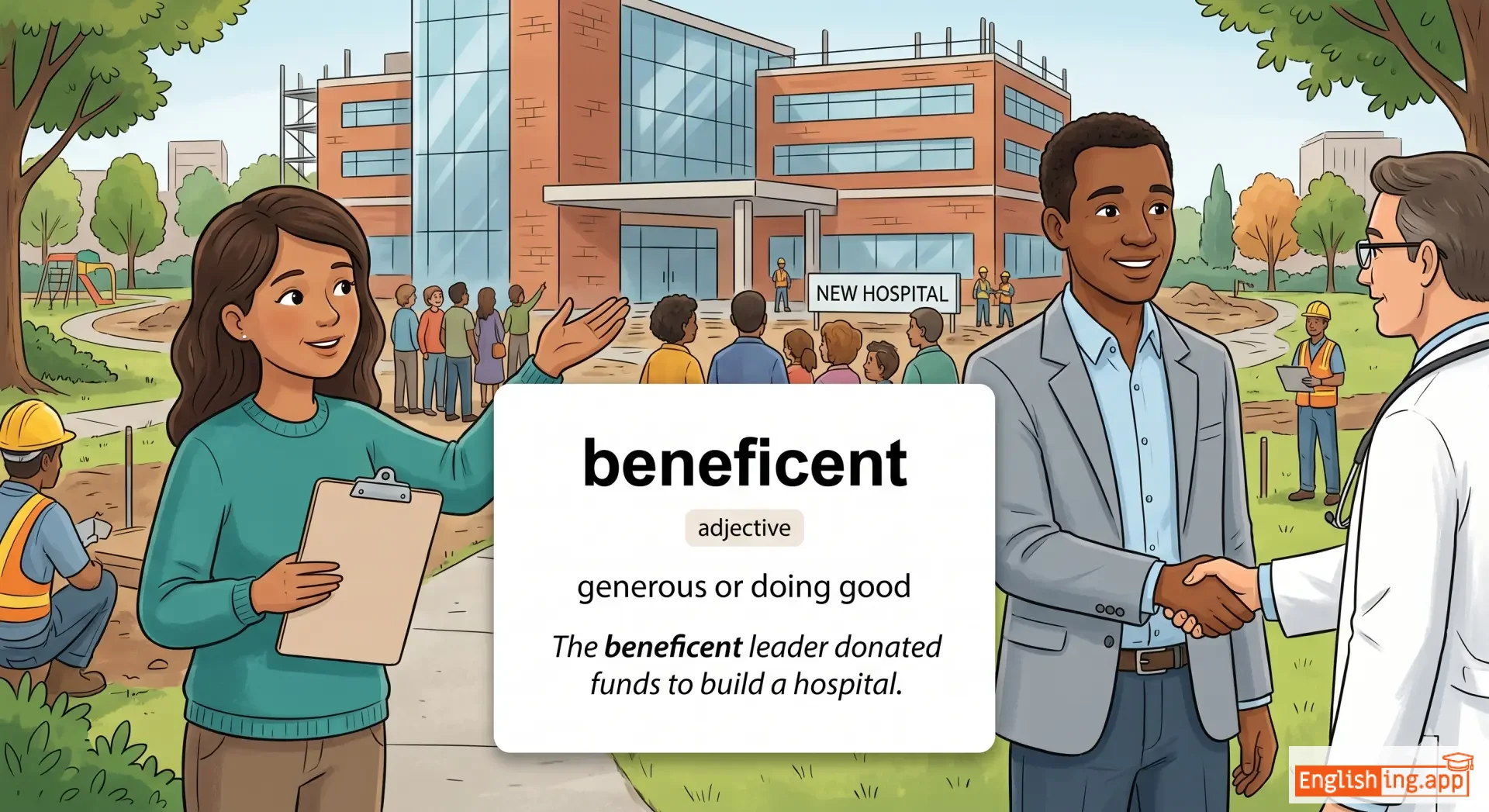
generous or doing good
••••••
|
The beneficent leader donated funds to build a hospital. |
寛大な指導者は病院を建設するために資金を寄付しました。
Kandaina shidōsha wa byōin o kensetsu suru tame ni shikin o kifu shimashita.
••••••
|
- •••••• | - •••••• | - •••••• |
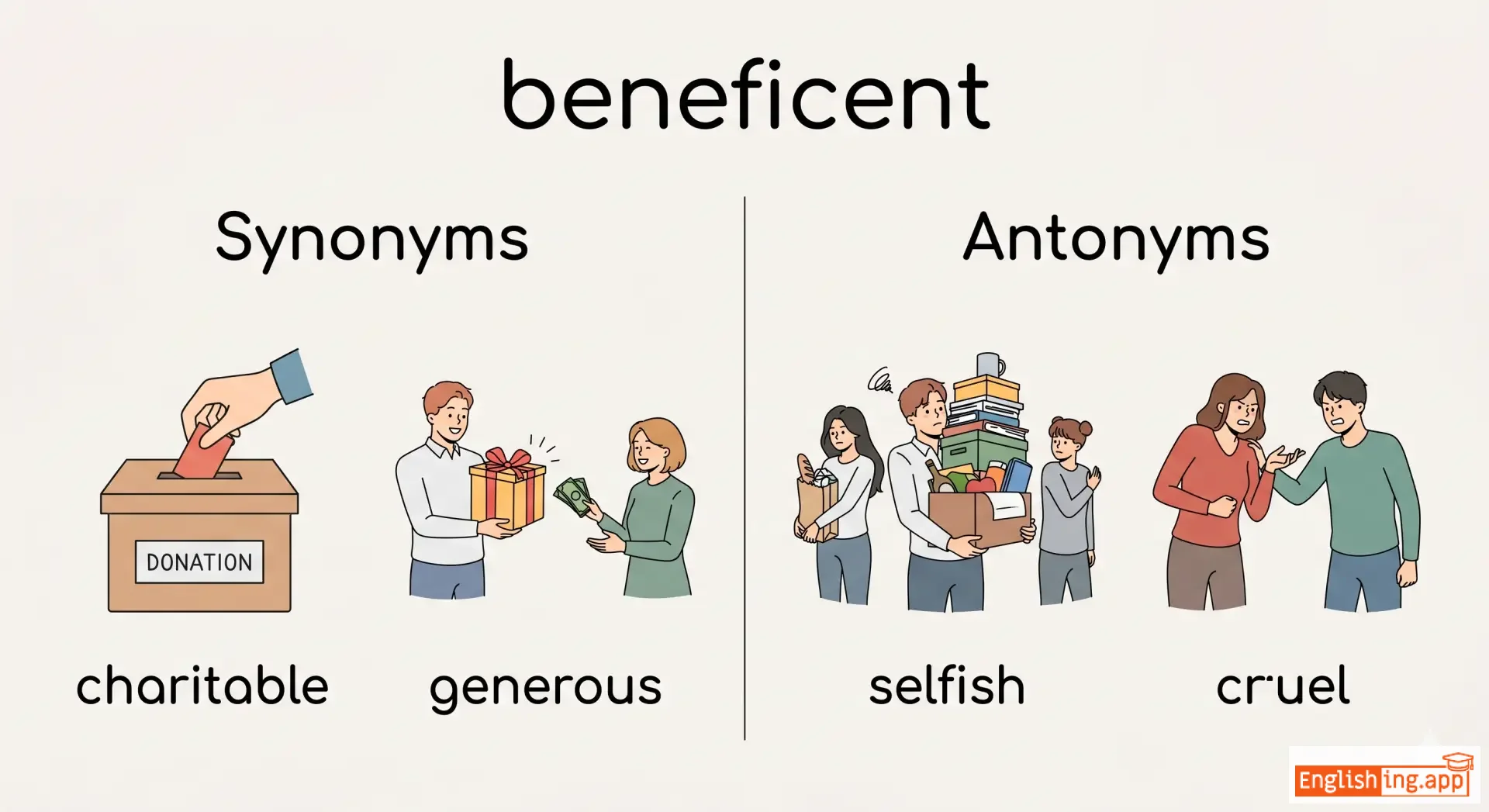
charitable, generous, kind, philanthropic
••••••
|
selfish, cruel
••••••
|
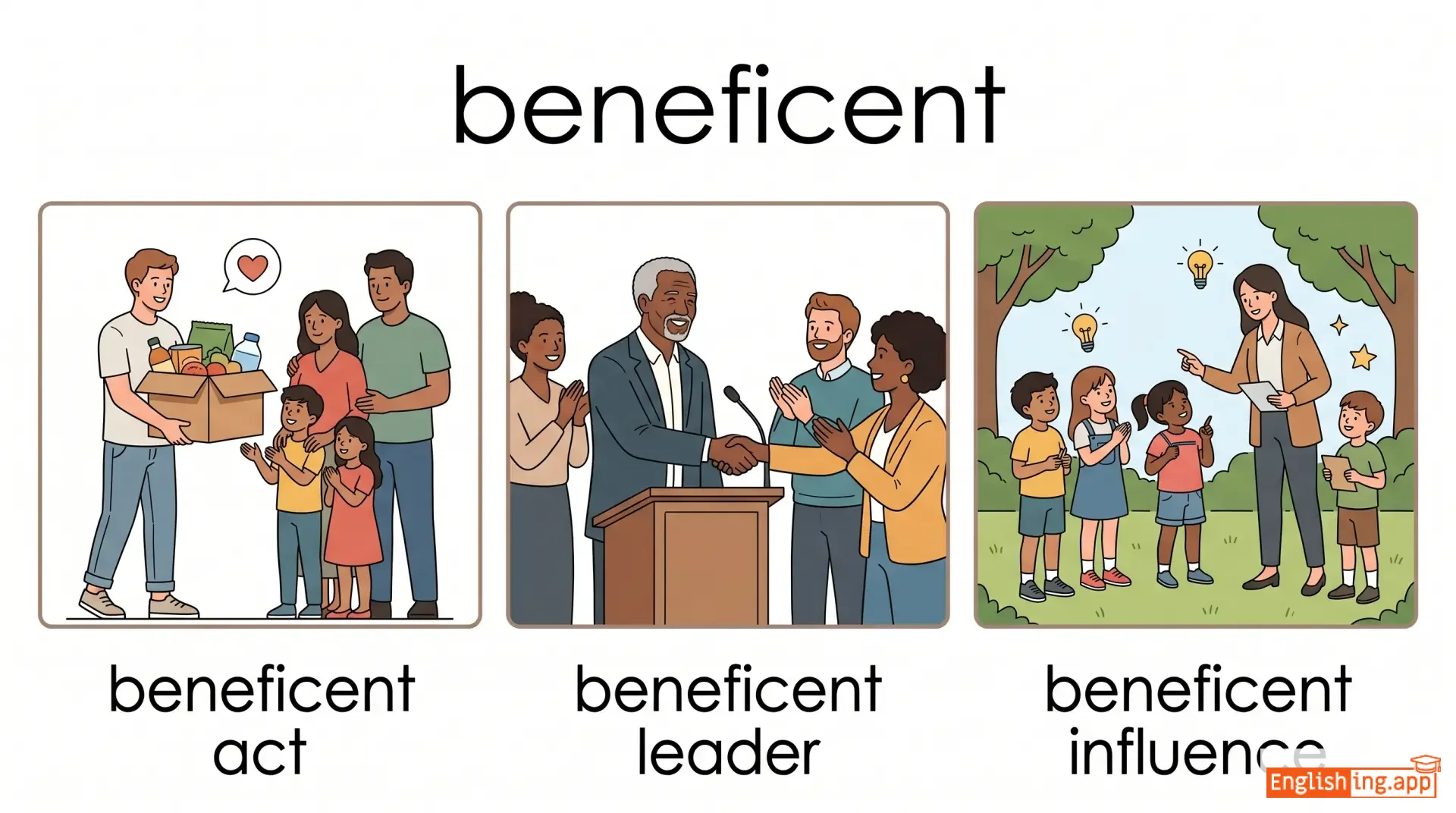
beneficent act, beneficent leader, beneficent influence
••••••
|
Beneficent = bene (良い) + efficient - 良いことを効率的に行う。
••••••
|
|
#928
⛪
|
/ˈbɛnɪfɪs/
noun
(ベネフィス)
••••••
|
- •••••• |
教会職
kyōkai shoku
••••••
|
- •••••• | - •••••• | - •••••• | - •••••• |
a permanent church appointment for which property and income are provided
••••••
|
The bishop appointed him to a wealthy benefice. |
司教は彼を裕福な教会職に任命しました。
Shikyō wa kare o yūfukuna kyōkai shoku ni ninmei shimashita.
••••••
|
- •••••• | - •••••• | - •••••• |
church office, living, endowment, clerical post
••••••
|
lay position, unemployment
••••••
|
hold a benefice, grant a benefice, wealthy benefice
••••••
|
Bene = 良い + office = benefice, 教会の良い職
••••••
|
|
#929
💰
|
/ˈbɛnɪˌfæktər/
noun
(ベネファクター)
••••••
|
- •••••• |
寄付者, 恩人
kifusha, onjin
••••••
|
- •••••• | - •••••• | - •••••• | - •••••• |
a person who gives money or help to a cause or individual
••••••
|
The school received a large donation from an anonymous benefactor. |
学校は匿名の寄付者から大きな寄付を受け取りました。
Gakkō wa tokumei no kifusha kara ōkina kifu o ukemashita.
••••••
|
- •••••• | - •••••• | - •••••• |
supporter, donor, patron, sponsor
••••••
|
opponent, rival
••••••
|
generous benefactor, wealthy benefactor, anonymous benefactor
••••••
|
Bene は良い、factor は行動する人 - 良いことをする人が寄付者です。
••••••
|
|
#930
🙏
|
/ˌbɛnɪˈdɪkʃən/
noun
(ベネディクション)
••••••
|
- •••••• |
祝福
shukufuku
••••••
|
- •••••• | - •••••• | - •••••• | - •••••• |
a blessing or expression of good wishes, often at the end of a religious service
••••••
|
The priest gave a final benediction before the congregation left.
神父は会衆が去る前に最後の祝福を与えました。
••••••
|
神父は会衆が去る前に最後の祝福を与えました。
Shinpu wa kaishū ga saru mae ni saigo no shukufuku o ataemashita.
••••••
|
give a benediction
祝福を与える
••••••
|
to offer a blessing
••••••
|
祝福を与える
shukufuku o ataeru
••••••
|
blessing, prayer, invocation, sanctification
••••••
|
curse, malediction
••••••
|
final benediction, solemn benediction, receive benediction
••••••
|
Beneは良いを意味し、dictionは言葉を意味します。良い言葉=祝福。
••••••
|
Vocabulary Quiz
Test your vocabulary by matching words with their translations or meanings.
Login to take the quiz
Comments (0)
Share your thoughts and join the discussion.
Join the discussion by logging in
Login to CommentNo comments yet
Be the first to share your thoughts!