

翻訳
過去
過去分詞
三人称単数
動名詞
意味
例文
例文の翻訳
同義語
対義語
コロケーション
ニーモニック

Swipe left or right, or use the buttons. Tap image to zoom.
例文の翻訳
単語
Lesson 321Lesson 321 - マスクトグル
|
絵文字
|
単語 | Images | 翻訳 | 過去 | 過去分詞 | 三人称単数 | 動名詞 | 意味 | 例文 | 例文の翻訳 | 表現例 | 表現例の意味 | 表現例の翻訳 | 同義語 | 対義語 | コロケーション | ニーモニック |
|---|---|---|---|---|---|---|---|---|---|---|---|---|---|---|---|---|---|
|
#9600
🌫️
|
/bɪˈfɒɡd/
adjective
(ビフォグド)
••••••
|
- •••••• |
混乱した, ぼんやりした
konran shita, bonyari shita
••••••
|
- •••••• | - •••••• | - •••••• | - •••••• |
Confused or clouded in mind; made unclear like being surrounded by fog.
••••••
|
His mind felt befogged after the long and exhausting meeting. |
長く疲れる会議の後、彼の心は混乱しているように感じた。
Nagaku tsukareru kaigi no ato, kare no kokoro wa konran shite iru you ni kanjita.
••••••
|
- •••••• | - •••••• | - •••••• |
confused, clouded, hazy, unclear, muddled
••••••
|
clear, sharp, focused
••••••
|
befogged mind, befogged memory, befogged vision
••••••
|
霧に包まれたような心を befogged — 混乱している。
••••••
|
|
#9601
🕊️
|
/ˈbleɪmləs/
adjective
(bureimuresu)
••••••
|
- •••••• |
非の打ち所がない
hinouchidoshoraganai
••••••
|
- •••••• | - •••••• | - •••••• | - •••••• |
innocent of wrongdoing; not deserving blame
••••••
|
She remained calm and blameless throughout the investigation.
彼女は調査中ずっと冷静で非の打ち所がなかった。
••••••
|
彼女は調査中ずっと冷静で非の打ち所がなかった。
Kanojo wa chōsa-chū zutto reisei de hinouchidoshoraganakatta.
••••••
|
- •••••• | - •••••• | - •••••• |
innocent, guiltless, faultless, pure
••••••
|
guilty, culpable
••••••
|
blameless life, blameless conduct, appear blameless, blameless victim
••••••
|
Blamelessは非の打ち所がない、悪事を働いていない意味。
••••••
|
|
#9602
👶
|
/bɜːrθ/
noun
(バース)
••••••
|
- •••••• |
誕生
tanshō
••••••
|
- •••••• | - •••••• | - •••••• | - •••••• |
the process of being born; the start of life
••••••
|
The birth of a child brings joy to the whole family. |
子供の誕生は家族全体に喜びをもたらします。
Kodomo no tanshō wa kazoku zentai ni yorokobi o motarashimasu.
••••••
|
give birth |
to have a baby
••••••
|
出産する
shussan suru
••••••
|
delivery, arrival, nativity, beginning
••••••
|
death, end
••••••
|
birth of a child, birth certificate, give birth, birth anniversary
••••••
|
誕生とBirthは同じ意味です、まるで誕生日ケーキのように!
••••••
|
|
#9603
🪢
|
/baɪnd/
verb
(baind)
••••••
|
|
結びつける
musubitsukeru
••••••
|
bound
baund
••••••
|
bound
baund
••••••
|
binds
bainds
••••••
|
binding
bainding
••••••
|
to tie or fasten tightly; to unite or restrict
••••••
|
The contract will bind both parties to the agreement.
契約は両方の当事者を契約に縛ります。
••••••
|
契約は両方の当事者を契約に縛ります。
Keiyaku wa ryōhō no tōjisha o keiyaku ni shibarimasu.
••••••
|
in a bind
困った状況
••••••
|
in a difficult situation
••••••
|
困った状況
komatta joukyou
••••••
|
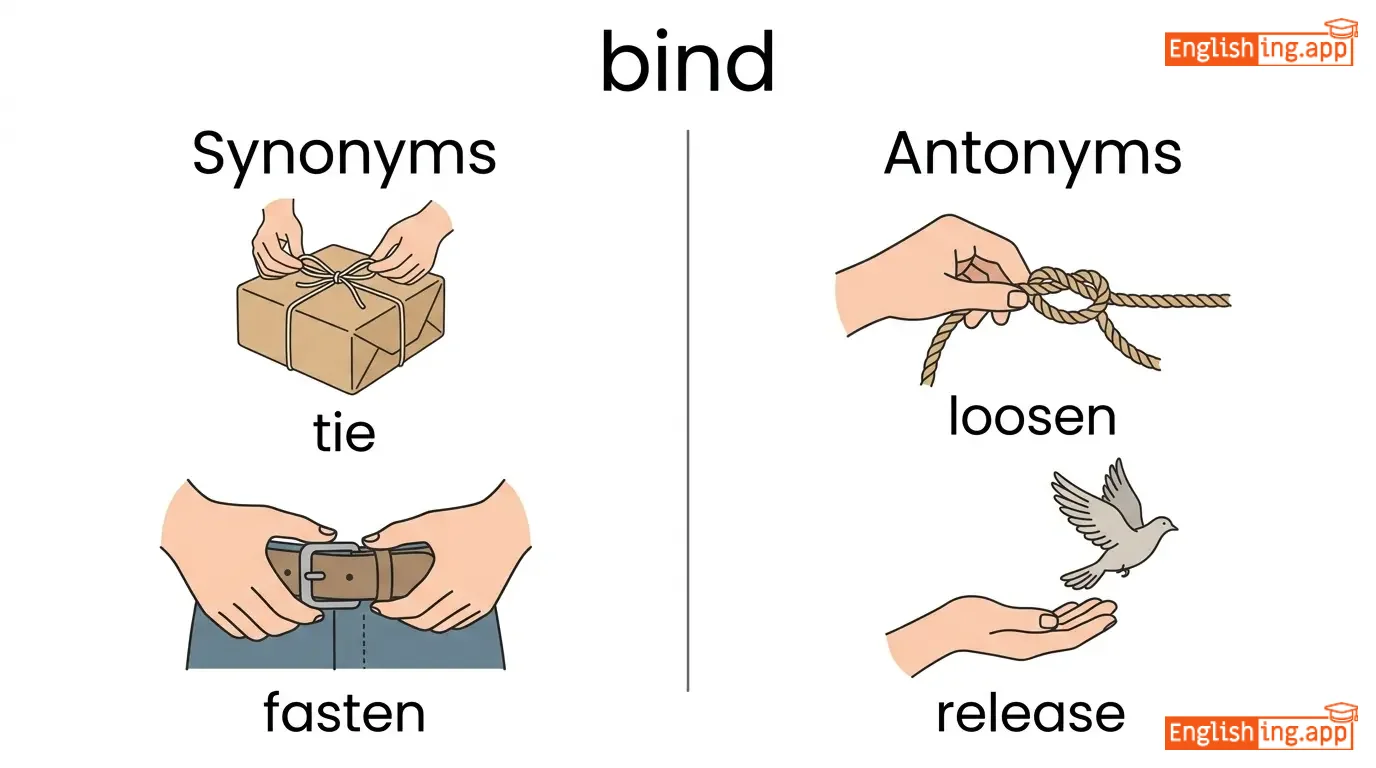
tie, fasten, connect, unite, secure
••••••
|
loosen, release, free
••••••
|
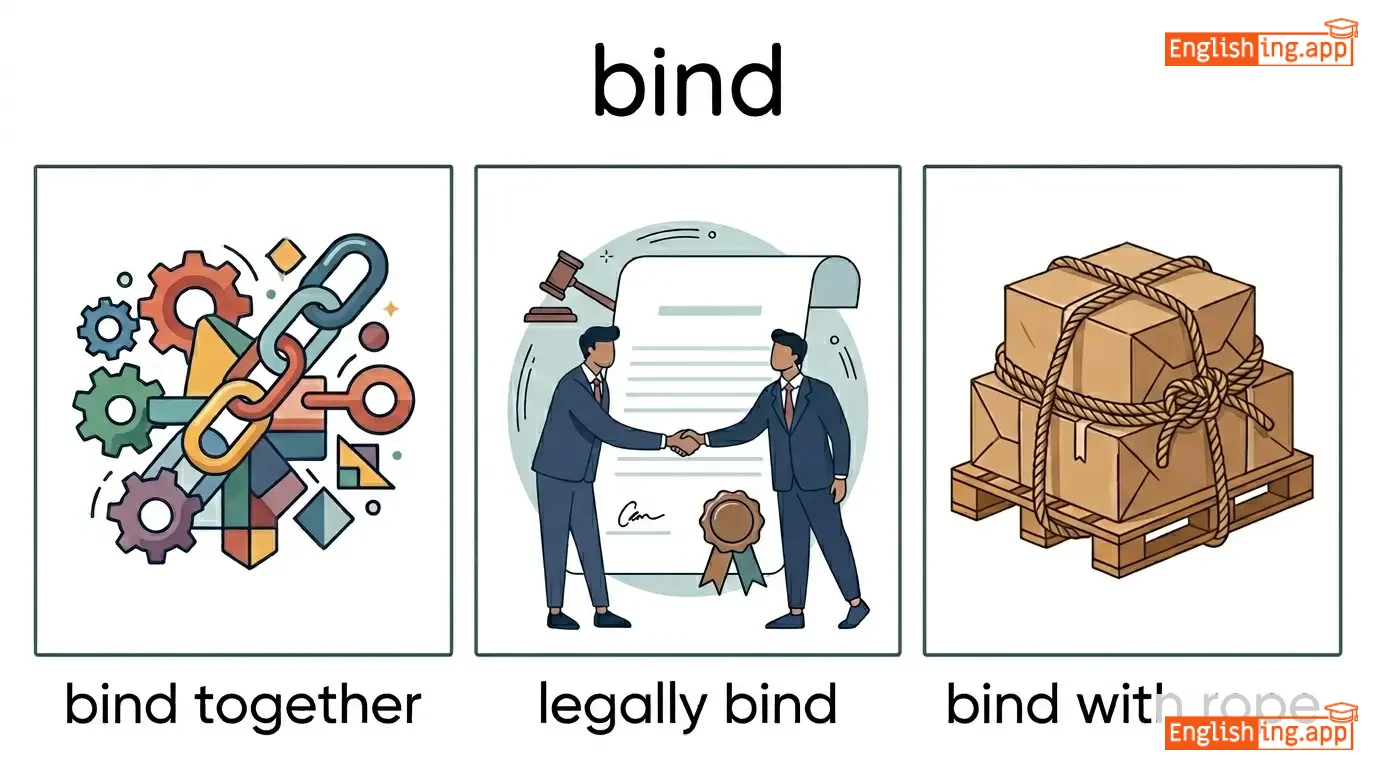
bind together, legally bind, bind with rope, bind tightly
••••••
|
結びつけるは物を結び合わせること、物を結ぶように覚えましょう。
••••••
|
|
#9604
📏
|
/bɪɡ/
adjective
(ビッグ)
••••••
|
- •••••• |
大きい
ookii
••••••
|
- •••••• | - •••••• | - •••••• | - •••••• |
large in size, extent, or importance
••••••
|
They moved into a big house with plenty of space. |
彼らは広いスペースのある大きな家に引っ越しました。
Karera wa hiroi supēsu no aru ōkina ie ni hikkoshimashita.
••••••
|
think big |
to have ambitious or grand ideas
••••••
|
大きく考える
ookiku kangaeru
••••••
|
large, huge, massive, enormous, vast
••••••
|
small, tiny, little
••••••
|
big house, big city, big problem, big chance
••••••
|
Big は日本語で大きいという意味です – Big = Ookii.
••••••
|
|
#9605
✨
|
/bɪˈwɪtʃɪŋ/
adjective
(ビウィッチング)
••••••
|
- •••••• |
魅惑的
miwaku-teki
••••••
|
- •••••• | - •••••• | - •••••• | - •••••• |
charming, enchanting, or captivating in a magical or irresistible way
••••••
|
She wore a bewitching smile that captivated everyone in the room. |
彼女は魅惑的な笑顔を見せ、部屋の中の全員を魅了しました。
Kanojo wa miwaku-teki na egao o misete, heya no naka no zen'in o miryō shimashita.
••••••
|
- •••••• | - •••••• | - •••••• |
enchanting, captivating, alluring, mesmerizing, charming
••••••
|
repulsive, unattractive, dull
••••••
|
bewitching smile, bewitching eyes, bewitching charm, bewitching beauty
••••••
|
Bewitching は魅惑的な笑顔で、すべての目を引き付けること。
••••••
|
|
#9606
🏆
|
/bɛst/
adjective
(ベスト)
••••••
|
- •••••• |
最高
saikou
••••••
|
- •••••• | - •••••• | - •••••• | - •••••• |
Of the highest quality, excellence, or standing.
••••••
|
She is the best student in the class. |
彼女はクラスで最高の生徒です。
Kanojo wa kurasu de saikou no seito desu.
••••••
|
make the best of |
To do as well as possible in a difficult situation.
••••••
|
最善を尽くす
saizen o tsukusu
••••••
|
finest, greatest, top, leading, supreme
••••••
|
worst, poorest, inferior
••••••
|
best friend, best time, best practice
••••••
|
Bestは最高!最高の成果を出すために、最善を尽くそう!
••••••
|
|
#9607
🌀
|
/ˈbɛndi/
adjective
(ベンディ)
••••••
|
- •••••• |
柔軟な
jūnan na
••••••
|
- •••••• | - •••••• | - •••••• | - •••••• |
Easily curved or flexible.
••••••
|
The bendy straw made it easier to drink from the cup.
曲がるストローでカップから飲むのが楽になった。
••••••
|
曲がるストローでカップから飲むのが楽になった。
Magaru sutōrō de kappu kara nomu no ga raku ni natta.
••••••
|
- •••••• | - •••••• | - •••••• |
flexible, pliable, elastic, supple
••••••
|
rigid, stiff, inflexible
••••••
|
bendy straw, bendy road, bendy ruler
••••••
|
Bendy は柔軟な意味です – Bend + y = 簡単に曲げられる。
••••••
|
|
#9608
⬇️
|
/bɪˈloʊ/
preposition
(biro)
••••••
|
- •••••• |
下
shita
••••••
|
- •••••• | - •••••• | - •••••• | - •••••• |
At a lower level or position than something else.
••••••
|
The basement is below the ground floor. |
地下室は一階の下にあります。
Chikashitsu wa ikkai no shita ni arimasu.
••••••
|
below the belt |
Unfair or cruel remark or action.
••••••
|
ベルトの下
Beruto no shita
••••••
|
under, beneath, underneath, lower
••••••
|
above, over, higher
••••••
|
below average, below the surface, below zero
••••••
|
Belowは下を意味します。何かがあなたの下にあると思い描いてください。
••••••
|
|
#9609
🤰
|
/ˈbɛli/
noun
(ベリー)
••••••
|
- •••••• |
お腹
onaka
••••••
|
- •••••• | - •••••• | - •••••• | - •••••• |
The front part of the human body below the chest; stomach or abdomen.
••••••
|
He rubbed his belly after the big meal. |
彼は大きな食事の後、お腹を擦った。
Kare wa ōkina shokuji no ato, onaka o sutta.
••••••
|
belly laugh |
A loud, hearty laugh.
••••••
|
大笑い
ōwarai
••••••
|
stomach, abdomen, tummy, gut
••••••
|
back, spine
••••••
|
big belly, belly fat, belly button
••••••
|
Belly はお腹を意味します。食べ過ぎるとお腹 (belly) が膨らみます。
••••••
|
|
#9610
✅
|
/bɪˈliːvəbl̩/
adjective
(ビリーバブル)
••••••
|
- •••••• |
信じられる
shinjirareru
••••••
|
- •••••• | - •••••• | - •••••• | - •••••• |
Able to be trusted or accepted as true or reasonable.
••••••
|
Her story was so detailed that it sounded believable.
彼女の話は非常に詳細で、信じられるように聞こえました。
••••••
|
彼女の話は非常に詳細で、信じられるように聞こえました。
Kanojo no hanashi wa hijō ni shōsai de, shinjiraru yō ni kikoemashita.
••••••
|
- •••••• | - •••••• | - •••••• |
credible, plausible, convincing, reliable, trustworthy
••••••
|
unbelievable, doubtful, unconvincing
••••••
|
believable story, believable excuse, make it believable
••••••
|
信じられるものは‘信じる’ことができる – 本当に信じられること!
••••••
|
|
#9611
🙂
|
/bɪˈheɪv/
verb
(ビヘイヴ)
••••••
|
|
振る舞う
furumau
••••••
|
behaved
ビヘイヴド
••••••
|
behaved
ビヘイヴド
••••••
|
behaves
ビヘイヴス
••••••
|
behaving
ビヘイヴィング
••••••
|
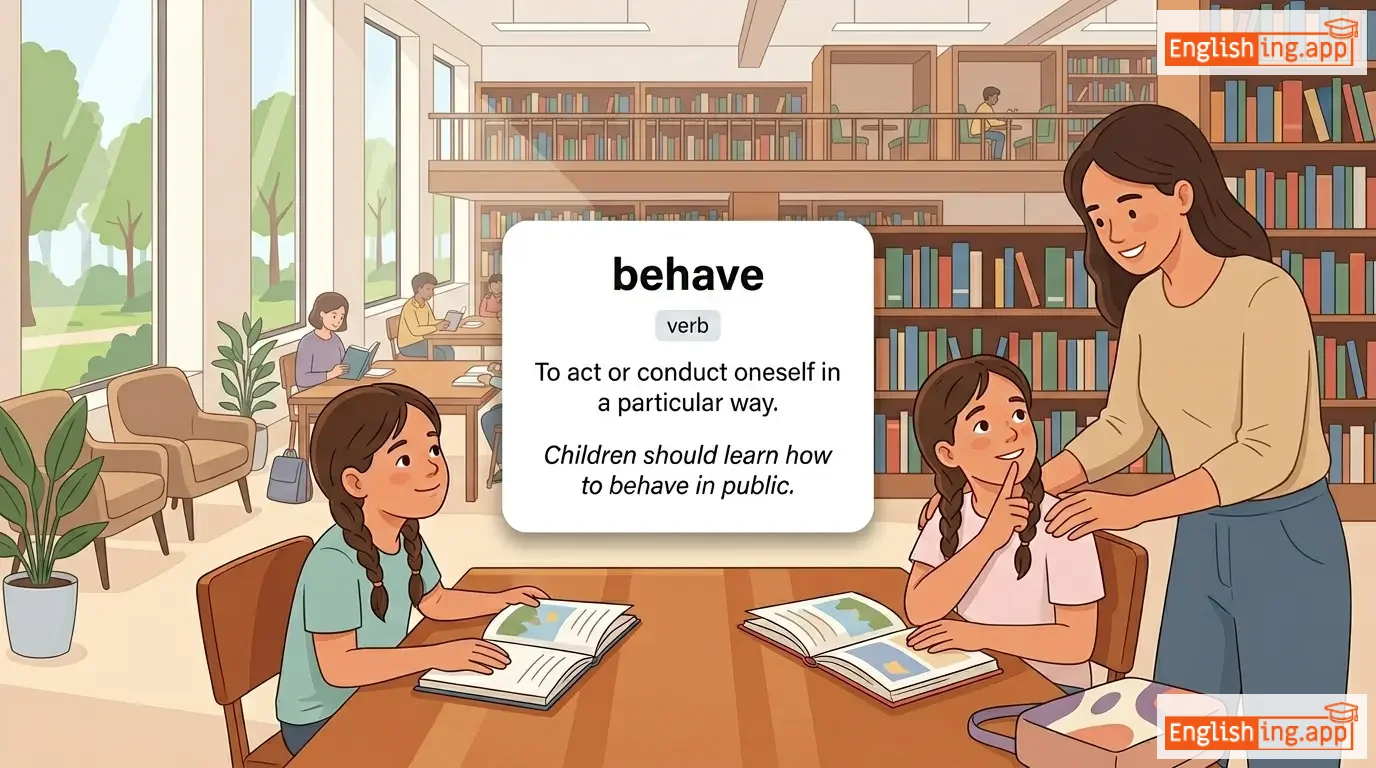
To act or conduct oneself in a particular way.
••••••
|
Children should learn how to behave in public.
子供たちは公共の場でどう振る舞うかを学ぶべきです。
••••••
|
子供たちは公共の場でどう振る舞うかを学ぶべきです。
kodomotachi wa kōkyō no ba de dō furumau ka o manabu beki desu.
••••••
|
behave yourself
自分を振る舞う
••••••
|
act properly; control your actions
••••••
|
正しく振る舞う
tadashiku furumau
••••••
|
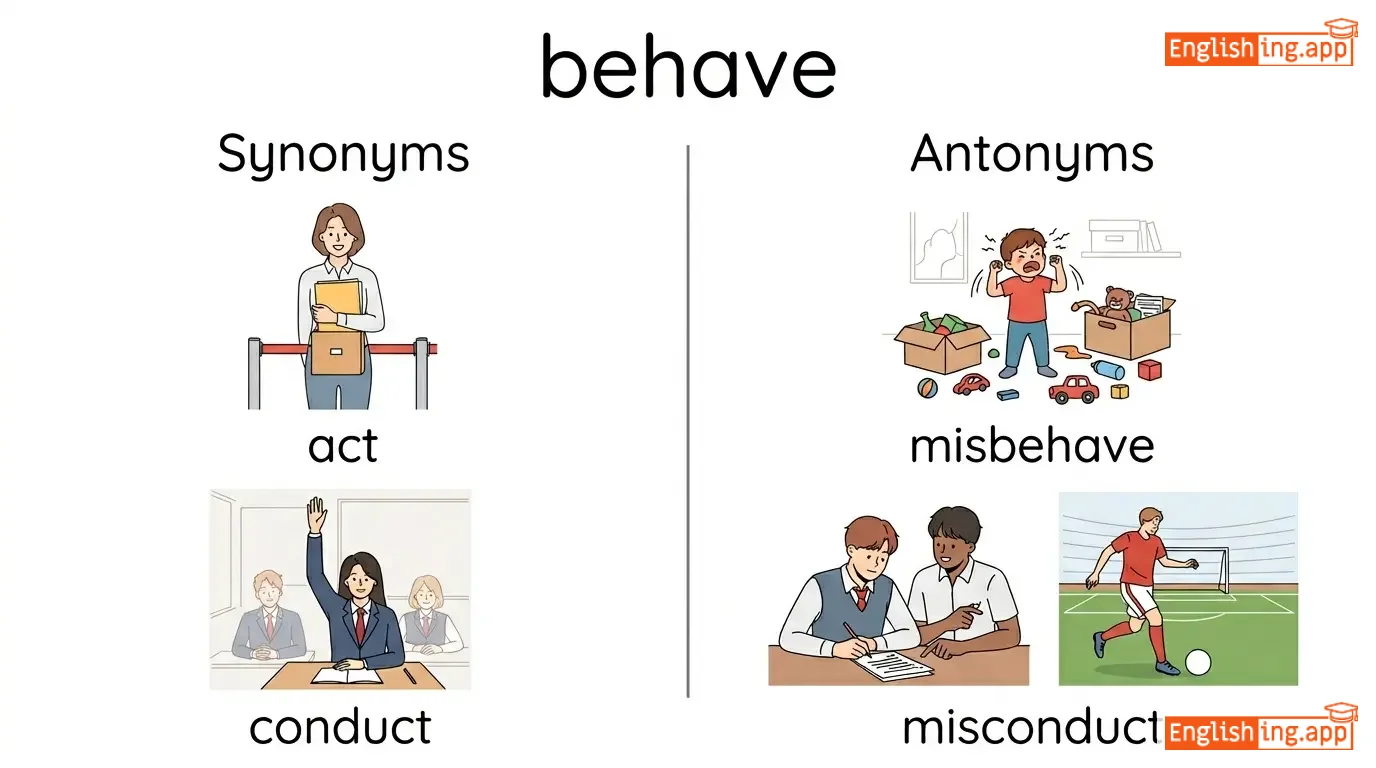
act, conduct, perform, operate
••••••
|
misbehave, misconduct
••••••
|
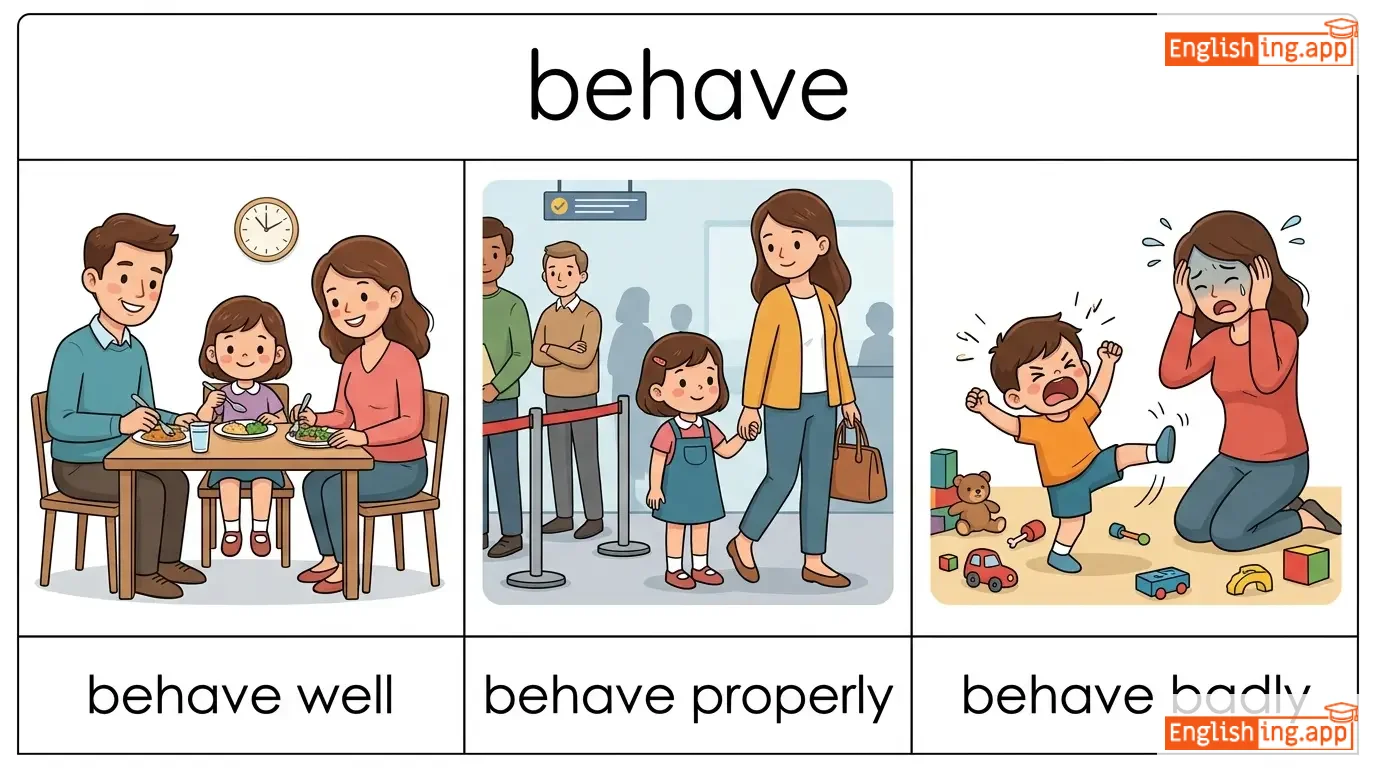
behave well, behave properly, behave badly
••••••
|
BEHAVE は正しく振る舞うという意味です — もし振る舞わなければ misbehave になります。
••••••
|
|
#9612
🌅
|
/bɪˈɡɪnɪŋ/
noun
(ビギニング)
••••••
|
- •••••• |
始まり
hajimari
••••••
|
- •••••• | - •••••• | - •••••• | - •••••• |
The start or first part of something.
••••••
|
The beginning of the story was very interesting. |
物語の始まりはとても興味深かった。
Monogatari no hajimari wa totemo kyōmibukatta.
••••••
|
new beginning |
a fresh start
••••••
|
新しい始まり
atarashī hajimari
••••••
|
start, commencement, onset, opening
••••••
|
end, conclusion
••••••
|
at the beginning, beginning of story, new beginning
••••••
|
BEGINNING は始まりを意味する — 朝日 🌅 は新しい始まり。
••••••
|
|
#9613
🚀
|
/bɪˈɡɪn/
verb
(ビギン)
••••••
|
|
始める
hajimeru
••••••
|
began
ビゲン
••••••
|
begun
ビガン
••••••
|
begins
ビギンズ
••••••
|
beginning
ビギニング
••••••
|
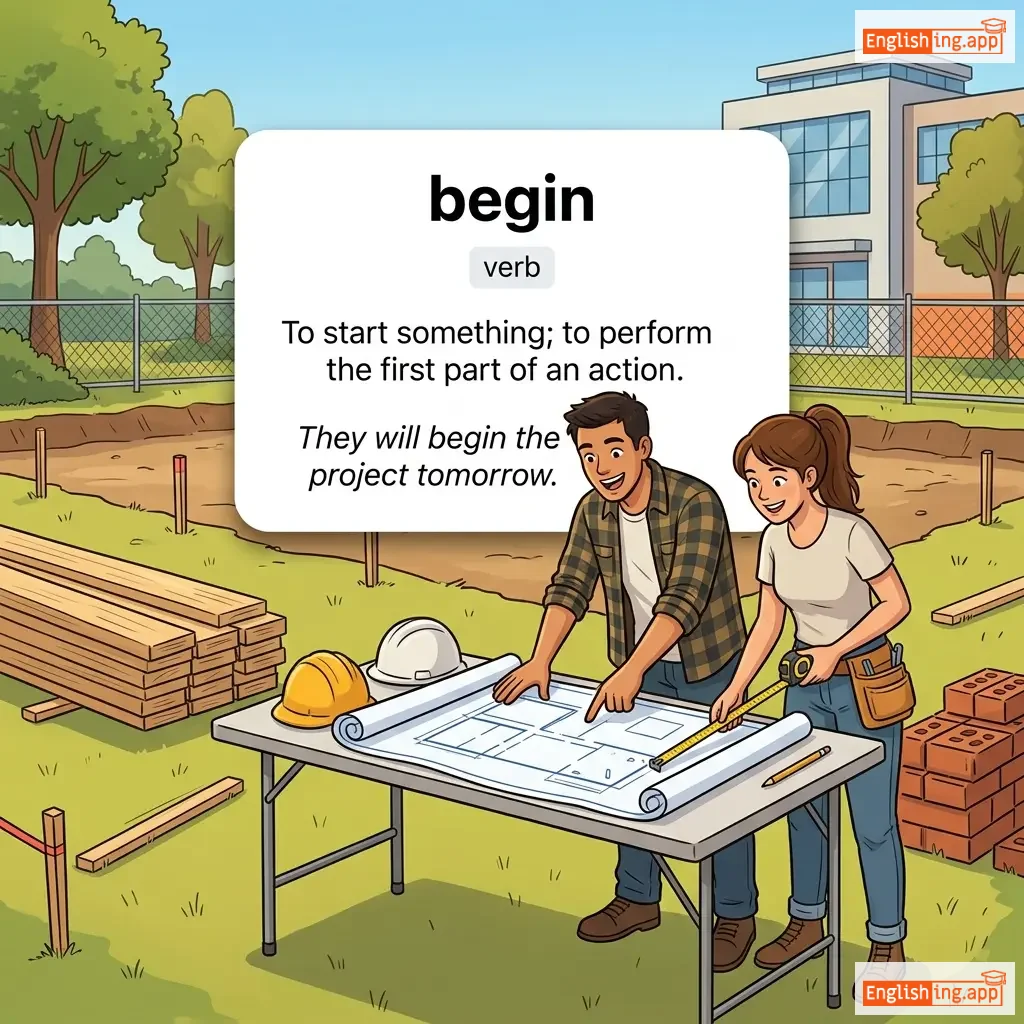
To start something; to perform the first part of an action.
••••••
|
They will begin the project tomorrow.
彼らは明日プロジェクトを開始する予定です。
••••••
|
彼らは明日プロジェクトを開始する予定です。
Karera wa ashita purojekuto o kaishi suru yotei desu.
••••••
|
to begin with
まず最初に
••••••
|
as the first consideration
••••••
|
まず最初に
Mazu saisho ni
••••••
|
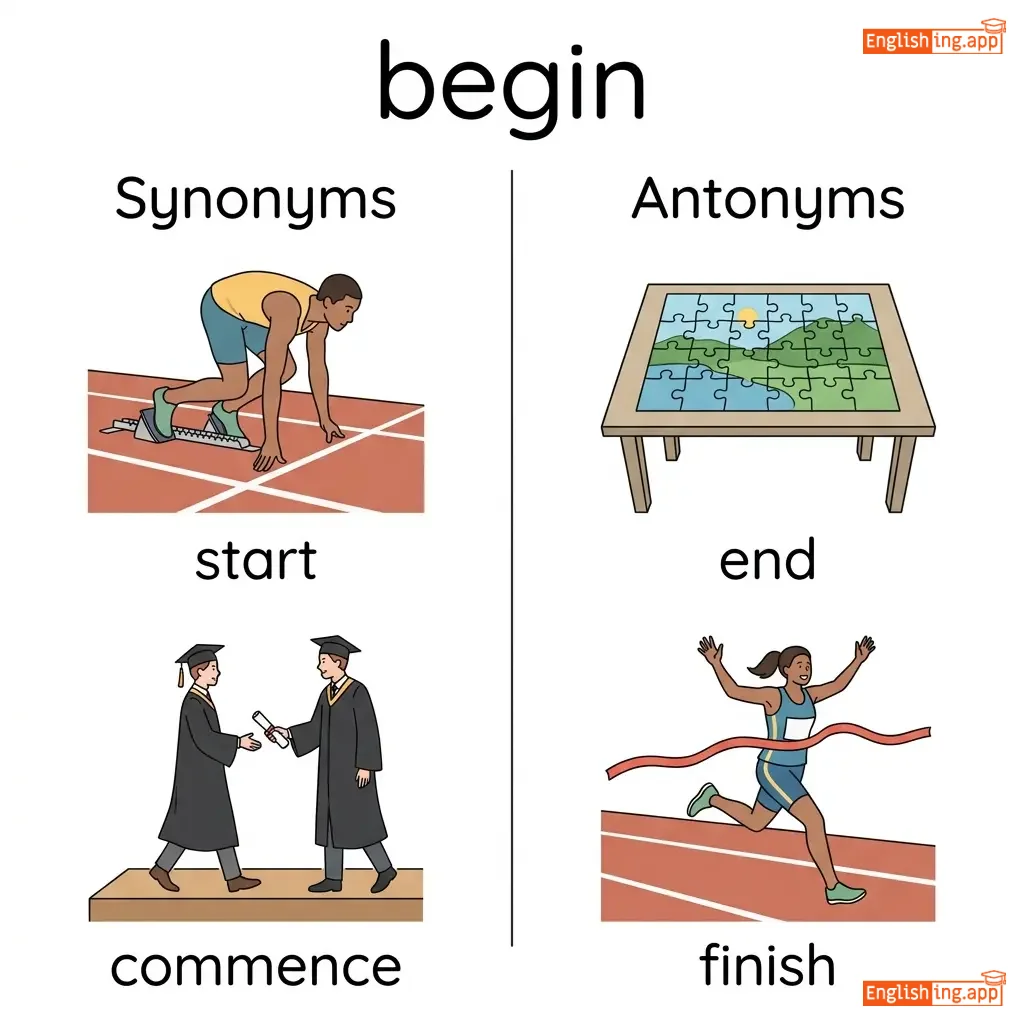
start, commence, initiate, launch
••••••
|
end, finish, conclude
••••••
|
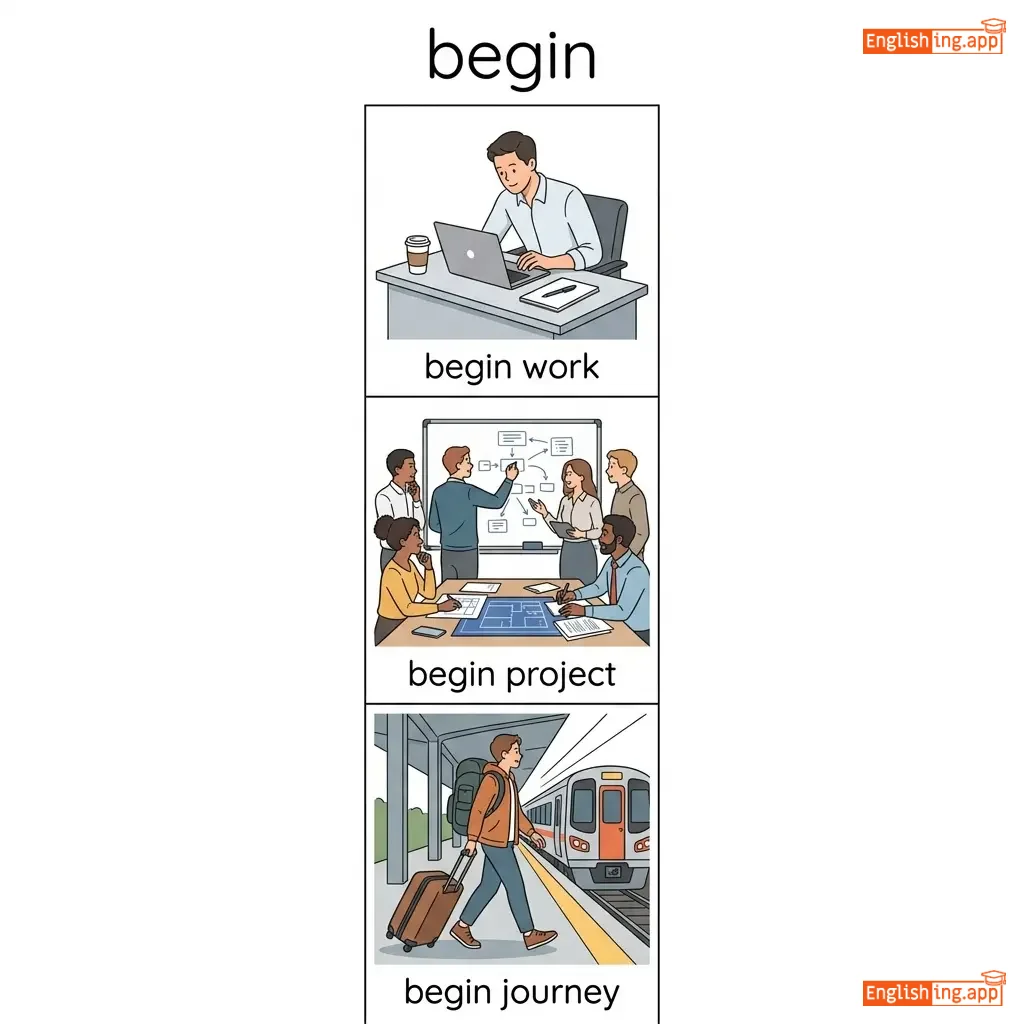
begin work, begin project, begin journey, begin process
••••••
|
始める=開始。‘始める’は、行動を始めるという意味です!
••••••
|
|
#9614
⏰
|
/bɪˈfɔːr/
preposition/adverb/conjunction
(ビフォー)
••••••
|
- •••••• |
前に
mae ni
••••••
|
- •••••• | - •••••• | - •••••• | - •••••• |
At an earlier time; in front of in order or place.
••••••
|
She arrived before the meeting started. |
彼女は会議が始まる前に到着した。
Kanojo wa kaigi ga hajimaru mae ni tōchaku shita.
••••••
|
before long |
in a short time
••••••
|
すぐに
sugu ni
••••••
|
earlier, ahead, prior, in front
••••••
|
after, behind
••••••
|
before dawn, before time, before long, before the meeting
••••••
|
BEFOREは前に — いつも前もって準備しておこう。
••••••
|
|
#9615
😍
|
/əˈtræktɪv/
adjective
(アトラクティブ)
••••••
|
- •••••• |
魅力的
miryokuteki
••••••
|
- •••••• | - •••••• | - •••••• | - •••••• |
pleasing or appealing to the senses or mind; having qualities that arouse interest or admiration
••••••
|
The attractive design of the house caught everyone's attention. |
その家の魅力的なデザインは、誰もが注目することを引きました。
Sono ie no miryokuteki na dezain wa, daremo ga chūmoku suru koto o hikimashita.
••••••
|
look attractive |
to appear pleasing or appealing
••••••
|
魅力的に見える
miryokuteki ni mieru
••••••
|
appealing, charming, pretty, engaging, lovely
••••••
|
unattractive, ugly, unpleasant
••••••
|
attractive offer, attractive price, attractive personality, attractive appearance
••••••
|
Attractiveのように、何かがあなたを引きつけ、心地よいものにします。
••••••
|
|
#9616
🪨
|
/ˈbɛd.rɒk/
noun
(ベッドロック)
••••••
|
- •••••• |
基盤
kiban
••••••
|
- •••••• | - •••••• | - •••••• | - •••••• |
the solid rock layer beneath the soil; the fundamental basis of something
••••••
|
Trust is the bedrock of a healthy relationship. |
信頼は健康な関係の基盤です。
Shinrai wa kenkou na kankei no kiban desu.
••••••
|
- •••••• | - •••••• | - •••••• |
foundation, basis, core, groundwork
••••••
|
surface, facade
••••••
|
bedrock principle, bedrock of society, bedrock values
••••••
|
Bed + rock = ベッドの下の岩、基盤を示す
••••••
|
|
#9617
🌸
|
/ˈbjuː.tɪ.fəl/
adjective
(ビューティフル)
••••••
|
- •••••• |
美しい
utsukushii
••••••
|
- •••••• | - •••••• | - •••••• | - •••••• |
pleasing to the senses or mind; very attractive
••••••
|
The garden looked beautiful in the morning sunlight. |
庭は朝の陽光の中で美しく見えました。
Niwa wa asa no yōkō no naka de utsukushiku miemashita.
••••••
|
beautiful inside and out |
describing someone as both physically attractive and kind-hearted
••••••
|
内外美しい
naigai utsukushii
••••••
|
lovely, pretty, gorgeous, stunning, attractive
••••••
|
ugly, unattractive
••••••
|
beautiful view, beautiful smile, beautiful day
••••••
|
Beautiful = 美しい = 魅力的
••••••
|
|
#9618
🥁
|
/biːt/
verb
(ビート)
••••••
|
|
打つ, 打ち勝つ
utsu, uchi katsu
••••••
|
beat
ビート
••••••
|
beaten
ビートン
••••••
|
beats
ビーツ
••••••
|
beating
ビーティング
••••••
|
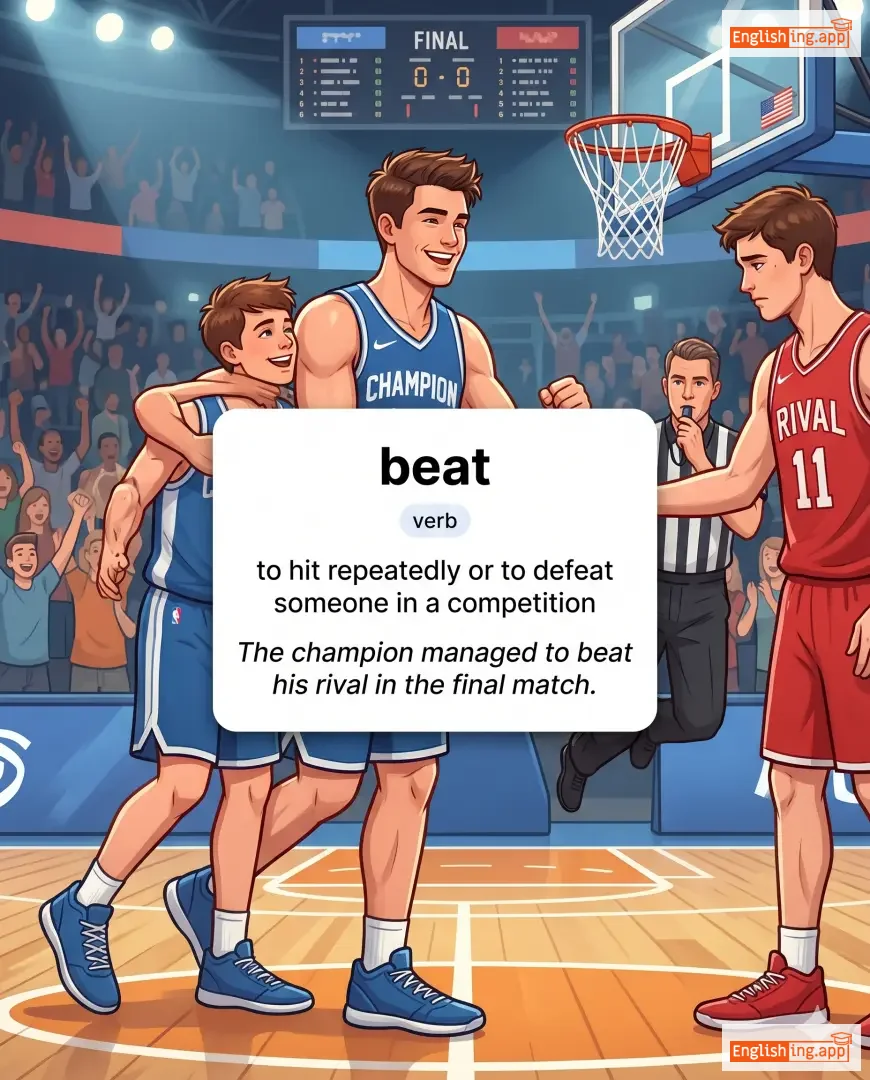
to hit repeatedly or to defeat someone in a competition
••••••
|
The champion managed to beat his rival in the final match.
チャンピオンは決勝戦でライバルを打ち負かすことができました。
••••••
|
チャンピオンは決勝戦でライバルを打ち負かすことができました。
Champiyon wa kesshōsen de raibaru o uchi makasu koto ga dekimashita.
••••••
|
beat around the bush
森の中で話を避ける
••••••
|
to avoid talking about the main point
••••••
|
重要な点を避ける
jūyōna ten o sakeru
••••••
|
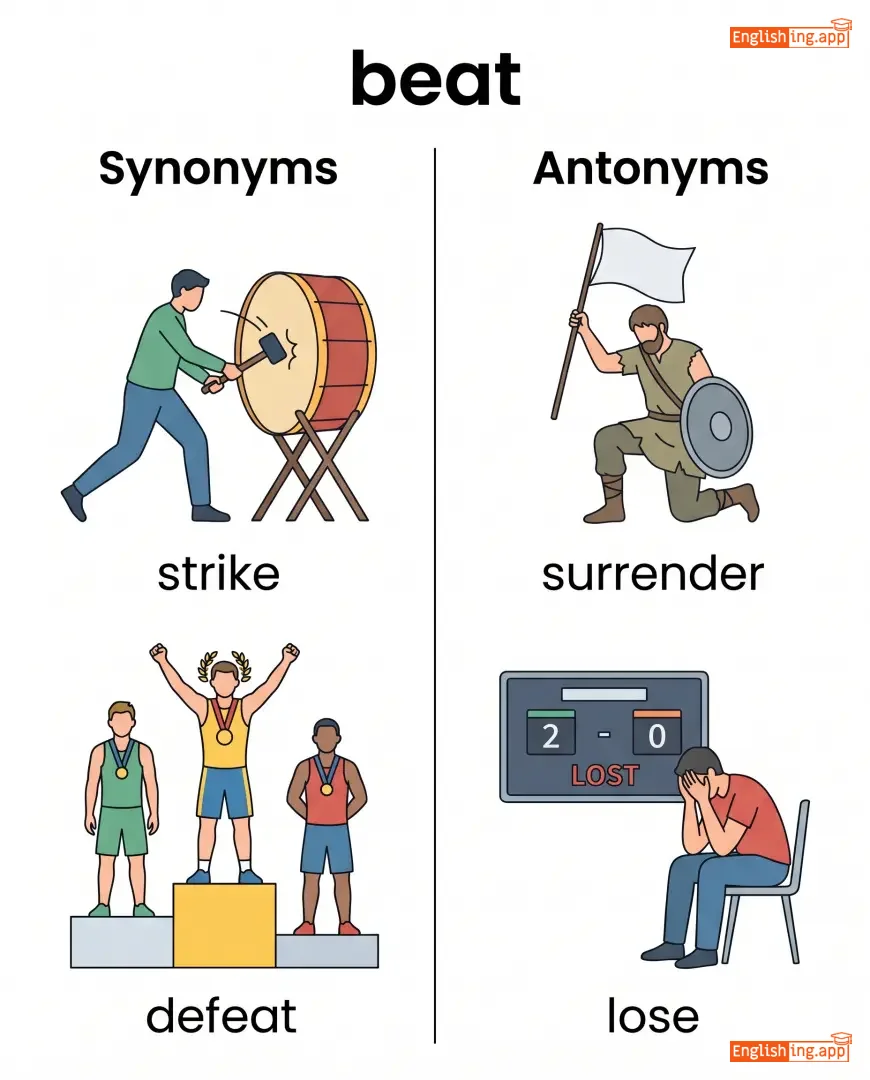
strike, defeat, thrash, overcome
••••••
|
surrender, lose
••••••
|
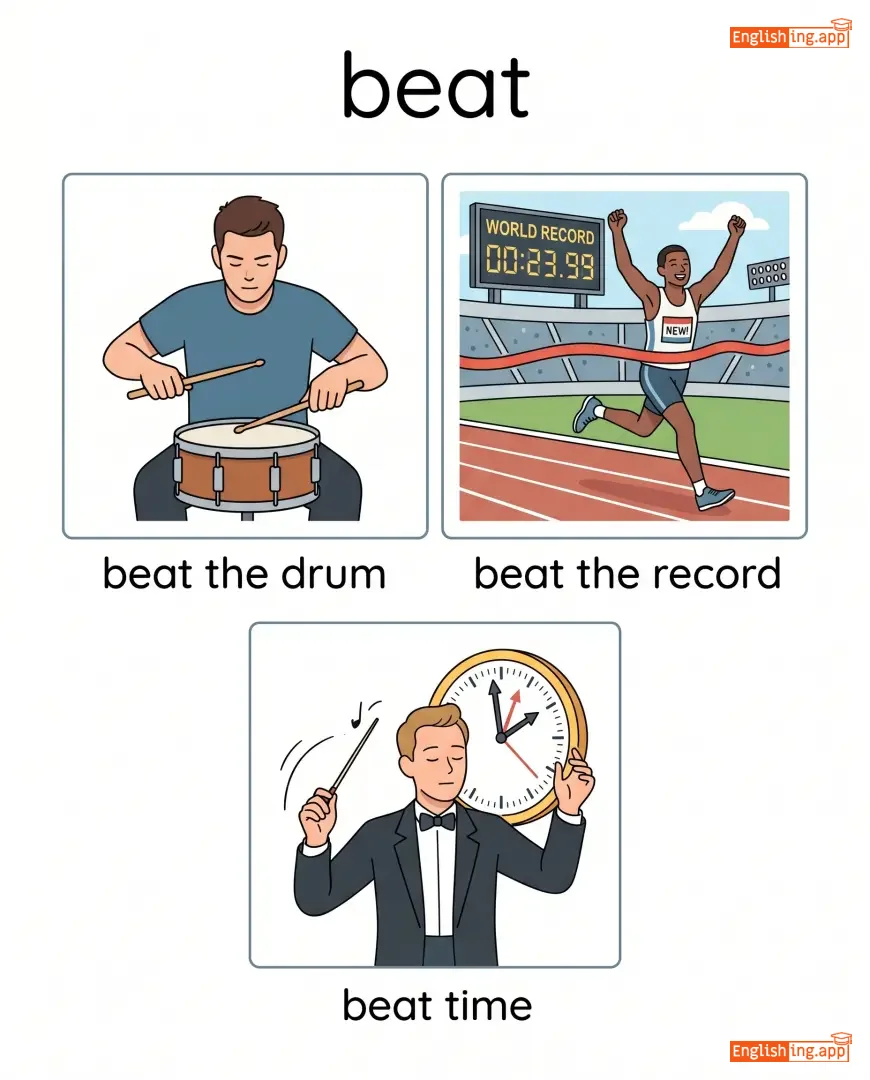
beat the drum, beat the record, beat time
••••••
|
ビートは打つだけでなく、競技で勝つことも意味します。
••••••
|
|
#9619
🤪
|
/ˈbæti/
adjective
(バッティ)
••••••
|
- •••••• |
変わり者
kawari-mono
••••••
|
- •••••• | - •••••• | - •••••• | - •••••• |
crazy or eccentric in behavior
••••••
|
The old man down the street is a bit batty but harmless.
ディ オールド マン ダウン ザ ストリート イズ ア ビット バッティ バット ハームレス。
••••••
|
通りの古い男は少し変わり者だが、無害だ。
Toori no furui otoko wa sukoshi kawari-mono da ga, mugai da.
••••••
|
- •••••• | - •••••• | - •••••• |
crazy, eccentric, odd, insane
••••••
|
sane, rational
••••••
|
a bit batty, slightly batty, completely batty
••••••
|
バット(bat)は変な動きがするから、‘バッティ’は変わり者の意味!
••••••
|
|
#9620
😊
|
/ˈbæʃ.fəl/
adjective
(バッシュフル)
••••••
|
- •••••• |
恥ずかしがり屋
hazukashigariya
••••••
|
- •••••• | - •••••• | - •••••• | - •••••• |
shy, easily embarrassed, or reluctant to draw attention
••••••
|
She gave a bashful smile when he complimented her.
彼が彼女を褒めたとき、彼女は恥ずかしそうに微笑んだ。
••••••
|
彼が彼女を褒めたとき、彼女は恥ずかしそうに微笑んだ。
Kare ga kanojo wo hometa toki, kanojo wa hazukashisou ni bishounda.
••••••
|
- •••••• | - •••••• | - •••••• |
shy, timid, reserved, coy, introverted
••••••
|
confident, bold, outgoing
••••••
|
bashful smile, bashful glance, bashful child
••••••
|
Bash は頭を下げることを意味するので、bashful は恥ずかしがり屋であることを意味します。
••••••
|
|
#9621
🚧
|
/ˈbæriər/
noun
(バリア)
••••••
|
|
障壁
shōheki
••••••
|
- •••••• | - •••••• | - •••••• | - •••••• |
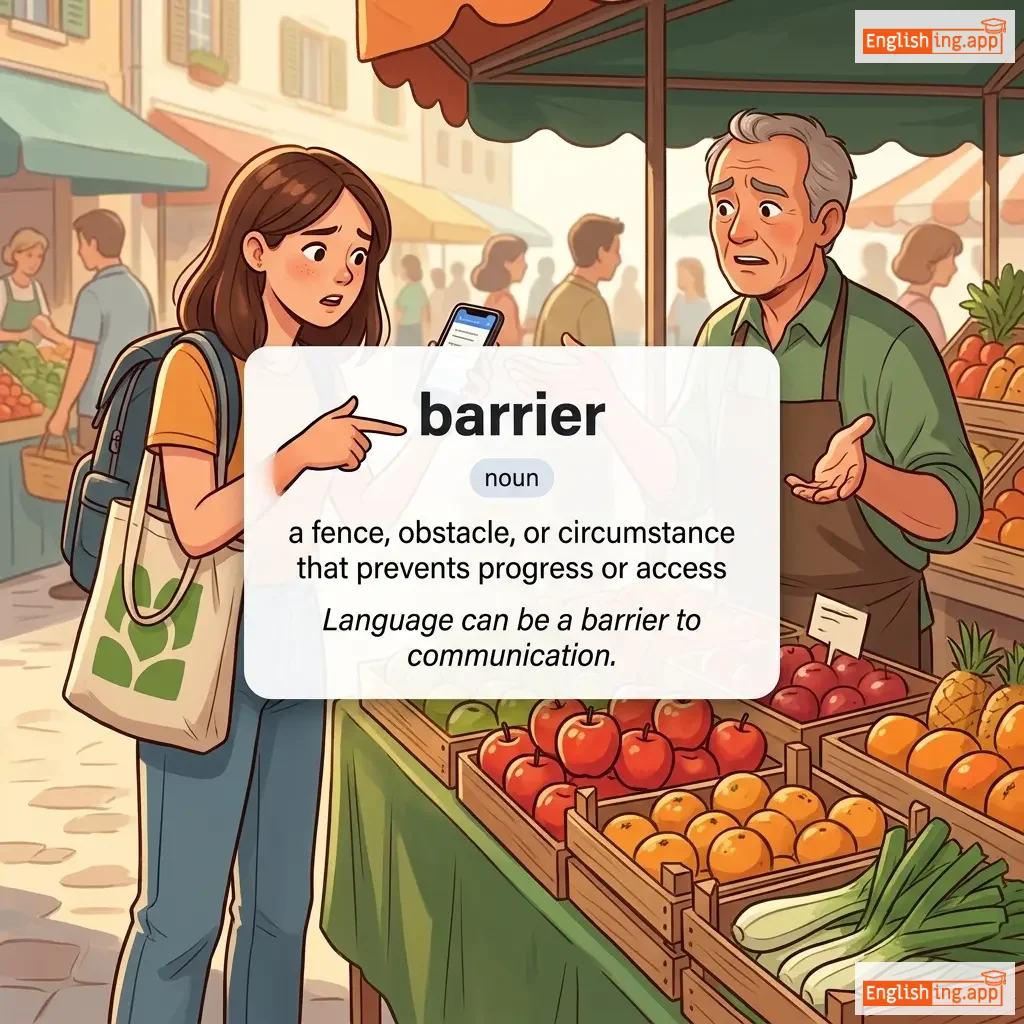
a fence, obstacle, or circumstance that prevents progress or access
••••••
|
Language can be a barrier to communication.
言語はコミュニケーションの障壁となることがあります。
••••••
|
言語はコミュニケーションの障壁となることがあります。
Gengo wa komyunikēshon no shōheki to naru koto ga arimasu.
••••••
|
break down barriers
障壁を打破する
••••••
|
to remove obstacles that prevent progress or understanding
••••••
|
障壁を打破する
shōheki o daga suru
••••••
|
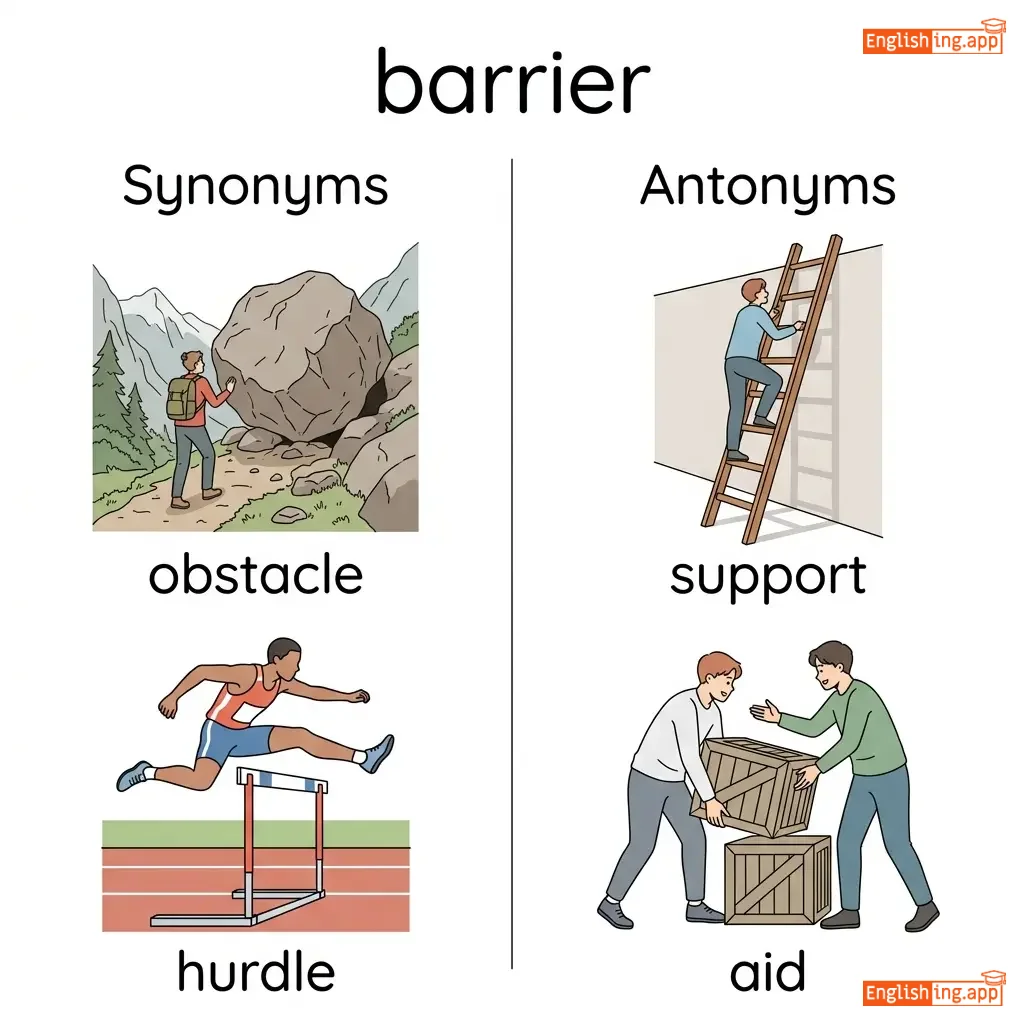
obstacle, hurdle, fence, block, hindrance
••••••
|
support, aid
••••••
|
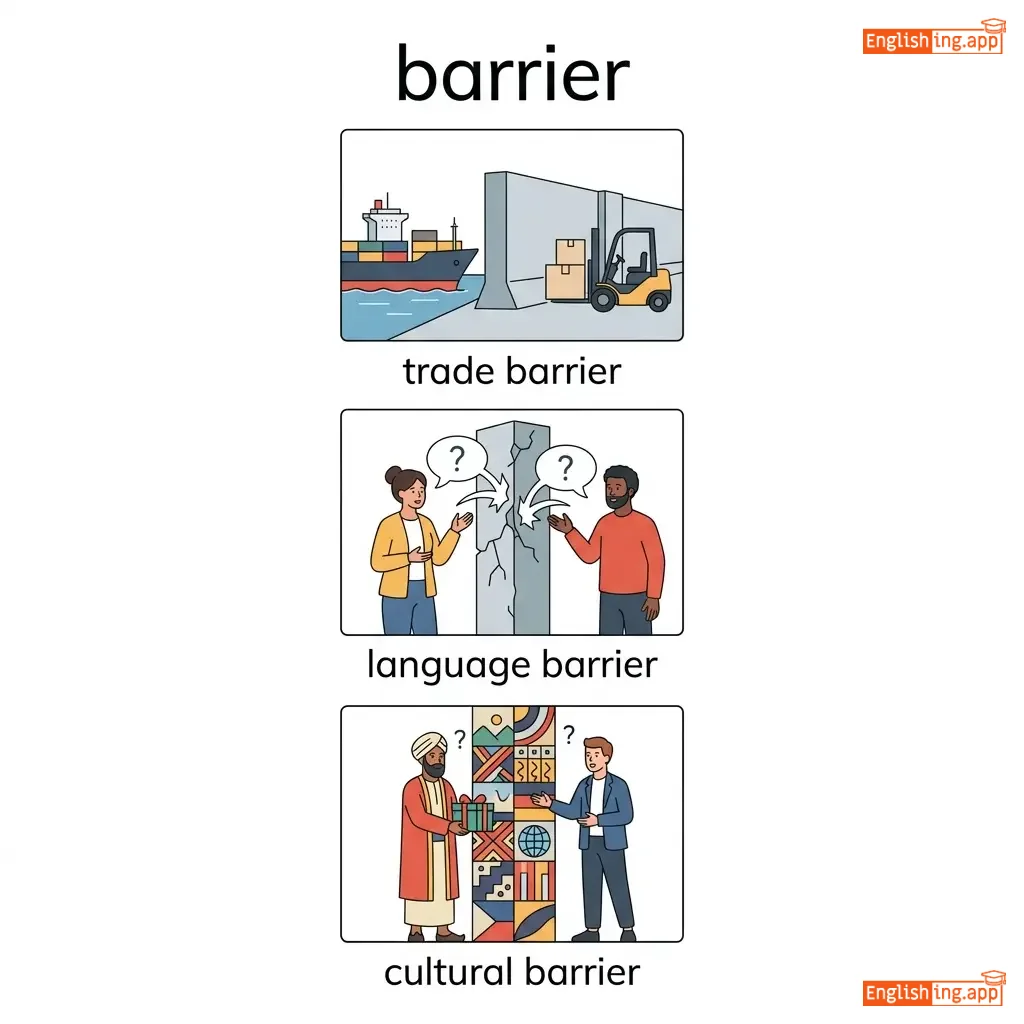
trade barrier, language barrier, cultural barrier, physical barrier
••••••
|
障壁とは障害物、道路に障壁があると車が止まります。
••••••
|
|
#9622
🚫
|
/bæn/
verb
(バン)
••••••
|
|
禁止する
kinshi suru
••••••
|
banned
バンド
••••••
|
banned
バンド
••••••
|
bans
バンス
••••••
|
banning
バンニング
••••••
|
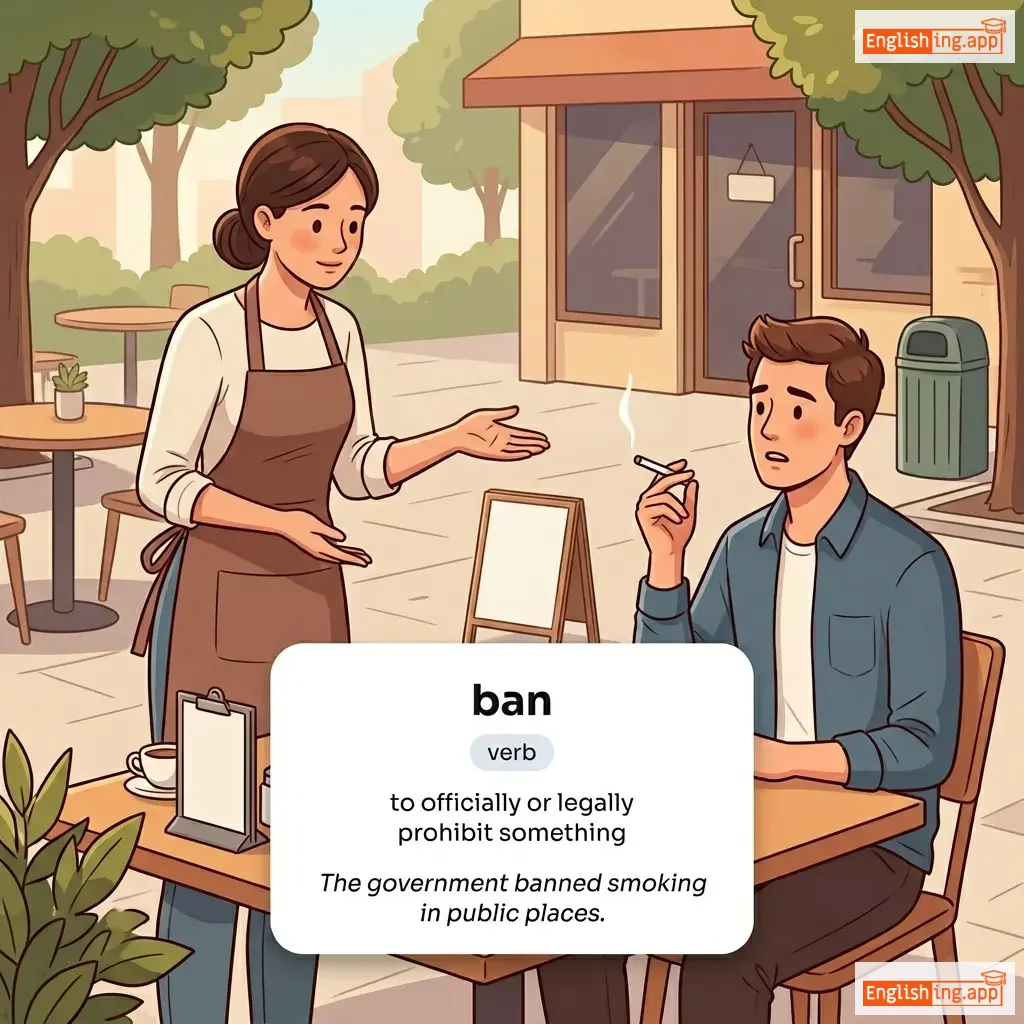
to officially or legally prohibit something
••••••
|
The government banned smoking in public places.
政府は公共の場での喫煙を禁止しました。
••••••
|
政府は公共の場での喫煙を禁止しました。
Seifu wa kōkyō no ba de no kitsuen o kinshi shimashita.
••••••
|
ban from
バン フロム
••••••
|
to prohibit someone from doing something
••••••
|
から禁止する
kara kinshi suru
••••••
|
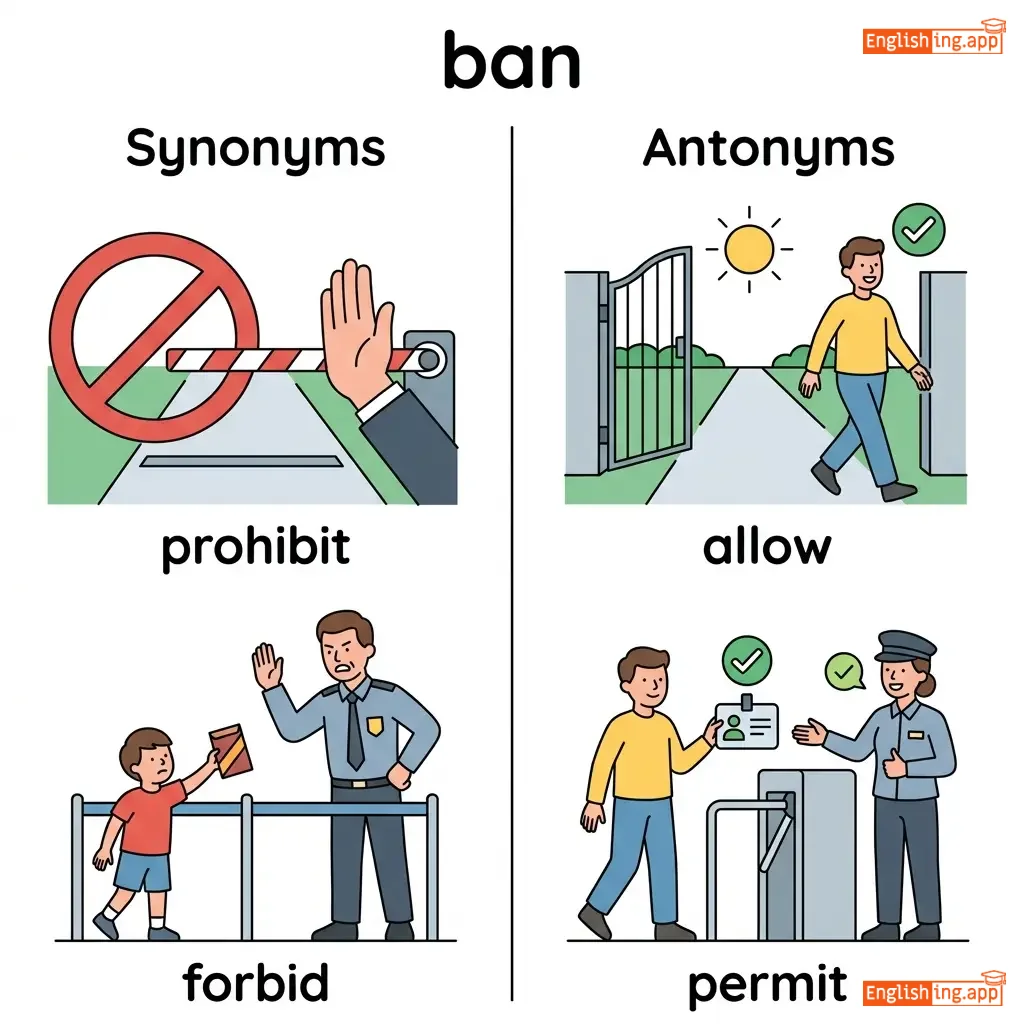
prohibit, forbid, outlaw, restrict, bar
••••••
|
allow, permit
••••••
|
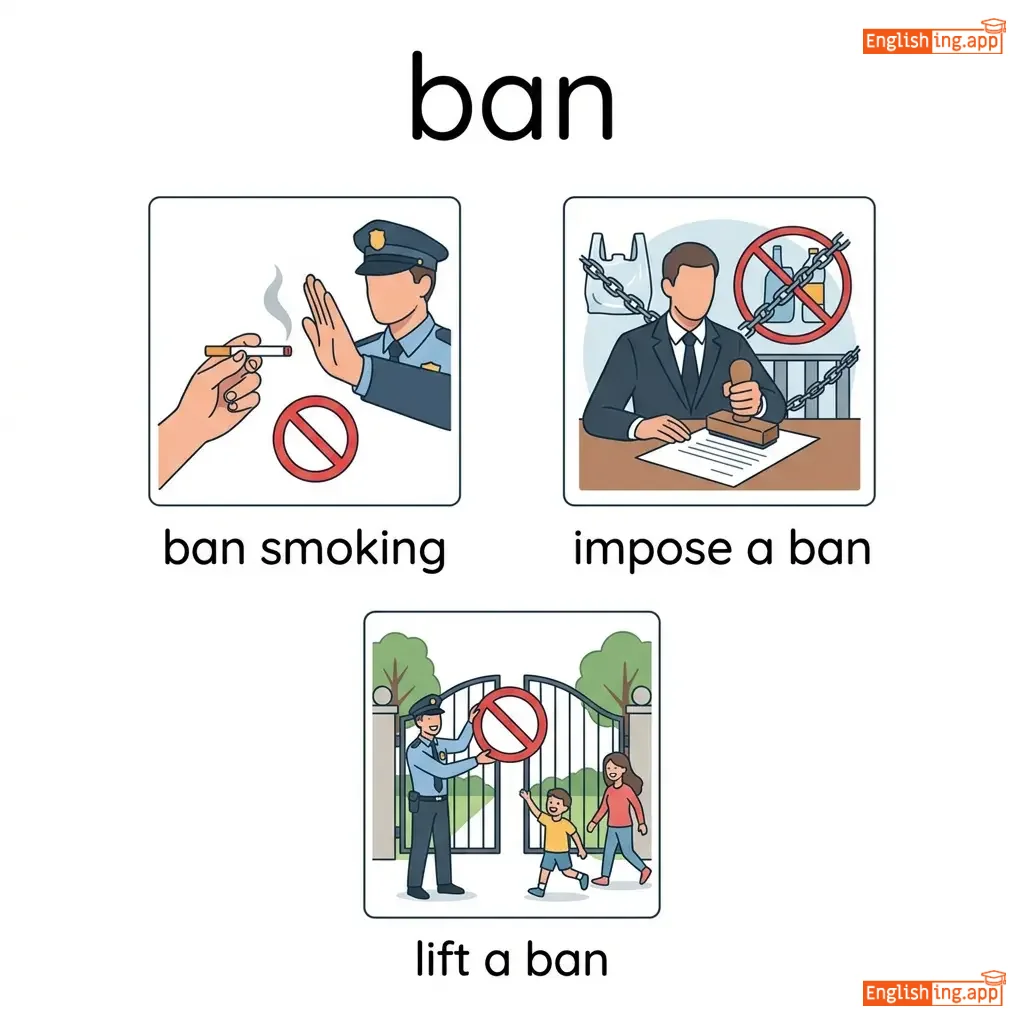
ban smoking, impose a ban, lift a ban, ban completely
••••••
|
Banは禁止するという意味です。FacebookでBanされたことがありますか?
••••••
|
|
#9623
🗳️
|
/ˈbælət/
noun
(バレット)
••••••
|
- •••••• |
投票用紙
touhyou youshi
••••••
|
- •••••• | - •••••• | - •••••• | - •••••• |
a process of voting, usually in secret; the paper used to record a vote
••••••
|
Voters cast their ballot in the election.
ボーターズ キャスト ゼア バレット イン ザ エレクション。
••••••
|
有権者は選挙で投票用紙を投じました。
yuukensha wa senkyo de touhyou youshi wo toujimashita.
••••••
|
cast a ballot
キャスト ア バレット
••••••
|
to vote in an election
••••••
|
投票する
touhyou suru
••••••
|
vote, poll, referendum, choice
••••••
|
abstention, refusal
••••••
|
secret ballot, ballot box, ballot paper, cast ballot
••••••
|
Ballotはバレット、日本では投票用紙で投票!
••••••
|
|
#9624
👎
|
/bæd/
adjective
(バッド)
••••••
|
- •••••• |
悪い
warui
••••••
|
- •••••• | - •••••• | - •••••• | - •••••• |
not good; unpleasant, harmful, or of poor quality
••••••
|
The milk smells bad, so don’t drink it.
牛乳は悪臭がするので飲まないでください。
••••••
|
牛乳は悪臭がするので飲まないでください。
Gyuunyuu wa akushuu ga suru node nomanaide kudasai.
••••••
|
bad blood
悪い血
••••••
|
ill feeling or hostility between people
••••••
|
悪い血
warui chi
••••••
|
awful, terrible, poor, unpleasant, harmful
••••••
|
good, excellent, pleasant
••••••
|
bad habit, bad luck, bad idea, bad weather
••••••
|
Badは悪いという意味、Bad boyは悪い男の子という意味です。
••••••
|
|
#9625
🍑
|
/ˈbækˌsaɪd/
noun
(bakkusaido)
••••••
|
- •••••• |
背中
senaka
••••••
|
- •••••• | - •••••• | - •••••• | - •••••• |
the rear part or surface of something; informal term for the buttocks
••••••
|
The kids slid down the hill on their backside. |
子供たちは丘を背中で滑り降りました。
Kodomotachi wa oka o senaka de suberi orimashita.
••••••
|
kick in the backside |
something that forces someone to take action
••••••
|
お尻に蹴りを入れる
Oshiri ni keri o ireru
••••••
|
rear, behind, bottom, rump, back
••••••
|
front, face
••••••
|
fall on the backside, land on the backside, kick in the backside
••••••
|
Backsideは後ろ、バックパックの背中の部分のようなものです。
••••••
|
|
#9626
🦴
|
/ˈbækboʊn/
noun
(バックボーン)
••••••
|
- •••••• |
背骨
sebone
••••••
|
- •••••• | - •••••• | - •••••• | - •••••• |
the spine; the chief support or mainstay; strength of character
••••••
|
Education is the backbone of a nation. |
教育は国の背骨です。
Kyouiku wa kuni no sebone desu.
••••••
|
have backbone |
to show courage and strength of character
••••••
|
根性を見せる
konjou o miseru
••••••
|
spine, support, strength, courage, foundation
••••••
|
weakness, cowardice
••••••
|
backbone of society, backbone of the team, strong backbone
••••••
|
Backboneは背骨を意味しますが、背骨は本当の力の象徴です
••••••
|
|
#9627
🔙
|
/bæk/
noun/verb/adverb/adjective
(バック)
••••••
|
- •••••• |
背中 / 戻る
senaka / modoru
••••••
|
backed
バックド
••••••
|
backed
バックド
••••••
|
backs
バックス
••••••
|
backing
バックイング
••••••
|
the rear surface of the human body; to support; to return to a place
••••••
|
He turned back to help his friend.
彼は友達を助けるために戻った。
••••••
|
彼は友達を助けるために戻った。
Kare wa tomodachi o tasukeru tame ni modotta.
••••••
|
back and forth
行ったり来たり
••••••
|
moving repeatedly in one direction and then the opposite
••••••
|
行ったり来たり
ittari kitari
••••••
|
rear, behind, support, return
••••••
|
front, oppose
••••••
|
back pain, back home, back up, back support
••••••
|
Backは後ろを意味する - 戻るときは後ろに戻る。
••••••
|
|
#9628
🏃♂️
|
/əˈweɪ/
adverb
(アウェイ)
••••••
|
- •••••• |
遠く
tōku
••••••
|
- •••••• | - •••••• | - •••••• | - •••••• |
at a distance from a particular place, person, or thing
••••••
|
She walked away without saying a word. |
彼女は一言も言わずに歩いて行った。
Kanojo wa hitokoto mo iwazu ni aruite itta.
••••••
|
far away |
at a great distance
••••••
|
とても遠く
totemo tōku
••••••
|
absent, distant, gone, apart, afar
••••••
|
near, close, present
••••••
|
go away, run away, far away, turn away
••••••
|
Awayは '遠く' を意味します - 遠くに行く
••••••
|
|
#9629
➗
|
/ˈævərɪdʒ/
noun/adjective/verb
(アヴェレージ)
••••••
|
|
平均
heikin
••••••
|
averaged
アヴェレージド
••••••
|
averaged
アヴェレージド
••••••
|
averages
アヴェレージズ
••••••
|
averaging
アヴェレージング
••••••
|
the result obtained by adding several quantities together and then dividing by the number of quantities; typical or normal level
••••••
|
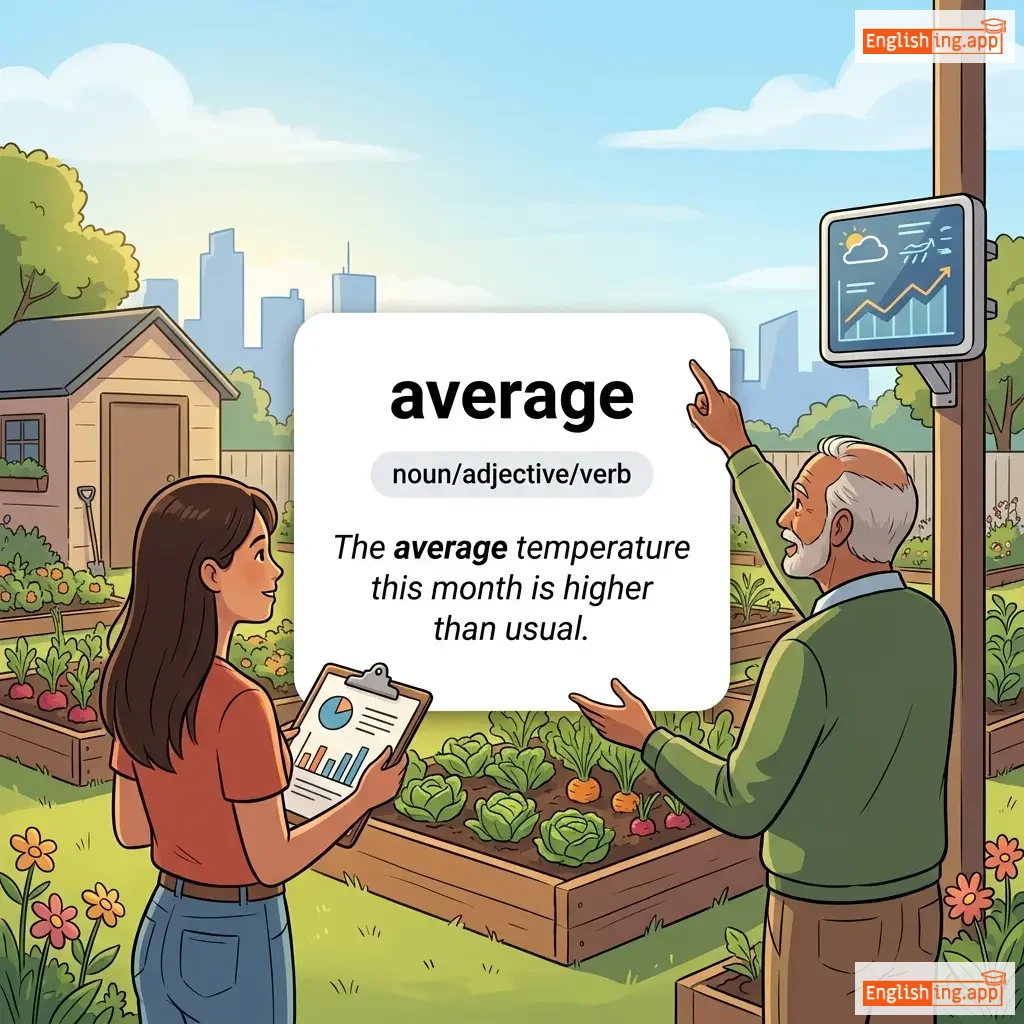
The average temperature this month is higher than usual.
今月の平均気温は通常より高いです。
••••••
|
今月の平均気温は通常より高いです。
Kongetsu no heikin kion wa tsūjō yori takai desu.
••••••
|
on average
平均して
••••••
|
as a usual or typical amount or level
••••••
|
平均して
heikin shite
••••••
|
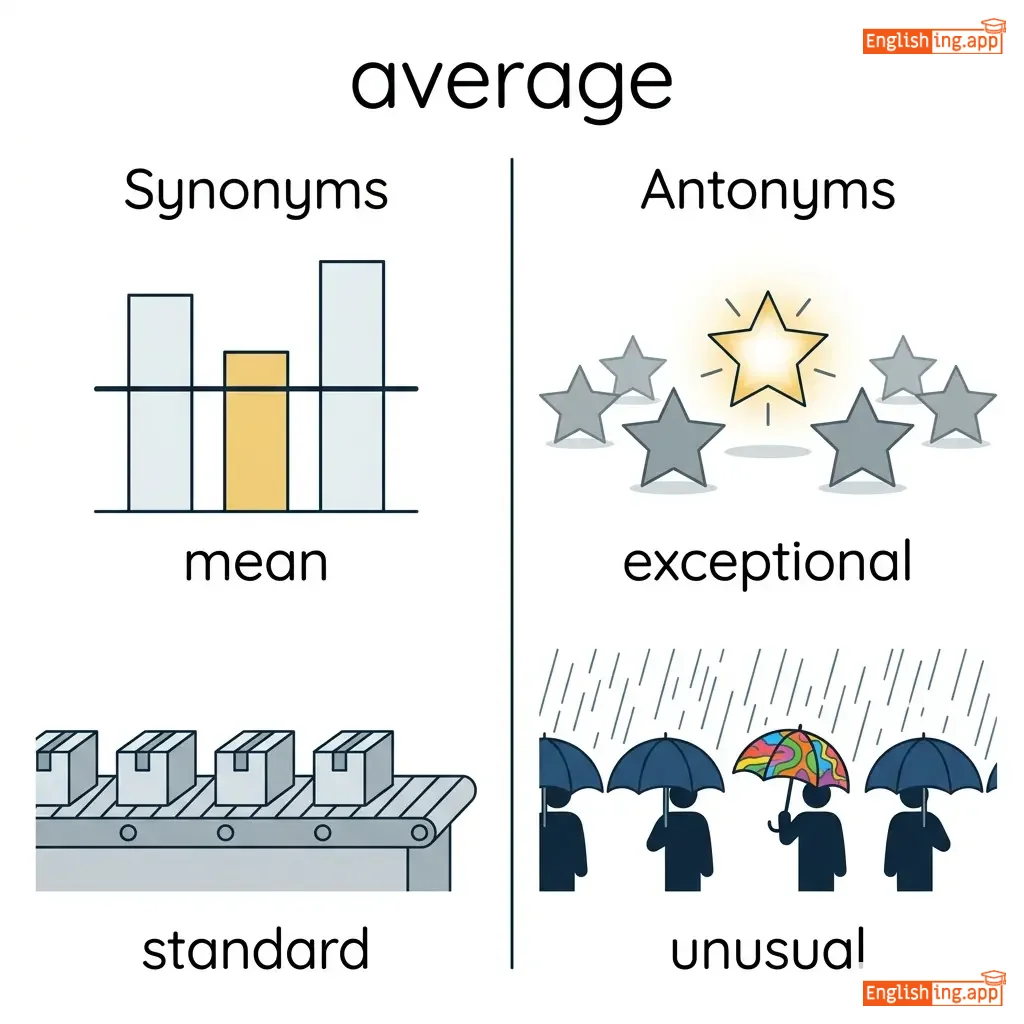
mean, standard, ordinary, typical, common
••••••
|
exceptional, unusual, extraordinary
••••••
|
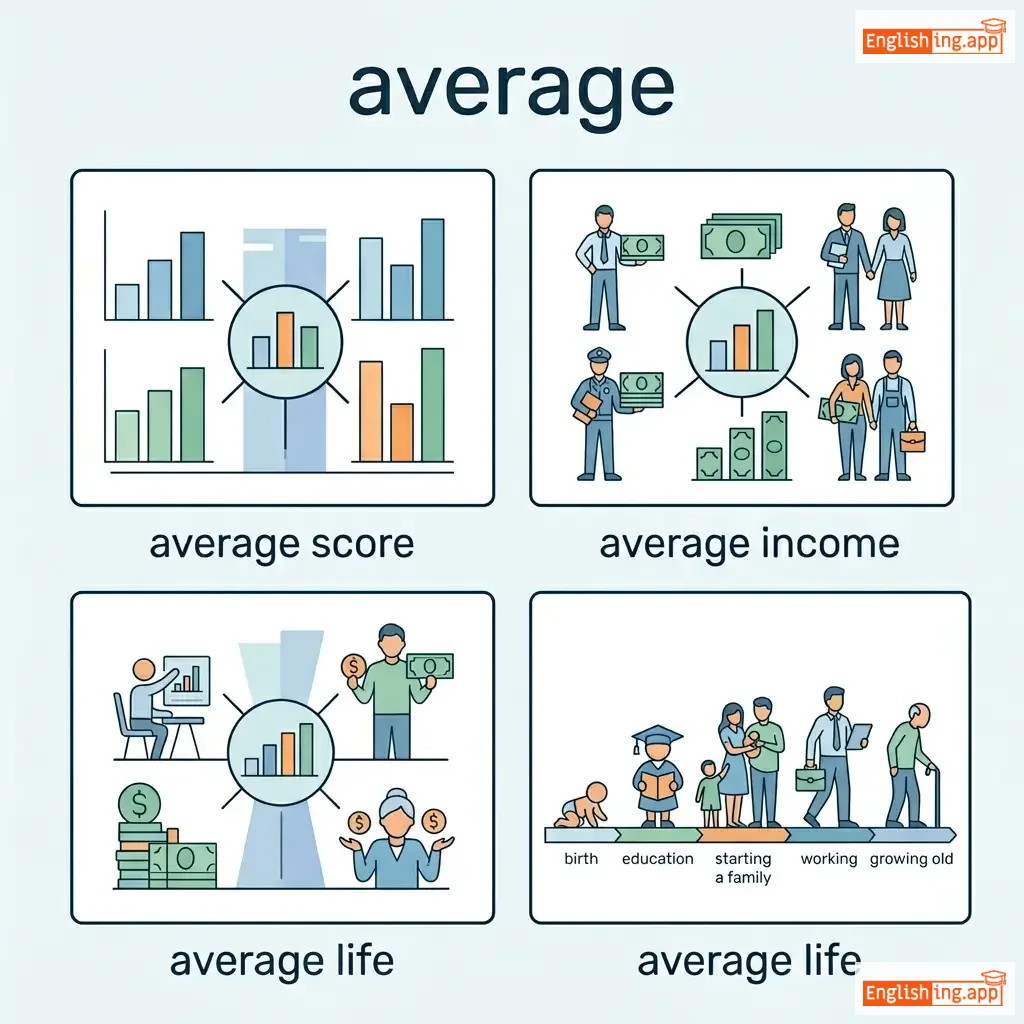
average score, average income, average life, average cost
••••••
|
平均は加算して分割することで得られるバランスです。
••••••
|
Vocabulary Quiz
Test your vocabulary by matching words with their translations or meanings.
Login to take the quiz
Comments (0)
Share your thoughts and join the discussion.
Join the discussion by logging in
Login to CommentNo comments yet
Be the first to share your thoughts!