

翻訳
過去
過去分詞
三人称単数
動名詞
意味
例文
例文の翻訳
同義語
対義語
コロケーション
ニーモニック

Swipe left or right, or use the buttons. Tap image to zoom.
例文の翻訳
単語
Lesson 399Lesson 399 - マスクトグル
|
絵文字
|
単語 | Images | 翻訳 | 過去 | 過去分詞 | 三人称単数 | 動名詞 | 意味 | 例文 | 例文の翻訳 | 表現例 | 表現例の意味 | 表現例の翻訳 | 同義語 | 対義語 | コロケーション | ニーモニック |
|---|---|---|---|---|---|---|---|---|---|---|---|---|---|---|---|---|---|
|
#11935
🎤
|
/sɪŋ/
verb
(シング)
••••••
|
|
歌う
utau
••••••
|
sang
サング
••••••
|
sung
サング
••••••
|
sings
シングス
••••••
|
singing
シンギング
••••••
|
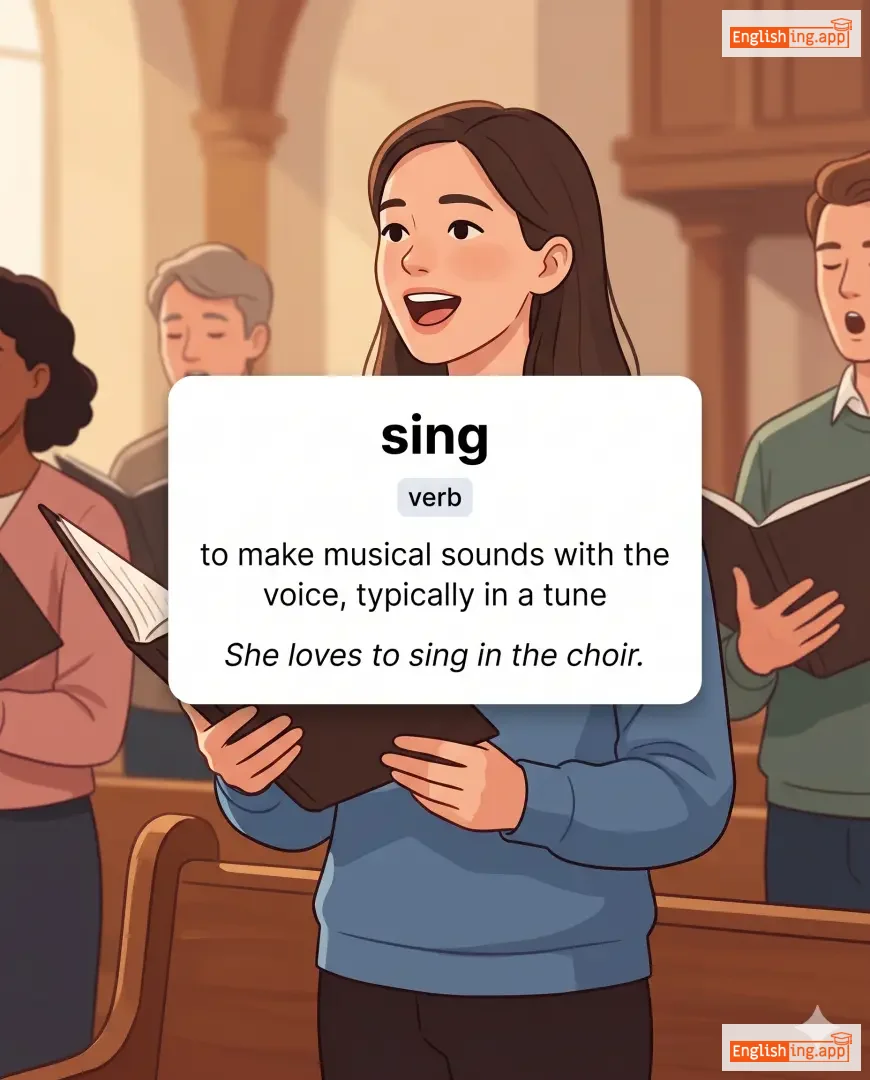
to make musical sounds with the voice, typically in a tune
••••••
|
She loves to sing in the choir.
彼女は合唱団で歌うのが好きです。
••••••
|
彼女は合唱団で歌うのが好きです。
Kanojo wa gasshoudan de utau no ga suki desu.
••••••
|
Sing your heart out
心を込めて歌う
••••••
|
to sing with great enthusiasm and emotion
••••••
|
心を込めて歌う
Kokoro o komete utau
••••••
|
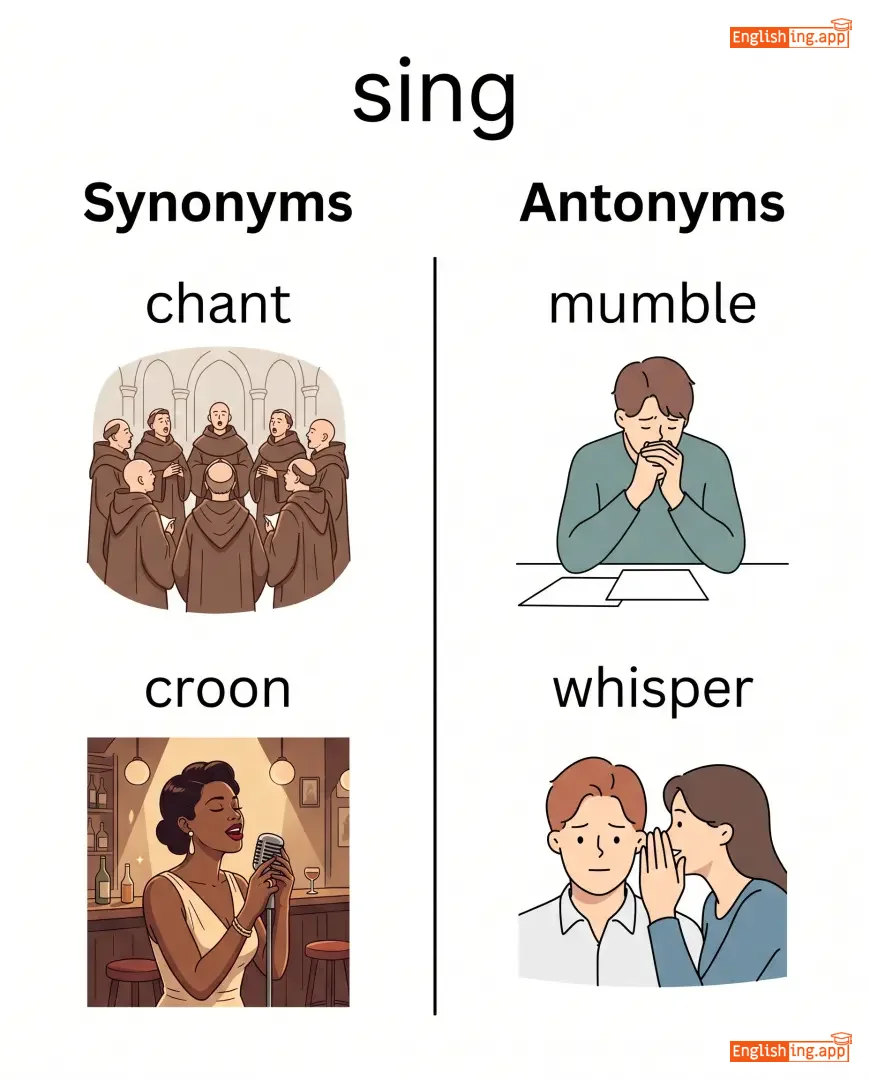
chant, croon, hum, vocalize
••••••
|
mumble, whisper
••••••
|
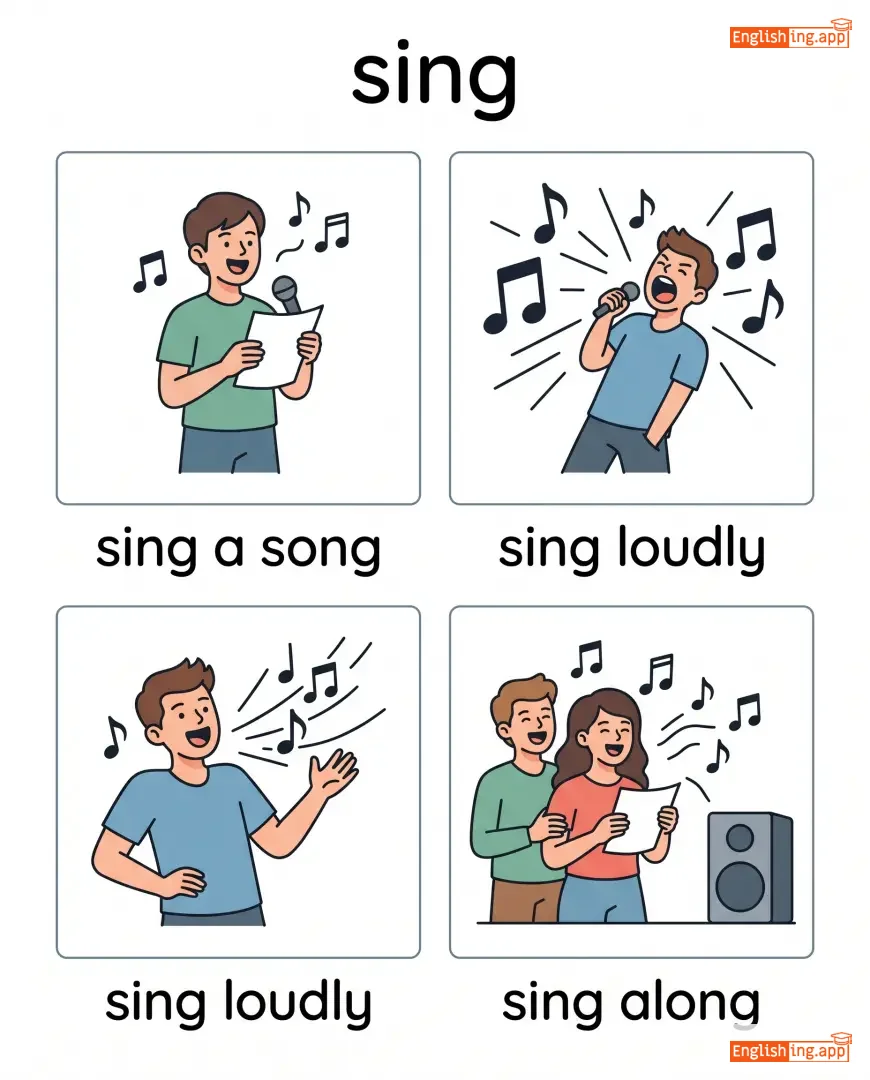
sing a song, sing loudly, sing along, sing in the choir
••••••
|
Sing as in '歌' - 歌を歌うとき、全身で感じる楽しさ!
••••••
|
|
#11936
👤
|
/sleɪv/
noun
(スレイヴ)
••••••
|
- •••••• |
奴隷
dorei
••••••
|
- •••••• | - •••••• | - •••••• | - •••••• |
a person who is the legal property of another and is forced to work for them
••••••
|
The abolitionist movement fought for the rights of slaves. |
廃奴隷運動は奴隷の権利のために戦いました。
Hainoroi undō wa dorei no kenri no tame ni tatakatta.
••••••
|
- •••••• | - •••••• | - •••••• |
serf, bondsman, vassal, indentured servant
••••••
|
freeman, master, owner
••••••
|
enslaved slave, slavery system, slave labor
••••••
|
奴隷は鎖で縛られ、自由を持たない働く人です。
••••••
|
|
#11937
🌌
|
/skaɪ/
noun
••••••
|
- •••••• | - •••••• | - •••••• | - •••••• | - •••••• | - •••••• |
the expanse of air over the Earth, often appearing blue
••••••
|
The sky was clear and the sun was shining brightly. |
- •••••• | - •••••• | - •••••• | - •••••• |
heavens, atmosphere, firmament
••••••
|
earth, ground
••••••
|
clear sky, blue sky, sky high, skydiving
••••••
|
No •••••• |
|
#11938
👗
|
/skɪn/
noun
(スキン)
••••••
|
- •••••• |
肌
hada
••••••
|
- •••••• | - •••••• | - •••••• | - •••••• |
the outer layer of the body
••••••
|
She has fair skin and bright blue eyes. |
彼女は白い肌と明るい青い目をしています。
Kanojo wa shiroi hada to akarui aoi me o shiteimasu.
••••••
|
- •••••• | - •••••• | - •••••• |
epidermis, dermis, hide
••••••
|
interior, inside
••••••
|
healthy skin, smooth skin, skin tone, skin care
••••••
|
Remember 'Skin' as 'Hada' in Japanese, like 'Hada' covering the body.
••••••
|
|
#11939
🎿
|
/skiː/
verb
(スキー)
••••••
|
- •••••• |
スキーをする
sukī o suru
••••••
|
skied
スキーした
••••••
|
skied
スキーした
••••••
|
skis
スキーする
••••••
|
skiing
スキーしている
••••••
|
to glide over snow on skis
••••••
|
We went skiing in the Alps last winter.
私たちは昨冬アルプスでスキーをしました。
••••••
|
私たちは昨冬アルプスでスキーをしました。
Watashitachi wa saku fuyu Arupusu de sukī o shimashita.
••••••
|
- •••••• | - •••••• | - •••••• |
snowboard, glide, coast
••••••
|
walk, crawl
••••••
|
ski trip, ski resort, downhill skiing, cross-country skiing
••••••
|
Skiing is 'スキーをする' in Japanese. Ski through the snow-covered mountains!
••••••
|
|
#11940
📏
|
/saɪz/
noun
(サイズ)
••••••
|
- •••••• |
サイズ
saizu
••••••
|
- •••••• | - •••••• | - •••••• | - •••••• |
the physical dimensions, proportions, or magnitude of something
••••••
|
This shirt is too small in size for me. |
このシャツは私にはサイズが小さすぎます。
Kono shatsu wa watashi ni wa saizu ga chiisasugimasu.
••••••
|
- •••••• | - •••••• | - •••••• |
dimension, measurement, volume, magnitude
••••••
|
smallness, insignificance
••••••
|
larger size, shirt size, appropriate size, size chart
••••••
|
Saizu sounds like the 'size' of a Japanese shirt!
••••••
|
|
#11941
6️⃣
|
/sɪks/
noun
(シックス)
••••••
|
- •••••• |
六
roku
••••••
|
- •••••• | - •••••• | - •••••• | - •••••• |
the number 6
••••••
|
There are six apples on the table.
テーブルにリンゴが六個あります。
••••••
|
テーブルにリンゴが六個あります。
Tēburu ni ringo ga roku ko arimasu.
••••••
|
- •••••• | - •••••• | - •••••• |
half a dozen, sextuple, sixfold
••••••
|
one
••••••
|
six o'clock, six people, six months, six days
••••••
|
Six is 'roku' in Japanese. Remember it as 'Roku apples on the table'.
••••••
|
|
#11942
🌍
|
/ˌsɪtʃʊˈeɪʃən/
noun
(シチュエーション)
••••••
|
- •••••• |
状況
joukyou
••••••
|
- •••••• | - •••••• | - •••••• | - •••••• |
a set of circumstances or state of affairs at a particular time
••••••
|
The situation at work became difficult after the new policies were introduced.
新しいポリシーが導入された後、職場の状況は難しくなりました。
••••••
|
新しいポリシーが導入された後、職場の状況は難しくなりました。
Atarashii porishī ga dōnyū sareta ato, shokuba no joukyou wa muzukashiku narimashita.
••••••
|
in a tight situation
困難な状況にある
••••••
|
to be in a difficult or challenging circumstance
••••••
|
困難な状況にある
konnan na joukyou ni aru
••••••
|
condition, circumstance, state, scenario
••••••
|
none
••••••
|
critical situation, emergency situation, business situation
••••••
|
状況 (Joukyou) - どんな状況でも冷静に対処しよう!
••••••
|
|
#11943
🌍
|
/saɪt/
noun
(サイト)
••••••
|
- •••••• |
場所
basho
••••••
|
- •••••• | - •••••• | - •••••• | - •••••• |
a location or place, often used for a specific purpose, such as a construction site or a website
••••••
|
The construction site is ready for the next phase of the project. |
建設現場は次のプロジェクトの段階に進む準備ができています。
Kensetsu genba wa tsugi no purojekuto no dankai ni susumu junbi ga dekiteimasu.
••••••
|
- •••••• | - •••••• | - •••••• |
location, place, area, venue
••••••
|
none
••••••
|
site of the accident, construction site, development site
••••••
|
サイト (Site) は特定の場所に使われる言葉、例えばウェブサイトや建設現場に使われます。
••••••
|
|
#11944
🪑
|
/sɪt/
verb
(シット)
••••••
|
- •••••• |
座る
suwaru
••••••
|
sat
サット
••••••
|
sat
サット
••••••
|
sits
シッツ
••••••
|
sitting
シッティング
••••••
|
to rest with the body supported by the buttocks, often in a chair or on the ground
••••••
|
Please sit down and relax for a while.
少し座ってリラックスしてください。
••••••
|
少し座ってリラックスしてください。
Sukoshi suwatte rirakkusu shite kudasai.
••••••
|
sit tight
じっと座って
••••••
|
to stay in one place and wait patiently
••••••
|
じっとして
jitto shite
••••••
|
perch, rest, settle, lounge
••••••
|
stand, rise
••••••
|
sit down, sit still, sit comfortably, sit on the chair
••••••
|
座ることで体が楽になり、リラックスする
••••••
|
|
#11945
👭
|
/ˈsɪstər/
noun
(シスター)
••••••
|
- •••••• |
姉 / 妹
ane / imouto
••••••
|
- •••••• | - •••••• | - •••••• | - •••••• |
a female sibling; a girl or woman in relation to other children of her parents
••••••
|
My sister is coming to visit us next week.
マイ シスター イズ カミング トゥ ビジット アス ネクスト ウィーク
••••••
|
私の姉は来週私たちに会いに来ます。
watashi no ane wa raishu watashitachi ni ai ni kimasu
••••••
|
- •••••• | - •••••• | - •••••• |
sibling, sister-in-law, female relative
••••••
|
brother
••••••
|
older sister, younger sister, sisterly bond, my sister
••••••
|
シスター (Shisuta) sounds like sister — your ‘ane’ is close at heart!
••••••
|
|
#11946
👨
|
/sɜːr/
noun
(サー)
••••••
|
- •••••• |
サー
sā
••••••
|
- •••••• | - •••••• | - •••••• | - •••••• |
a respectful or formal form of address used for a man, typically one of higher social status or authority
••••••
|
Sir, may I assist you with your order? |
サー、注文をお手伝いできますか?
Sā, chūmon o o-tetsudai dekimasu ka?
••••••
|
- •••••• | - •••••• | - •••••• |
mister, gentleman, lord, master
••••••
|
madam, miss
••••••
|
Sir, dear sir, Sir John, Sir Thomas
••••••
|
サー (Sā)、尊敬を示すための言葉!
••••••
|
|
#11947
💦
|
/sɪŋk/
verb
(シンク)
••••••
|
|
沈む
shizumu
••••••
|
sank
サンク
••••••
|
sunk
サンク
••••••
|
sinks
シンクス
••••••
|
sinking
シンキング
••••••
|
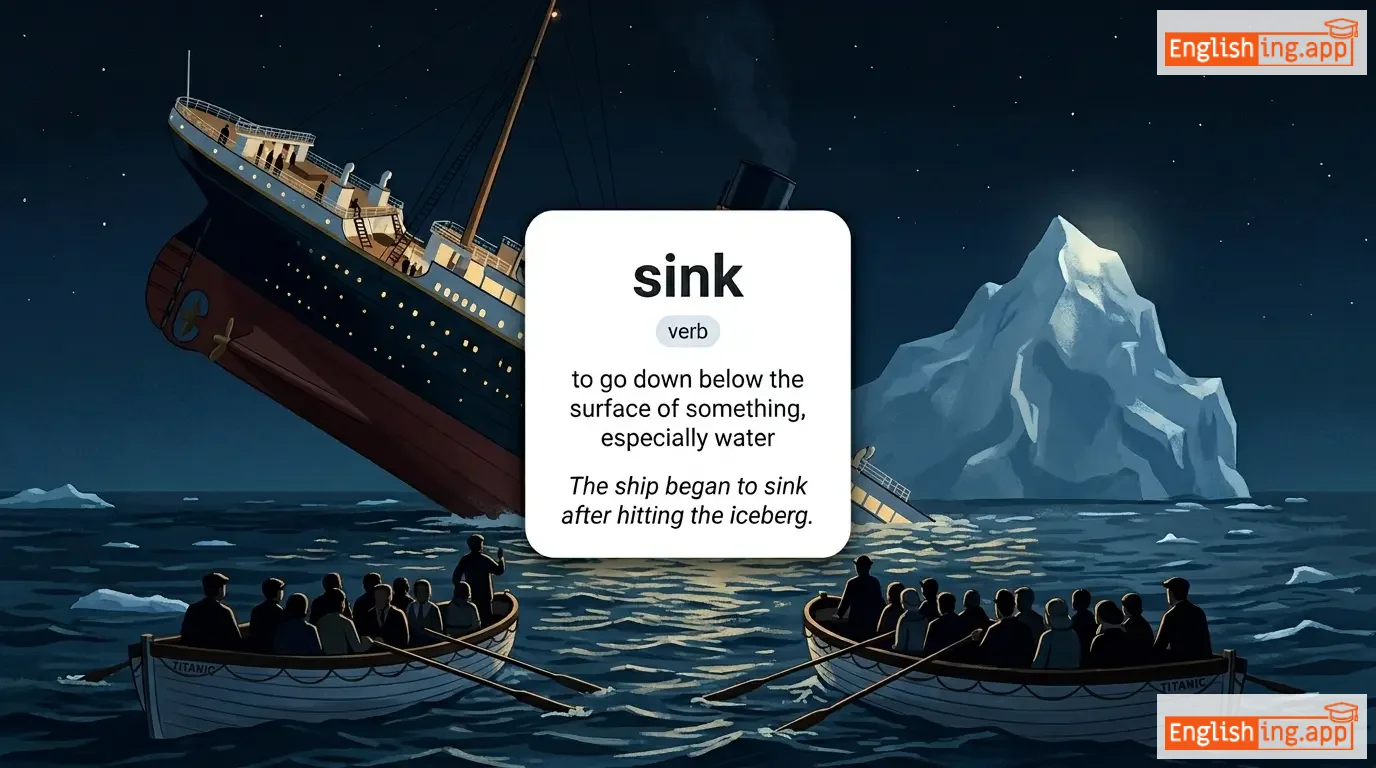
to go down below the surface of something, especially water
••••••
|
The ship began to sink after hitting the iceberg.
船は氷山に衝突した後、沈み始めました。
••••••
|
船は氷山に衝突した後、沈み始めました。
Fune wa hyōzan ni shōtotsu shita ato, shizumi hajimemashita.
••••••
|
Sink or swim
沈むか泳ぐか
••••••
|
to face a situation where one must succeed or fail based on their actions
••••••
|
沈むか泳ぐか
Shizumu ka oyogu ka
••••••
|
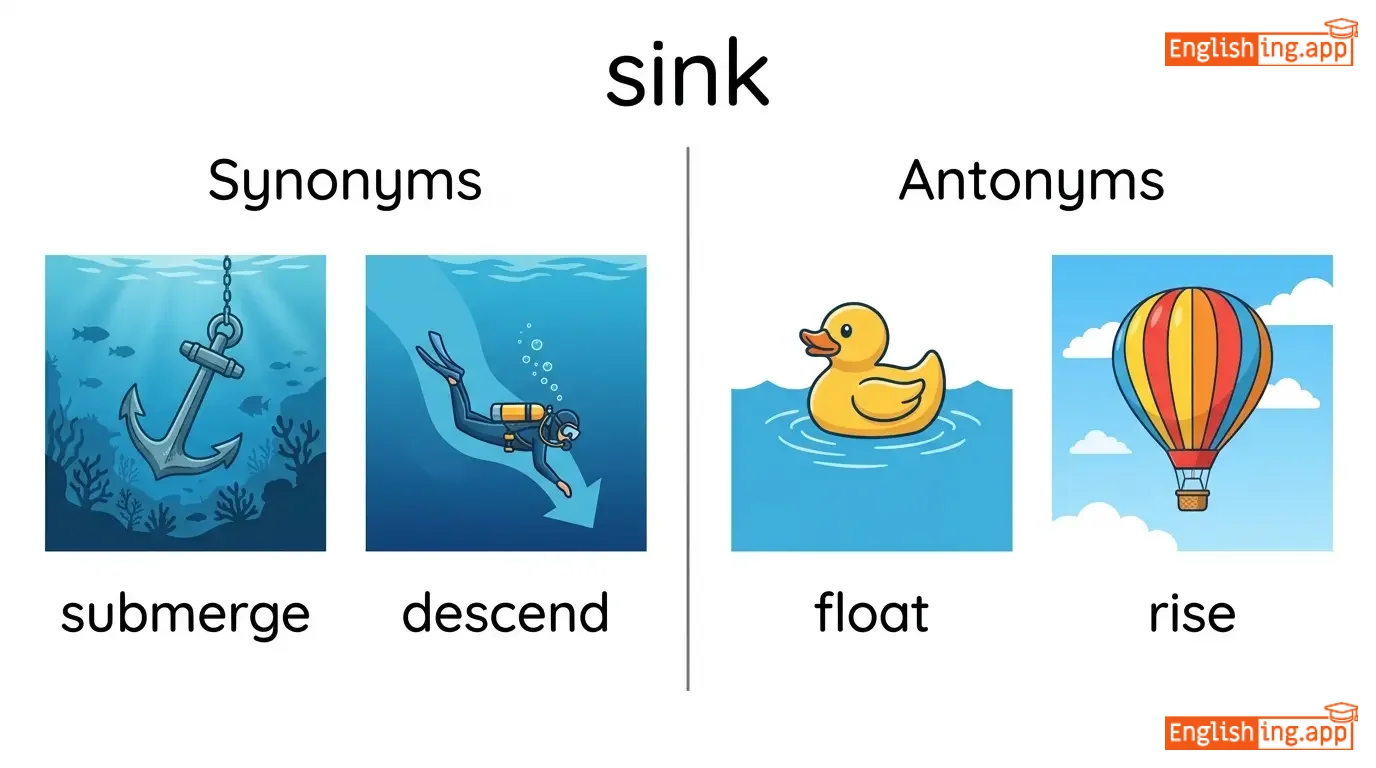
submerge, descend, drop
••••••
|
float, rise
••••••
|
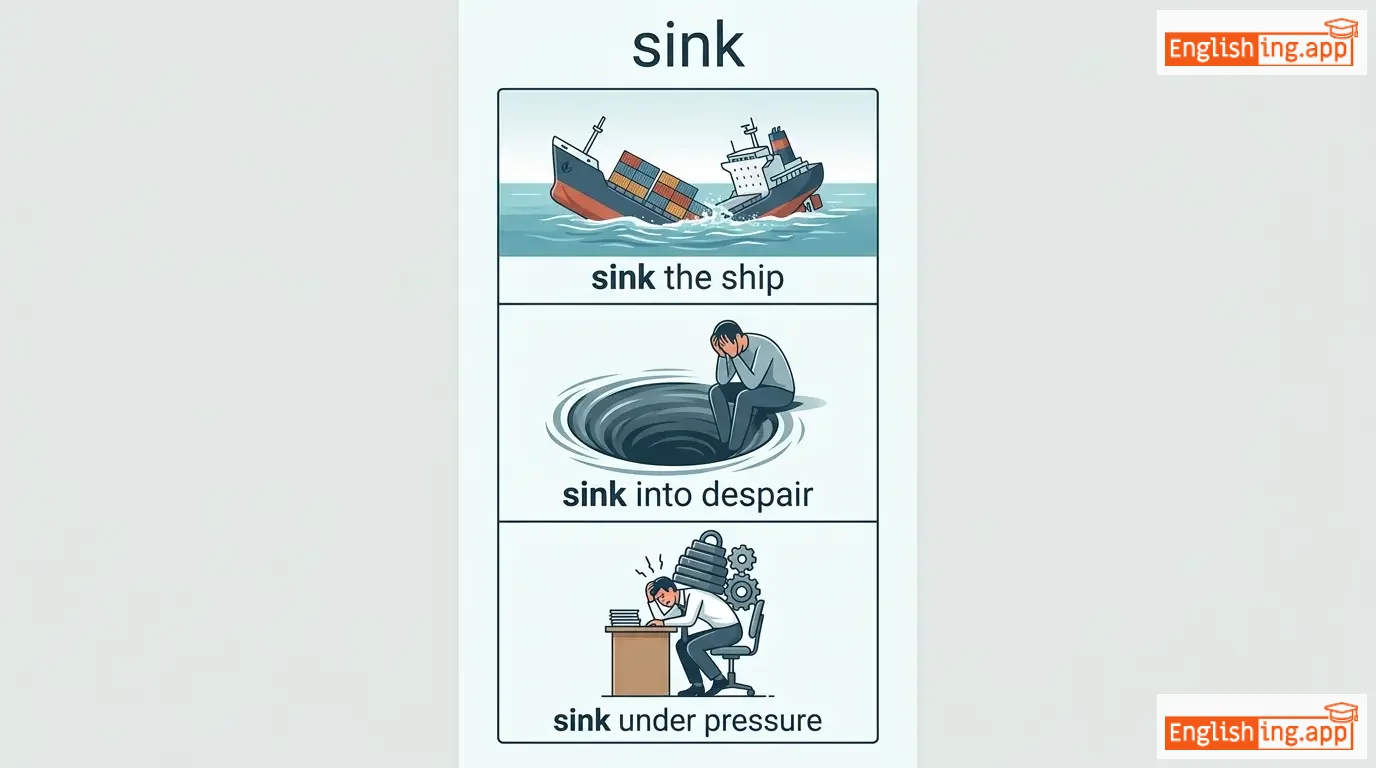
sink the ship, sink into despair, sink under pressure
••••••
|
Sink - もし‘沈んだ’ら、もう泳げない!
••••••
|
|
#11948
1️⃣
|
/ˈsɪŋɡəl/
adjective
••••••
|
- •••••• | - •••••• | - •••••• | - •••••• | - •••••• | - •••••• |
only one; not one of several
••••••
|
She bought a single ticket for the concert. |
- •••••• |
Single handed |
done by one person alone
••••••
|
- •••••• |
individual, sole, solitary, lone
••••••
|
multiple, many
••••••
|
single ticket, single person, single item
••••••
|
No •••••• |
|
#11949
🎶
|
/ˈsɪŋər/
noun
(シンガー)
••••••
|
- •••••• |
歌手
kashu
••••••
|
- •••••• | - •••••• | - •••••• | - •••••• |
a person who sings, especially professionally
••••••
|
The singer performed on stage last night. |
歌手は昨晩ステージでパフォーマンスをしました。
Kashu wa sakuban suteeji de pafōmansu o shimashita.
••••••
|
- •••••• | - •••••• | - •••••• |
vocalist, artist, crooner
••••••
|
listener, audience
••••••
|
famous singer, lead singer, rock singer
••••••
|
Singer - '歌手' (Kashu) is the one who 'KA' (sings) with talent!
••••••
|
|
#11950
📢
|
/ʃaʊt/
verb
(シャウト)
••••••
|
- •••••• |
叫ぶ
sakebu
••••••
|
shouted
シャウテッド
••••••
|
shouted
シャウテッド
••••••
|
shouts
シャウツ
••••••
|
shouting
シャウティング
••••••
|
to say something very loudly
••••••
|
He shouted at the top of his lungs to get their attention.
彼は彼らの注意を引くために全力で叫んだ。
••••••
|
彼は彼らの注意を引くために全力で叫んだ。
Kare wa karera no chūi o hiku tame ni zenryoku de sakenda.
••••••
|
Shout from the rooftops
屋根の上で叫ぶ
••••••
|
To tell everyone about something in a very public way
••••••
|
屋根の上で叫ぶ
Yane no ue de sakebu
••••••
|
yell, scream, holler, cry
••••••
|
whisper, mumble
••••••
|
shout loudly, shout angrily, shout for help
••••••
|
叫んでみんなに知らせよう!
••••••
|
|
#11951
⏳
|
/sɪns/
preposition
(シンス)
••••••
|
- •••••• |
以来
irai
••••••
|
- •••••• | - •••••• | - •••••• | - •••••• |
from a particular time in the past until now
••••••
|
I have known her since childhood. |
私は子供の頃から彼女を知っています。
Watashi wa kodomo no koro kara kanojo o shitteimasu.
••••••
|
- •••••• | - •••••• | - •••••• |
from, after
••••••
|
until, before
••••••
|
since childhood, since then, since yesterday
••••••
|
以来、私たちが言う '以来' は時が経っていることを示す。
••••••
|
|
#11952
🗣️
|
/ˈsɪmpli/
adverb
(シンプリー)
••••••
|
- •••••• |
簡単に
kantan ni
••••••
|
- •••••• | - •••••• | - •••••• | - •••••• |
in a clear and easy to understand manner
••••••
|
She explained the concept simply and clearly.
彼女はその概念を簡単で明確に説明しました。
••••••
|
彼女はその概念を簡単で明確に説明しました。
Kanojo wa sono gainen o kantan de meikaku ni setsumei shimashita.
••••••
|
- •••••• | - •••••• | - •••••• |
easily, plainly, straightforwardly
••••••
|
complicatedly, confusingly
••••••
|
simply put, simply explained, simply stated
••••••
|
Simply, as easy as saying 'hello'!
••••••
|
|
#11953
🟢
|
/ˈsɪmpəl/
adjective
(シンプル)
••••••
|
- •••••• |
簡単
kantan
••••••
|
- •••••• | - •••••• | - •••••• | - •••••• |
easy to understand or do; not complicated
••••••
|
The instructions were simple and easy to follow. |
指示は簡単で従うのも簡単でした。
Shiji wa kantan de shitagau no mo kantan deshita.
••••••
|
- •••••• | - •••••• | - •••••• |
easy, basic, straightforward, uncomplicated
••••••
|
complex, difficult, complicated
••••••
|
simple task, simple solution, simple life, simple explanation
••••••
|
Simpleような直線、簡単に進める!
••••••
|
|
#11954
🔄
|
/ˈsɪmɪlərli/
adverb
(シミラリー)
••••••
|
- •••••• |
同様に
douyou ni
••••••
|
- •••••• | - •••••• | - •••••• | - •••••• |
in a similar way
••••••
|
Similarly, we can achieve success with dedication and hard work. |
同様に、私たちは献身と努力によって成功を収めることができます。
Douyou ni, watashitachi wa kenshin to doryoku ni yotte seikou o osameru koto ga dekimasu.
••••••
|
- •••••• | - •••••• | - •••••• |
alike, likewise, in the same way
••••••
|
differently, oppositely
••••••
|
similarly to, similarly minded, similarly structured
••••••
|
Similarly, like two hands working in harmony!
••••••
|
|
#11955
💍
|
/ˈsɪlvər/
noun, adjective
(シルバー)
••••••
|
- •••••• |
銀
gin
••••••
|
- •••••• | - •••••• | - •••••• | - •••••• |
a shiny gray-white metal, often used for coins, jewelry, and decoration
••••••
|
She wore a beautiful silver necklace for the party. |
彼女はパーティーのために美しい銀のネックレスを身に着けていました。
Kanojo wa pātī no tame ni utsukushī gin no nekkuresu o mi ni tsukete imashita.
••••••
|
- •••••• | - •••••• | - •••••• |
metal, sterling, argent, silverware
••••••
|
gold, bronze
••••••
|
silver coin, silver jewelry, silver medal, silver spoon
••••••
|
Silver is shiny, like a sparkling silver necklace!
••••••
|
|
#11956
🤐
|
/ˈsaɪlənt/
adjective
(サイレント)
••••••
|
- •••••• |
静かな
shizukana
••••••
|
- •••••• | - •••••• | - •••••• | - •••••• |
not speaking or making noise
••••••
|
The room was silent as everyone waited for the announcement. |
部屋は静かで、皆が発表を待っていた。
Heya wa shizuka de, minna ga happyou o matte ita.
••••••
|
- •••••• | - •••••• | - •••••• |
quiet, mute, hushed, noiseless
••••••
|
noisy, loud
••••••
|
silent night, silent prayer, silent movie, remain silent
••••••
|
Silent as the calm of a silent lake.
••••••
|
|
#11957
🤫
|
/ˈsaɪləns/
noun
(サイレンス)
••••••
|
|
静けさ
shizukesa
••••••
|
- •••••• | - •••••• | - •••••• | - •••••• |
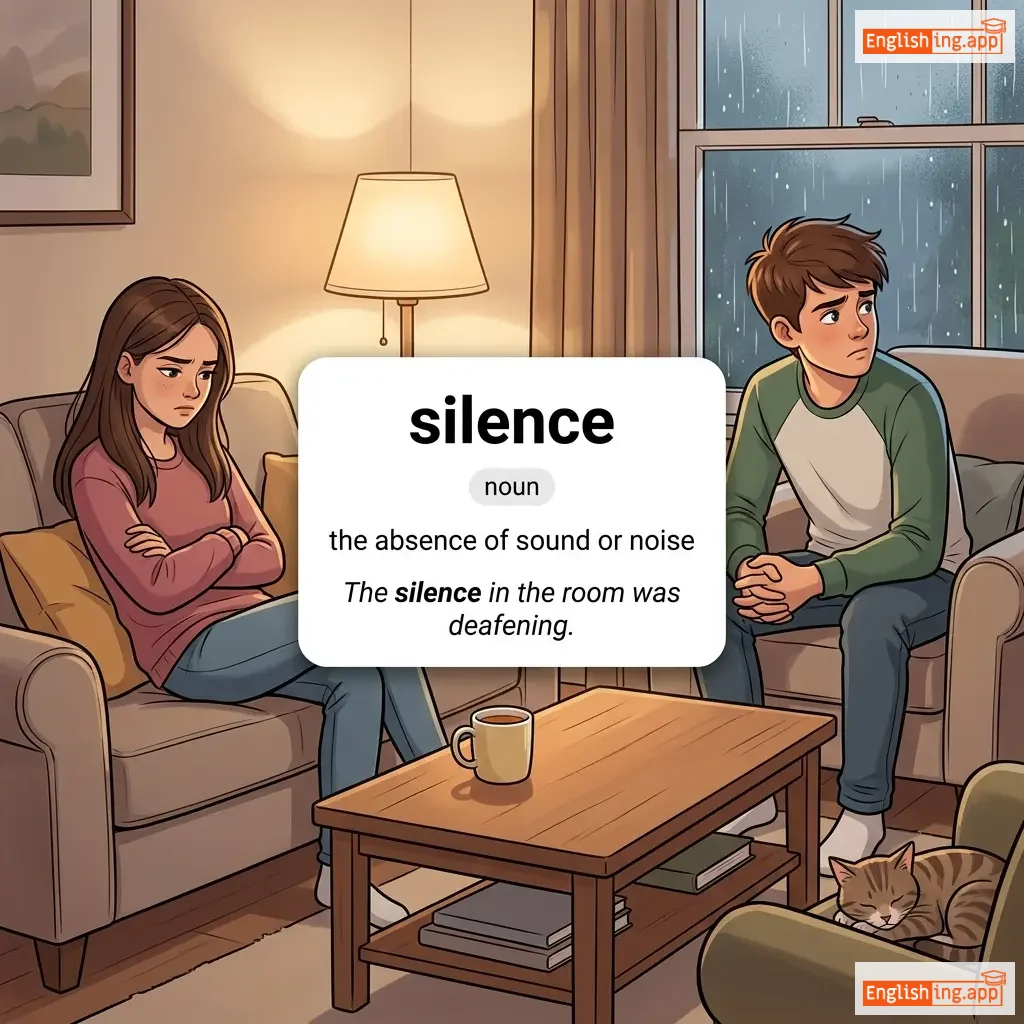
the absence of sound or noise
••••••
|
The silence in the room was deafening. |
部屋の中の静けさは耳をつんざくようだった。
Heya no naka no shizukesa wa mimi wo tsunzaku you datta.
••••••
|
- •••••• | - •••••• | - •••••• |
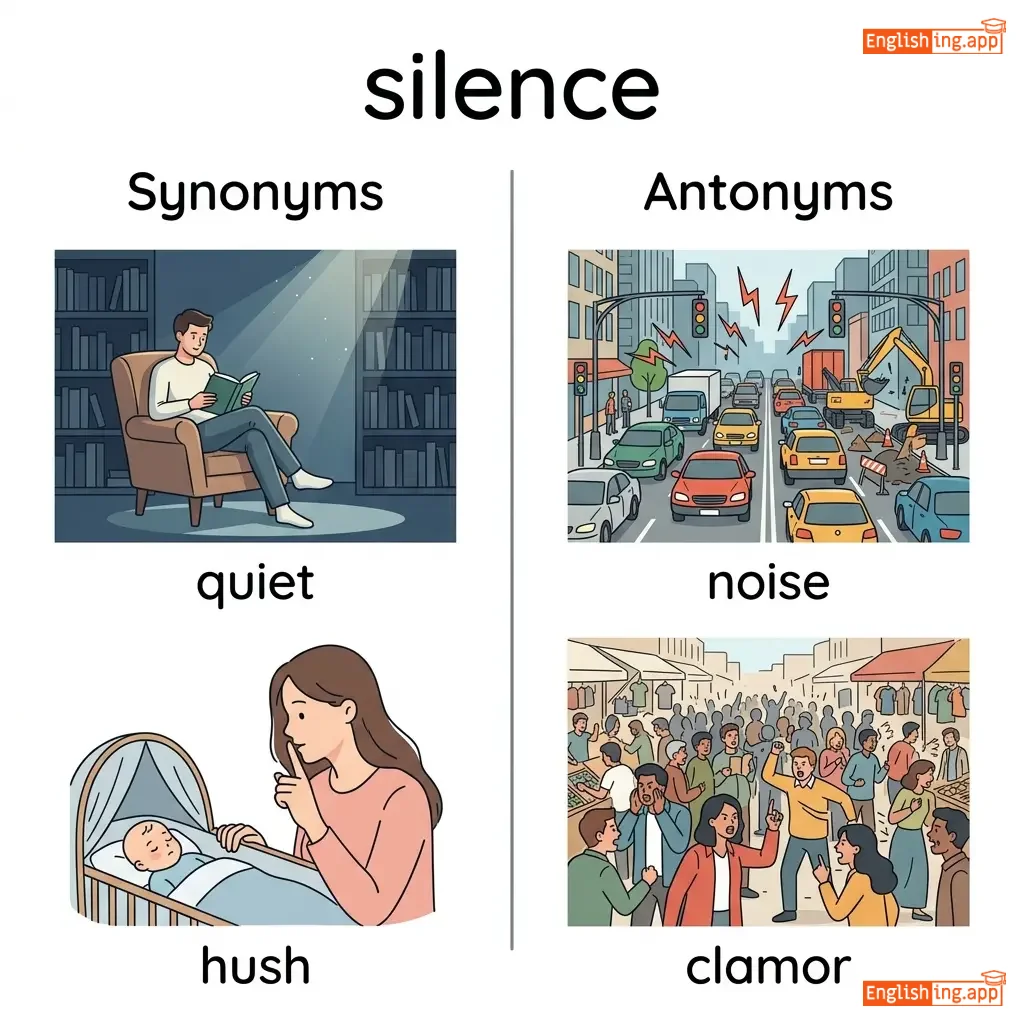
quiet, hush, stillness, calm
••••••
|
noise, clamor, din
••••••
|
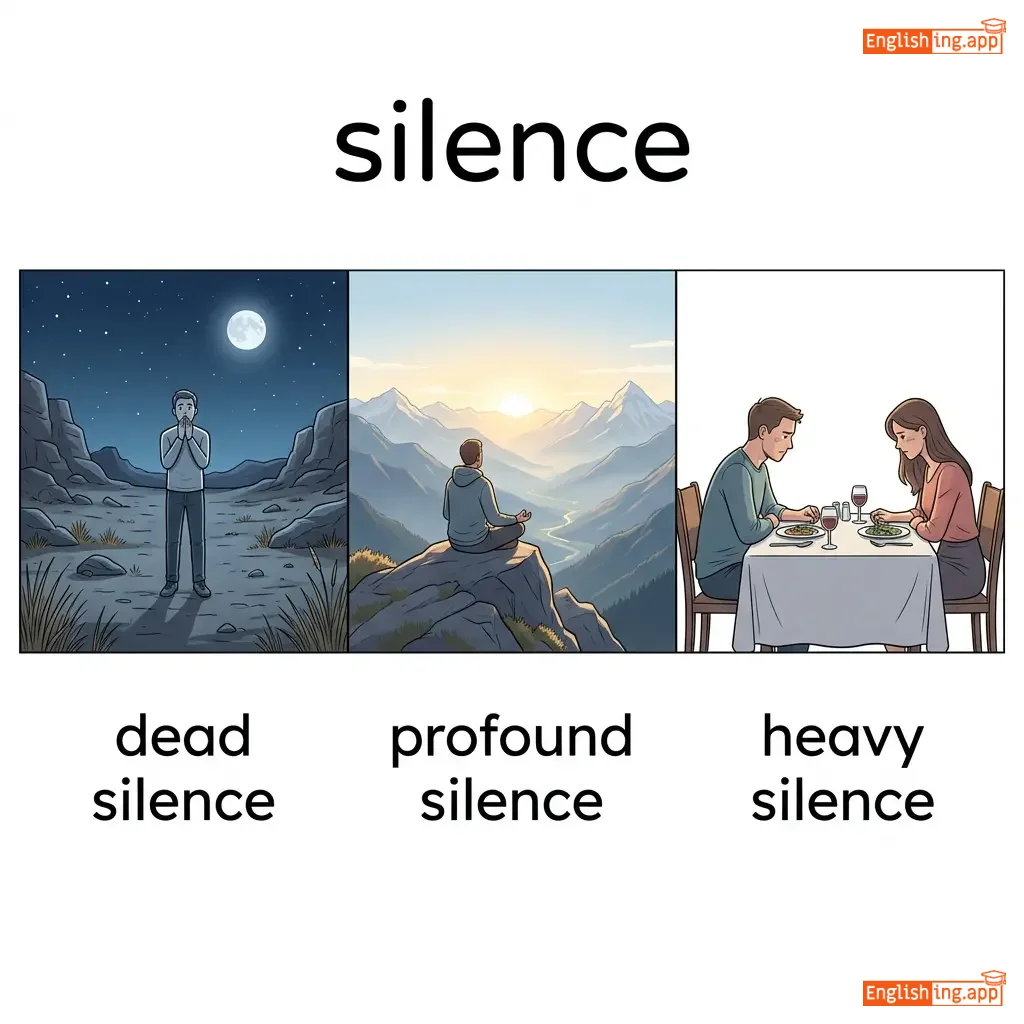
dead silence, profound silence, heavy silence, eerie silence
••••••
|
静けさ=部屋の中の平和。
••••••
|
|
#11958
📊
|
/sɪɡˈnɪfɪkəntli/
adverb
(シグニフィカントリー)
••••••
|
- •••••• |
顕著に
kenchoni
••••••
|
- •••••• | - •••••• | - •••••• | - •••••• |
in a way that is large or important enough to have an effect
••••••
|
The economy has significantly improved over the last decade.
経済は過去10年間でシグニフィカントリー改善しました。
••••••
|
経済は過去10年間で顕著に改善しました。
Keizai wa kako 10 nenkan de kencho ni kaizen shimashita.
••••••
|
- •••••• | - •••••• | - •••••• |
considerably, notably, appreciably, substantially
••••••
|
slightly, marginally, insignificantly
••••••
|
significantly improve, significantly increase, significantly change
••••••
|
Significant を日本語で '顕著' に変換して覚えよう。
••••••
|
|
#11959
🚸
|
/saɪn/
noun
(サイン)
••••••
|
|
サイン
sain
••••••
|
- •••••• | - •••••• | - •••••• | - •••••• |
a symbol, mark, or gesture that conveys information or instructions
••••••
|
The sign on the door said 'Closed for lunch'.
ドアにあったサインには「ランチのため閉店」と書かれていました。
••••••
|
ドアにあったサインには「ランチのため閉店」と書かれていました。
Doa ni atta sain ni wa 'ranchi no tame heiten' to kakarete imashita.
••••••
|
- •••••• | - •••••• | - •••••• |
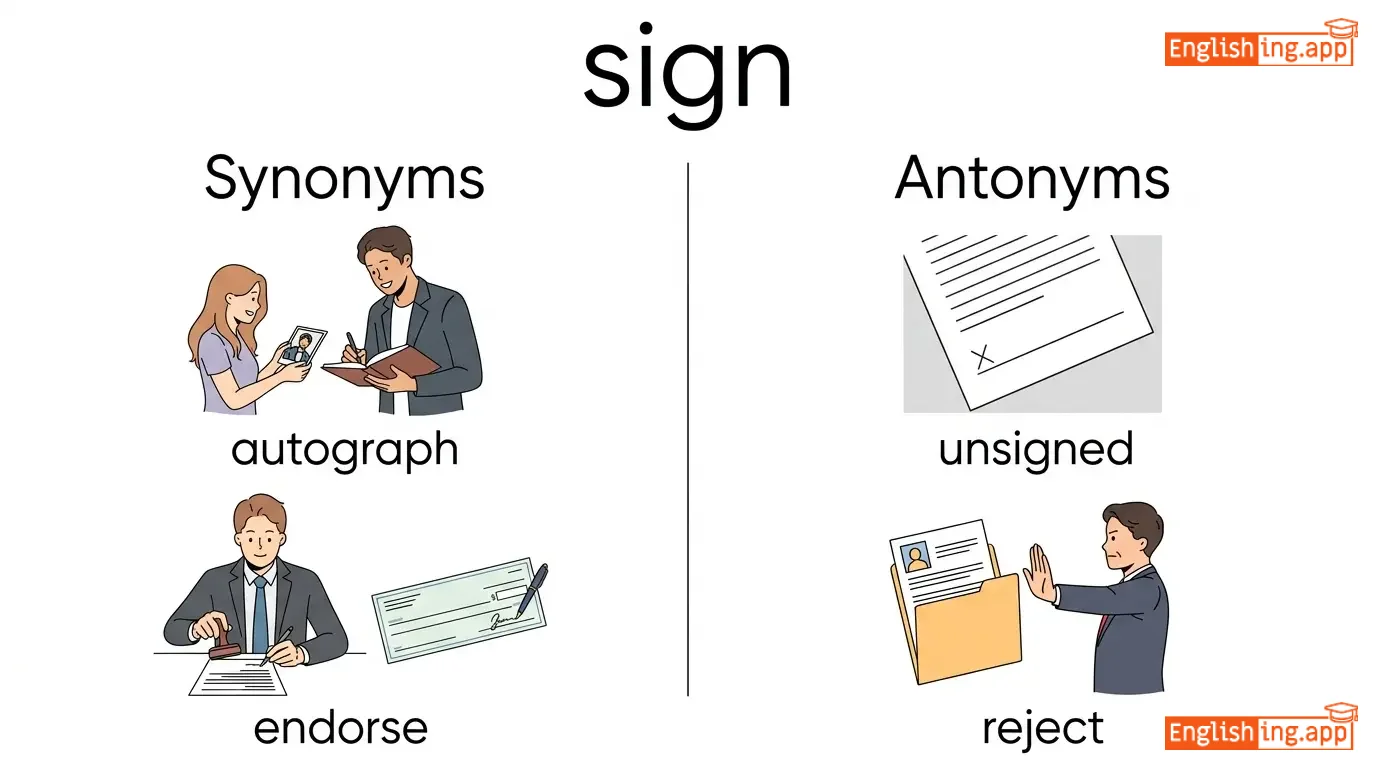
symbol, indication, mark, signal
••••••
|
silence, ambiguity
••••••
|
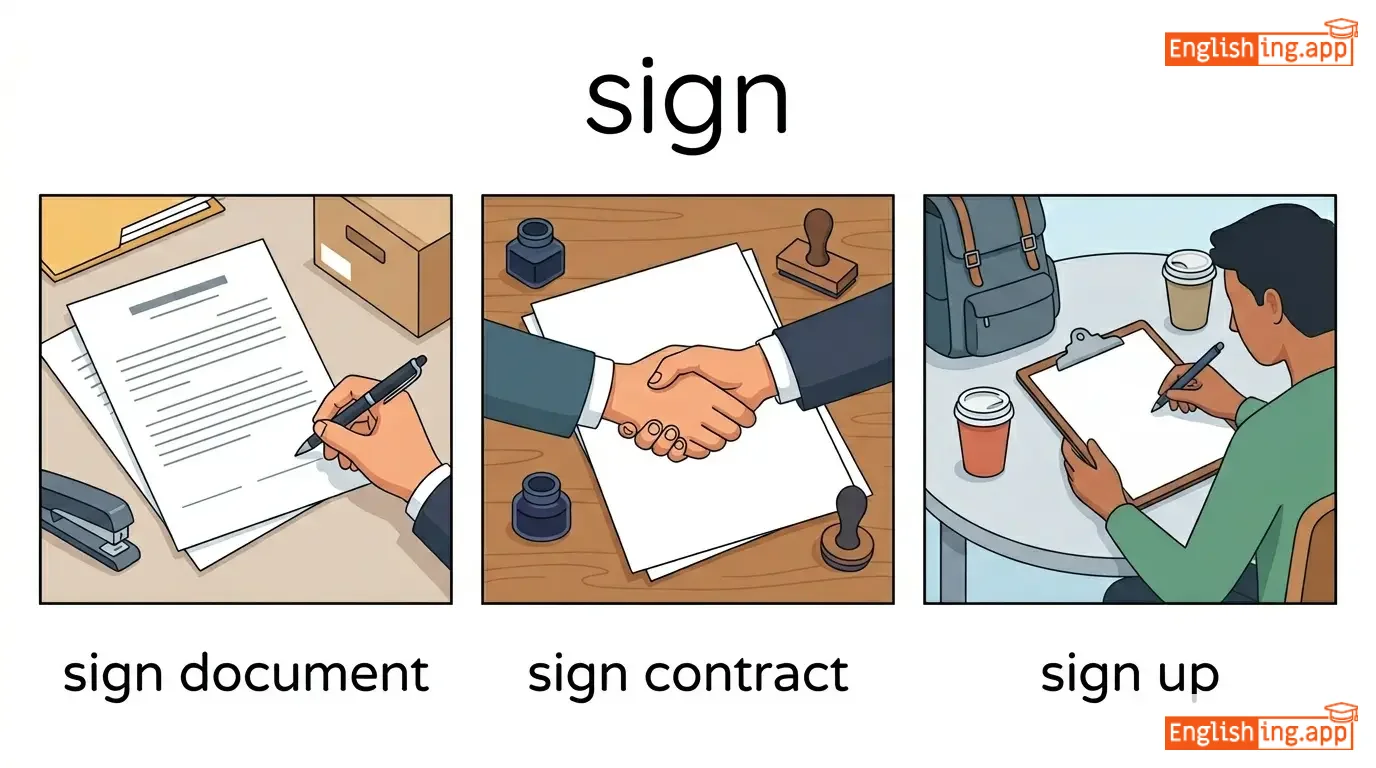
stop sign, road sign, warning sign, zodiac sign
••••••
|
サインは情報を示すための標識です。
••••••
|
|
#11960
👀
|
/saɪt/
noun
(サイト)
••••••
|
- •••••• |
視力
shiryoku
••••••
|
- •••••• | - •••••• | - •••••• | - •••••• |
the ability to see or something that is seen
••••••
|
The sight of the sunset took her breath away. |
夕日の光景は彼女を驚かせた。
Yūhi no kōkei wa kanojo o odorokaseta.
••••••
|
- •••••• | - •••••• | - •••••• |
vision, view, scene, perception
••••••
|
blindness, darkness
••••••
|
beautiful sight, breathtaking sight, sight of a lifetime, wonderful sight
••••••
|
Sight は '視力'、それがあなたに美しい景色を見せる。
••••••
|
|
#11961
😔
|
/saɪ/
verb
(サイ)
••••••
|
- •••••• |
ため息をつく
tameiki o tsuku
••••••
|
sighed
サイド
••••••
|
sighed
サイド
••••••
|
sighs
サイズ
••••••
|
sighing
サイング
••••••
|
to let out a long, deep breath as an expression of tiredness, relief, or sadness
••••••
|
She sighed with relief when she heard the good news.
良いニュースを聞いたとき、彼女は安心してため息をついた。
••••••
|
良いニュースを聞いたとき、彼女は安心してため息をついた。
Yoi nyuusu o kiita toki, kanojo wa anshin shite tameiki o tsuita.
••••••
|
- •••••• | - •••••• | - •••••• |
breathe out, exhale, moan, groan
••••••
|
inhale, gasp, cheer
••••••
|
let out a sigh, deep sigh, sigh of relief, sigh with exhaustion
••••••
|
Sighは'ため息をつく'に似ていて、'ため息をつく'はsighの意味と同じ
••••••
|
|
#11962
➡️
|
/saɪd/
noun
(サイド)
••••••
|
- •••••• |
側
sokozu
••••••
|
- •••••• | - •••••• | - •••••• | - •••••• |
a position to the left or right of something
••••••
|
The store is on the side of the road. |
店は道路の側にあります。
Mise wa douro no soko ni arimasu.
••••••
|
On the side |
Something extra, or not central
••••••
|
横に
Yoko ni
••••••
|
flank, edge, border, aspect
••••••
|
center, middle
••••••
|
side of the road, side effect, side dish
••••••
|
側にあると簡単に見える - Side by side, easy to spot!
••••••
|
|
#11963
🤐
|
/ʃʌt/
verb
(シャット)
••••••
|
- •••••• |
閉じる
tojiru
••••••
|
shut
シャット
••••••
|
shut
シャット
••••••
|
shuts
シャッツ
••••••
|
shutting
シャッティング
••••••
|
to close something, especially a door or window
••••••
|
Please shut the door before you leave.
出かける前にドアを閉めてください。
••••••
|
出かける前にドアを閉めてください。
Dekakeru mae ni doa o shimete kudasai.
••••••
|
Shut up
黙れ
••••••
|
A rude way of telling someone to stop talking
••••••
|
黙れ
Damare
••••••
|
close, lock, seal, fasten
••••••
|
open, unlock
••••••
|
shut the door, shut your mouth, shut the window
••••••
|
ドアを閉じて、すべてを閉じて - Shut the door, shut everything.
••••••
|
|
#11964
🚿
|
/ˈʃaʊər/
noun
••••••
|
- •••••• | - •••••• | - •••••• | - •••••• | - •••••• | - •••••• |
a brief fall of rain or snow or a device for taking a bath or washing oneself
••••••
|
After the workout, I took a quick shower to refresh myself. |
- •••••• |
Take a shower |
To wash oneself in a shower
••••••
|
- •••••• |
bath, rinse, wash, sprinkle
••••••
|
drought, dryness
••••••
|
take a shower, shower curtain, hot shower
••••••
|
No •••••• |
Vocabulary Quiz
Test your vocabulary by matching words with their translations or meanings.
Login to take the quiz
Comments (0)
Share your thoughts and join the discussion.
Join the discussion by logging in
Login to CommentNo comments yet
Be the first to share your thoughts!